



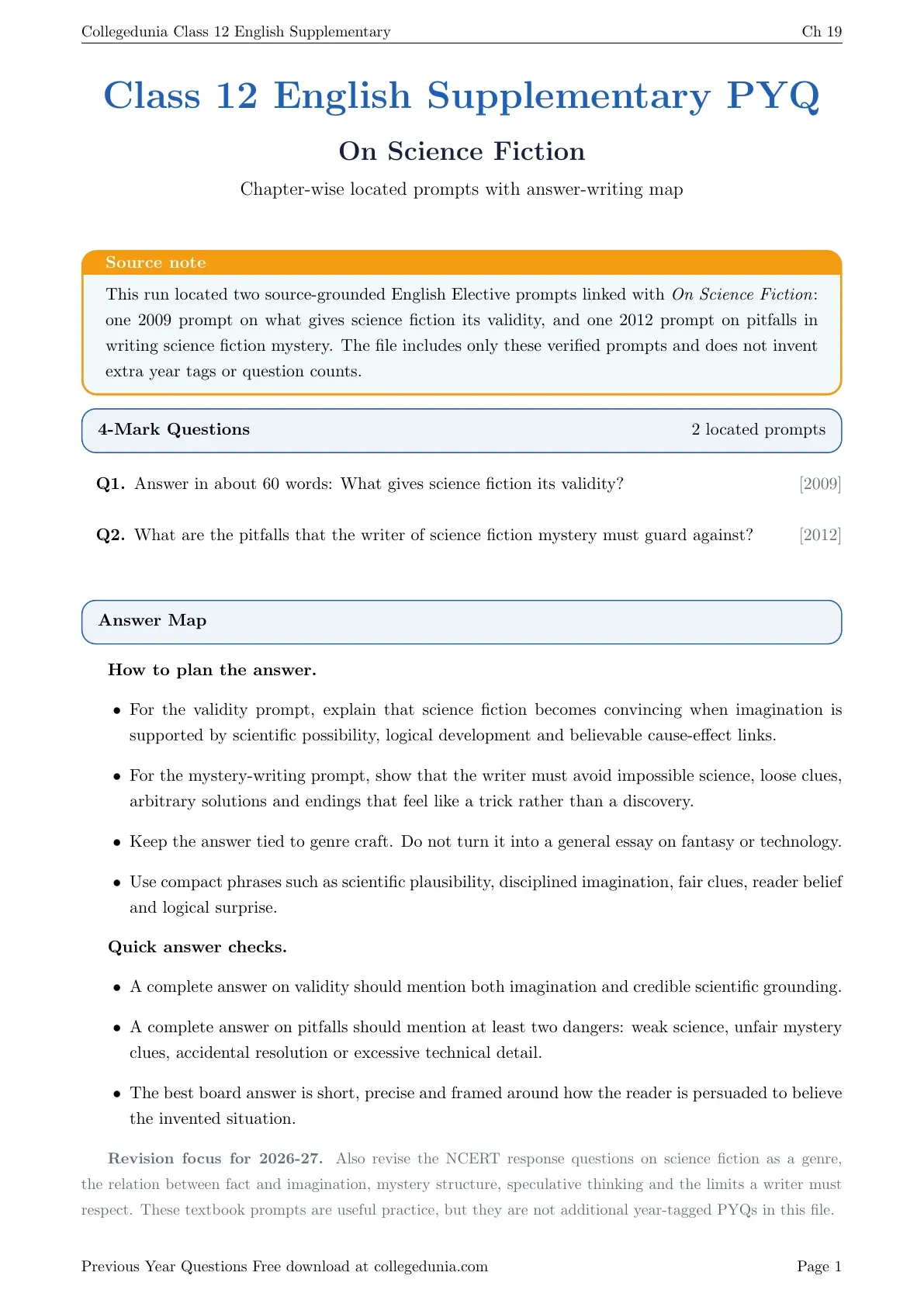
The Class 12 English Supplementary On Science Fiction PYQ PDF is available for free download. This chapter-wise file gives students the located previous year prompts for On Science Fiction from Kaleidoscope, with a focused answer-writing map for 2026-27 English Elective revision.
- Includes two source-grounded 4-mark prompts from the available English Elective archive.
- Covers science fiction validity and pitfalls in writing science fiction mystery.
- Useful for quick board-paper practice before writing compact genre-based answers.
Student Feedback: Students can use this PYQ PDF to practise clear answers on scientific plausibility, mystery structure and disciplined imagination.
Class 12 English On Science Fiction PYQ PDF
The PDF contains two located questions for On Science Fiction. The available source sheet links one prompt with science fiction validity and another with the craft of science fiction mystery, so this page keeps the count limited to verified items.
- Chapter: Chapter 19 Kaleidoscope: On Science Fiction
- Theme: science fiction as disciplined imagination
- Located source years: 2009 and 2012 from the available source sheet
- Best use: revise genre validity, scientific plausibility and fair mystery craft
Questions Covered in On Science Fiction PYQ PDF
The located questions ask students to explain why science fiction becomes believable and what a writer must avoid while combining science fiction with mystery. A strong answer should connect imagination with logic instead of writing only a summary of the chapter.
| Source | Question Focus | Answer Skill |
|---|---|---|
| 2009 English Elective paper | What gives science fiction validity | Explain scientific plausibility and believable cause-effect links |
| 2012 English Elective paper | Pitfalls in science fiction mystery | Name weak science, unfair clues and arbitrary solutions |
Revision Focus for On Science Fiction PYQs
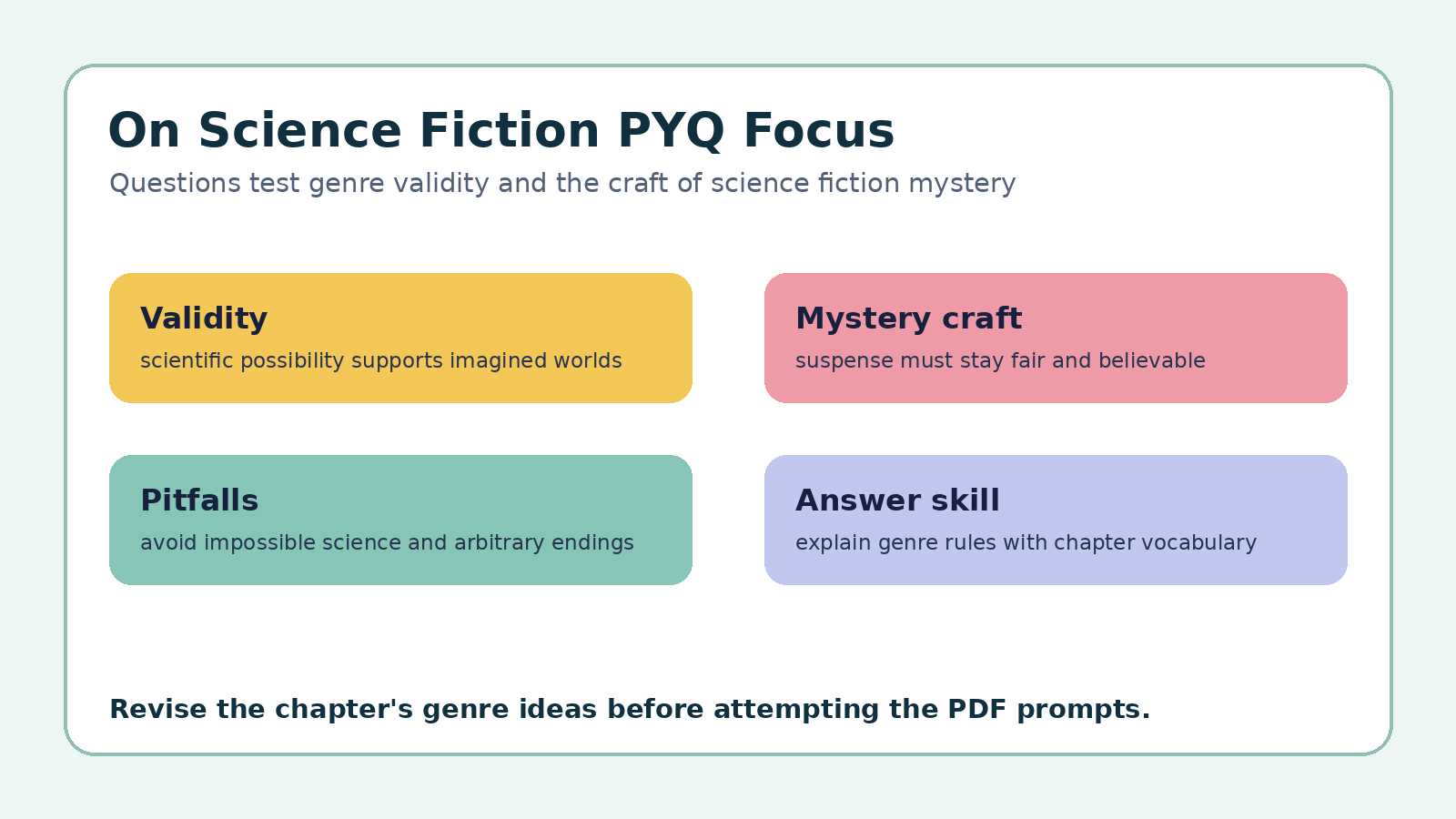
Before solving the PDF, revise how science fiction balances invention with discipline. The answer should not become a general note on technology; it should explain how the genre keeps an imagined situation credible for the reader.
- Validity: imagination must grow from believable scientific possibility
- Mystery: clues, surprise and solution should feel fair to the reader
- Pitfalls: avoid arbitrary endings, impossible devices and loose logic
- Answer style: use short genre terms and explain them with one clear sentence each
Answer Writing Map for On Science Fiction PYQs
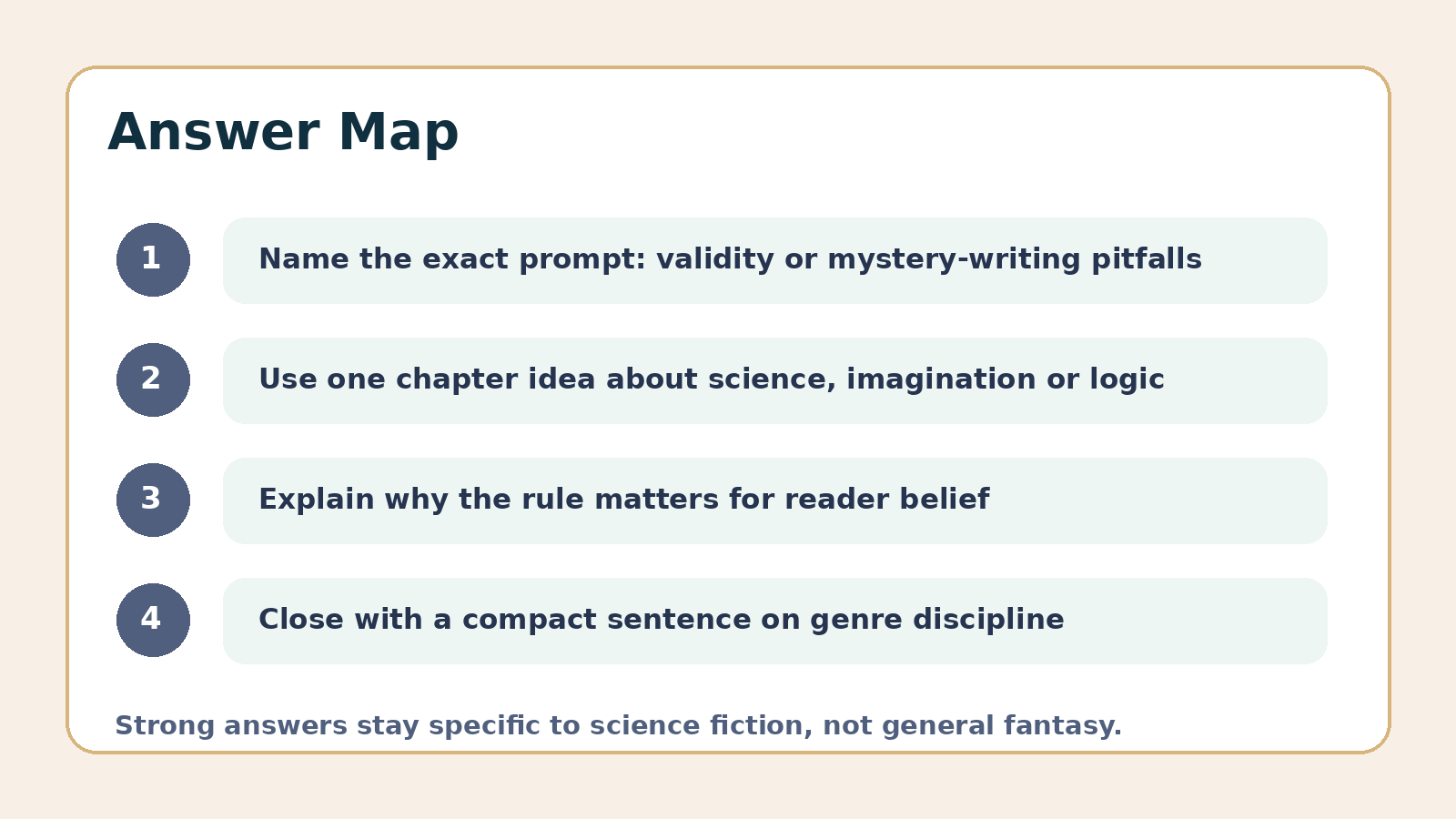
Write answers in four compact moves: identify whether the question asks validity or pitfalls, state the genre rule, explain why it matters for reader belief and close with one sentence on disciplined imagination. Useful phrases include scientific plausibility, logical surprise, fair clues, reader belief and credible speculation.
Class 12 English On Science Fiction Related Resources
| Resource | Link |
|---|---|
| On Science Fiction Notes | Chapter 19 Notes |
| On Science Fiction NCERT Solutions | Chapter 19 NCERT Solutions |
All Class 12 English Supplementary PYQ Chapters
| Resource | Link |
|---|---|
| Why the Novel Matters PYQ | Chapter 17 PYQ PDF |
| The Argumentative Indian PYQ | Chapter 18 PYQ PDF |
| On Science Fiction PYQ | Chapter 19 PYQ PDF |
| Chandalika PYQ | Chapter 20 PYQ PDF |
Class 12 English On Science Fiction PYQ FAQs
Ques. Where can I download Class 12 English On Science Fiction PYQ PDF?
Ans. You can download the chapter-wise PYQ PDF from the PDF viewer and resource table above. The file includes two located questions for this chapter.
Ques. How many questions are in the On Science Fiction PYQ PDF?
Ans. The PDF includes two source-grounded 4-mark prompts from the available English Elective archive.
Ques. Which topics are important for On Science Fiction PYQs?
Ans. Focus on scientific plausibility, genre validity, science fiction mystery, fair clues and the pitfalls a writer must avoid.
Ques. How should students answer the science fiction validity question?
Ans. Explain that science fiction becomes valid when imagination is supported by credible science, logic and believable cause-effect development.



Comments