



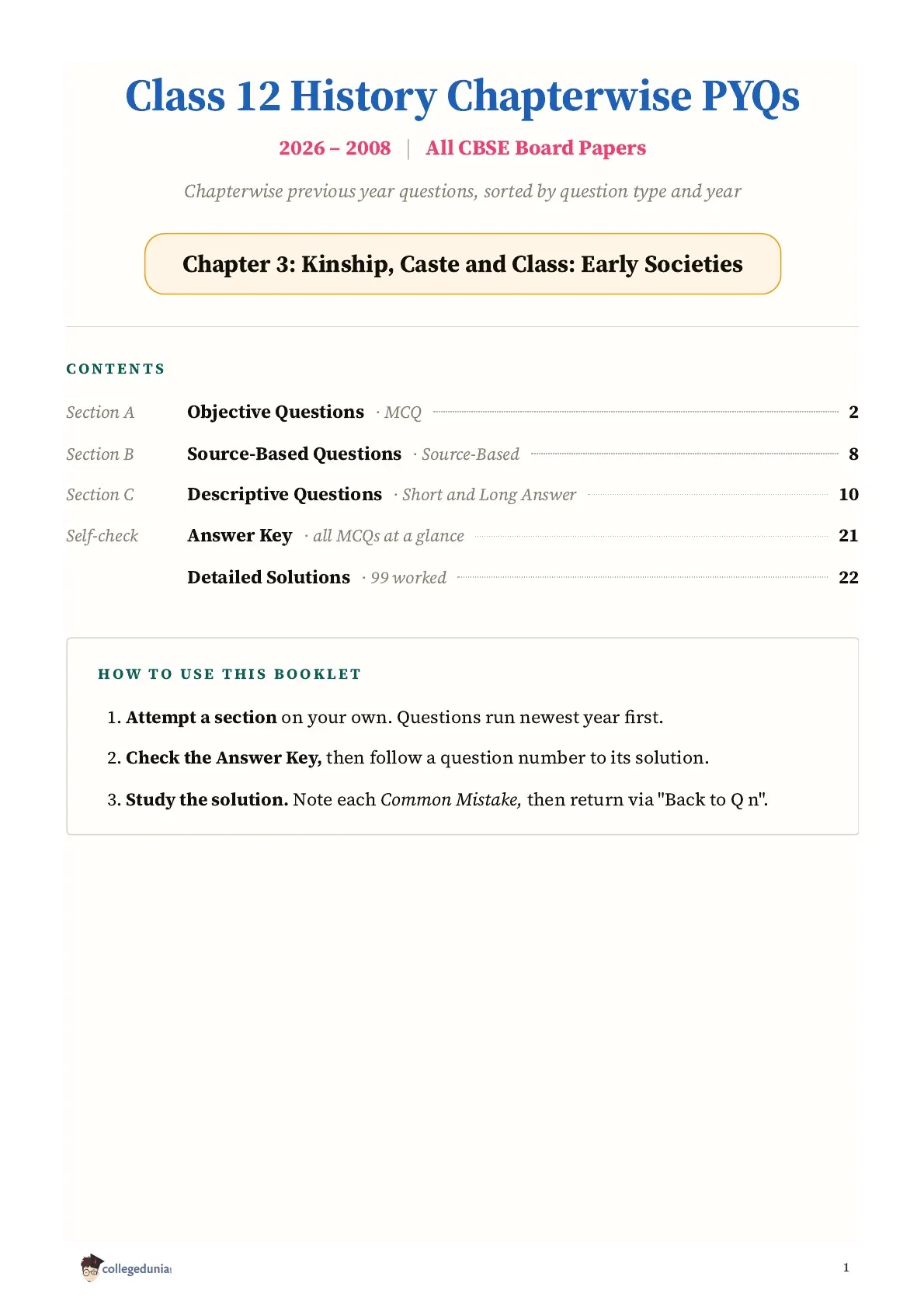
Class 12 History Kinship, Caste and Class PYQ, free to download as a 91-page PDF. Theme 3 sits in Part I (Themes 1 to 4), which carries about 25 of the 80 marks, and in 99 solved questions from the 2008 to 2026 papers the board keeps returning to the same few ideas: the Mahabharata as a source (50 questions), rules of marriage and gotra (14), the four varnas (13), the Critical Edition of the Mahabharata (8), the Manusmriti and Dharmashastras (7) and Ekalavya (5). 18 of the questions are MCQs and 3 are passage-based, so start with the objective ones and the three source passages, then work through the 78 written answers.
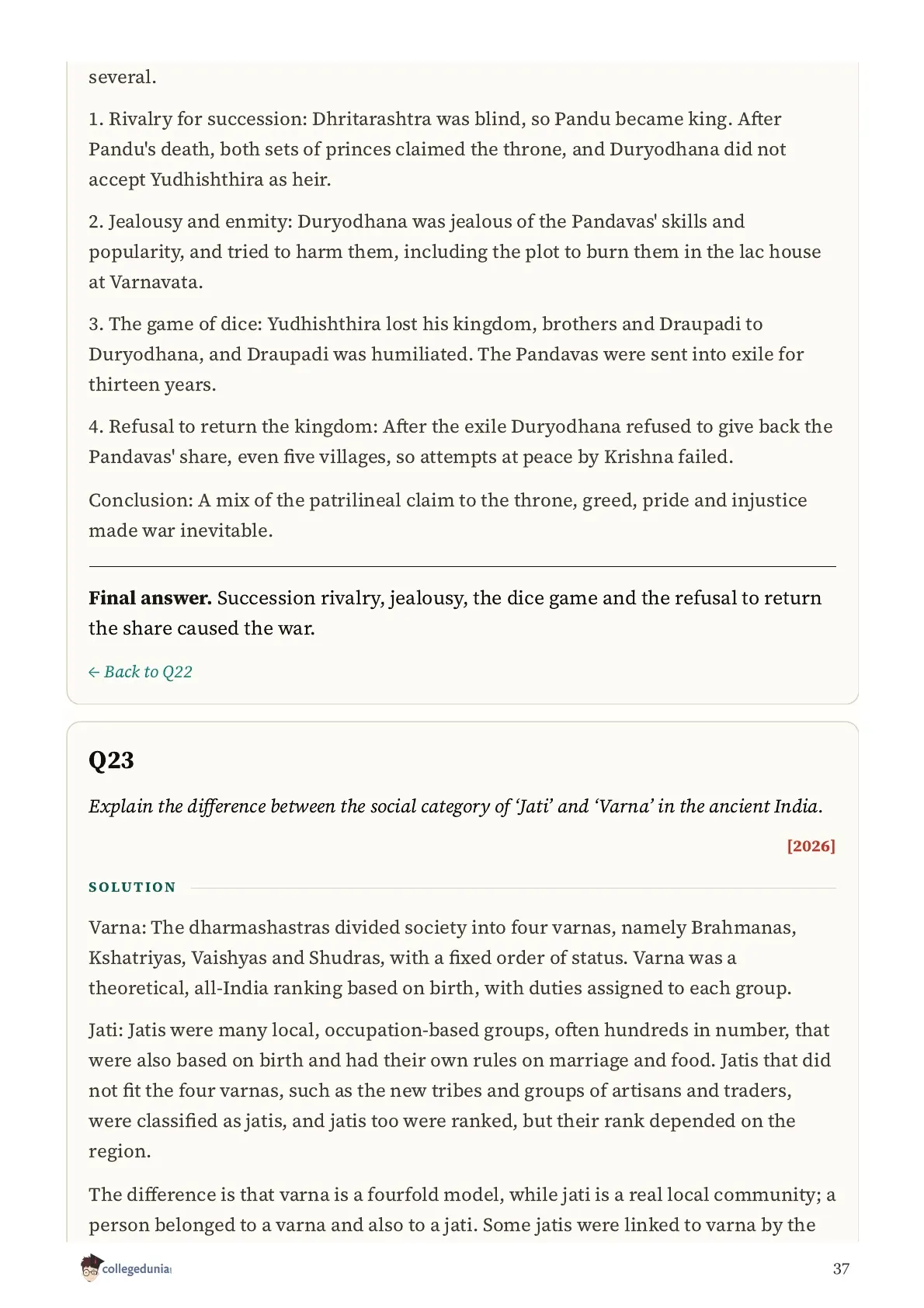
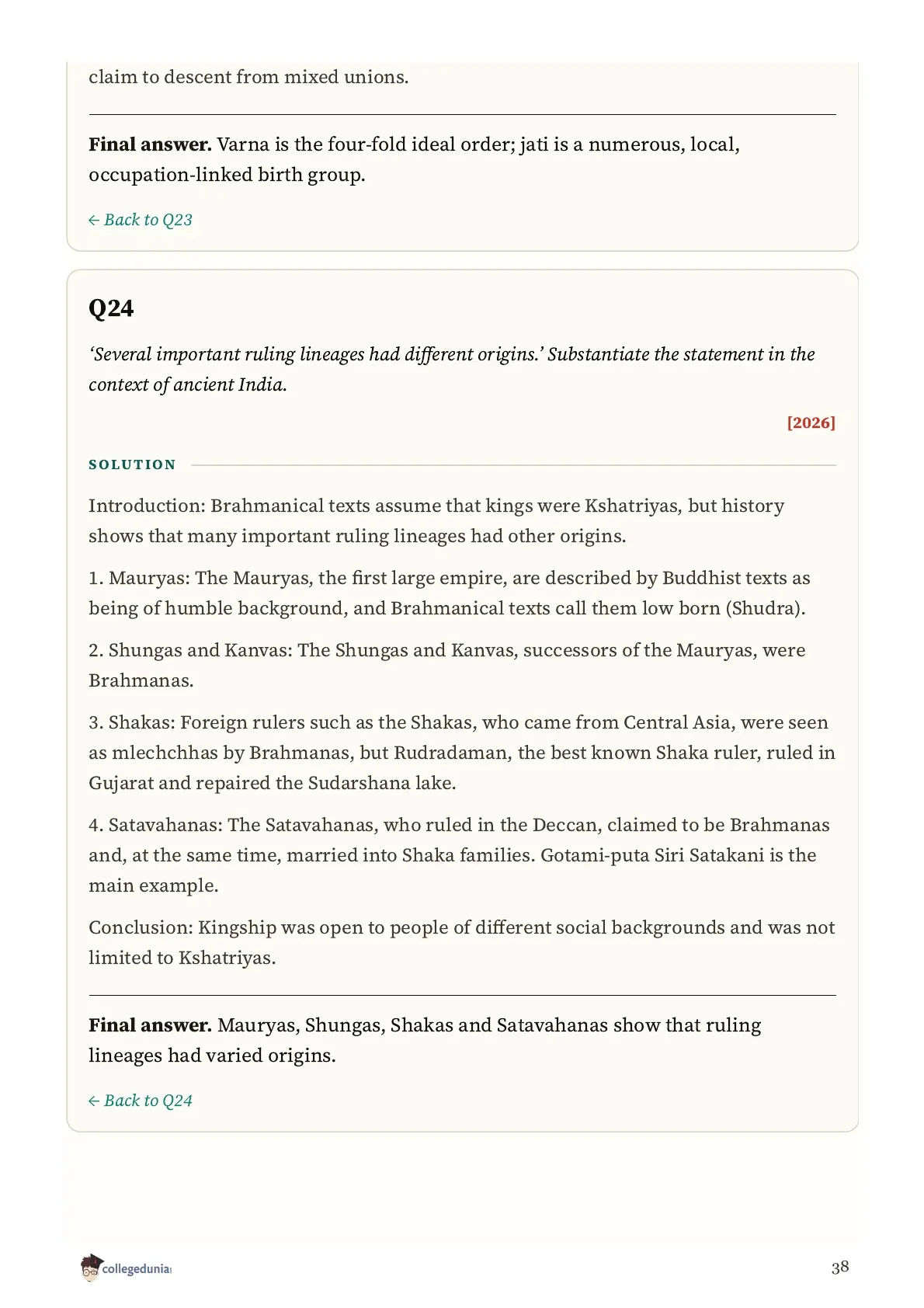
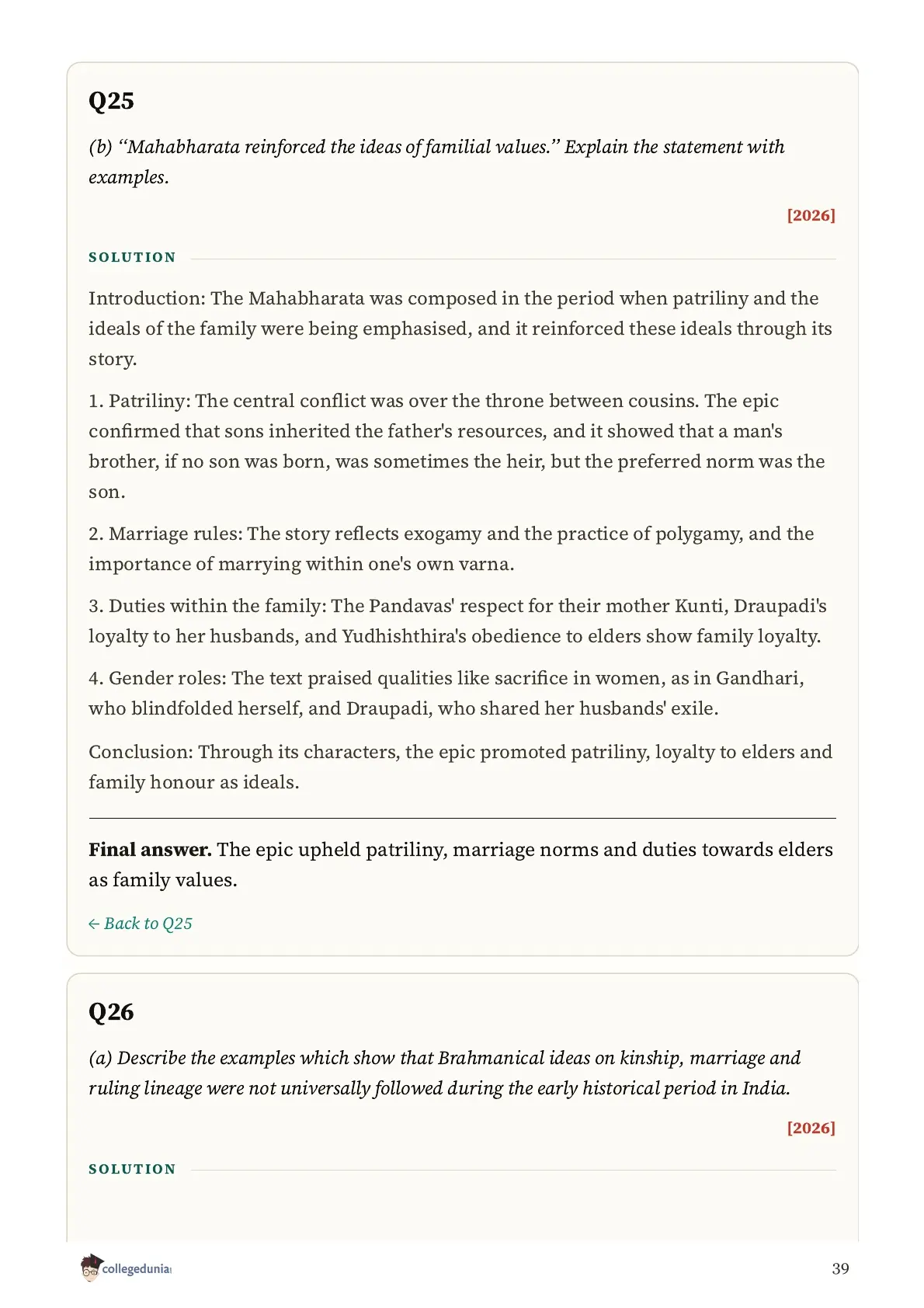
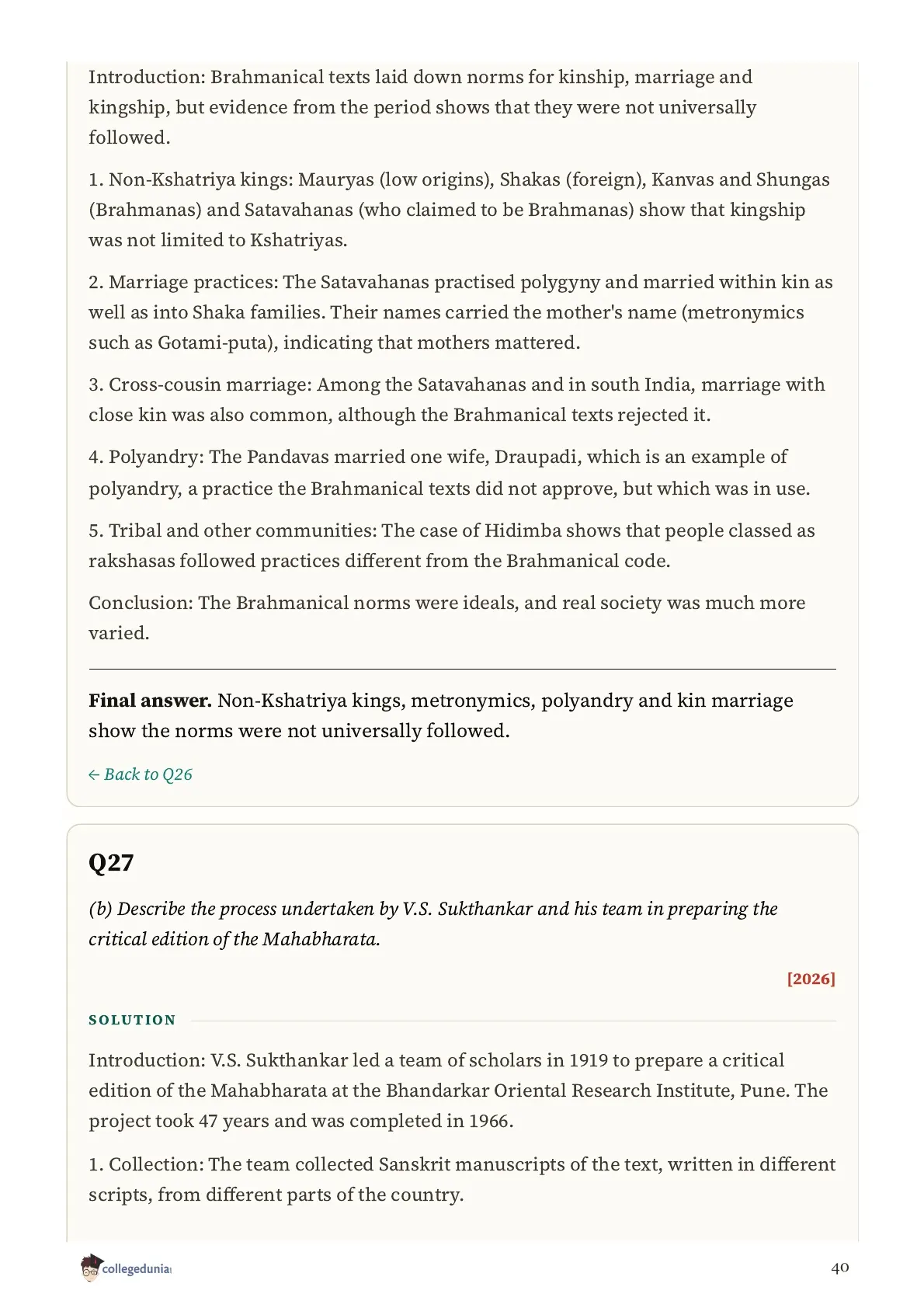
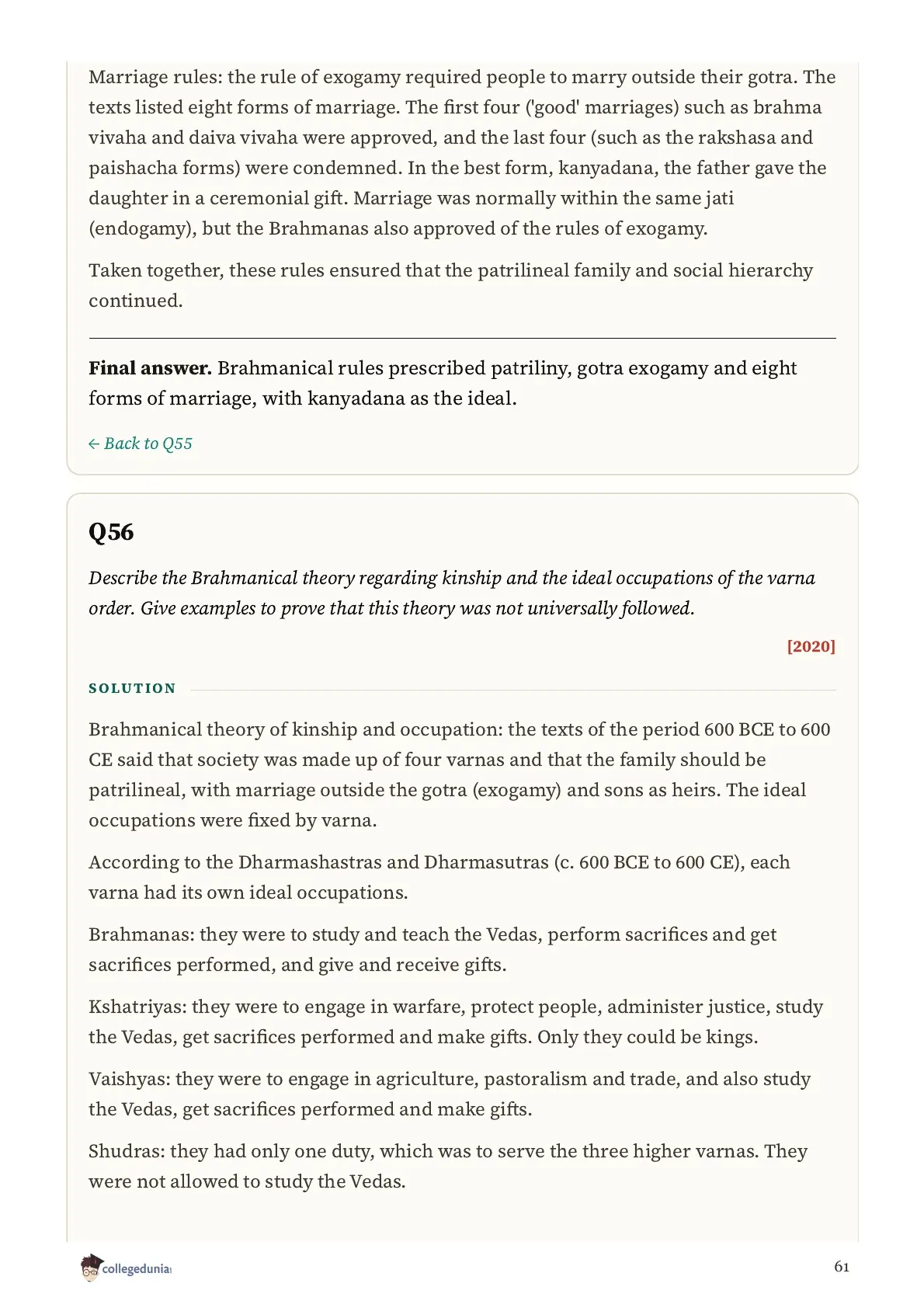
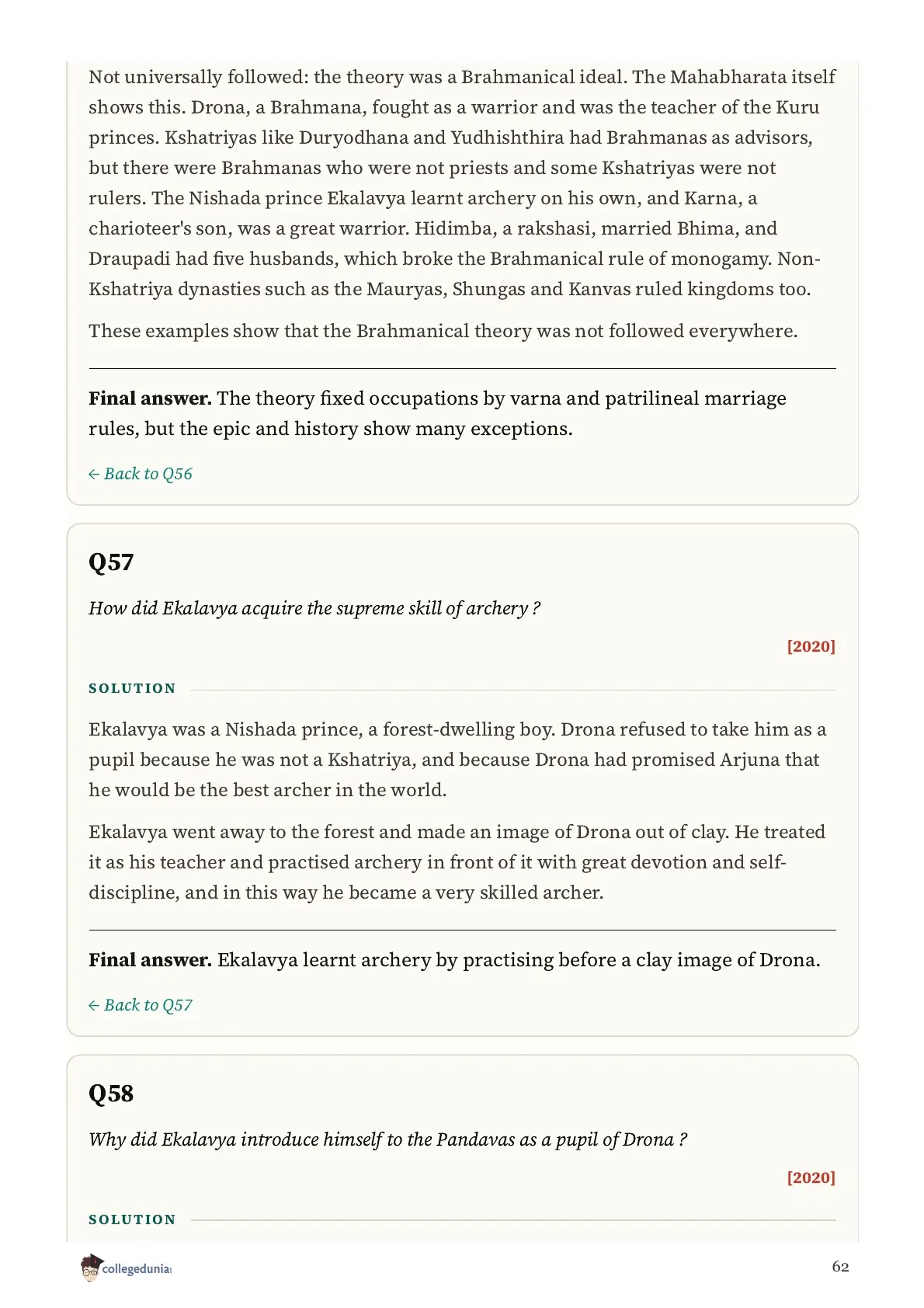
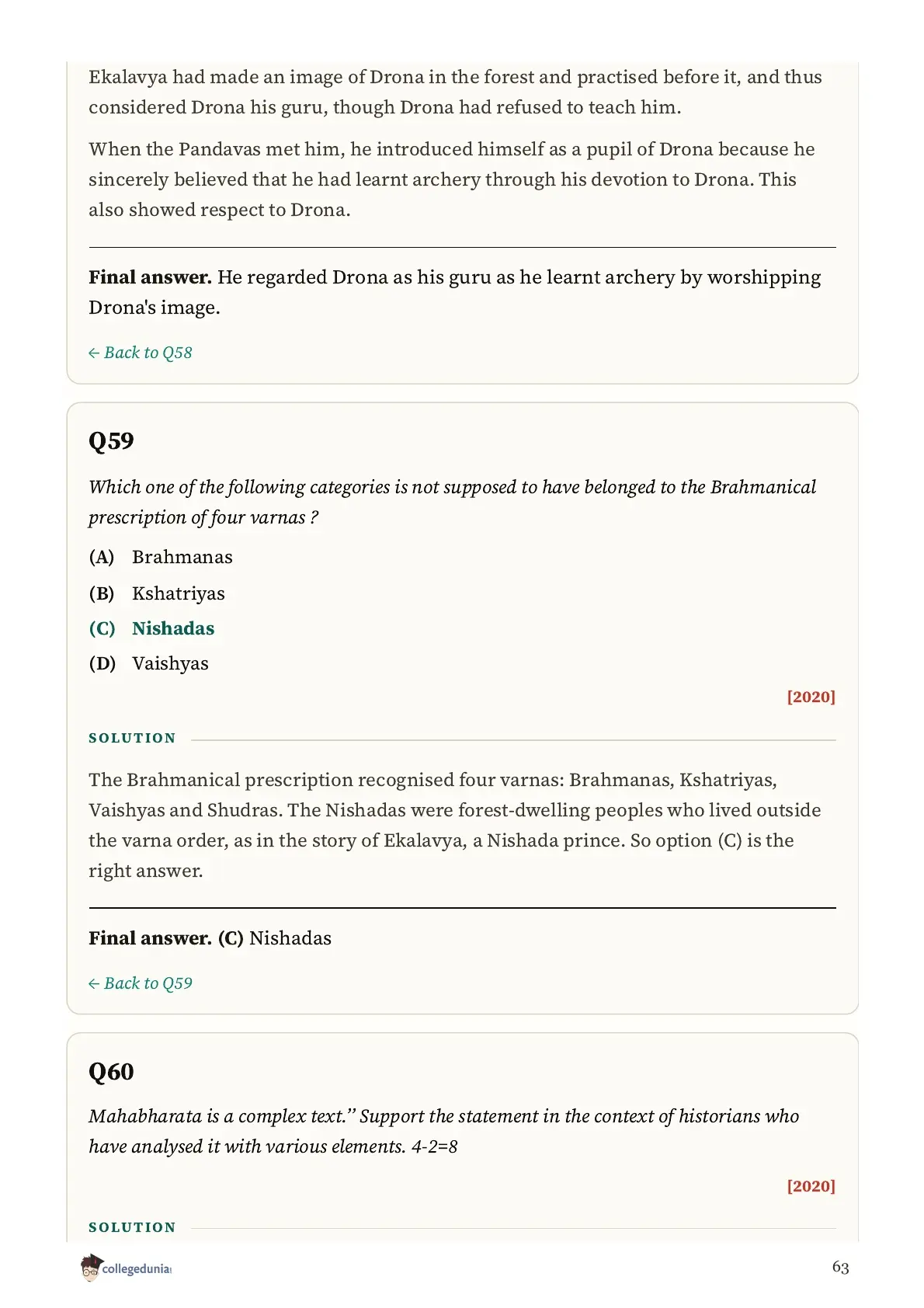
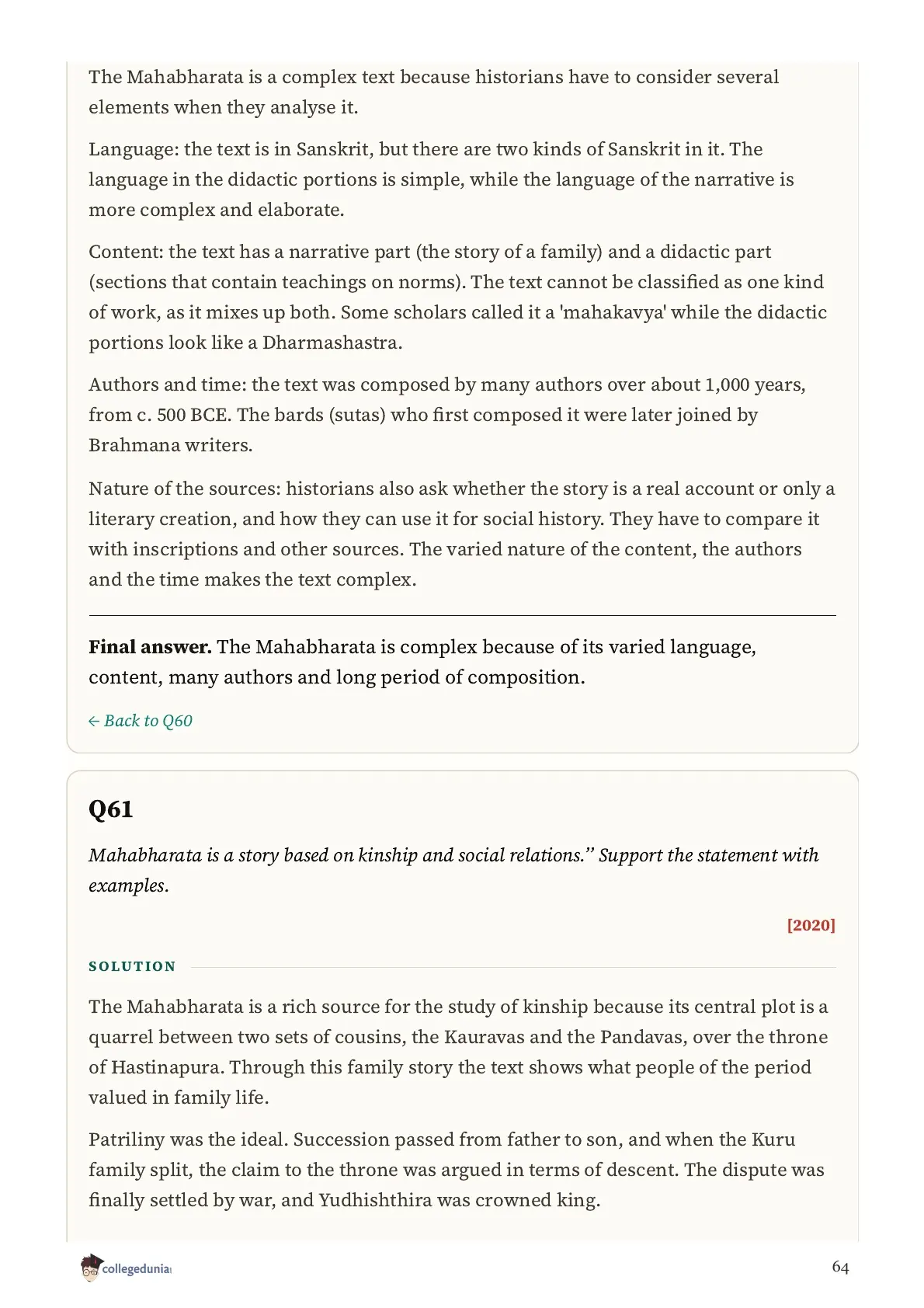
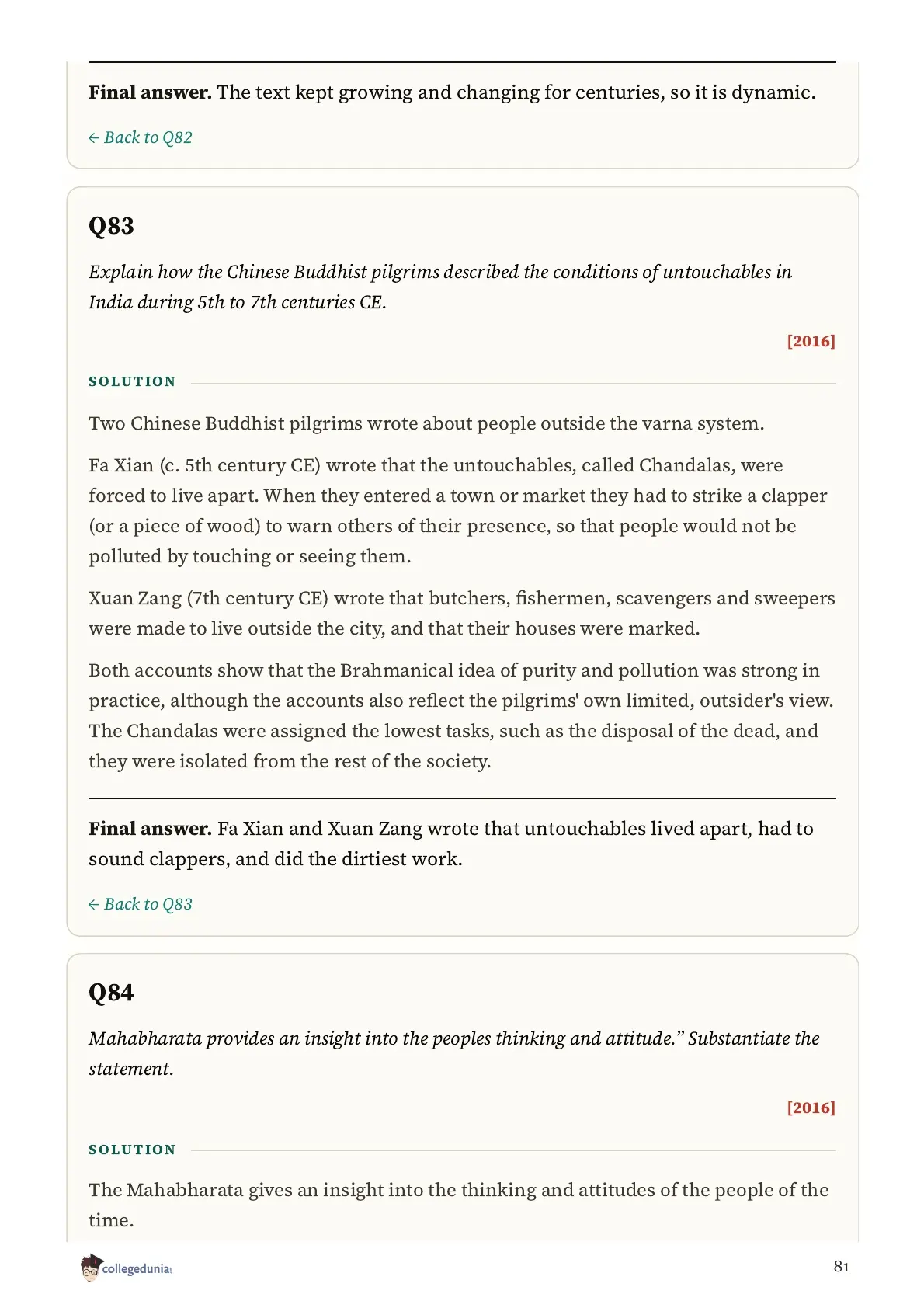
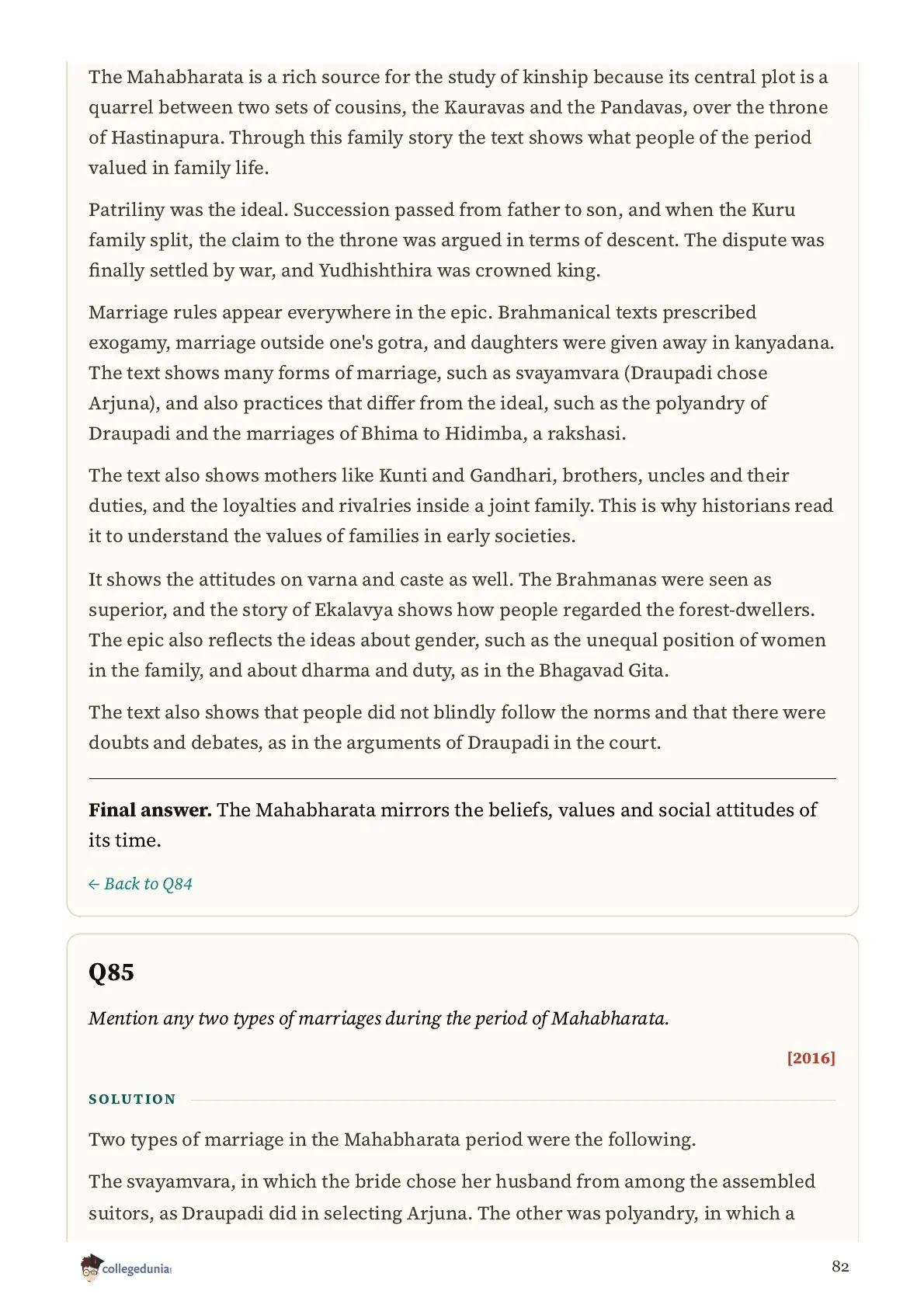
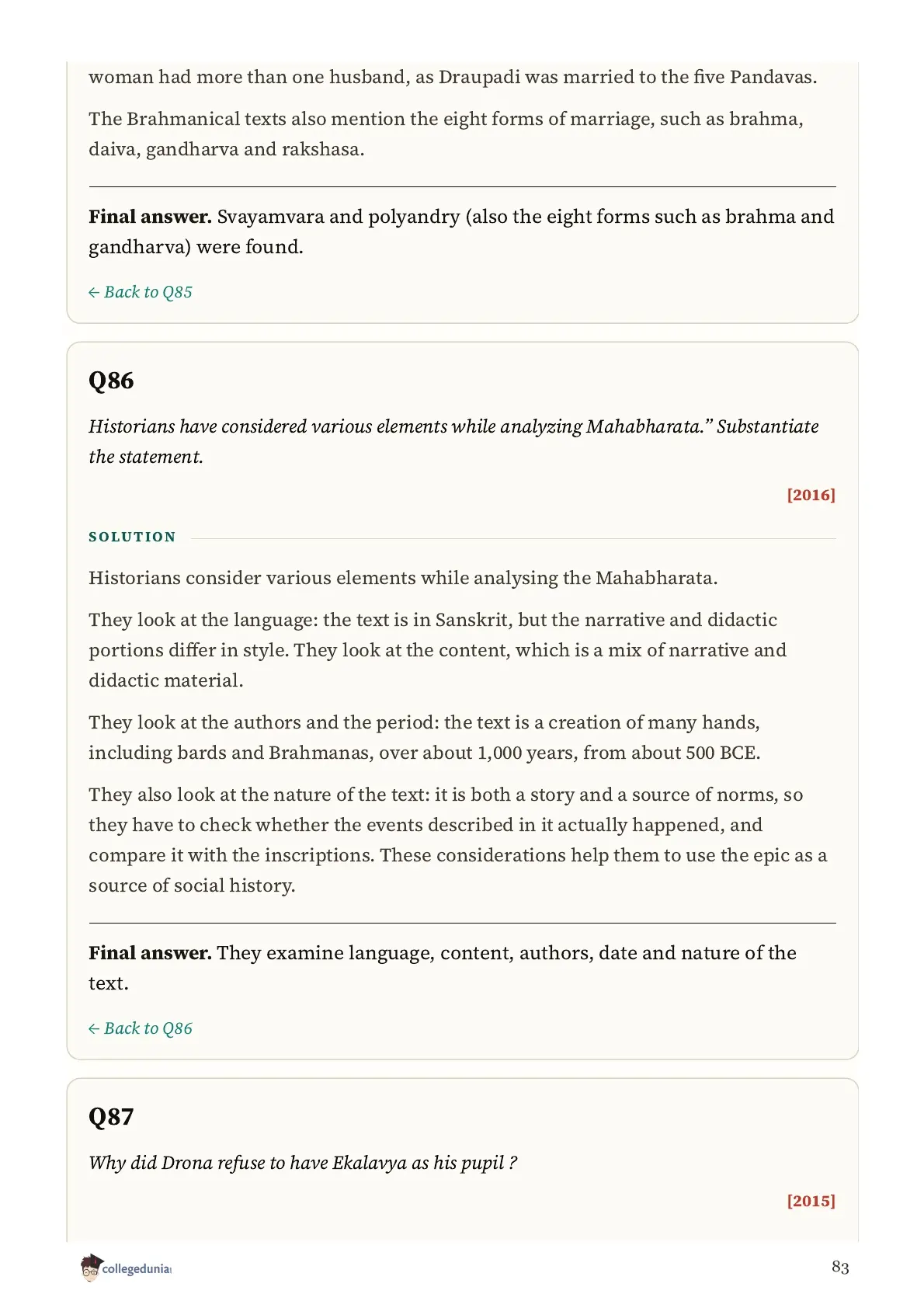
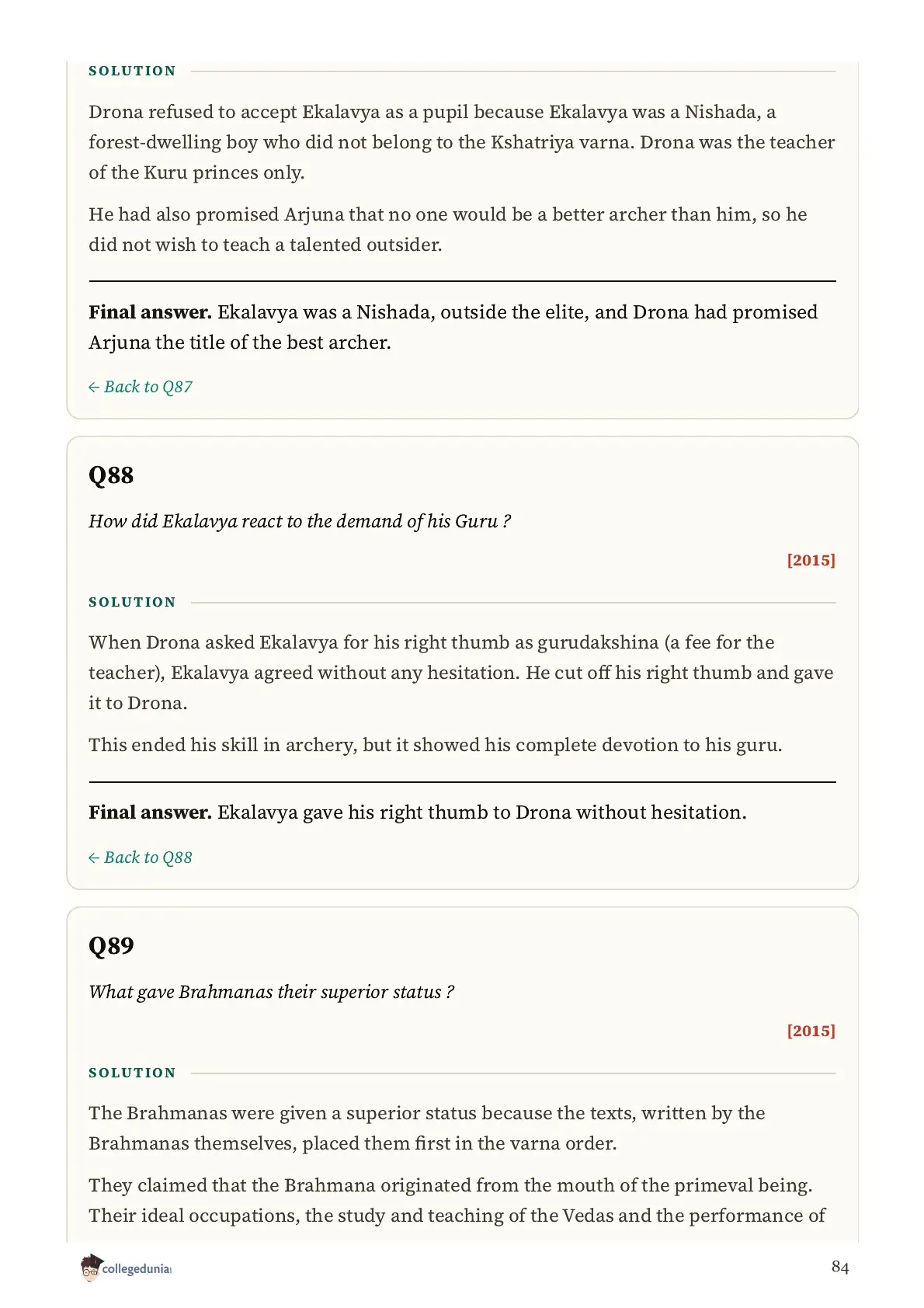
Kinship, Caste and Class Weightage in the Class 12 Board Paper
As per History Kinship, Caste and Class weightage from past years, students can expect this theme to be part of the roughly 25 marks the board paper sets from Part I (Themes 1 to 4), out of 80 theory marks. CBSE does not print a separate figure for Theme 3, so the Part I figure is the one to use. It comes from the exam-pattern table on the Physics Wallah syllabus page and is unofficial, so check the curriculum on cbseacademic.nic.in.
The question bank carries no marks, so the table below shows how many questions of each type are in the set, not marks.
| Question Type | Questions in the Set |
|---|---|
| Objective (MCQ) | 18 |
| Source-Based (passage with parts) | 3 |
| Written answers | 78 |
Kinship, Caste and Class Questions by Topic
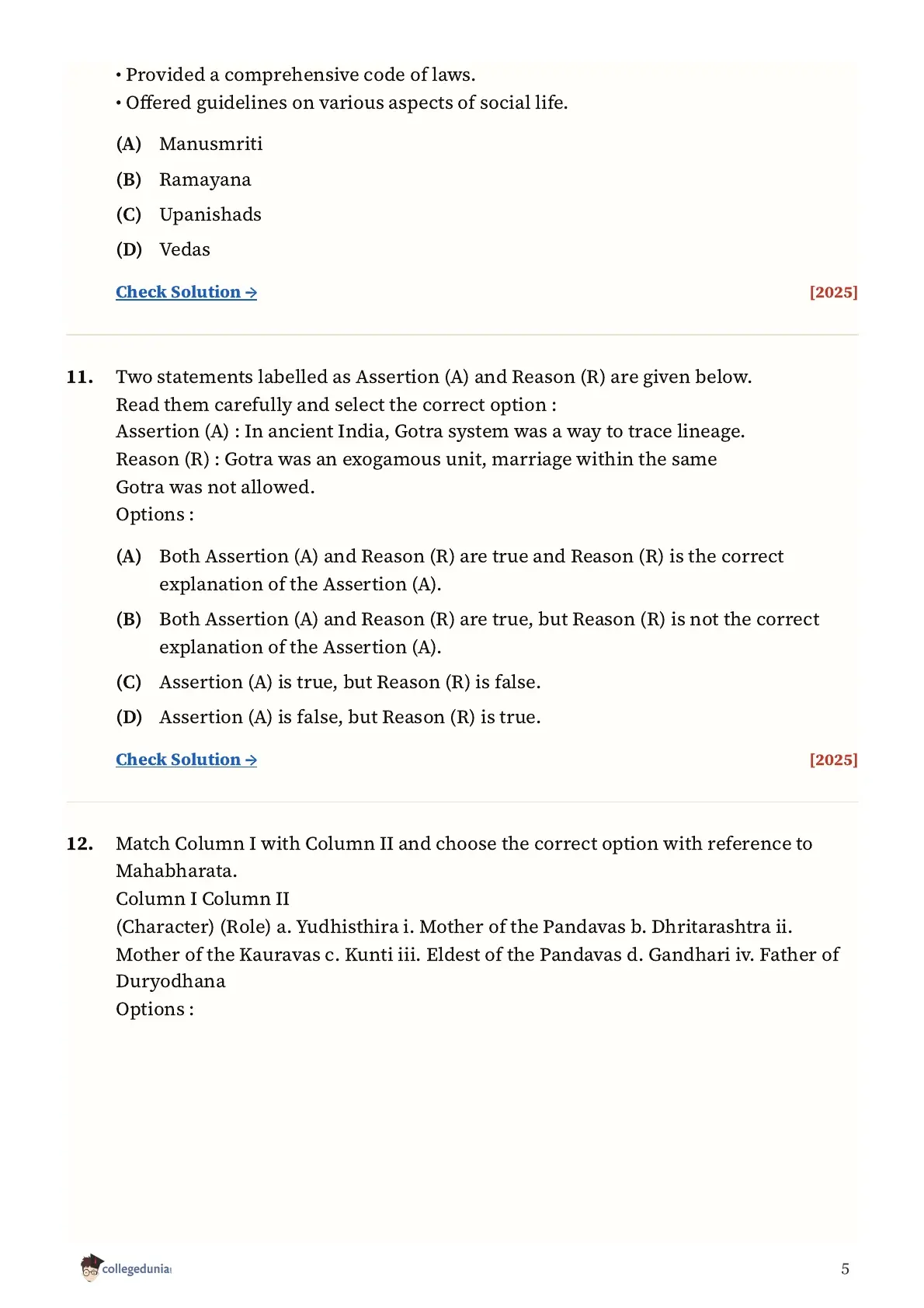
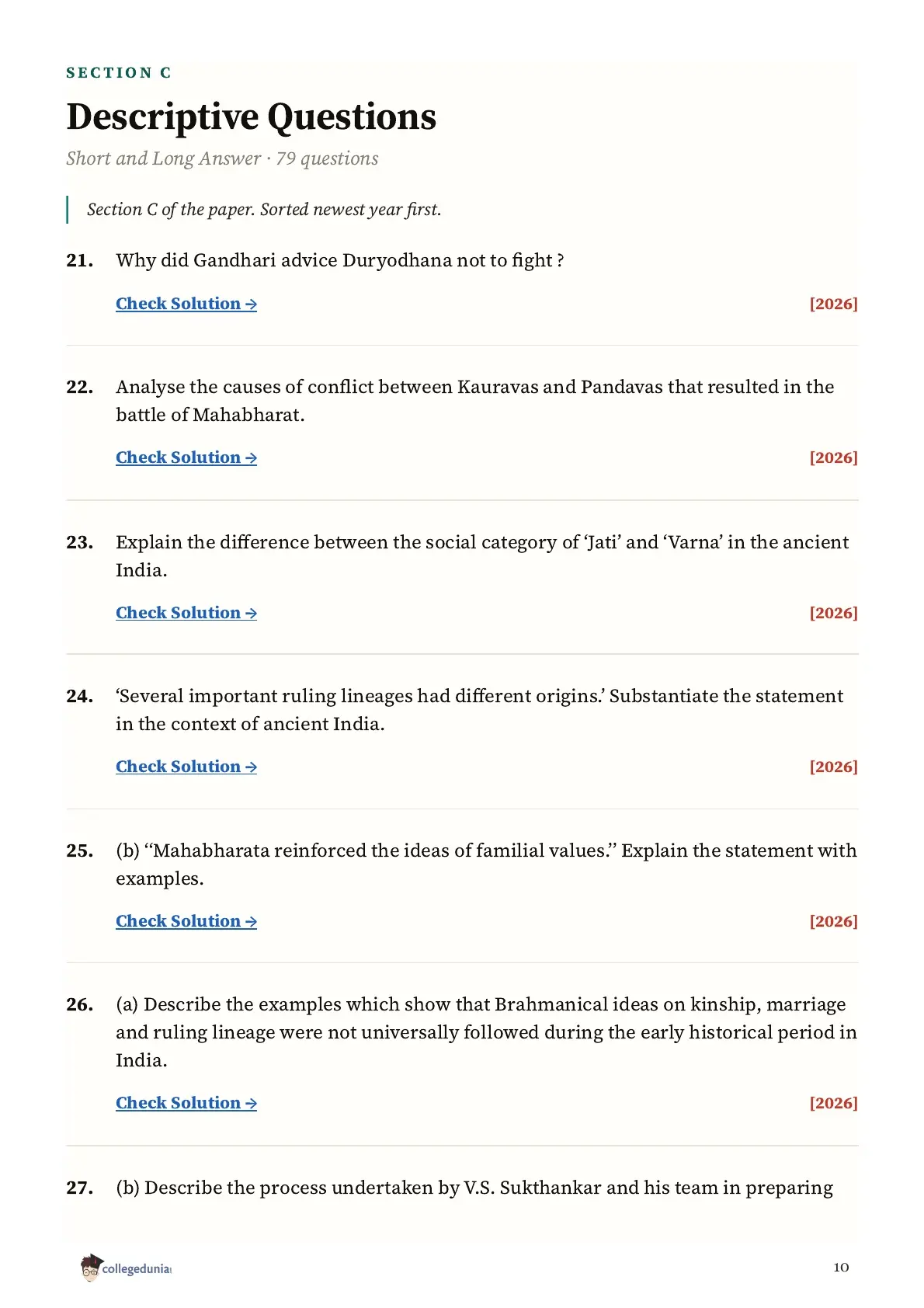
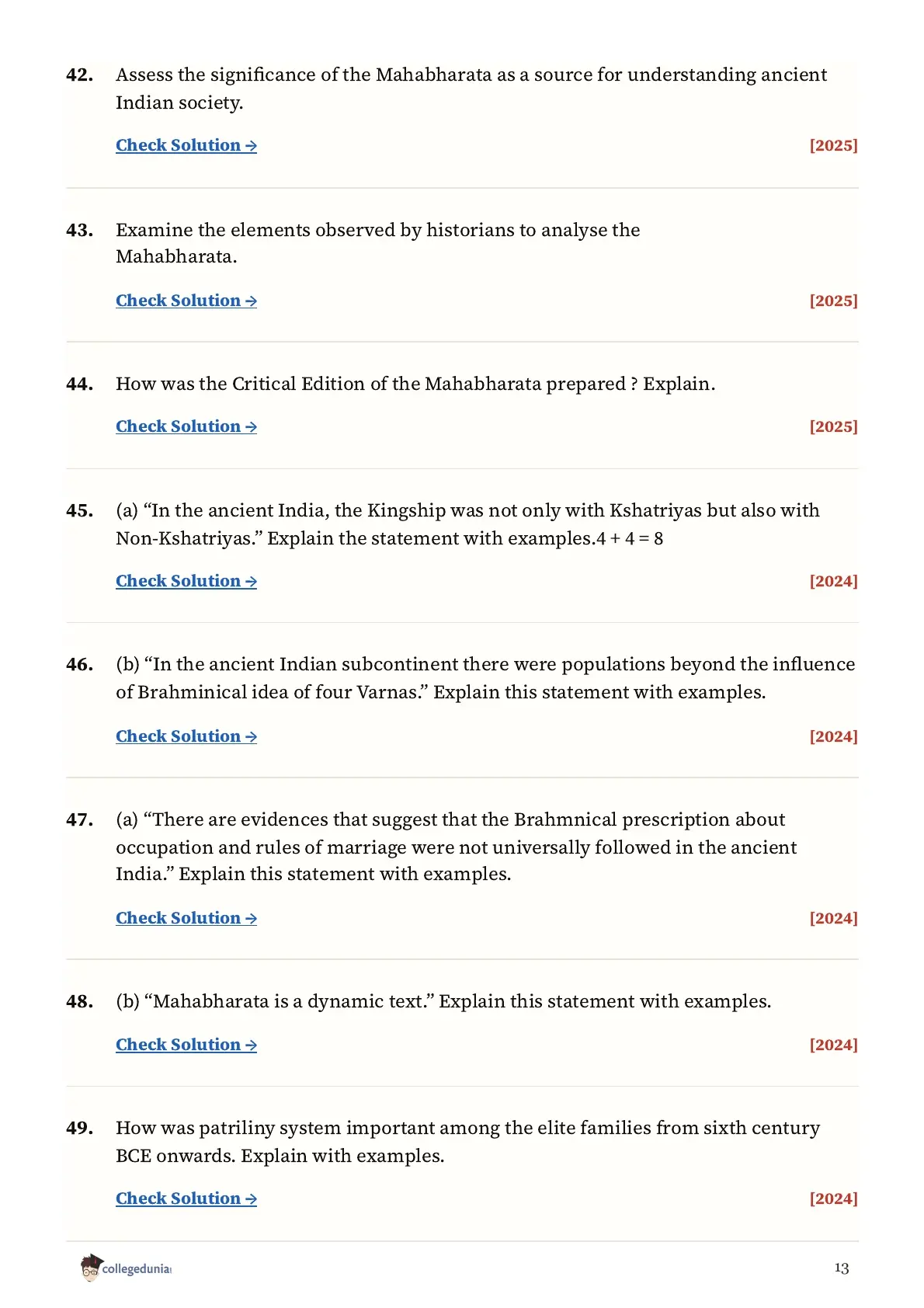
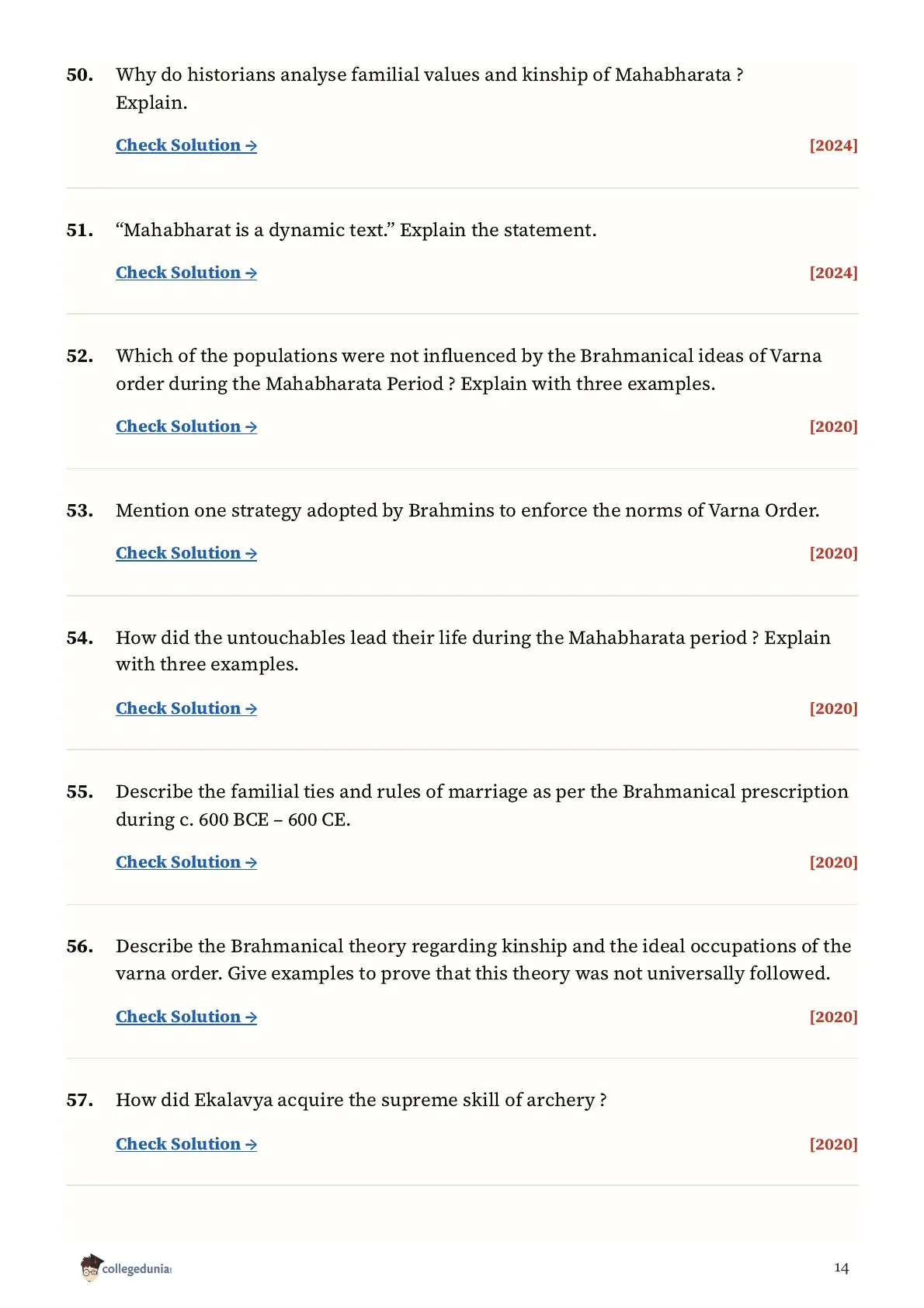
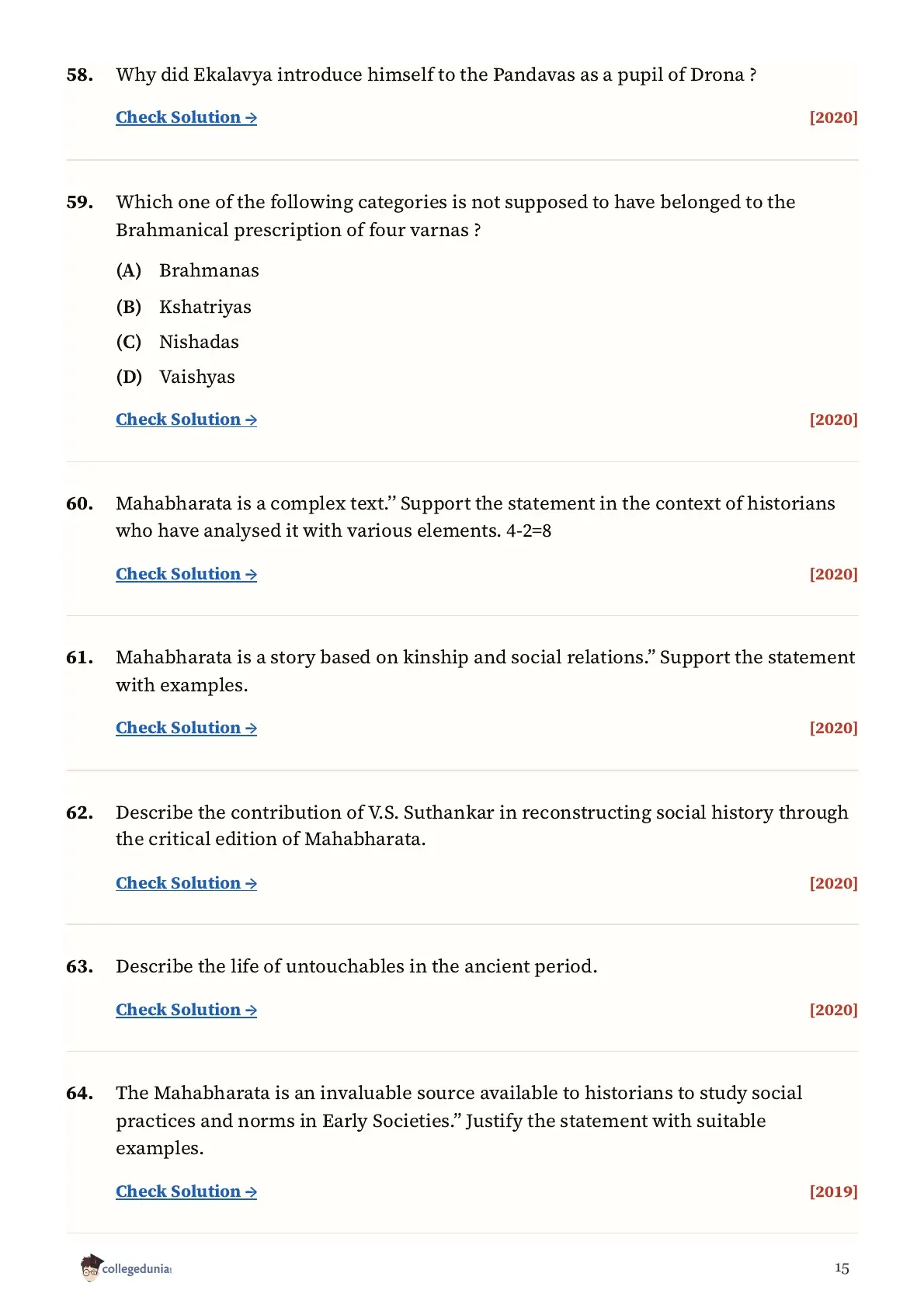
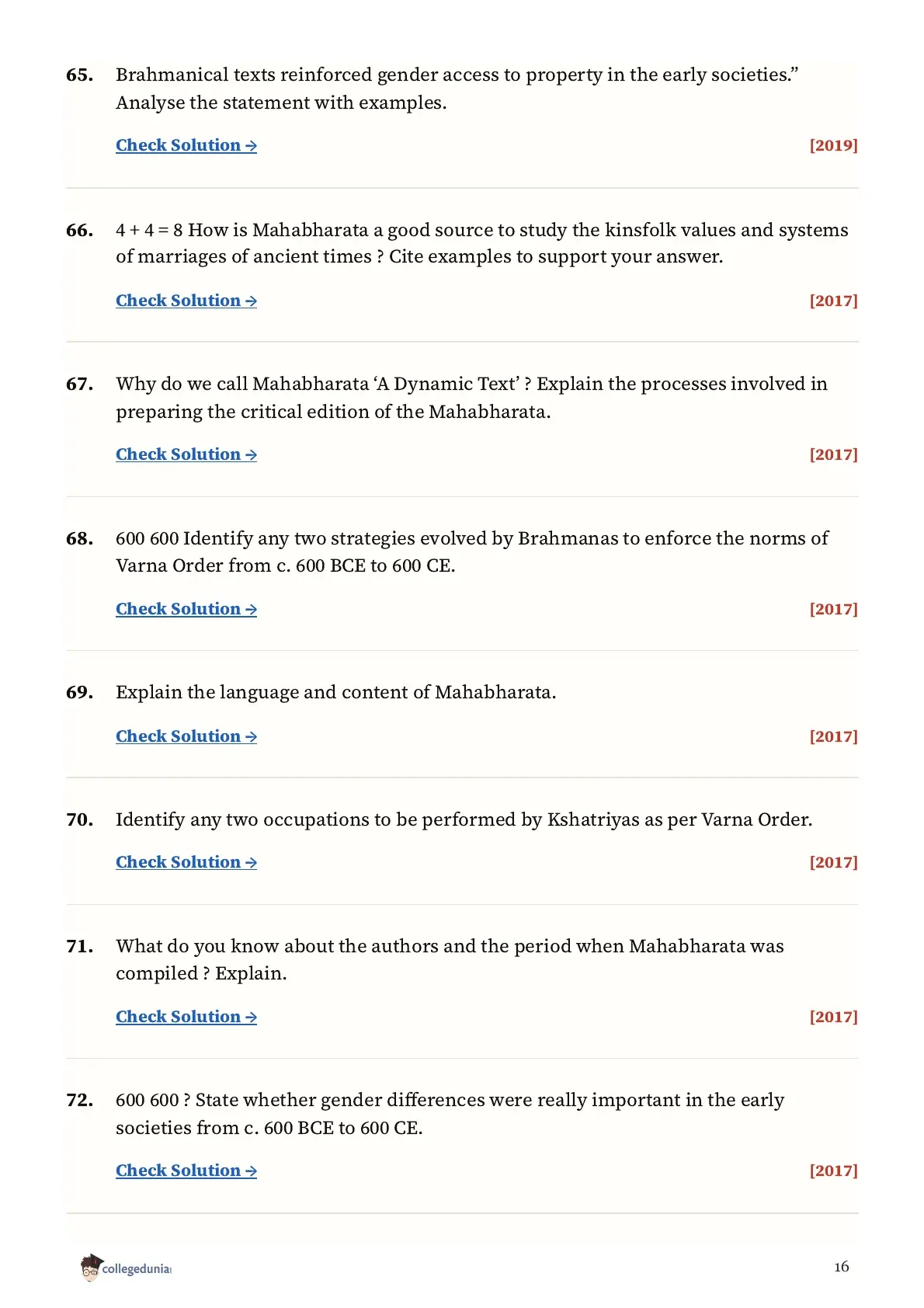
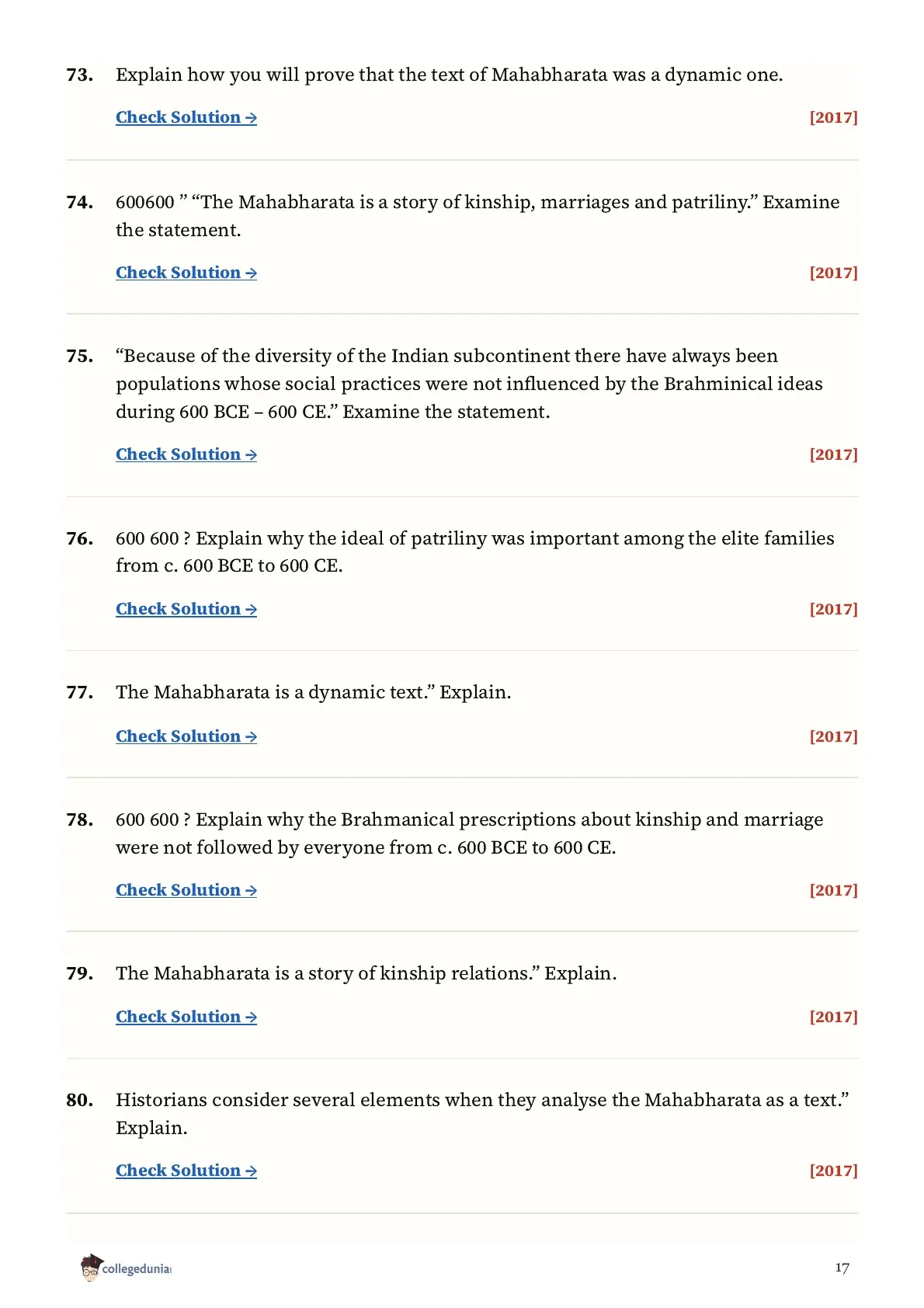
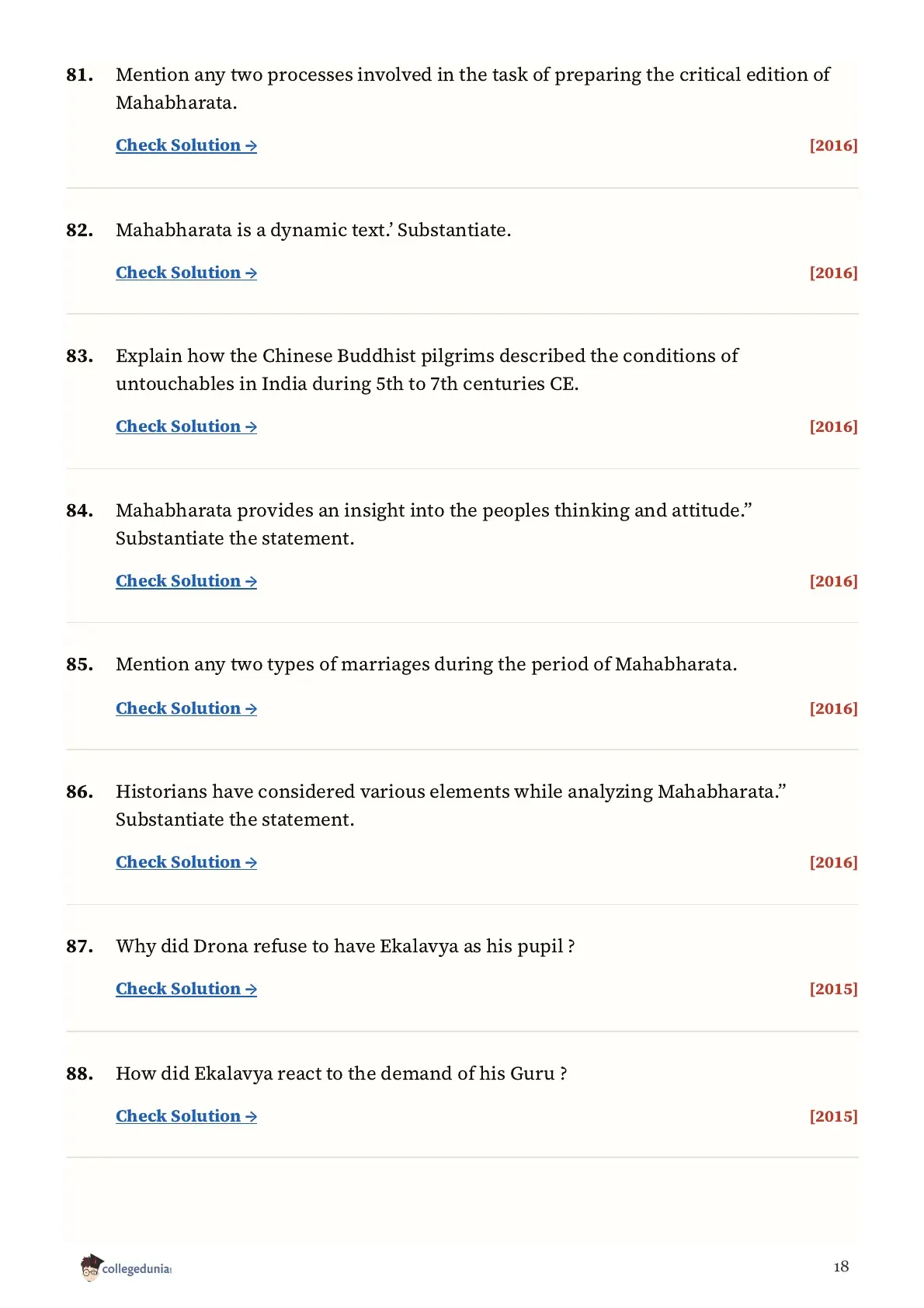
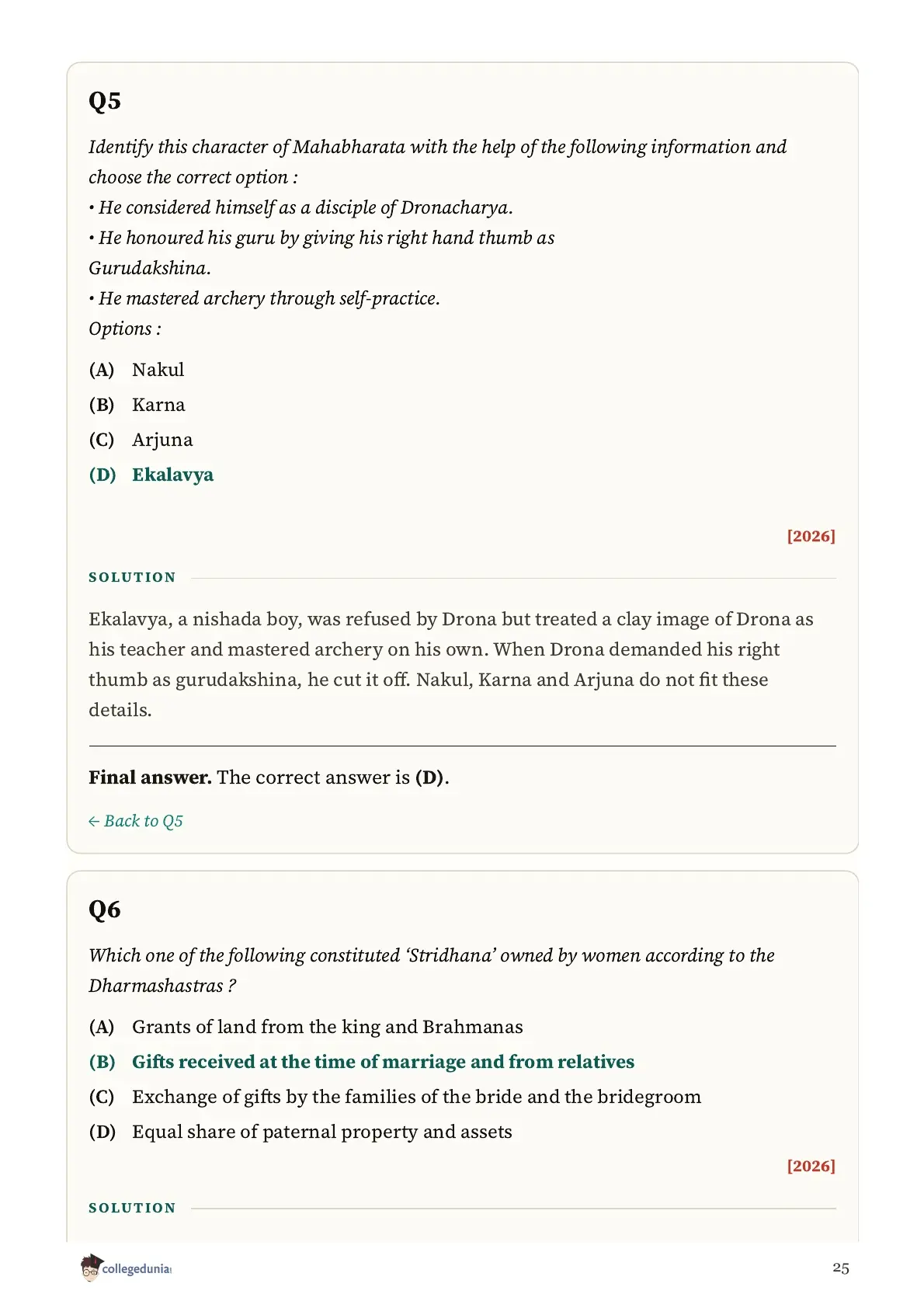
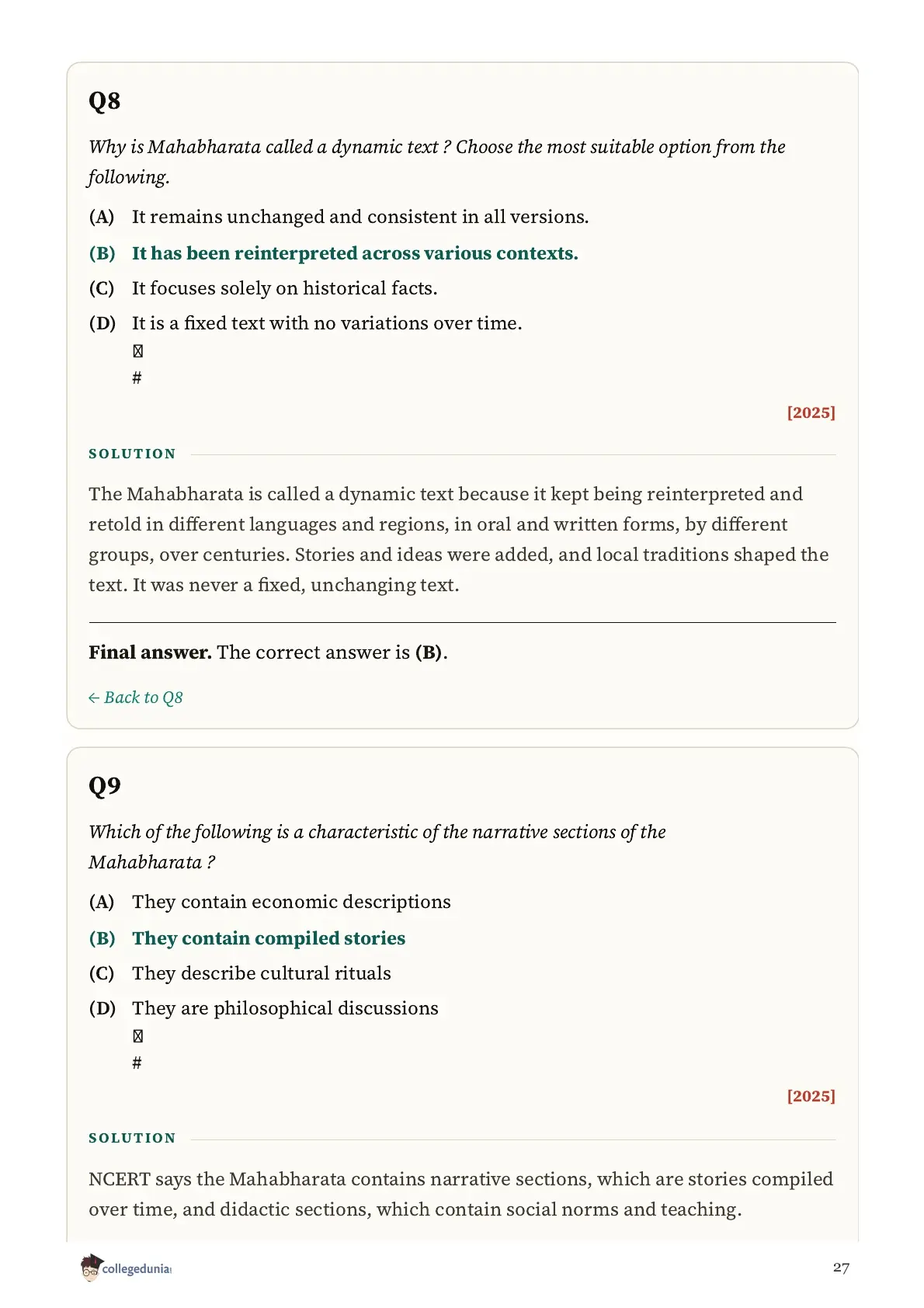
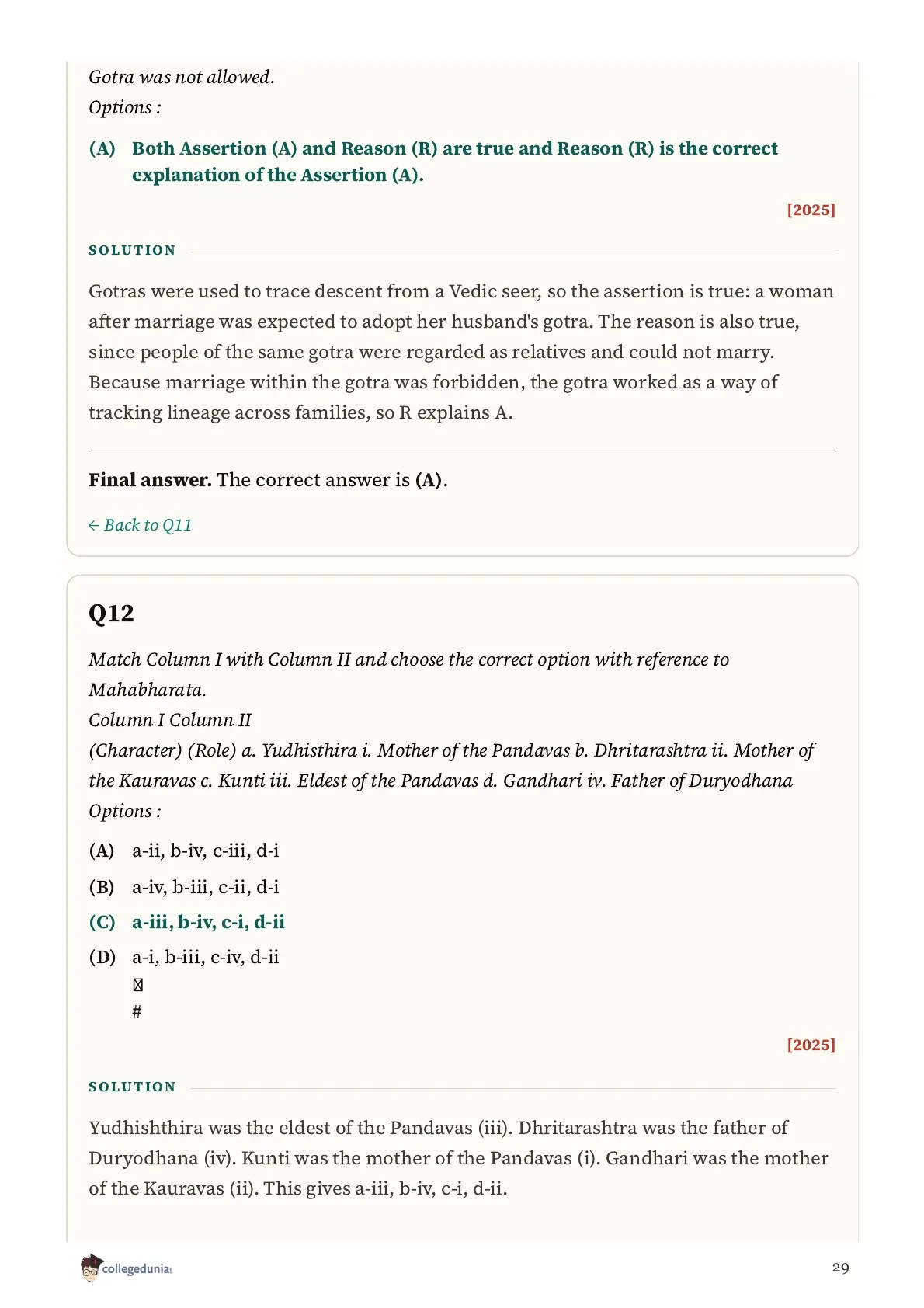
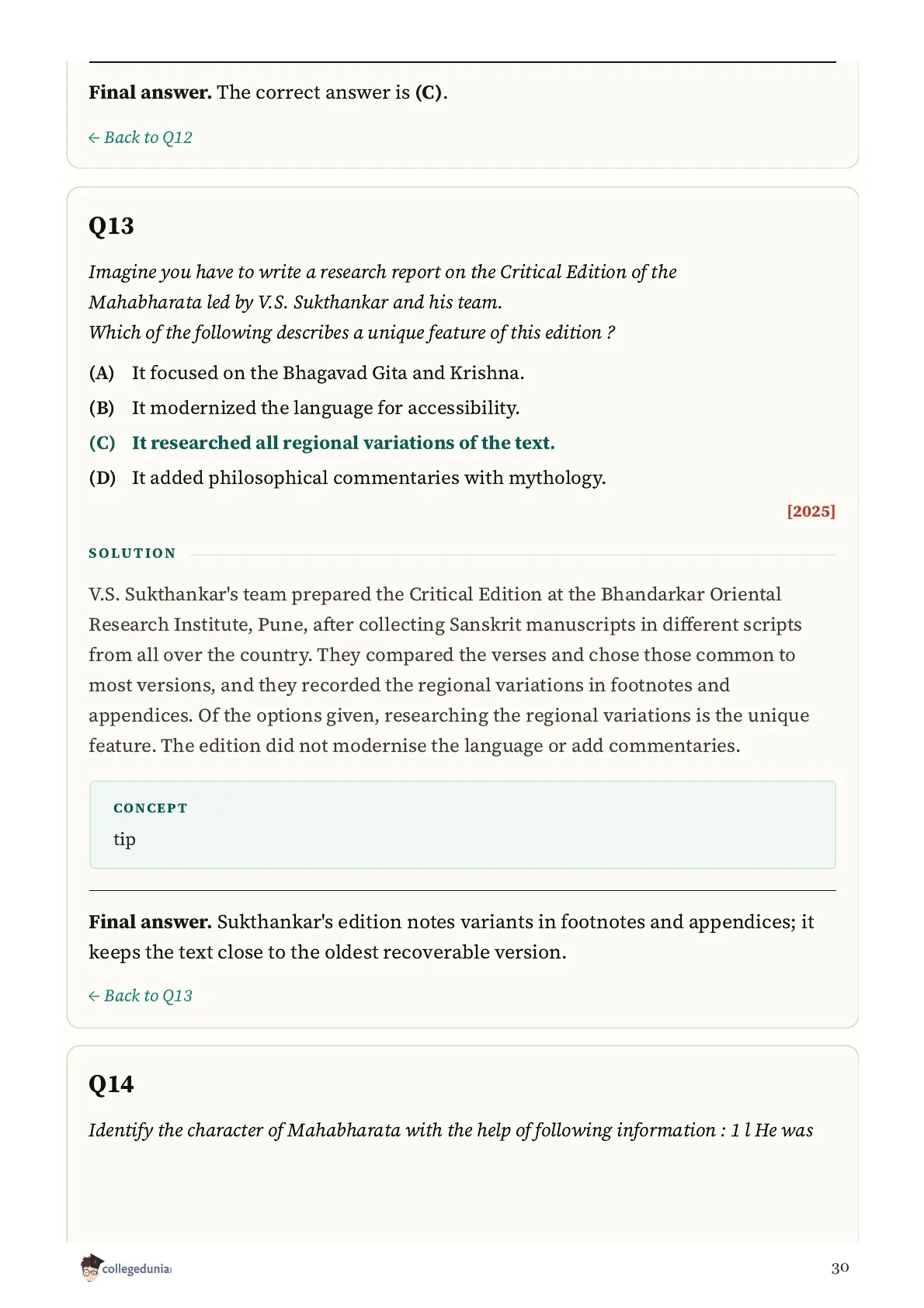
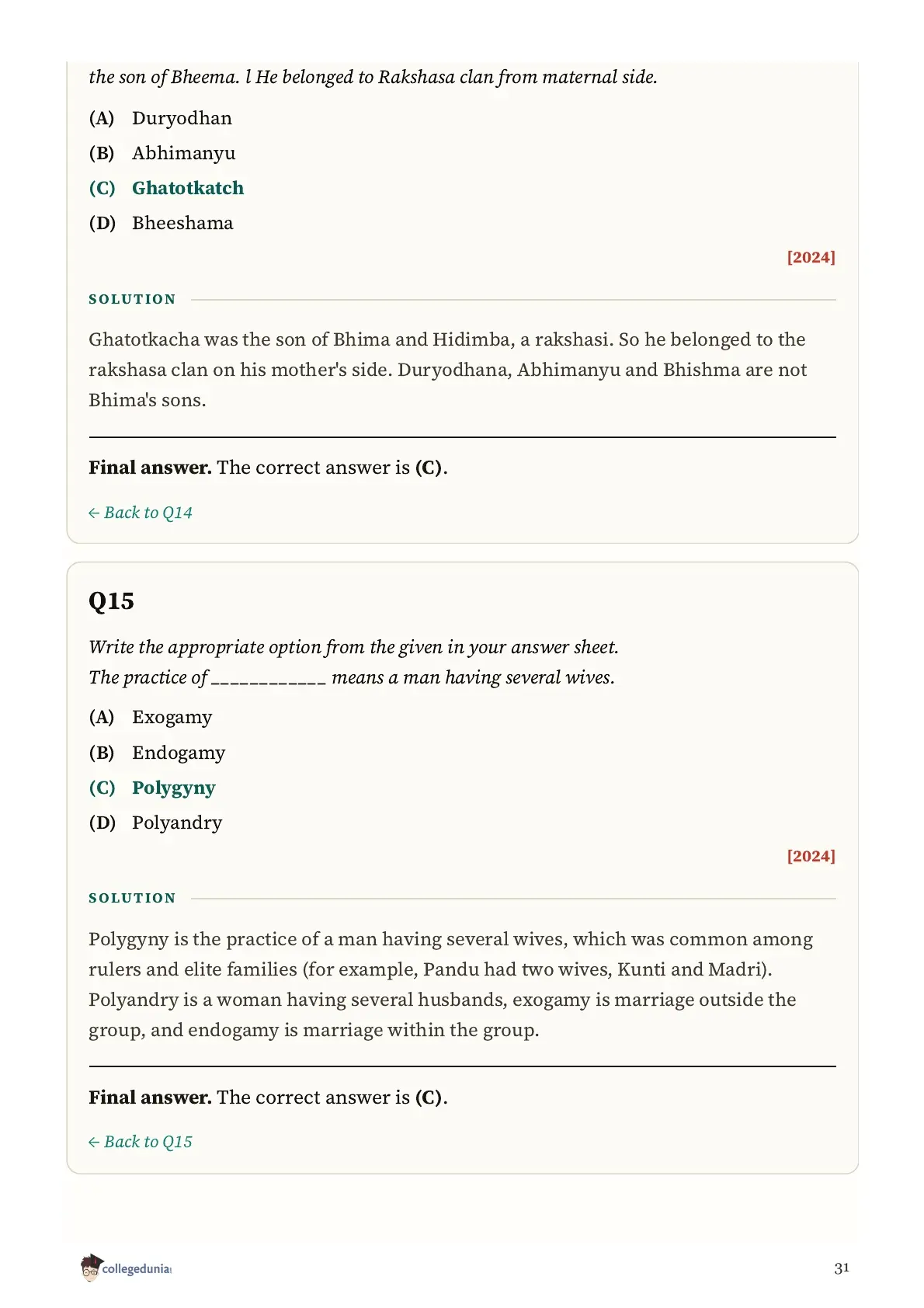
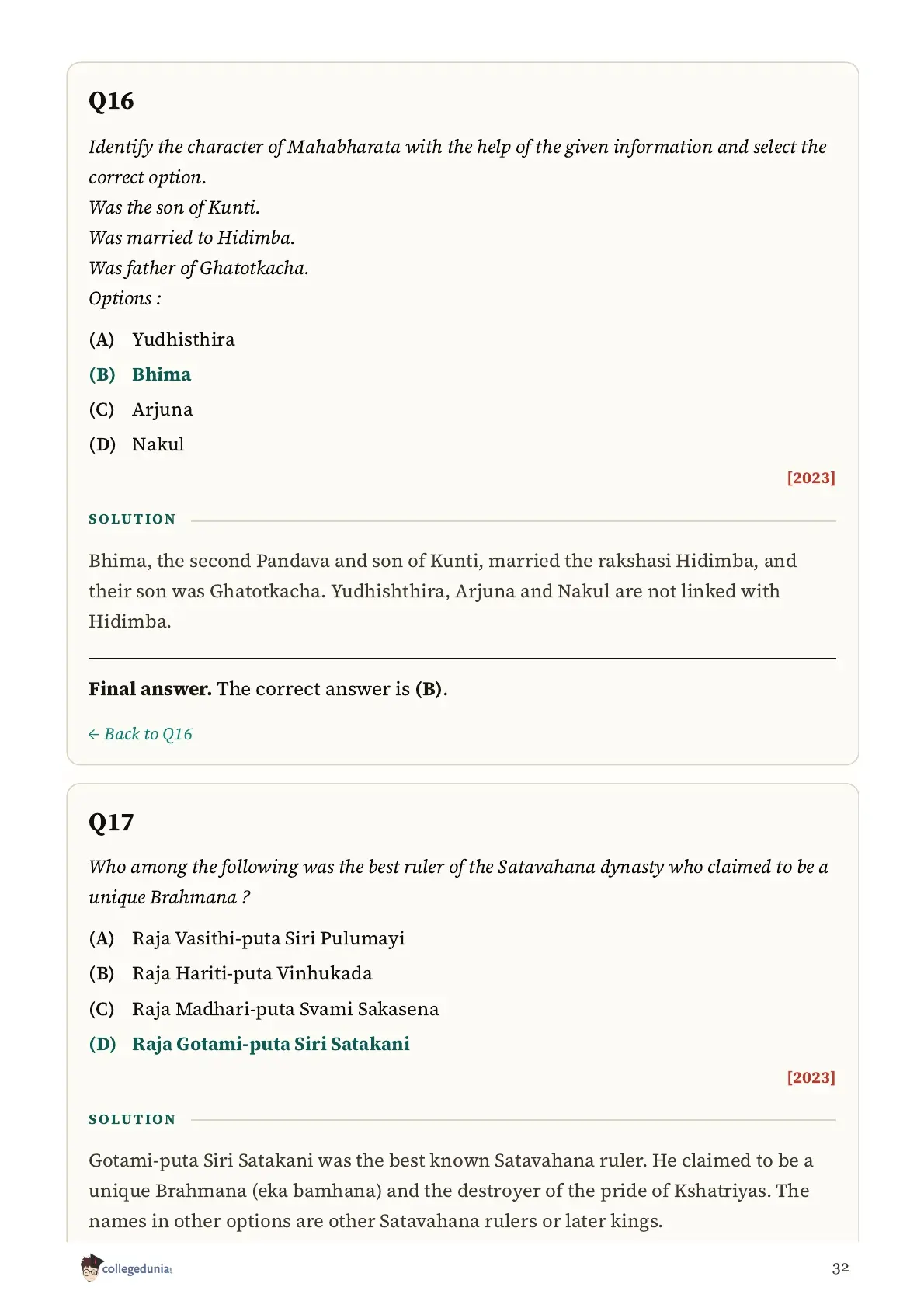
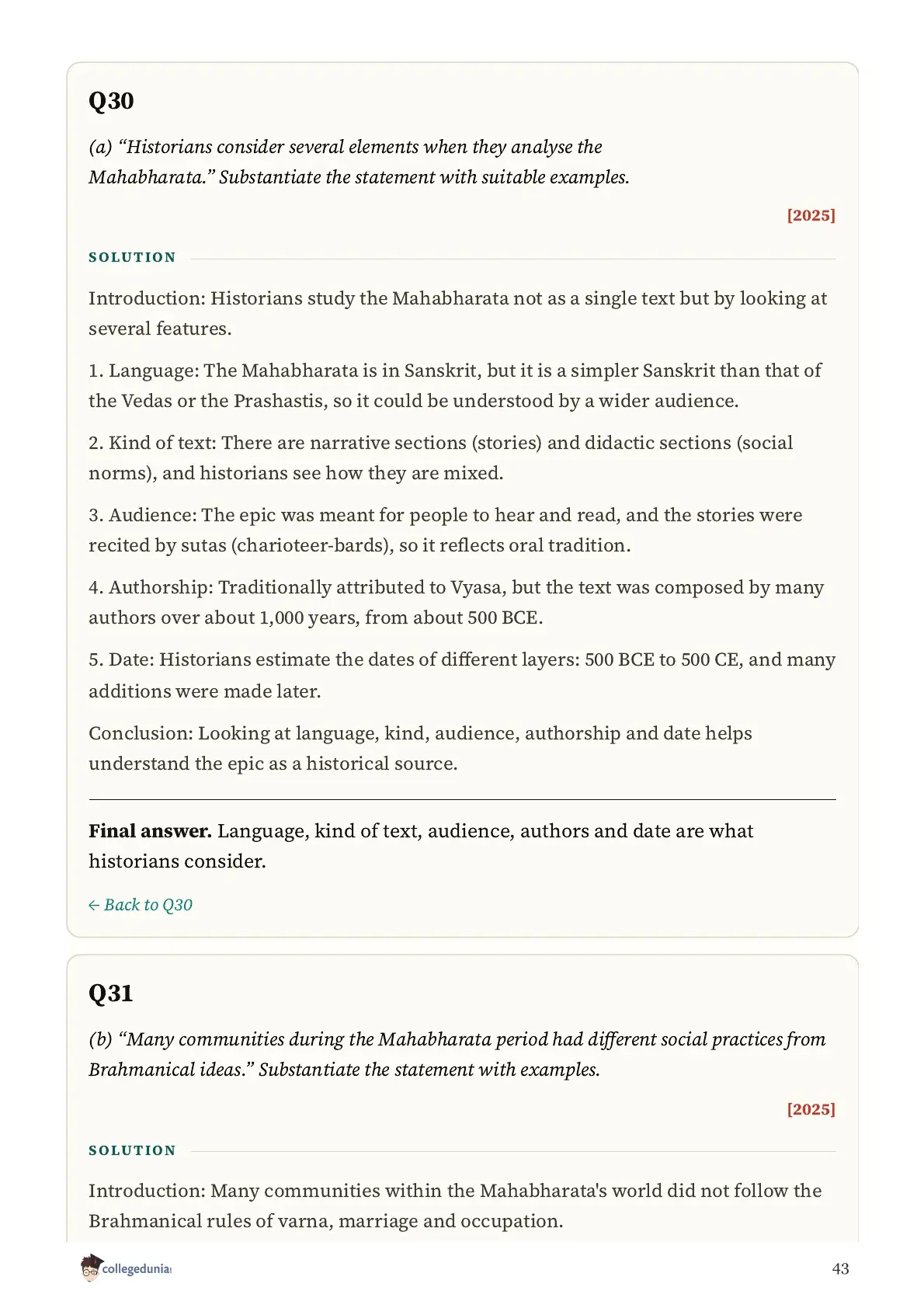
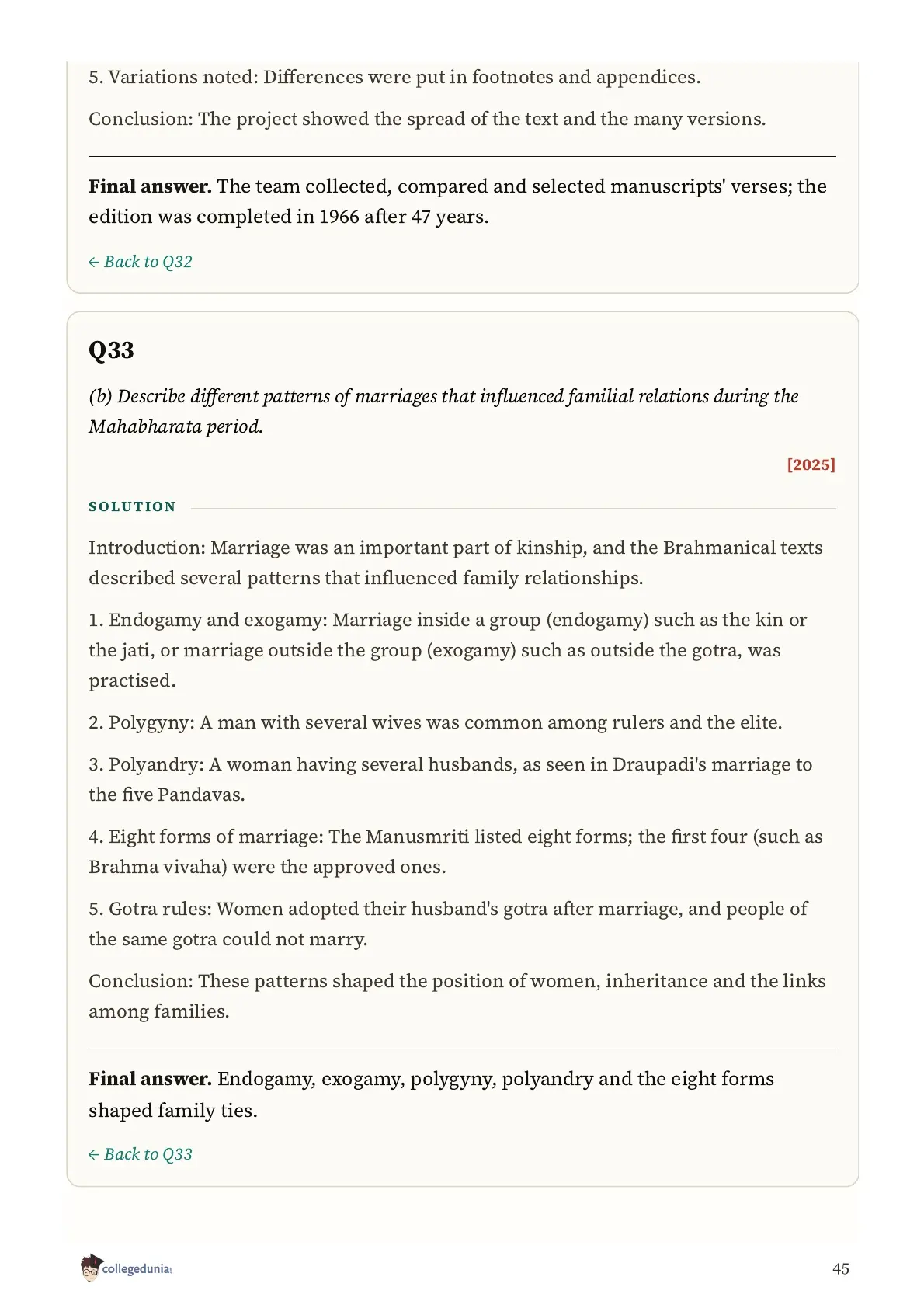
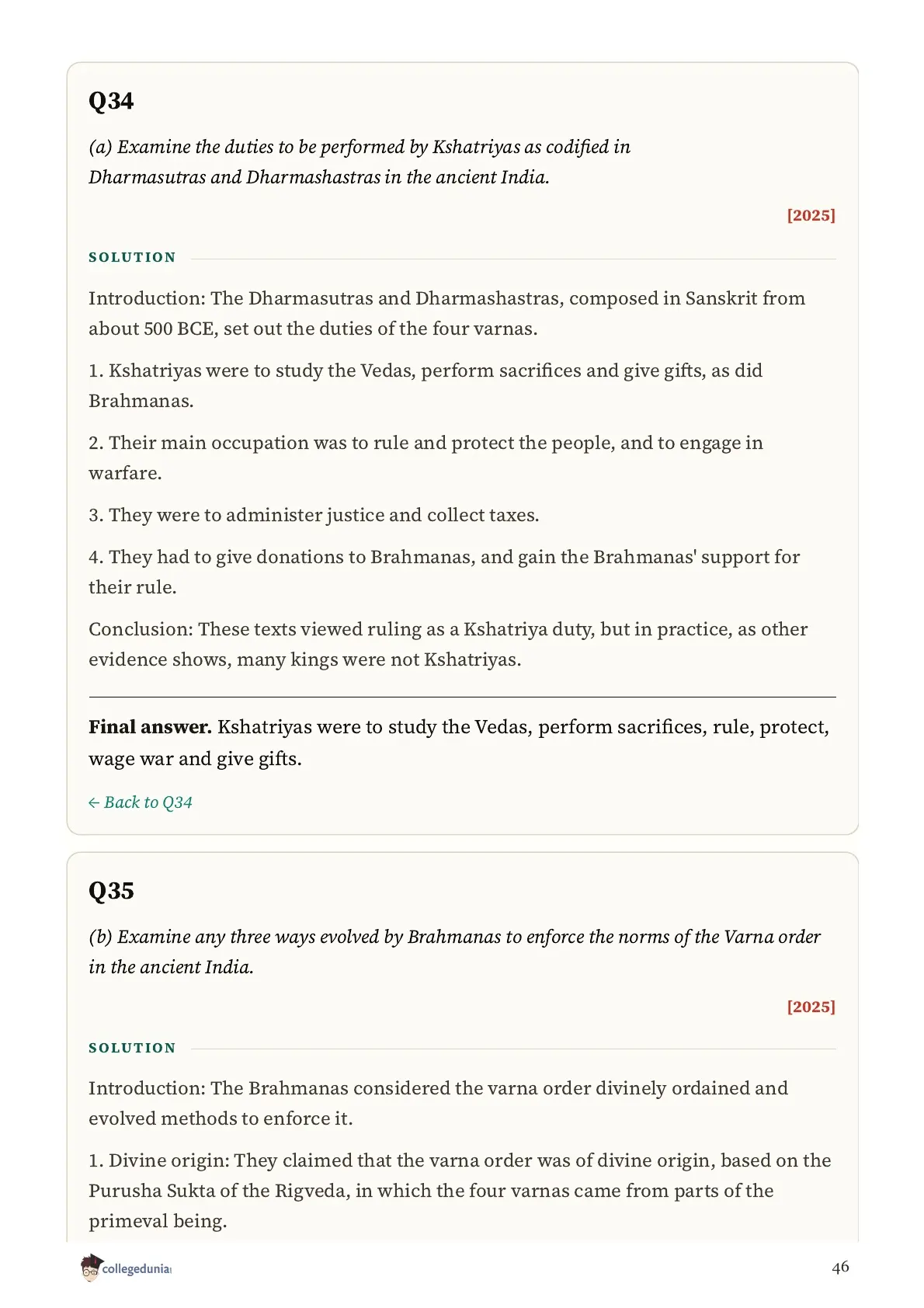
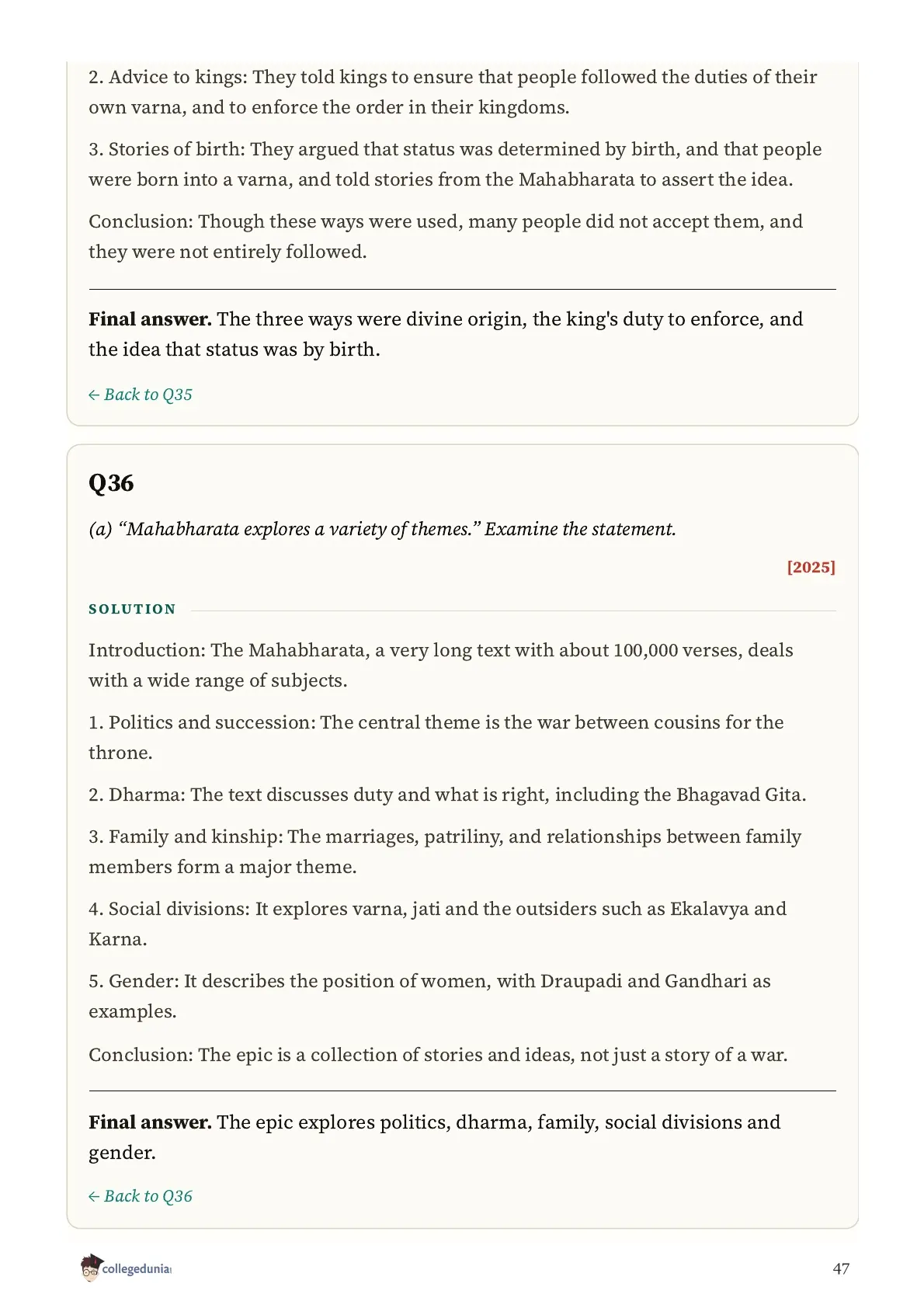
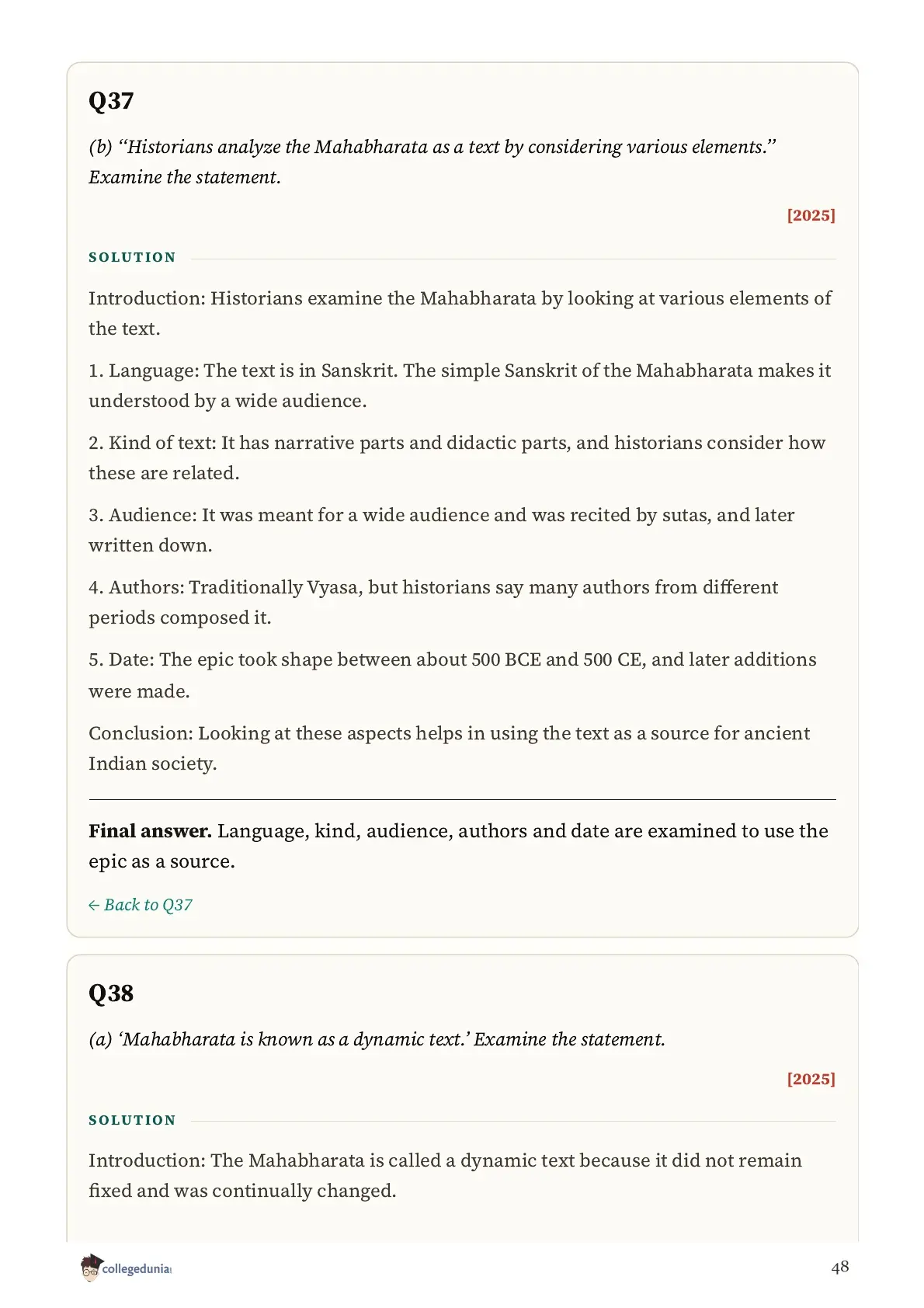
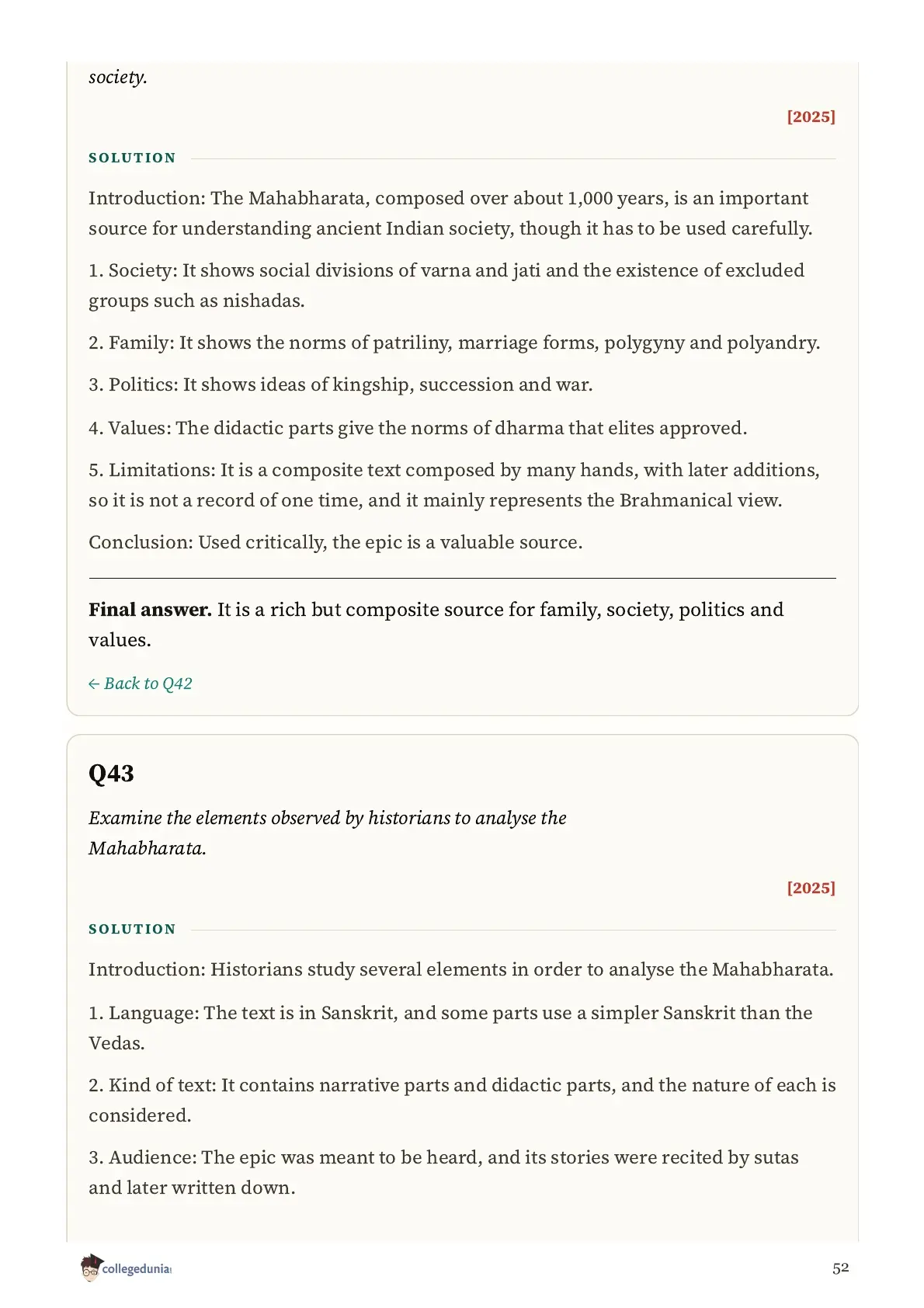
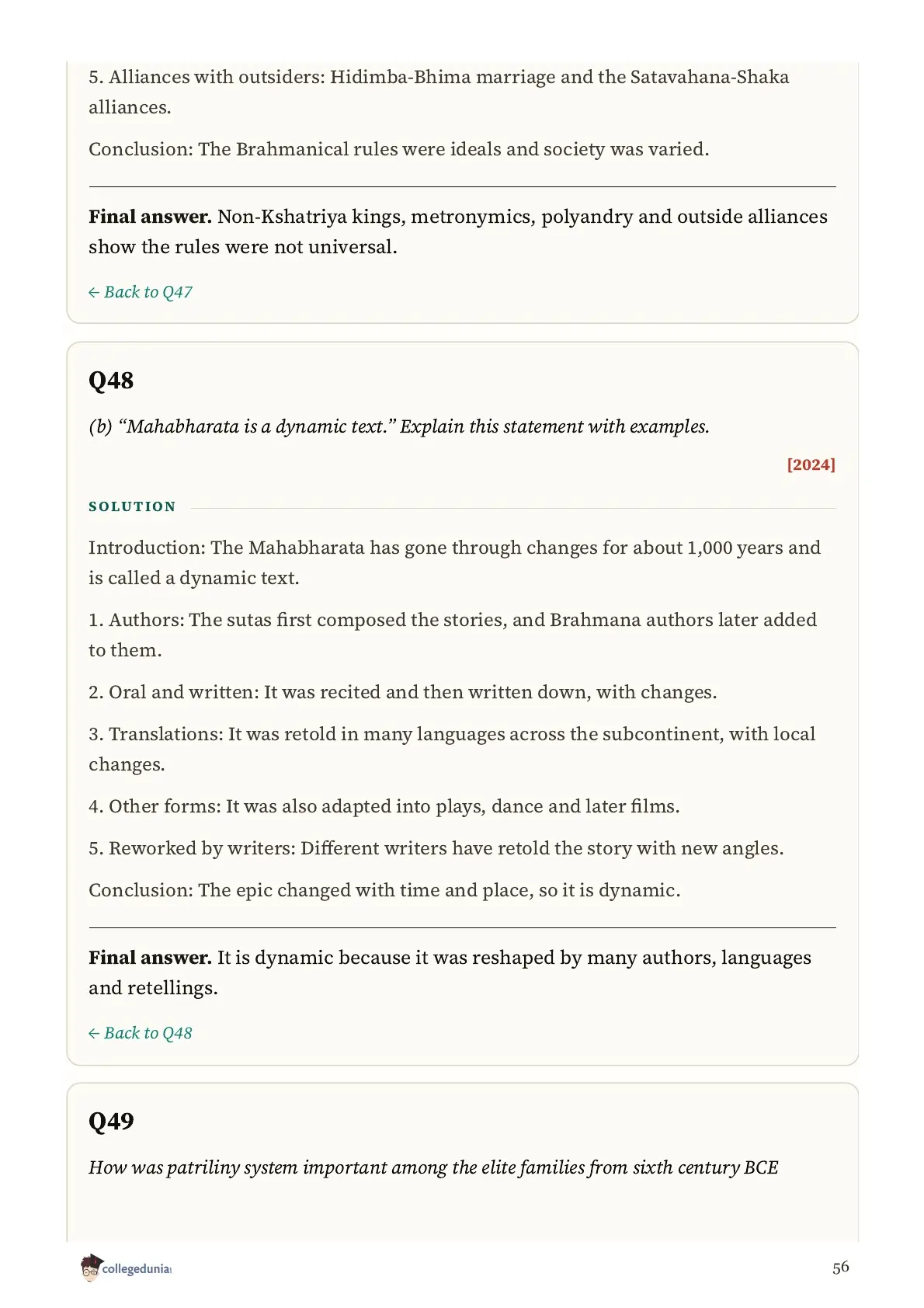
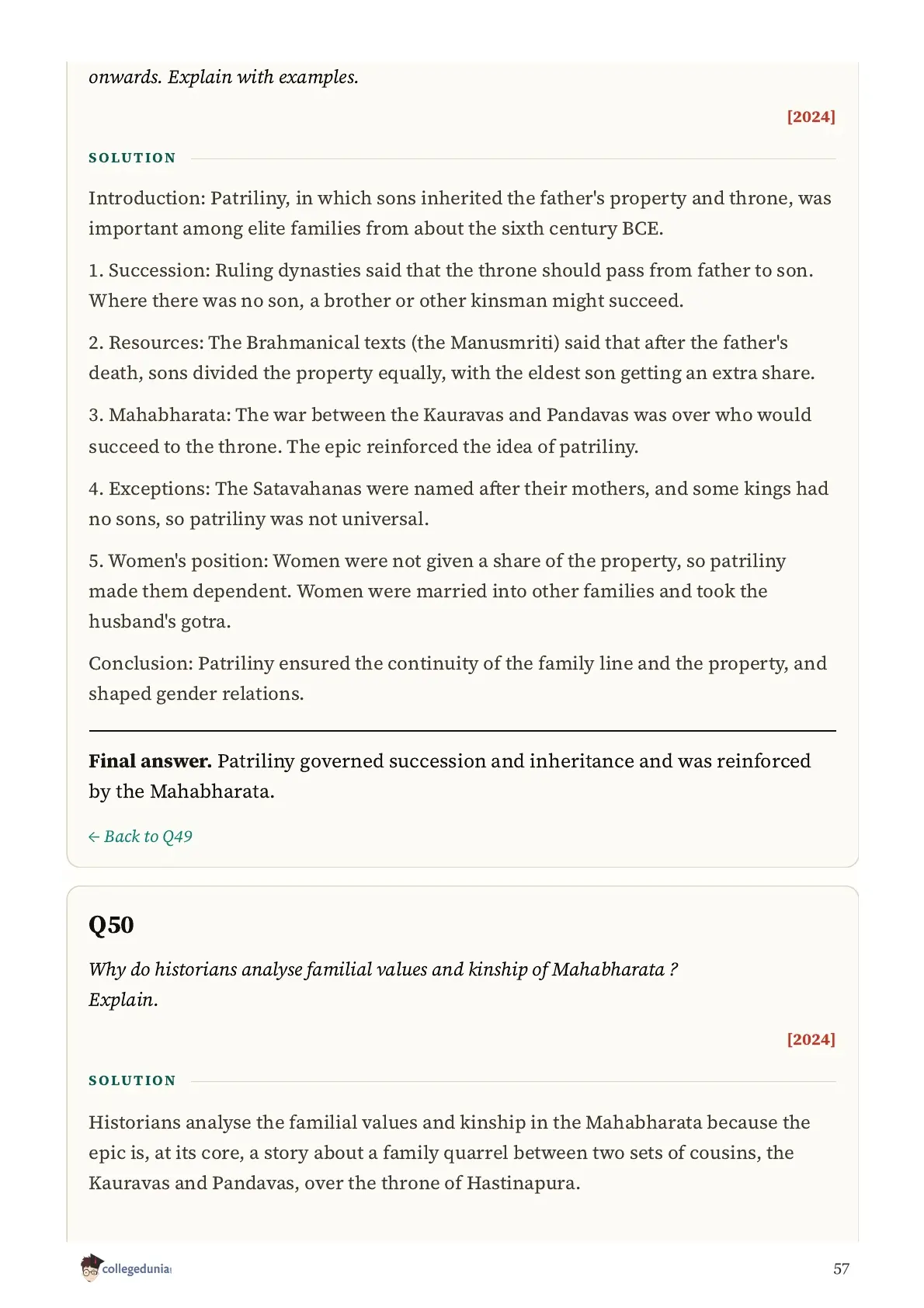
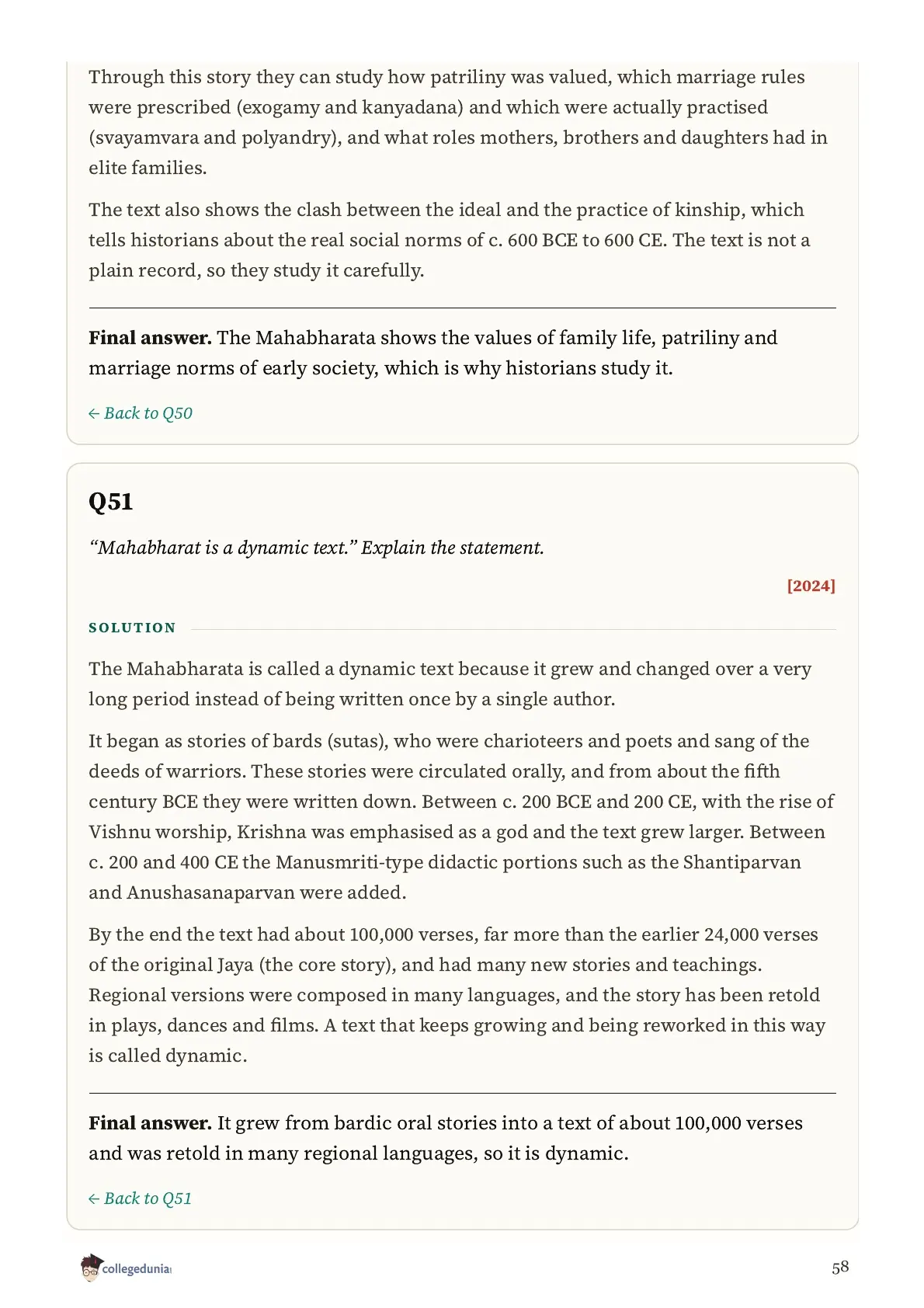
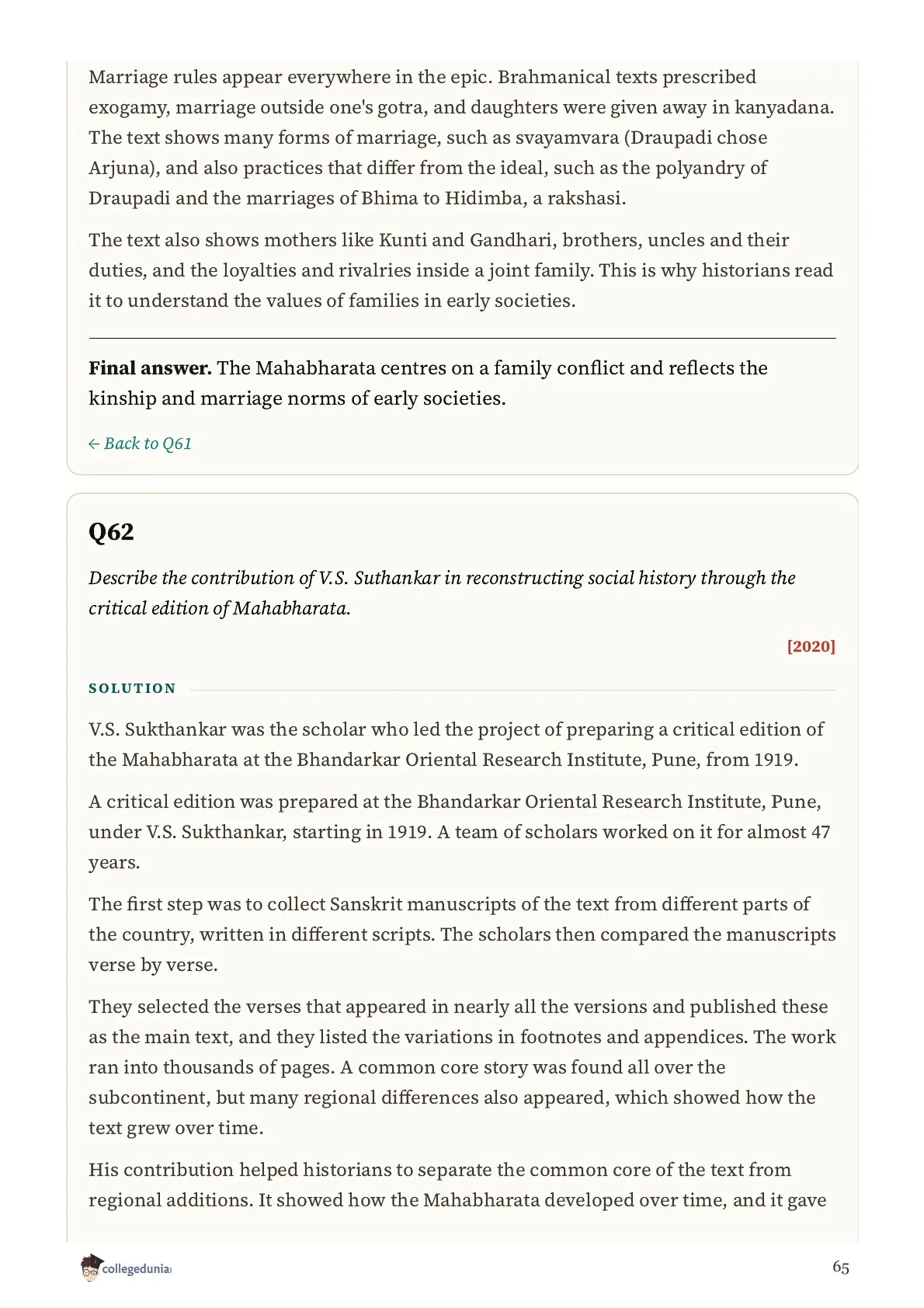
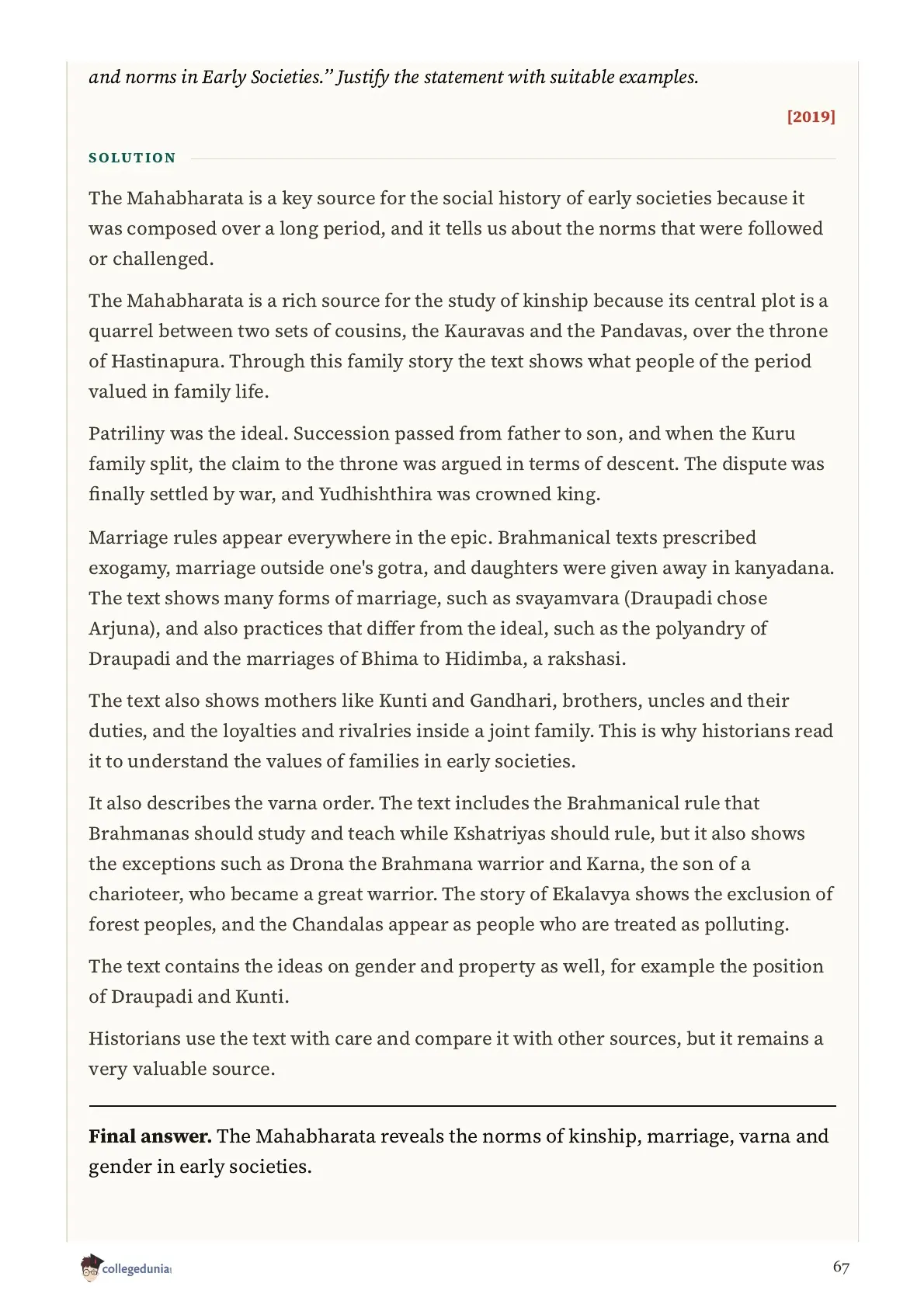
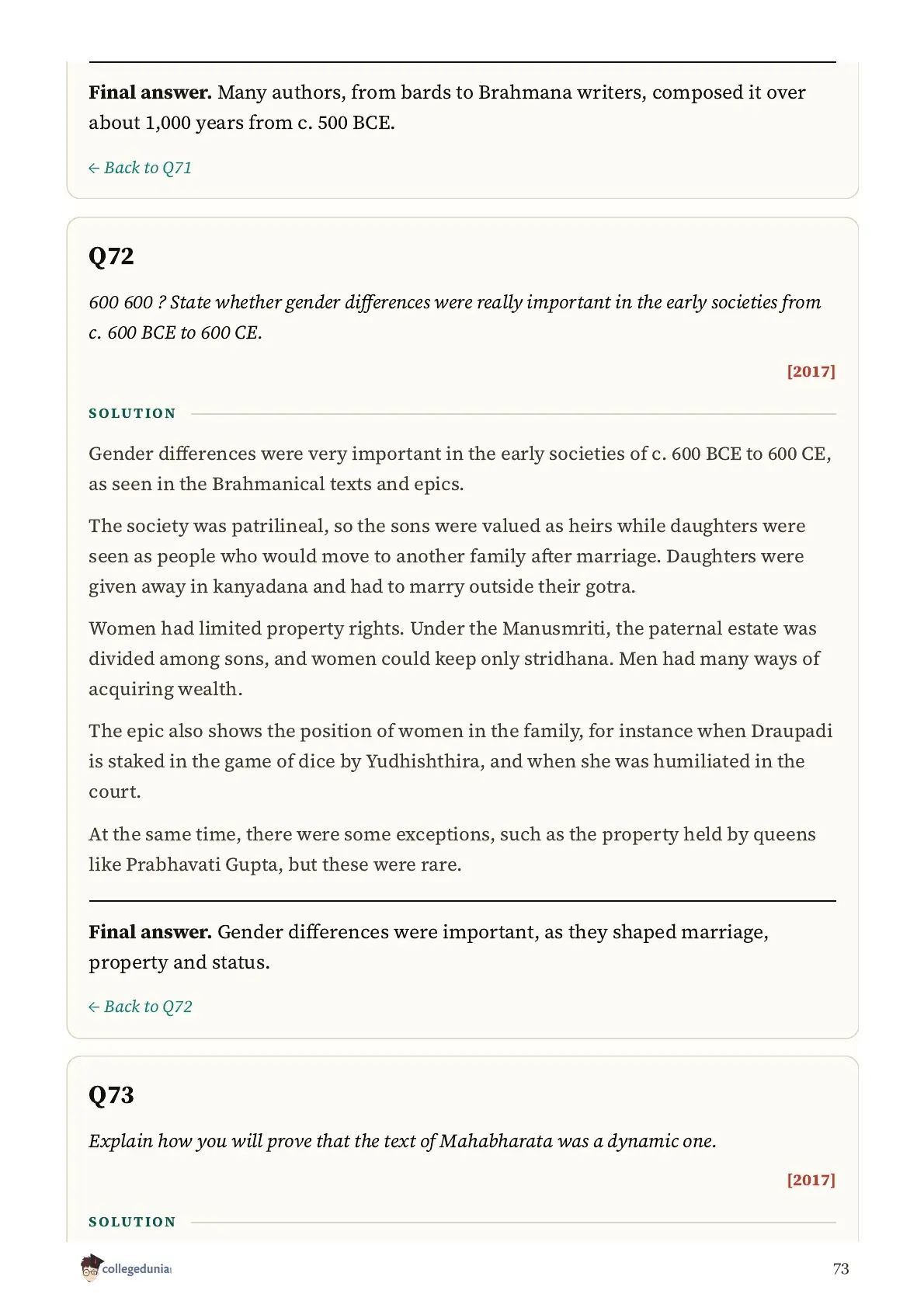
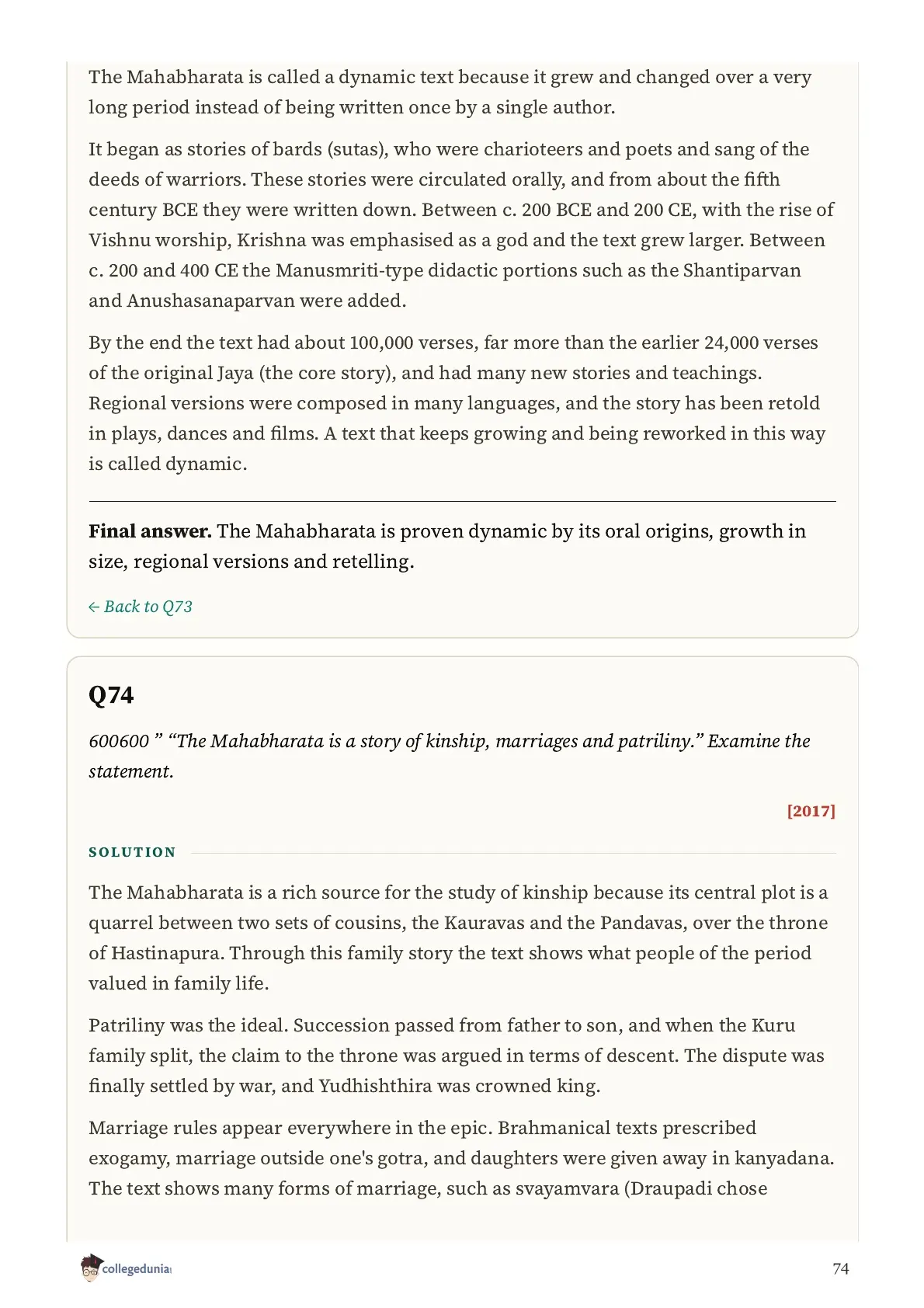
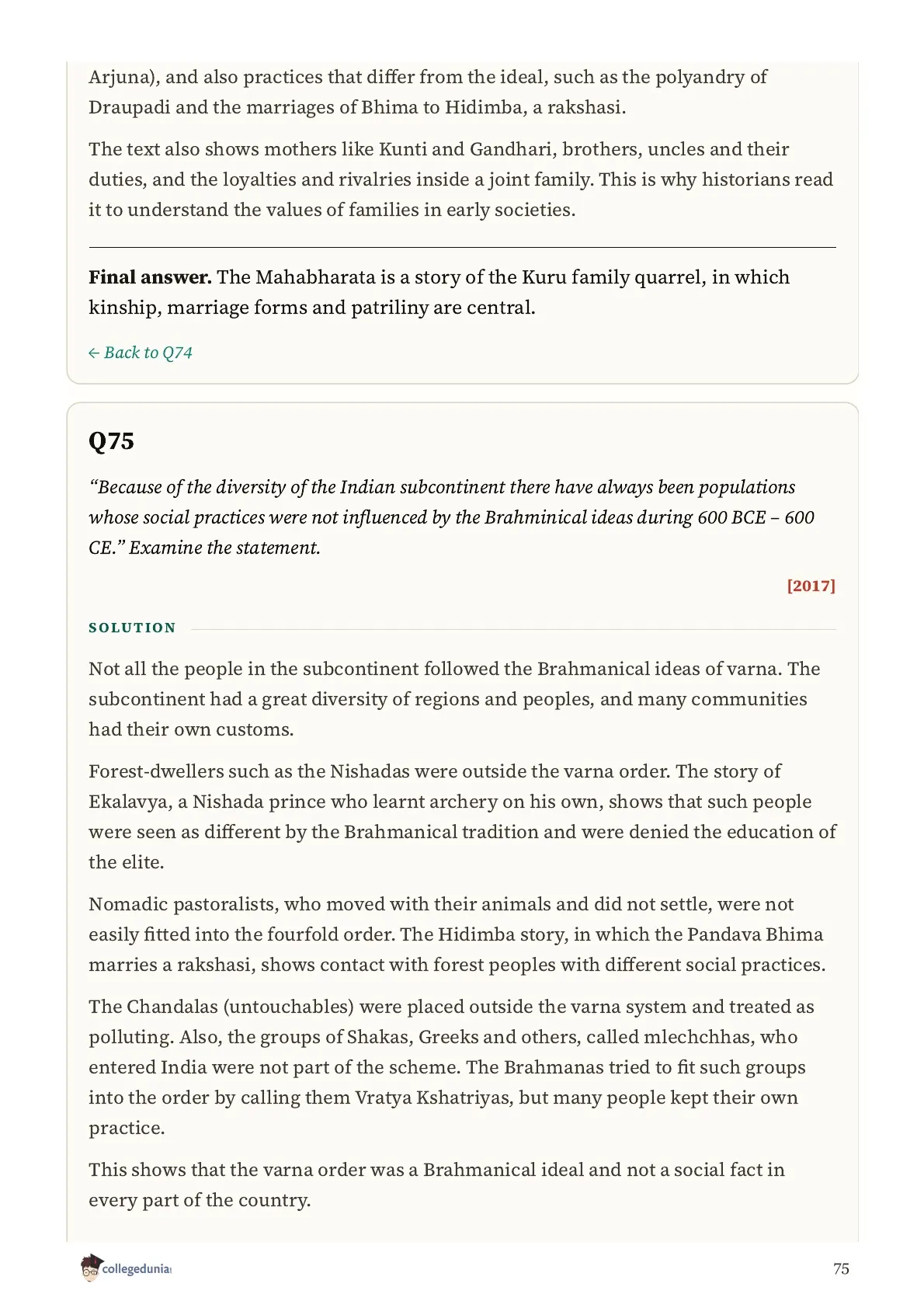
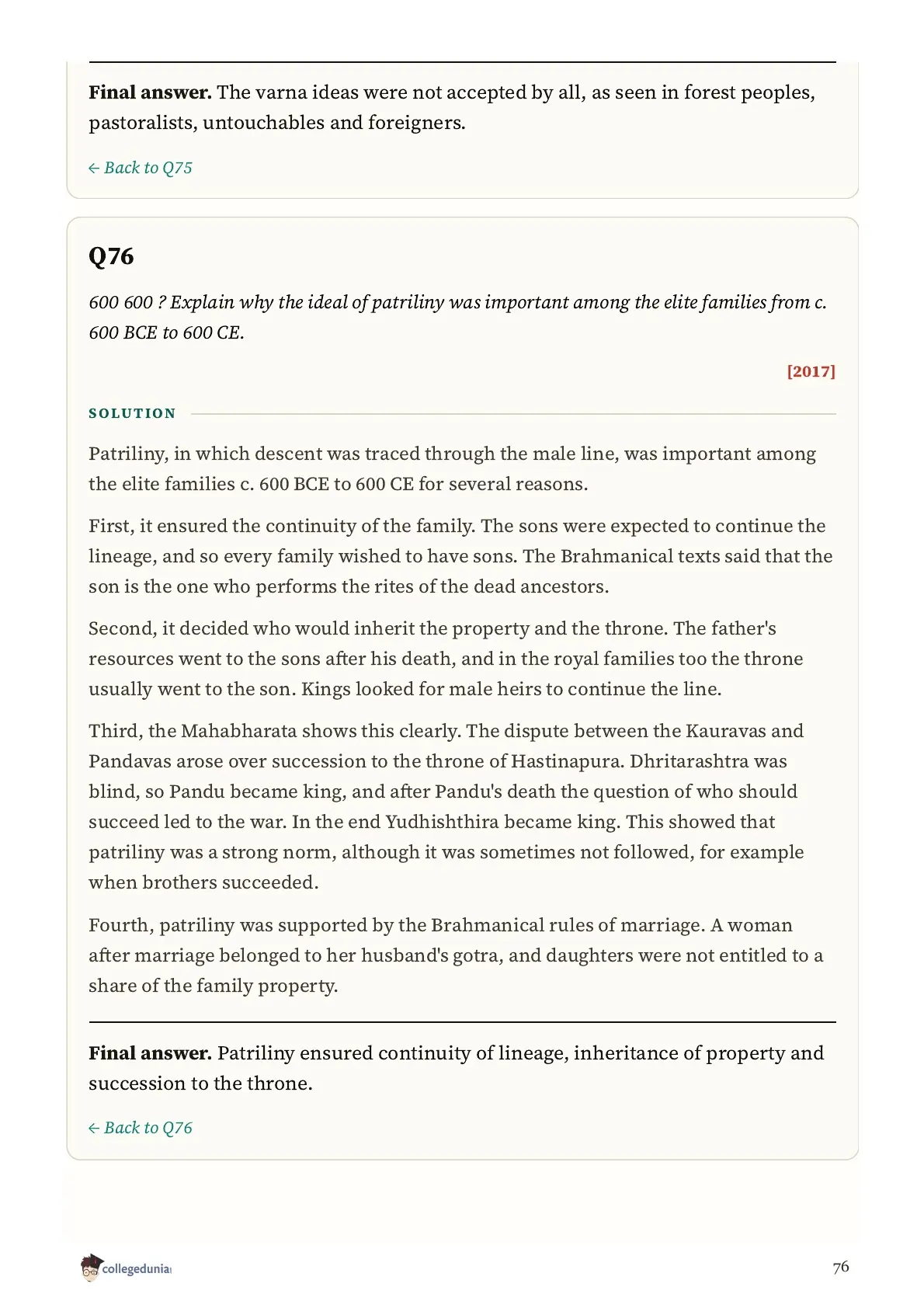
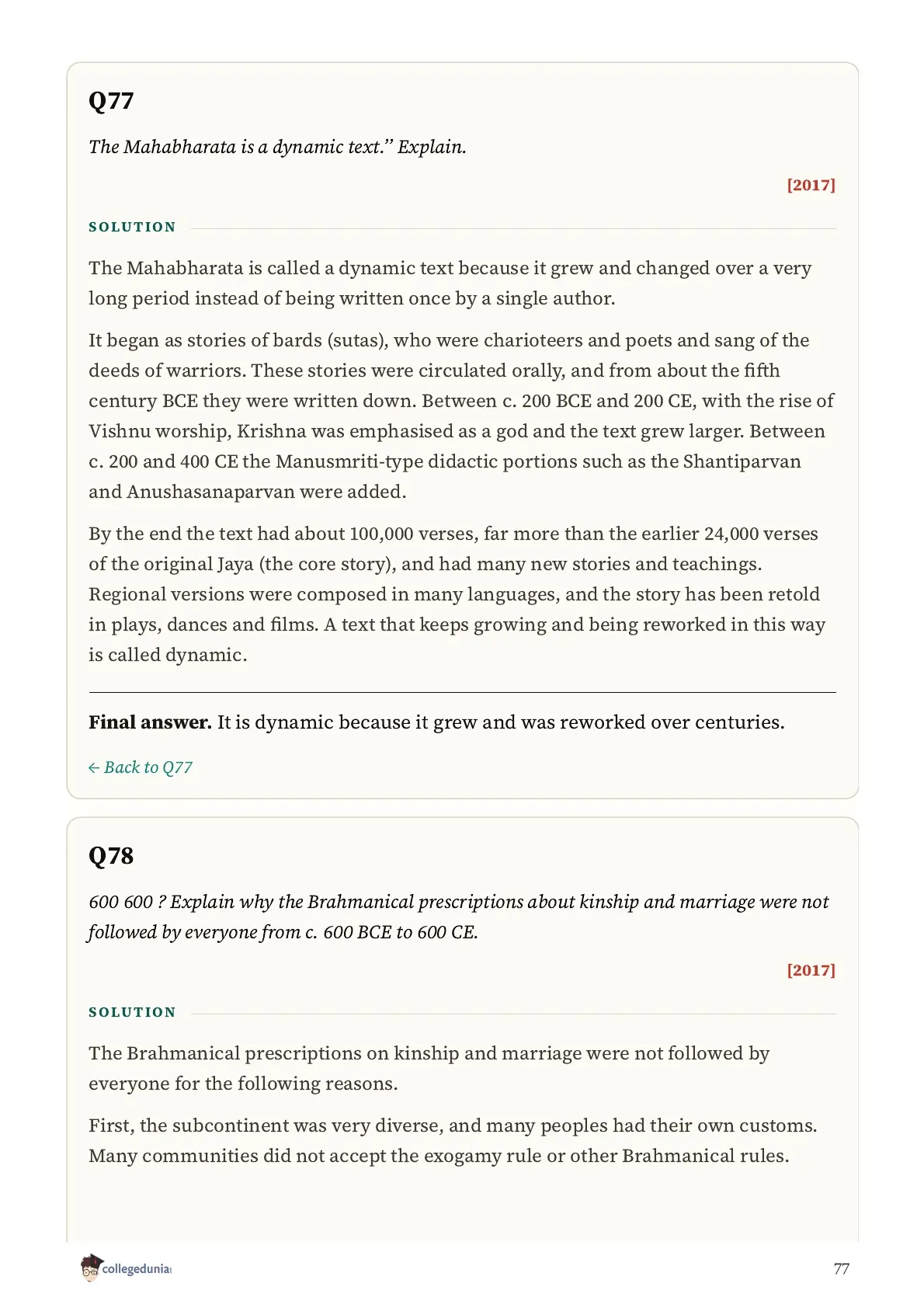
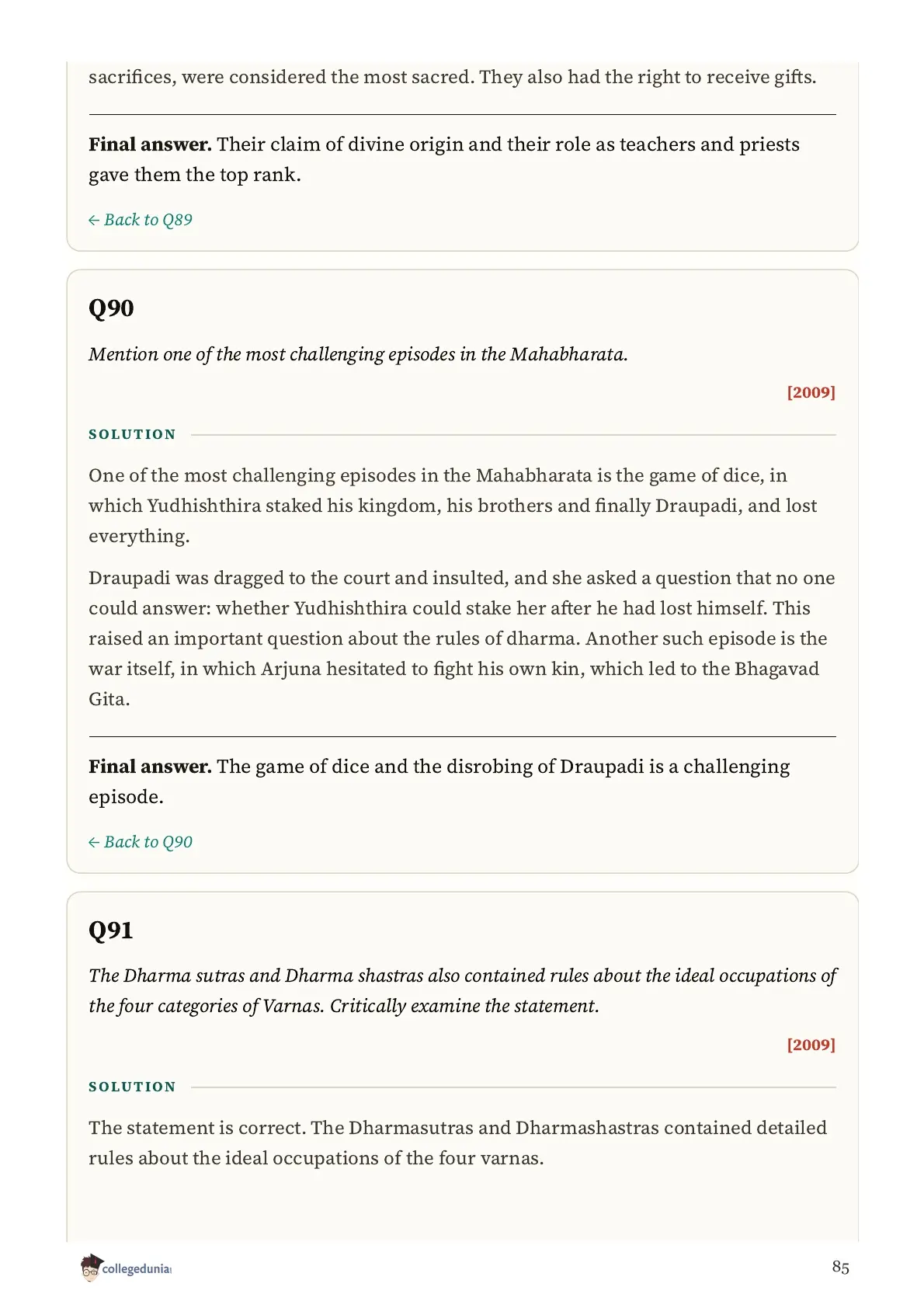
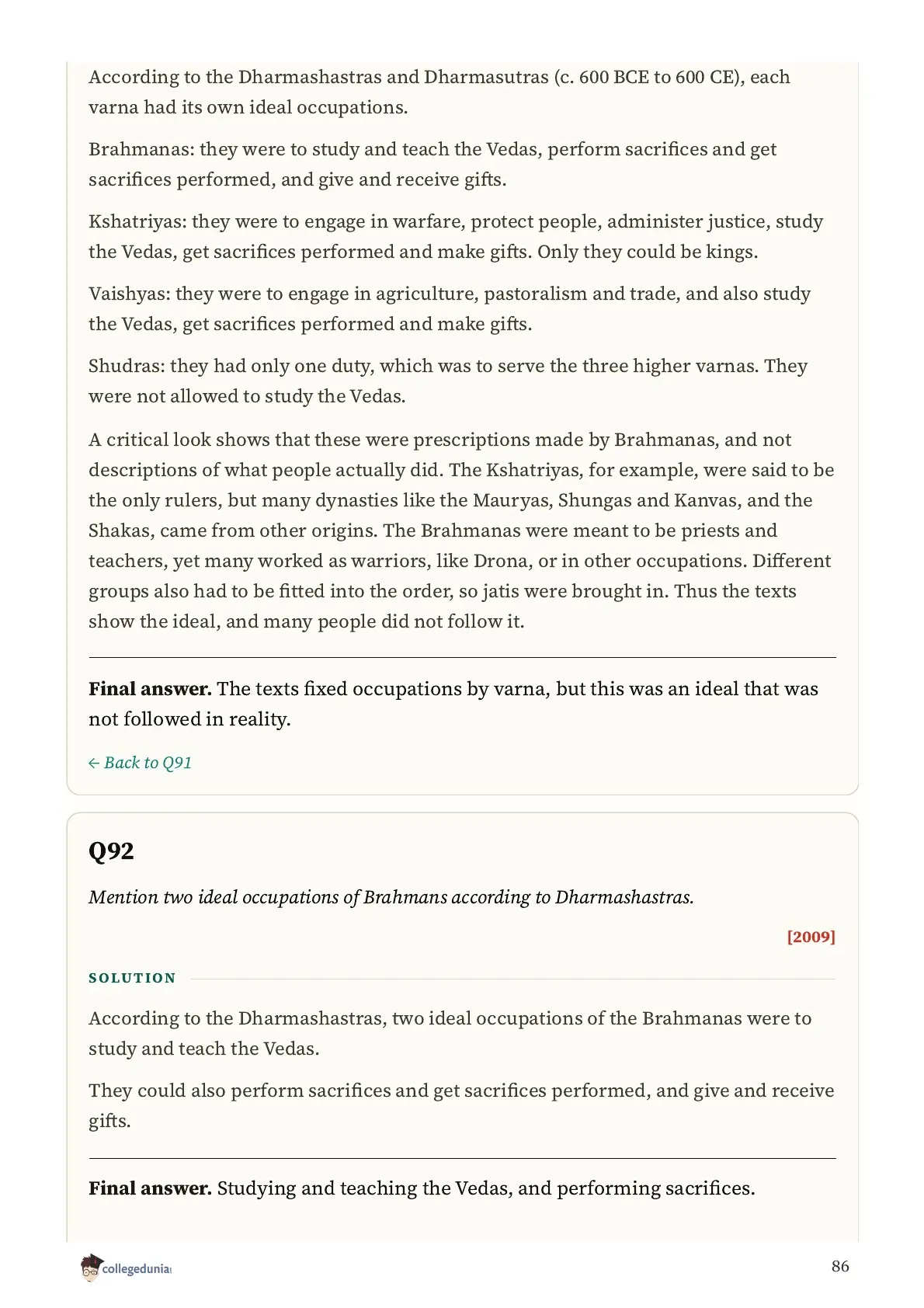
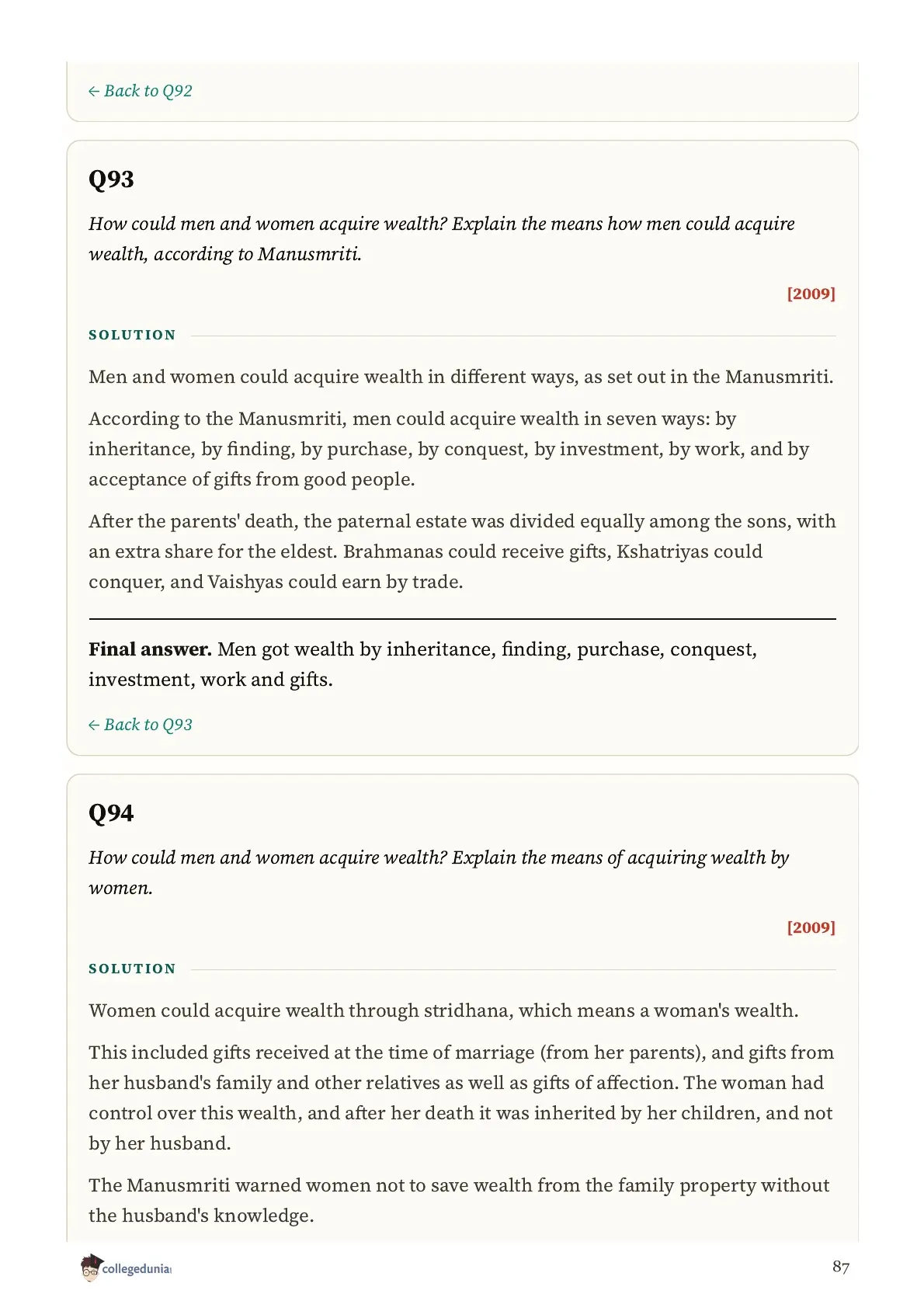
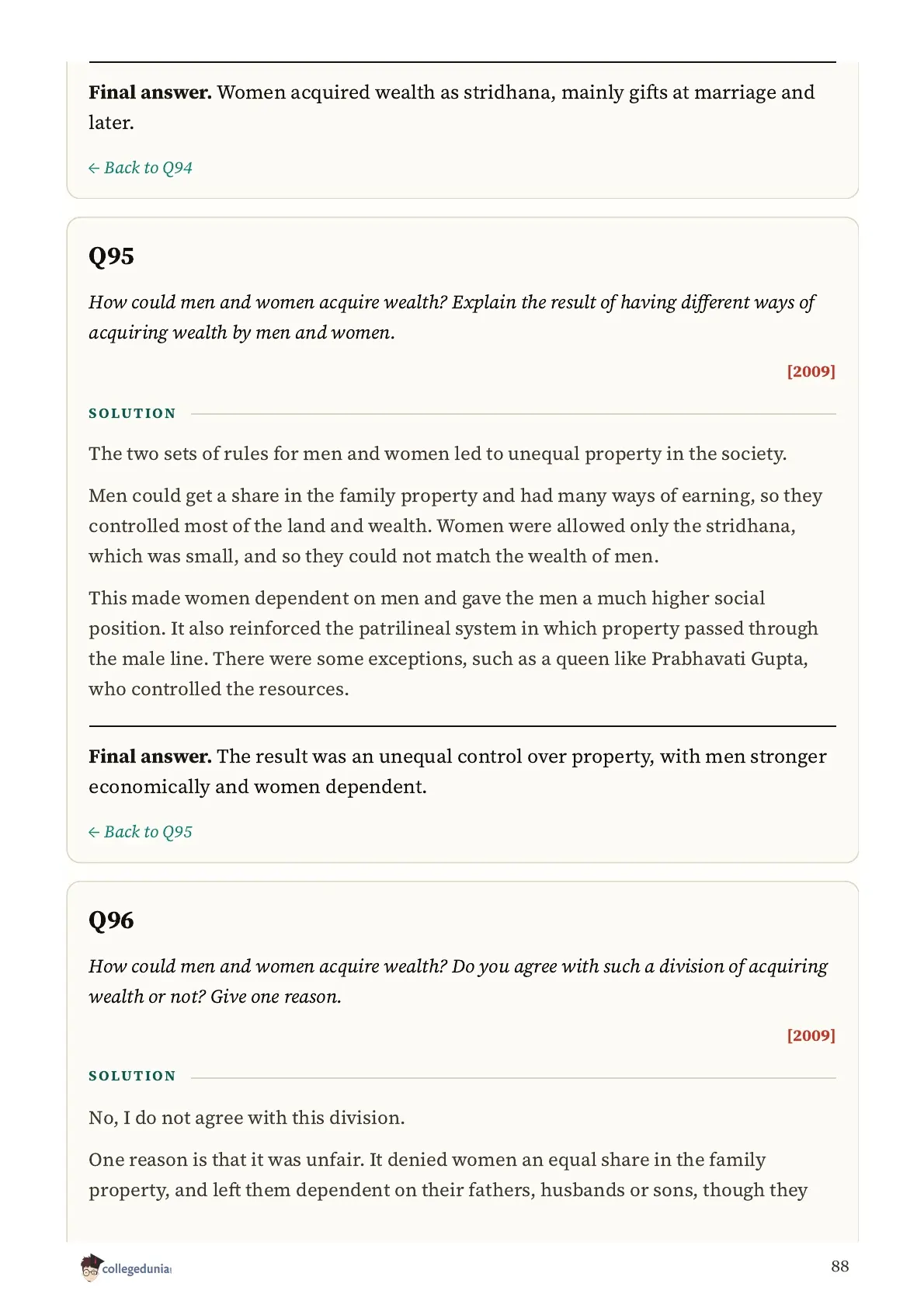
The Mahabharata is the centre of the theme, with 50 questions. They ask about its composition, why it is read as a story of kinship, marriages and patriliny, and how its characters show the rules of the time. The topic counts come from keyword matches, so a question on two topics is counted under both.
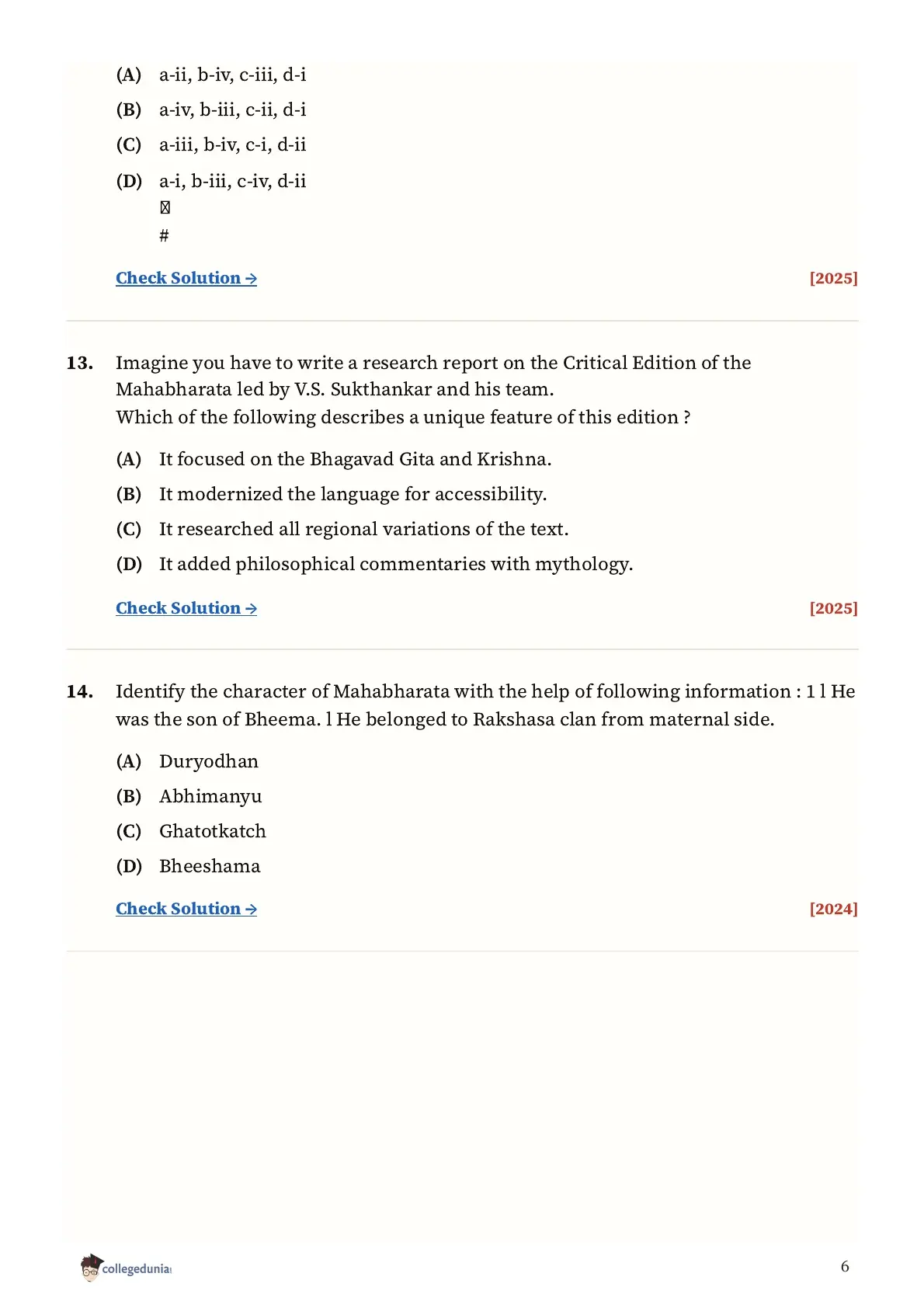
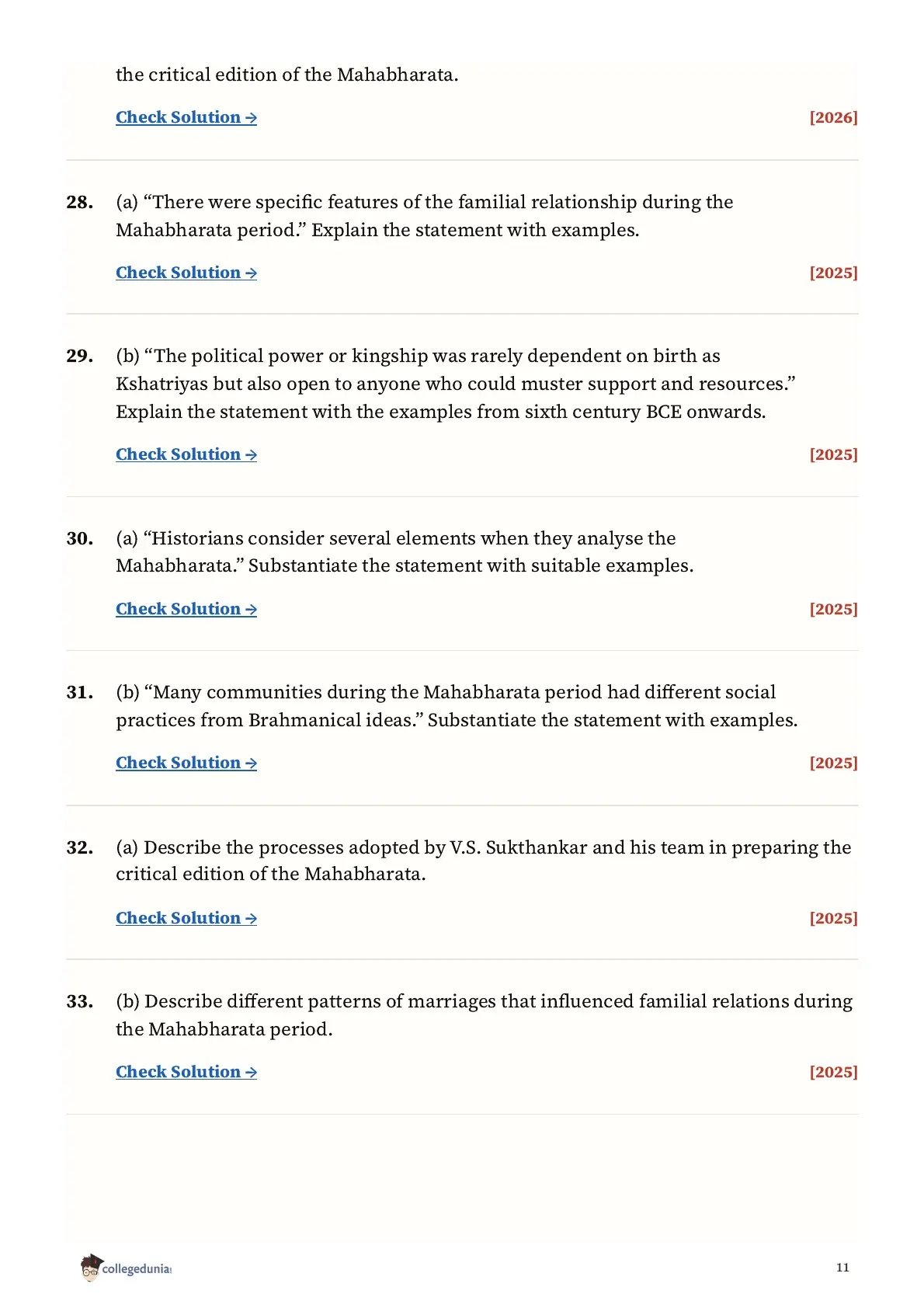
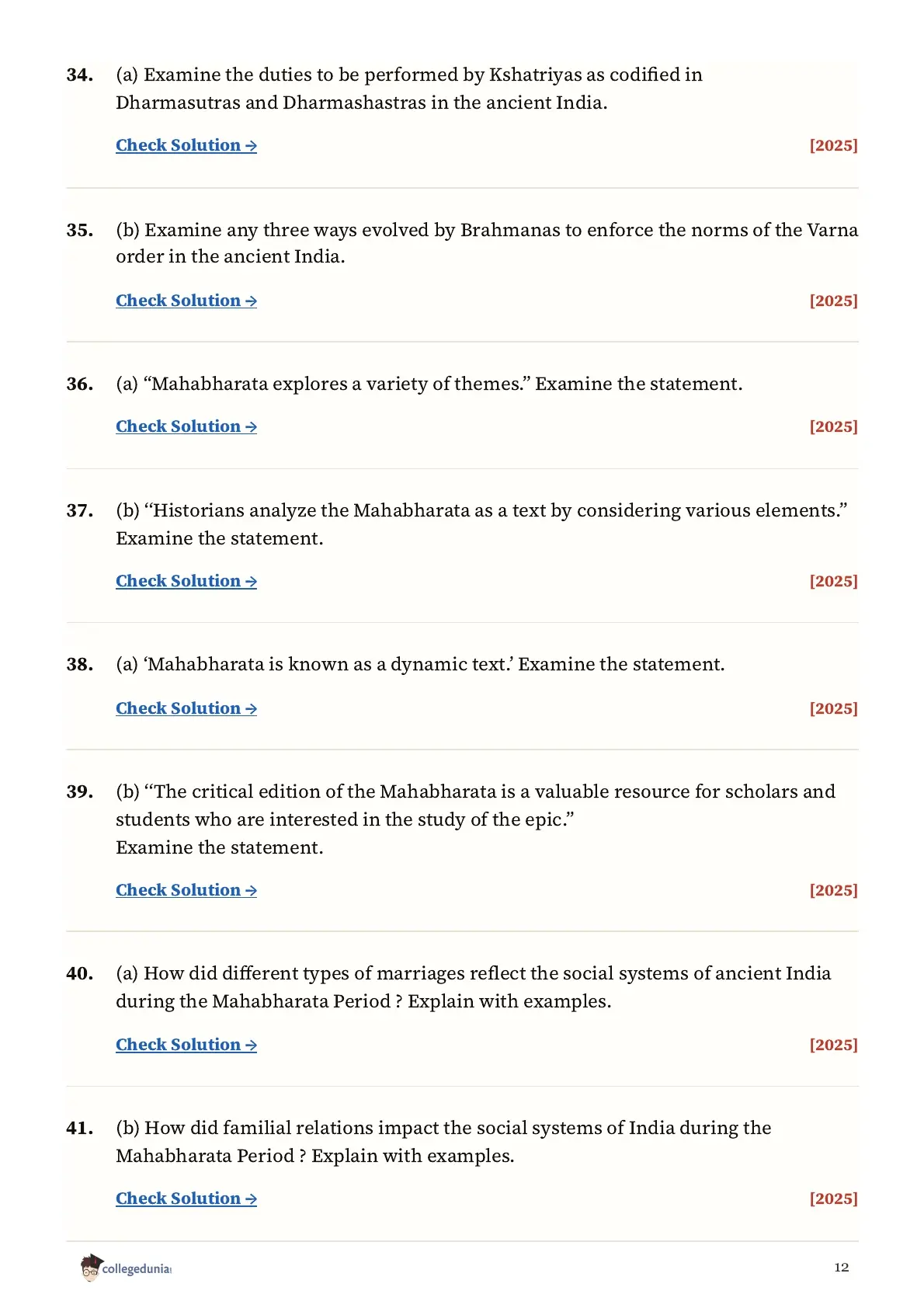
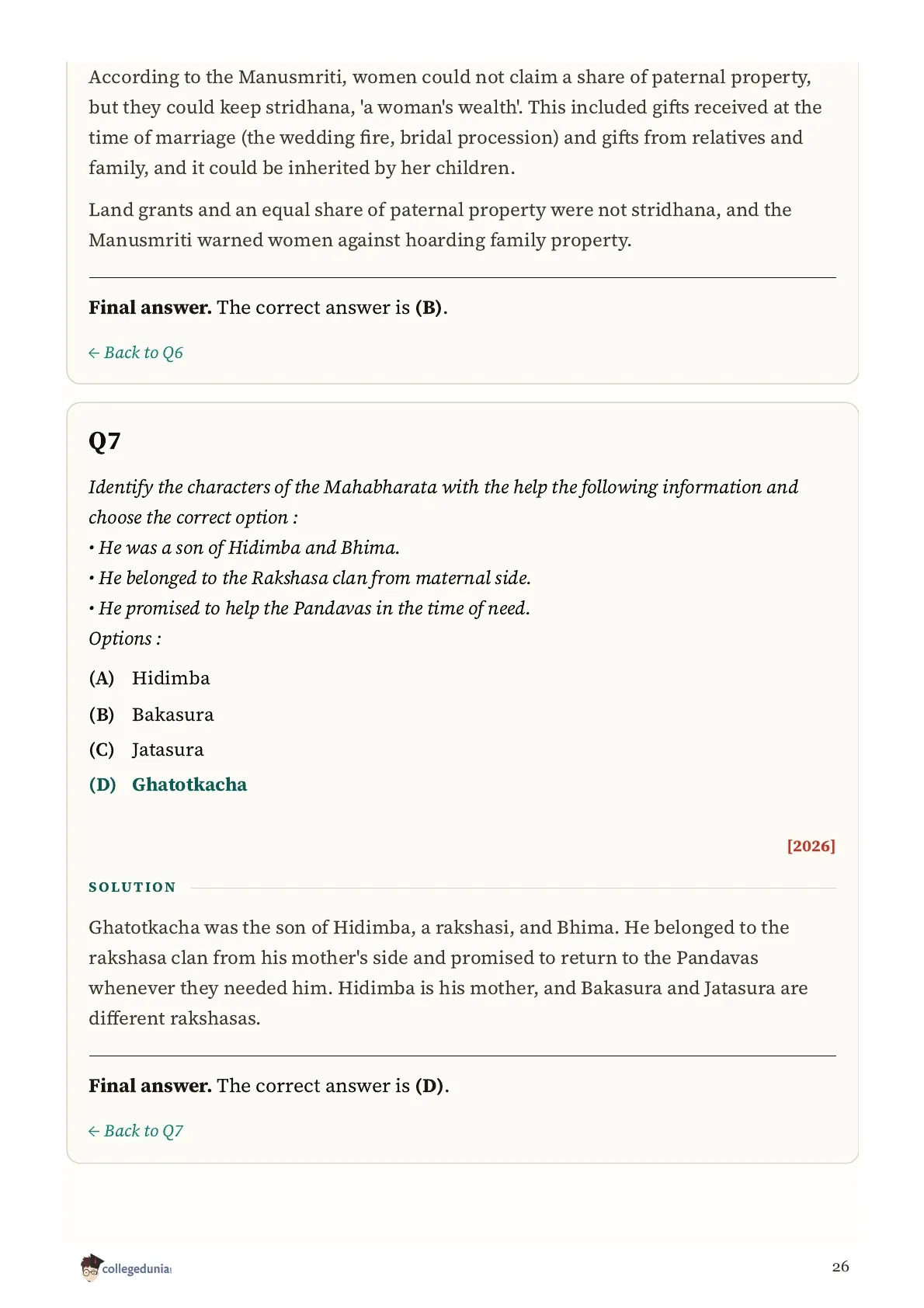
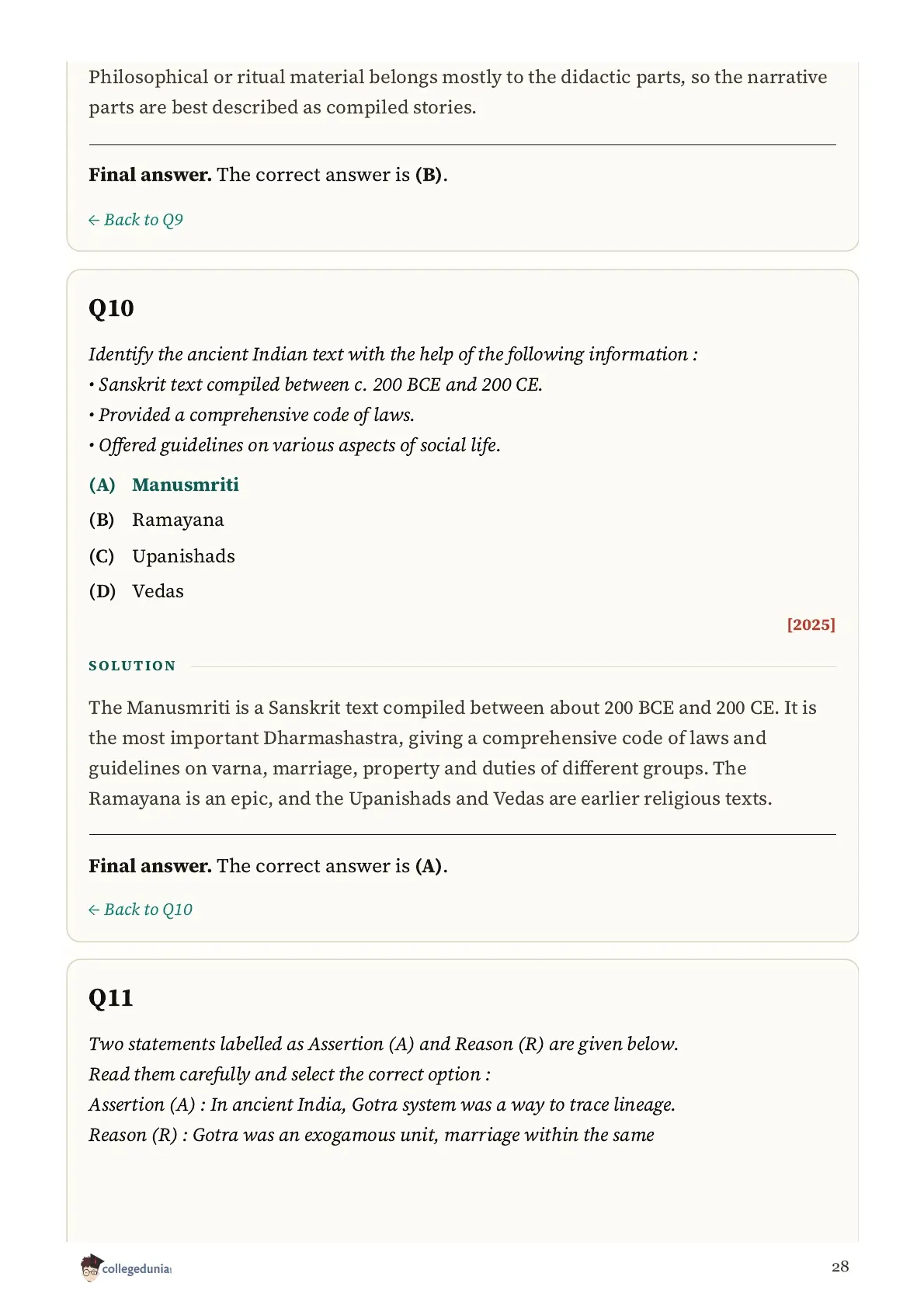
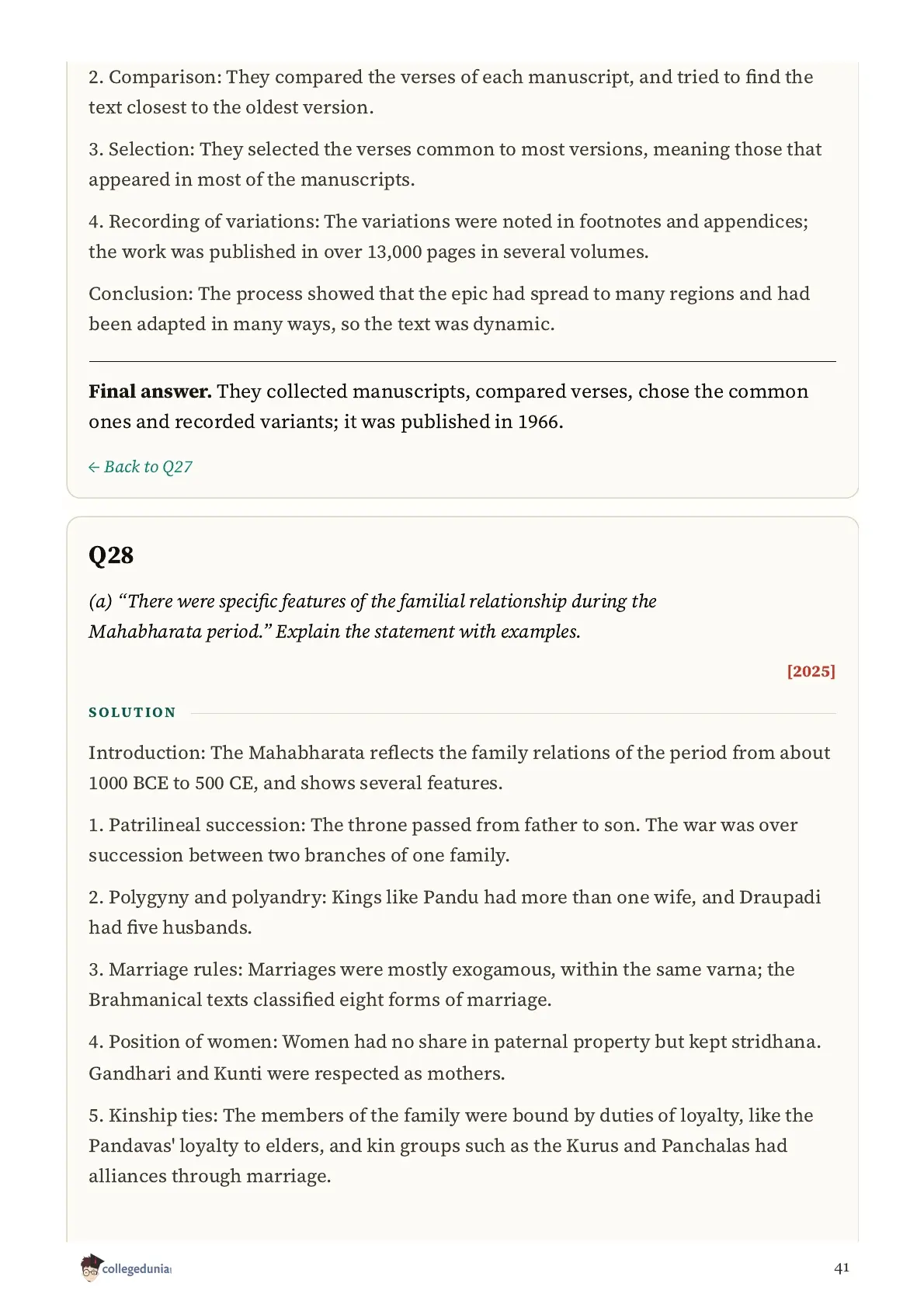
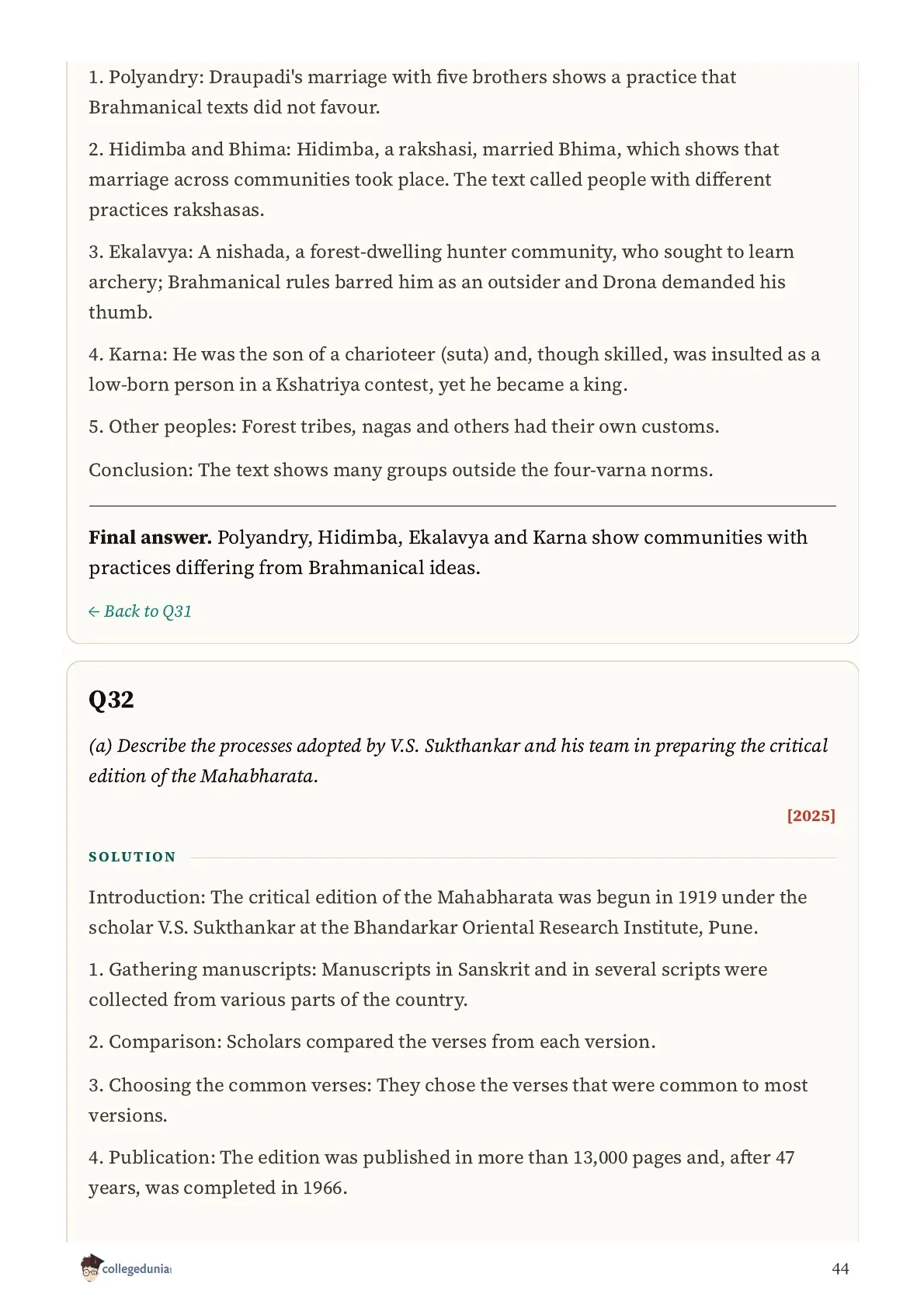
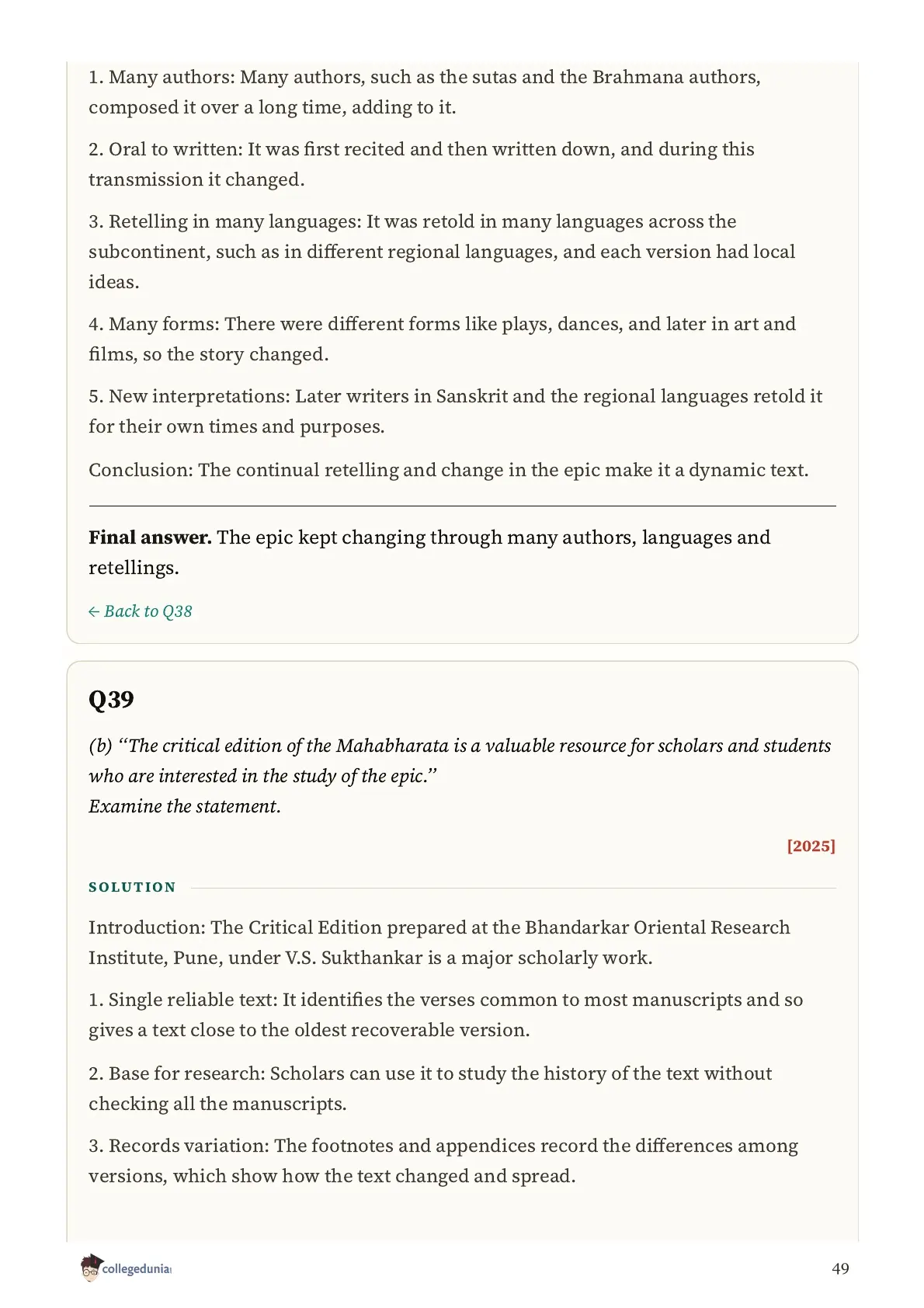
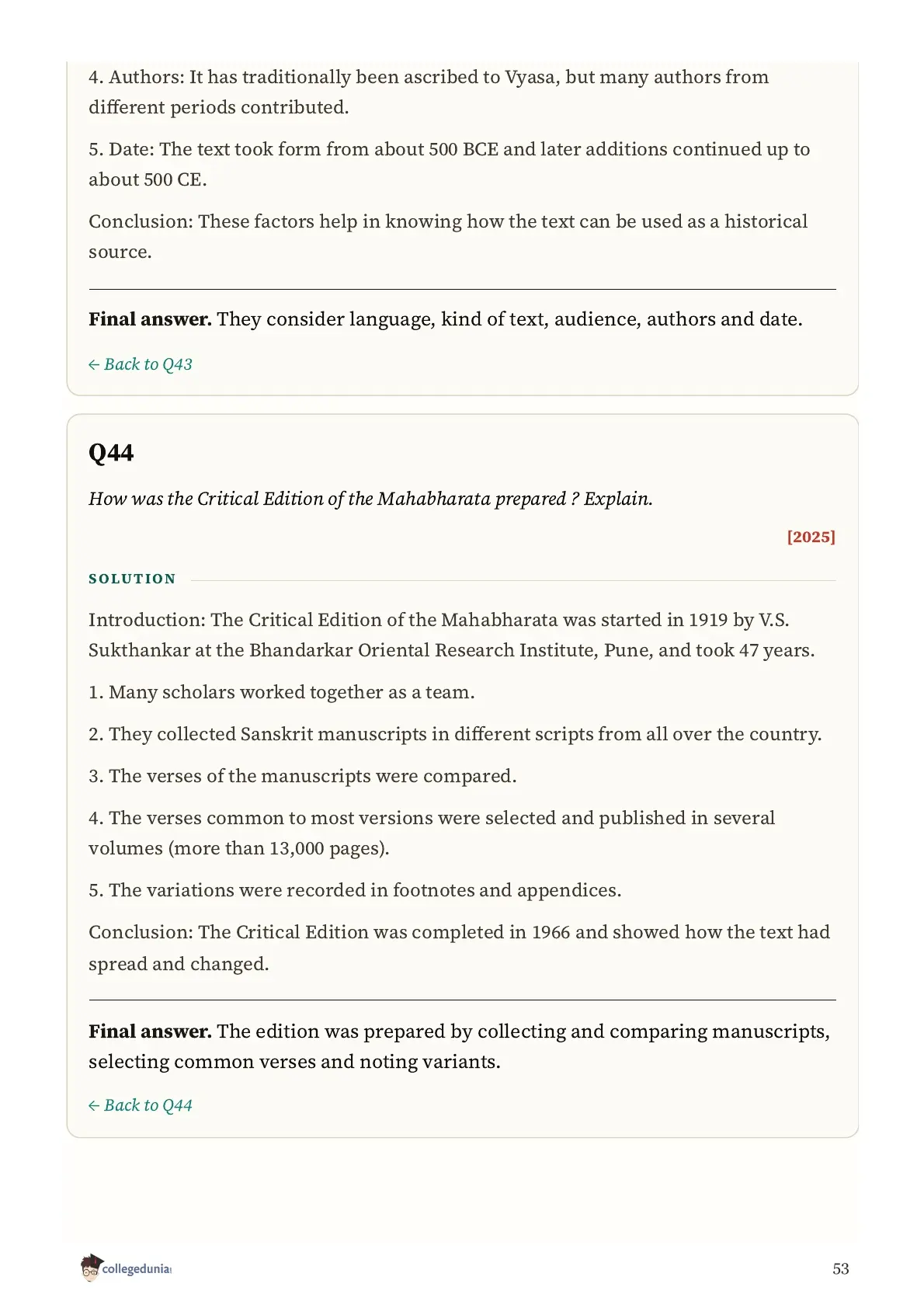
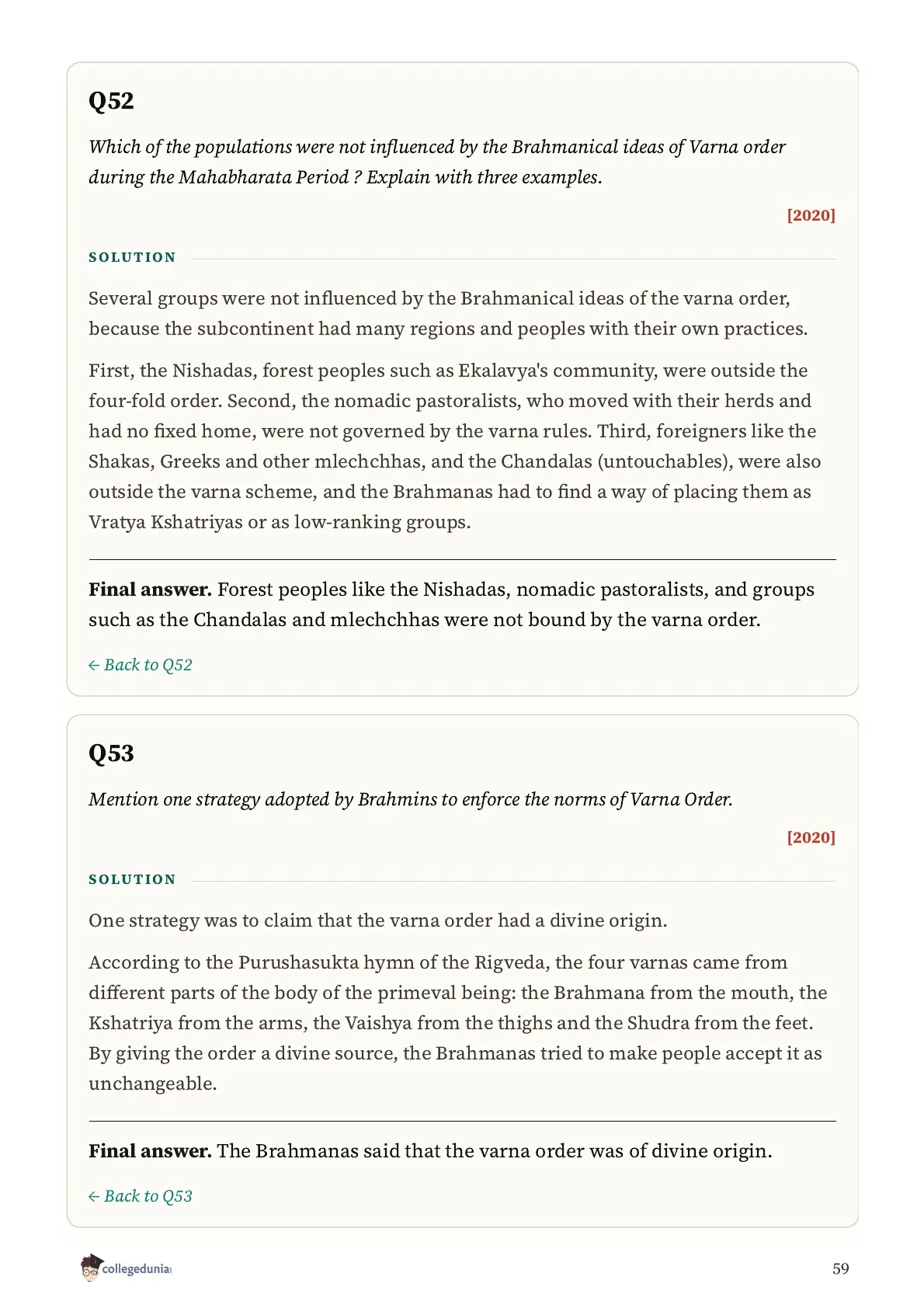
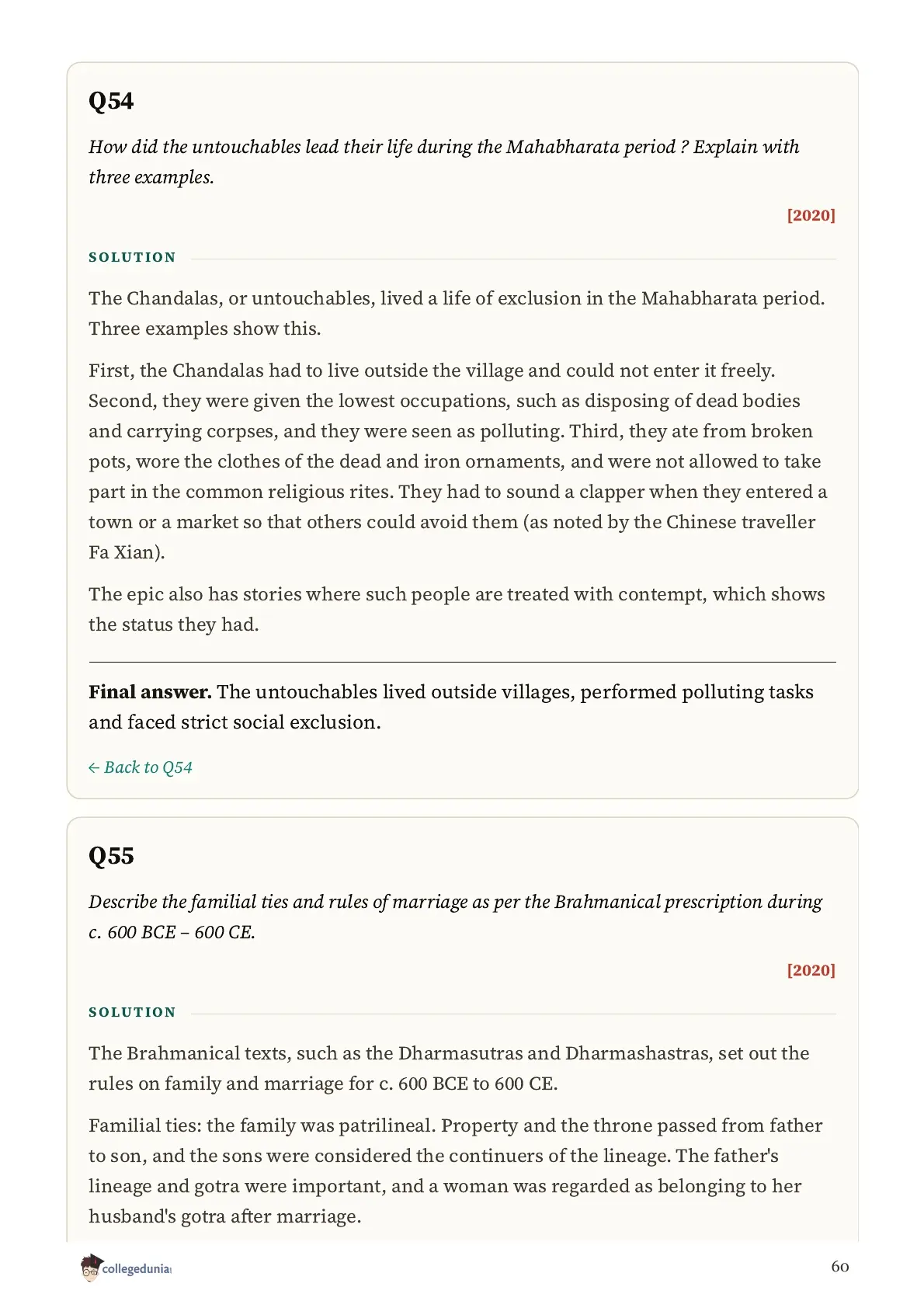
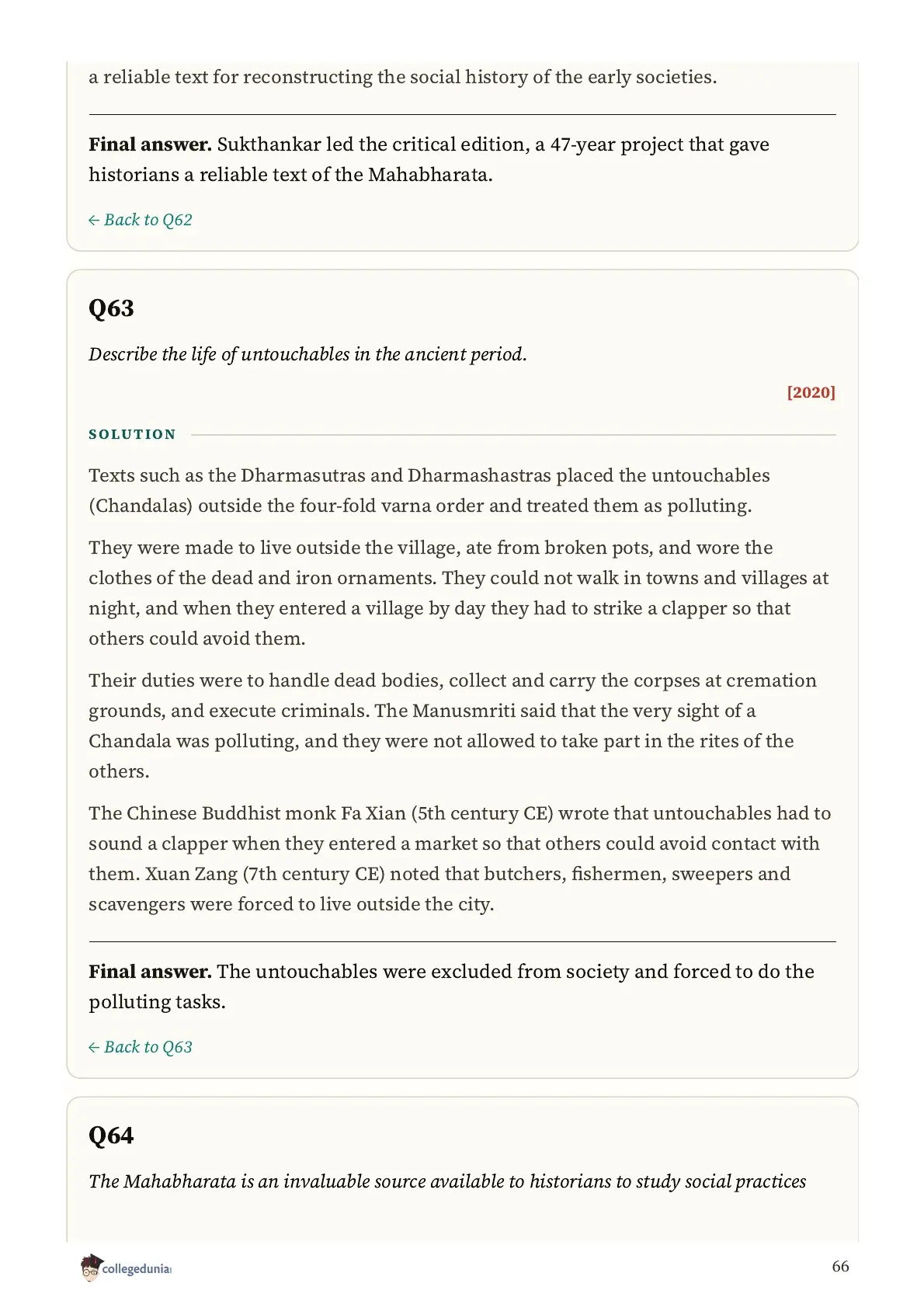
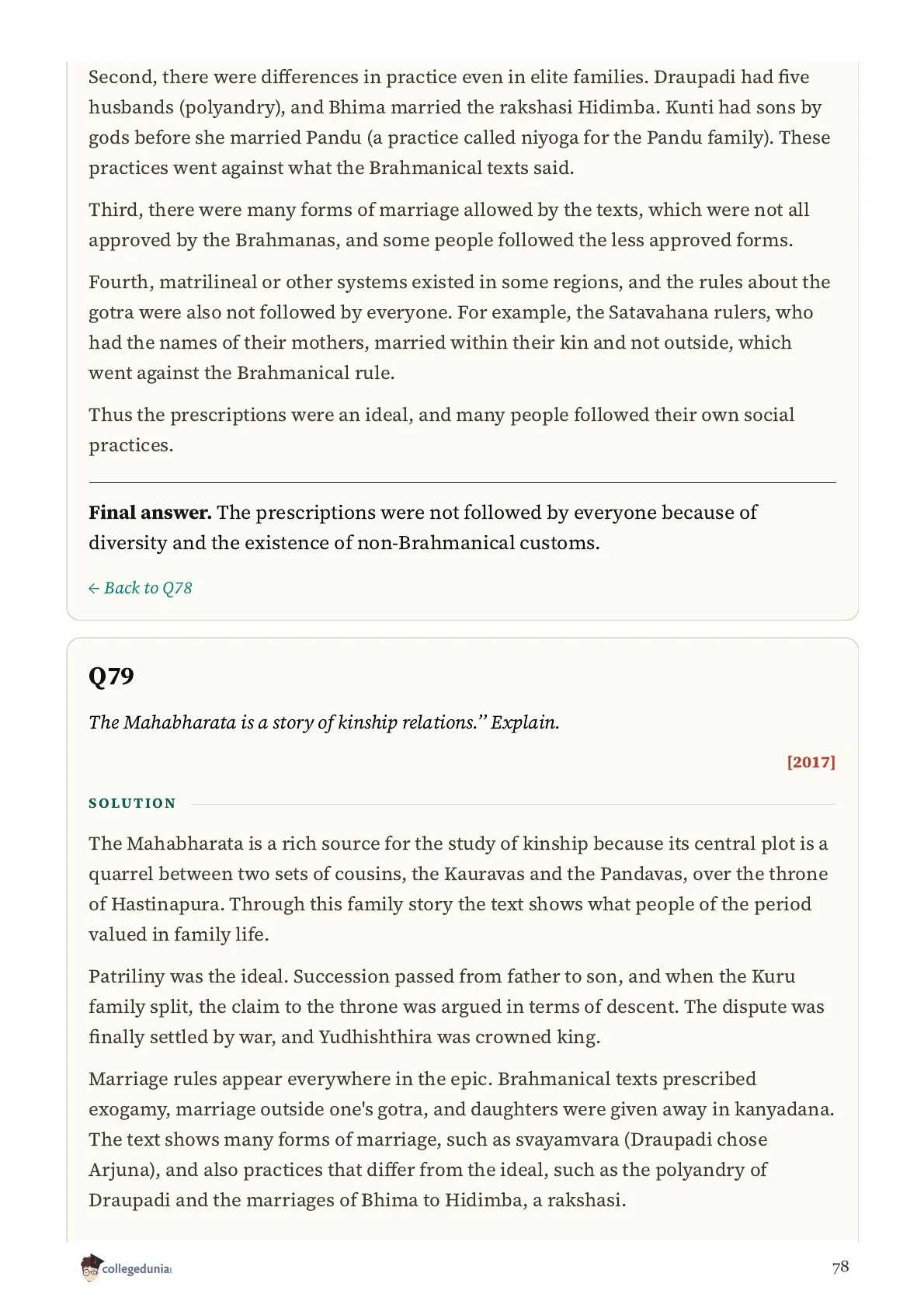
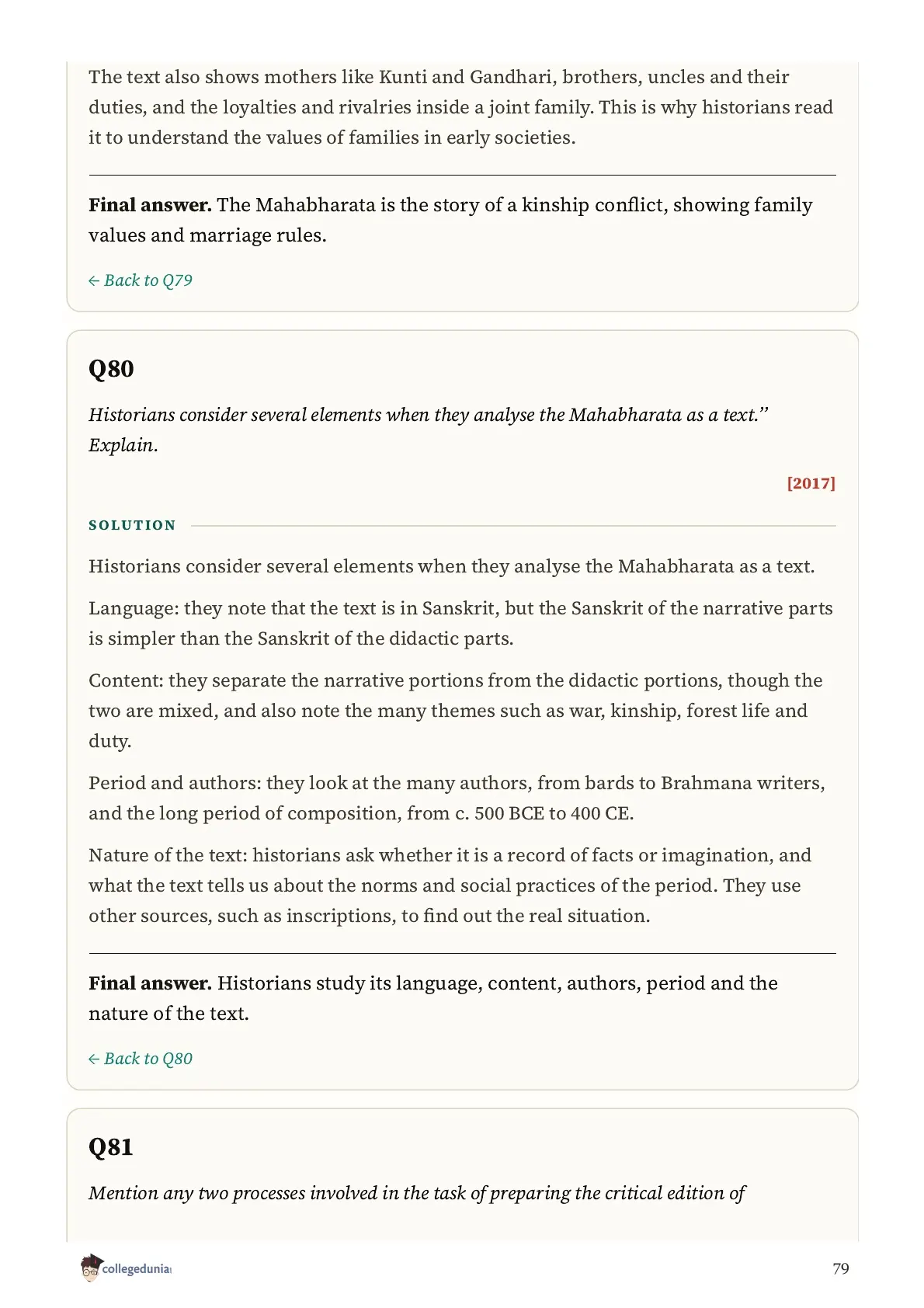
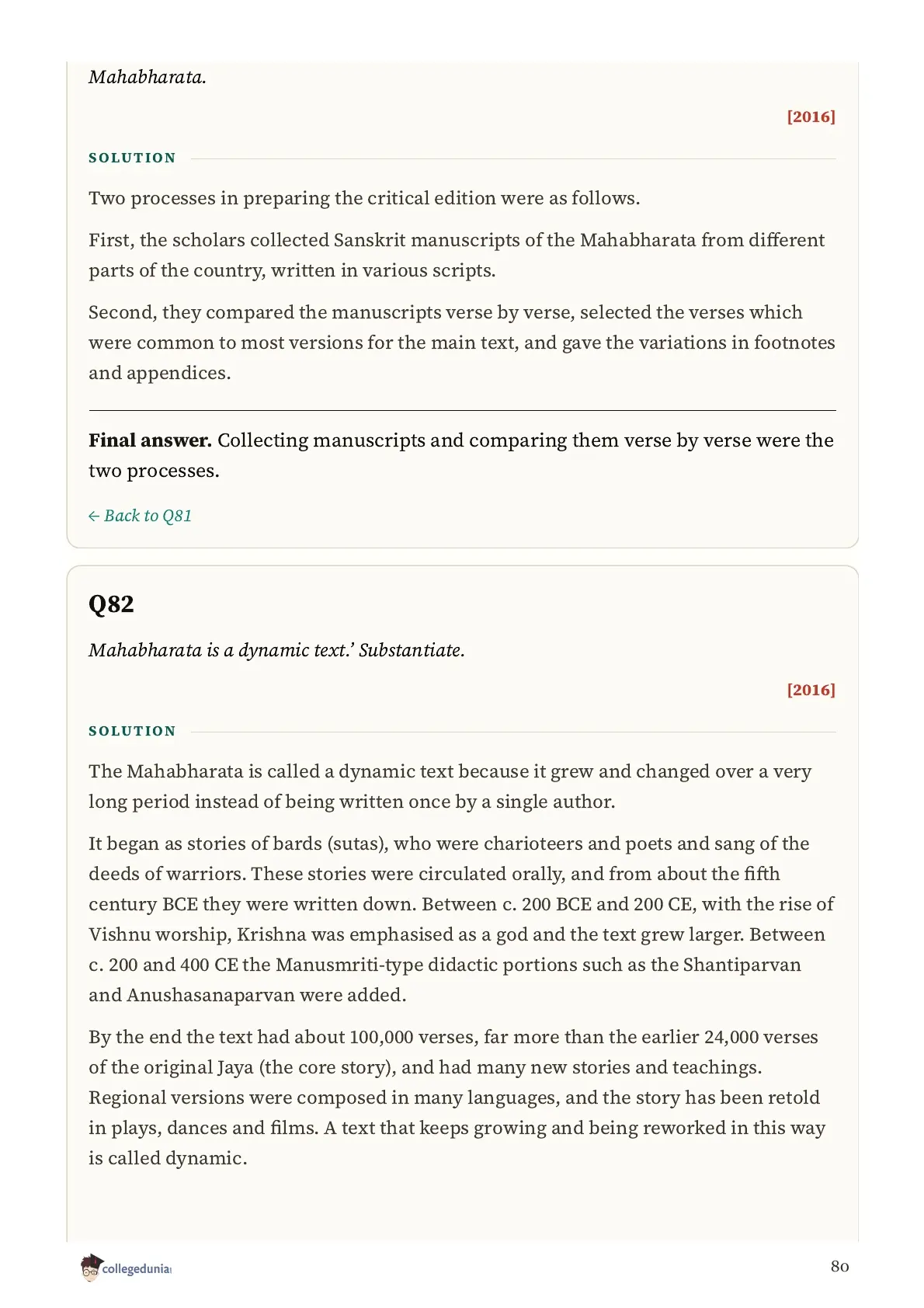
14 questions are on marriage, including endogamy, exogamy, polyandry and the gotra system, and 13 are on the four varnas, among them an MCQ on which category falls outside the Brahmanical prescription of four varnas. 8 questions are on the Critical Edition of the Mahabharata prepared by V.S. Sukthankar and his team, asked as both a describe-the-process question and an examine-the-statement question in 2025 and 2026.
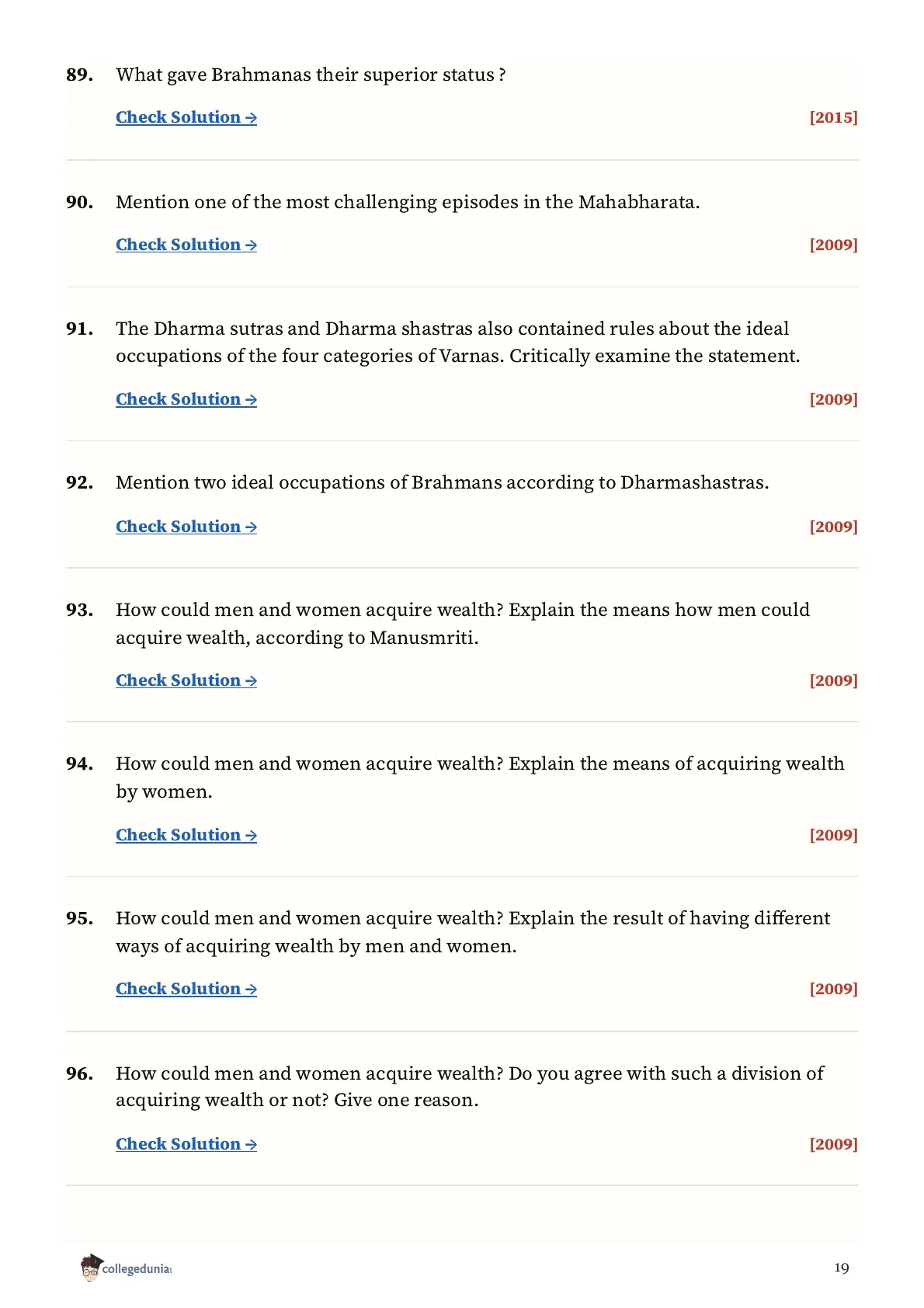
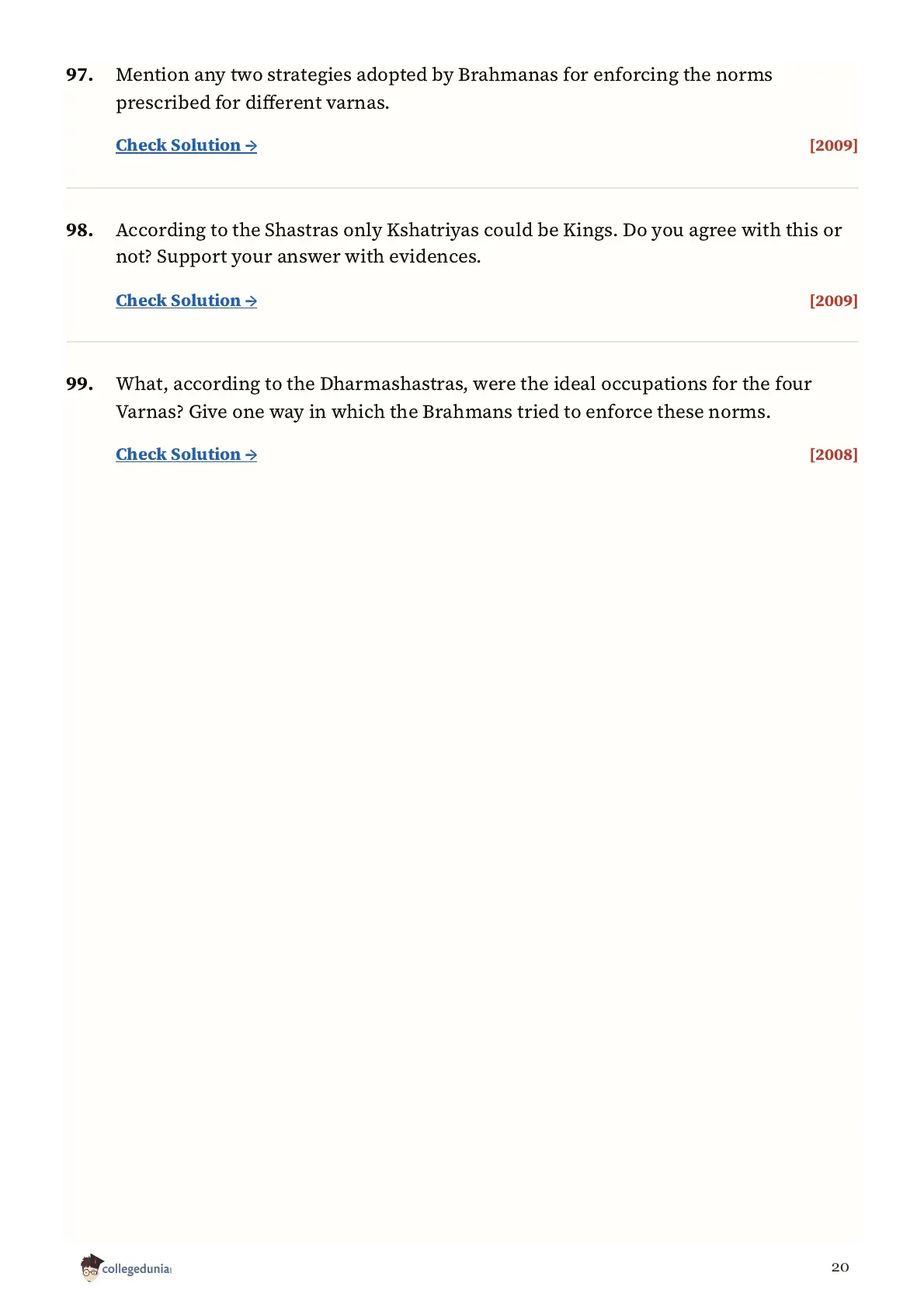
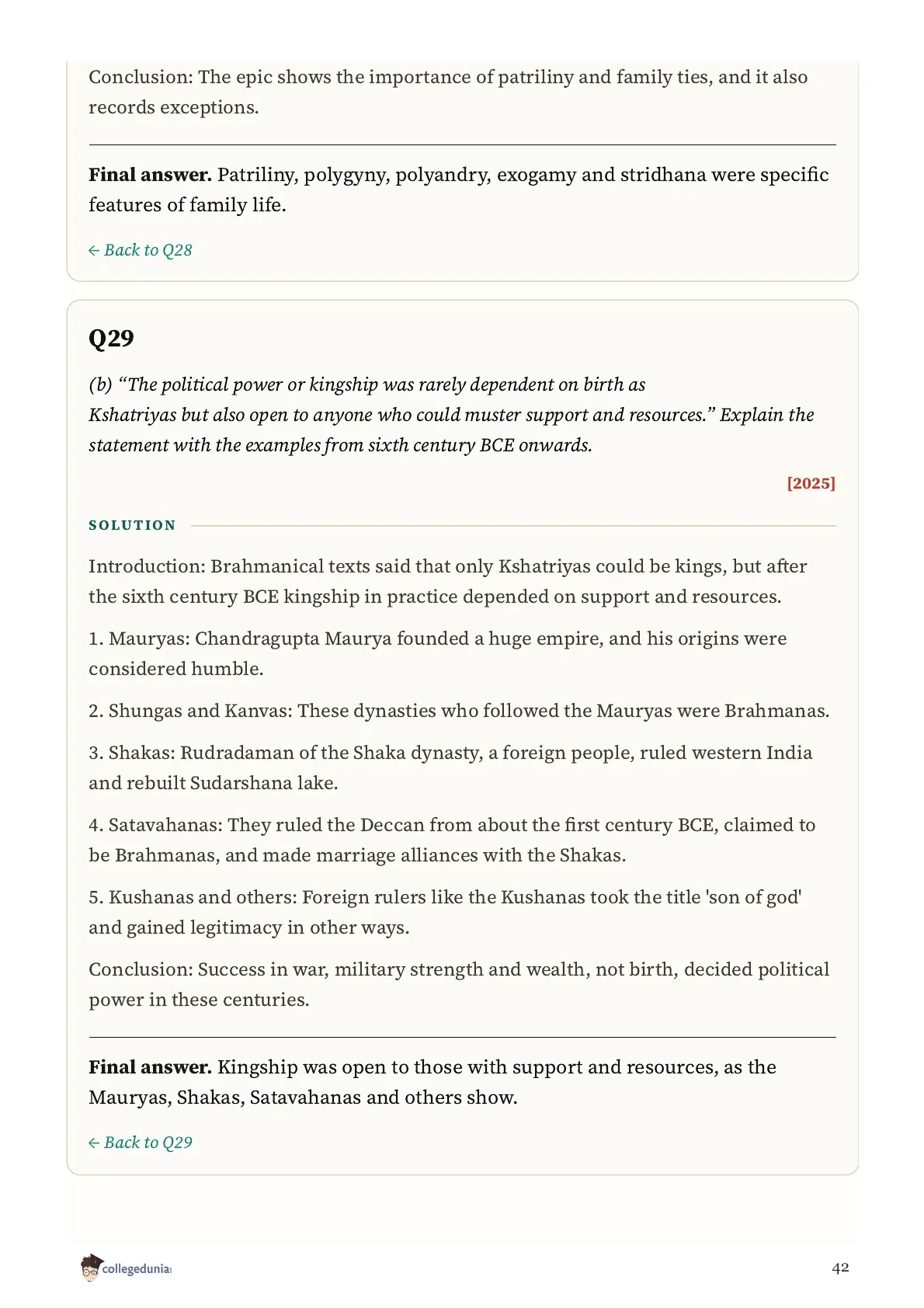
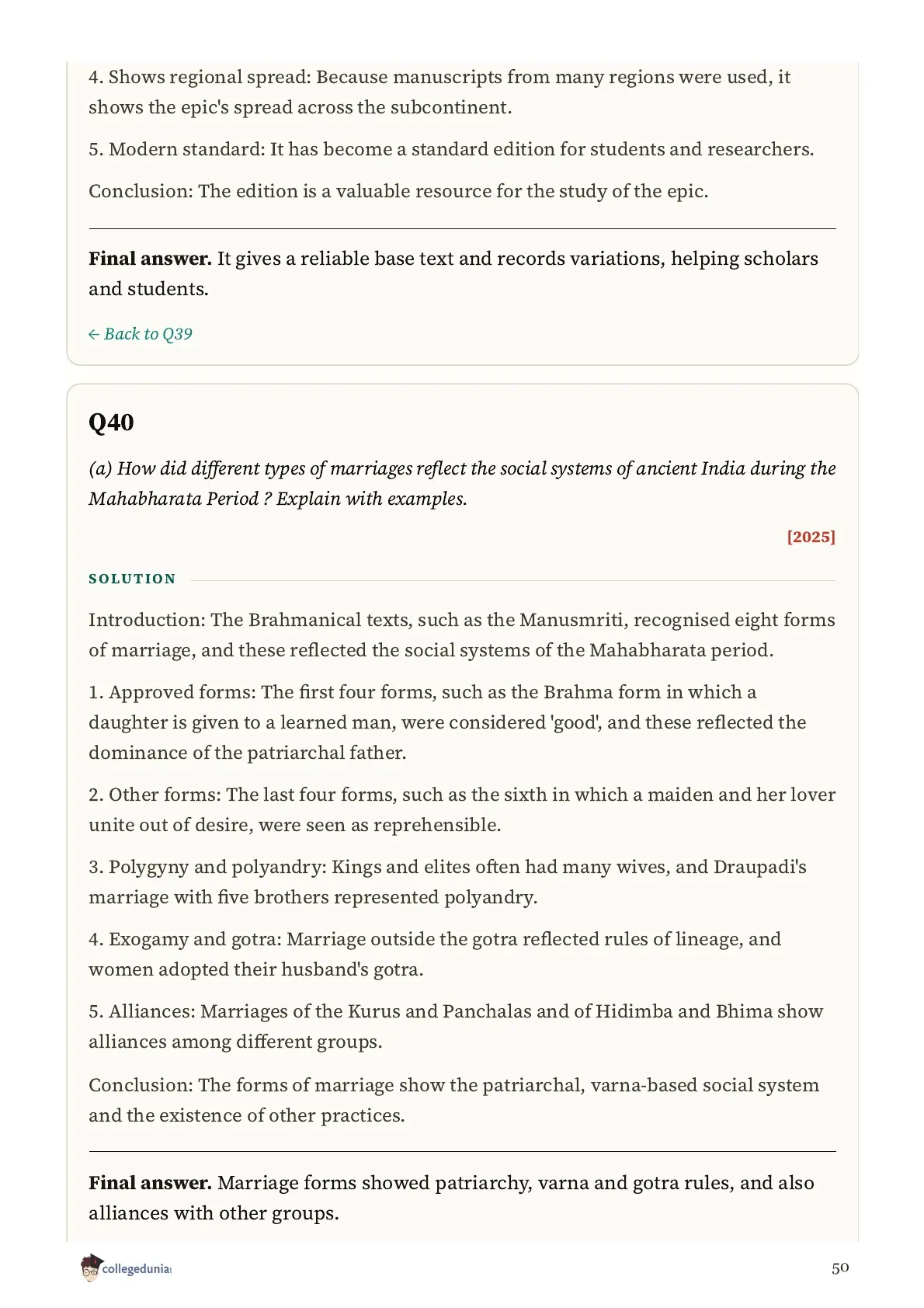
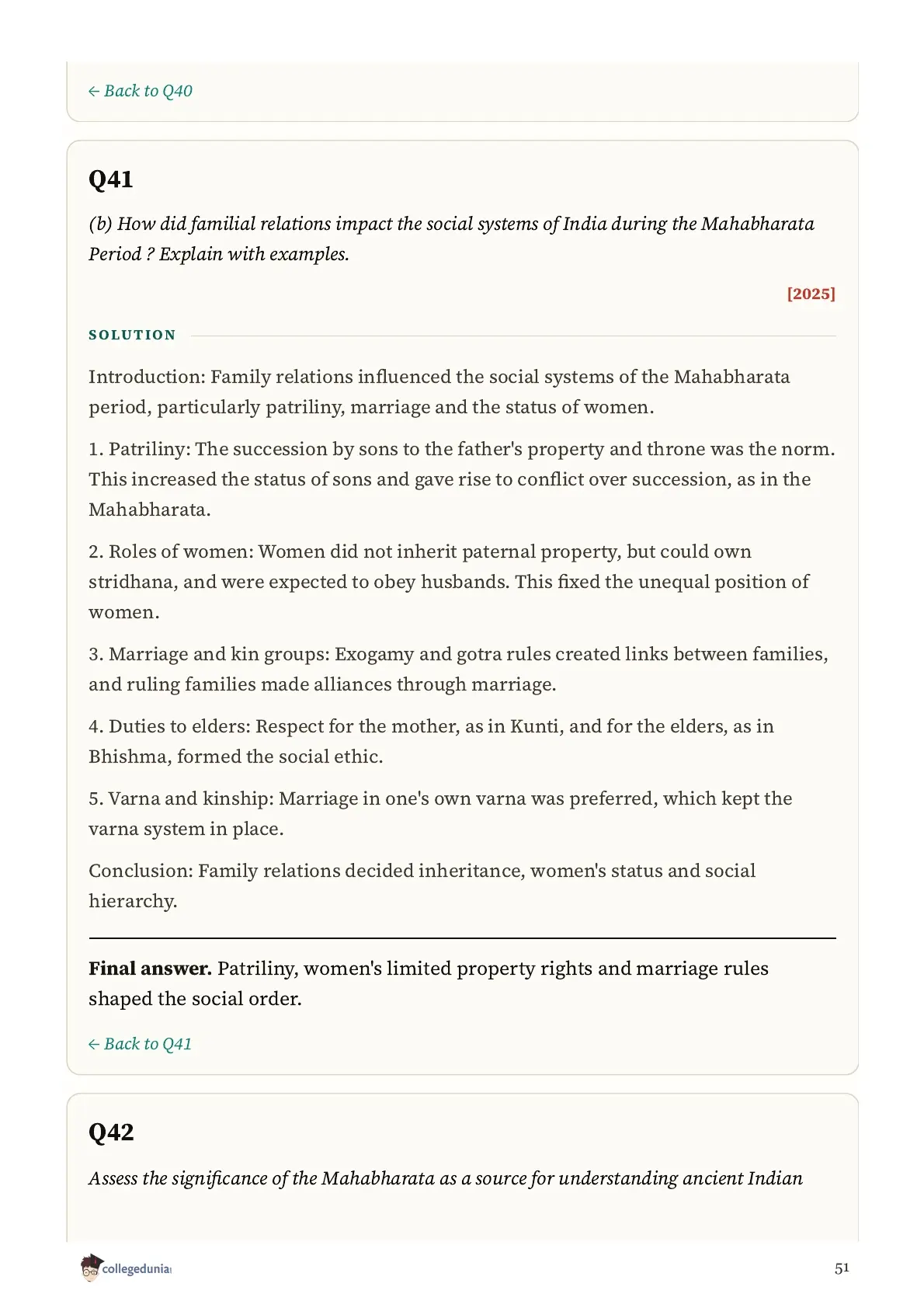
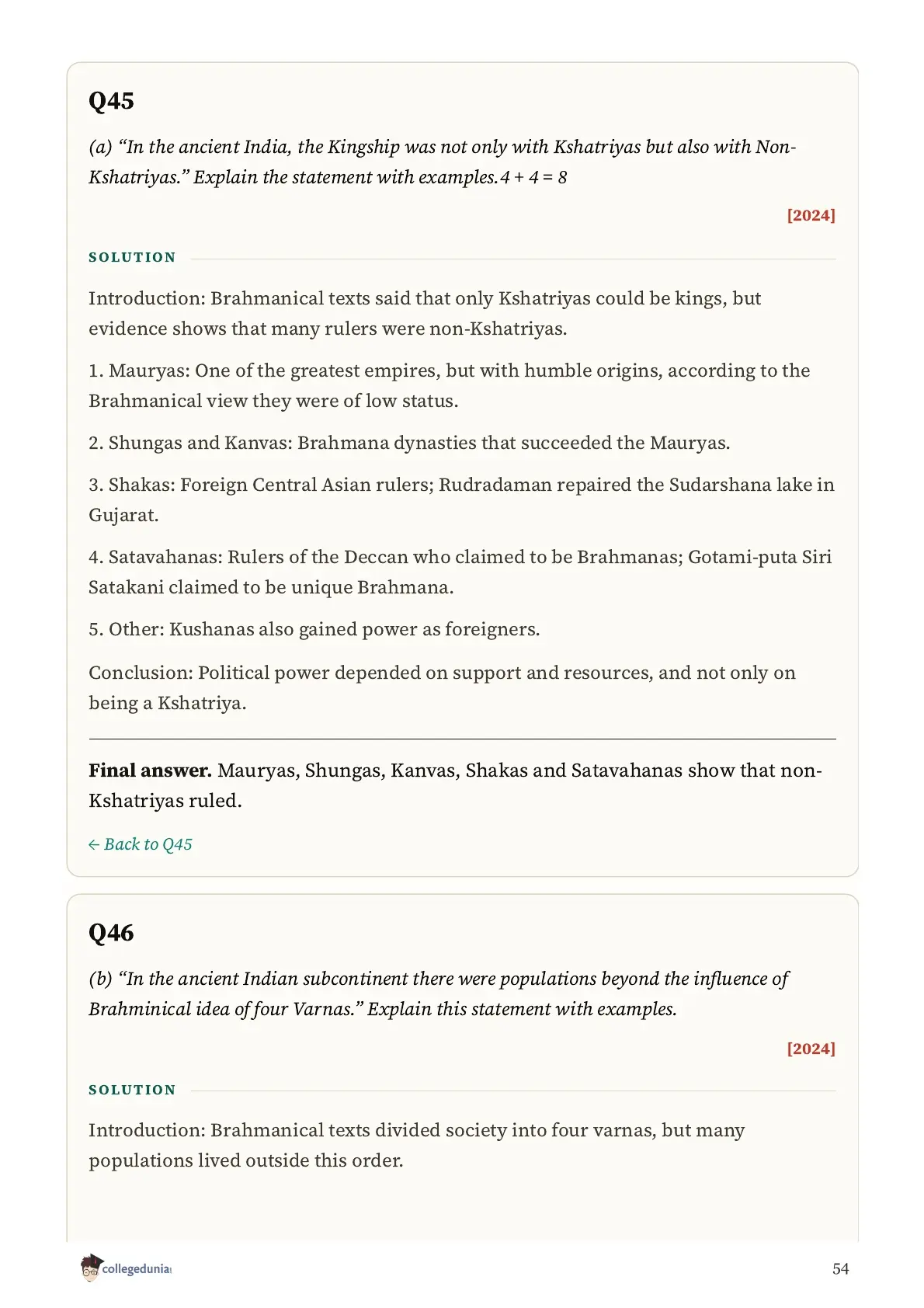
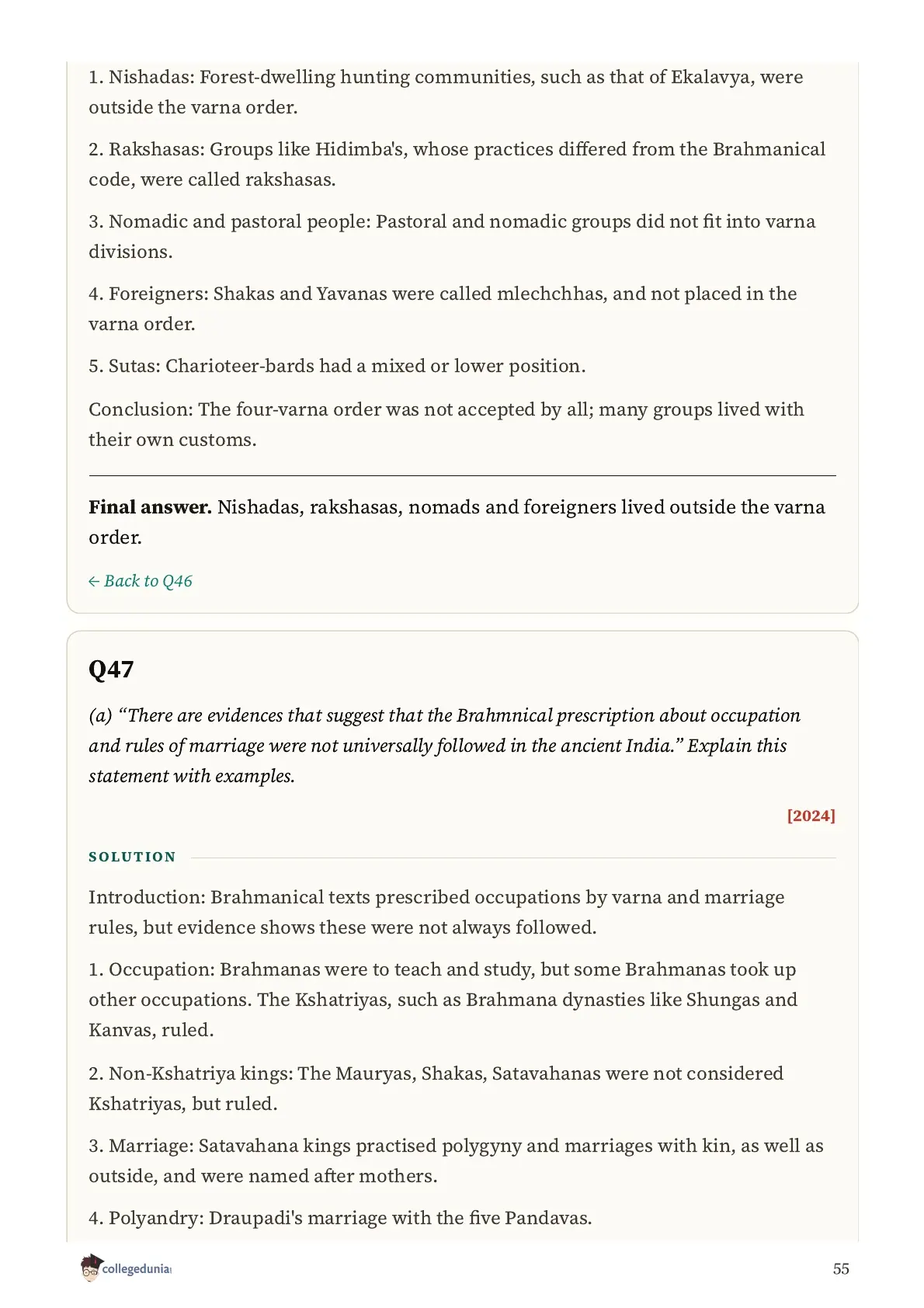
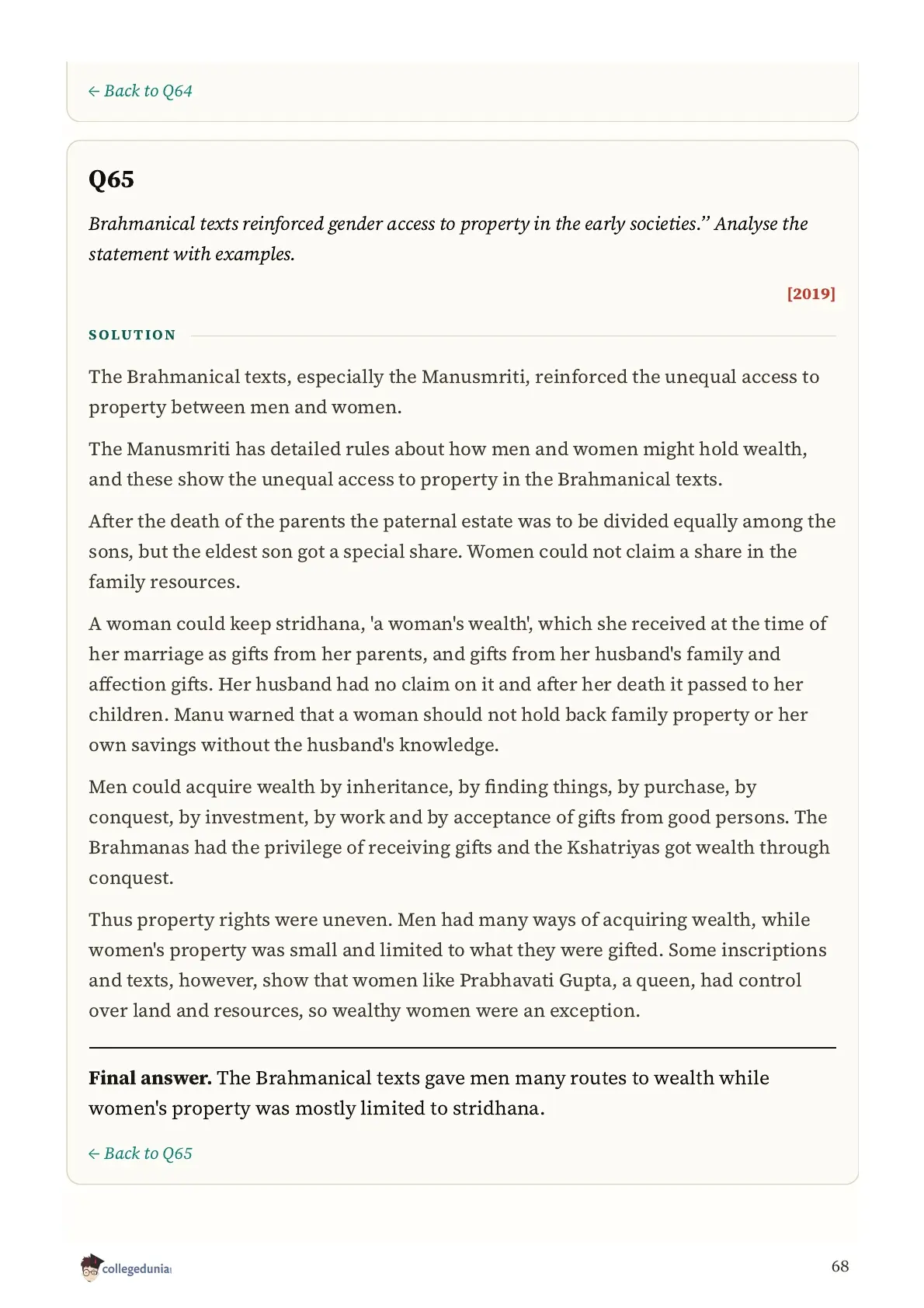
7 questions draw on the Manusmriti, Dharmasutras and Dharmashastras, 5 are on Ekalavya and his place among Drona's pupils, and 4 are on patriliny and inheritance. 4 questions are on Chandalas, untouchability and outcaste groups.
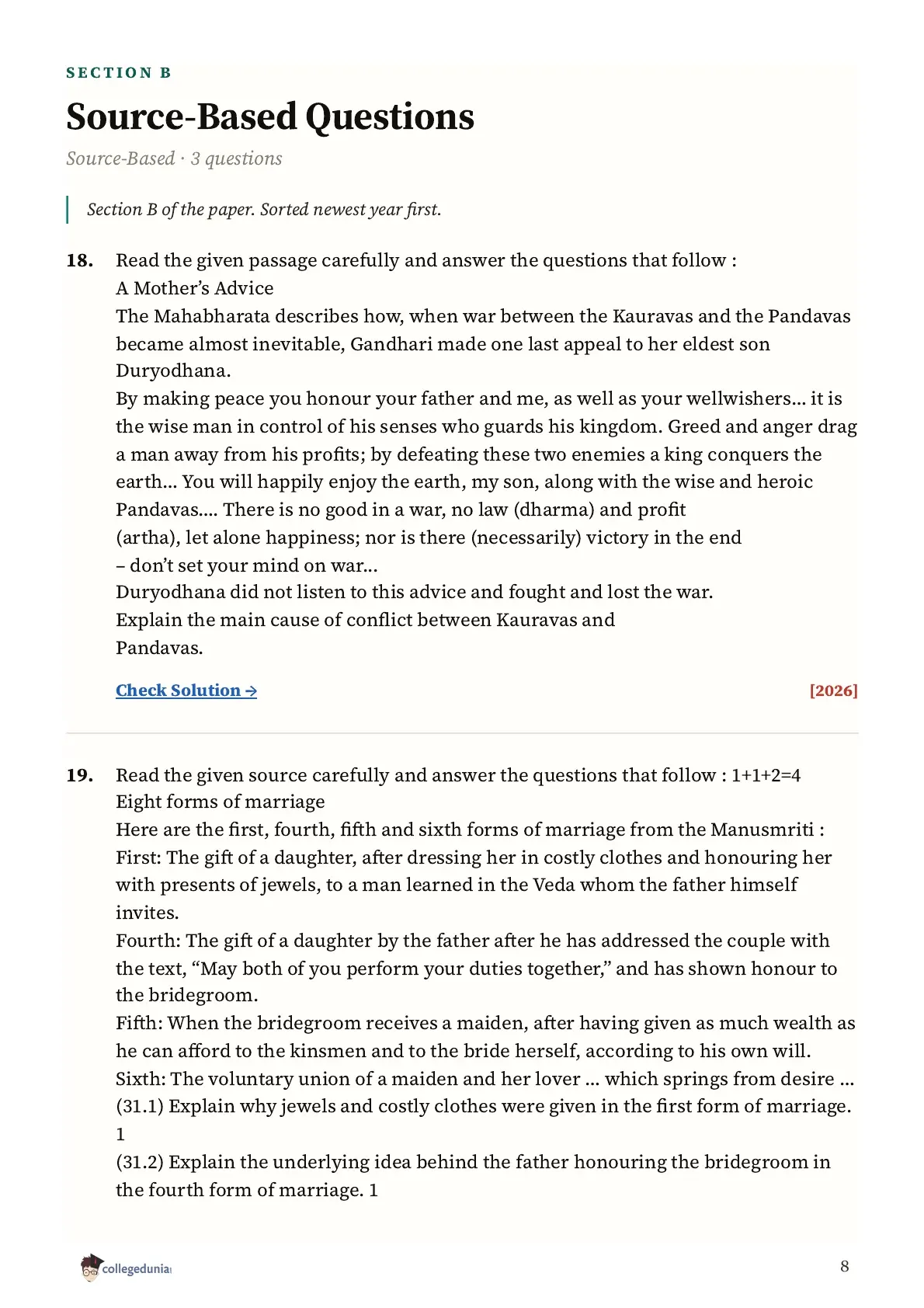
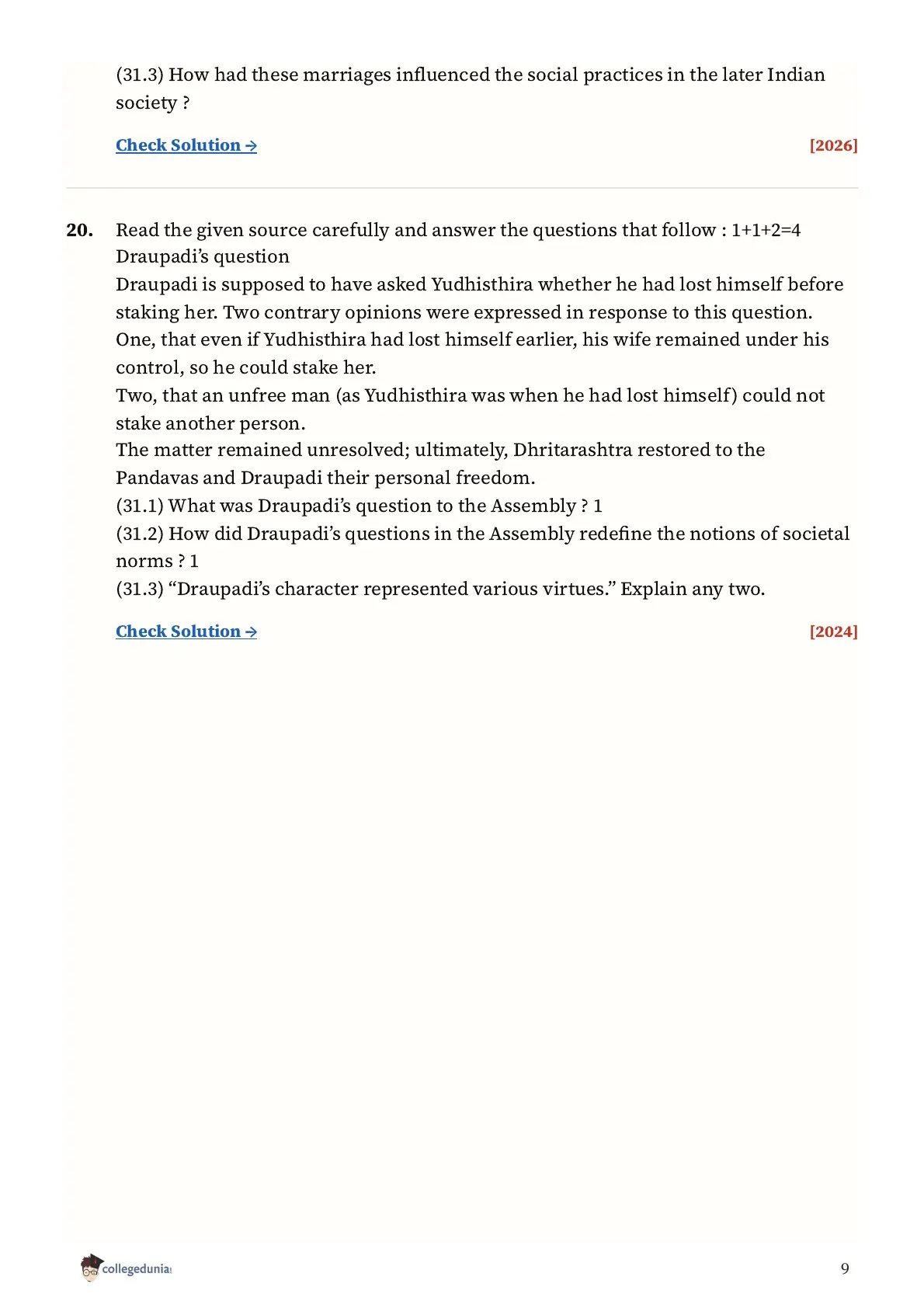
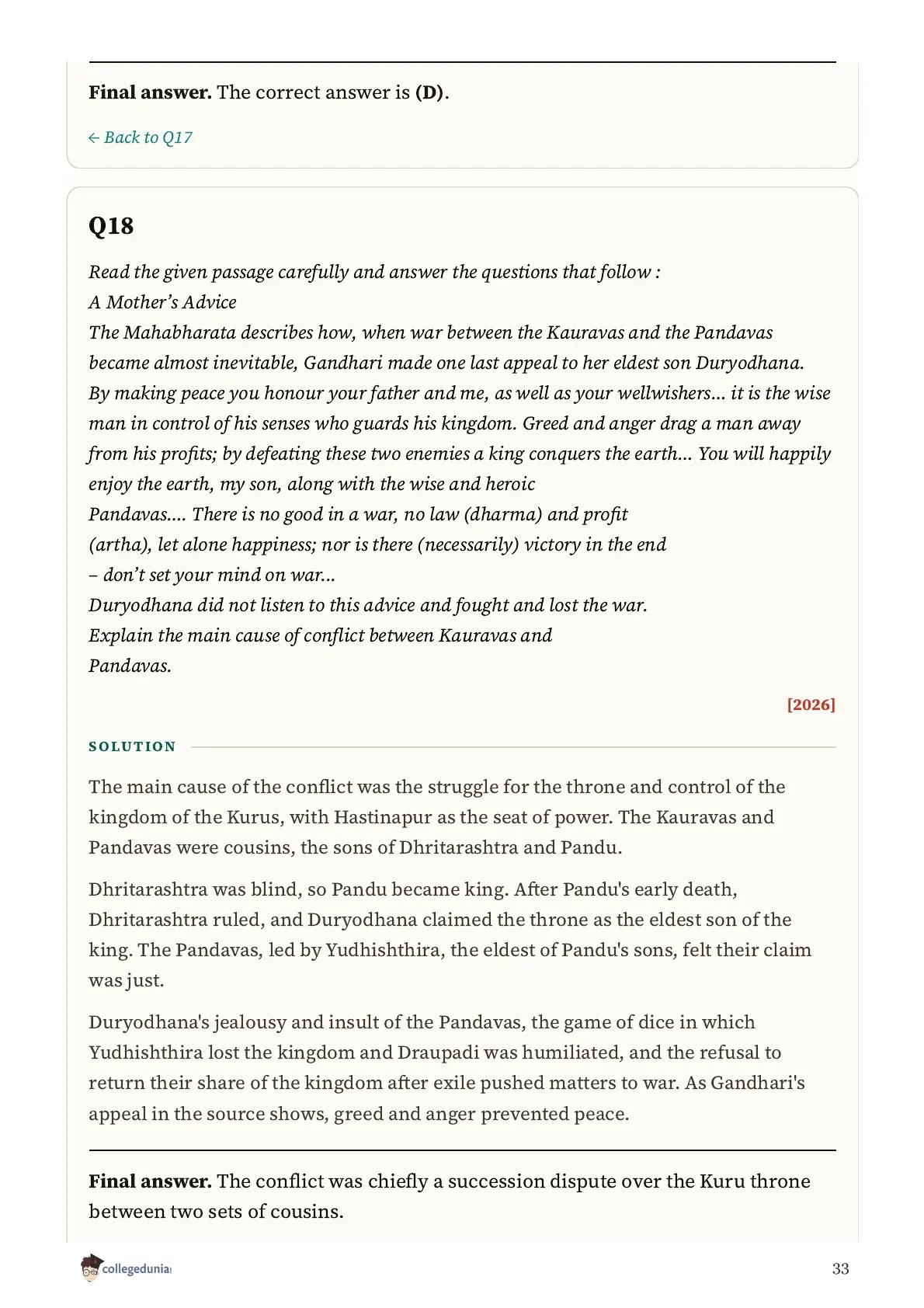
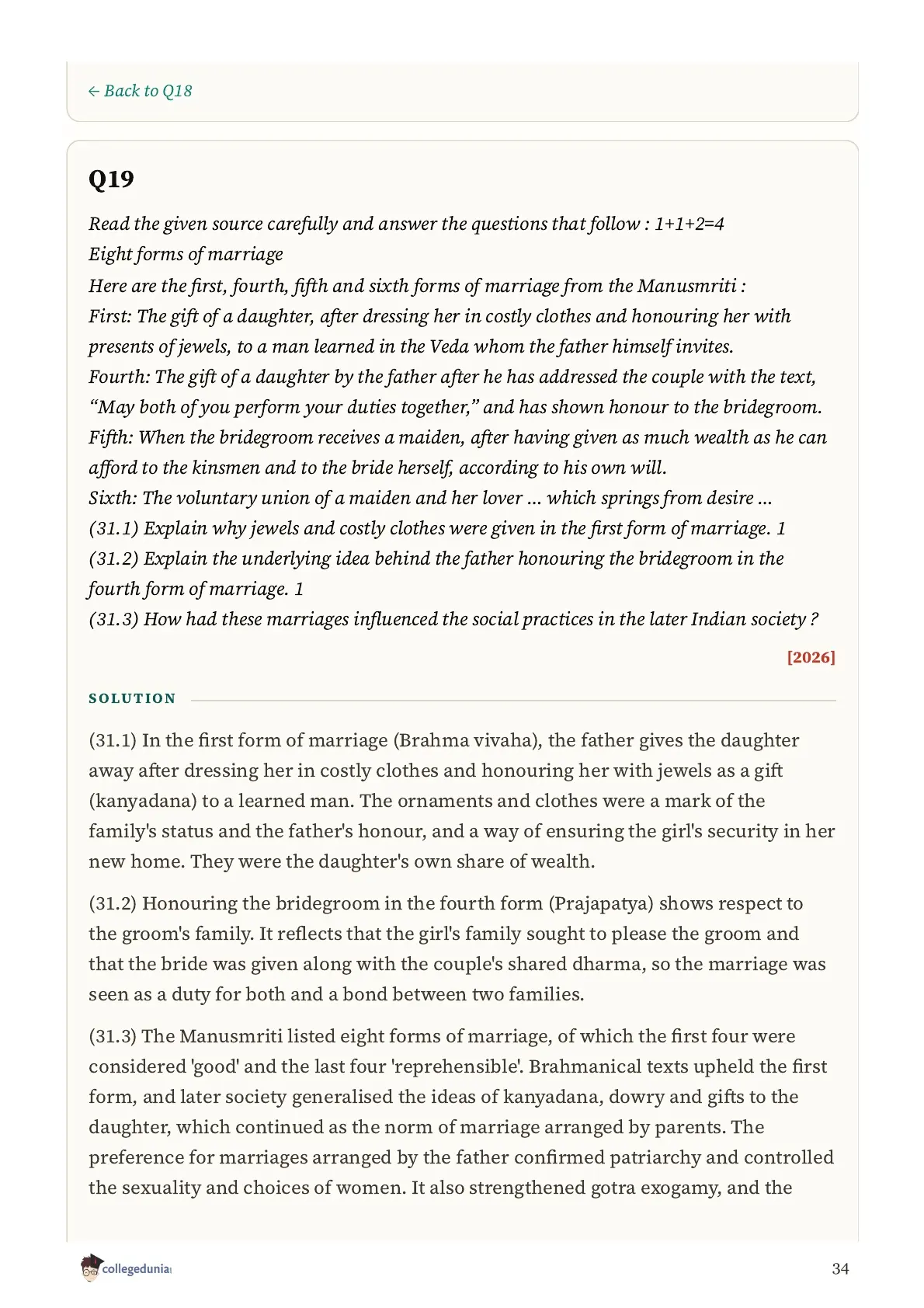
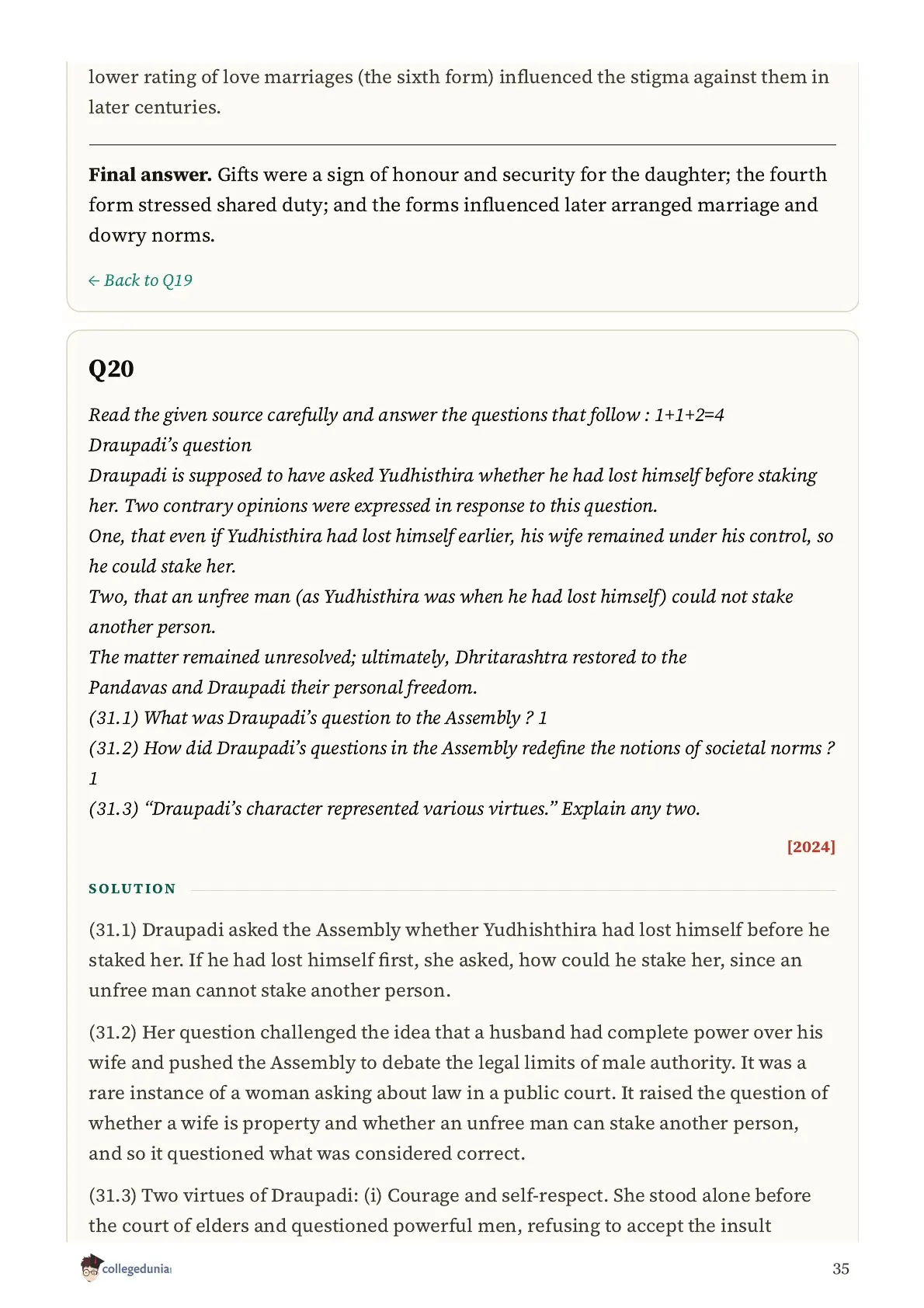
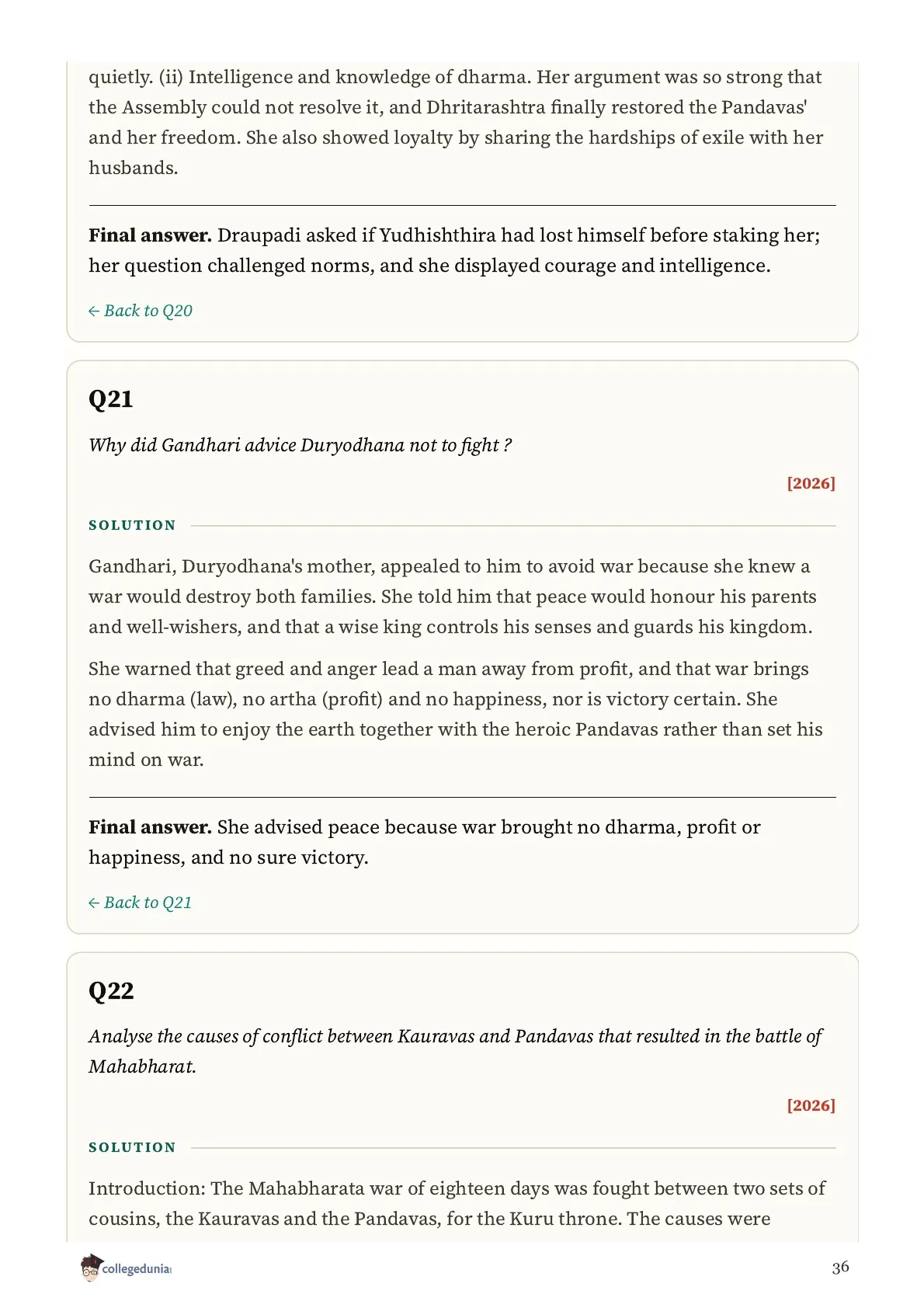
The 3 passage-based questions are built on Gandhari's appeal to Duryodhana (A Mother's Advice), the eight forms of marriage in the Manusmriti and Draupadi's question to Yudhishthira.
How to Approach the Kinship, Caste and Class Set
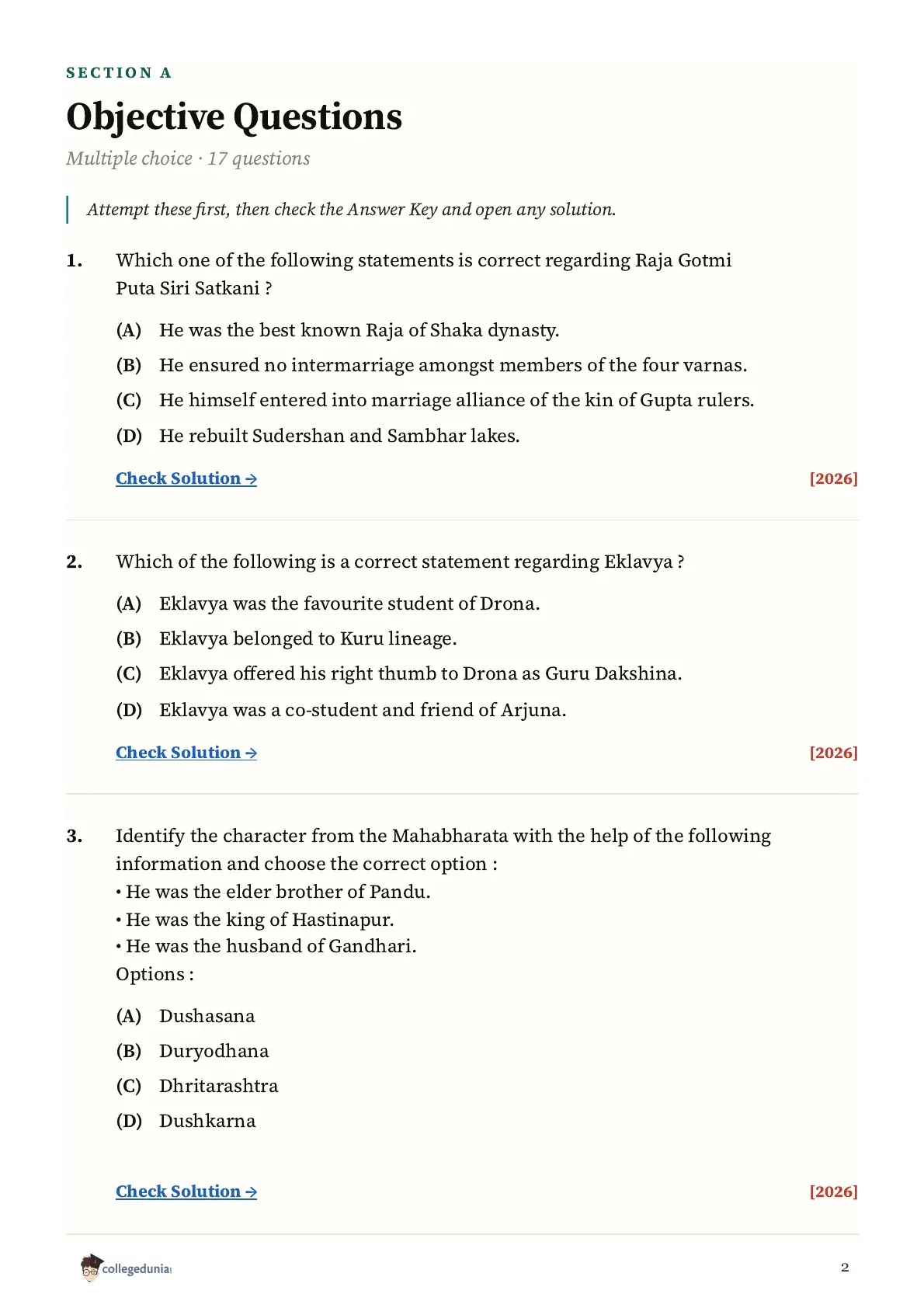
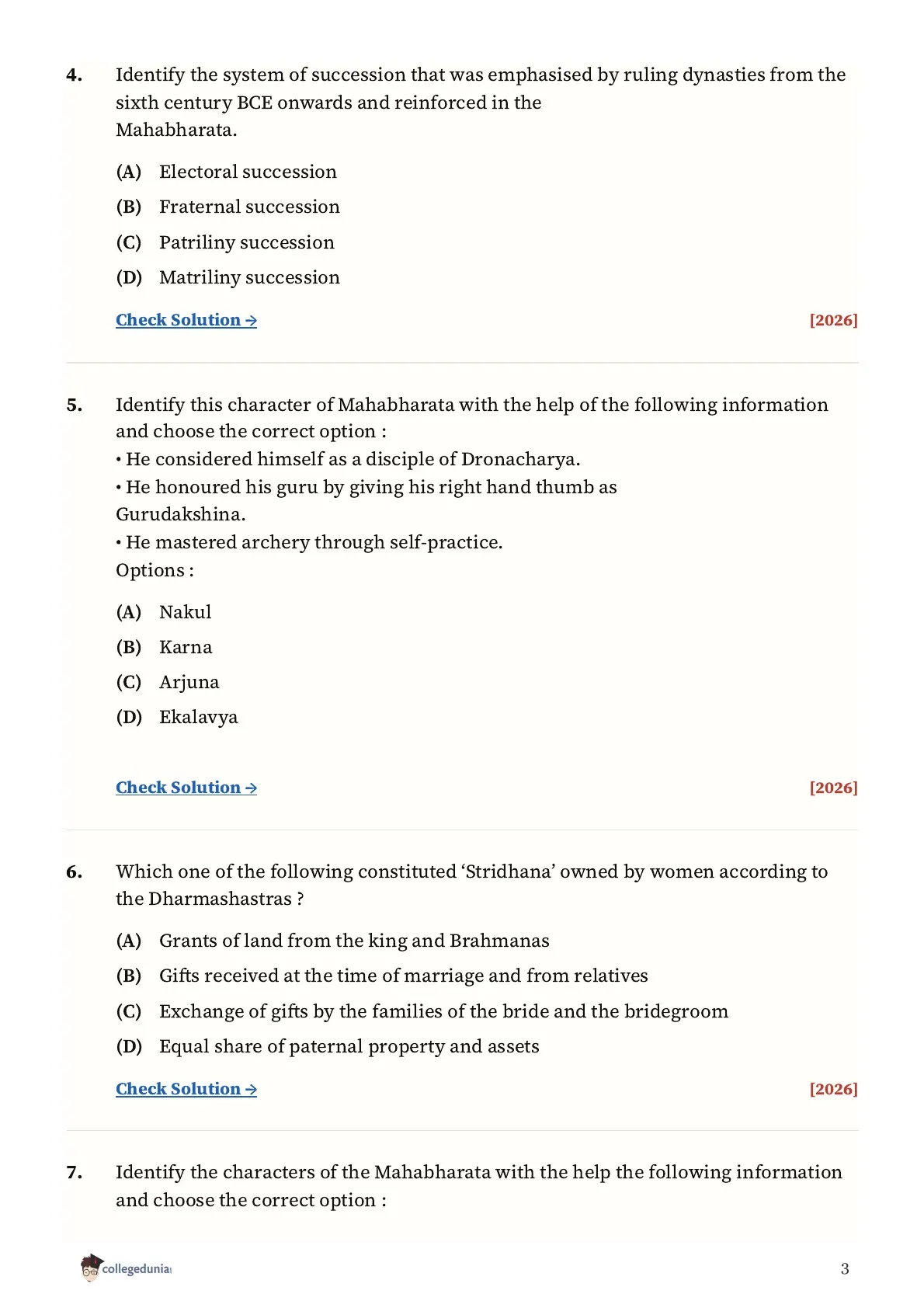
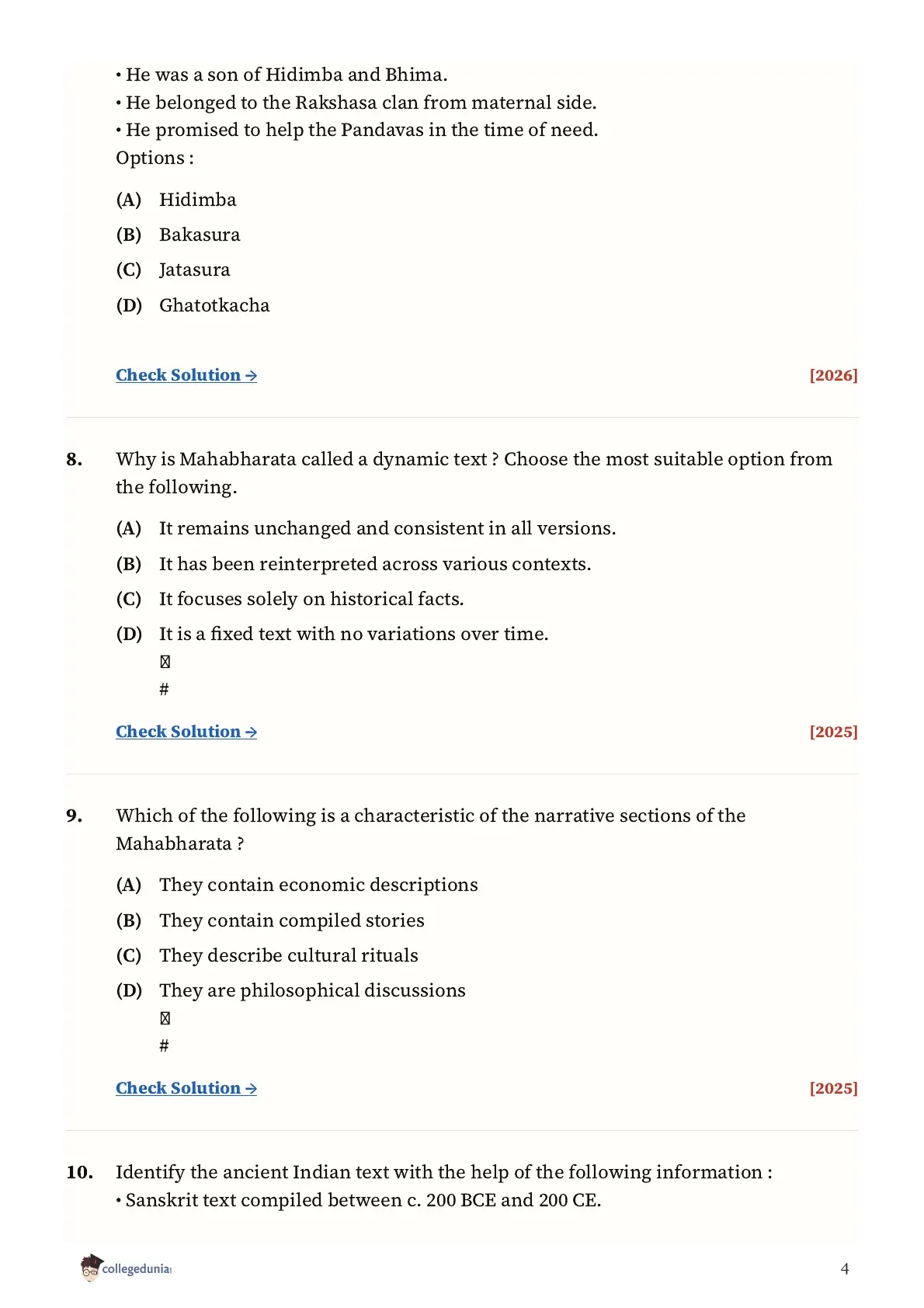
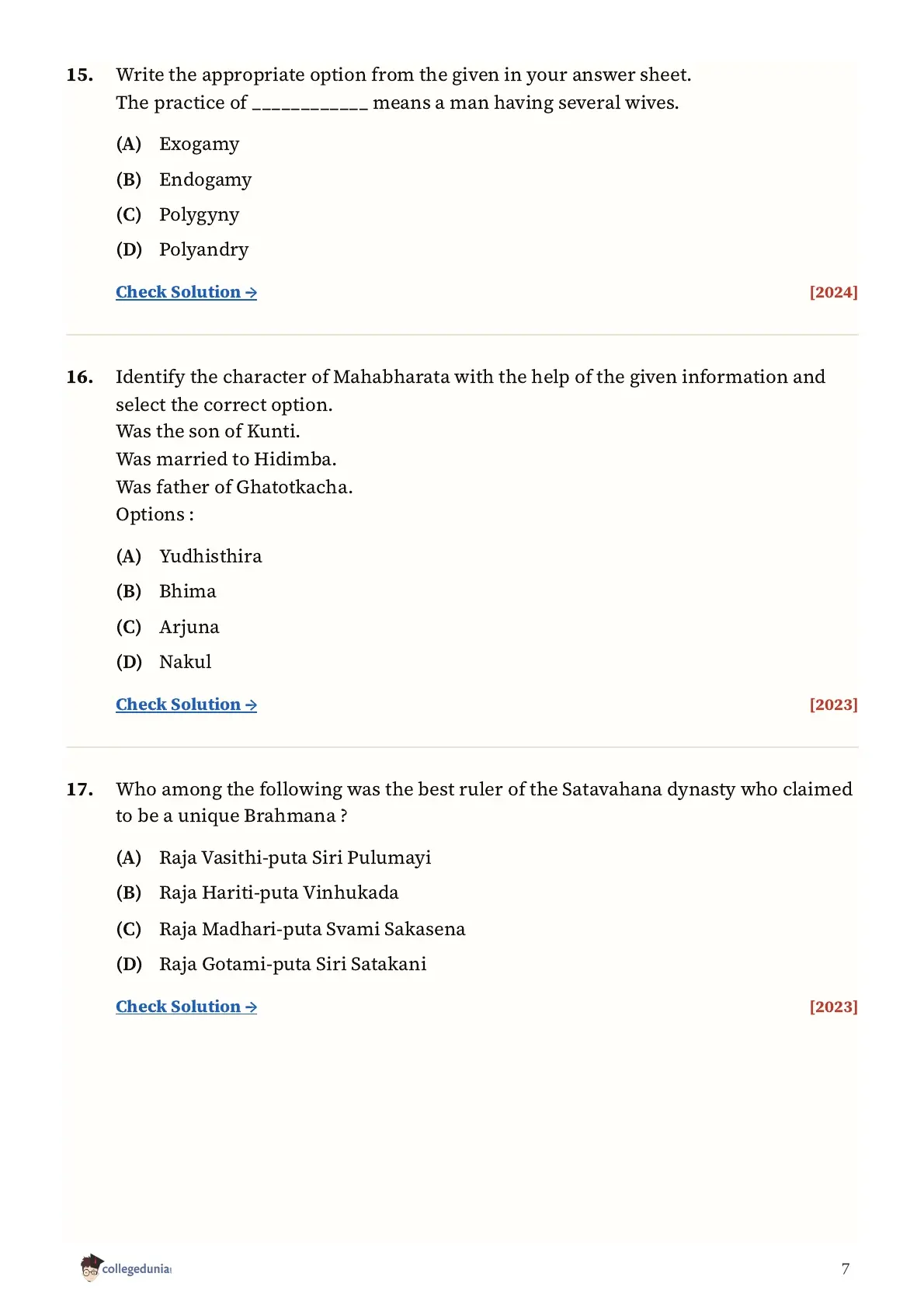
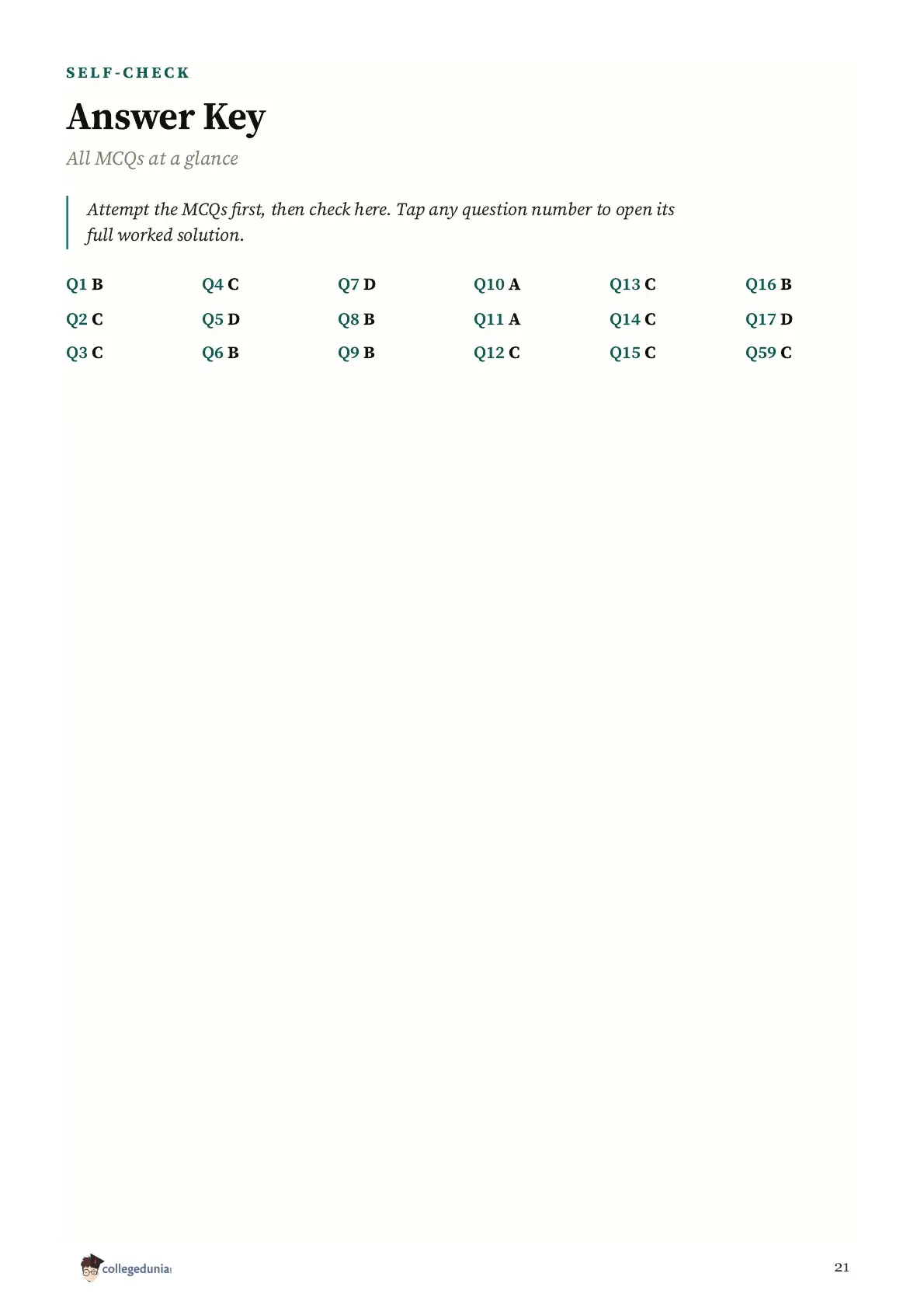
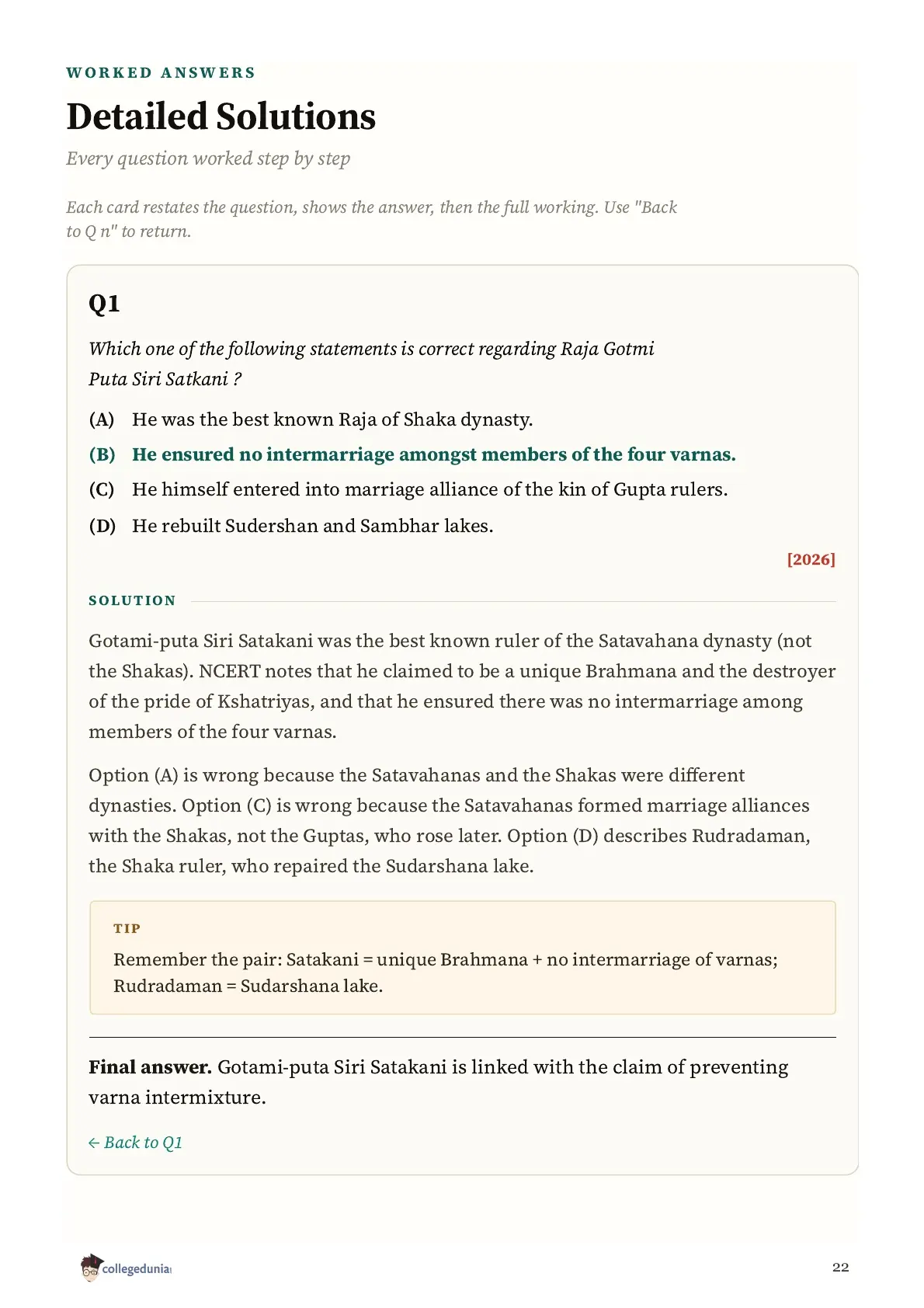
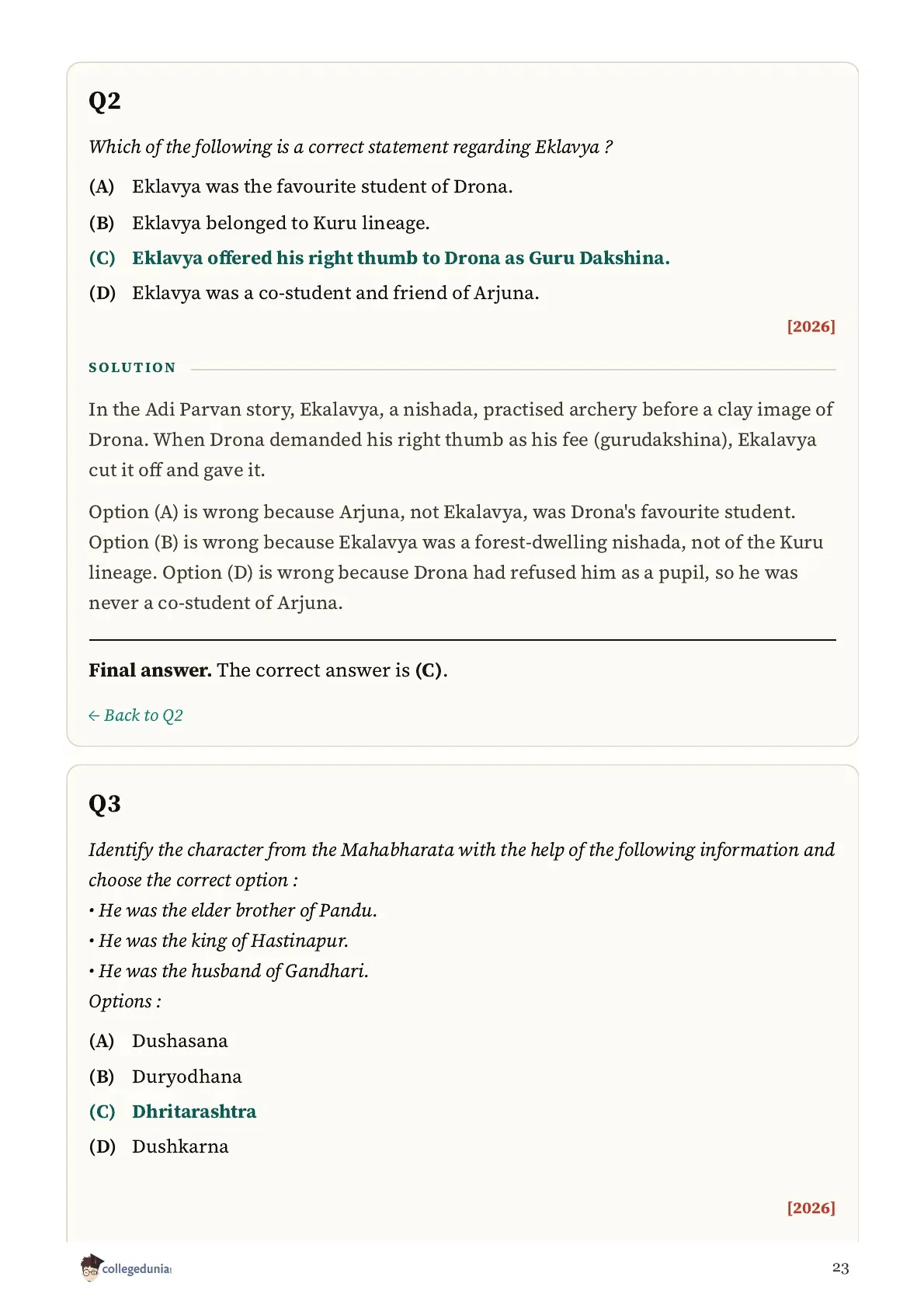
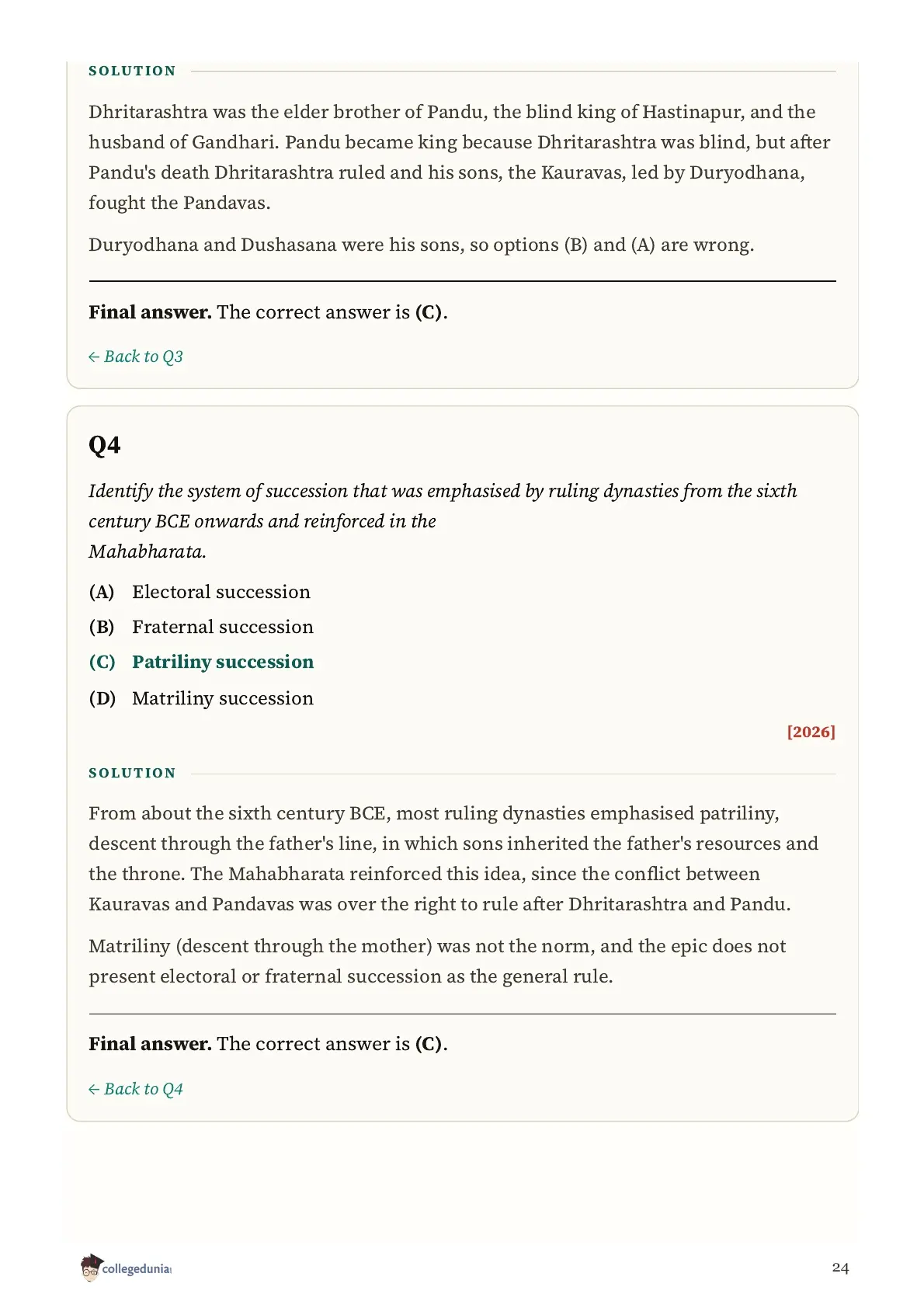
Begin with the 18 MCQs, which cover Satavahana rulers, Stridhana, patriliny, Ekalavya and the Critical Edition, and then take the three source passages. Each passage can be answered from its text with one added fact, usually the term the passage is about.
Of the 78 written answers, 9 begin "How", 6 begin "Mention", 5 begin "Why", 4 begin "Explain" and 4 begin "Describe". Keep ready one full answer each on the making of the Critical Edition, the rules of marriage, the varna order and patriliny, and reuse the points when the wording changes.
Source: Humanities Wallah - Class 12th
Common Mistakes in Kinship, Caste and Class Questions
- Describing the Critical Edition as a translation, when it is a comparison of manuscripts from different parts of the subcontinent to produce a single text.
- Treating the varna order as a record of how people actually lived, not a Brahmanical prescription.
- Mixing up endogamy and exogamy in marriage questions.
- Calling Ekalavya a prince, when the epic places him as a Nishada.
- Giving two points where "any three" or "any four" is asked.
- Leaving out the Manusmriti passage when a source part asks which form of marriage is described.
Using the Answer Key and Solutions
The PDF is 91 pages and free to download. Each section is sorted newest year first, the Answer Key lists every MCQ at a glance, and each question links to its worked solution and back. Attempt a section first, check the key, then read the solution and note the common mistake given with it. The solutions are written by Collegedunia's History experts and are not official CBSE marking schemes.
Class 12 History PYQs by Theme
| Theme | PYQ Page |
|---|---|
| Theme 1 | Theme 1: Bricks, Beads and Bones: The Harappan Civilisation Class 12 PYQ |
| Theme 2 | Theme 2: Kings, Farmers and Towns Class 12 PYQ |
| Theme 3 | Theme 3: Kinship, Caste and Class Class 12 PYQ |
| Theme 4 | Theme 4: Thinkers, Beliefs and Buildings Class 12 PYQ |
| Theme 5 | Theme 5: Through the Eyes of Travellers Class 12 PYQ |
| Theme 6 | Theme 6: Bhakti-Sufi Traditions Class 12 PYQ |
| Theme 7 | Theme 7: An Imperial Capital: Vijayanagara Class 12 PYQ |
| Theme 8 | Theme 8: Peasants, Zamindars and the State Class 12 PYQ |
| Theme 9 | Theme 9: Colonialism and the Countryside Class 12 PYQ |
| Theme 10 | Theme 10: Rebels and the Raj: The Revolt of 1857 Class 12 PYQ |
| Theme 11 | Theme 11: Mahatma Gandhi and the Nationalist Movement Class 12 PYQ |
| Theme 12 | Theme 12: Framing the Constitution Class 12 PYQ |
Kinship, Caste and Class Class 12 History PYQ FAQs
Ques. How many questions are in the Kinship, Caste and Class Class 12 PYQ PDF?
Ans. The PDF has 99 questions from CBSE board papers between 2008 and 2026. 18 are MCQs, 3 are passage-based questions and 78 are written answers.
Ques. Does this PYQ PDF include solutions, or only the questions?
Ans. All 99 questions have a worked solution in the PDF, and the MCQs also have an Answer Key at the start of the objective section.
Ques. Are the solutions official?
Ans. No. They are written by Collegedunia's History experts and are not an official CBSE marking scheme.
Ques. How many marks does Kinship, Caste and Class carry in the Class 12 board paper?
Ans. CBSE does not publish a mark figure for each theme. Prep-site tables for 2026-27, such as the Physics Wallah syllabus page, list 25 of the 80 theory marks for the ancient history section, which is Part I, Themes 1 to 4. The figure is unofficial, so check the curriculum on cbseacademic.nic.in.
Ques. What are the most repeated topics in Kinship, Caste and Class questions?
Ans. The Mahabharata appears in 50 questions, marriage and gotra in 14, the four varnas in 13 and the Critical Edition in 8. The Manusmriti and Dharmashastras appear in 7 questions and Ekalavya in 5.
Ques. Is there a source-based question in this chapter?
Ans. Yes, 3: A Mother's Advice (Gandhari and Duryodhana), the eight forms of marriage from the Manusmriti and Draupadi's question.
Ques. How is the Critical Edition of the Mahabharata asked in board papers?
Ans. 8 questions are on it, including a 2025 and a 2026 question asking students to describe the process followed by V.S. Sukthankar and his team and a 2025 question asking them to examine a statement on its value to scholars.



Comments