




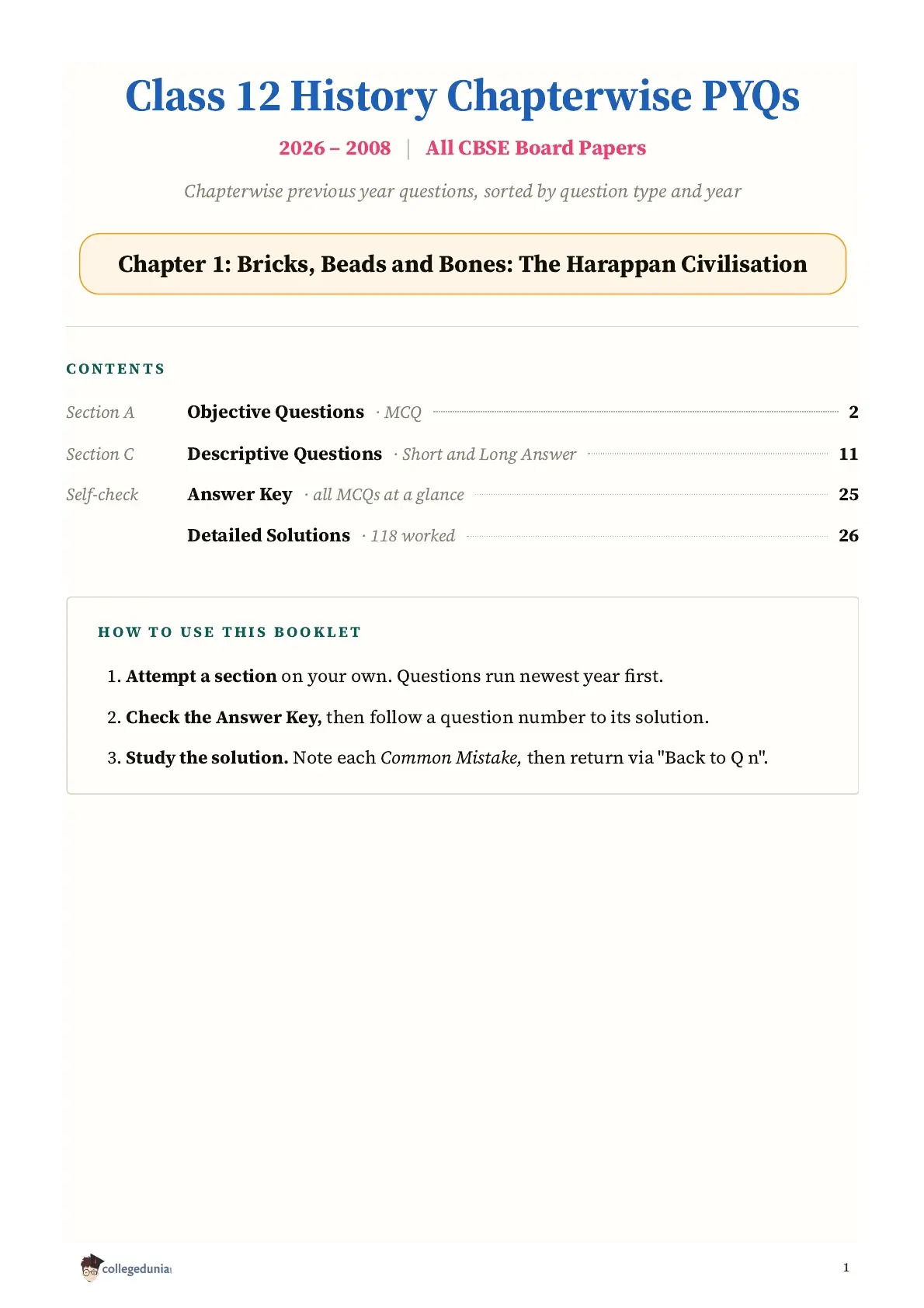
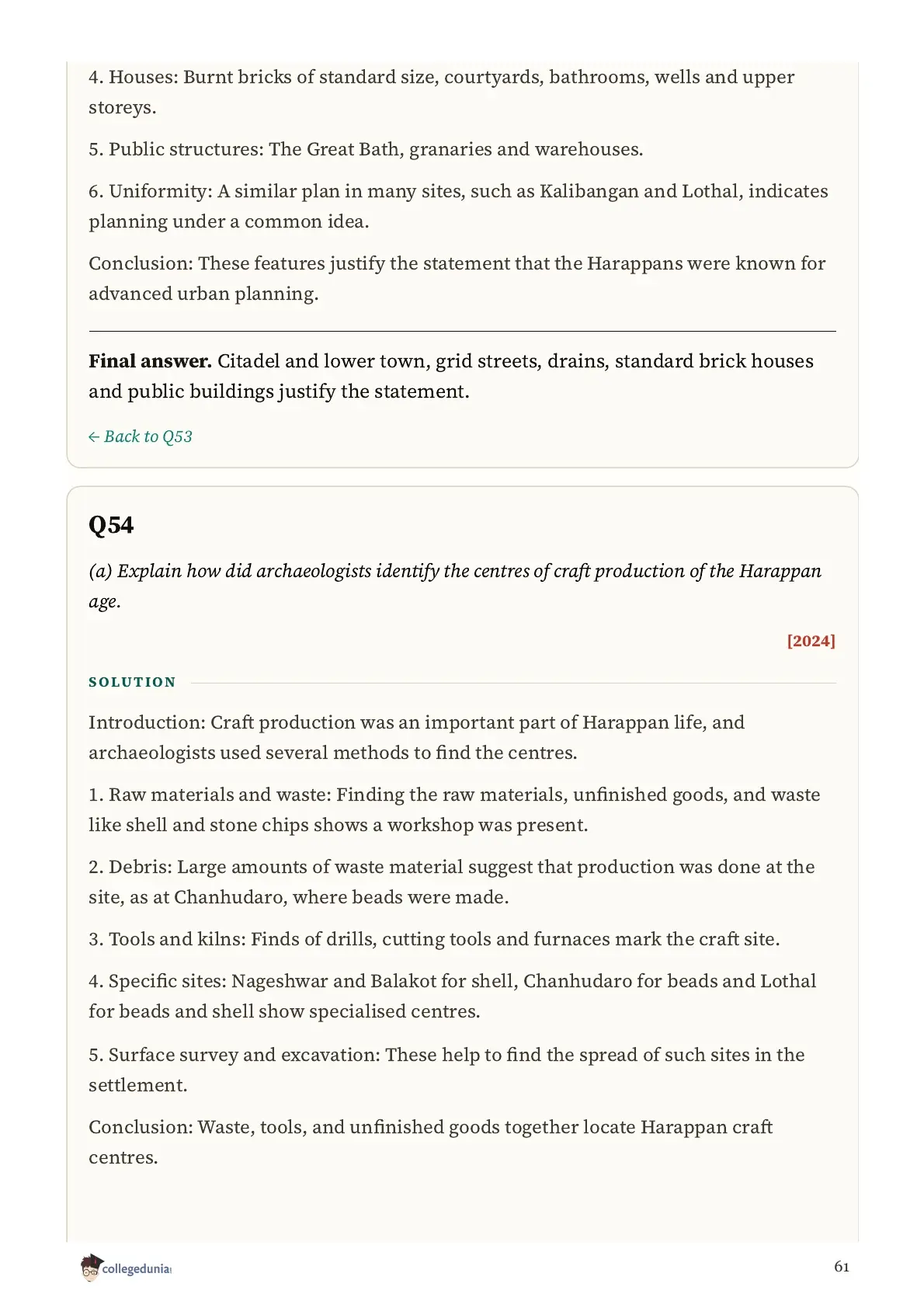
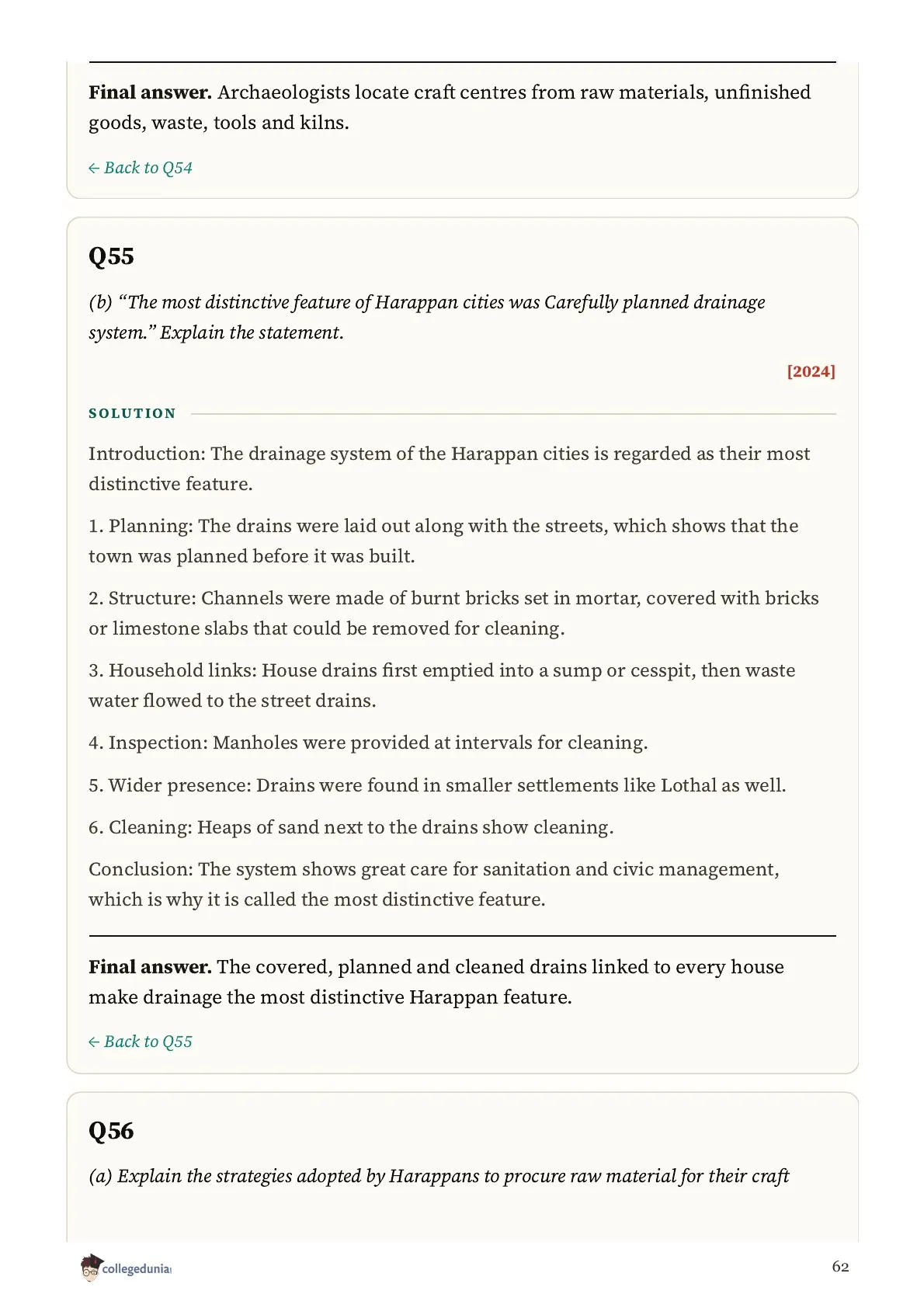
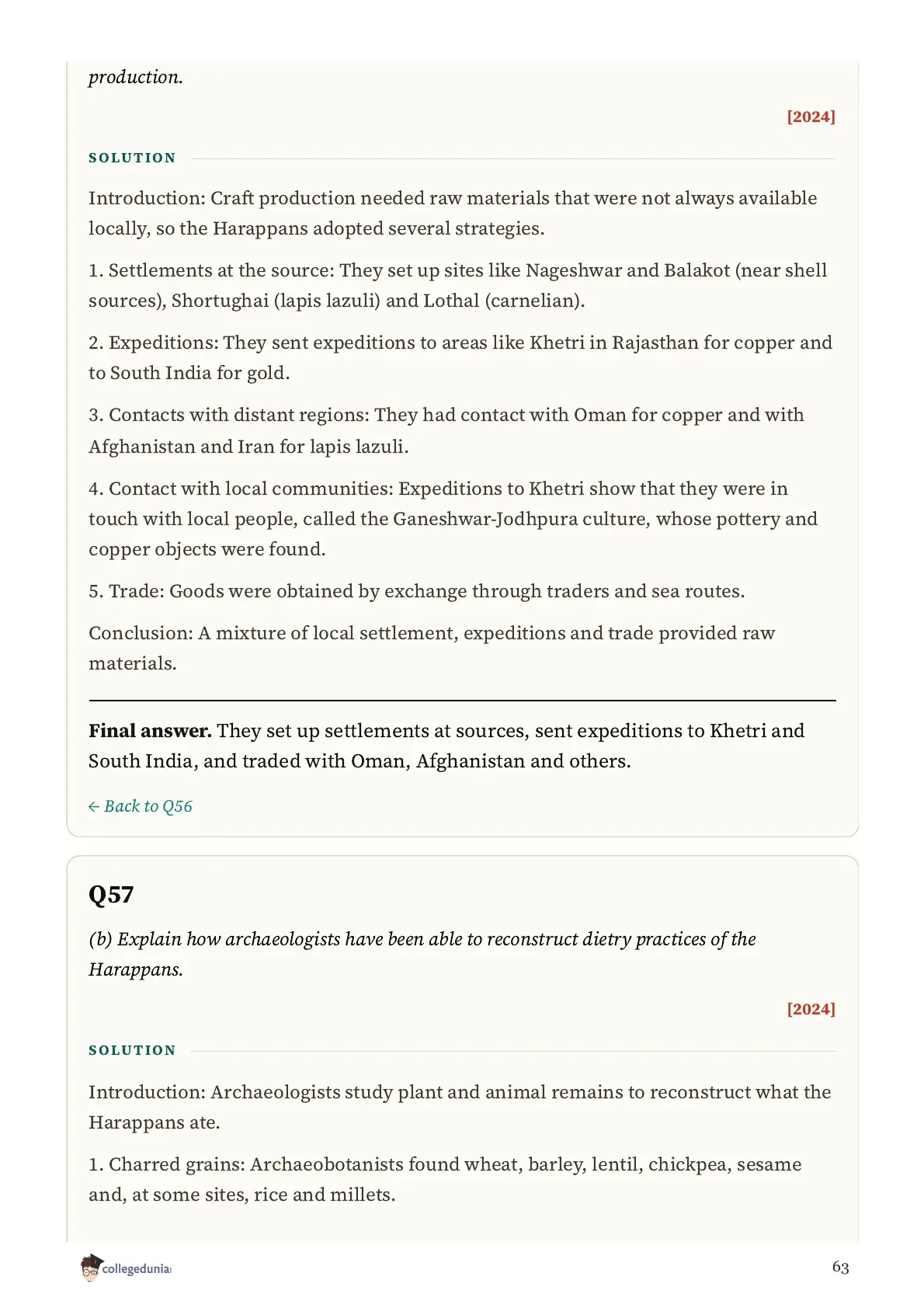
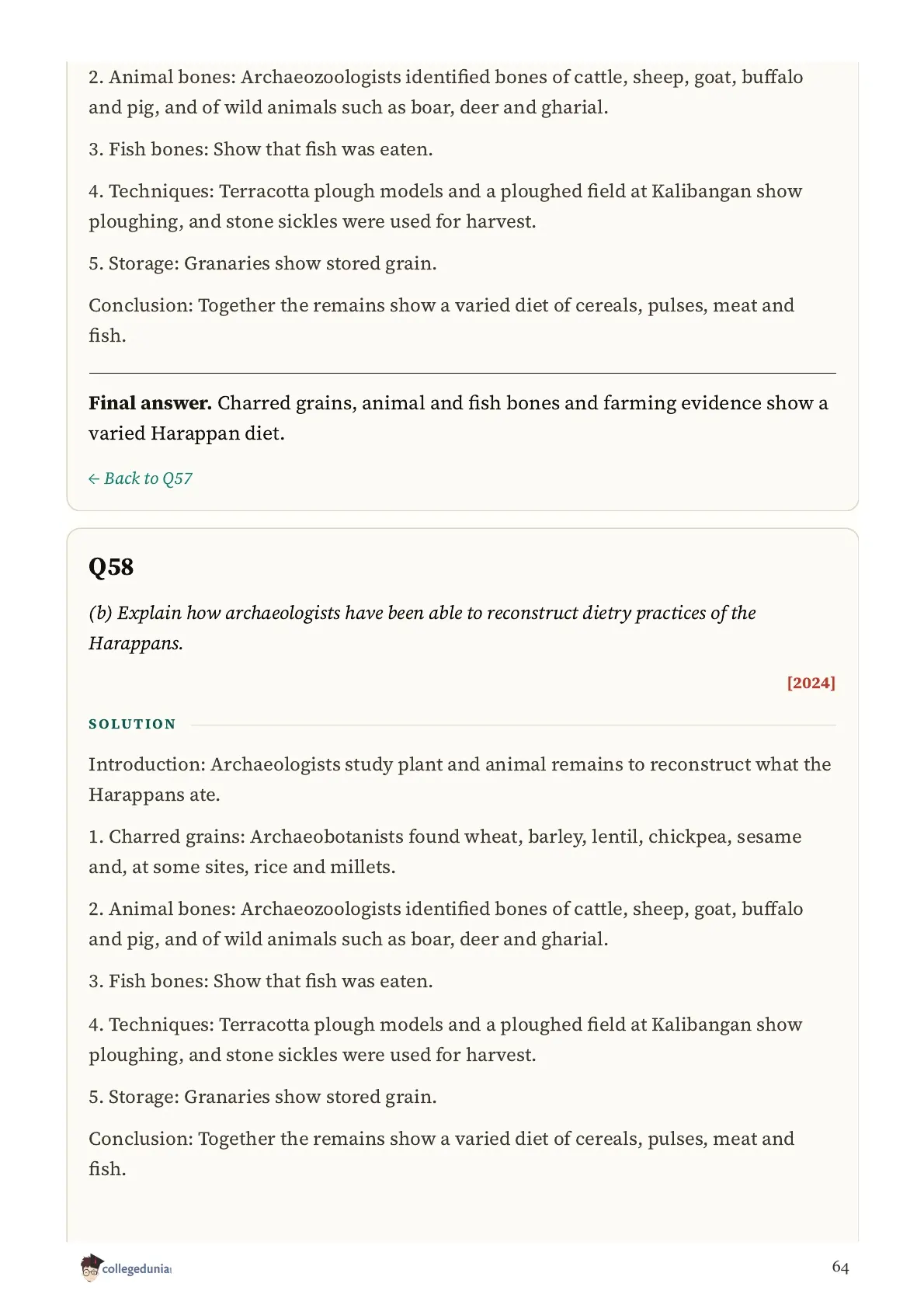
Class 12 History Bricks, Beads and Bones PYQ, free to download as a 101-page PDF. Theme 1 sits in Part I (Themes 1 to 4), which carries about 25 of the 80 marks, and in 118 solved questions from the 2008 to 2026 papers the board keeps returning to the same few ideas: how the Harappans made crafts and beads (16 questions), how they fed themselves (16), how their cities were planned and drained (13), why the civilisation declined (11), and what seals, script and religion tell us (8 each). Thirty of the questions are MCQs, so one sitting clears the objective ones, and the 75 longer answers come after that.
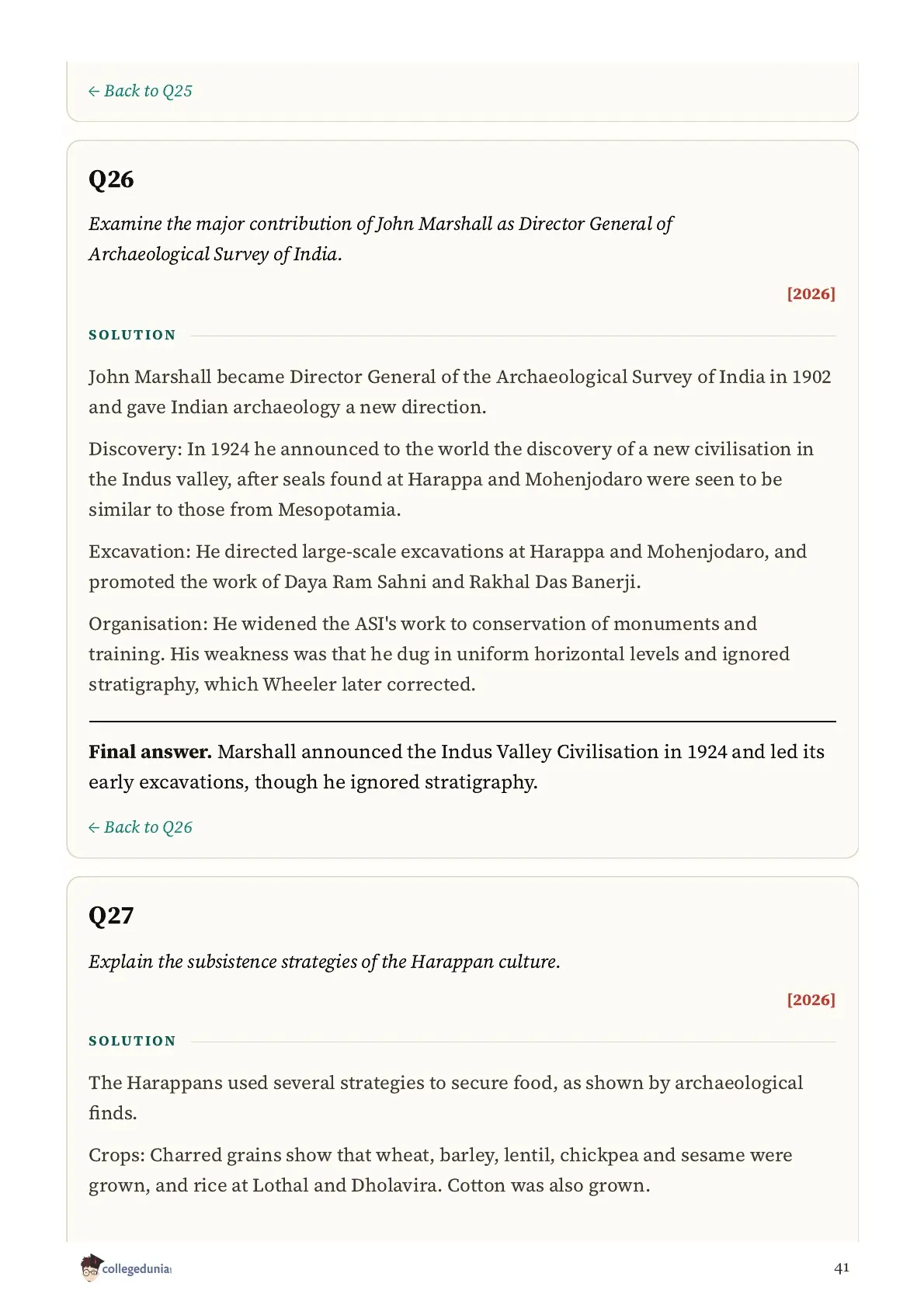
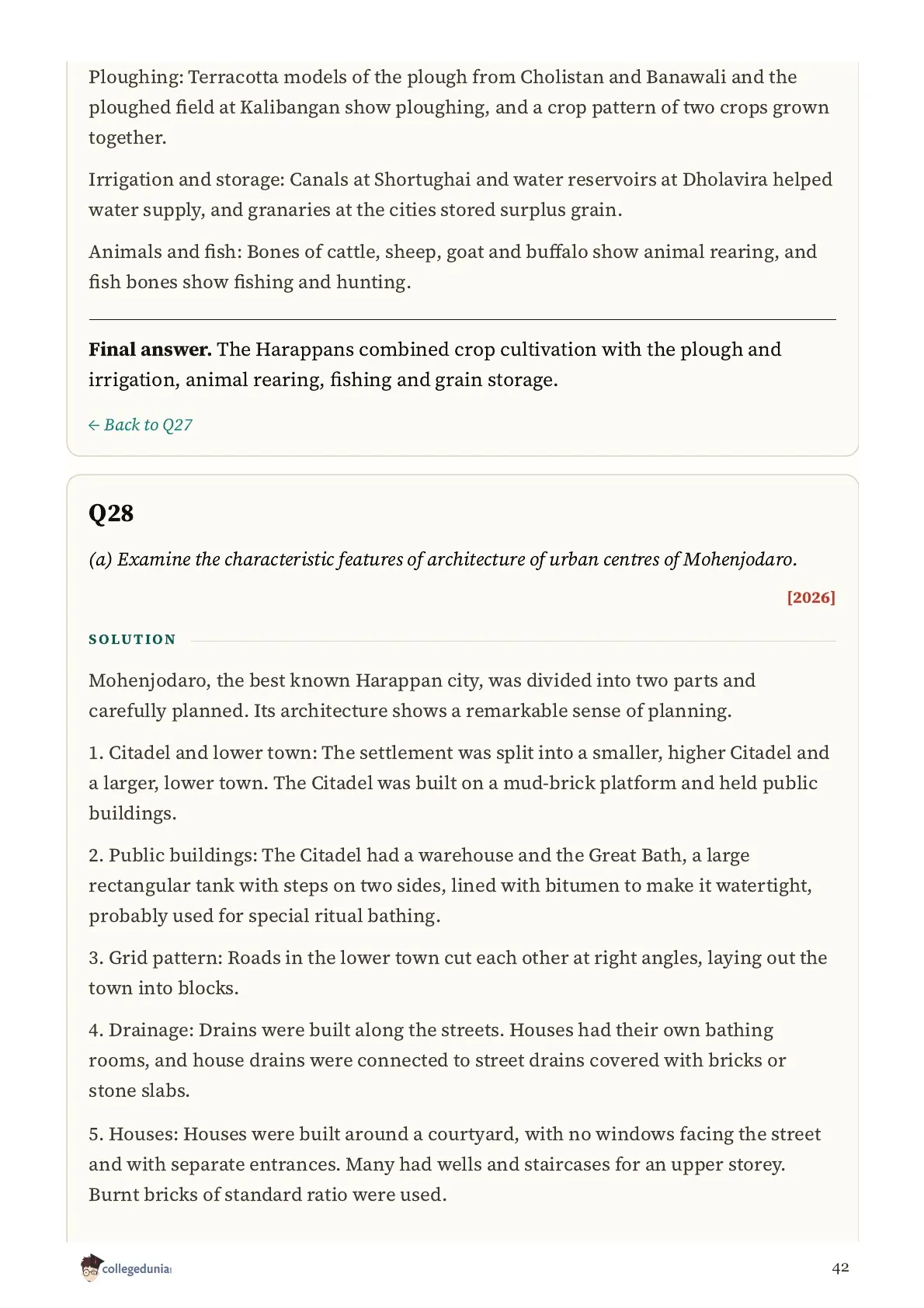
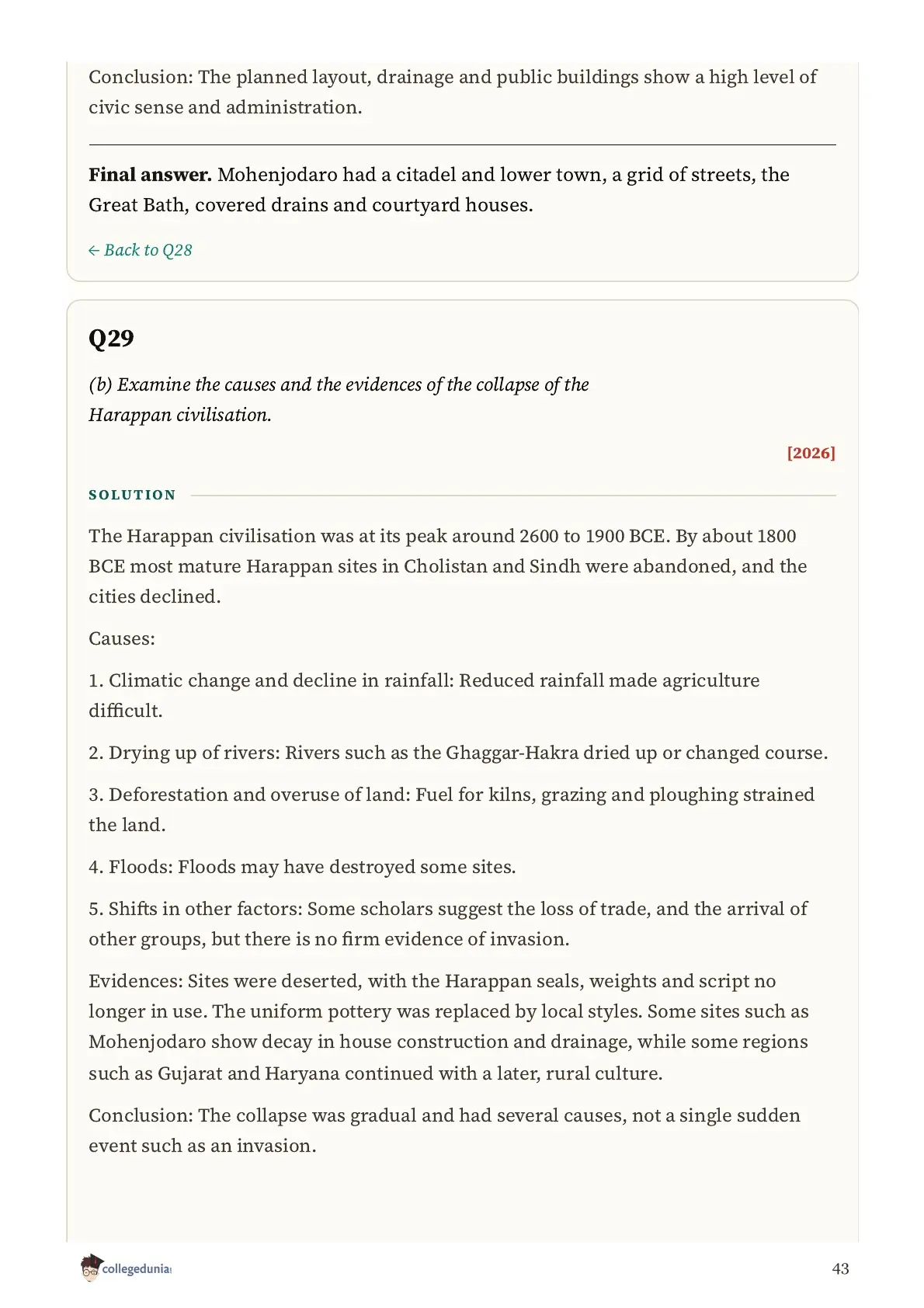
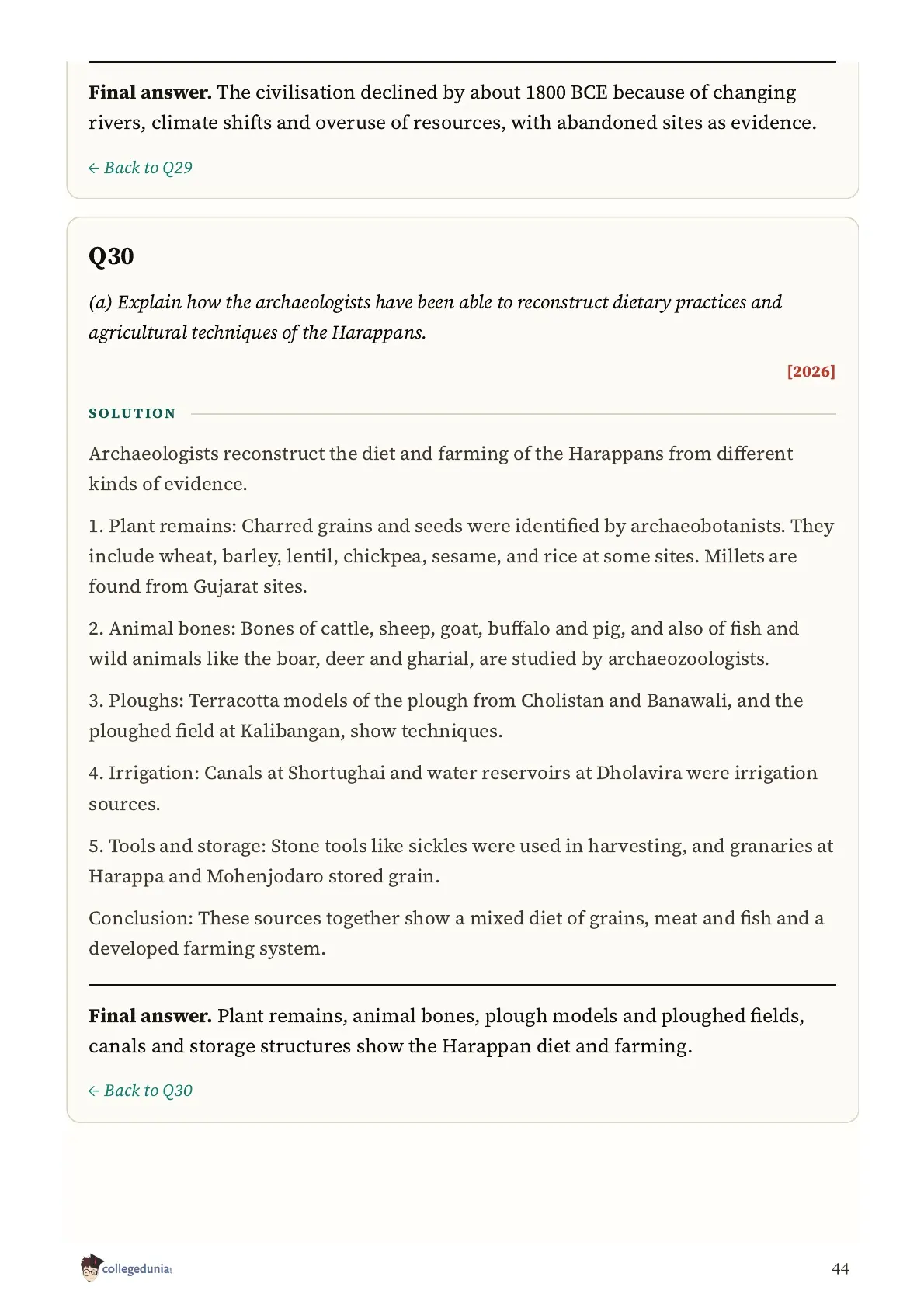
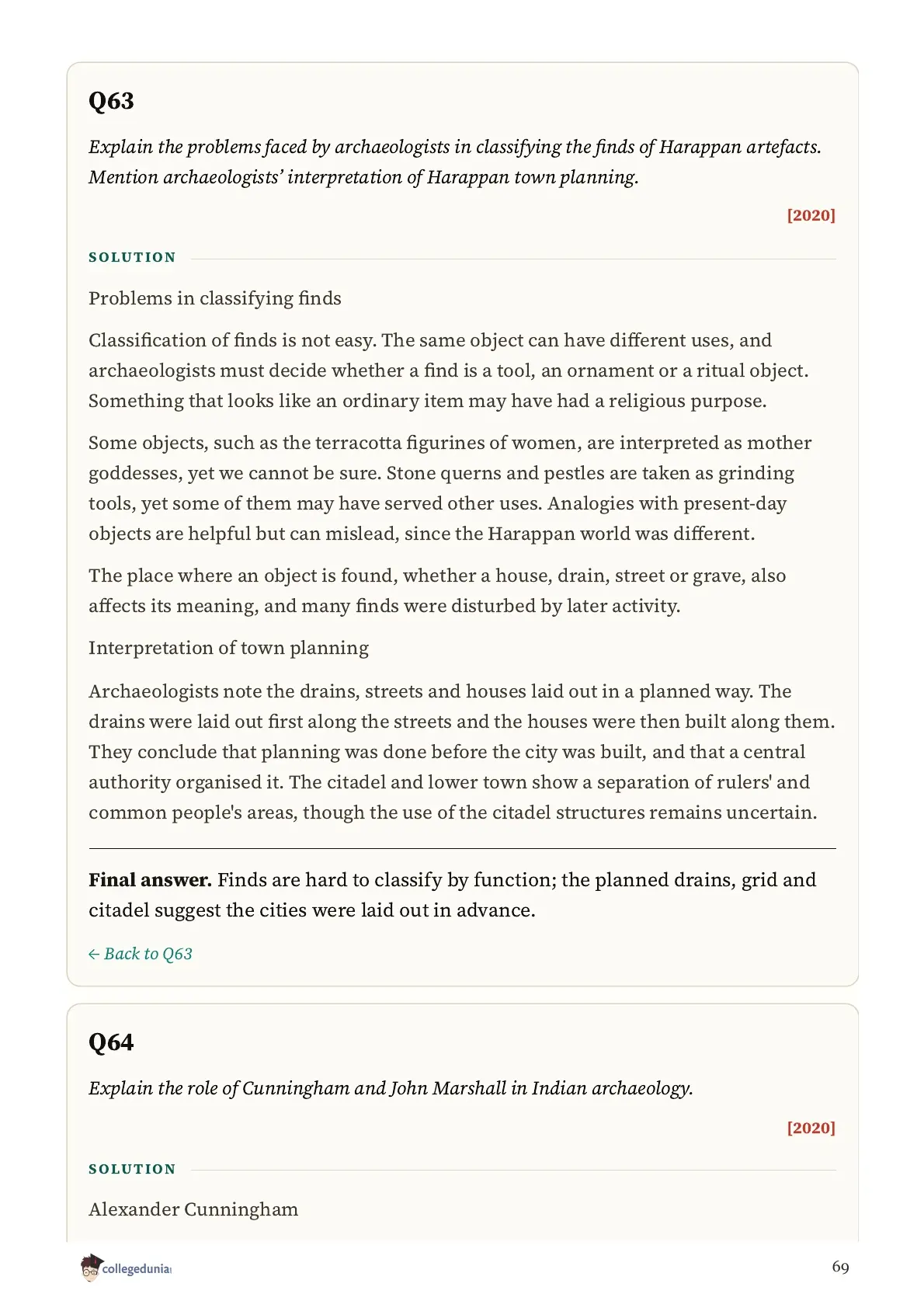
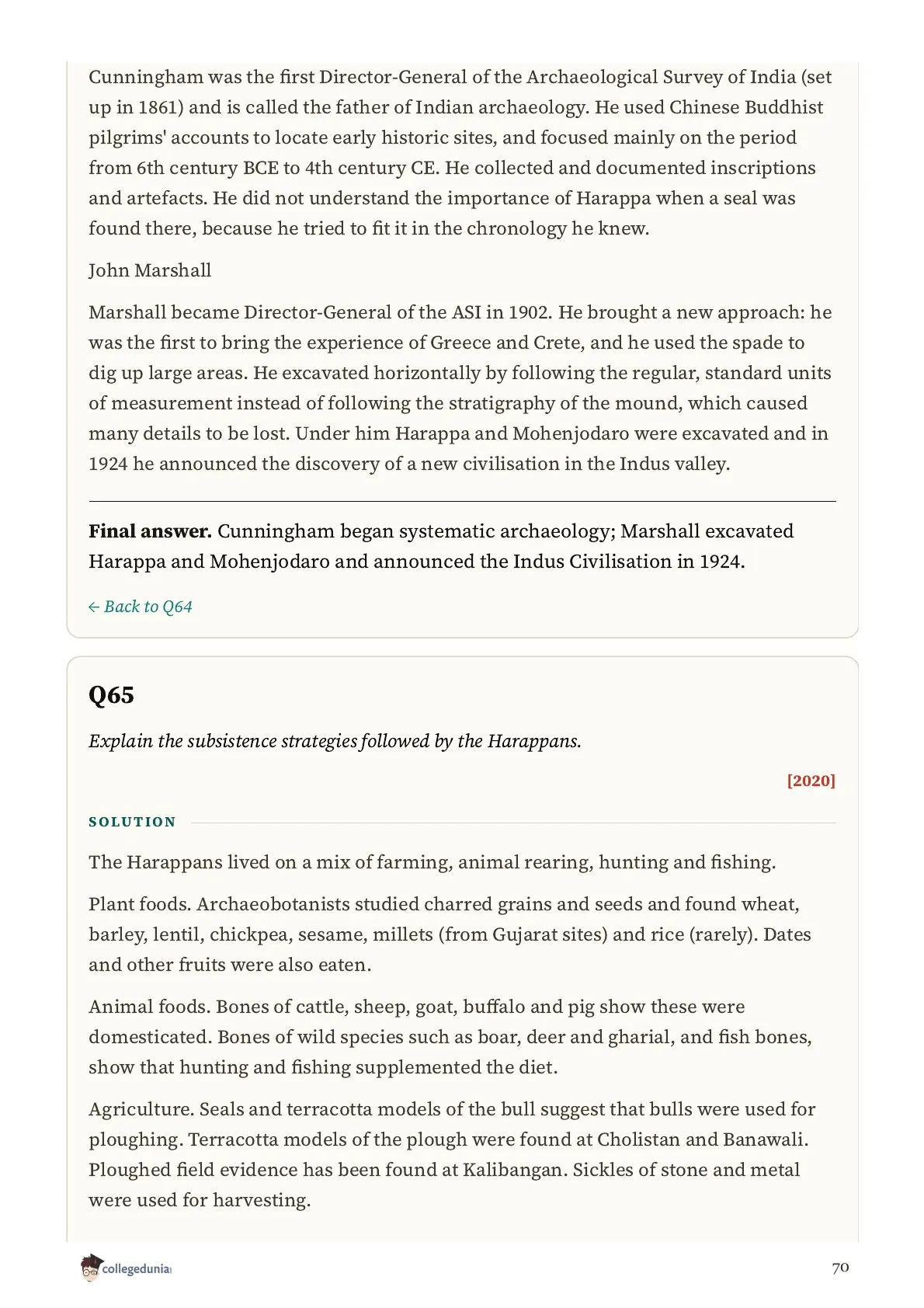
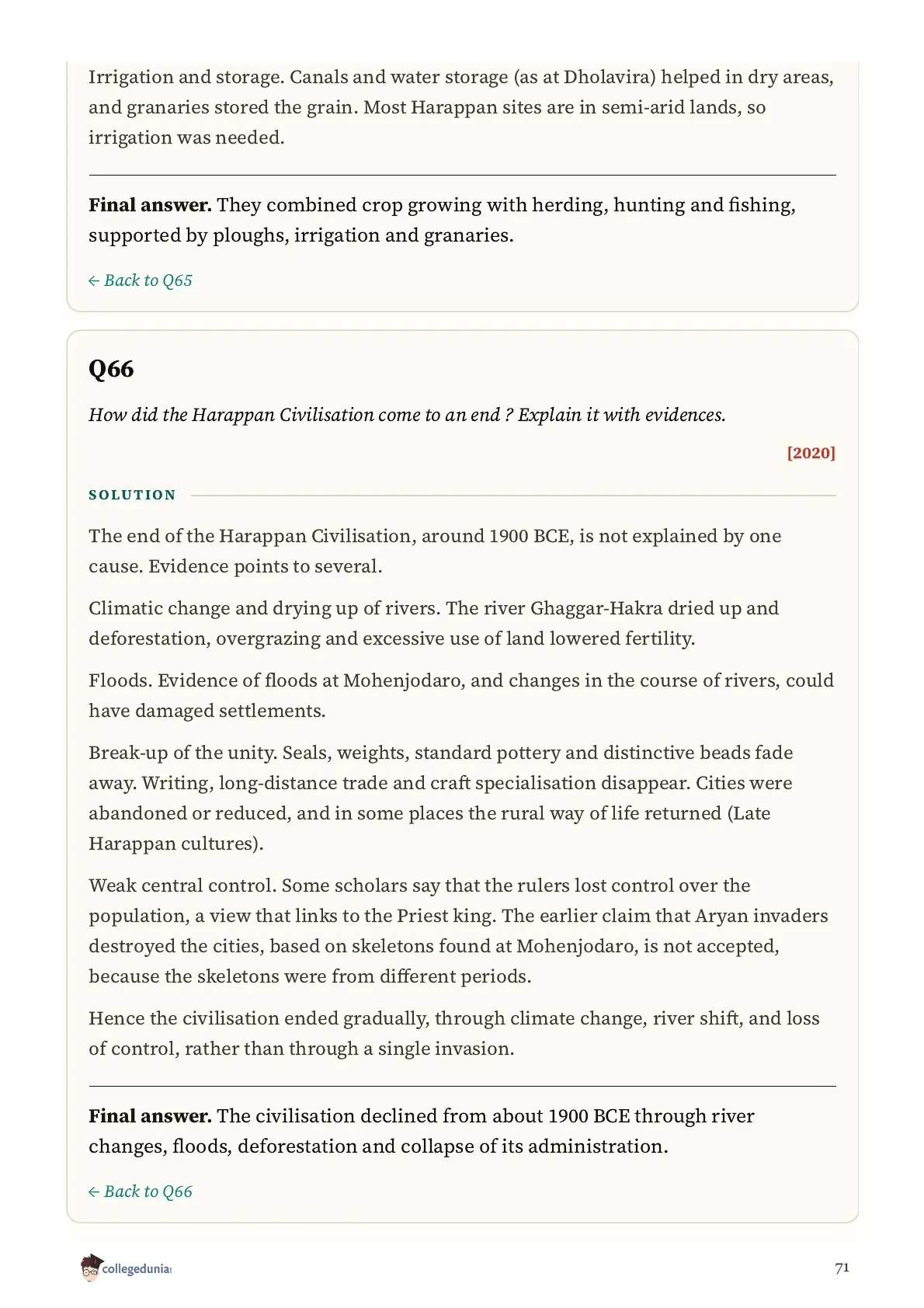
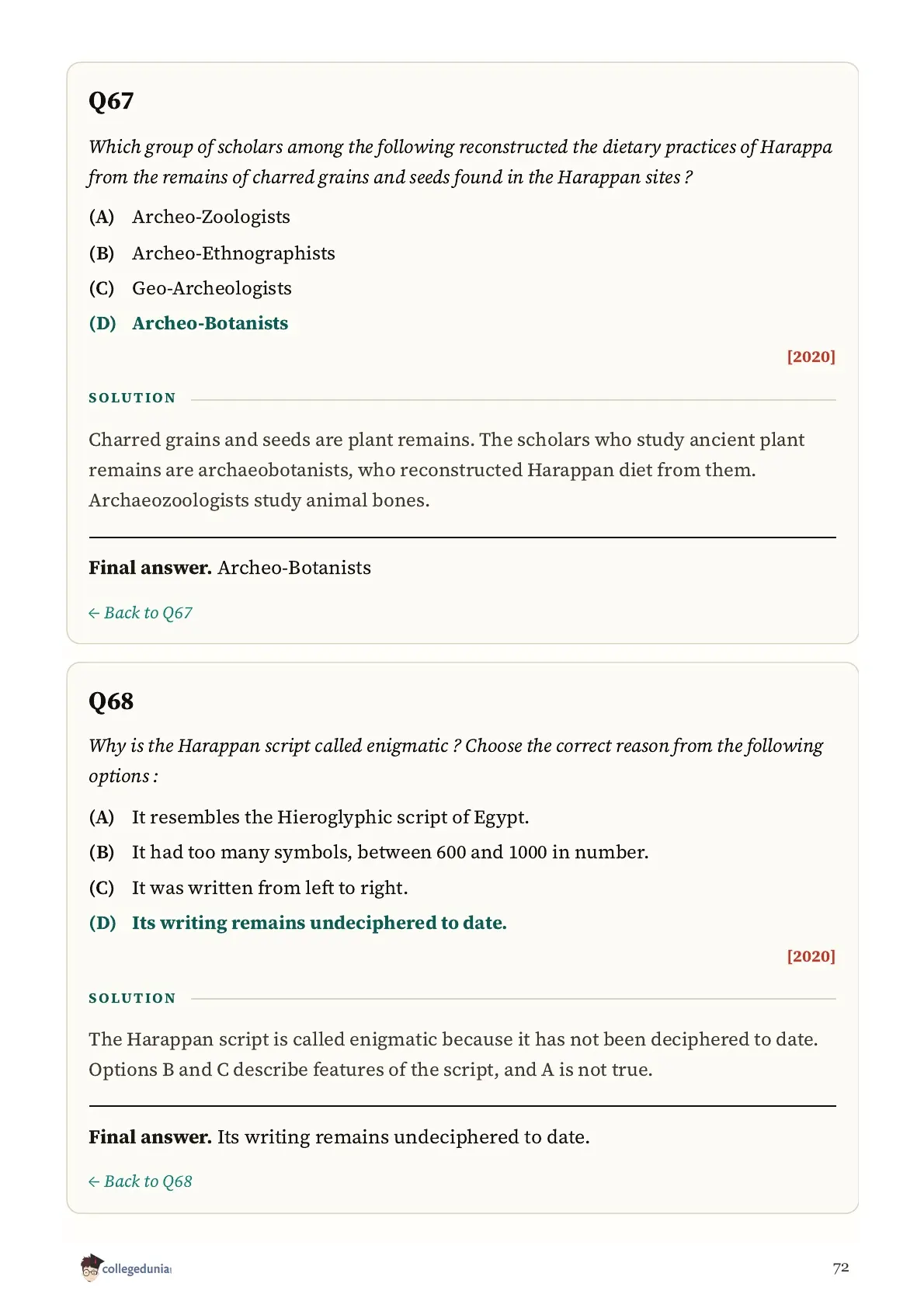
Bricks, Beads and Bones Weightage in the Class 12 Board Paper
As per History Bricks, Beads and Bones weightage from past years, students can expect this theme to be part of the roughly 25 marks the board paper sets from Part I (Themes 1 to 4), out of 80 theory marks. CBSE does not print a separate figure for Theme 1, so the Part I figure is the one to use. It comes from the exam-pattern table on the Physics Wallah syllabus page and is unofficial, so check the curriculum on cbseacademic.nic.in.
The question bank carries no marks, so the table below shows how many questions of each type are in the set and the time they take, not marks.
| Question Type | Questions in the Set | Time Allowed in the Plan |
|---|---|---|
| Objective (MCQ) | 30 | About 30 minutes |
| Source-Based | 1 (four parts) | About 8 minutes |
| Descriptive, short factual | 12 | About 1 hour |
| Descriptive, longer answers | 75 | About 6 hours |
Bricks, Beads and Bones Questions by Topic
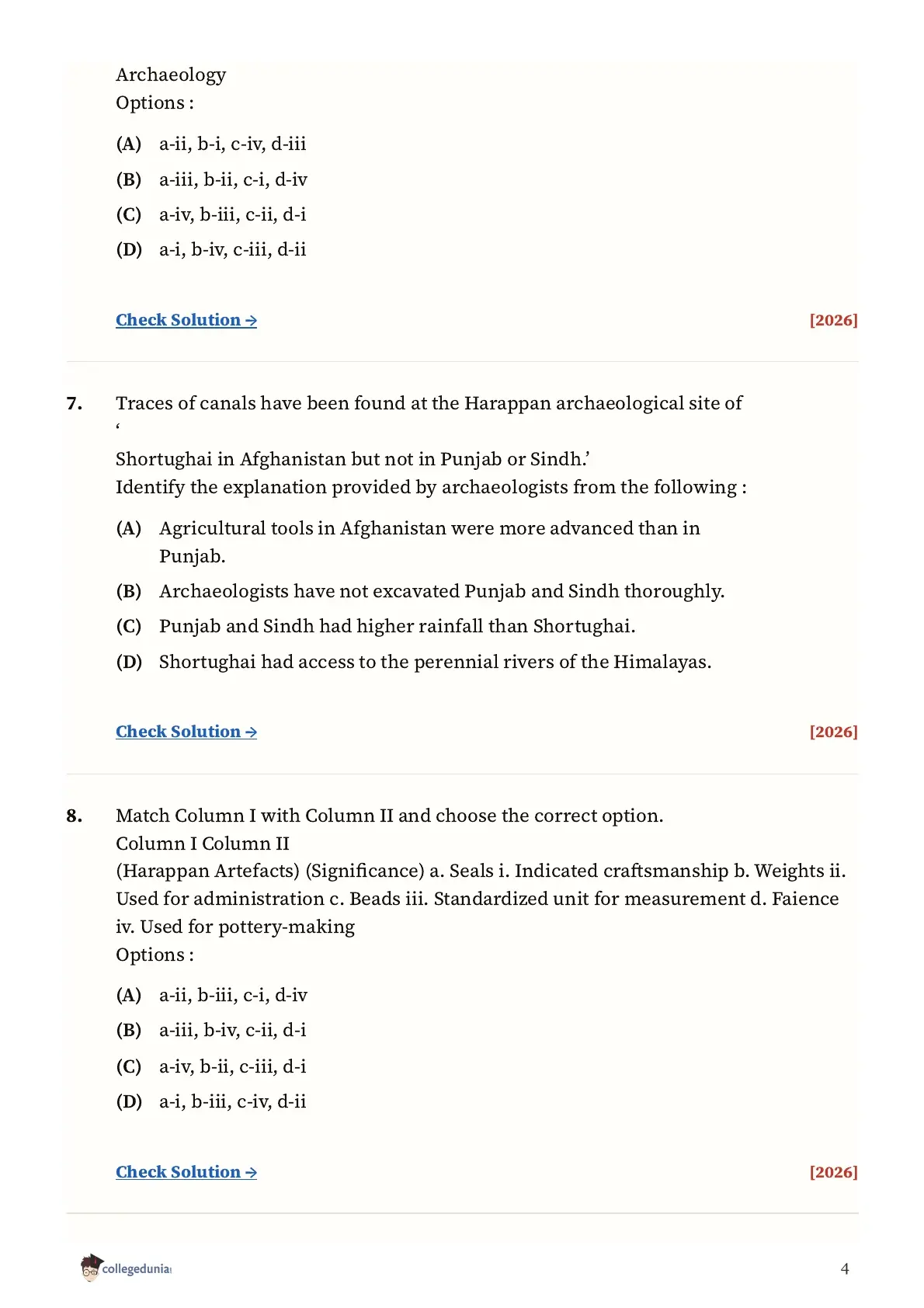
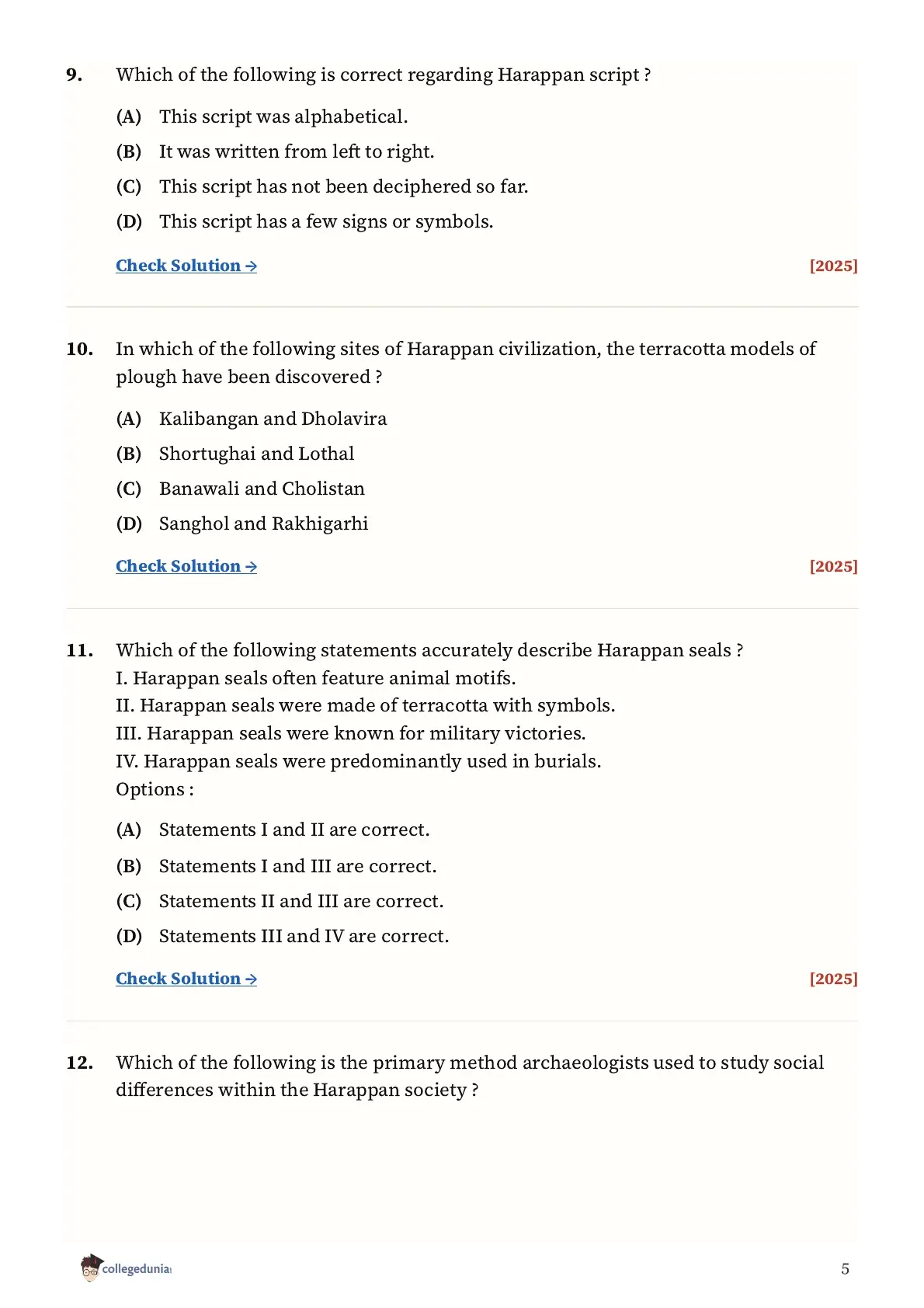
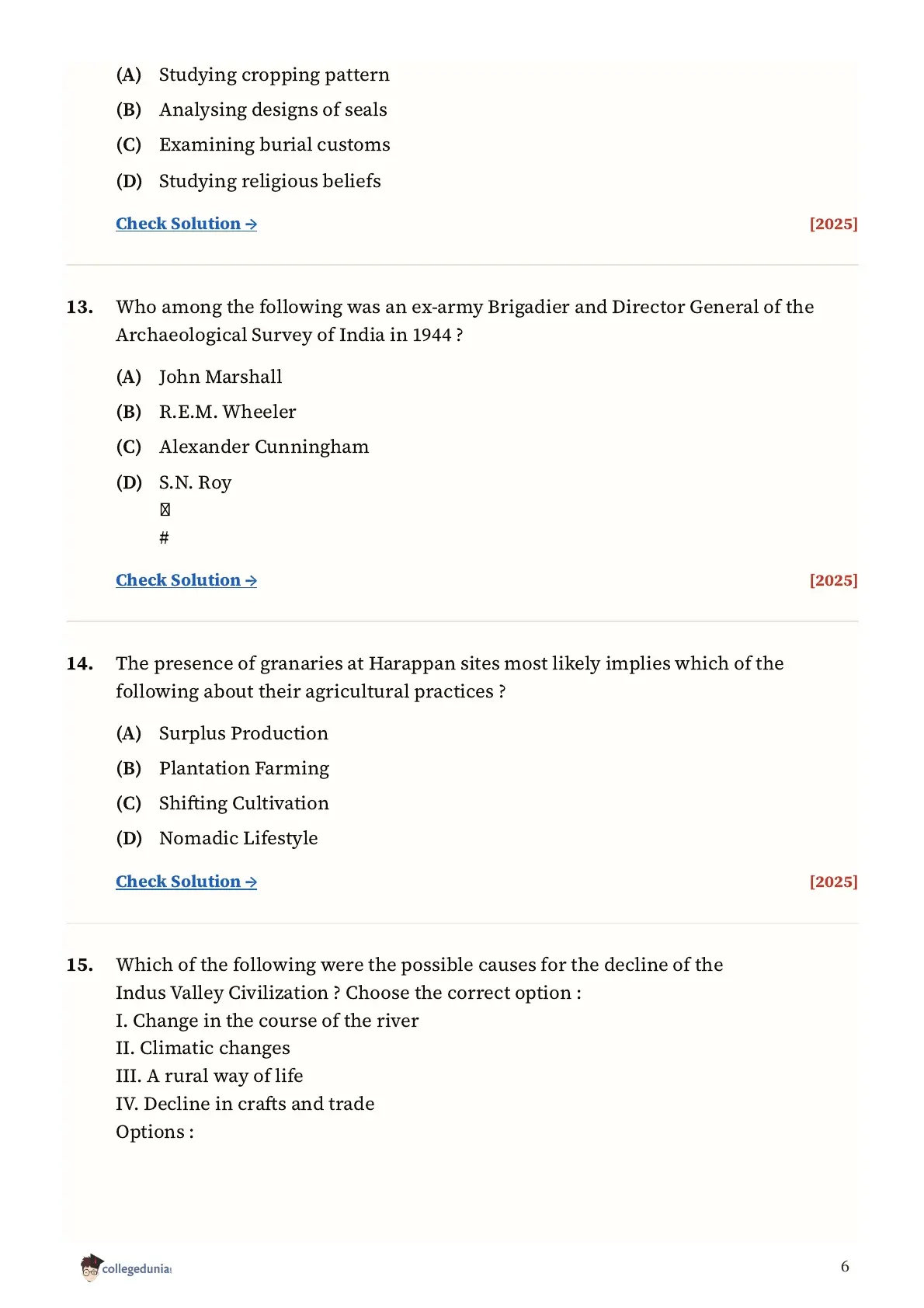
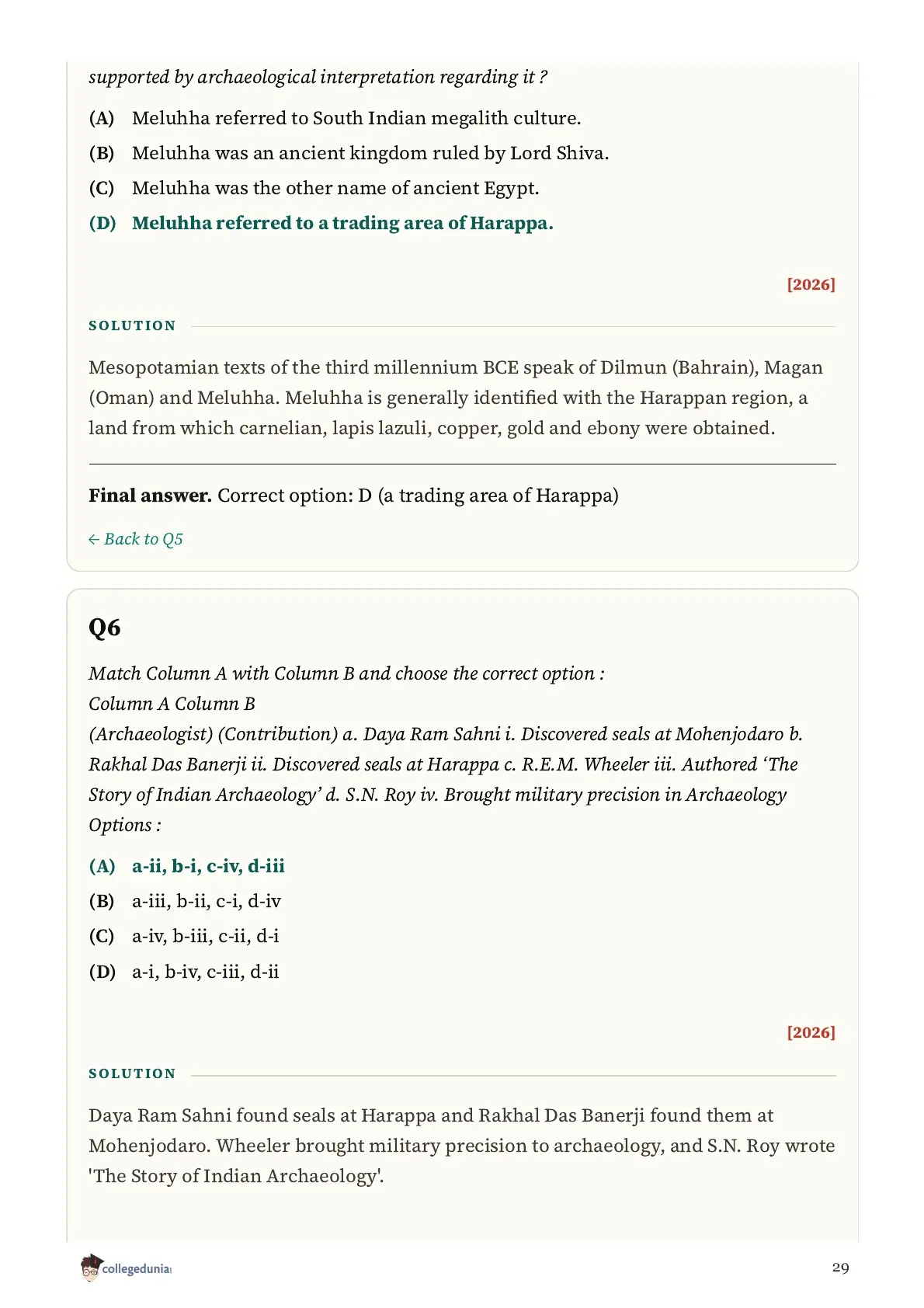
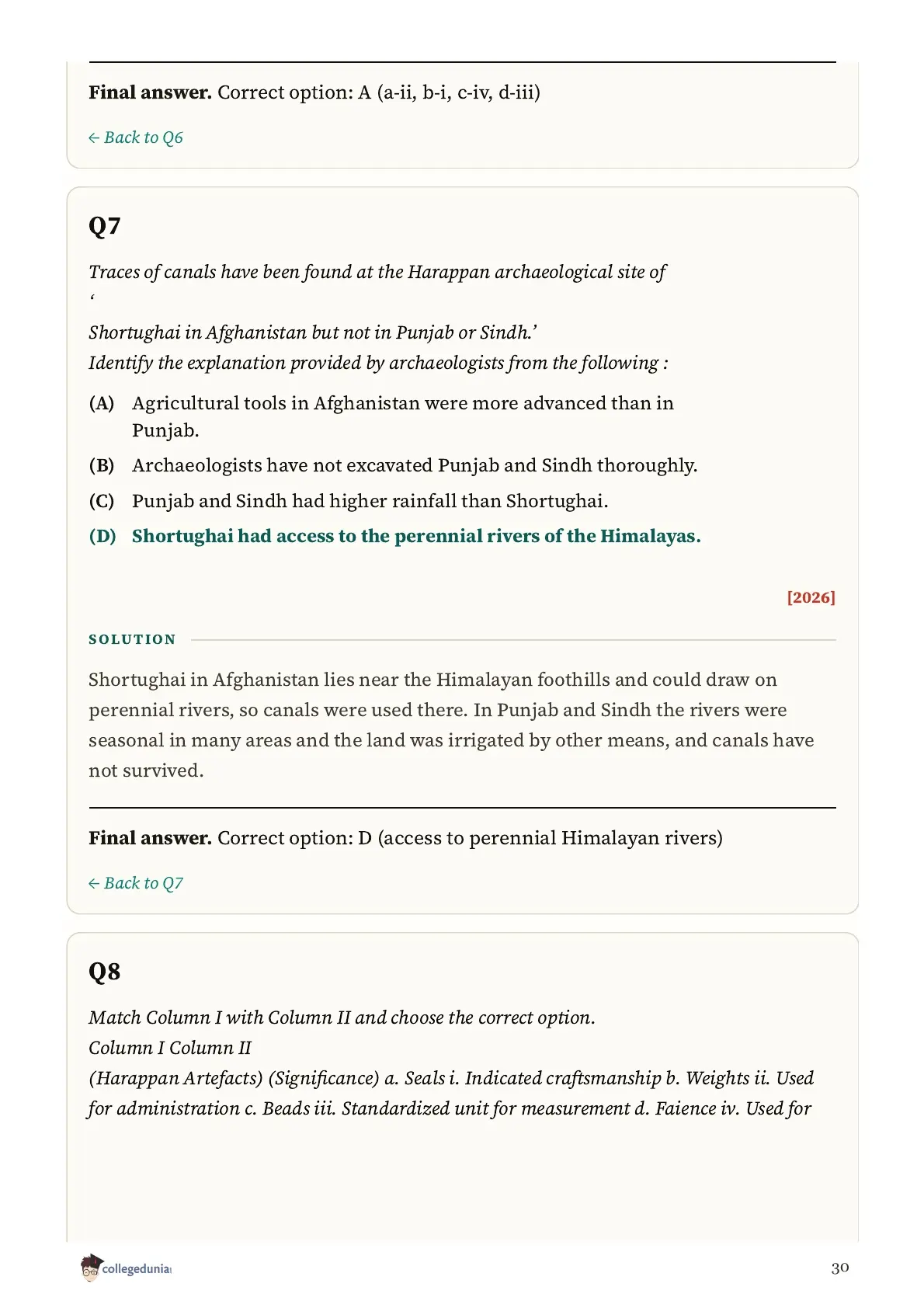
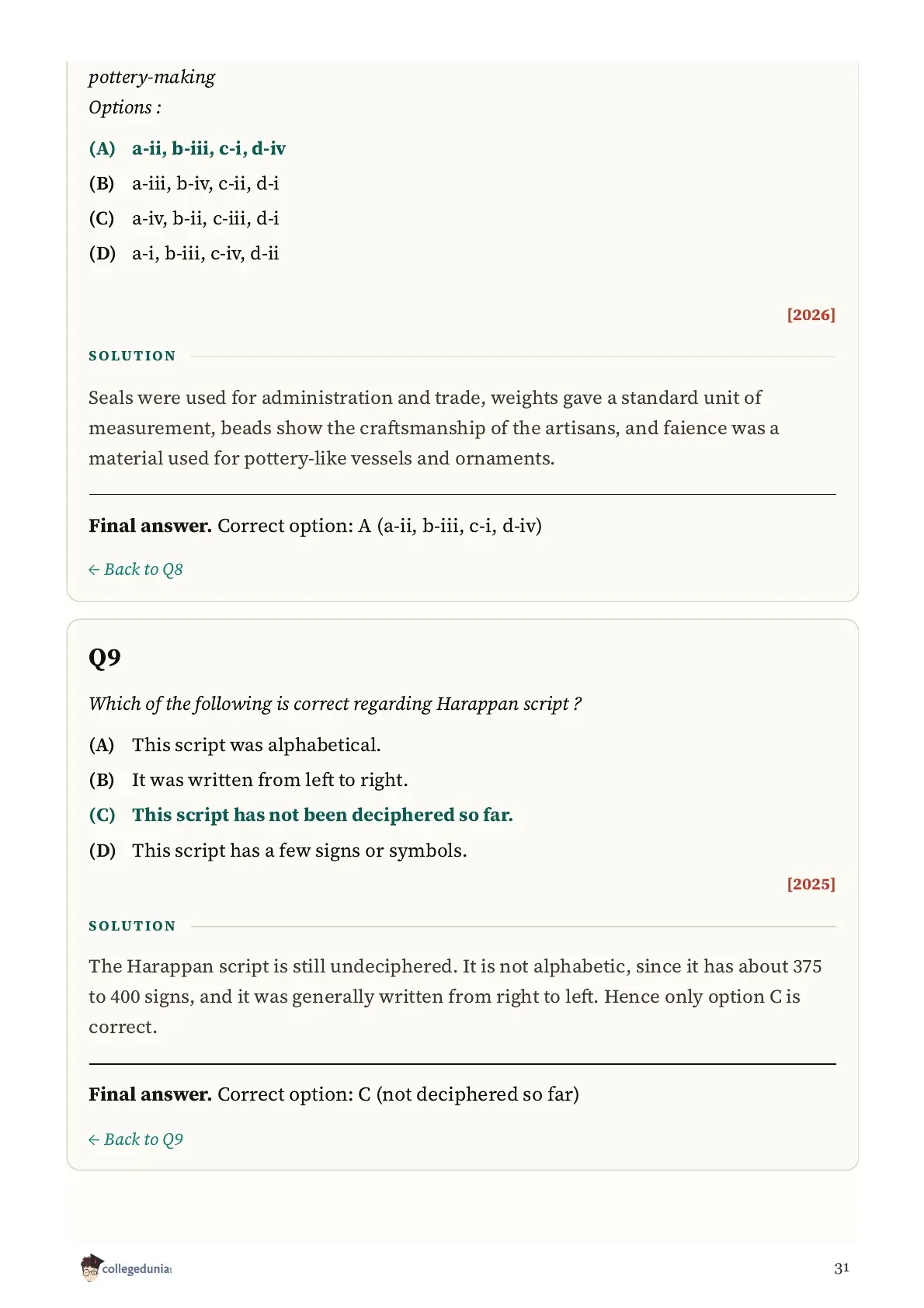
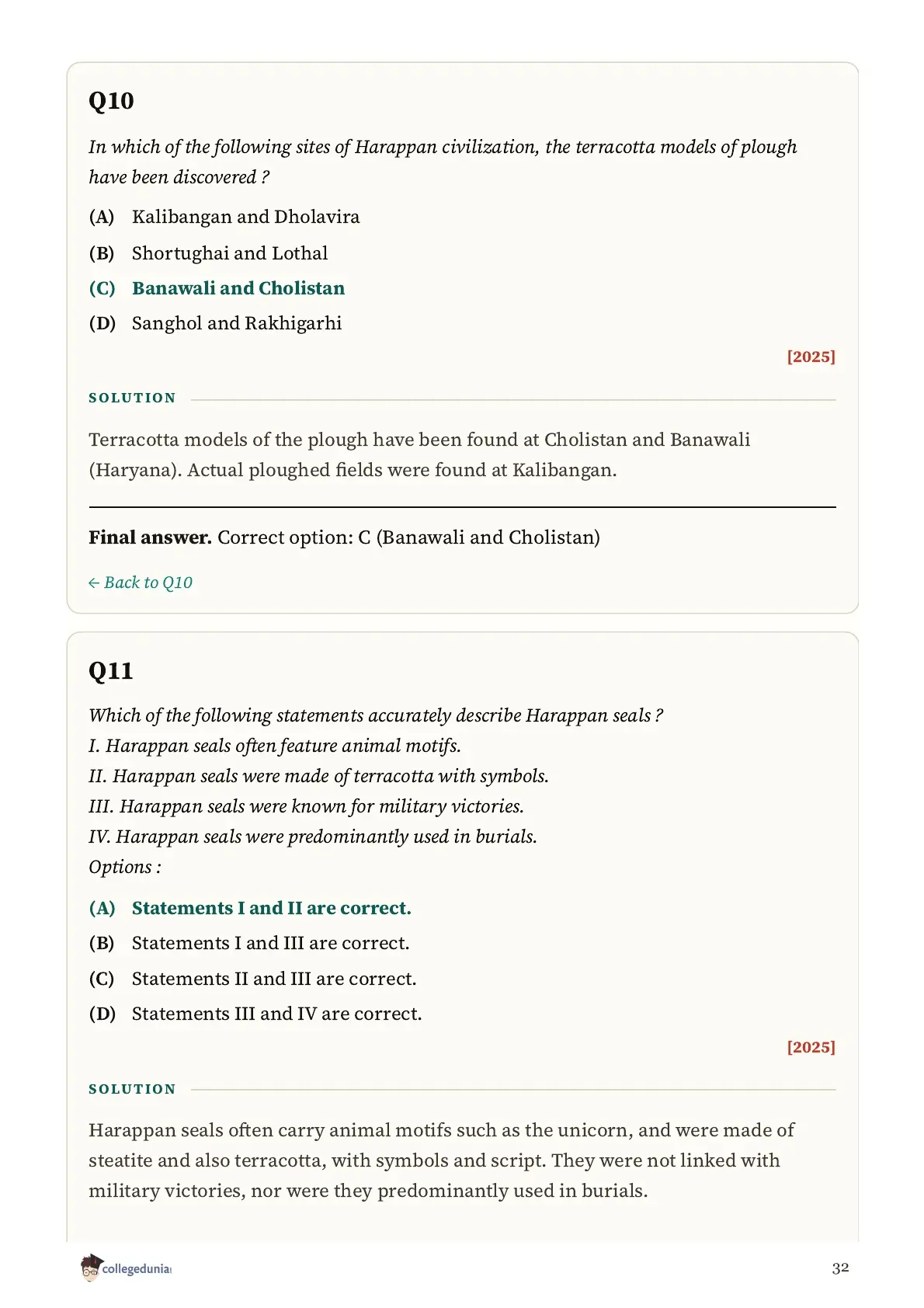
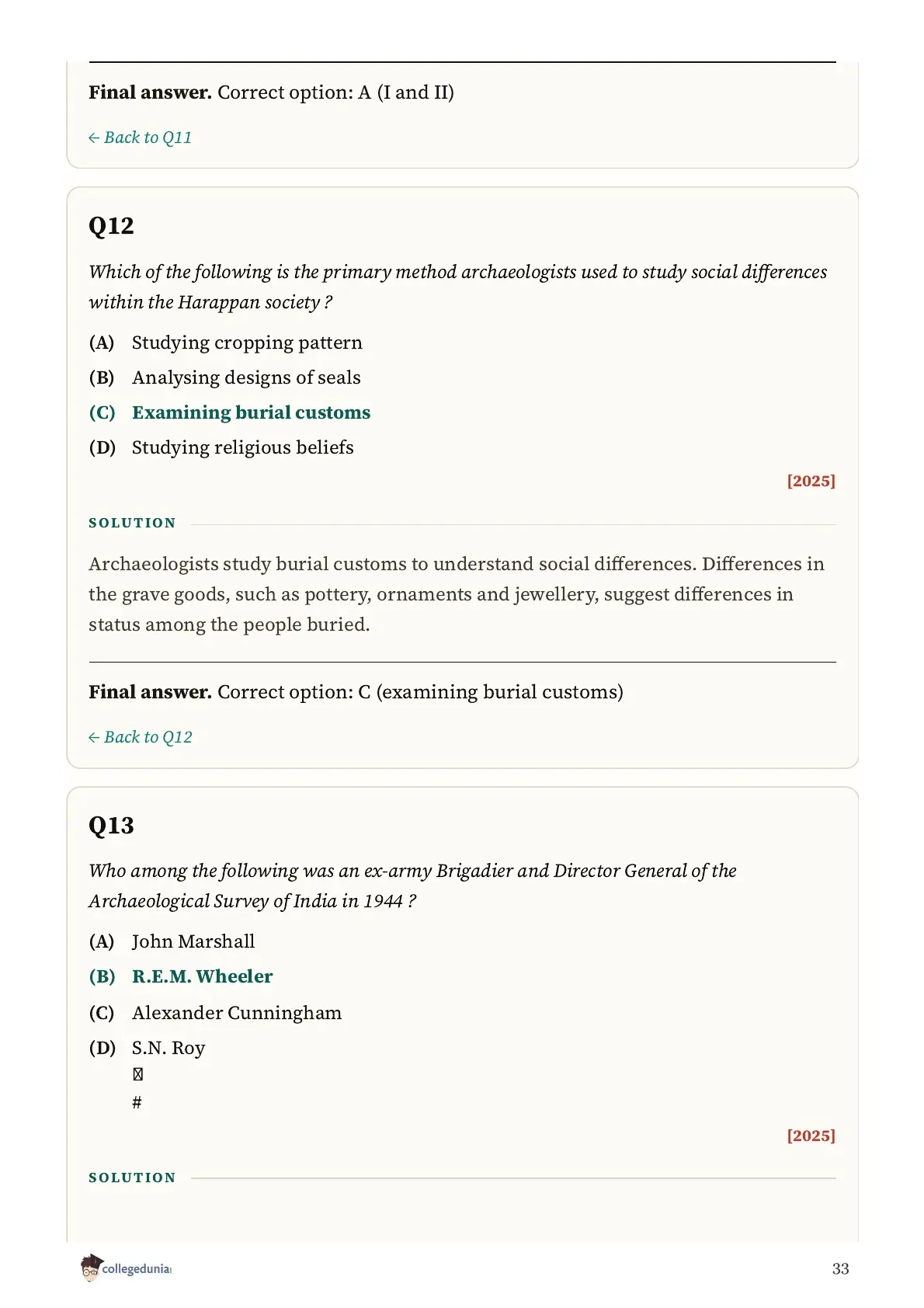
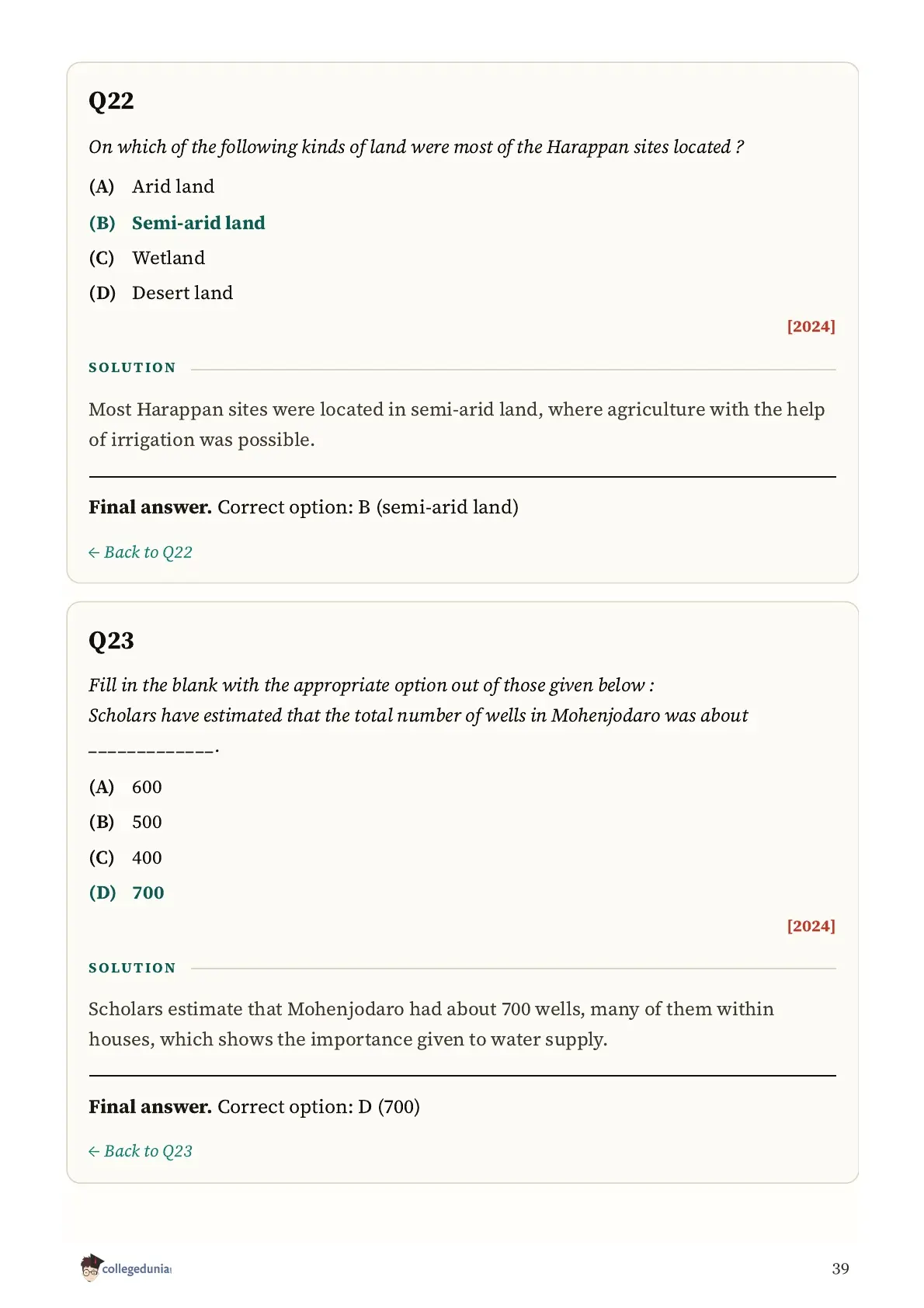
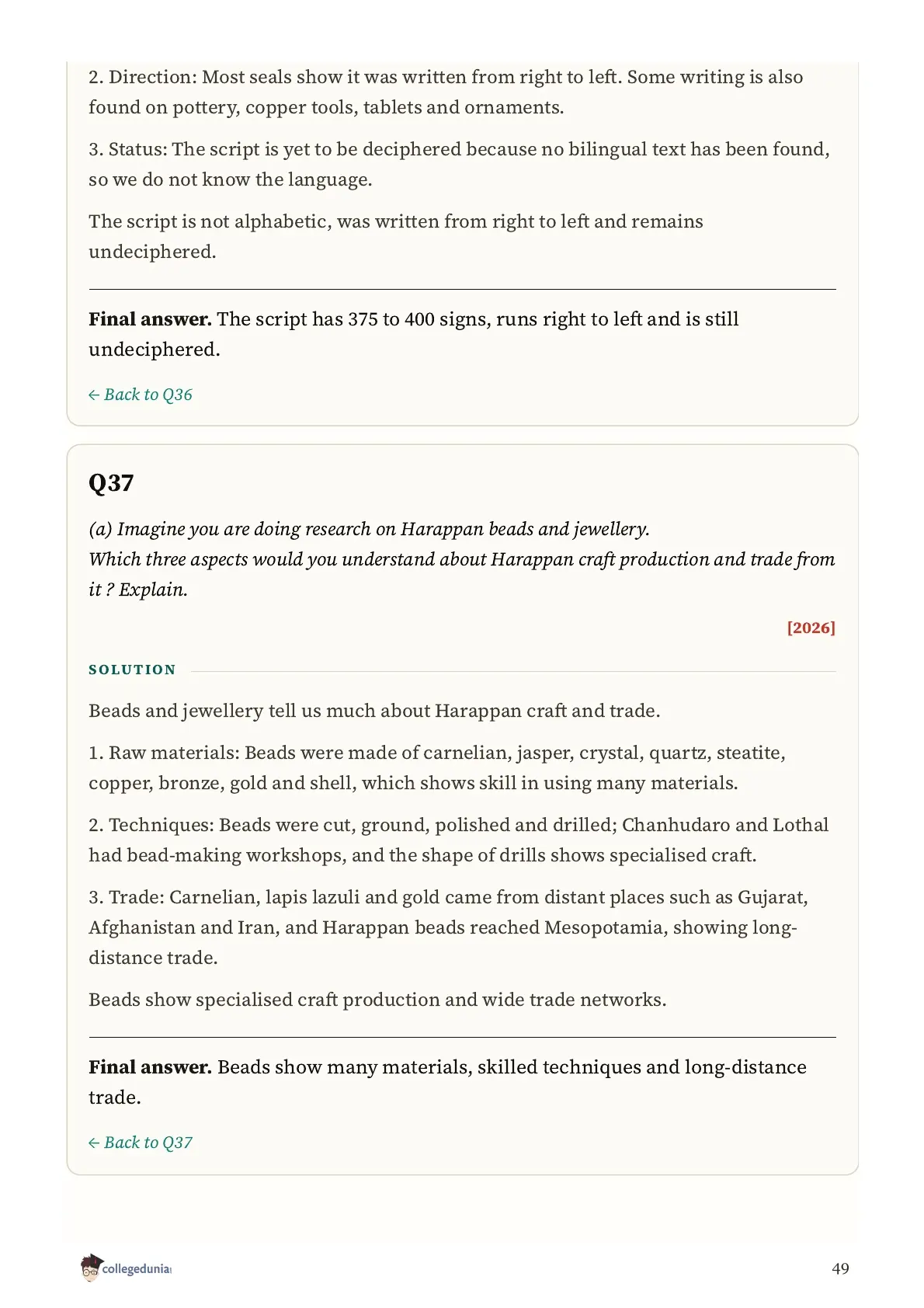
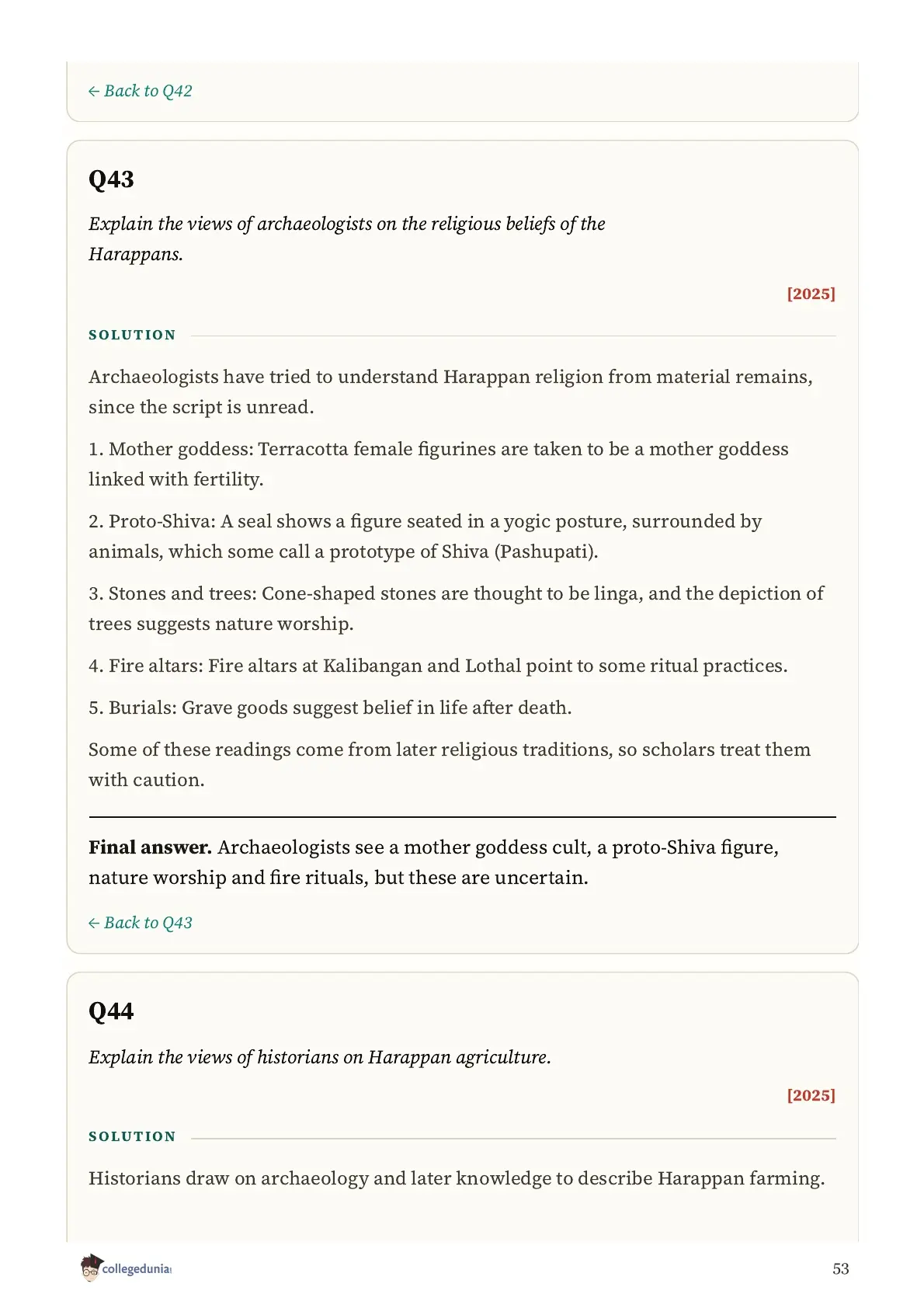
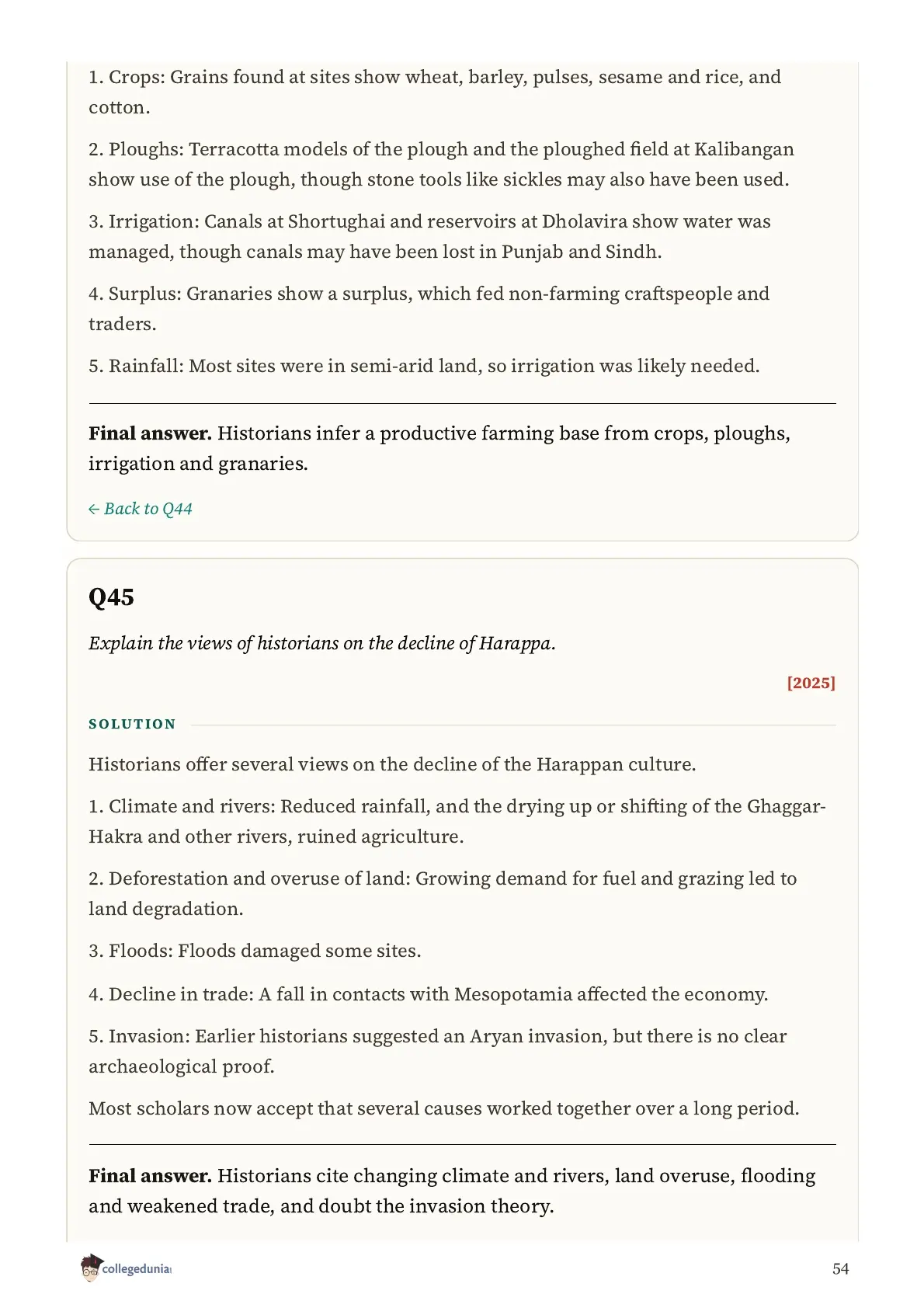
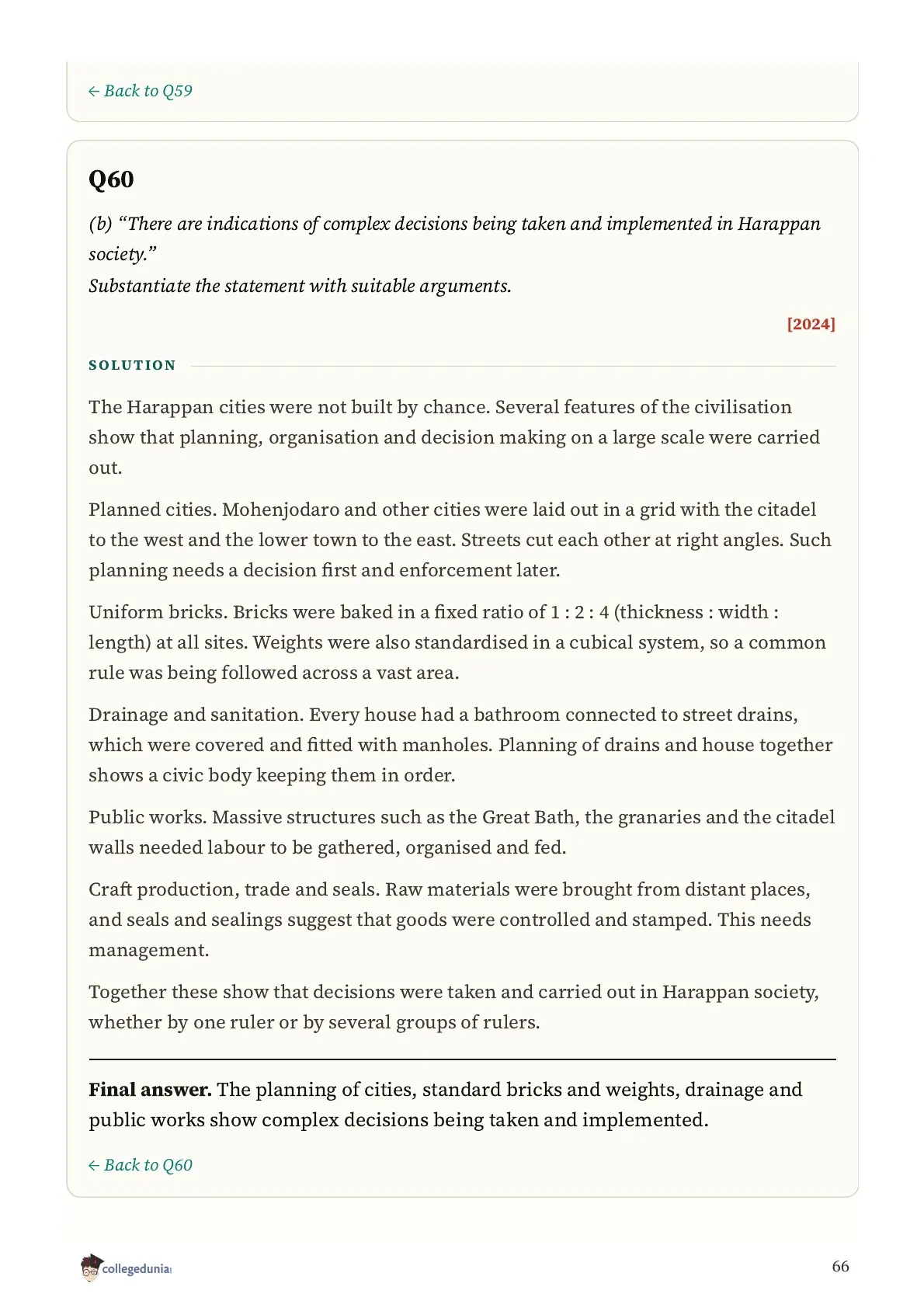
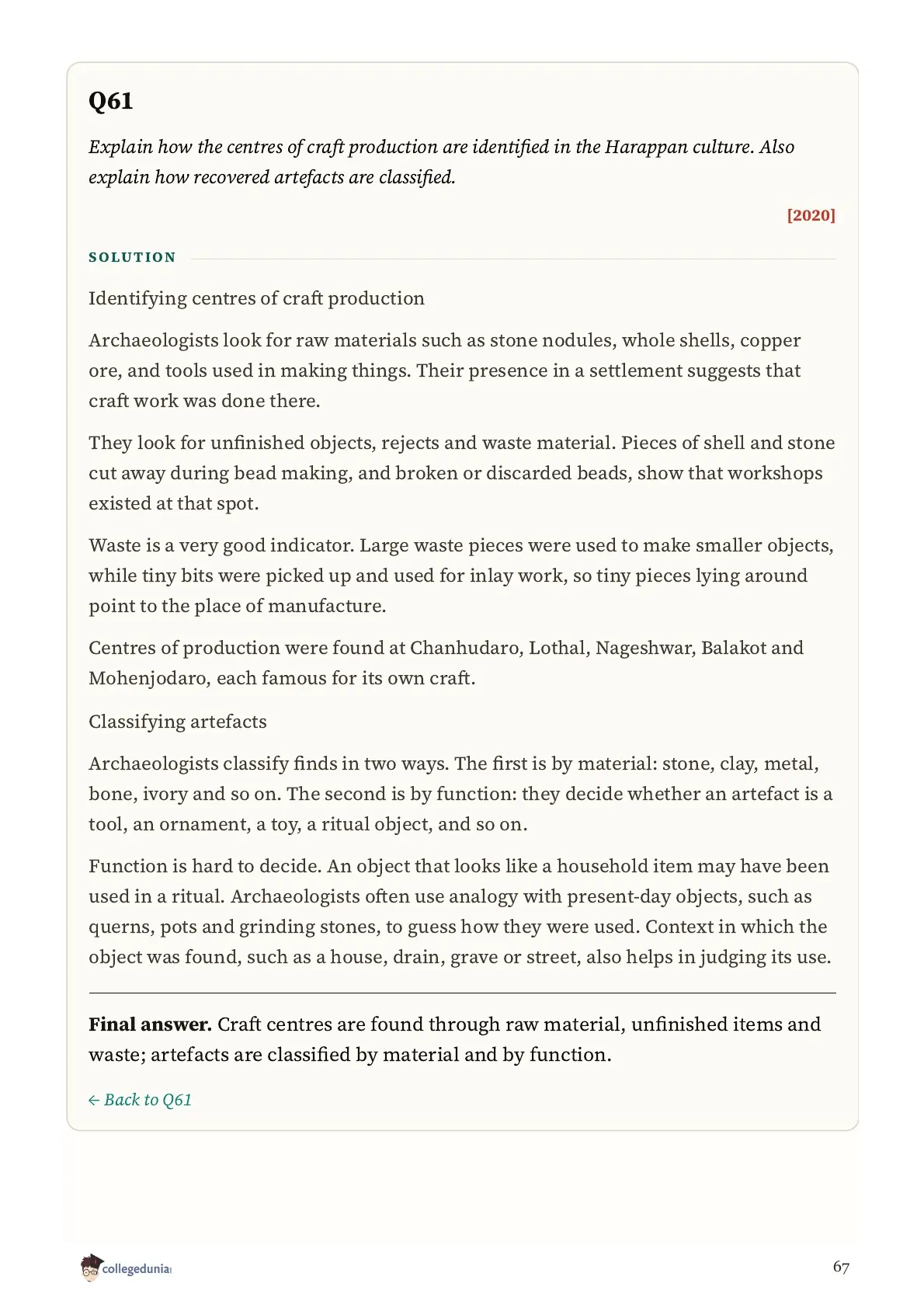
Craft production and subsistence are the two largest themes, 16 questions each. The craft questions ask how archaeologists identify centres of production, how raw materials were procured (4 questions) and how beads were made at Lothal and Chanhudaro. The subsistence questions cover irrigation, plough models, granaries and how dietary practices were reconstructed from charred grains.
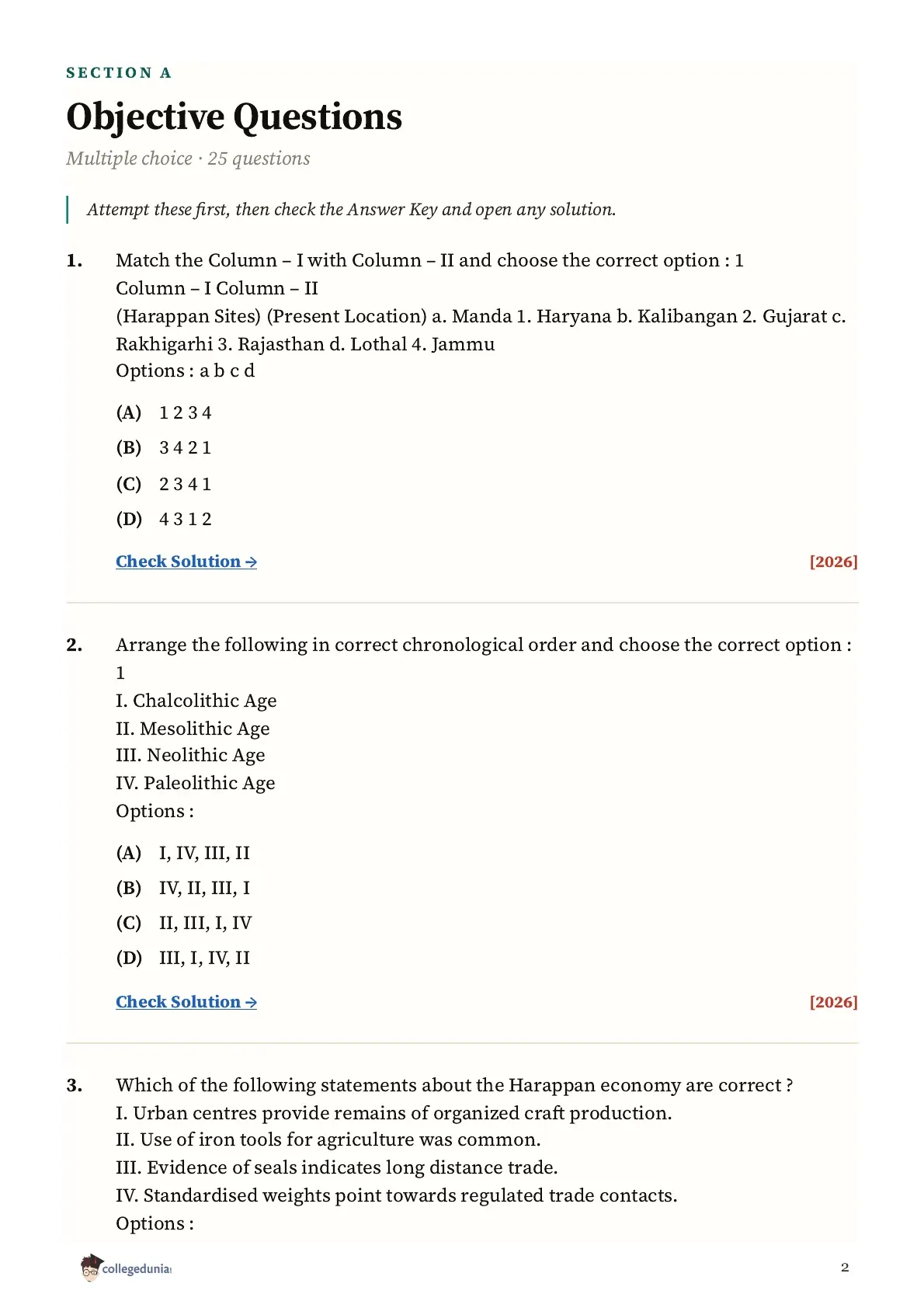
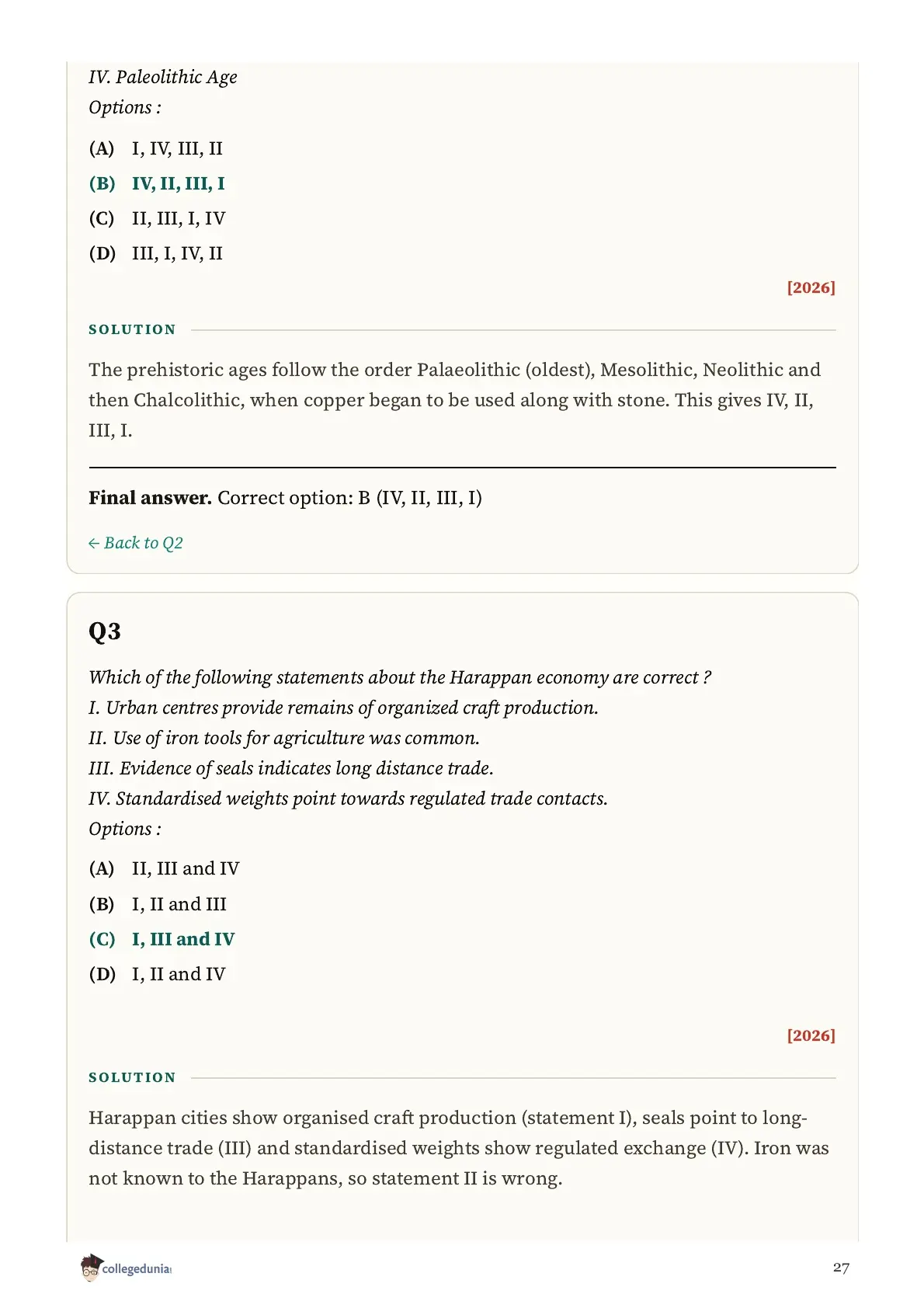
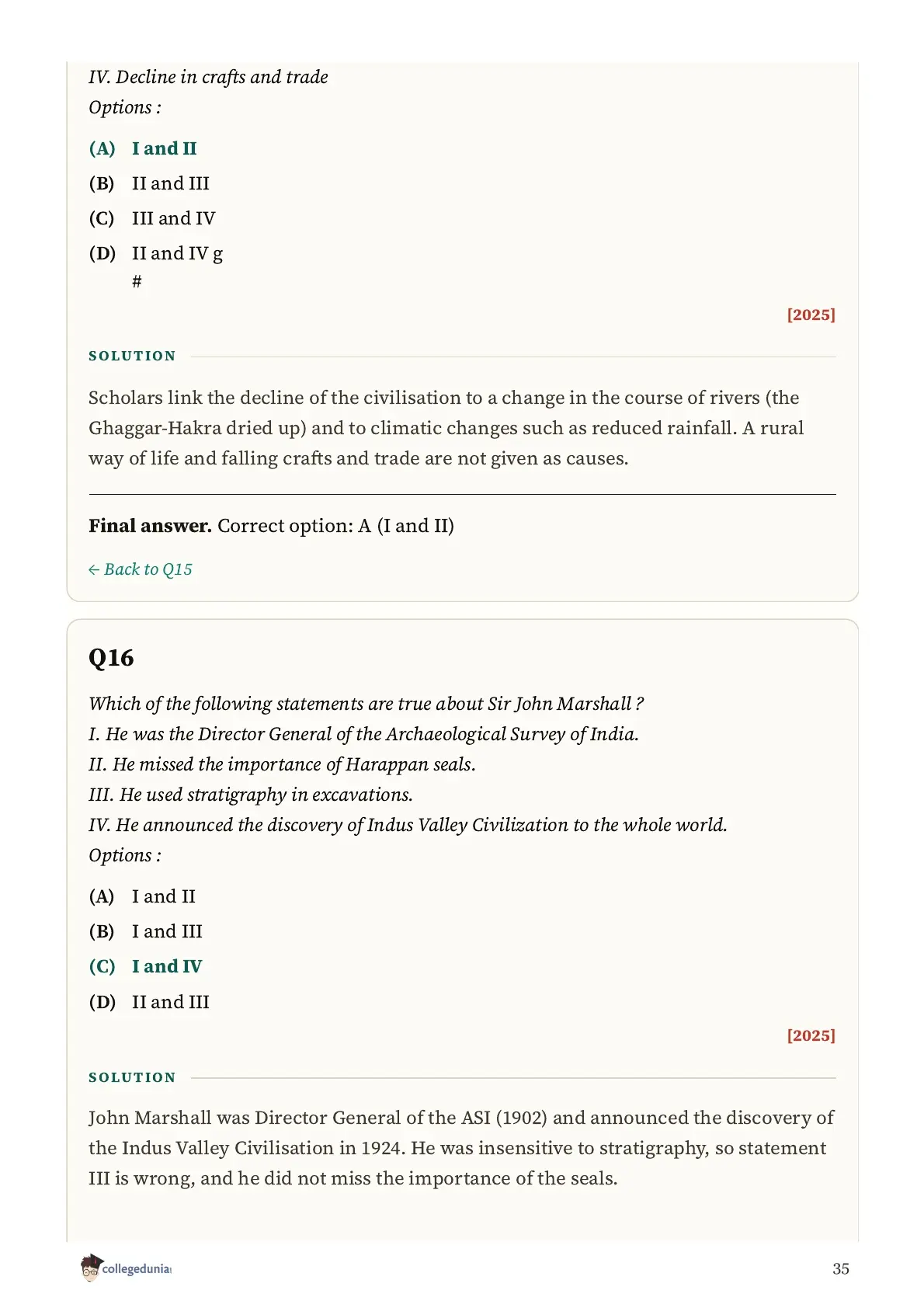
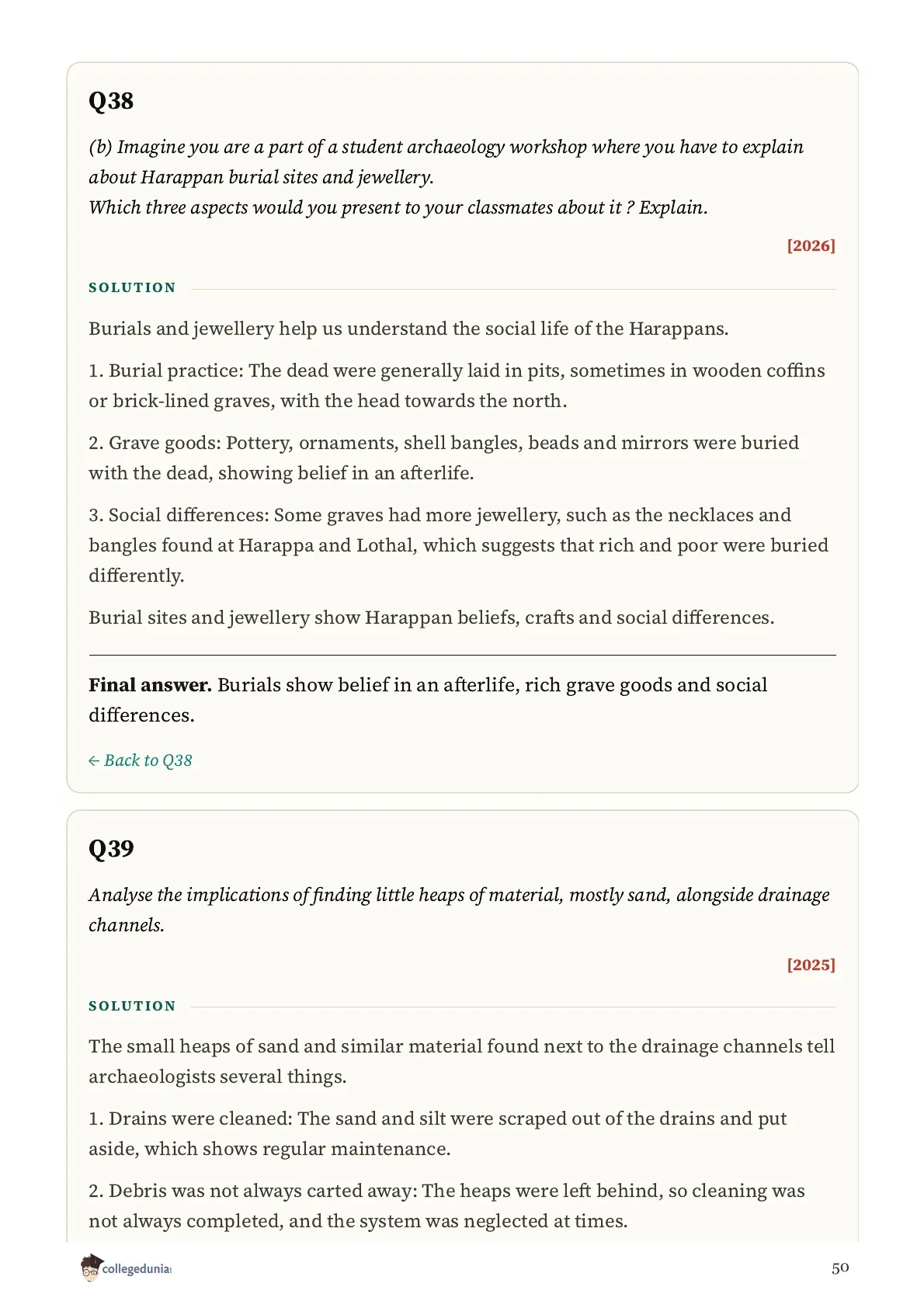
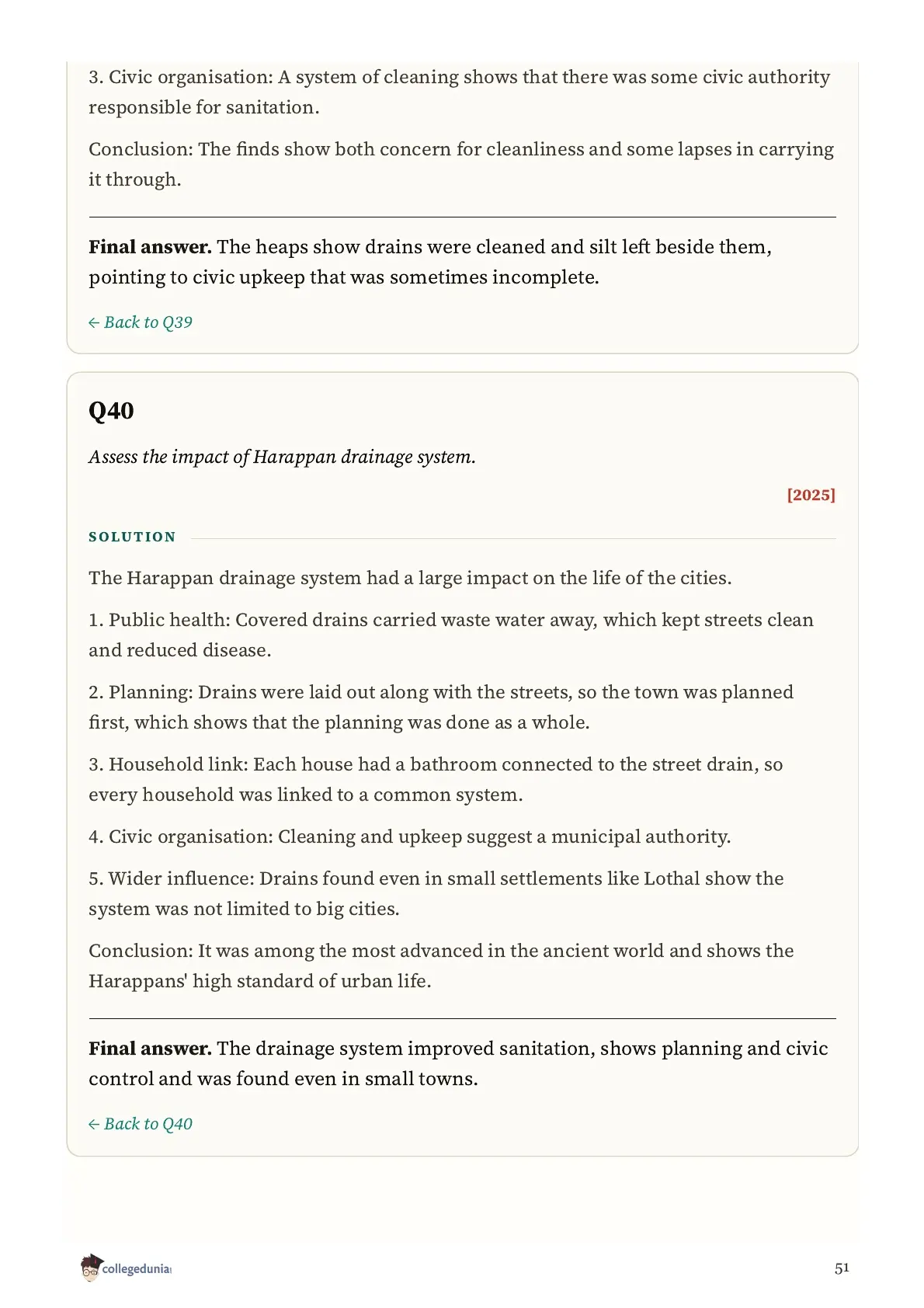
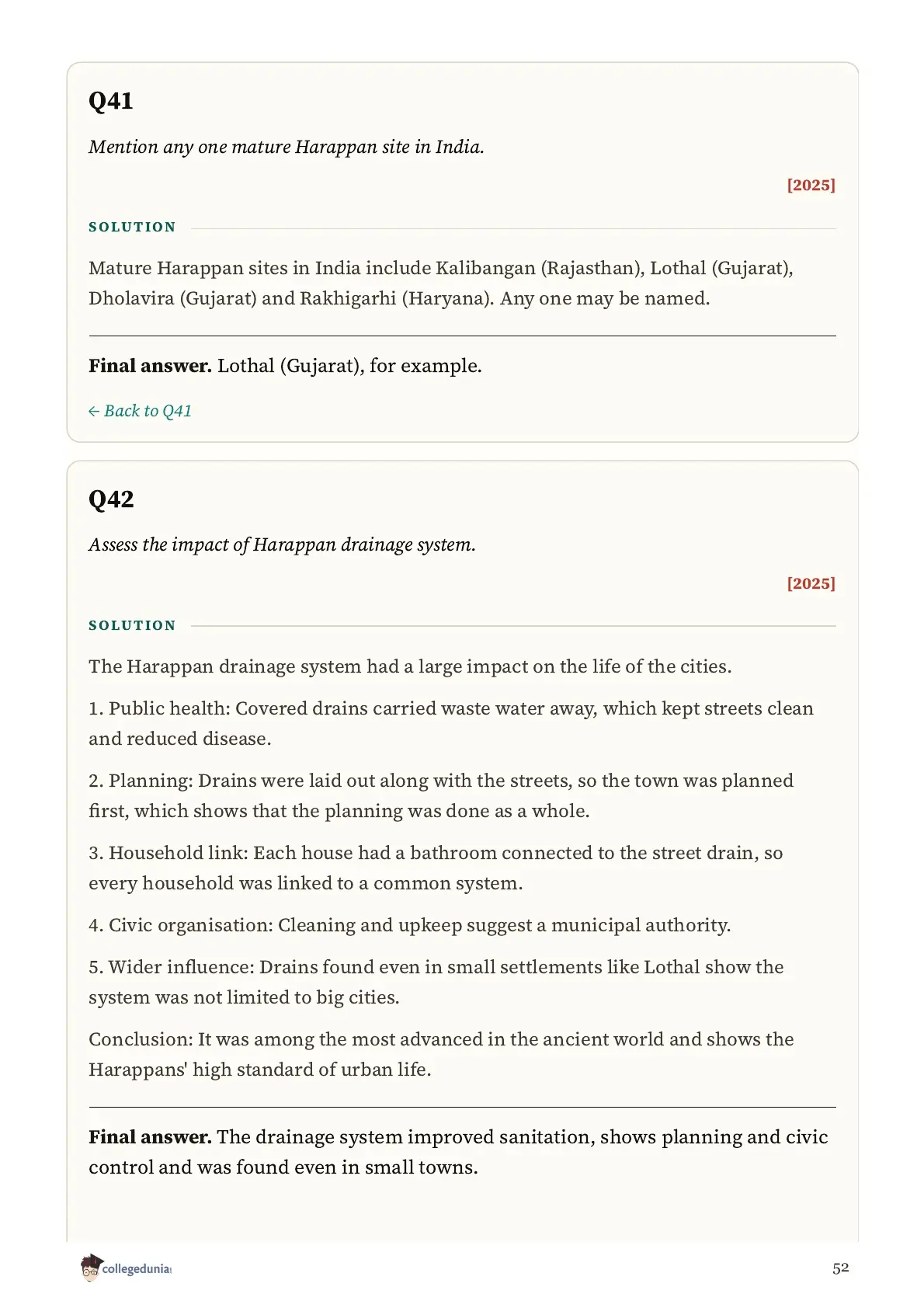
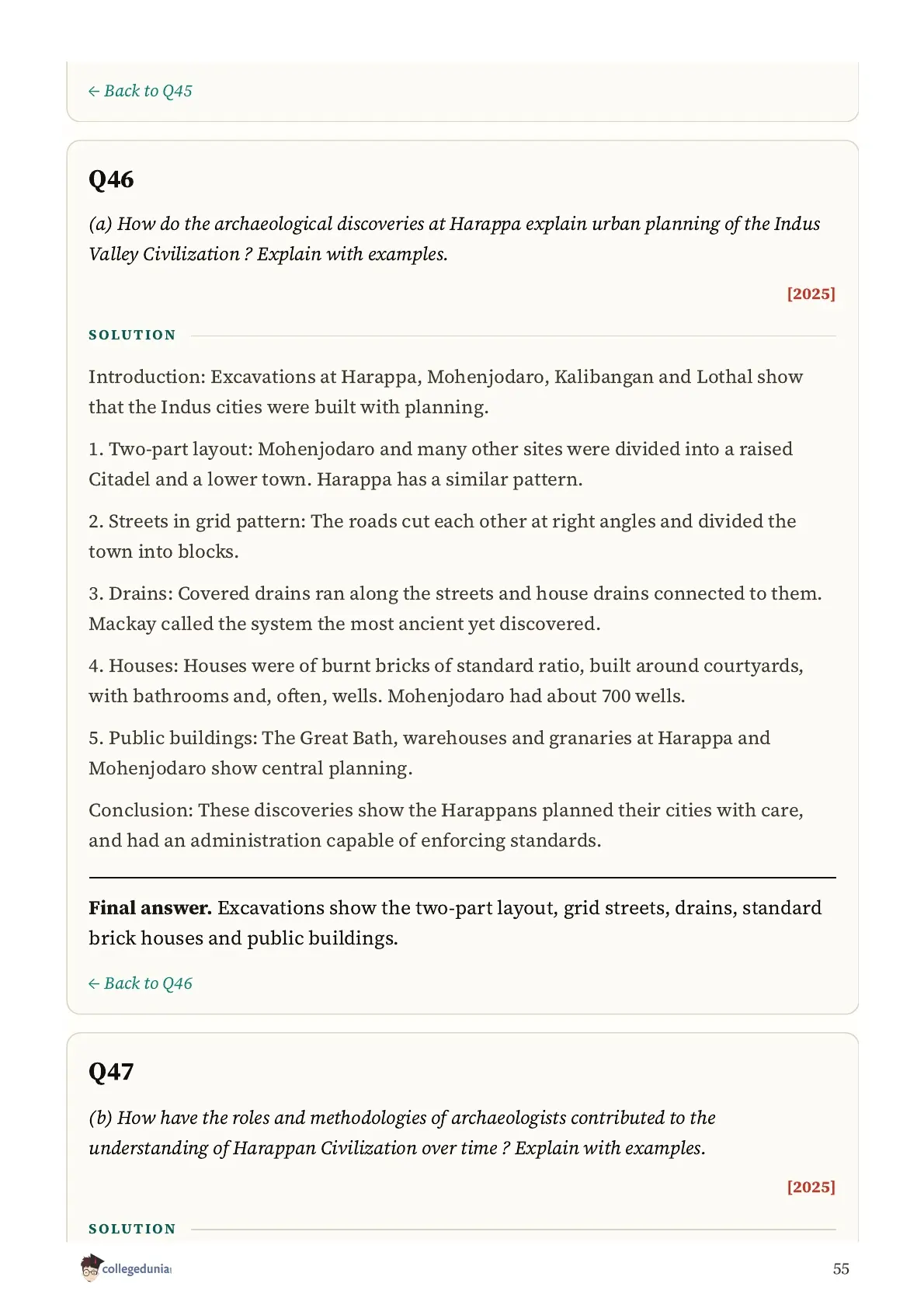
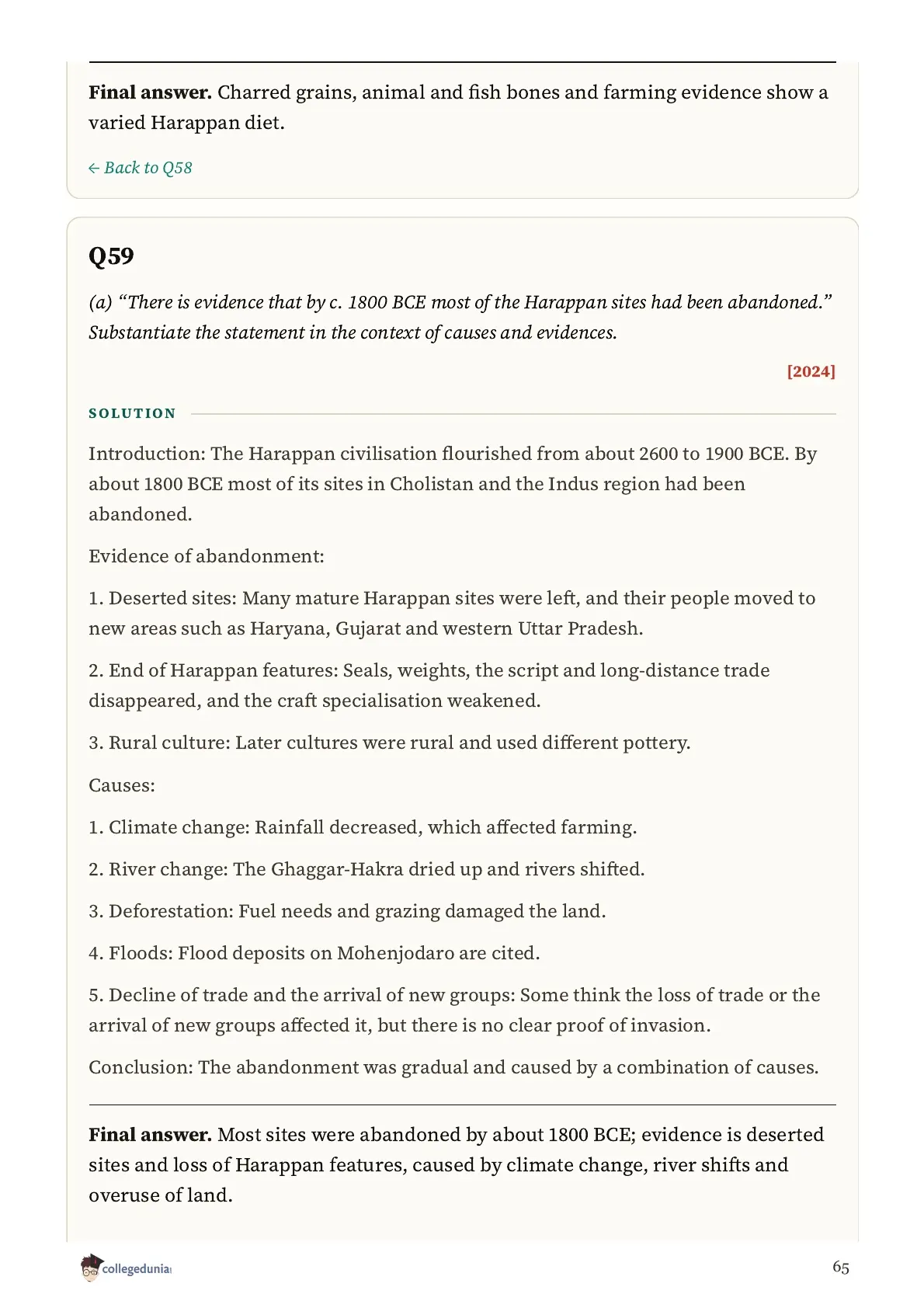
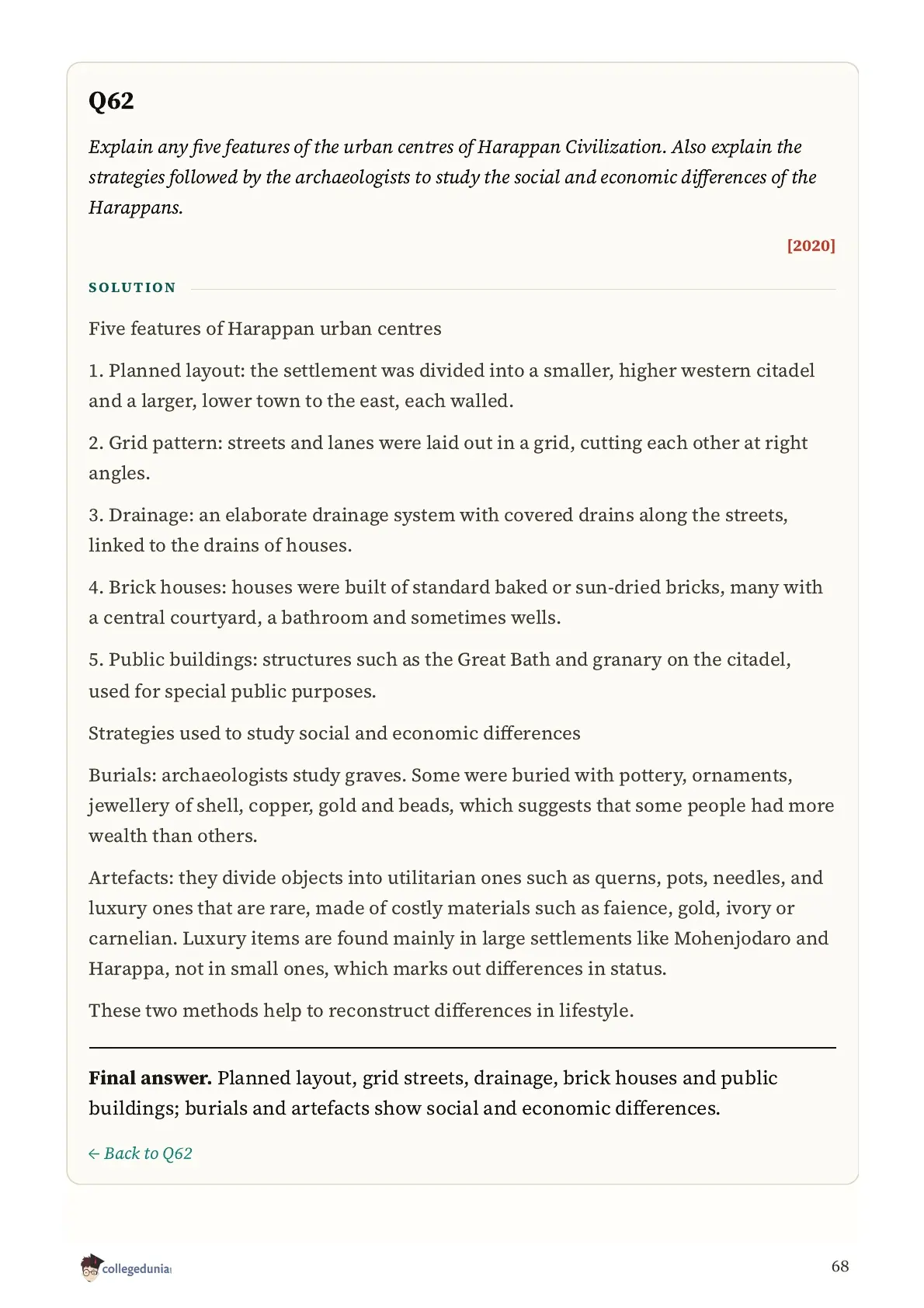
13 questions are on urban centres, covering town planning, domestic architecture, the citadel and the Great Bath, which is named in 2. 5 questions are on drainage. The decline of the cities is asked in 11 questions, with the script and seals in 8 each, religion in 8 and the question of central authority or rulers in 7. 6 questions are on burials and social differences, and 6 mention trade or Meluhha.
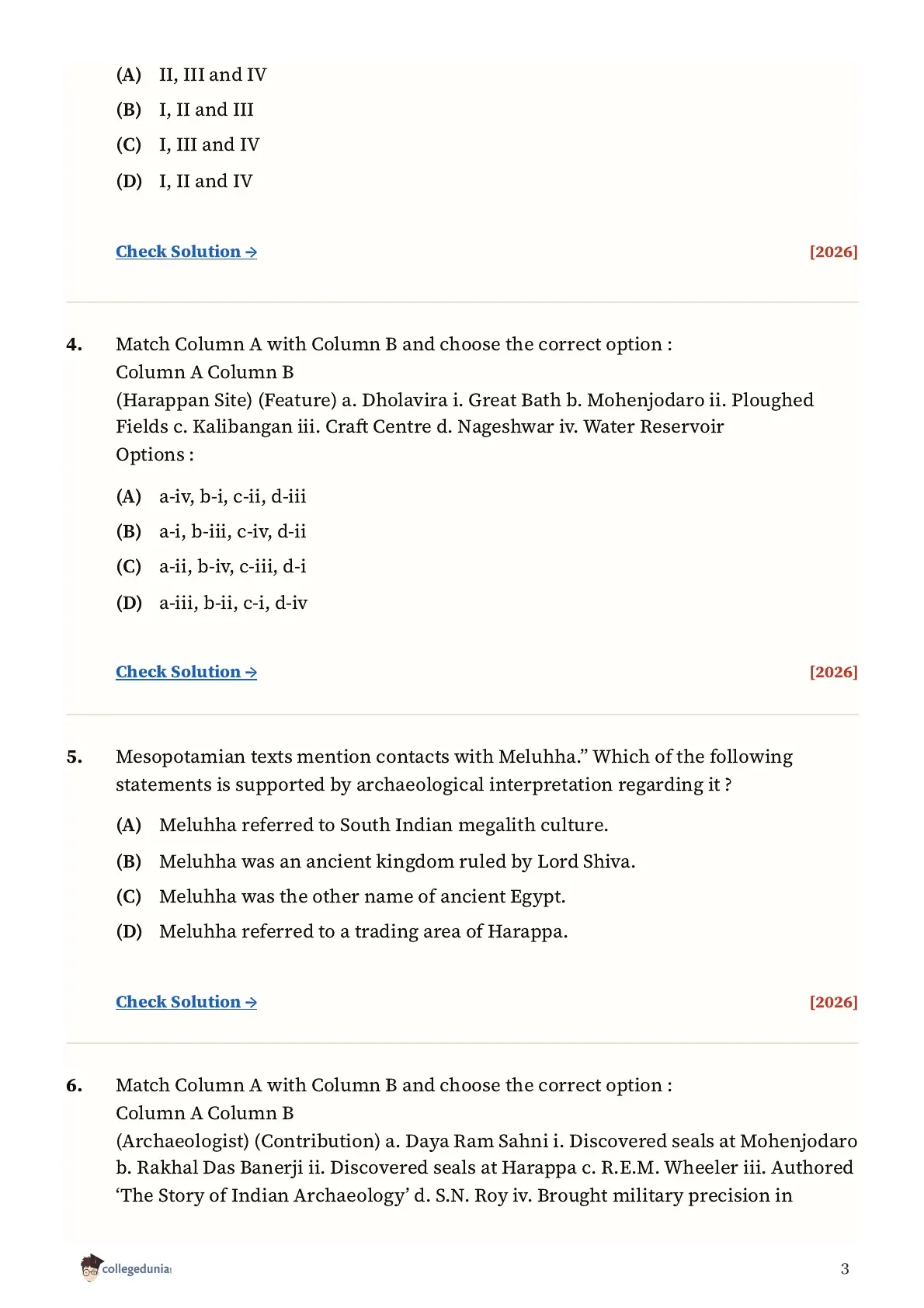
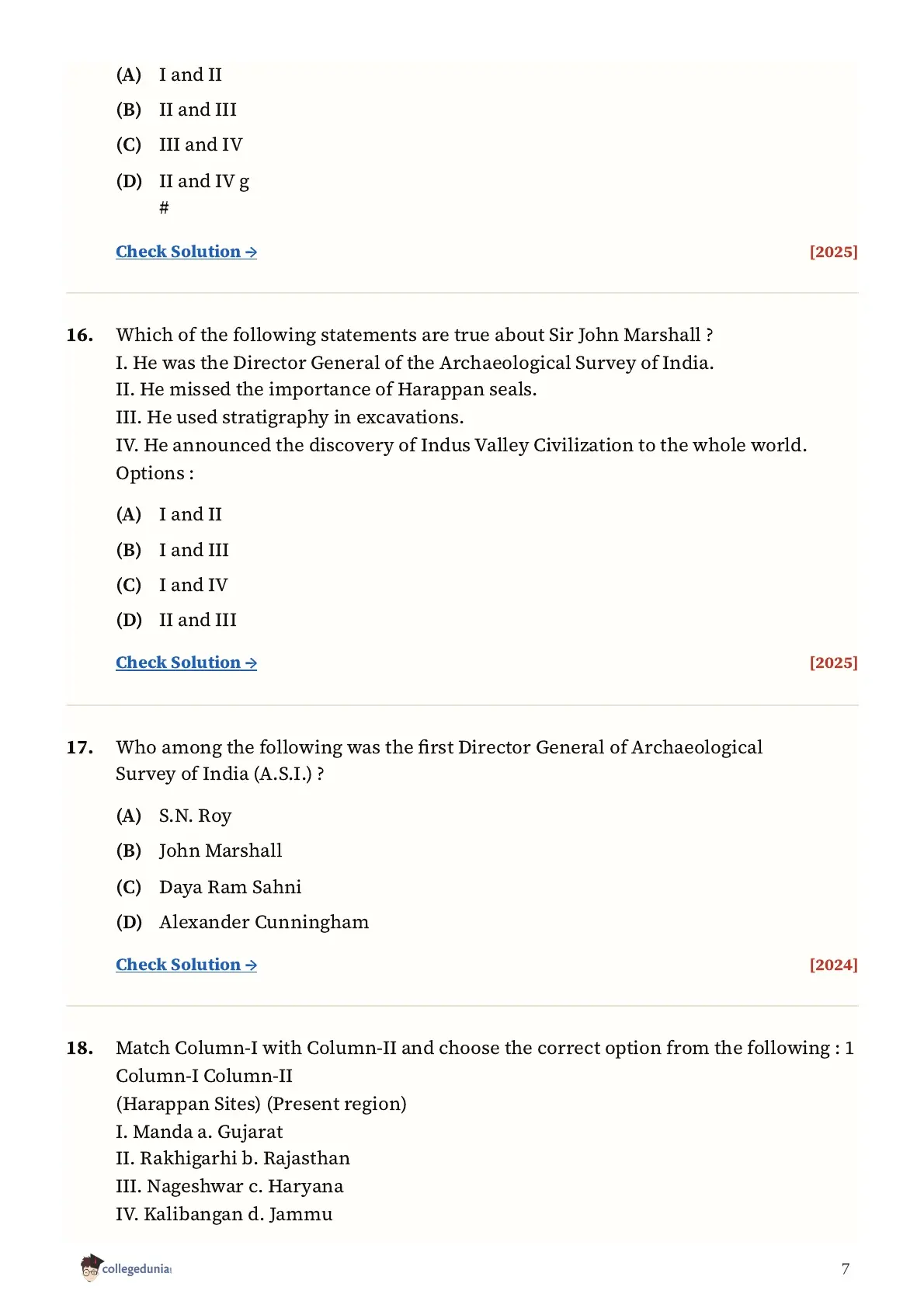
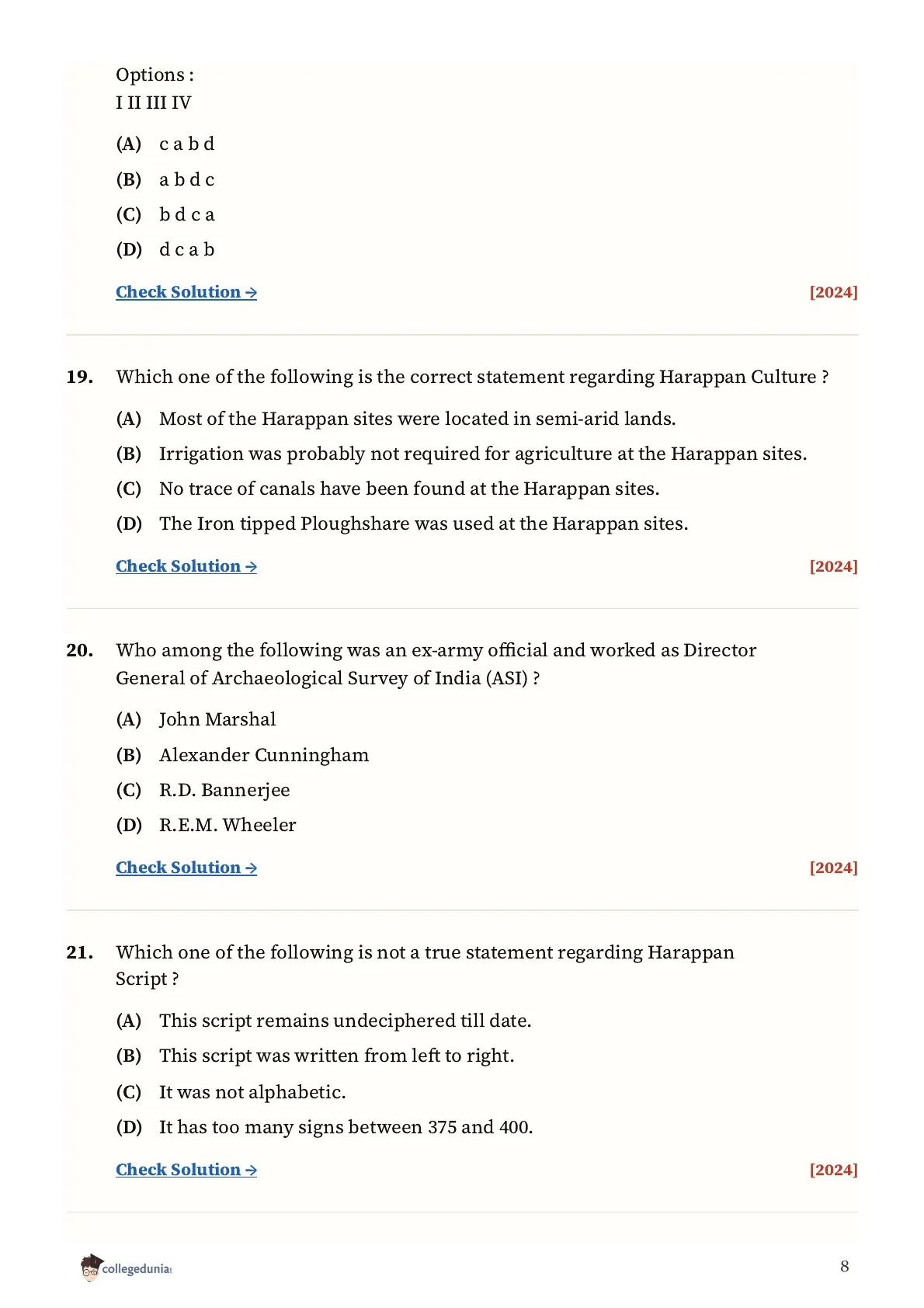
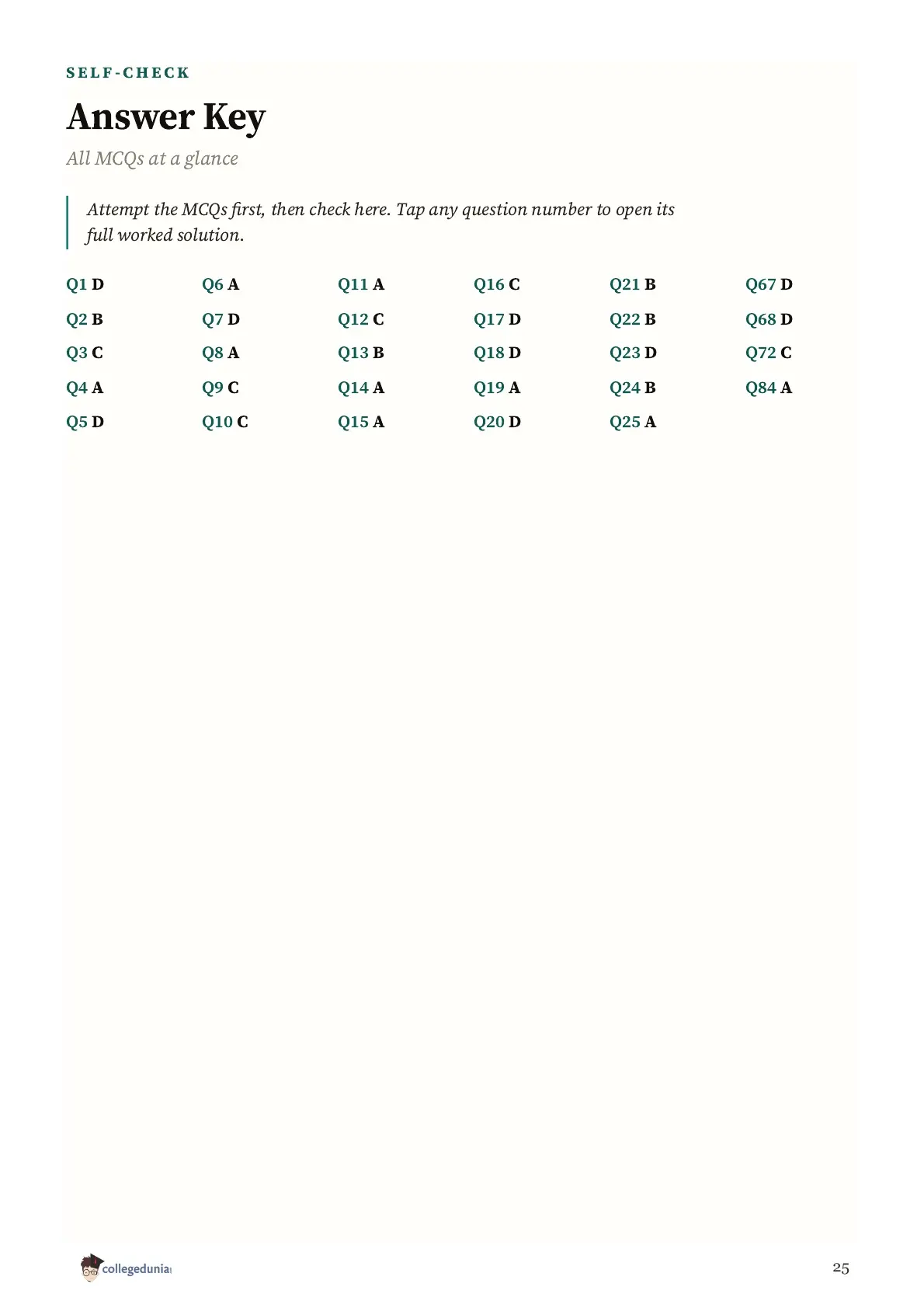
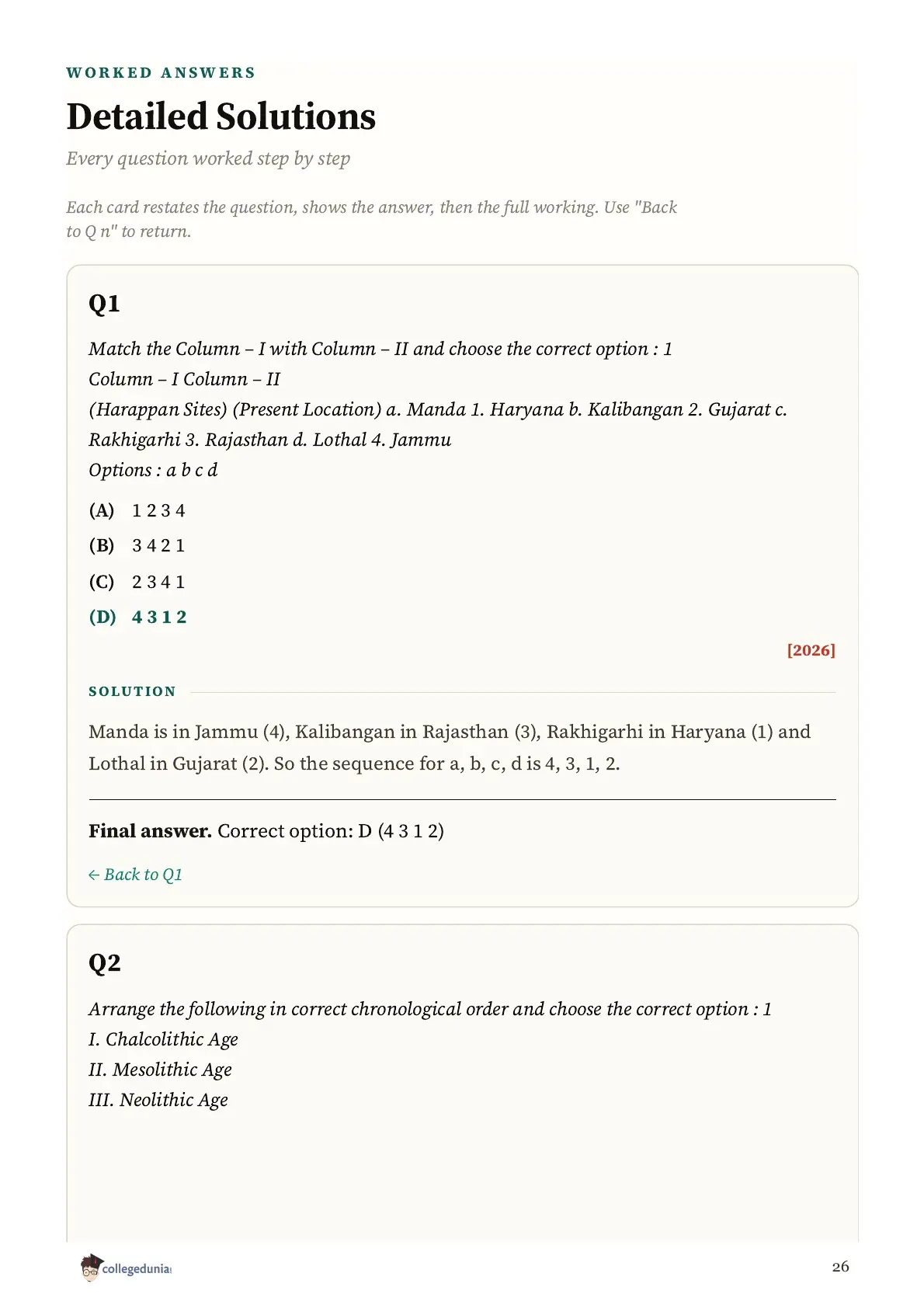
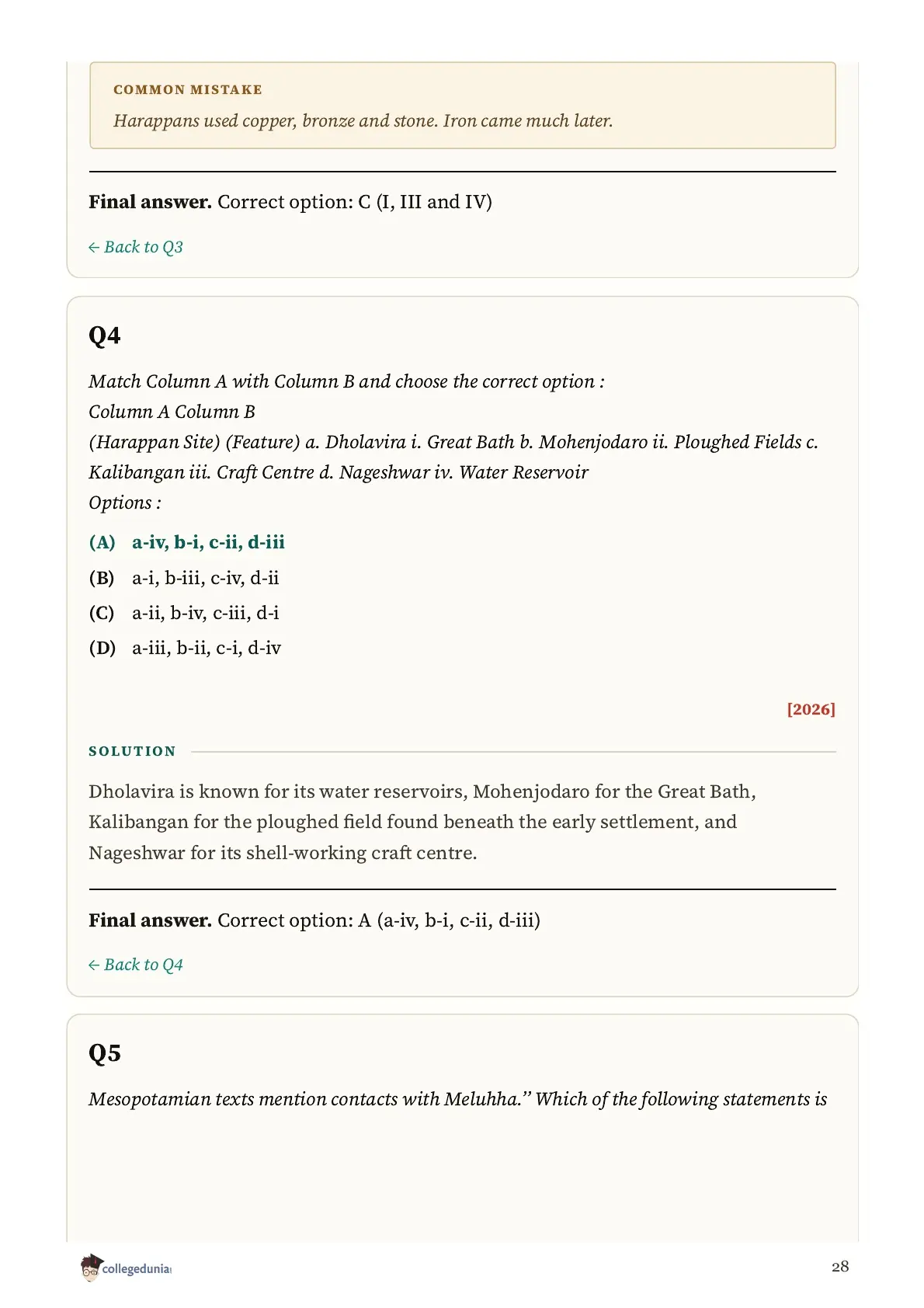
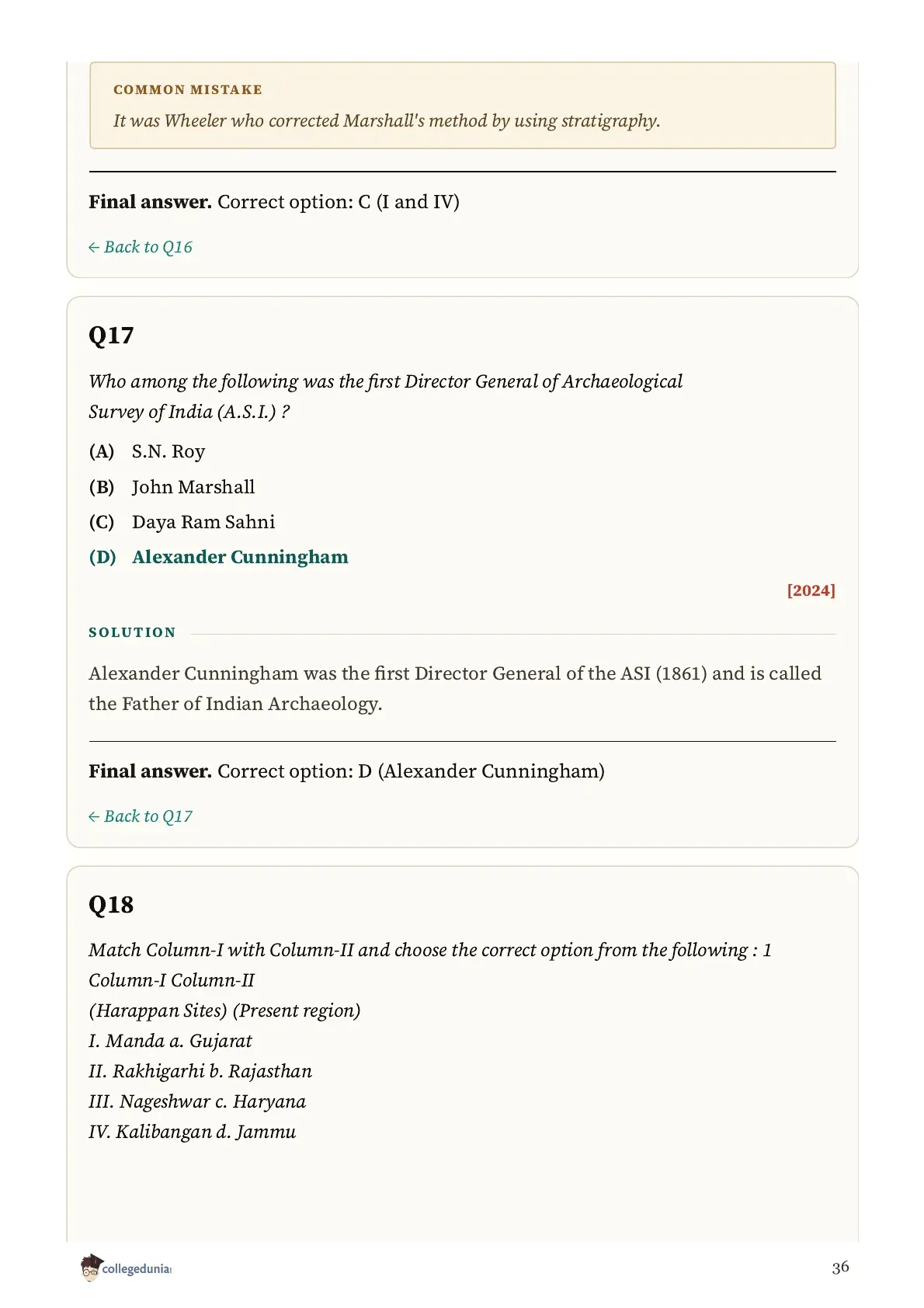
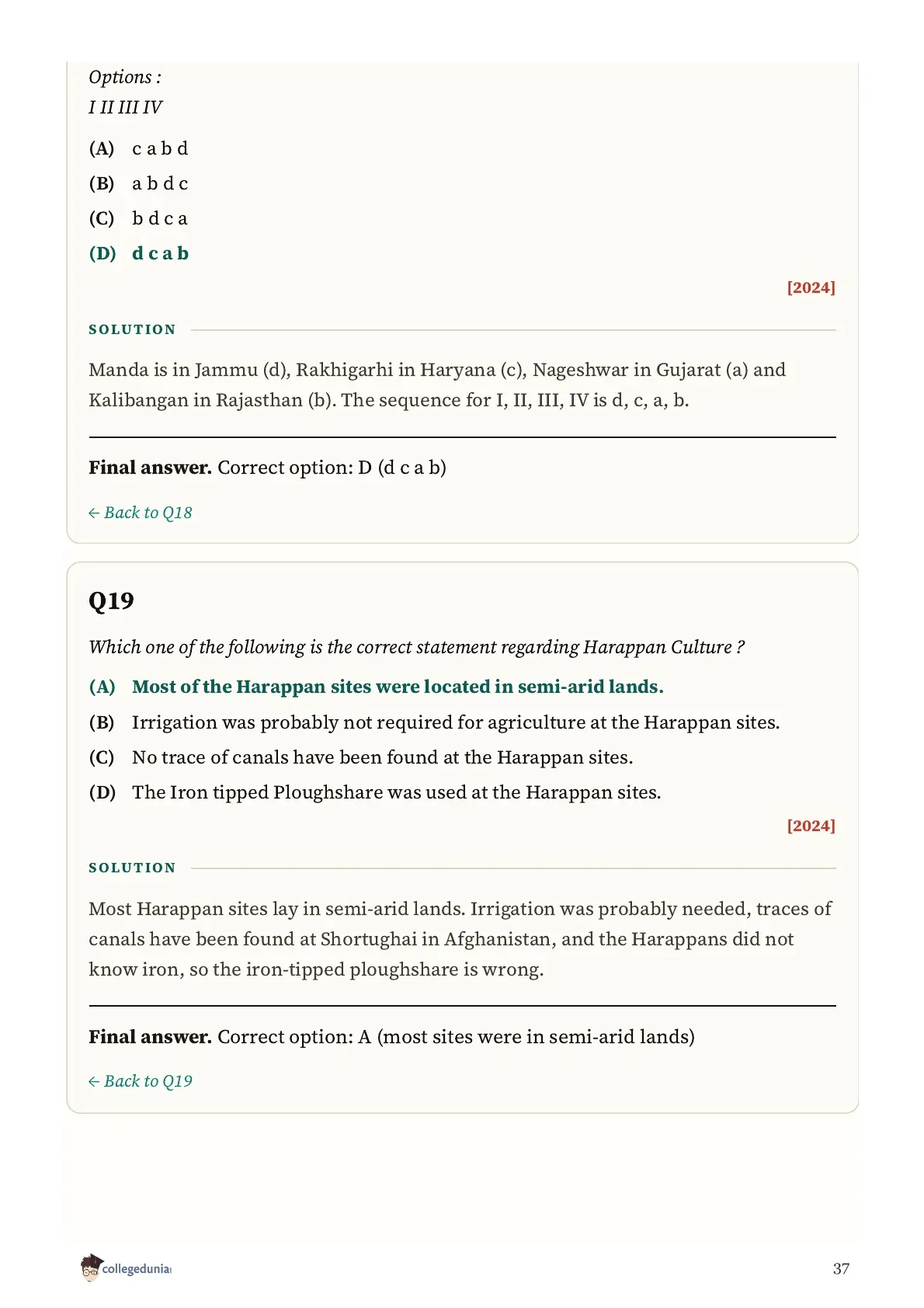
21 questions are about site names, locations or features, including matching Manda, Kalibangan, Rakhigarhi and Lothal to their present states. 9 questions are on the Archaeological Survey of India or its Directors General. The topic counts come from keyword matches, so a question on two topics is counted under both.
Bricks, Beads and Bones Video Lesson
Source: Next Toppers - 12th Humanities on YouTube
How to Approach the Bricks, Beads and Bones Set
At one minute per MCQ, five minutes per written answer and about eight for the source-based question, the set comes to about 8 hours, so split it over three days. Day one: the 30 MCQs, the 12 short factual questions and the Deadman Lane question. Days two and three: the 75 longer answers, one half each, sorted by topic so that craft, subsistence and urban centres go together.
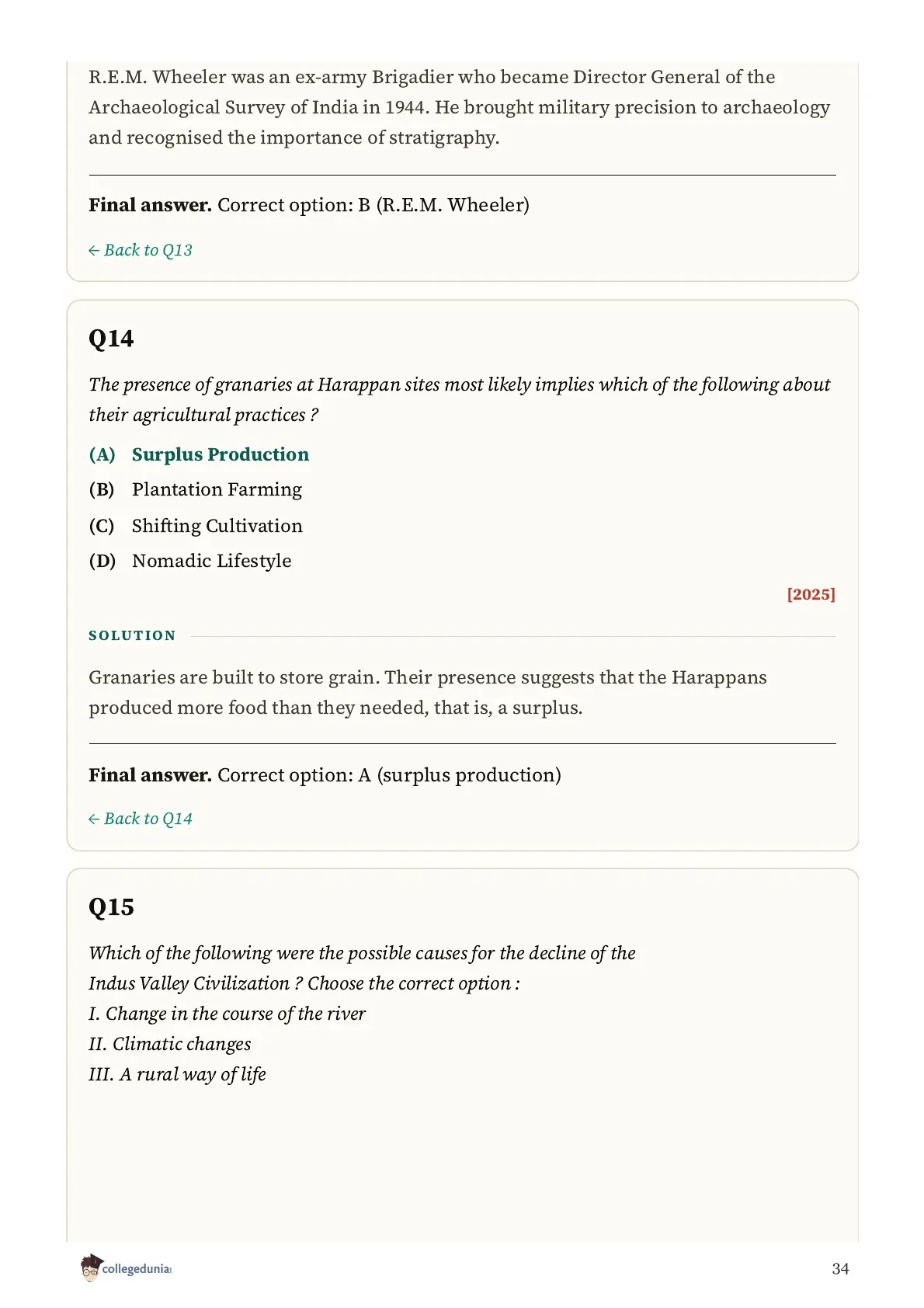
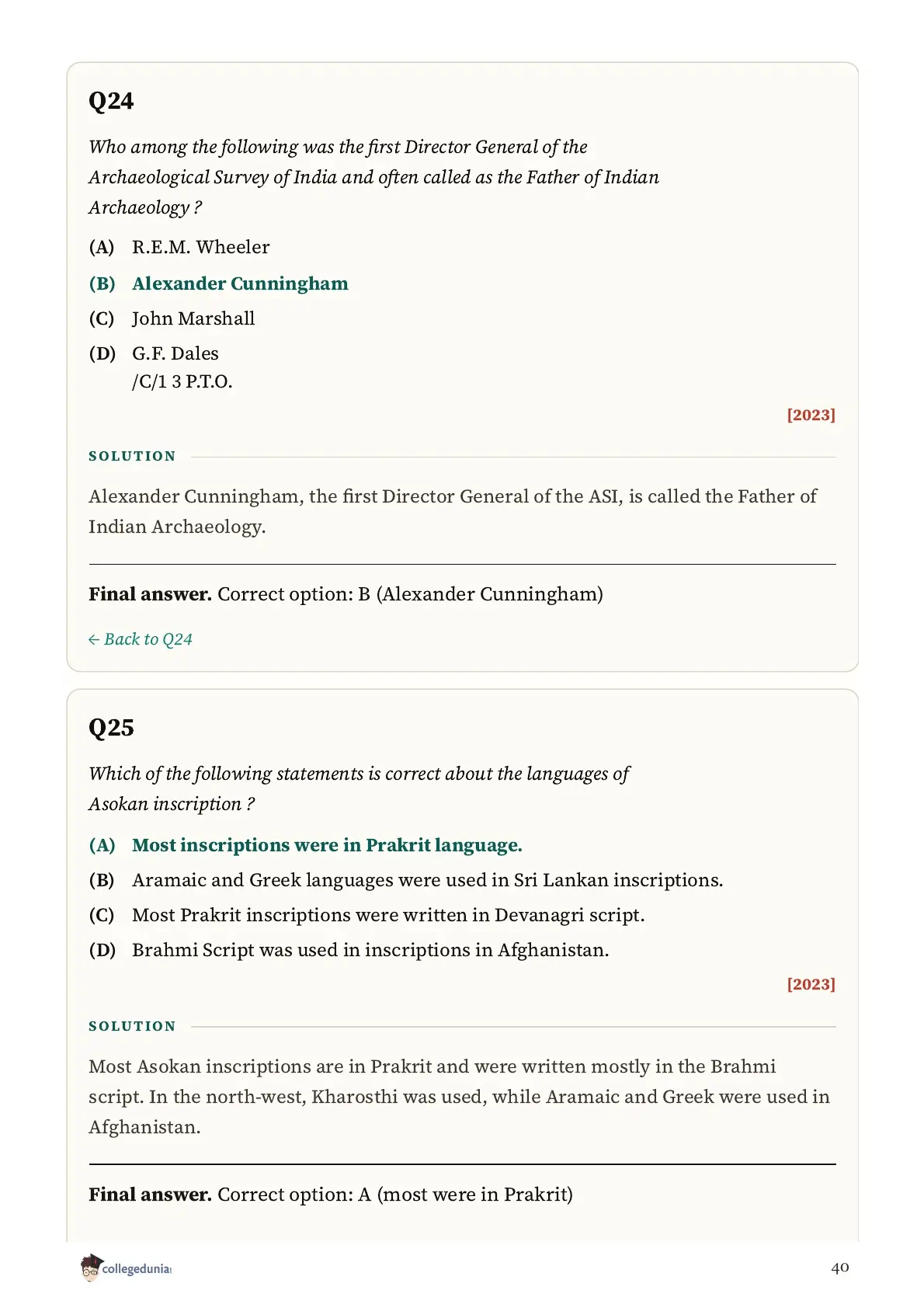
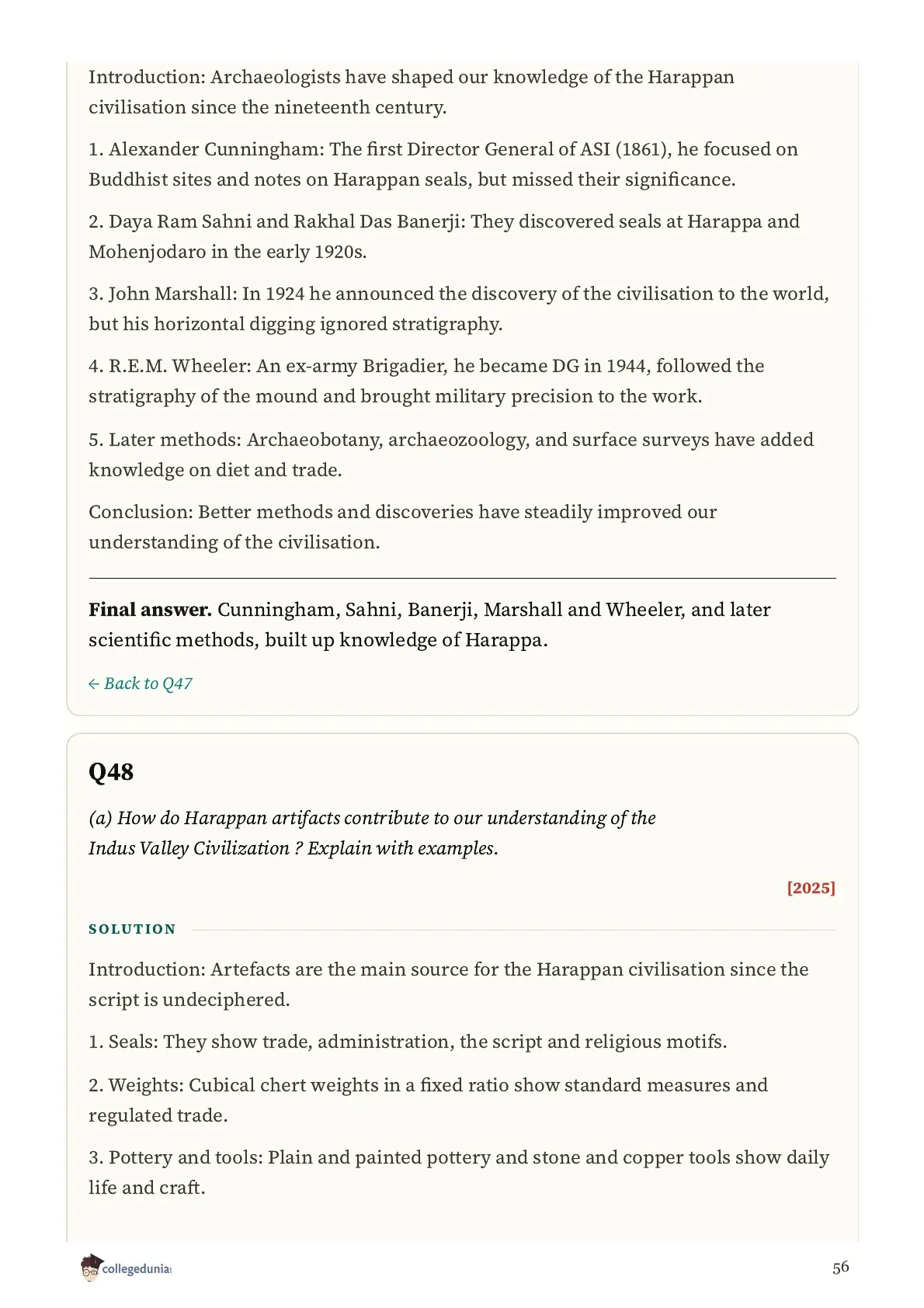
Several answers repeat across years with new wording, such as subsistence strategies in 2016, 2020 and 2026. Write one clean answer for each and reuse its points. For the archaeologist questions, keep a one-line note on each name: Cunningham first Director General and confused about Harappa, Marshall who announced Mohenjodaro, Wheeler the ex-army Brigadier who linked the finds to the Rigveda.
Common Mistakes in Bricks, Beads and Bones Questions
- Describing drainage without naming the features: covered drains, sand heaps and the way house drains joined street drains.
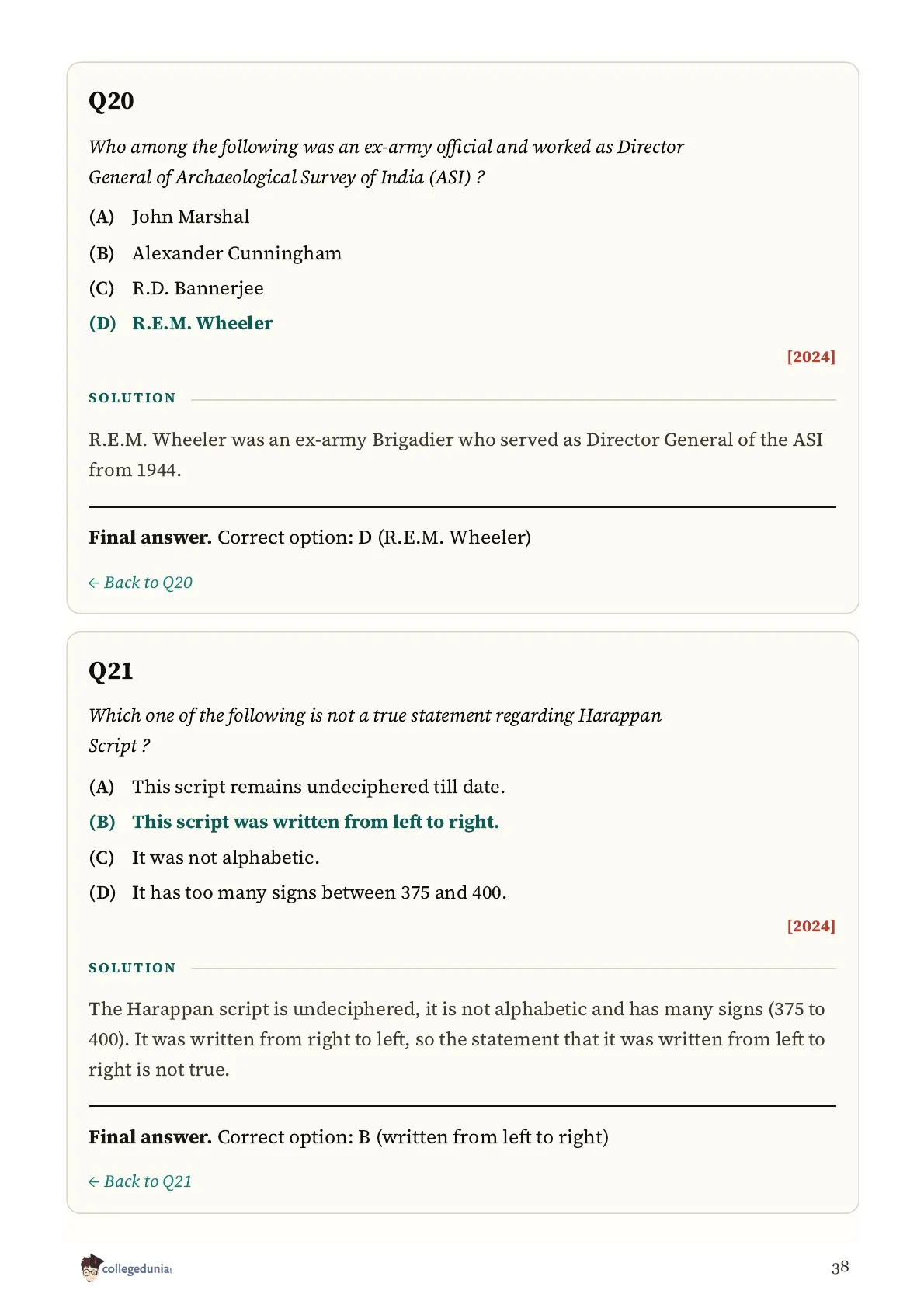
- Saying the script has been deciphered, or that it runs left to right only, in an MCQ on the script.
- Mixing up Marshall, Cunningham and Wheeler in the Director General questions.
- Giving two points when an Imagine question asks for three aspects.
- Listing causes of the decline with no evidence, when the question asks for both.
- Writing that Harappan sites lay on wetland. Most were in semi-arid land.
Using the Answer Key and Solutions
The PDF is 101 pages and free to download. Each section is sorted newest year first, the Answer Key lists every MCQ at a glance, and each question links to its worked solution and back. Attempt a section first, check the key, then read the solution and note the common mistake given with it. The solutions are written by Collegedunia's History experts and are not official CBSE marking schemes.
Class 12 History PYQs by Theme
| Theme | PYQ Page |
|---|---|
| Theme 1 | Theme 1: Bricks, Beads and Bones: The Harappan Civilisation Class 12 PYQ |
| Theme 2 | Theme 2: Kings, Farmers and Towns Class 12 PYQ |
| Theme 3 | Theme 3: Kinship, Caste and Class Class 12 PYQ |
| Theme 4 | Theme 4: Thinkers, Beliefs and Buildings Class 12 PYQ |
| Theme 5 | Theme 5: Through the Eyes of Travellers Class 12 PYQ |
| Theme 6 | Theme 6: Bhakti-Sufi Traditions Class 12 PYQ |
| Theme 7 | Theme 7: An Imperial Capital: Vijayanagara Class 12 PYQ |
| Theme 8 | Theme 8: Peasants, Zamindars and the State Class 12 PYQ |
| Theme 9 | Theme 9: Colonialism and the Countryside Class 12 PYQ |
| Theme 10 | Theme 10: Rebels and the Raj: The Revolt of 1857 Class 12 PYQ |
| Theme 11 | Theme 11: Mahatma Gandhi and the Nationalist Movement Class 12 PYQ |
| Theme 12 | Theme 12: Framing the Constitution Class 12 PYQ |
Bricks, Beads and Bones Class 12 History PYQ FAQs
Ques. How many questions are in the Bricks, Beads and Bones Class 12 PYQ PDF?
Ans. The PDF has 118 questions from CBSE board papers between 2008 and 2026. 30 are MCQs, 1 is a four-part source-based question on Deadman Lane at Mohenjodaro, and 87 are written answers, 12 of them short factual questions such as naming Harappan sites.
Ques. Does this PYQ PDF include solutions, or only the questions?
Ans. All 118 questions have a worked solution in the PDF, and the MCQs also have an Answer Key.
Ques. Are the solutions official?
Ans. No. They are written by Collegedunia's History experts and are not an official CBSE marking scheme.
Ques. How many marks does Bricks, Beads and Bones carry in the Class 12 board paper?
Ans. CBSE does not publish a mark figure for each theme. Prep-site tables for 2026-27, such as the Physics Wallah syllabus page, list 25 of the 80 theory marks for the ancient history section, which is Part I, Themes 1 to 4. The figure is unofficial, so check the curriculum on cbseacademic.nic.in.
Ques. What are the most repeated topics in Bricks, Beads and Bones questions?
Ans. Craft production appears in 16 questions and subsistence strategies, including agriculture, irrigation and diet, in 16. The decline of the cities is asked in 11 questions, the script in 8, seals in 8 and religion in 8.
Ques. Which archaeologists should I know for the Harappan civilisation?
Ans. John Marshall appears in 8 questions, Alexander Cunningham in 6, R.E.M. Wheeler in 5 and Daya Ram Sahni in 2. Several are MCQs asking who was the first or the ex-army Director General of the Archaeological Survey of India.
Ques. How is the Harappan drainage system asked in board papers?
Ans. 5 questions are on drainage, including the 2025 questions on the impact of the drainage system and on the heaps of sand found beside the drains, and a 2017 question asking you to describe the drainage of Harappan cities.
Ques. Is there a source-based question in this chapter?
Ans. Yes. The set has one passage-based question, from 2008, built on John Marshall's account of Deadman Lane in Mohenjo-Daro with four parts. Several 2026 questions also ask you to imagine a task, such as studying seals in a museum, and give three points.



Comments