




Class 12 History Bhakti-Sufi Traditions PYQ, free to download as a 96-page PDF. Theme 6 sits in Part II (Themes 5 to 8), which carries about 25 of the 80 marks, and in 107 solved questions from the 2008 to 2026 papers the board keeps returning to a few devotional traditions: Sufi saints and dargahs (23 questions), Alvars and Nayanars (19), Kabir (17), Guru Nanak and the Sikh Gurus (17), the Virashaiva tradition (11) and Mirabai (10). 25 of the questions are MCQs and 4 are passage-based, so start with the objective ones and the four source passages, then work through the 78 written answers.






















Bhakti-Sufi Traditions Weightage in the Class 12 Board Paper
As per History Bhakti-Sufi Traditions weightage from past years, students can expect this theme to be part of the roughly 25 marks the board paper sets from Part II (Themes 5 to 8), out of 80 theory marks. CBSE does not print a separate figure for Theme 6, so the Part II figure is the one to use. It comes from the marking scheme table on the Physics Wallah Class 12 History page, which lists "Themes in Indian History Part II" at 25, and it is unofficial, so check the curriculum on cbseacademic.nic.in.
The question bank carries no marks, so the table below shows how many questions of each type are in the set, not marks.
| Question Type | Questions in the Set |
|---|---|
| Objective (MCQ) | 25 |
| Source-Based (passage with parts) | 4 |
| Written answers | 78 |
Bhakti-Sufi Traditions Questions by Topic
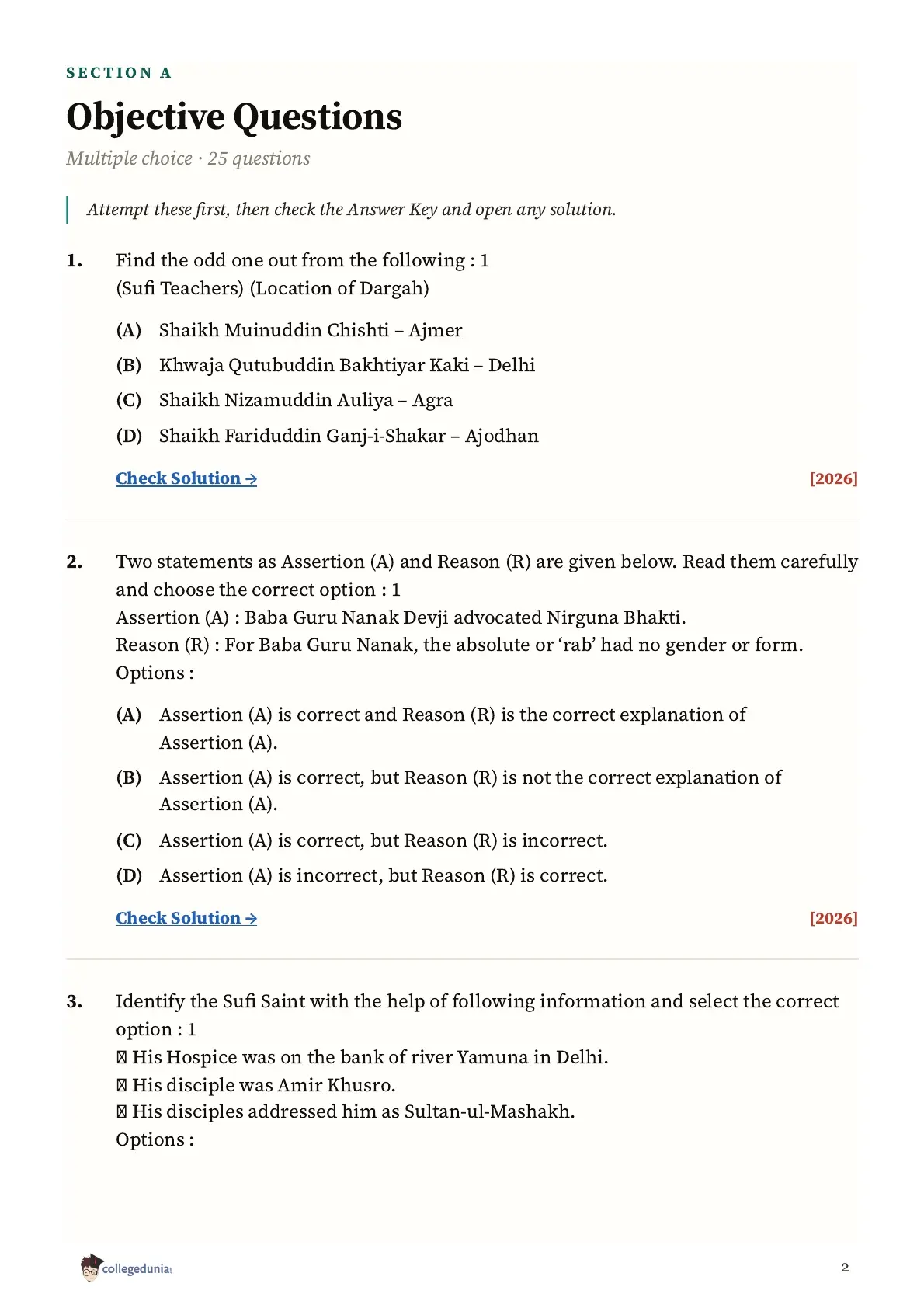
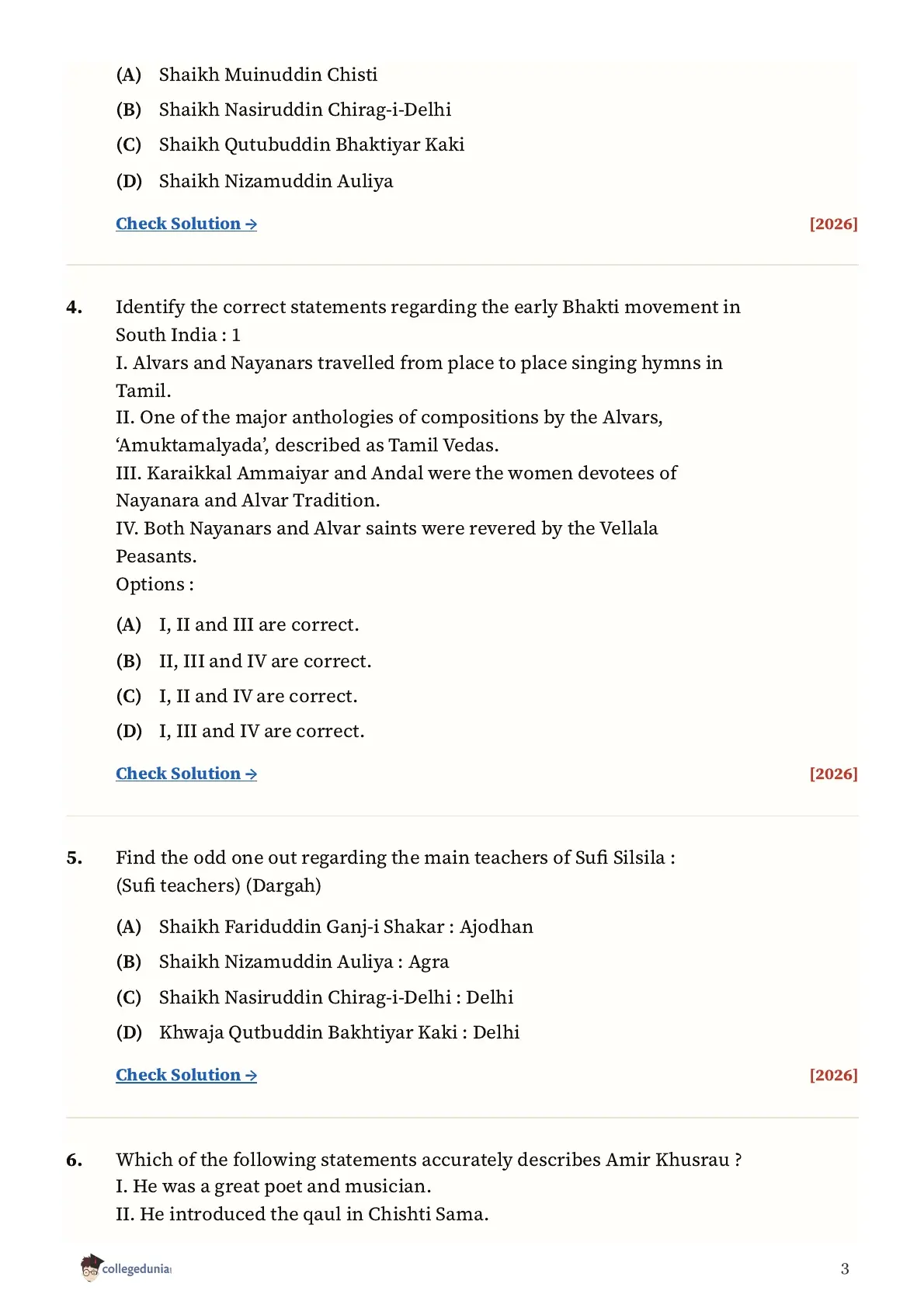
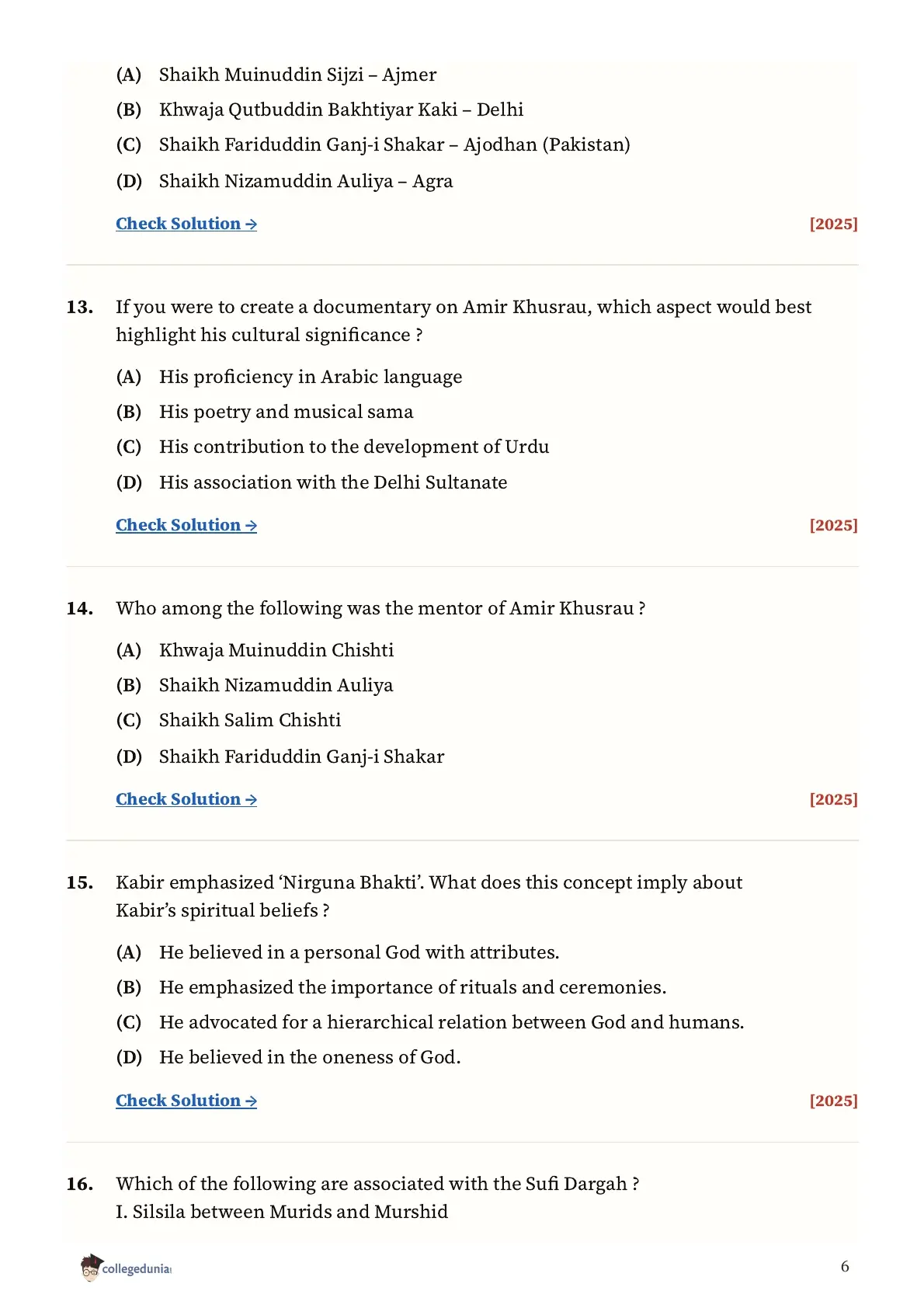
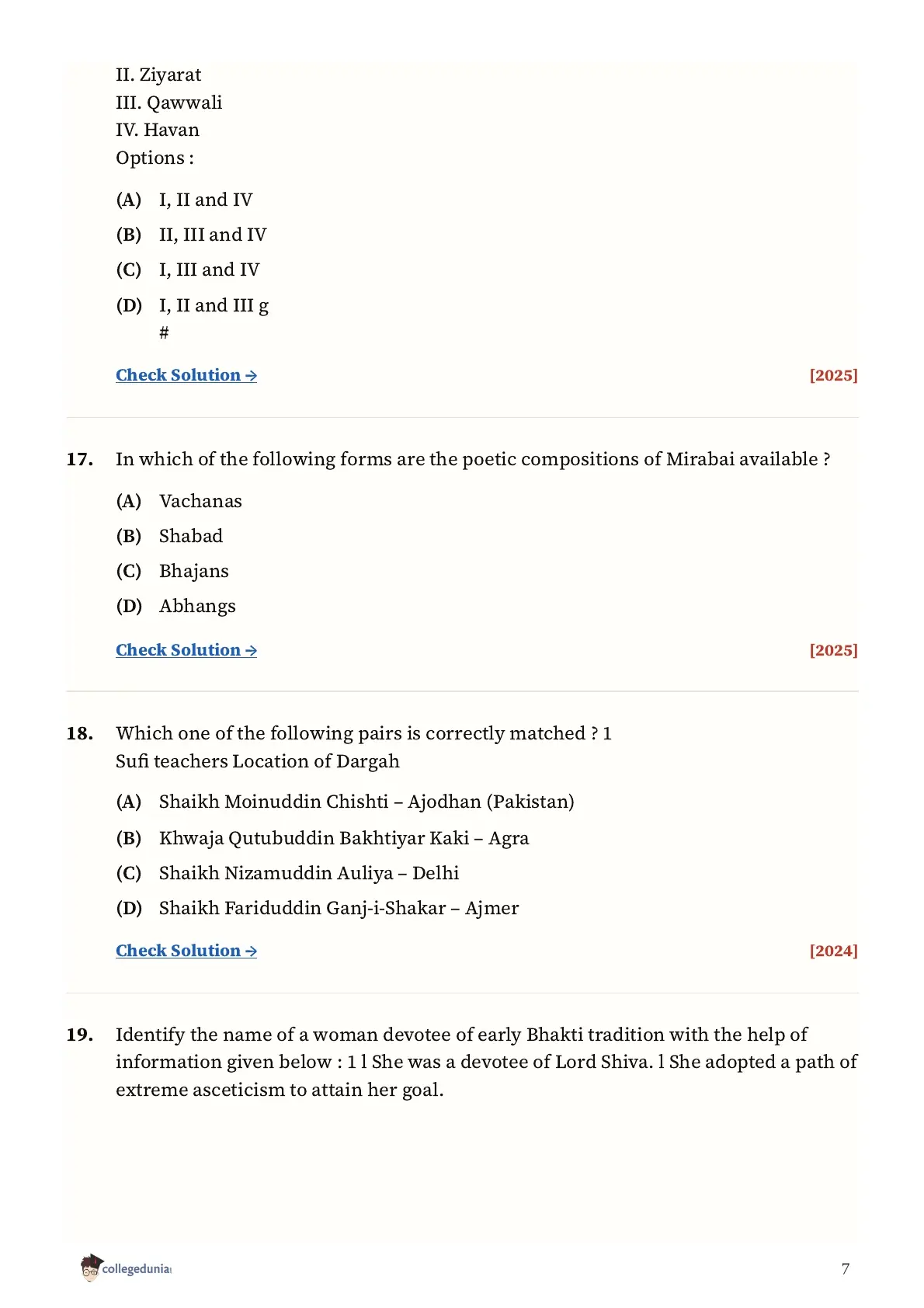
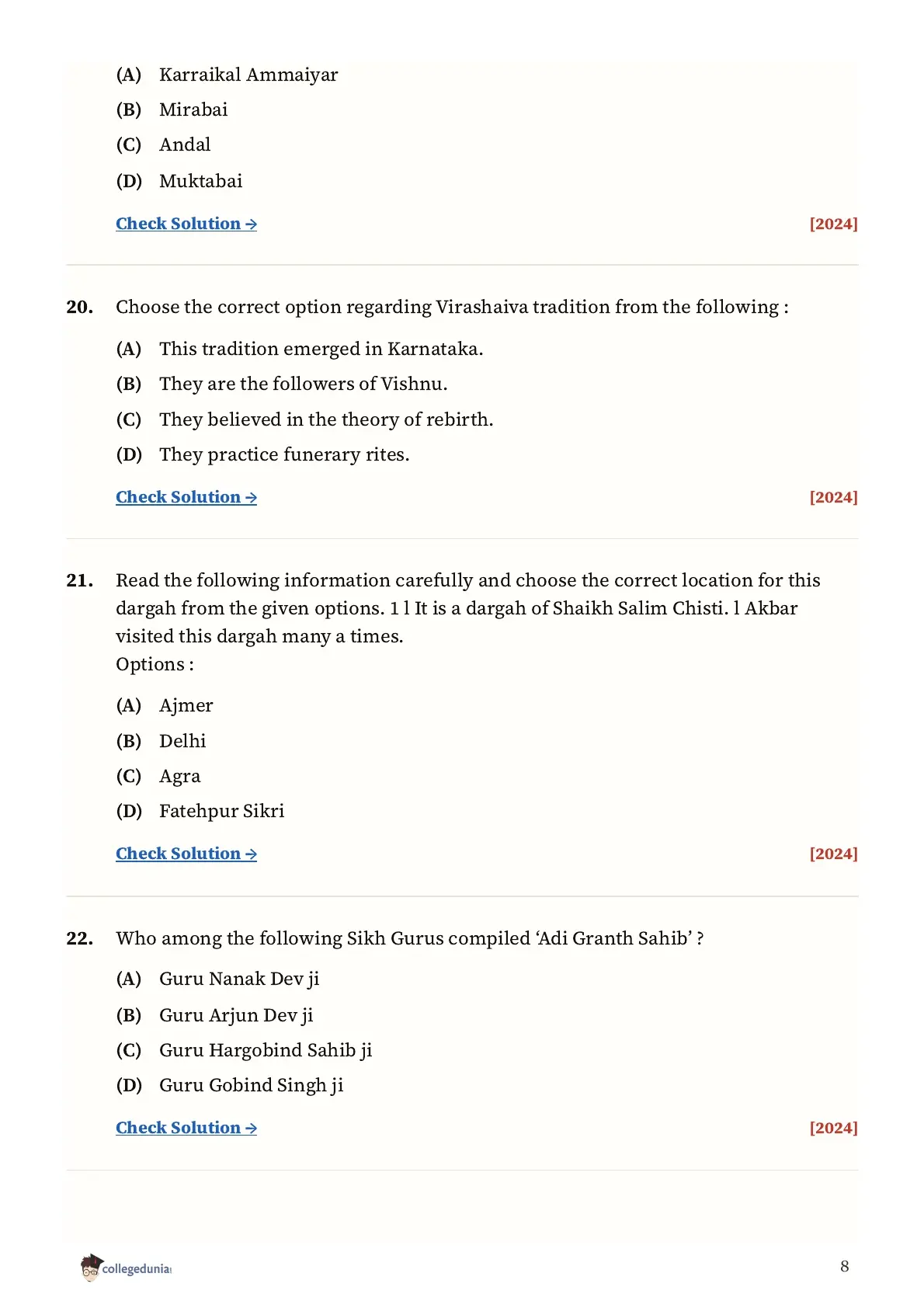
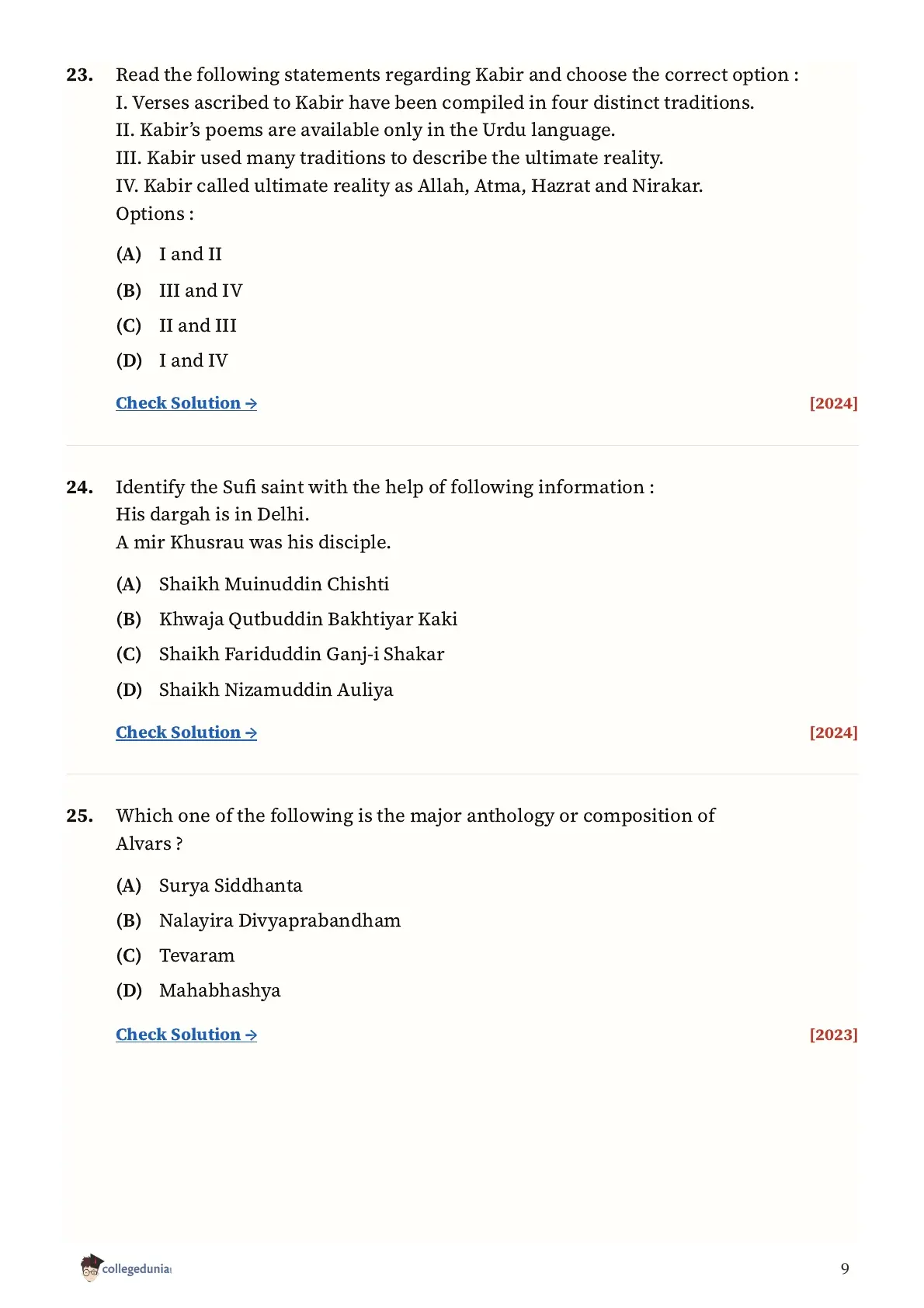
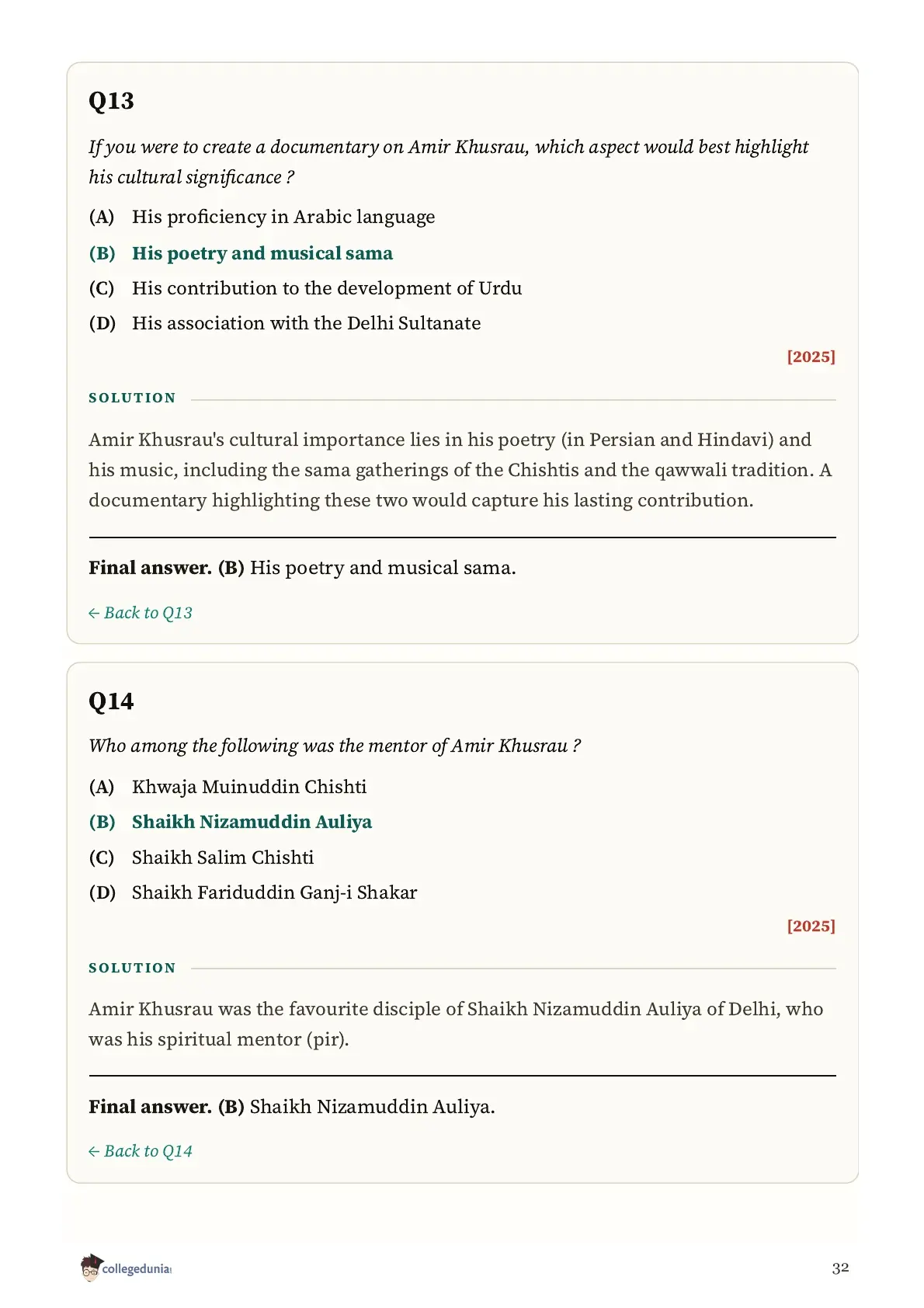
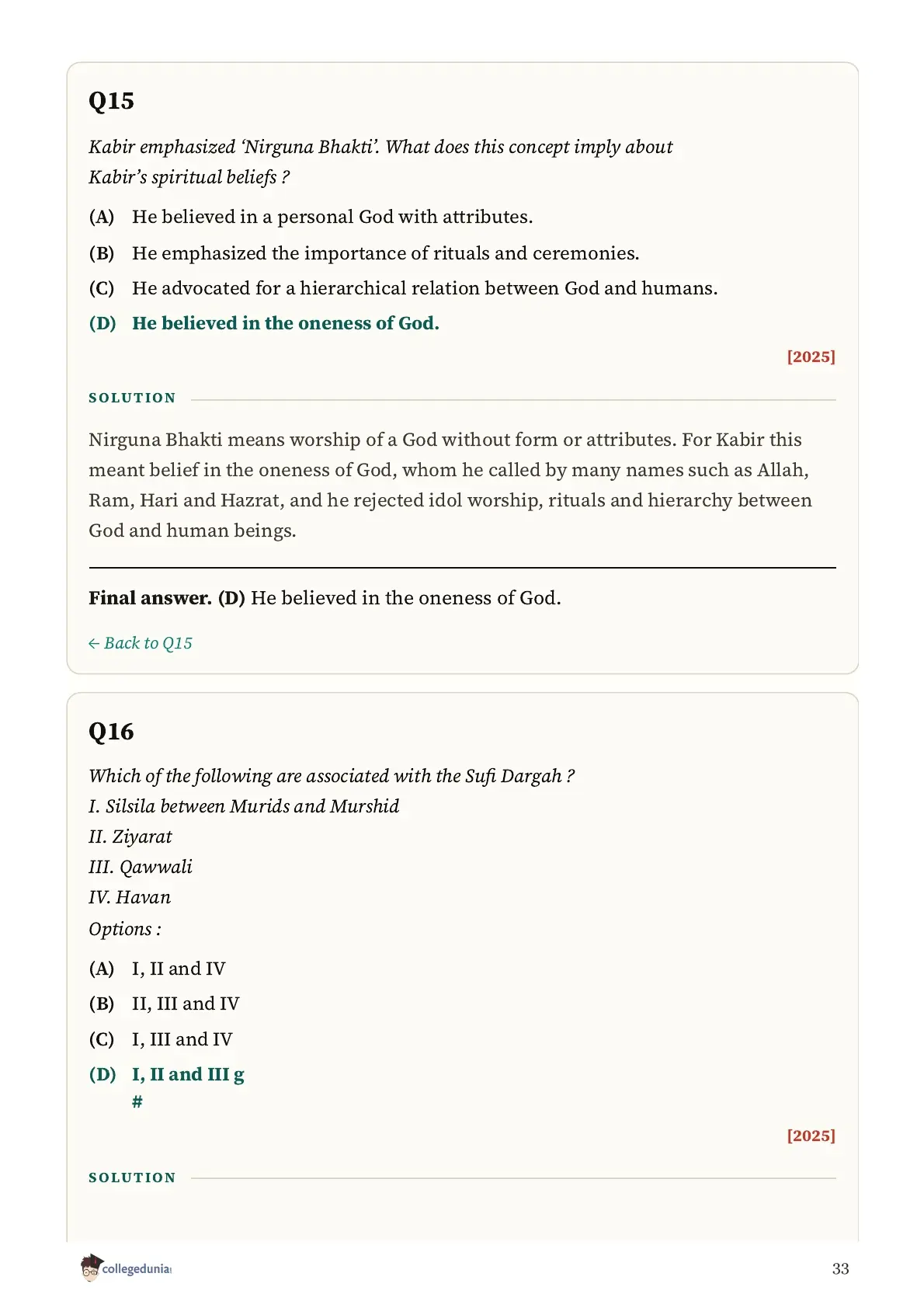
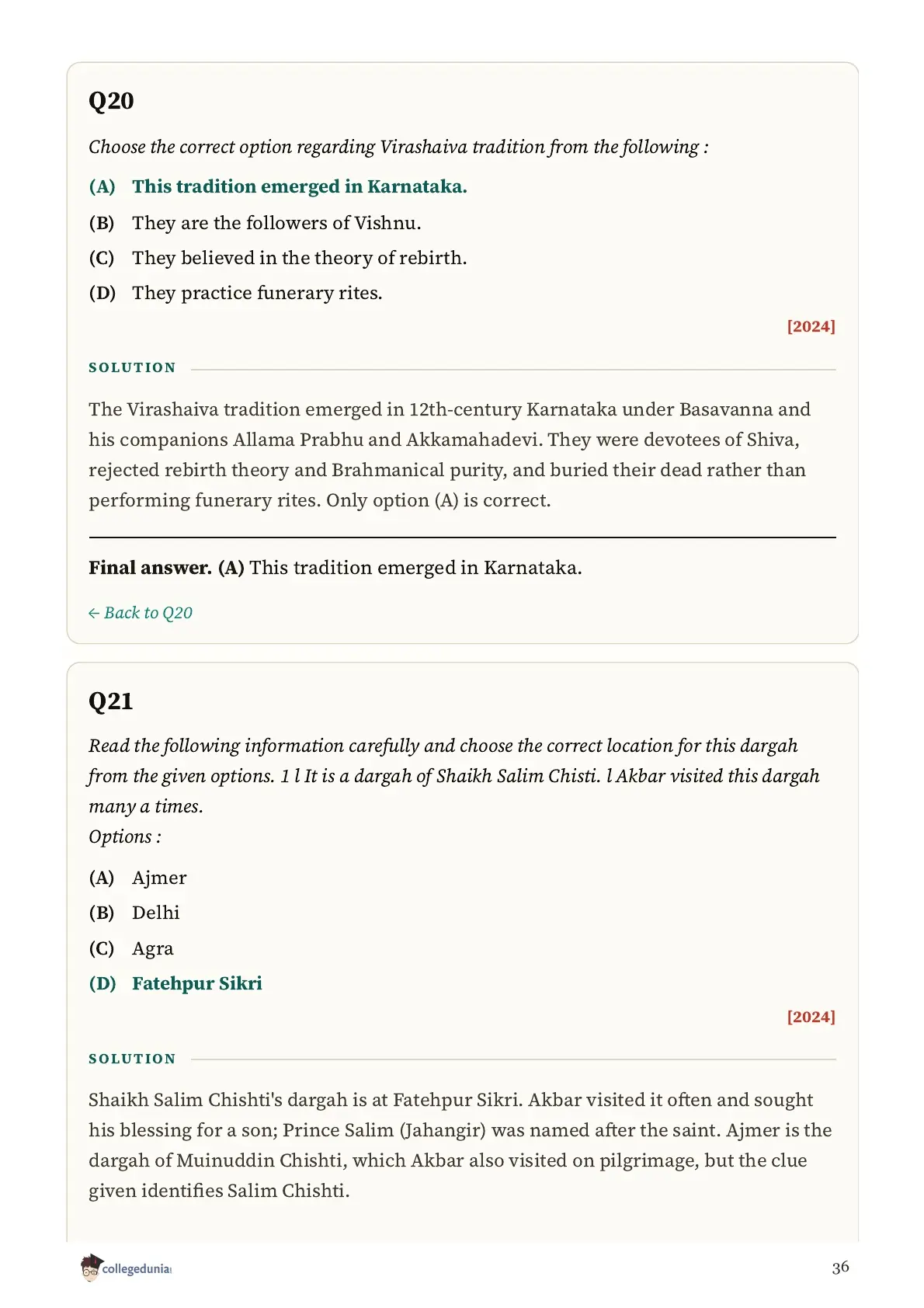
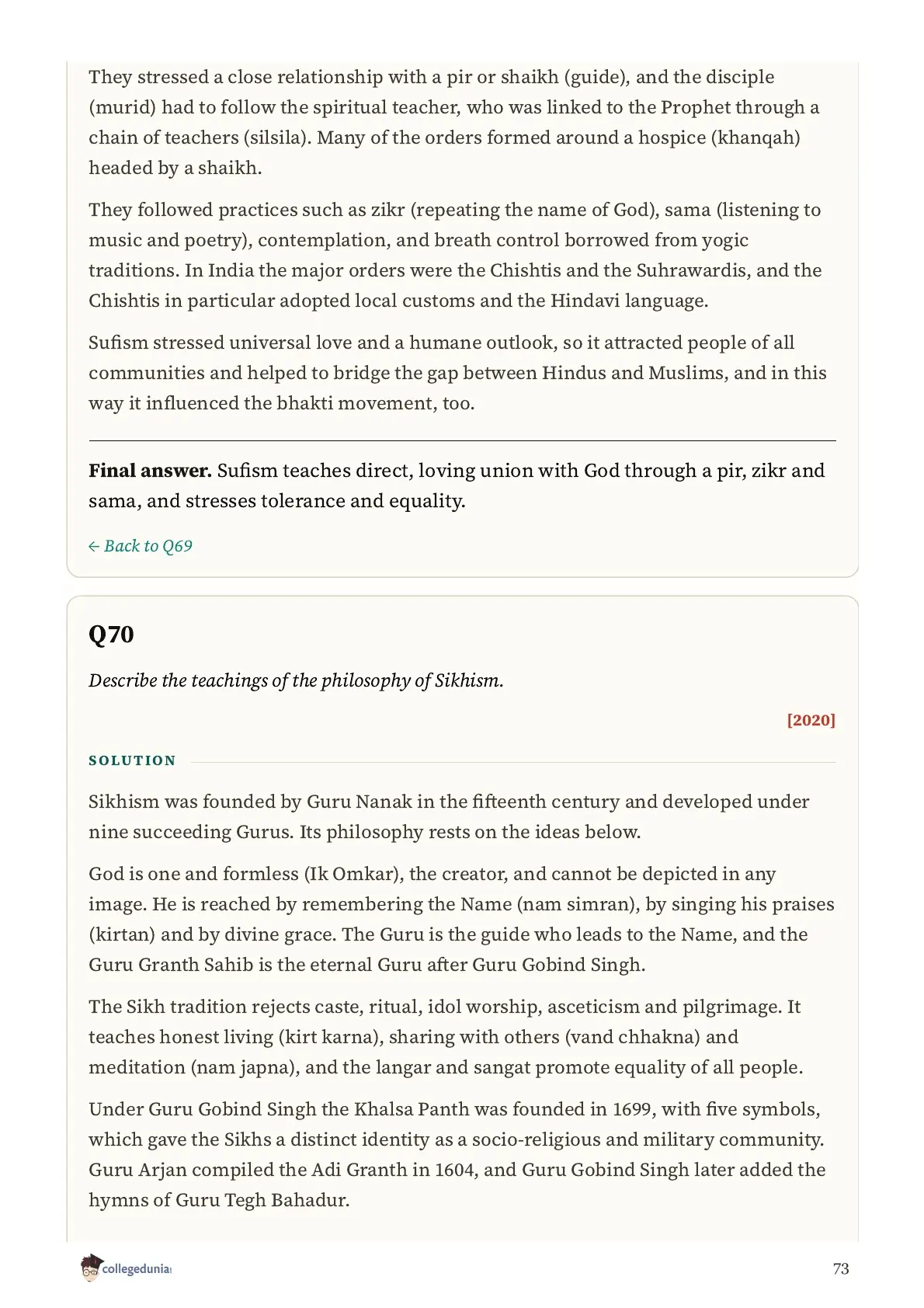
Sufi saints and their dargahs are the single biggest cluster, with 23 questions and 11 of the 25 MCQs. Most of those MCQs are matching or odd-one-out items: which dargah belongs to which Chishti saint, who was Amir Khusrau's mentor, and what is associated with a dargah (silsila, ziyarat, qawwali). 11 questions name the Chishtis and 8 are on ziyarat, qawwali or the dargah itself. The counts come from keyword matches, so a question that names two traditions is counted under both.
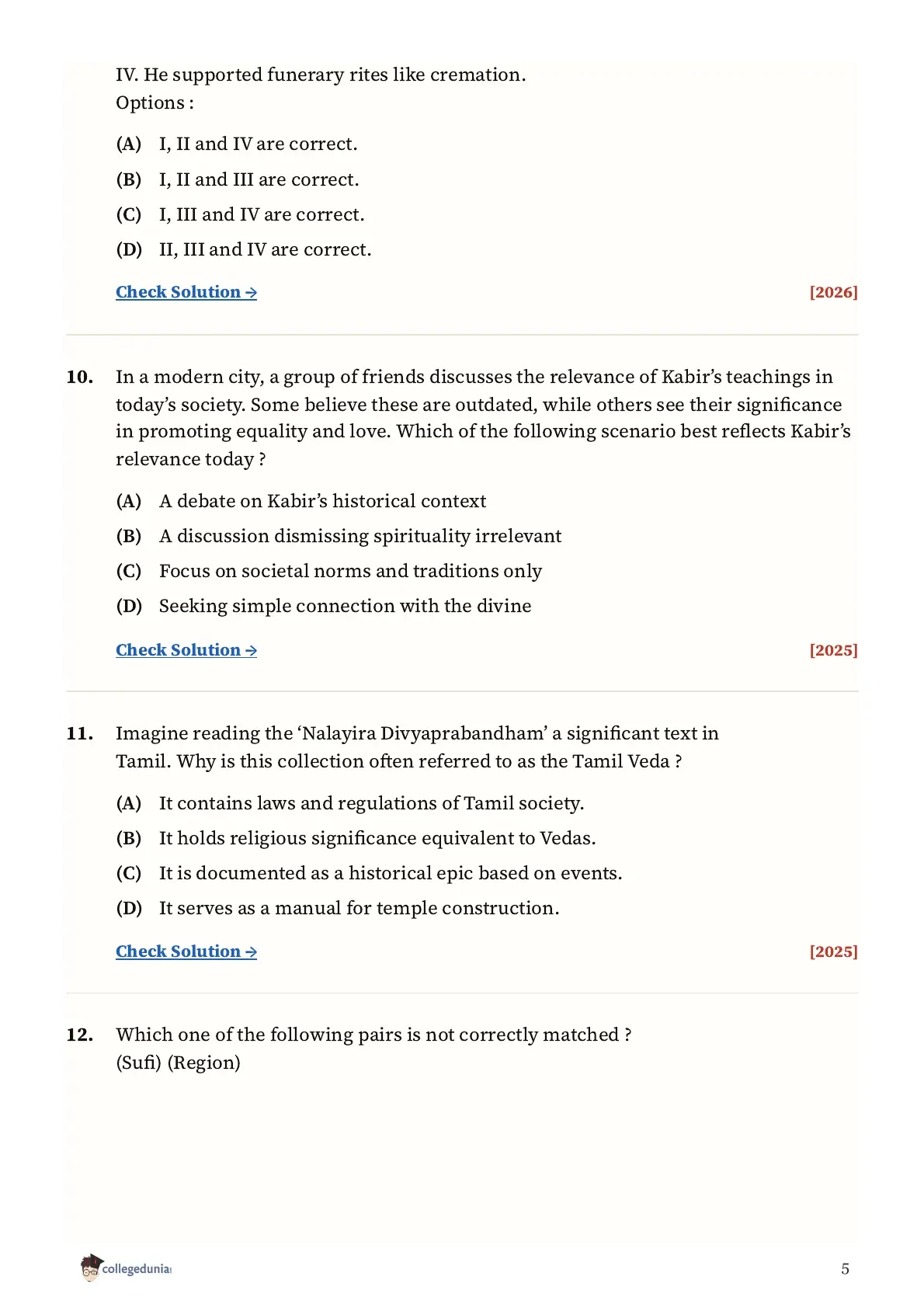
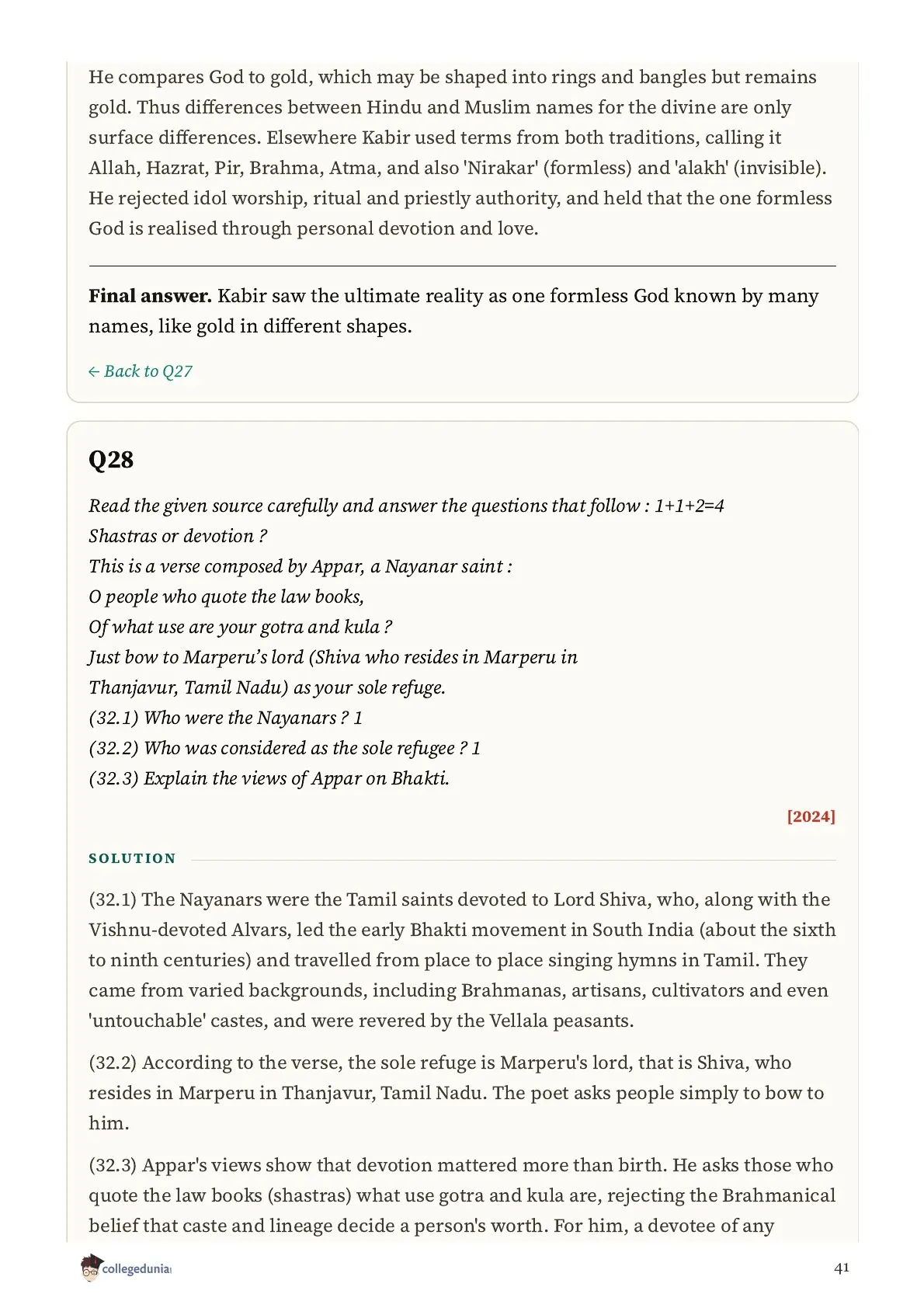
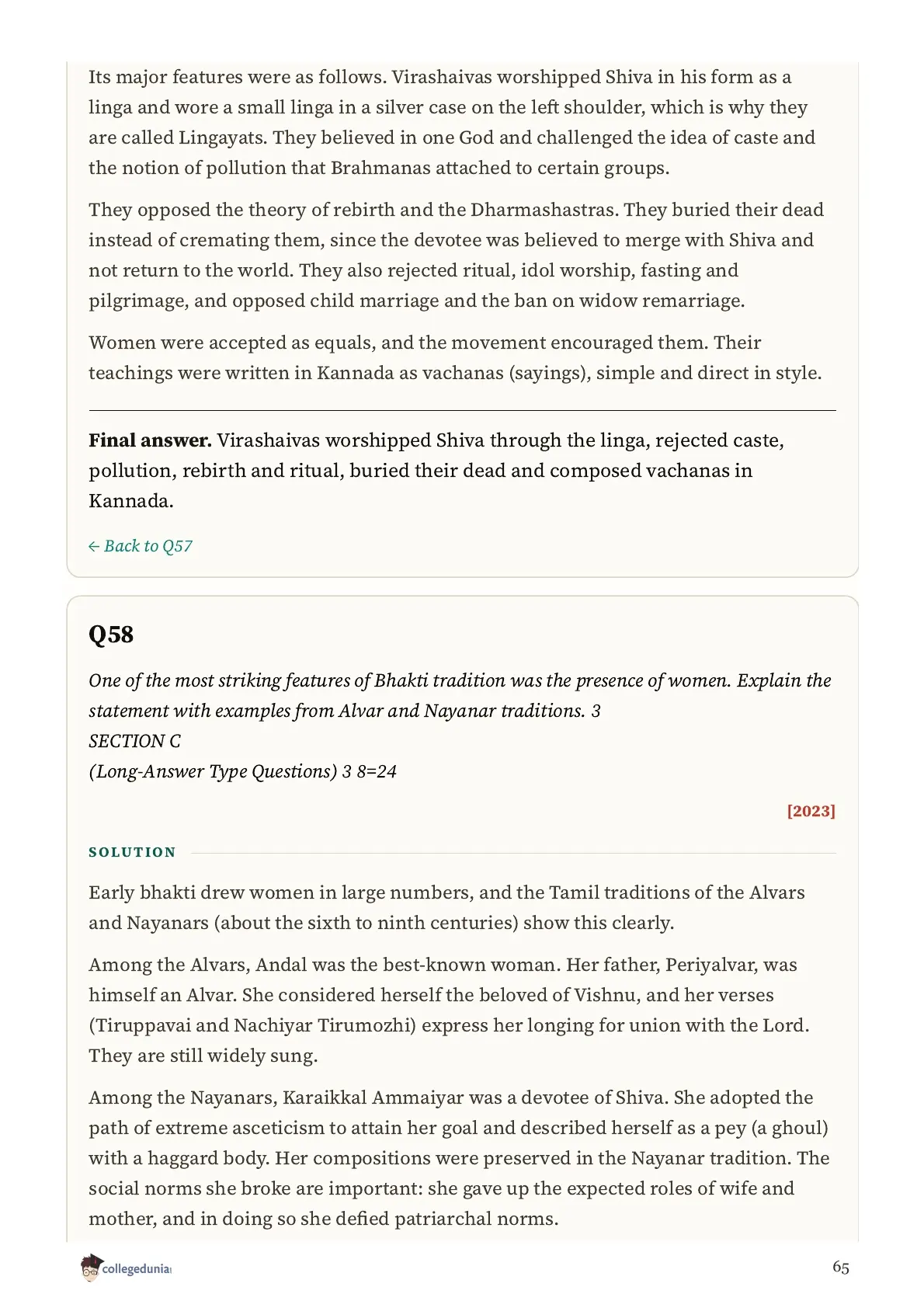
The Alvars and Nayanars appear in 19 questions, 3 of them MCQs and 2 of them source passages: Karaikkal Ammaiyar describing herself, and Appar's verse on the shastras and devotion. Written answers ask for their teachings, their relationship with the State, the place of women among them and the support of the Chola rulers.
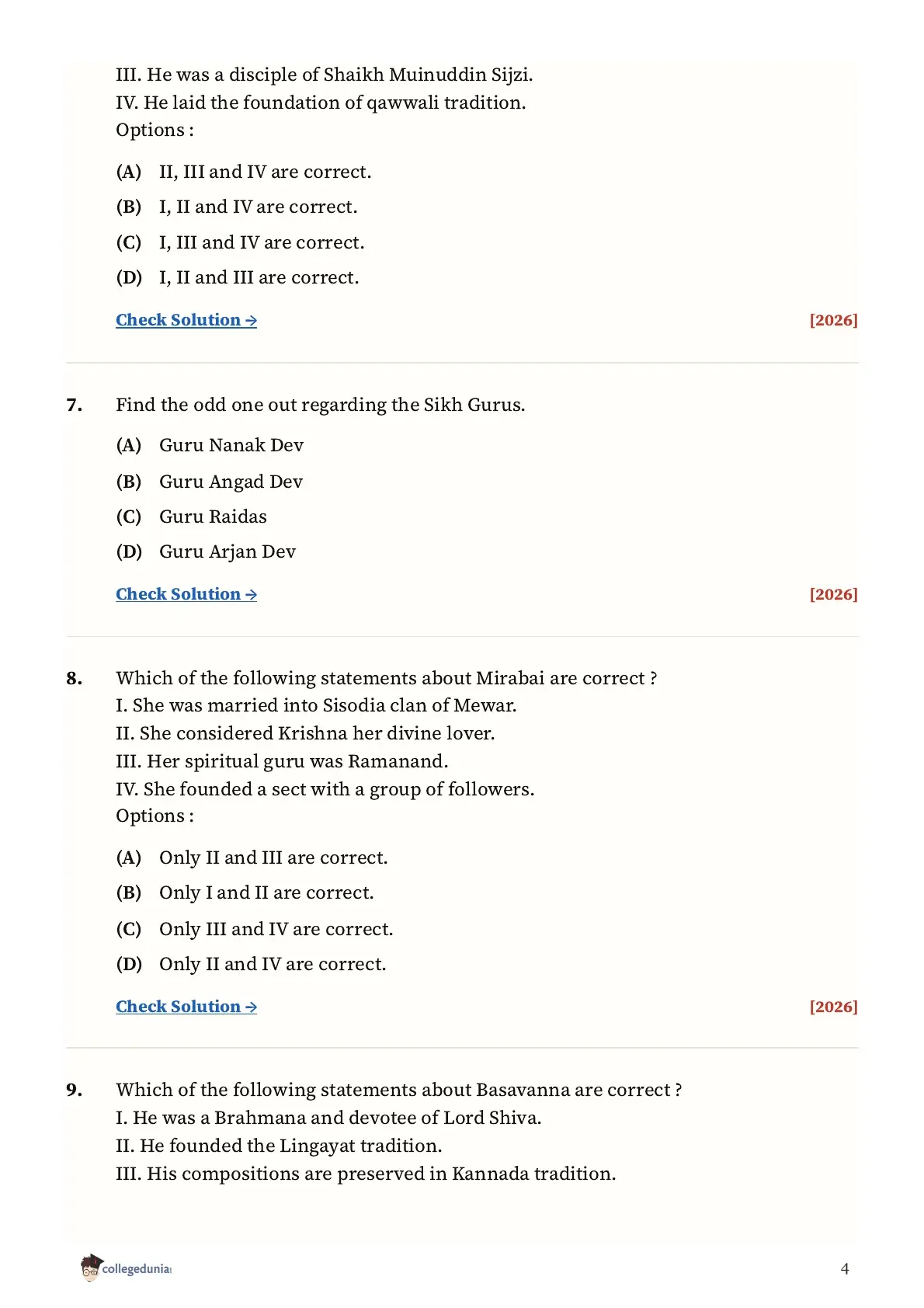
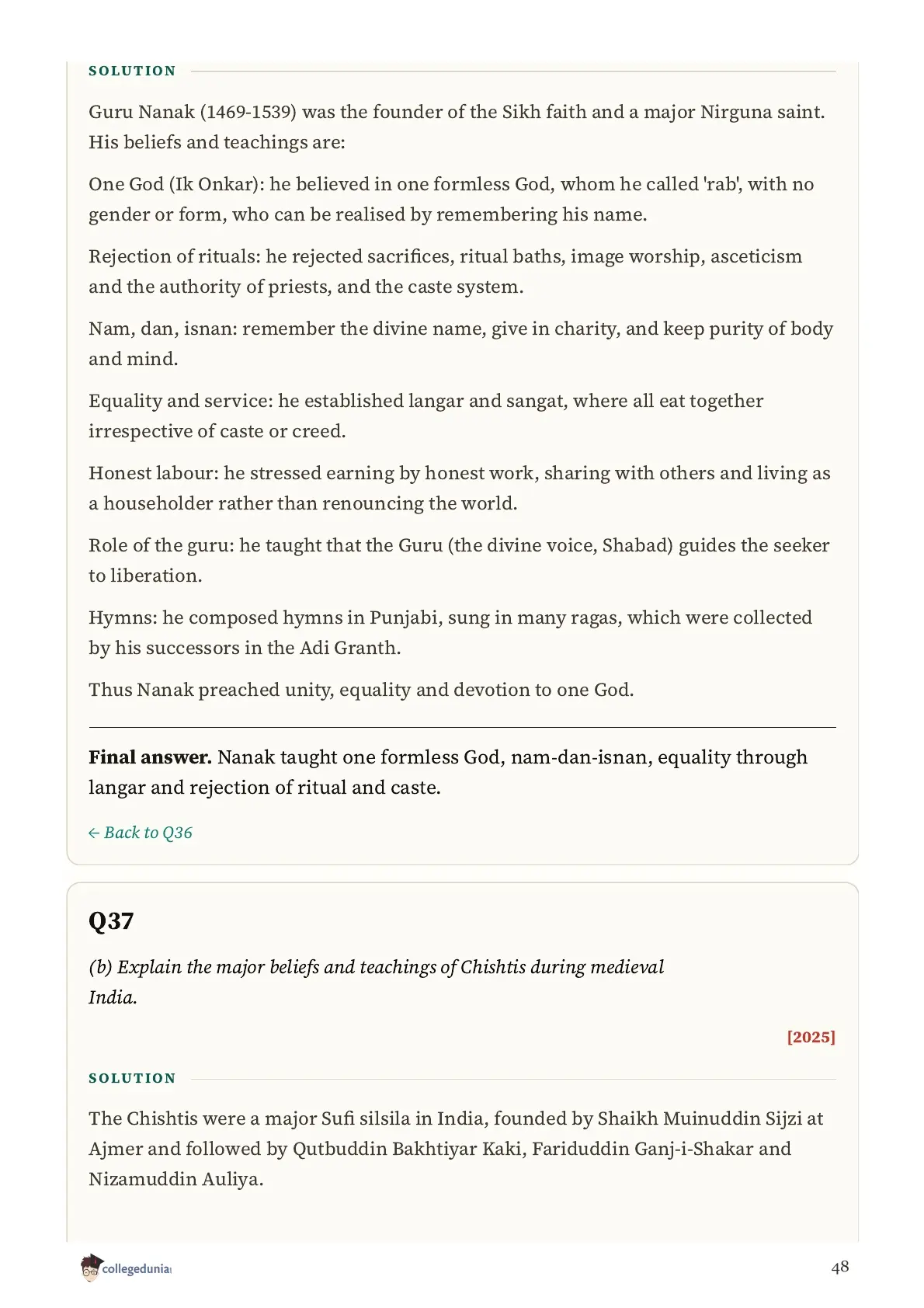
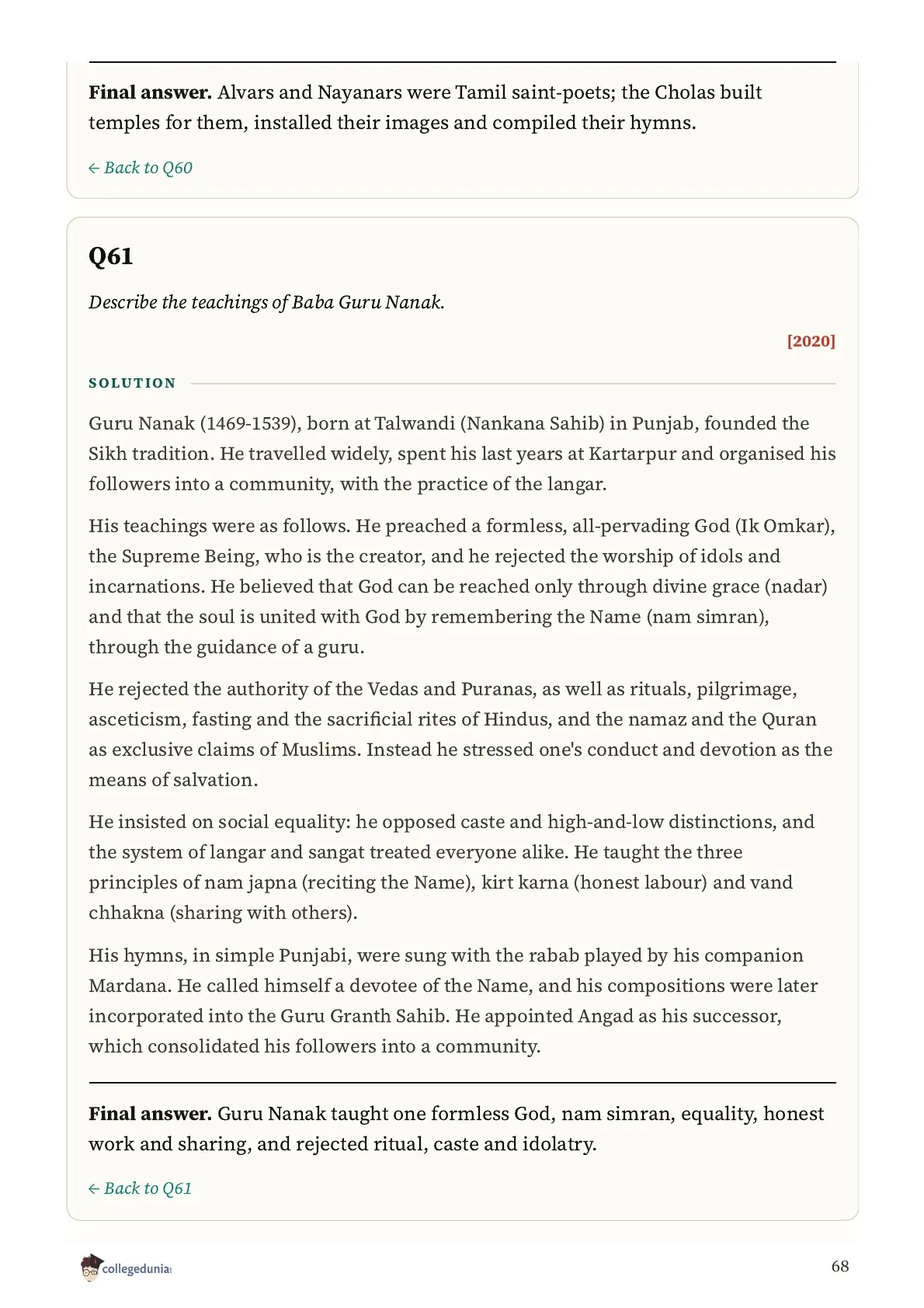
Kabir is named in 17 questions, one of them a source passage, "The One Lord". Guru Nanak and the Sikh Gurus also account for 17, including an MCQ on who compiled the Adi Granth Sahib and a written question on Guru Gobind Singh. 5 questions use the word Nirguna. Mirabai appears in 10 questions, one a passage of her verse, and the Virashaiva tradition, Lingayats and Basavanna in 11.
Among the 78 written answers, 15 open with Explain, 12 with Describe and 4 with Examine. 9 start with Name or Who and are one-line recall. 23 mention teachings, beliefs, philosophy or principles, so a prepared answer on each tradition's core teachings covers a large share of them. Several are repeated nearly word for word, such as the preceptor of Meera Bai and the teachings of Guru Nanak, so one prepared answer covers each of those.
How to Approach the Set
Begin with the 25 MCQs and use the Answer Key to check them, since the Sufi location pairs are quick to learn once and then stop costing marks. Read the 4 source passages next, because each is verse by a named saint and the questions ask what the lines say about caste, ritual or devotion. For the written answers, prepare one full answer each on Kabir, Guru Nanak, the Alvars and Nayanars, the Virashaiva tradition, Mirabai and the Chishtis, with two or three named examples, since a statement-and-explain question can be asked on any of them.
Source: Next Toppers - 12th Humanities
Common Mistakes in Bhakti-Sufi Traditions Questions
- Placing Nizamuddin Auliya's dargah at Agra or Muinuddin Chishti's at Ajodhan. They appear as wrong options in the location questions; Ajmer is Muinuddin Chishti's and Ajodhan is Baba Farid's.
- Listing Guru Raidas among the Sikh Gurus in an odd-one-out question.
- Crediting the Nalayira Divyaprabandham to the Nayanars. It is the Alvars' anthology, and the Tevaram belongs to the Nayanars.
- Calling Mirabai a follower of Nirguna Bhakti, when the set describes her as a devotee of Saguna Bhakti.
- Describing the Virashaiva tradition as Vishnu worship. Its followers are devotees of Shiva and it emerged in Karnataka.
- Naming only two of the three traditions in which Kabir's verses are preserved: the Kabir Bijak, the Kabir Granthavali and the Guru Granth Sahib.
- Answering "cite any two" with one example, or "explain with examples" with none.
Using the Answer Key and Solutions
The PDF is 96 pages and free to download. Each section is sorted newest year first, the Answer Key lists every MCQ at a glance, and each question links to its worked solution and back. Attempt a section first, check the key, then read the solution and note the common mistake given with it. The solutions are written by Collegedunia's History experts and are not official CBSE marking schemes.
Class 12 History PYQs by Theme
| Theme | PYQ Page |
|---|---|
| Theme 1 | Theme 1: Bricks, Beads and Bones: The Harappan Civilisation Class 12 PYQ |
| Theme 2 | Theme 2: Kings, Farmers and Towns Class 12 PYQ |
| Theme 3 | Theme 3: Kinship, Caste and Class Class 12 PYQ |
| Theme 4 | Theme 4: Thinkers, Beliefs and Buildings Class 12 PYQ |
| Theme 5 | Theme 5: Through the Eyes of Travellers Class 12 PYQ |
| Theme 6 | Theme 6: Bhakti-Sufi Traditions Class 12 PYQ |
| Theme 7 | Theme 7: An Imperial Capital: Vijayanagara Class 12 PYQ |
| Theme 8 | Theme 8: Peasants, Zamindars and the State Class 12 PYQ |
| Theme 9 | Theme 9: Colonialism and the Countryside Class 12 PYQ |
| Theme 10 | Theme 10: Rebels and the Raj: The Revolt of 1857 Class 12 PYQ |
| Theme 11 | Theme 11: Mahatma Gandhi and the Nationalist Movement Class 12 PYQ |
| Theme 12 | Theme 12: Framing the Constitution Class 12 PYQ |
Bhakti-Sufi Traditions Class 12 History PYQ FAQs
Ques. How many questions are in the Bhakti-Sufi Traditions Class 12 PYQ PDF?
Ans. The PDF has 107 questions from CBSE board papers between 2008 and 2026. 25 are MCQs, 4 are passage-based questions and 78 are written answers.
Ques. Does this PYQ PDF include solutions, or only the questions?
Ans. All 107 questions have a worked solution in the PDF, and the MCQs also have an Answer Key at the start of the objective section.
Ques. Are the solutions official?
Ans. No. They are written by Collegedunia's History experts and are not an official CBSE marking scheme.
Ques. How many marks does Bhakti-Sufi Traditions carry in the Class 12 board paper?
Ans. CBSE does not publish a mark figure for each theme. The Physics Wallah marking scheme table for 2026-27 lists 25 of the 80 theory marks for Part II, which covers Themes 5 to 8. The figure is unofficial, so check the curriculum on cbseacademic.nic.in.
Ques. Which topics are asked most in Bhakti-Sufi Traditions questions?
Ans. Sufi saints and dargahs come up in 23 questions, Alvars and Nayanars in 19, Kabir in 17 and Guru Nanak with the Sikh Gurus in 17. The Virashaiva tradition is in 11 and Mirabai in 10.
Ques. Are there source-based questions in this chapter?
Ans. Yes, 4: Karaikkal Ammaiyar, a composition attributed to Kabir, Appar on the shastras and devotion, and a passage of verse linked to Mirabai.
Ques. Which dargahs and Sufi saints are asked in the MCQs?
Ans. 11 of the 25 MCQs are on Sufi saints, dargahs or Amir Khusrau, mostly as matching and odd-one-out questions on Ajmer, Delhi, Ajodhan and Fatehpur Sikri. Learn each saint with his dargah.



Comments