



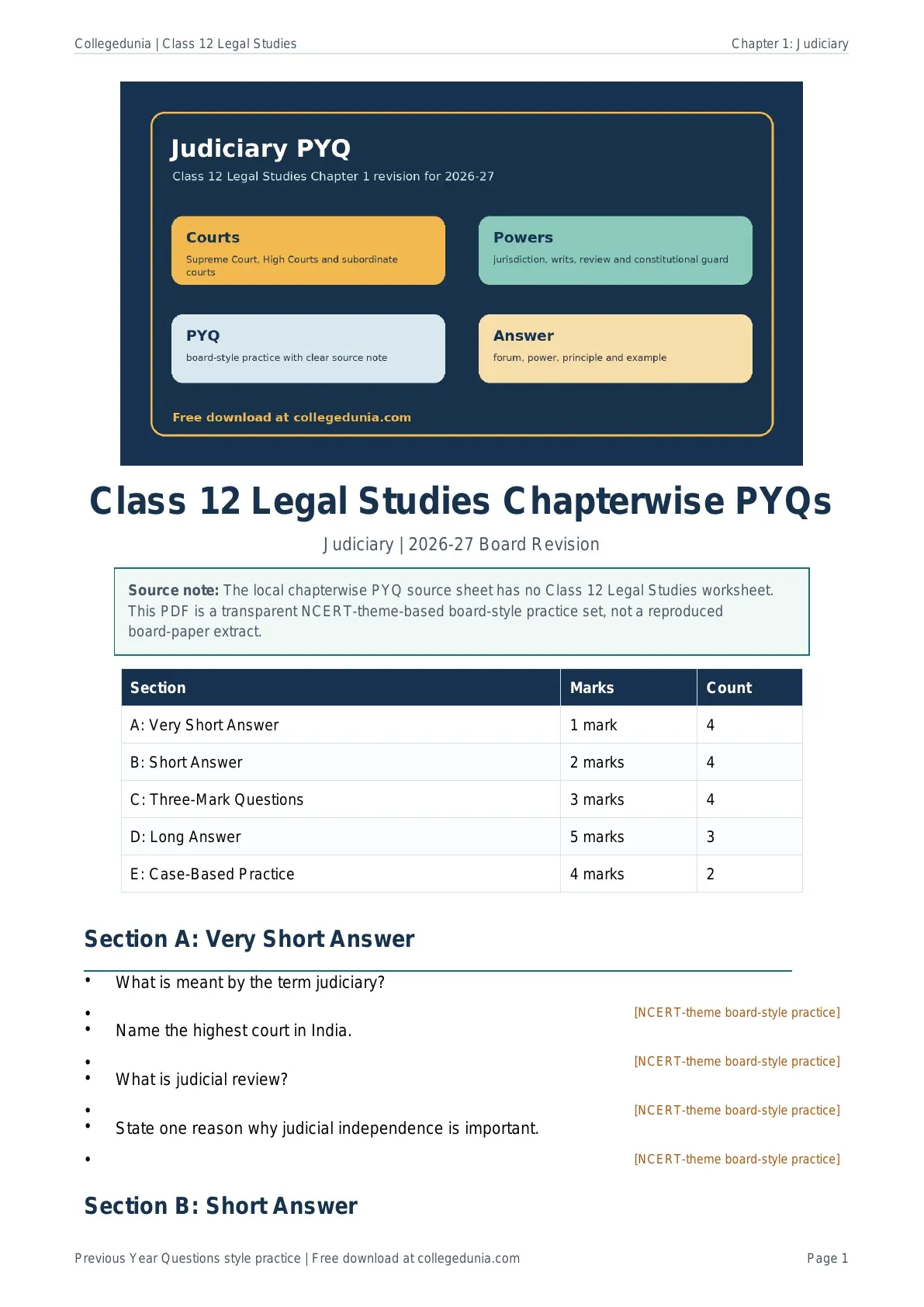
The Class 12 Legal Studies Judiciary PYQ PDF is available for free download. This chapter-wise practice PDF helps students revise courts, jurisdiction, judicial review, writs and independence of judiciary for the 2026-27 board exam.
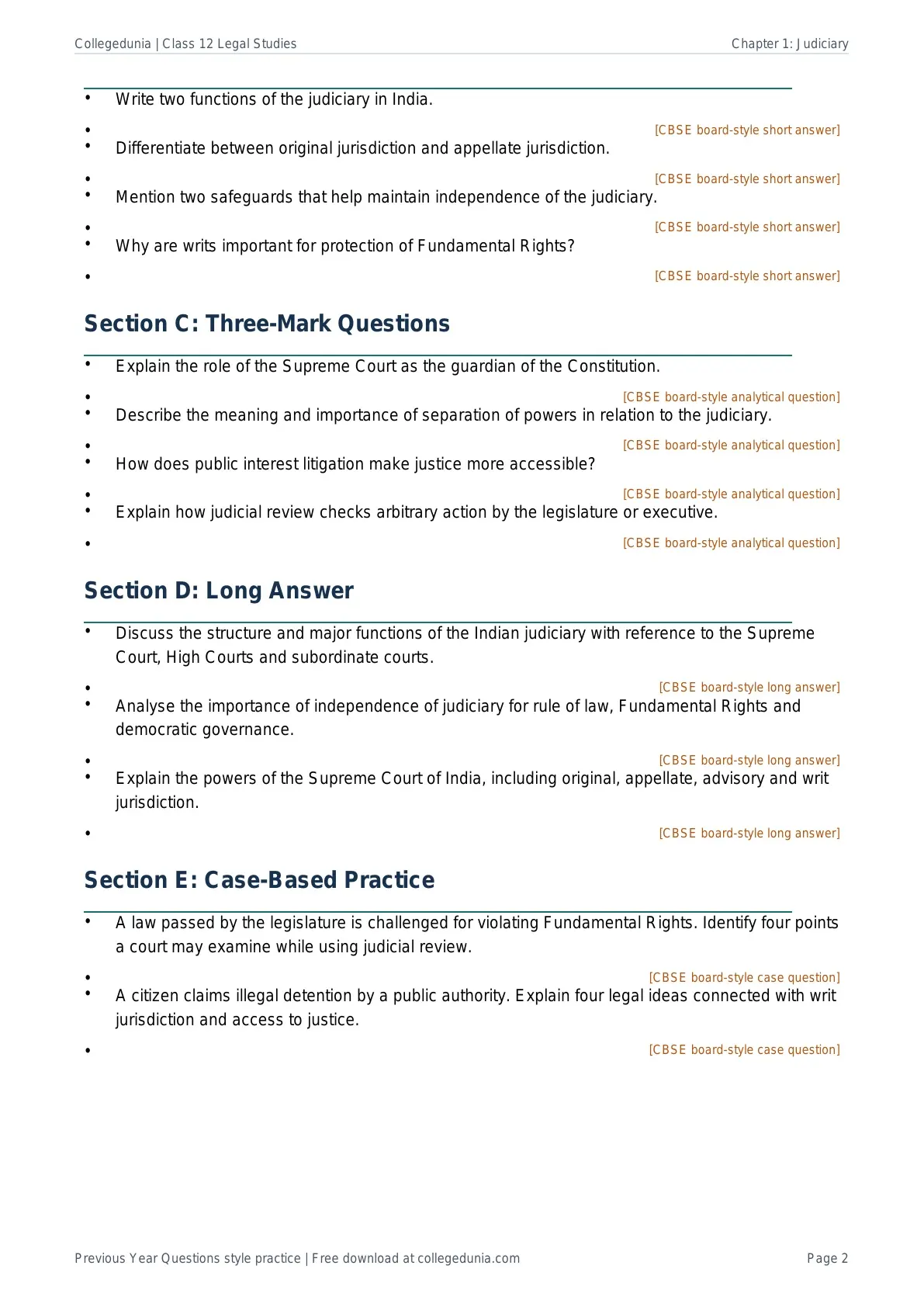
- Covers very-short, short-answer, long-answer and case-based board-style questions from Legal Studies Chapter 1.
- Uses NCERT chapter themes because the local chapterwise PYQ source sheet has no extractable Legal Studies worksheet for this row.
- Useful for revising Supreme Court powers, High Courts, writ jurisdiction, PIL and judicial independence before full-paper practice.
Student Feedback: Students can use this PYQ PDF to practise Judiciary answers without mixing up court hierarchy, jurisdiction and judicial review.
In This Article
Class 12 Legal Studies Judiciary PYQ PDF
The PDF focuses on Chapter 1 of Class 12 Legal Studies. It keeps practice chapter-wise so students can revise the Supreme Court, High Courts, subordinate courts, writs, judicial review and independence of judiciary in one place.
- Chapter: Chapter 1 Judiciary
- Main theme: court structure, jurisdiction, judicial review and rule of law
- Practice type: very-short, short-answer, long-answer and case-based questions
- Best use: revise NCERT terms and answer structure before attempting full board papers
Questions Covered in Judiciary PYQ PDF
The question set checks whether students can identify the correct court power, explain judicial independence and apply writ or review ideas to a short case.
| PYQ Cluster | Question Focus | Answer Skill |
|---|---|---|
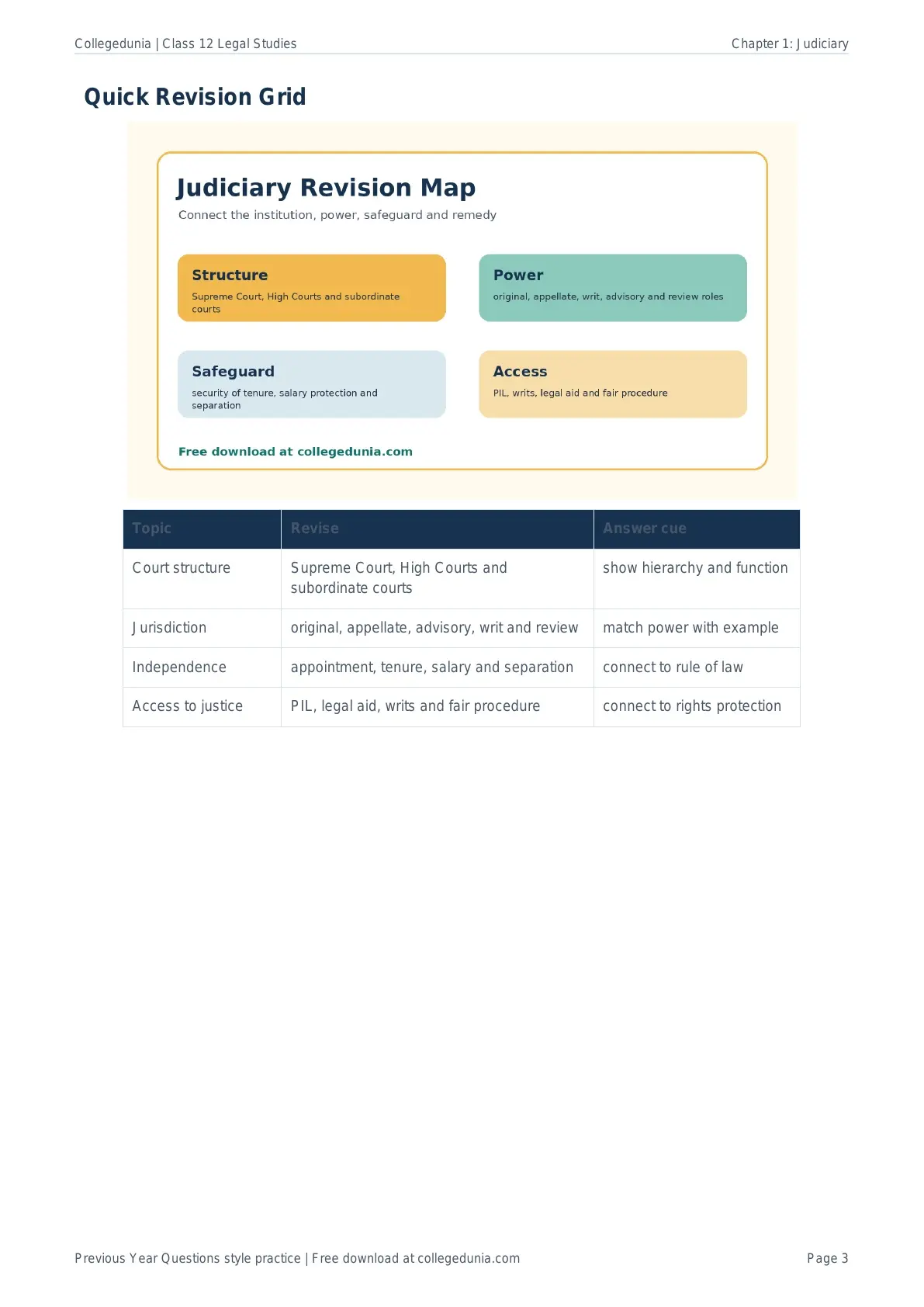
| Court structure | Supreme Court, High Courts and subordinate courts | Show hierarchy and function clearly |
| Jurisdiction | Original, appellate, writ, advisory and review powers | Match each power with one example |
| Judicial independence | Security of tenure, salary protection and separation from executive pressure | Connect safeguards with rule of law |
| Rights protection | Writs, PIL, legal aid and judicial review | Explain how courts protect citizens from arbitrary action |
Judiciary Video Revision
Source: Magnet Brains on YouTube
Revision Focus for Judiciary PYQs
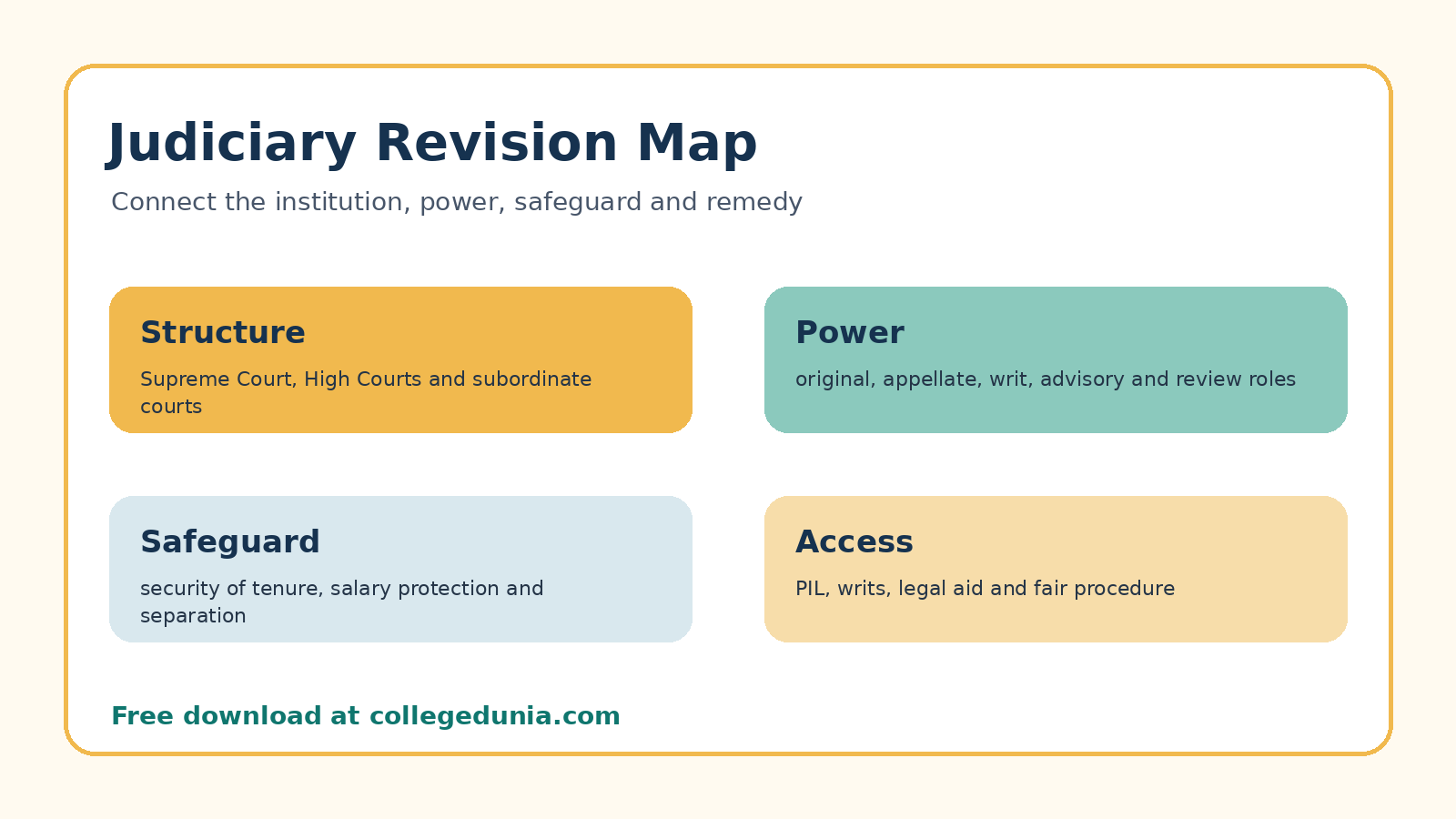
Begin revision by separating the court from the power being used. A judiciary answer may involve appeal, writ, review, advisory opinion, PIL or ordinary trial procedure.
- Forum: Supreme Court, High Court or subordinate court
- Power: jurisdiction, judicial review, writ, appeal or advice
- Safeguard: independence, tenure, salary protection and separation
- Purpose: rule of law, fair procedure and protection of rights
Answer Writing Map for Legal Studies PYQs
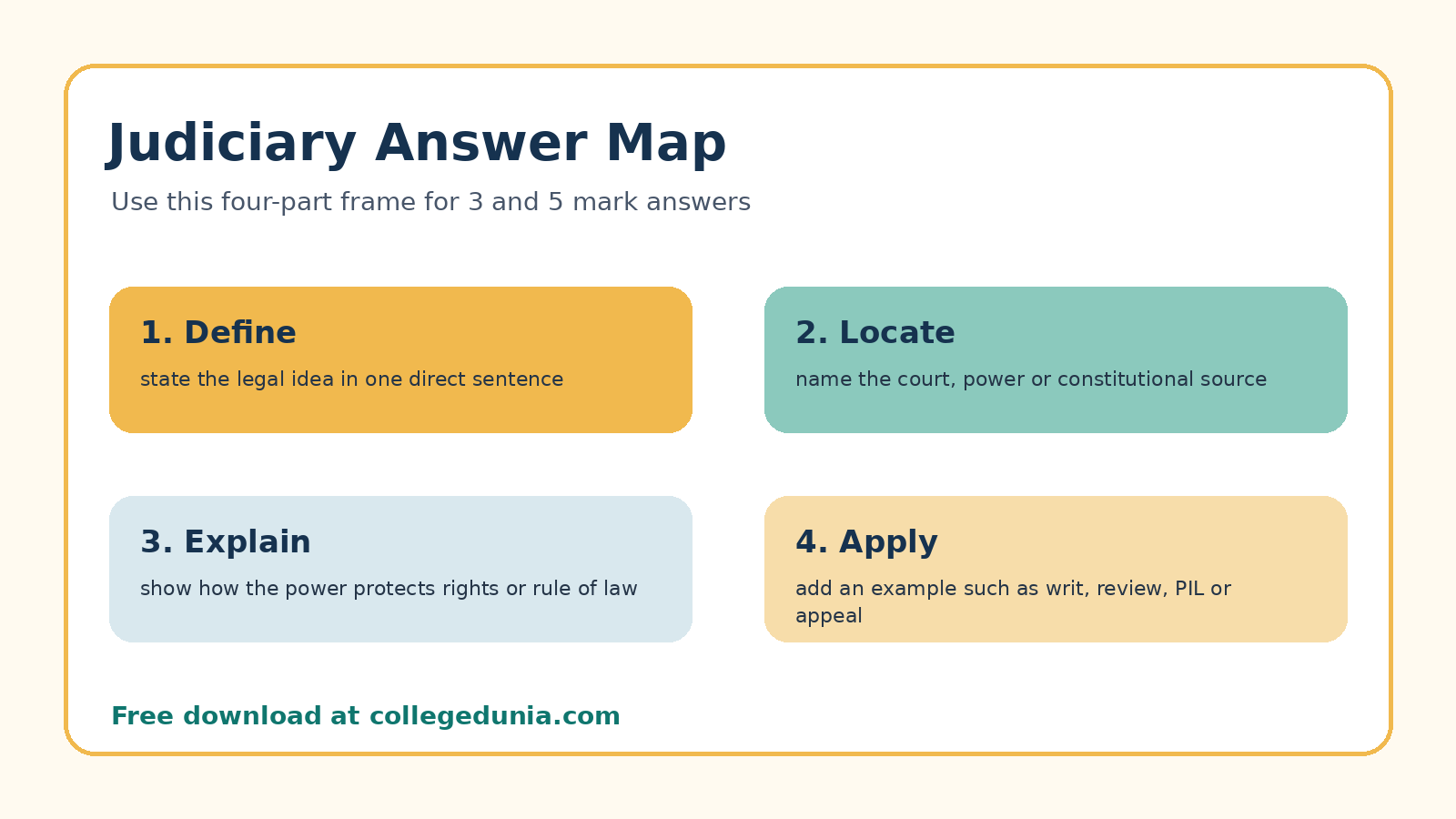
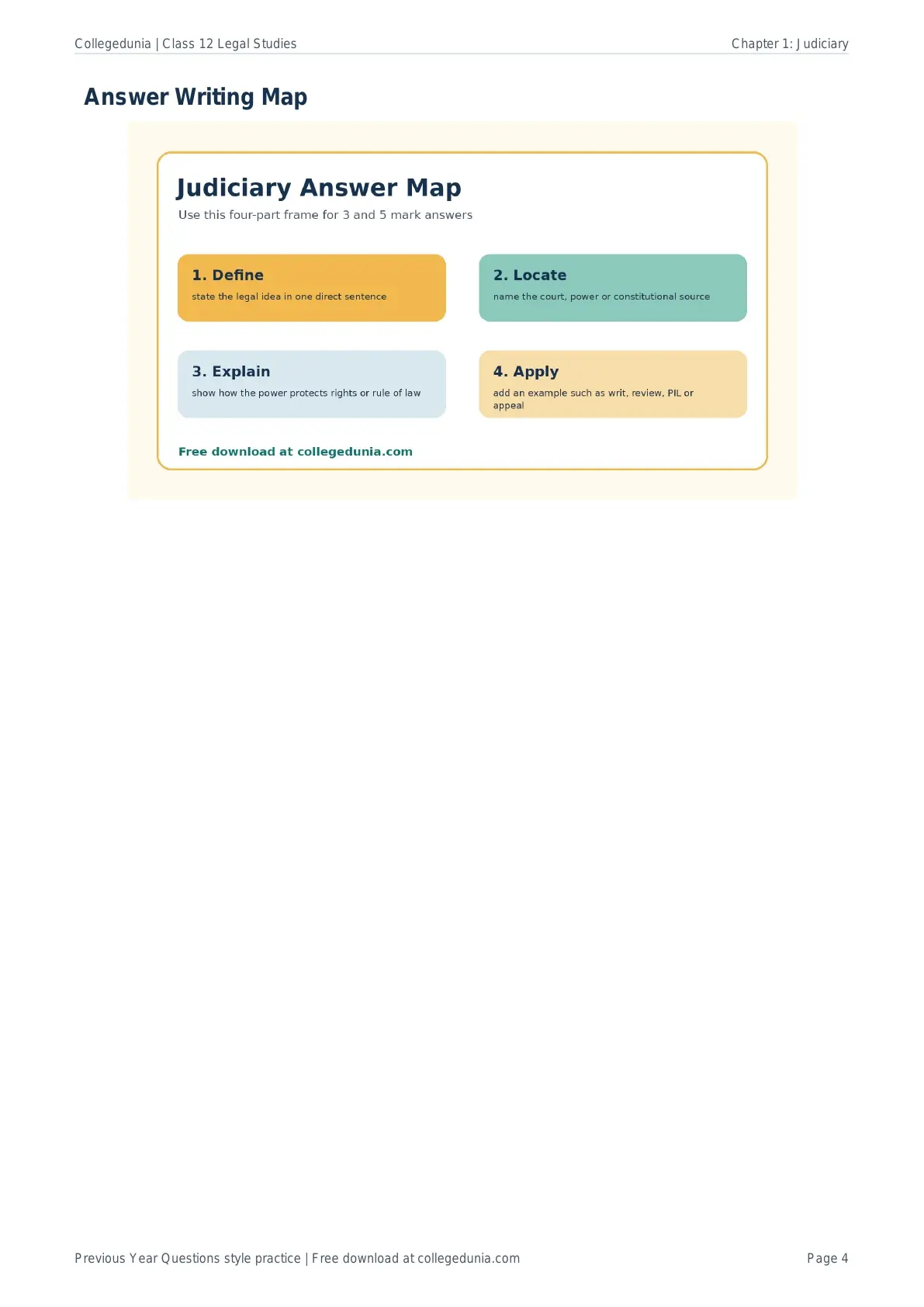
For short answers, define the legal term first and add one example. For long answers, organise the response around institution, power, constitutional principle and practical effect.
Class 12 Legal Studies Judiciary Related Resources
| Resource | Link |
|---|---|
| Judiciary Notes | Chapter 1 Notes PDF |
| Judiciary Handwritten Notes | Chapter 1 Handwritten Notes |
| Judiciary NCERT Book PDF | Chapter 1 NCERT Book PDF |
All Class 12 Legal Studies PYQ Chapters
| Resource | Link |
|---|---|
| Judiciary PYQ | Chapter 1 PYQ PDF |
| Alternative Dispute Resolution PYQ | Chapter 2 PYQ PDF |
| Family Justice System PYQ | Chapter 3 PYQ PDF |
| Human Rights in India PYQ | Chapter 4 PYQ PDF |
| Legal Profession in India PYQ | Chapter 5 PYQ PDF |
| Legal Services PYQ | Chapter 6 PYQ PDF |
| International Context PYQ | Chapter 7 PYQ PDF |
Class 12 Legal Studies Judiciary PYQ FAQs
Ques. Where can I download Class 12 Legal Studies Judiciary PYQ PDF?
Ans. You can download the chapter-wise PYQ PDF from the PDF viewer and download link above.
Ques. Which topics are important for Judiciary PYQs?
Ans. Focus on Supreme Court powers, High Courts, judicial review, writs, PIL, subordinate courts, rule of law and independence of judiciary.
Ques. Does this PDF contain actual extracted board-paper questions?
Ans. No. The local PYQ sheet has no extractable Legal Studies worksheet, so this PDF is a transparent NCERT-theme-based board-style practice set.
Ques. How should students answer judicial review questions?
Ans. Define judicial review, name the court's constitutional role, explain how it checks arbitrary action and connect it with Fundamental Rights or rule of law.



Comments