



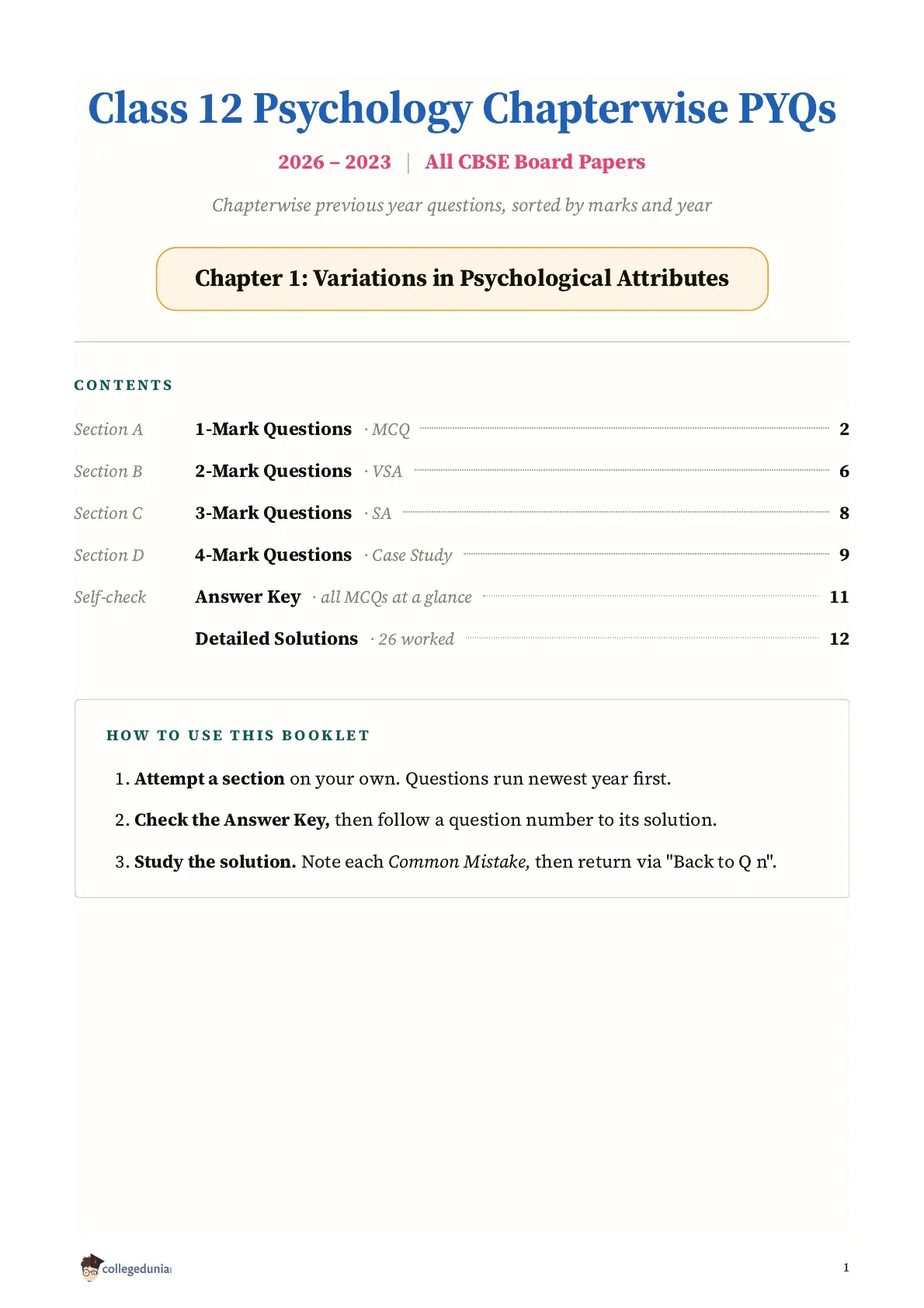
26 CBSE board questions from 2023 to 2026 make up this Variations in Psychological Attributes PYQ set for Class 12 Psychology. Every question in the PDF comes with a full step-by-step solution, so this is a questions-and-answers resource, not a questions-only download.
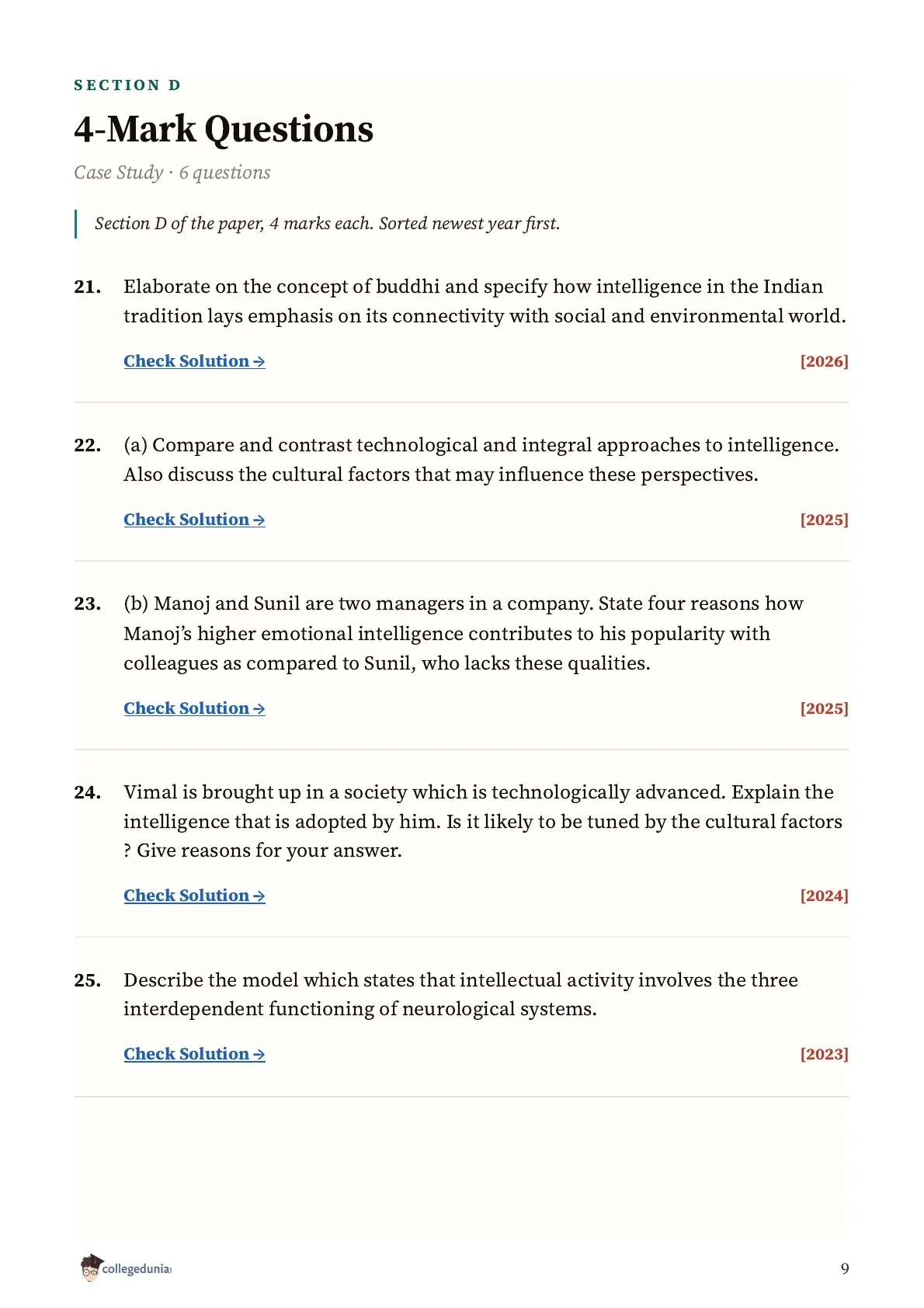
- 26 questions, CBSE 2023-2026: Section A (9 MCQs, 1 mark), Section B (7 VSA, 2 marks), Section C (4 SA, 3 marks), Section D (6 case-study questions, 4 marks).
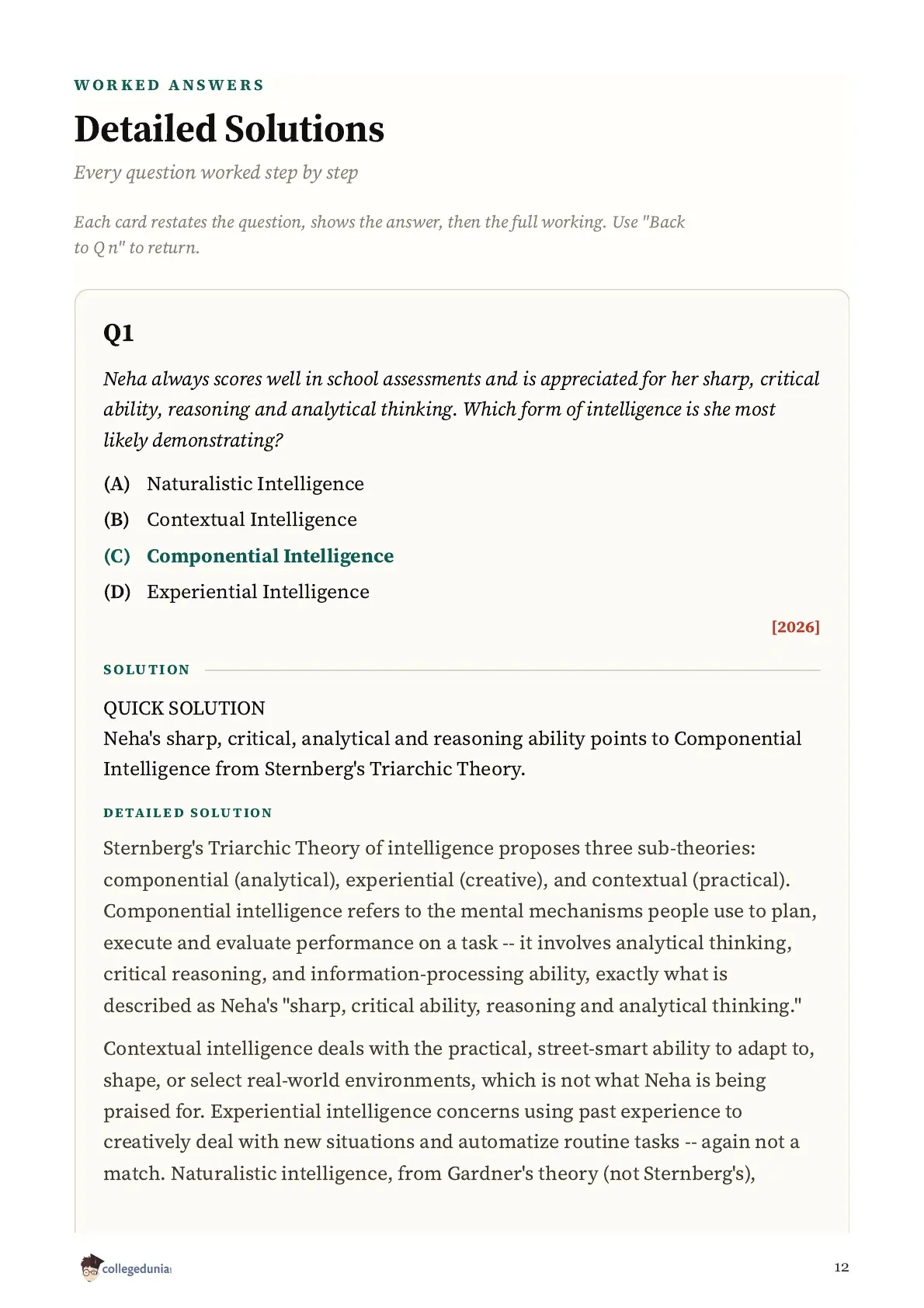
- Full solutions included: every question has a worked, step-by-step answer, not just the bare question paper.
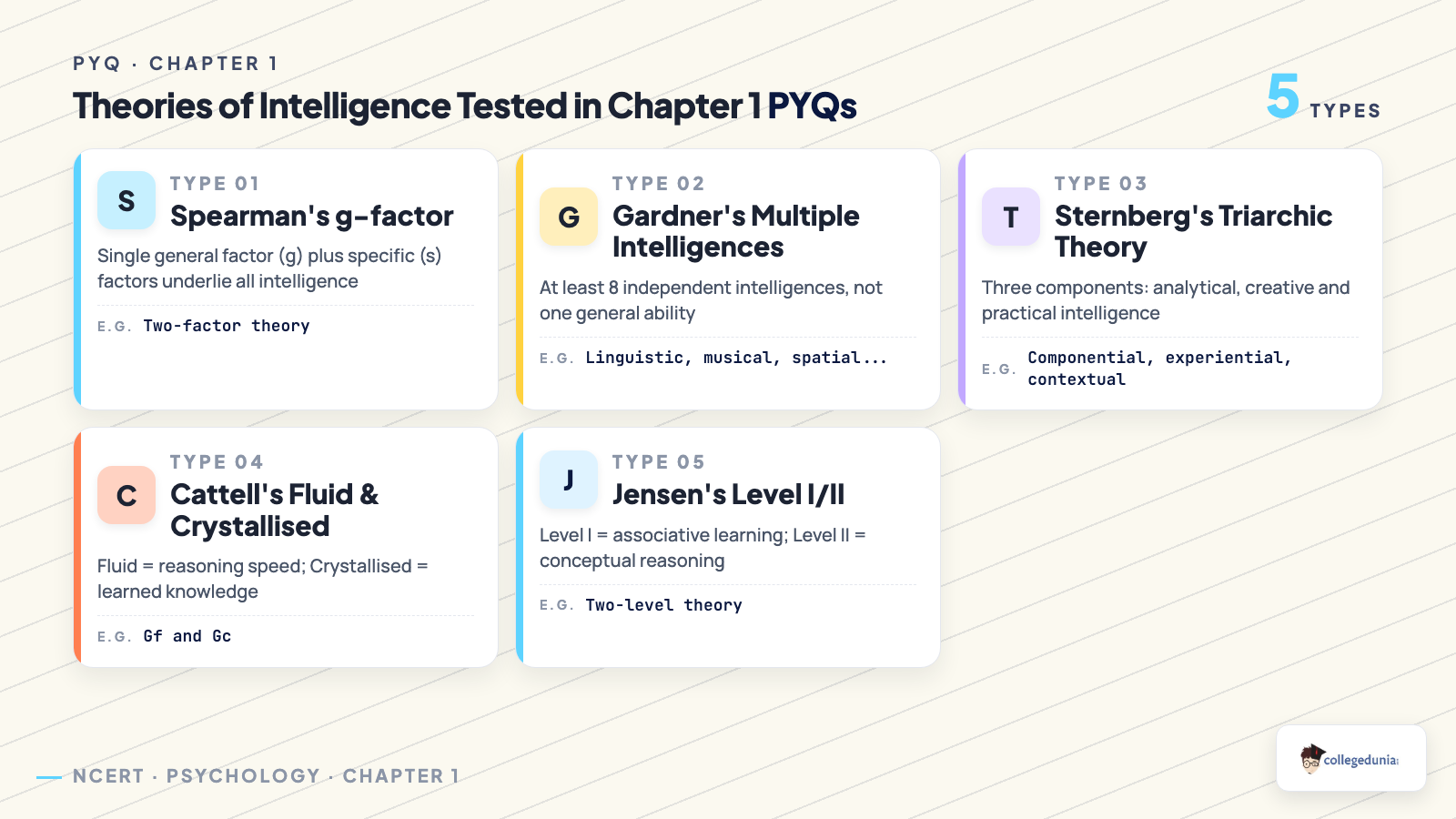
- Topics covered: theories of intelligence (Spearman, Gardner, Sternberg, Cattell, Jensen), aptitude, creativity and emotional intelligence.
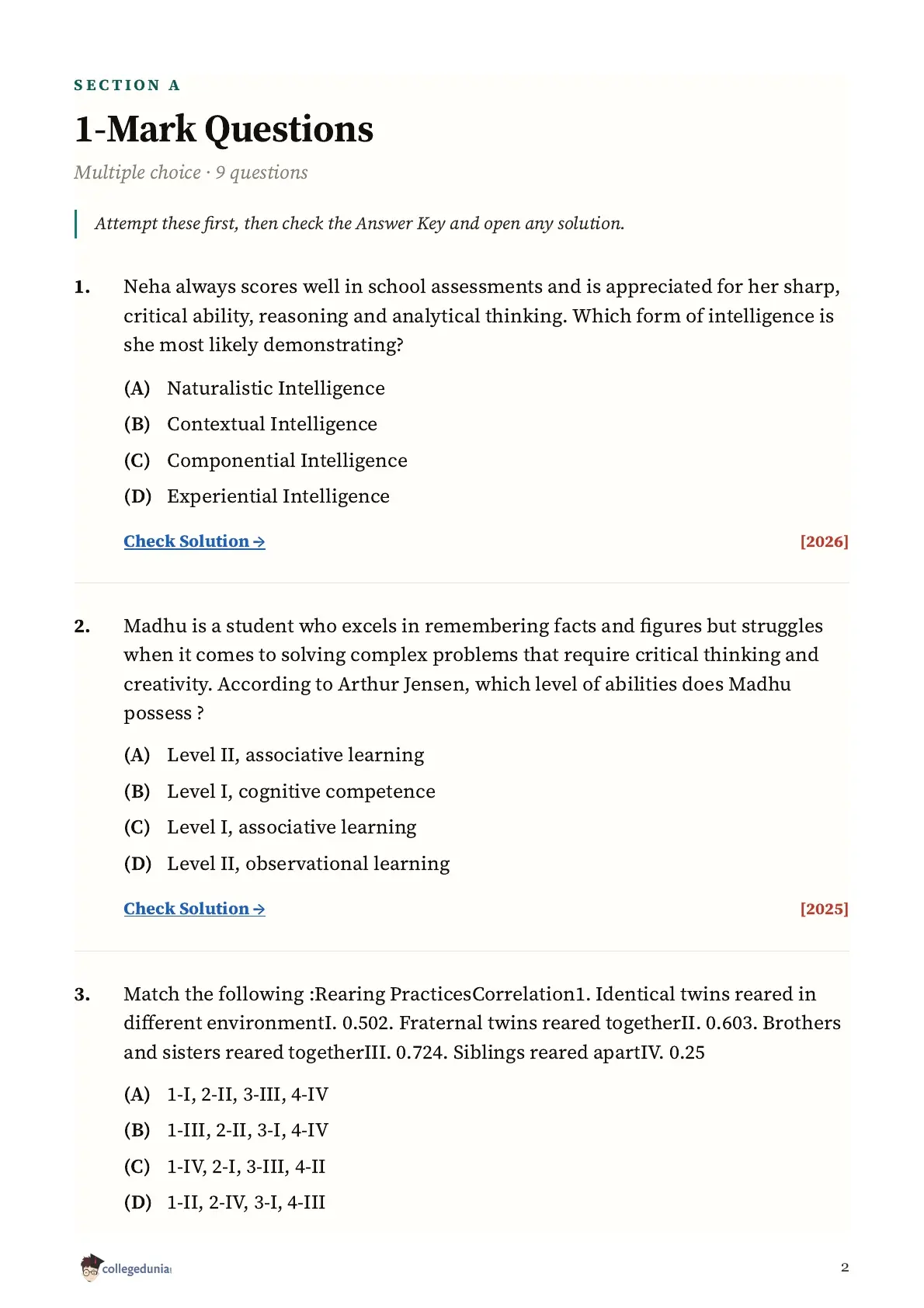
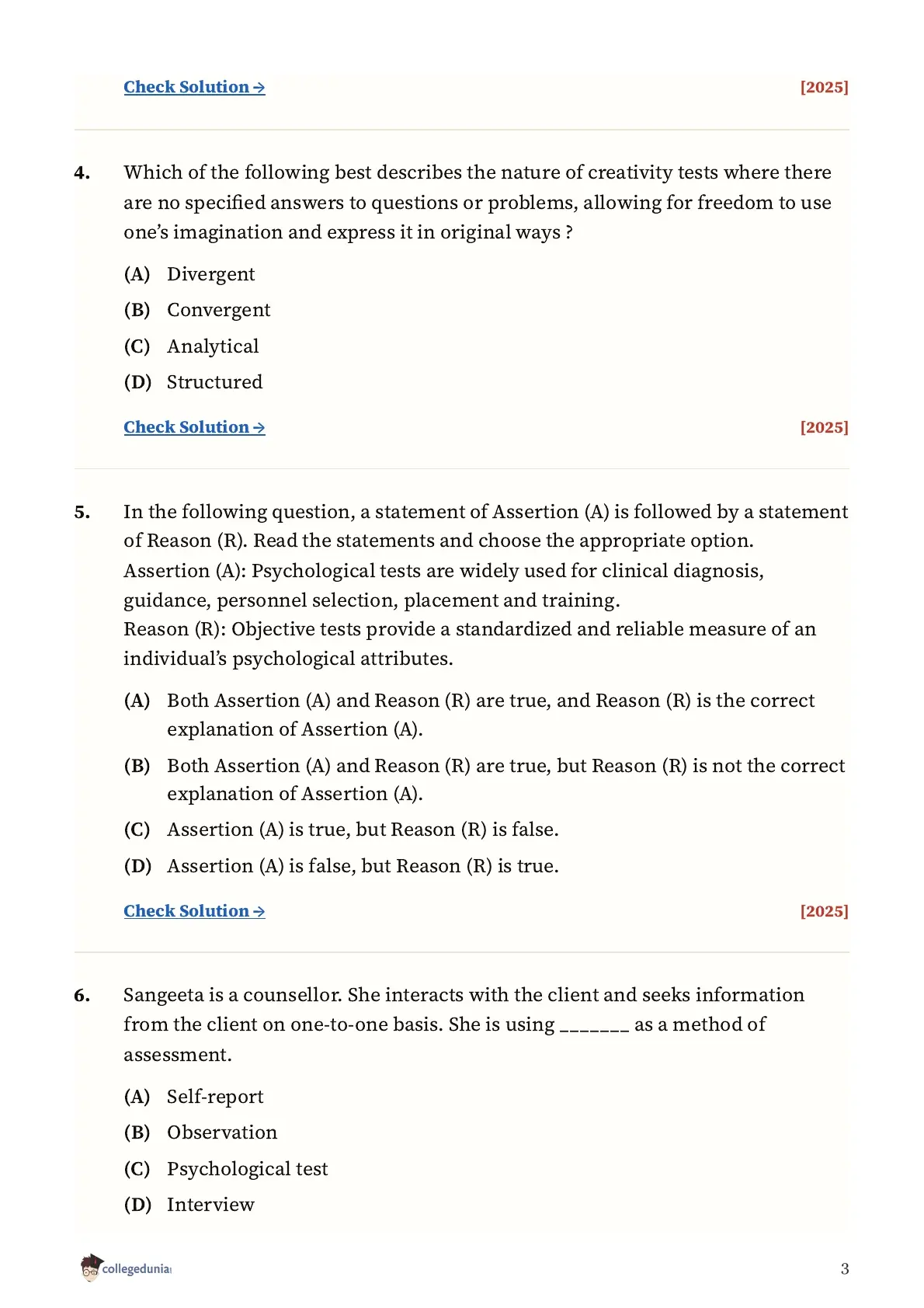
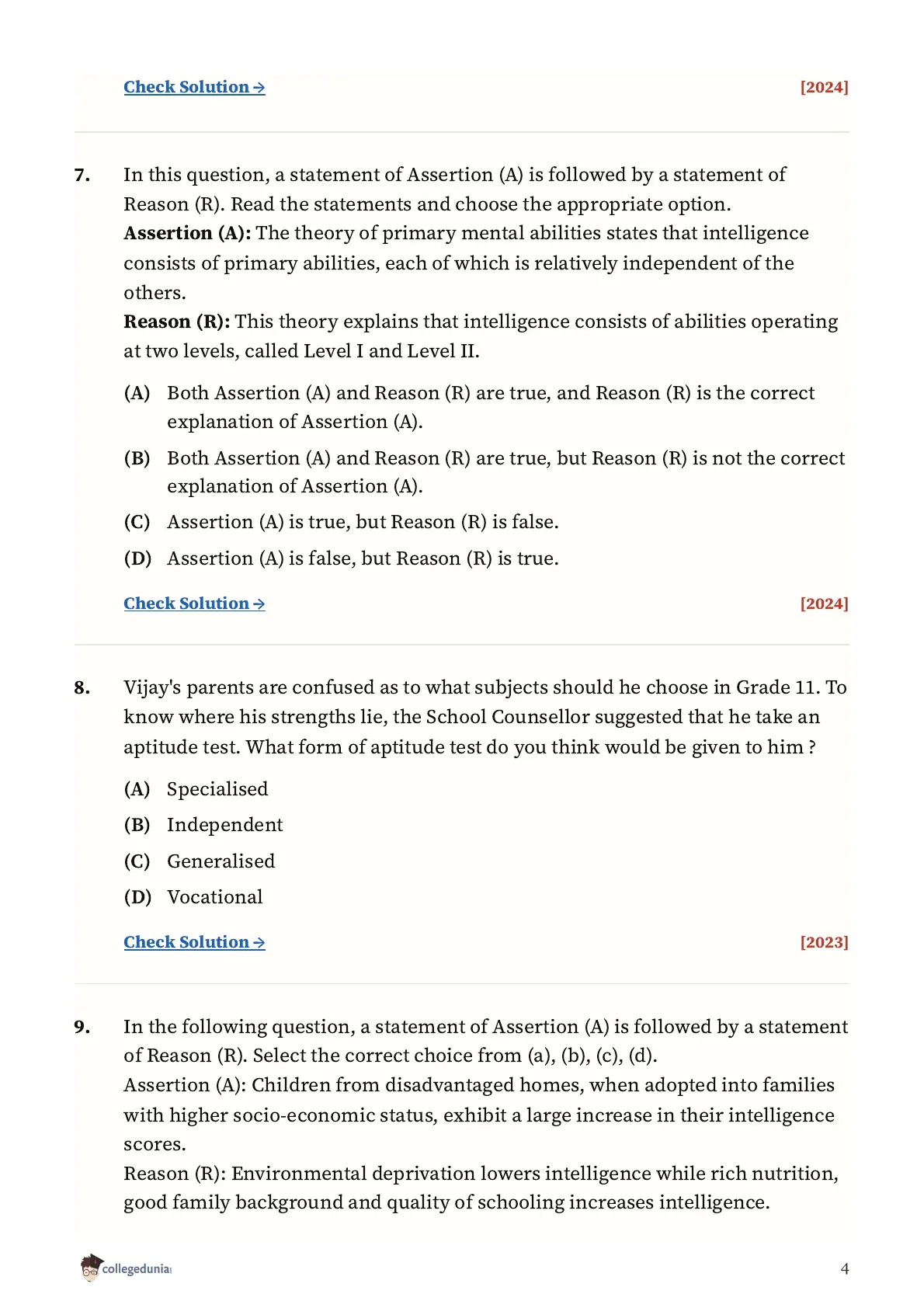
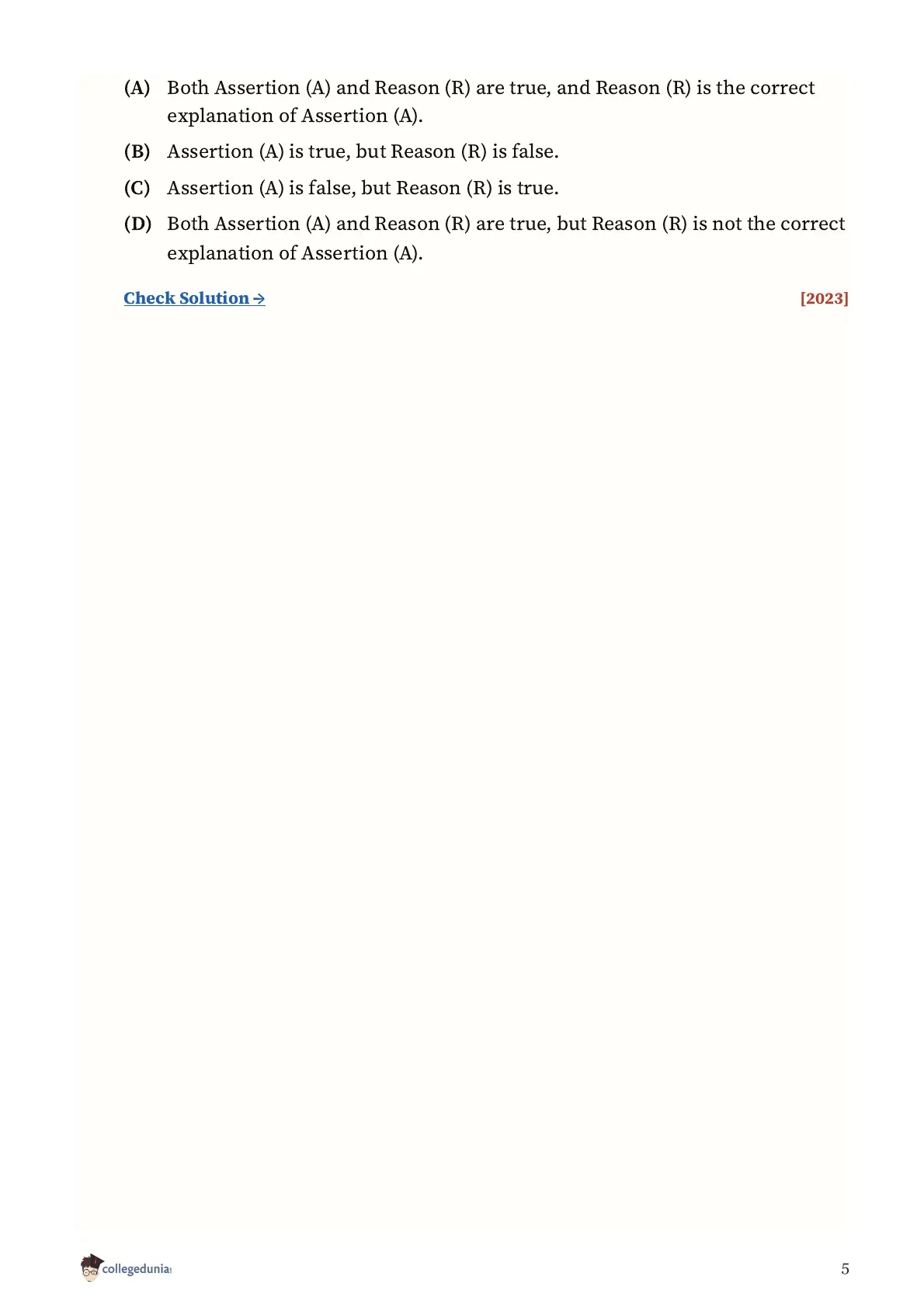
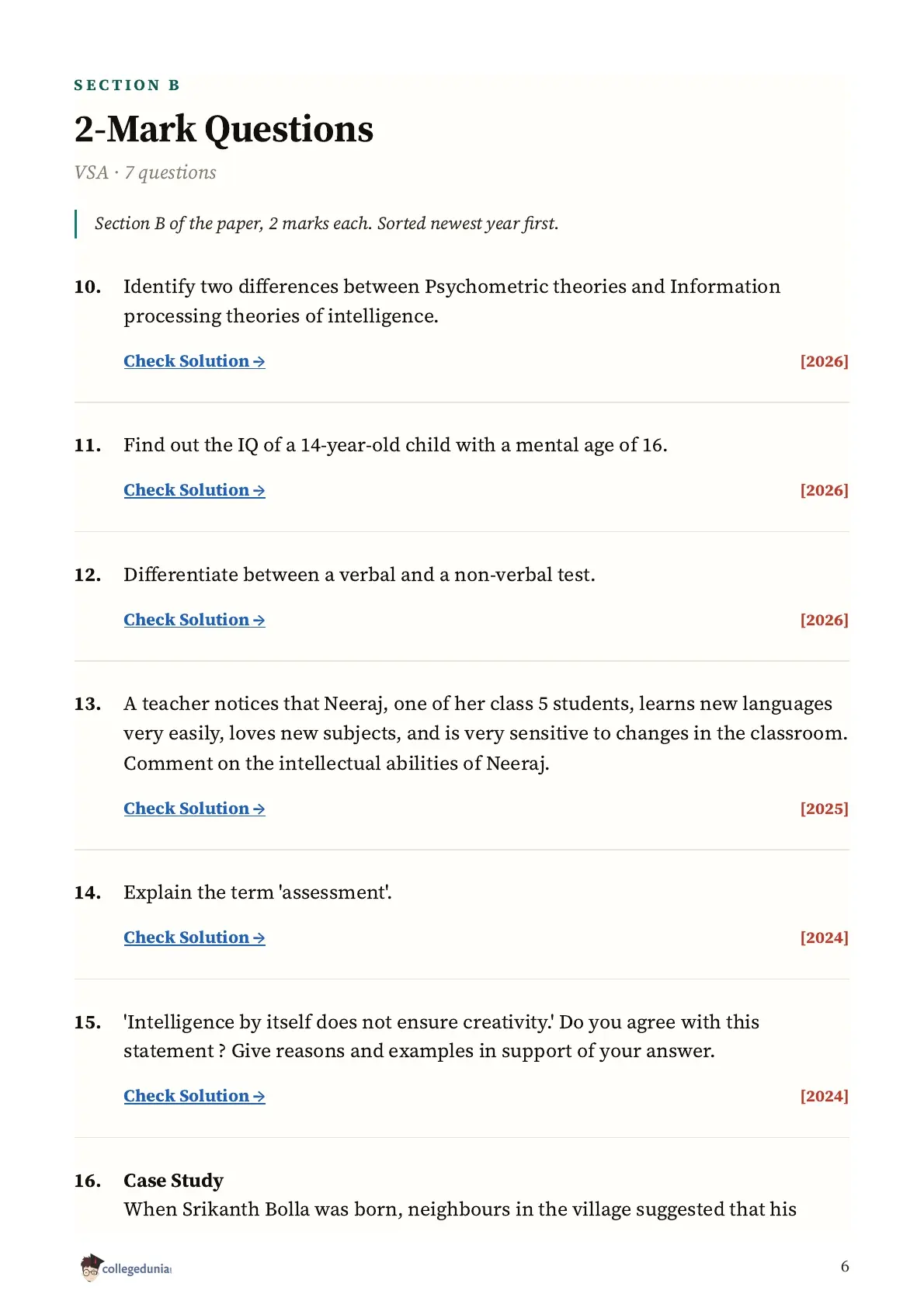
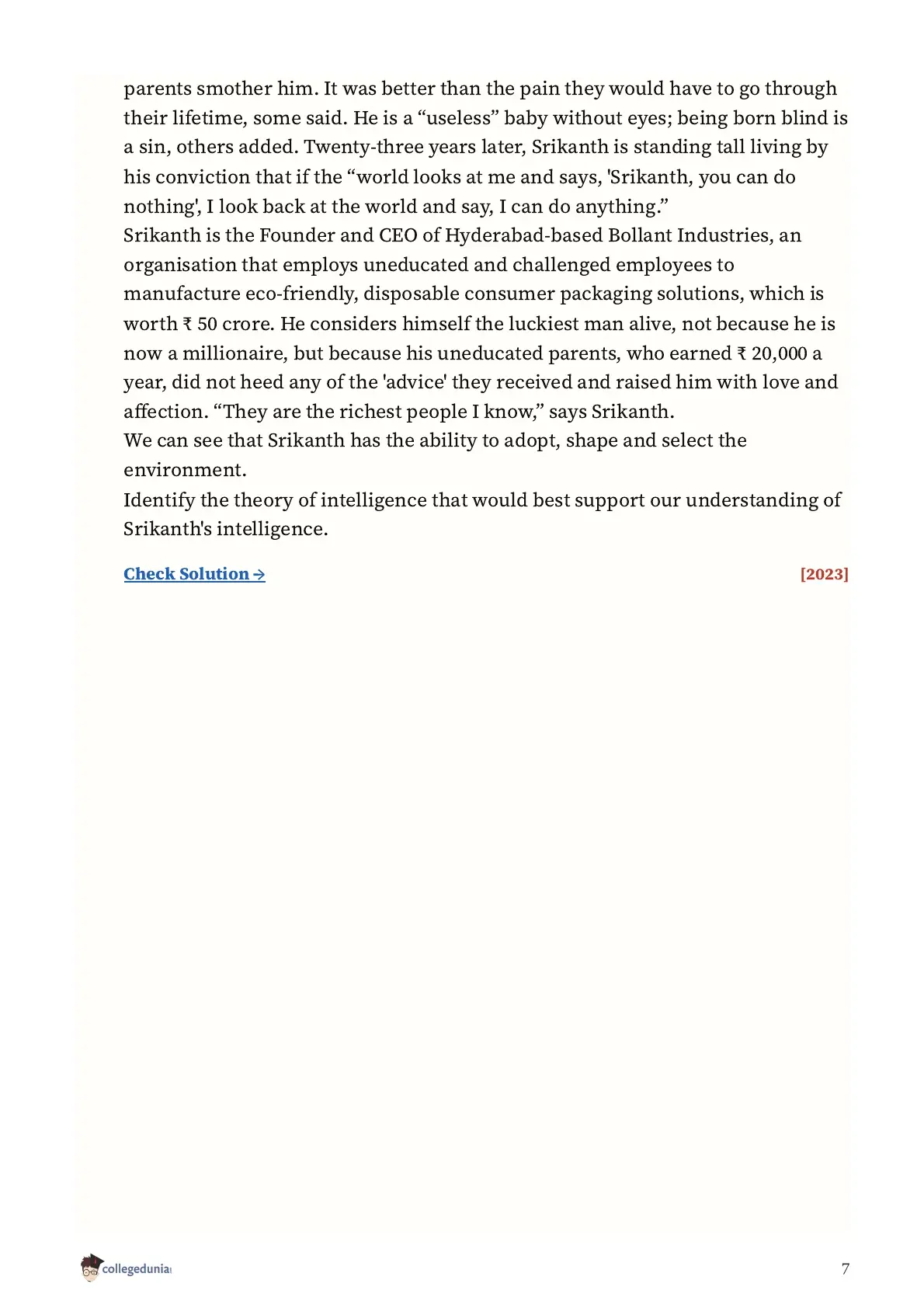
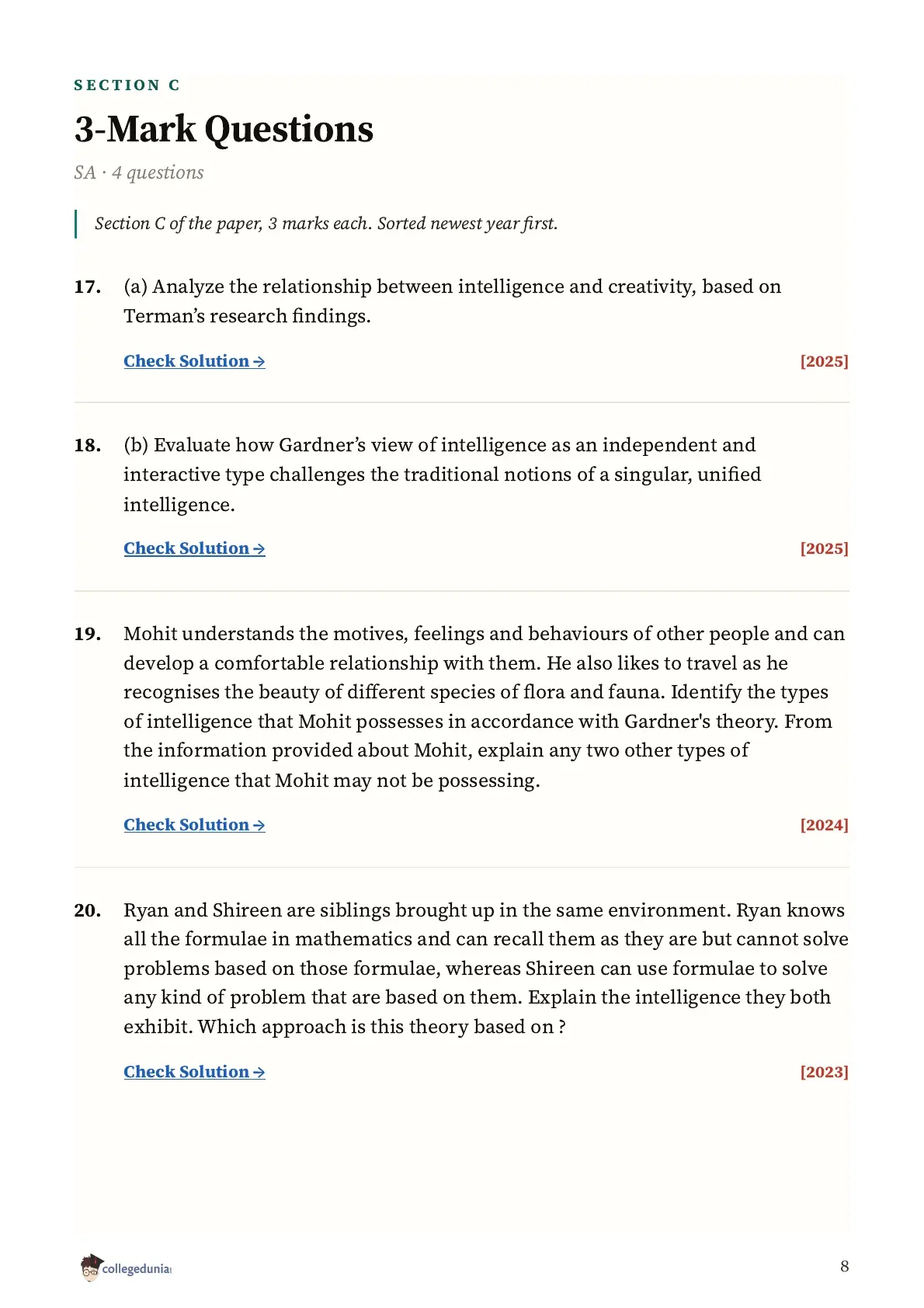
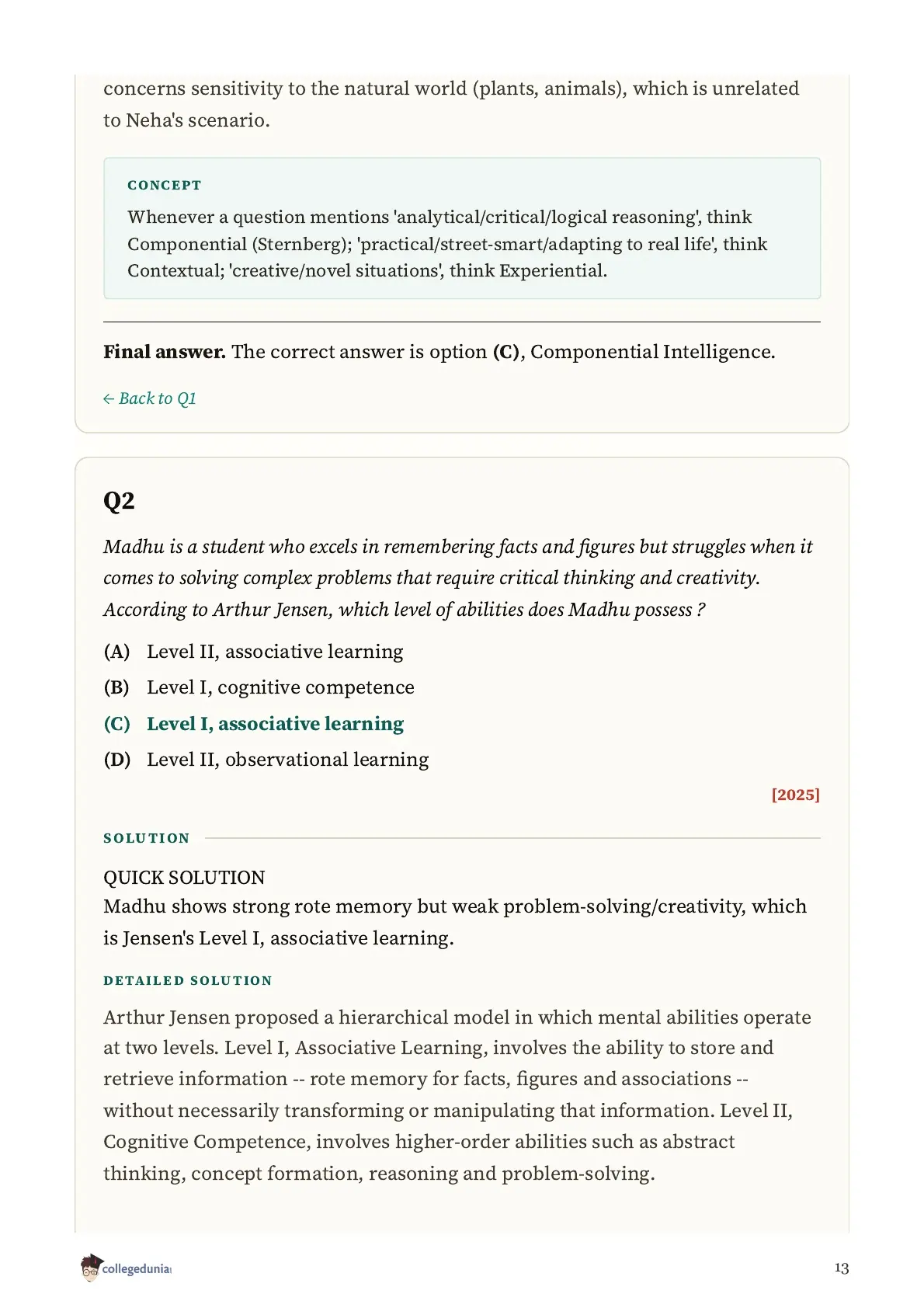
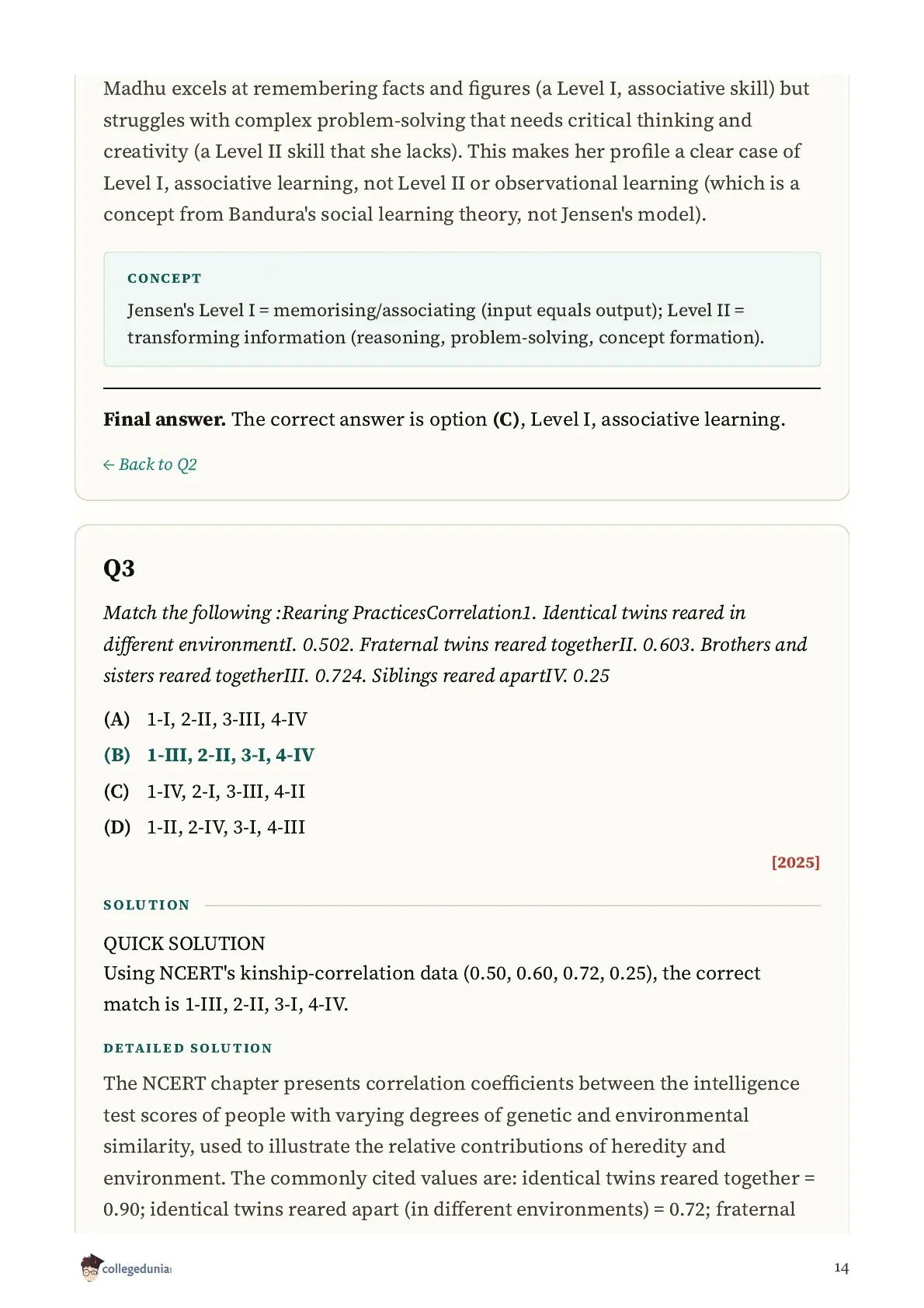
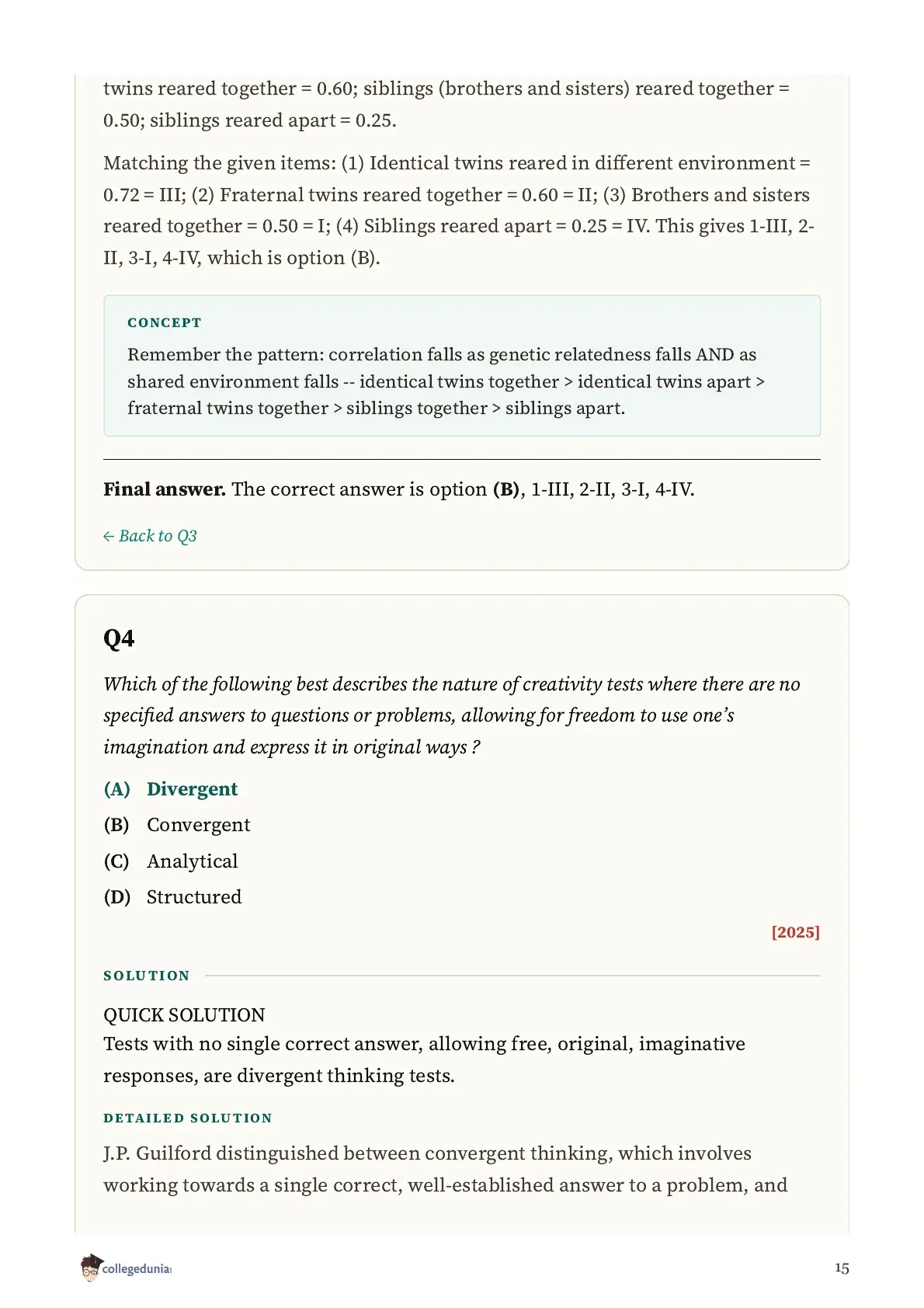
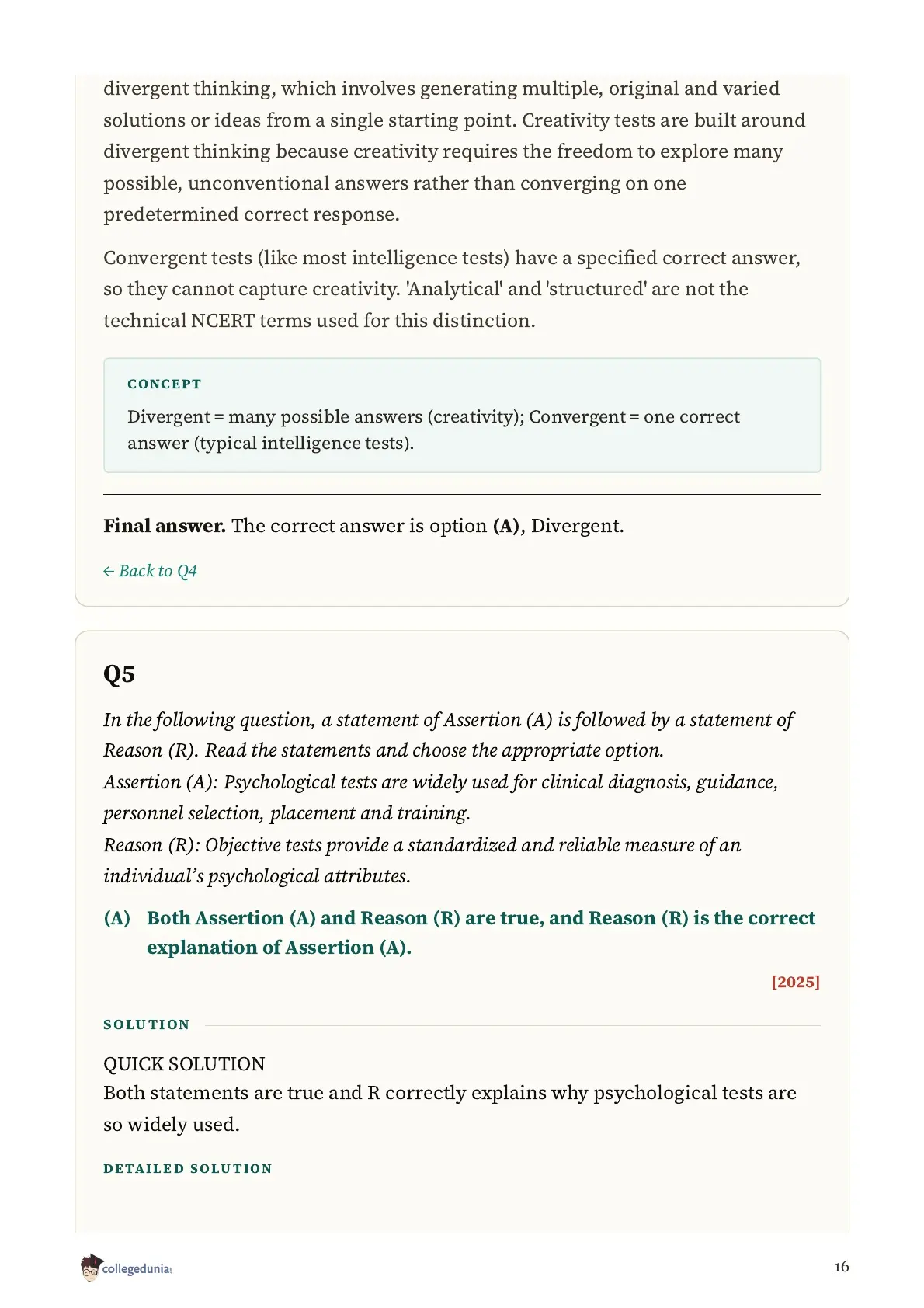
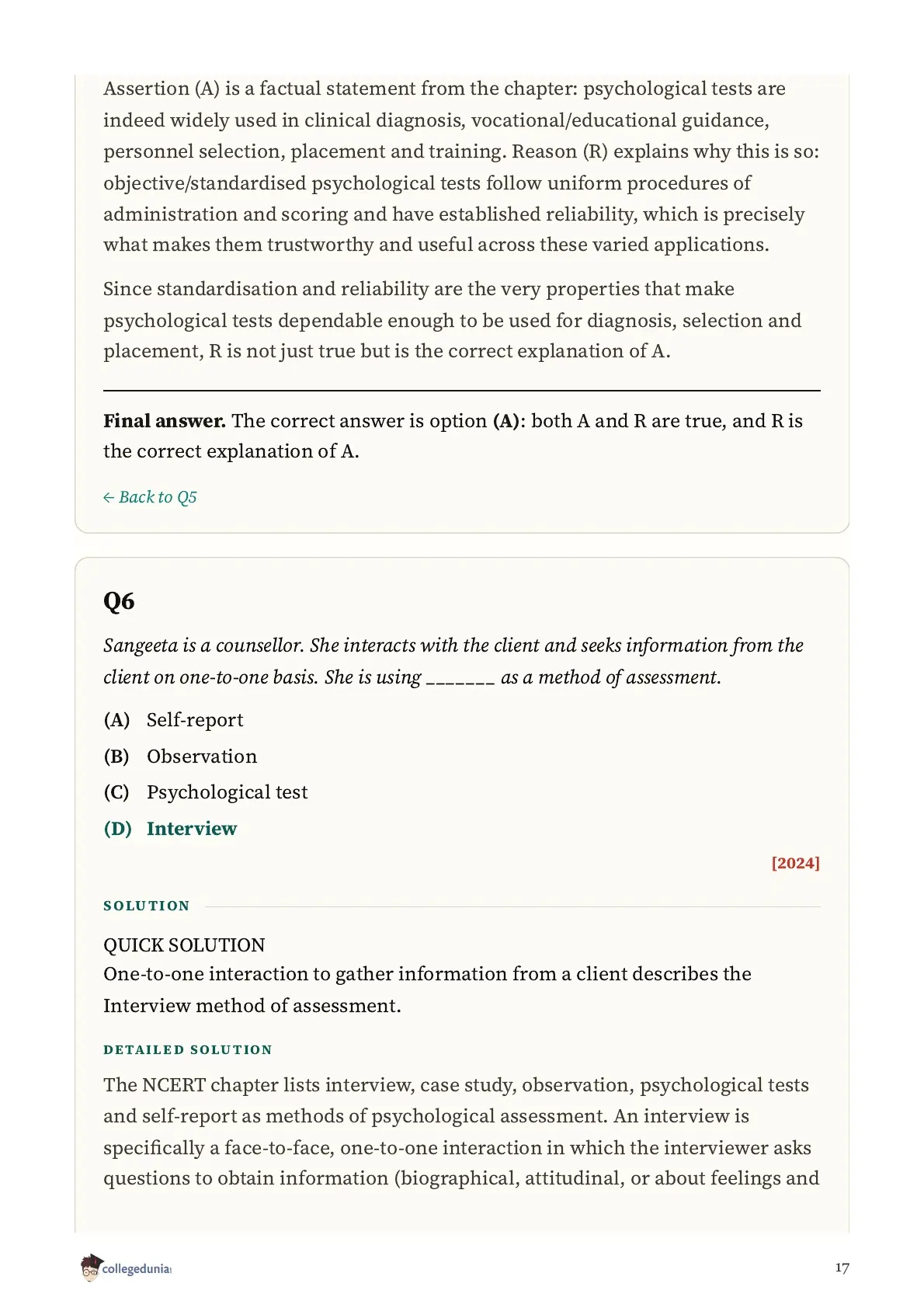
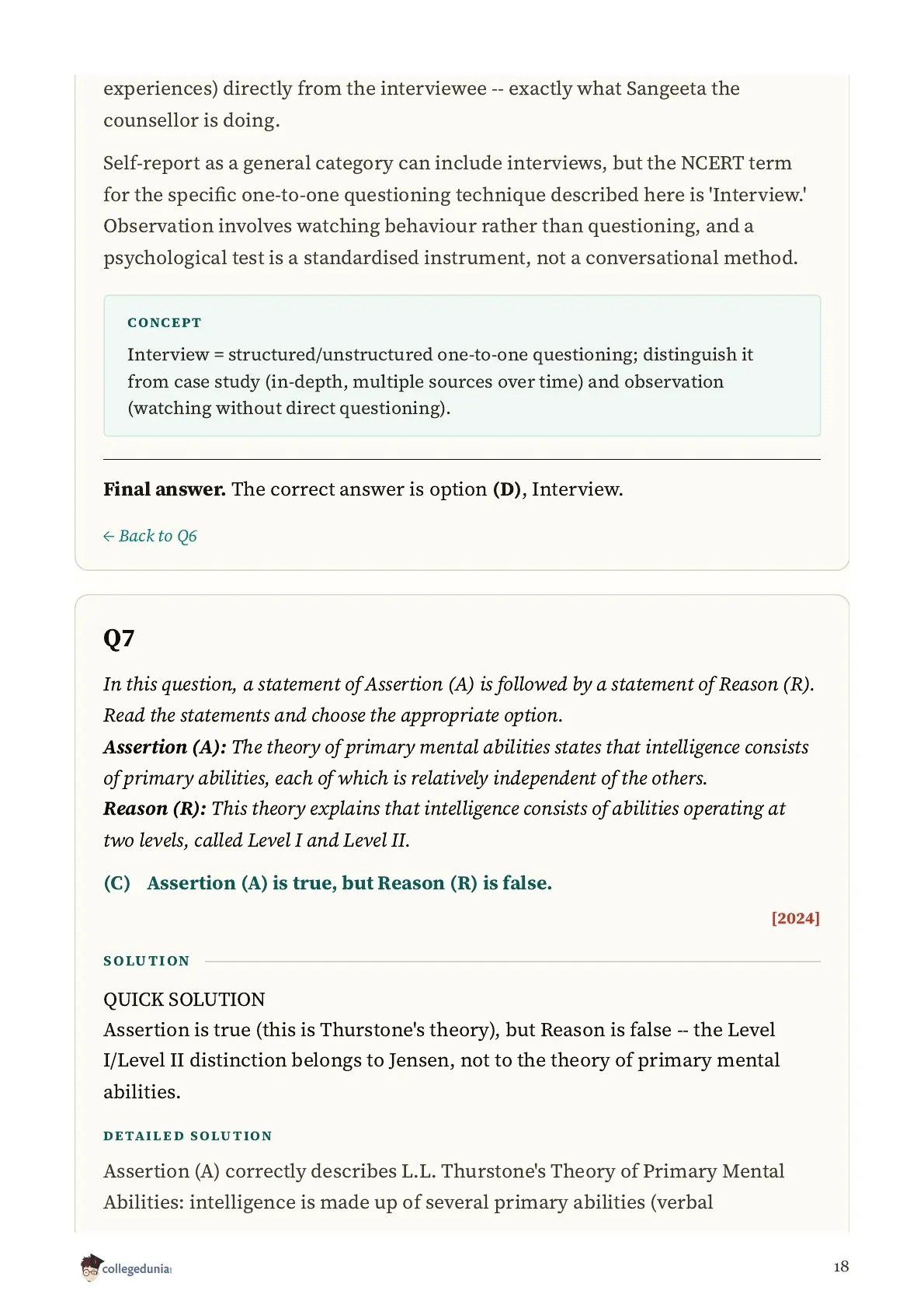
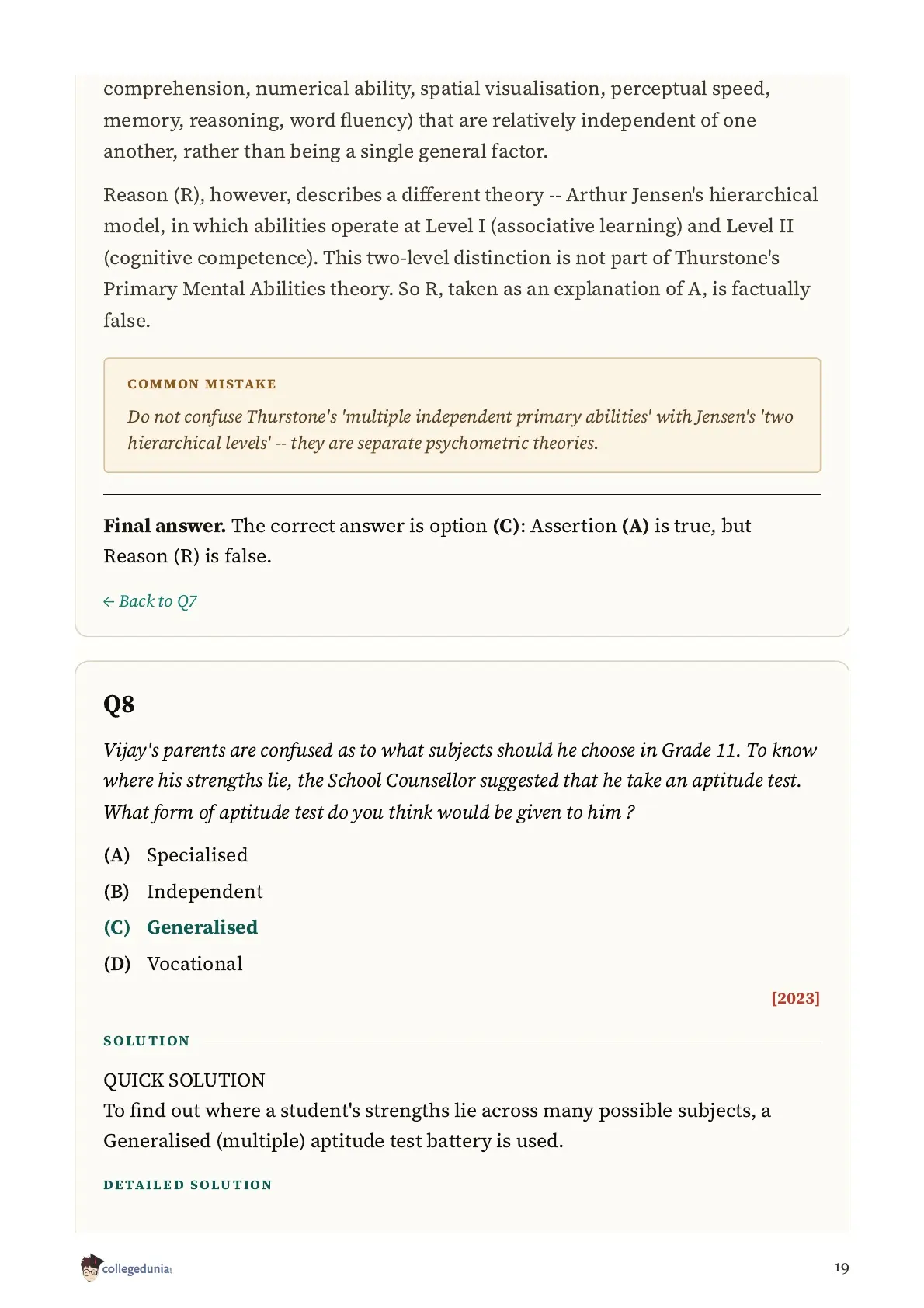
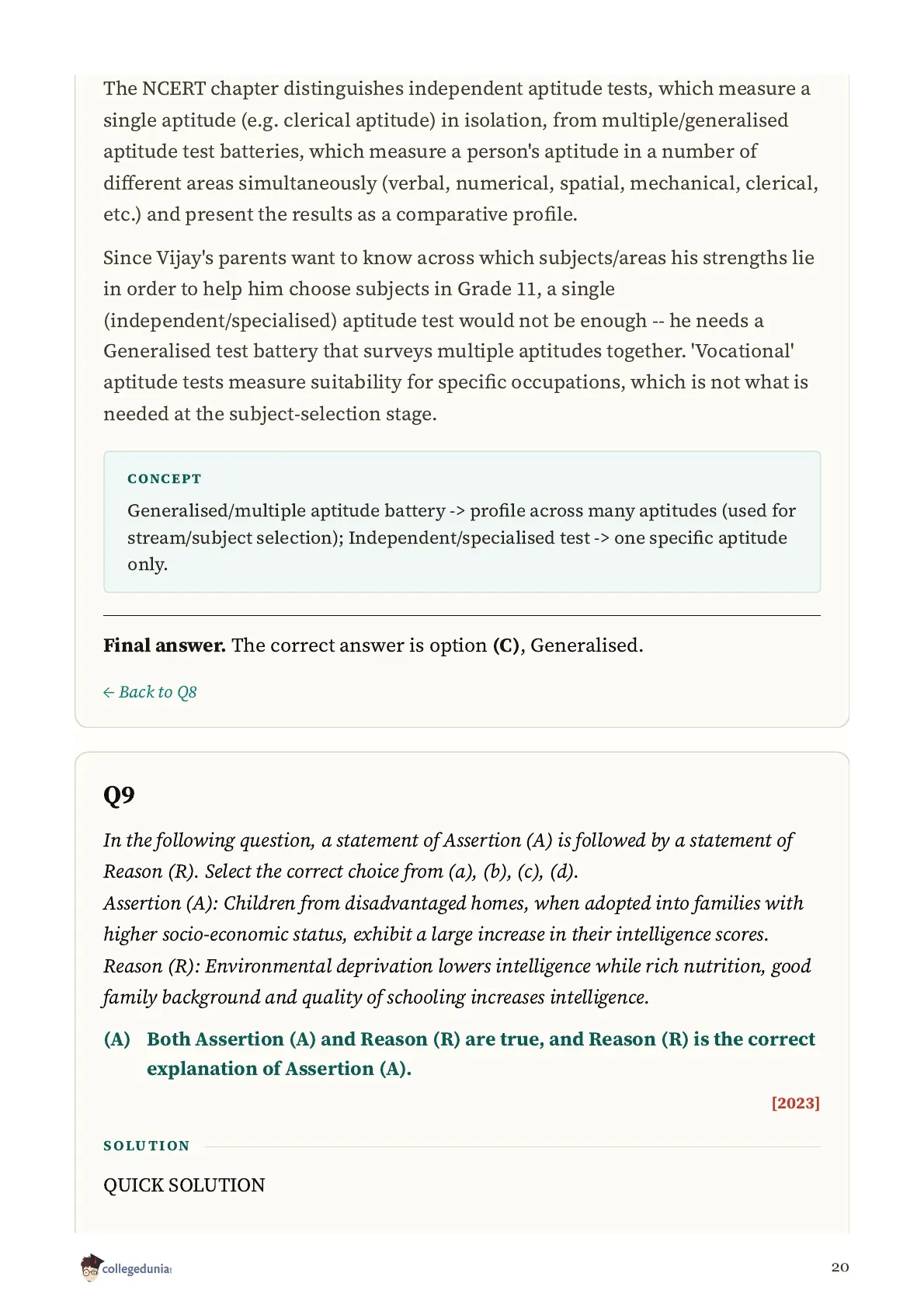
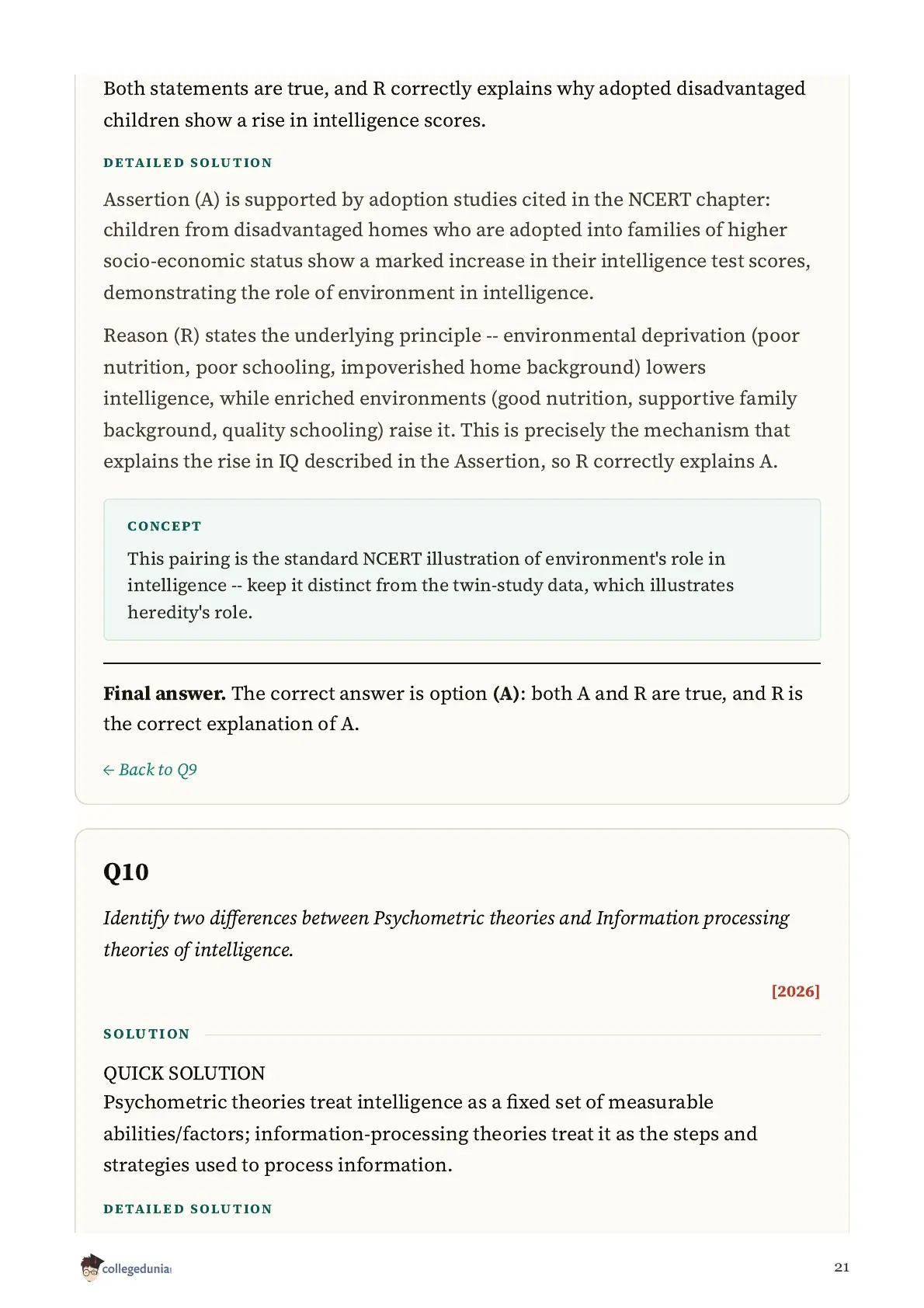
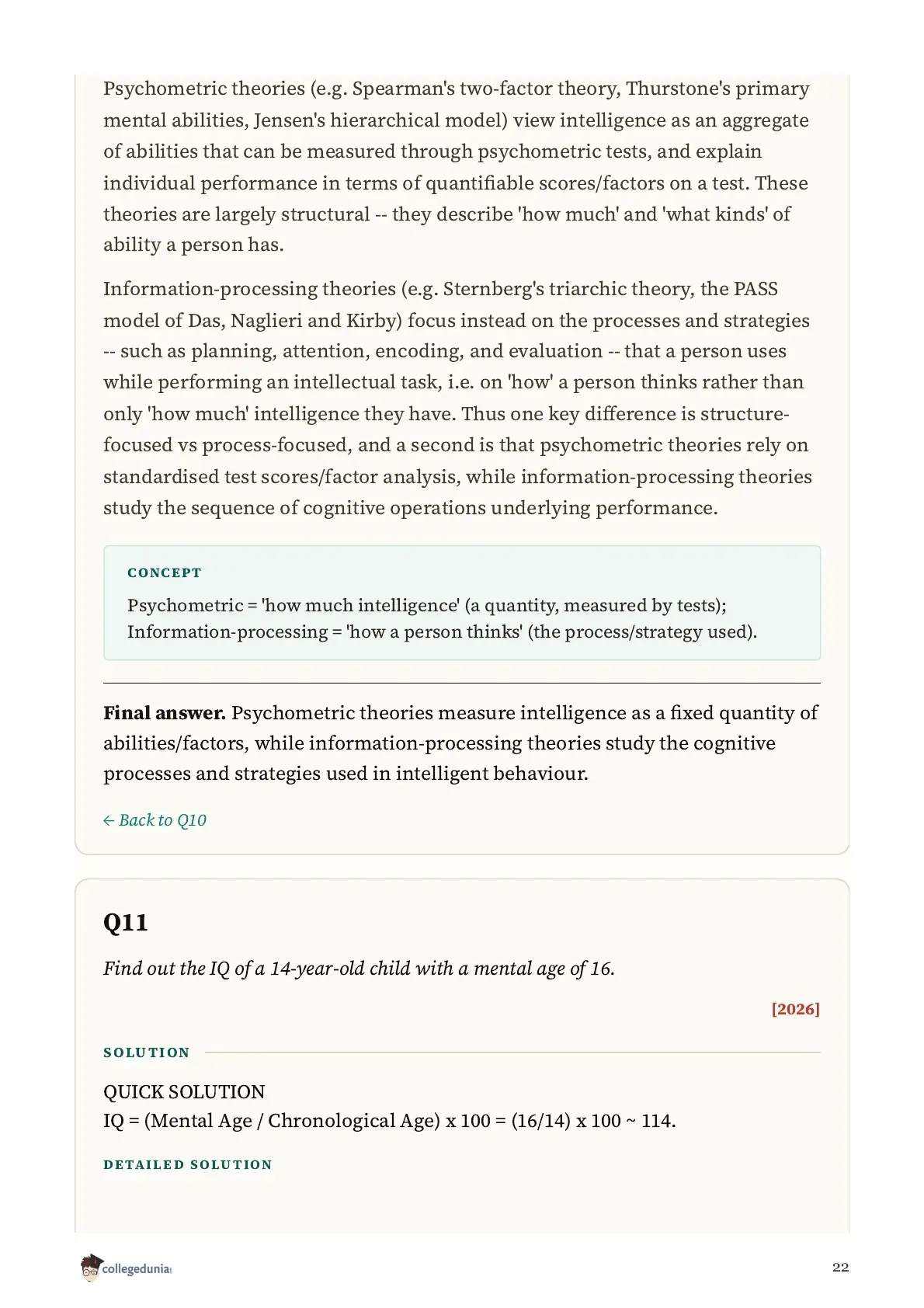
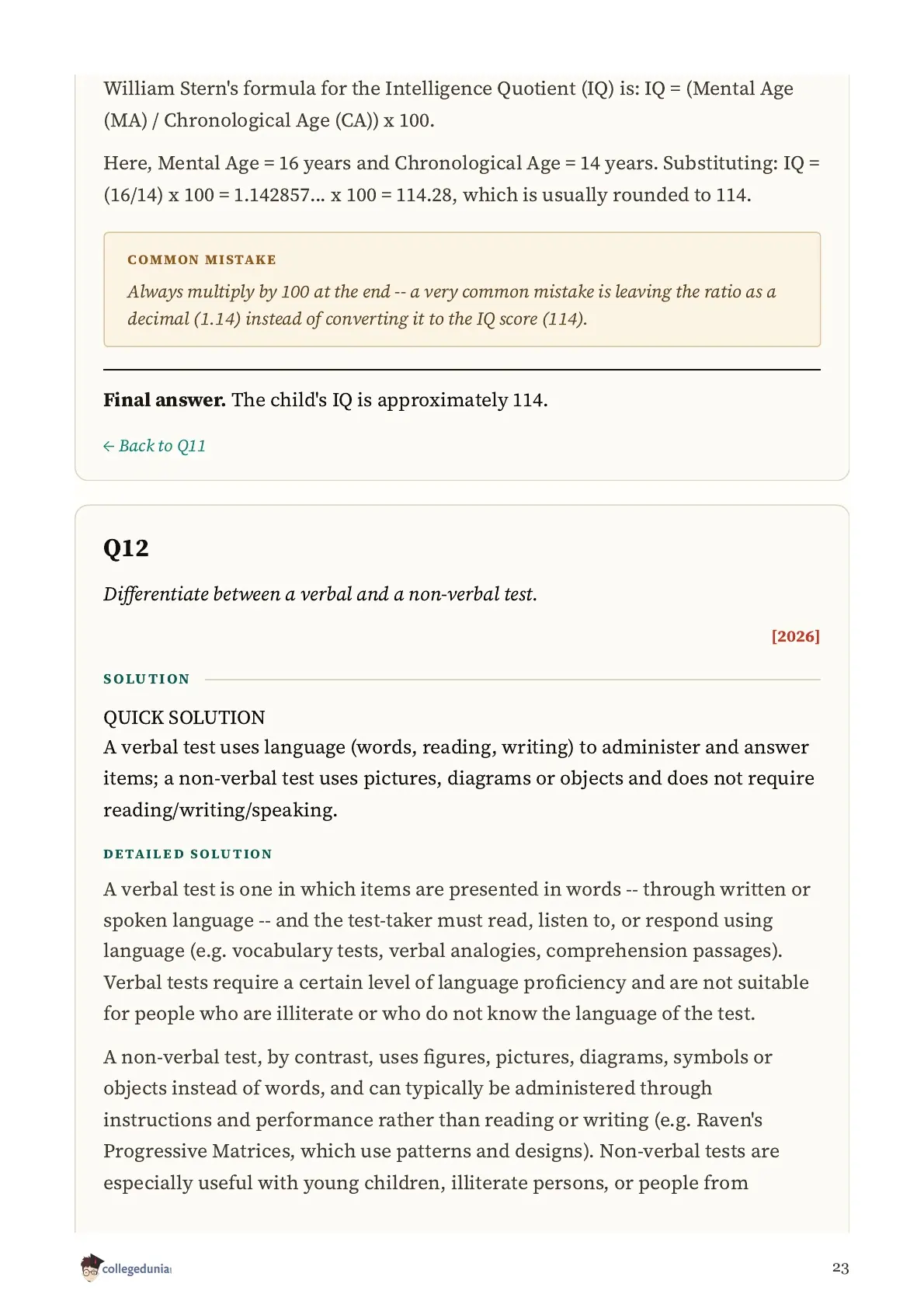
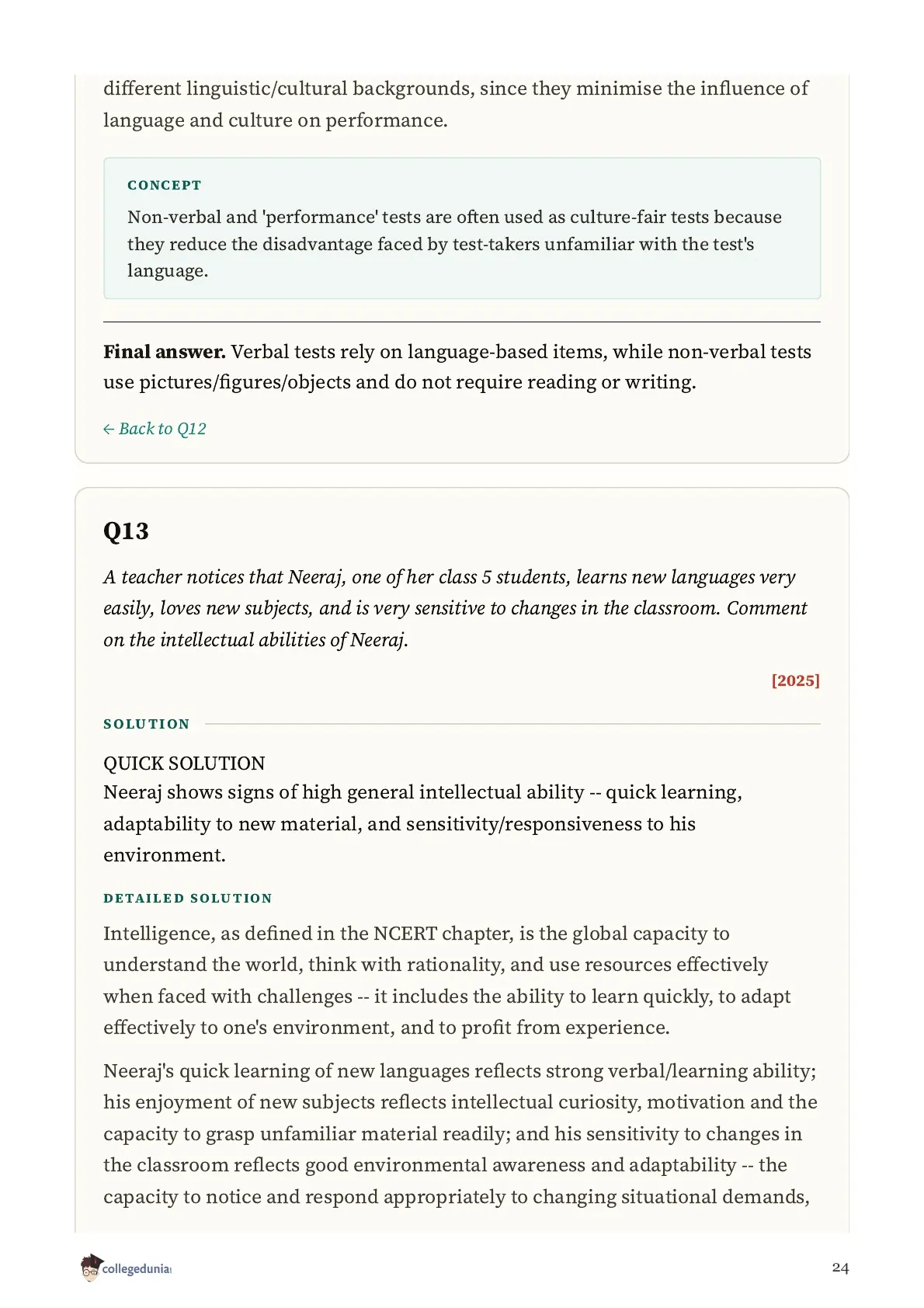
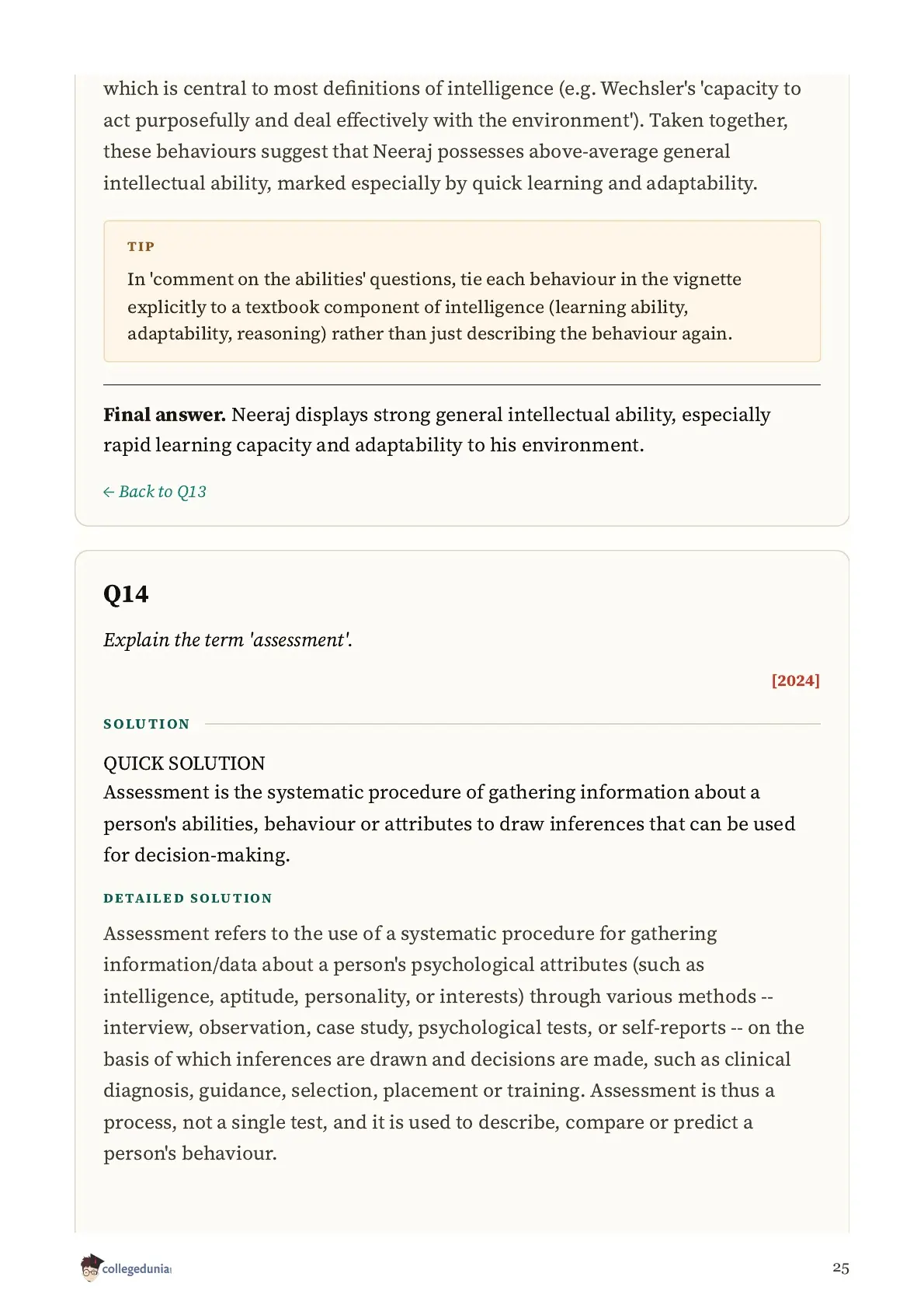
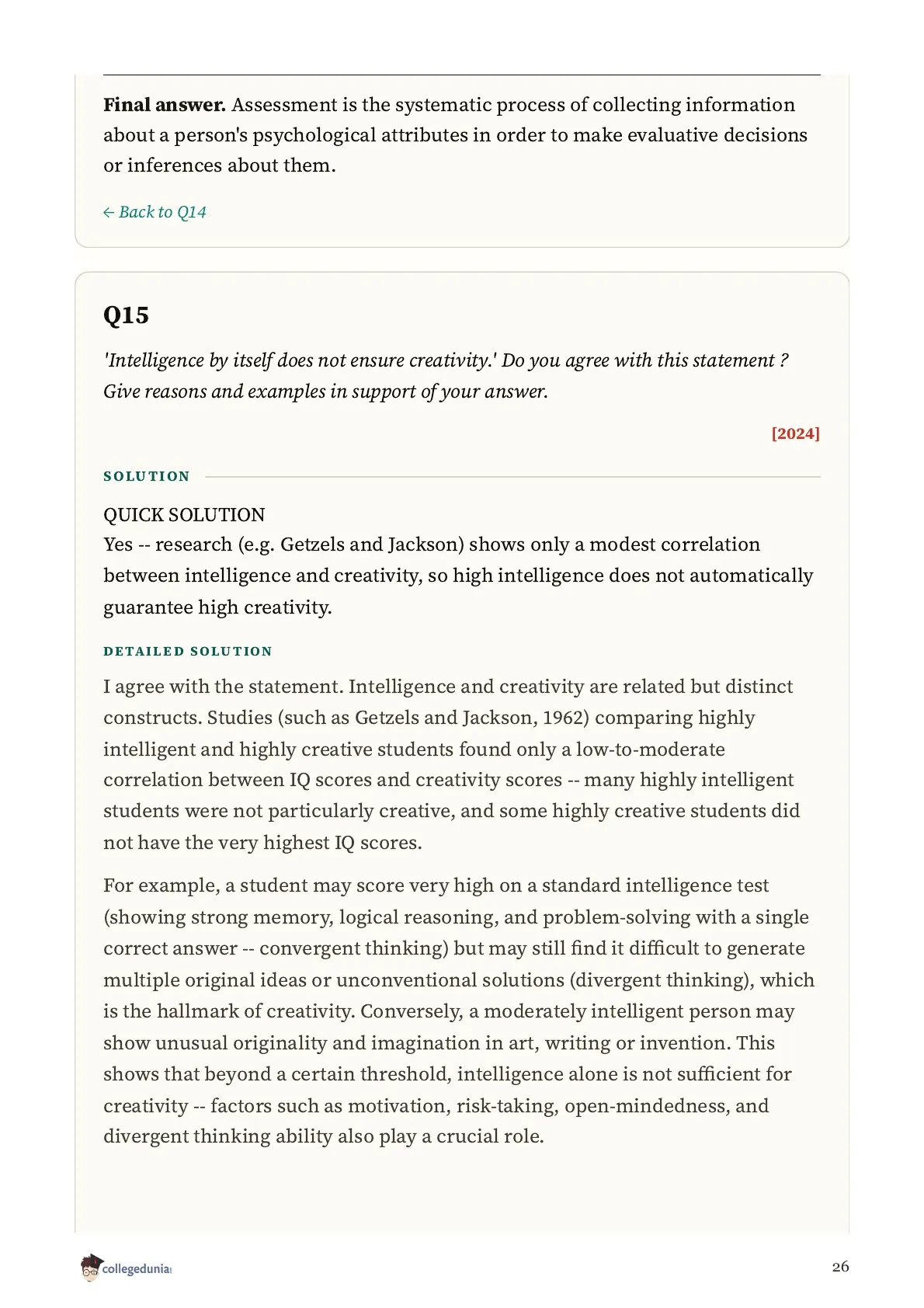
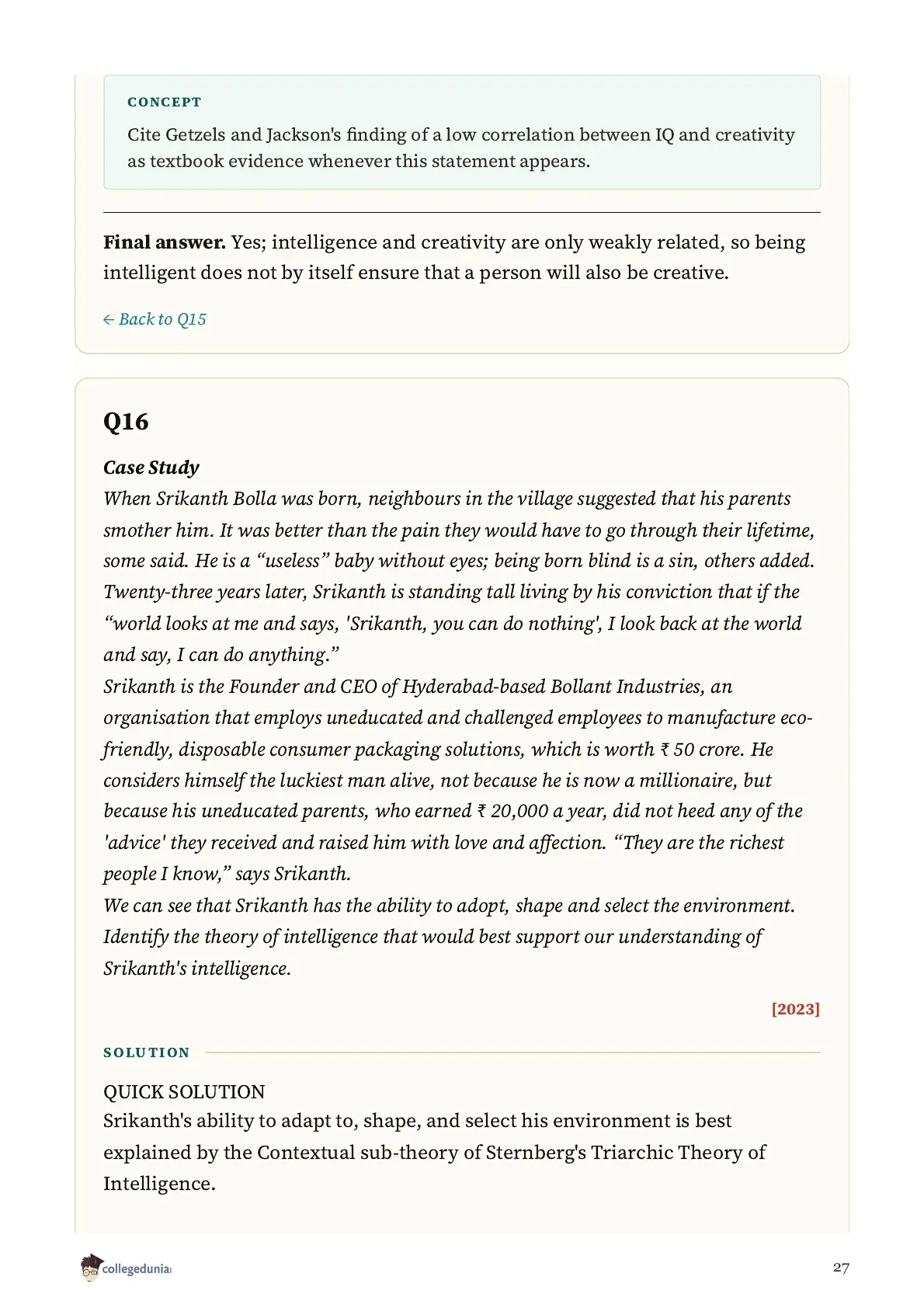
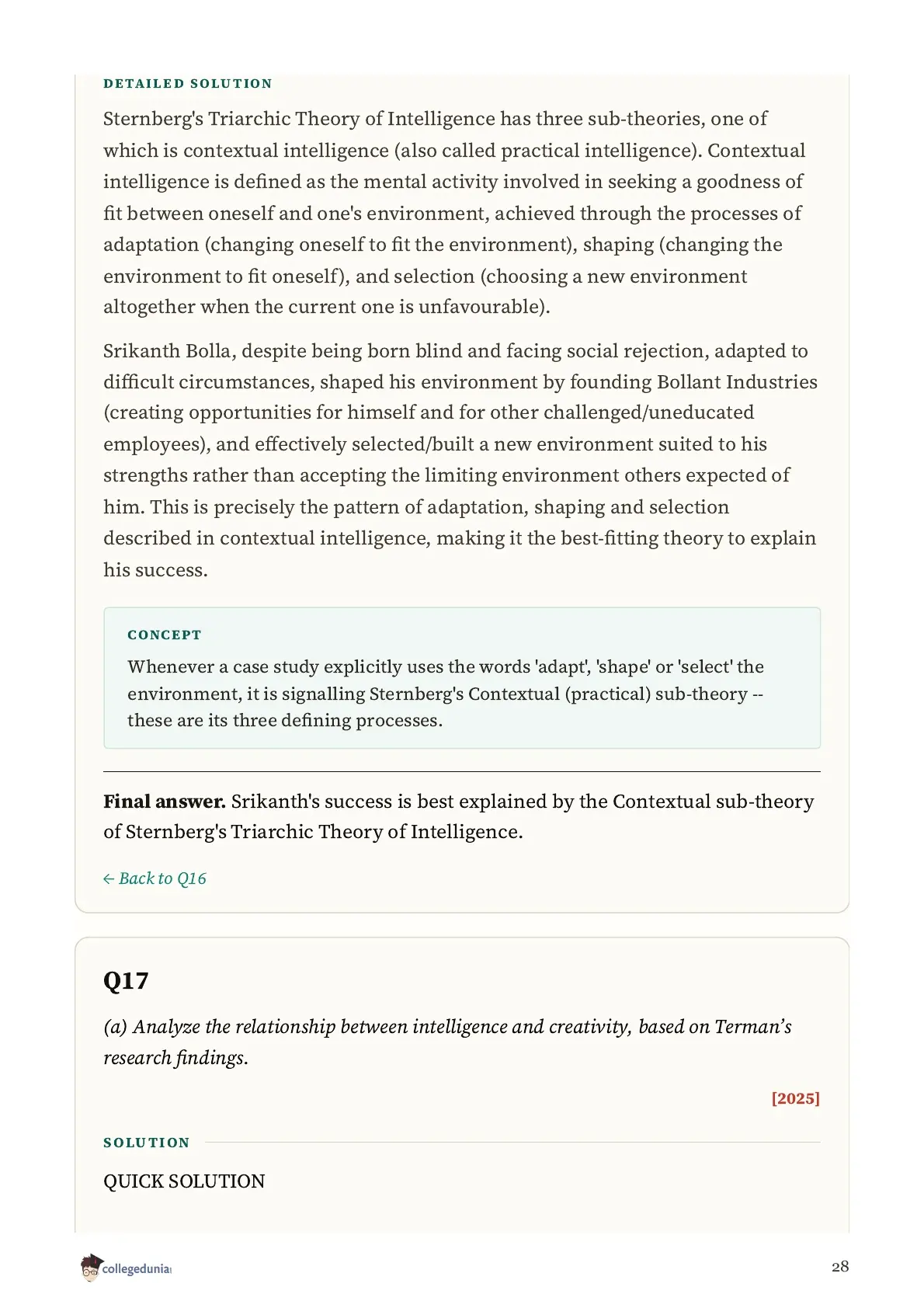
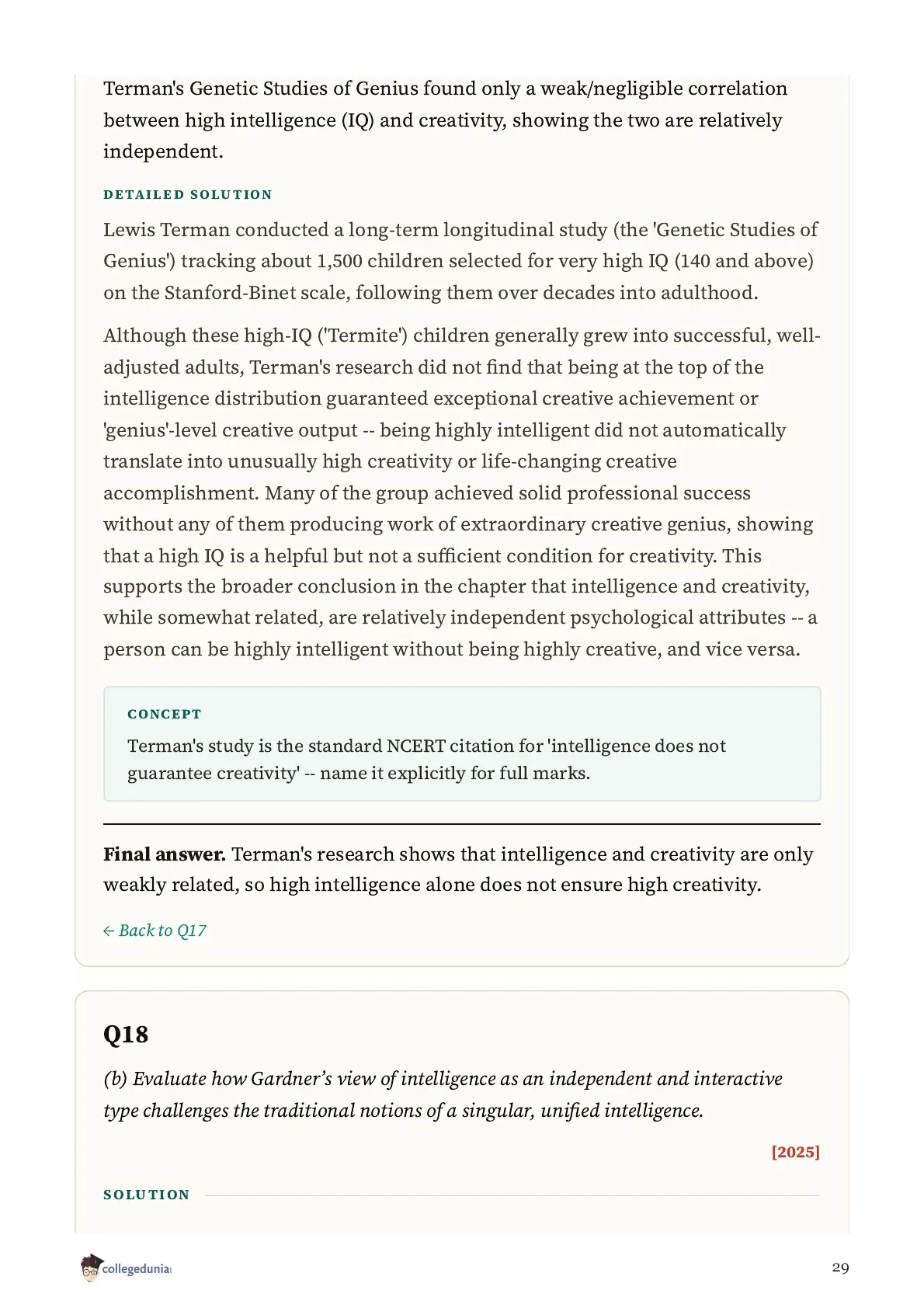
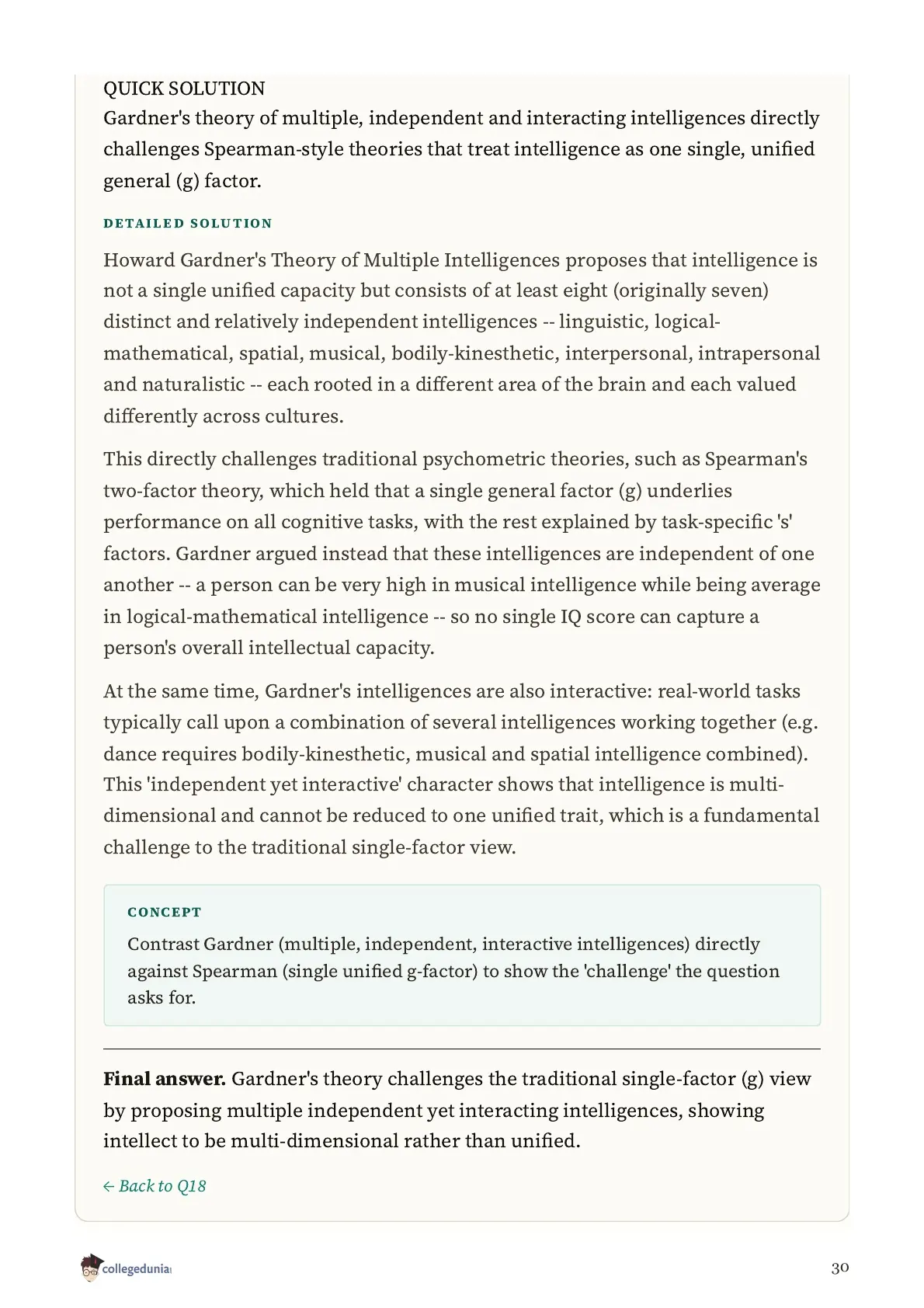
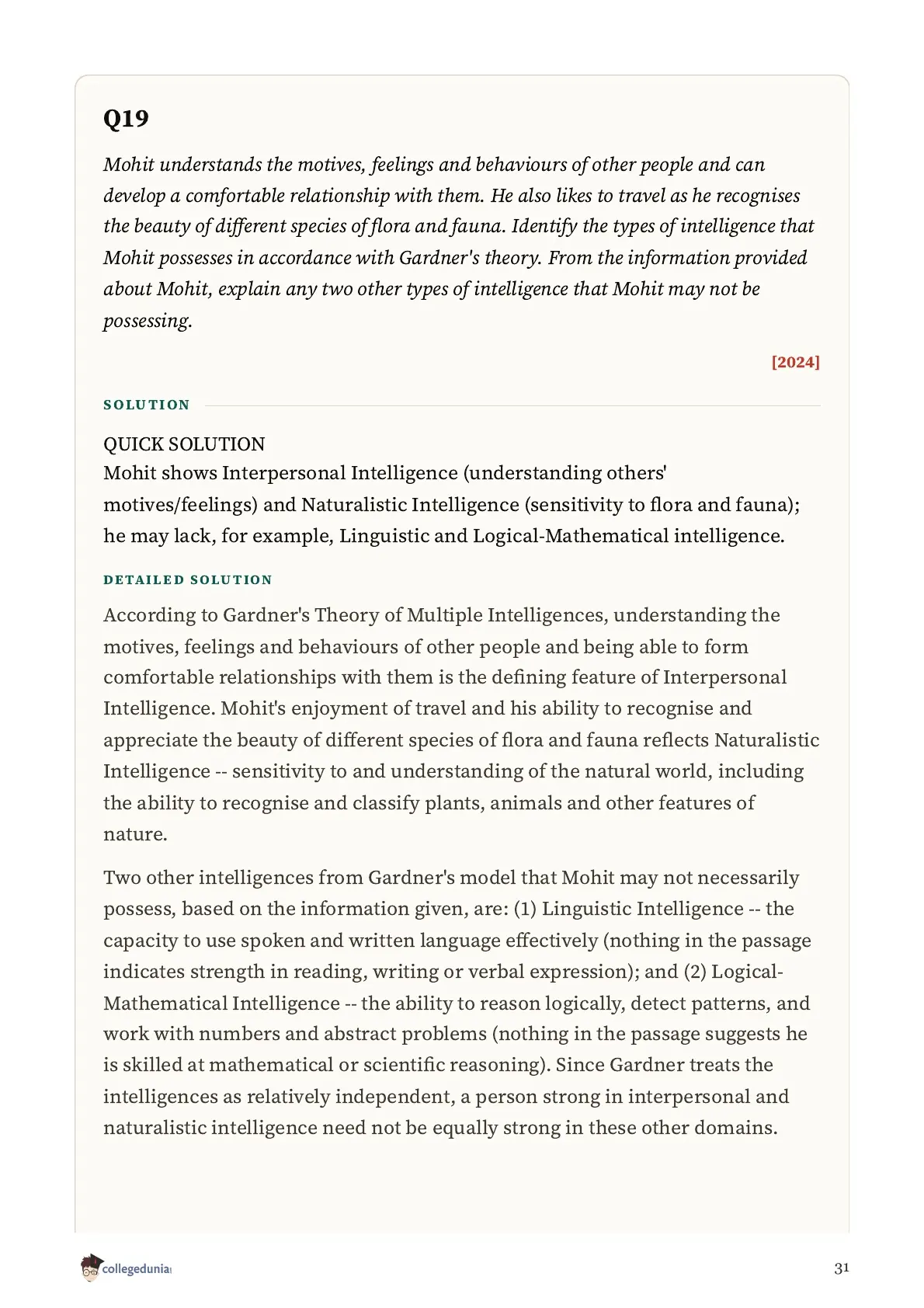
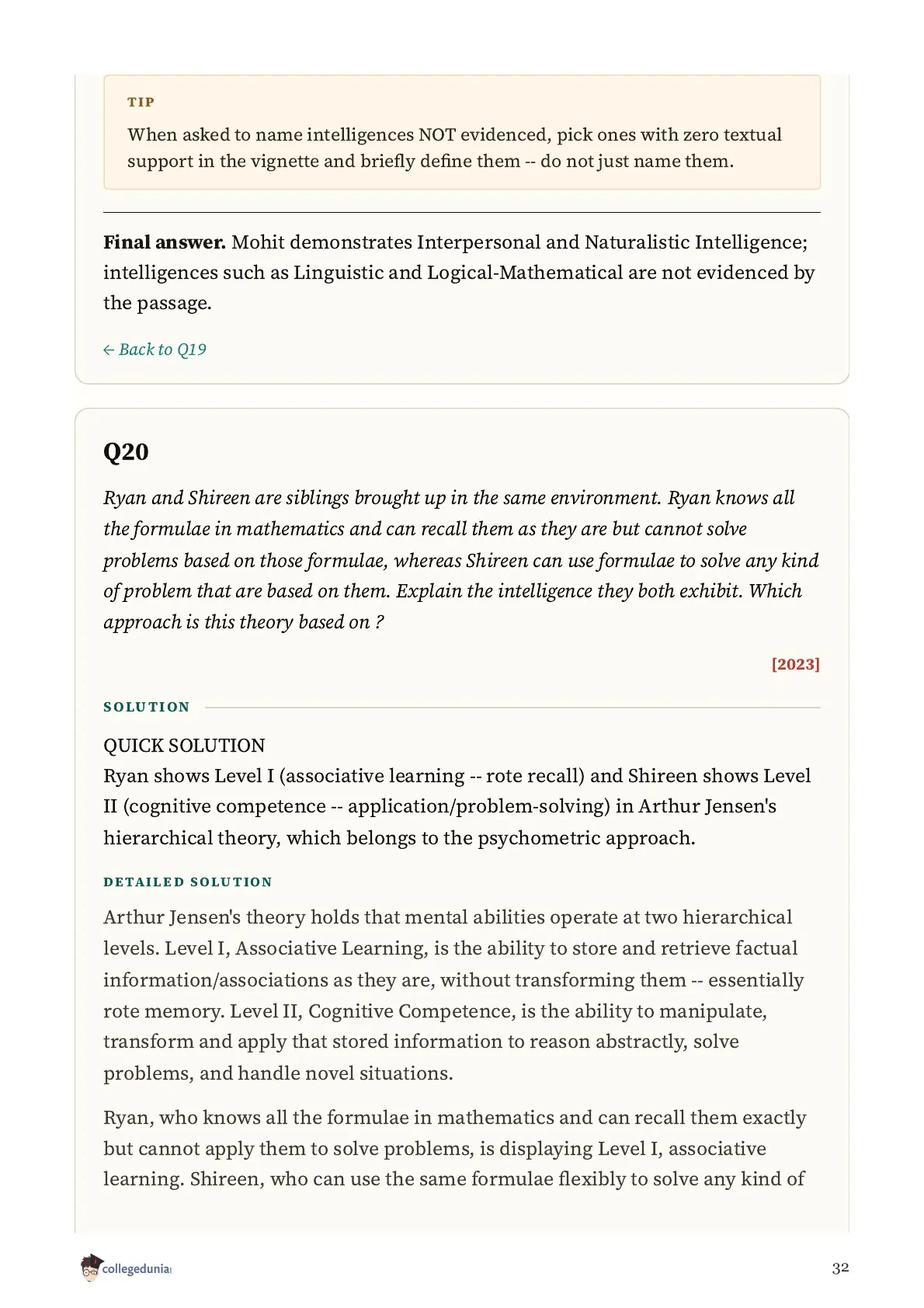
Every question in this Class 12 Psychology Chapter 1 PYQ set is lifted from an actual CBSE board paper (2023-2026) and answered in full by Collegedunia's Psychology experts, according to the 2026-27 NCERT syllabus.
|
Table of Contents |
What Class 12 Psychology Chapter 1 PYQs Test: Theories of Intelligence, Aptitude and Creativity
The Variations in Psychological Attributes chapter is where CBSE checks how well you know the major theories of intelligence. Board papers pull questions from Spearman's two-factor theory, Gardner's multiple intelligences, Sternberg's triarchic theory, Cattell's fluid and crystallised intelligence, and Jensen's Level I and Level II abilities. Aptitude, creativity and emotional intelligence come up almost as often.
- Theories of intelligence: definitions, comparisons and criticisms of each model.
- Assessment of intelligence: individual vs group tests, verbal vs performance tests.
- Aptitude: the difference between aptitude and intelligence, and the types of aptitude tests.
- Creativity: how creativity relates to intelligence, and how it is measured.
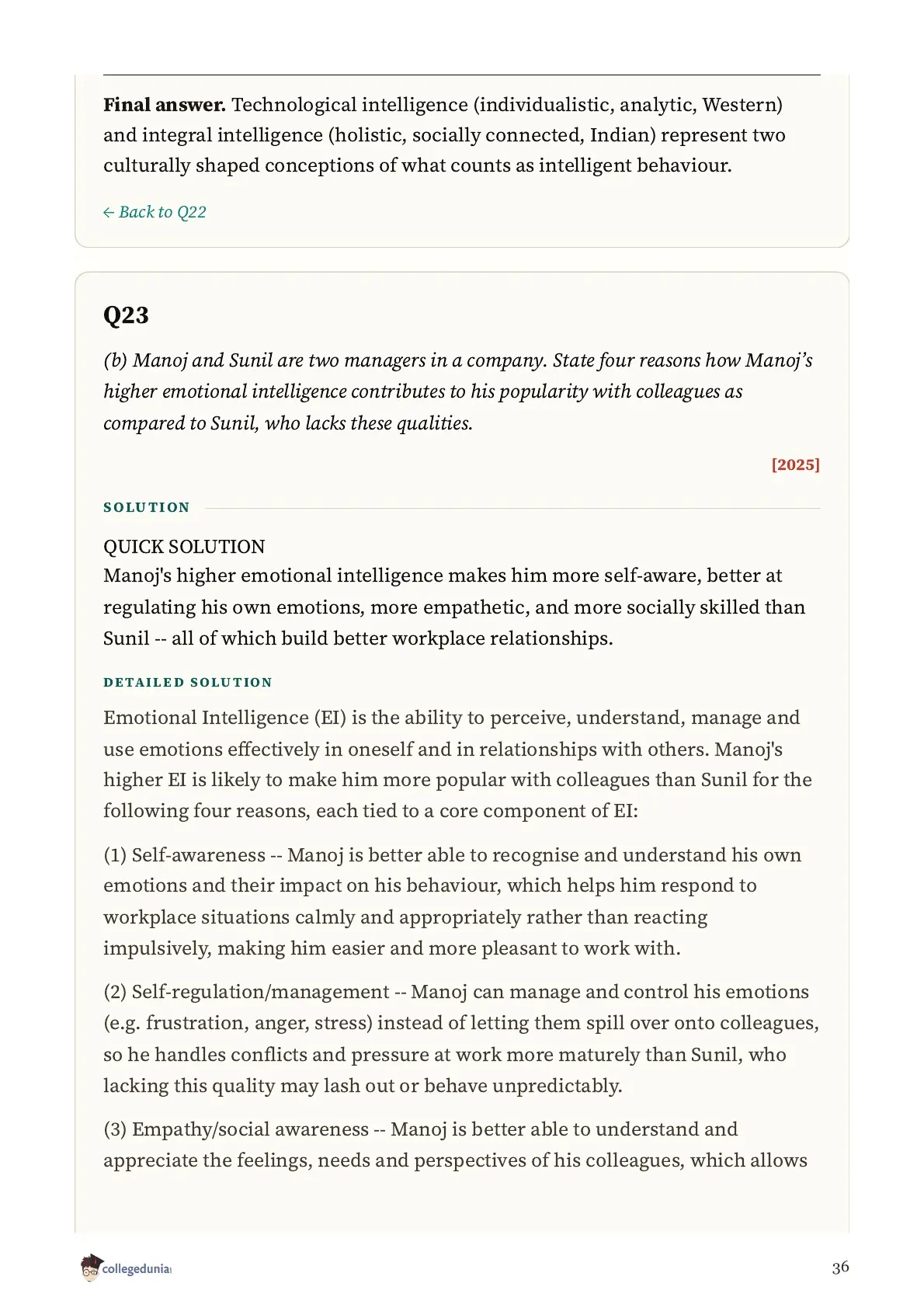
- Emotional intelligence: Goleman's model and where it is used outside the classroom.
Variations in Psychological Attributes MCQ Practice Video
Source: Magnet Brains on YouTube
Marks-wise Distribution of Variations in Psychological Attributes PYQs
The 26 questions are spread across four CBSE mark bands. Section A carries the most questions (9 MCQs), but Section D's case-study questions carry the most marks per question.
| Section | Marks Each | Question Type | Number of Questions |
|---|---|---|---|
| Section A | 1 mark | MCQ | 9 |
| Section B | 2 marks | Very Short Answer (VSA) | 7 |
| Section C | 3 marks | Short Answer (SA) | 4 |
| Section D | 4 marks | Case Study based | 6 |
MCQs test whether you can recognise a theory from its description. Case-study questions test whether you can apply a theory (usually Gardner's or Sternberg's) to a scenario about a student or a workplace.
Year-wise Spread of Variations in Psychological Attributes PYQs: 2023 to 2026
The bank covers four consecutive CBSE board papers. 2025 contributed the most questions (9), while 2023, 2024 and 2026 fill out the rest of the set fairly evenly.
| Year | Number of Questions |
|---|---|
| 2026 | 5 |
| 2025 | 9 |
| 2024 | 6 |
| 2023 | 6 |
Practising all four years together shows how CBSE rotates its favourite theories from one paper to the next, instead of repeating the same question.
Which Topics Repeat Most in Variations in Psychological Attributes PYQs
Theories of intelligence dominate the question mix in this chapter. Jensen's Level I and Level II abilities and Sternberg's triarchic model show up most often, across MCQs as well as the longer case-study questions. Gardner's multiple intelligences and Spearman's g-factor also recur, usually as short-answer or definition-style questions, and emotional intelligence and creativity turn up in at least one question most years.
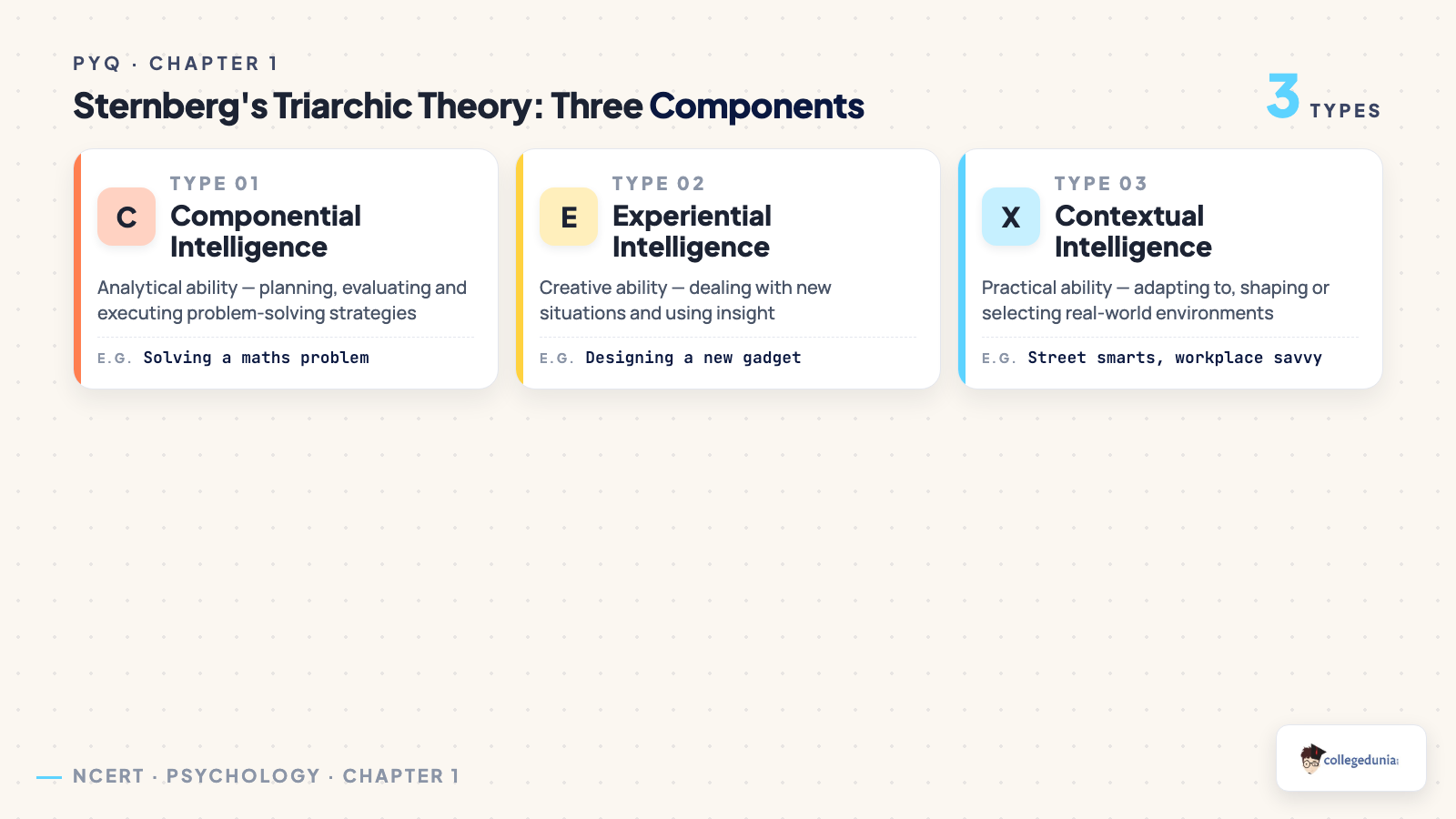
- Most frequent: Jensen's Level I/II abilities, Sternberg's triarchic theory (componential, experiential, contextual).
- Frequent: Gardner's multiple intelligences, Spearman's g-factor.
- Regular: creativity, emotional intelligence, Cattell's fluid and crystallised intelligence.
How to Attempt Variations in Psychological Attributes PYQs
Start with the MCQs in Section A. They move fast and build confidence before you reach the longer questions. Then work through Section D's case studies, since these carry the most marks and reward a clear structure.
- Name the theory first. Every answer should open by naming the theorist before explaining the concept.
- Use the theorist's own terms. Write "componential, experiential and contextual" for Sternberg, not a paraphrase.
- For case studies, link the scenario to the theory in one line before explaining why it fits.
- Keep VSA answers to 2-3 lines and SA answers to a short paragraph with one example.
Sample Question and Answer Approach for Variations in Psychological Attributes
Here is how to structure two typical question types from this chapter's PYQs. The pattern below is the same one the PDF's step-by-step solutions follow.
| Question Type | How to Structure the Answer |
|---|---|
| 1-mark MCQ (e.g. identifying a theory from a description) | Read the description first, then match it to the closest theorist's terminology before picking an option. Don't pick the option that "sounds right" without checking the exact term used. |
| 4-mark case study (e.g. applying a theory to a student or workplace scenario) | Name the theory in the first line, list its components or levels, then map each component to one line from the case. End with a one-line conclusion linking back to the question. |
This two-step habit, name the theory, then map it to the scenario, is what separates a 2-mark case-study answer from a full 4-mark one.
Common Mistakes Students Make in Variations in Psychological Attributes Questions
Watch out for these recurring errors:
- Mixing up Sternberg and Gardner. Sternberg gives three components of intelligence; Gardner gives eight (or more) separate intelligences. These are different models and examiners deduct marks for merging them.
- Confusing Jensen's Level I and Level II. Level I is associative (rote) learning; Level II is conceptual (abstract) reasoning. Students often swap the two.
- Writing "IQ" without defining it. A definition-based question needs the formula and what each term means, not just the abbreviation.
- Skipping the theorist's name in case-study answers. An unnamed theory, even if correctly explained, loses marker recall marks.
Student Feedback: Variations in Psychological Attributes Difficulty Rating
What 11,540 students told us about this chapter's PYQs
In a Collegedunia poll of 11,540 Class 12 Psychology students conducted before the 2027 boards, 68% rated the theories-of-intelligence questions as the hardest part of this chapter, mainly because Sternberg and Gardner get mixed up under exam pressure. Students who practised all four years of PYQs together reported fewer mix-ups on the actual paper.
Source: 2026-27 Class 12 Psychology student poll. Sample of 11,540 students from CBSE schools across 14 states.
How These PYQs Pair with Other Class 12 Psychology Chapter 1 Resources
This PYQ set works best alongside the other Chapter 1 resources already live on Collegedunia. Read the notes first, revise from the handwritten notes, solve these PYQs, then cross-check tricky answers against the full NCERT solutions.
| Resource | Link |
|---|---|
| NCERT Notes | Variations in Psychological Attributes Class 12 Notes |
| Handwritten Notes | Variations in Psychological Attributes Class 12 Handwritten Notes |
| NCERT Solutions | Variations in Psychological Attributes Class 12 NCERT Solutions |
| NCERT Book PDF | Variations in Psychological Attributes Class 12 NCERT Book PDF |
| PYQ (this page) | Variations in Psychological Attributes Class 12 PYQ |
The other Class 12 Psychology chapters (Self and Personality, Attitude and Social Cognition, Social Influence and Group Processes, Psychological Disorders, Therapeutic Approaches and Meeting Life Challenges) are being added to this same PYQ series and will link here once live.
How to Use the Variations in Psychological Attributes PYQ PDF Effectively
Don't jump to the solution on the first read. Try to name the theory and sketch an answer yourself, then check it against the step-by-step solution in the PDF.
- First pass: attempt all 26 questions without looking at the solutions, section by section.
- Second pass: compare each answer against the solution and mark where the theorist's name or a key term was missing.
- Third pass: redo only the questions you got wrong, a day or two later, from memory.
Downloading and Using the PYQ PDF
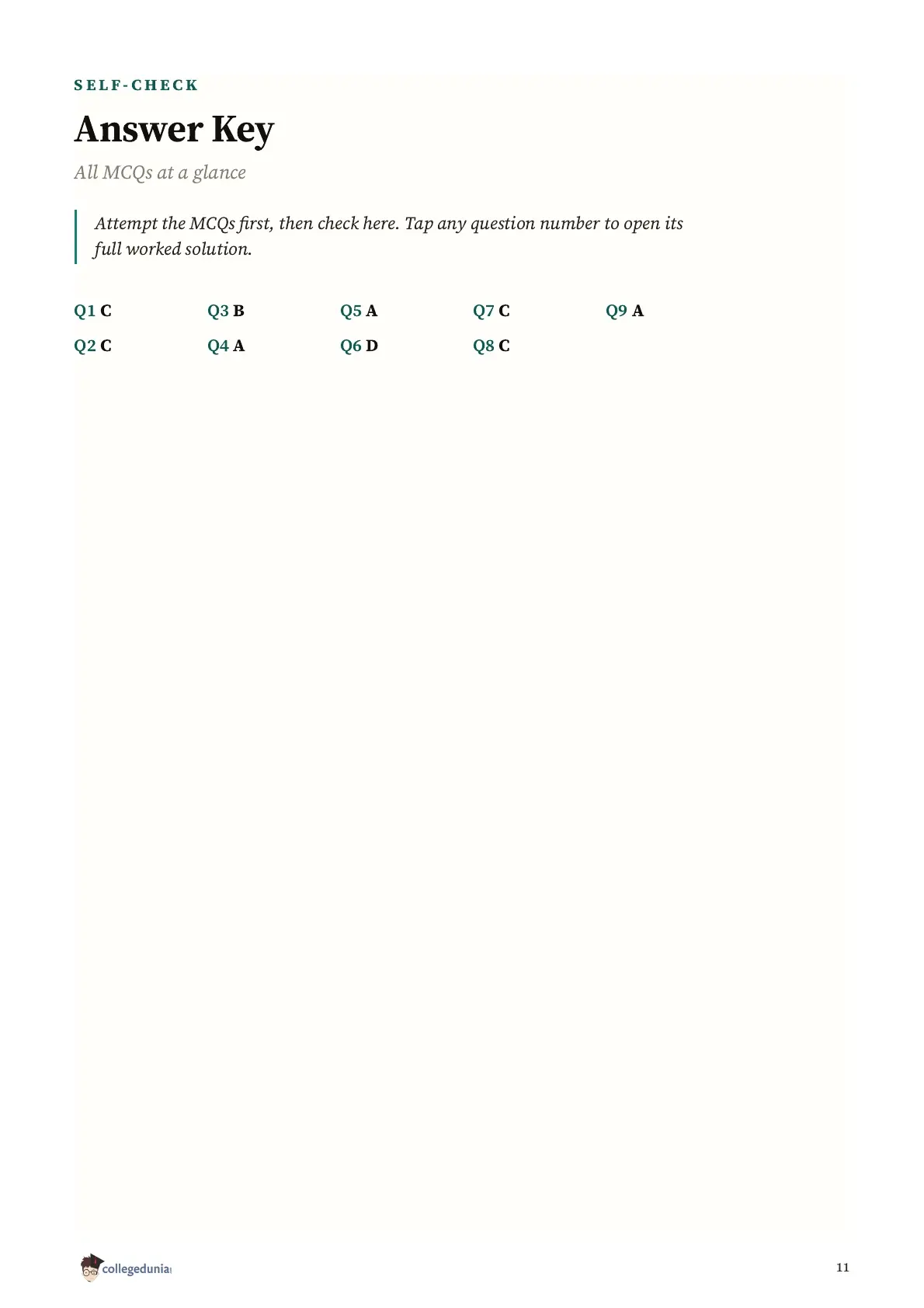
The PDF is 41 pages and free to download. It opens with the question paper sorted by mark band, closes with a self-check answer key, and links every question to its full solution.
Variations in Psychological Attributes Class 12 Psychology PYQ FAQs
Ques. How many questions are in the Variations in Psychological Attributes Class 12 PYQ PDF?
Ans. The PDF has 26 questions from CBSE board papers between 2023 and 2026: 9 one-mark MCQs, 7 two-mark VSA, 4 three-mark SA and 6 four-mark case-study questions.
Ques. Does this PYQ PDF include solutions, or only the questions?
Ans. It includes full solutions. Every one of the 26 questions has a step-by-step answer written out in the PDF, so you can check your own attempt against a worked solution rather than just an answer key.
Ques. Which years of CBSE board papers does this PYQ set cover?
Ans. It covers four consecutive years: 2023, 2024, 2025 and 2026. 2025 has the most questions (9), followed by 2024 and 2023 (6 each) and 2026 (5).
Ques. Where can I download the Variations in Psychological Attributes PYQ PDF?
Ans. You can download it directly from this page. It is free and runs to 41 pages, with the questions sorted by mark band and every question linked to its solution.
Ques. Is this PYQ set aligned with the 2026-27 CBSE syllabus?
Ans. Yes. The chapter content and question pattern match the current 2026-27 NCERT Psychology syllabus for Class 12.
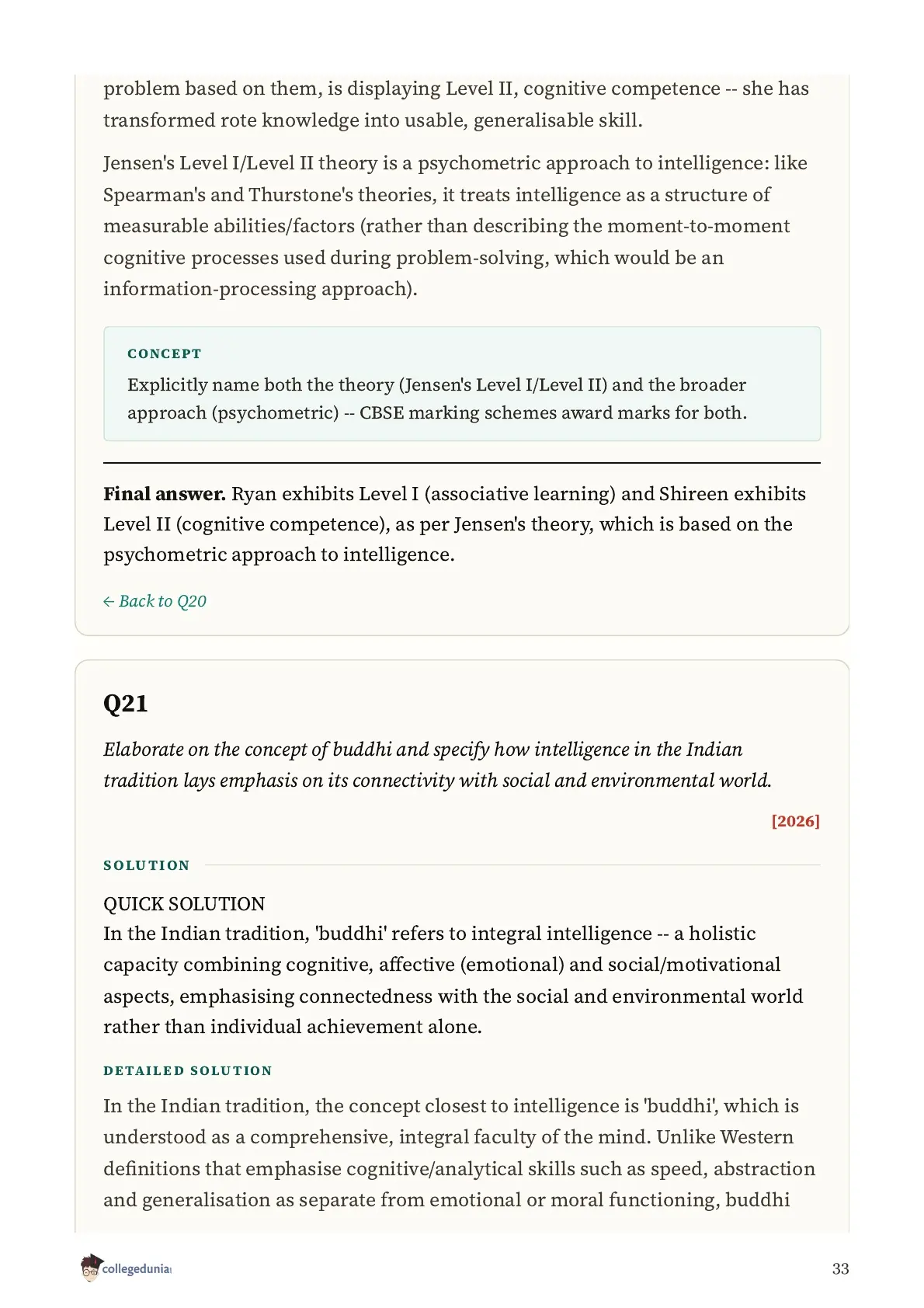
Ques. What is Jensen's Level I and Level II theory of intelligence?
Ans. Jensen's theory splits mental ability into two levels. Level I (associative) is the ability to remember and recall information, such as rote learning. Level II (conceptual) is the ability to reason, plan and solve problems using abstract thinking.
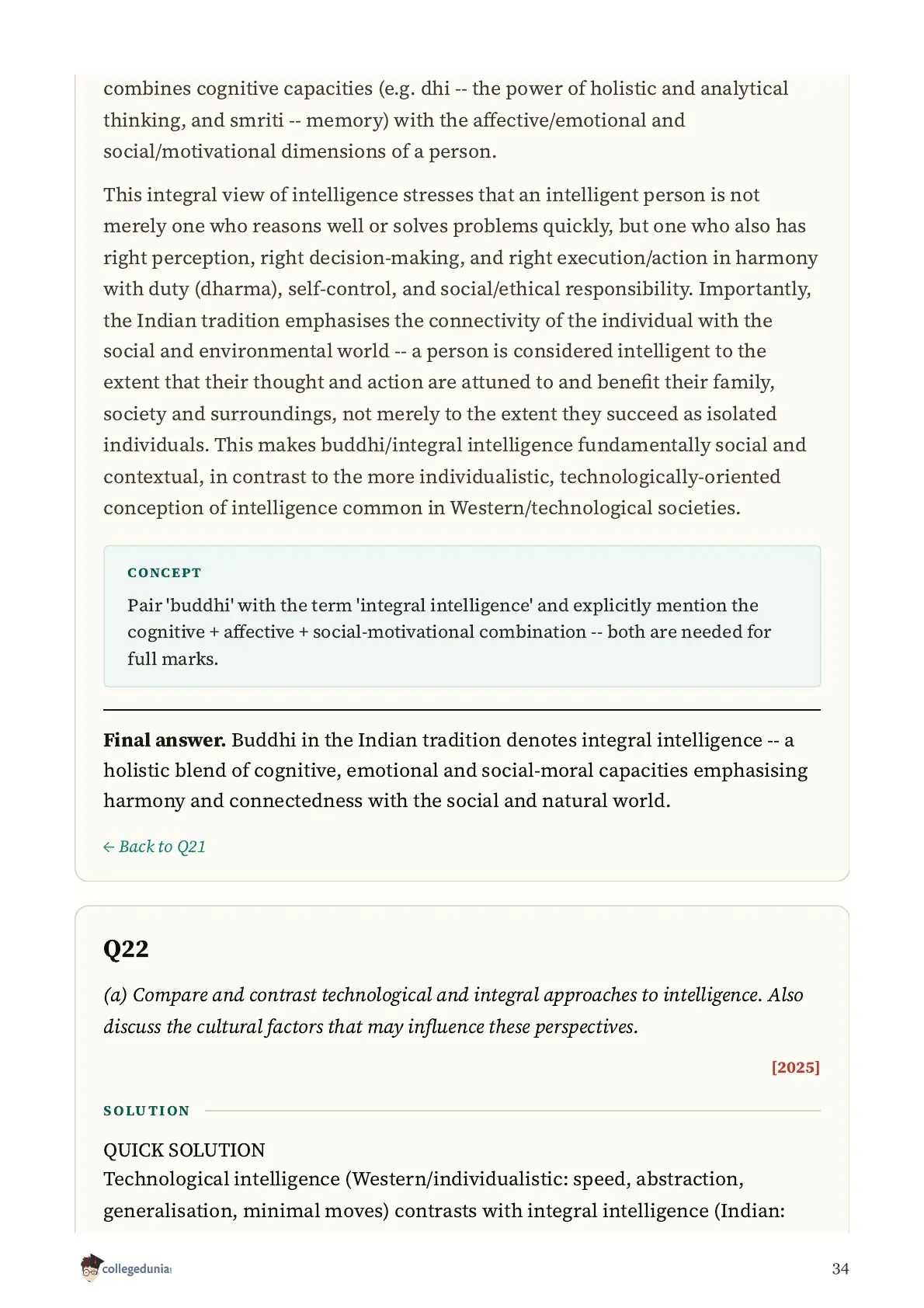
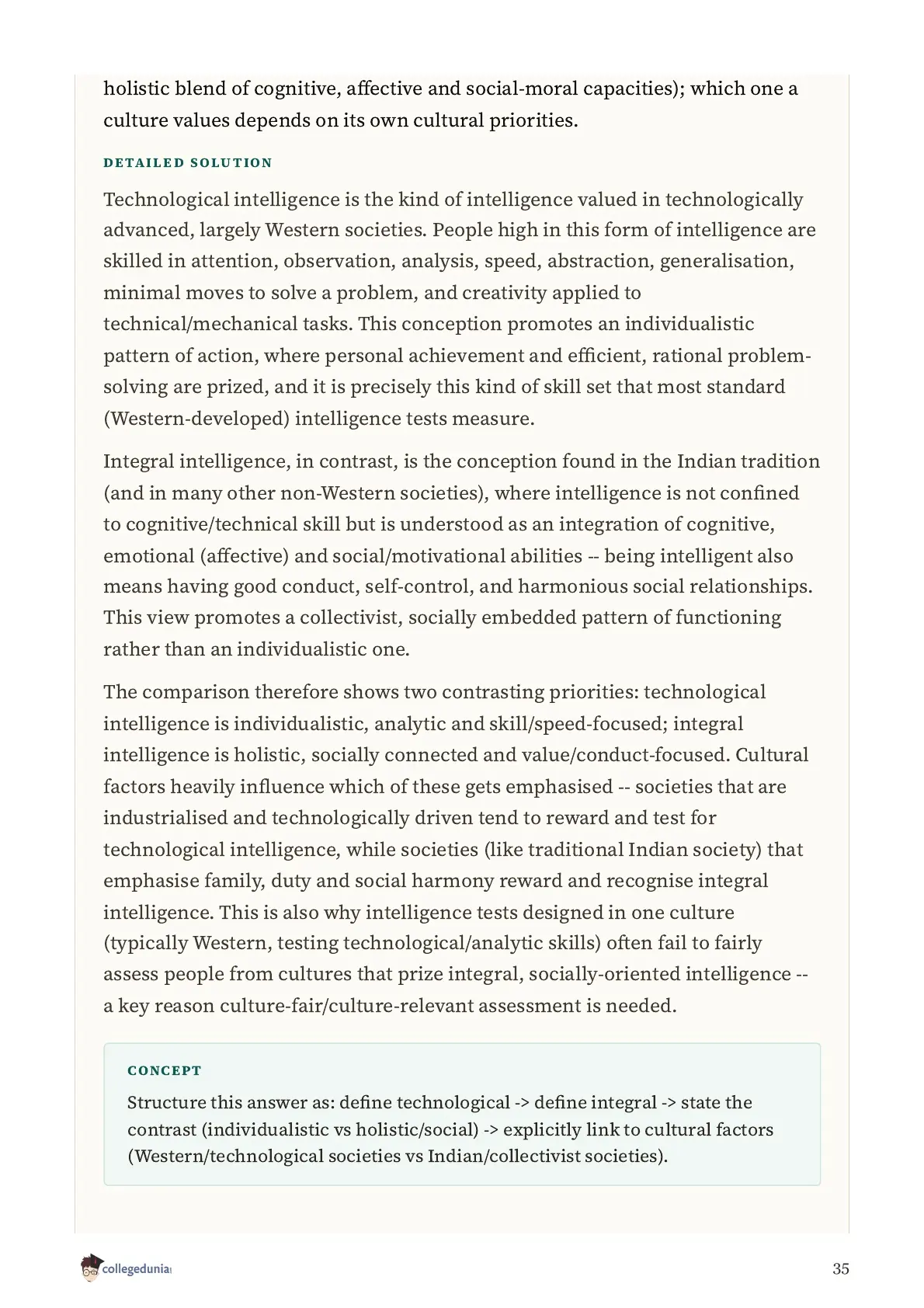
Ques. How is Sternberg's triarchic theory different from Gardner's theory of multiple intelligences?
Ans. Sternberg's triarchic theory names three components of a single intelligence: componential (analytical), experiential (creative) and contextual (practical). Gardner's theory instead proposes several independent intelligences, such as linguistic, logical-mathematical and interpersonal. Mixing the two up is one of the most common mistakes in this chapter's PYQs.



Comments