



The NCERT Exemplar Class 10 Science book for Chapter 1, Chemical Reactions and Equations, gives you higher-order questions beyond the main textbook. This page hosts the free NCERT Exemplar PDF, plus a quick guide on how to use it for your CBSE board exam 2026-27.
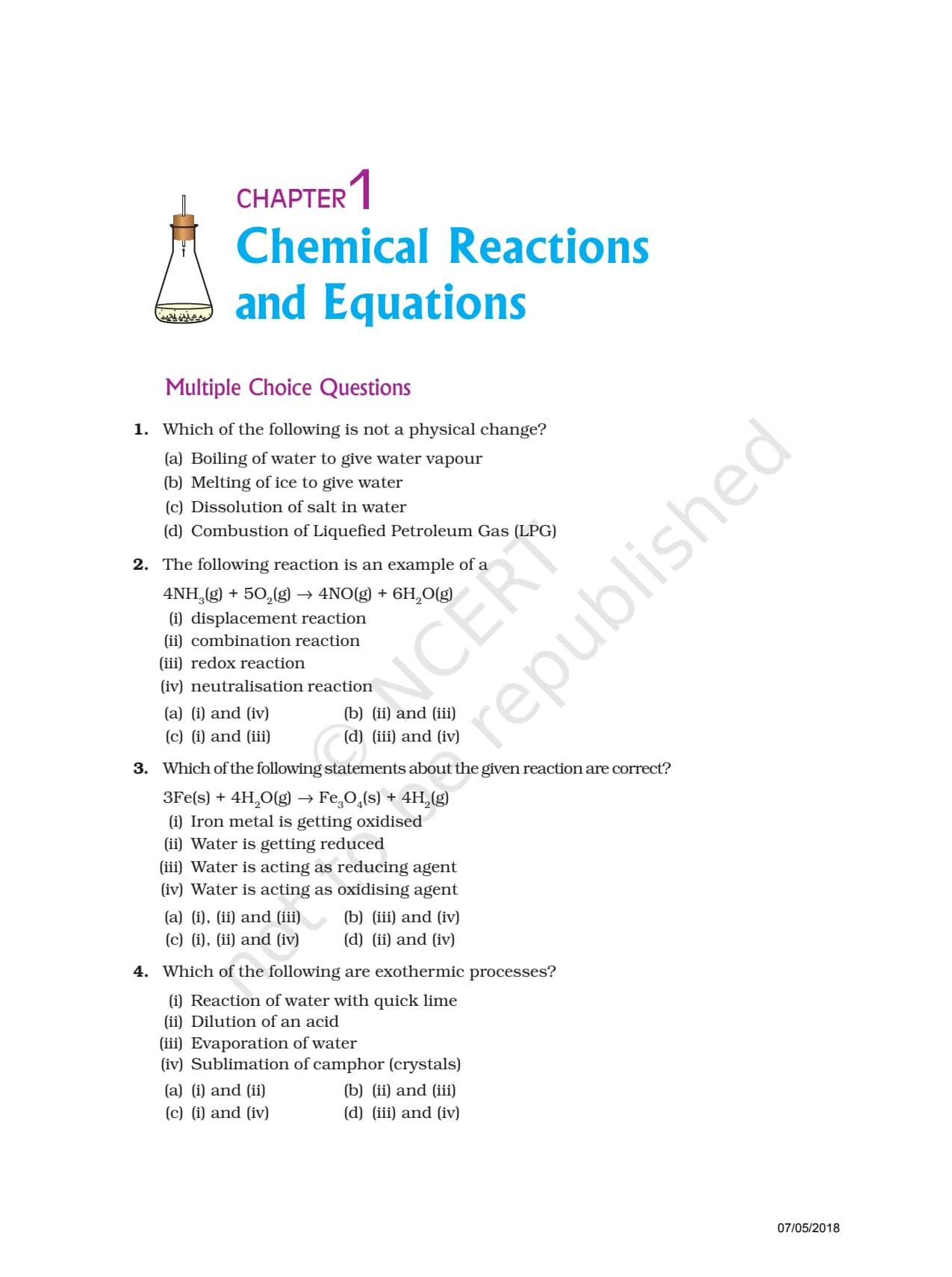
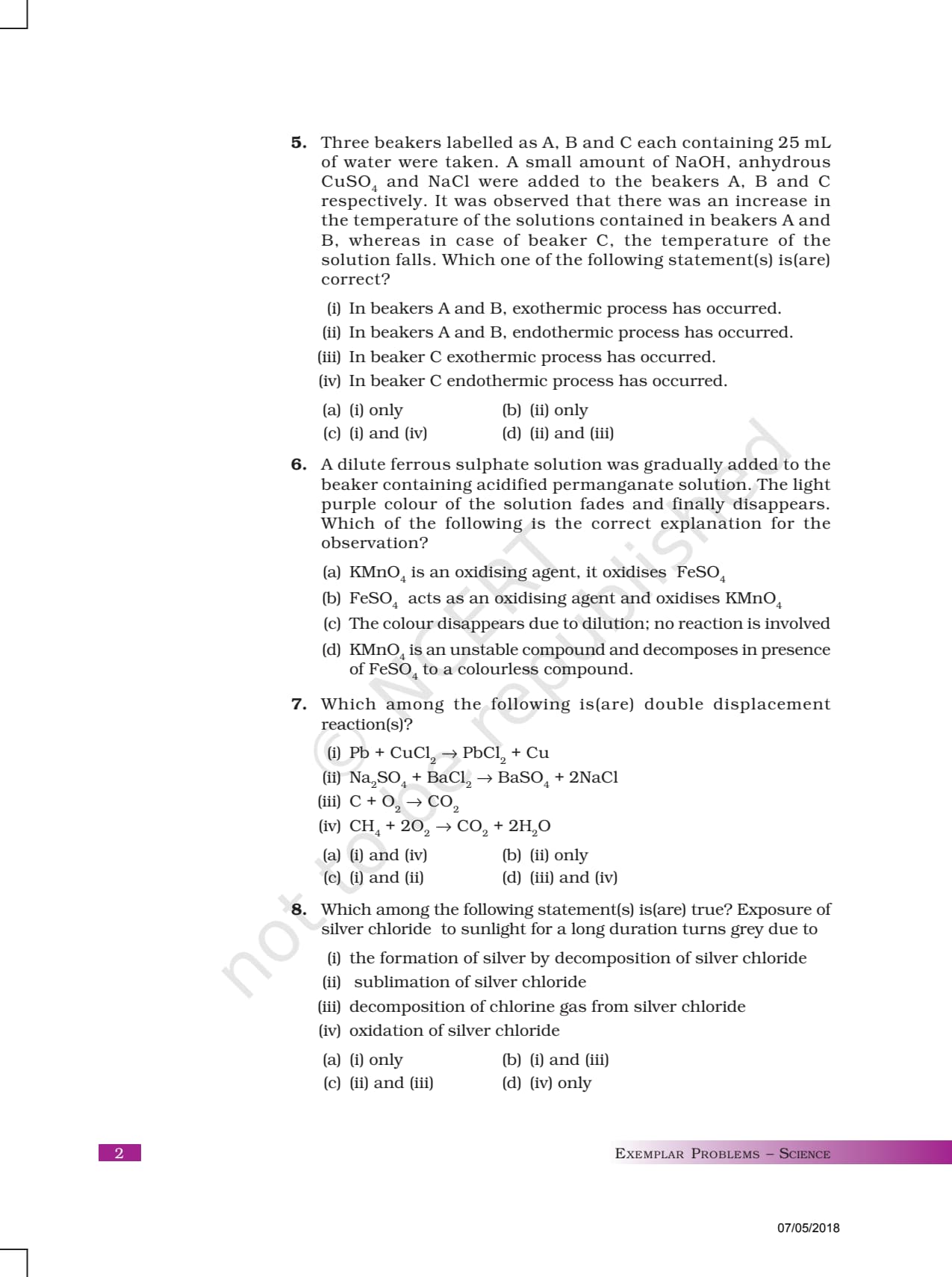
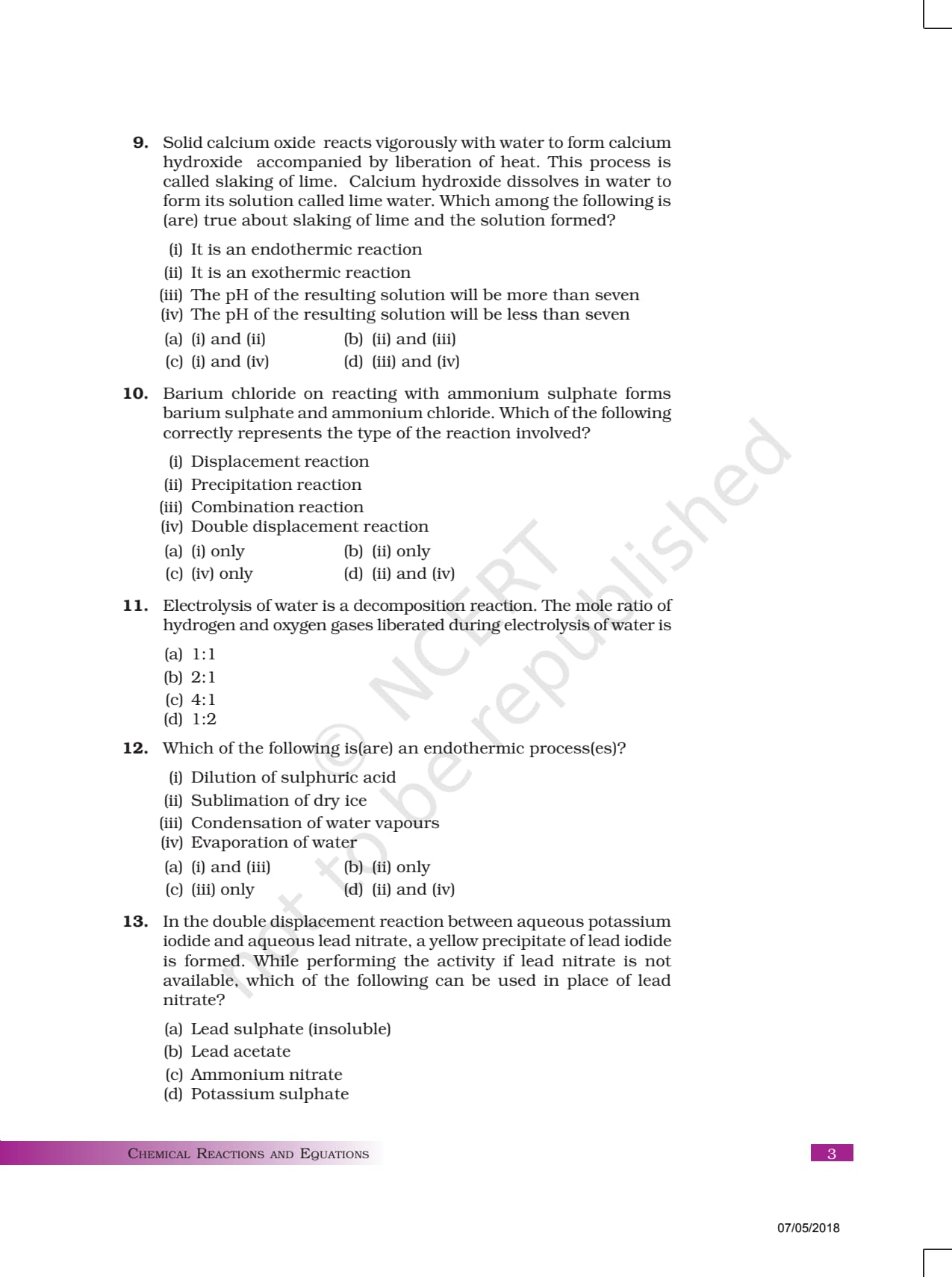
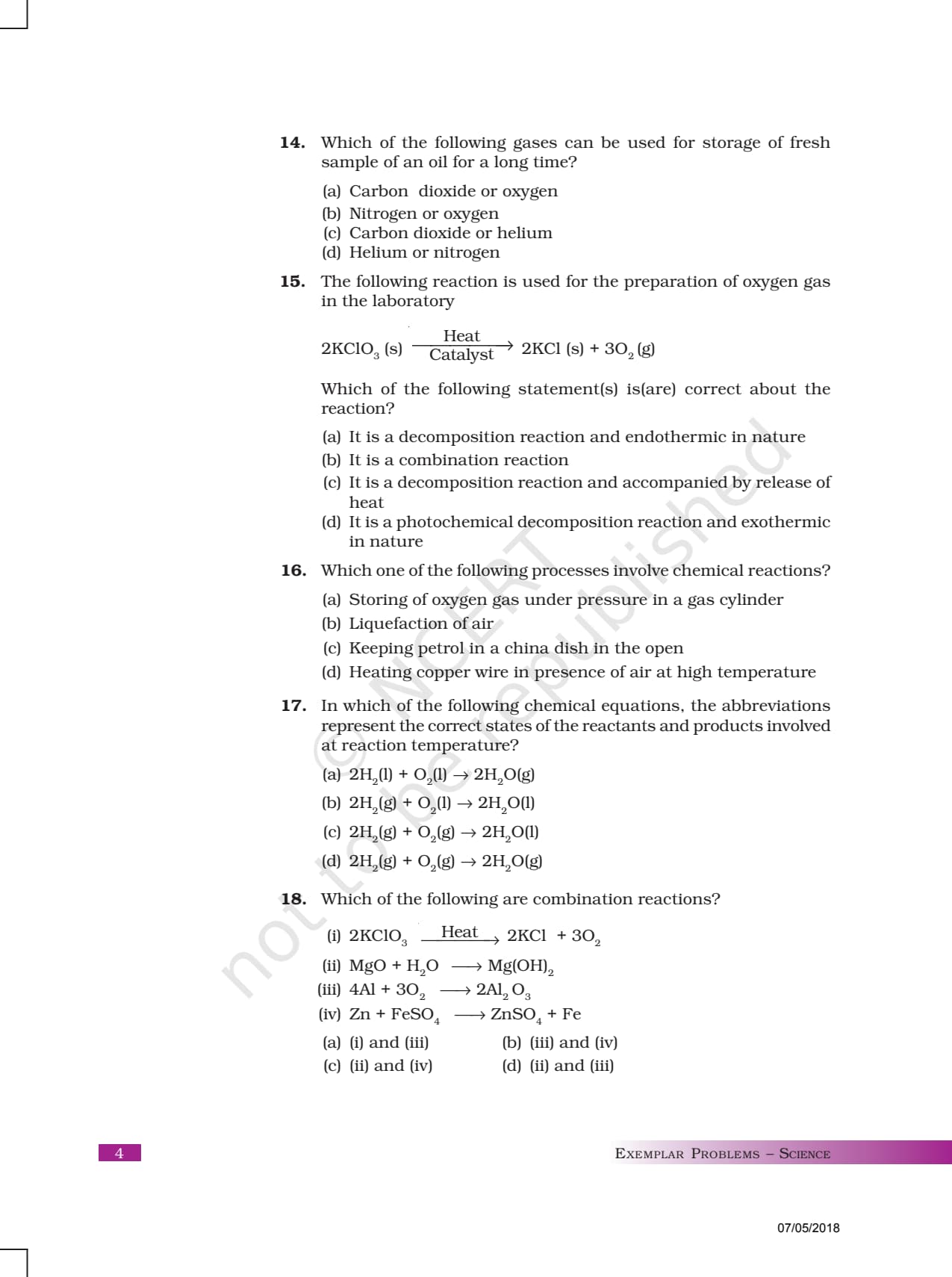
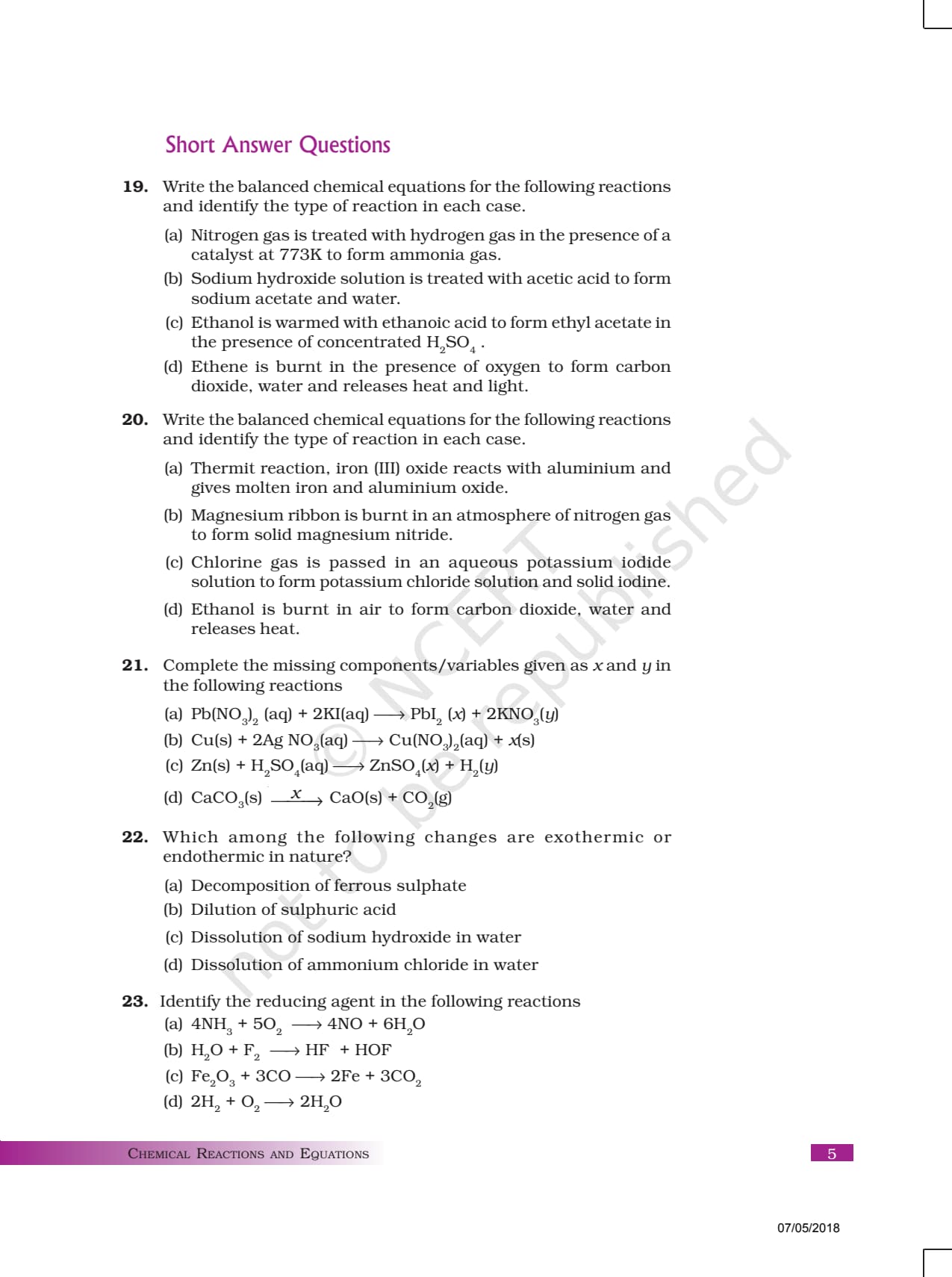
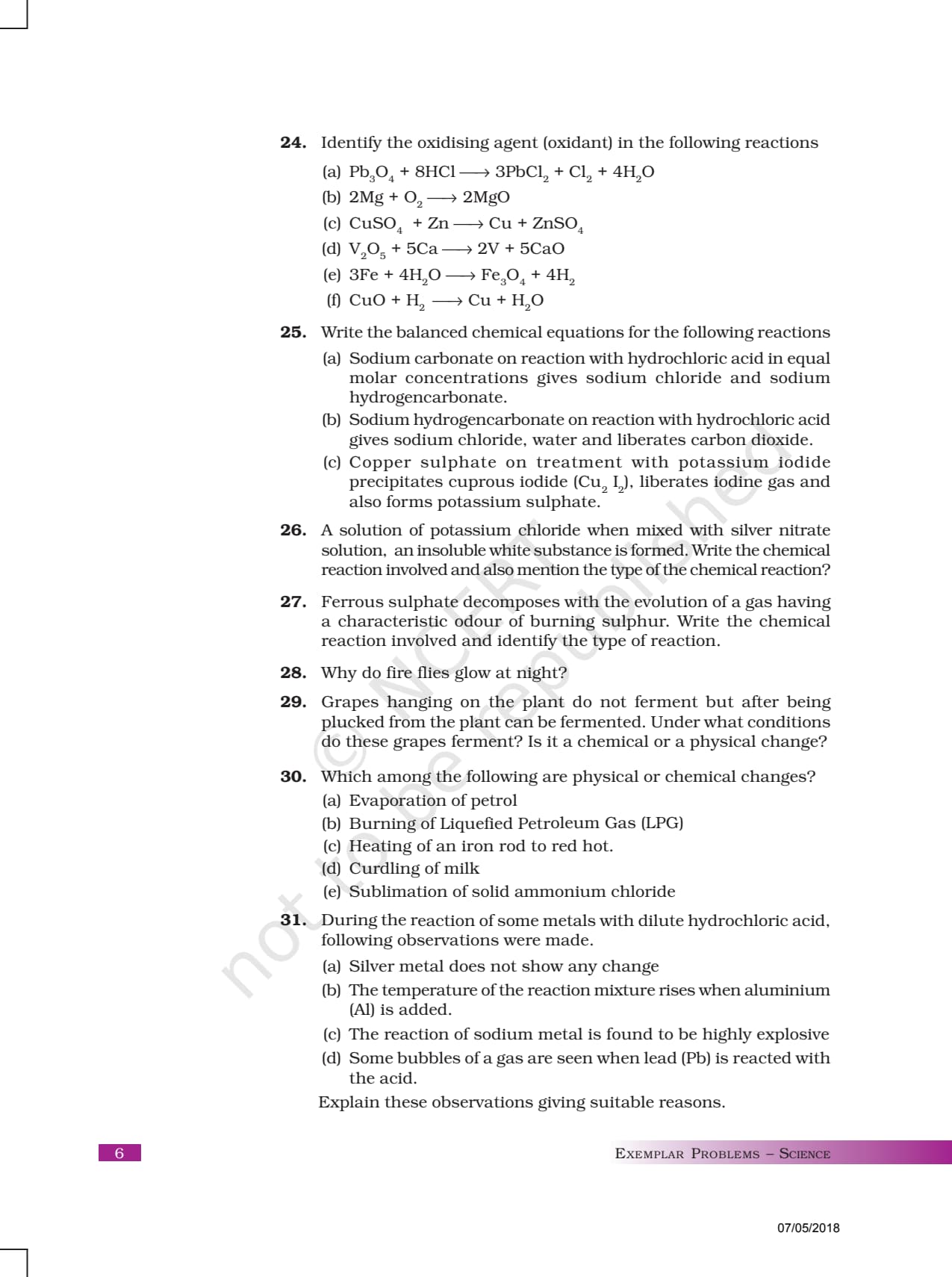
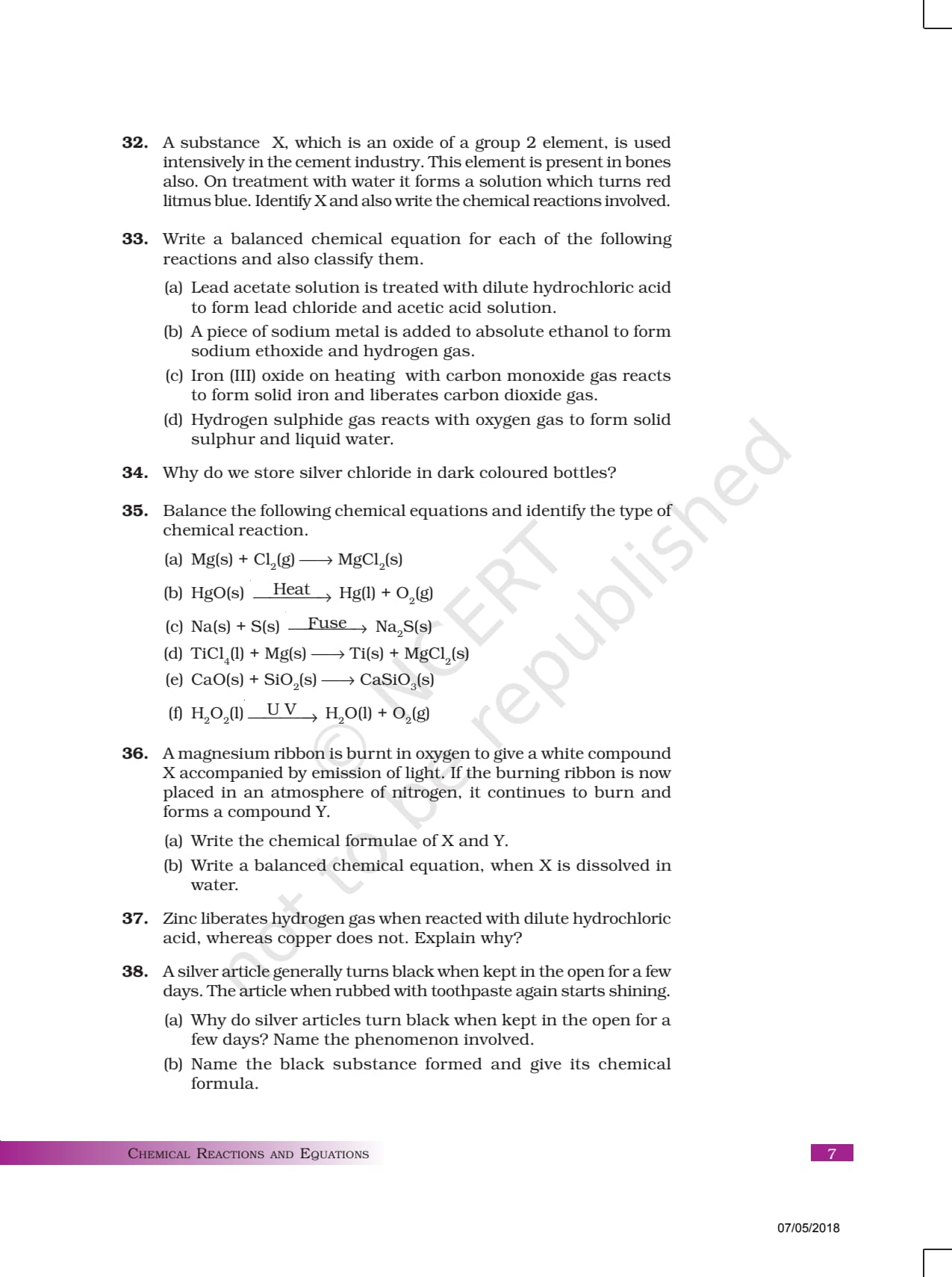
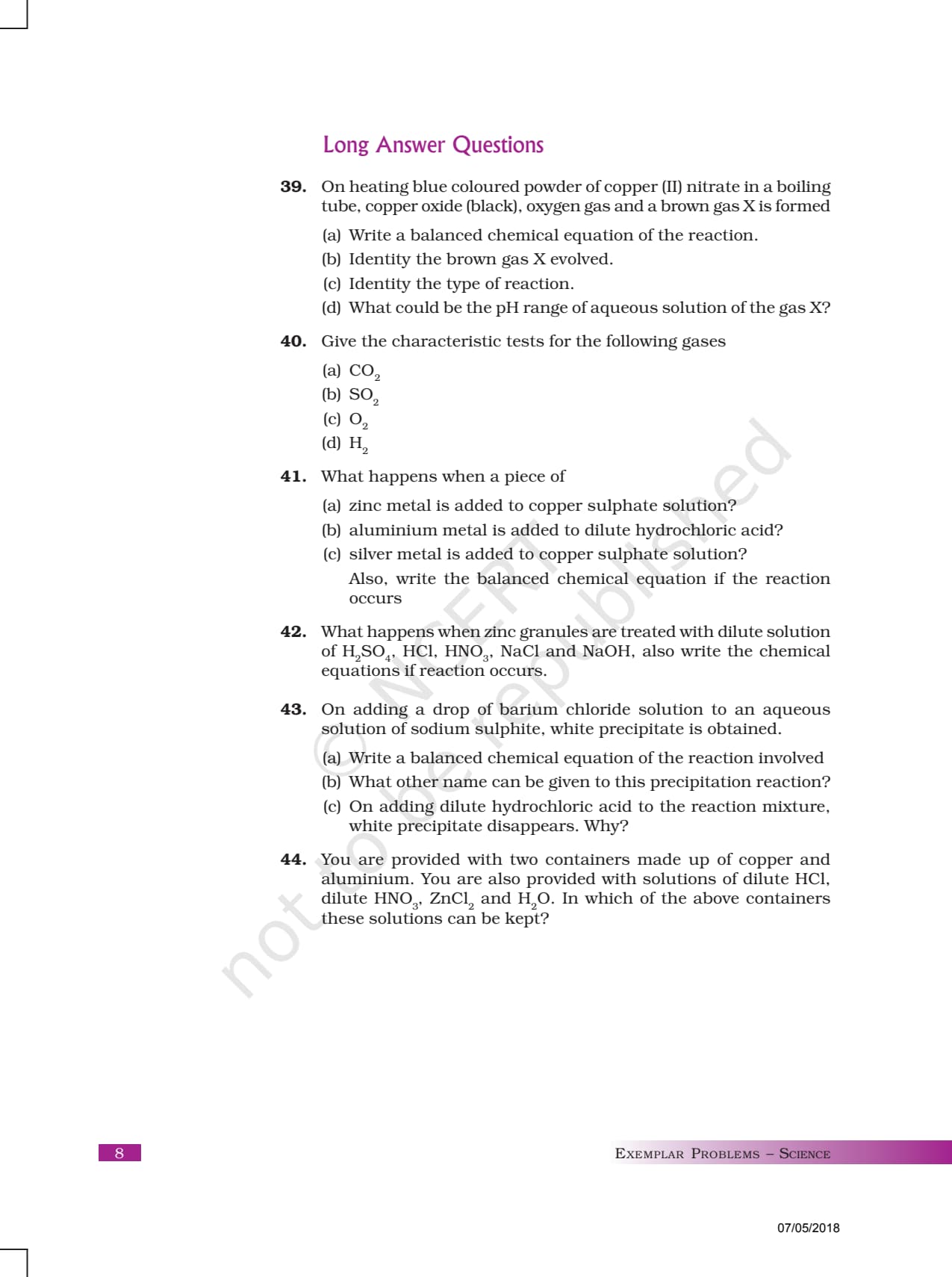
- What you get: the full official NCERT Exemplar Class 10 Science Chapter 1 PDF, free to download or read on this page.
- Question types: MCQs, short answer, and long answer questions on reactions, balancing, and redox.
- Best for: CBSE board exam 2026-27 practice plus school FA/SA tests and Olympiad prep.
Read or download the complete NCERT Exemplar Class 10 Science Chapter 1 PDF from the card above. It is published by NCERT and mapped to the 2026-27 syllabus.
This page hosts the official NCERT Exemplar PDF and a study guide curated by Collegedunia Science experts, checked against the latest CBSE Class 10 board pattern.
Also Check:
What is the NCERT Exemplar Class 10 Science Book?
The NCERT Exemplar Class 10 Science is an extra problem book published by NCERT, separate from your main textbook. It carries tougher, more thought-based questions on the same chapters. For Chapter 1, it tests how well you really understand chemical reactions and equations, not just whether you can repeat a definition.
- Made by NCERT: the same body that writes your textbook, so the level matches your CBSE Class 10 syllabus 2026-27.
- Higher-order thinking: questions give a situation and ask you to reason, not just recall a line.
- Board and beyond: many CBSE board and school test questions follow this style, so teachers ask you to solve it.
- Free and official: the full PDF here is the real NCERT book, with nothing added or removed.
Chemical Reactions and Equations Class 10 Science Full Chapter Video
Source: Magnet Brains on YouTube
What is Inside Chapter 1 of the NCERT Exemplar Class 10 Science
Chapter 1 of the Exemplar opens with multiple choice questions, then moves to short and long answer questions. Each is built around a real reaction, so you practise both the chemistry and balancing equations. The table below shows the layout.
| Section | What it tests | Sample idea from Chapter 1 |
|---|---|---|
| Multiple Choice Questions | Quick concept checks with one or more correct options | Telling a physical change from a chemical change |
| Short Answer Questions | Two to three line answers with a reason | Why a copper vessel loses its shine over time |
| Long Answer Questions | Full answers with balanced equations and explanation | Writing and balancing a combination or decomposition reaction |
Across these sections you meet the four big reaction types: combination, decomposition, displacement, and double displacement, plus oxidation and reduction (redox). Many questions also bring in exothermic and endothermic changes, like quick lime reacting with water.
Question Types in the NCERT Exemplar Class 10 Science Chapter 1
Knowing the question types helps you plan your practice. Each format trains a different skill you need for the CBSE board exam 2026-27.
- Single-correct MCQs: one option is right. These test a clean, single idea, such as which change is not a physical change.
- Multiple-correct MCQs: two or more statements are correct, and you pick the right combination. These check deeper understanding of a reaction.
- Short answer (SA): you write two to three lines and give a reason. Good for "why does this happen" type questions.
- Long answer (LA): you write a balanced equation and explain each step. These carry the most marks and reward neat, complete work.
Why Solve the NCERT Exemplar for Chapter 1 Chemical Reactions and Equations
The main textbook teaches the chapter. The Exemplar tests whether you can use it. Solving the Exemplar for Chemical Reactions and Equations is one of the surest ways to lift your Science score, because the questions are close to the toughest board and school questions.
- You learn to balance under pressure. The chapter is full of equations, and the only way to get fast is to balance many of them. Balancing is the single most-tested skill from this chapter.
- You spot reaction types instantly. After enough Exemplar questions, you can label a reaction as combination, decomposition, displacement, or double displacement at a glance.
- You handle redox with confidence. Many questions ask which substance is oxidised and which is reduced, a favourite of CBSE examiners.
- You meet real-life examples. Rusting of iron, browning of a silver chloride sample in sunlight, and respiration all appear, which makes the chapter easier to remember.
For full worked answers to every one of these questions, use the linked NCERT Exemplar Solutions page for this chapter. It explains each step so you can check your own work after you try the questions yourself.
How to Use the NCERT Exemplar Class 10 Science Chapter 1 PDF
The Exemplar works best when you treat it as a practice book, not a reading book. A simple three-step routine keeps your study focused and saves you time before the board exam 2026-27.
- Step 1, learn first. Finish the chapter in your textbook and the Notes page so you know every reaction type and the rule for balancing equations.
- Step 2, attempt on your own. Open this PDF and try the MCQs first, then short answers, then long answers. Write balanced equations by hand, do not just read them.
- Step 3, check and fix. Open the Exemplar Solutions page and compare. Mark every question you got wrong and redo it the next day.
Topics Covered in NCERT Exemplar Class 10 Science Chapter 1
Every question in this Exemplar chapter sits on one of a small set of core ideas. If you are clear on the points below, you can attempt the whole chapter. This list also doubles as a quick revision checklist before any test in the 2026-27 session.
| Topic | What you must know |
|---|---|
| Chemical vs physical change | A chemical change makes a new substance; a physical change does not |
| Writing and balancing equations | Equal atoms of each element on both sides; correct state symbols |
| Combination reaction | Two or more substances join to form one product |
| Decomposition reaction | One substance breaks into two or more, often using heat, light, or electricity |
| Displacement reaction | A more reactive metal pushes out a less reactive one from its compound |
| Double displacement | Two compounds swap parts, often forming a precipitate |
| Oxidation and reduction | Gain or loss of oxygen or hydrogen; the redox pair always happens together |
| Exothermic and endothermic | Reactions that release heat versus those that absorb heat |
| Corrosion and rancidity | Slow real-life reactions, like rusting of iron and food going bad |
Master these nine ideas and you can answer almost every question in the Chapter 1 Exemplar with confidence.
Student Feedback
In a Collegedunia poll of 1,150 Class 10 students, 78% said the NCERT Exemplar was the single most useful book for scoring above 90 in Science. Most of them solved Chapter 1 questions at least twice before the board exam.
Source: Collegedunia Class 10 Science student poll, 2026-27 session.
Other Resources for Class 10 Science Chapter 1
The Exemplar is one piece of your prep. Use the table below to jump to the other free Collegedunia resources for the same chapter, Chemical Reactions and Equations.
| Resource | Open |
|---|---|
| NCERT Solutions | Chapter 1 NCERT Solutions |
| Revision Notes | Chapter 1 Notes |
| Formula Sheet | Chapter 1 Formula Sheet |
| Handwritten Notes | Chapter 1 Handwritten Notes |
| Exemplar Solutions | Chapter 1 Exemplar Solutions |
| NCERT Book PDF | Chapter 1 NCERT Book PDF |
| Exemplar Book PDF | Chapter 1 Exemplar Book PDF (this page) |
NCERT Exemplar Book Class 10 Science: All Chapters
Use the table below to download the NCERT Exemplar PDF for any other chapter in the Class 10 Science book for the 2026-27 session.
| Chapter | Exemplar Book PDF |
|---|---|
| Chapter 2 | Acids, Bases and Salts Exemplar PDF |
| Chapter 3 | Metals and Non-metals Exemplar PDF |
| Chapter 4 | Carbon and its Compounds Exemplar PDF |
| Chapter 5 | Life Processes Exemplar PDF |
| Chapter 6 | Control and Coordination Exemplar PDF |
| Chapter 7 | How do Organisms Reproduce Exemplar PDF |
| Chapter 8 | Heredity Exemplar PDF |
| Chapter 9 | Light Reflection and Refraction Exemplar PDF |
| Chapter 10 | The Human Eye and the Colourful World Exemplar PDF |
| Chapter 11 | Electricity Exemplar PDF |
| Chapter 12 | Magnetic Effects of Electric Current Exemplar PDF |
| Chapter 13 | Our Environment Exemplar PDF |
NCERT Exemplar Class 10 Science Chapter 1 FAQs
Ques. Where can I download the NCERT Exemplar Class 10 Science Chapter 1 PDF?
Ans. You can download the NCERT Exemplar Class 10 Science Chapter 1 Chemical Reactions and Equations PDF for free from the download card at the top of this page. It is the official NCERT book, mapped to the 2026-27 syllabus.
Ques. Is the NCERT Exemplar Class 10 Science enough for the board exam?
Ans. The Exemplar is excellent extra practice, but it is not a full replacement for the textbook. Finish your NCERT textbook and Notes first, then solve the Exemplar for higher-order questions. Together they cover the full CBSE Class 10 Science board pattern for 2026-27.
Ques. What types of questions are in Chapter 1 of the NCERT Exemplar?
Ans. Chapter 1 of the Exemplar has multiple choice questions (single and multiple correct), short answer questions, and long answer questions. They cover combination, decomposition, displacement, double displacement, and redox reactions, plus balancing of equations.
Ques. How is the NCERT Exemplar different from the NCERT textbook?
Ans. Both are made by NCERT. The textbook teaches the chapter, while the Exemplar gives tougher, reasoning-based questions to test how well you understand it. Many CBSE board and school test questions follow the Exemplar style.
Ques. Where can I find solutions to the Chapter 1 Exemplar questions?
Ans. Full step-by-step answers to every question are on the NCERT Exemplar Solutions page for Class 10 Science Chapter 1. Try the questions on your own first, then check your answers there.
Ques. Which topics from Chapter 1 are most important for the Exemplar?
Ans. The most tested topics are balancing chemical equations, identifying reaction types, and telling oxidation from reduction in a redox reaction. Exothermic and endothermic changes and real-life examples like rusting also appear often.
Ques. Is the NCERT Exemplar Class 10 Science Chapter 1 PDF free?
Ans. Yes. The full NCERT Exemplar Class 10 Science Chapter 1 PDF on this page is free to read and download. No sign-up is needed.



Comments