




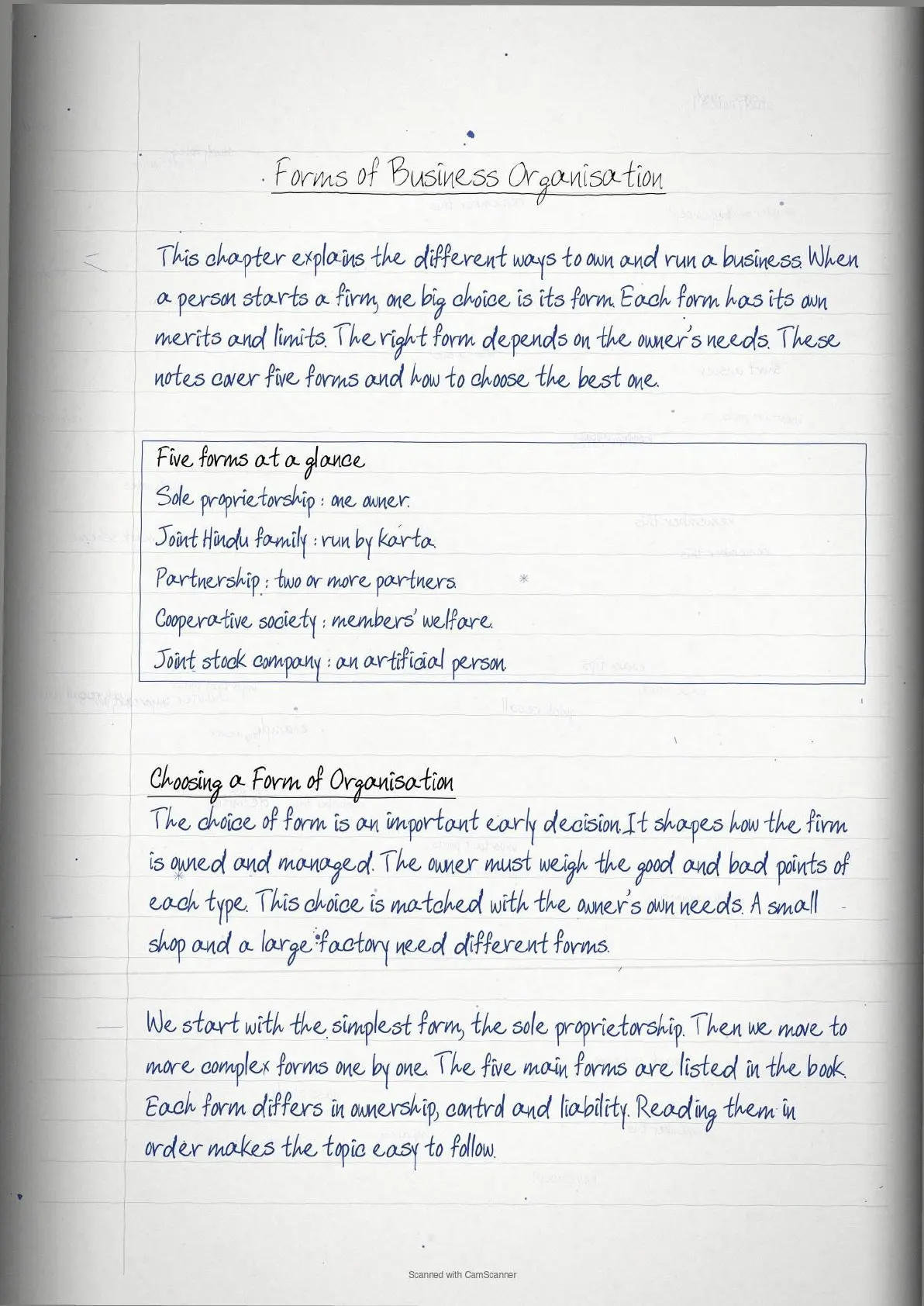
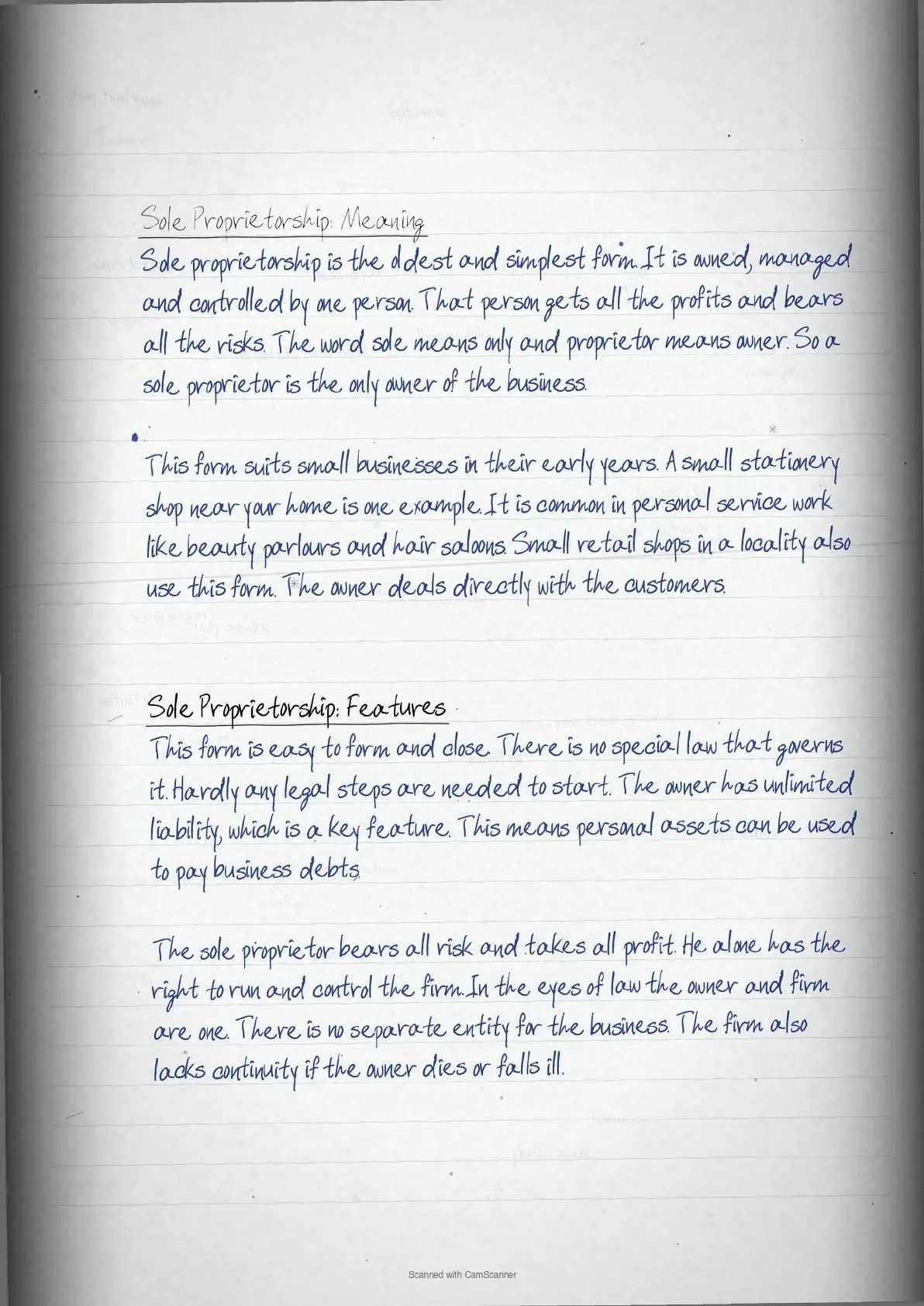
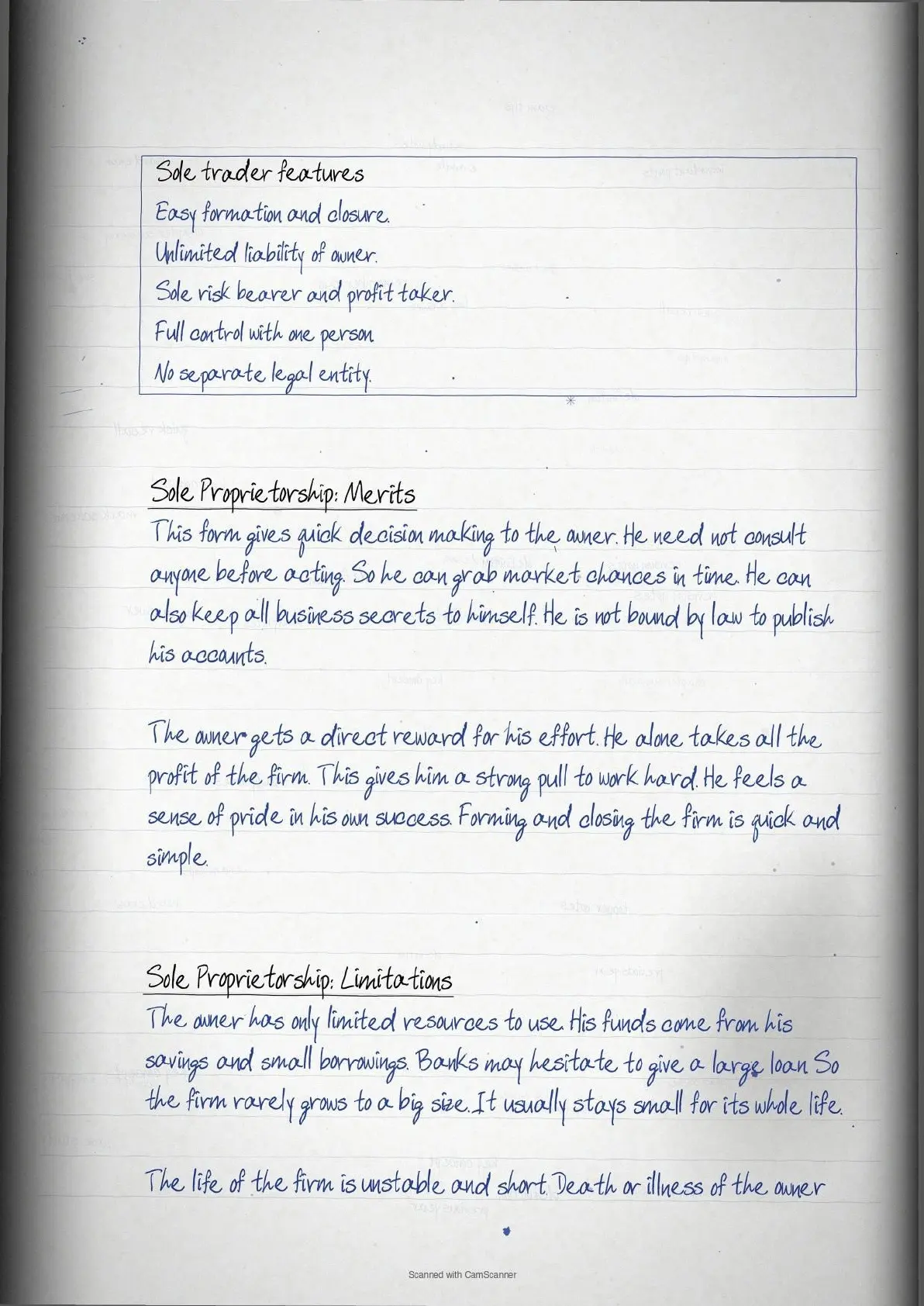
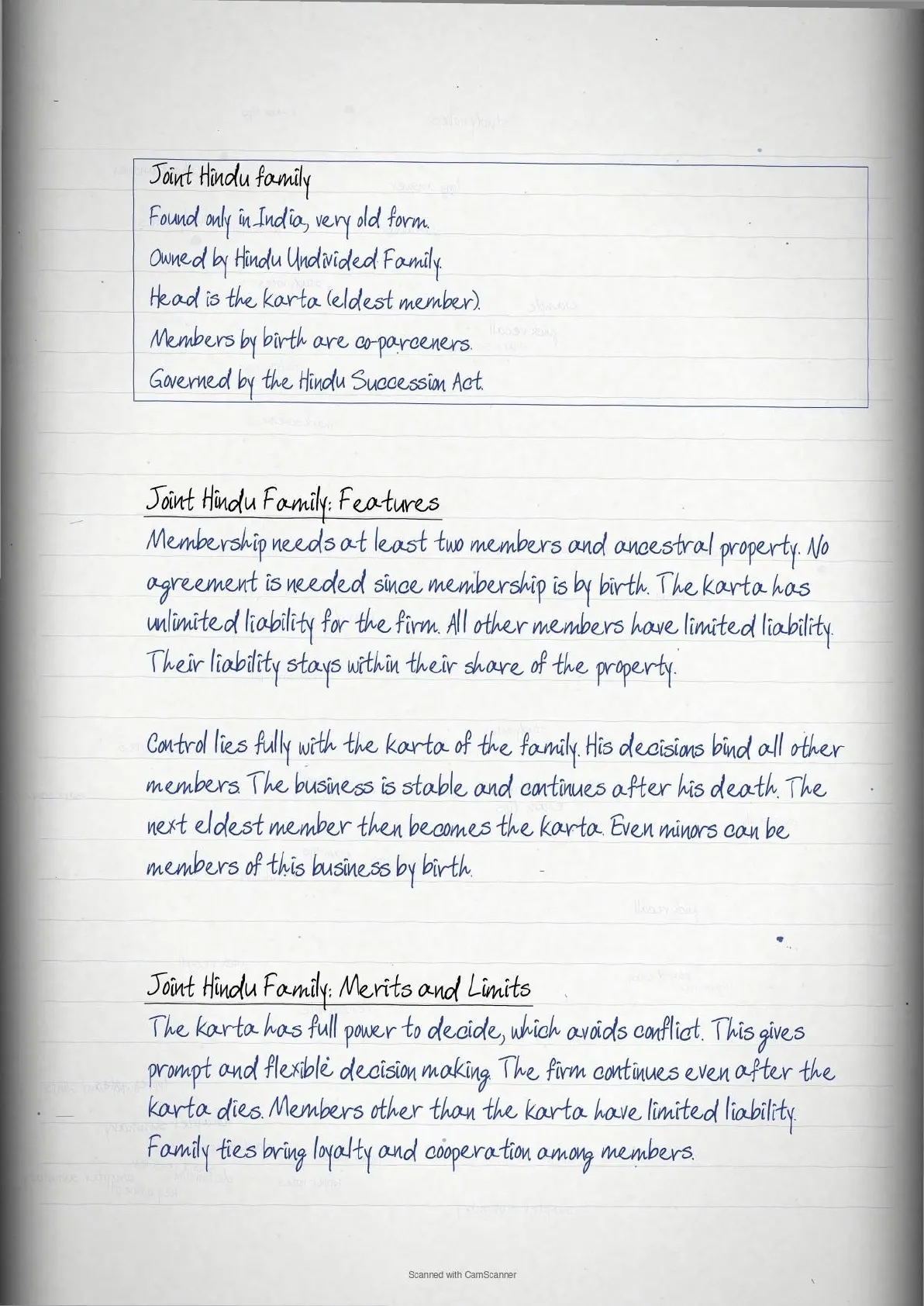
Forms of business organisation differ in ownership, control, liability and how the business is managed. Class 11 Business Studies Chapter 2 Forms of Business Organisation builds this idea step by step. These class 11 business-studies handwritten notes chapter 2 Forms of Business Organisation follow the 2026-27 NCERT and cover sole proprietorship: features, merits and limits, joint hindu family.
- CBSE Class 11 Weightage: a scoring chapter in the Business Studies paper, asked in short and long answers.
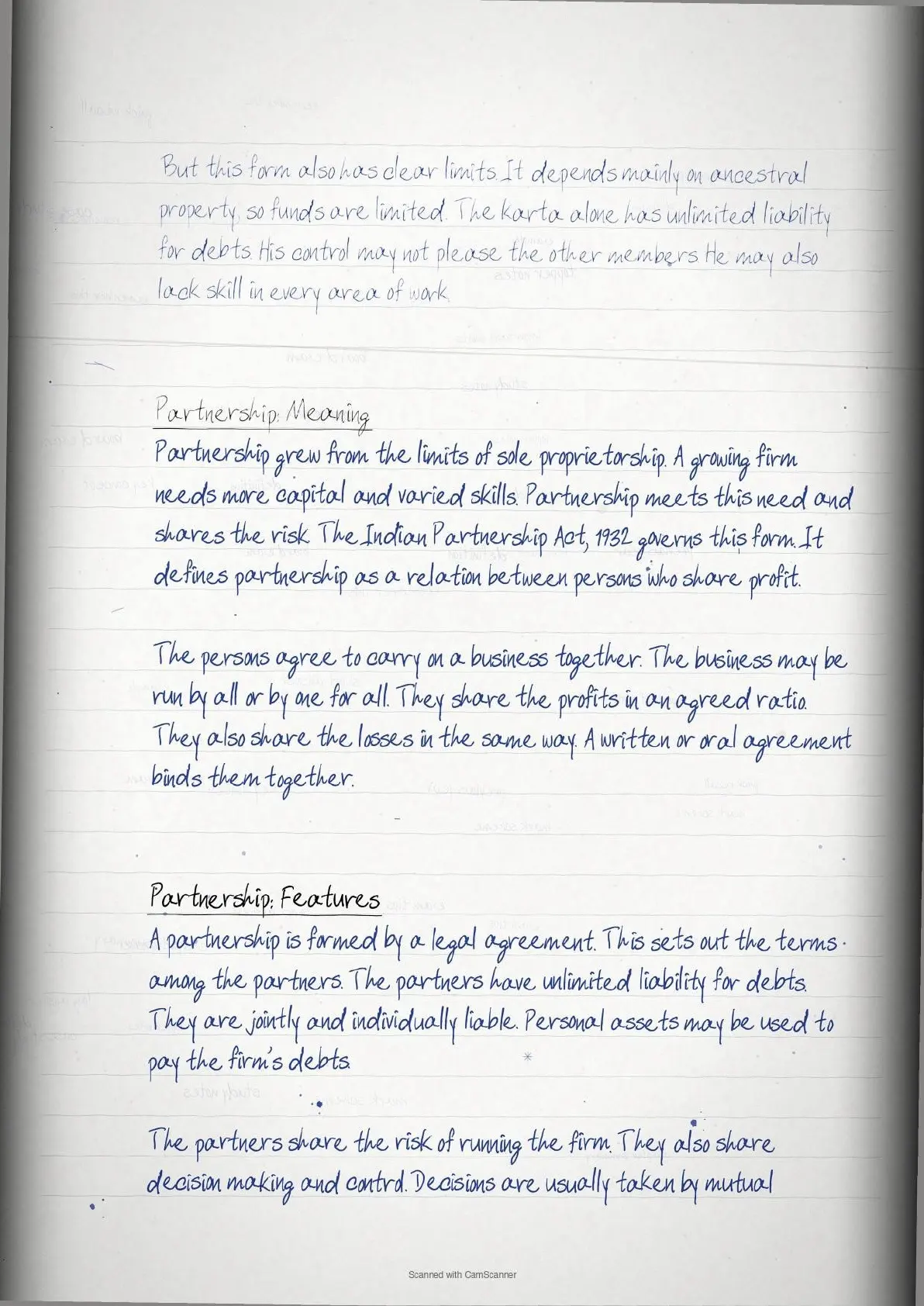
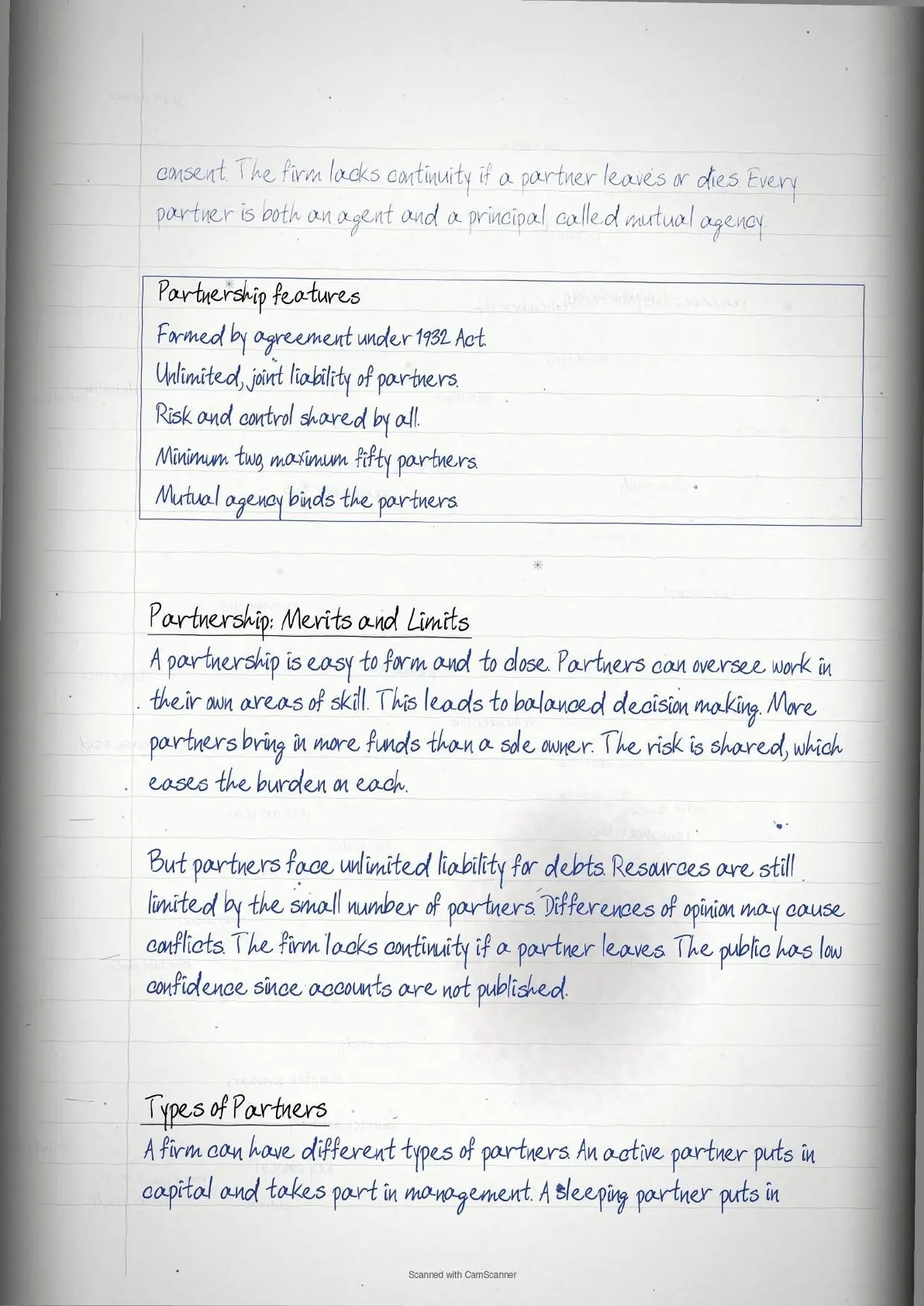
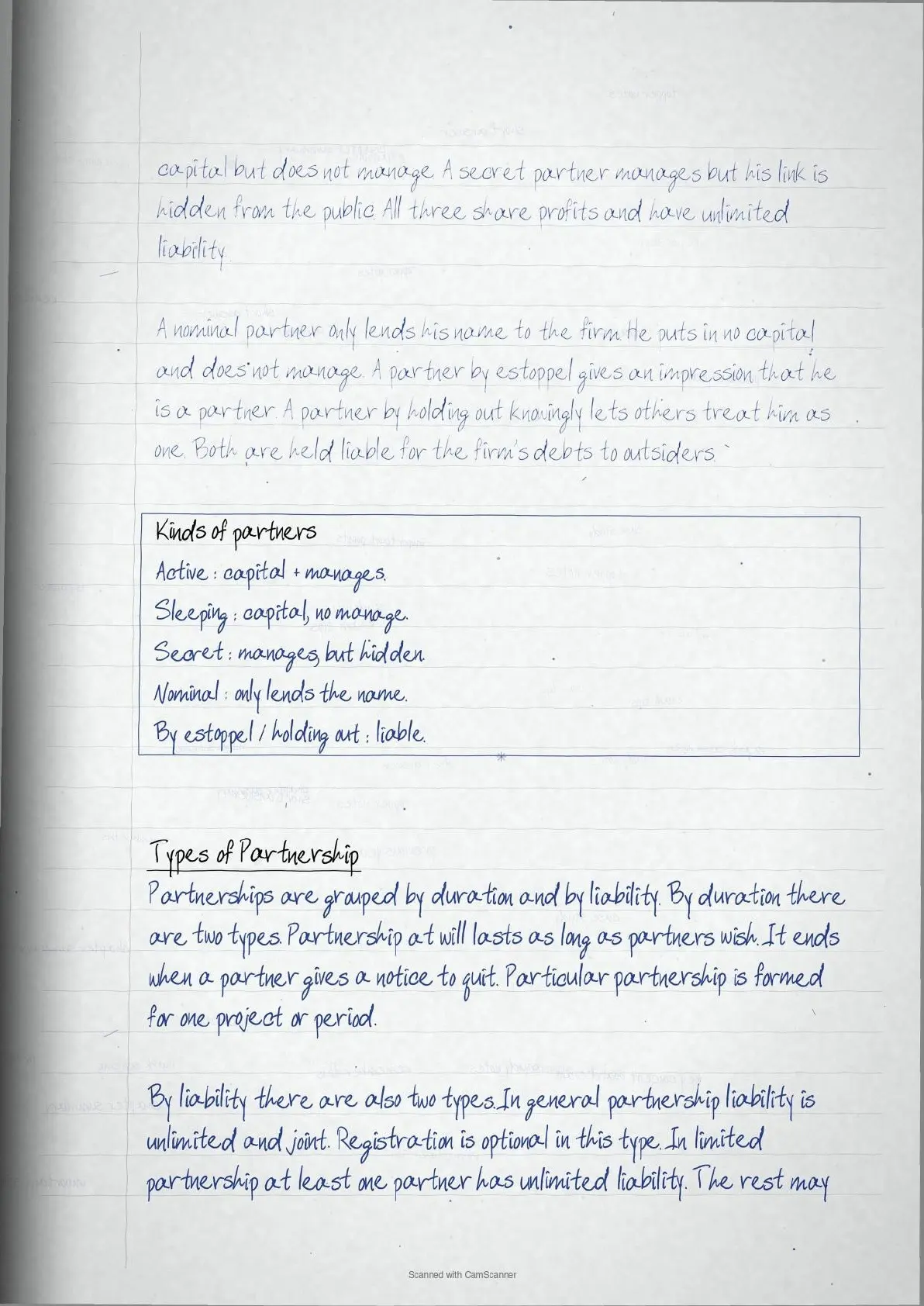
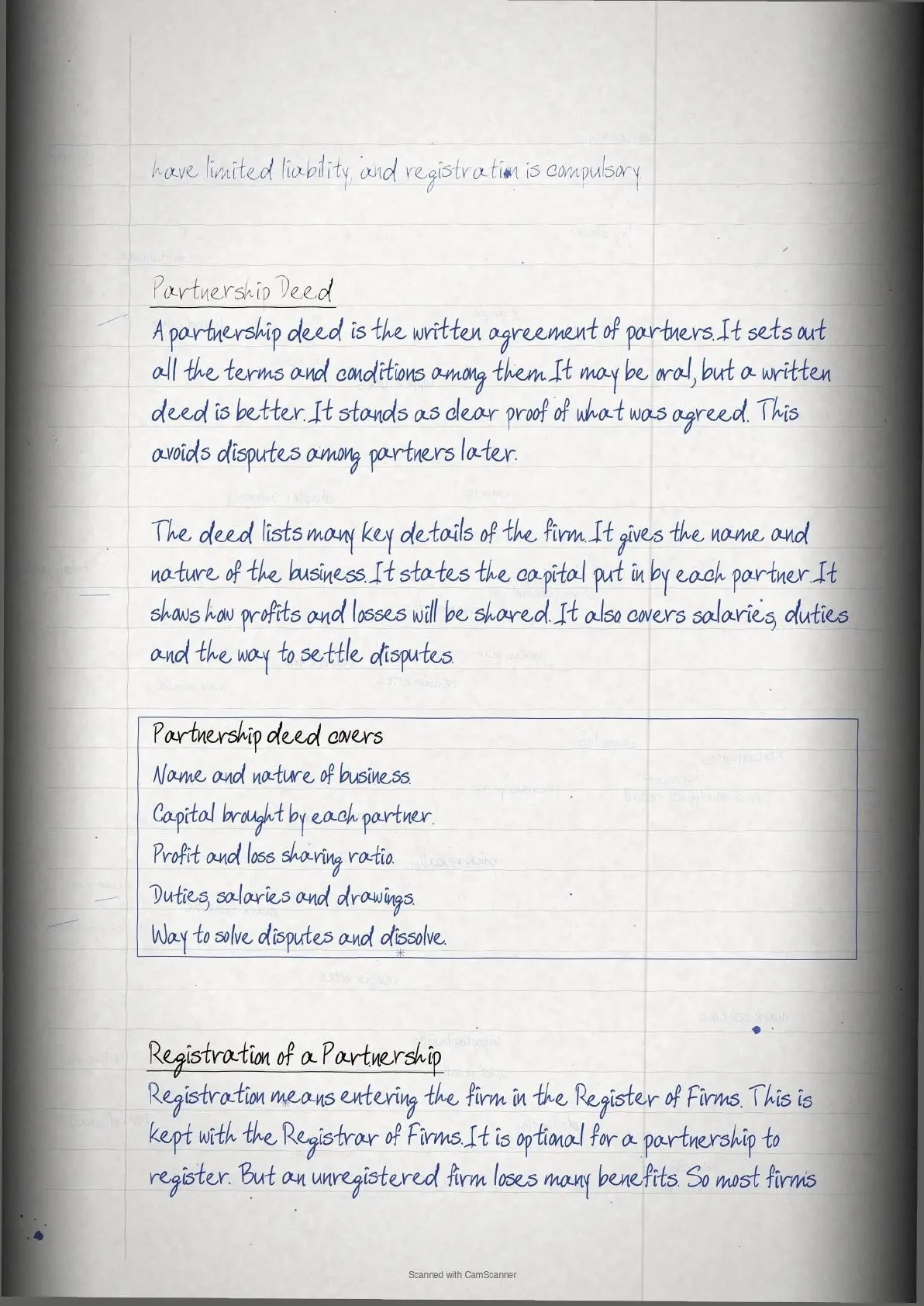
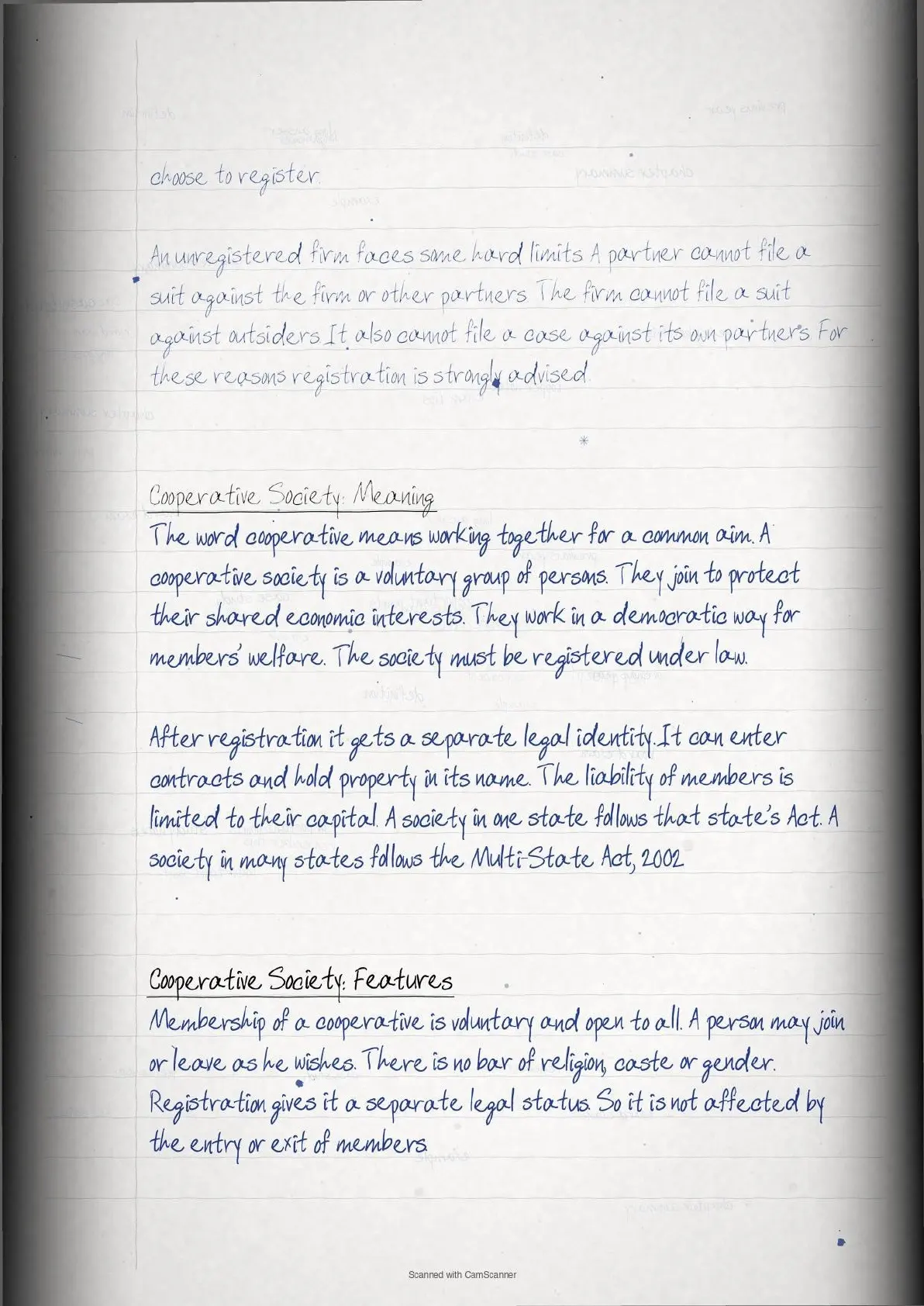
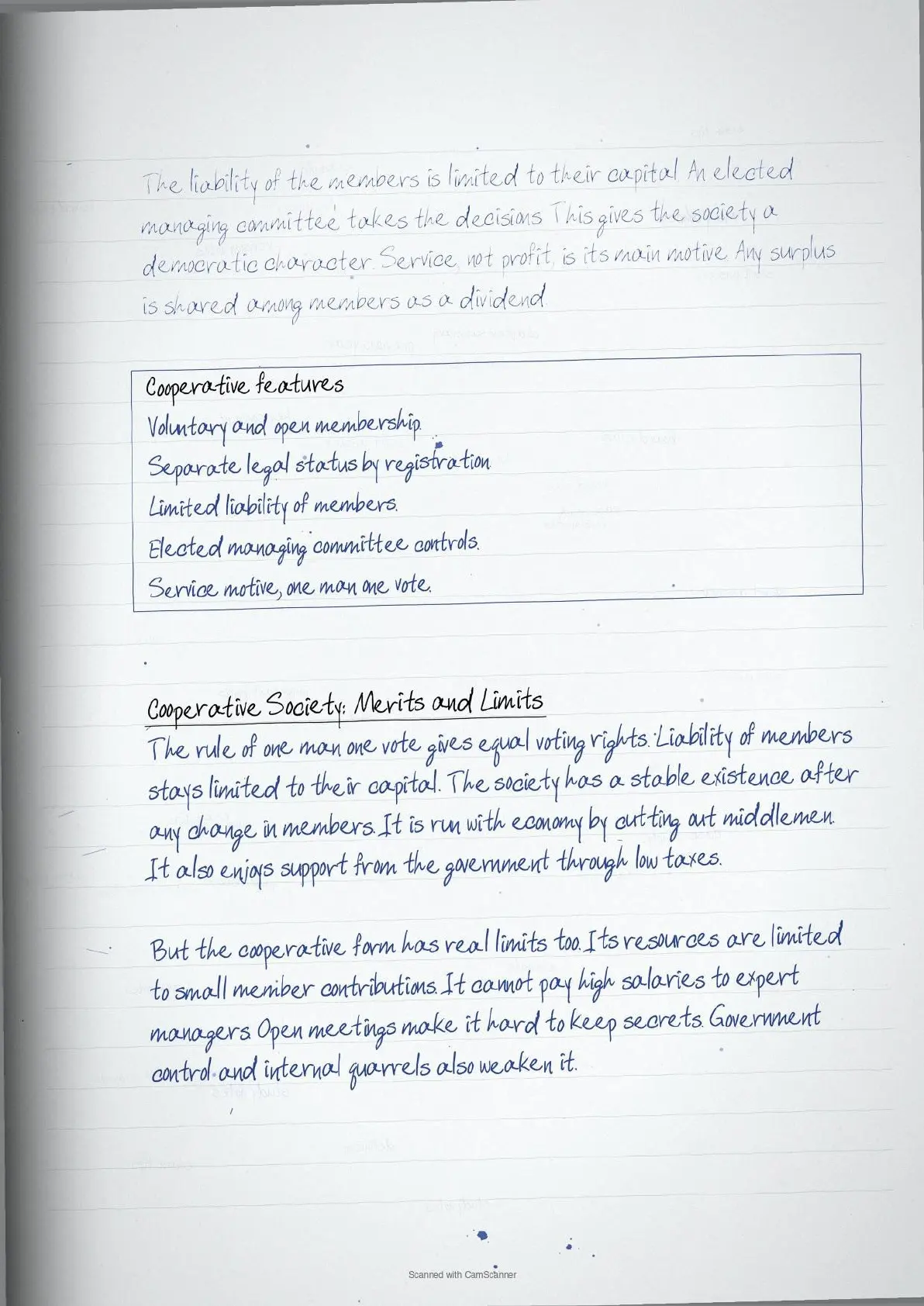
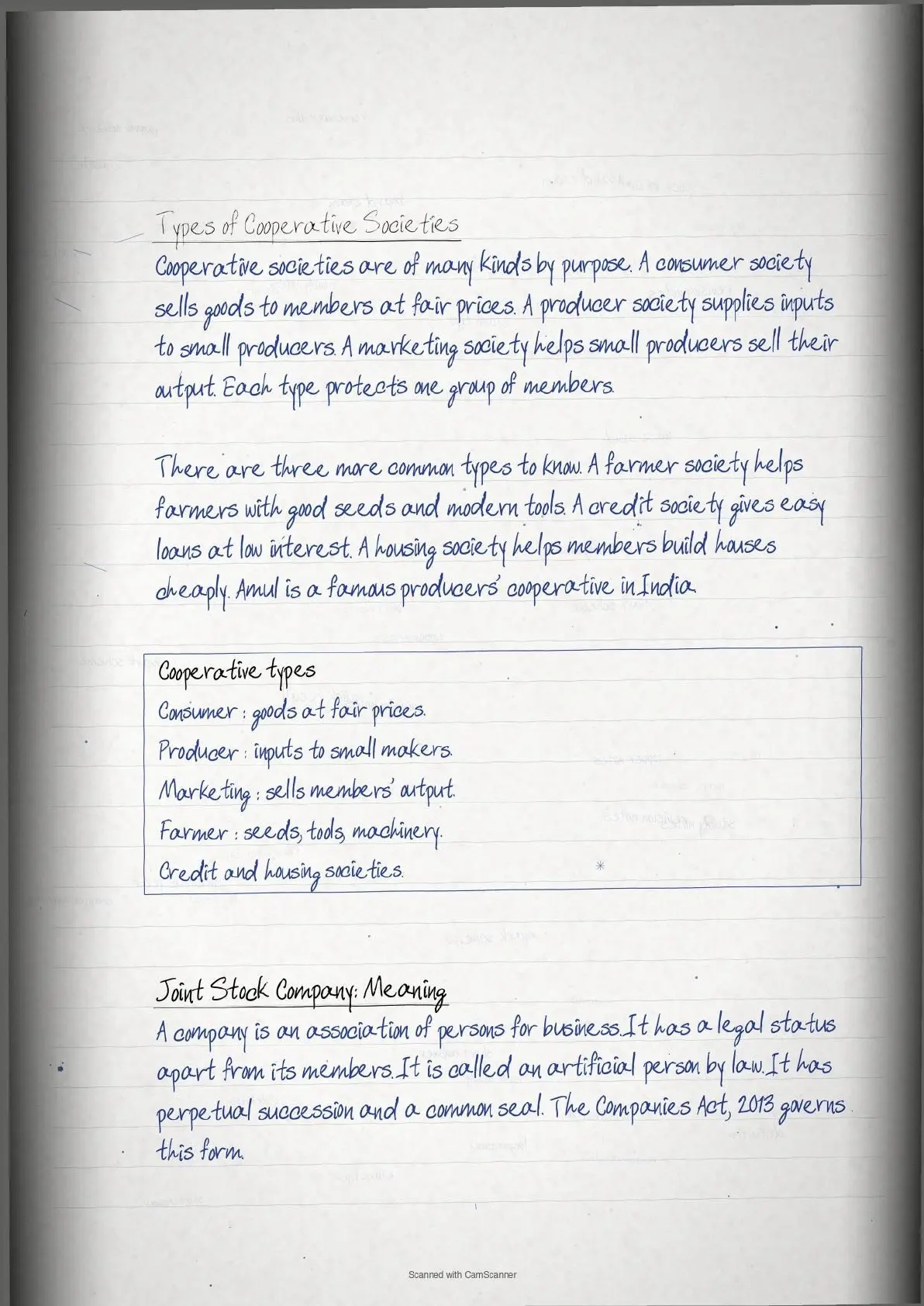
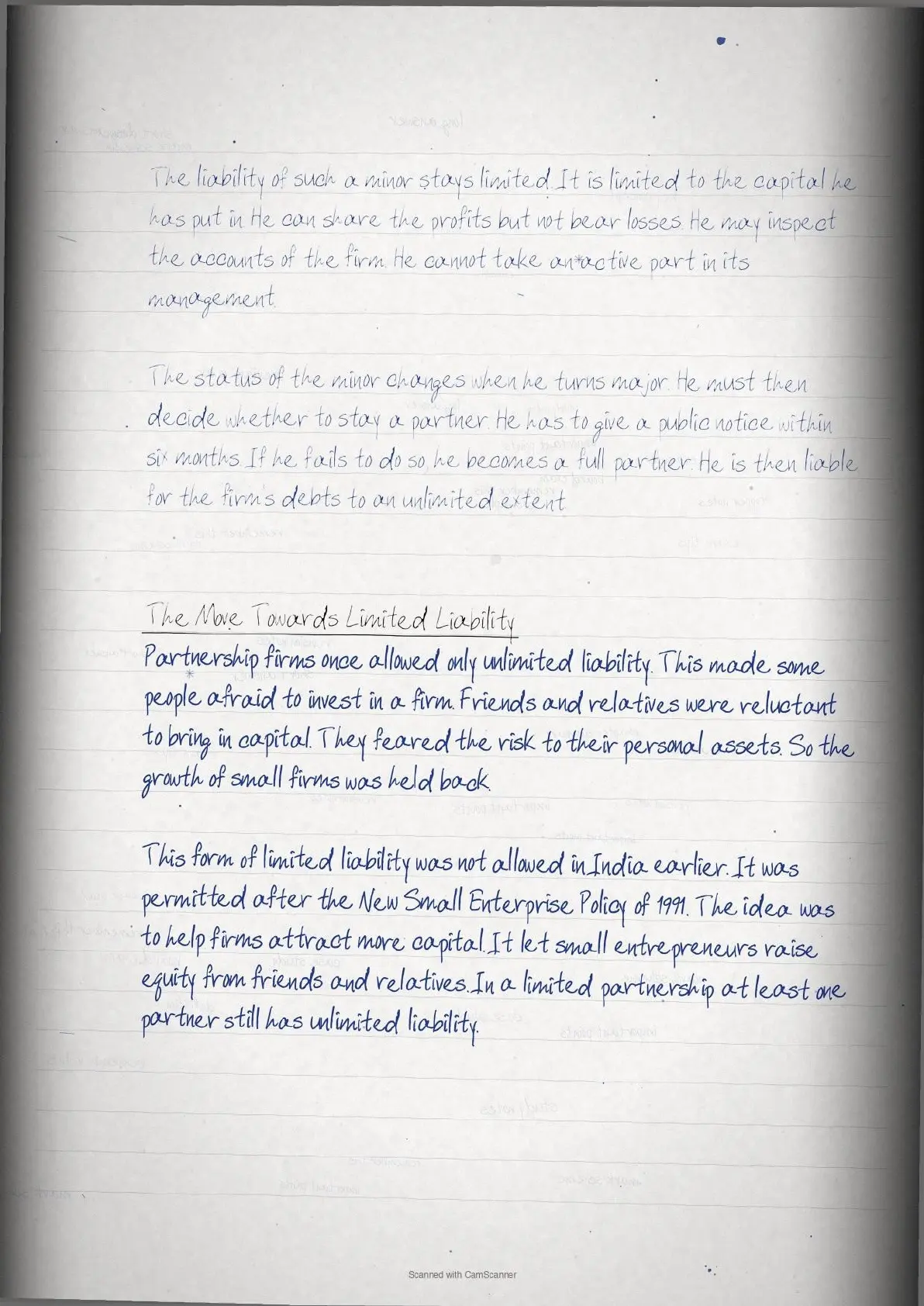
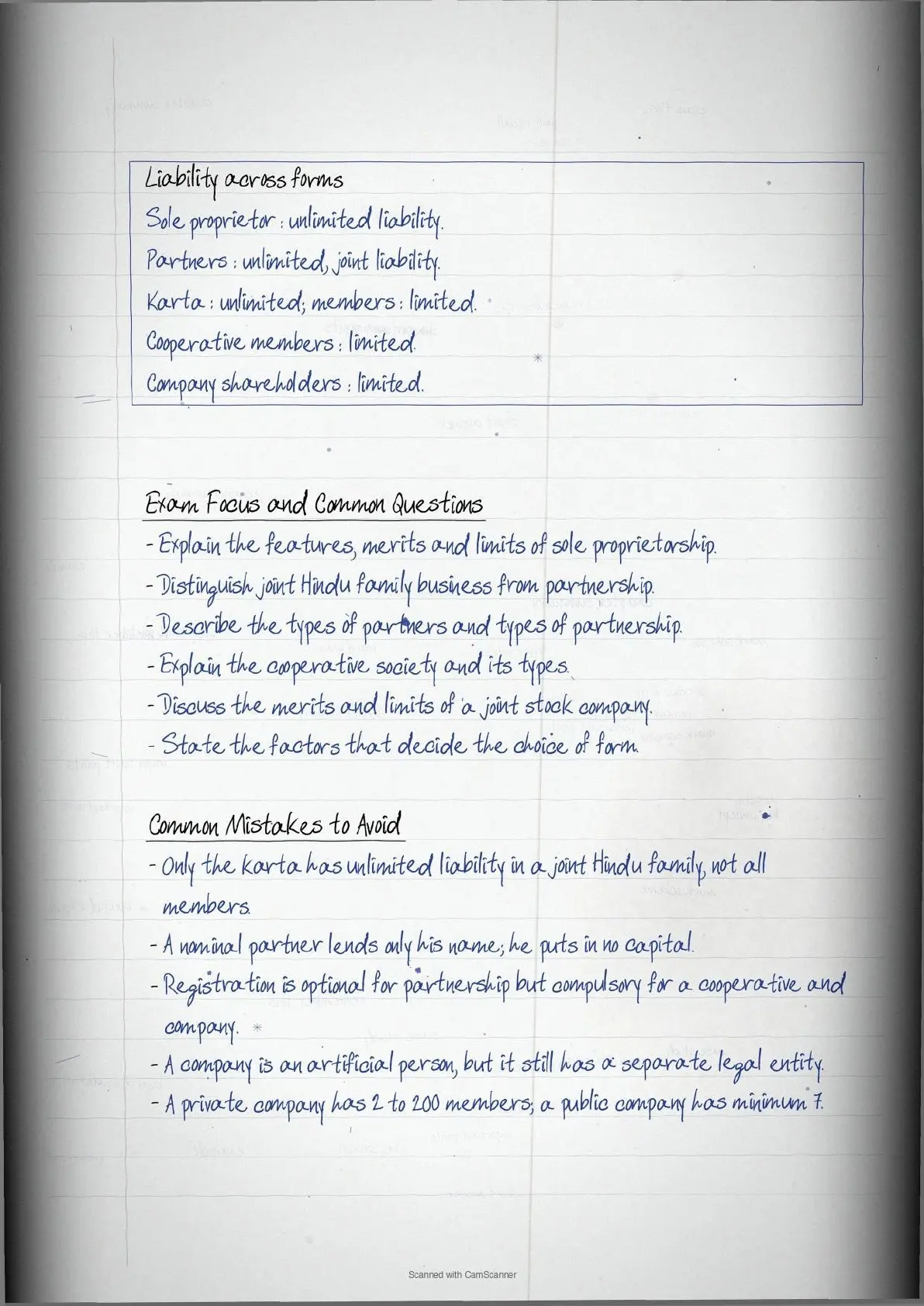
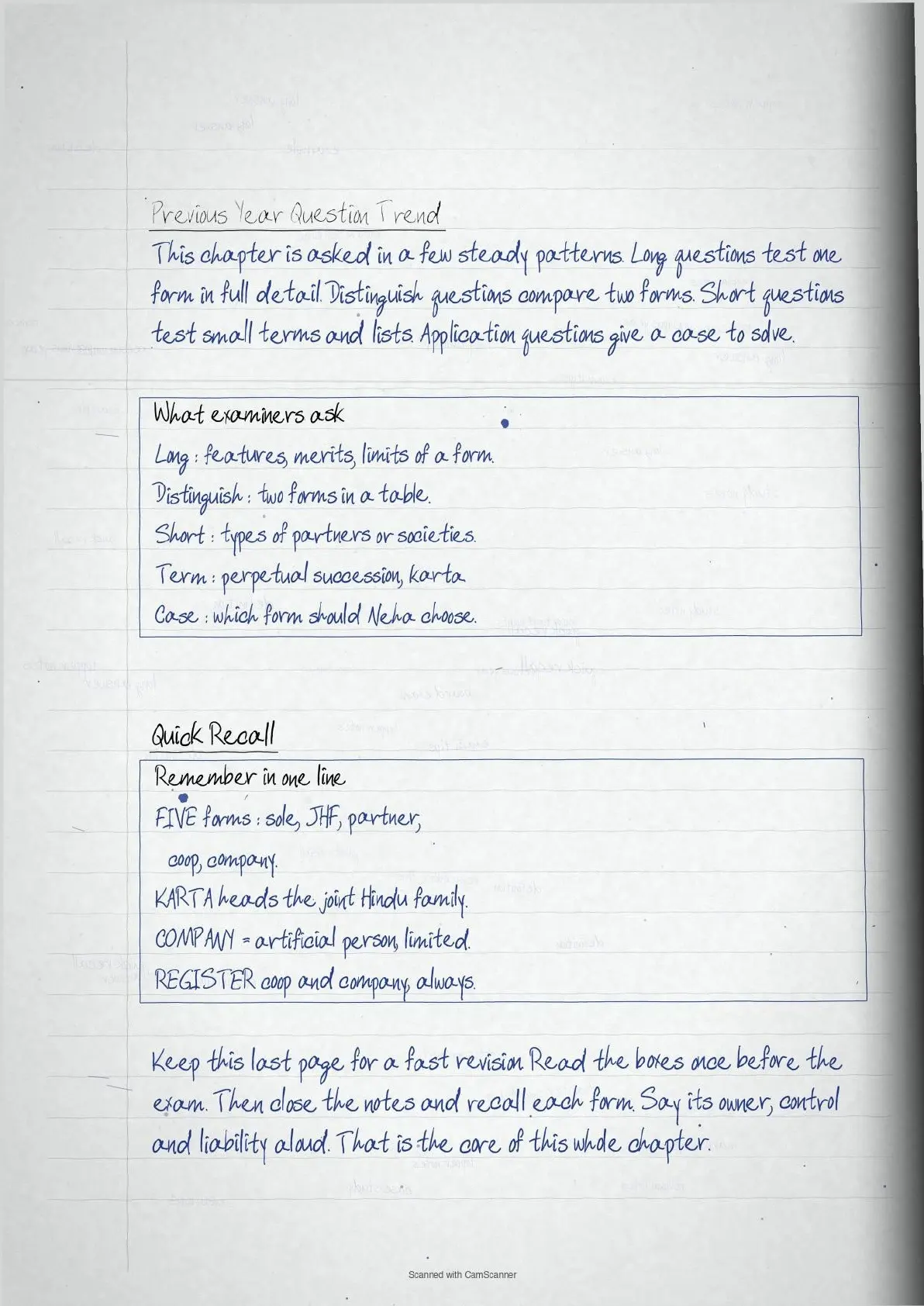
- What the notes cover: sole proprietorship: features, merits and limits, joint hindu family business and the karta, partnership, its types and the partnership deed, types of partners and registration of a firm.
- Best for: quick revision before Class 11 exams and a base for CUET later.
You can read the complete class 11 business-studies handwritten notes for Forms of Business Organisation, with key terms, boxed definitions, and quick revision points, in the PDF below.
These handwritten notes are written by subject teachers, mapped to the 2026-27 NCERT, and checked against the last five years of CBSE Class 11 Business Studies papers.
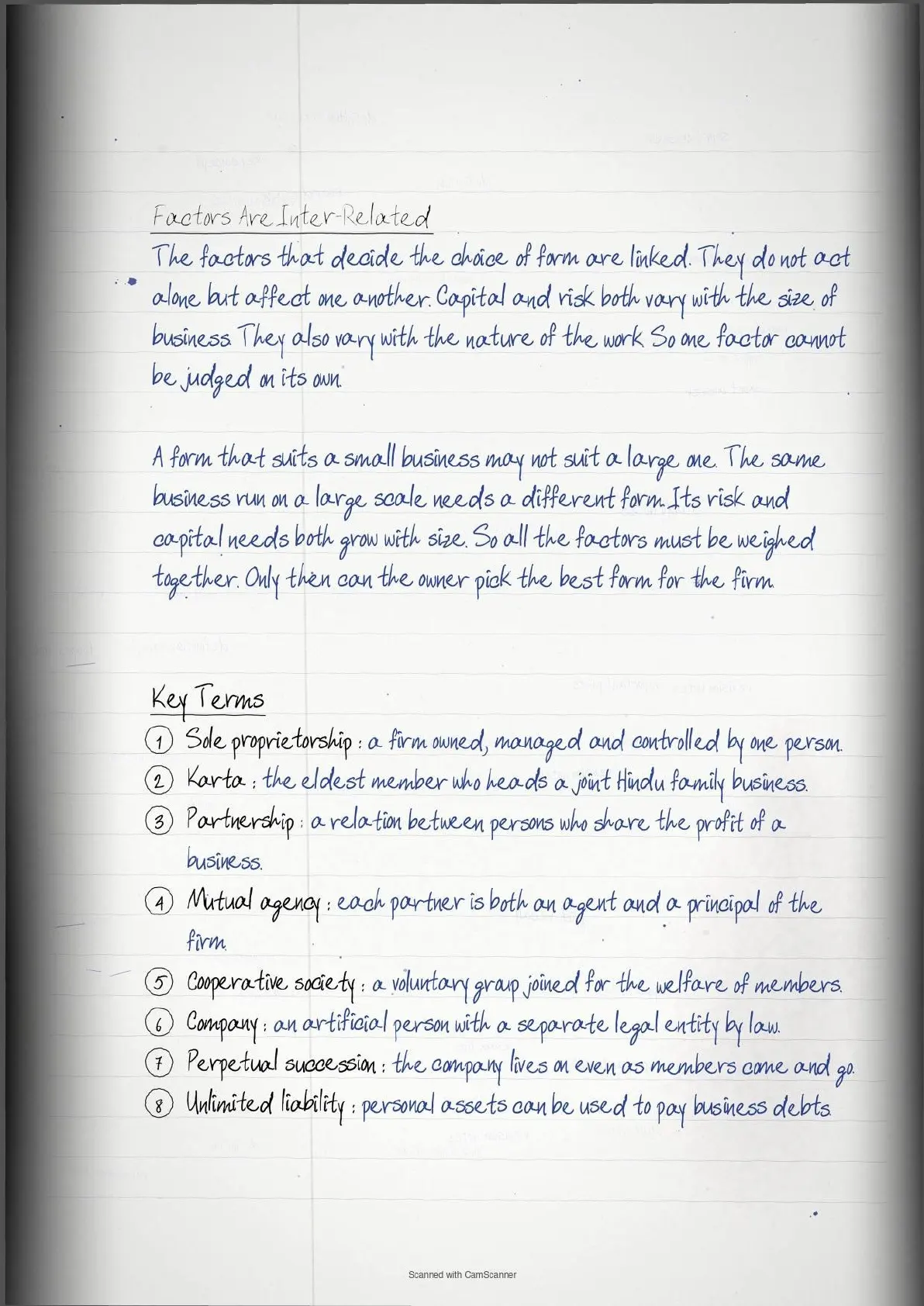
Key Terms and Ideas in Forms of Business Organisation
These are the terms and ideas the exam asks about most. Learn each one so you can define it and use it in your answers.
| Term / Idea | What it means |
|---|---|
| Sole proprietorship | firm owned, managed and controlled by one person |
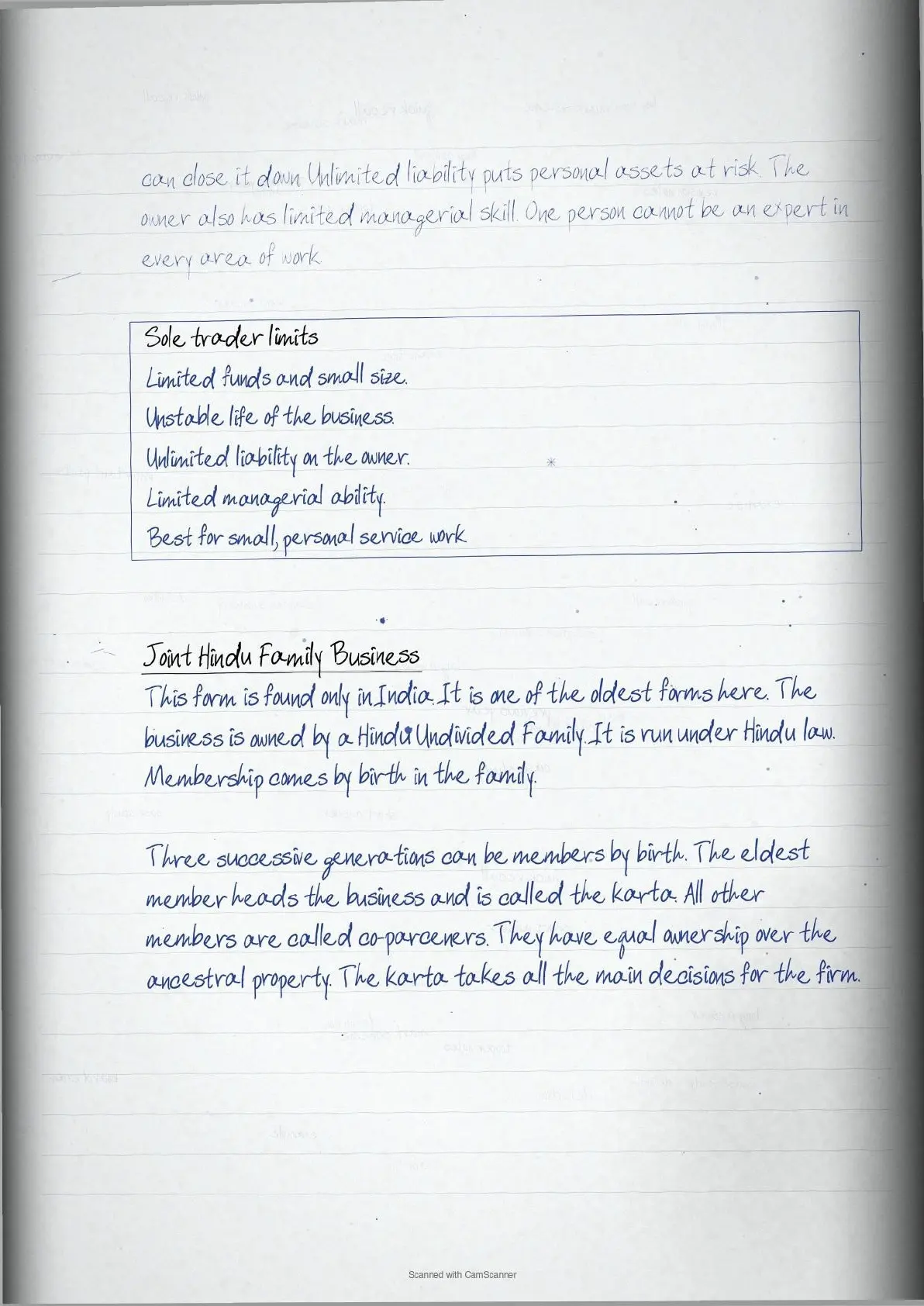
| Karta | eldest member who heads a joint Hindu family business |
| Partnership | relation between persons who share the profit of a business |
| Mutual agency | each partner is both an agent and a principal |
| Cooperative society | voluntary group joined for the welfare of members |
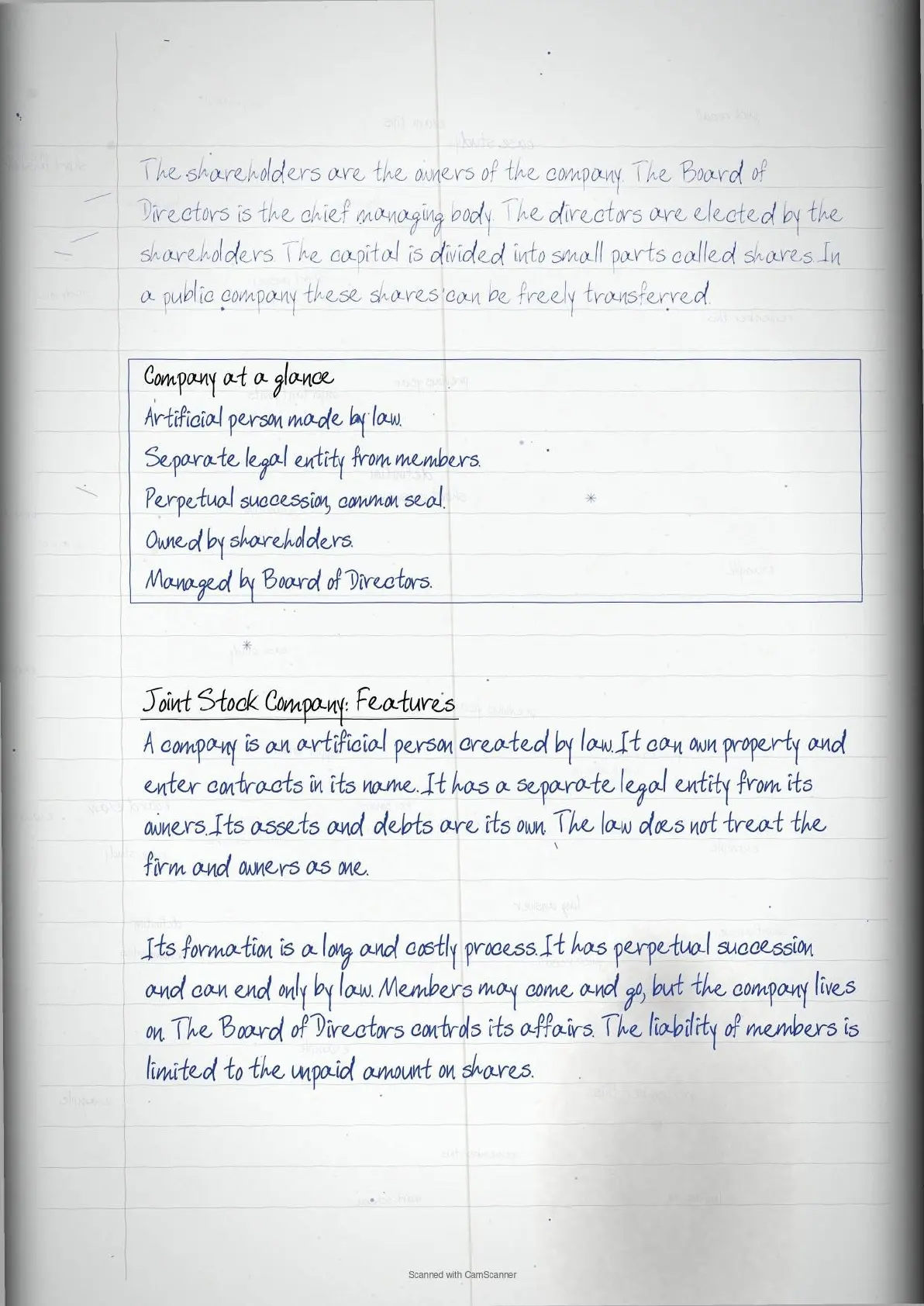
| Company | artificial person with a separate legal entity by law |
| Perpetual succession | the company lives on as members come and go |
| Unlimited liability | personal assets can be used to pay business debts |
What the Forms of Business Organisation Handwritten Notes Cover
A business can be owned and run in five main forms. These notes explain sole proprietorship, joint Hindu family business, partnership, cooperative society and joint stock company. They cover the features, merits and limits of each, and the factors that decide the best choice.
- Sole proprietorship: features, merits and limits
- Joint Hindu family business and the karta
- Partnership, its types and the partnership deed
- Types of partners and registration of a firm
- Cooperative society and its various types
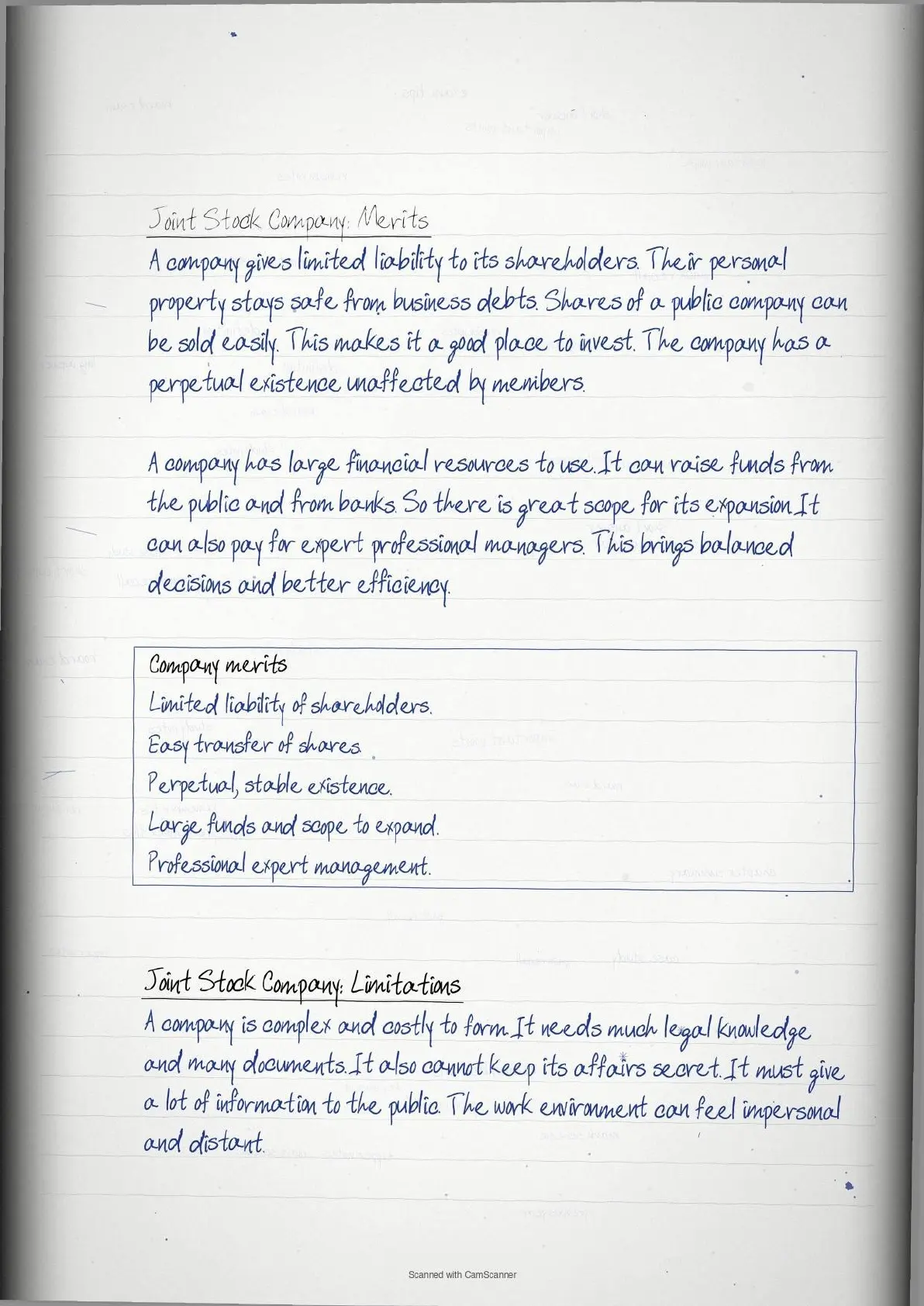
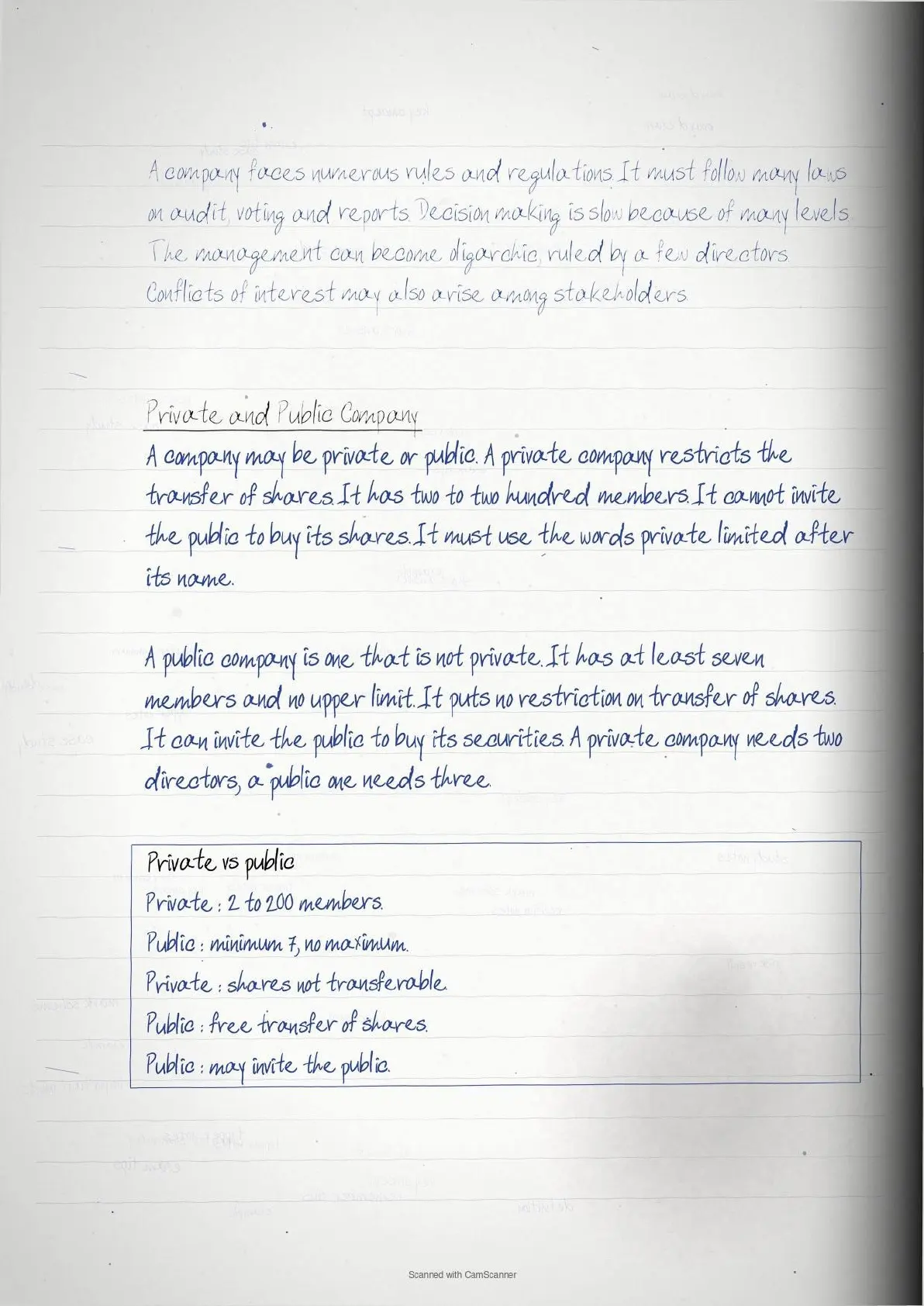
- Joint stock company: private and public
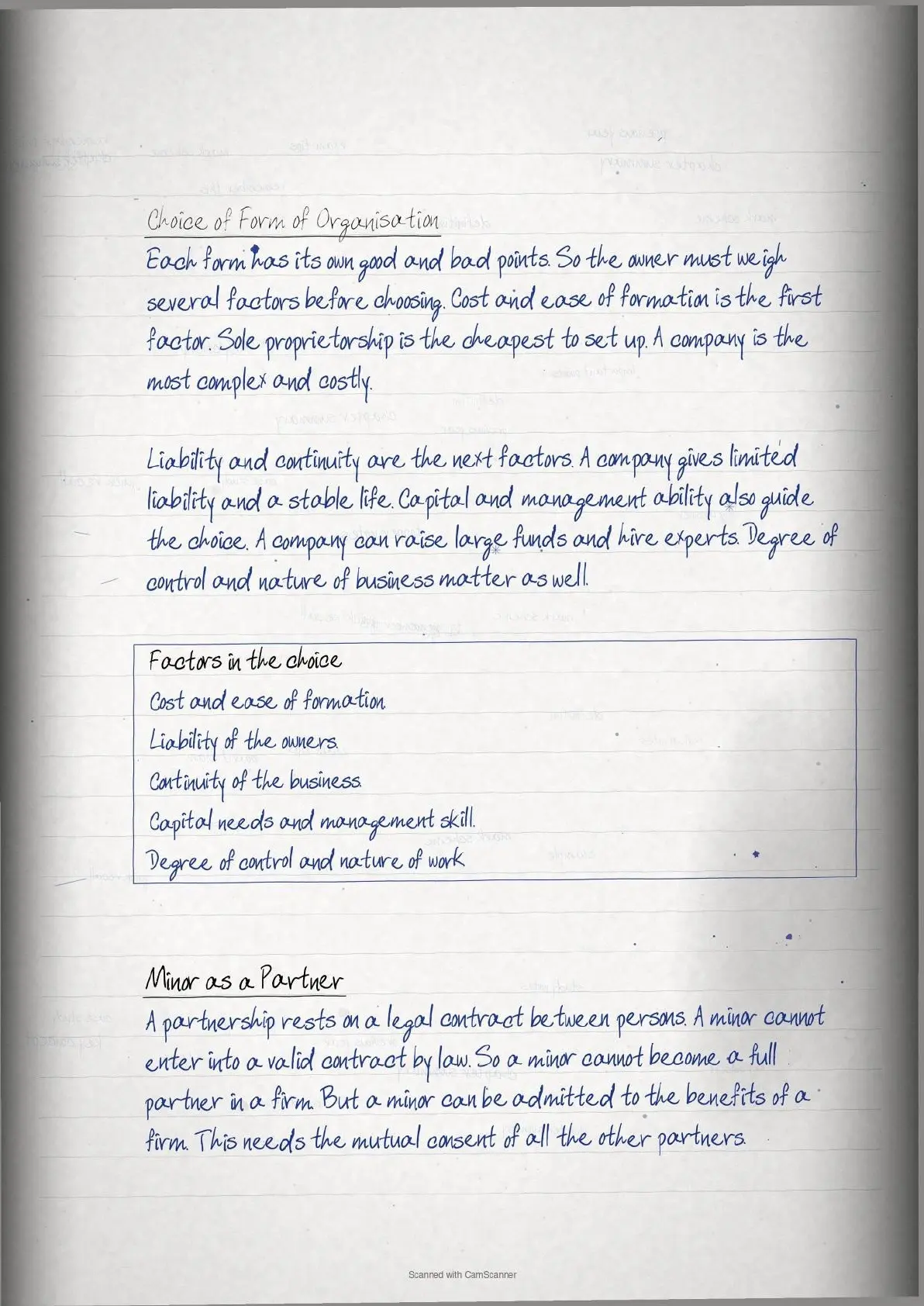
- Factors that decide the choice of form
Forms of Business Organisation Topic-wise Weightage for CBSE Class 11 Business Studies
Some parts of this chapter are asked more often than others. The table below shows which sub-topics to revise first, based on recent CBSE Class 11 question trends.
| Sub-topic | Weightage | CBSE Frequency |
|---|---|---|
| Company: features, merits, limits | High | asked most years |
| Sole proprietorship and partnership | High | frequent long question |
| Cooperative society and its types | Medium | often asked |
| Types of partners | Medium | short question |
| Choice of form of organisation | Low | occasional case study |
How Collegedunia's Handwritten Notes Help You Revise Forms of Business Organisation
These notes are made for the night before the exam. They keep the facts short and easy to scan. Collegedunia maps every point to the 2026-27 NCERT.
- Clear handwriting: each topic is written in neat, easy-to-read handwriting.
- Boxed key terms: the main terms and definitions are boxed by hand for fast recall.
- Diagrams and tables: simple hand-drawn tables and charts make ideas clear.
- Colour-coded headings: new sub-topics stand out, so you find any section in seconds.
Forms of Business Organisation Self-Assessment Quiz
Try these quick questions after you read the notes. Tap each question to check your answer. They cover the points CBSE asks most often.
Who heads a joint Hindu family business?
(a) partner (b) karta (c) director (d) sponsor
Answer: (b) karta - the eldest member controls the business
Which partner only lends his name to the firm?
(a) active (b) sleeping (c) nominal (d) secret
Answer: (c) nominal - he gives no capital and does not manage
A company is best described as
(a) natural person (b) artificial person (c) minor (d) agent
Answer: (b) artificial person - it exists only in the eyes of law
Maximum members in a private company are
(a) 50 (b) 100 (c) 200 (d) unlimited
Answer: (c) 200 - a private company has 2 to 200 members
Which form gives the owner unlimited liability?
(a) company (b) cooperative (c) sole proprietorship (d) public company
Answer: (c) sole proprietorship - personal assets can be used for debts
How to Use These Handwritten Notes for Class 11 Business Studies Revision
Use these class 11 business-studies handwritten notes in two passes. Read them slowly once for the full chapter. Then, near the exam, read only the boxes and key terms for a fast recall.
- Read the notes once with the NCERT chapter open beside you.
- Say each key term and idea in your own words.
- Practise one long-answer question from a past paper.
- On the last day, revise only the key terms and the boxes.
Class 11 Business Studies Handwritten Notes for All Chapters
The table below links the class 11 business-studies handwritten notes for every chapter. Use it to jump to any other chapter's notes.
Forms of Business Organisation Class 11 Business Studies Handwritten Notes FAQs
Ques. Where can I download Forms of Business Organisation Class 11 Business Studies Handwritten Notes PDF?
Ans. You can download the Forms of Business Organisation Class 11 Business Studies Handwritten Notes PDF directly from this page. Both the Normal and HD versions are free.
Ques. Are these handwritten notes aligned with the 2026-27 NCERT?
Ans. Yes. These notes follow the current 2026-27 syllabus for Class 11 Business Studies. Difference between a private company and a public company.
Ques. How many pages is the Class 11 Business Studies Forms of Business Organisation Handwritten Notes PDF?
Ans. The notes run about 20 pages. They cover the full chapter with key terms, hand-drawn boxes, and a short self-assessment quiz.
Ques. What is the main idea of the 11th standard Business Studies chapter Forms of Business Organisation?
Ans. A private company restricts the transfer of shares, has 2 to 200 members and cannot invite the public to buy its securities. A public company has at least 7 members with no upper limit, allows free transfer of shares and can invite the public to subscribe.
Ques. Are these Forms of Business Organisation notes enough for the CBSE Class 11 exam?
Ans. Yes, for revision. The Collegedunia handwritten notes cover every key point and exam term. Read them with the NCERT chapter and practise past questions.



Comments