




Questions from Class 11 Business Studies Chapter 7 Formation of a Company come up often in the CBSE Class 11 exam. These class 11 business-studies handwritten notes chapter 7 Formation of a Company follow the 2026-27 NCERT and cover the three stages of company formation, who is a promoter and section 69, functions of a promoter and feasibility.
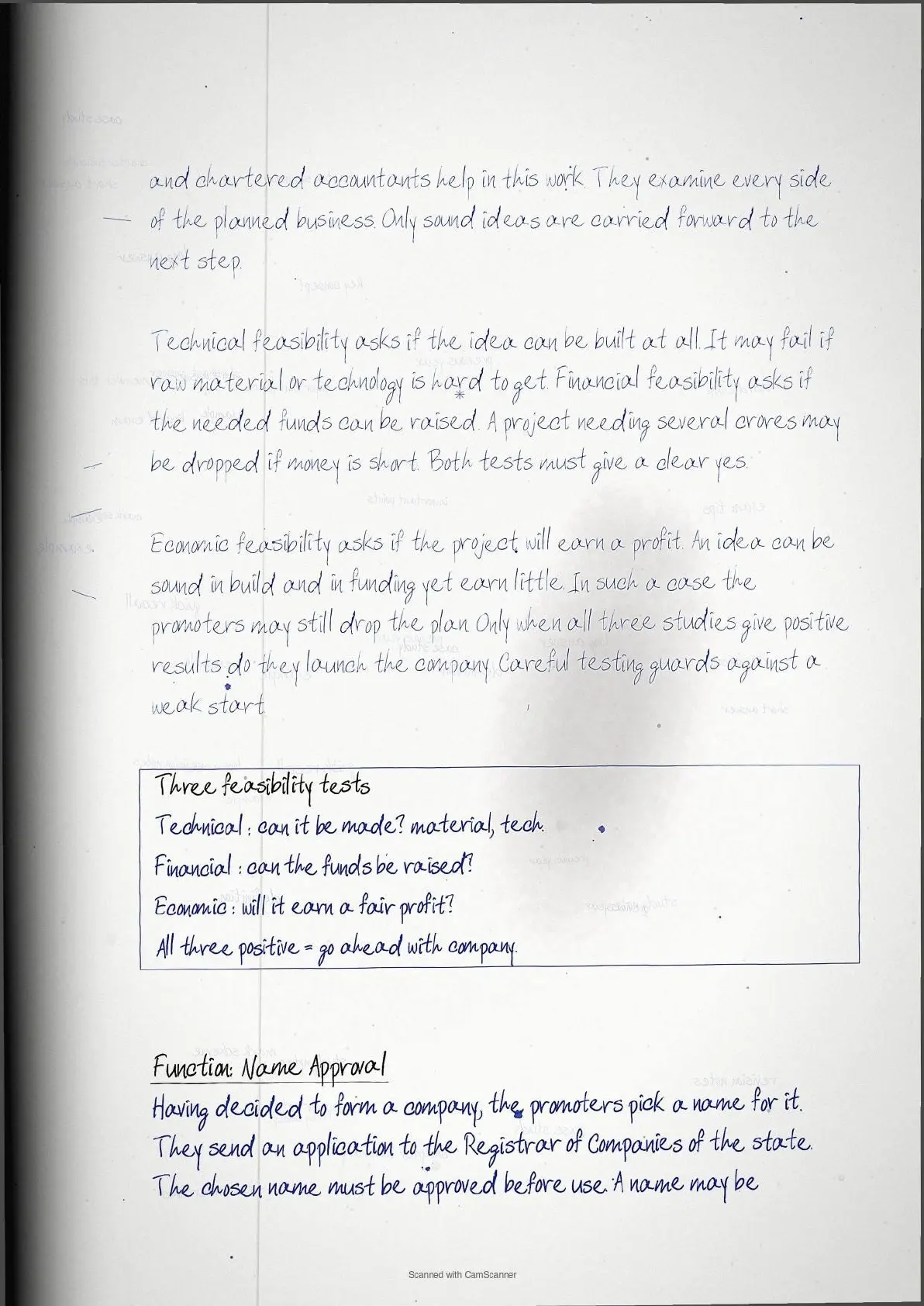
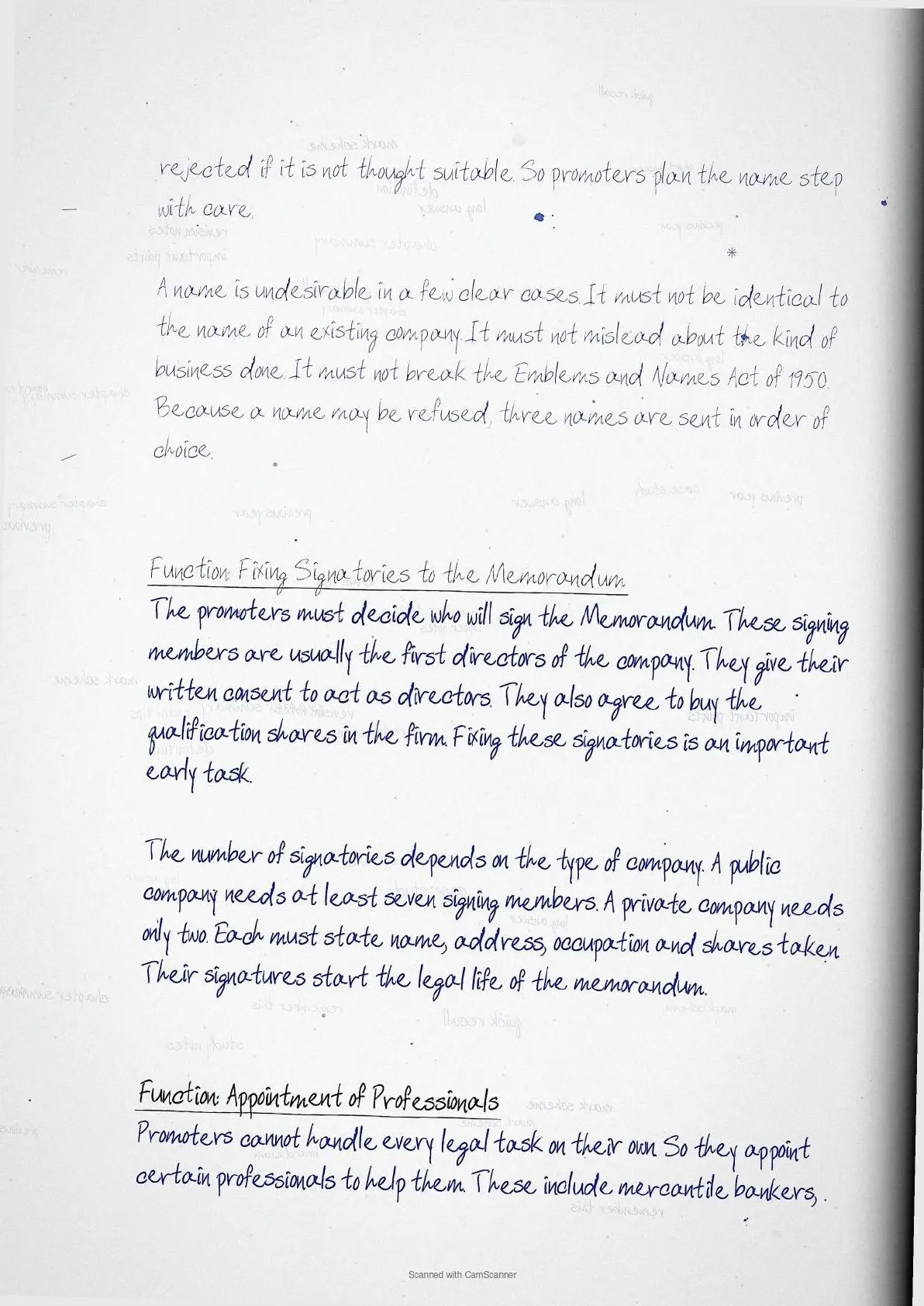
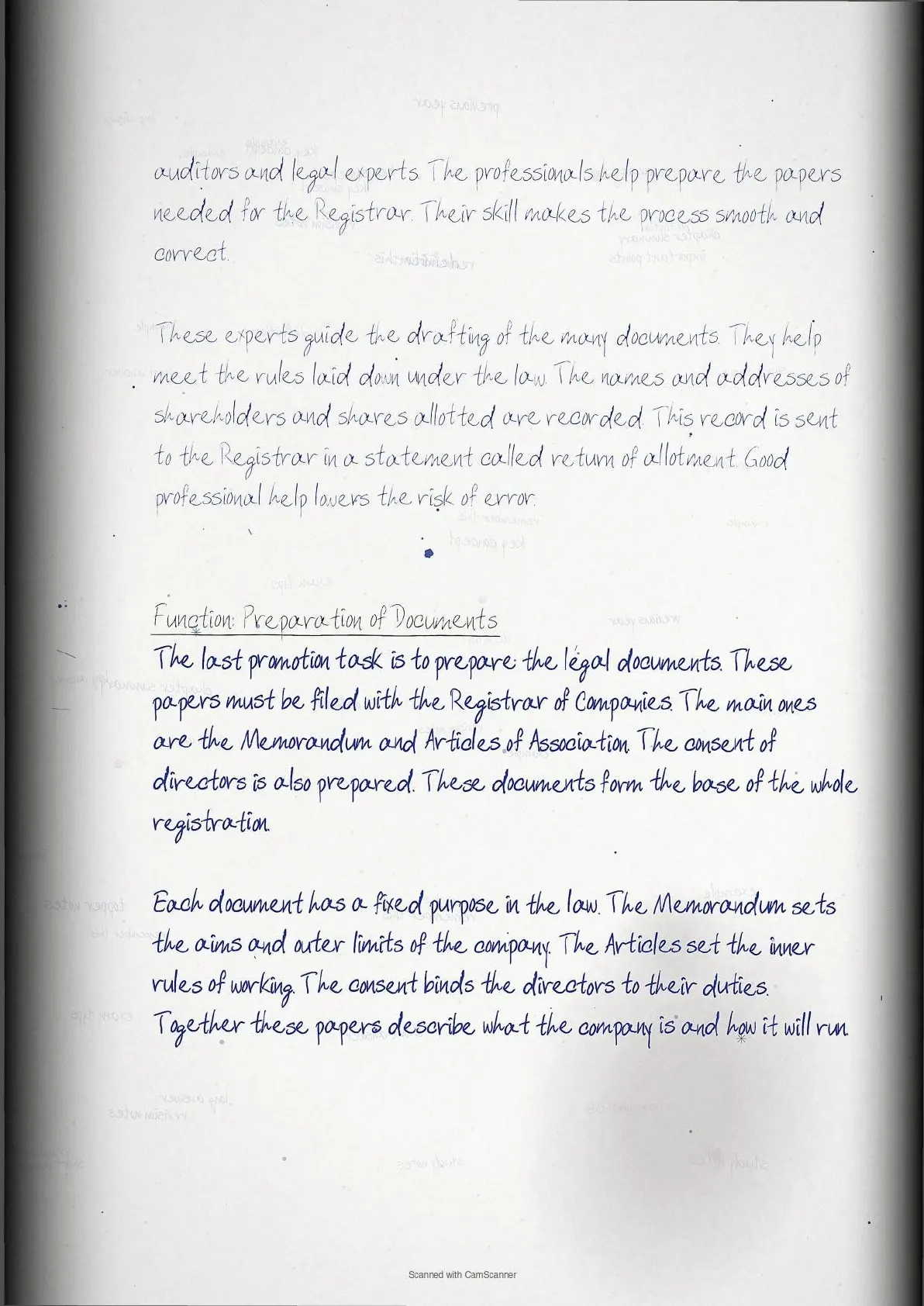
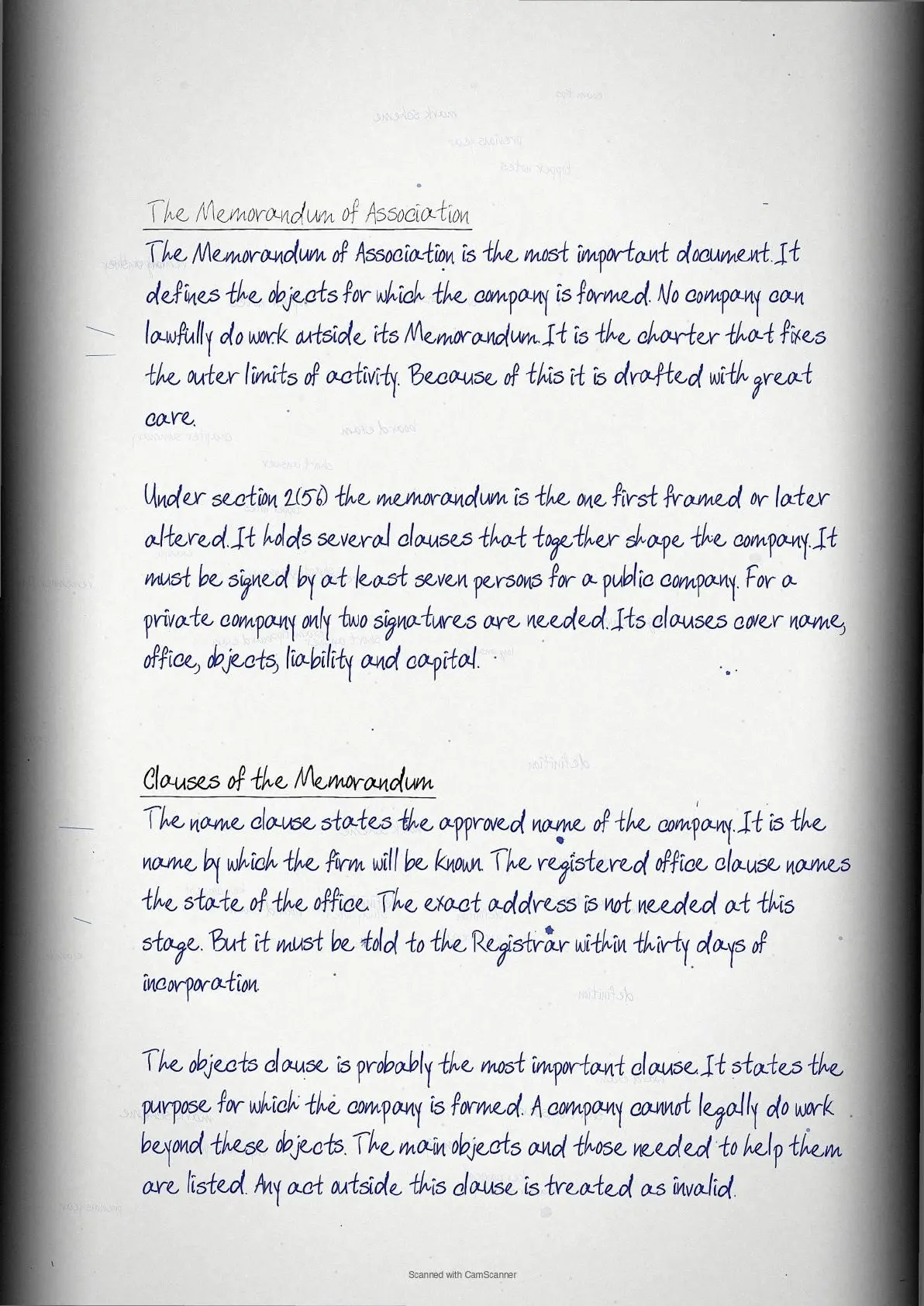
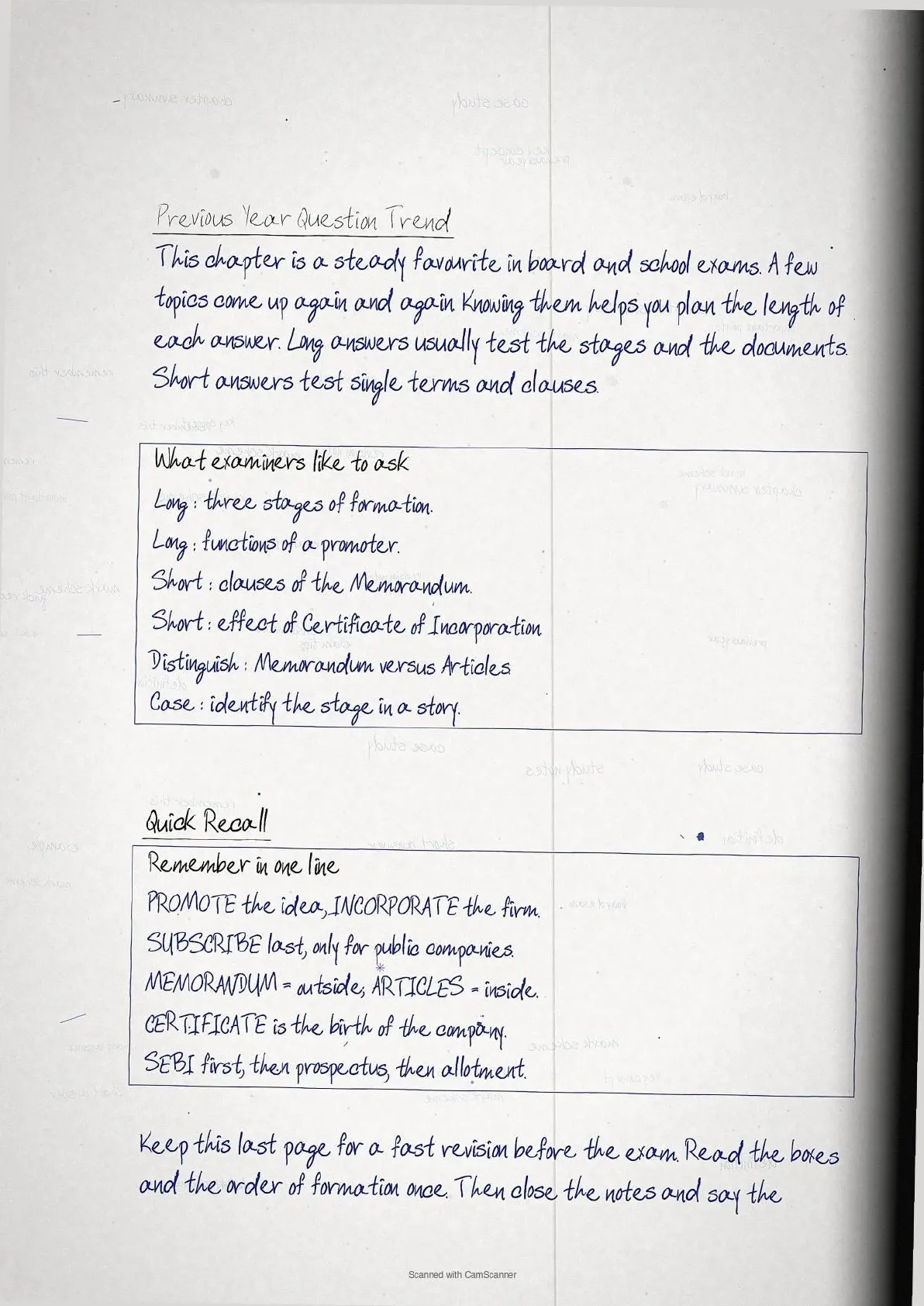

- CBSE Class 11 Weightage: a scoring chapter in the Business Studies paper, asked in short and long answers.
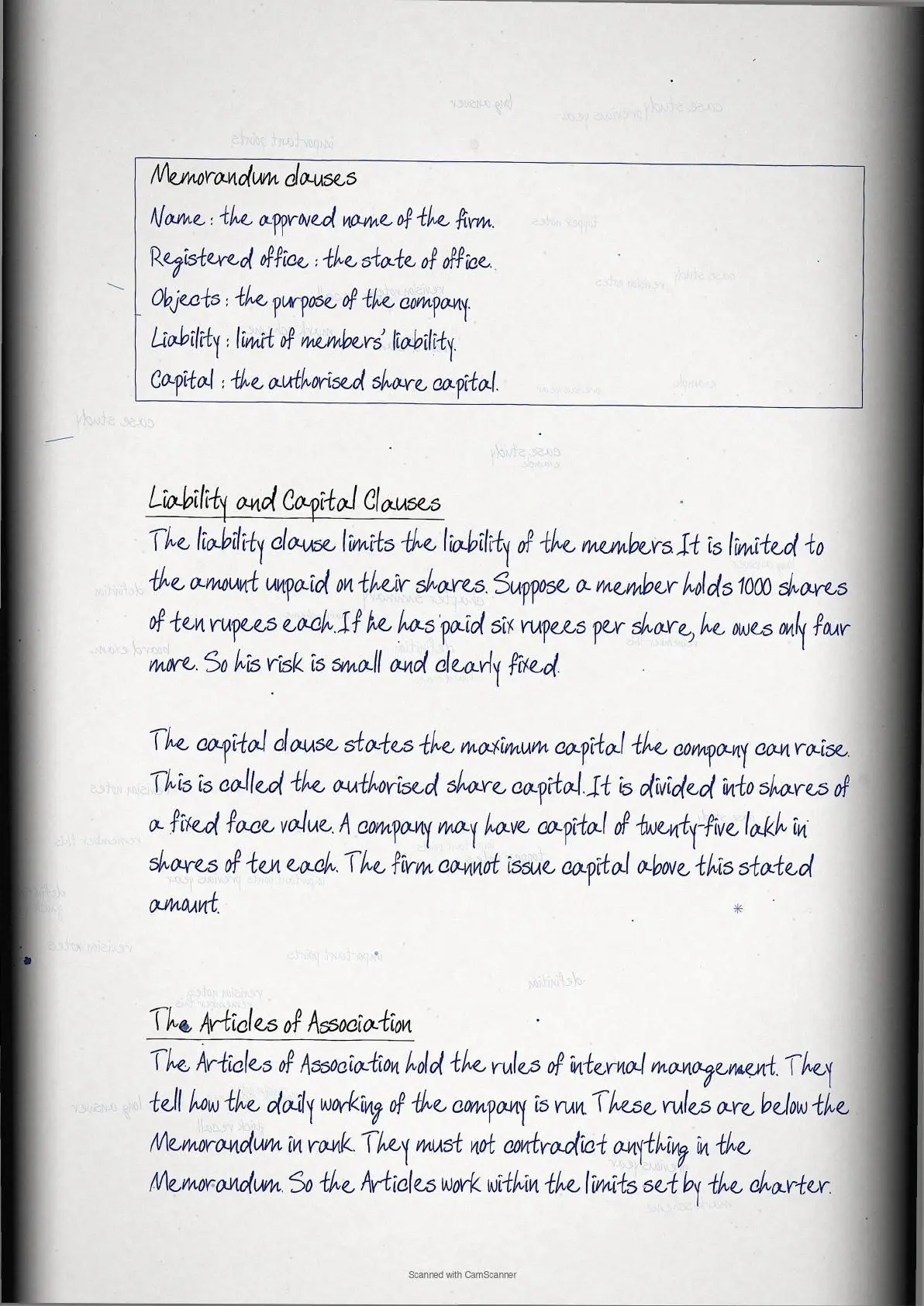
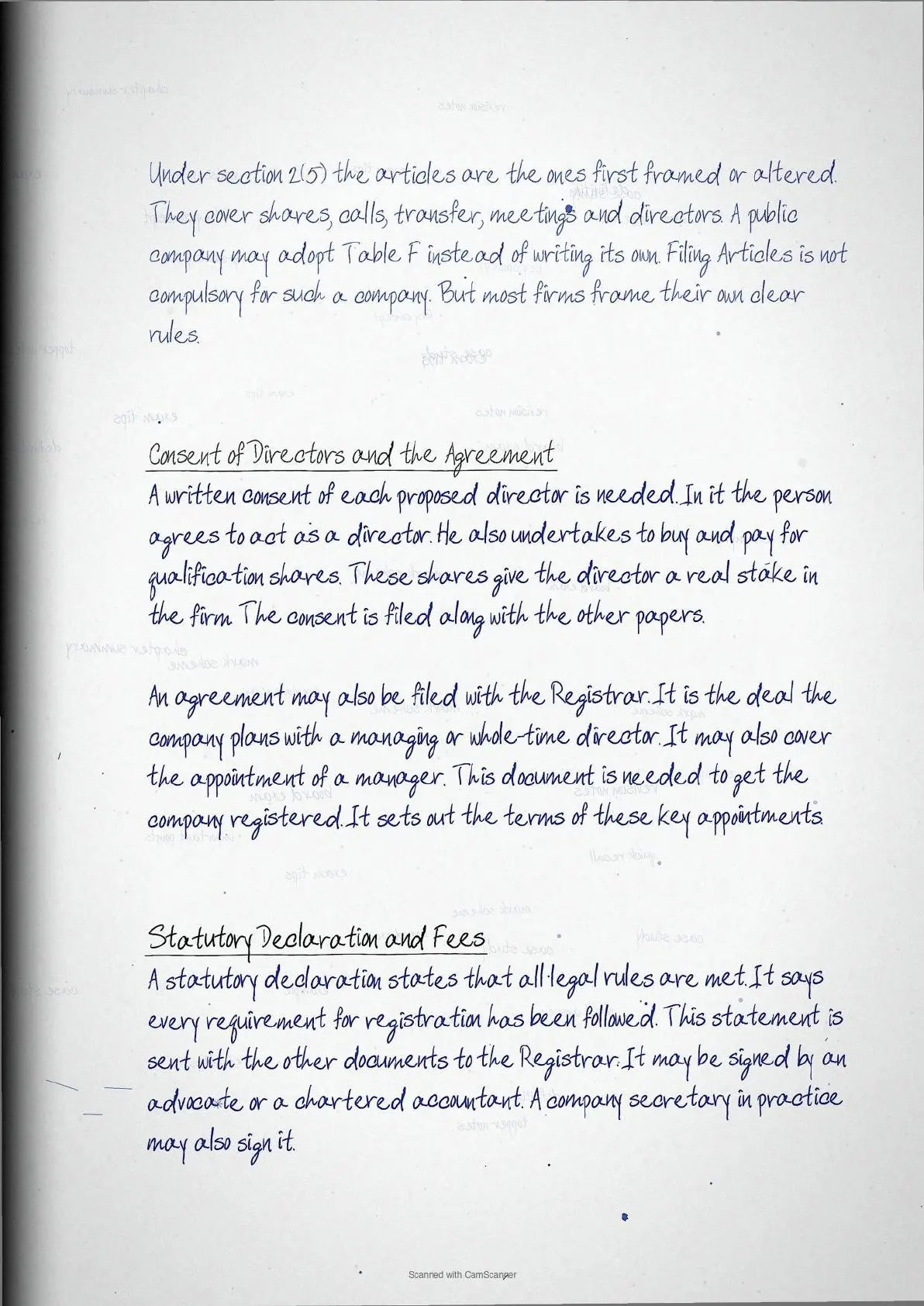
- What the notes cover: the three stages of company formation, who is a promoter and section 69, functions of a promoter and feasibility studies, memorandum and articles of association.
- Best for: quick revision before Class 11 exams and a base for CUET later.
You can read the complete class 11 business-studies handwritten notes for Formation of a Company, with key terms, boxed definitions, and quick revision points, in the PDF below.
These handwritten notes are written by subject teachers, mapped to the 2026-27 NCERT, and checked against the last five years of CBSE Class 11 Business Studies papers.
What the Formation of a Company Handwritten Notes Cover
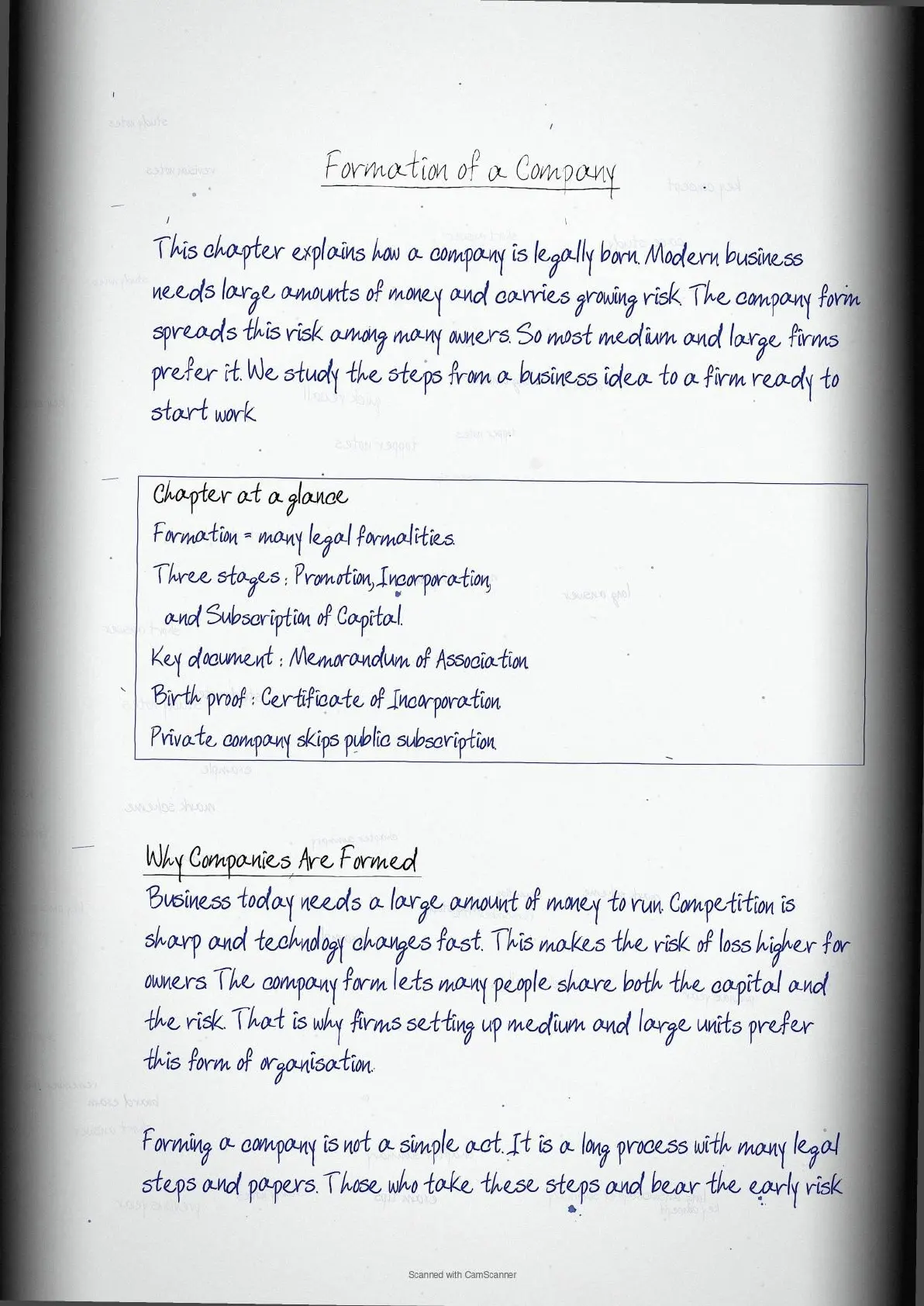
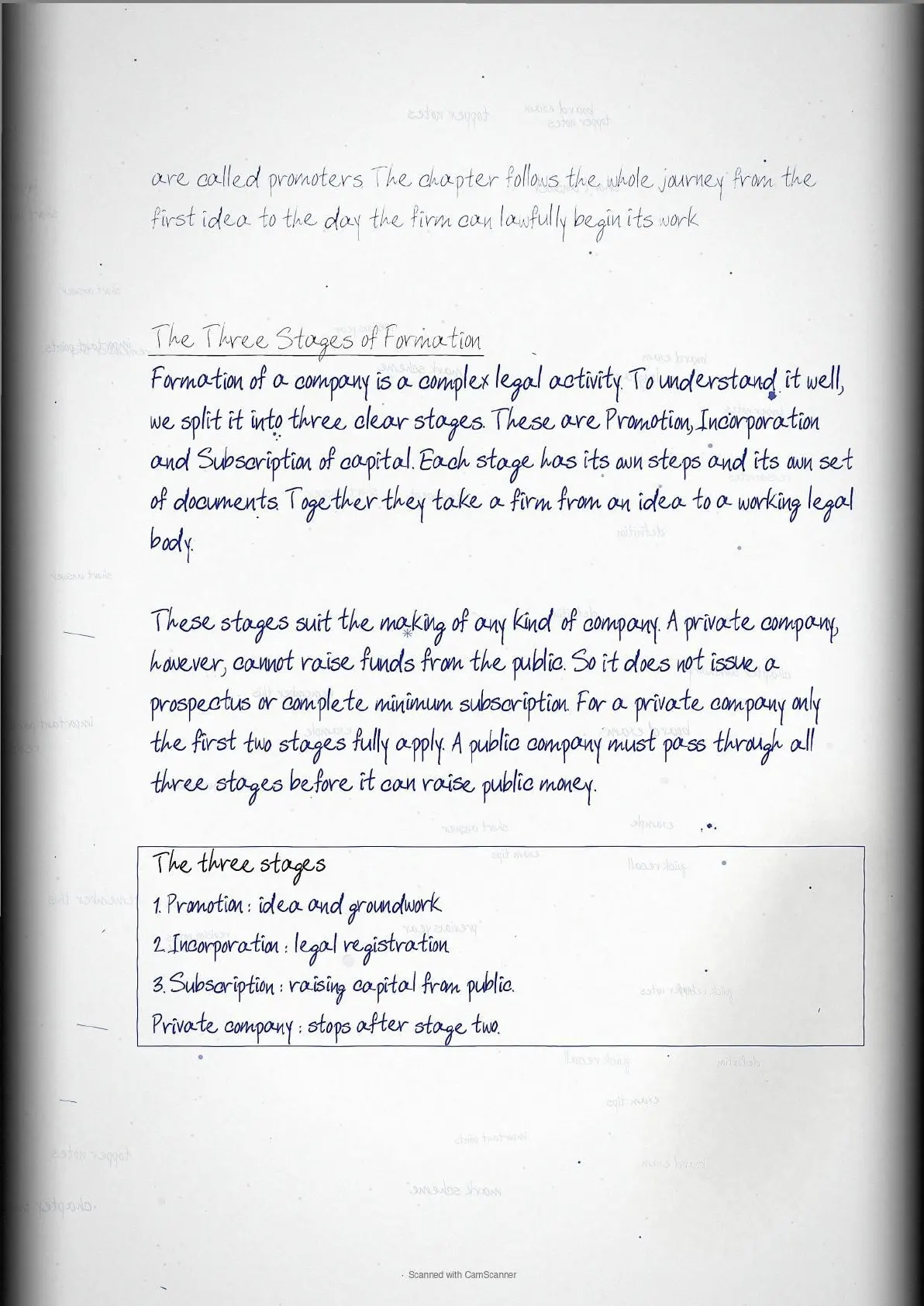
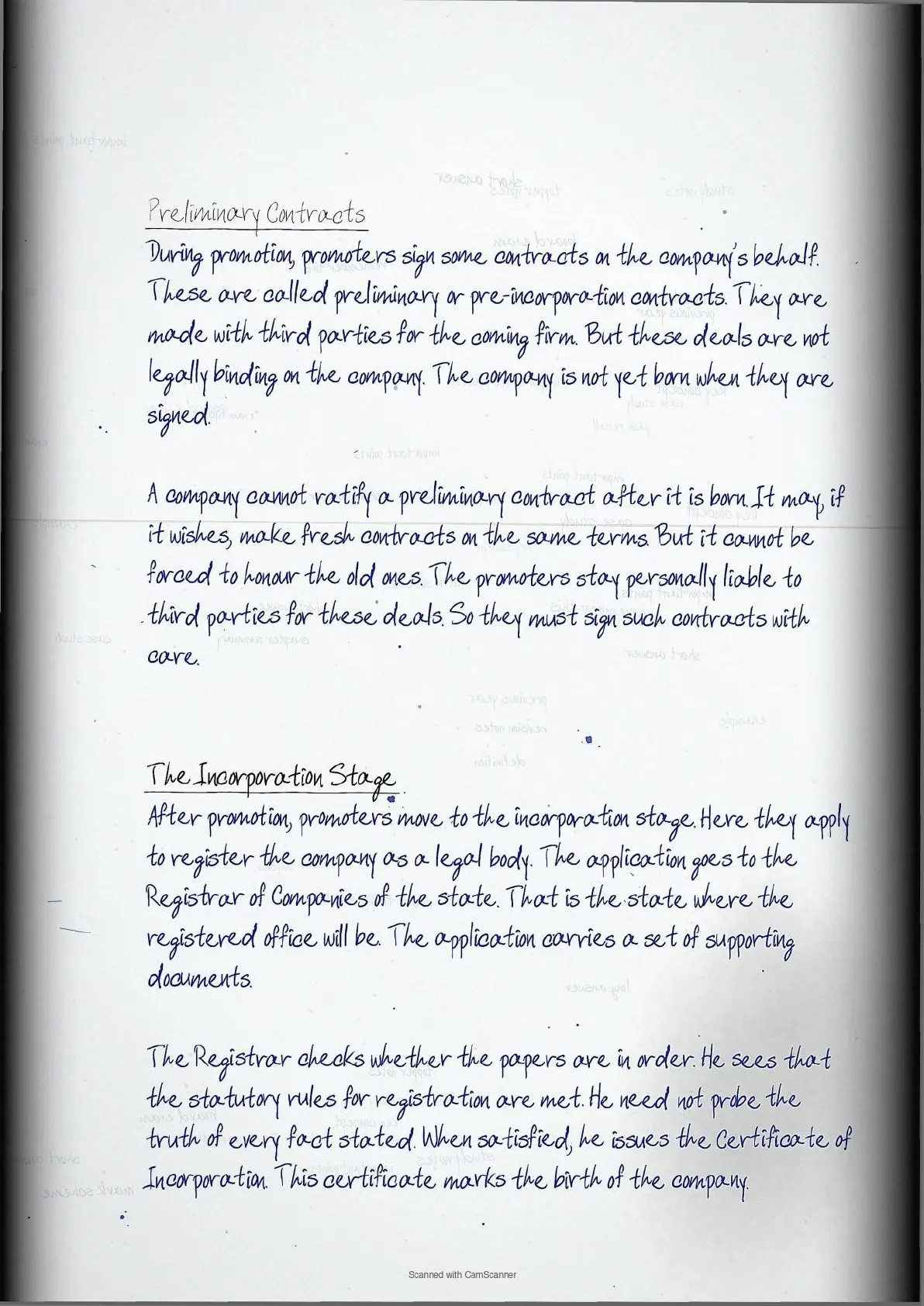
This chapter explains how a company is legally born, from the first business idea to the day it can lawfully start work. It breaks the process into three stages: promotion, incorporation and subscription of capital. Promoters do the groundwork and file the documents that give the firm its legal life.
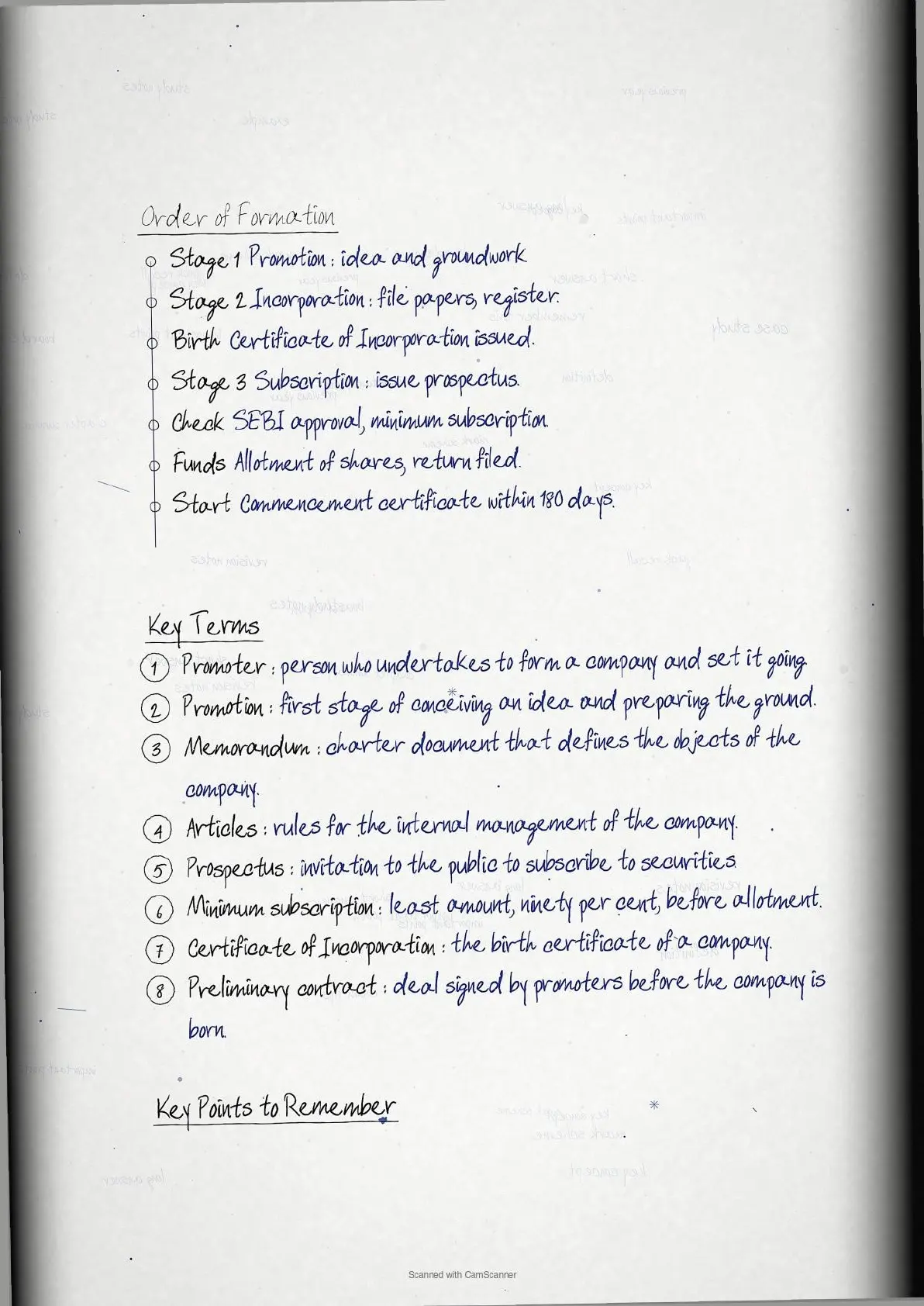
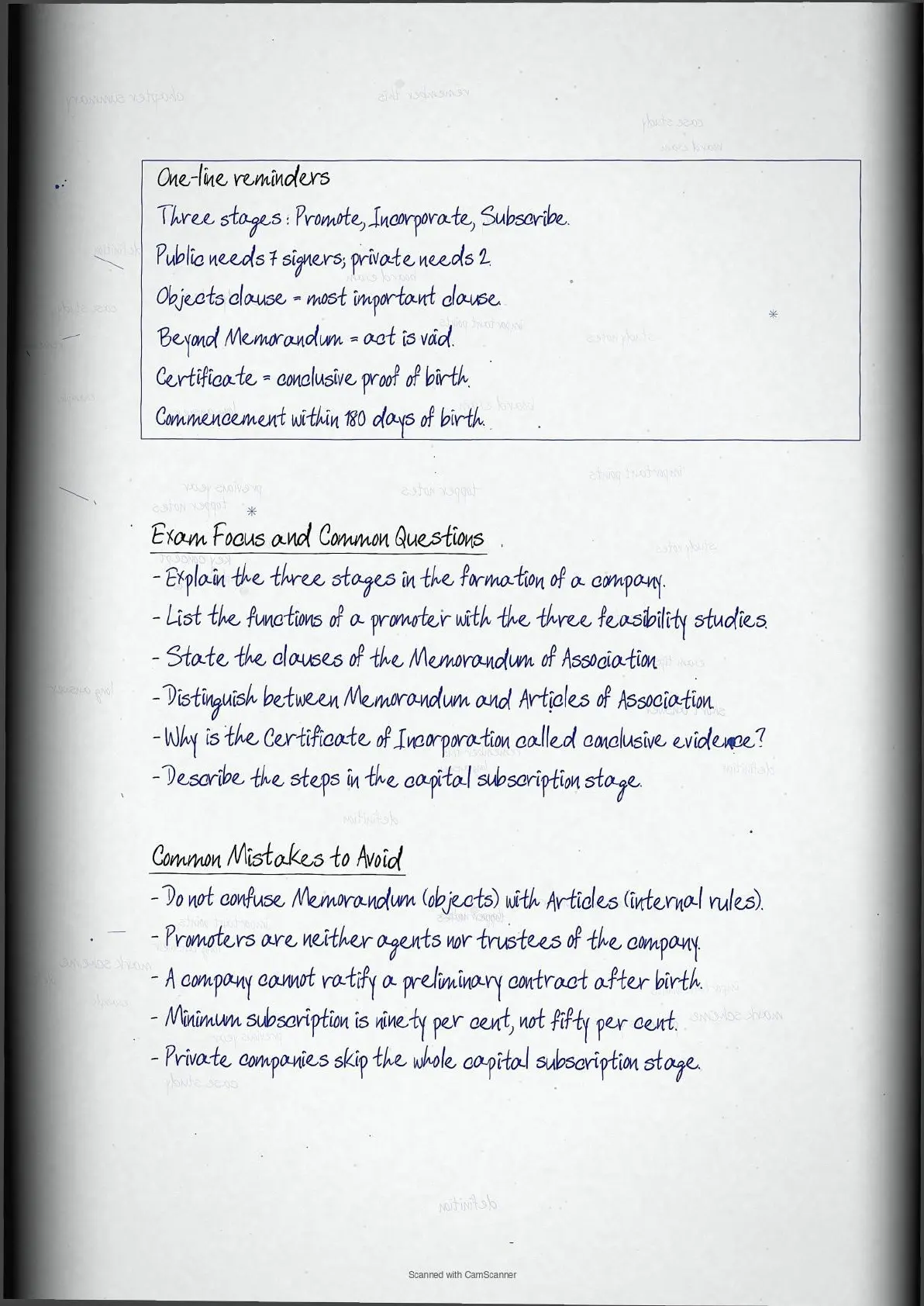
- The three stages of company formation
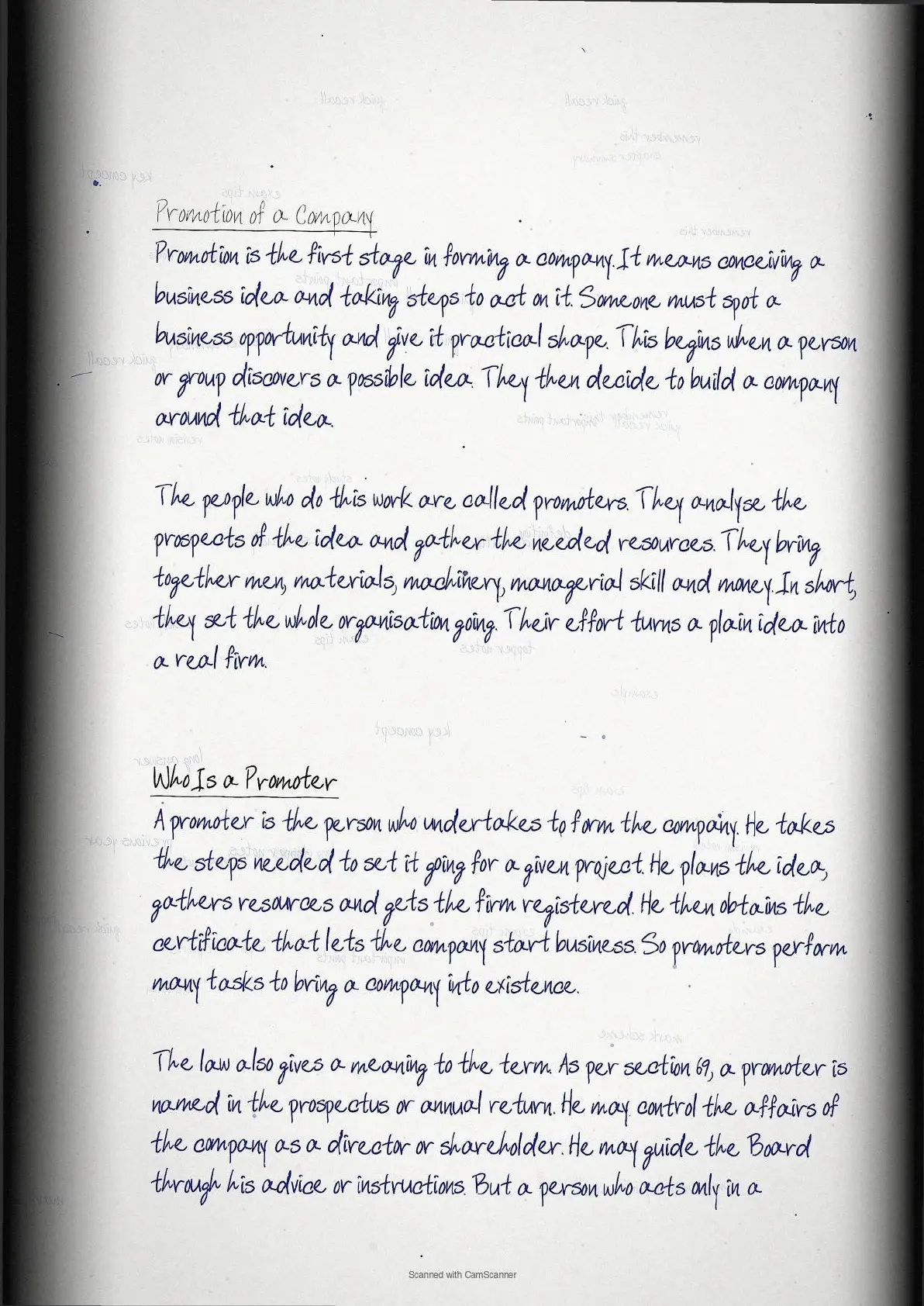
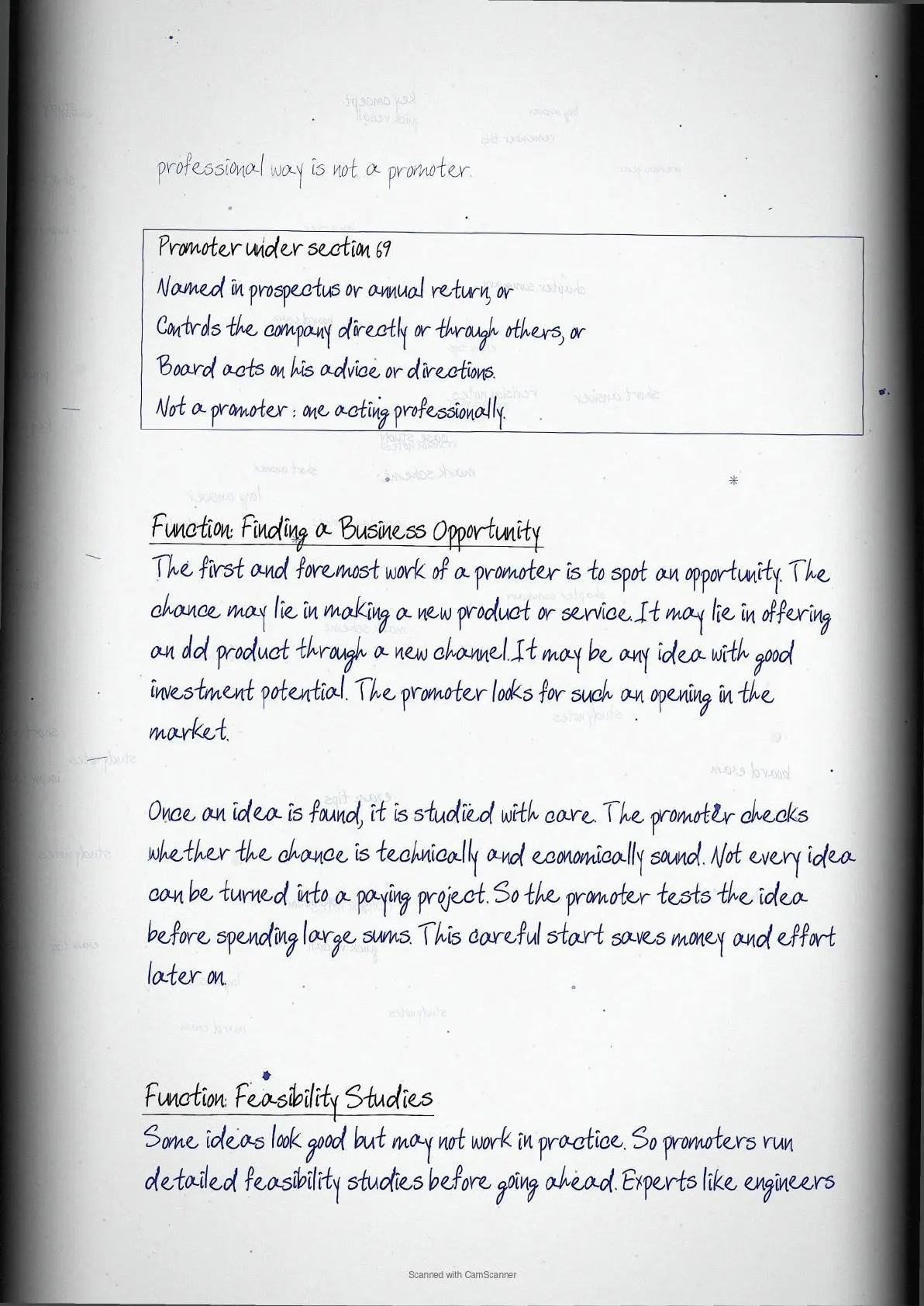
- Who is a promoter and section 69
- Functions of a promoter and feasibility studies
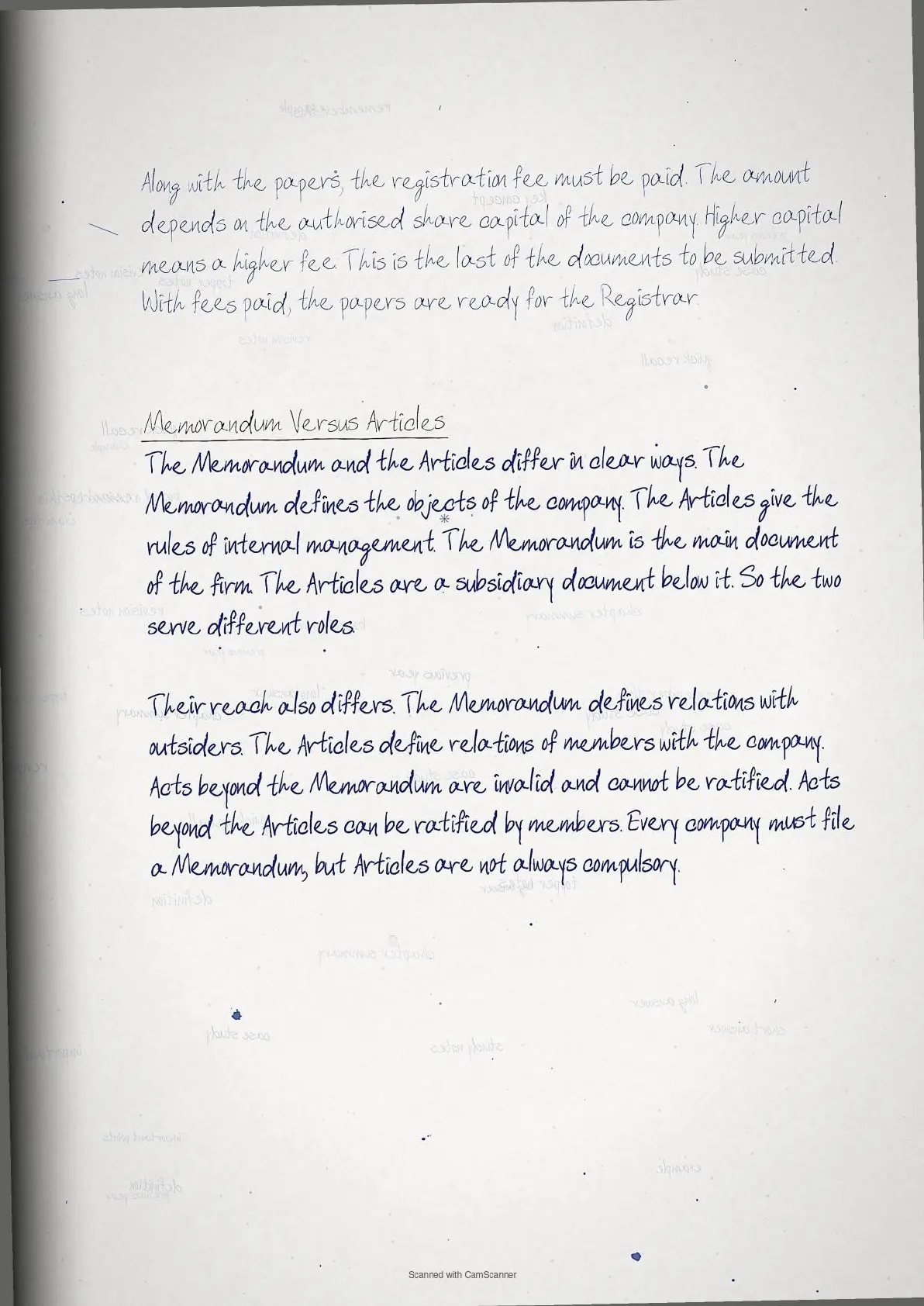
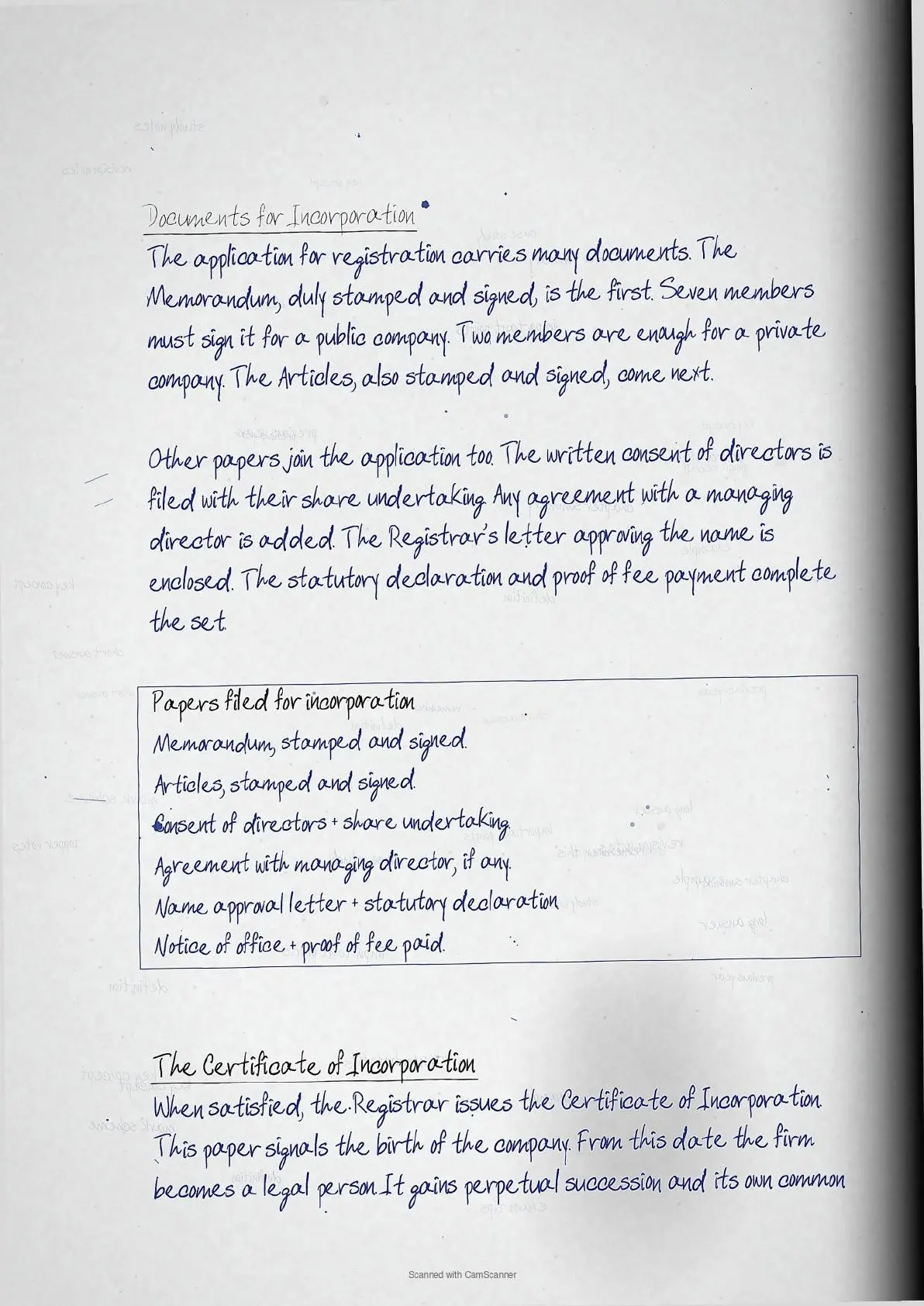
- Memorandum and Articles of Association
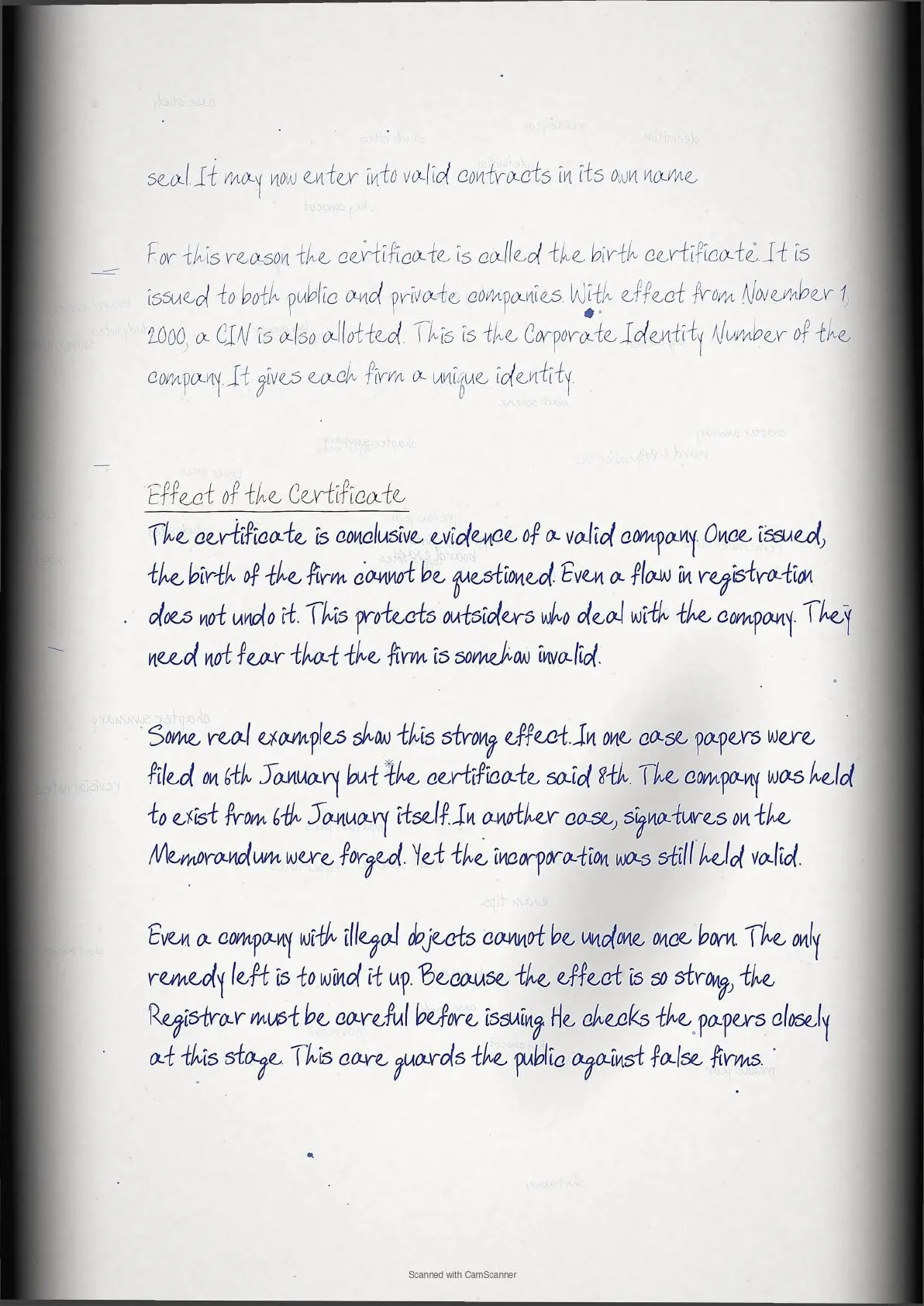
- Certificate of Incorporation as conclusive evidence
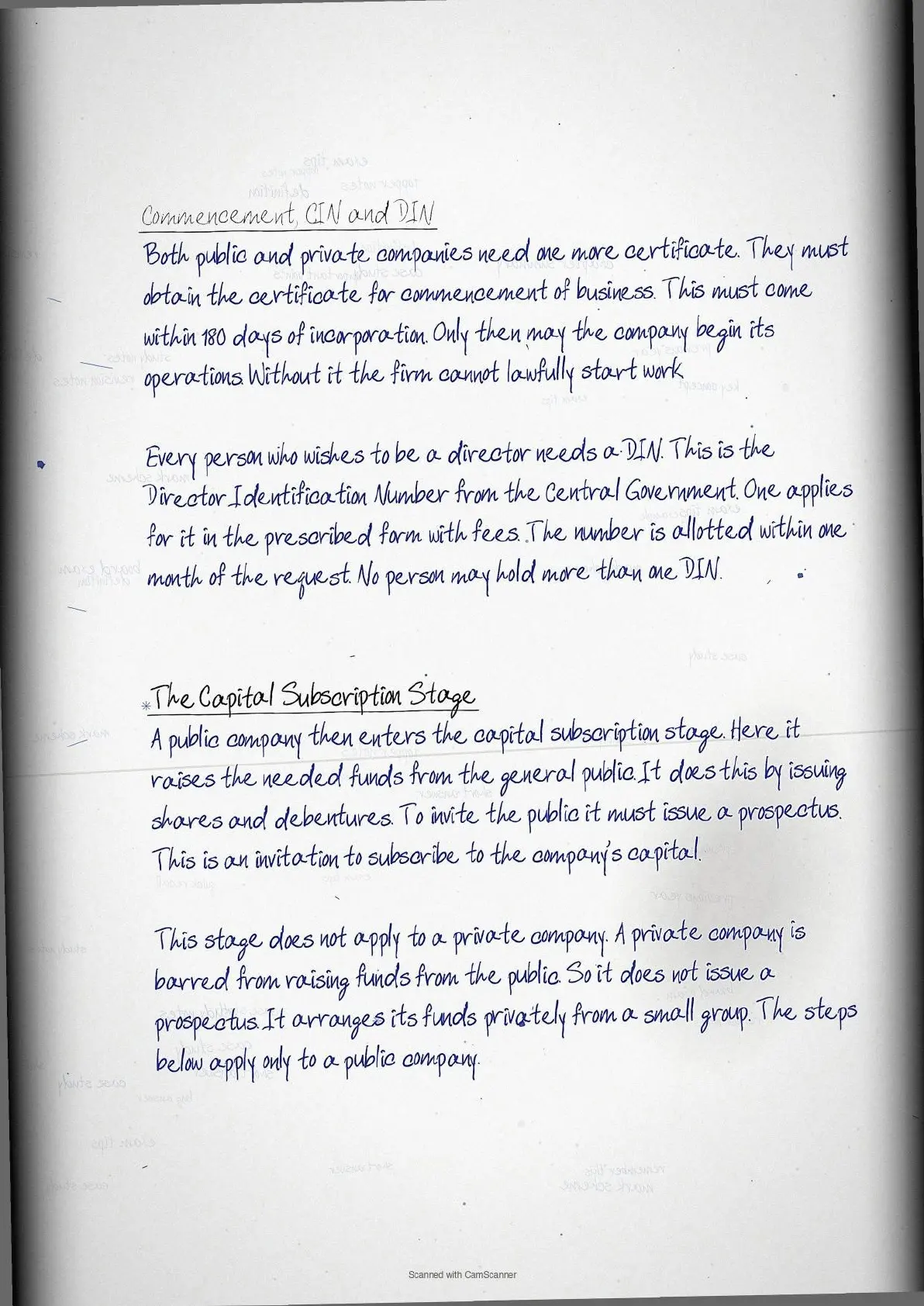
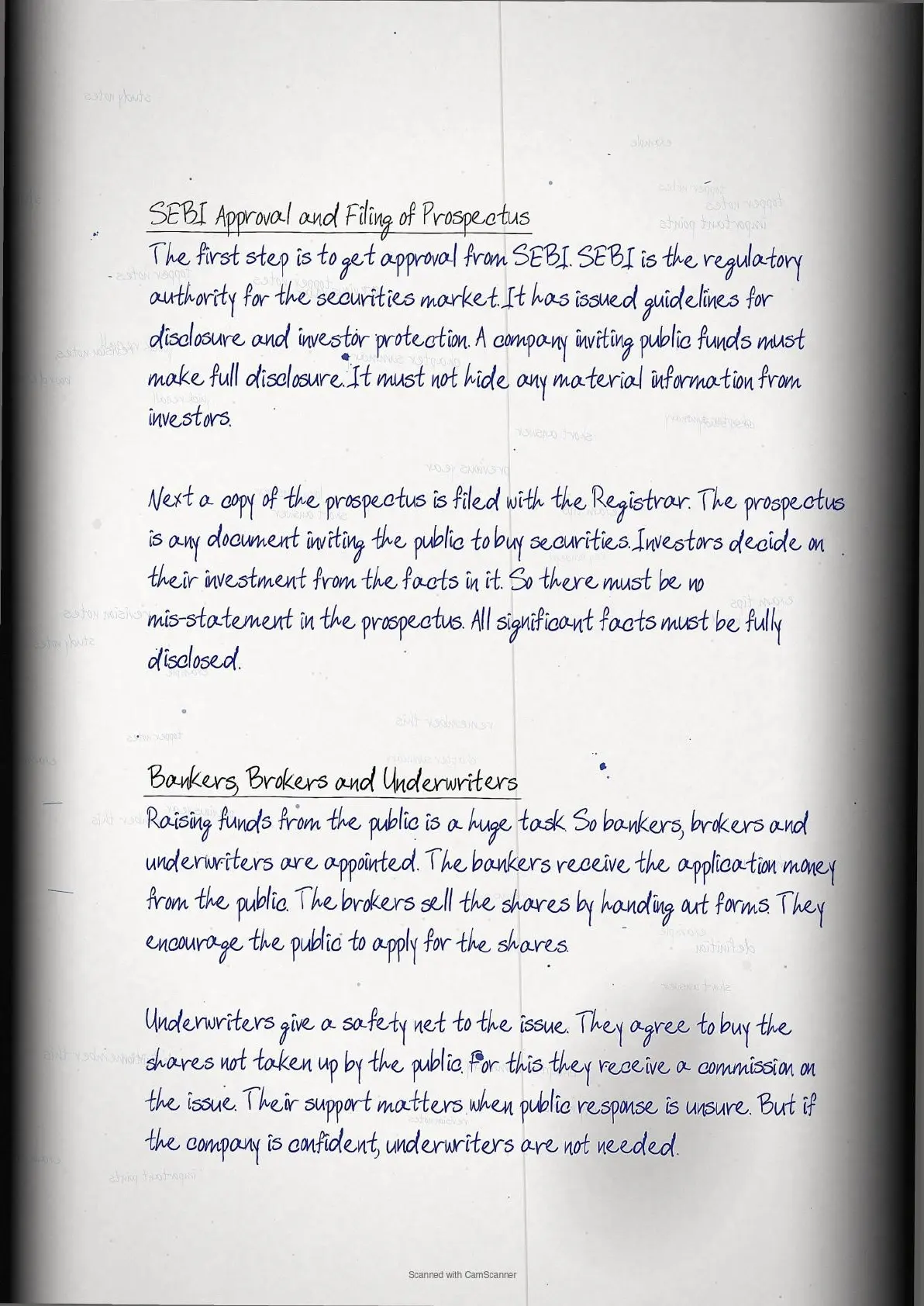
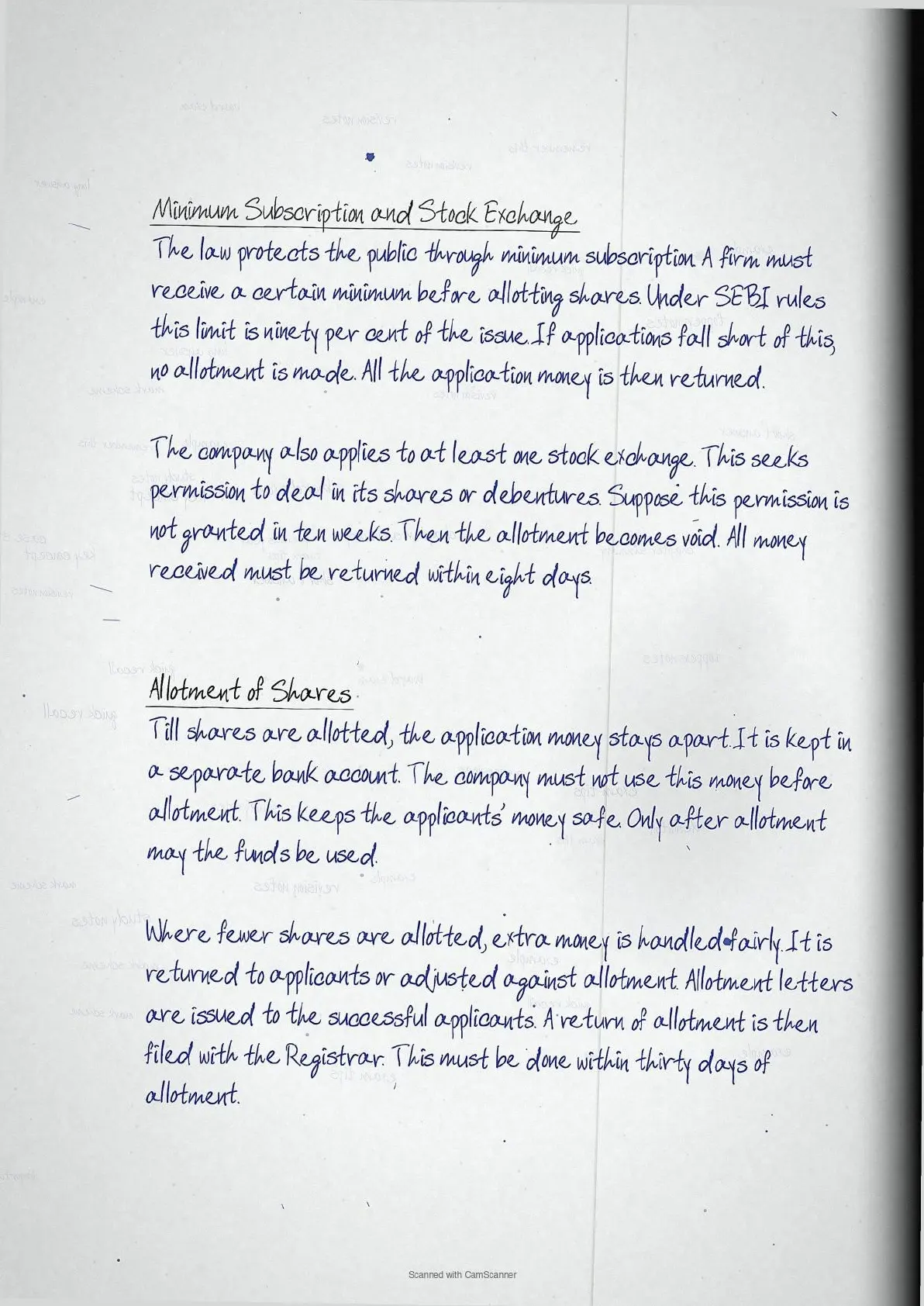
- Capital subscription, SEBI and minimum subscription
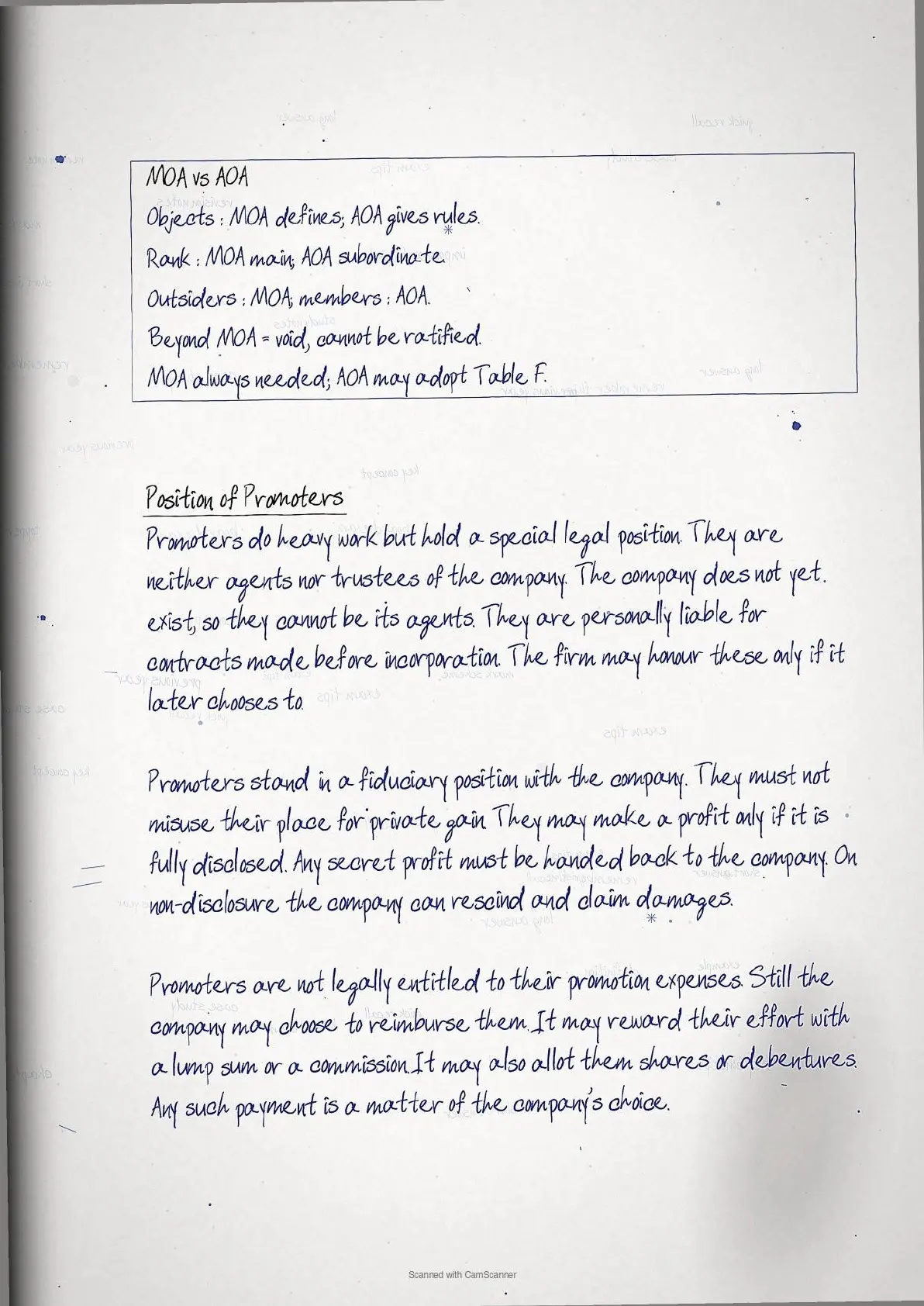
- Position of promoters and preliminary contracts
Formation of a Company Topic-wise Weightage for CBSE Class 11 Business Studies
Some parts of this chapter are asked more often than others. The table below shows which sub-topics to revise first, based on recent CBSE Class 11 question trends.
| Sub-topic | Weightage | CBSE Frequency |
|---|---|---|
| Stages of formation | High | asked most years |
| Memorandum vs Articles | High | frequent |
| Functions of a promoter | Medium | regular |
| Certificate of Incorporation | Medium | regular |
| Capital subscription steps | Low | occasional |
Key Terms and Ideas in Formation of a Company
These are the terms and ideas the exam asks about most. Learn each one so you can define it and use it in your answers.
| Term / Idea | What it means |
|---|---|
| Promoter | Person who undertakes to form a company and set it going. |
| Promotion | First stage of conceiving an idea and preparing the ground. |
| Memorandum | Charter document that defines the objects of the company. |
| Articles | Rules for the internal management of the company. |
| Certificate of Incorporation | Conclusive evidence and birth certificate of a company. |
| Prospectus | Invitation to the public to subscribe to securities. |
| Minimum subscription | Least amount, ninety per cent of issue, before allotment. |
| Preliminary contract | Deal signed by promoters before the company is born. |
How Collegedunia's Handwritten Notes Help You Revise Formation of a Company
These notes are made for the night before the exam. They keep the facts short and easy to scan. Collegedunia maps every point to the 2026-27 NCERT.
- Clear handwriting: each topic is written in neat, easy-to-read handwriting.
- Boxed key terms: the main terms and definitions are boxed by hand for fast recall.
- Diagrams and tables: simple hand-drawn tables and charts make ideas clear.
- Colour-coded headings: new sub-topics stand out, so you find any section in seconds.
Formation of a Company Self-Assessment Quiz
Try these quick questions after you read the notes. Tap each question to check your answer. They cover the points CBSE asks most often.
Which is the first stage in the formation of a company?
(a) Incorporation (b) Promotion (c) Subscription of capital (d) Allotment
Answer: (b) Promotion - it is conceiving the idea and doing the groundwork.
Which clause of the Memorandum defines the purpose of the company?
(a) Name clause (b) Capital clause (c) Objects clause (d) Liability clause
Answer: (c) Objects clause - a company cannot legally act beyond it.
The Certificate of Incorporation is best described as the company's:
(a) death certificate (b) birth certificate (c) trade licence (d) prospectus
Answer: (b) birth certificate - the firm becomes a legal person on this date.
Minimum subscription under SEBI rules is what per cent of the issue?
(a) 50 per cent (b) 75 per cent (c) 90 per cent (d) 100 per cent
Answer: (c) 90 per cent - below this no allotment is made and money is returned.
How many persons must sign the Memorandum of a public company?
(a) two (b) five (c) seven (d) ten
Answer: (c) seven - a private company needs only two signatories.
How to Use These Handwritten Notes for Class 11 Business Studies Revision
Use these class 11 business-studies handwritten notes in two passes. Read them slowly once for the full chapter. Then, near the exam, read only the boxes and key terms for a fast recall.
- Read the notes once with the NCERT chapter open beside you.
- Say each key term and idea in your own words.
- Practise one long-answer question from a past paper.
- On the last day, revise only the key terms and the boxes.
Class 11 Business Studies Handwritten Notes for All Chapters
The table below links the class 11 business-studies handwritten notes for every chapter. Use it to jump to any other chapter's notes.
Formation of a Company Class 11 Business Studies Handwritten Notes FAQs
Ques. Where can I download Formation of a Company Class 11 Business Studies Handwritten Notes PDF?
Ans. You can download the Formation of a Company Class 11 Business Studies Handwritten Notes PDF directly from this page. Both the Normal and HD versions are free.
Ques. Are these handwritten notes aligned with the 2026-27 NCERT?
Ans. Yes. These notes follow the current 2026-27 syllabus for Class 11 Business Studies. Why is the Certificate of Incorporation called conclusive evidence?
Ques. How many pages is the Class 11 Business Studies Formation of a Company Handwritten Notes PDF?
Ans. The notes run about 20 pages. They cover the full chapter with key terms, hand-drawn boxes, and a short self-assessment quiz.
Ques. What is the main idea of the 11th standard Business Studies chapter Formation of a Company?
Ans. The Certificate of Incorporation is conclusive evidence that the company is validly formed, so its birth cannot be questioned even if the registration had a flaw. This protects outsiders who deal with the company, since the only remedy for any defect is to wind the company up.
Ques. Are these Formation of a Company notes enough for the CBSE Class 11 exam?
Ans. Yes, for revision. The Collegedunia handwritten notes cover every key point and exam term. Read them with the NCERT chapter and practise past questions.



Comments