



These What is Psychology handwritten notes turn the whole first chapter into clean, handwritten pages for fast last-minute revision. They follow the 2026-27 NCERT syllabus and Chapter 1 of Class 11 Psychology. Students get the meaning of psychology, the three definition terms of mental processes, experience and behaviour, psychology as a natural and a social science, the evolution from Wundt to the cognitive approach, and the growth of psychology in India, all in a pen-on-paper format that is easy to skim before a test.
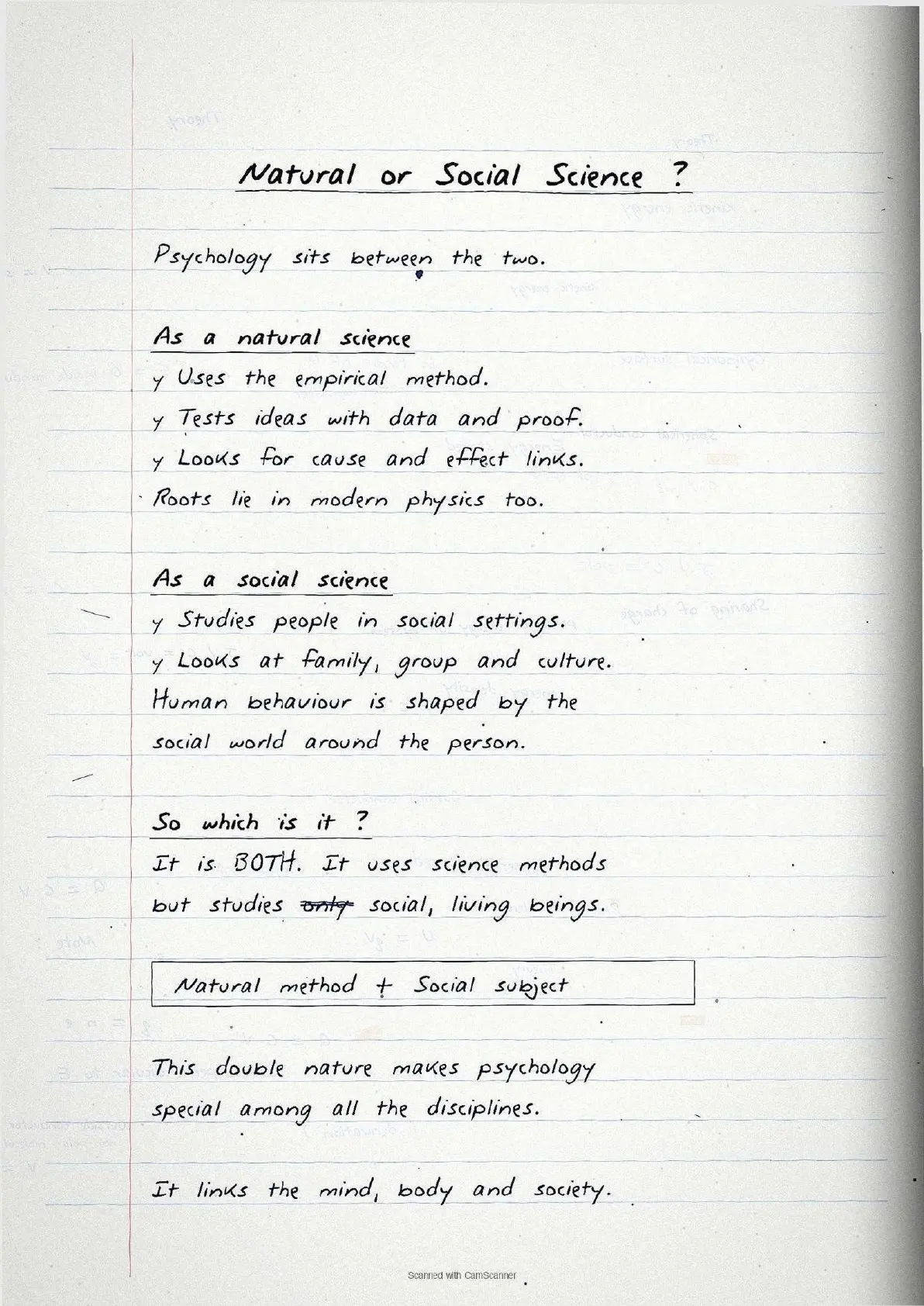
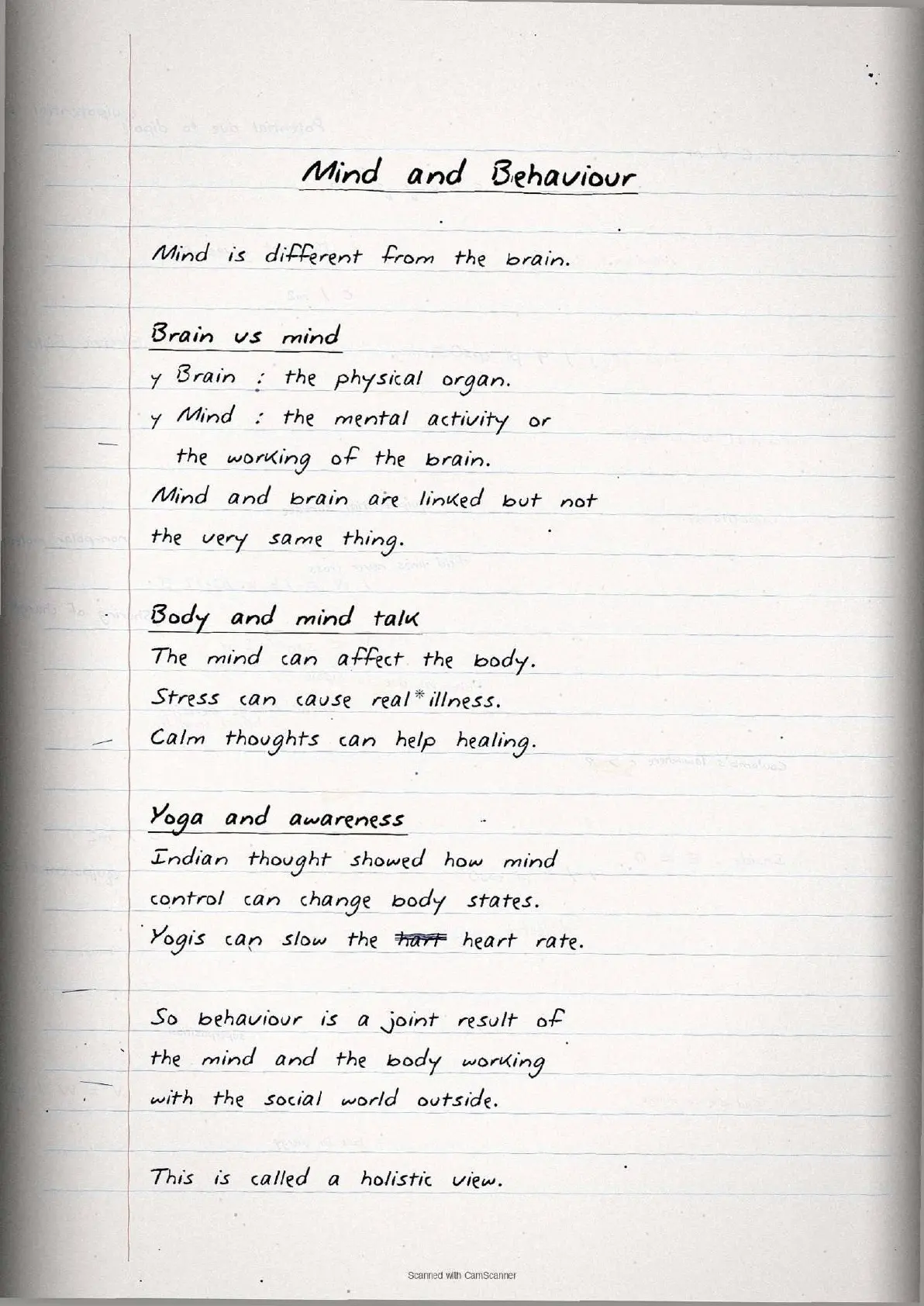
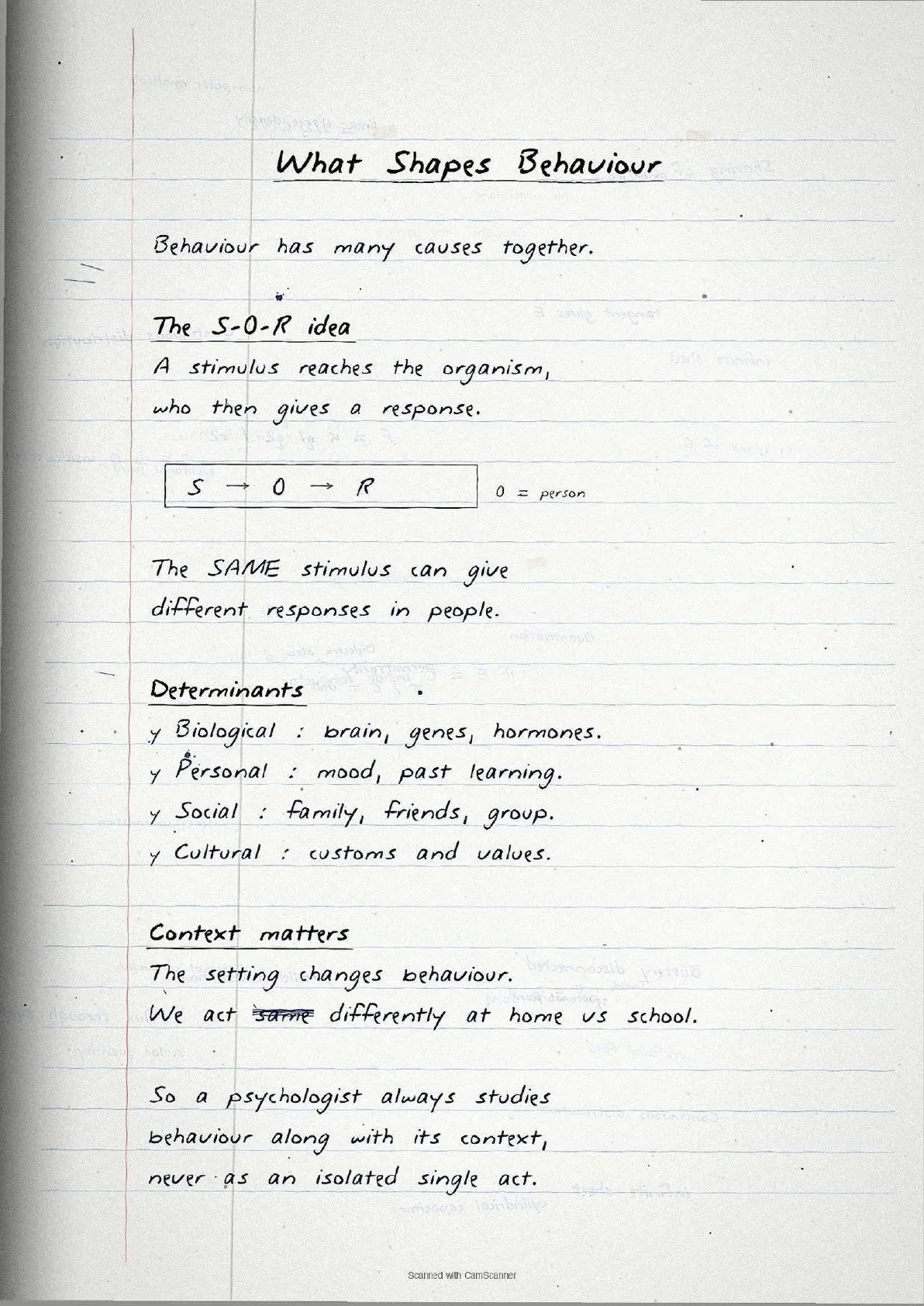
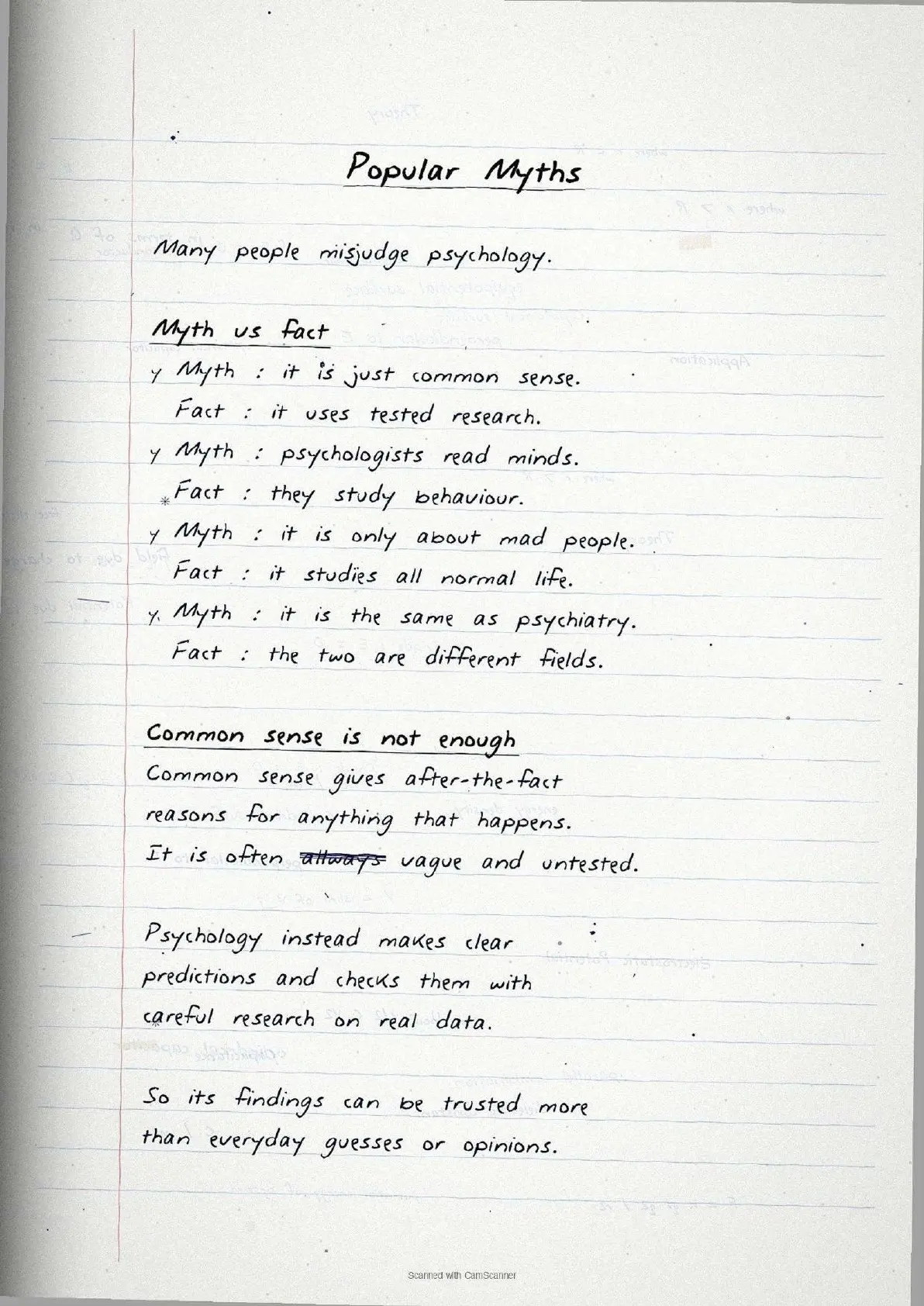
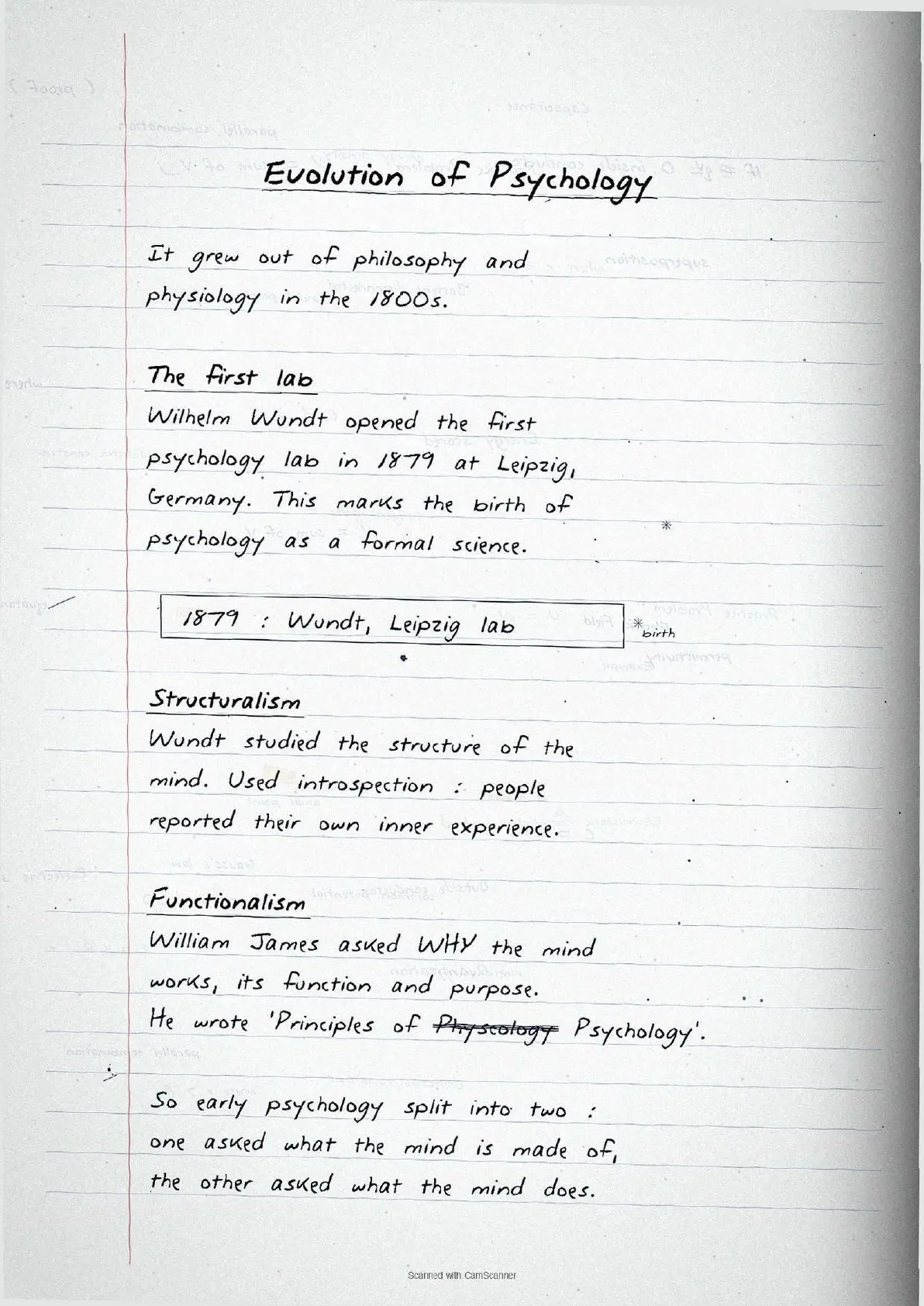
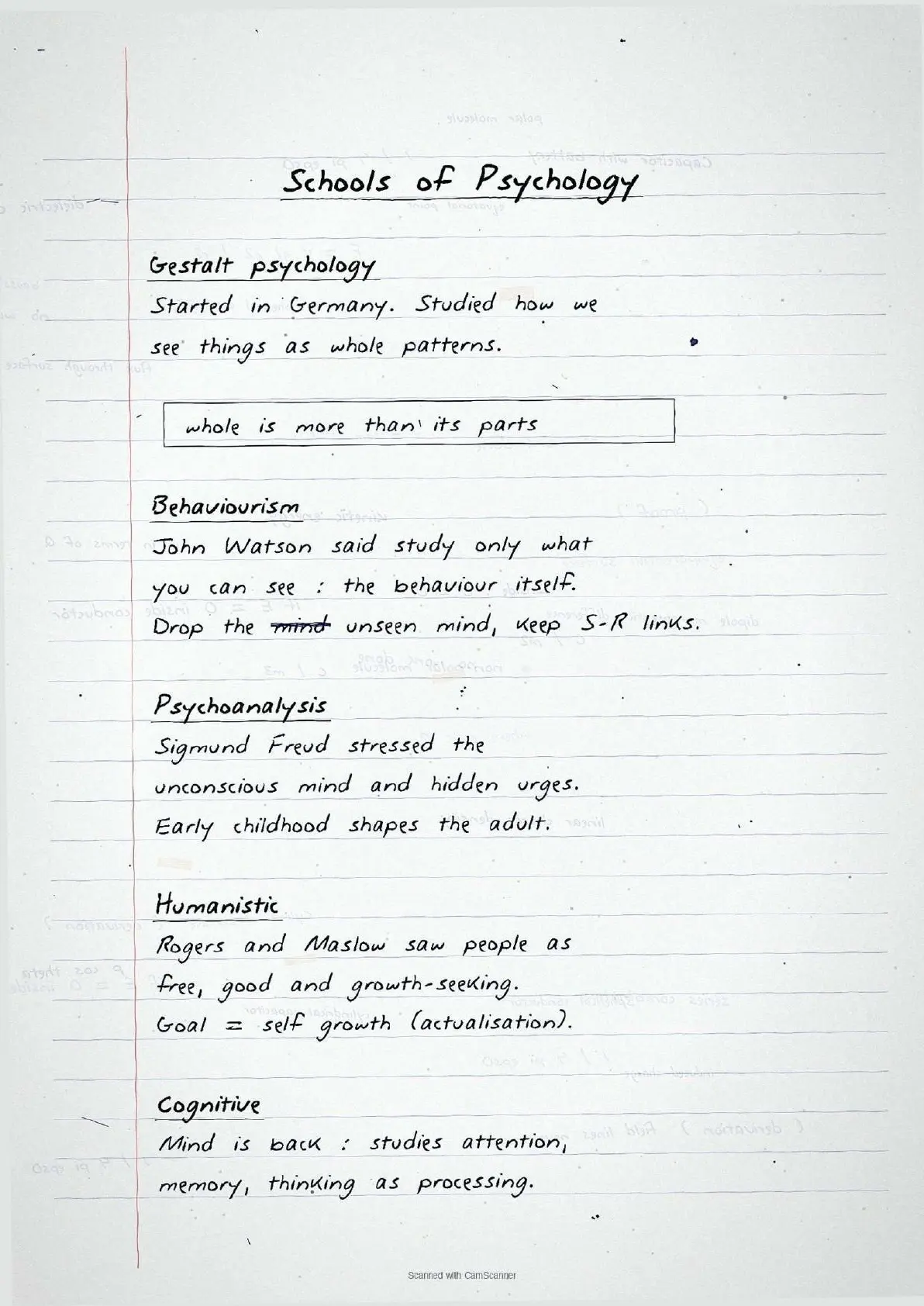
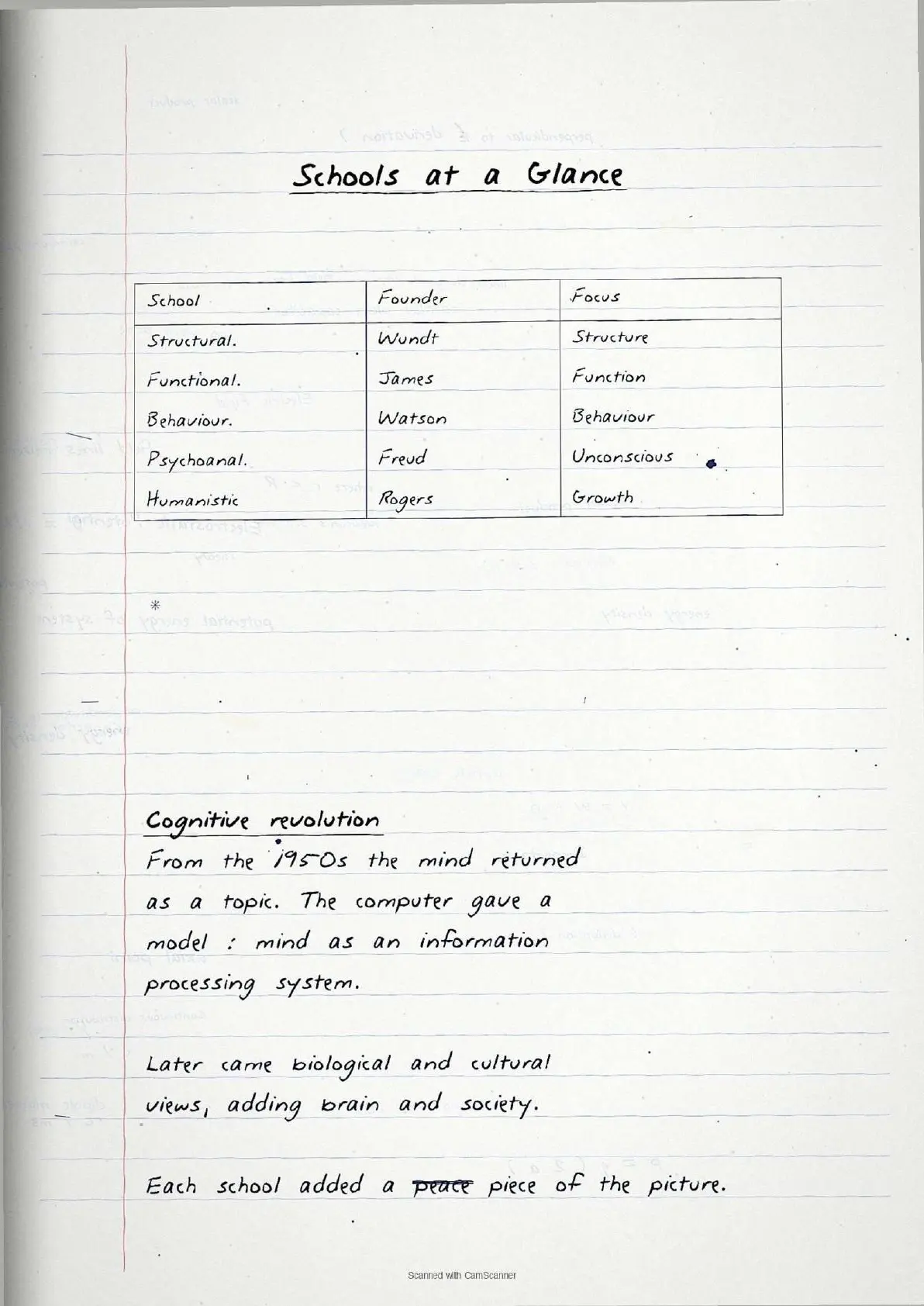
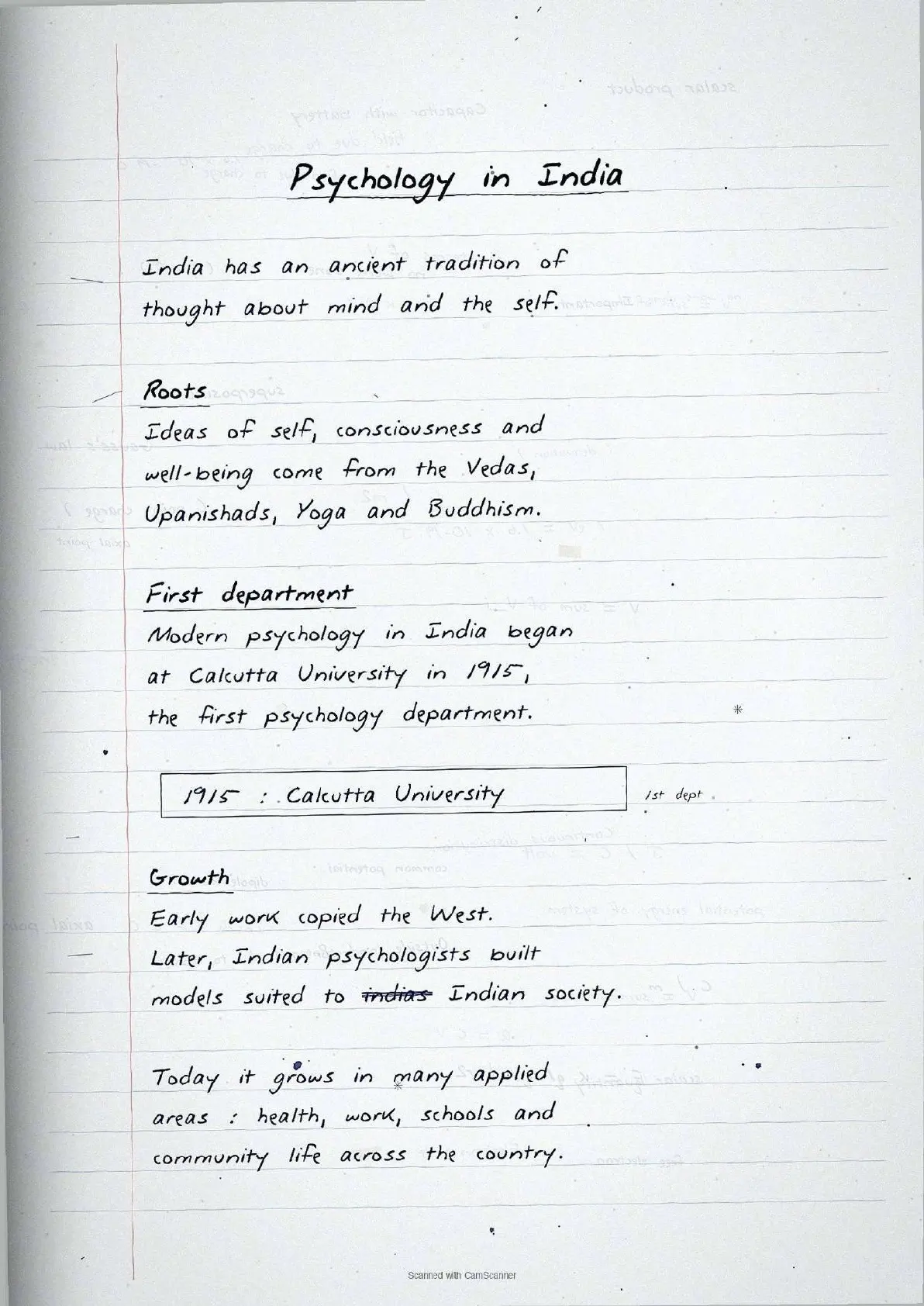
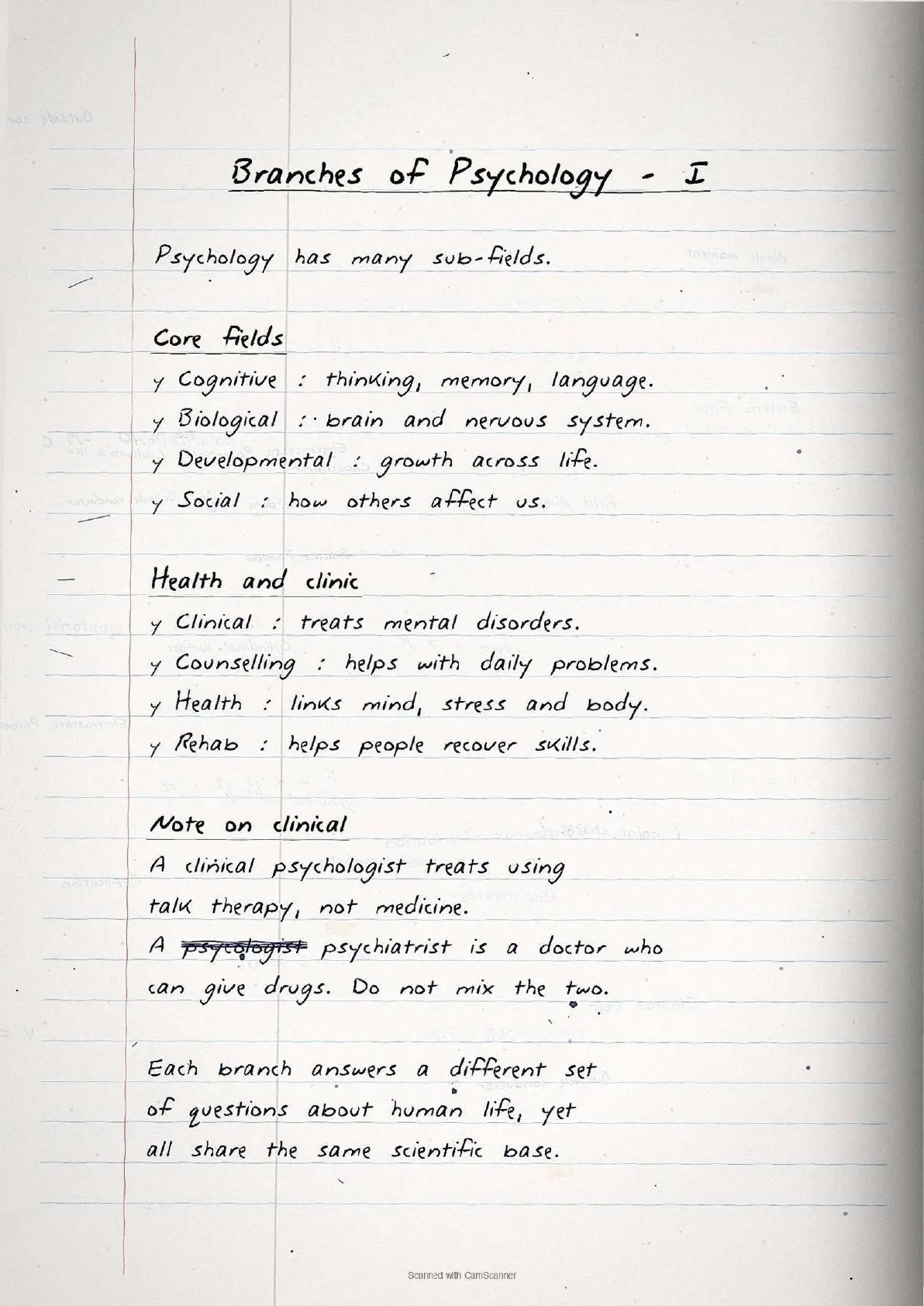
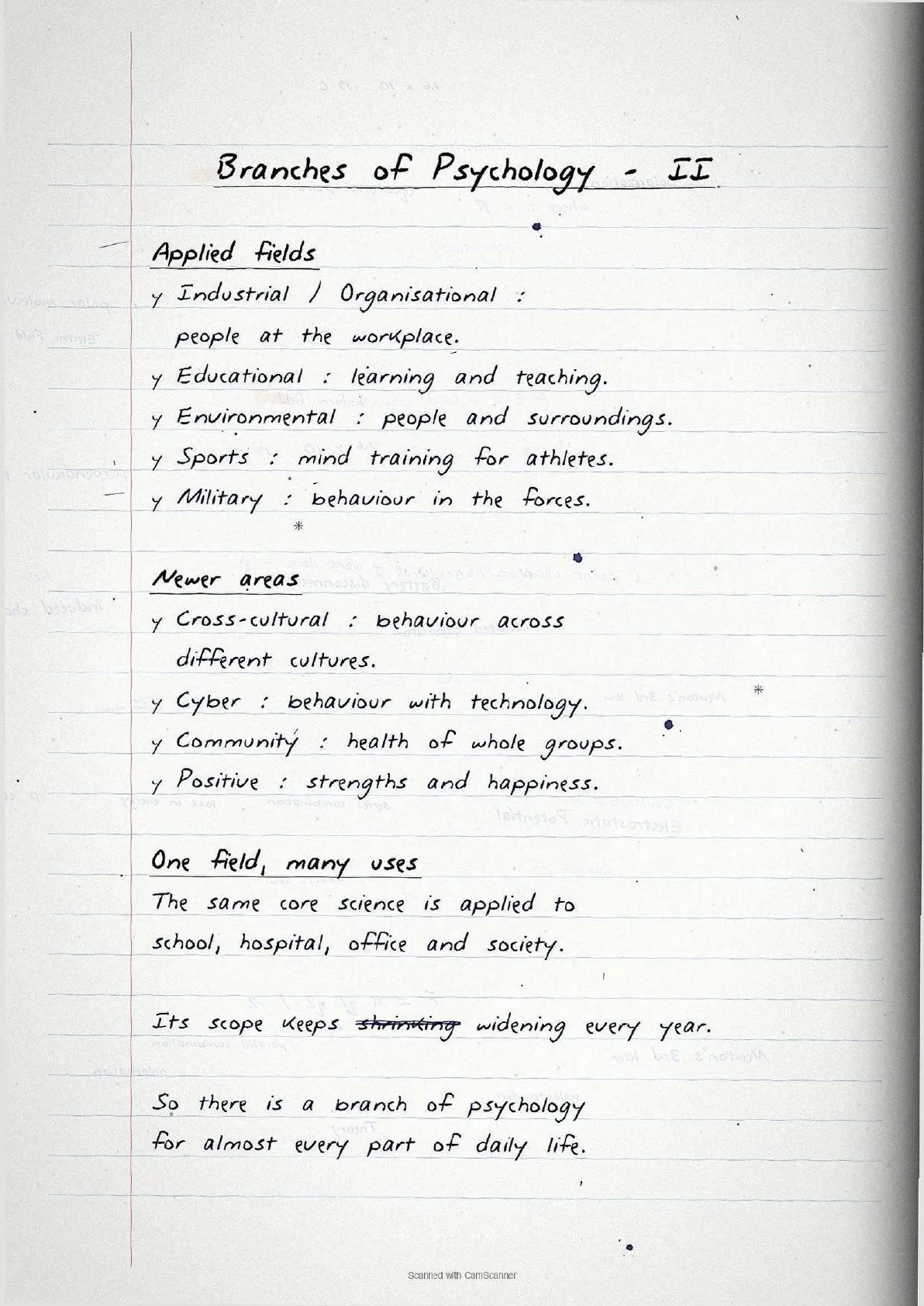
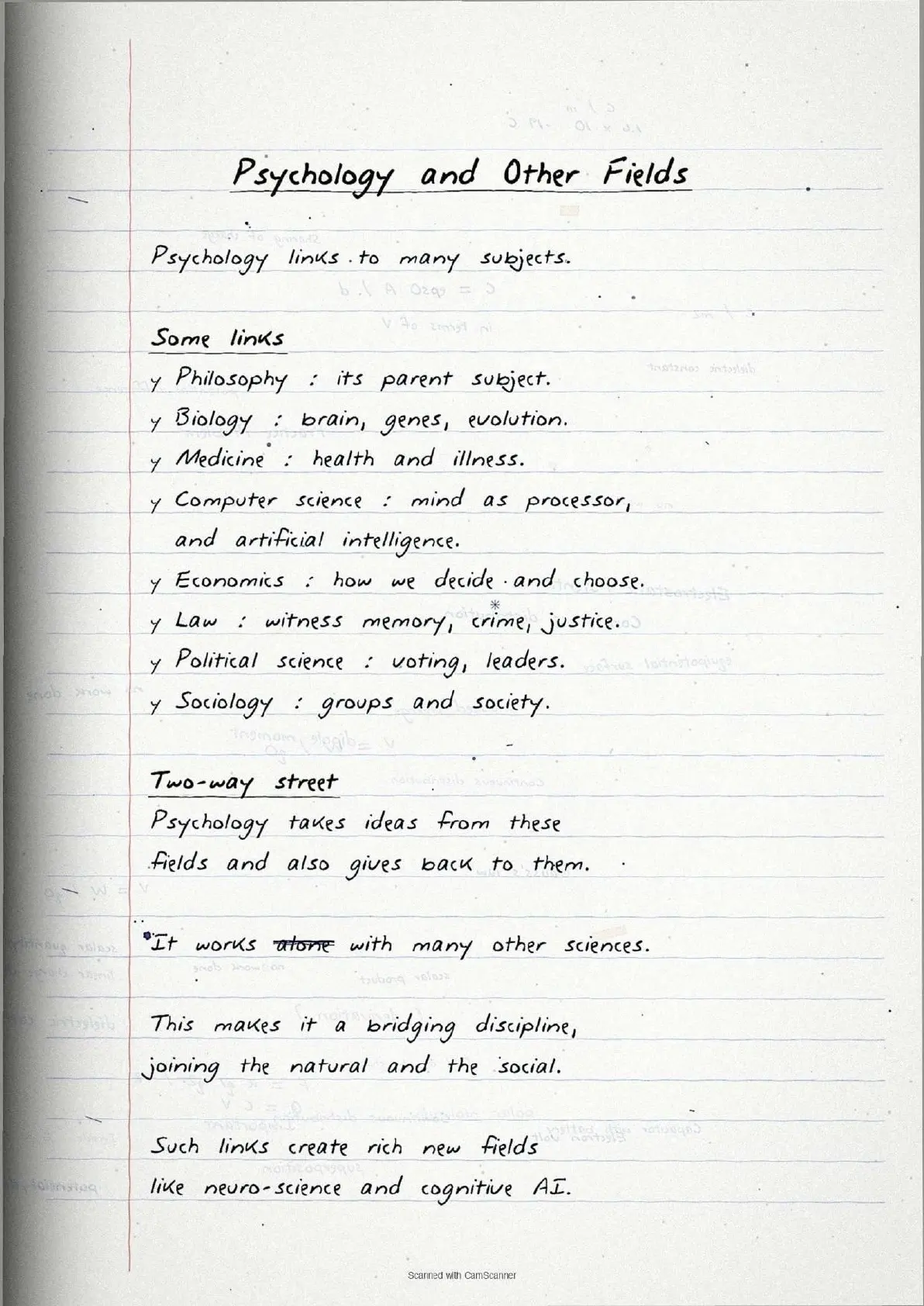
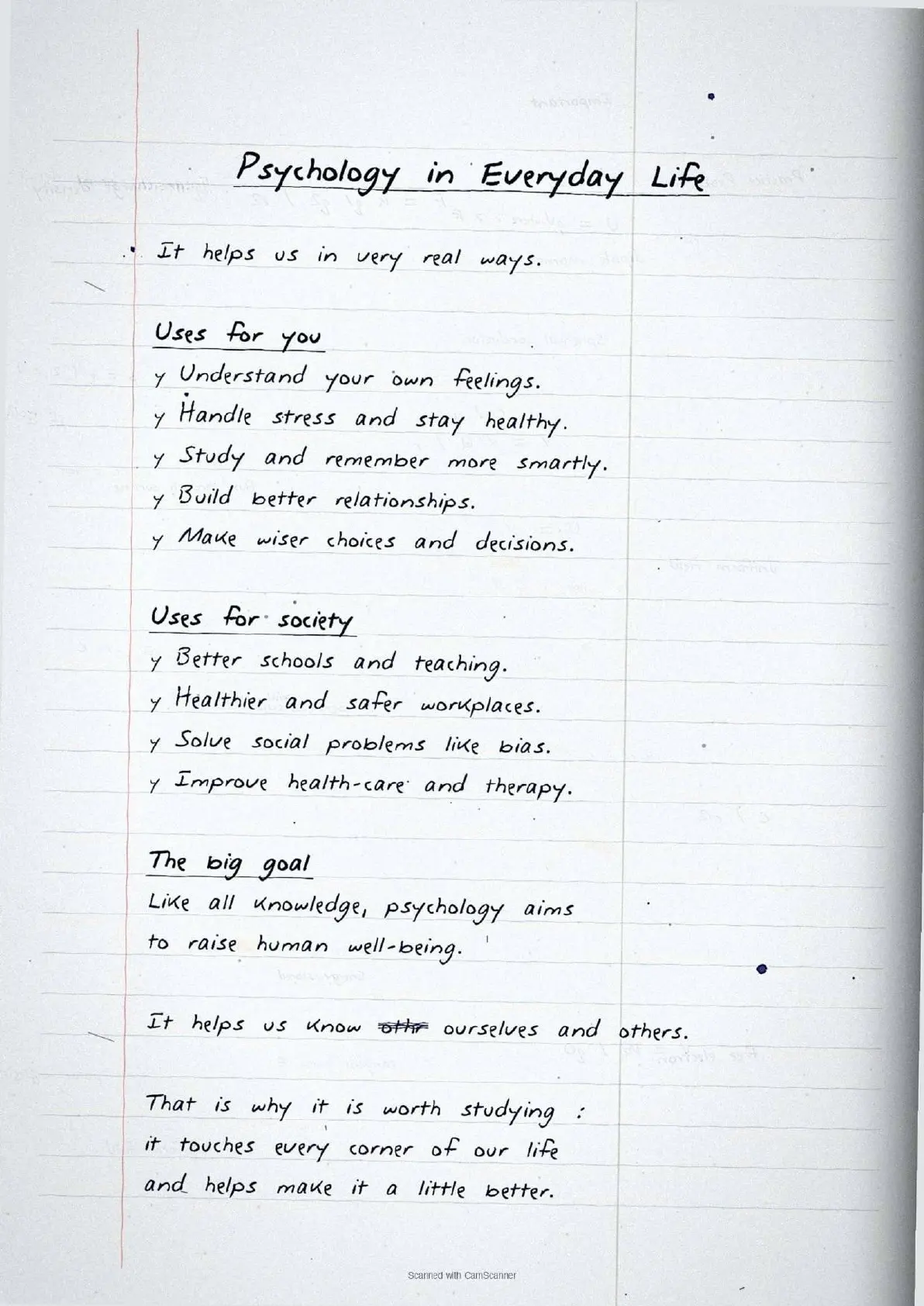
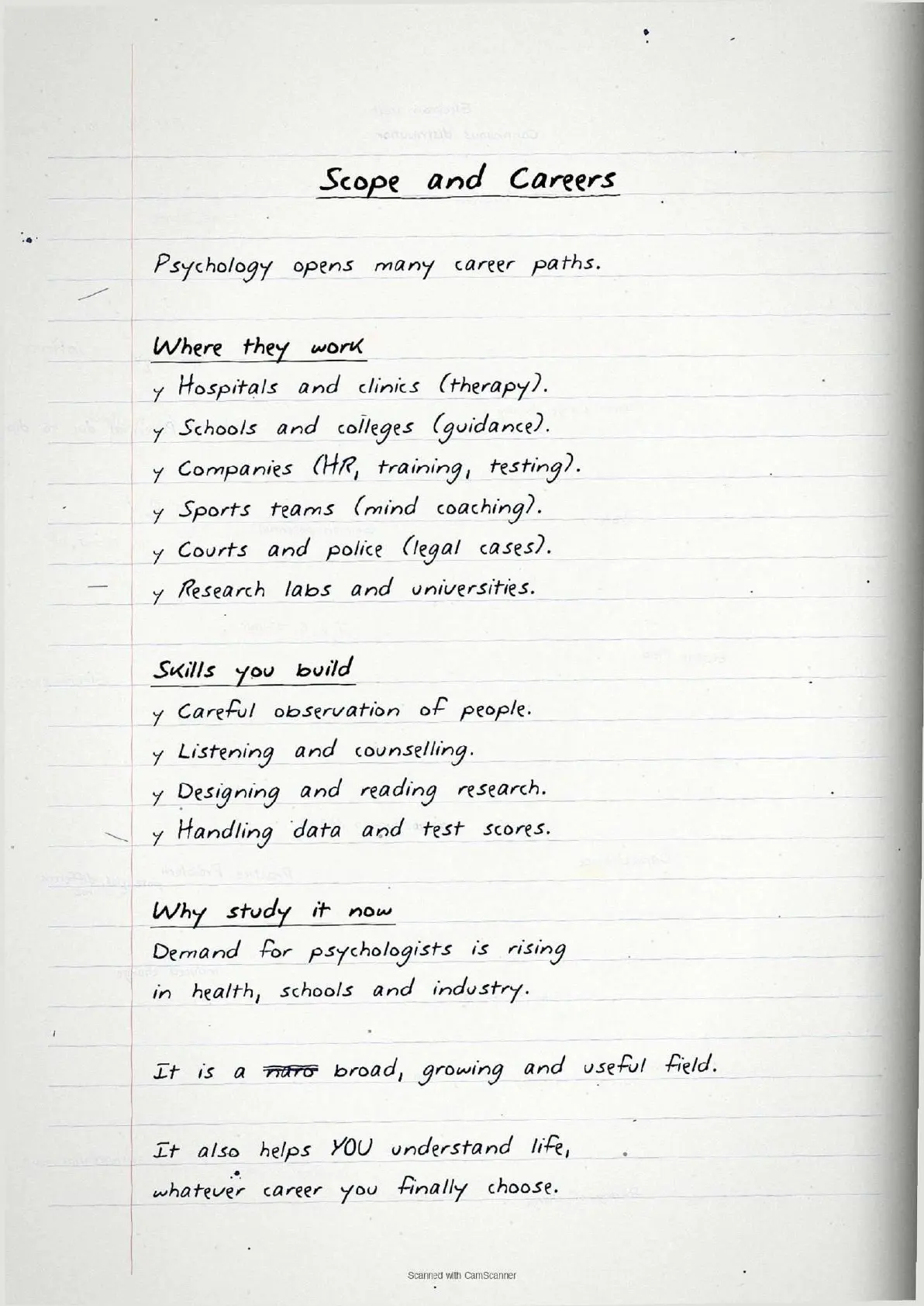
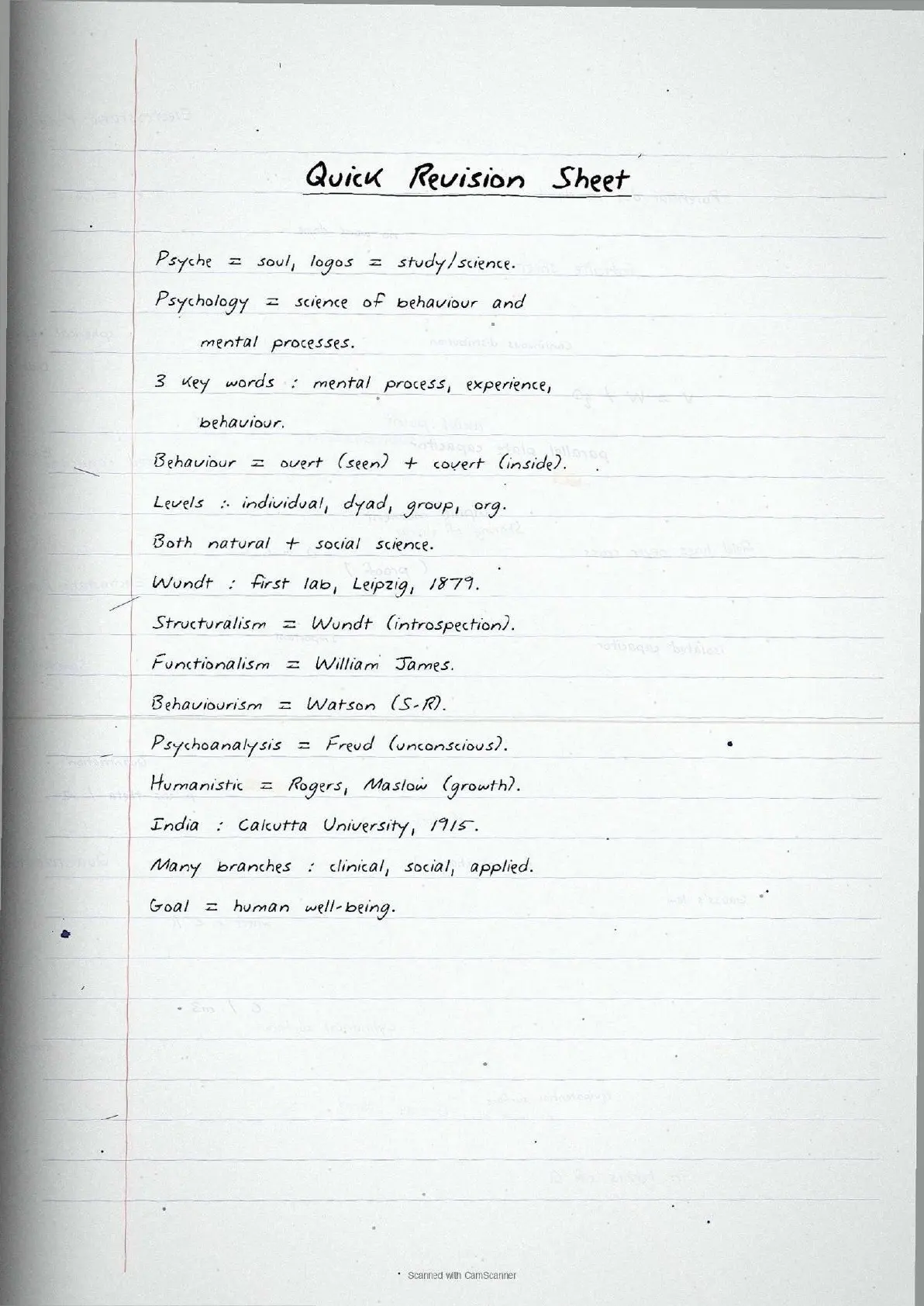
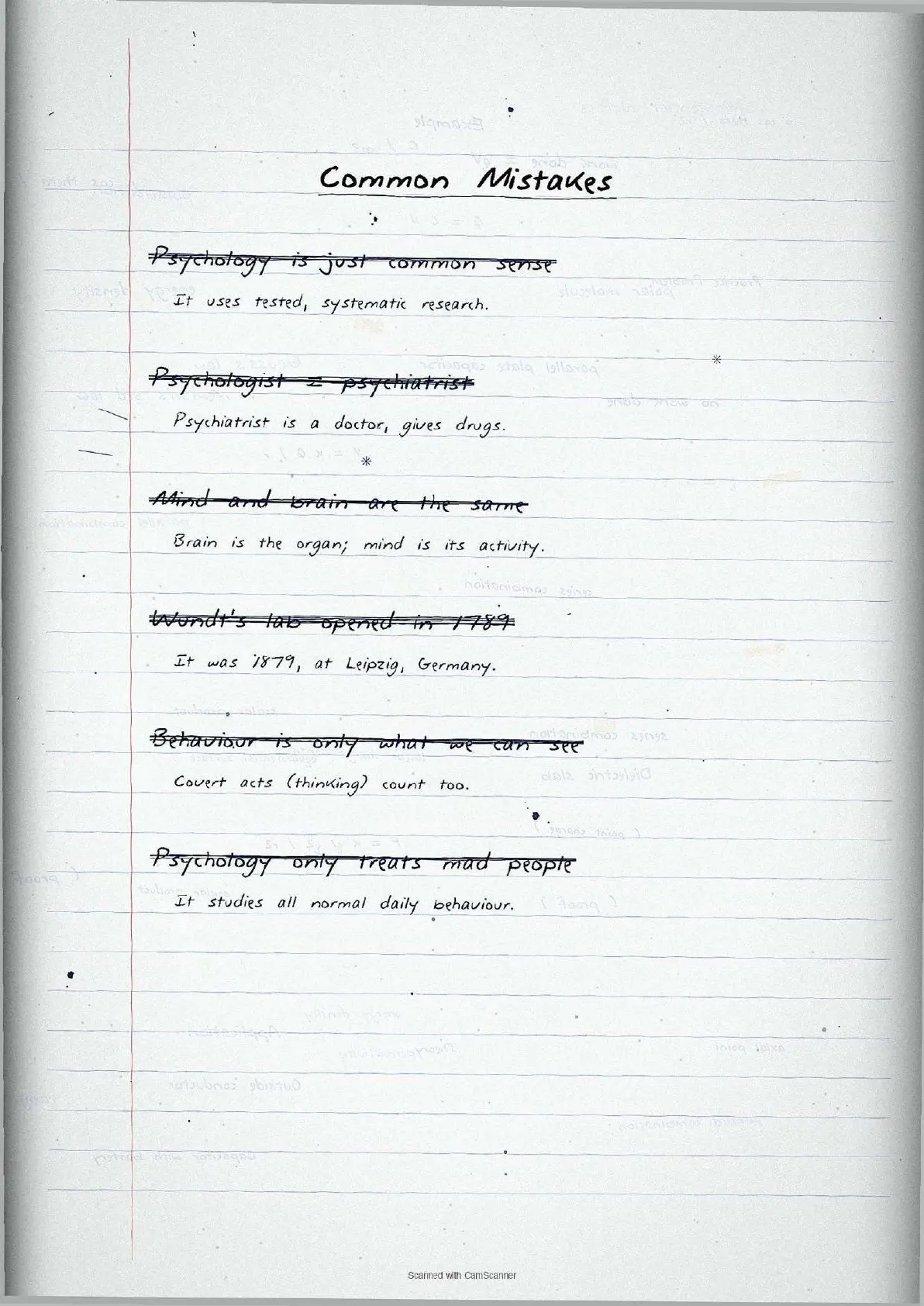
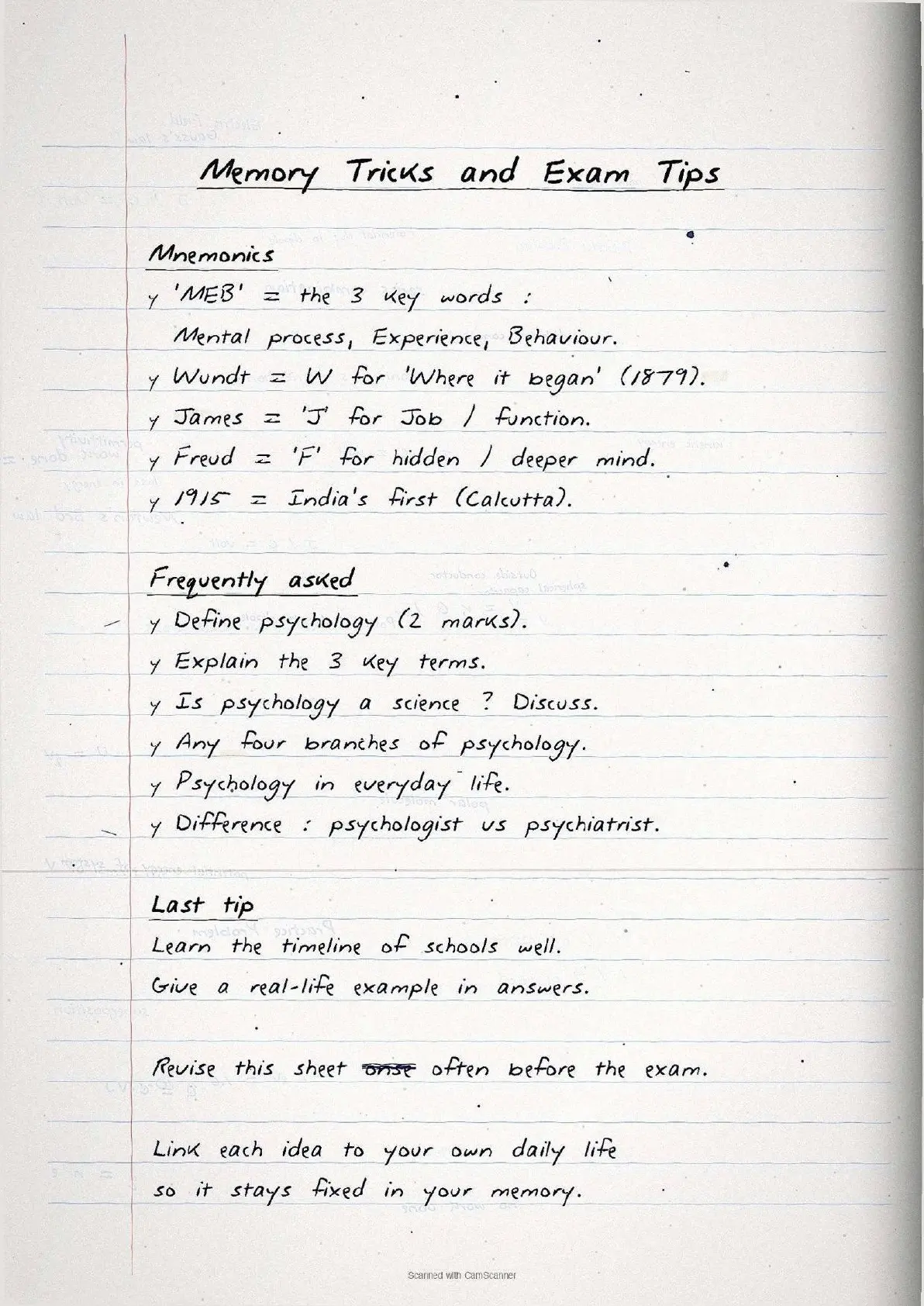
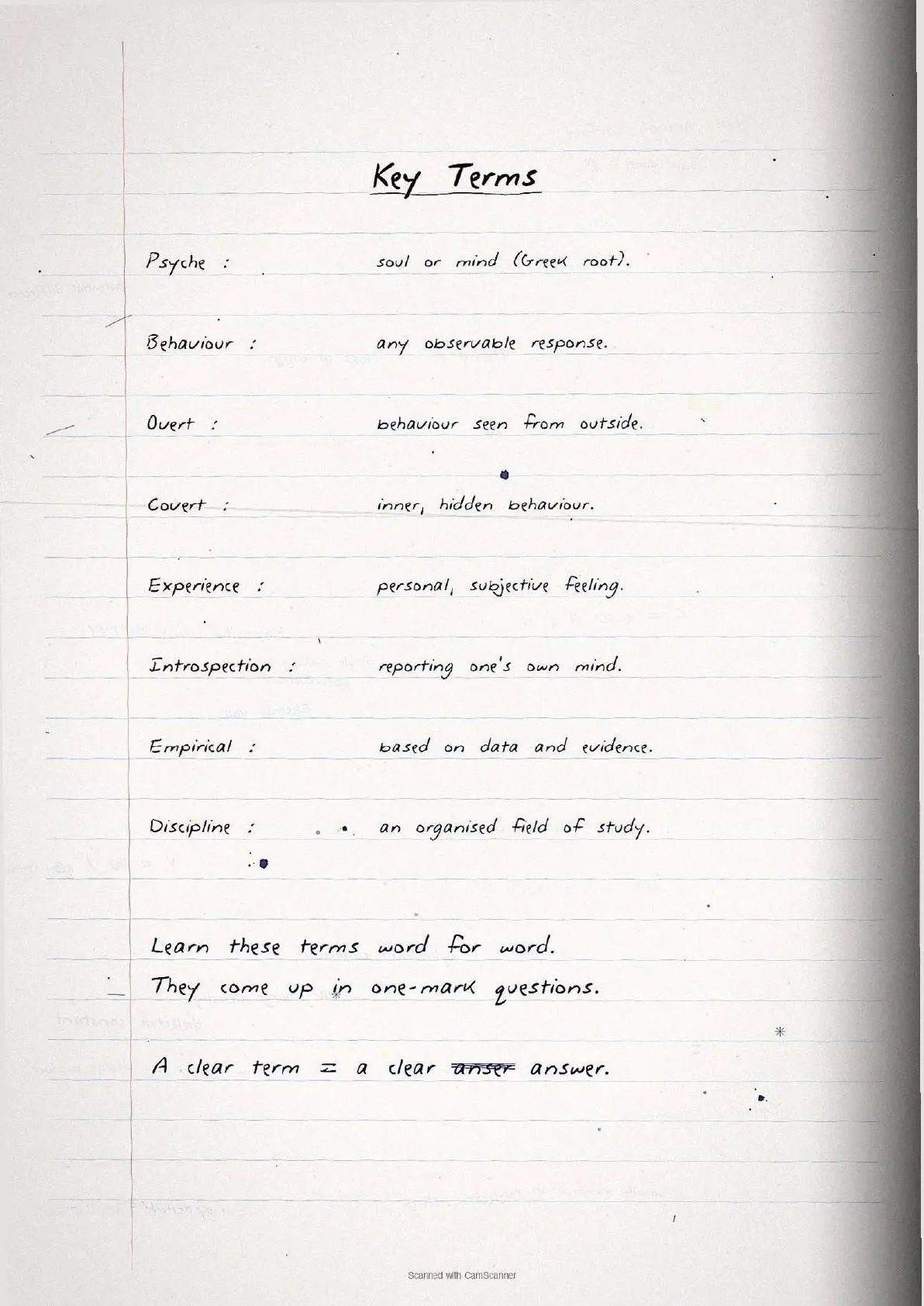
- Handwritten pages with boxed key terms, a timeline of schools, and a labelled psychology-and-other-disciplines map.
- This is the opening chapter of Class 11 Psychology, so its terms and schools set up the whole course.
- Pairs with the NCERT Solutions, Notes and Book PDF linked lower on this page.
These What is Psychology handwritten notes are prepared from the official NCERT Psychology textbook and checked against recent CBSE Class 11 question papers.
Student Feedback: In a Collegedunia poll of 5,180 Class 11 Psychology students, 72% of students said handwritten pages helped them recall the seven schools of psychology and the three definition terms faster than printed text, because the boxed diagrams and arrows made the ideas stick.
Source: 2026-27 Class 11 Psychology student poll. Sample of 5,180 students from CBSE schools across 11 states.
What These What is Psychology Handwritten Notes Contain
What is Psychology? is the first chapter of Class 11 Psychology. It explains what the subject studies, how it grew into a science, and where it fits among other disciplines. These handwritten notes condense the chapter into handwritten pages that read like a topper's own notebook.
The notes are organised under three threads, each on its own set of pages:
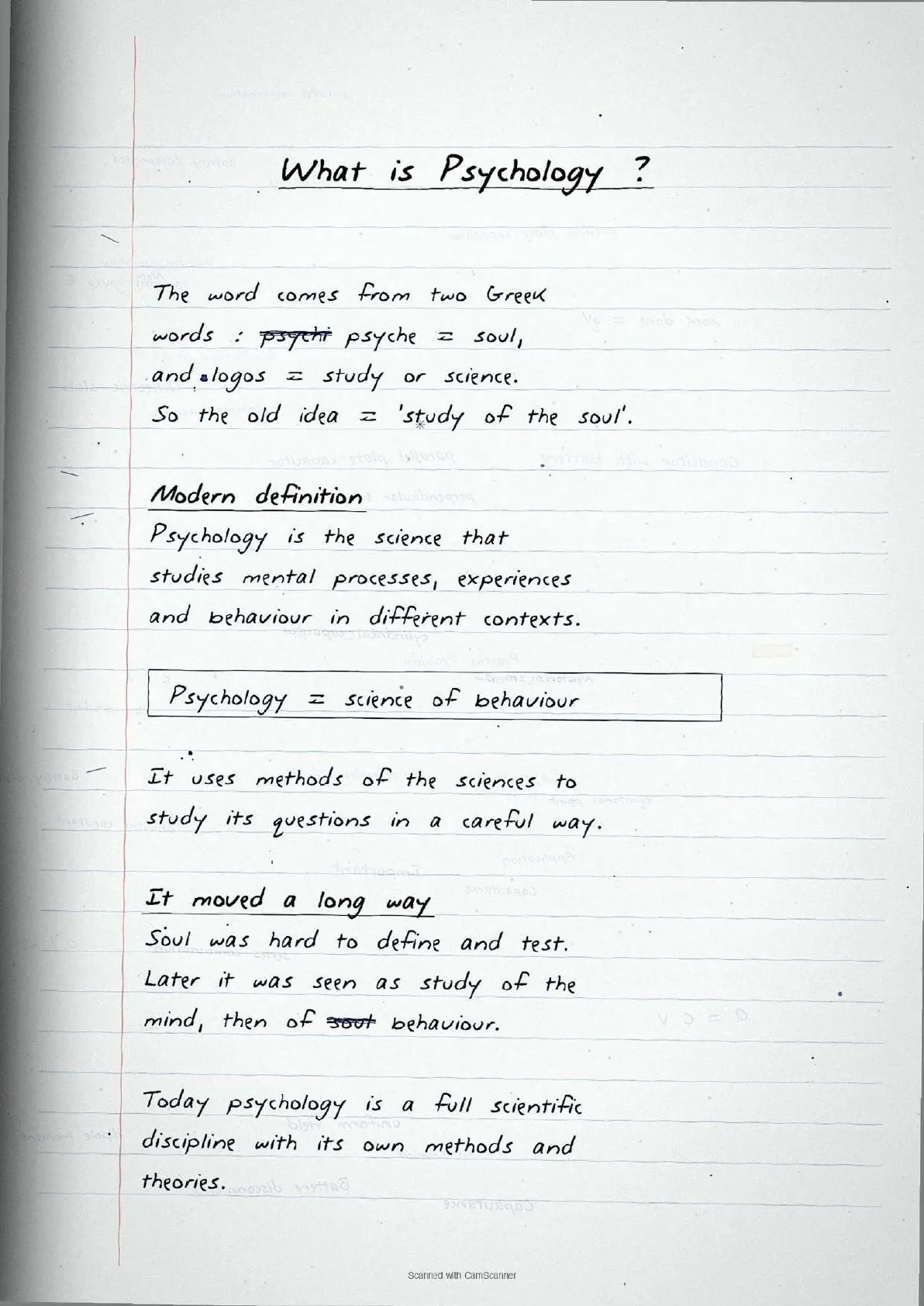
- The meaning: the Greek roots psyche and logos, and the formal definition using mental processes, experience and behaviour.
- The nature: why psychology is treated as both a natural science and a social science.
- The story and the map: the evolution from Wundt in 1879, the growth of psychology in India, the main branches, and links with other subjects.
Because the pages are handwritten, the key terms sit in boxes and arrows rather than long paragraphs. A student can flip through the What is Psychology class 11 pages in a few minutes and still pick up the definition, the schools of thought and the branches before walking into the exam.
Meaning of Psychology and Its Subject Matter
The opening pages settle what psychology actually is. The word comes from two Greek words, psyche meaning soul and logos meaning science or study. Long ago the subject was seen as a study of the soul or mind, but modern psychology is defined formally as a science which studies mental processes, experiences and behaviour in different contexts. The notes box this definition and break down its three terms.
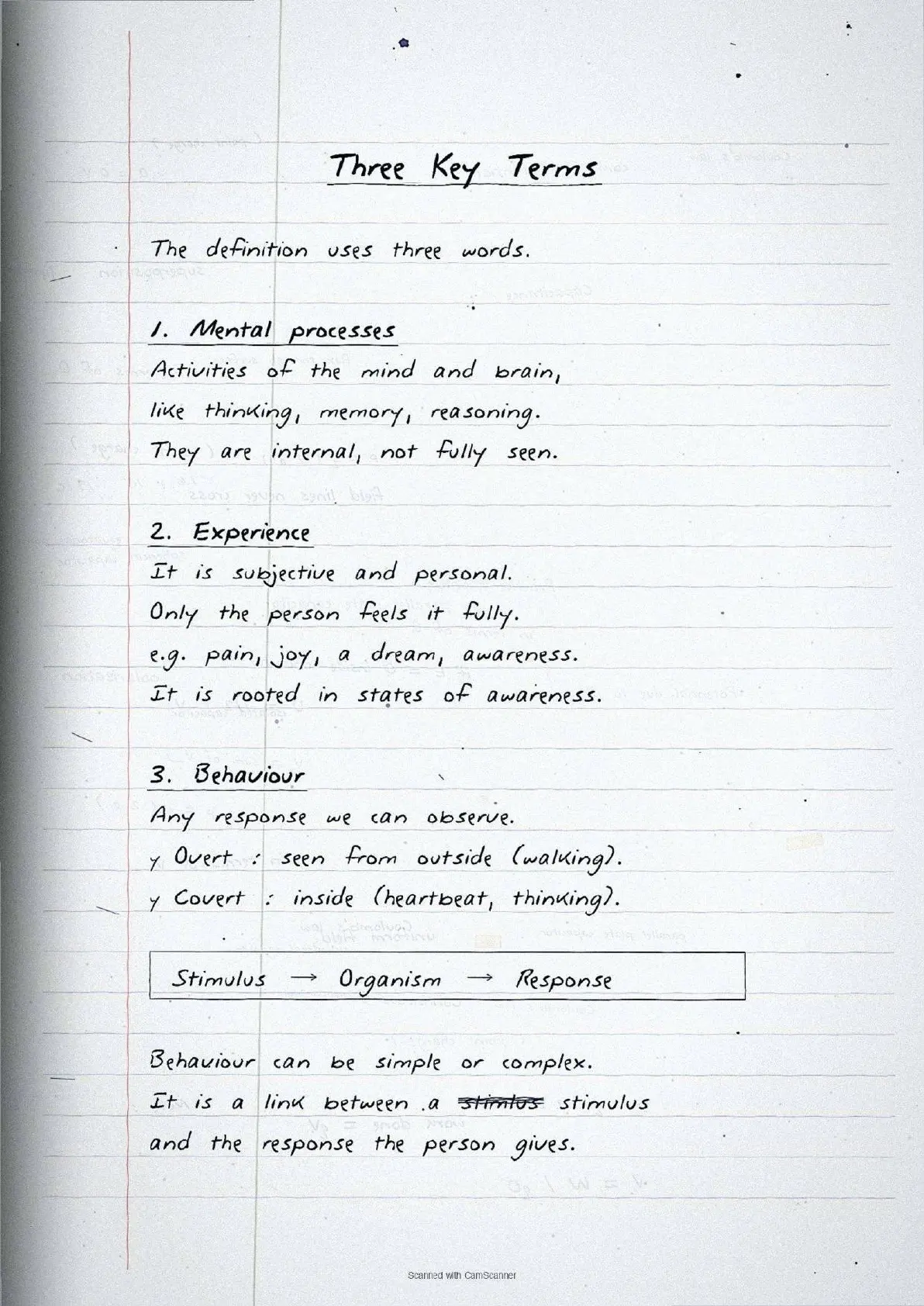
| Term | What the page shows |
|---|---|
| Mental processes | States of awareness like thinking, remembering, learning, perceiving and feeling; linked to but not the same as brain activity. |
| Experience | Subjective and internal, known only to the person having it; shaped by inner and outer conditions. |
| Behaviour | Responses and reactions, overt or covert, simple or complex, drawn as a stimulus (S) and response (R) link. |
The pages also show the two-sided nature of the subject. As a natural science, psychology uses the scientific method and a hypothetico-deductive model to find cause and effect so behaviour can be predicted. As a social science, it studies humans as social beings and treats each behaviour as having multiple causes tied to the socio-cultural context, as in the story of Ranjita and Shabnam. A short box also separates scientific psychology from common-sense notions, using the Dweck study to show that psychology predicts patterns rather than explaining behaviour only after it happens.
Evolution and Branches in the Handwritten Pages
The middle pages trace how psychology grew, drawn as a clear timeline so the schools stand apart. Modern psychology begins in 1879, when Wilhelm Wundt set up the first laboratory in Leipzig, Germany. The table below shows what the handwritten notes cover for each major school.
| School | Key idea on the page |
|---|---|
| Structuralism (Wundt) | Analyses the building blocks of the mind through introspection. |
| Functionalism (William James) | Studies what the mind does and how behaviour helps people adapt. |
| Gestalt | Experience is holistic; the whole is more than the sum of its parts. |
| Behaviourism (Watson, Skinner) | Only observable, measurable behaviour counts as the subject matter. |
| Psychoanalysis (Freud) | Behaviour driven by unconscious desires and conflicts. |
| Humanistic (Rogers, Maslow) | Free will and the natural striving to grow and reach one's potential. |
| Cognitive | The mind as an information processor; cognition is the process of knowing. |
A separate page covers the growth of psychology in India. The modern era began at Calcutta University, where the first psychology laboratory was set up in 1915 and the first Department of Psychology followed in 1916. The notes then list the main branches, including cognitive, biological, developmental, social, clinical and counselling, health, environmental, industrial/organisational, educational and sports psychology. A final boxed diagram shows psychology at the intersection of other disciplines like philosophy, medicine, economics, computer science, law and mass communication.
How to Use These Handwritten Notes
Handwritten notes work best as a final-revision tool, not a first read. The steps below show how to get the most out of the What is Psychology handwritten notes in the last days before a test.
- Download: tap the download card above to save the handwritten pages to your device.
- First read: read the printed Notes once so the handwritten pages act as a refresher, not a first source.
- Recall drill: cover the page and try to write the three definition terms and the seven schools from memory.
- Night before: flip through the boxed timeline for a quick last-minute recall of the schools and Indian landmarks.
Many students search for class 11 psychology chapter 1 notes on their phone the night before a test, so a saved set of handwritten pages means you can revise offline. Use the handwritten notes for speed, then check the solutions to confirm you have the answer points right.
Common Mistakes These Notes Help You Avoid
A few errors cost marks every year. The handwritten notes flag each one in the margin so you can fix it before the exam. These five are the most common.
- Mixing up the Greek roots. It is psyche (soul) and logos (study), not the other way round.
- Saying mind and brain are the same. They are interdependent but not identical; the mind has no physical location.
- Forgetting a school. The exam expects all the main schools from structuralism to the cognitive approach.
- Wrong founder or year. The first laboratory is Wundt, Leipzig, 1879, and the first Indian lab is Calcutta, 1915.
- Treating psychology as only a social science. It is treated as both a natural and a social science.
Students who fix these five points usually move from average to high marks. The handwritten notes box the definition and list every school in full, so the soft points are hard to miss when you revise.
How These Handwritten Notes Pair with the Solutions and Book PDF
These handwritten notes are a fast revision tool. To prepare fully, students should use them alongside the other resources for the same chapter, all linked in the table below. Read the printed Notes, test yourself with the solutions, then use these pages for a final recall.
| Resource | Best used for |
|---|---|
| What is Psychology NCERT Solutions | Step-by-step answers to all eight review questions |
| What is Psychology Class 11 Notes | Quick chapter summary with all schools and key terms in one place |
| What is Psychology NCERT Book PDF | Reading the original NCERT chapter text and figures |
Tip: read the printed Notes first, then attempt the solutions, and keep these handwritten pages for the final night-before flip. Using them for recall, not for the first read, builds memory faster.
All Class 11 Psychology Handwritten Notes by Chapter
The table links the handwritten notes for every chapter in Class 11 Psychology, so students can move across the course in one click. What is Psychology? is highlighted.
| Chapter | Handwritten Notes |
|---|---|
| Chapter 1 | What is Psychology? |
| Chapter 2 | Methods of Enquiry in Psychology |
| Chapter 3 | Human Development |
| Chapter 4 | Sensory, Attentional and Perceptual Processes |
| Chapter 5 | Learning |
| Chapter 6 | Human Memory |
| Chapter 7 | Thinking |
| Chapter 8 | Motivation and Emotion |
FAQs on What is Psychology Handwritten Notes
What is Psychology Class 11 Psychology Handwritten Notes Common Questions
Ques. Where can I download the What is Psychology handwritten notes PDF?
Ans. You can download the What is Psychology Class 11 Psychology handwritten notes PDF directly from this page. It is free, follows the 2026-27 NCERT, and presents the definition, the schools of psychology, the Indian landmarks and the branches as handwritten pages.
Ques. What is the definition of psychology in Class 11 Chapter 1?
Ans. Psychology is defined as a science which studies mental processes, experiences and behaviour in different contexts. The word comes from the Greek psyche, meaning soul, and logos, meaning study. The handwritten notes box this definition and explain each of its three terms.
Ques. What topics do these handwritten notes cover?
Ans. They cover the meaning of psychology, mental processes, experience and behaviour, psychology as a natural and social science, the evolution from Wundt in 1879 through structuralism, functionalism, behaviourism, psychoanalysis, the humanistic and cognitive approaches, the growth of psychology in India, the branches, and links with other disciplines.
Ques. Are handwritten notes good for revising Class 11 Psychology Chapter 1?
Ans. Yes. Handwritten notes are best for fast, last-minute revision because the boxed key terms and the timeline of schools make the ideas easy to skim. Use them after a first read of the printed Notes, not as your only source.
Ques. How should I use these notes with the other resources?
Ans. Read the printed Notes first, test yourself with the NCERT Solutions, then keep these handwritten pages for the final night-before flip. Using them for recall rather than the first read builds memory faster.



Comments