


Four Indian sociologists adapted a western discipline to India by studying caste, tradition, the state and the village. Class 11 Sociology Chapter 10 Indian Sociologists builds this idea step by step. These class 11 sociology handwritten notes chapter 10 Indian Sociologists follow the 2026-27 NCERT and cover the accidental pioneers: iyer and sarat chandra roy, g.s. ghurye: founder.
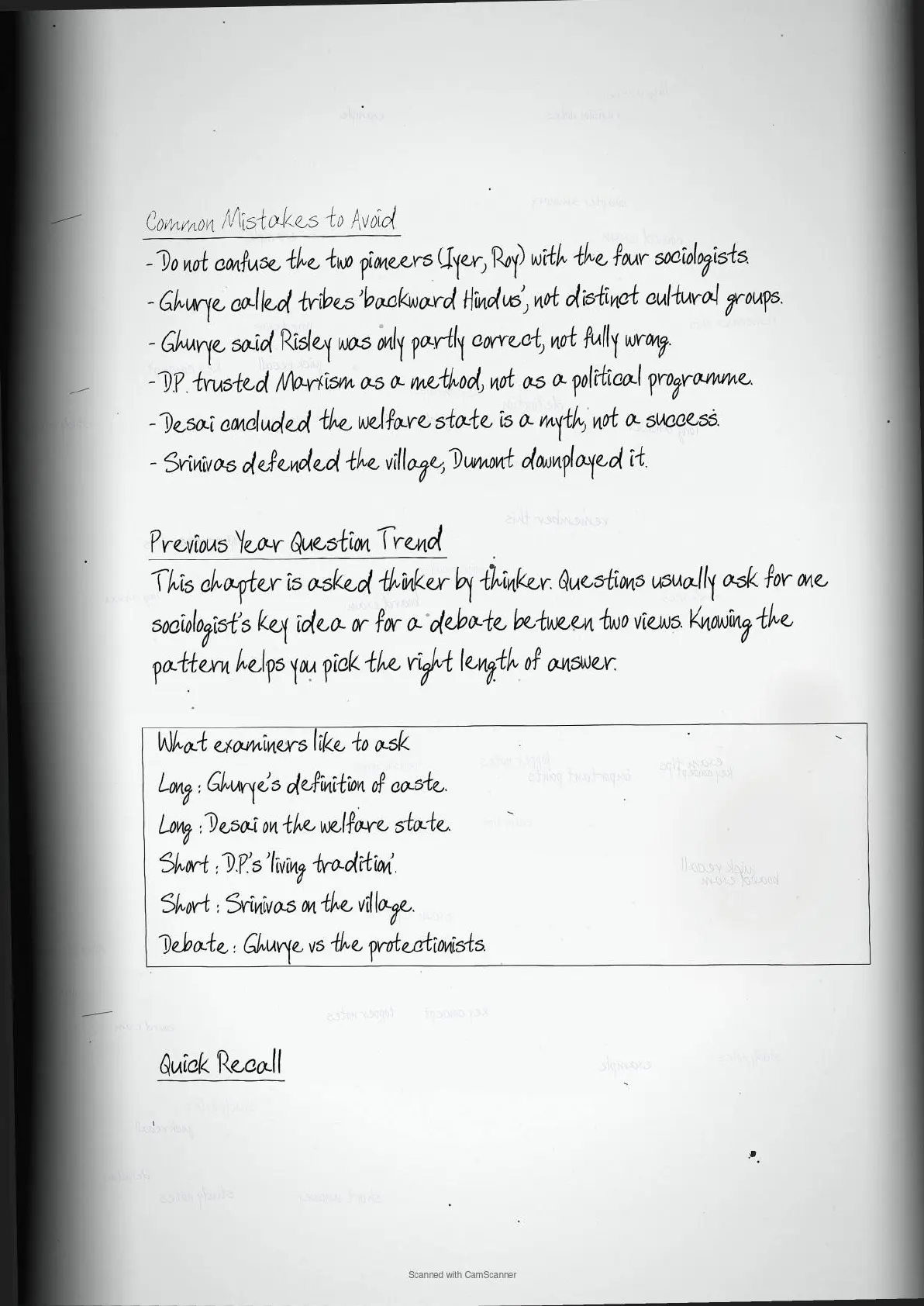
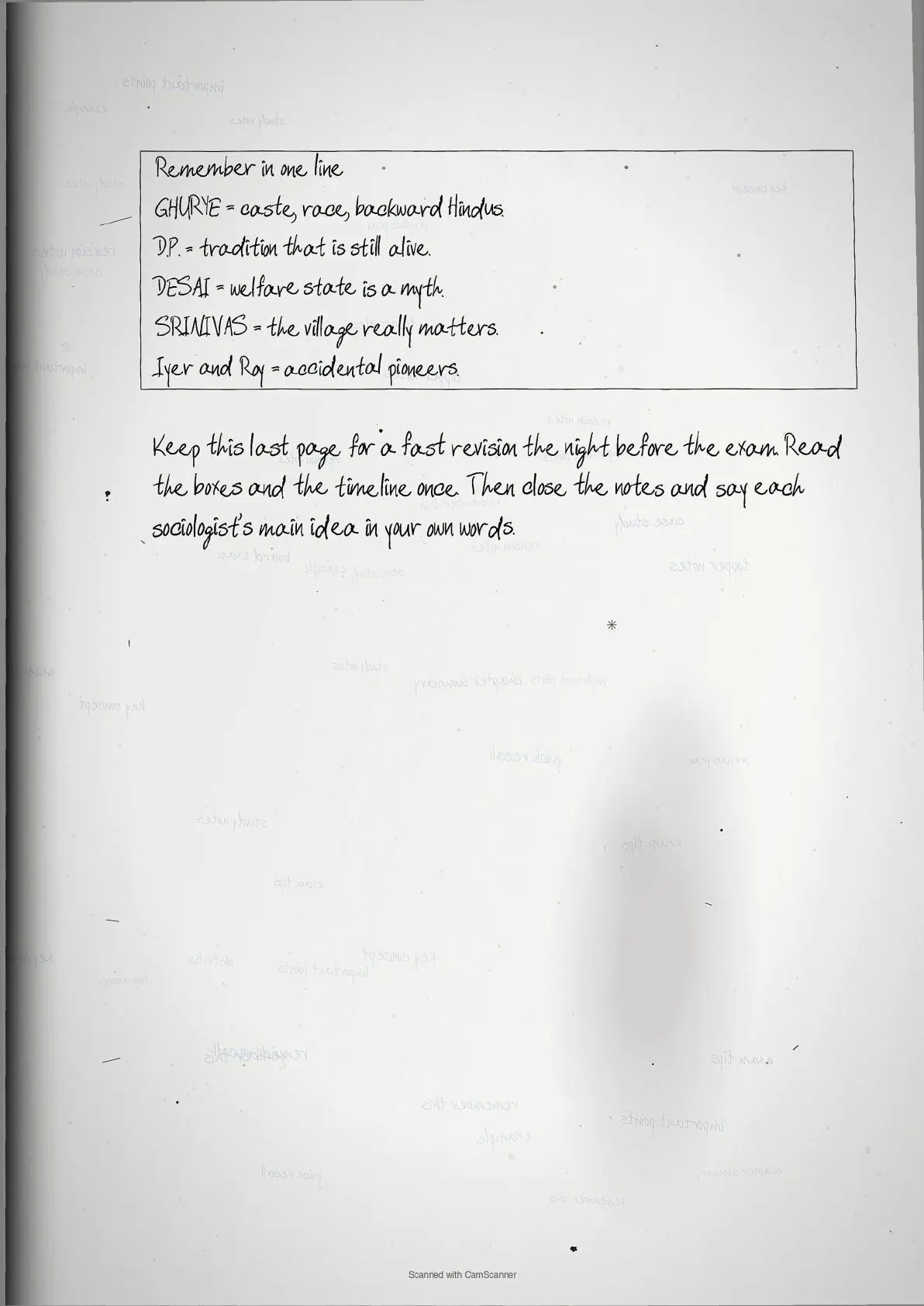
- CBSE Class 11 Weightage: a scoring chapter in the Sociology paper, asked in short and long answers.
- What the notes cover: the accidental pioneers: iyer and sarat chandra roy, g.s. ghurye: founder of institutional sociology, ghurye on tribes, caste and race, d.p. mukerji on tradition and change.
- Best for: quick revision before Class 11 exams and a base for CUET later.
You can read the complete class 11 sociology handwritten notes for Indian Sociologists, with key terms, boxed definitions, and quick revision points, in the PDF below.
These handwritten notes are written by subject teachers, mapped to the 2026-27 NCERT, and checked against the last five years of CBSE Class 11 Sociology papers.
Key Terms and Ideas in Indian Sociologists
These are the terms and ideas the exam asks about most. Learn each one so you can define it and use it in your answers.
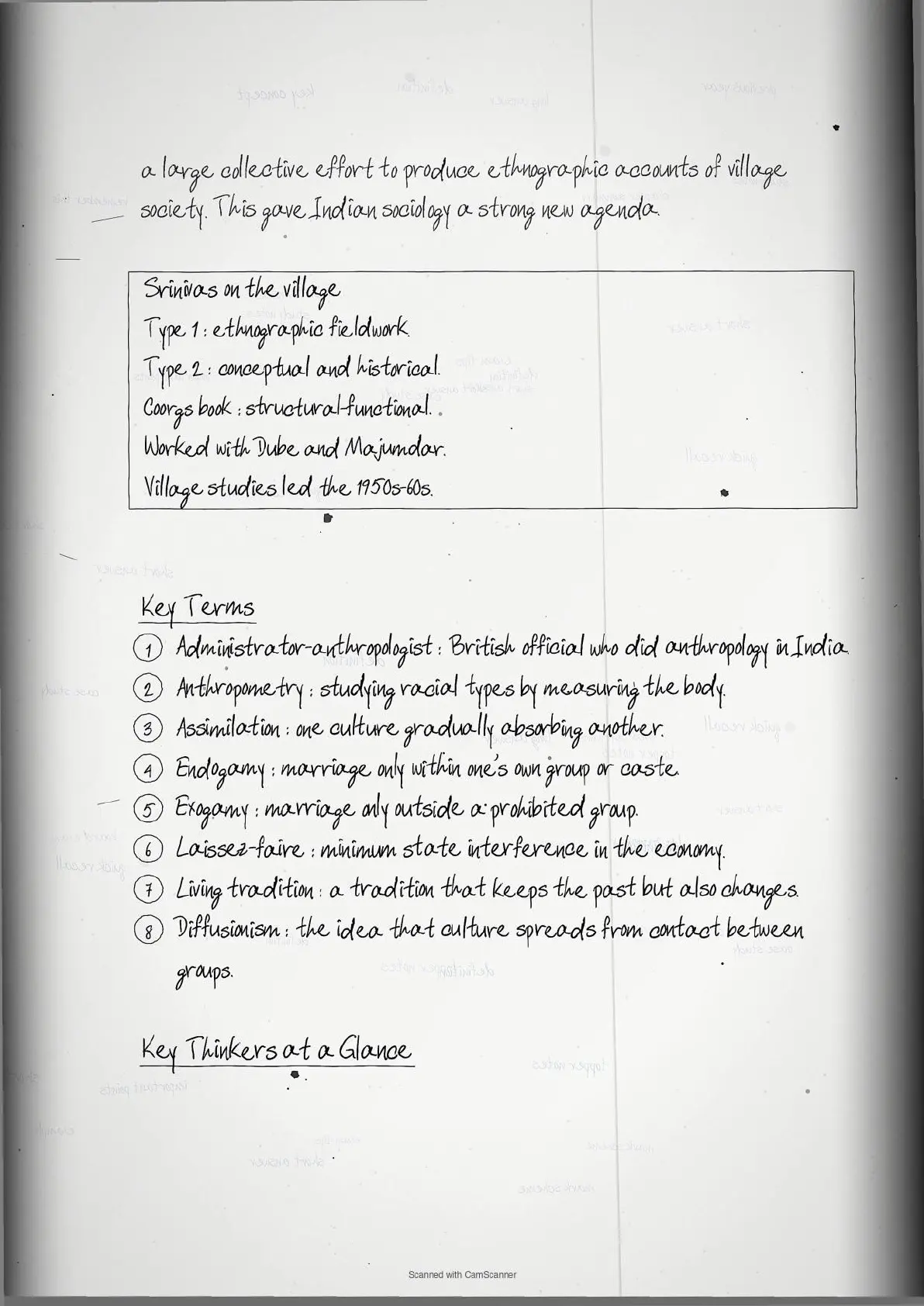
| Term / Idea | What it means |
|---|---|
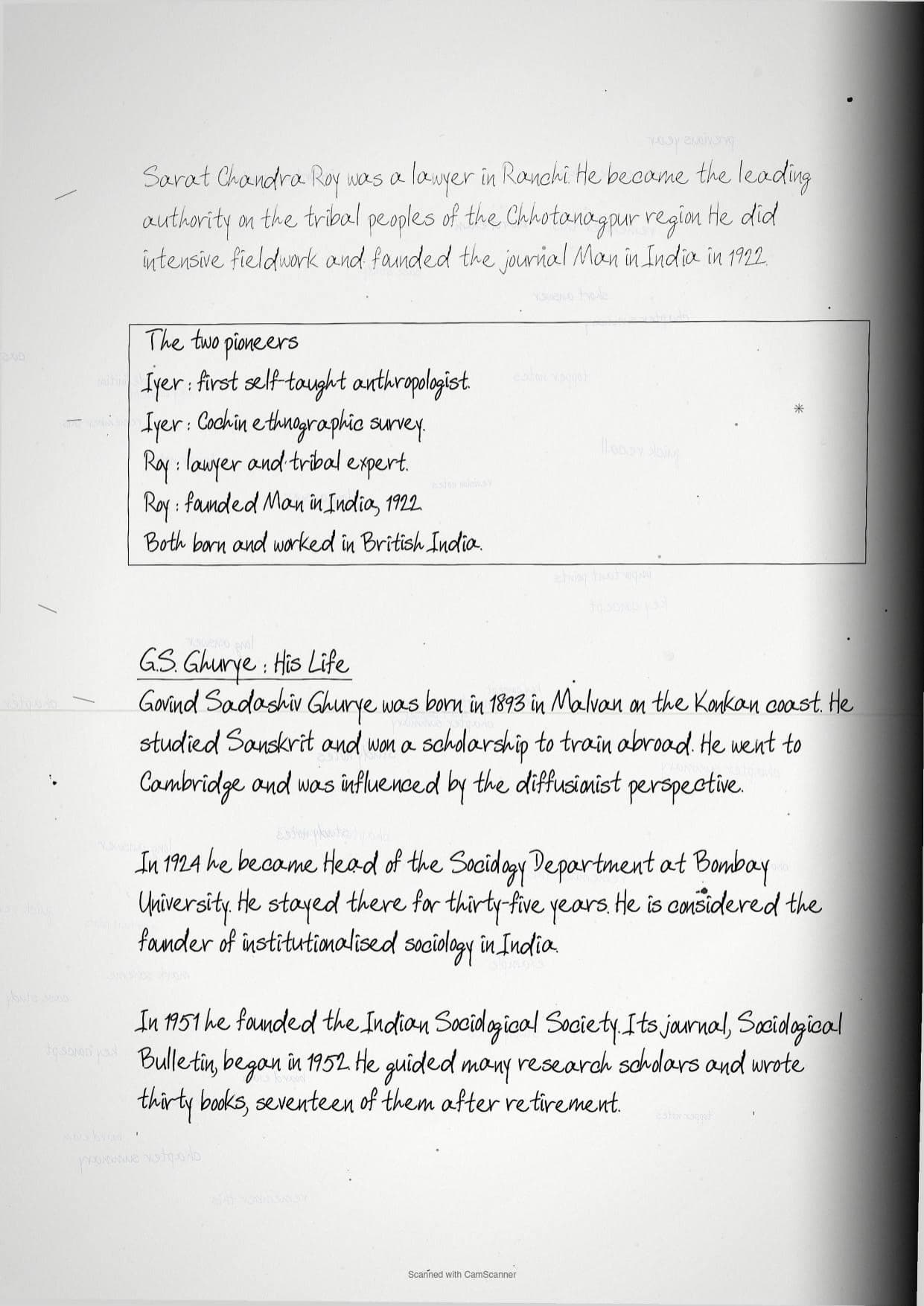
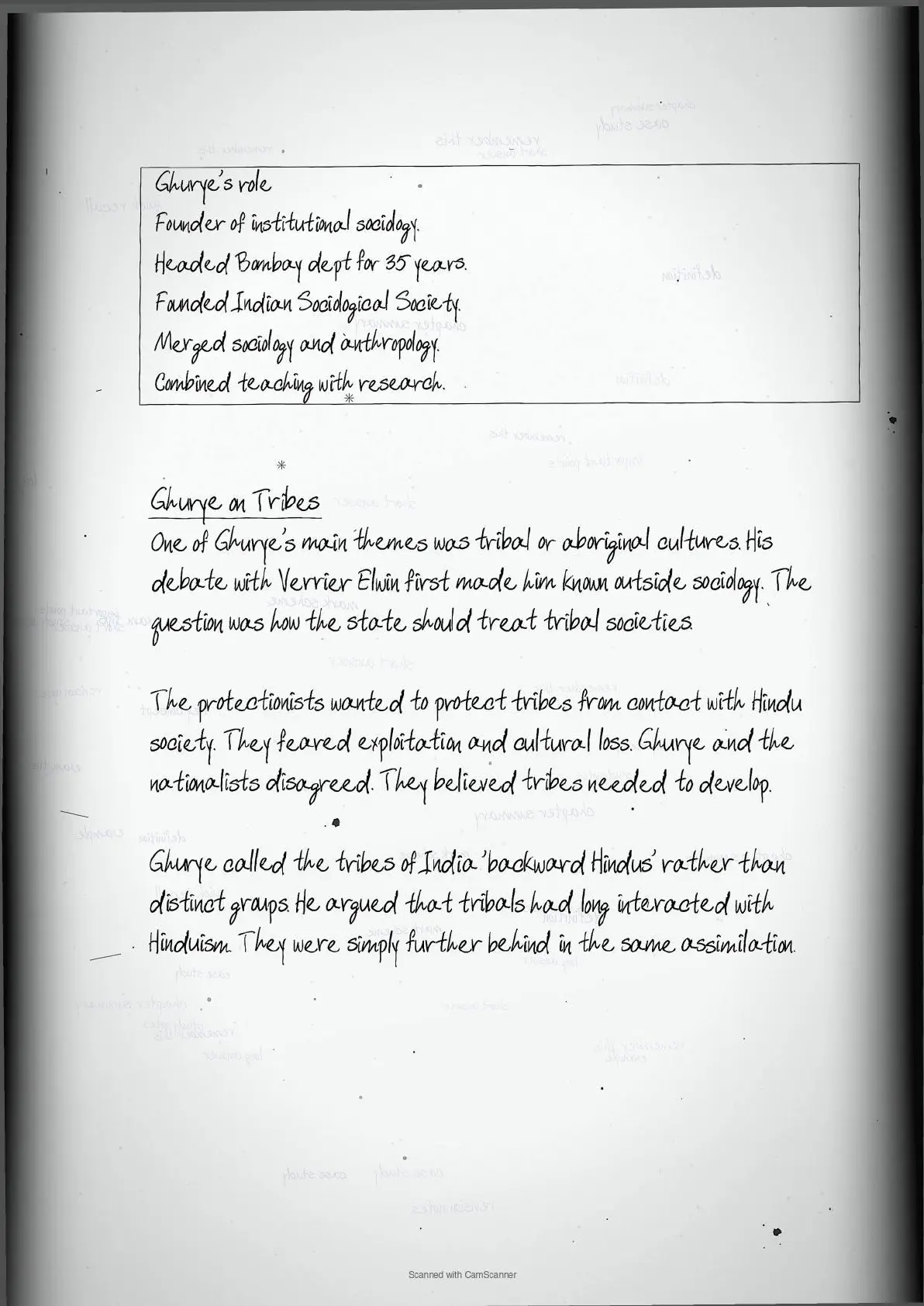
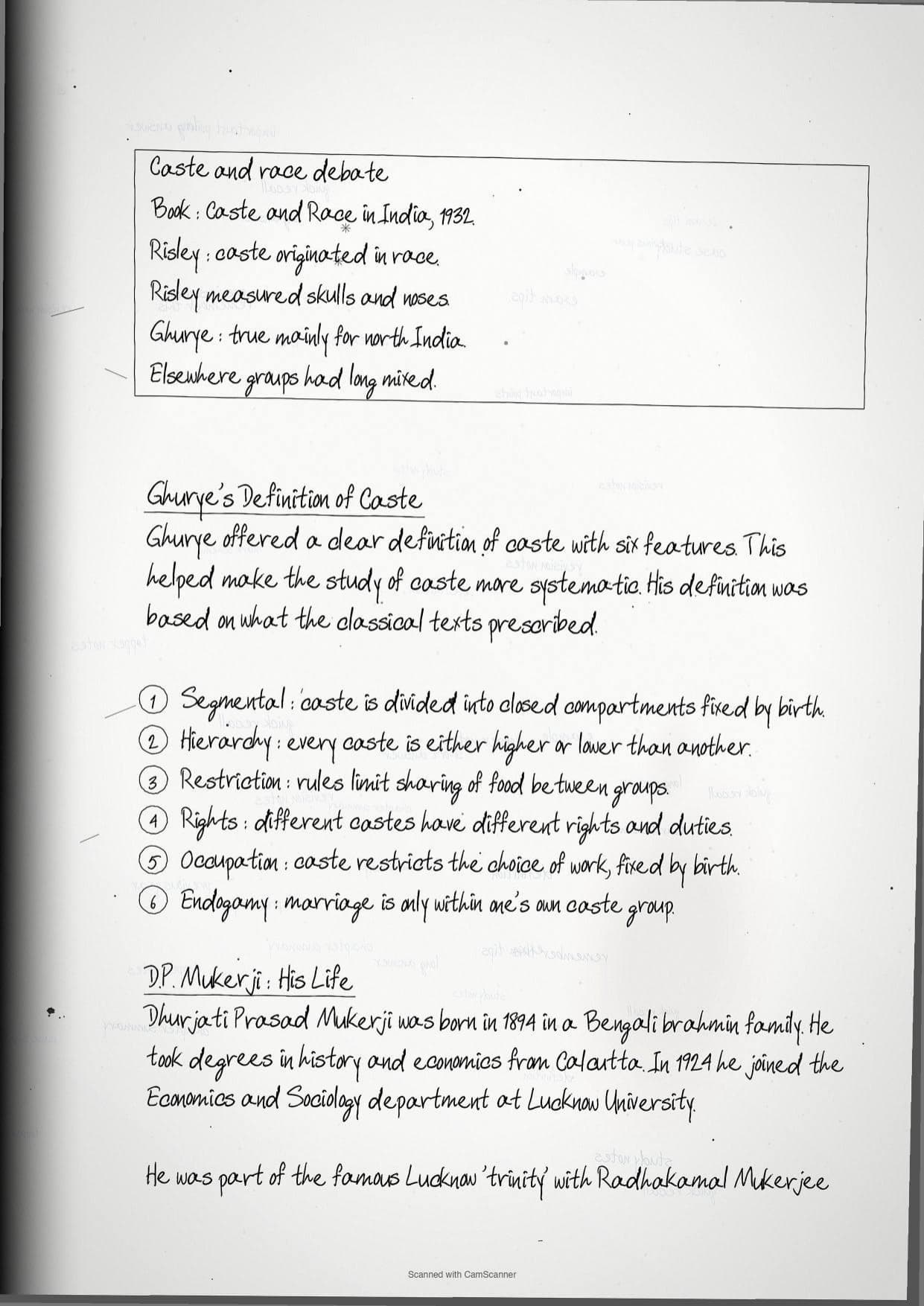
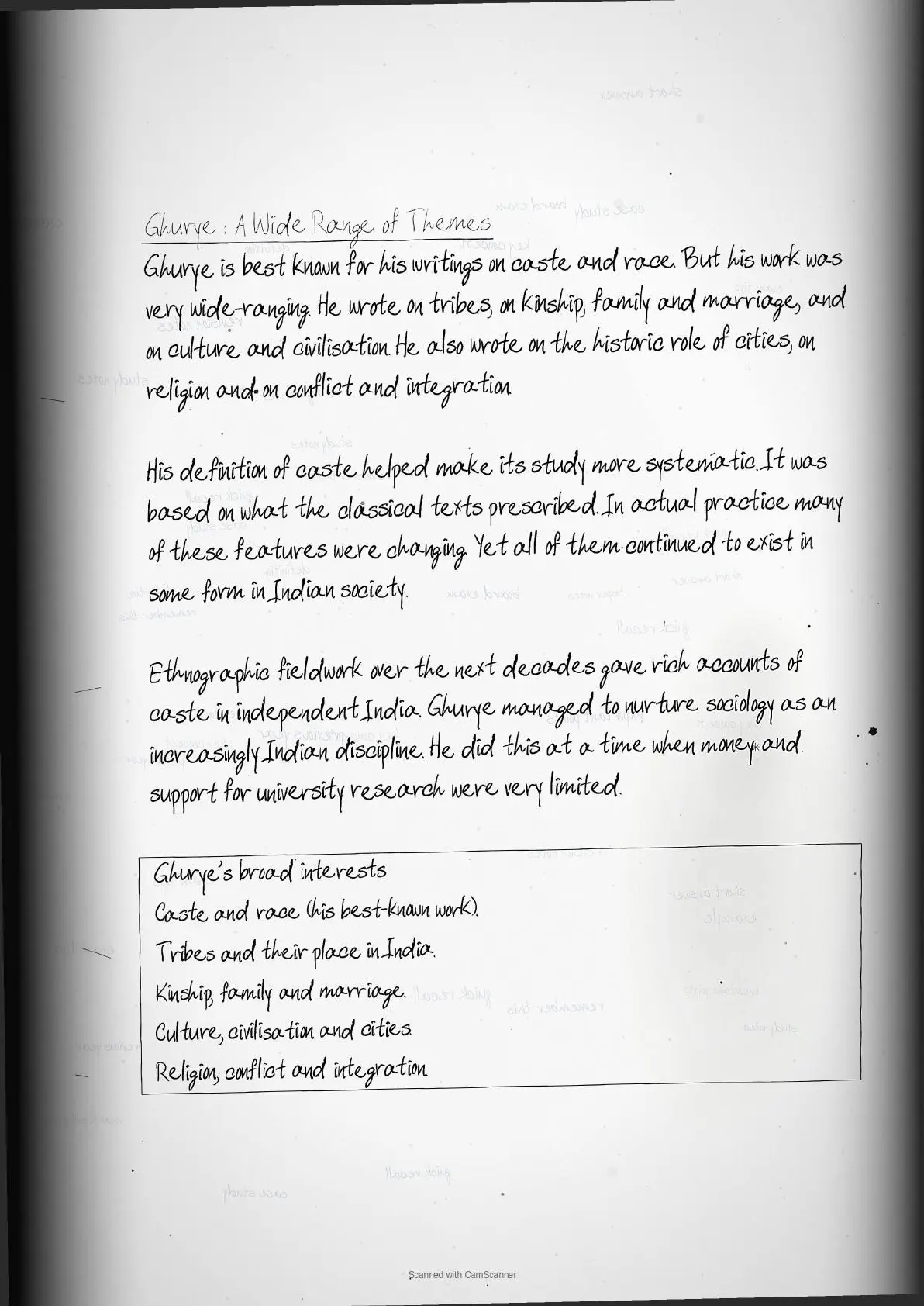
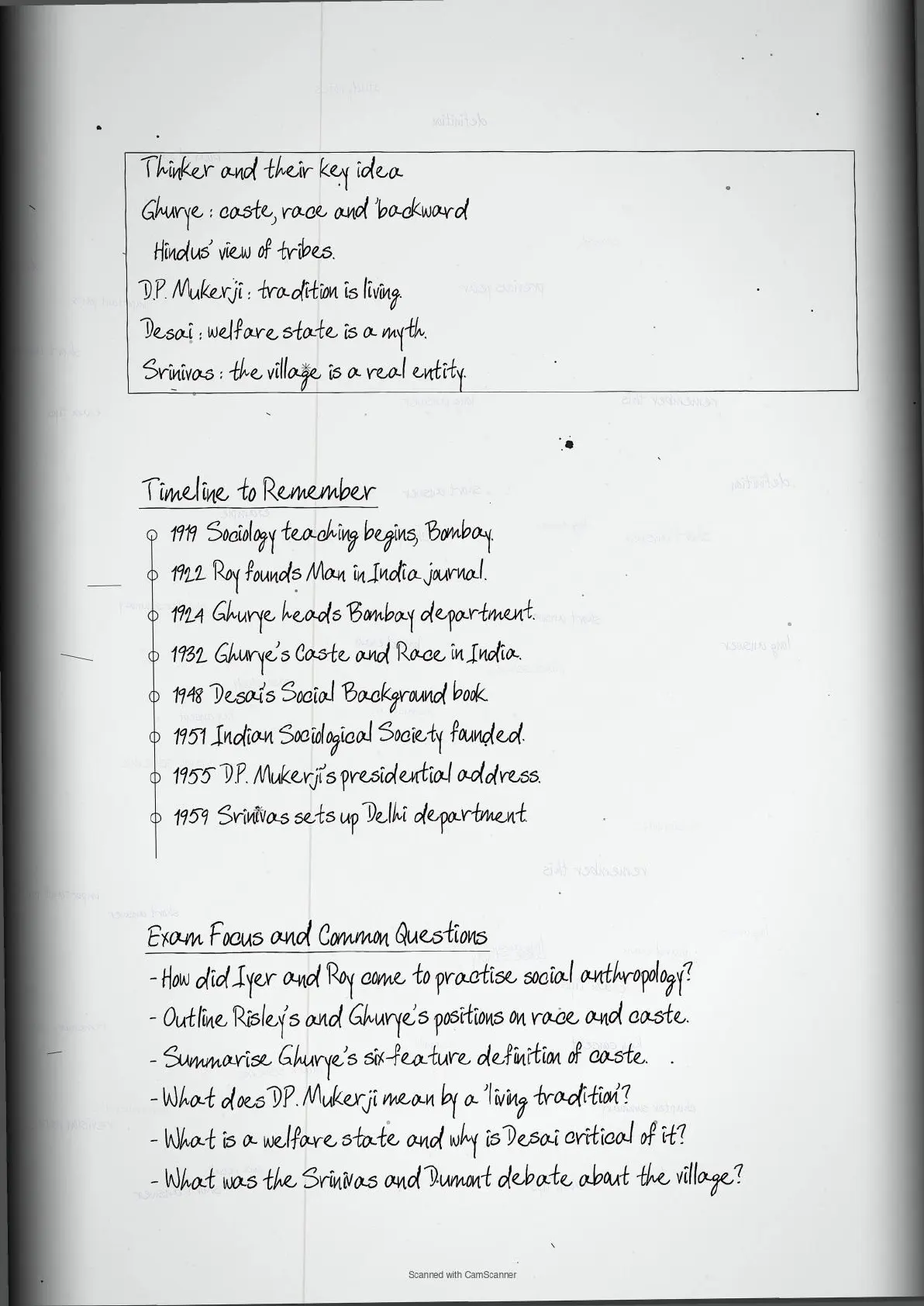
| G.S. Ghurye | Founder of institutional sociology; called tribes 'backward Hindus'. |
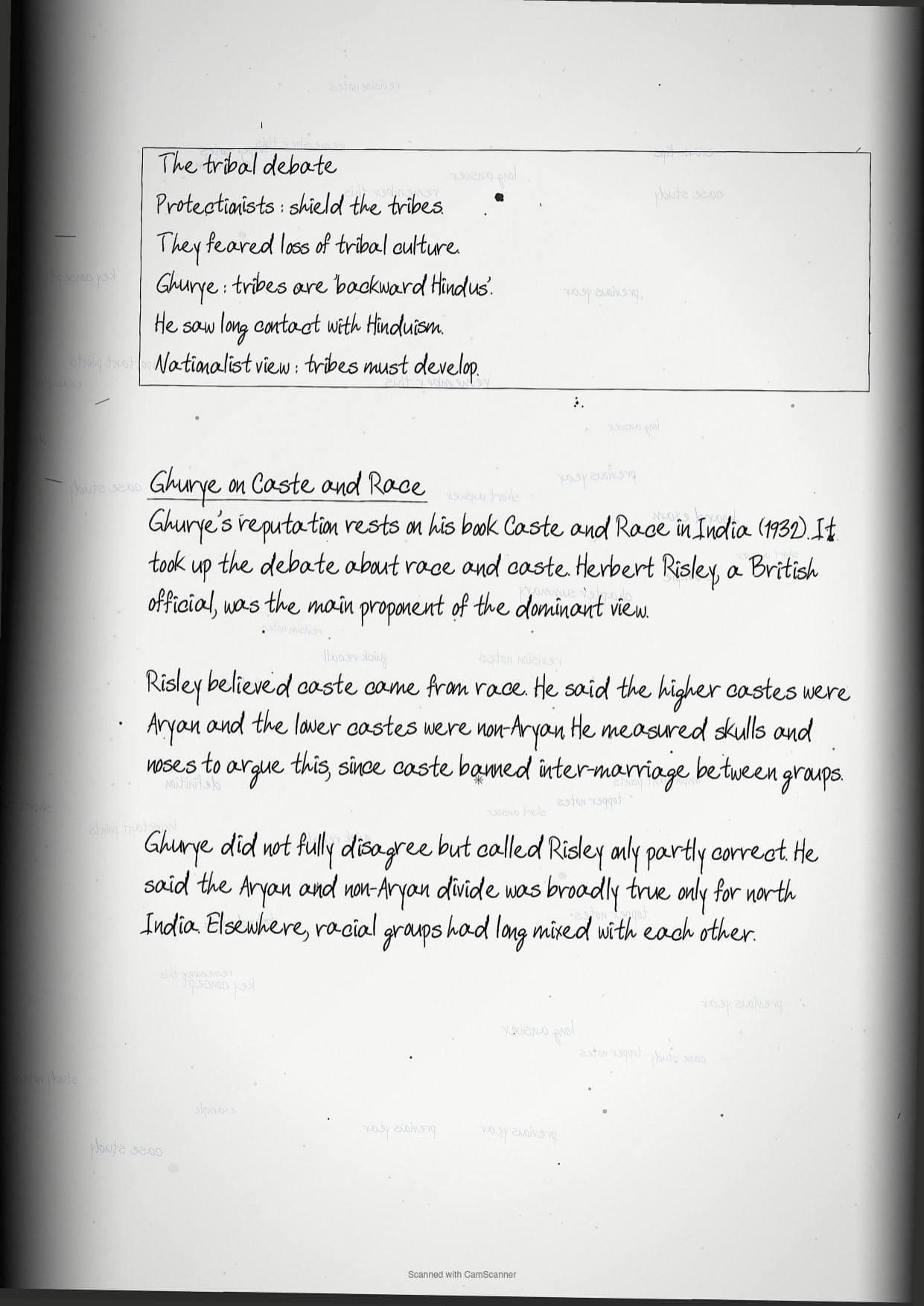
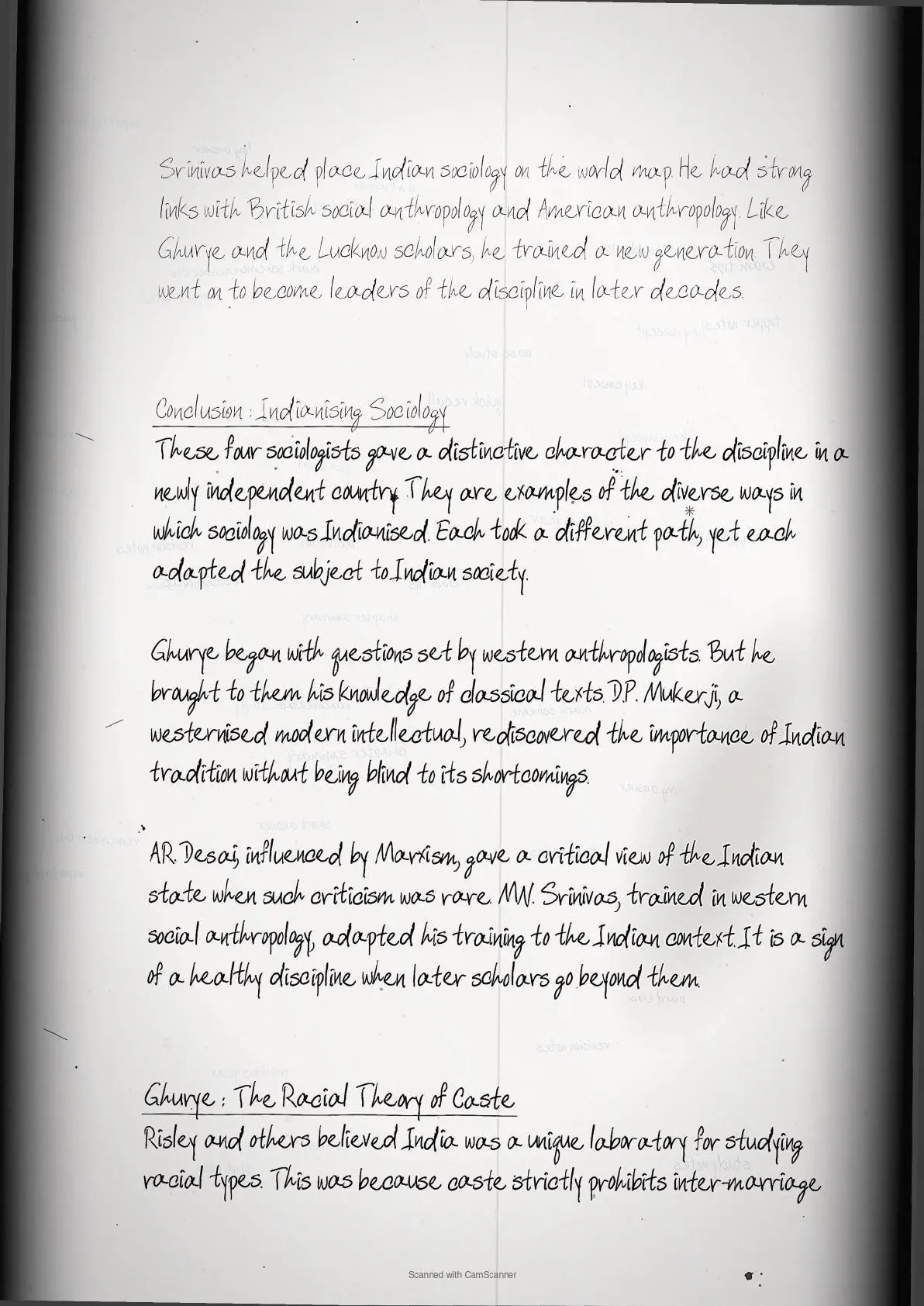
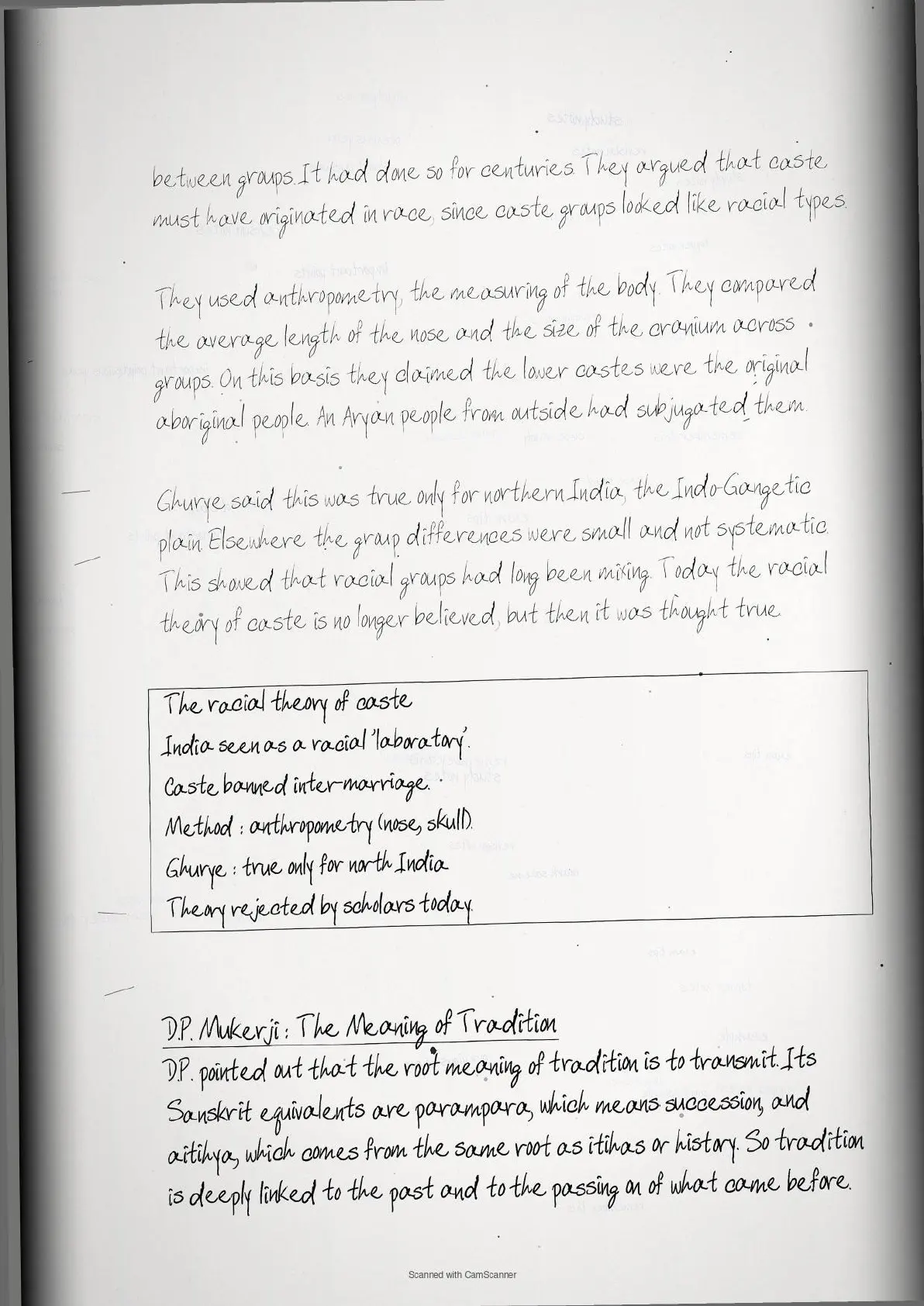
| Ghurye on caste | Defined caste by six features, based on classical texts. |
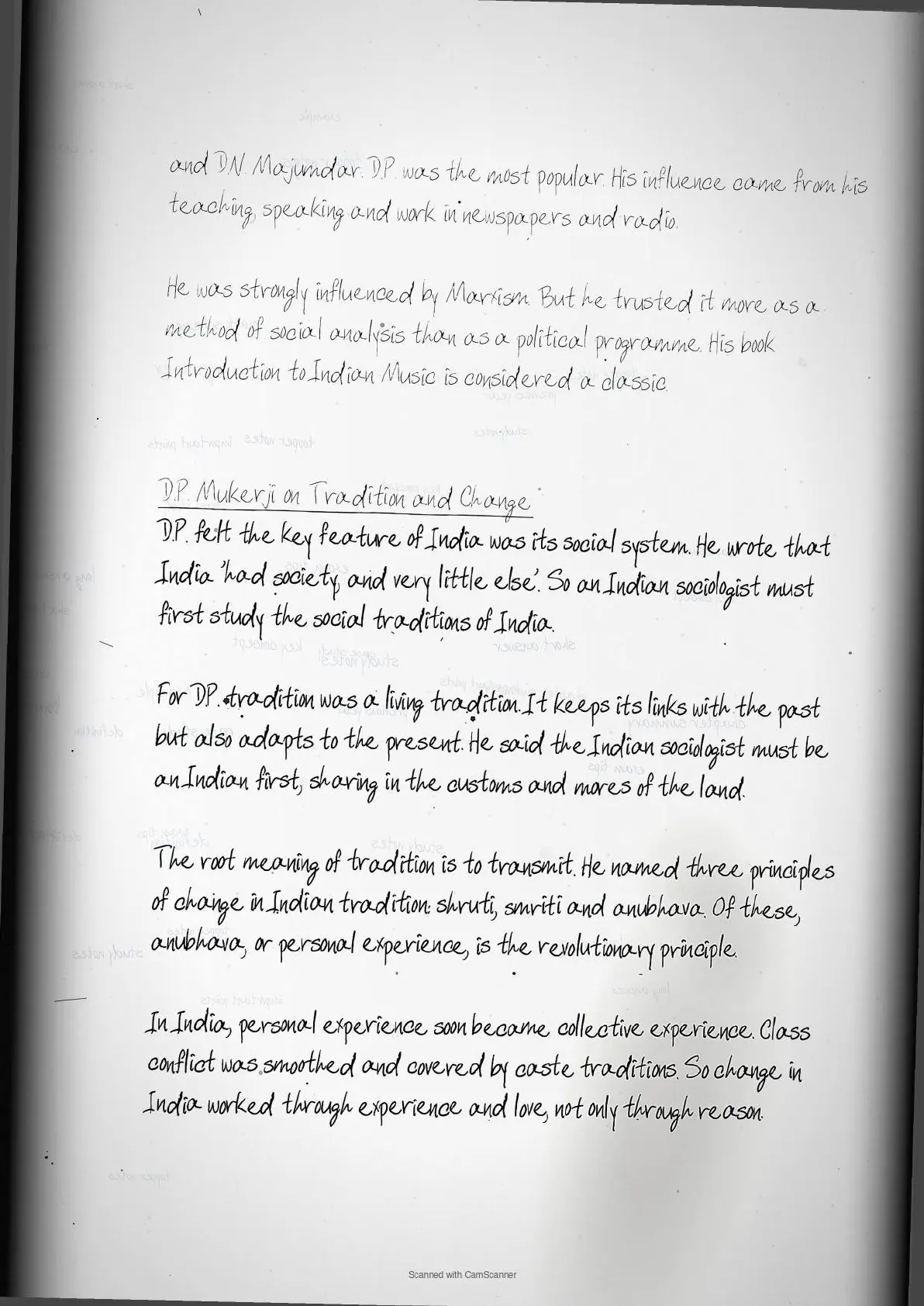
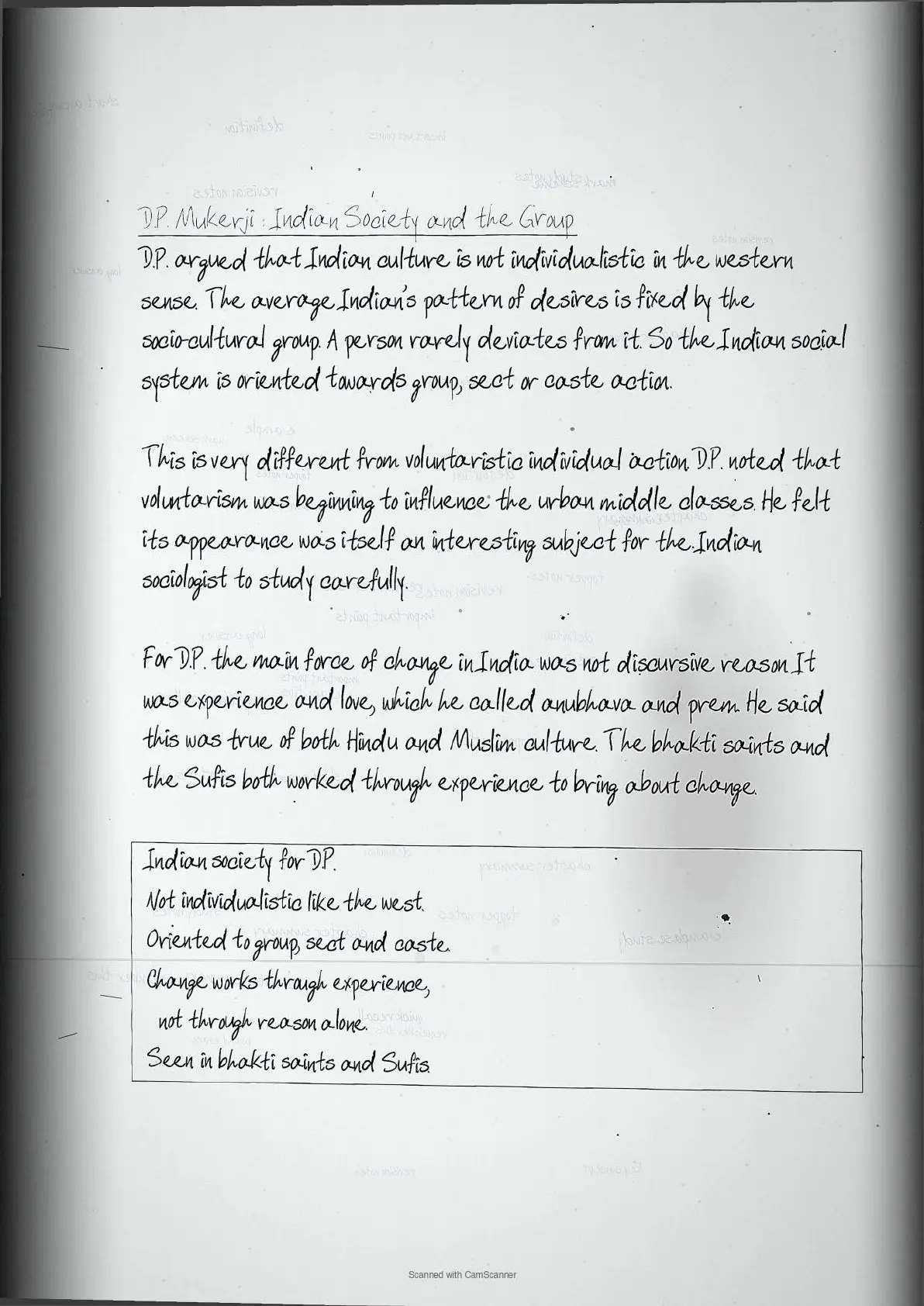
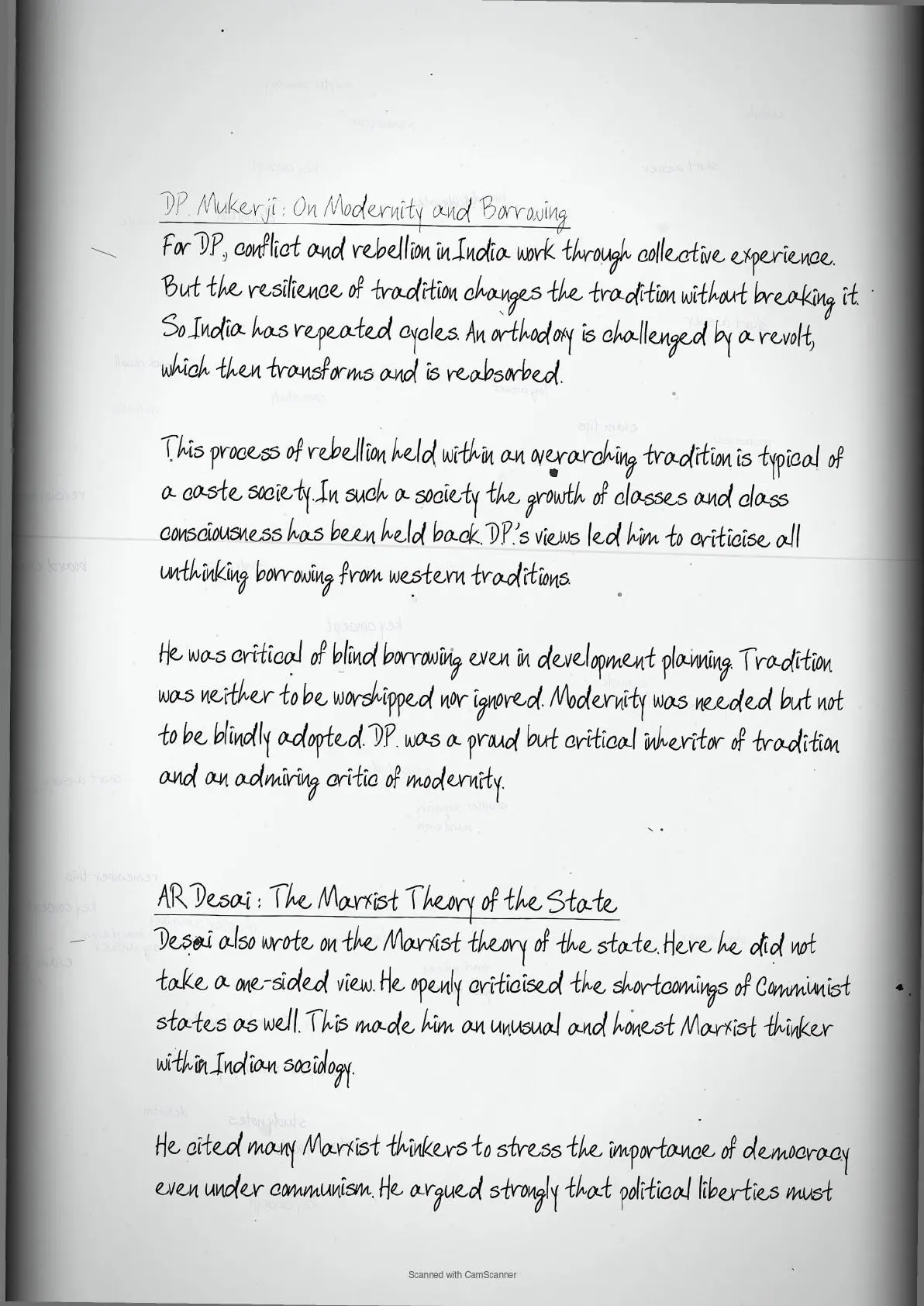
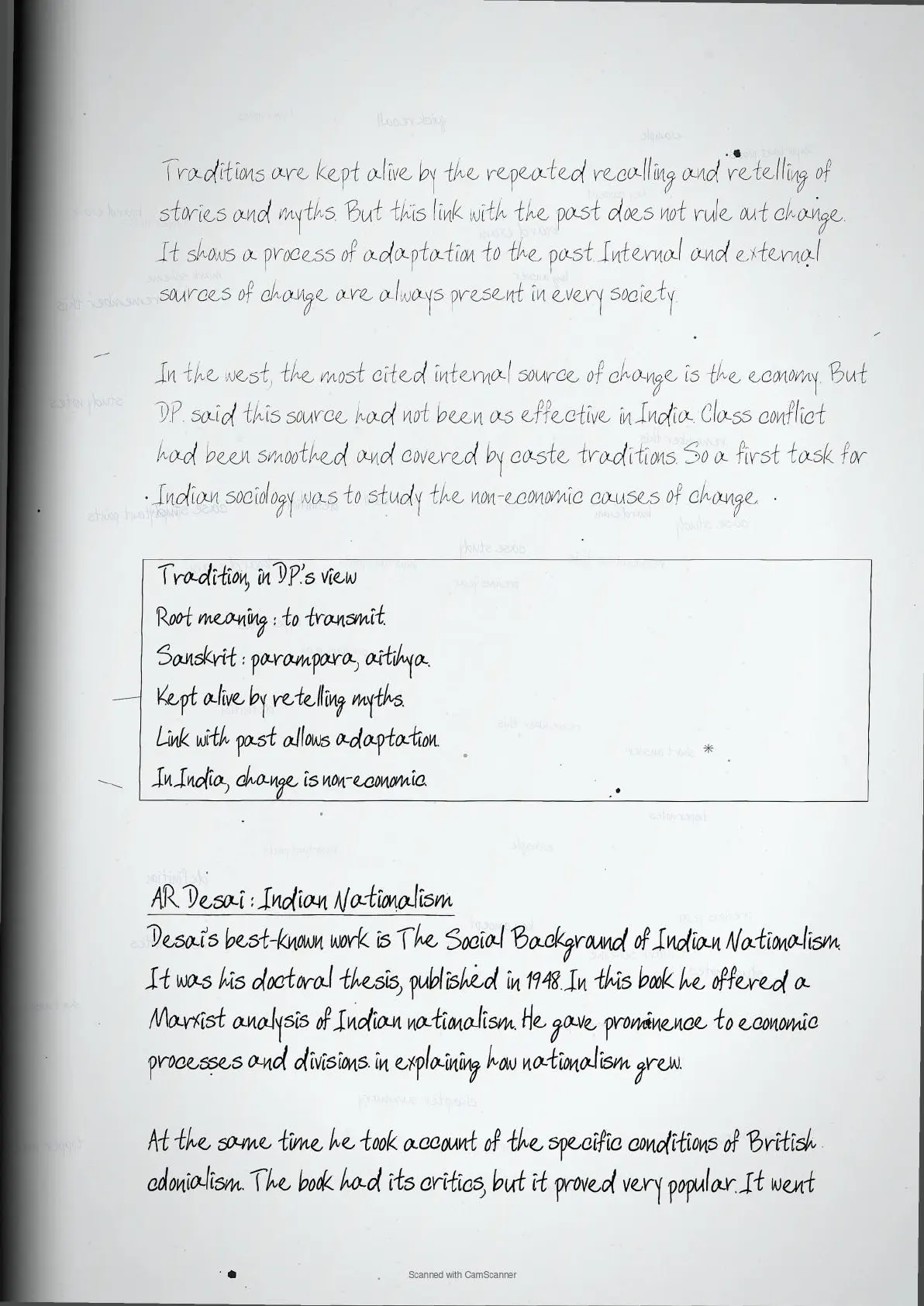
| D.P. Mukerji | Tradition is a living tradition that adapts while keeping the past. |
| D.P. on change | In India, change works through collective experience, not only reason. |
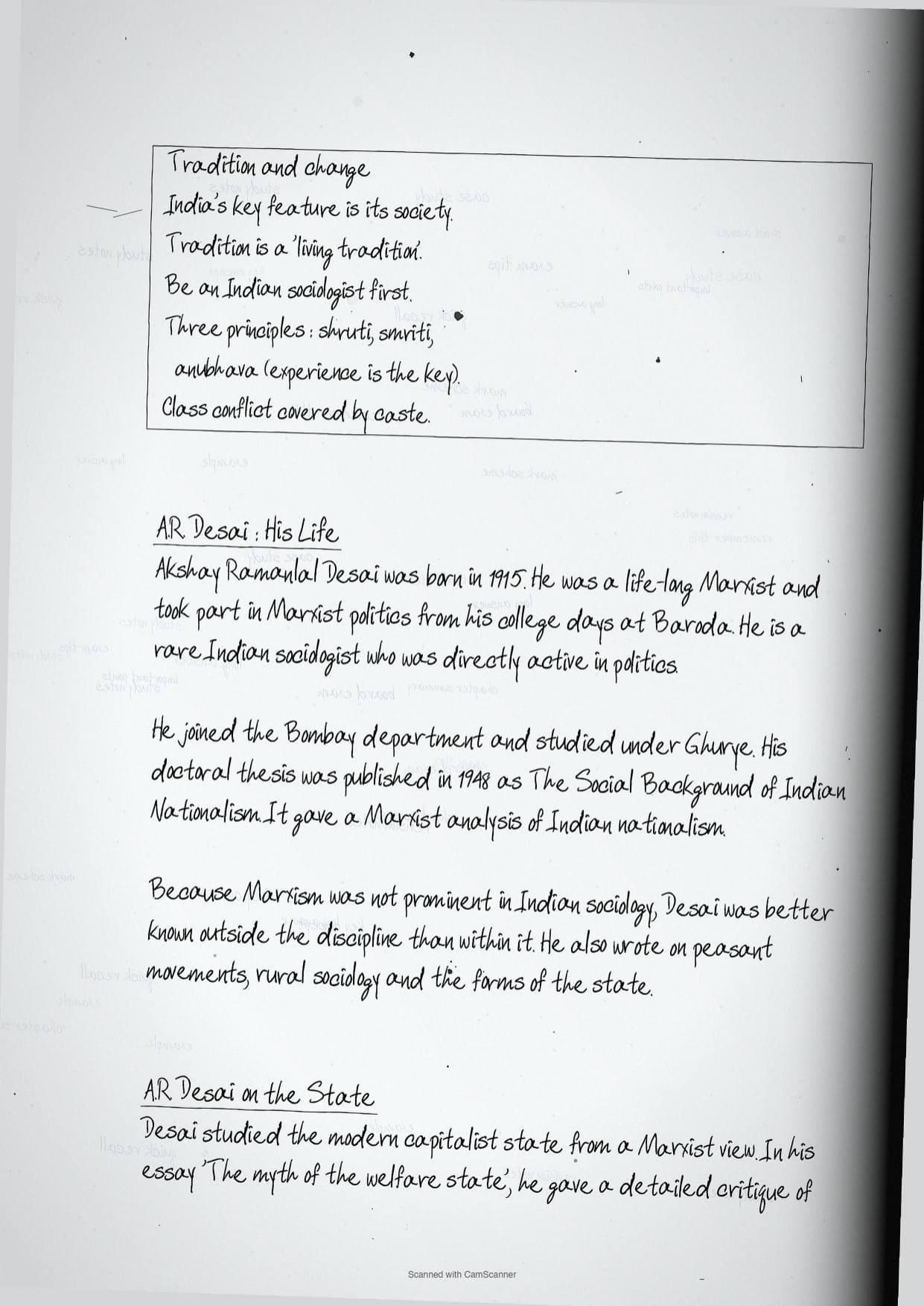
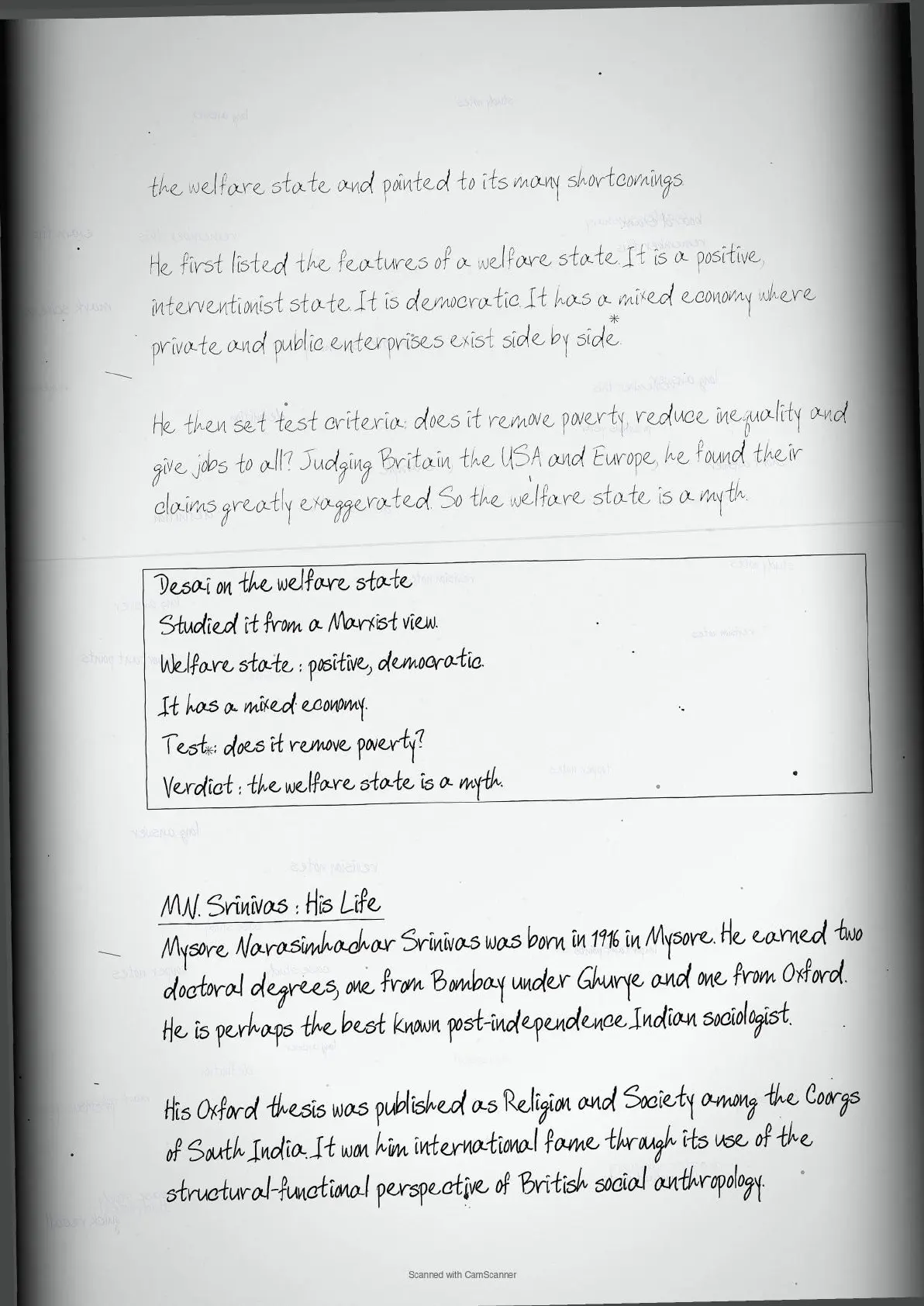
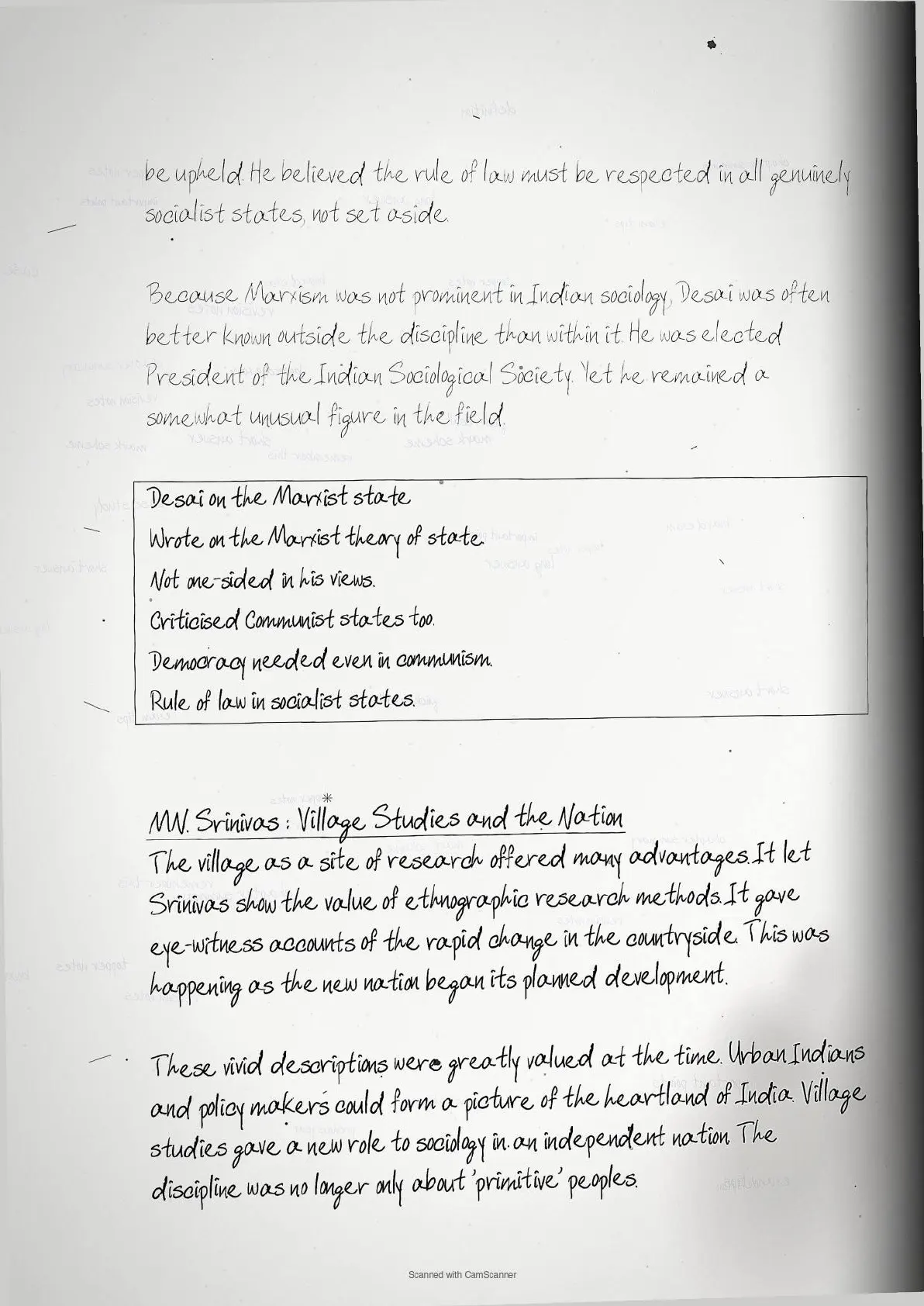
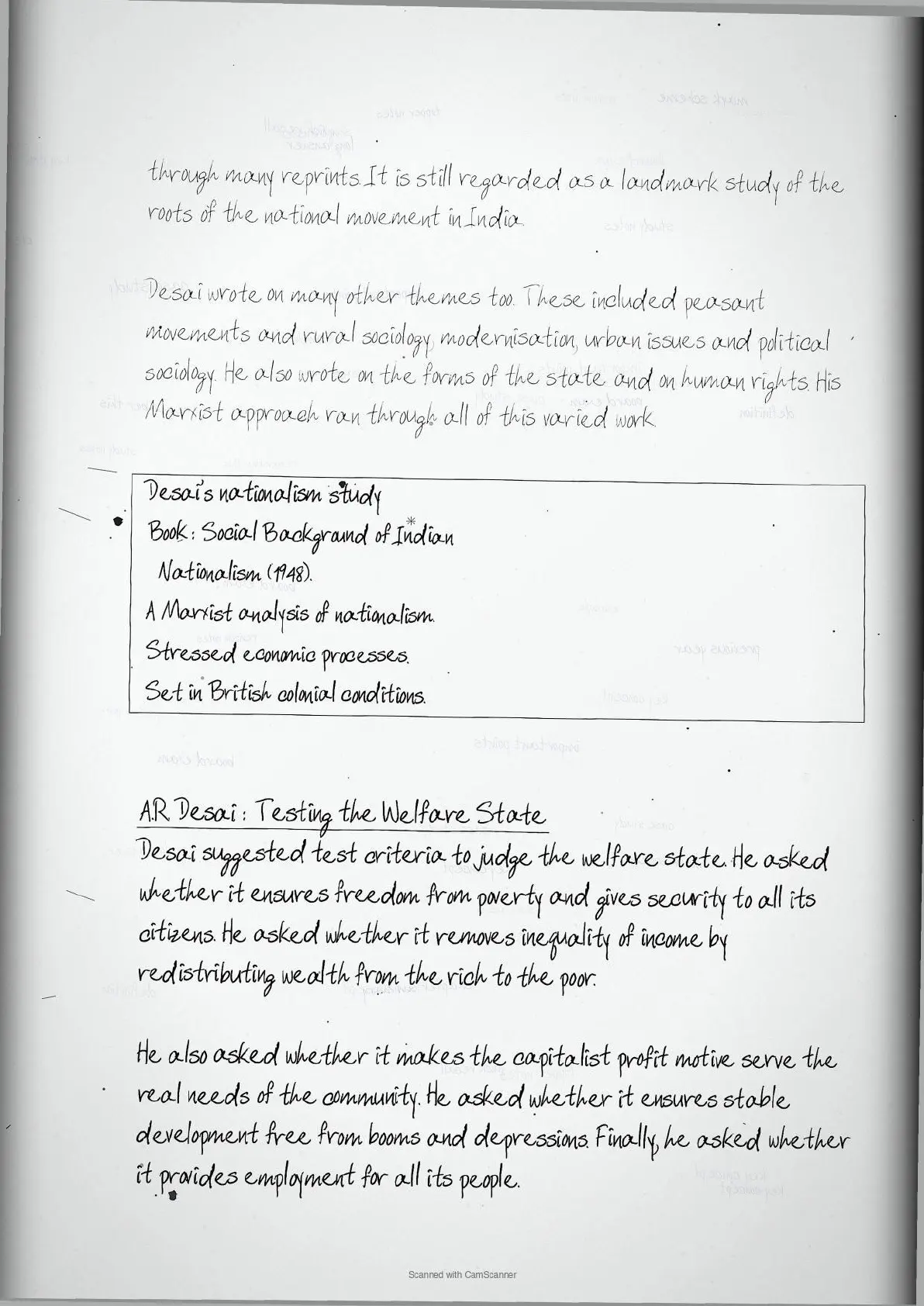
| A.R. Desai | A Marxist who called the welfare state a myth. |
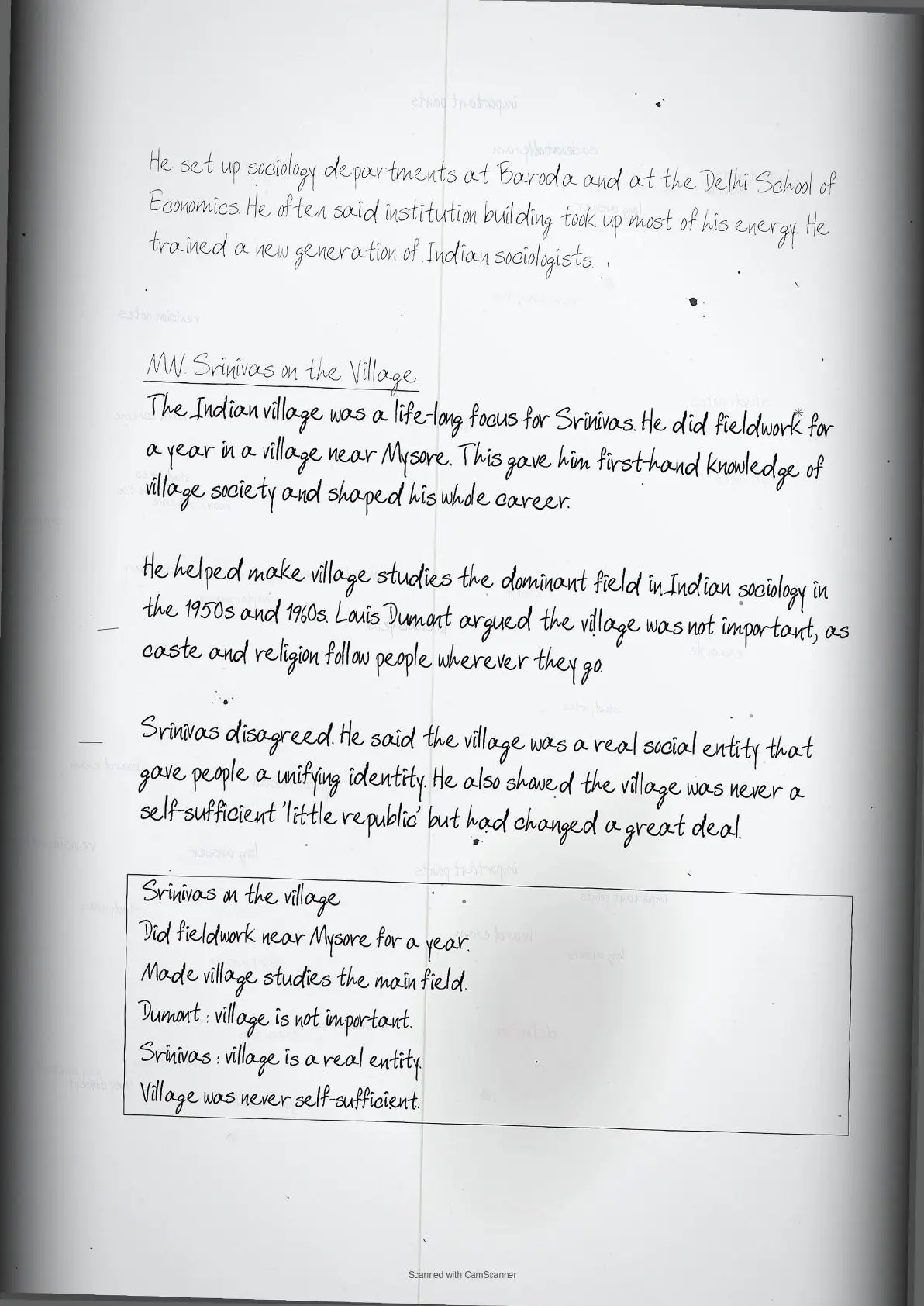
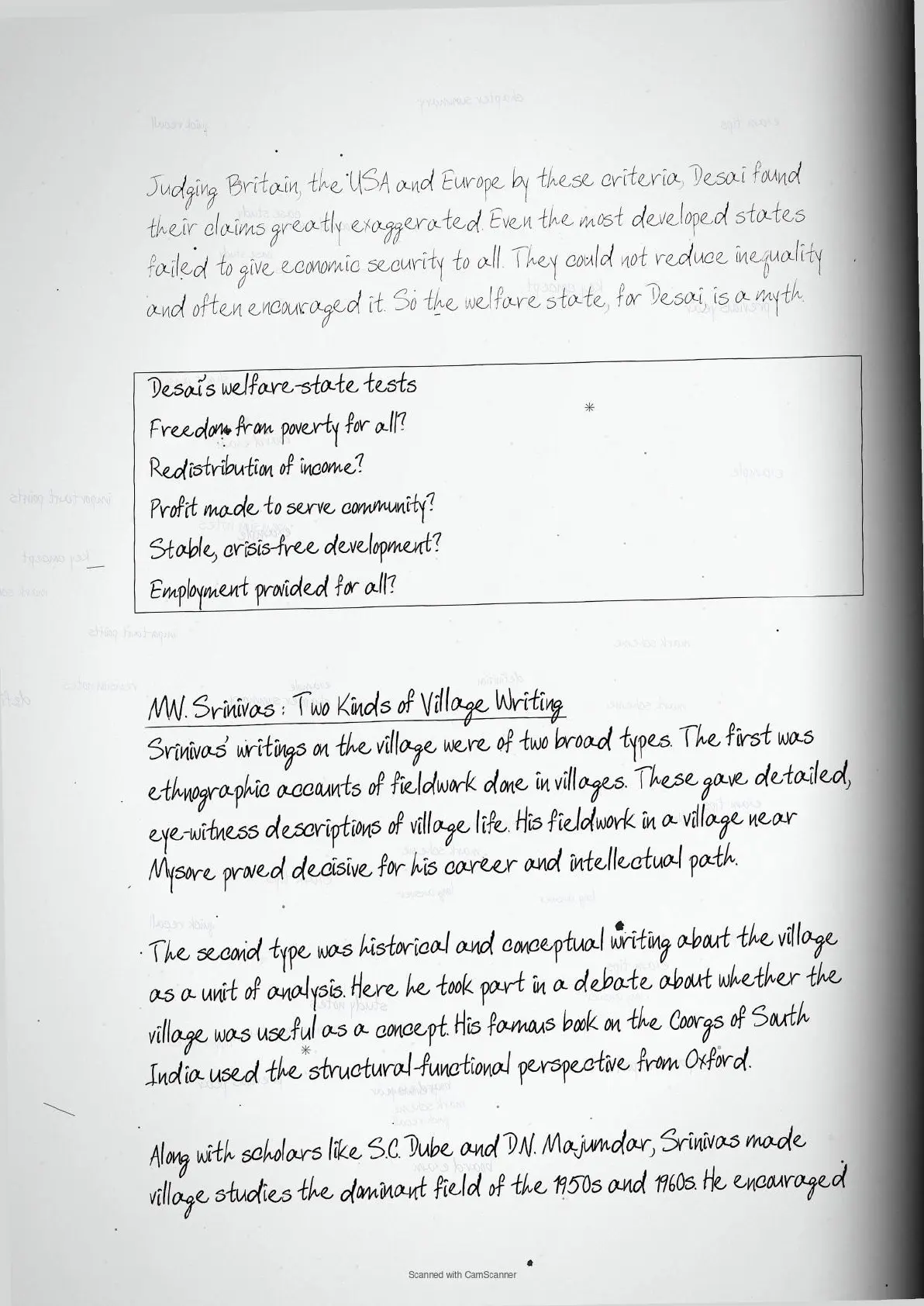
| M.N. Srinivas | The Indian village is a real and relevant social entity. |
| Ananthakrishna Iyer | First self-taught anthropologist to win recognition in India. |
| Sarat Chandra Roy | Pioneer of tribal studies; founded Man in India in 1922. |
What the Indian Sociologists Handwritten Notes Cover
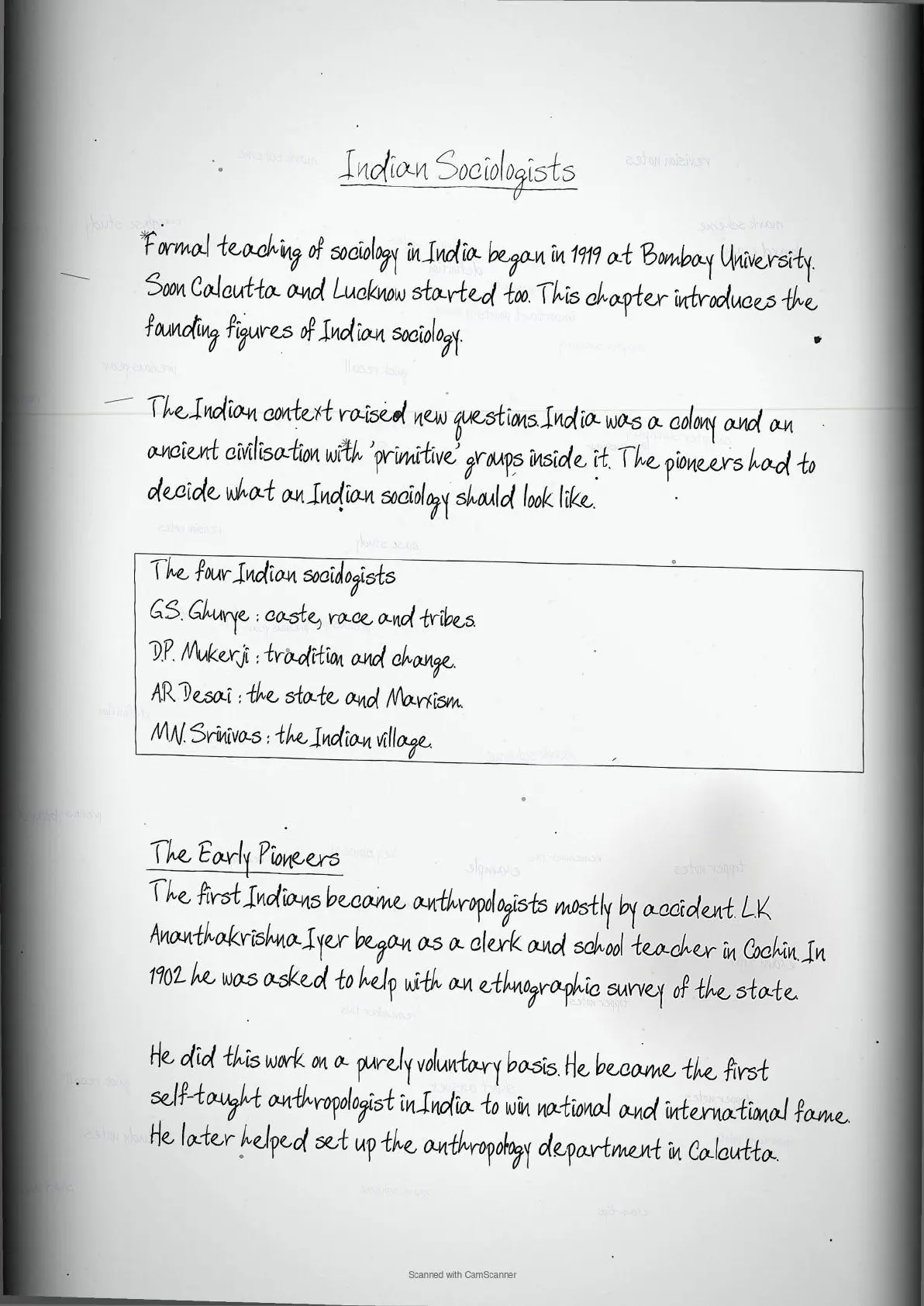
Formal sociology teaching in India began in 1919 at Bombay University. This chapter introduces the founders of Indian sociology. Four scholars shaped and 'Indianised' the discipline in a newly independent nation.
- The accidental pioneers: Iyer and Sarat Chandra Roy
- G.S. Ghurye: founder of institutional sociology
- Ghurye on tribes, caste and race
- D.P. Mukerji on tradition and change
- A.R. Desai on the state and the welfare myth
- M.N. Srinivas on the Indian village
- How sociology was adapted to the Indian context
Indian Sociologists Topic-wise Weightage for CBSE Class 11 Sociology
Some parts of this chapter are asked more often than others. The table below shows which sub-topics to revise first, based on recent CBSE Class 11 question trends.
| Sub-topic | Weightage | CBSE Frequency |
|---|---|---|
| Ghurye on caste, race and tribes | High | very often |
| D.P. Mukerji on tradition and change | High | often |
| A.R. Desai on the welfare state | High | often |
| M.N. Srinivas on the village | Medium | often |
| Early pioneers (Iyer and Roy) | Medium | sometimes |
How Collegedunia's Handwritten Notes Help You Revise Indian Sociologists
These notes are made for the night before the exam. They keep the facts short and easy to scan. Collegedunia maps every point to the 2026-27 NCERT.
- Clear handwriting: each topic is written in neat, easy-to-read handwriting.
- Boxed key terms: the main terms and definitions are boxed by hand for fast recall.
- Diagrams and tables: simple hand-drawn tables and charts make ideas clear.
- Colour-coded headings: new sub-topics stand out, so you find any section in seconds.
Indian Sociologists Self-Assessment Quiz
Try these quick questions after you read the notes. Tap each question to check your answer. They cover the points CBSE asks most often.
Who is considered the founder of institutionalised sociology in India?
(a) M.N. Srinivas (b) G.S. Ghurye (c) A.R. Desai (d) D.P. Mukerji
Answer: (b) G.S. Ghurye - he headed the first Bombay department and founded the Indian Sociological Society.
Ghurye described the tribes of India as
(a) distinct cultures (b) backward Hindus (c) little republics (d) non-Aryans
Answer: (b) backward Hindus - he saw them as behind in the same assimilation, not as separate cultural groups.
For D.P. Mukerji, the revolutionary principle of change in Indian tradition is
(a) shruti (b) smriti (c) anubhava (d) buddhi
Answer: (c) anubhava - personal experience, which in India soon became collective experience.
A.R. Desai concluded that the welfare state is
(a) a success (b) a myth (c) a socialist state (d) a laissez-faire state
Answer: (b) a myth - judged by its own criteria, capitalist states failed to remove poverty and inequality.
In the debate on the Indian village, M.N. Srinivas argued that the village
(a) was unimportant (b) was a self-sufficient little republic (c) was a real social entity (d) never changed
Answer: (c) was a real social entity - against Dumont, he showed the village gave a unifying identity and had changed.
How to Use These Handwritten Notes for Class 11 Sociology Revision
Use these class 11 sociology handwritten notes in two passes. Read them slowly once for the full chapter. Then, near the exam, read only the boxes and key terms for a fast recall.
- Read the notes once with the NCERT chapter open beside you.
- Say each key term and idea in your own words.
- Practise one long-answer question from a past paper.
- On the last day, revise only the key terms and the boxes.
Class 11 Sociology Handwritten Notes for All Chapters
The table below links the class 11 sociology handwritten notes for every chapter. Use it to jump to any other chapter's notes.
Indian Sociologists Class 11 Sociology Handwritten Notes FAQs
Ques. Where can I download Indian Sociologists Class 11 Sociology Handwritten Notes PDF?
Ans. You can download the Indian Sociologists Class 11 Sociology Handwritten Notes PDF directly from this page. Both the Normal and HD versions are free.
Ques. Are these handwritten notes aligned with the 2026-27 NCERT?
Ans. Yes. These notes follow the current 2026-27 syllabus for Class 11 Sociology. Contribution of the four Indian sociologists.
Ques. How many pages is the Class 11 Sociology Indian Sociologists Handwritten Notes PDF?
Ans. The notes run about 20 pages. They cover the full chapter with key terms, hand-drawn boxes, and a short self-assessment quiz.
Ques. What is the main idea of the 11th standard Sociology chapter Indian Sociologists?
Ans. Ghurye studied caste and tribes, D.P. Mukerji studied living tradition, A.R. Desai gave a Marxist critique of the state, and M.N. Srinivas studied the Indian village. Together they Indianised sociology by adapting a western discipline to Indian society.
Ques. Are these Indian Sociologists notes enough for the CBSE Class 11 exam?
Ans. Yes, for revision. The Collegedunia handwritten notes cover every key point and exam term. Read them with the NCERT chapter and practise past questions.



Comments