


Class 11 Sociology Chapter 9 Introducing Western Sociologists is a high-frequency chapter in the CBSE Class 11 Sociology exam. These class 11 sociology handwritten notes chapter 9 Introducing Western Sociologists follow the 2026-27 NCERT and cover the context: enlightenment, french and industrial revolutions, karl marx: alienation and the mode of production, marx: class, class struggle and ideology. This.
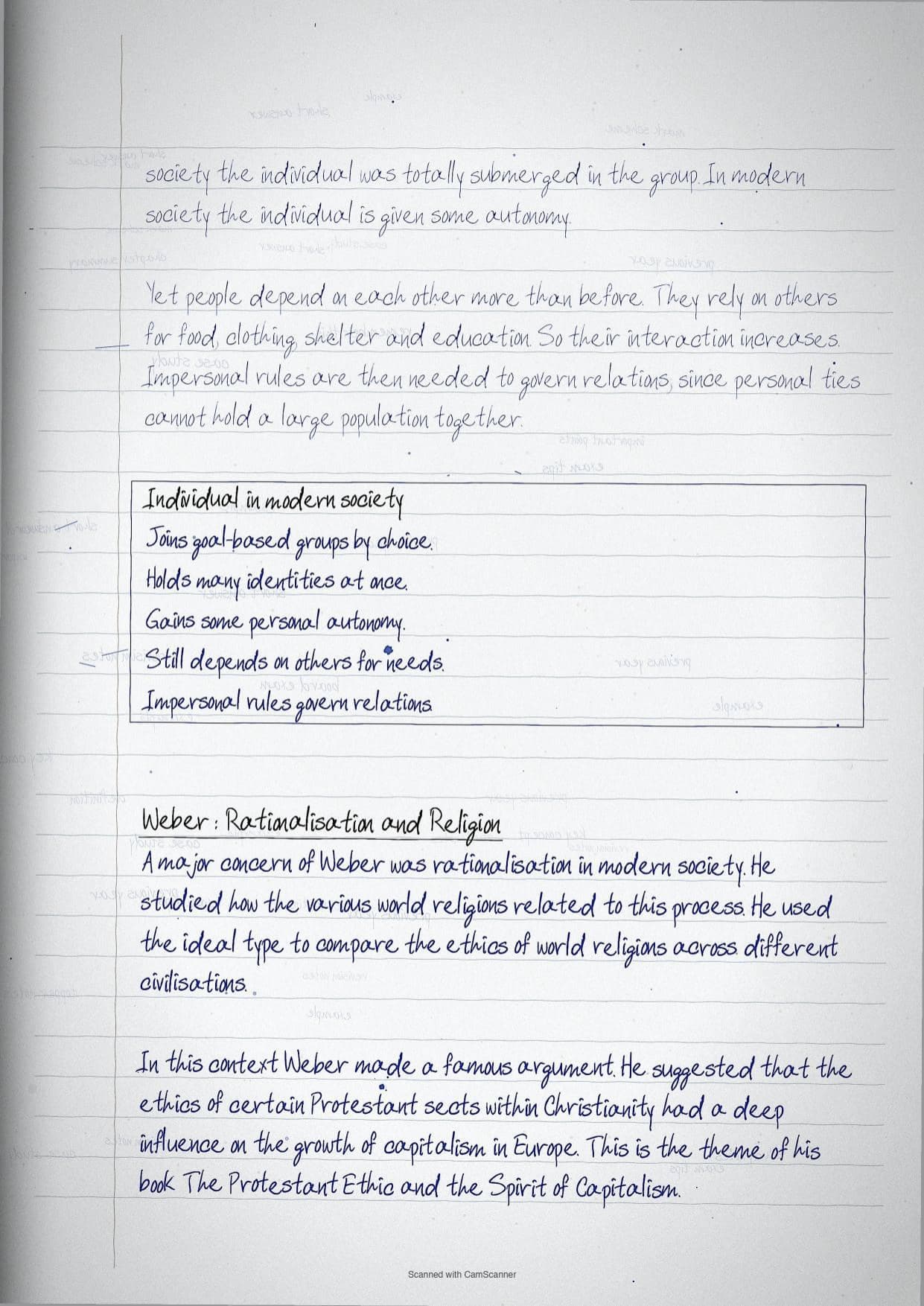
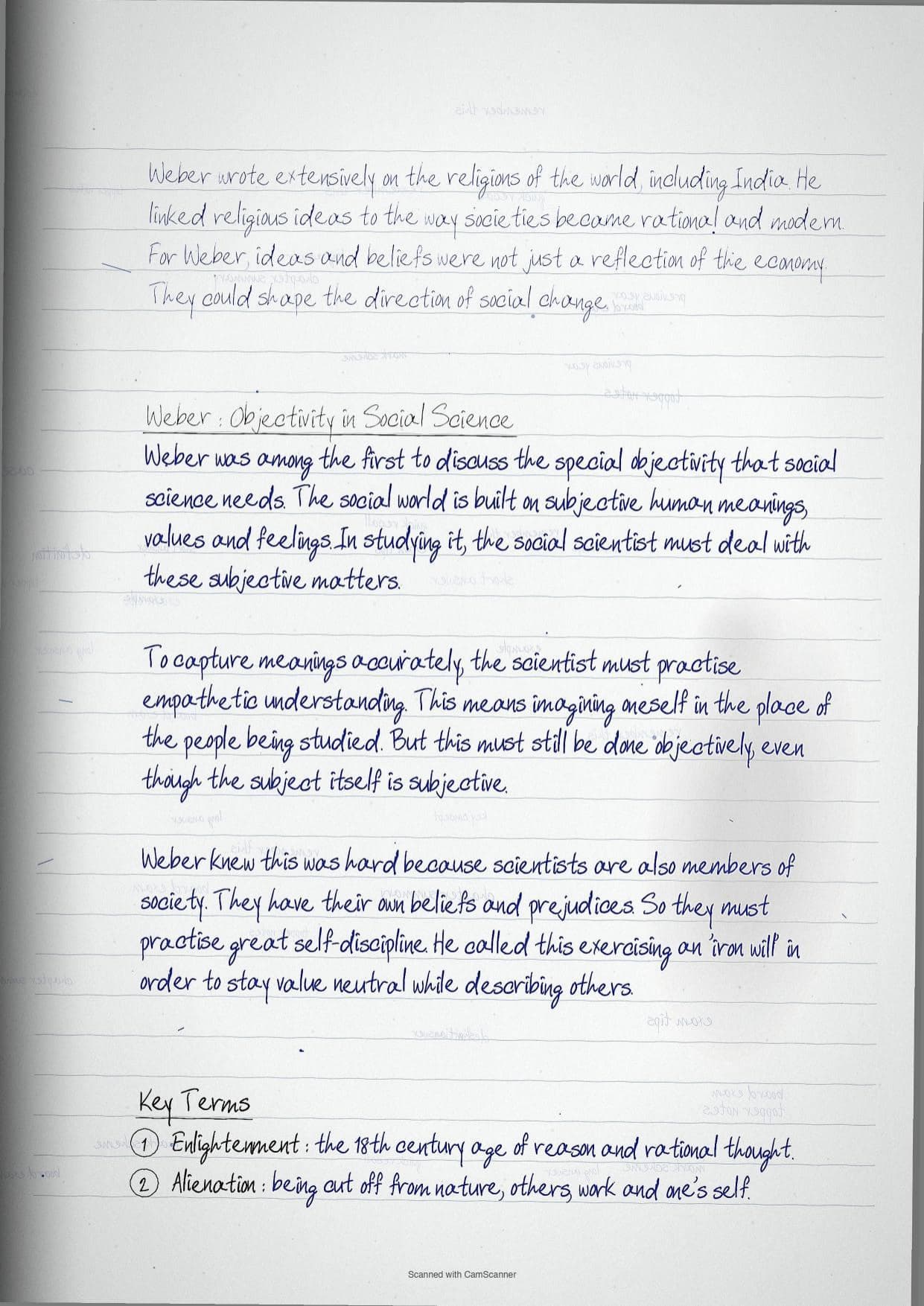
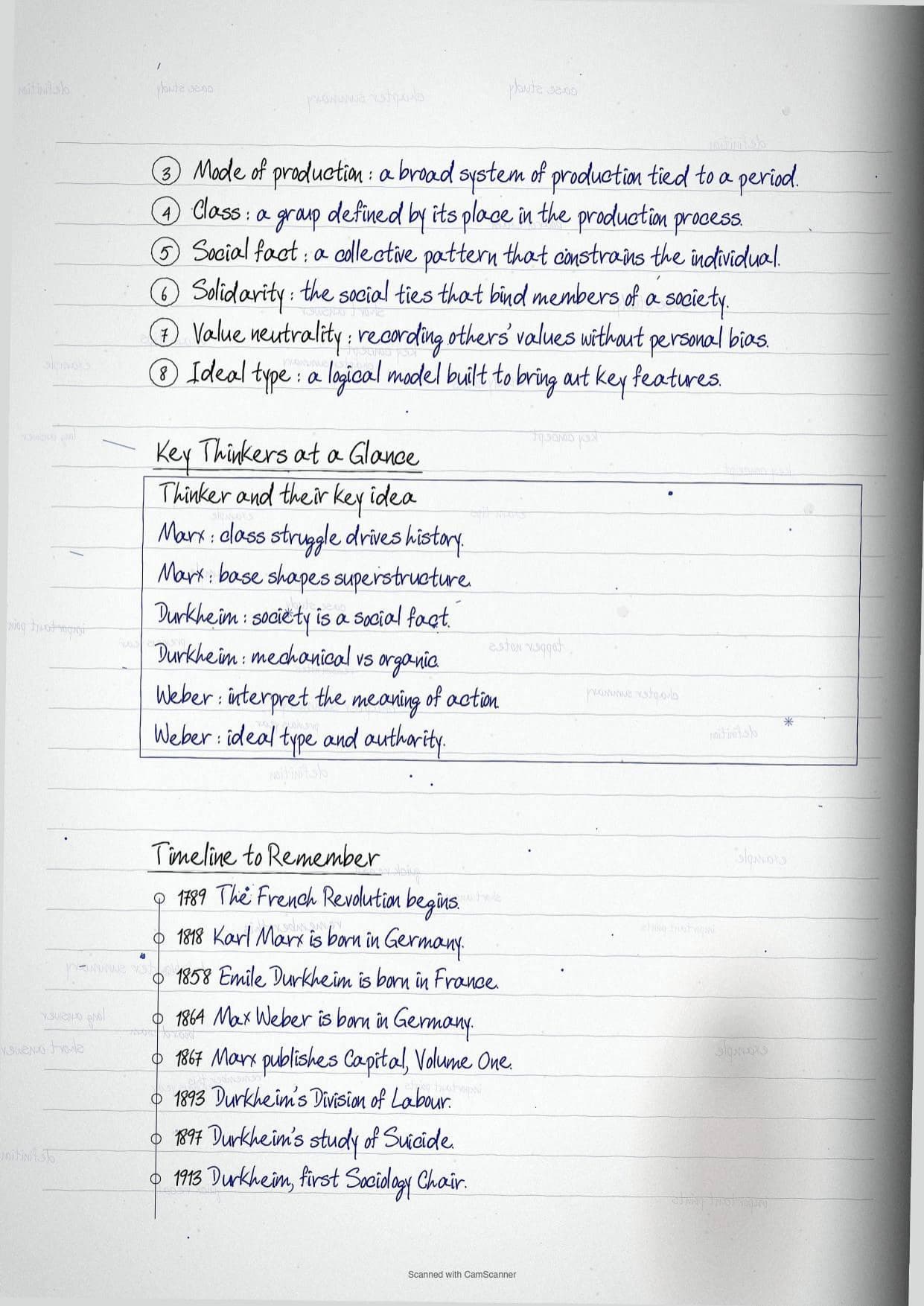
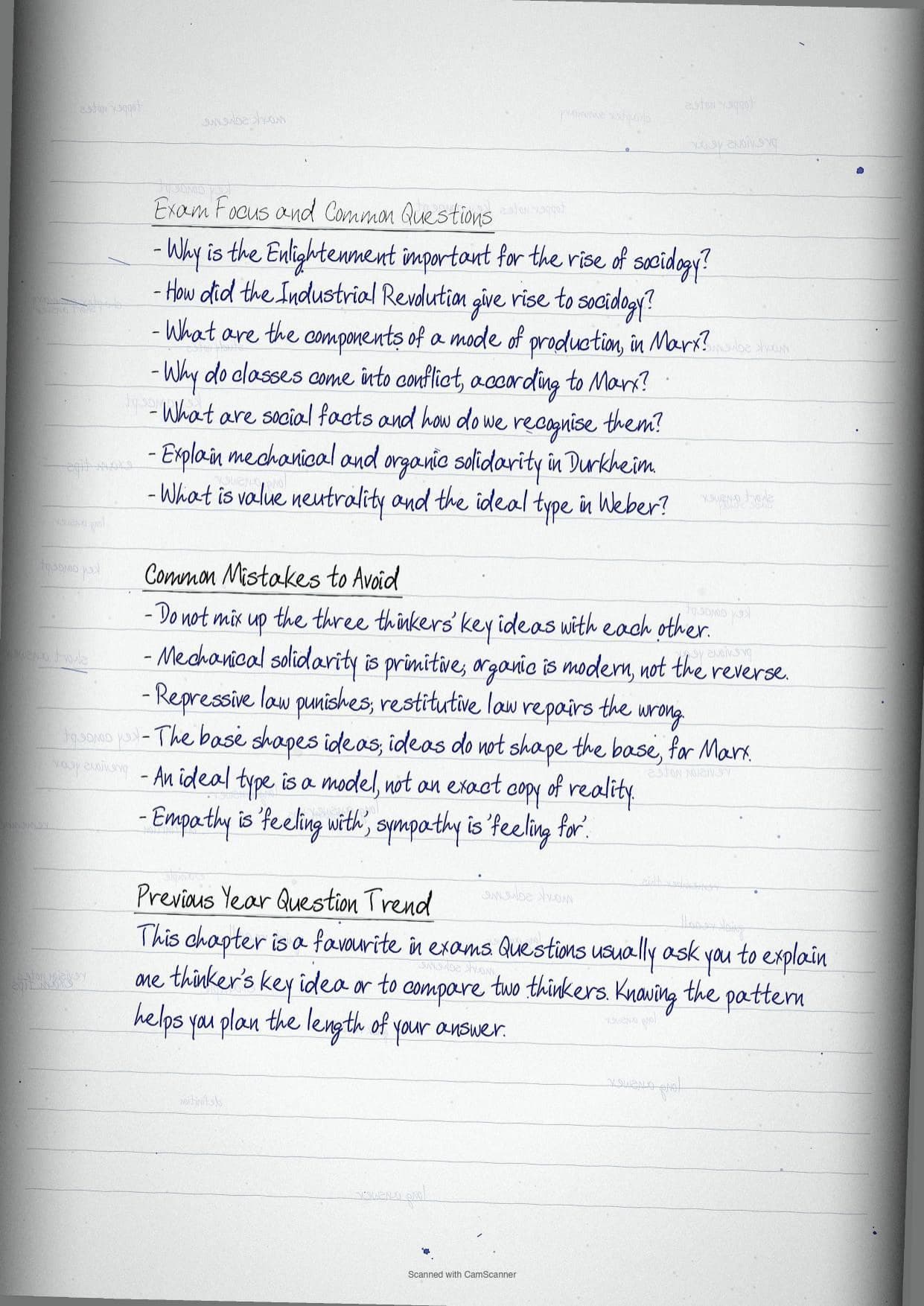
- CBSE Class 11 Weightage: a scoring chapter in the Sociology paper, asked in short and long answers.
- What the notes cover: the context: enlightenment, french and industrial revolutions, karl marx: alienation and the mode of production, marx: class, class struggle and ideology, emile durkheim: social facts as things.
- Best for: quick revision before Class 11 exams and a base for CUET later.
You can read the complete class 11 sociology handwritten notes for Introducing Western Sociologists, with key terms, boxed definitions, and quick revision points, in the PDF below.
These handwritten notes are written by subject teachers, mapped to the 2026-27 NCERT, and checked against the last five years of CBSE Class 11 Sociology papers.
What the Introducing Western Sociologists Handwritten Notes Cover
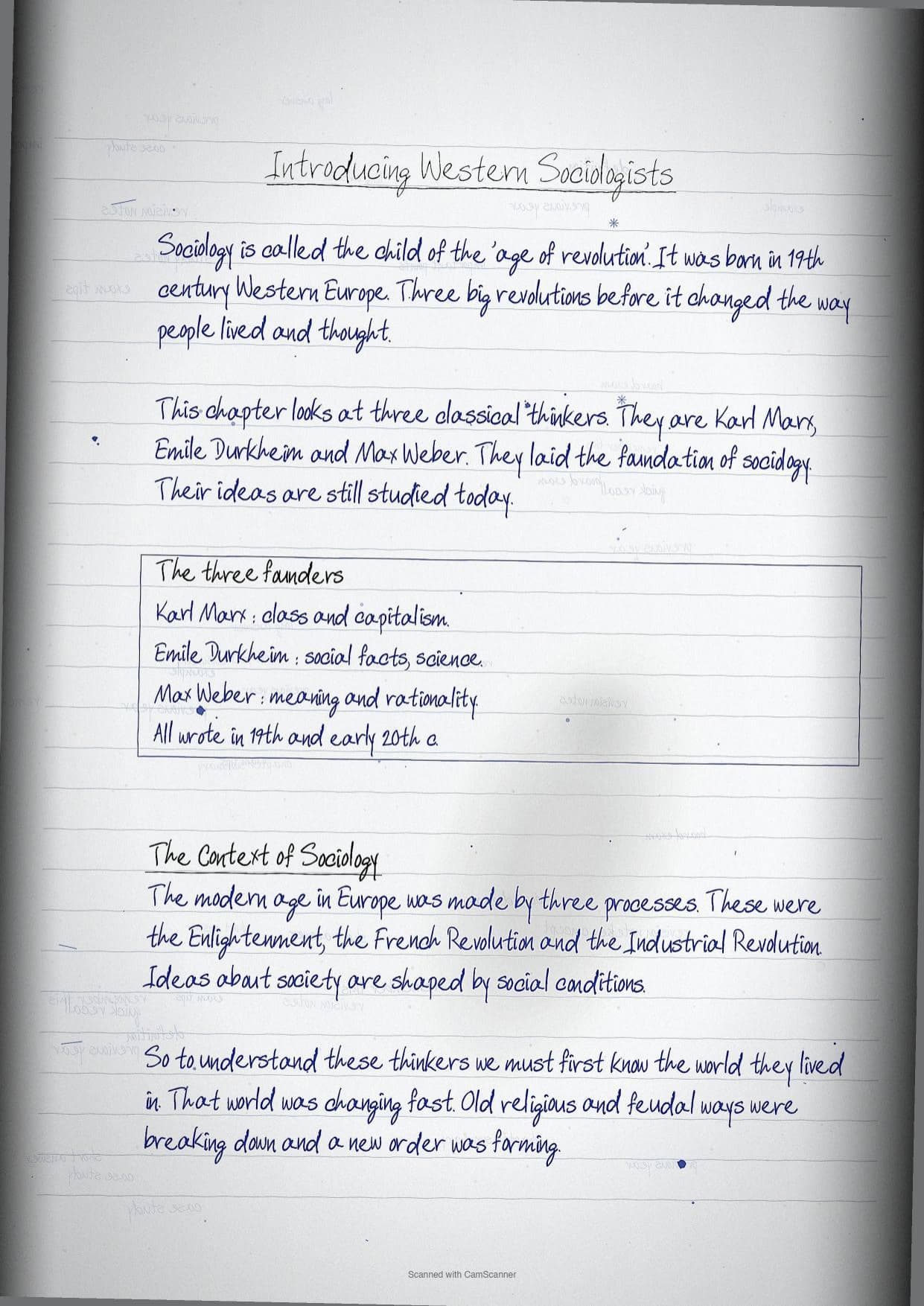
Sociology was born in 19th century Europe after three great revolutions. This chapter introduces its three founding thinkers. Karl Marx, Emile Durkheim and Max Weber laid the foundation of the subject.
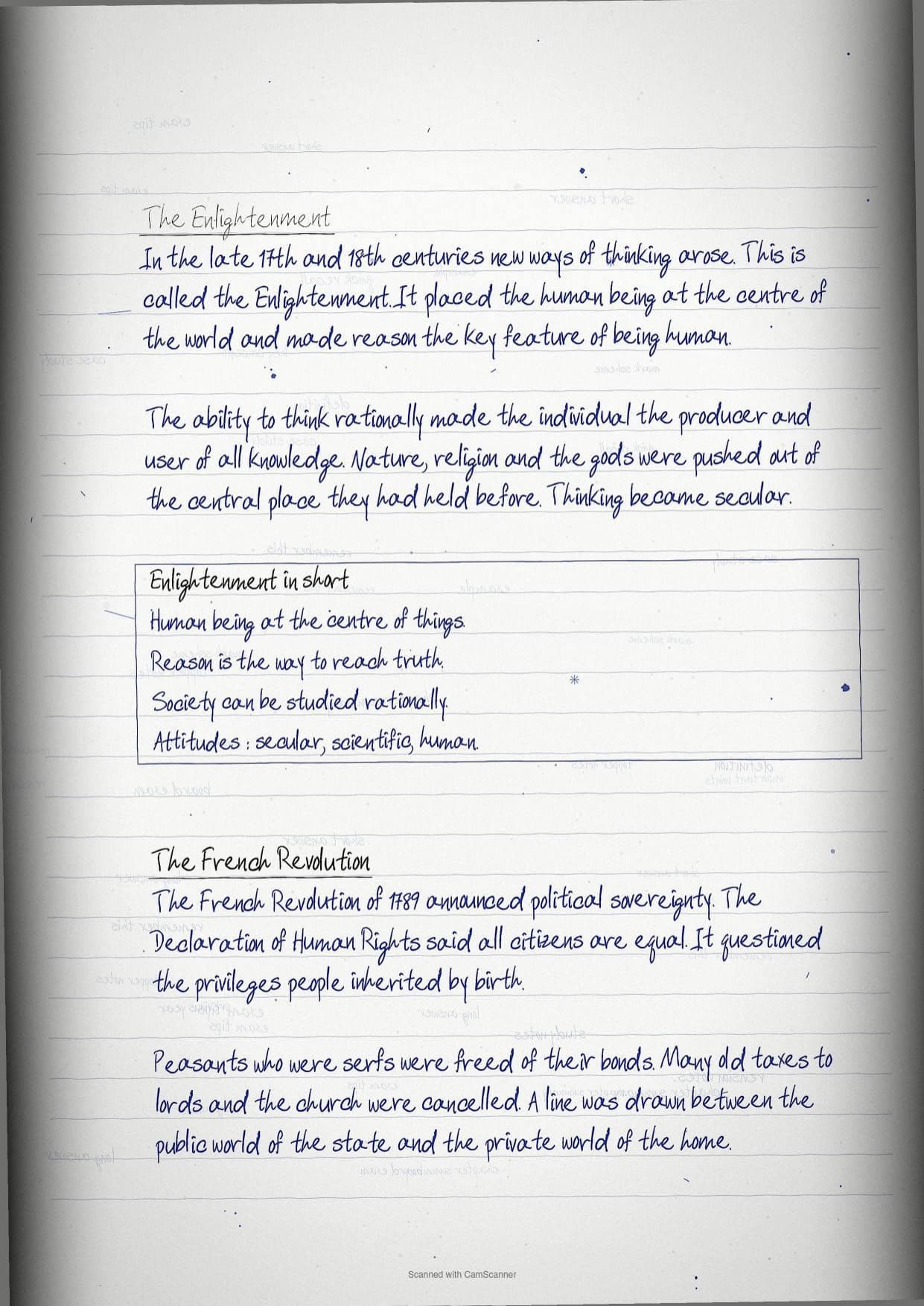
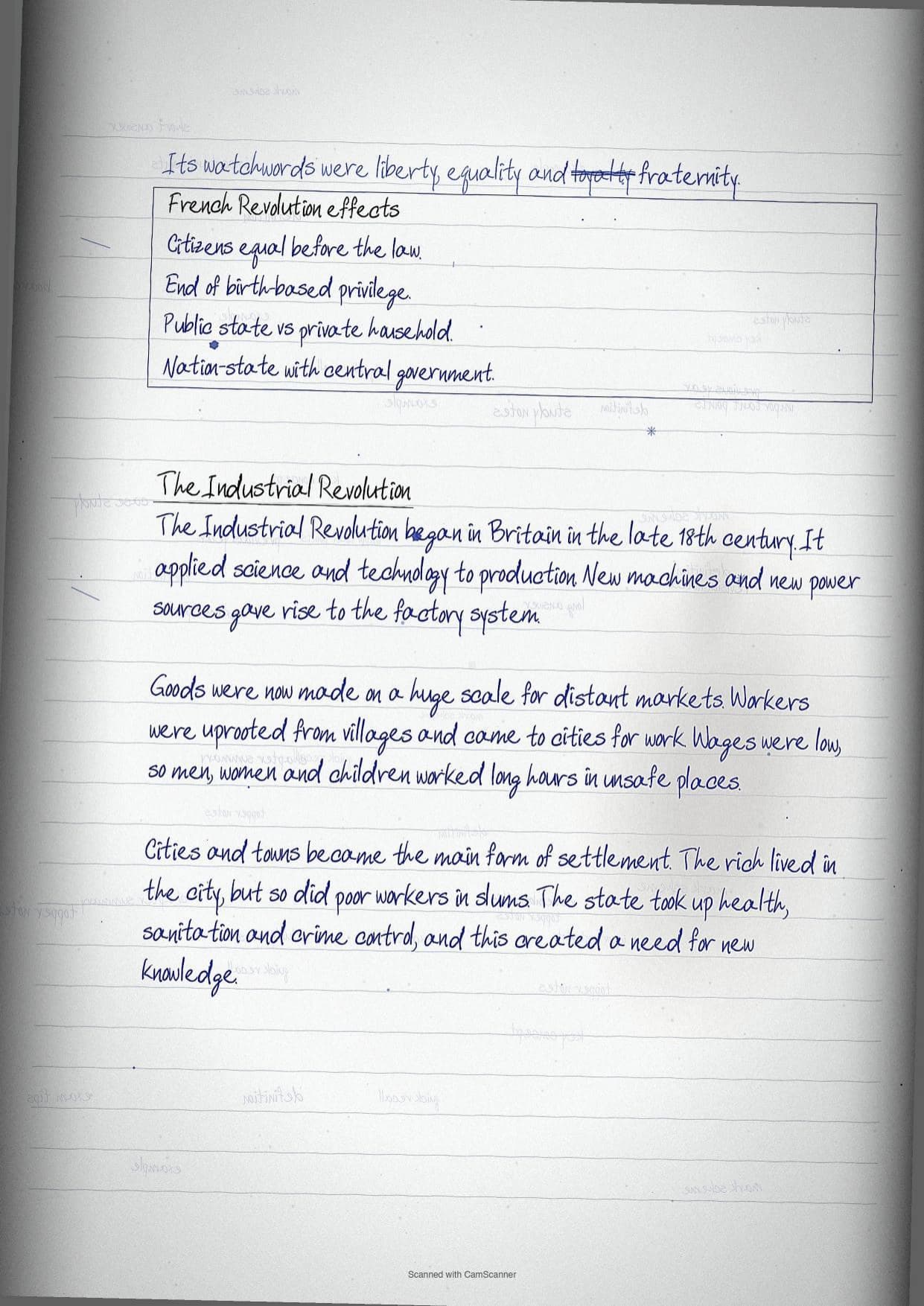
- The context: Enlightenment, French and Industrial Revolutions
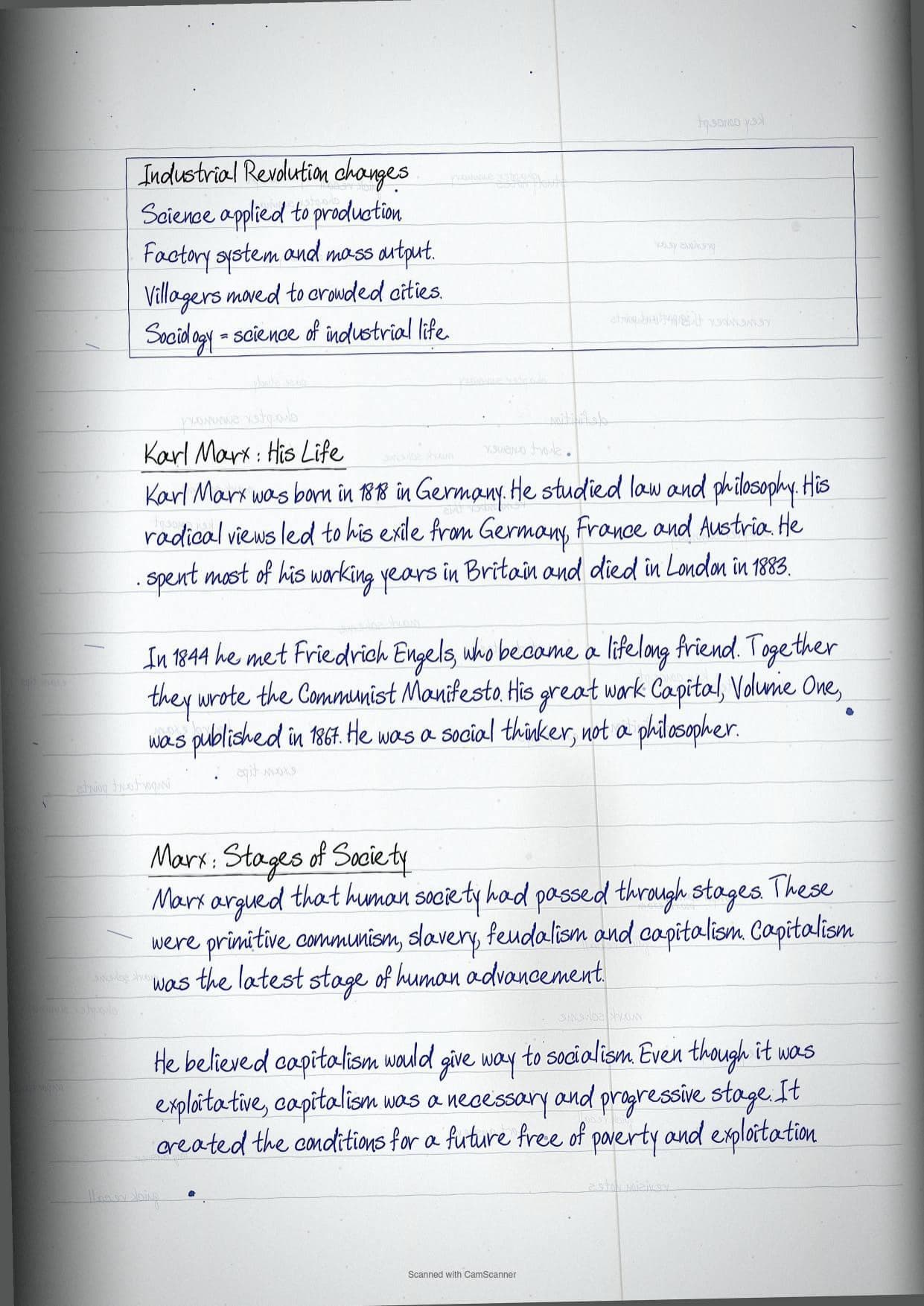
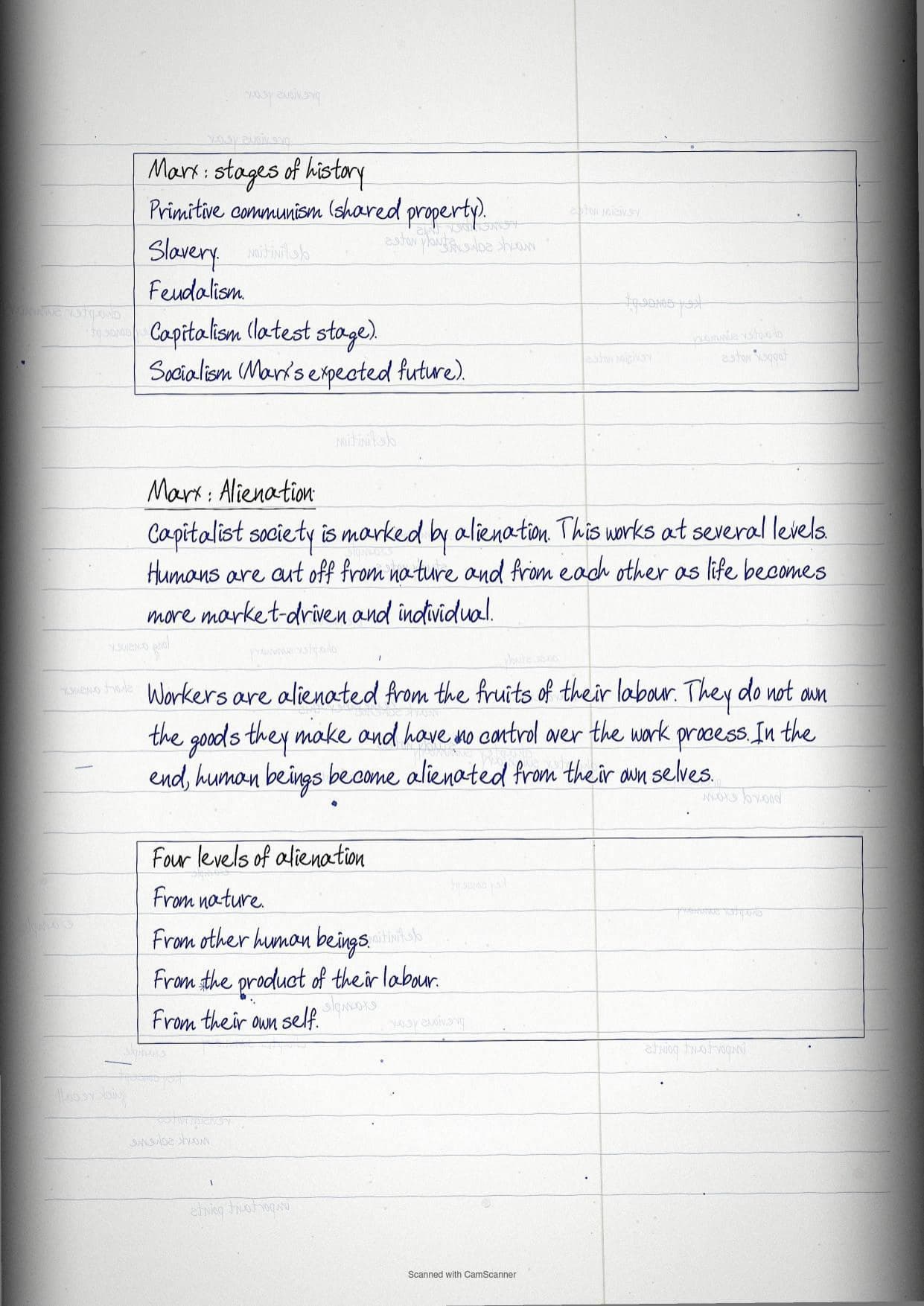
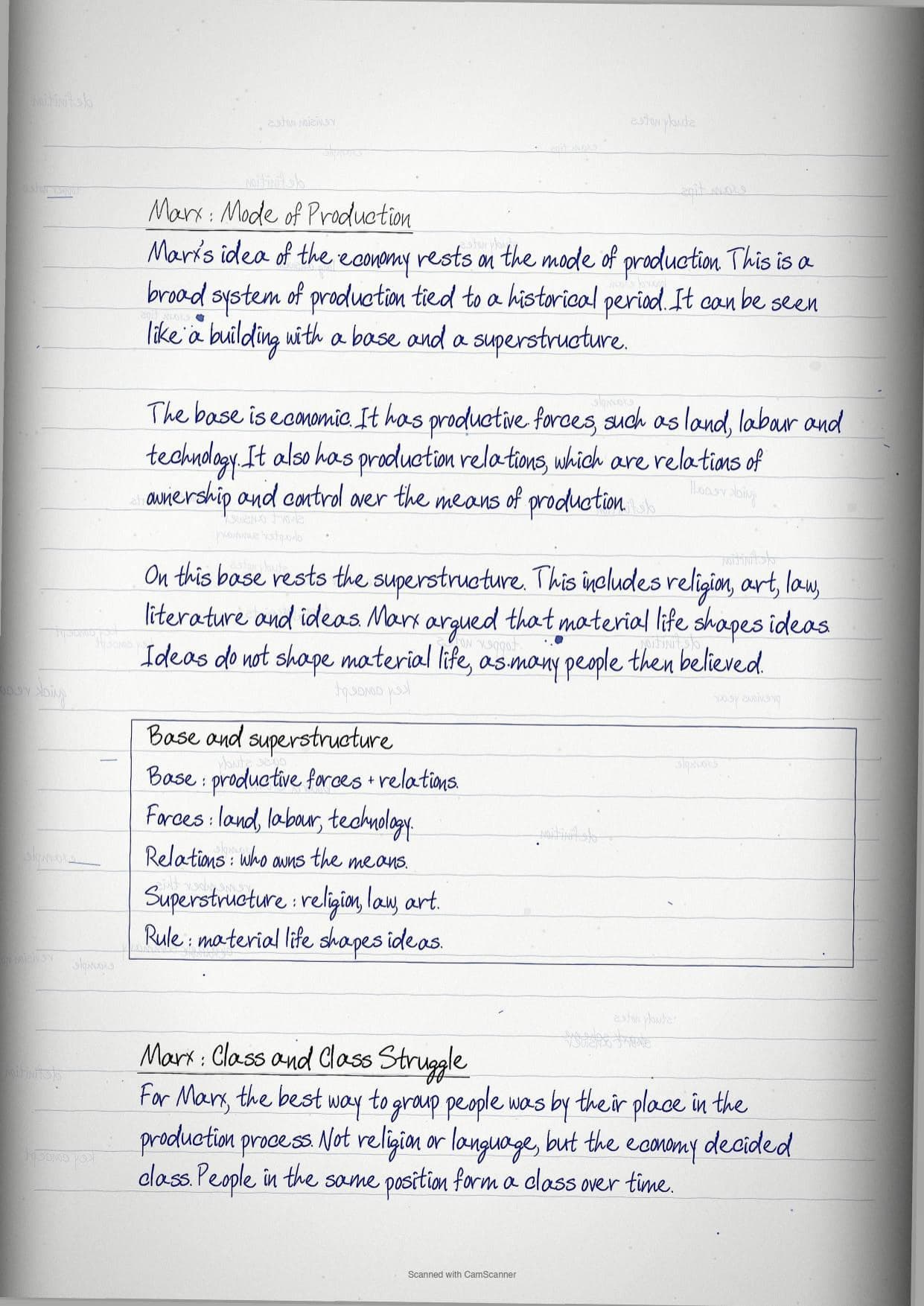
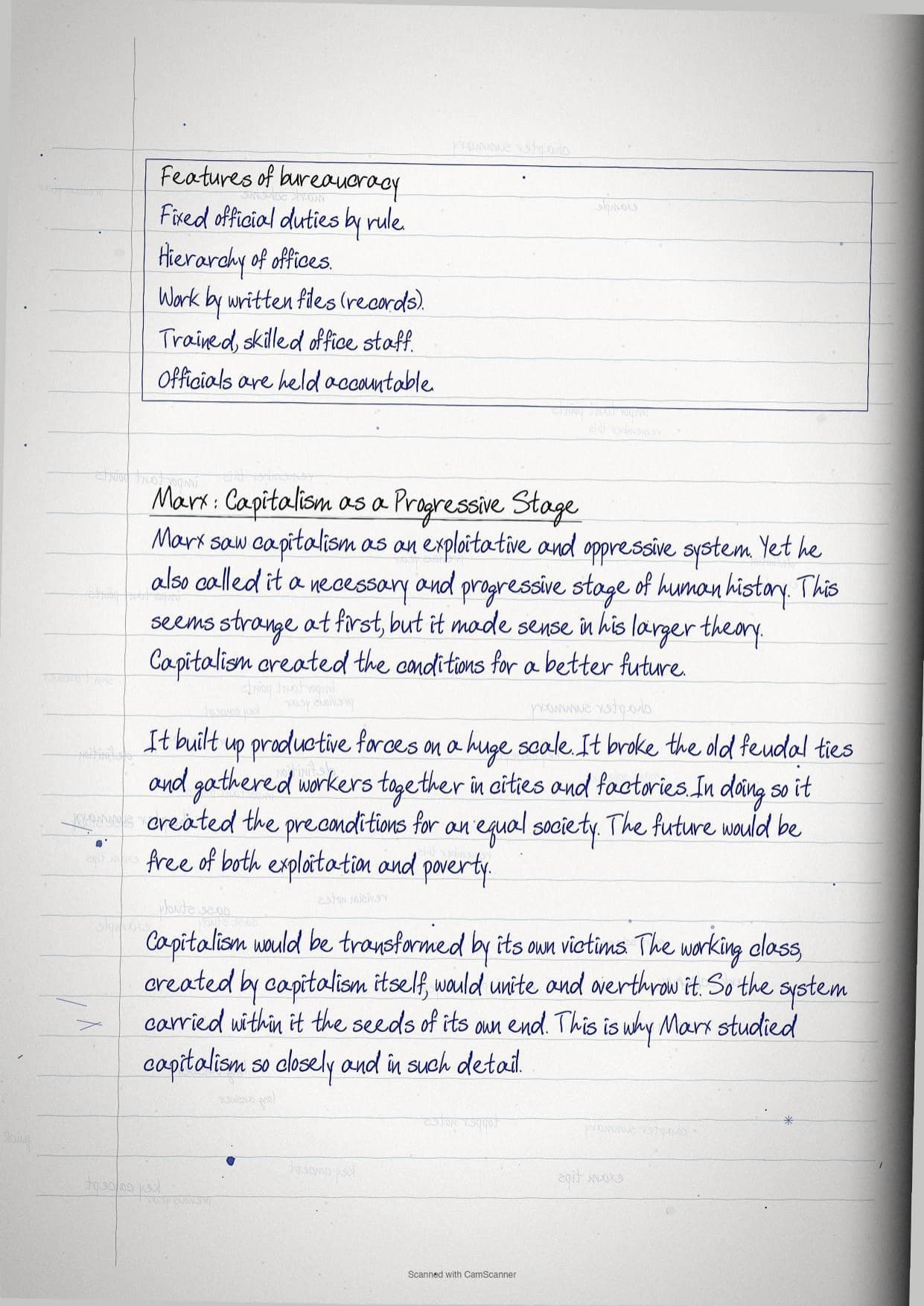
- Karl Marx: alienation and the mode of production
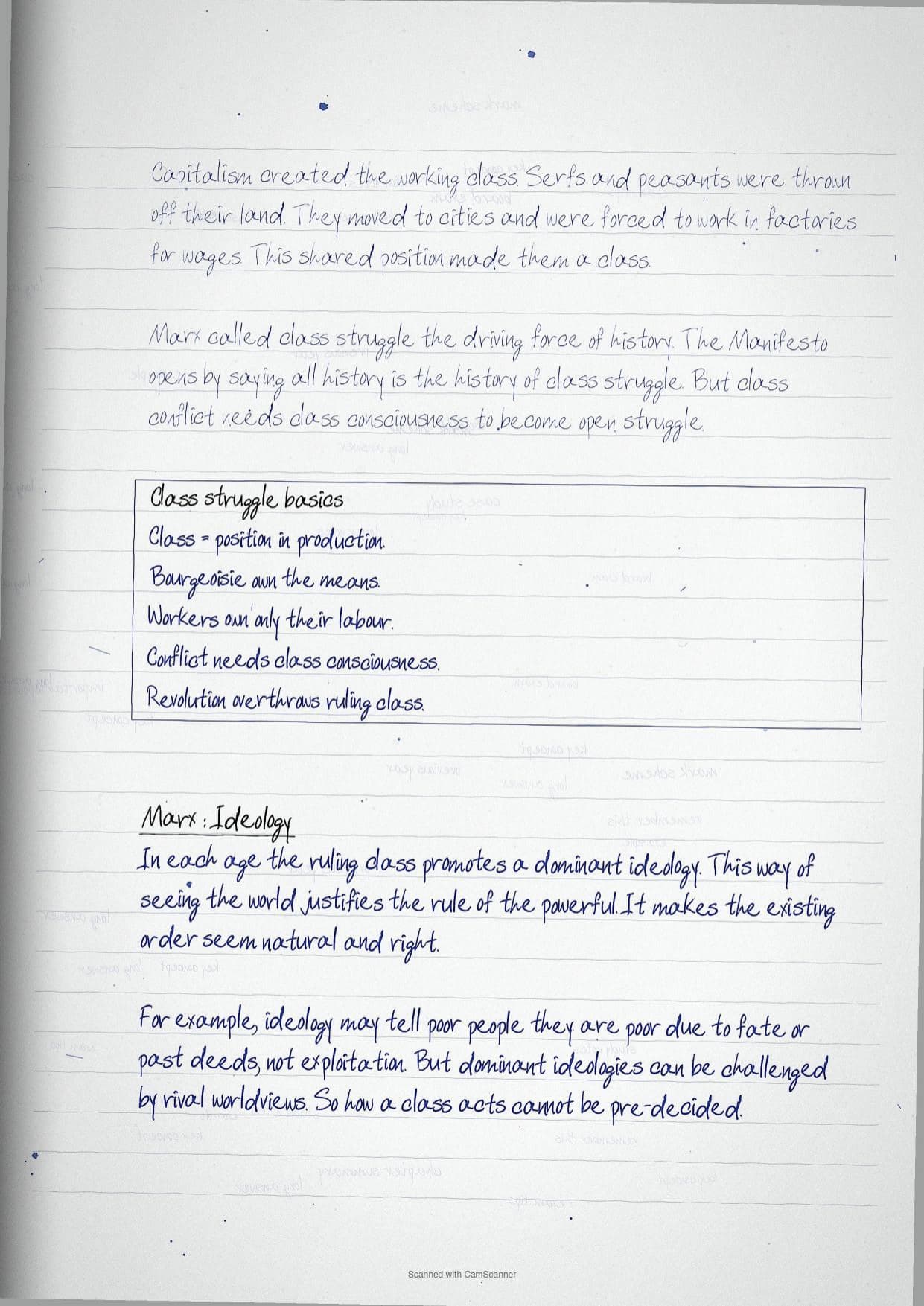
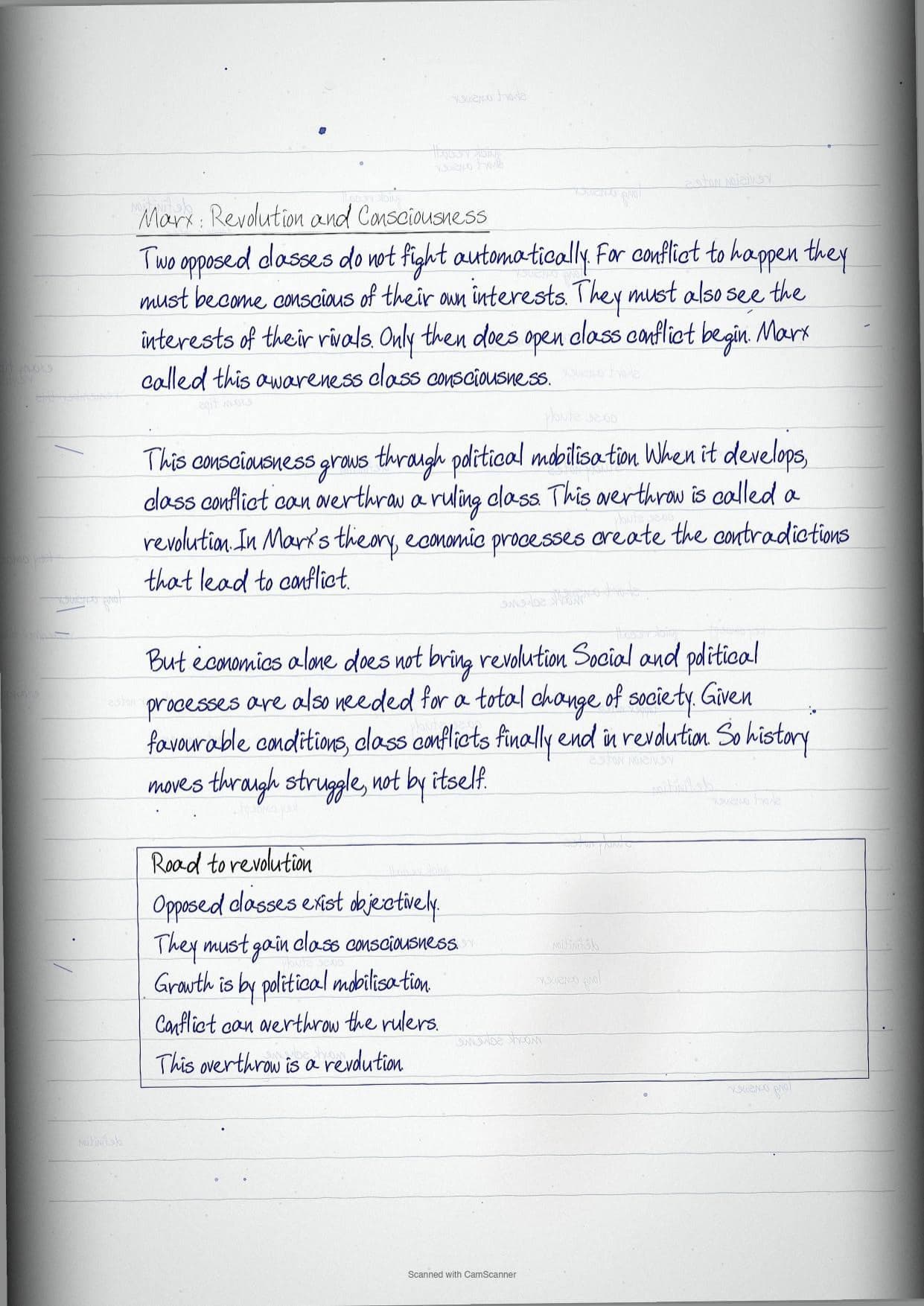
- Marx: class, class struggle and ideology
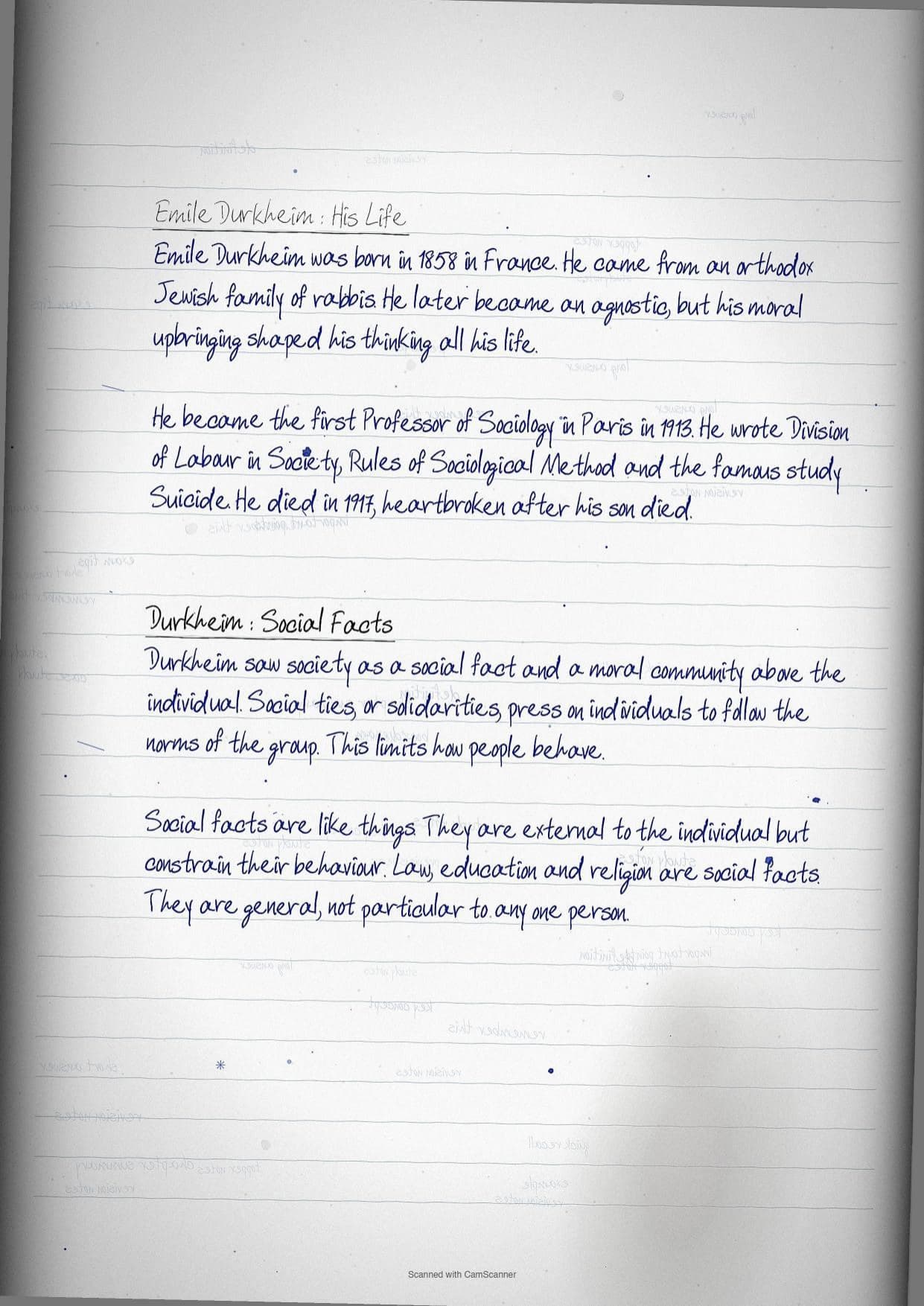
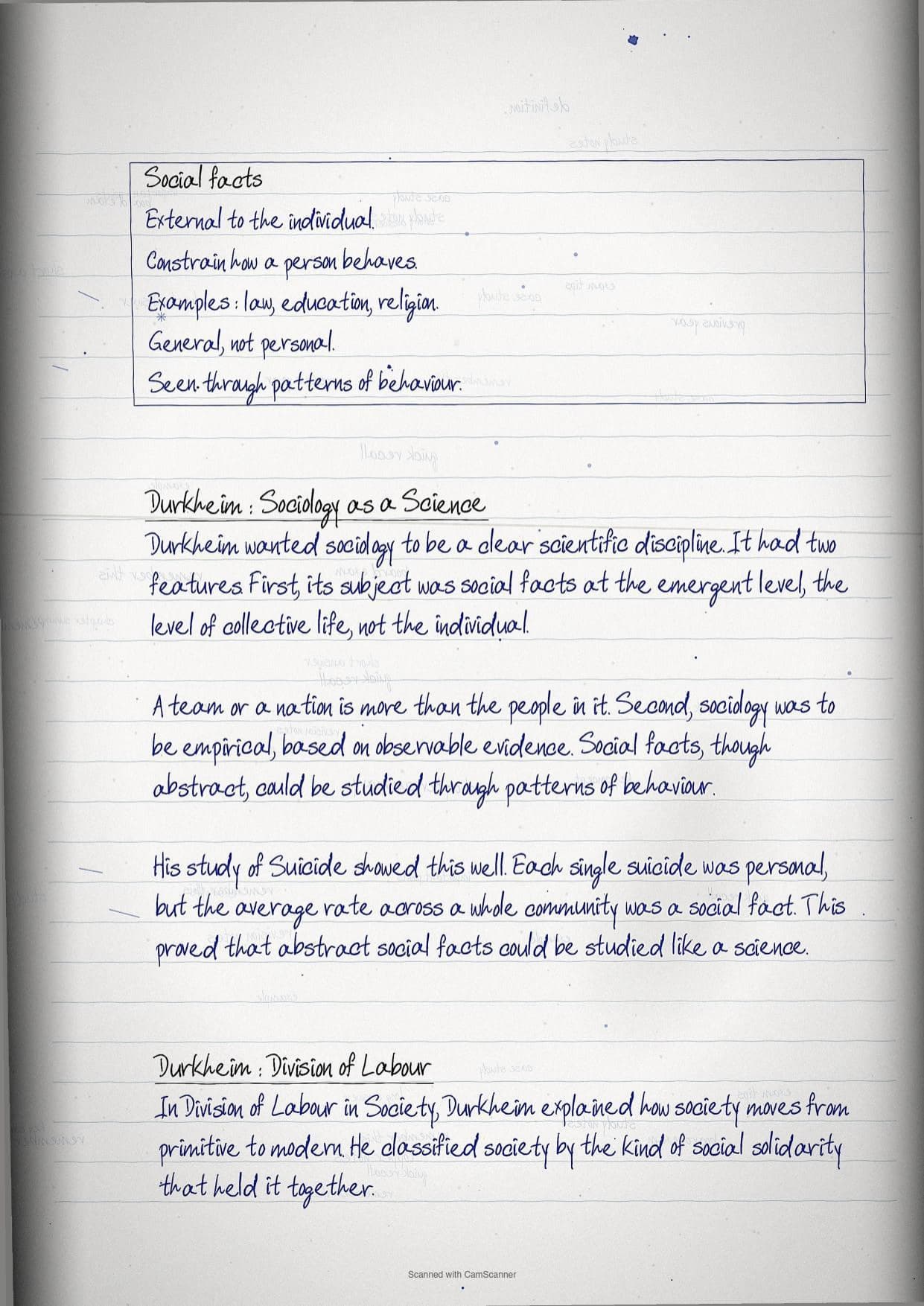
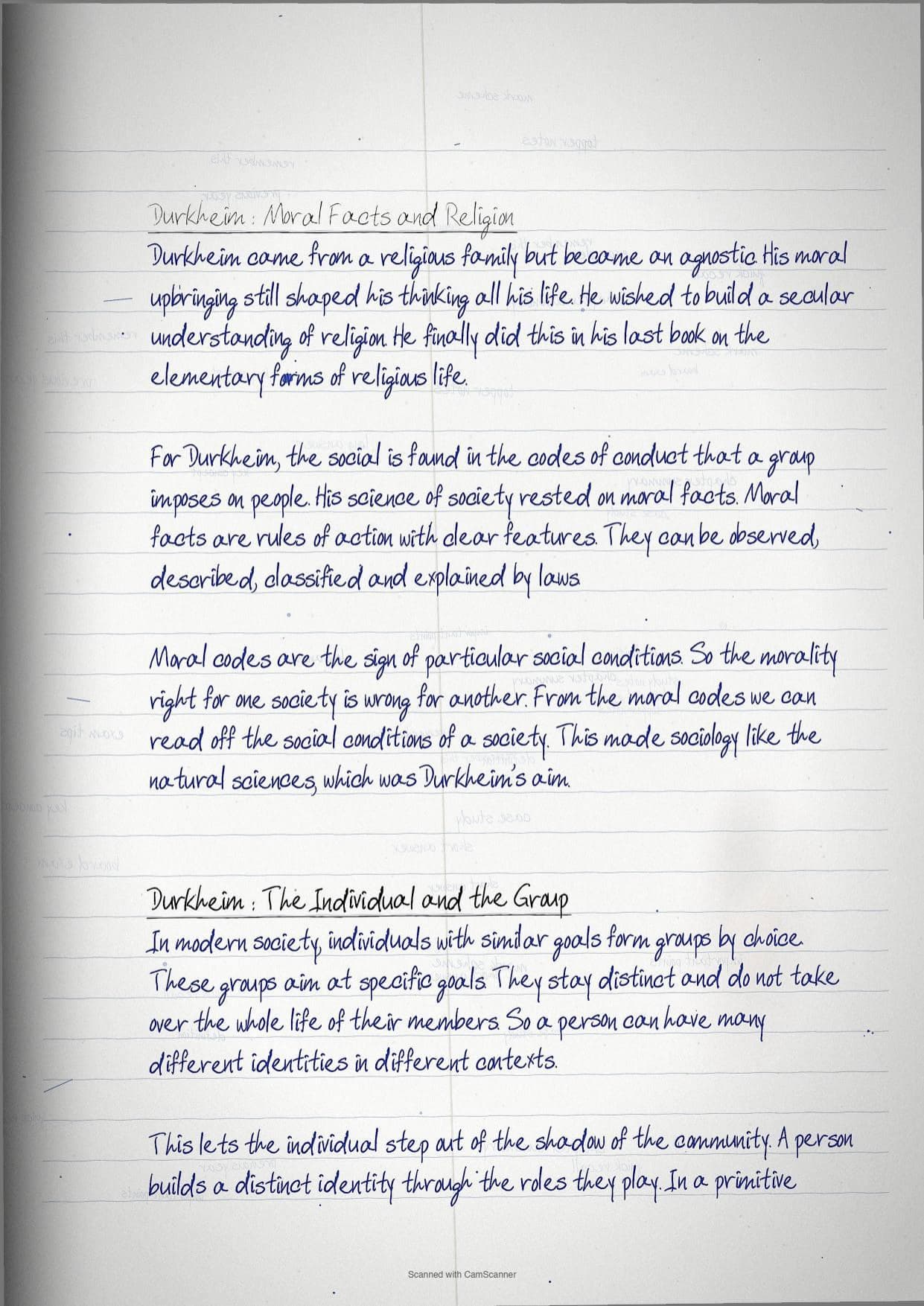
- Emile Durkheim: social facts as things
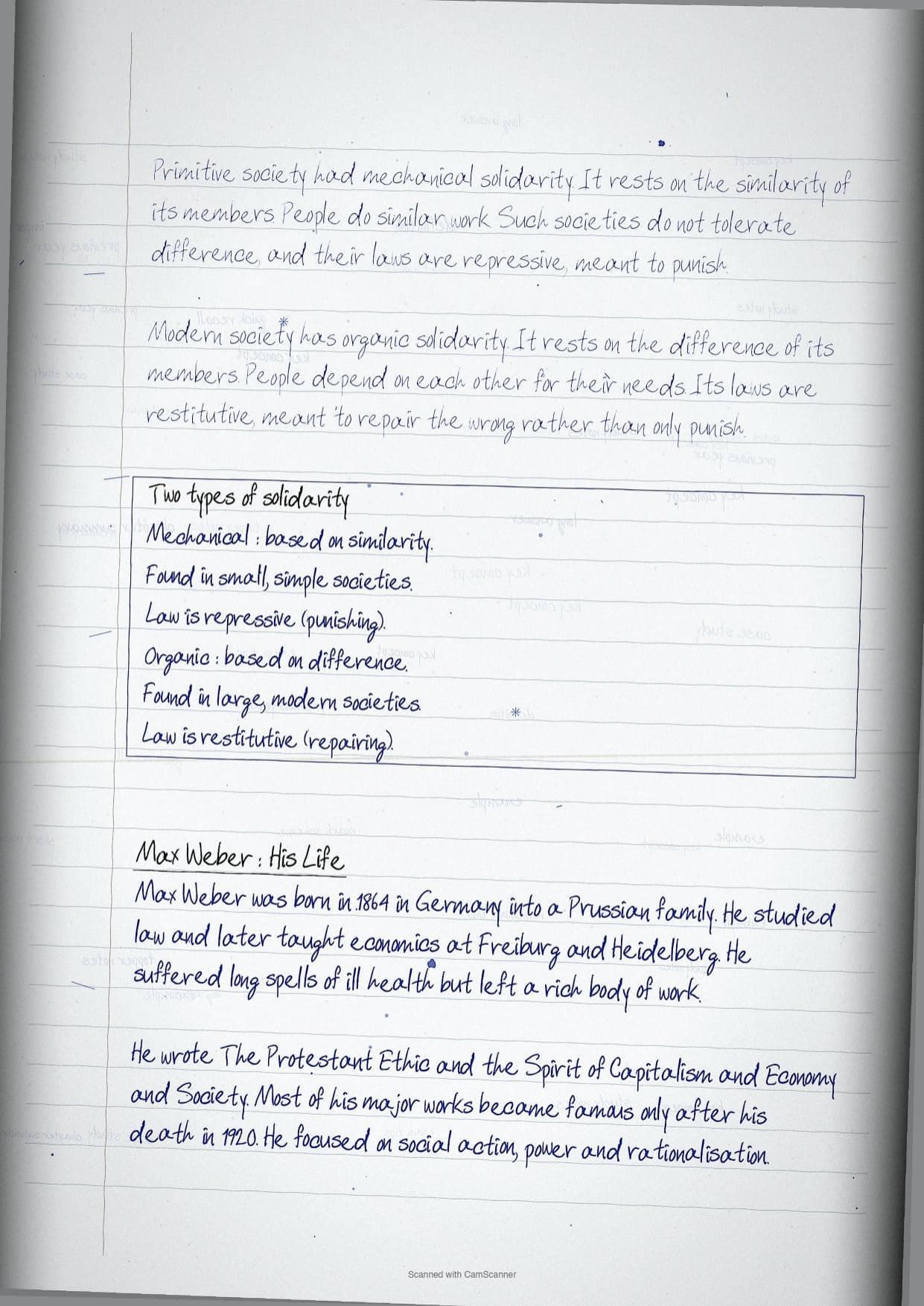
- Durkheim: mechanical and organic solidarity
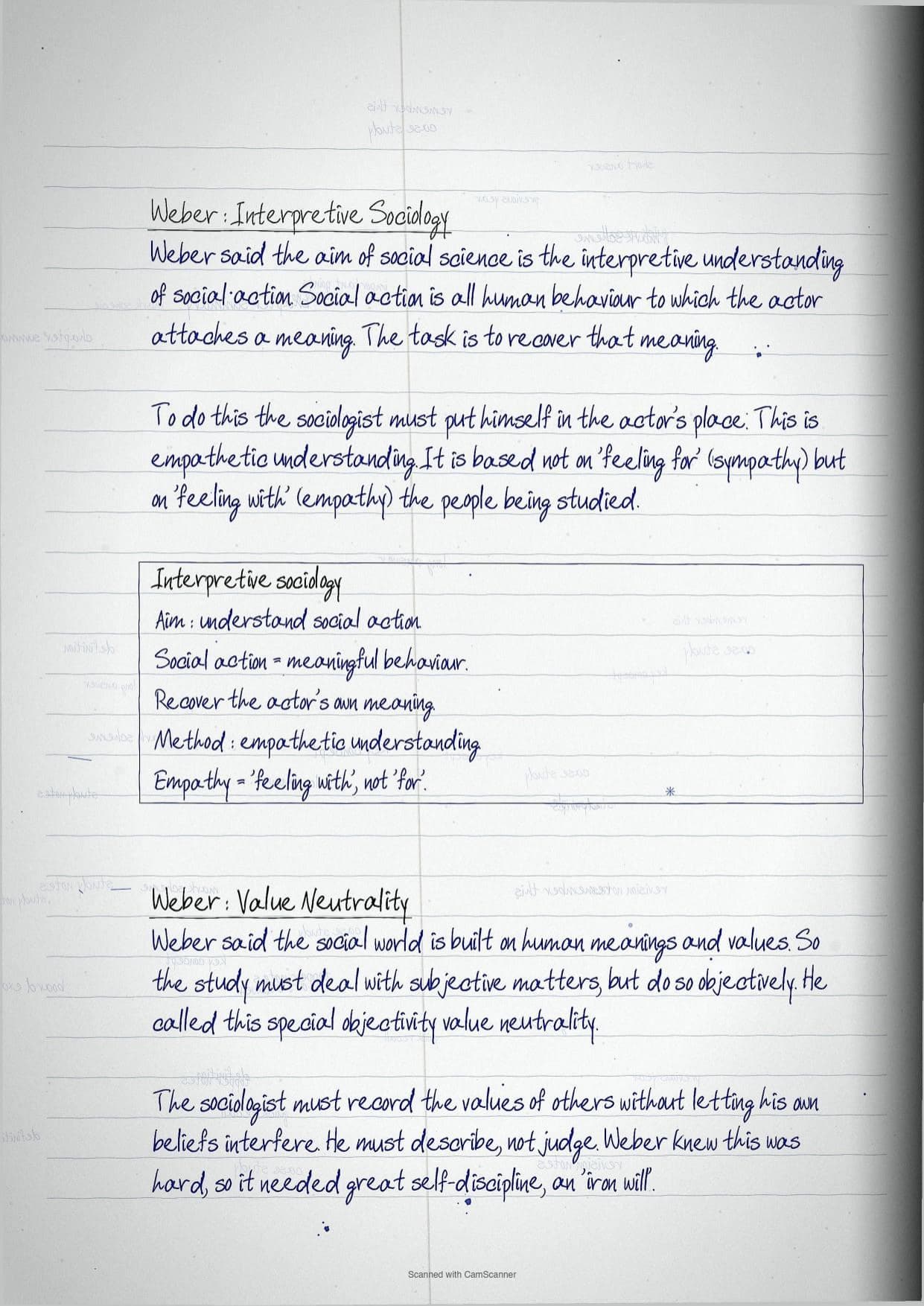
- Max Weber: interpretive sociology and value neutrality
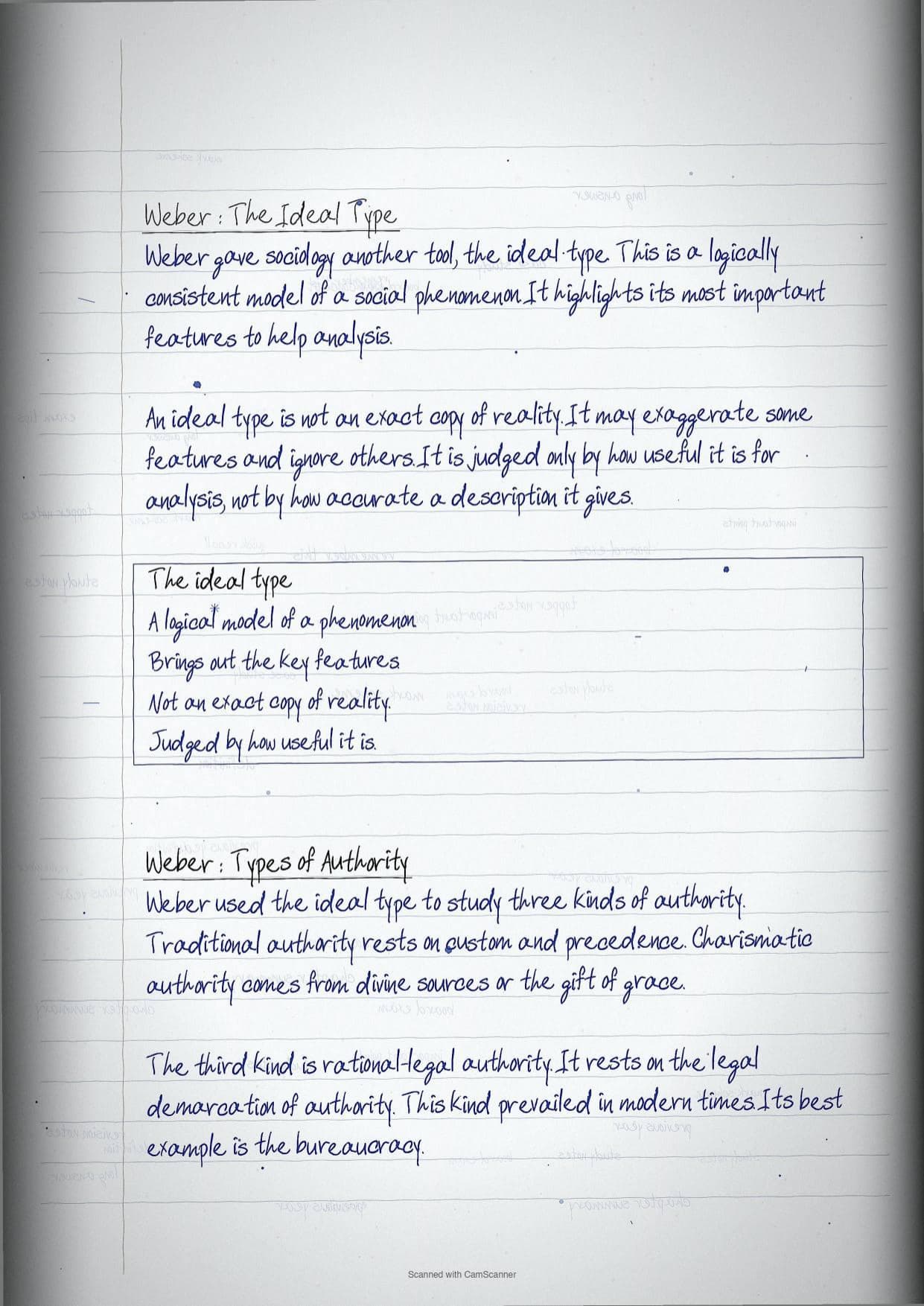
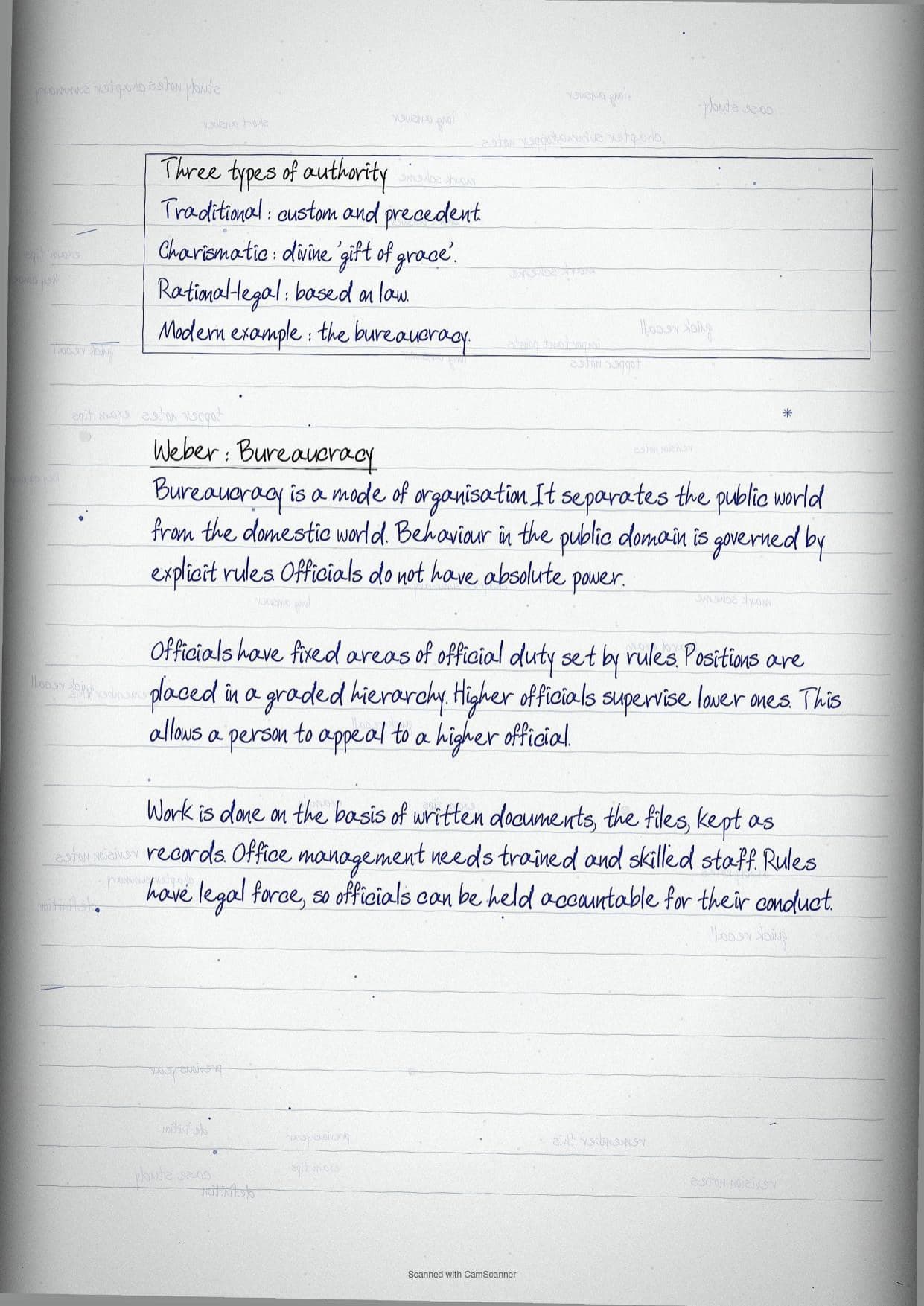
- Weber: ideal type, authority and bureaucracy
Introducing Western Sociologists Self-Assessment Quiz
Try these quick questions after you read the notes. Tap each question to check your answer. They cover the points CBSE asks most often.
According to Marx, the main basis for classifying people into classes is their
(a) religion (b) language (c) position in the production process (d) nationality
Answer: (c) position in the production process - Marx grouped people by their place in production, not identity.
In Marx's model, religion, law and art form part of the
(a) base (b) superstructure (c) productive forces (d) mode of production
Answer: (b) superstructure - the base is economic, and ideas and institutions rest on top of it.
Who was the first Professor of Sociology and studied Suicide as a social fact?
(a) Karl Marx (b) Max Weber (c) Emile Durkheim (d) Friedrich Engels
Answer: (c) Emile Durkheim - he showed social facts could be studied through patterns like suicide rates.
Mechanical solidarity, according to Durkheim, is based on
(a) difference of members (b) similarity of members (c) written law (d) the market
Answer: (b) similarity of members - it is found in small, simple societies with repressive laws.
Weber's idea that a sociologist must describe values without personal bias is called
(a) empathy (b) the ideal type (c) alienation (d) value neutrality
Answer: (d) value neutrality - the sociologist records others' values with an 'iron will' of self-discipline.
Introducing Western Sociologists Topic-wise Weightage for CBSE Class 11 Sociology
Some parts of this chapter are asked more often than others. The table below shows which sub-topics to revise first, based on recent CBSE Class 11 question trends.
| Sub-topic | Weightage | CBSE Frequency |
|---|---|---|
| Marx: class and mode of production | High | very often |
| Durkheim: social facts and solidarity | High | very often |
| Weber: bureaucracy and authority | High | often |
| The context of sociology (revolutions) | Medium | sometimes |
| Weber: value neutrality and ideal type | Medium | sometimes |
Key Terms and Ideas in Introducing Western Sociologists
These are the terms and ideas the exam asks about most. Learn each one so you can define it and use it in your answers.
| Term / Idea | What it means |
|---|---|
| Karl Marx | Class struggle is the driving force of history. |
| Marx: mode of production | The economic base shapes the social superstructure. |
| Marx: alienation | Workers are cut off from the fruits of their labour. |
| Emile Durkheim | Society is a social fact that constrains the individual. |
| Durkheim: solidarity | Primitive society is mechanical, modern is organic. |
| Max Weber | Sociology must interpret the meaning of social action. |
| Weber: value neutrality | Describe others' values without personal bias. |
| Weber: bureaucracy | Rational-legal rule based on rules, files and hierarchy. |
How Collegedunia's Handwritten Notes Help You Revise Introducing Western Sociologists
These notes are made for the night before the exam. They keep the facts short and easy to scan. Collegedunia maps every point to the 2026-27 NCERT.
- Clear handwriting: each topic is written in neat, easy-to-read handwriting.
- Boxed key terms: the main terms and definitions are boxed by hand for fast recall.
- Diagrams and tables: simple hand-drawn tables and charts make ideas clear.
- Colour-coded headings: new sub-topics stand out, so you find any section in seconds.
How to Use These Handwritten Notes for Class 11 Sociology Revision
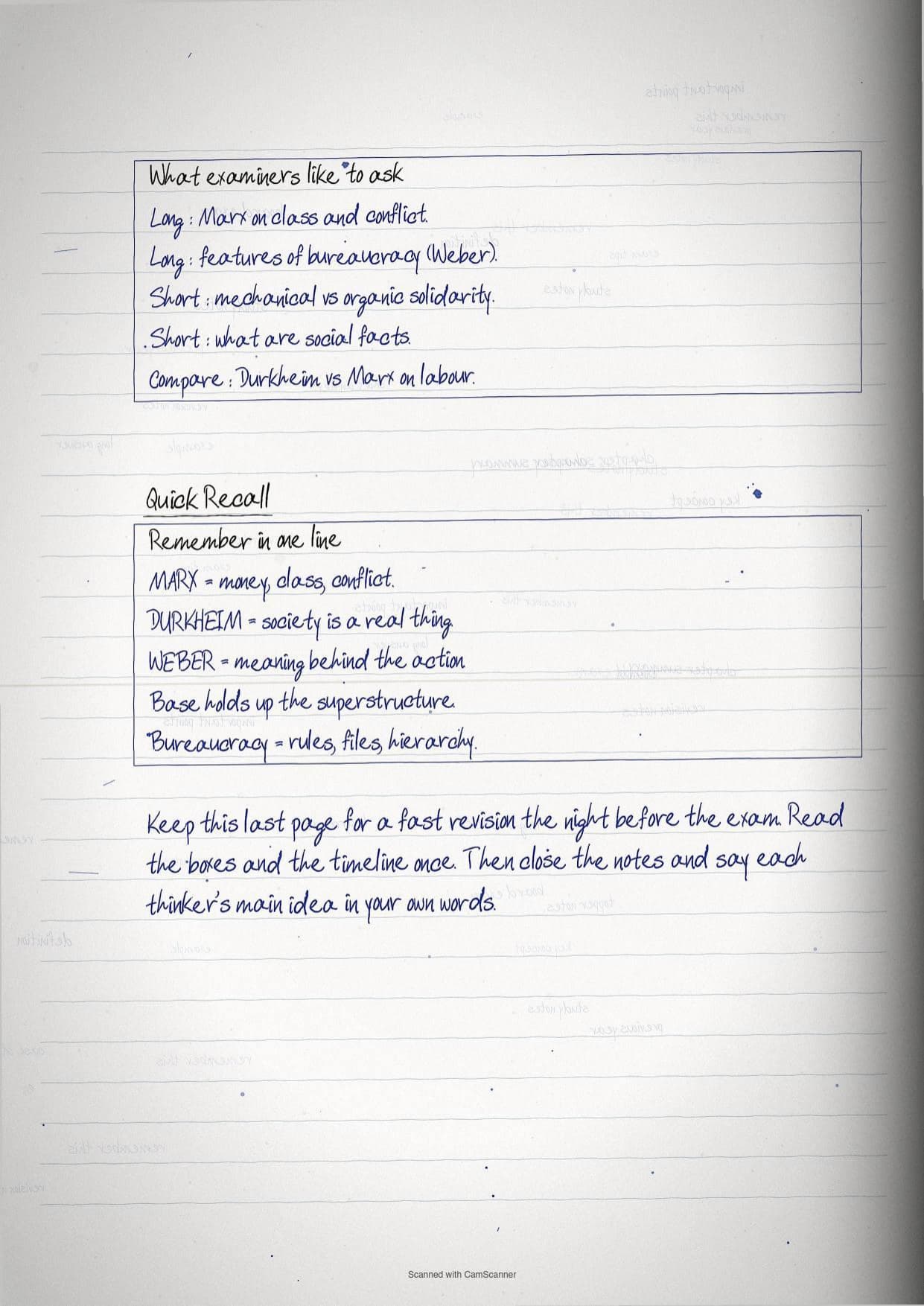
Use these class 11 sociology handwritten notes in two passes. Read them slowly once for the full chapter. Then, near the exam, read only the boxes and key terms for a fast recall.
- Read the notes once with the NCERT chapter open beside you.
- Say each key term and idea in your own words.
- Practise one long-answer question from a past paper.
- On the last day, revise only the key terms and the boxes.
Class 11 Sociology Handwritten Notes for All Chapters
The table below links the class 11 sociology handwritten notes for every chapter. Use it to jump to any other chapter's notes.
Introducing Western Sociologists Class 11 Sociology Handwritten Notes FAQs
Ques. Where can I download Introducing Western Sociologists Class 11 Sociology Handwritten Notes PDF?
Ans. You can download the Introducing Western Sociologists Class 11 Sociology Handwritten Notes PDF directly from this page. Both the Normal and HD versions are free.
Ques. Are these handwritten notes aligned with the 2026-27 NCERT?
Ans. Yes. These notes follow the current 2026-27 syllabus for Class 11 Sociology. Difference between Marx, Durkheim and Weber.
Ques. How many pages is the Class 11 Sociology Introducing Western Sociologists Handwritten Notes PDF?
Ans. The notes run about 20 pages. They cover the full chapter with key terms, hand-drawn boxes, and a short self-assessment quiz.
Ques. What is the main idea of the 11th standard Sociology chapter Introducing Western Sociologists?
Ans. Marx explained society through class and economic conflict, Durkheim through social facts and solidarity, and Weber through the meaning people give to their actions. Together they founded sociology as a science of modern industrial life.
Ques. Are these Introducing Western Sociologists notes enough for the CBSE Class 11 exam?
Ans. Yes, for revision. The Collegedunia handwritten notes cover every key point and exam term. Read them with the NCERT chapter and practise past questions.



Comments