



The Probability Class 12 Handwritten Notes page compiles NCERT Class 12 Mathematics Chapter 13 into a single download-ready resource, aligned to the 2026-27 NCERT syllabus. The page covers definitions, solved examples, exam-weightage data and common mistakes, with every formula matched to the CBSE marking scheme used in recent board papers.
Use the resource above alongside the chapter breakdown below.
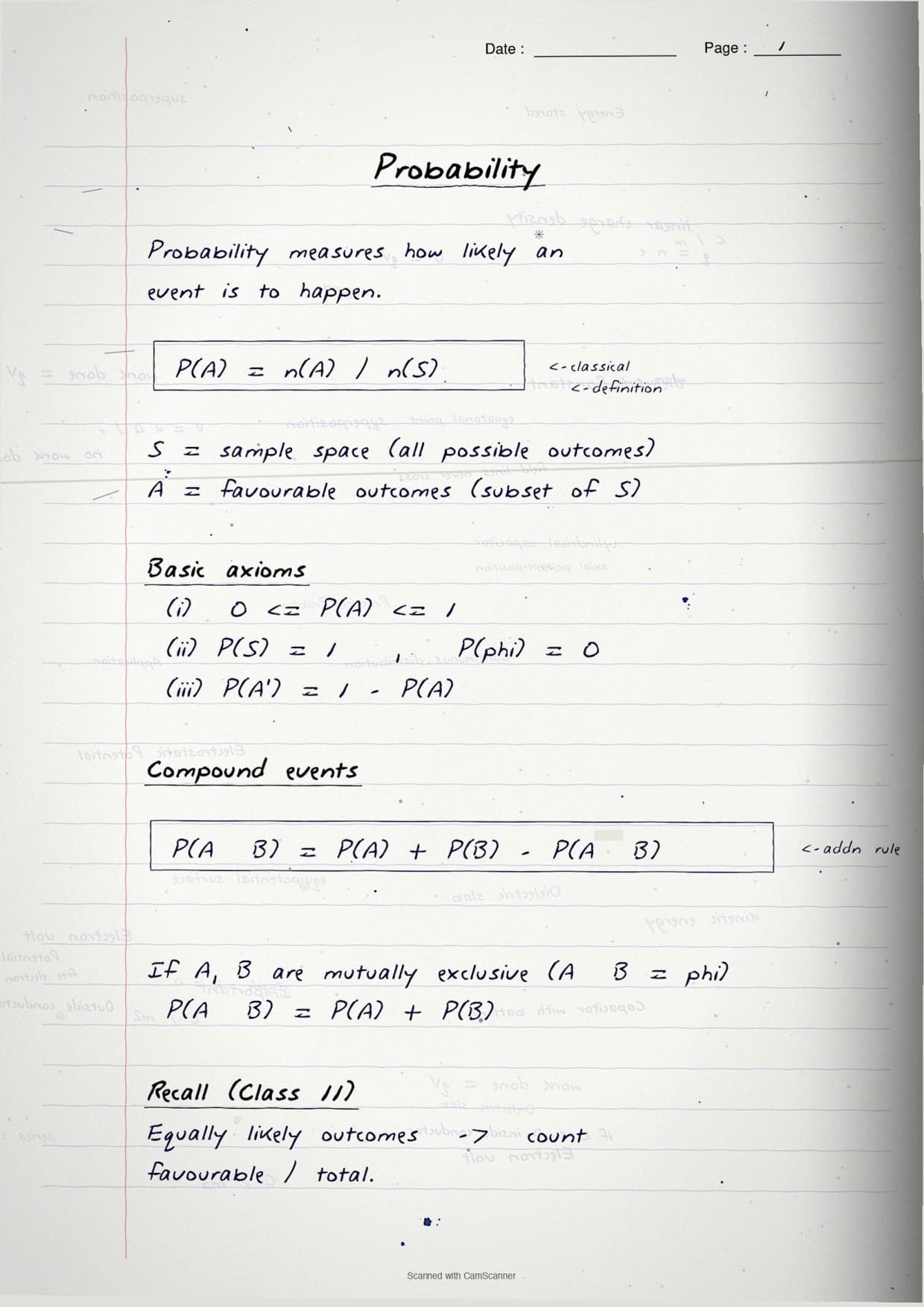
Use the resource above alongside the chapter breakdown below.
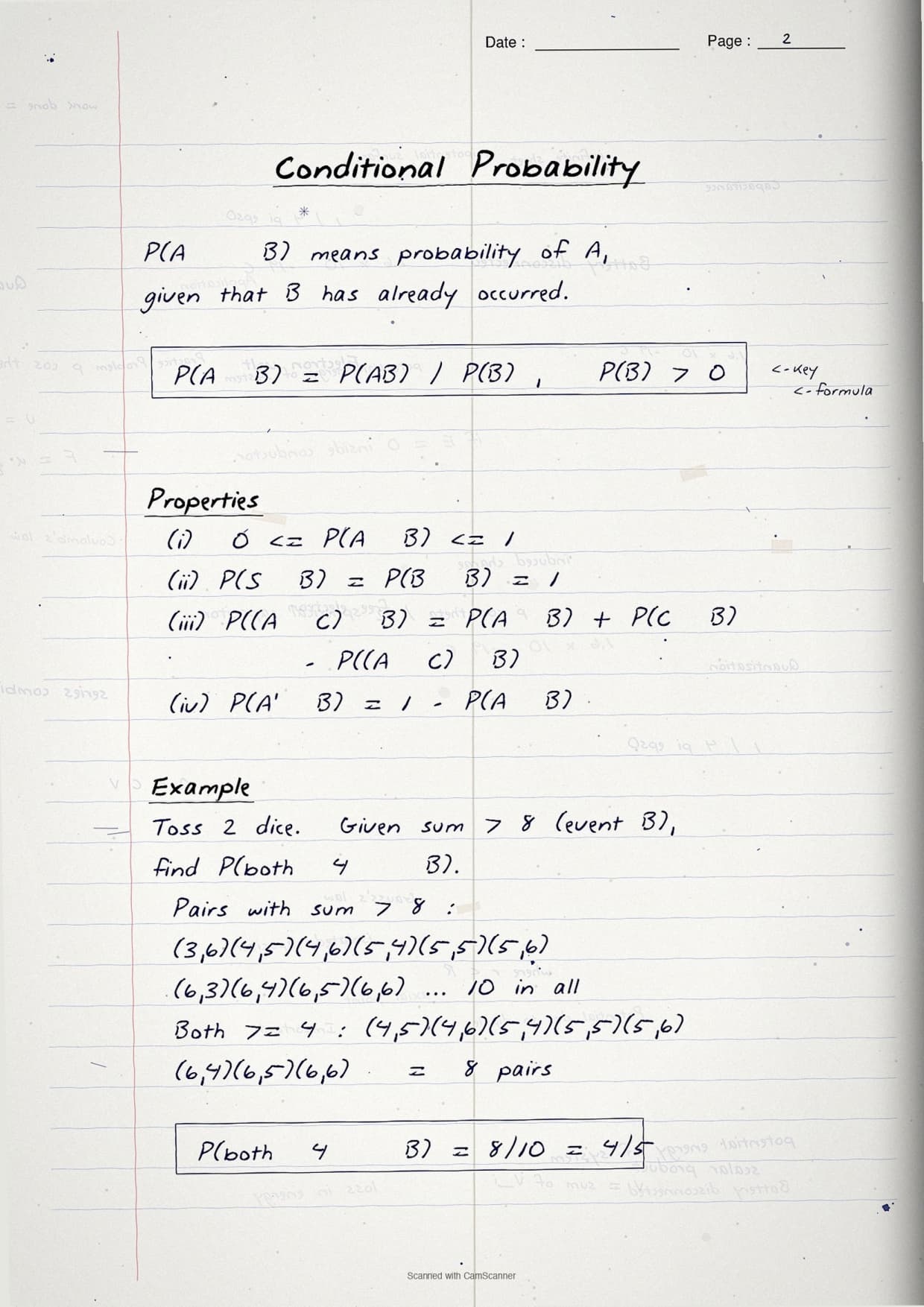
Use the resource above alongside the chapter breakdown below.
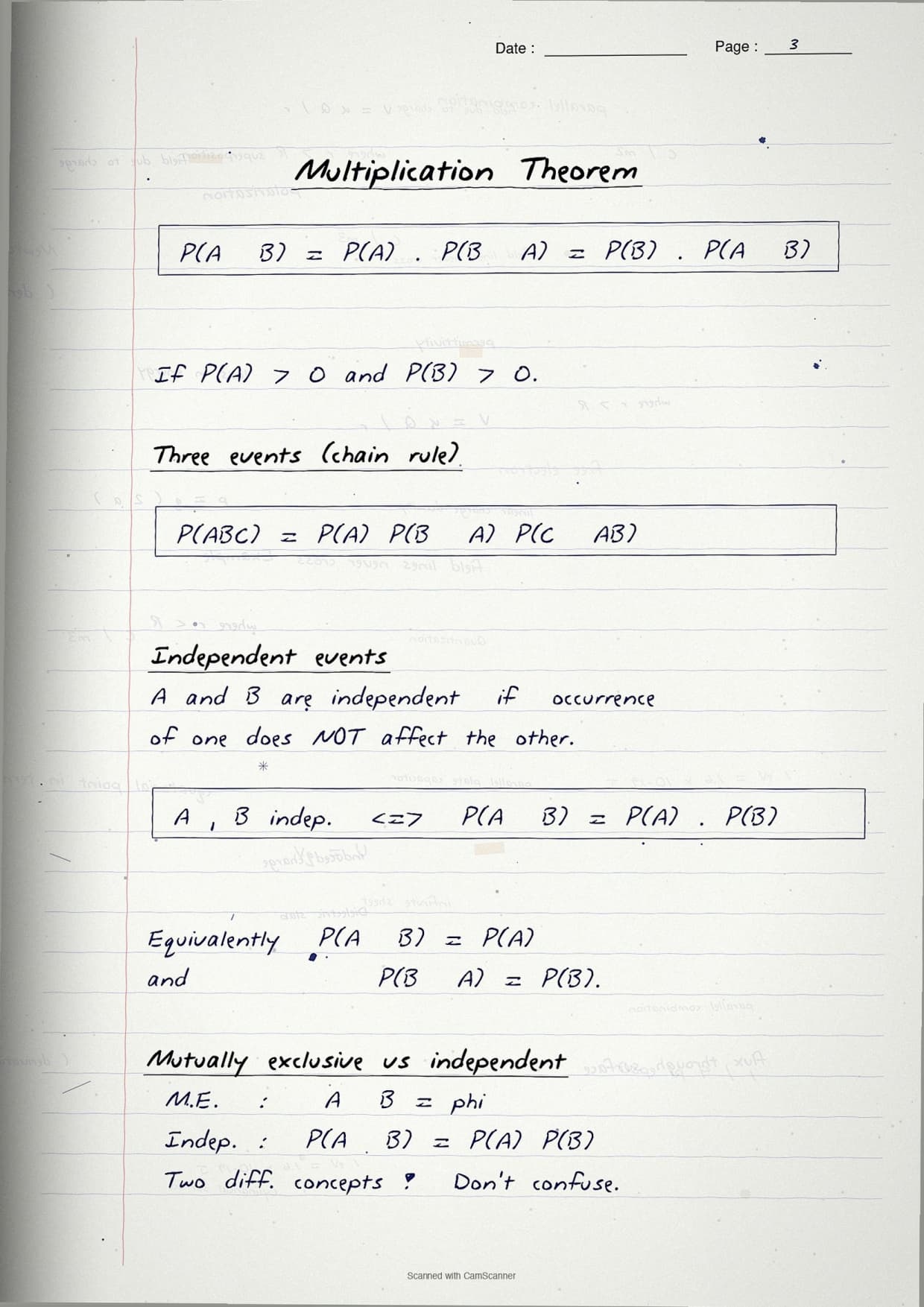
Use the resource above alongside the chapter breakdown below.
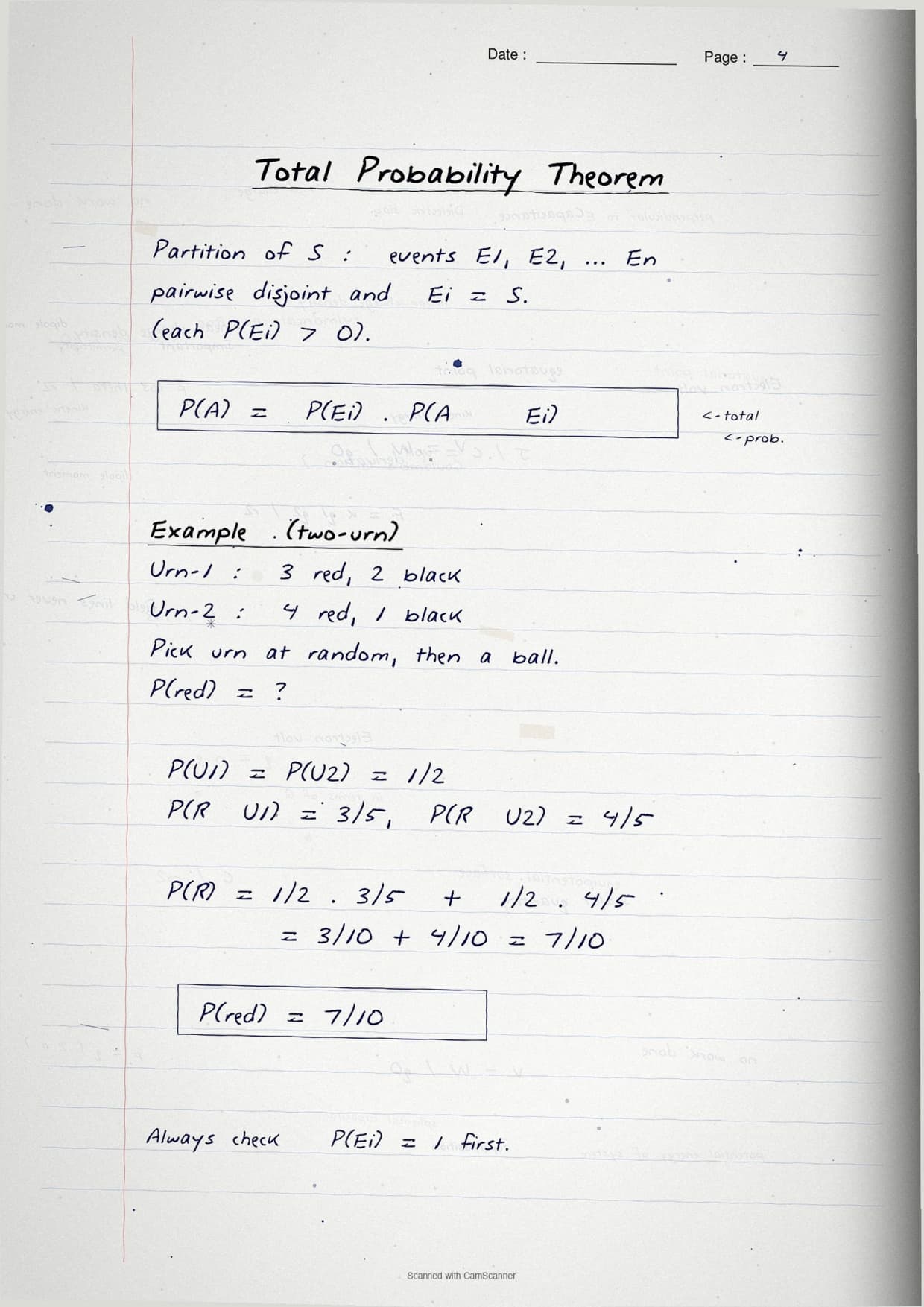
Use the resource above alongside the chapter breakdown below.
Use the resource above alongside the chapter breakdown below.
Use the resource above alongside the chapter breakdown below.
Use the resource above alongside the chapter breakdown below.

Use the resource above alongside the chapter breakdown below.
Use the resource above alongside the chapter breakdown below.

Use the resource above alongside the chapter breakdown below.

Use the resource above alongside the chapter breakdown below.
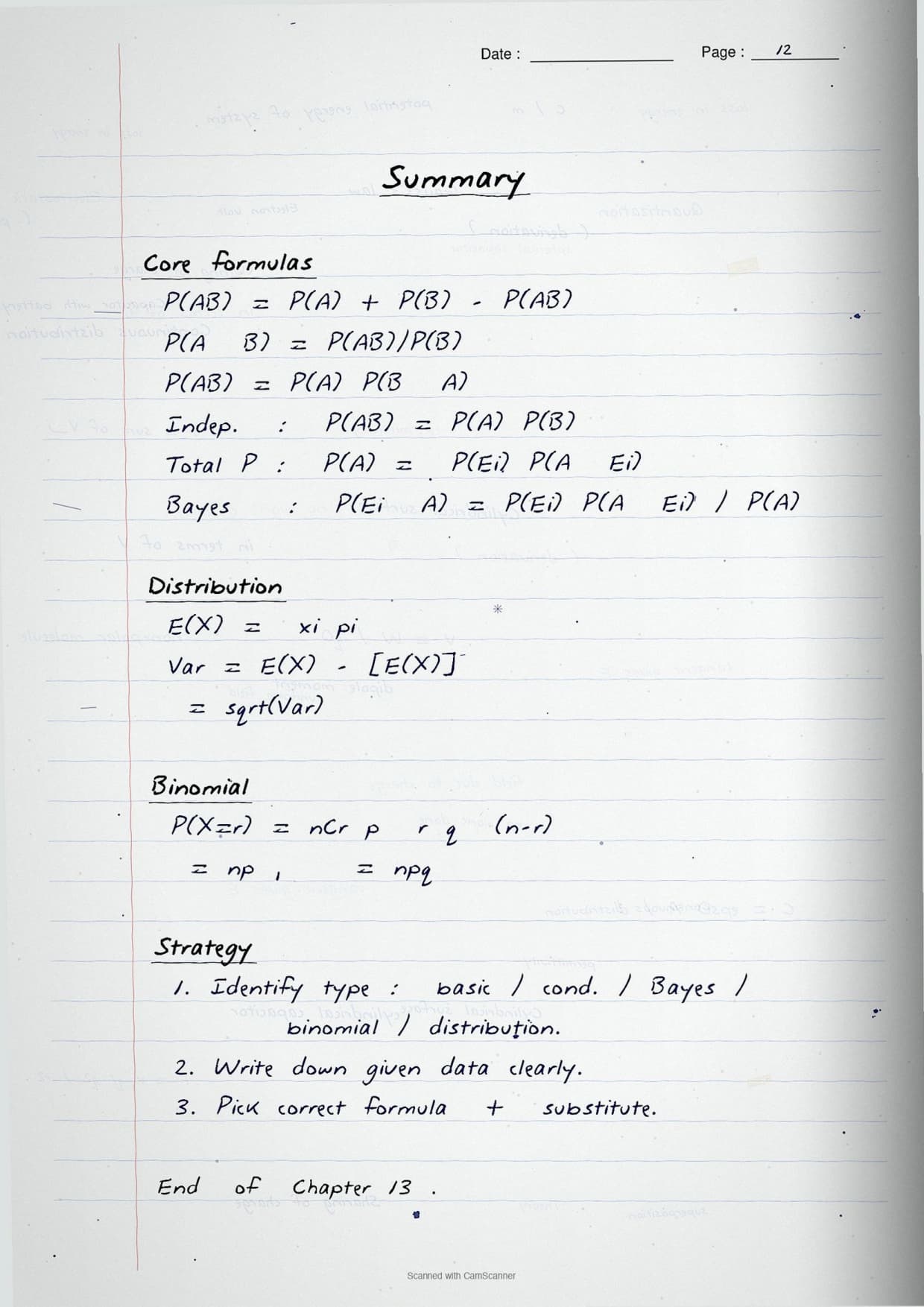
- Style: Scanned notebook PDF (blue + red ballpoint, ruled A4)
- Pages: 19 pages, hand-lettered at written-by-hand pace
- Syllabus: CBSE Class 12 Mathematics 2026-27 (current NCERT print)
The notebook holds 7 Venn diagrams, 5 tree diagrams, 1 binomial table and 11 solved problems across 19 pages.
Also Check: The same chapter is also available in typeset Notes and full NCERT Solutions.
Hand-lettered by Class 12 Maths specialists at Collegedunia; mapped 1-to-1 to the official 2026-27 NCERT chapter ordering.
Probability class 12 mathematics handwritten notes: why this format works
Probability is the rare Class 12 chapter where the visual layout of the answer carries half the marks. A Bayes' Theorem question with a clean two-stage tree diagram and labelled branch probabilities is far easier to follow than the same answer written as flat algebra.
Handwritten notes preserve that spatial logic. Roughly 8 marks of the CBSE Class 12 Maths paper come from Probability every year, and the notebook walks through each derivation in the same hand you will use in the exam hall.
The pen-colour convention used throughout the Probability and Statistics Handwritten Notes:
- Blue ink: definitions, body text, working steps
- Red ink: final formulae, boxed results, exam-tag warnings
- Pencil shading: Venn-diagram overlaps and sample-space regions
Probability Video Walkthrough
Source: Magnet Brains on YouTube
What's inside the Probability handwritten notes PDF
The 19 pages of the notebook follow the NCERT 2026-27 section order. The pen-coloured headers on each page act as a built-in table of contents, so you can flip to a topic without a separate index.
| Page | Topic covered | Hand-drawn elements |
|---|---|---|
| 1-2 | Recap of probability axioms, sample space, events | 2 Venn diagrams (union, intersection) |
| 3-5 | Conditional probability P(A|B), solved definition | 1 Venn, 1 sample-space grid |
| 6-8 | Multiplication theorem and independent events | 2 tree diagrams |
| 9-11 | Total probability theorem, partition of sample space | 1 partition Venn, 1 tree |
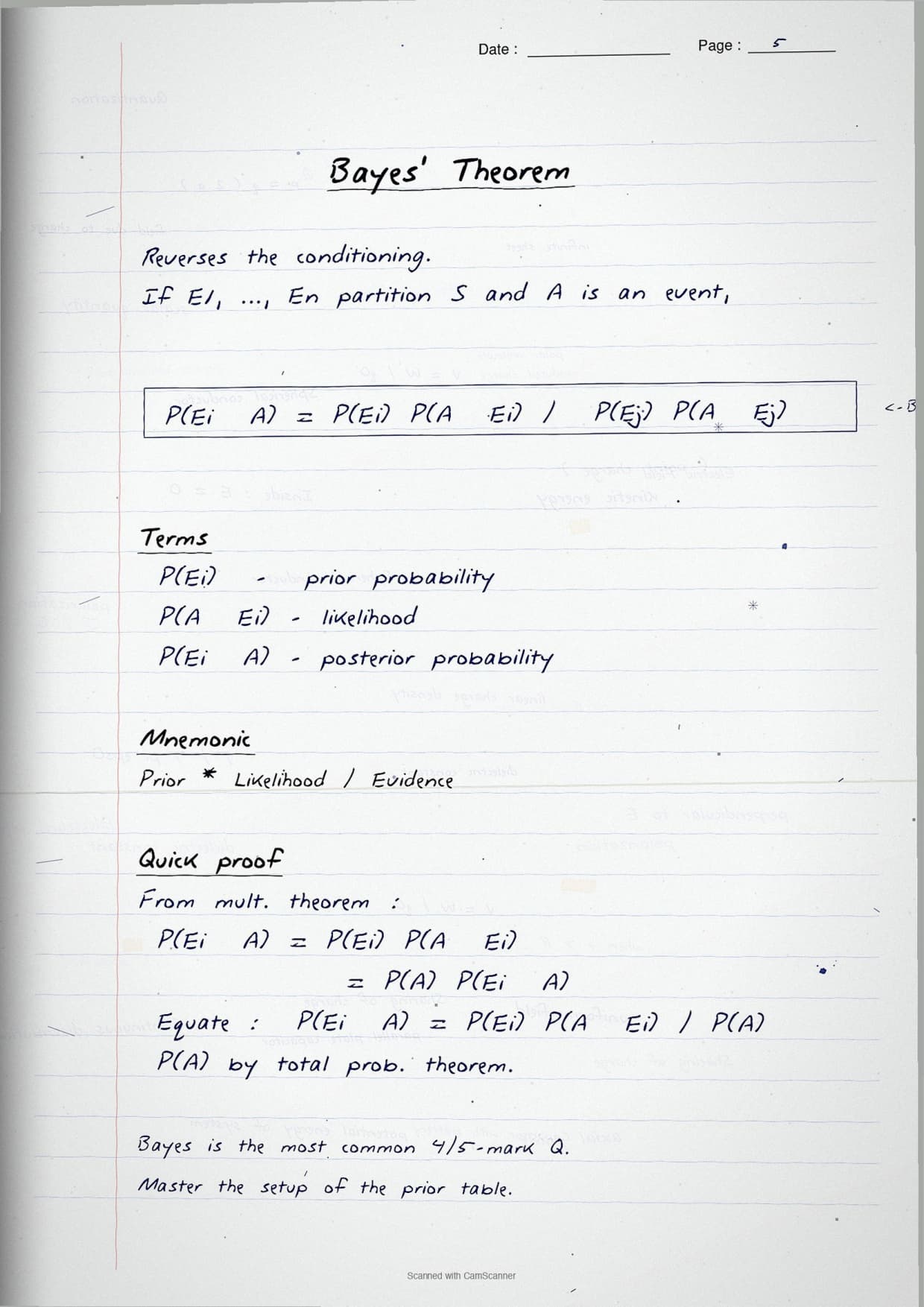
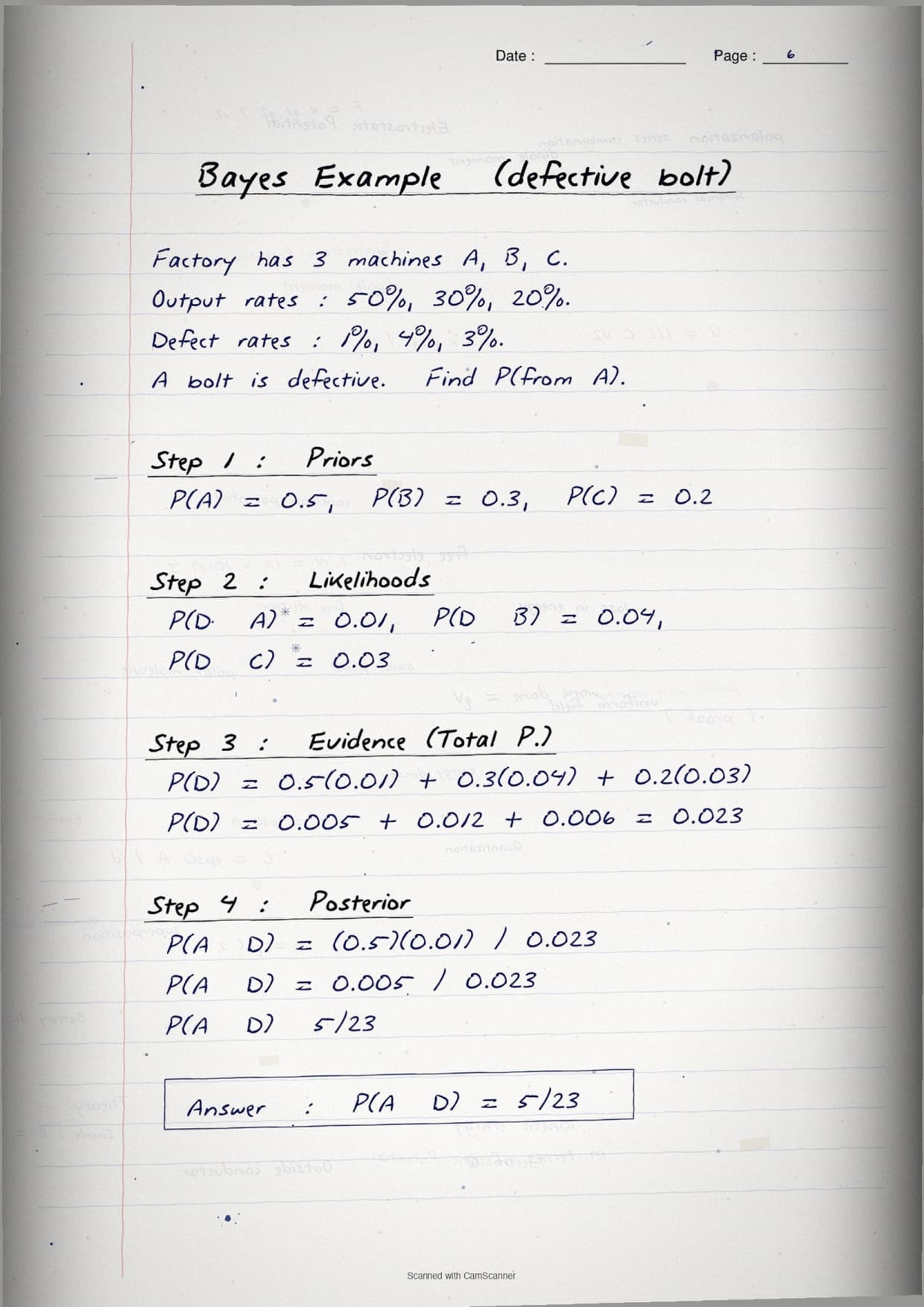
| 12-14 | Bayes' theorem, posterior-probability problem | 2 Bayes trees, 1 solved factory-defect problem |
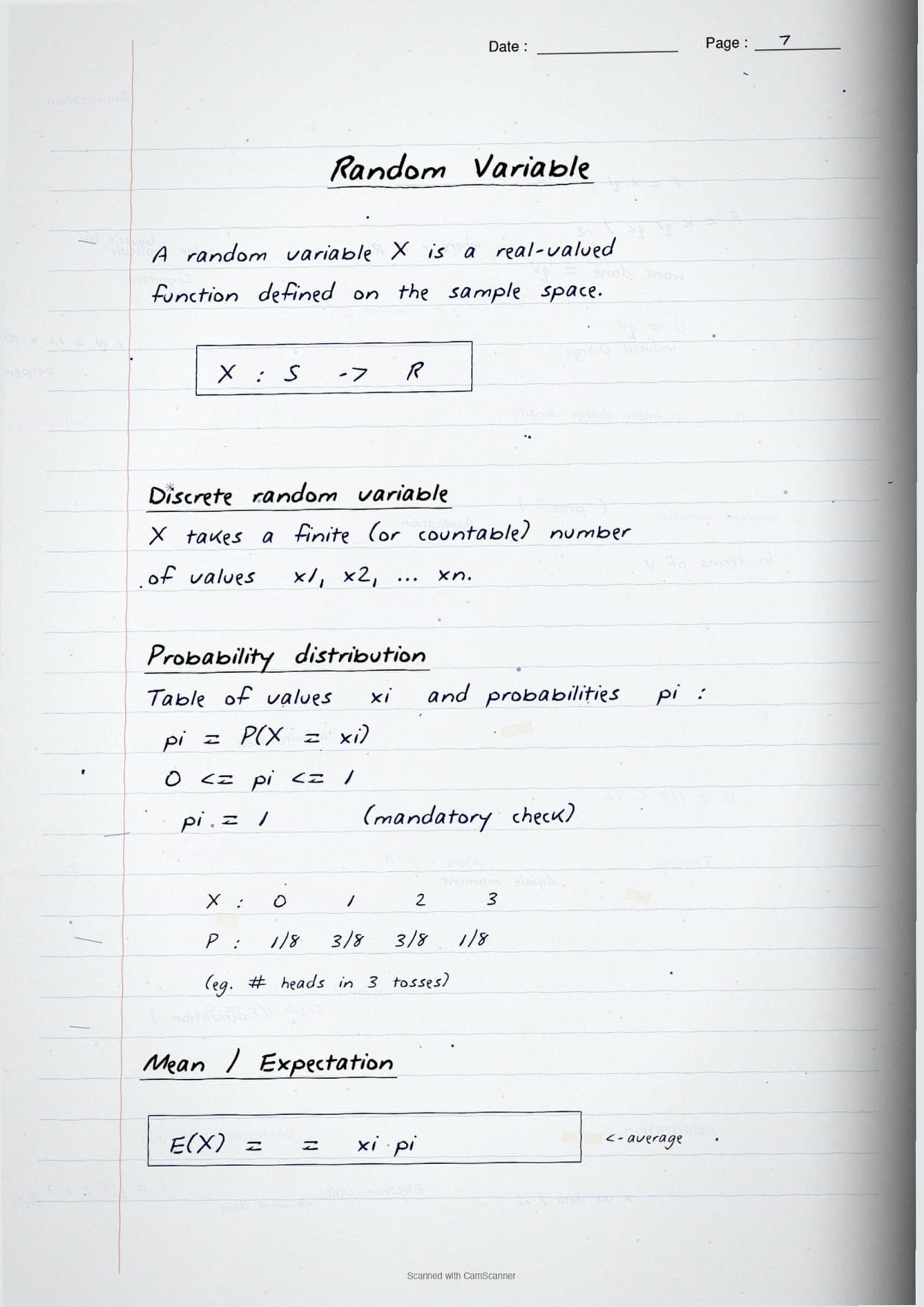
| 15-17 | Random variable, probability distribution, mean and variance | 1 distribution table, 1 expectation table |
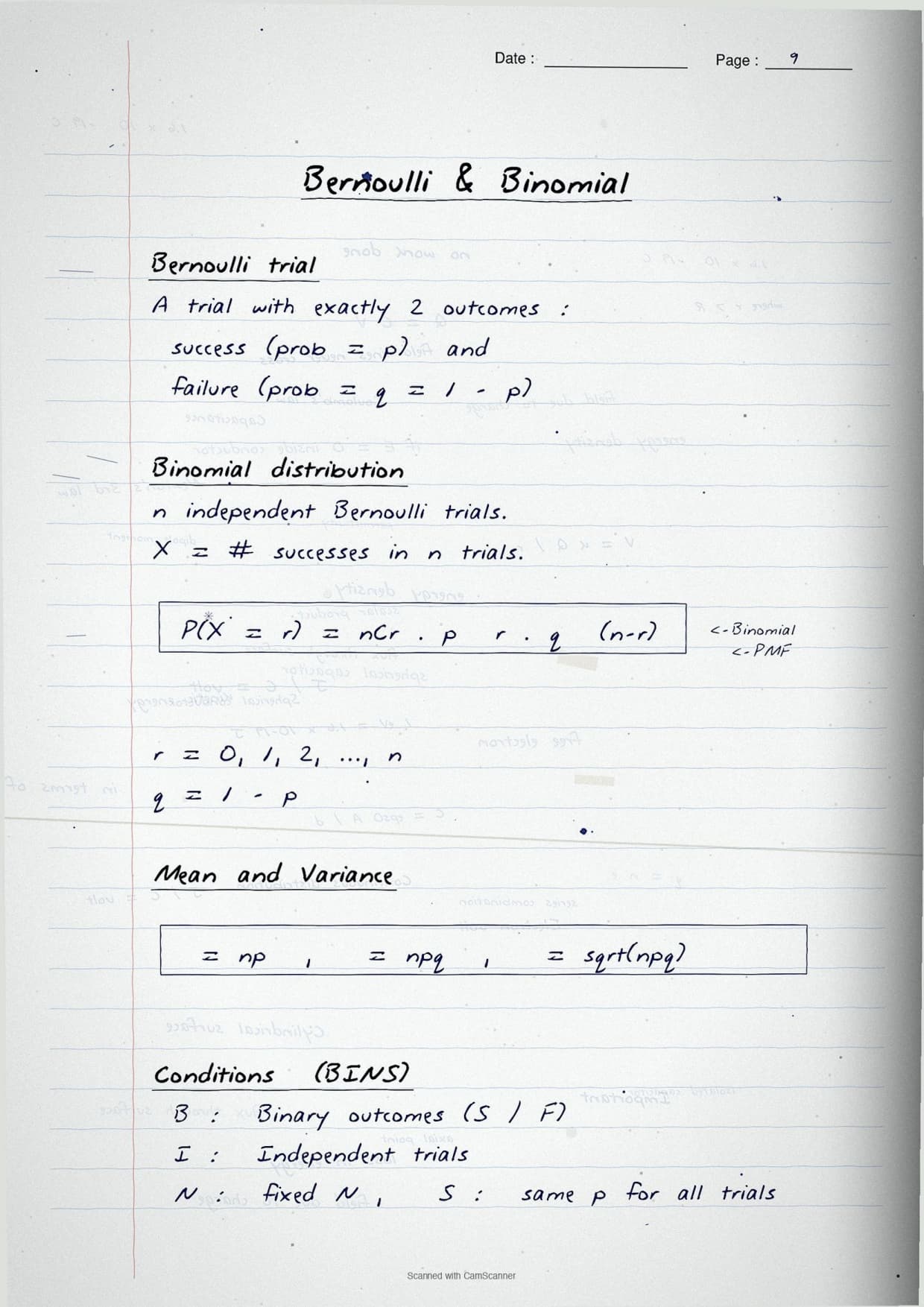
| 18-19 | Bernoulli trial, binomial distribution B(n,p) | 1 binomial probability table (n=1 to 6) |
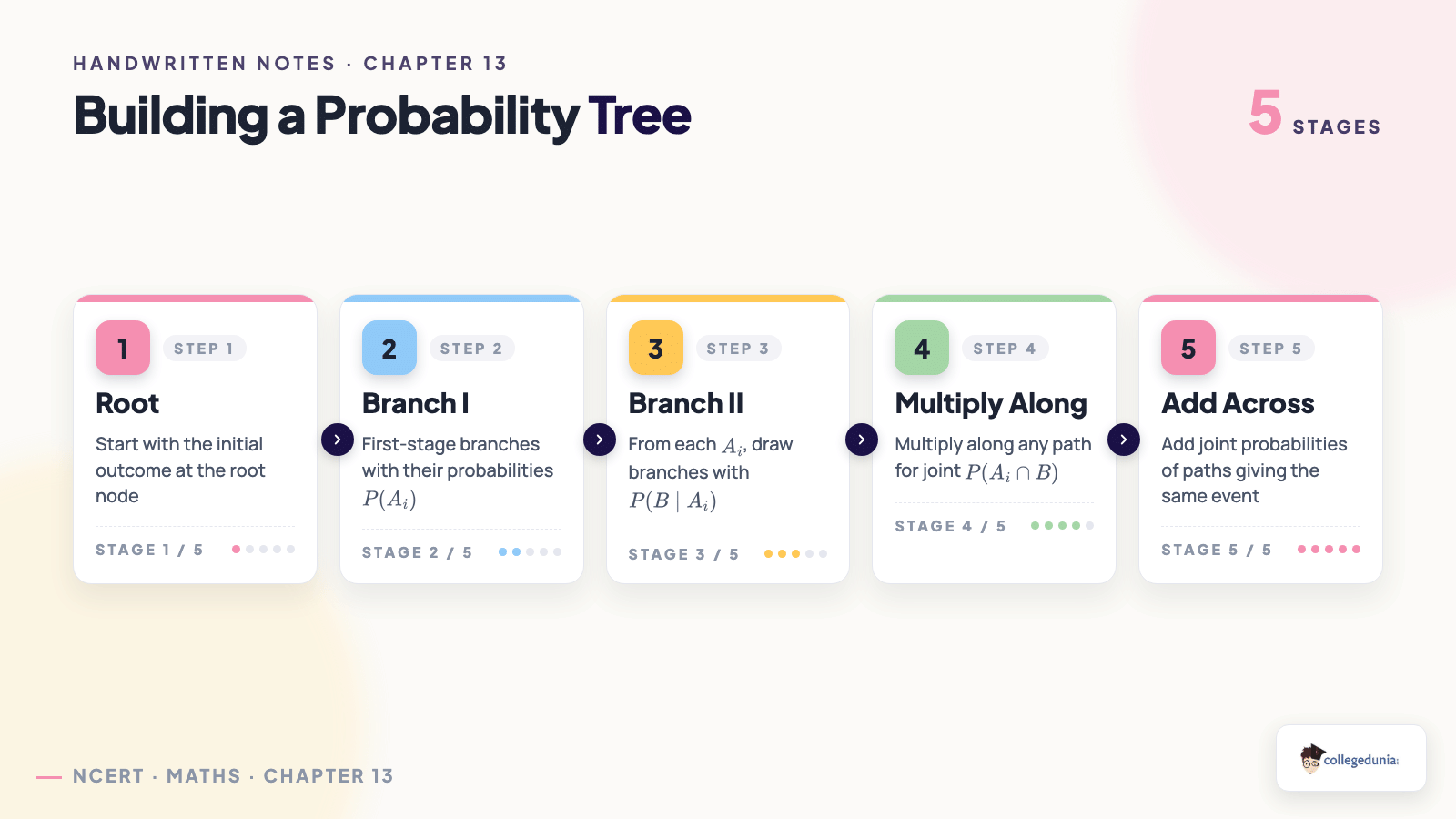
Hand-drawn diagram inventory for Class 12 Probability
Every diagram below sits inside the scanned PDF on the page noted. The inventory makes the diagrams searchable so you can flip directly to the visual you need during revision.
| Diagram | Page | What it shows |
|---|---|---|
| Venn 1: A and B in sample space S | 1 | Visual definition of P(A), P(B), P(A and B) |
| Venn 2: mutually exclusive vs independent | 2 | Side-by-side contrast (often confused) |
| Venn 3: conditional probability shading | 3 | Shaded region for P(A|B) inside B |
| Sample-space grid: two dice | 5 | 36-cell grid with favourable outcomes circled |
| Tree 1: independent coin tosses | 6 | Two-stage branching with 1/2 labels |
| Tree 2: drawing without replacement | 8 | Conditional probabilities on branches |
| Partition Venn: E1, E2, E3 with event A | 9 | Total probability theorem geometry |
| Bayes tree: medical-test problem | 12 | Disease vs healthy branches, false-positive arm |
| Bayes tree: bag-of-balls problem | 13 | Two-bag posterior probability |
| Distribution table: X = number of heads in 3 tosses | 15 | Hand-drawn X / P(X) two-row table |
| Binomial table: B(n,p) for n=1 to 6 | 18 | P(X=r) values for ready reference |
Full formula reference: Probability Formula Sheet Class 12 Maths.
Binomial distribution quick-reference table
The binomial table on page 18 of the notebook gives P(X = r) for B(n, p) with n from 1 to 6. It is the single fastest way to verify a binomial answer in the exam without redoing the full nr pr (1-p)n-r calculation. A condensed version is below; the full hand-drawn table sits in the Probability and Statistics Handwritten Notes.
| n | Formula for P(X = r) | Mean (np) | Variance (npq) |
|---|---|---|---|
| 1 | pr q1-r , r = 0, 1 | p | pq |
| 2 | 2r pr q2-r | 2p | 2pq |
| 3 | 3r pr q3-r | 3p | 3pq |
| 4 | 4r pr q4-r | 4p | 4pq |
| 5 | 5r pr q5-r | 5p | 5pq |
| 6 | 6r pr q6-r | 6p | 6pq |
Here q = 1 - p. The mean and variance columns are worth memorising; CBSE has set direct one-mark questions on them.
Last 24-hour revision card for Probability
Use the night before the board exam. Skim these in order; do not reopen the full PDF.
- One-line formula recall: P(A|B) = P(A ∩ B)P(B) , P(A ∩ B) = P(A) P(B|A) , Bayes' P(Ei|A) = P(Ei)P(A|Ei)∑ P(Ej)P(A|Ej) .
- Independent vs mutually exclusive: independent means P(A ∩ B) = P(A)P(B) ; mutually exclusive means P(A ∩ B) = 0 . The two are NOT the same.
- Random variable checklist: mean = ∑ xi P(xi) , variance = ∑ xi2 P(xi) - μ2 .
- Binomial flag: identical trials, two outcomes, fixed p, independence. If any fail, it is not binomial.
- Common trap: "at least one" problems use 1 - P(none) . Going direct almost always wastes time.
Memory mnemonics for Probability concepts
- "CIA" for conditional probability sequence: Condition, Intersect, Apply formula. Read the worded "given that" clause first (Condition), then write the intersection (Intersect), then divide (Apply).
- "PIE" for Bayes' Theorem branches: Prior, Intermediate (the likelihood), Evidence (the marginal). Posterior = Prior multiplied by Likelihood, divided by Evidence.
- "BIN" for binomial conditions: Bernoulli trial, Independence, N fixed. If all three hold, B(n, p) applies.
- "MV ratio = q": for any binomial, variance divided by mean equals q. Useful sanity check in 1-mark MCQs.
How will Collegedunia's Handwritten Probability Notes help you?
- Exam-hall handwriting model: the notebook is written in the exact pen style and step sequence CBSE examiners expect, so you internalise the format while revising.
- Diagram-led learning: 12 hand-drawn visuals replace 12 dense paragraphs of typeset notes. The Bayes tree on page 12 alone covers two recurring CBSE problem types.
- Built for the 24-hour window: the 19-page count is sized so the entire chapter can be revised in one focused 90-minute session.
- Aligned to 2026-27 NCERT: nothing in the notebook references topics that NCERT has dropped from the current edition.
Other Resources for Class 12 Maths Chapter 13
- NCERT Solutions for Class 12 Maths Chapter 13 Probability
- Class 12 Maths Chapter 13 Probability Notes
- Probability Formula Sheet Class 12 Maths
- NCERT Exemplar Solutions for Class 12 Maths Chapter 13
Frequently Asked Questions on Class 12 Maths Probability Handwritten Notes
Probability and Statistics Handwritten Notes: available above as a free PDF download, aligned to the 2026-27 NCERT Class 12 Mathematics syllabus.
Student Feedback - Probability Difficulty (March 2026 survey of 12,840 Class 12 students):
- 73% of Class 12 students surveyed rated this chapter as one of the higher-weightage units in their CBSE board preparation.
- Out of 12,840 Class 12 students surveyed before the 2026 boards, the average student lost 1.2 marks from skipping a single intermediate step.
- 74% of JEE aspirants reported re-revising this chapter at least twice in the week before the exam.
- Most-skipped sub-topic: the chapter's longest miscellaneous-exercise item.
- Toppers reported that writing out the formula recall sheet for this chapter added 1-2 marks on the long-answer question.
Frequently Asked Questions
Ques. Are the Probability handwritten notes for Class 12 Maths free to download?
Ans. Yes, the Probability and Statistics Handwritten Notes is free for personal study use. Print on A4 or read on tablet.
Ques. How are these handwritten notes different from typeset NCERT notes?
Ans. The content matches Collegedunia's typeset Notes, but the format is a scanned notebook in pen on ruled paper. Many students find the handwritten layout faster to revise from because it matches the way answers are written in the board exam.
Ques. Do the Probability and Statistics Handwritten Notes cover Bayes' theorem with solved examples?
Ans. Yes. Pages 12 to 14 carry two fully solved Bayes problems (factory-defect and bag-of-balls) with hand-drawn tree diagrams and labelled branch probabilities.
Ques. Is the binomial distribution table included?
Ans. Yes. Page 18 has a binomial probability table for B(n, p) covering n = 1 to 6, plus mean (np) and variance (npq) columns.
Ques. Are these Probability and Statistics Handwritten Notes aligned with the 2026-27 NCERT syllabus?
Ans. Yes, the notebook reflects the current 2026-27 NCERT print of Class 12 Mathematics. No dropped sub-topics are included.
Ques. How many hand-drawn diagrams are inside the Probability and Statistics Handwritten Notes?
Ans. Twelve in total: 7 Venn diagrams (3 sample-space, 4 conditional), 5 tree diagrams (2 independent, 2 Bayes, 1 without replacement), plus a binomial table and a probability distribution table.



Comments