




NCERT Handwritten Notes for Class 7 Arts (Kriti) Chapter 20 Integration of All Art Forms: Sculptures Come Alive are prepared for quick revision according to the 2026-27 NCERT syllabus. The PDF explains how students can observe sculptures, create stories, add movement, use music, build dialogue and present a short performance.
- Download a 22-page handwritten revision PDF for Class 7 Arts Chapter 20.
- Revise the full sculpture-to-stage process with visual notes and activity cues.
- Use the notes before classroom rehearsal, group presentation or Arts portfolio work.
Sculptures Come Alive Chapter Snapshot
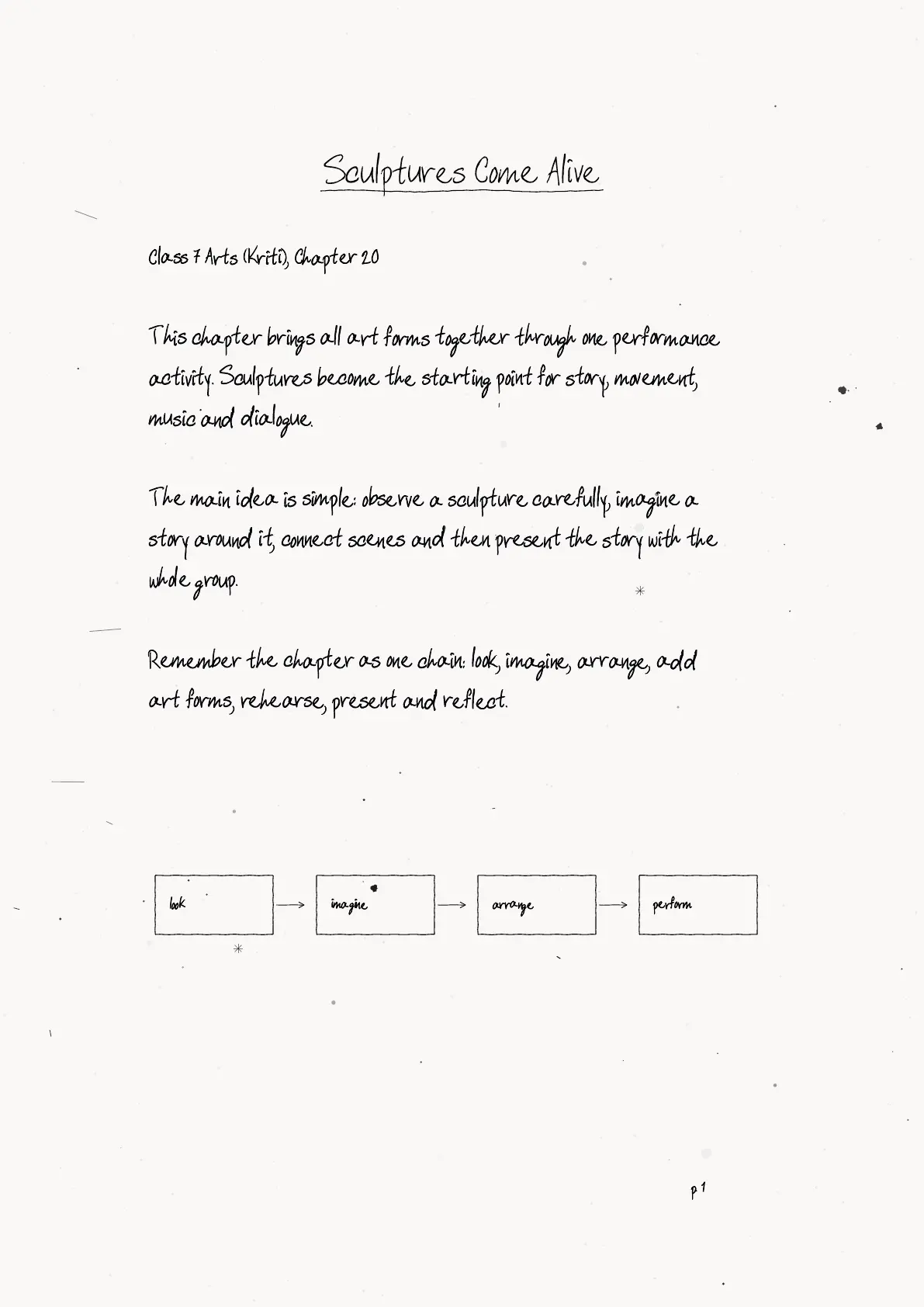
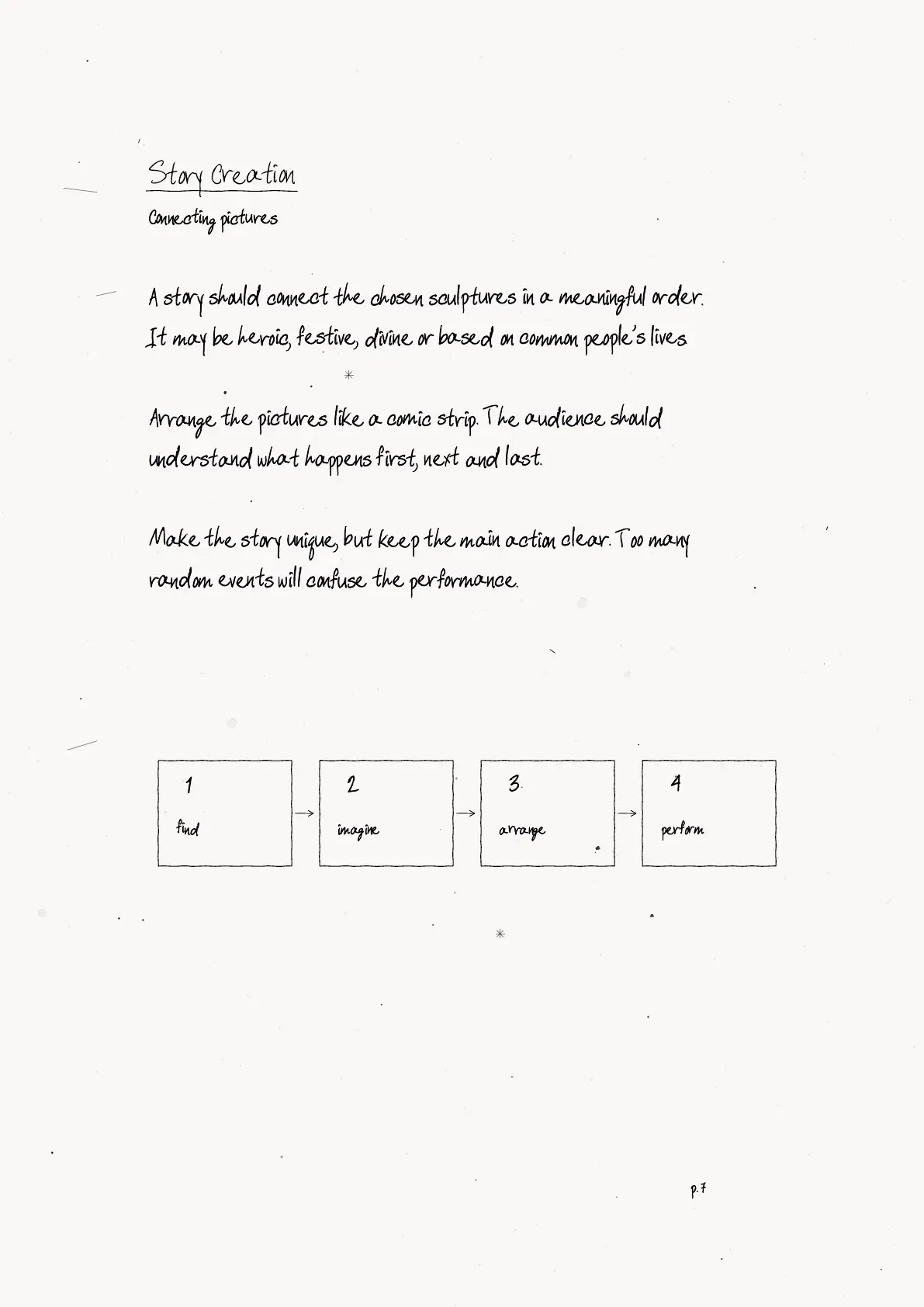
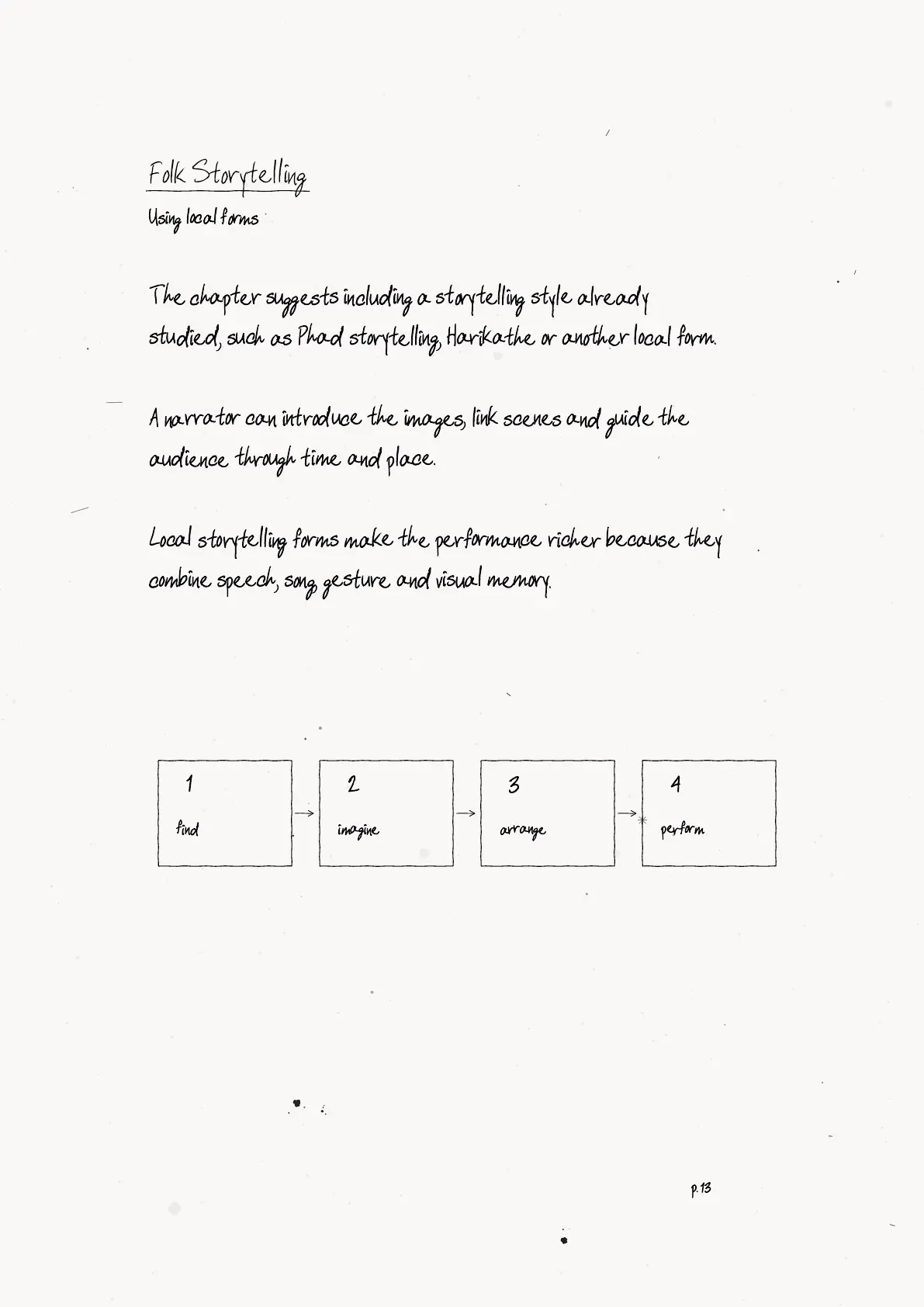
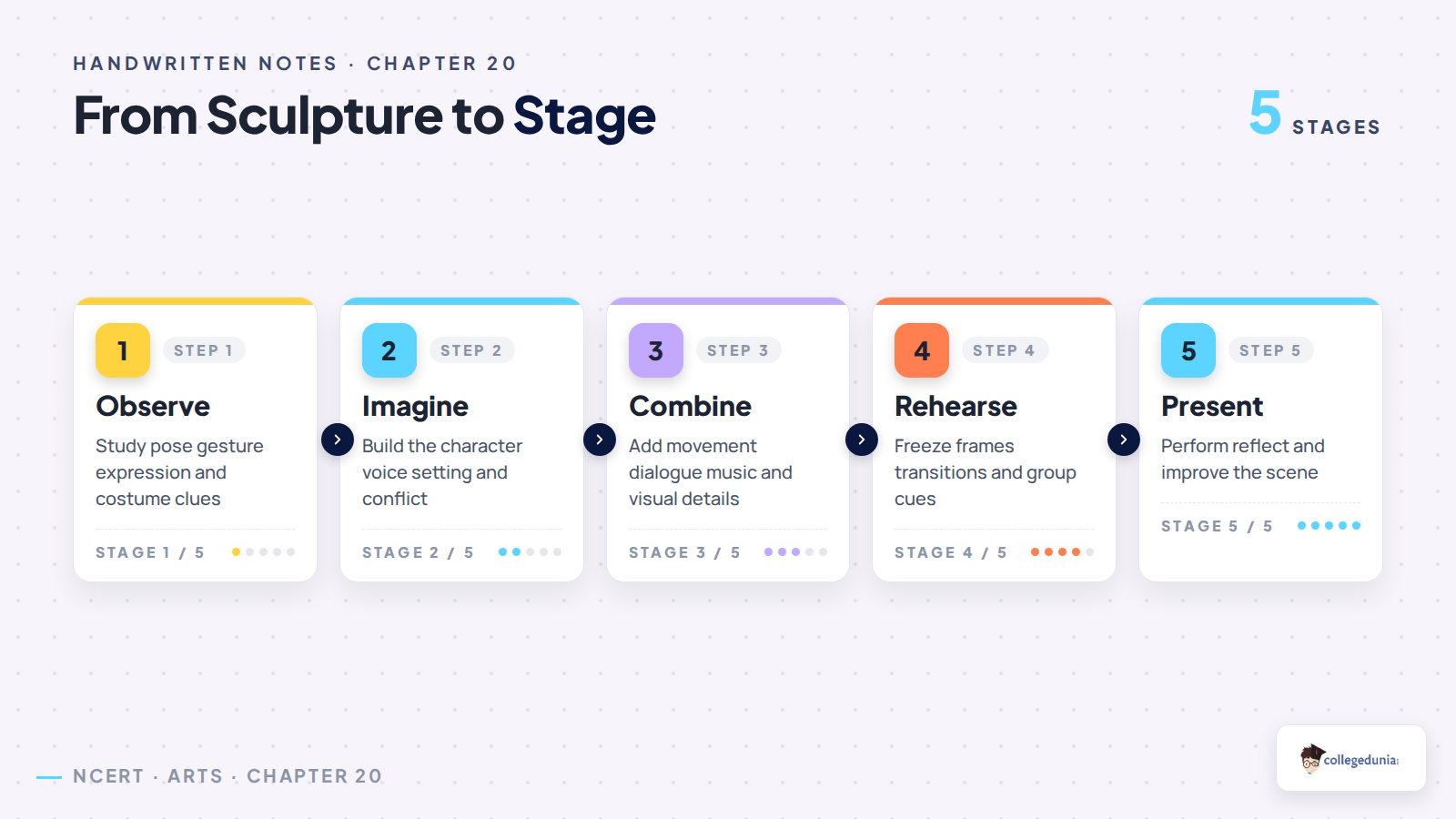
Chapter 20 brings together the visual arts, dance, music, theatre and storytelling. Students begin with a sculpture, study its pose and expression, then imagine the character as part of a living scene.
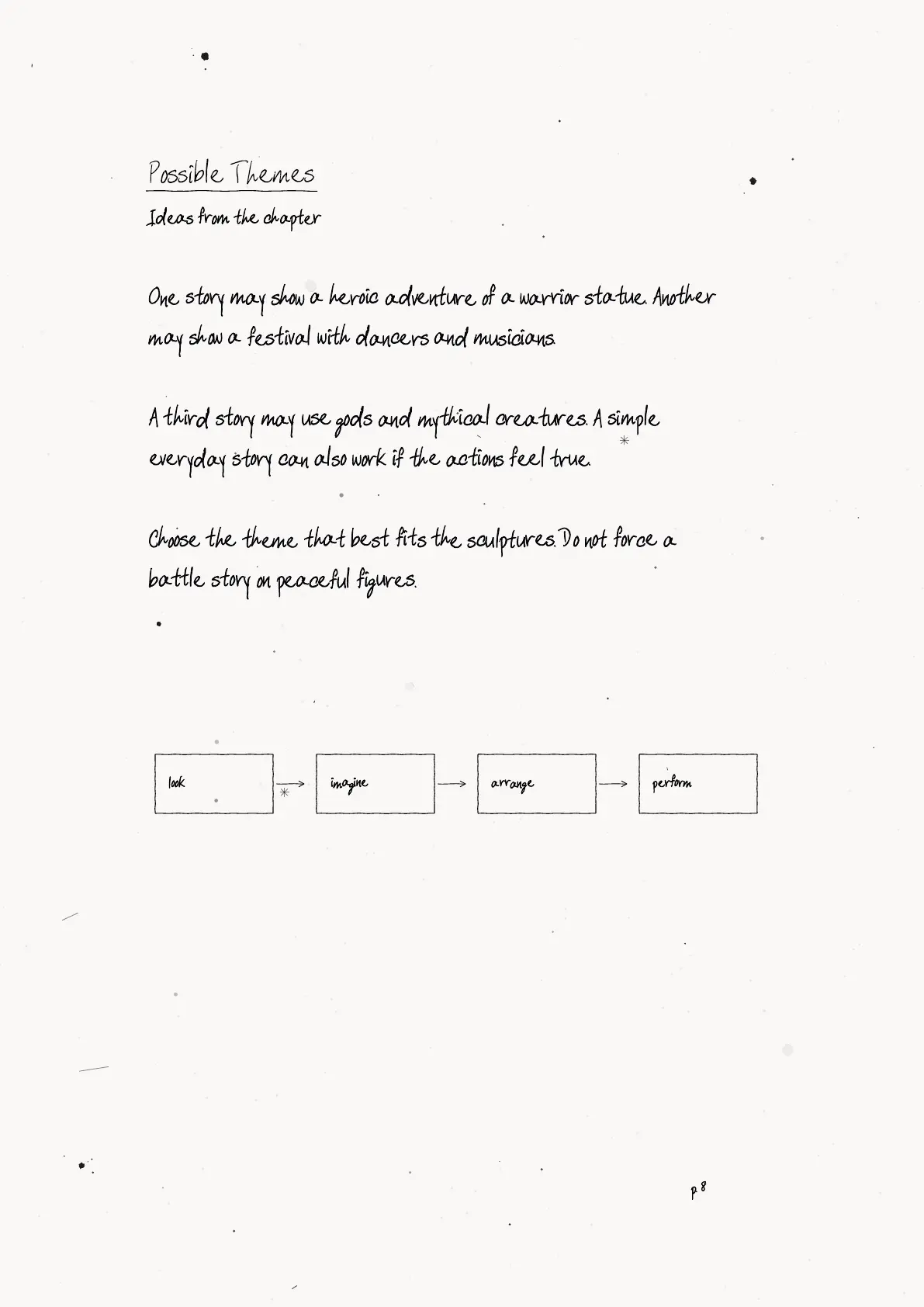
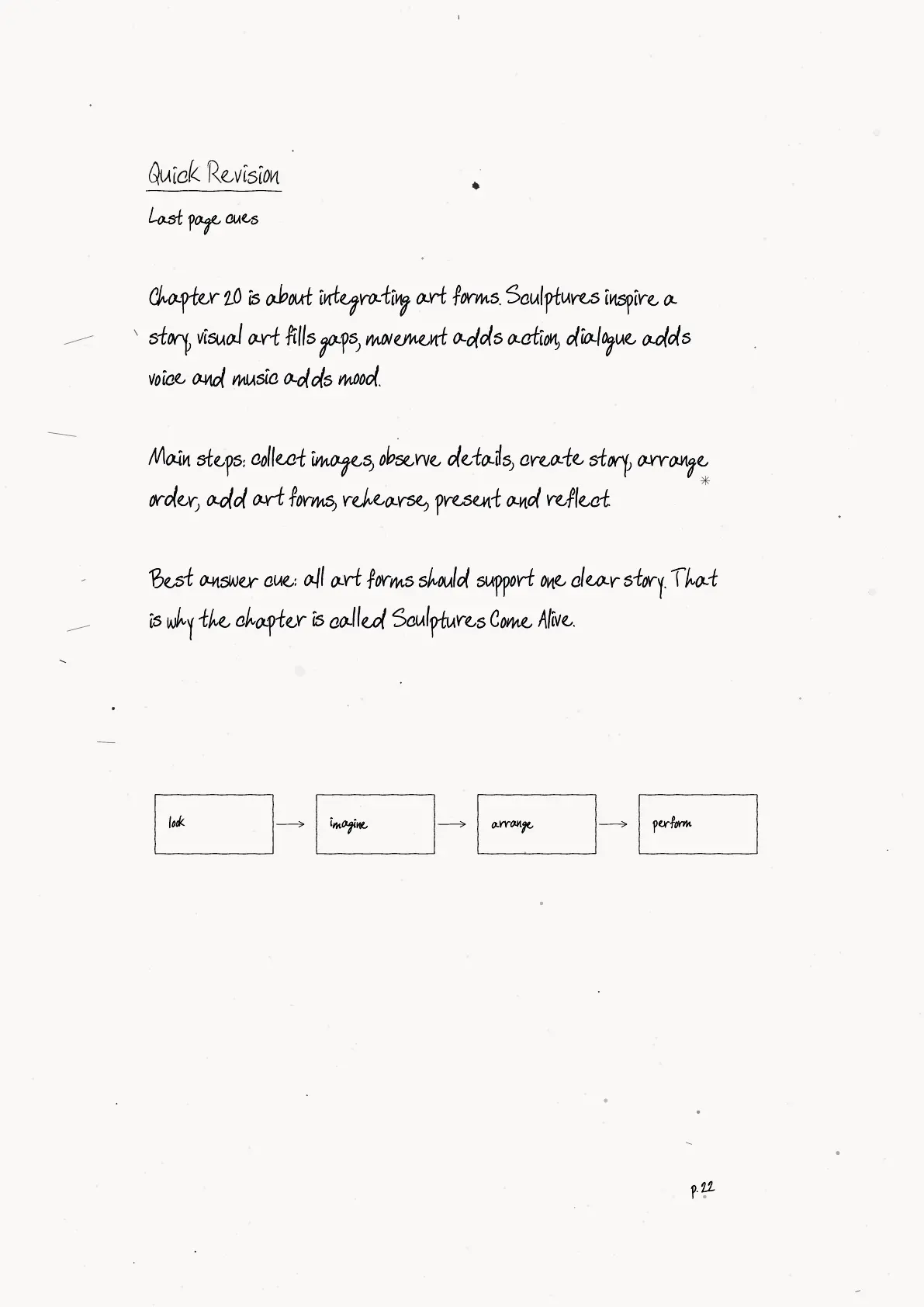
The key idea is simple: observe the sculpture, imagine the story, add art forms and present the scene. This chain helps students remember the chapter flow during school activities and revision.
| Stage | What Students Do | Revision Cue |
|---|---|---|
| Observe | Study pose, costume, gesture, expression and setting. | Look before imagining. |
| Create | Build a story with characters, setting, conflict and action. | Story gives purpose. |
| Perform | Use movement, dialogue, music, visual details and reflection. | All art forms support meaning. |
How a Sculpture Becomes a Story
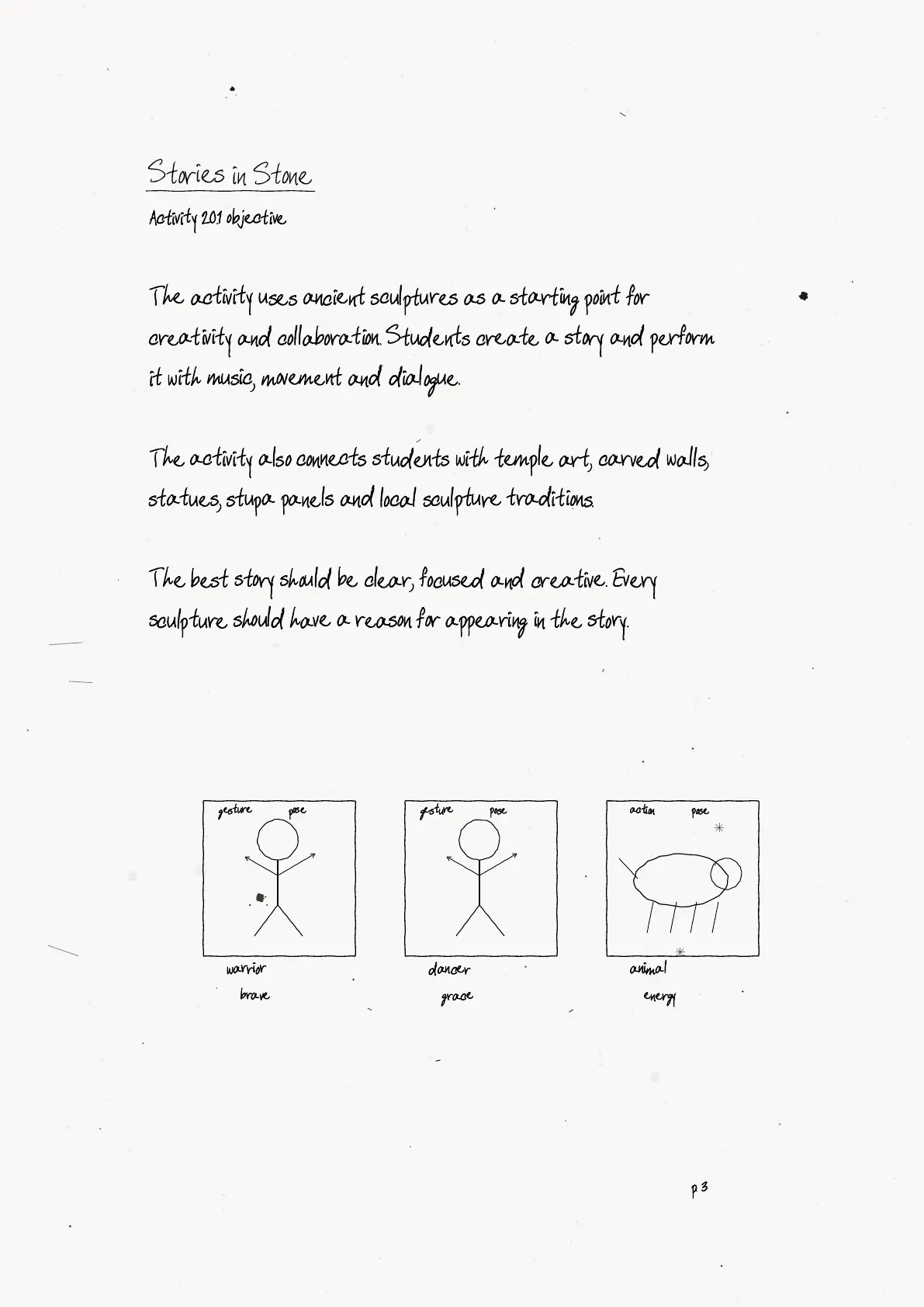
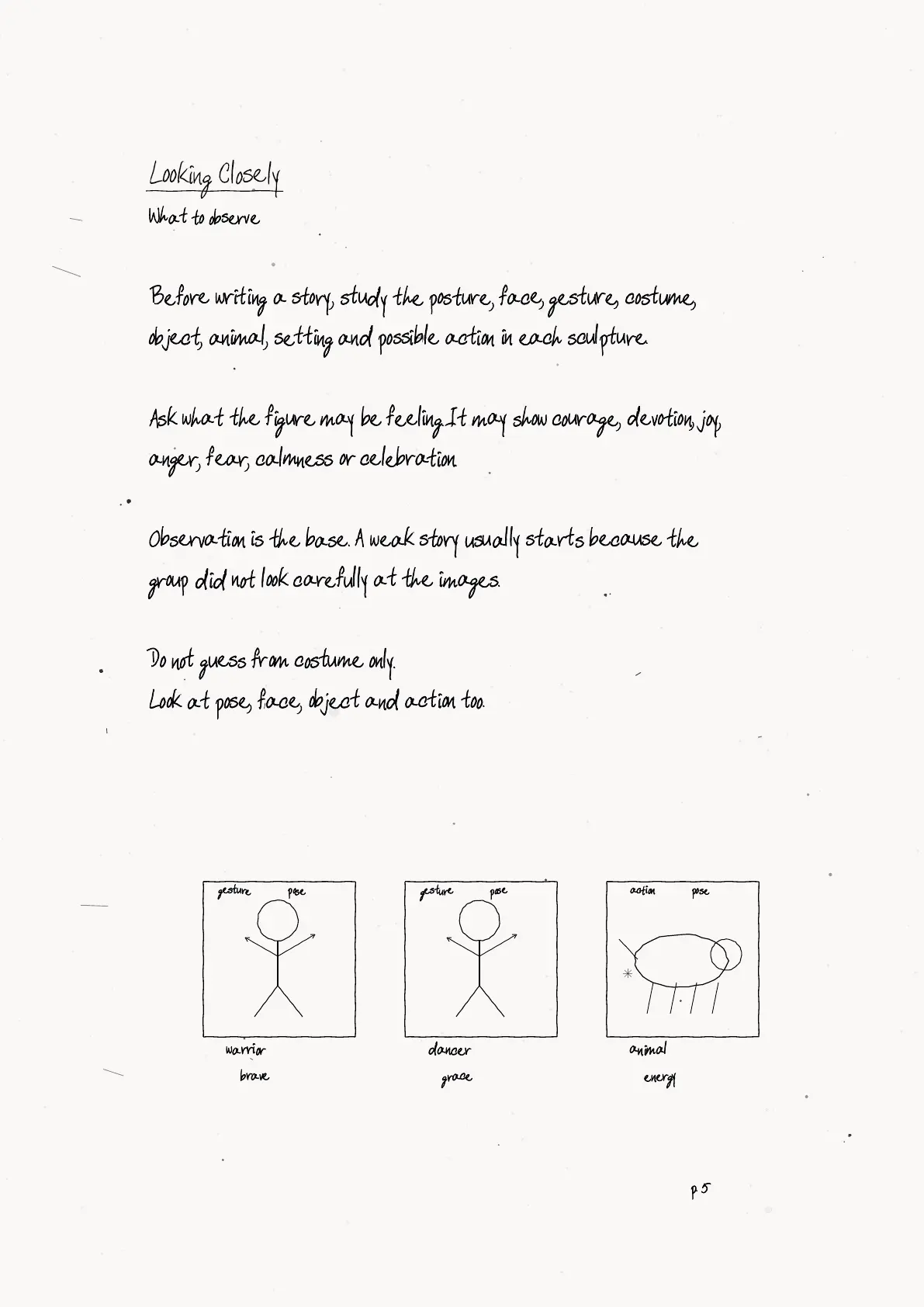
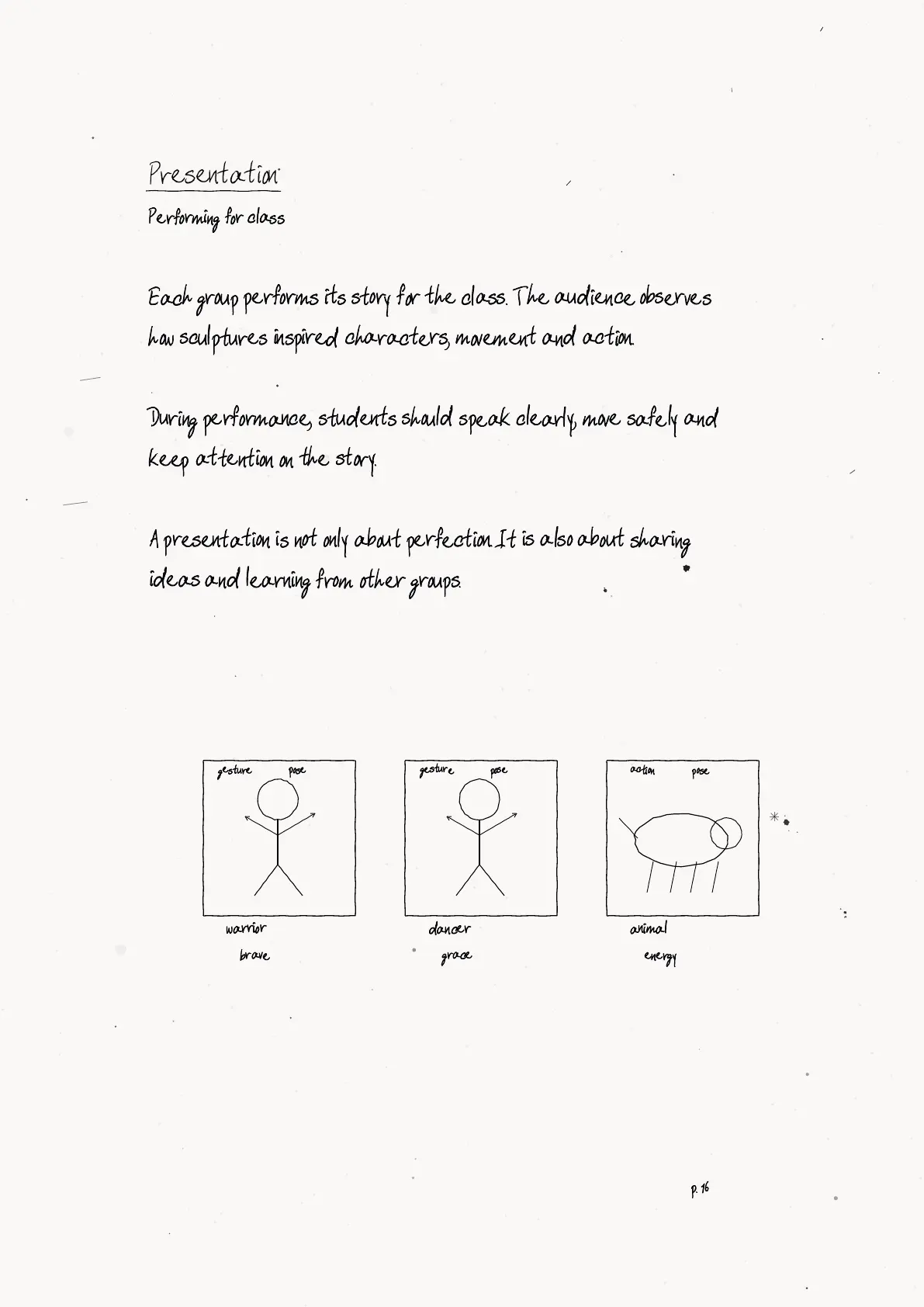
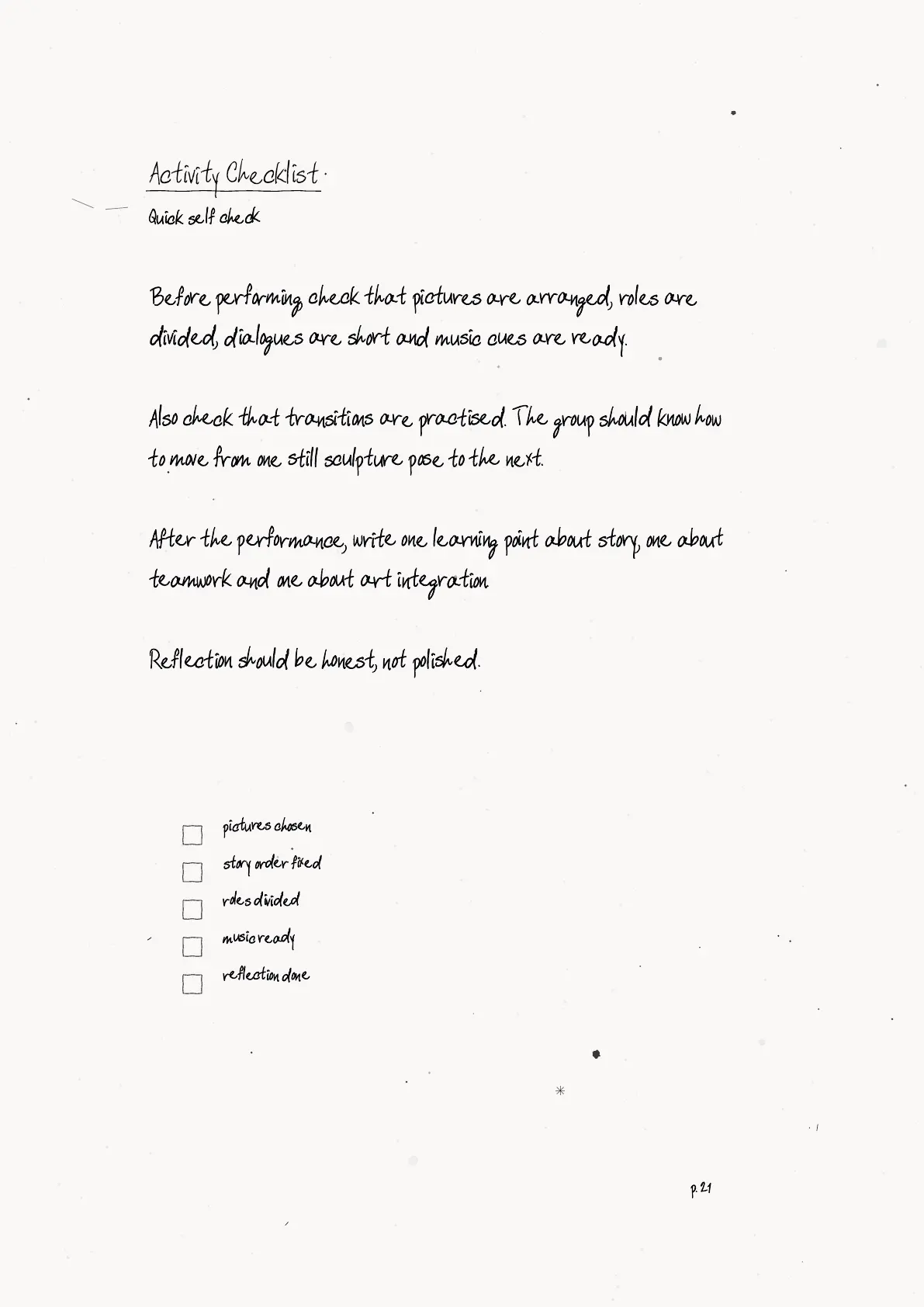
The chapter asks students to treat sculptures as clues. A hand position, facial expression, costume, object or animal can suggest a character, action or mood. Students can then ask who the figure is, where the scene is happening and what may happen next.
The handwritten notes convert this activity into short classroom steps, so students can move from an artwork to a group script without losing the NCERT sequence.
- Pose: tells whether the character is active, calm, alert or waiting.
- Gesture: shows relationship, emotion and direction of action.
- Object: may reveal work, identity, ritual, travel or conflict.
Movement Dialogue Music and Visual Art
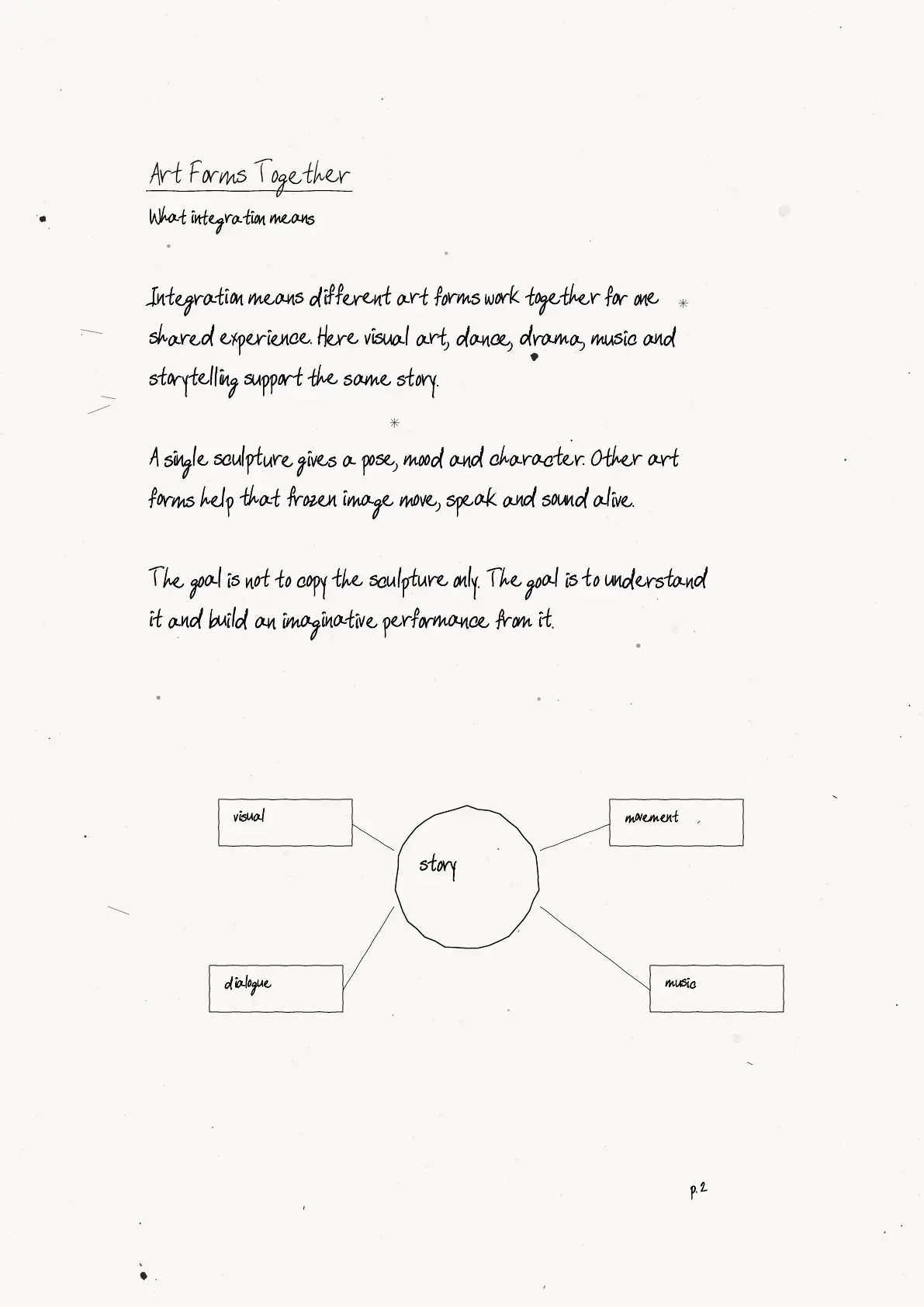
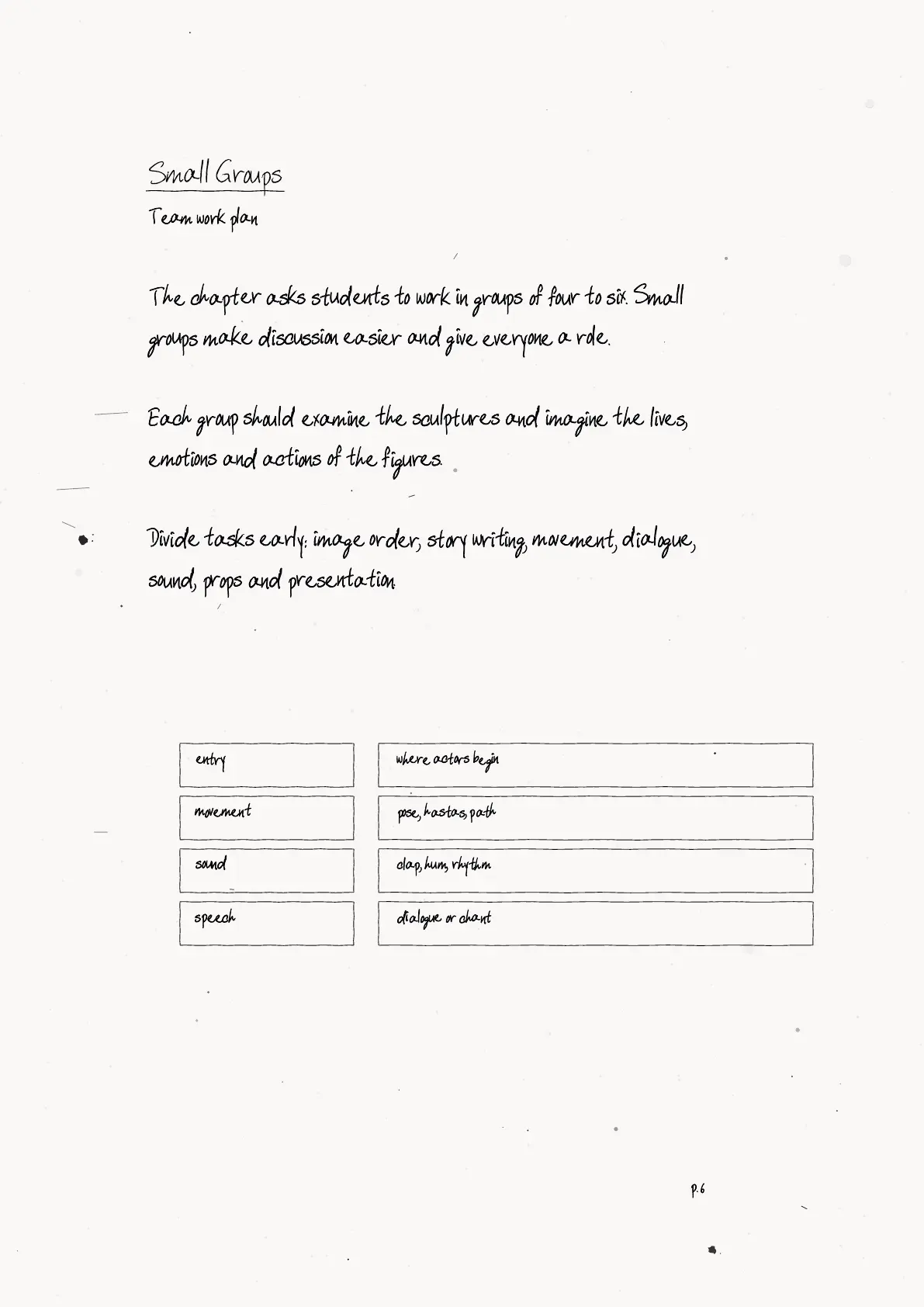
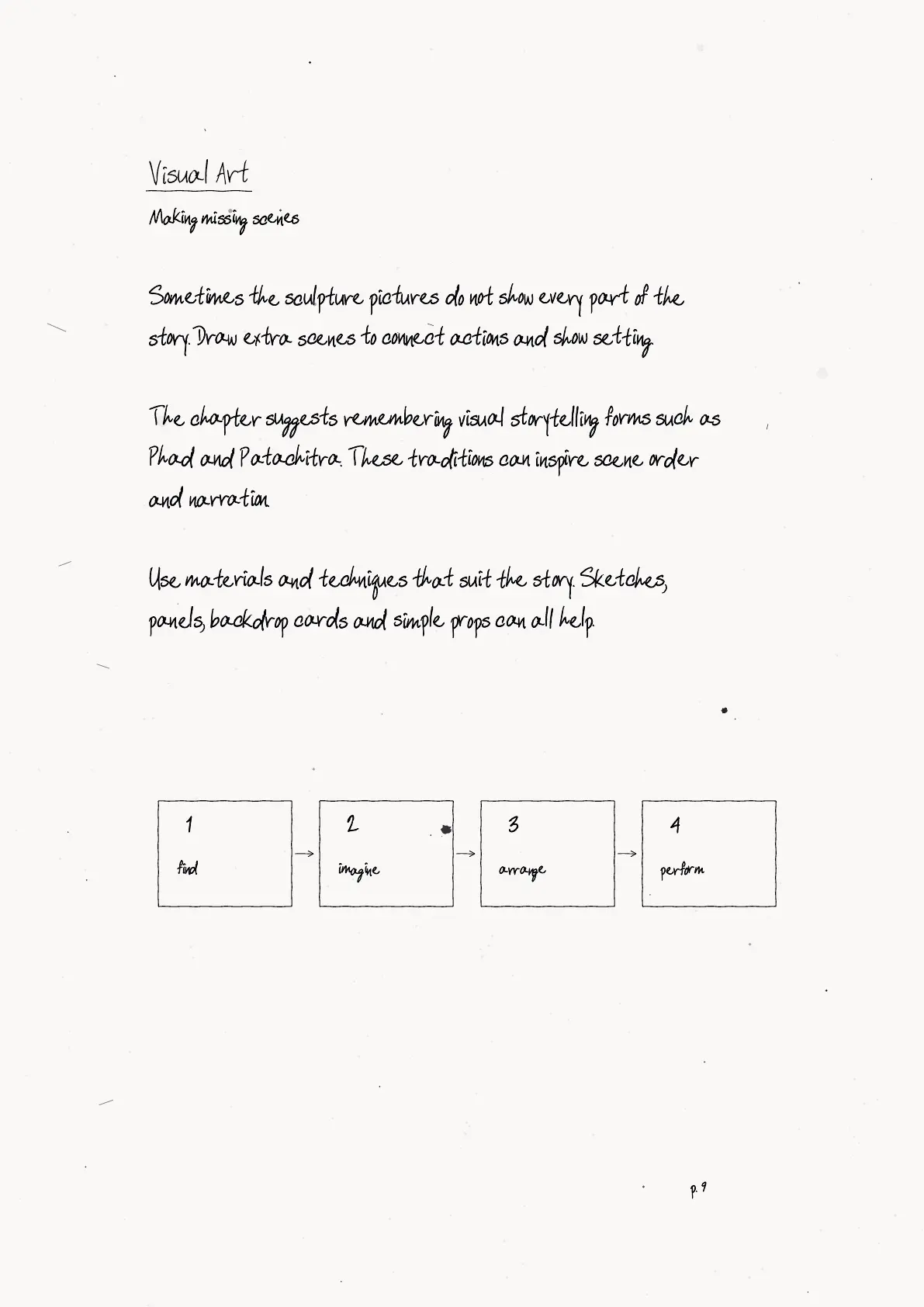
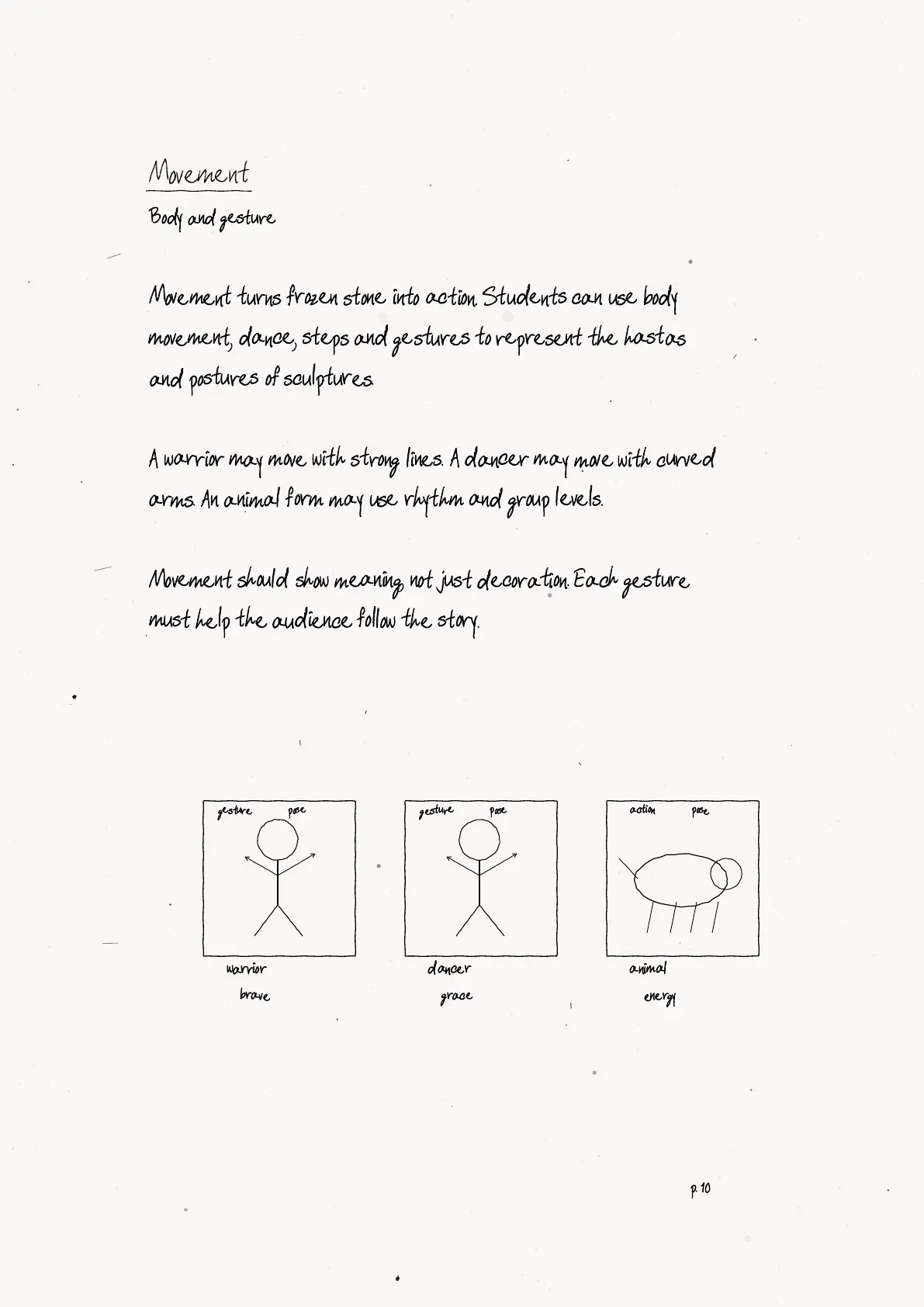
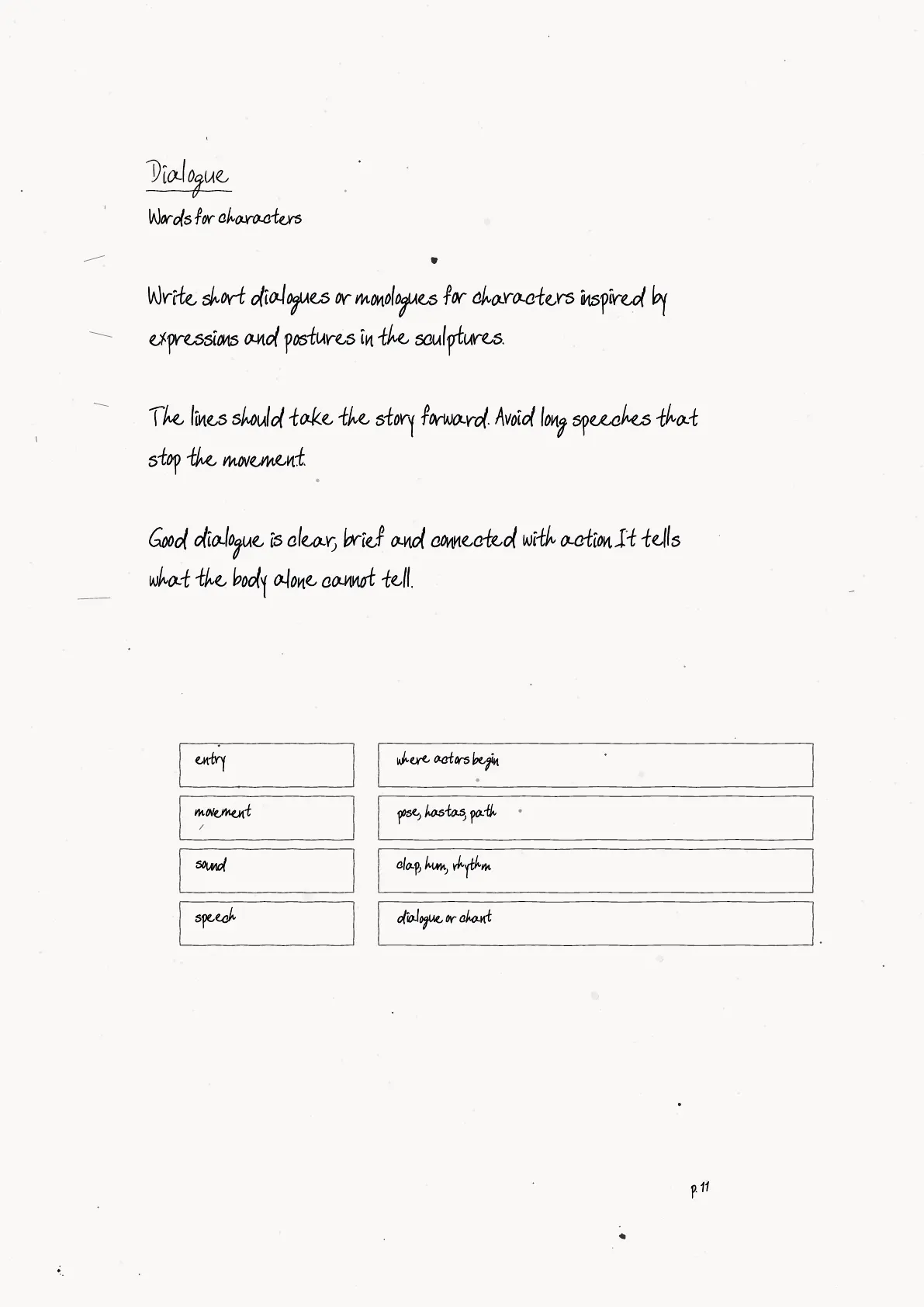
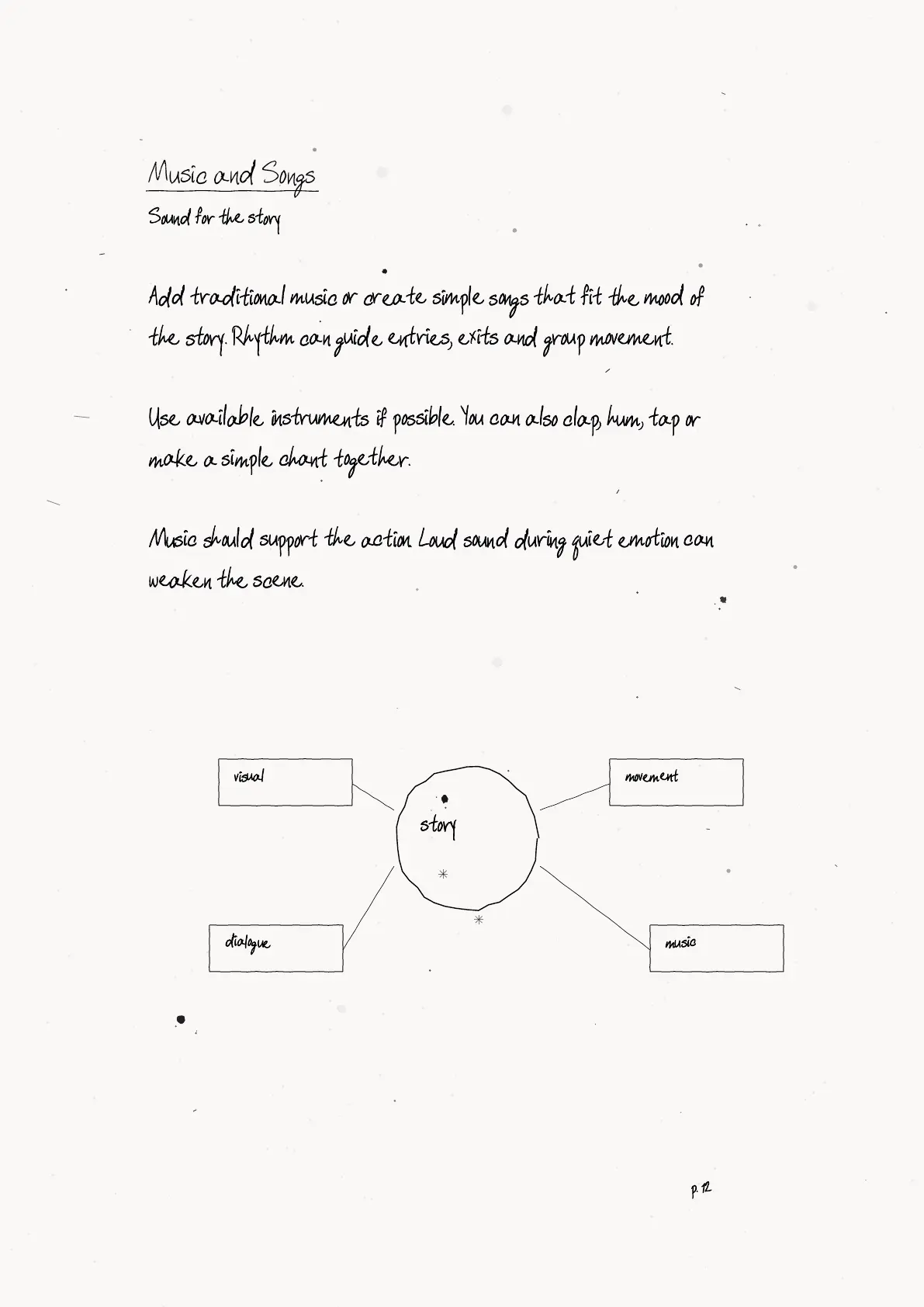
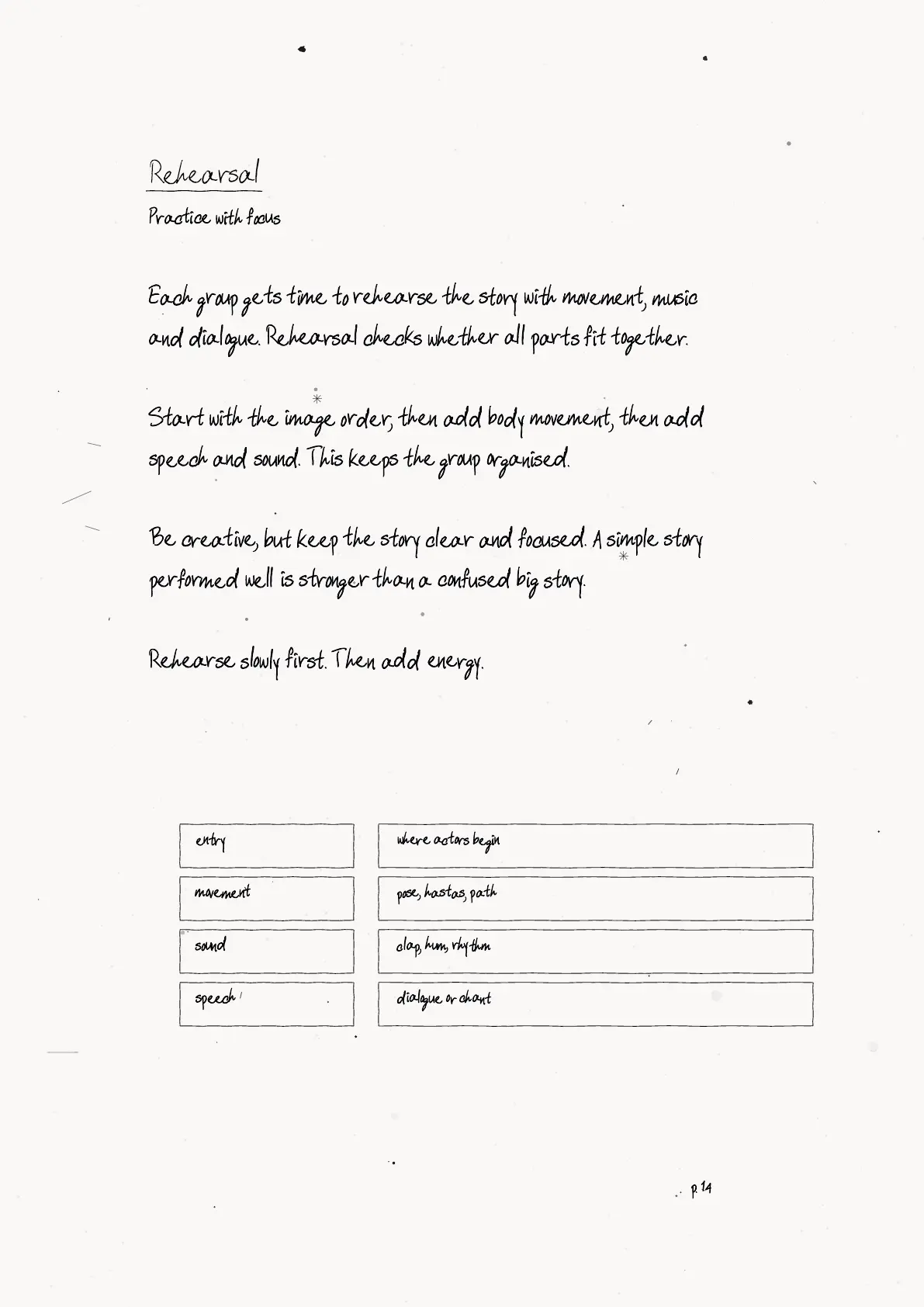
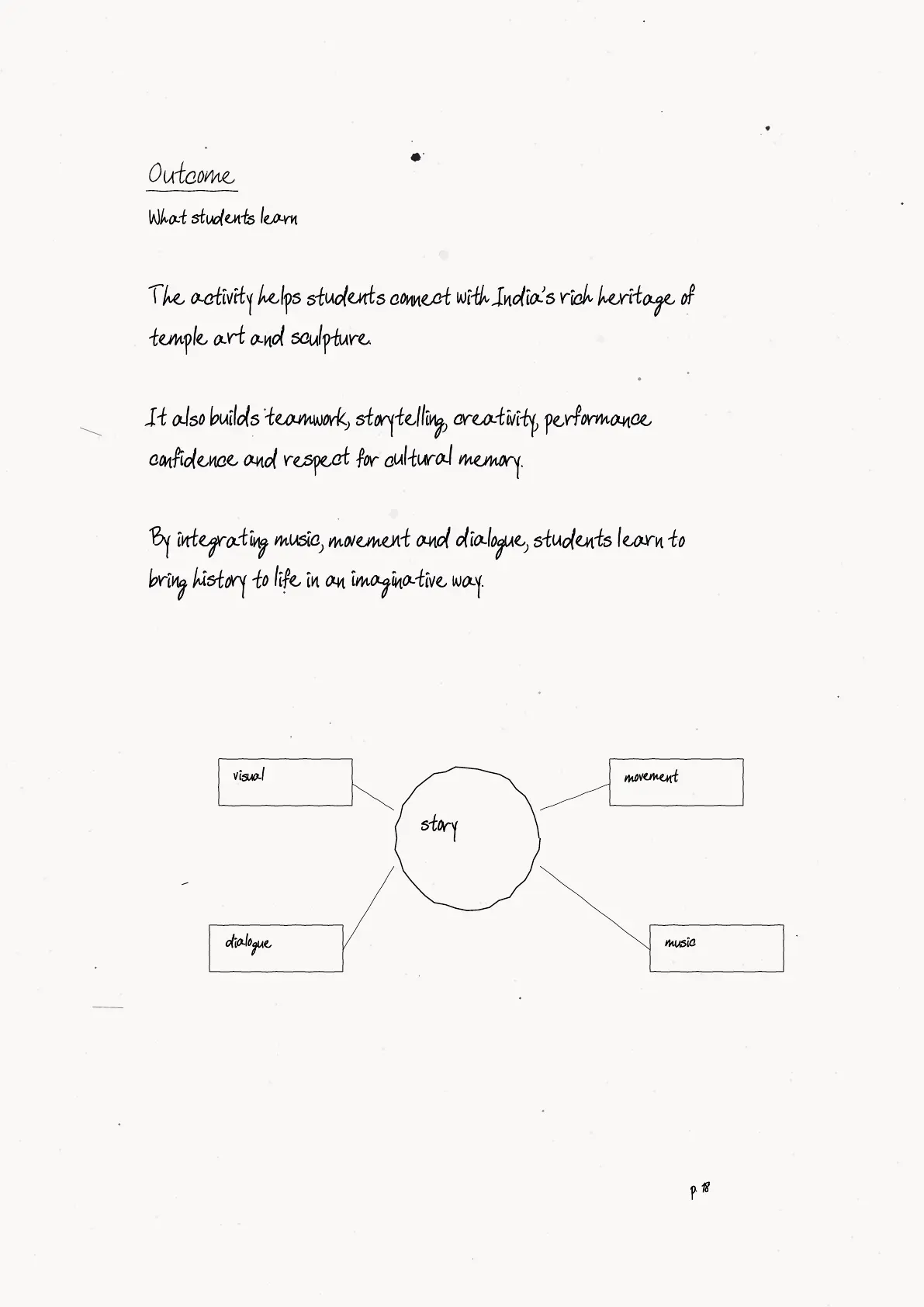
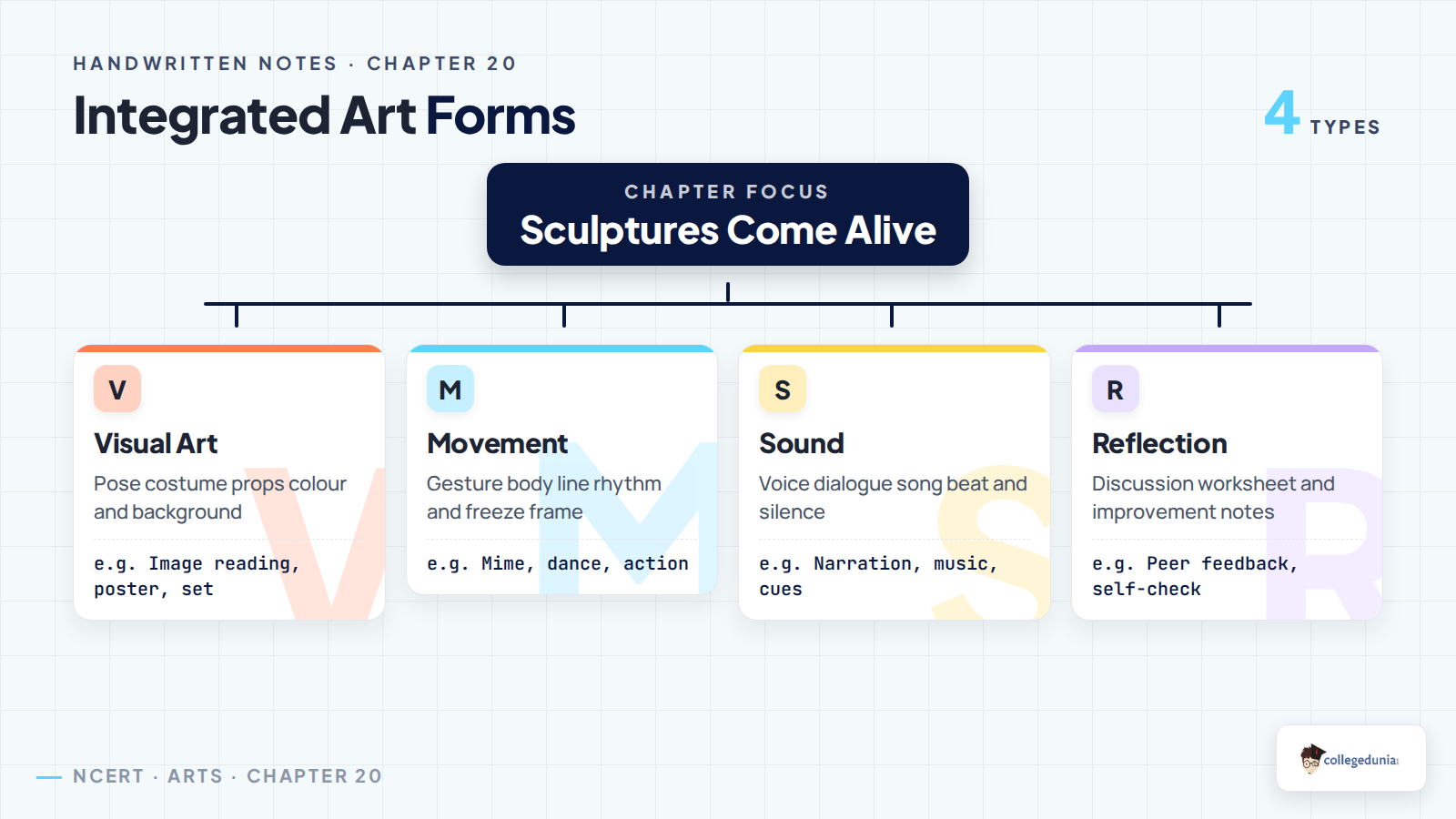
Once the story is ready, students add different art forms. Movement can show travel, work, greeting or conflict. Dialogue gives the character a voice. Music and rhythm can show mood, place or transition. Visual art supports the scene through props, colour and background.
Integration means that no art form works alone. Each part should help the class understand the same story. The notes use quick charts so students can plan the scene before rehearsal.
| Art Form | Role in the Scene |
|---|---|
| Movement | Shows action, emotion, freeze frames and transitions. |
| Dialogue | Makes the imagined character speak clearly and naturally. |
| Music | Builds mood, timing, rhythm and entry cues. |
| Visual Art | Adds costume, prop, backdrop, colour and poster planning. |
Rehearsal and Stage Presentation Checklist
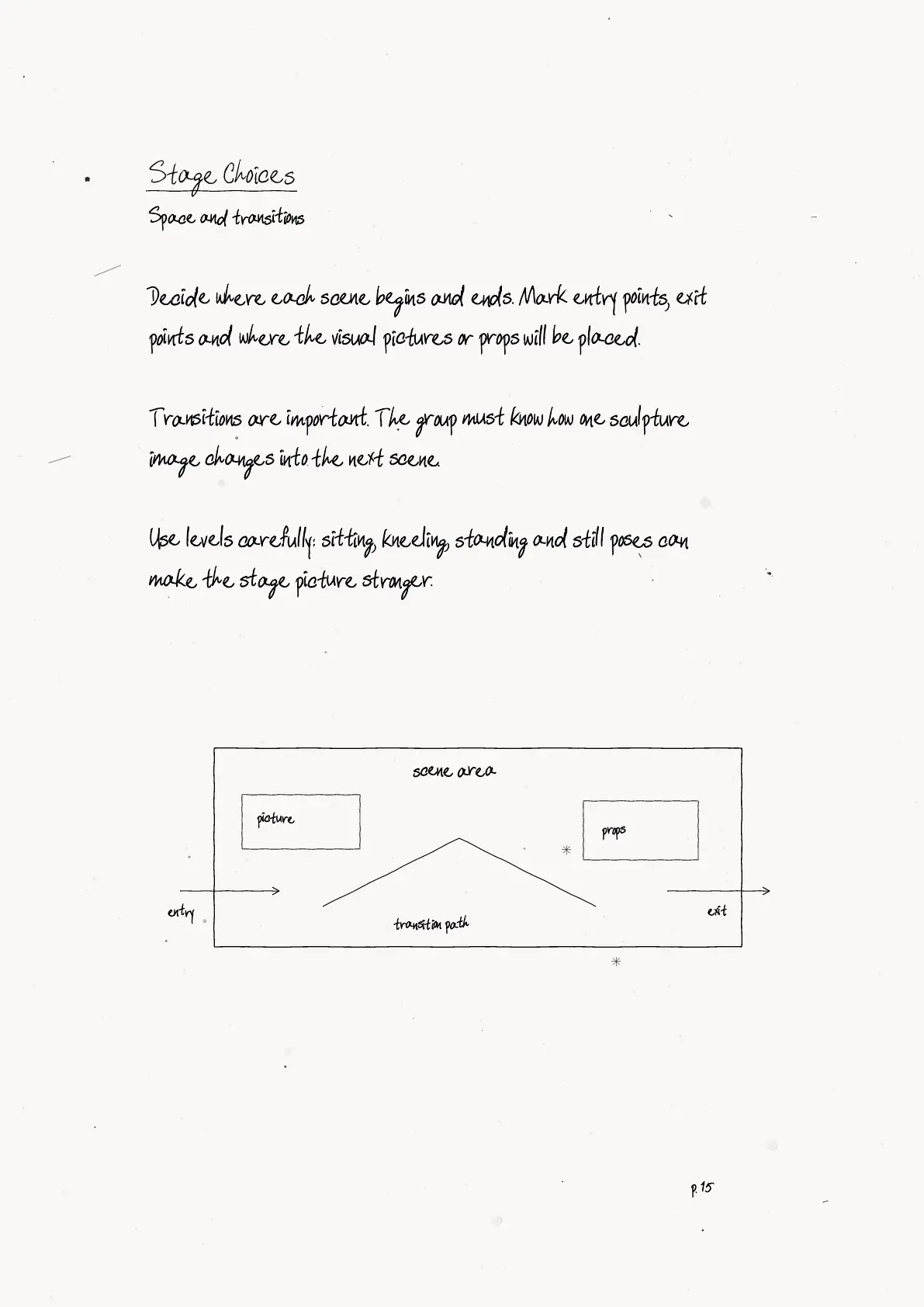
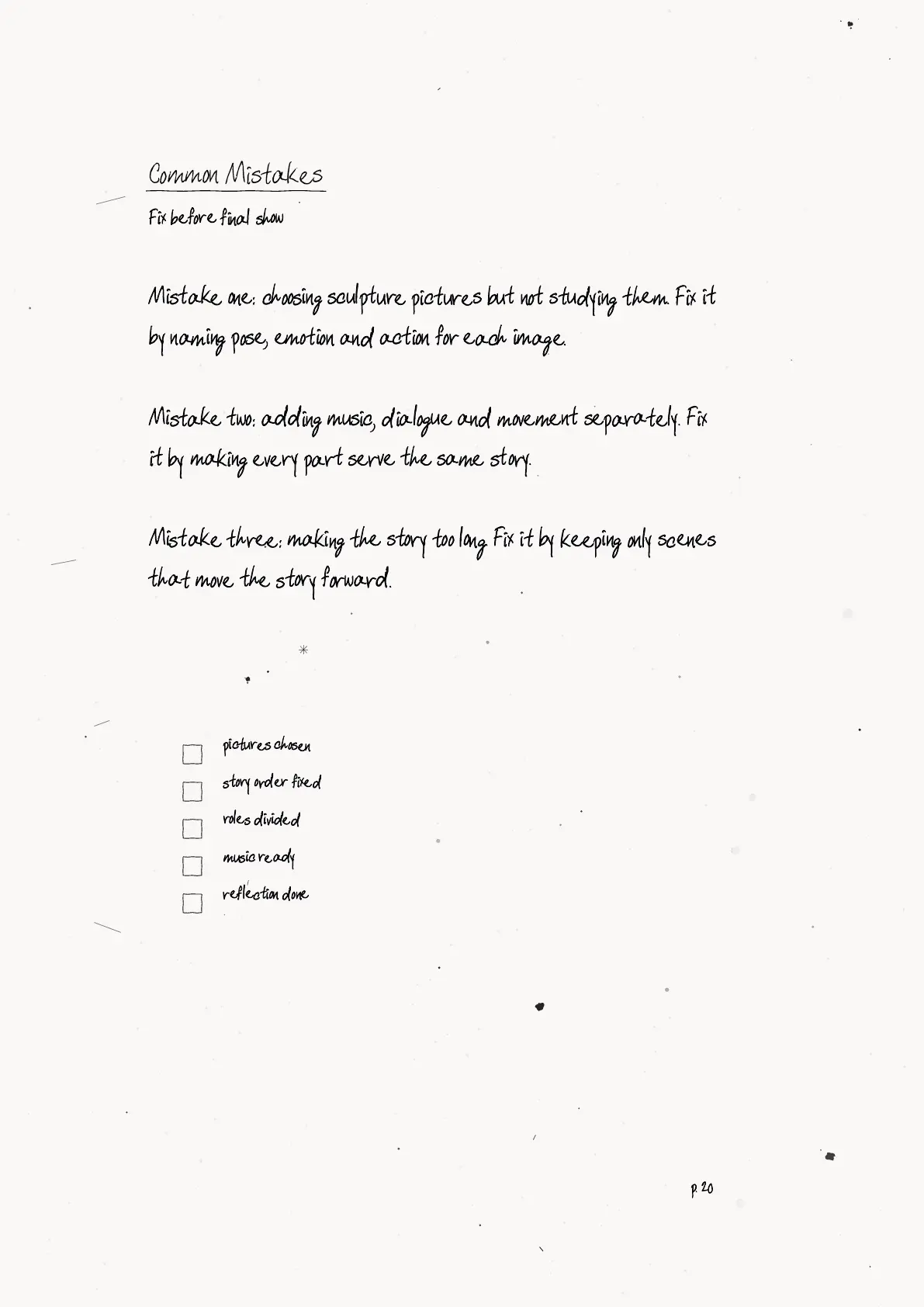
Rehearsal helps a group test timing, spacing, voice clarity and transitions. Students should decide where each person stands, when each line is spoken and how music or sound begins and ends.
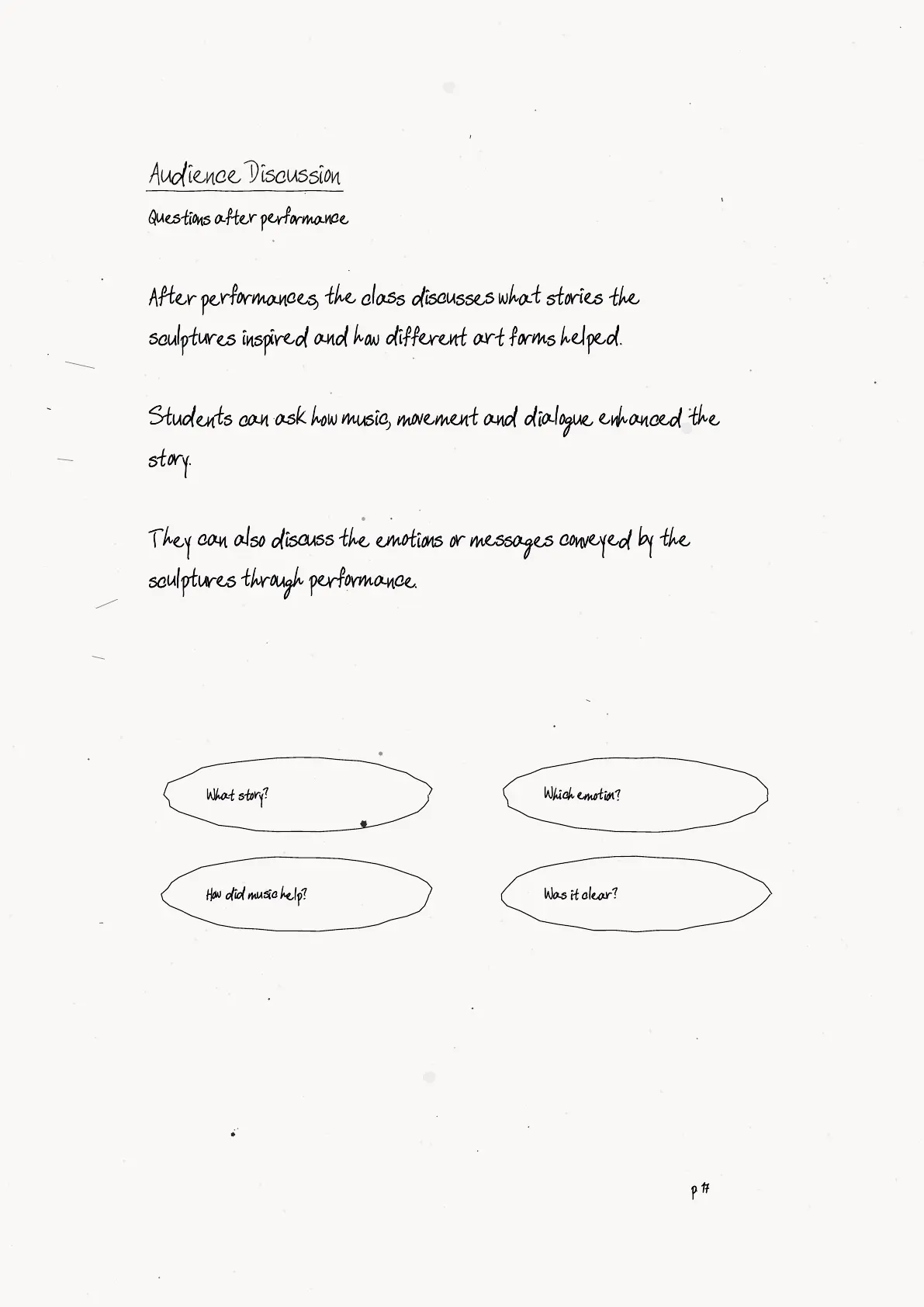
A good presentation also includes reflection. After the performance, the group can discuss what worked, what could improve and how the sculpture helped the final story.
- Keep the first freeze frame close to the original sculpture pose.
- Use short dialogue that fits the character and scene.
- Let sound or music support the action instead of covering the voice.
- End with one clear image, line or movement that completes the story.
Art Integration Video for Sculptures Come Alive
The video below can help students think about why people look carefully at art before interpreting it. Use it as a warm-up before revising the sculpture observation and story-making parts of the chapter.
Source: Khan Academy on YouTube
Related NCERT Class 7 Arts (Kriti) Resources
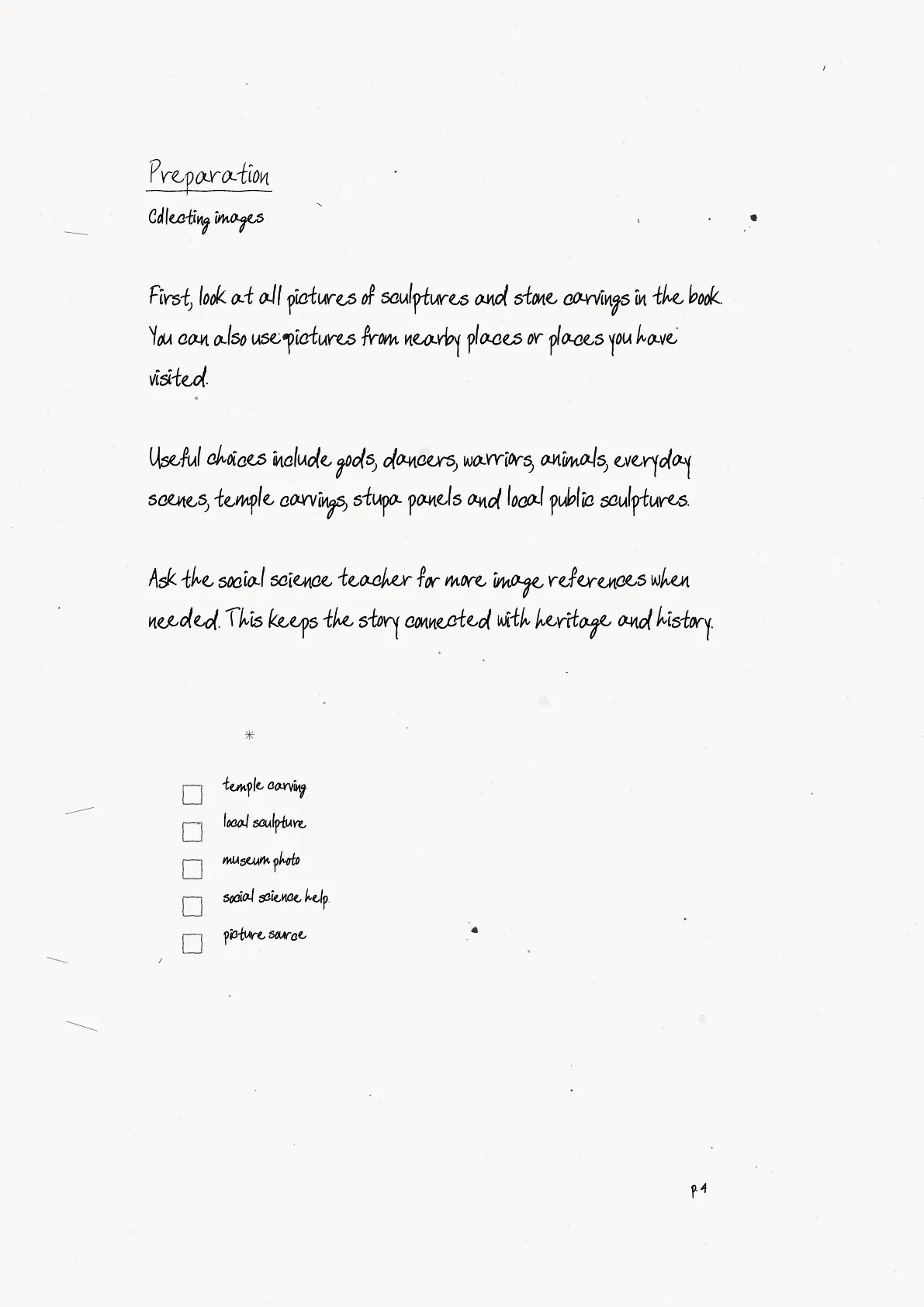
Use these related resources when you want the official book chapter or nearby handwritten notes from the same Arts (Kriti) visual arts and performance unit.
| Resource | Link |
|---|---|
| Visual Arts Chapter | Class 7 Arts Chapter 16 Handwritten Notes |
| Performance Link | Class 7 Arts Chapter 14 Handwritten Notes |
| Previous Chapter | Class 7 Arts Chapter 19 Handwritten Notes |
All Chapters for Class 7 Arts (Kriti) Handwritten Notes
| Chapter | Handwritten Notes |
|---|---|
| Chapter 14 Natya | Download Handwritten Notes |
| Chapter 15 Objects in Icons and Symbols | Download Handwritten Notes |
| Chapter 16 Nature's Palette | Download Handwritten Notes |
| Chapter 17 How You Feel | Download Handwritten Notes |
| Chapter 18 Textiles and Traditions | Download Handwritten Notes |
| Chapter 19 The Art of Calligraphy | Download Handwritten Notes |
| Chapter 20 Integration of All Art Forms: Sculptures Come Alive | Current Chapter |
FAQs on NCERT Class 7 Arts Chapter 20 Handwritten Notes
Ques. What is covered in Class 7 Arts Chapter 20 Sculptures Come Alive?
Ans. The chapter covers sculpture observation, story creation, movement, dialogue, music, visual planning, rehearsal, presentation and reflection.
Ques. Why are different art forms integrated in this chapter?
Ans. Different art forms help students turn a still sculpture into a complete performance with action, sound, image and meaning.
Ques. How should students begin the activity?
Ans. Students should first observe the sculpture carefully, noting pose, expression, costume, object, setting and possible action clues.
Ques. What should students check before presenting the scene?
Ans. They should check voice clarity, group positions, transitions, music cues, props, beginning image and final reflection points.



Comments