



Class 11 Applied Mathematics Chapter 6 Permutations and Combinations notes help students revise factorials, fundamental counting principle, permutations, combinations, circular arrangements and repeated-letter cases for the 2026-27 CBSE syllabus. Use the PDF for NCERT exercise revision, class tests and Applied Mathematics board-style practice.
- Best for revision: order-based arrangements, selection-based counting and mixed restrictions are explained in one place.
- Exam focused: formulas are paired with quick decision rules so students choose between nPr, nCr and multiplication rule correctly.
- Aligned to 2026-27: follows the Class 11 Applied Mathematics Combinatorics unit for Permutations and Combinations.
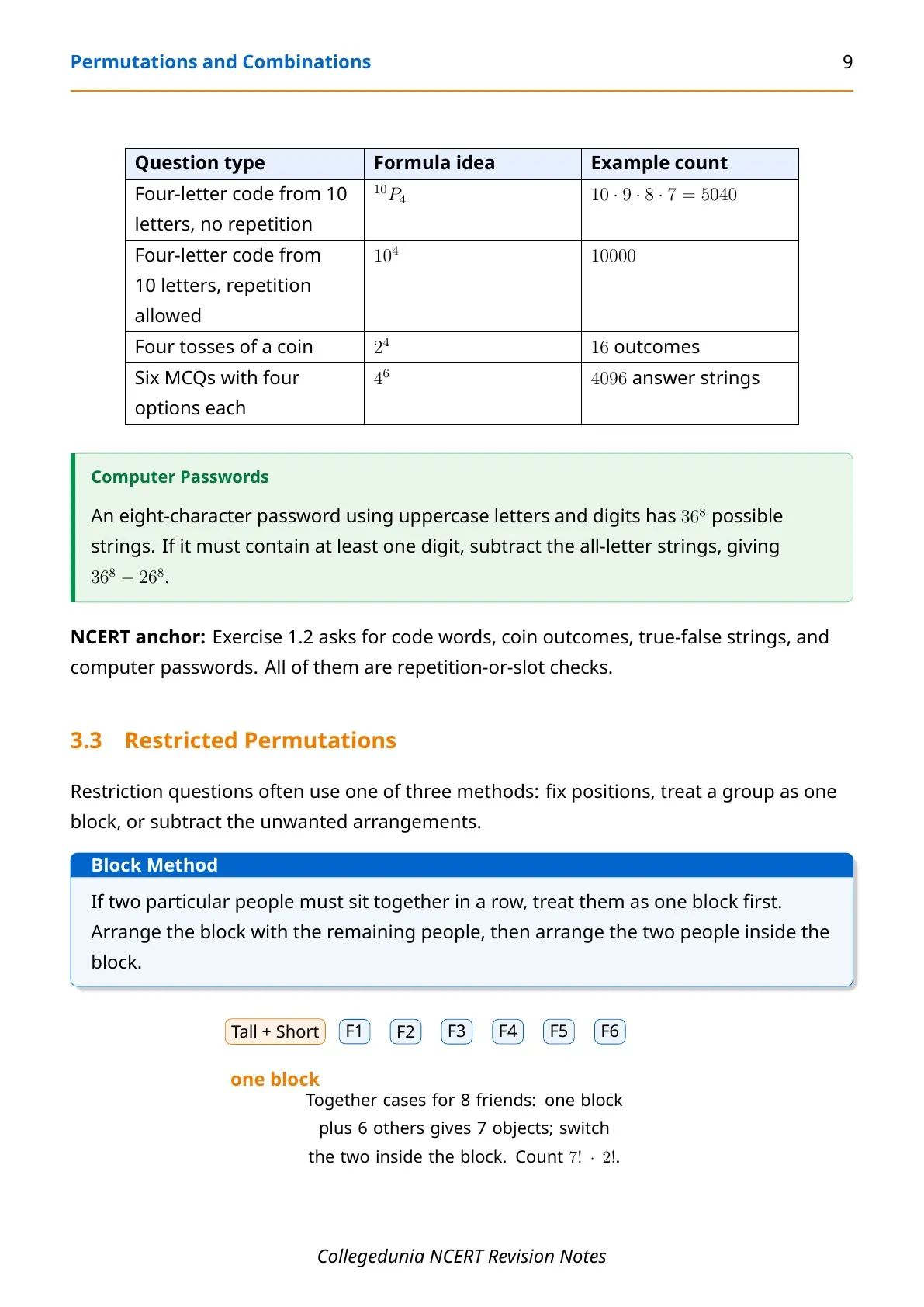
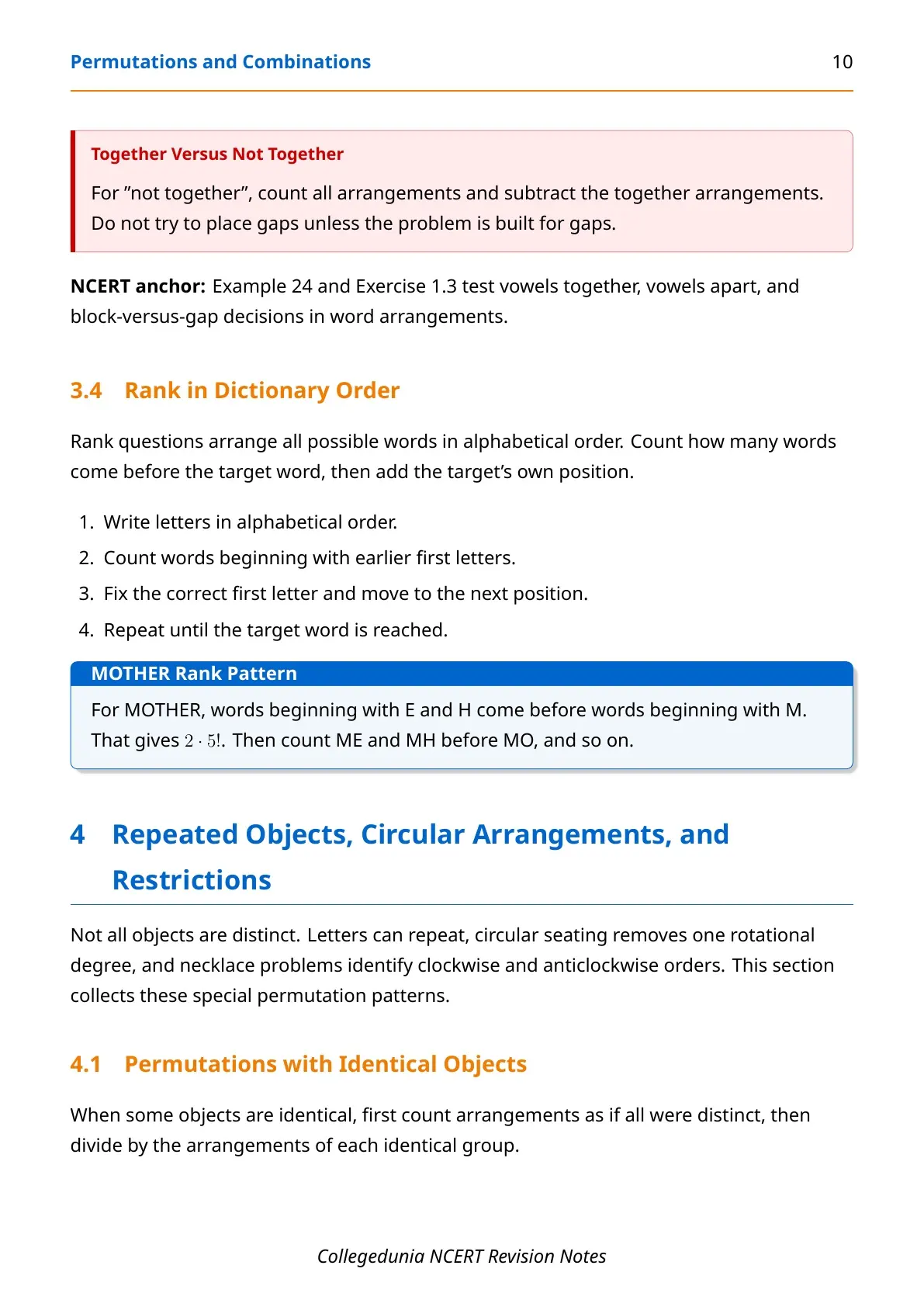
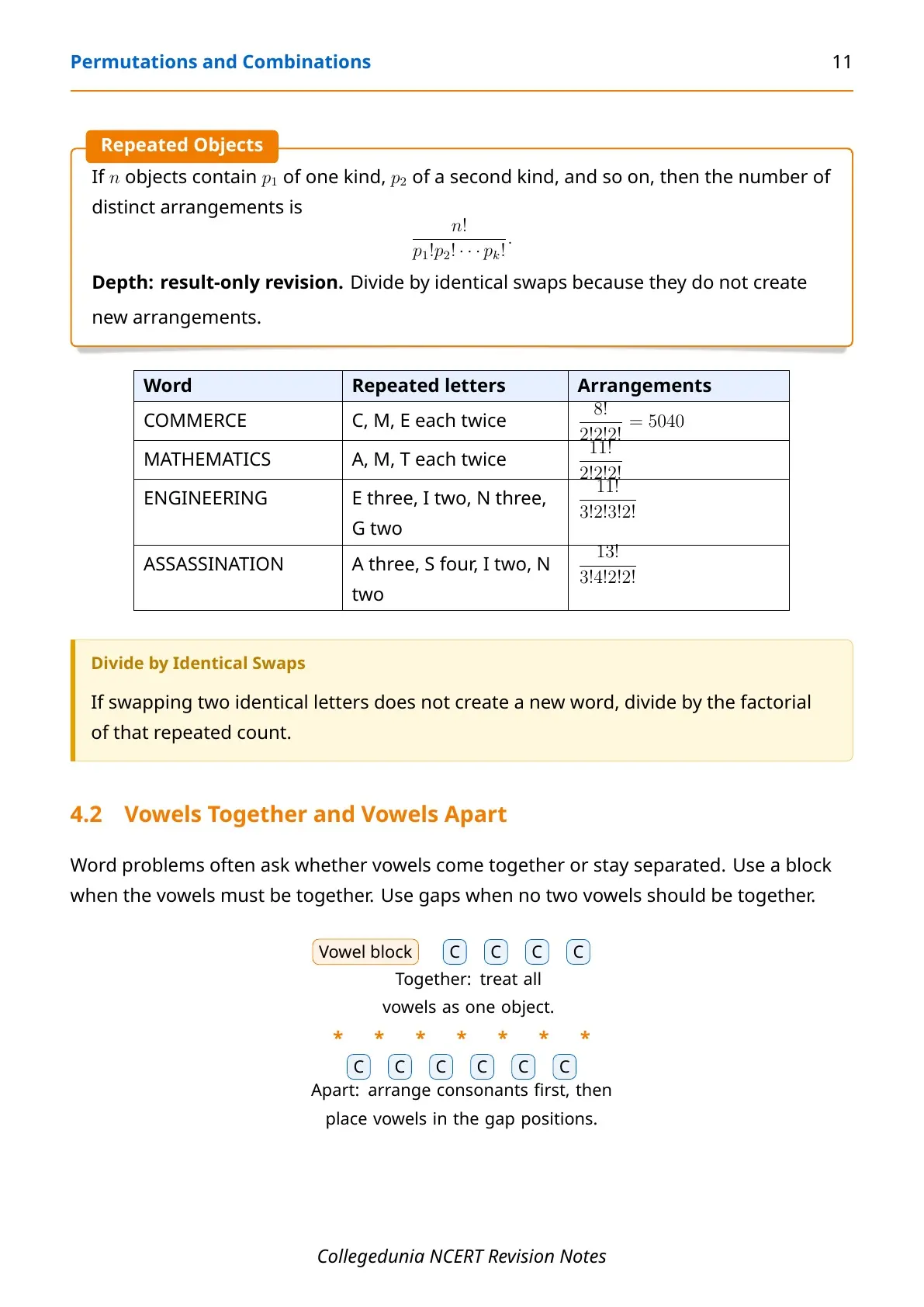
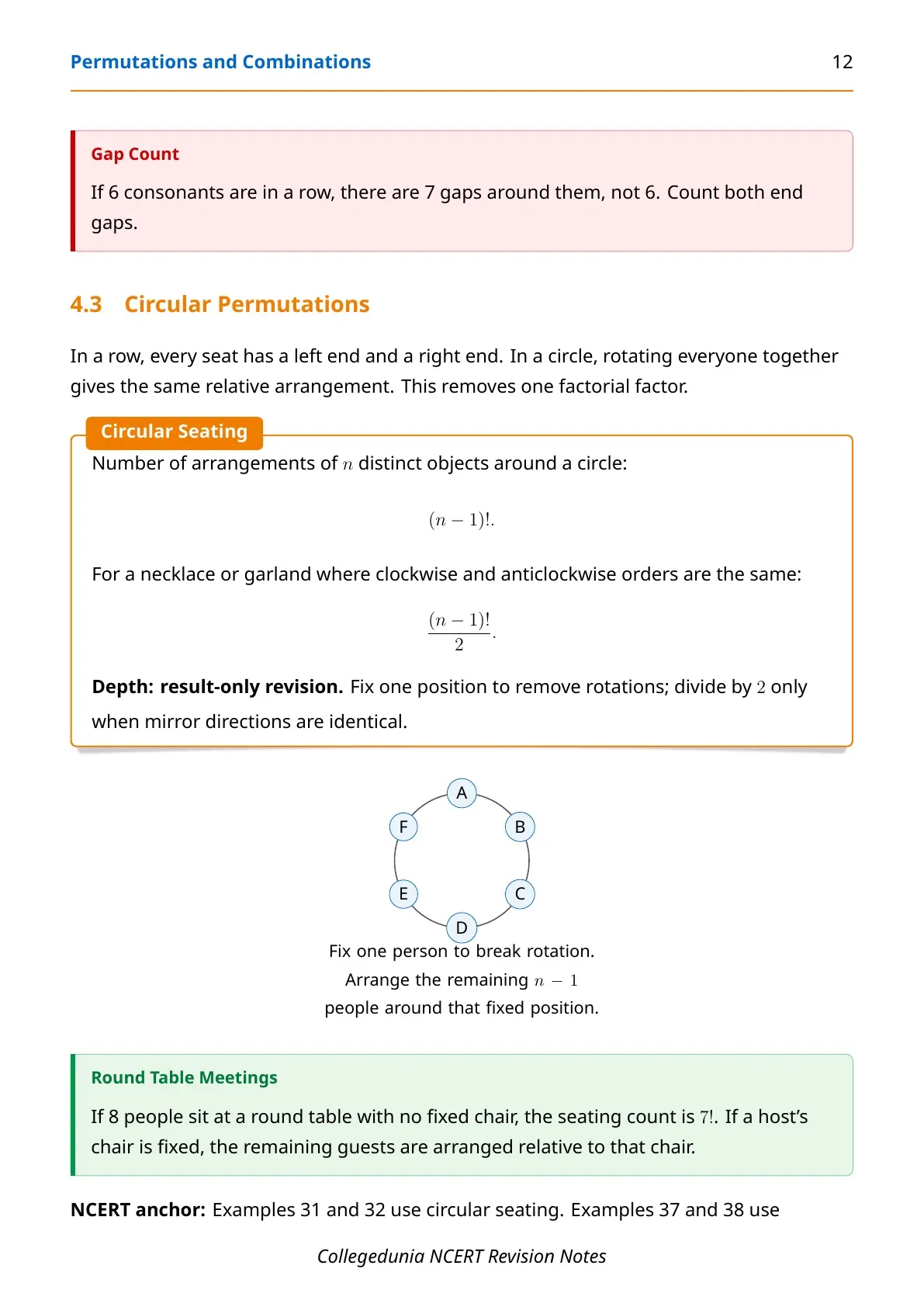
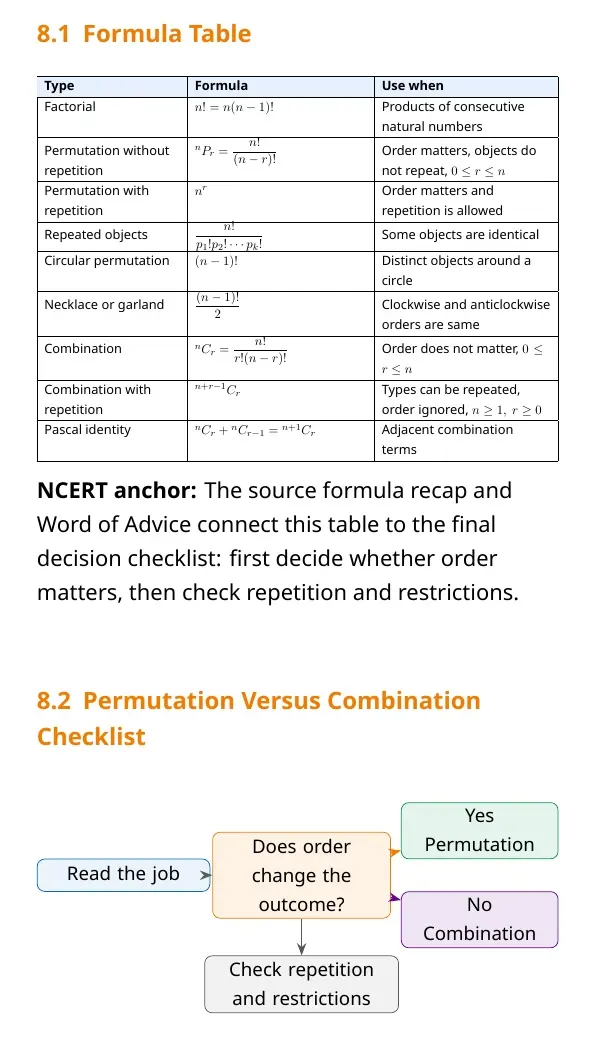
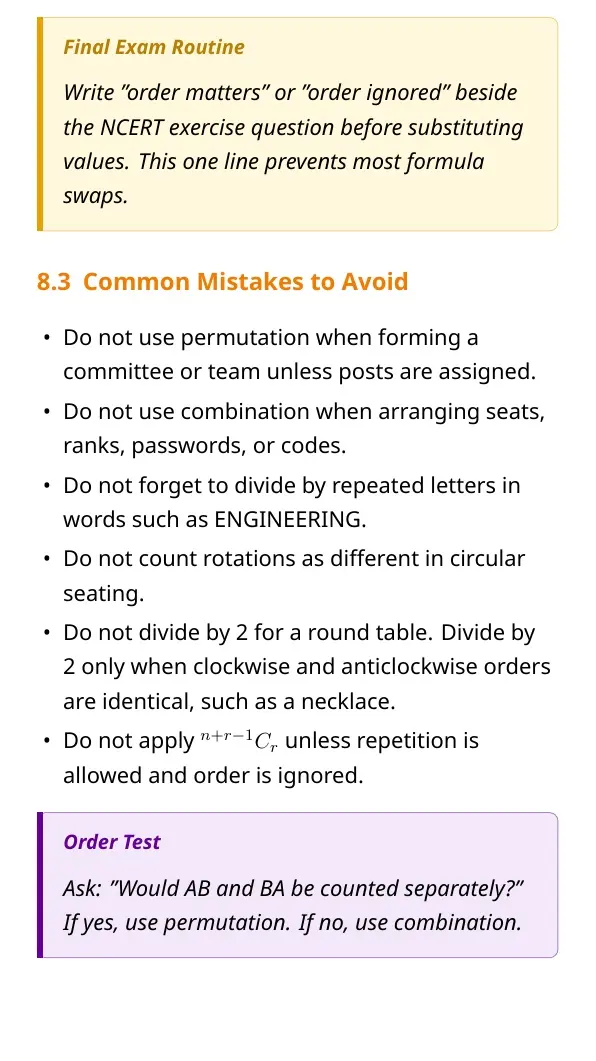
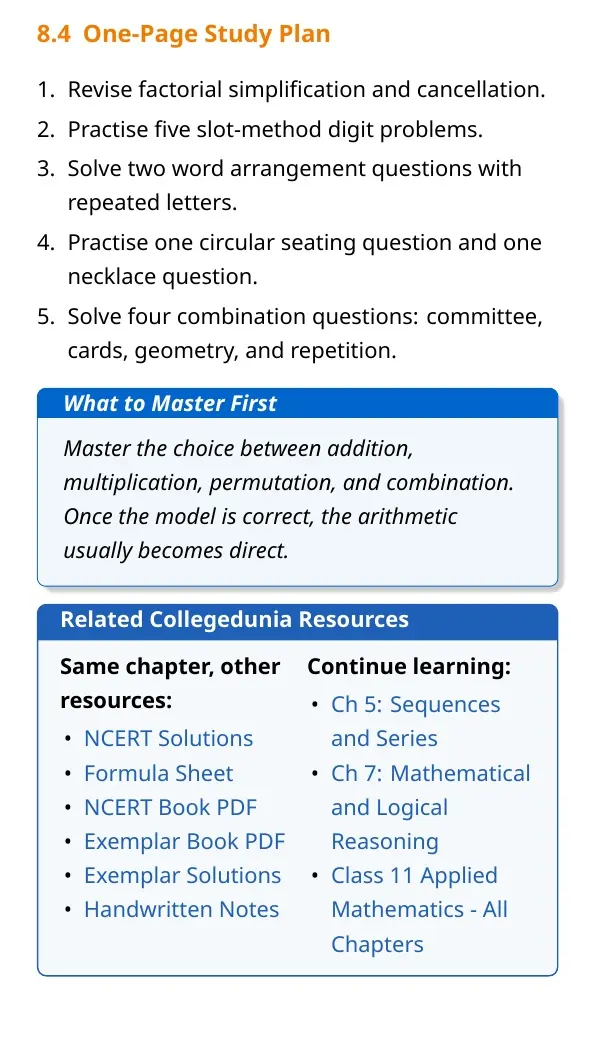
Each formula and example in these Permutations and Combinations notes is written for the 2026-27 NCERT chapter and checked against the Applied Mathematics exam pattern.
Student Feedback: In a Collegedunia poll of more than 10,000 students before the 2026 boards, most students said this chapter became easier after they first asked whether order matters. The most common doubt was when to divide by repeated arrangements.
|
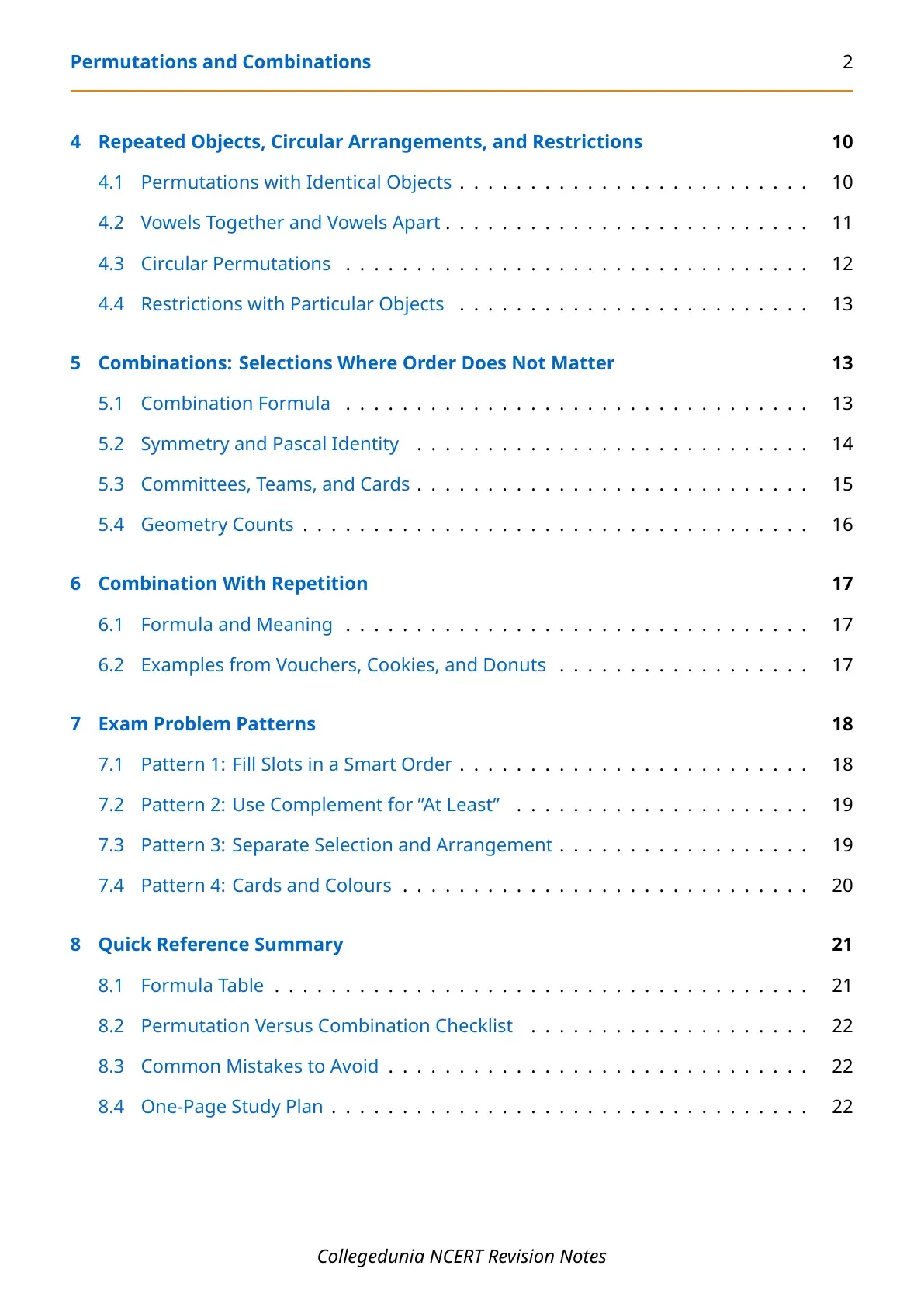
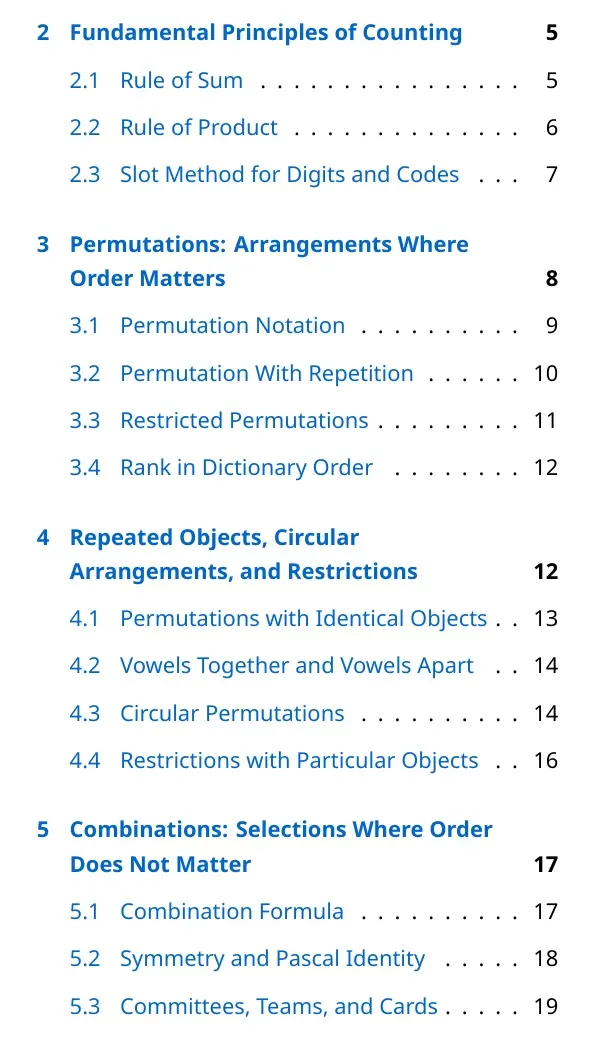
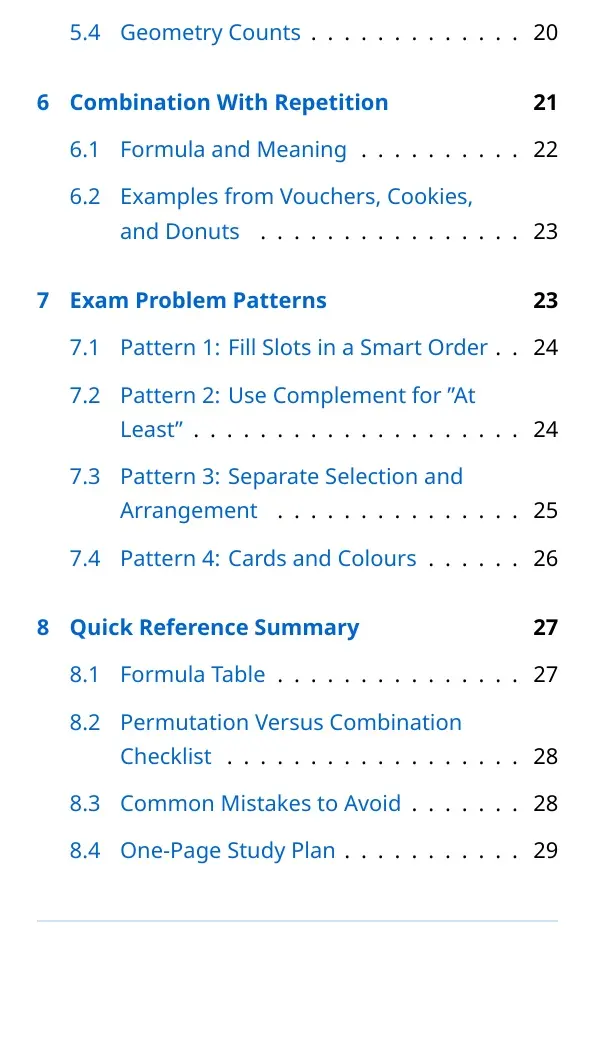
Table of Contents |
Permutations and Combinations Class 11 Counting Rules
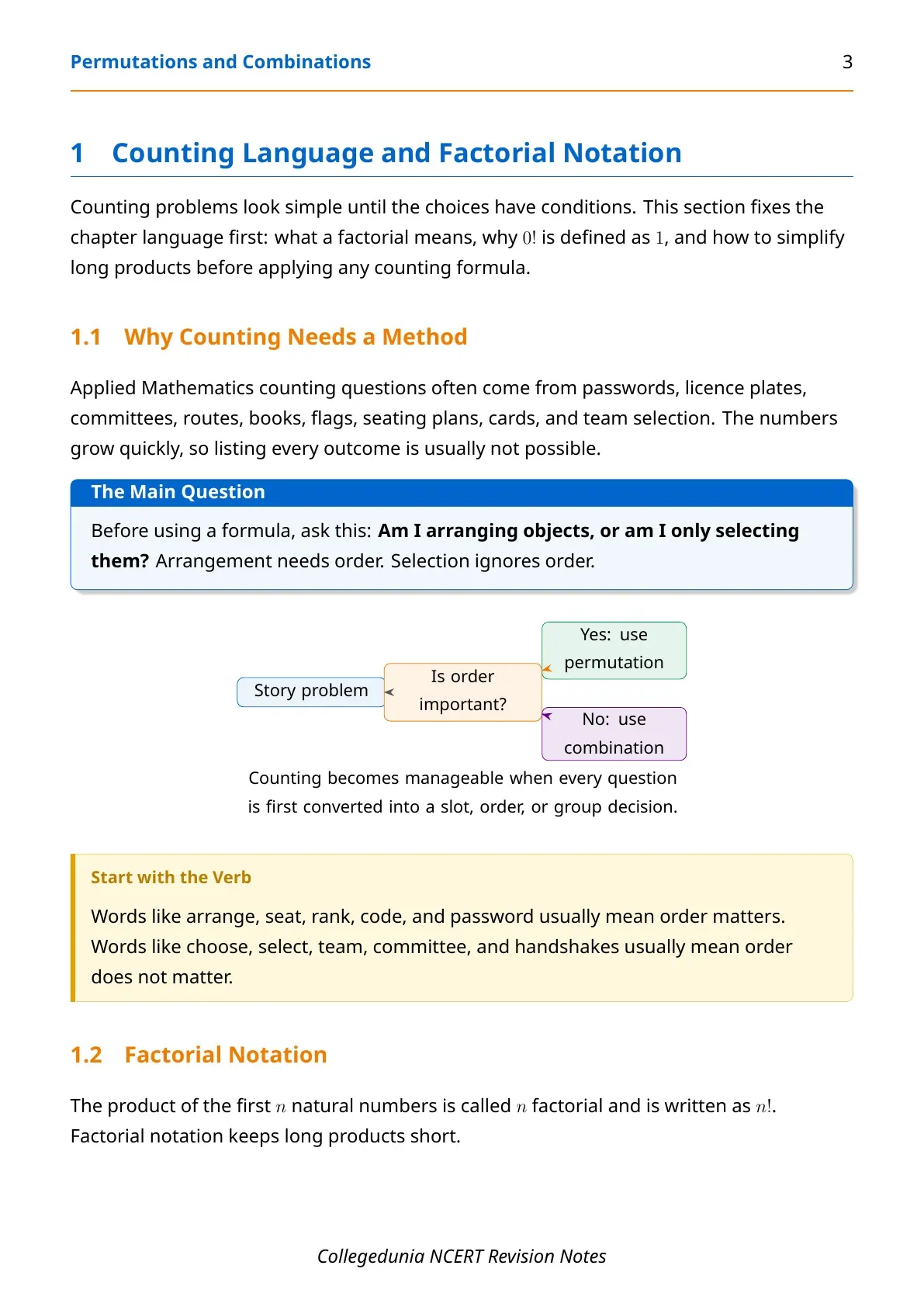
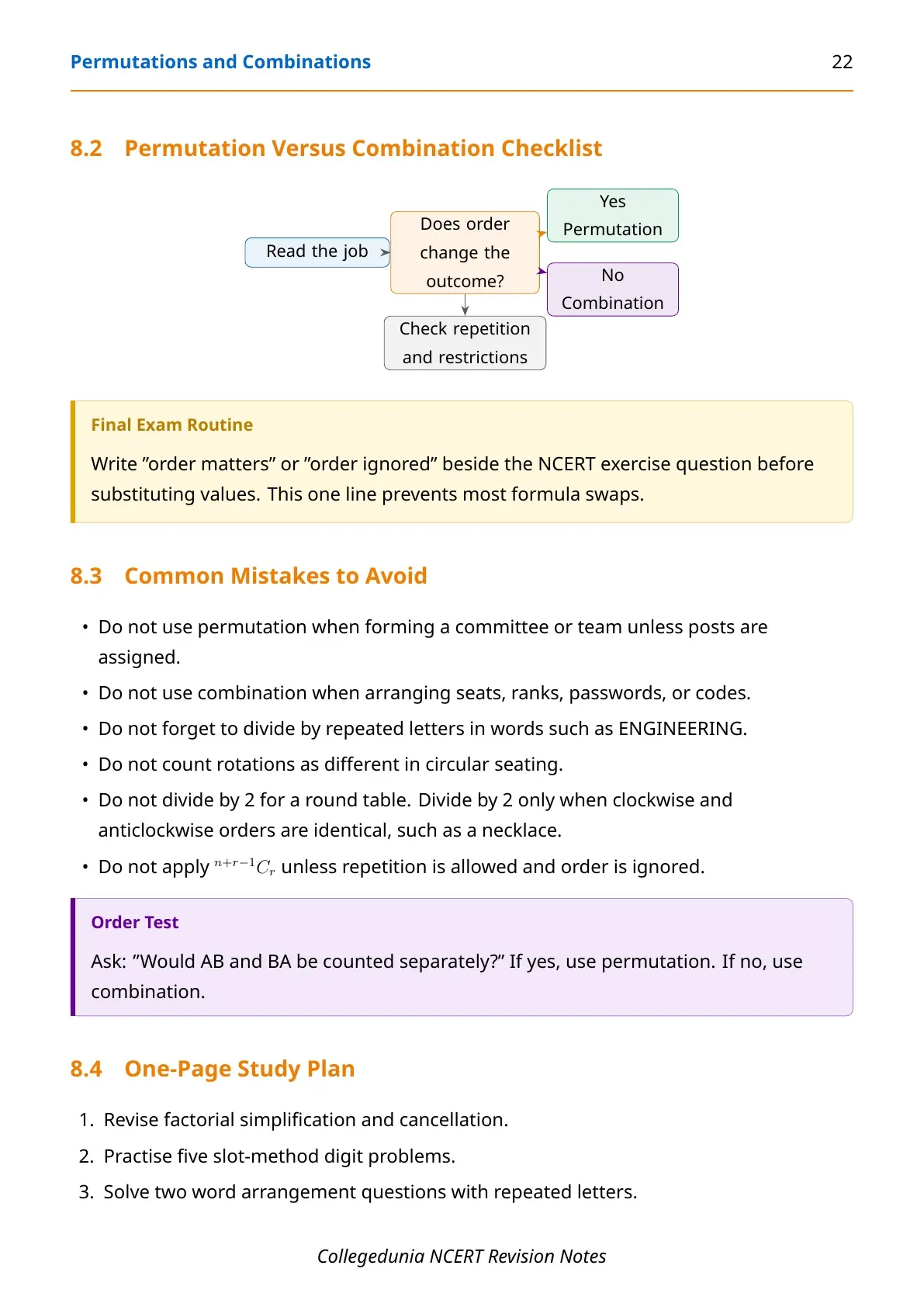
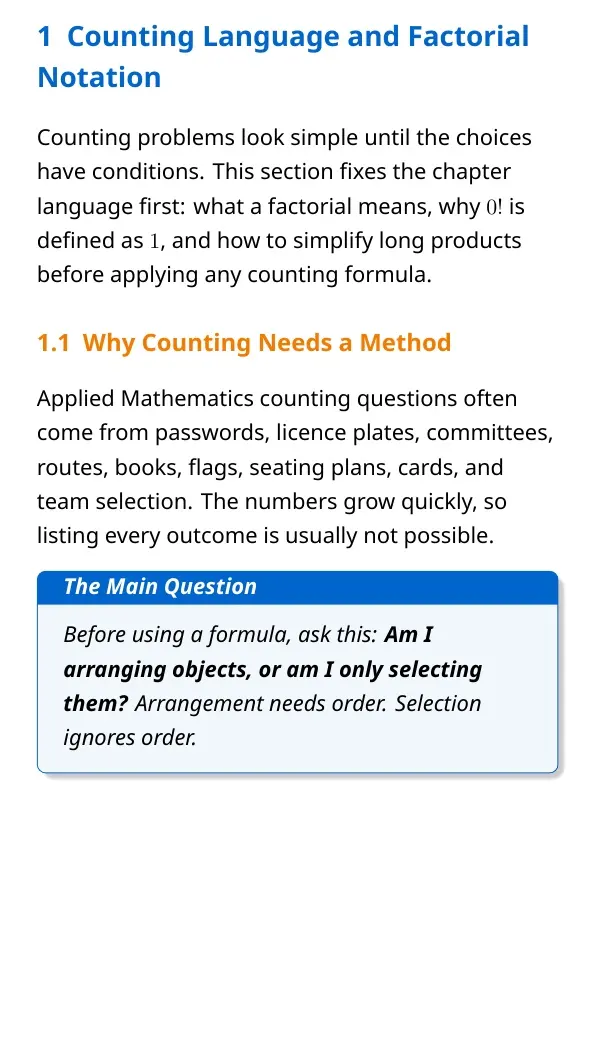
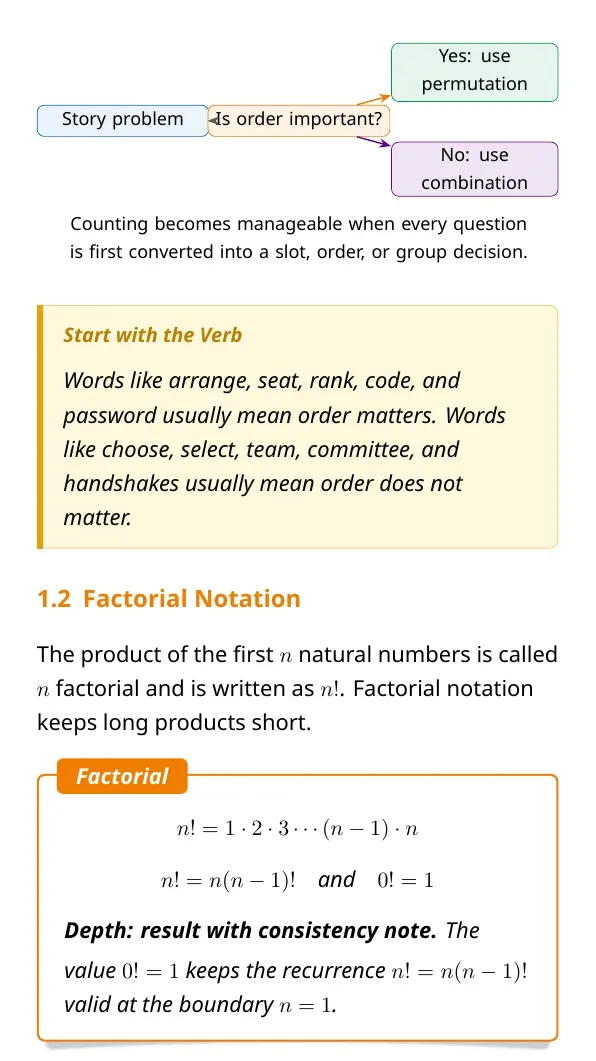
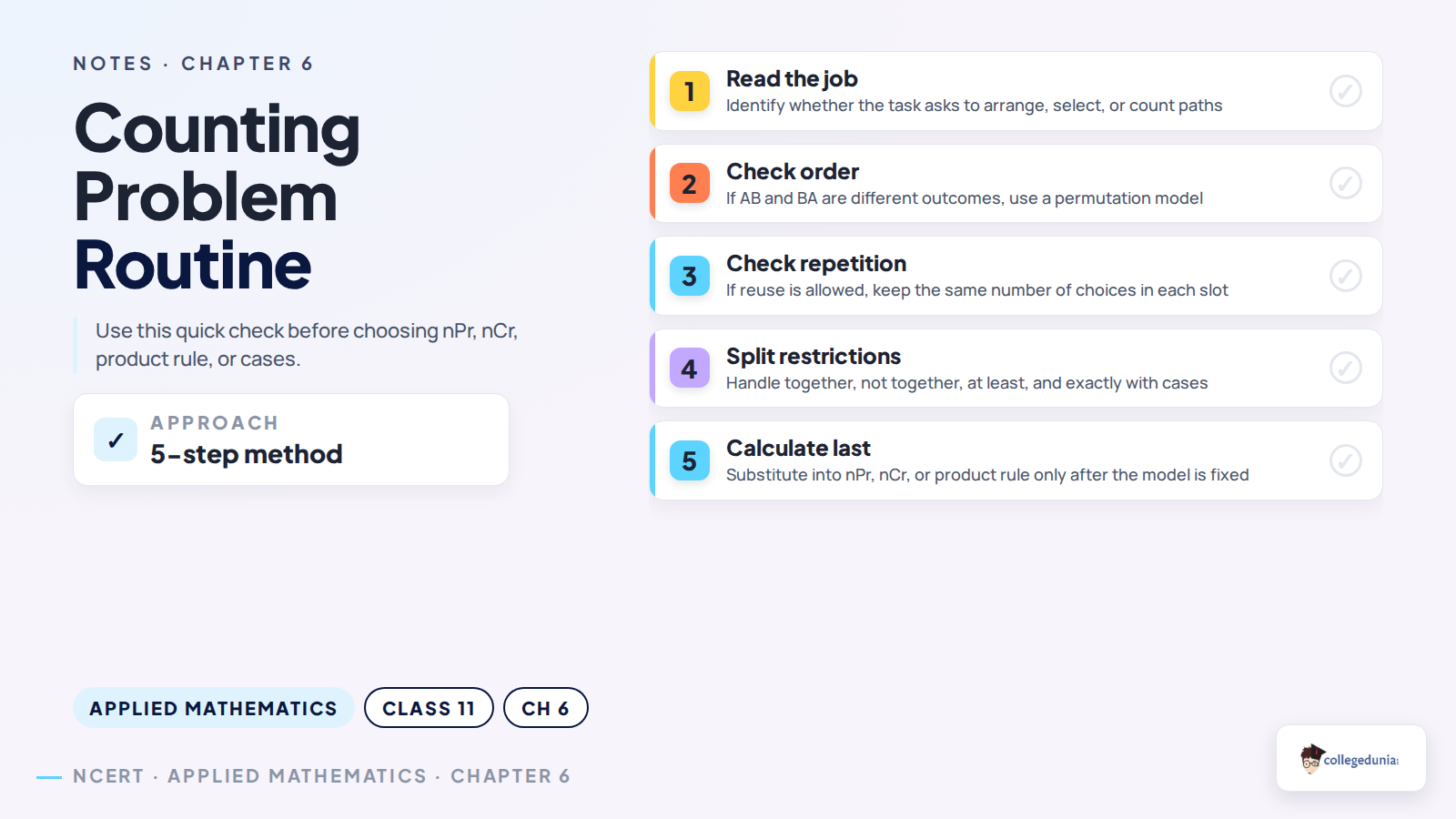
Permutations and Combinations begin with a simple question: how many choices are possible? First decide whether the task asks for an ordered arrangement or an unordered selection. This single decision prevents most formula mistakes.
| Counting idea | Meaning | Fast check |
|---|---|---|
| Fundamental principle | Multiply choices across independent stages | Task happens in steps |
| Permutation | Arrangement where order matters | AB and BA are different |
| Combination | Selection where order is ignored | AB and BA are the same set |
Permutations and Combinations Quick Revision for Class 11
Source: Magnet Brains on YouTube
Factorial Formula and Counting Products
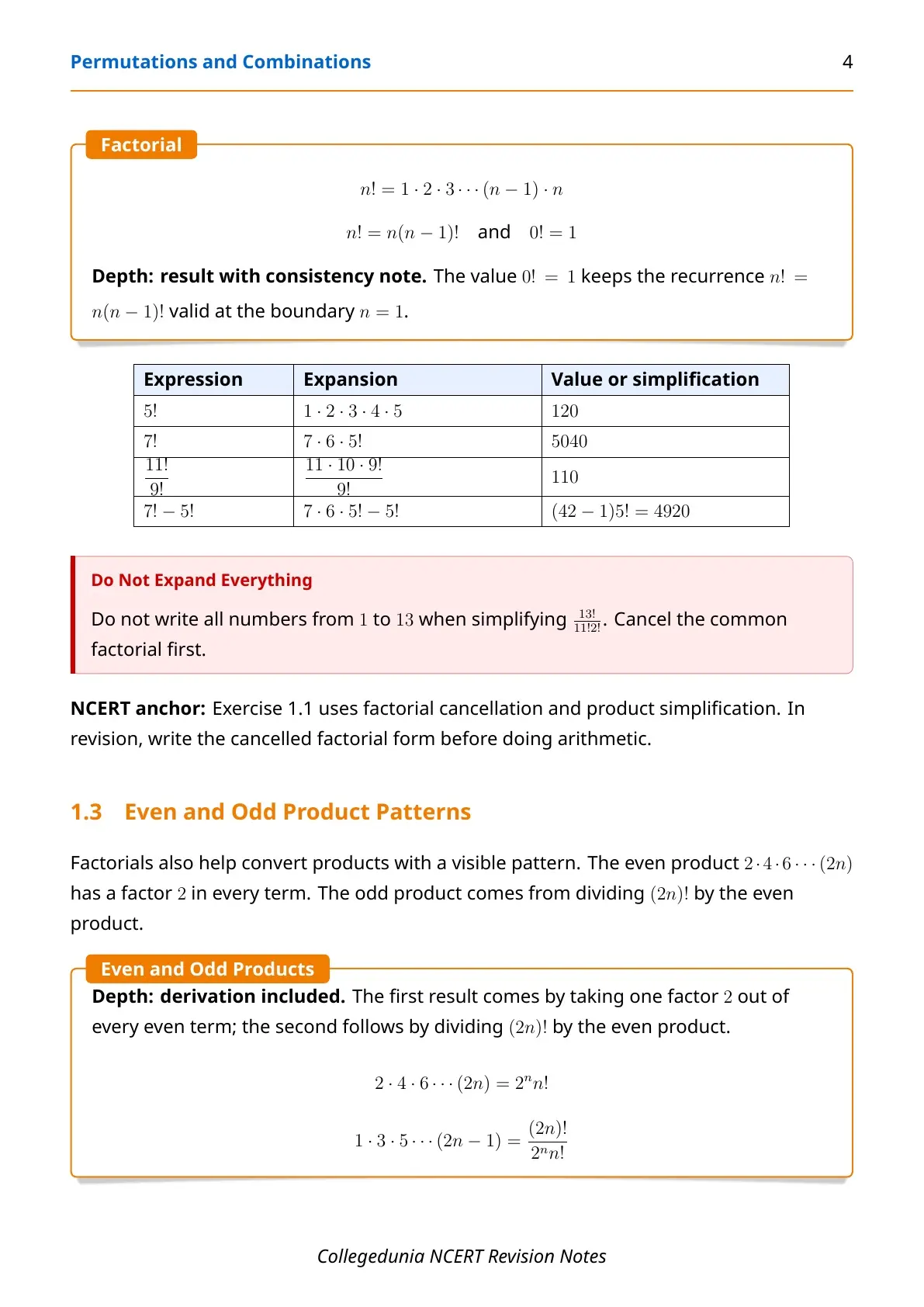
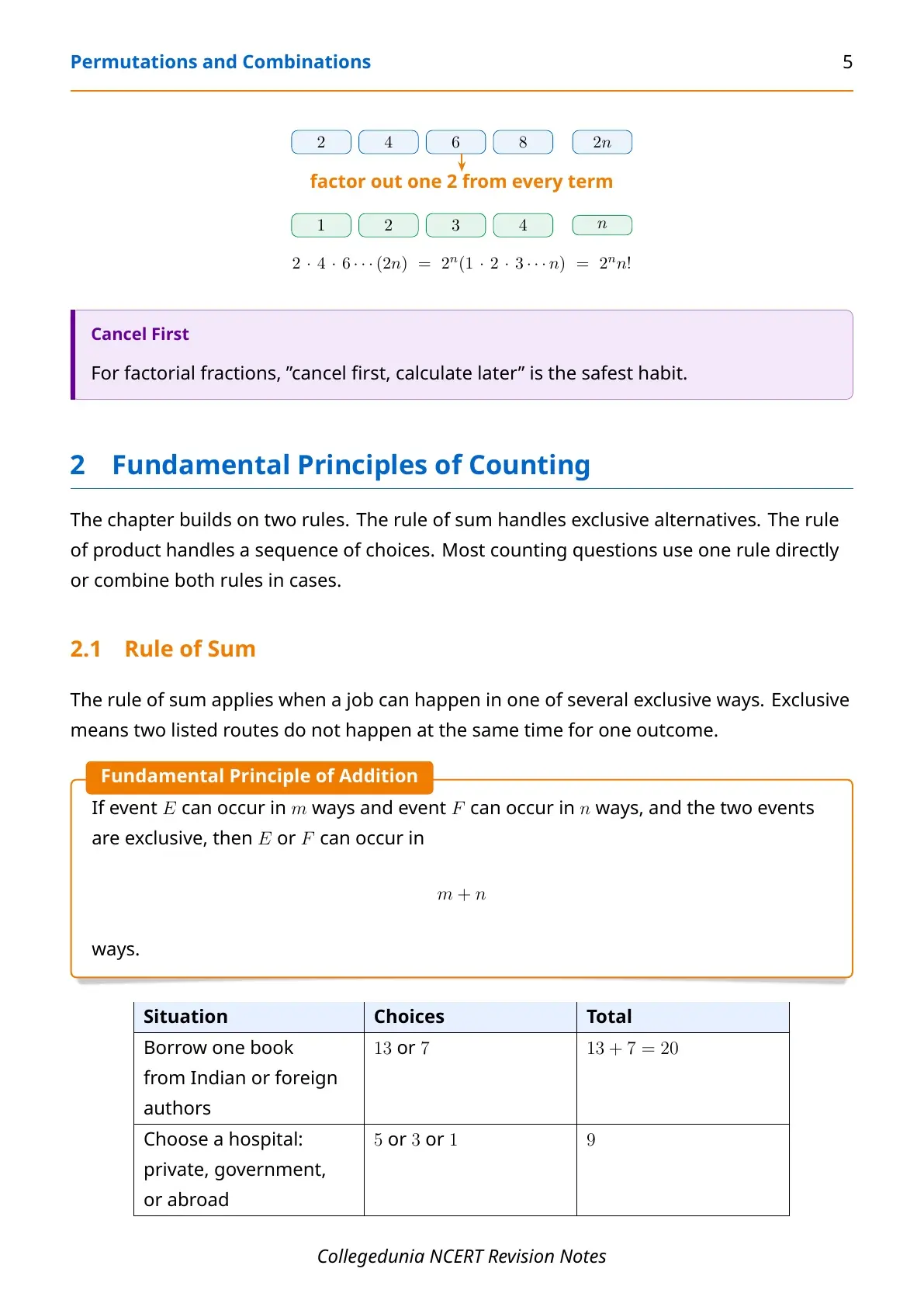
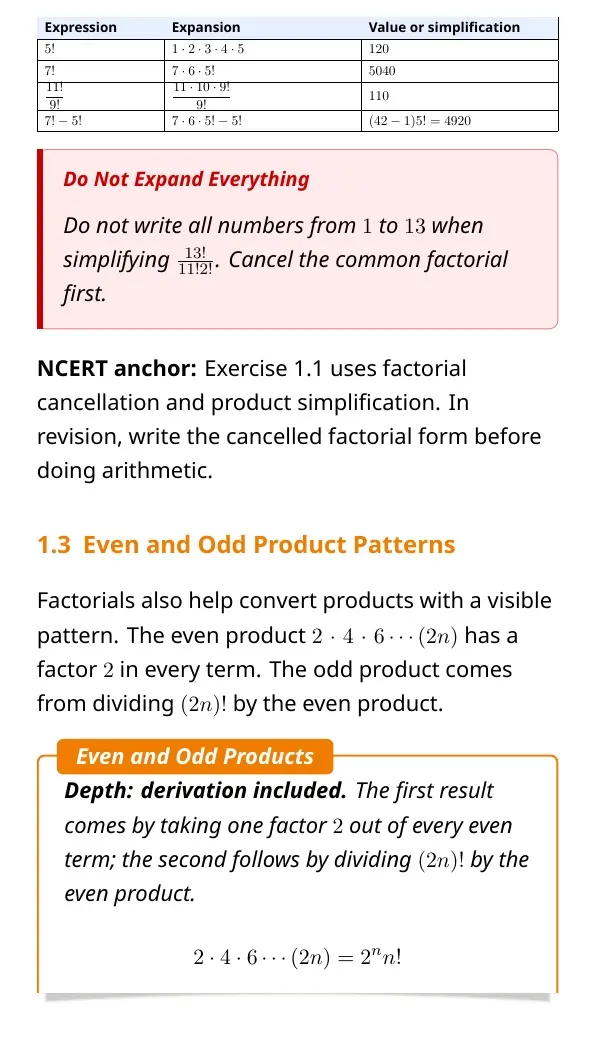
A factorial multiplies all positive integers up to a number. It is the shorthand behind most formulas in this chapter. For example, 5! means 5 x 4 x 3 x 2 x 1.
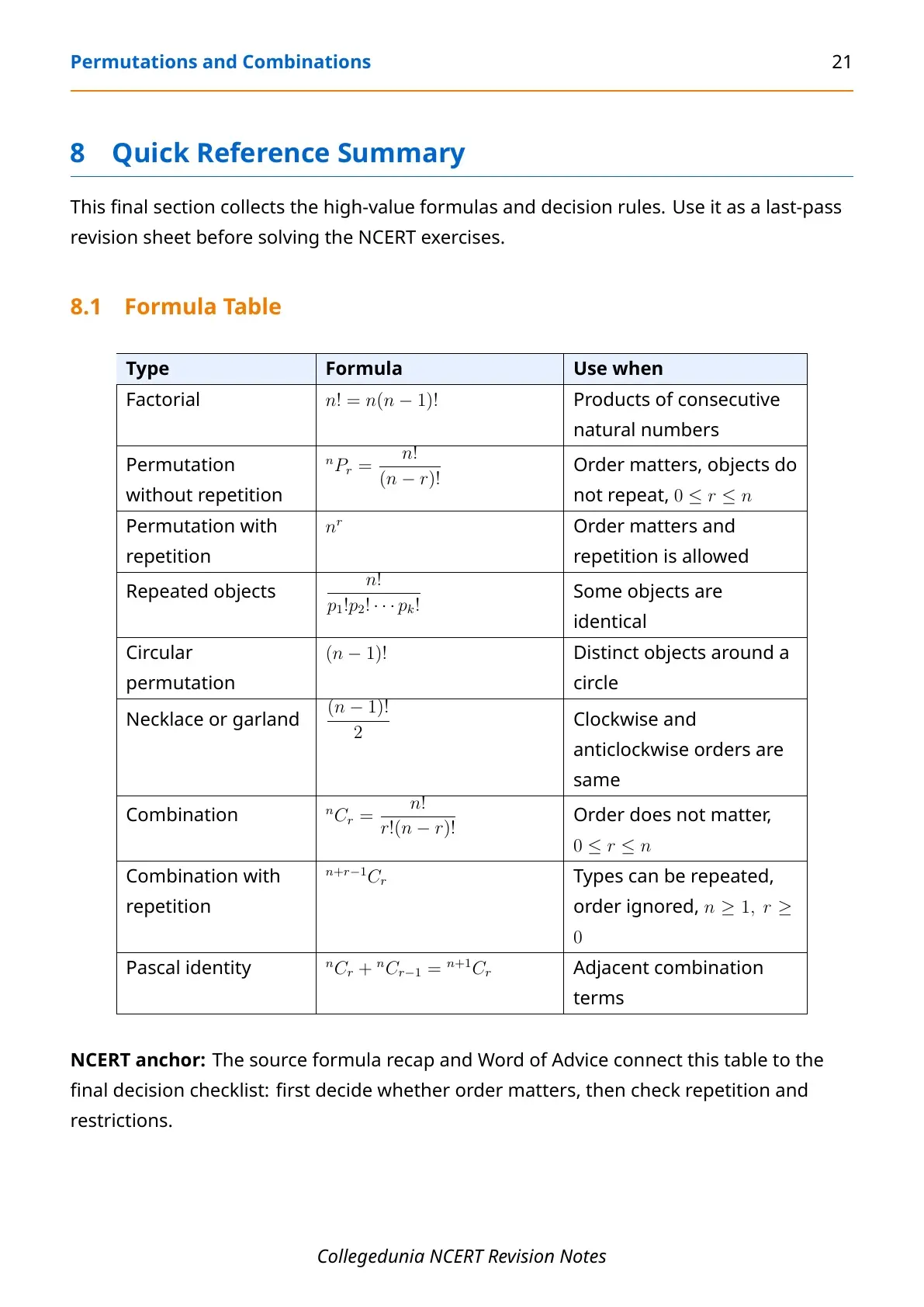
- Factorial rule: n! = n x (n - 1) x (n - 2) x ... x 2 x 1.
- Zero factorial: 0! = 1, so boundary cases in nPr and nCr still work.
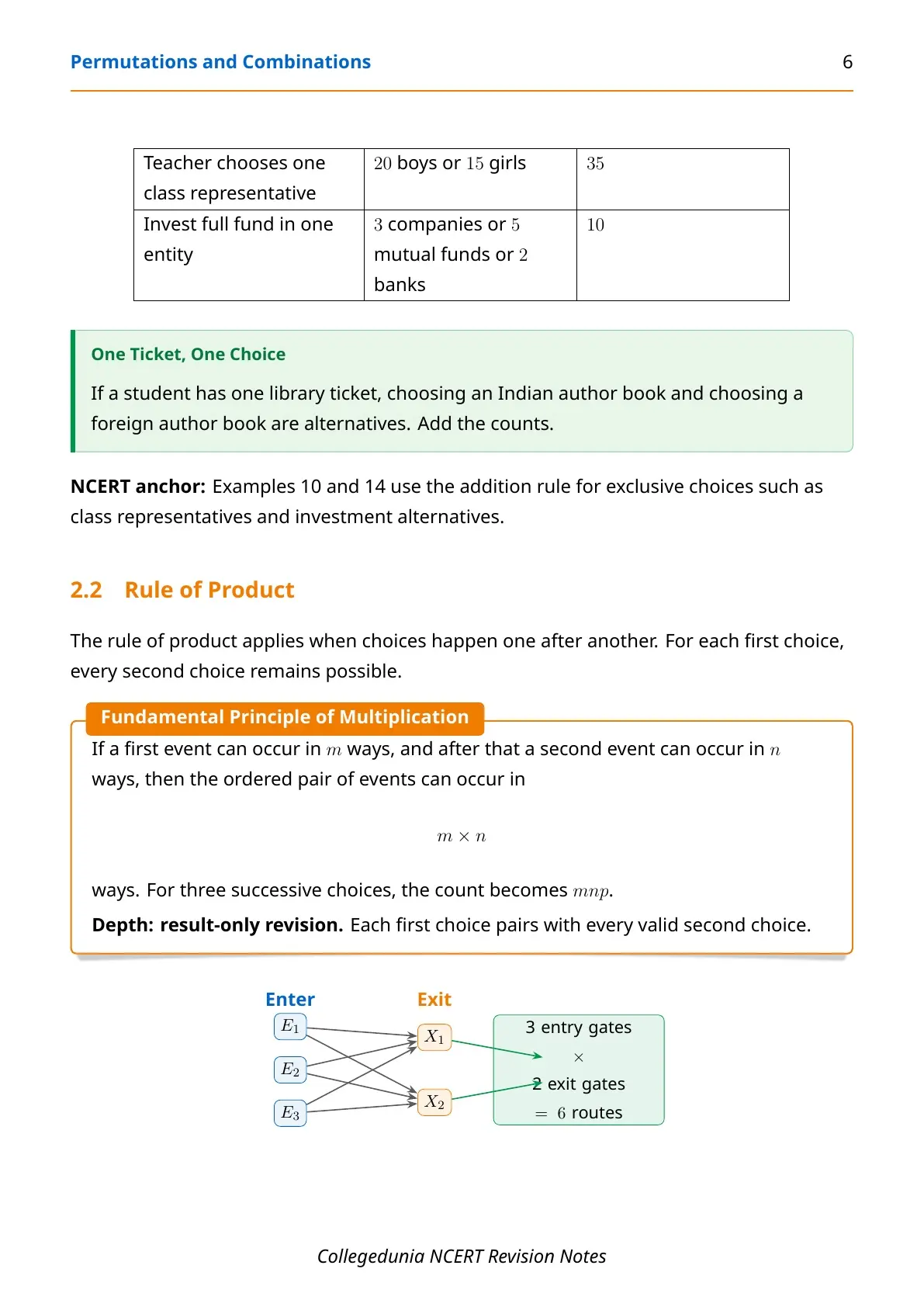
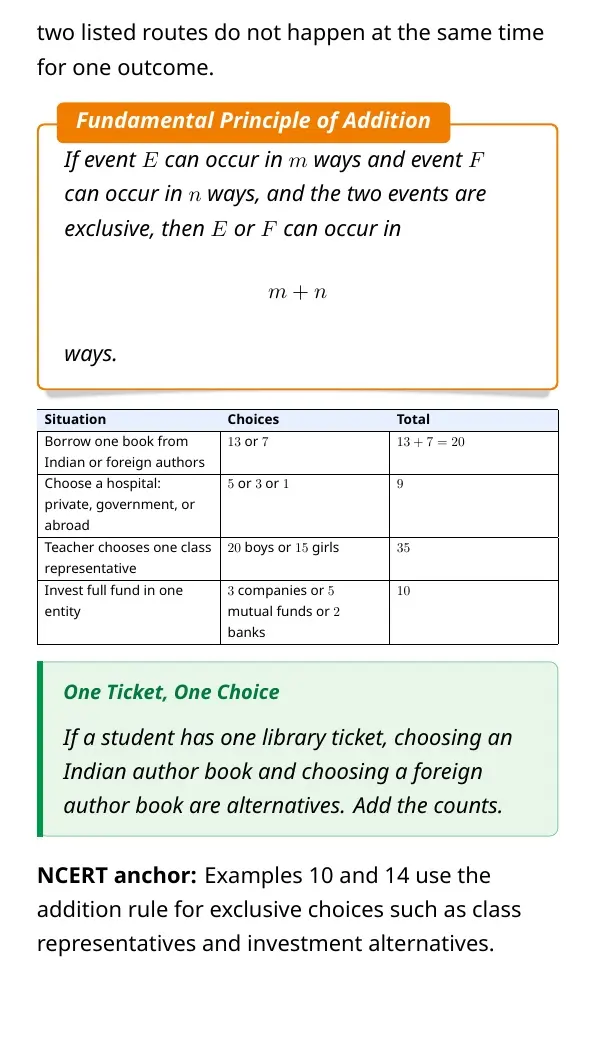
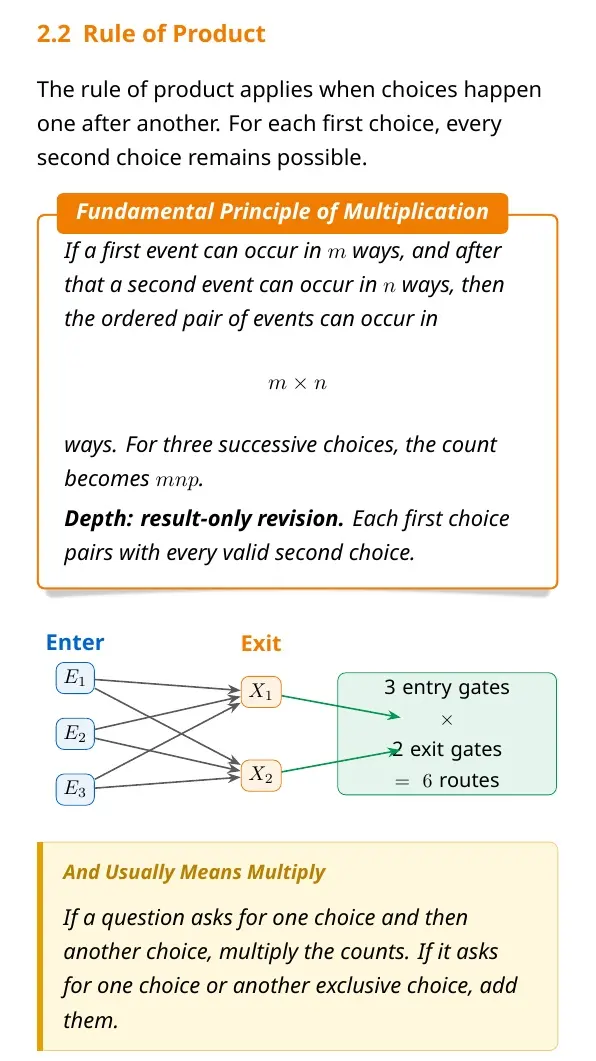
- Product rule: if one choice has m options and the next has n options, total outcomes are m x n.
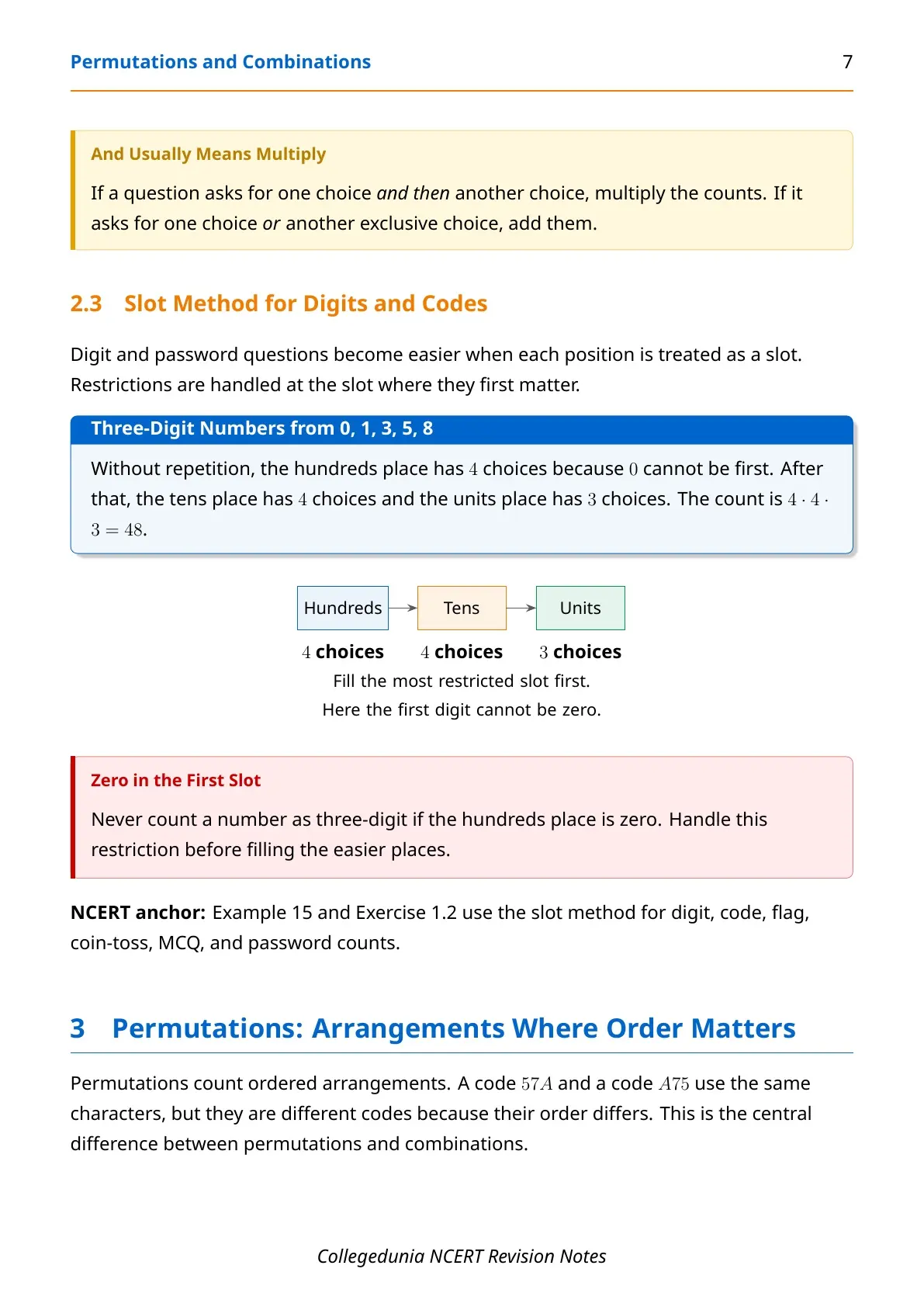
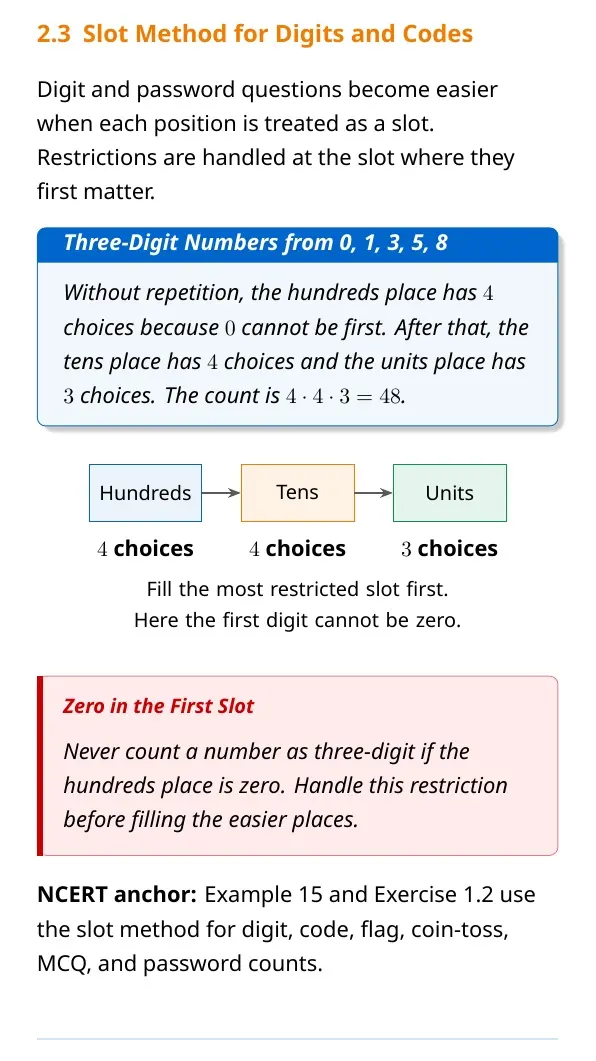
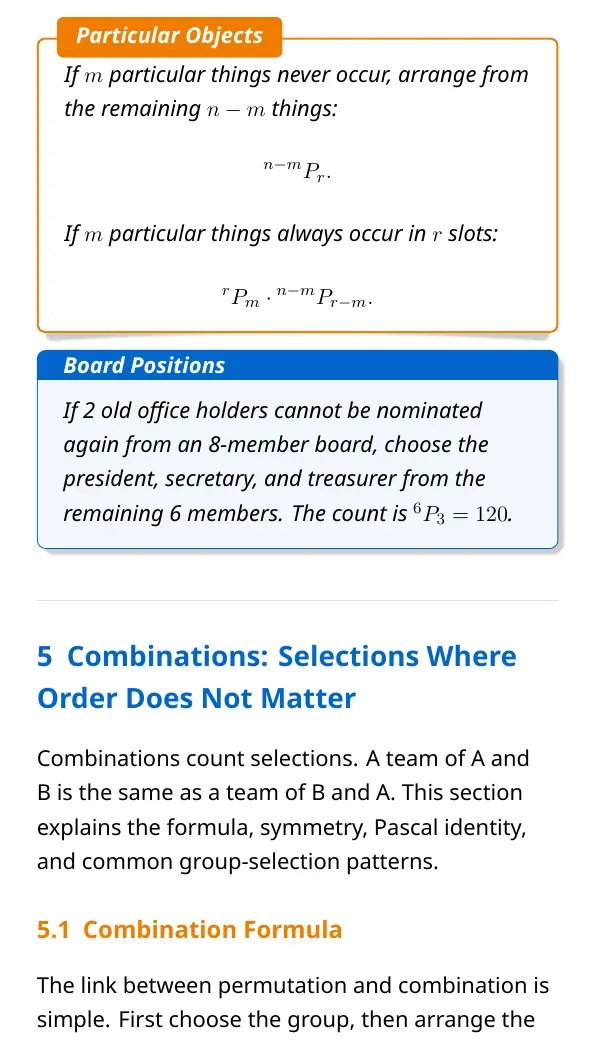
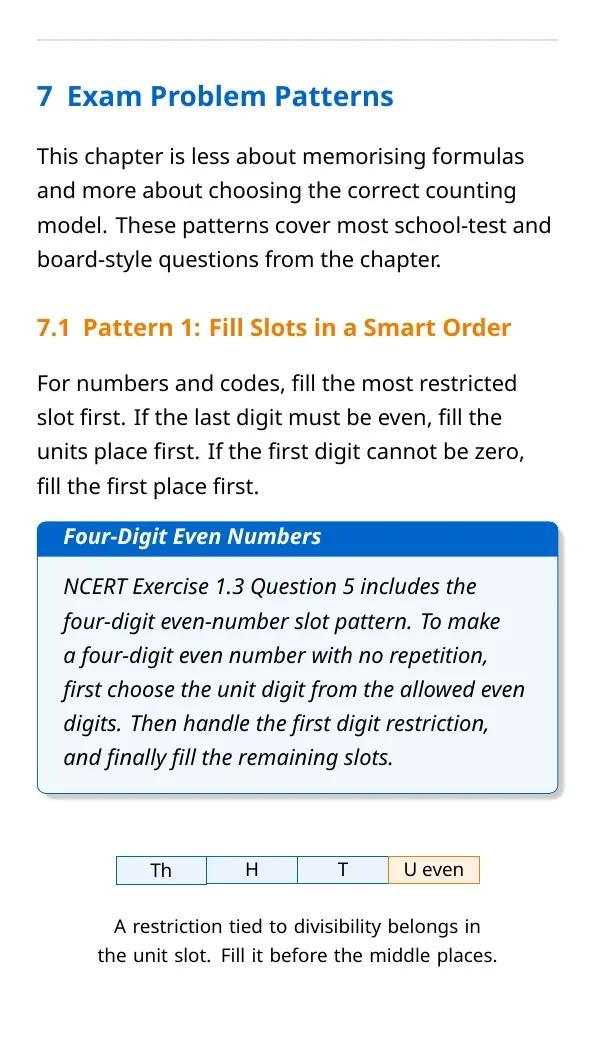
- Slot method: fill the most restricted position first when conditions are given.
Do not add choices across slots when both slots must be filled. Addition is for alternatives; multiplication is for stages that happen together.
Permutation Formula for Ordered Arrangements
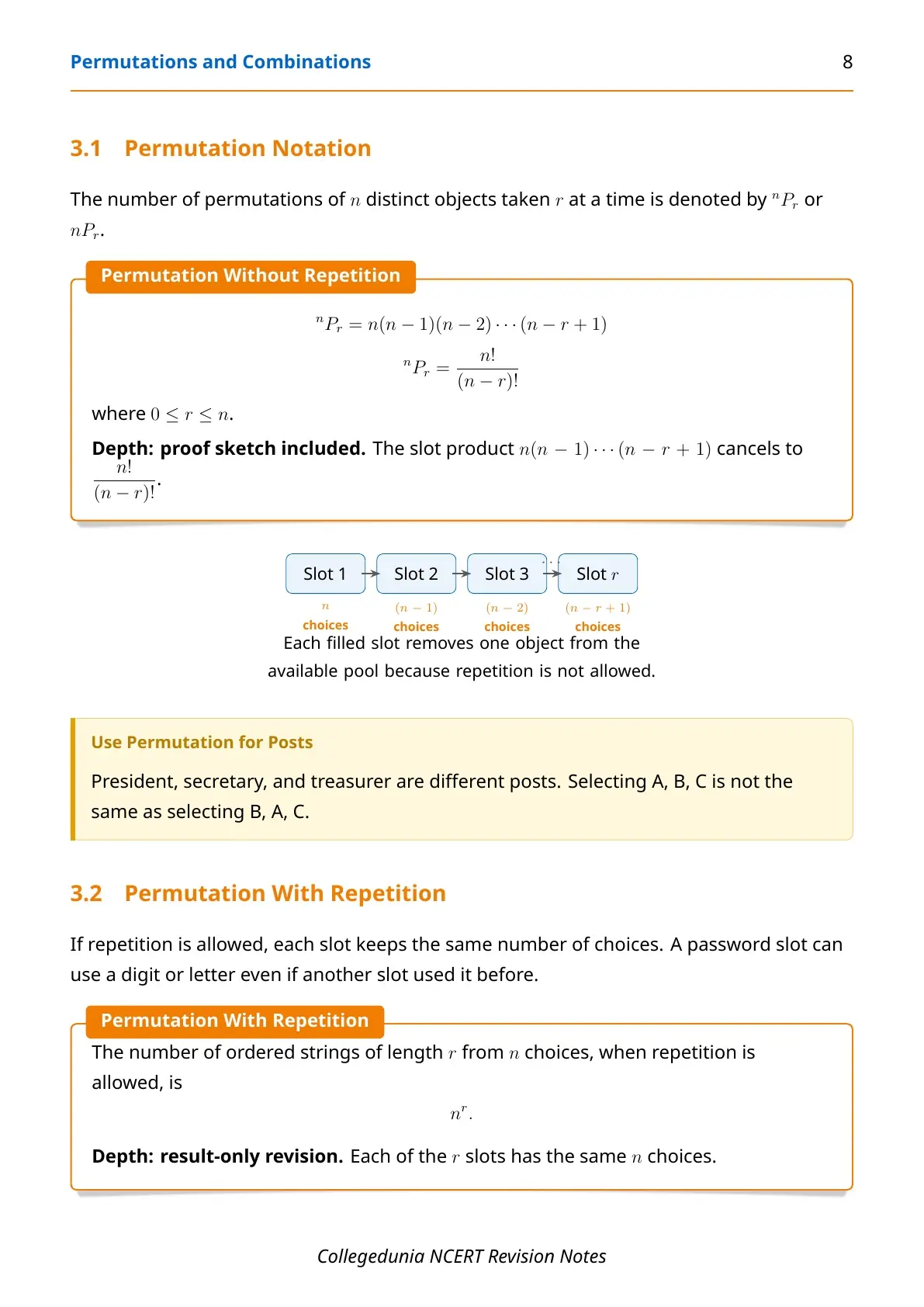
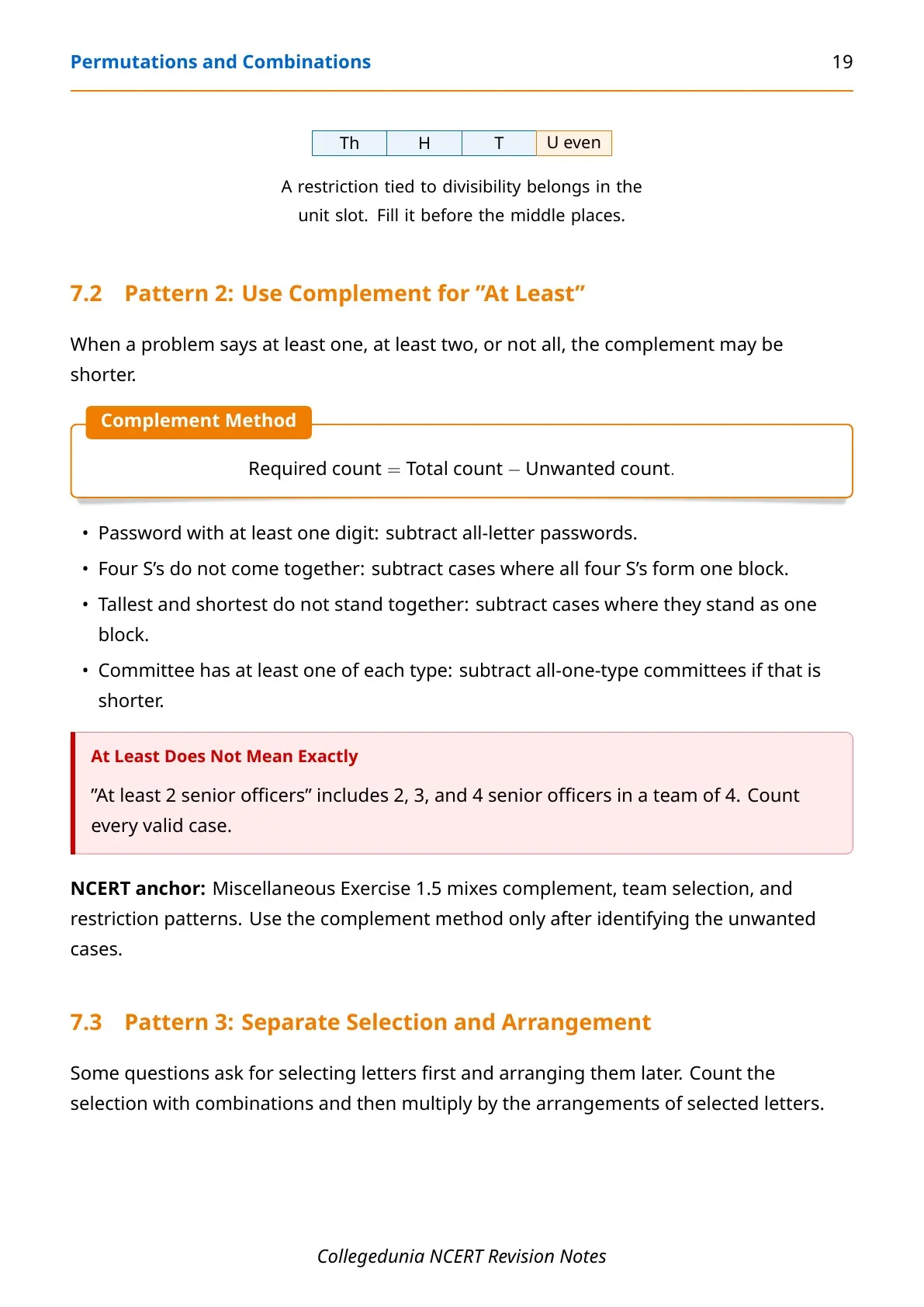
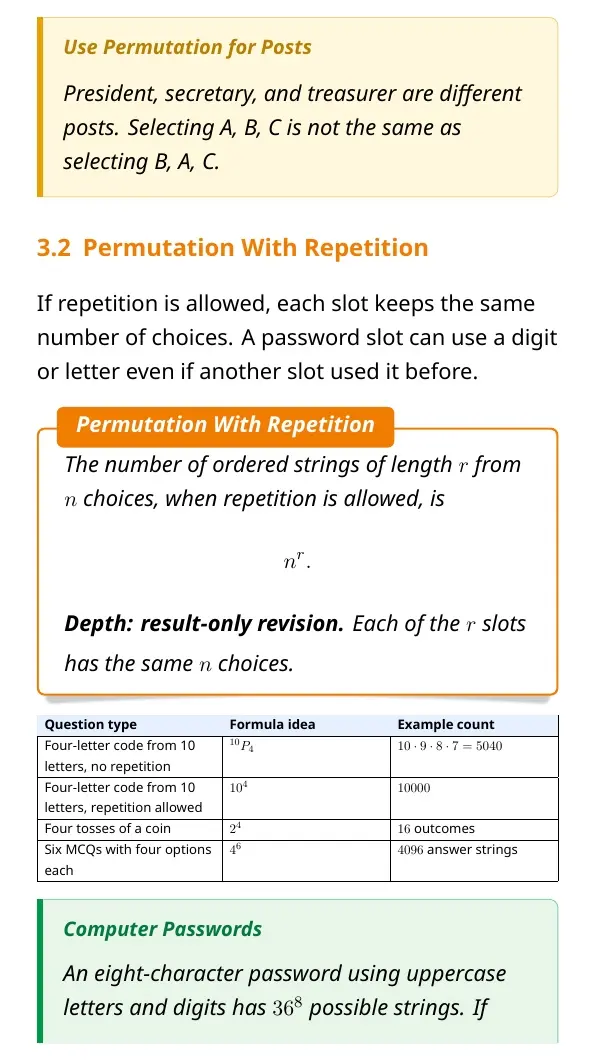
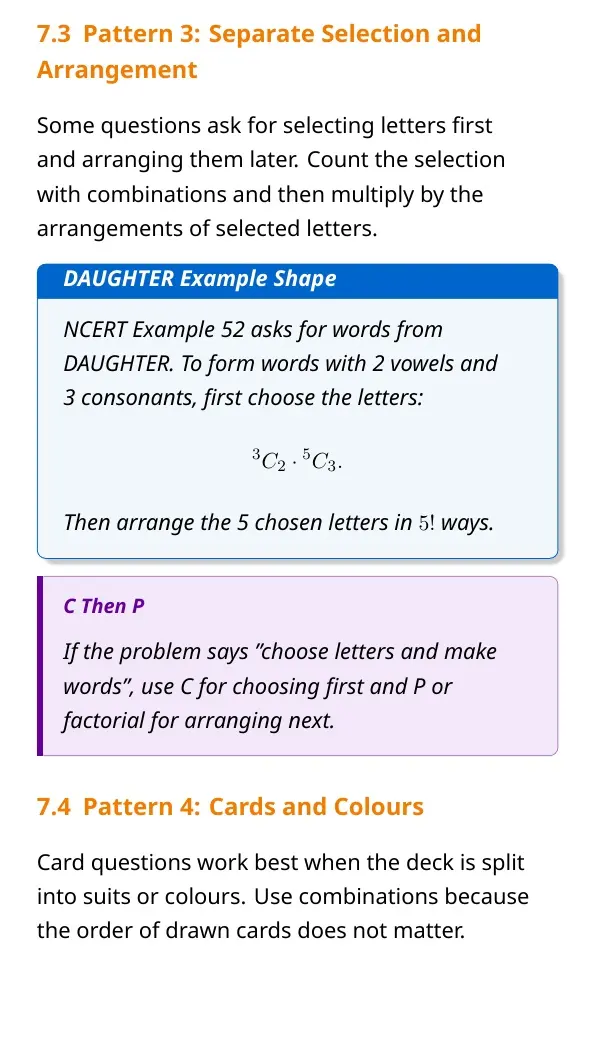
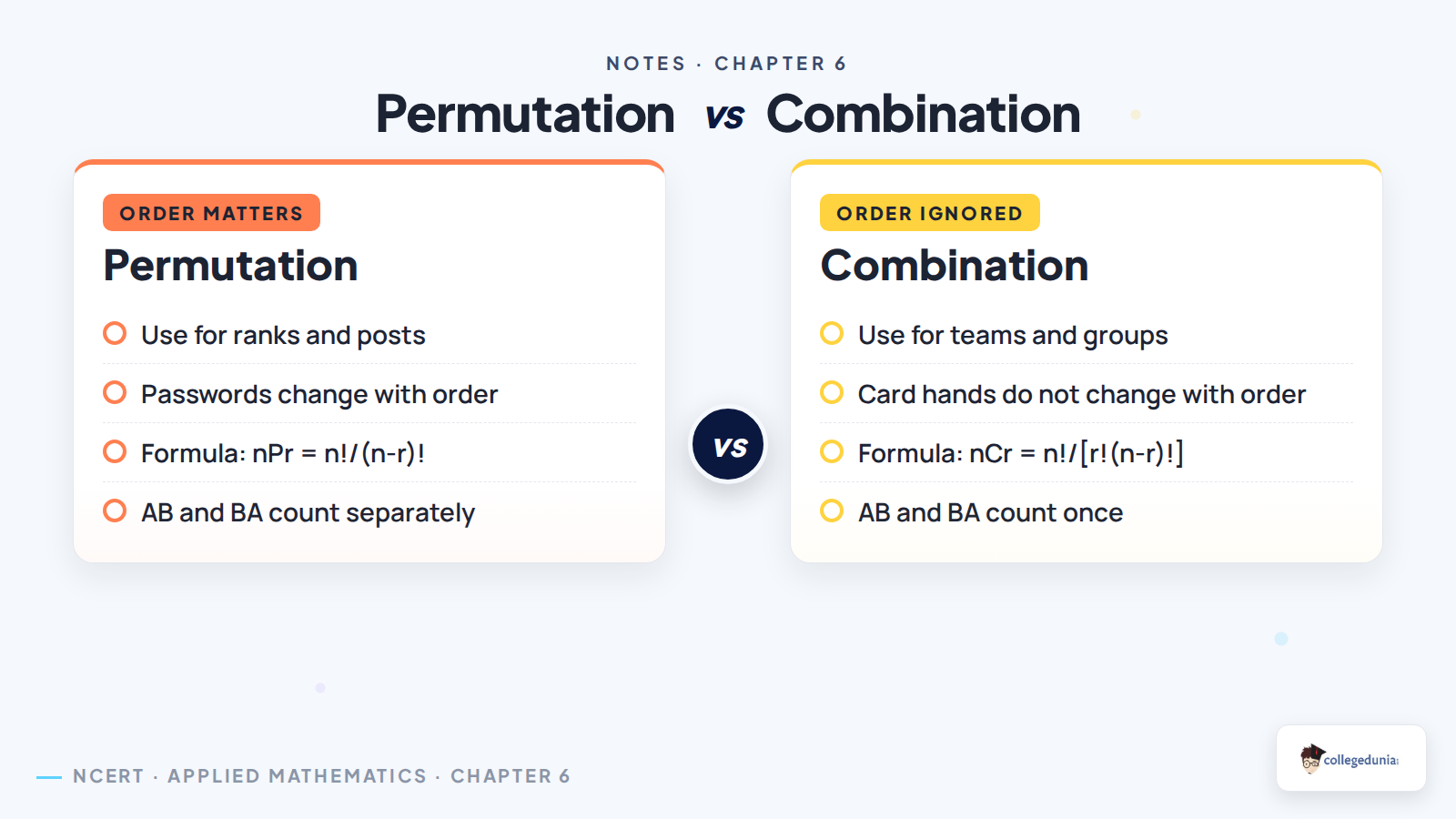
Use permutation when the order of selected objects changes the result. Passwords, ranks, seating order and post assignments usually need permutations.
| Formula | Use it when | What to check |
|---|---|---|
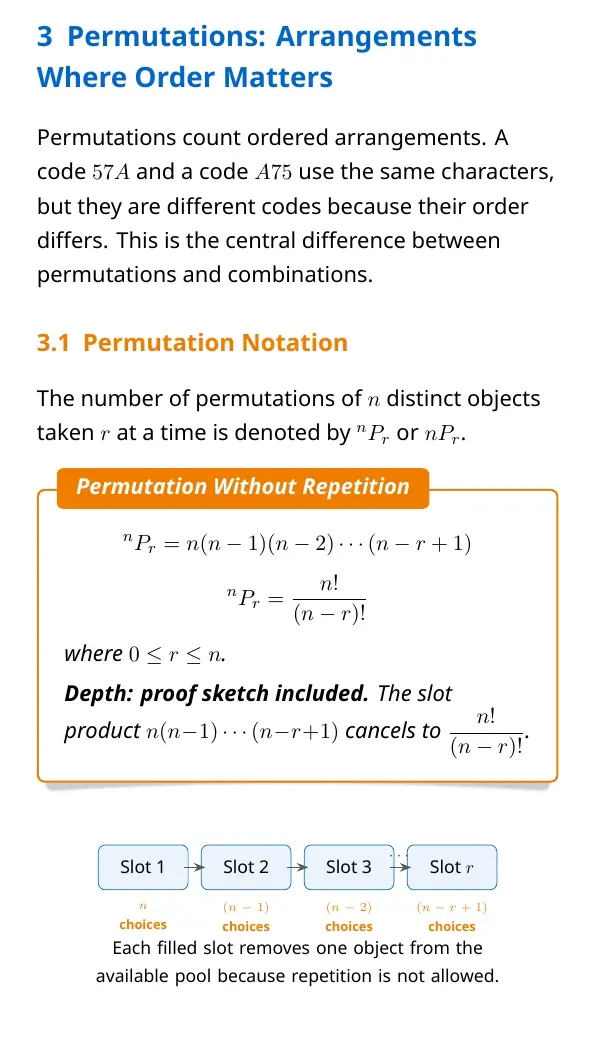
| nPr = n! / (n - r)! | Arrange r objects from n distinct objects | Order matters |
| n! | Arrange all n distinct objects | Every object is used once |
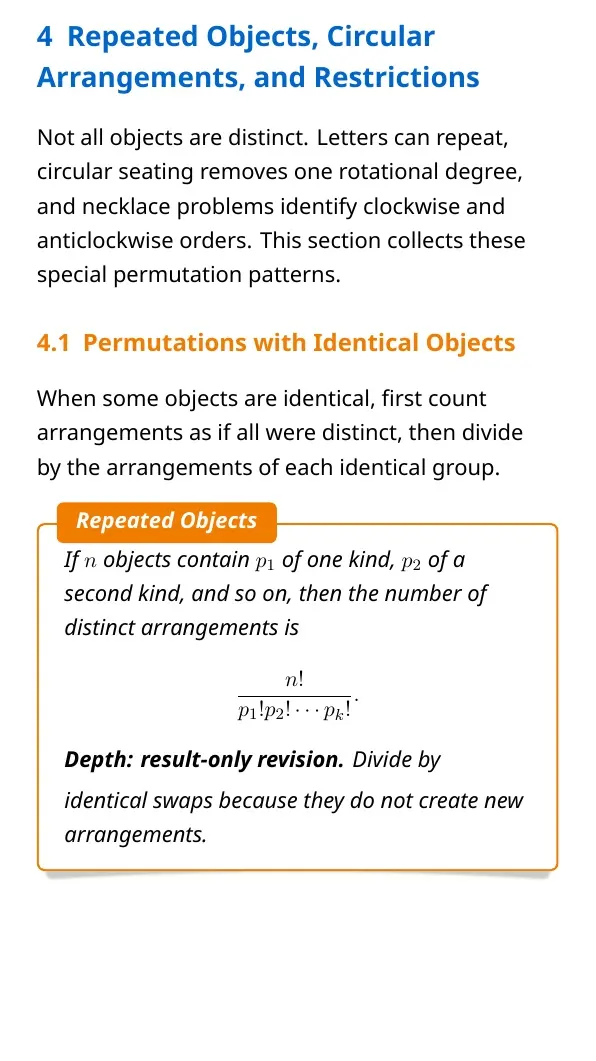
| n! / (p! q! r!) | Arrange letters or objects with repeats | Repeated groups are identical |
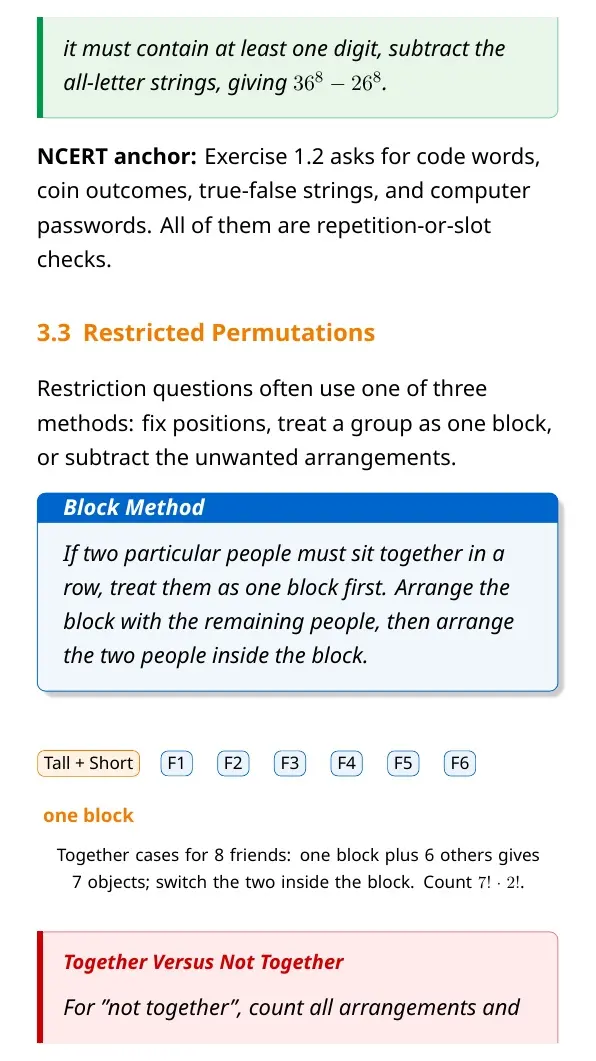
In restrictions such as vowels together or two people not together, create cases before applying the formula. Formula substitution should be the last step, not the first step.
Combination Formula for Selections
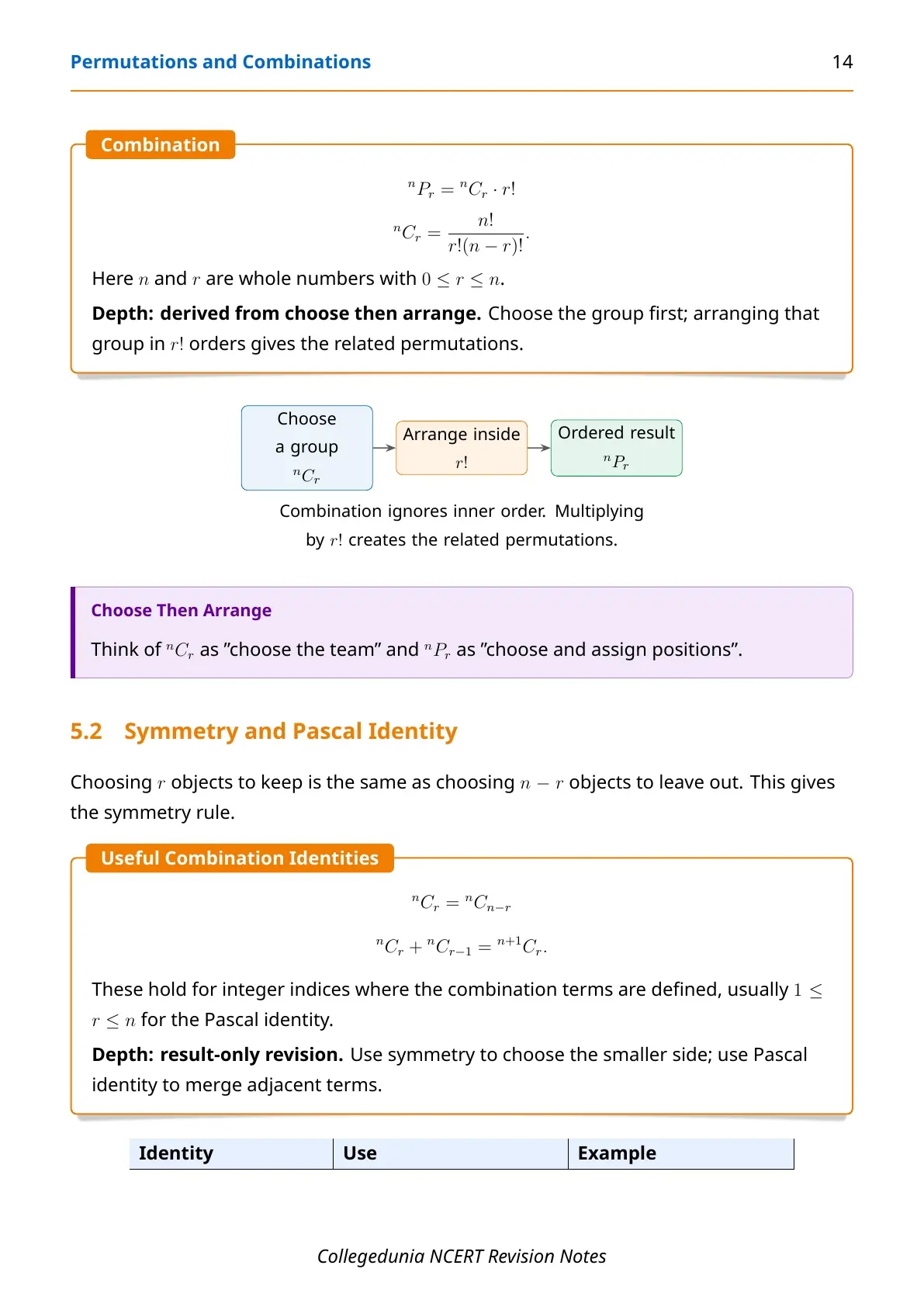
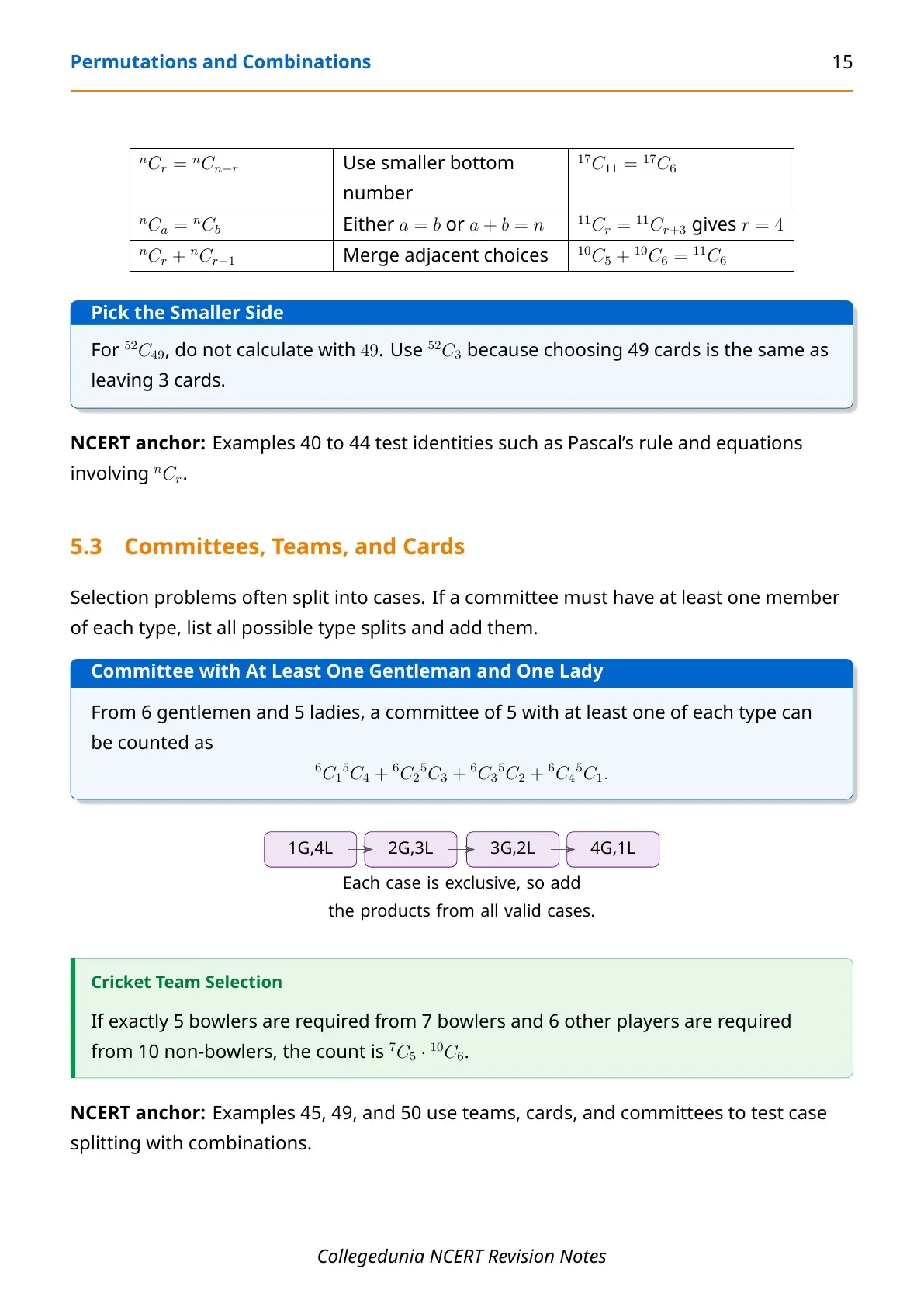
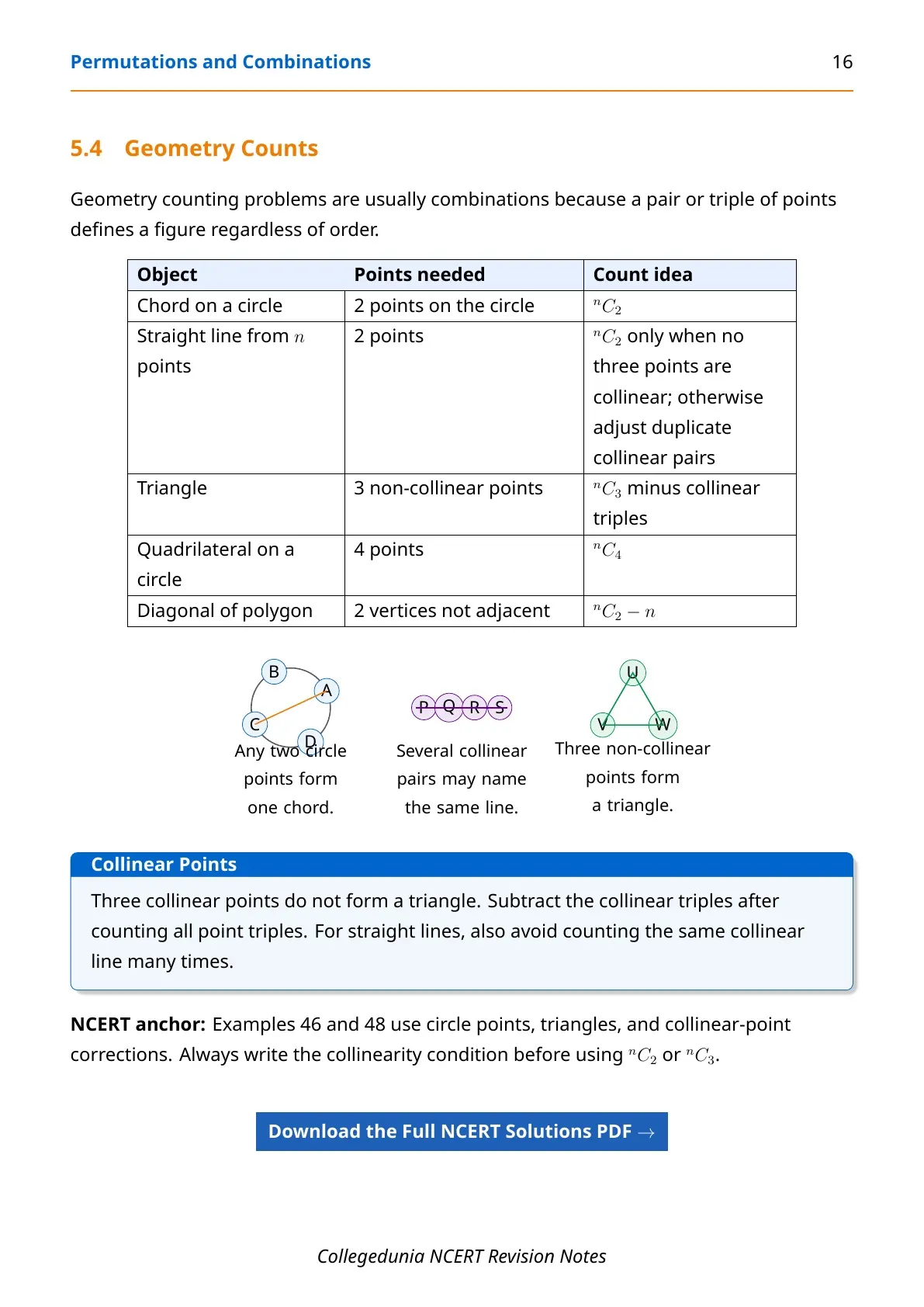
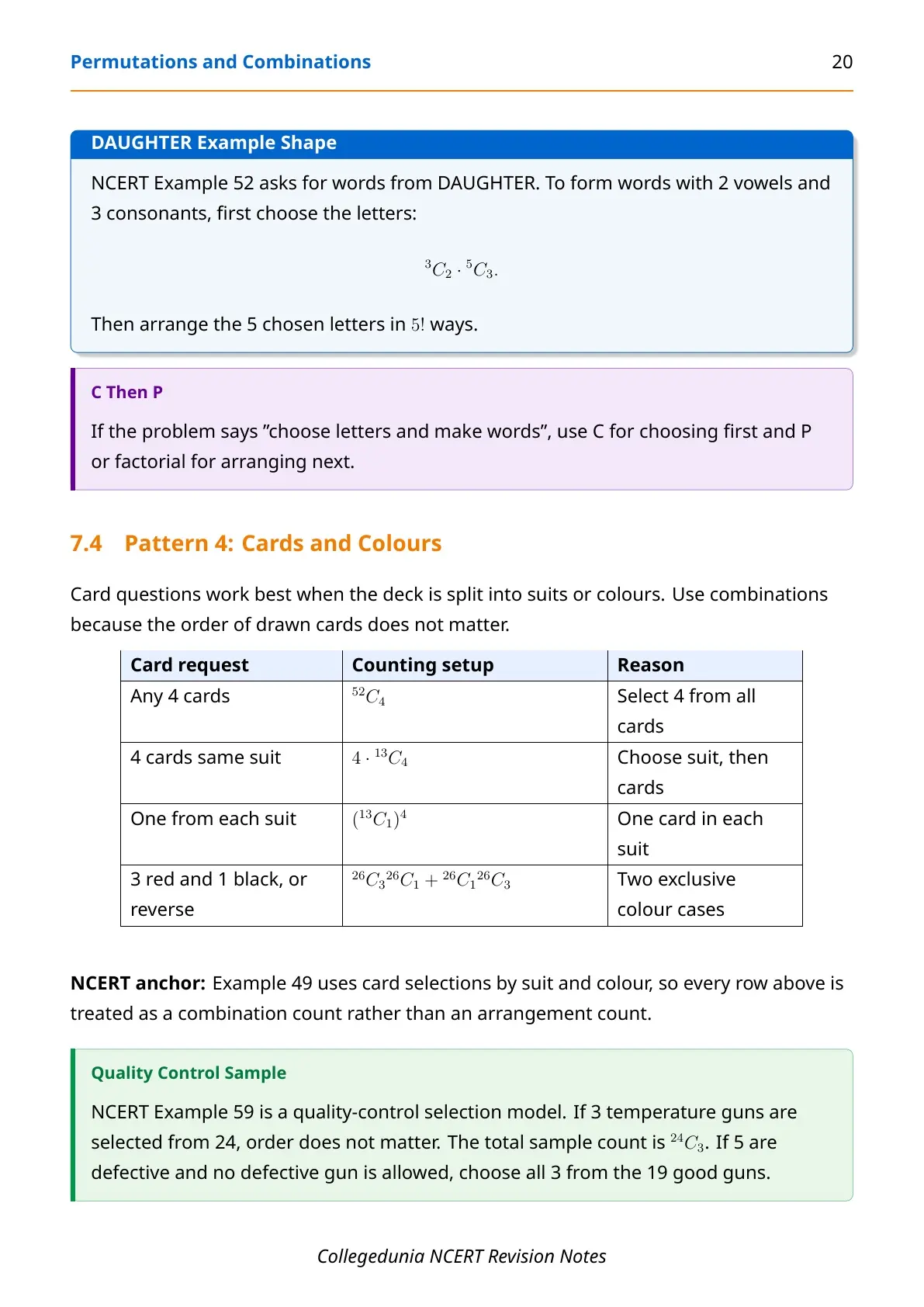
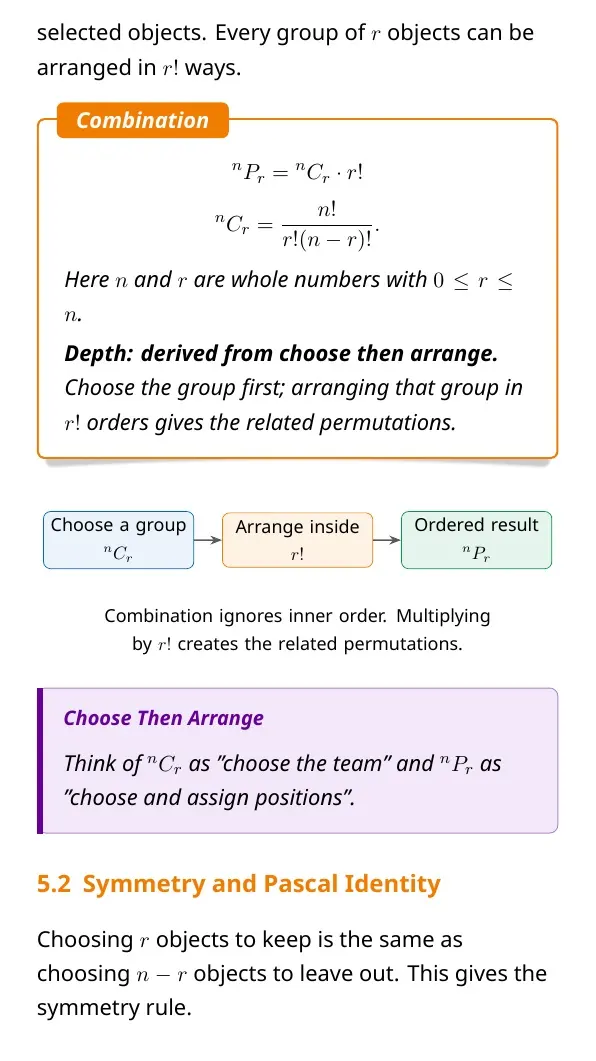
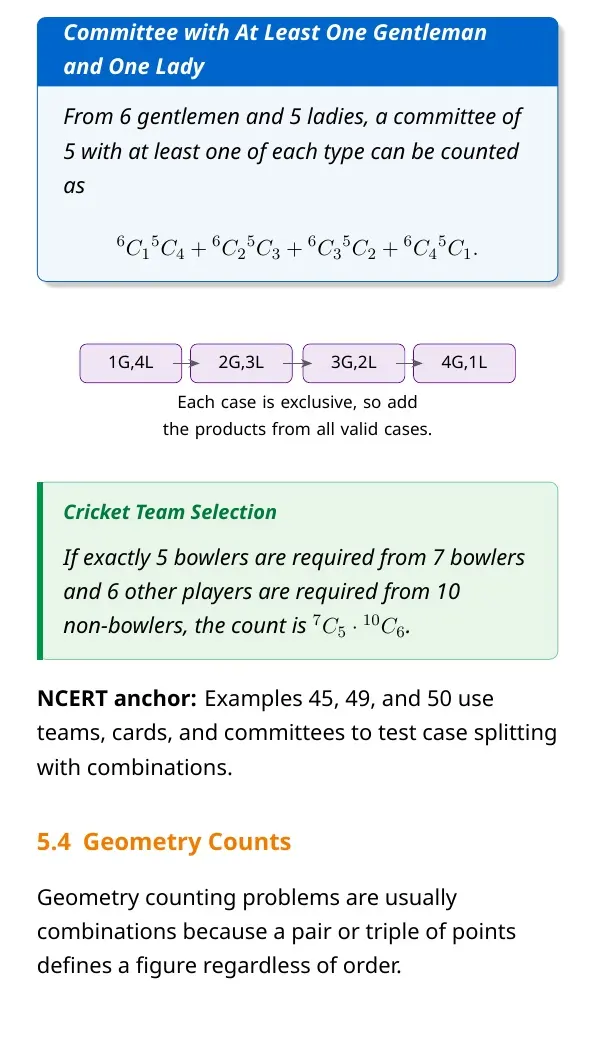
Use combination when only the chosen group matters. A committee of A and B is the same as a committee of B and A, so order is ignored.
- Combination formula: nCr = n! / [r! (n - r)!].
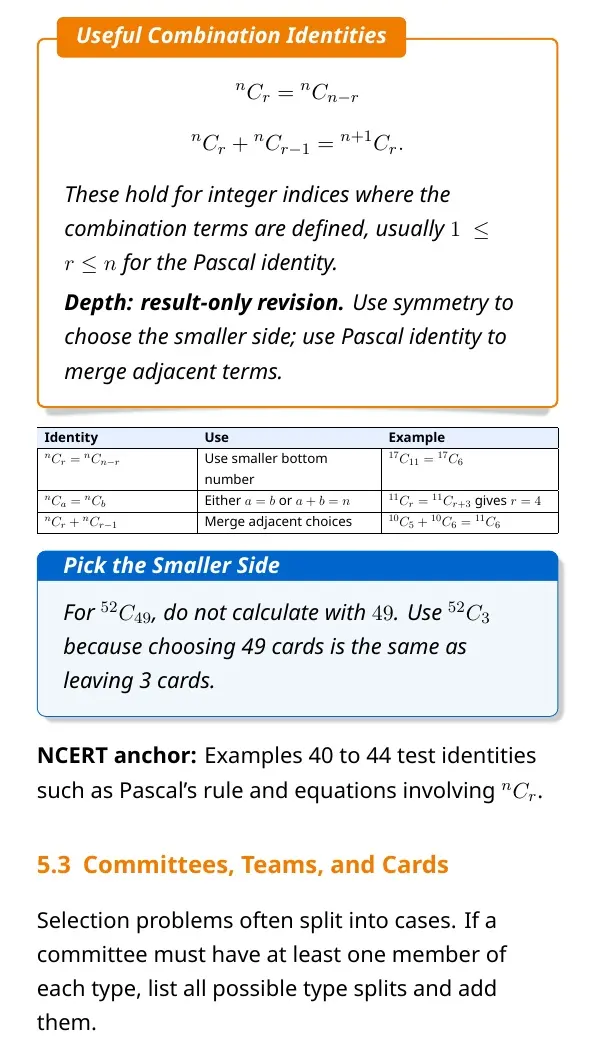
- Symmetry rule: nCr = nC(n - r), so choosing r items is the same as leaving n - r items.
- Subset link: the number of ways to choose any subset from n objects is 2n.
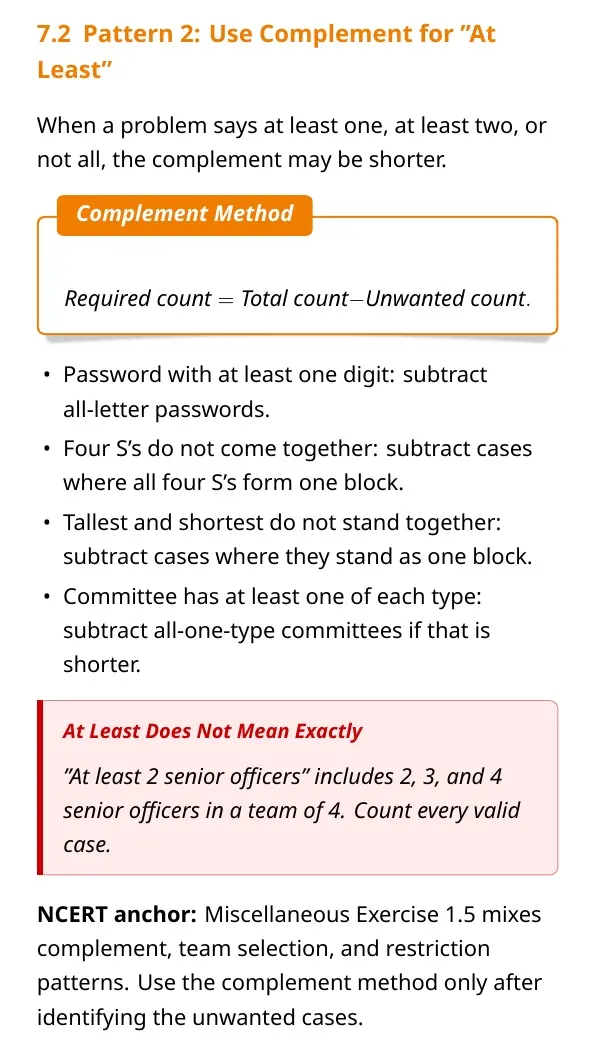
- At least cases: convert at least one into total minus none when that is shorter.
If the problem says choose, select, committee, team or group, start by testing a combination model.
Permutation vs Combination Decision Table
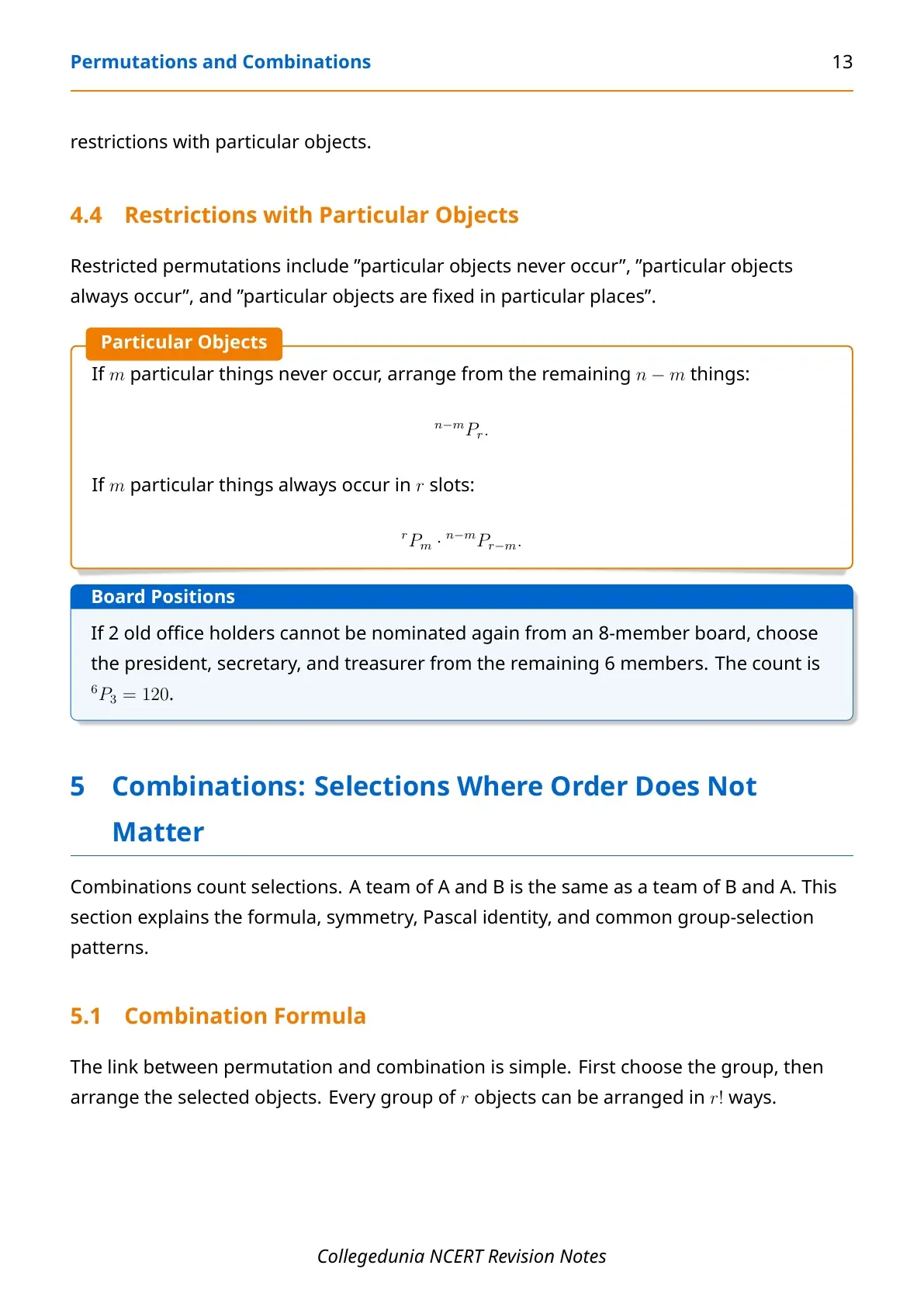
The fastest way to separate permutation from combination is to swap two selected objects and ask whether the outcome changes. If the changed order creates a new result, use permutation.
| Question clue | Likely method | Reason |
|---|---|---|
| Arrange books on a shelf | Permutation | Different order gives a different shelf |
| Select three students for a team | Combination | The team is unchanged by listing order |
| Make a four-digit code | Permutation or product rule | Digit positions matter |
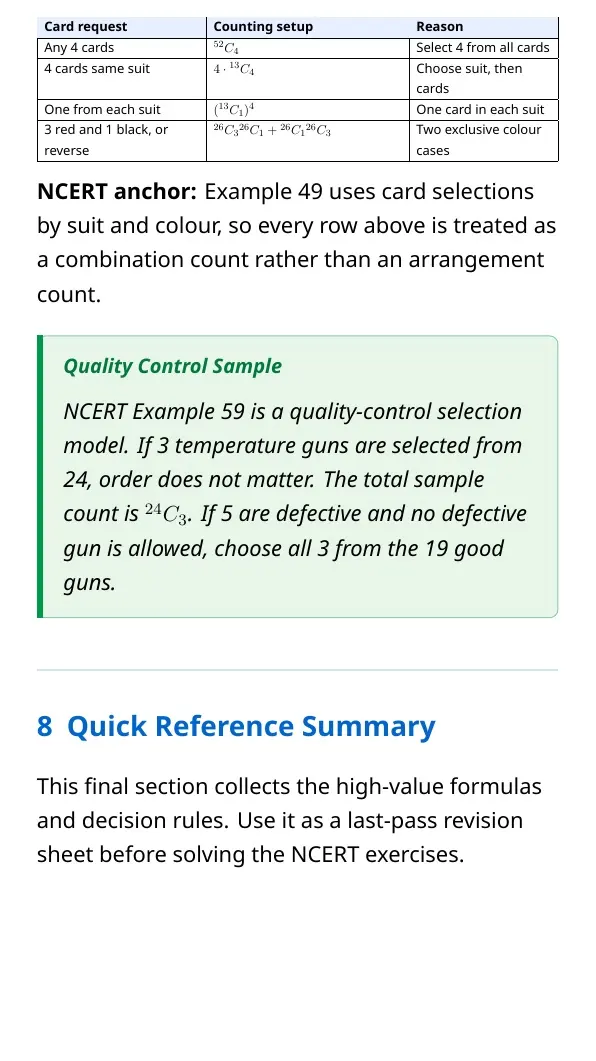
| Pick two cards from a hand | Combination | The picked pair is unordered |
Circular Permutation and Repeated Letter Cases
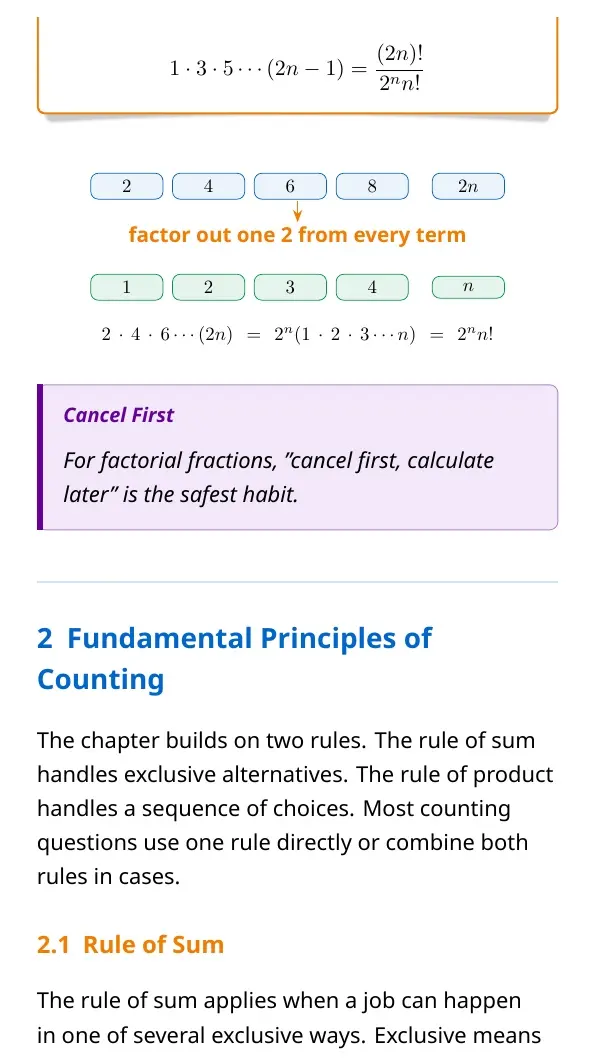
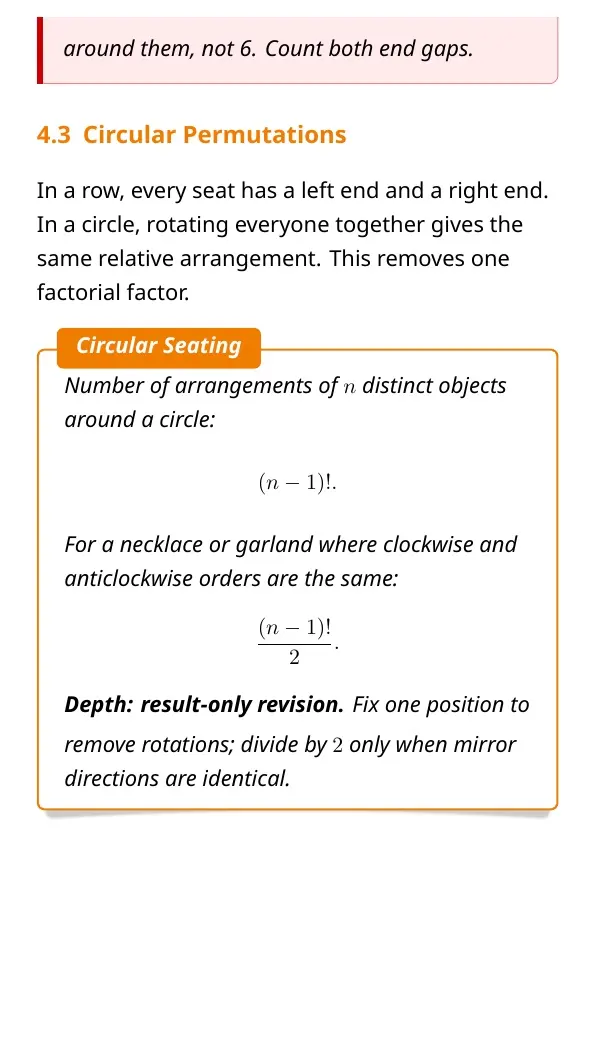
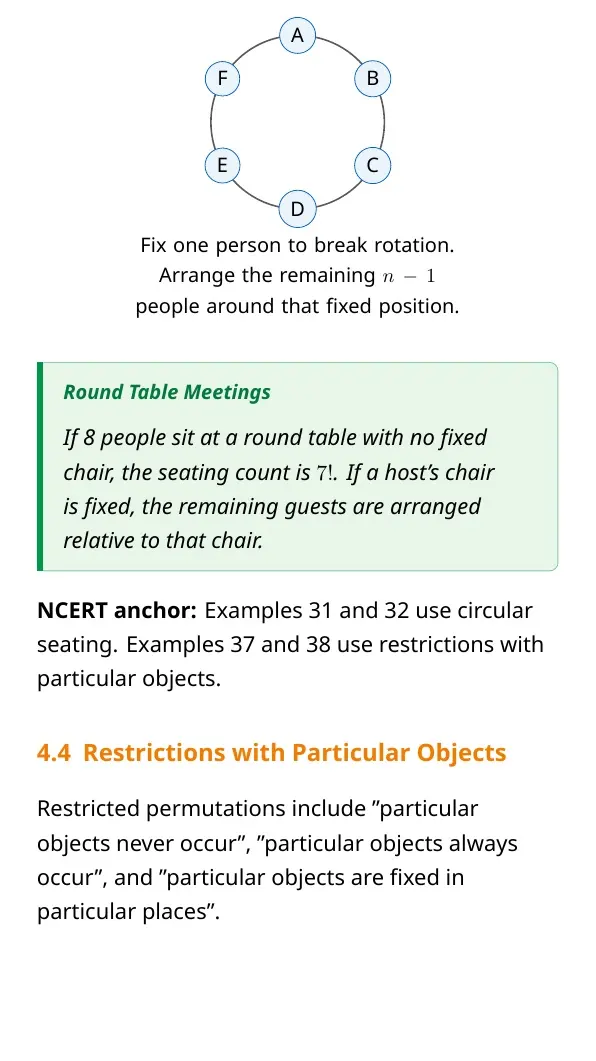
Circular arrangements remove rotations that look identical. For n distinct people sitting around a round table, the number of arrangements is (n - 1)!.
- Round table: fix one person, then arrange the remaining n - 1 people.
- Necklace or bracelet: if clockwise and anticlockwise orders are the same, divide again by 2 when allowed.
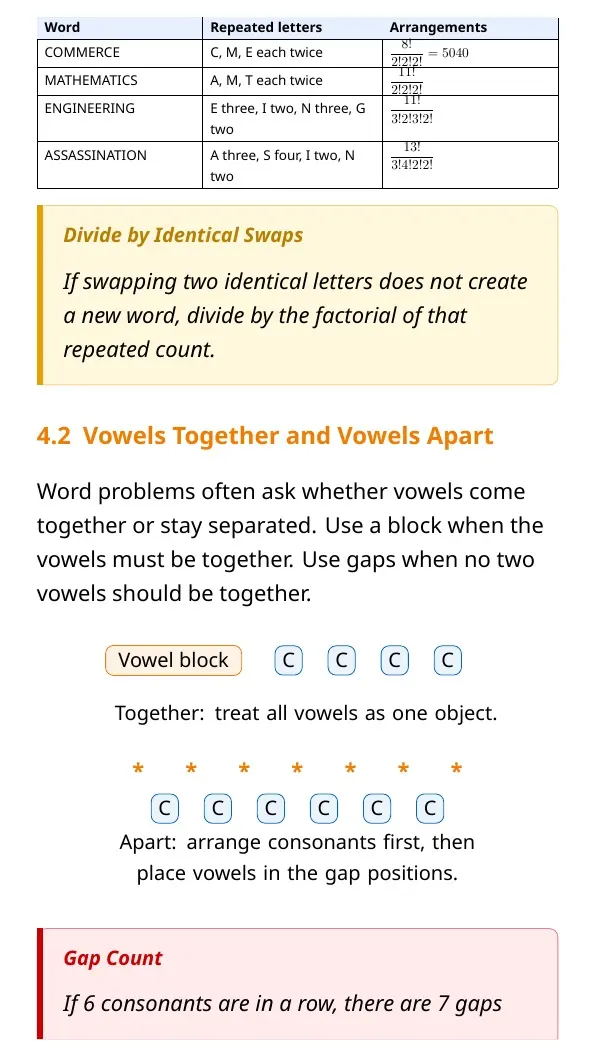
- Repeated letters: divide by the factorial of each repeated letter count.
- Grouped letters: treat the group as one block first, then arrange inside the block if needed.
In words such as SUCCESS or MISSISSIPPI, list letter frequencies before writing the formula. This avoids missing one repeated group.
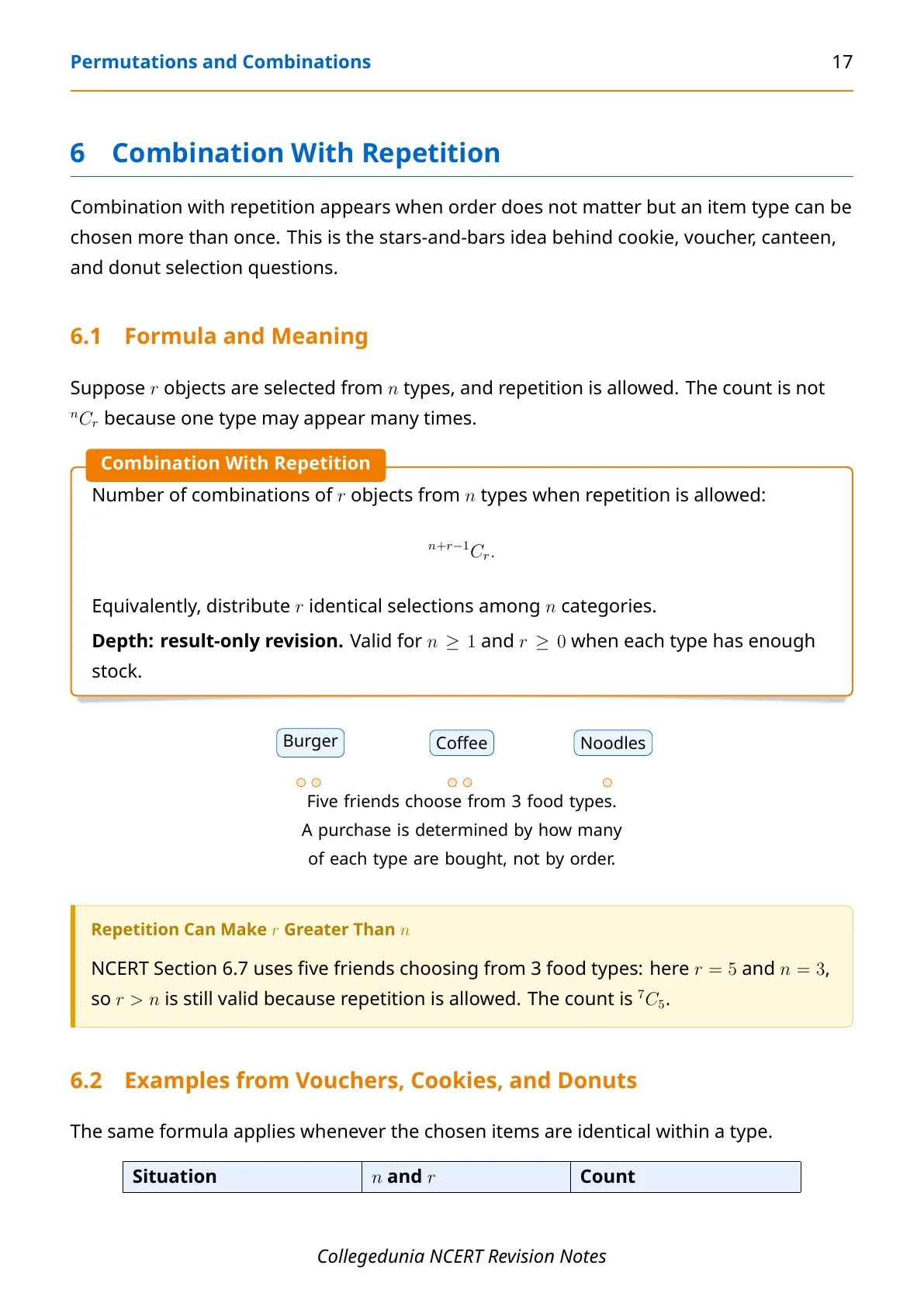
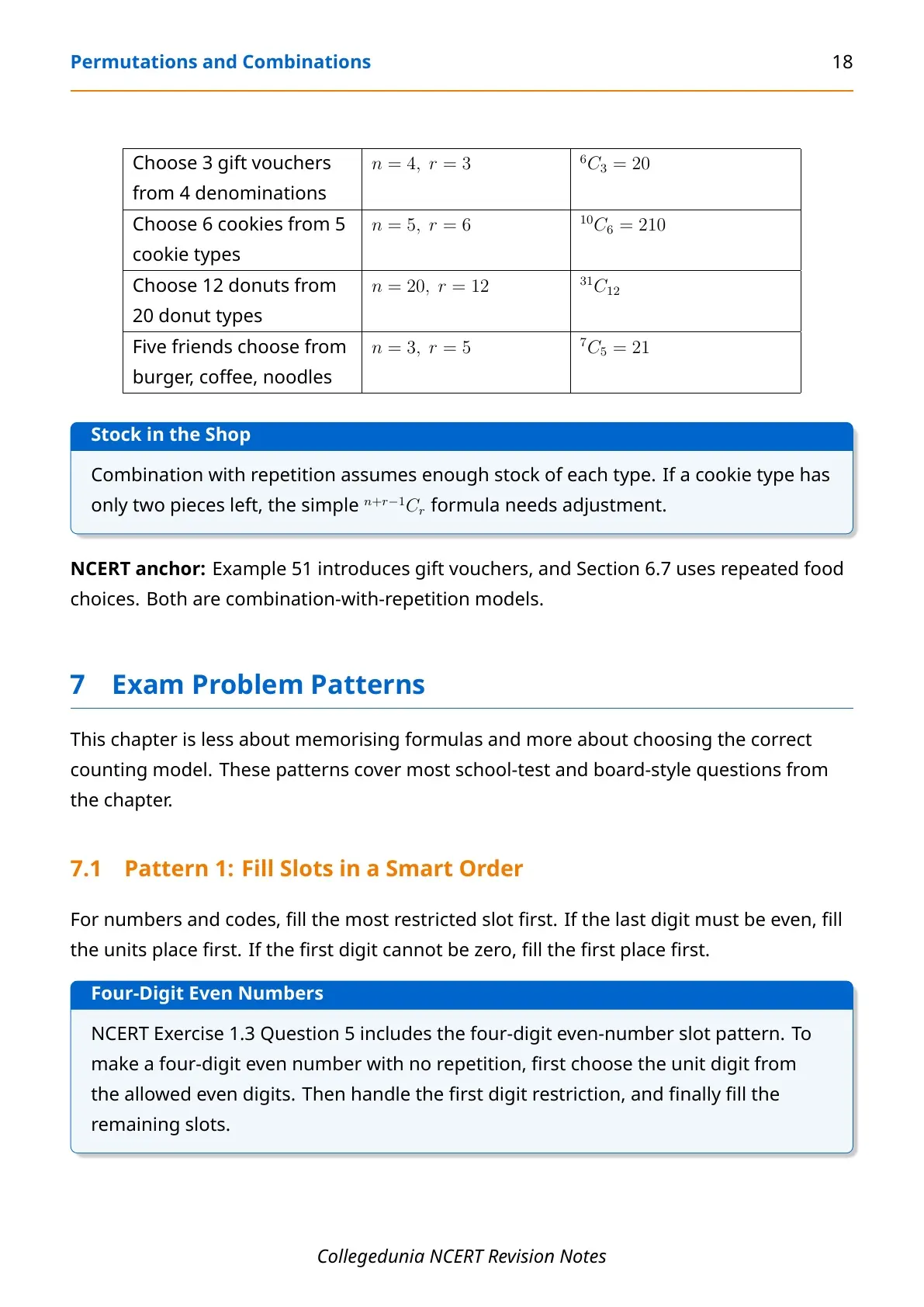
Combination With Repetition in Applied Mathematics
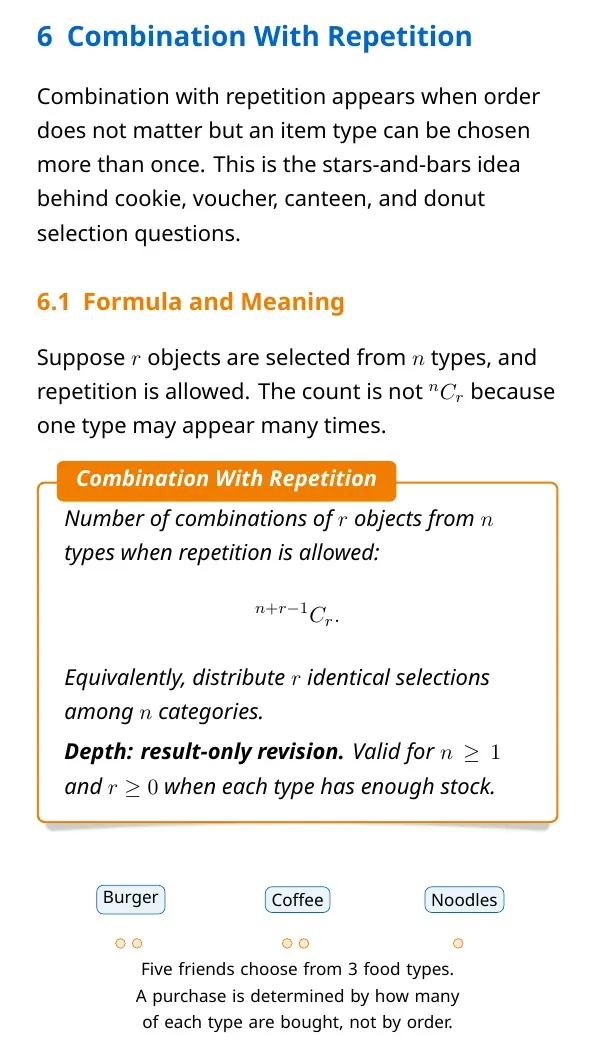
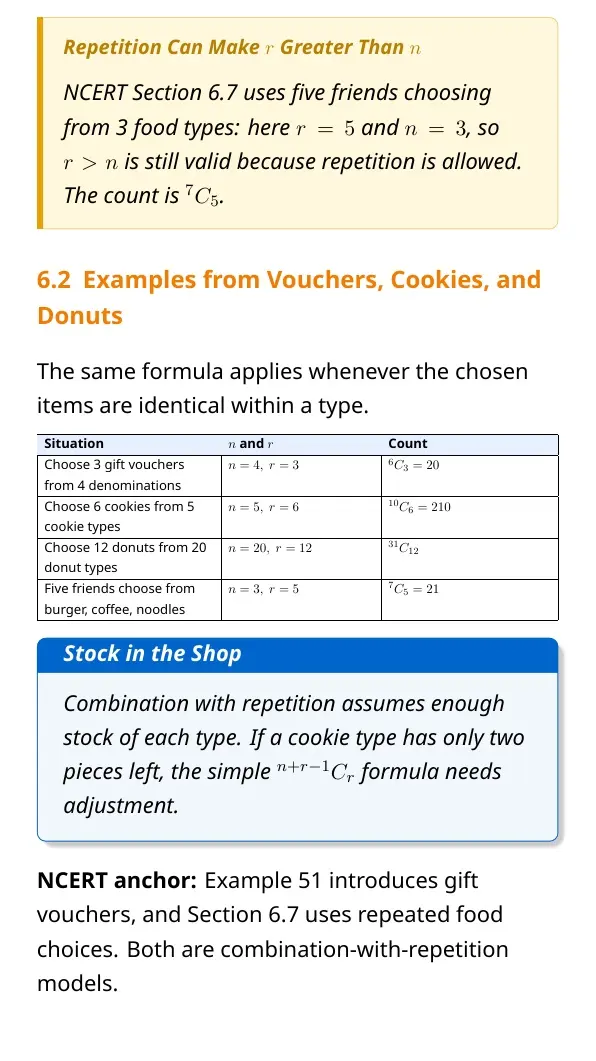
Some Applied Mathematics problems allow repeated selection, such as choosing items from types where more than one item of the same type can be selected. These cases connect counting with distribution.
| Situation | Counting model | Note |
|---|---|---|
| Select r objects from n types with repetition allowed | (n + r - 1)Cr | Stars and bars model |
| Non-negative integer solutions of x1 + x2 + ... + xn = r | (n + r - 1)Cr | Each xi can be zero |
| Positive integer solutions of x1 + x2 + ... + xn = r | (r - 1)C(n - 1) | Give one to each variable first |
This part is useful in business-context counting, distribution problems and menu-choice questions in Applied Mathematics.
How to Use the Permutations and Combinations Notes PDF
The PDF is best used in three short passes. Start with the decision rule, then practise formula substitution, and finally solve mixed restriction questions.
| Study pass | What to do | Target |
|---|---|---|
| Pass 1 | Revise factorial, product rule, permutation and combination formulas | Fast recall |
| Pass 2 | Classify examples as order matters or order ignored | Correct model choice |
| Final recap | Attempt mixed cases with restrictions and repeated objects | Exam speed |
Download the Permutations and Combinations Notes PDF for Class 11 Applied Mathematics
Use the PDF for factorials, nPr, nCr, circular permutations, repeated objects and counting-rule revision.
Download PDFRelated Class 11 Applied Mathematics Resources for Permutations and Combinations
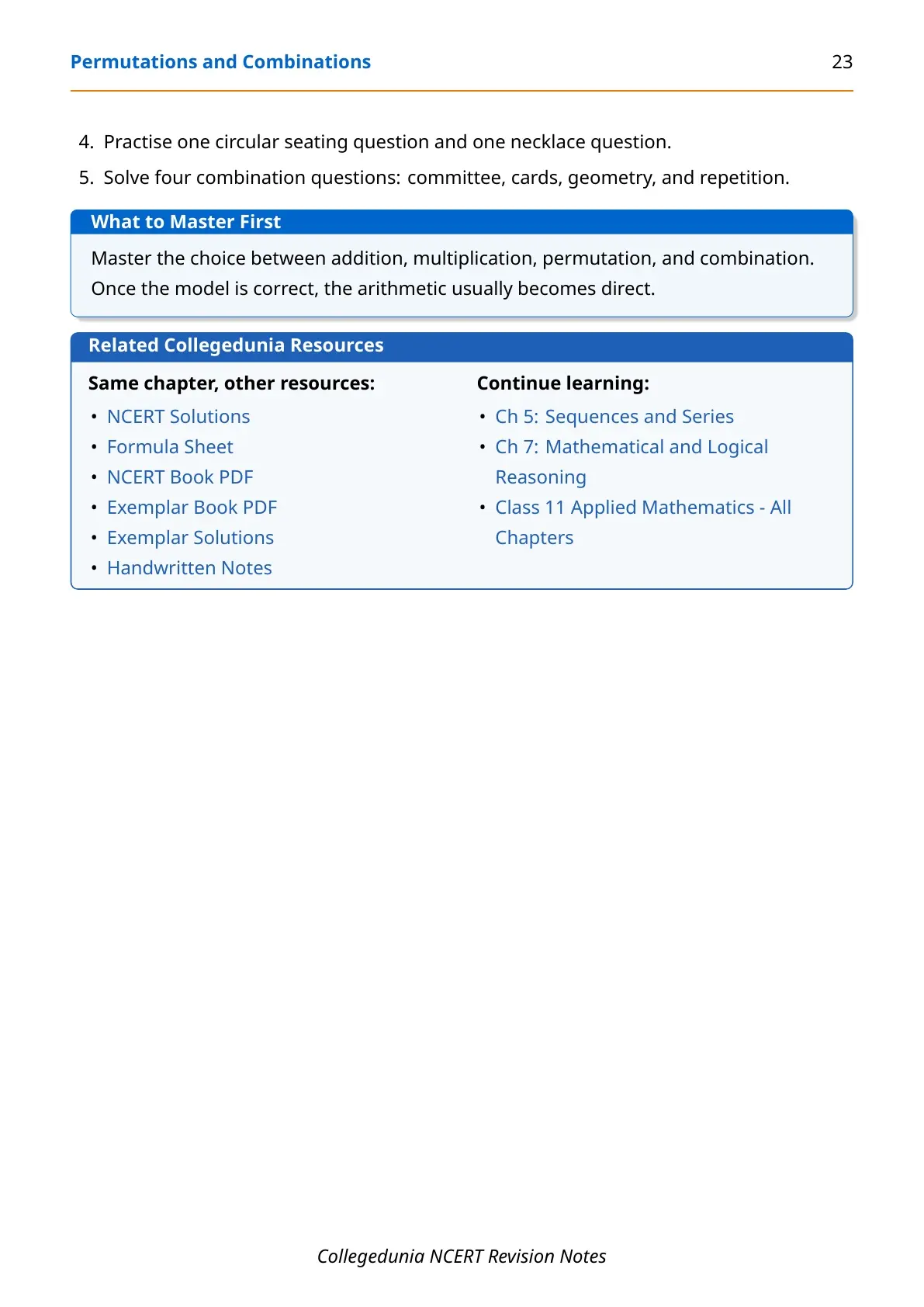
Also Check: use these notes with the book PDF, solutions and handwritten notes when you need the same chapter in a different format.
| Resource | Best used for | Link |
|---|---|---|
| NCERT Book PDF | Original chapter wording and examples | Permutations and Combinations Class 11 NCERT Book PDF |
| NCERT Solutions | Step-by-step answers to textbook questions | Permutations and Combinations Class 11 NCERT Solutions |
| Handwritten Notes | Quick visual recall before class tests | Permutations and Combinations Class 11 Handwritten Notes |
Applied Mathematics Notes for All Chapters
Related Links: revise the neighbouring Applied Mathematics chapters with the same Notes format.
| Chapter | Class 11 Applied Mathematics Notes |
|---|---|
| Chapter 2 | Numerical Applications Class 11 Notes |
| Chapter 3 | Set Class 11 Notes |
| Chapter 4 | Relations Class 11 Notes |
| Chapter 5 | Sequences and Series Class 11 Notes |
| Chapter 6 | Permutations and Combinations Class 11 Notes |
| Chapter 7 | Mathematical and Logical Reasoning Class 11 Notes |
Permutations and Combinations Class 11 Applied Mathematics Notes FAQs
Ques. What is the main difference between permutation and combination?
Ans. A permutation is an ordered arrangement, so AB and BA count separately. A combination is an unordered selection, so AB and BA count once.
Ques. What is the formula for nPr?
Ans. The formula is nPr = n! / (n - r)!, used when r objects are arranged from n distinct objects and order matters.
Ques. What is the formula for nCr?
Ans. The formula is nCr = n! / [r! (n - r)!], used when r objects are selected from n distinct objects and order does not matter.
Ques. Are these Permutations and Combinations notes aligned to the 2026-27 syllabus?
Ans. Yes. These Class 11 Applied Mathematics notes follow the 2026-27 CBSE syllabus scope for the Combinatorics unit.



Comments