




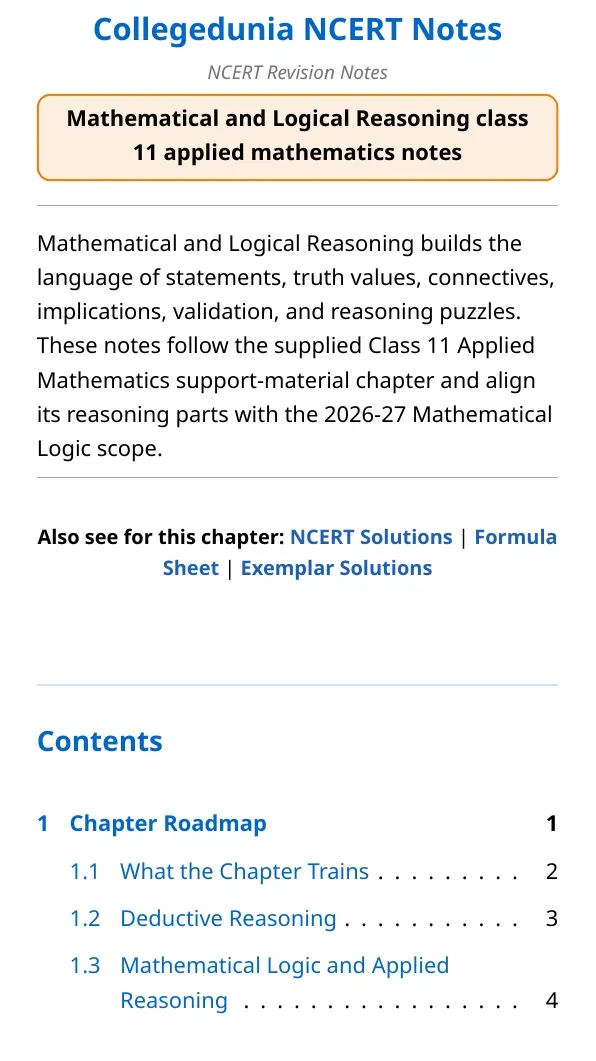
Class 11 Applied Mathematics Chapter 7 Mathematical and Logical Reasoning notes help students revise statements, negation, compound statements, quantifiers, implication, equivalence, syllogism, coding-decoding and blood relation questions for the 2026-27 CBSE syllabus. Use the PDF for classroom revision, Applied Mathematics tests and quick recall before boards.
Student Feedback: In a Collegedunia poll of more than 10,000 students preparing for the 2026 boards, most students said this chapter becomes easier after they separate grammar from truth value. The most common doubt was the difference between converse and contrapositive.
- Best for revision: truth values, negation, and, or, if then and if and only if are placed in one flow.
- Exam focused: reasoning shortcuts are paired with syllogism, coding-decoding and blood relation examples.
- Aligned to 2026-27: follows the Class 11 Applied Mathematics Mathematical and Logical Reasoning chapter scope.
|
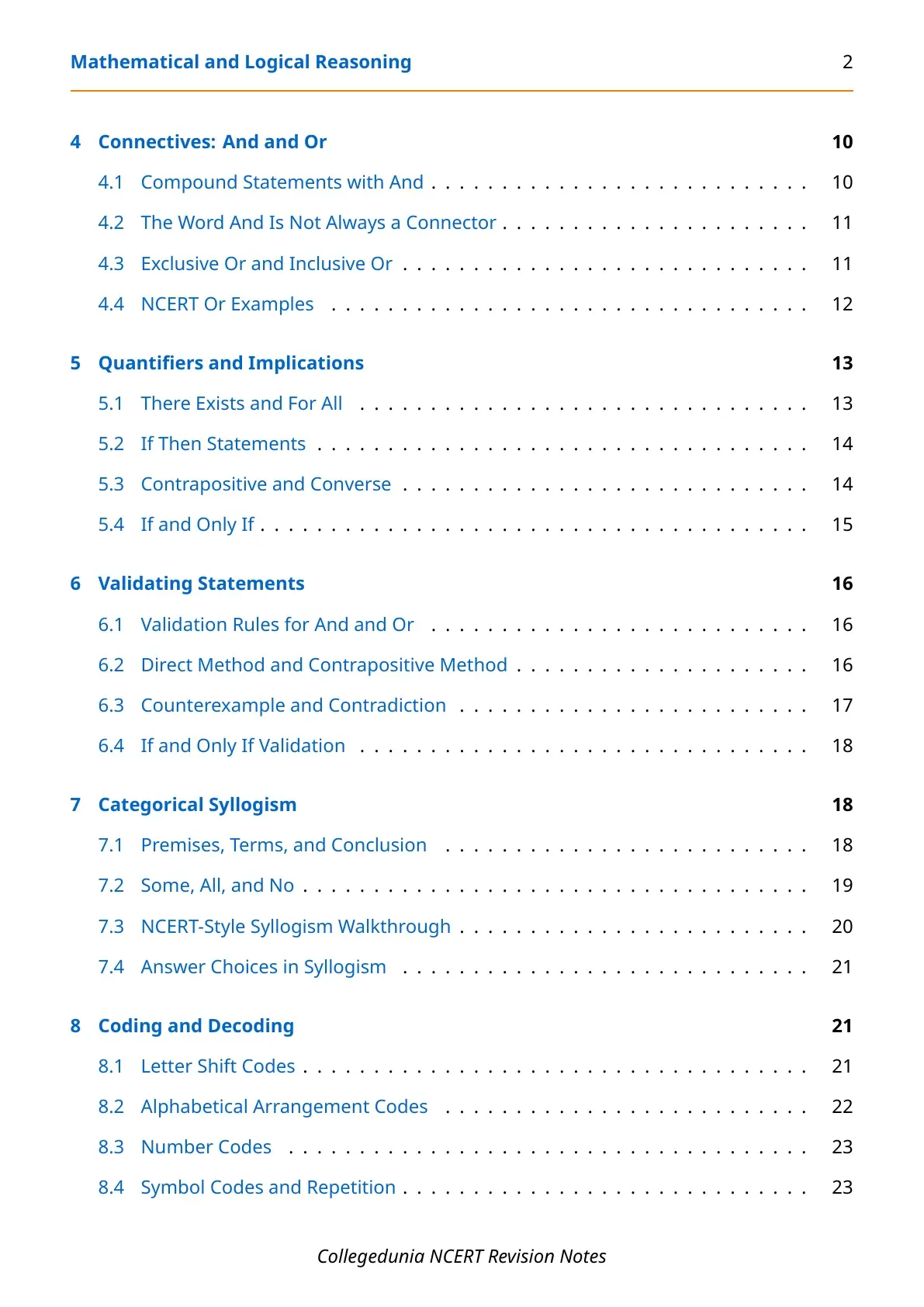
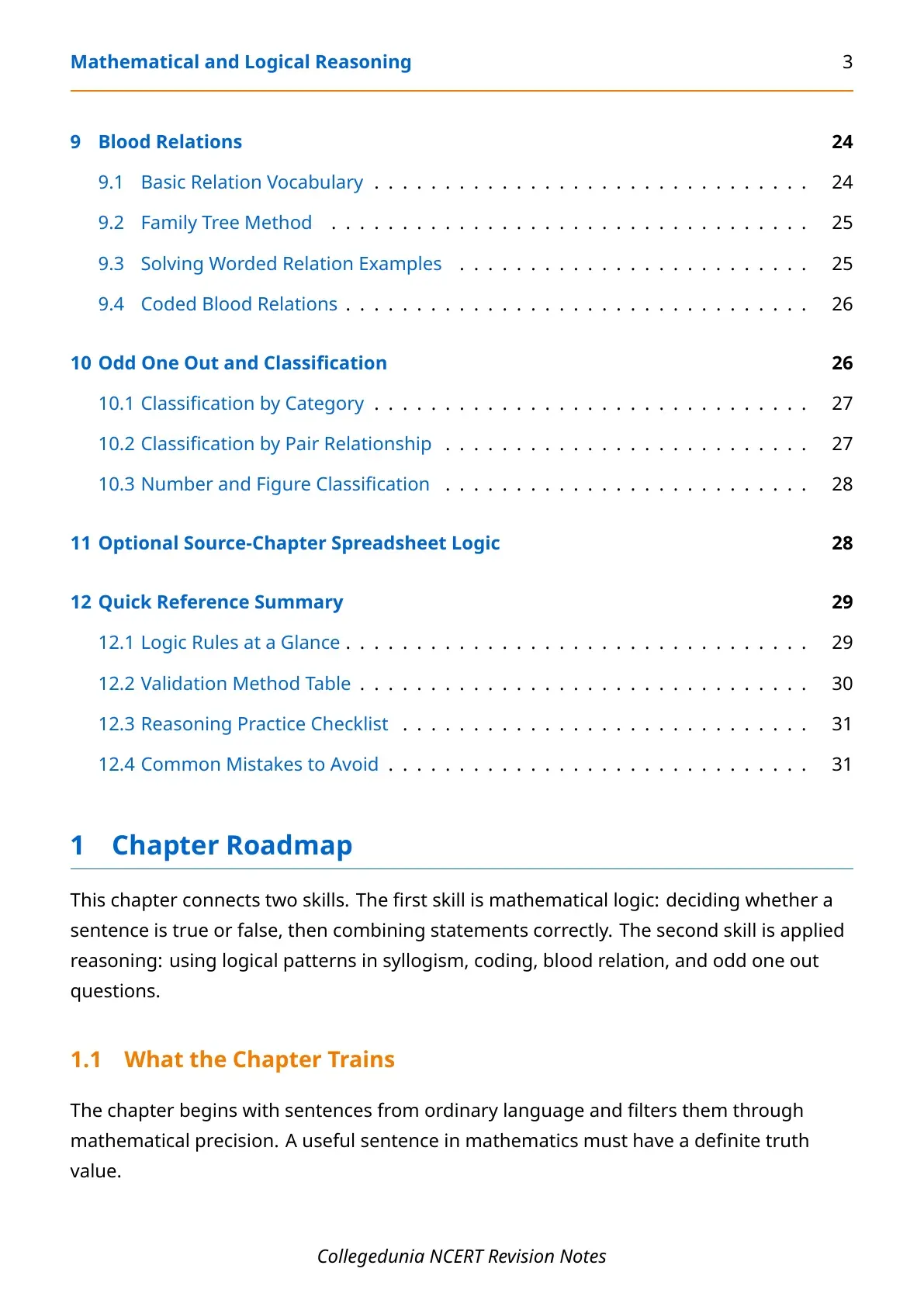
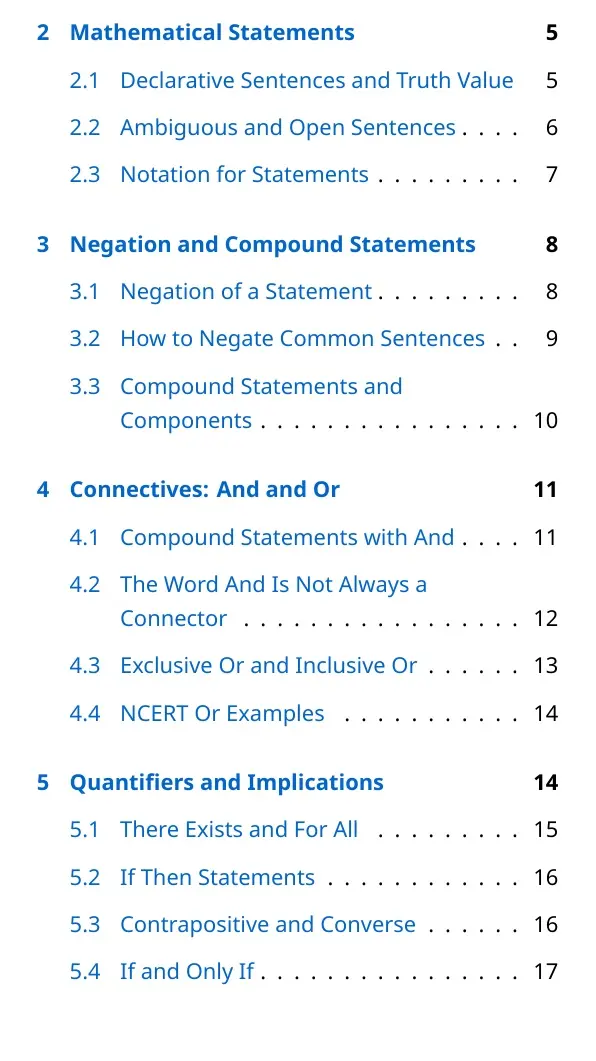
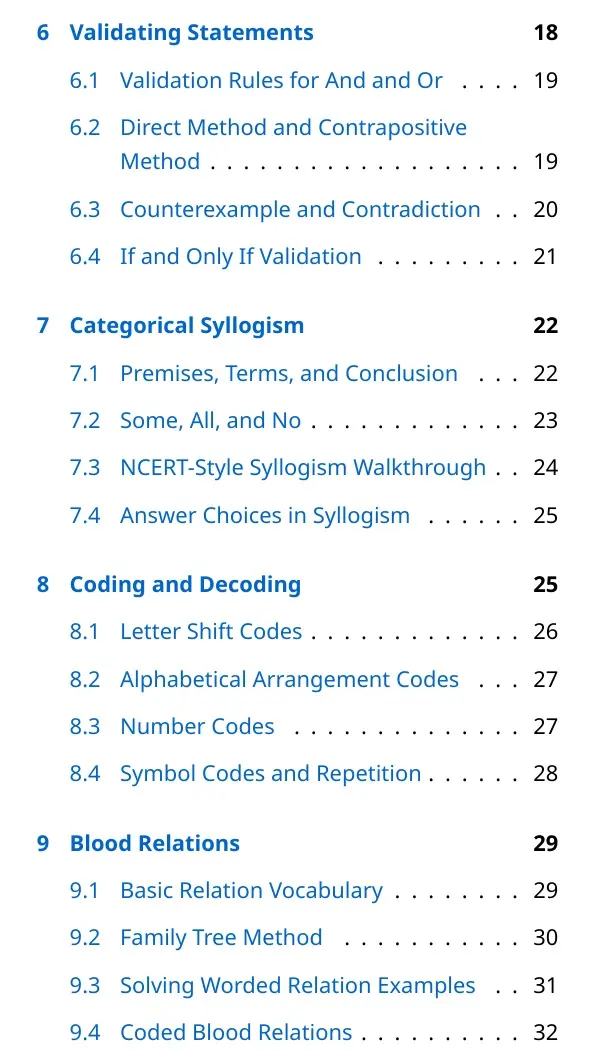
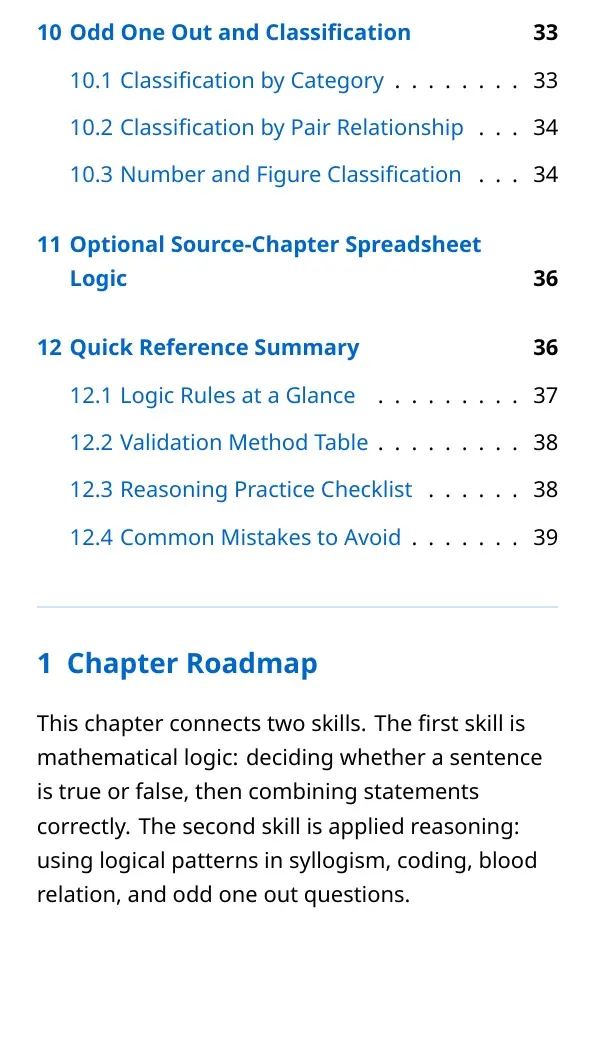
Table of Contents |
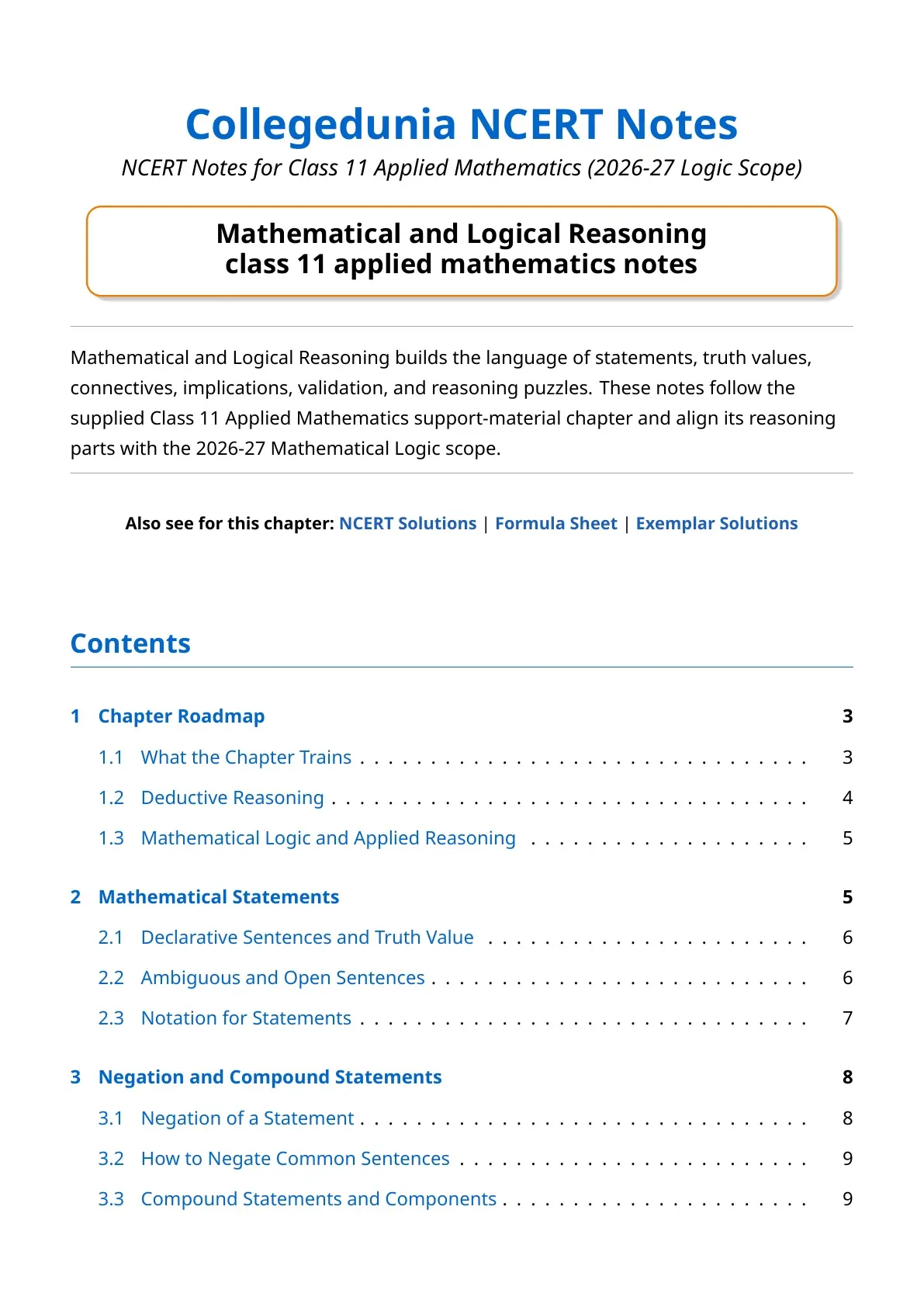
Mathematical and Logical Reasoning Class 11 Notes Overview
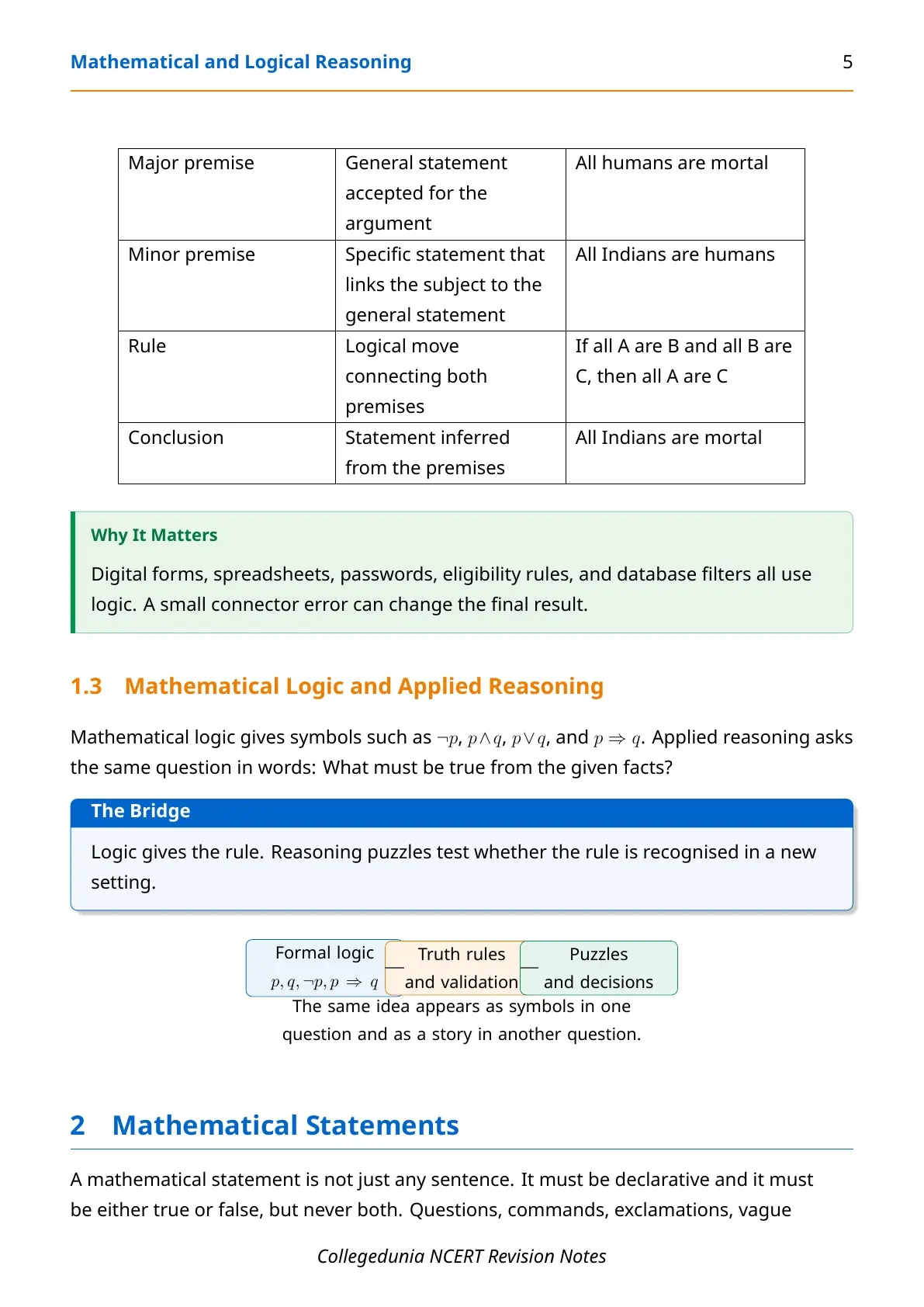
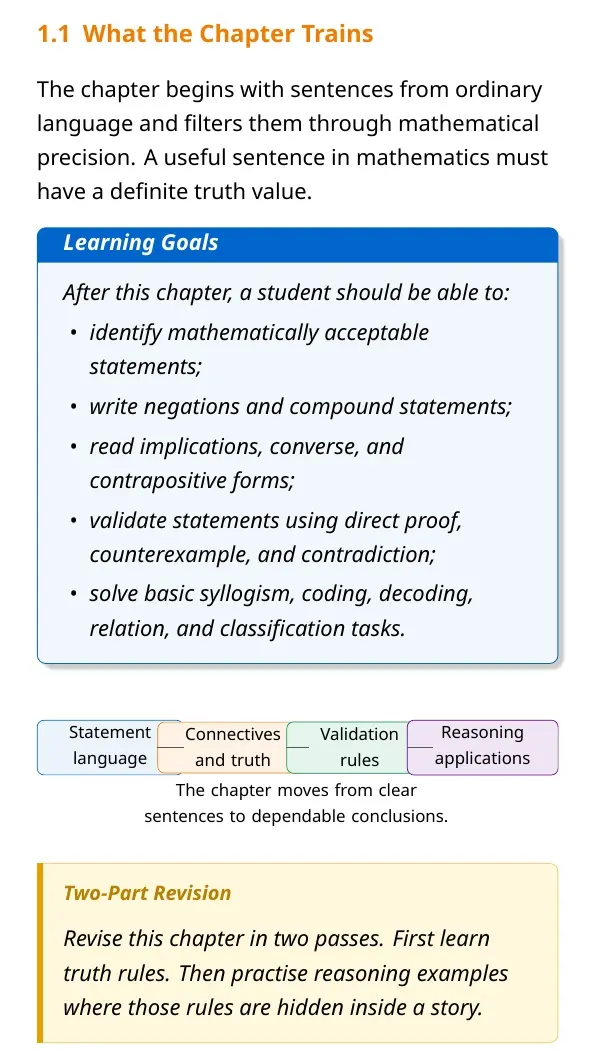
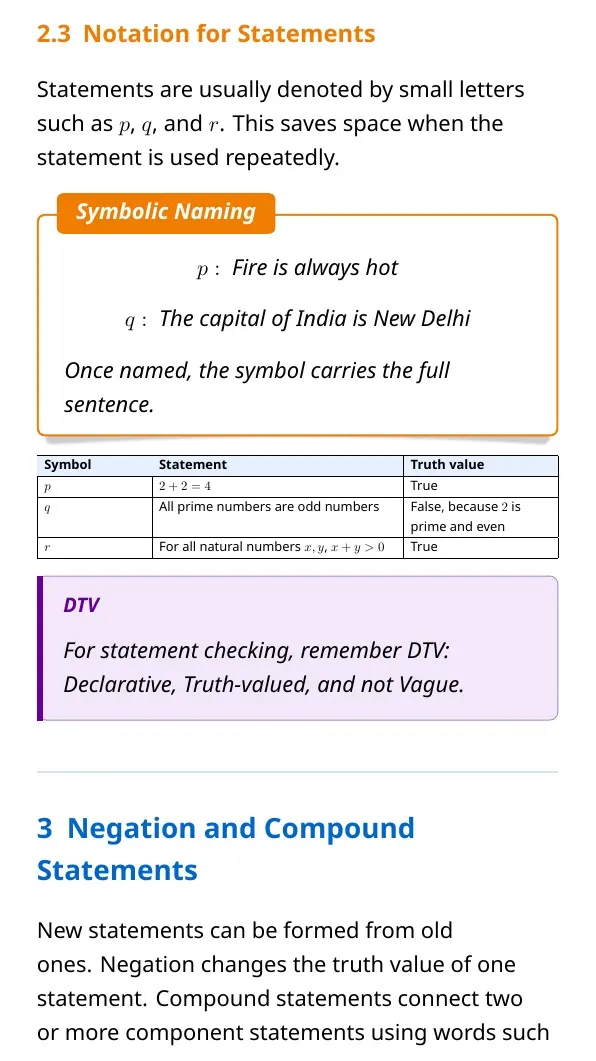
Mathematical and Logical Reasoning starts with a simple idea: a sentence becomes useful in mathematics only when its truth can be tested. Every rule in the chapter connects language with truth value. The PDF therefore moves from statements to negation, then to compound statements and finally to reasoning applications.
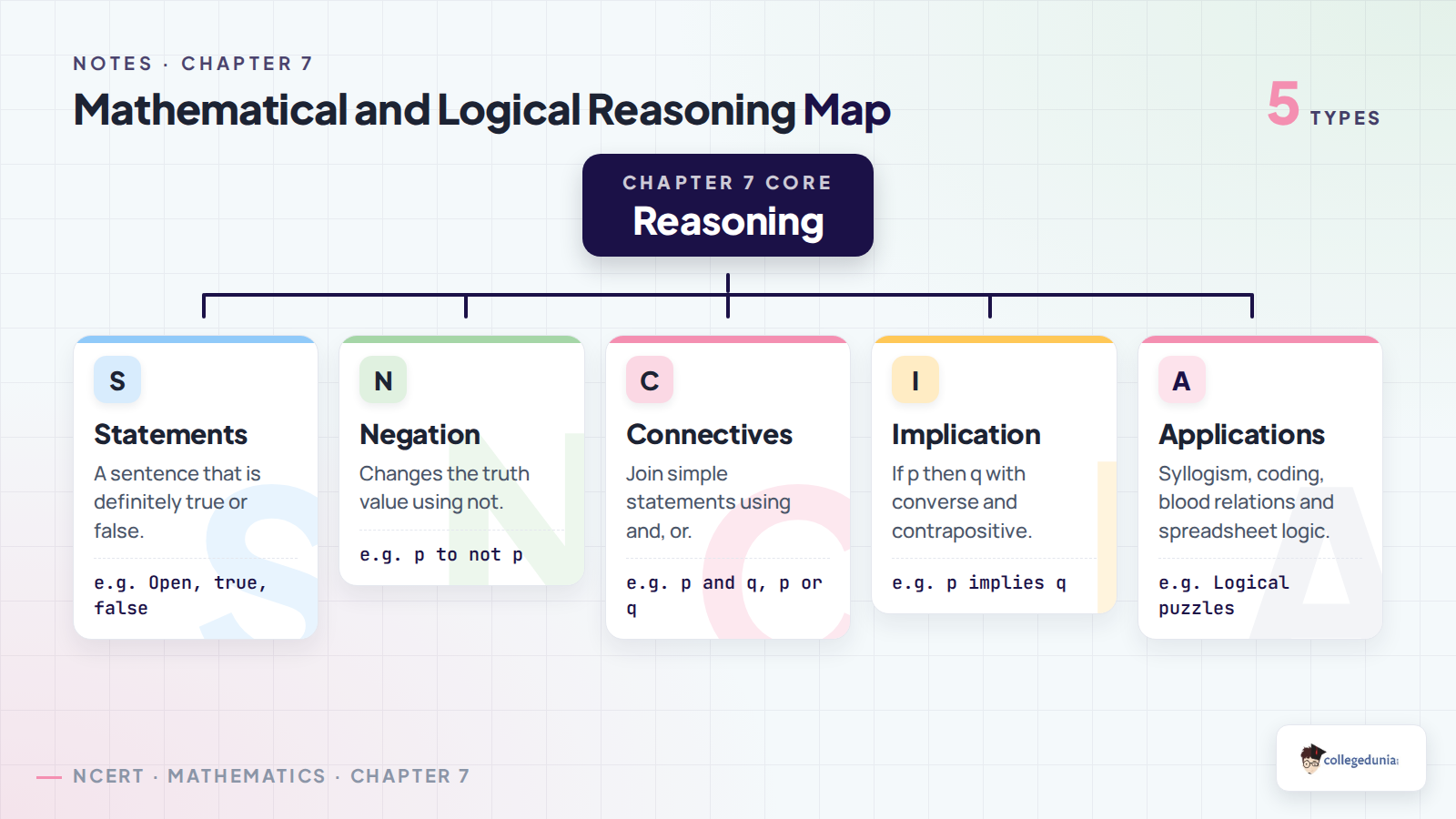
| Chapter idea | Meaning | Fast check |
|---|---|---|
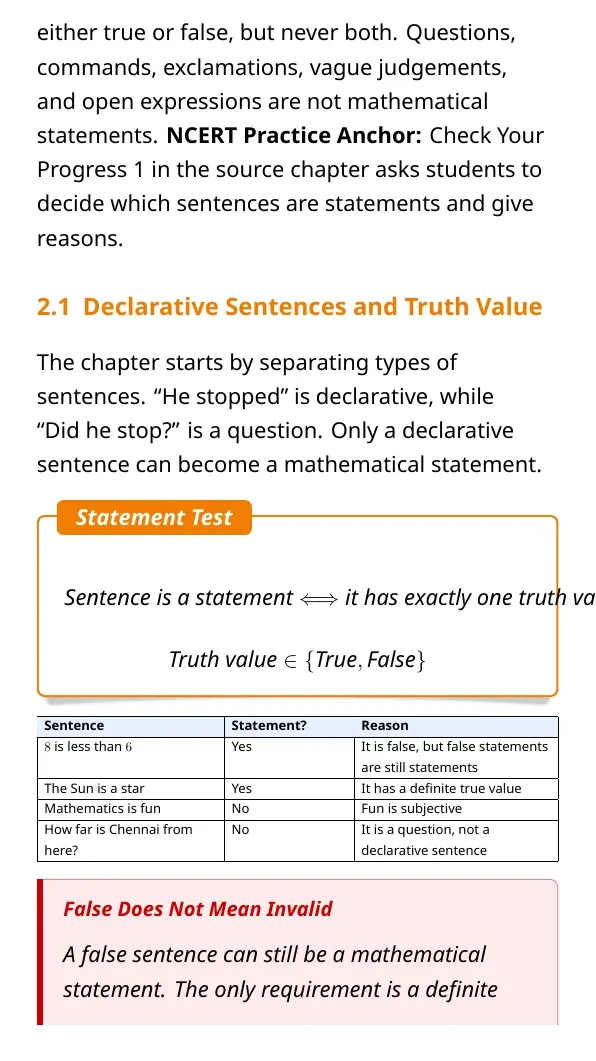
| Statement | A sentence that is either true or false | Can a truth value be assigned? |
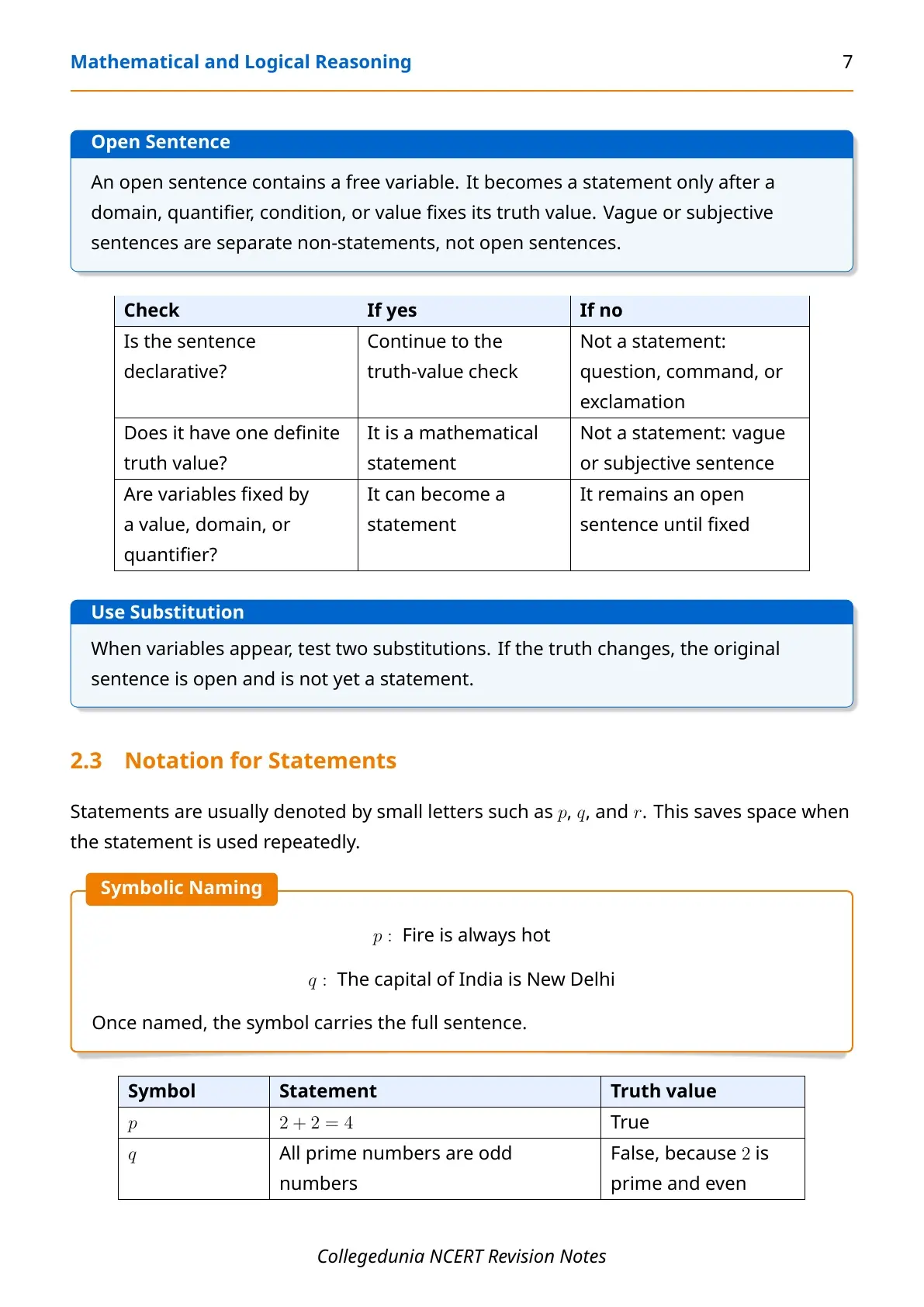
| Open statement | A sentence with a variable or unclear value | Needs a value before testing |
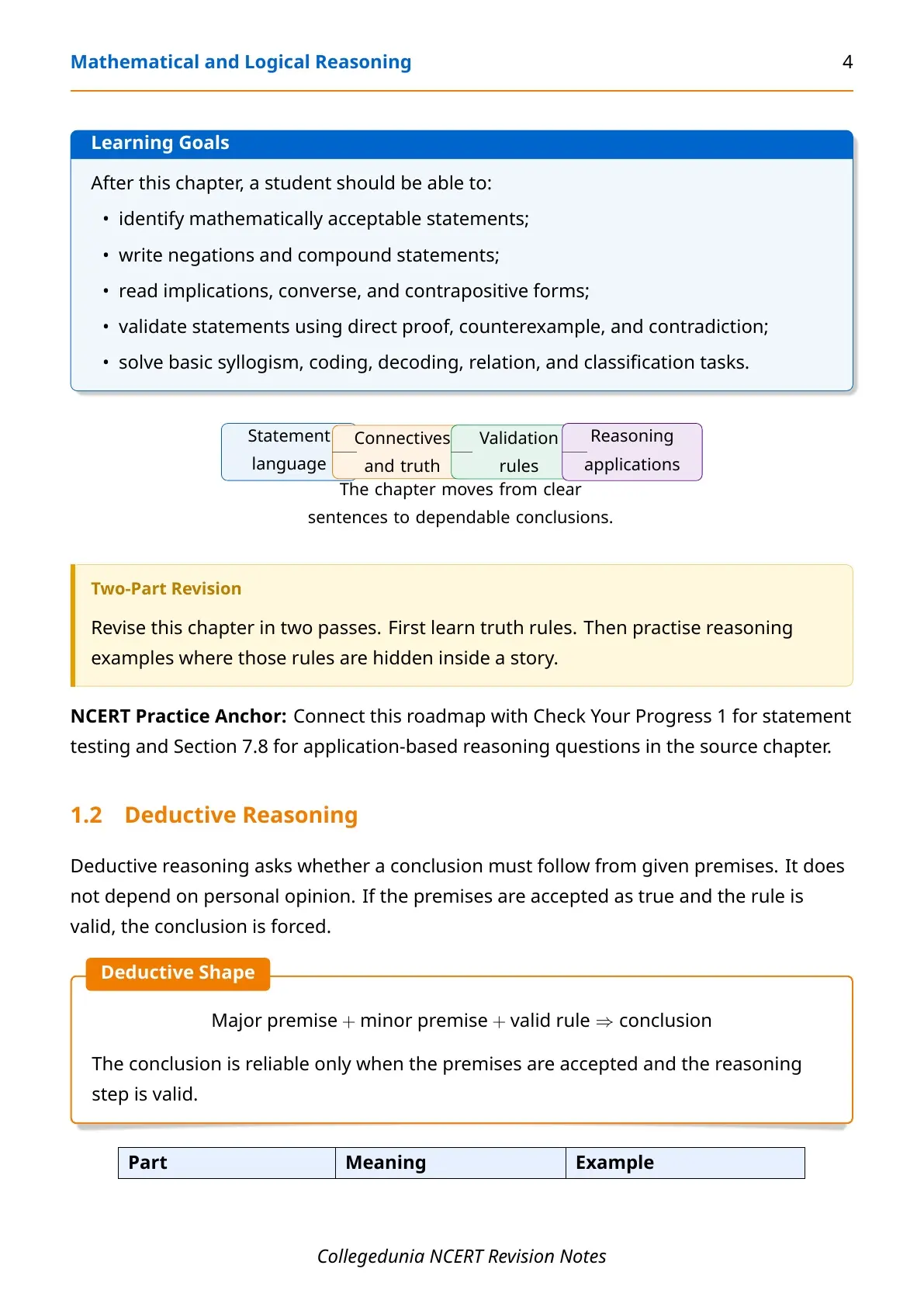
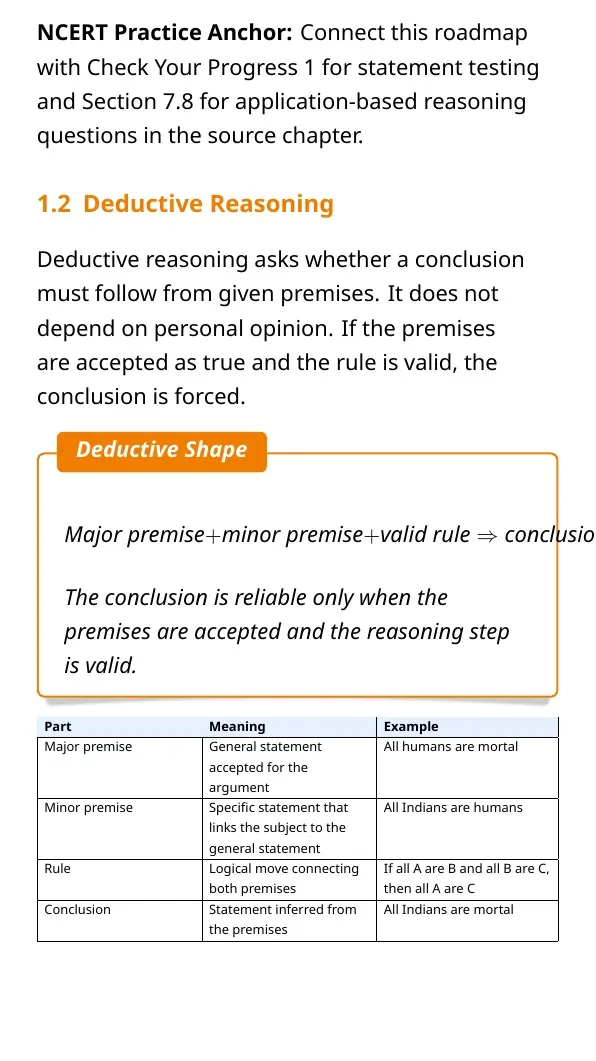
| Logical reasoning | Drawing valid conclusions from given statements | Conclusion must follow from the premises |
Logical Reasoning Class 11 Video Revision
Source: Magnet Brains on YouTube
Statements, Negation and Compound Statements
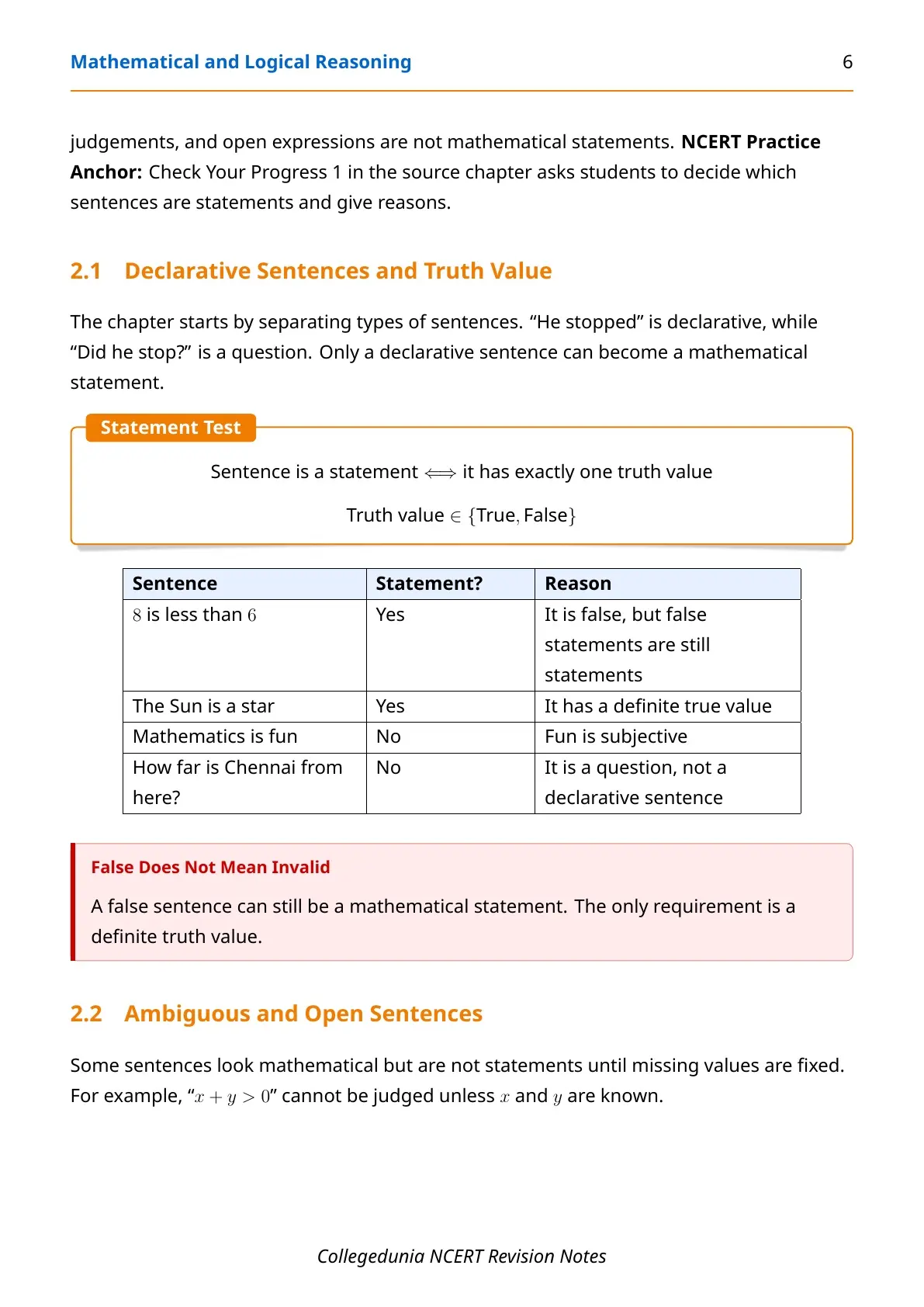
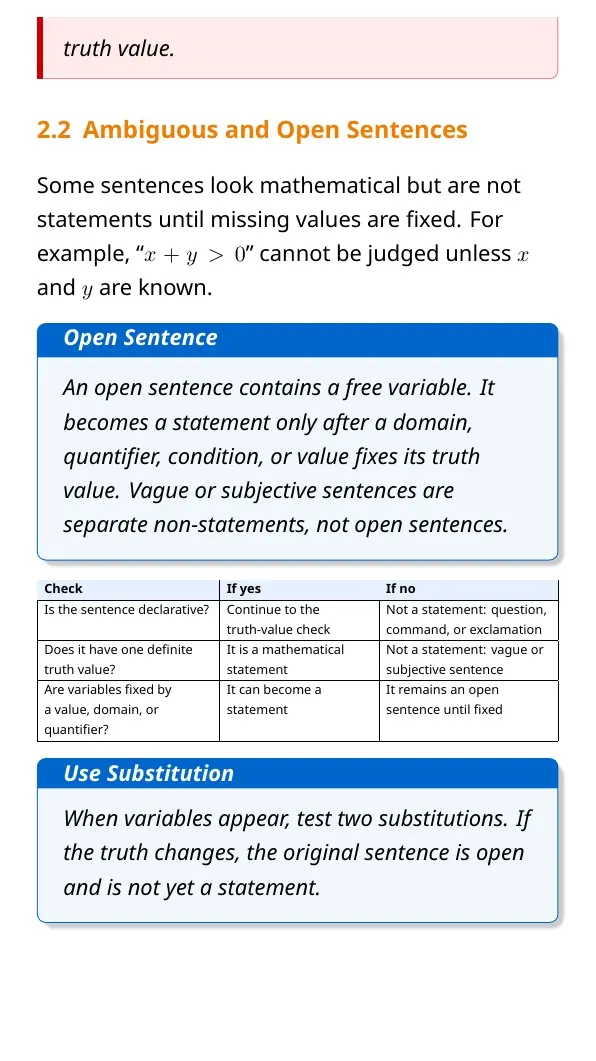
A statement is accepted in logic only when it has a definite truth value. Commands, questions and vague sentences are not mathematical statements because they cannot be marked true or false without extra information.
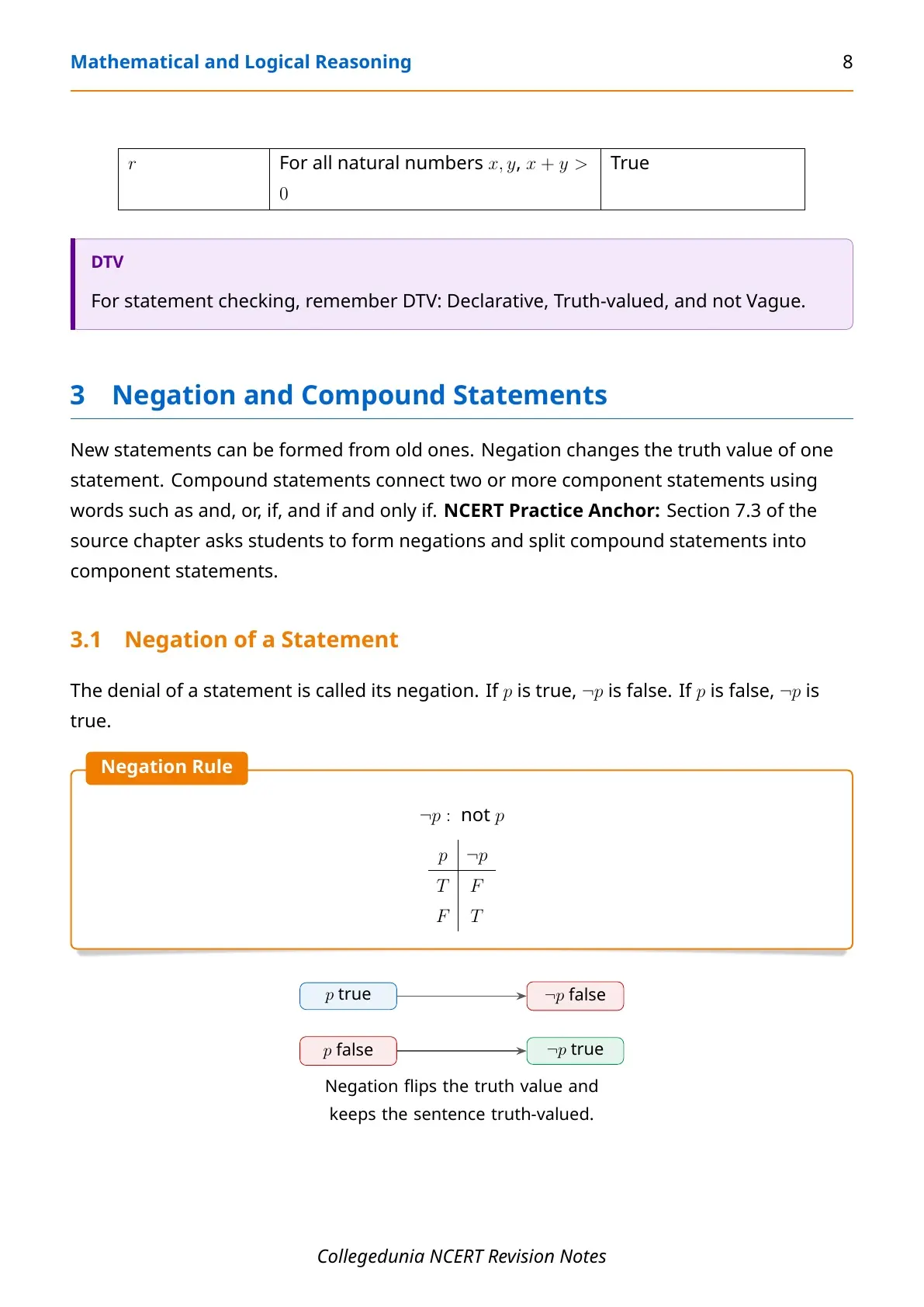
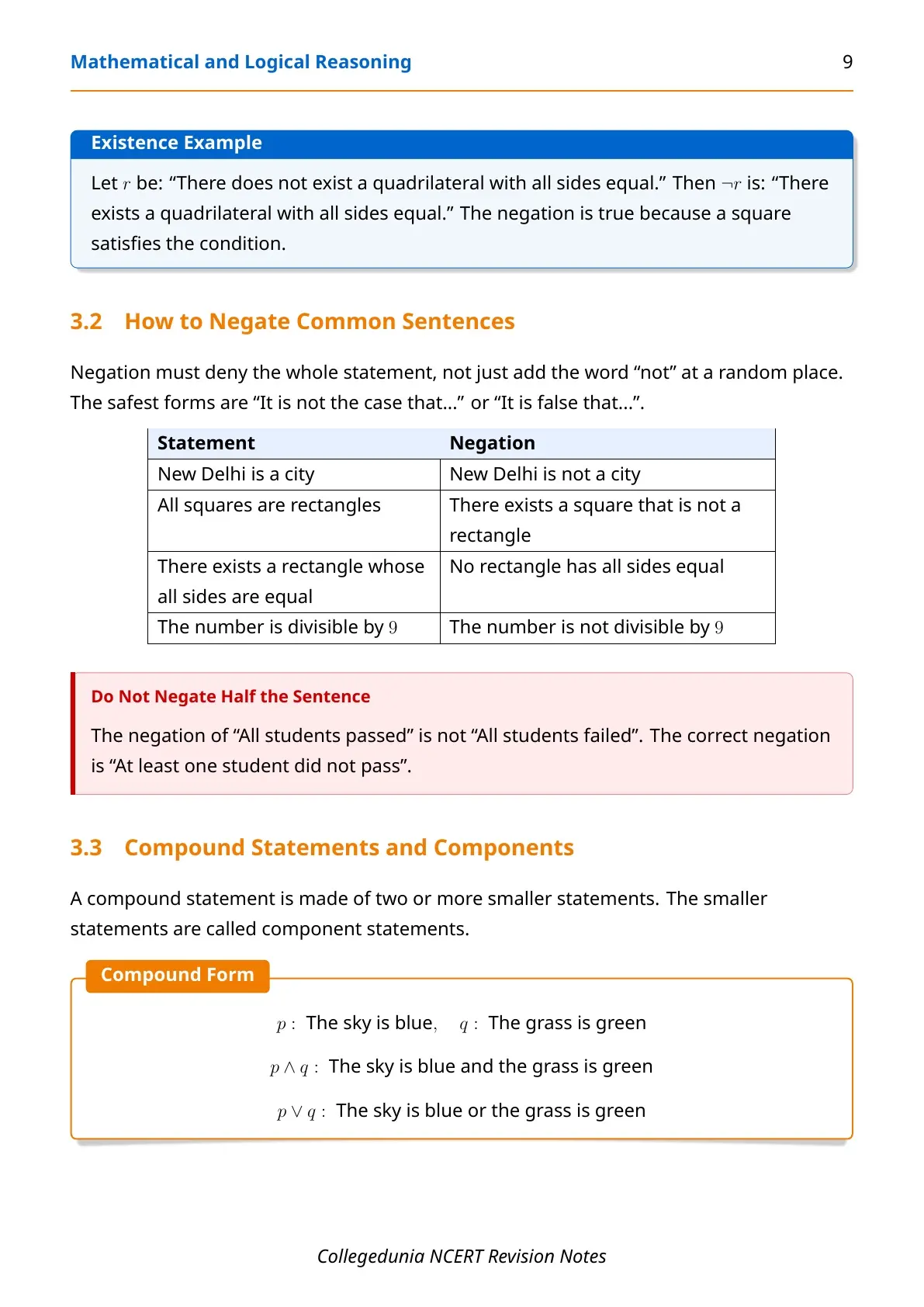
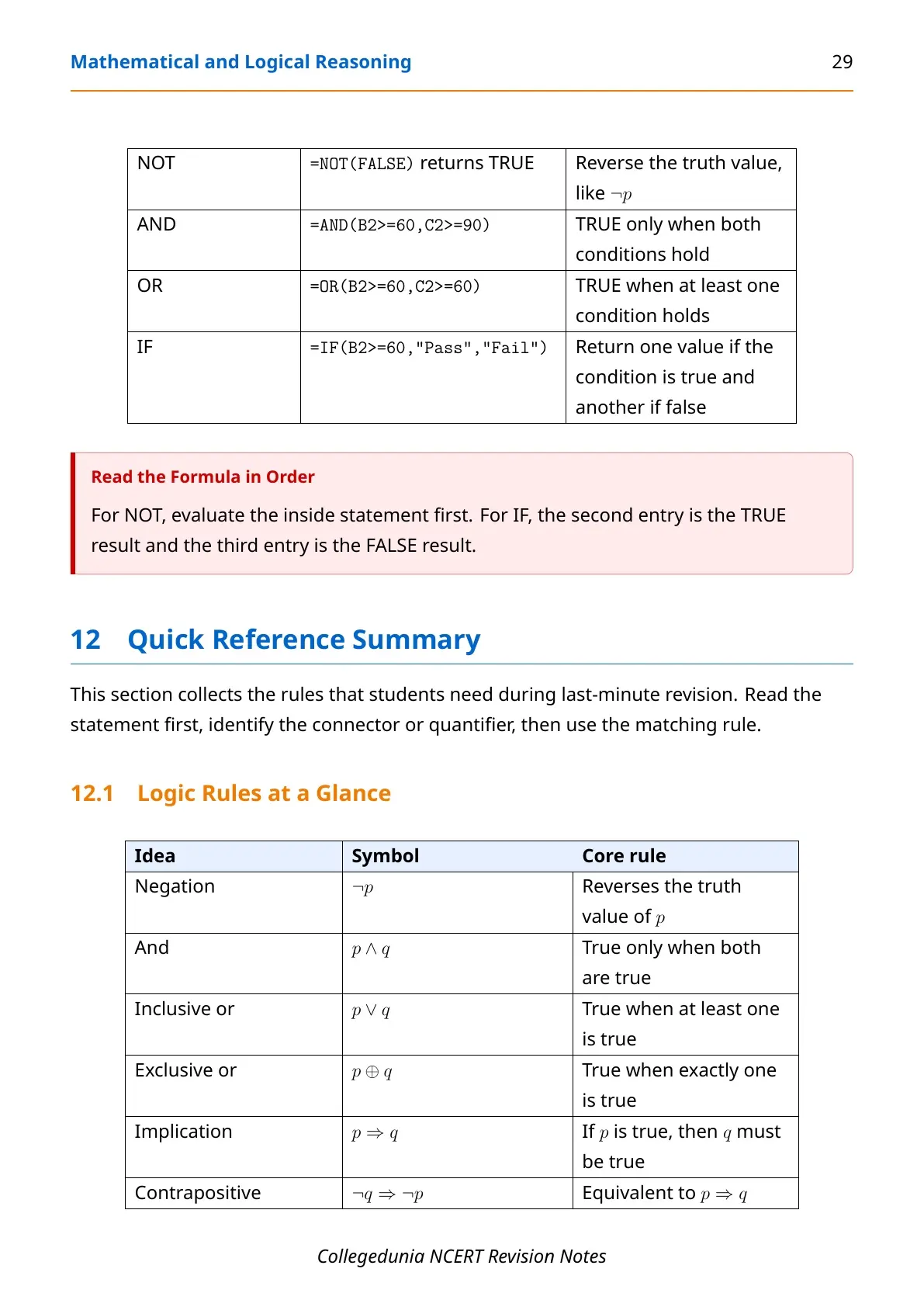
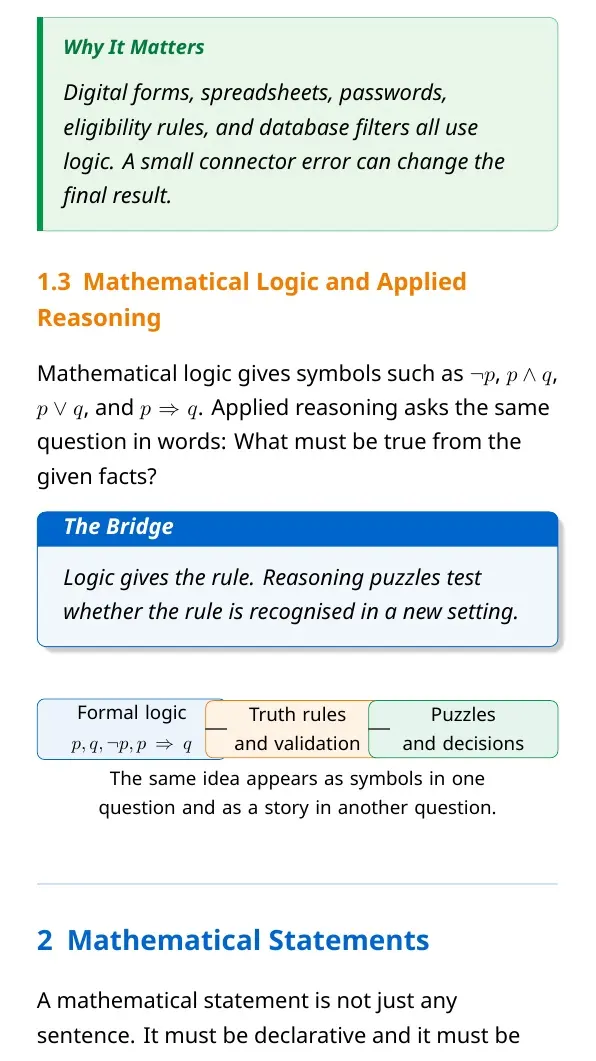
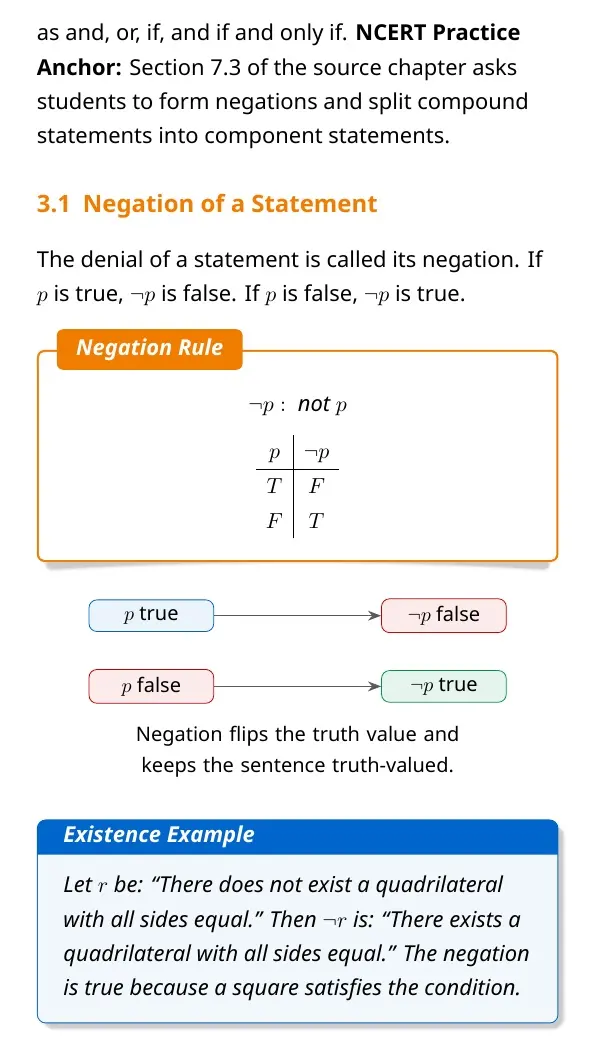
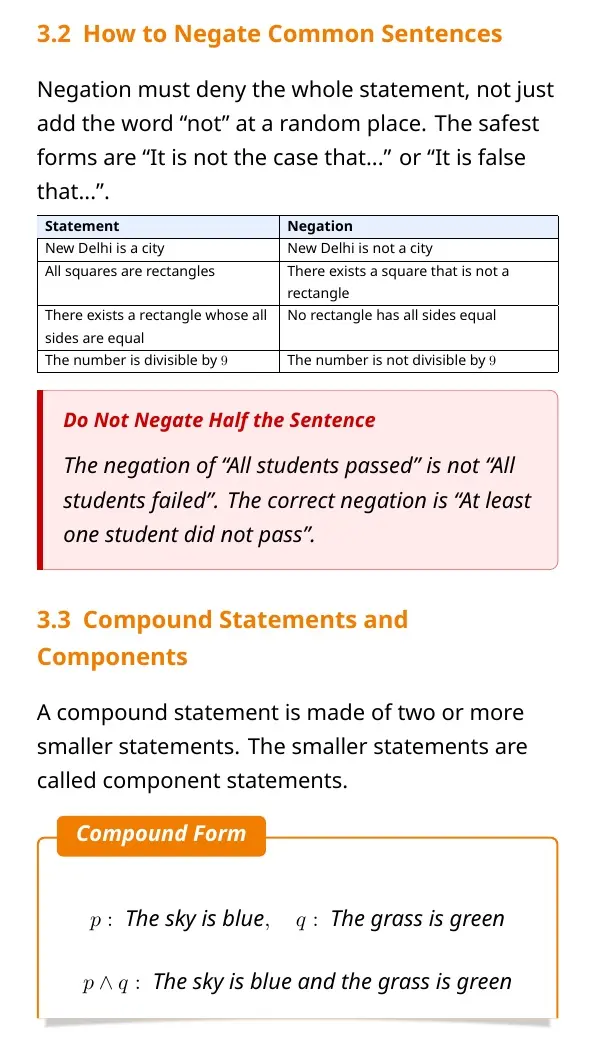
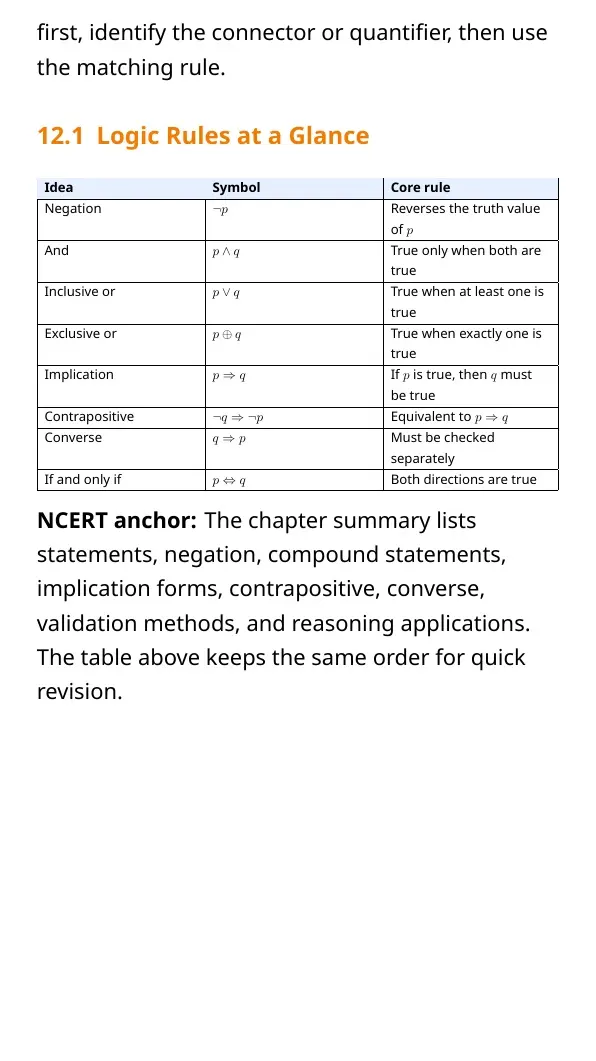
- Negation: if a statement is p, its negation says not p and reverses the truth value.
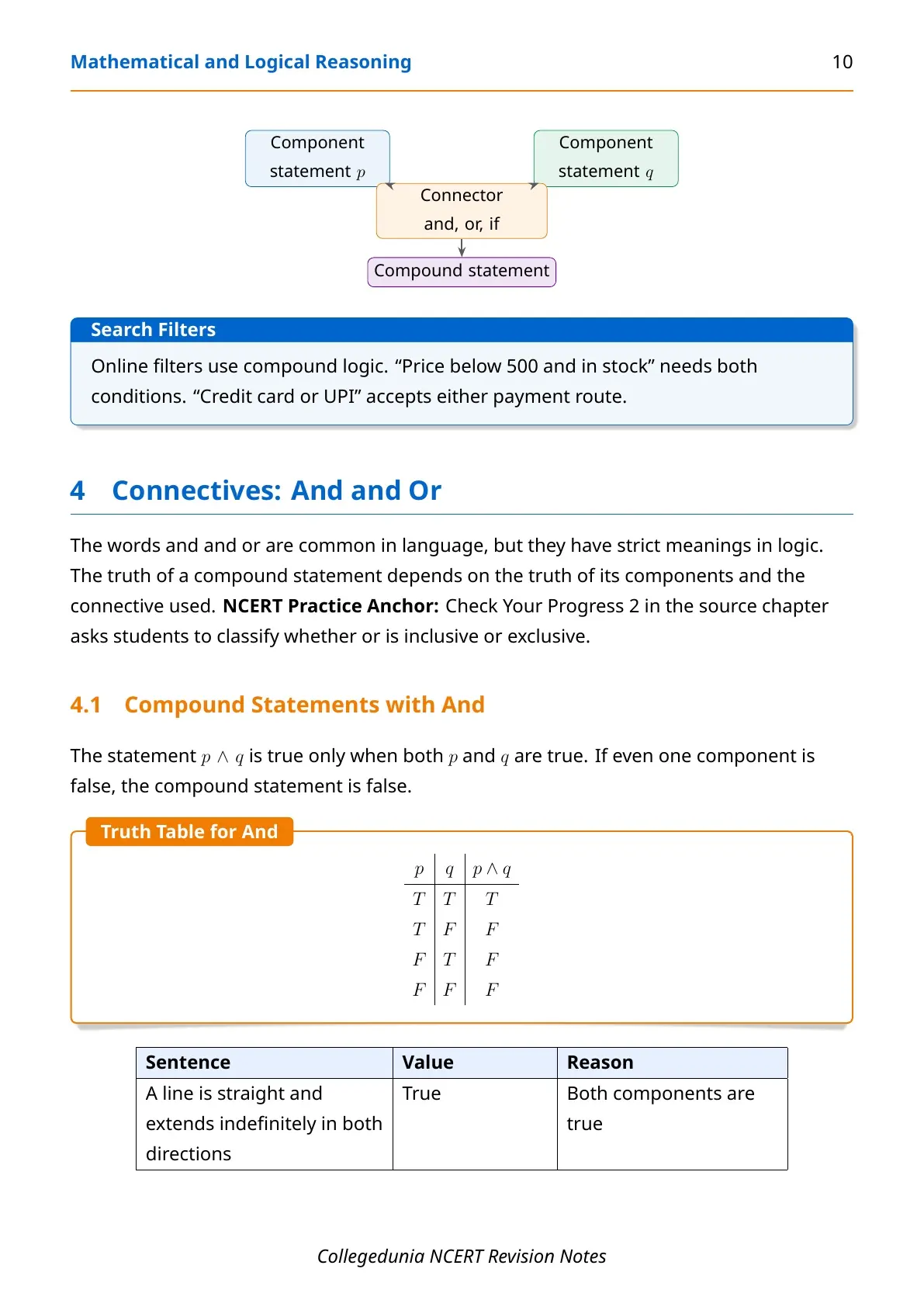
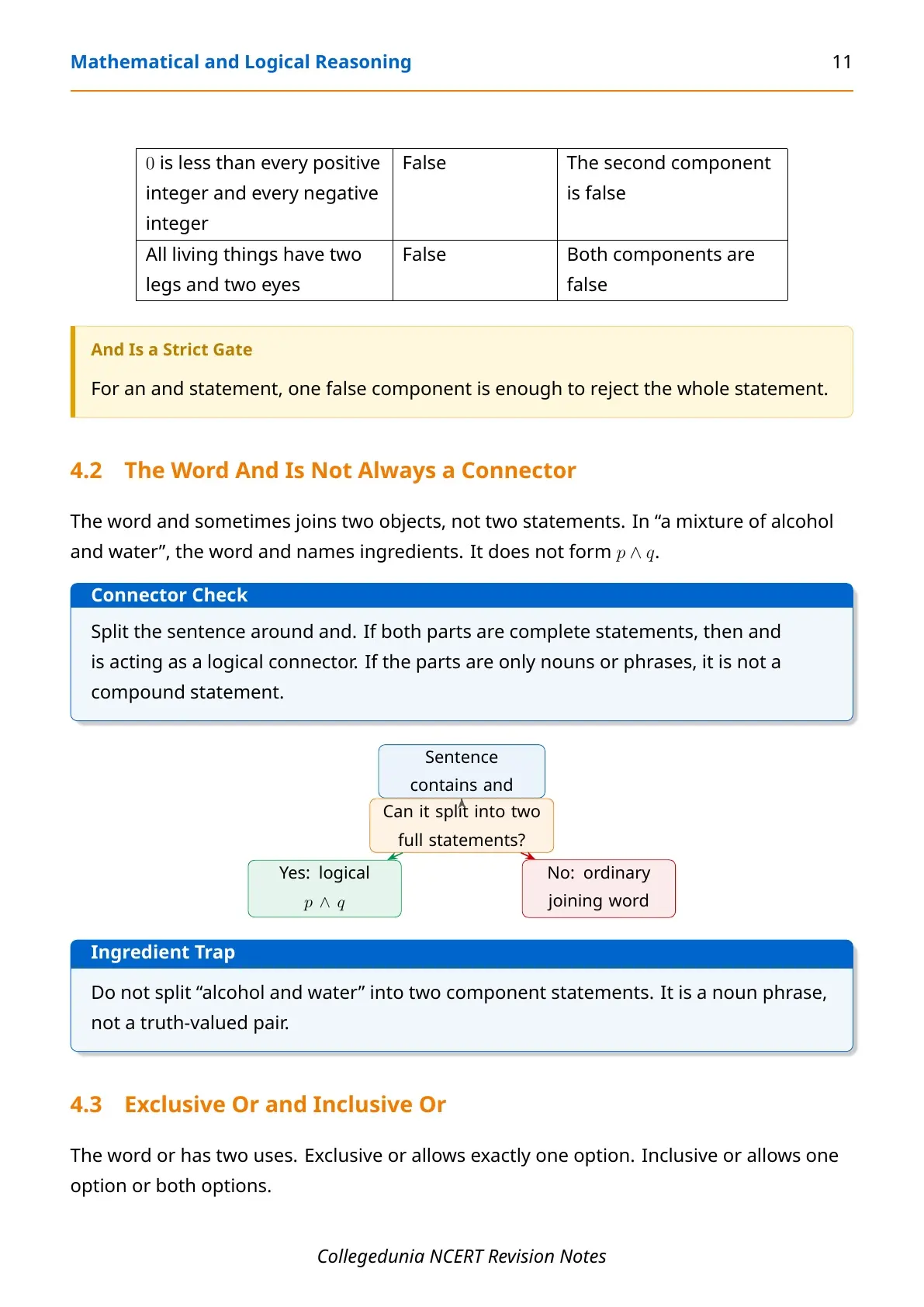
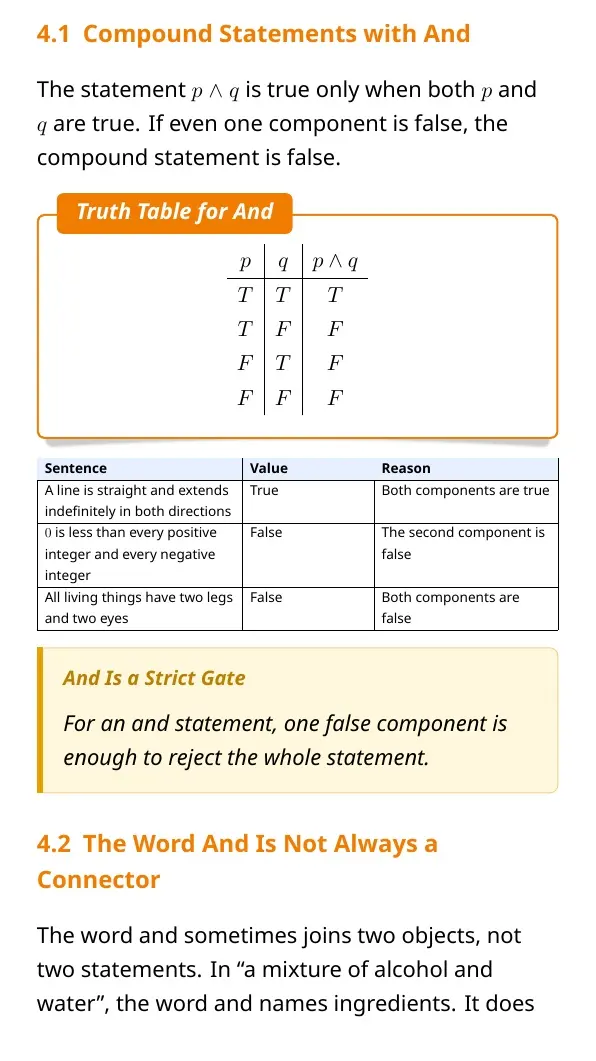
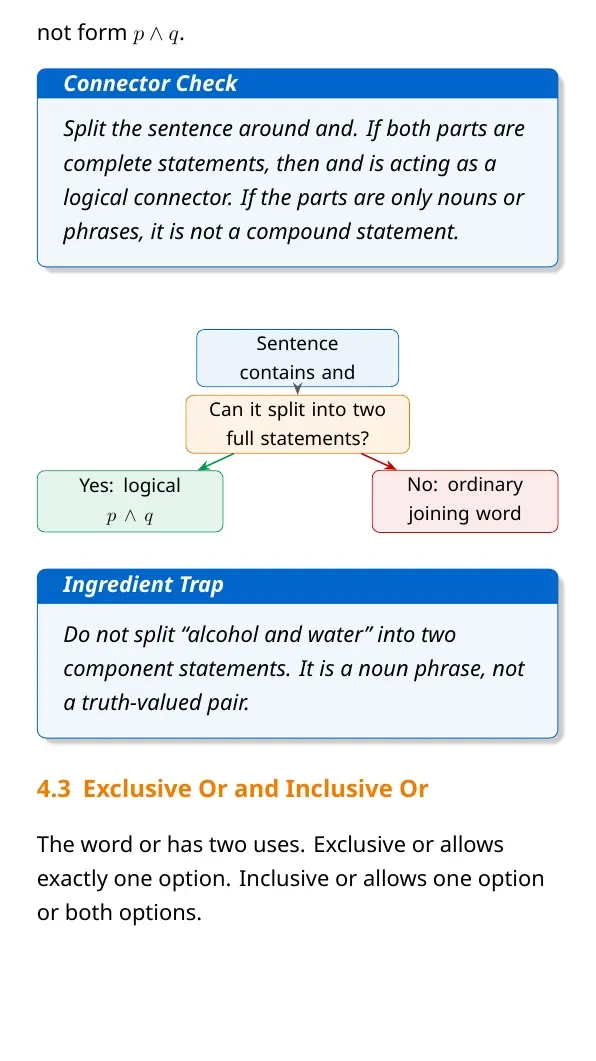
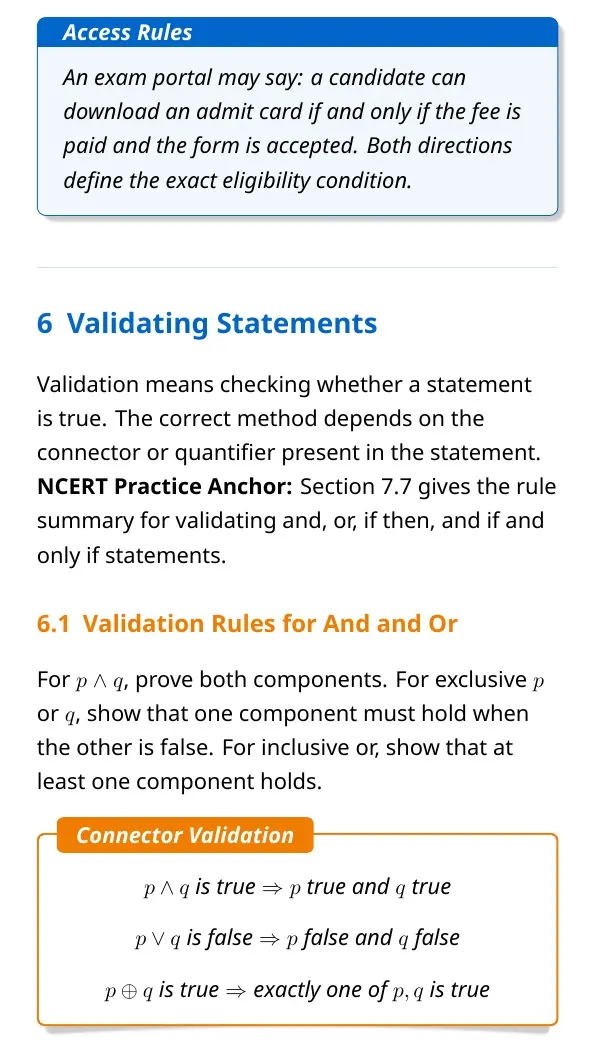
- Conjunction: p and q is true only when both p and q are true.
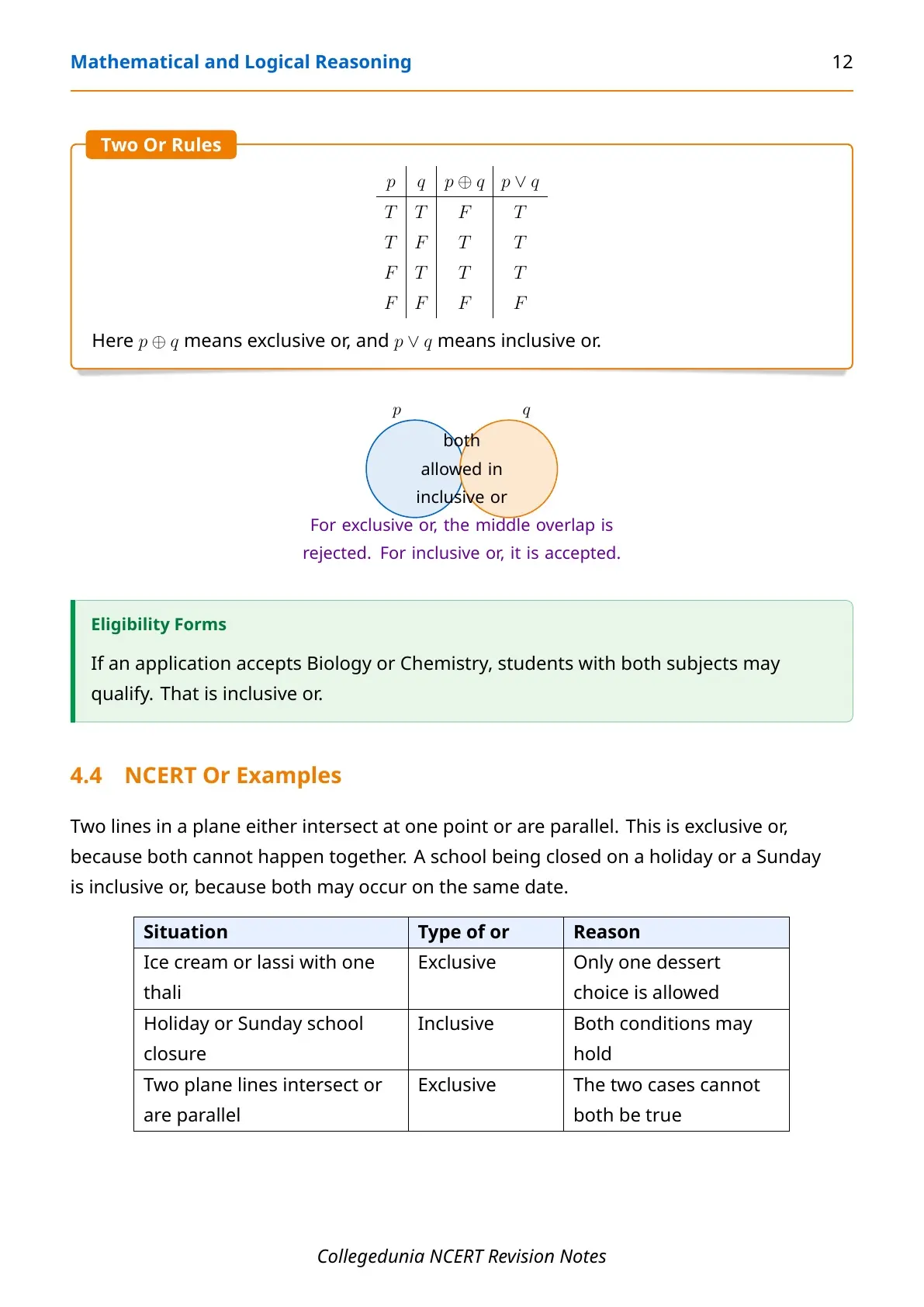
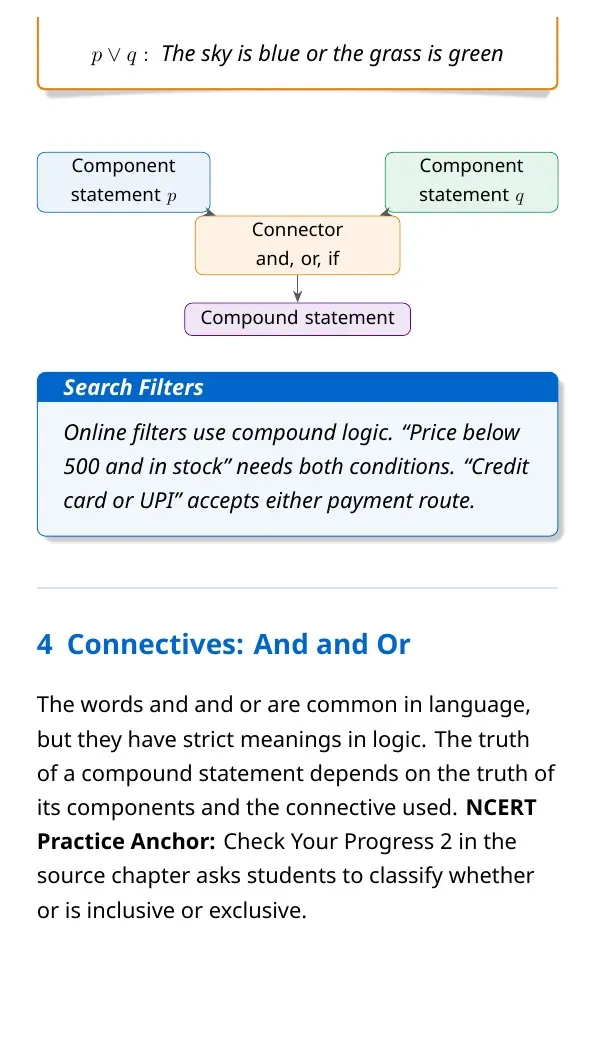
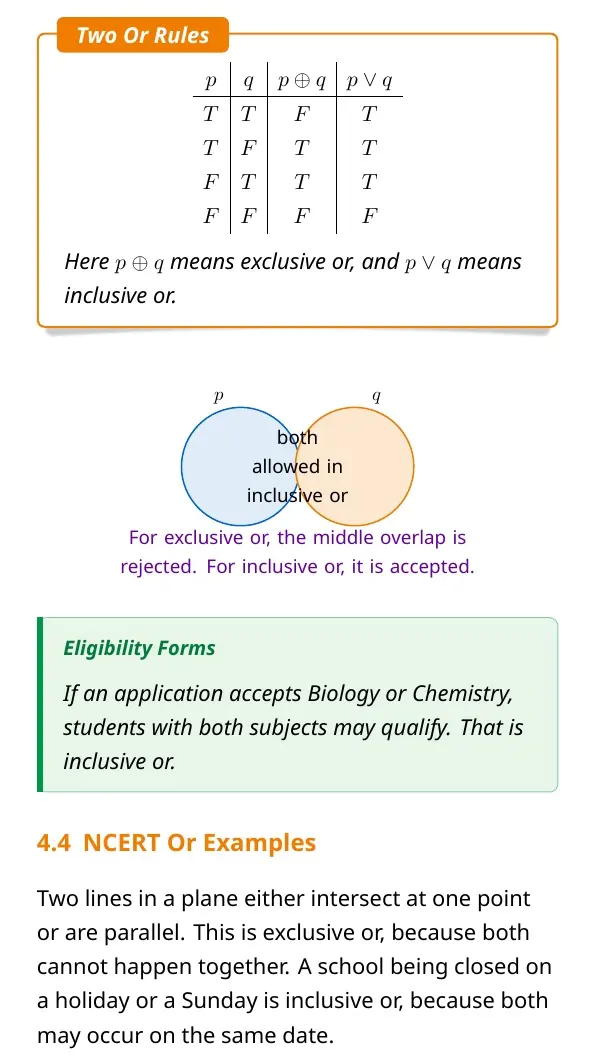
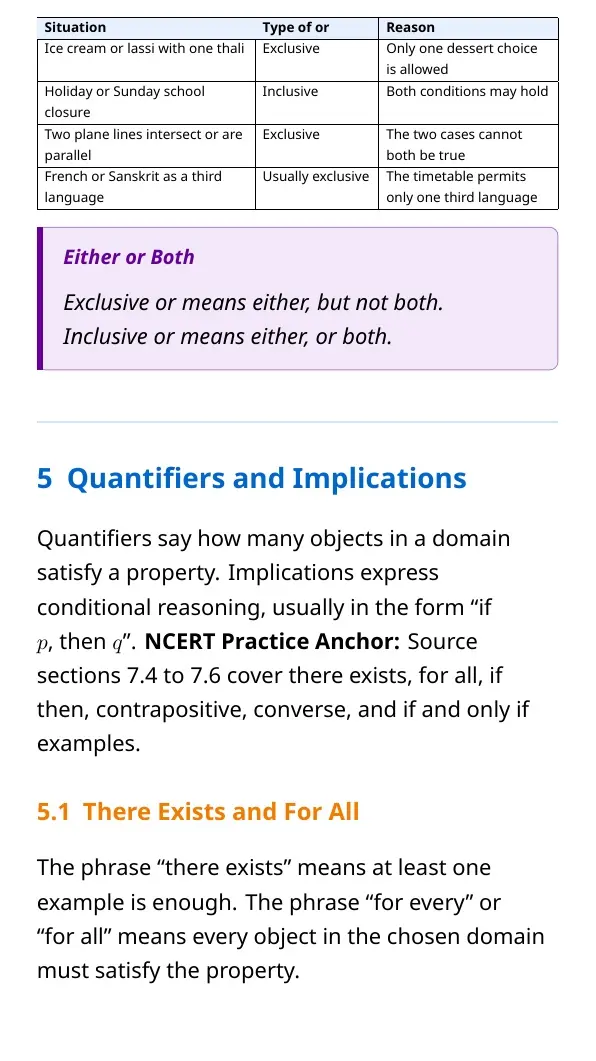
- Disjunction: p or q is true when at least one of p or q is true.
- Open sentence: a variable sentence such as x is greater than 5 becomes a statement only after x is fixed.
Do not judge grammar alone. A sentence can sound complete and still fail as a statement if its truth depends on an unstated condition.
Quantifiers and If Then Logic
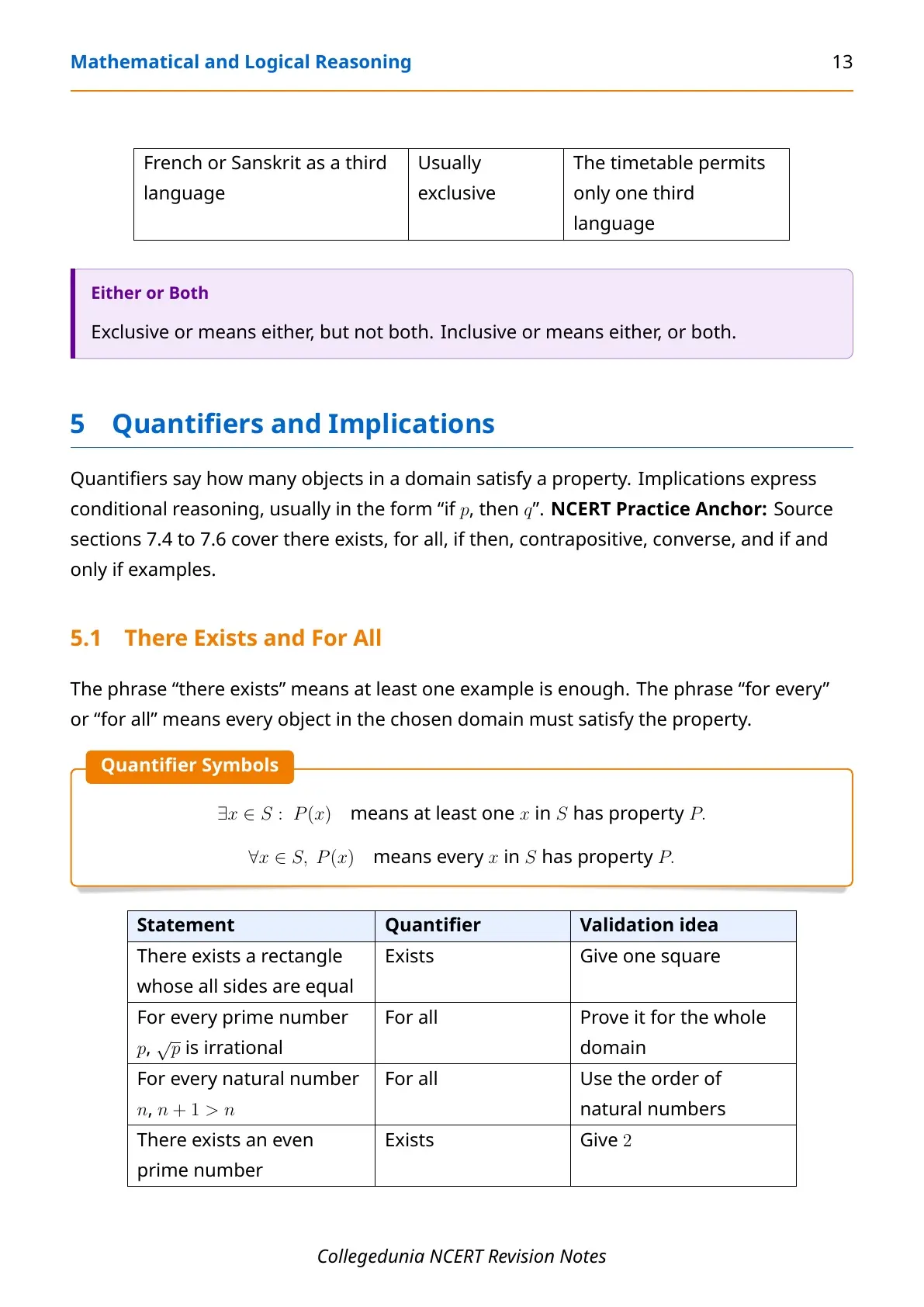
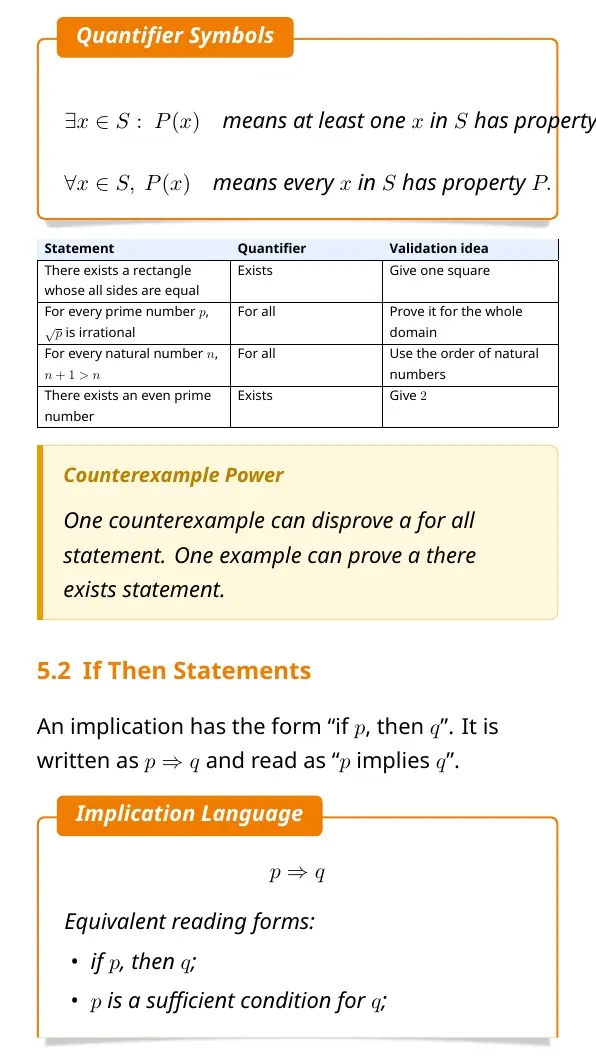
Quantifiers tell how widely a claim applies. The universal quantifier means a claim is made for every case, while the existential quantifier means at least one case exists. In Class 11 Applied Mathematics, these ideas help students read mathematical claims without changing their meaning.
| Form | Plain meaning | Negation |
|---|---|---|
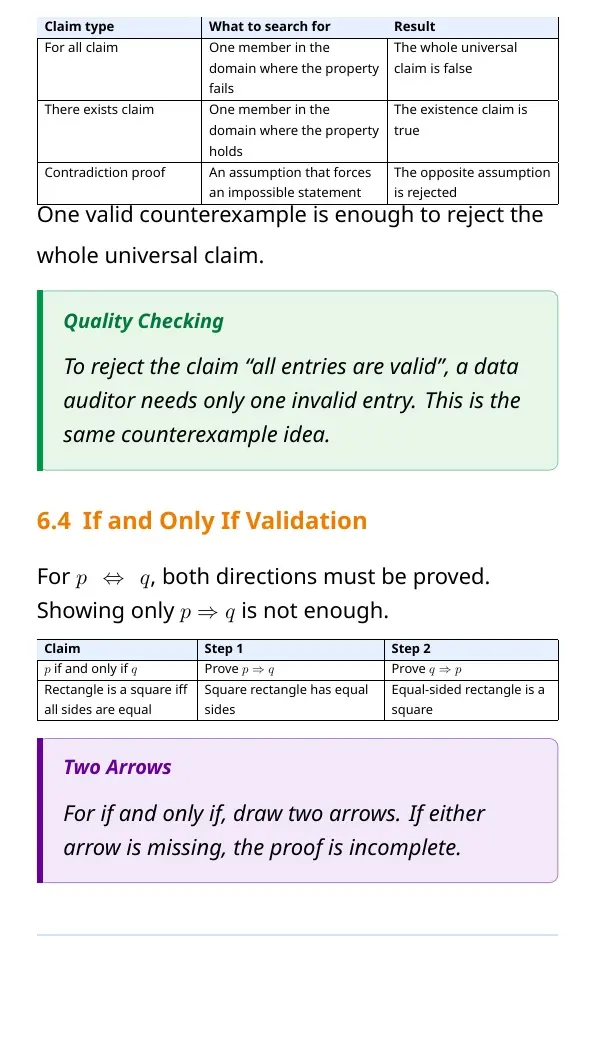
| For all x | Every value in the domain works | There exists at least one value that does not work |
| There exists x | At least one value works | No value works |
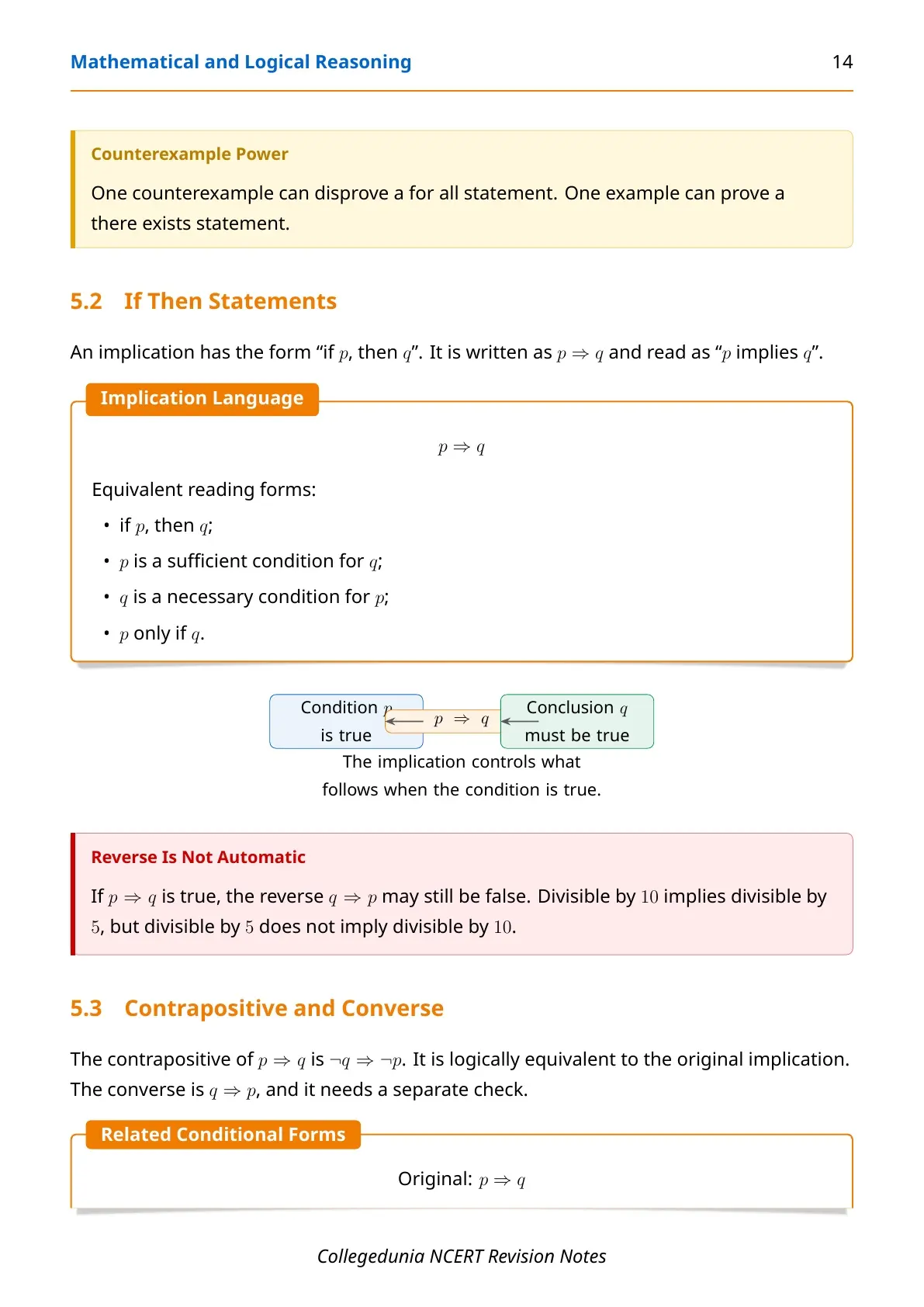
| If p then q | Whenever p is true, q must be true | p is true and q is false |
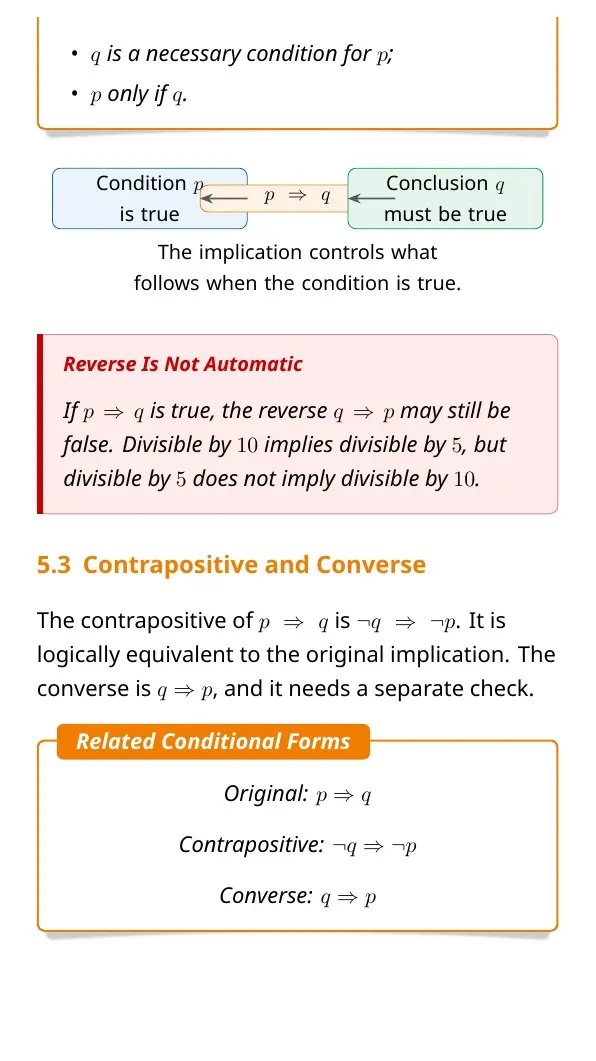
The conditional form is checked by testing whether the conclusion is forced by the hypothesis. A true hypothesis with a false conclusion is the counterexample that breaks an implication.
Converse, Contrapositive and If and Only If
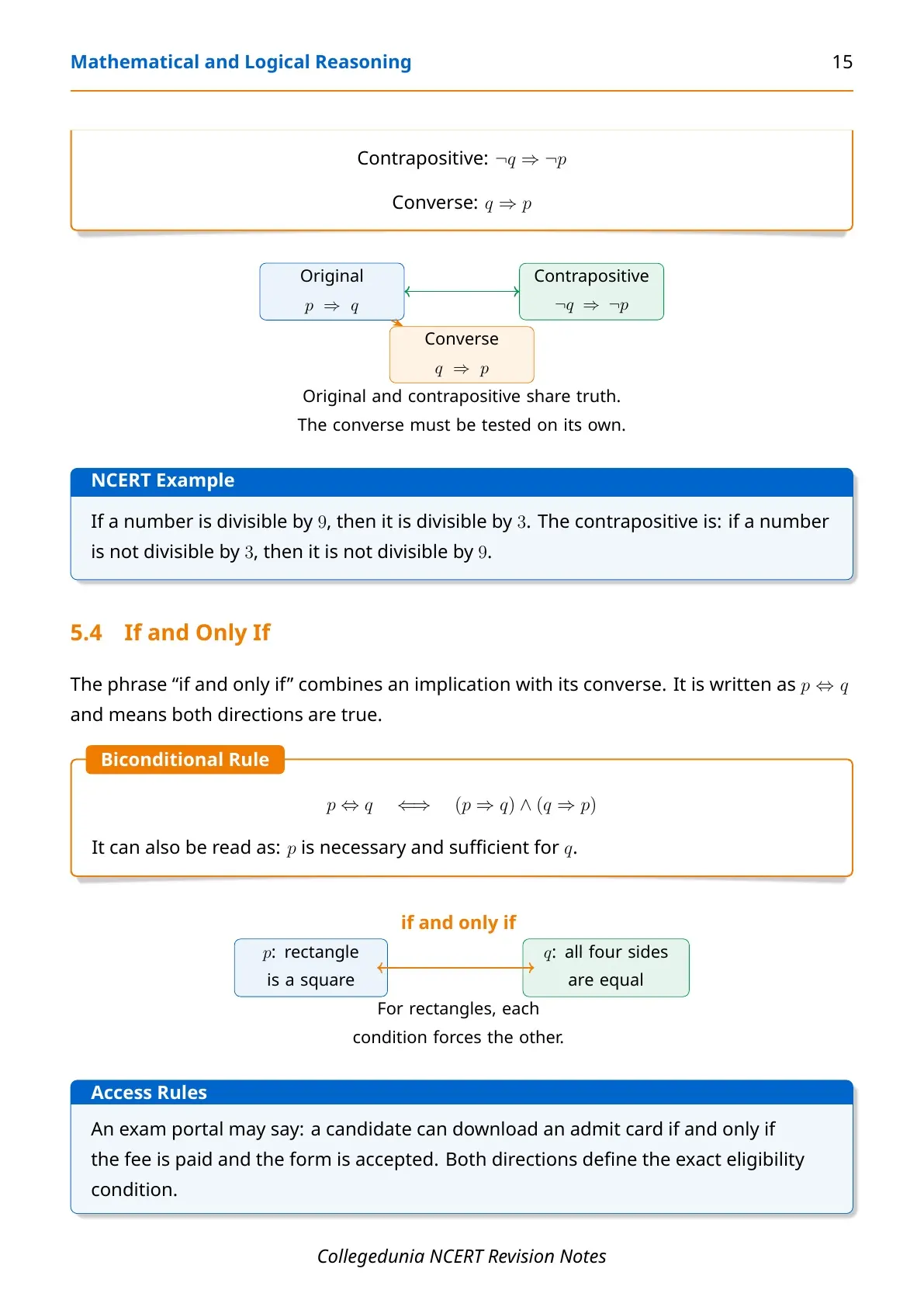
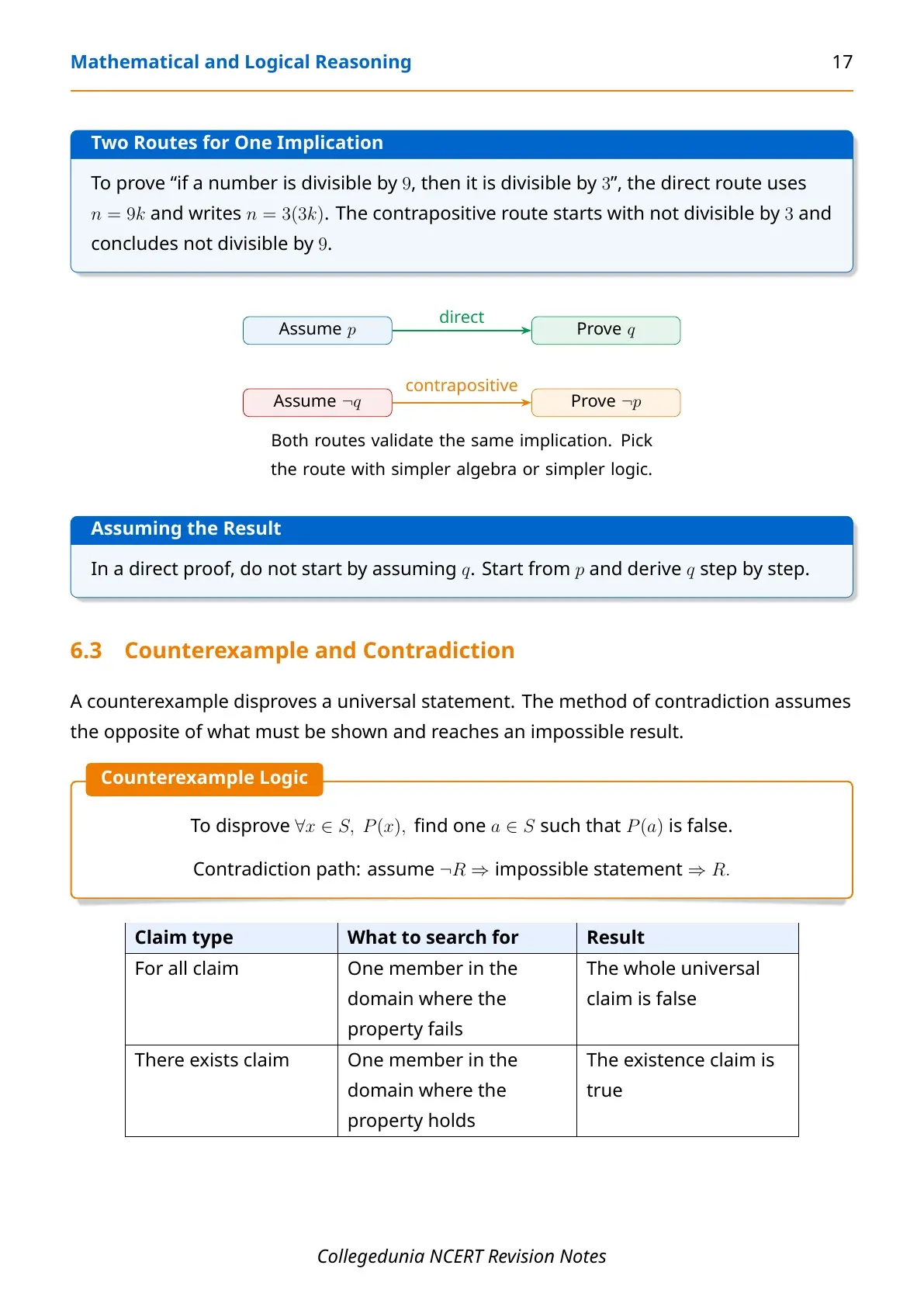
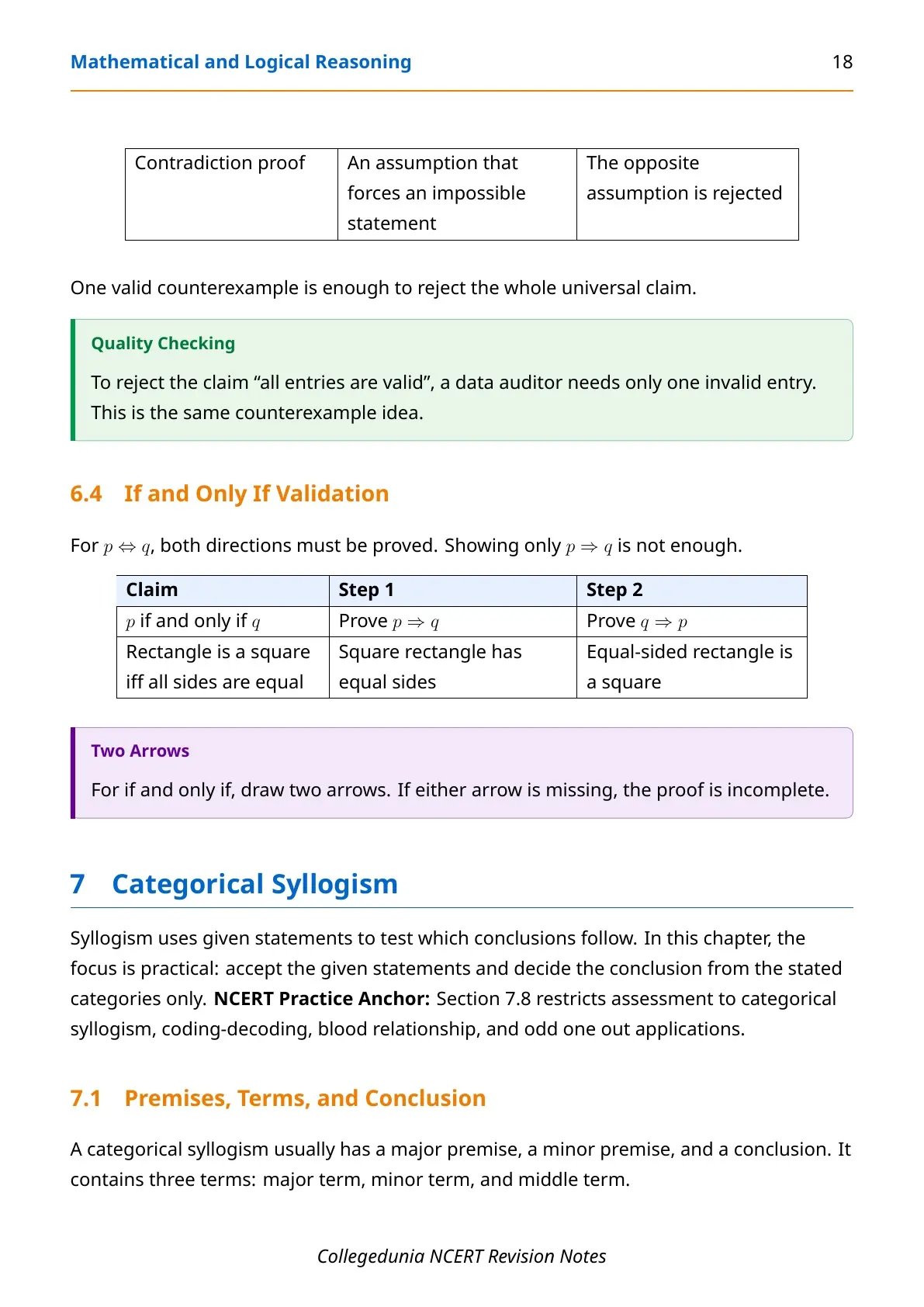
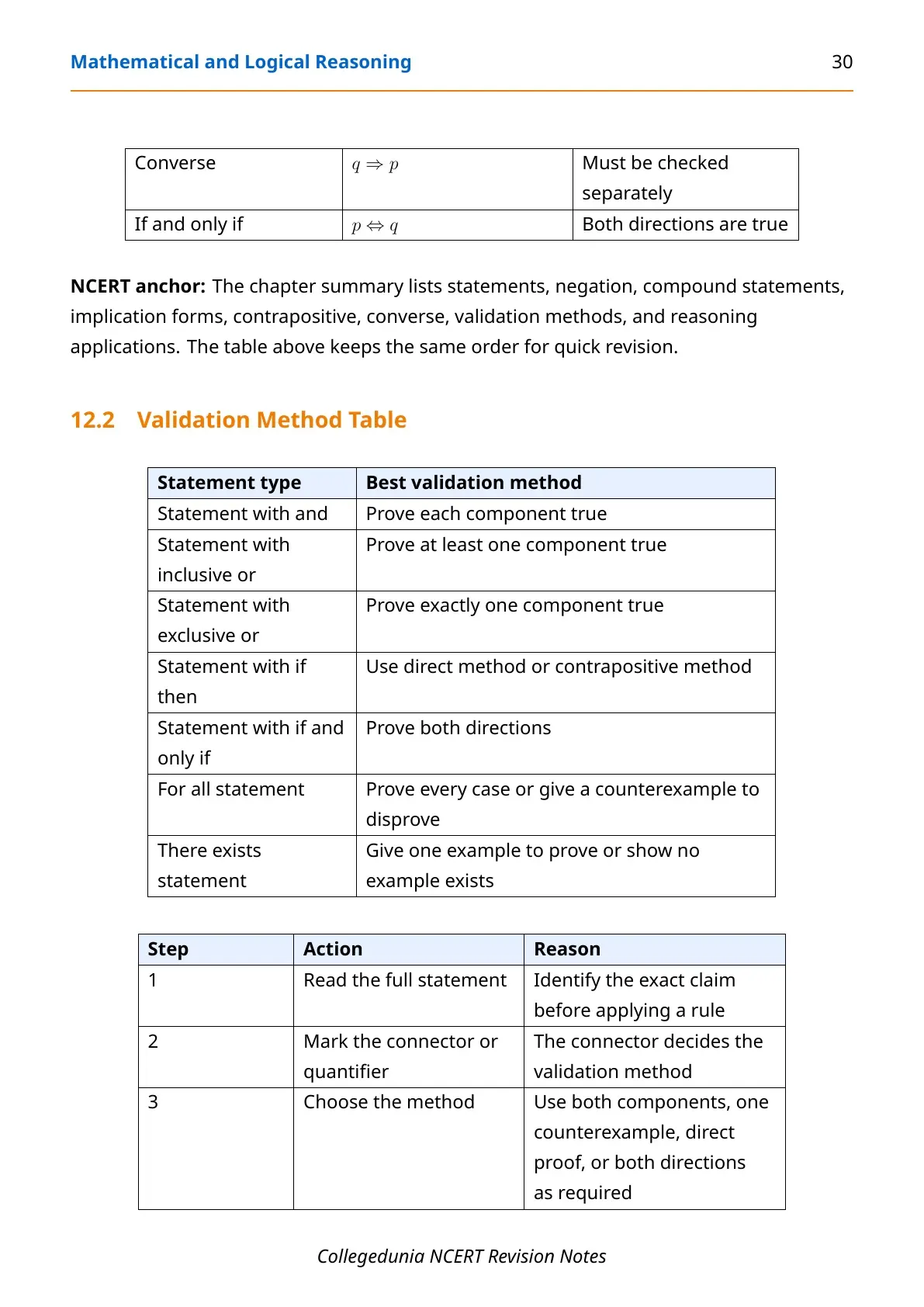
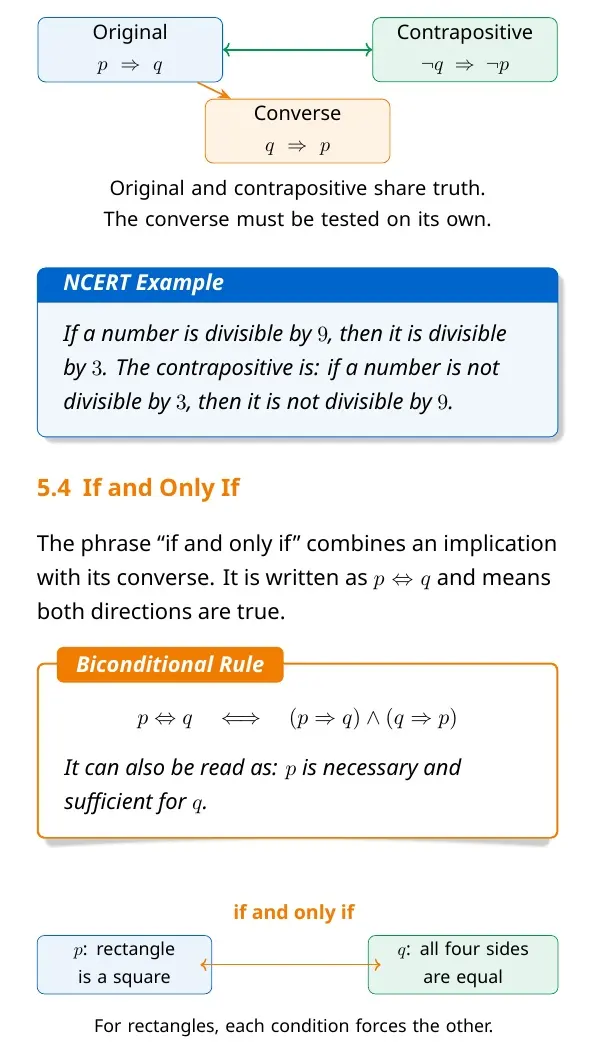
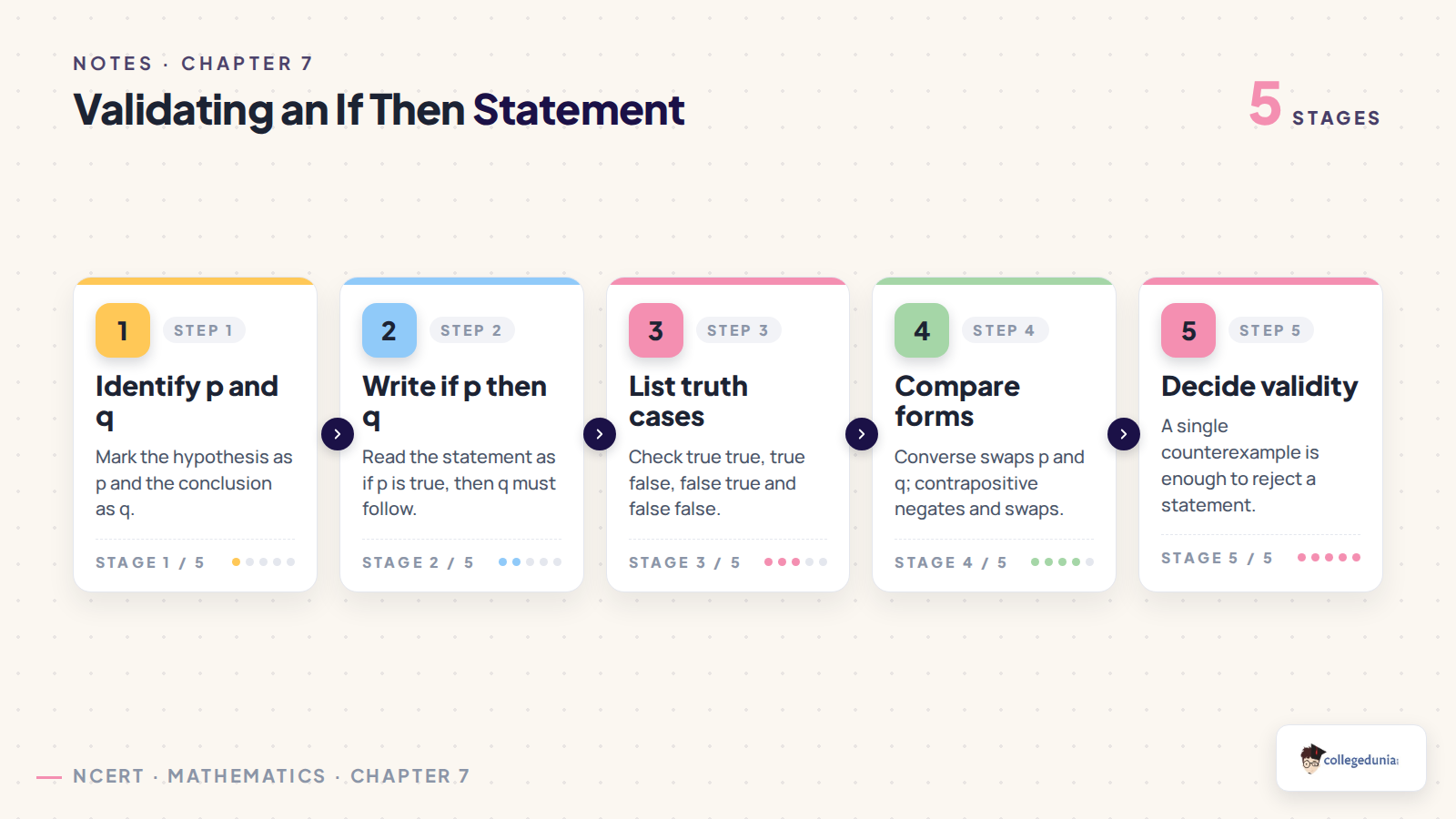
Once an implication is written as if p then q, three related forms must be kept separate. The converse swaps p and q. The contrapositive negates both parts and swaps their order. The biconditional form uses if and only if when both directions are true.
| Logical form | Symbol-free reading | Truth relation |
|---|---|---|
| Original | If p then q | Base implication |
| Converse | If q then p | Not always equivalent to the original |
| Contrapositive | If not q then not p | Equivalent to the original |
| If and only if | p happens exactly when q happens | Both original and converse are true |
Rules for Validating Statements
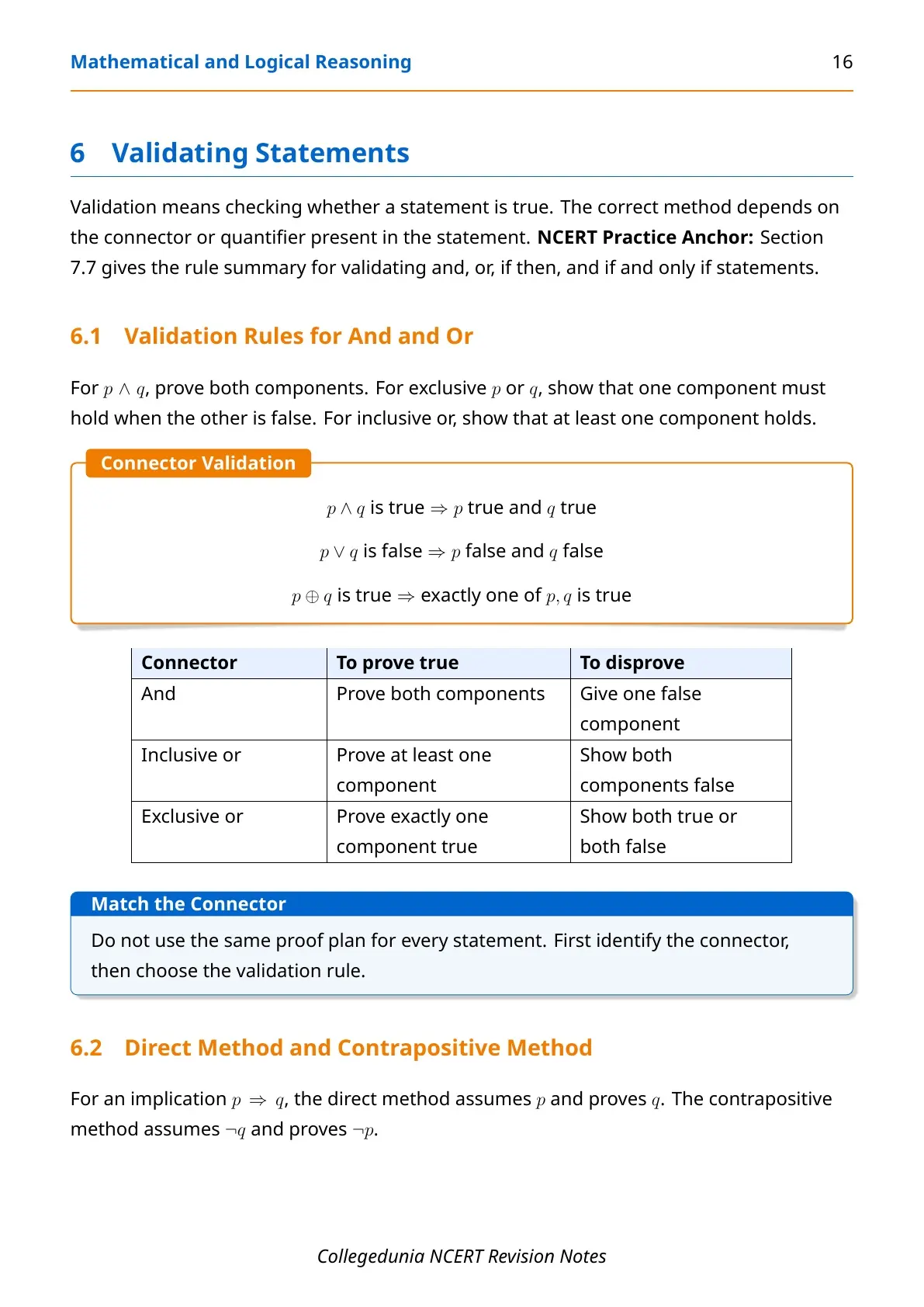
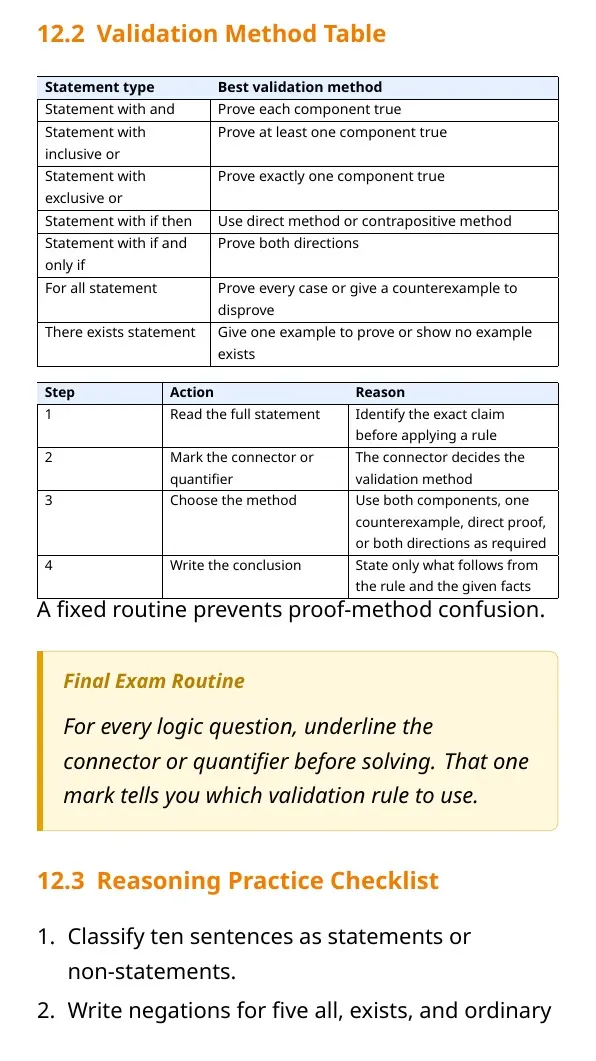
Validation means checking whether the conclusion follows from the given information. A rule is not valid because it sounds natural; it is valid only when no counterexample is possible under the stated conditions.
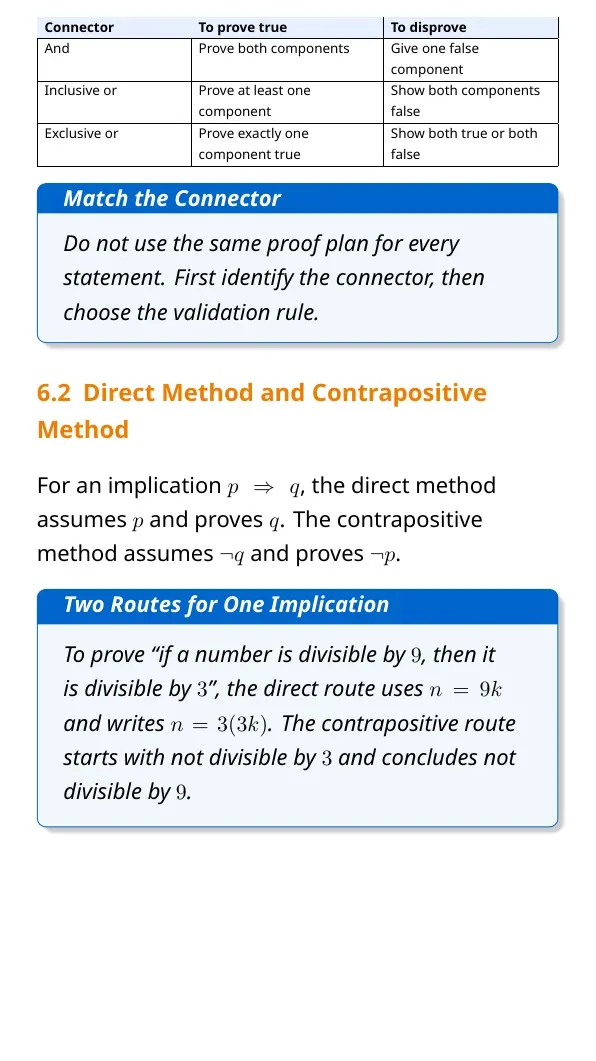
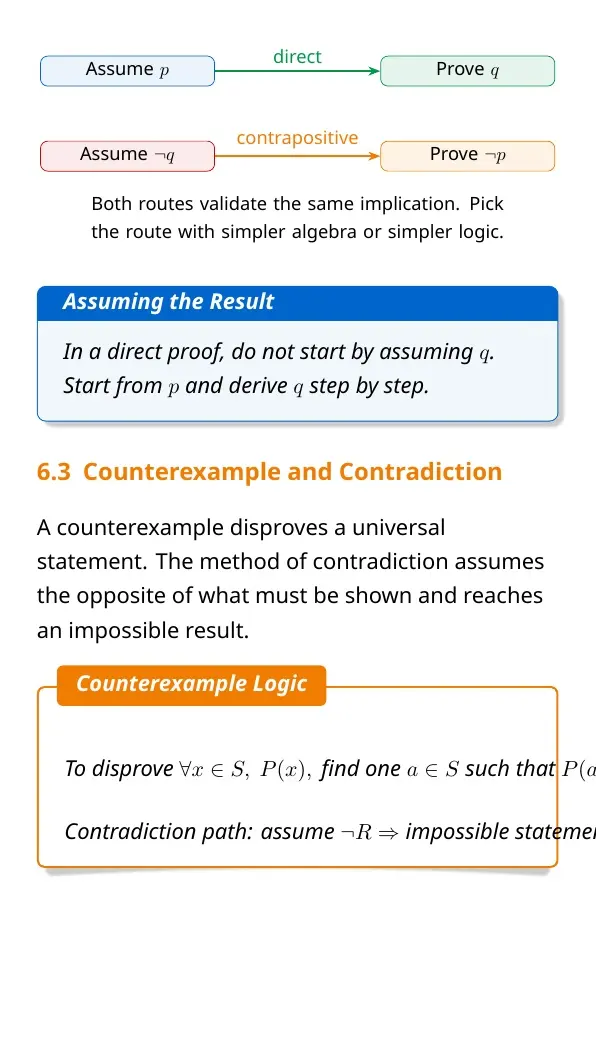
- Direct proof: begin with the given condition and derive the conclusion.
- Counterexample: give one allowed case where the statement fails.
- Contrapositive proof: prove the equivalent statement if not q then not p.
- Truth table check: list all truth combinations when statements are short.
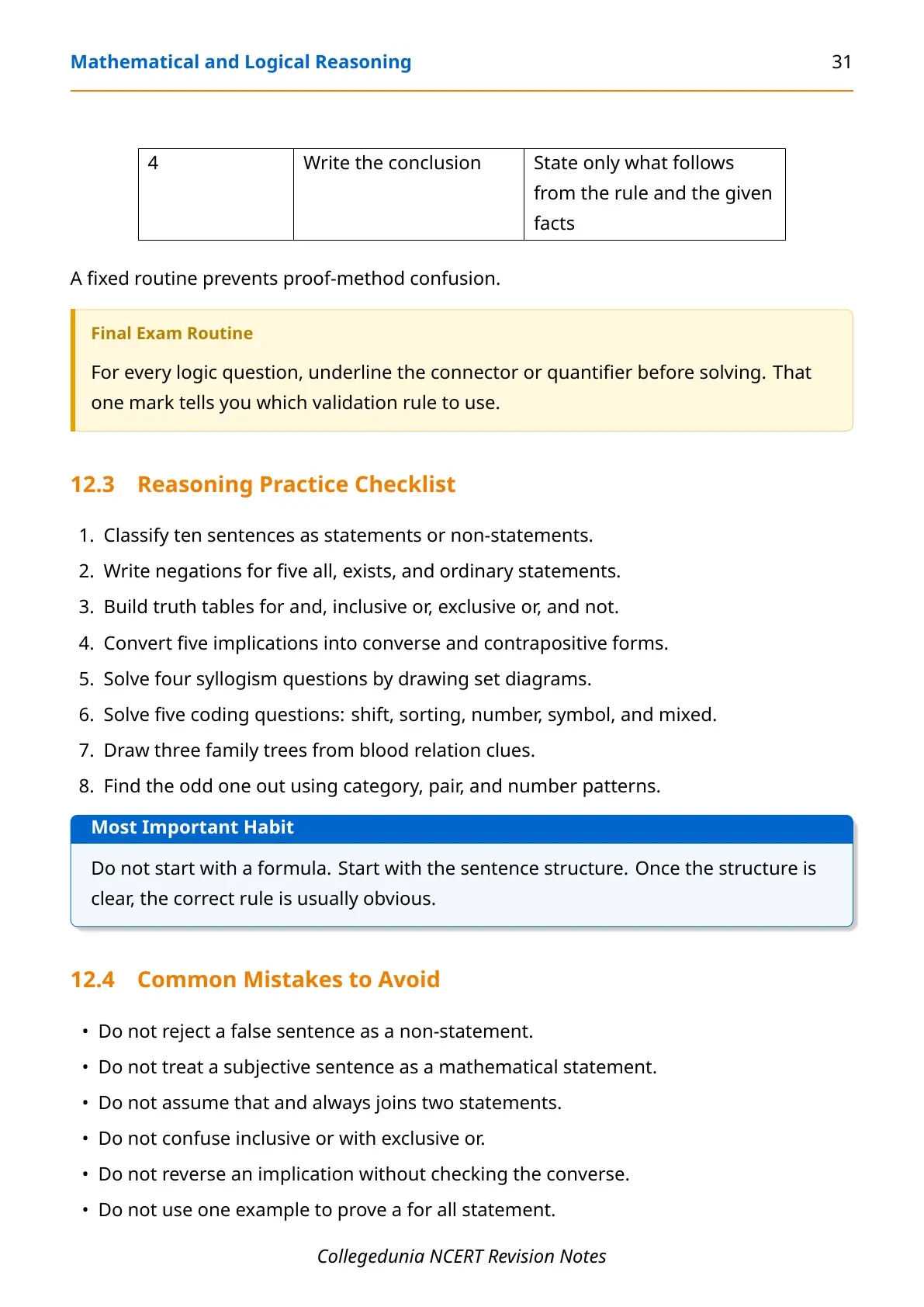
For quick revision, students should write p and q first, then decide whether the question asks for original, converse, inverse, contrapositive or equivalence.
Logical Reasoning Applications in Applied Mathematics
The second half of the chapter connects statement logic with reasoning tasks. These questions test whether students can follow conditions accurately, not whether they can memorise a formula.
| Application | What to track | Exam method |
|---|---|---|
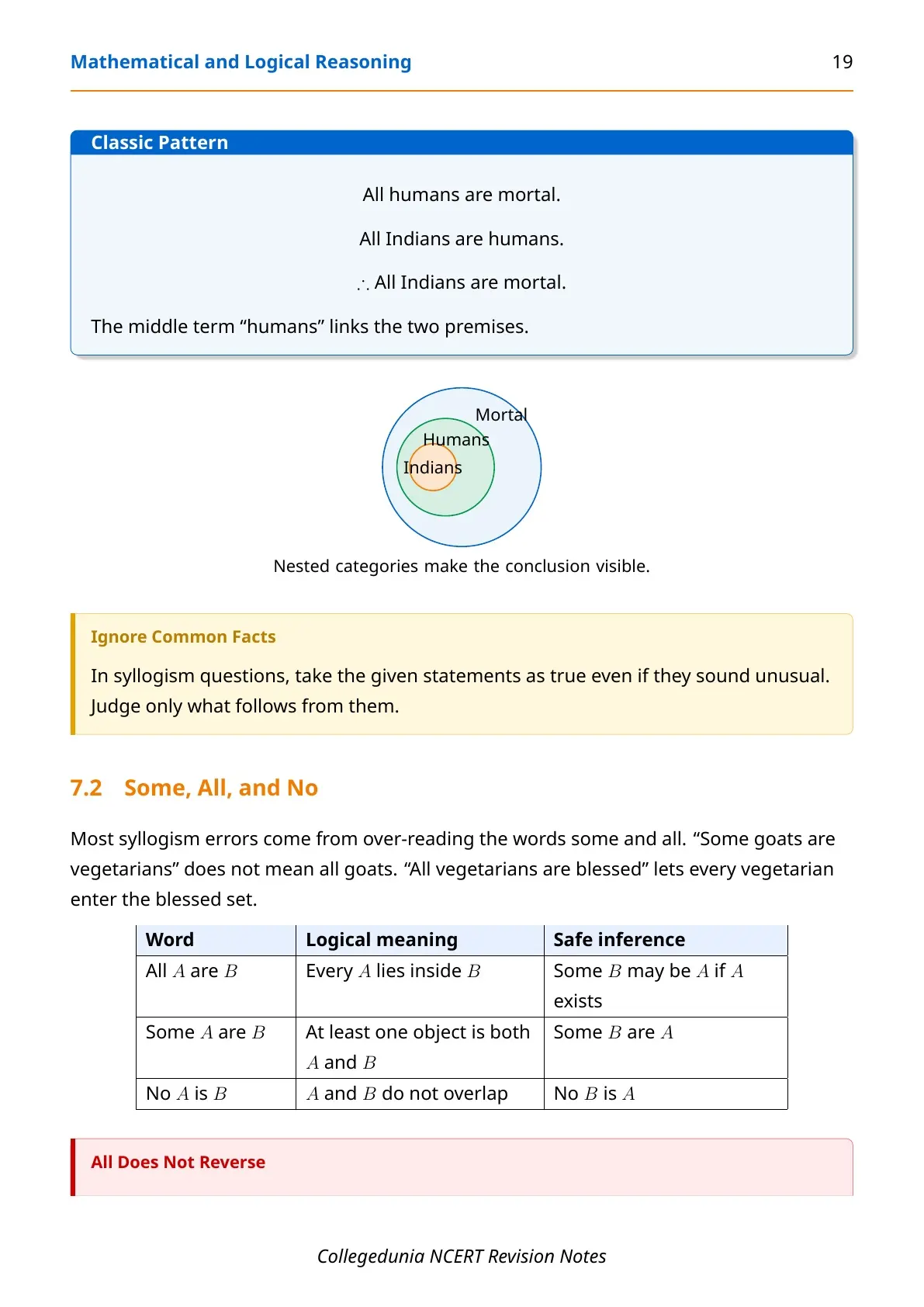
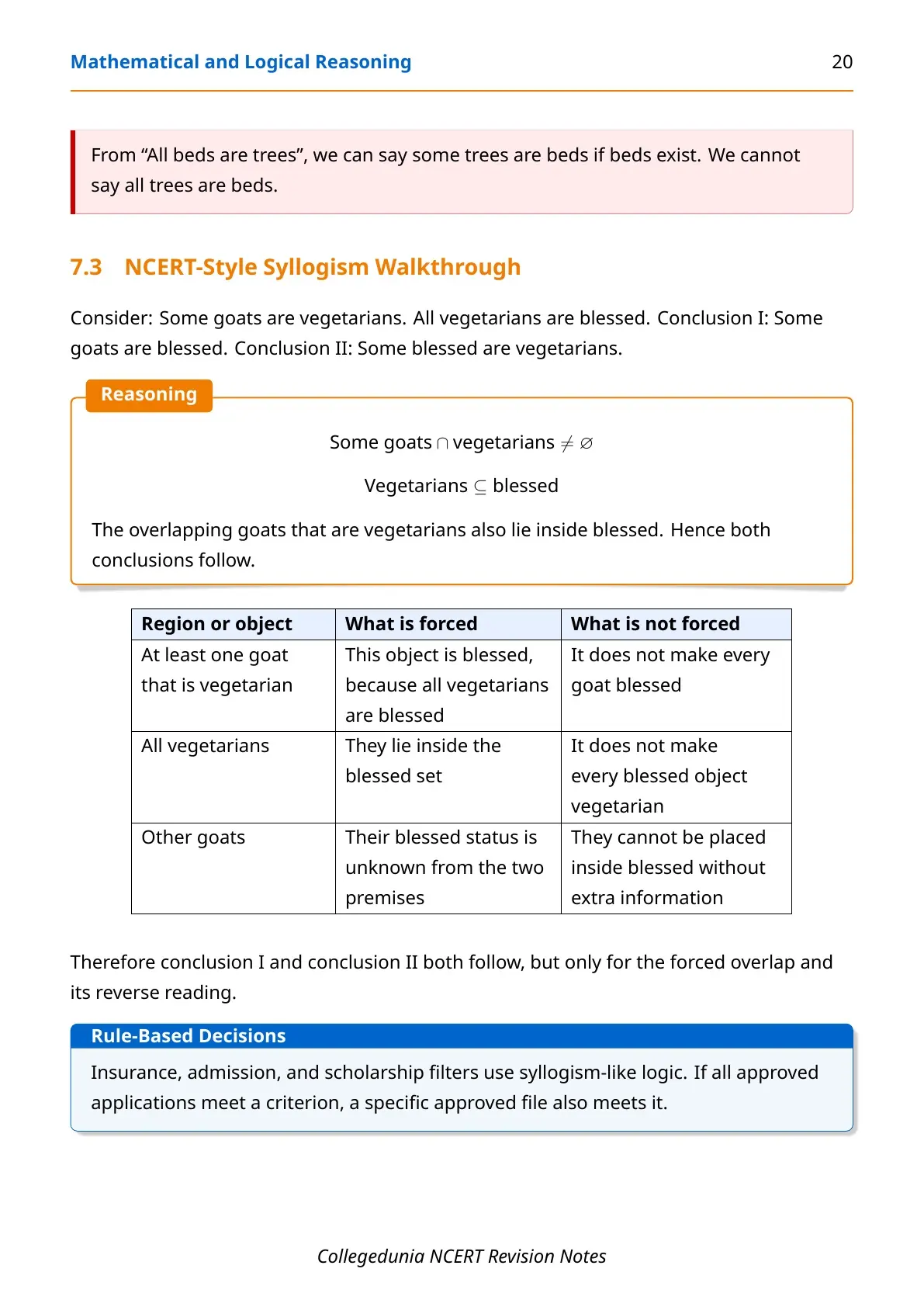
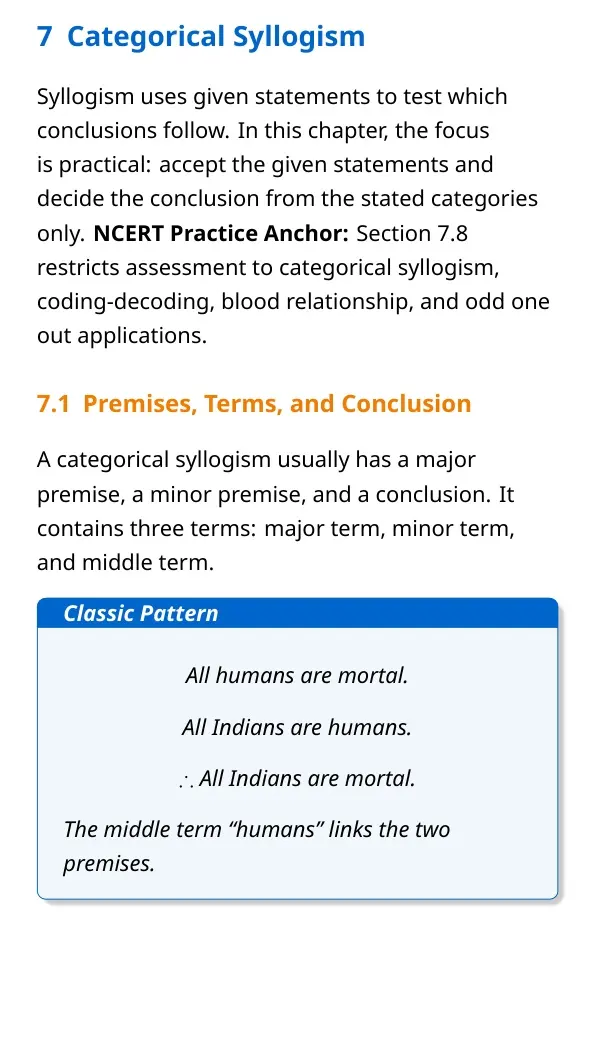
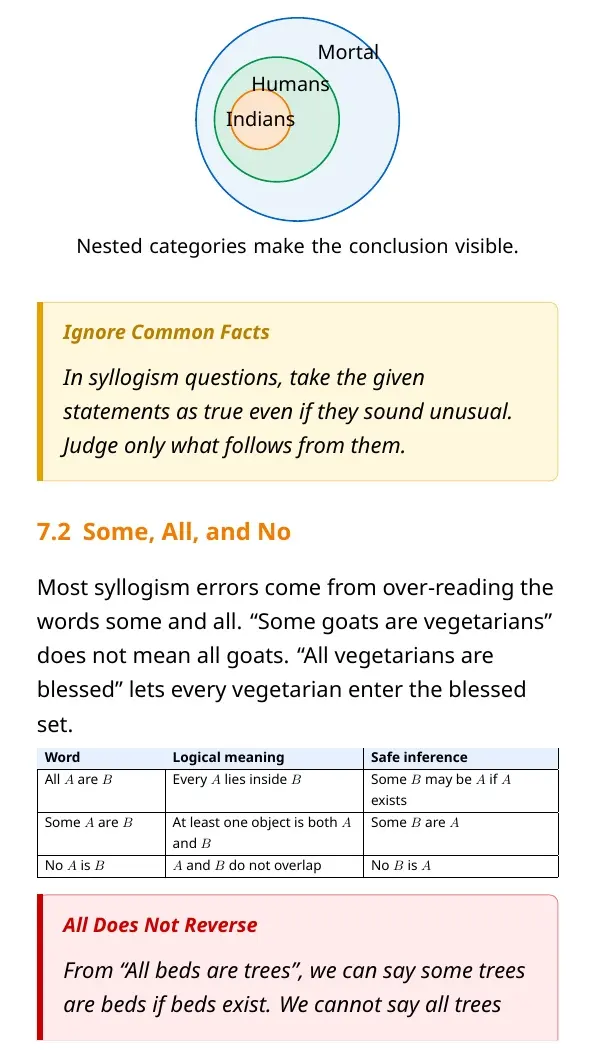
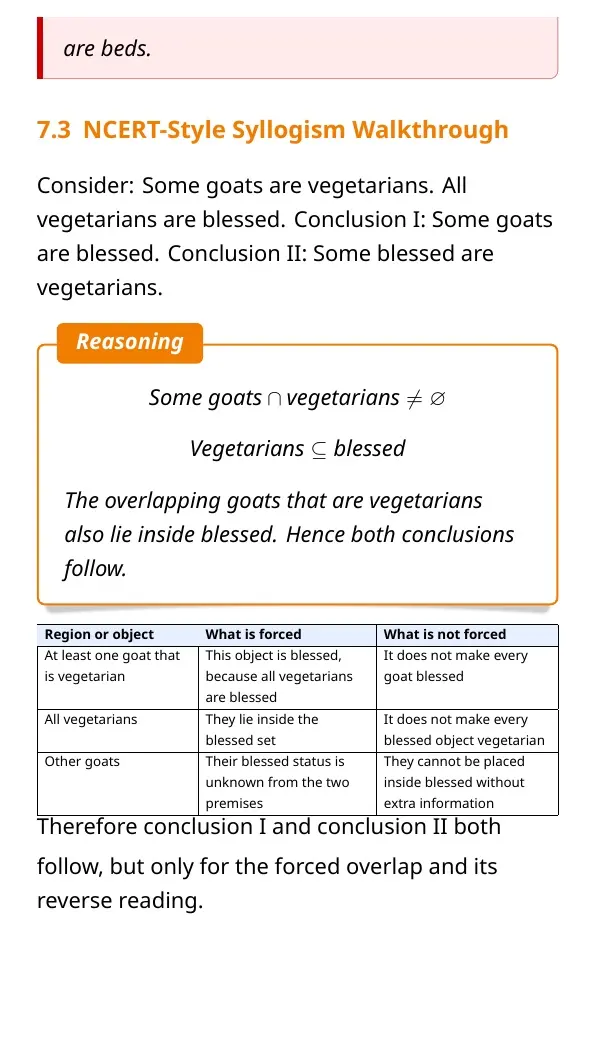
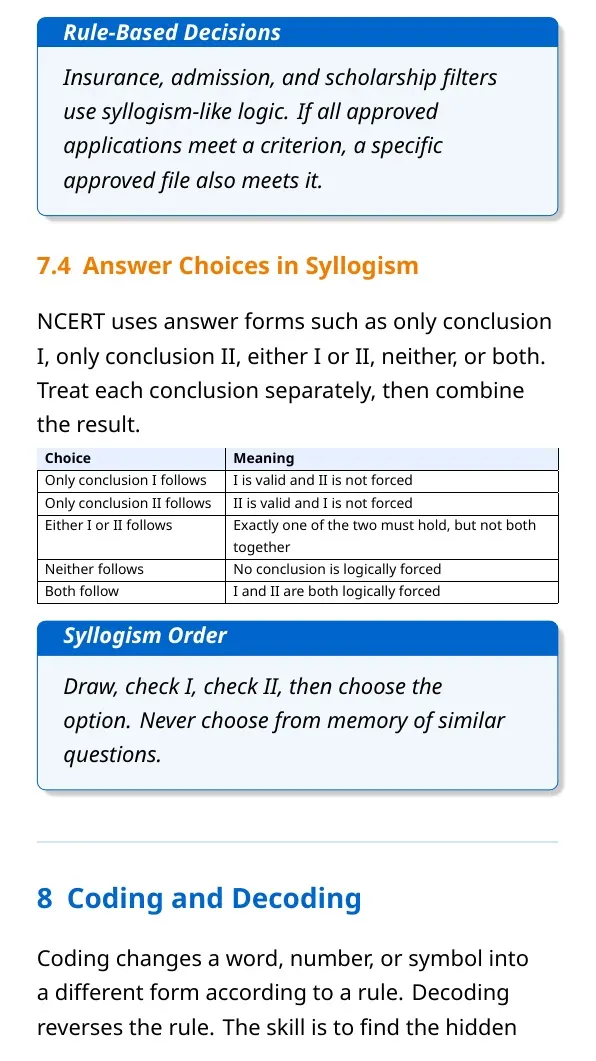
| Syllogism | Given premises and possible conclusions | Use Venn-style inclusion or elimination |
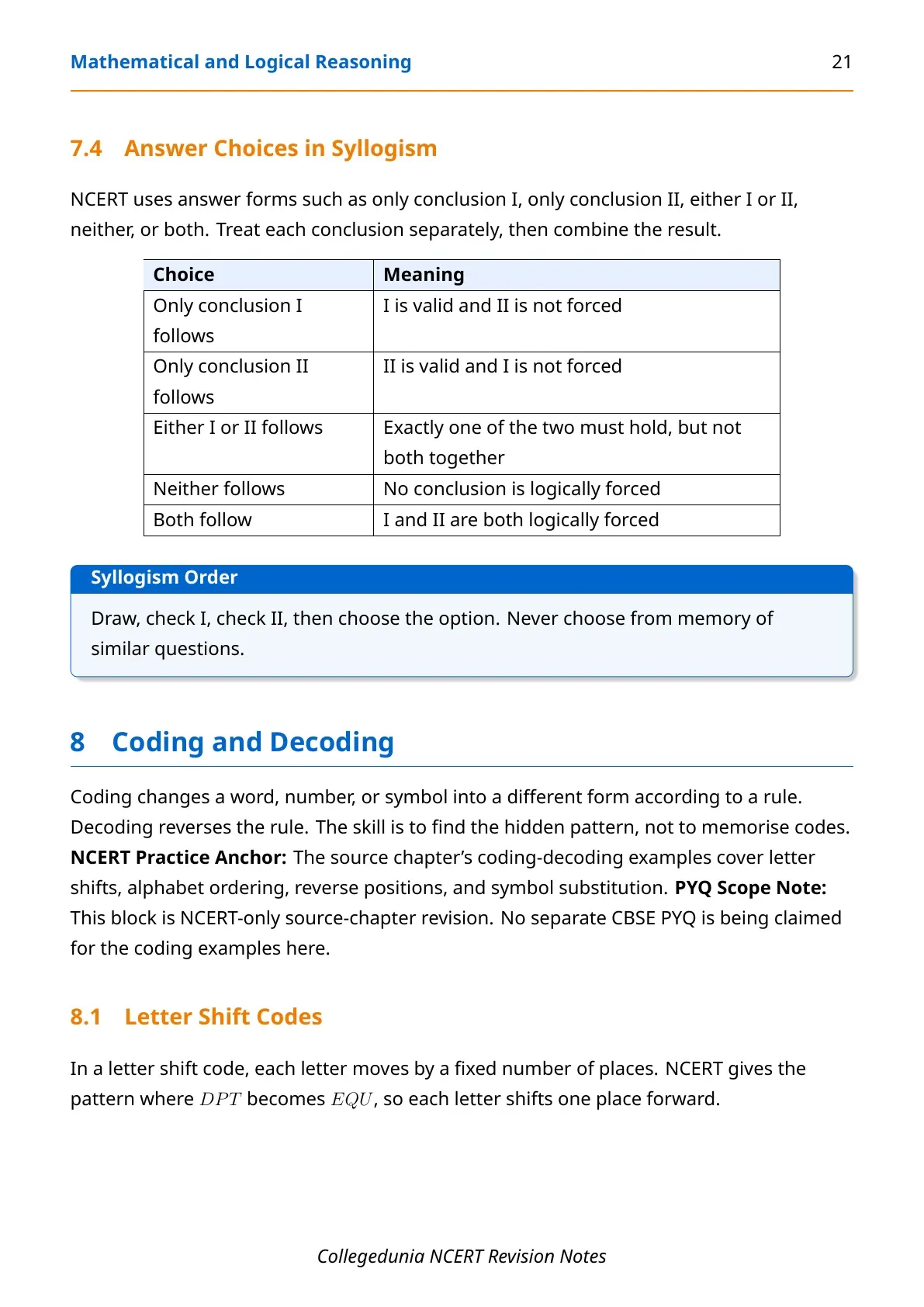
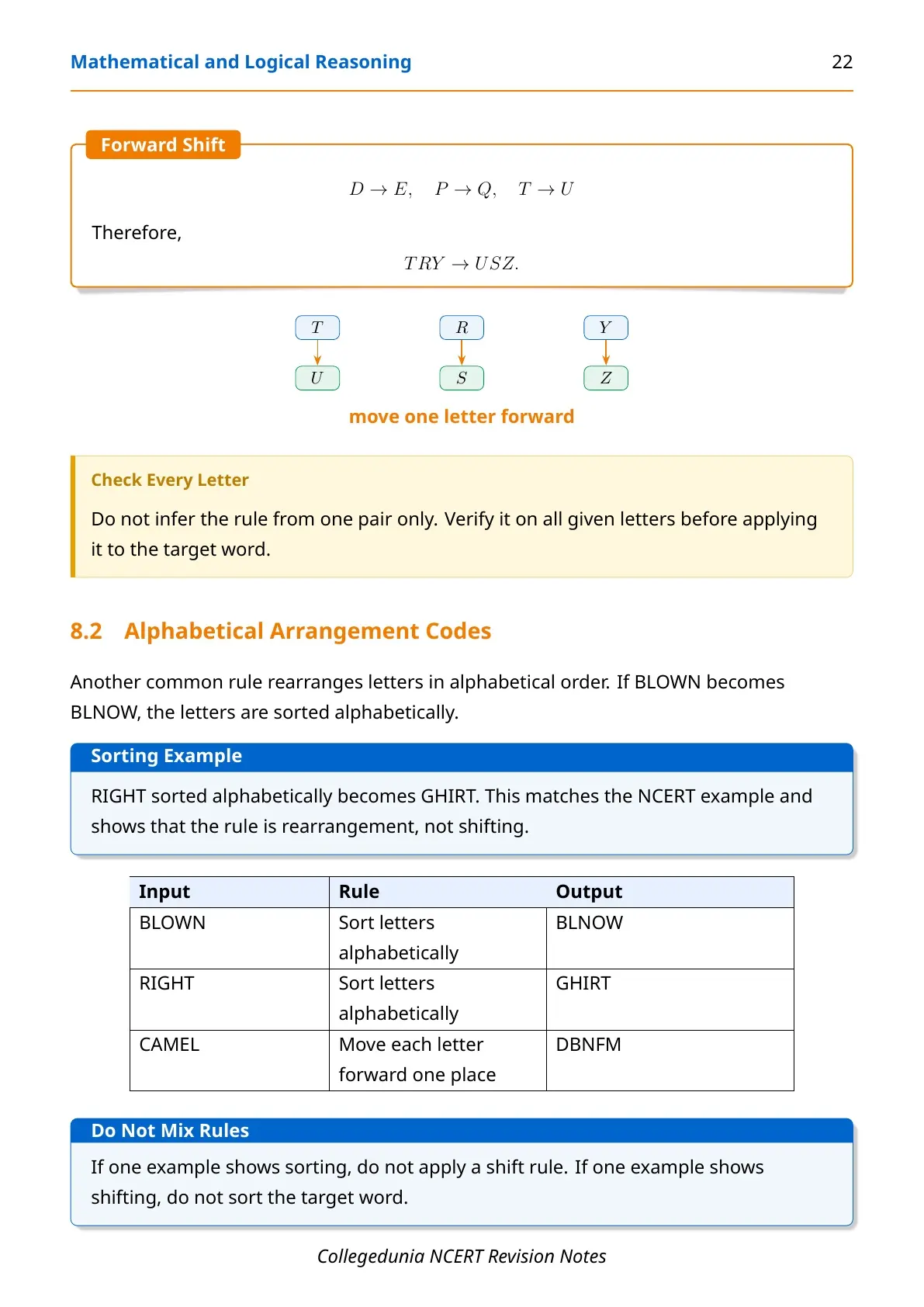
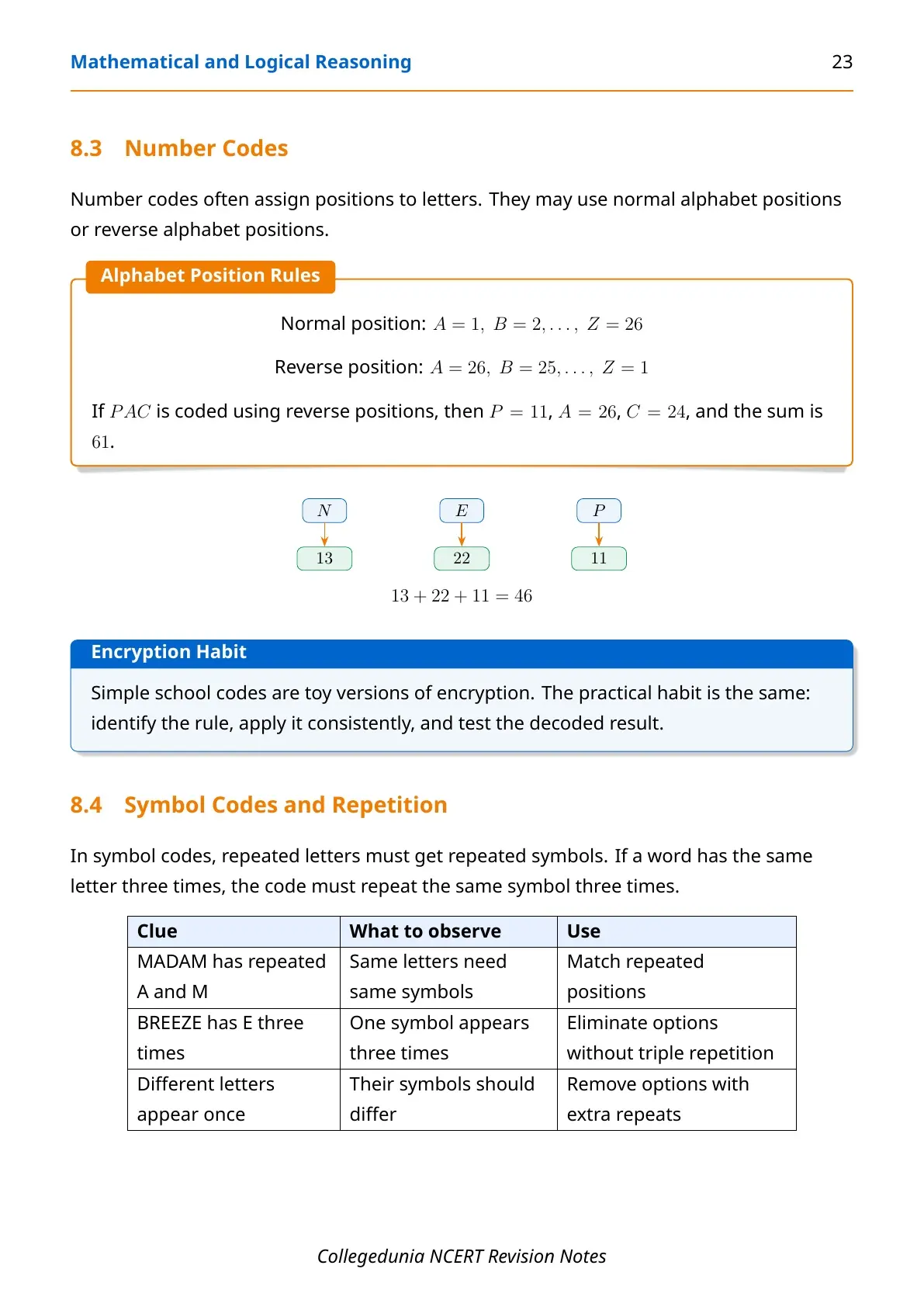
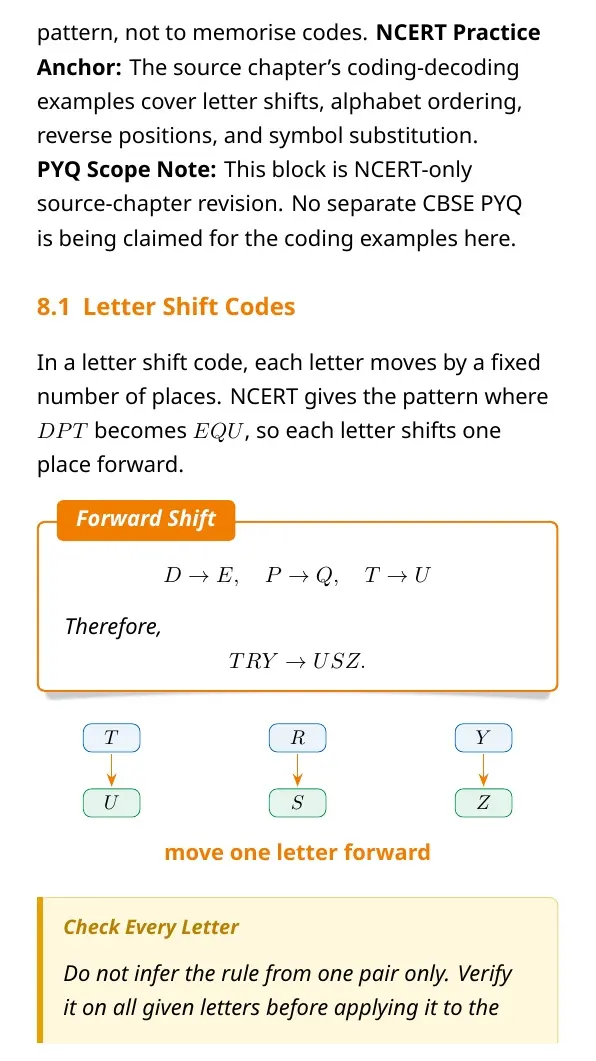
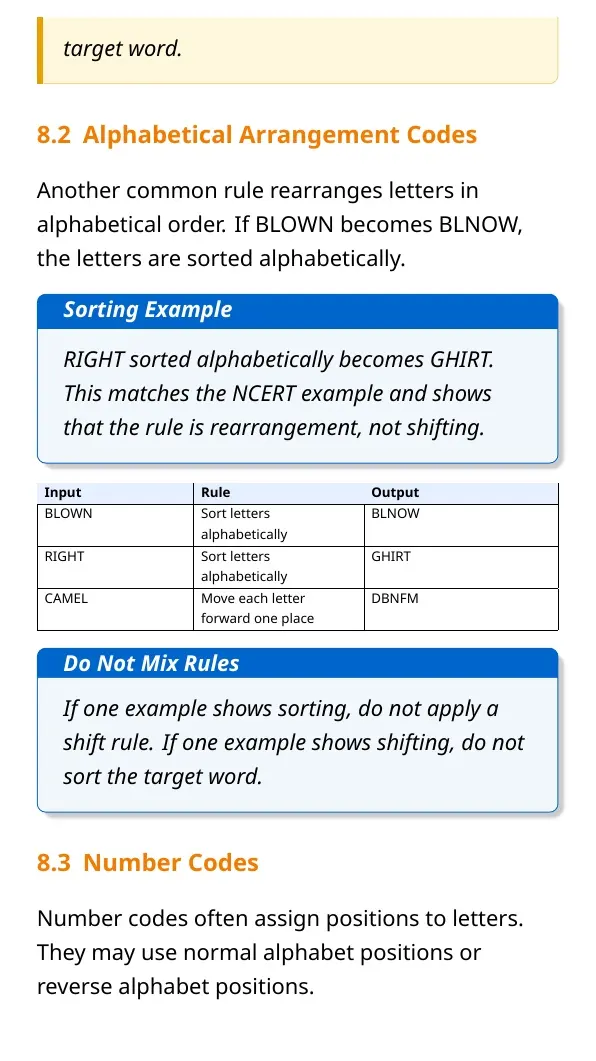
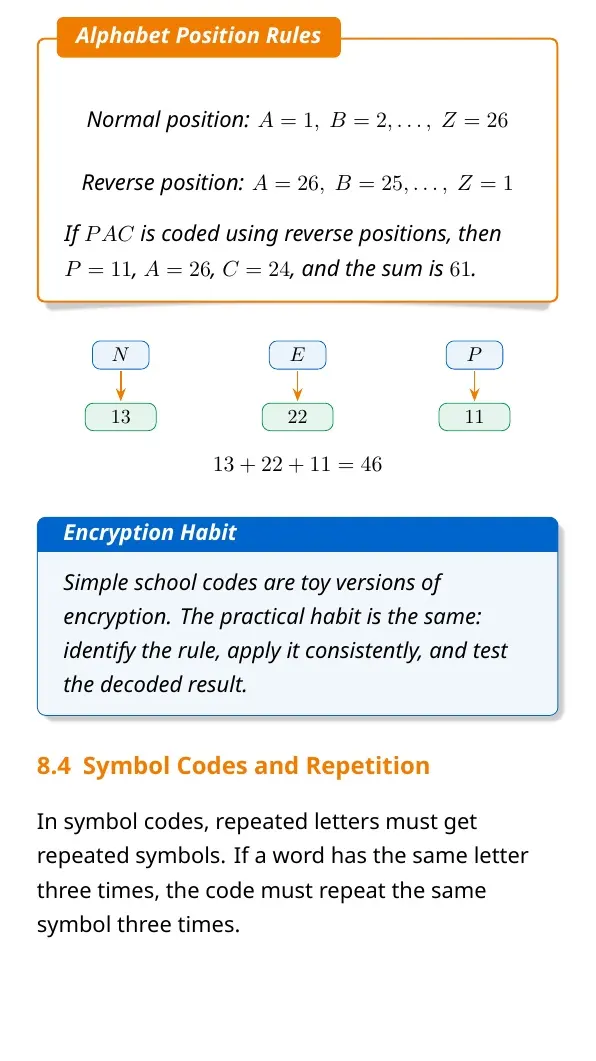
| Coding-decoding | Letter shifts, number positions and pattern rules | Find the rule before decoding the target |
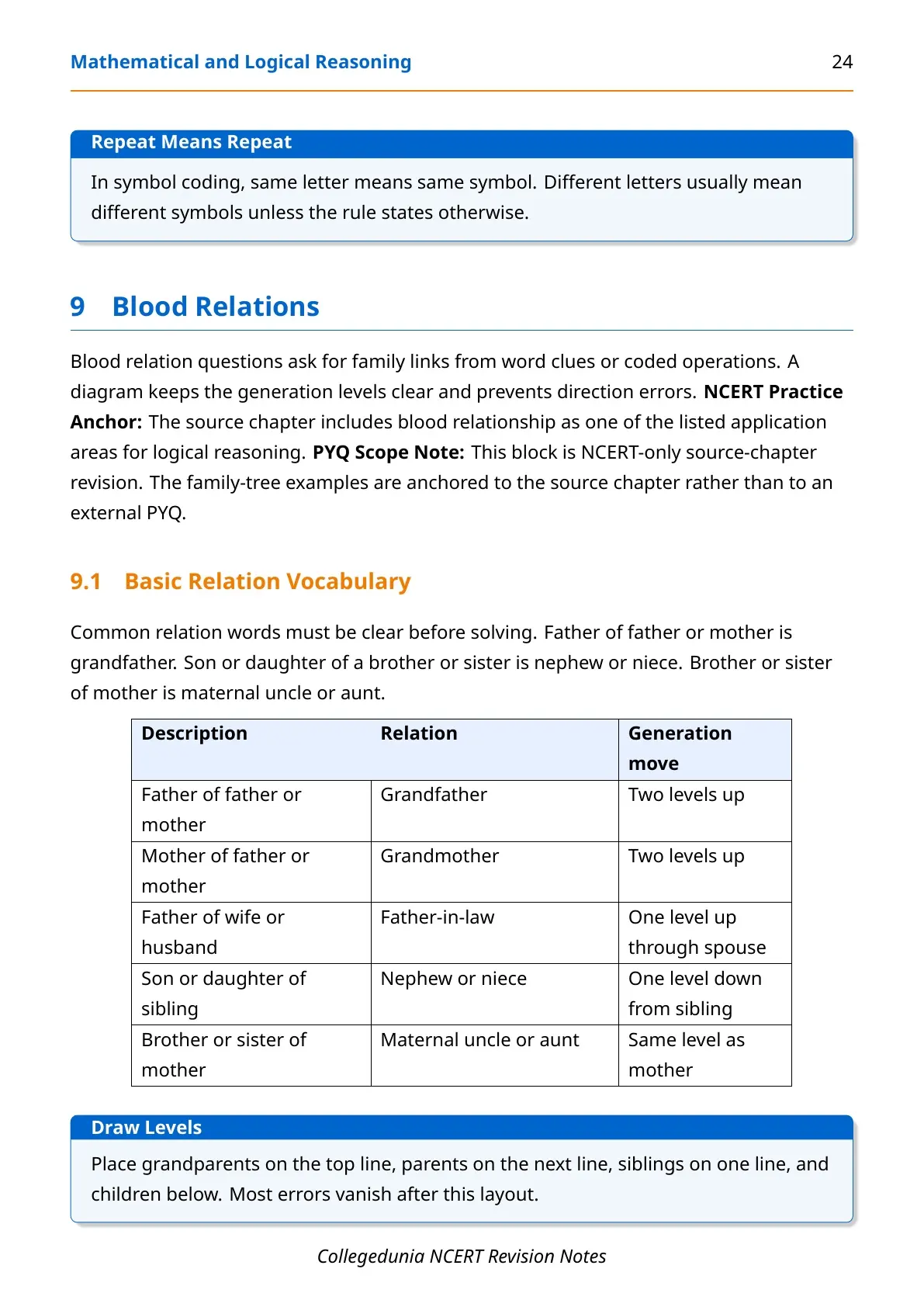
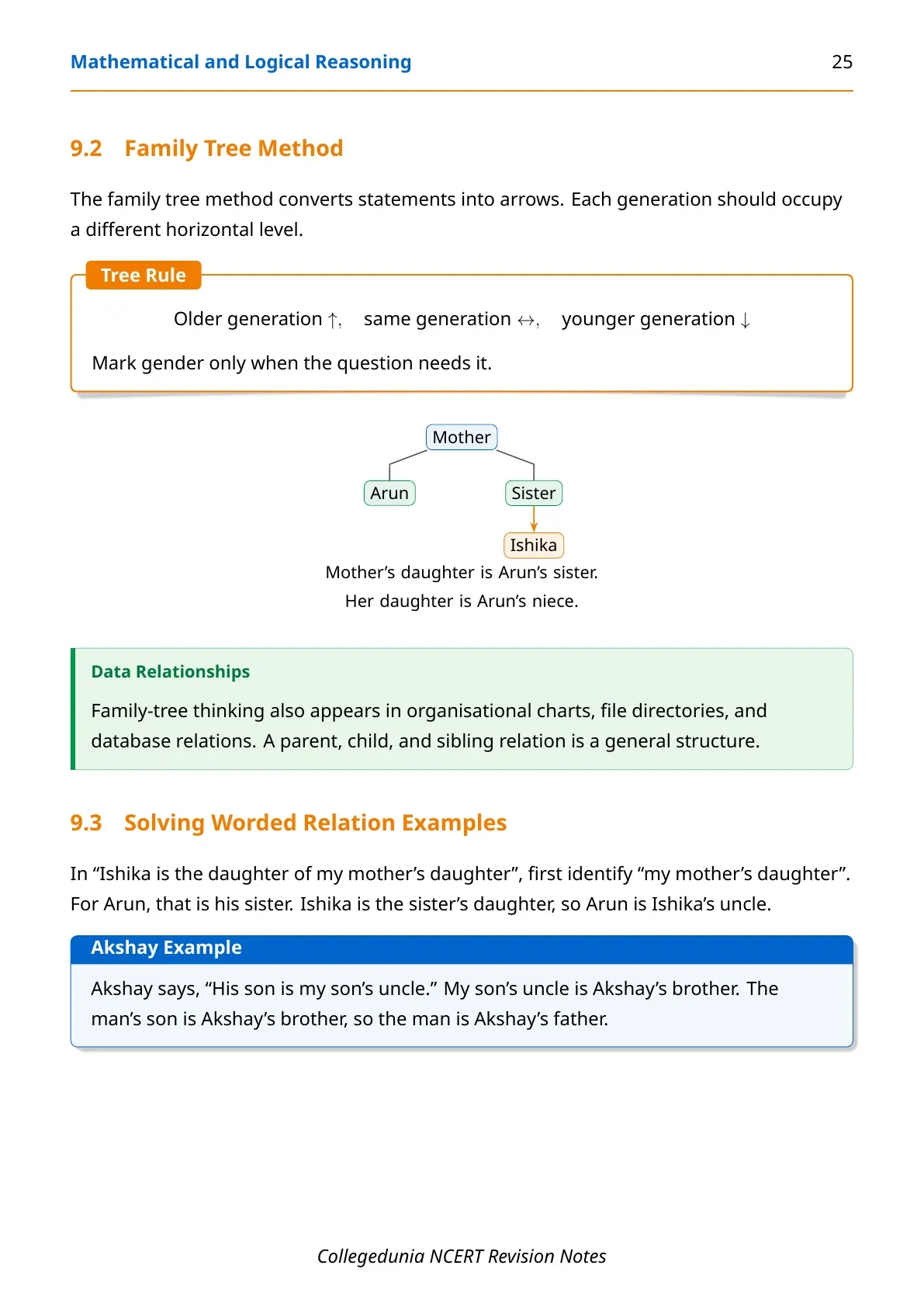
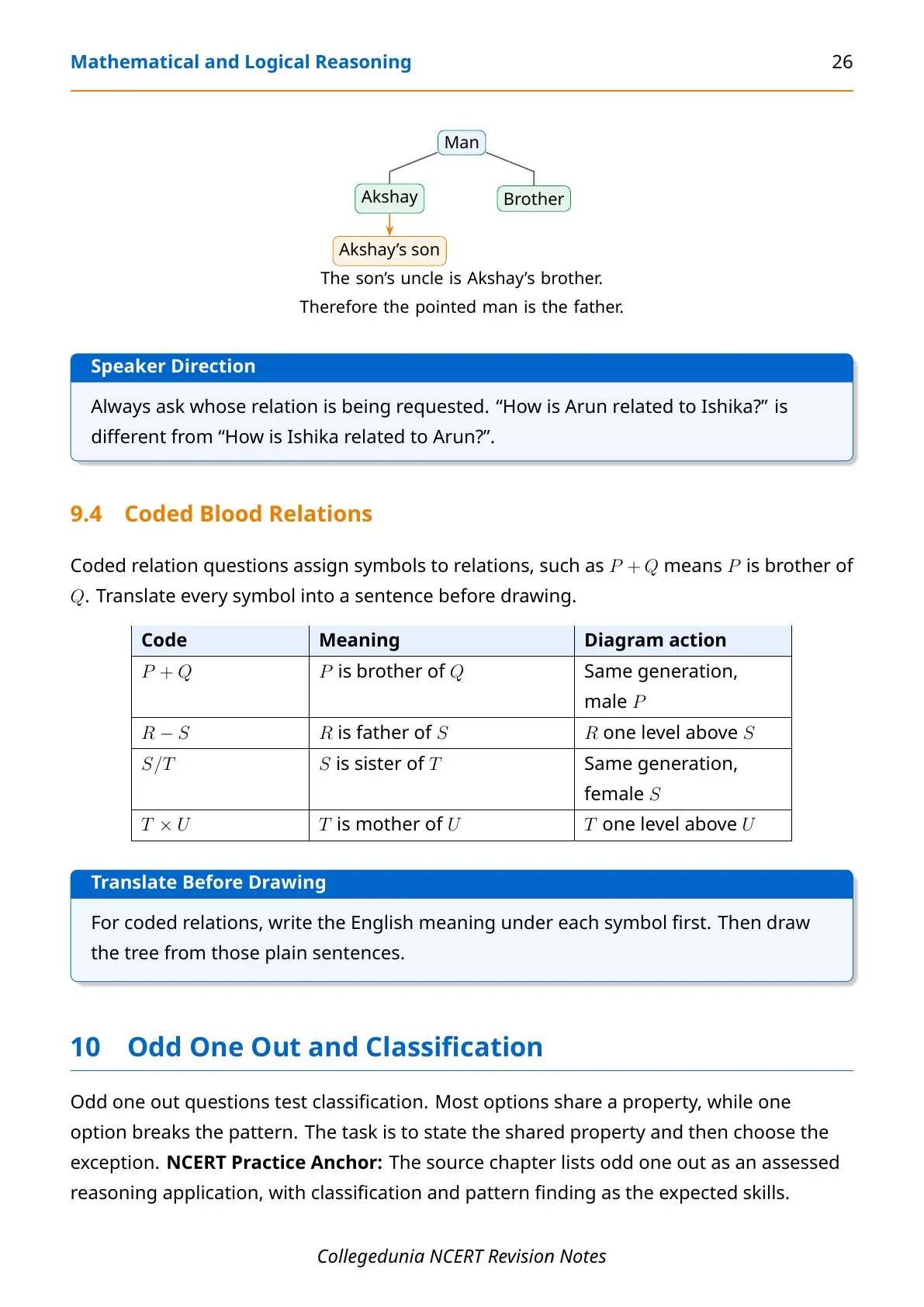
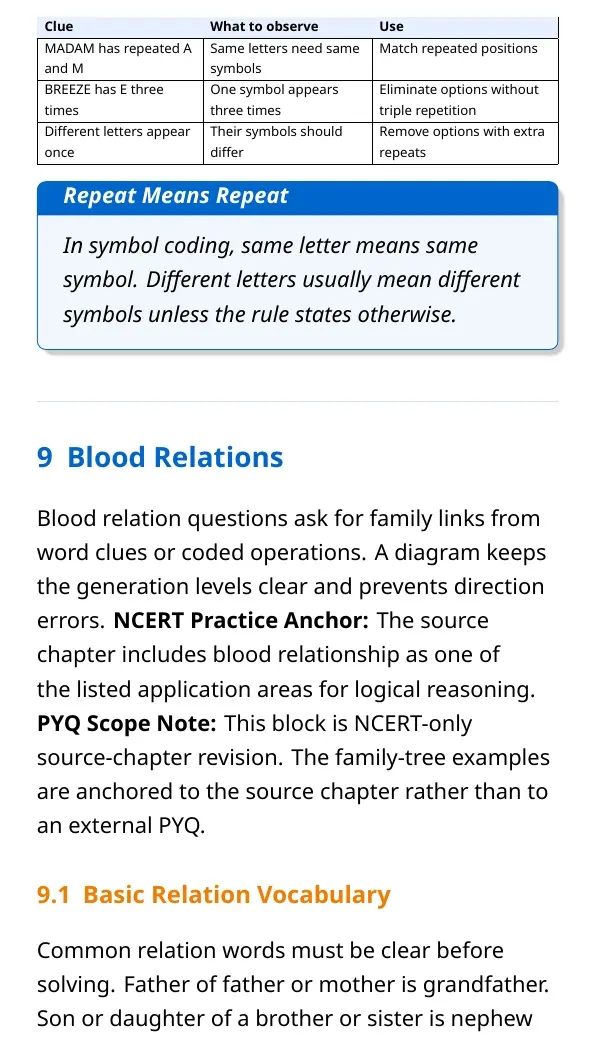
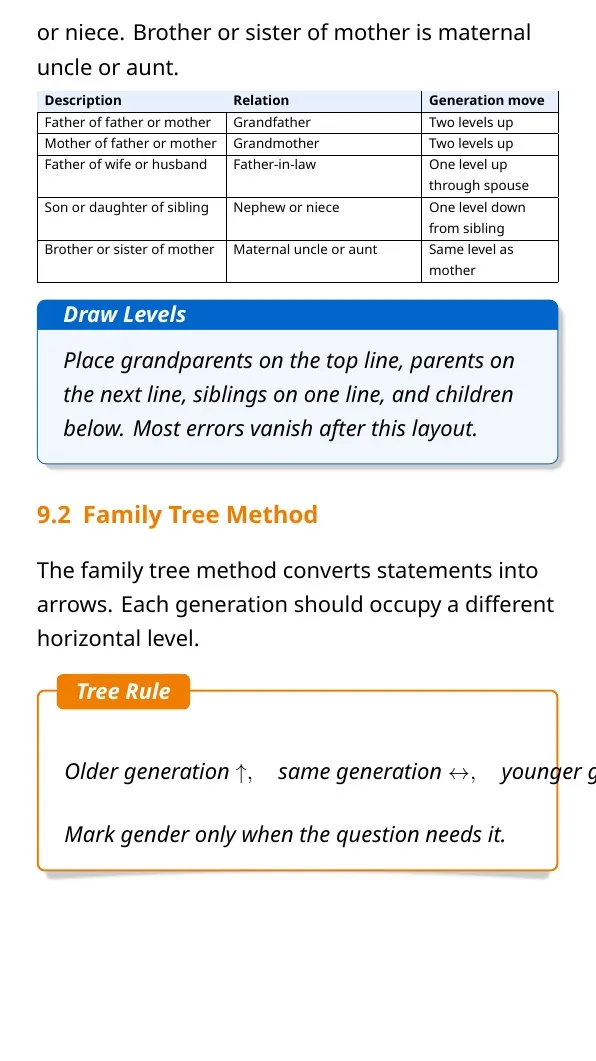
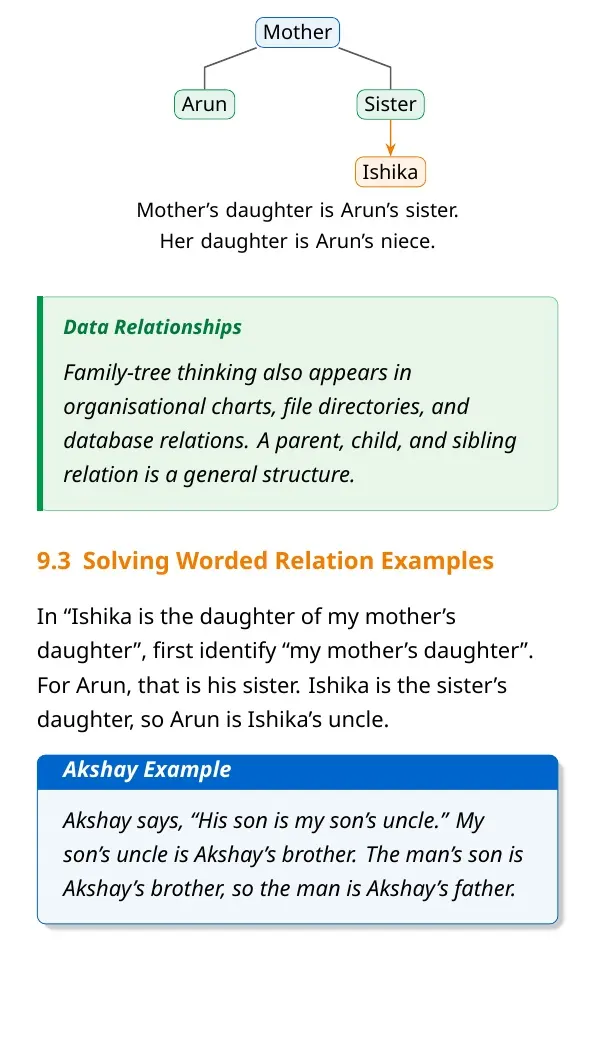
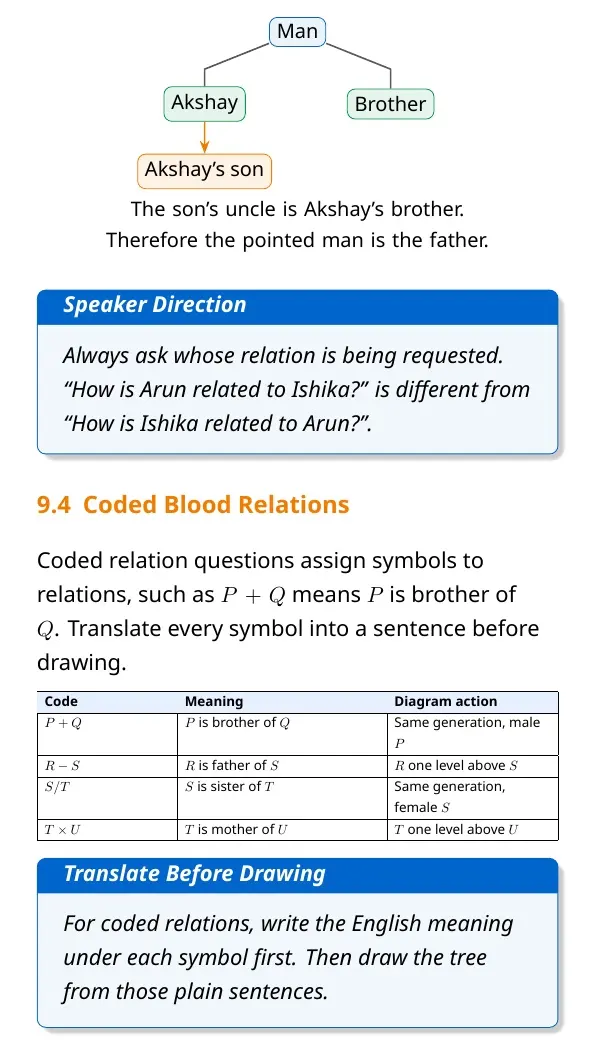
| Blood relations | Gender, generation and family links | Draw a small relation chart |
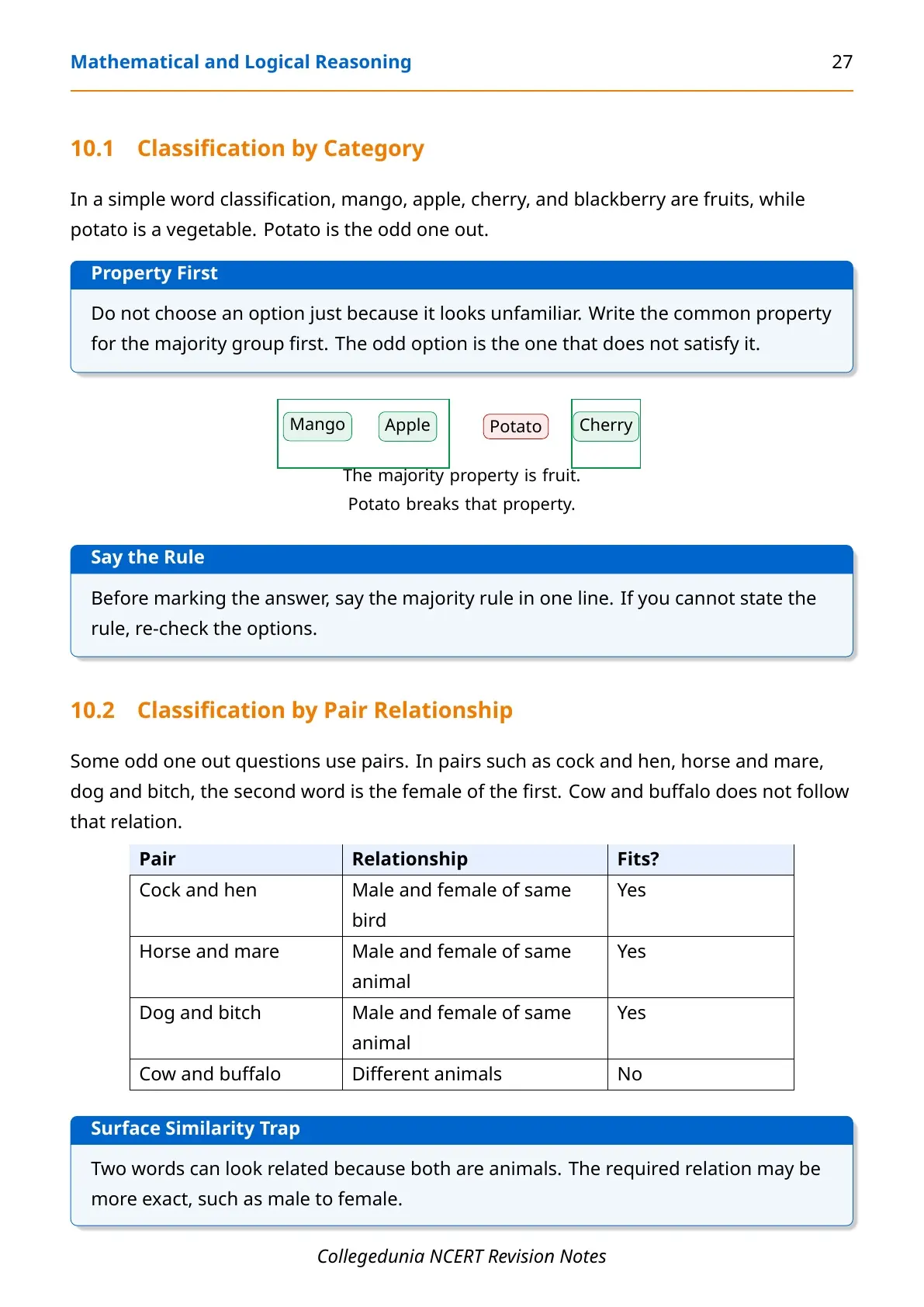
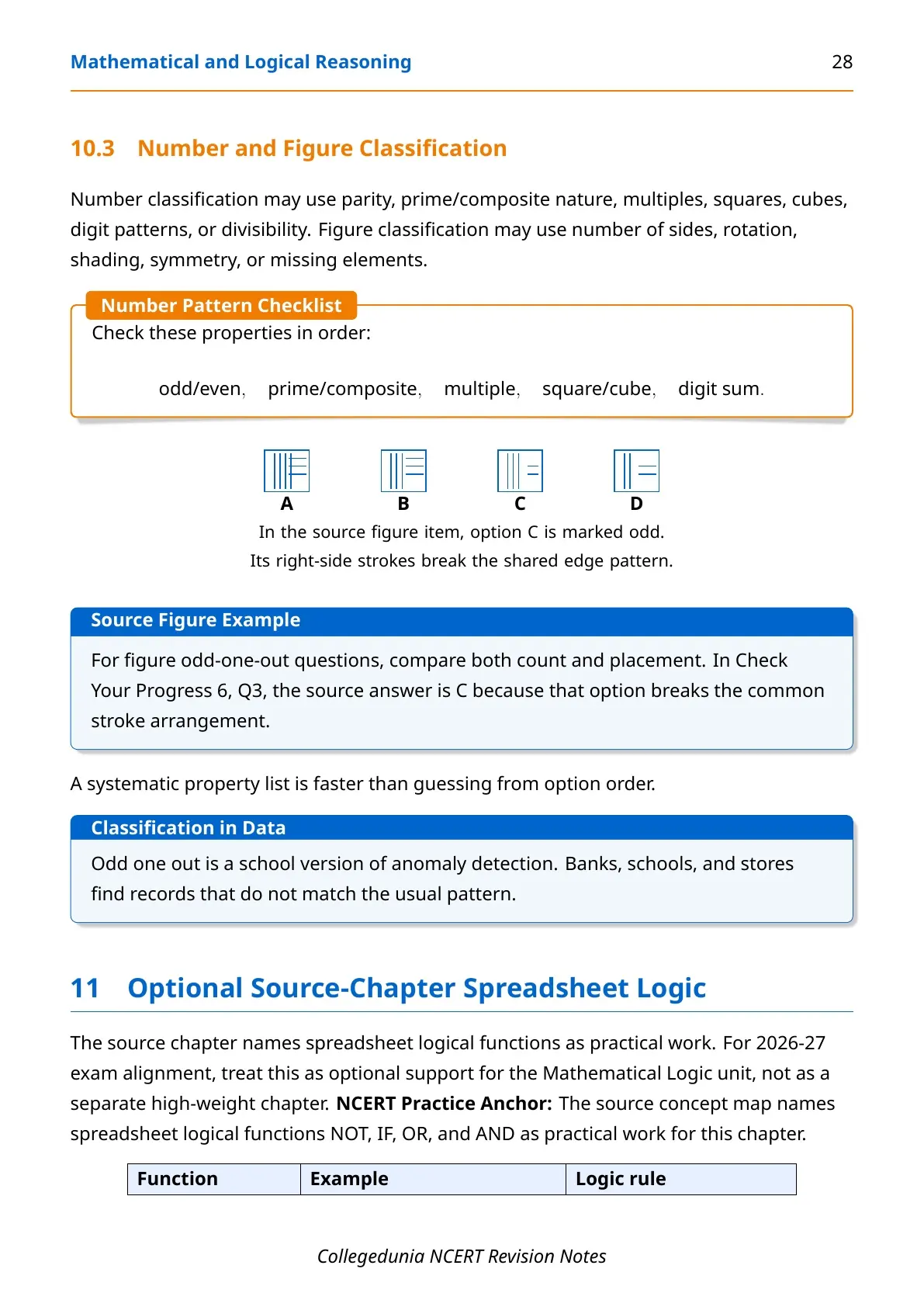
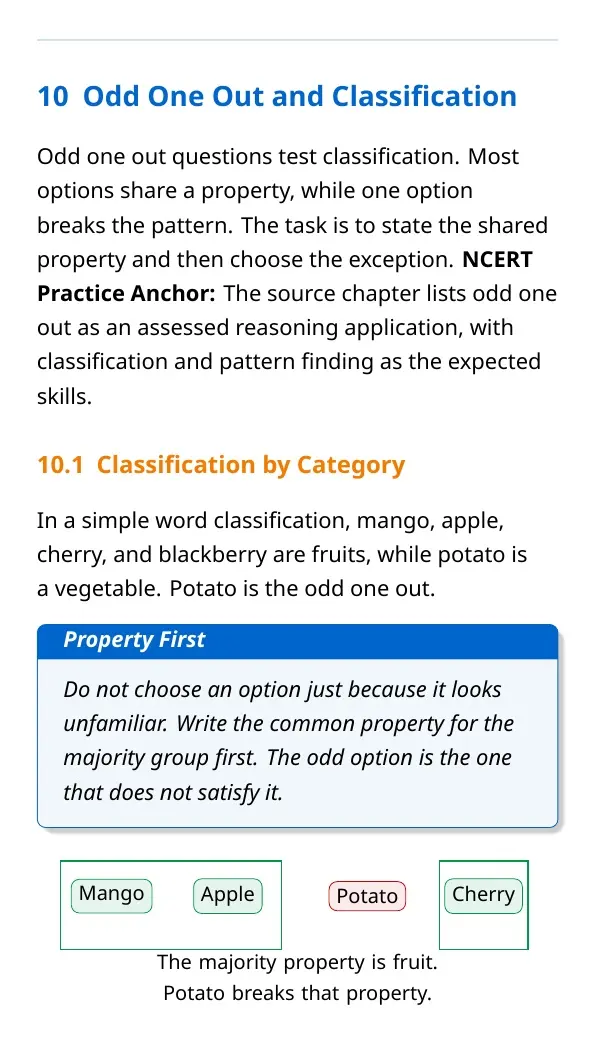
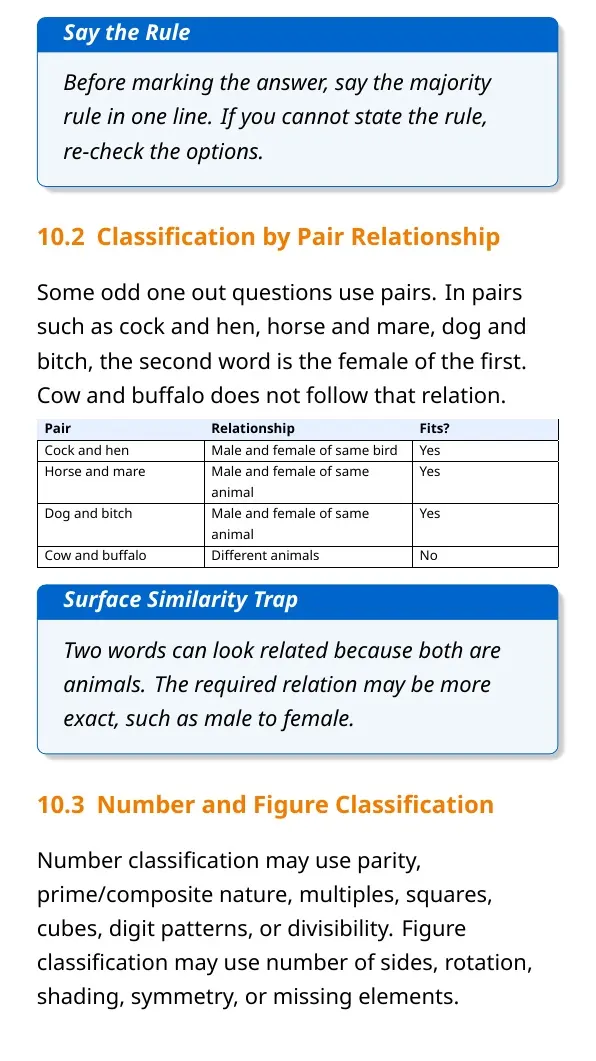
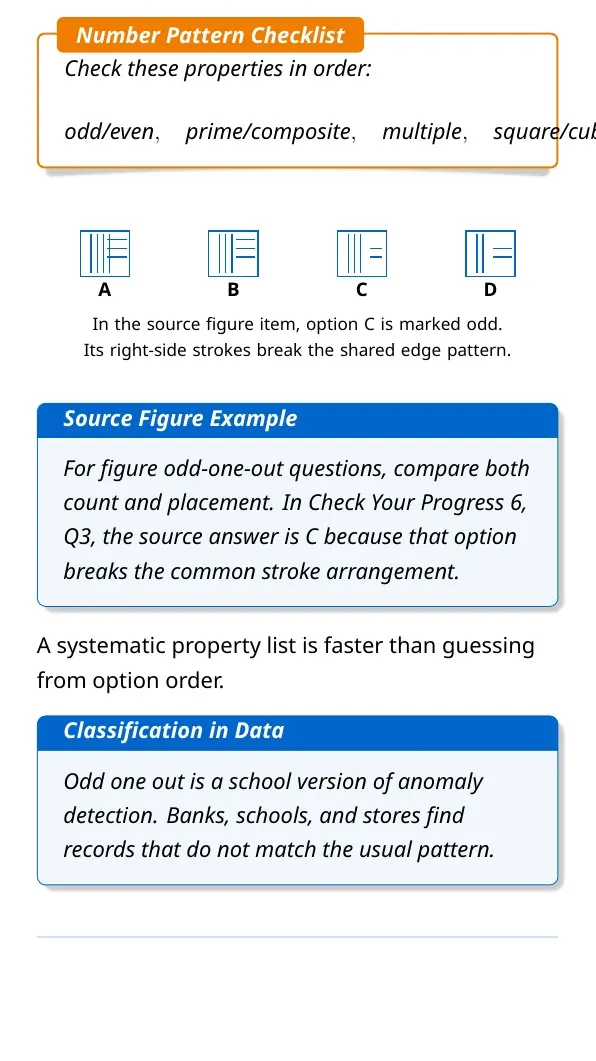
| Odd one out | Common property shared by most options | Test category, operation or sequence |
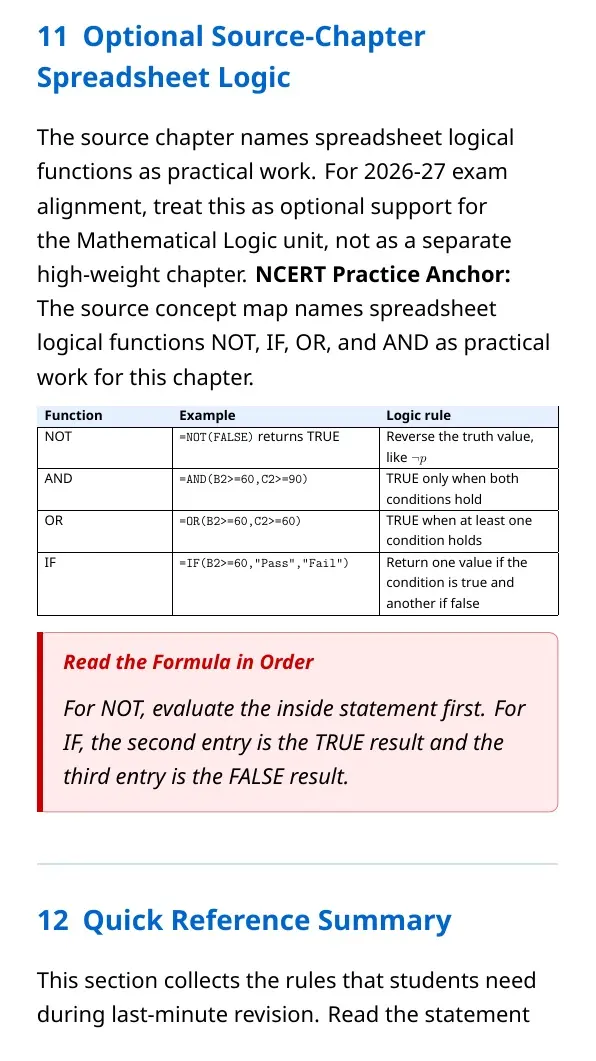
| Spreadsheet logic | Cell references, comparison rules and conditions | Trace each condition in order |
How to Use the Mathematical and Logical Reasoning Notes PDF
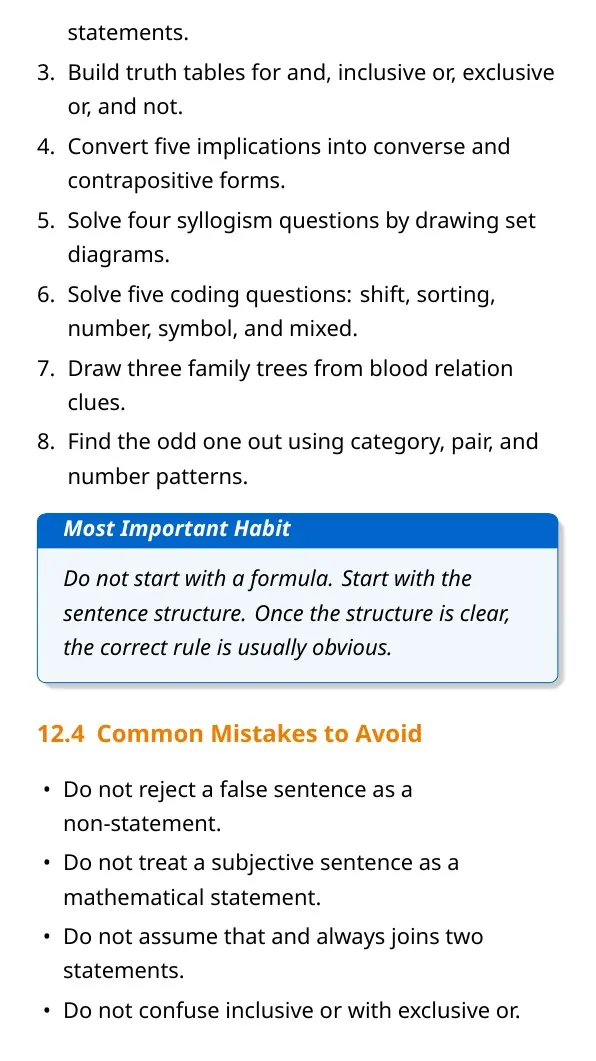
The notes PDF is best used in three short passes. First revise definitions, then test implication forms, and finally solve the reasoning applications without looking at the shortcut box.
| Study pass | What to do | Target |
|---|---|---|
| Pass 1 | Revise statements, negation, compound statements and quantifiers | Correct language |
| Pass 2 | Compare converse, contrapositive and if and only if | Correct logic form |
| Final recap | Attempt syllogism, coding-decoding, blood relation and spreadsheet examples | Exam speed |
Applied Mathematics Notes for All Chapters
Related Links: revise nearby Applied Mathematics chapters with the same Notes format.
| Chapter | Class 11 Applied Mathematics Notes |
|---|---|
| Chapter 2 | Numerical Applications Class 11 Notes |
| Chapter 3 | Set Class 11 Notes |
| Chapter 4 | Relations Class 11 Notes |
| Chapter 6 | Permutations and Combinations Class 11 Notes |
Mathematical and Logical Reasoning Class 11 Notes FAQs
Ques. What is a statement in Mathematical and Logical Reasoning?
Ans. A statement is a sentence that has a definite truth value. It must be either true or false, so questions, commands and vague sentences are not statements.
Ques. What is the difference between converse and contrapositive?
Ans. For if p then q, the converse is if q then p. The contrapositive is if not q then not p, and it is logically equivalent to the original implication.
Ques. Why are quantifiers important in Class 11 Applied Mathematics?
Ans. Quantifiers show whether a claim applies to every case or at least one case. They prevent students from changing the meaning of a mathematical statement.
Ques. Are these Mathematical and Logical Reasoning notes aligned to the 2026-27 syllabus?
Ans. Yes. These Class 11 Applied Mathematics notes follow the 2026-27 CBSE syllabus scope for Mathematical and Logical Reasoning.



Comments