



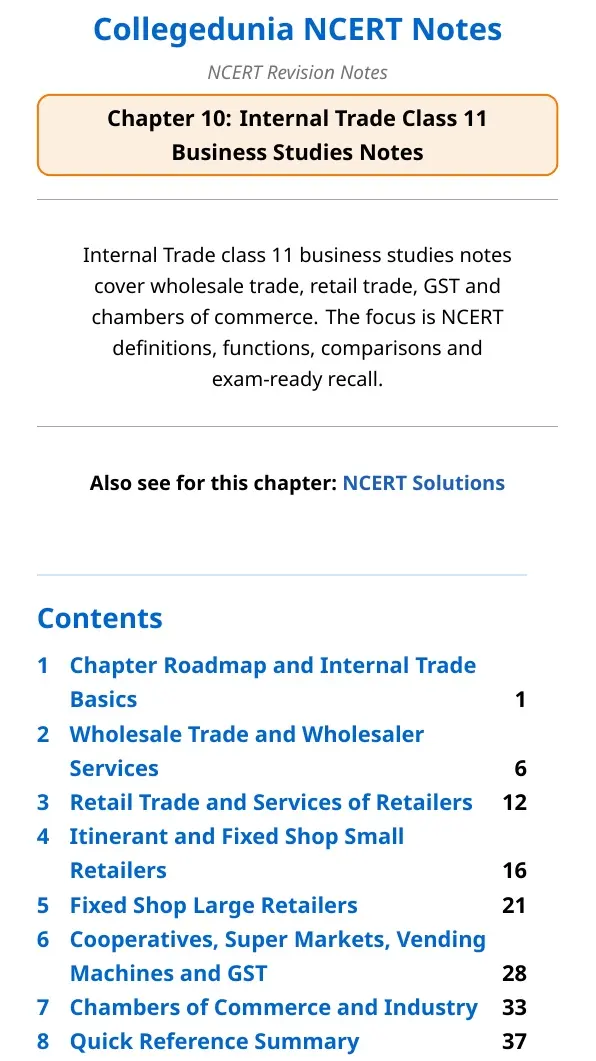
The Internal Trade Class 11 Business Studies notes explain how goods move inside India through wholesalers, retailers, market traders, fixed shops, super markets, vending machines and GST-linked trade rules for the 2026-27 NCERT syllabus. Use this page for quick revision, then open the PDF for diagrams, comparison tables and answer frames.
- Download the 20-page Class 11 Business Studies Chapter 10 notes PDF for offline study.
- Revise wholesale trade, retail trade, GST, and chambers of commerce in one flow.
- Student focus: compare formats by purpose, scale, risk, location and service level.
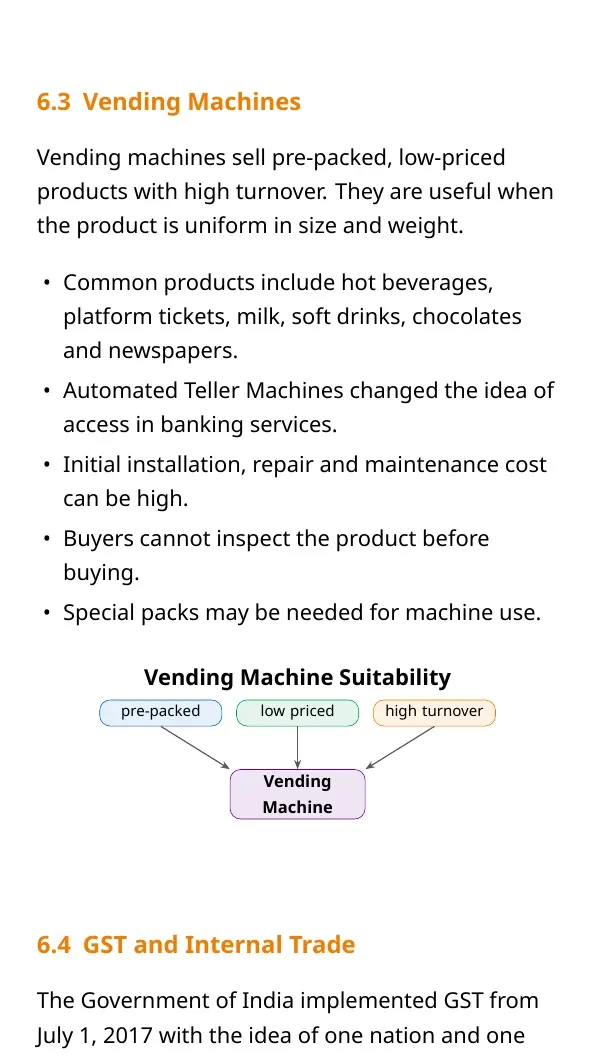
Student Feedback: In a Collegedunia poll of 11,840 Class 11 Commerce students conducted before the 2026 boards, 72% said Internal Trade became easier after they grouped retailers by mobility and scale.
Source: 2026-27 Class 11 Business Studies student poll from CBSE schools across 18 states.
|
Table of Contents |
Internal Trade Notes Topic-wise Weightage for Class 11 Business Studies
Internal Trade is a list-heavy chapter, so exam questions usually test clean classification. The most repeated areas are wholesale services, retailer types, departmental stores versus chain stores, and GST basics.
| Sub-topic | Weightage | Question pattern |
|---|---|---|
| Wholesale trade and services | High | Short answer or distinction-based question |
| Retail trade and retailer services | High | List, explain, or case-based application |
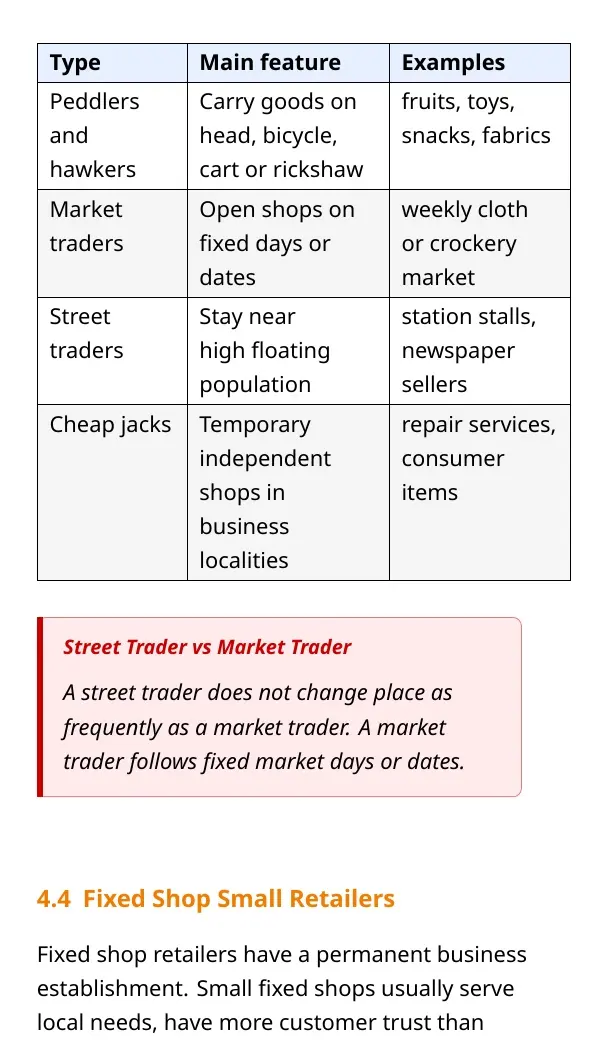
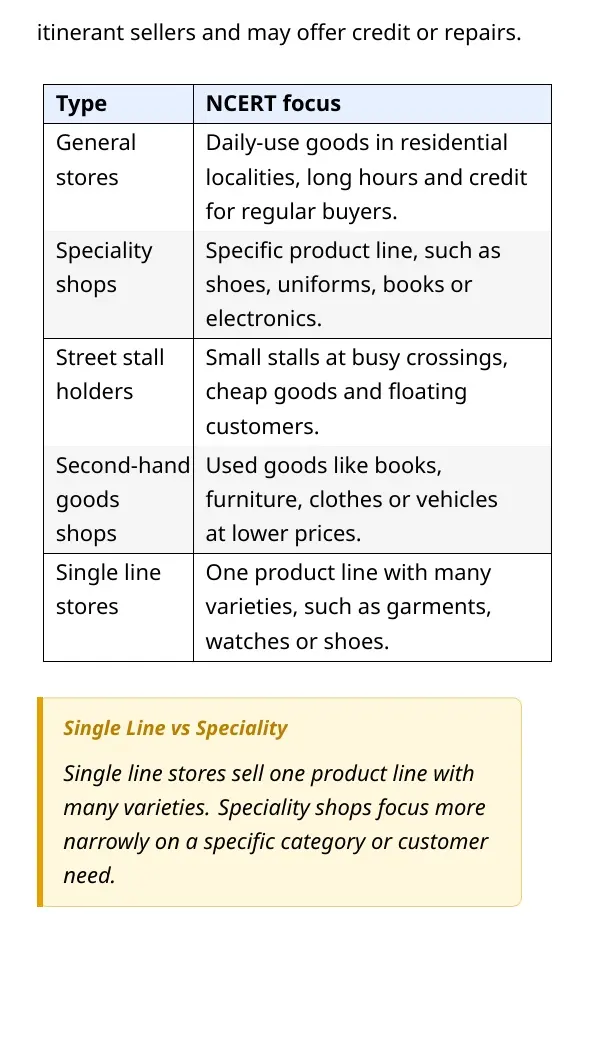
| Itinerant and fixed shop retailers | Medium | Classification and examples |
| Large retail formats | Medium | Advantages, limitations and differences |
| GST and commerce associations | Low to Medium | Direct theory or current-business link |
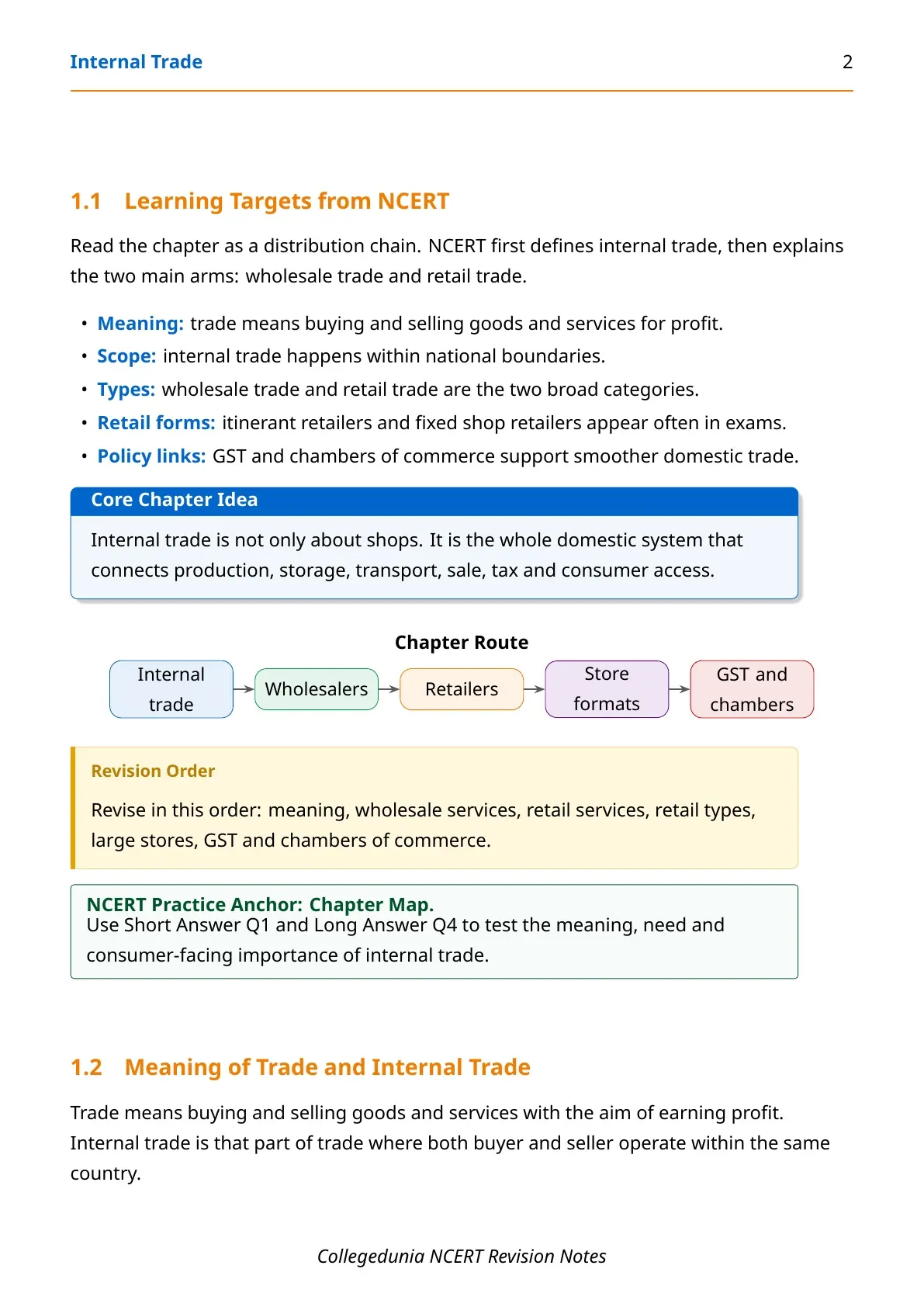
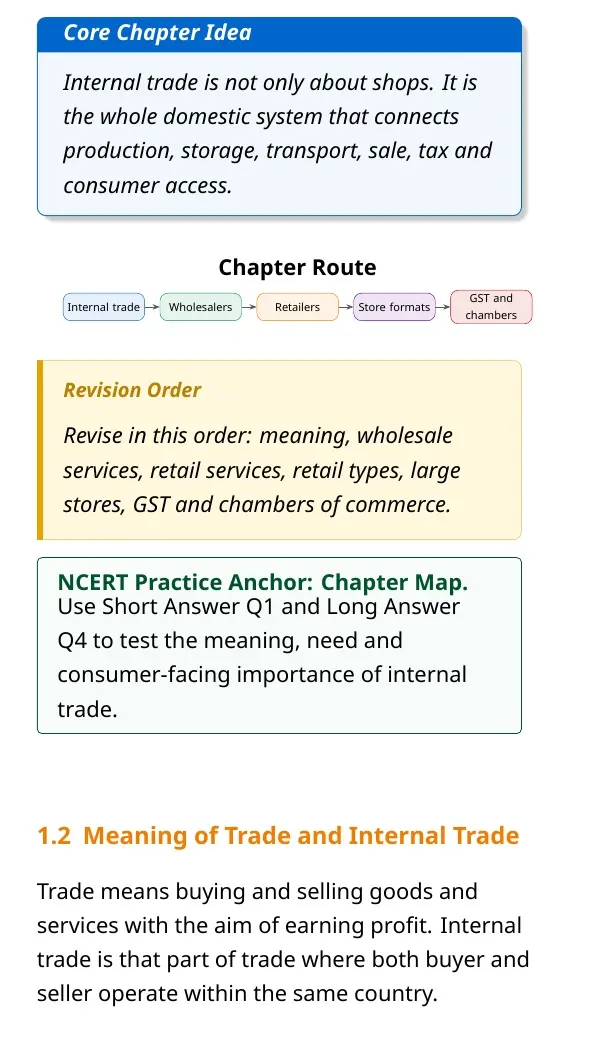
Internal Trade Class 11 Topic Summary and Channel Map
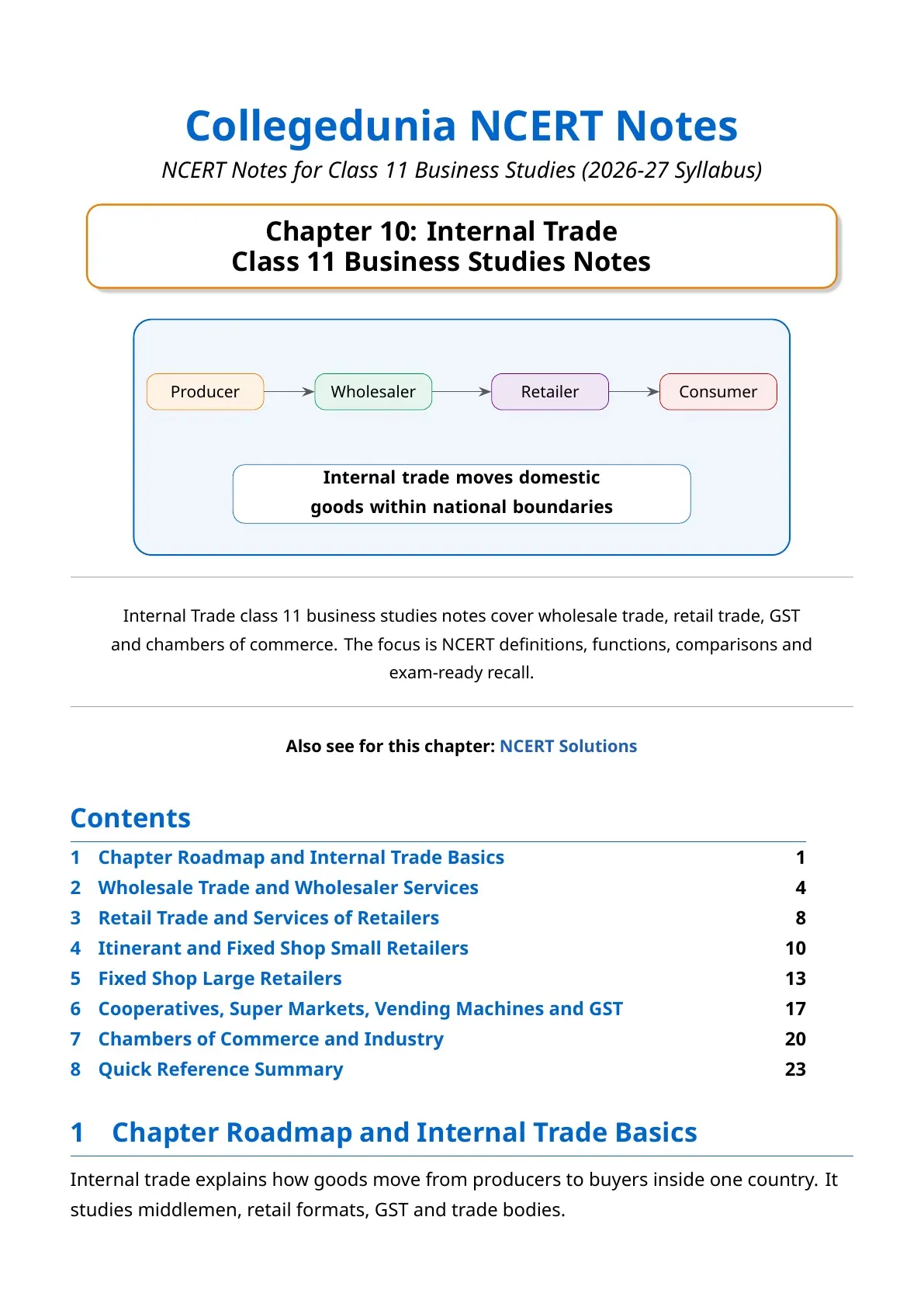
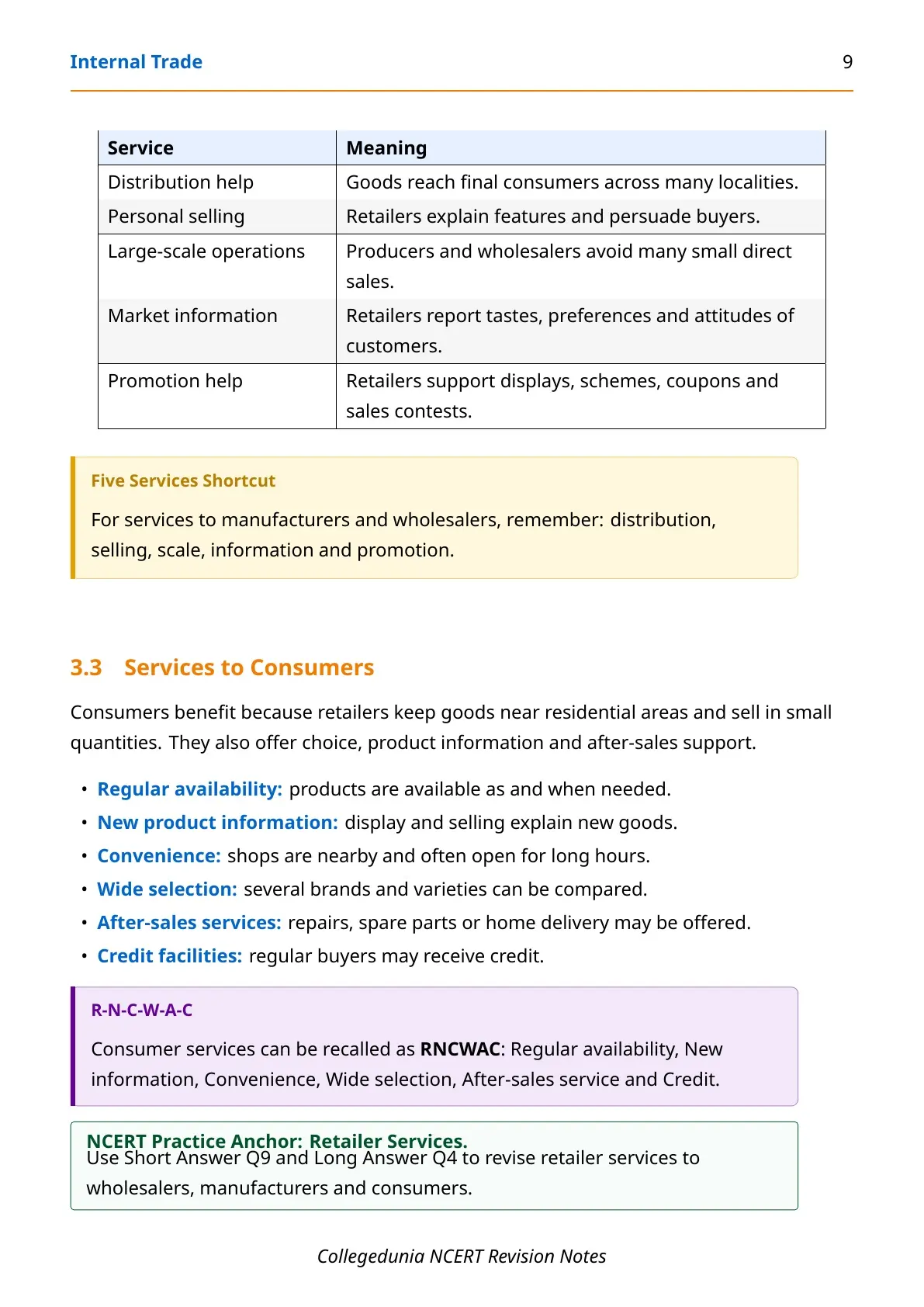
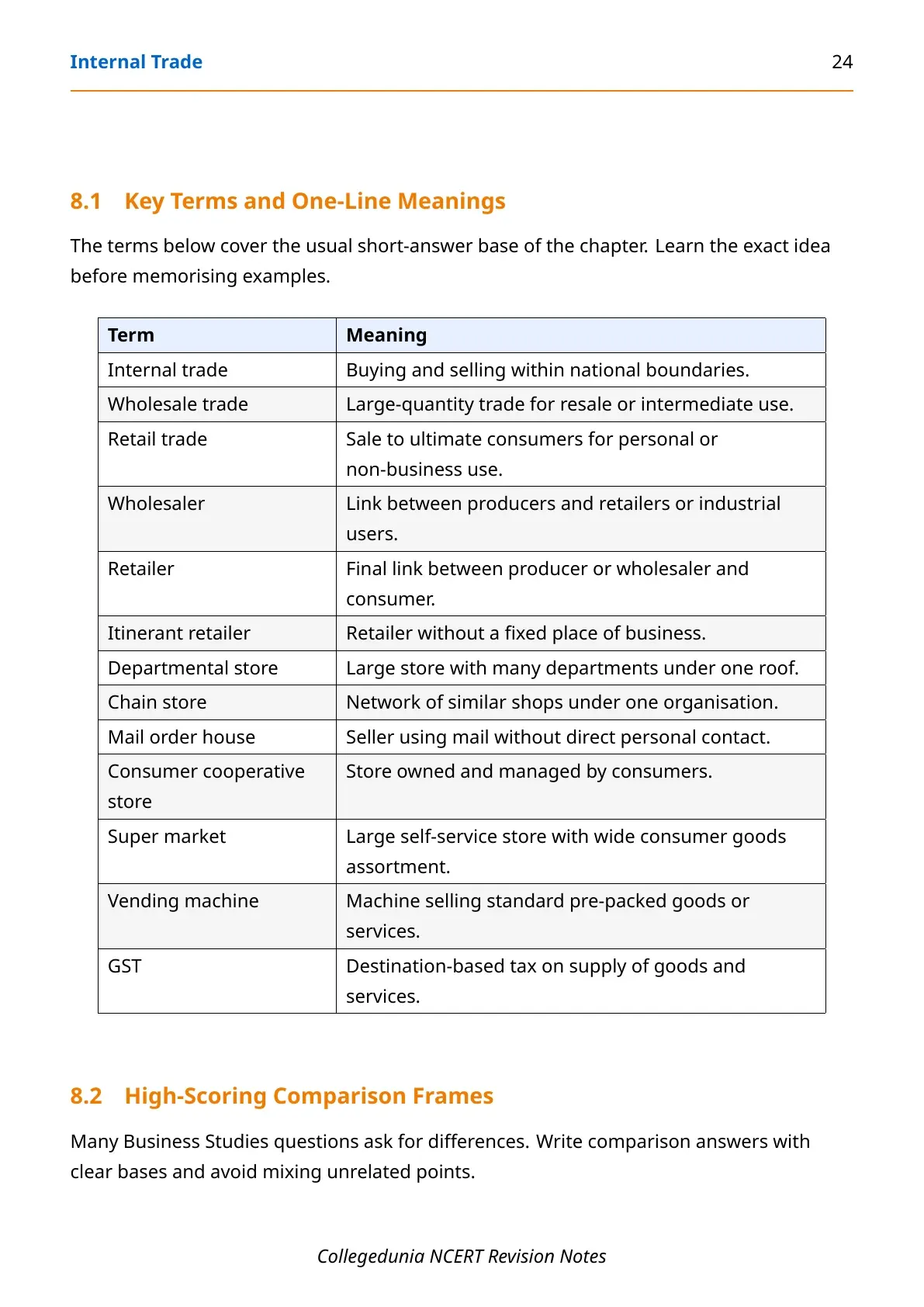
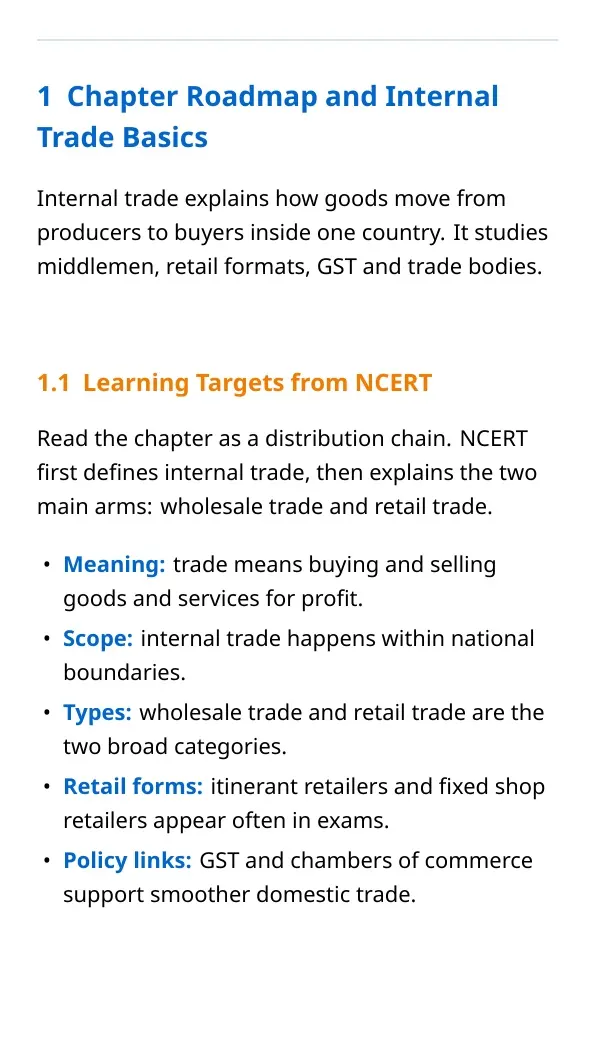
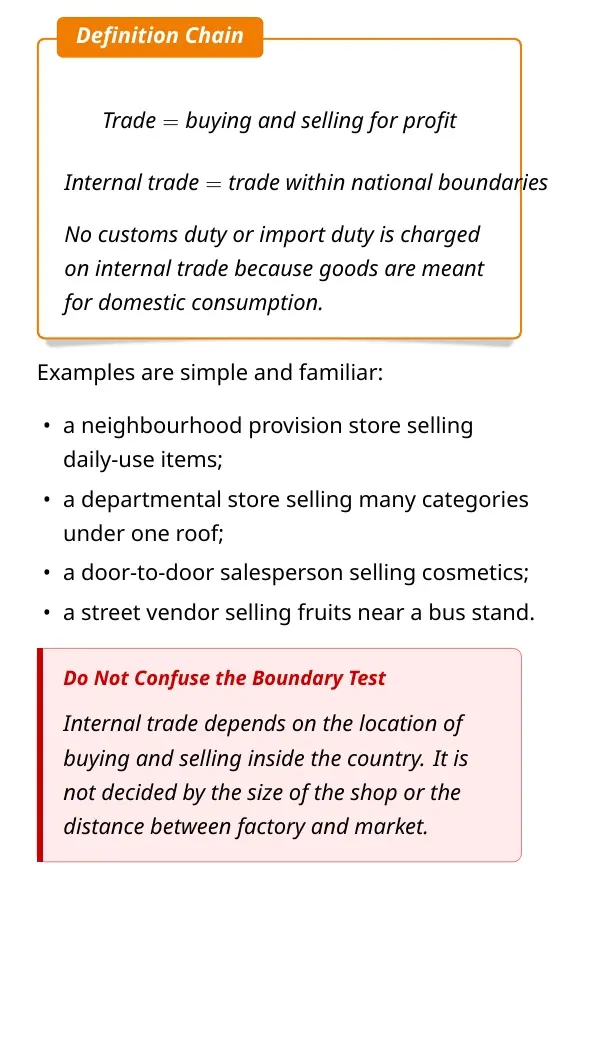
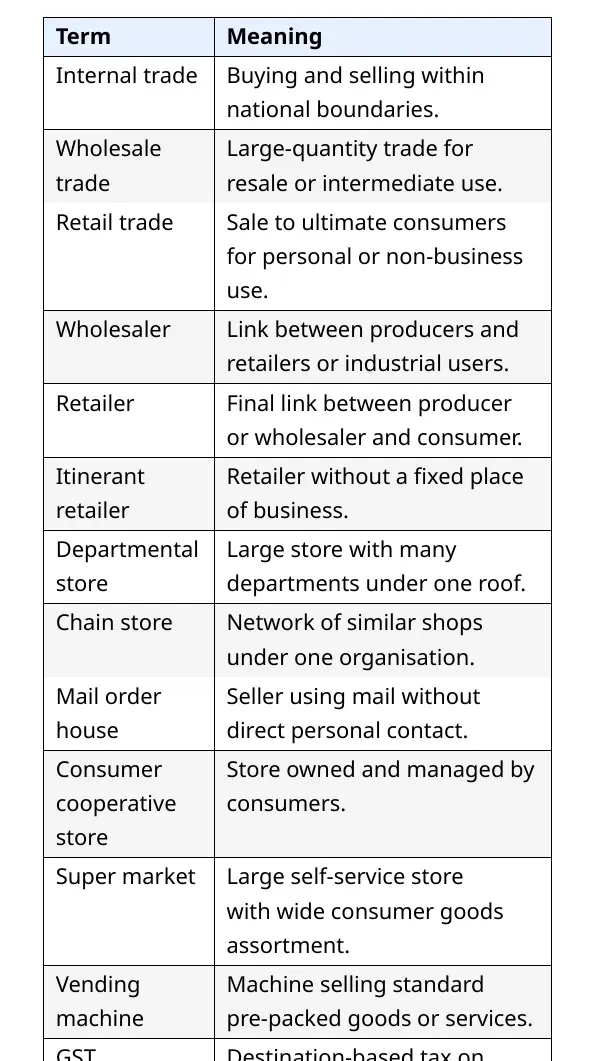
Internal trade means buying and selling goods and services within national boundaries. No import duty applies because goods are meant for domestic consumption.
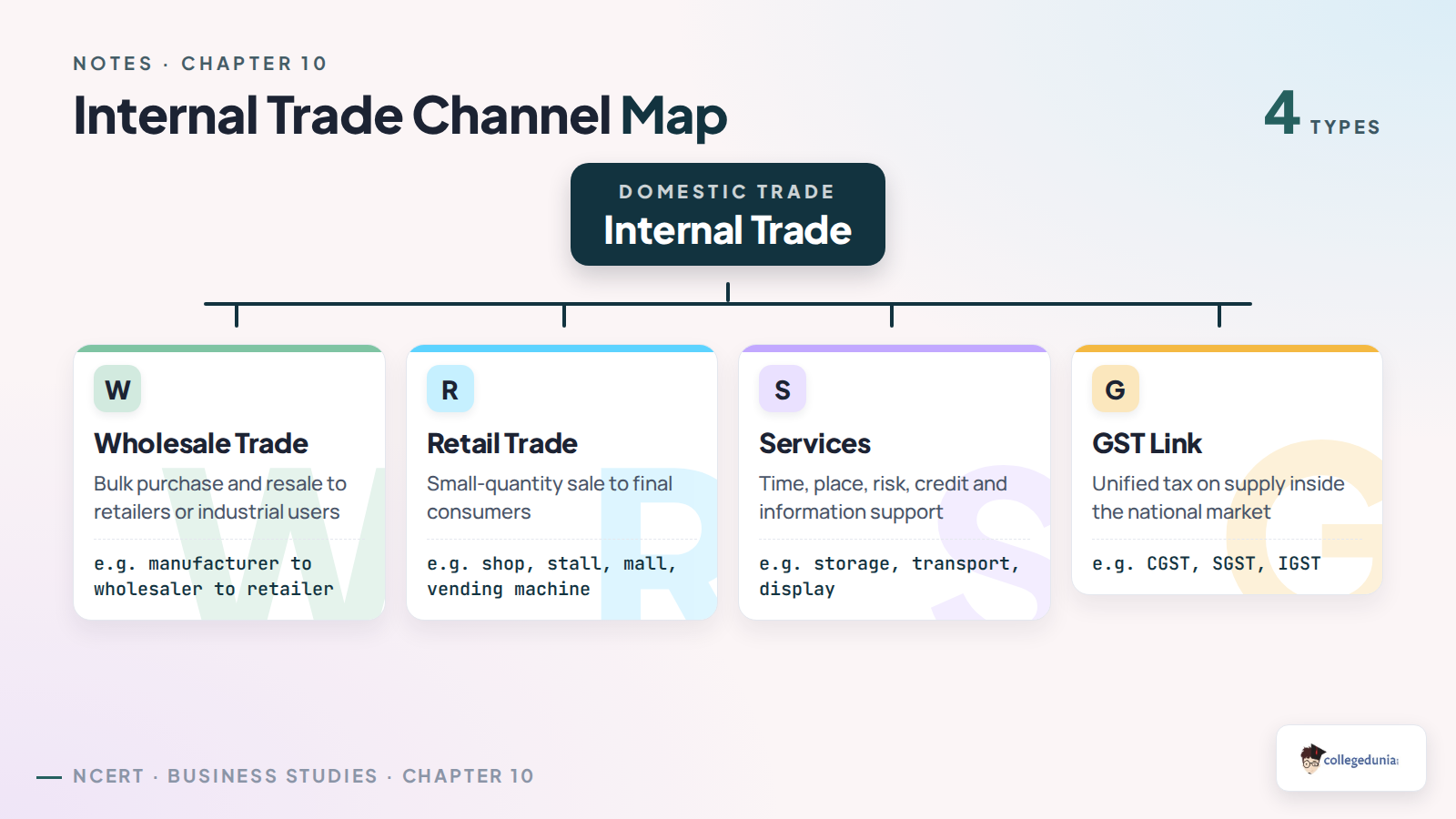
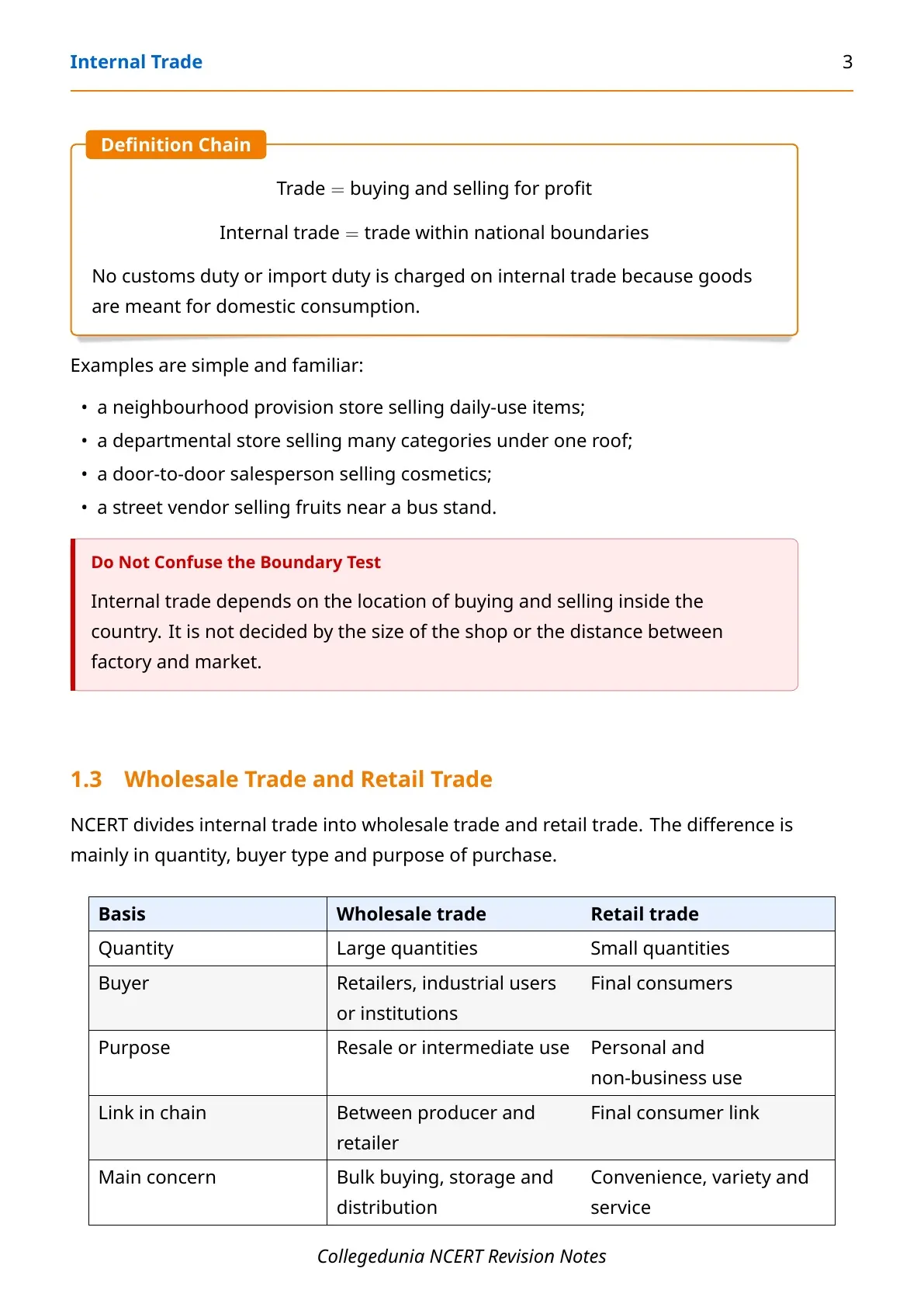
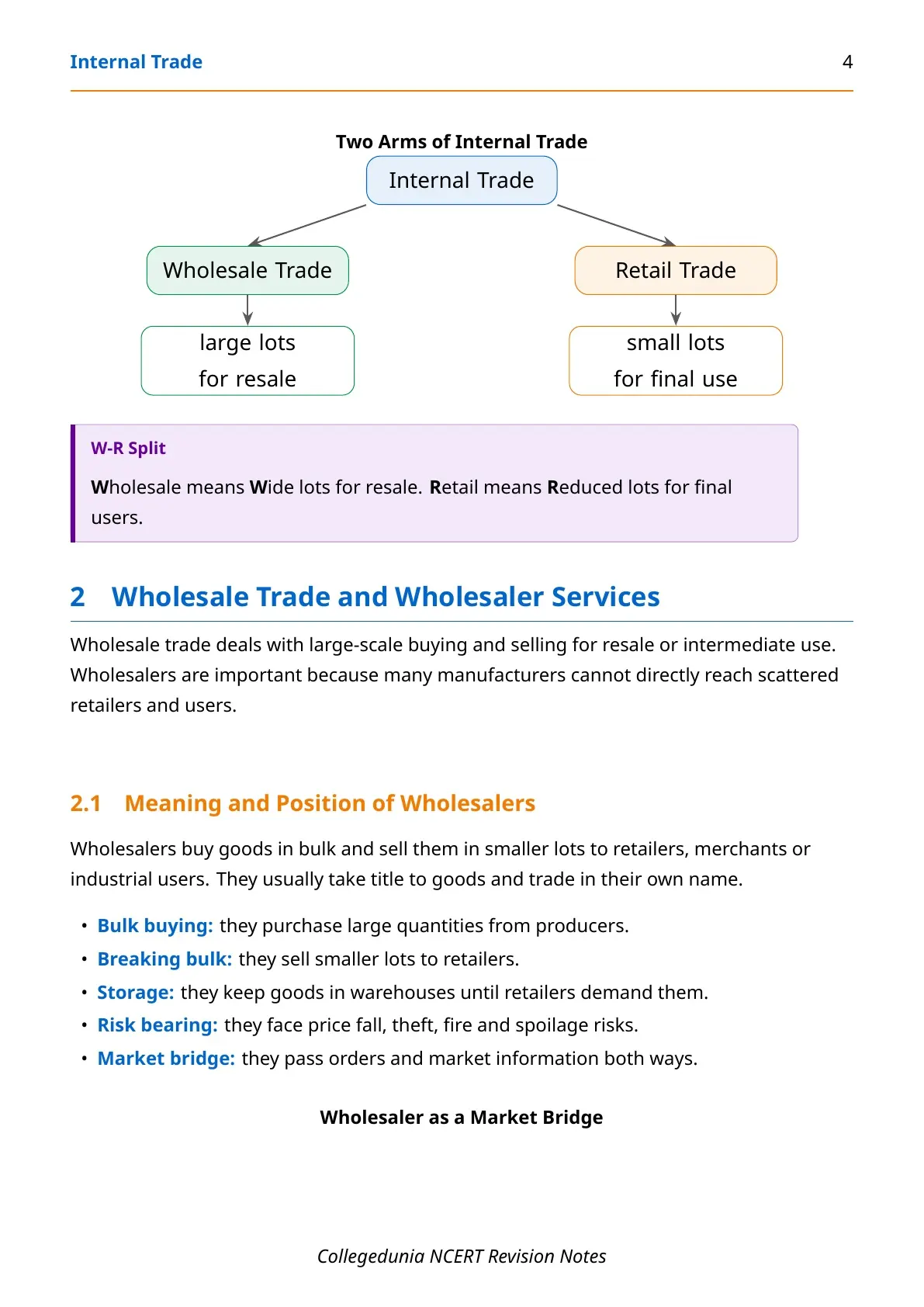
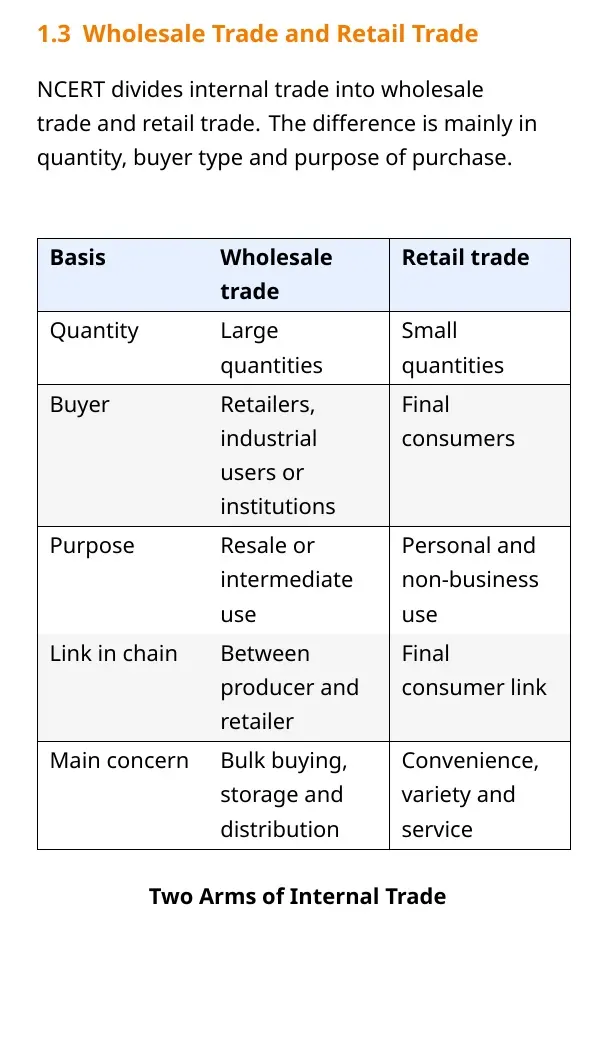
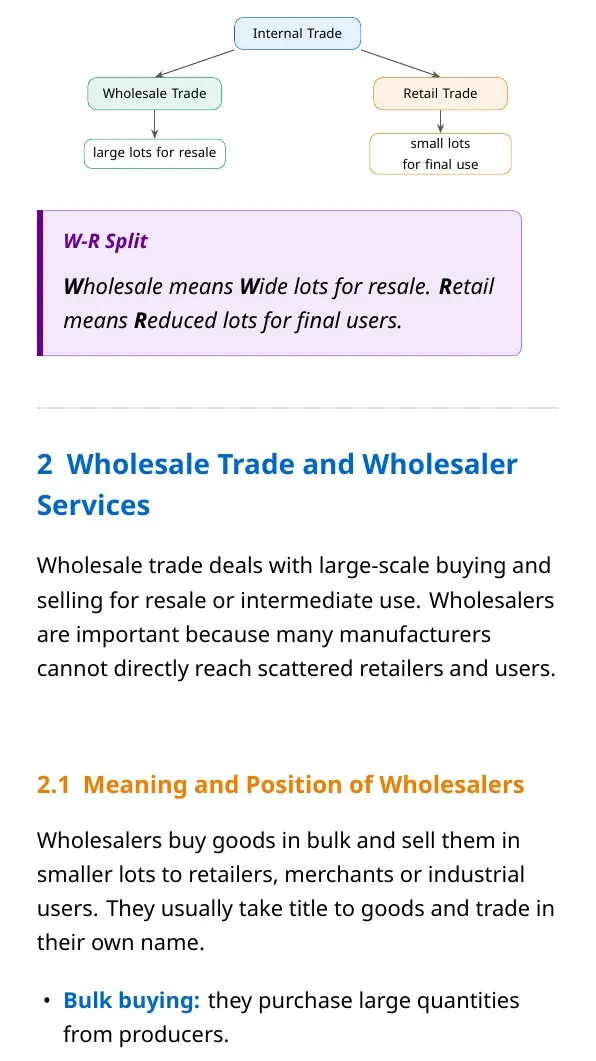
- Wholesale trade: bulk purchase for resale or intermediate use.
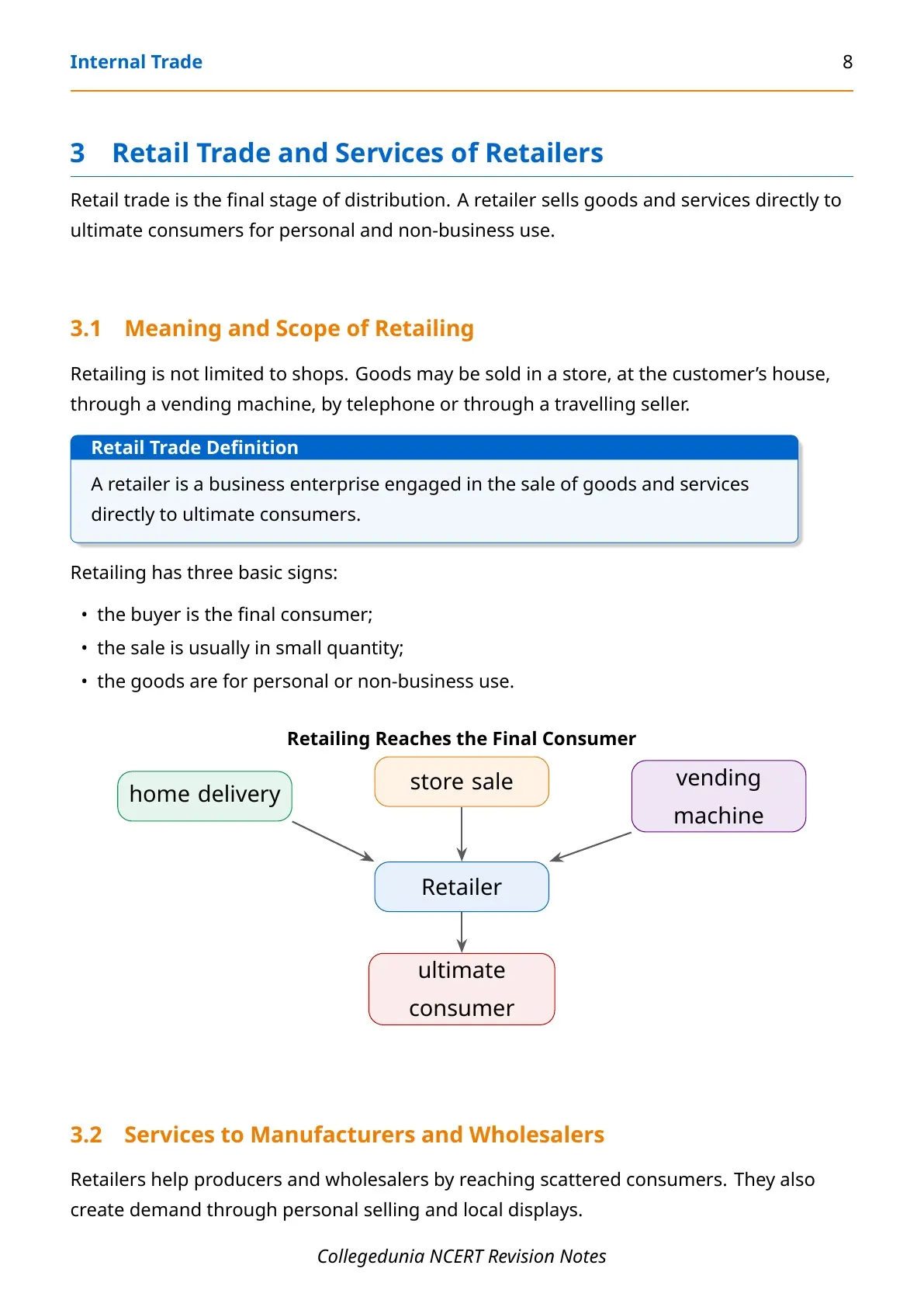
- Retail trade: small-quantity sale to final consumers.
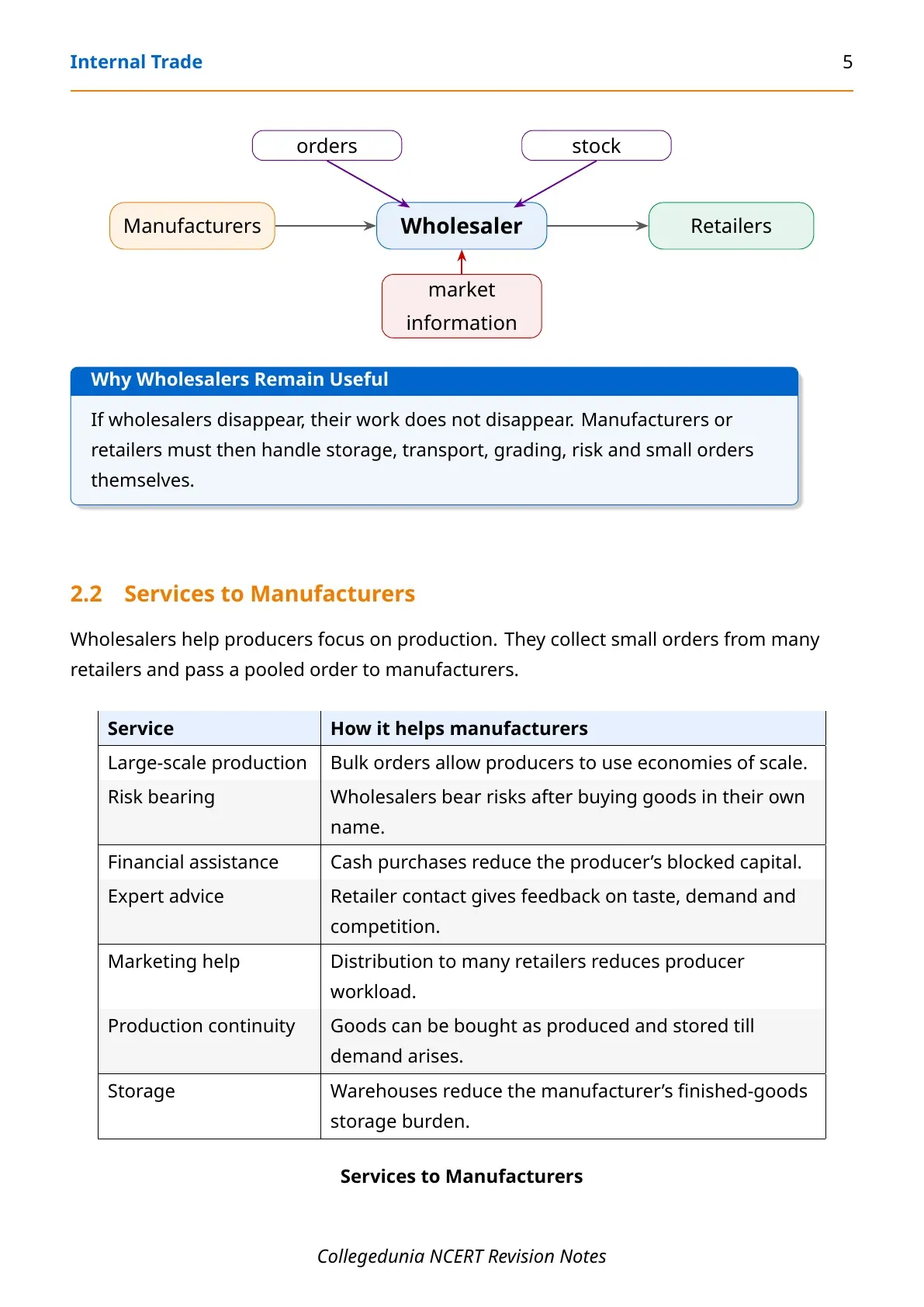
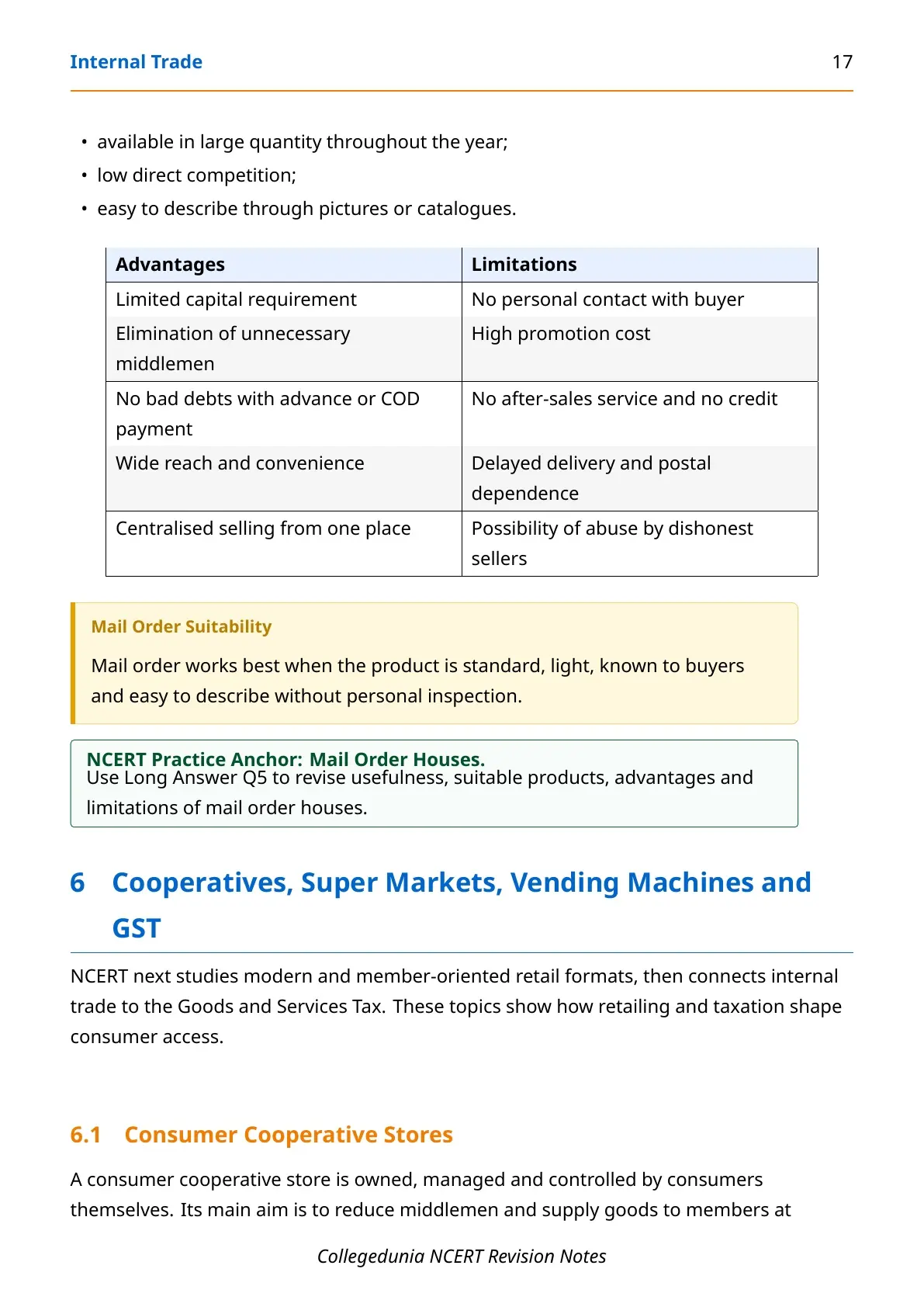
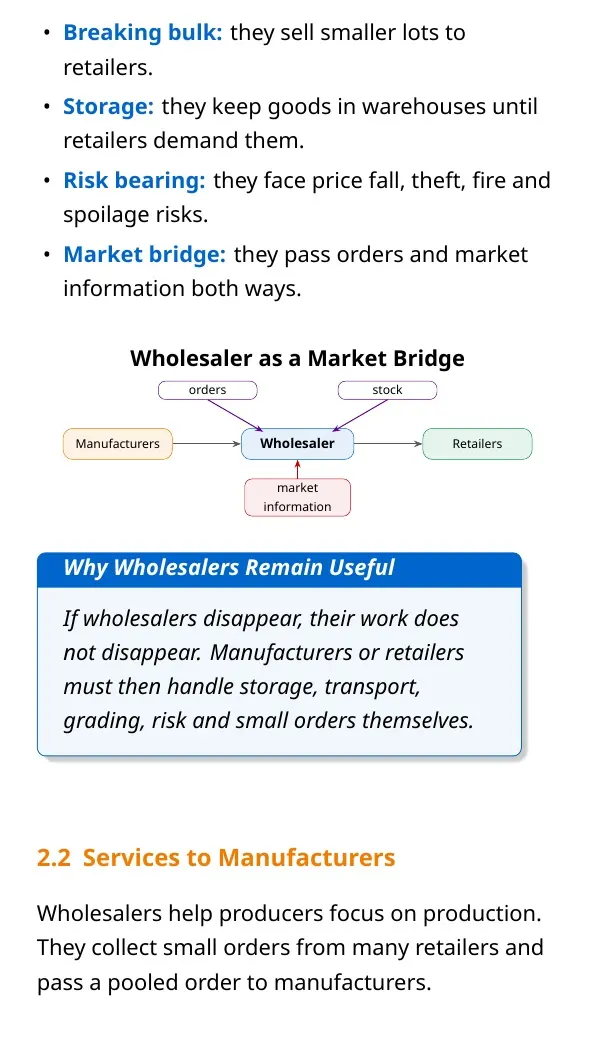
- Wholesalers: connect producers with retailers through storage, grading, transport, credit and risk-bearing.
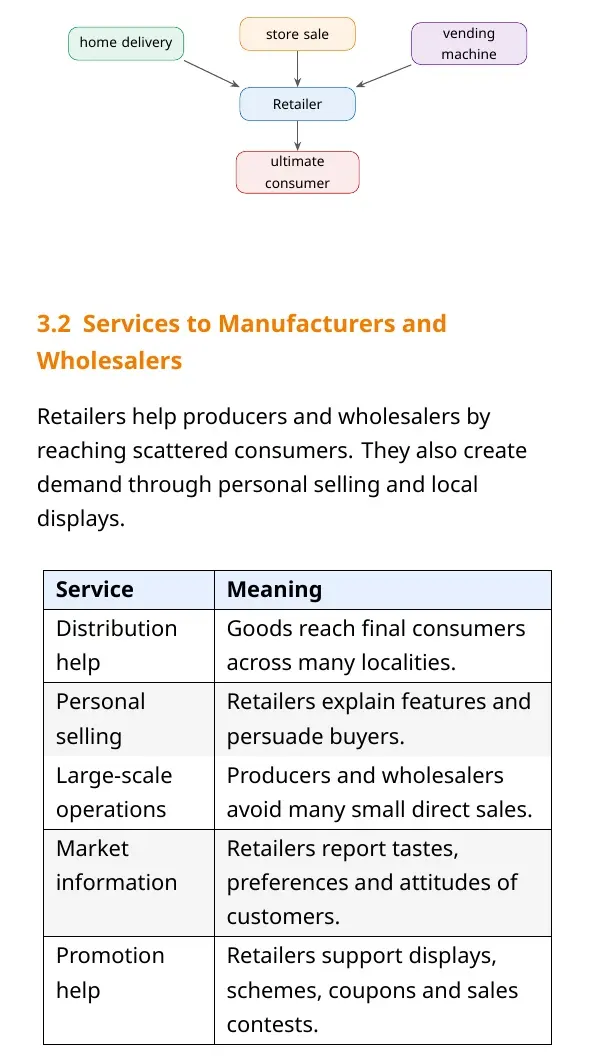
- Retailers: connect wholesalers or producers with consumers through display, convenience and after-sales service.
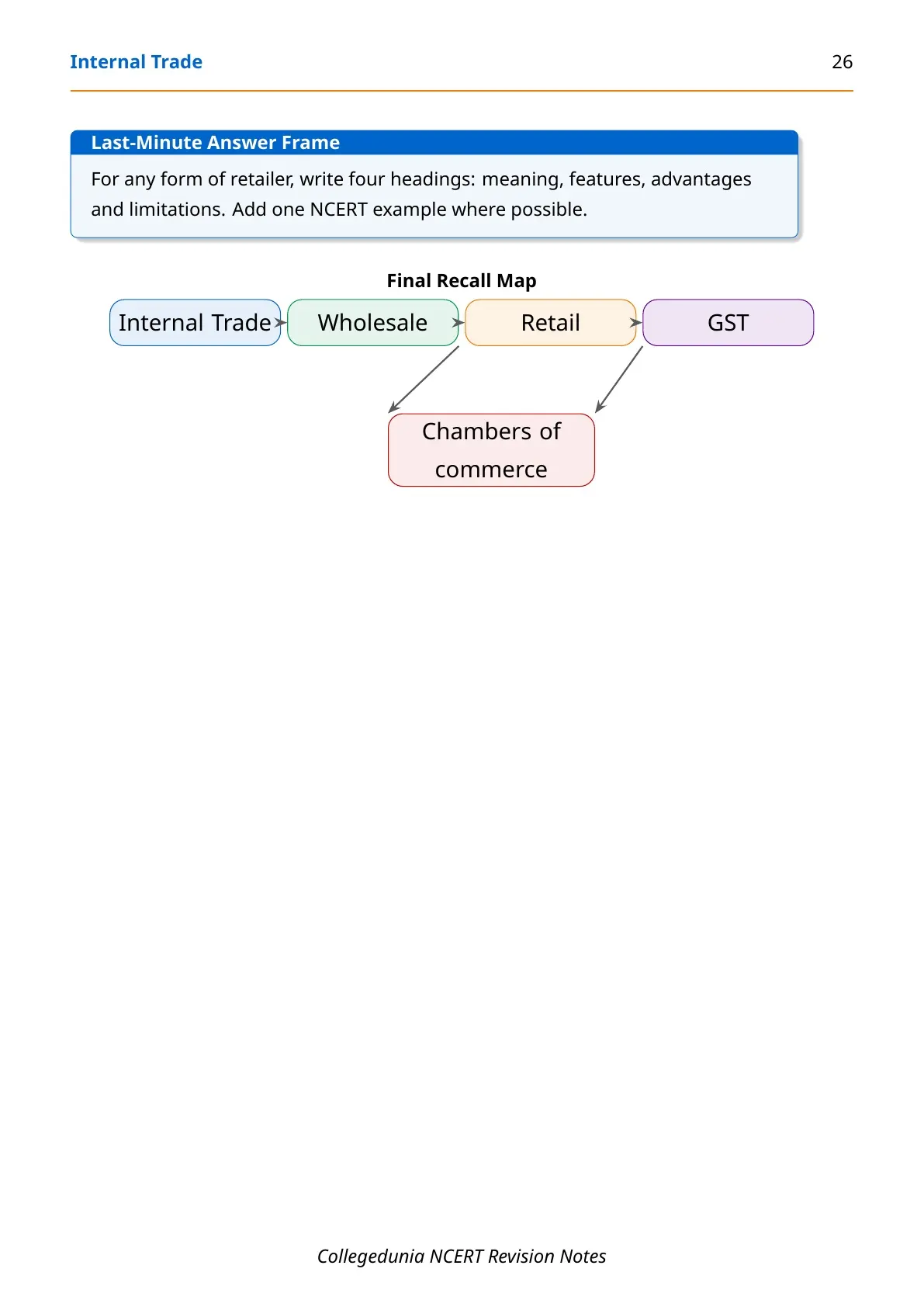
Remember the flow: producer to wholesaler to retailer to consumer. Direct selling may skip one link, but the missing function must still be done by someone.
Internal Trade Explained for Class 11
Source: Magnet Brains on YouTube
Wholesale Trade Services in Internal Trade Class 11
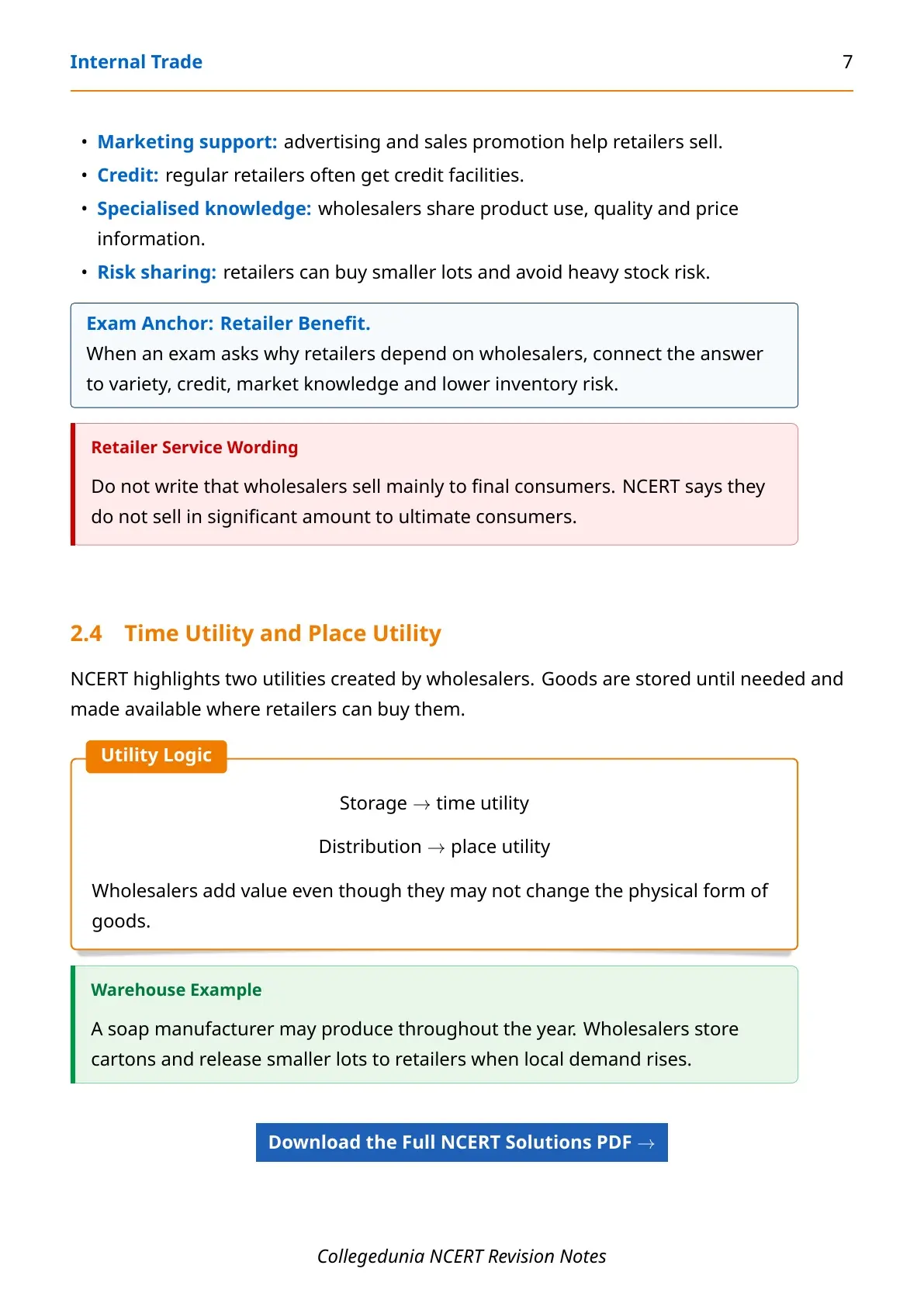
Wholesalers help producers work at scale and help retailers avoid large inventories. They add time utility through storage and place utility through distribution.
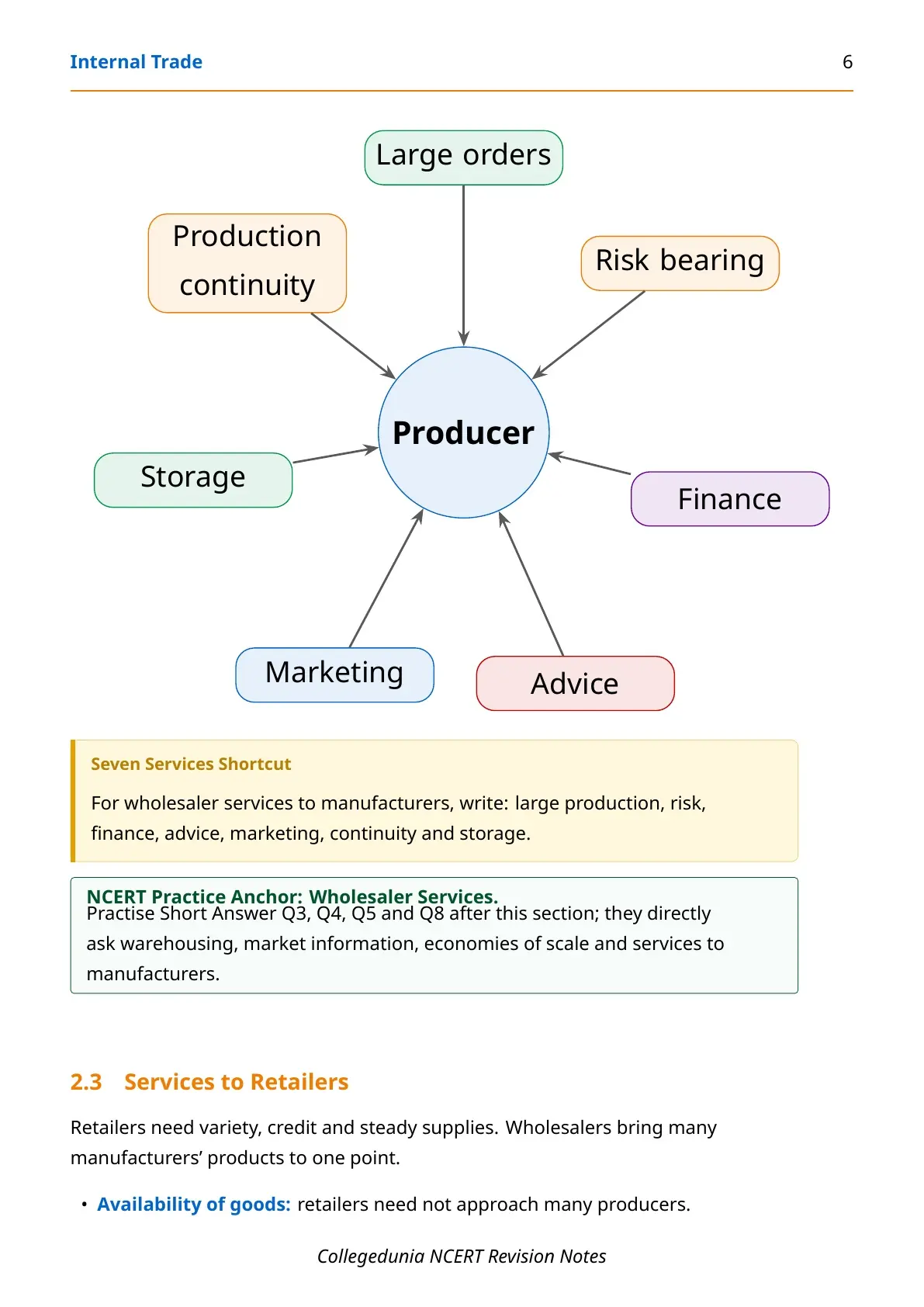
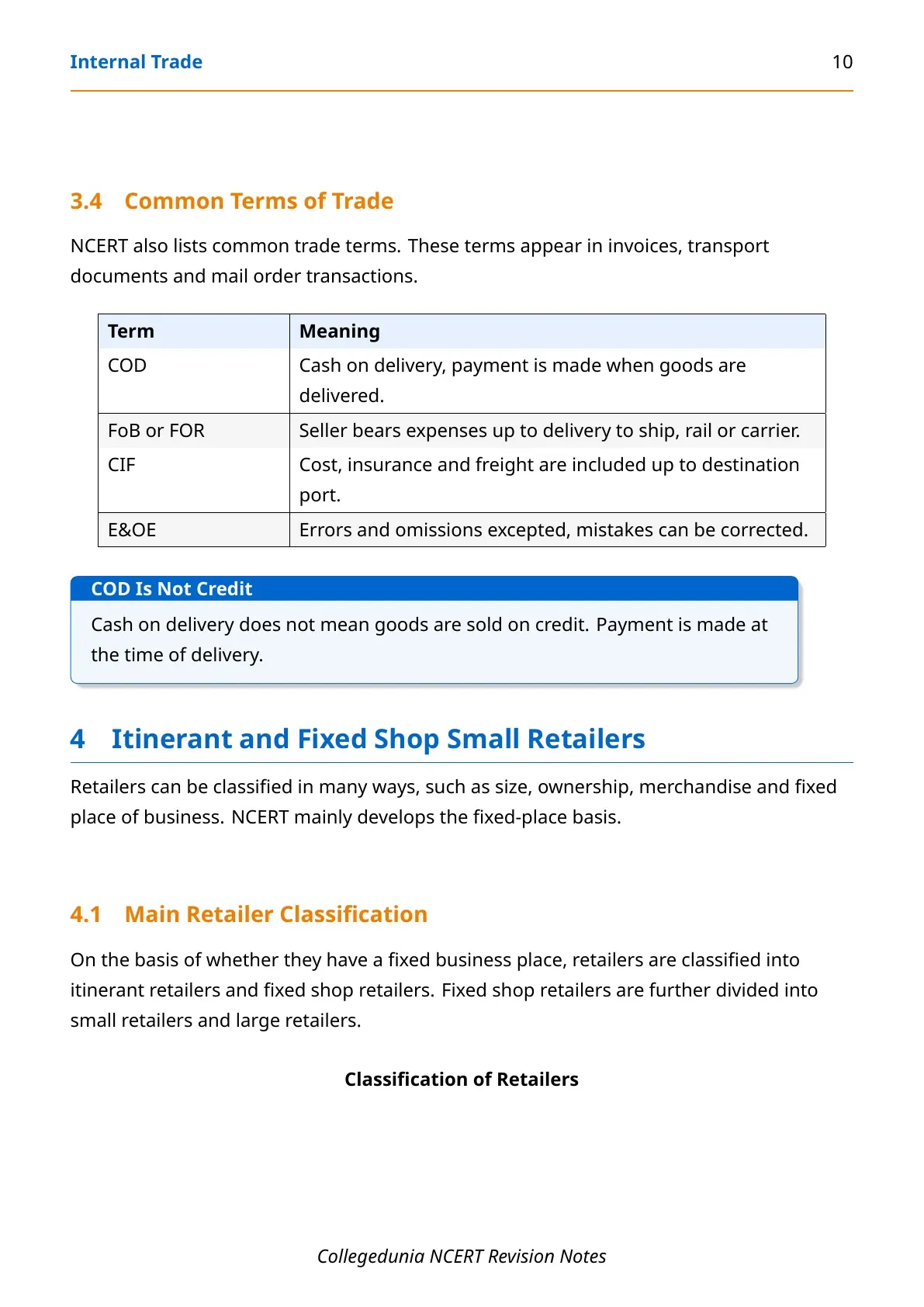
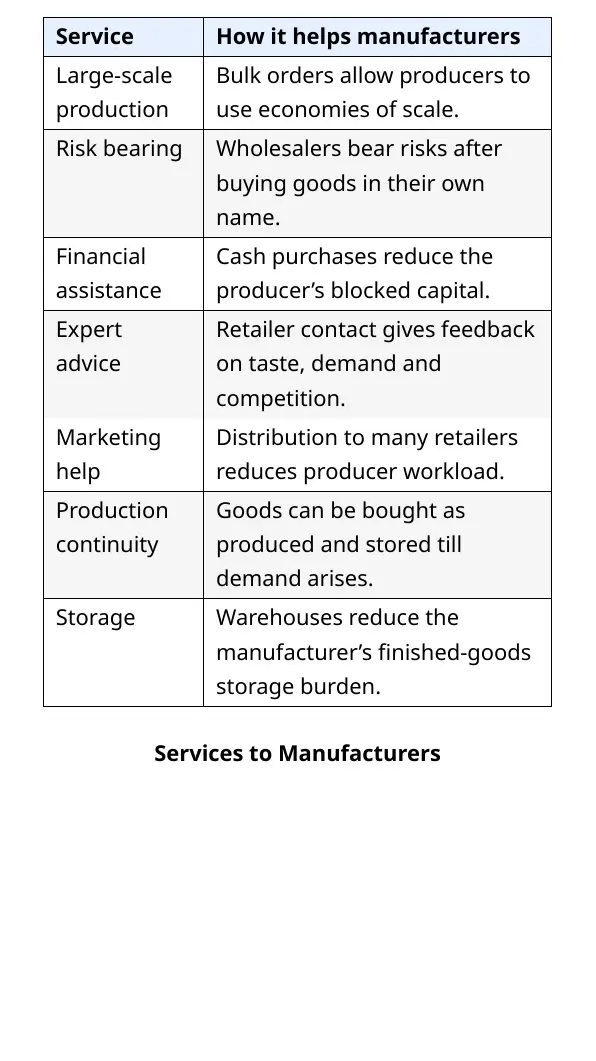
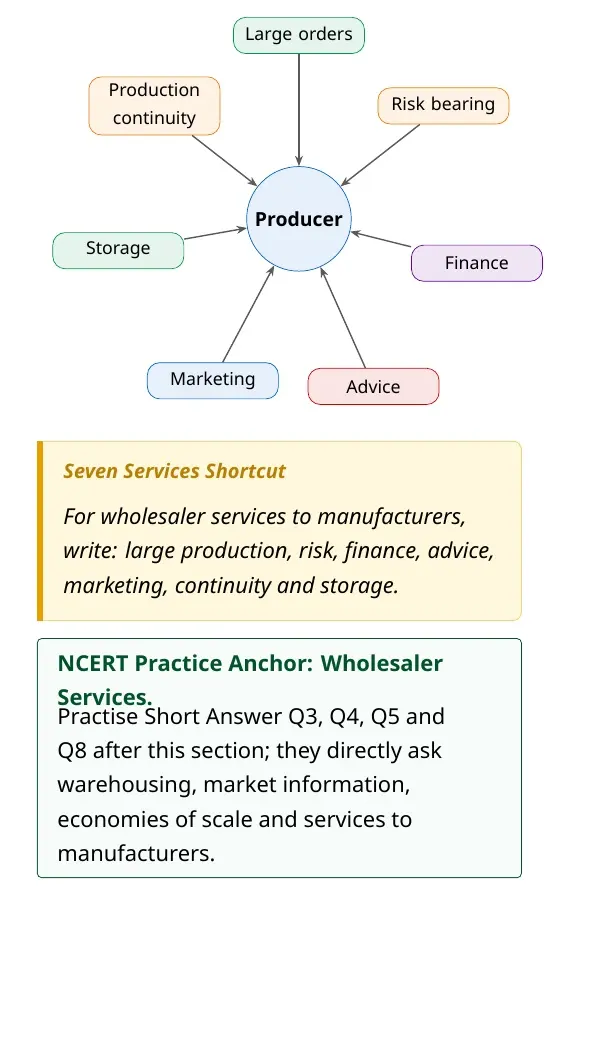
- To manufacturers: bulk orders, cash payment, risk bearing, expert market advice, storage and production continuity.
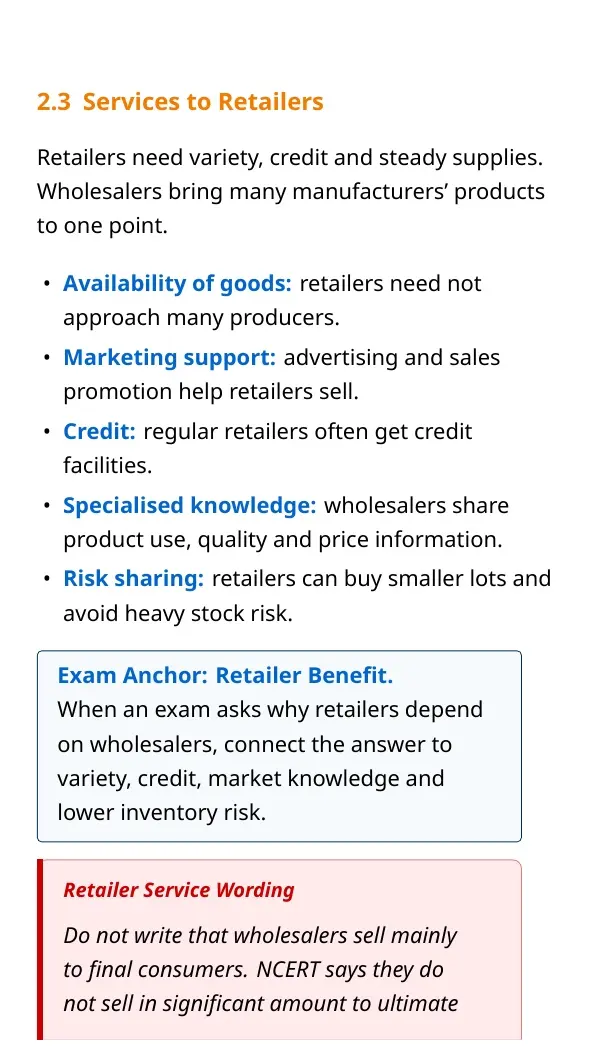
- To retailers: ready supply, marketing support, credit, product knowledge and risk sharing.
- Exam clue: if a point removes a producer's burden, write it under services to manufacturers.
A common 3-mark question asks why wholesalers are useful even when online selling grows. The answer is simple: storage, breaking bulk, market information and credit still have to be managed.
Retail Trade Types in Internal Trade Notes
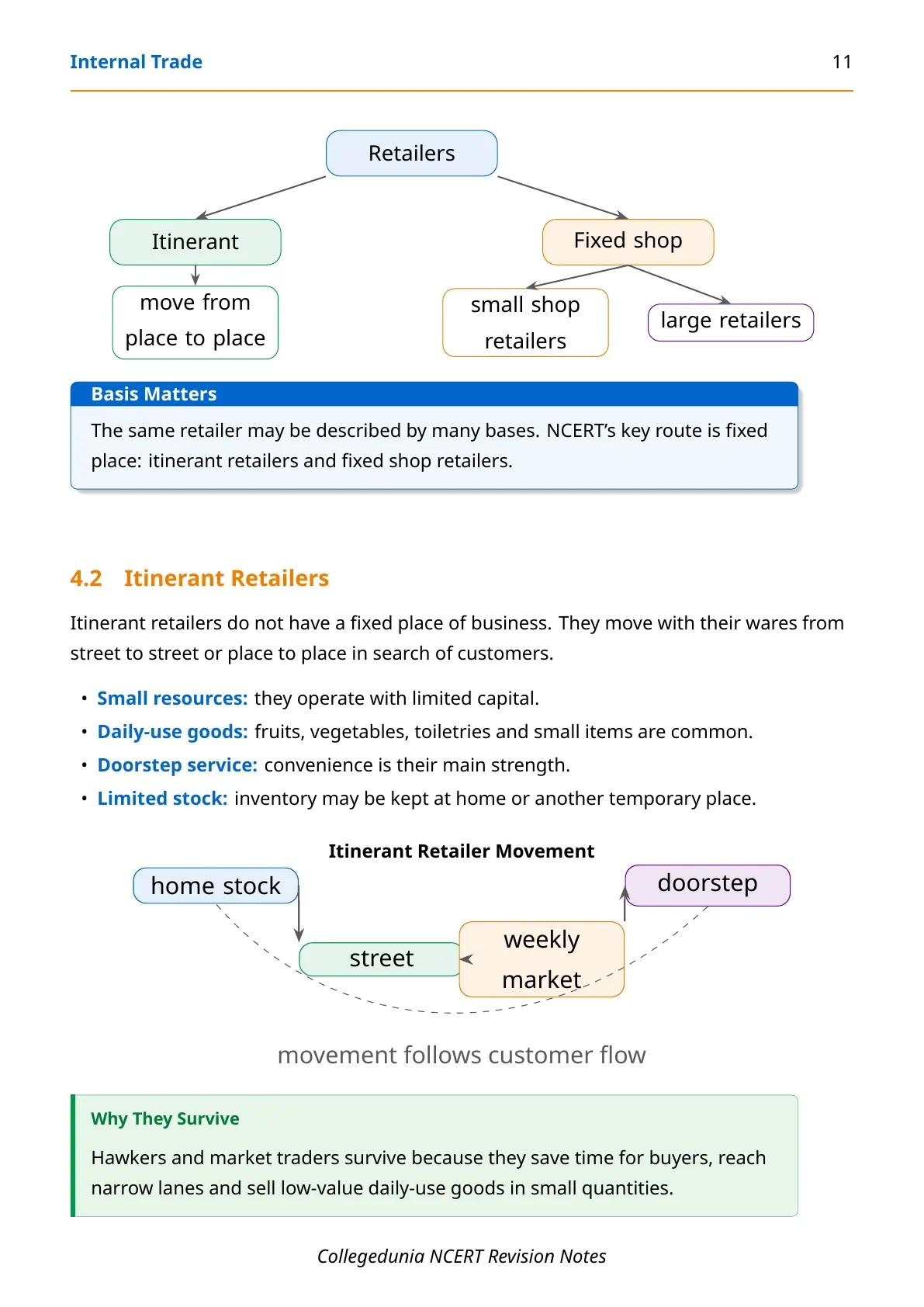
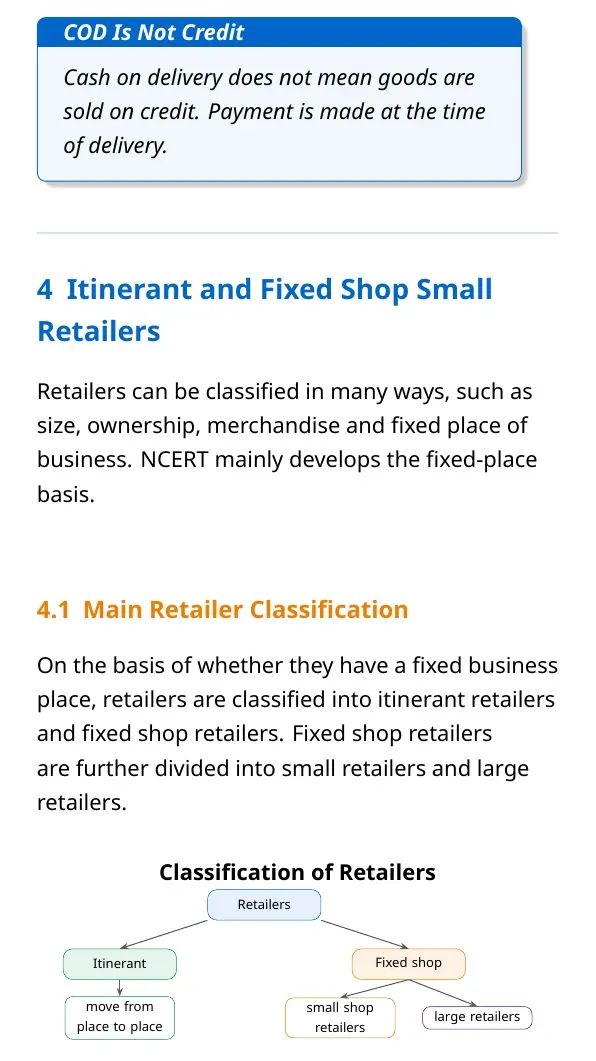
Retail trade is the final stage of distribution. NCERT classifies retailers first by whether they have a fixed place of business.
| Retailer type | Meaning | Examples |
|---|---|---|
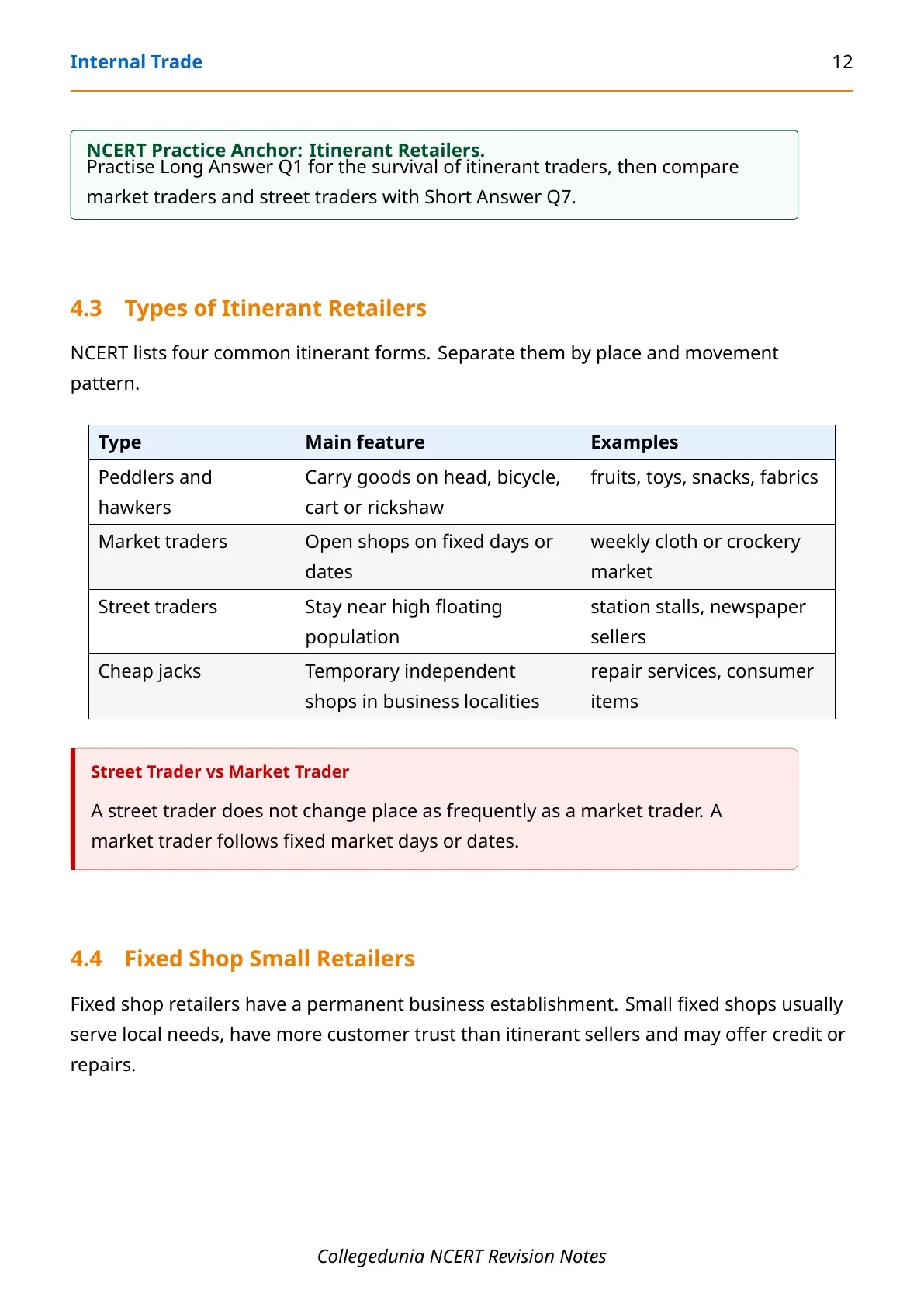
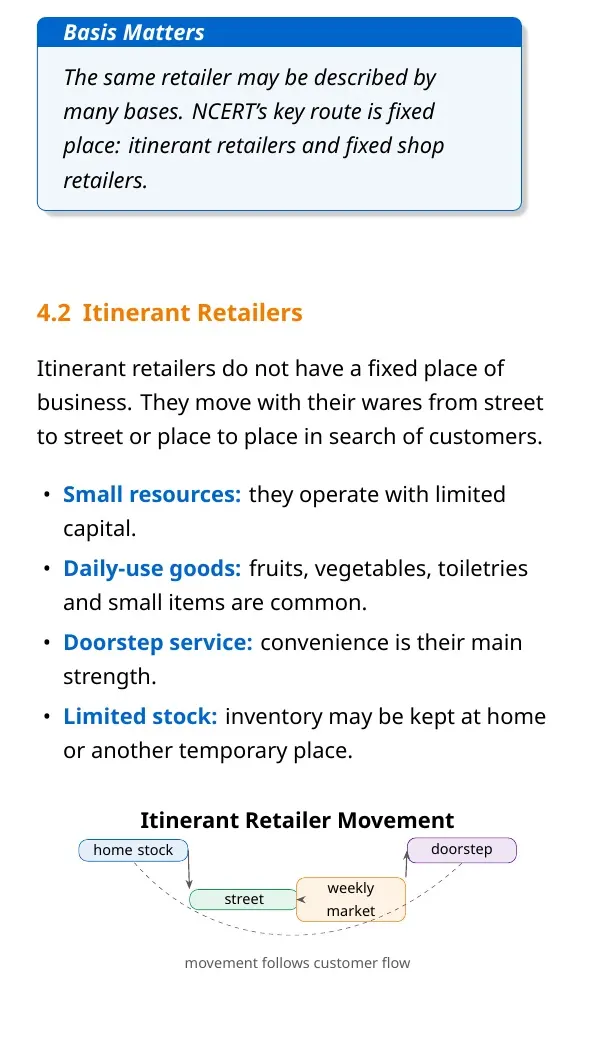
| Itinerant retailers | No fixed shop, move to customers | Hawkers, peddlers, market traders, cheap jacks |
| Fixed shop small retailers | Permanent shop with limited scale | General stores, speciality shops, street stalls, second-hand shops |
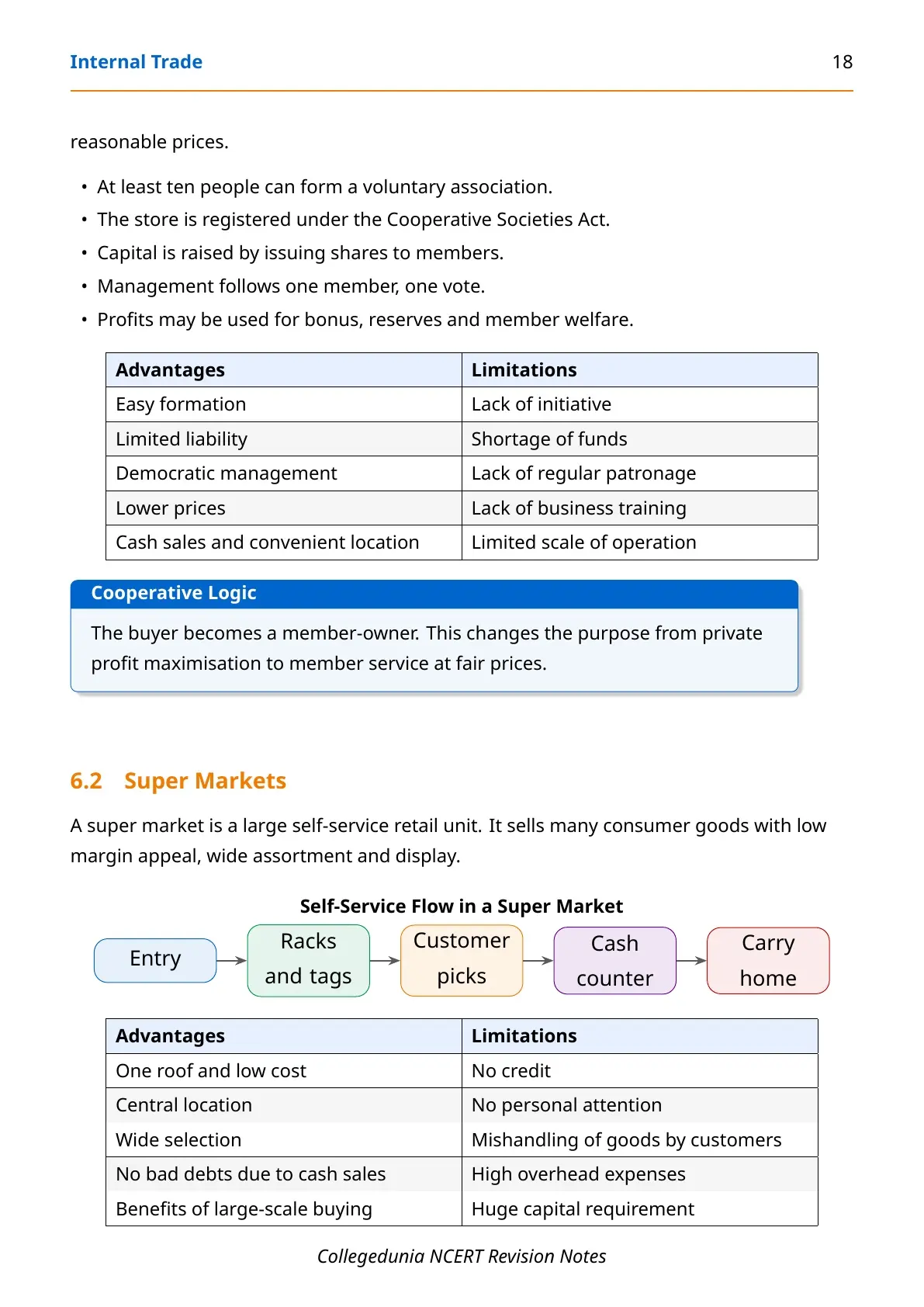
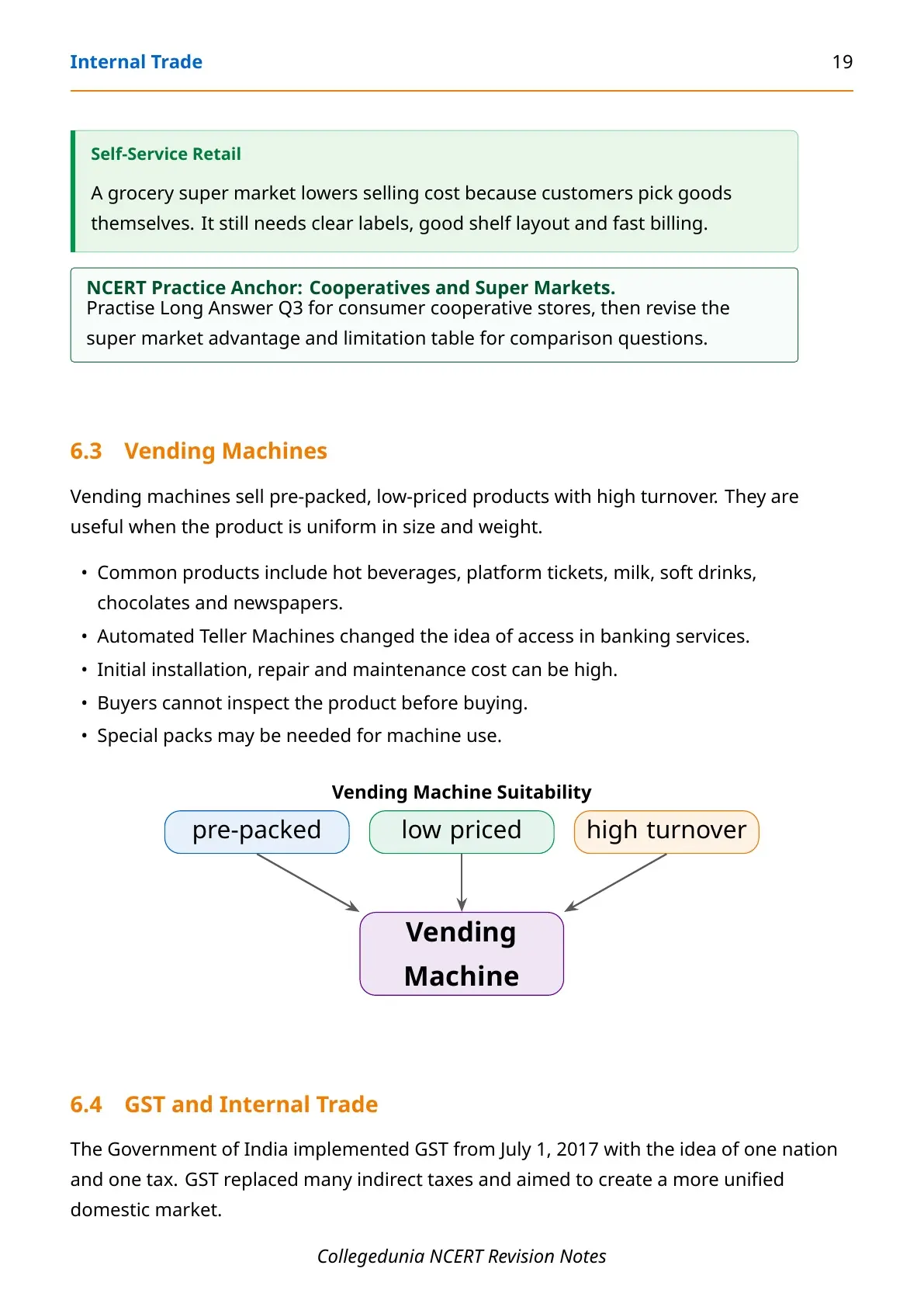
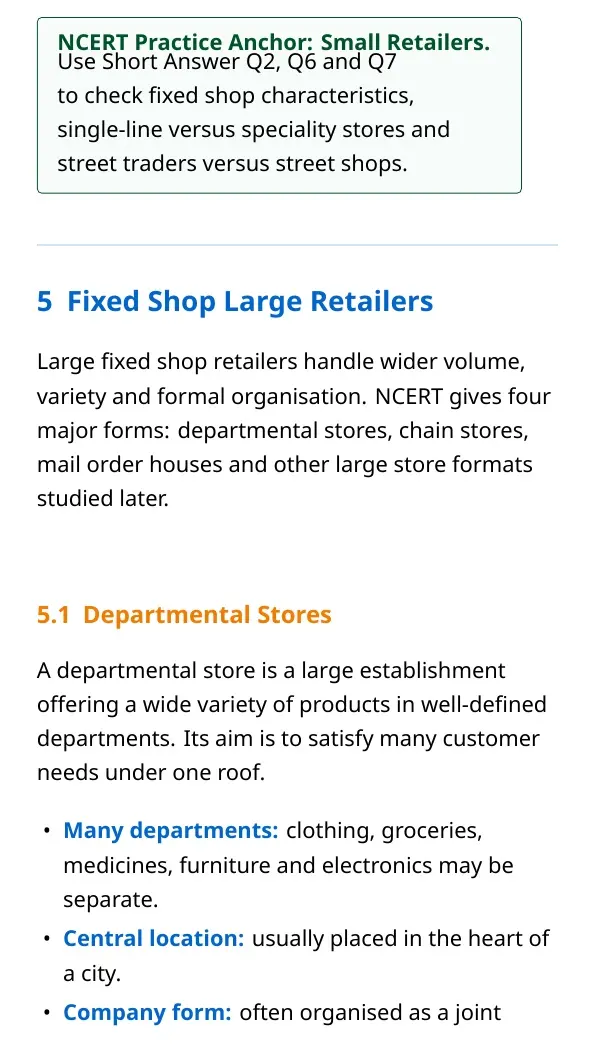
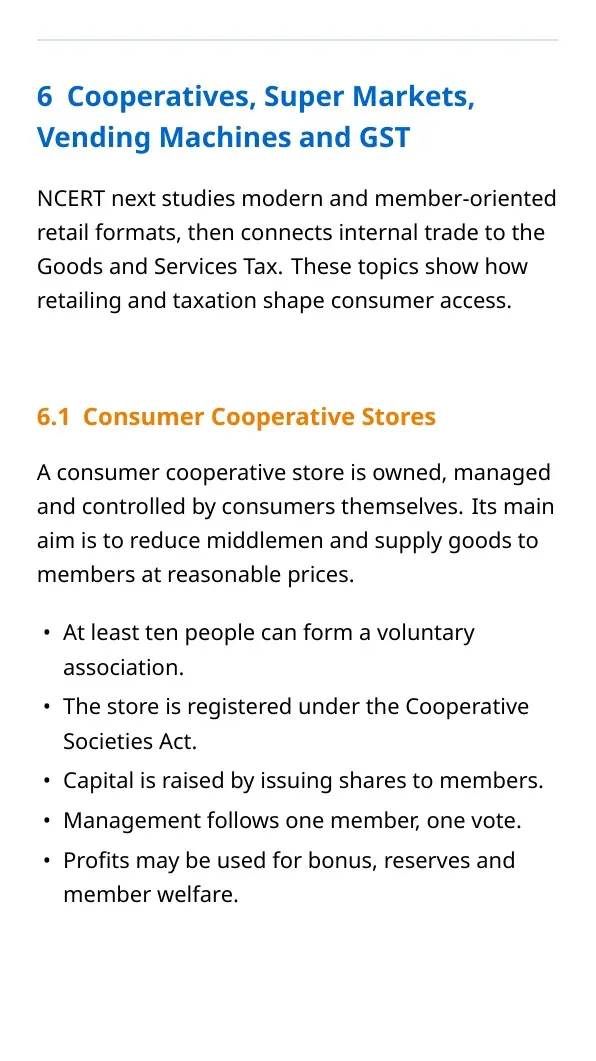
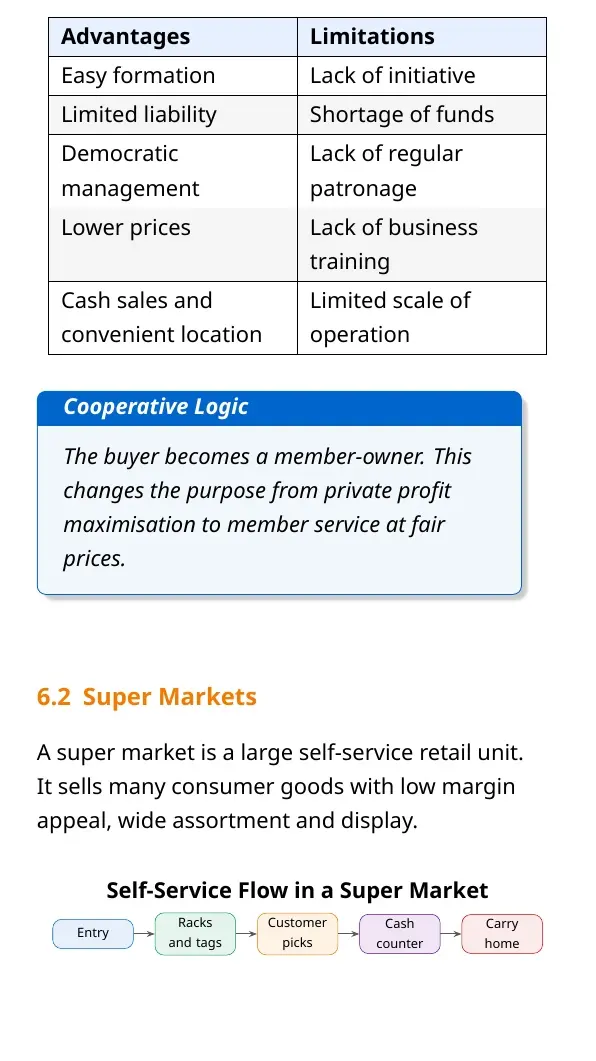
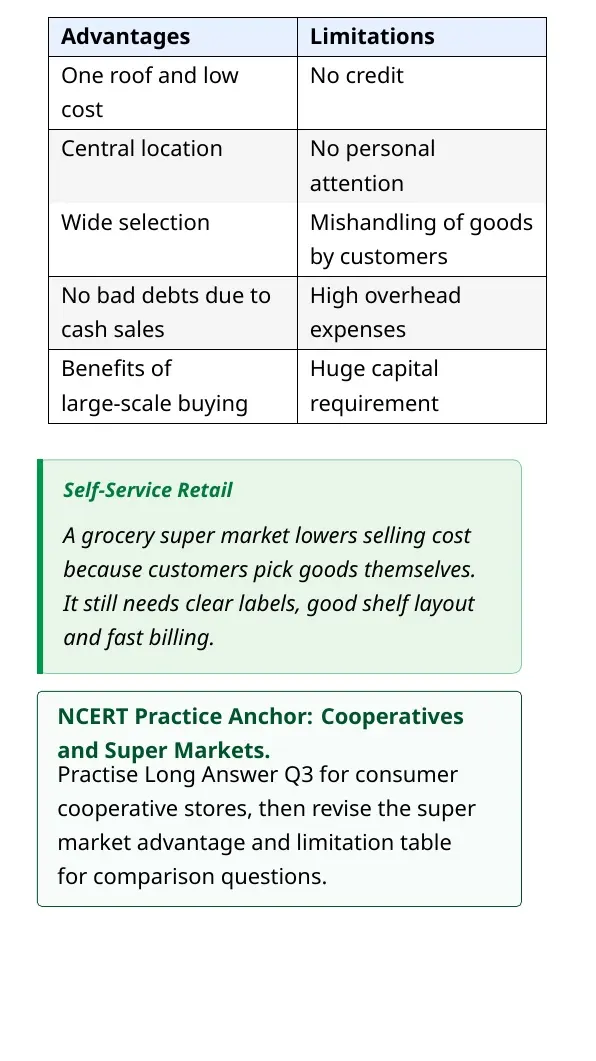
| Fixed shop large retailers | Large scale and organised retailing | Departmental stores, chain stores, mail order houses, cooperatives, super markets |
Use mobility as the first sorting rule. If the seller changes place often, it is itinerant. If the shop is permanent, check scale and product range next.
Departmental Stores and Chain Stores Difference
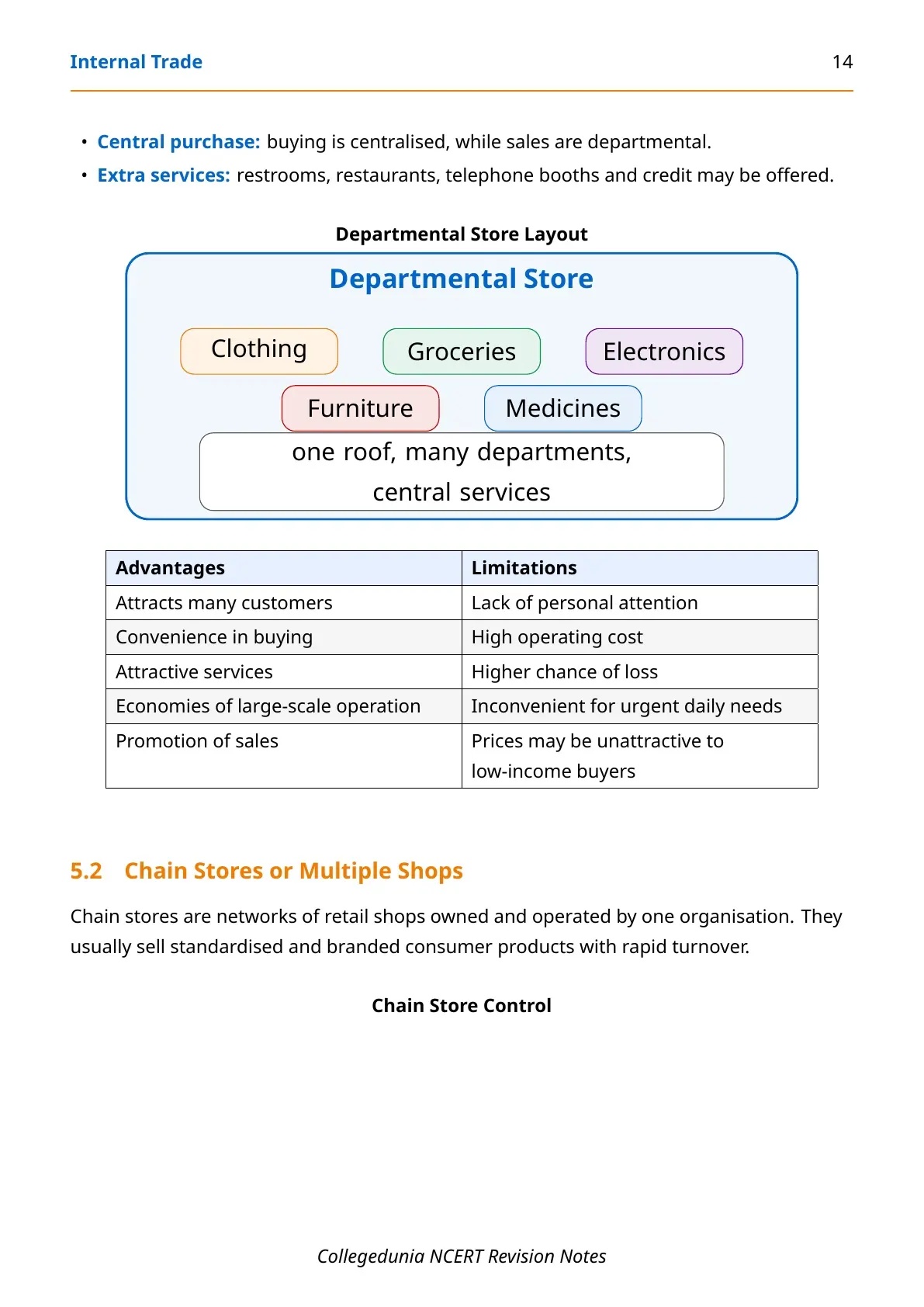
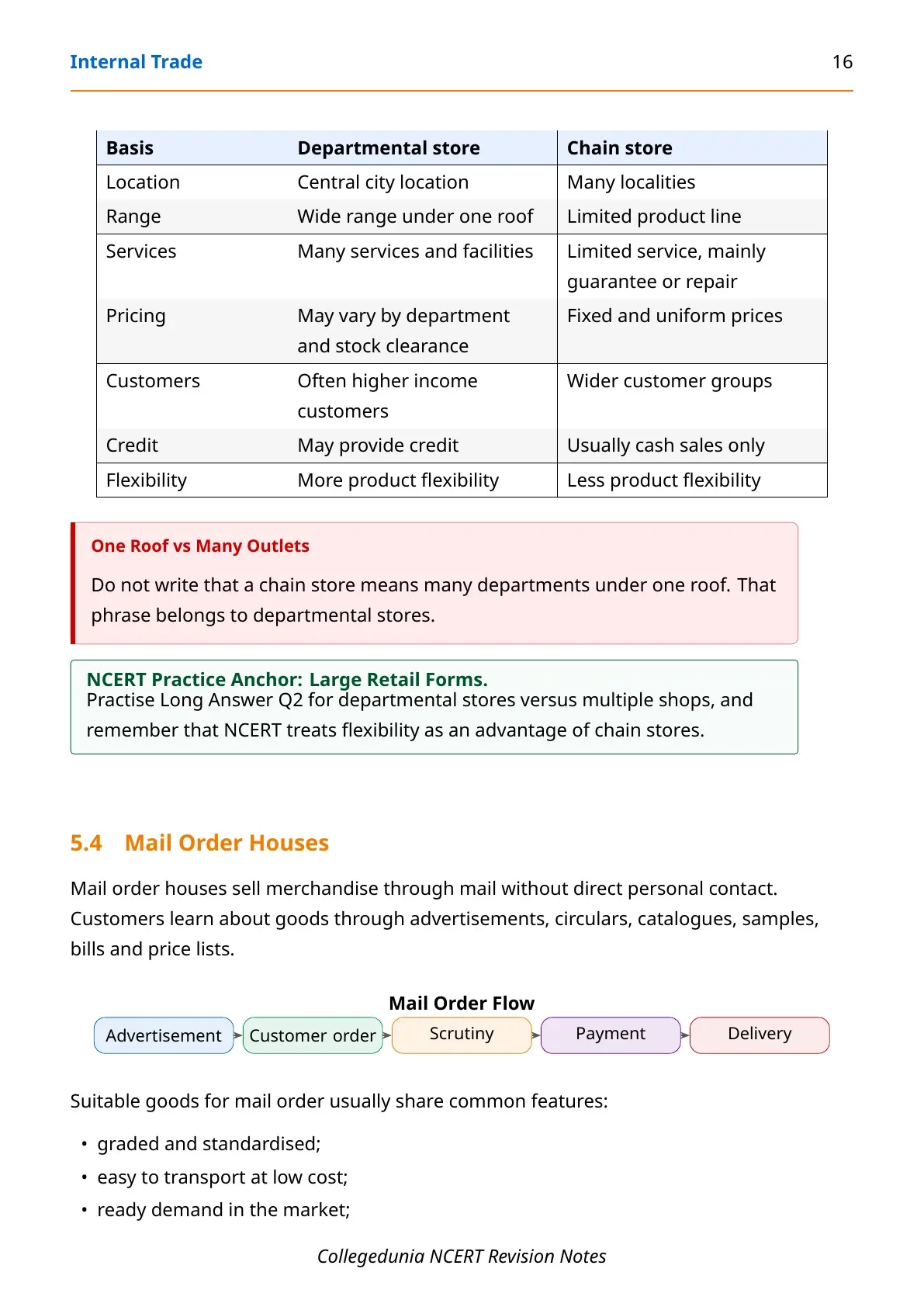
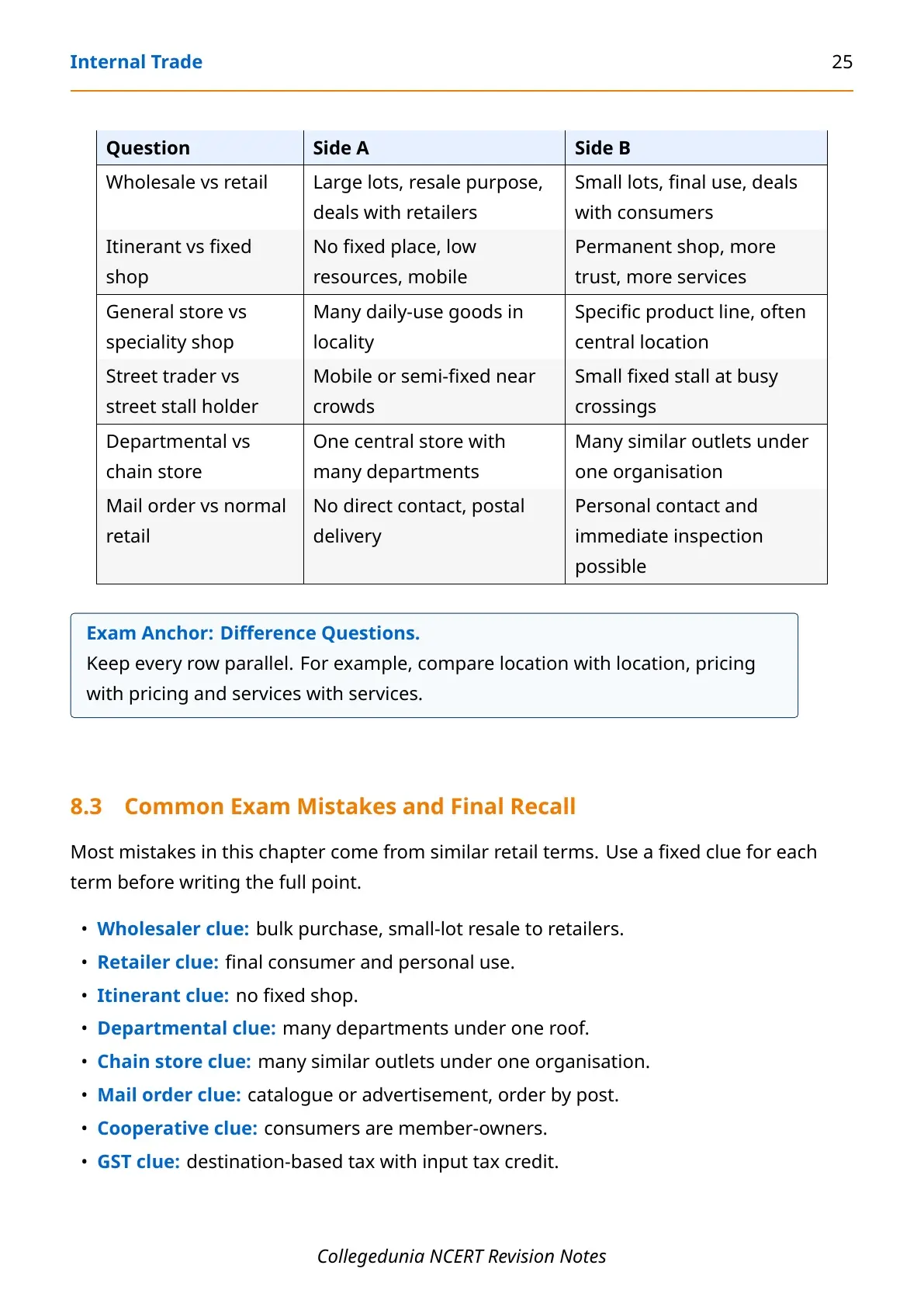
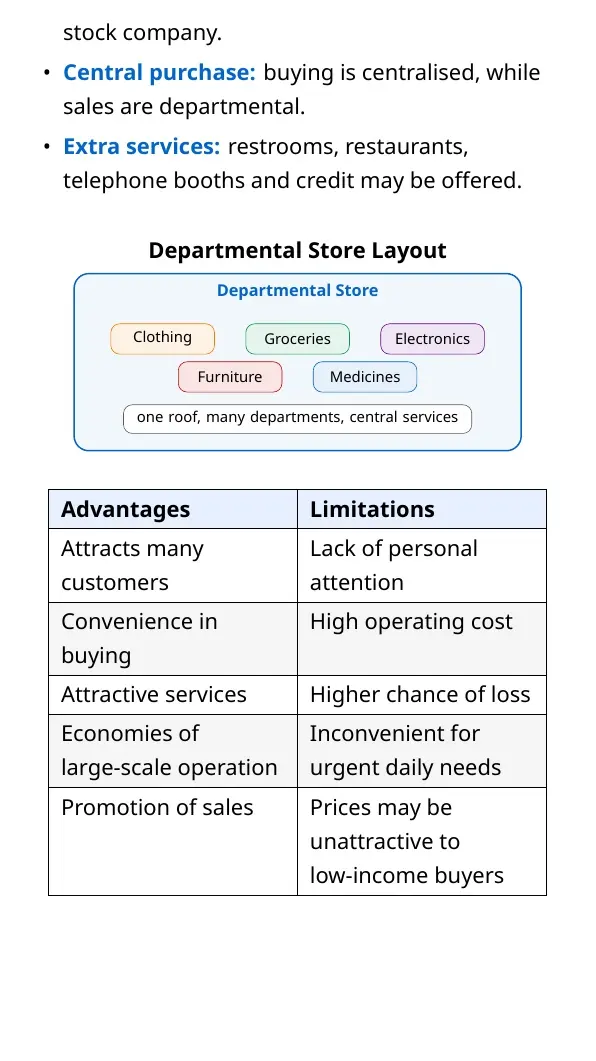
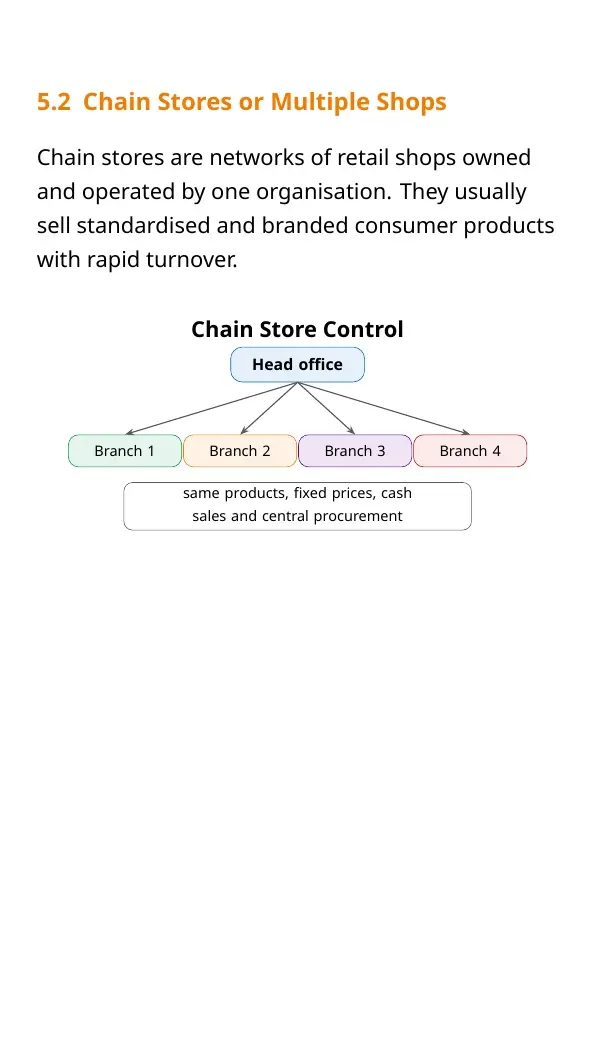
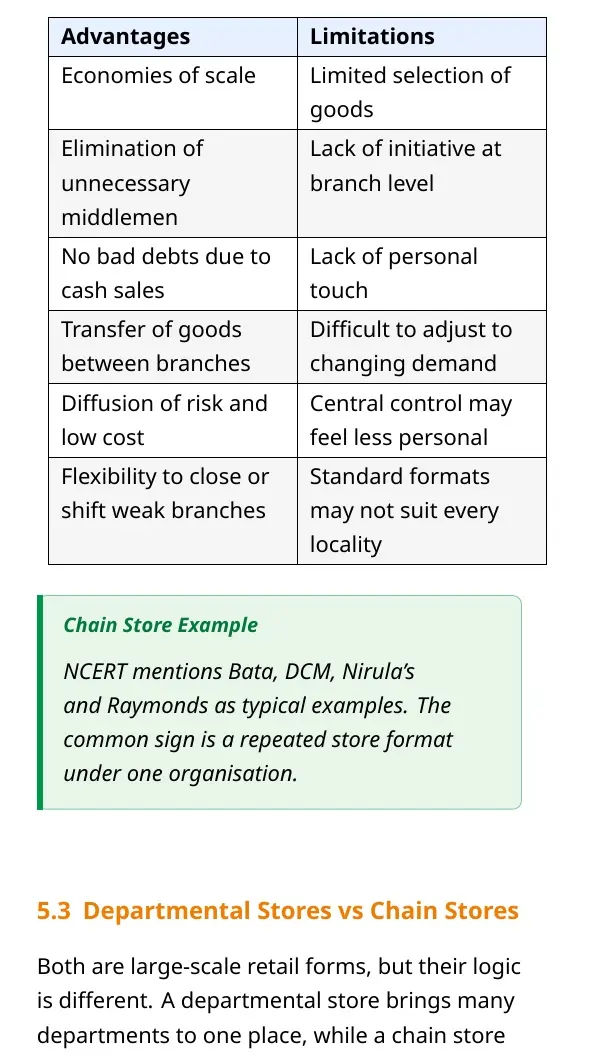
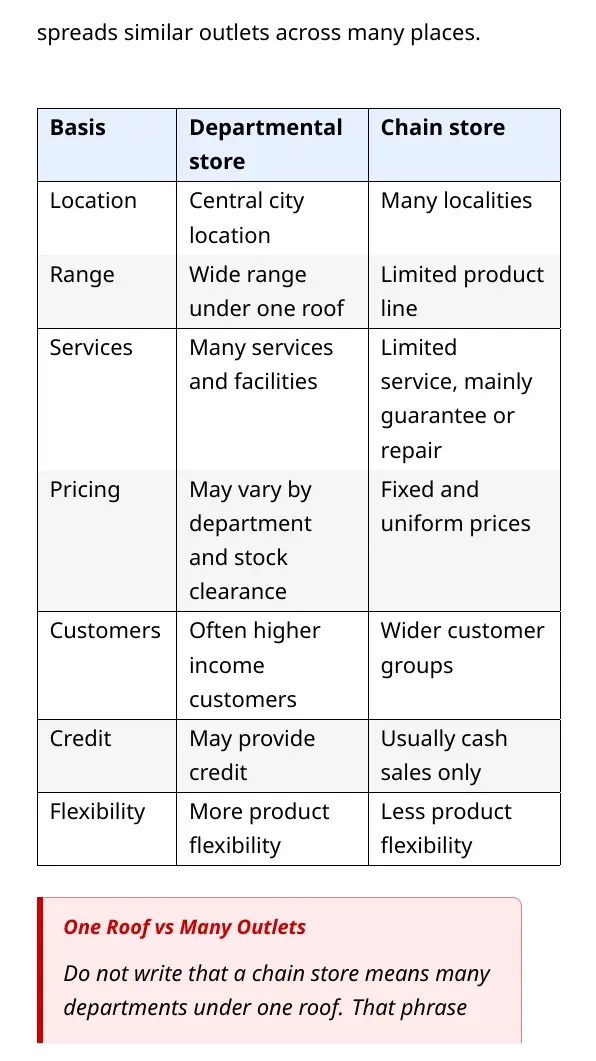
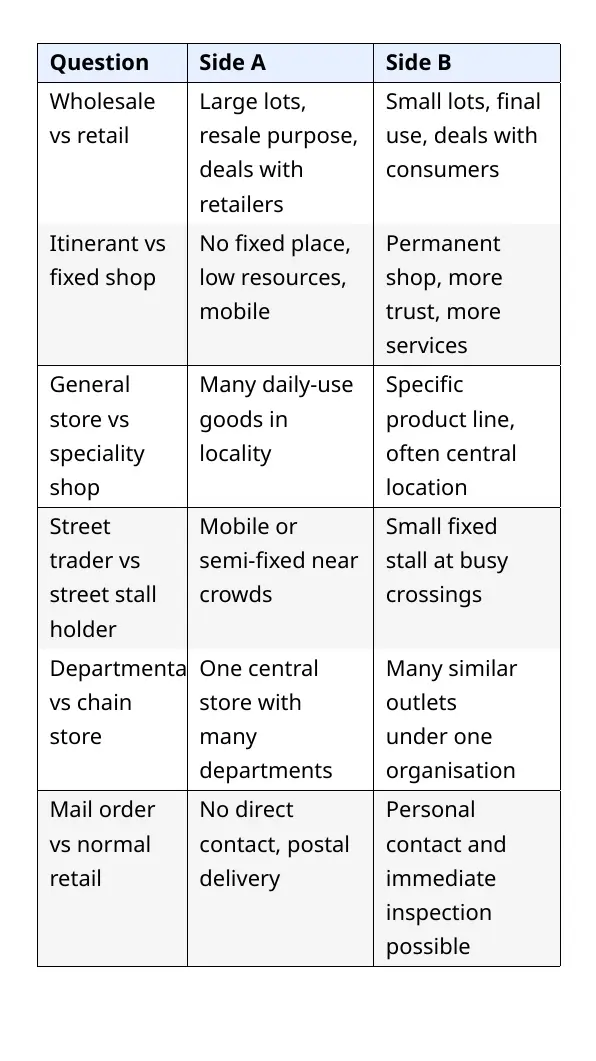
Departmental stores and chain stores are both large retail formats, but they solve different shopping problems. Departmental stores centralise many departments under one roof. Chain stores spread similar branches across many localities.
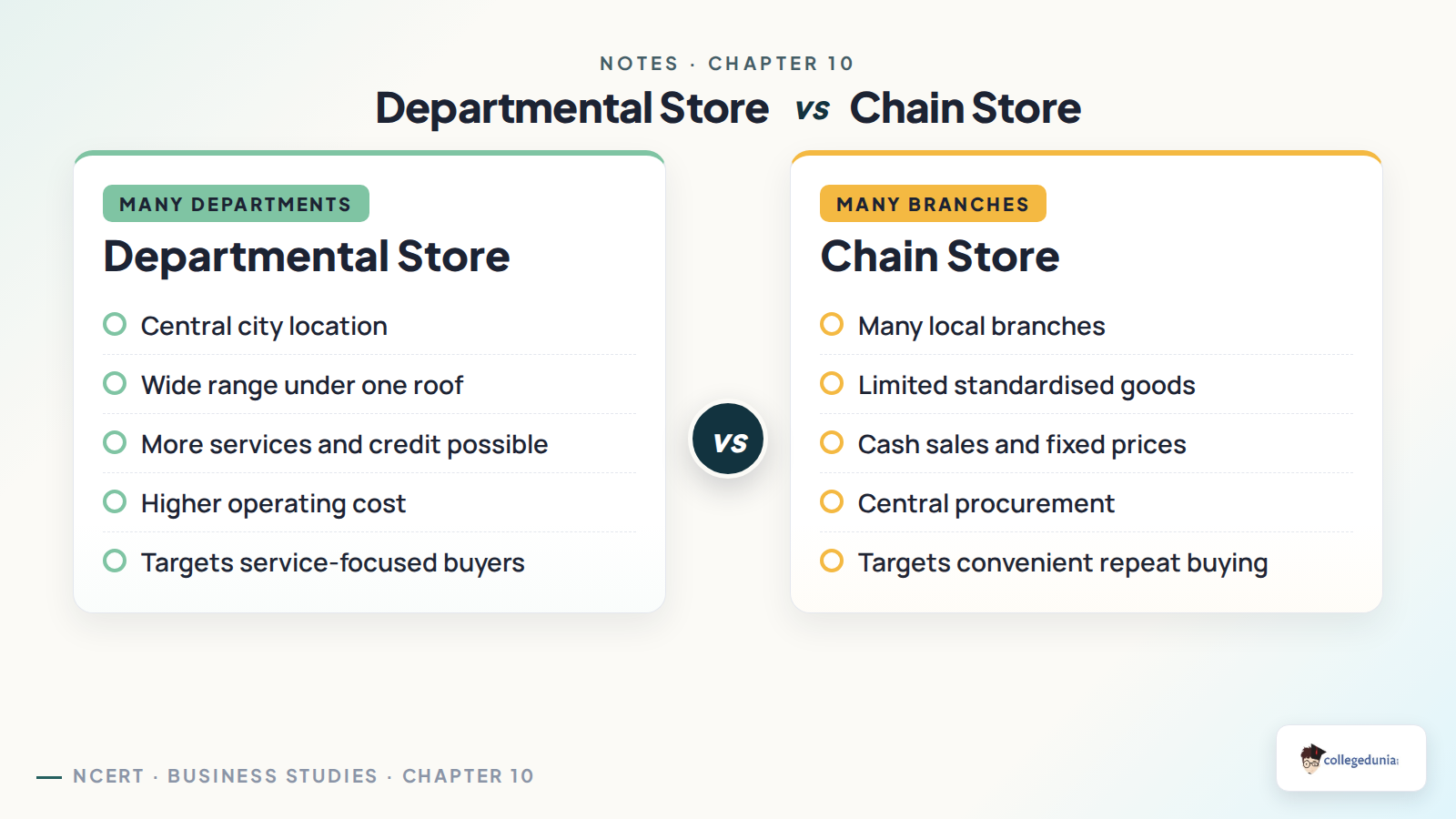
- Departmental store: wide product range, central location, more services, higher cost.
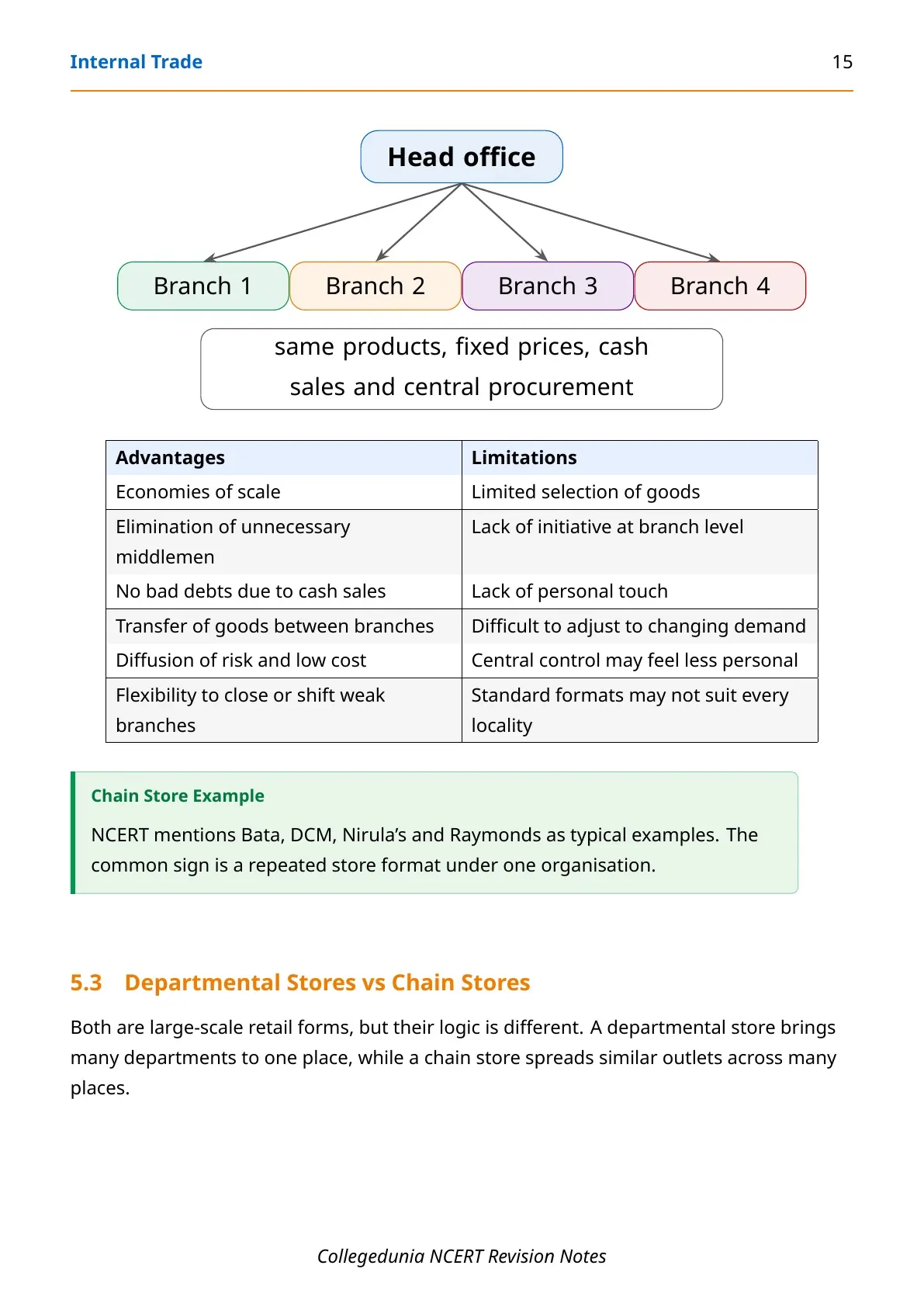
- Chain store: same product line, many branches, cash sales, fixed prices.
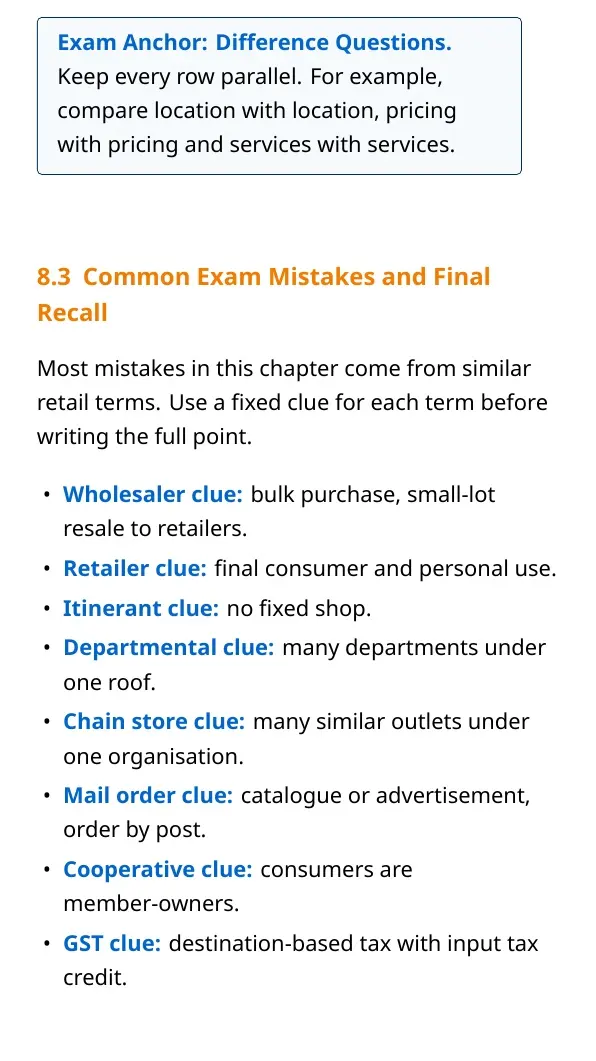
- Board answer tip: compare location, product range, services, pricing, customers, credit and flexibility.
GST and Chambers of Commerce in Internal Trade
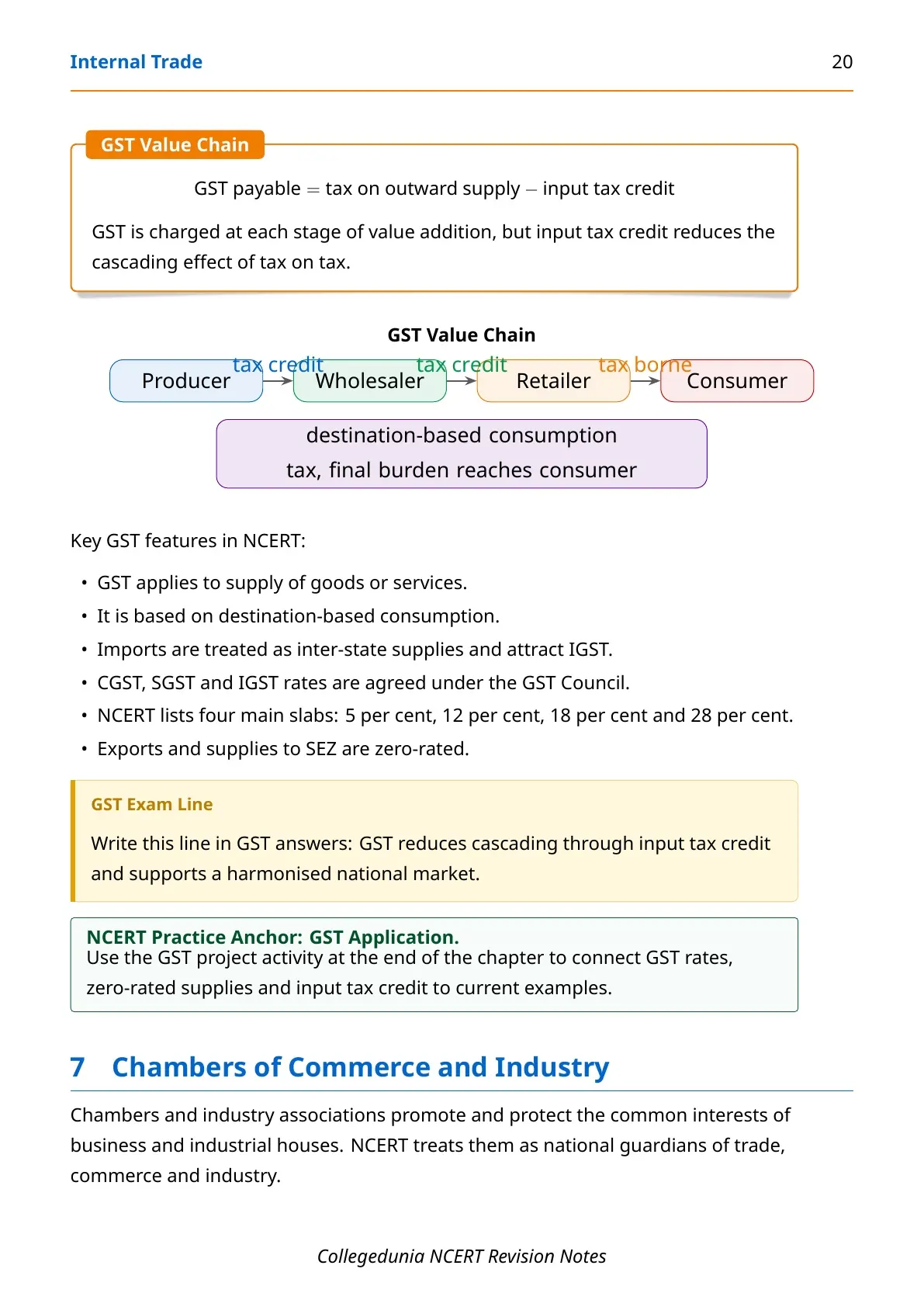
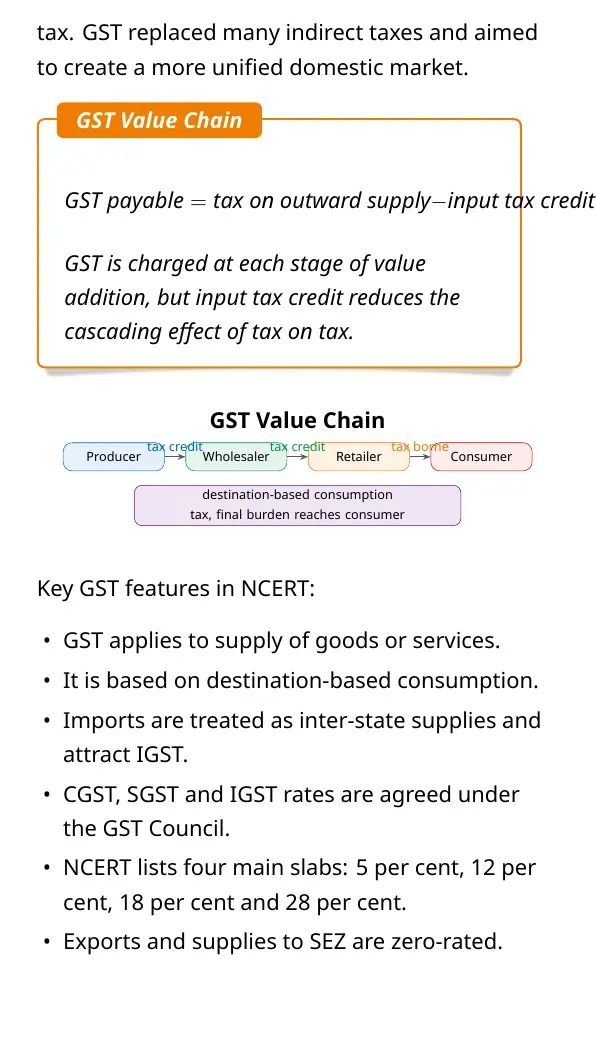
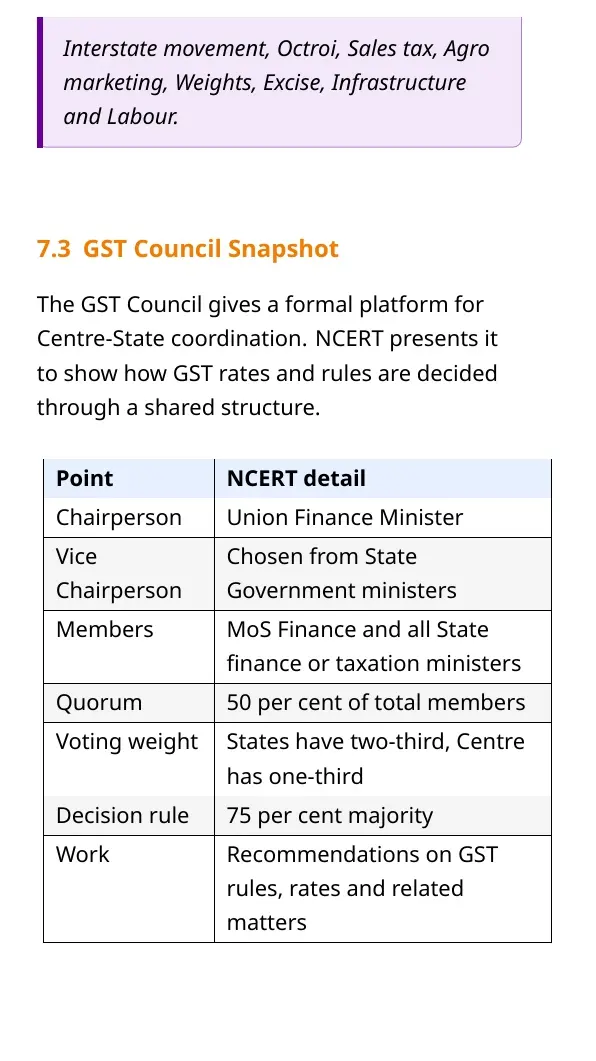
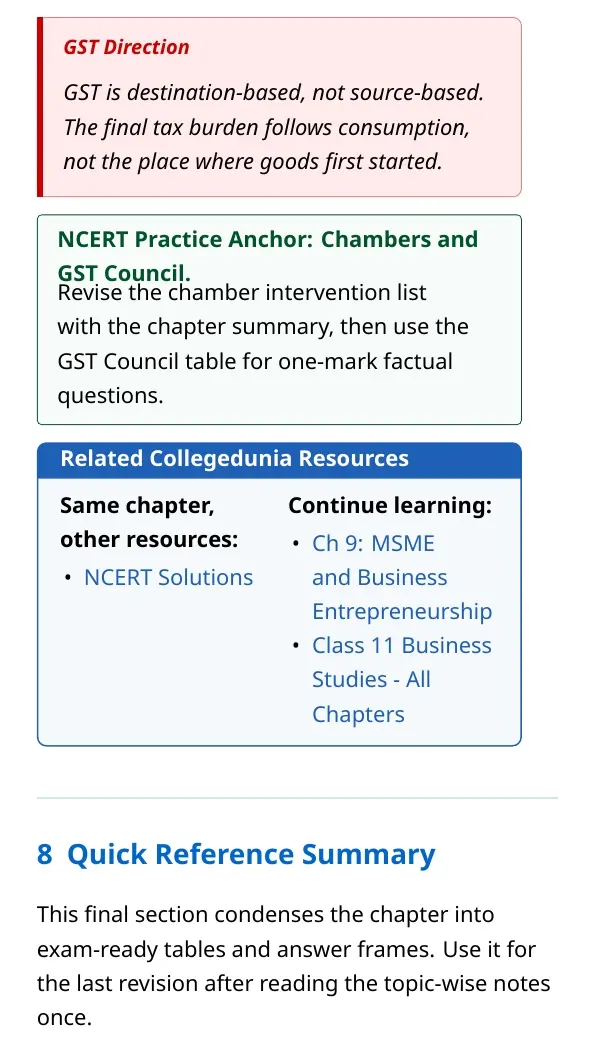
GST links this chapter to India's unified domestic market. It replaced many indirect taxes with a destination-based tax on supply of goods and services.
- CGST and SGST: apply to intra-state supply.
- IGST: applies to inter-state supply.
- Input tax credit: helps reduce the cascading effect of tax on tax.
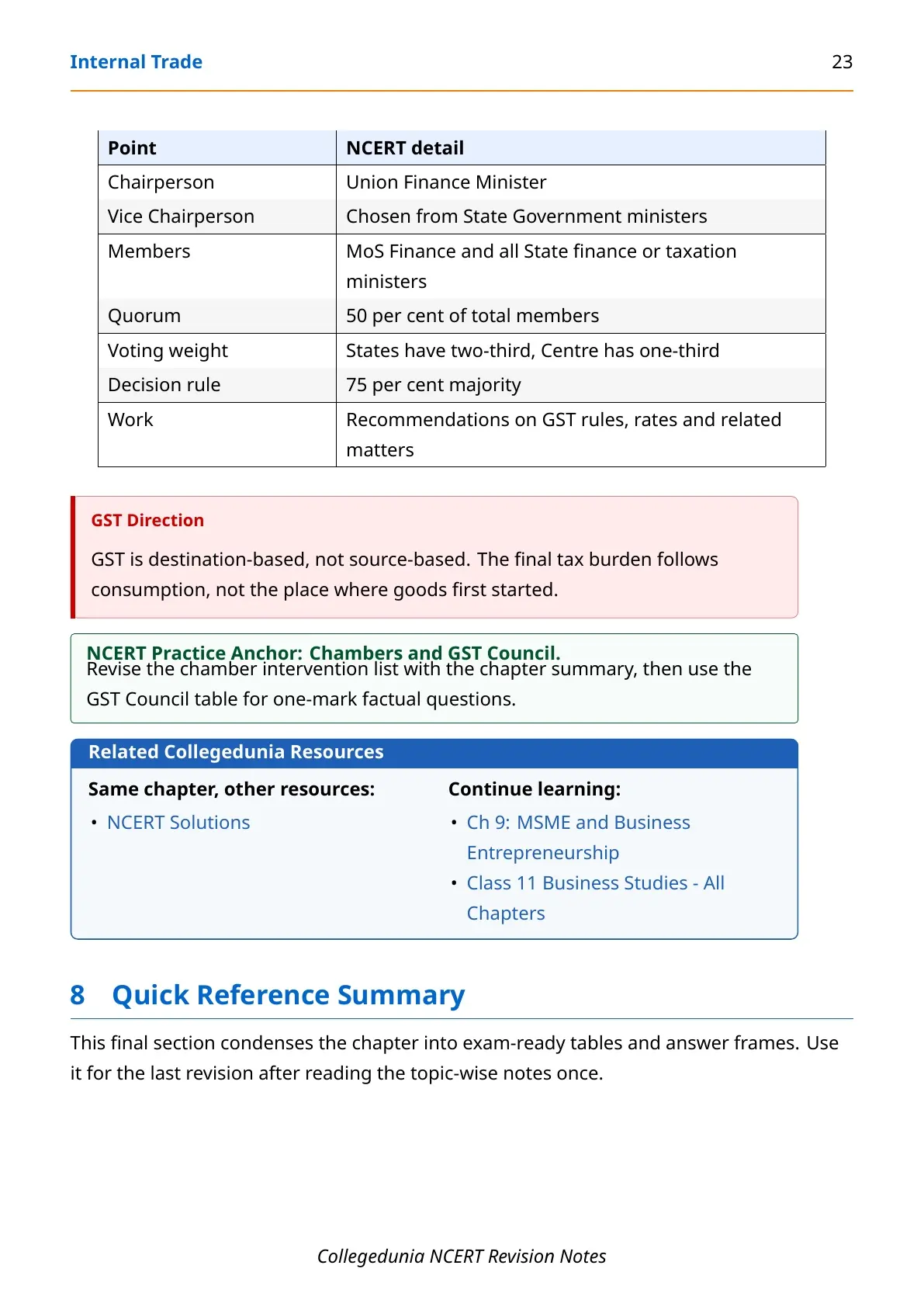
- GST Council: recommends rules and rates through Centre-state representation.
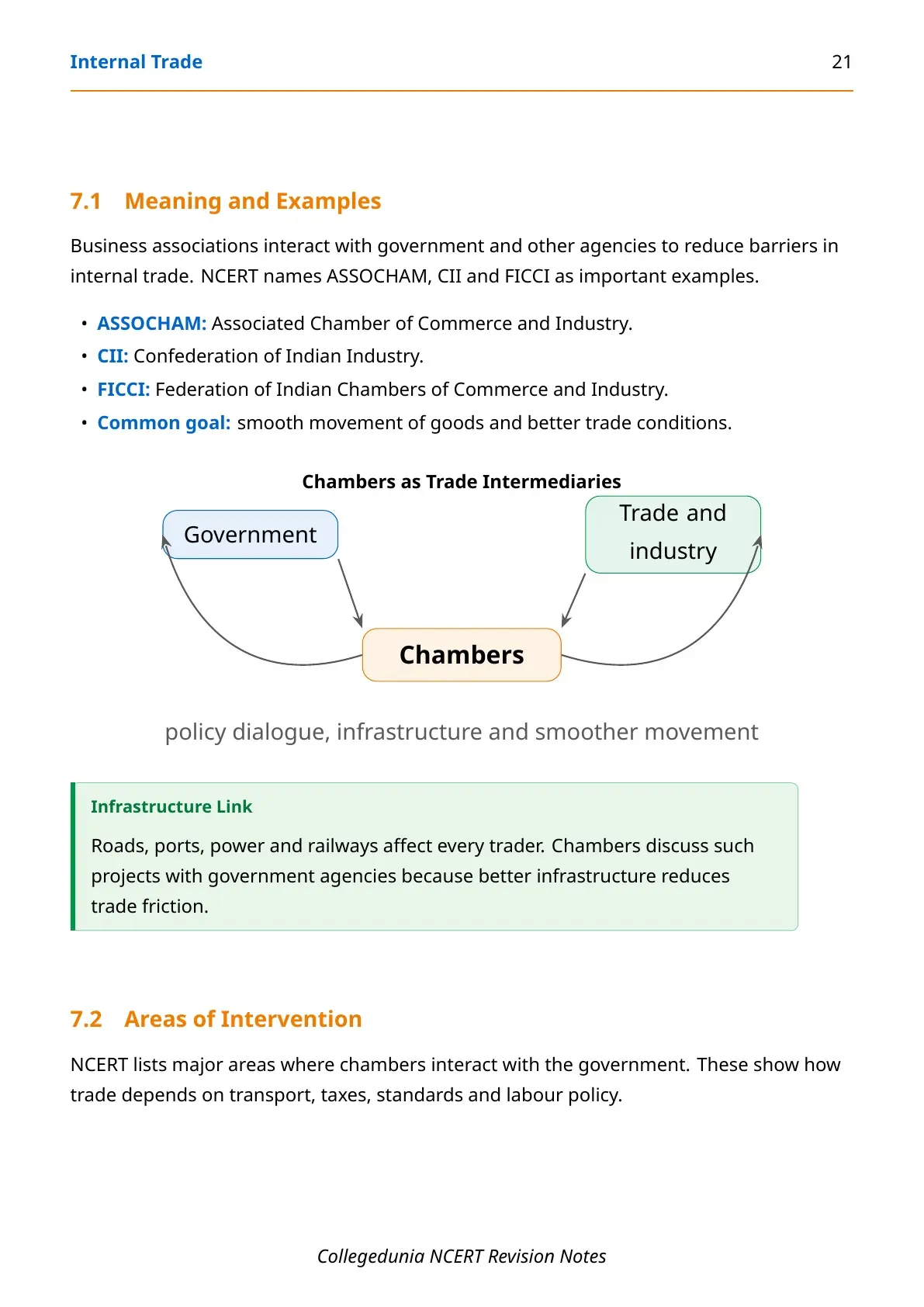
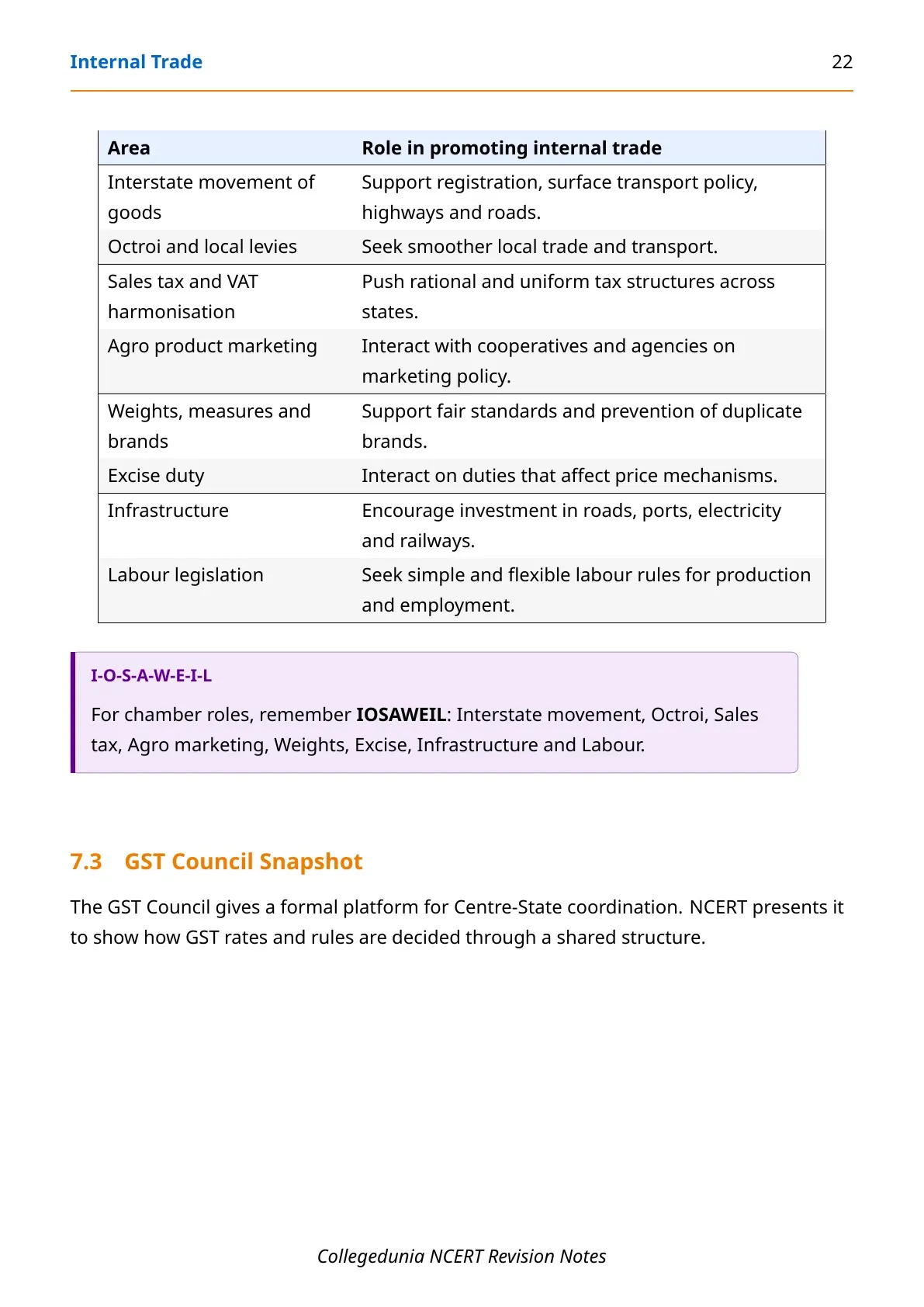
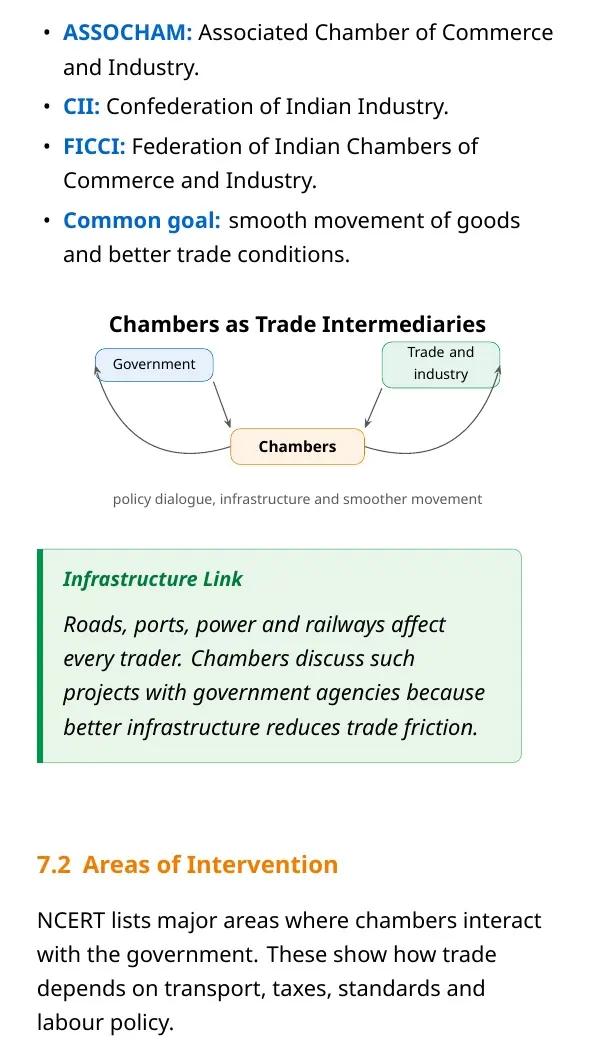
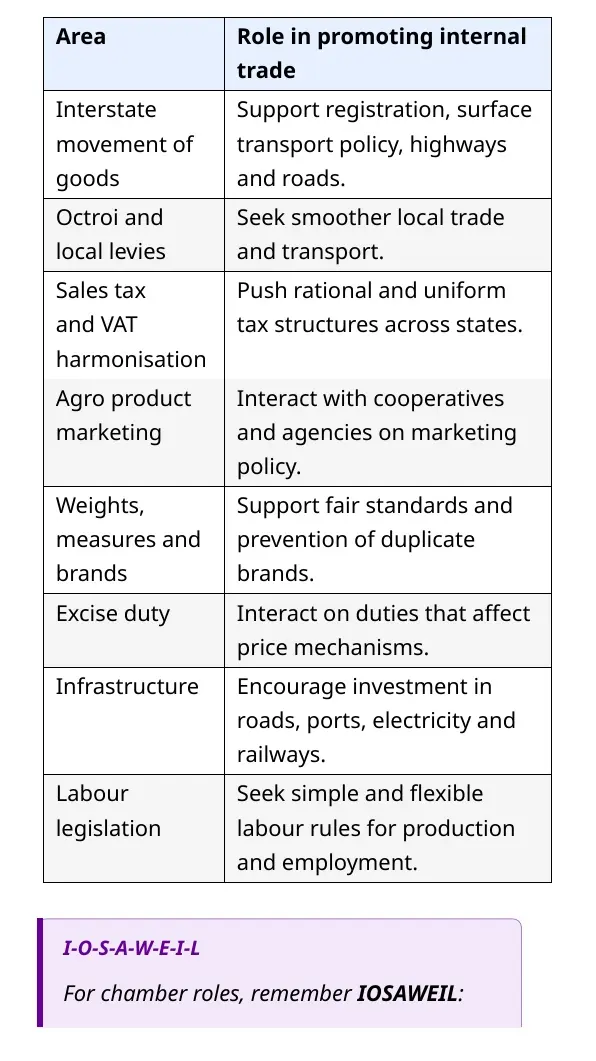
Chambers such as FICCI, CII and ASSOCHAM support internal trade by discussing transport, local levies, infrastructure, marketing rules, brand protection, excise policy and labour laws with the government.
Most Repeated Board Questions from Internal Trade
Students should practise answer frames, not only definitions. The chapter rewards organised headings and examples from daily markets.
- Explain the services of wholesalers to manufacturers.
- Explain the services of retailers to consumers.
- Differentiate between departmental stores and chain stores.
- Why do itinerant retailers survive despite large retailers?
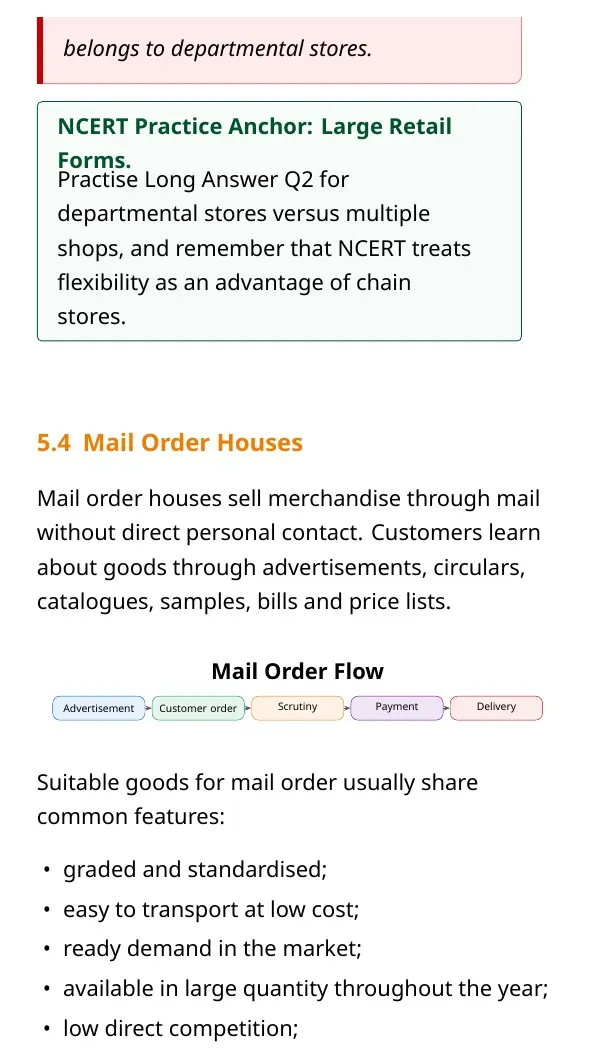
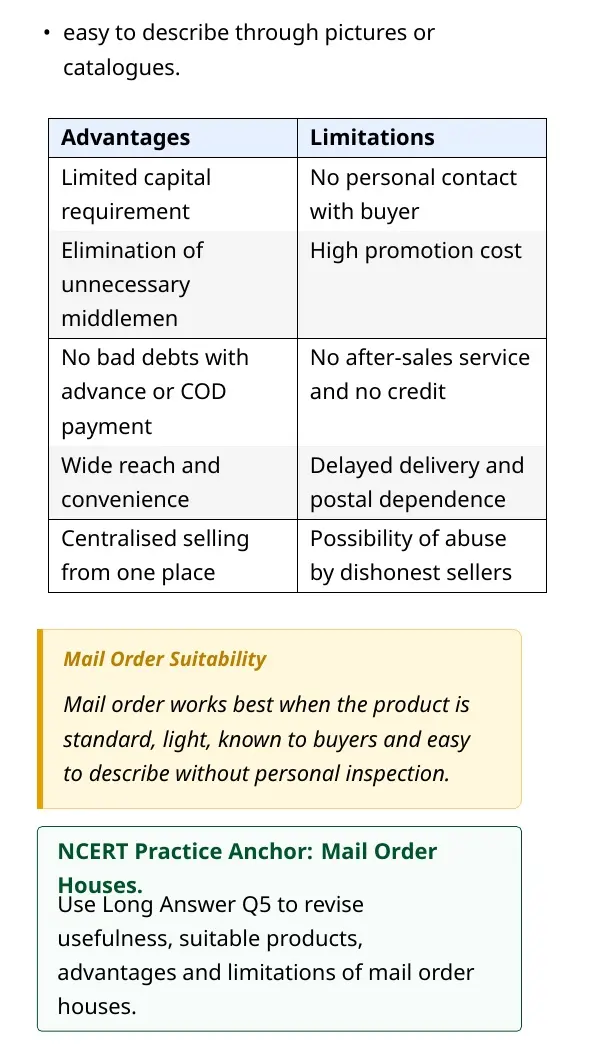
- What types of products suit mail order houses?
- State the role of chambers of commerce in promoting internal trade.
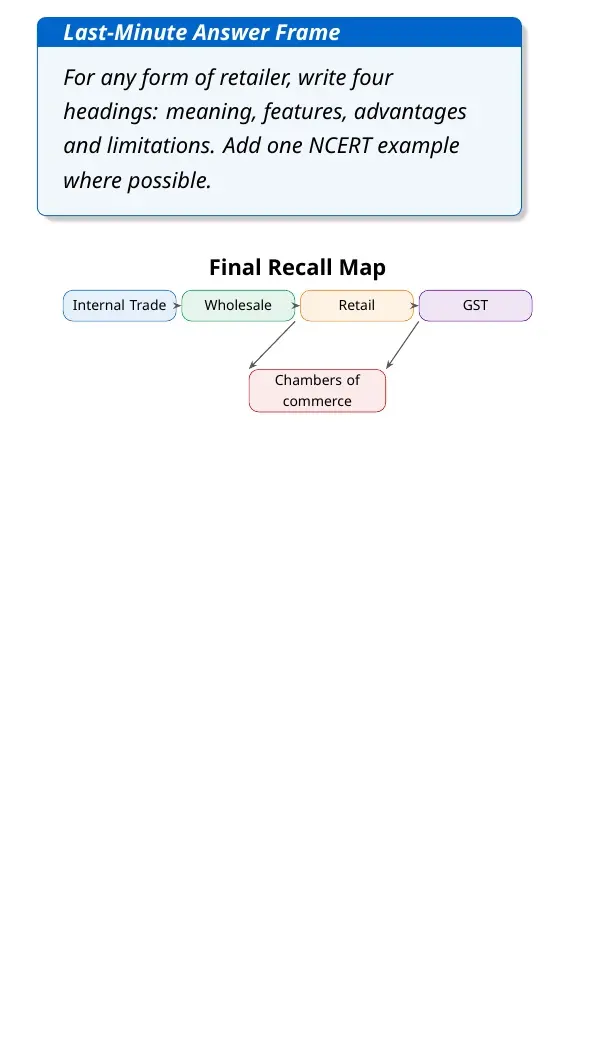
Tip: In long answers, write the classification first. Then add examples like general store, hawker, departmental store, super market and vending machine.
How to Use Internal Trade Notes Most Effectively
Read the PDF once for the full map, then revise by comparison tables. This chapter has many similar names, so examples help more than memorising isolated definitions.
- Make one page for wholesale services and retailer services.
- Make one table for itinerant, small fixed shop and large fixed shop retailers.
- Practise one long answer on departmental stores versus chain stores.
- Revise GST terms: CGST, SGST, IGST, input tax credit and destination tax.
Related NCERT Resources for Internal Trade Class 11
Use these sibling resources when you need solved answers, the official textbook chapter, or a quick revision format.
| Resource | Use it for |
|---|---|
| NCERT Solutions for Internal Trade Class 11 | Exercise answers and long-answer frames |
| NCERT Book PDF for Internal Trade | Official 2026-27 chapter reading |
| Handwritten Notes for Internal Trade | Fast pre-exam recall |
All Class 11 Business Studies Notes Chapters
Continue revision with the nearby Class 11 Business Studies Notes chapters.
| Chapter | Notes link |
|---|---|
| Chapter 7 | Formation of a Company Class 11 Notes |
| Chapter 8 | Sources of Business Finance Class 11 Notes |
| Chapter 9 | MSME and Business Entrepreneurship Class 11 Notes |
| Chapter 11 | International Business Class 11 Notes |
Internal Trade Class 11 Business Studies Notes FAQs
Ques. What is internal trade in Class 11 Business Studies?
Ans. Internal trade means buying and selling goods and services within the boundaries of a country. It includes wholesale trade and retail trade.
Ques. What are the two main types of internal trade?
Ans. The two main types are wholesale trade and retail trade. Wholesale deals in bulk for resale, while retail sells in small quantities to final consumers.
Ques. Why are wholesalers important in internal trade?
Ans. Wholesalers store goods, buy in bulk, bear risk, give credit, collect market information and supply retailers in smaller lots.
Ques. What is the difference between departmental stores and chain stores?
Ans. A departmental store sells many product lines under one roof. A chain store has many branches selling similar standardised goods at fixed prices.
Ques. How does GST support internal trade?
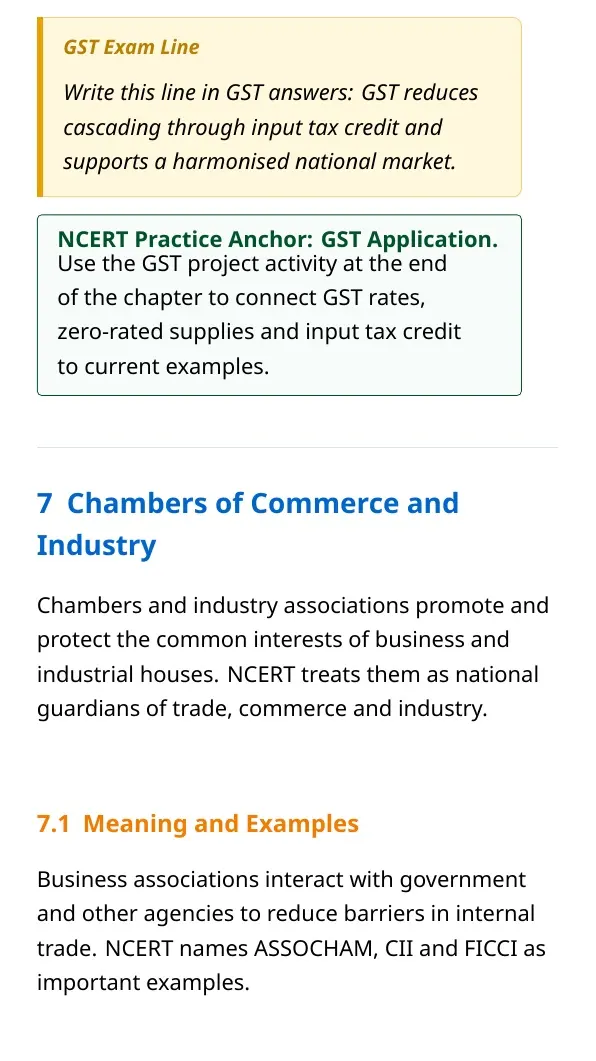
Ans. GST creates a unified tax system for goods and services. It reduces tax-on-tax through input tax credit and supports smoother domestic trade.



Comments