




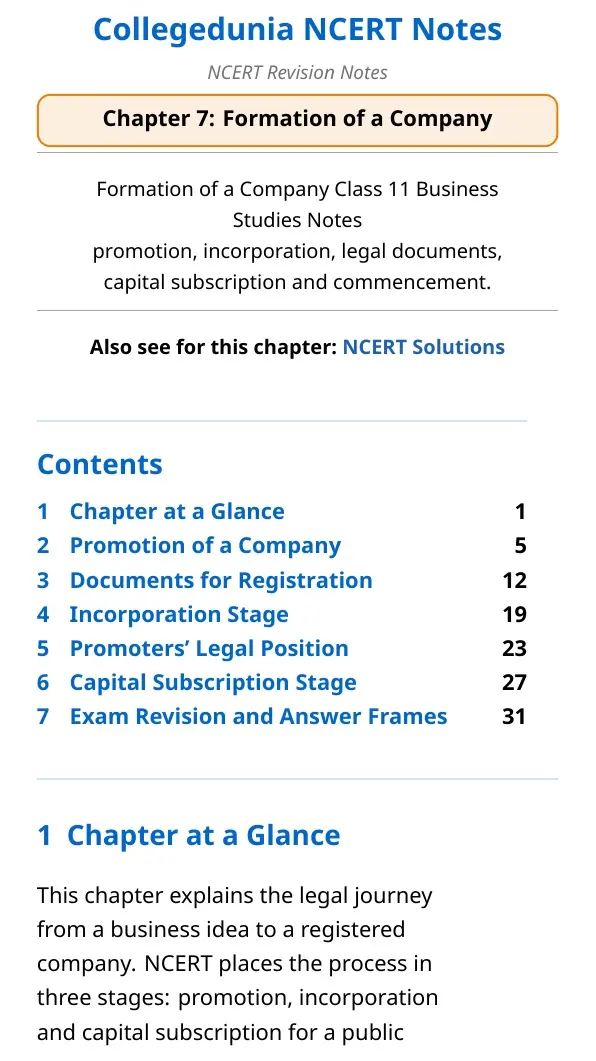
The Formation of a Company Class 11 notes explain how a business idea becomes a company through promotion, incorporation, capital subscription and commencement of business in the 2026-27 NCERT syllabus. Use this page for quick revision, then open the PDF for tables, diagrams and answer frames.
- Download the 21-page Class 11 Business Studies Chapter 7 notes PDF for offline study.
- Revise promoters, memorandum, articles, certificate of incorporation and capital subscription.
- Student focus: learn the order of stages before memorising document names.
These Class 11 Business Studies notes are checked against the 2026-27 NCERT chapter and written for quick Commerce revision.
Student Feedback on Formation of a Company
In a Collegedunia poll of 11,870 Class 11 Commerce students before the 2026 exams, many students said Chapter 7 became easier once the formation stages, document list and promoter responsibilities were revised as separate answer frames.
- 78% wanted one chart for promotion, incorporation, capital subscription and commencement.
- 66% confused Memorandum of Association with Articles of Association in short answers.
- 59% needed examples for promoters' preliminary contracts. The PDF includes a separate legal-position frame.
Source: 2026-27 Class 11 Commerce student poll. Sample of 11,870 students from CBSE schools across 14 states.
|
Table of Contents |
Formation of a Company Class 11 Quick Map
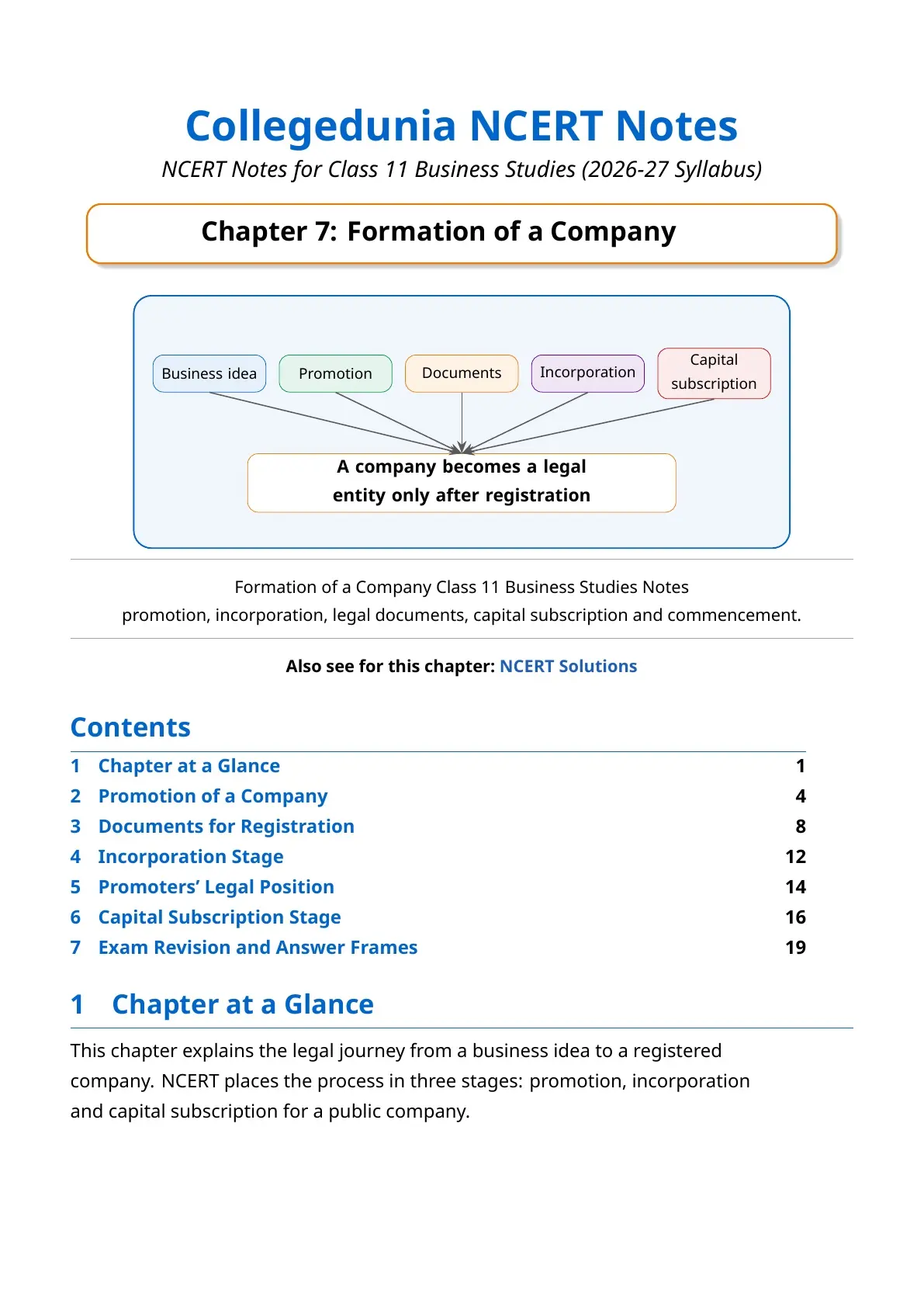
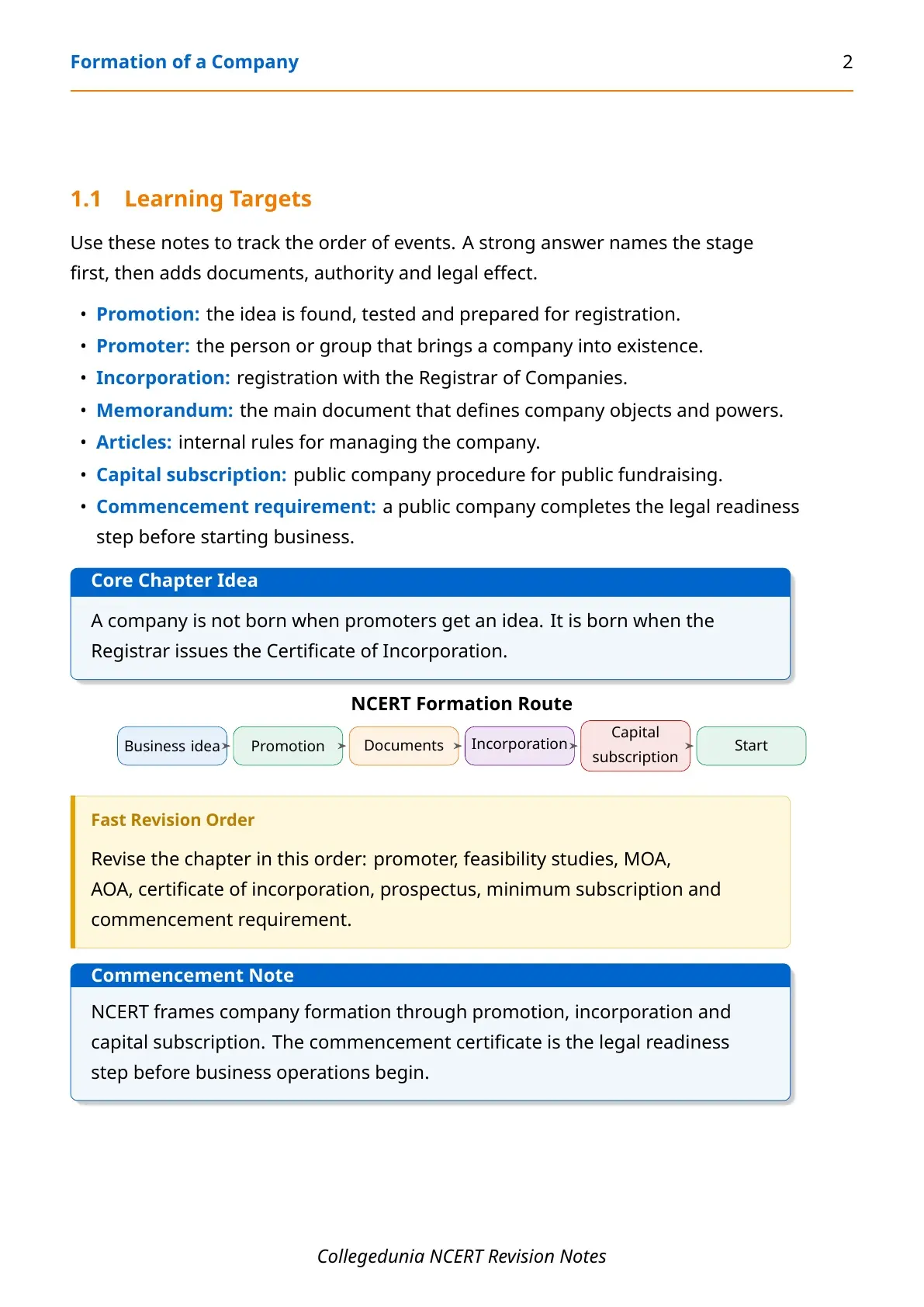
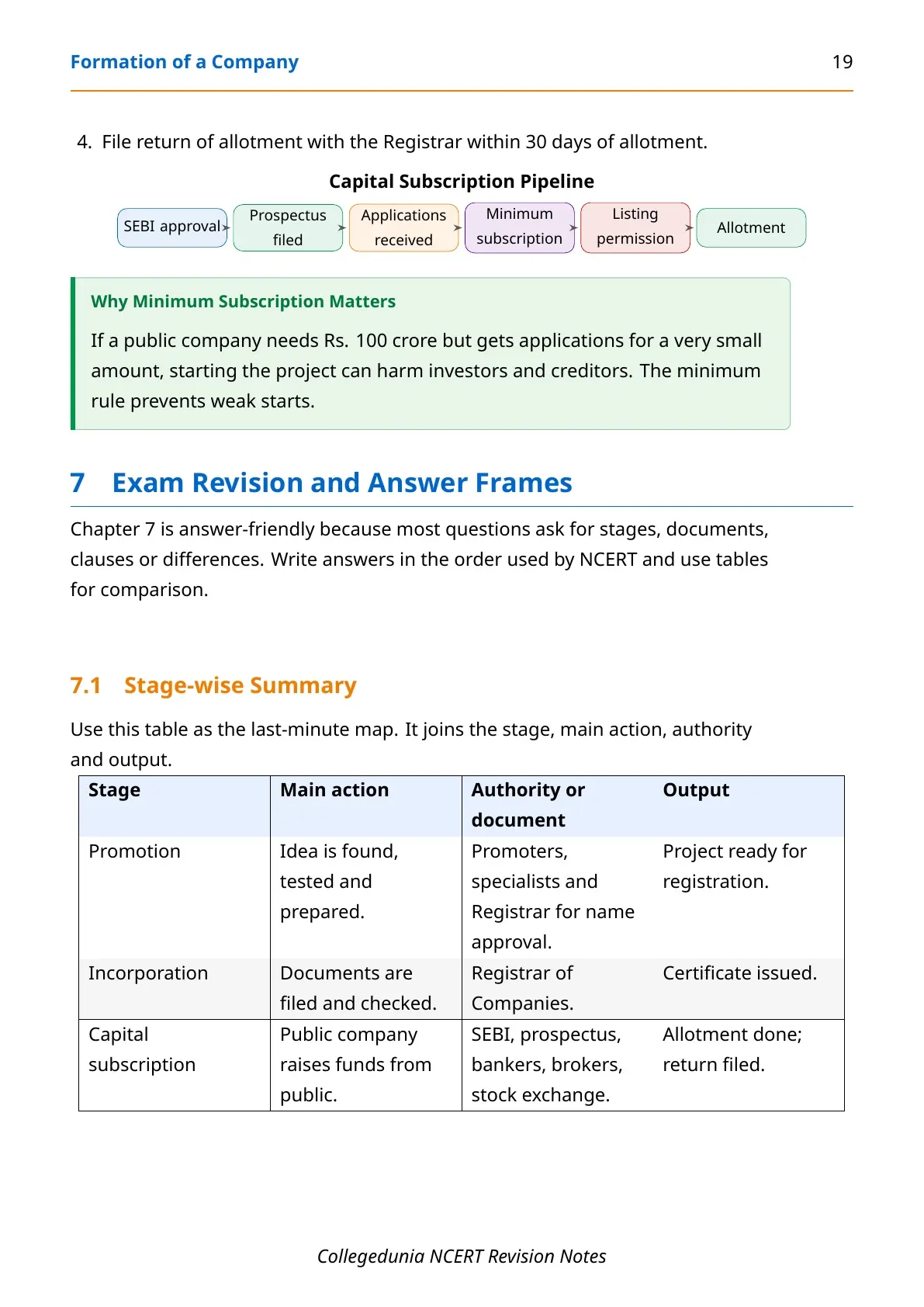
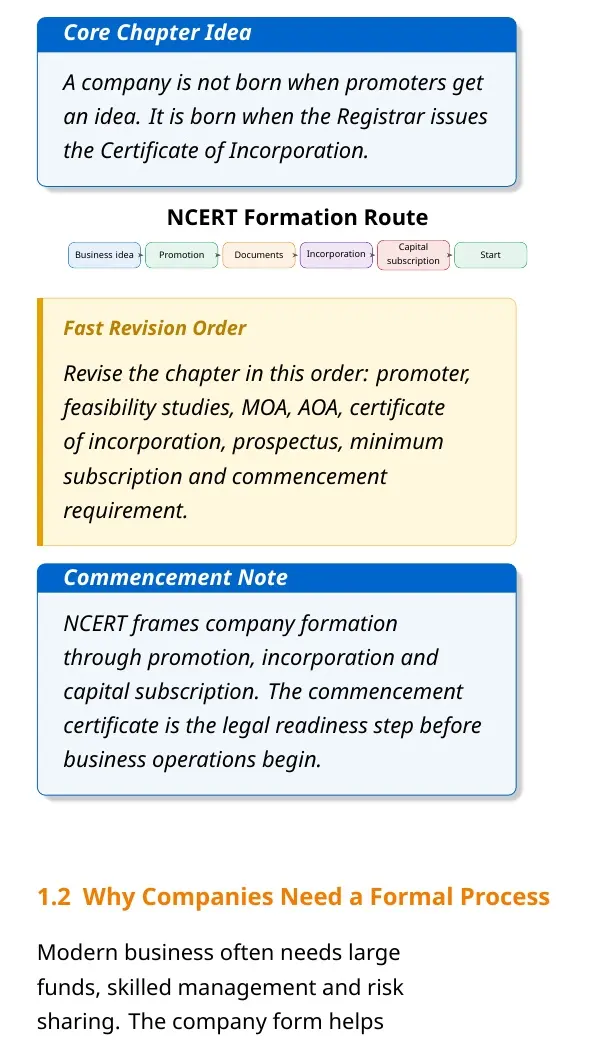
Formation of a Company explains the legal process through which a company comes into existence. NCERT presents the chapter around three main stages for most companies: promotion, incorporation and capital subscription. A public company may also need a certificate of commencement before starting business.
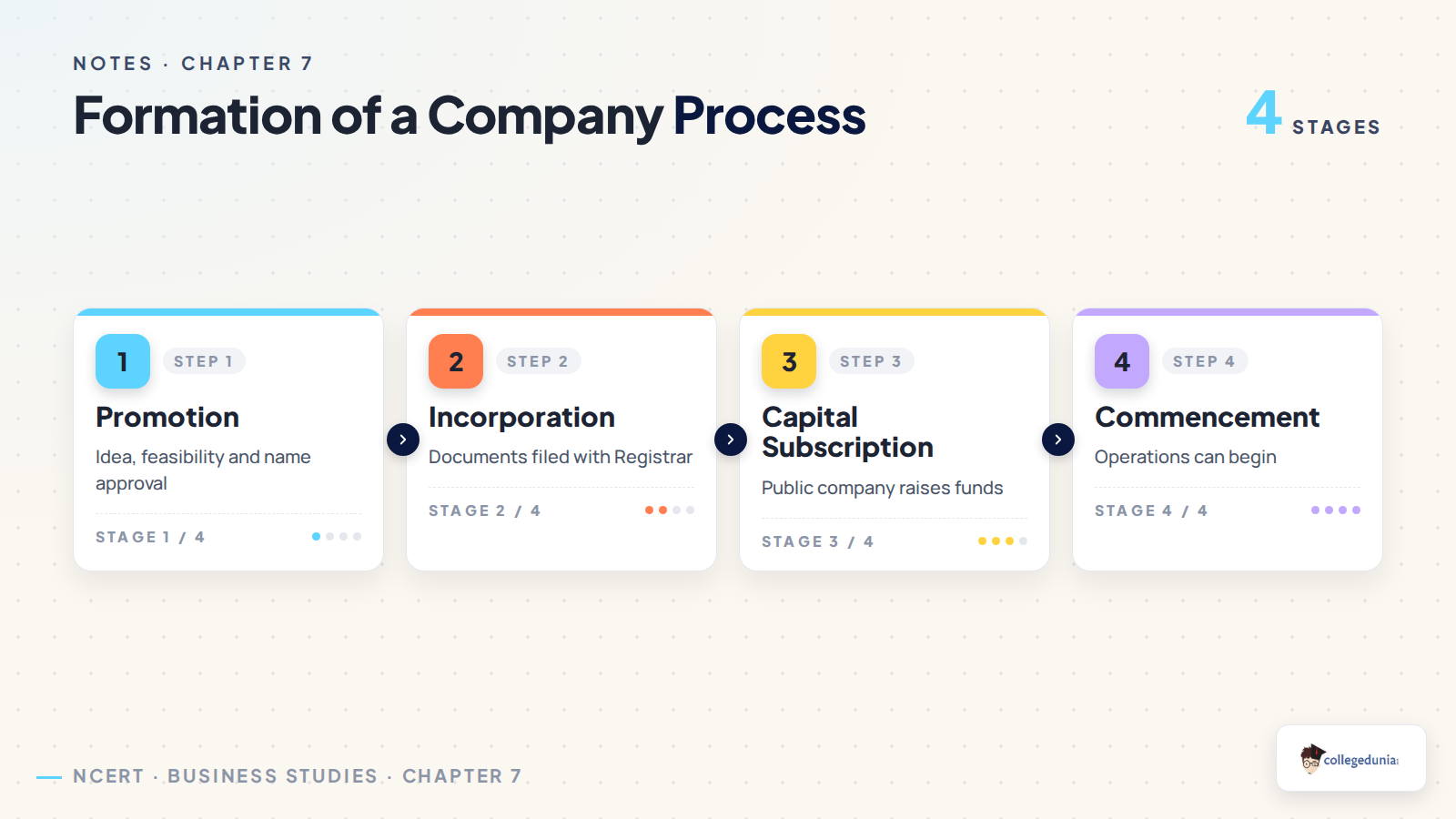
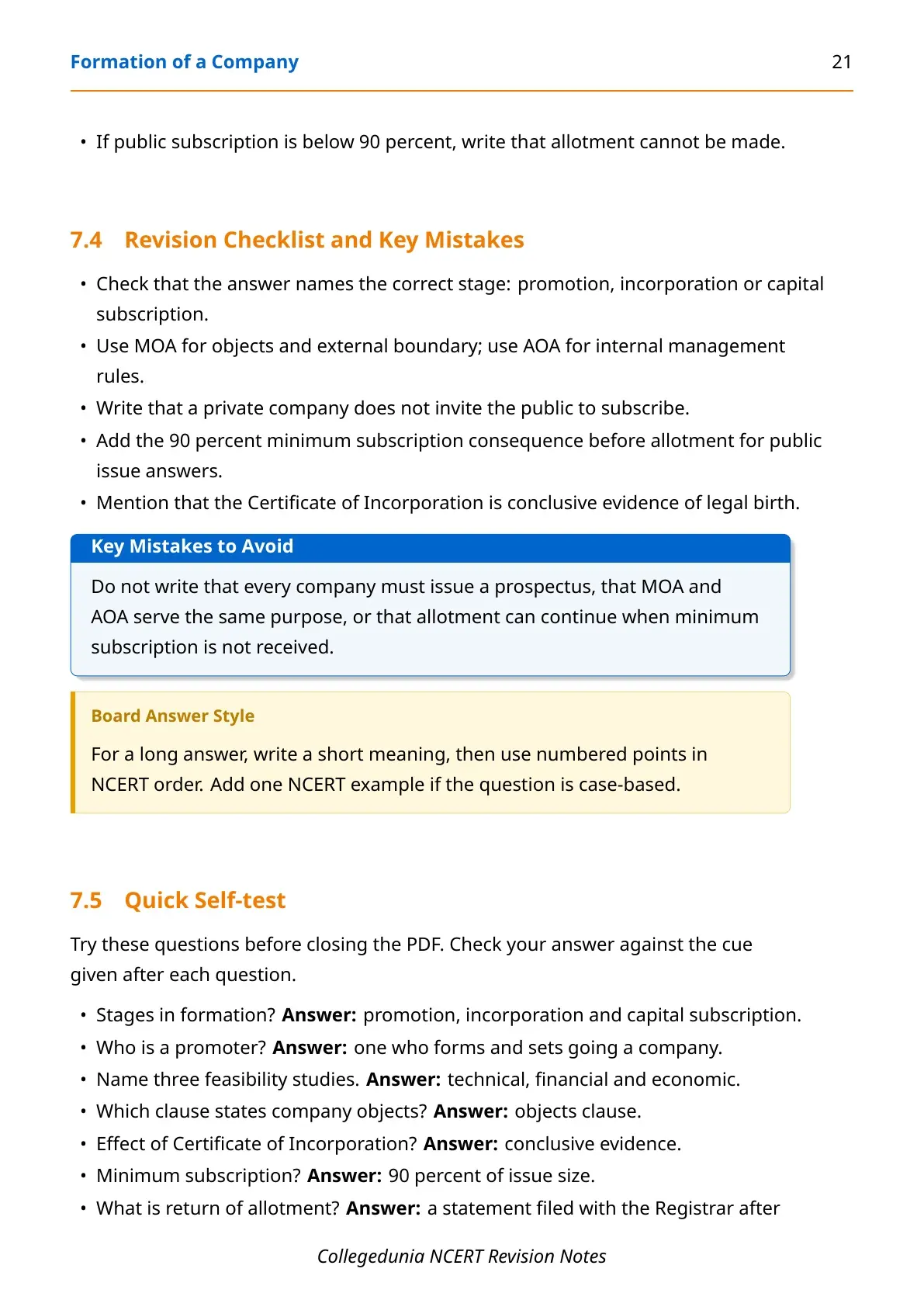
- Promotion begins with the business idea and feasibility study.
- Incorporation gives the company a separate legal identity.
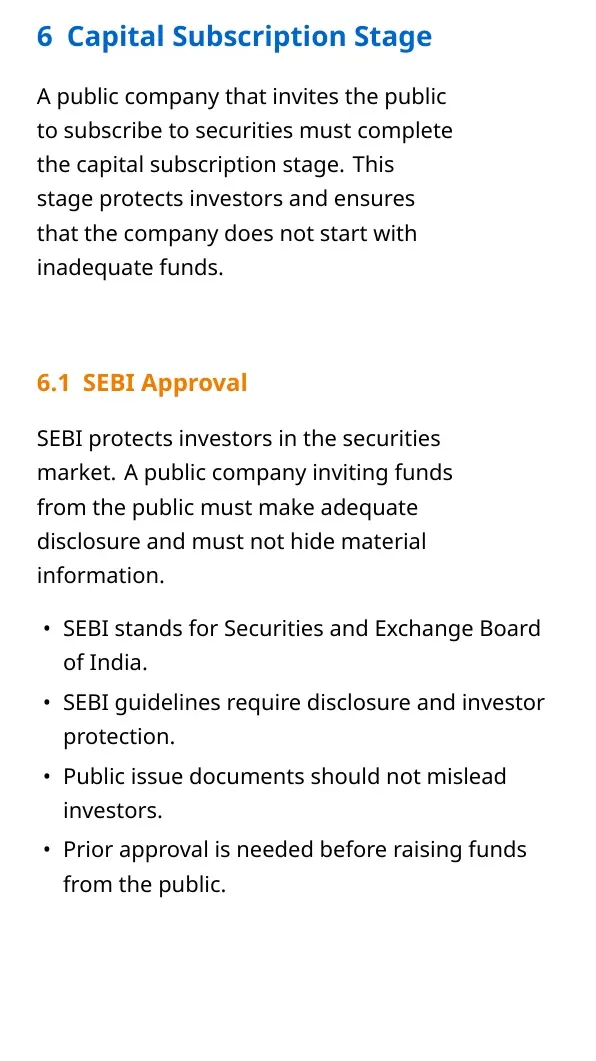
- Capital subscription helps a public company raise funds from the public.
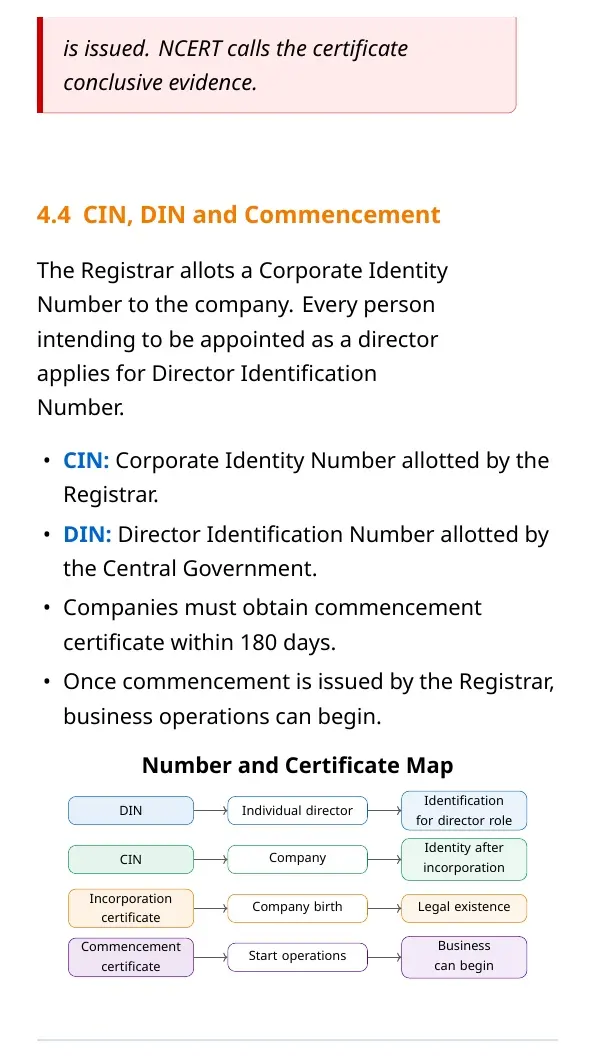
- Commencement confirms that statutory requirements have been met.
Meaning and Stages of Company Formation
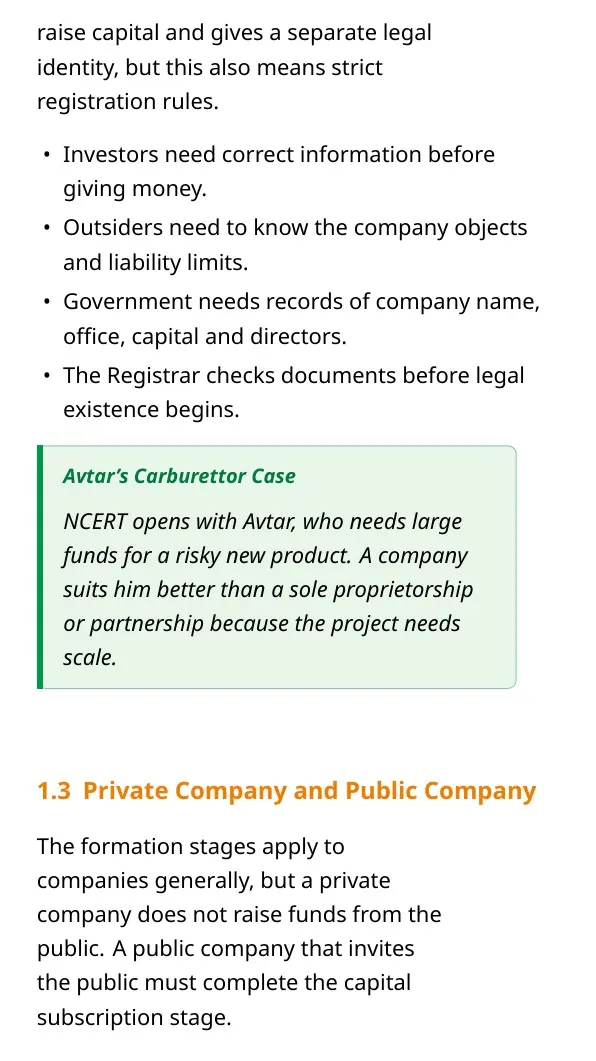
A company is an artificial person created by law, so its birth depends on legal formalities. Formation does not mean only collecting money. It includes identifying the business opportunity, preparing documents, registering with the Registrar of Companies and meeting rules for issue of shares.
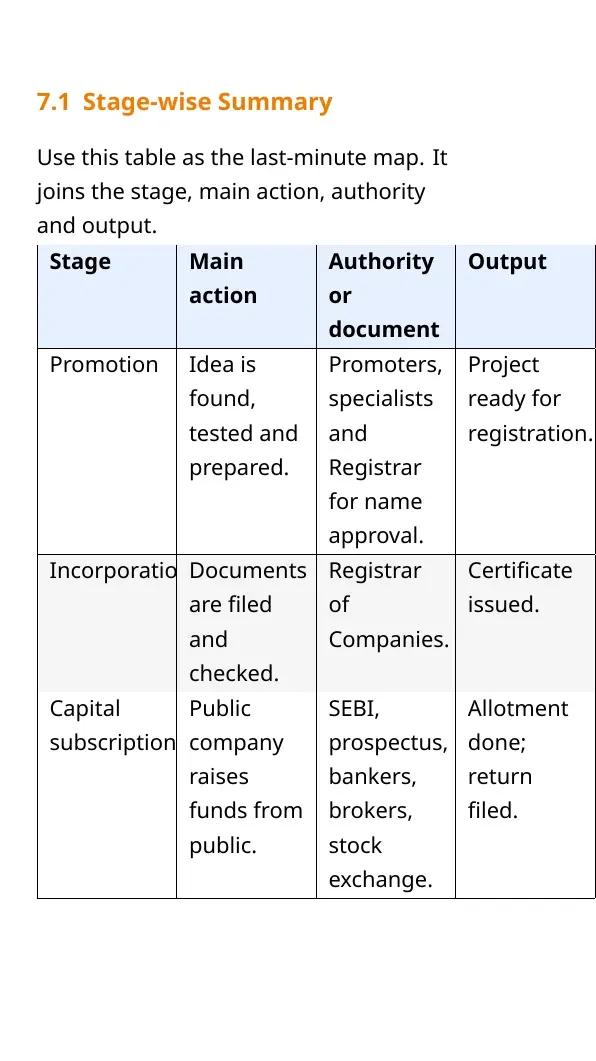
| Stage | What happens? | Exam cue |
|---|---|---|
| Promotion | Idea is discovered, investigated and assembled into a business proposal | Promoters, feasibility and preliminary contracts |
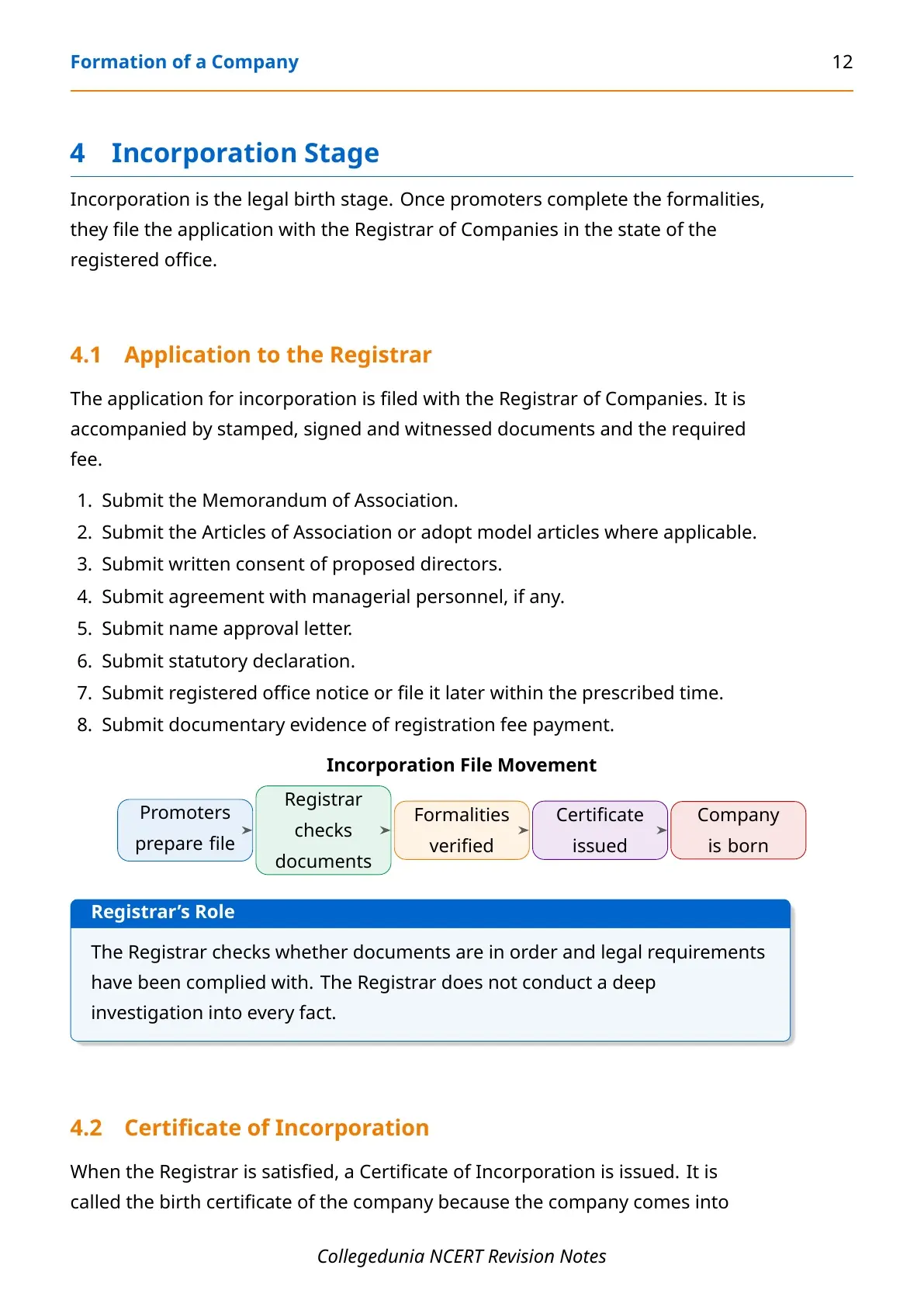
| Incorporation | Documents are filed and the company receives legal existence | Certificate of incorporation and corporate identity number |
| Capital subscription | Public company raises capital through prospectus or private placement | Minimum subscription, allotment and SEBI compliance |
| Commencement | Eligible company receives permission to begin business operations | Declaration and compliance after registration |
Promotion Stage in Formation of a Company
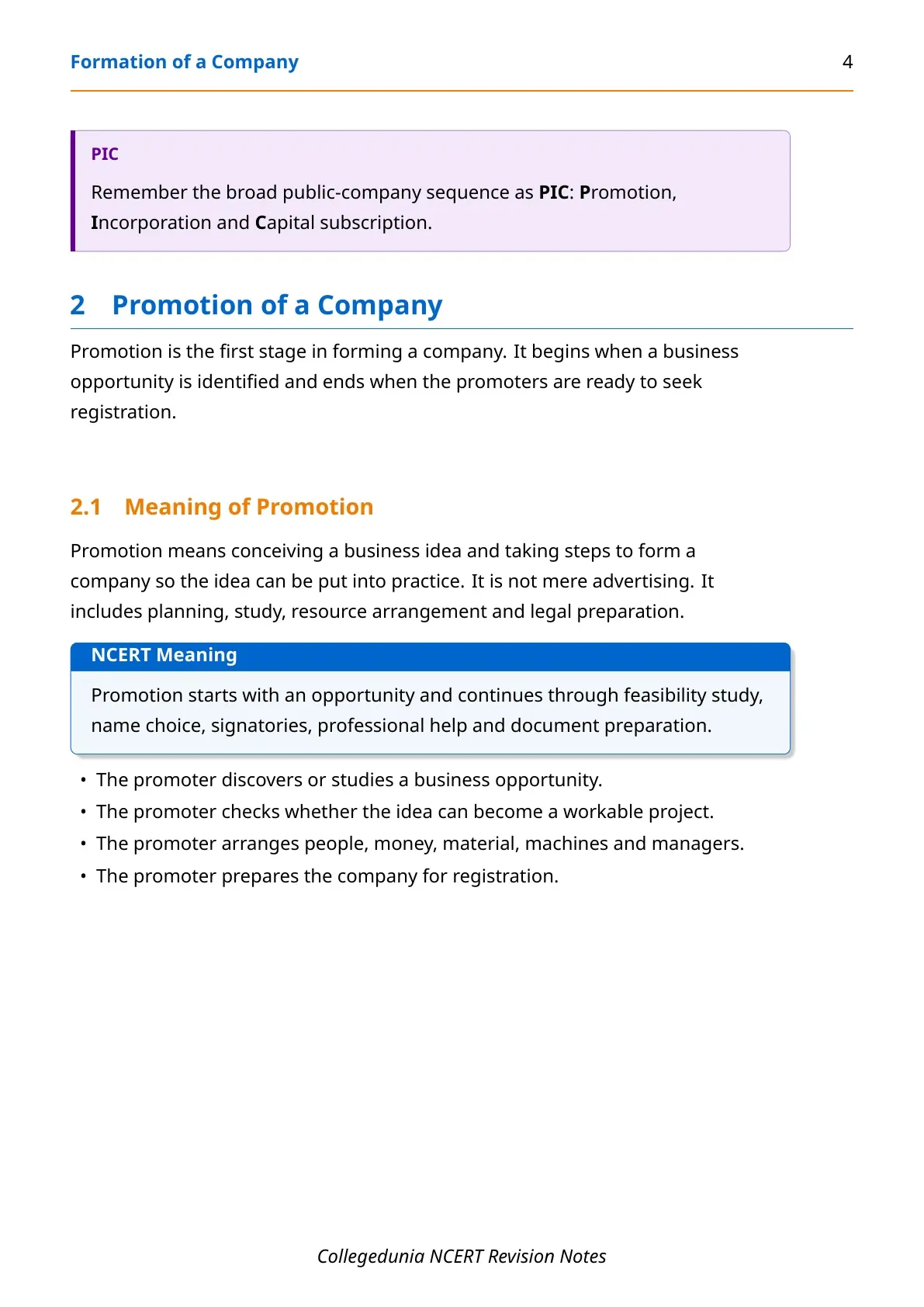
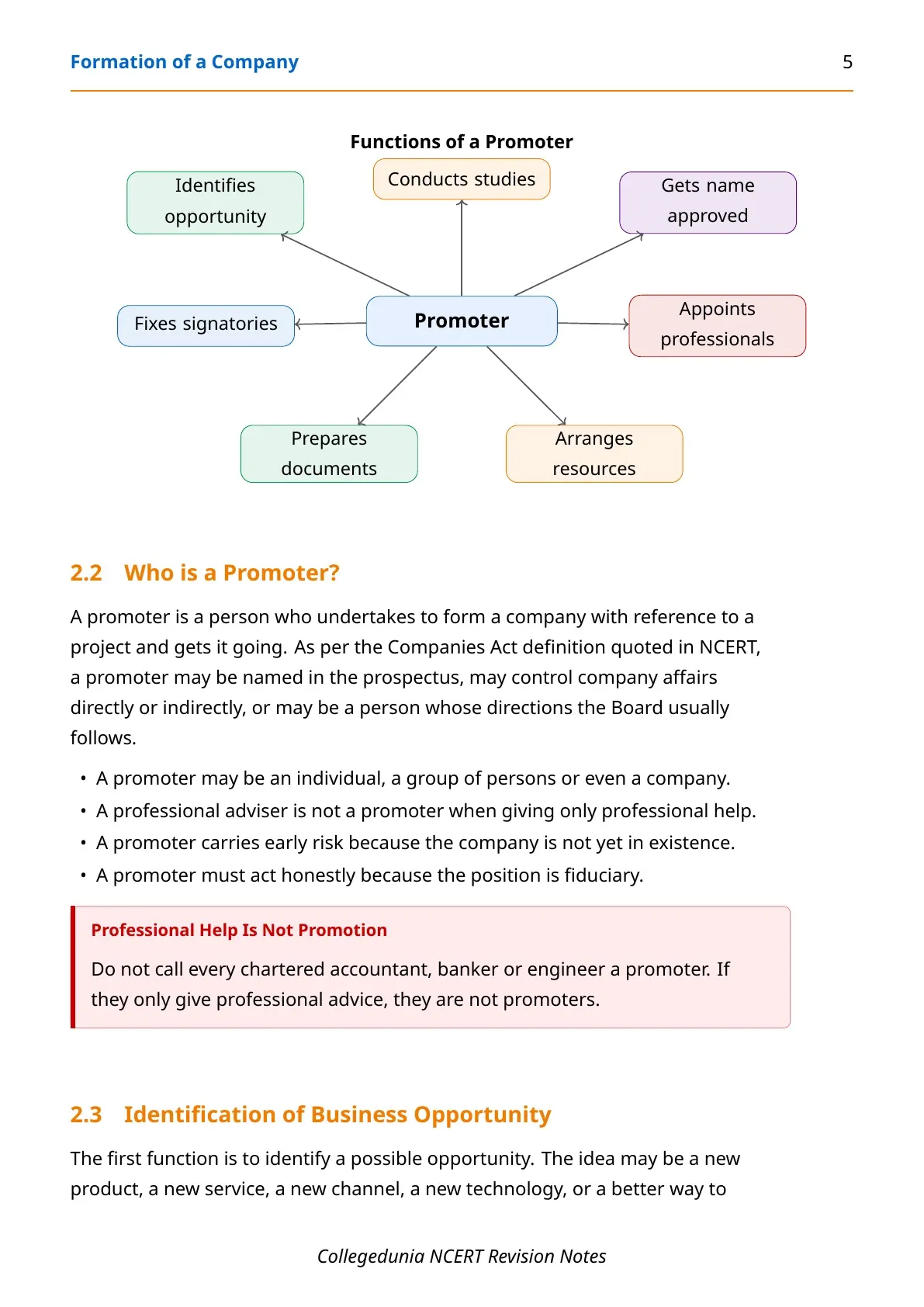
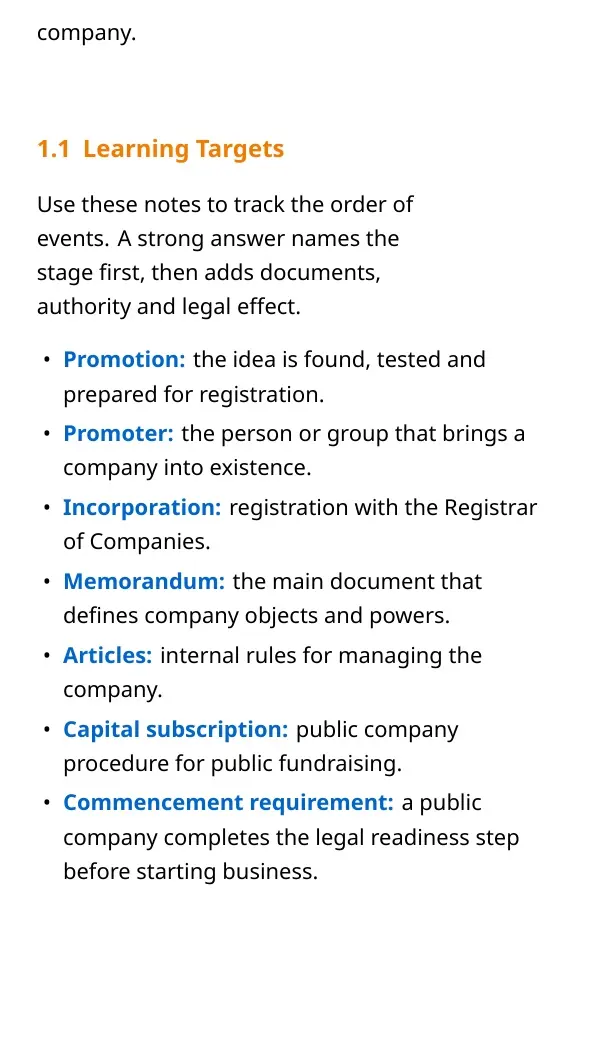
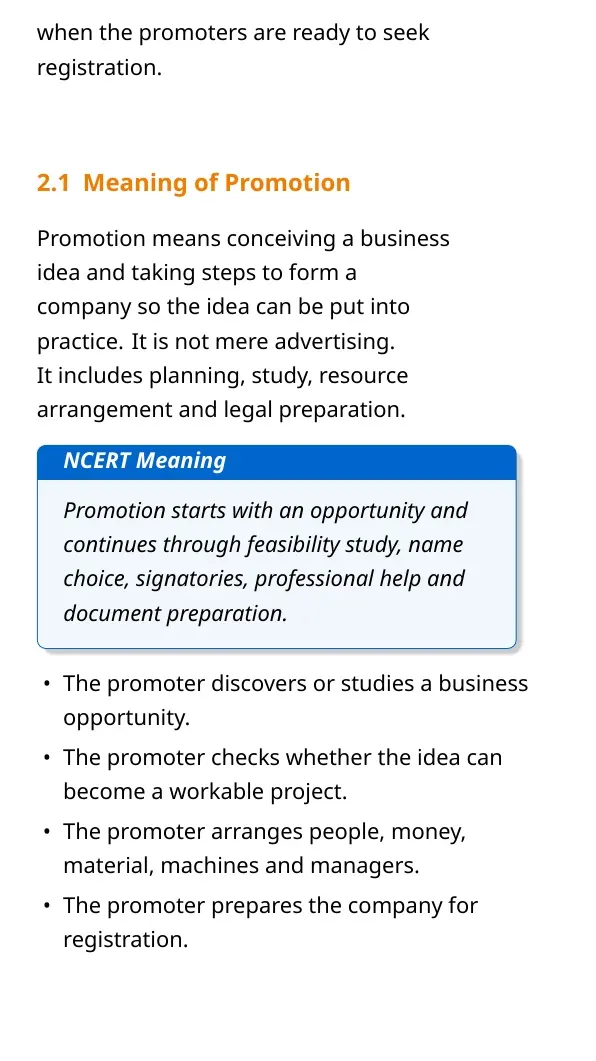
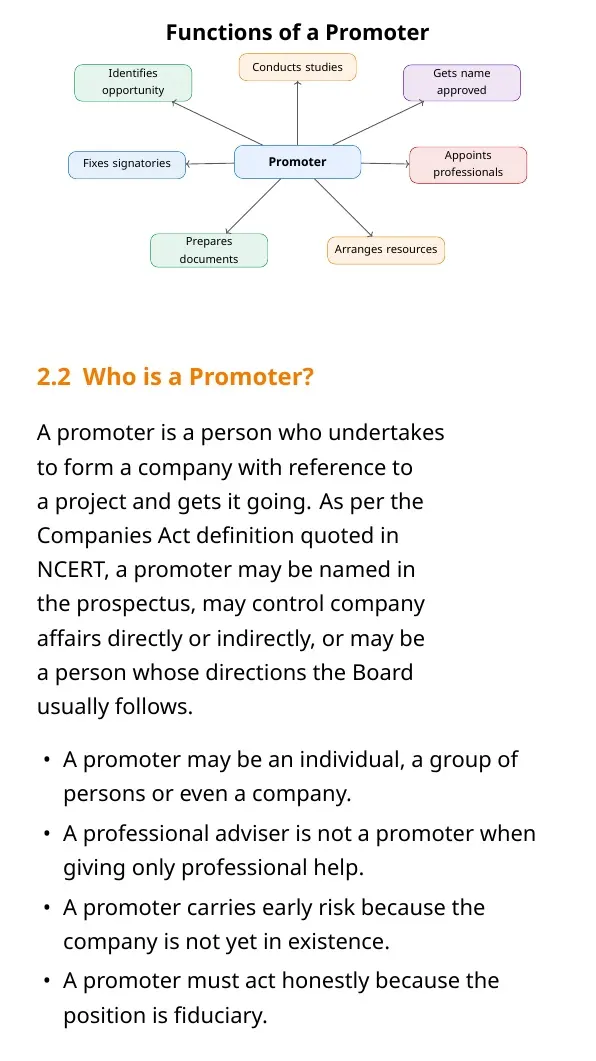
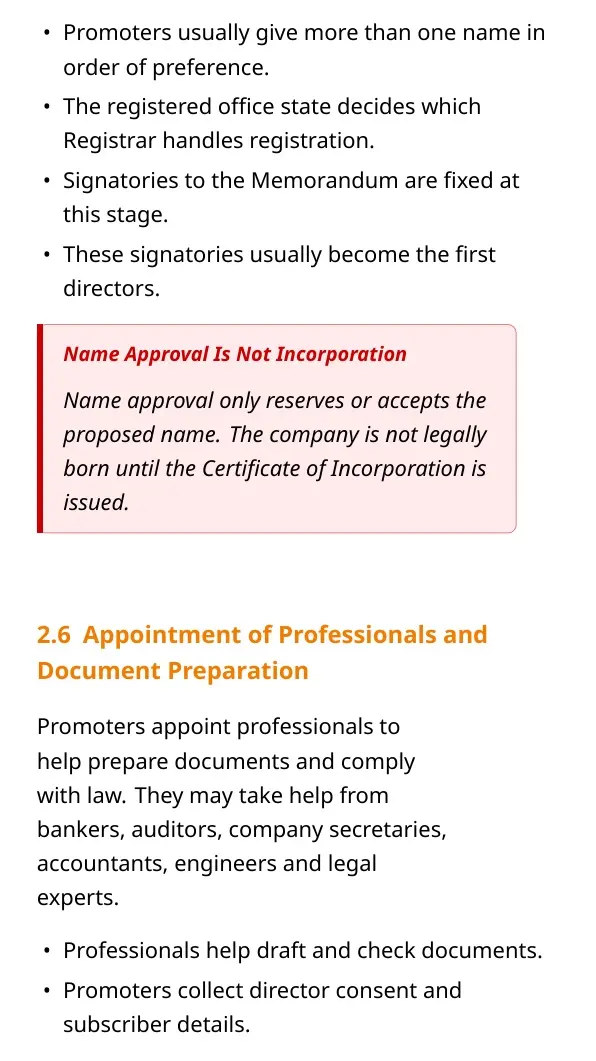
Promotion is the first stage where a person or group discovers a business idea and takes steps to form a company. Such persons are called promoters. They bring together resources, prepare initial plans, make preliminary contracts and arrange the documents needed for registration.
- Discovery of idea: promoters identify a product, service or opportunity.
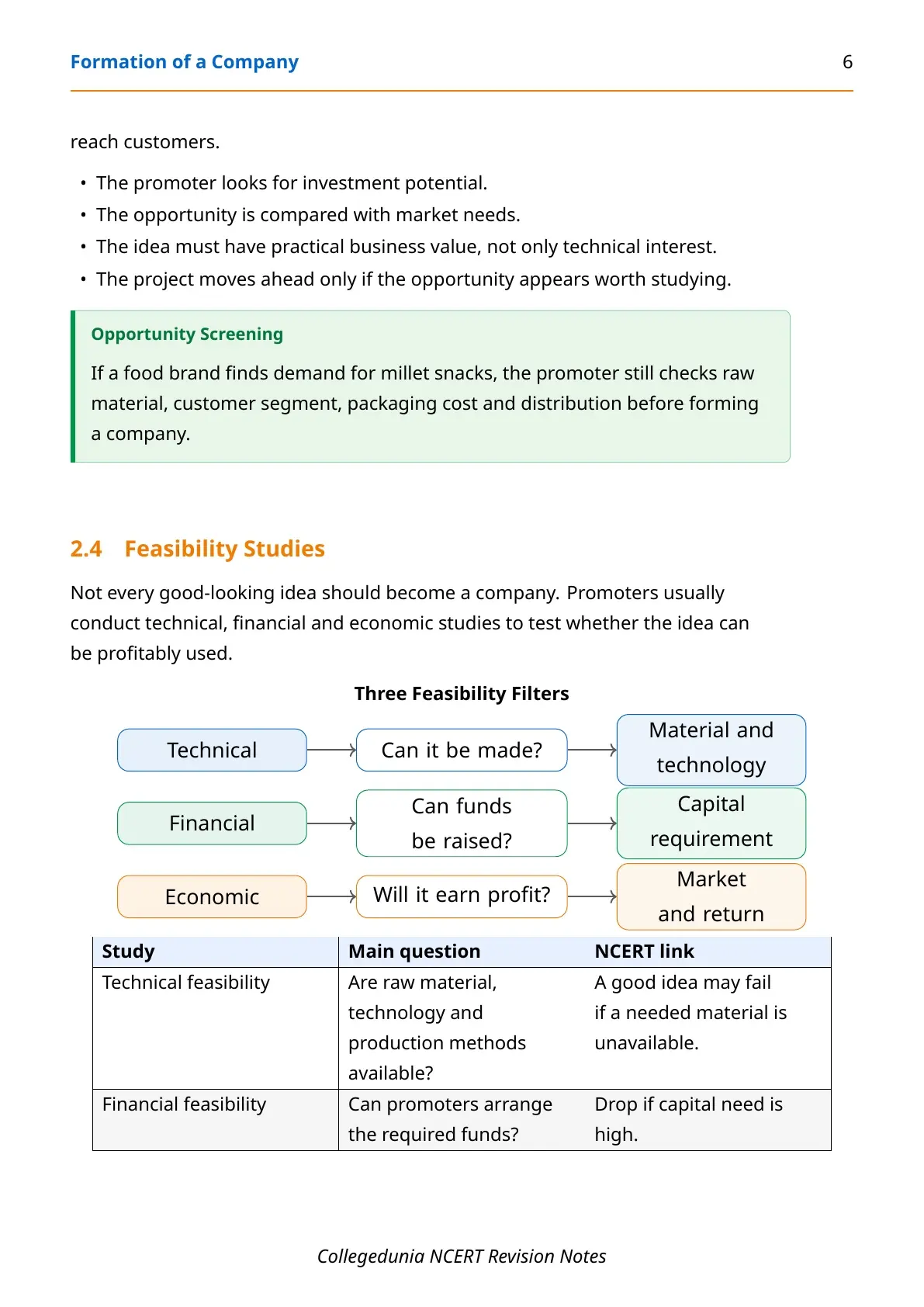
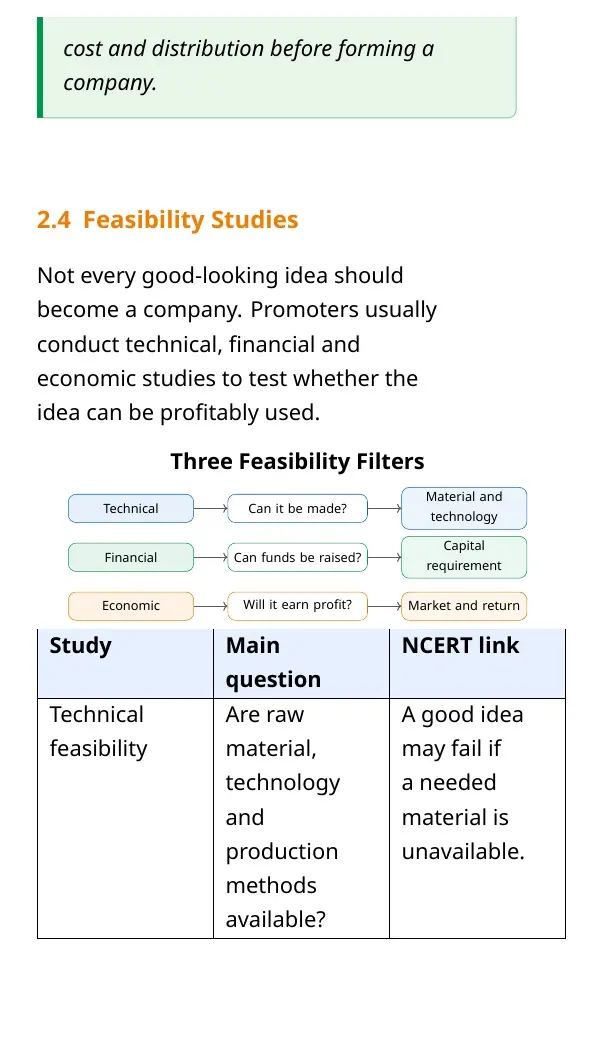
- Feasibility study: they test technical, financial, economic and legal viability.
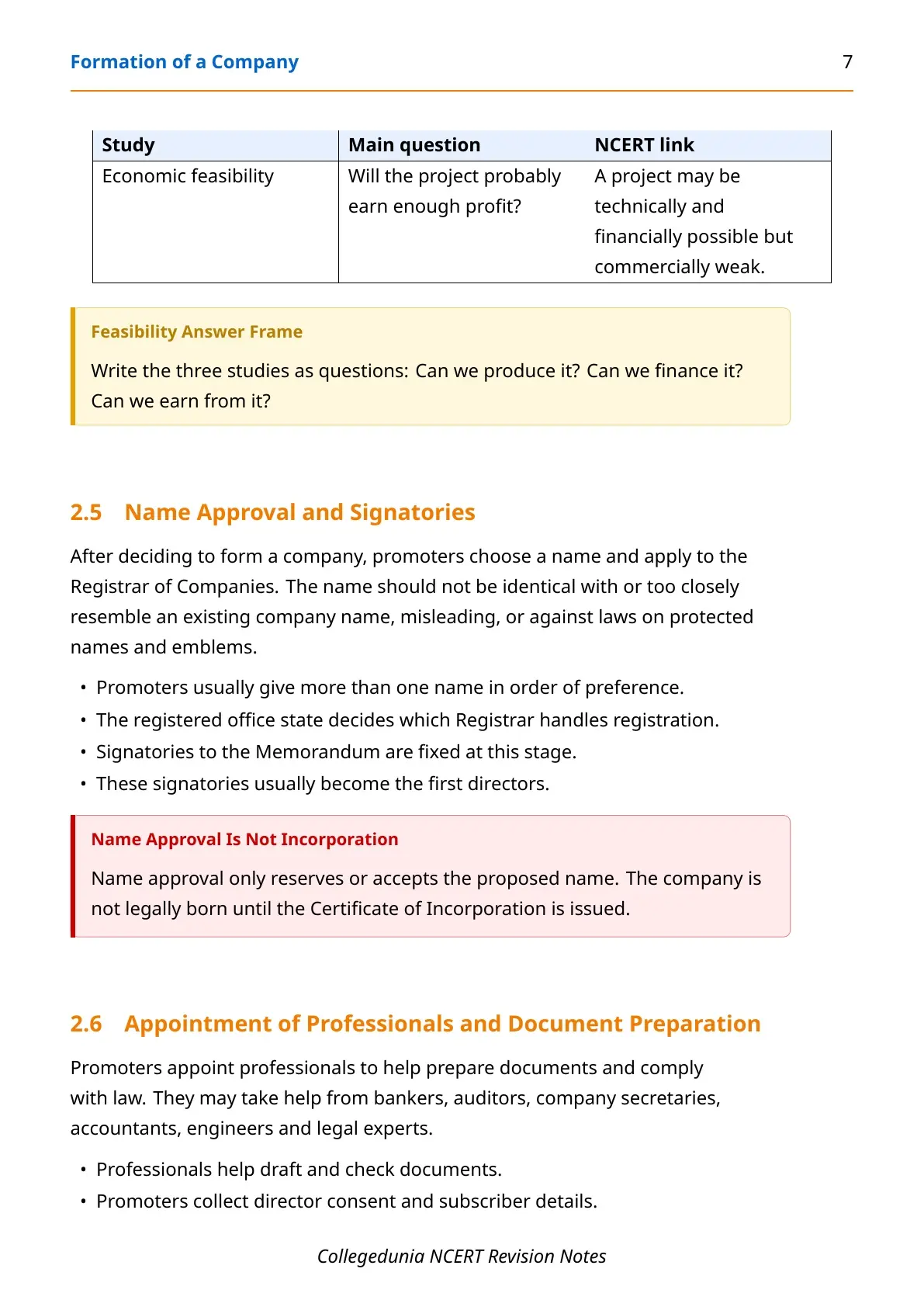
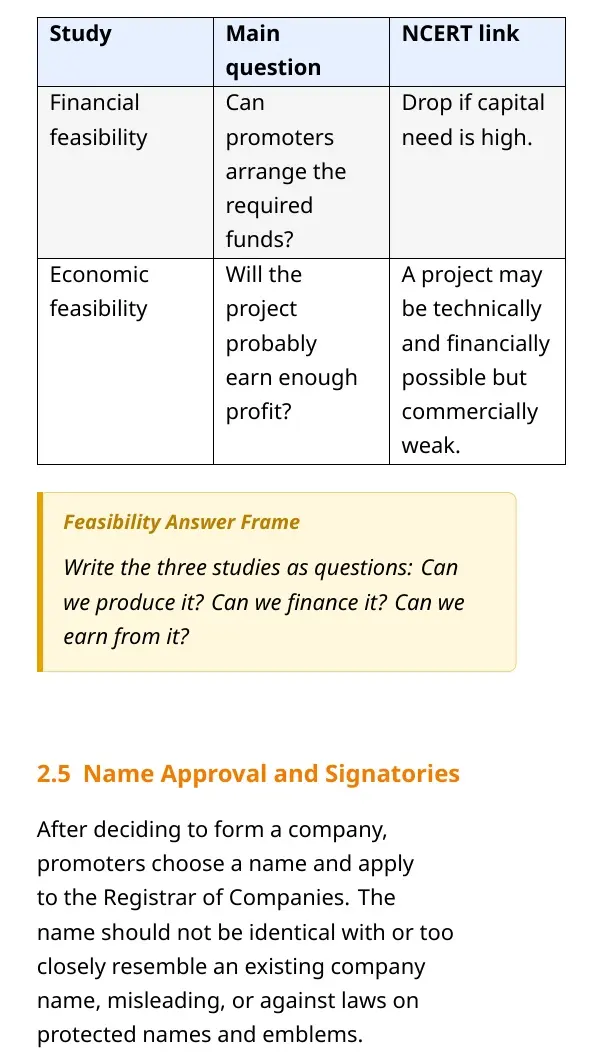
- Name approval: a suitable company name is proposed and checked.
- Document preparation: promoters arrange the memorandum, articles and declarations.
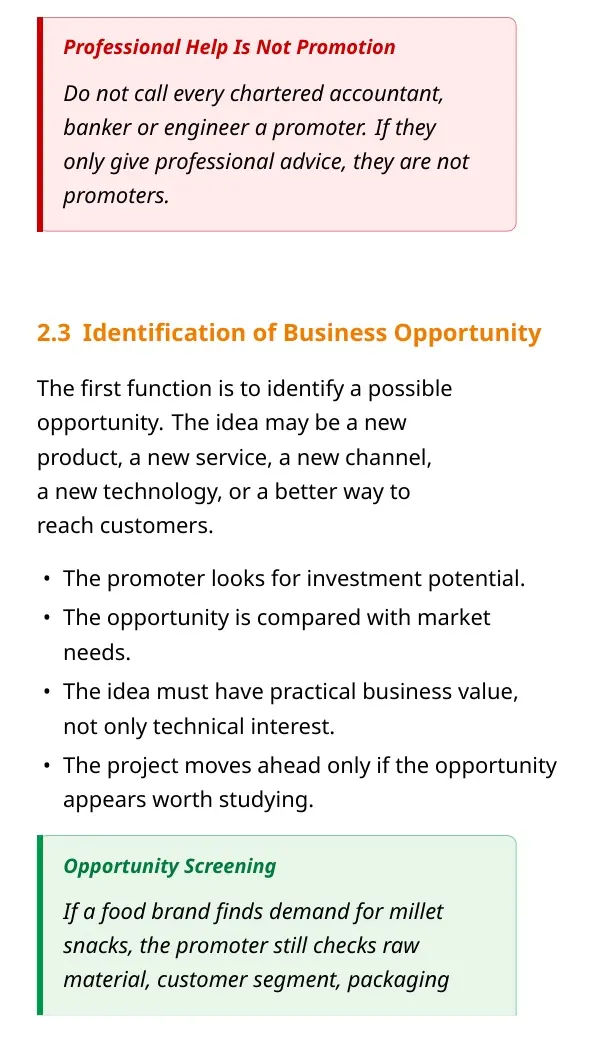
Exam tip: do not call every first shareholder a promoter. A promoter performs the formation work and brings the company into existence.
Formation of a Company Class 11 Video Recap
Source: Magnet Brains on YouTube
Documents for Registration and Incorporation
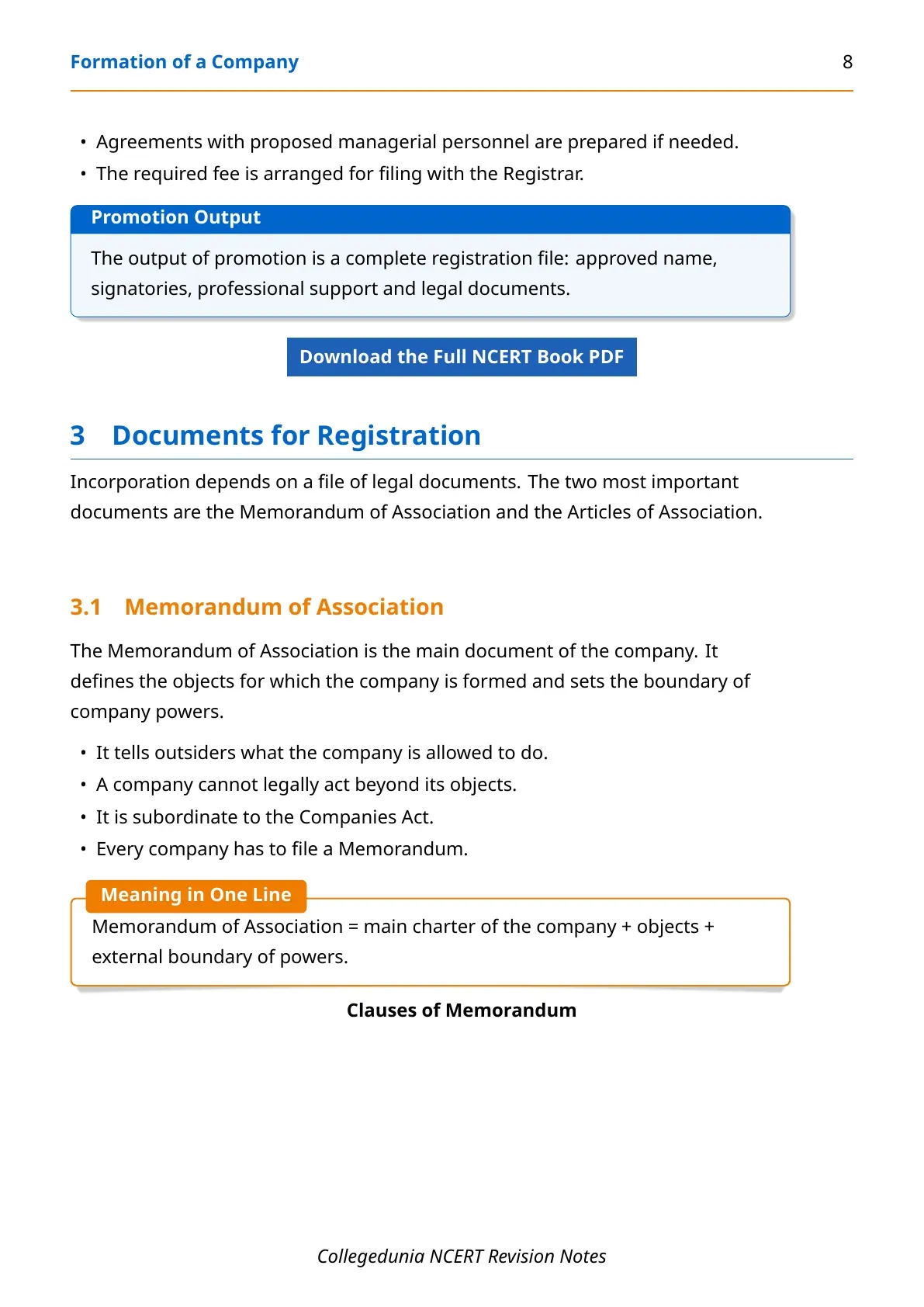
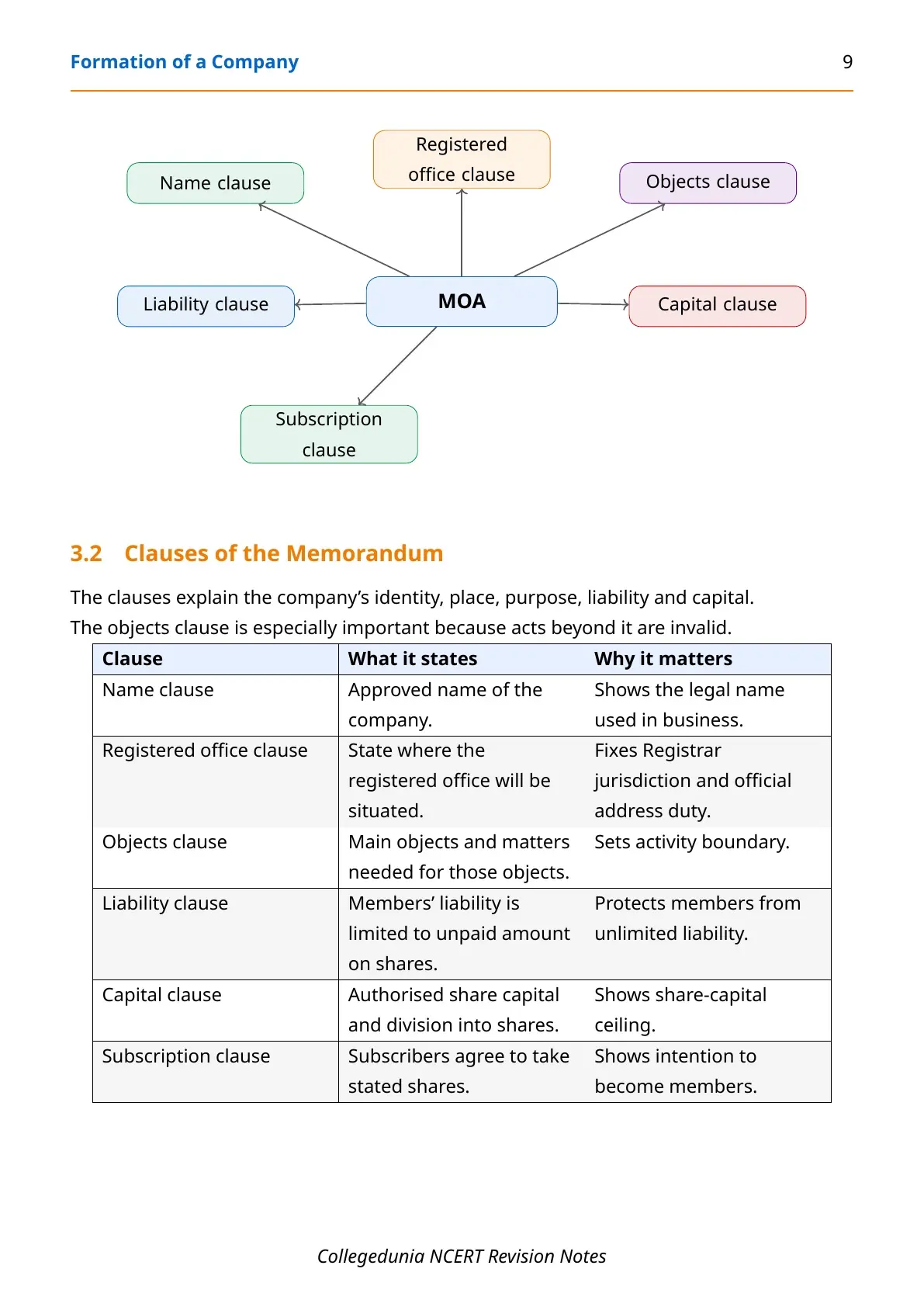
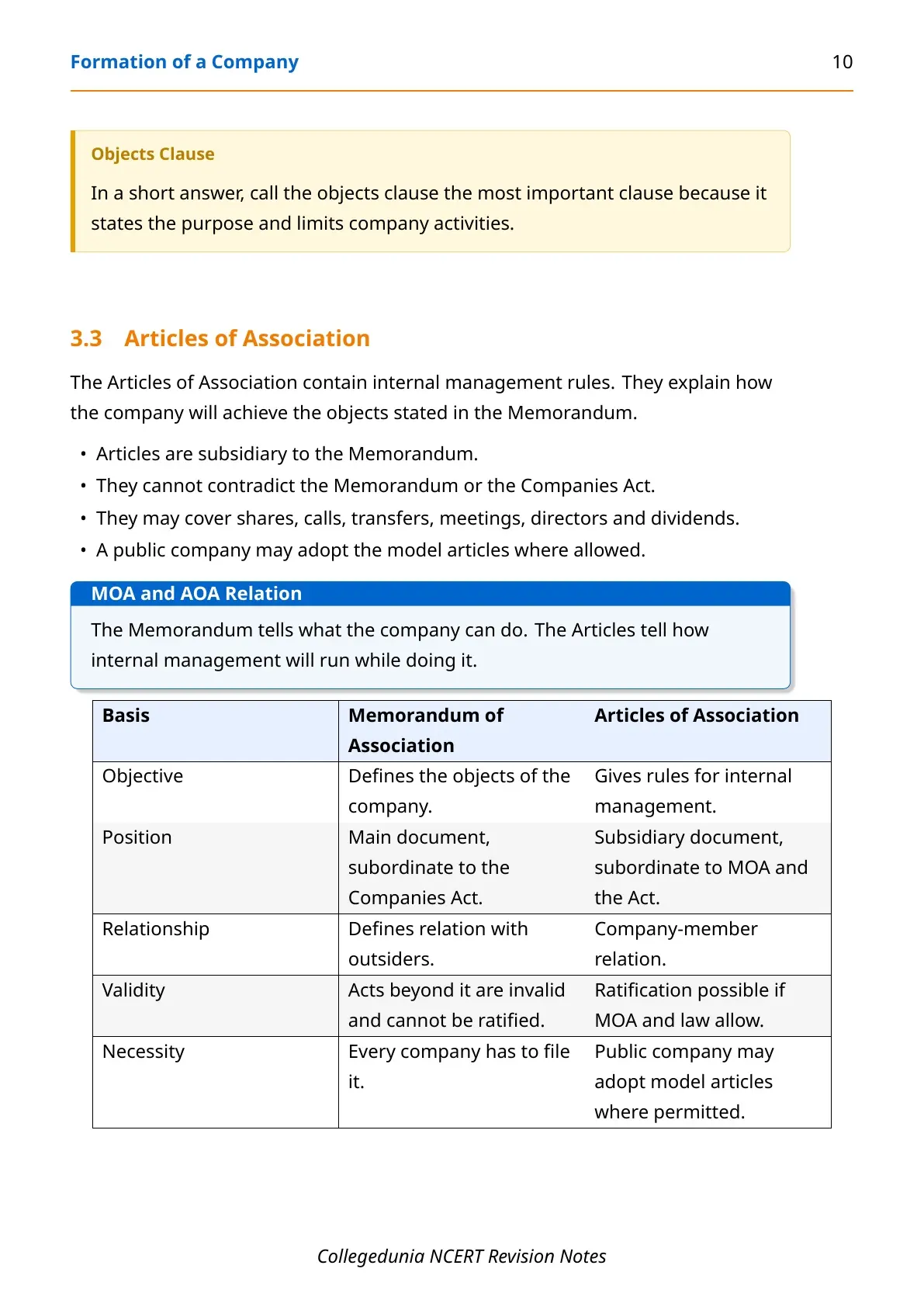
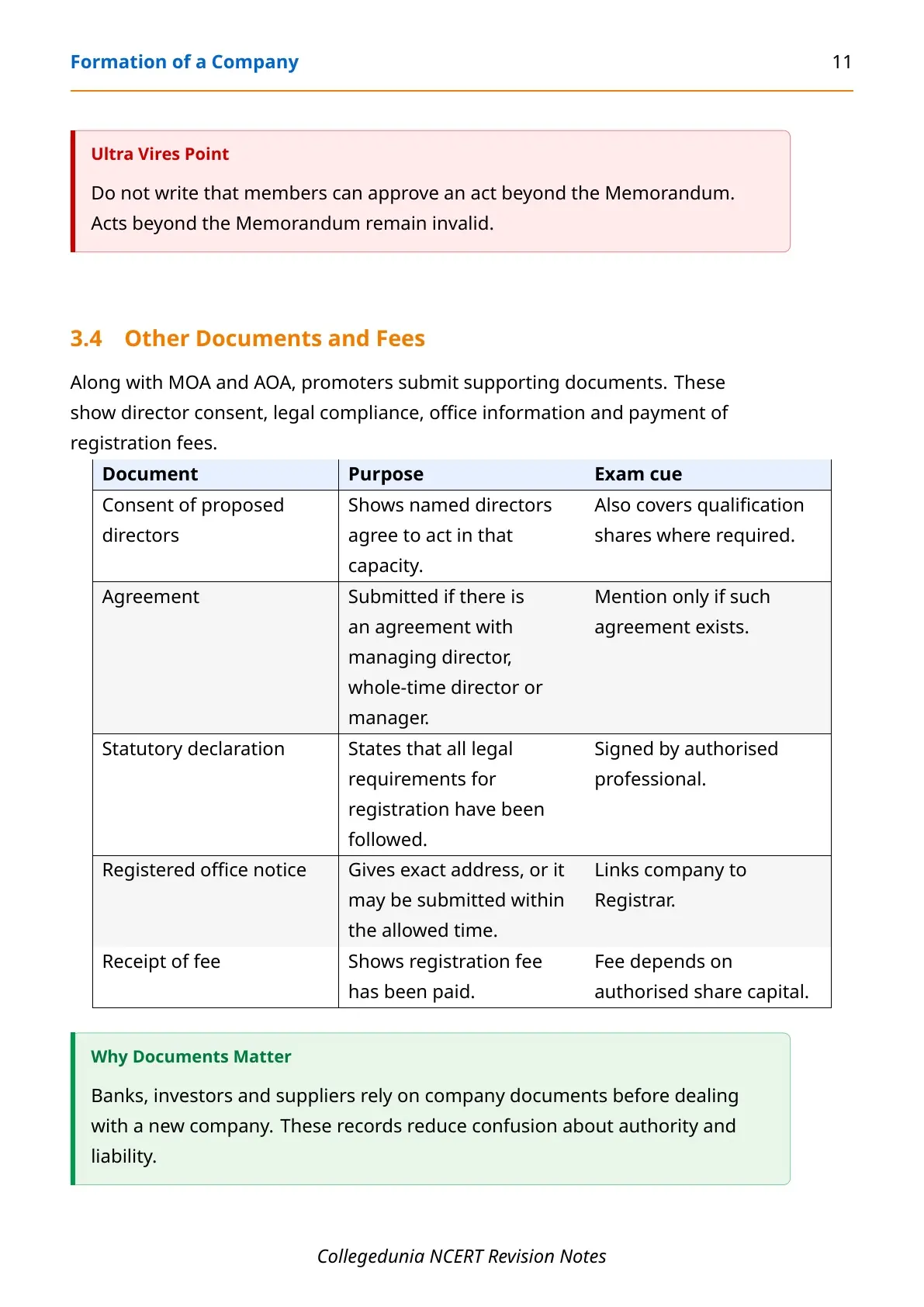
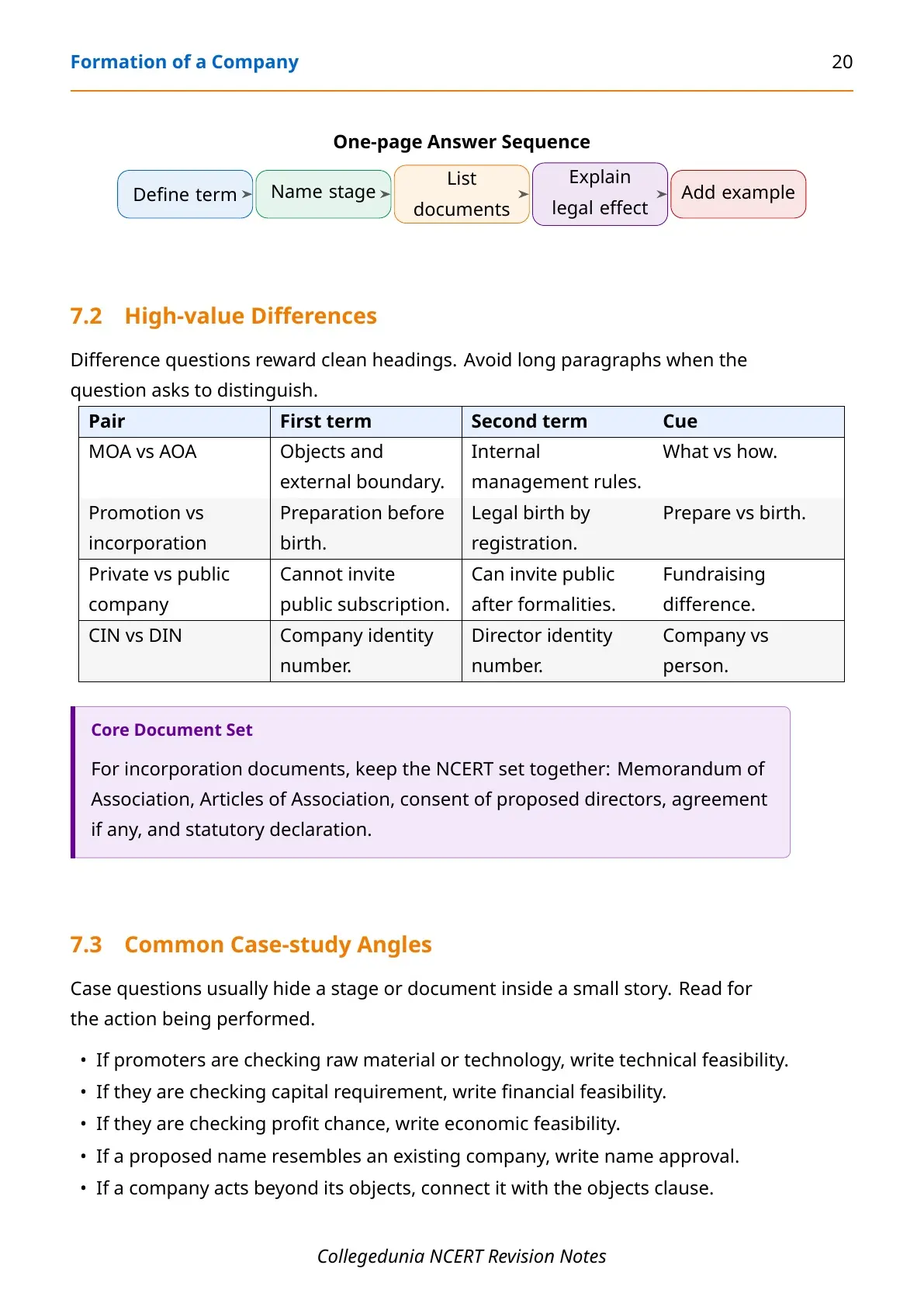
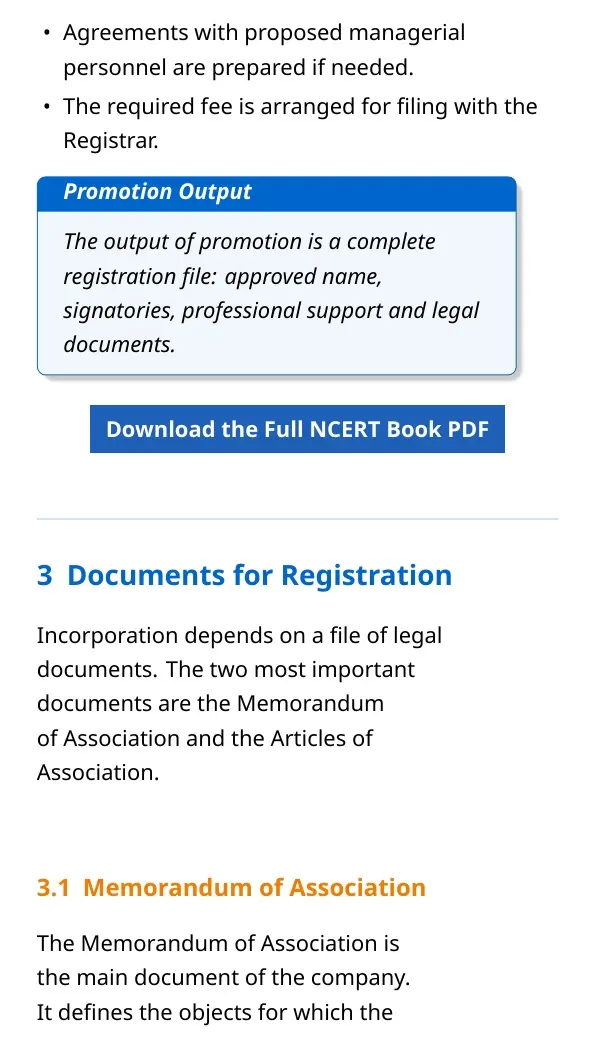
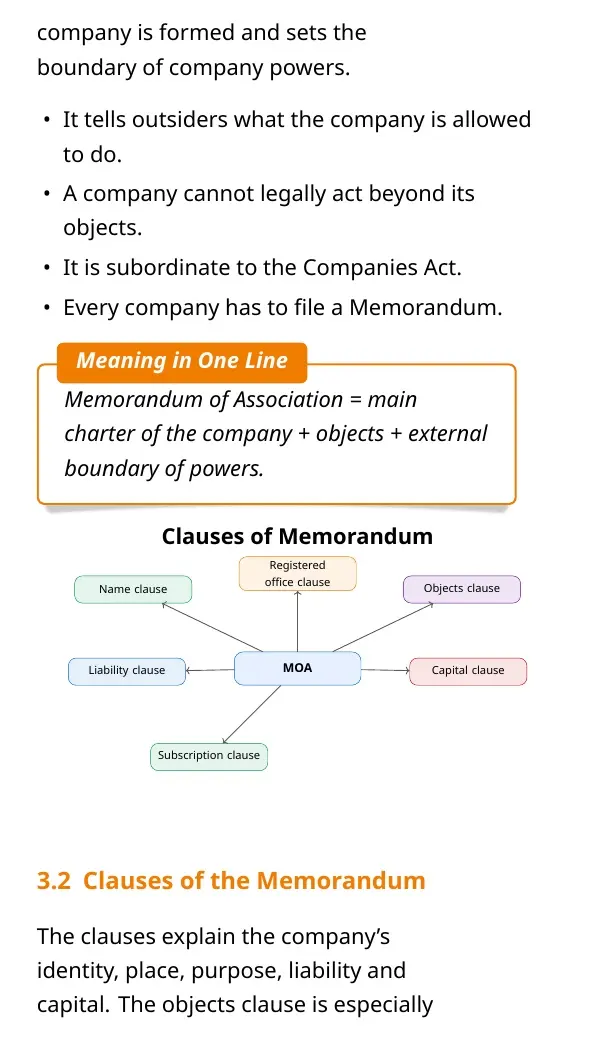
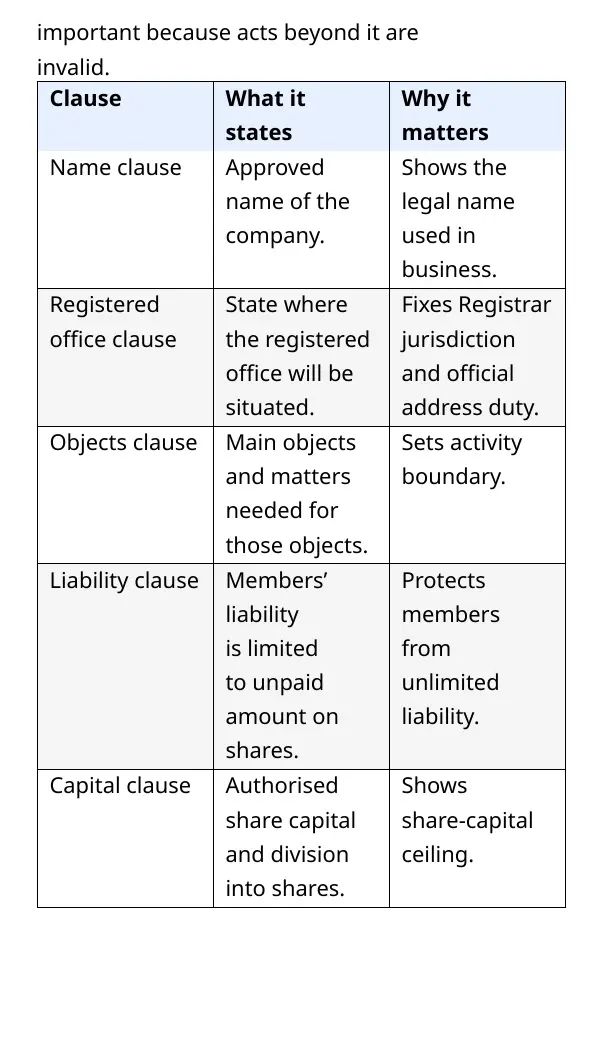
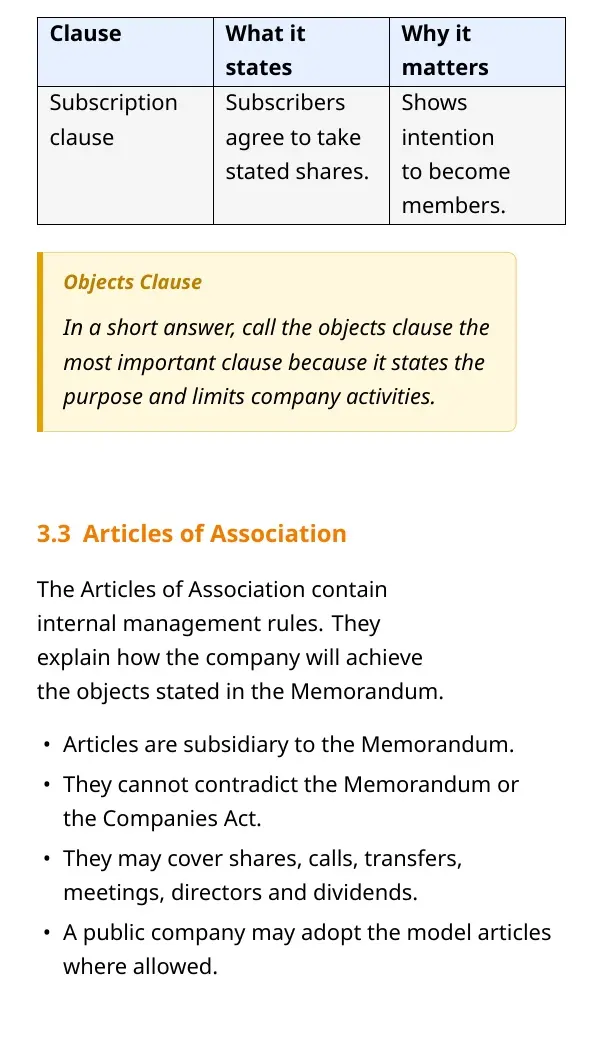
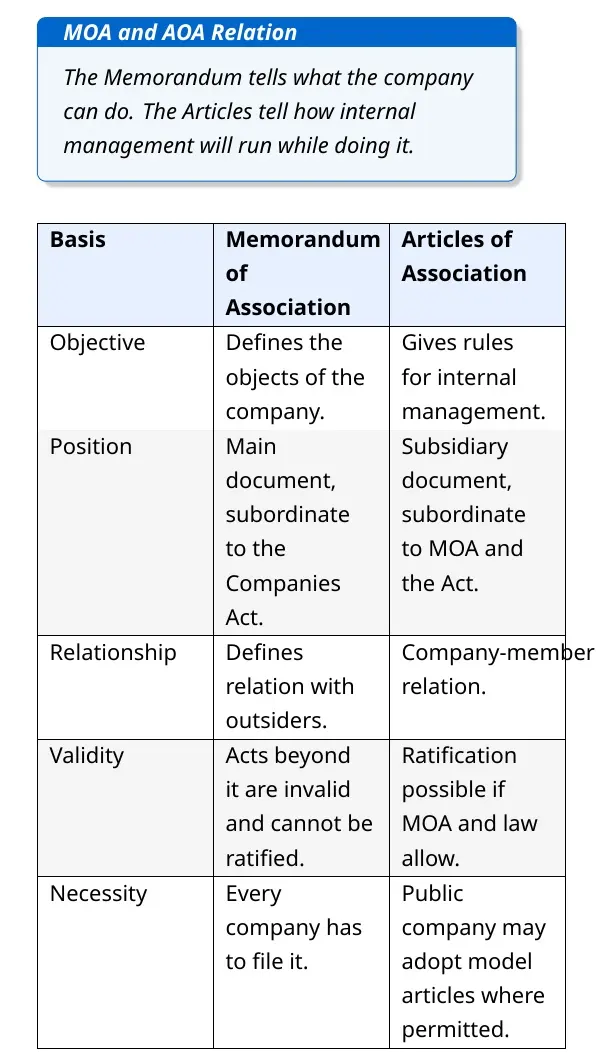
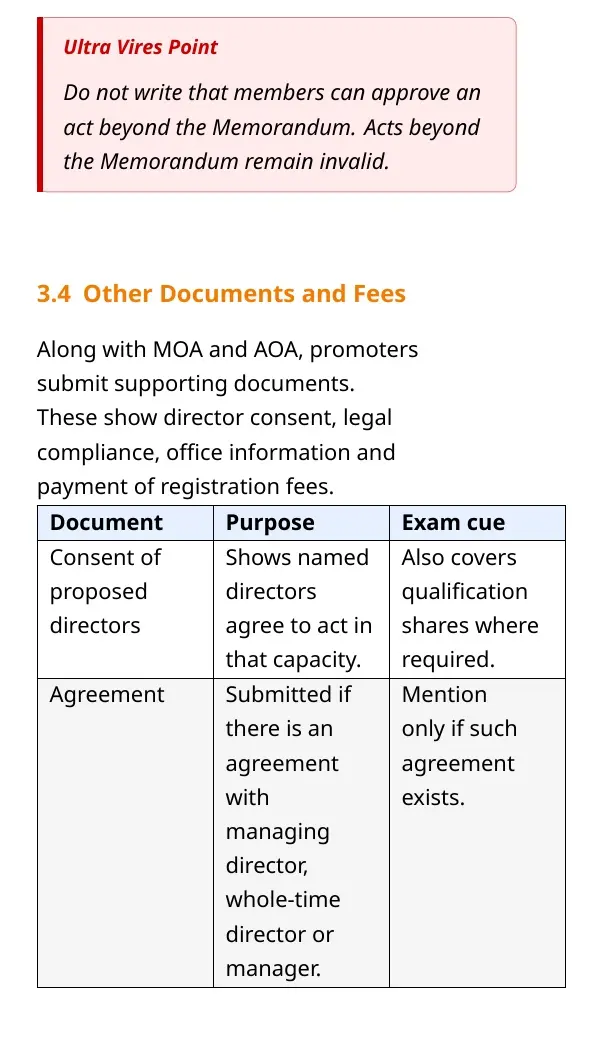
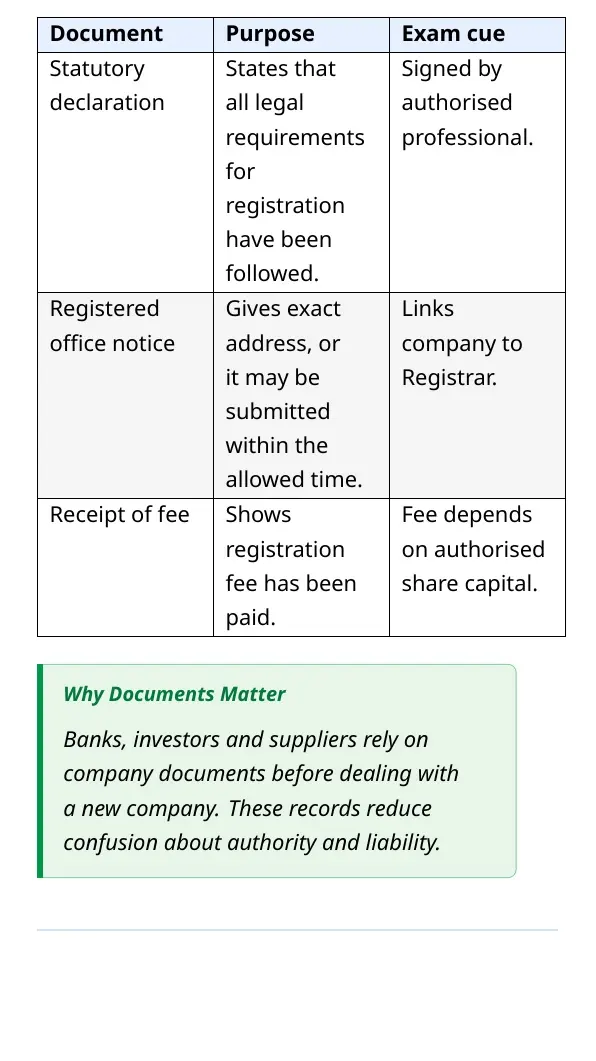
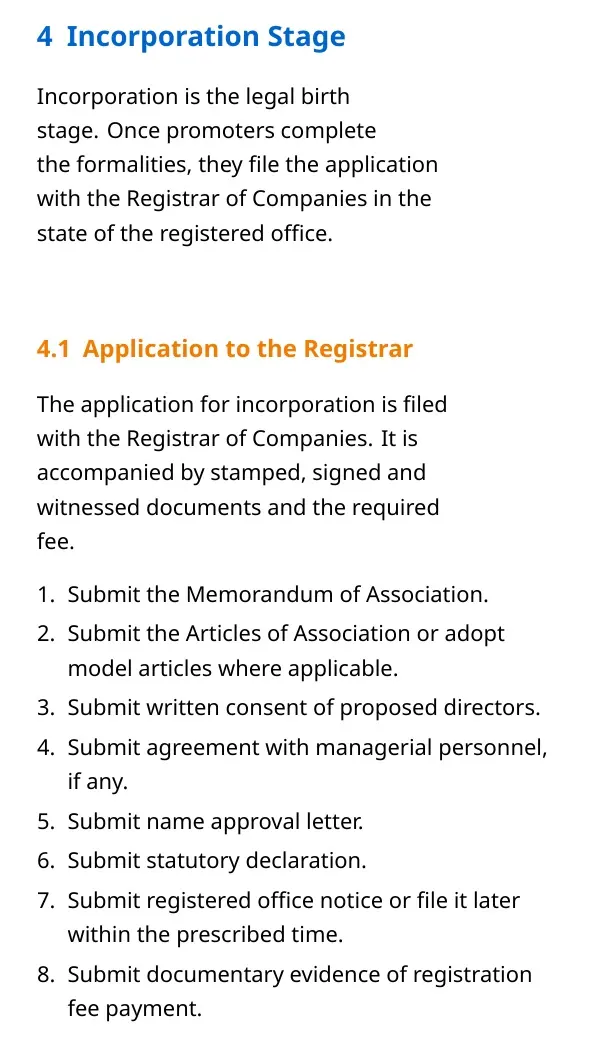
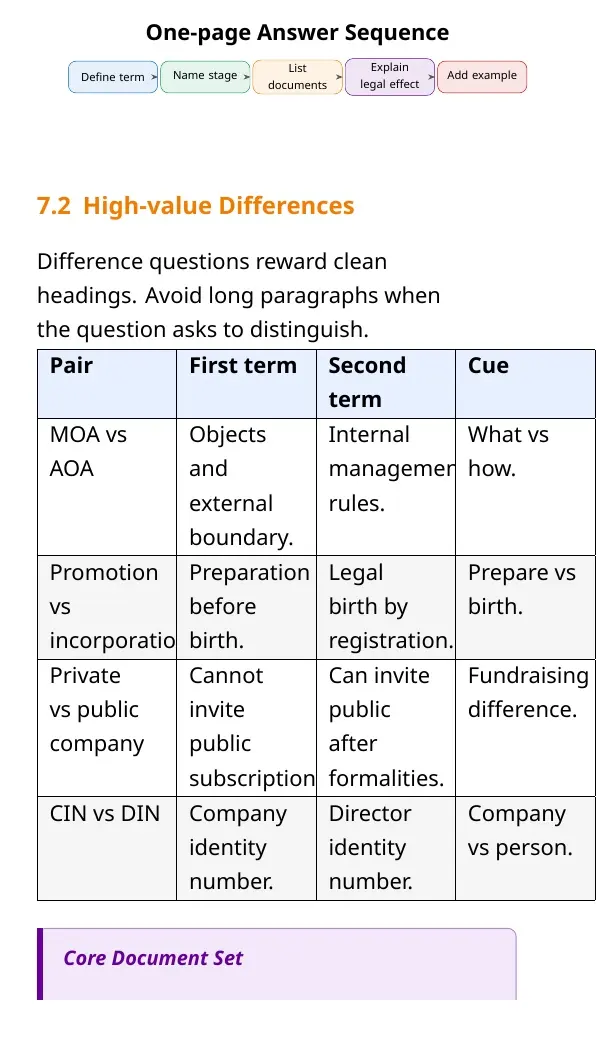
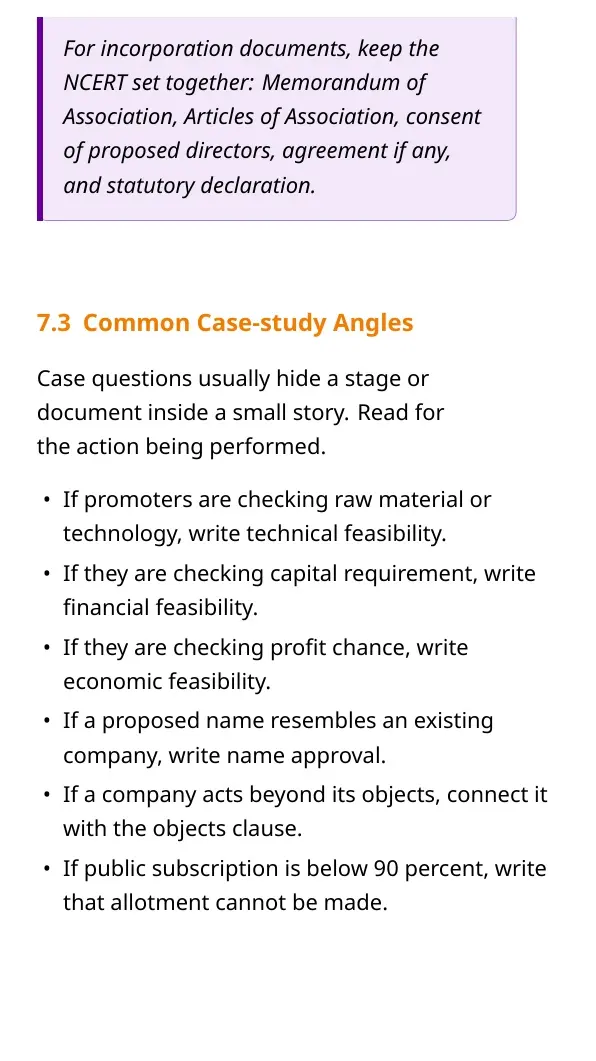
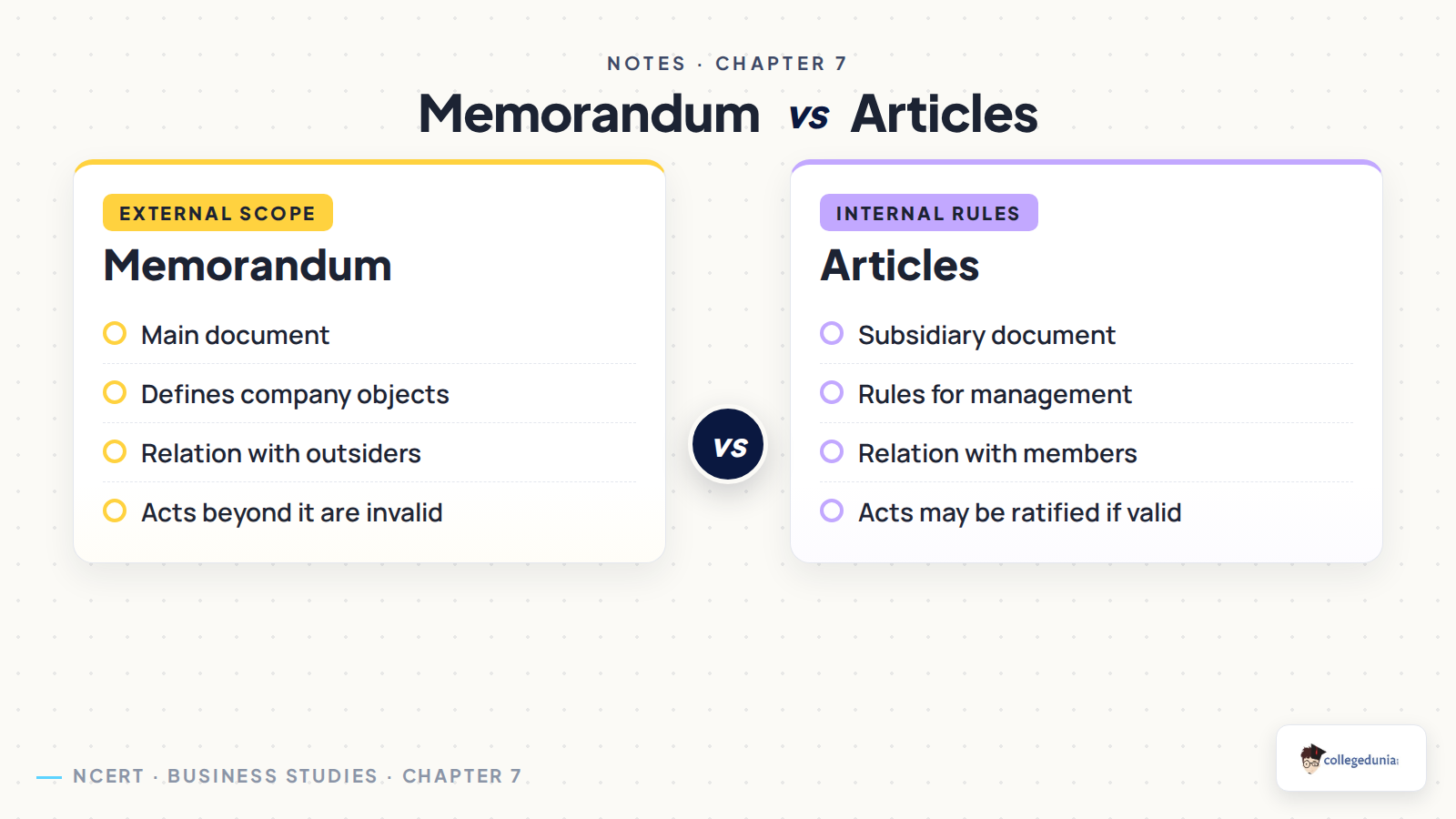
At the incorporation stage, the proposed company files documents with the Registrar of Companies. The most important documents are the Memorandum of Association, Articles of Association, consent of proposed directors and statutory declarations. The memorandum defines the company's boundary, while the articles explain internal rules.
| Document | Main purpose | Class 11 answer point |
|---|---|---|
| Memorandum of Association | Defines the company's objects, powers and relationship with outsiders | It is the charter of the company |
| Articles of Association | Contains rules for internal management | It regulates meetings, shares, directors and procedures |
| Consent of directors | Shows that proposed directors agree to act | Needed with director details and declarations |
| Statutory declaration | States that legal requirements have been complied with | Supports the incorporation application |
Certificate of Incorporation and Separate Legal Entity
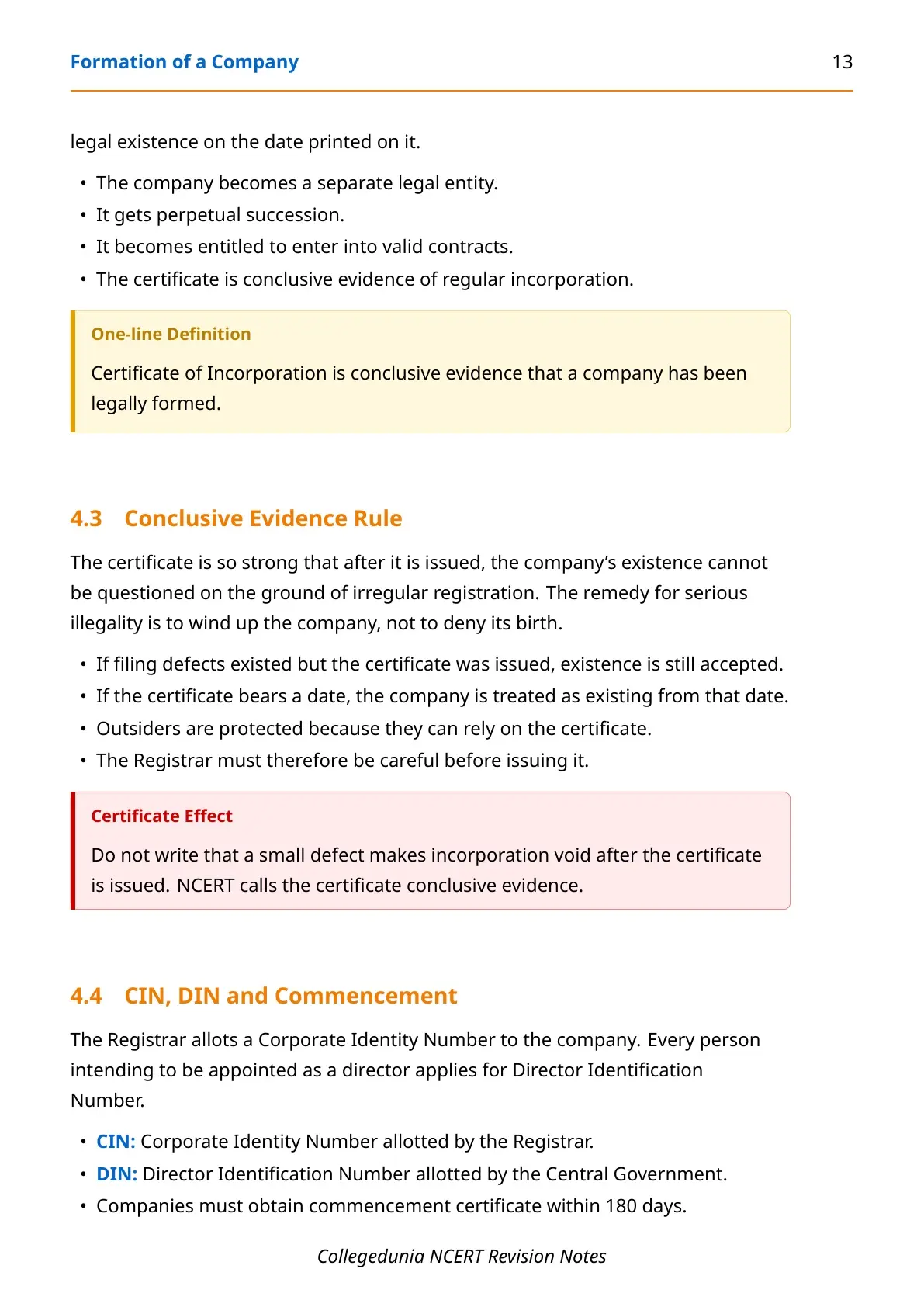
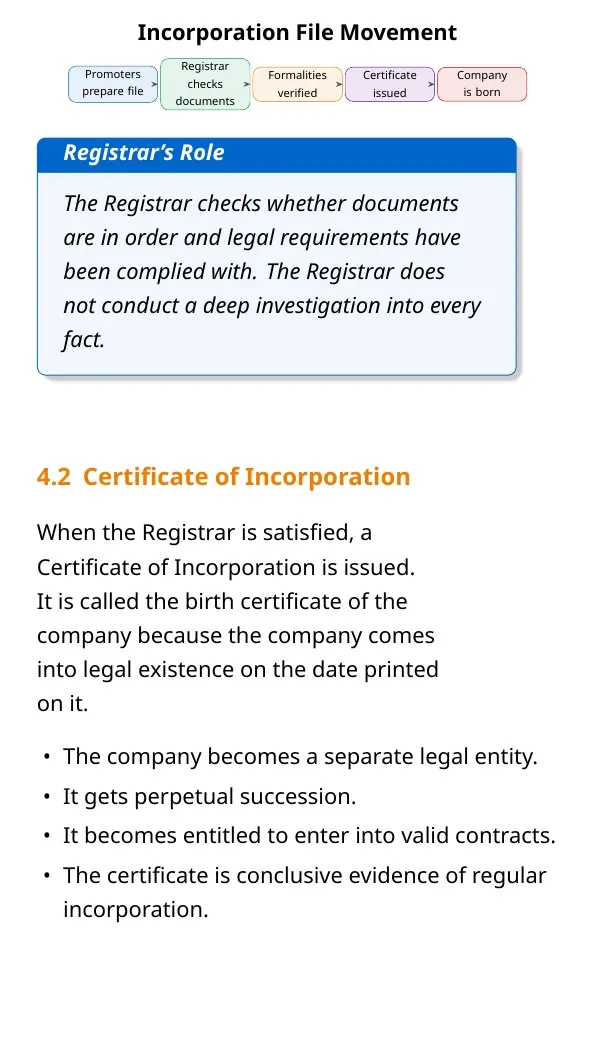
Once the Registrar is satisfied, a certificate of incorporation is issued. From this date, the company becomes a separate legal entity. It can own property, enter contracts, sue and be sued in its own name. This point is often asked because it explains why incorporation is more than a paperwork stage.
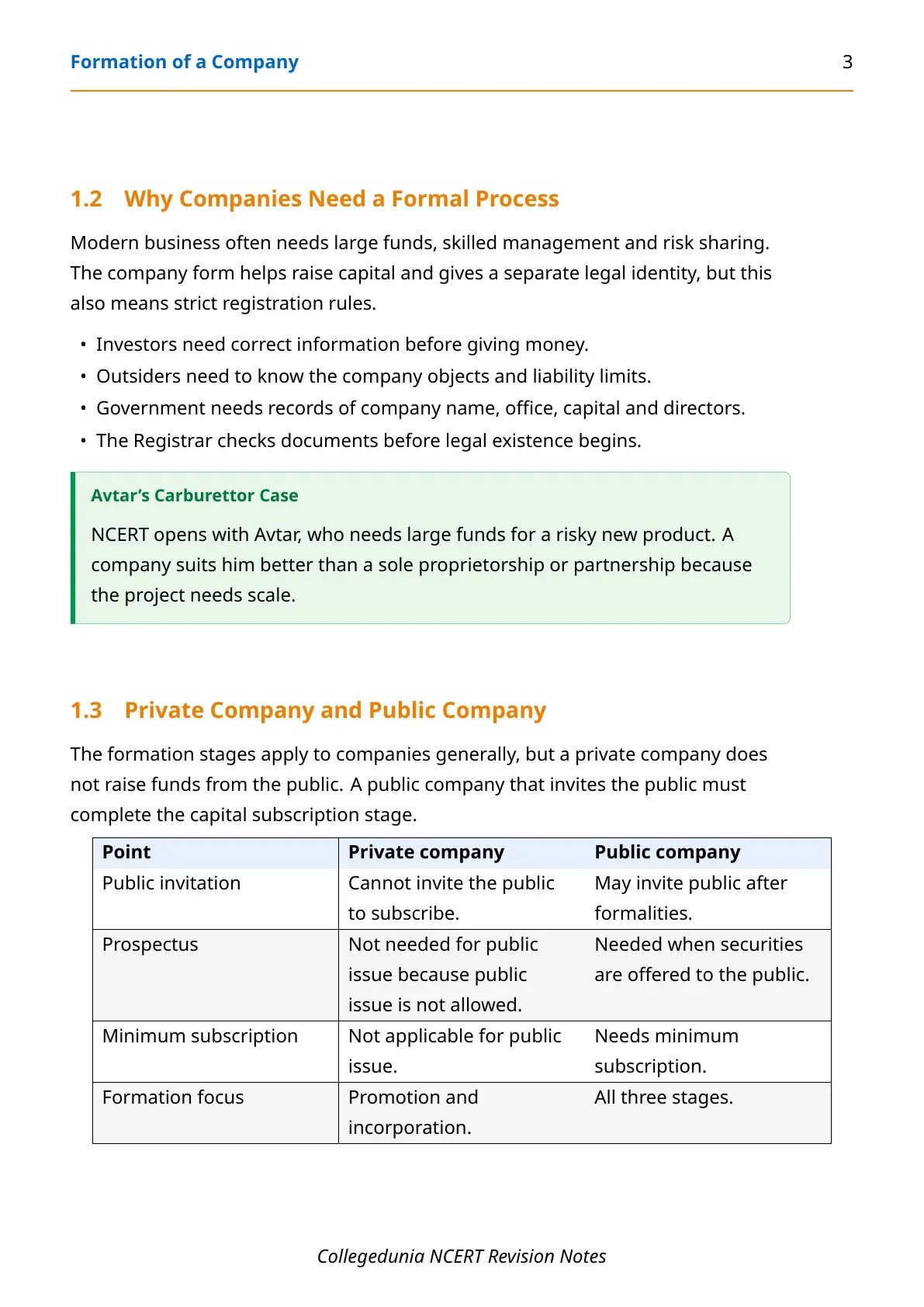
- A private company may start business after incorporation, subject to applicable legal conditions.
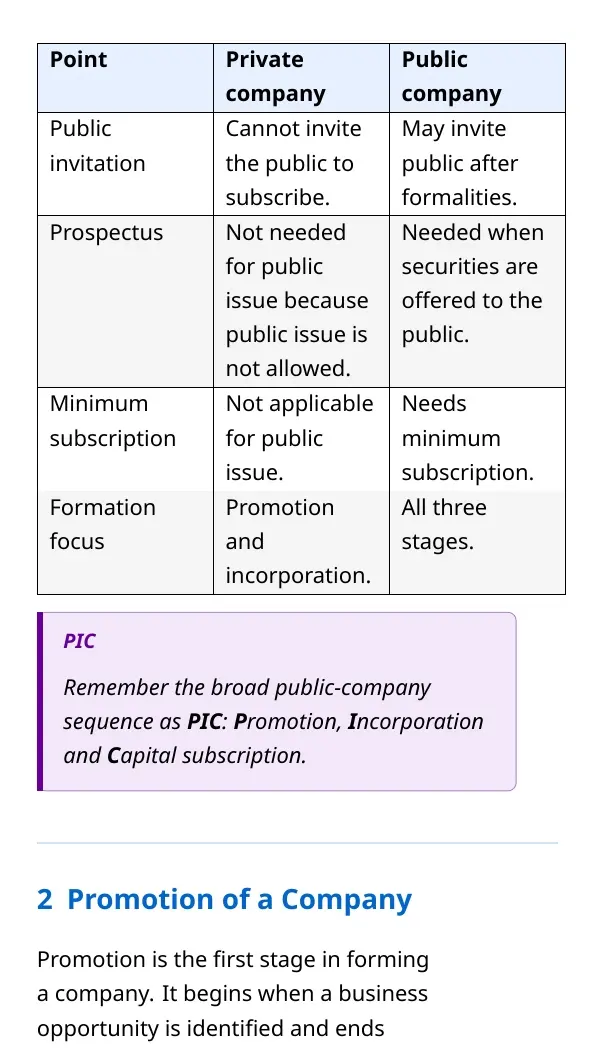
- A public company that wants to raise funds from the public must complete capital subscription formalities.
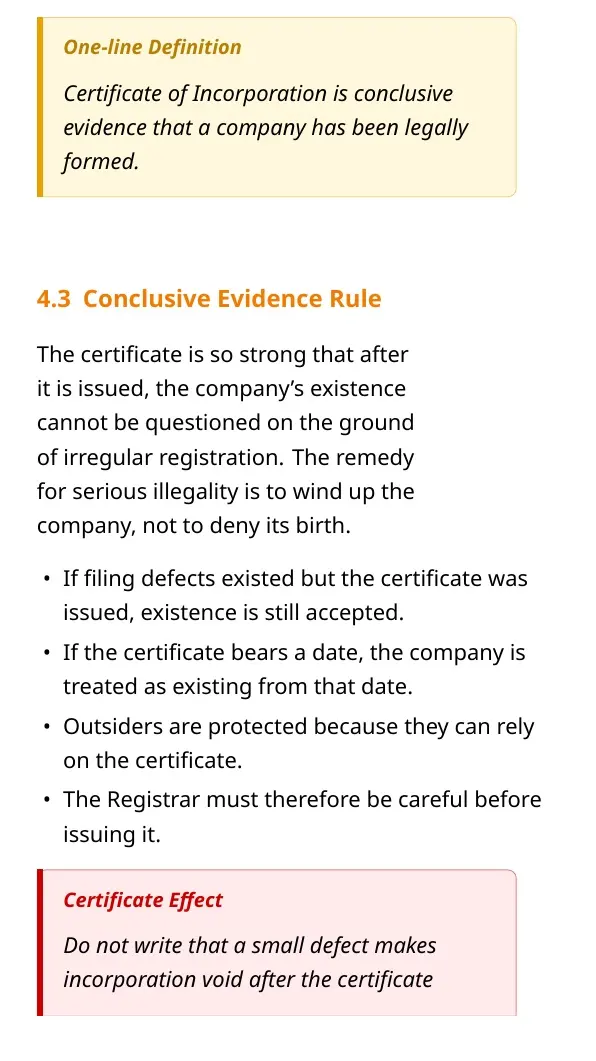
- The certificate is conclusive evidence that the company has been validly formed.
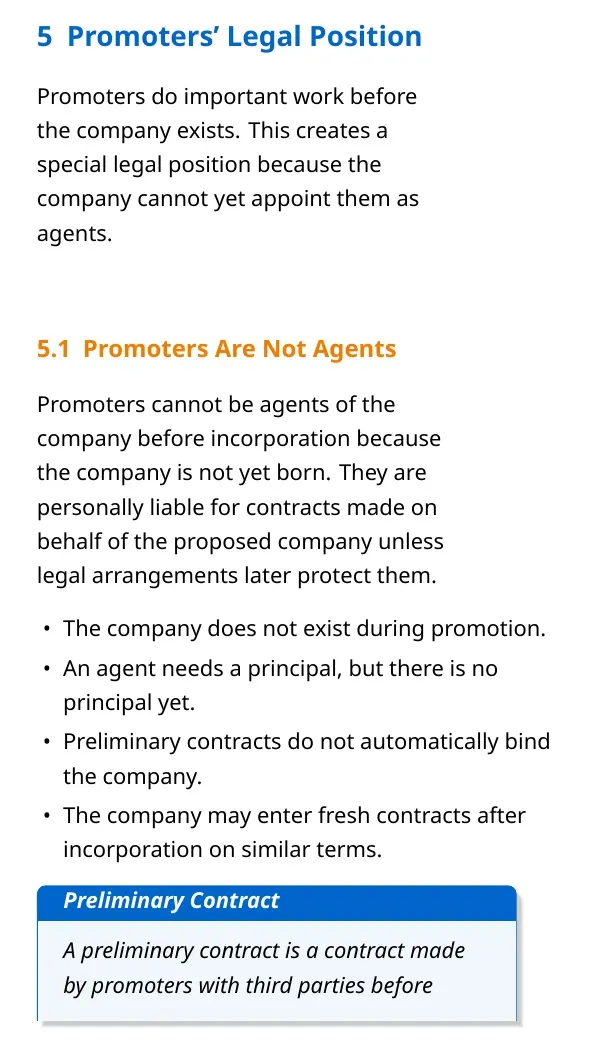
Promoters' Legal Position and Preliminary Contracts
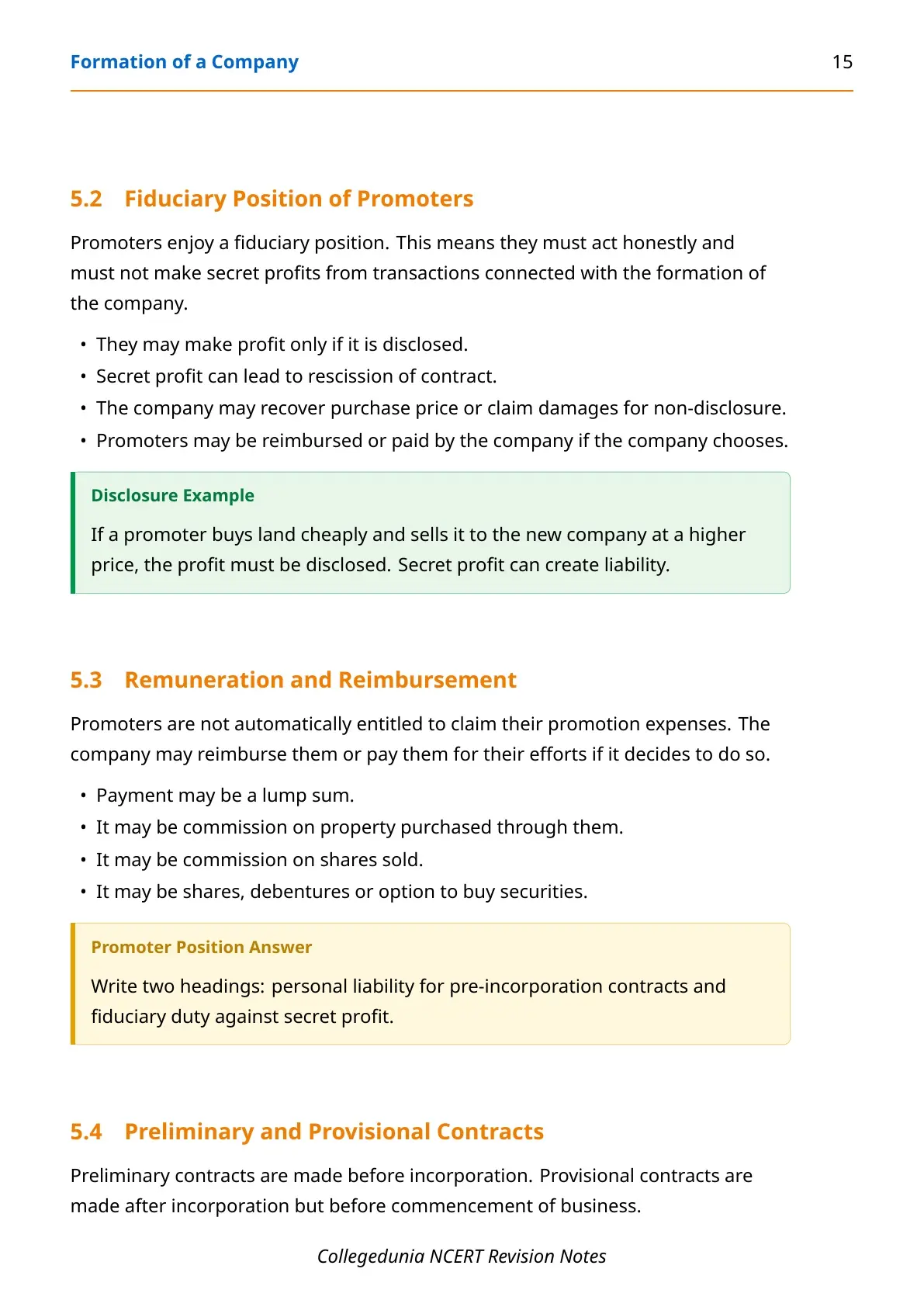
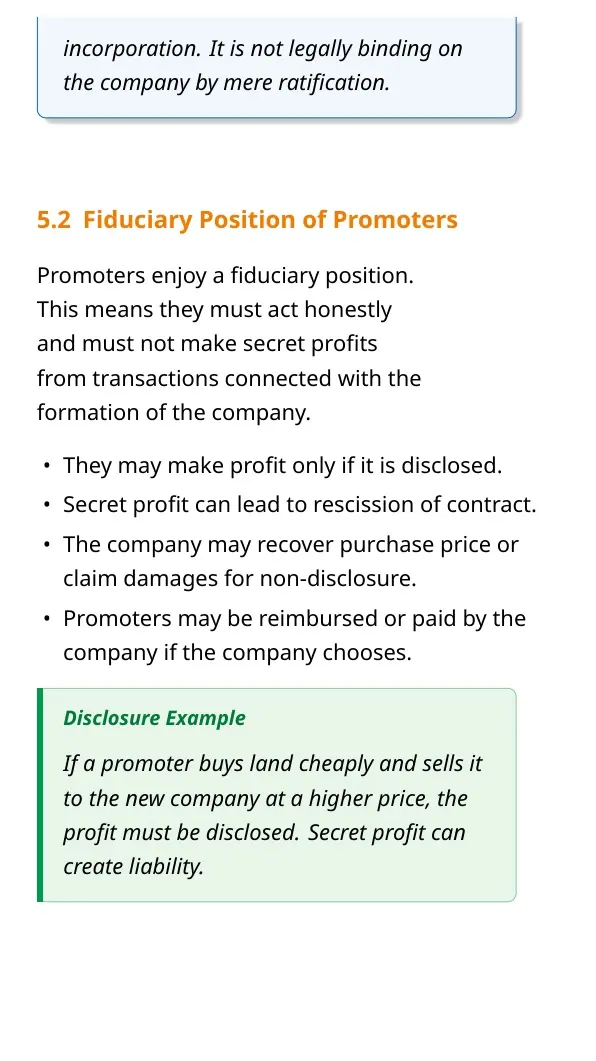
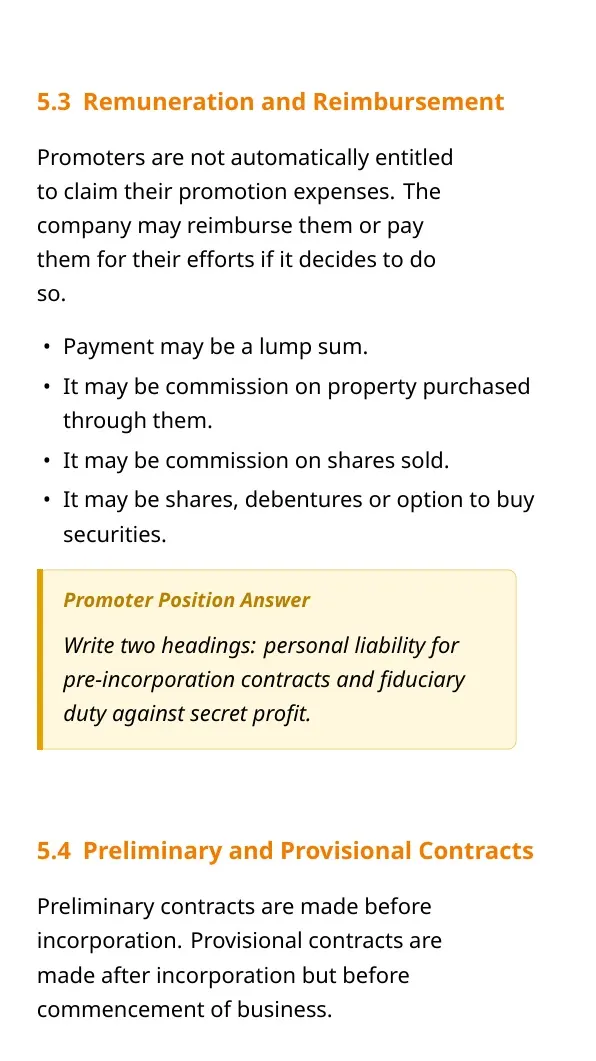
Promoters work before the company legally exists, so they are not agents of the company at that time. NCERT explains that promoters stand in a fiduciary position and must not make secret profits. They can make preliminary contracts, but the company cannot be bound by a contract made before its own legal birth unless later legal requirements are satisfied.
| Point | What it means | Write this in exams |
|---|---|---|
| Fiduciary position | Promoters must act honestly for the company being formed | No secret profit or misleading disclosure |
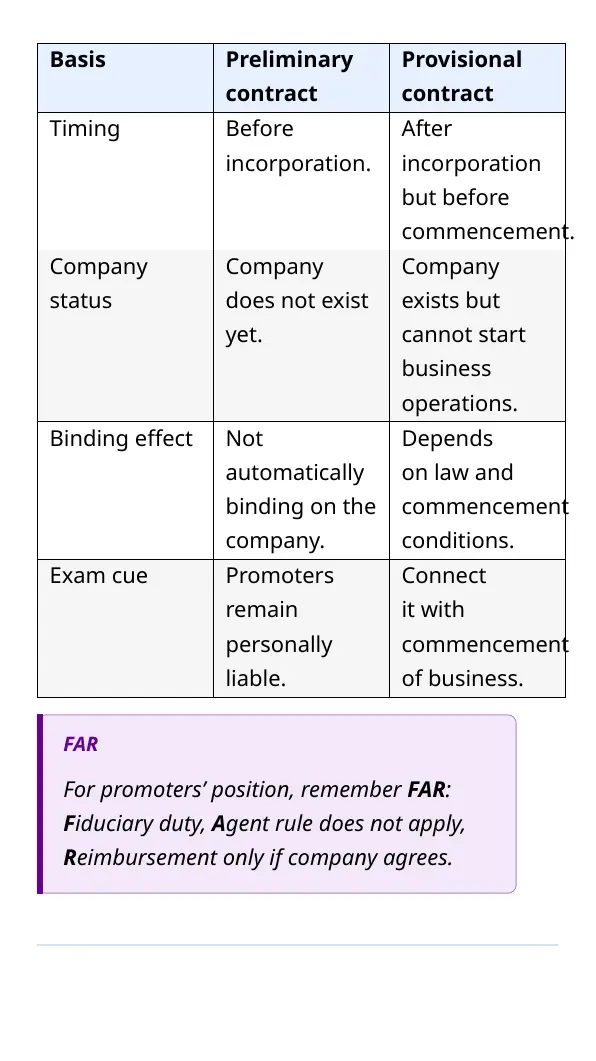
| Preliminary contract | Agreement made before incorporation | The company does not exist when it is signed |
| Disclosure duty | Material facts must be disclosed | Promoter profit should be transparent |
| Liability | Promoters may be personally liable in some pre-incorporation cases | Do not write that the company is automatically liable |
Capital Subscription and Prospectus
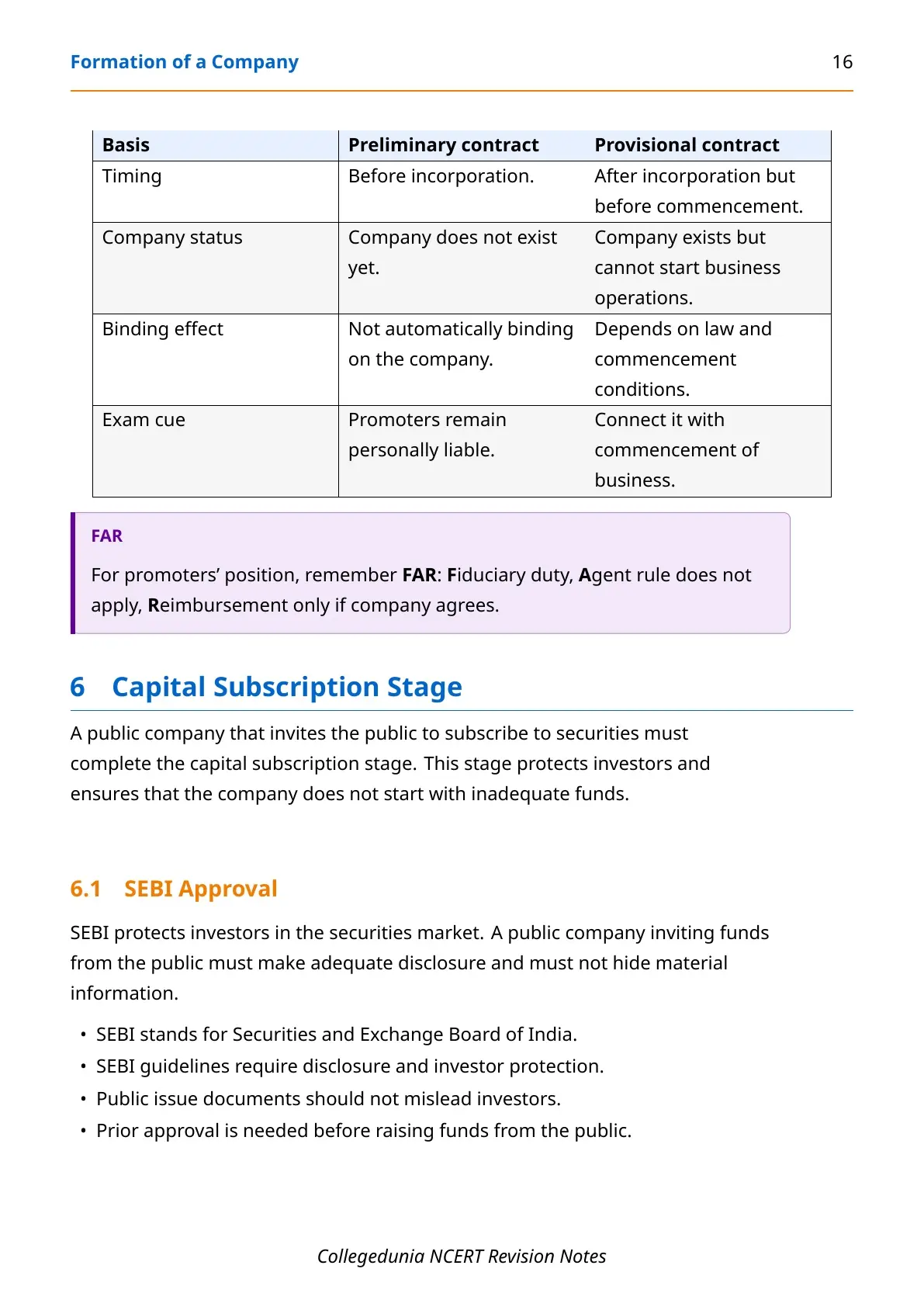
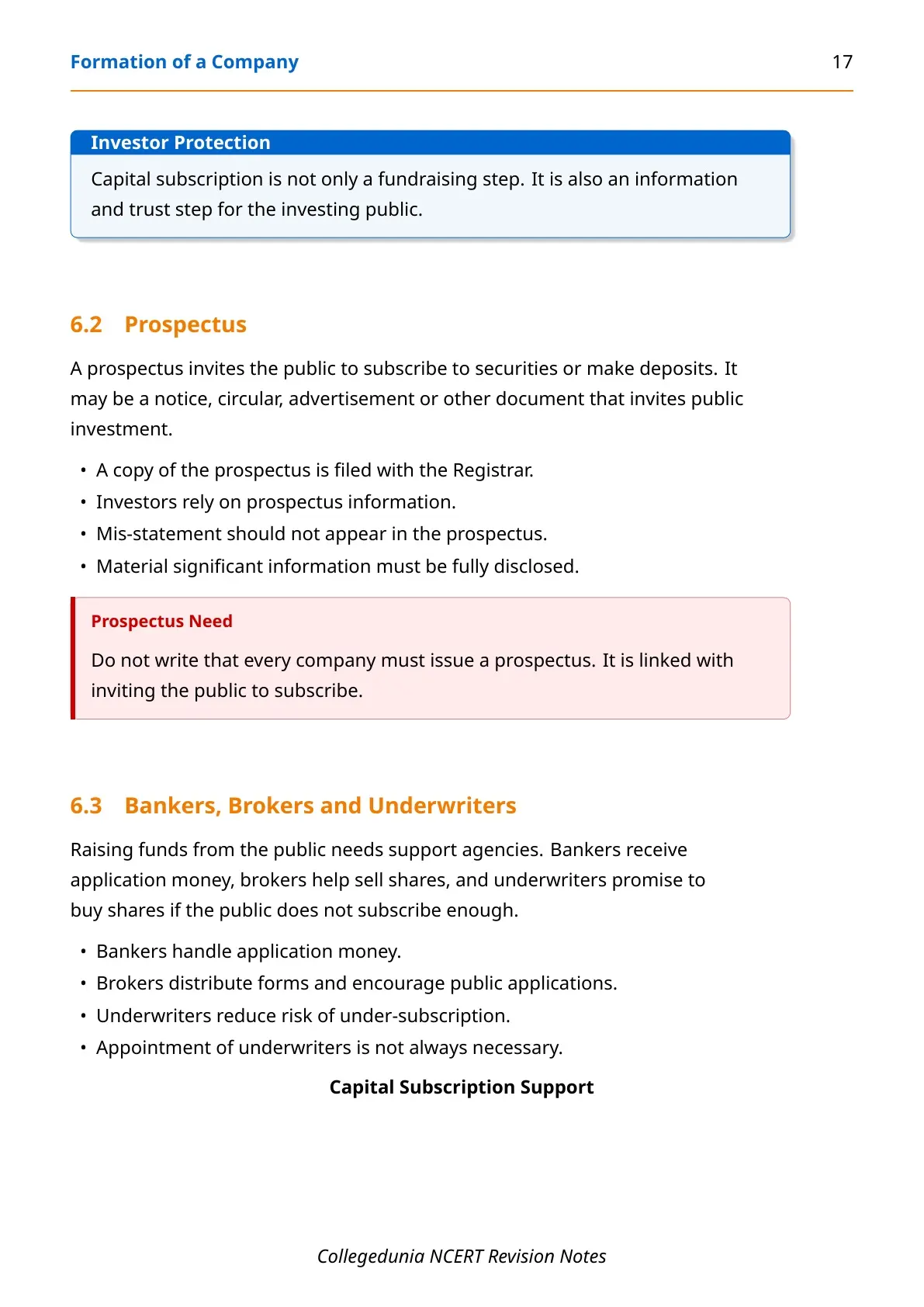
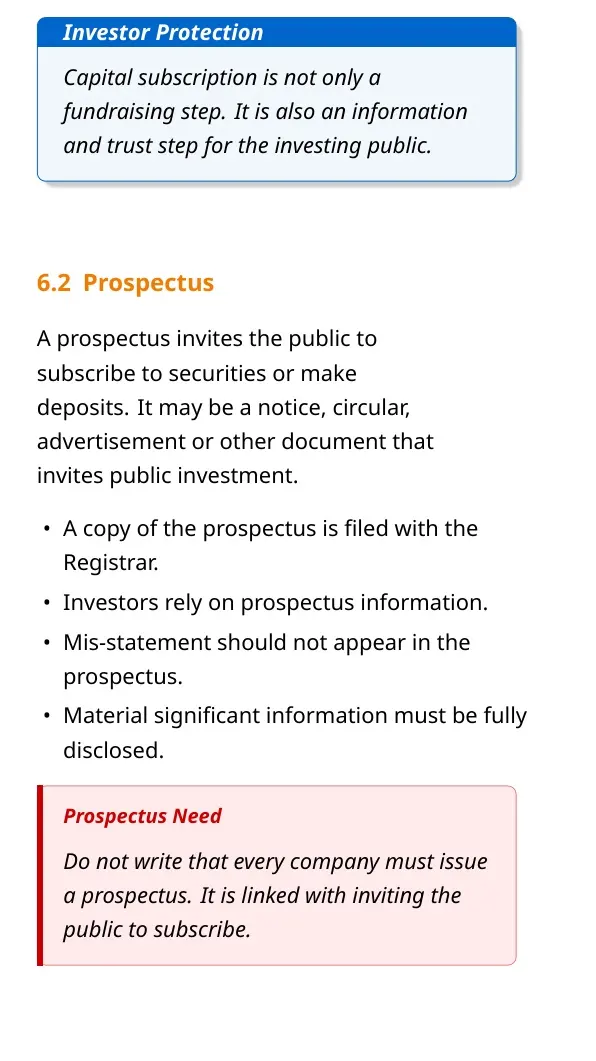
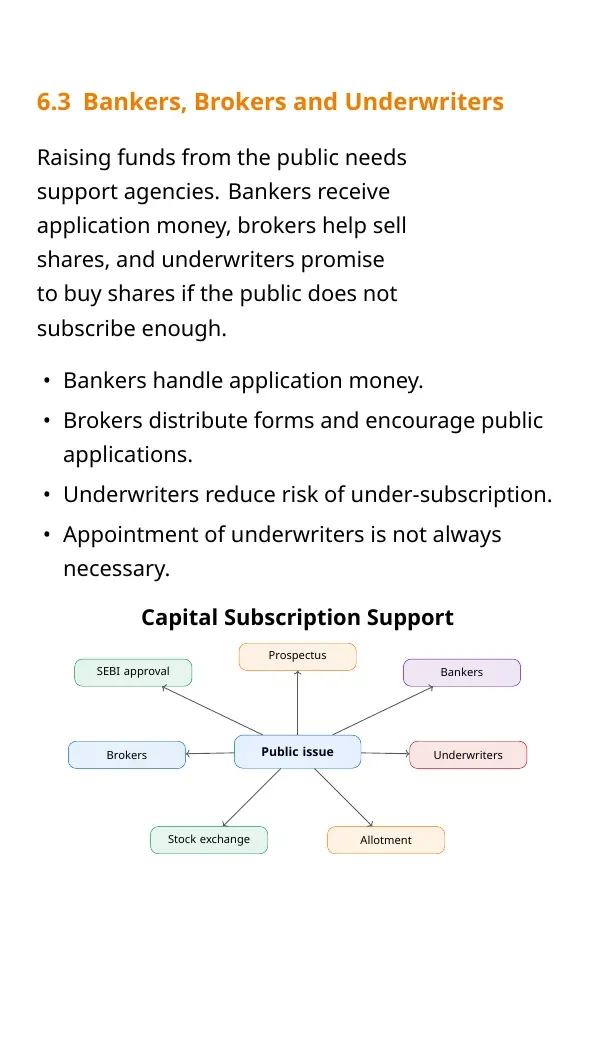
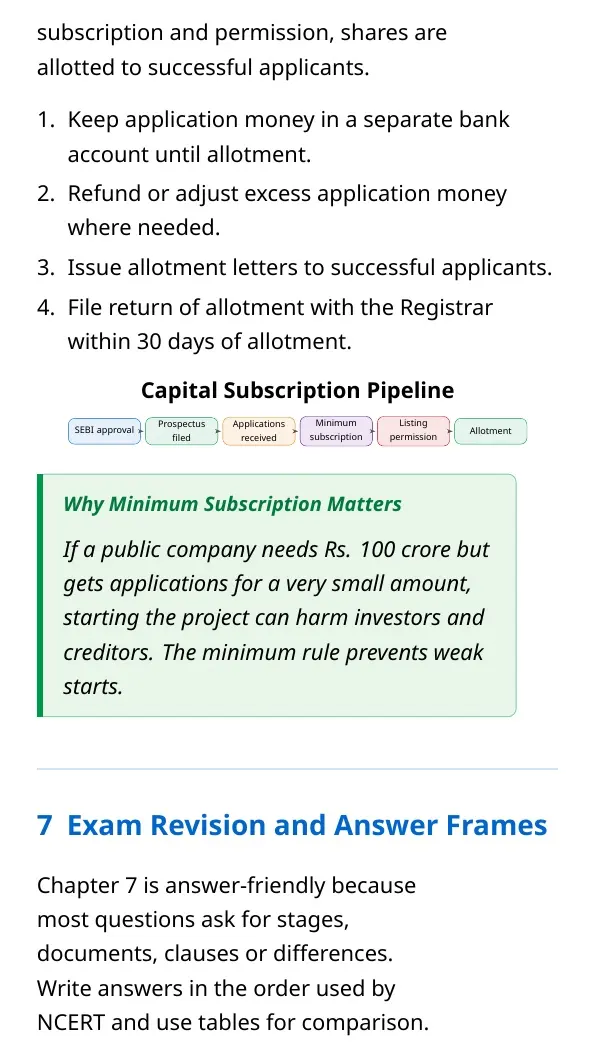
Capital subscription is mainly relevant for a public company. If the company wants to invite the public to subscribe to its securities, it issues a prospectus or uses another permitted route. A prospectus is an invitation to the public and must give true information about the company, its objectives and the proposed issue.
- Prospectus: document that invites the public to subscribe for securities.
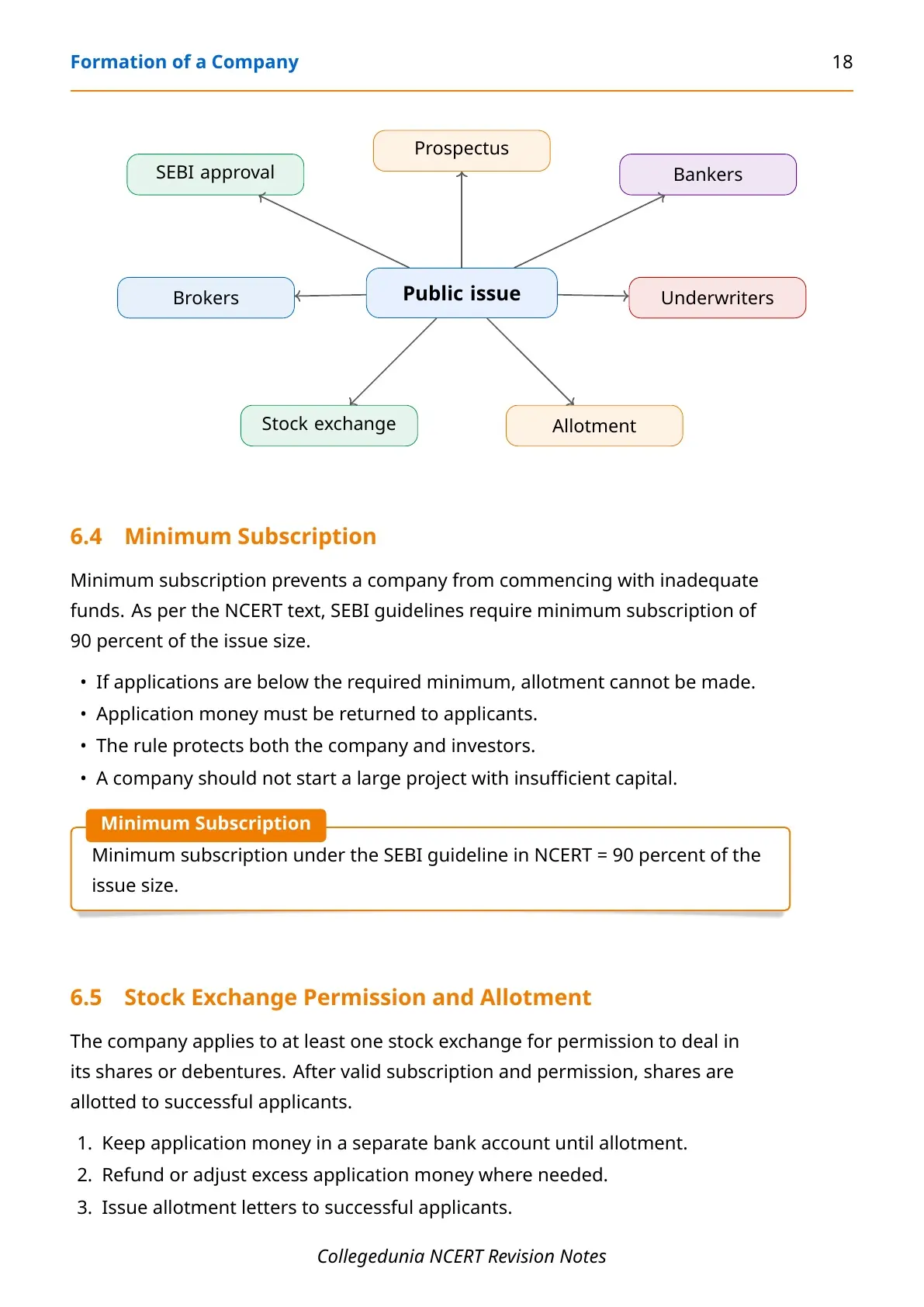
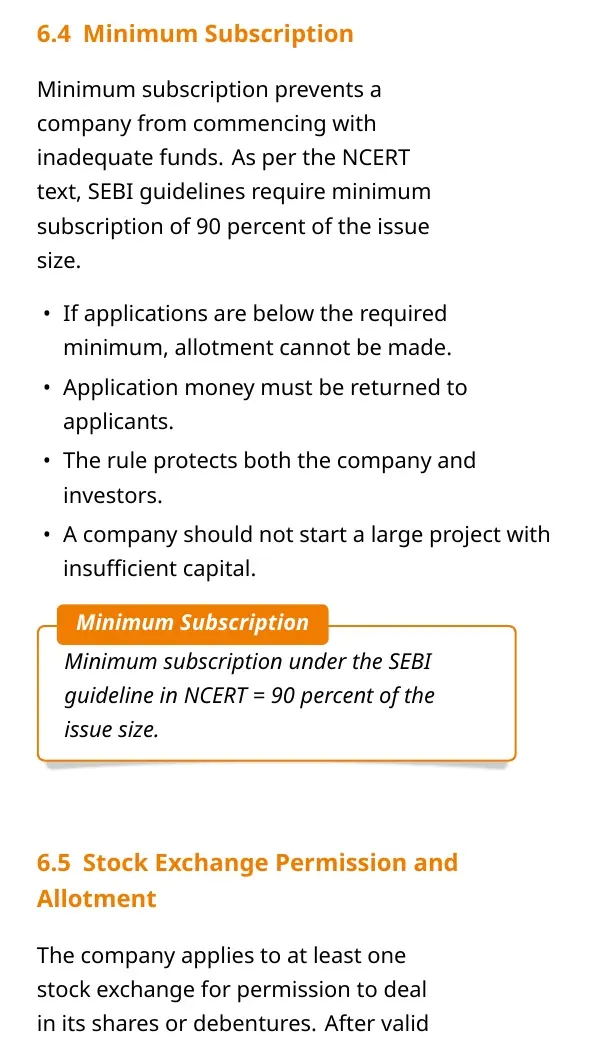
- Minimum subscription: the minimum amount that must be received before allotment can proceed.
- Allotment: distribution of shares to applicants after legal conditions are met.
- Return of allotment: filing that records the allotment details with the Registrar.
Commencement of Business in Class 11 Business Studies
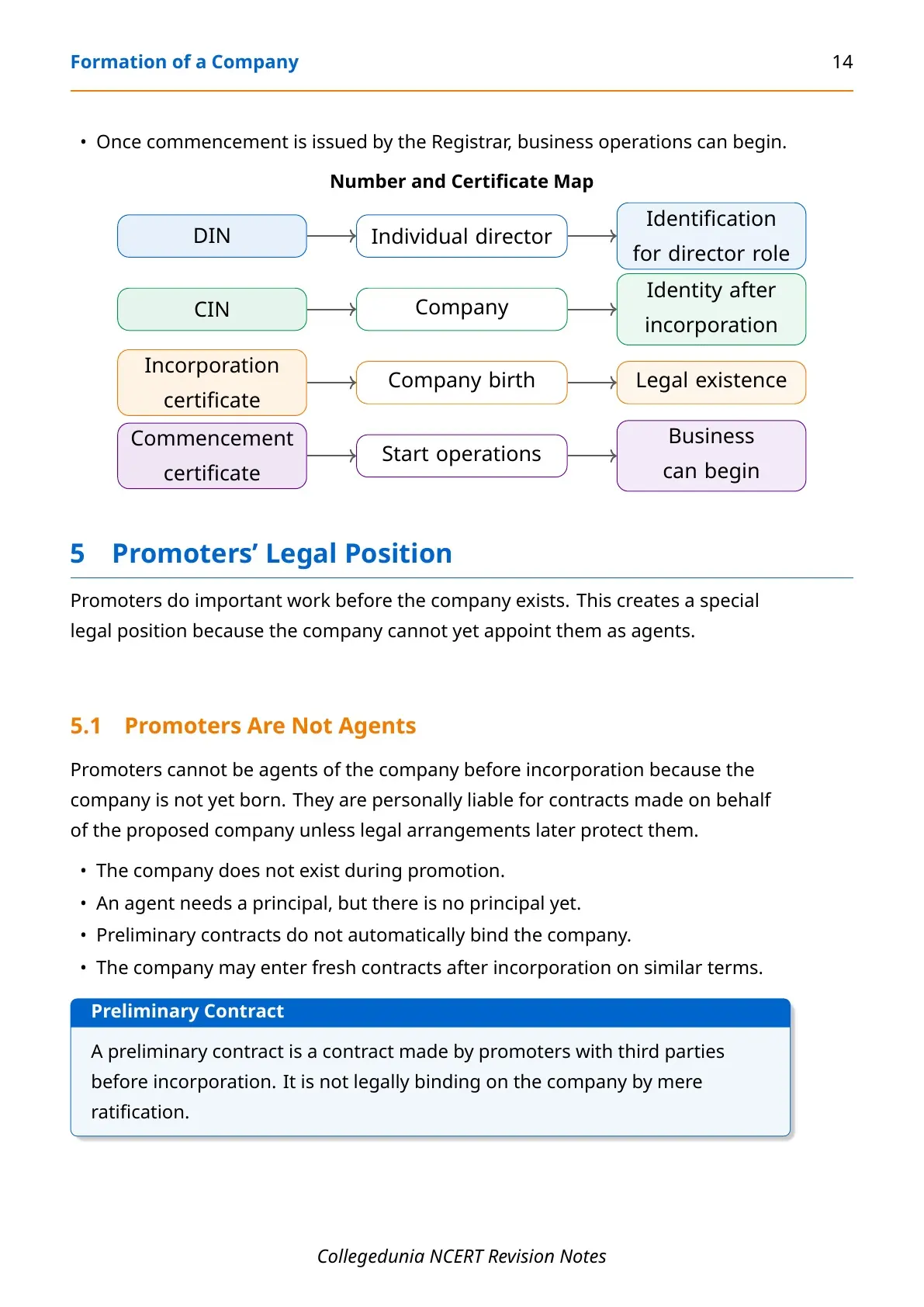
The commencement stage checks whether the public company has completed statutory conditions before starting business operations. Students should revise this as the final permission step. In answer writing, connect this stage to public issue compliance and declaration by directors instead of treating it as a new company formation idea.
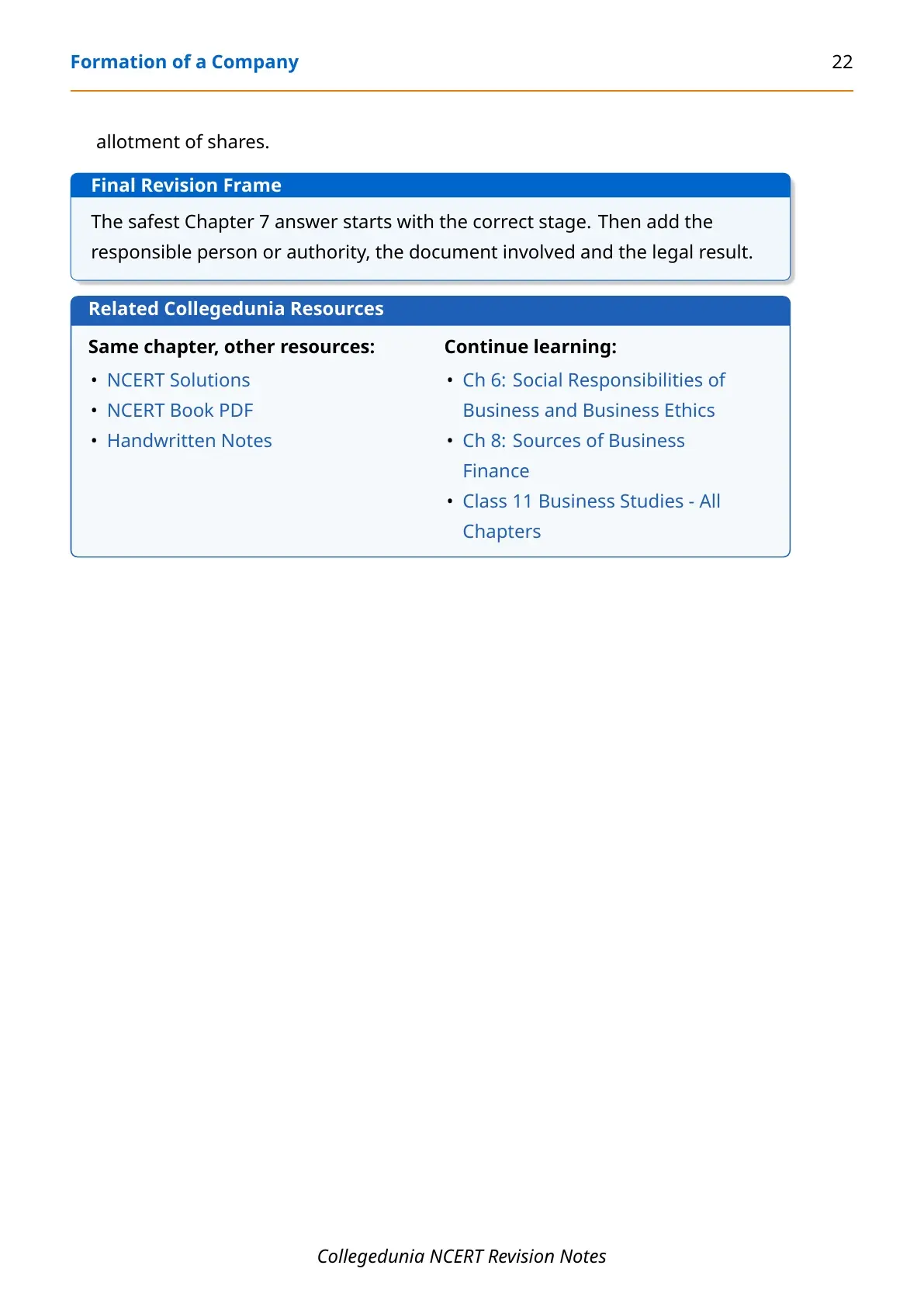
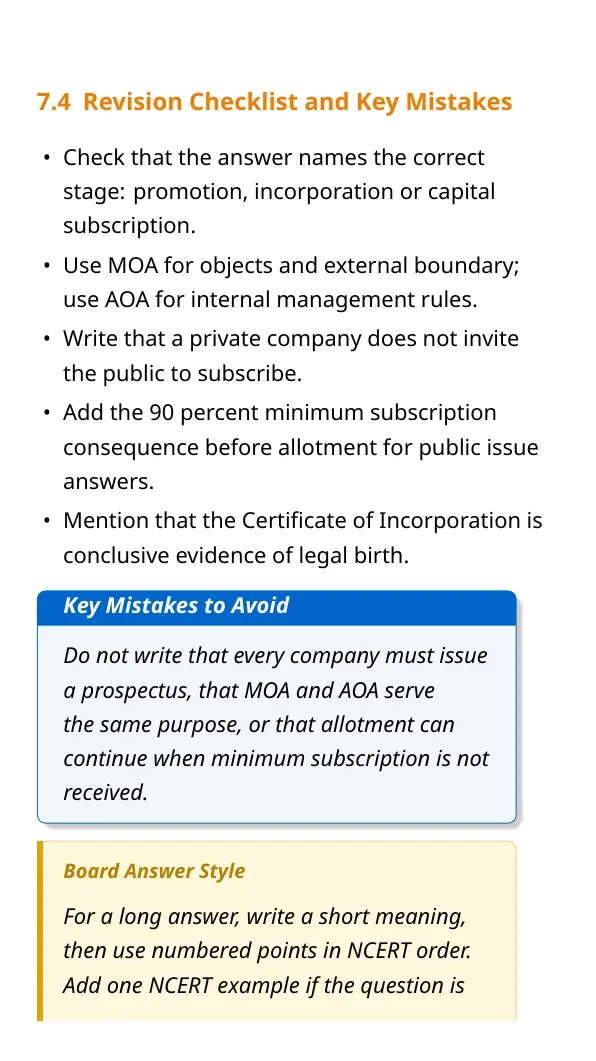
Quick recall: promotion creates the plan, incorporation creates the company and capital subscription arranges public funding.
How to Write Better Answers on Formation of a Company
Strong Chapter 7 answers follow the exact stage order and use legal terms carefully. Start with the meaning, then move through promotion, incorporation, capital subscription and commencement. For document questions, write the purpose and one example. For promoter questions, explain fiduciary duty and preliminary contracts separately.
- For stages: write the process in sequence, not as a random list.
- For documents: separate MOA from AOA using a table.
- For promoters: include role, duties, disclosure and pre-incorporation contracts.
- For public companies: connect prospectus, minimum subscription and allotment.
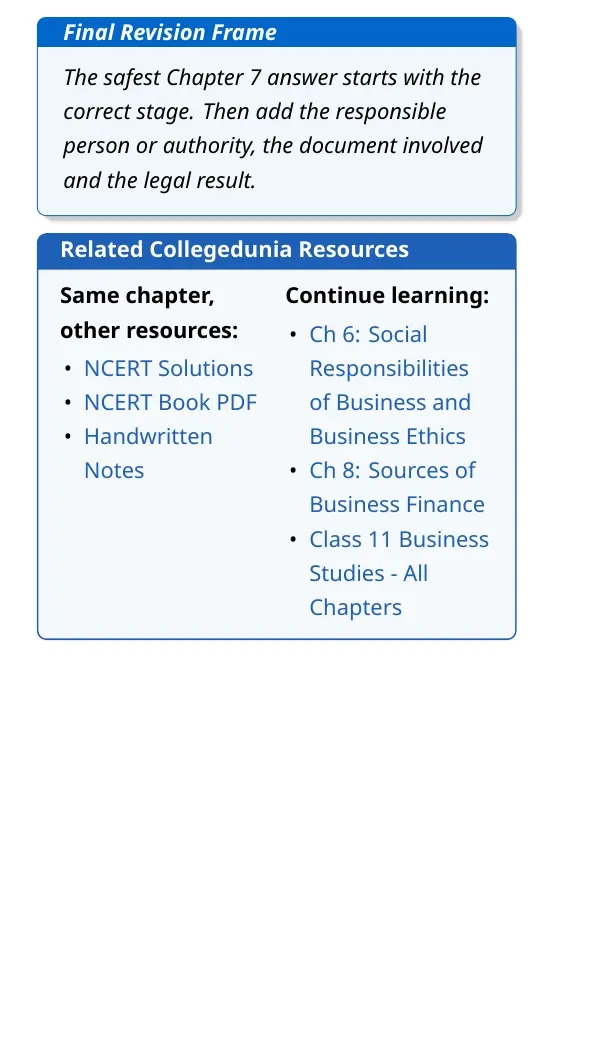
Related Resources for Formation of a Company
| Resource | Use it for | Link |
|---|---|---|
| NCERT Solutions | Practice textbook answers for Chapter 7 | Open NCERT Solutions |
| NCERT Book PDF | Read the official textbook chapter with these notes | Open NCERT Book PDF |
| Handwritten Notes | Revise definitions and company formation stages in a handwritten style | Open Handwritten Notes |
All Class 11 Business Studies Notes Chapters
| Chapter | Title | Notes Link |
|---|---|---|
| Chapter 1 | Business, Trade and Commerce | Open Notes |
| Chapter 2 | Forms of Business Organisation | Open Notes |
| Chapter 3 | Private, Public and Global Enterprises | Open Notes |
| Chapter 4 | Business Services | Open Notes |
| Chapter 5 | Emerging Modes of Business | Open Notes |
| Chapter 6 | Social Responsibilities of Business and Business Ethics | Open Notes |
| Chapter 7 | Formation of a Company | You are here |
Formation of a Company Class 11 Notes FAQs
Ques. What does Formation of a Company Class 11 Chapter 7 cover?
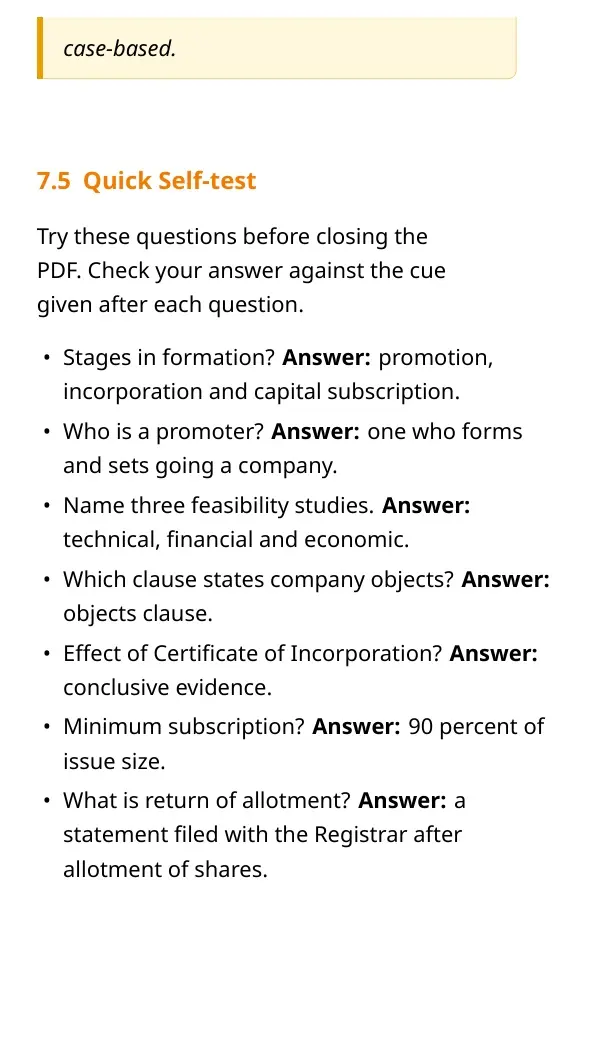
Ans. It covers promotion, incorporation, promoters, Memorandum of Association, Articles of Association, certificate of incorporation, capital subscription, prospectus and commencement of business.
Ques. What are the main stages in formation of a company?
Ans. The main stages are promotion, incorporation and capital subscription. A public company may also need commencement-related formalities before starting business.
Ques. What is the difference between MOA and AOA?
Ans. MOA defines the company's objects and powers, while AOA contains the rules for internal management, including meetings, directors, shares and procedures.
Ques. Who is a promoter in Class 11 Business Studies?
Ans. A promoter is a person who discovers the business idea, studies feasibility, arranges resources and takes steps to bring the company into legal existence.



Comments