



The Forms of Business Organisation Class 11 notes explain how NCERT compares sole proprietorship, Hindu undivided family business, partnership, cooperative society and company. These notes follow the 2026-27 NCERT syllabus and help students revise ownership, liability, control, continuity, registration and choice of form before opening the full PDF.
- Download the 29-page Chapter 2 Business Studies notes PDF for exam revision.
- Revise five organisation forms with tables on liability, control and continuity.
- Student focus: compare partnership and company before writing long answers.
Student Feedback on Forms of Business Organisation
In a Collegedunia poll of 12,960 Class 11 Commerce students before the 2026 exams, many students said this chapter became easier after they used one comparison table for all business forms.
- 78% wanted a short liability and control checklist.
- 63% mixed cooperative society with company in case questions.
- 55% needed extra help with partnership rules. These notes separate mutual agency, deed and registration.
Source: 2026-27 Class 11 Commerce student poll. Sample of 12,960 students from CBSE schools across 16 states.
These Class 11 Business Studies notes are checked against the official 2026-27 NCERT chapter and written for quick board-style revision.
Forms of Business Organisation Chapter 2 Quick Map
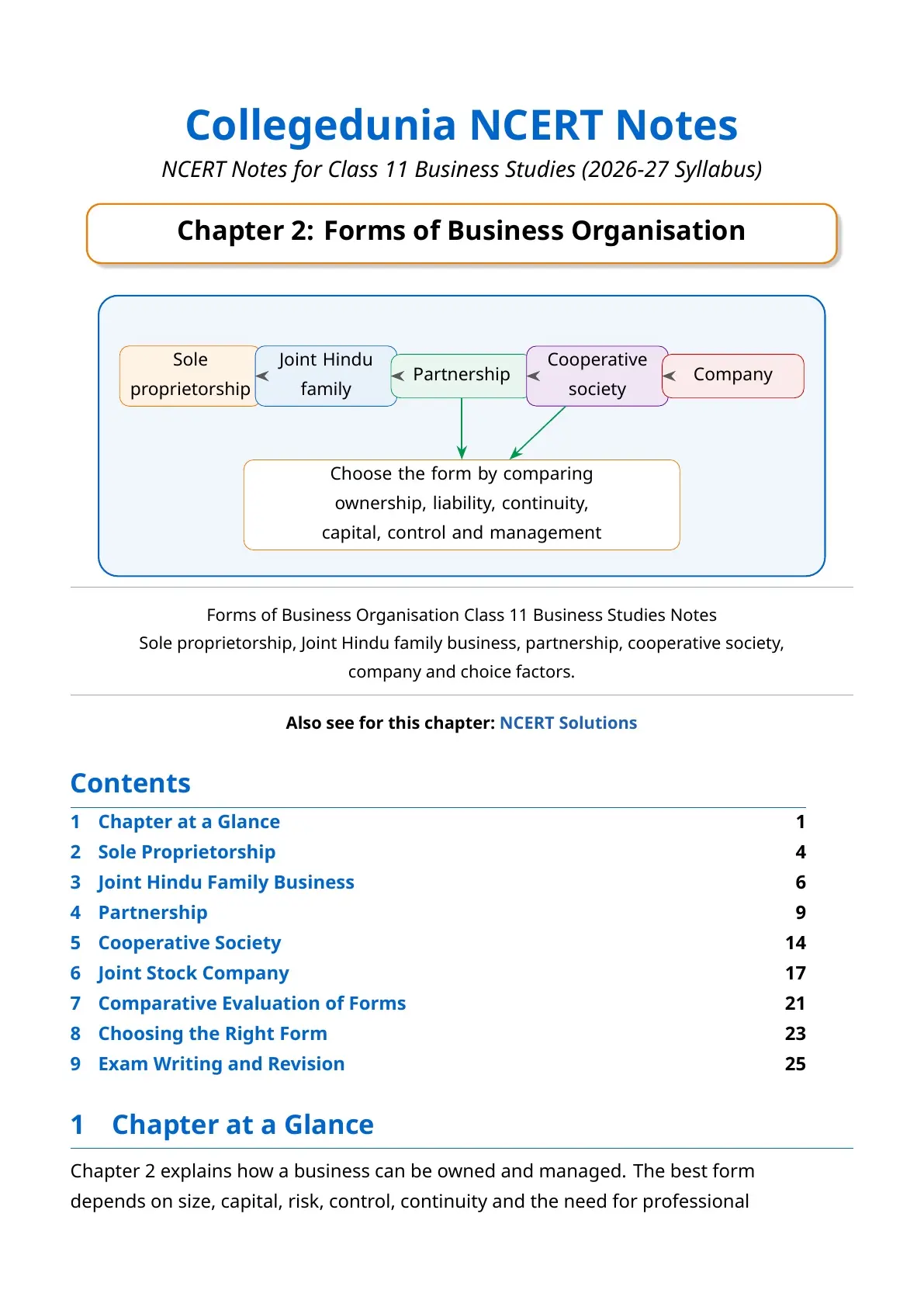
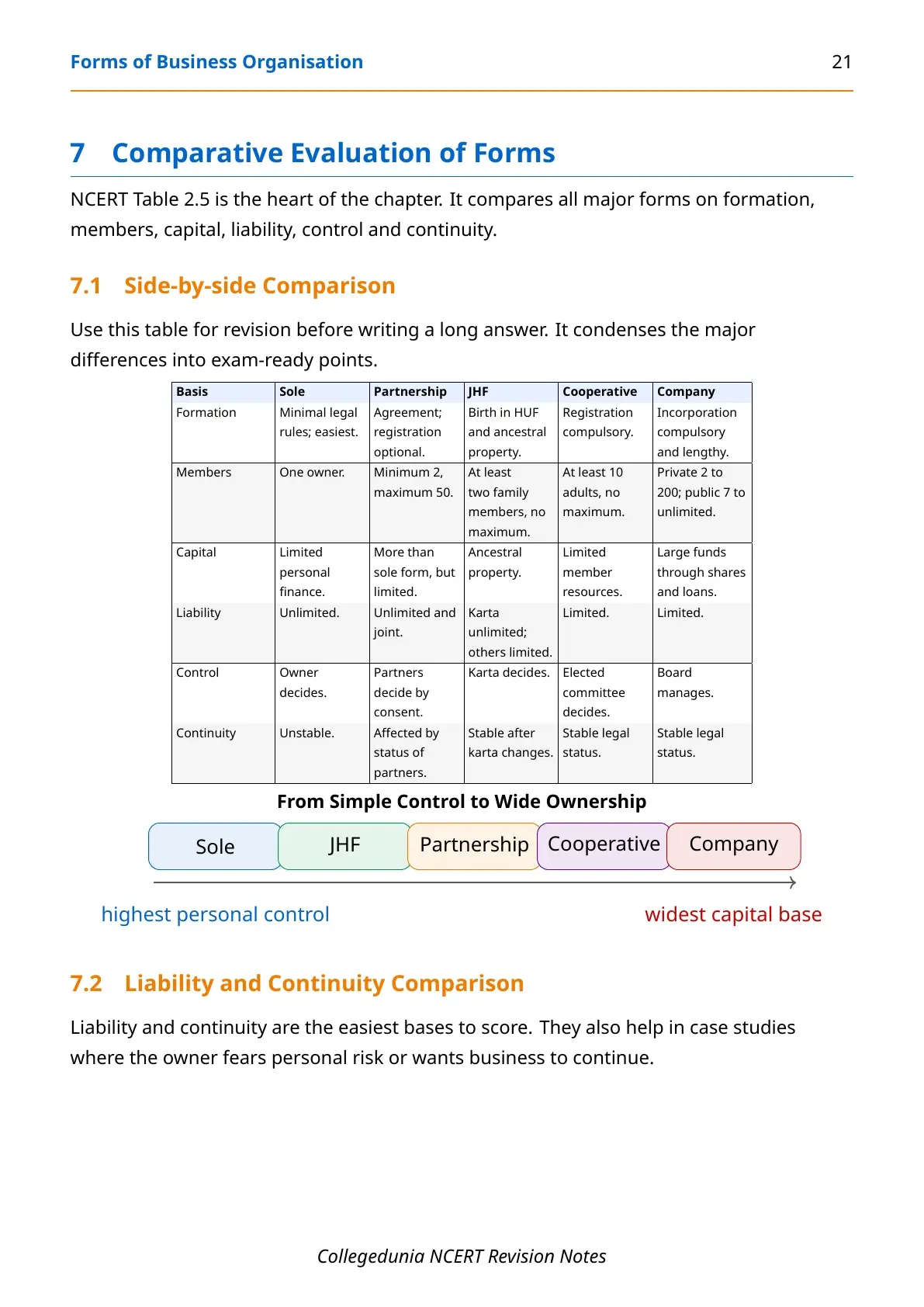
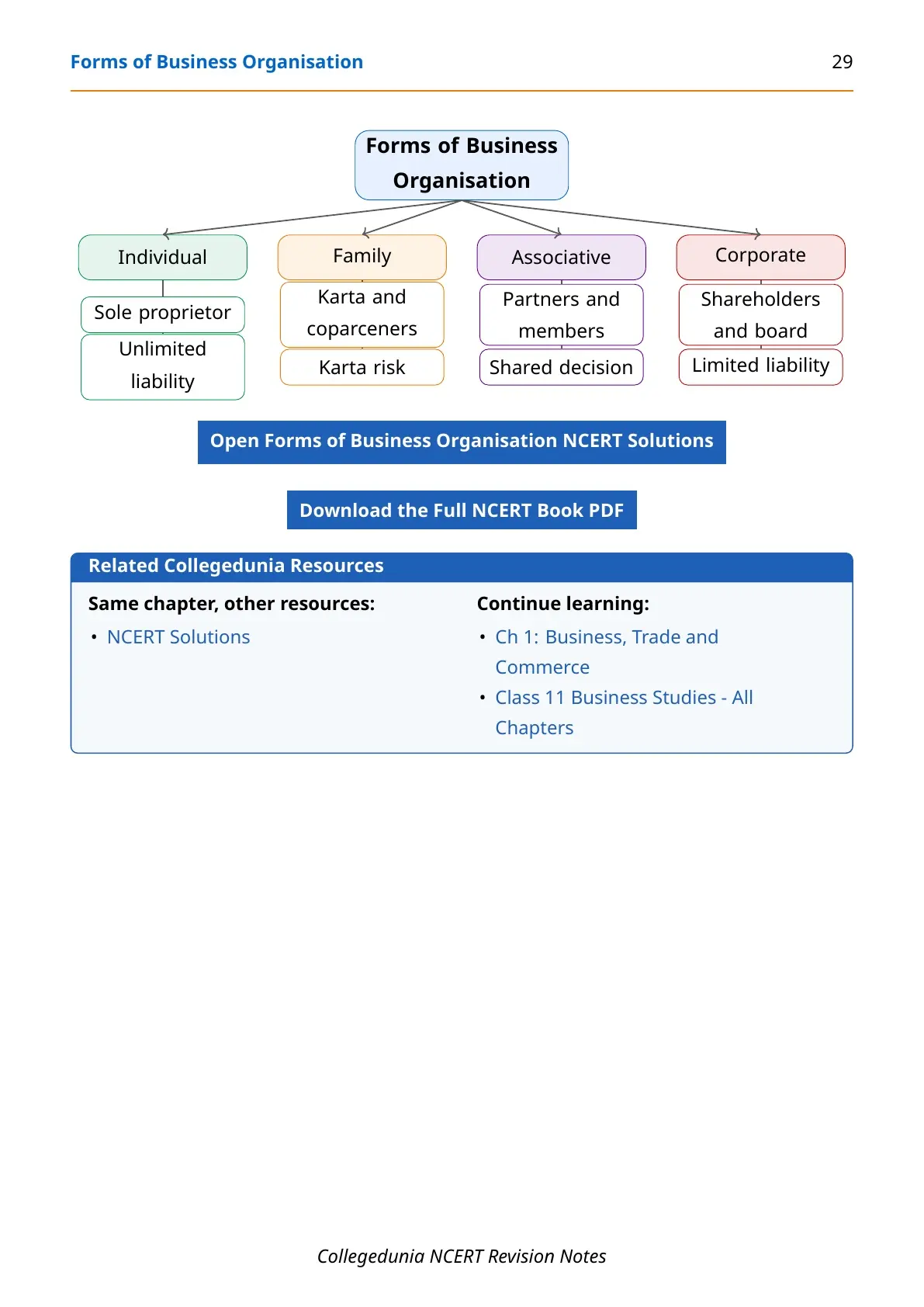
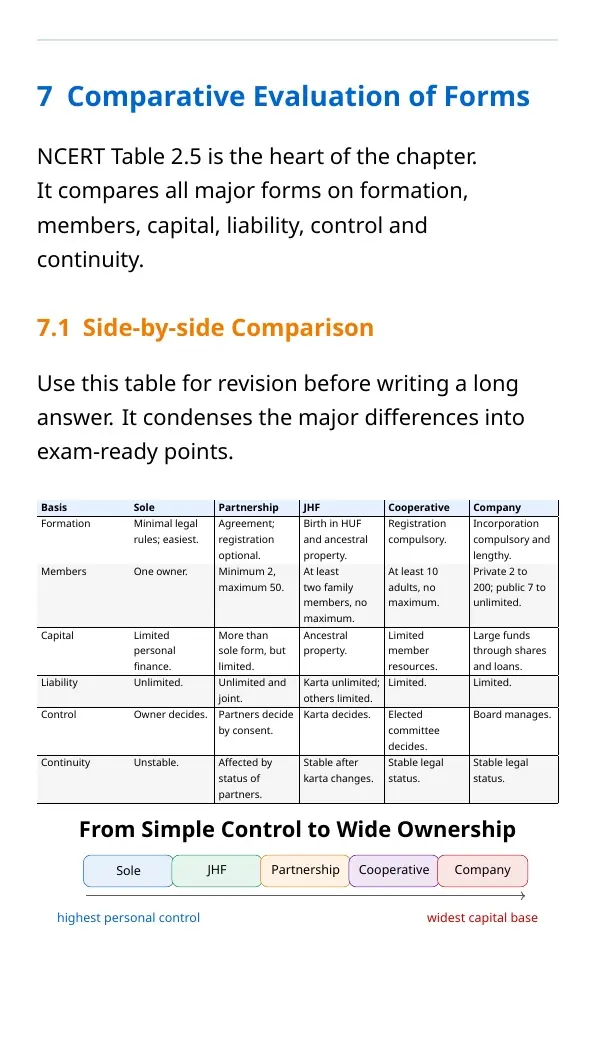
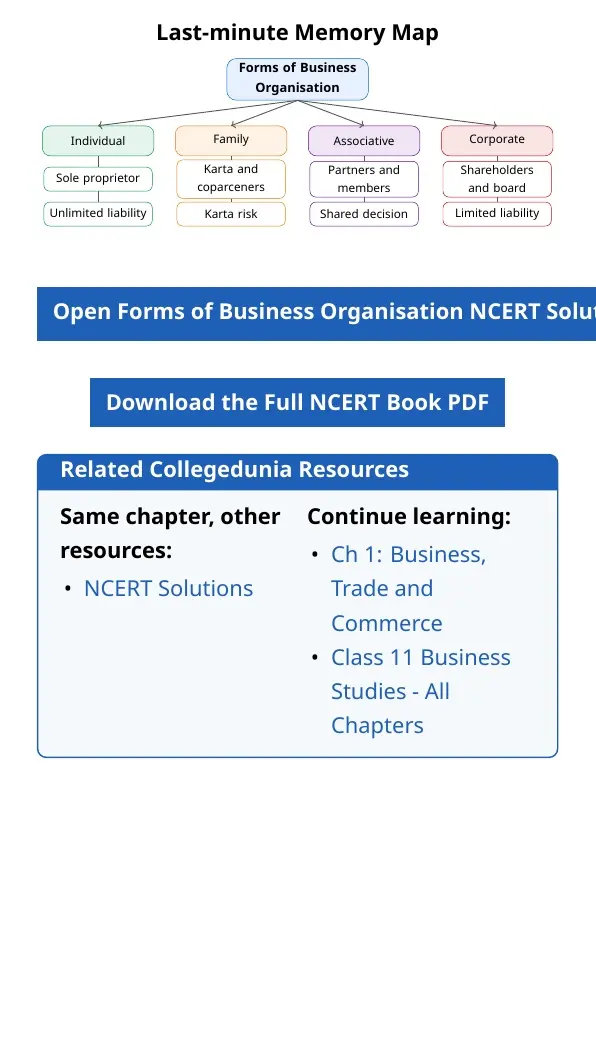
NCERT uses this chapter to compare business ownership forms. The main question is simple: who owns the business, who controls it, who carries risk and how long the business can continue.
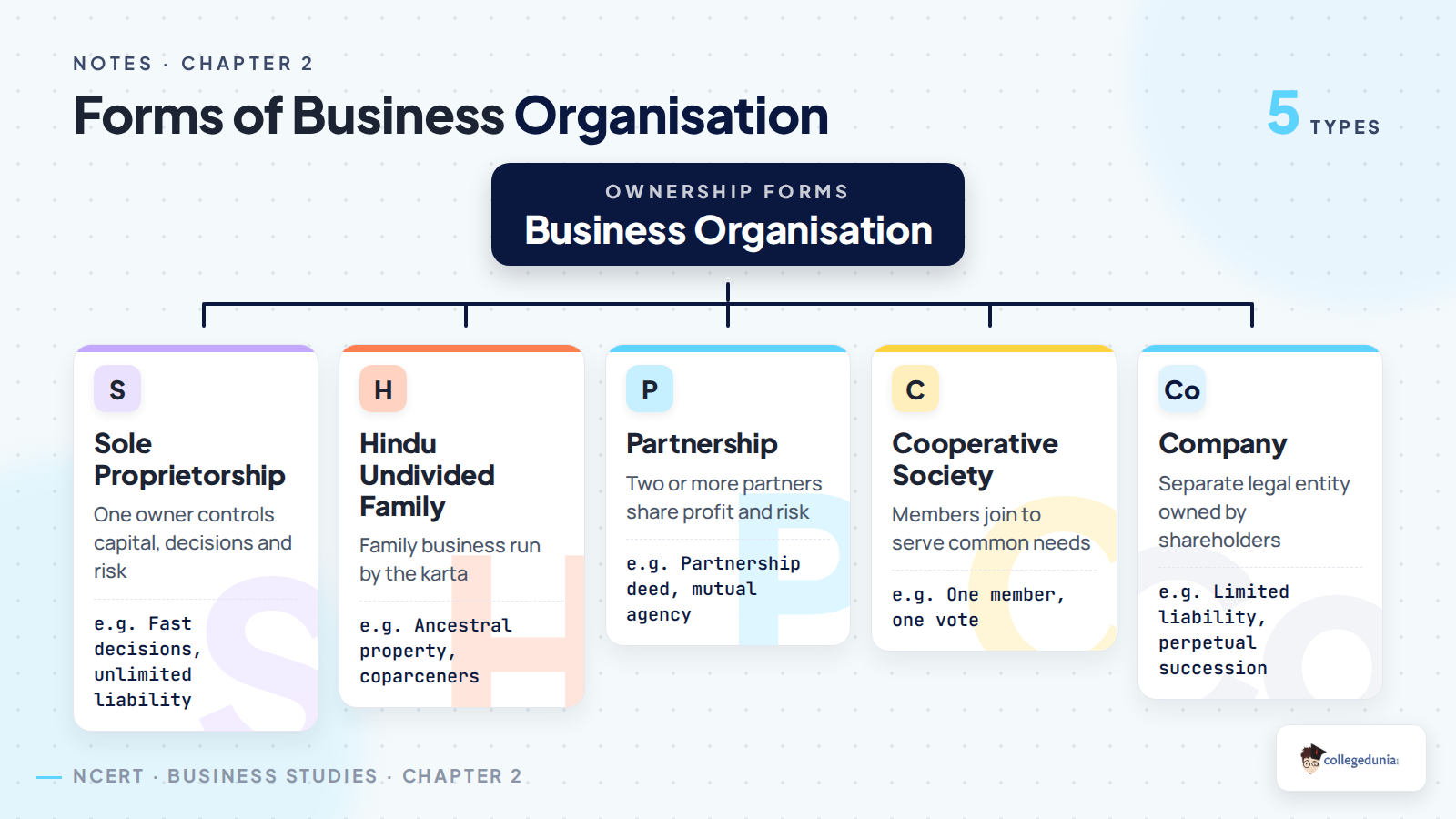
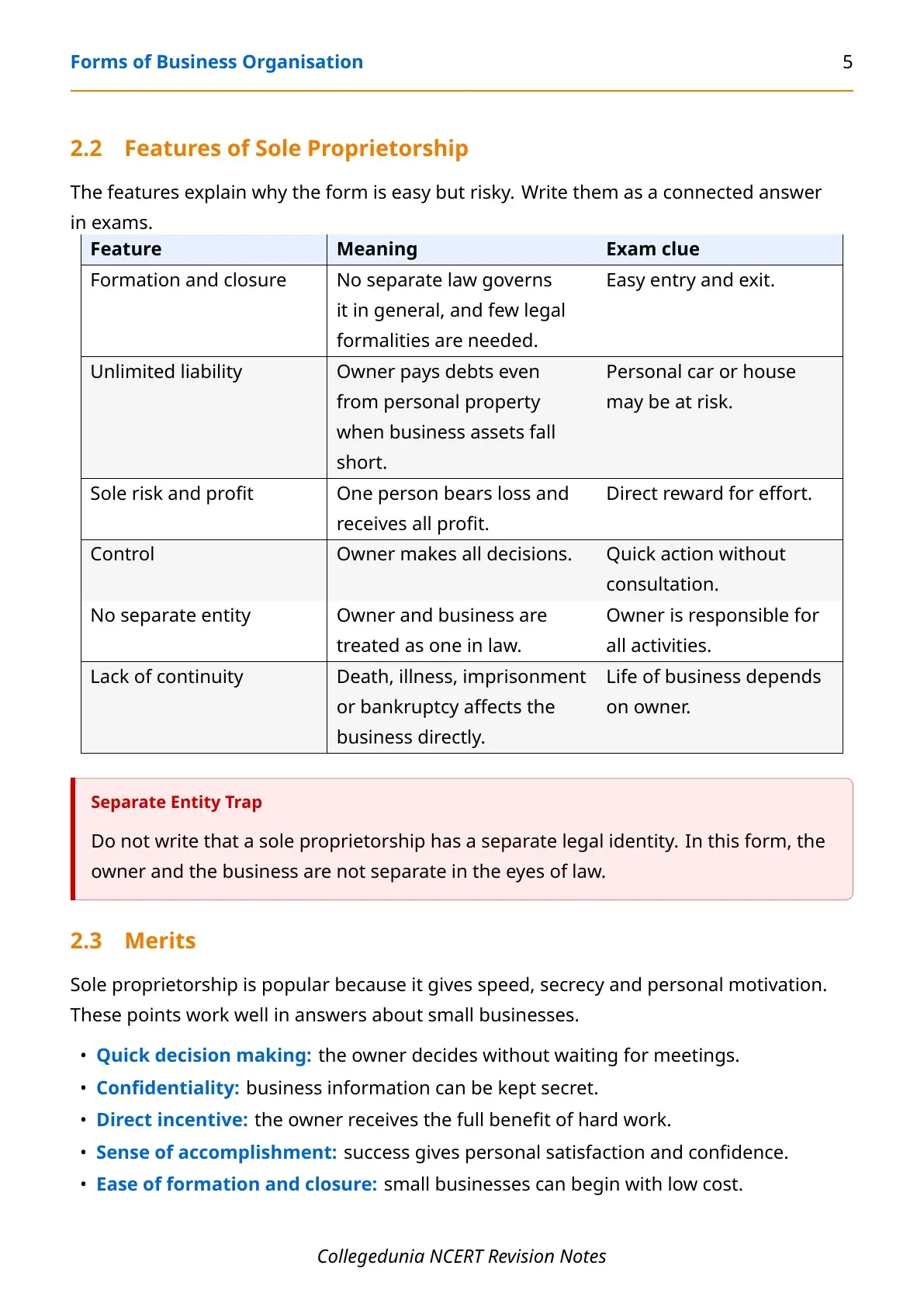
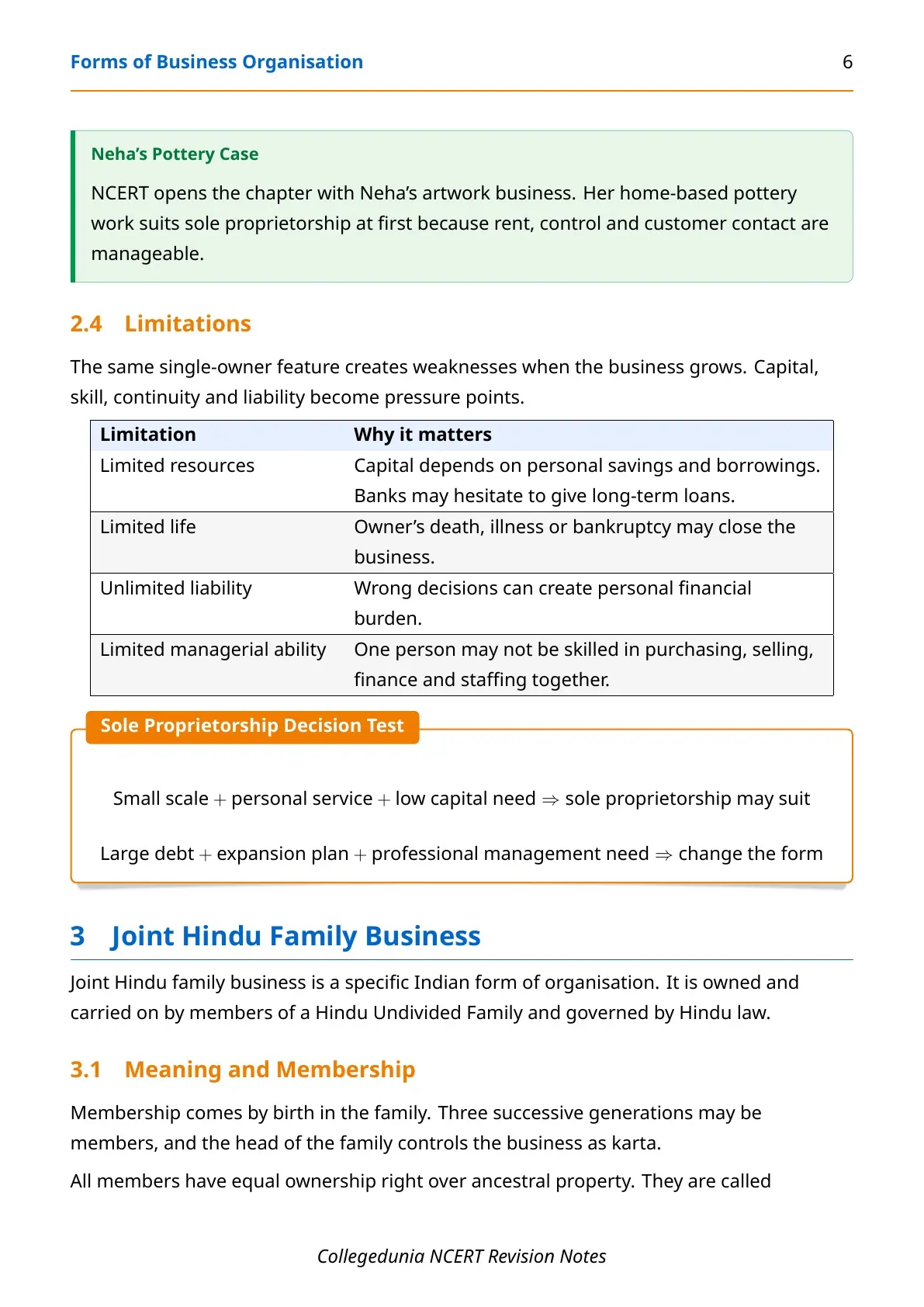
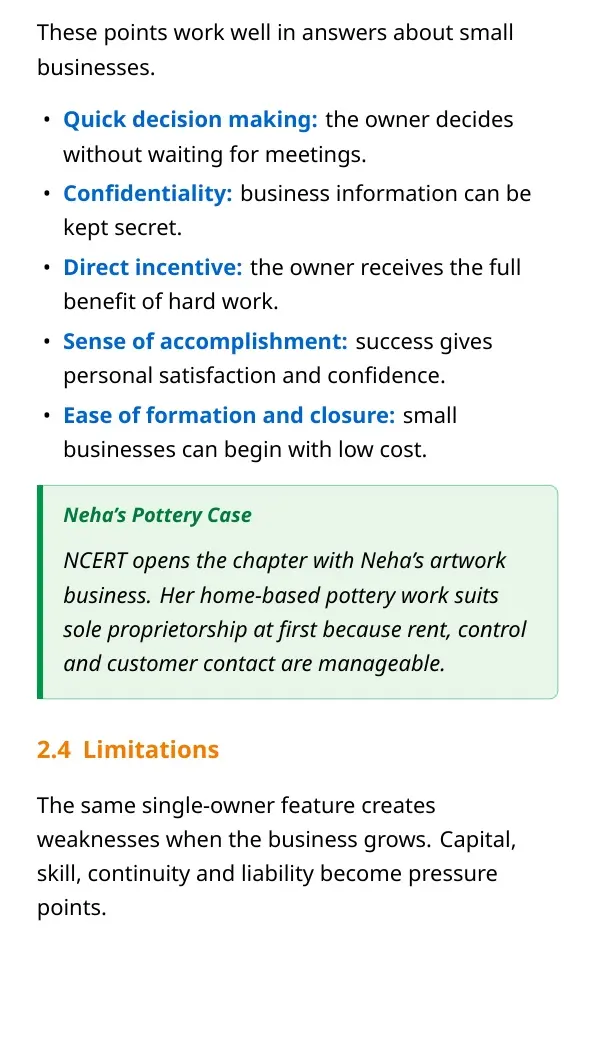
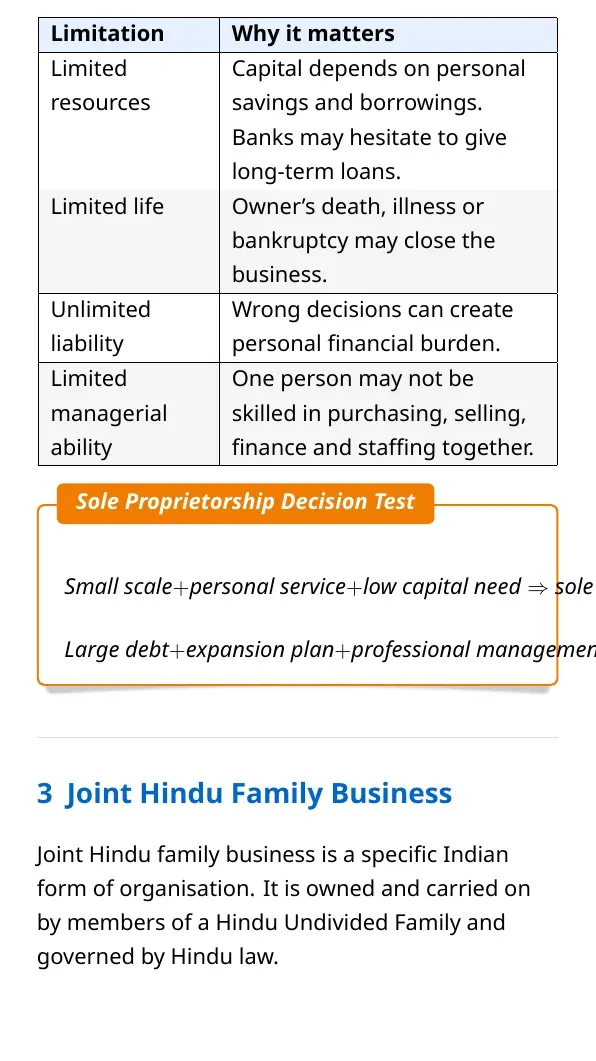
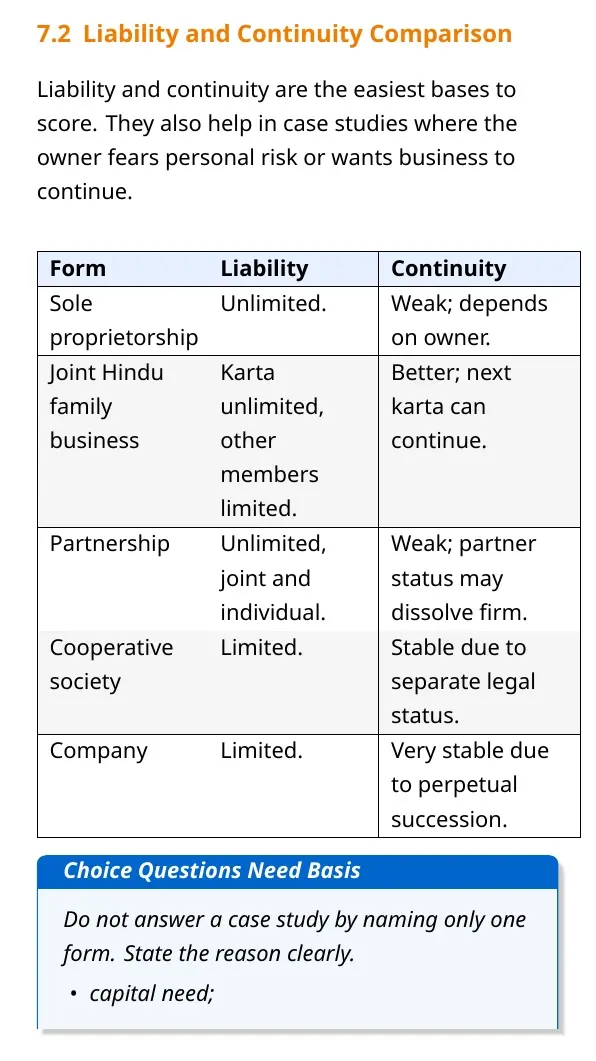
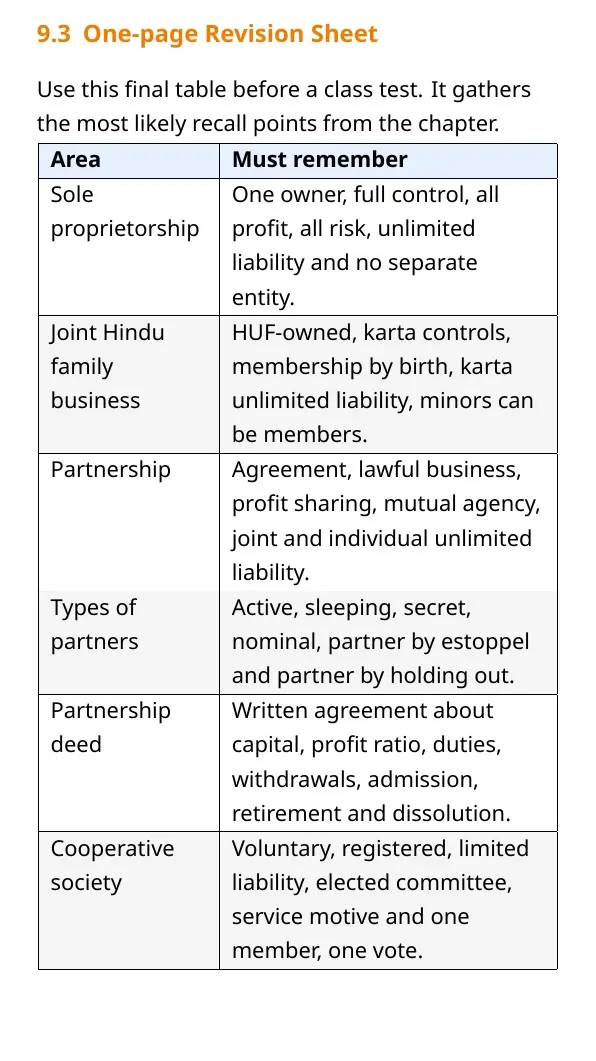
- Sole proprietorship has one owner and unlimited liability.
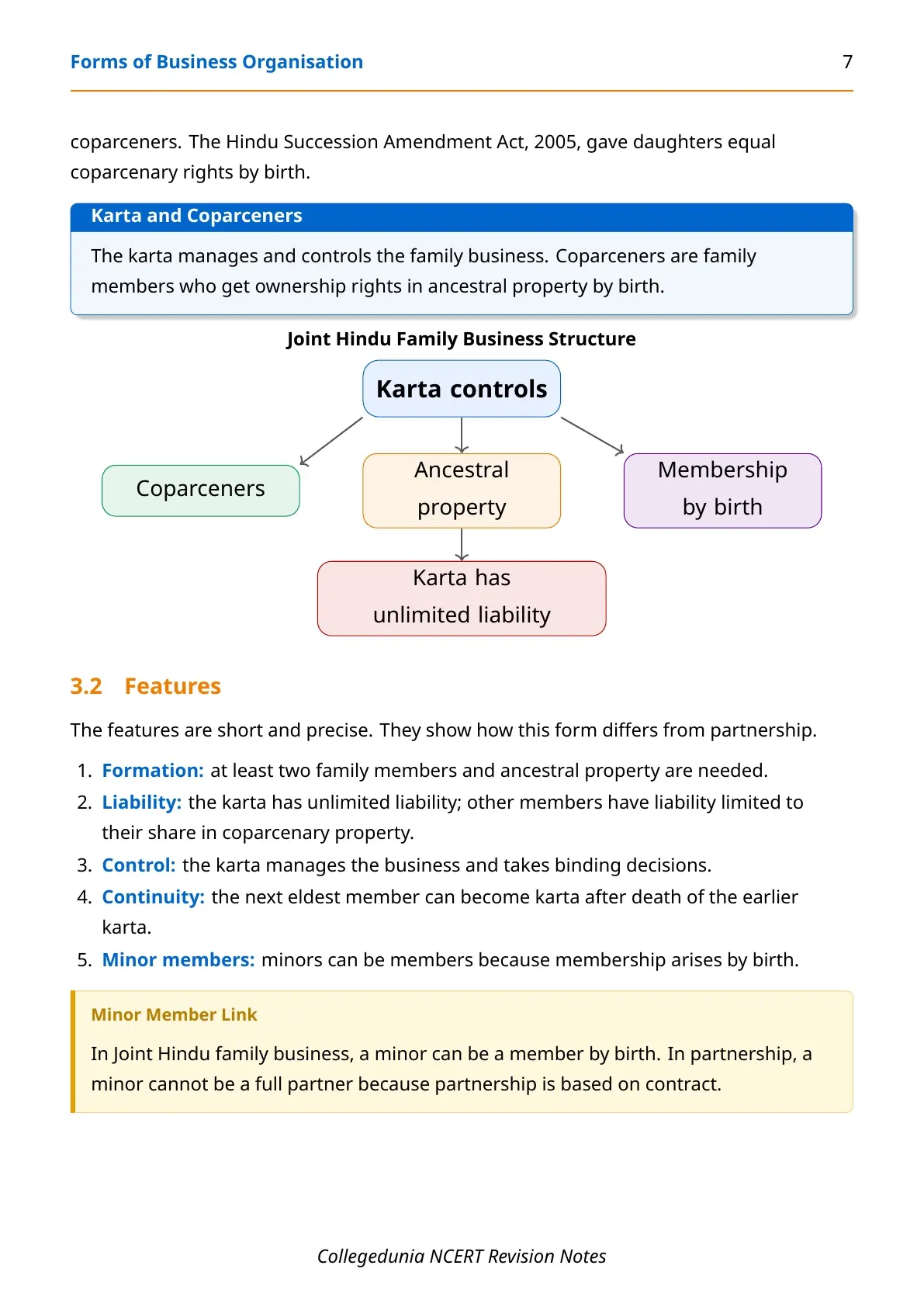
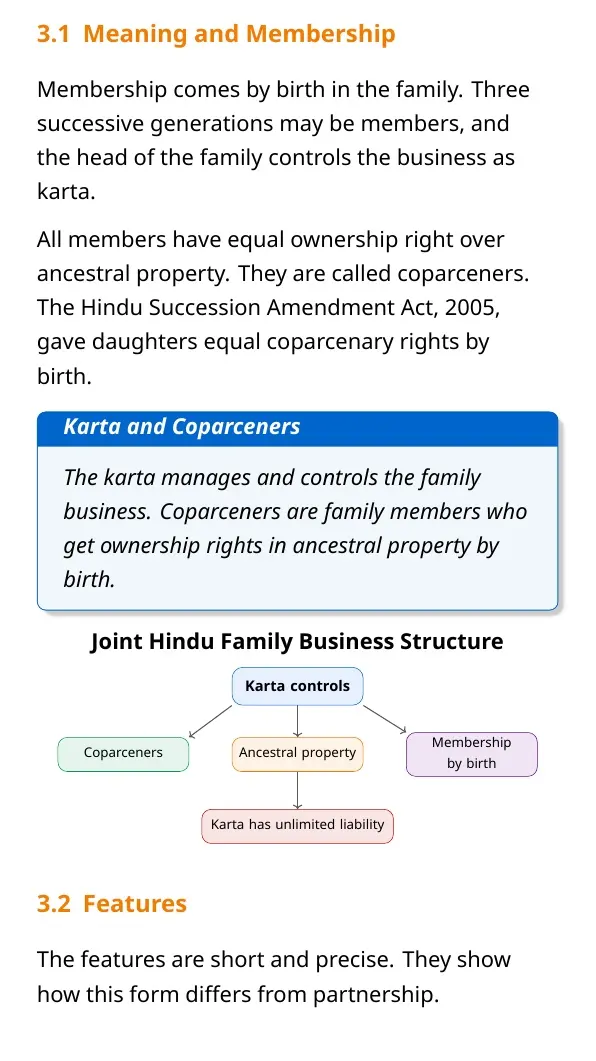
- Hindu undivided family business is controlled by the karta.
- Partnership has two or more partners and mutual agency.
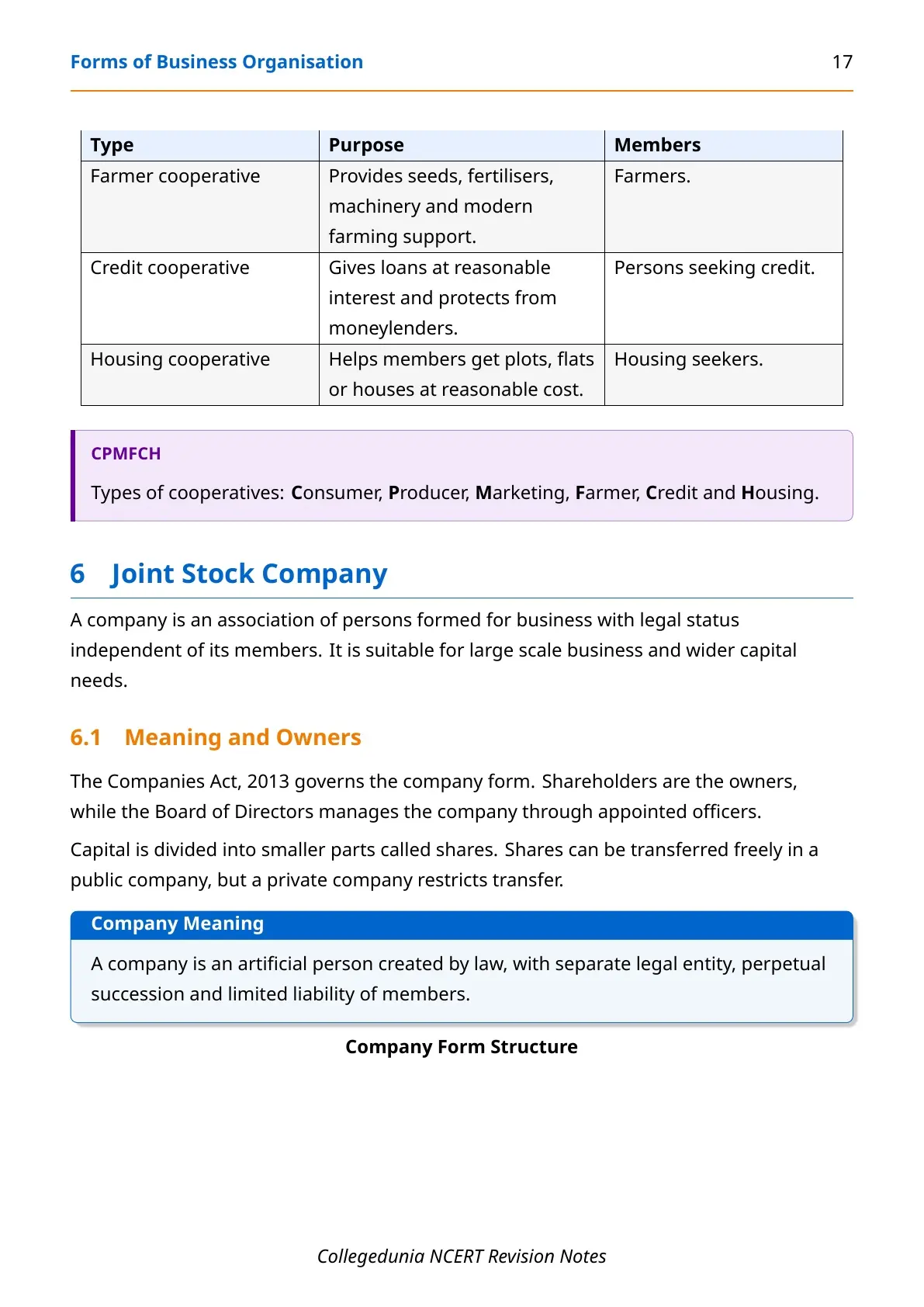
- Cooperative society works for member service, not maximum profit.
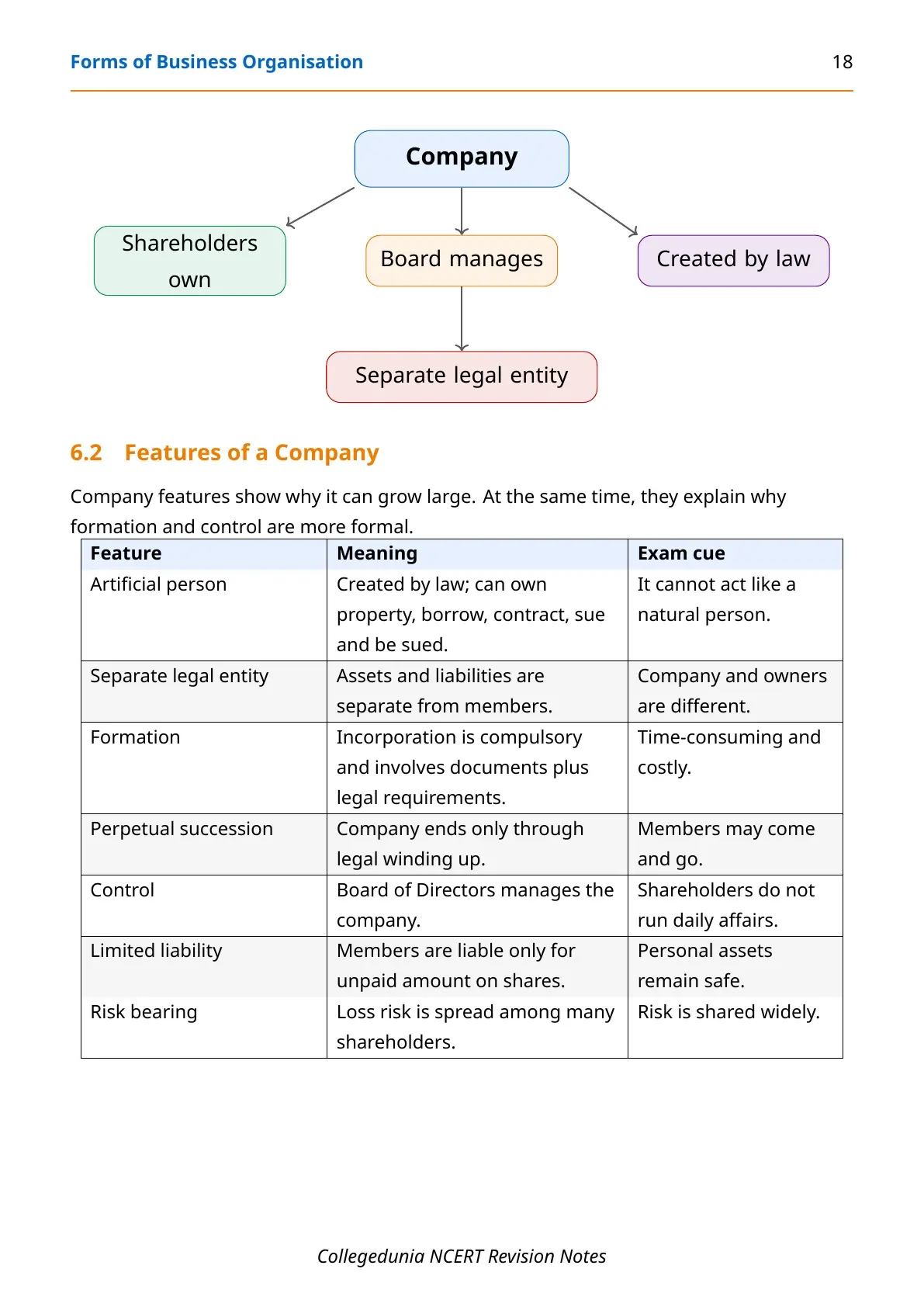
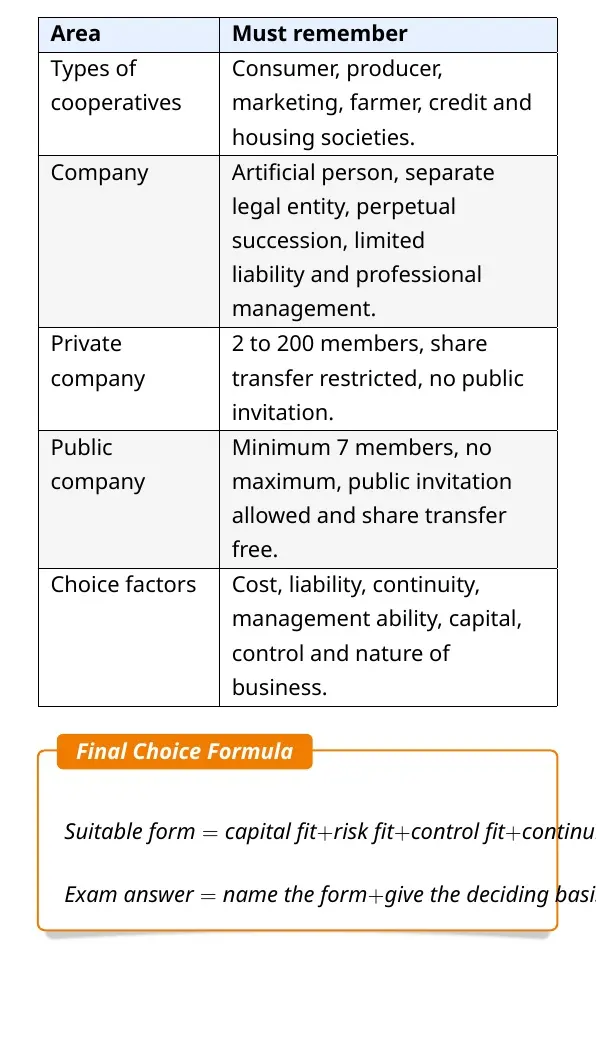
- Company has separate legal identity and limited liability.
Forms of Business Organisation Class 11 Video Recap
Source: Magnet Brains on YouTube
Sole Proprietorship and Hindu Undivided Family Business Basics
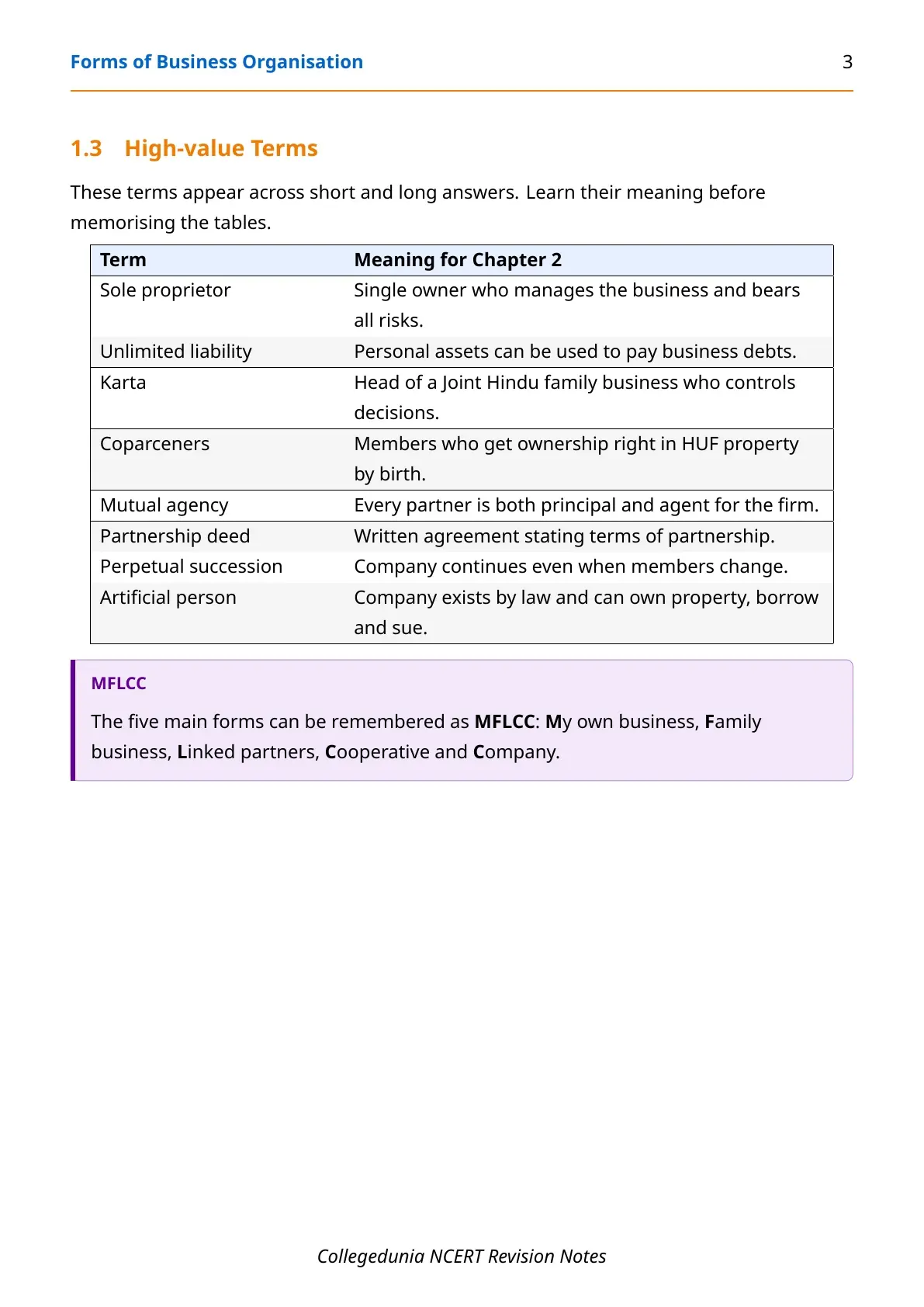
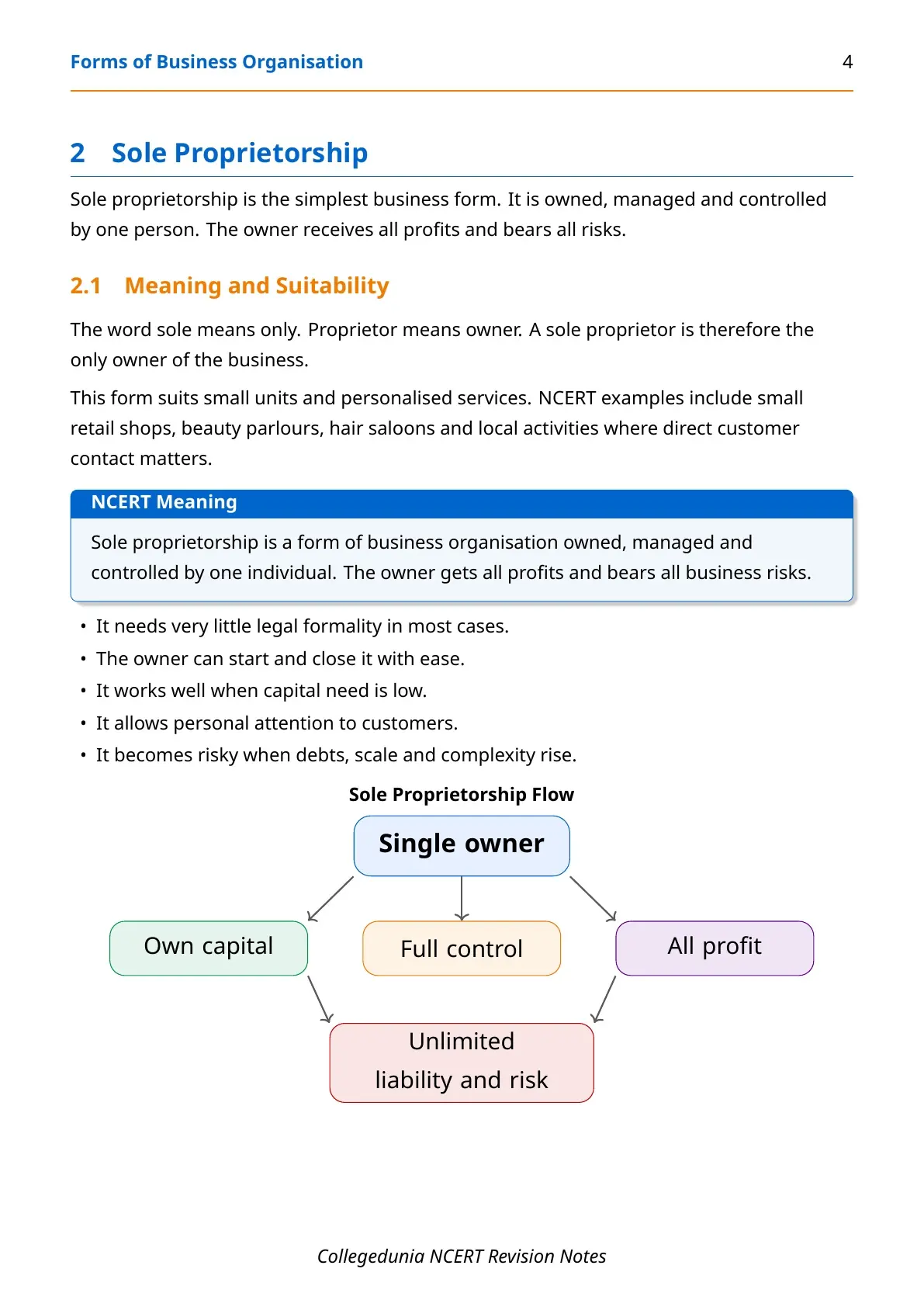
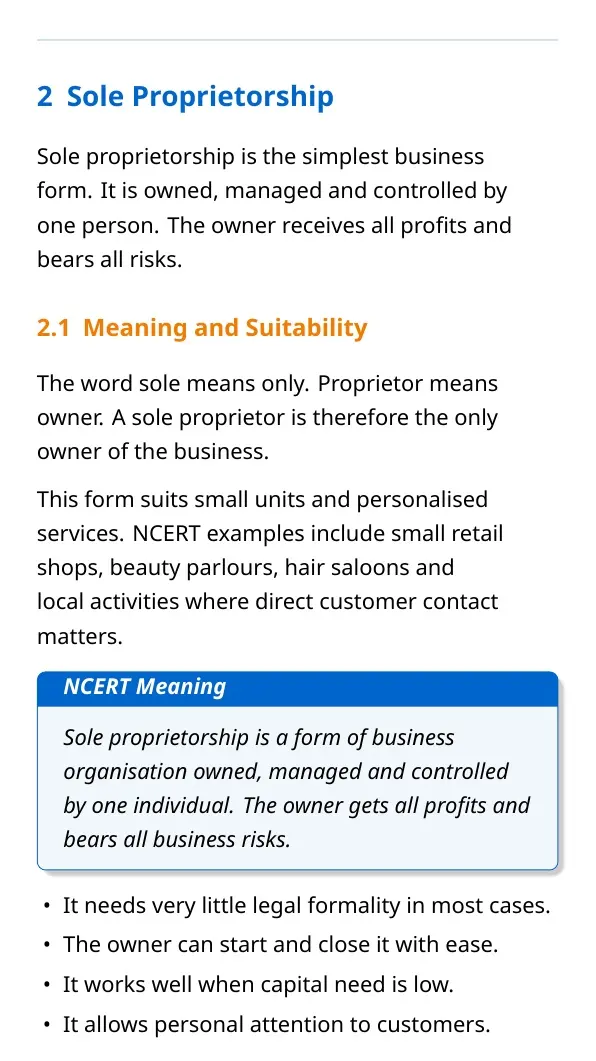
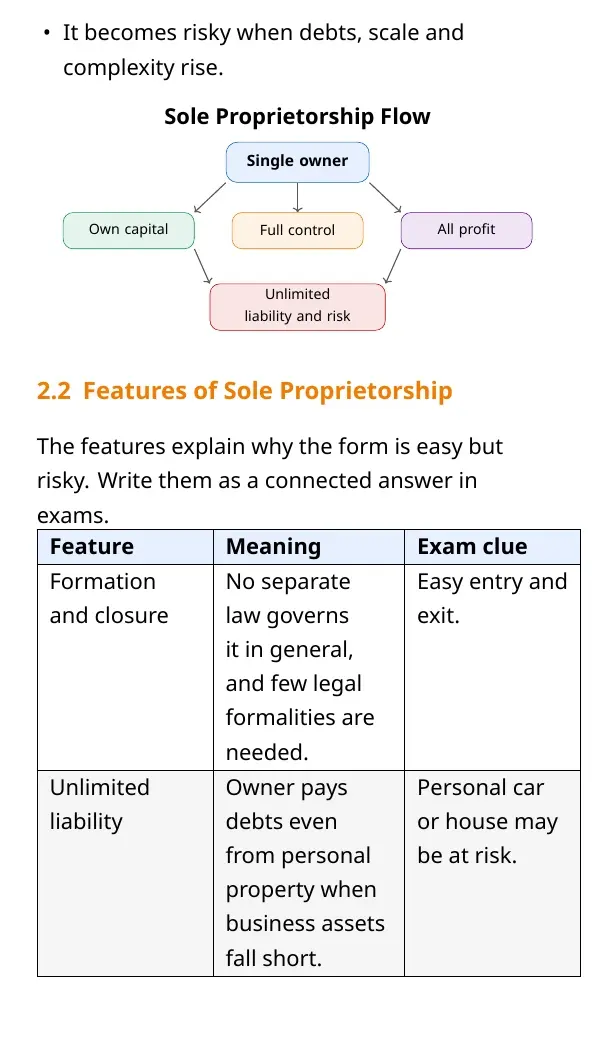
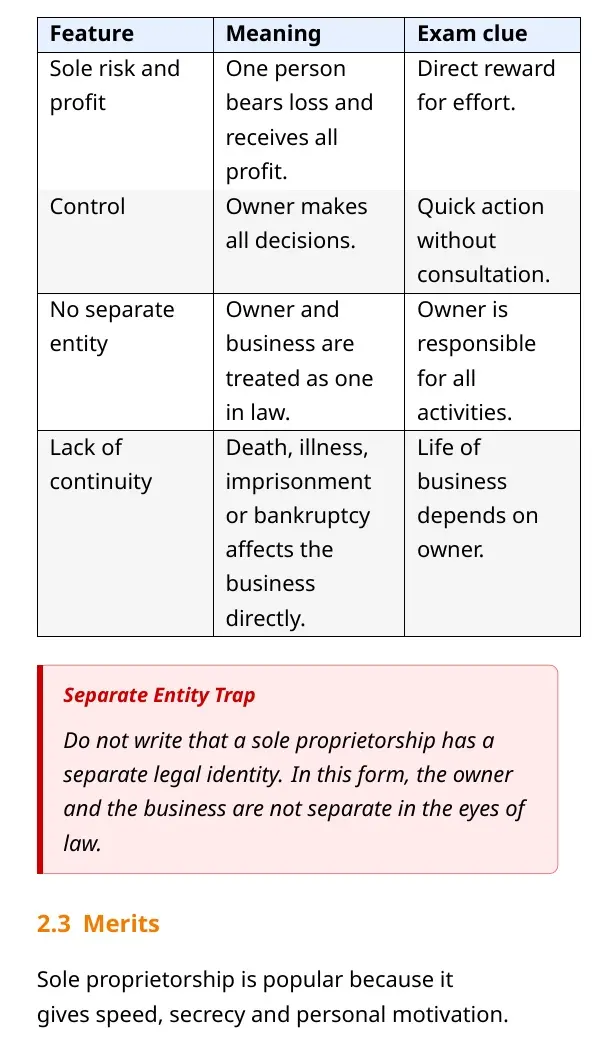
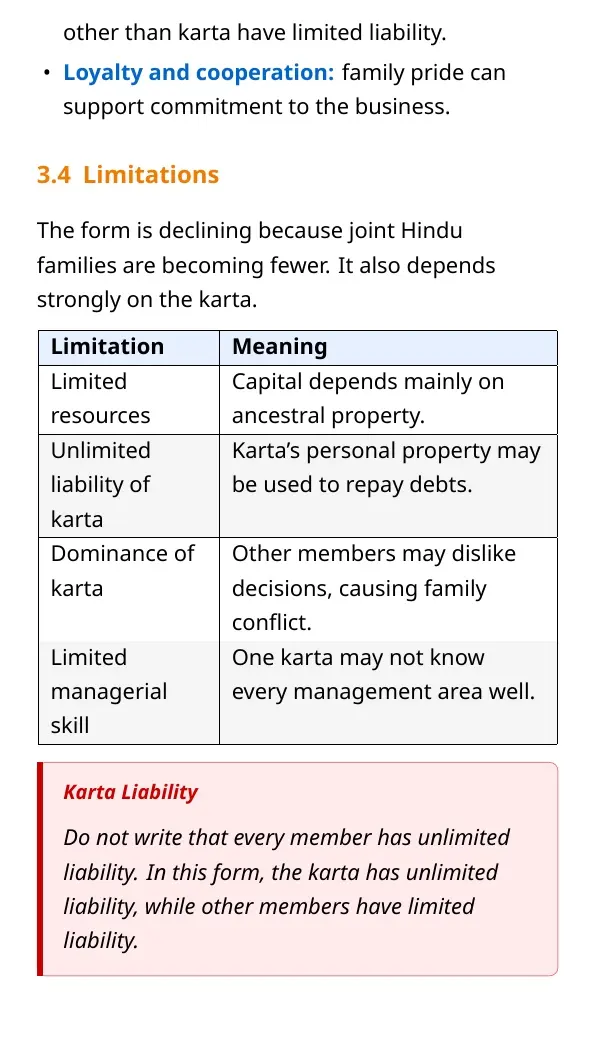
Sole proprietorship is the easiest form to start. One person brings capital, manages work, keeps profit and bears loss. Unlimited liability is the biggest exam point, because personal property may be used to pay business debts.
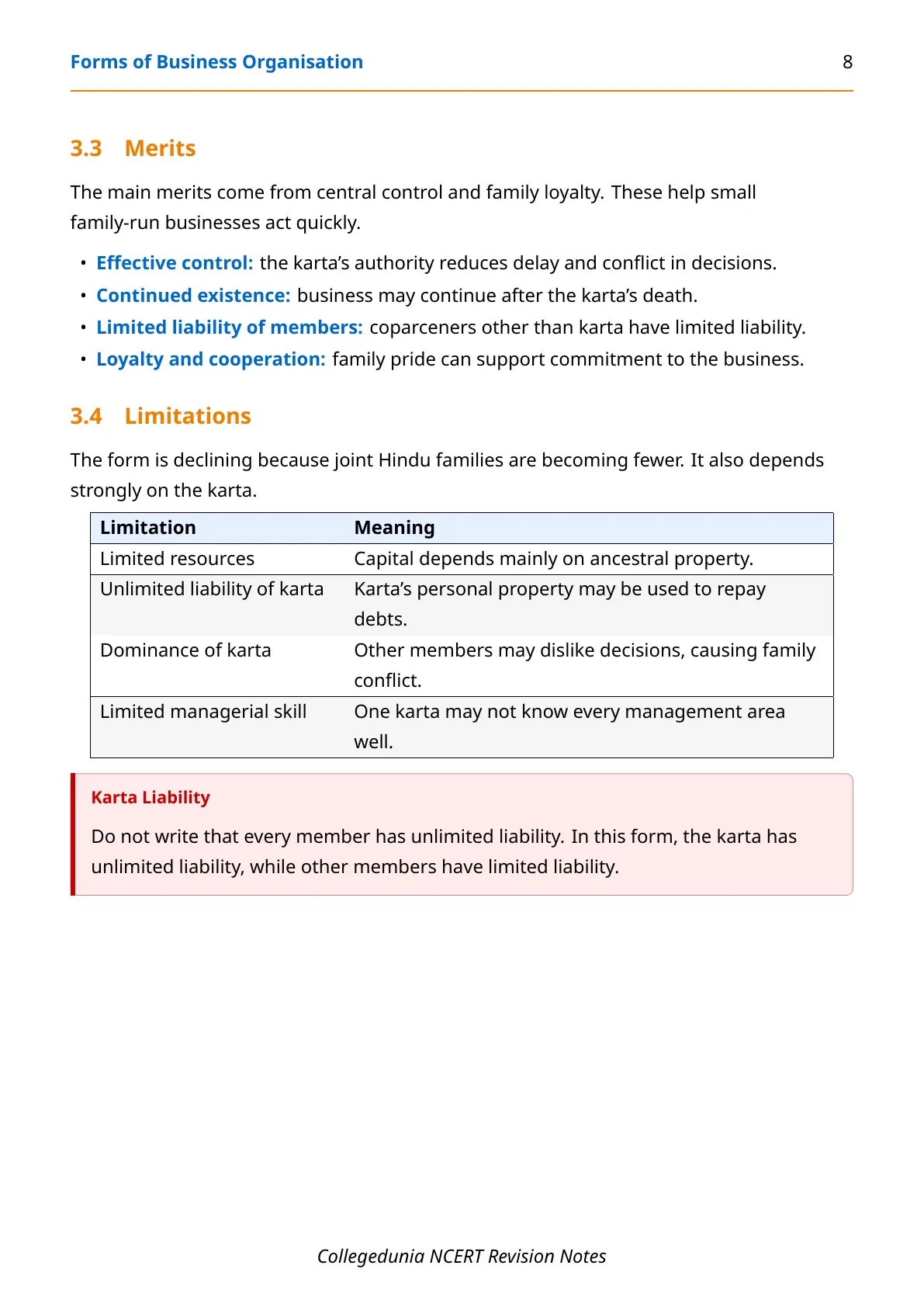
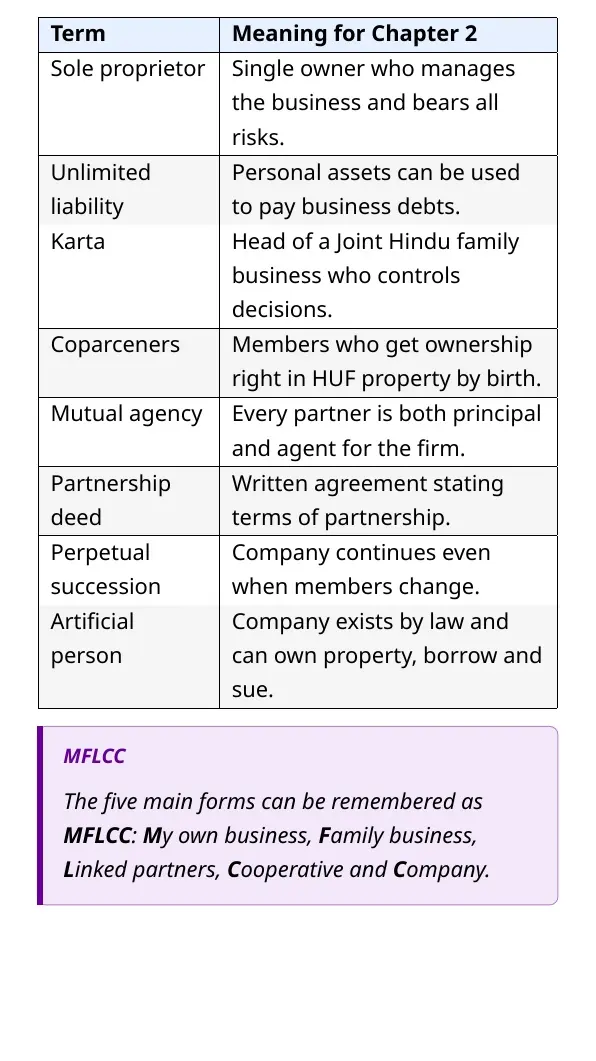
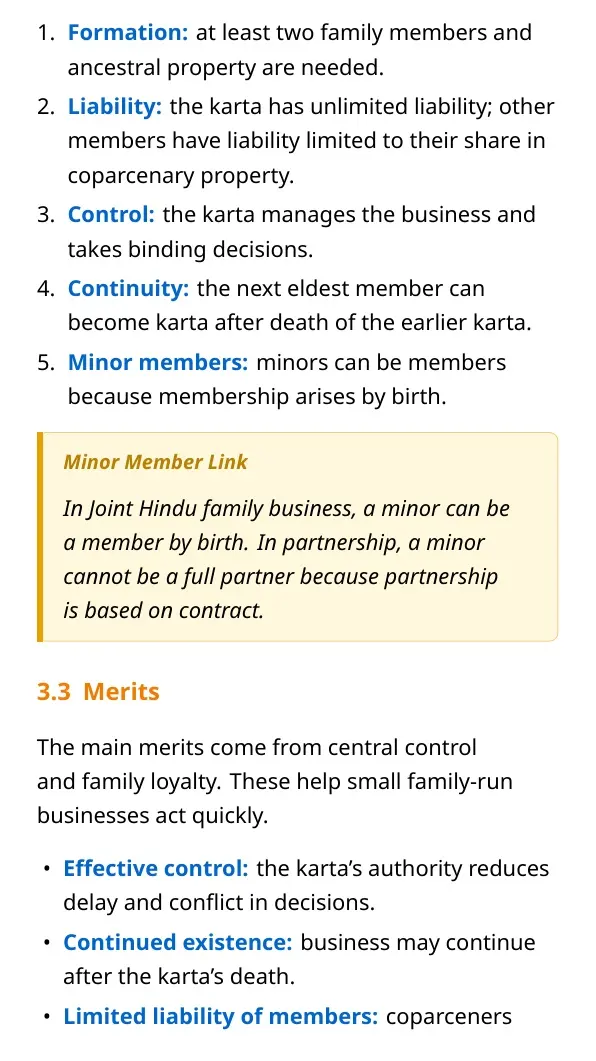
Hindu undivided family business is based on Hindu law. The karta manages the business, while coparceners get membership by birth. Learn this form with three words: birth, karta and ancestral property.
| Basis | Sole Proprietorship | Hindu Undivided Family Business |
|---|---|---|
| Control | One owner controls decisions | Karta controls decisions |
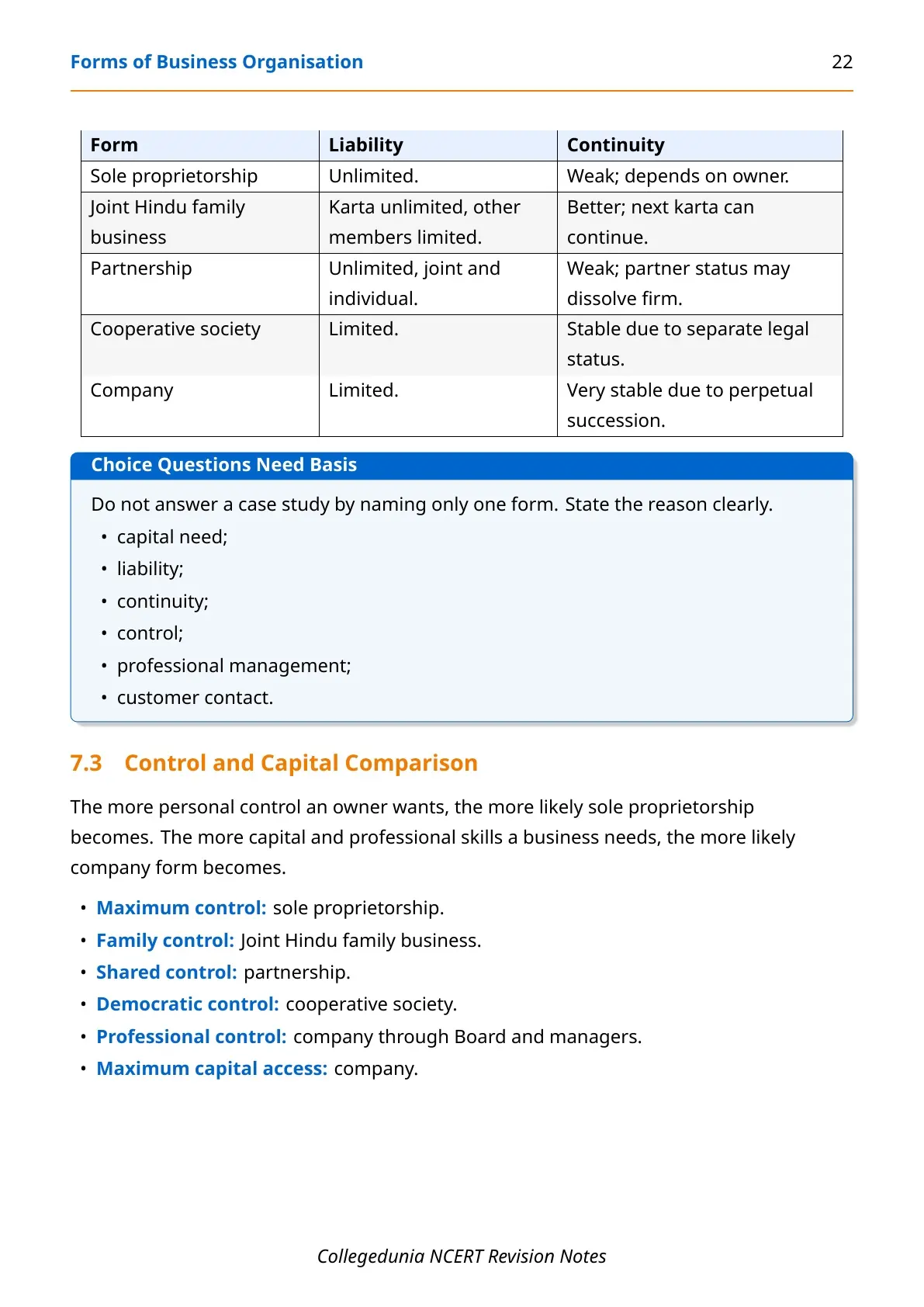
| Liability | Unlimited liability | Karta has unlimited liability |
| Continuity | Depends on the owner | Continues after the karta changes |
| Best fit | Small shop or service work | Traditional family business |
Partnership Rules Students Must Remember for Chapter 2
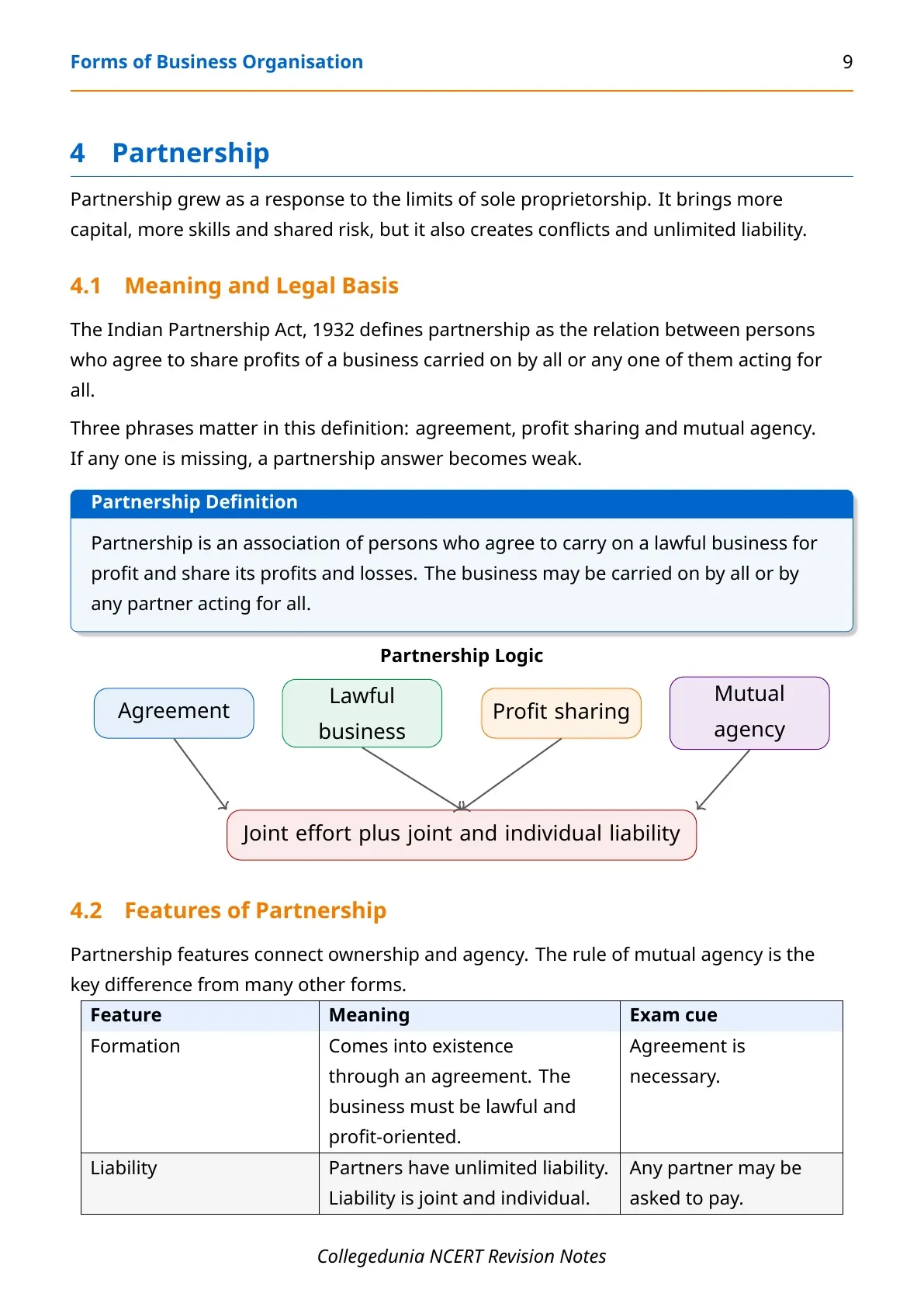
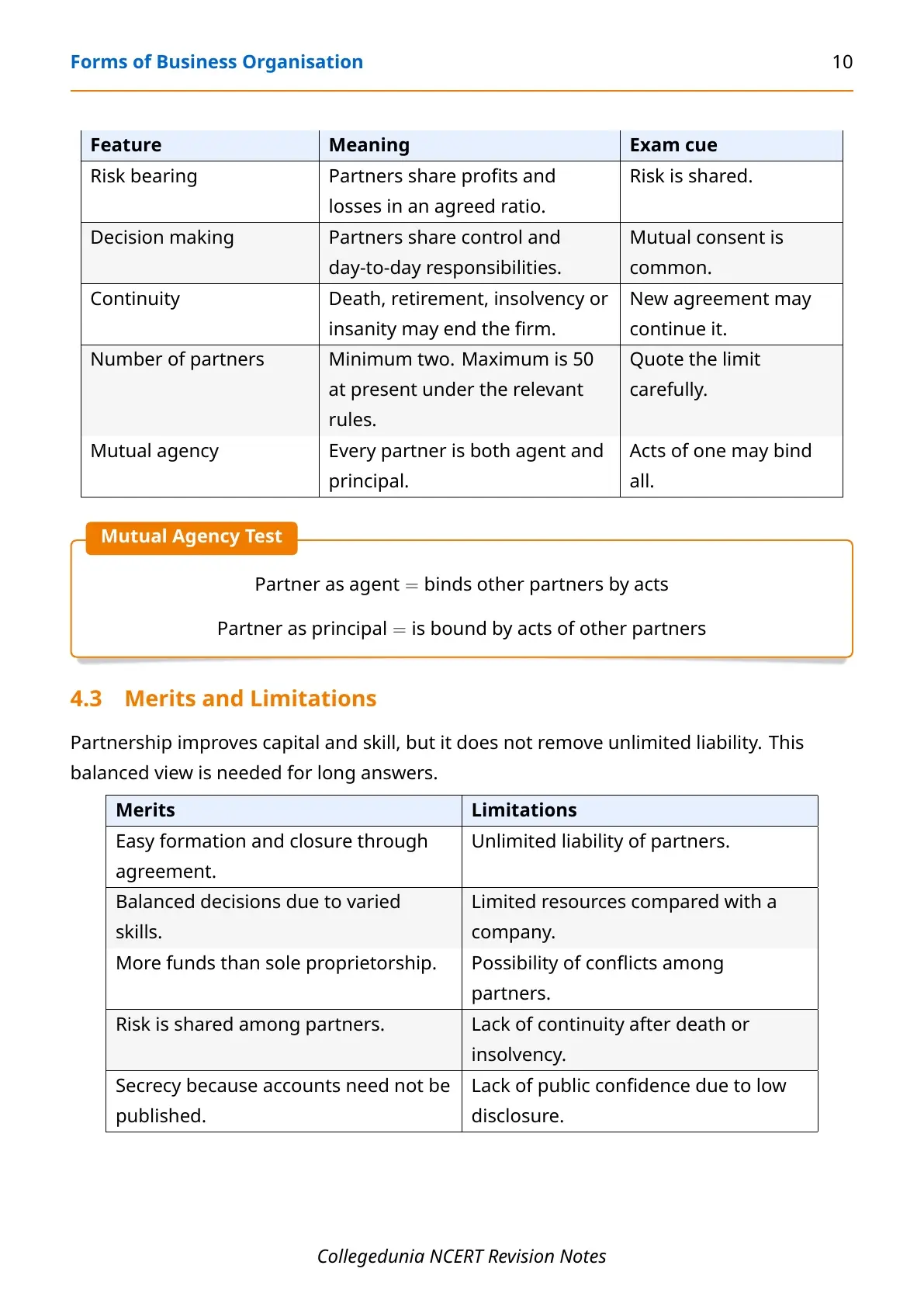
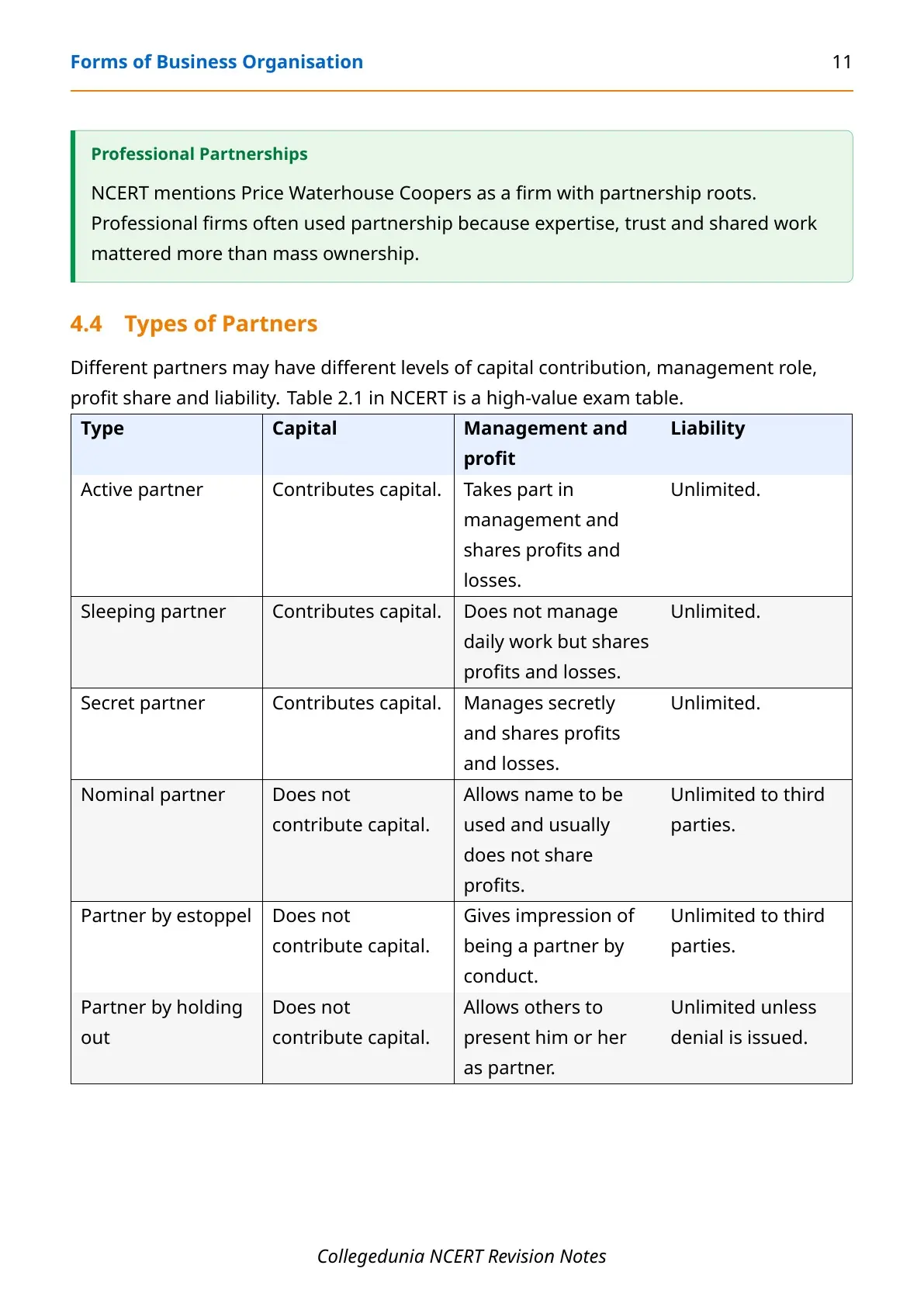
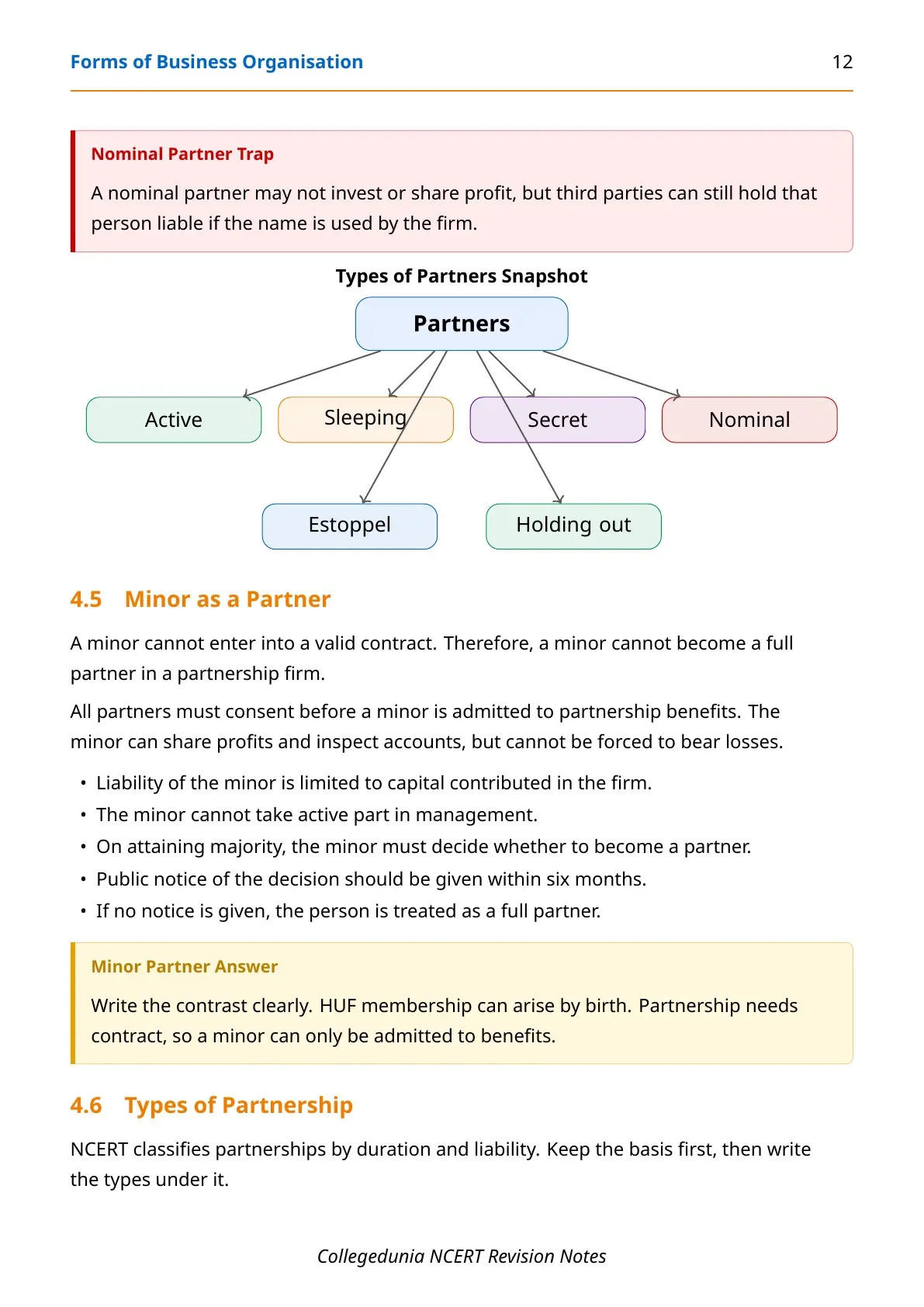
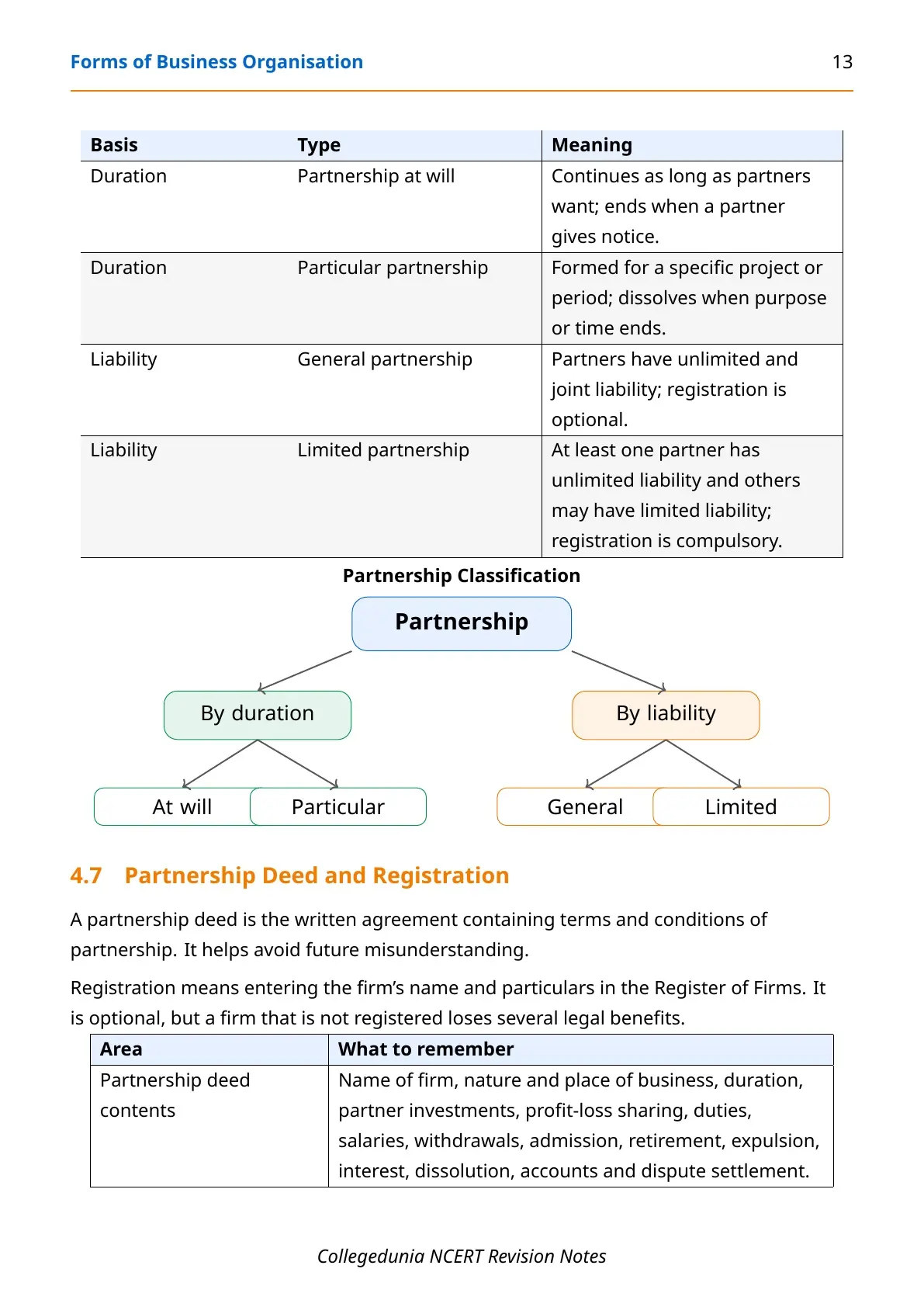
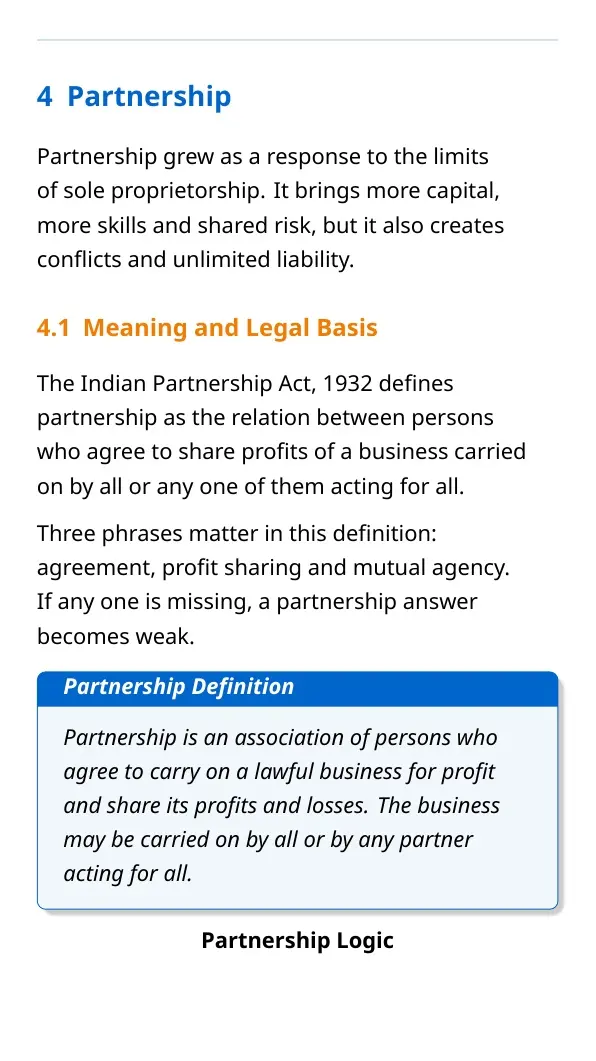
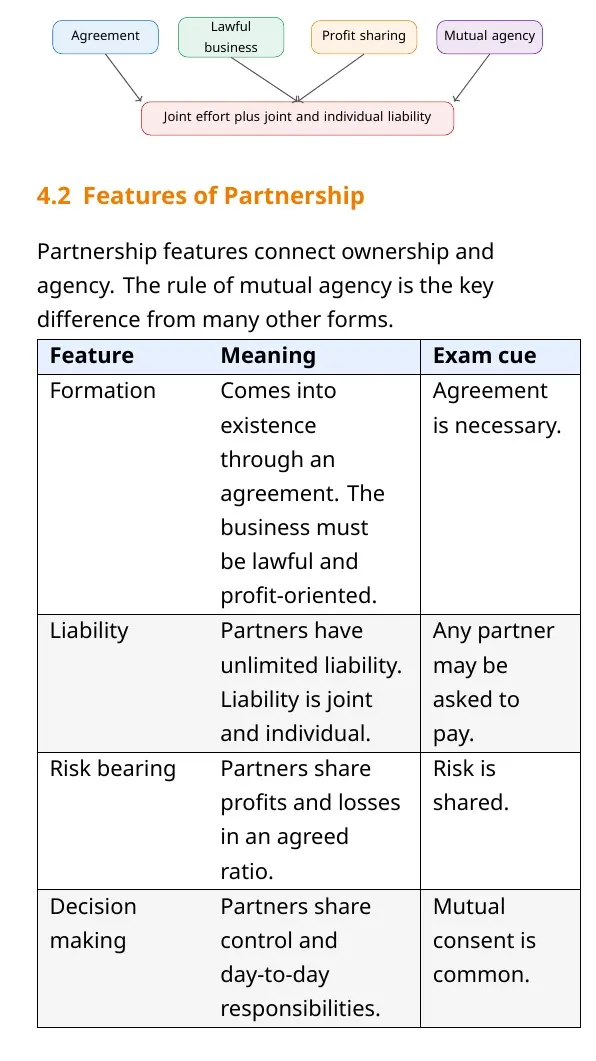
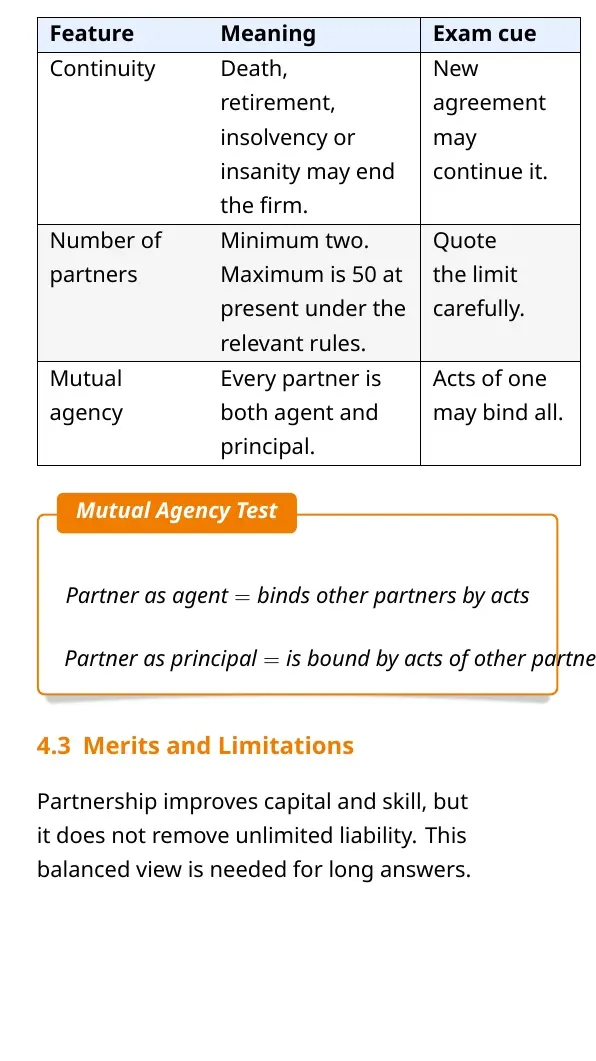
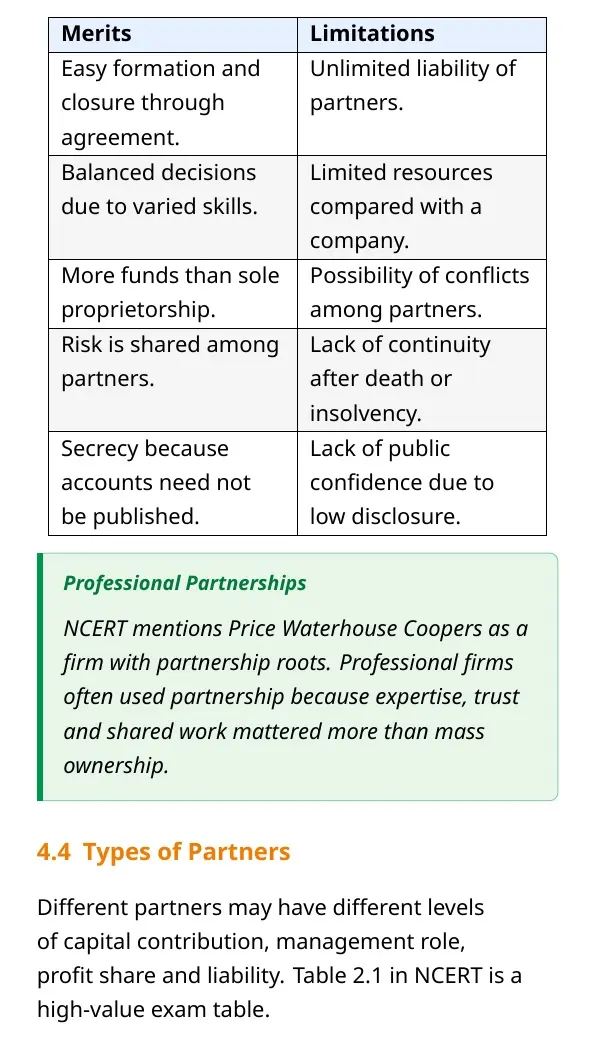
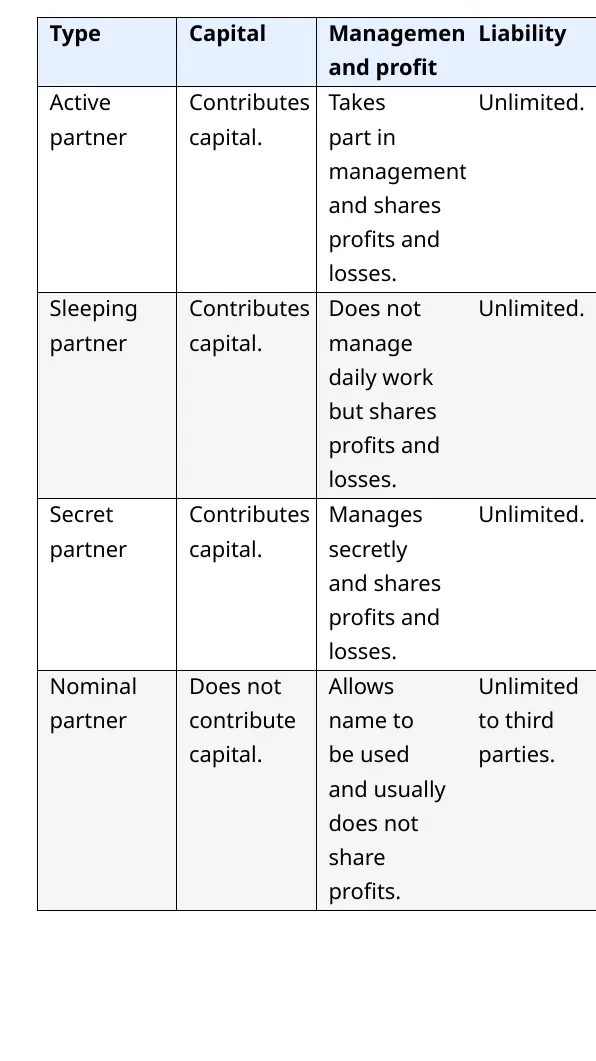
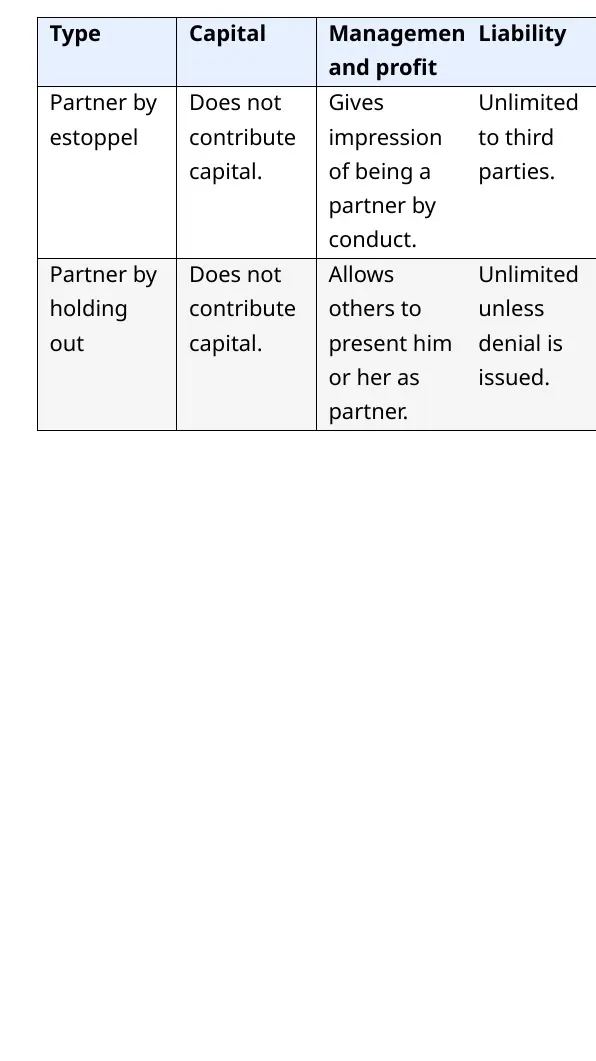
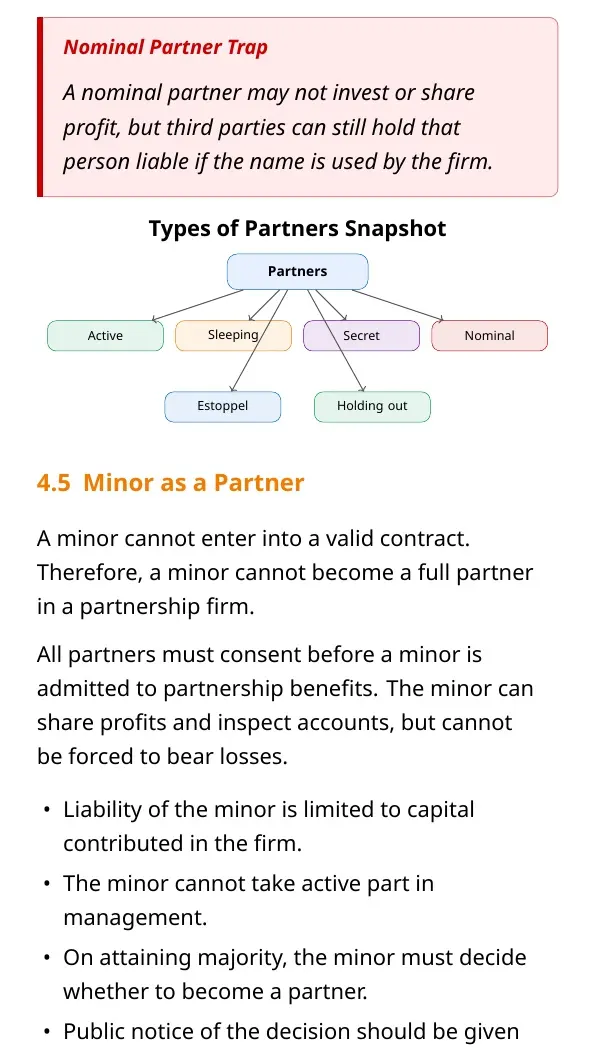
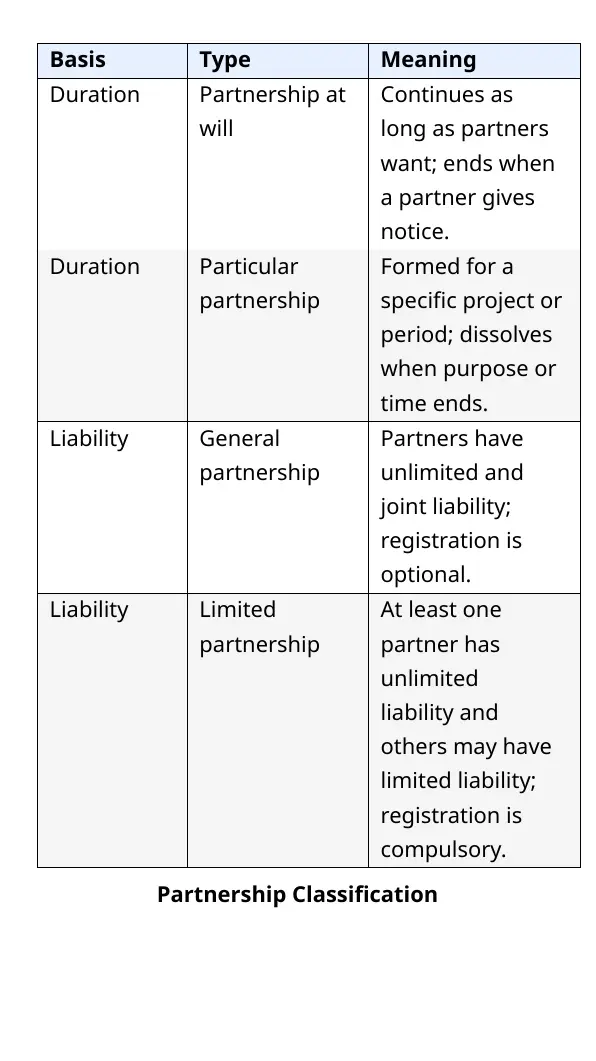
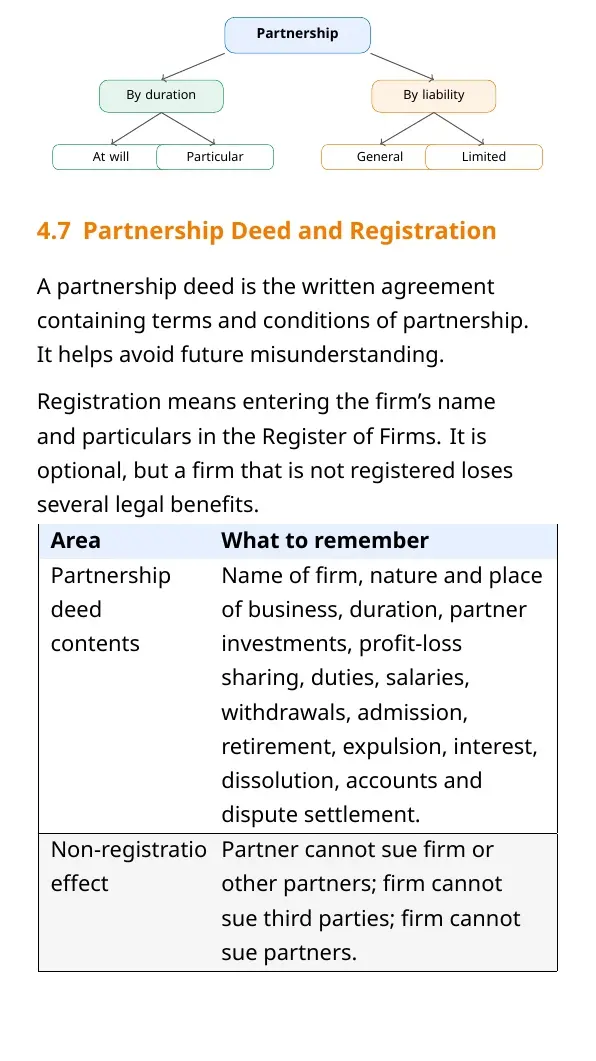
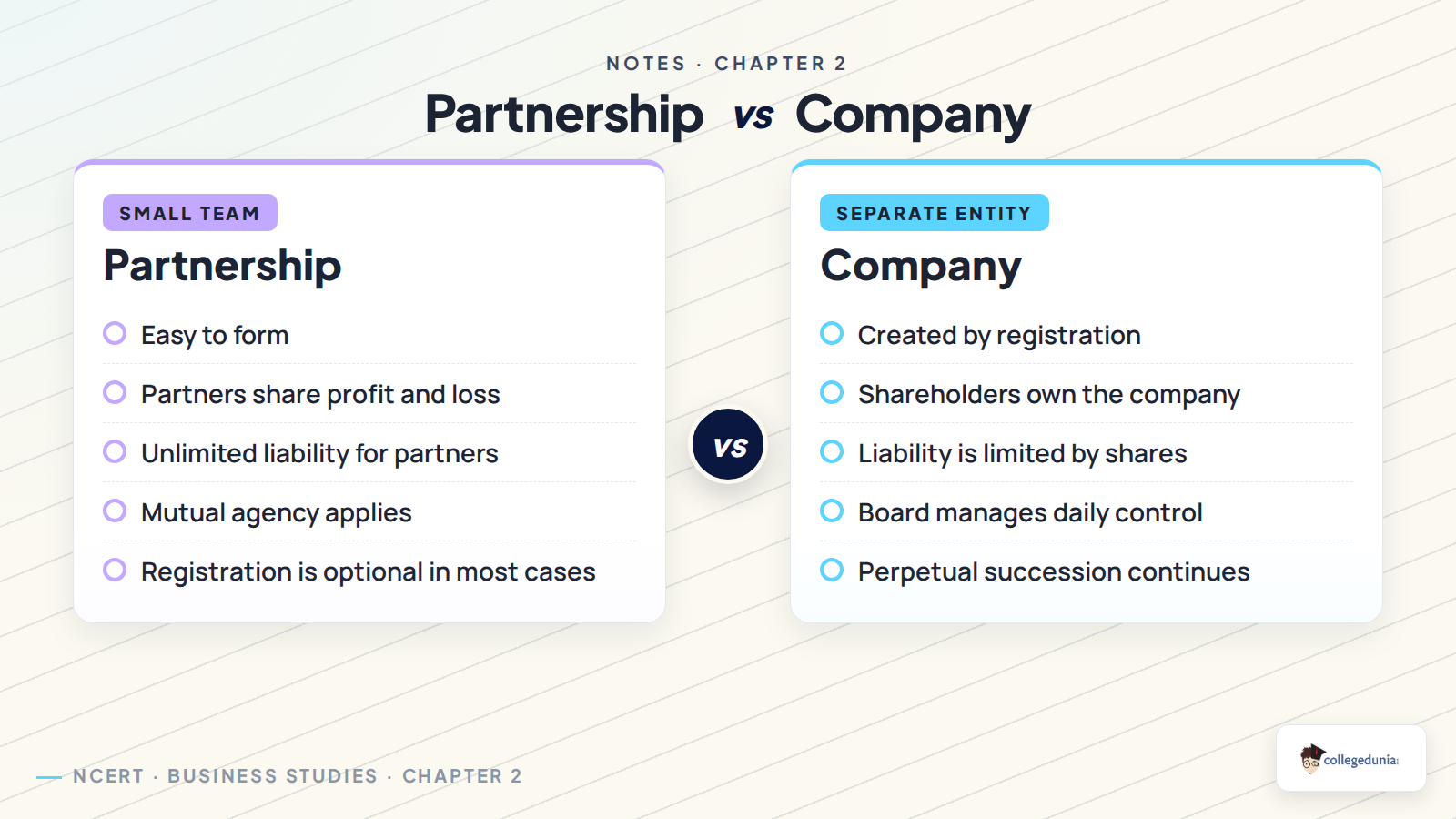
Partnership is formed when two or more persons agree to carry on lawful business and share profits. Mutual agency is the heart of partnership. Each partner can bind the firm by business acts done in the firm's name.
- Minimum members: two partners are needed to form a partnership.
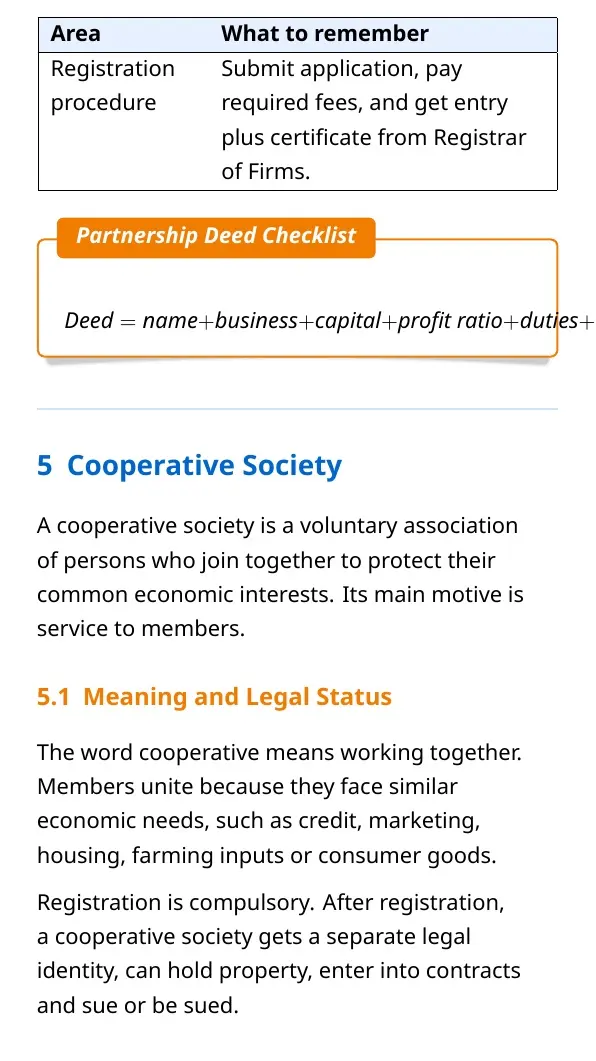
- Agreement: partners may write a partnership deed to avoid disputes.
- Liability: partners usually have unlimited liability.
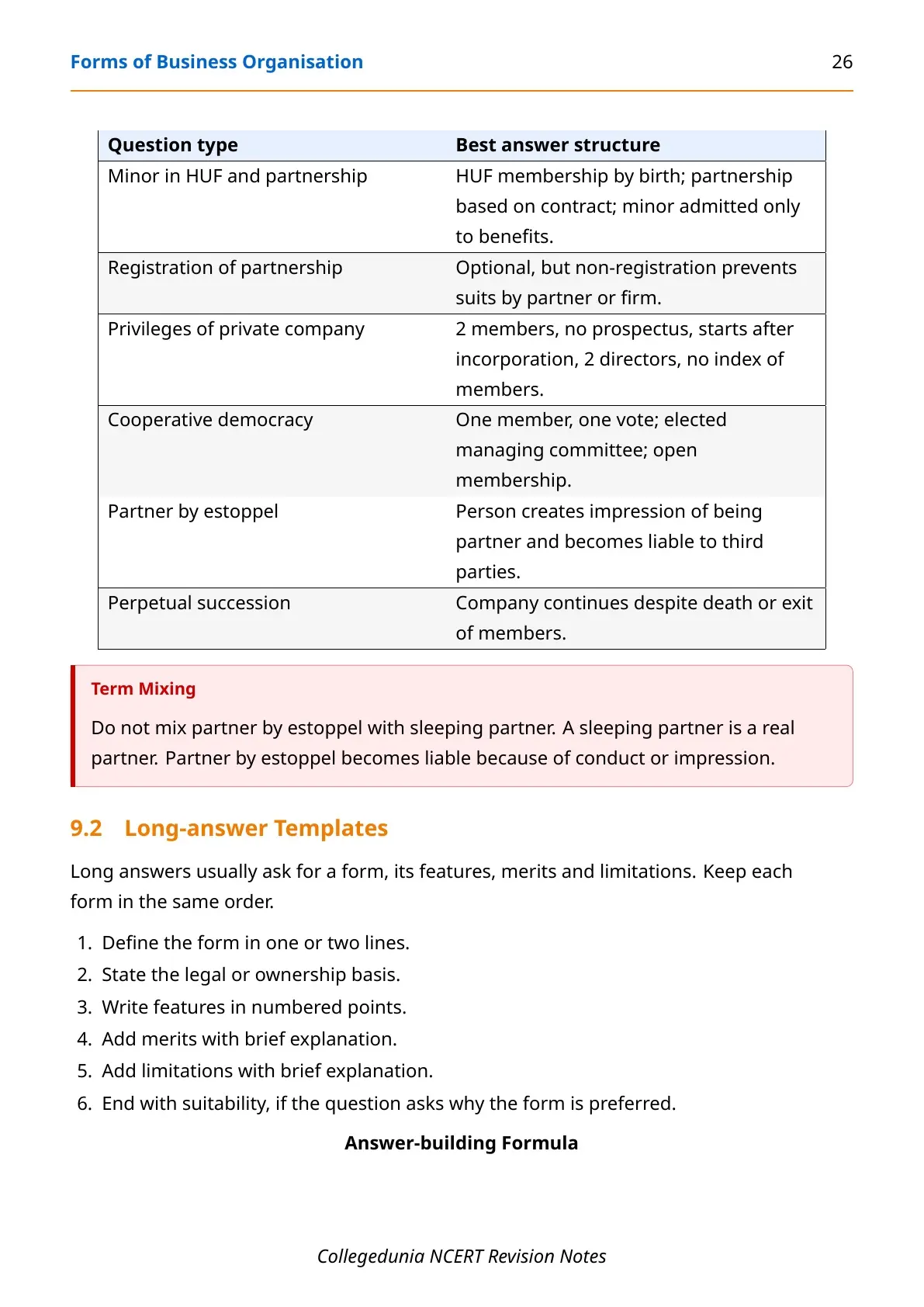
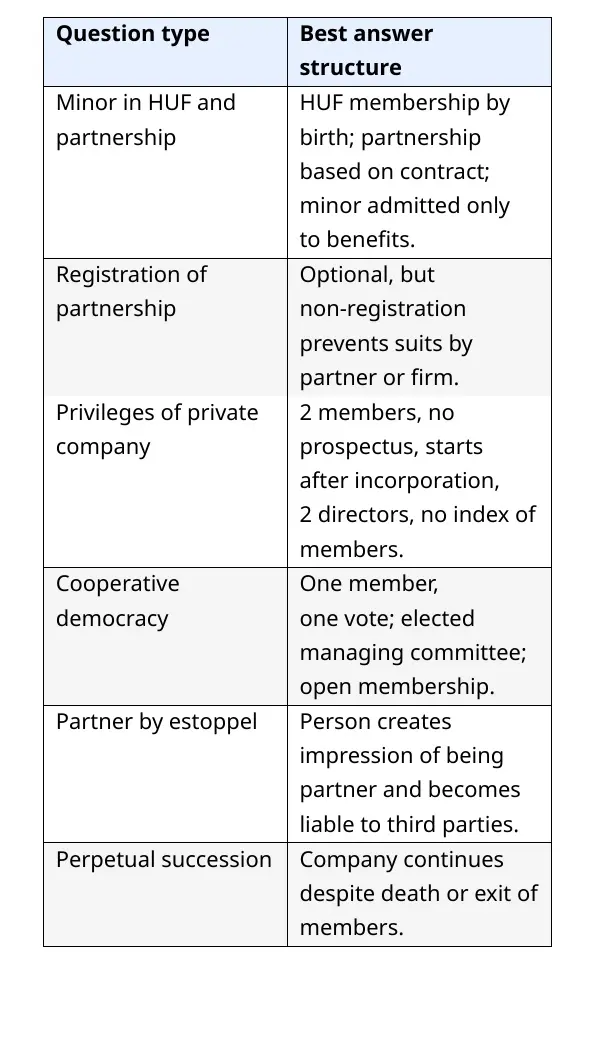
- Registration: optional, but a firm that is not registered faces legal limits.
Cooperative Society and Company Difference in Class 11 Business Studies
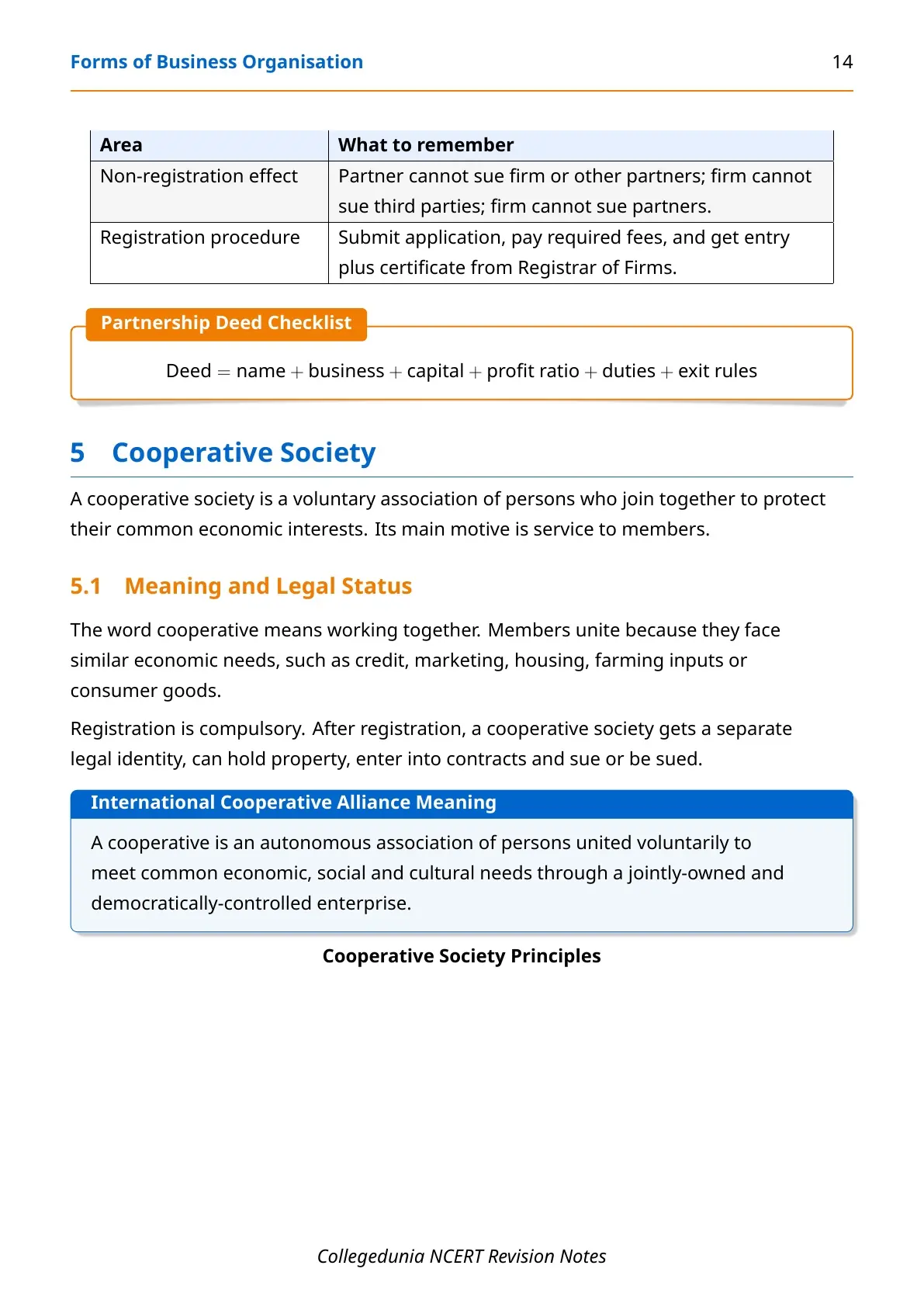
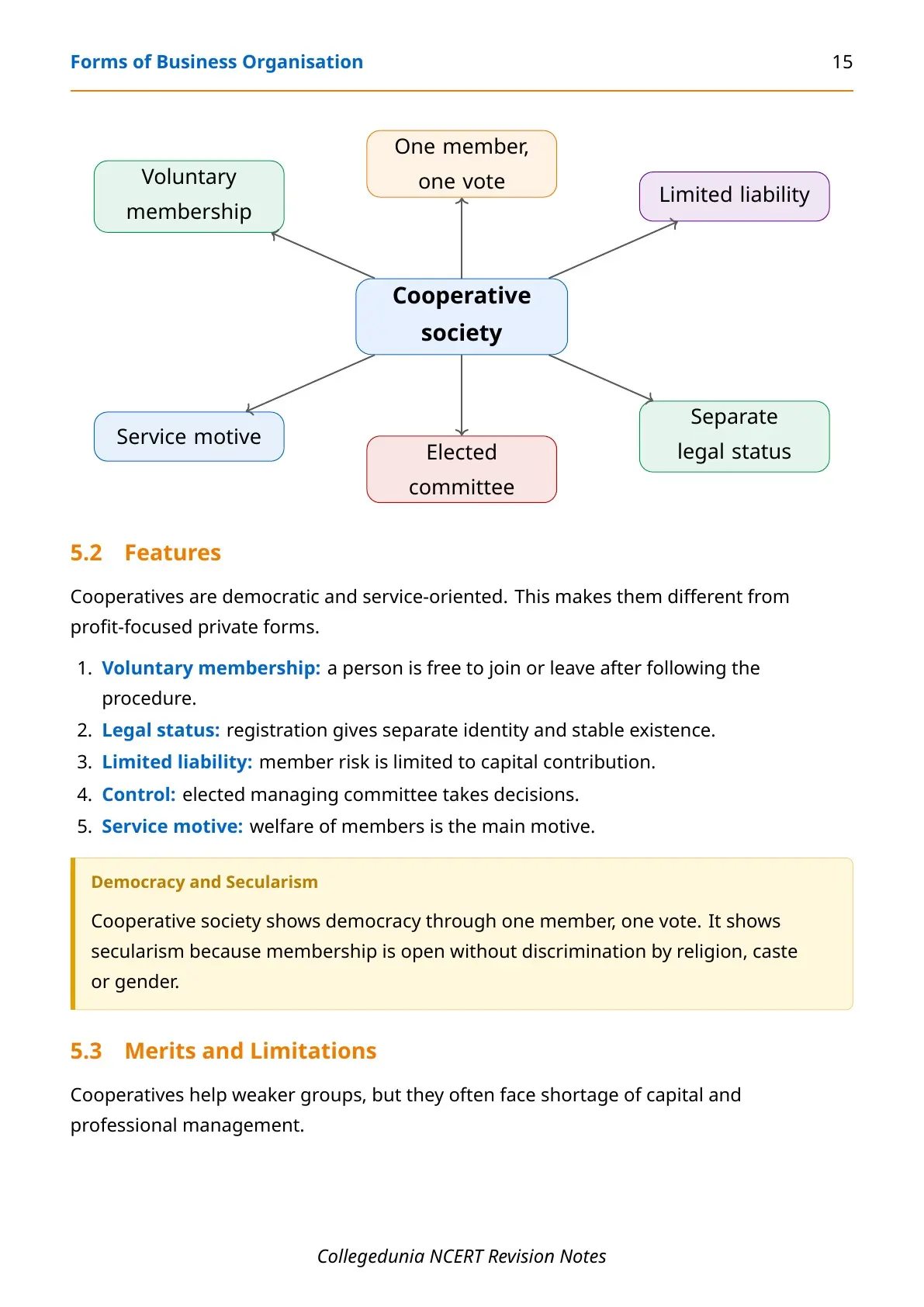
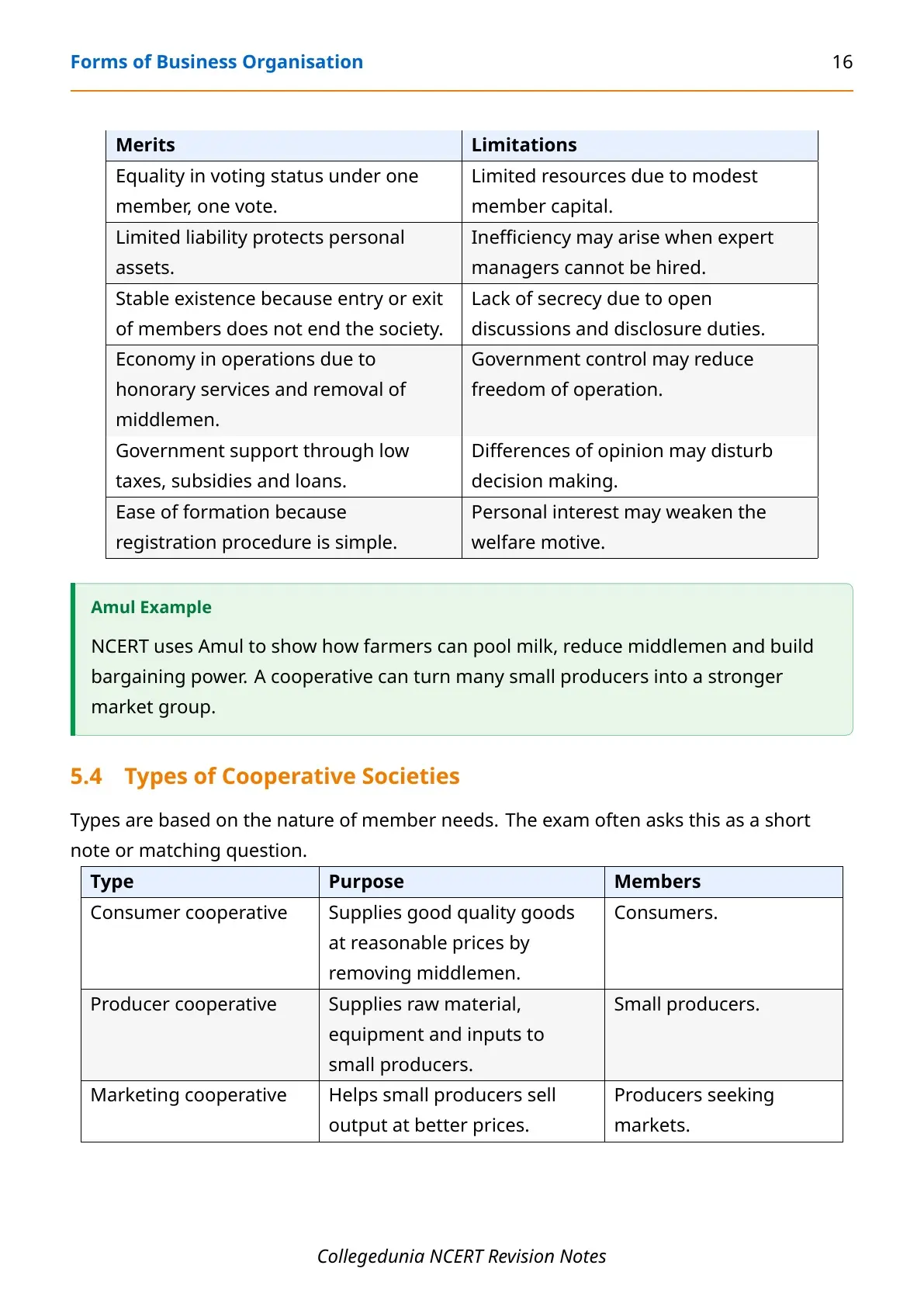
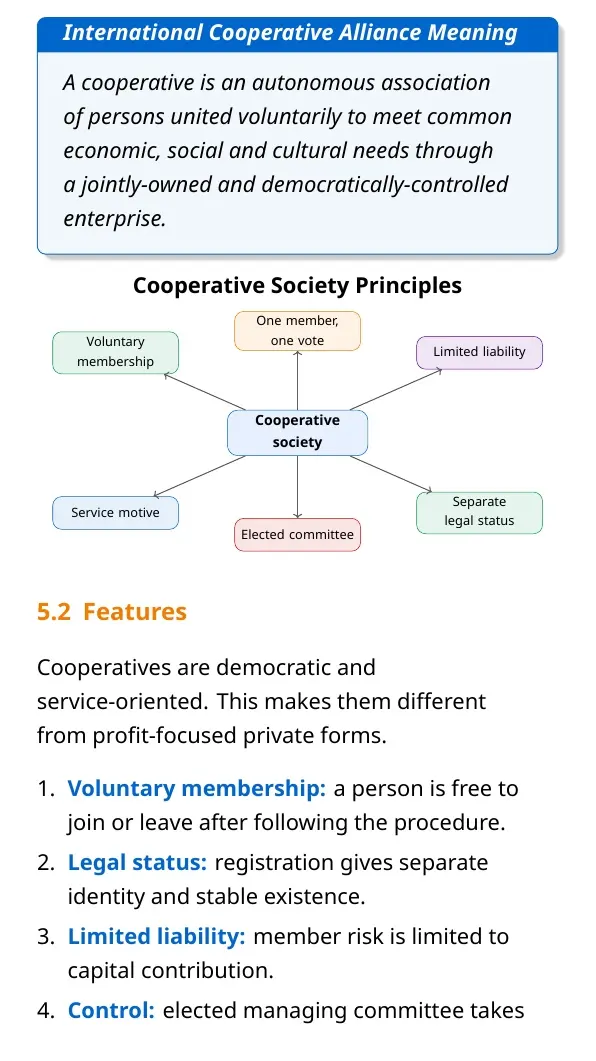
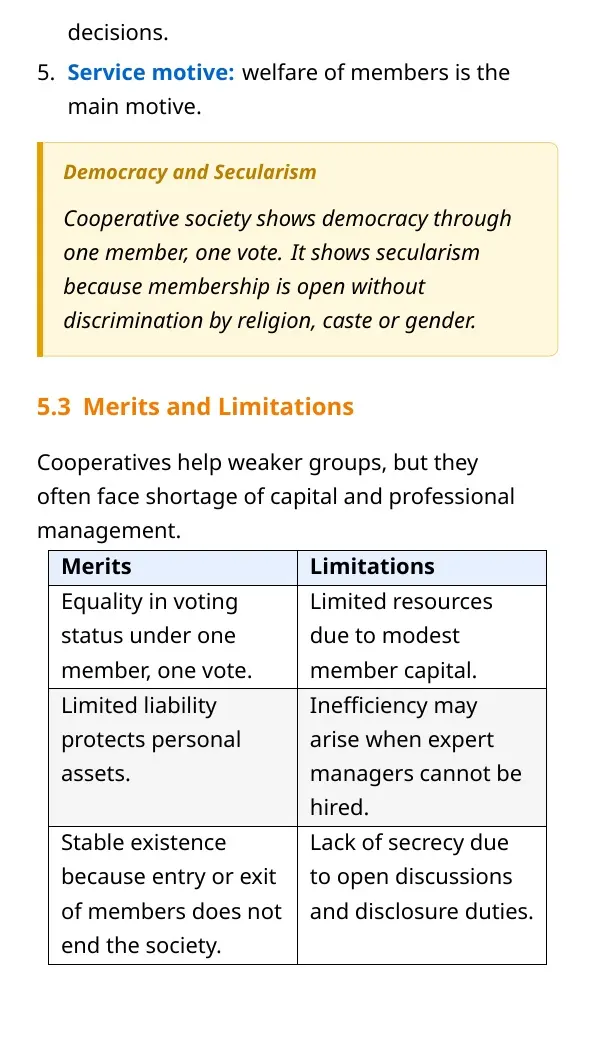
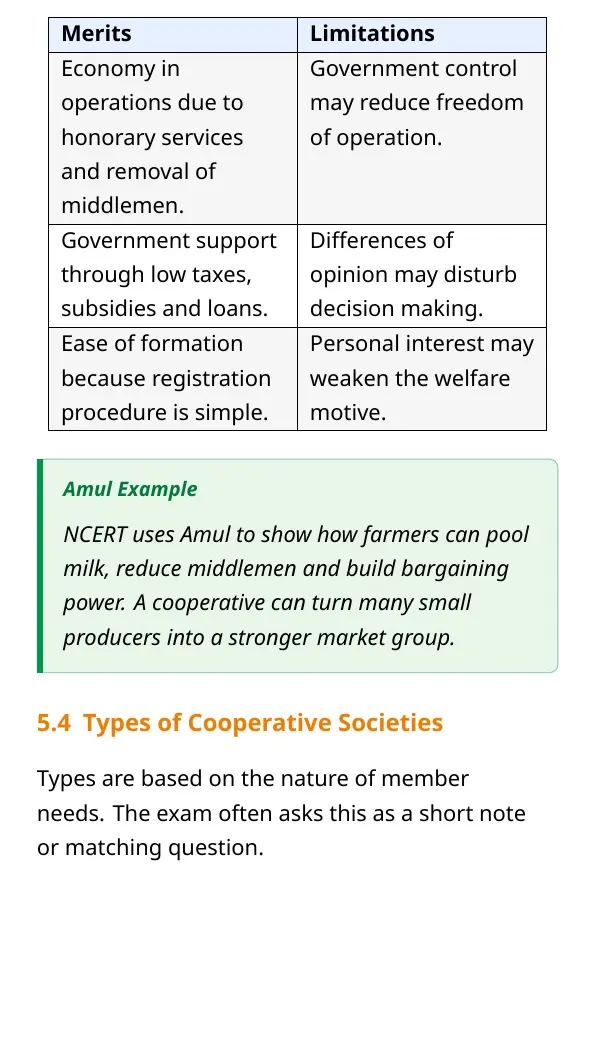
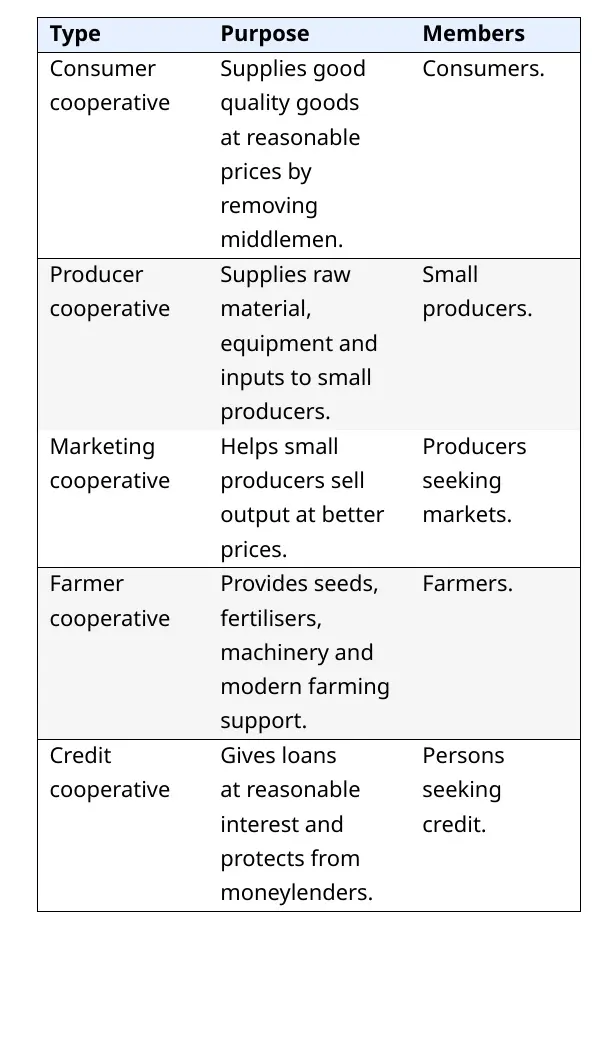
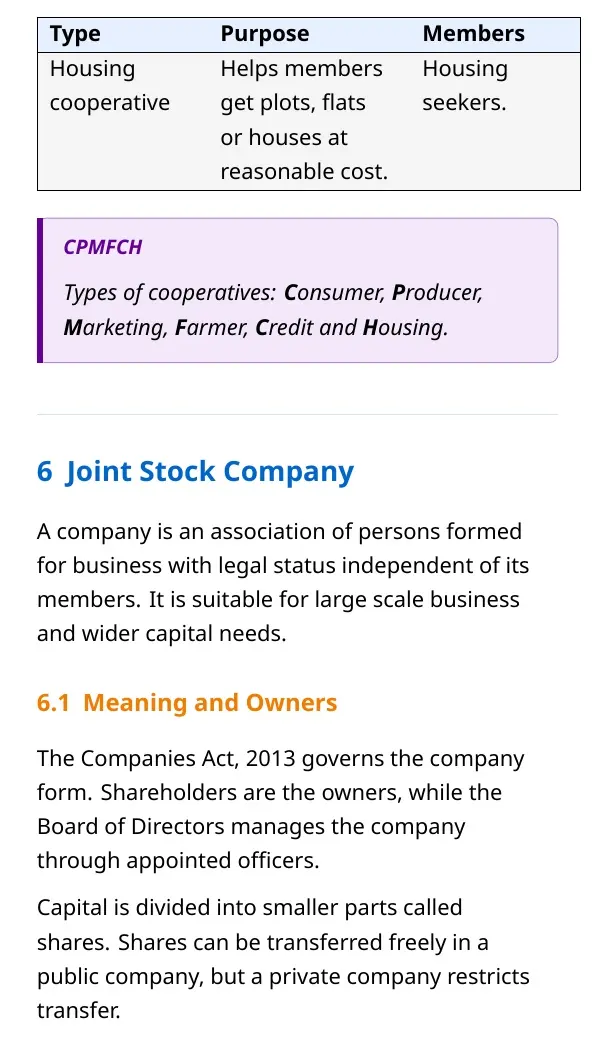
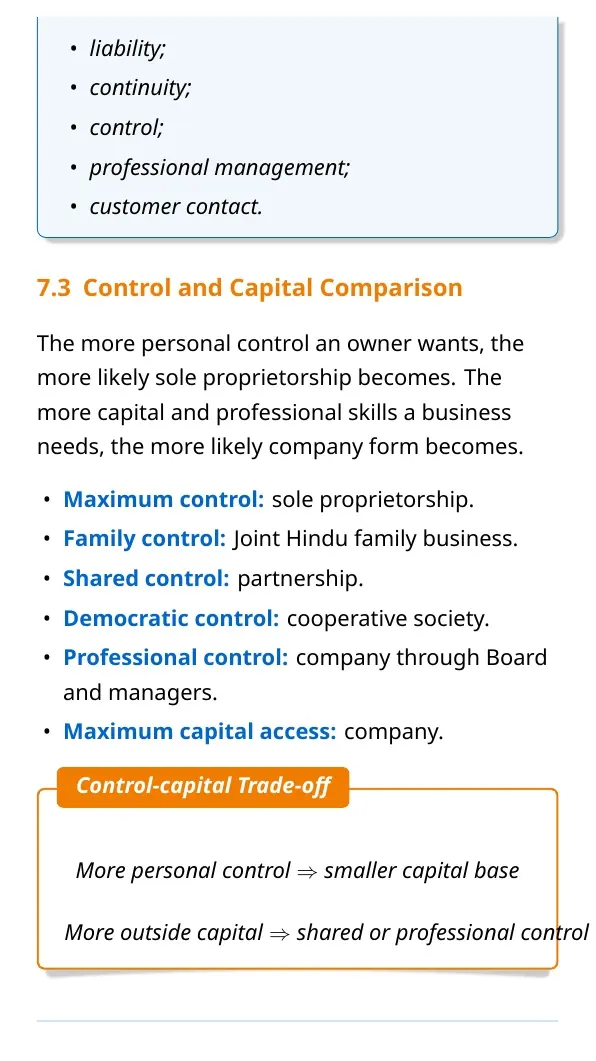
A cooperative society is formed by people who join voluntarily to protect common economic interests. It follows democratic control, so one member gets one vote. The profit motive is secondary.
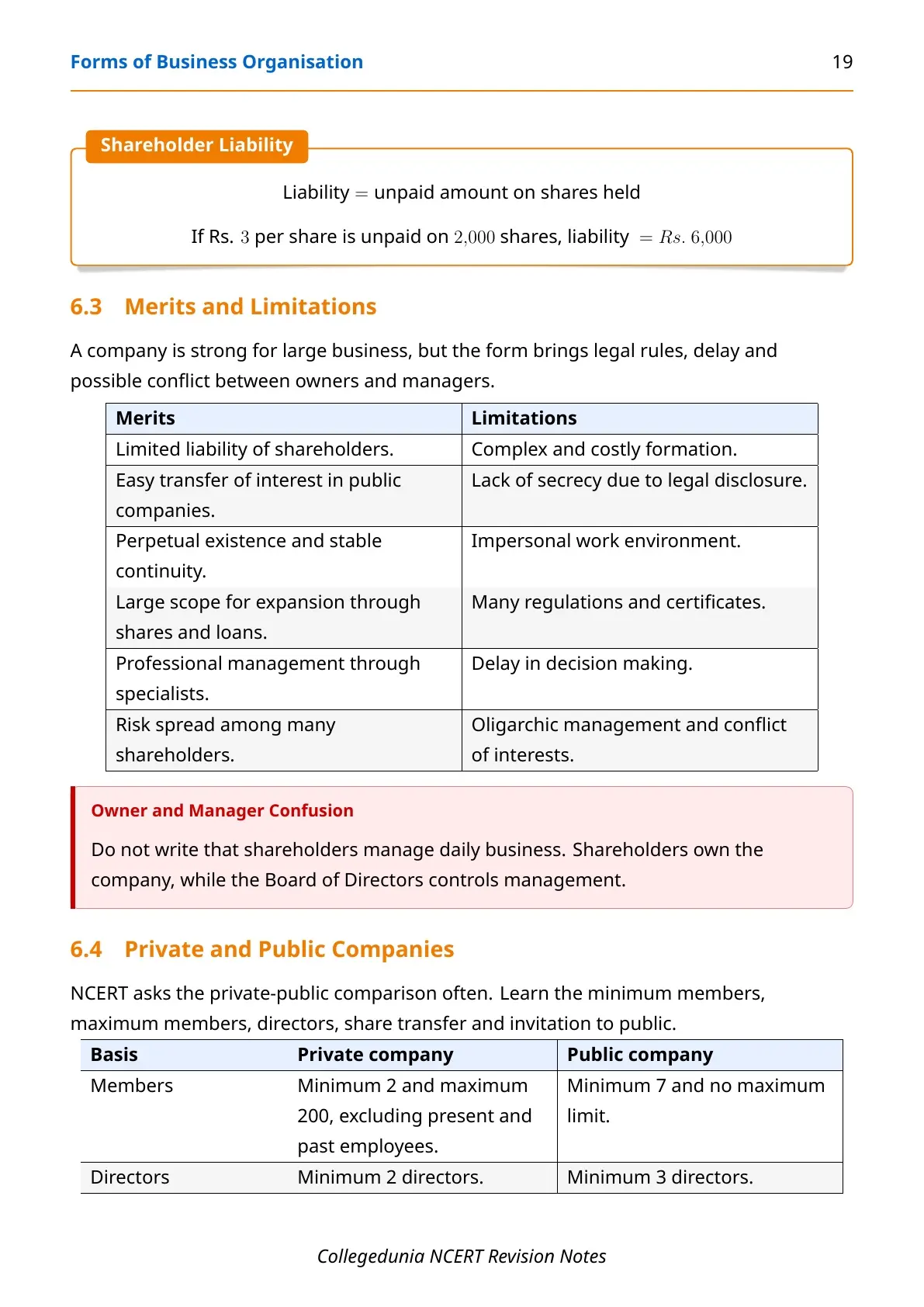
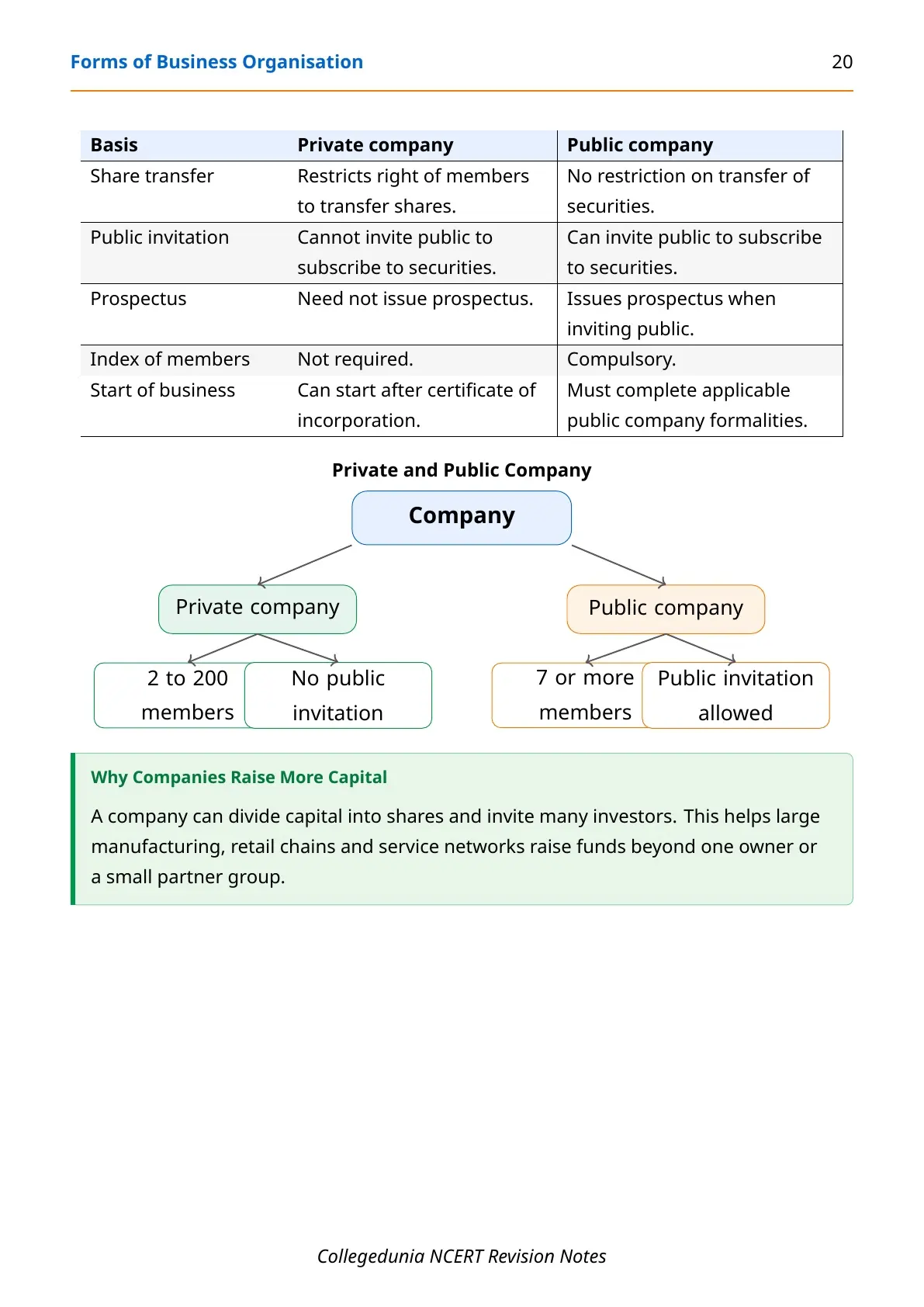
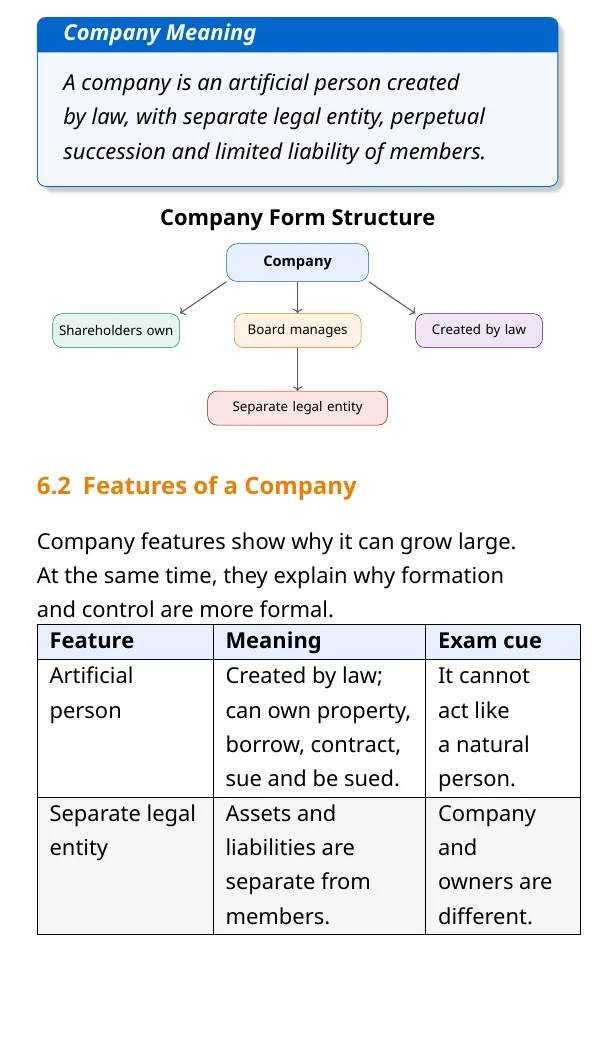
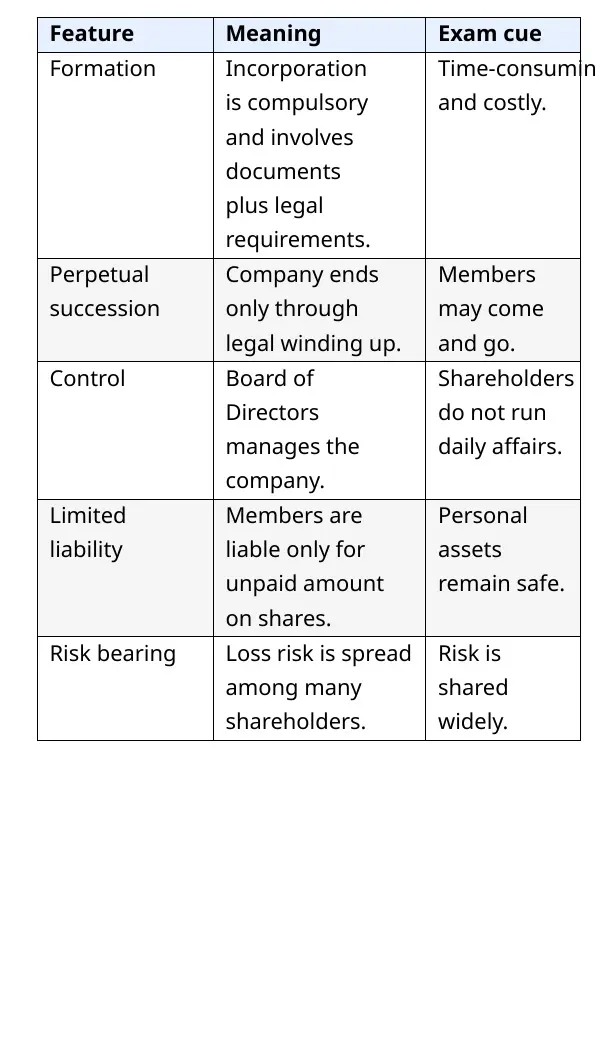
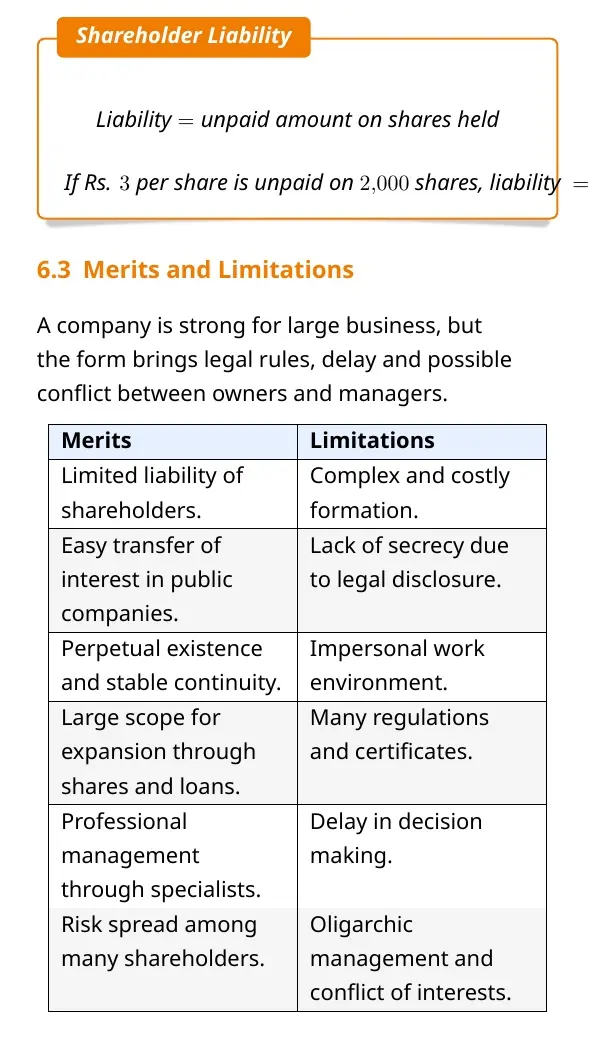
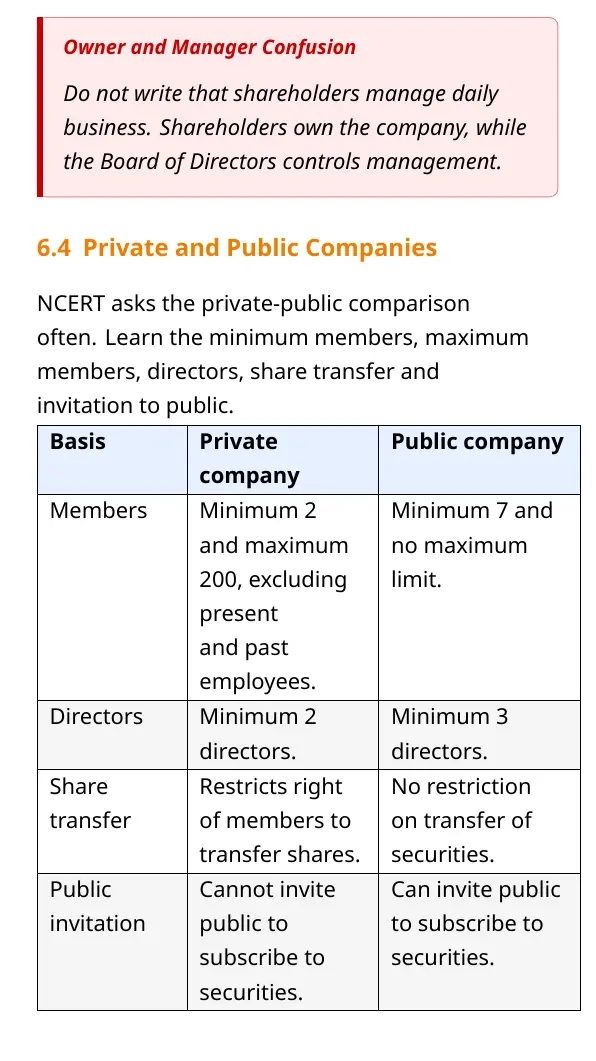
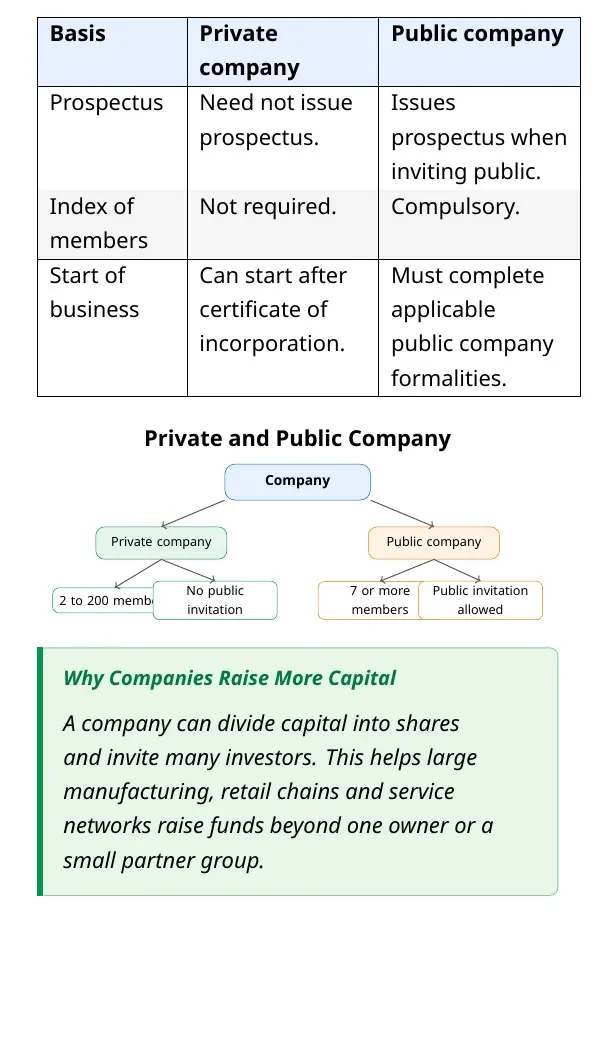
A company is created by registration under law. It has separate legal identity, limited liability and perpetual succession. A company can continue even if shareholders change.
| Point | Cooperative Society | Company |
|---|---|---|
| Main aim | Service to members | Profit with legal structure |
| Voting | One member, one vote | Voting usually follows shares held |
| Liability | Usually limited | Limited by shares or guarantee |
| Management | Elected managing committee | Board of directors |
Choosing the Right Form of Business Organisation
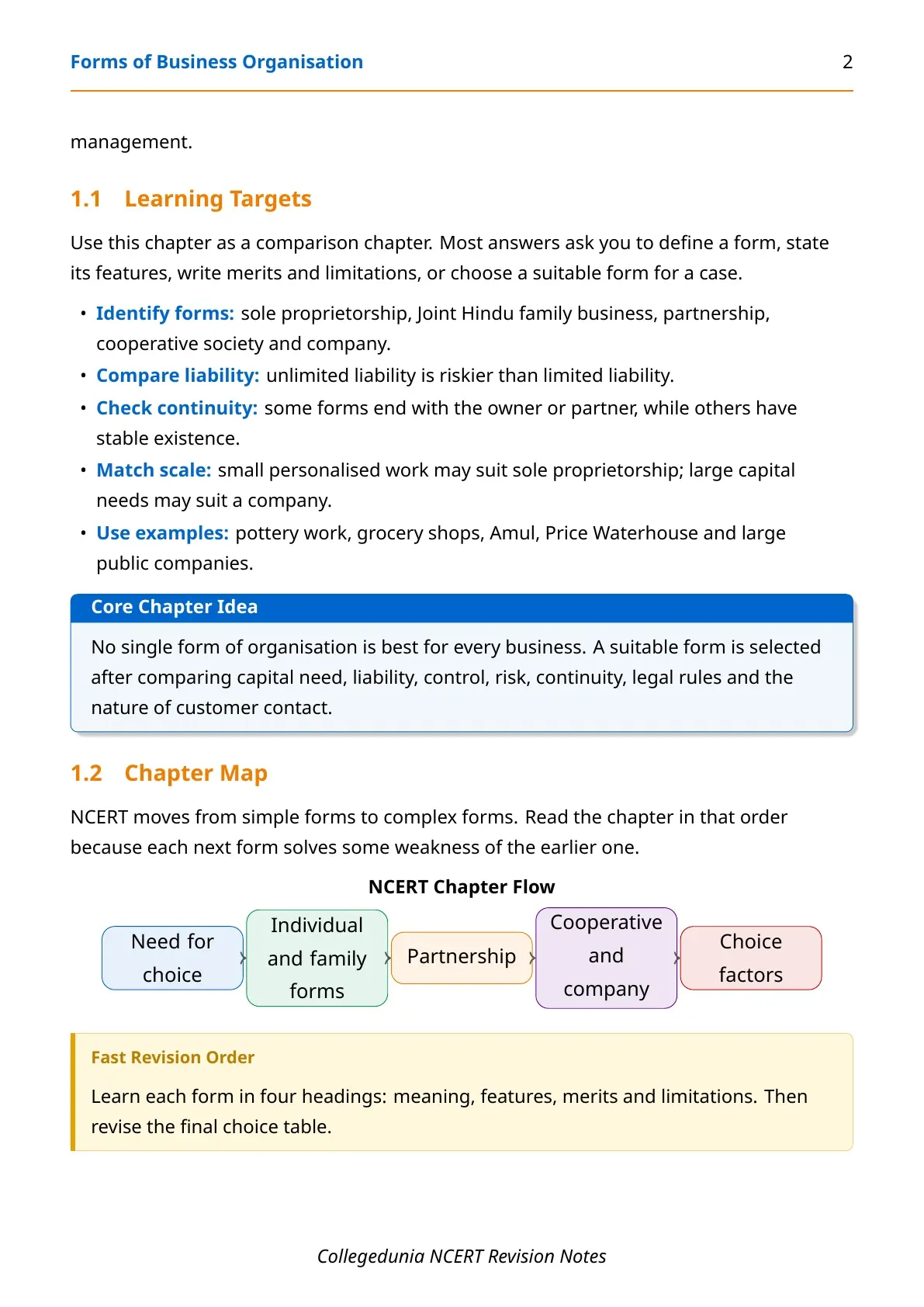
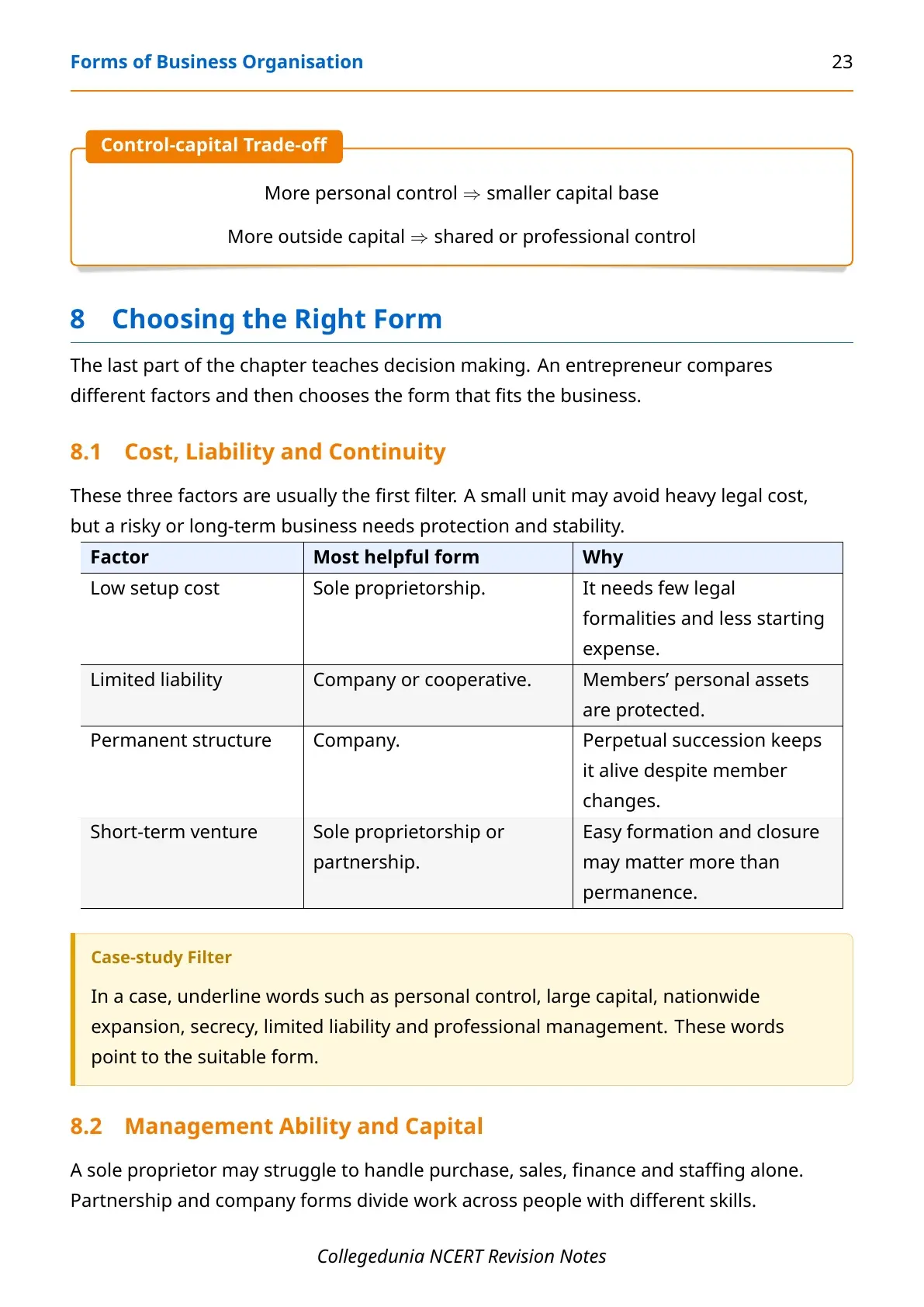
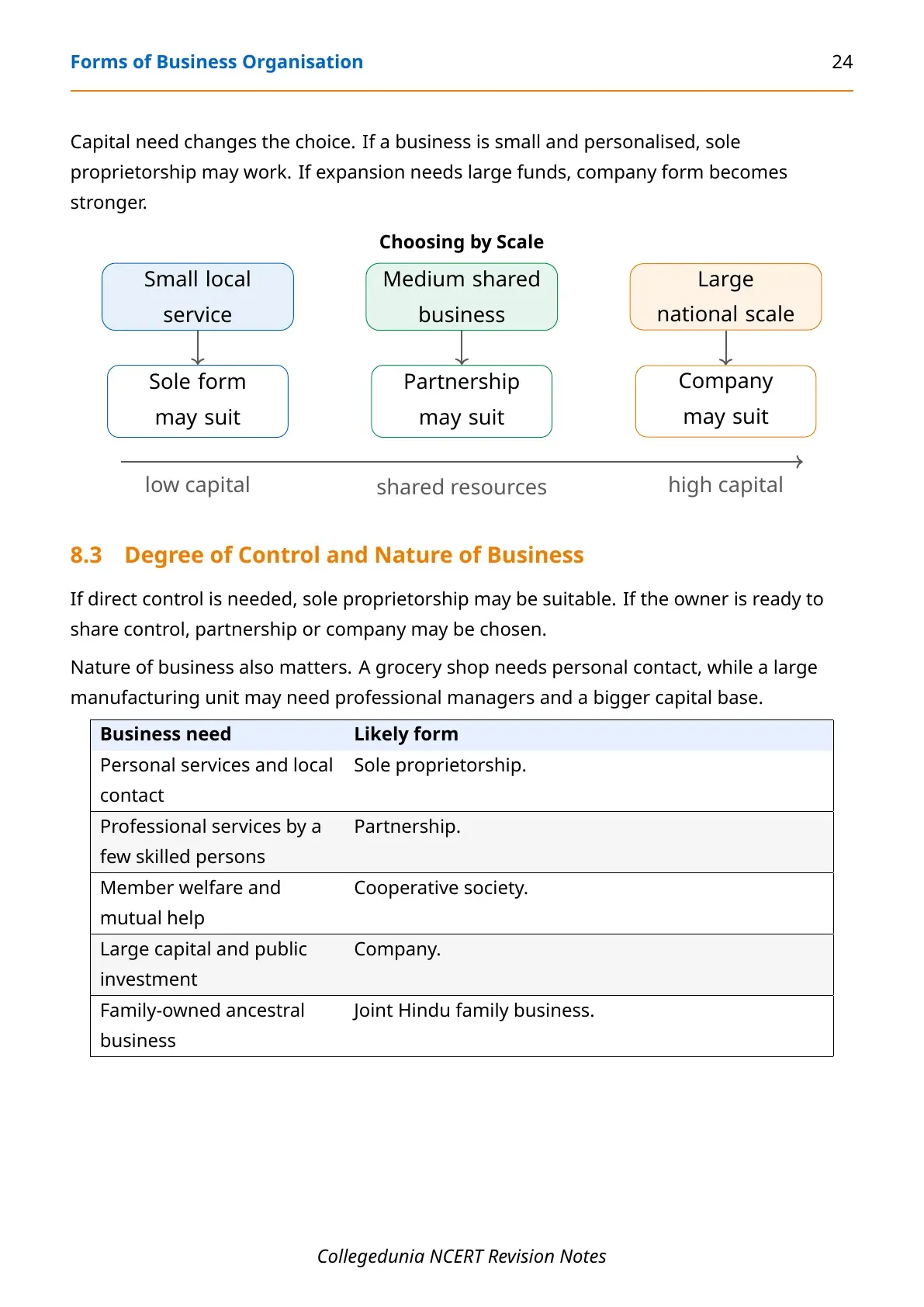
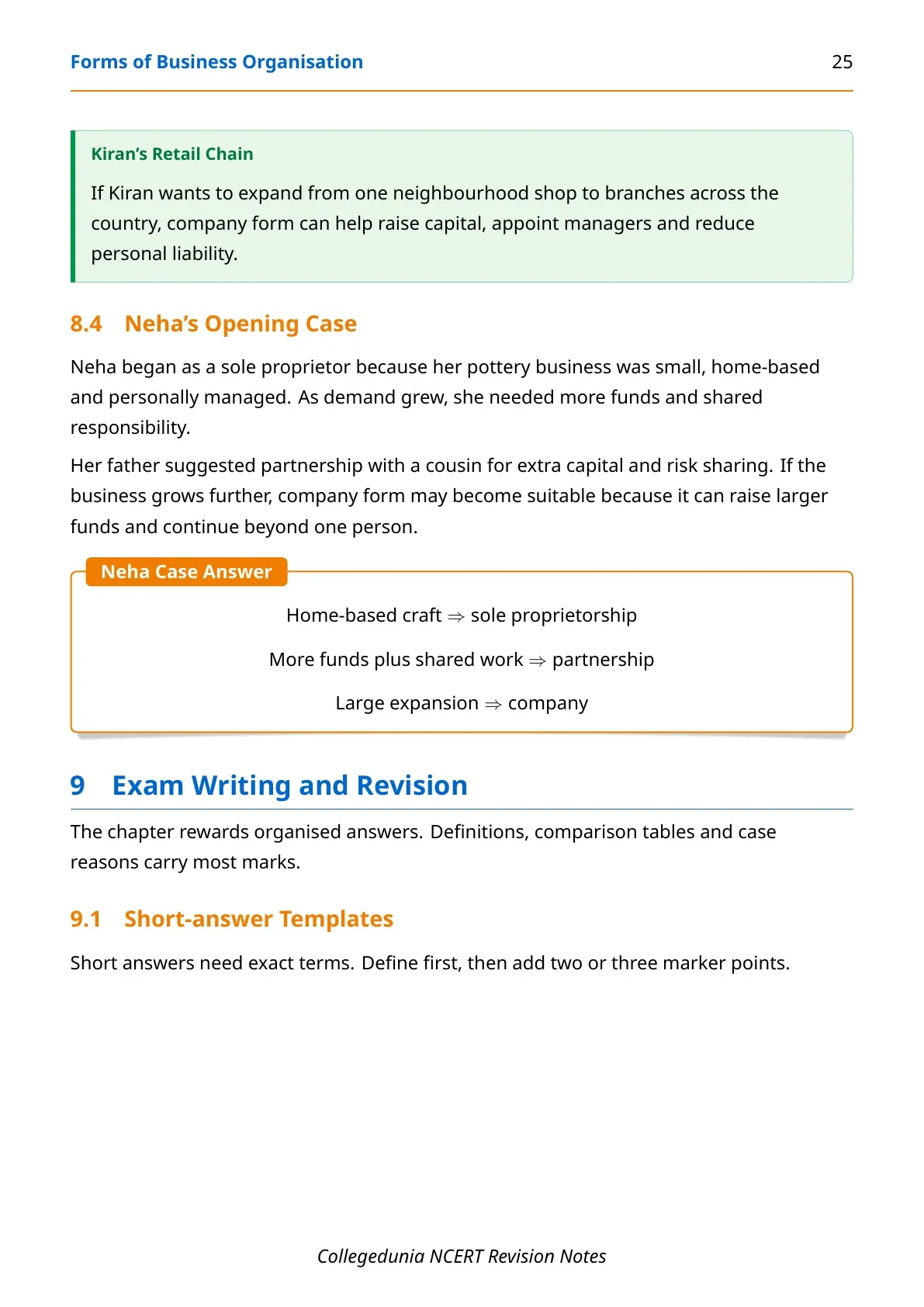
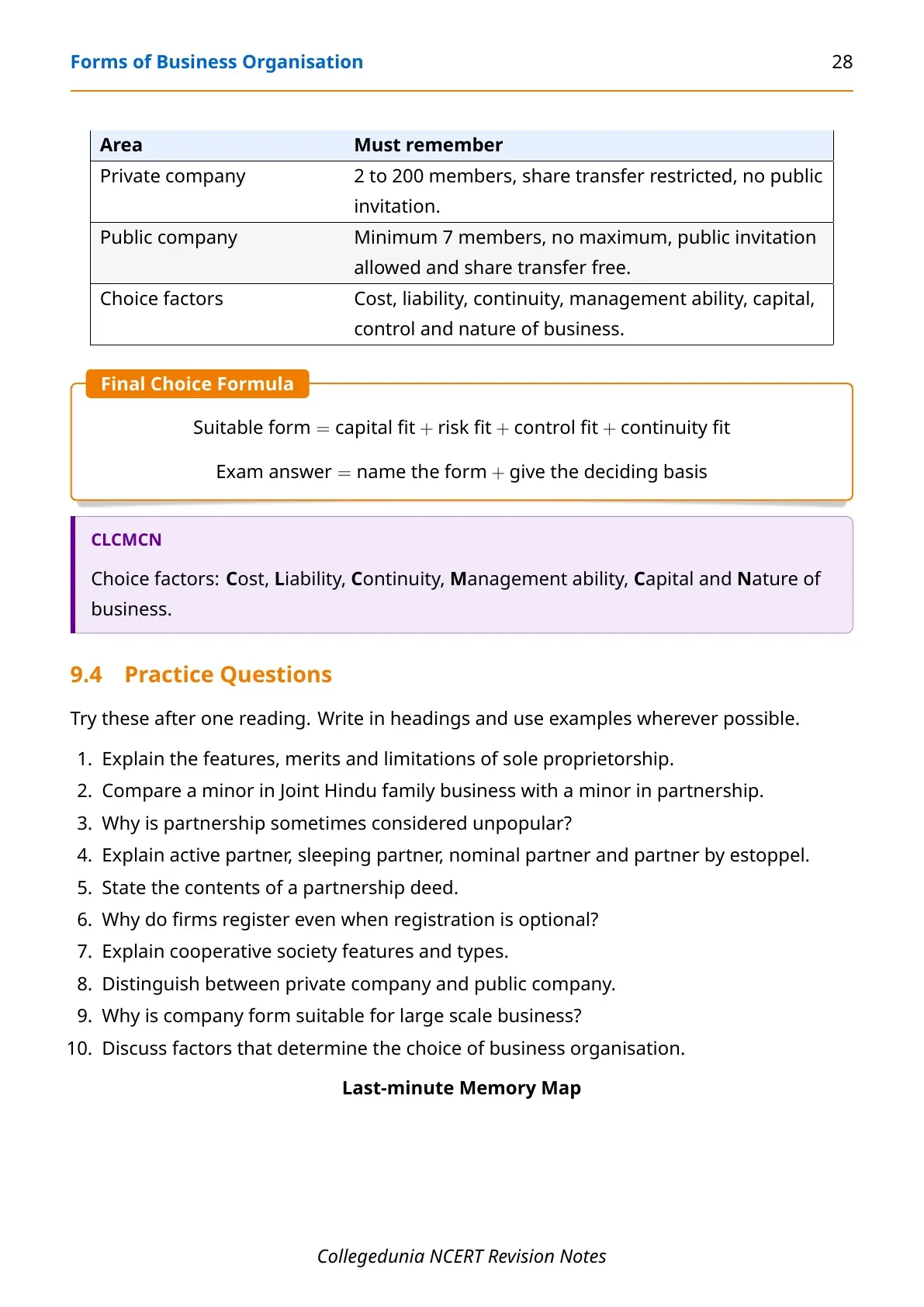
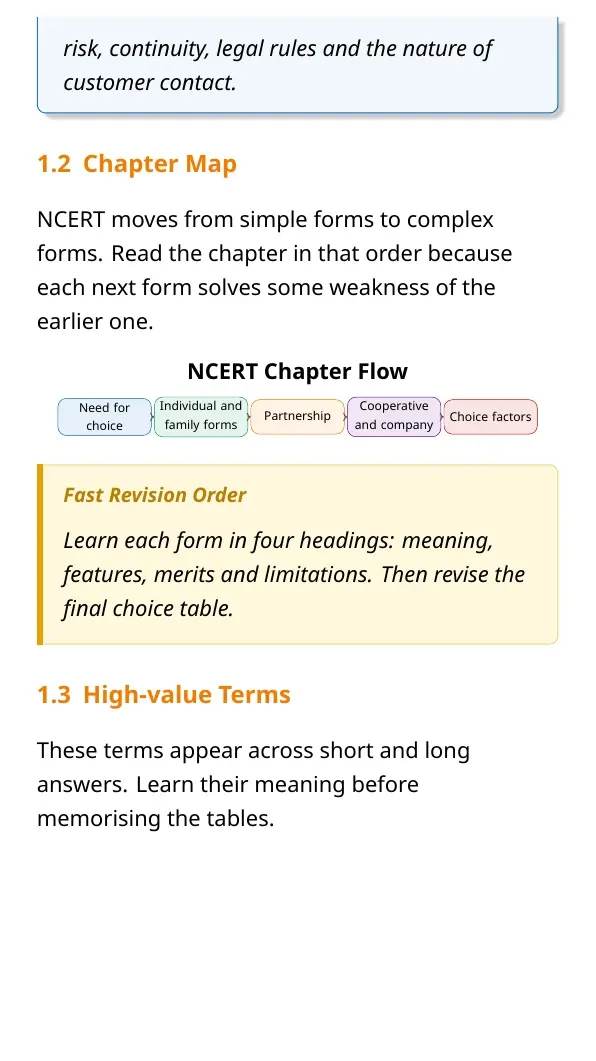
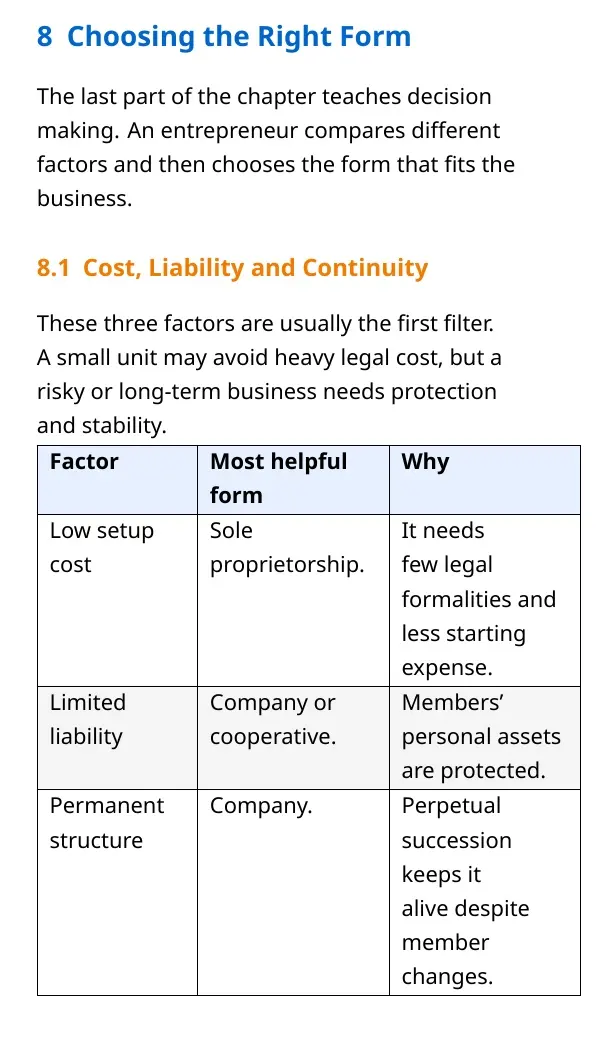
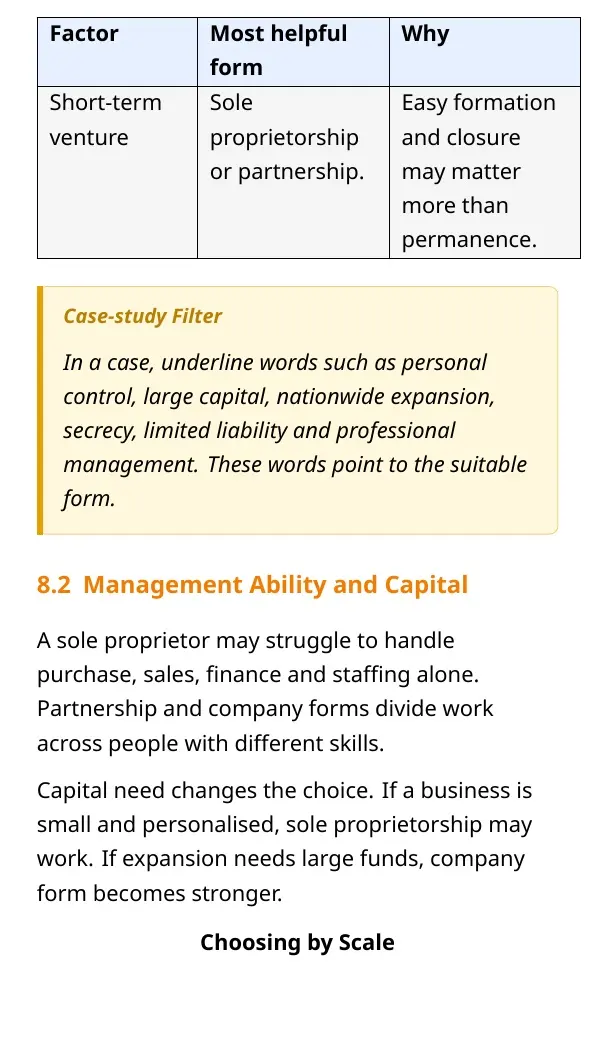
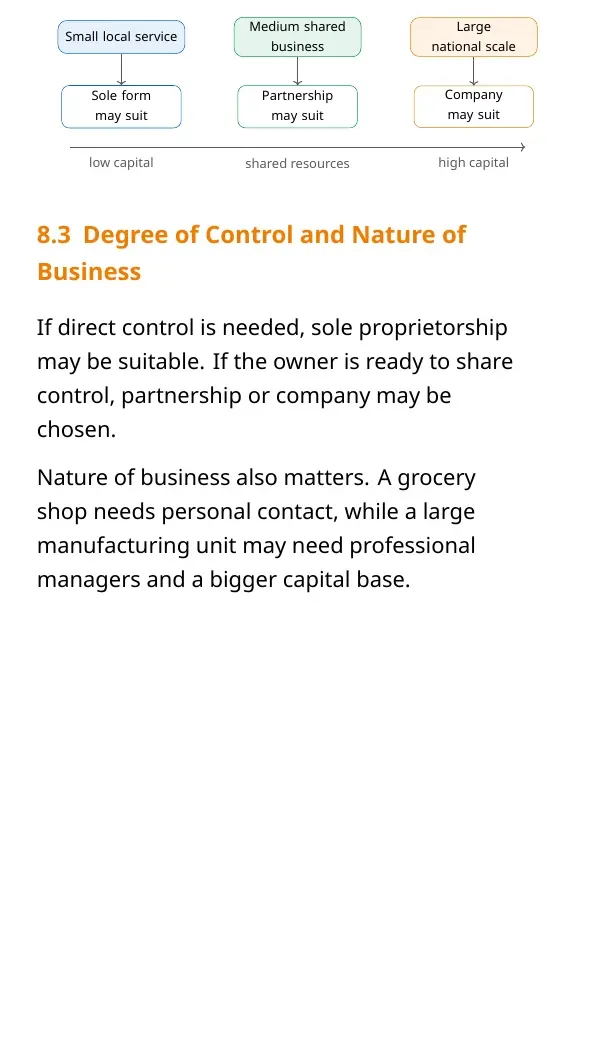
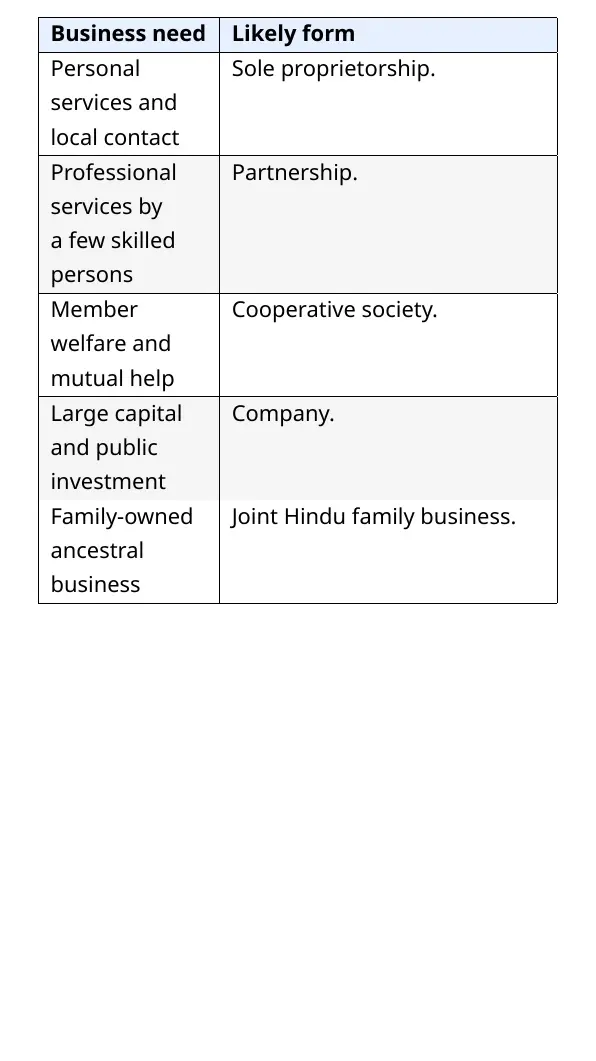
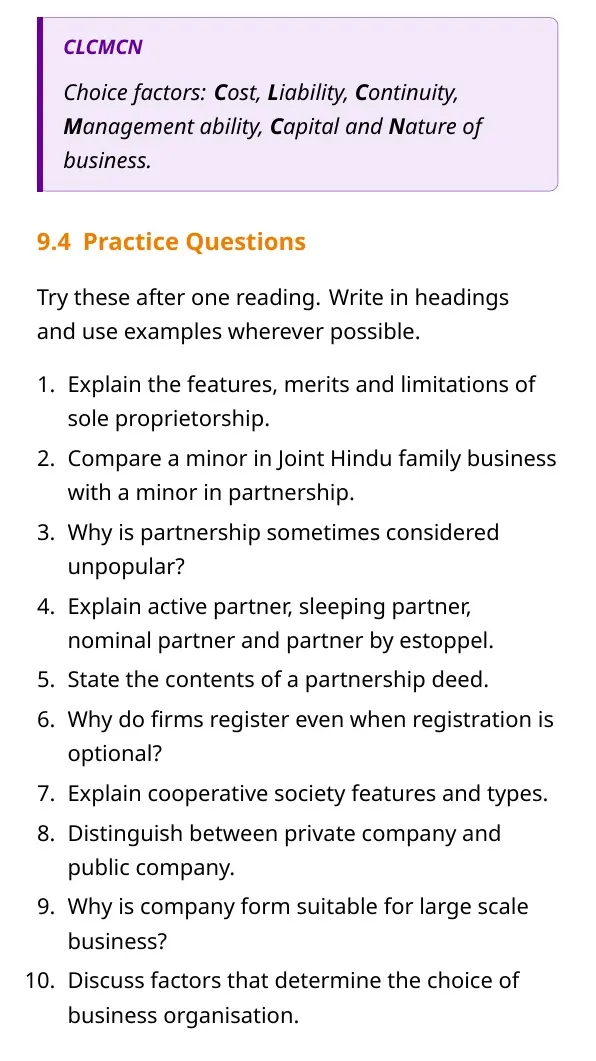
NCERT ends the chapter with factors that help an entrepreneur choose a form. There is no one best form for every business. Match the form with capital need, risk, control and growth plan.
- Choose sole proprietorship when capital need is low and personal control matters.
- Choose partnership when skill, capital and responsibility must be shared.
- Choose cooperative society when members want common service and democratic control.
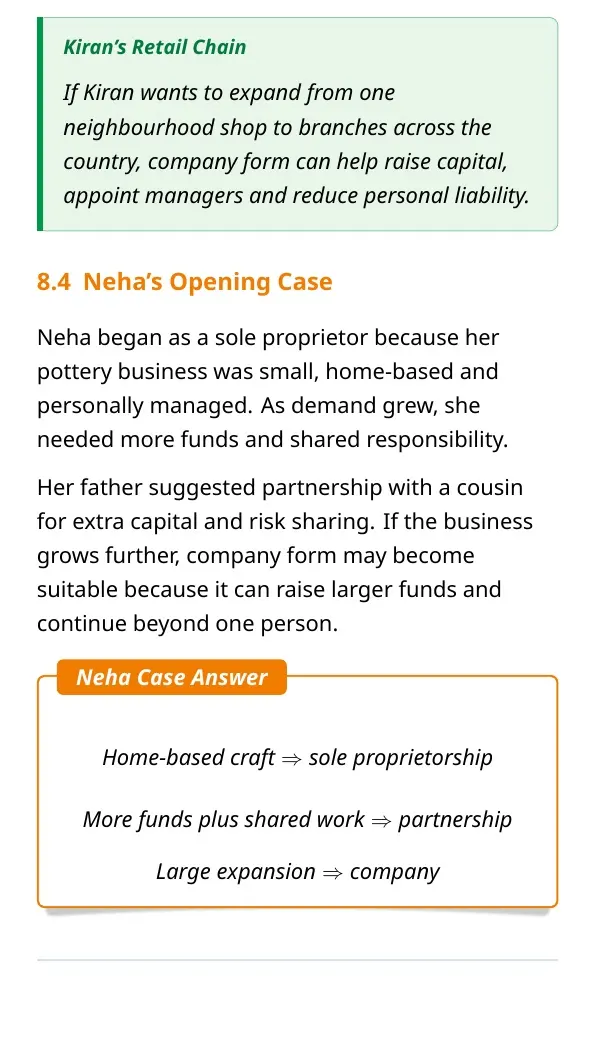
- Choose company when large capital, limited liability and continuity matter most.
Related Resources for Forms of Business Organisation
| Resource | Use it for | Link |
|---|---|---|
| NCERT Solutions | Full answers to textbook questions | Open NCERT Solutions |
| Handwritten Notes | Topper-style last-minute revision | Open Handwritten Notes |
| NCERT Book PDF | Read the official NCERT chapter | Open Book PDF |
| Chapter Notes PDF | Use this page for revision notes | Open Chapter Notes |
All Class 11 Business Studies Notes Chapters
| Chapter | Title | Notes Link |
|---|---|---|
| Chapter 1 | Business, Trade and Commerce | Open Notes |
| Chapter 2 | Forms of Business Organisation | You are here |
| Chapter 3 | Private, Public and Global Enterprises | Open Notes |
| Chapter 4 | Business Services | Open Notes |
| Chapter 5 | Emerging Modes of Business | Open Notes |
Forms of Business Organisation Class 11 Notes FAQs
Ques. What does Forms of Business Organisation Chapter 2 cover?
Ans. It covers sole proprietorship, Hindu undivided family business, partnership, cooperative society, company and the factors used to choose a business form.
Ques. Which form of business has unlimited liability?
Ans. Sole proprietorship and most partnerships have unlimited liability. In a Hindu undivided family business, the karta has unlimited liability.
Ques. What is mutual agency in partnership?
Ans. Mutual agency means each partner acts as an agent of the firm and of other partners for business acts done in the firm's name.
Ques. How should students revise Class 11 Business Studies Chapter 2?
Ans. Students should revise the meaning, merits, limits and suitability of each form. Then they should practise comparison tables and case-based choice questions.



Comments