



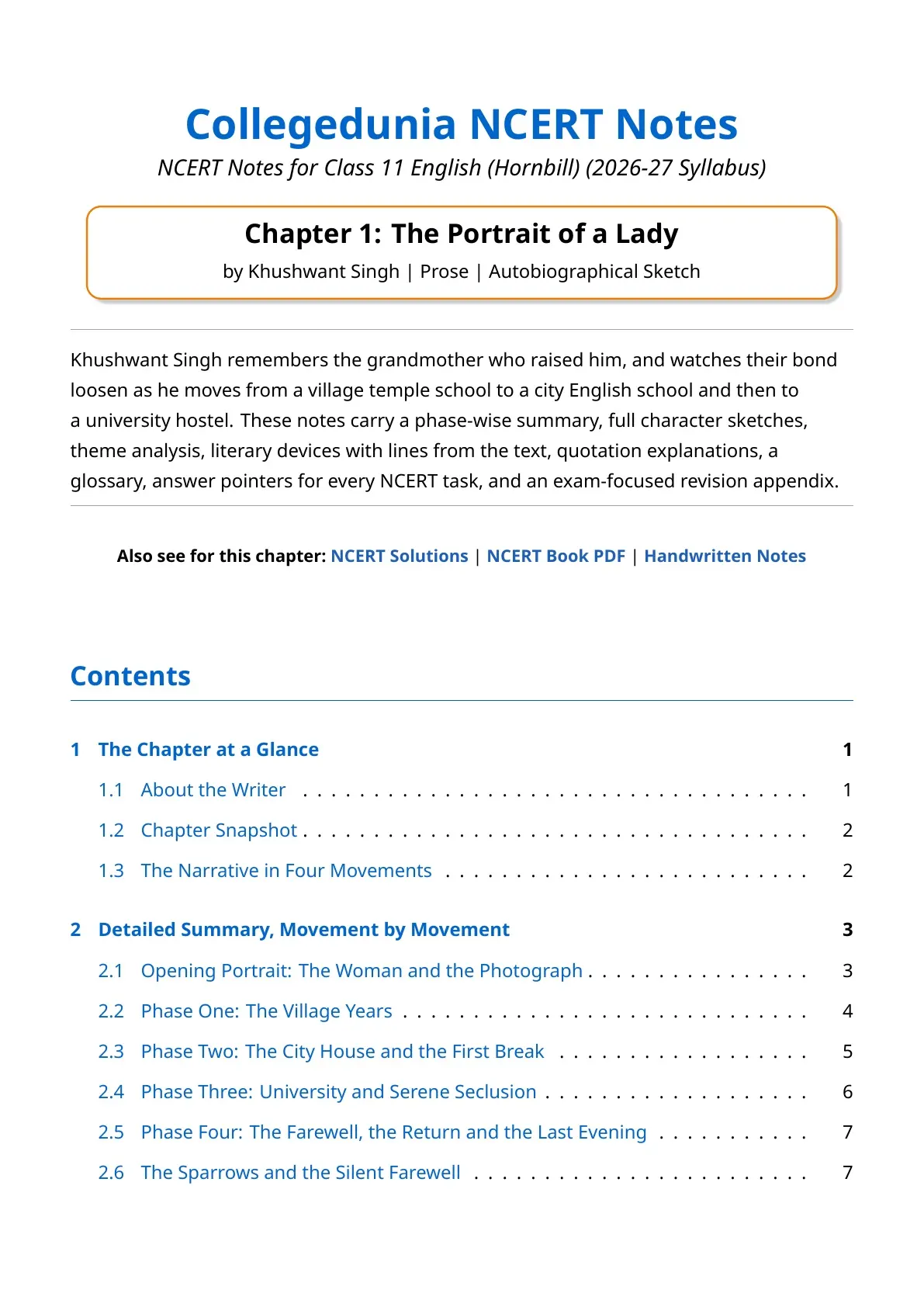
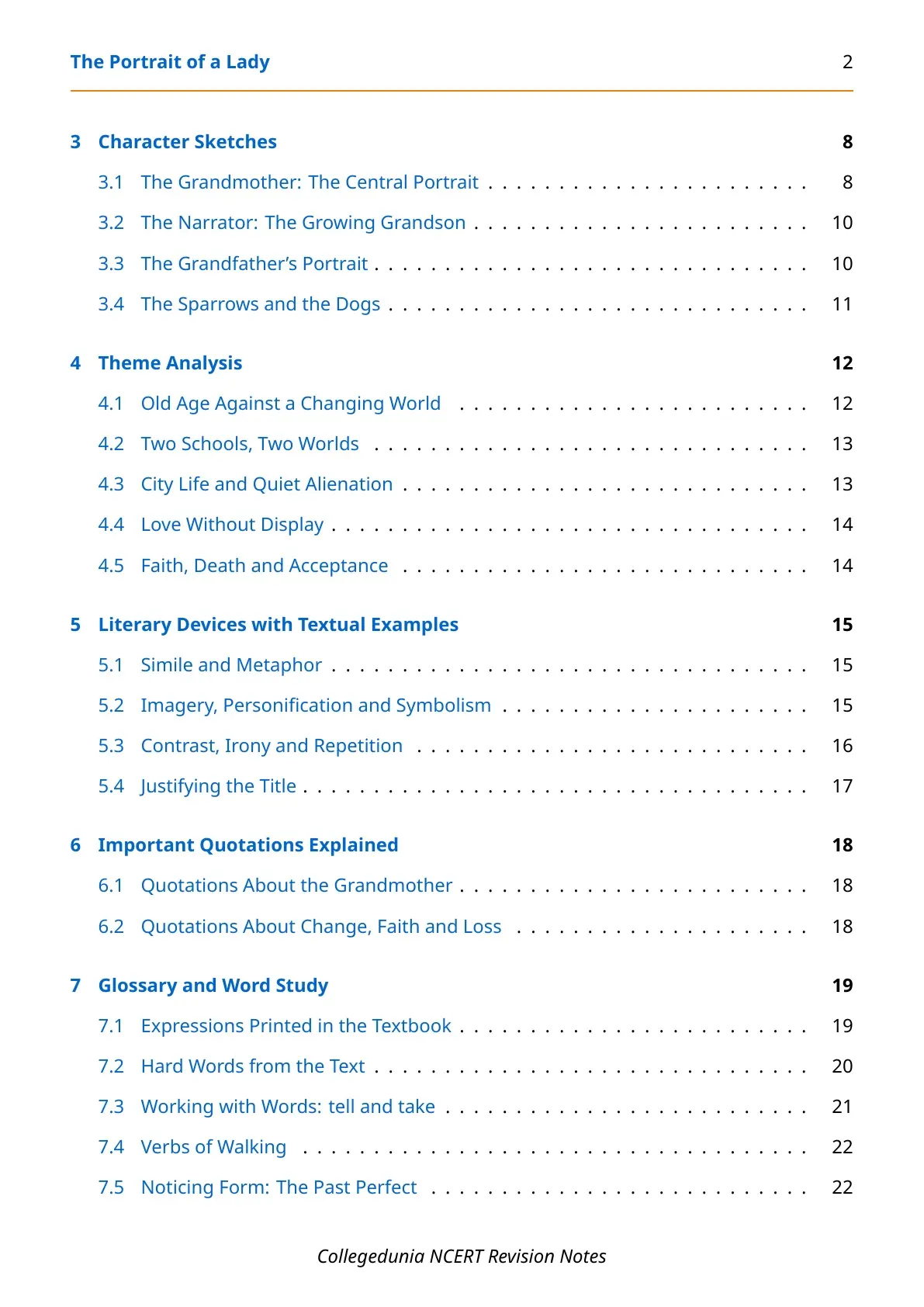
Inside these Class 11 English Hornbill notes for The Portrait of a Lady you will find the full story summary, a character sketch of the grandmother, the three phases of the friendship, and the meaning of every hard expression Khushwant Singh uses. Everything here follows the 2026-27 reprint of the Hornbill textbook.
- Covers the summary, themes, character sketch and every textbook task in the Hornbill unit.
- The chapter usually carries 6 to 8 marks in the Literature section.
- Written according to the 2026-27 NCERT Hornbill textbook for Class 11 English Core.
Every note on this page is curated by Class 11 English teachers, checked line by line against the 2026-27 Hornbill print, and refined against the last five years of school question papers.
Student Feedback: In a Collegedunia poll of 11,780 Class 11 English students taken before the 2026-27 school exams, 68% said the sparrow ending was the part they were asked about most often in class tests. Only 34% could name all three phases of the friendship in the right order.
Source: 2026-27 Class 11 English Core student poll. Sample of 11,780 students from CBSE schools across 14 states.
|
Table of Contents |
What the Portrait of a Lady Notes Cover for Class 11 English
This is a prose chapter, so marks come from memory of small details and from clean, quotable lines. The story is short. The questions set on it are not. These notes break the unit into the exact blocks a school paper asks about.
- A paragraph by paragraph summary of the whole story, from the grandfather's portrait to the sweeper's dustbin.
- The three phases of the friendship, in the order the textbook wants them written.
- A character sketch of the grandmother with a text example for each trait.
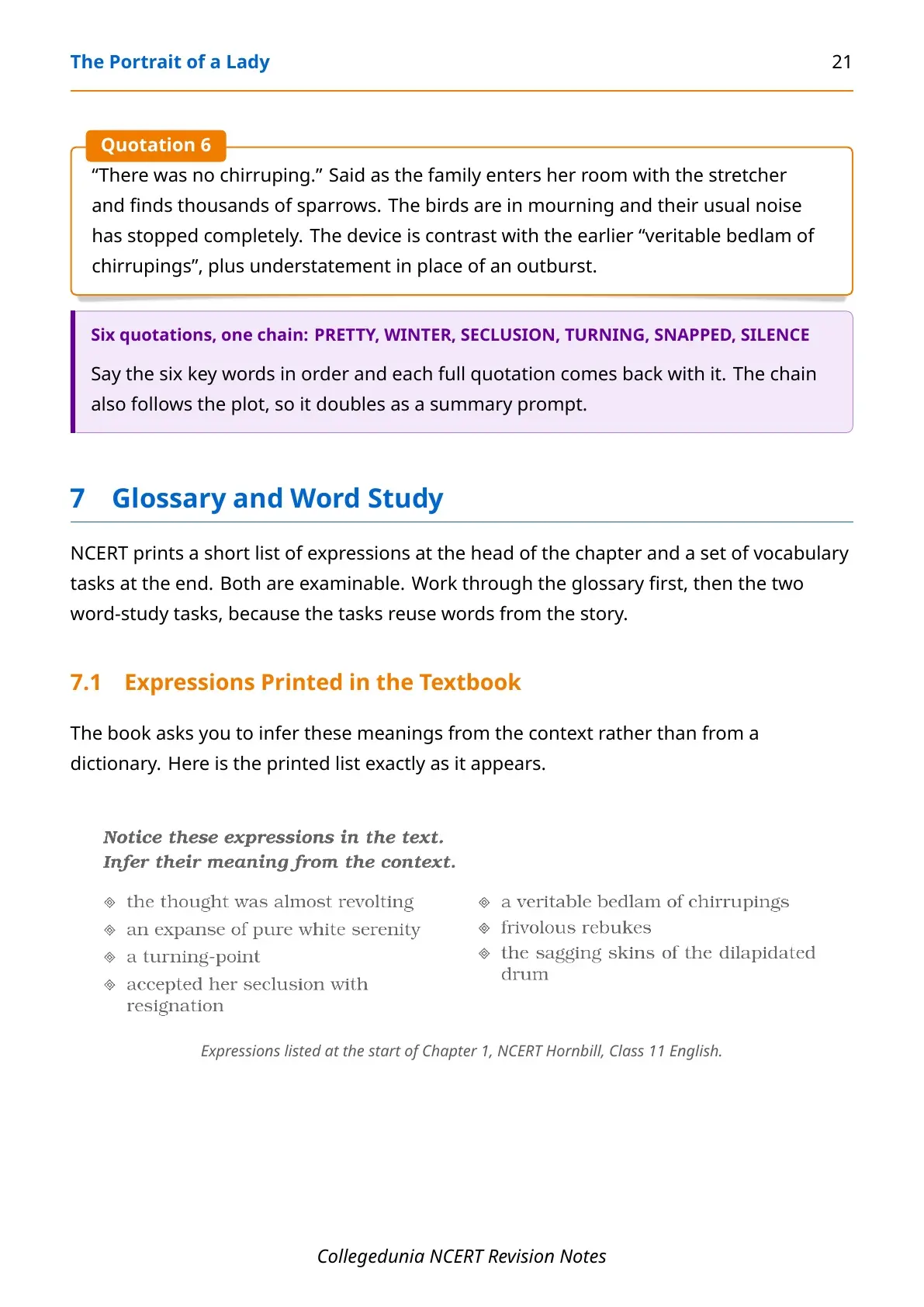
- All seven expressions printed in the Notice box, explained in plain words.
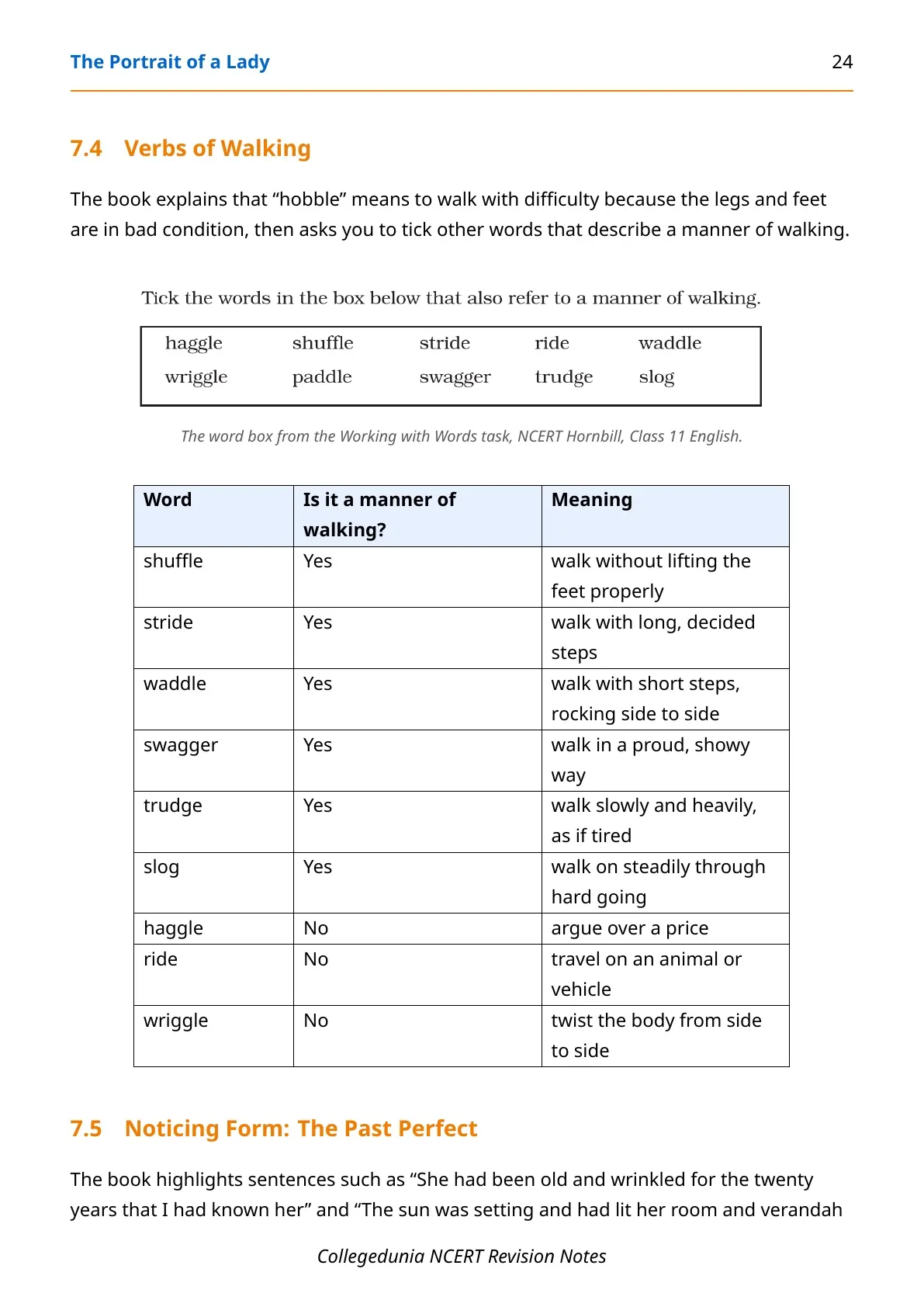
- The Working with Words answers for tell, take and the walking verbs.
- The past perfect examples from the Noticing Form task.
Tip: Learn two short quotations by heart. "She was like the winter landscape in the mountains" and "an expanse of pure white serenity" fit almost any answer about the grandmother's beauty or her calm.
Khushwant Singh and the Setting of The Portrait of a Lady
Khushwant Singh writes this piece as an autobiographical sketch. The narrator is the author himself, looking back at the woman who raised him. There is no plot twist and no villain. The story moves through time, and time is what changes everything.
The family moves from a village to a city, and the boy moves from a temple school to an English school and then to a university abroad. Each move costs the friendship something. The story is really about distance, not about death, and the death at the end only makes the distance final.
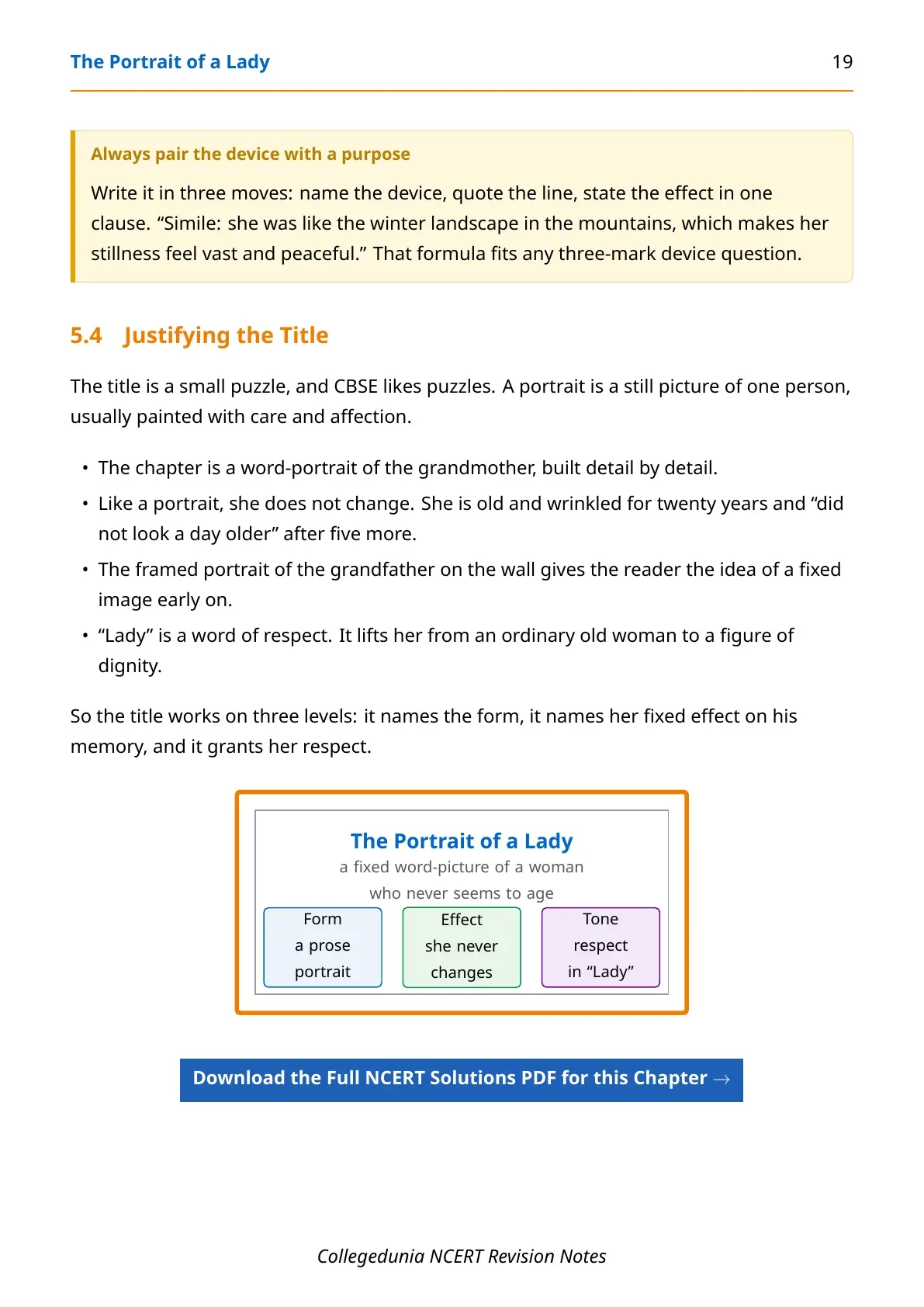
The title matters. A real portrait already hangs in the house: the grandfather's, above the mantelpiece in the drawing room. He wears a big turban and loose clothes, and his white beard covers most of his chest. Nobody ever paints the grandmother. The story itself is her portrait, drawn in words instead of paint.
The Portrait of a Lady Summary and Textbook Answers Explained
Source: Magnet Brains on YouTube
The Portrait of a Lady Summary in Simple Language
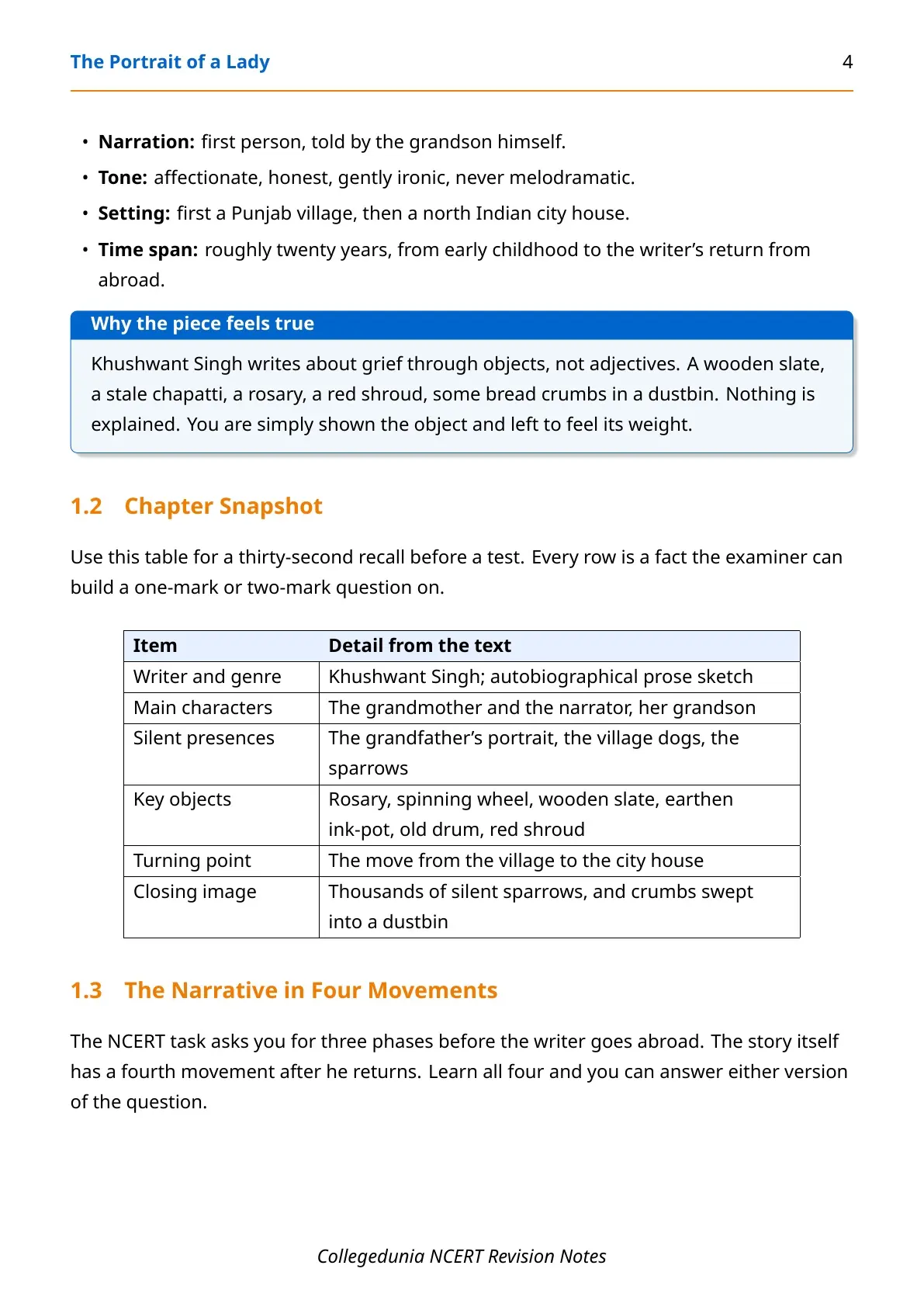
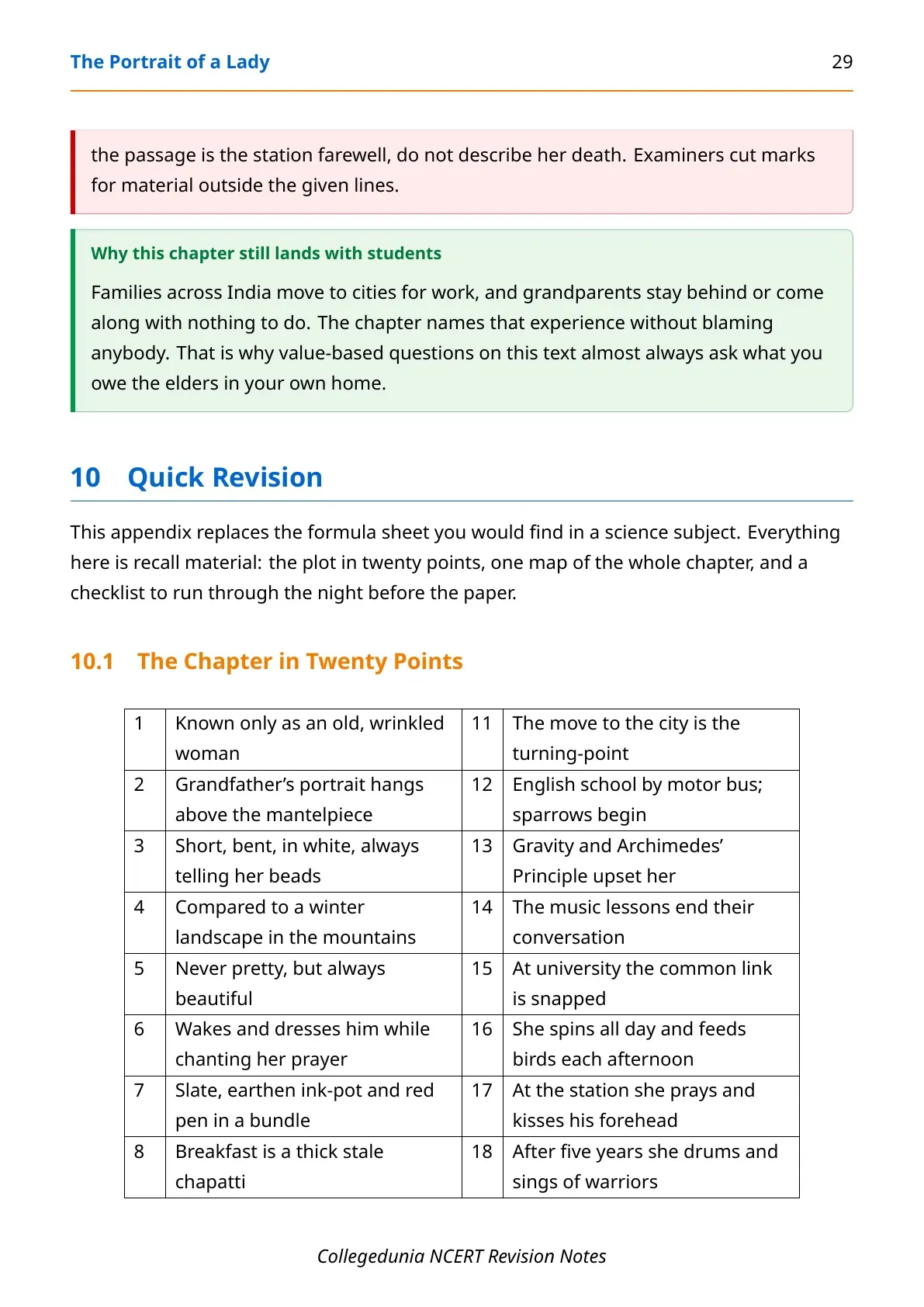
The narrator says his grandmother had been old and wrinkled for all the twenty years he had known her. People said she had once been young and pretty and had even had a husband, but he found that hard to believe. She was short, fat and slightly bent, and her face was a criss-cross of wrinkles.
She hobbled about the house in spotless white, one hand on her waist to balance her stoop, the other telling the beads of her rosary. Her silver hair lay untidily over her pale face and her lips moved in silent prayer. She could never have been pretty, the narrator says, but she was always beautiful.
| Part of the story | What happens |
|---|---|
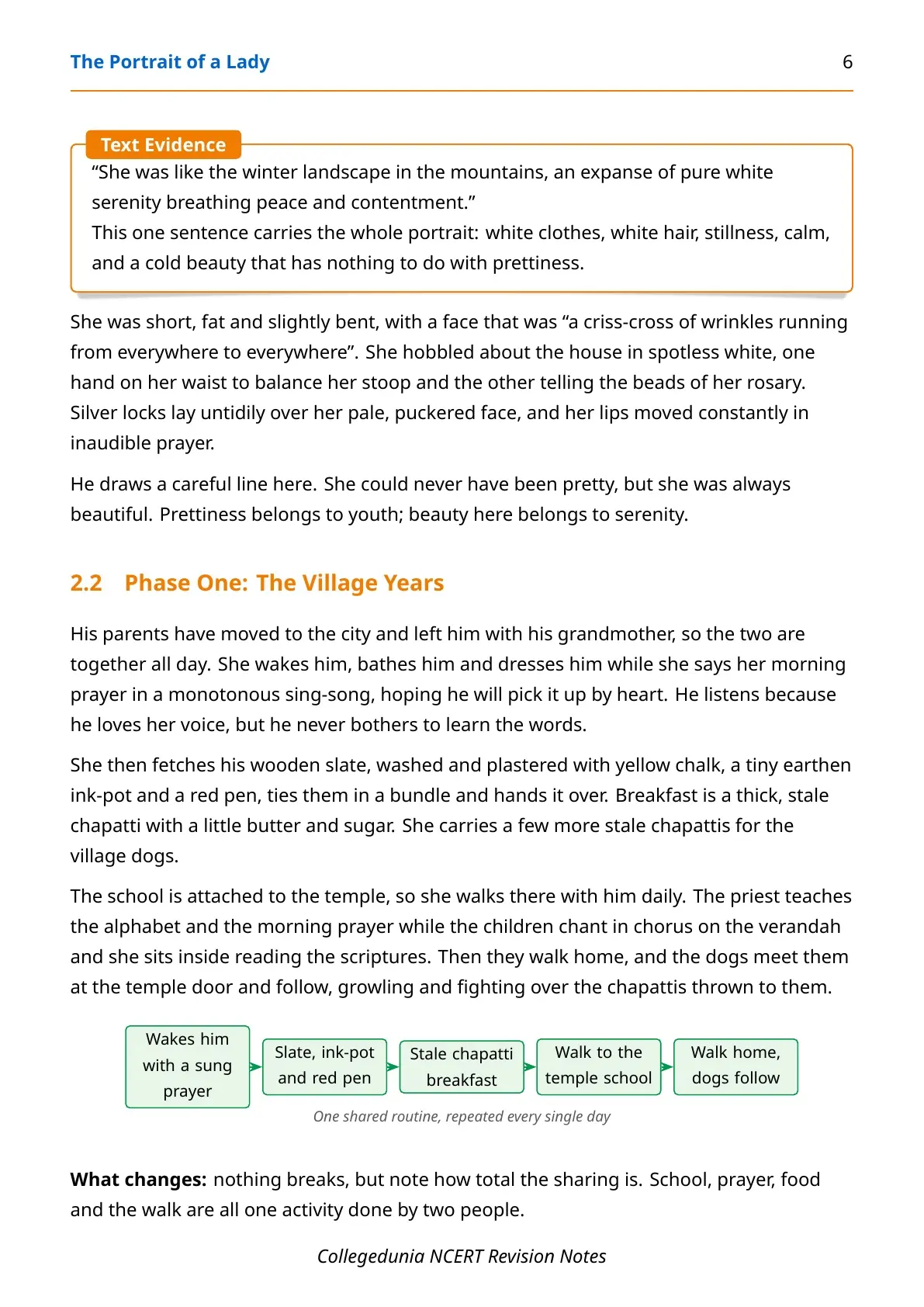
| The village years | The parents live in the city and leave the boy with his grandmother. She wakes him, bathes him, dresses him, hands him his wooden slate and takes him to the temple school. The priest teaches the alphabet and the morning prayer while she reads the scriptures inside. |
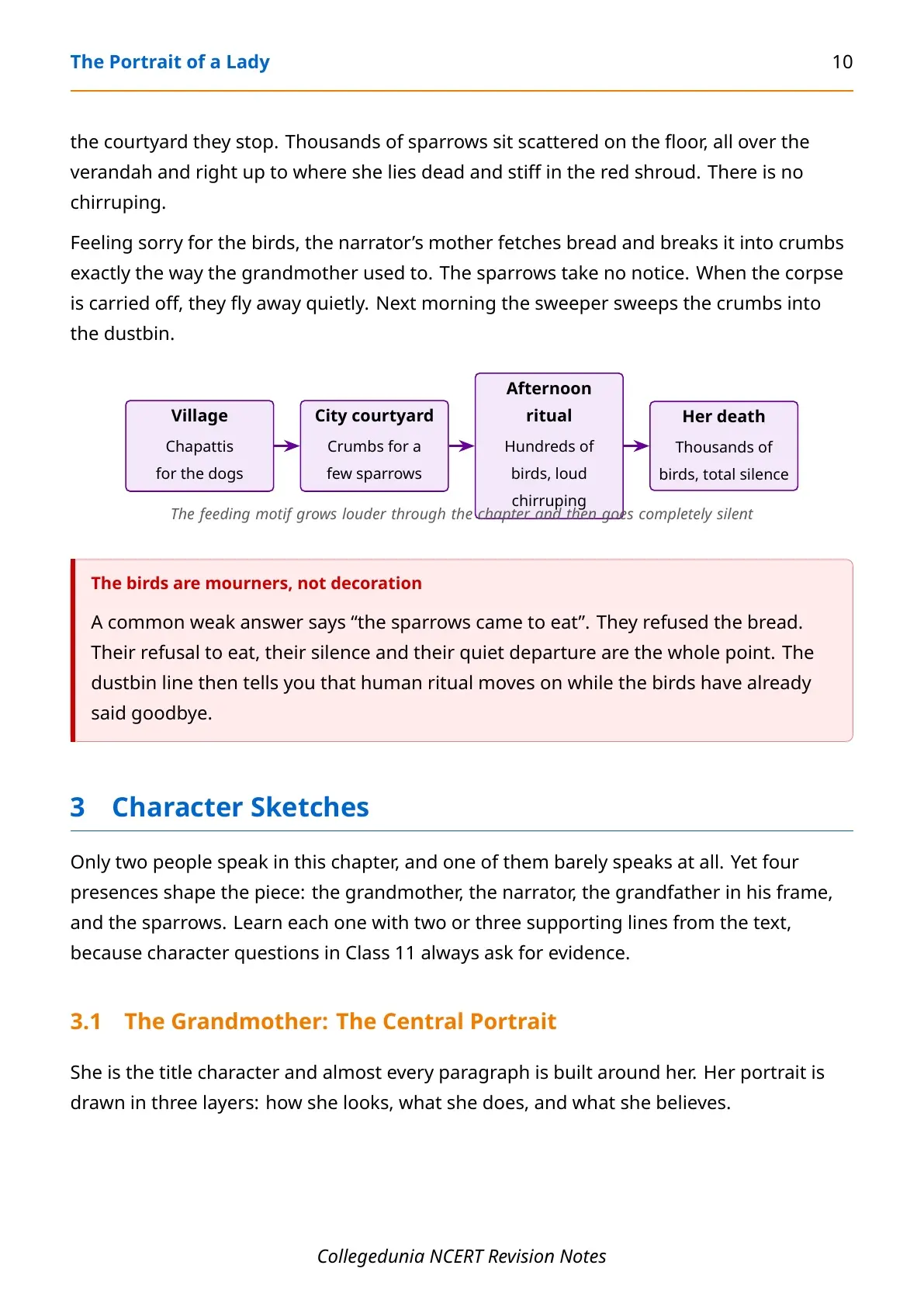
| The village dogs | She carries stale chapattis for the street dogs. The dogs meet them at the temple door and follow them home, growling and fighting over the bread. |
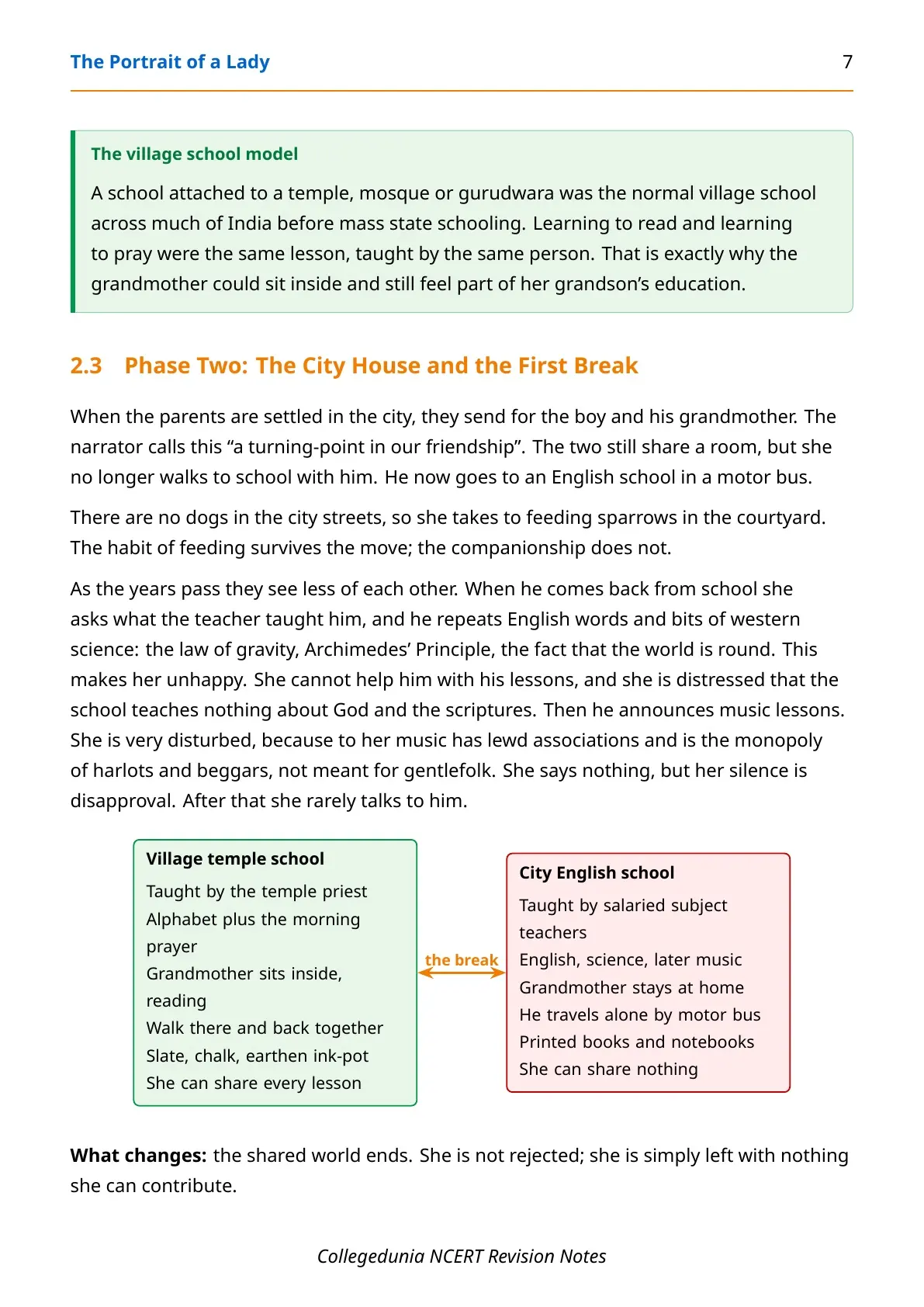
| The move to the city | The parents send for them. The narrator calls this the turning point. He goes to an English school in a motor bus, and she no longer walks with him. There are no dogs in the city street, so she takes to feeding sparrows in the courtyard. |
| The drift | She asks what the teacher taught. He tells her about the law of gravity, Archimedes' Principle and the world being round. She is unhappy, because there is no teaching about God and the scriptures and she cannot help him with his lessons. |
| The music lesson | He announces that the school gives music lessons. To her, music belongs to harlots and beggars and is not meant for gentlefolk. She says nothing, but the silence is disapproval, and she rarely talks to him after that. |
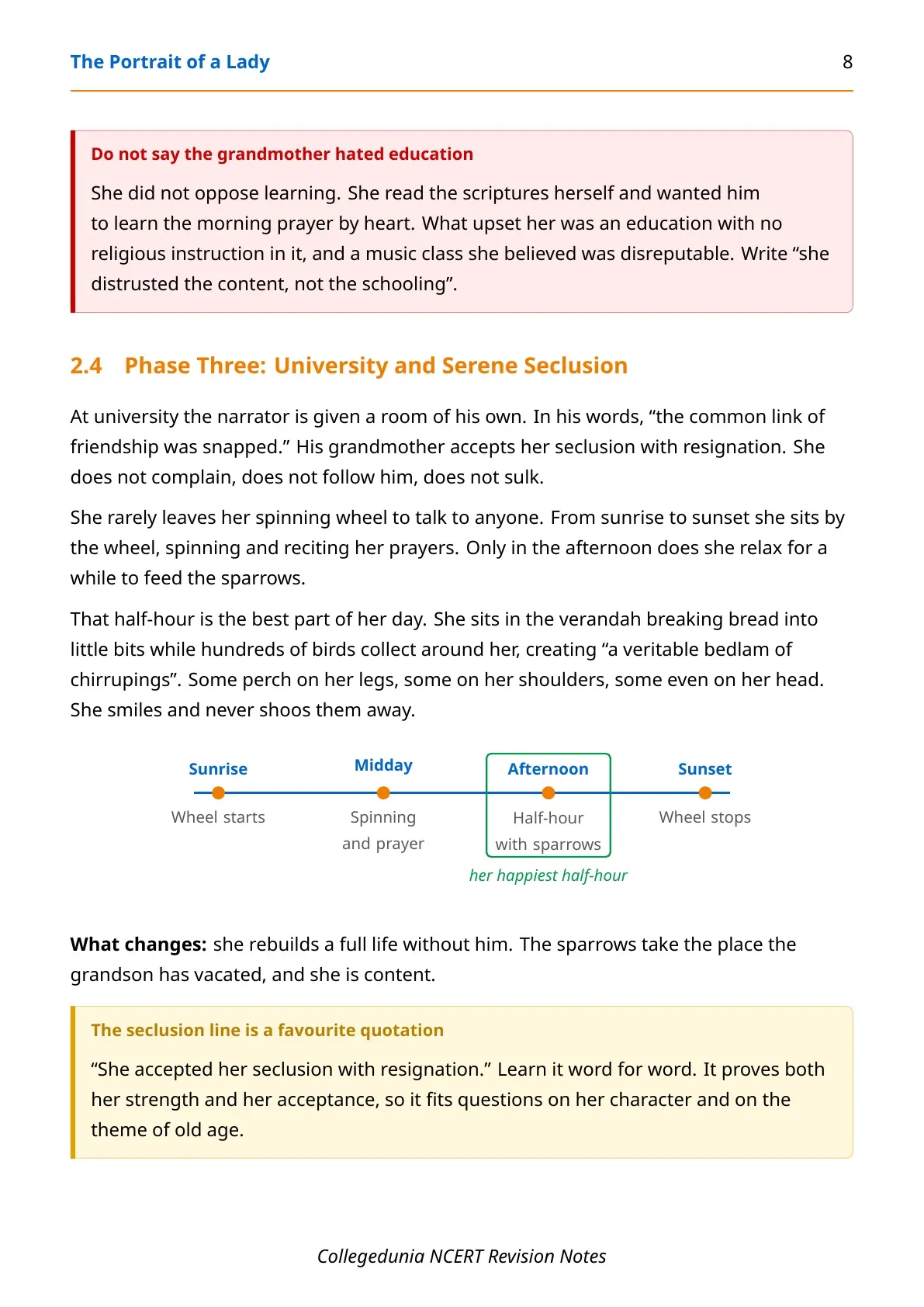
| The university | He gets a room of his own and the common link of friendship snaps. She accepts her seclusion with resignation, spins at her wheel from sunrise to sunset and feeds the sparrows in the afternoon. |
| The farewell | He leaves for five years of study abroad. She comes to the railway station, does not talk and shows no emotion. She kisses his forehead in silence, and he keeps that moist imprint as the last physical contact between them. |
| The return | Five years later she meets him at the station, not looking a day older, still reciting prayers while she holds him. On his very first day back, her happiest moments are still with the sparrows. |
| The strange evening | That evening she does not pray. She gathers the women of the neighbourhood, finds an old drum and sings of the home-coming of warriors for hours. The family has to persuade her to stop. |
| The death | The next morning she is taken ill with a mild fever. The doctor says it will pass. She says her end is near and refuses to waste more time talking. She lies praying until her lips stop moving and the rosary falls from her fingers. |
| The sparrows | At sunset the family comes with a stretcher and finds thousands of sparrows scattered over the verandah and the room, silent. The mother throws them bread crumbs. The birds ignore the bread and fly away quietly when the body is carried off. |
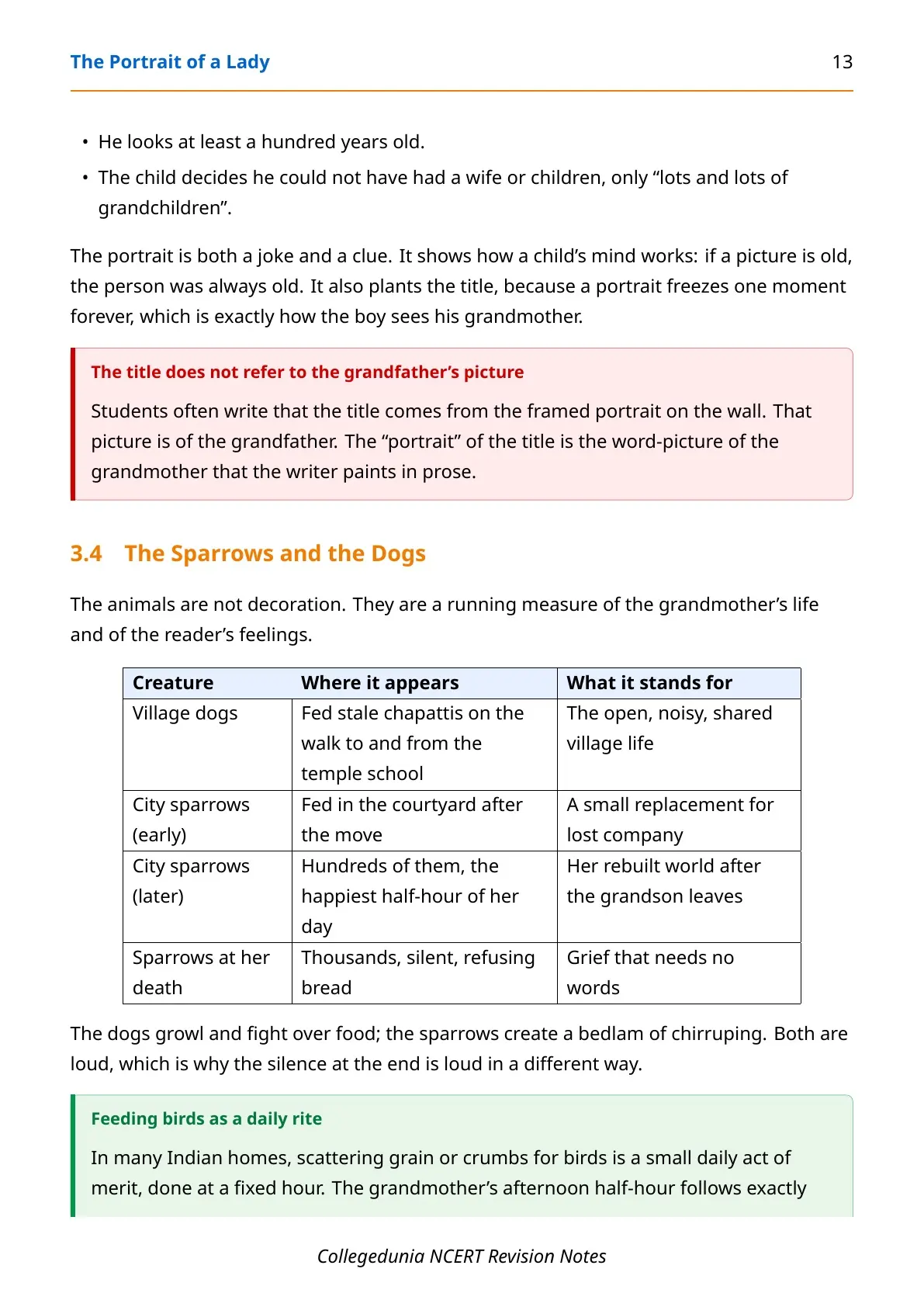
The last line is the coldest in the story. The next morning the sweeper swept the bread crumbs into the dustbin. Ordinary life closes over the loss at once, and that is the point.
The Three Phases of the Friendship in The Portrait of a Lady

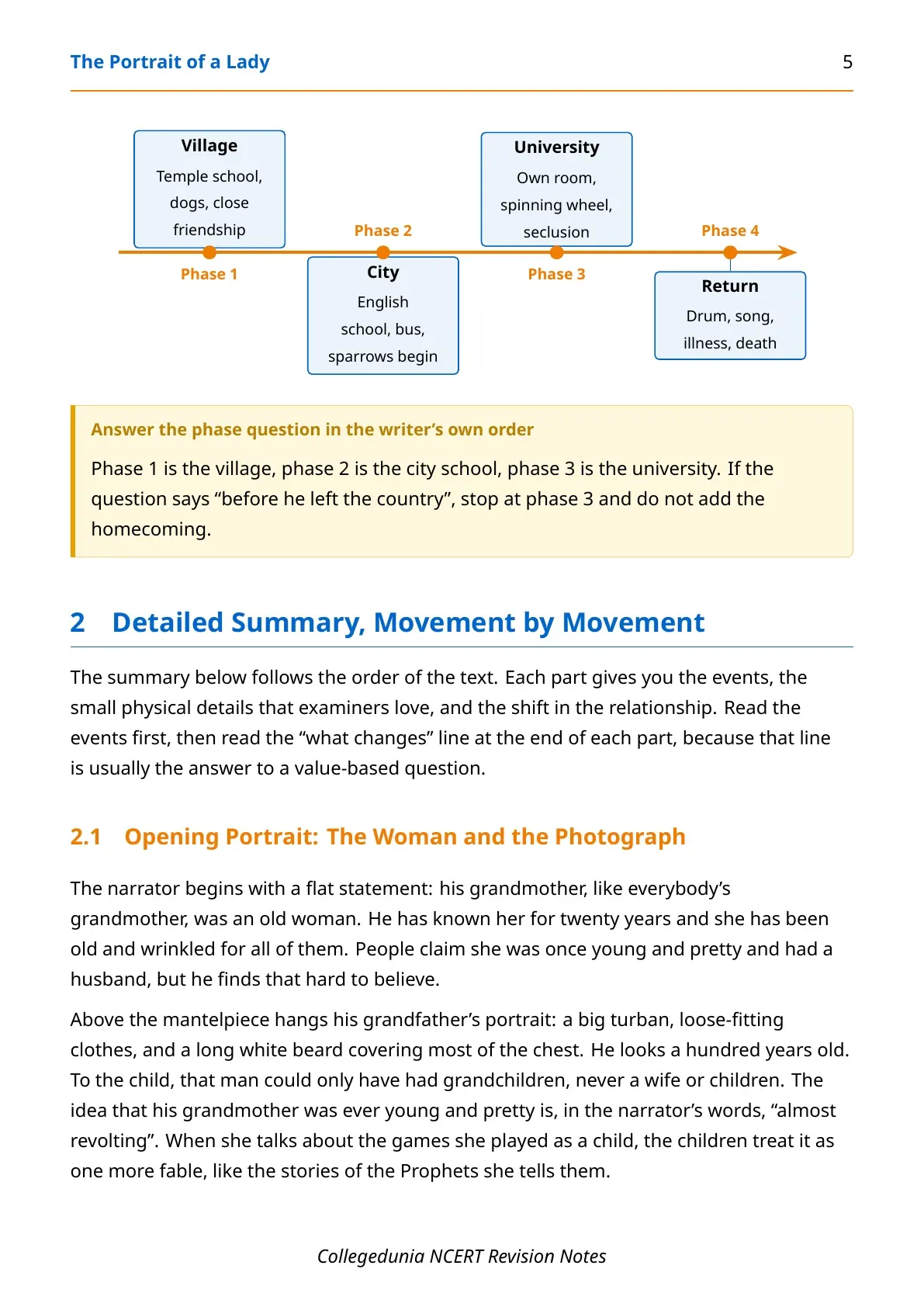
The first textbook question asks for the three phases of the relationship before the narrator left the country. Marks are given phase by phase, so write them as three labelled blocks and never merge two of them.
| Phase | Where he studies | What the friendship looks like |
|---|---|---|
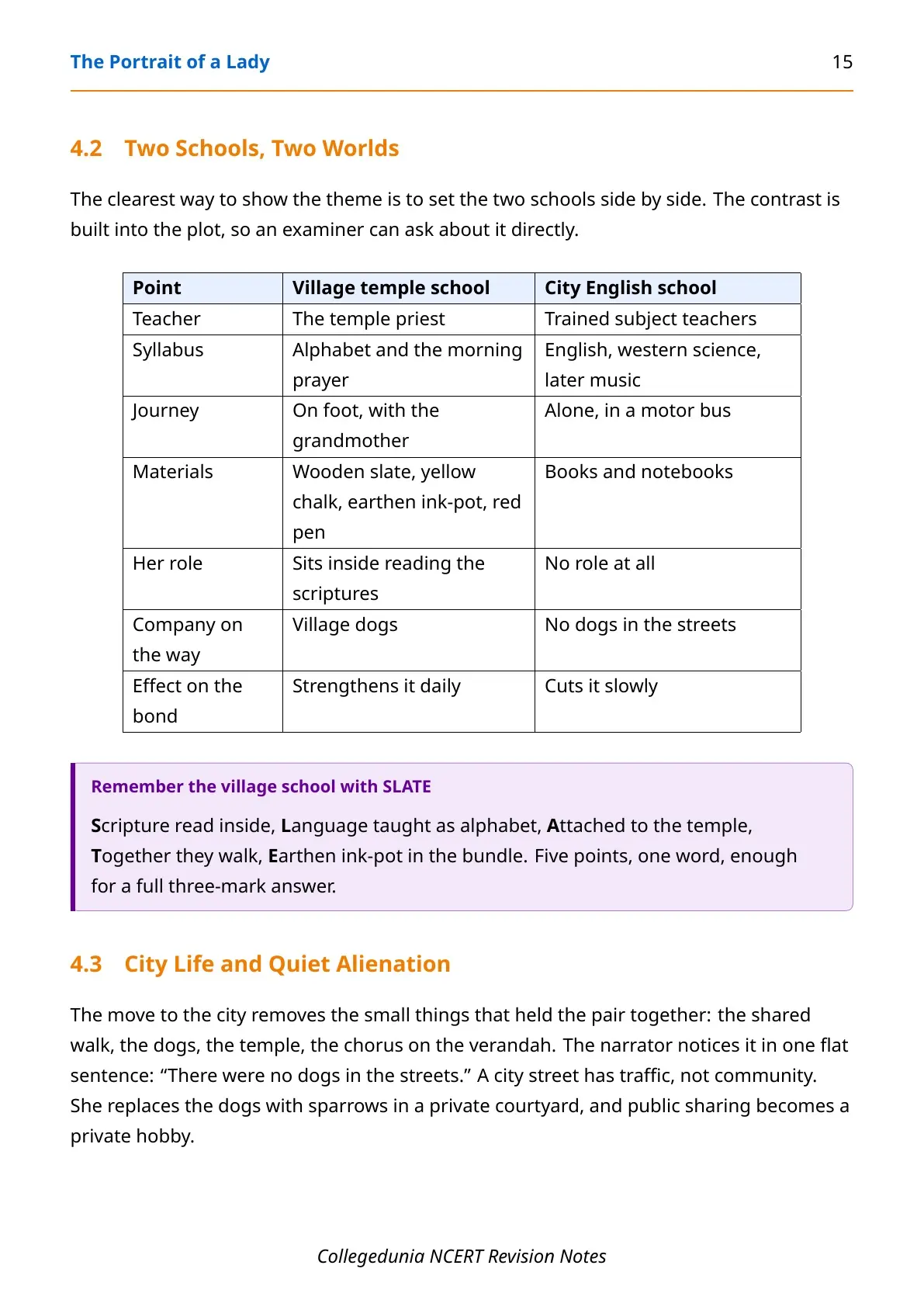
| Phase 1 | Village temple school | They are inseparable. She wakes him, feeds him, walks him to school and waits inside reading the scriptures. This is the warmest phase. |
| Phase 2 | English school in the city | They share a room but not a day. She cannot help with his lessons, dislikes what he is taught, and stops talking much after the music lesson. |
| Phase 3 | University | He gets a separate room and the common link snaps. She withdraws to her spinning wheel, her prayers and her sparrows. |
The friendship does not break because of a quarrel. It thins out because school, city and age keep pulling the two apart. Say that in one line at the end of the answer and the examiner sees that you understood the story, not only the events.
Character Sketch of the Grandmother in The Portrait of a Lady
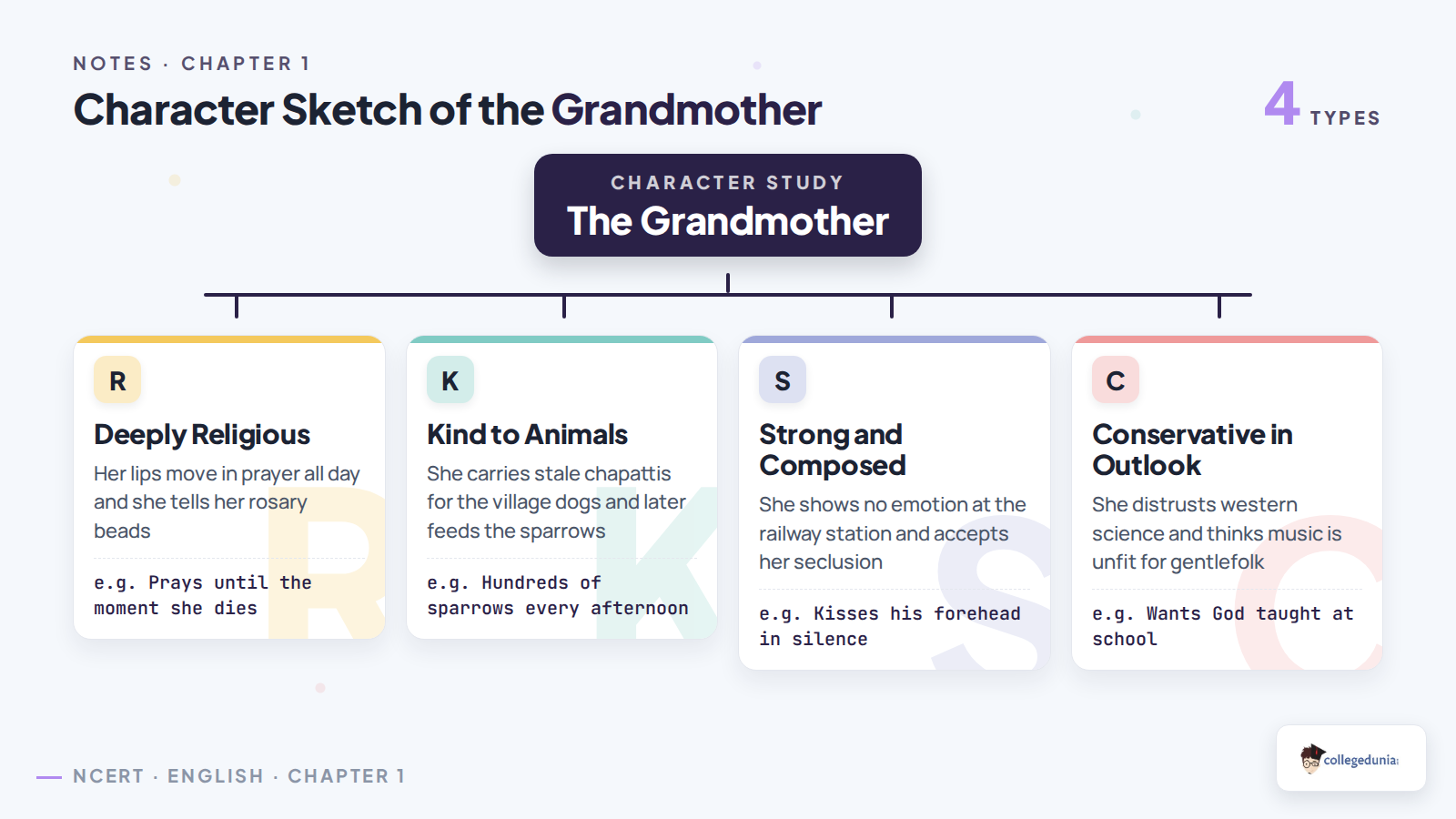
A character sketch answer needs a trait plus proof. One sentence of proof from the text is enough for each trait. Never list adjectives alone.
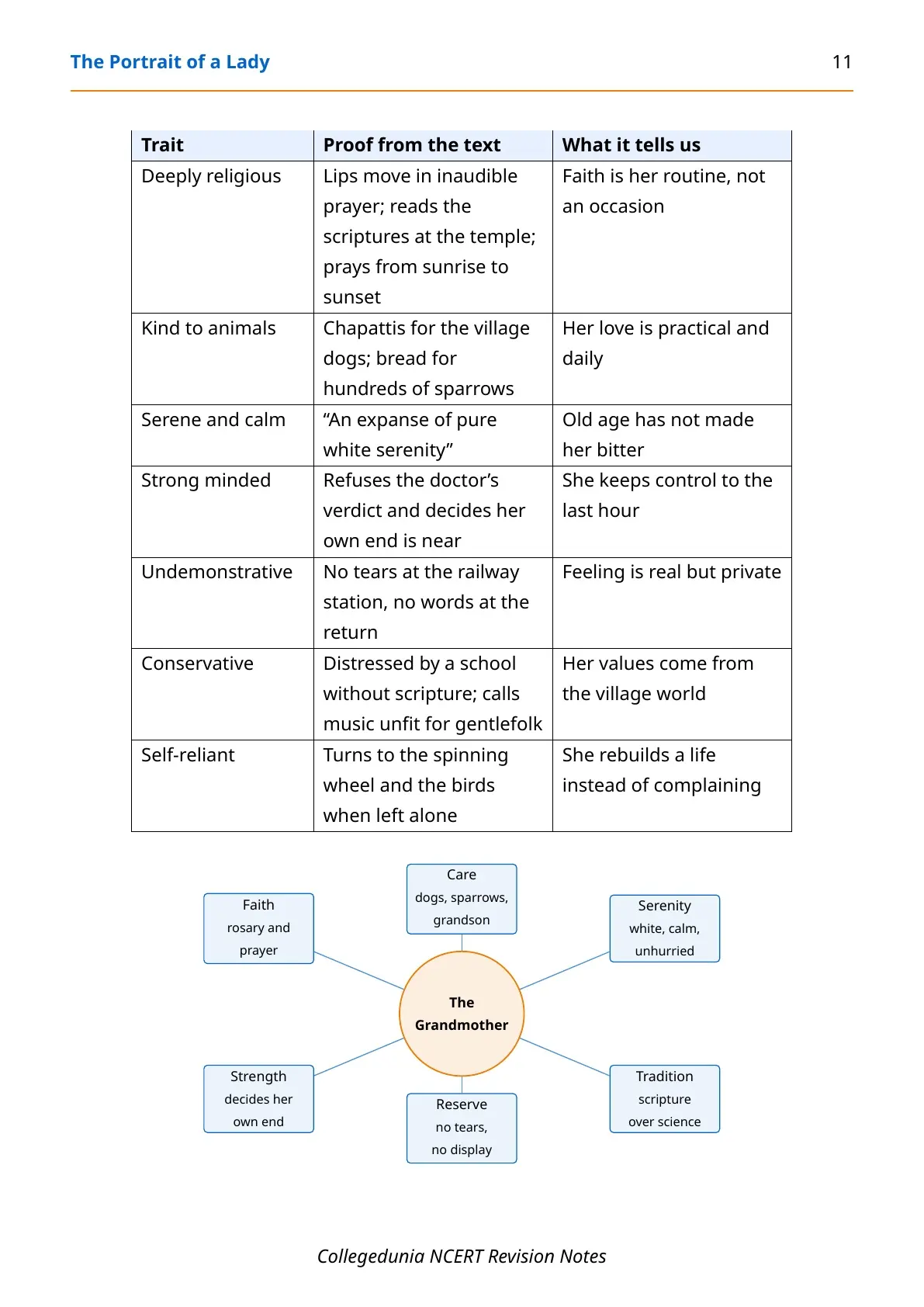
| Trait | Proof from the text |
|---|---|
| Deeply religious | Her lips move in prayer all day, she tells her rosary beads, she reads the scriptures in the temple and she prays until the moment she dies. |
| Disciplined and hard working | She sits at her spinning wheel from sunrise to sunset and only breaks for the sparrows in the afternoon. |
| Kind to animals | She carries stale chapattis for the village dogs and later feeds hundreds of sparrows every day. |
| Strong in character | She shows no emotion at the railway station, accepts her seclusion without complaint and decides herself when to stop talking and start praying. |
| Not sentimental | She kisses his forehead in silence rather than weeping, and five years later greets him with prayers instead of tears. |
| Conservative | She dislikes western science, is distressed that God is not taught at school, and treats music as unfit for gentlefolk. |
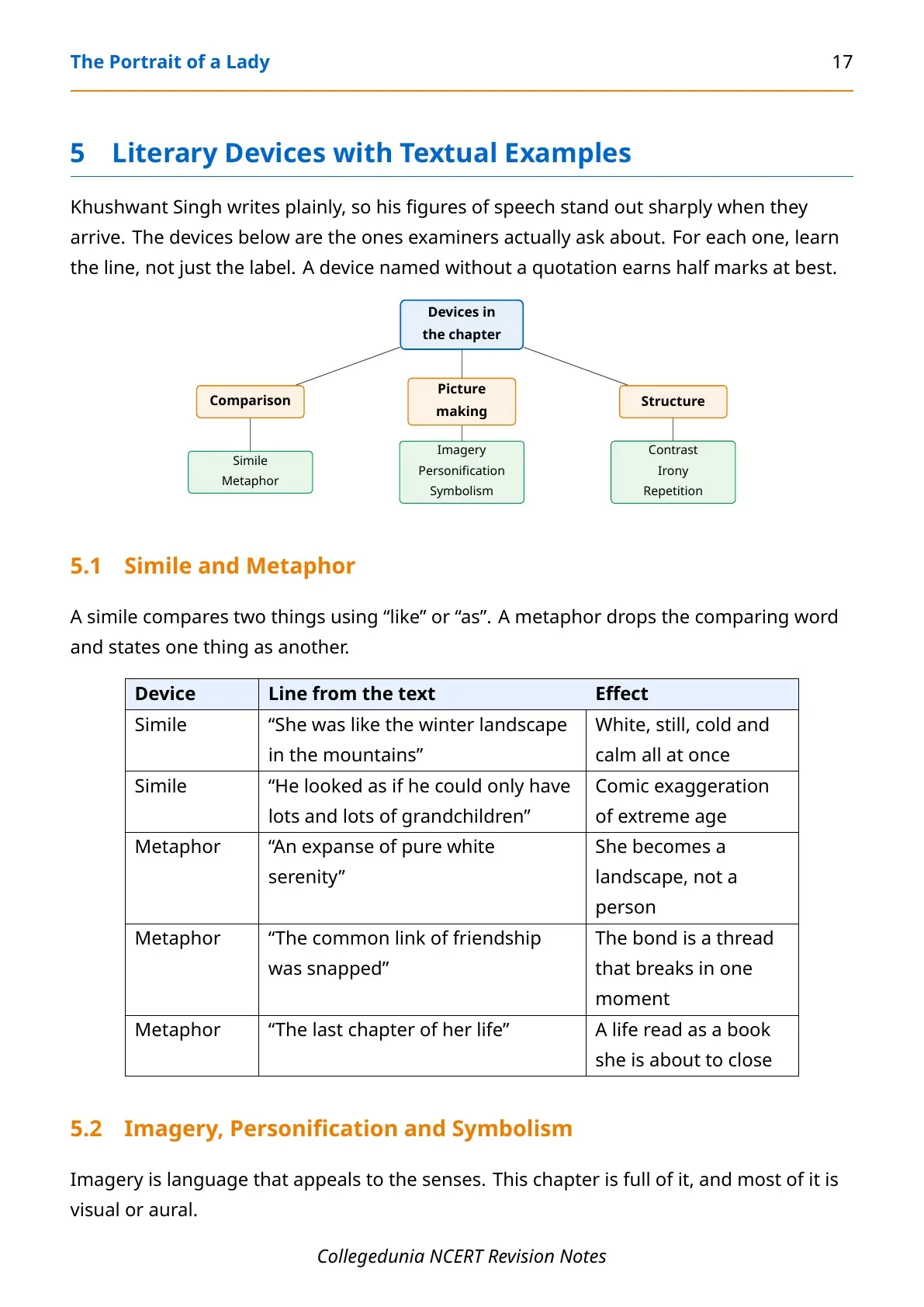
| Serene and dignified | The narrator compares her to a winter landscape in the mountains, an expanse of pure white serenity breathing peace and contentment. |
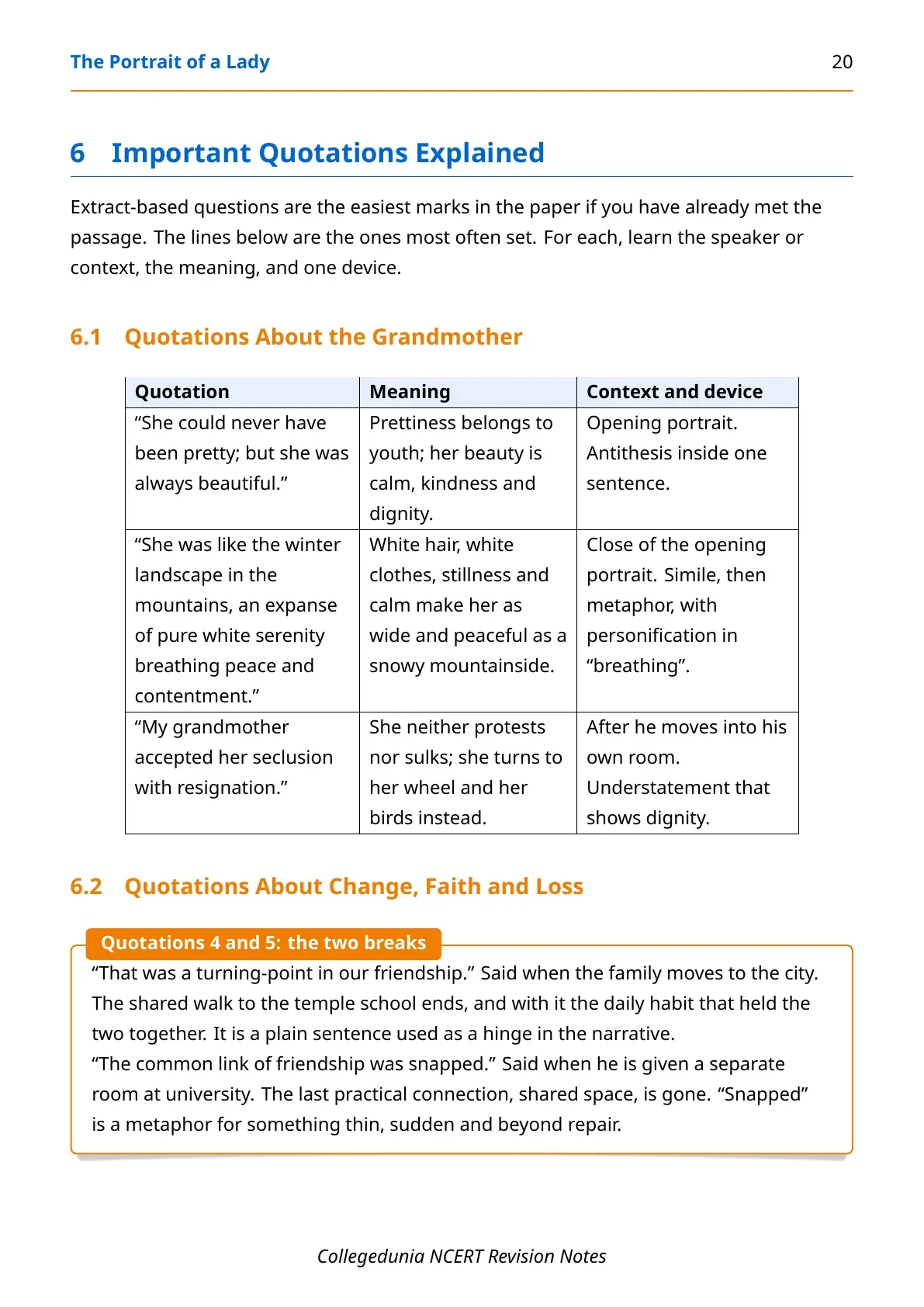
Notice that she is never described as pretty and always described as beautiful. That contrast is a favourite one mark question, and the answer sits in a single line of the story.
Themes in The Portrait of a Lady Every Class 11 Student Must Know
Long answer questions are usually built on a theme rather than on an event. Five themes cover almost everything a paper can ask.
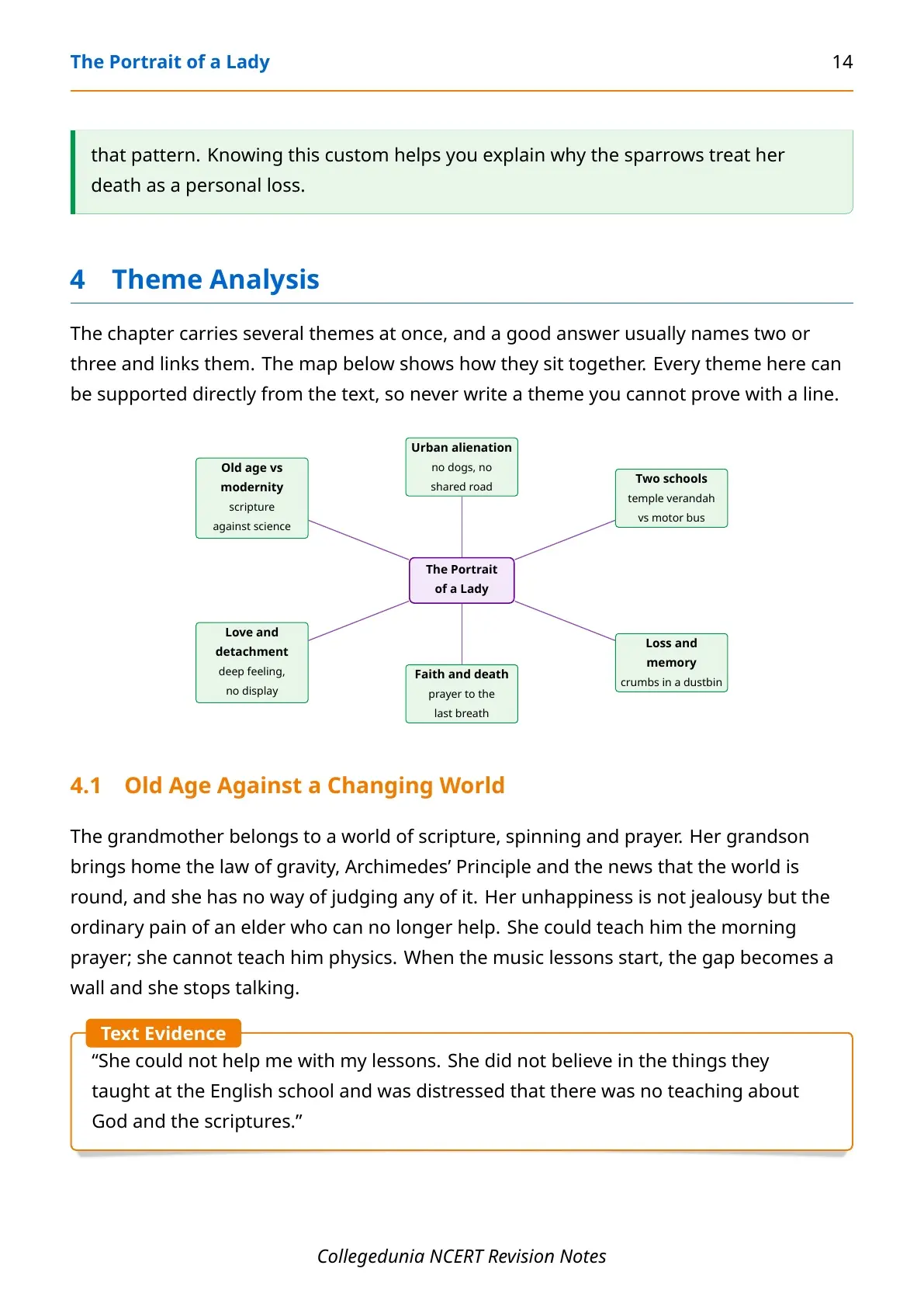
- Changing bonds: love stays the same but closeness does not, because school, city and adulthood keep moving the two apart.
- Old education against new: the temple school teaches prayer and scripture; the English school teaches gravity and Archimedes' Principle. The grandmother trusts one and rejects the other.
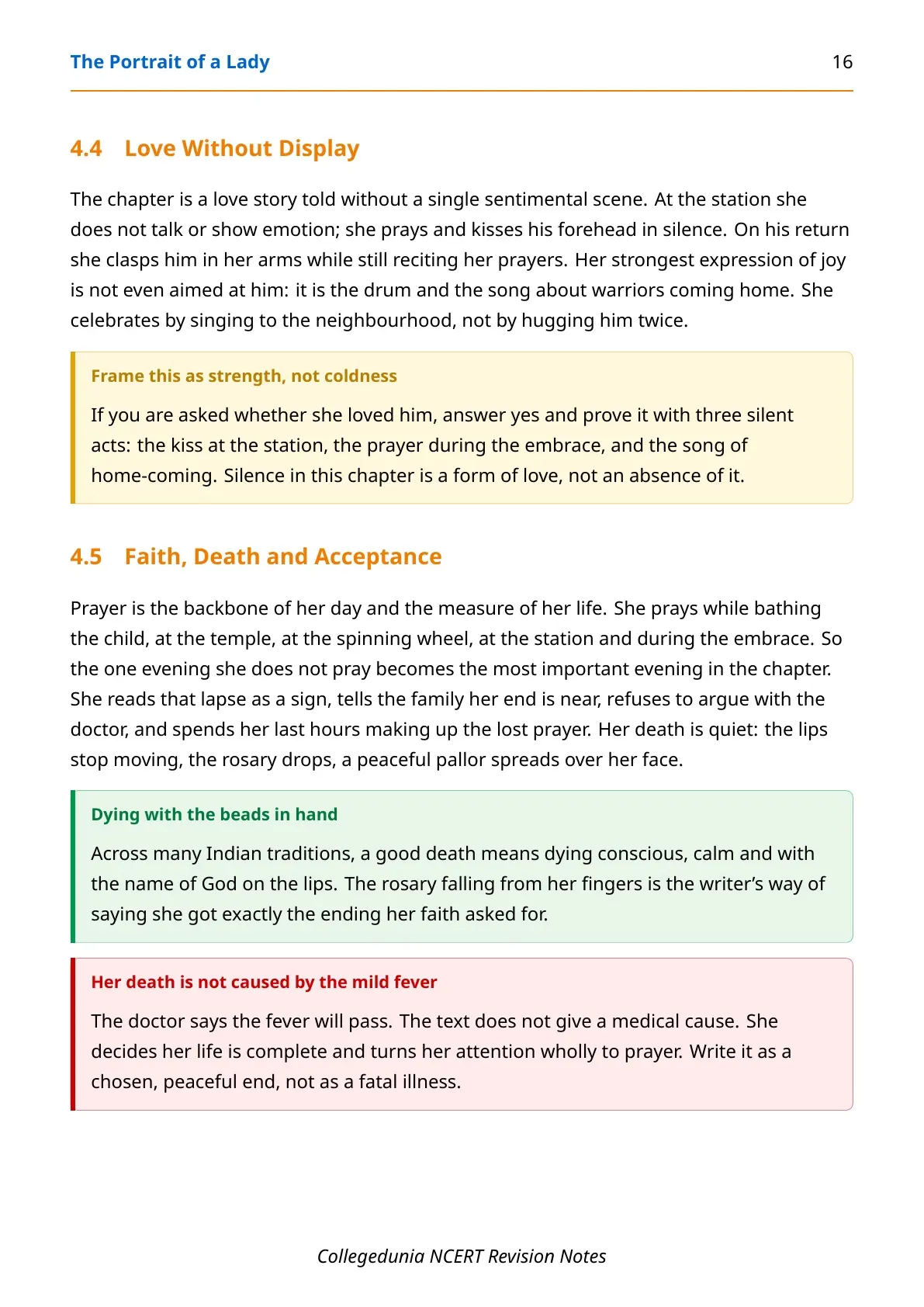
- Faith as a whole way of living: prayer decides her morning, her afternoon and her last hours. The one evening she does not pray, she knows the end has come.
- Loneliness in old age: she is inside her own family home and still alone, spinning and reciting to herself for years.
- Love that crosses species: the dogs and later the sparrows receive the care that people slowly stop asking her for.
A sixth idea is worth a line in any long answer: acceptance of death without fear. She predicts her own end, refuses to argue about it and spends her last hours in prayer instead of goodbyes.
The Sparrows and the Ending of The Portrait of a Lady Explained
The sparrow scene is the most asked part of the chapter. Students often describe it correctly and still lose marks because they miss what the silence means.
- Thousands of sparrows sit scattered on the verandah and inside her room, right up to where she lies wrapped in the red shroud.
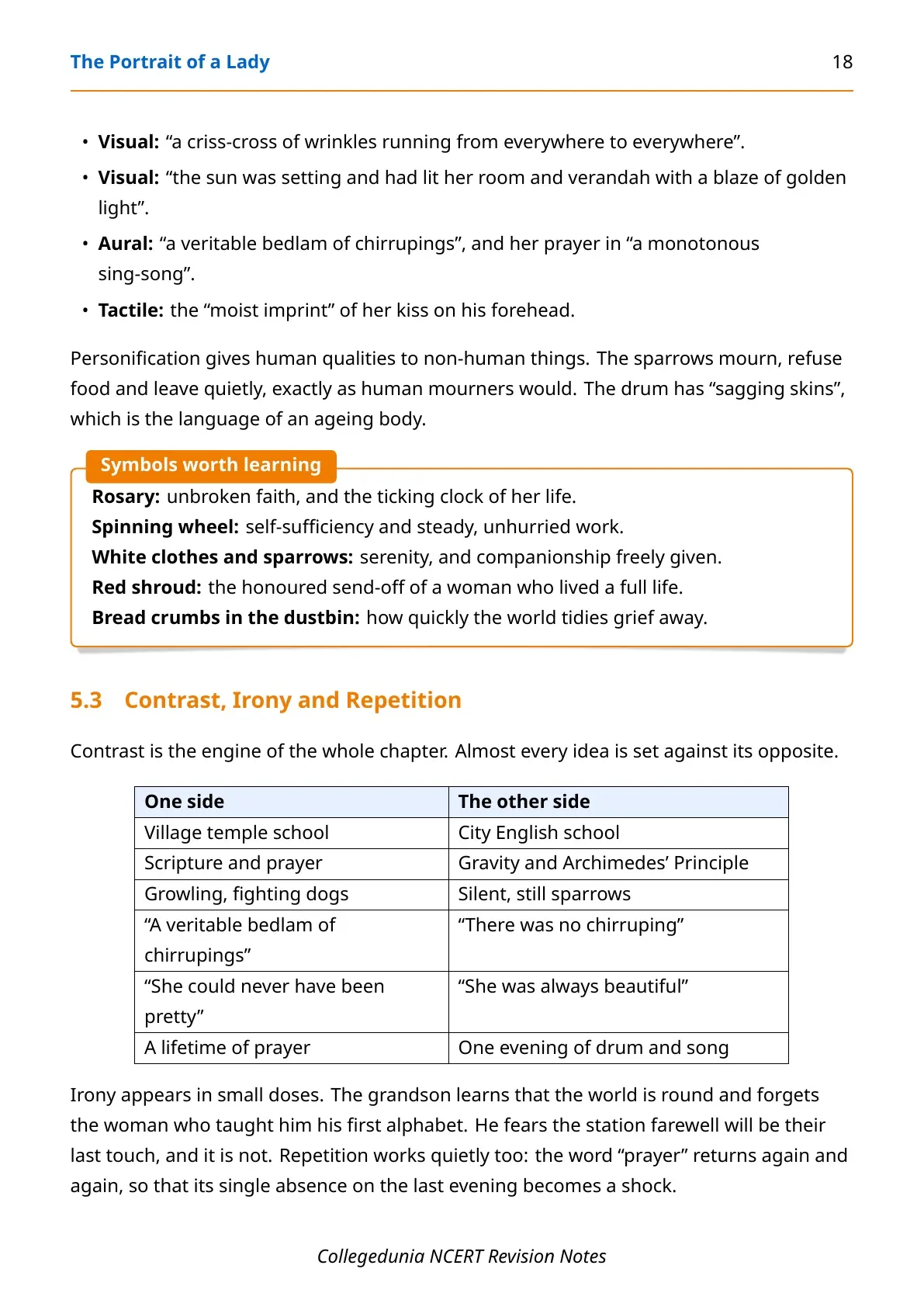
- There is no chirruping. The birds that once made a veritable bedlam of noise say nothing at all.
- The mother breaks bread into crumbs the way the grandmother used to and throws it to them. The sparrows take no notice.
- When the body is carried off, the birds fly away quietly.
- Next morning the sweeper sweeps the untouched crumbs into the dustbin.
The refusal of food is the mourning. Birds that came every day for bread now ignore bread, which shows they came for her and not only for the food. The dustbin line puts an ordinary end to an extraordinary friendship, and that flatness is deliberate.
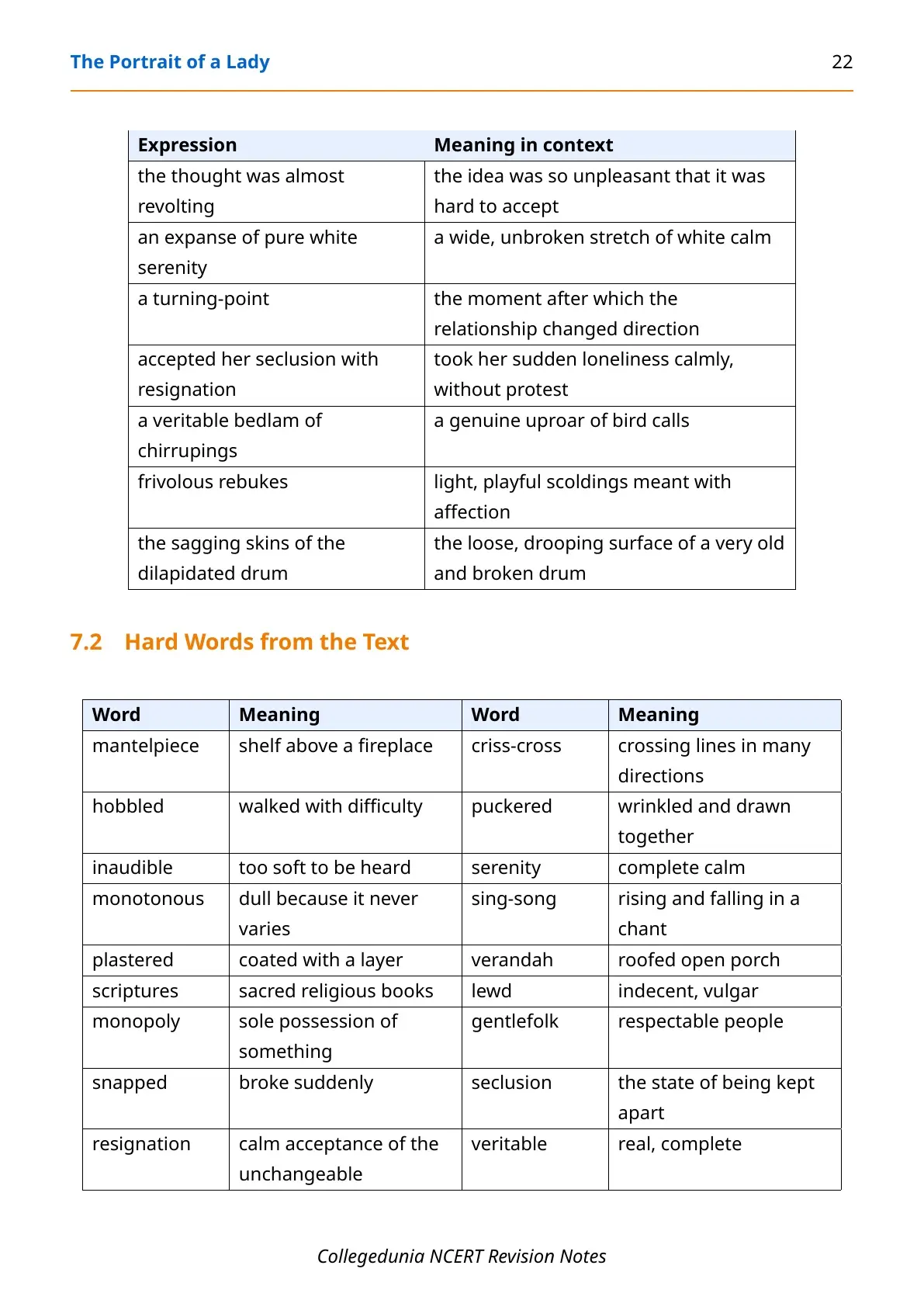
Difficult Expressions from The Portrait of a Lady with Their Meanings
The Notice box at the start of the unit prints seven expressions. Each one can be set as a one mark or two mark question, so learn the meaning and the situation together.
| Expression | Meaning in context |
|---|---|
| the thought was almost revolting | The idea that his grandmother had once been young and pretty felt unpleasant, even disgusting, to the child. |
| an expanse of pure white serenity | Her white clothes, silver hair and calm face together look like a wide, untouched snow field in the mountains. |
| a turning-point | The move to the city, the moment after which the friendship starts to weaken. |
| accepted her seclusion with resignation | She took her lonely, separate life quietly and without protest. |
| a veritable bedlam of chirrupings | A truly wild, noisy confusion made by hundreds of sparrows chirping at once. |
| frivolous rebukes | Light, playful scoldings she gave the birds, meant with affection rather than anger. |
| the sagging skins of the dilapidated drum | The loose, slack leather of the old, broken down drum she thumped while singing. |
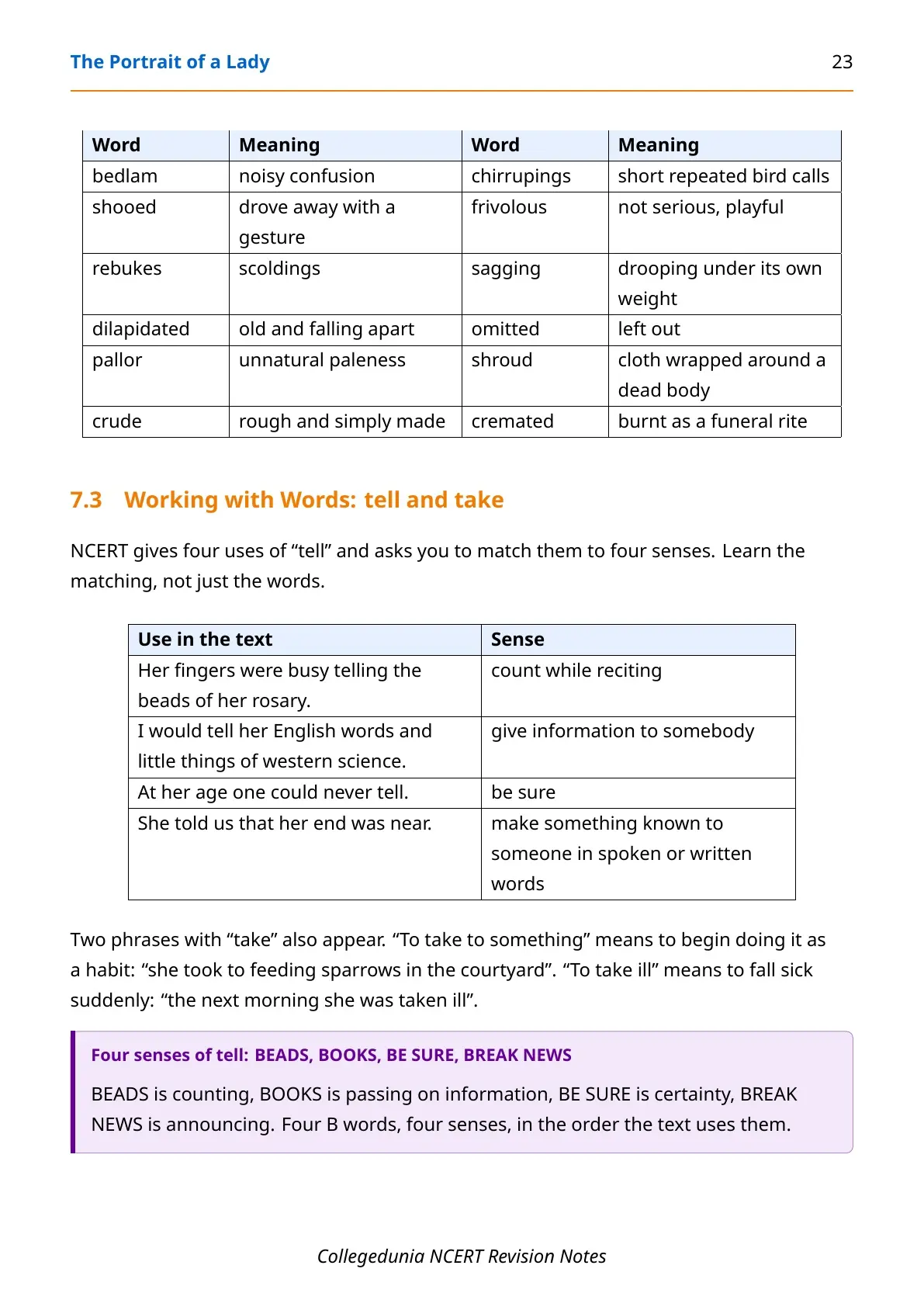
Working with Words: the Four Senses of Tell
The Working with Words task matches four uses of tell to four meanings. This is a two mark question that students lose only because they never revise it.
| Line from the text | Sense of tell |
|---|---|
| Her fingers were busy telling the beads of her rosary | Count while reciting |
| I would tell her English words and little things of western science | Give information to somebody |
| At her age one could never tell | Be sure |
| She told us that her end was near | Make something known to someone in spoken or written words |
Take, and the Verbs of Walking
Two phrases with take appear in the story, and both are printed in the textbook task.
- To take to something means to begin doing something as a habit. In the text: she took to feeding sparrows in the courtyard.
- To take ill means to suddenly become ill. In the text: the next morning she was taken ill.
The word hobble means to walk with difficulty because the legs or feet are in bad condition. From the box of ten words, the ones that also describe a manner of walking are shuffle, stride, waddle, swagger, trudge and slog. Haggle means to bargain, so it does not belong on the list.
Past Perfect Verbs in The Portrait of a Lady: the Noticing Form Task
The grammar task at the end of the unit is small but it is easy to set as a two mark question. The story keeps stepping back into a time before the time being described, and the past perfect is the form English uses for that.
- She had been old and wrinkled for the twenty years that I had known her.
- People said that she had once been young and pretty and had even had a husband.
- When we both had finished we would walk back together.
- When I came back she would ask me what the teacher had taught me.
- The sun was setting and had lit her room and verandah with a golden light.
Write the rule in one line if the question asks for it: the past perfect is used for an action finished before another past action. That single sentence usually carries the mark.
Textbook Questions from The Portrait of a Lady Answered in Brief
The Understanding the Text section sets five Mention questions. Each one wants a fixed number of points, so count before you write.
| Question | Points the answer must carry |
|---|---|
| Three phases of the relationship before he went abroad | Village temple school together, city English school apart, university with the link snapped. |
| Three reasons she was disturbed by the city school | No teaching about God and the scriptures, western science she did not believe in, and music lessons she thought unfit for gentlefolk. She also could not help him with his lessons. |
| Three ways she spent her days after he grew up | Spinning at her wheel from sunrise to sunset, reciting prayers, and feeding the sparrows in the afternoon. |
| Her odd behaviour just before she died | She did not pray. She collected the neighbourhood women, took an old drum and sang of the home-coming of warriors for hours. |
| How the sparrows showed sorrow | They sat silent in thousands around her body, refused the bread crumbs and flew away quietly once she was carried out. |
Talking About the Text: What to Say
- How do we know she was religious? Constant prayer, the rosary, scripture reading in the temple, and prayer as her last act.
- Did their feelings change? The closeness changed, the love did not. She still waited at the station and he still cherished her kiss.
- Was she strong in character? Yes. She showed no emotion at the farewell, accepted her seclusion, worked all day and chose her own last hours.
Common Mistakes Students Make in The Portrait of a Lady Answers
- Writing that she stopped loving him. She stopped talking much, not loving. The story never says she was angry with him.
- Saying she cried at the station. The text says the opposite. She was not even sentimental.
- Mixing up the two portraits. The portrait on the wall is the grandfather's. The lady of the title is never painted.
- Writing that the sparrows ate the bread. They took no notice of it, and that refusal is the whole point of the scene.
- Giving two phases instead of three. The university phase is the one students forget.
- Calling her illness serious. It was a mild fever and the doctor said it would pass. She decided otherwise.
In the same student poll, the sparrow scene and the three phases together accounted for most of the marks lost in class tests on this chapter.
How The Portrait of a Lady Appears in the Class 11 English Paper
The Literature section of the Class 11 English Core paper draws from both Hornbill and Snapshots. A prose chapter of this length usually contributes one extract based set and one short answer.
| Question type | Marks | Typical ask |
|---|---|---|
| Extract based questions | 1 each | Meaning of an expression, who says a line, or what the sparrows do |
| Short answer | 2 to 3 | Why the move to the city was a turning point, or why she stopped talking to him |
| Long answer | 5 to 6 | Character sketch of the grandmother, or the changing relationship across the three phases |
| Value based question | 4 to 5 | What the chapter teaches about caring for elderly people at home |
That adds up to roughly 6 to 8 marks from one short prose chapter. The vocabulary box alone can hand you two easy marks if the seven expressions are learnt exactly.
How to Revise The Portrait of a Lady in One Sitting
Students in the poll reported about 55 minutes to finish this chapter and its questions. Split the time into three blocks and one pass is enough.
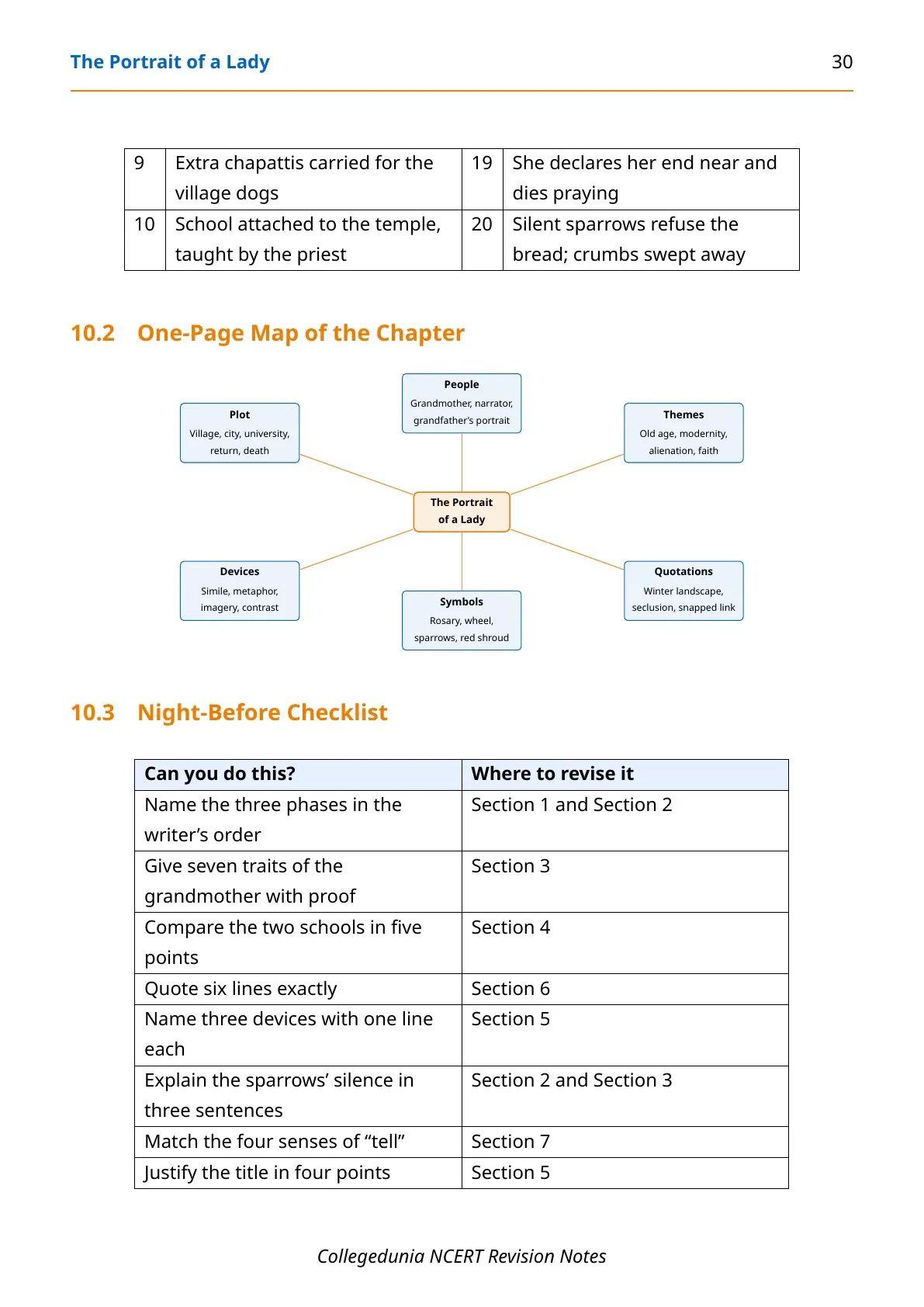
- First 15 minutes: read the summary table and fix the order of events. The order is what most extract questions test.
- Next 25 minutes: write the three phases and the character sketch from memory, then check them against the tables above.
- Last 15 minutes: learn the seven expressions, the four senses of tell and the past perfect examples. These are the shortest answers and the quickest marks.
Also Check: The night before the paper, revise only the summary table, the sparrow scene and the expressions box. Those three blocks cover most of what an examiner can set from this chapter.
The Portrait of a Lady Resources Beyond These Notes
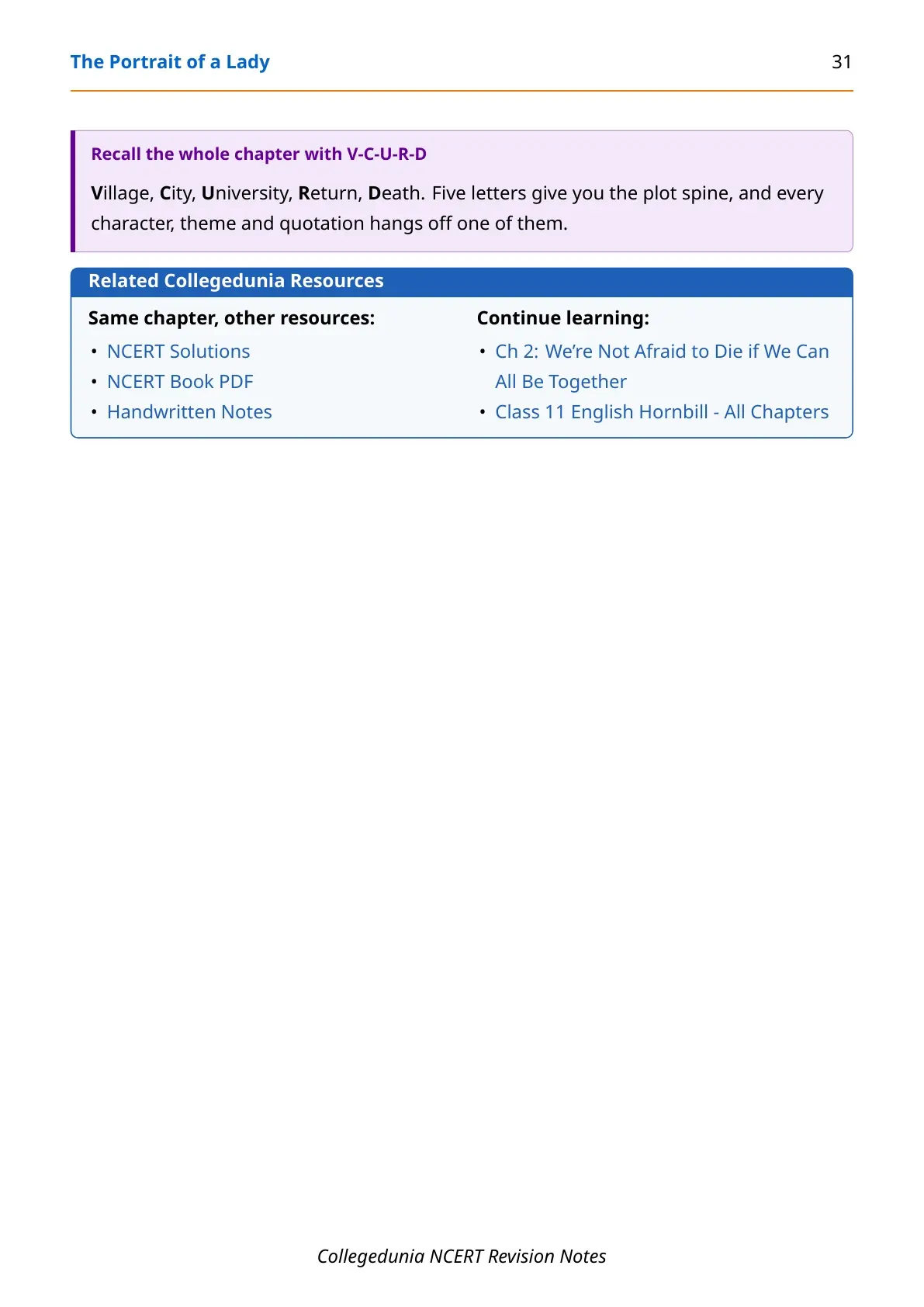
These notes handle revision. For the textbook tasks answered in full, for a quick recap the night before and for the original Hornbill text, use the other pages for the same chapter.
| Resource | Best used for | Link |
|---|---|---|
| The Portrait of a Lady Class 11 NCERT Solutions | Every Understanding the Text and Working with Words task answered in the exam format | Read the Portrait of a Lady Class 11 NCERT Solutions |
| The Portrait of a Lady Class 11 Handwritten Notes | Last minute revision the night before the paper | Read the Portrait of a Lady Handwritten Notes |
| Class 11 English Hornbill Book PDF | The original chapter text with the Notice box and the end of unit tasks | Download the Class 11 English Hornbill Book PDF |
NCERT Notes for All Class 11 English Hornbill Chapters
Revision notes are published for the six Hornbill prose chapters. Each page follows the same shape as this one, with summary tables, a mistakes block and a downloadable PDF.
| Chapter | Title | Revision Notes |
|---|---|---|
| Chapter 1 | The Portrait of a Lady | You are here |
| Chapter 2 | We're Not Afraid to Die if We Can All Be Together | We're Not Afraid to Die Class 11 Notes |
| Chapter 3 | Discovering Tut: the Saga Continues | Discovering Tut Class 11 Notes |
| Chapter 4 | The Ailing Planet: the Green Movement's Role | The Ailing Planet Class 11 Notes |
| Chapter 5 | The Adventure | The Adventure Class 11 Notes |
| Chapter 6 | Silk Road | Silk Road Class 11 Notes |
Class 11 English Hornbill Chapter 1 The Portrait of a Lady Notes FAQs
Ques. What is the story The Portrait of a Lady about?
Ans. Khushwant Singh writes about his own grandmother and how their friendship changed over twenty years. They are inseparable in the village, drift apart in the city, and lose the daily link once he moves to a university room of his own. The story ends with her death and with the sparrows refusing to eat.
Ques. Why is the chapter called The Portrait of a Lady?
Ans. The only painted portrait in the house is the grandfather's, hanging above the mantelpiece. The grandmother is never painted, so the author draws her portrait in words instead. The title also fits because the story describes her appearance, habits and character rather than a plot.
Ques. What are the three phases of the relationship between the author and his grandmother?
Ans. First, the village phase, when she wakes him, feeds him and walks him to the temple school. Second, the city phase, when he attends an English school by bus and she can no longer help with his lessons. Third, the university phase, when he gets a separate room and the common link of friendship snaps.
Ques. Why was the grandmother unhappy with the city school?
Ans. The school taught western science such as the law of gravity and Archimedes' Principle, and taught nothing about God or the scriptures. She could not help him with any of it. When music lessons started she was disturbed further, because to her music belonged to harlots and beggars and was not meant for gentlefolk.
Ques. How did the grandmother spend her days after the author grew up?
Ans. She sat at her spinning wheel from sunrise to sunset, spinning and reciting prayers. She rarely left the wheel to talk to anyone. In the afternoon she relaxed to feed hundreds of sparrows in the verandah, and the story calls that the happiest half hour of her day.
Ques. What was the odd thing the grandmother did on the day before she died?
Ans. She did not pray. She collected the women of the neighbourhood, found an old drum and sang of the home-coming of warriors for several hours. The family had to persuade her to stop. It was the first time in the author's life that she had missed her prayers.
Ques. How did the sparrows show their sorrow when the grandmother died?
Ans. Thousands of sparrows sat scattered over her room and the verandah in complete silence, with no chirruping at all. When the author's mother threw them bread crumbs, they took no notice. They flew away quietly once the body was carried out, and the crumbs were swept into the dustbin the next morning.
Ques. Was the grandmother a strong person?
Ans. Yes. She accepted her seclusion with resignation instead of complaining. She showed no emotion at the railway station and only kissed his forehead. She worked at her wheel all day at a great age, and she chose to spend her final hours praying rather than talking.
Ques. What does an expanse of pure white serenity mean?
Ans. It describes the grandmother in her spotless white clothes with silver hair and a calm, pale face. The author compares her to a winter landscape in the mountains, a wide sheet of untouched white that breathes peace and contentment.
Ques. What does telling the beads of her rosary mean?
Ans. Here tell means to count while reciting. She moved the rosary beads through her fingers one by one as she repeated her prayers. The Working with Words task uses this line to show a sense of tell that has nothing to do with speaking to someone.
Ques. Which verb form does the Noticing Form task in this unit teach?
Ans. The past perfect. Lines such as she had been old and wrinkled, what the teacher had taught me, and the sun had lit her room show an action completed before another past action. English uses this form when a writer recounts events in the distant past.
Ques. Are these Class 11 English Hornbill notes according to the current syllabus?
Ans. Yes. Every summary point, expression and task answer on this page follows the 2026-27 reprint of the Hornbill textbook for Class 11 English Core. The end of unit tasks are unchanged in this edition, so the notes apply to the current session.



Comments