



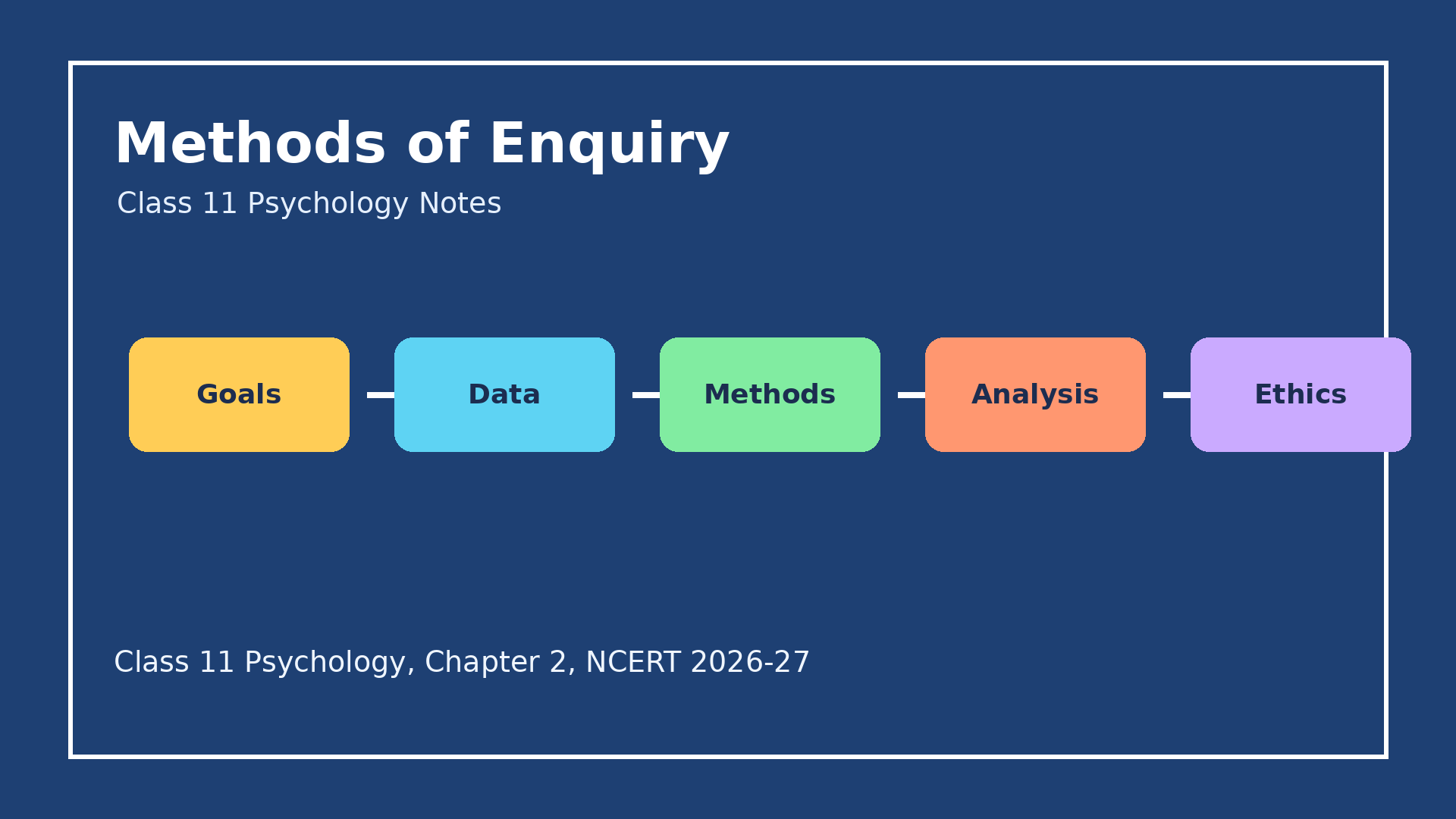
NCERT Notes Class 11 Psychology Chapter 2 Methods of Enquiry in Psychology help students revise goals of enquiry, scientific research steps, data types, observation, experiment, correlation, survey, testing, case study, analysis and ethics for the 2026-27 syllabus. The notes keep the chapter ready for school tests through definitions, comparison tables and answer cues.
- Download the Methods of Enquiry in Psychology notes PDF for offline revision.
- Revise the five goals, the four research steps and the main enquiry methods.
- Use the tables to compare observation, experiment, survey, testing and case study.
Student Feedback: In a Collegedunia poll of 8,960 Class 11 Psychology students, 71% said they mixed up experimental and correlational methods before using a comparison table.
Source: 2026-27 Class 11 Psychology student poll across CBSE schools.
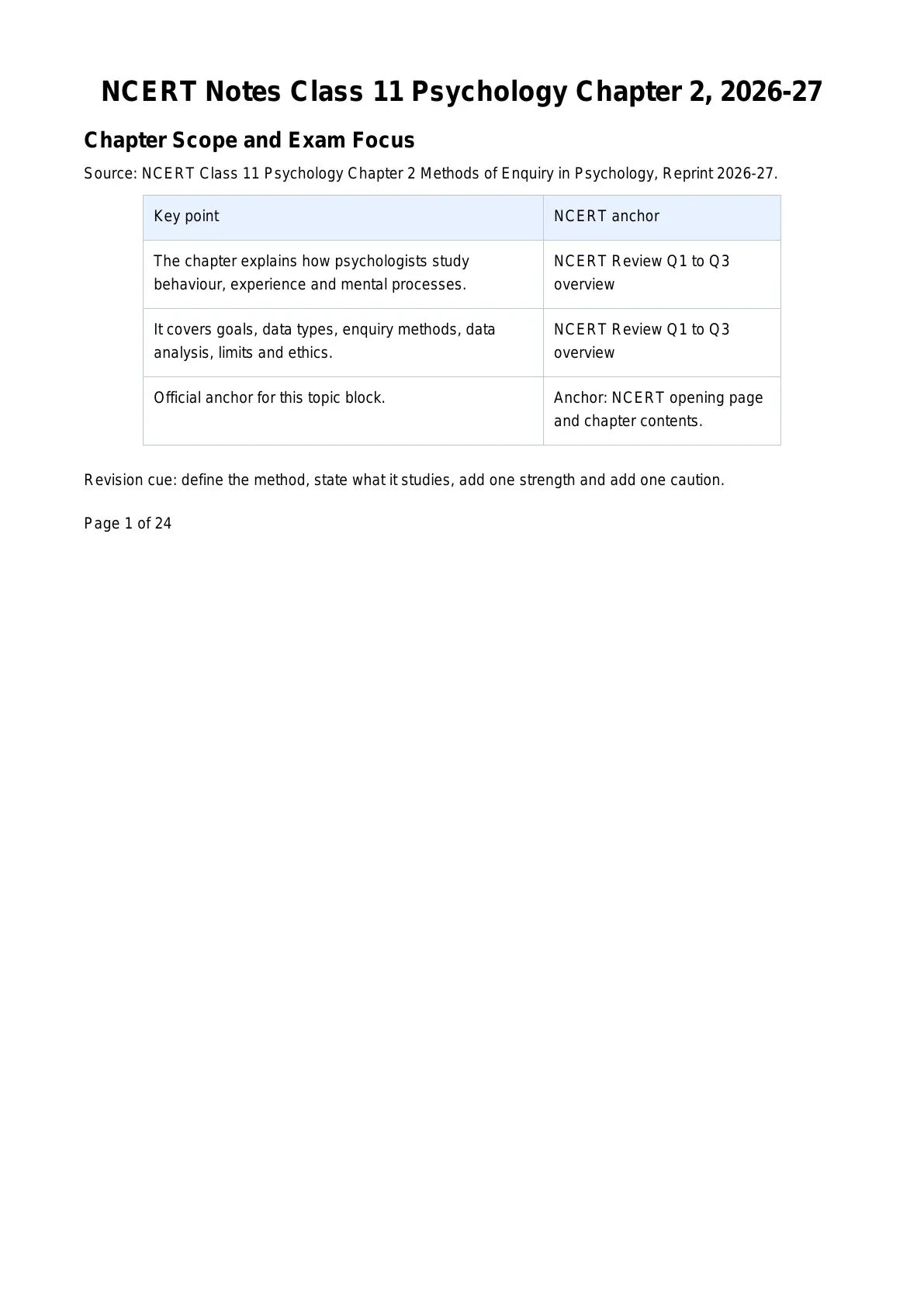
Methods of Enquiry in Psychology Class 11 Notes: Chapter Overview
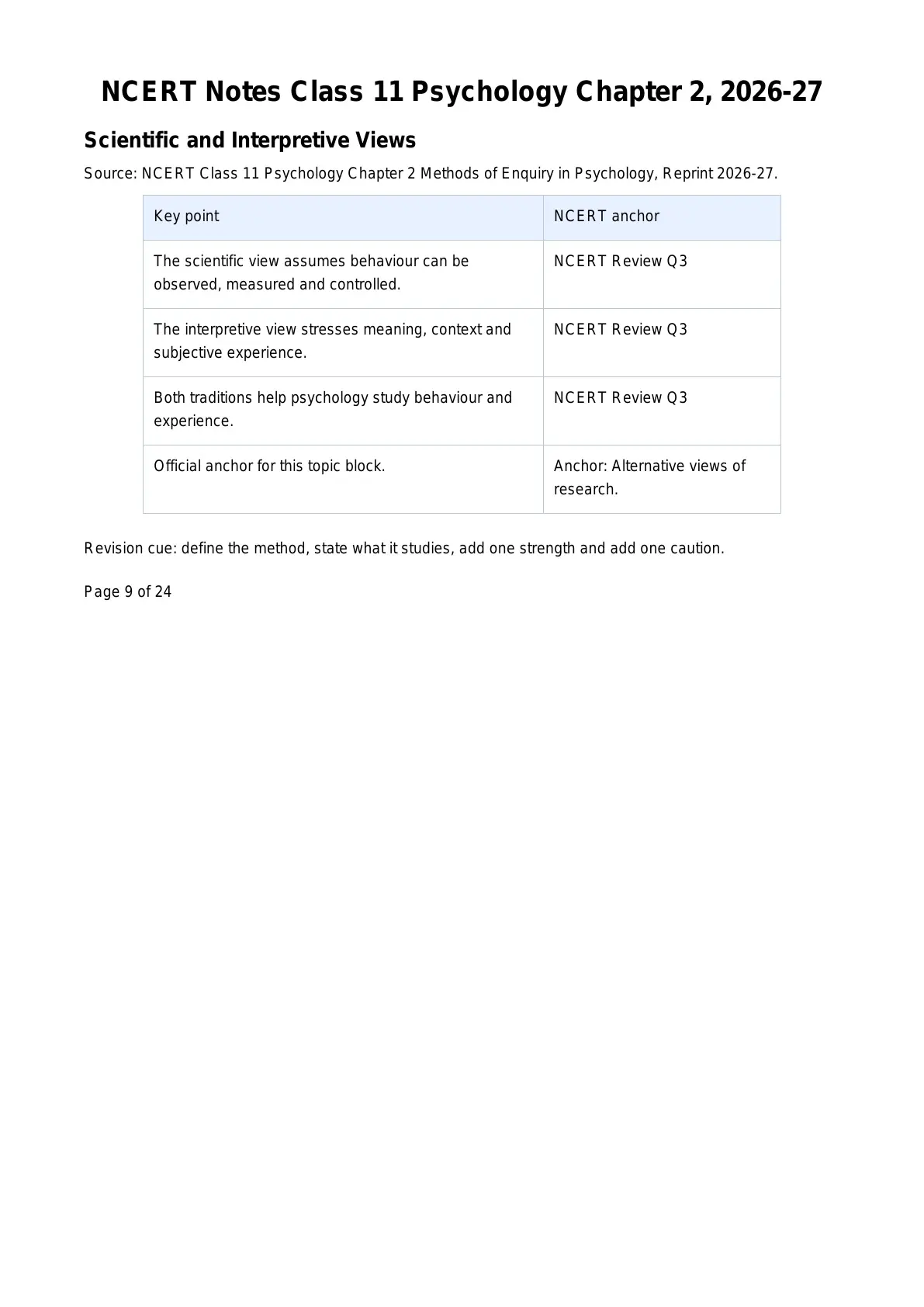
Chapter 2 explains how psychology becomes a scientific subject. Psychologists do not only ask interesting questions. They define problems, collect data, analyse evidence and revise conclusions. The safest exam line is simple: method makes psychological enquiry systematic, objective and testable.
| Chapter area | What to revise | Answer cue |
|---|---|---|
| Goals | Description, prediction, explanation, control, application | Write all five in order |
| Research steps | Problem, data collection, conclusion, revision | Use the NCERT step sequence |
| Methods | Observation, experiment, correlation, survey, testing, case study | State purpose and limitation |
| Analysis and ethics | Quantitative, qualitative, limits, consent and dignity | Add caution in long answers |
Goals of Psychological Enquiry
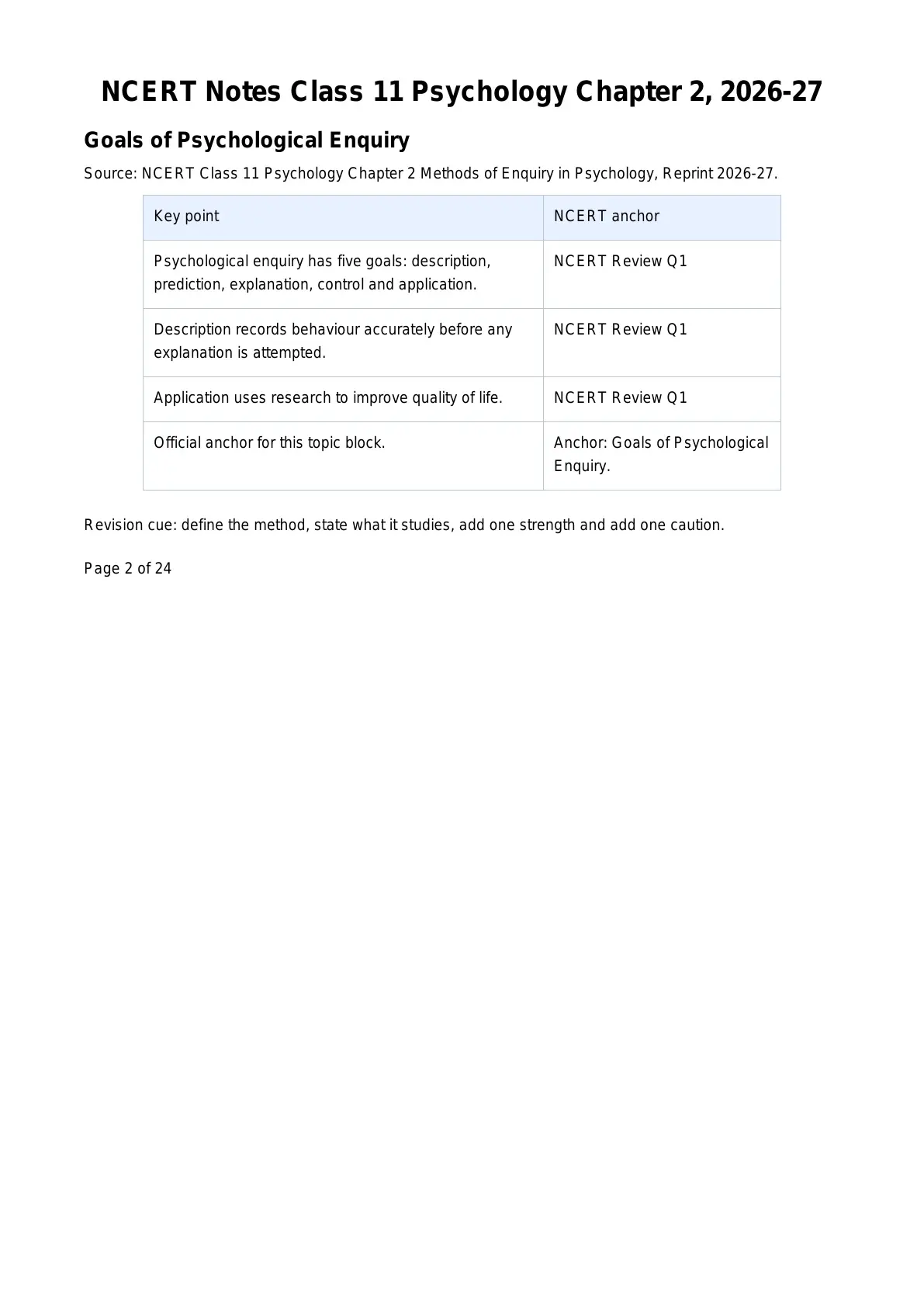
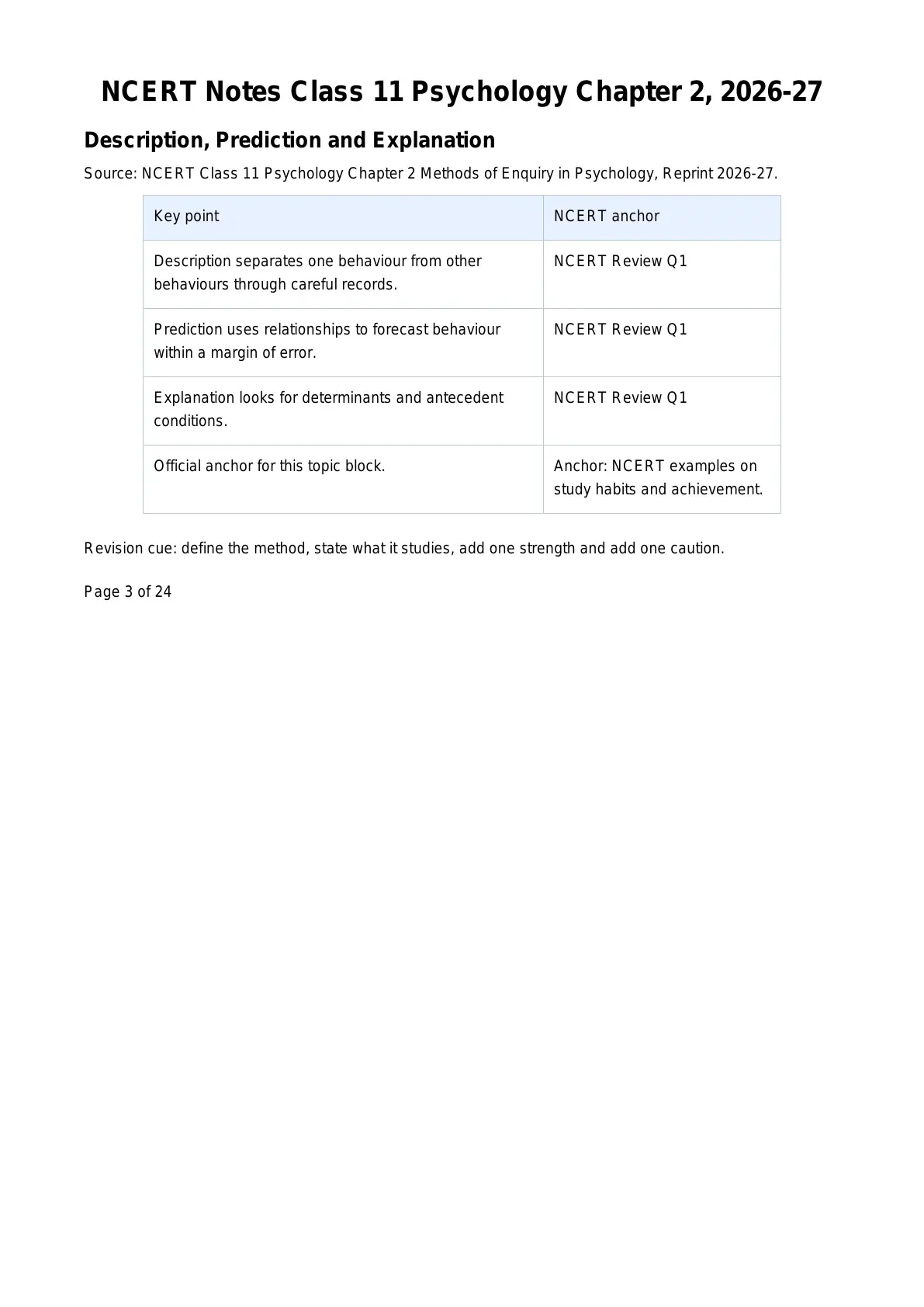
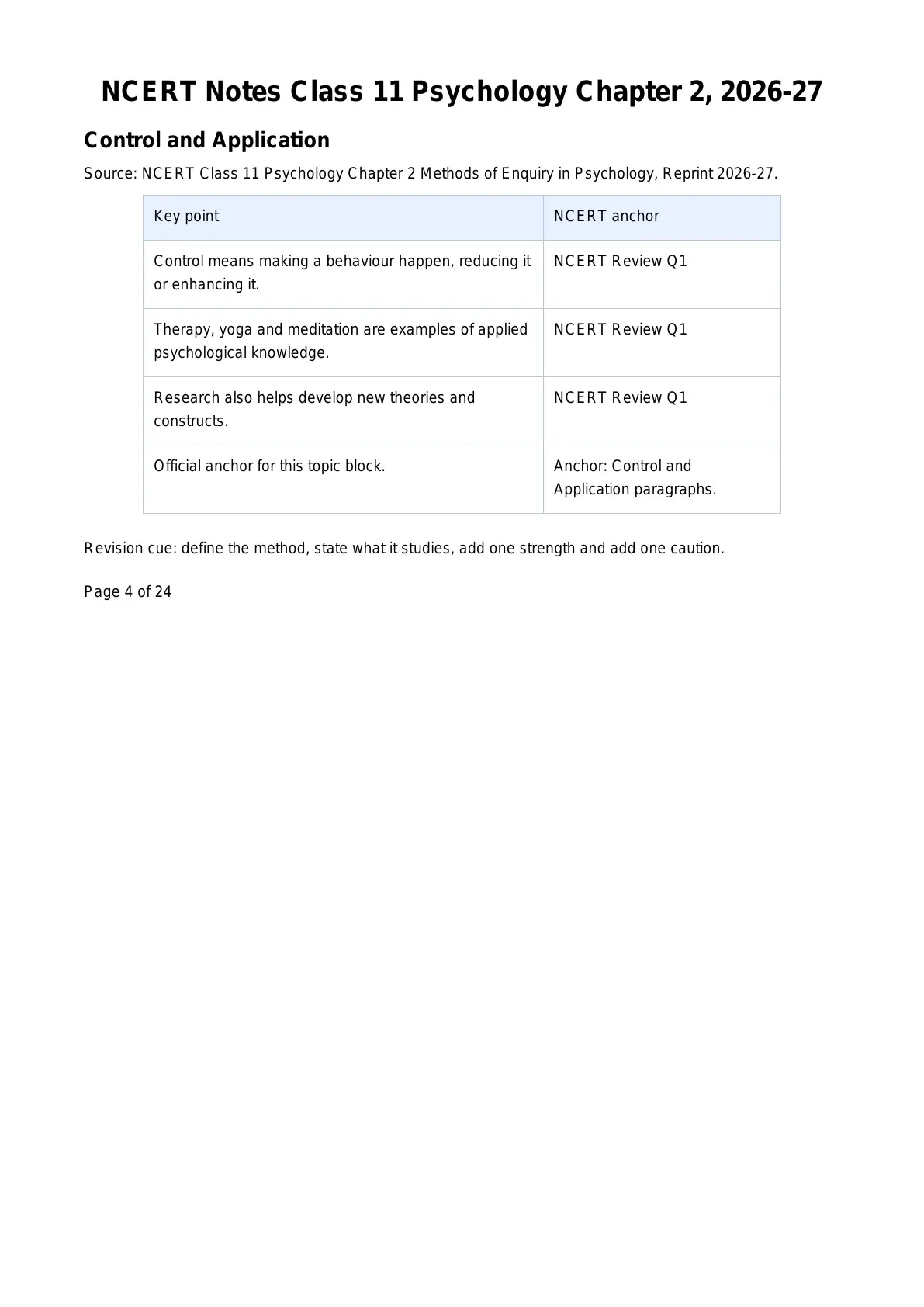
NCERT lists five goals of psychological enquiry: description, prediction, explanation, control and application. Description records behaviour accurately. Prediction uses relationships to forecast behaviour. Explanation searches for causes. Control changes behaviour by changing conditions. Application uses knowledge to improve life.
- Description: record what the behaviour is.
- Prediction: forecast when it may occur.
- Explanation: identify determinants or antecedent conditions.
- Control: reduce, increase or produce a behaviour.
- Application: use findings in real settings.
Scientific Research Steps in Psychology
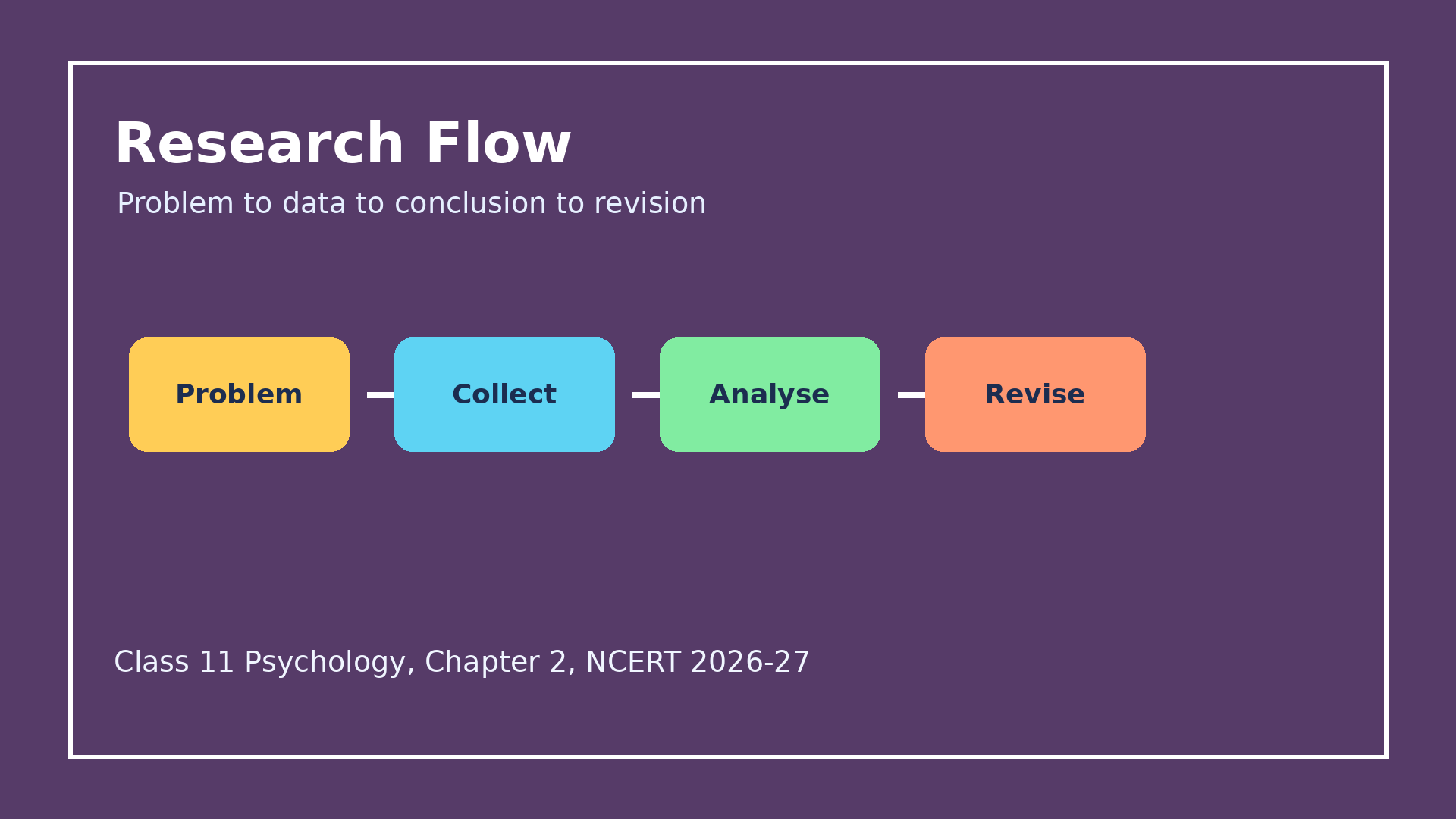
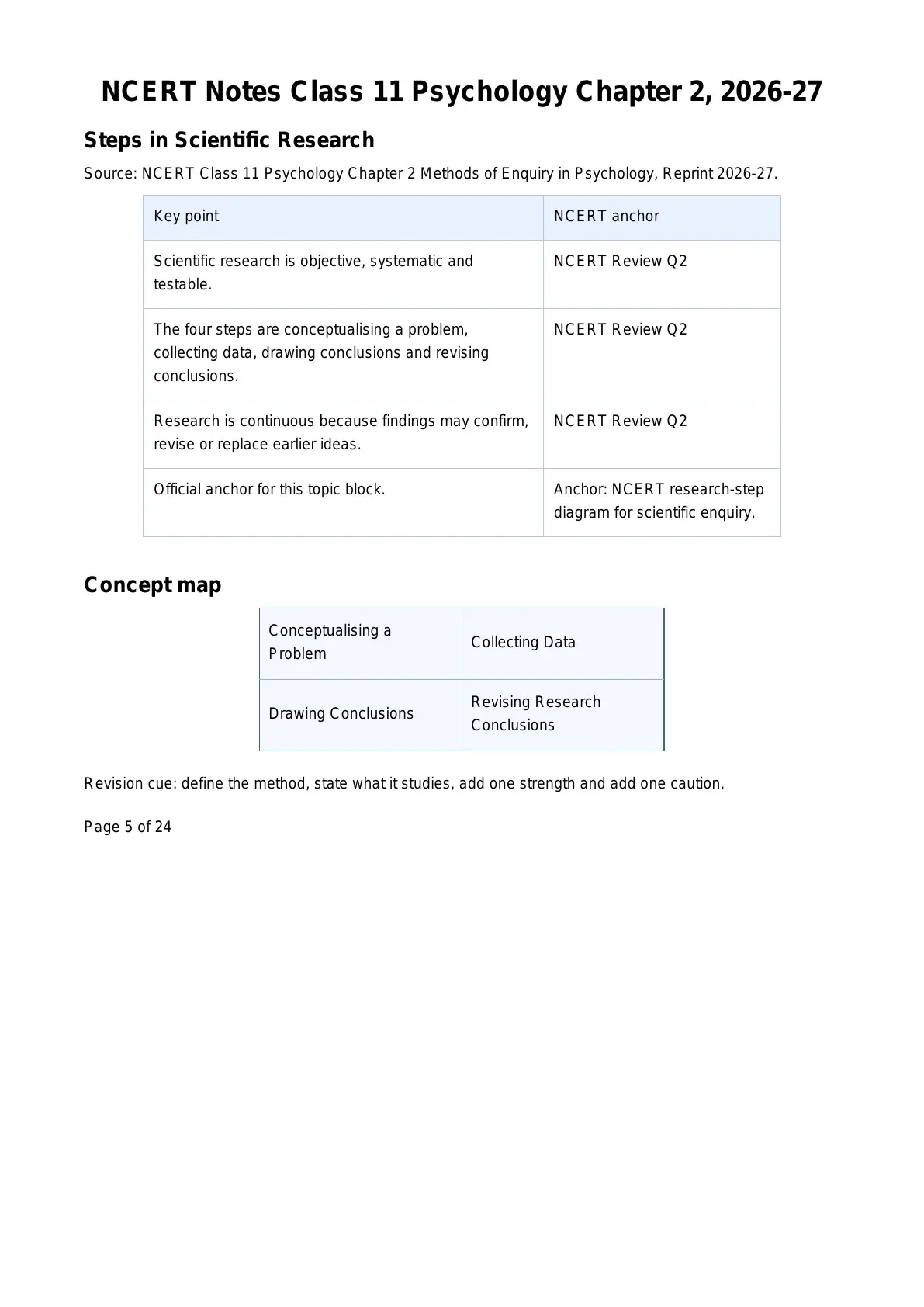
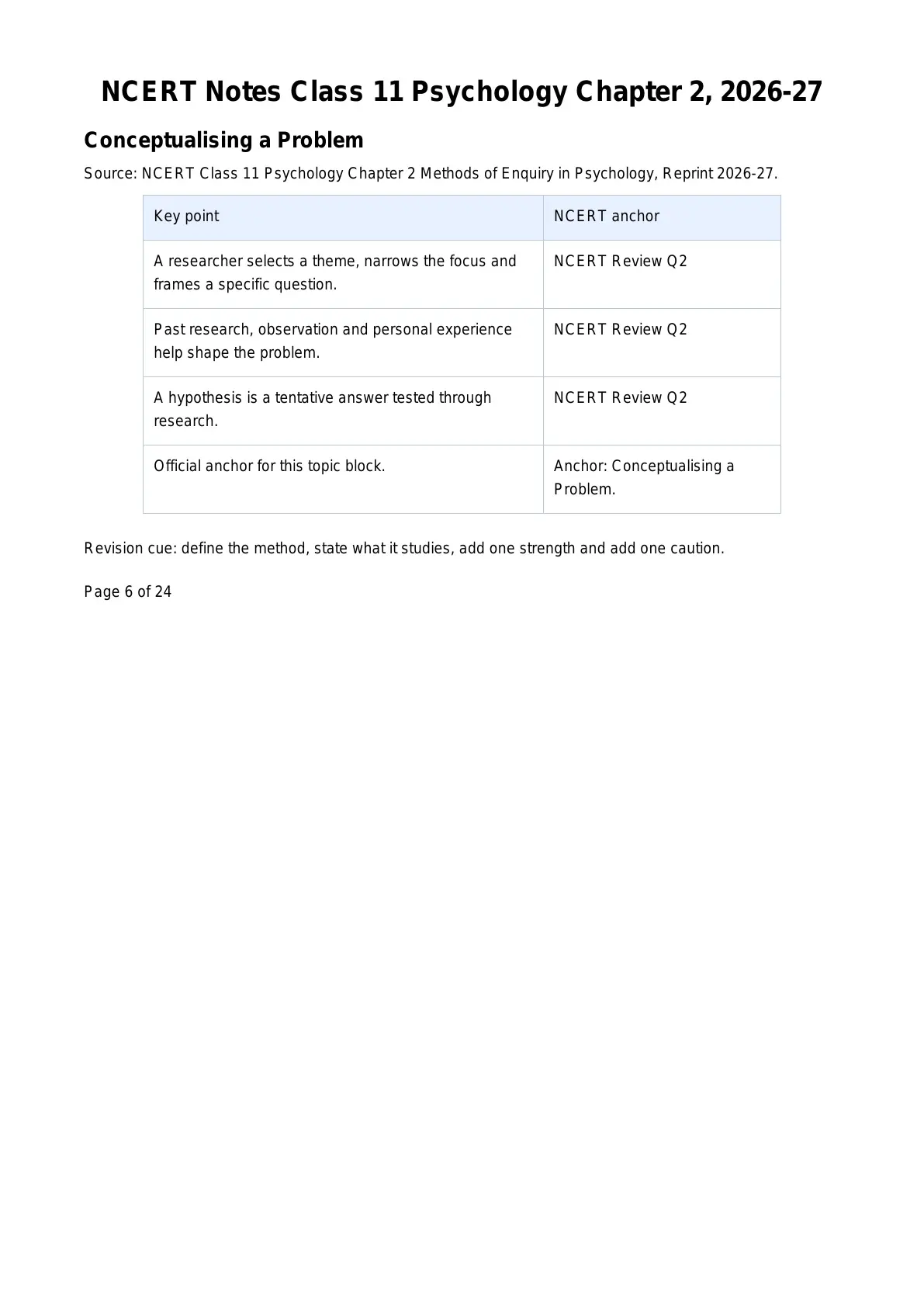
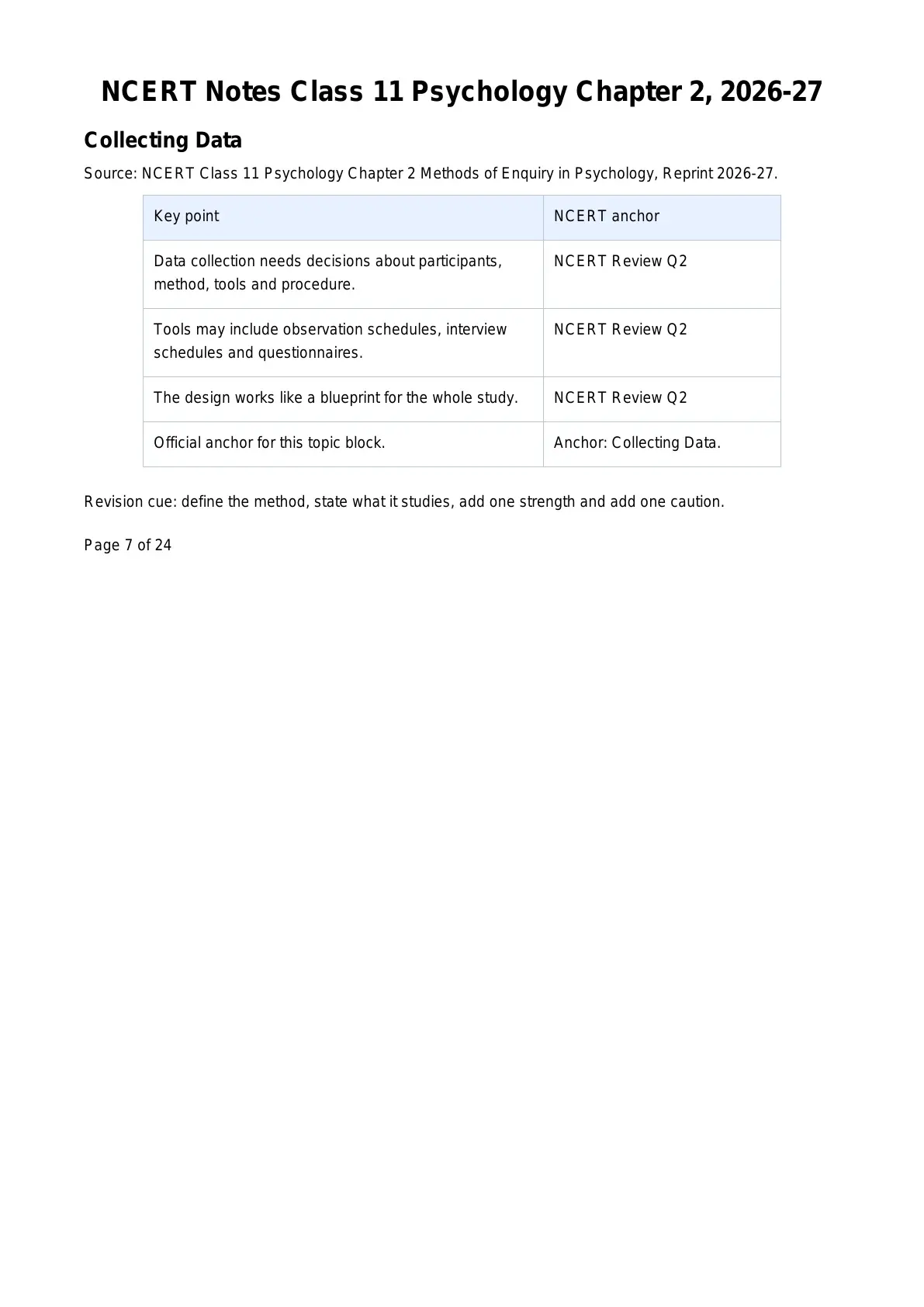
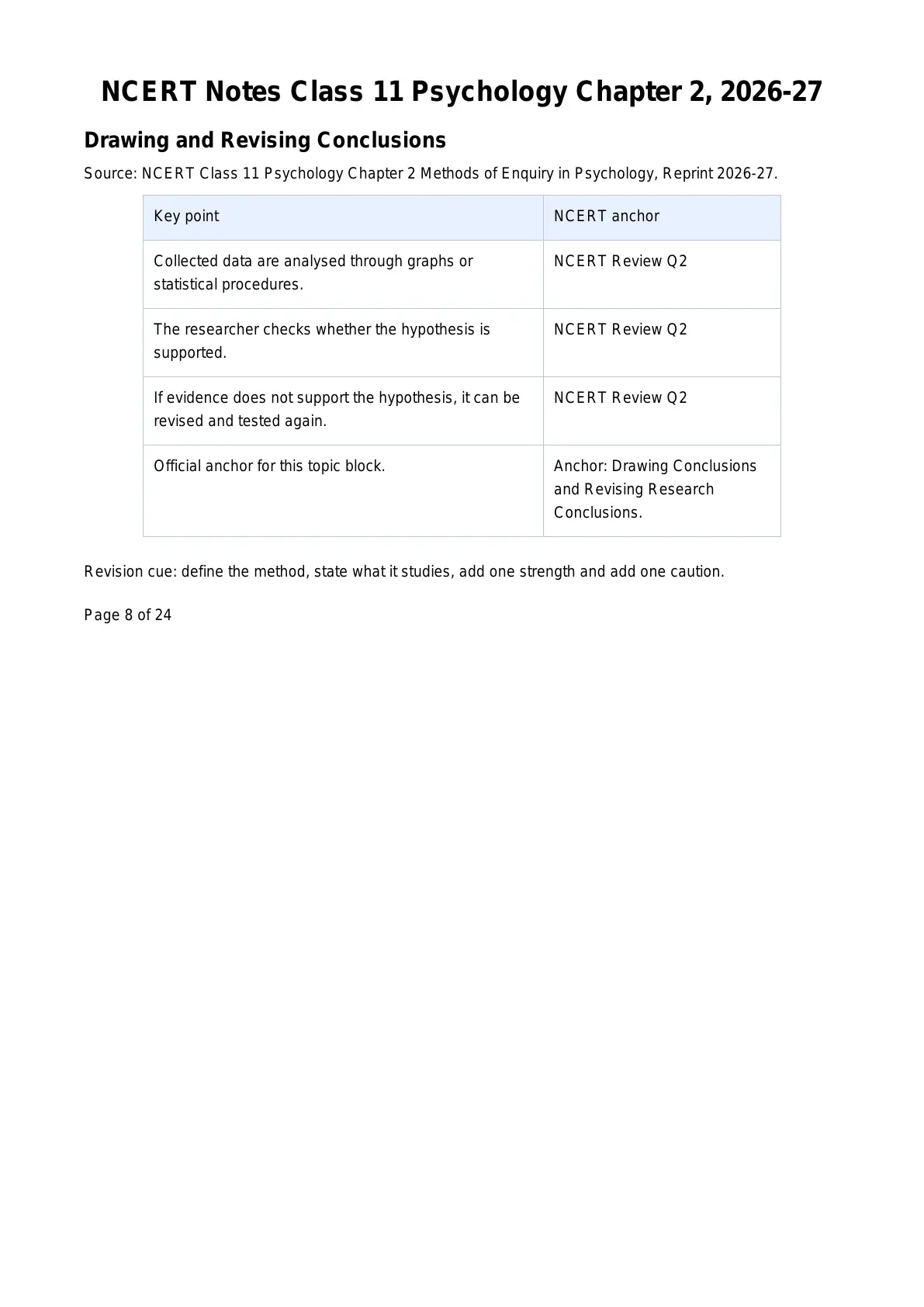
Scientific research begins with conceptualising a problem. The researcher then collects data through a suitable design, draws conclusions and revises the conclusion or theory if the evidence requires it. This cycle keeps research open to correction.
| Step | Meaning | Exam example |
|---|---|---|
| Conceptualise | Select a topic and frame a question | Study habits among students |
| Collect data | Choose participants, method, tools and procedure | Use observation or questionnaire |
| Draw conclusions | Analyse data using suitable methods | Check whether the hypothesis is supported |
| Revise | Confirm, change or replace the earlier idea | Frame a new hypothesis if needed |
Nature and Types of Psychological Data
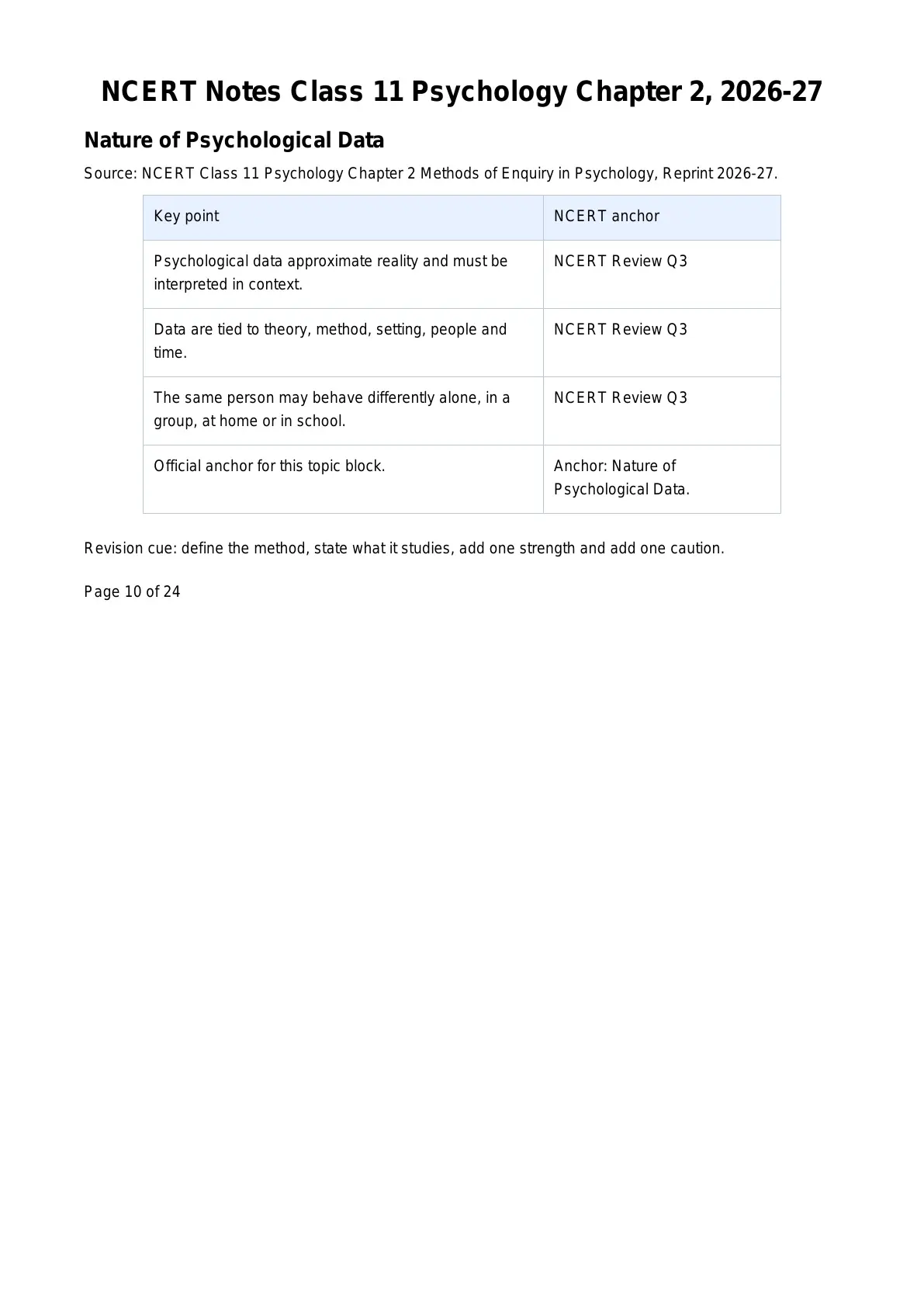
Psychological data are connected with context. A person may behave differently at home, in school, alone or in a group. Data are also tied to the method used, the theory guiding the study and the time of observation.
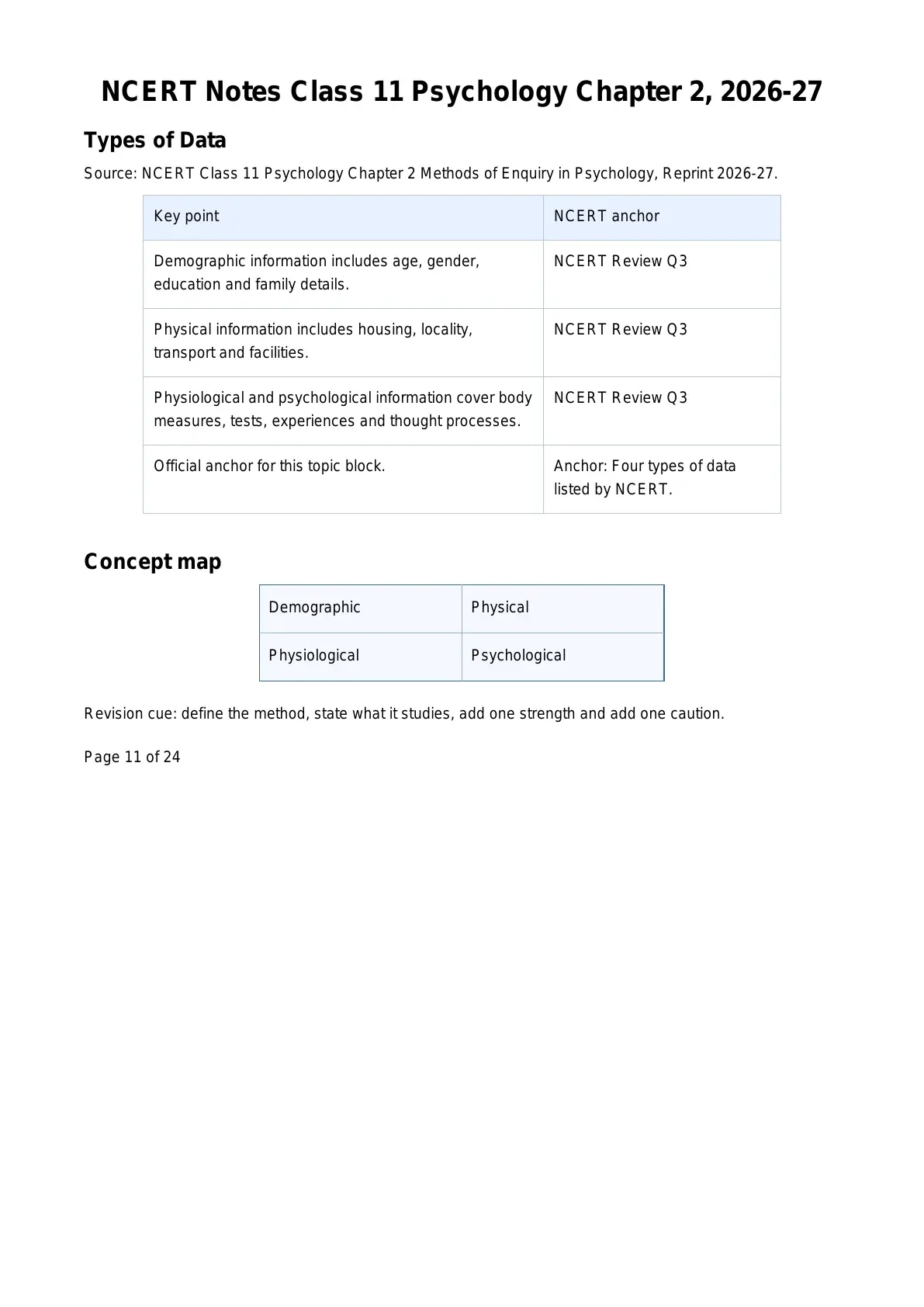
- Demographic data: age, gender, education, family and locality.
- Physical data: housing, facilities, transport and ecological setting.
- Physiological data: heart rate, fatigue, reaction time, sleep and blood pressure.
- Psychological data: intelligence, personality, values, emotions, motivation and subjective experience.
Observation, Experiment and Correlation
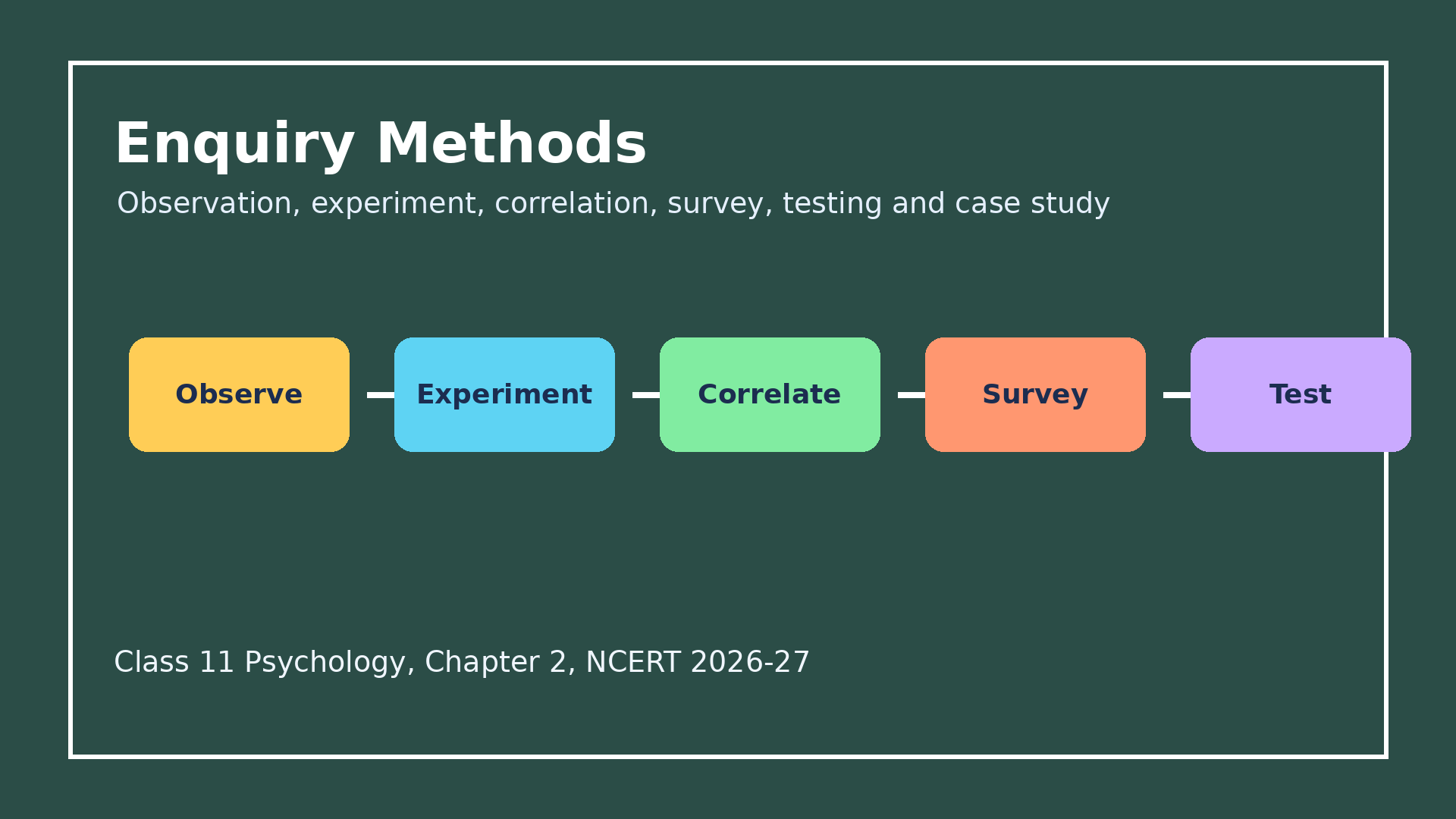
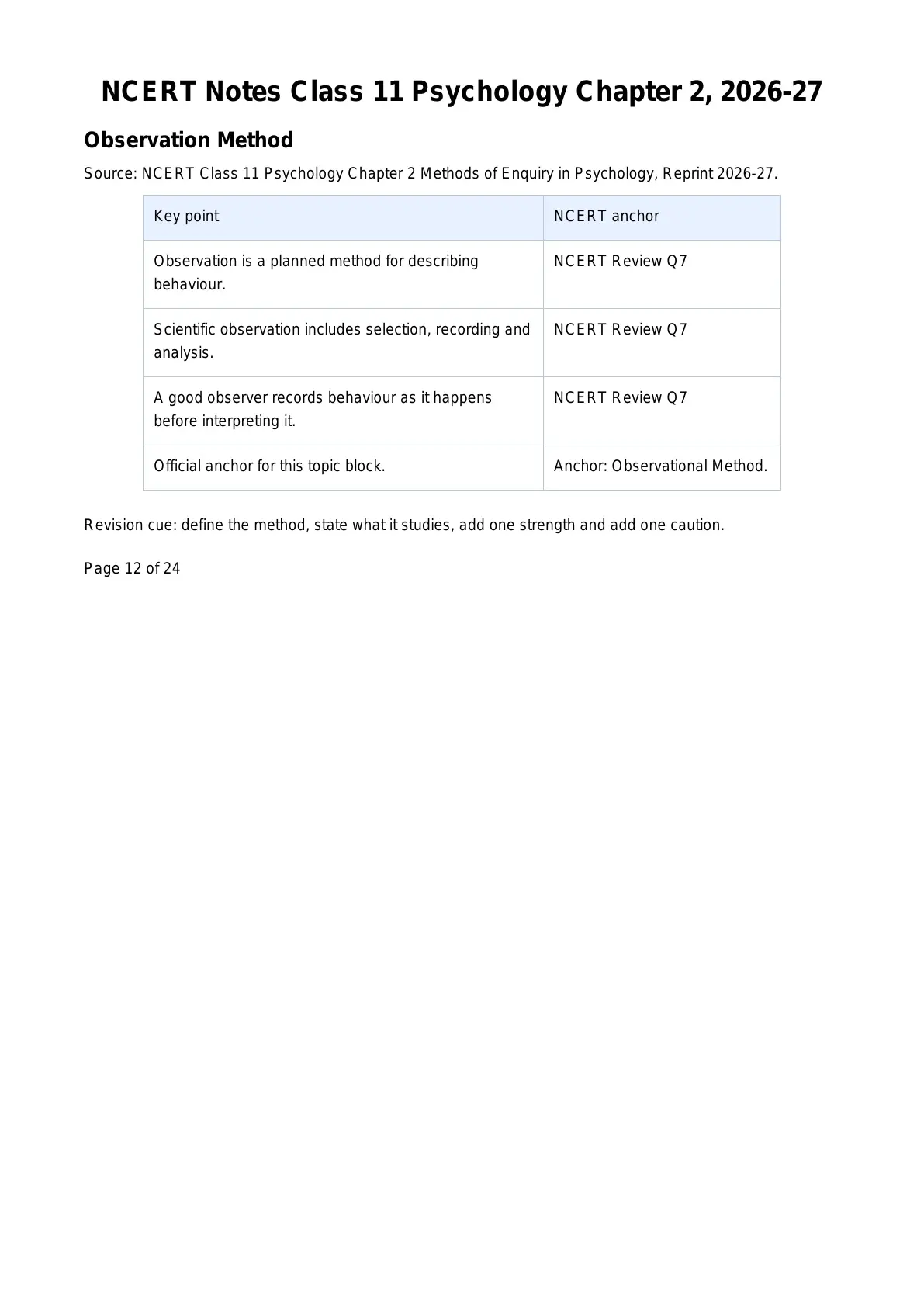
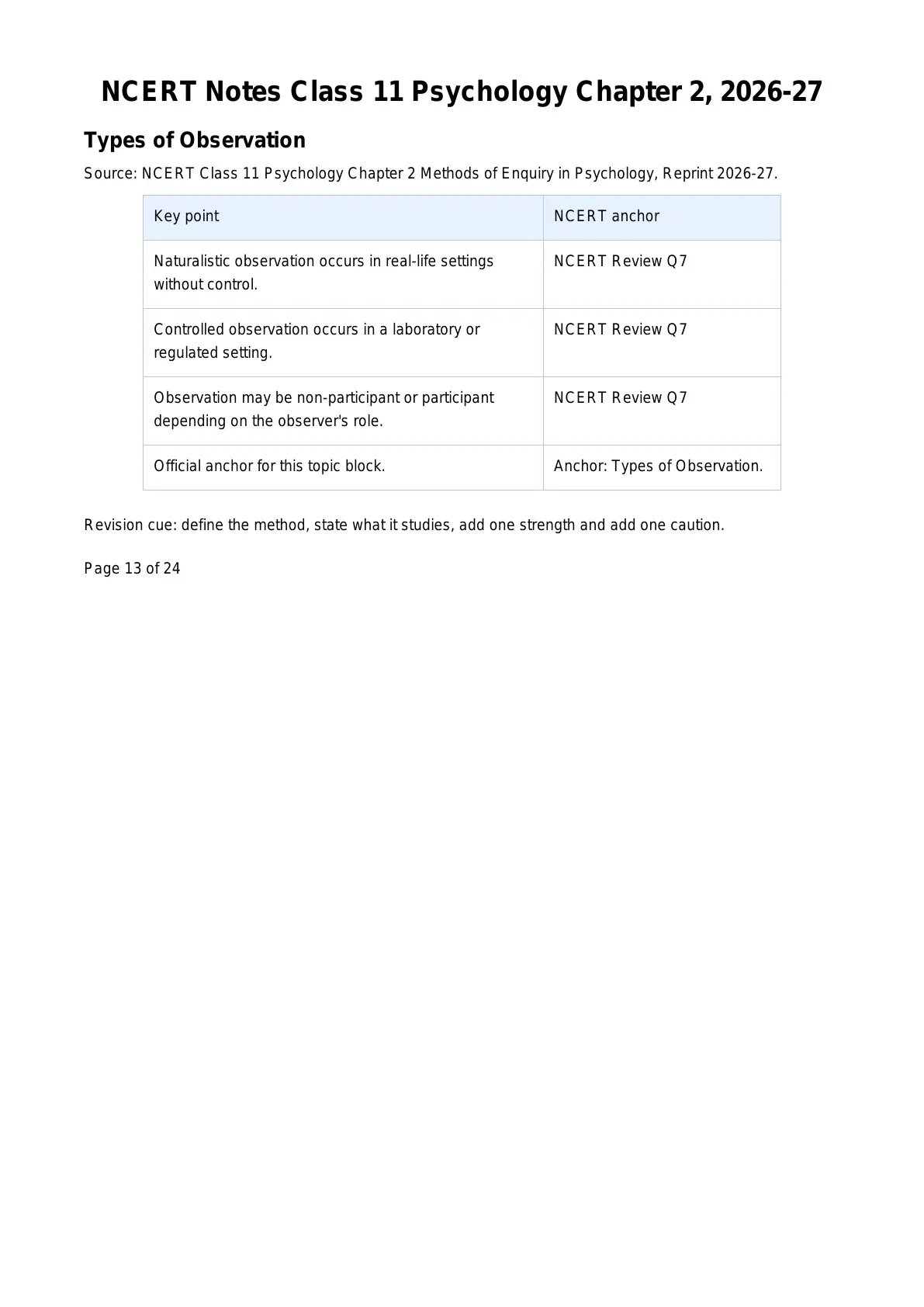
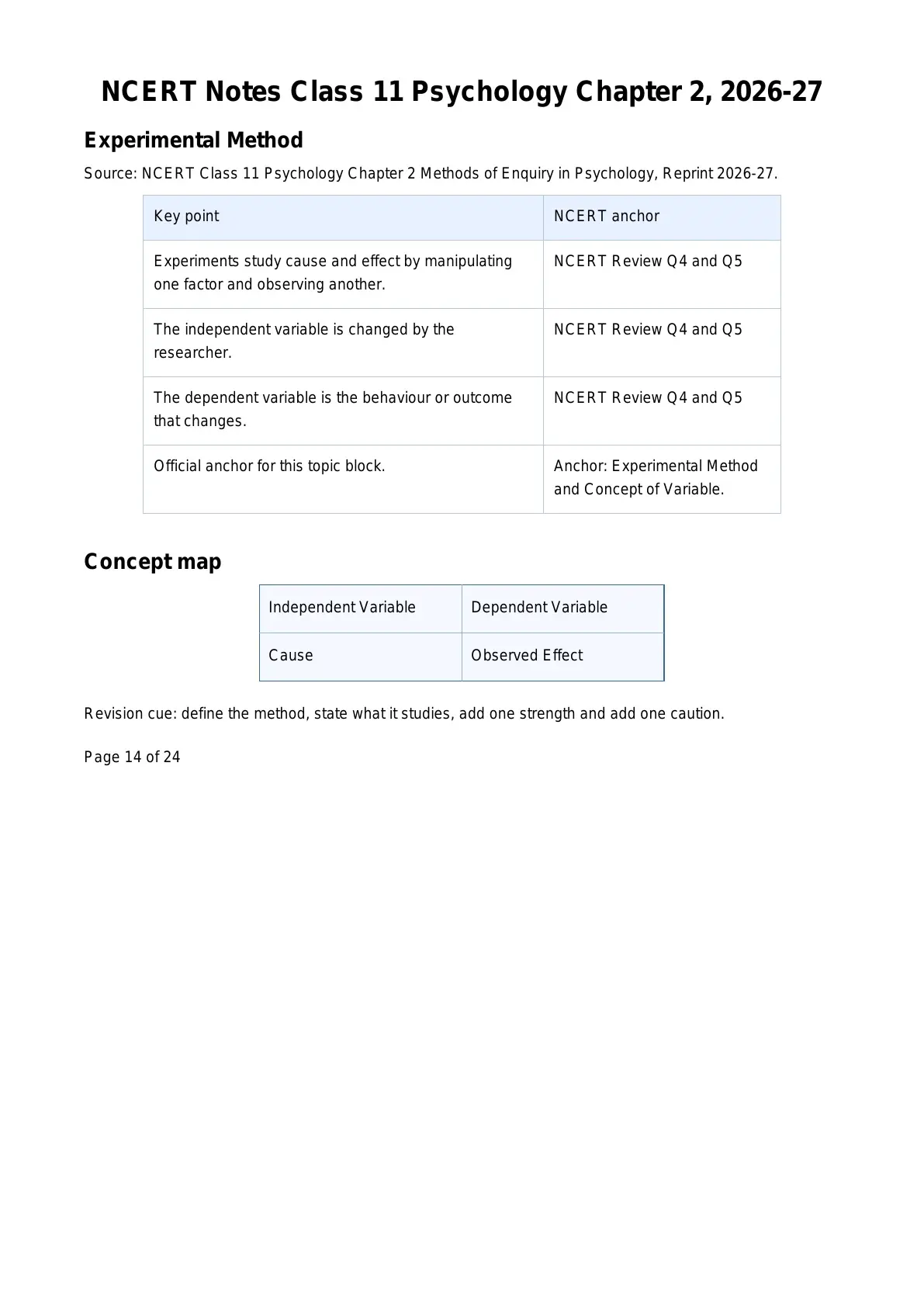
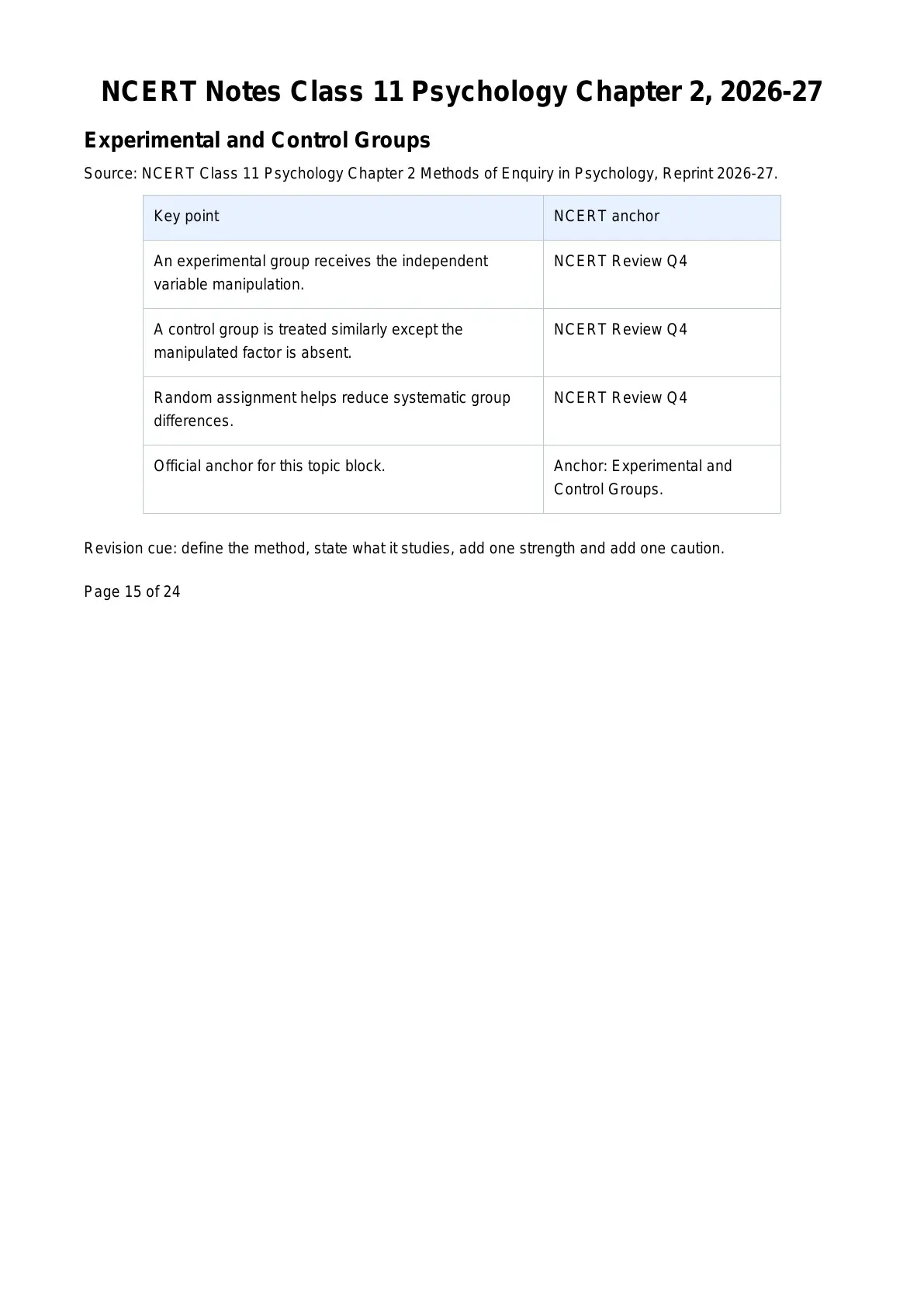
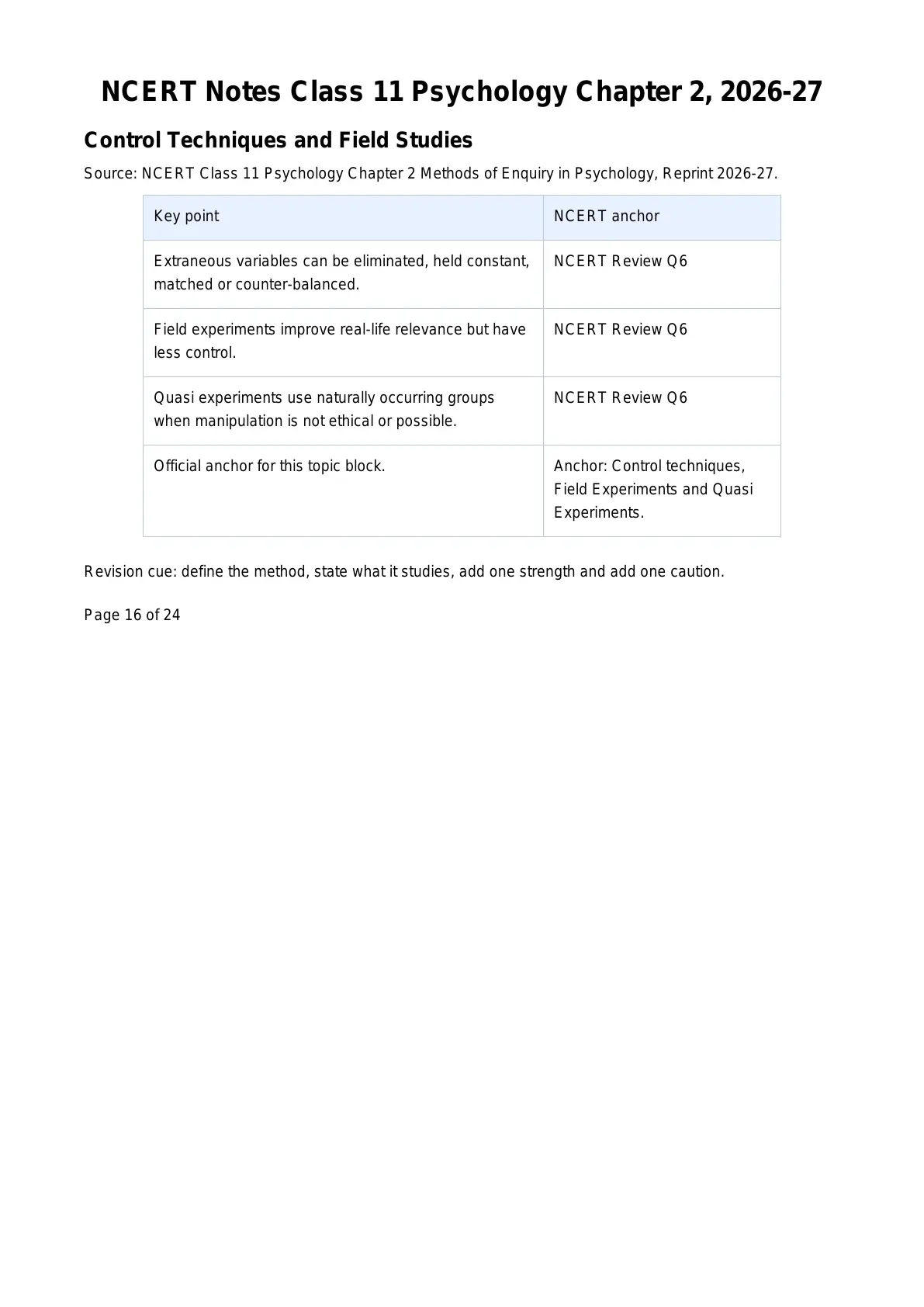
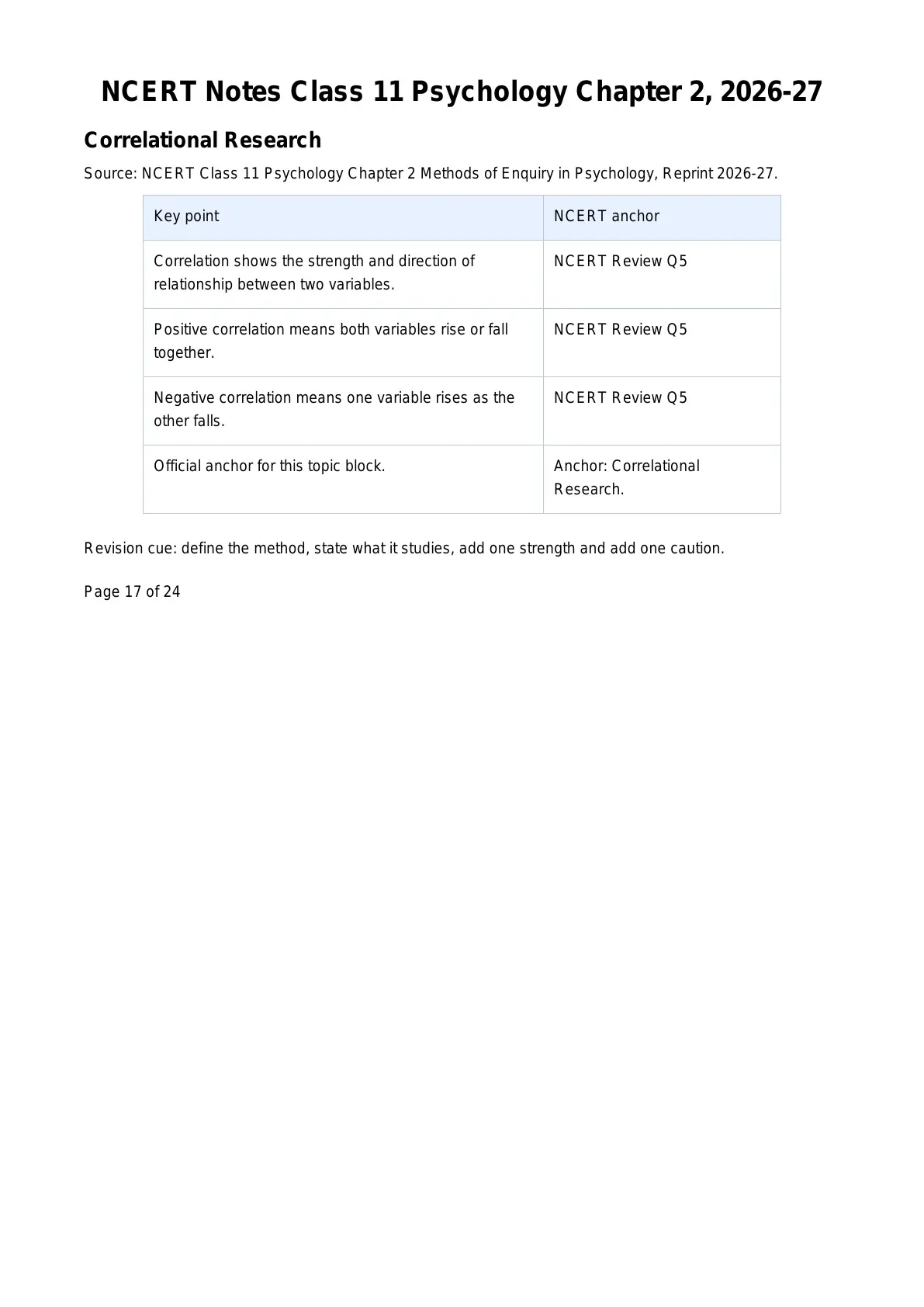
Observation records selected behaviour in a planned way. Experiment studies cause and effect by manipulating an independent variable and observing a dependent variable. Correlation studies relationship between two variables for prediction, but it does not prove causation.
| Method | Best used for | Caution |
|---|---|---|
| Observation | Describing behaviour in a setting | Observer bias and time demand |
| Experiment | Cause and effect | Low real-life fit if too controlled |
| Correlation | Prediction between variables | Relationship is not causation |
Survey, Interview, Questionnaire and Testing
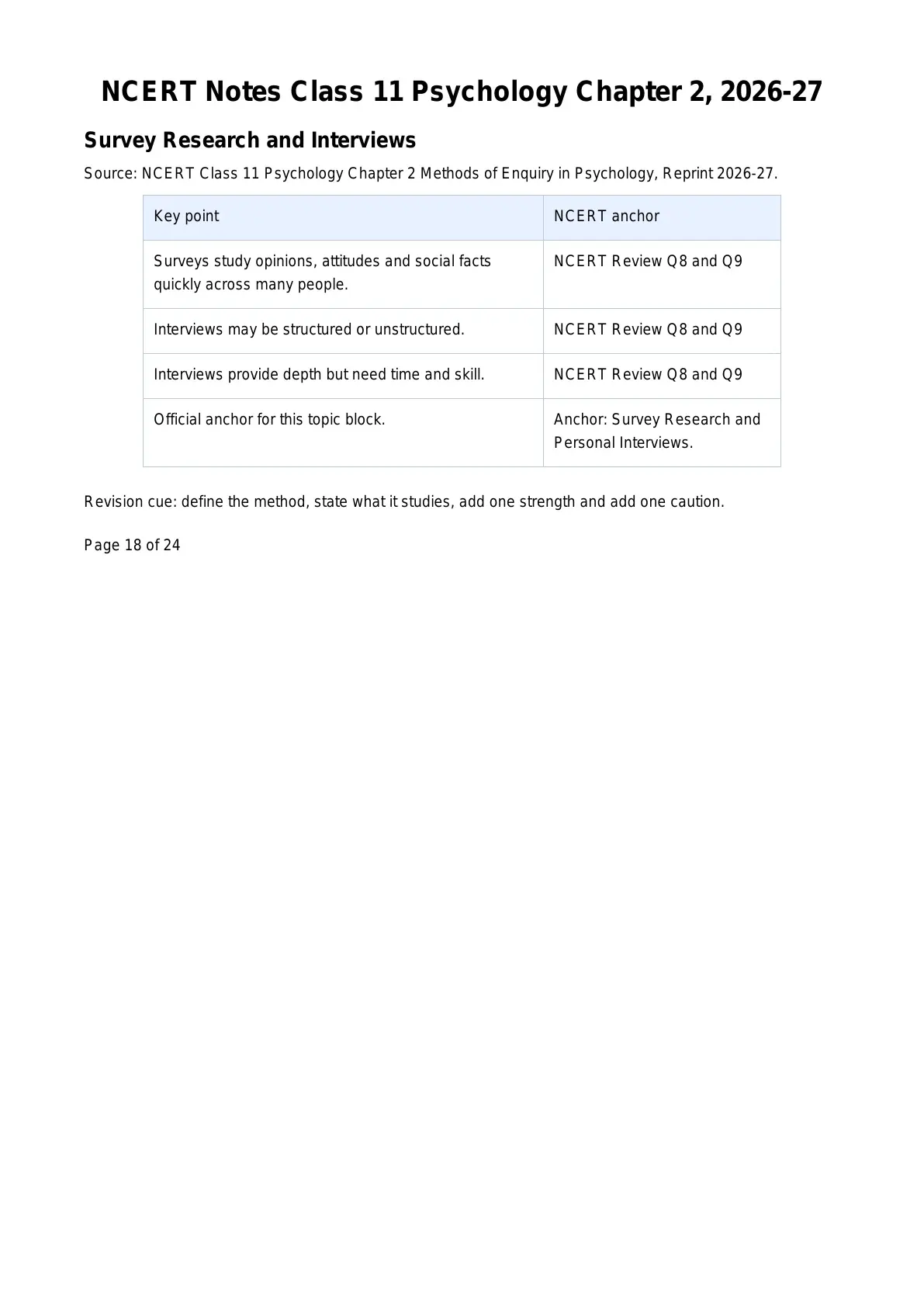
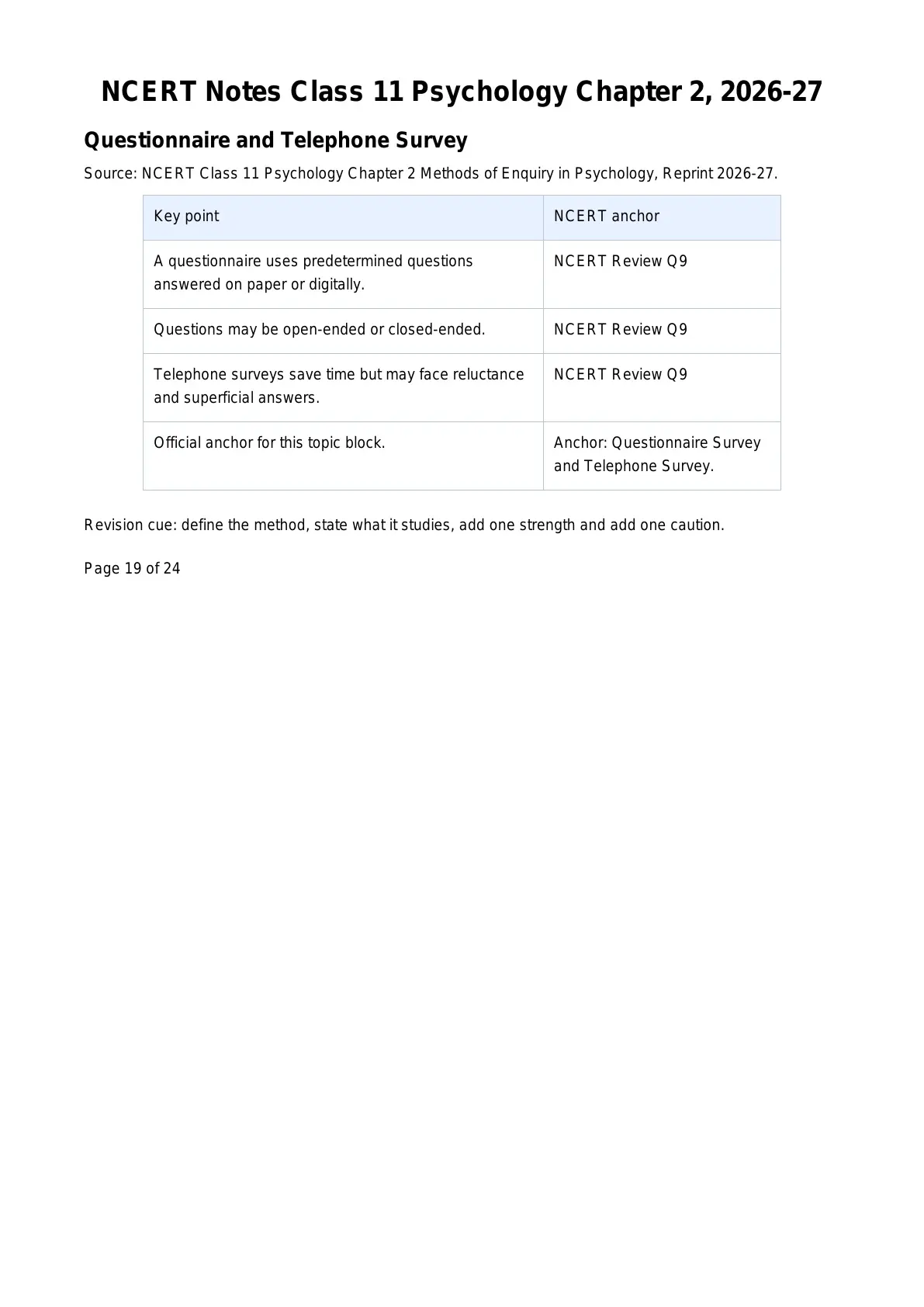
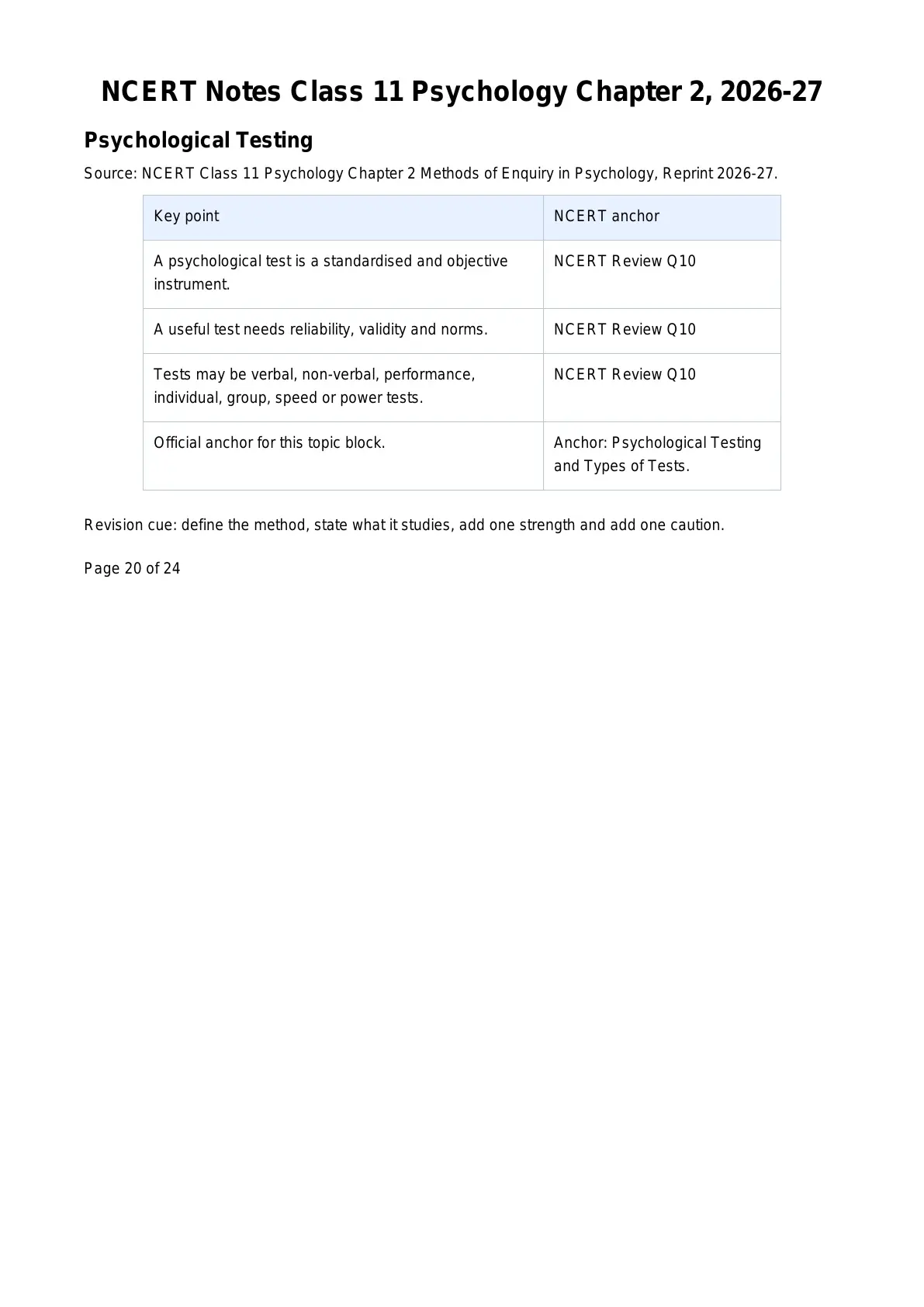
Survey research collects opinions, attitudes and social facts. Interviews allow depth and probing. Questionnaires are low-cost and useful for many people at once. Psychological tests measure attributes such as intelligence, aptitude, personality, interest and values through standardised items.
- Structured interviews use fixed questions in a fixed order.
- Unstructured interviews allow flexible questioning.
- Questionnaires may use open-ended or closed-ended questions.
- Tests must be reliable, valid and standardised.
Case Study, Data Analysis, Limits and Ethics
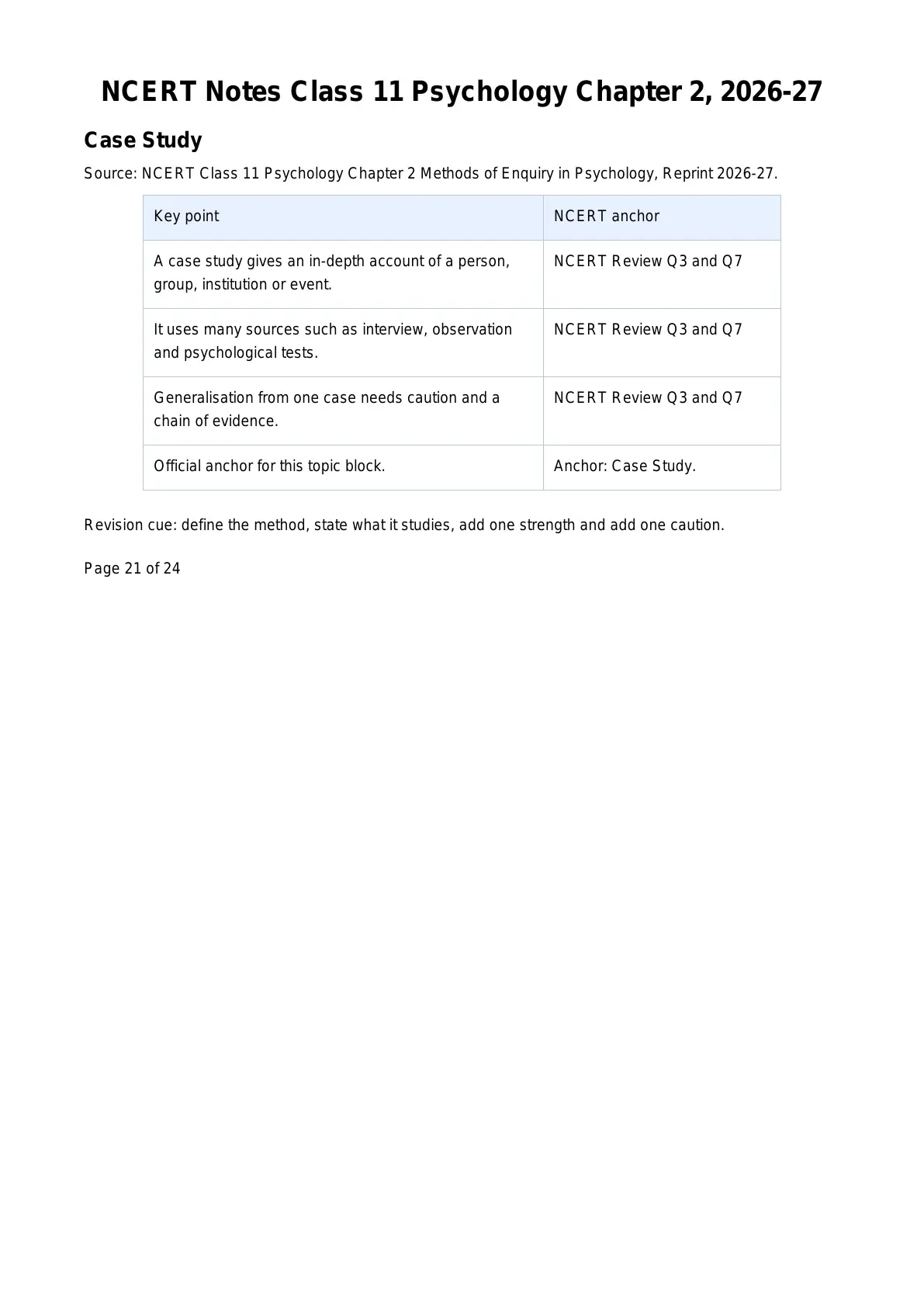
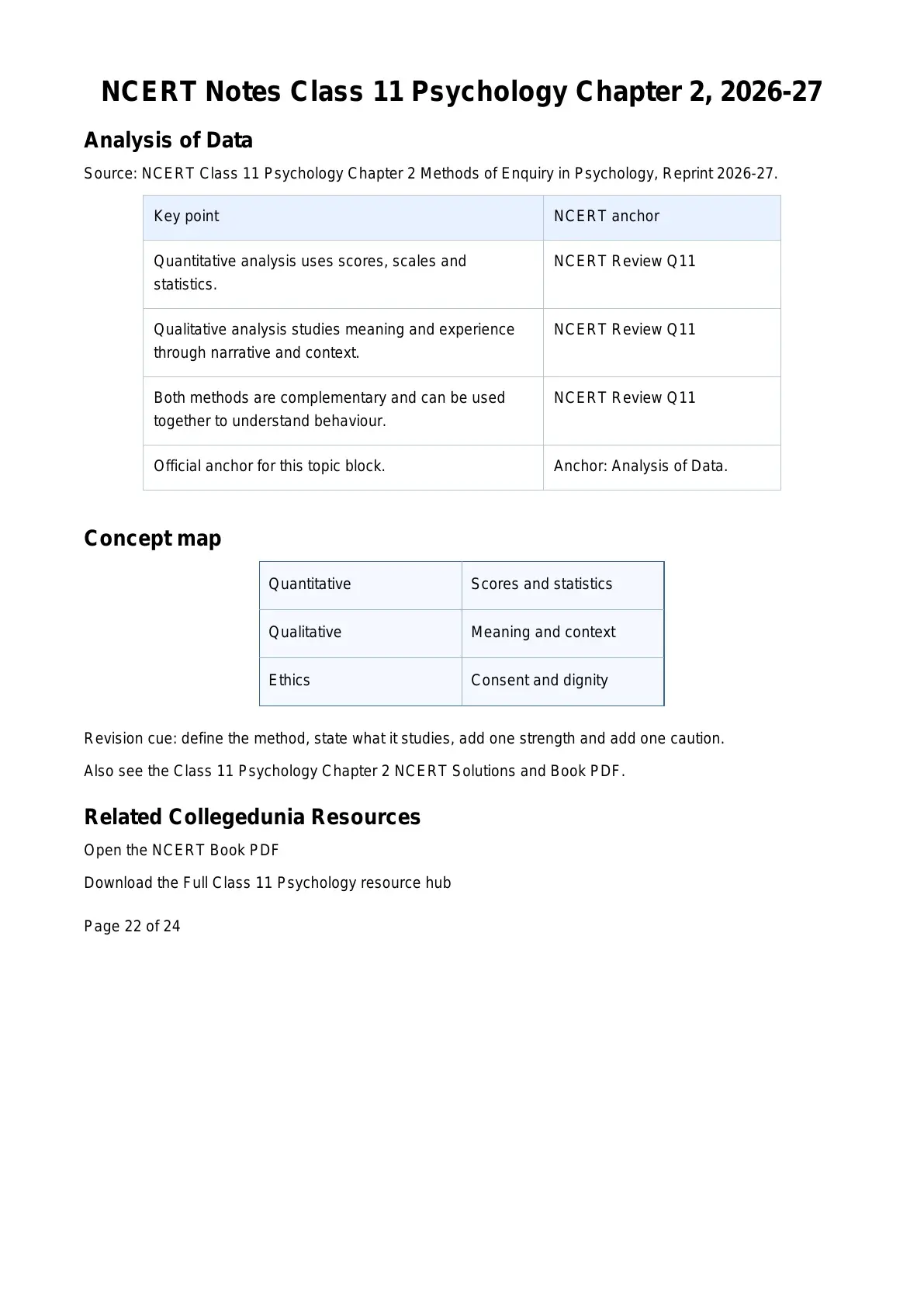
A case study gives an in-depth account of a person, small group, institution or event. It can use interviews, observation and tests together. Data analysis may be quantitative, using scores and statistics, or qualitative, using meaning, narrative and context.
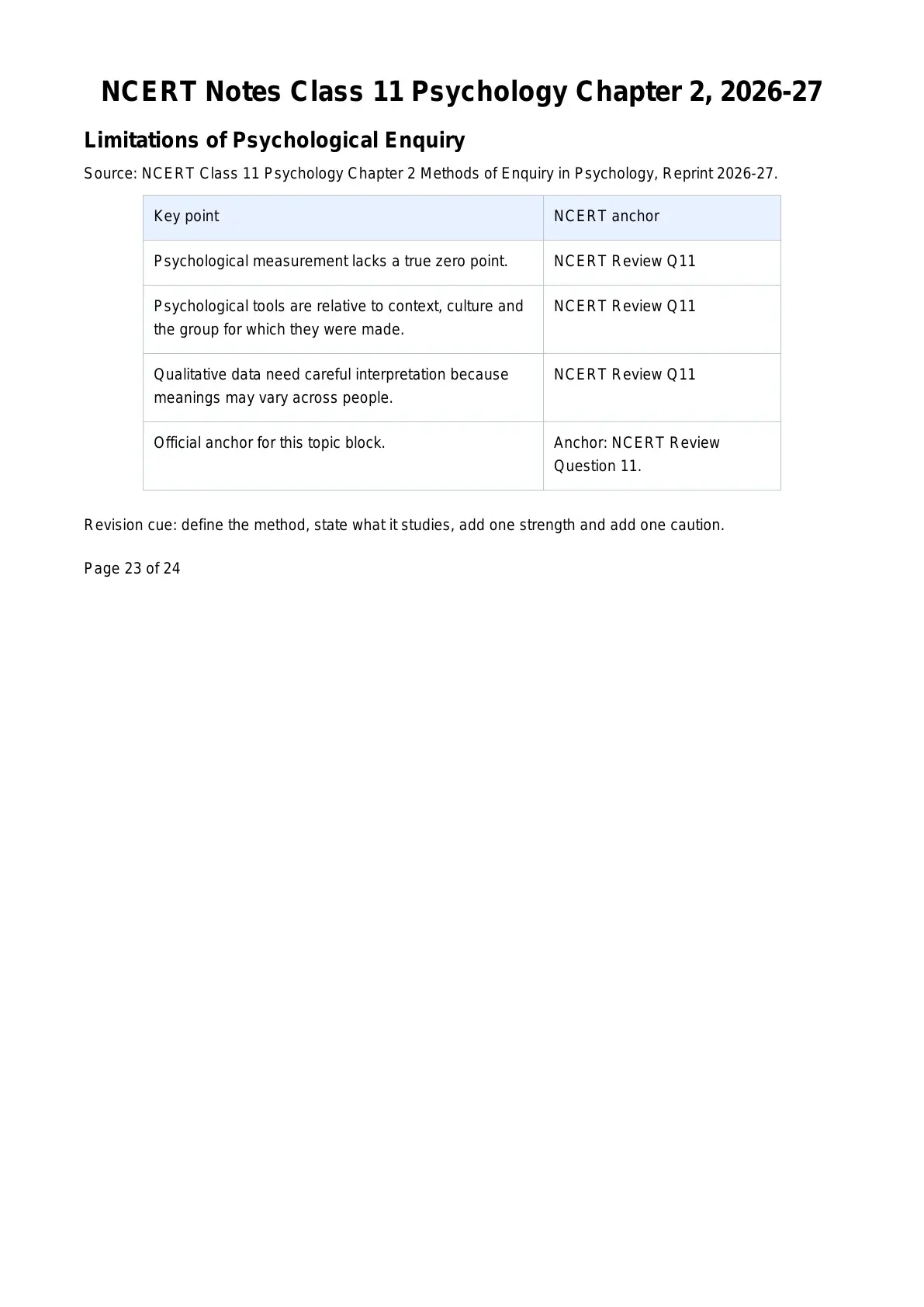
NCERT gives three main limitations of psychological enquiry. Psychological measurement has no true zero point, psychological tools are relative to the context in which they are made, and qualitative data need careful interpretation. These points are important for NCERT Review Question 11.
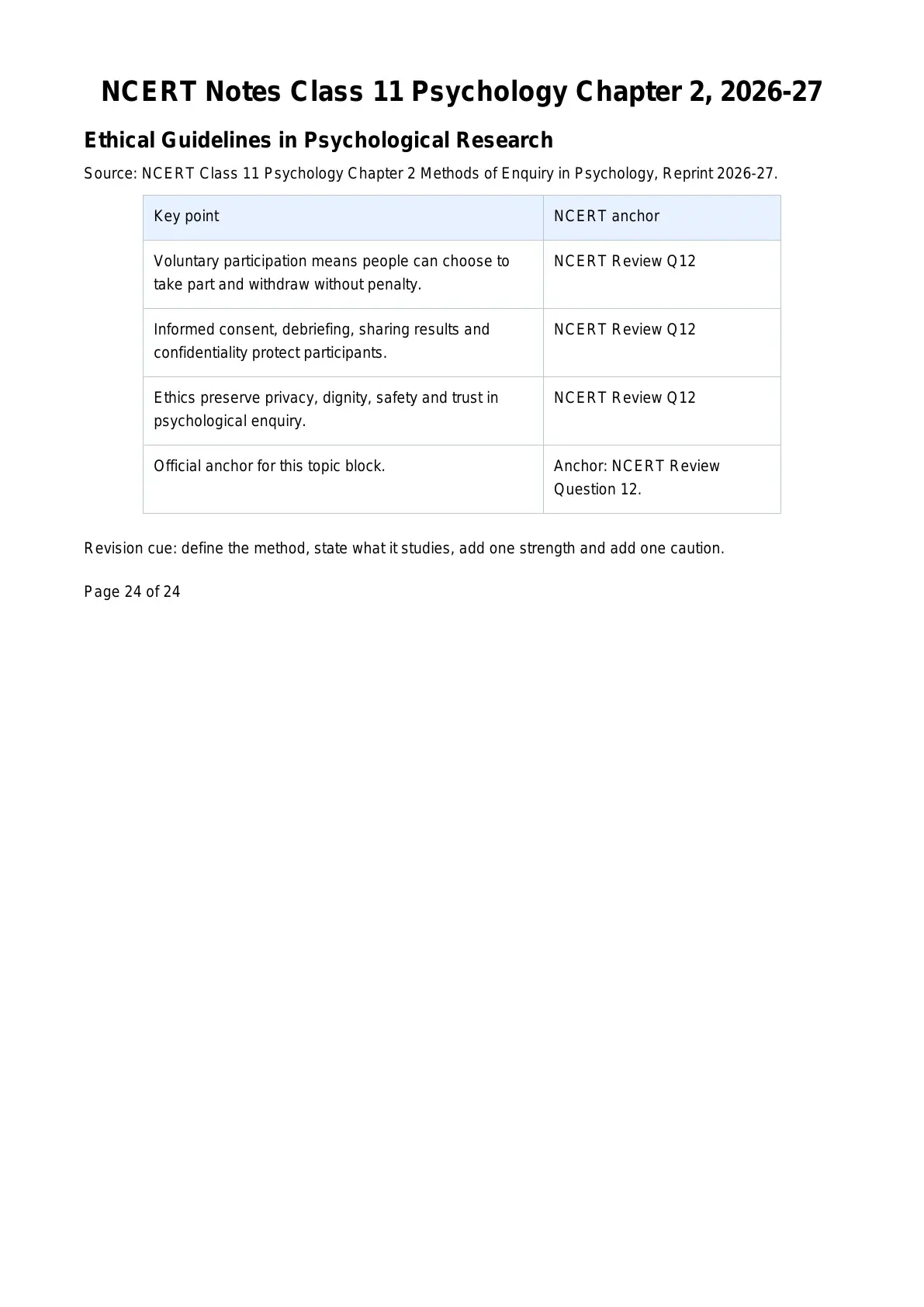
Ethics are central because psychological research studies real people. Students should connect ethics with voluntary participation, informed consent, debriefing, sharing results and confidentiality. These five guidelines are the safest structure for NCERT Review Question 12.
Download the Methods of Enquiry in Psychology Notes PDF
Use the PDF for Chapter 2 goals, research steps, methods, data analysis and ethics.
Download PDFRelated Psychology Resources for Methods of Enquiry in Psychology
Also Check: use these links with the notes PDF when you need the same chapter in another format.
| Resource | Best use | Link |
|---|---|---|
| NCERT Solutions | Stepwise answers to textbook questions | Methods of Enquiry in Psychology Class 11 NCERT Solutions |
| NCERT Book PDF | Original NCERT reading and review questions | Methods of Enquiry in Psychology Class 11 NCERT Book PDF |
| Handwritten Notes | Fast visual revision before tests | Methods of Enquiry in Psychology Class 11 Handwritten Notes |
Class 11 Psychology Notes for All Chapters
| Chapter | Notes Link |
|---|---|
| Chapter 1 | What is Psychology? Notes |
| Chapter 2 | You are here |
| Chapter 3 | Human Development Notes |
| Chapter 4 | Sensory, Attentional and Perceptual Processes Notes |
| Chapter 5 | Learning Notes |
| Chapter 6 | Human Memory Notes |
| Chapter 7 | Thinking Notes |
| Chapter 8 | Motivation and Emotion Notes |
Methods of Enquiry in Psychology Class 11 Notes FAQs
Ques. What is covered in Class 11 Psychology Chapter 2 notes?
Ans. The notes cover goals of enquiry, scientific research steps, psychological data, observation, experiment, correlation, survey, testing, case study, analysis, limitations and ethics.
Ques. What are the five goals of psychological enquiry?
Ans. The five goals are description, prediction, explanation, control and application of knowledge.
Ques. What is the difference between experiment and correlation?
Ans. An experiment studies cause and effect by manipulating a variable. Correlation studies relationship between variables for prediction but does not prove causation.
Ques. Why are ethics important in psychological research?
Ans. Ethics protect participants through consent, privacy, confidentiality, dignity and safety during research.



Comments