



NCERT Notes Class 11 Psychology Chapter 7 Thinking help students revise the nature of thinking, mental images, concepts, problem solving, reasoning, decision-making, creative thinking, language and thought for the 2026-27 syllabus. The notes keep the chapter ready for school tests through simple definitions, comparison tables and answer cues.
- Download the Thinking notes PDF for offline revision.
- Revise mental images, concepts, reasoning, decisions and creativity together.
- Use the tables to compare obstacles, stages and language links quickly.
Student Feedback: In a Collegedunia poll of 9,380 Class 11 Psychology students, 72% said they mixed up reasoning and decision-making before using a comparison table.
Source: 2026-27 Class 11 Psychology student poll across CBSE schools.
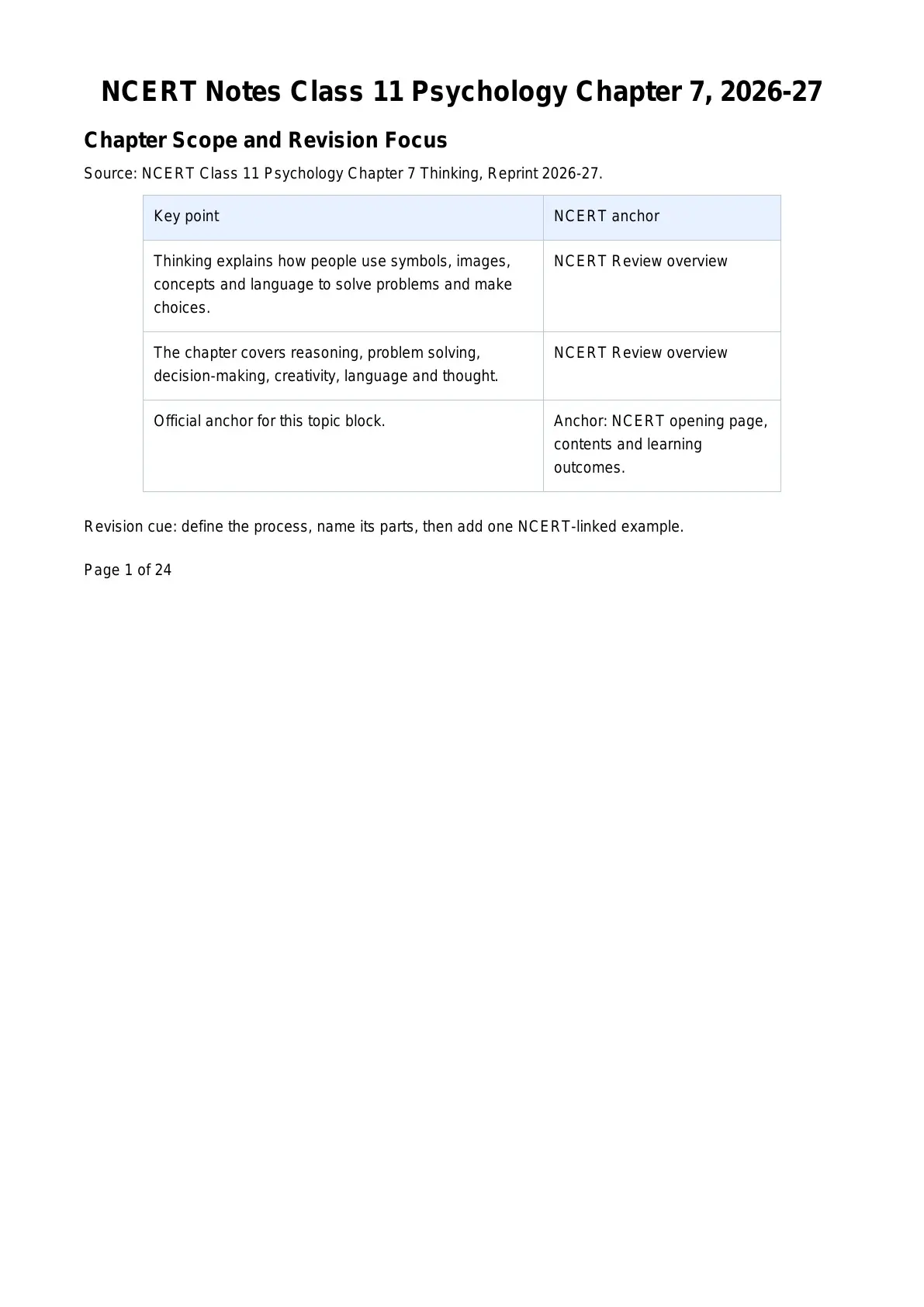
Thinking Class 11 Notes: Chapter Overview
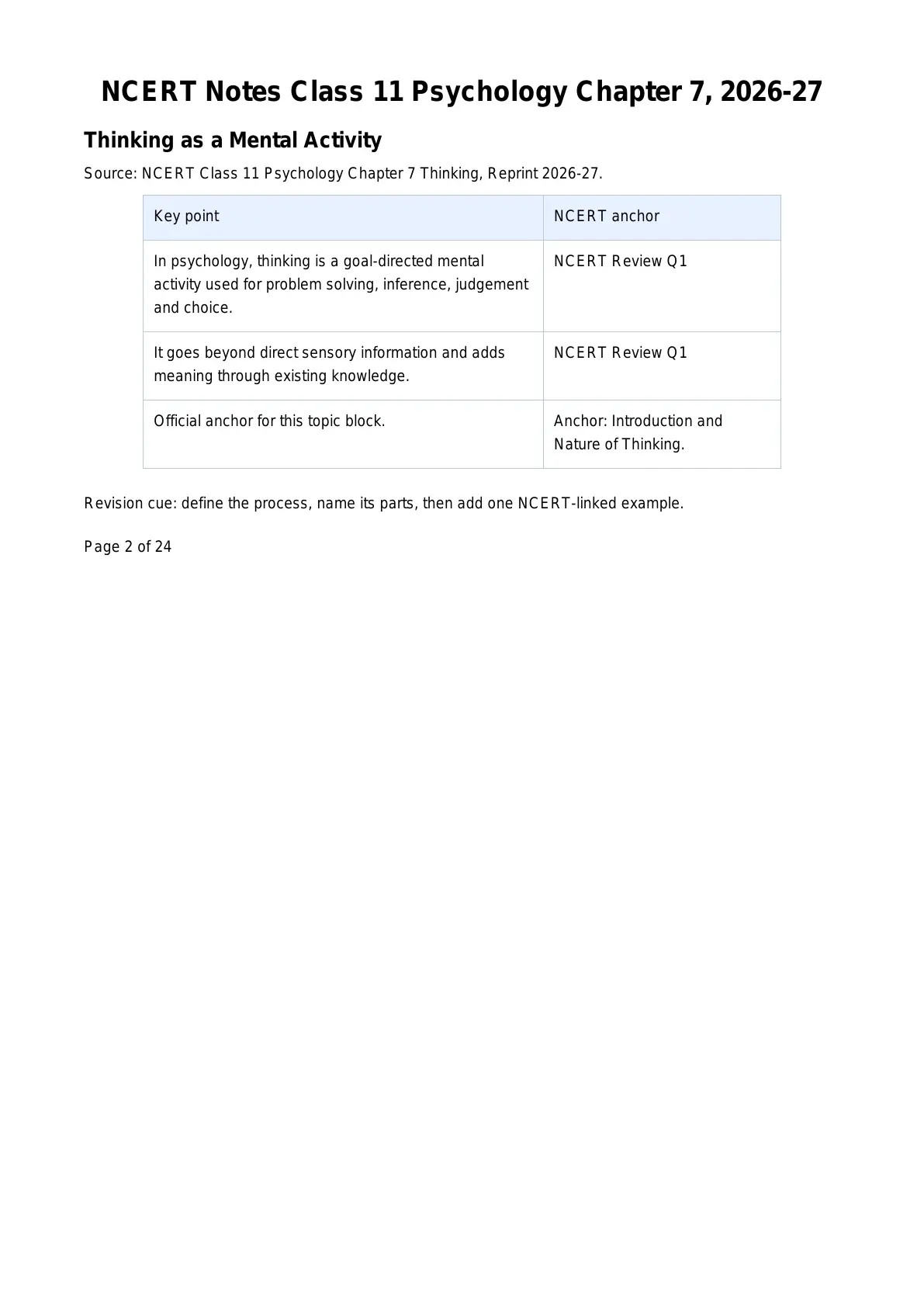
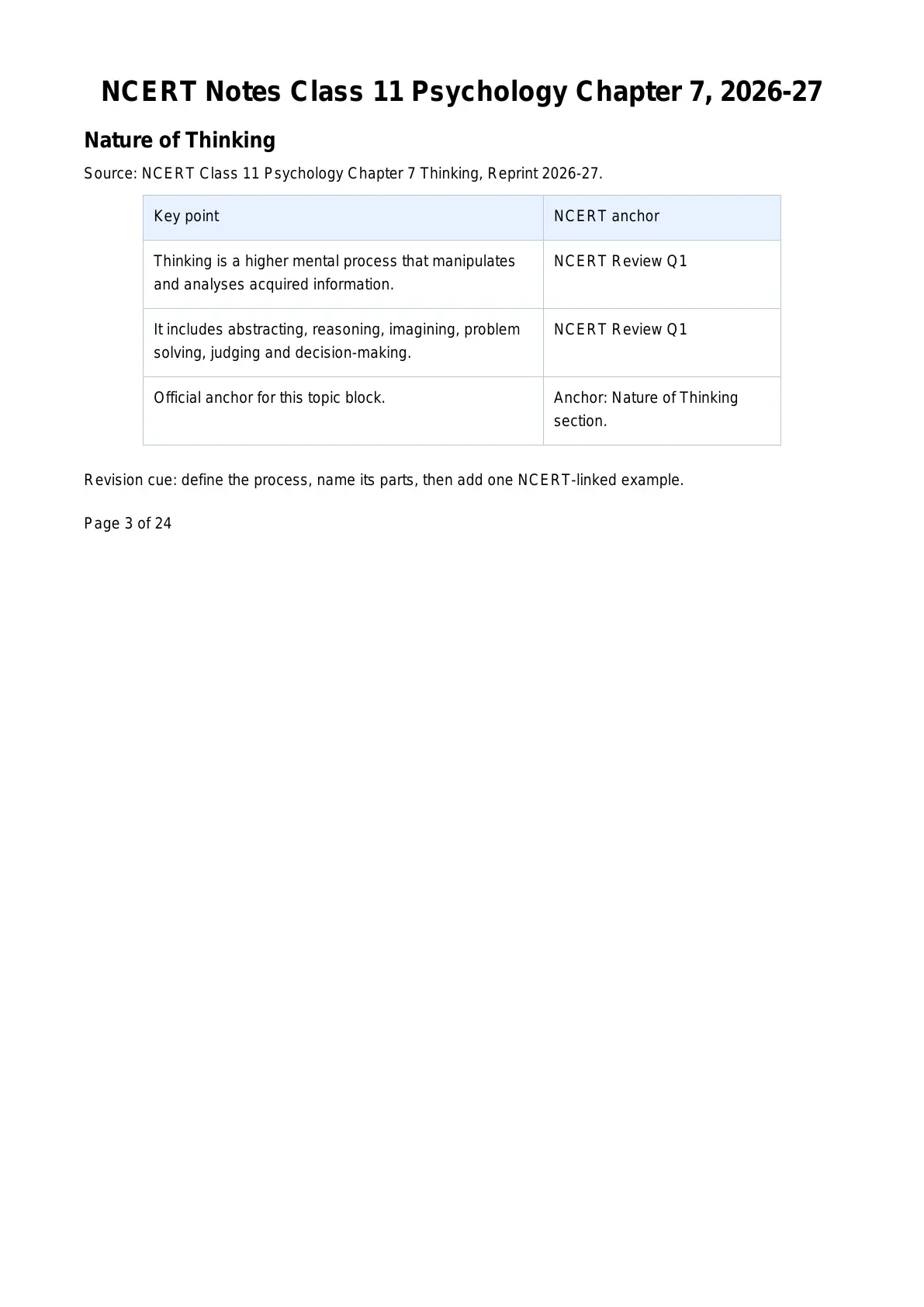
Chapter 7 explains thinking as a higher mental process. It is used when students solve a problem, judge facts, make an inference or choose between options. The safest exam line is simple: thinking is goal-directed manipulation and analysis of information.
| Chapter area | What to revise | Answer cue |
|---|---|---|
| Nature of thinking | Higher mental process, goal-directed and internal | Define and add example |
| Building blocks | Mental images and concepts | Use map and category examples |
| Thinking processes | Problem solving, reasoning and decision-making | Compare in one table |
| Creativity and language | Creative stages, lateral thinking, language development | Add one daily-life example |
Nature of Thinking and Building Blocks of Thought
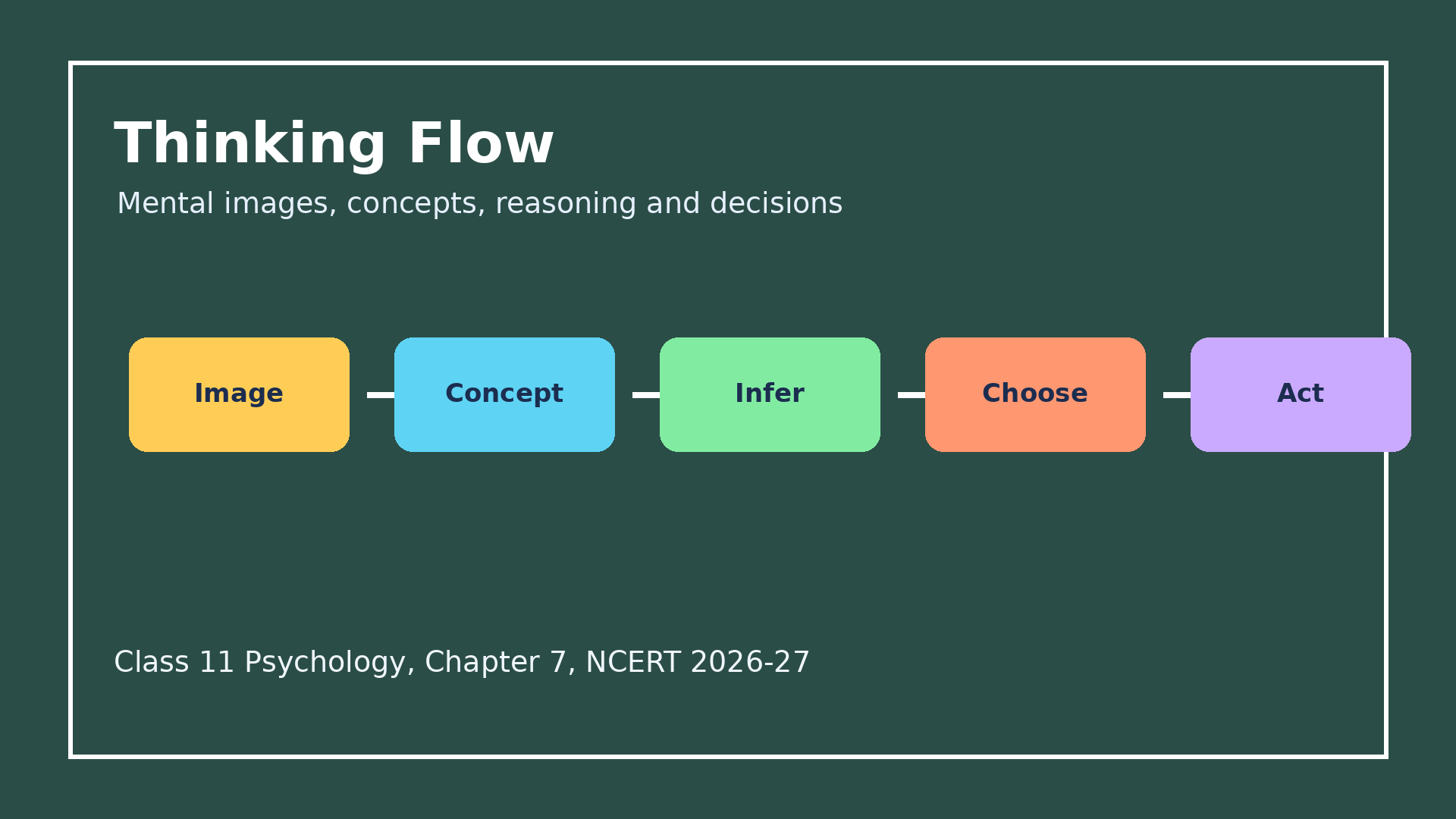
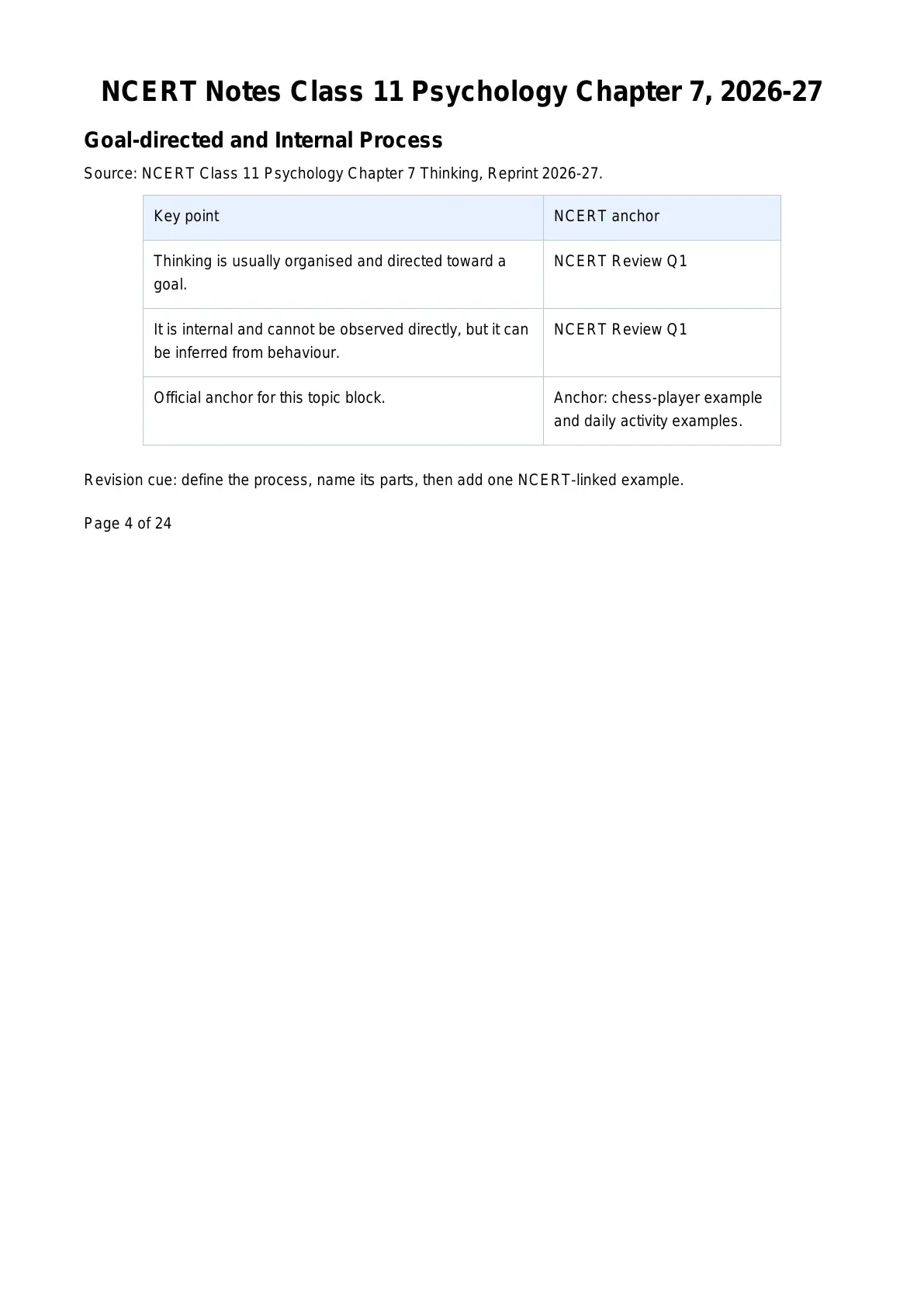
Thinking is mostly organised and goal-directed. It is internal, so it cannot be seen directly, but it can be inferred from behaviour. NCERT gives the chess-player example to show this point. A person may think silently for several minutes, and the next move shows the plan.
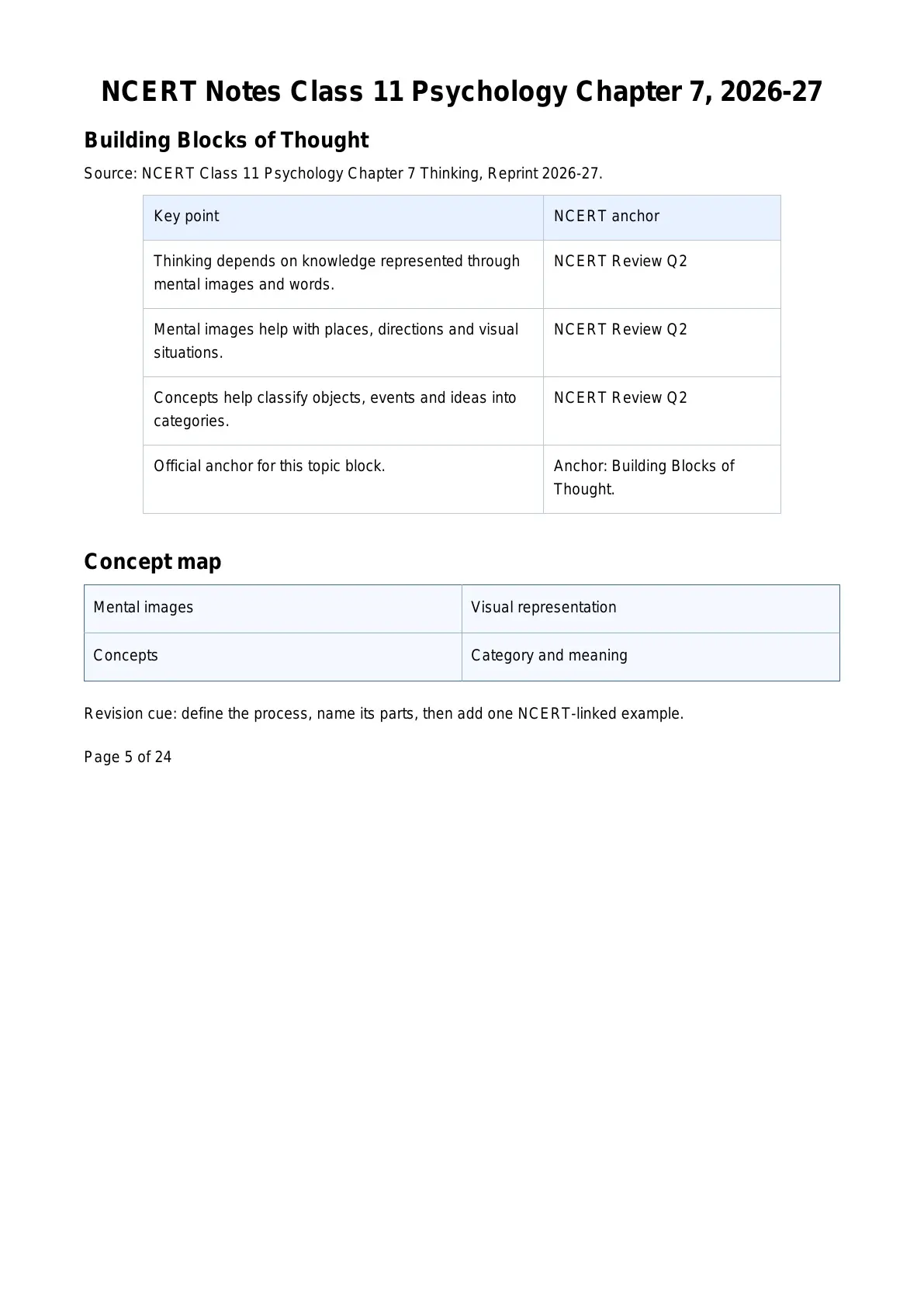
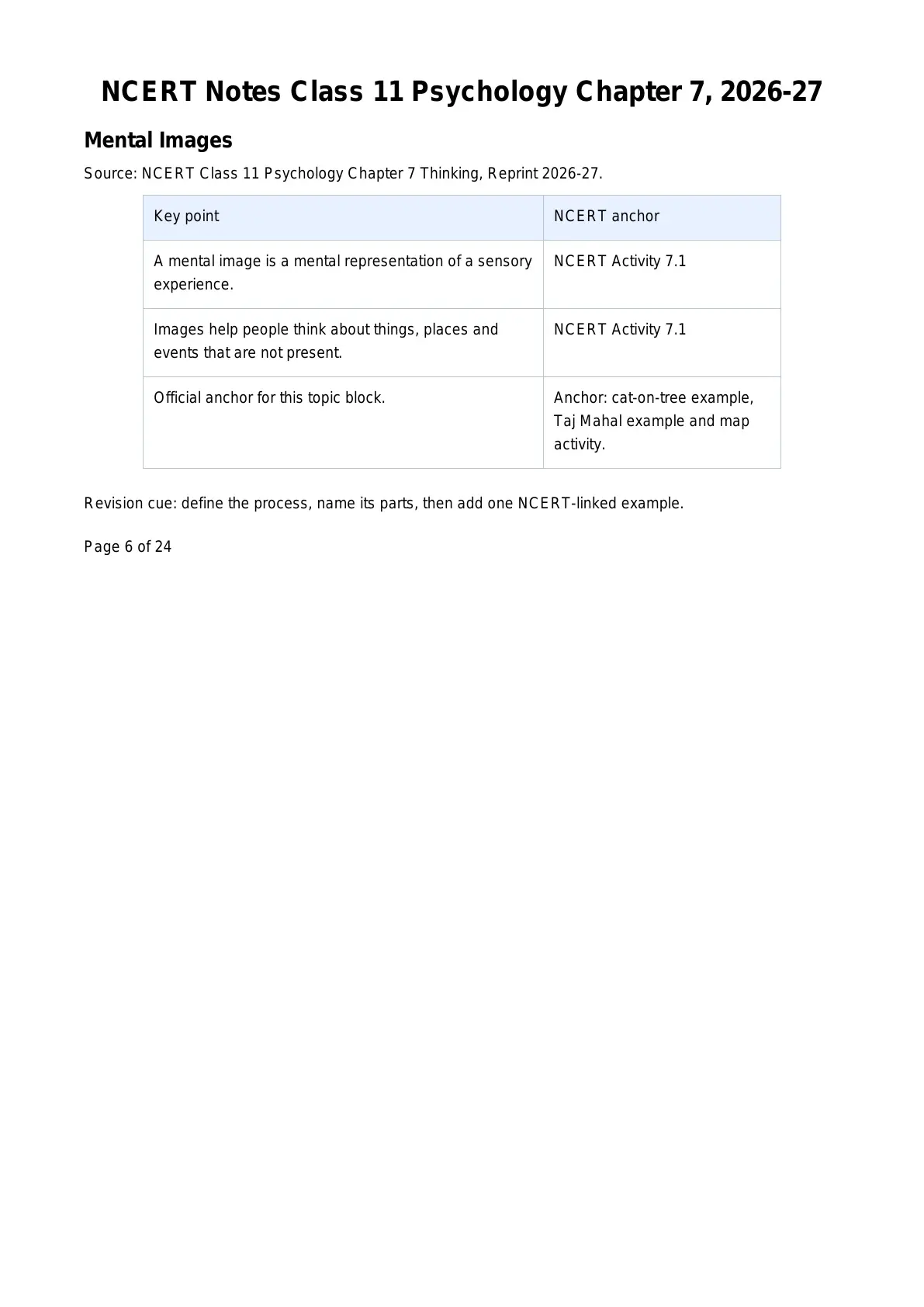
- Mental images: inner sensory representations used for places, events and visual situations.
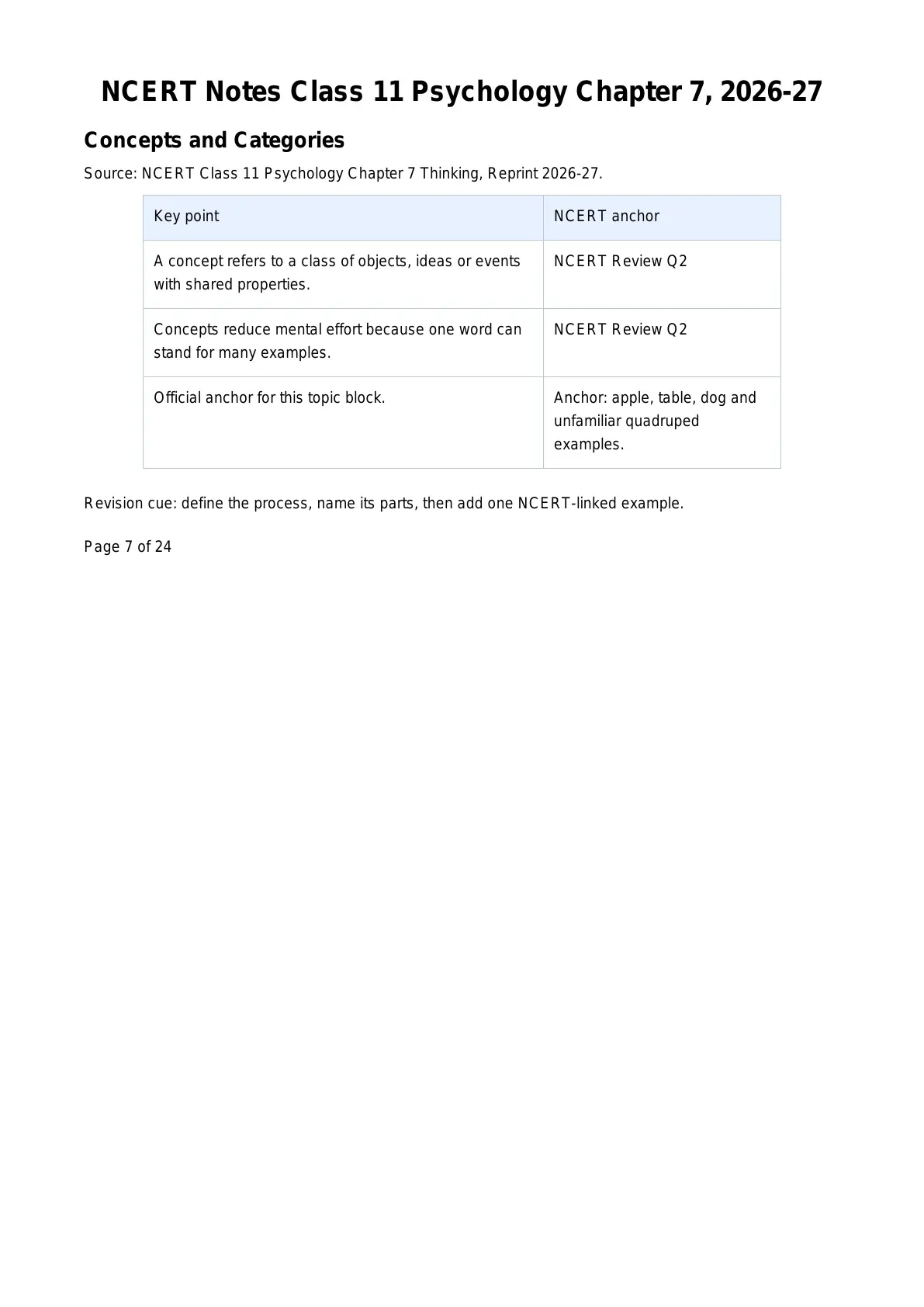
- Concepts: categories that group objects, ideas and events with shared properties.
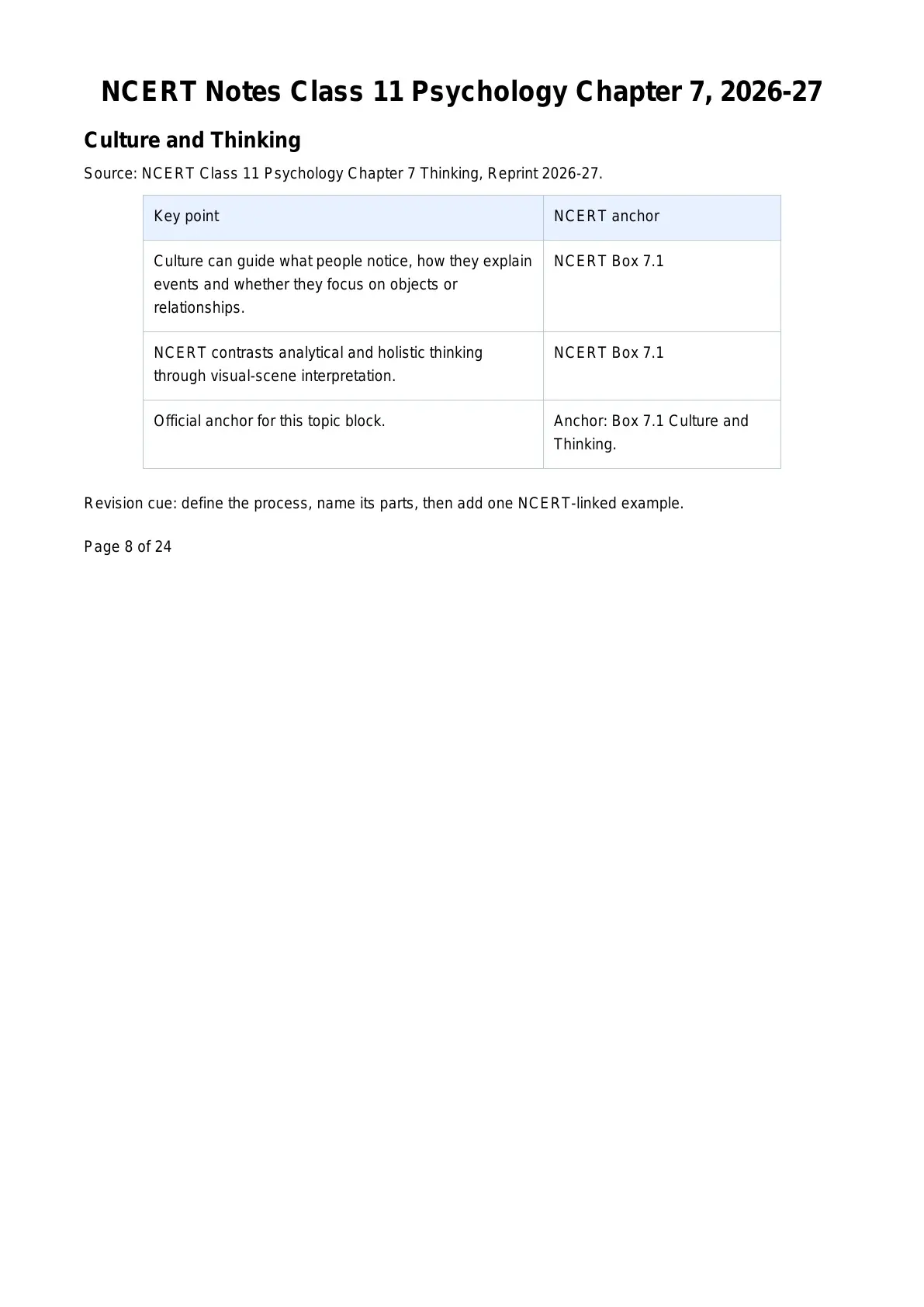
- Culture: beliefs and social practices can shape whether a person thinks analytically or holistically.
Problem Solving, Reasoning and Decision-making
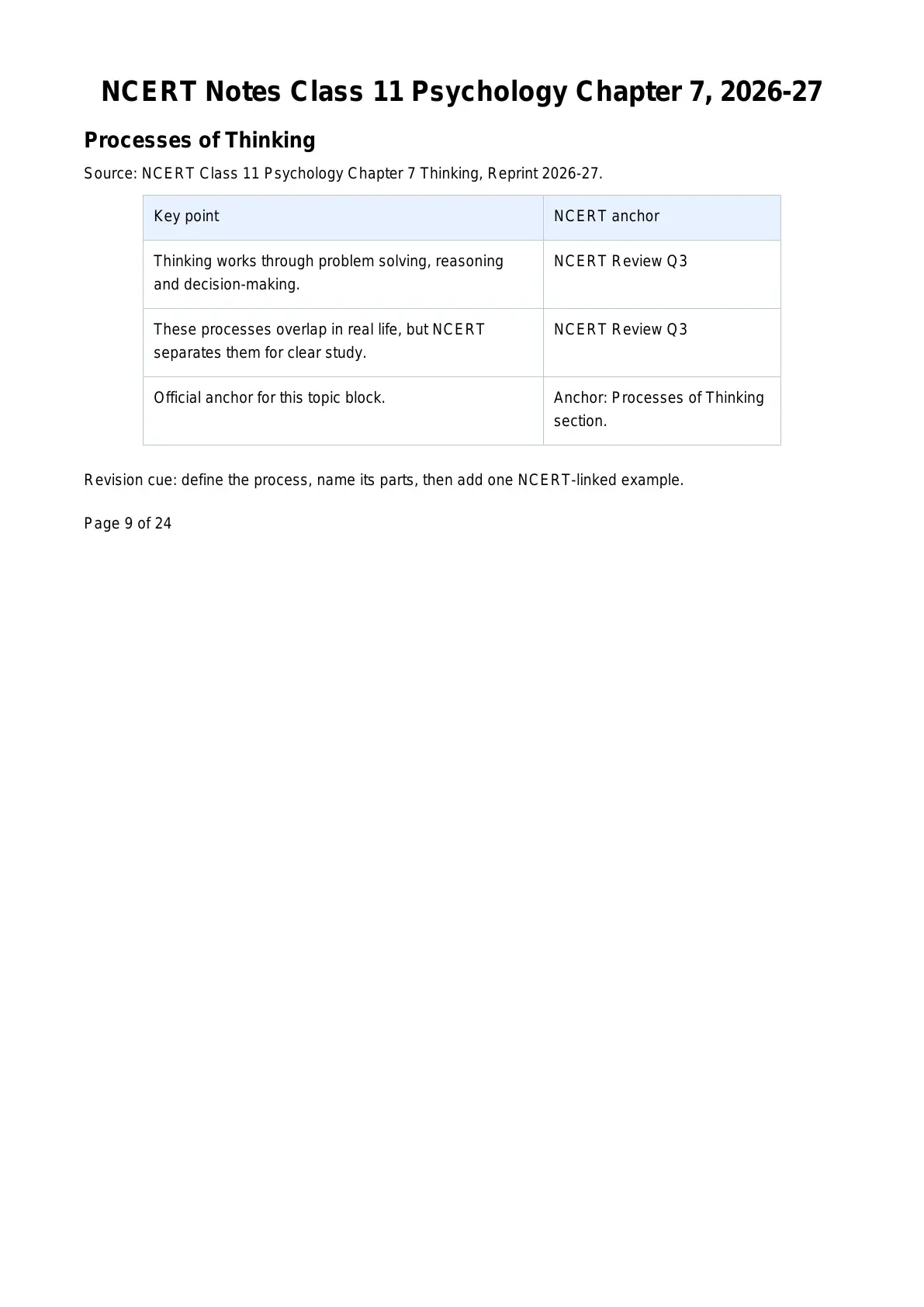
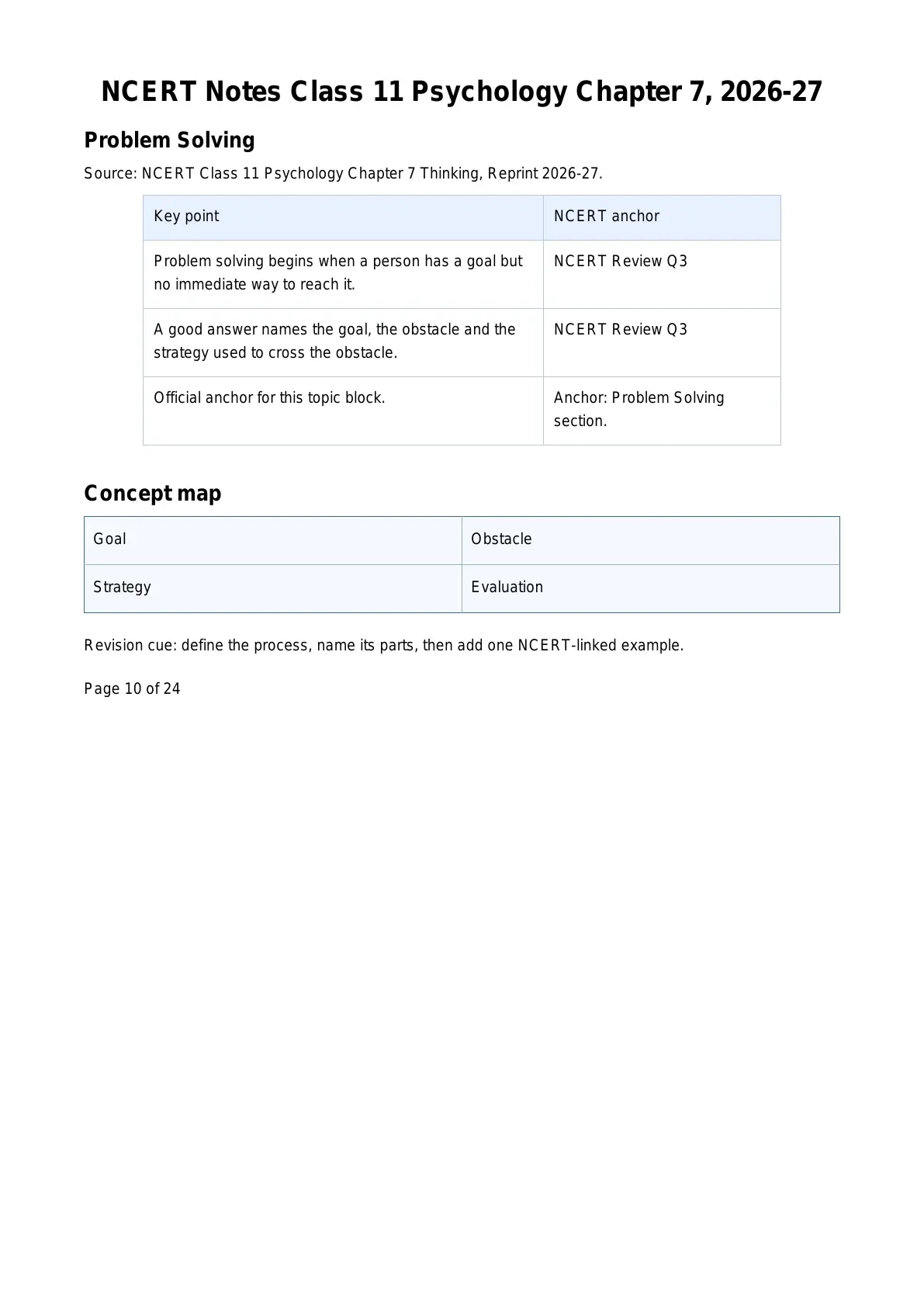
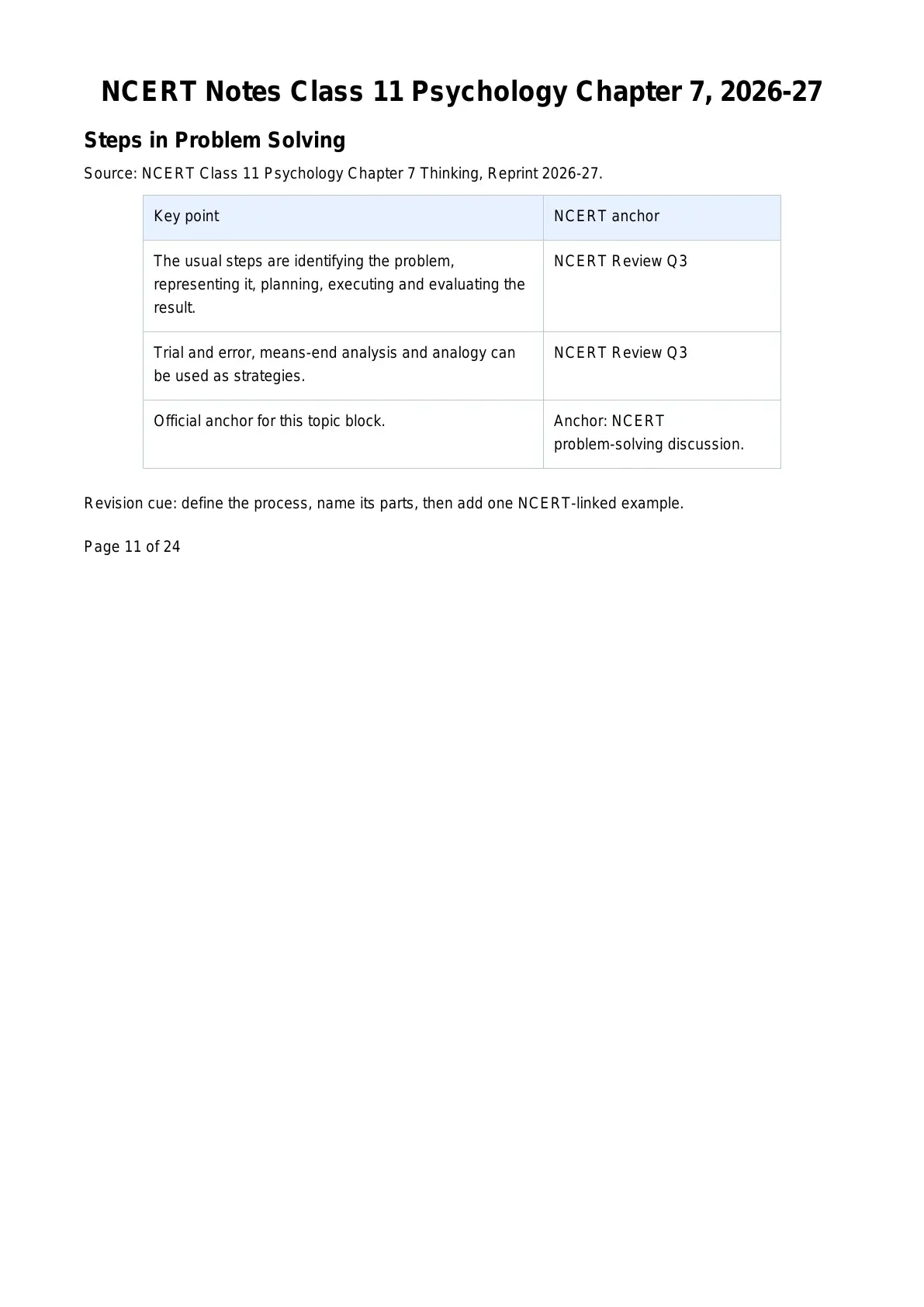
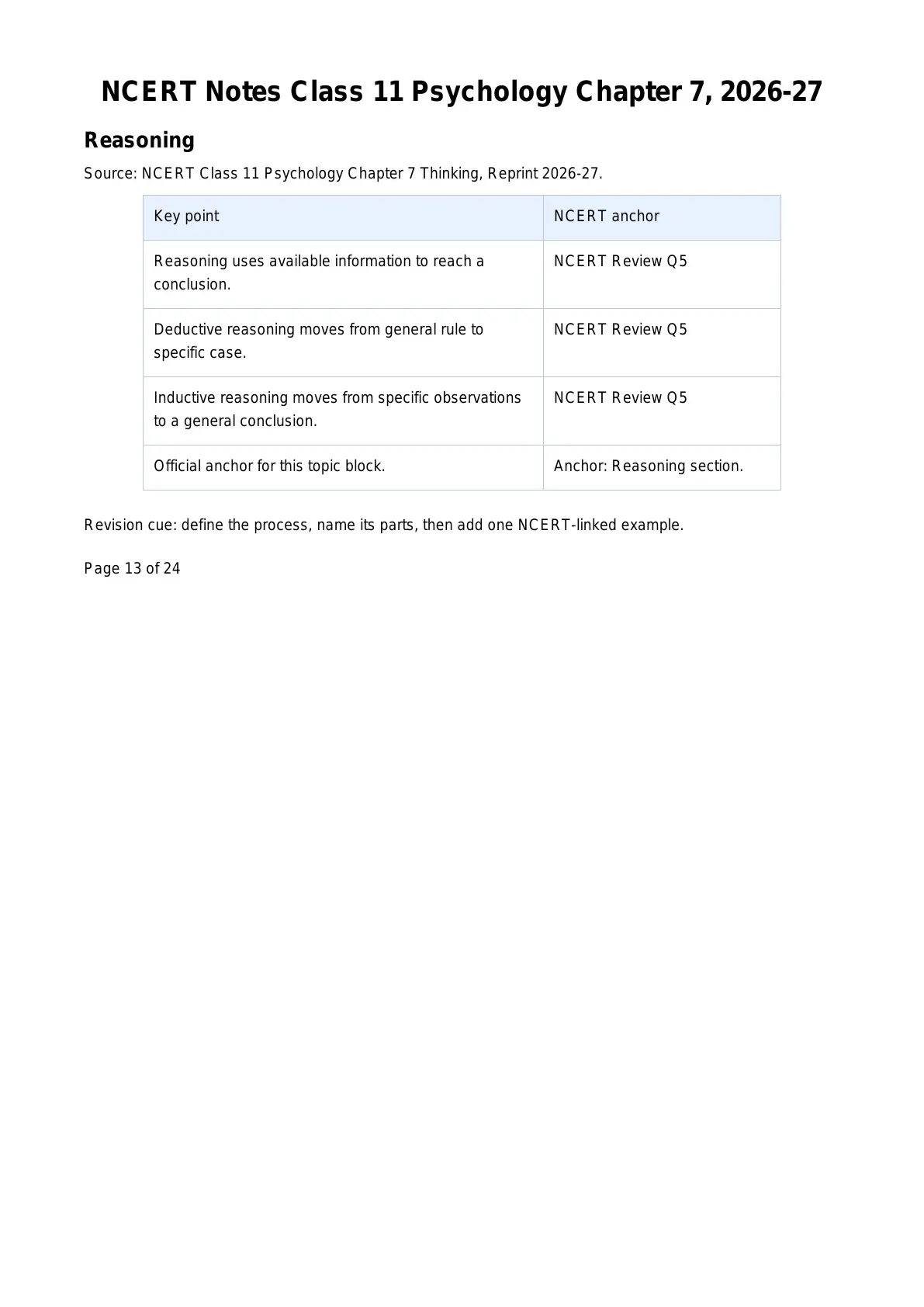
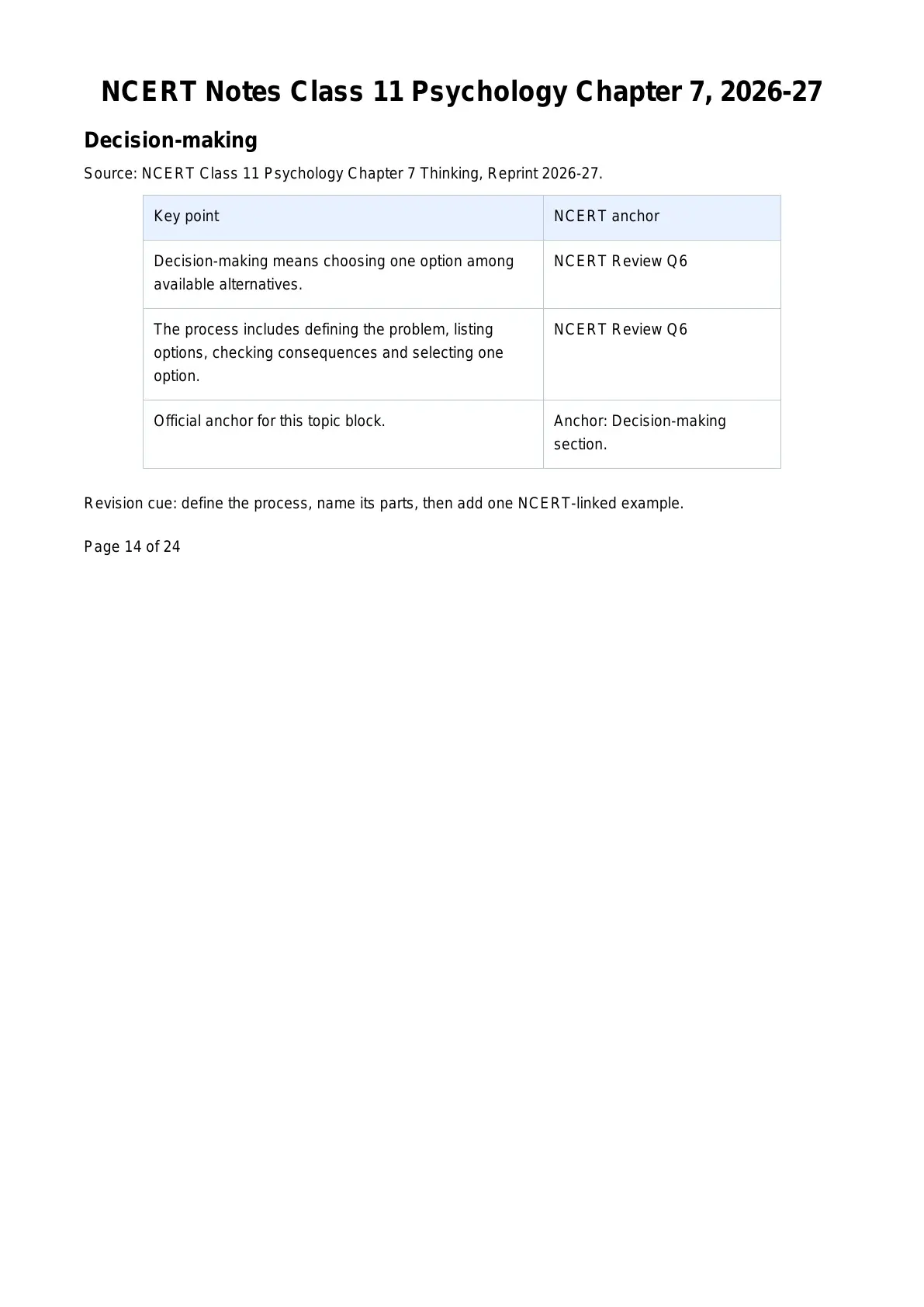
Problem solving begins when a goal is blocked. Reasoning uses available information to reach a conclusion. Decision-making means selecting one option from alternatives. These processes often work together, but an exam answer should keep their meanings separate.
| Process | Meaning | Common cue |
|---|---|---|
| Problem solving | Finding a way to reach a blocked goal | Obstacle, strategy, evaluation |
| Reasoning | Drawing a conclusion from information | Deductive or inductive logic |
| Decision-making | Choosing one option among alternatives | Options, consequences, choice |
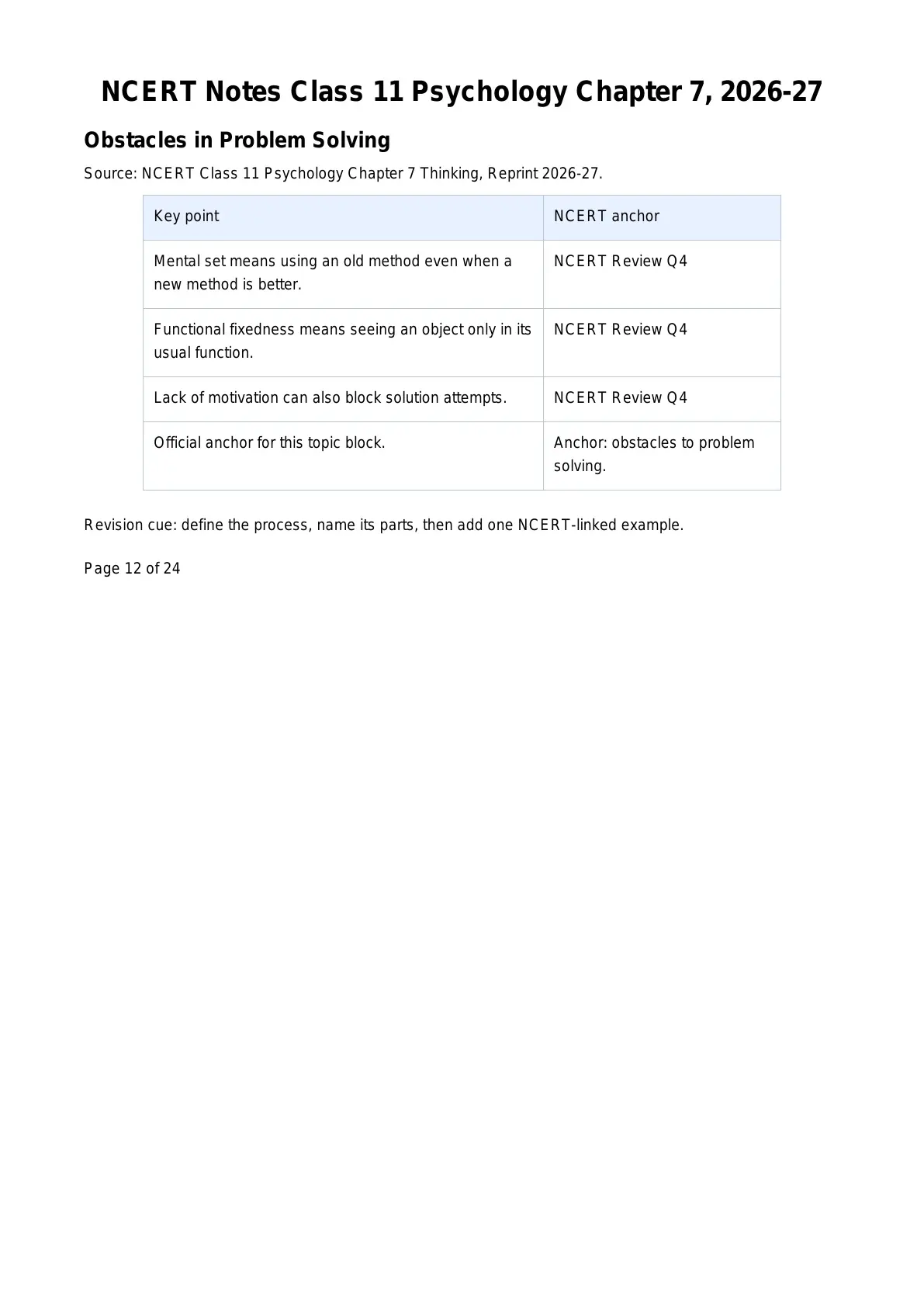
Common obstacles include mental set, functional fixedness and low motivation. Functional fixedness means seeing an object only in its usual function.
Creative Thinking in Psychology Chapter 7
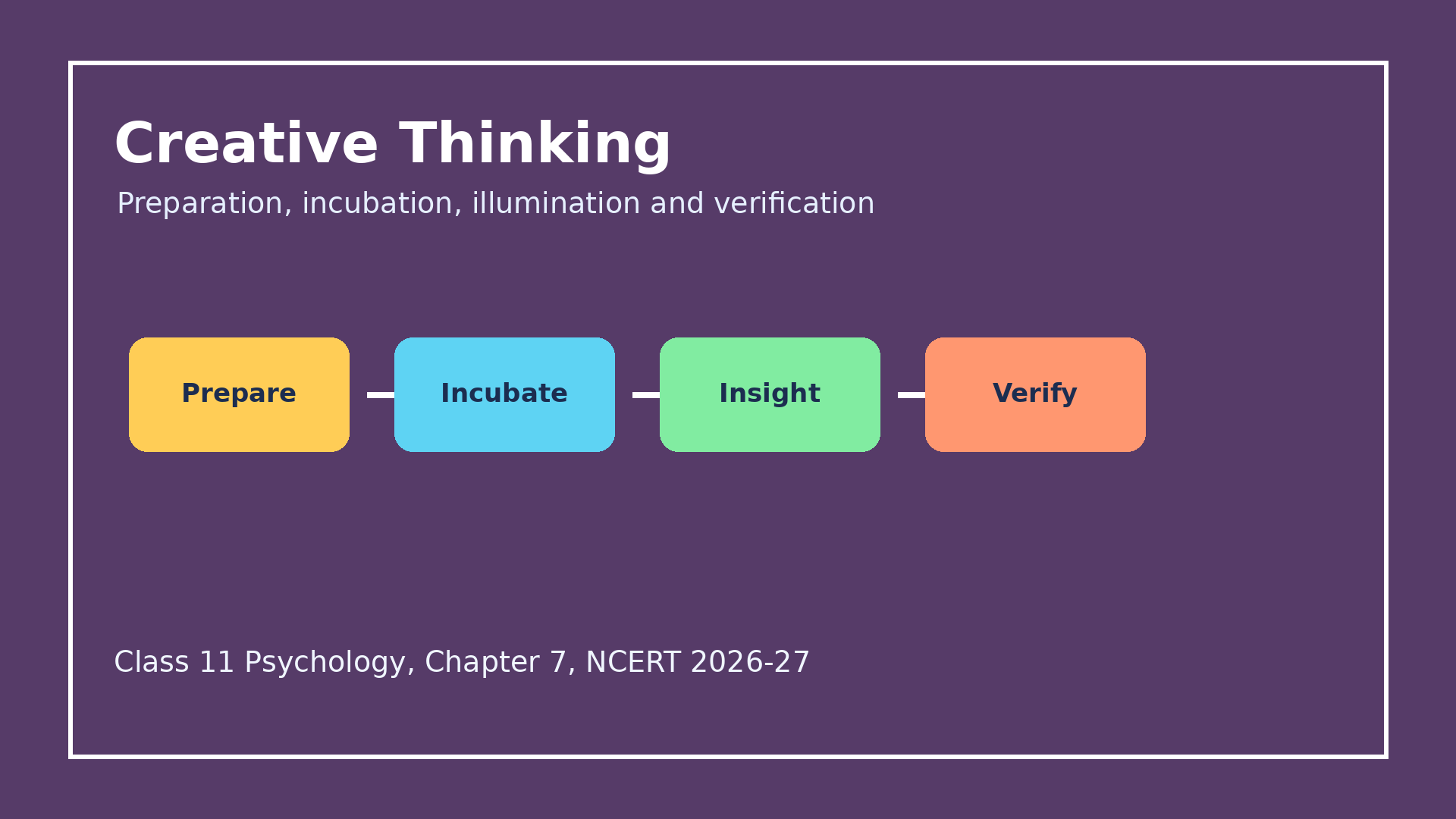
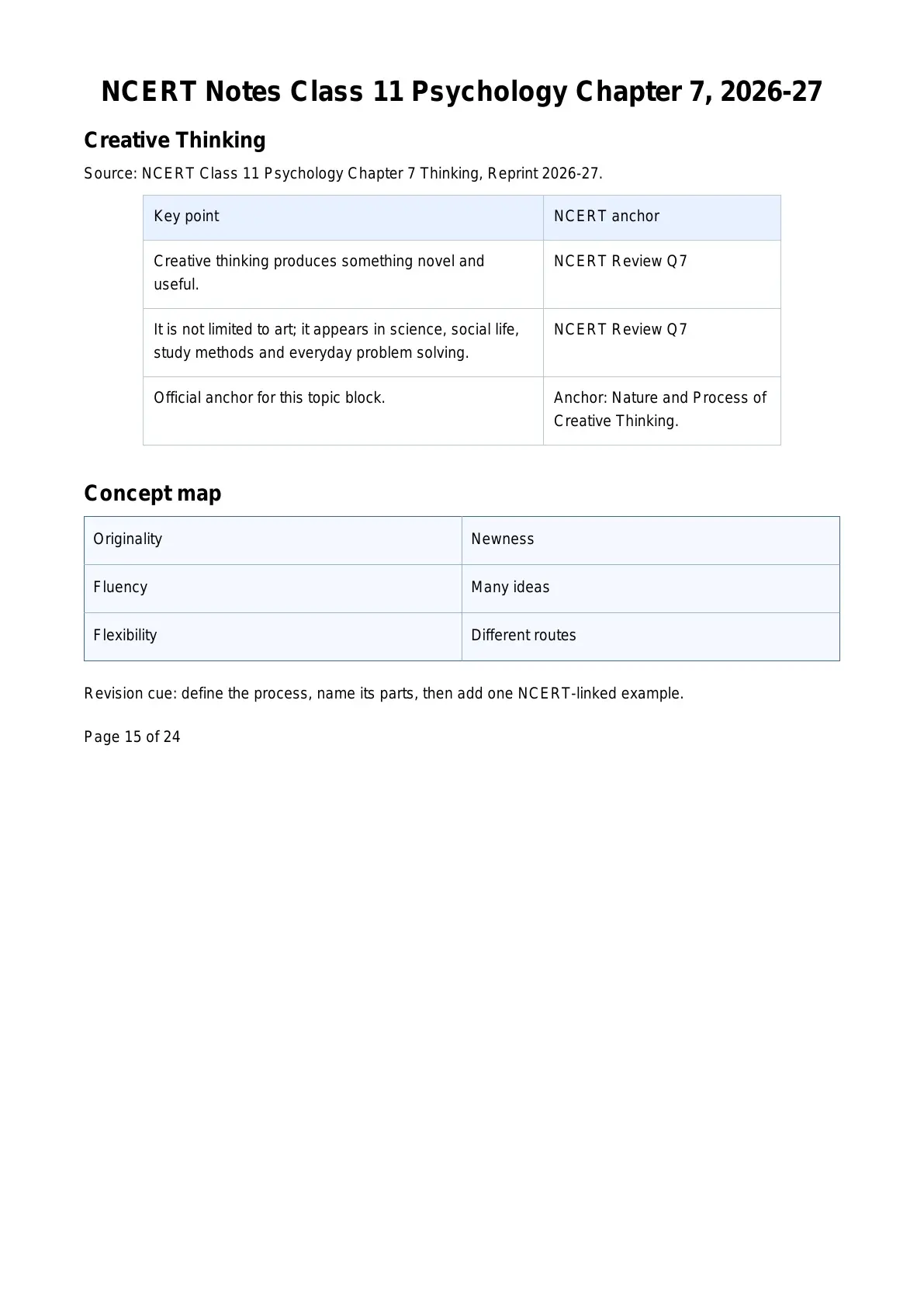
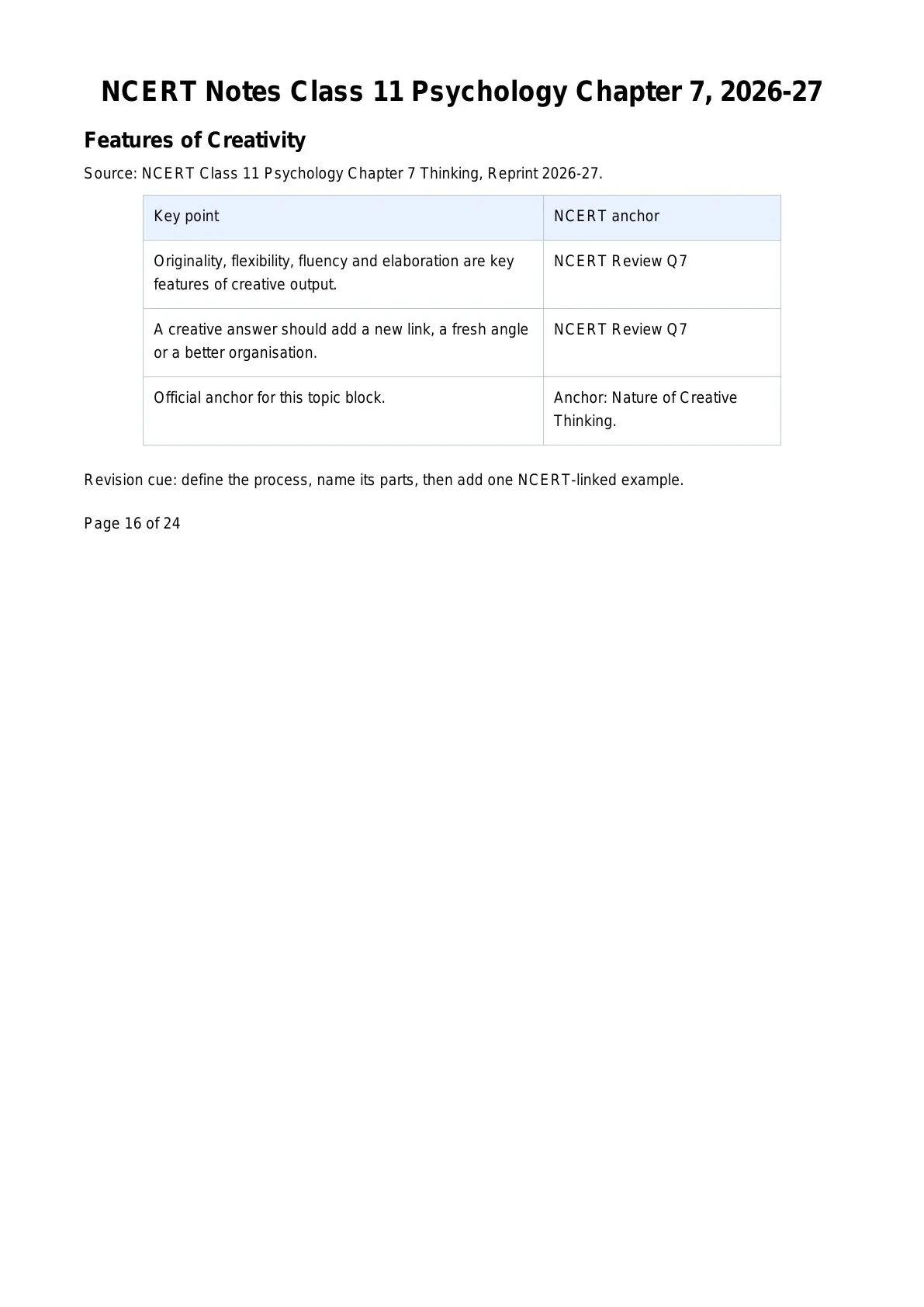
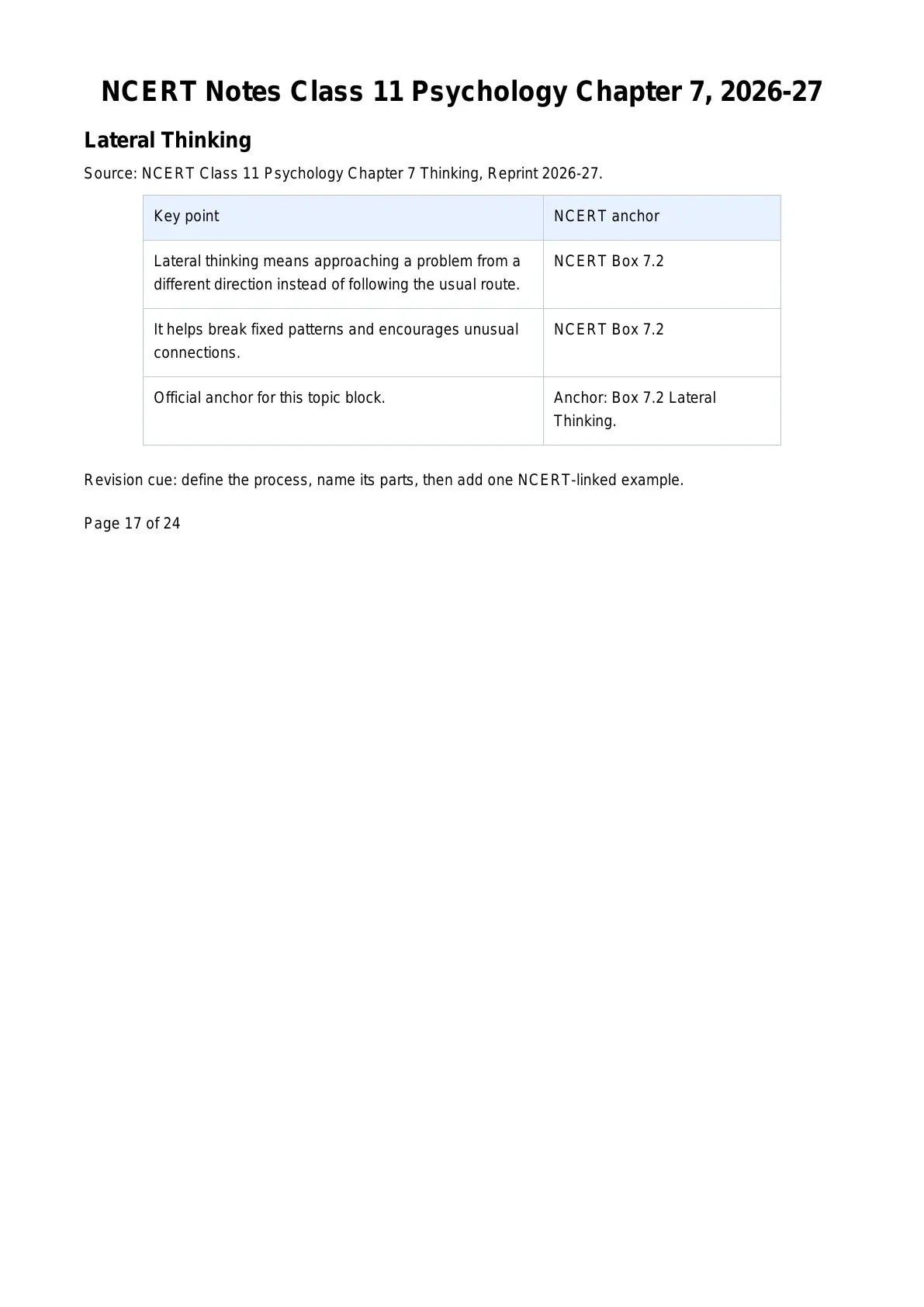
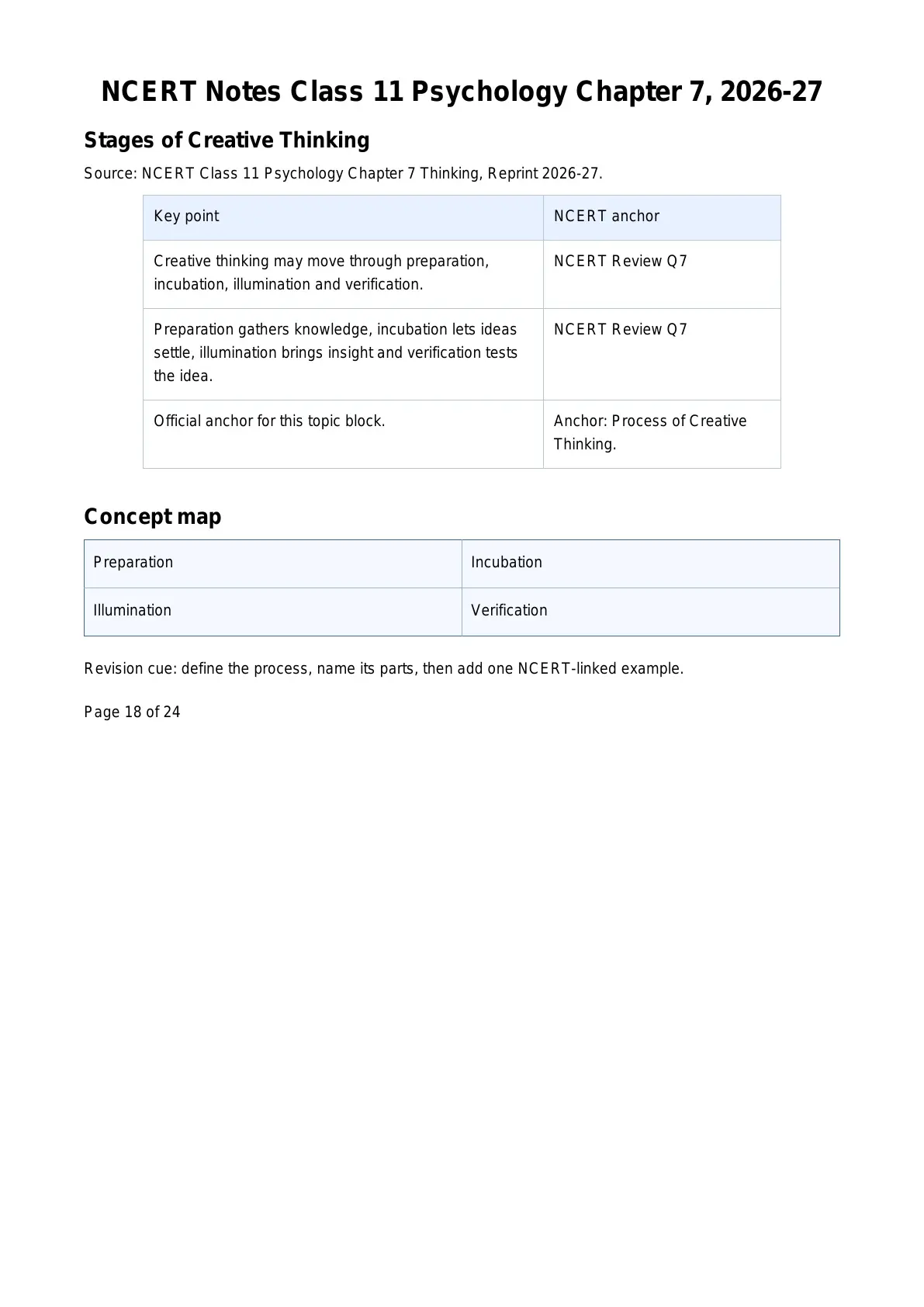
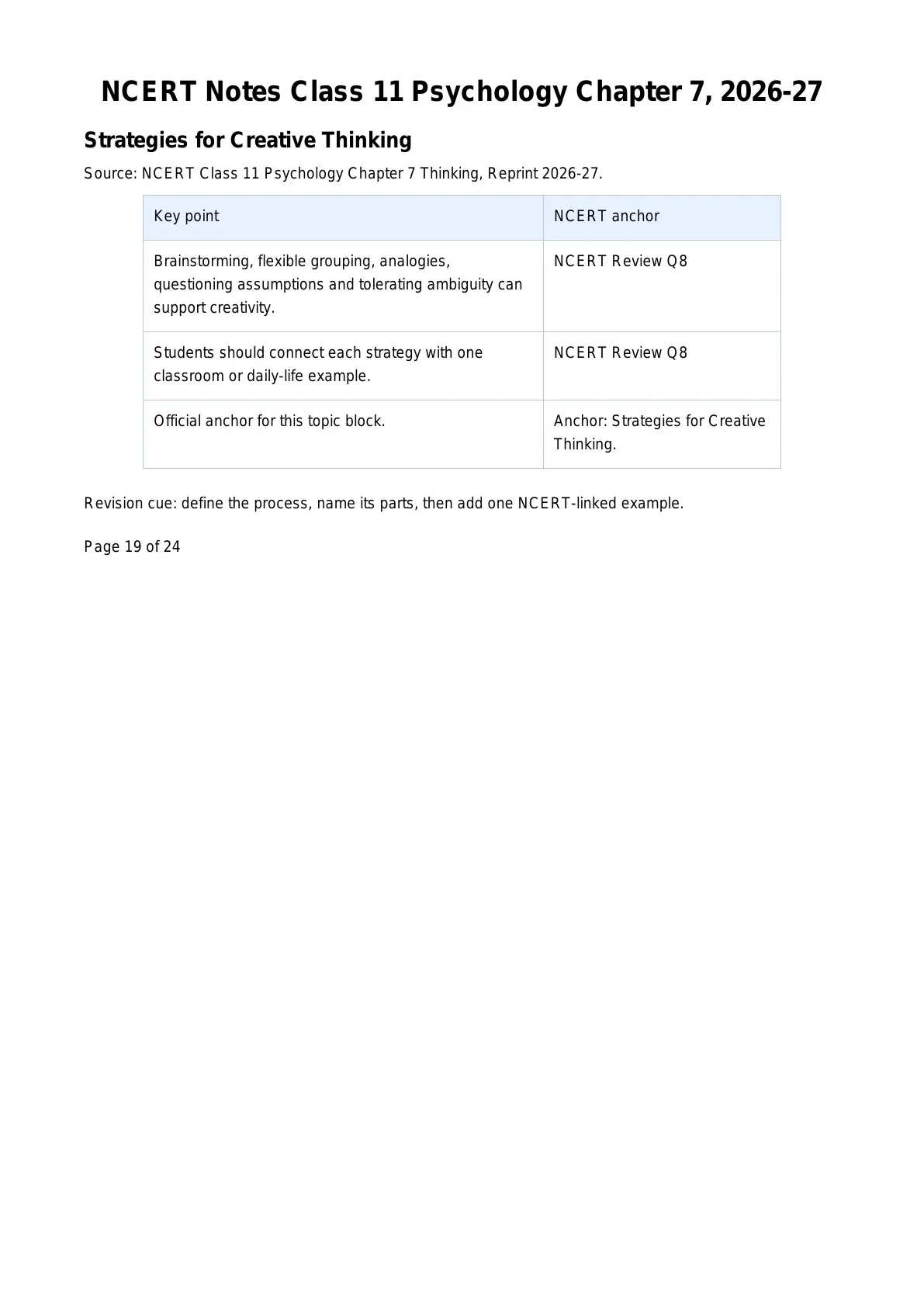
Creative thinking gives a result that is both novel and useful. It is not limited to painting or poetry. A new scientific idea, a better study method or a fresh solution to a classroom problem can also show creativity.
- Preparation: collect facts, understand the problem and build background knowledge.
- Incubation: leave the problem aside while hidden associations keep working.
- Illumination: the useful idea appears as an insight.
- Verification: test, refine and apply the idea.
Thought and Language in Thinking Class 11
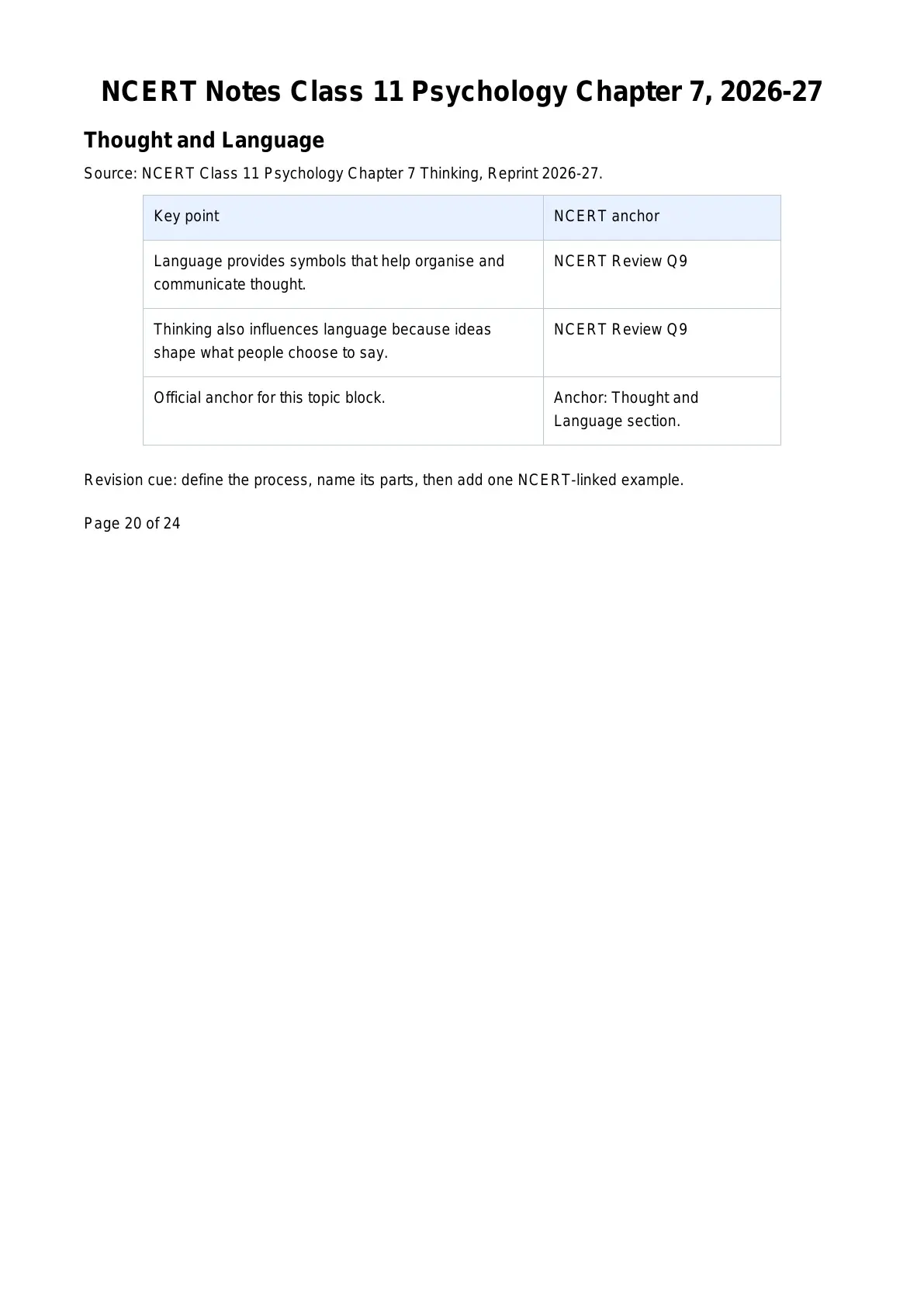
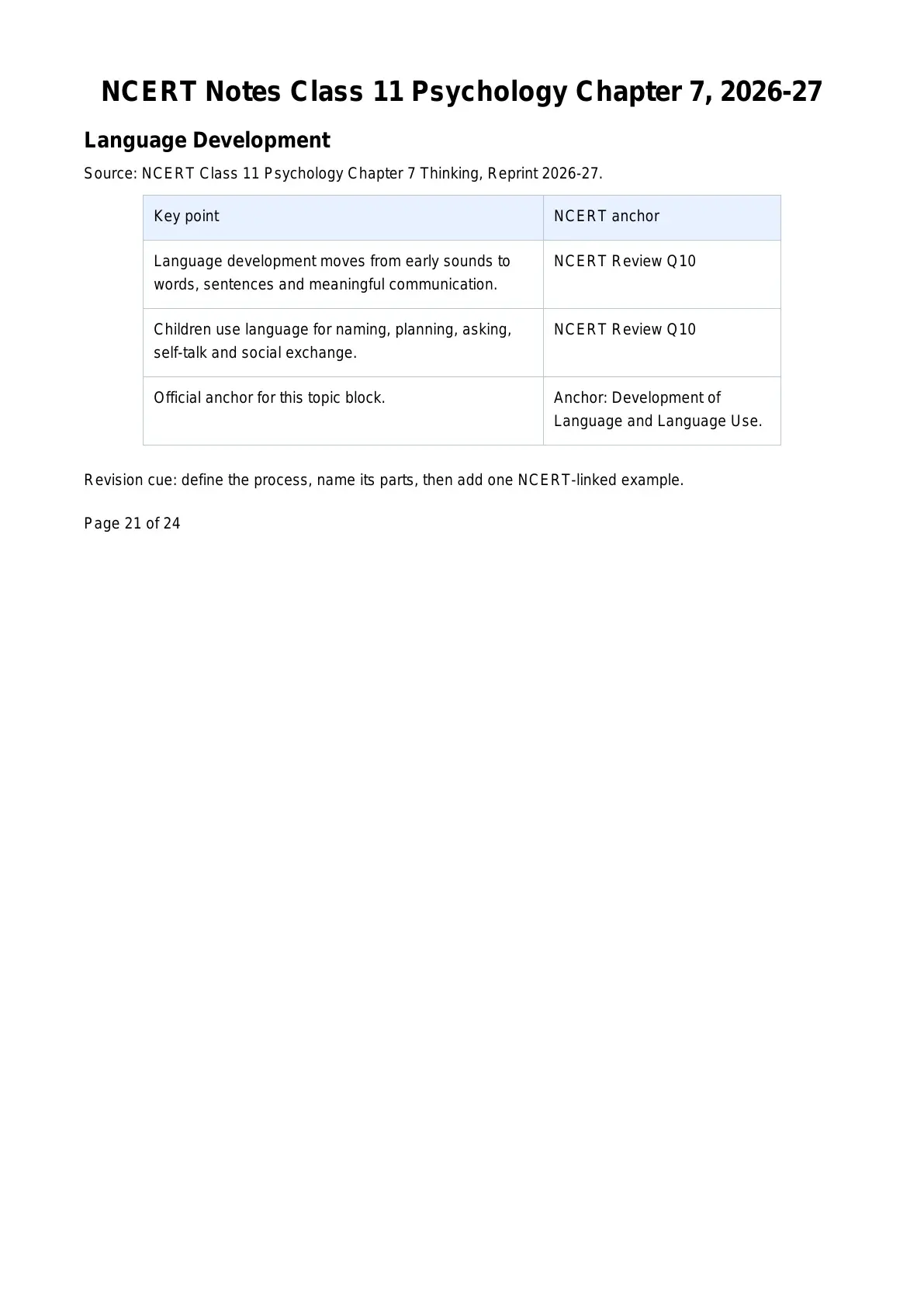
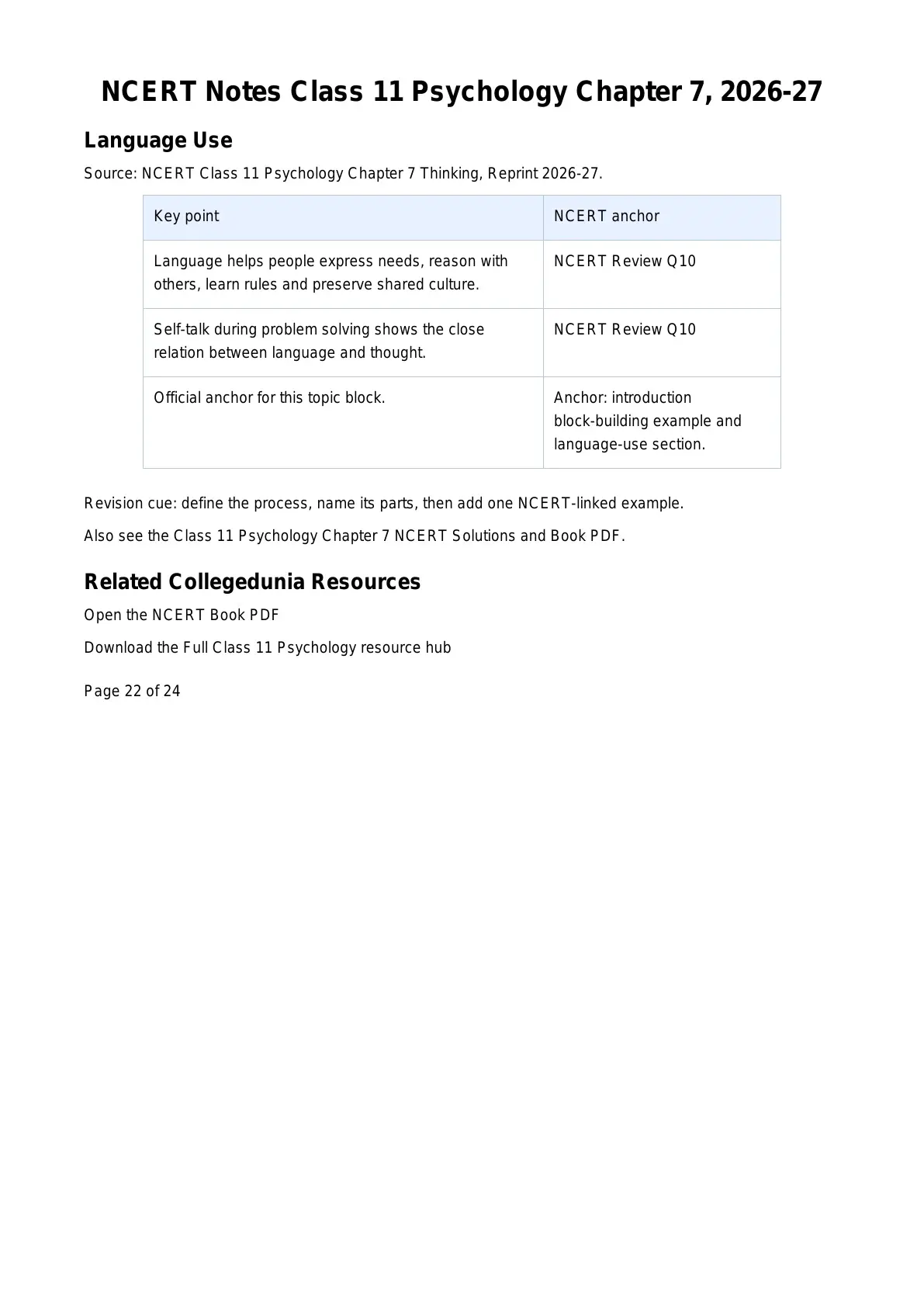
Language helps organise and communicate thought. Thought also shapes language because ideas decide what a person says and how they say it. NCERT uses self-talk during problem solving to show this connection.
- Children move from early sounds to words and sentences.
- Language supports naming, planning, asking and social exchange.
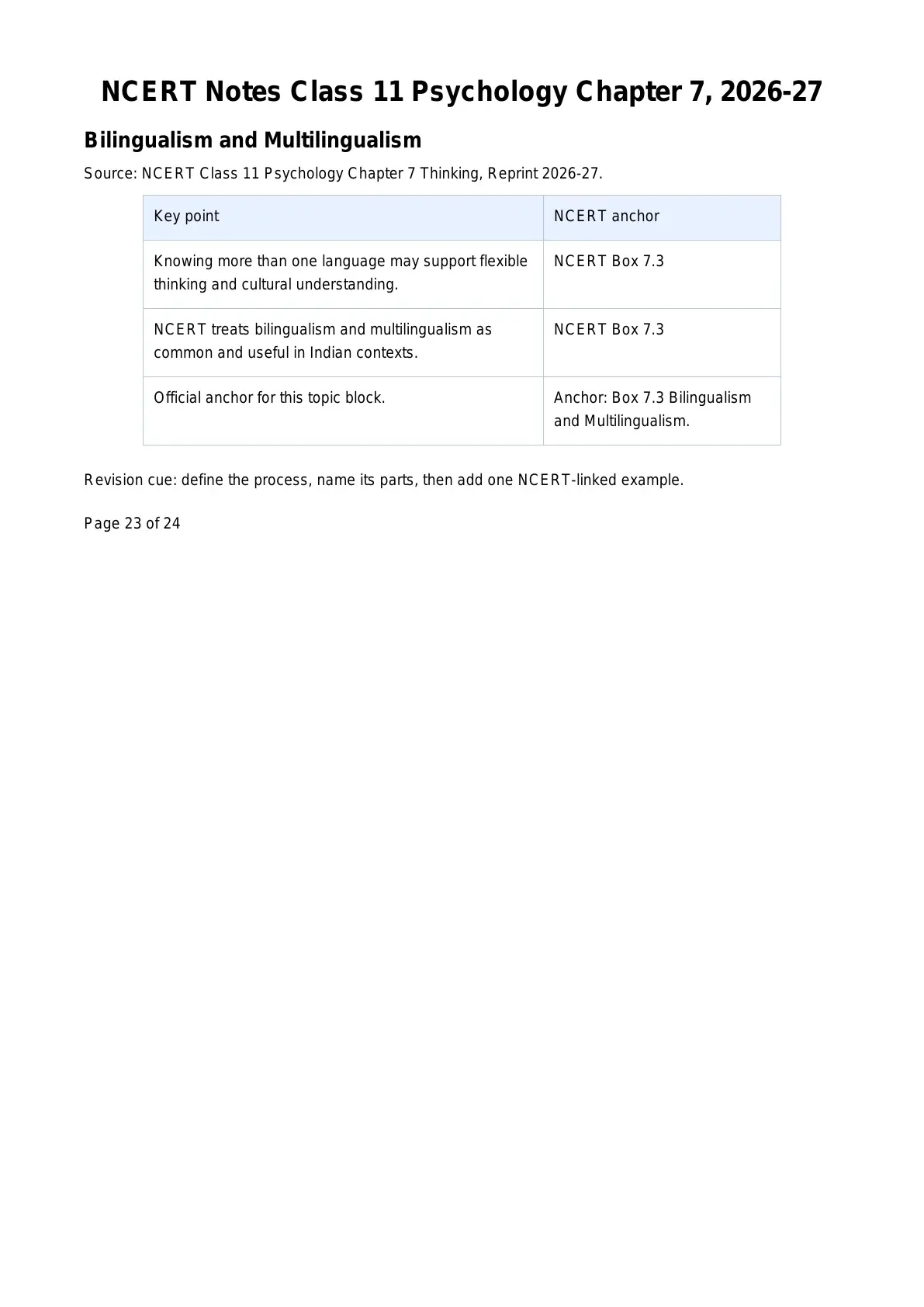
- Bilingualism and multilingualism are common in Indian settings.
- Knowing more than one language can support flexible thinking.
Thinking Chapter 7 Video Explanation
Source: Magnet Brains on YouTube
Download the Thinking Notes PDF
Use the PDF for mental images, concepts, reasoning, creativity and language.
Download PDFRelated Psychology Resources for Thinking
Also Check: use these links with the notes PDF when you need the same chapter in another format.
| Resource | Best use | Link |
|---|---|---|
| NCERT Solutions | Stepwise answers to textbook questions | Thinking Class 11 NCERT Solutions |
| NCERT Book PDF | Original NCERT reading and review questions | Thinking Class 11 NCERT Book PDF |
| Handwritten Notes | Fast visual revision before tests | Thinking Class 11 Handwritten Notes |
Class 11 Psychology Notes for All Chapters
| Chapter | Notes Link |
|---|---|
| Chapter 1 | What is Psychology? Notes |
| Chapter 2 | Methods of Enquiry in Psychology Notes |
| Chapter 3 | Human Development Notes |
| Chapter 4 | Sensory, Attentional and Perceptual Processes Notes |
| Chapter 5 | Learning Notes |
| Chapter 6 | Human Memory Notes |
| Chapter 7 | You are here |
| Chapter 8 | Motivation and Emotion Notes |
Thinking Class 11 Notes FAQs
Ques. What is covered in Class 11 Psychology Chapter 7 notes?
Ans. The notes cover thinking, mental images, concepts, culture, problem solving, reasoning, decision-making, creative thinking, language development and language use.
Ques. What are the building blocks of thought?
Ans. The main building blocks are mental images and concepts. Images represent sensory experience, while concepts group objects, ideas or events.
Ques. What is functional fixedness?
Ans. Functional fixedness is the tendency to see an object only in its usual function, which can block problem solving.
Ques. What are the stages of creative thinking?
Ans. The usual stages are preparation, incubation, illumination and verification. The idea is gathered, allowed to settle, discovered and then tested.



Comments