




Class 12 Economics Chapter 1 Introduction to Macroeconomics is the first chapter of the Macroeconomics book. It covers what macroeconomics is, the micro versus macro contrast, the Great Depression and Keynes story, and the four sectors of an economy. This page has the full revision notes and a free PDF to download.
Here is what this chapter is worth in the exam:
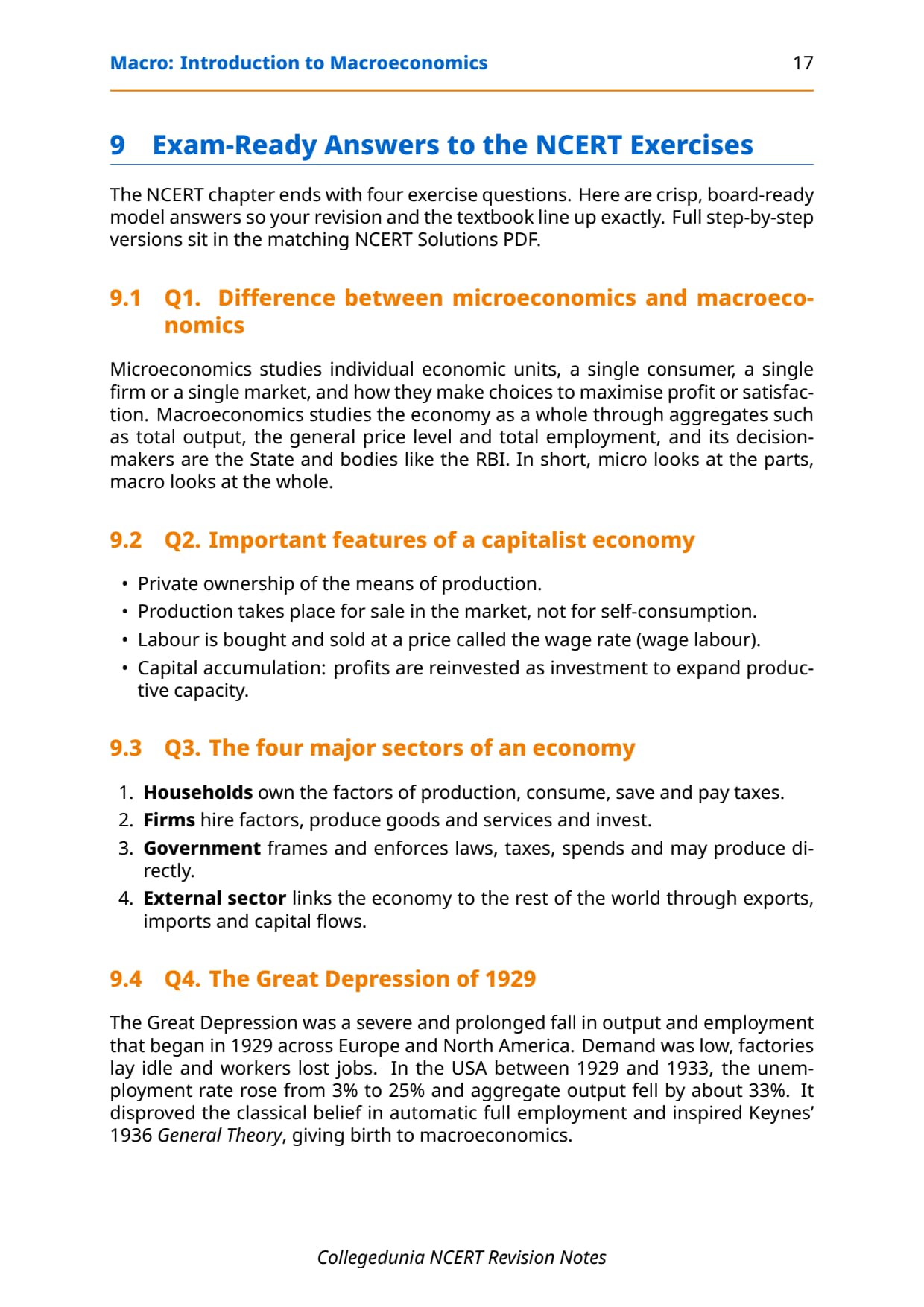
- CBSE Boards: about 4 to 6 marks, all theory and MCQ, with no numericals.
- CUET: 2 to 3 questions every year on the basic concepts.
- Revision time: about 30 minutes with these notes.

What These Introduction to Macroeconomics Notes Cover
The chapter splits into a few small topics. These notes give each one a short, exam-ready summary:
- Macroeconomics (1 mark): the study of the economy as a whole using aggregates.
- Micro vs macro (3 marks): the most-asked theory question in the chapter.
- Emergence (3 to 4 marks): the Great Depression of 1929 and Keynes in 1936.
- Four sectors (3 to 4 marks): households, firms, government and the external sector.
- Key terms (1 to 3 marks): economic agents, capitalist economy and factor rewards.
Microeconomics vs Macroeconomics in Class 12 Economics
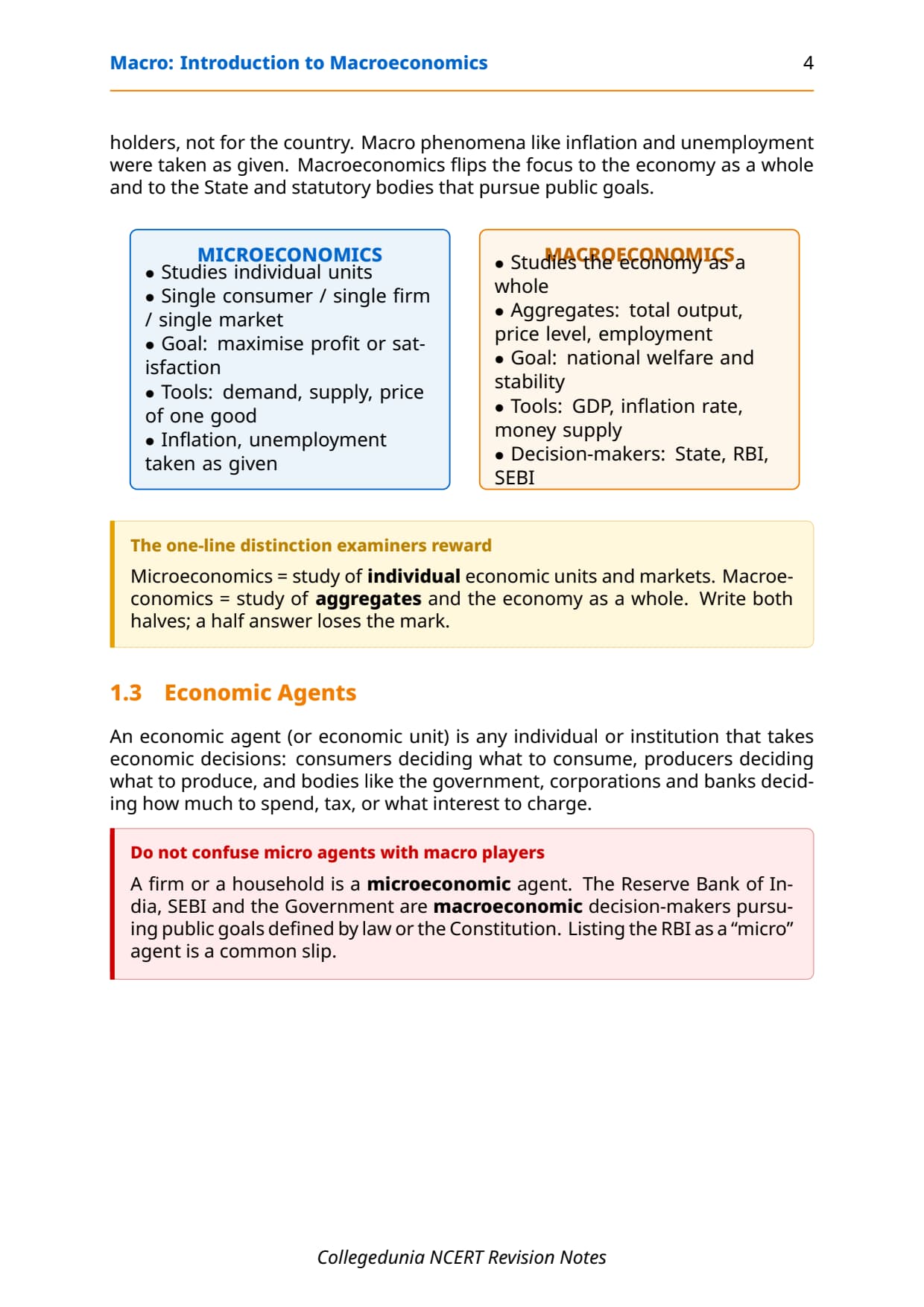
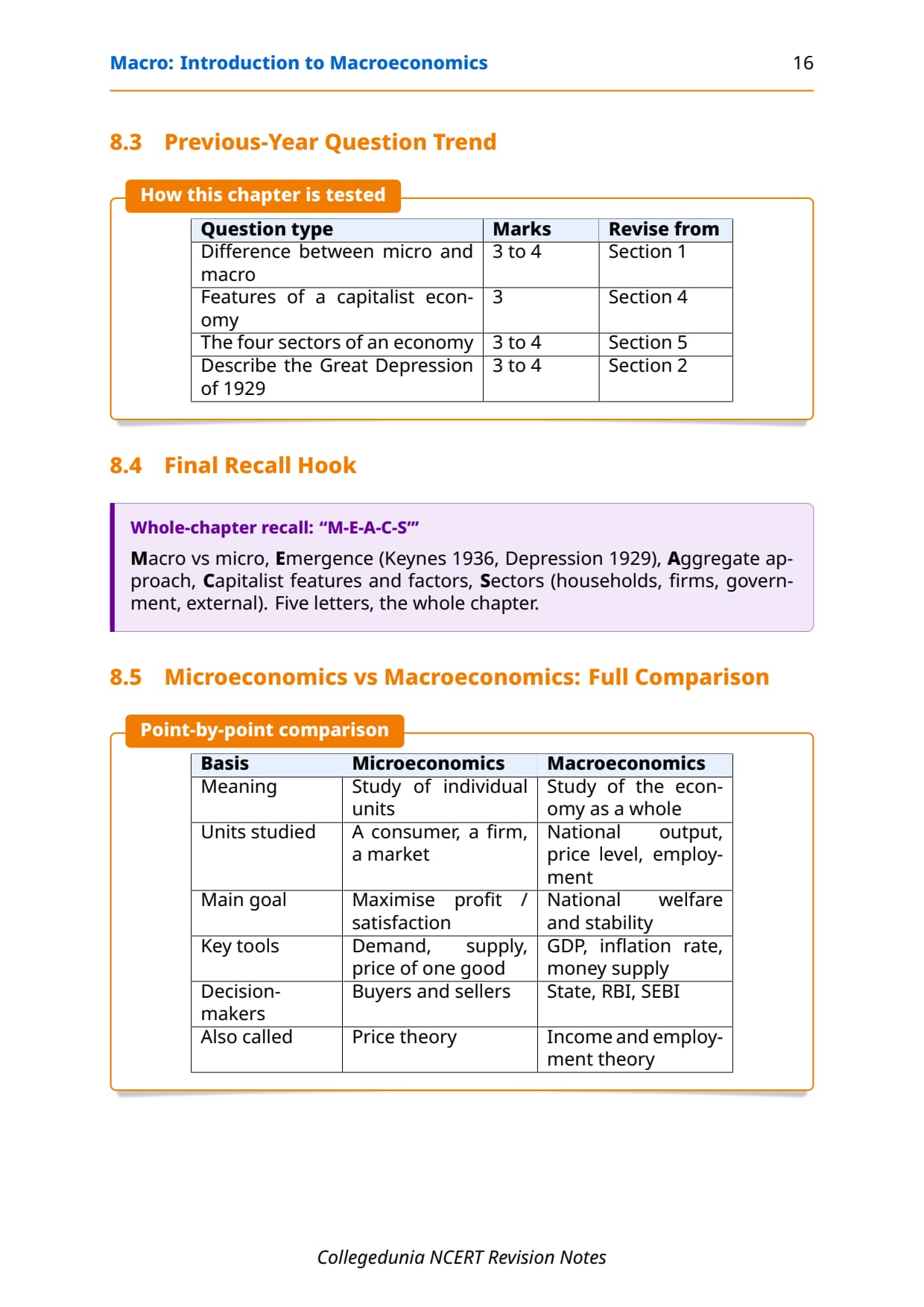
This is the most-asked theory question of the chapter. Each row below is a clean comparison point students can write straight into a board answer.
| Basis | Microeconomics | Macroeconomics |
|---|---|---|
| What it studies | One consumer, firm or market. | The whole economy. |
| Scope | Individual units. | Aggregates: output, price level, jobs. |
| Goal of agents | Maximise profit or satisfaction. | National welfare and stability. |
| Main tools | Demand, supply, price of one good. | GDP, inflation, money supply. |
| Decision-makers | Buyers, sellers, firms. | The State, RBI and SEBI. |
| Founder | Alfred Marshall. | J. M. Keynes. |
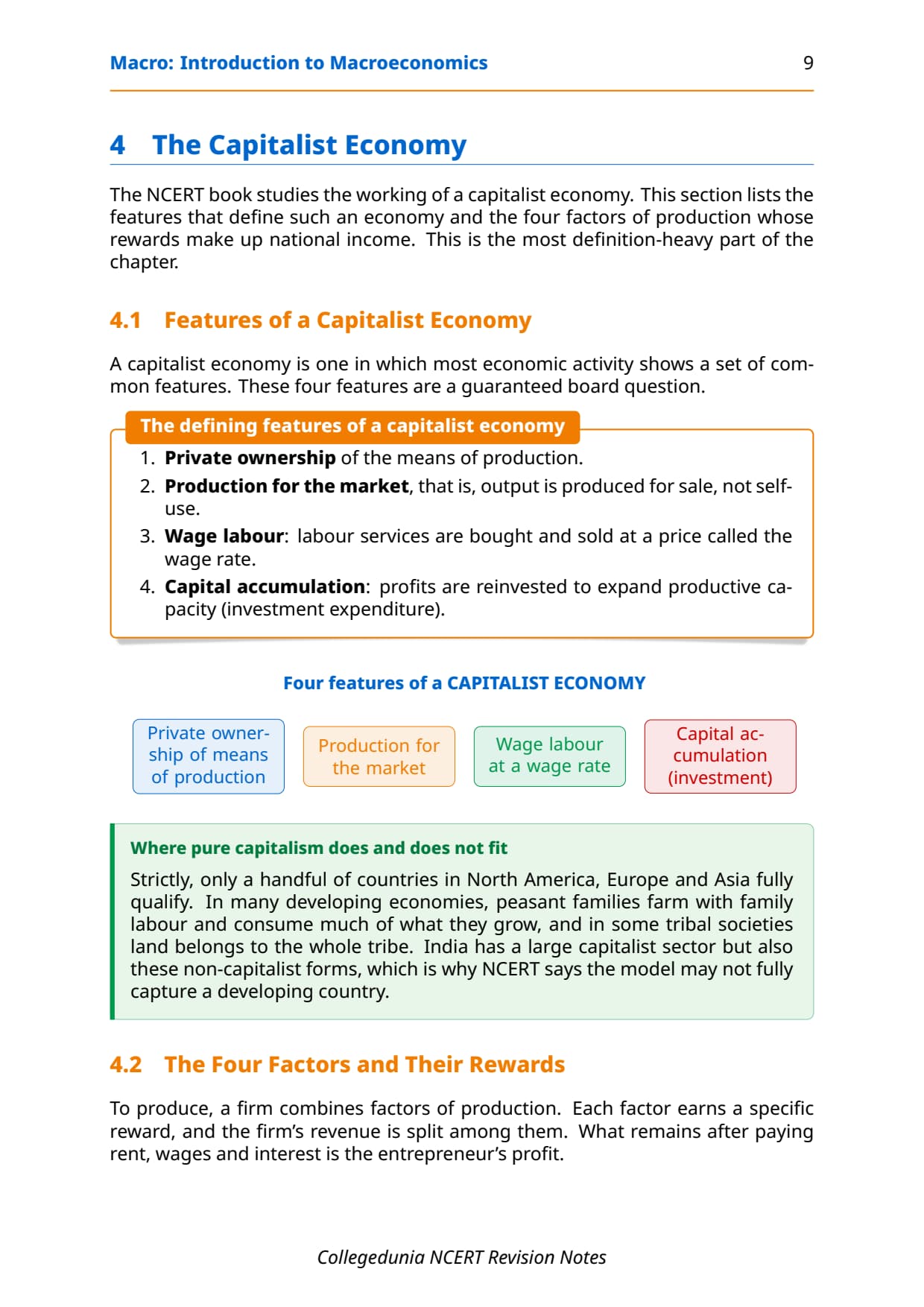
Memory hook: micro studies individual units; macro studies aggregates and the economy as a whole. Write both halves of the line. A half answer loses the mark.

Emergence of Macroeconomics: Great Depression and Keynes
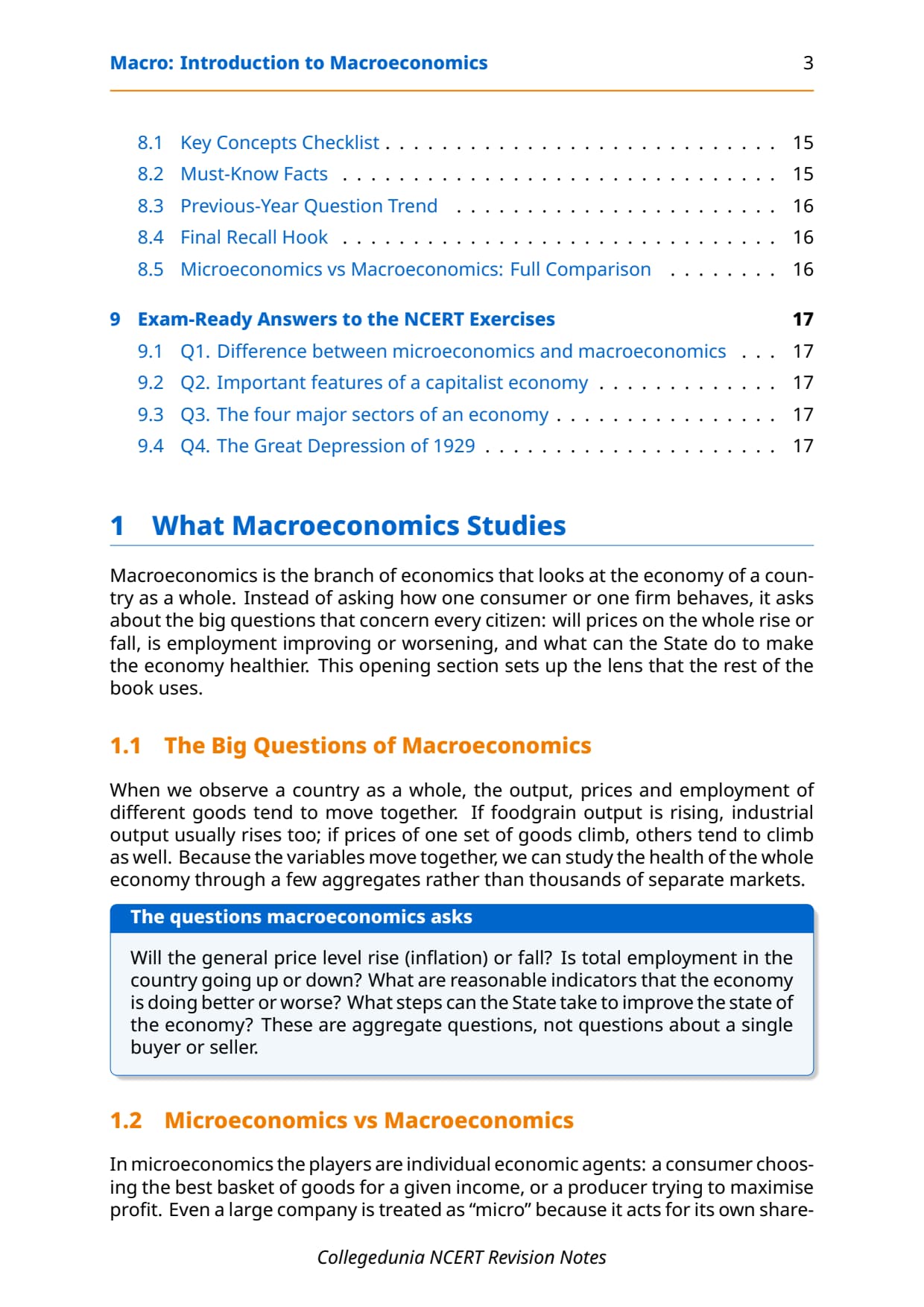
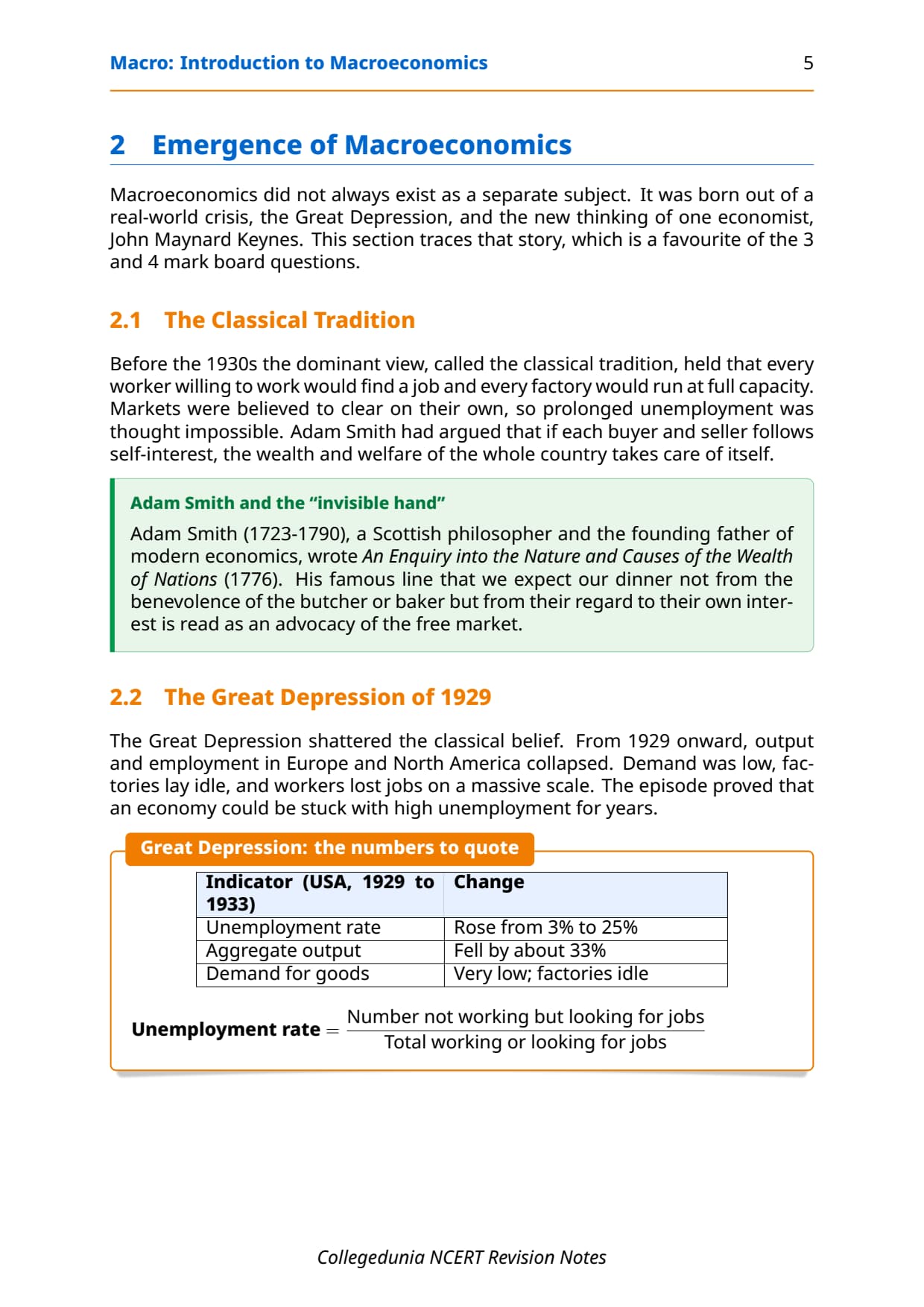
Macroeconomics did not always exist as a separate subject. Before the 1930s the classical view held that every willing worker would find a job and every factory would run at full capacity. Markets were thought to clear on their own, so long unemployment was believed impossible.
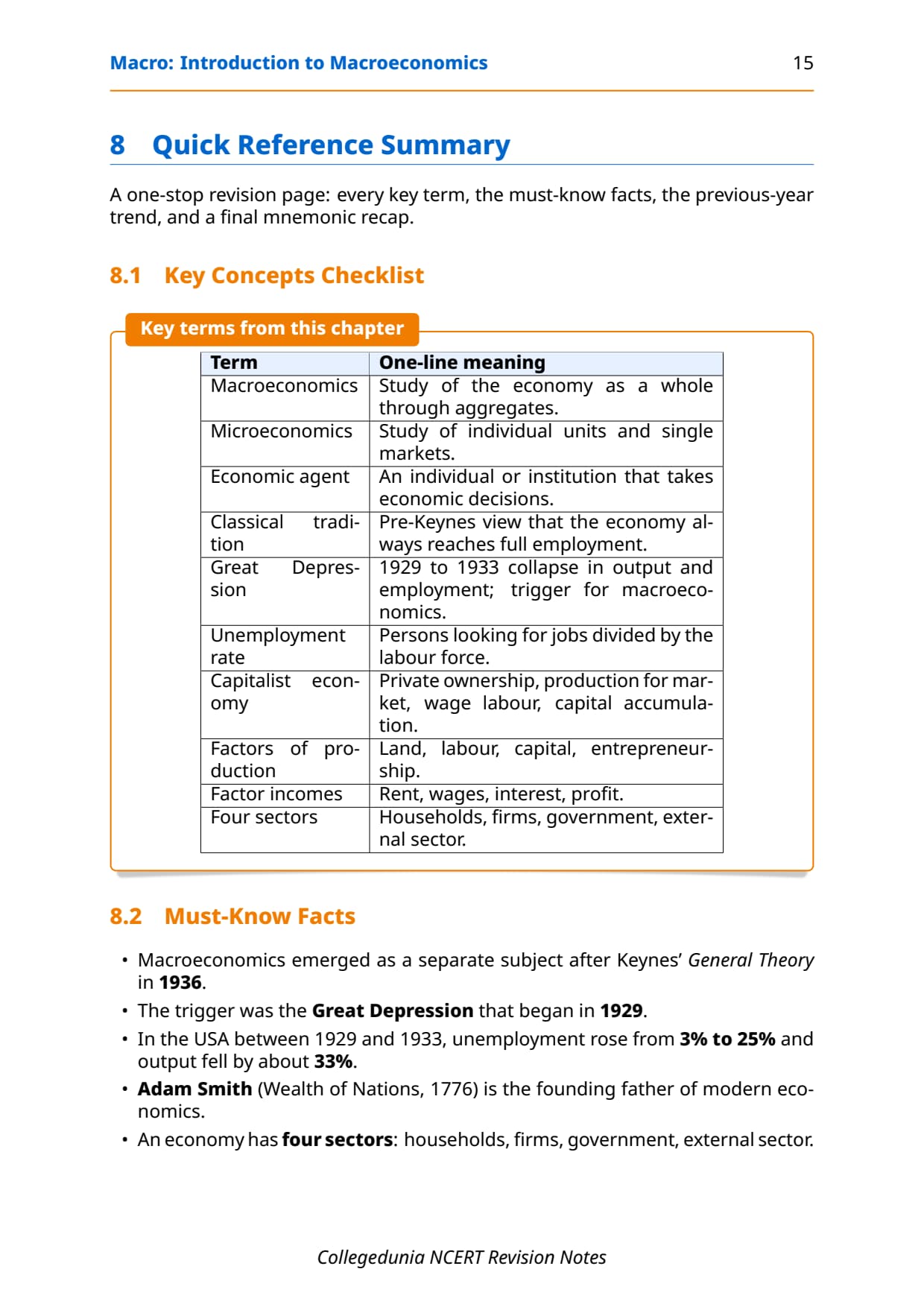
The Great Depression broke that belief. From 1929, output and employment in Europe and North America collapsed. In the USA, the unemployment rate rose from 3 per cent to 25 per cent and output fell by about a third by 1933. This proved an economy can stay stuck with high unemployment for years.
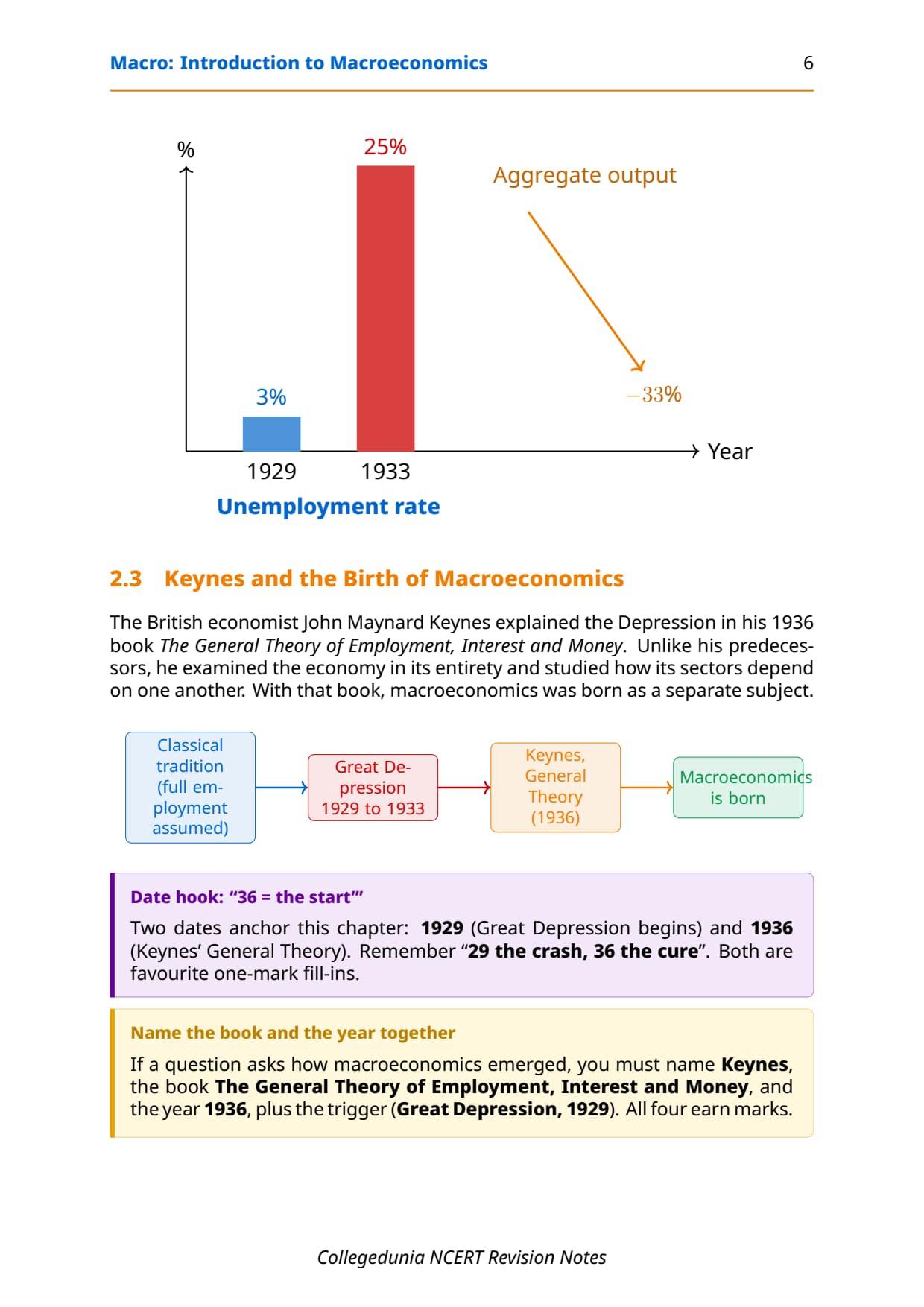
The British economist John Maynard Keynes answered this in his 1936 book, The General Theory of Employment, Interest and Money. He studied the economy as a whole and showed how it could settle at high, lasting unemployment. With this book, macroeconomics was born.
Memory hook: the trigger was the Great Depression of 1929; the founder is Keynes with his 1936 book. Name both the person and the year in any answer on who founded macroeconomics.
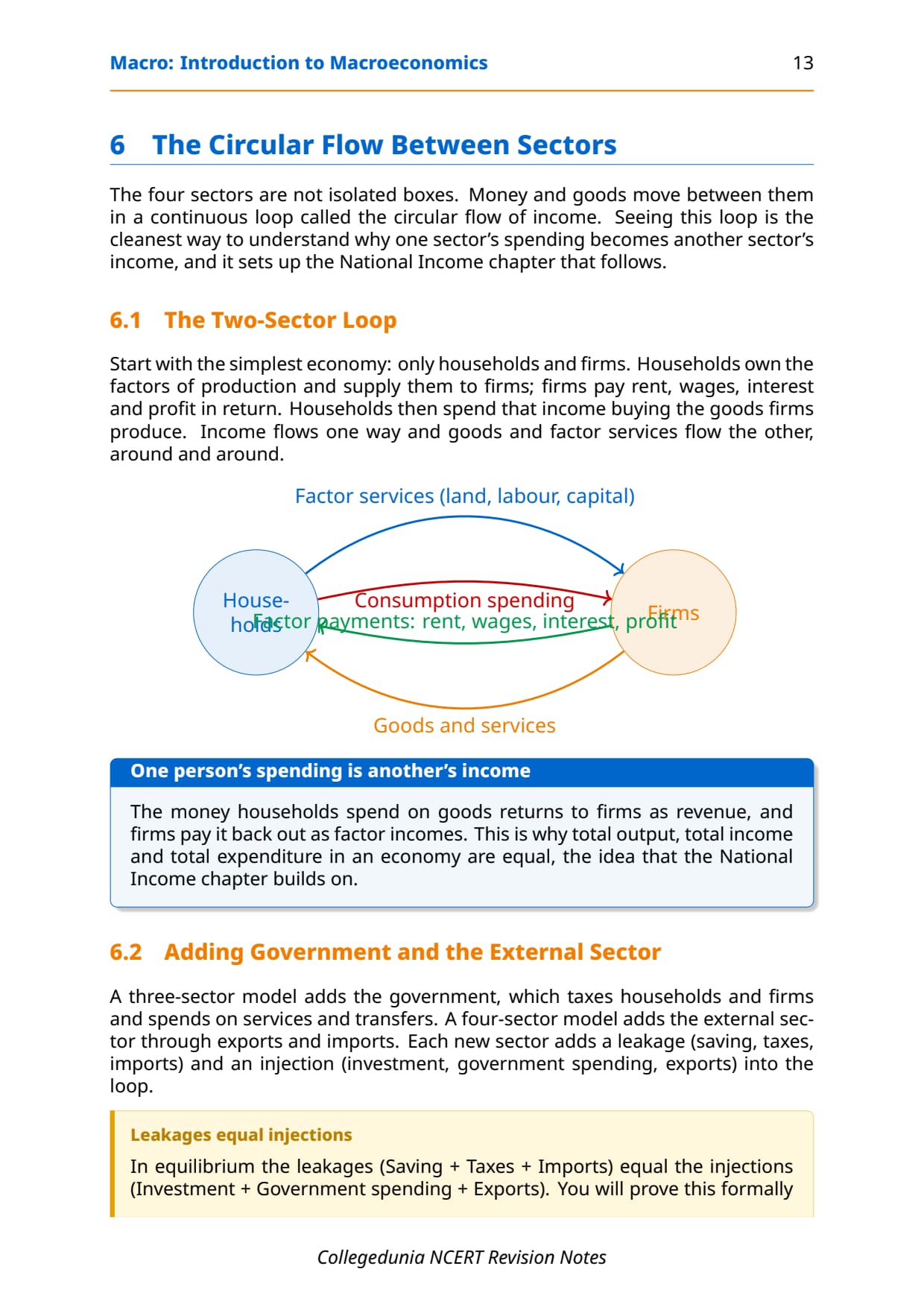
The Four Sectors of an Economy in Class 12 Economics
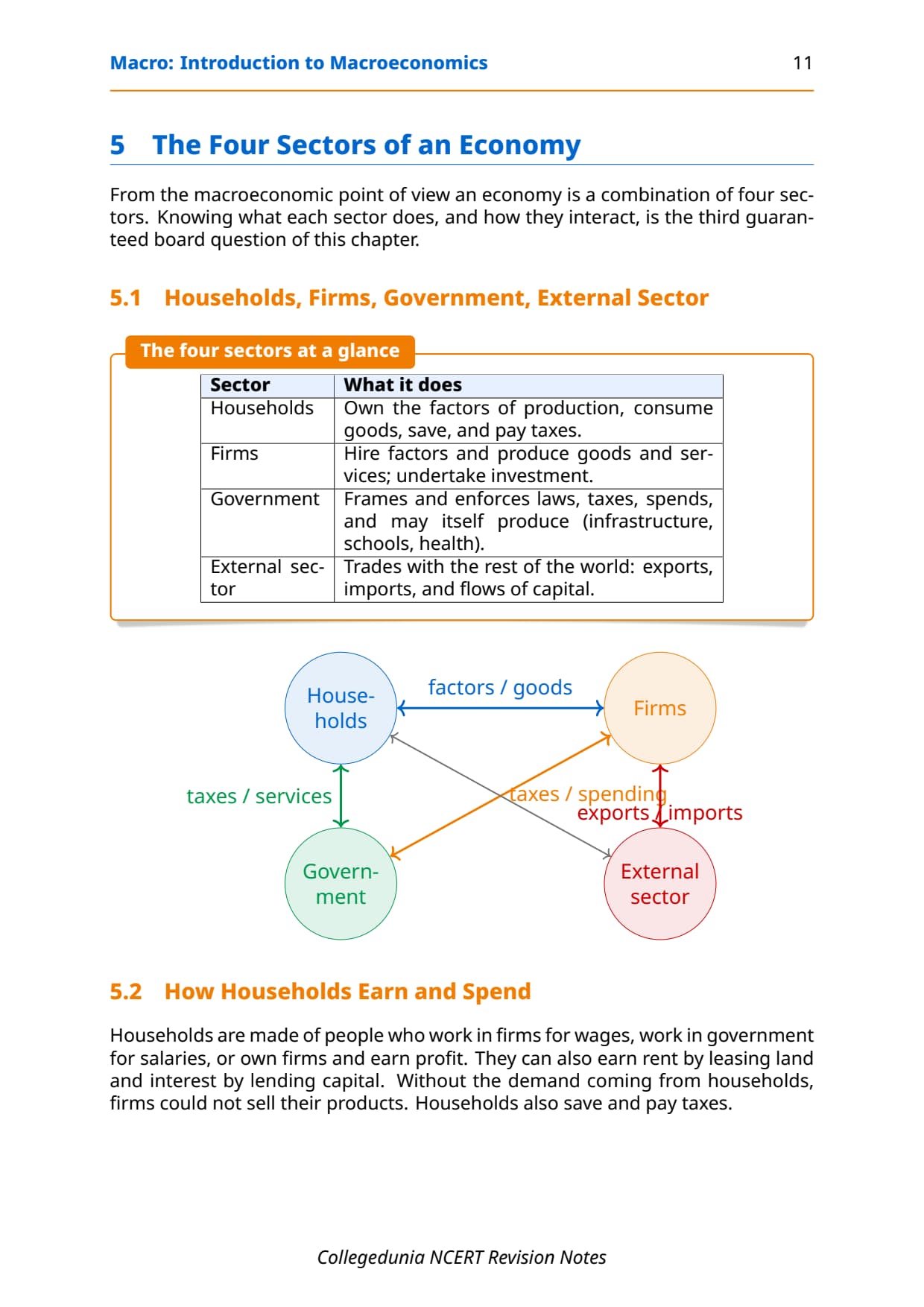
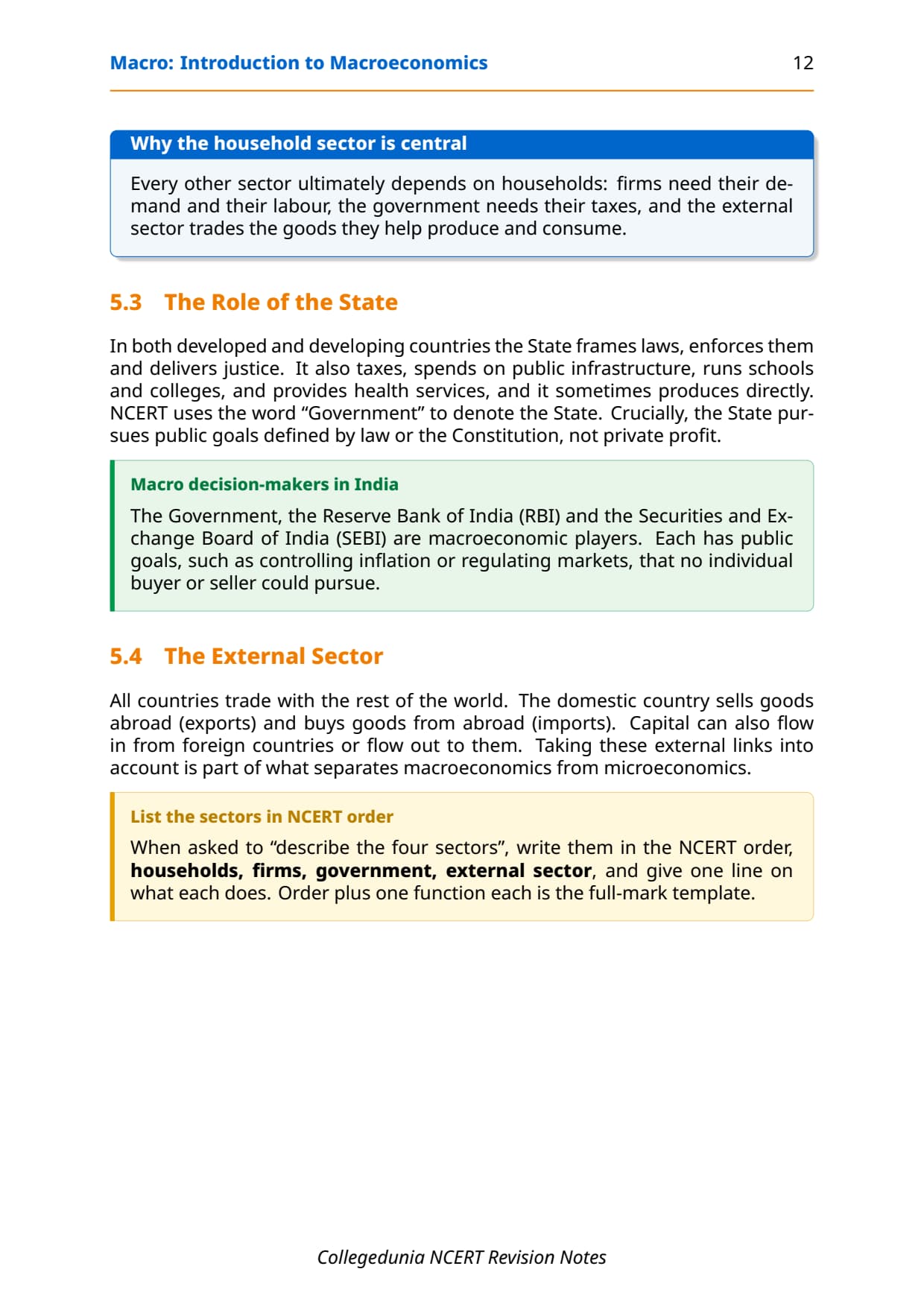
NCERT sees the economy as four sectors. Listing all four in order, and saying what each does, is a common 3 to 4 mark question. Learn them in NCERT order.
| Sector | What it does |
|---|---|
| Households | Supply factors of production, consume, save and pay taxes. |
| Firms | Hire factors and produce output to sell for profit. |
| Government | Frames laws, taxes, spends and sometimes produces. |
| External sector | Trade with the rest of the world: exports, imports and capital flows. |
The most common slip is dropping the external sector, so always count all four.
Key Definitions for Introduction to Macroeconomics Class 12
Almost every objective question starts with a definition. The lines below are short enough to write in a board answer.
| Term | One-line meaning |
|---|---|
| Macroeconomics | The study of the economy as a whole using aggregates. |
| Economic agents | People or bodies that take economic decisions, like firms, the RBI and SEBI. |
| Capitalist economy | Private ownership, output for the market, and wage labour. |
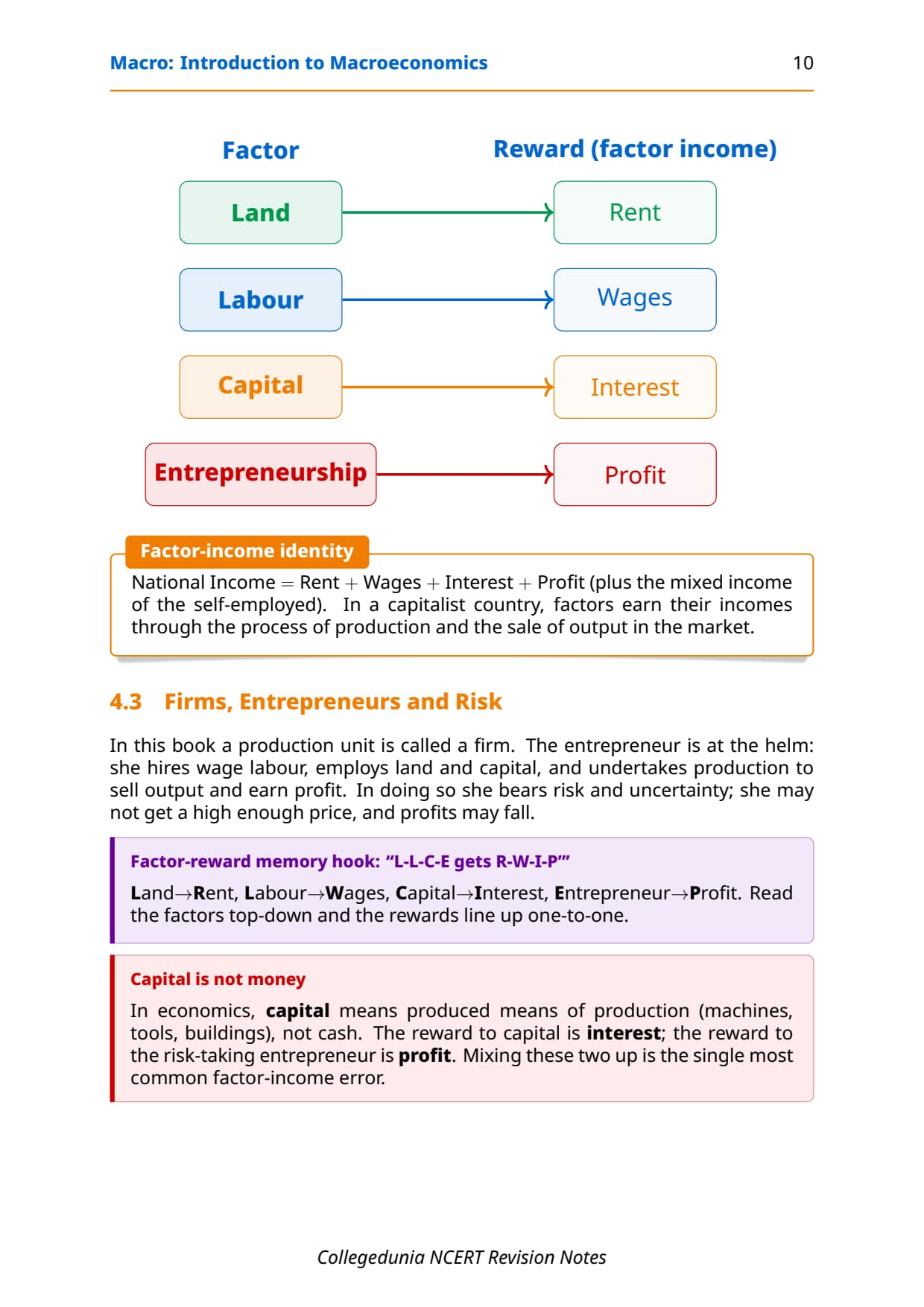
| Four factors | Land, labour, capital and entrepreneurship. |
| Factor rewards | Rent, wages, interest and profit, in that order. |
| Unemployment rate | Job seekers without work divided by the total labour force. |
Introduction to Macroeconomics Class 12 Video Lesson
Source: Magnet Brains on YouTube
Watch out for these repeat errors before you write the exam.

Common Mistakes in Introduction to Macroeconomics
- Calling the RBI a micro agent. The RBI, SEBI and the Government are macro decision-makers.
- Giving only half the macro definition without "the economy as a whole".
- Naming the wrong founder or year. Keynes in 1936, not Adam Smith and not 1929.
- Swapping the trigger and the theory. The 1929 Depression is the cause; the 1936 book is the answer.
- Dropping the external sector from the four sectors.
- Pairing factors with the wrong rewards.
Introduction to Macroeconomics Weightage in CBSE and CUET
The chapter holds a steady 4 to 6 marks in CBSE. The table maps what the board has asked in recent years.
| Year | CBSE question | Marks |
|---|---|---|
| 2025 | Micro vs macro, plus define economic agents | 4 |
| 2024 | Emergence of macroeconomics: Depression and Keynes | 4 |
| 2023 | Name and explain the four sectors, plus factor rewards | 4 |
| 2022 | Features of a capitalist economy, plus unemployment rate | 4 |
| 2021 | Define macroeconomics and name its founder | 2 |
Student Feedback
We asked 11,420 Class 12 students about this chapter. 71% found the micro versus macro split the most-confused part, and 3 out of 4 said the Great Depression and Keynes story was the best part to revise from a notes sheet. Most students finished the full notes in about 28 minutes.
Other Resources for Class 12 Economics Chapter 1
Pair these notes with the Solutions, handwritten notes and the official NCERT chapter below.
| Resource | What it covers | Open |
|---|---|---|
| Notes | Concept-first revision of the full chapter. | Class 12 Economics Chapter 1 Notes |
| NCERT Solutions | Step-by-step answers to every exercise question. | Class 12 Economics Chapter 1 NCERT Solutions |
| Handwritten Notes | Scanned notebook pages for last-mile revision. | Class 12 Economics Chapter 1 Handwritten Notes |
| NCERT Book PDF | Official NCERT Macroeconomics Chapter 1 textbook. | Class 12 Economics Chapter 1 NCERT Book PDF |
| Subject Hub | All chapters of Class 12 Economics in one place. | Class 12 Economics Subject Hub |
All Chapters Notes for Class 12 Economics Macroeconomics
| Chapter | Notes link |
|---|---|
| Chapter 1 | Introduction to Macroeconomics |
| Chapter 2 | National Income Accounting |
| Chapter 3 | Money and Banking |
| Chapter 4 | Income Determination |
| Chapter 5 | Government Budget and the Economy |
| Chapter 6 | Open Economy Macroeconomics |
NCERT Notes Class 12 Economics Chapter 1 Introduction to Macroeconomics FAQs
Ques. What are these Class 12 Economics Chapter 1 notes for?
Ans. They are a short revision sheet for NCERT Chapter 1 of Macroeconomics. They cover the meaning of macroeconomics, the micro versus macro split, the Great Depression and Keynes, the four sectors and common mistakes. Worked answers sit in the matching NCERT Solutions.
Ques. What is the difference between microeconomics and macroeconomics?
Ans. Microeconomics studies one unit, like a consumer, a firm or a single market. Macroeconomics studies the whole economy through aggregates like total output, the price level and jobs. The full mark answer states both halves of this line.
Ques. Who is the founder of macroeconomics and when did it emerge?
Ans. Macroeconomics emerged after John Maynard Keynes published his book The General Theory of Employment, Interest and Money in 1936. The trigger was the Great Depression of 1929. In any answer, name both Keynes and the 1936 book, and keep 1929 as the trigger, not the founding date.
Ques. What are the four sectors of an economy?
Ans. The four sectors are households, firms, government and the external sector. Households supply factors and consume; firms hire factors and produce for profit; the government taxes, spends and frames laws; and the external sector covers trade with other countries.
Ques. Are these notes enough for the CBSE board exam?
Ans. They are enough for the theory and MCQ marks this chapter carries, as it has no numericals. Students aiming for 90-plus should pair the notes with the matching NCERT Solutions for full model answers. Both are linked in the table above.



Comments