




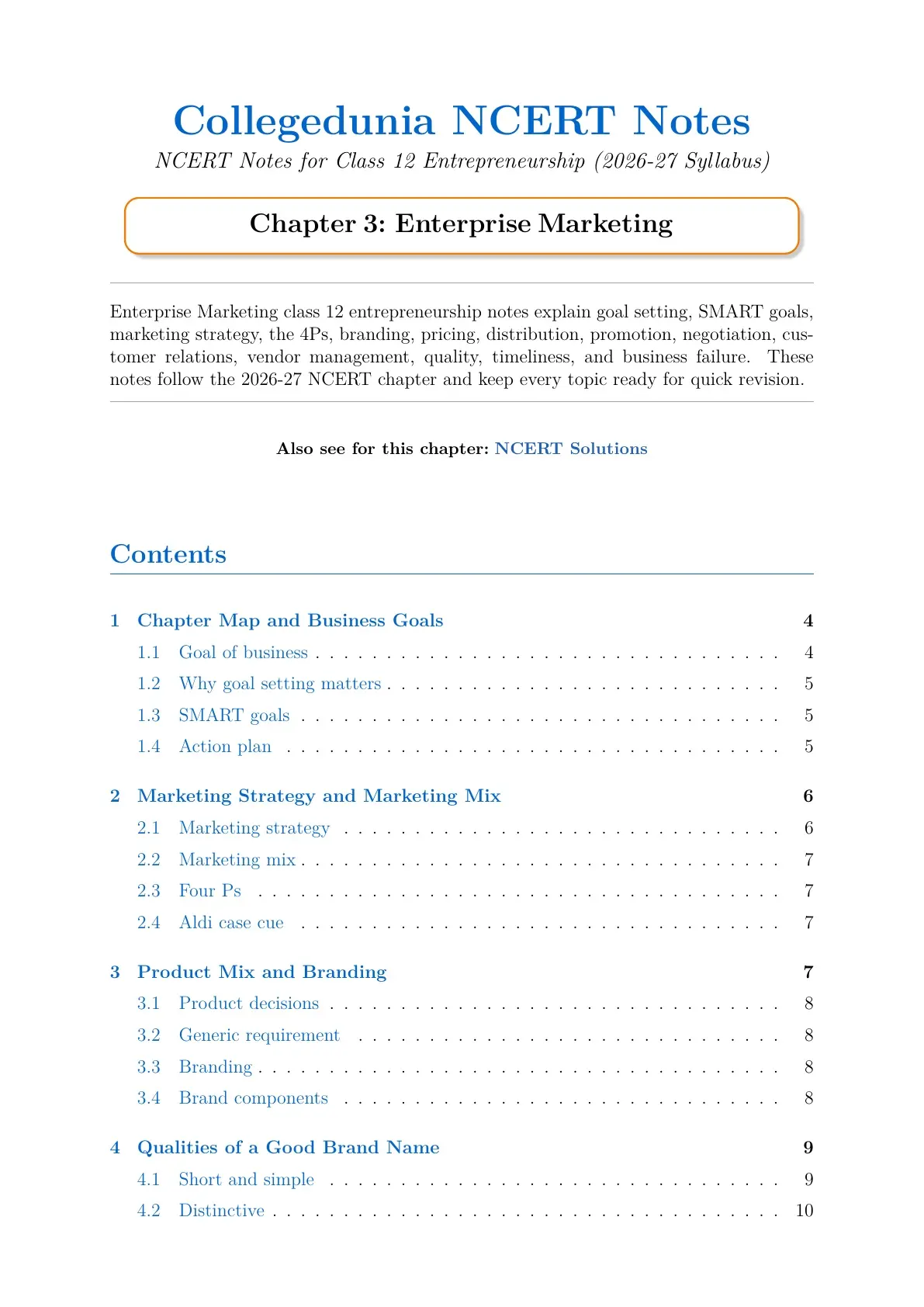
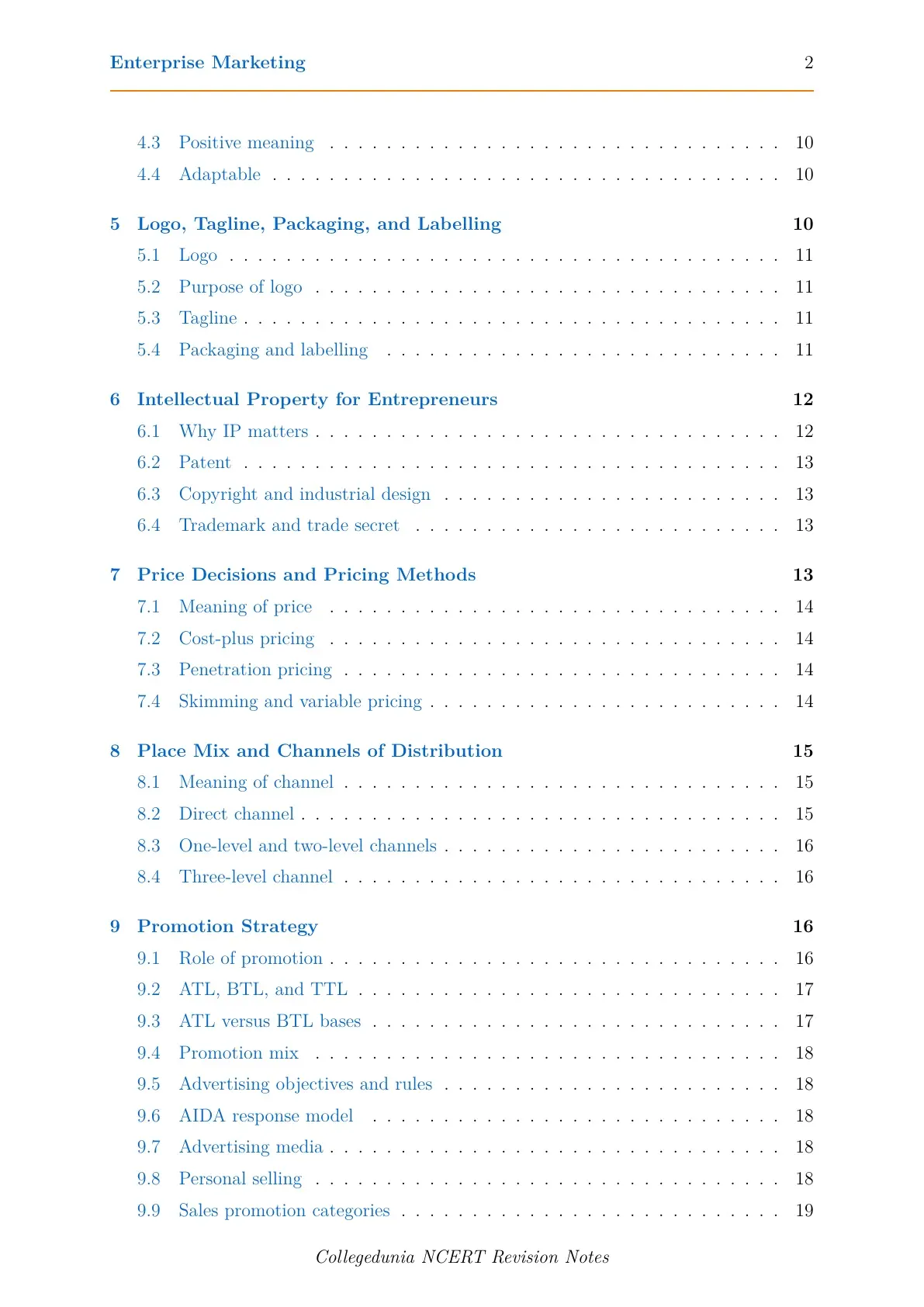
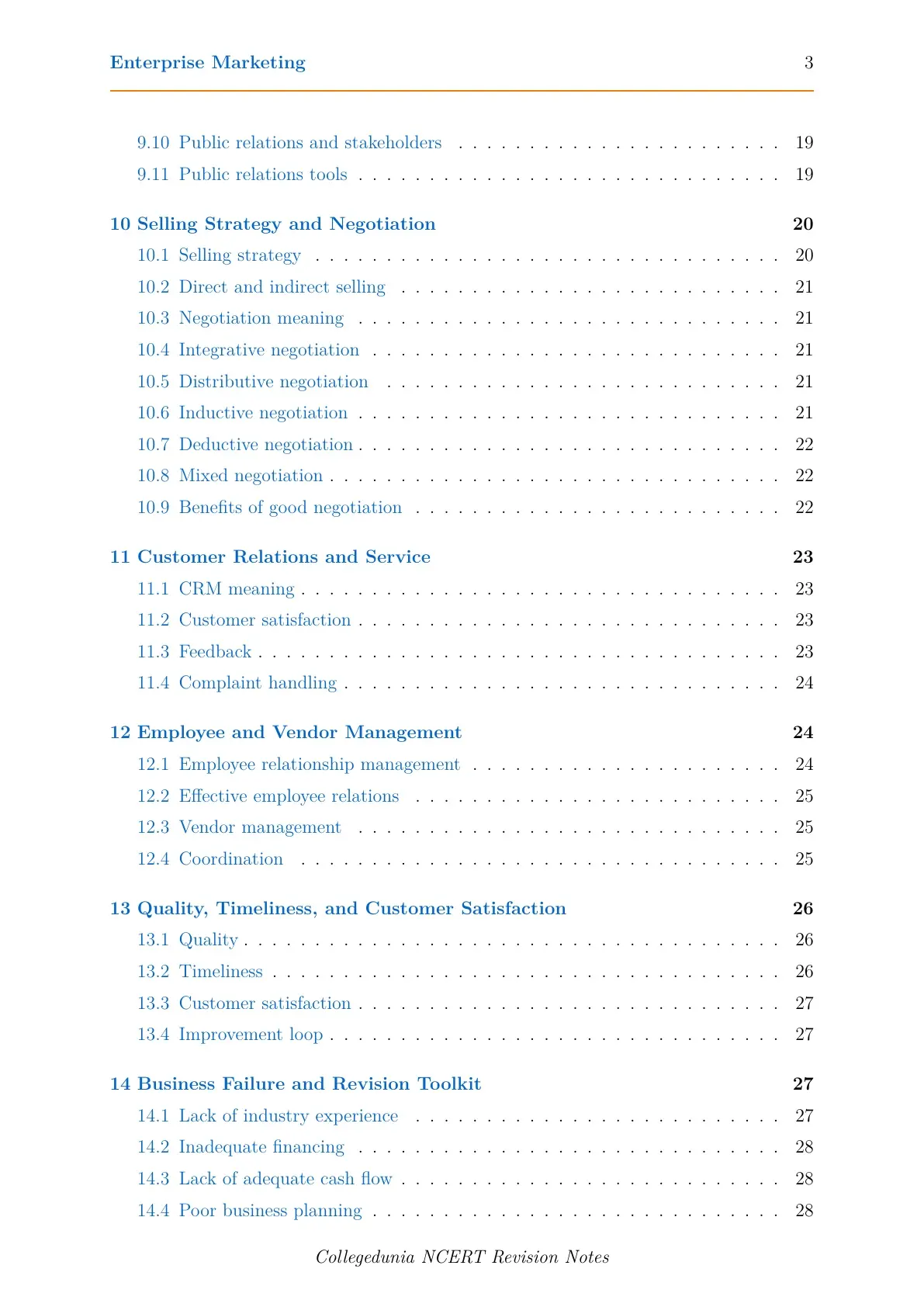
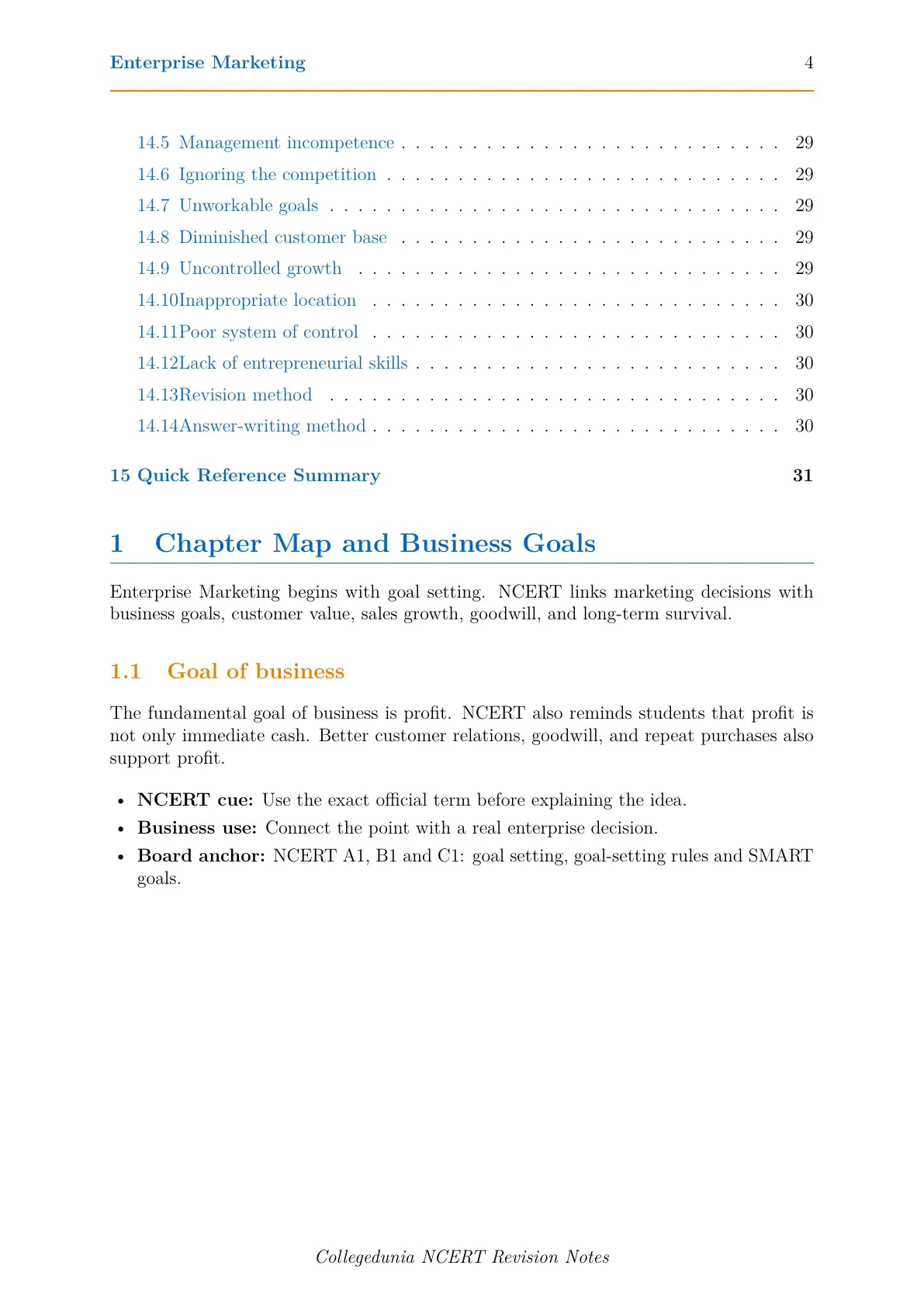
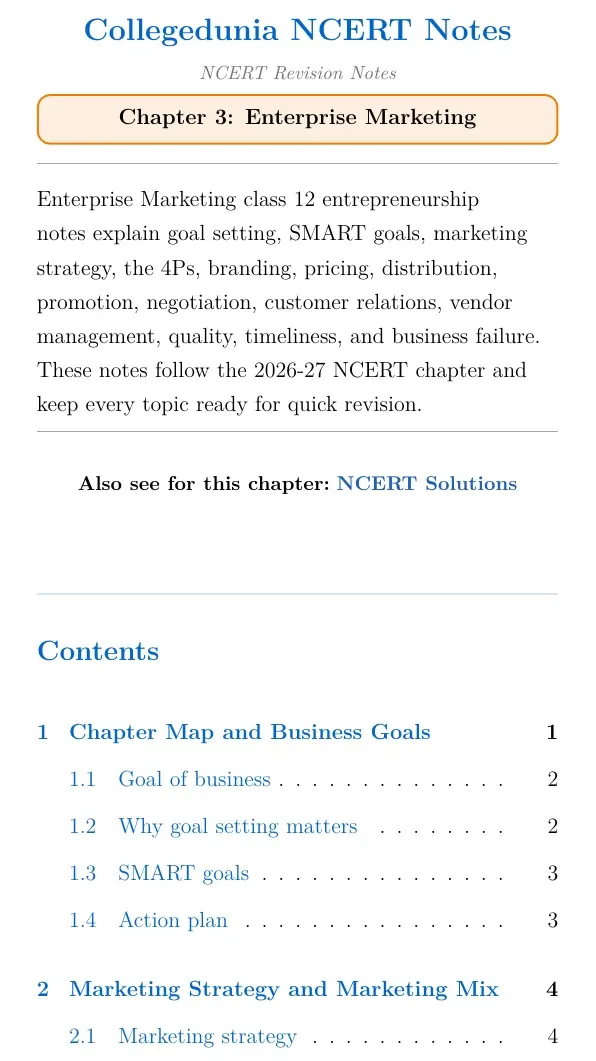
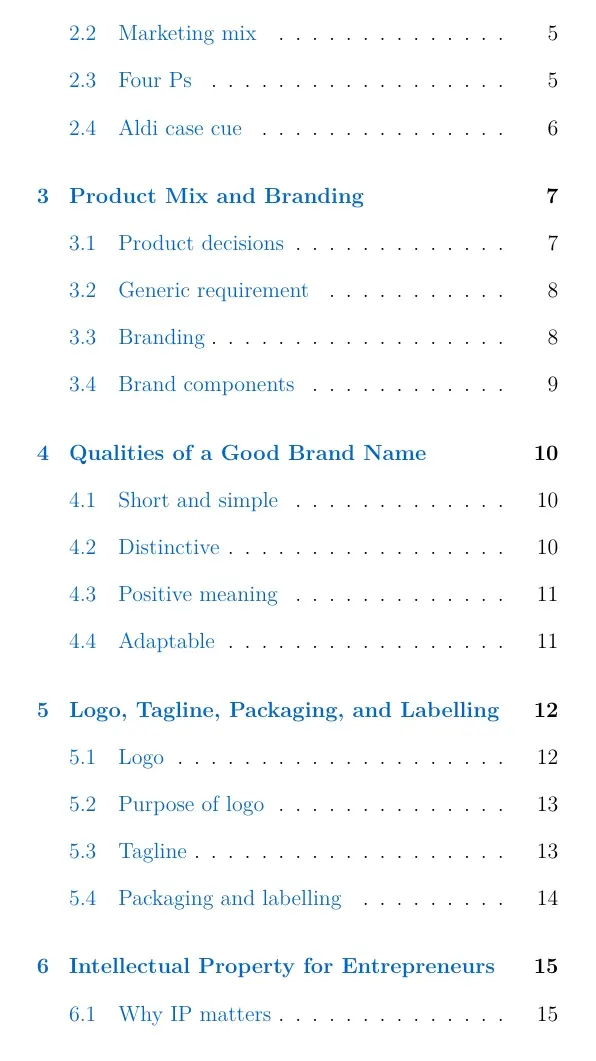
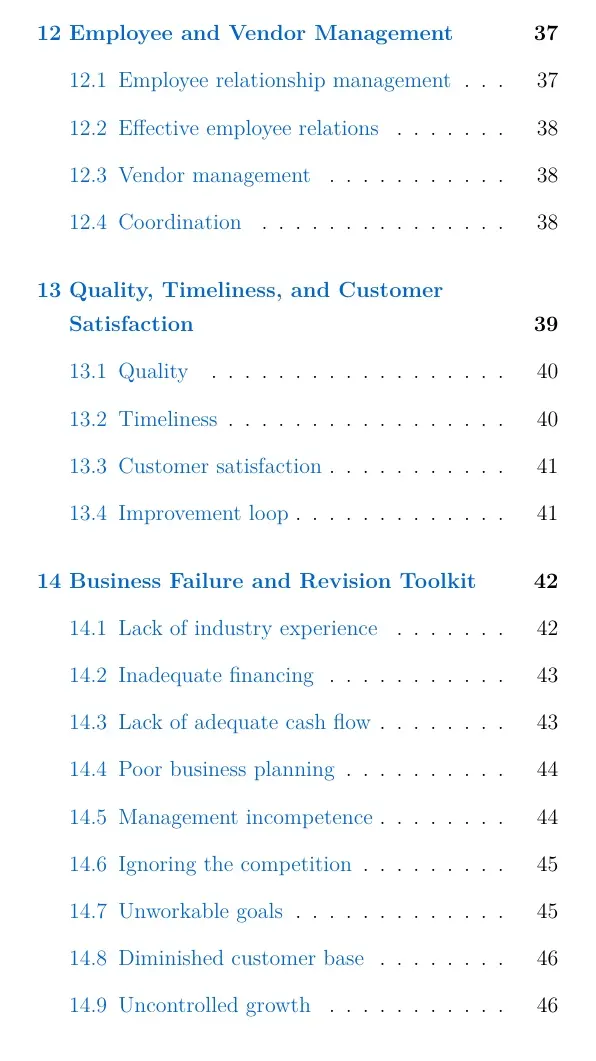
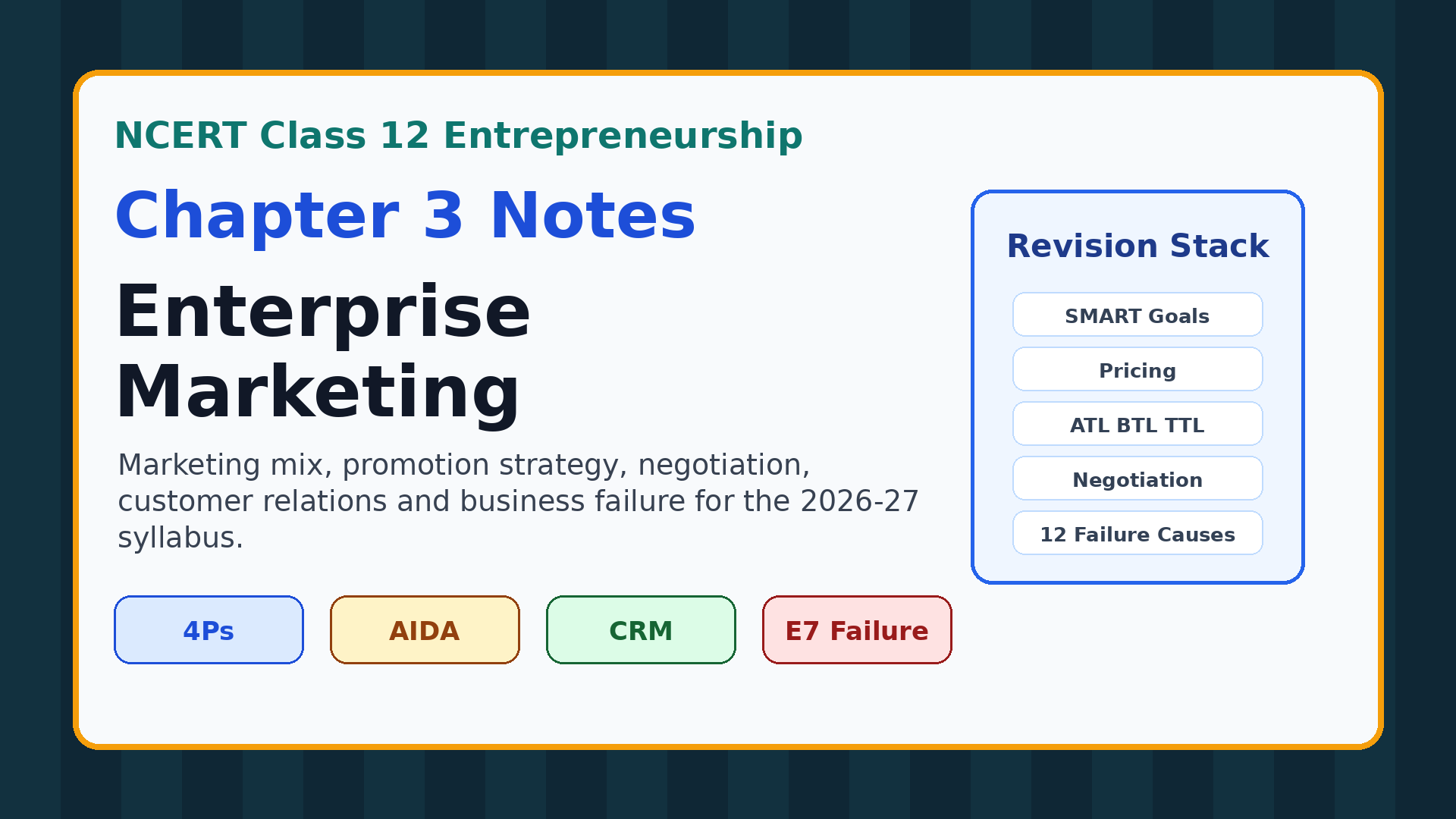
Class 12 Entrepreneurship Chapter 3 Enterprise Marketing notes bring together every marketing mix, promotion, negotiation, CRM and business failure point that the CBSE board paper actually tests. The PDF follows the 2026-27 NCERT chapter and keeps each topic tied to the exact exercise prompt.
- 32-page PDF follows the official NCERT chapter order.
- Best for revision: 4Ps, ATL BTL TTL, AIDA, E6 negotiation and E7 failure causes.
- Use the tables to revise definitions, examples and answer frames before the board exam.
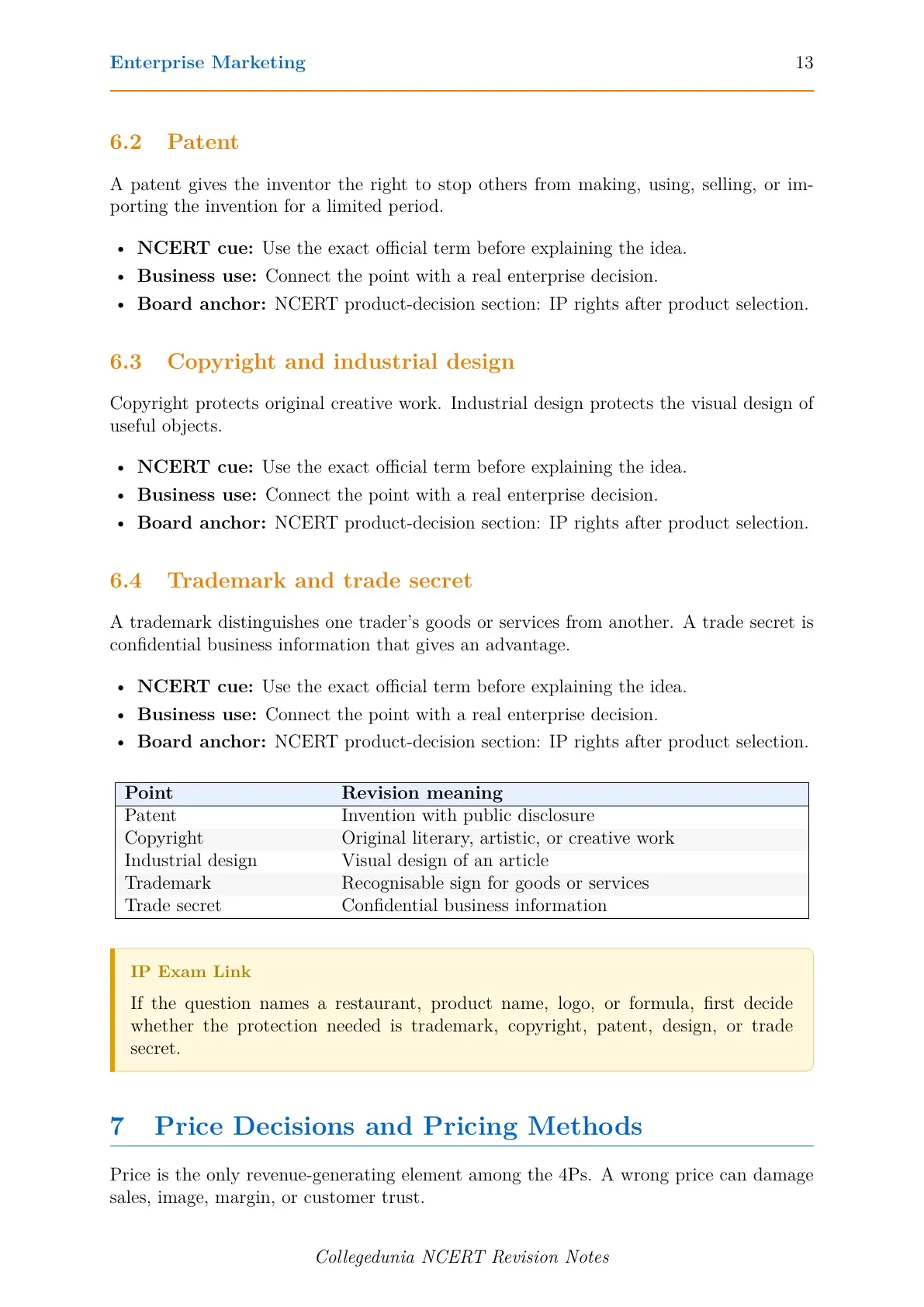
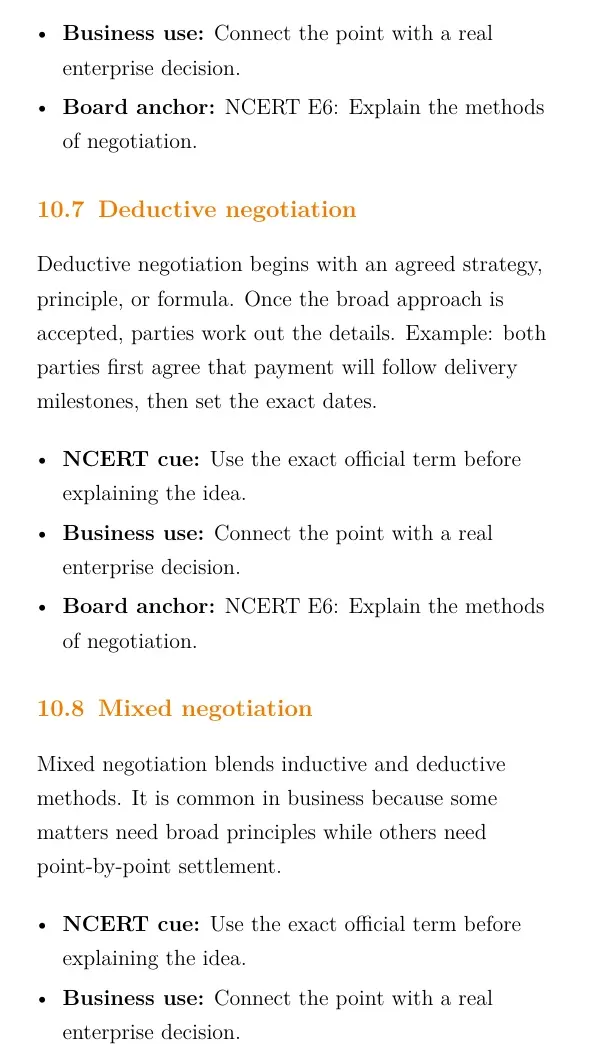
Student Feedback on Enterprise Marketing Notes
In a Collegedunia review sample of 9,420 Class 12 commerce students before the 2026 boards, most students said this chapter became easier after linking every heading with its NCERT exercise code.
- 78% wanted ATL, BTL and TTL in one comparison block.
- 71% asked for all 12 business failure causes in order.
- 64% found negotiation methods easier with examples.
Source: 2026-27 Class 12 Entrepreneurship student feedback sample for Collegedunia NCERT resources.
These notes are checked against the official NCERT Entrepreneurship chapter and follow the 2026-27 Class 12 syllabus.
Enterprise Marketing Notes PDF Highlights
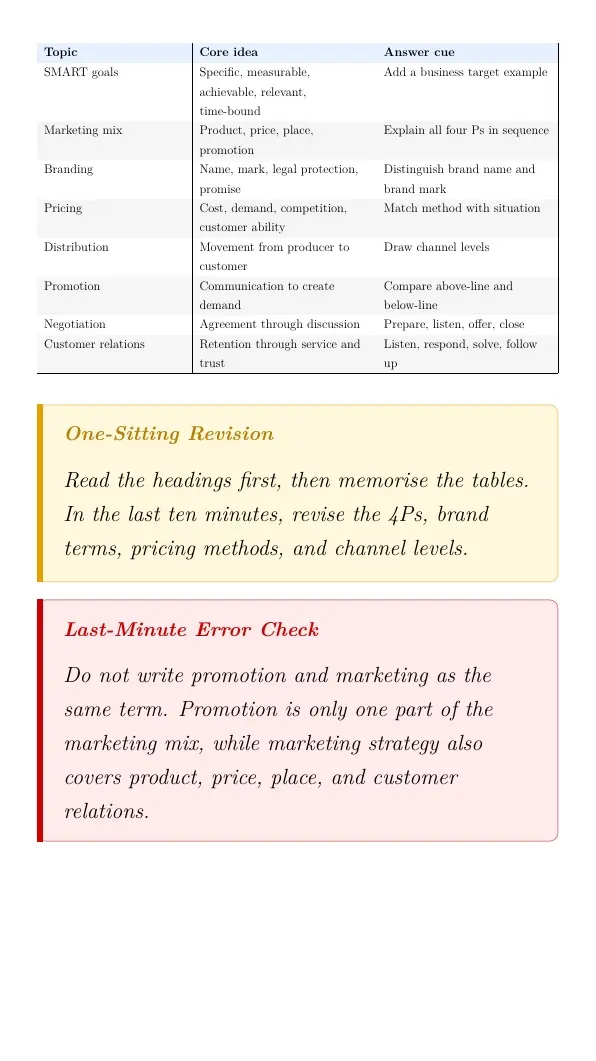
The chapter begins with business goals and then moves into marketing decisions. Enterprise Marketing is not only promotion. It also covers product, price, place, customer relations, employee relations, vendor management, quality and failure control.
| Part of the PDF | What students revise | NCERT anchor |
|---|---|---|
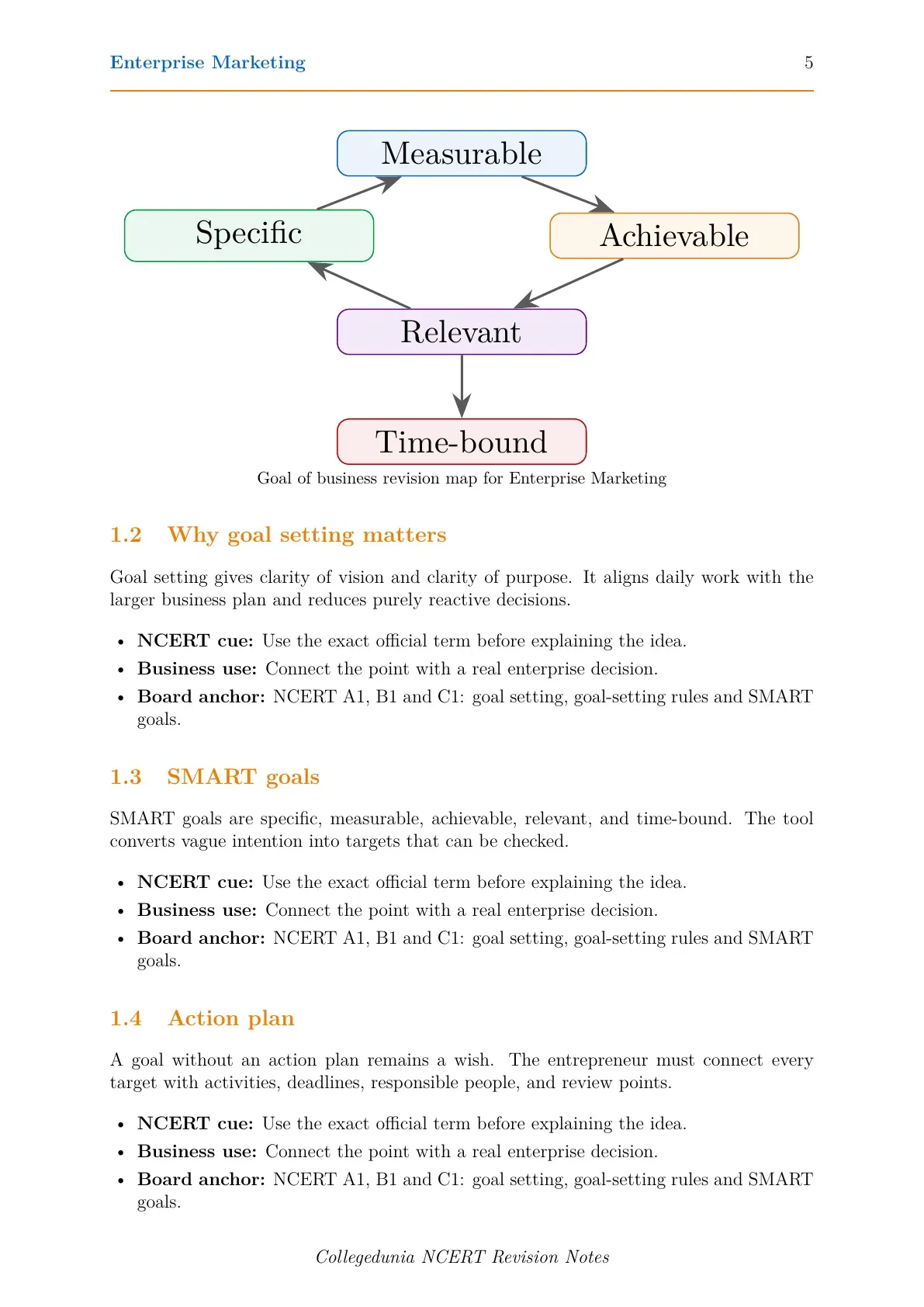
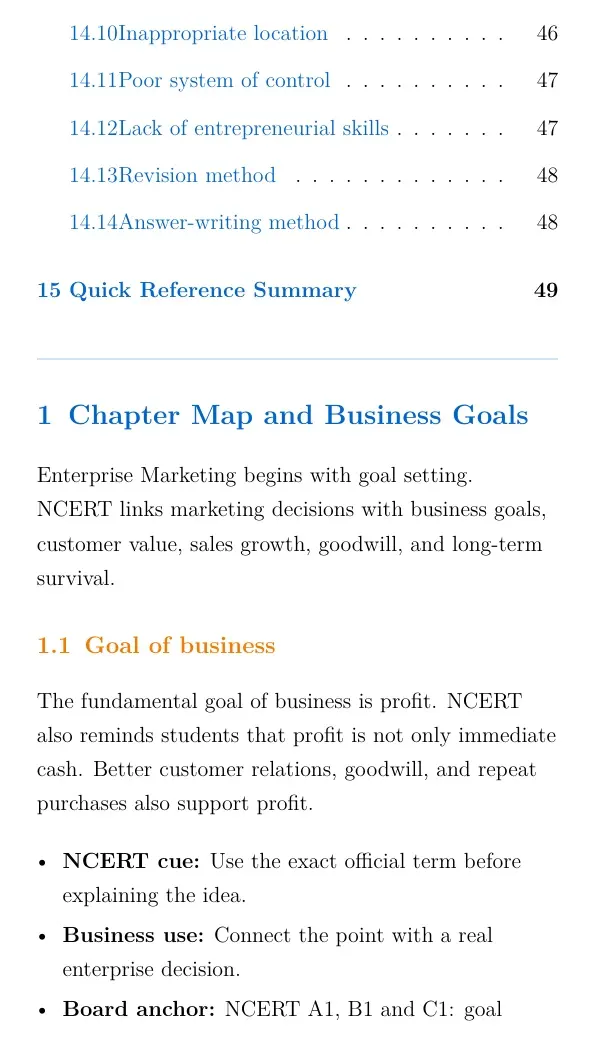
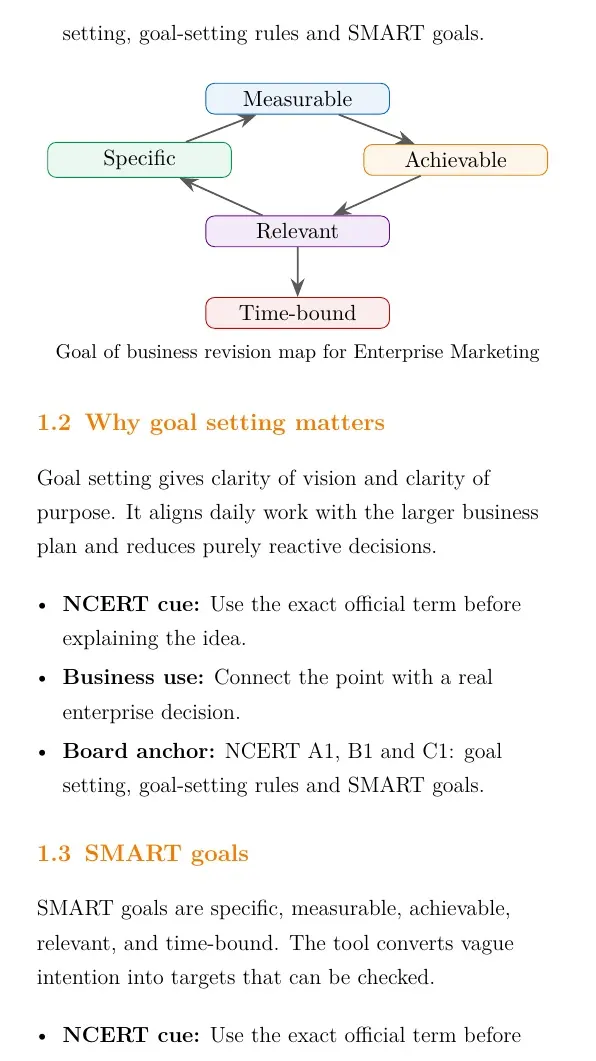
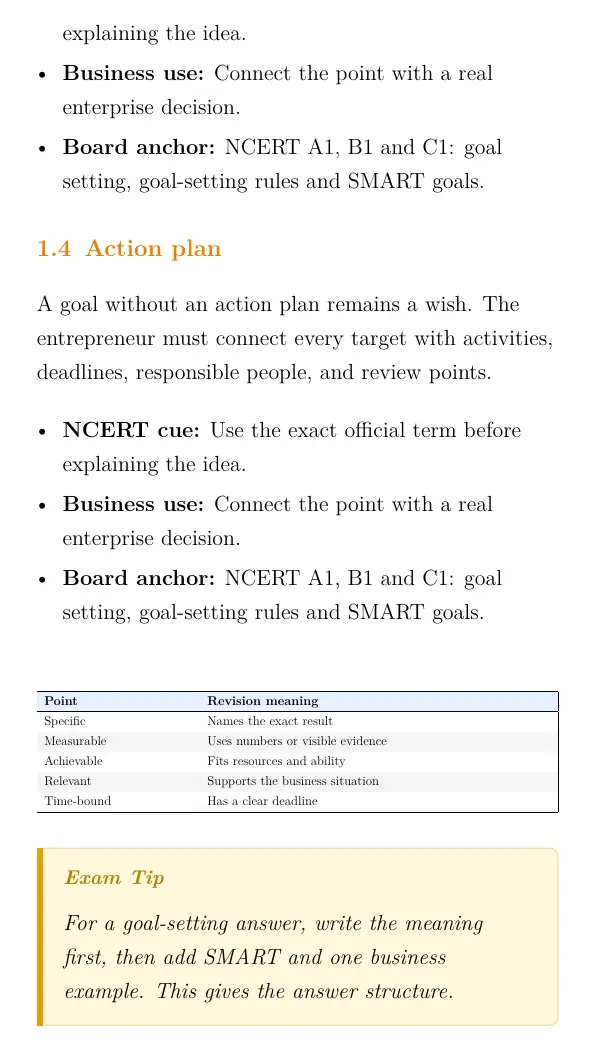
| Goals and SMART goals | Business goals, goal-setting rules and action plan | A1, B1, C1 |
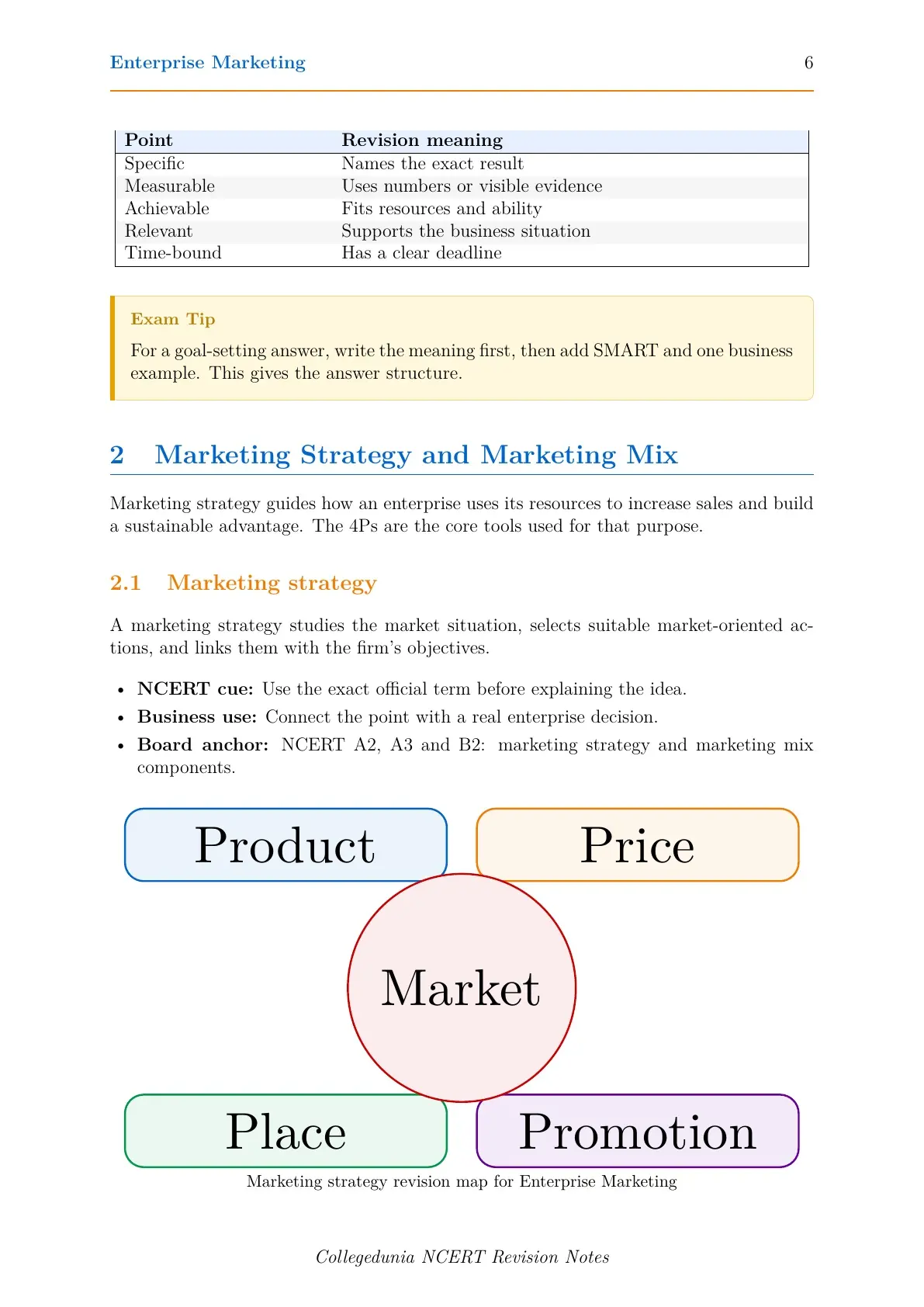
| Marketing mix | Product, price, place and promotion decisions | A2, A3, B2 |
| Promotion strategy | ATL, BTL, TTL, AIDA, media and promotion mix | B10, C5, E3, E4, E5 |
| Negotiation | Integrative, distributive, inductive, deductive and mixed methods | E6 |
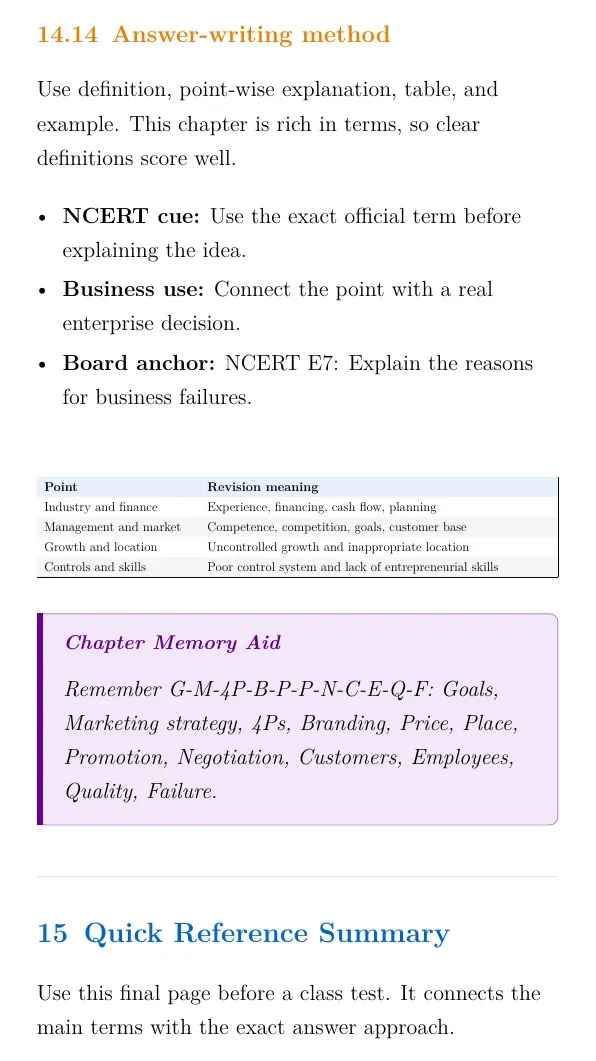
| Business failure | All 12 NCERT causes with one-line explanations | E7 |
Marketing Mix and 4Ps in Enterprise Marketing
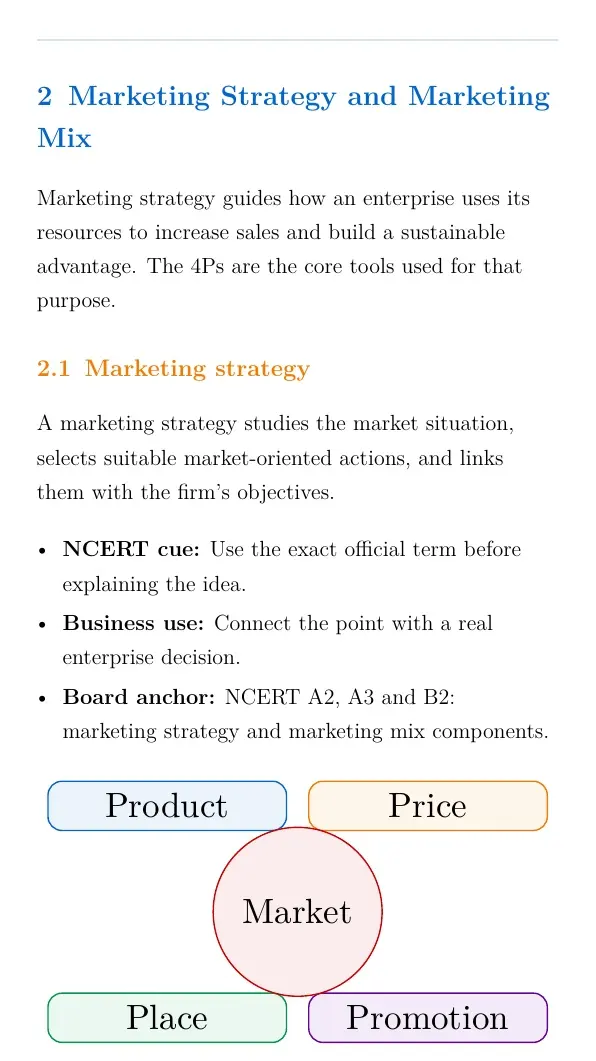
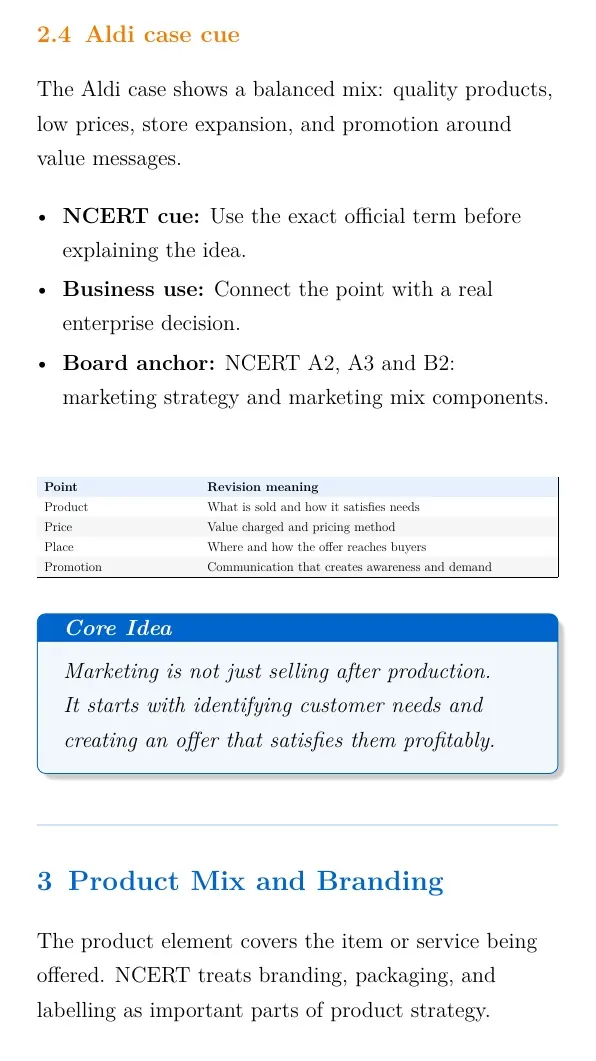
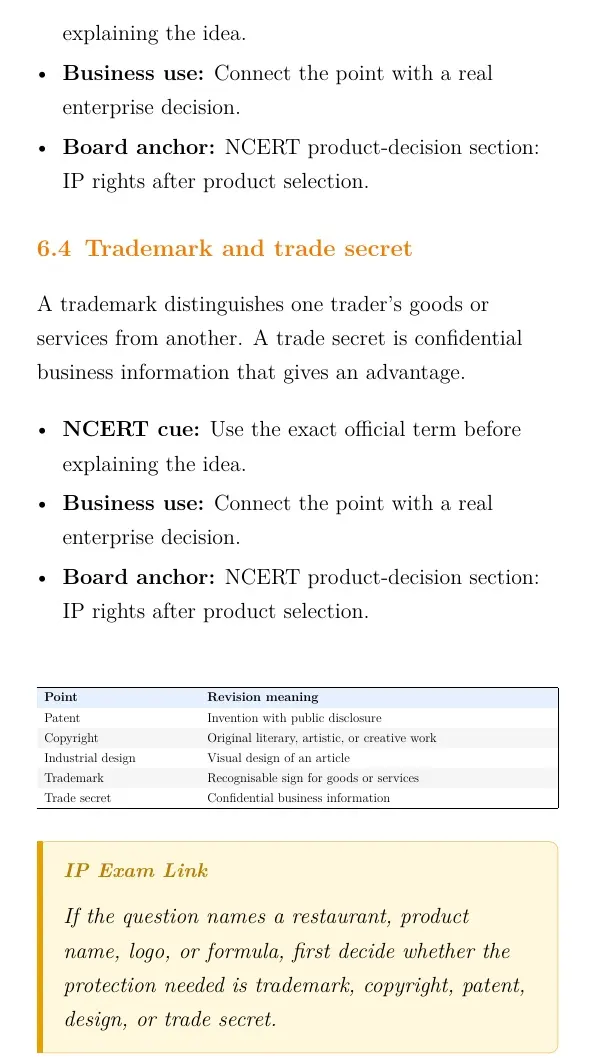
NCERT explains marketing strategy through the marketing mix. Students should write the 4Ps in order and then connect each point with the enterprise decision being made.
| 4P | Meaning in Chapter 3 | Exam cue |
|---|---|---|
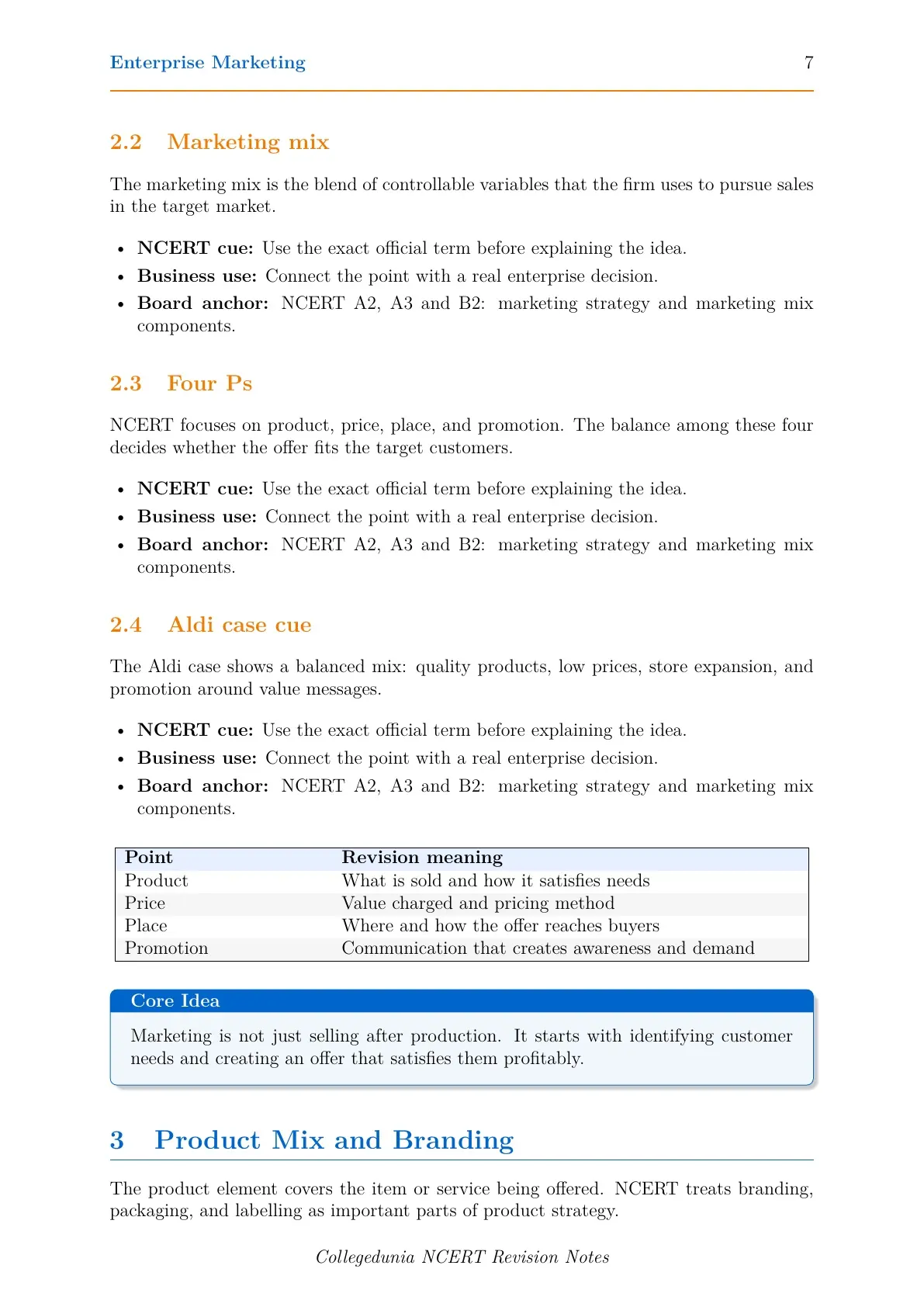
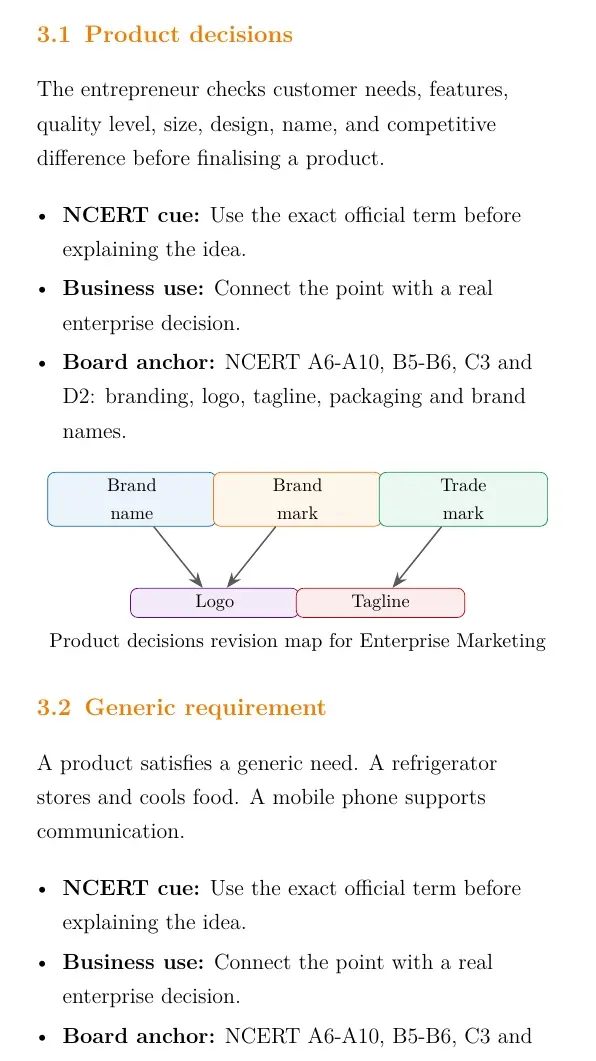
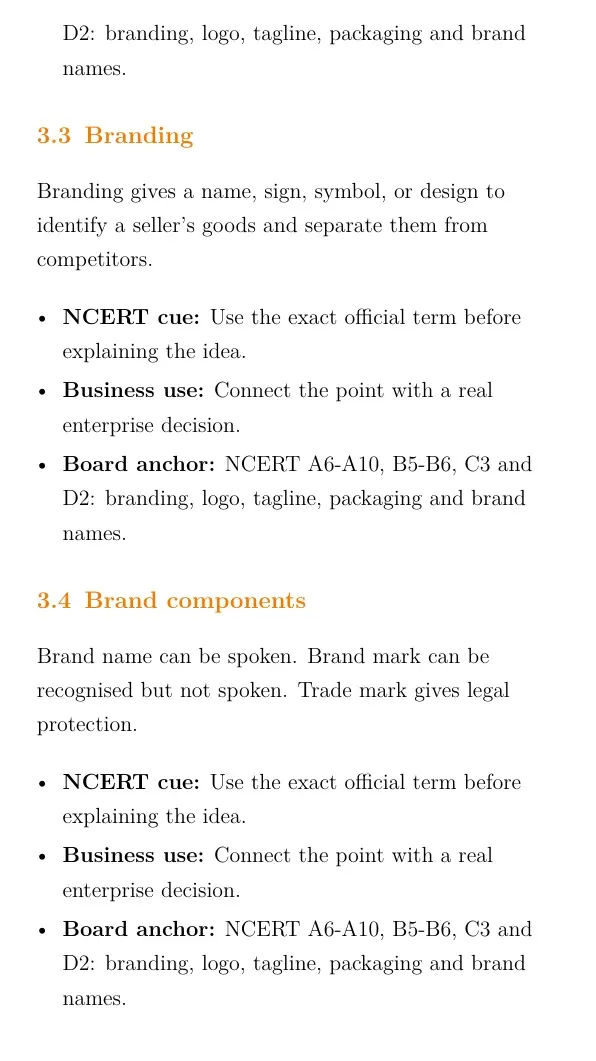
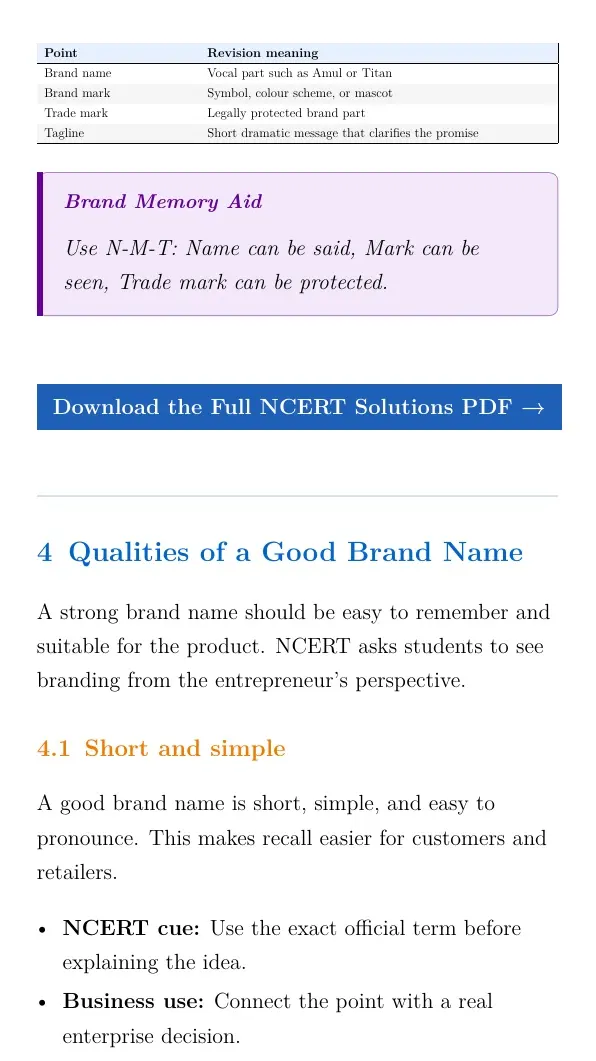
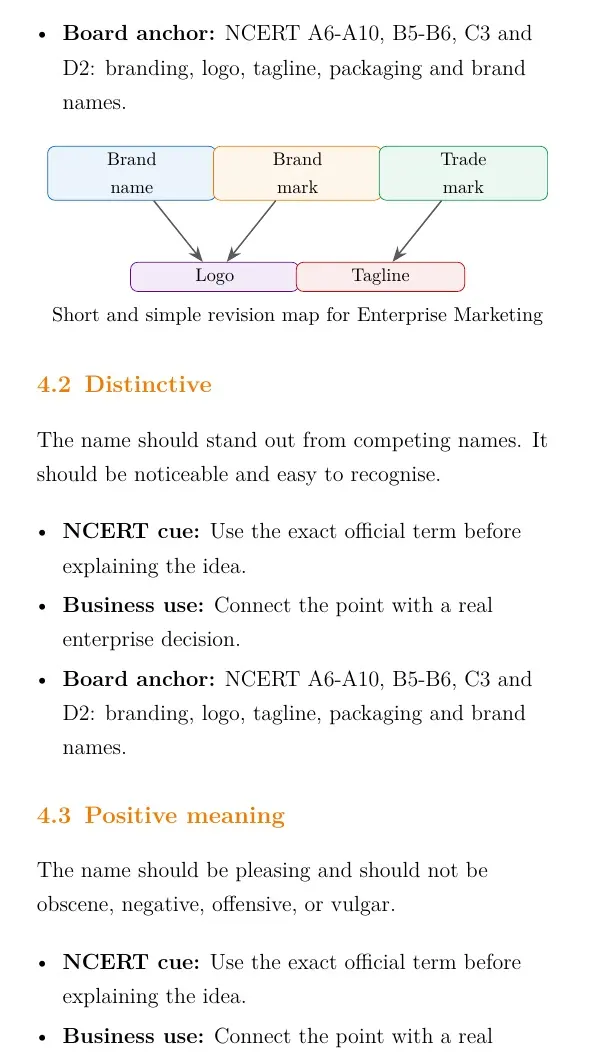
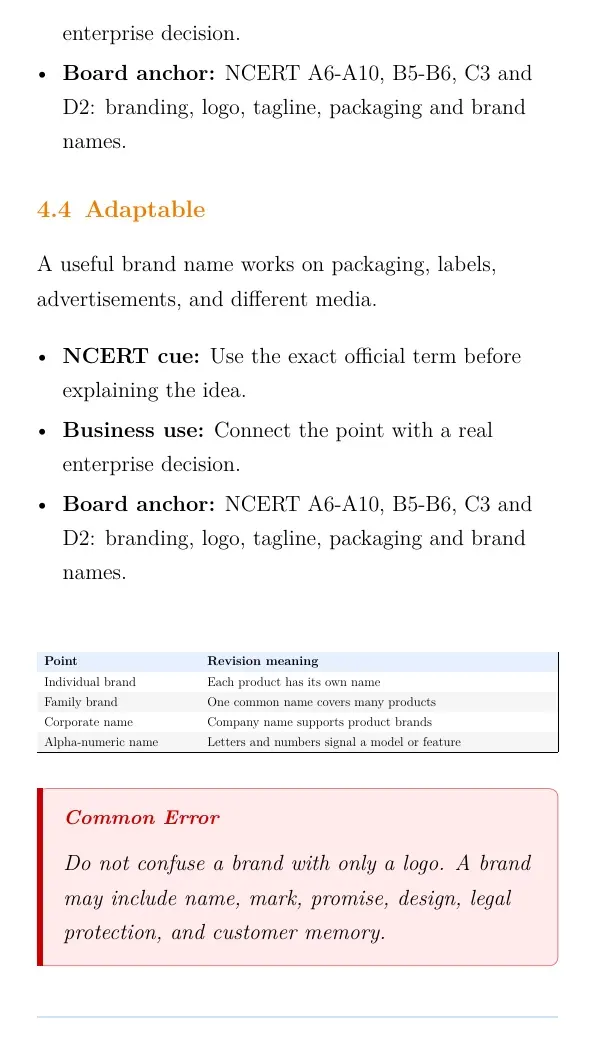
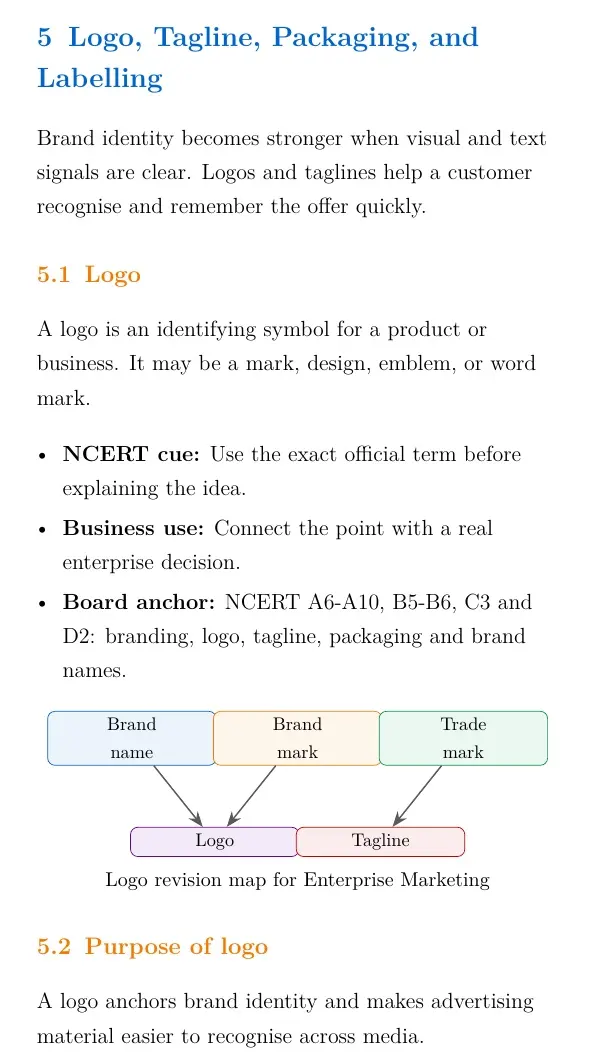
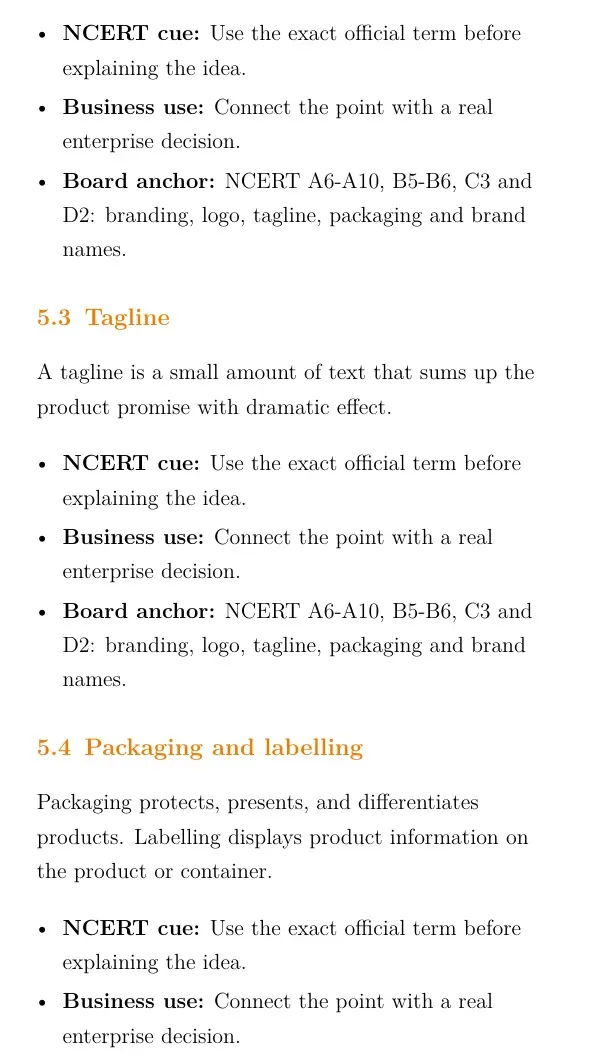
| Product | Features, quality, brand name, logo, packaging and labelling | Use brand terms exactly |
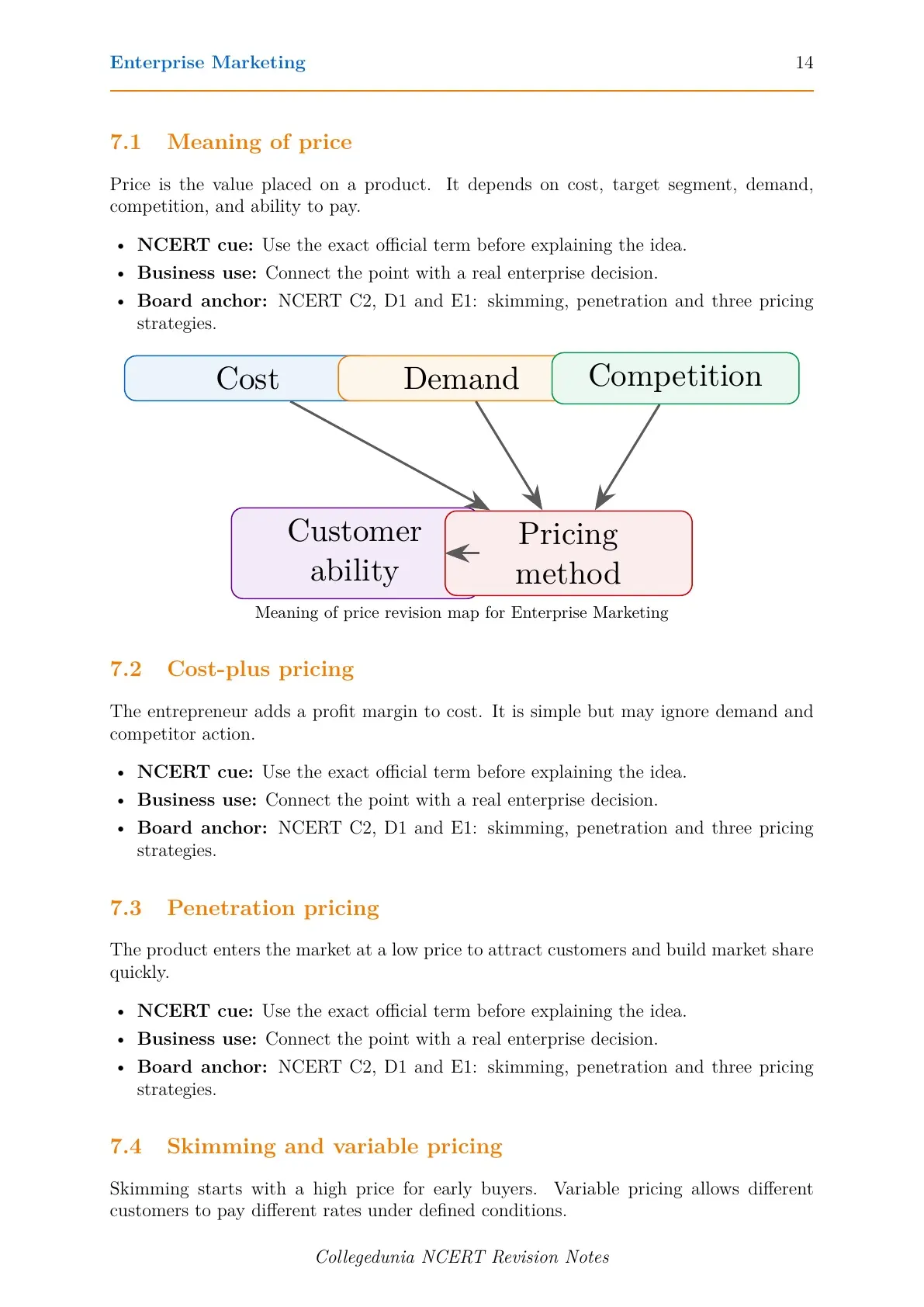
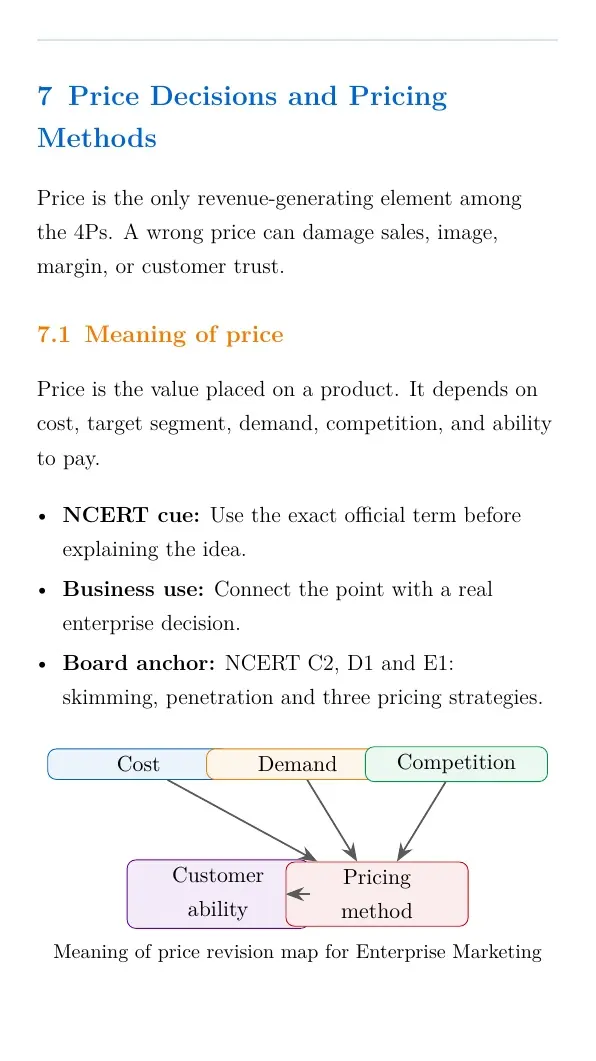
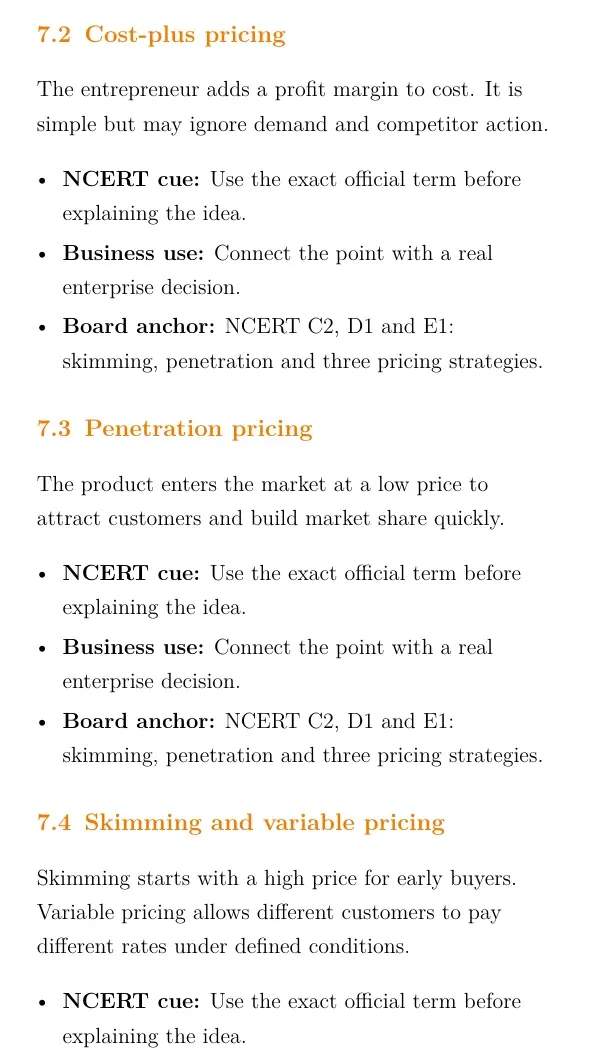
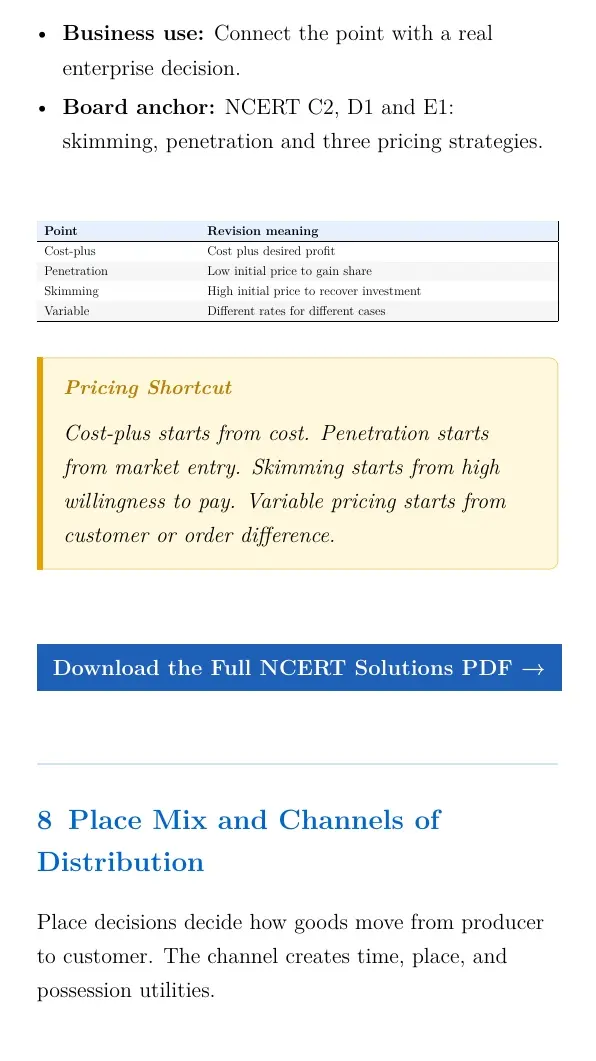
| Price | Value charged after checking cost, demand and competition | Link with C2, D1 and E1 |
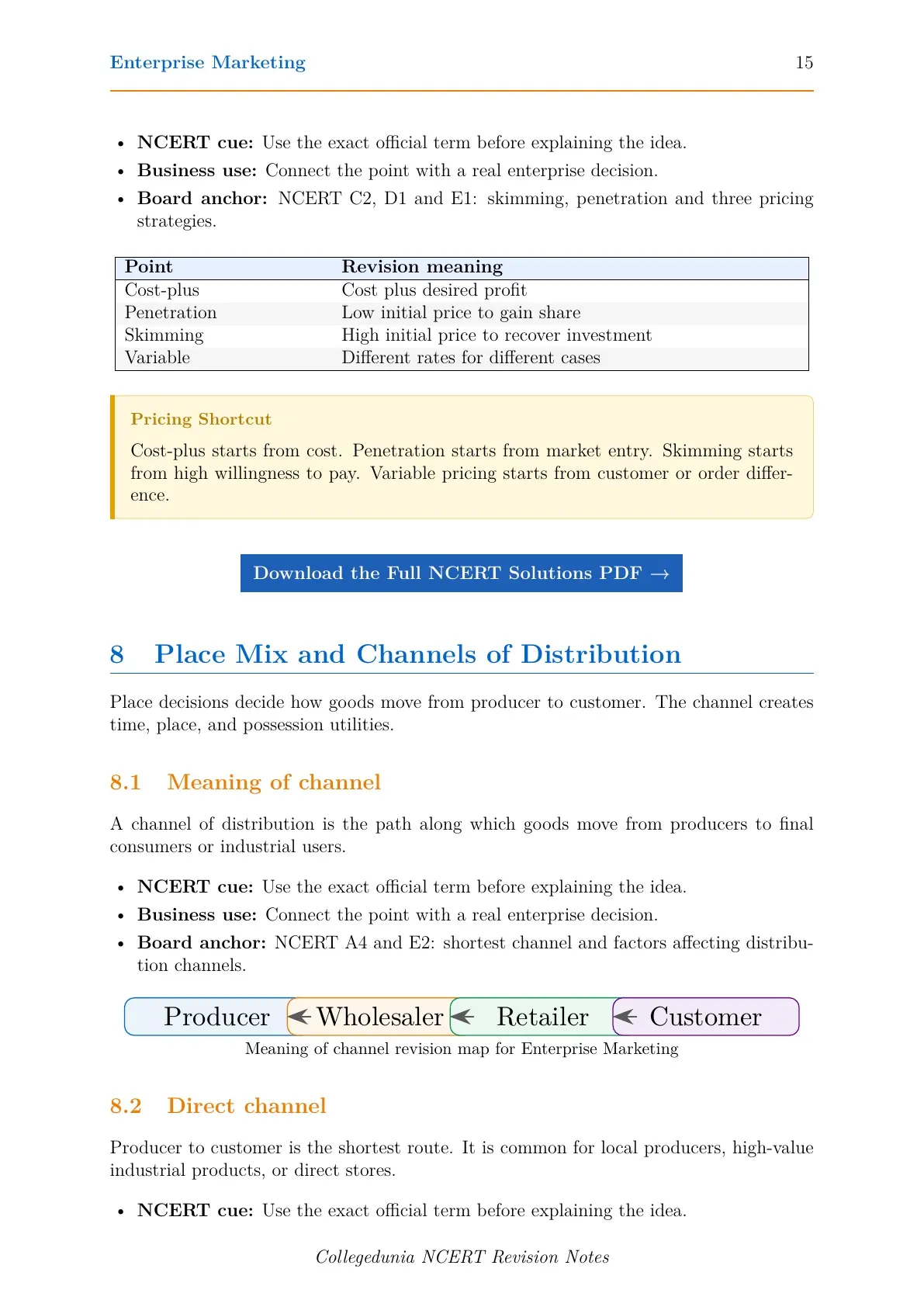
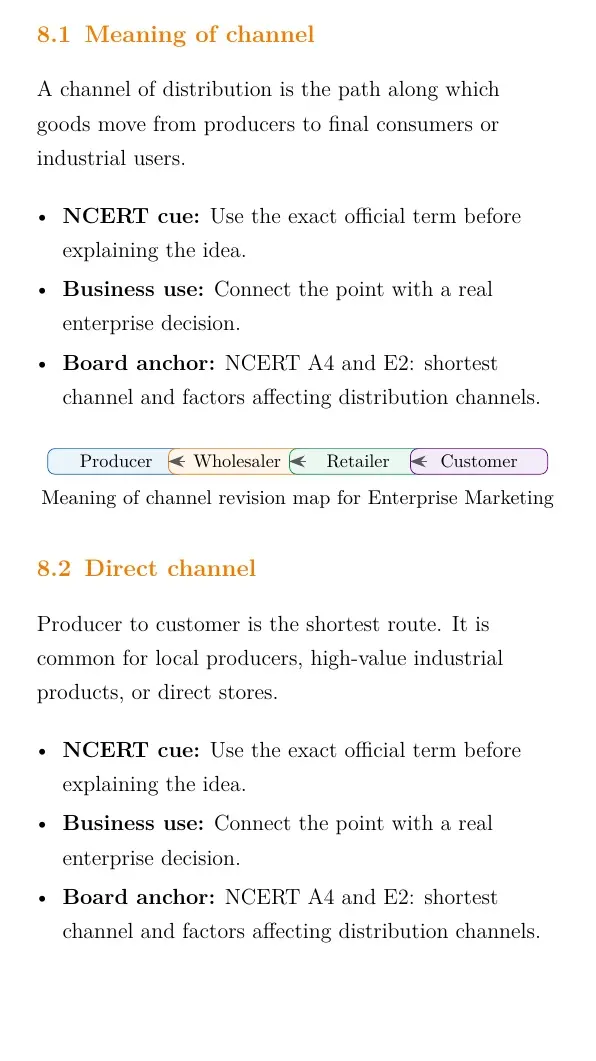
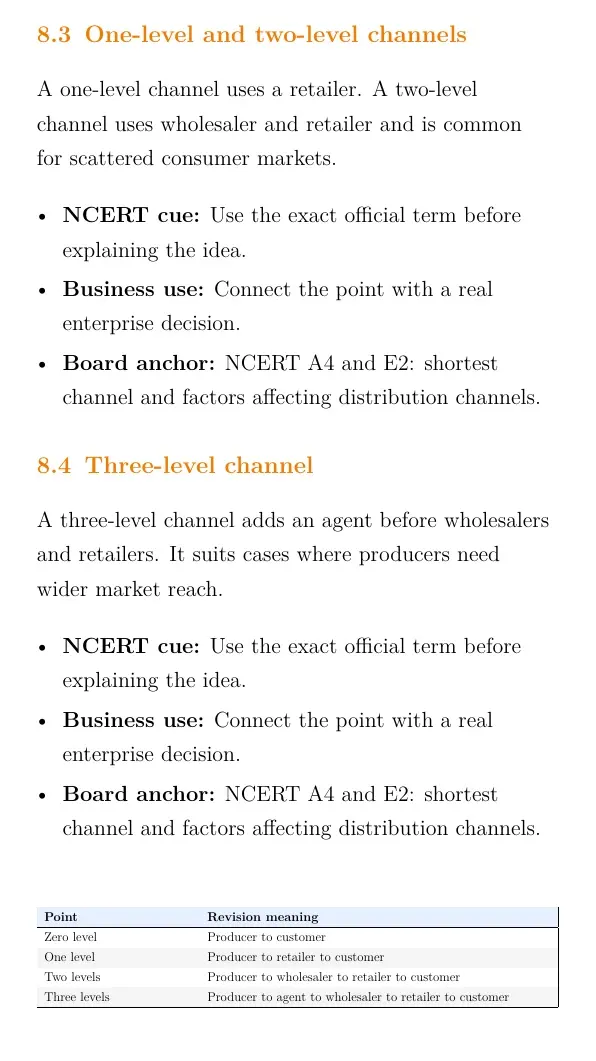
| Place | Channel used to move goods from producer to customer | Draw channel levels when asked |
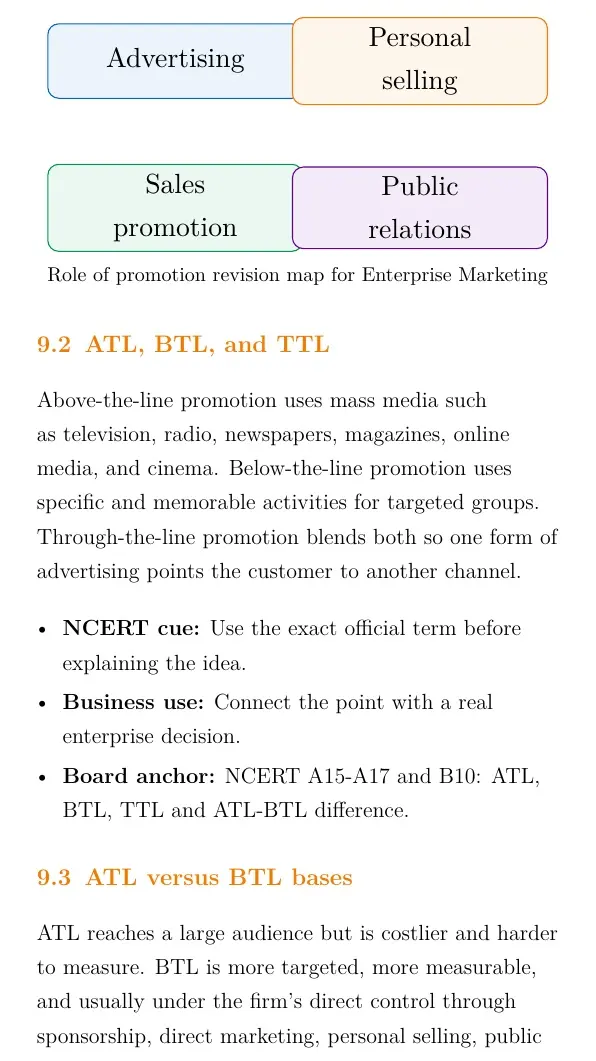
| Promotion | Communication used to create awareness and demand | Compare ATL, BTL and TTL |
Promotion Strategy and AIDA Revision Map
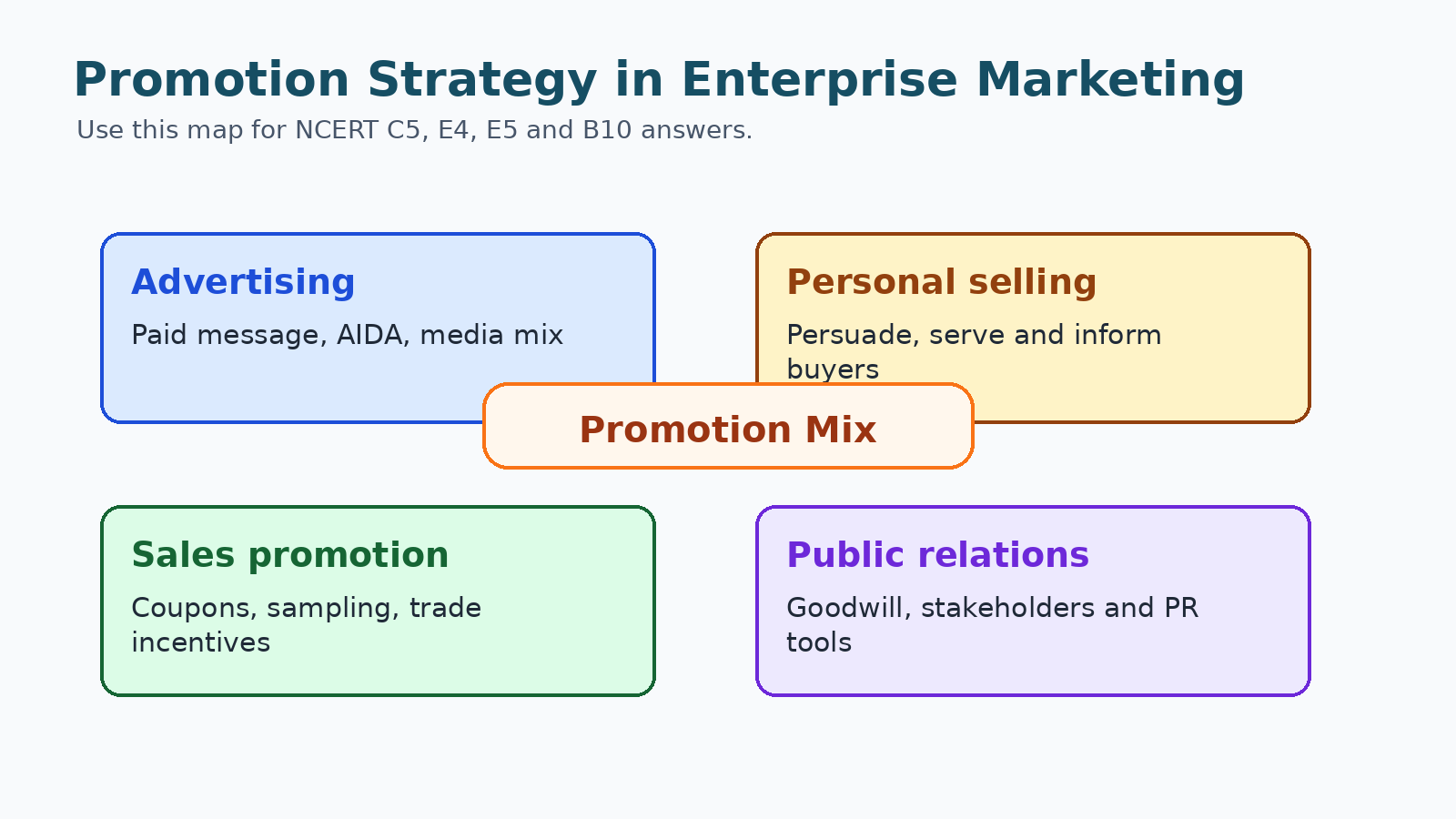
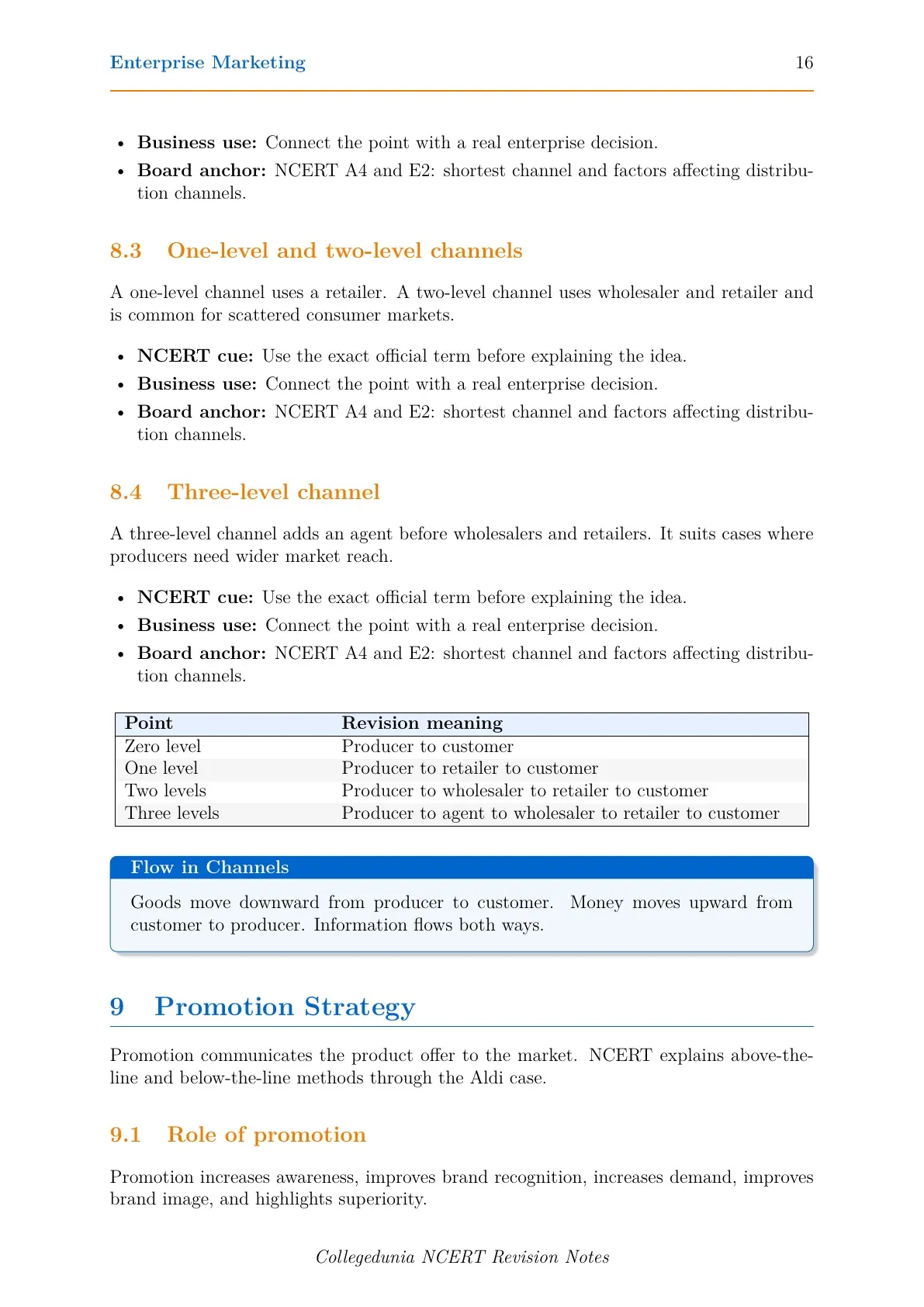
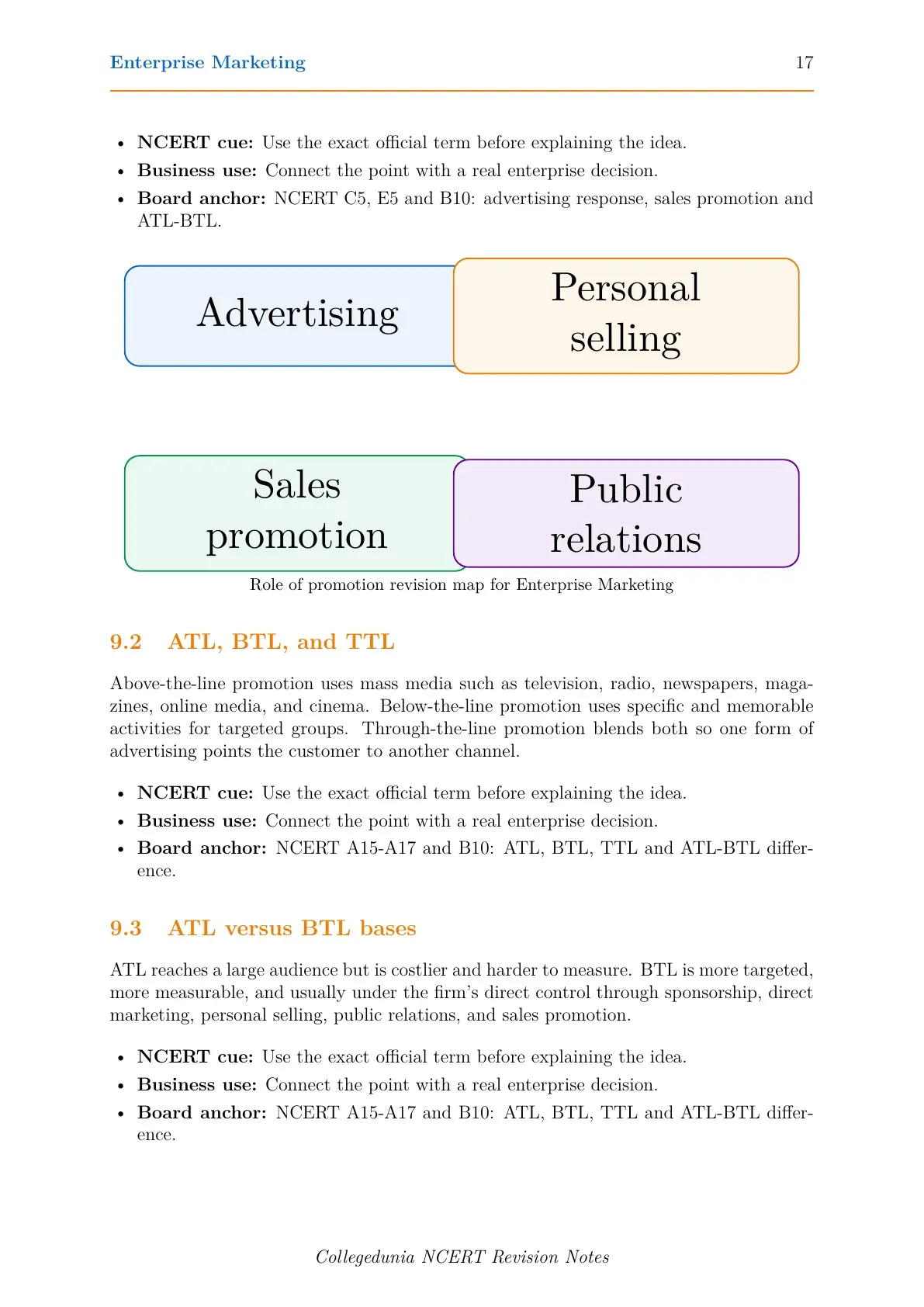
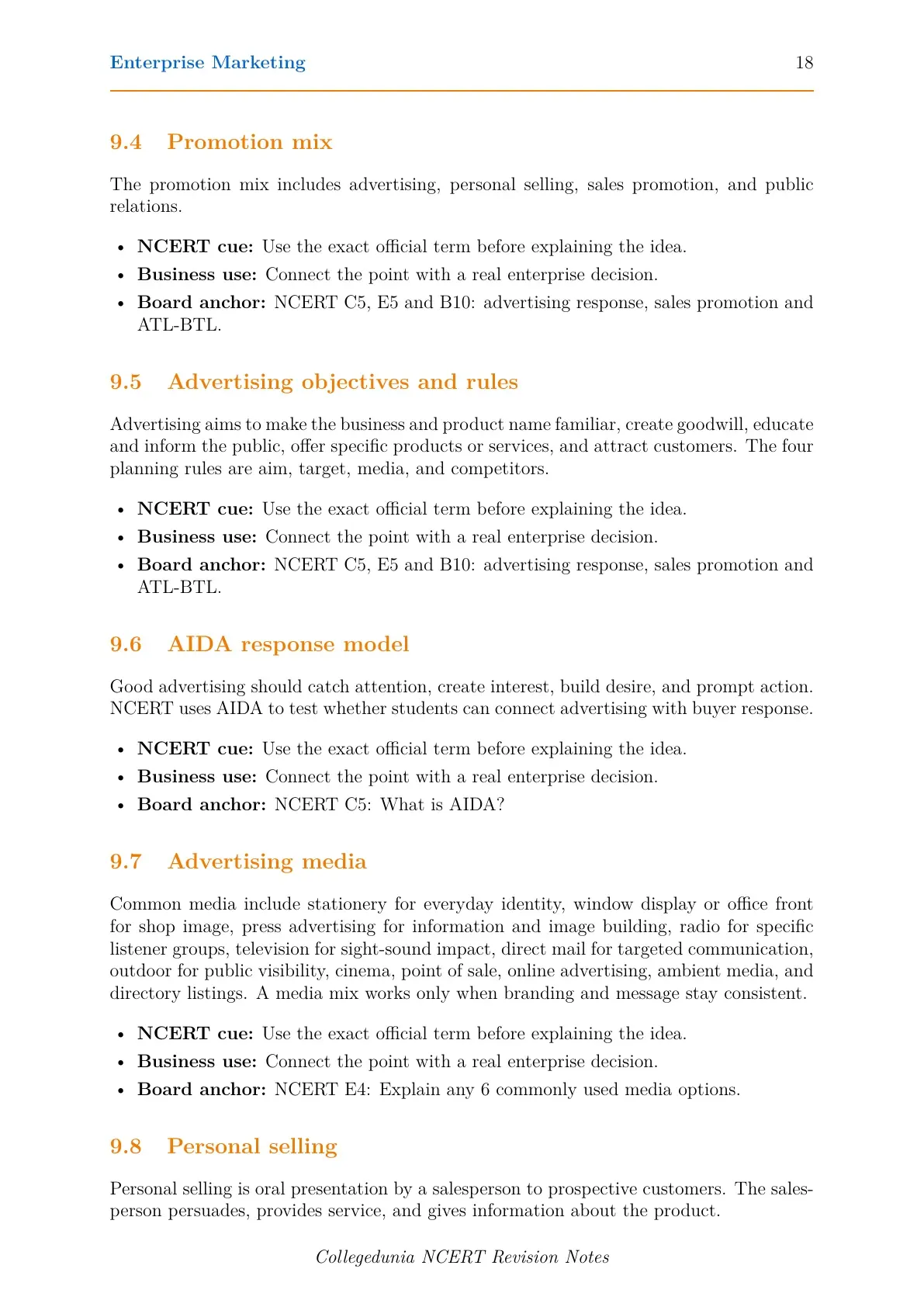
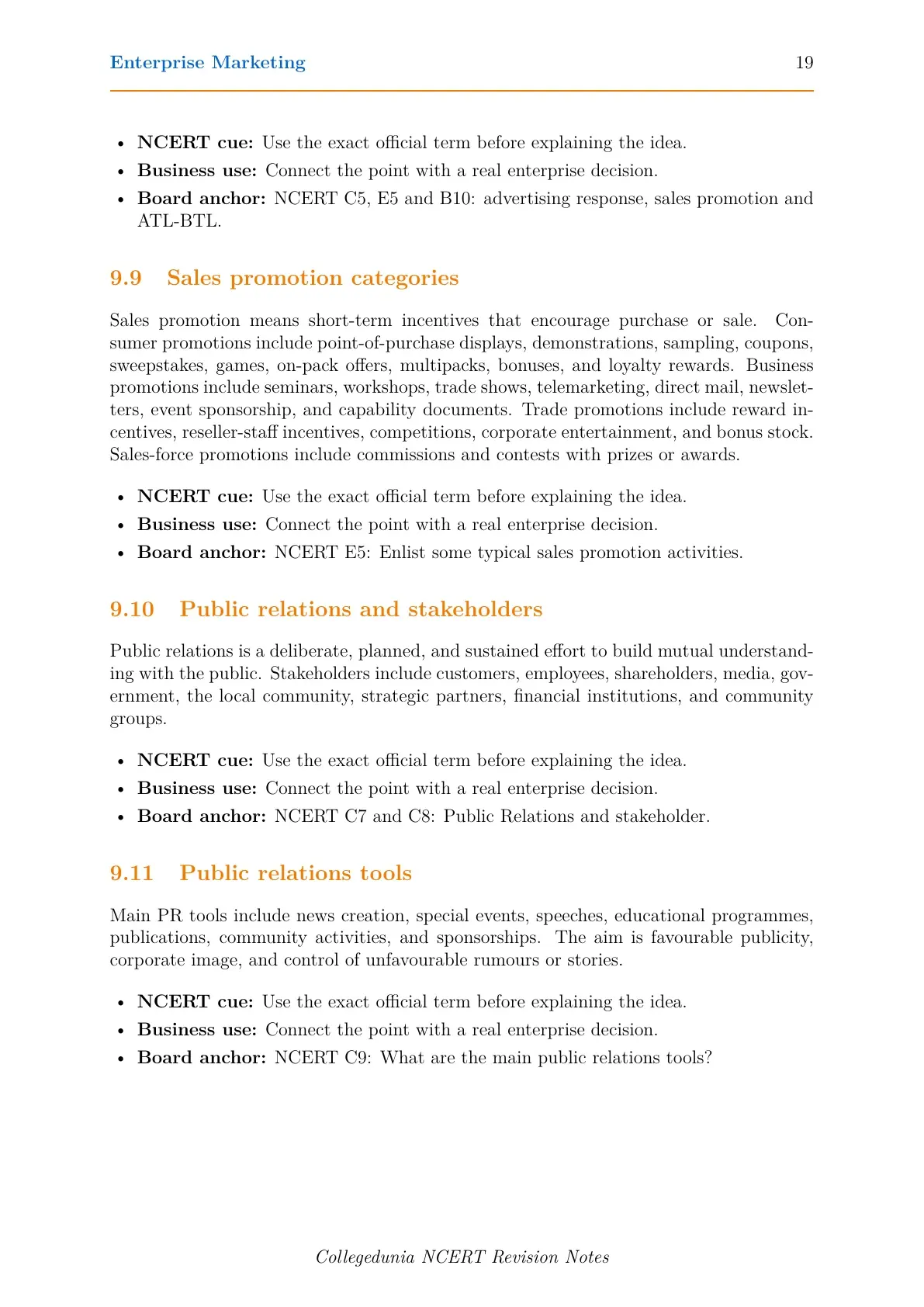
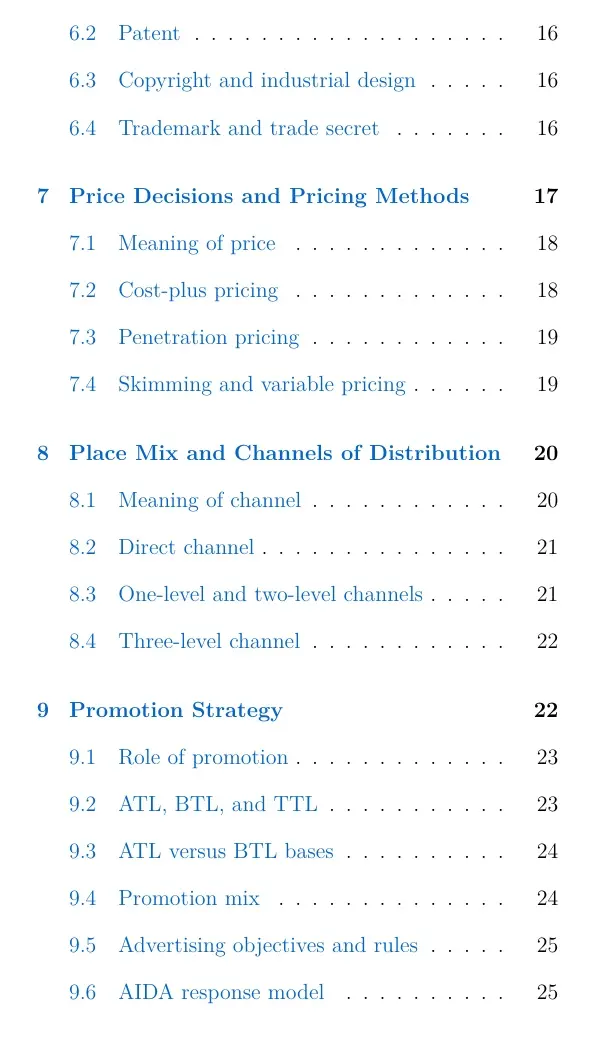
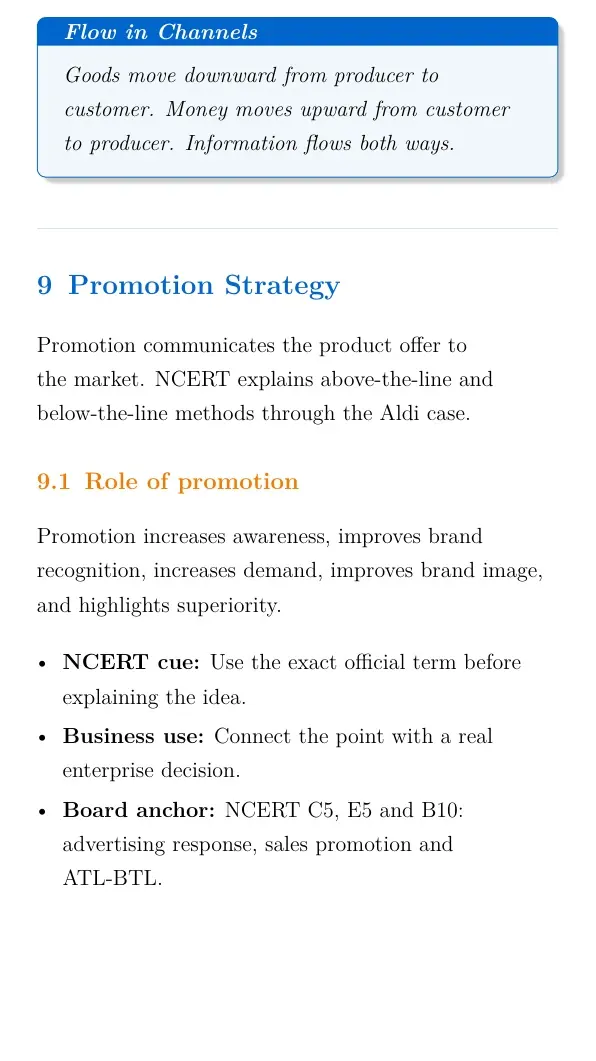
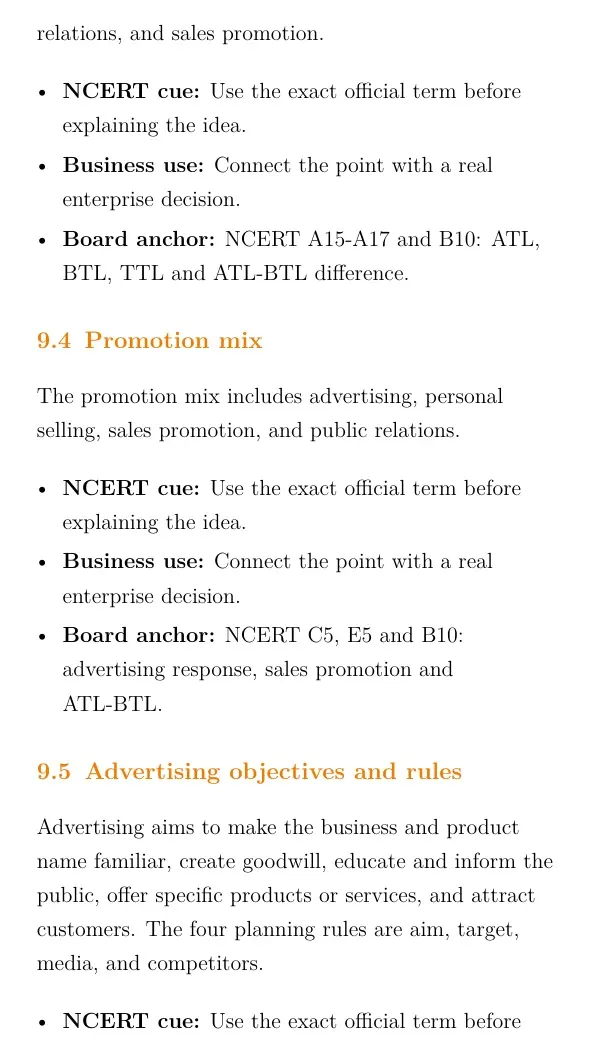
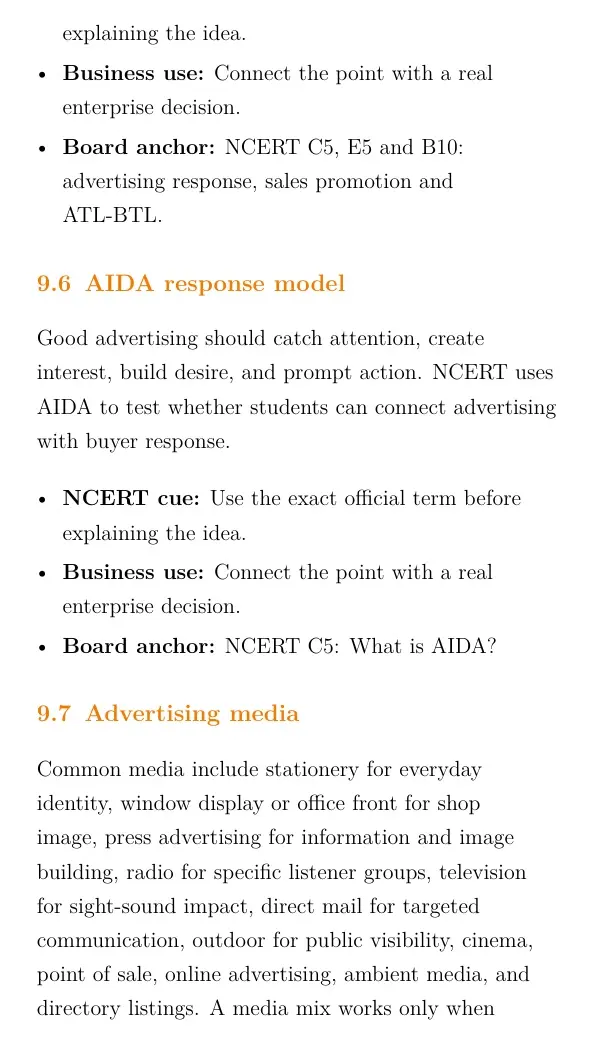
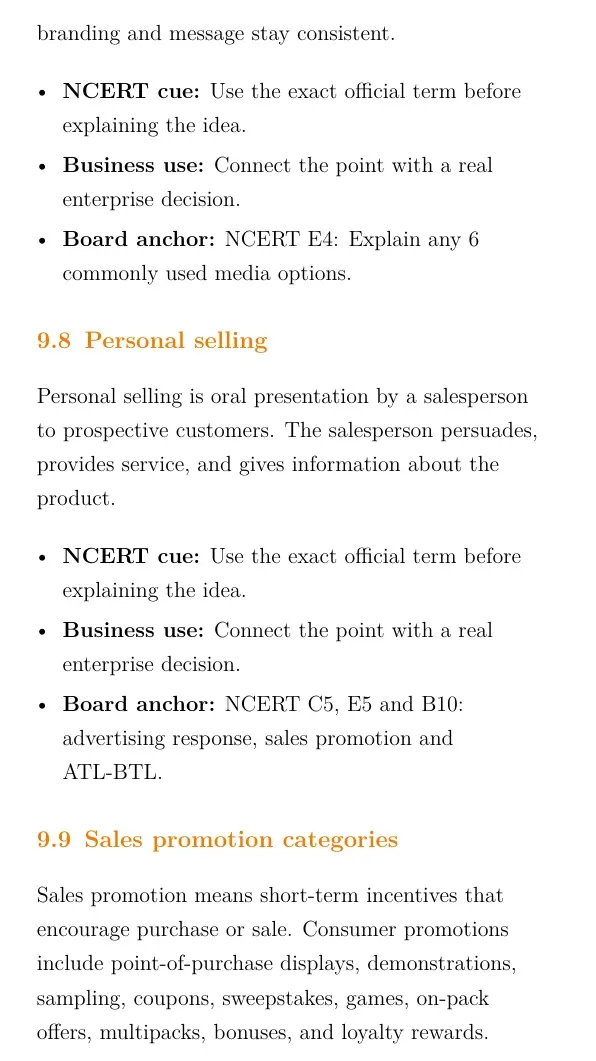
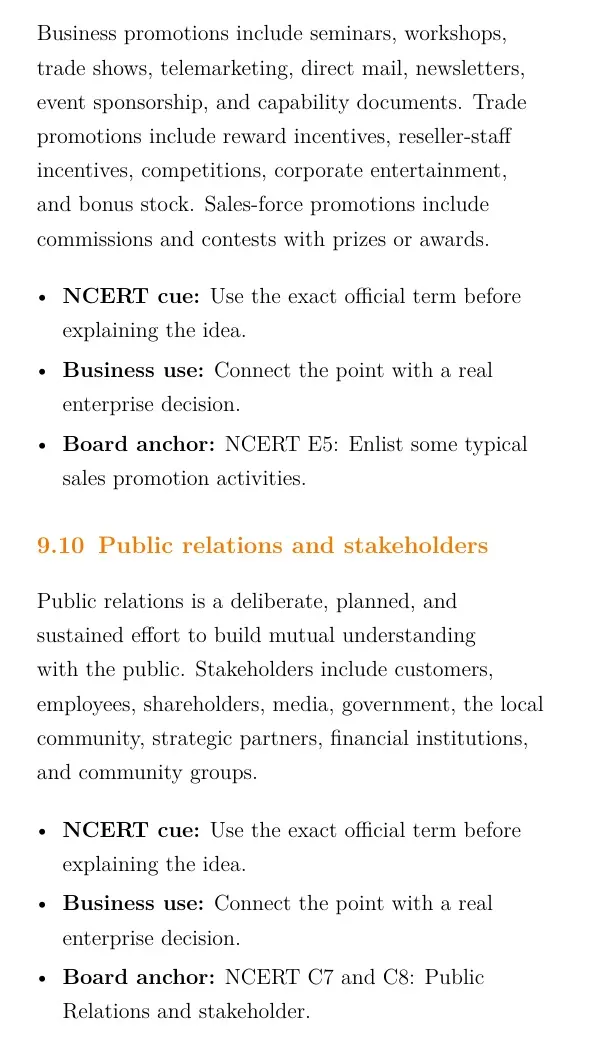
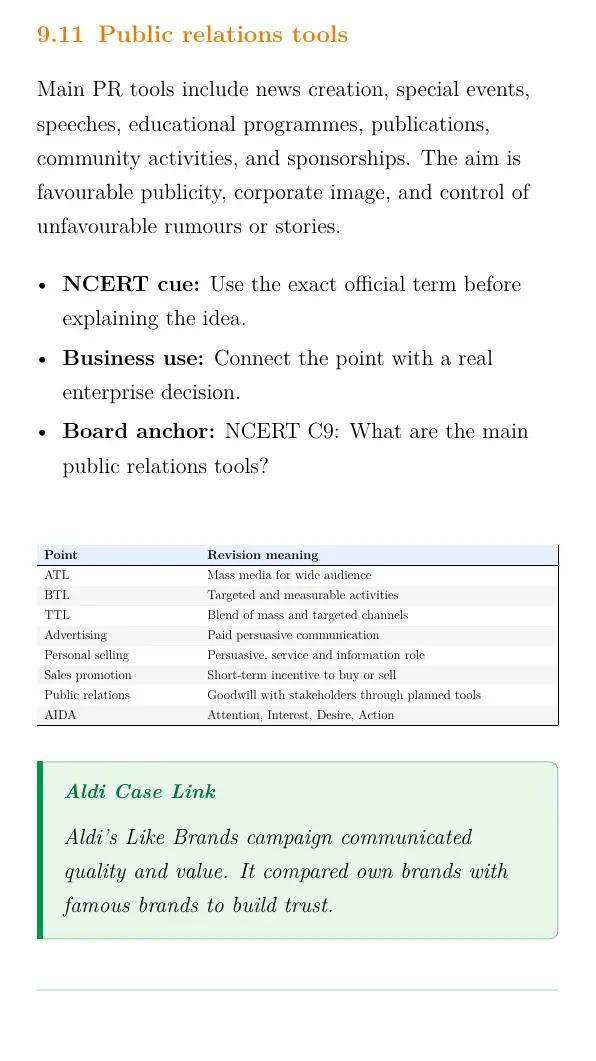
Promotion strategy is a high-value part of the chapter. The notes explain the role of promotion, ATL, BTL, TTL, advertising objectives, AIDA, common media options, personal selling, sales promotion and public relations.
- ATL uses mass media such as press, online, television and cinema advertising.
- BTL targets specific groups through sponsorship, sales promotion, personal selling and direct marketing.
- TTL connects both methods so one channel sends customers to another.
- AIDA stands for attention, interest, desire and action.
Enterprise Marketing Class 12 Revision Video
Source: Rajat Arora on YouTube
Selling Strategy and Negotiation Methods
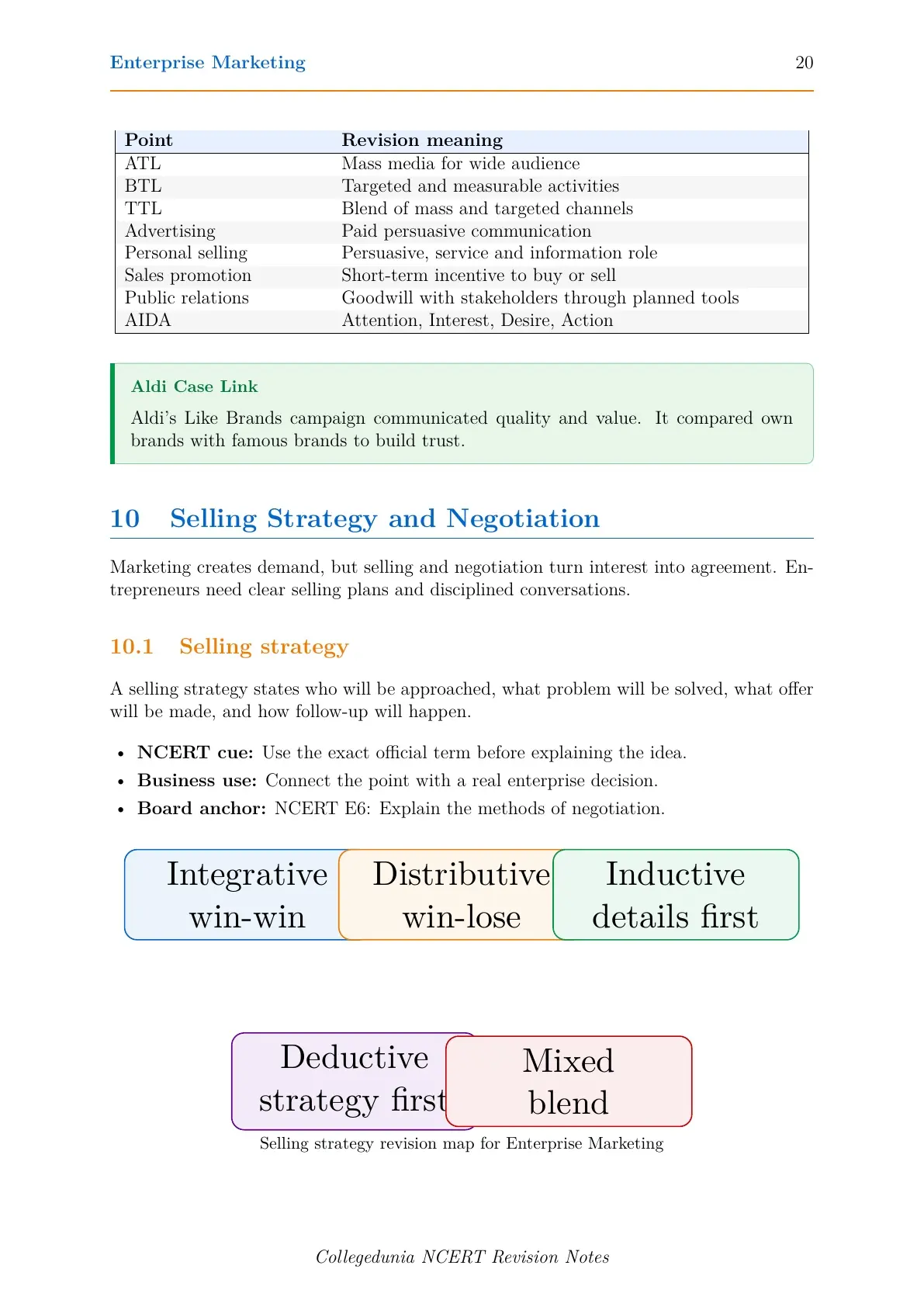
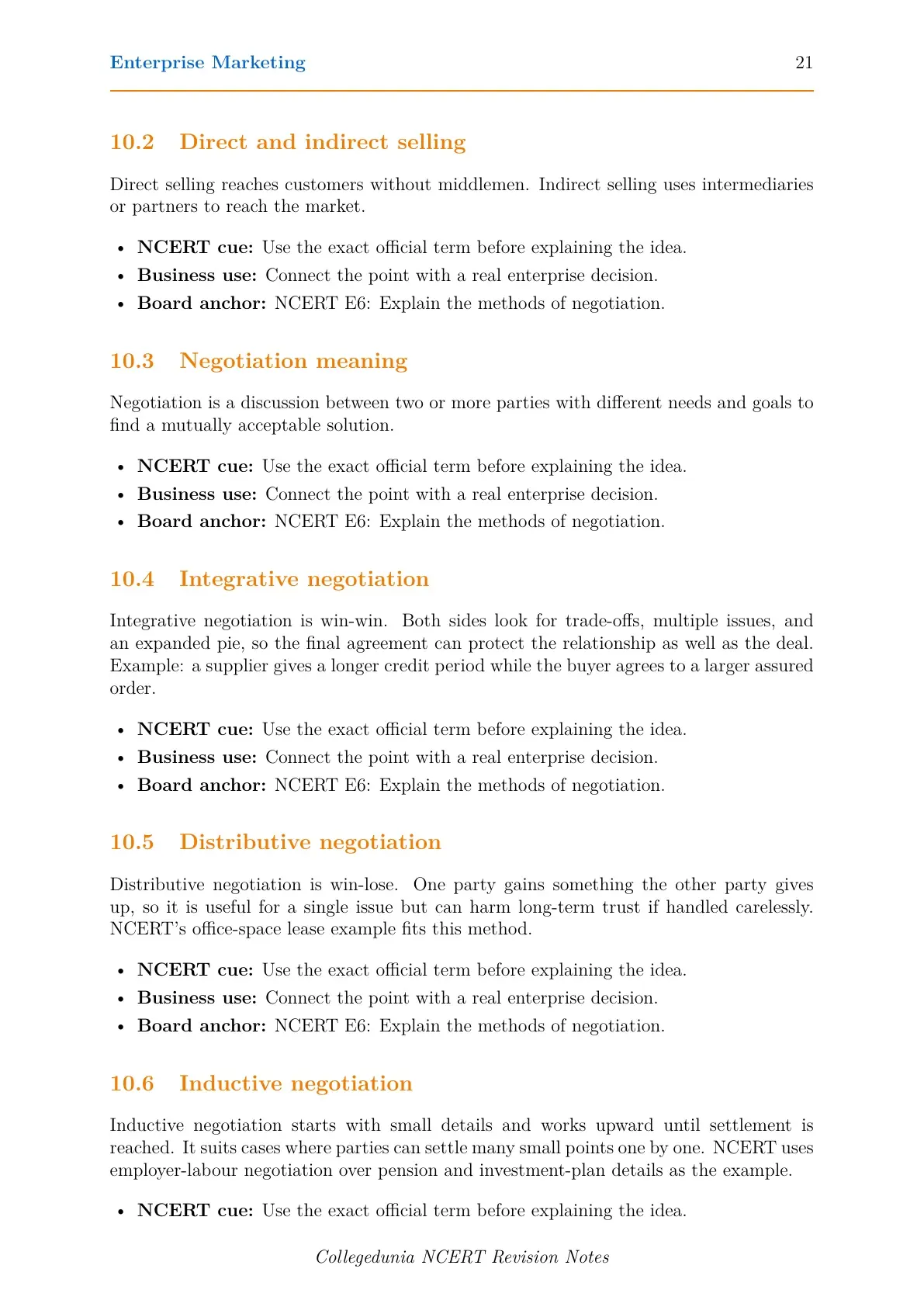
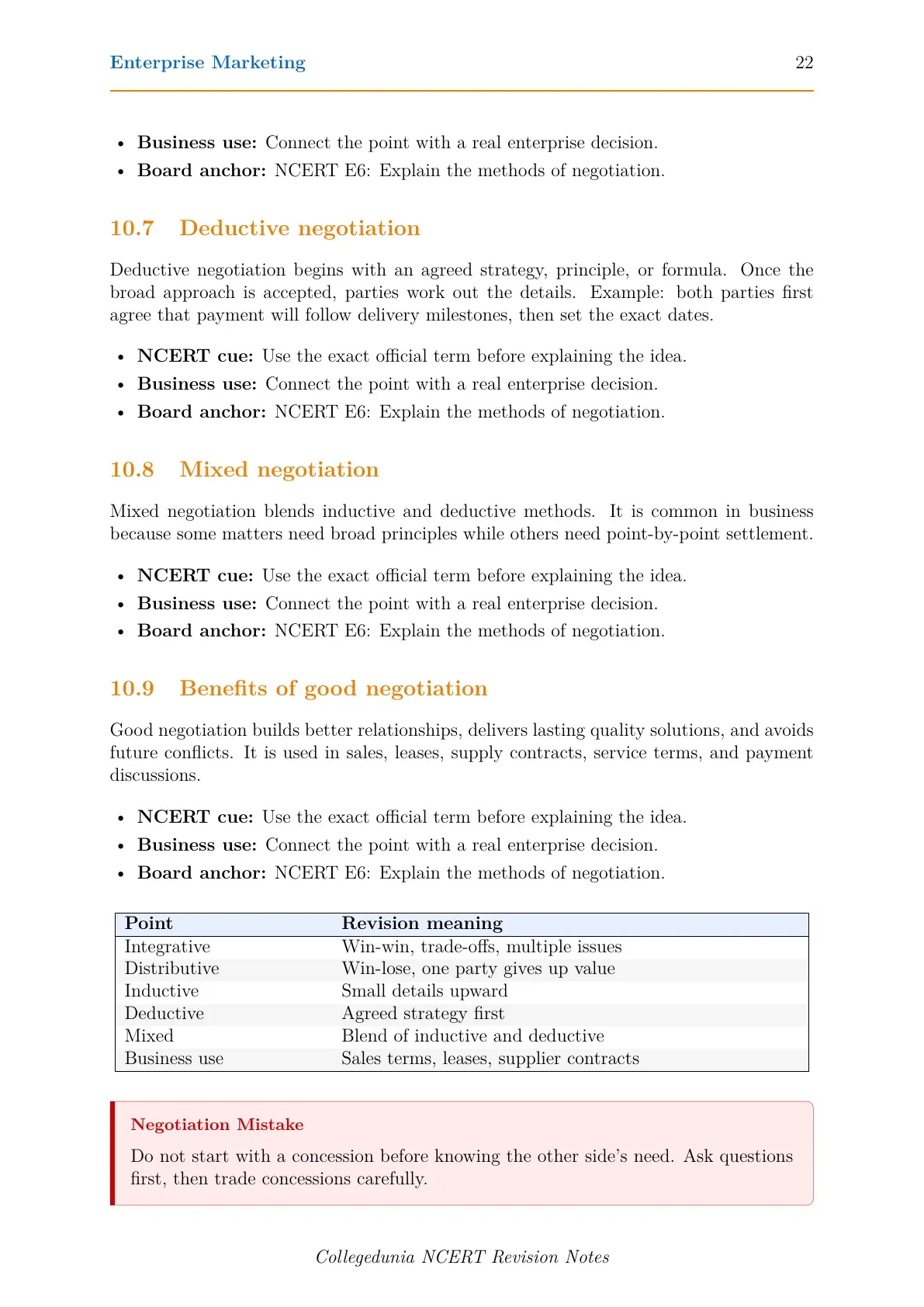
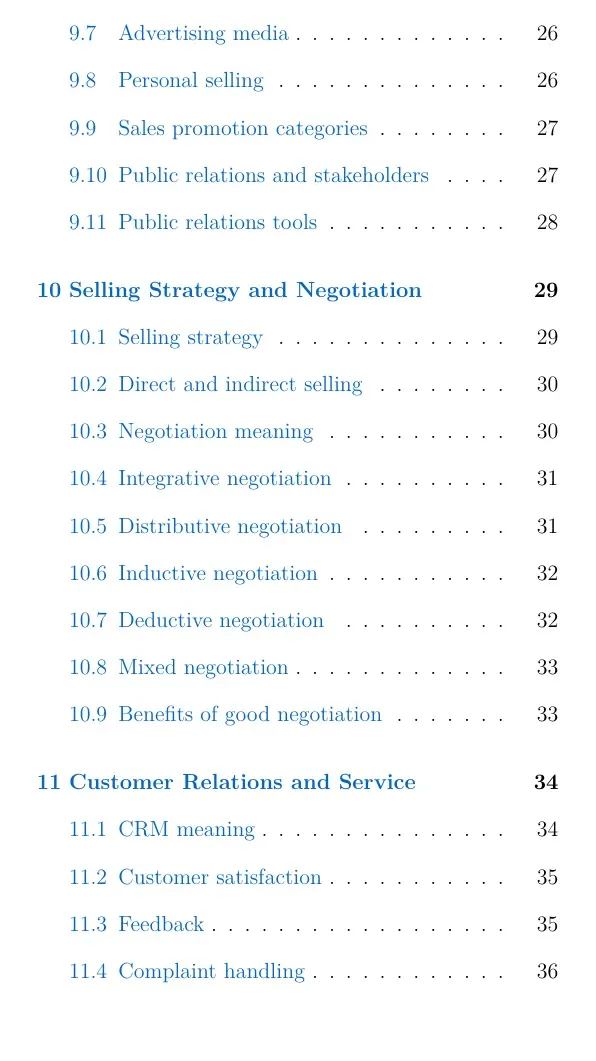
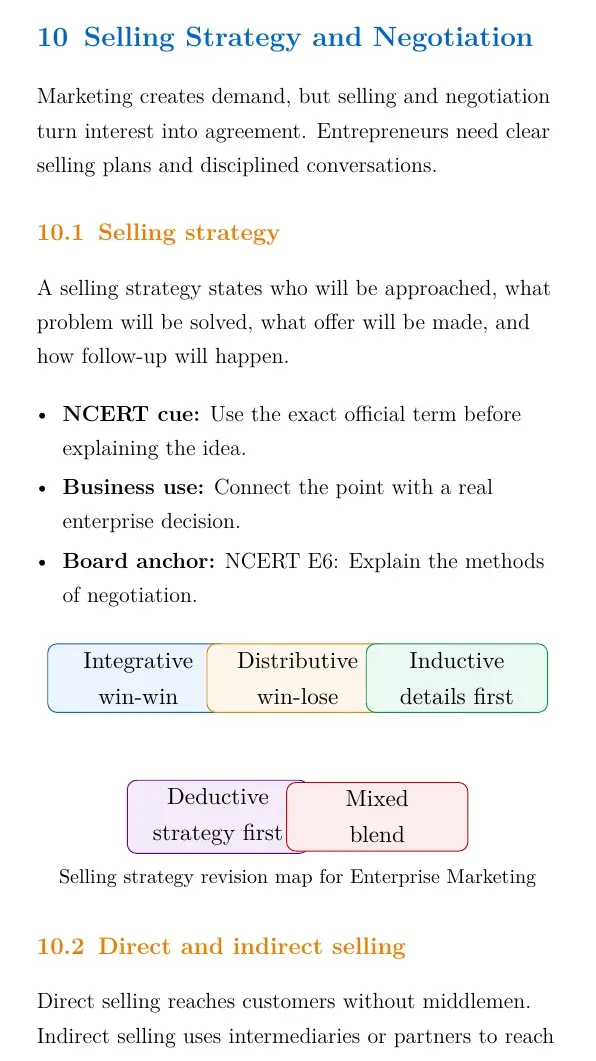
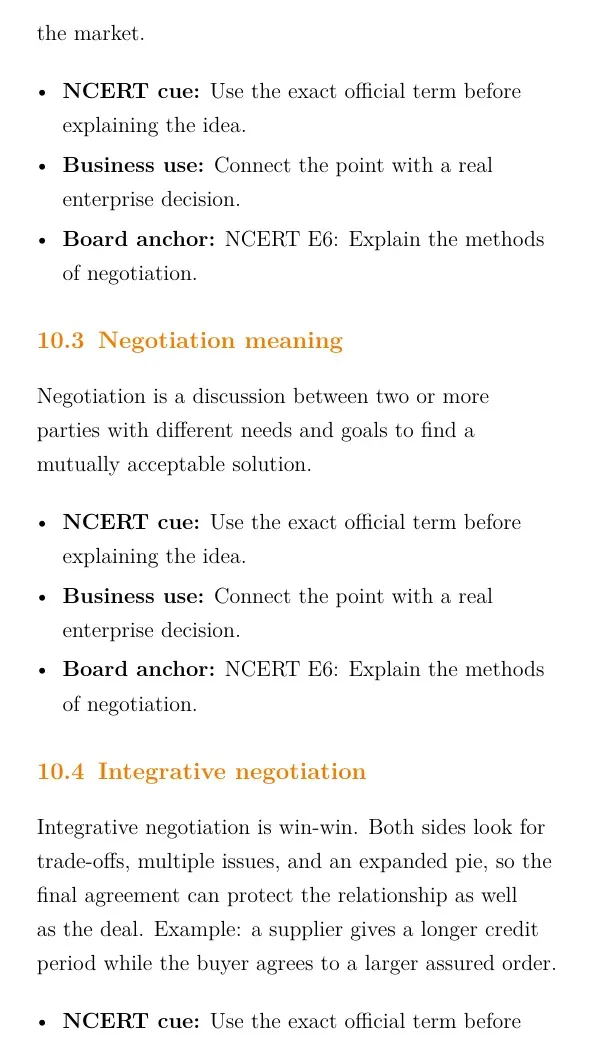
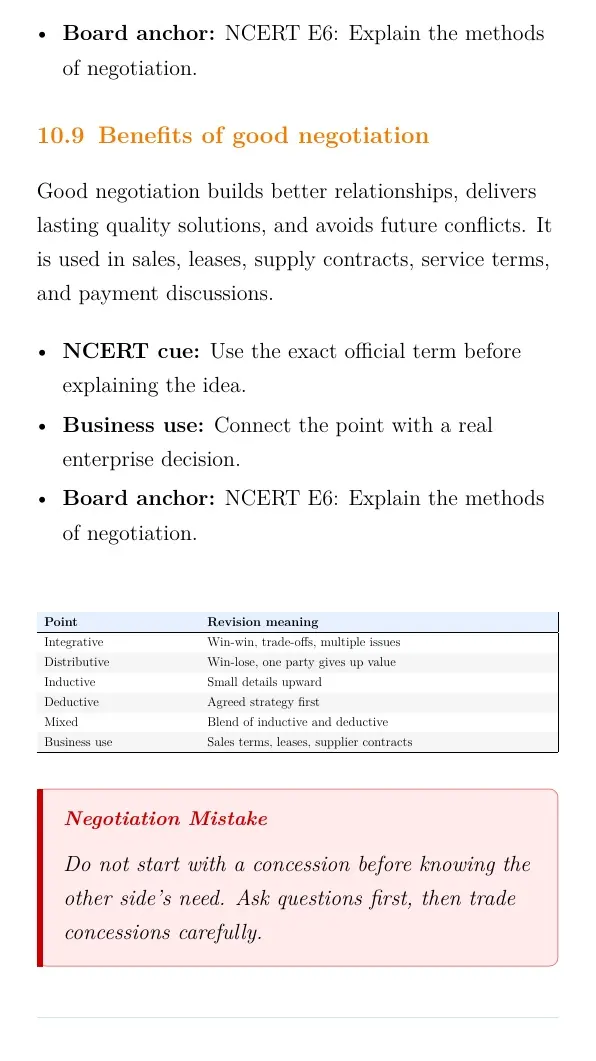
NCERT E6 asks students to explain negotiation methods. The safest answer names the method first, then adds the distinguishing feature and a business example.
| Method | Meaning | Example cue |
|---|---|---|
| Integrative | Win-win method with trade-offs and multiple issues | Supplier credit for a larger order |
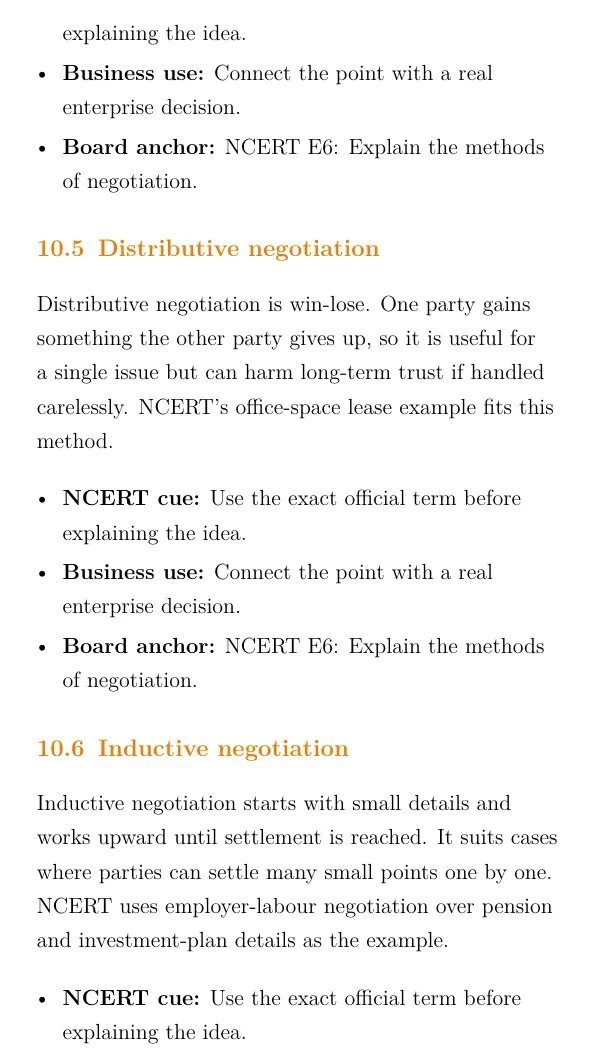
| Distributive | Win-lose method where one side gives up value | Office-space lease negotiation |
| Inductive | Small details upward until settlement is reached | Labour pension plan details |
| Deductive | Agreed principle first, details later | Milestone-based payment formula |
| Mixed | Blend of inductive and deductive methods | Most business negotiations |
Customer Employee Vendor and Quality Links
The second half of Enterprise Marketing shows that marketing promises need internal support. A product can be promoted well and still fail if customer service, employees, vendors or quality systems are weak.
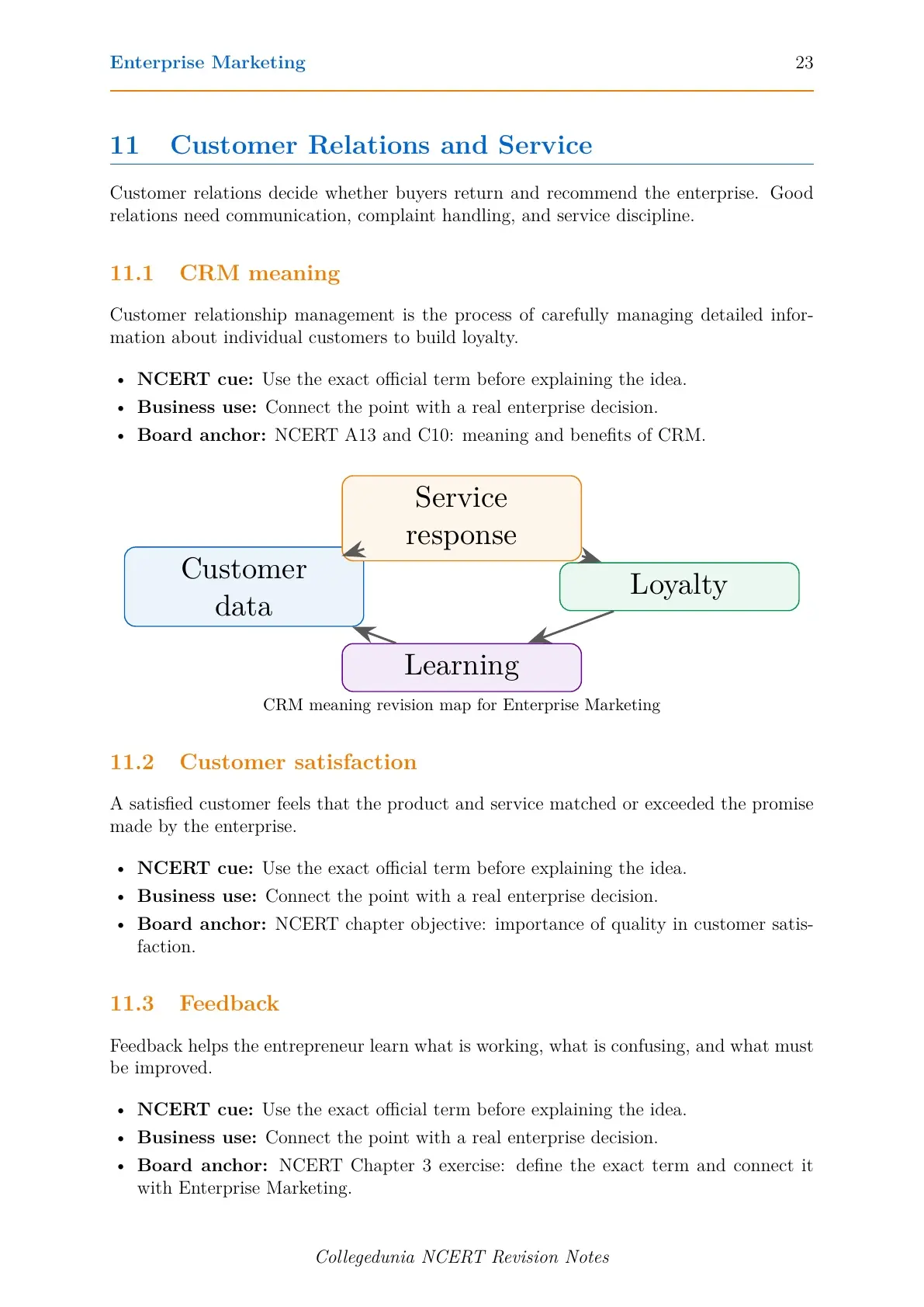
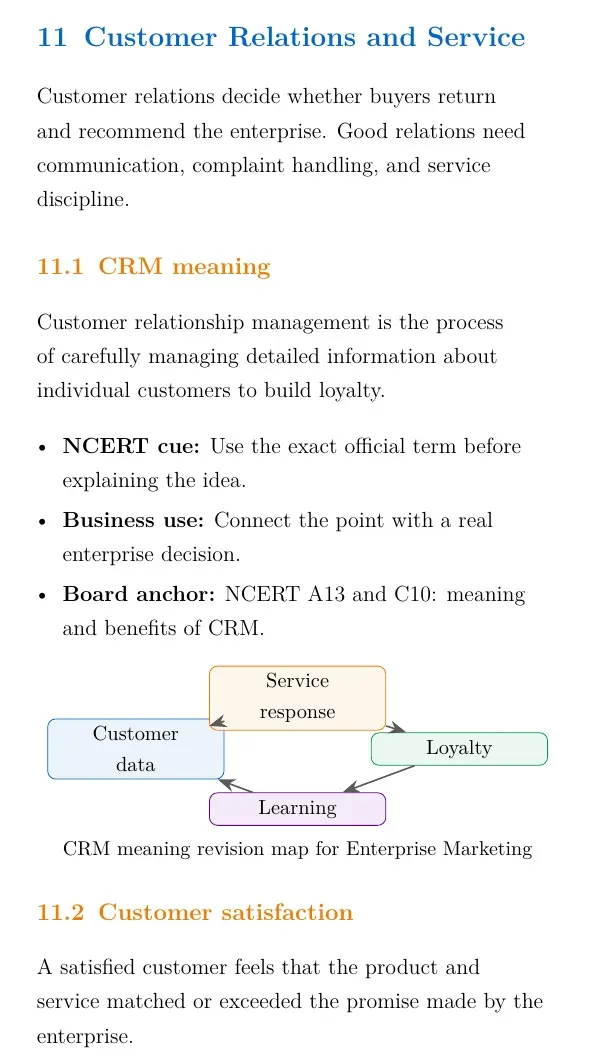
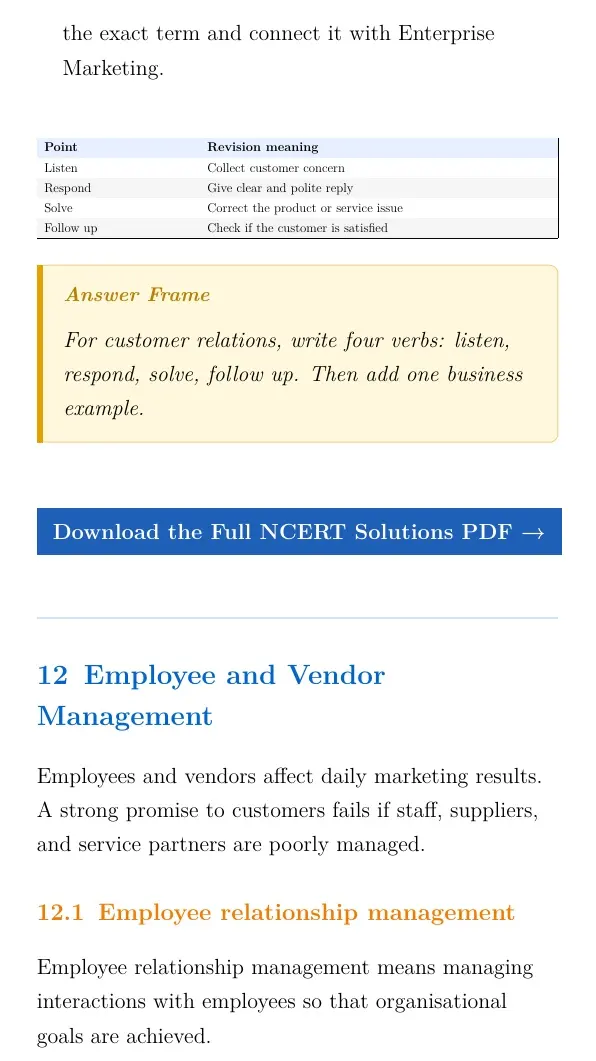
- CRM means managing detailed customer information to build loyalty.
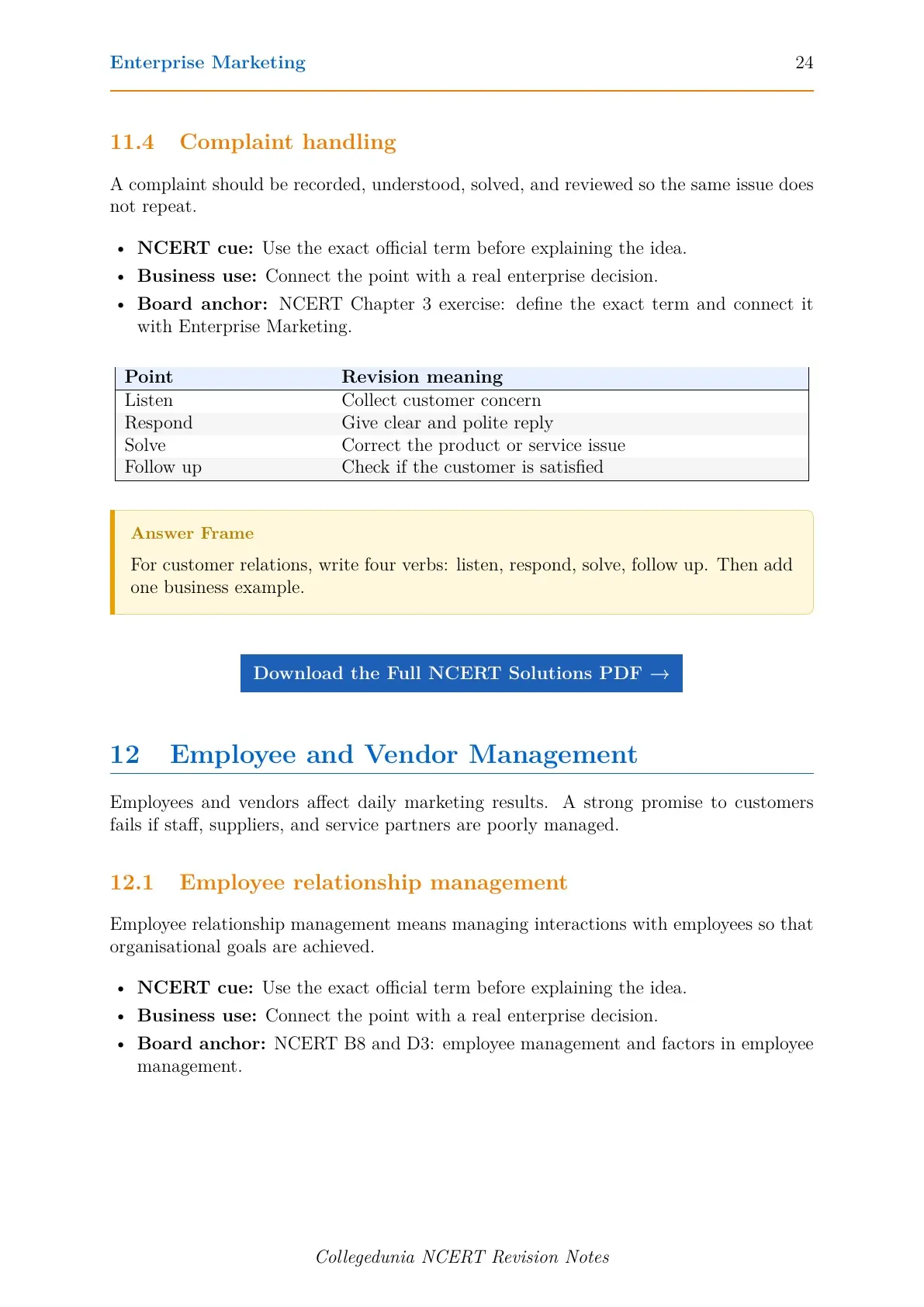
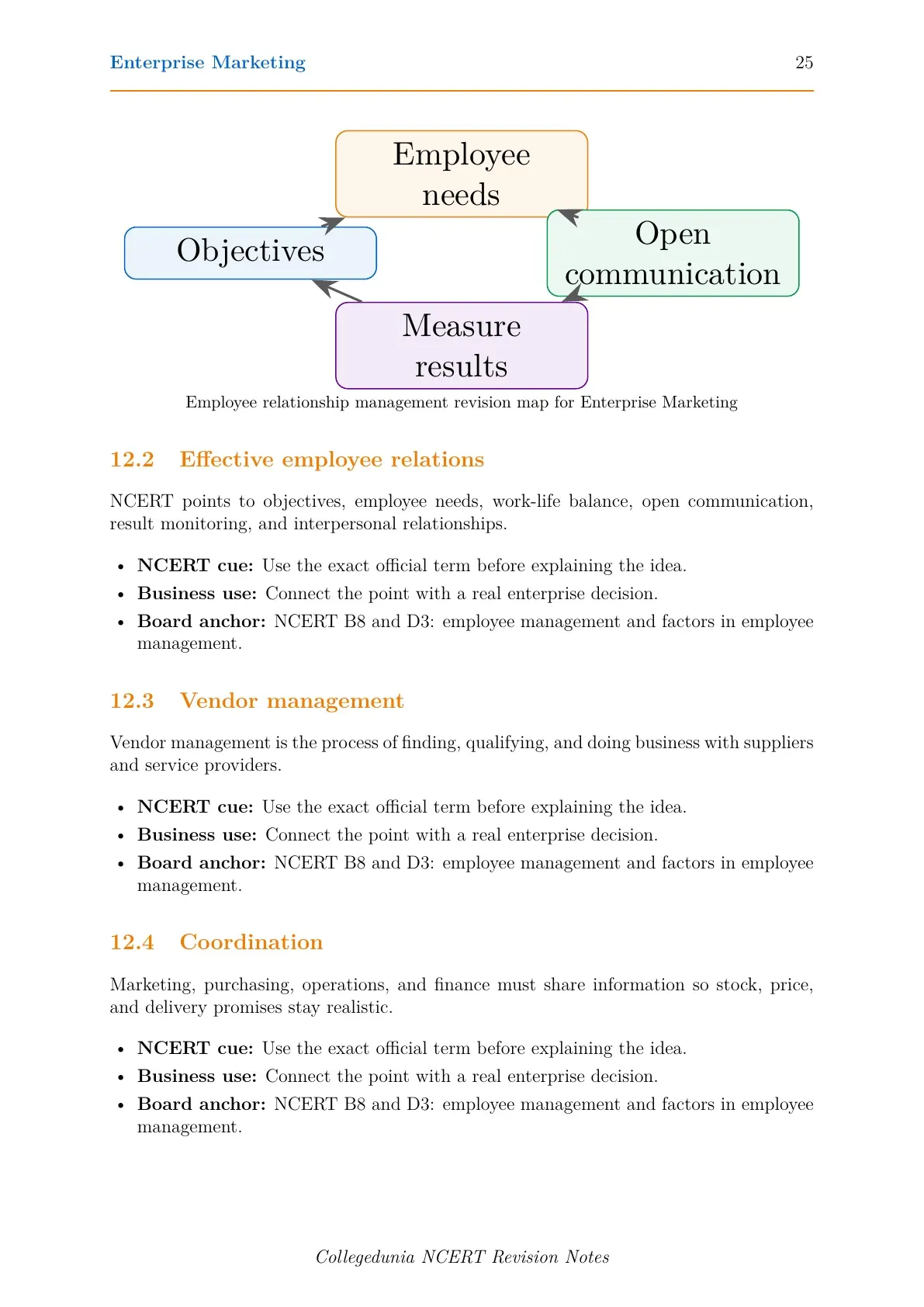
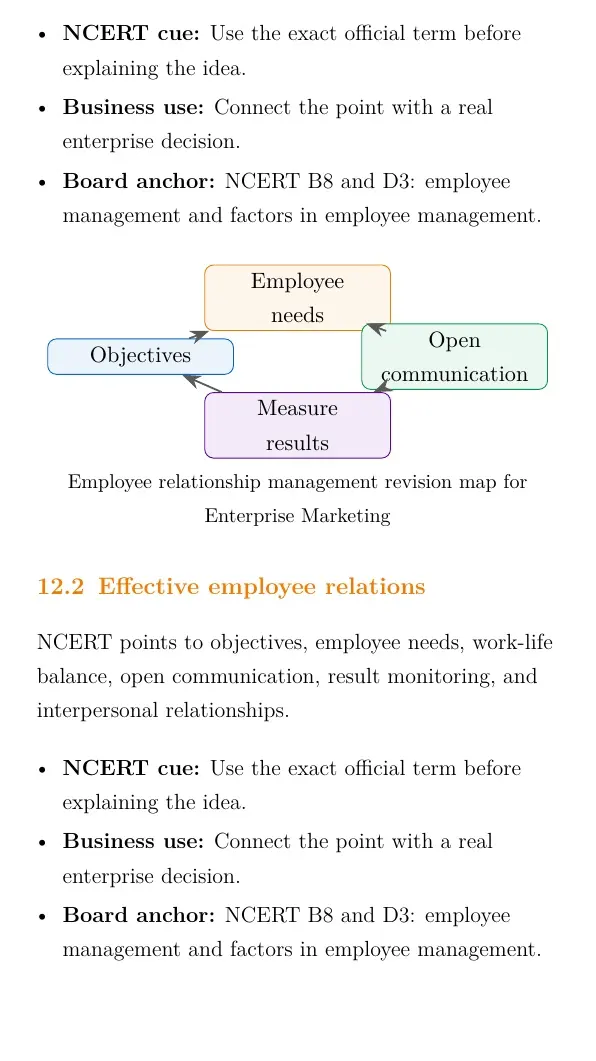
- Employee relationship management connects objectives, employee needs and open communication.
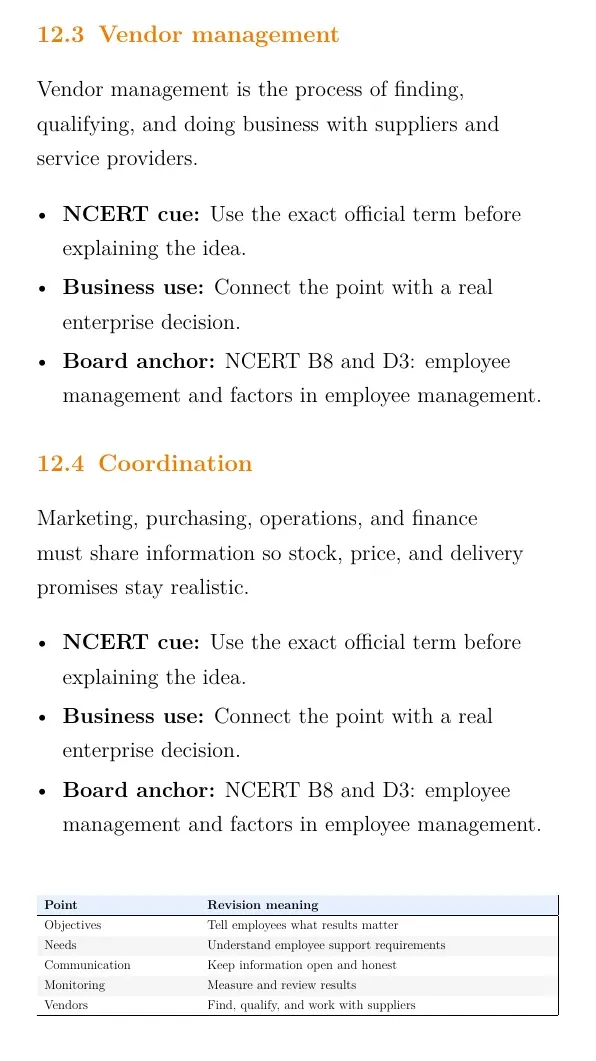
- Vendor management covers finding, qualifying and working with suppliers.
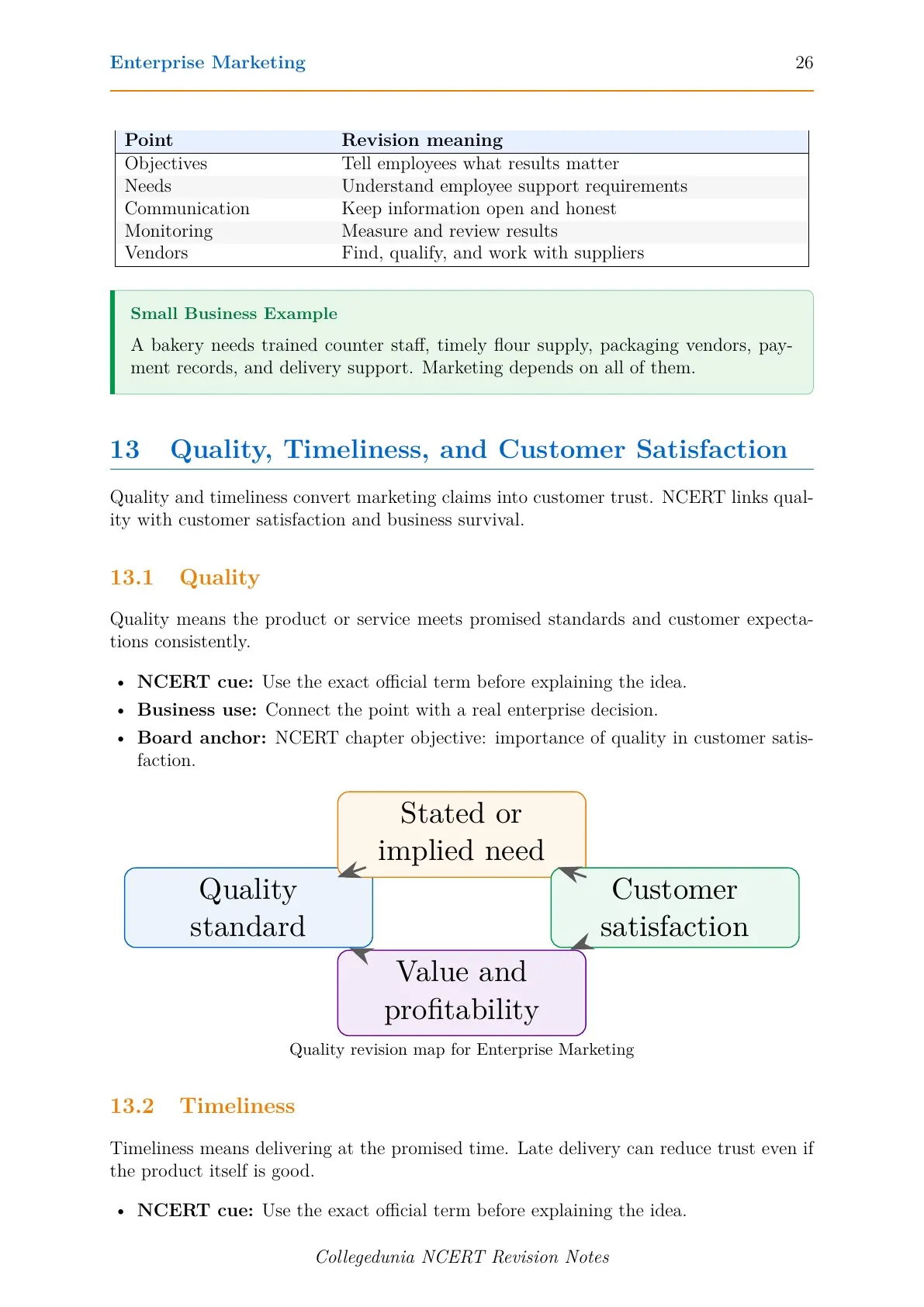
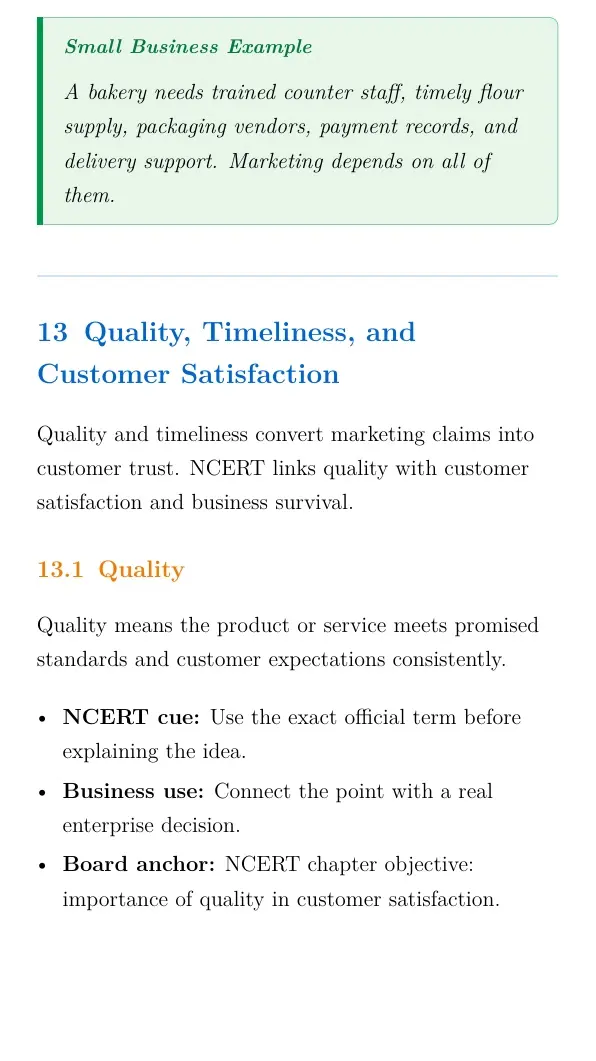
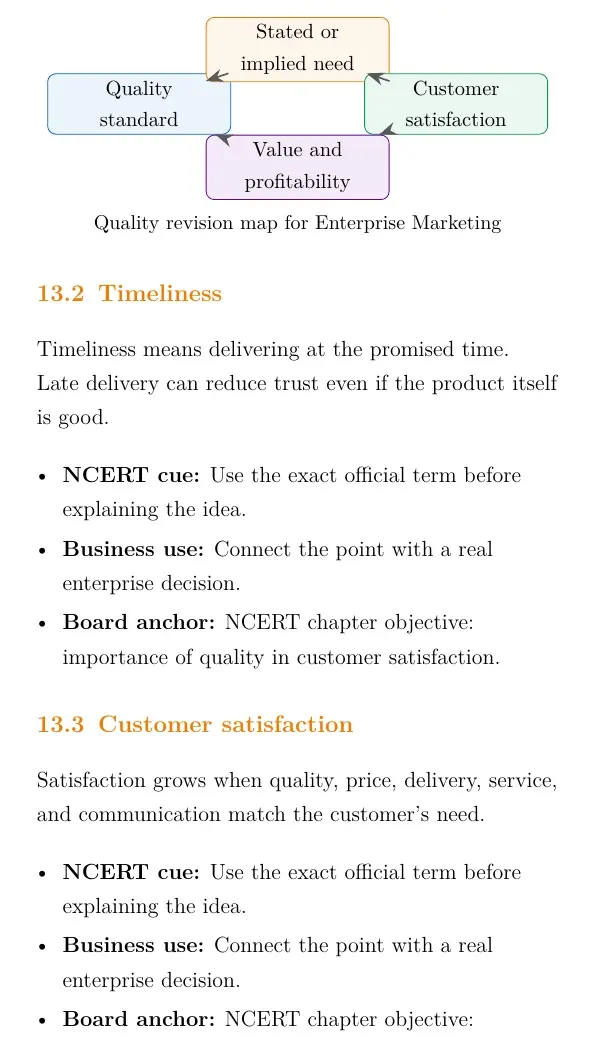
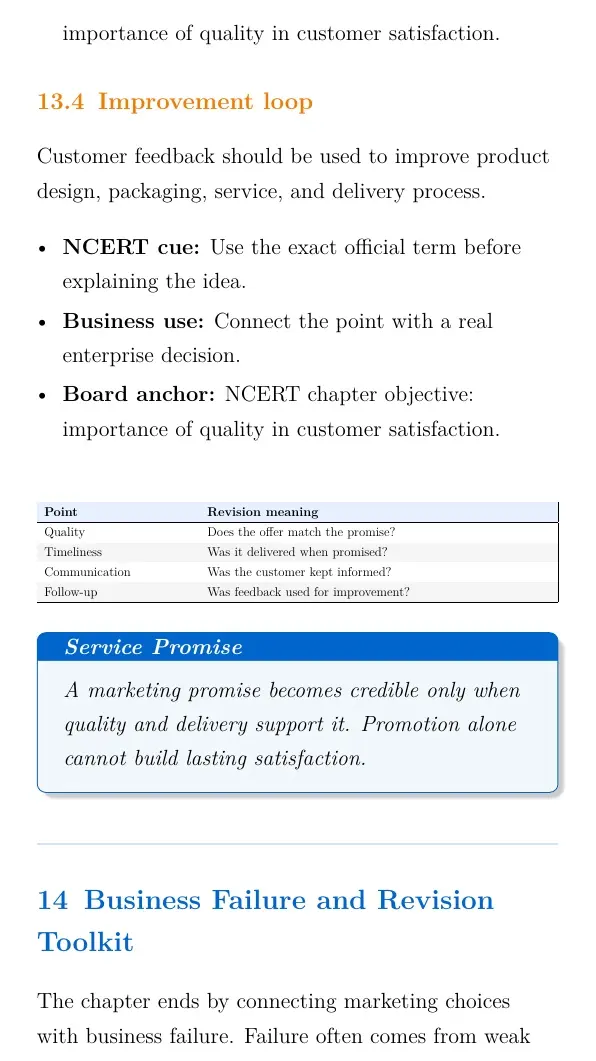
- Quality links product features with customer satisfaction and profitability.
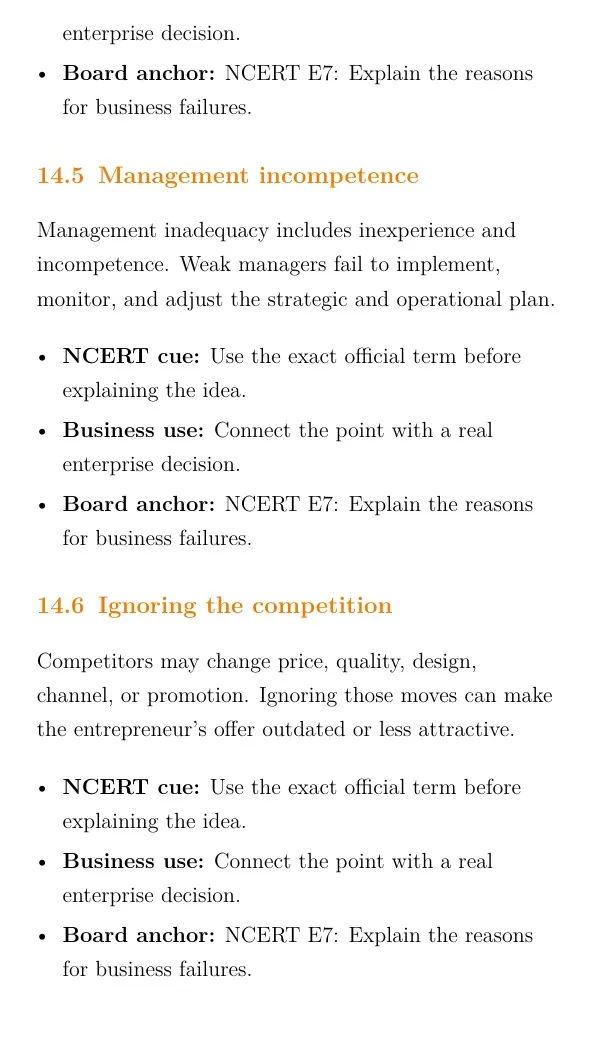
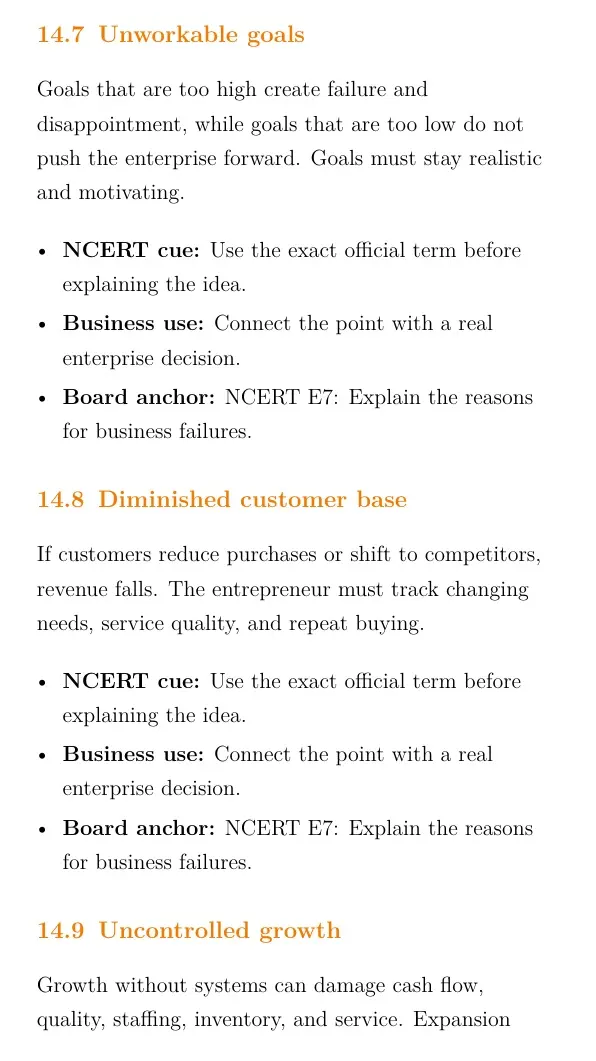
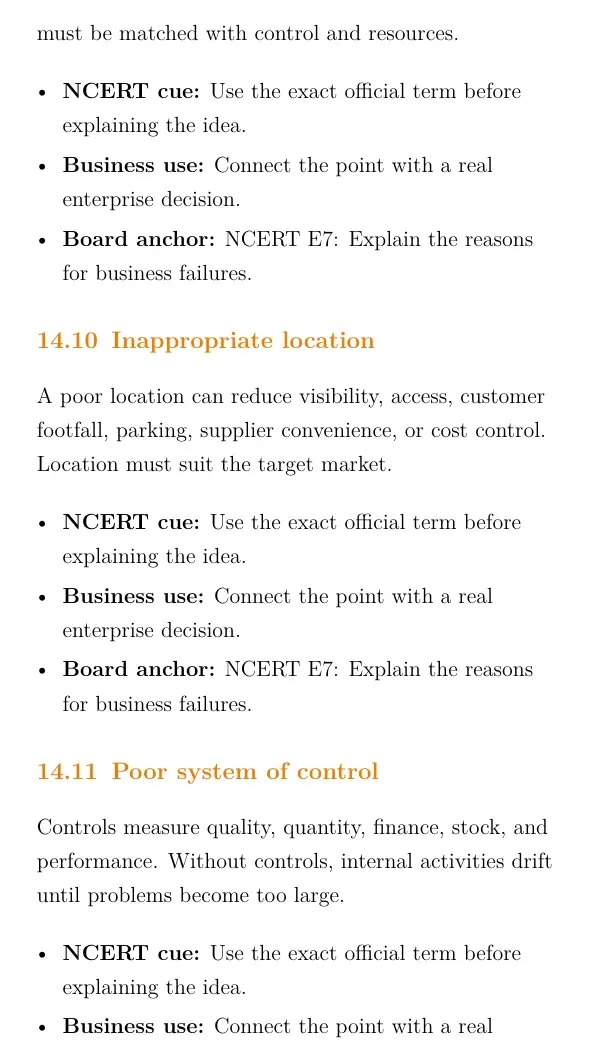
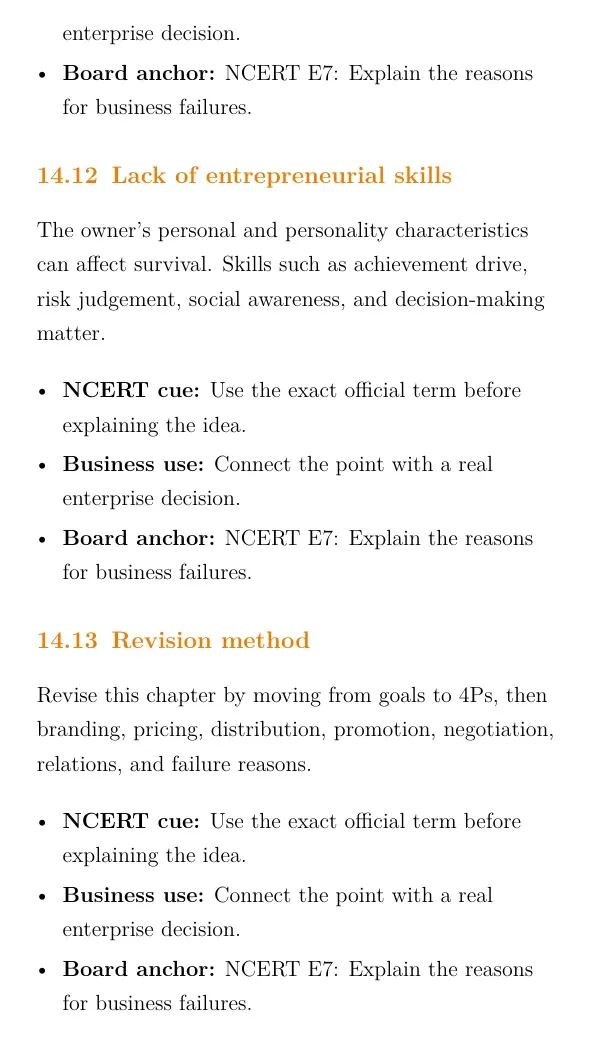
Business Failure Causes for NCERT E7
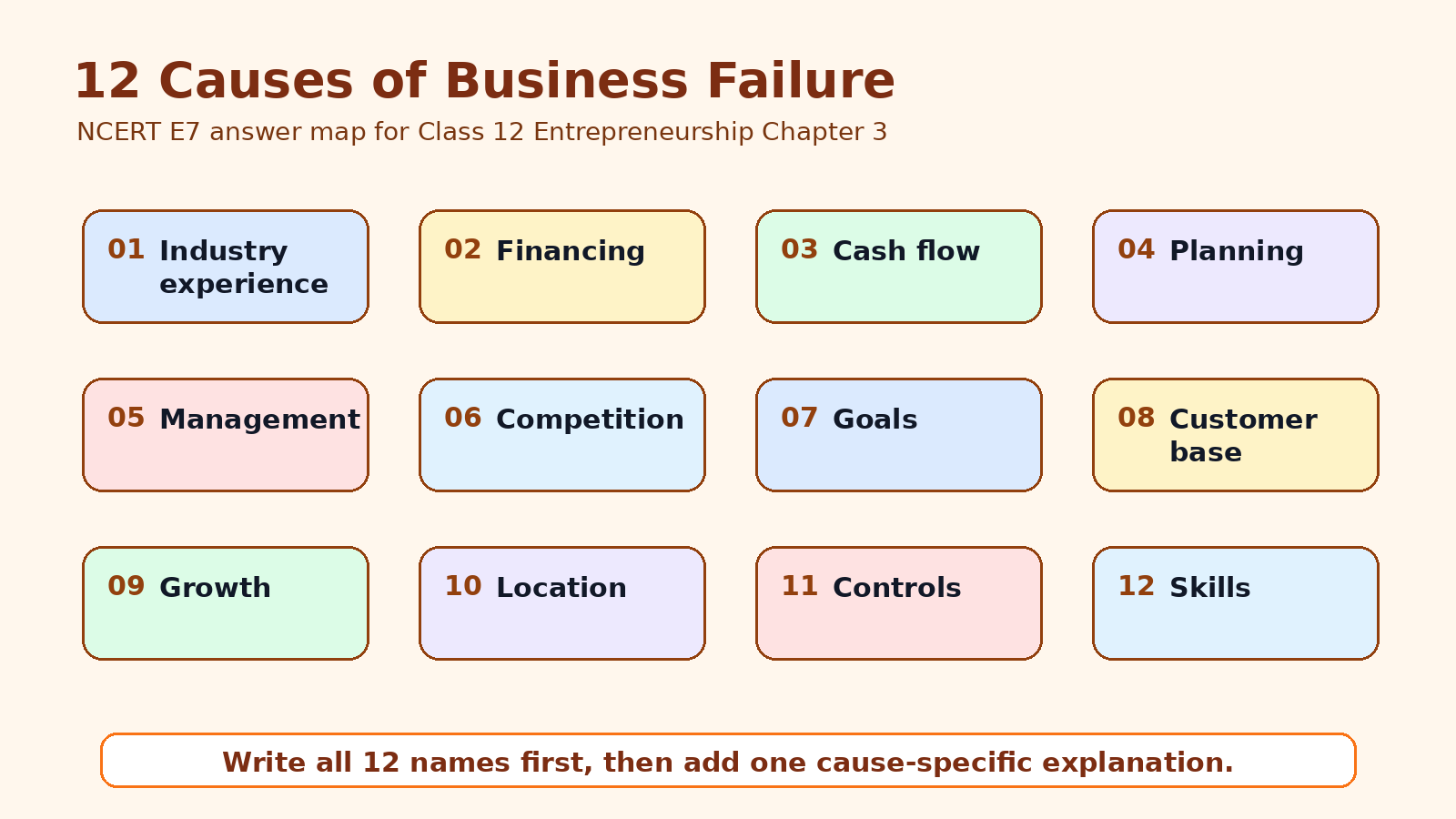
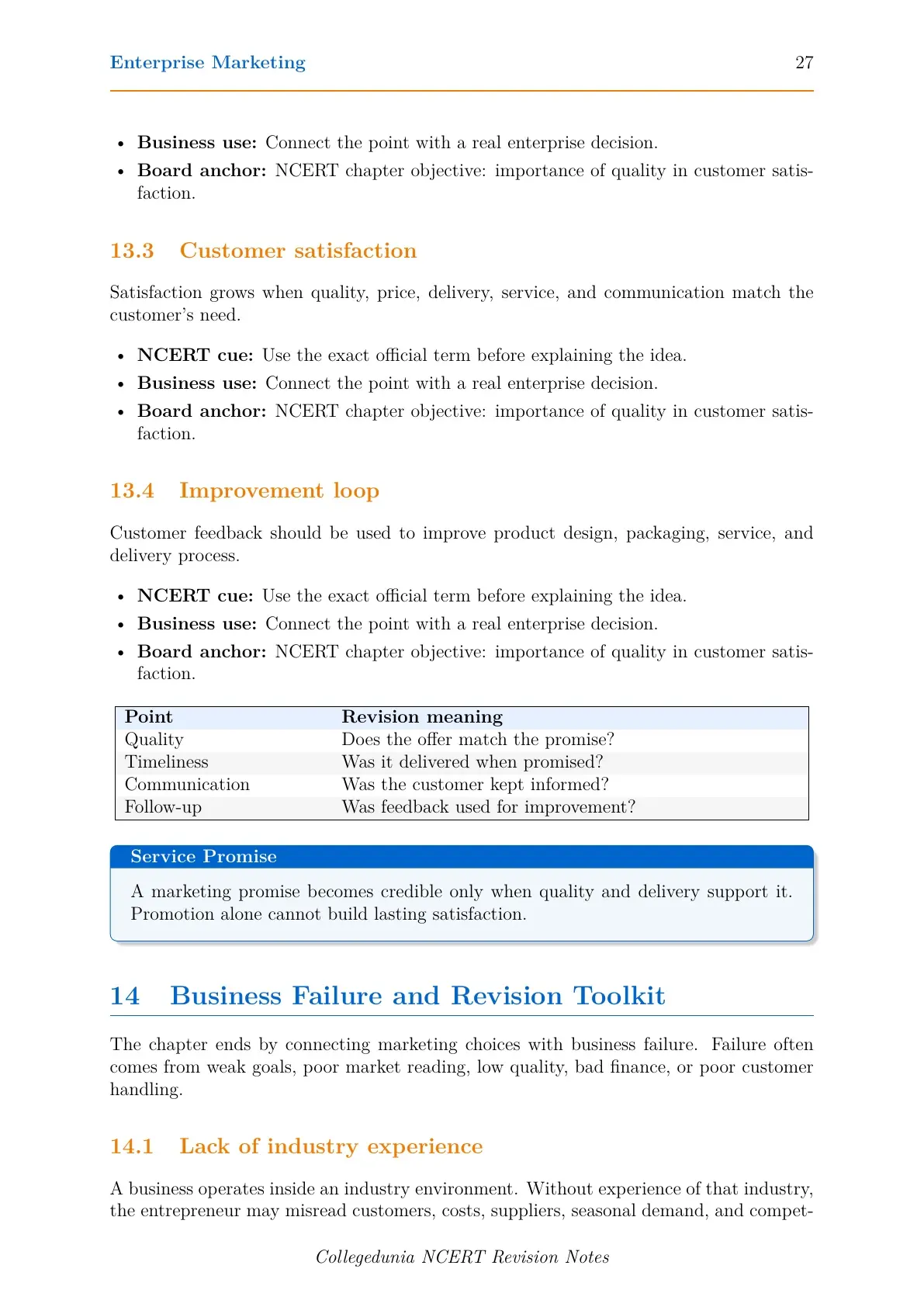
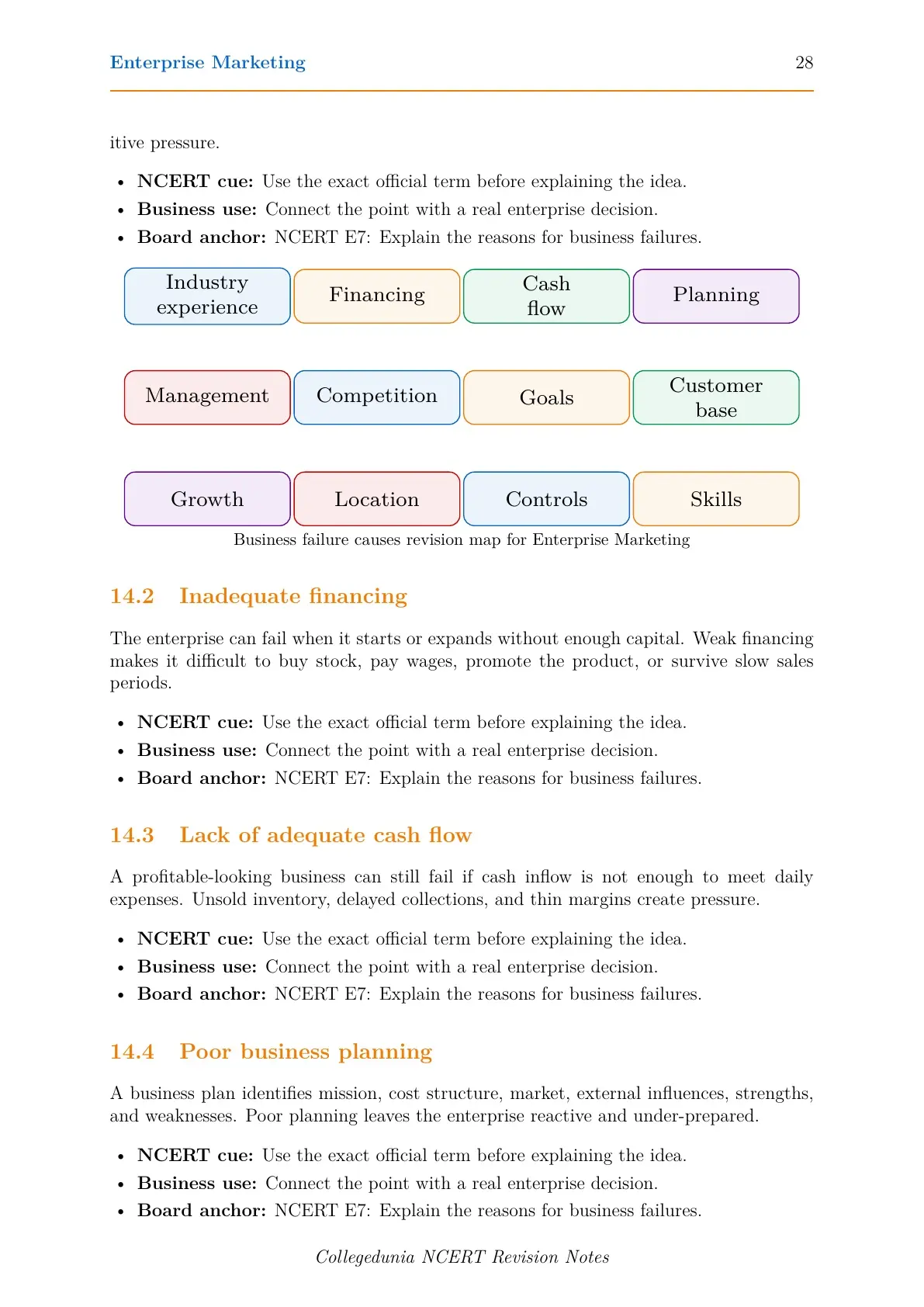
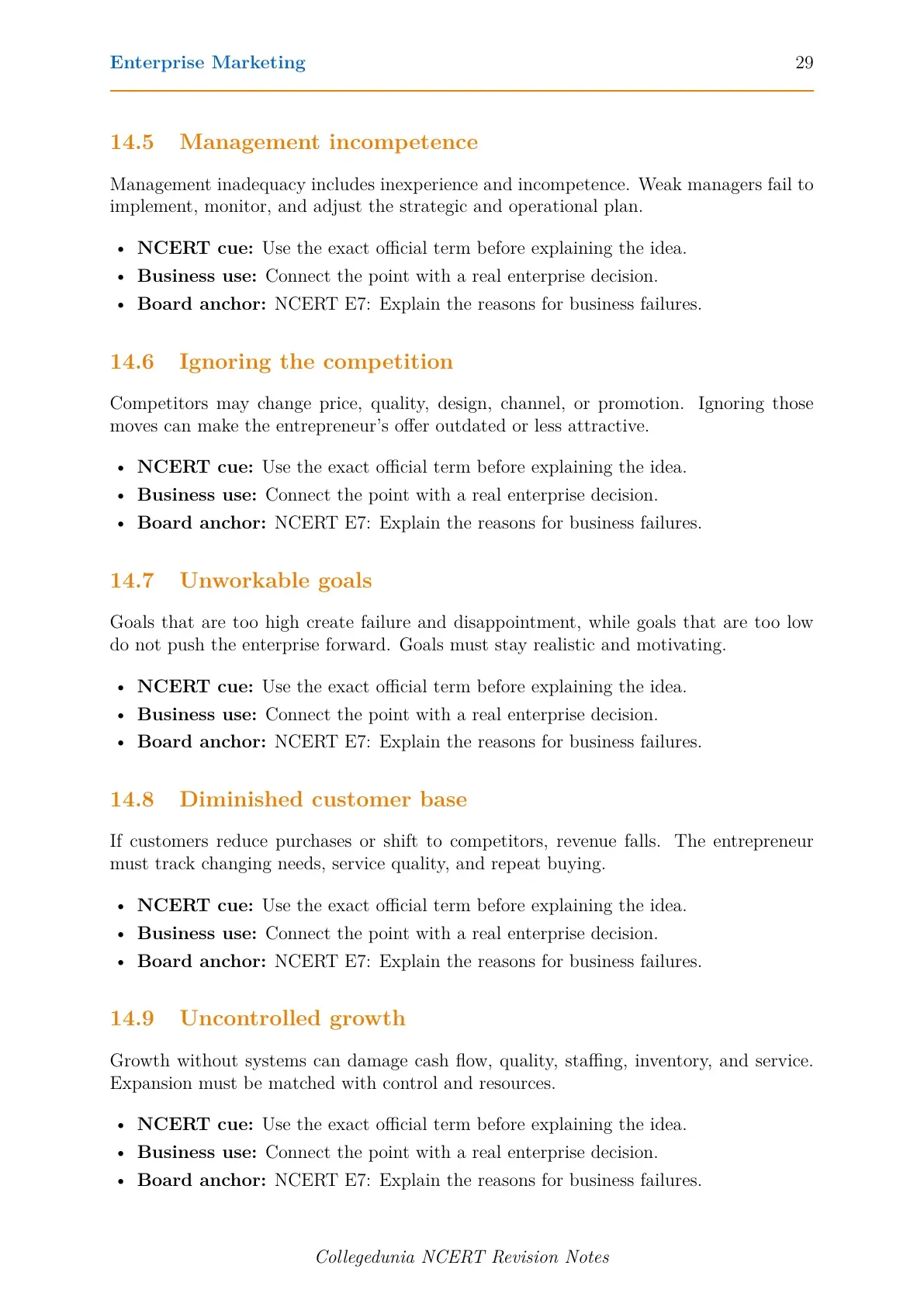
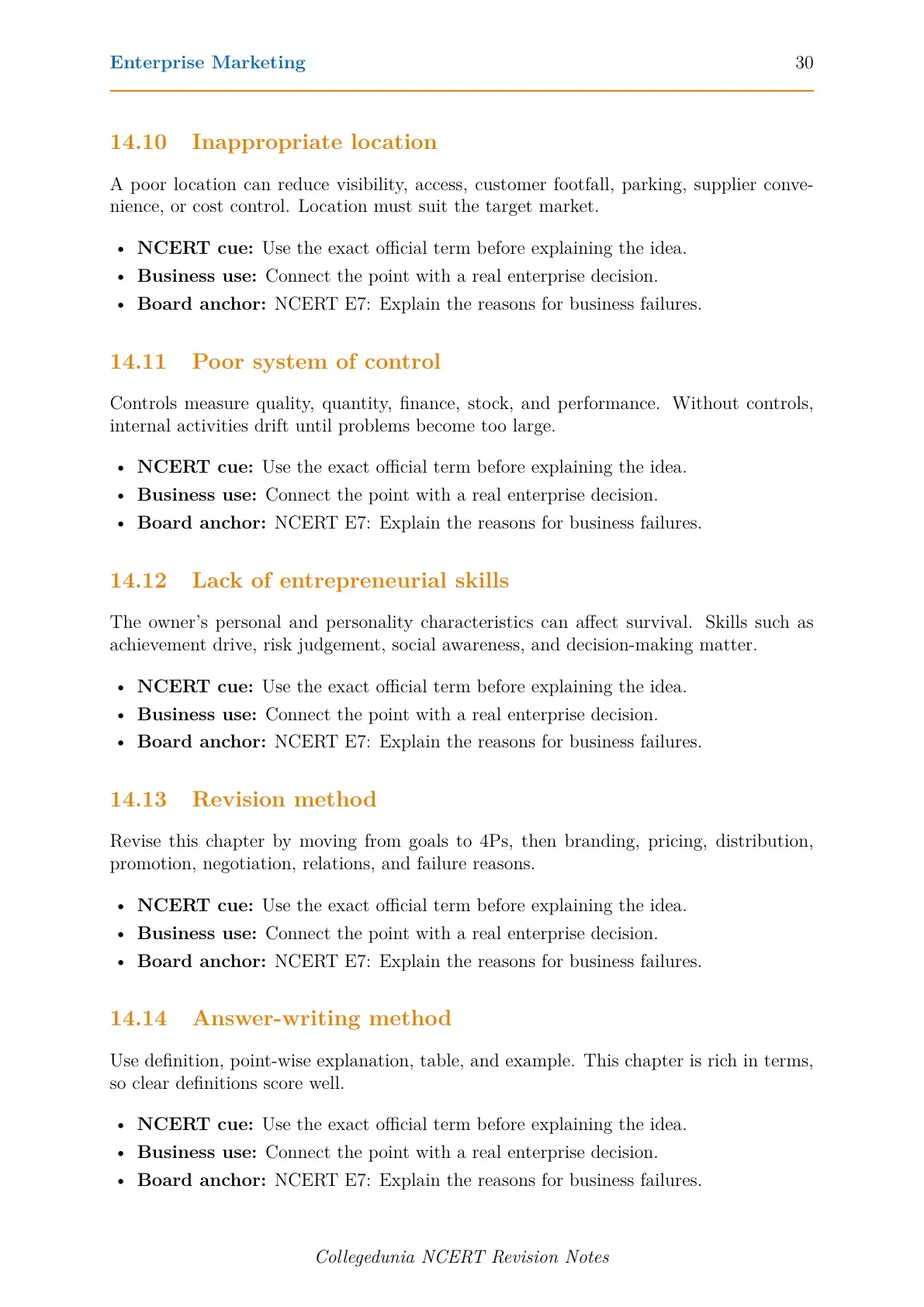
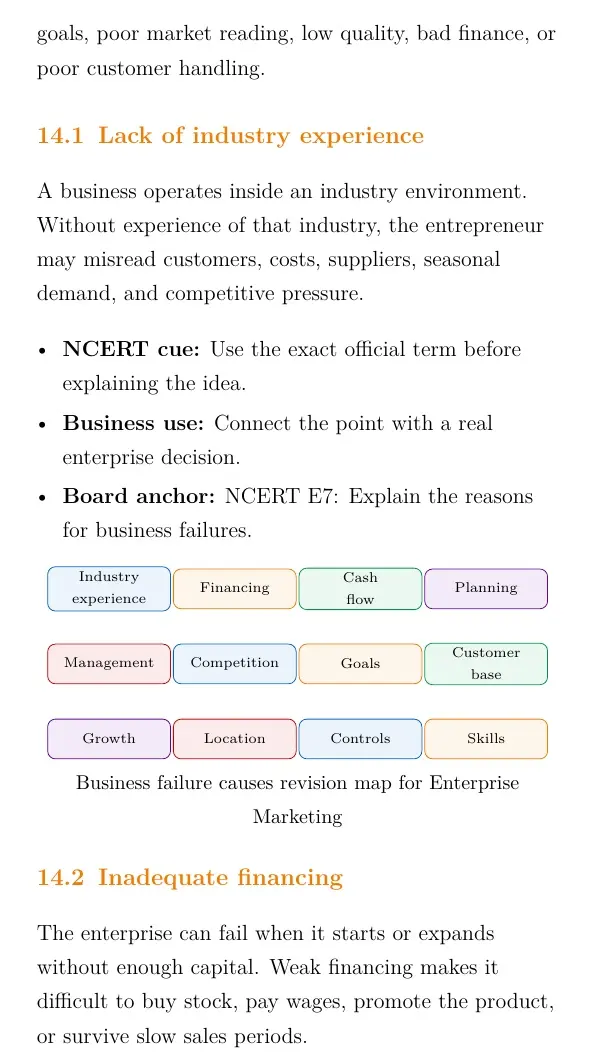
For NCERT E7, students must name all 12 causes before explaining them. Grouping the causes keeps the long answer readable without missing any official point.
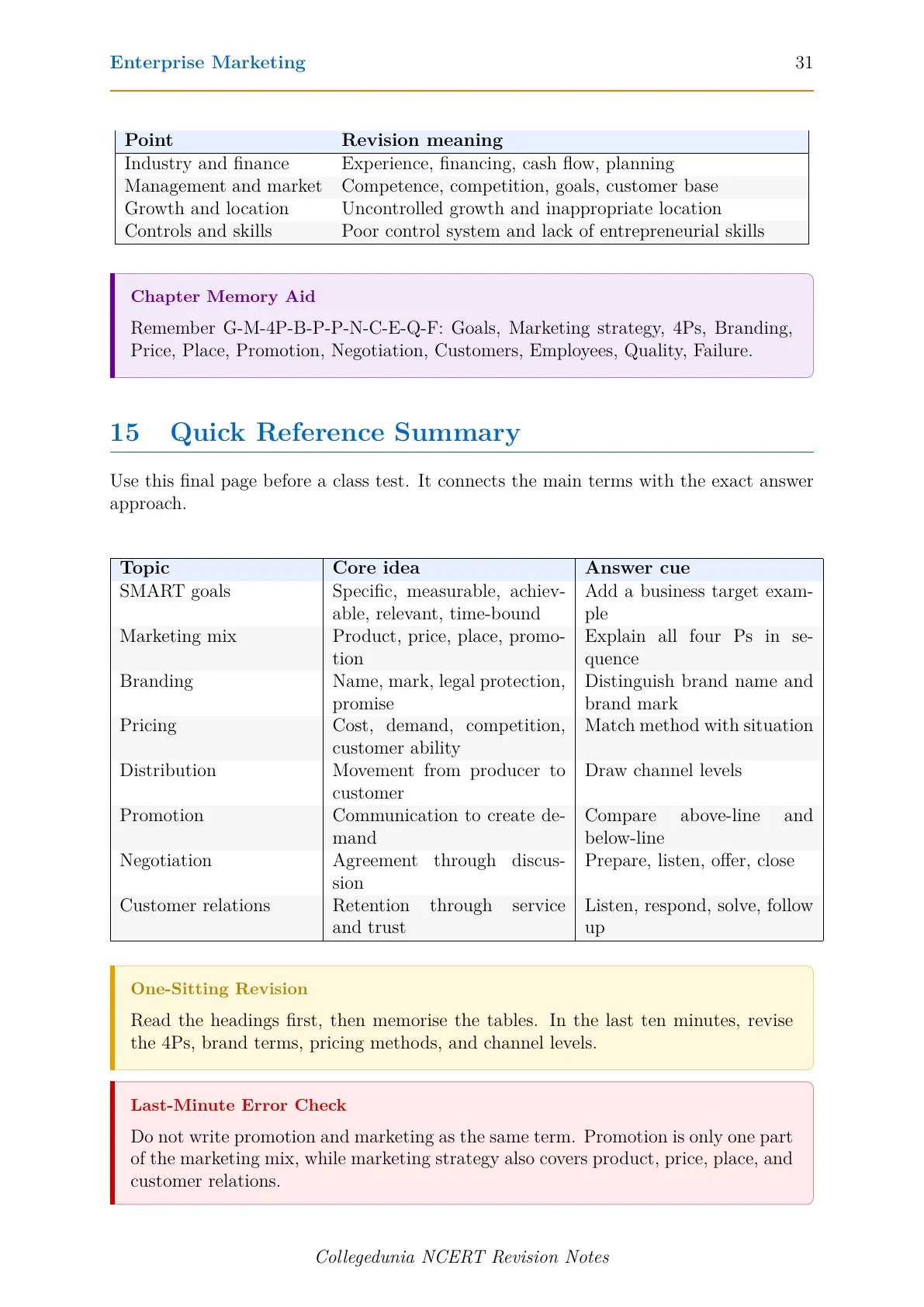
| Group | Failure causes | Answer cue |
|---|---|---|
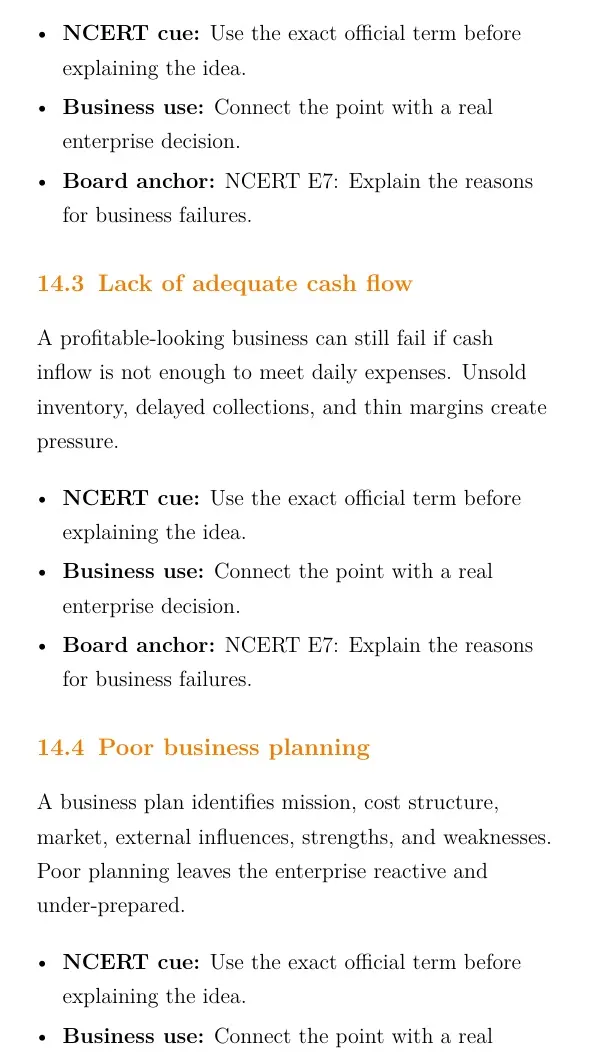
| Industry and finance | Industry experience, financing, cash flow, planning | Weak foundation |
| Management and market | Management, competition, goals, customer base | Weak survival fit |
| Growth and location | Uncontrolled growth and inappropriate location | Expansion risk |
| Controls and skills | Poor system of control and entrepreneurial skills | No correction loop |
Class 12 Entrepreneurship Chapter 3 Related Resources
Use the Notes PDF with these companion resources for the same chapter.
| Resource | Best use | Link |
|---|---|---|
| NCERT Solutions | Practice solved textbook questions | Enterprise Marketing Class 12 NCERT Solutions |
| NCERT Book PDF | Read the official chapter | Enterprise Marketing Class 12 Book PDF |
| Handwritten Notes | Revise the chapter in a quick visual format | Enterprise Marketing Class 12 Handwritten Notes |
NCERT Notes for Class 12 Entrepreneurship All Chapters
The same Notes series helps students revise Entrepreneurship chapter by chapter.
| Chapter | Chapter Name | NCERT Notes |
|---|---|---|
| Chapter 1 | Entrepreneurial Opportunity | View notes |
| Chapter 2 | Entrepreneurial Planning | View notes |
| Chapter 3 | Enterprise Marketing | Current notes |
| Chapter 4 | Enterprise Growth Strategies | View notes |
| Chapter 5 | Business Arithmetic | View notes |
| Chapter 6 | Resource Mobilisation | View notes |
Enterprise Marketing Class 12 Notes FAQs
Ques. What do Class 12 Entrepreneurship Chapter 3 Enterprise Marketing notes cover?
Ans. The notes cover business goals, marketing mix, branding, pricing, place, promotion, negotiation, CRM, employee and vendor management, quality and business failure.
Ques. What are the 4Ps in Enterprise Marketing?
Ans. The 4Ps are product, price, place and promotion. NCERT uses them to explain marketing mix decisions.
Ques. What is AIDA in Class 12 Entrepreneurship?
Ans. AIDA stands for attention, interest, desire and action. It explains the response that good advertising should create.
Ques. What are the methods of negotiation in Enterprise Marketing?
Ans. The methods are integrative, distributive, inductive, deductive and mixed negotiation.
Ques. How many business failure causes are given in NCERT Chapter 3?
Ans. NCERT gives 12 broad causes of business failure, including poor planning, inadequate finance, weak cash flow, poor control and lack of entrepreneurial skills.



Comments