




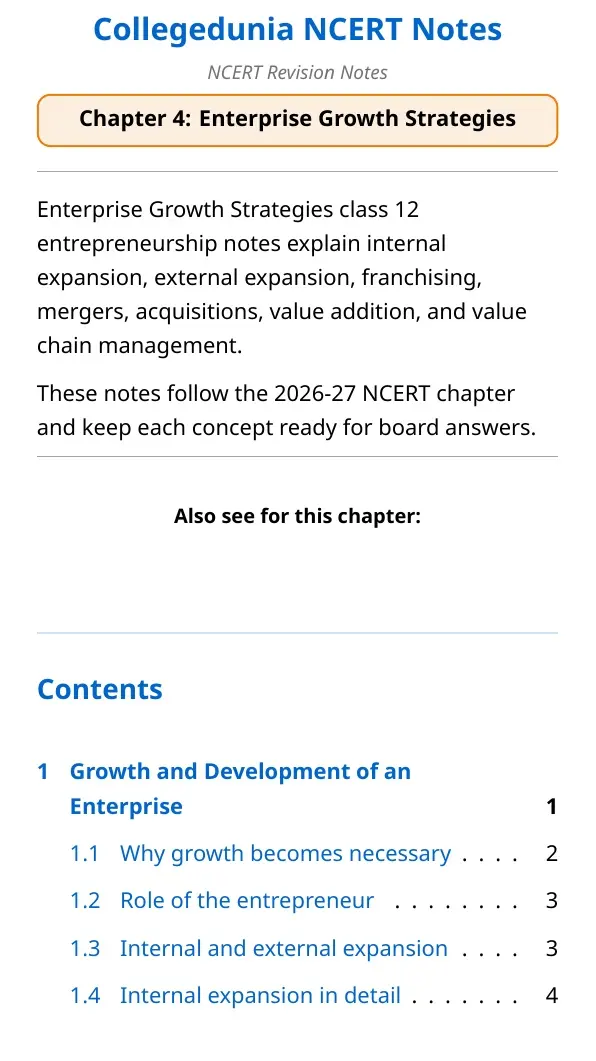
Class 12 Entrepreneurship Chapter 4 Enterprise Growth Strategies notes bring together every franchising, merger, acquisition and value chain point that the CBSE board paper actually tests. The PDF follows the 2026-27 NCERT chapter and keeps case studies tied to short board-ready answer frames.
- 20-page PDF follows the official NCERT order.
- Best for revision: franchising agreement, merger types, acquisitions, value addition and value chain management.
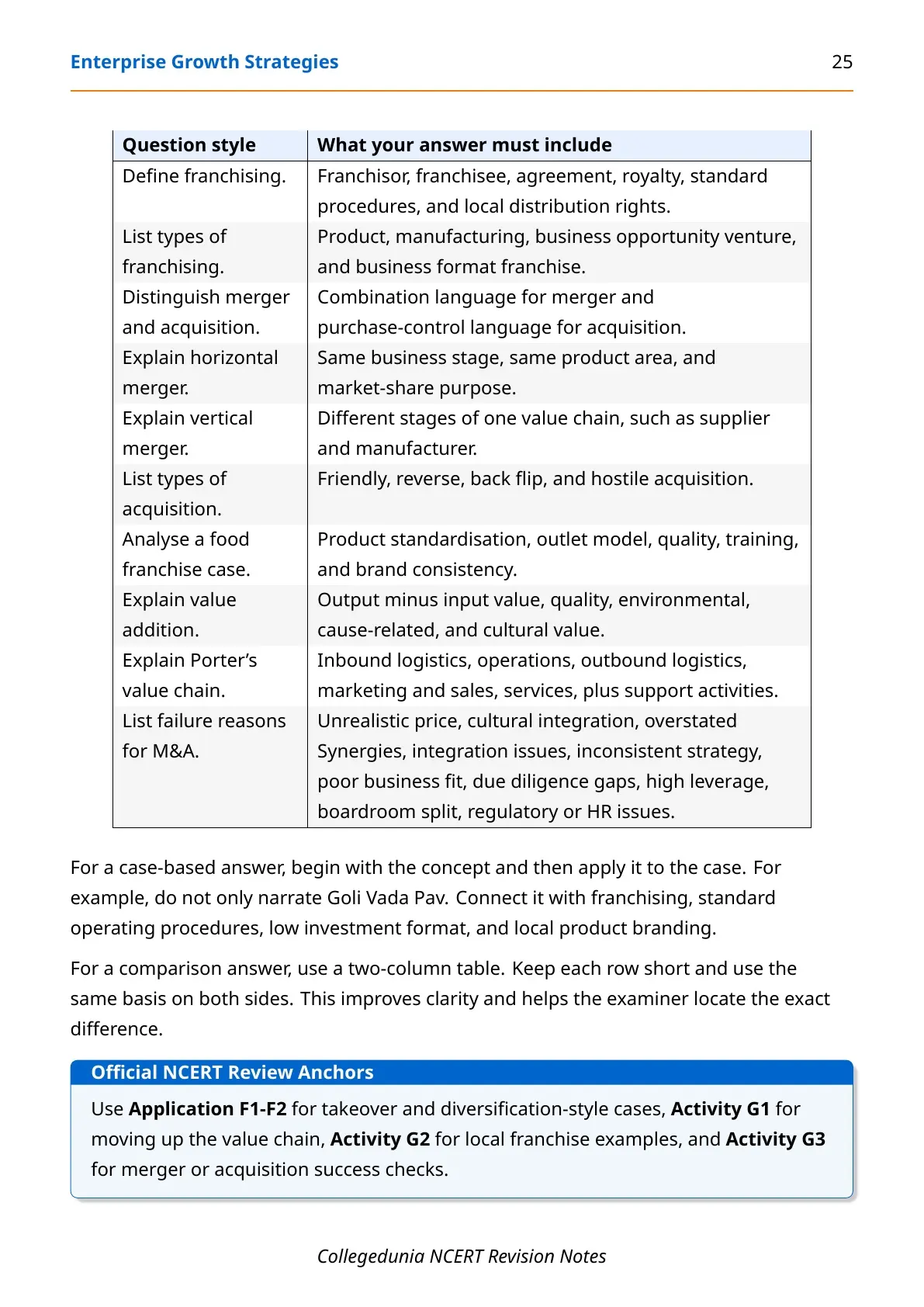
- Use the tables to revise definitions, differences and case-study cues before the board exam.
Student Feedback on Enterprise Growth Strategies Notes
In a Collegedunia review sample of 12,640 Class 12 commerce students before the 2026 boards, most students said this chapter became easier after separating franchising from mergers and acquisitions.
- 76% wanted a merger versus acquisition table.
- 69% asked for Goli Vada Pav and Natural Ice Cream case cues.
- 62% found value chain management easier with a stage-wise chart.
Source: 2026-27 Class 12 Entrepreneurship student feedback sample for Collegedunia NCERT resources.
These notes are checked against the official NCERT Entrepreneurship chapter and follow the 2026-27 Class 12 syllabus.
|
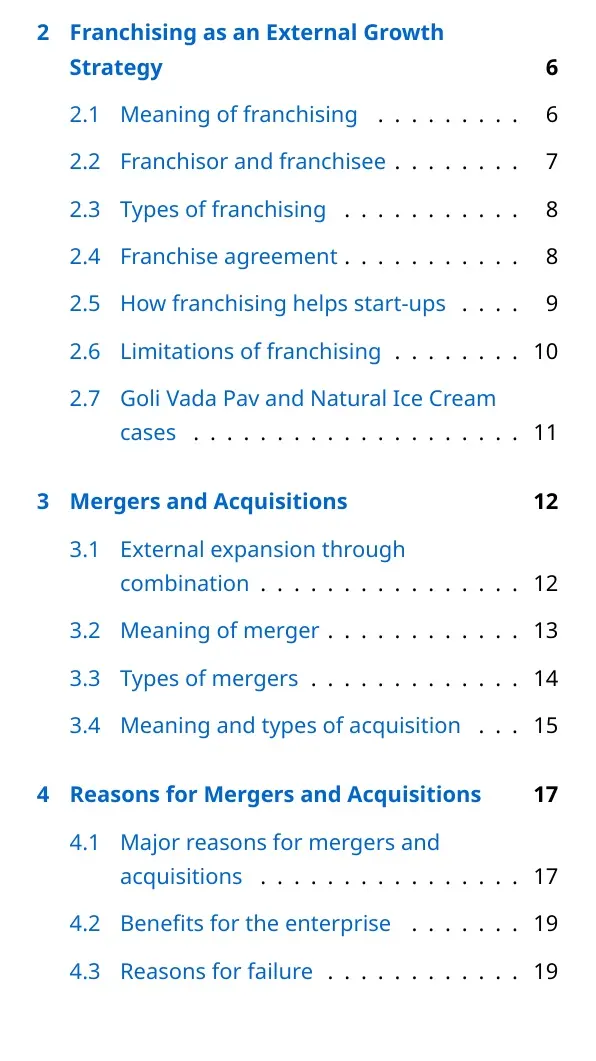
Table of Contents |
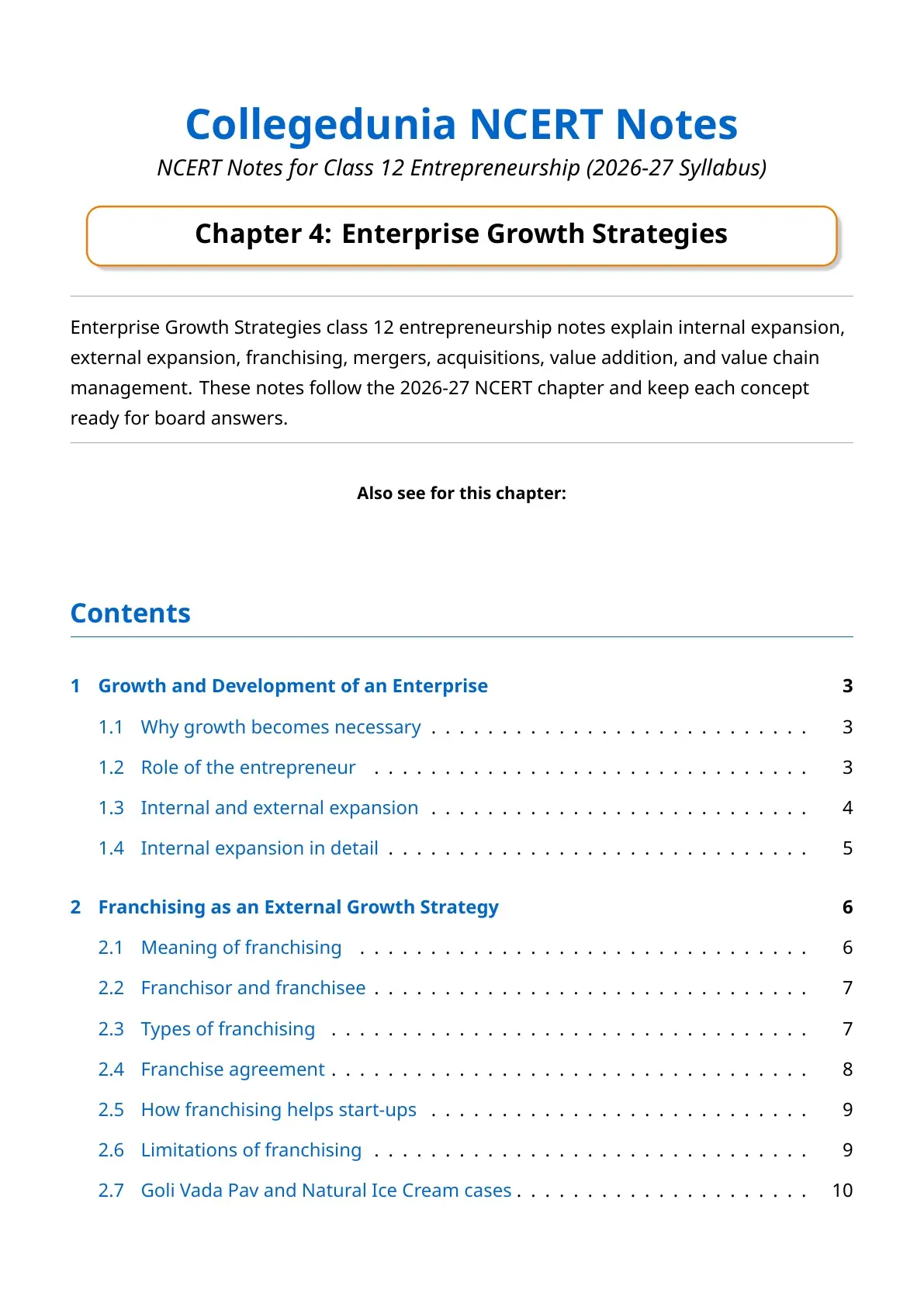
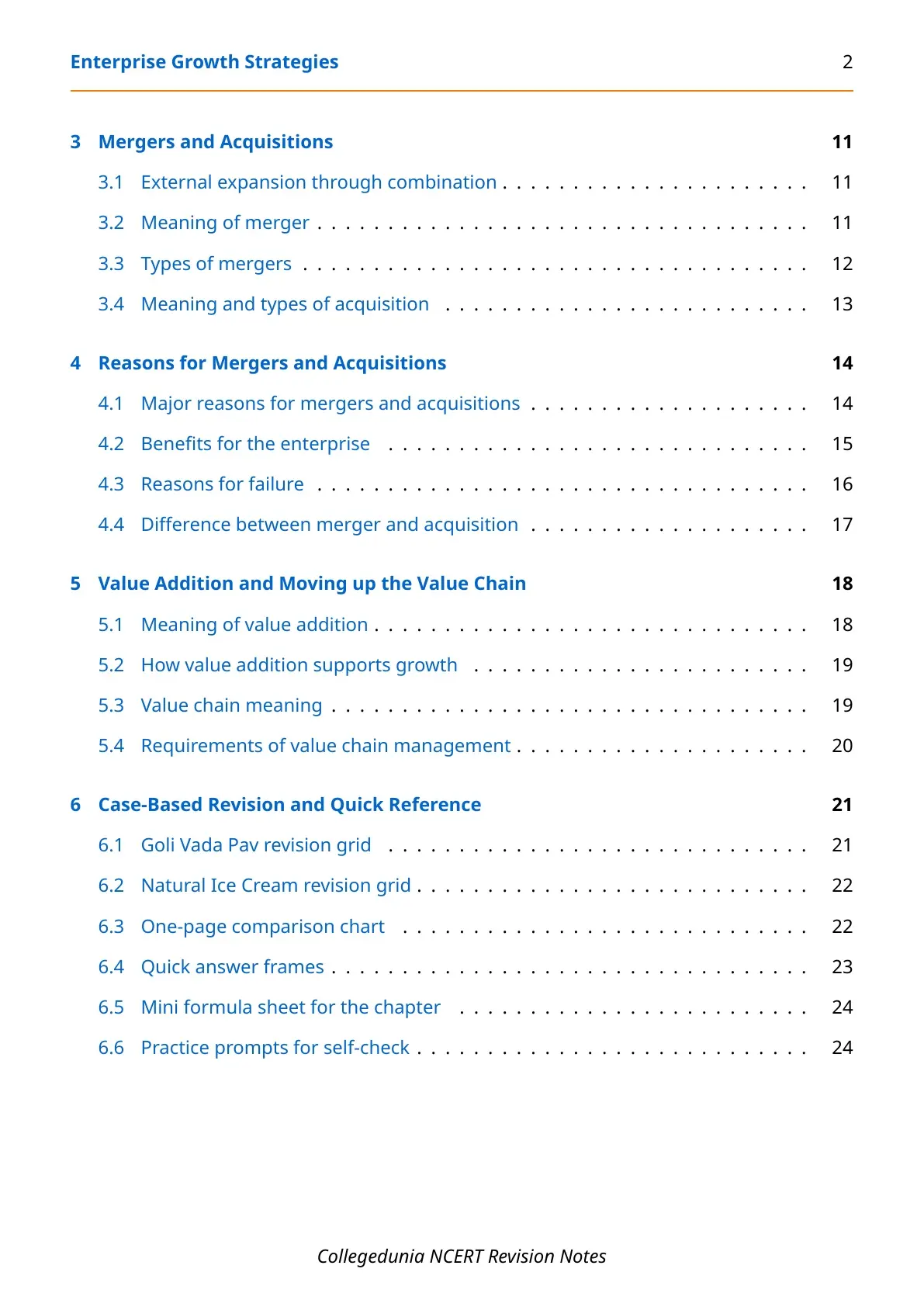
Enterprise Growth Strategies Notes PDF Highlights
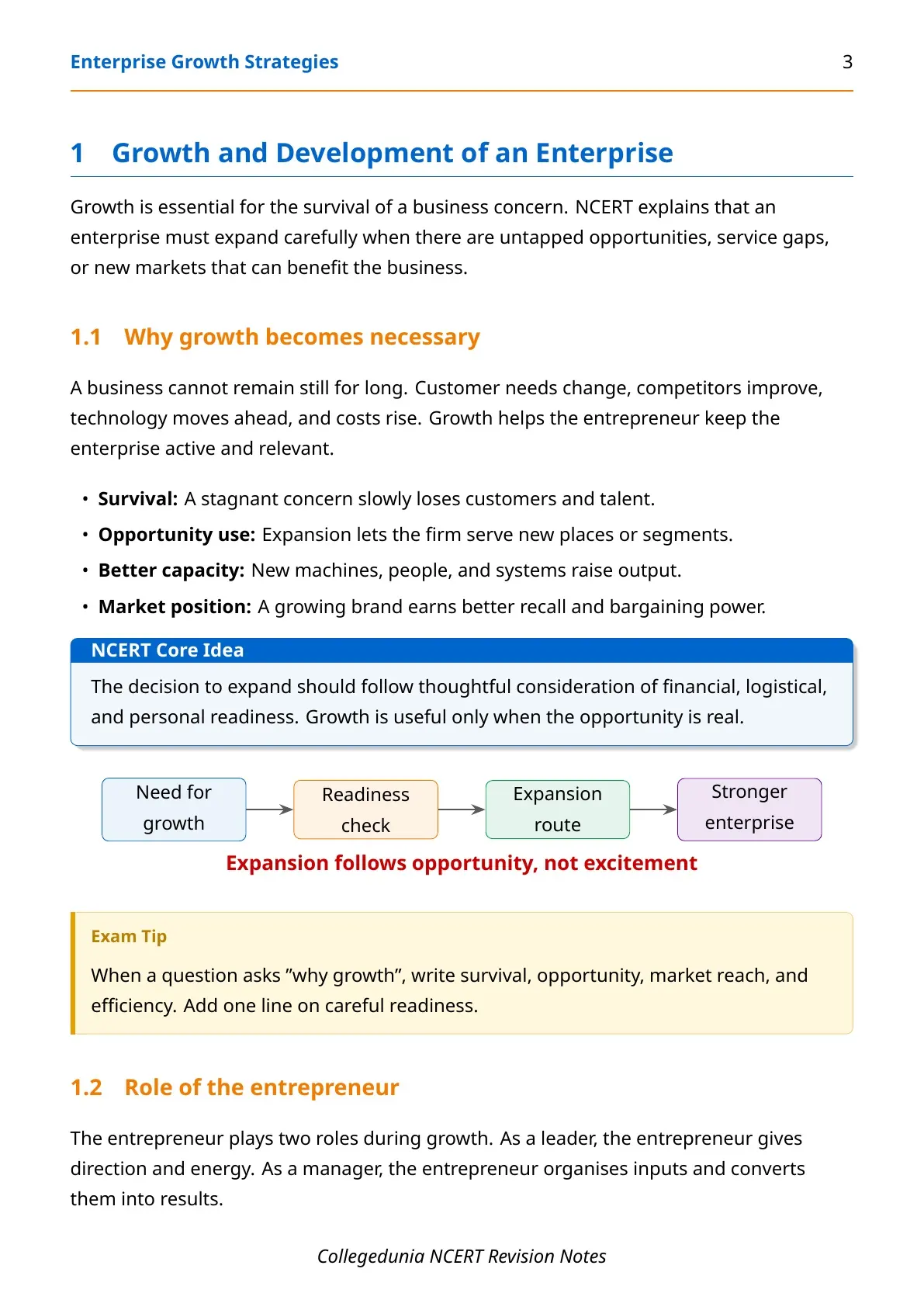
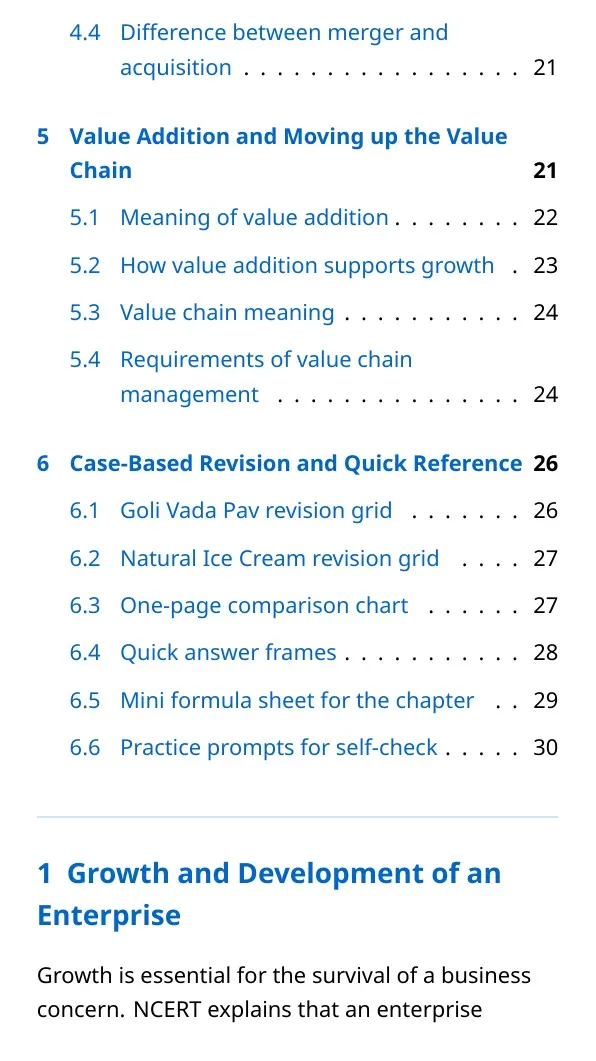
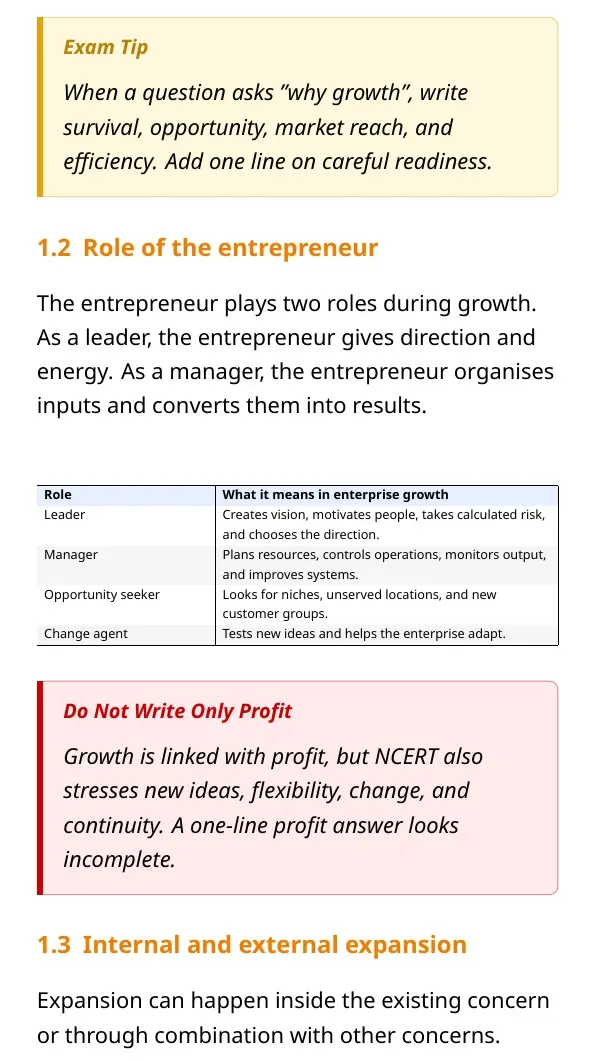
The chapter explains how an enterprise grows after the first business idea starts working. Growth is not only higher sales. It also includes capacity, reach, ownership control and better customer value.
| Part of the PDF | What students revise | NCERT anchor |
|---|---|---|
| Growth routes | Internal expansion and external expansion | Growth and development |
| Franchising | Franchisor, franchisee, agreement, royalty and standard procedures | Goli Vada Pav and Natural Ice Cream |
| Mergers | Horizontal, vertical, conglomerate, product extension and market extension mergers | Mergers and acquisitions |
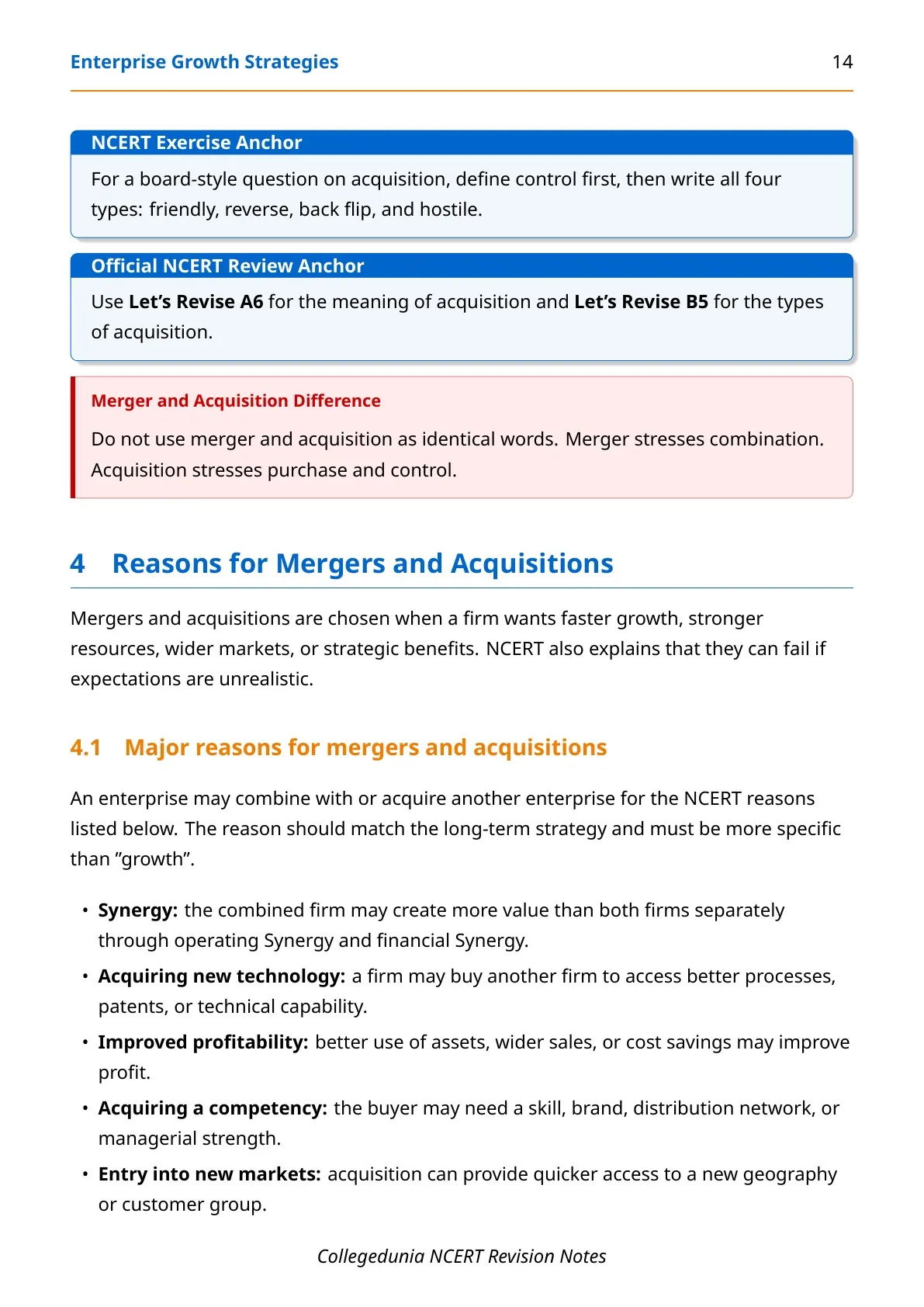
| Acquisitions | Friendly and hostile purchase of control | Types and reasons |
| Value chain | Value addition, customer benefit and activity coordination | Moving up the value chain |
Enterprise Growth Strategies Class 12 Revision Video
Source: Rajat Arora on YouTube
Growth and Expansion Routes in Enterprise Growth Strategies
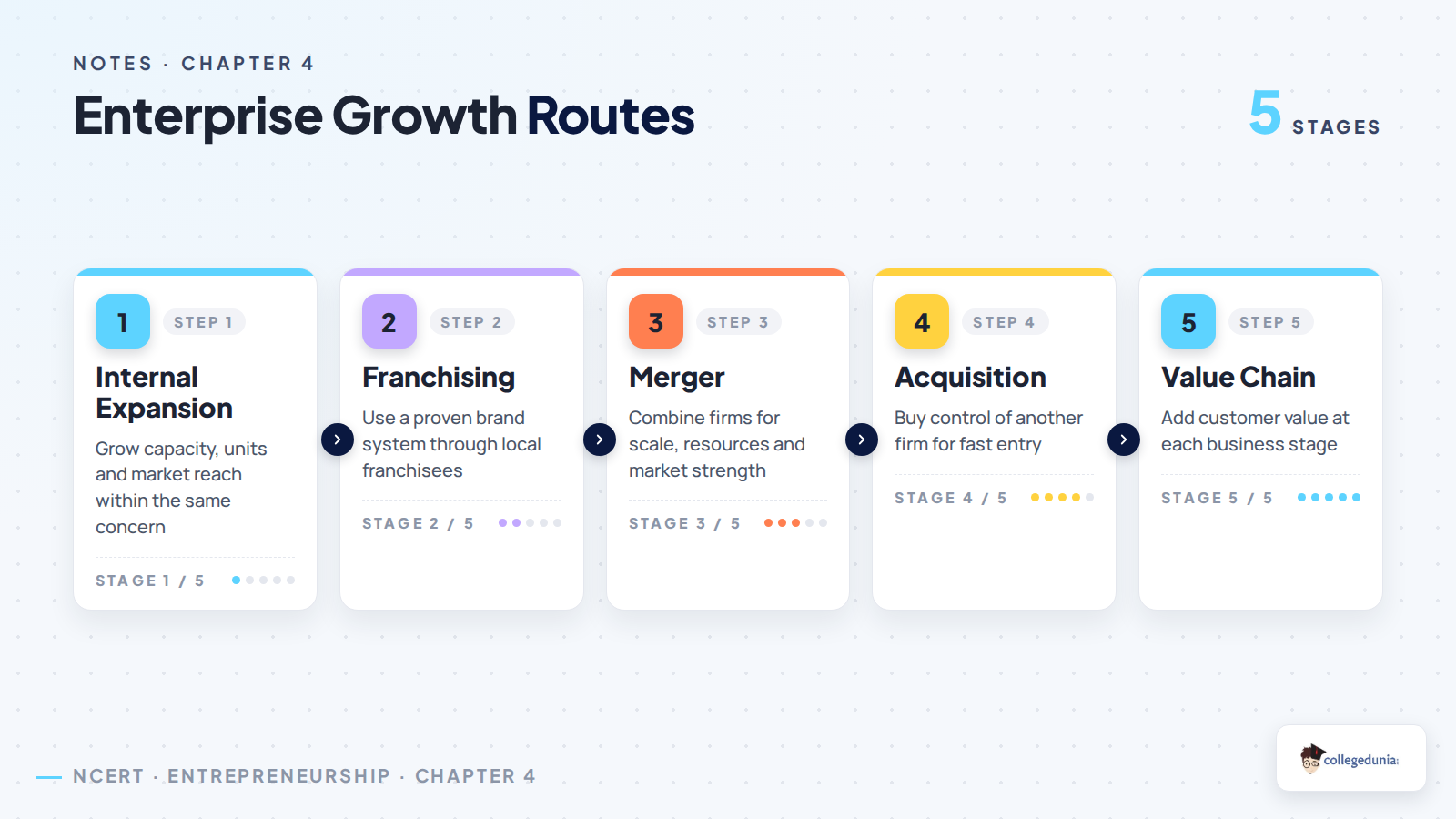
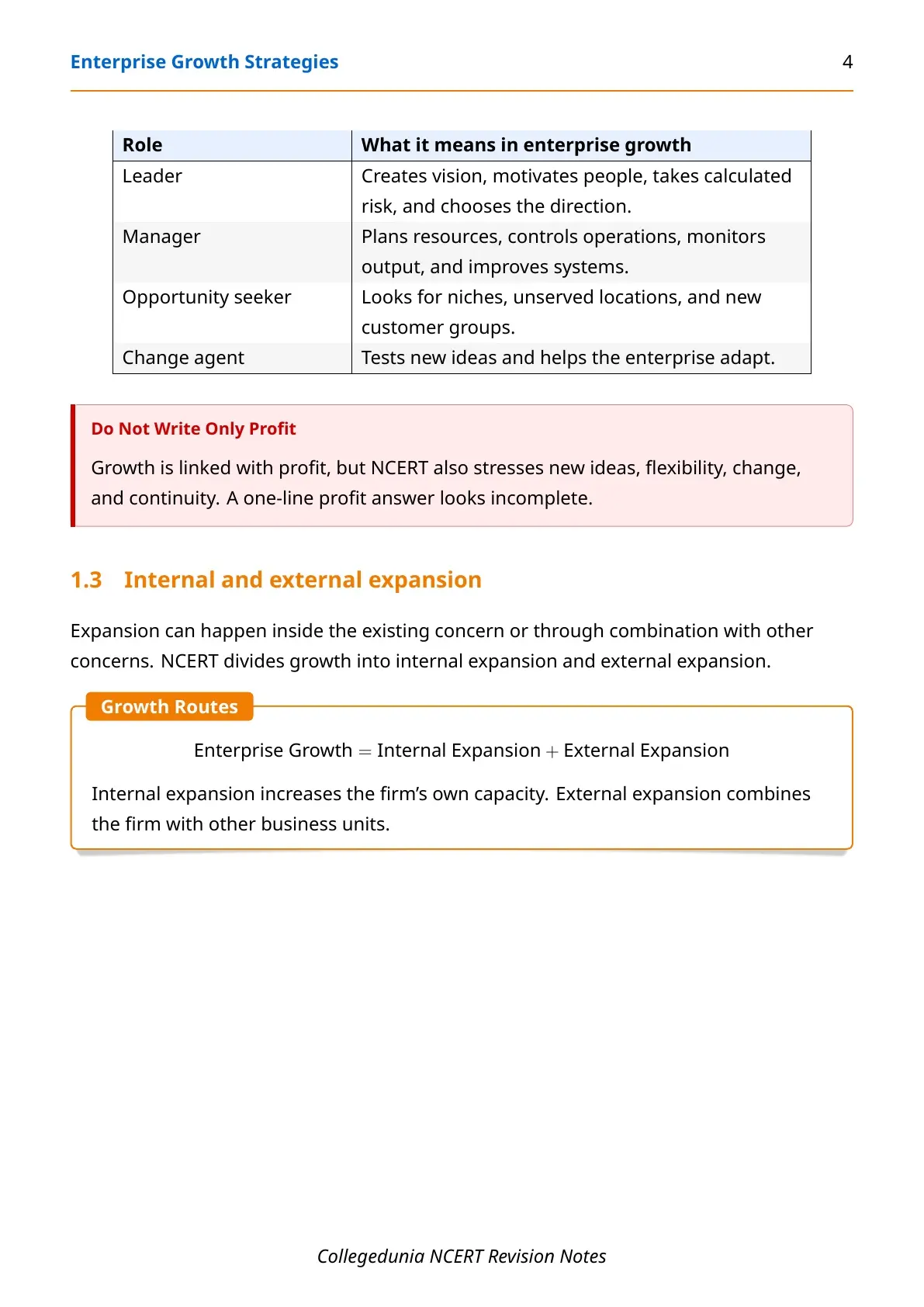
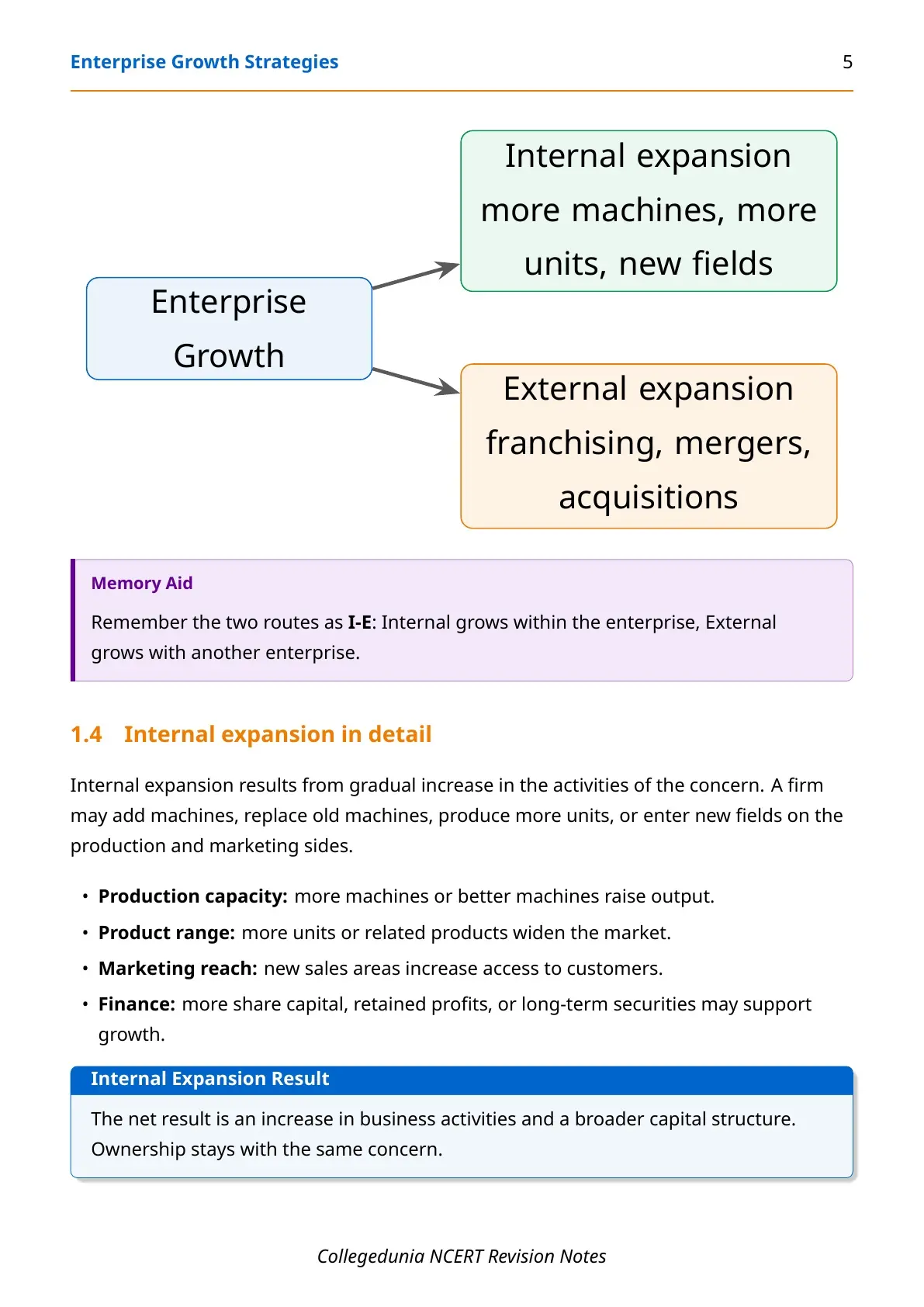
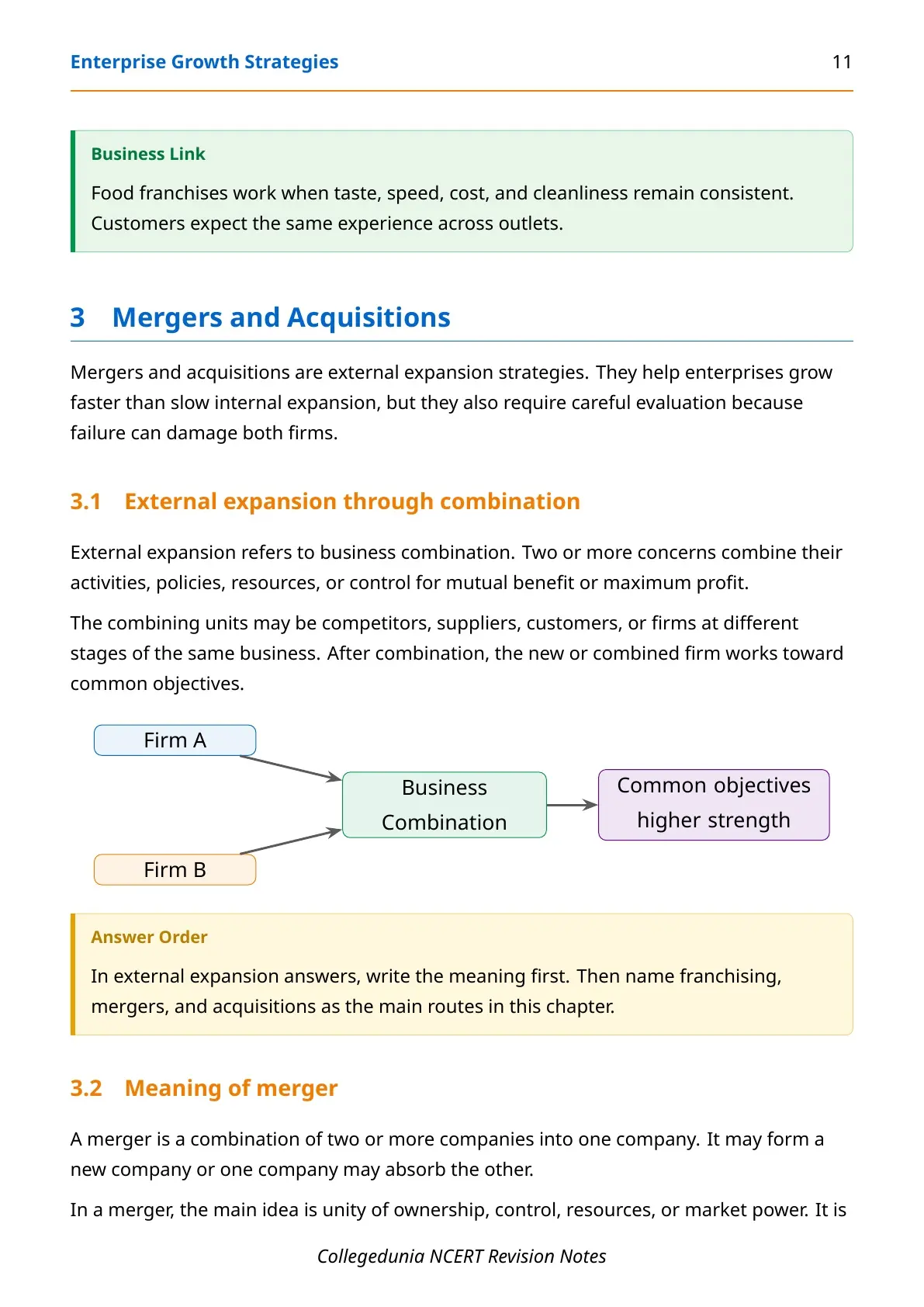
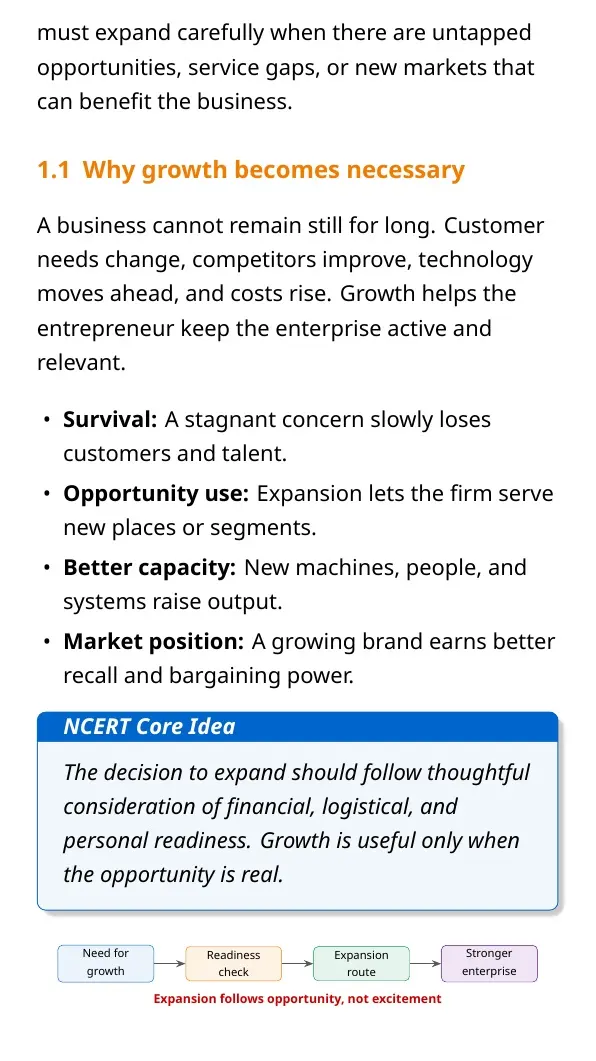
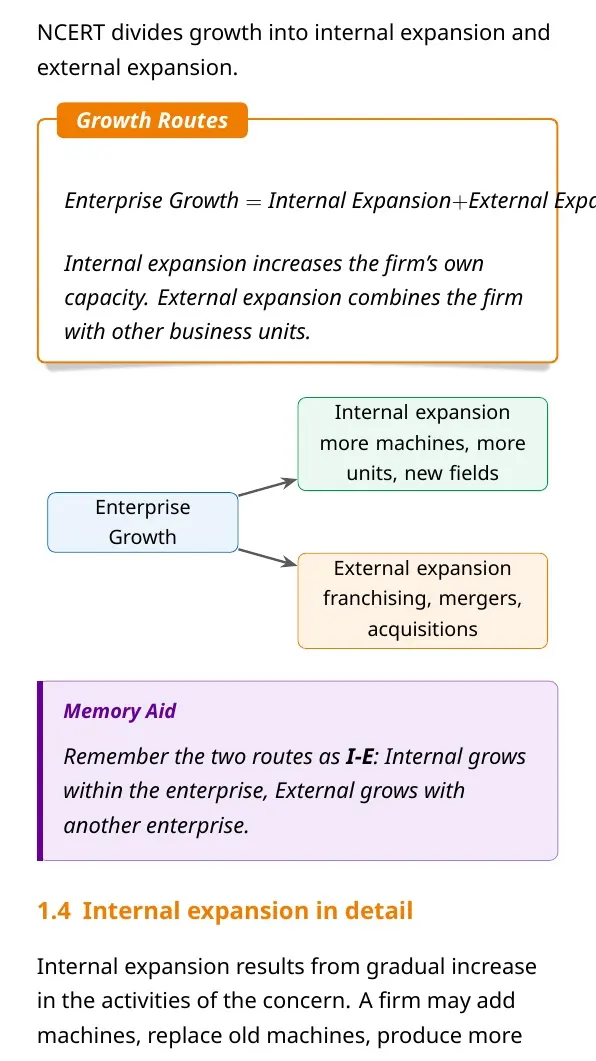
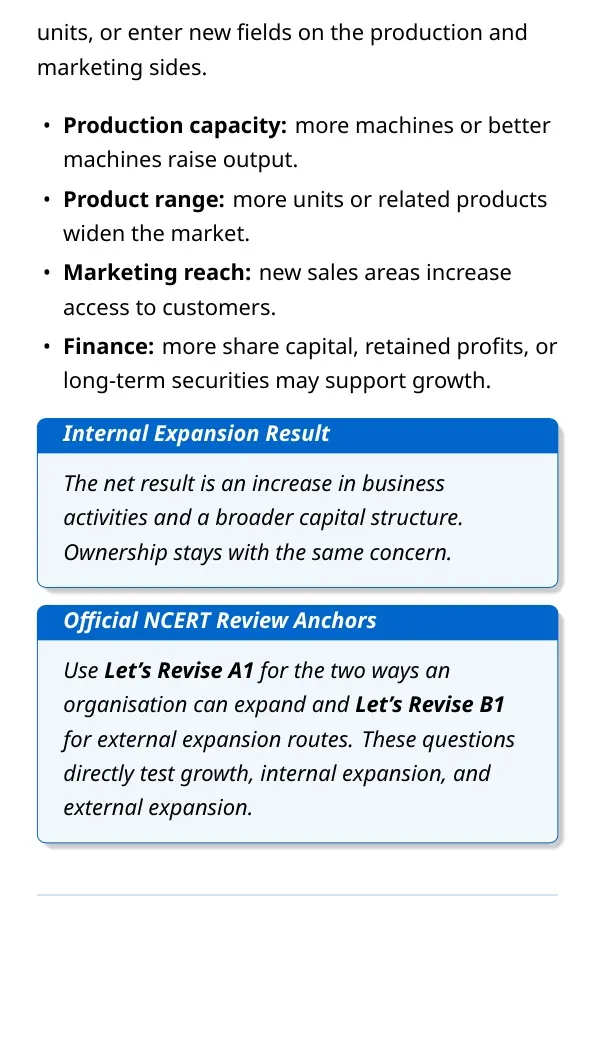
NCERT divides expansion into internal and external routes. Internal expansion grows the existing concern. External expansion combines the enterprise with other concerns or business formats.
- Internal expansion means more machines, more units or new production and marketing fields.
- External expansion means business combination, franchising, mergers or acquisitions.
- Readiness matters because expansion needs finance, logistics and managerial ability.
- Board cue: write the route first, then explain how it helps growth.
Franchising in Class 12 Enterprise Growth Strategies
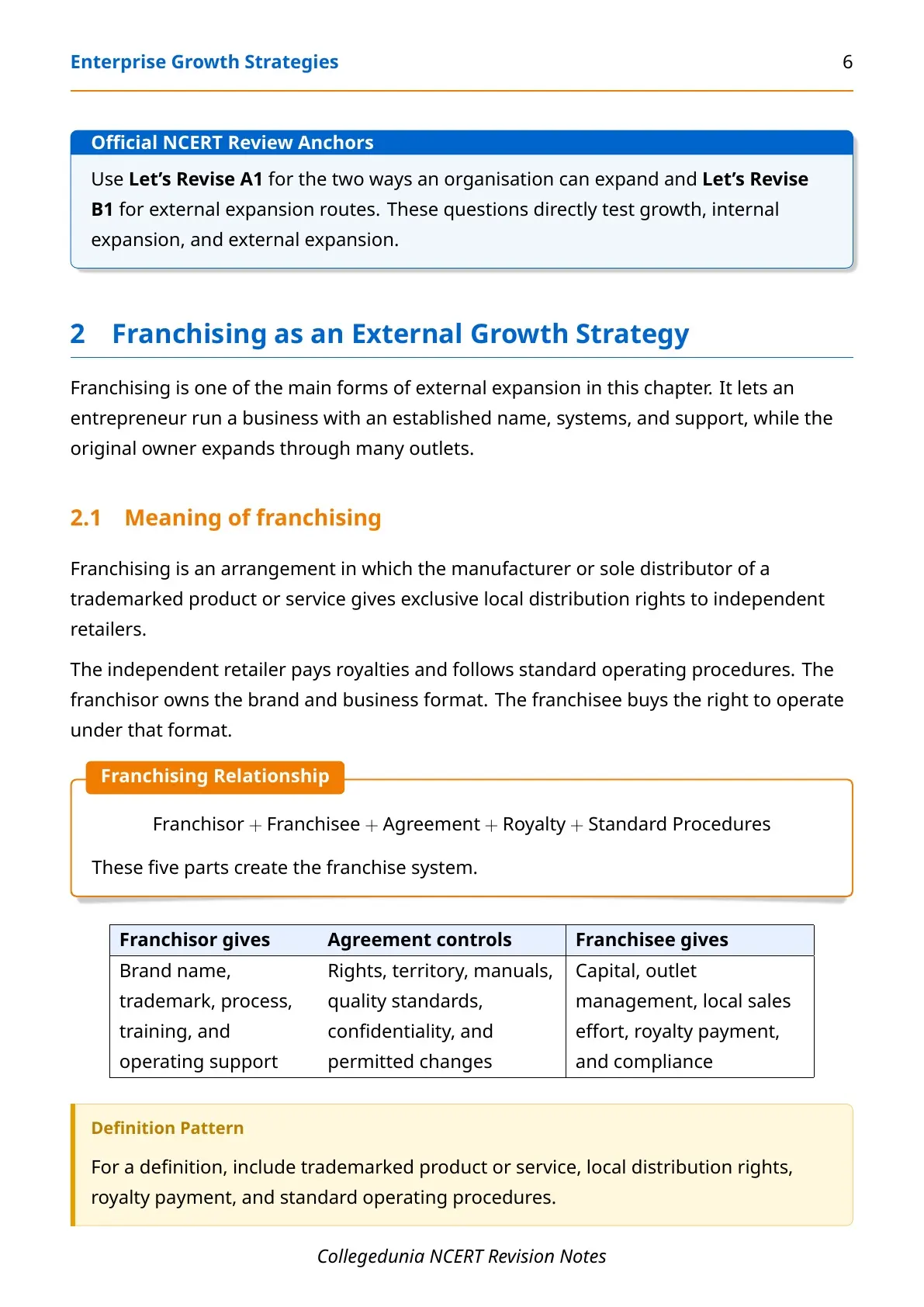
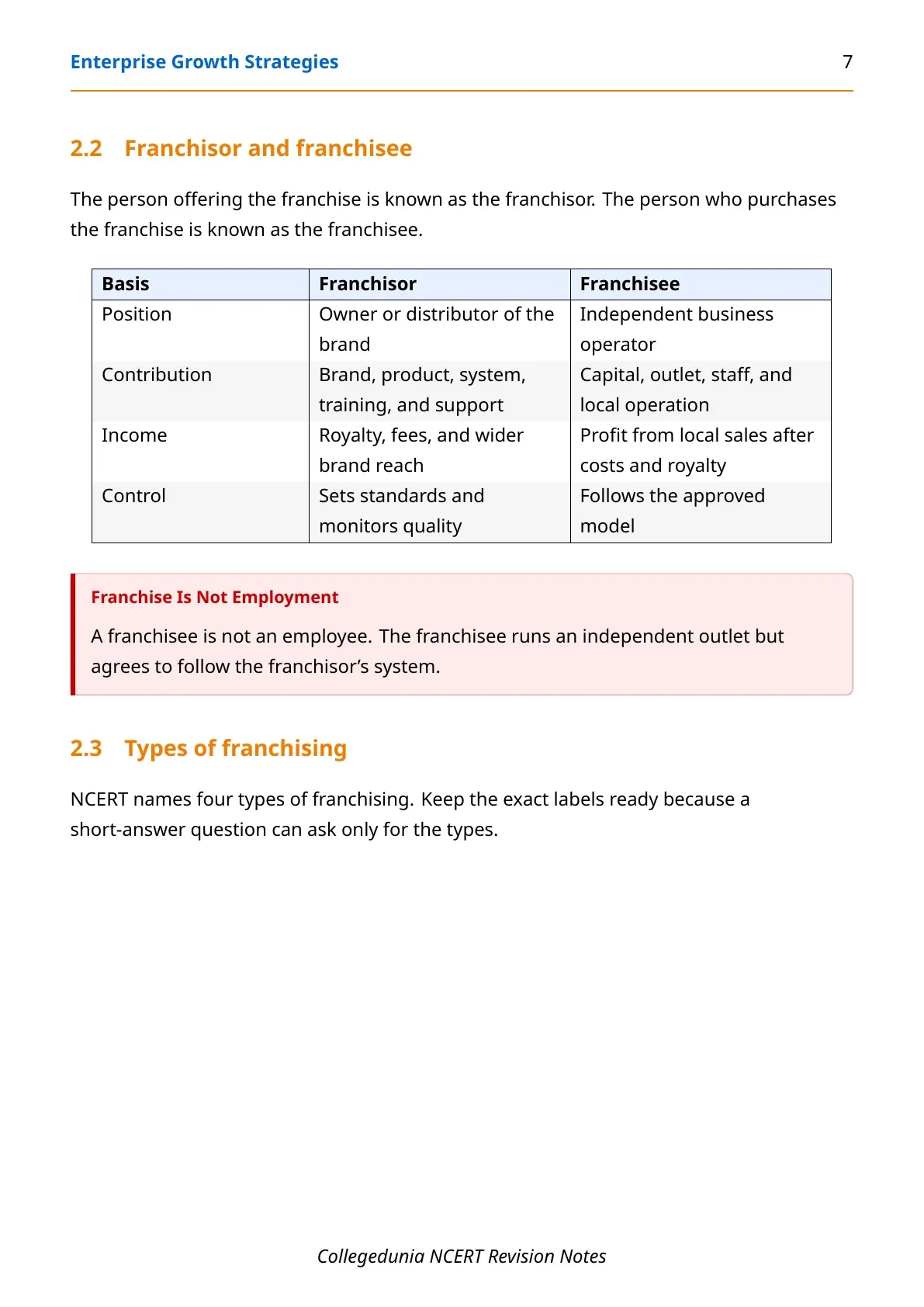
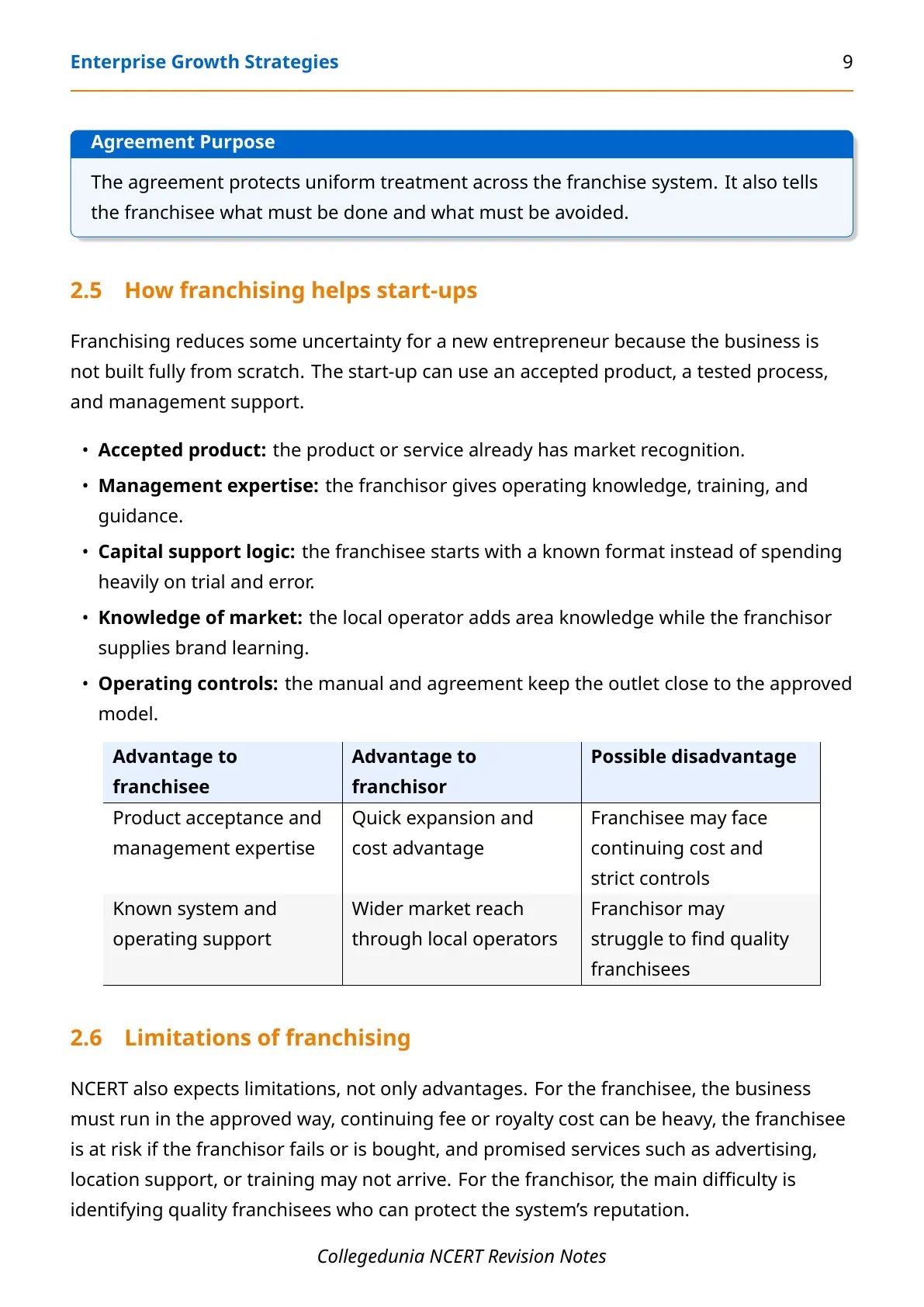
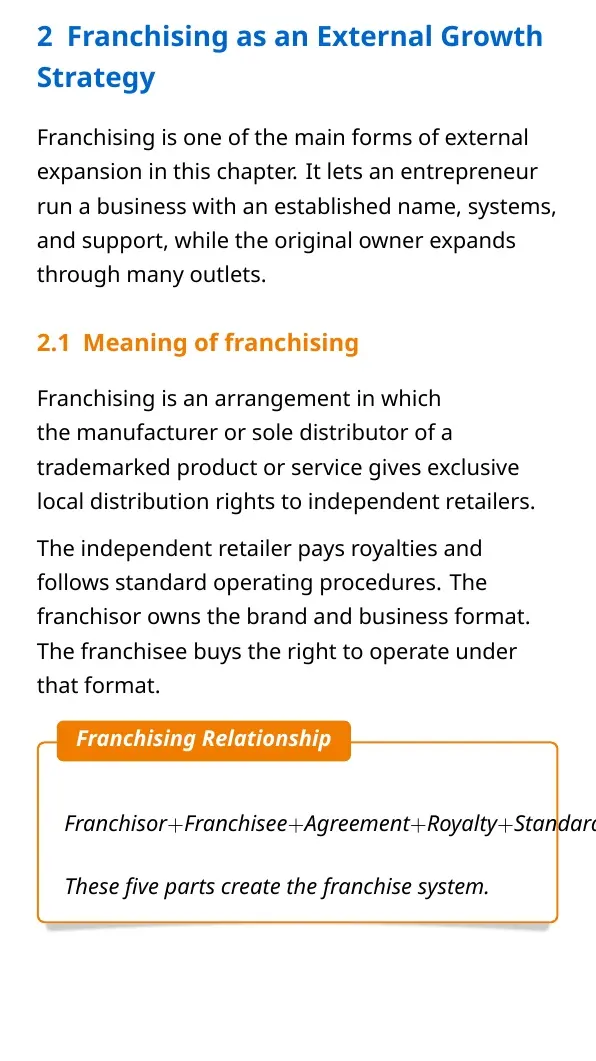
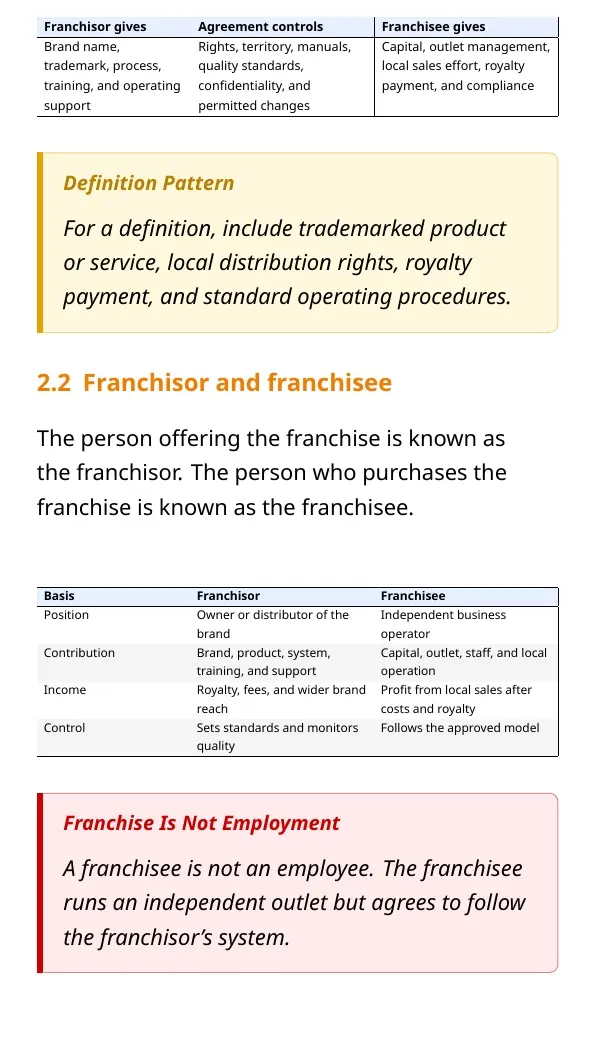
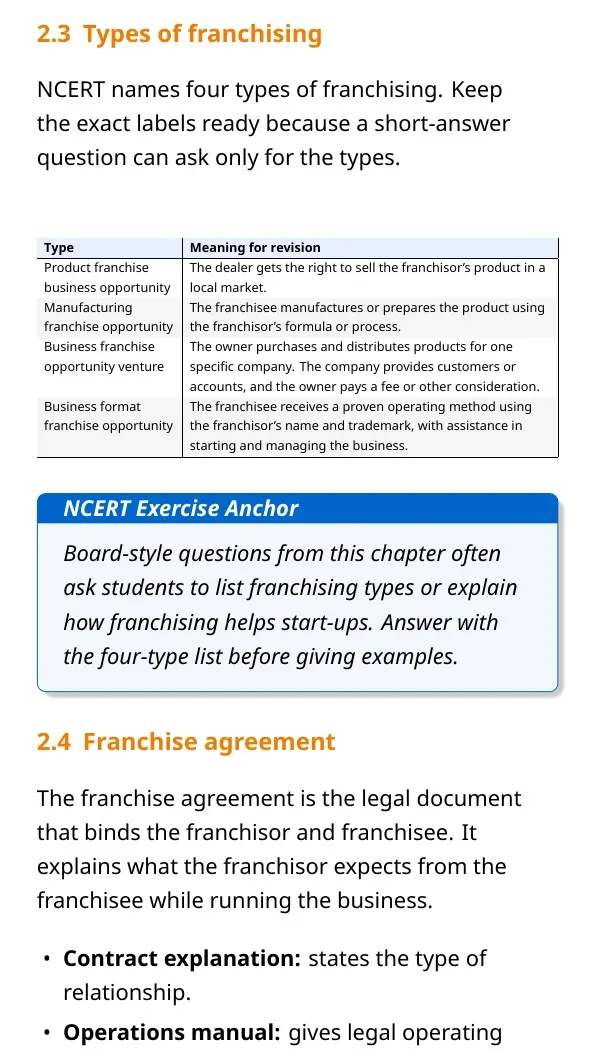
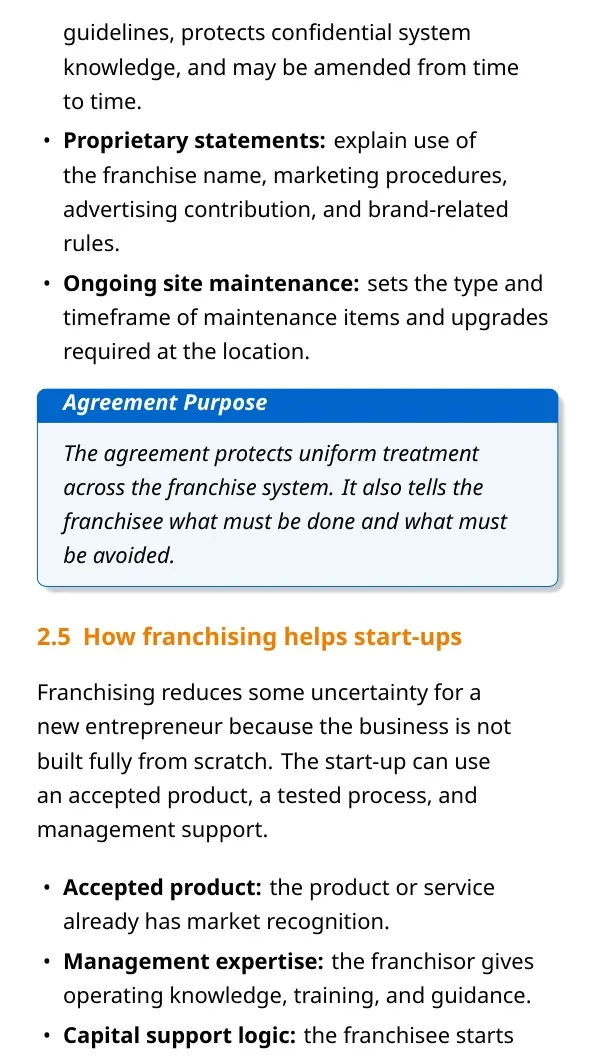
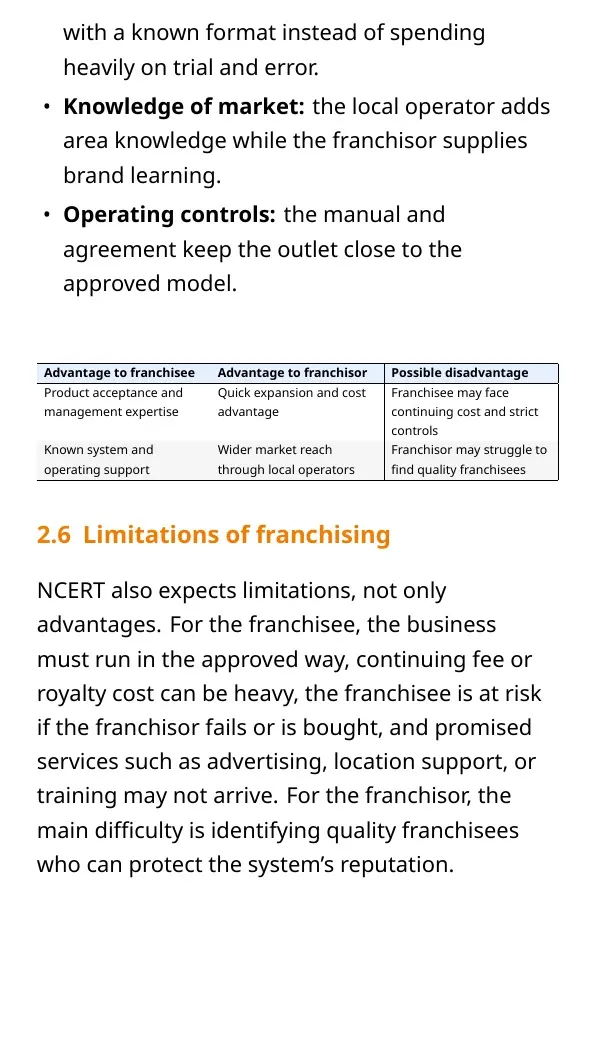
Franchising is an arrangement where the owner of a trademarked product or service gives local distribution rights to another person. The franchisee pays royalty and follows the approved operating system.
| Term | Meaning | Answer cue |
|---|---|---|
| Franchisor | Person or firm offering the franchise | Brand, system and support |
| Franchisee | Person buying the franchise right | Outlet, capital and local operation |
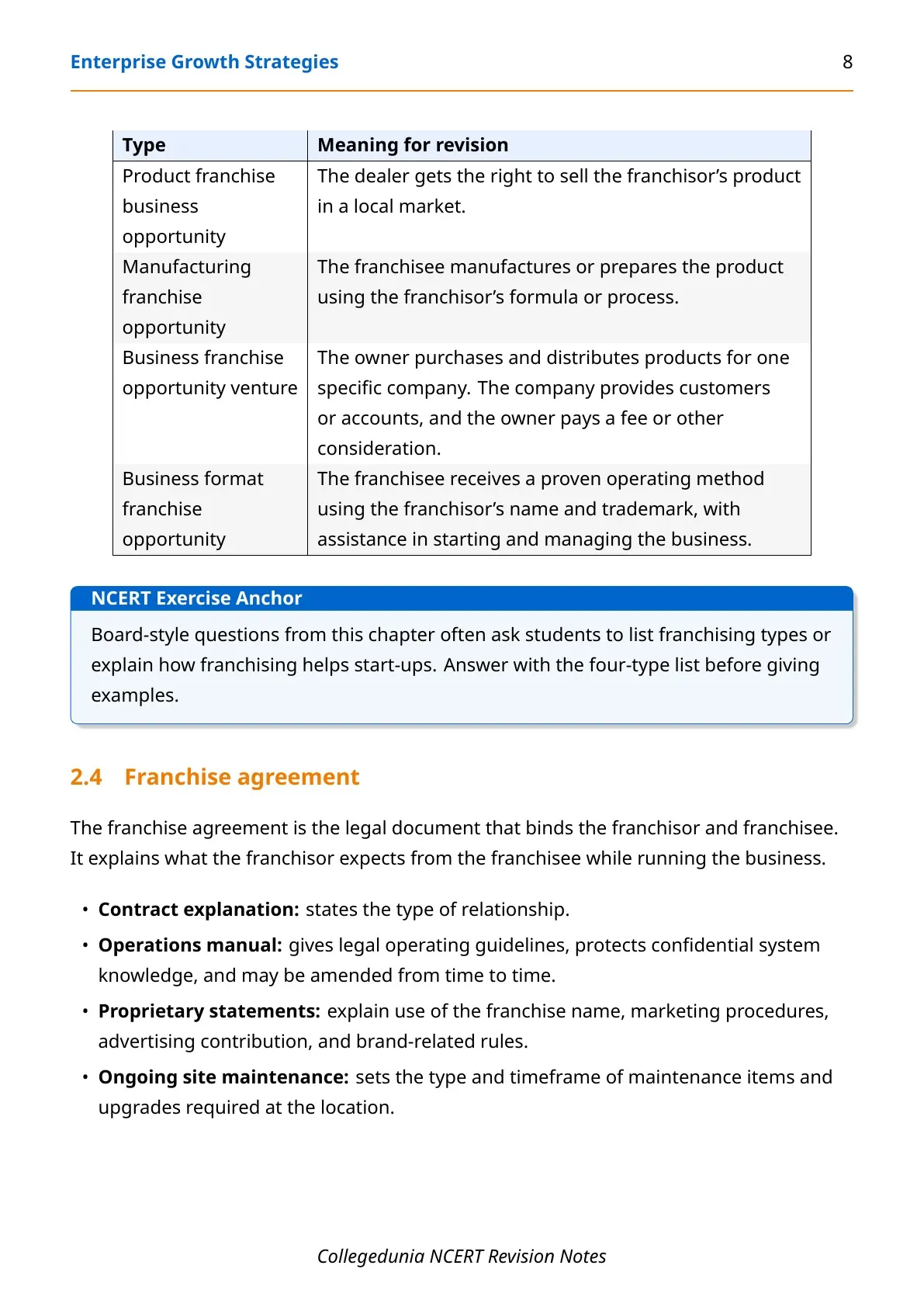
| Franchise agreement | Legal document binding both sides | Contract explanation and operations manual |
| Royalty | Payment made for using the brand and system | Paid by franchisee |
Goli Vada Pav and Natural Ice Cream Case Cues
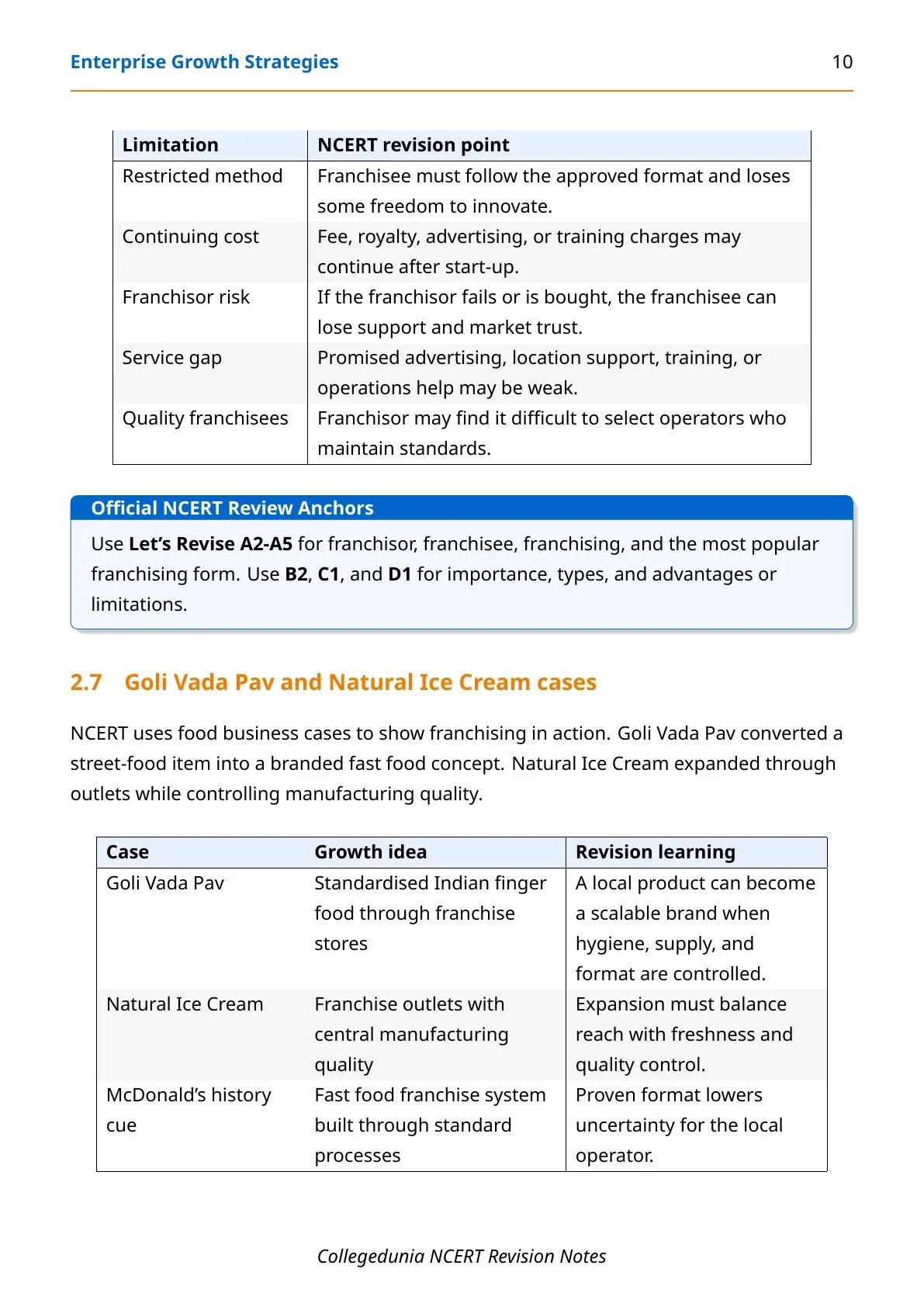
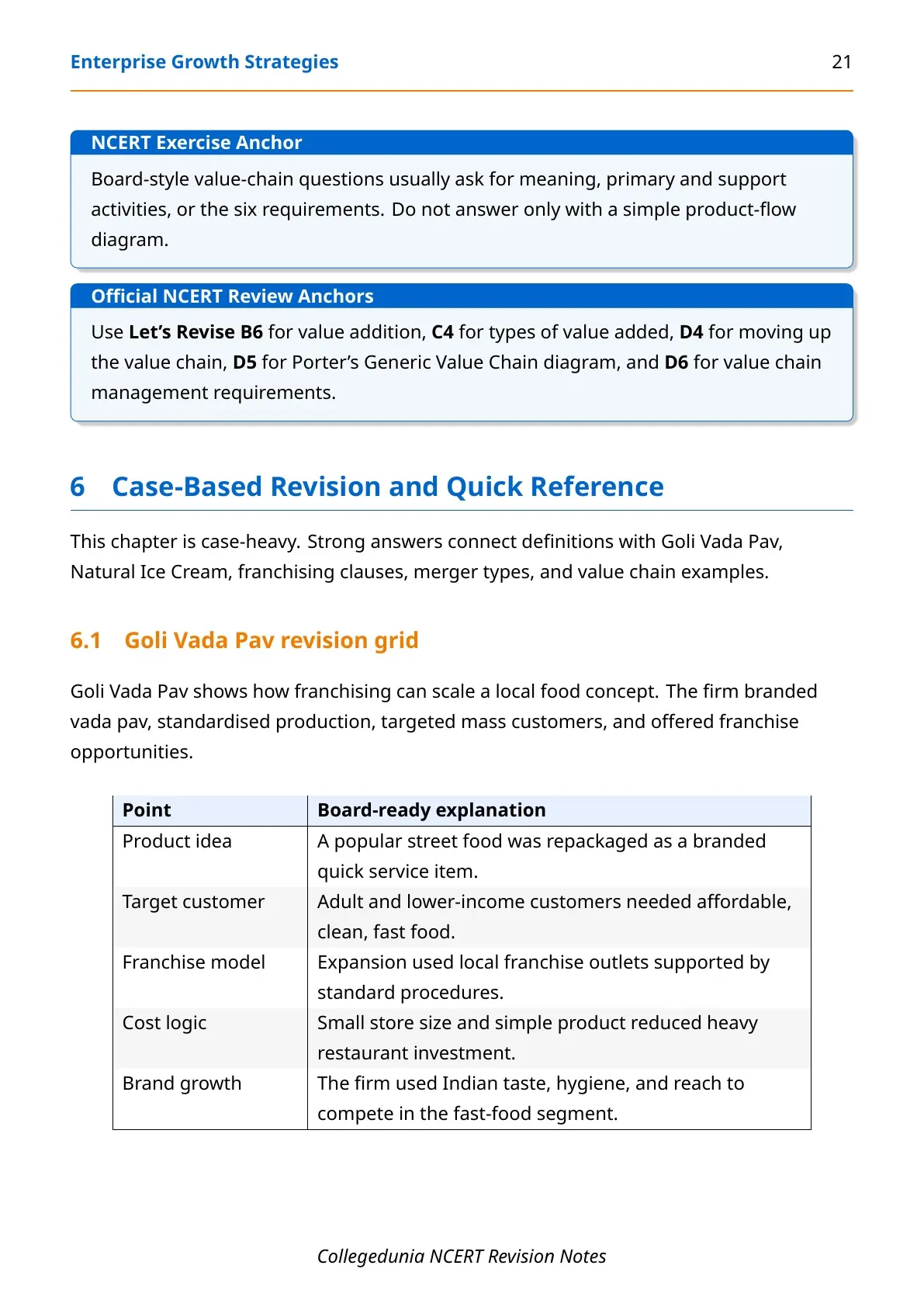
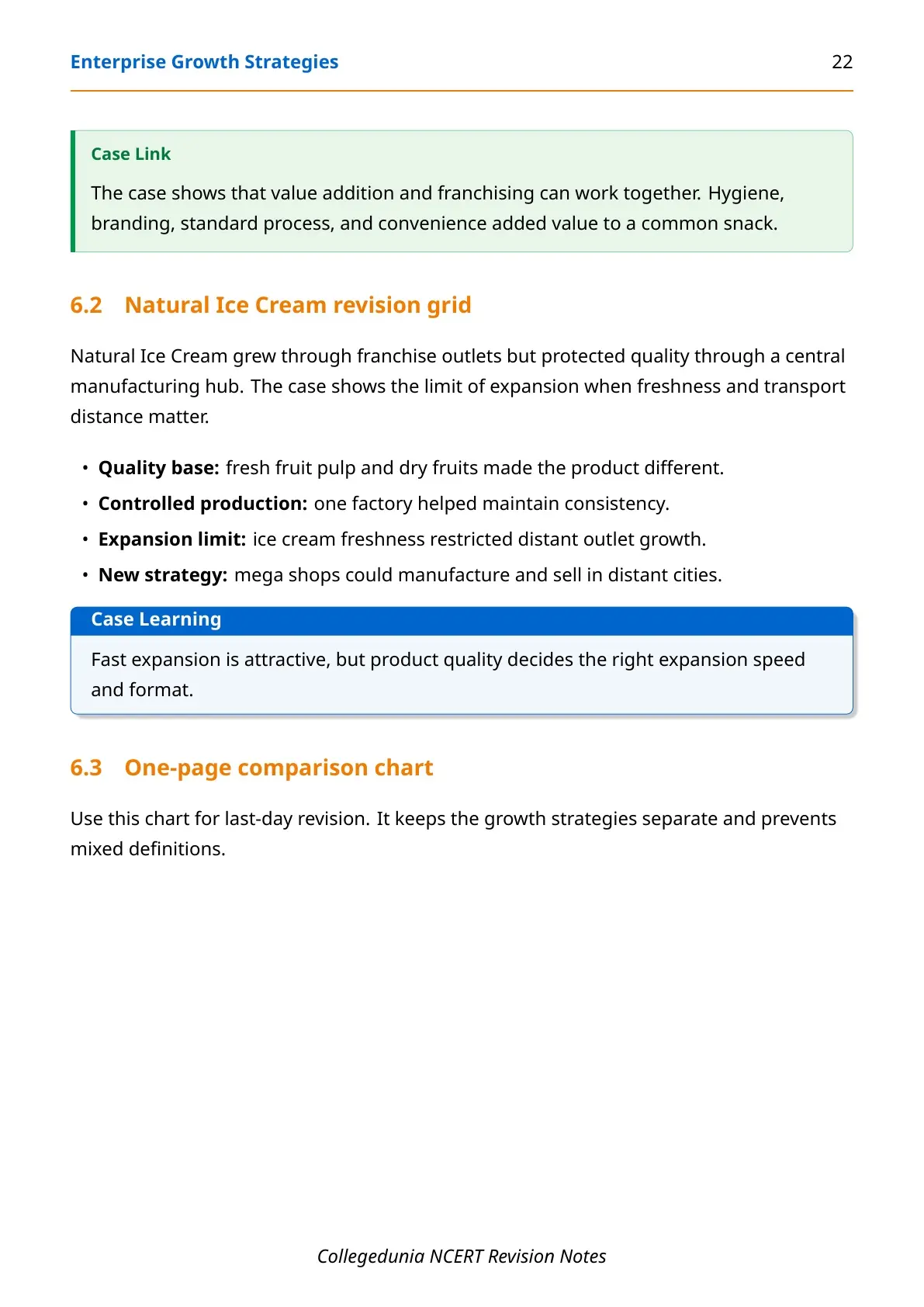
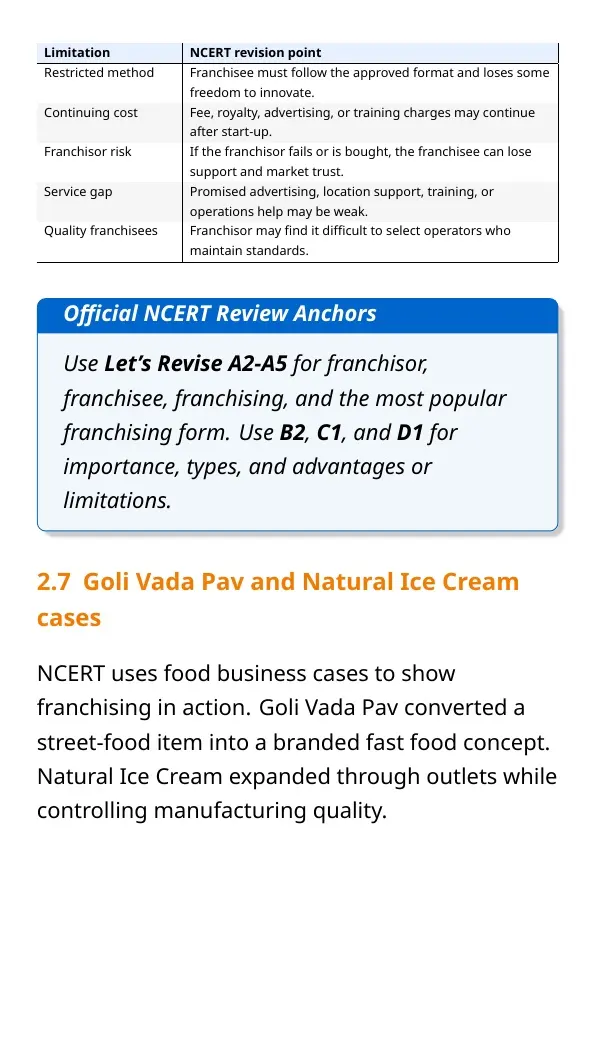
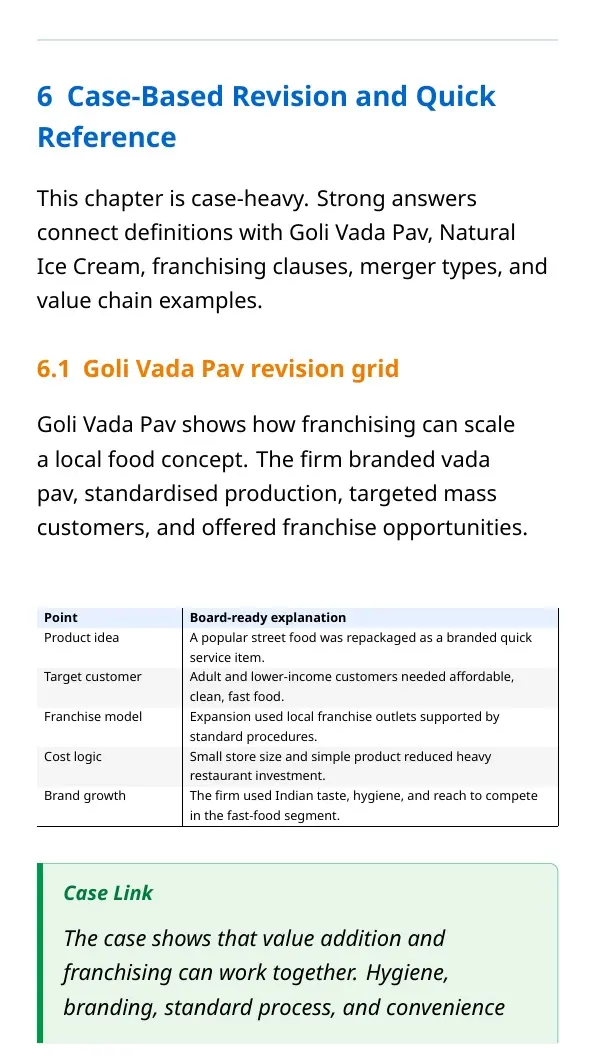
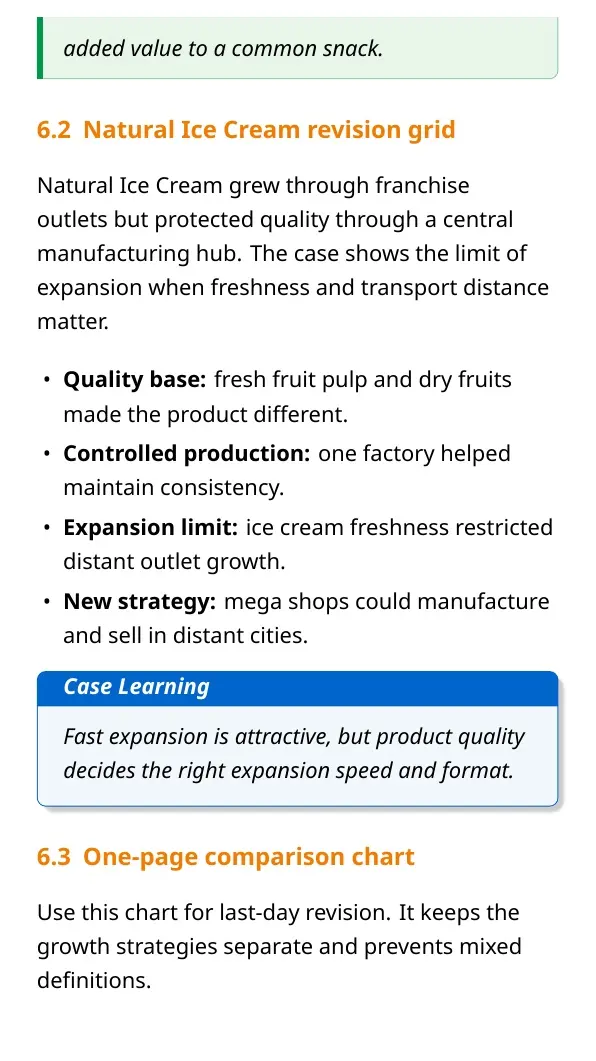
The two NCERT cases show how food businesses grow with format control. Goli Vada Pav shows branded franchising. Natural Ice Cream shows growth with strict quality and freshness limits.
- Goli Vada Pav: a local snack became a standard quick-service product.
- Natural Ice Cream: central manufacturing protected quality across outlets.
- Case answer line: expansion succeeds when format, supply and quality stay controlled.
- Common risk: fast outlet growth can hurt quality if systems are weak.
Mergers and Acquisitions in Enterprise Growth Strategies
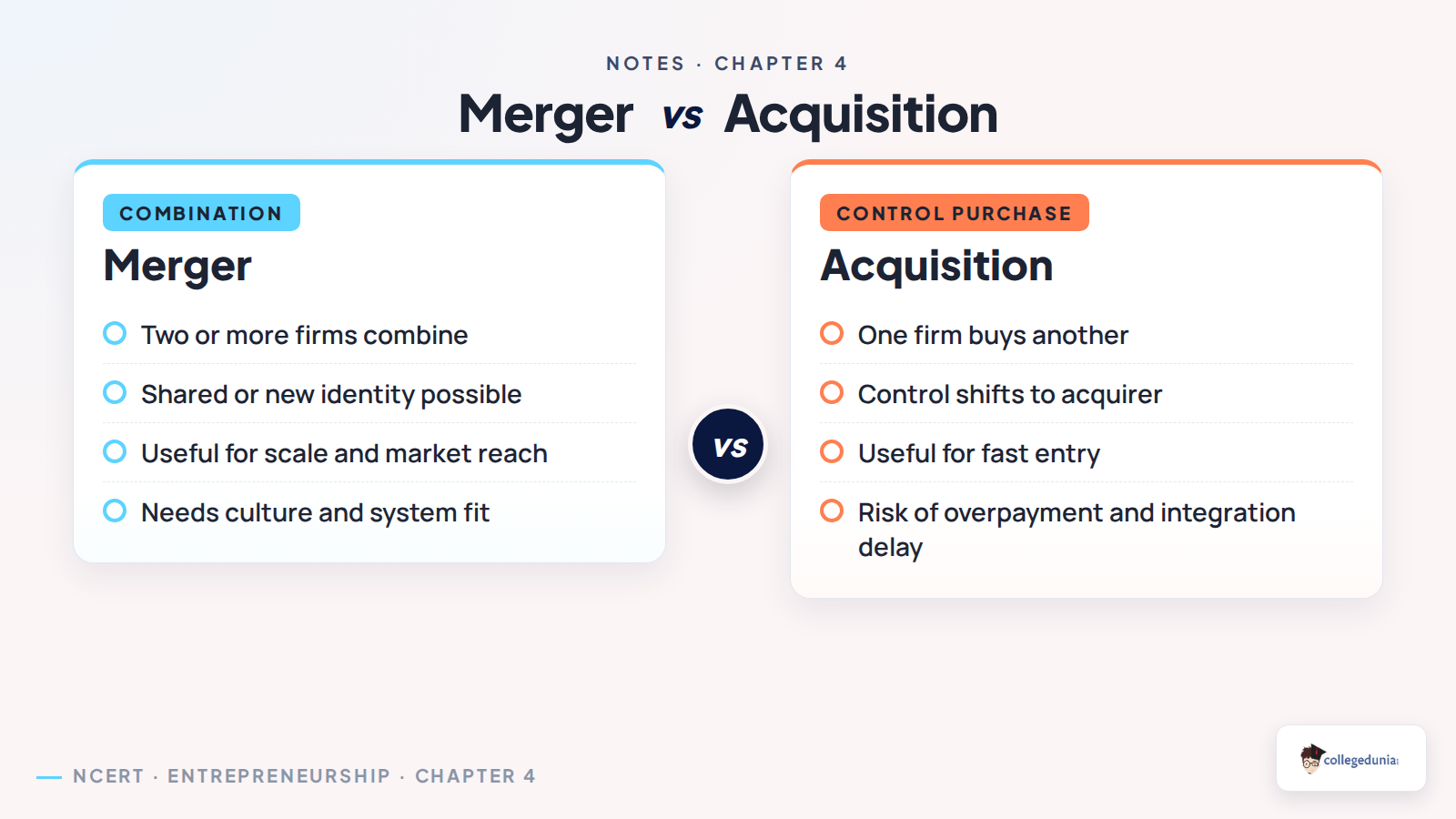
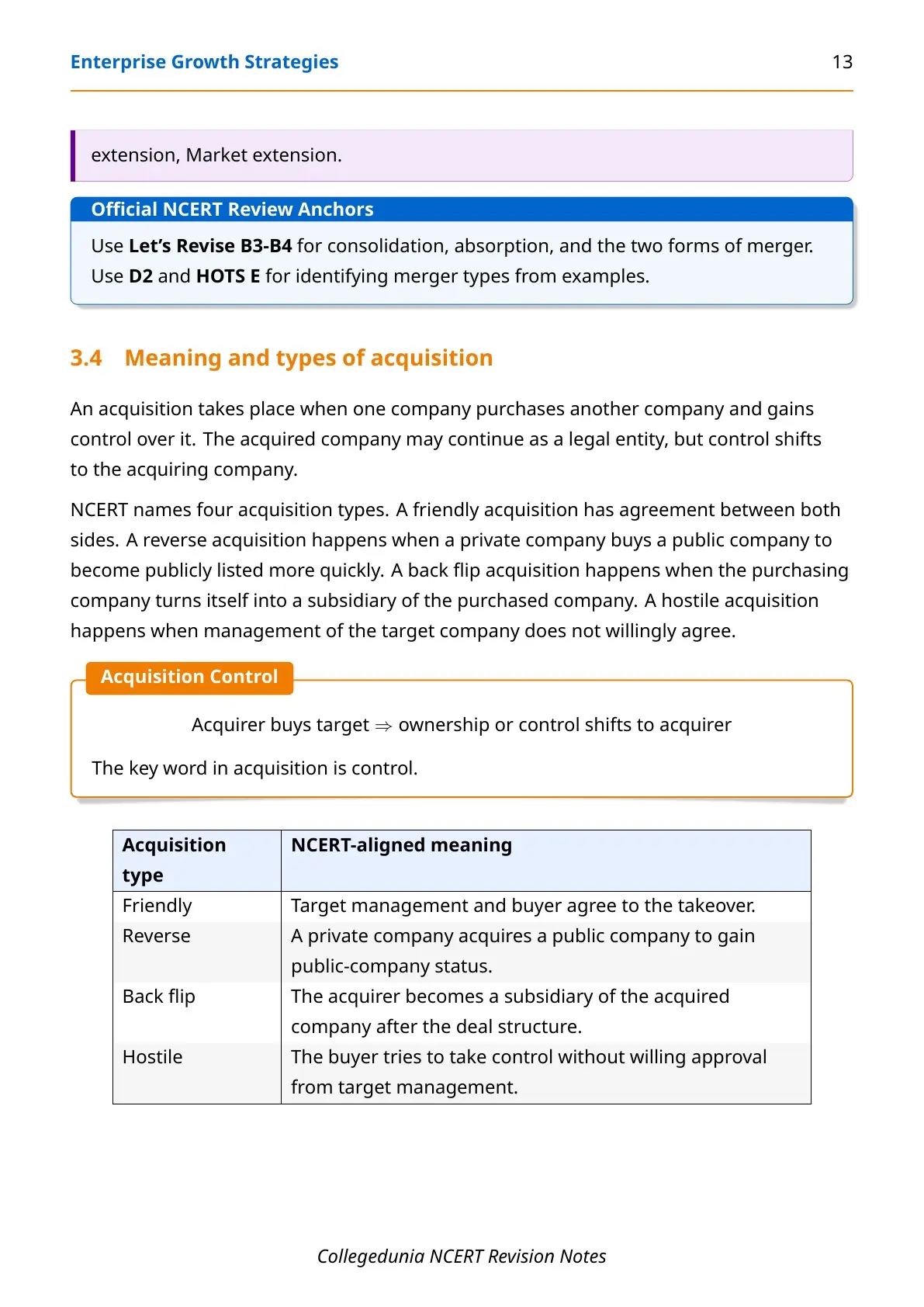
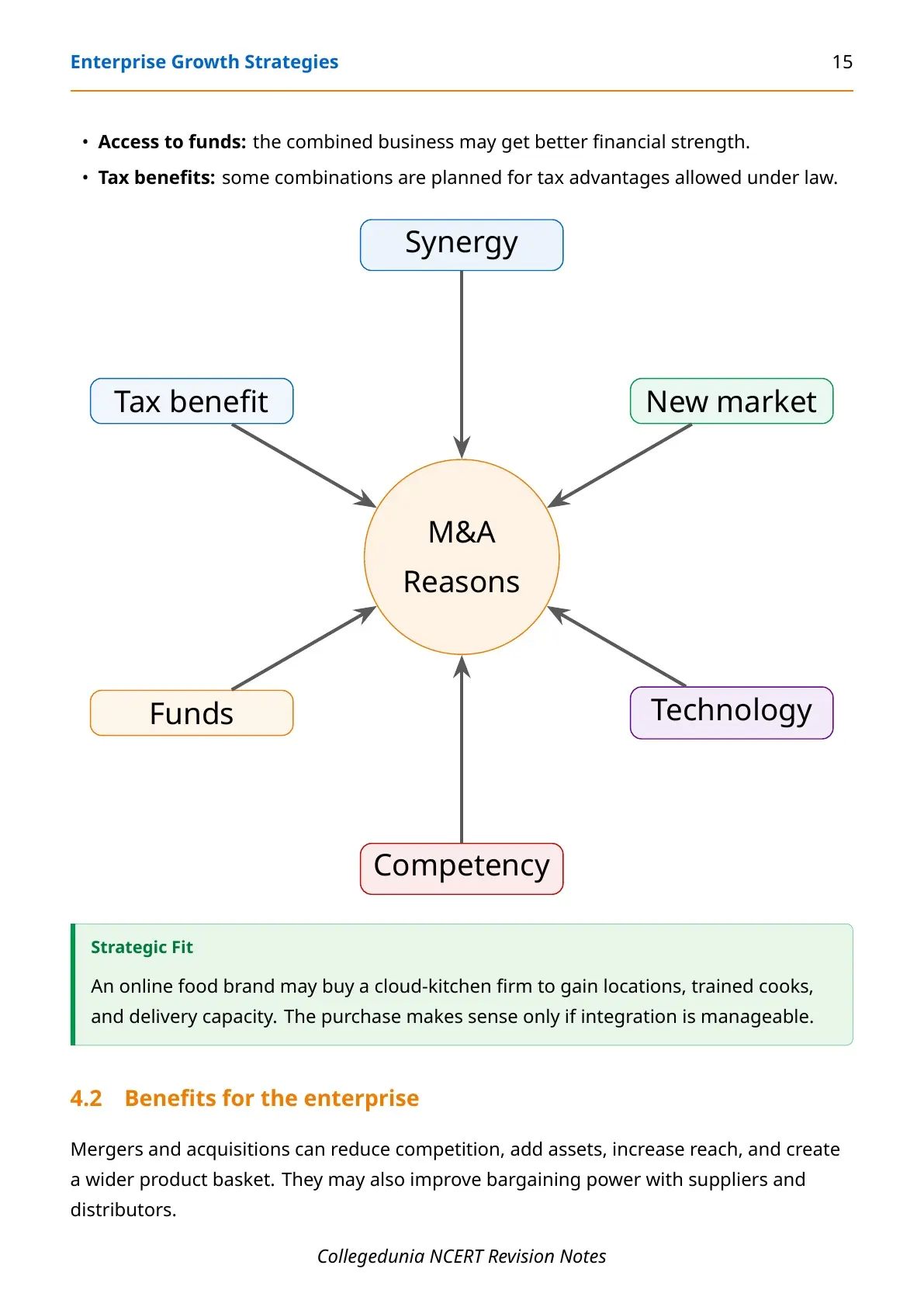
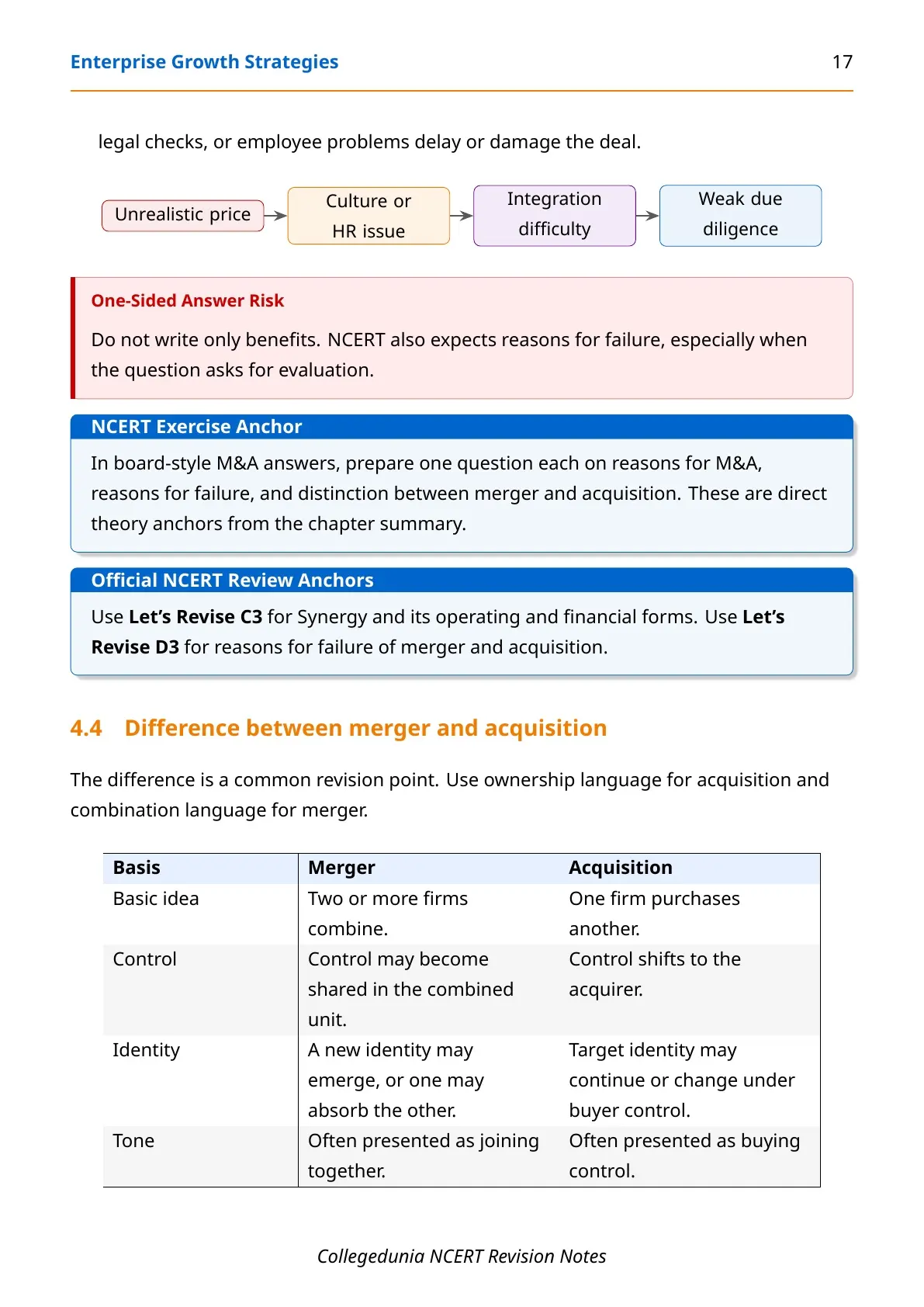
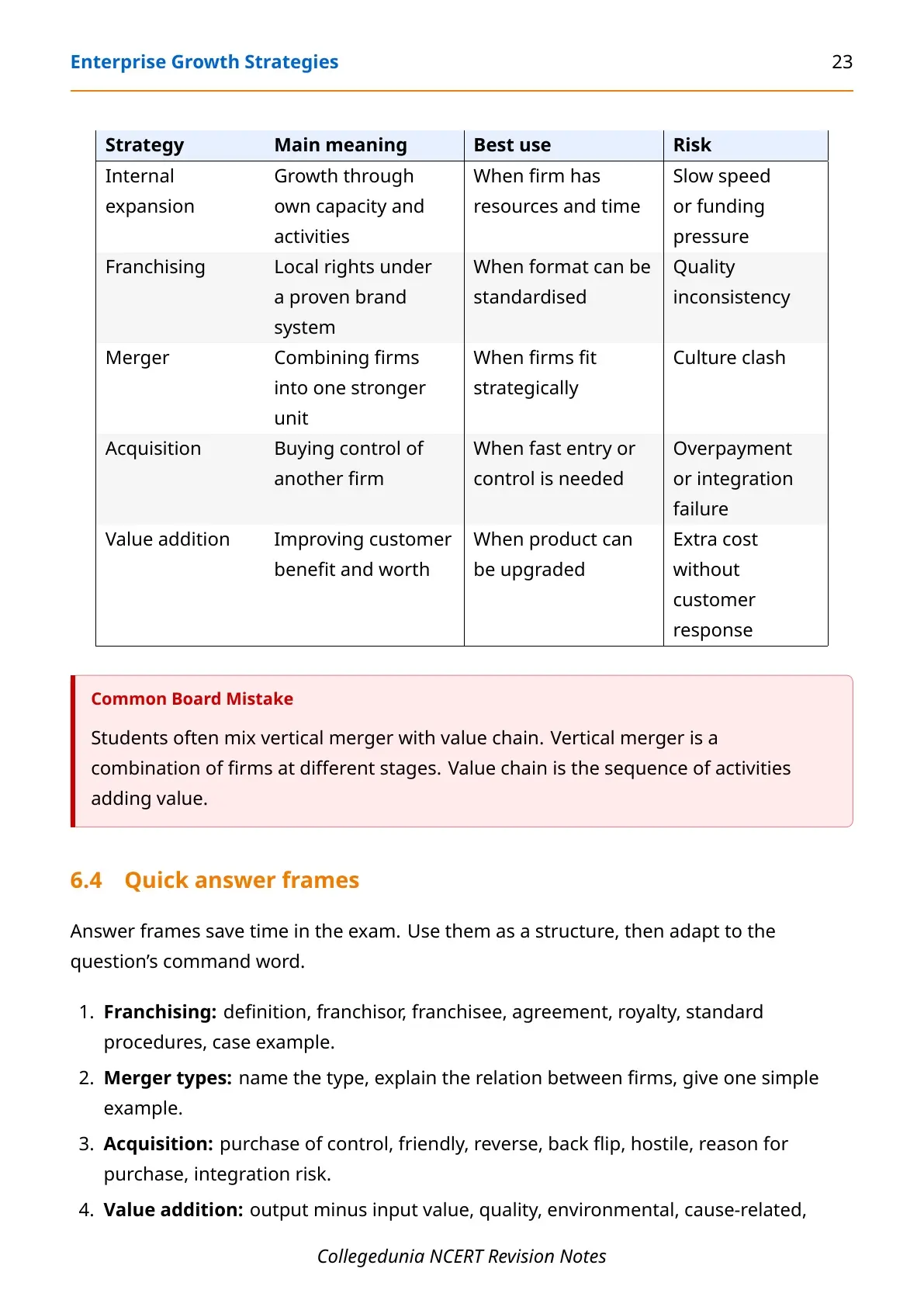
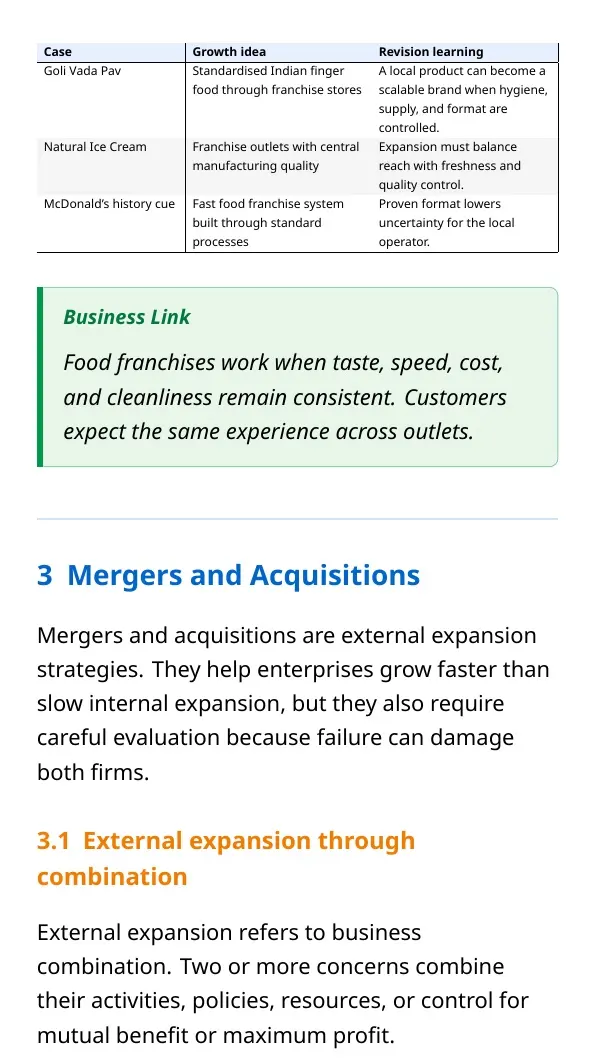
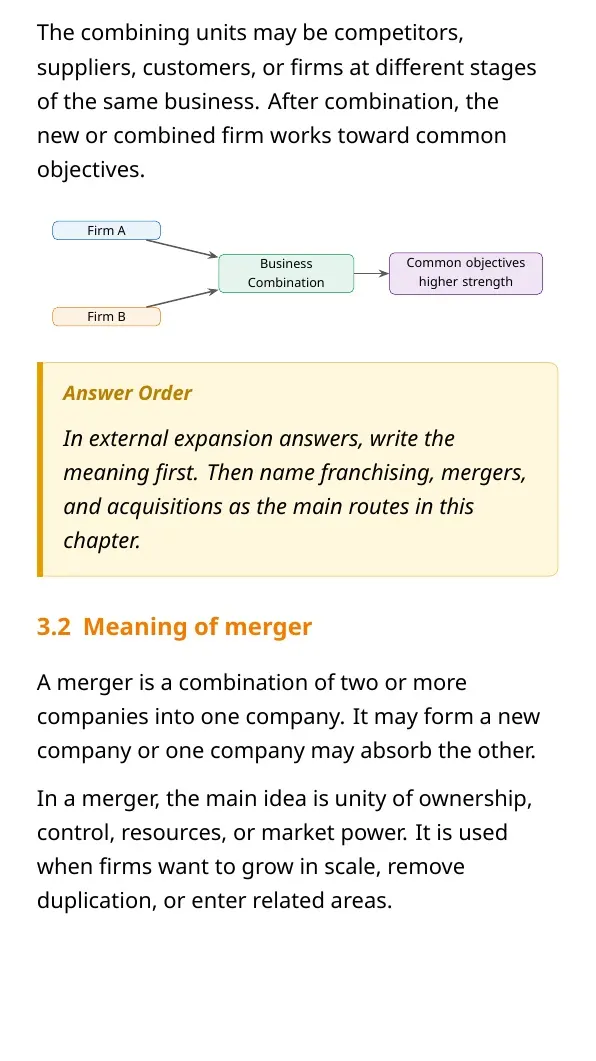
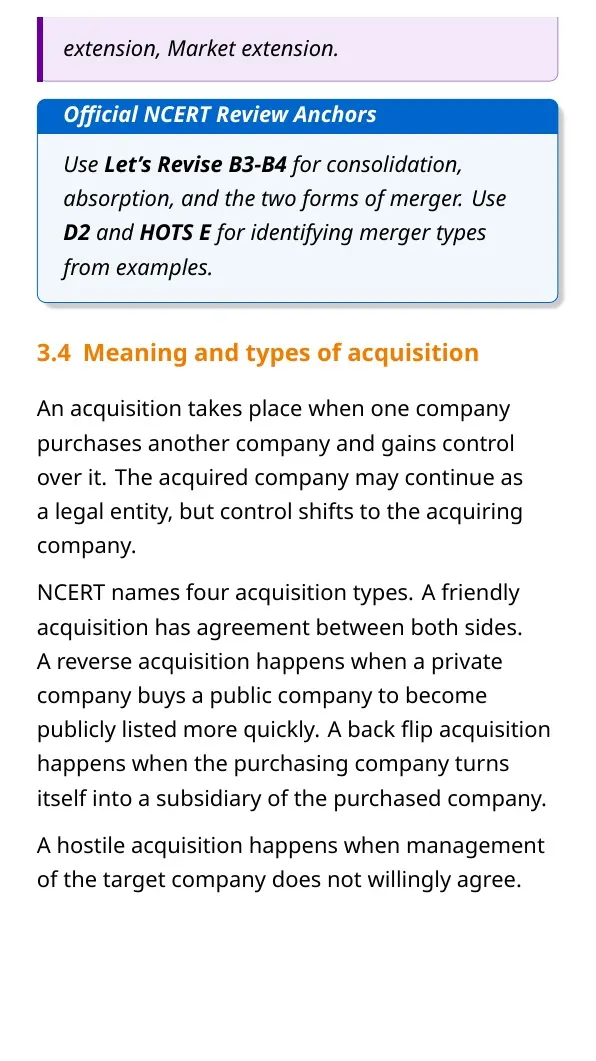
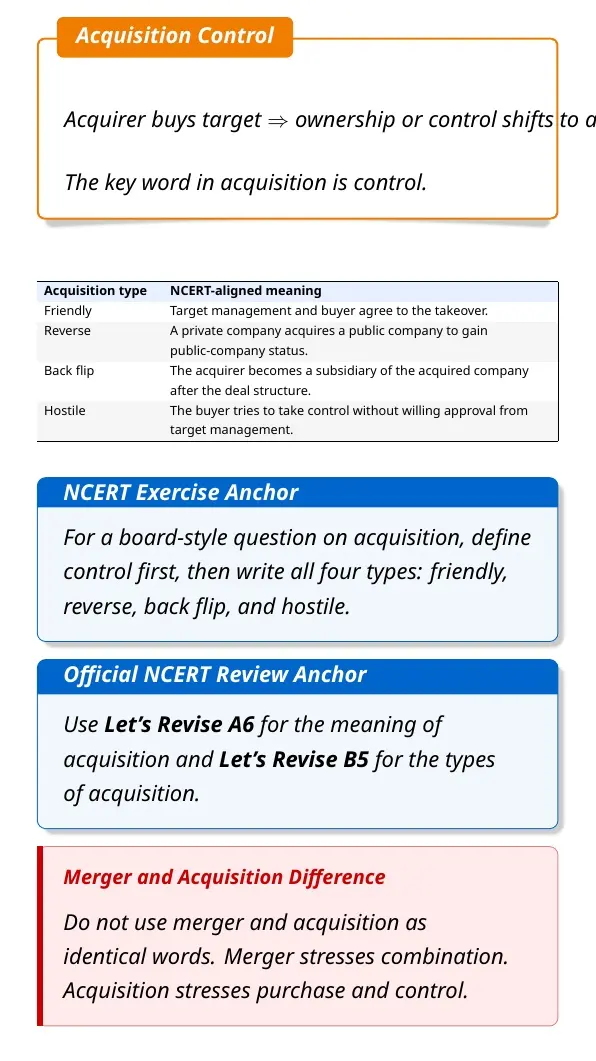
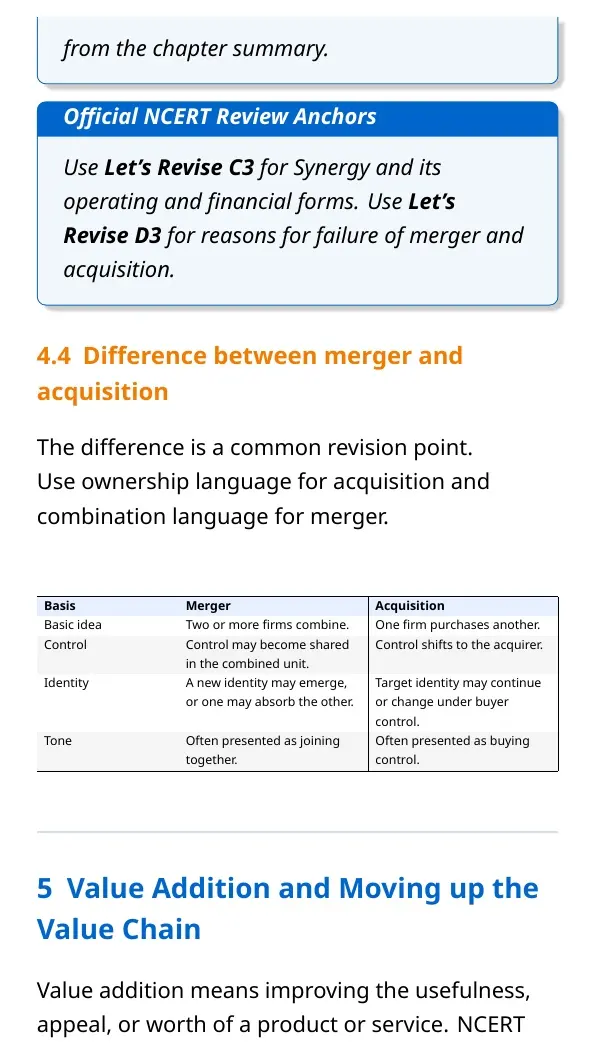
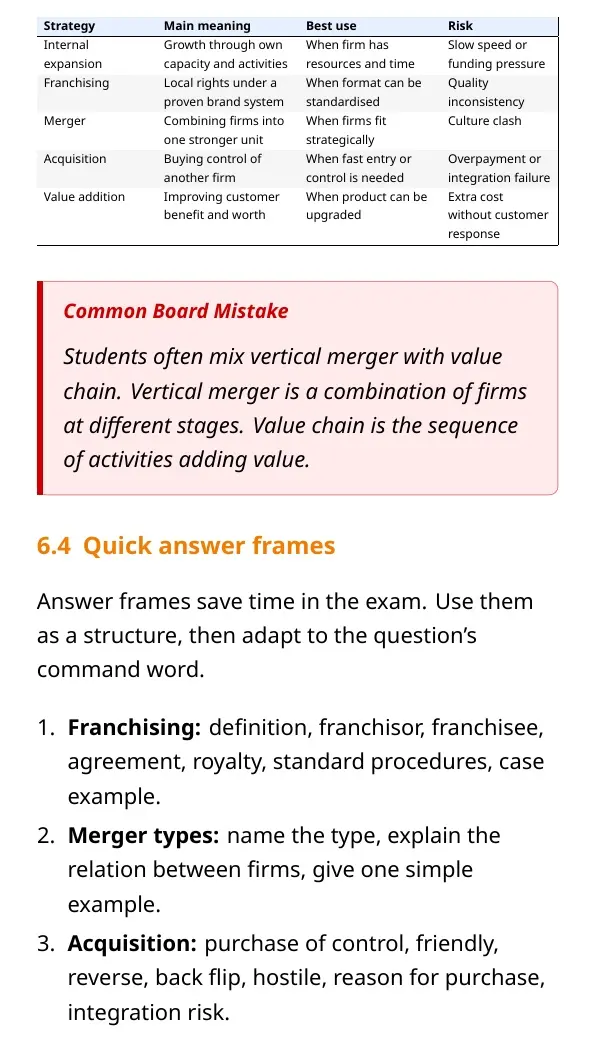
Mergers and acquisitions help a firm grow faster than slow internal expansion. A merger combines firms. An acquisition means one firm purchases another and gains control.
| Basis | Merger | Acquisition |
|---|---|---|
| Basic idea | Two or more firms combine | One firm buys another firm |
| Control | Control may become shared | Control shifts to the acquirer |
| Keyword | Combination | Purchase of control |
| Answer use | Use in merger-type questions | Use in friendly or hostile acquisition questions |
Merger Types and Failure Reasons for Class 12 Boards
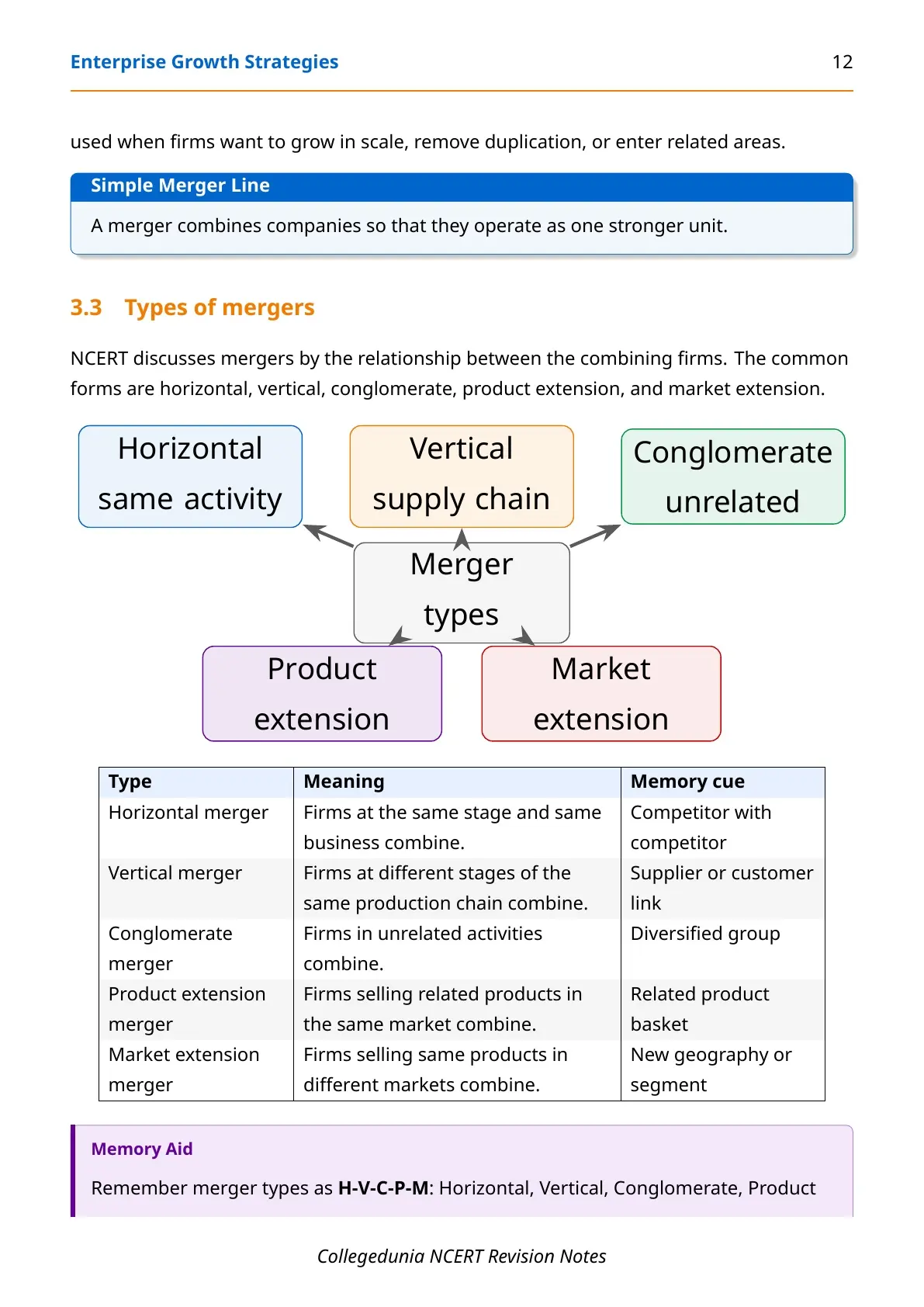
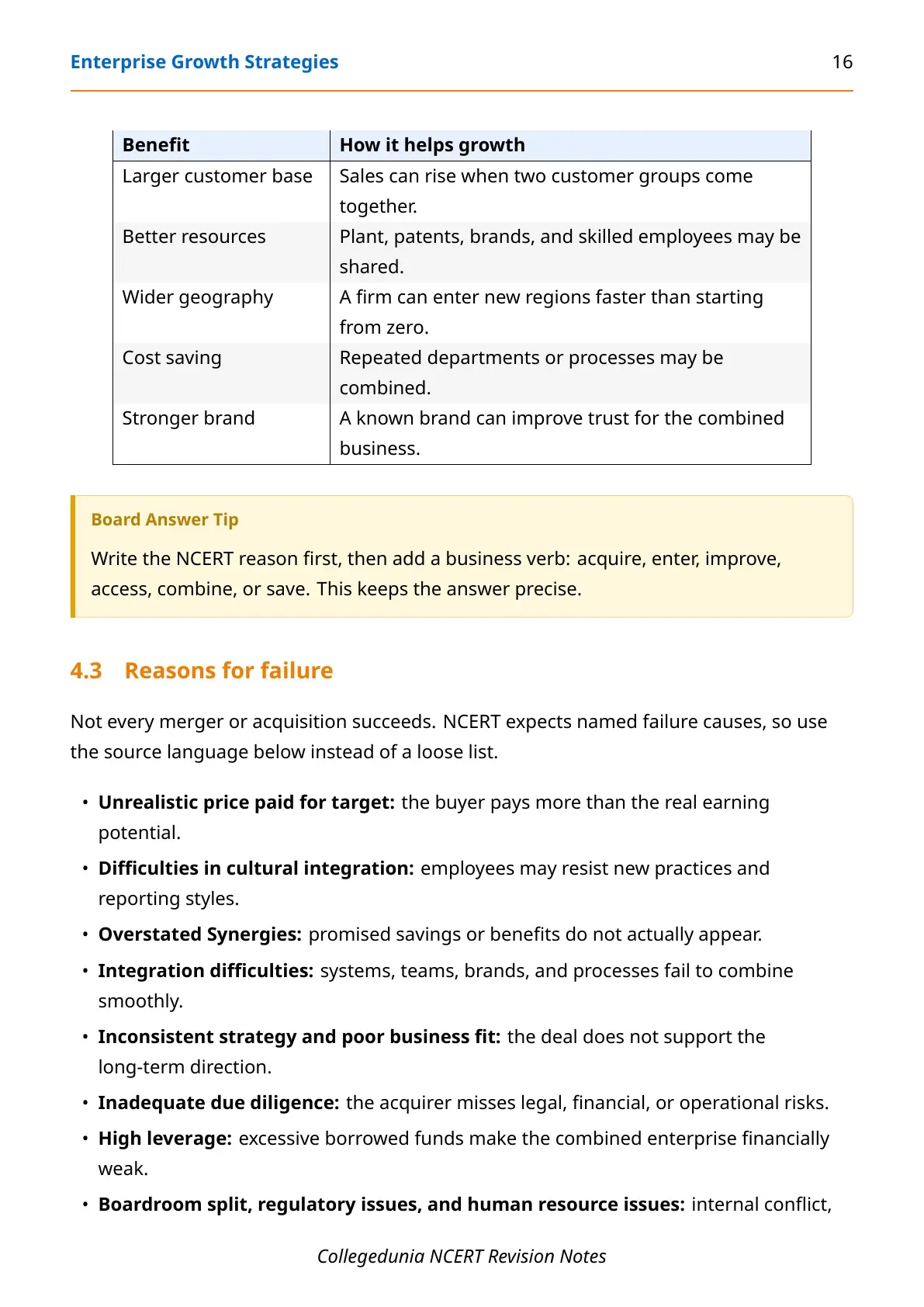
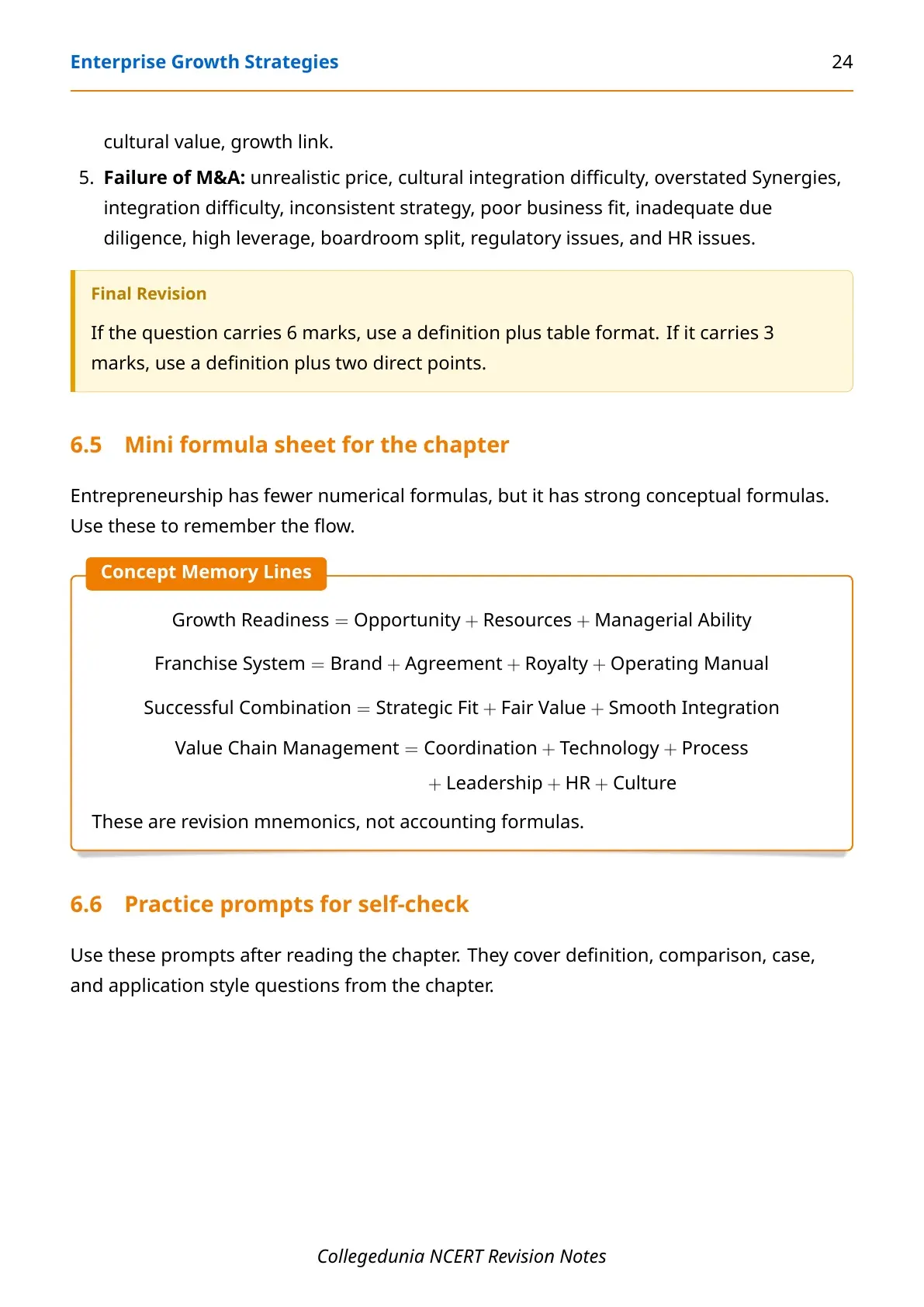
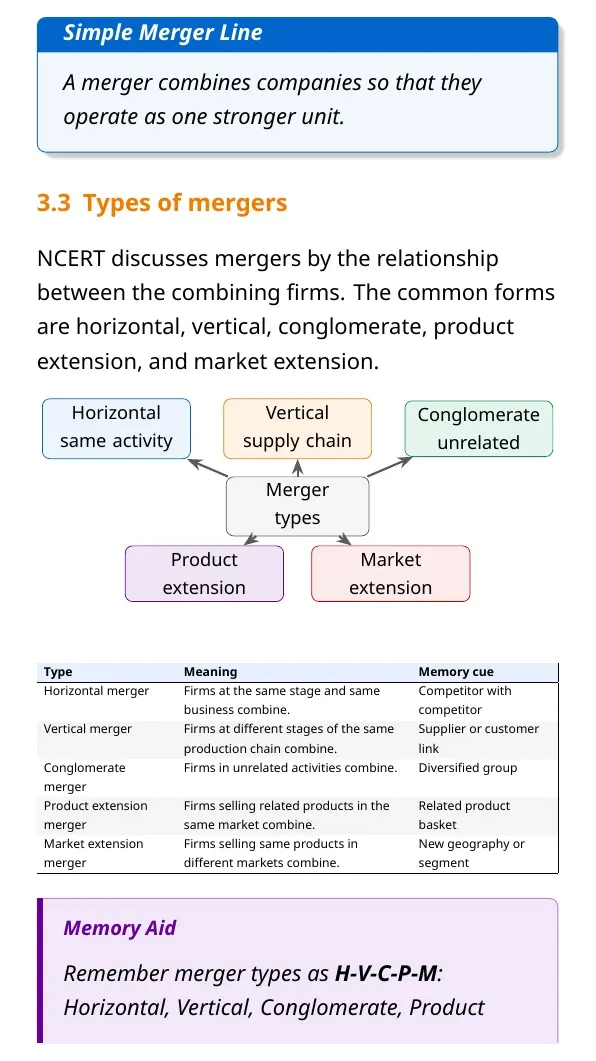
Students should write merger types by checking the relationship between the combining firms. Failure questions need a balanced answer, not only benefits.
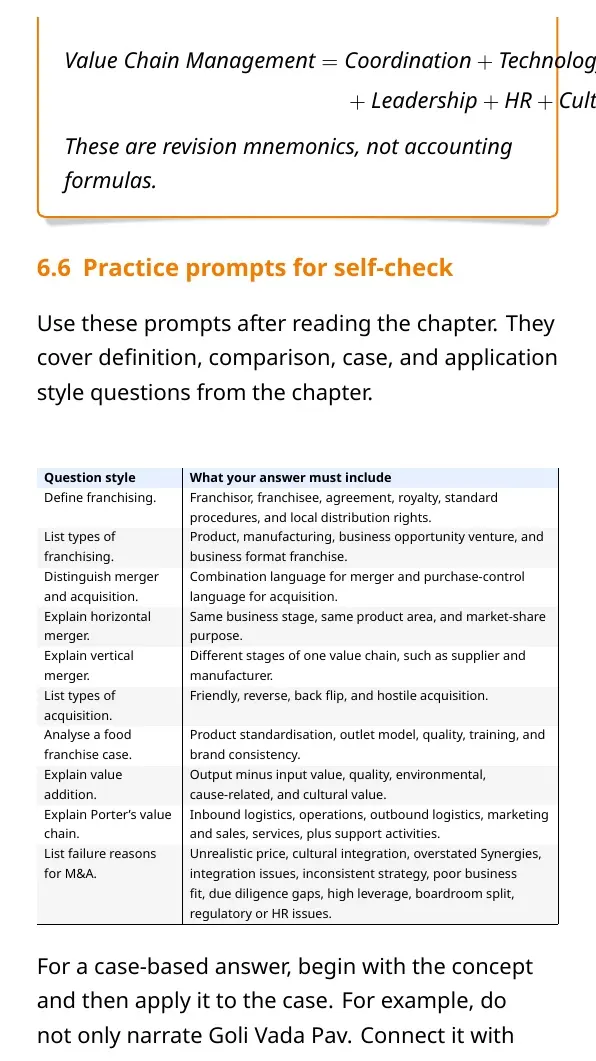
- Horizontal merger: firms at the same stage and same business combine.
- Vertical merger: firms at different stages of one supply chain combine.
- Conglomerate merger: unrelated businesses combine for wider activity.
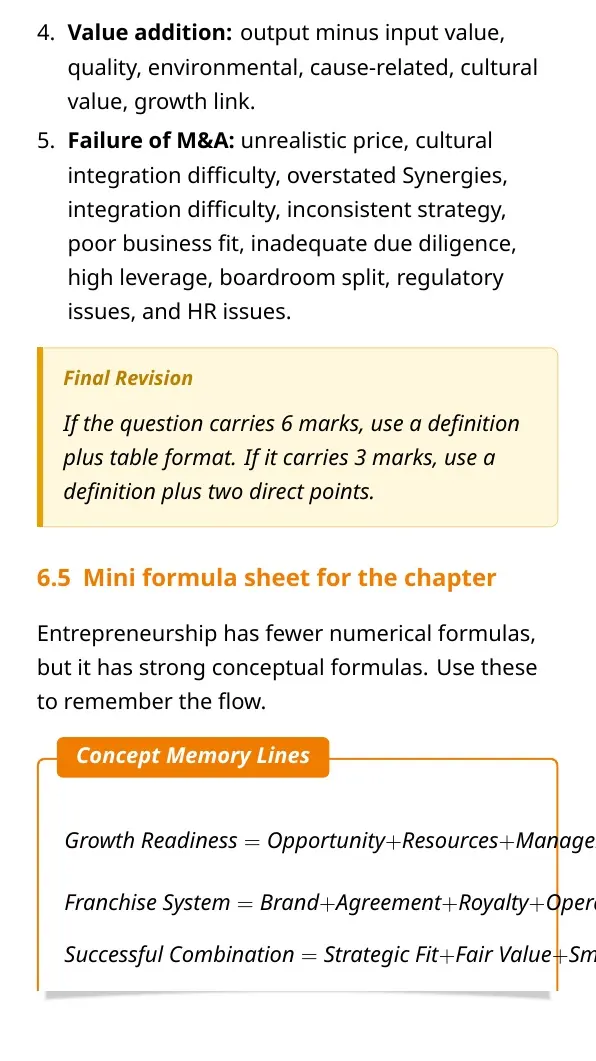
- Failure reasons: poor fit, overpayment, culture clash, system delay and loss of focus.
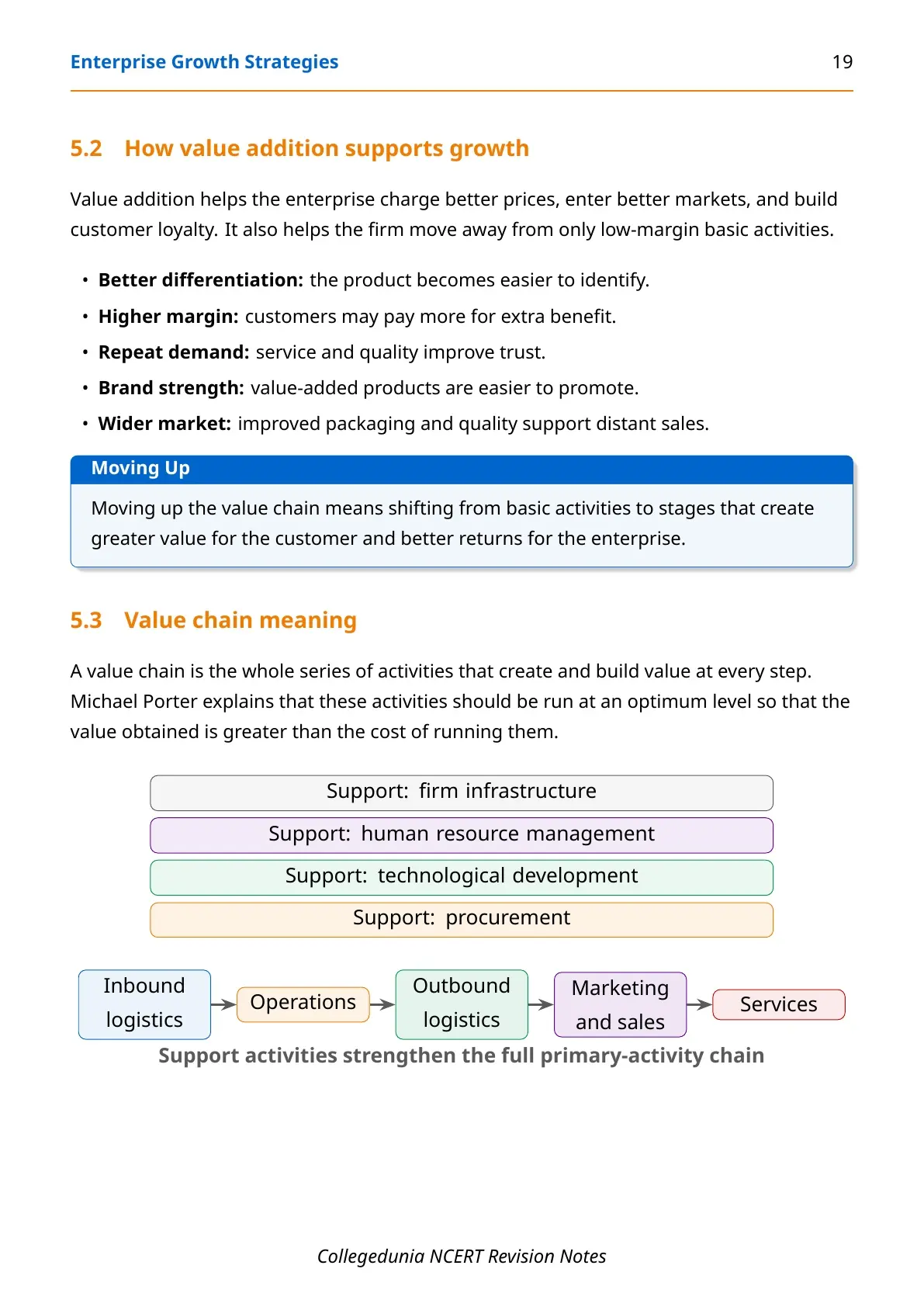
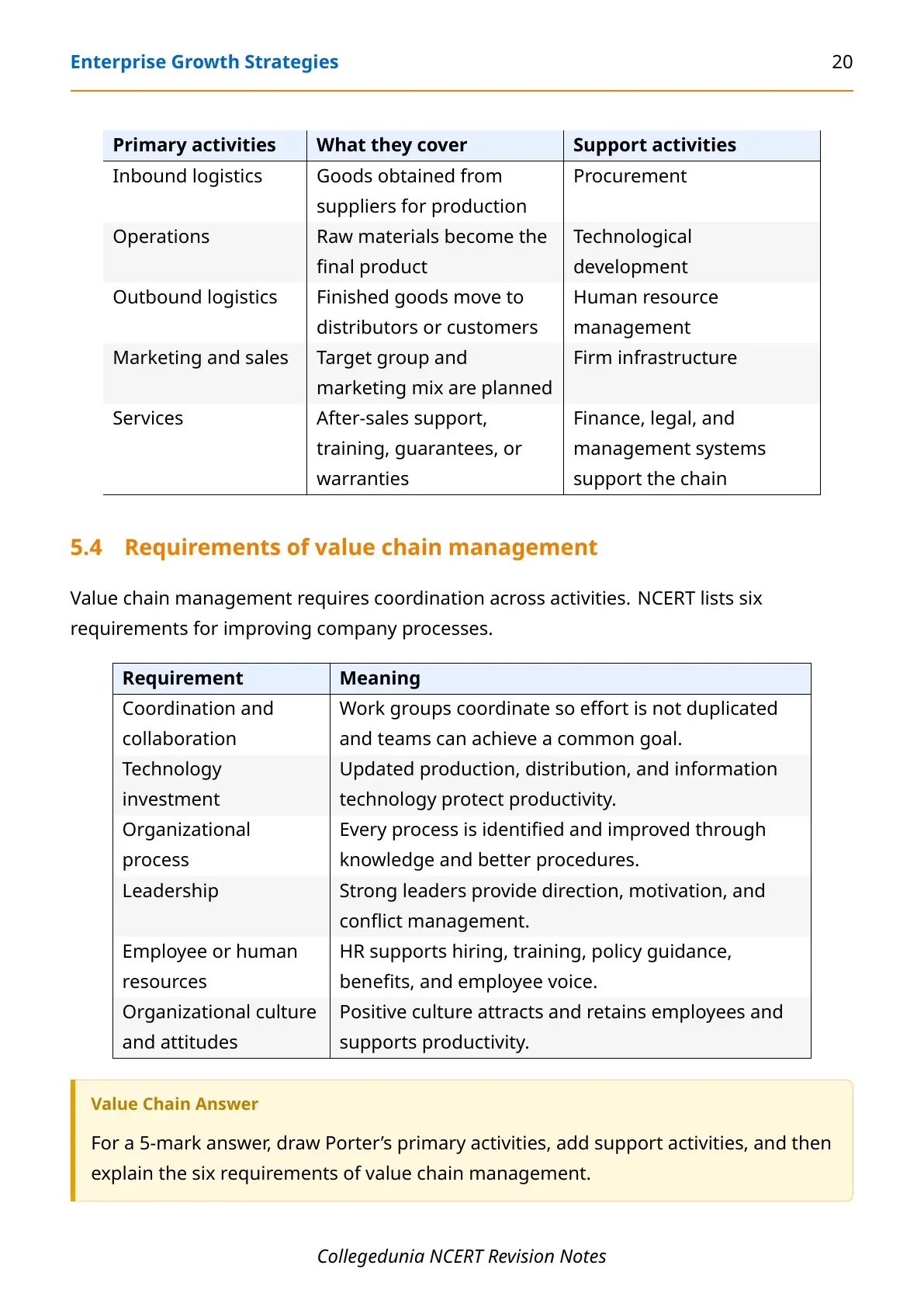
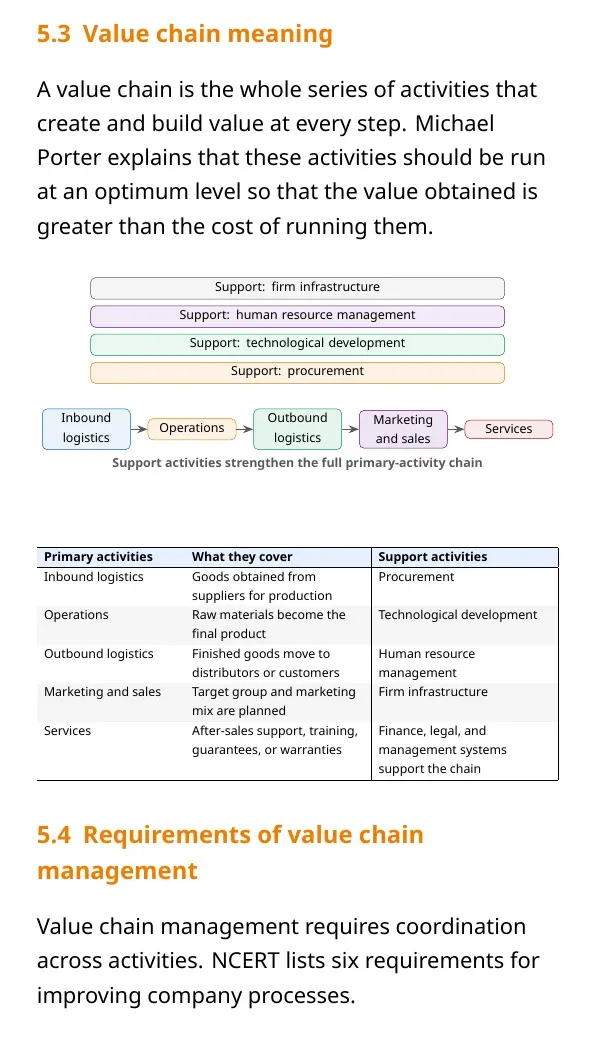
Value Addition and Value Chain Management
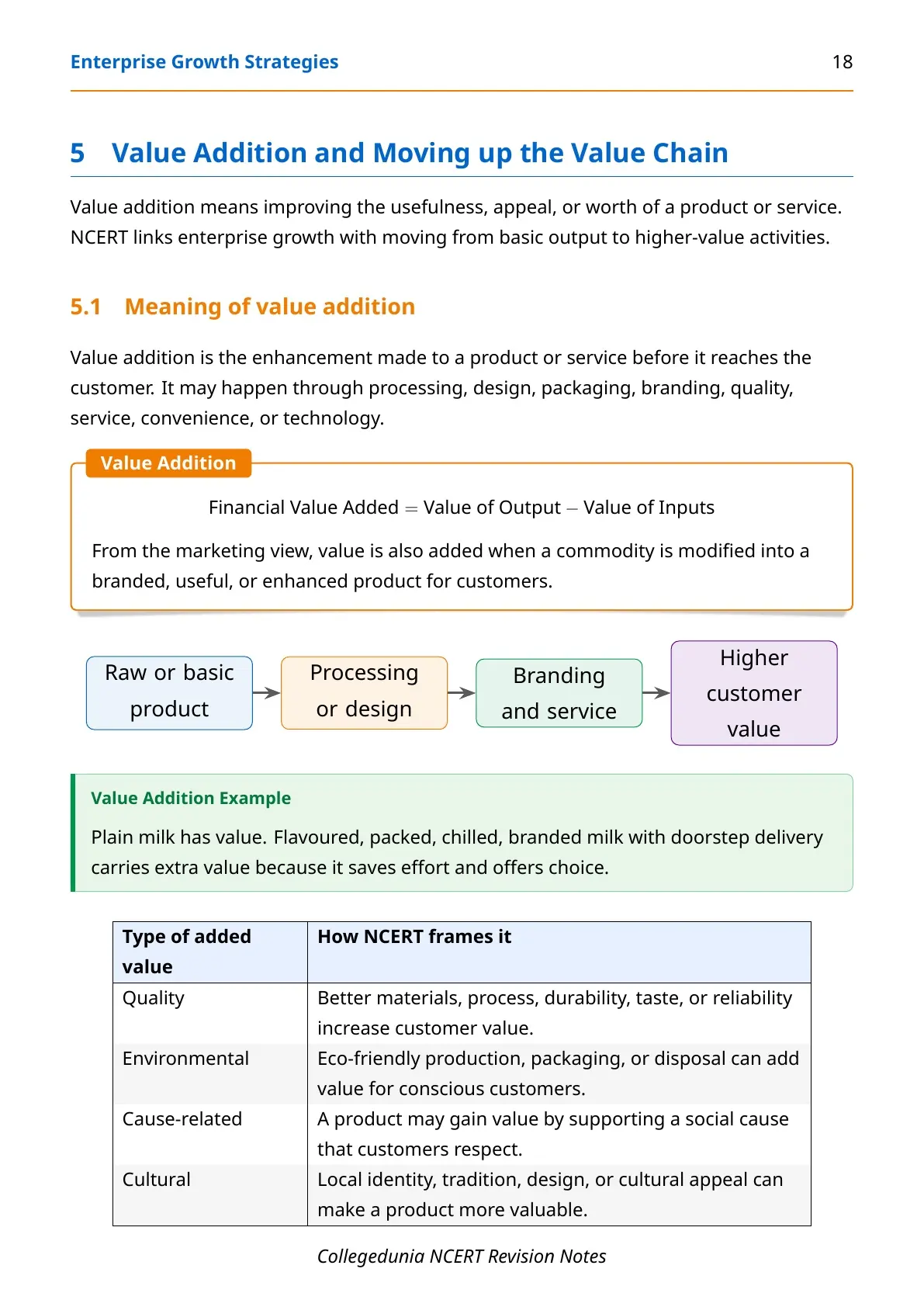
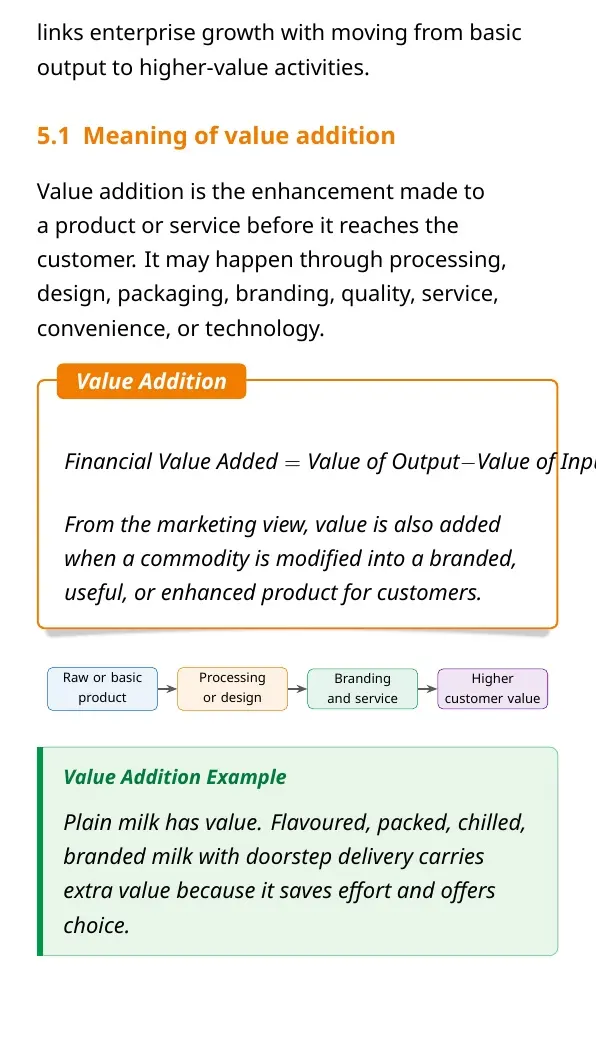
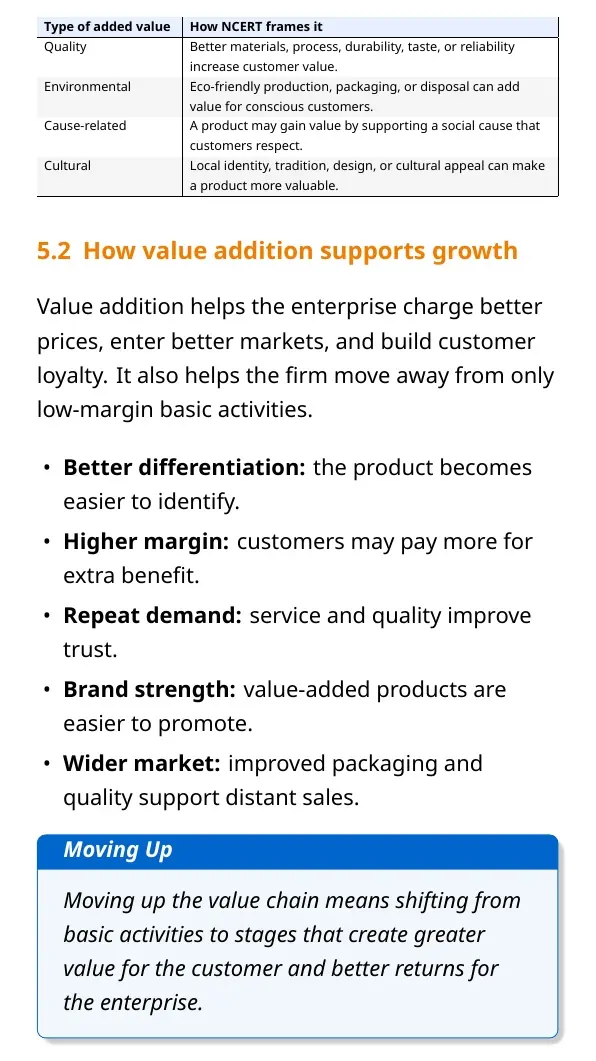
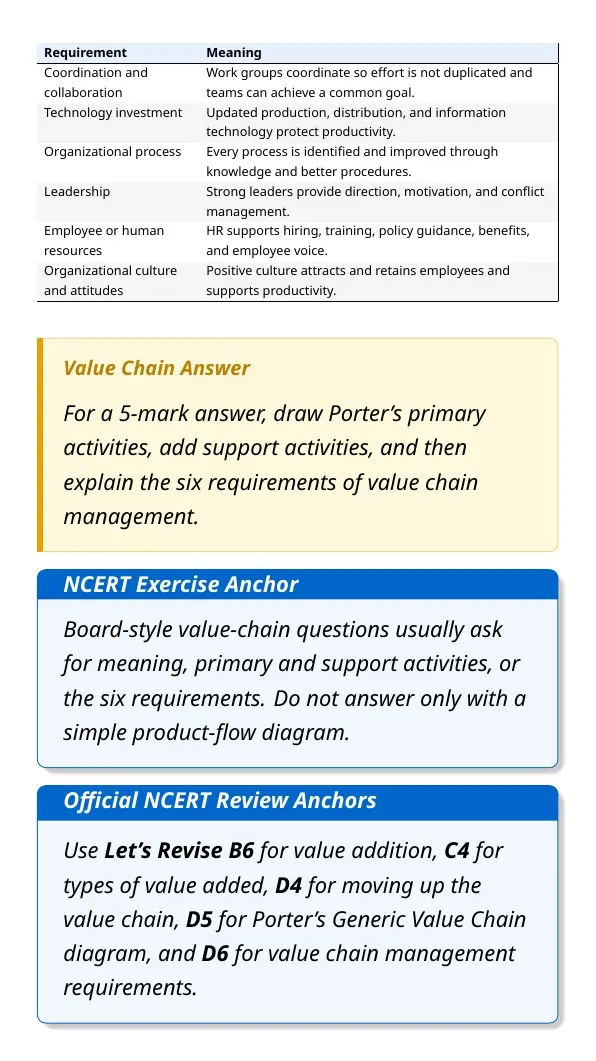
Value addition means improving the product or service before it reaches the customer. It may happen through processing, design, packaging, branding, service or convenience.
| Value chain stage | What it adds | Revision cue |
|---|---|---|
| Inputs | Raw material and basic resources | Start of the chain |
| Operations | Processing, design and quality work | Product improvement |
| Packaging and branding | Identity, safety and customer appeal | Visible value |
| Distribution | Reach and availability | Place value |
| Service | Support after sale | Loyalty and repeat demand |
Class 12 Entrepreneurship Chapter 4 Related Resources
Use the Notes PDF with these companion resources for the same chapter.
| Resource | Best use | Link |
|---|---|---|
| NCERT Solutions | Practice solved textbook questions | Enterprise Growth Strategies Class 12 NCERT Solutions |
| NCERT Book PDF | Read the official chapter | Enterprise Growth Strategies Class 12 Book PDF |
| Handwritten Notes | Revise the chapter in a quick visual format | Enterprise Growth Strategies Class 12 Handwritten Notes |
NCERT Notes for Class 12 Entrepreneurship All Chapters
The same Notes series helps students revise Entrepreneurship chapter by chapter.
| Chapter | Chapter Name | NCERT Notes |
|---|---|---|
| Chapter 1 | Entrepreneurial Opportunity | View notes |
| Chapter 2 | Entrepreneurial Planning | View notes |
| Chapter 3 | Enterprise Marketing | View notes |
| Chapter 4 | Enterprise Growth Strategies | Current notes |
| Chapter 5 | Business Arithmetic | View notes |
| Chapter 6 | Resource Mobilisation | View notes |
Enterprise Growth Strategies Class 12 Notes FAQs
Ques. What do Class 12 Entrepreneurship Chapter 4 Enterprise Growth Strategies notes cover?
Ans. The notes cover growth routes, franchising, franchise agreements, mergers, acquisitions, value addition and value chain management.
Ques. What is franchising in Enterprise Growth Strategies?
Ans. Franchising is an arrangement where the franchisor gives local distribution rights to a franchisee for royalty and standard procedure compliance.
Ques. What is the difference between merger and acquisition?
Ans. A merger combines firms into one stronger unit. An acquisition happens when one company buys another and gains control.
Ques. What are the main types of mergers in Class 12 Entrepreneurship?
Ans. The main types are horizontal, vertical, conglomerate, product extension and market extension mergers.
Ques. What is value addition in Enterprise Growth Strategies?
Ans. Value addition means improving a product or service through processing, design, packaging, branding, service or convenience.



Comments