



Inside the Class 12 KTPI notes for Agriculture, you will find early farming evidence, land types, irrigation, seeds, manures, crop protection, cattle care and horticulture. The coverage follows the 2026-27 NCERT chapter and turns its many Sanskrit terms, dates and practices into quick revision points.
- Core focus: connect ancient texts with practical farming methods.
- Quick recall: revise land classes, water systems and organic manures through tables.
- Exam help: separate evidence, source texts and agricultural uses.






These Collegedunia Agriculture notes follow the 2026-27 NCERT text and keep every historical claim tied to the chapter.
Agriculture in Prehistory and the Indus Civilisation
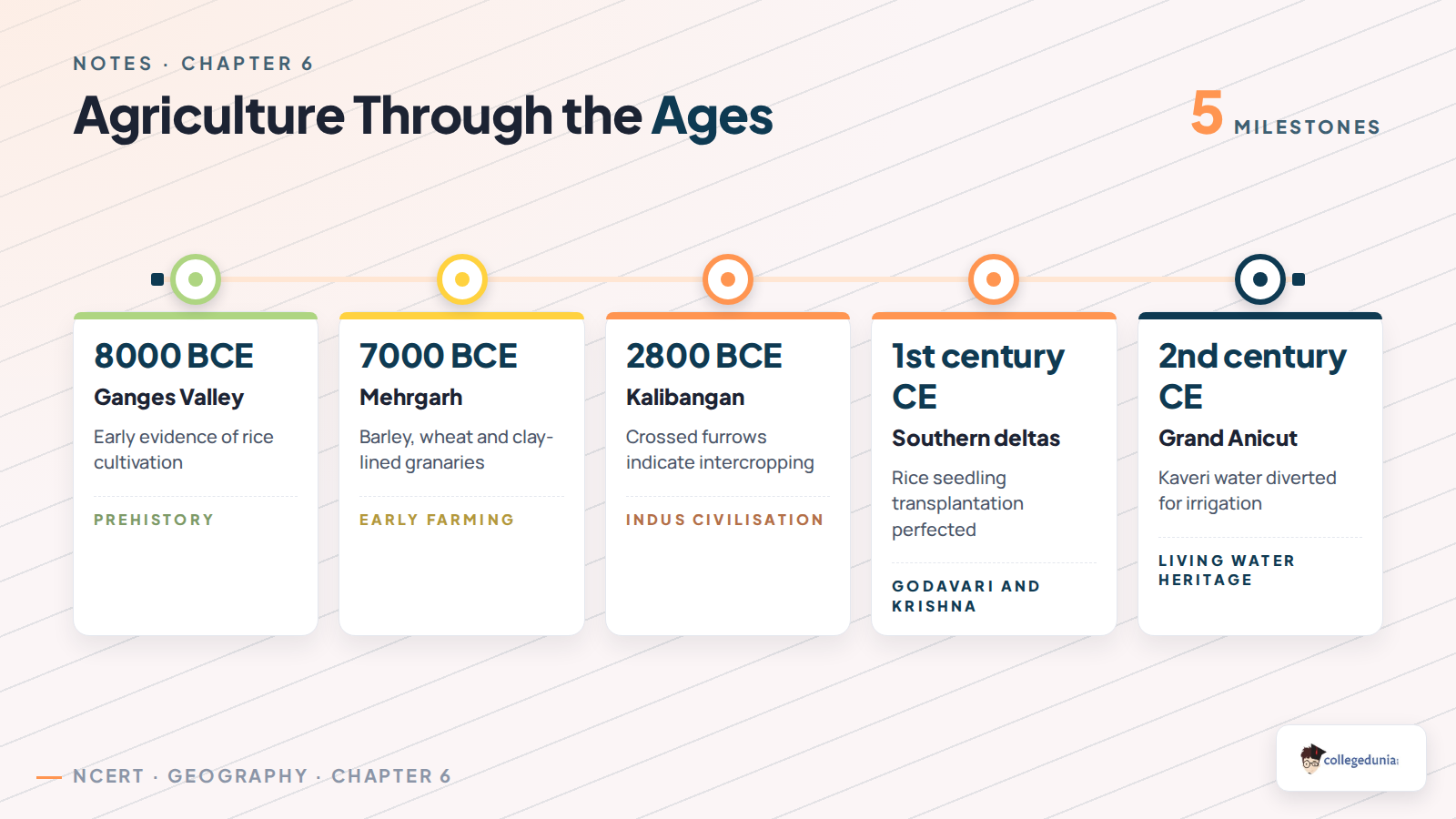
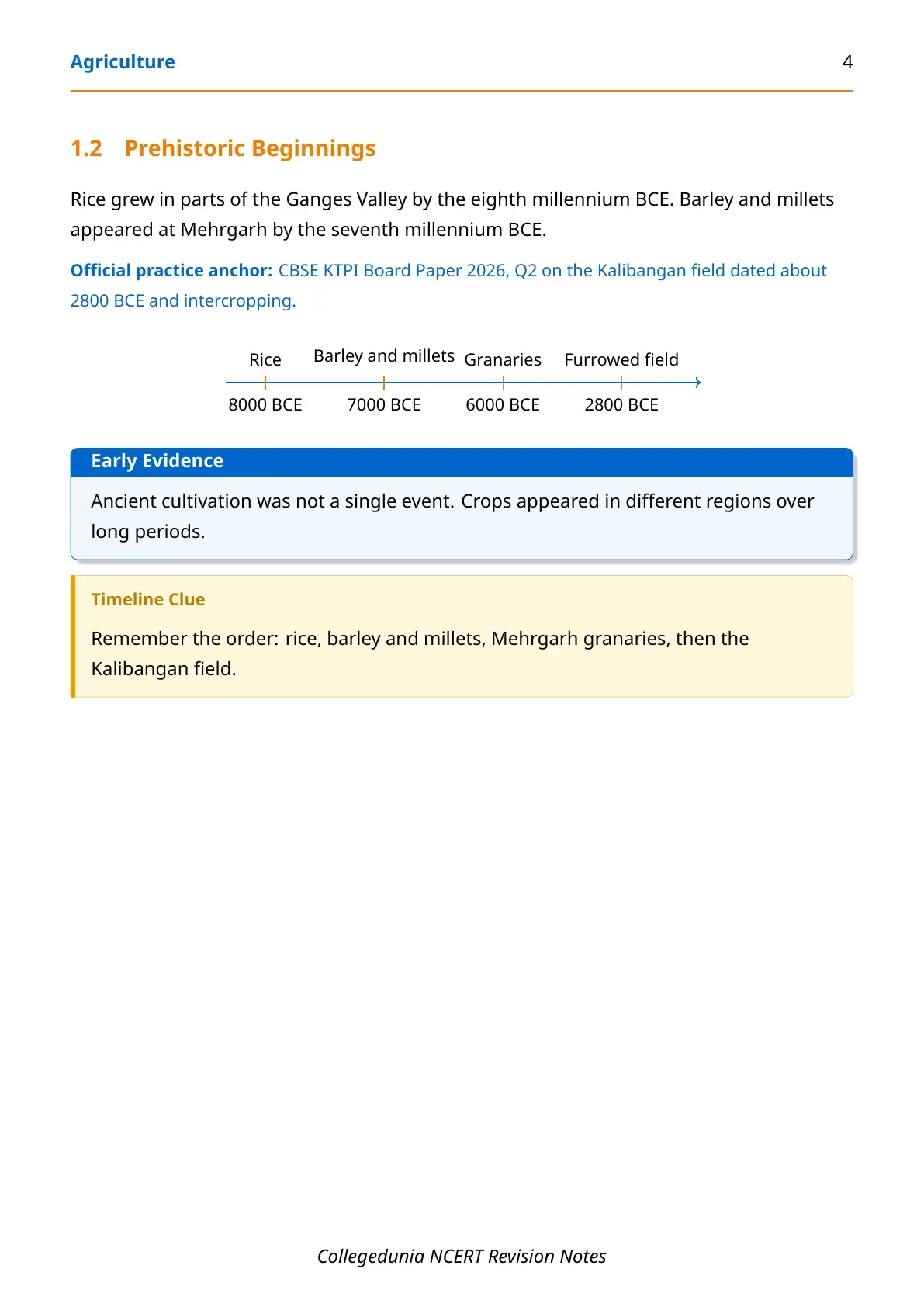
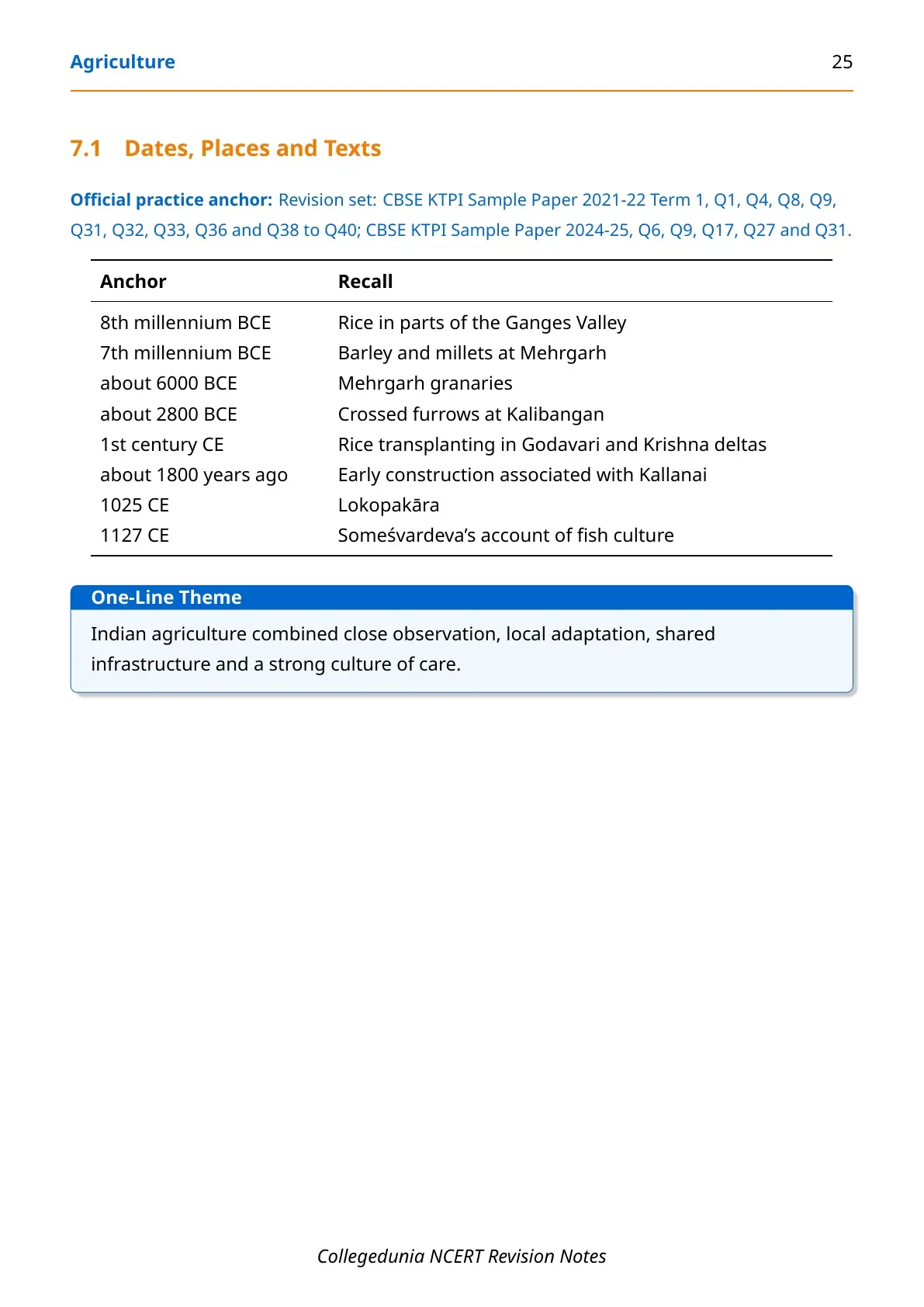
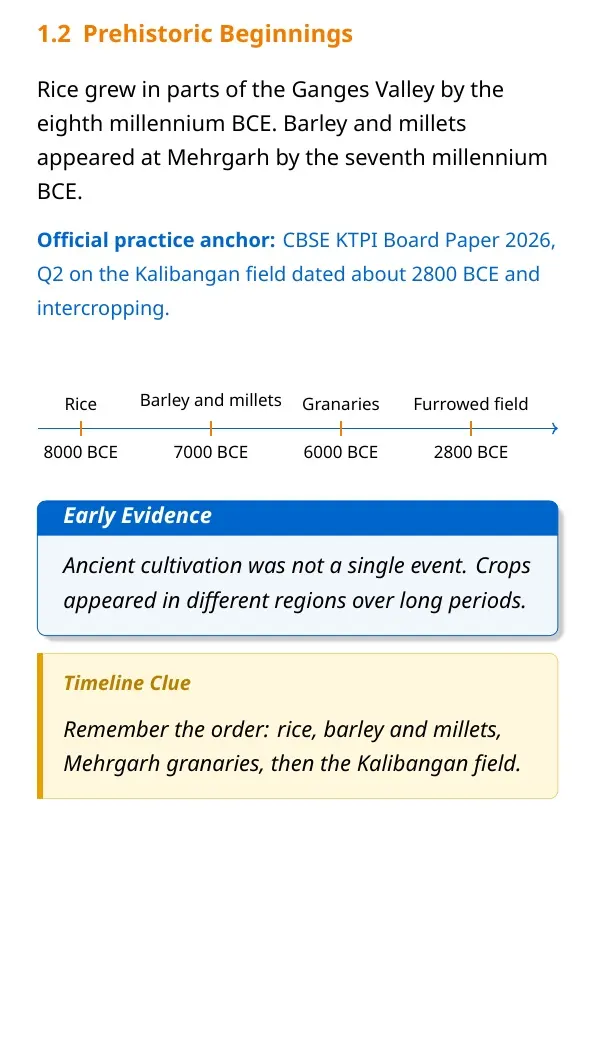
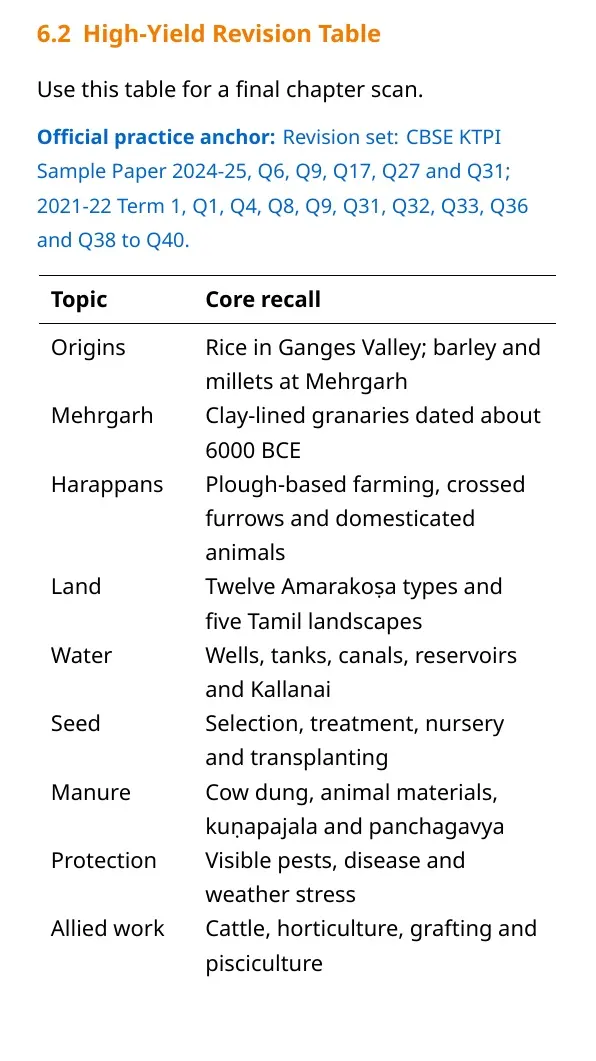
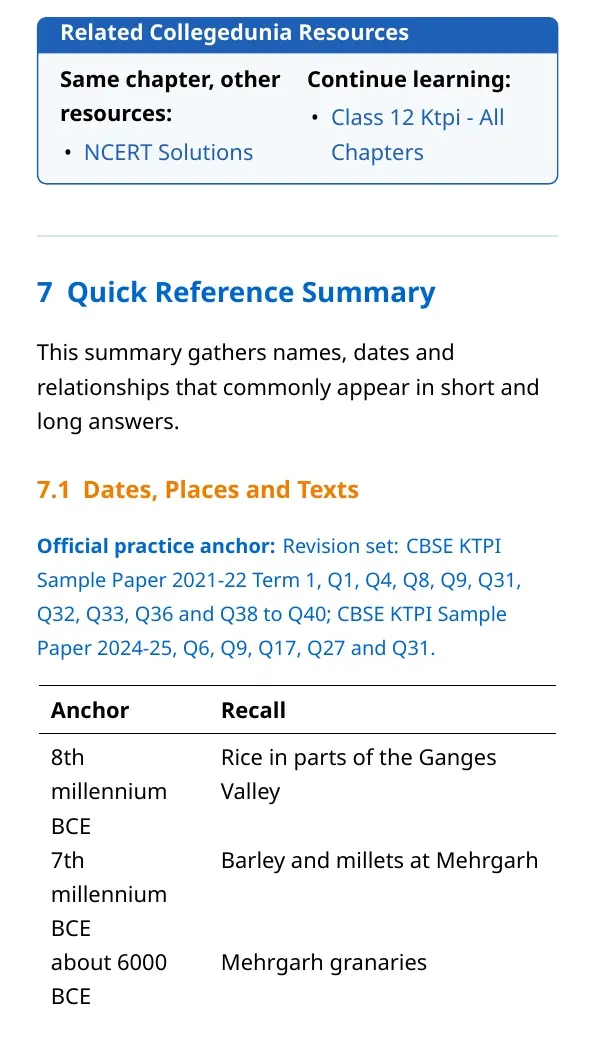
Archaeology shows that farming in the subcontinent developed over thousands of years. Rice grew in parts of the Ganges Valley by the eighth millennium BCE. Barley and millets appeared at Mehrgarh by the seventh millennium BCE.
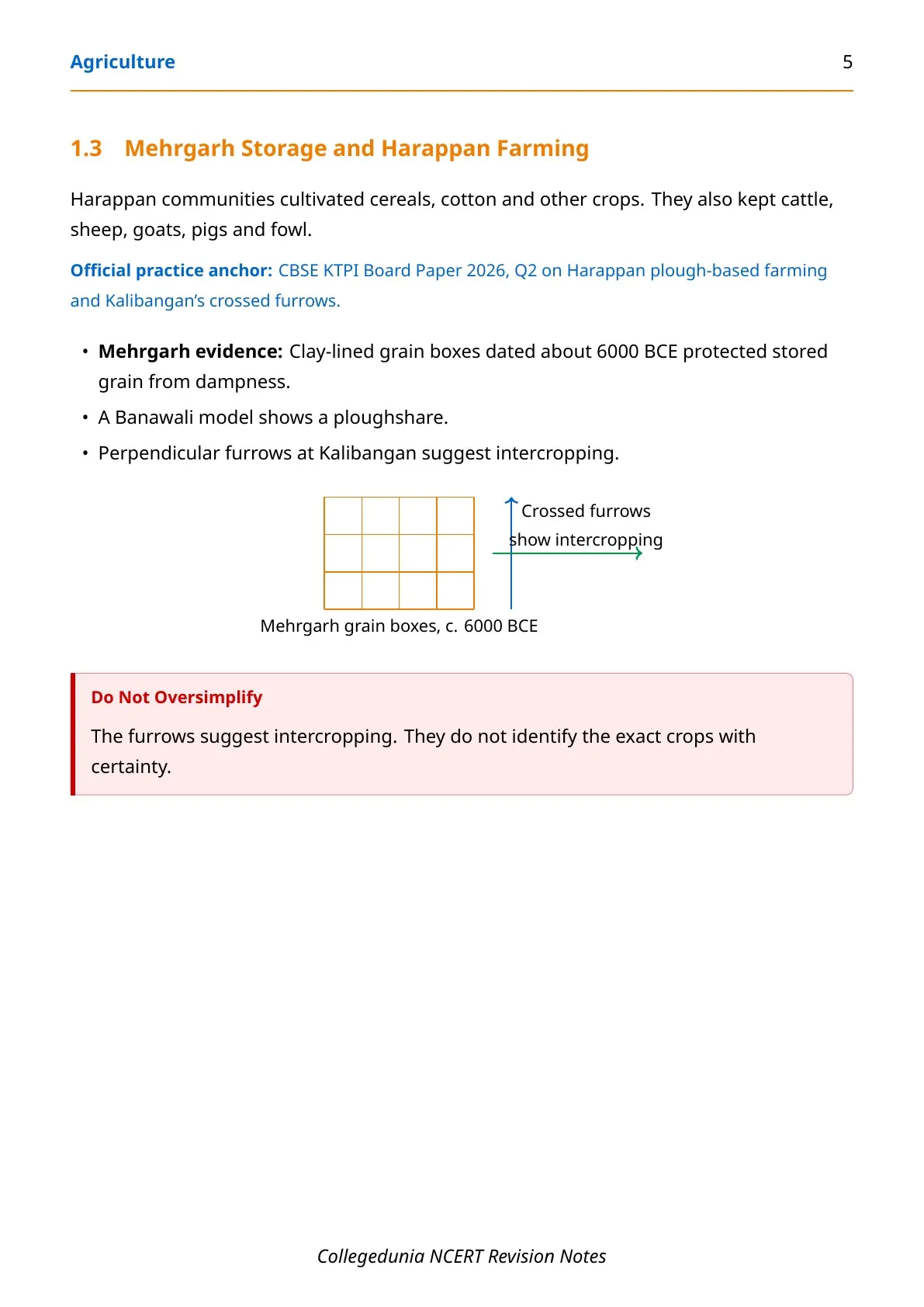
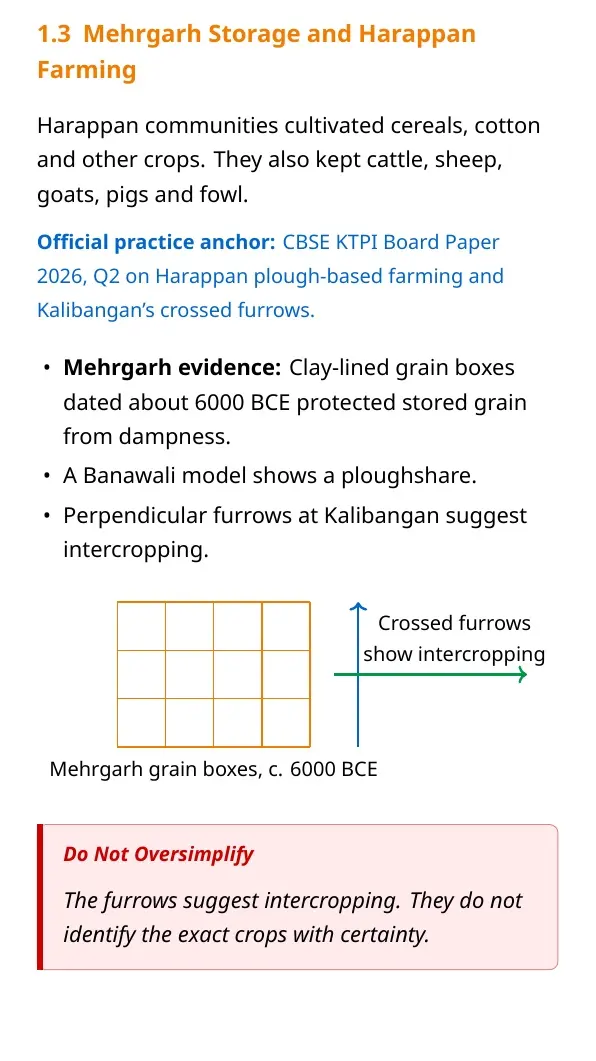
- Mehrgarh: clay-lined granaries protected stored barley or wheat from dampness and insects.
- Indus settlements: farmers grew barley, wheat, millets, cotton and other crops.
- Banawali: archaeologists found a terracotta model of a ploughshare.
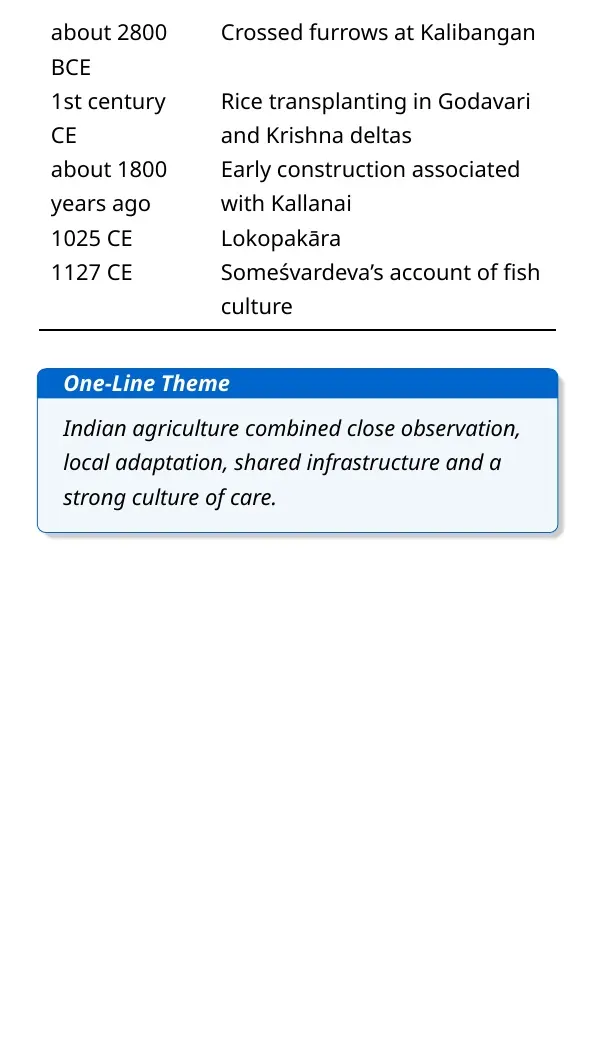
- Kalibangan: crossed furrows from about 2800 BCE suggest intercropping.
Kalibangan gives direct field evidence of two crops being grown together.
Agriculture and the National Economy Video
Source: Magnet Brains on YouTube
Agricultural Texts and Land Types in Ancient India
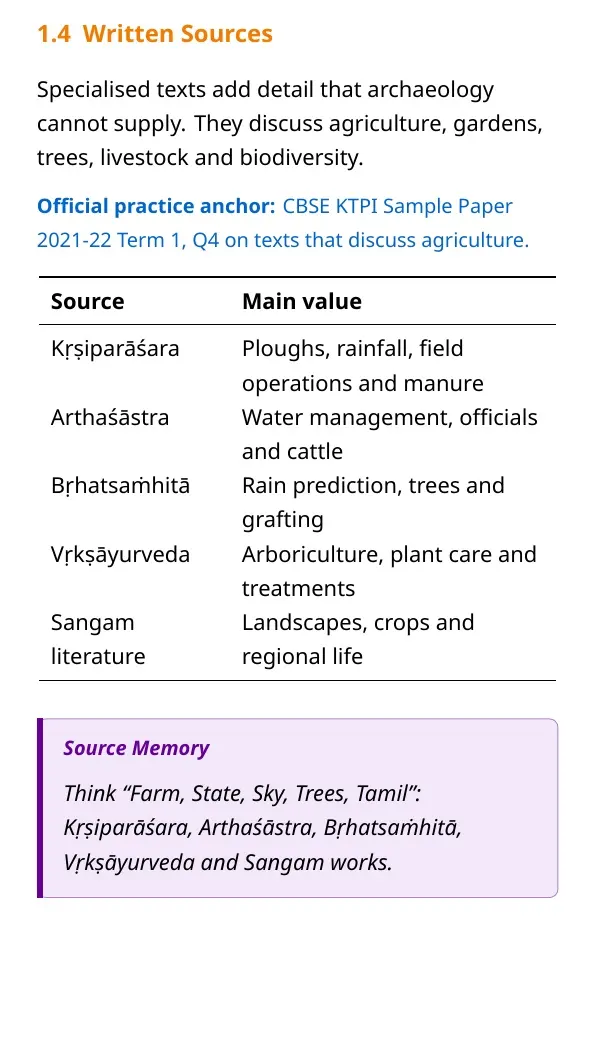
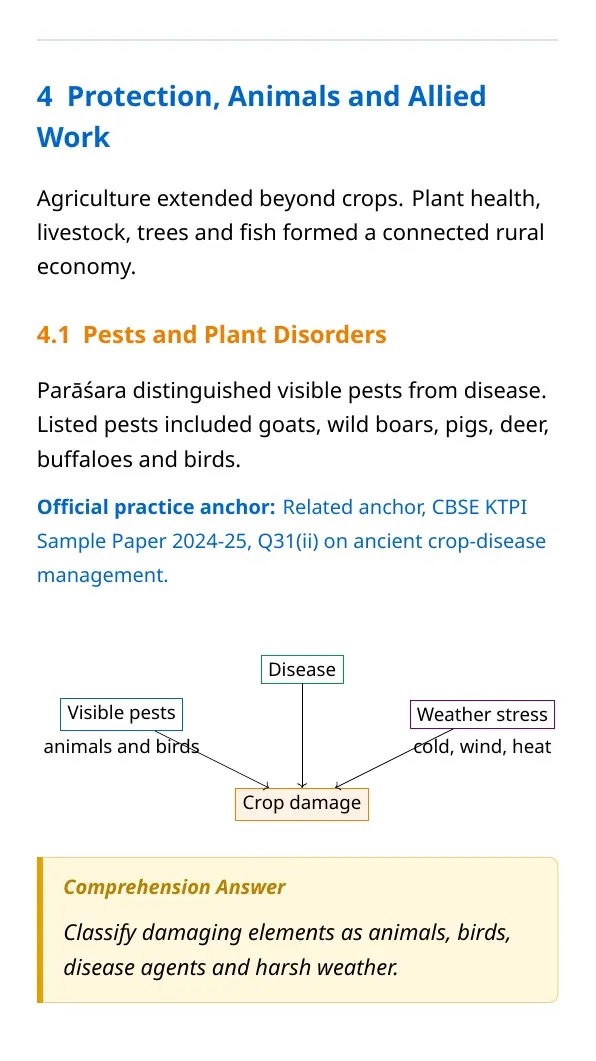
Indian literature calls agriculture kṛṣi. Important sources include Kṛṣiparāśara, Kauṭilya's Arthaśāstra, Bṛhatsaṁhitā, Kaśyapiyakṛṣisukti and Surapāla's Vṛkṣāyurveda.
| Source | What it helps students recall |
|---|---|
| Amarakoṣa | Twelve land types based on fertility, water and physical features |
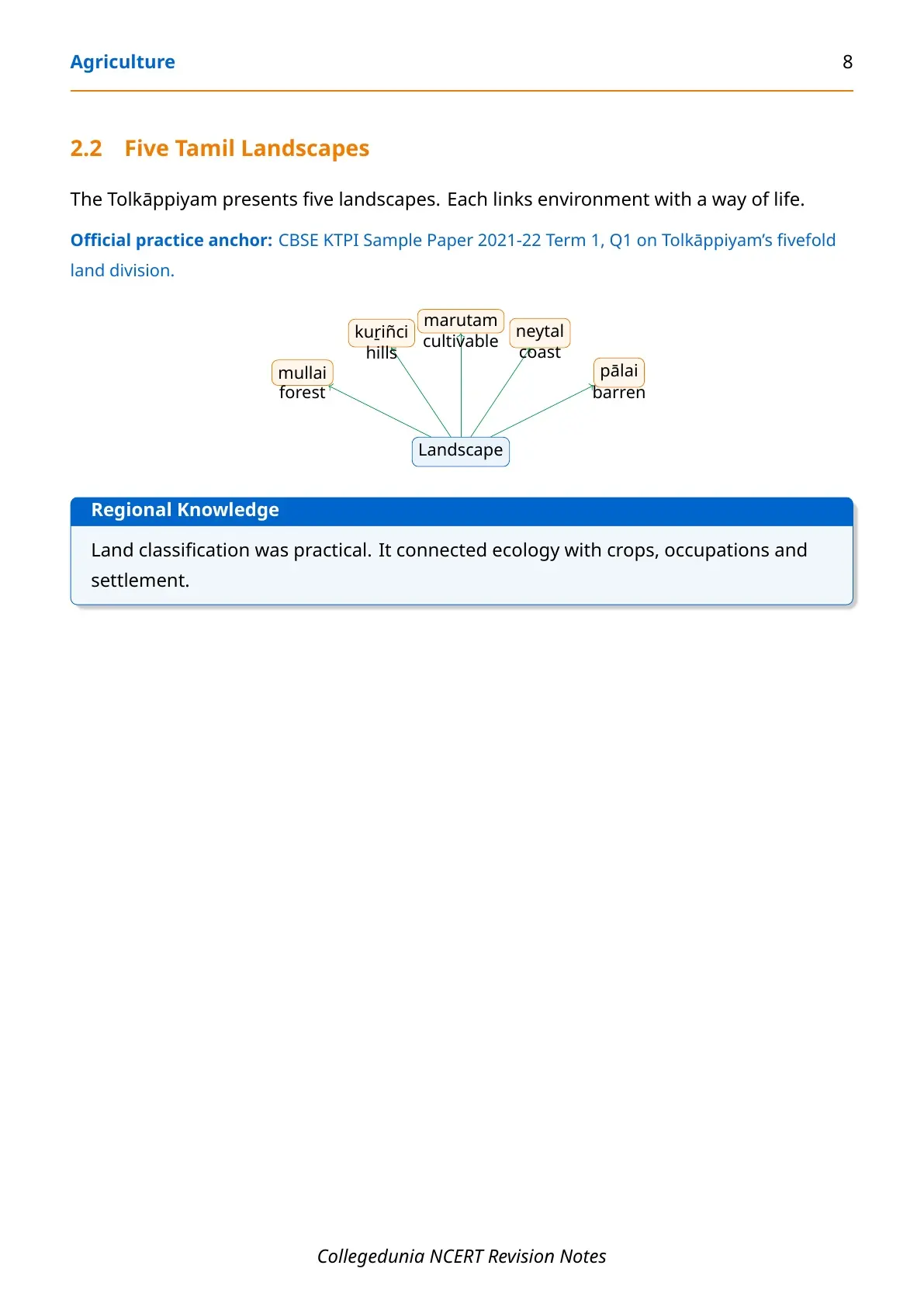
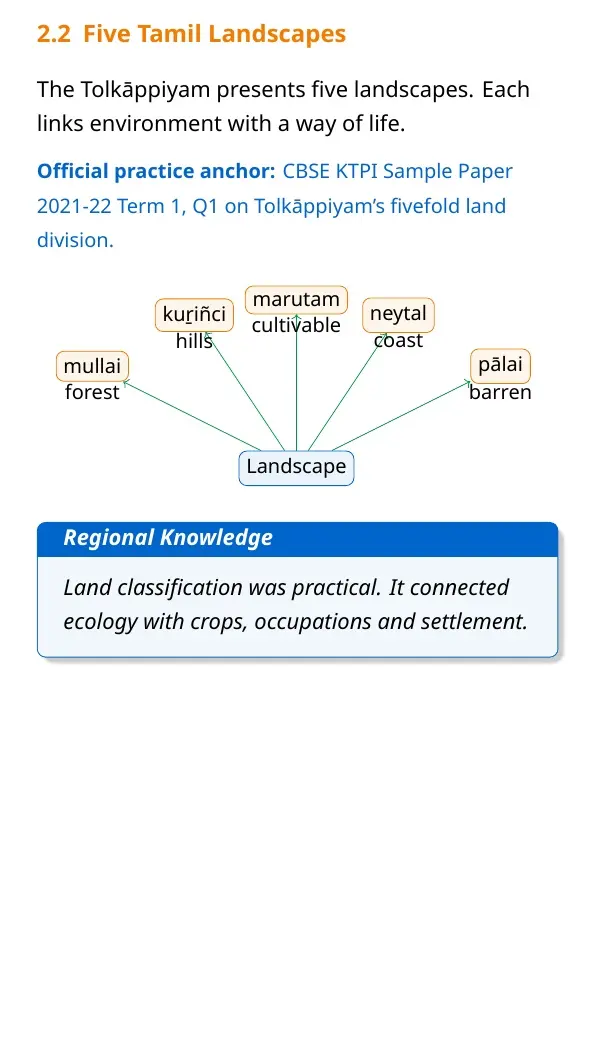
| Tolkāppiyam | Five landscapes: forest, hills, cultivable, coastal and barren land |
| Kṛṣiparāśara | Rain prediction, plough design, manuring and farm practice |
| Arthaśāstra | Water management, manures and organised cattle administration |
| Vṛkṣāyurveda | Planting, gardens, plant care, diseases and nourishment |
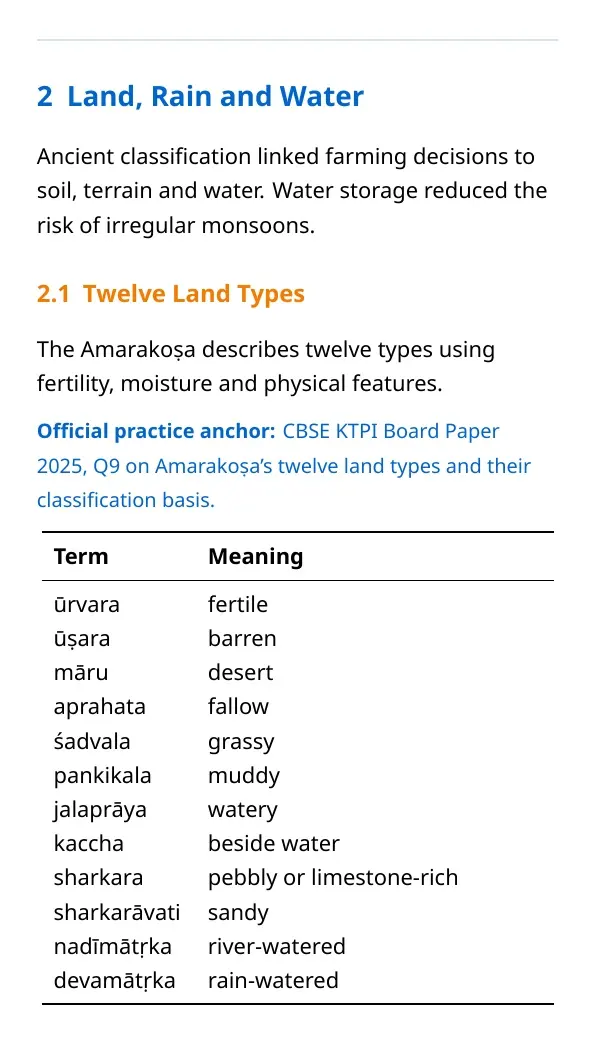
The Amarakoṣa list has twelve land types, while Tolkāppiyam names five broad landscapes. Do not mix these two classifications.
Rain Prediction, Irrigation and Traditional Water Systems
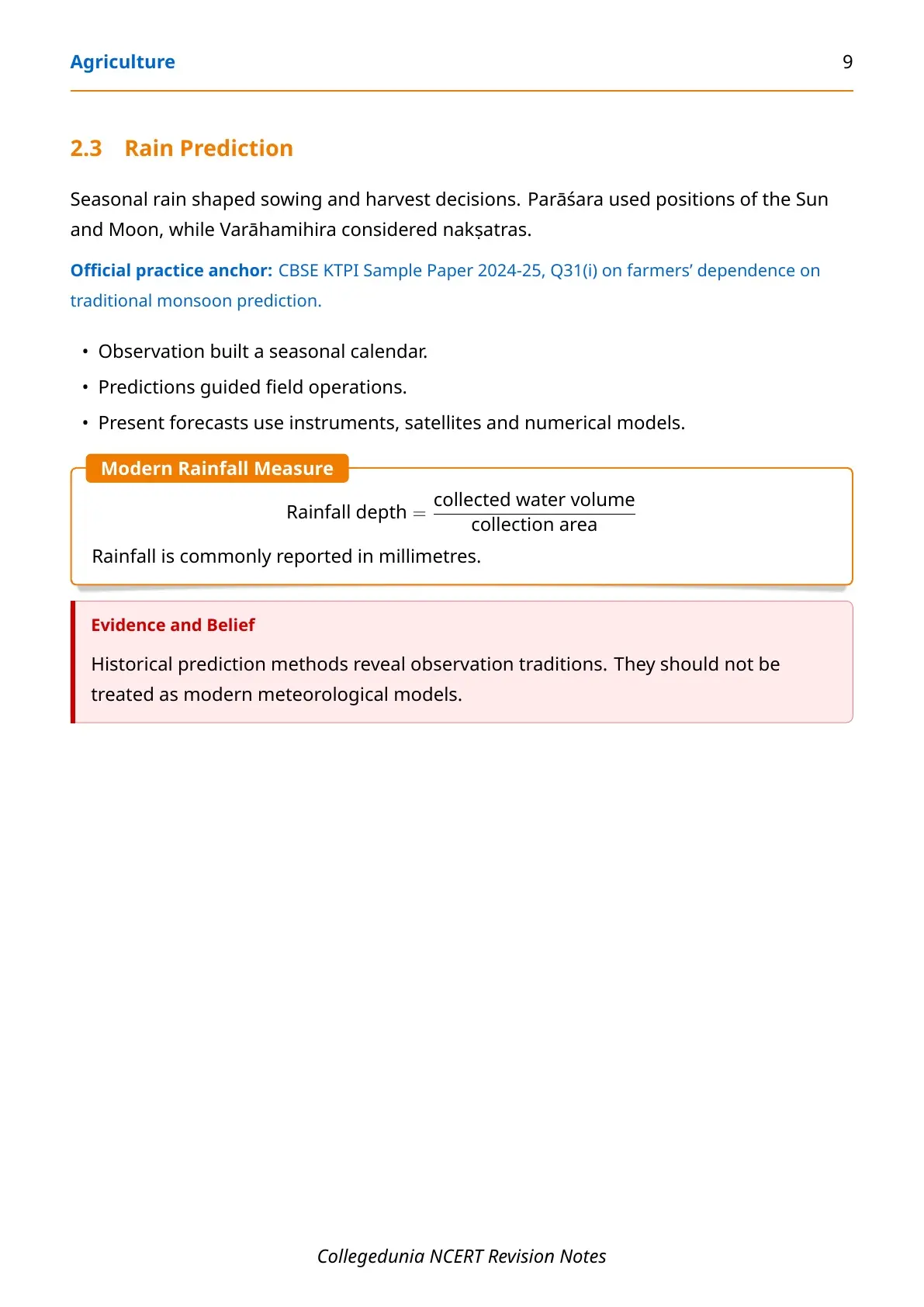
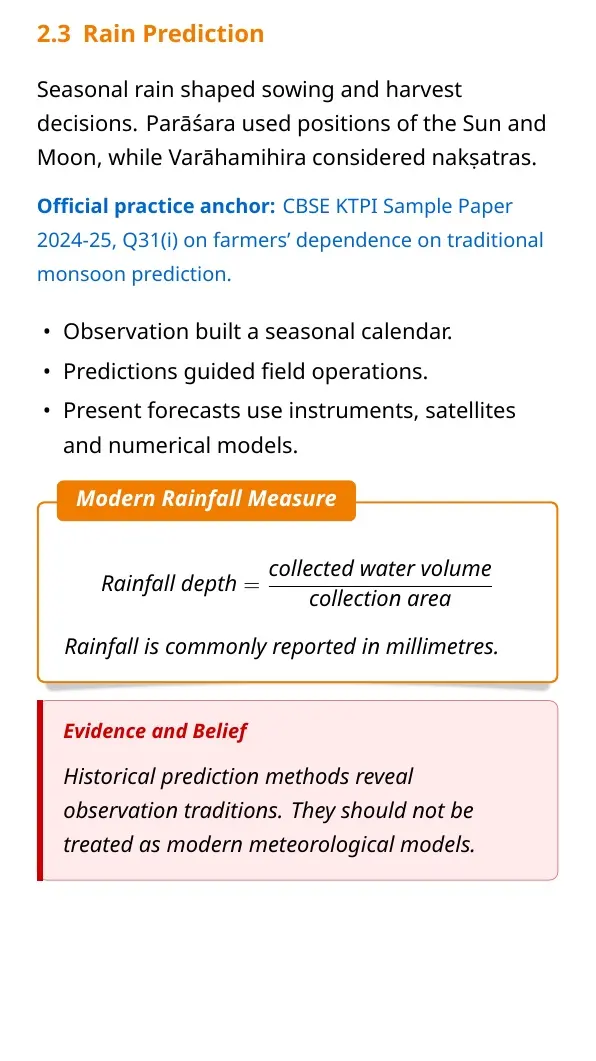
Kṛṣiparāśara and Bṛhatsaṁhitā describe seasonal rainfall prediction. Their methods used the Sun, Moon and lunar mansions. Farmers also built systems to store and move water.
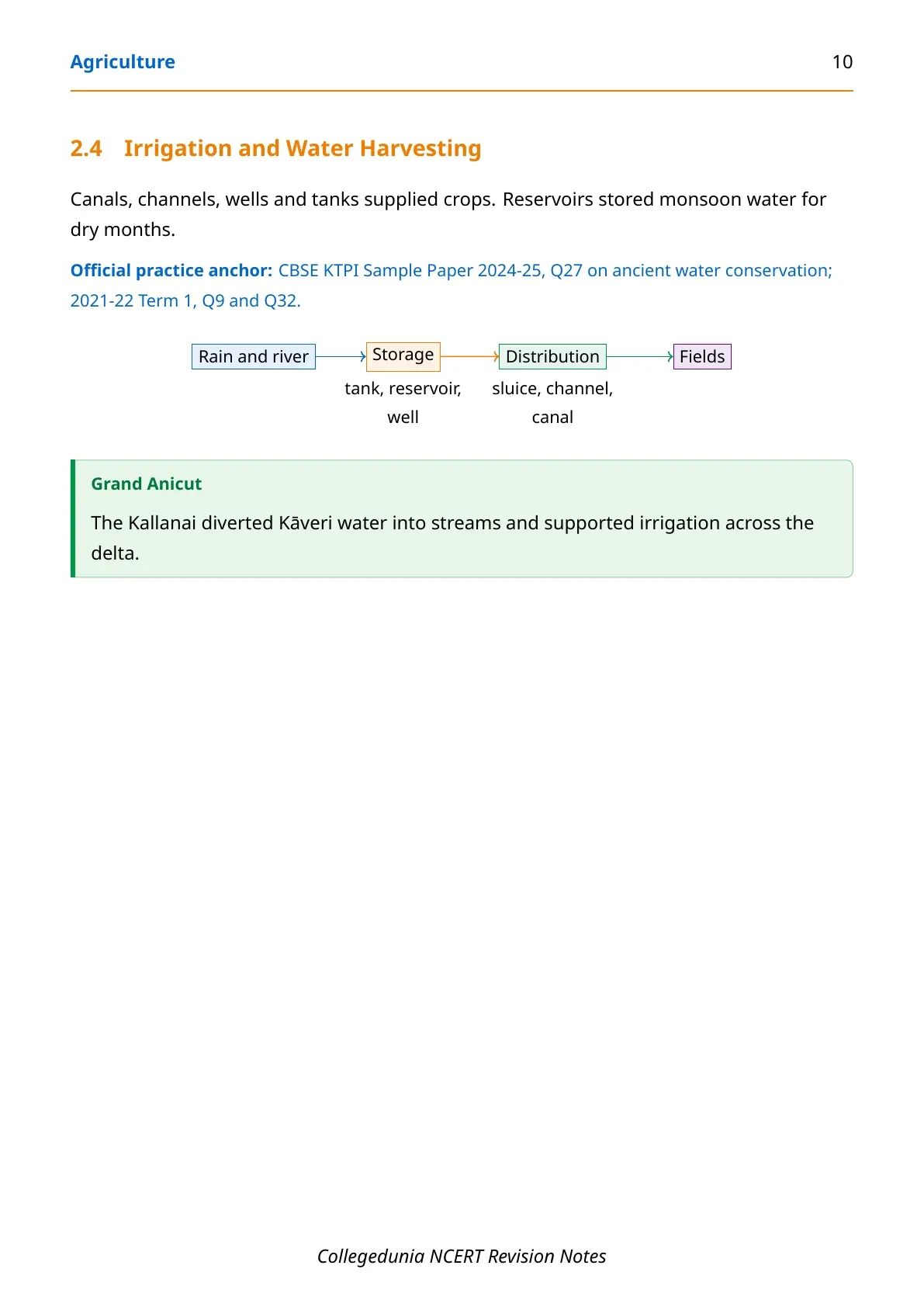
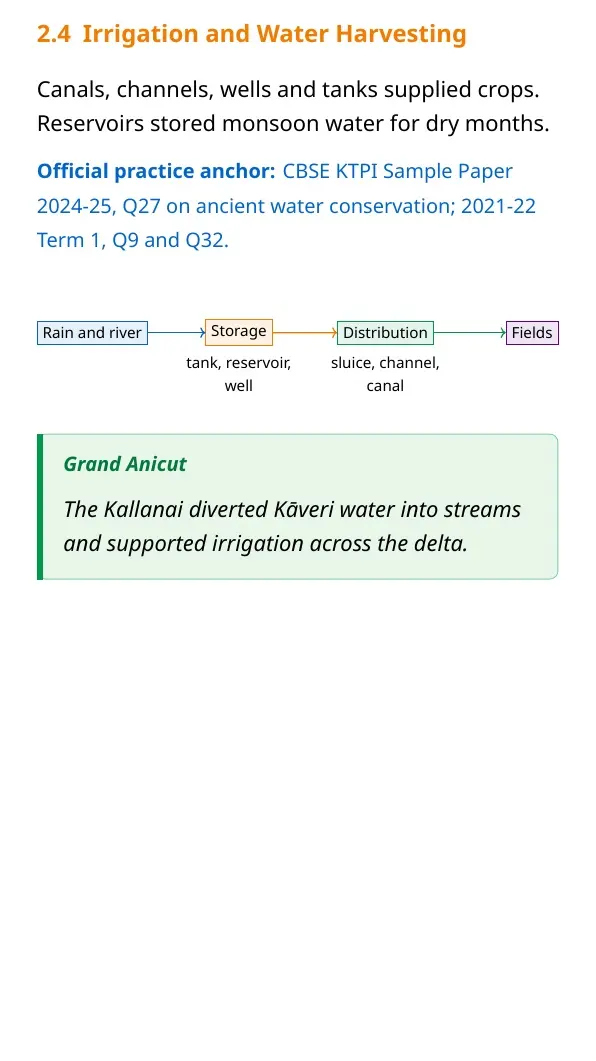
- Canals, small channels and village tanks supported wholly or partly irrigated crops.
- Bullocks could pull a leather water bag from a well into a channel.
- Dholavira used large reservoirs and water harvesting in an arid region.
- Kauṭilya set rules for managing reservoirs, sluices, channels and wells.
- The Grand Anicut diverted Kāveri water across the delta.
The Grand Anicut is 329 metres long and dates back about 1,800 years.
Seeds, Manures and Crop Protection in Agriculture
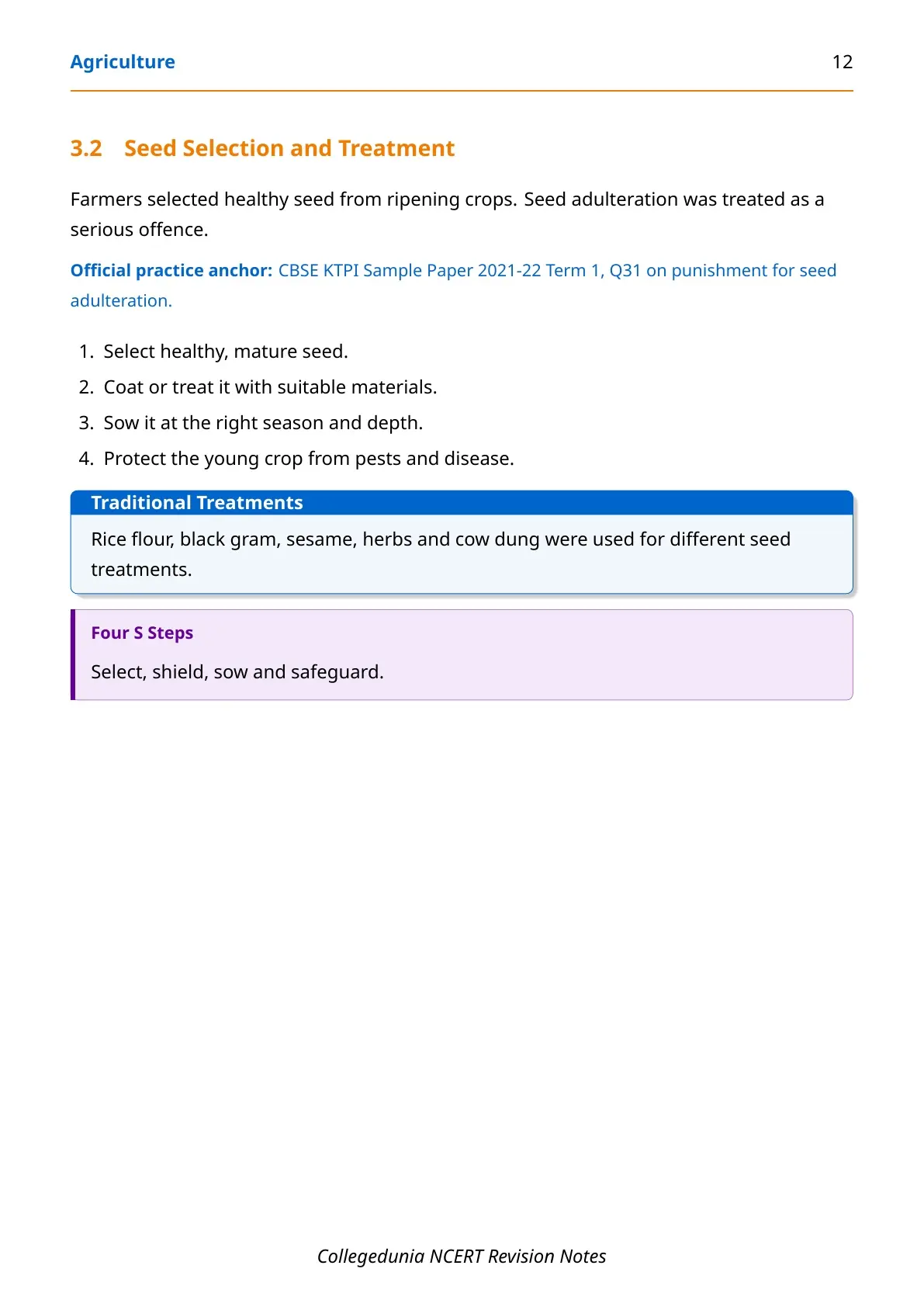
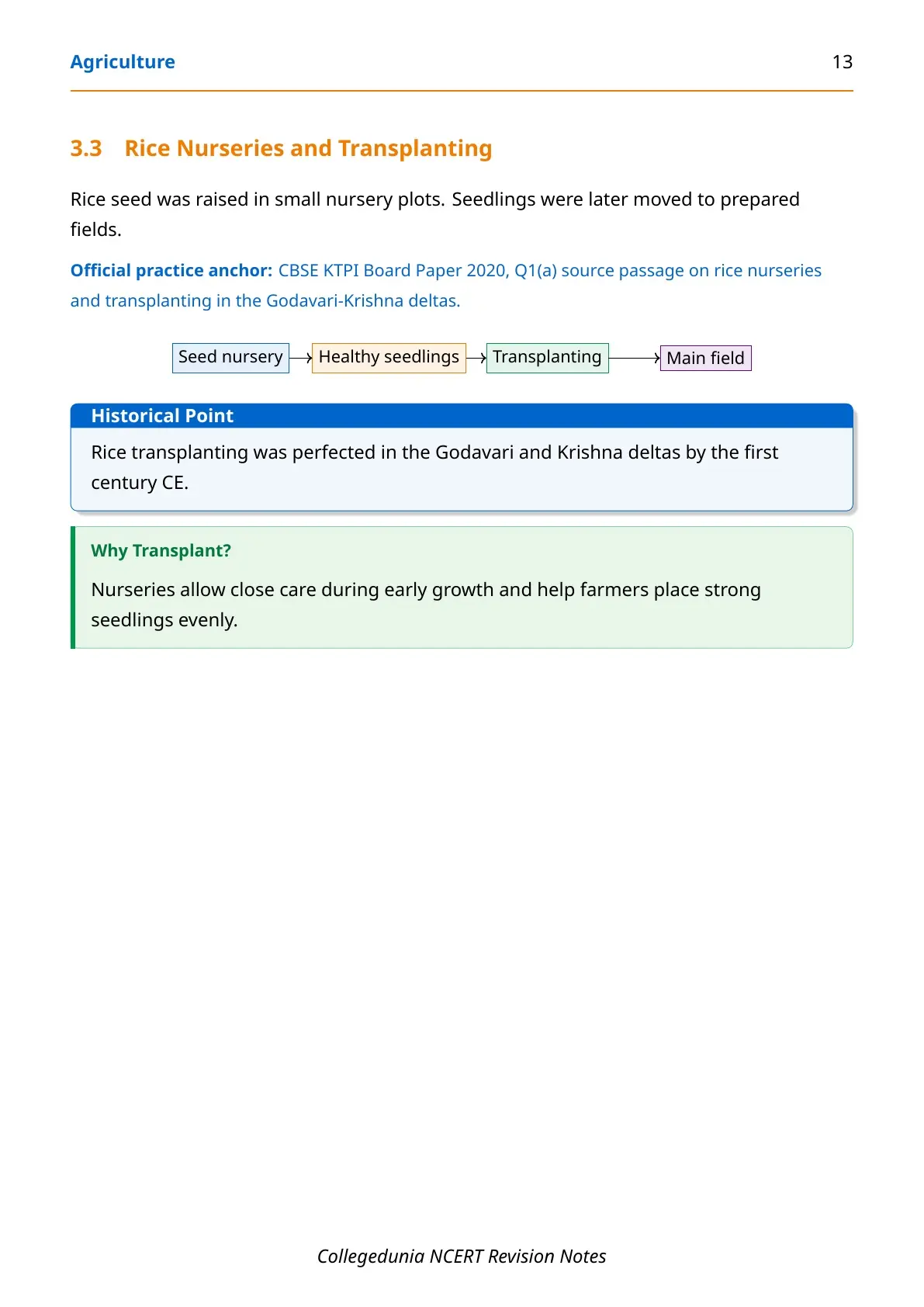
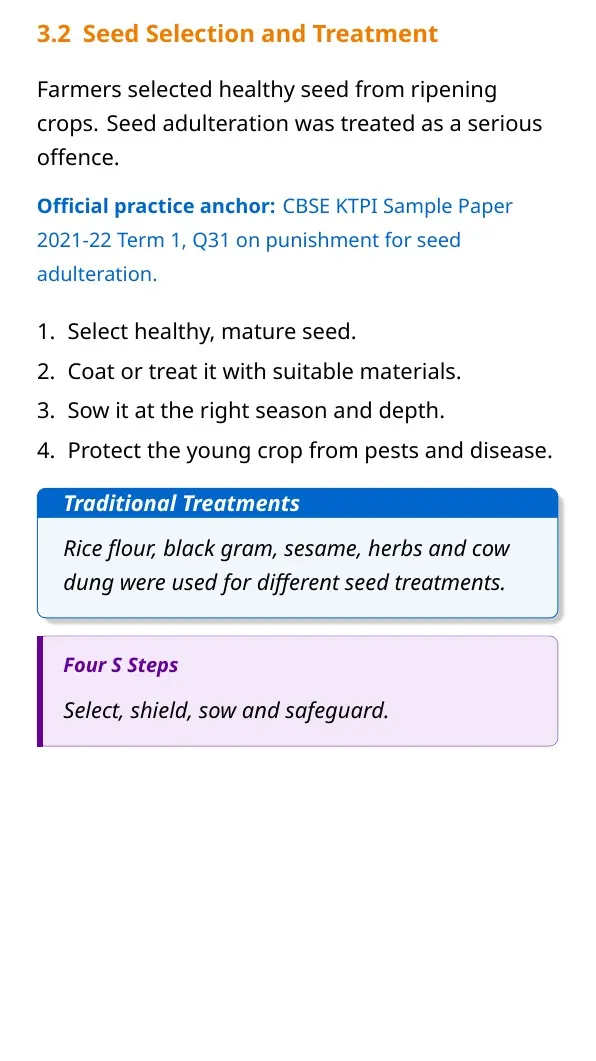
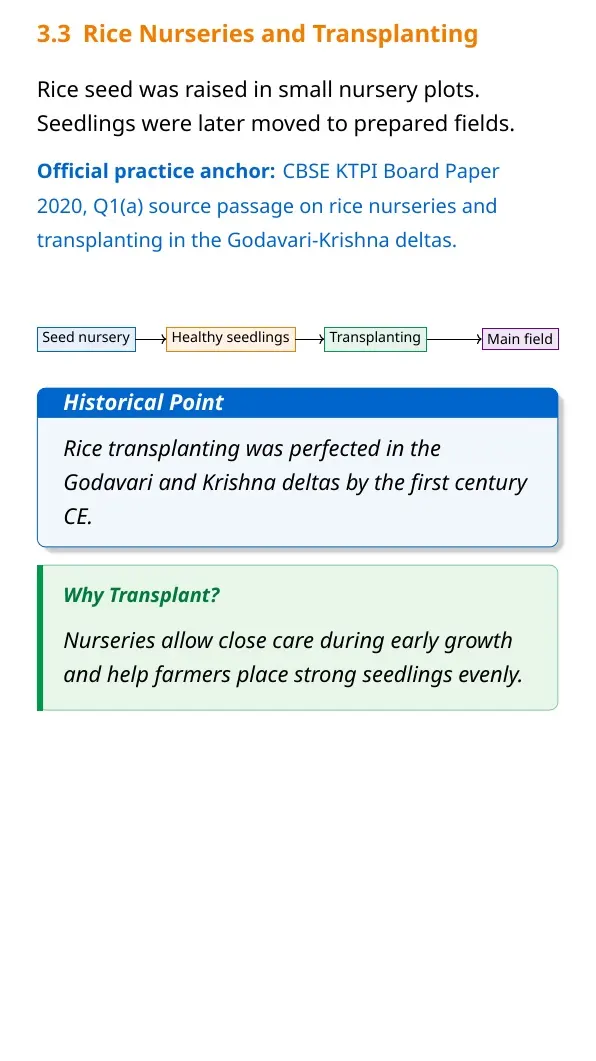
Ancient farmers selected healthy seed and treated it before sowing. Rice nurseries and seedling transplantation were perfected in the Godavari and Krishna deltas by the first century CE.
| Practice | Material or method | Purpose |
|---|---|---|
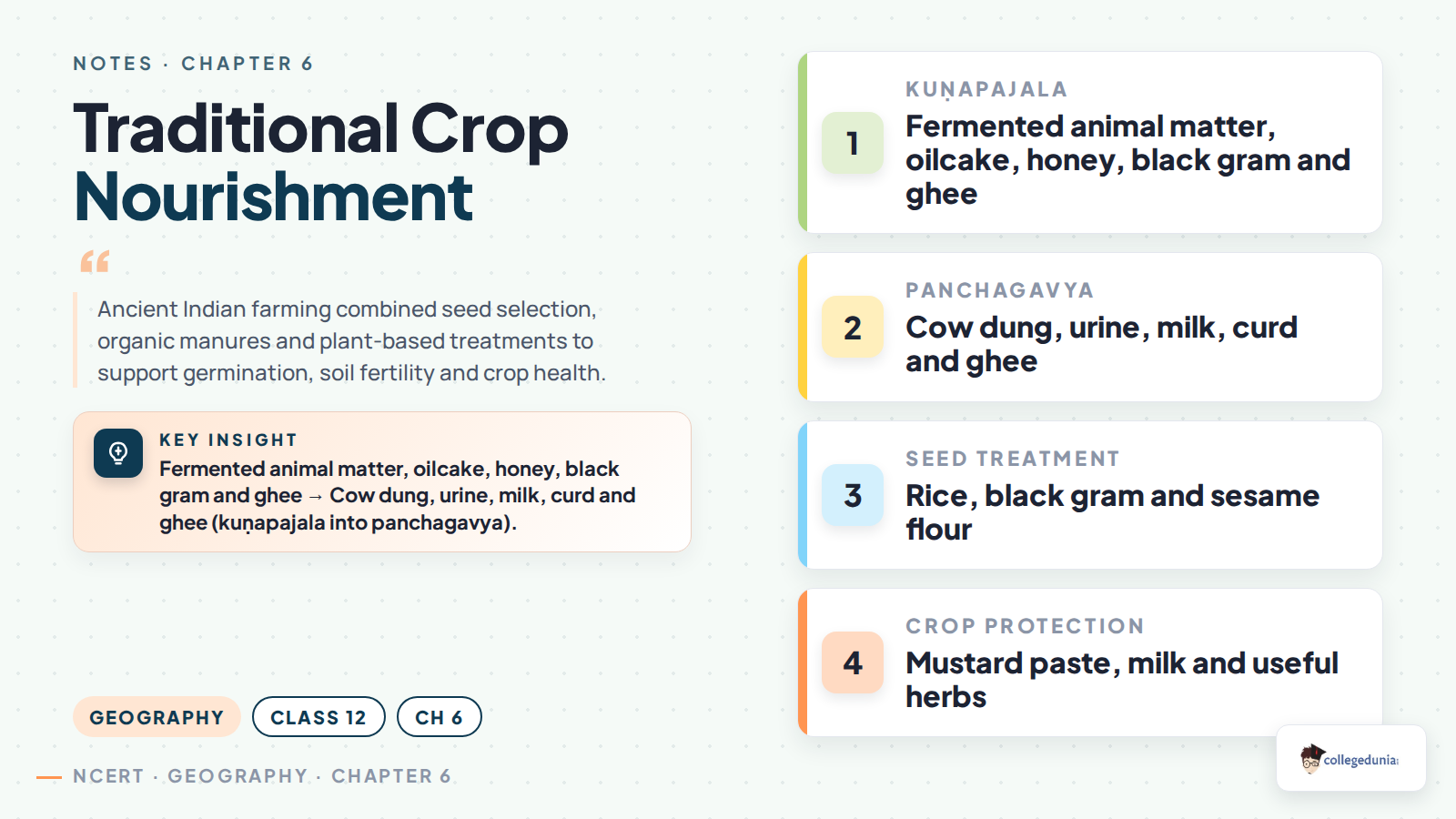
| Seed treatment | Rice, black gram and sesame flour | Support good germination |
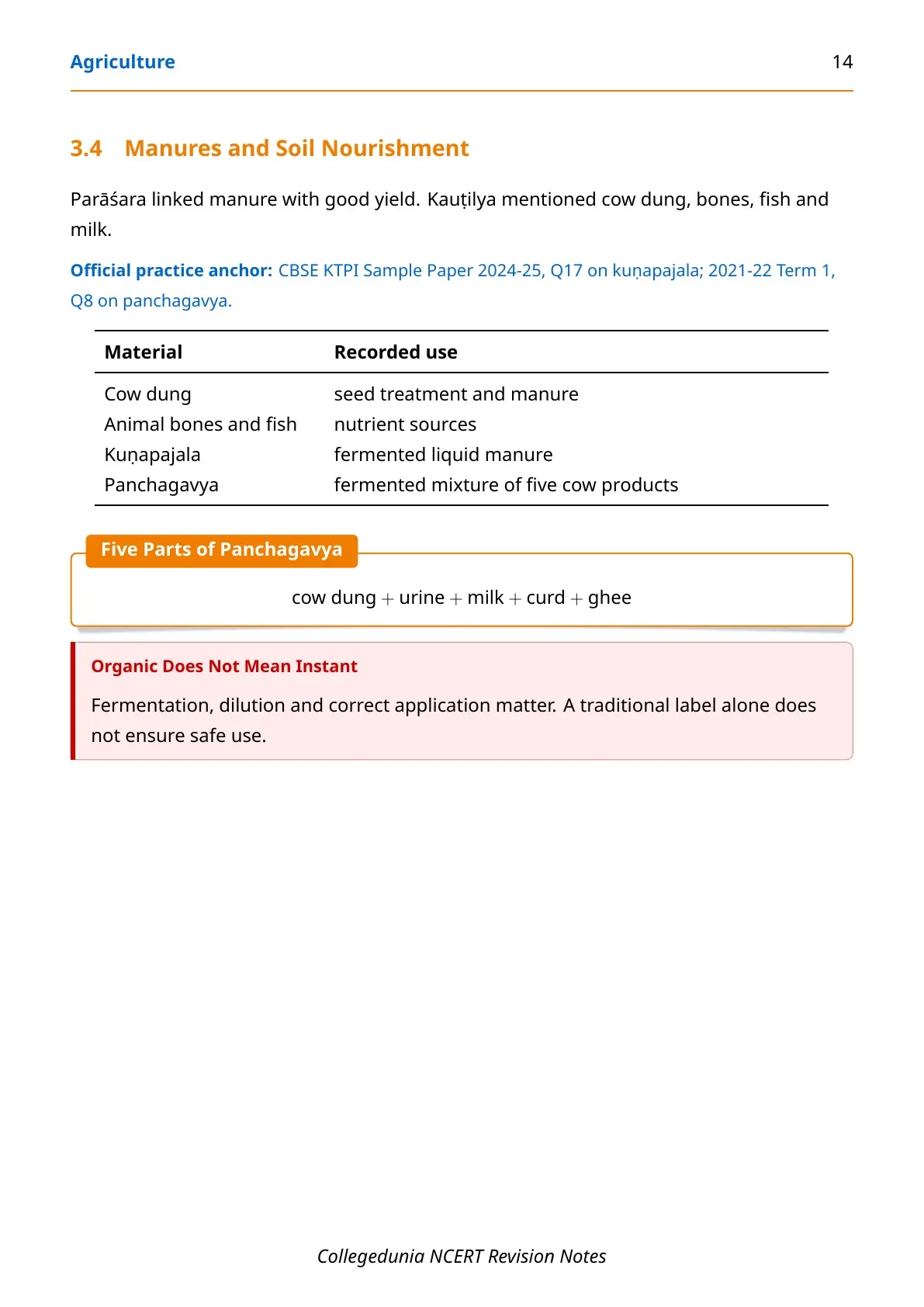
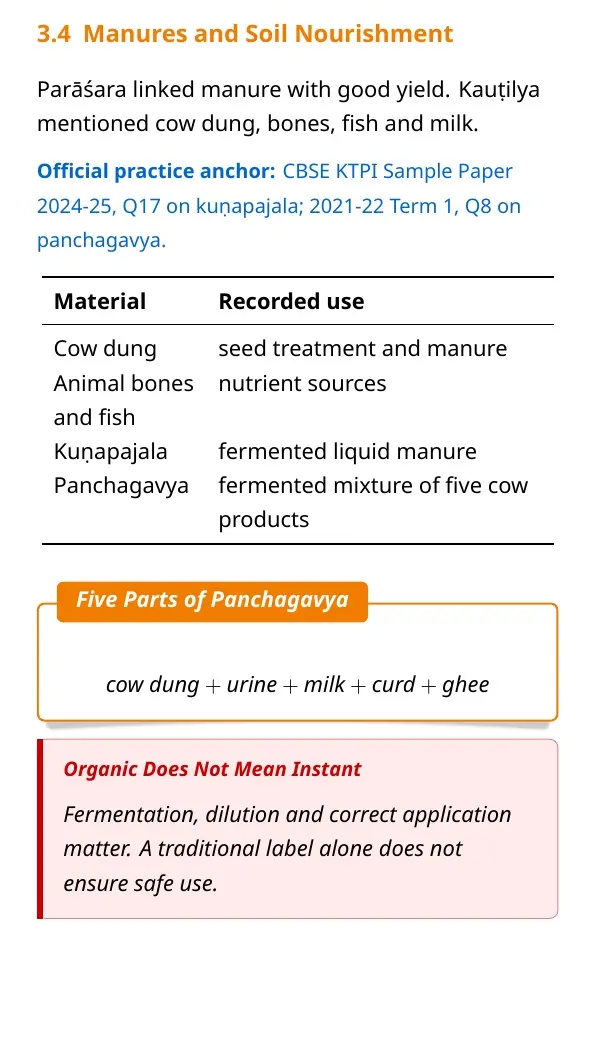
| Kauṭilya's manure | Cow dung, animal bones, fish and milk | Improve soil and crop growth |
| Kuṇapajala | Fermented animal matter, oilcake, honey, black gram and ghee | Liquid nourishment for plants |
| Panchagavya | Cow dung, urine, milk, curd and ghee | Biofertiliser and disease resistance |
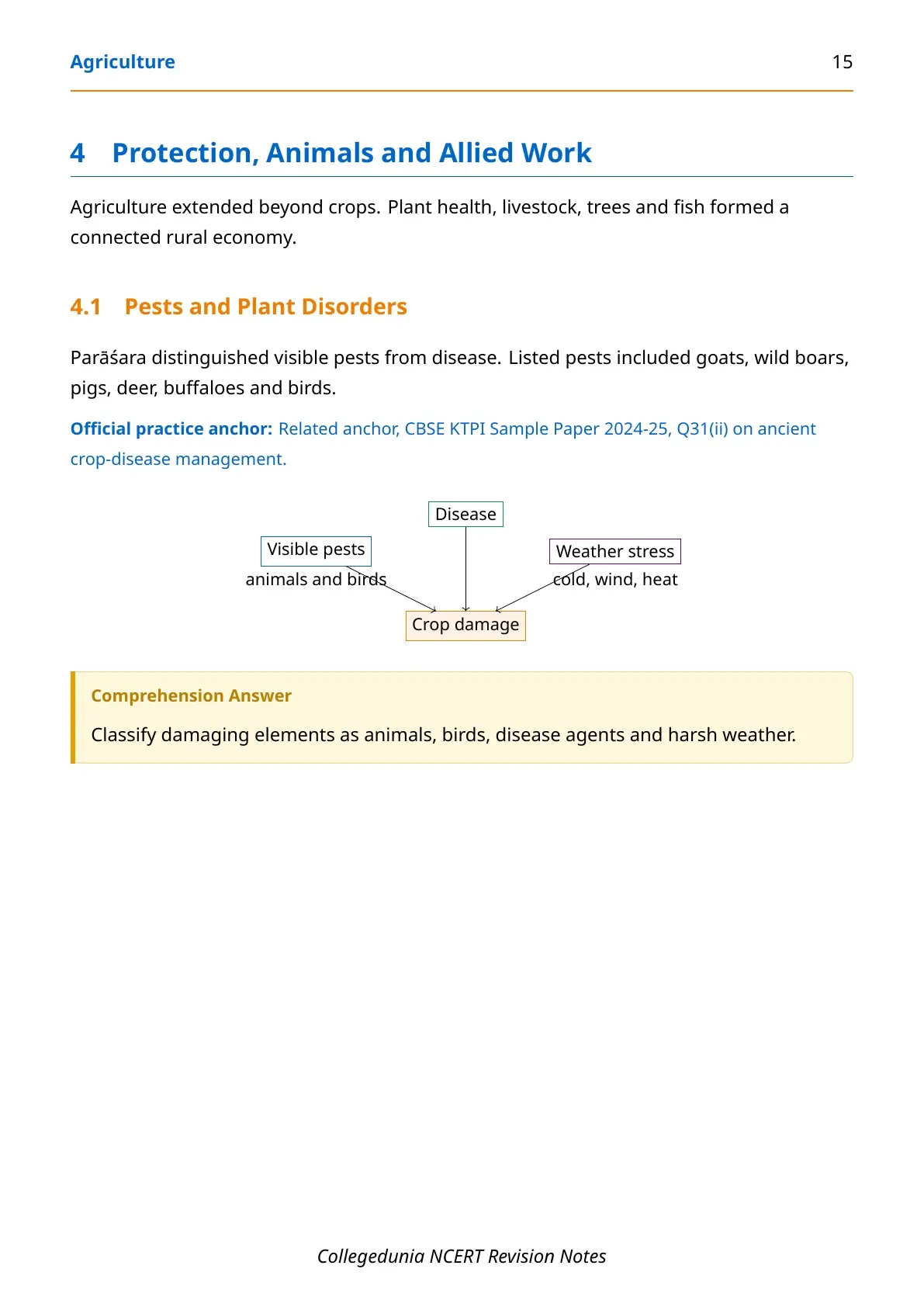
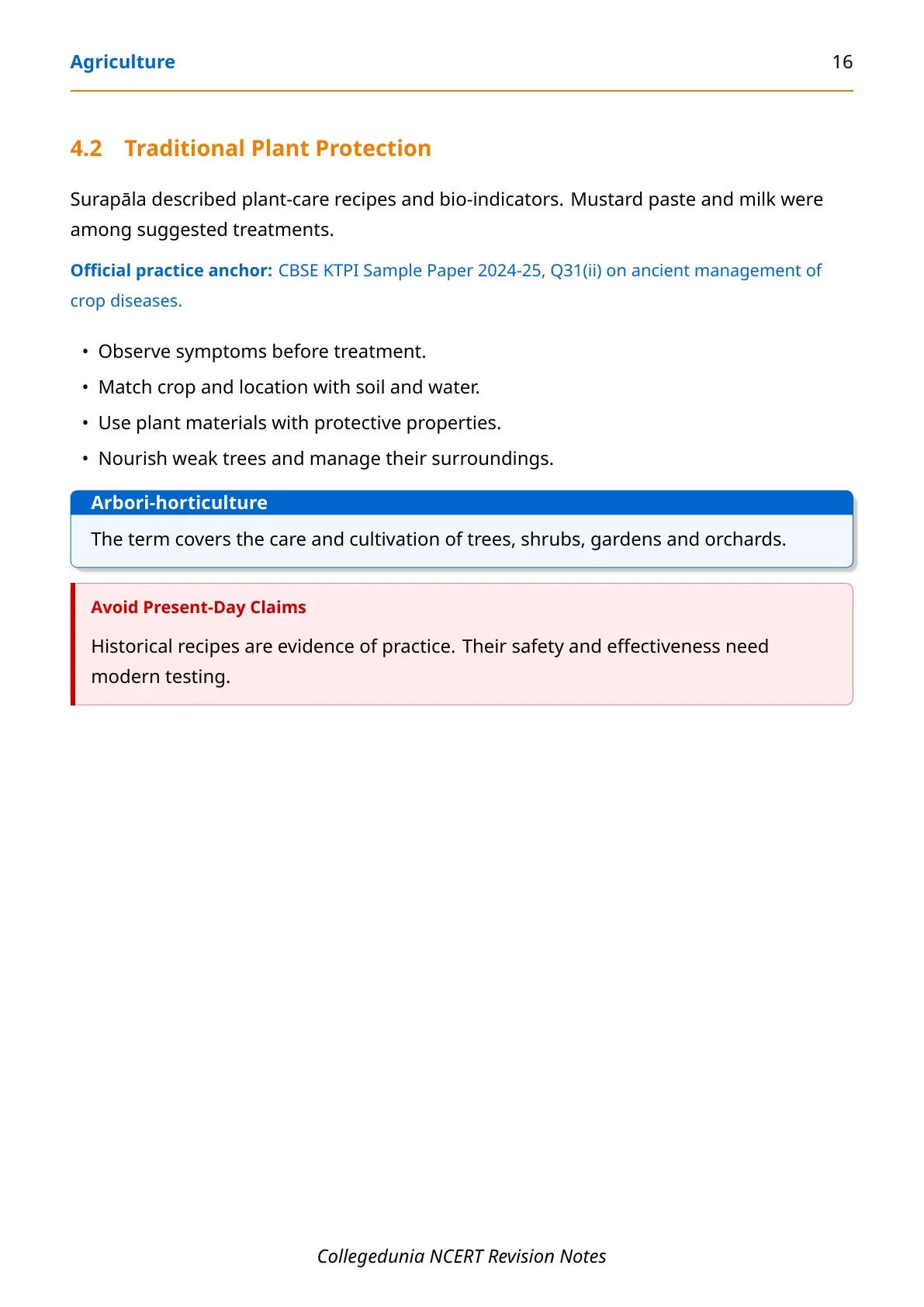
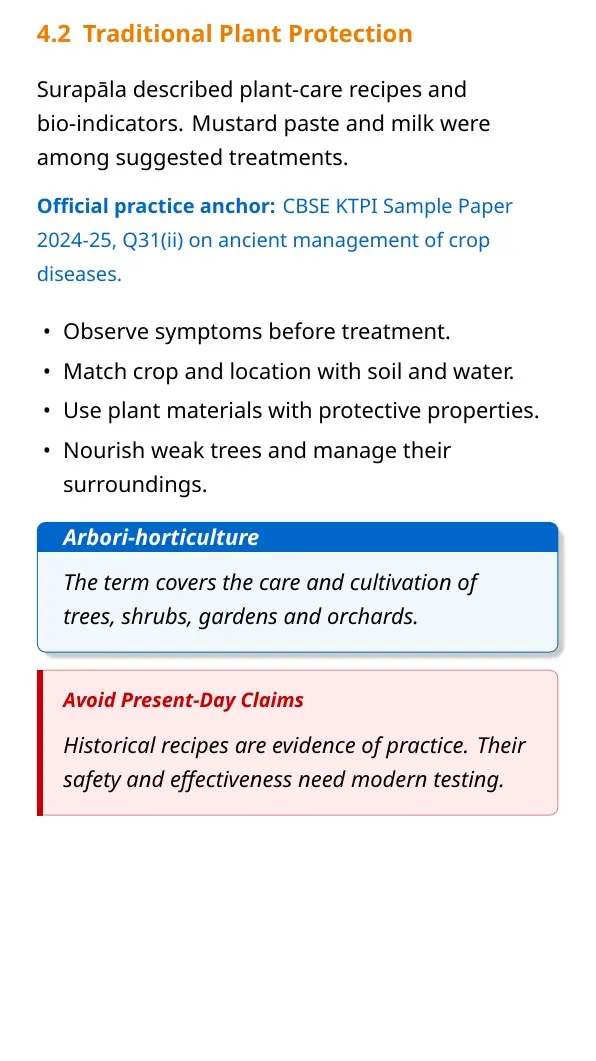
| Plant treatment | Mustard paste, milk and useful herbs | Control plant disorders |
Kuṇapajala and panchagavya are different fermented preparations. Write their ingredients separately in a long answer.
Cattle, Horticulture and Fishing in the Agriculture Chapter
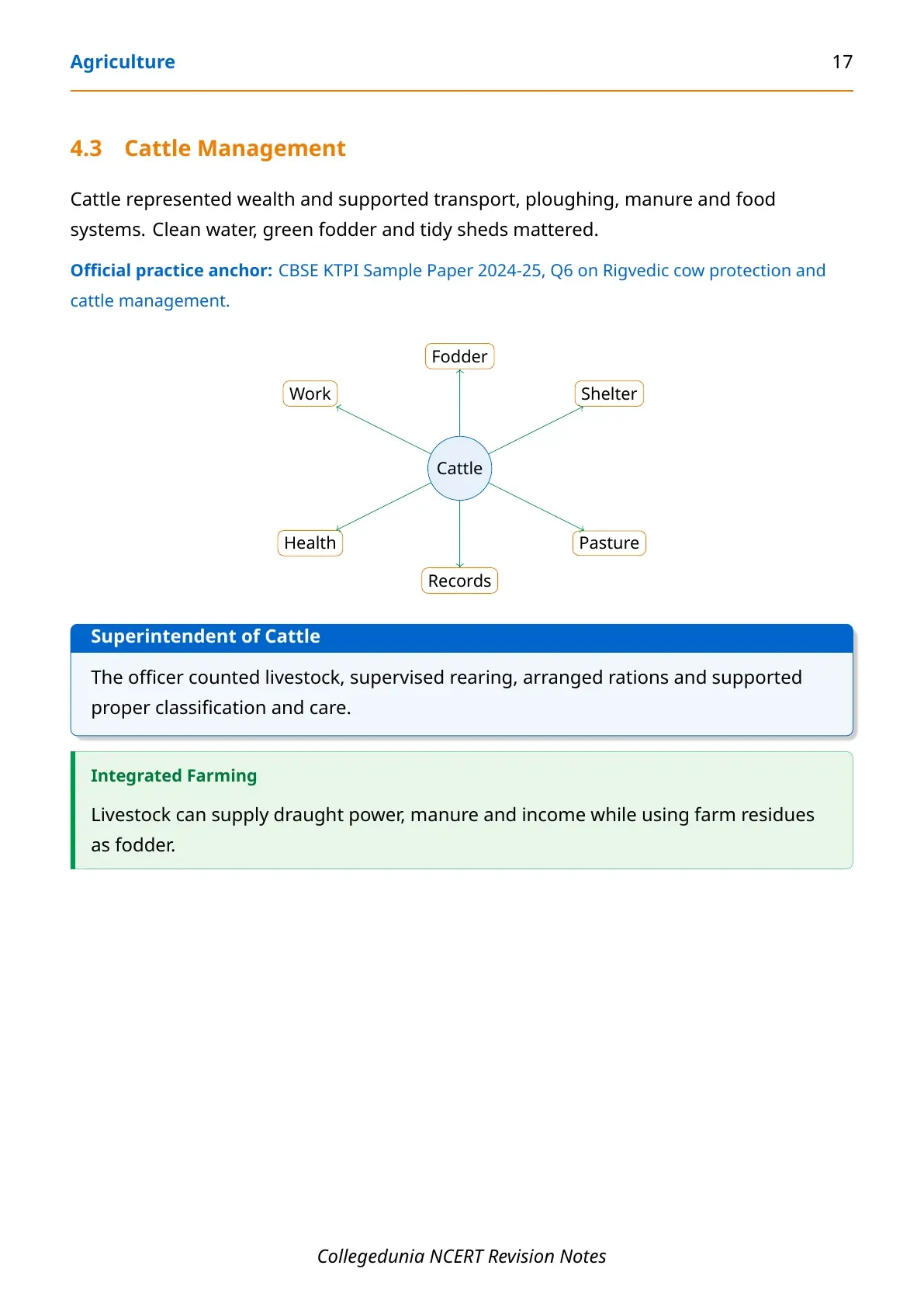
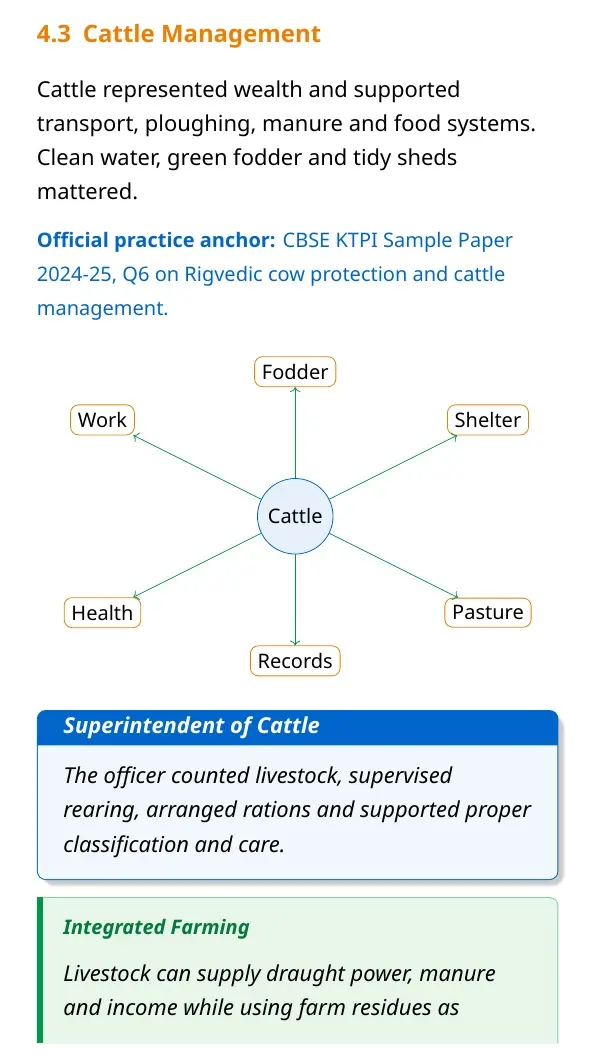
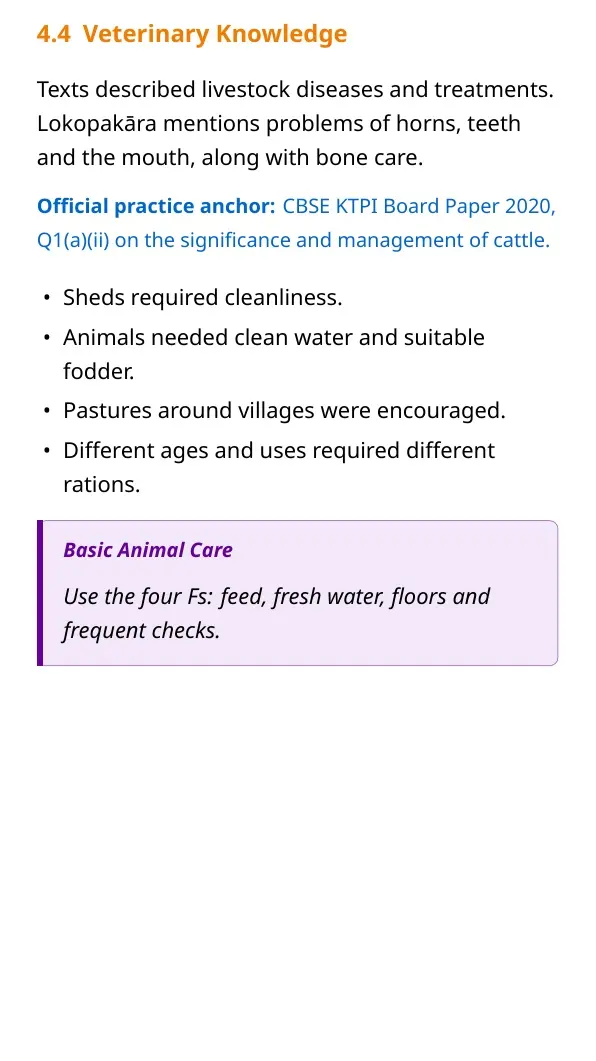
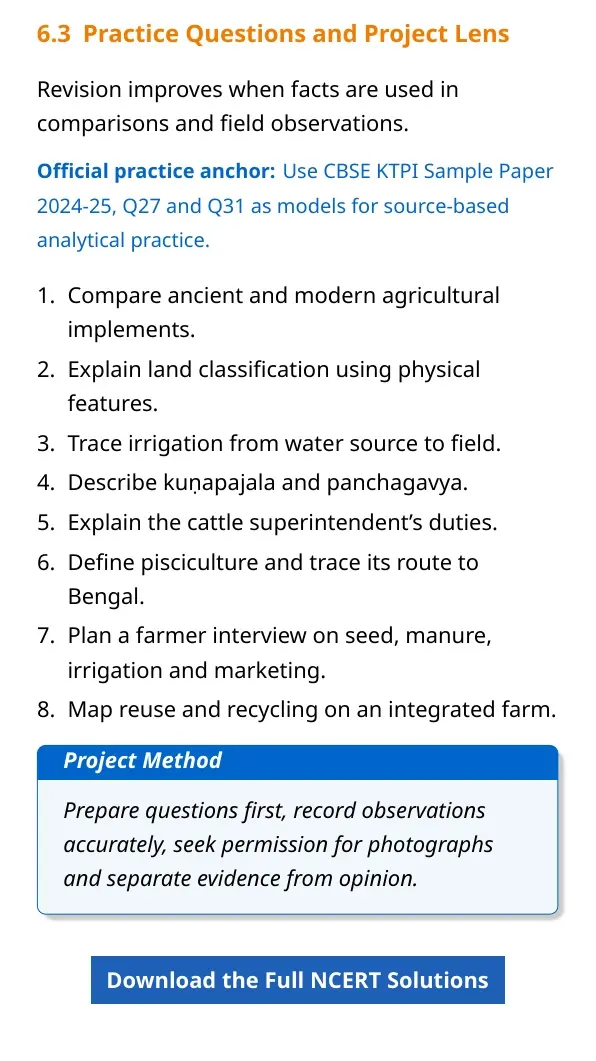
Farming included livestock, orchards and fishing. The Arthaśāstra names a superintendent who counted cattle, supervised rearing and set feed rations.
- Cattle care: clean water, green fodder, sheds, pasture and treatment supported healthy animals.
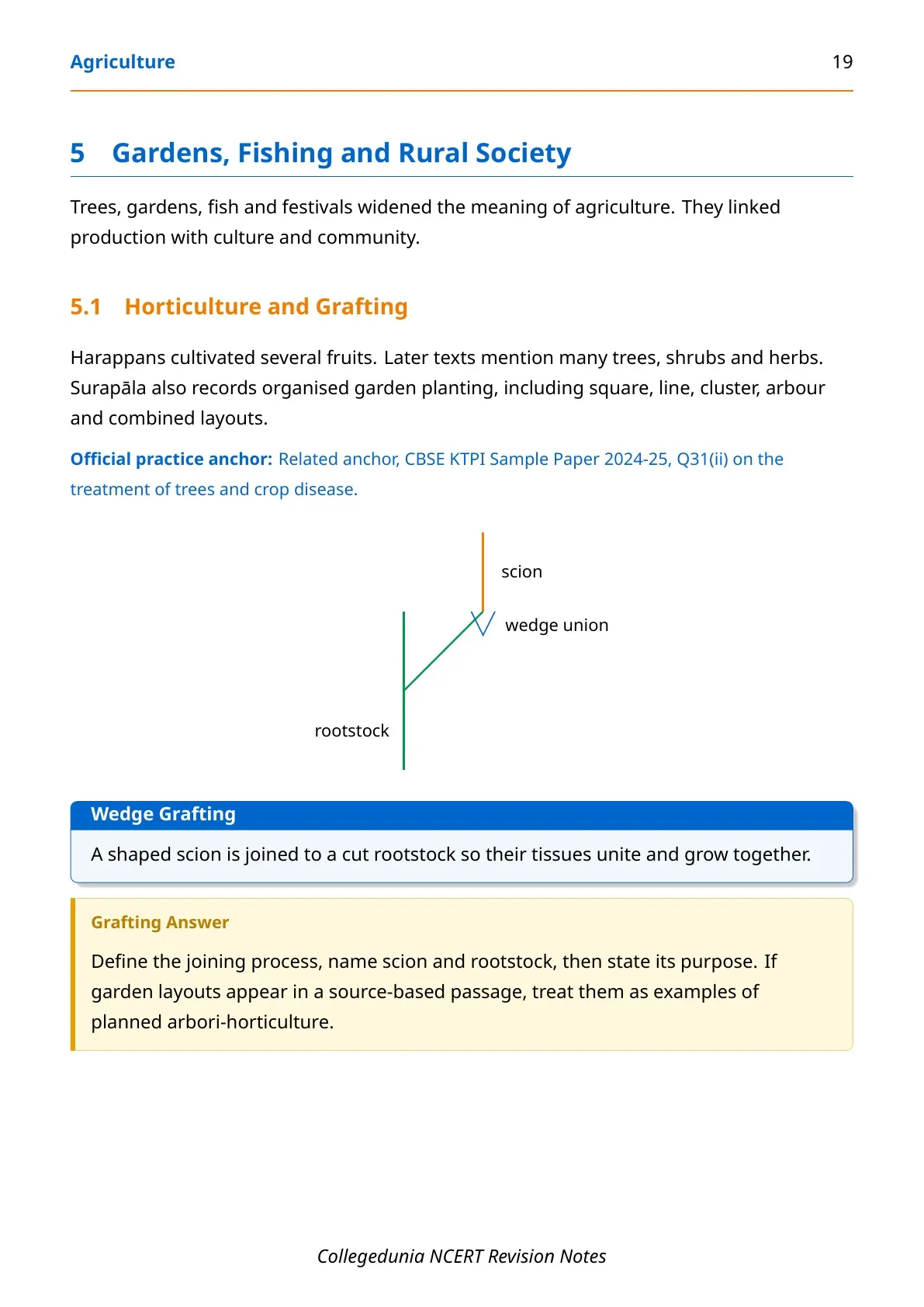
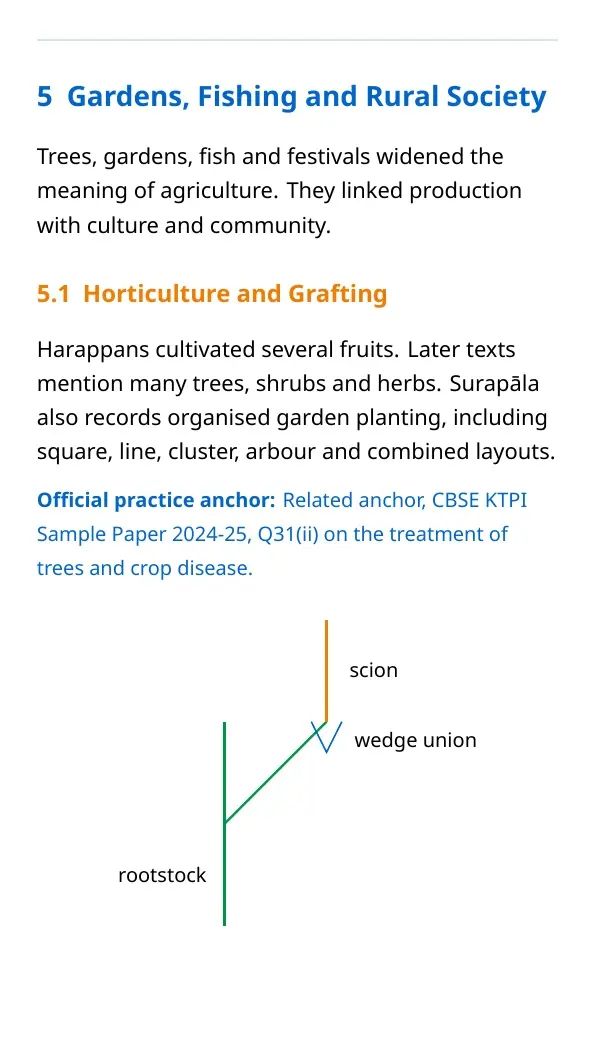
- Grafting: Bṛhatsaṁhitā describes a method now called wedge grafting.
- Plant knowledge: Vṛkṣāyurveda mentions plant care, tree treatment and planned garden forms.
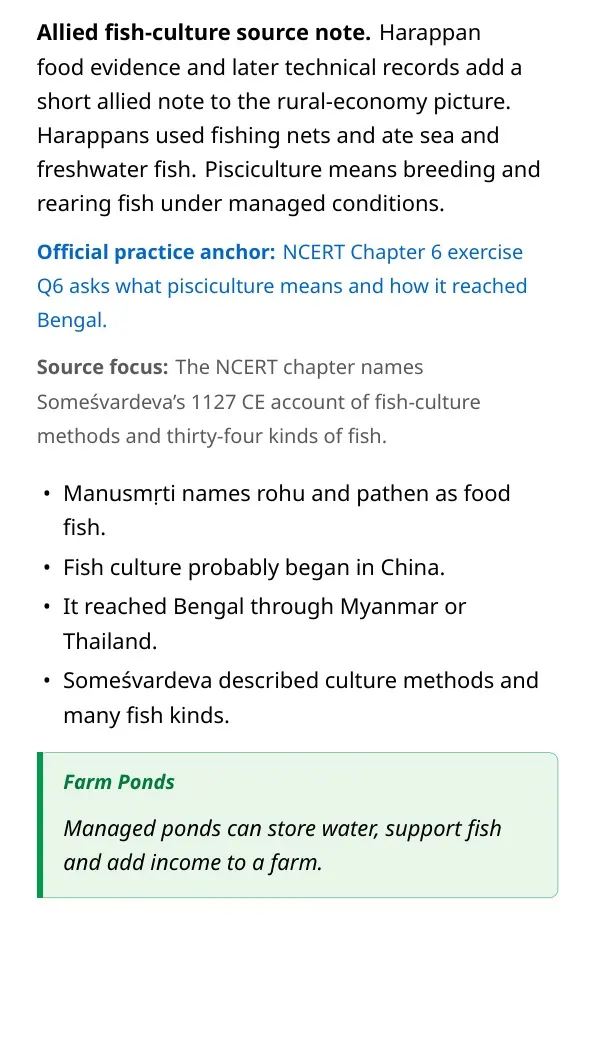
- Pisciculture: fish culture likely reached Bengal from China through Southeast Asia.
- Fish record: Someśvardeva listed fish-culture methods and 34 kinds of fish in 1127 CE.
Agriculture, Festivals and Society in India
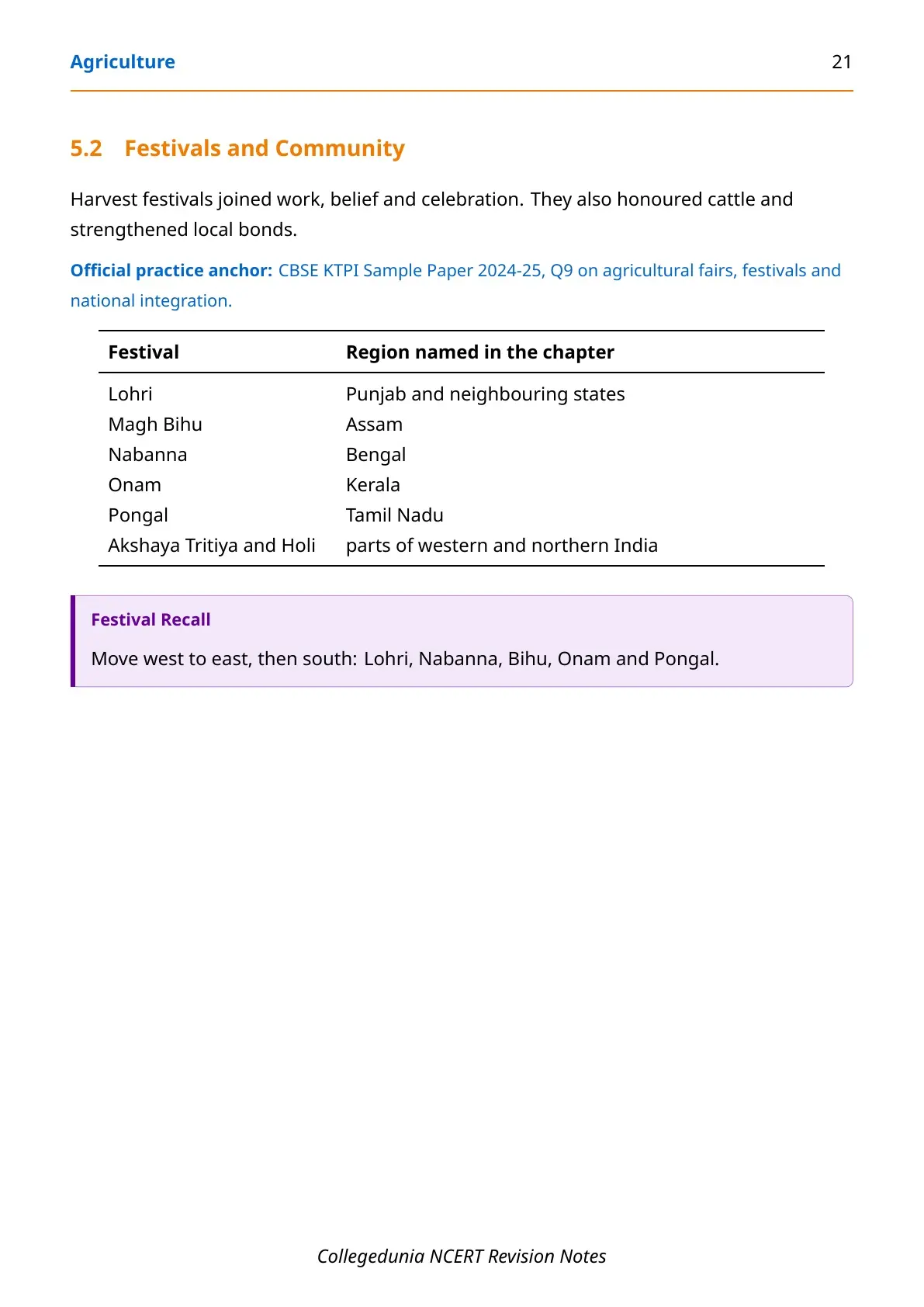
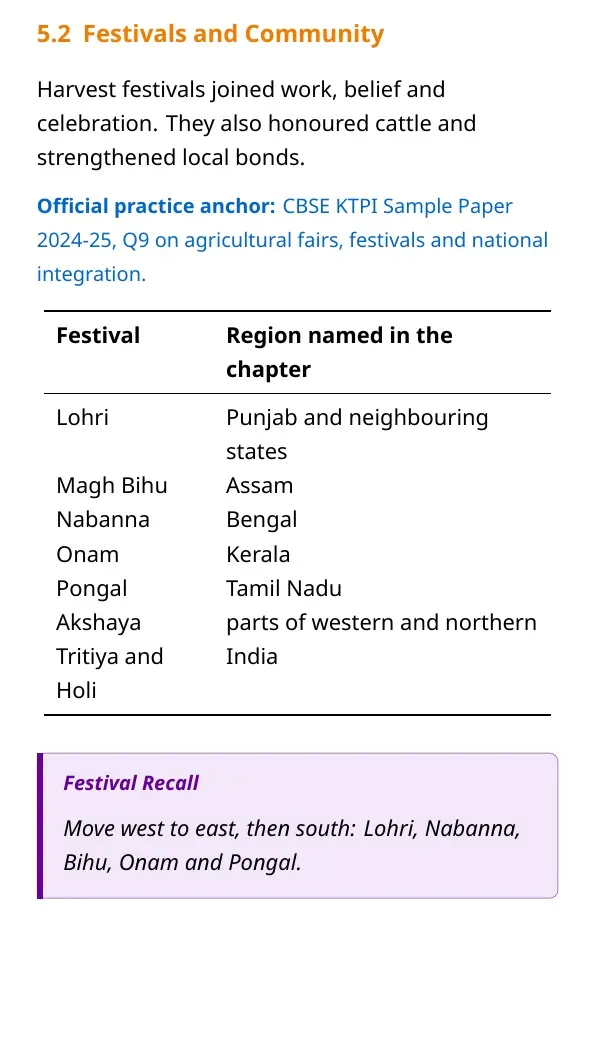
Agriculture shaped fairs, rituals and community life. Harvest festivals honoured crops, cattle and shared work across different regions.
| Festival | Region named in the chapter |
|---|---|
| Lohri | Punjab and neighbouring states |
| Magh Bihu | Assam |
| Nabanna | Bengal |
| Onam | Kerala |
| Pongal | Tamil Nadu |
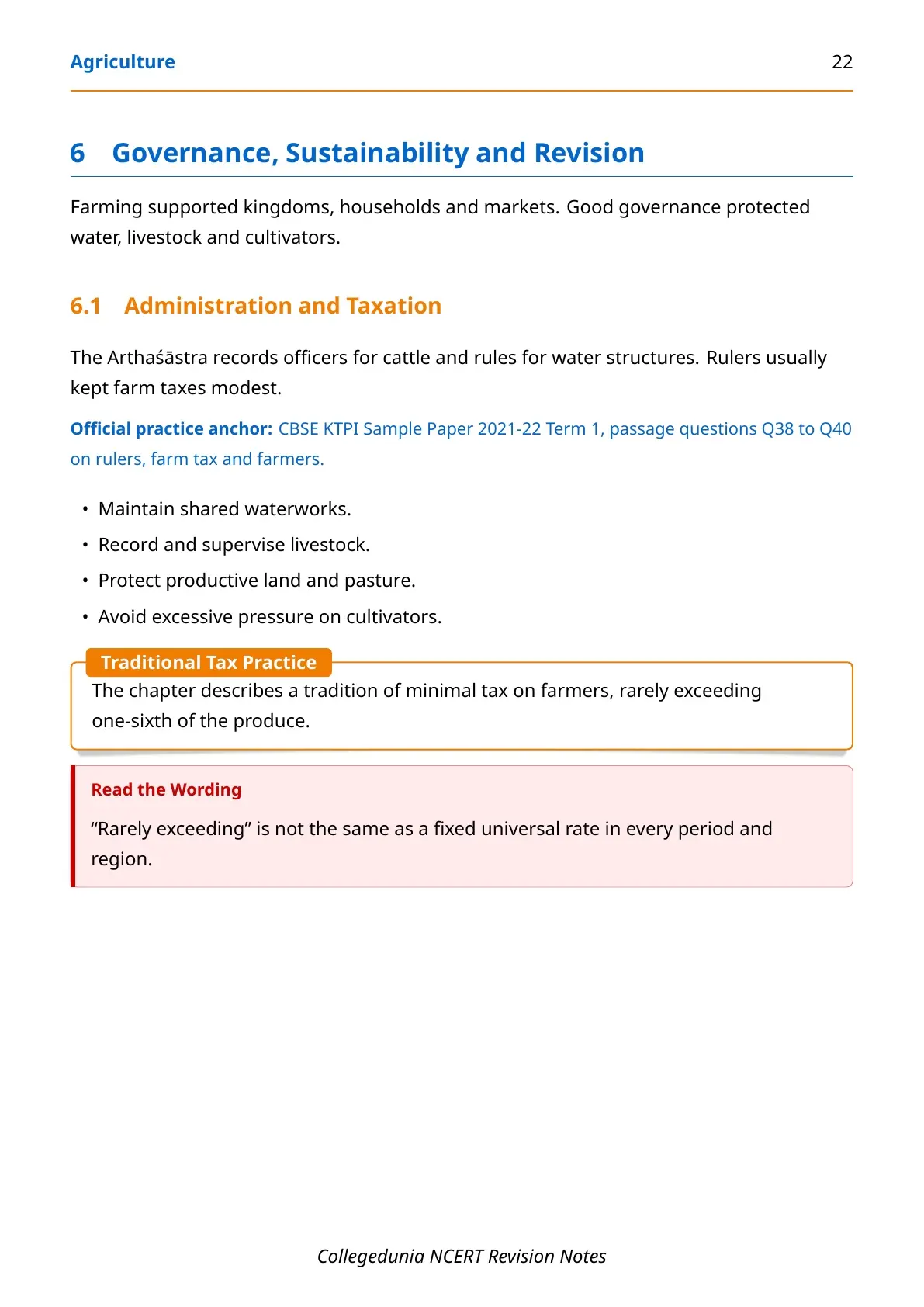
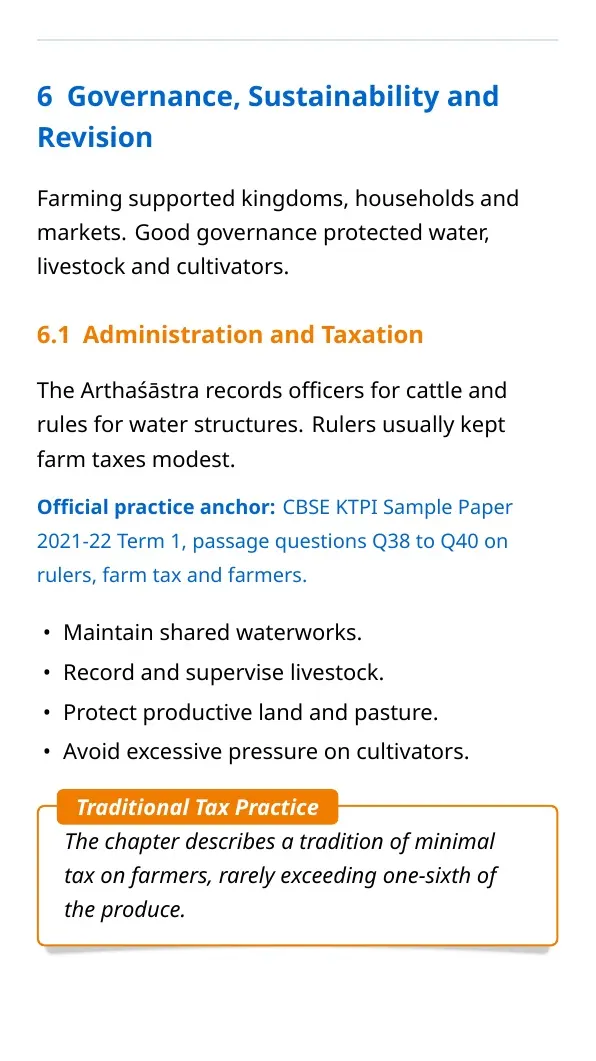
Exam point: rulers usually kept the farm tax low, often no more than one-sixth of the produce.
How to Revise Agriculture Class 12 KTPI Notes
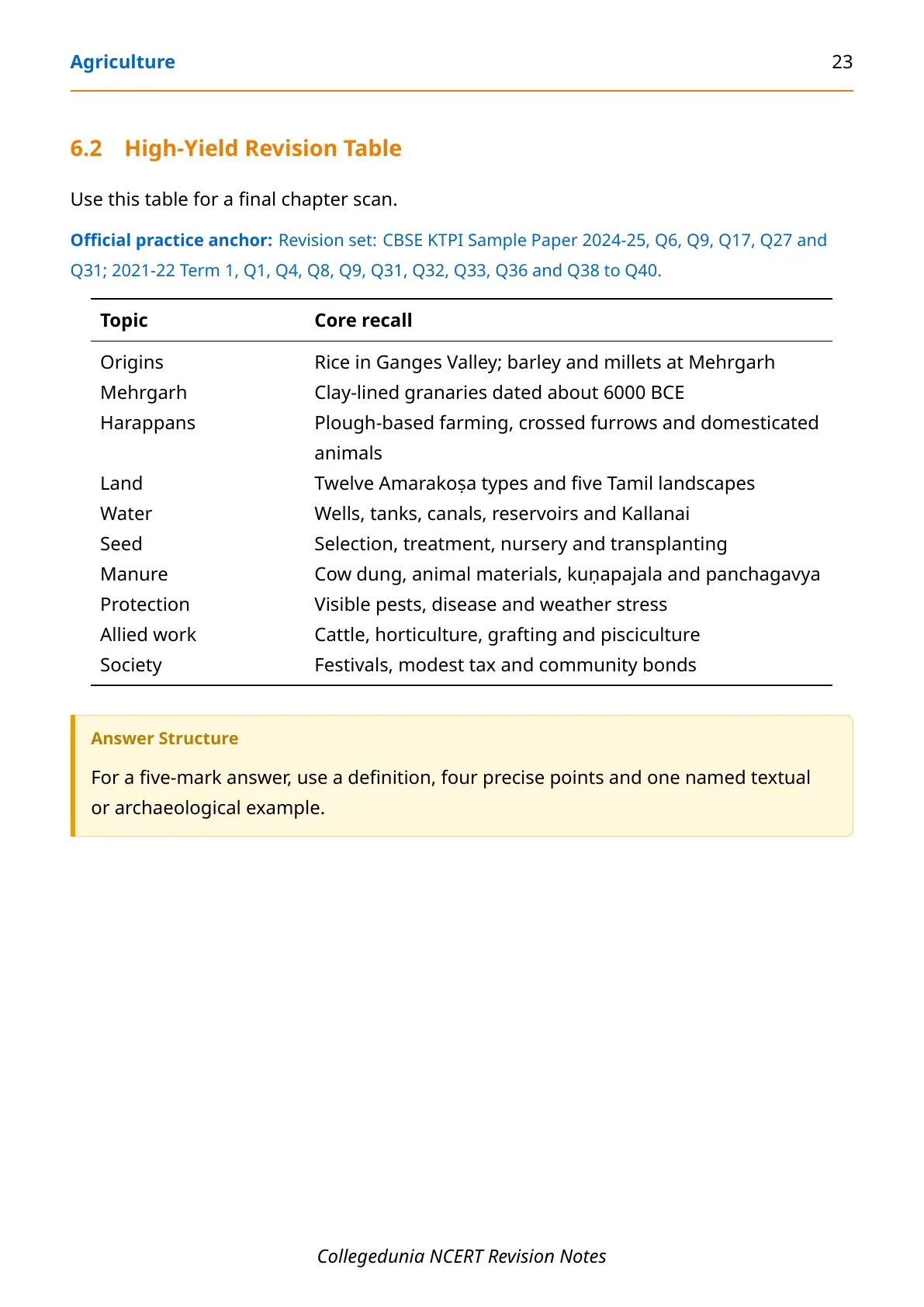
Use four blocks for revision: evidence, texts, farm practices and society. This method prevents similar names and lists from getting mixed.
- Make a timeline from Mehrgarh and Kalibangan to Someśvardeva.
- Match each text with one major agricultural contribution.
- Learn land types, manures, water structures and plant-care examples as separate lists.
- Finish with cattle care, fishing and harvest festivals.
Common mistake: Do not present literary evidence as an archaeological find. Name the source type in every answer.
Student Feedback on Agriculture Revision
What 12,460 students told us: In a Collegedunia poll conducted before the 2026 boards, students preferred tables for texts, manures and land types.
Source: 2026-27 Class 12 KTPI student poll. Sample of 12,460 students from schools across India.
Other Agriculture Class 12 KTPI Resources
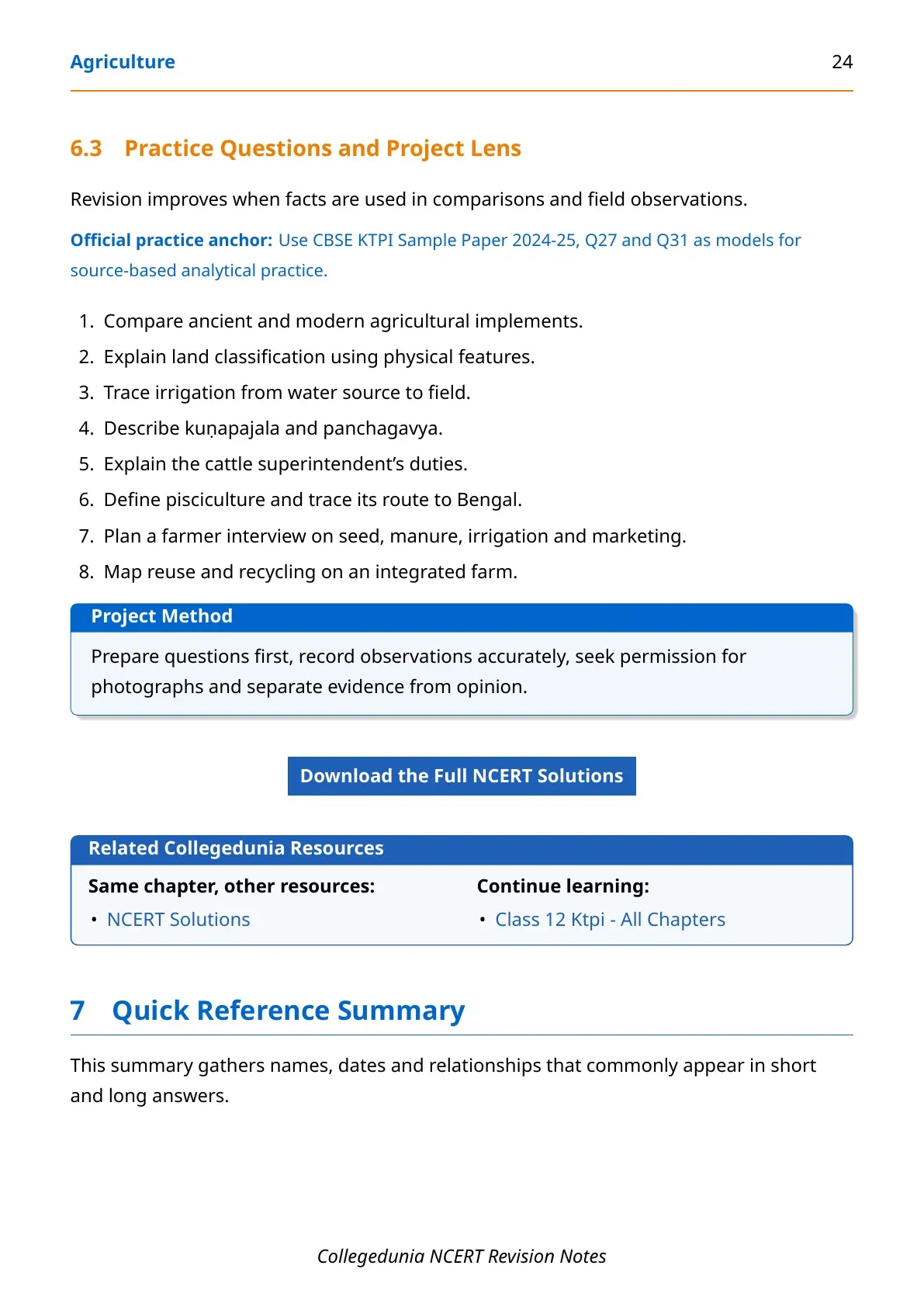
Use the book PDF for the full chapter and illustrations. Use the solutions page to check all comprehension answers.
| Resource | Use it for |
|---|---|
| Agriculture Class 12 NCERT Solutions | Comprehension questions and project guidance |
| Agriculture Class 12 NCERT Book PDF | Official text, photographs and activities |
| Agriculture Class 12 Handwritten Notes | Fast recall before the exam |
NCERT Notes for Class 12 KTPI: All Chapters
Read all KTPI notes to connect Indian work in science, medicine, agriculture, technology, language and philosophy.
| Chapter | Class 12 KTPI Notes |
|---|---|
| Chapter 1 | Astronomy in India Notes |
| Chapter 2 | Chemistry in India Notes |
| Chapter 3 | Mathematics in India Notes |
| Chapter 4 | Life Sciences Notes |
| Chapter 5 | Medicine in India Notes |
| Chapter 6 | Agriculture Notes |
| Chapter 7 | Metallurgy in India Notes |
| Chapter 8 | Architecture, Engineering and Technology Notes |
| Chapter 9 | Indian Languages and Grammar Notes |
| Chapter 10 | Indian Philosophical Systems Notes |
Agriculture KTPI Notes FAQs
Ques. What are the main topics in Agriculture Class 12 KTPI?
Ans. The chapter covers early farming, land types, water systems, tools, seeds, manures, pests, cattle, horticulture, fishing and festivals.
Ques. Are these Agriculture notes based on the 2026-27 NCERT?
Ans. Yes. The notes follow the 2026-27 NCERT chapter and preserve its dates, sources and main examples.
Ques. What is kuṇapajala?
Ans. Kuṇapajala is a fermented liquid manure made with animal matter, sesame oilcake, honey, black gram and ghee.
Ques. How many land types does the Amarakoṣa describe?
Ans. It describes twelve land types based on fertility, irrigation and physical features.
Ques. What was the role of the superintendent of cattle?
Ans. The officer counted livestock, supervised rearing, classified animals and made sure they received suitable rations.
Ques. What is pisciculture?
Ans. Pisciculture means breeding and raising fish. The chapter says it likely reached Bengal from China through Southeast Asia.



Comments