




Inside the Class 12 KTPI notes for Astronomy in India, you will find the Indian calendar, nakshatras, tithi, eclipses and key astronomers. The coverage follows the reprinted 2026-27 NCERT chapter and keeps dates, terms and numerical facts easy to revise.
- Core focus: calendars, timekeeping, planetary motion and eclipse calculations.
- Quick recall: 12 rashis, 27 or 28 nakshatras and 30 tithis.
- Study aid: compact tables connect Sanskrit terms with their scientific meaning.
These Astronomy in India notes are prepared from the 2026-27 NCERT text and checked for clear, textbook-faithful revision.
Student Feedback: In a Collegedunia poll of 10,000+ students, students preferred timeline tables and short term lists for revising history-of-science chapters.
Astronomy in India Important Ideas for Class 12 KTPI
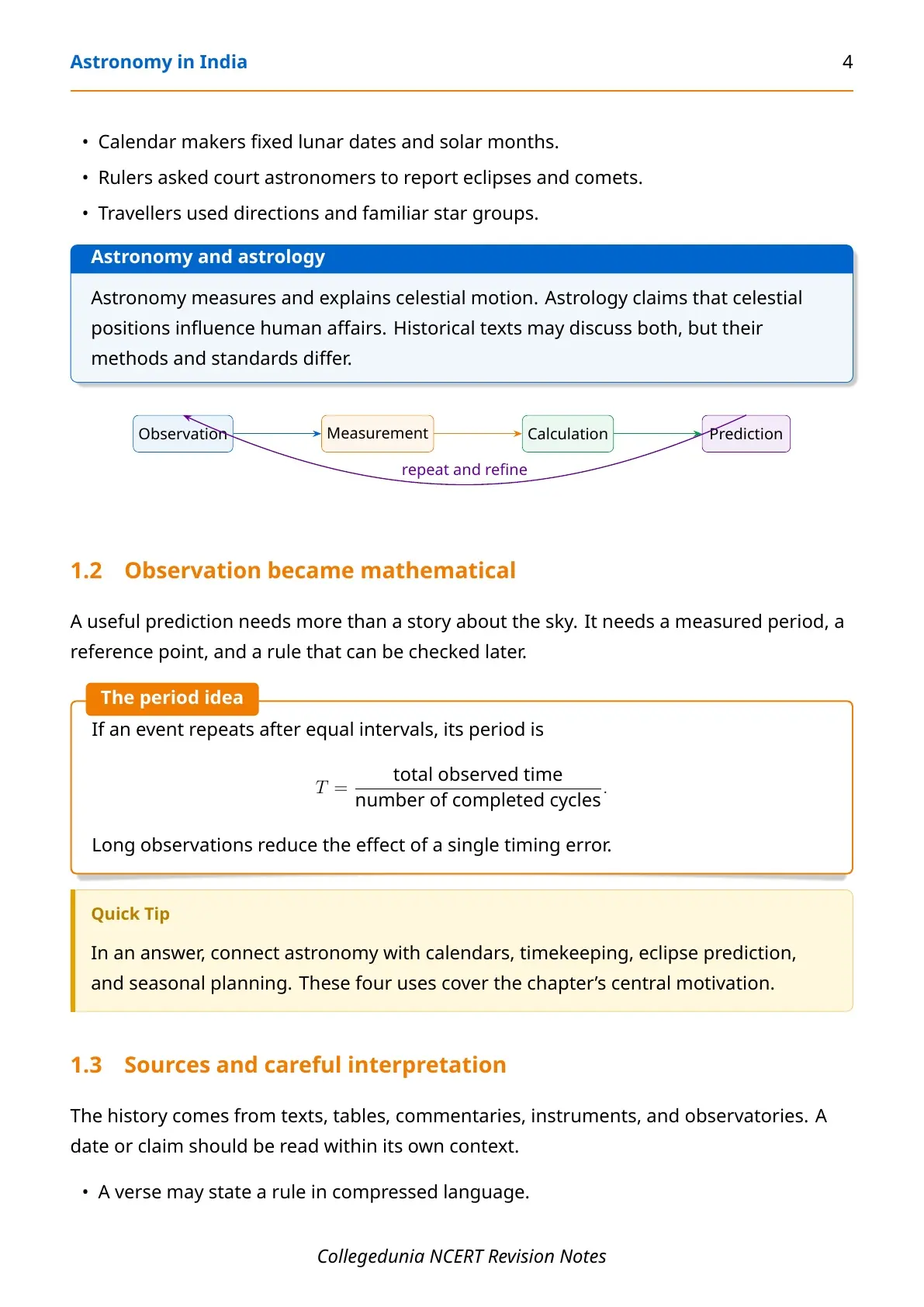
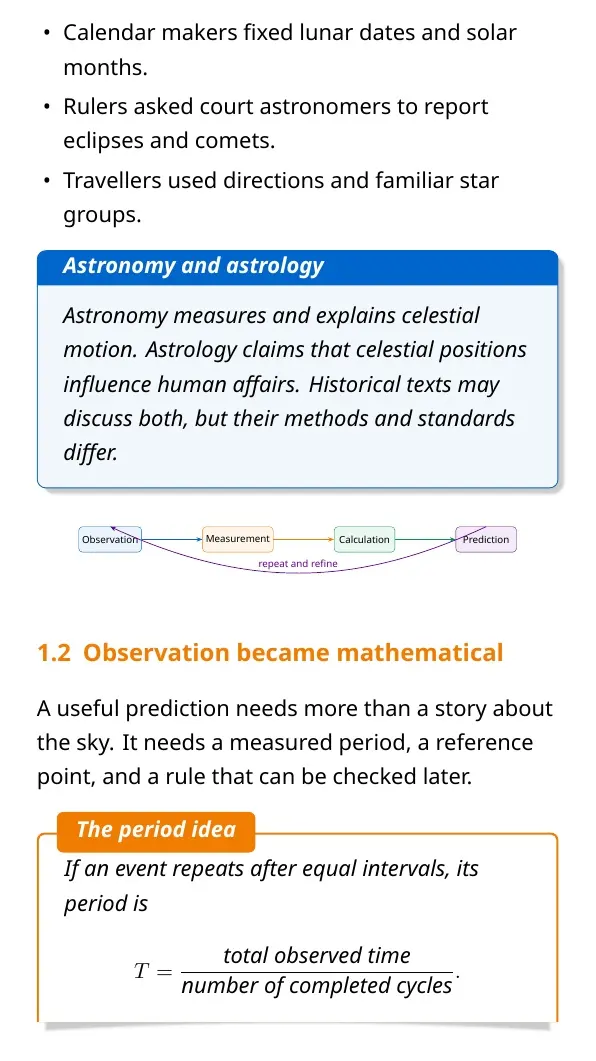
Indian astronomy grew from practical needs as well as curiosity about the sky. People had to plan farming, festivals and ceremonies. Rulers also wanted reports about eclipses, comets and other celestial events. This need led scholars to observe the Sun, Moon, planets and stars with care.
- Calendar making: linked lunar phases, solar motion, seasons and social events.
- Timekeeping: measured days, months and years through repeated sky observations.
- Prediction: calculated the timing and duration of eclipses.
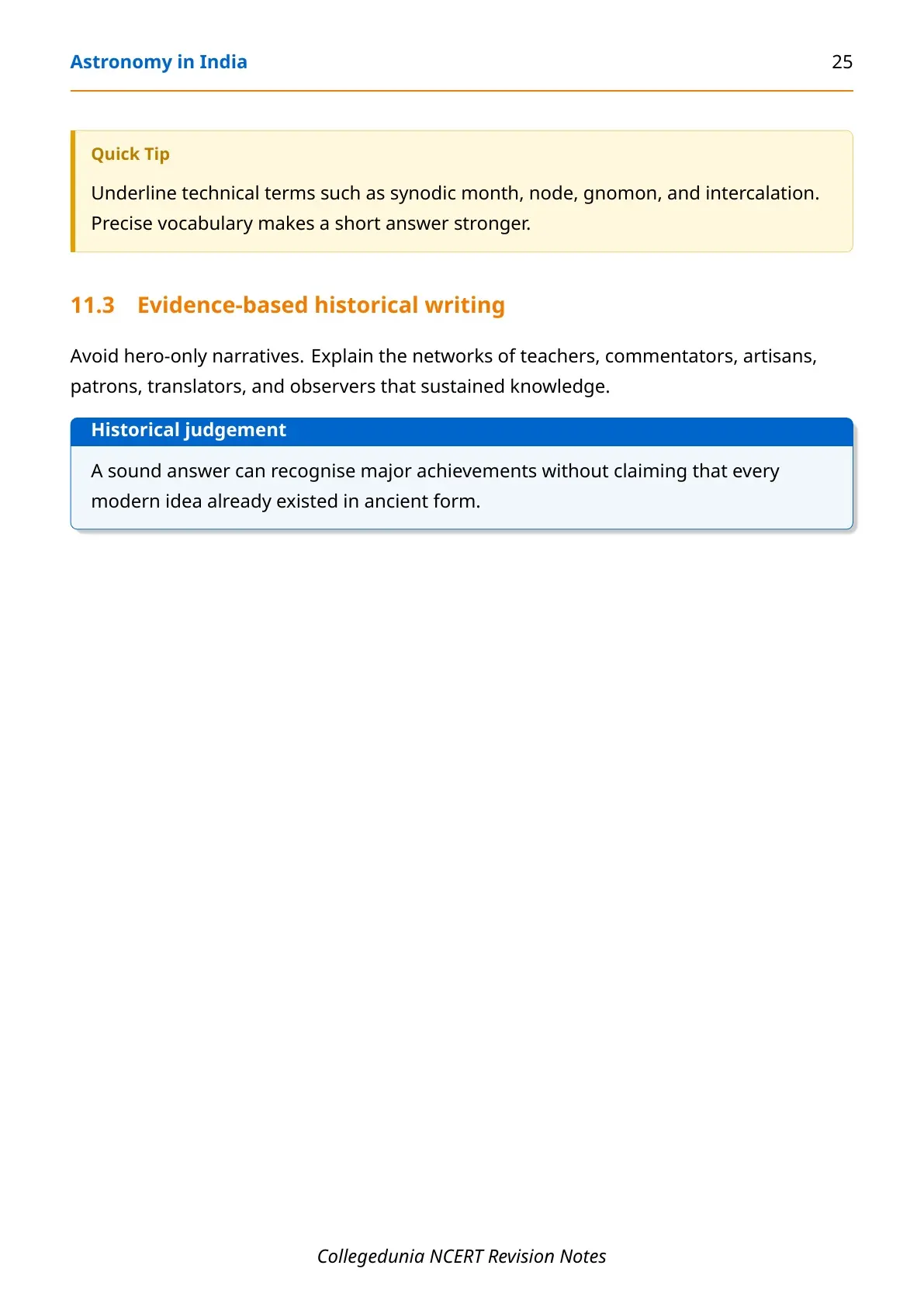
- Mathematics: supported long calculations about motion, distance and position.
Ancient Indian astronomy joined observation with calculation. It was not limited to myths or astrology. The chapter shows a long record of practical and mathematical work.
Indian Astronomy Through the Medieval Period
Source: nptelhrd on YouTube
Indian Luni-Solar Calendar, Rashi and Nakshatra Explained
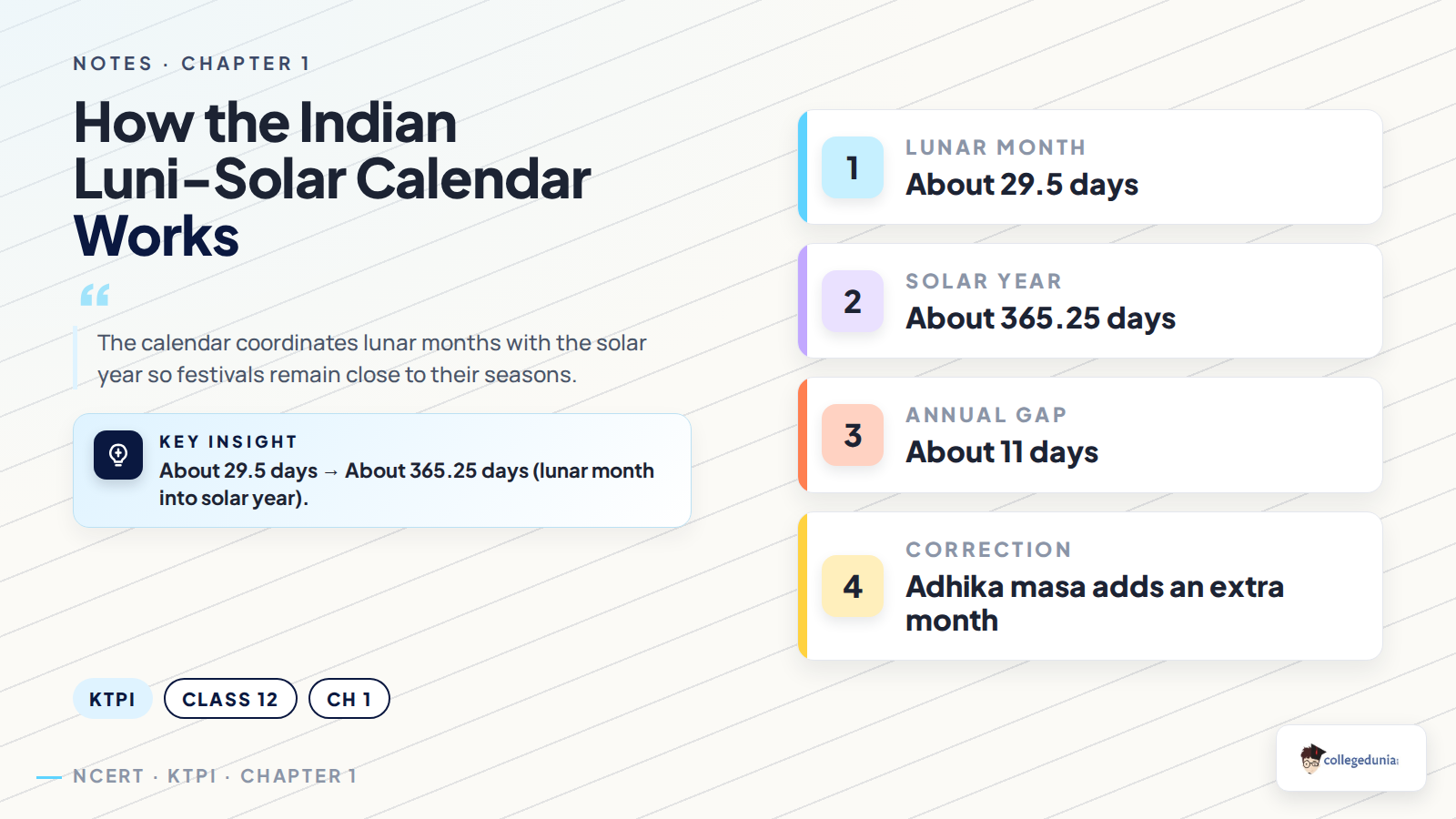
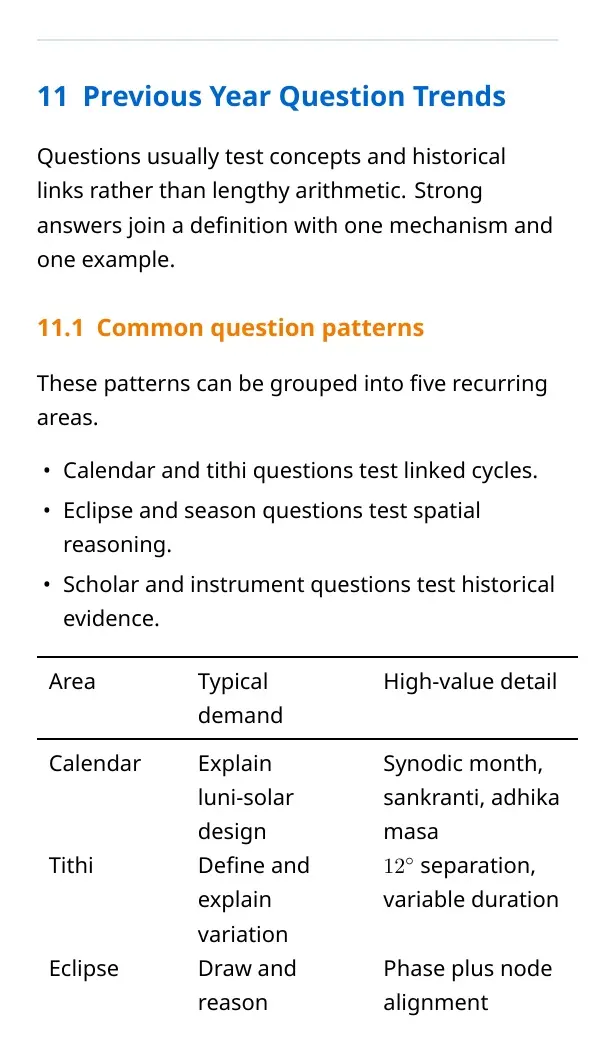
The Indian calendar combines the Moon's cycle with the Sun's yearly motion. A lunar month helps set festivals and fasting days. A solar month supports day-to-day seasonal reckoning. The system must keep both cycles close even though their year lengths differ.
| Term | Meaning | Key fact |
|---|---|---|
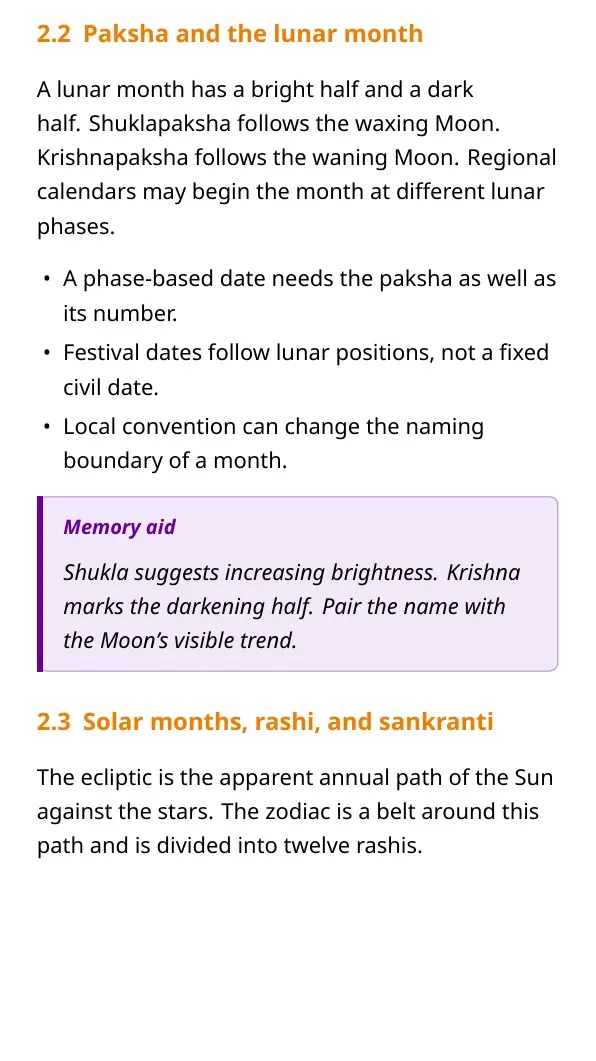
| Paksha | Half of a lunar month | Shuklapaksha is bright; Krishnapaksha is dark |
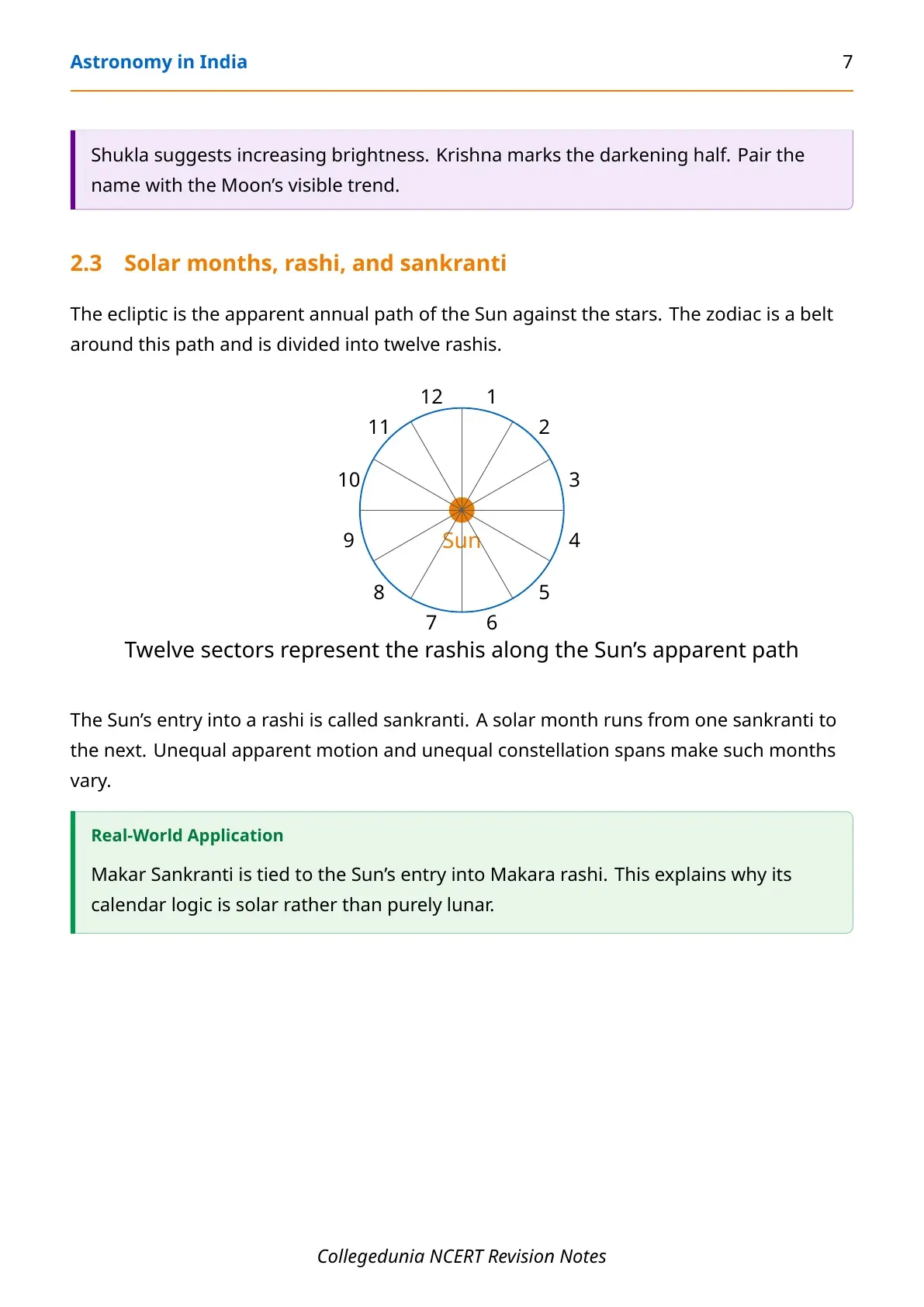
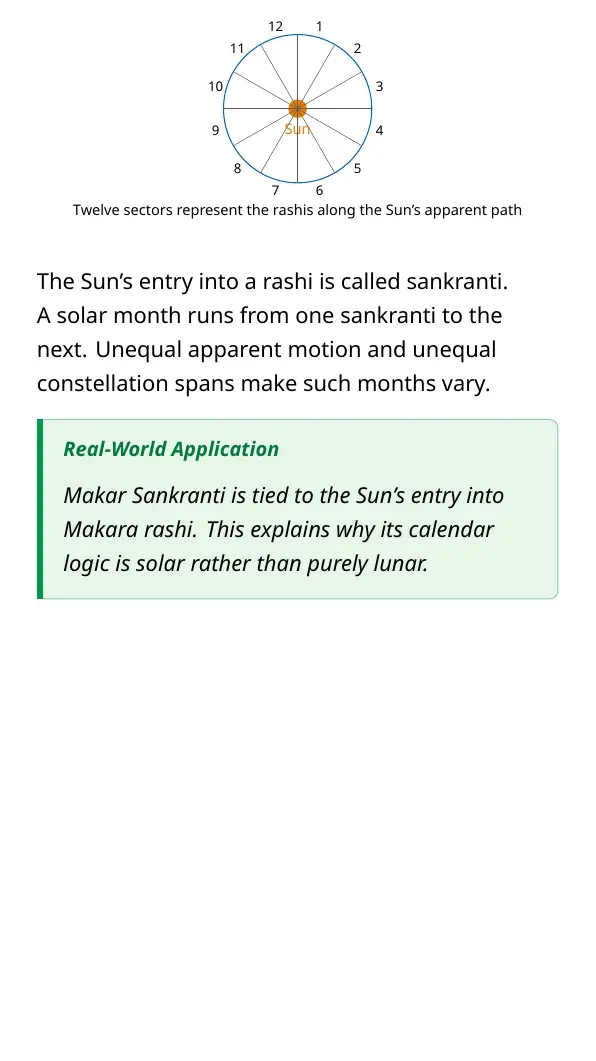
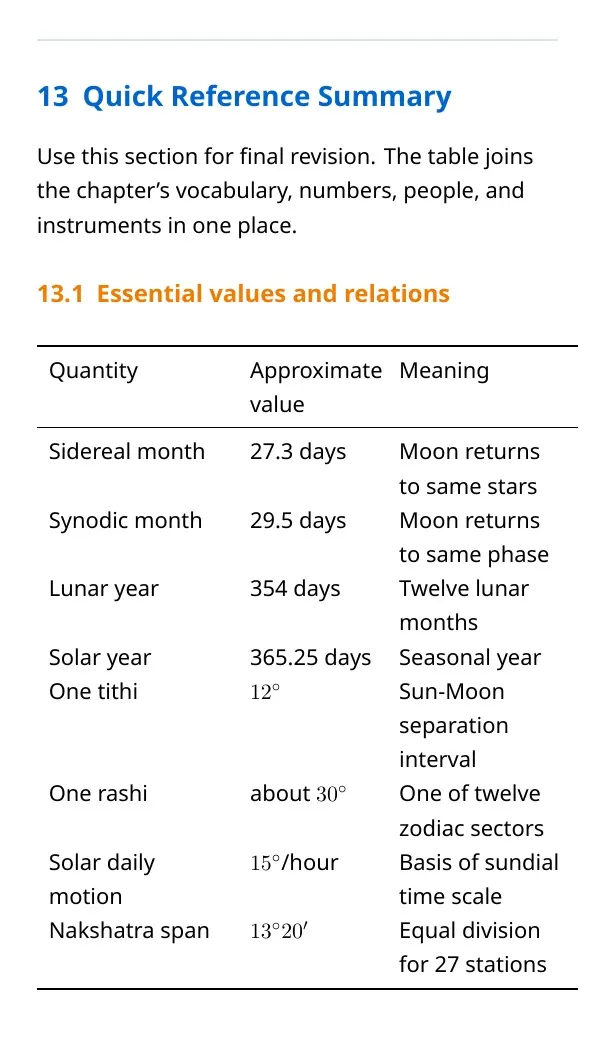
| Rashi | Zodiacal constellation | The zodiac has 12 rashis |
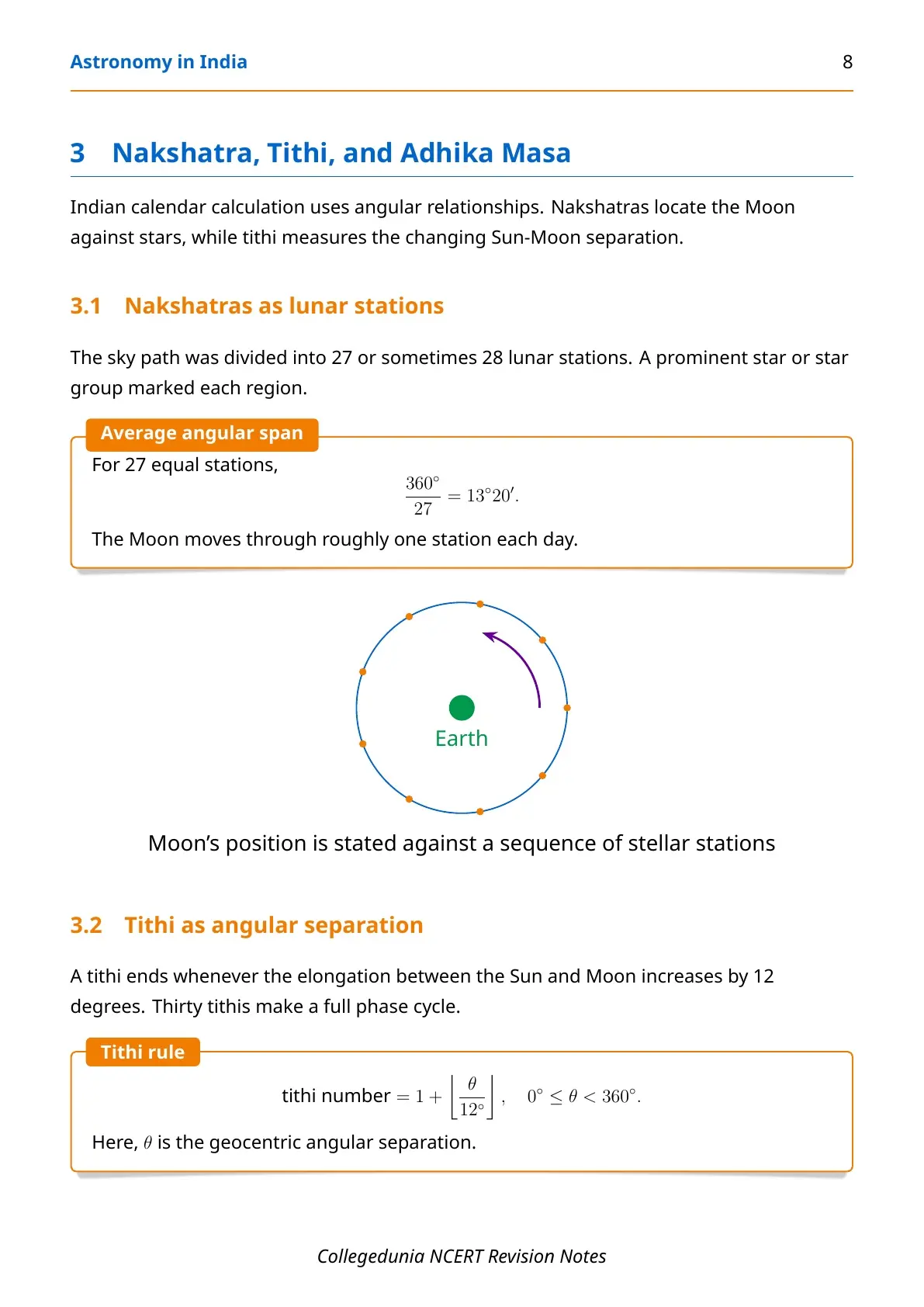
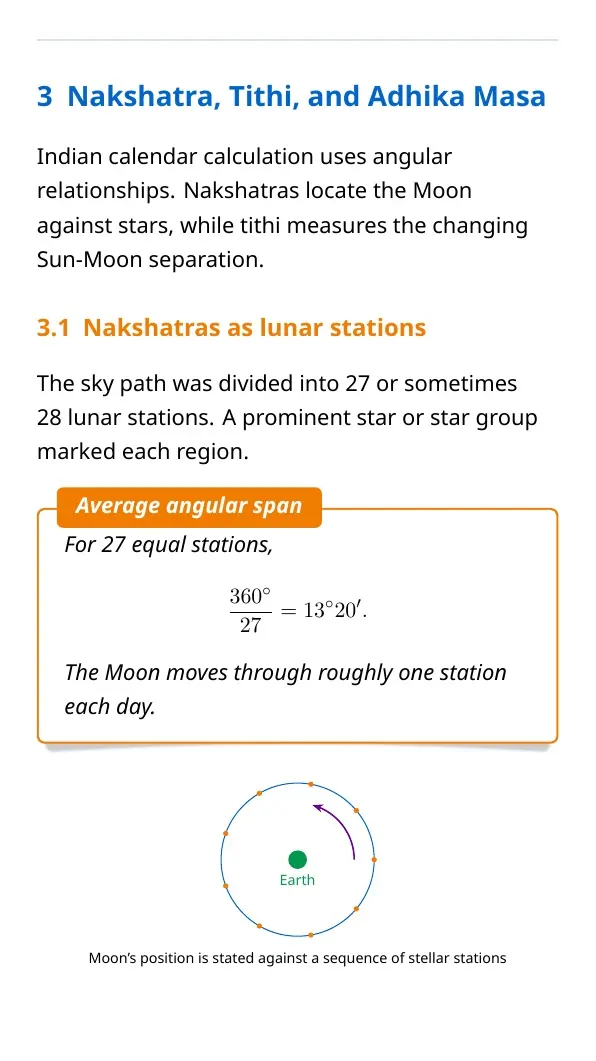
| Nakshatra | Star linked with the Moon's daily position | There are 27 or 28 nakshatras |
| Sankranti | Sun's entry into a new rashi | One sankranti begins a solar month |
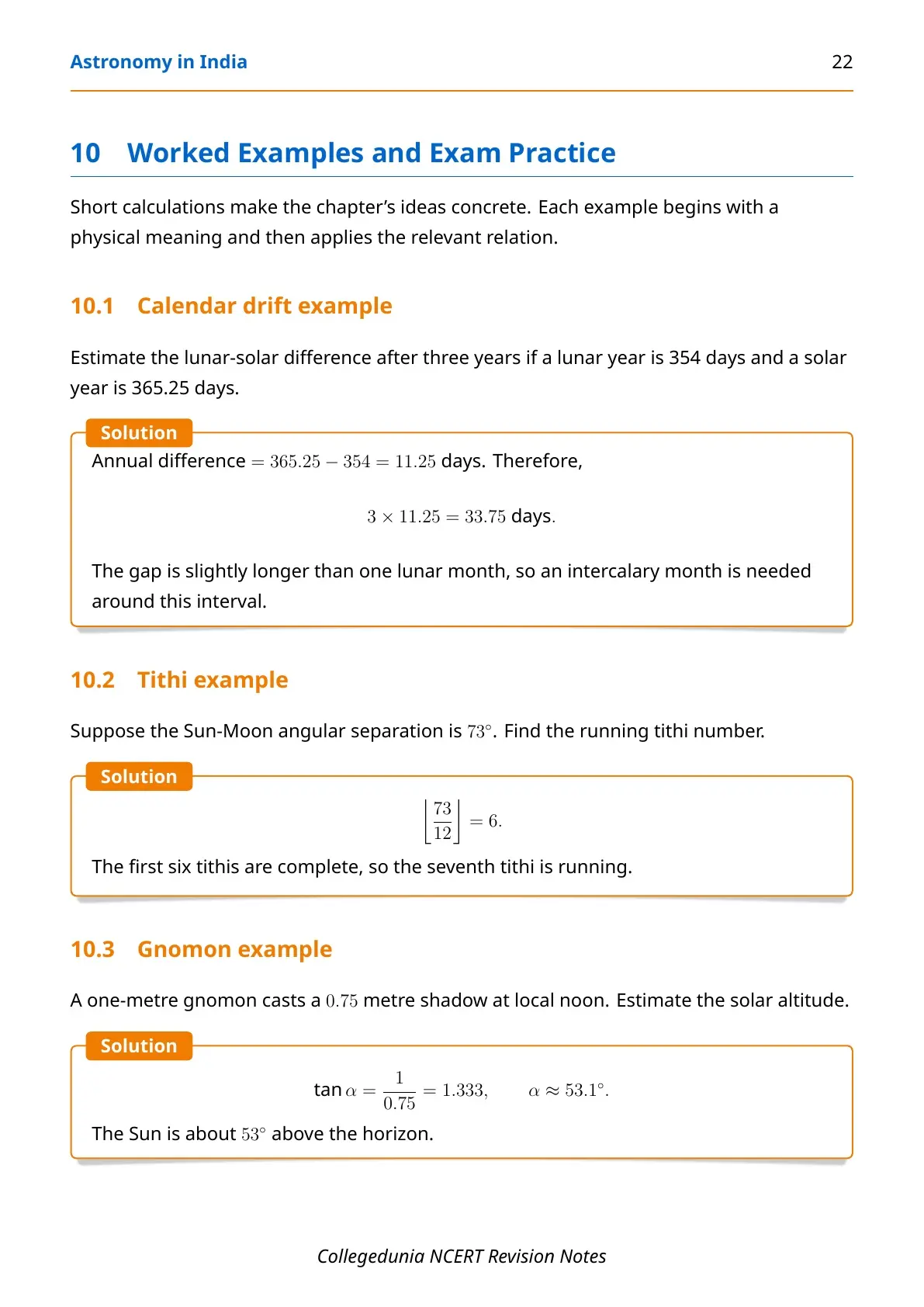
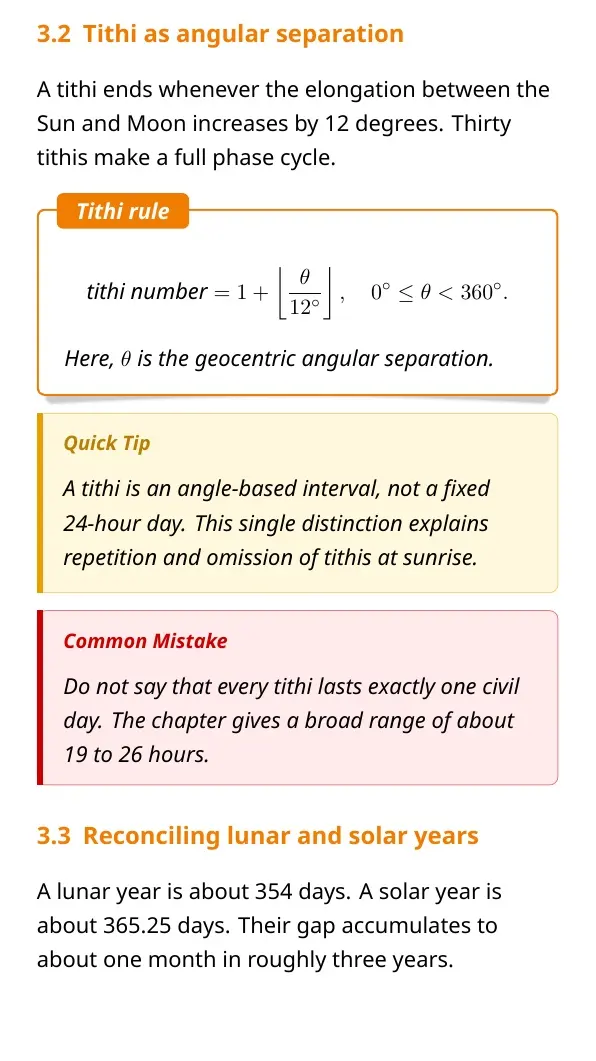
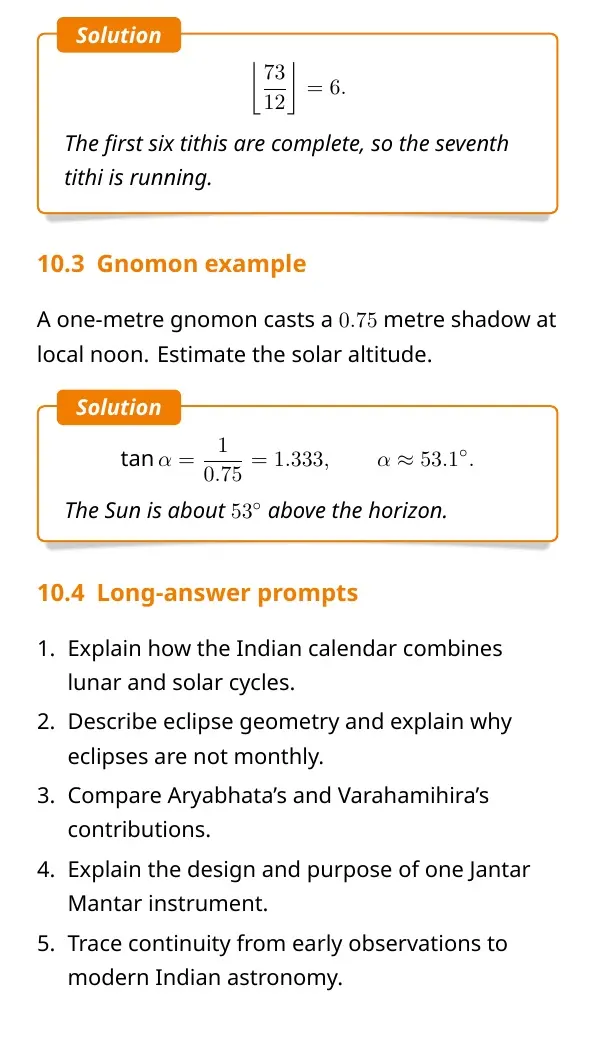
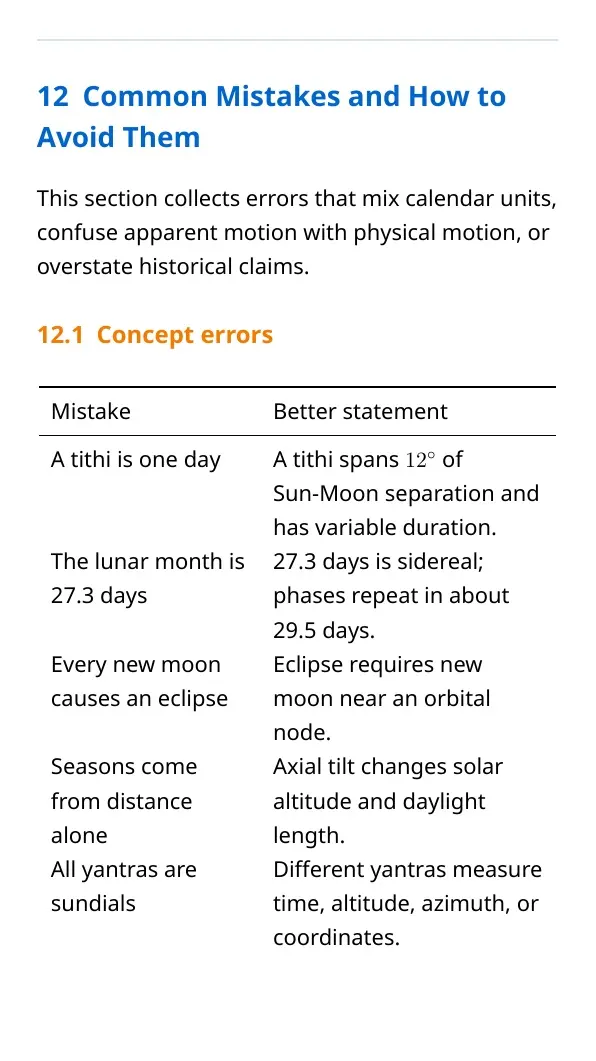
| Tithi | Lunar date | Changes after 12 degrees of Sun-Moon separation |
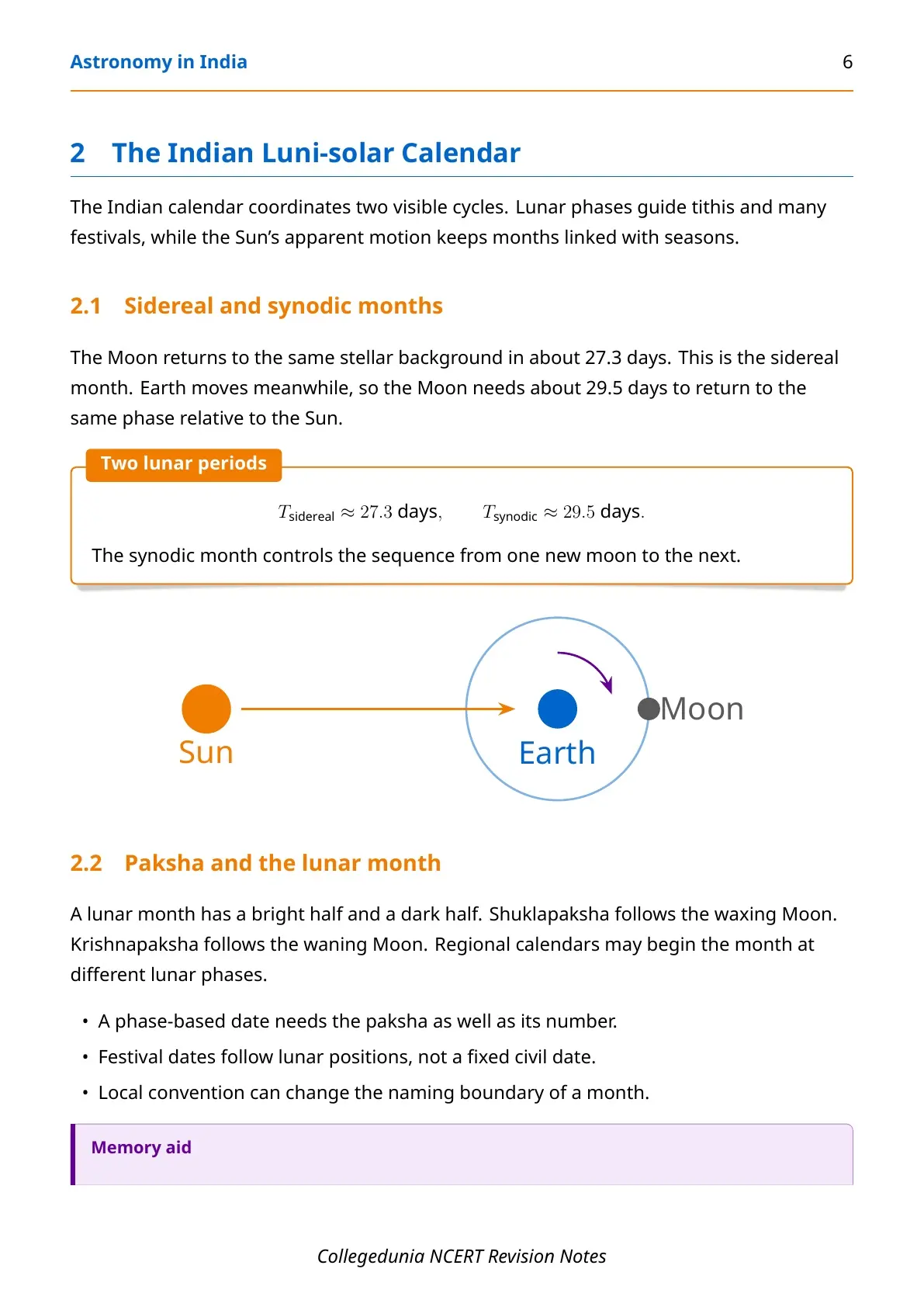
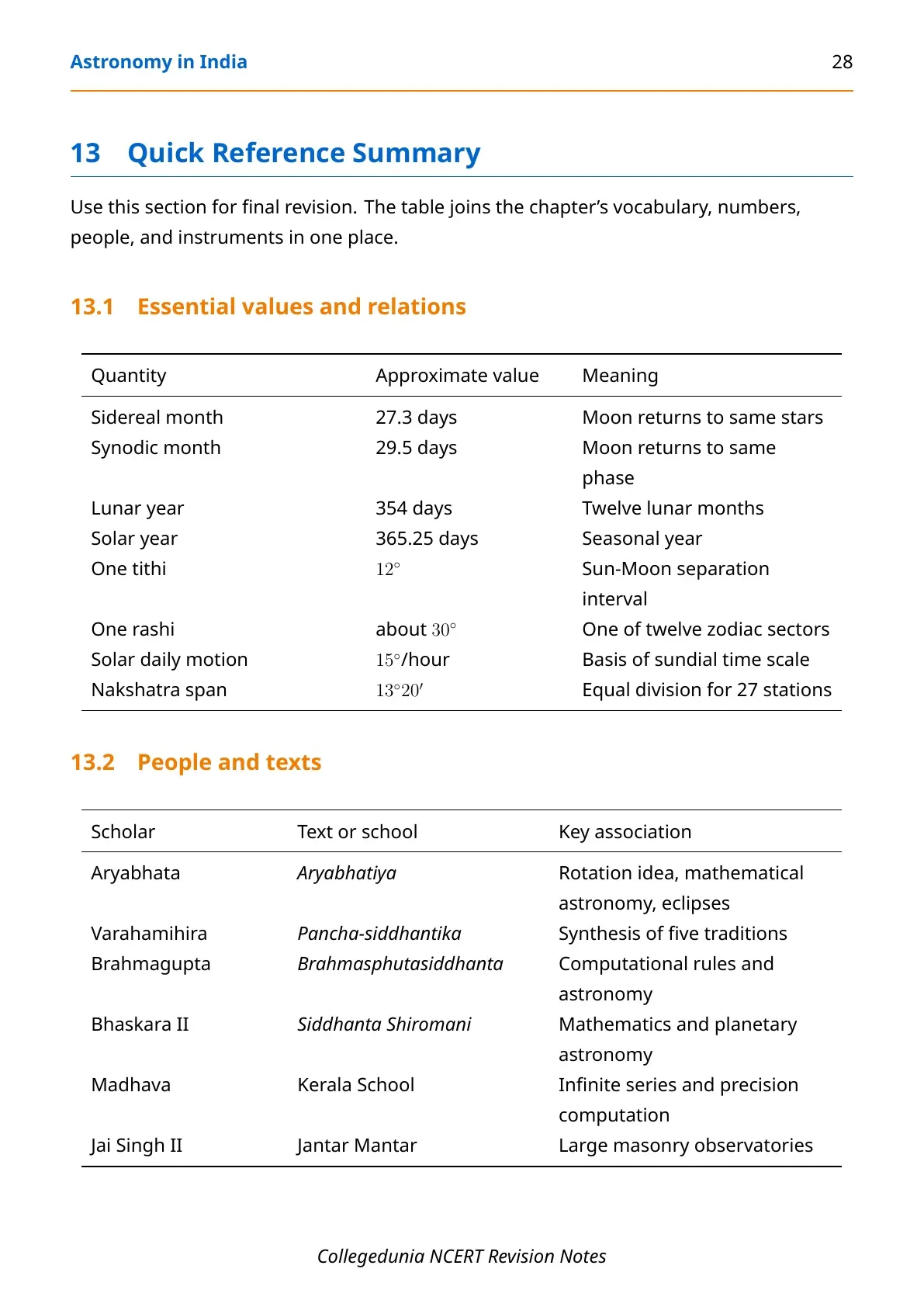
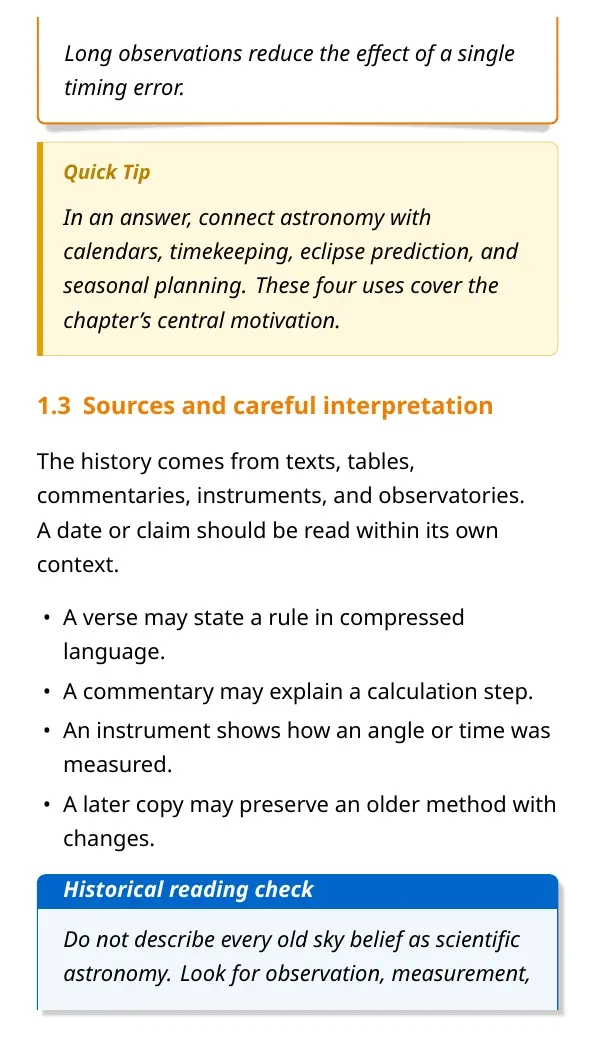
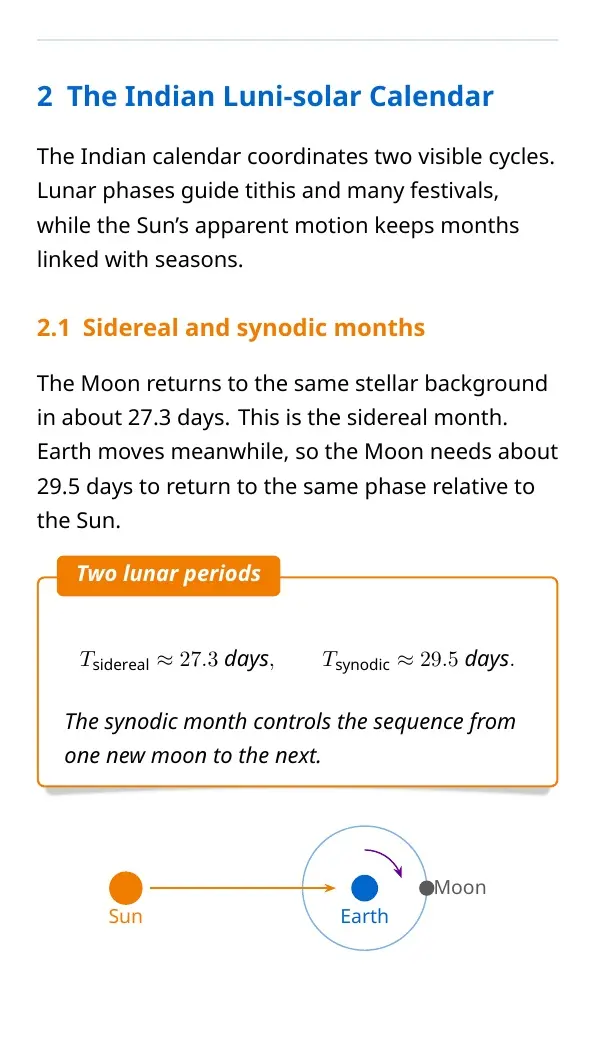
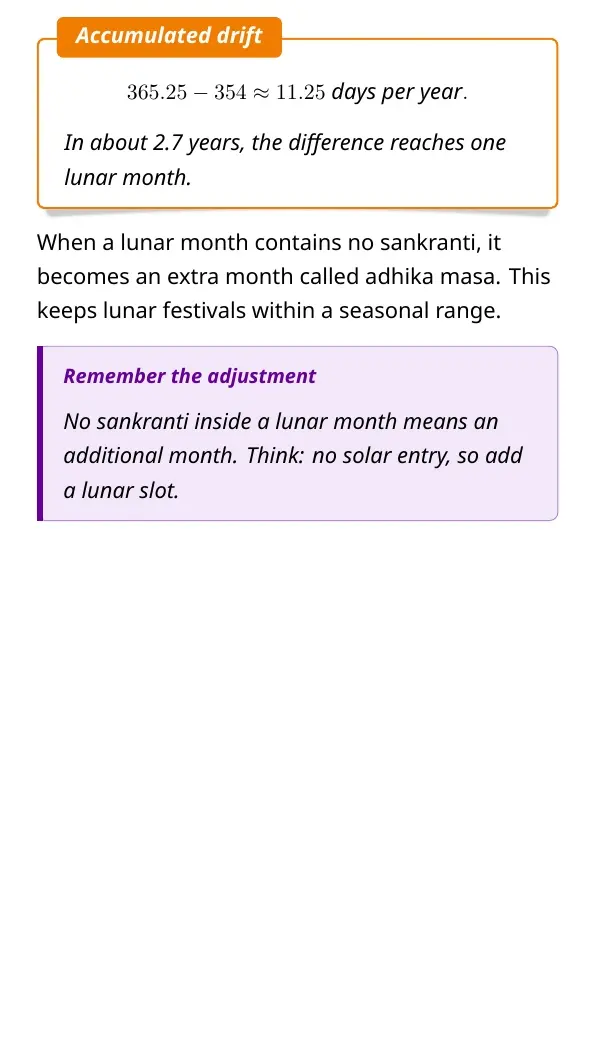
The Moon's sidereal period is about 27.3 days, while its observed cycle from Earth is about 29.5 days. A lunar year is about 354 days. A solar year is about 365.25 days. The gap is close to 11 days each year.
Adhika Month and Tithi Rules in Astronomy in India
The luni-solar system needs a correction because the lunar year is shorter. Calendar makers add an extra lunar month about once in three years. This keeps festivals within the same broad season instead of letting them move through the whole year.
- Two new moons may fall within one solar month.
- The two lunar months then receive the same name.
- The month without a sankranti becomes the adhika month.
- That year has 13 lunar months instead of 12.
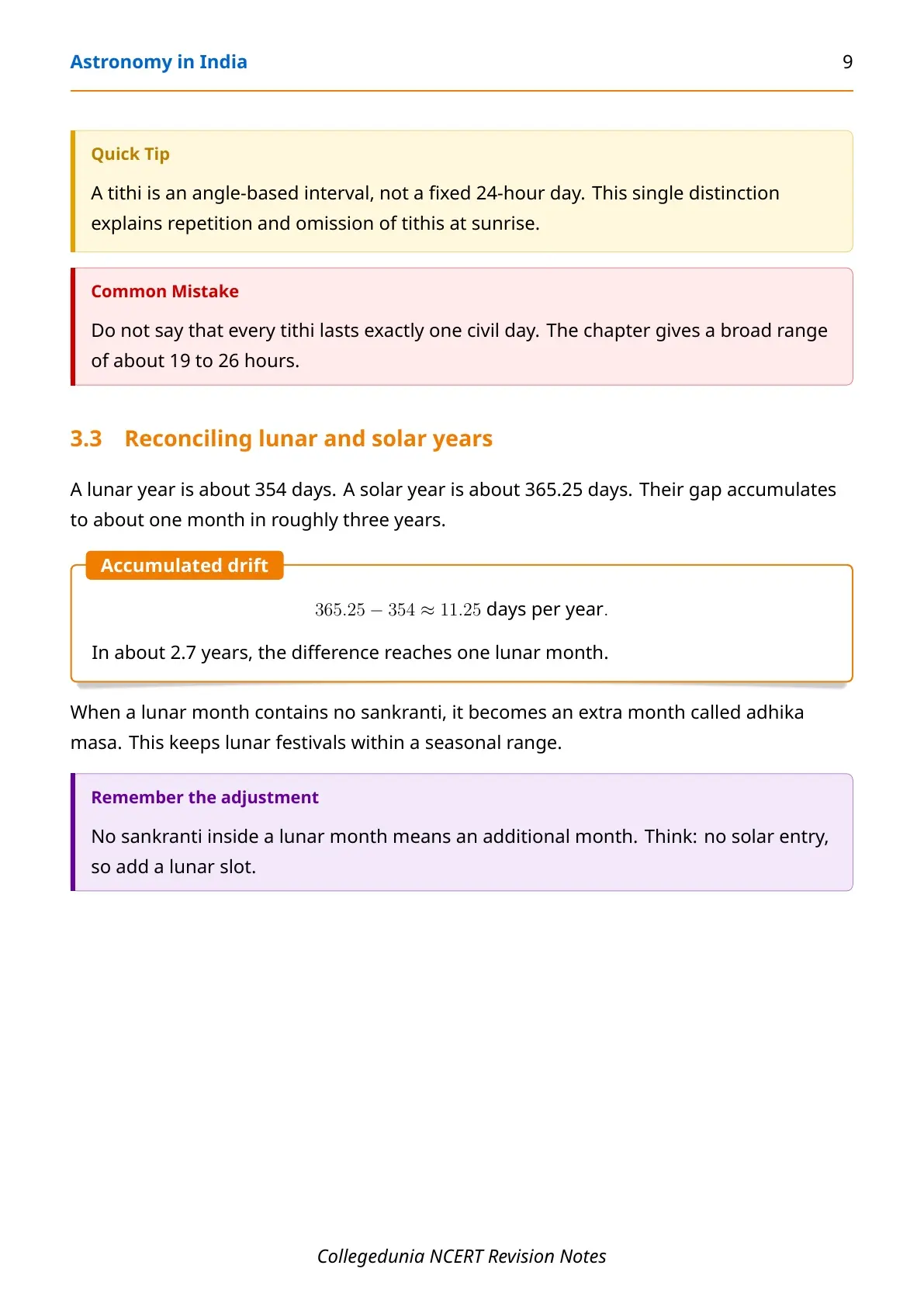
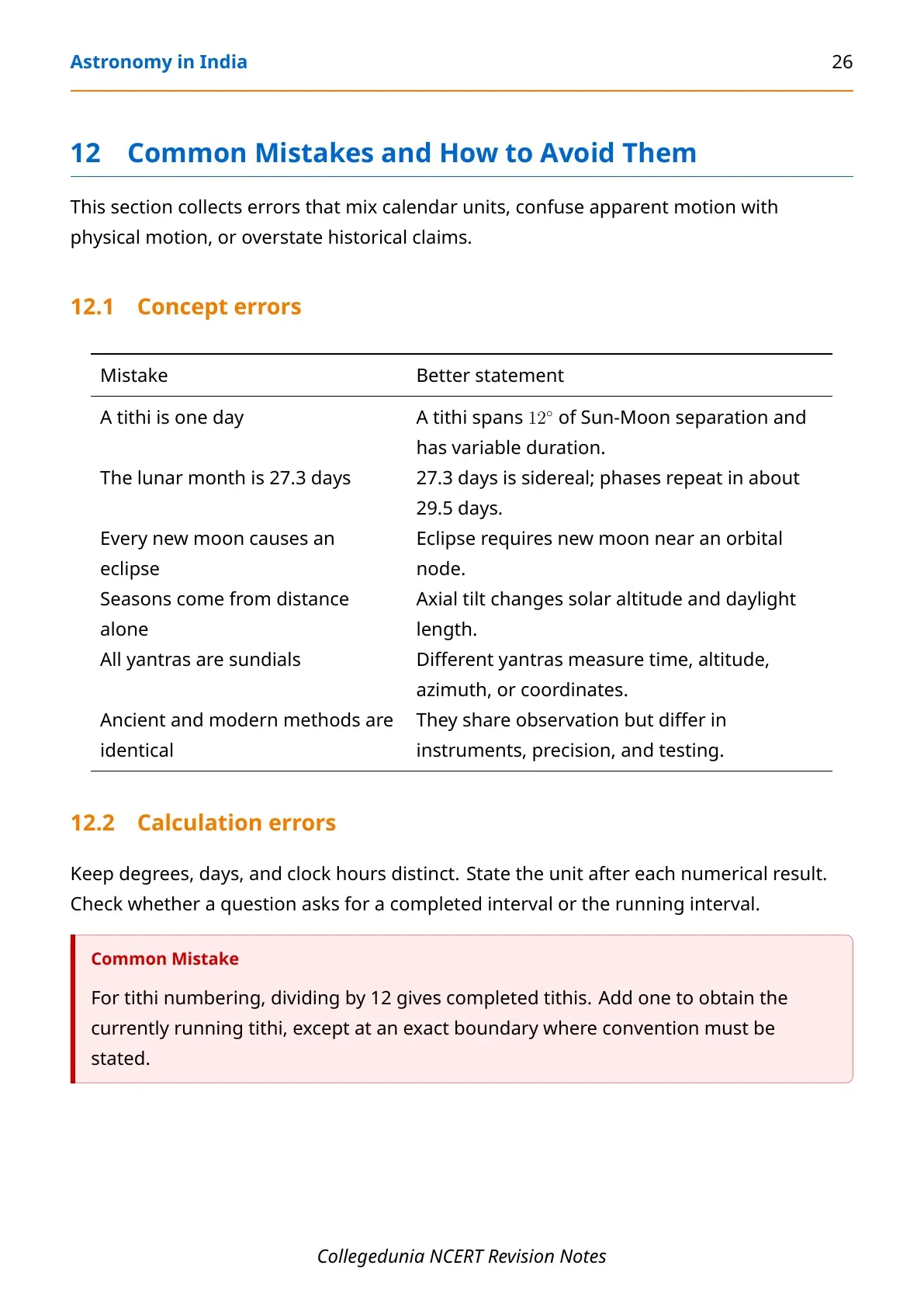
A tithi does not match a fixed clock day. Its length can vary from about 19 to 26 hours. Some tithis cross sunrise, while others begin and end between two sunrises. This explains why a festival date can differ across places or calendars.
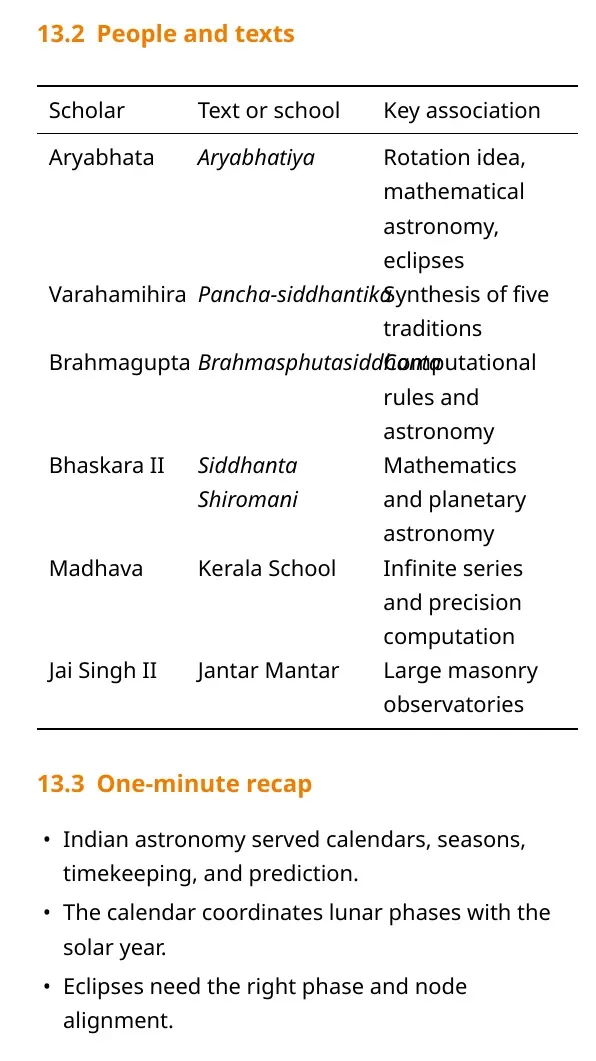
Astronomy in India Scholar Timeline and Contributions
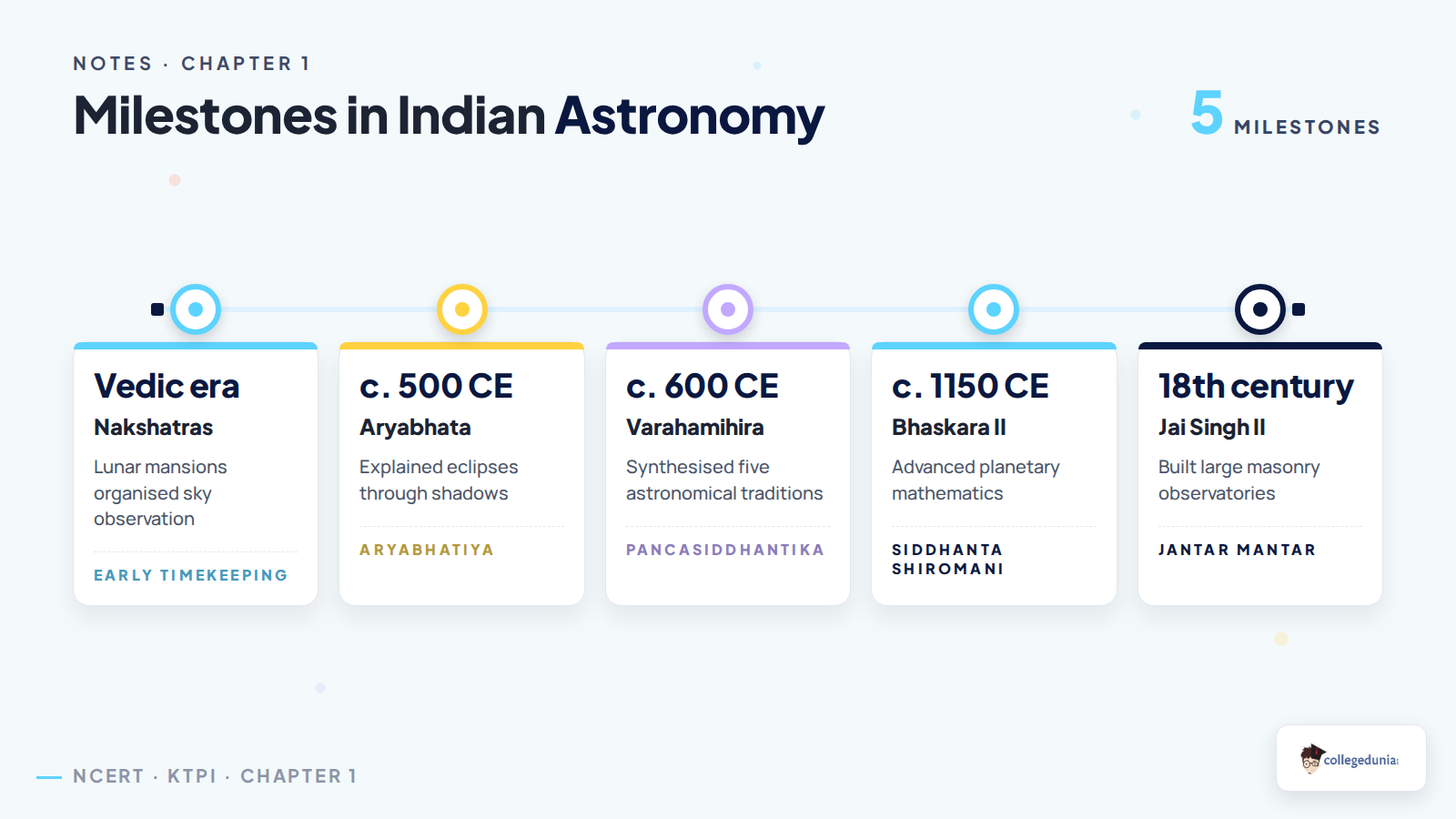
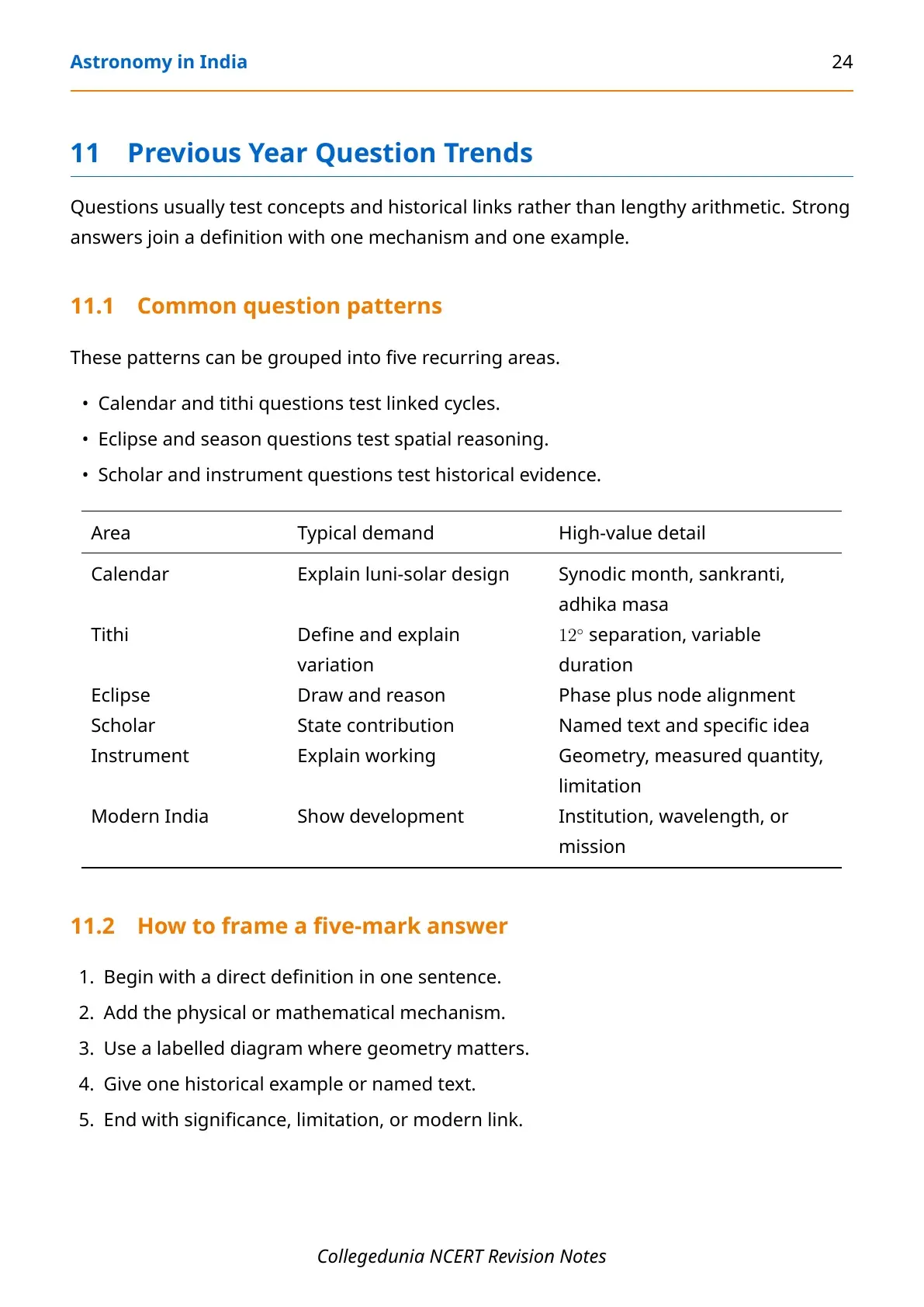
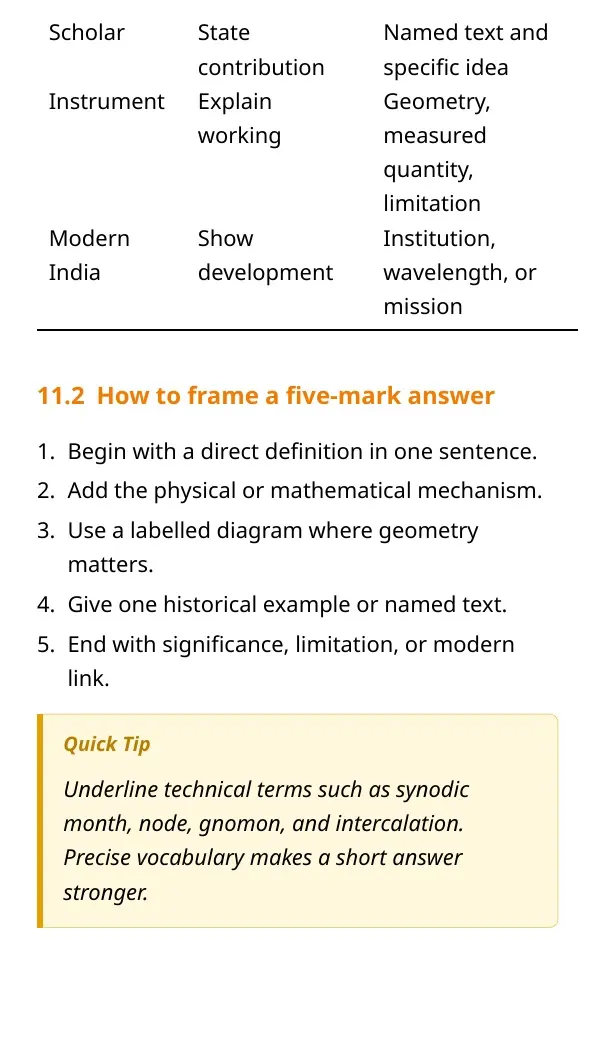
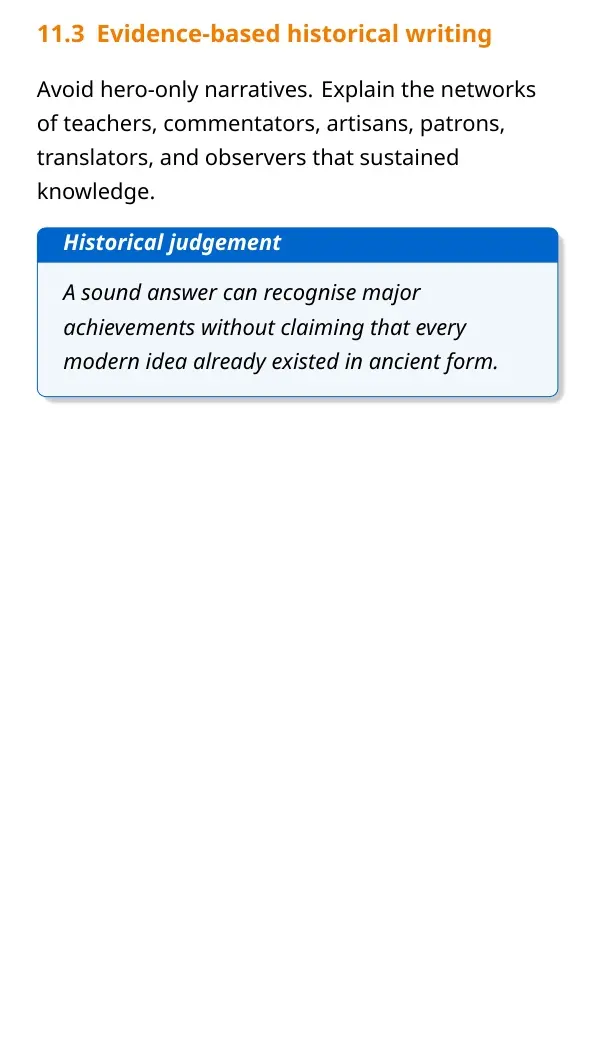
Indian scholars improved observation, models and calculations over many centuries. For exam answers, connect each scholar with one clear contribution. Do not write names as an isolated list. The contribution is the part that shows understanding.
| Scholar or text | Revision cue |
|---|---|
| Vedanga Jyotisha | Early calendrical astronomy and time reckoning |
| Aryabhata | Mathematical astronomy, Earth's rotation and eclipse explanation |
| Varahamihira | Collected and compared astronomical traditions |
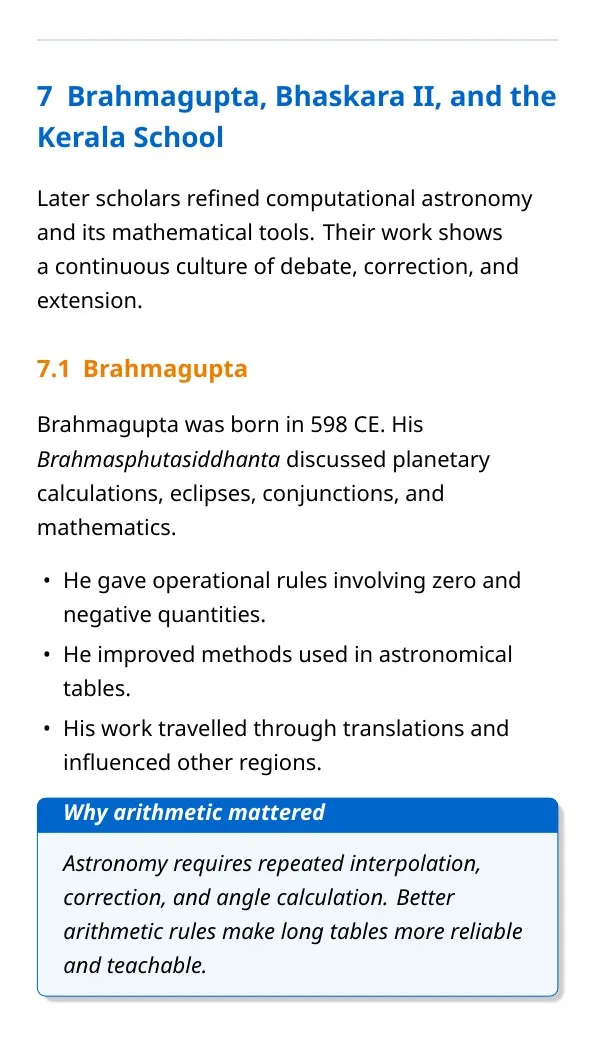
| Brahmagupta | Rules and calculations used in mathematical astronomy |
| Bhaskara II | Later advances in calculation and planetary astronomy |
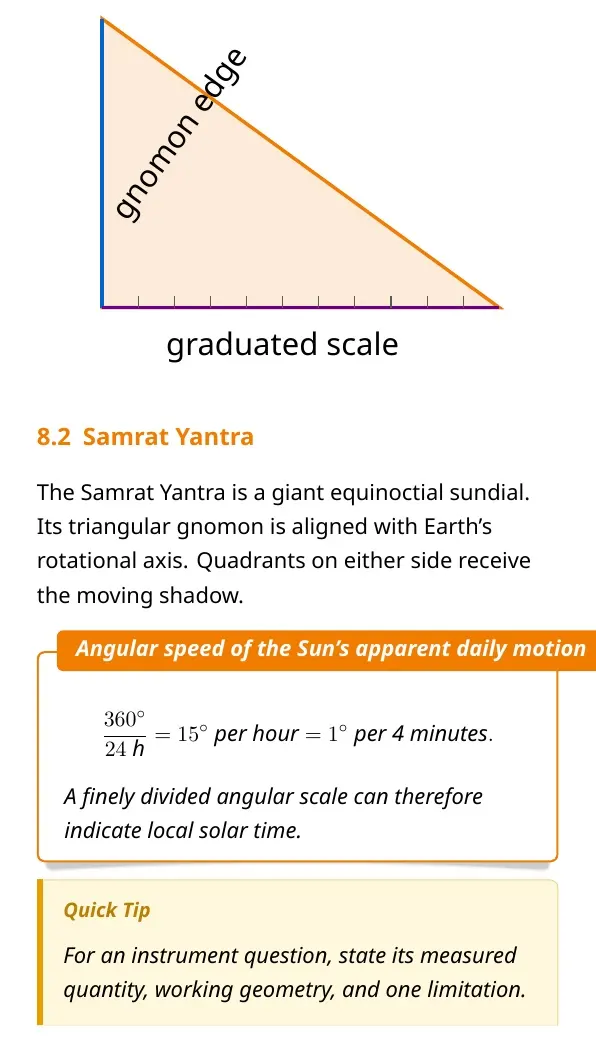
| Sawai Jai Singh II | Large masonry observatories and precise instruments |
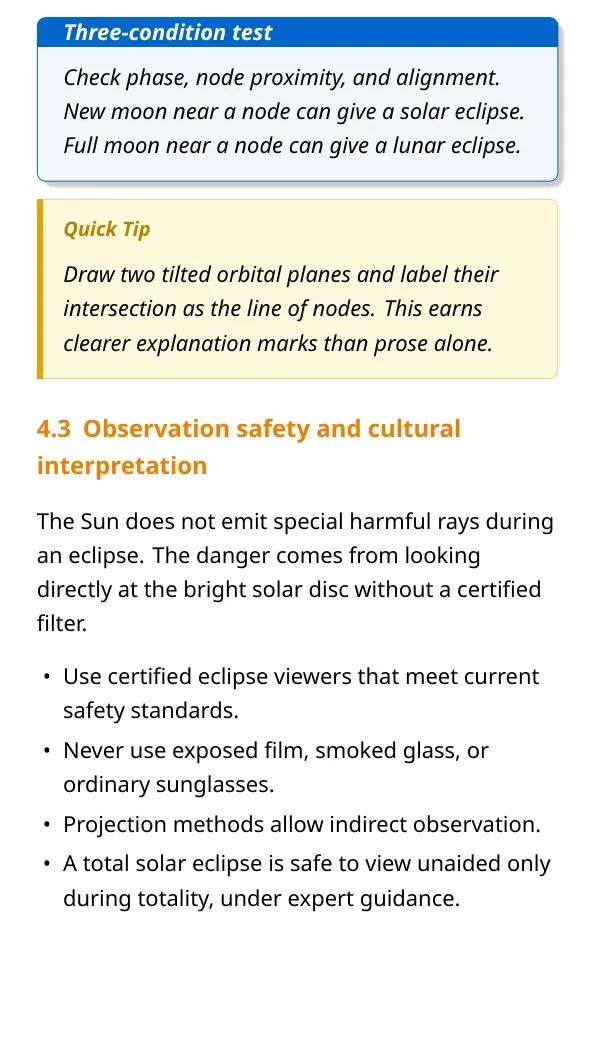
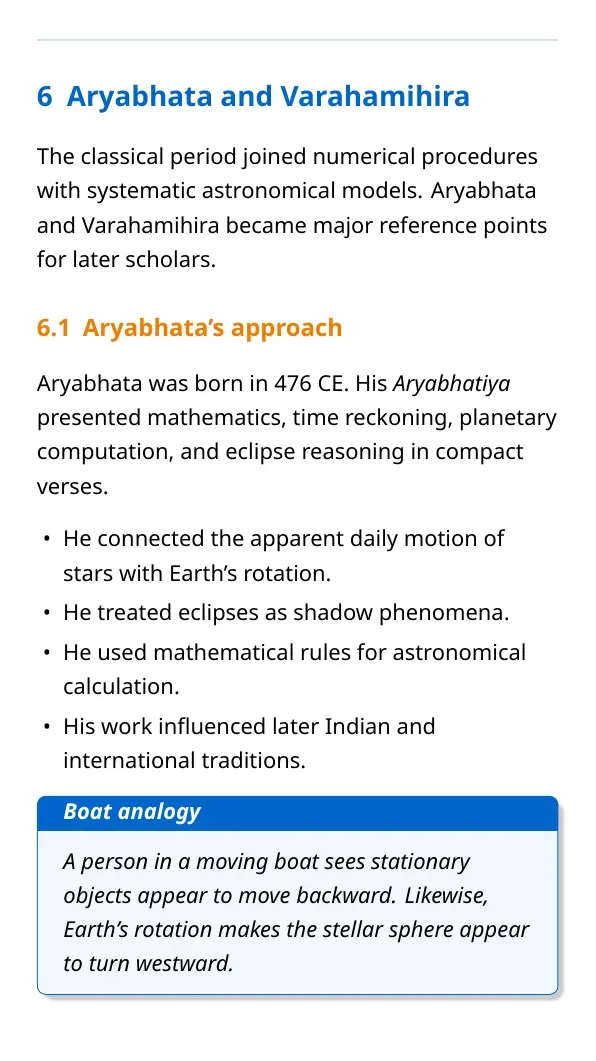
Aryabhata explained eclipses through shadows rather than supernatural causes. This point often works well in answers about the scientific character of Indian astronomy.
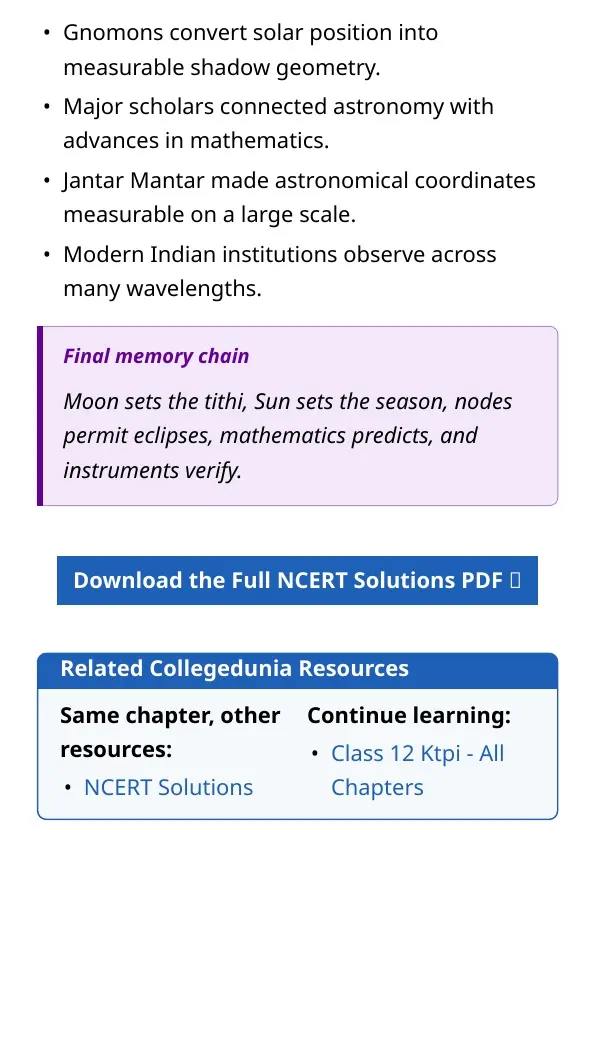
How to Revise Astronomy in India for the 2026-27 Exam
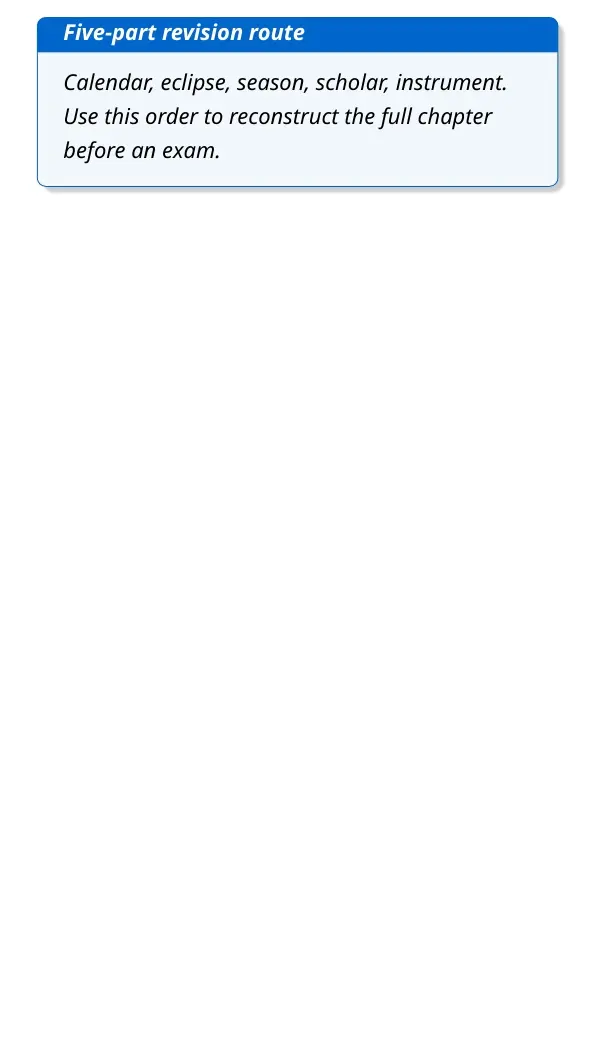
Start with the calendar terms because they form the chapter's base. Then learn the scholar timeline. Finish with eclipse reasoning and observatory instruments. This order moves from everyday use to scientific explanation.
- Make one card for rashi, nakshatra, sankranti, paksha and tithi.
- Remember the number chain: 12 rashis, 27 or 28 nakshatras, 30 tithis.
- Practise one paragraph on why an adhika month is needed.
- Pair each major scholar with one contribution.
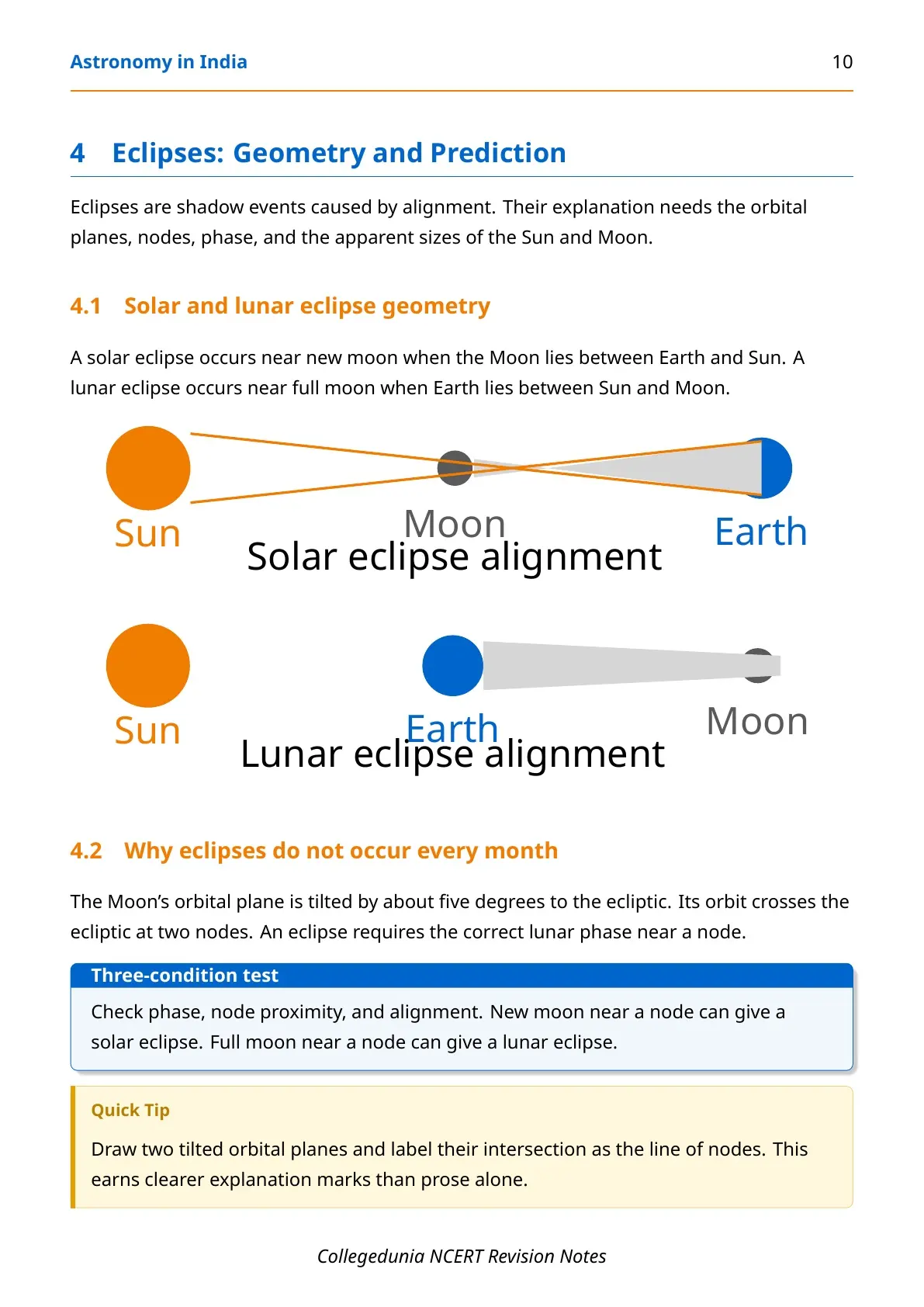
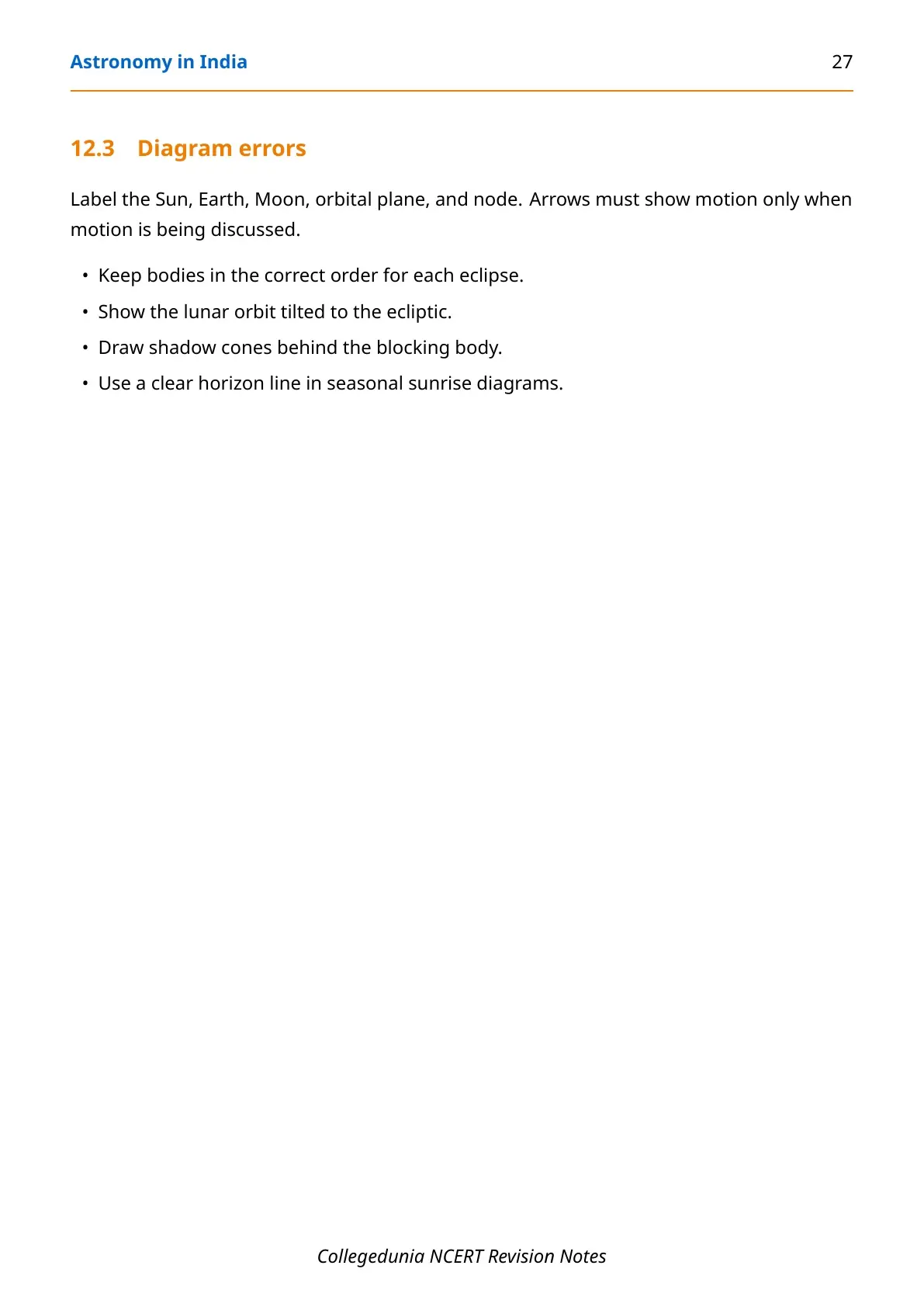
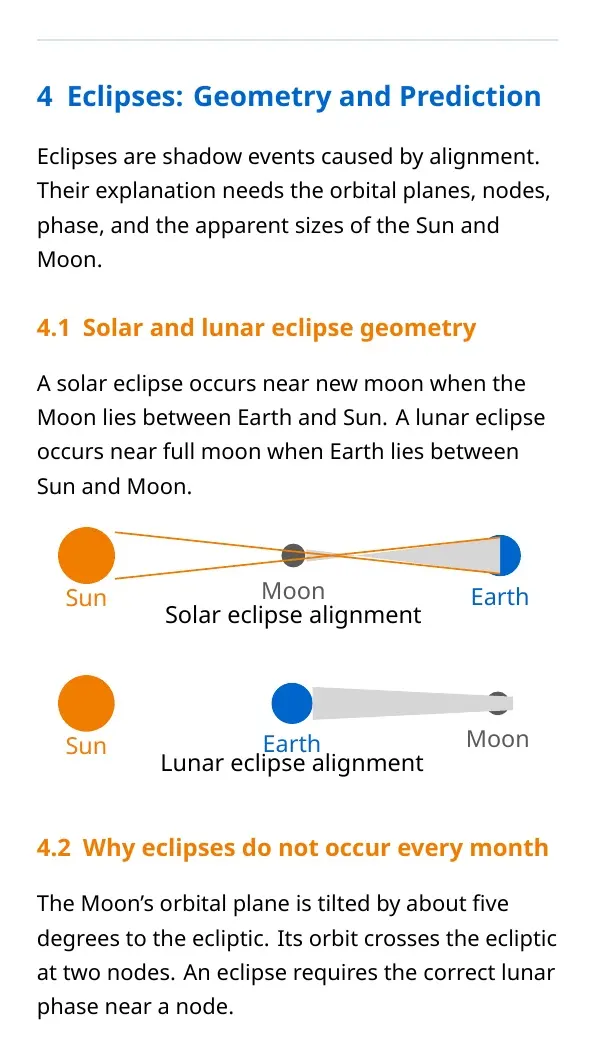
- Draw a simple Sun-Earth-Moon sketch for eclipse answers.
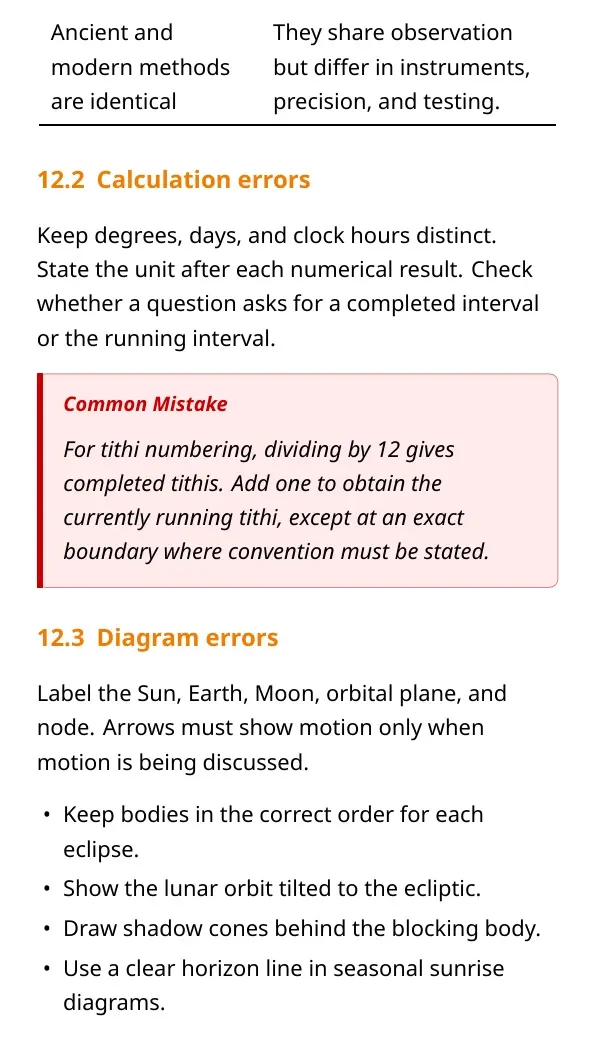
Common mistake: Do not treat a tithi as a fixed 24-hour day. Its length depends on the changing angular separation of the Sun and Moon.
Other Astronomy in India Class 12 KTPI Resources
| Resource | Use it for |
|---|---|
| Astronomy in India Class 12 NCERT Solutions | Textbook questions and step-by-step answers |
| Astronomy in India Class 12 NCERT Book PDF | Official chapter reading and figures |
| Astronomy in India Class 12 Handwritten Notes | Fast recall before the exam |
NCERT Notes for Class 12 KTPI: All Chapters
| Chapter | Class 12 KTPI Notes |
|---|---|
| Chapter 1 | Astronomy in India Notes |
| Chapter 2 | Chemistry in India Notes |
| Chapter 3 | Mathematics in India Notes |
| Chapter 4 | Life Sciences Notes |
Astronomy in India KTPI Notes FAQs
Ques. What are the most important topics in Astronomy in India?
Ans. Focus on the luni-solar calendar, rashi, nakshatra, tithi, adhika month, eclipse explanations and major Indian astronomers.
Ques. Are these Astronomy in India notes based on the 2026-27 NCERT?
Ans. Yes. The notes follow the 2026-27 NCERT reprint and use its main terms, figures and numerical facts.
Ques. Why does the Indian calendar add an adhika month?
Ans. A lunar year is about 11 days shorter than a solar year. An extra month about every three years keeps both cycles aligned.
Ques. What is a tithi?
Ans. A tithi is a lunar date. A new tithi begins whenever the angular separation between the Sun and Moon changes by 12 degrees.
Ques. How is a nakshatra defined?
Ans. A nakshatra is a prominent star or star group used to mark the Moon's position during its orbit around Earth.
Ques. What are rashis in Indian astronomy?
Ans. Rashis are the 12 zodiacal constellations along the zodiac belt. The Sun appears to pass through each rashi during the year.



Comments