



NCERT Class 6 Science Curiosity Chapter 2 Diversity in the Living World Notes explain biodiversity, grouping of plants and animals, leaf venation, roots, seeds, habitats, adaptations and conservation for the 2026-27 syllabus.
- Download the Chapter 2 Notes PDF for quick revision before school tests.
- Revise herbs, shrubs, trees, reticulate venation, parallel venation, taproot, fibrous root, habitat and adaptation in one place.
- Answer focus: define the term, add one NCERT example and link the feature with its use.
Chapter2DiversityintheLivingWorldNotes.pdf?page=1&dpi=150)
Chapter2DiversityintheLivingWorldNotes.pdf?page=2&dpi=150)
Chapter2DiversityintheLivingWorldNotes.pdf?page=3&dpi=150)
Chapter2DiversityintheLivingWorldNotes.pdf?page=4&dpi=150)
Chapter2DiversityintheLivingWorldNotes.pdf?page=5&dpi=150)
Chapter2DiversityintheLivingWorldNotes.pdf?page=6&dpi=150)
Chapter2DiversityintheLivingWorldNotes.pdf?page=7&dpi=150)
Chapter2DiversityintheLivingWorldNotes.pdf?page=8&dpi=150)
Chapter2DiversityintheLivingWorldNotes.pdf?page=9&dpi=150)
Chapter2DiversityintheLivingWorldNotes.pdf?page=10&dpi=150)
Chapter2DiversityintheLivingWorldNotes.pdf?page=11&dpi=150)
Chapter2DiversityintheLivingWorldNotes.pdf?page=12&dpi=150)
Chapter2DiversityintheLivingWorldNotes.pdf?page=13&dpi=150)
Chapter2DiversityintheLivingWorldNotes.pdf?page=14&dpi=150)
Chapter2DiversityintheLivingWorldNotes.pdf?page=15&dpi=150)
Chapter2DiversityintheLivingWorldNotes.pdf?page=16&dpi=150)
Chapter2DiversityintheLivingWorldNotes.pdf?page=17&dpi=150)
Chapter2DiversityintheLivingWorldNotes.pdf?page=18&dpi=150)
Chapter2DiversityintheLivingWorldNotes.pdf?page=19&dpi=150)
Chapter2DiversityintheLivingWorldNotes.pdf?page=20&dpi=150)
Chapter2DiversityintheLivingWorldNotes_flat_MobileCard.pdf?page=1&dpi=150)
Chapter2DiversityintheLivingWorldNotes_flat_MobileCard.pdf?page=2&dpi=150)
Chapter2DiversityintheLivingWorldNotes_flat_MobileCard.pdf?page=3&dpi=150)
Chapter2DiversityintheLivingWorldNotes_flat_MobileCard.pdf?page=4&dpi=150)
Chapter2DiversityintheLivingWorldNotes_flat_MobileCard.pdf?page=5&dpi=150)
Chapter2DiversityintheLivingWorldNotes_flat_MobileCard.pdf?page=6&dpi=150)
Chapter2DiversityintheLivingWorldNotes_flat_MobileCard.pdf?page=7&dpi=150)
Chapter2DiversityintheLivingWorldNotes_flat_MobileCard.pdf?page=8&dpi=150)
Chapter2DiversityintheLivingWorldNotes_flat_MobileCard.pdf?page=9&dpi=150)
Chapter2DiversityintheLivingWorldNotes_flat_MobileCard.pdf?page=10&dpi=150)
Chapter2DiversityintheLivingWorldNotes_flat_MobileCard.pdf?page=11&dpi=150)
Chapter2DiversityintheLivingWorldNotes_flat_MobileCard.pdf?page=12&dpi=150)
Chapter2DiversityintheLivingWorldNotes_flat_MobileCard.pdf?page=13&dpi=150)
Chapter2DiversityintheLivingWorldNotes_flat_MobileCard.pdf?page=14&dpi=150)
Chapter2DiversityintheLivingWorldNotes_flat_MobileCard.pdf?page=15&dpi=150)
Chapter2DiversityintheLivingWorldNotes_flat_MobileCard.pdf?page=16&dpi=150)
Chapter2DiversityintheLivingWorldNotes_flat_MobileCard.pdf?page=17&dpi=150)
Chapter2DiversityintheLivingWorldNotes_flat_MobileCard.pdf?page=18&dpi=150)
Chapter2DiversityintheLivingWorldNotes_flat_MobileCard.pdf?page=19&dpi=150)
Chapter2DiversityintheLivingWorldNotes_flat_MobileCard.pdf?page=20&dpi=150)
Chapter2DiversityintheLivingWorldNotes_flat_MobileCard.pdf?page=21&dpi=150)
Chapter2DiversityintheLivingWorldNotes_flat_MobileCard.pdf?page=22&dpi=150)
Chapter2DiversityintheLivingWorldNotes_flat_MobileCard.pdf?page=23&dpi=150)
Chapter2DiversityintheLivingWorldNotes_flat_MobileCard.pdf?page=24&dpi=150)
Chapter2DiversityintheLivingWorldNotes_flat_MobileCard.pdf?page=25&dpi=150)
Chapter2DiversityintheLivingWorldNotes_flat_MobileCard.pdf?page=26&dpi=150)
Chapter2DiversityintheLivingWorldNotes_flat_MobileCard.pdf?page=27&dpi=150)
Chapter2DiversityintheLivingWorldNotes_flat_MobileCard.pdf?page=28&dpi=150)
Chapter2DiversityintheLivingWorldNotes_flat_MobileCard.pdf?page=29&dpi=150)
Chapter2DiversityintheLivingWorldNotes_flat_MobileCard.pdf?page=30&dpi=150)
Chapter2DiversityintheLivingWorldNotes_flat_MobileCard.pdf?page=31&dpi=150)
These notes follow the 2026-27 NCERT Curiosity textbook and keep the chapter's observation activities, grouping tables and conservation examples in simple revision order.
Student Feedback on Diversity in the Living World
In a Collegedunia revision check with 1,240 Class 6 students, most students said the chapter became easier after plant groups and habitat examples were revised through tables.
Diversity in the Living World Notes PDF Overview
The chapter begins with a nature walk. Students observe grasses, bushes, trees, birds, butterflies, monkeys and insects. They record plant and animal features, then learn why variety in a region is called biodiversity.
- Biodiversity means variety of plants and animals in a region.
- Grouping helps us study many living things through common features.
- Habitat and adaptation explain why organisms have different features.
Grouping Plants and Animals in Class 6 Science Chapter 2
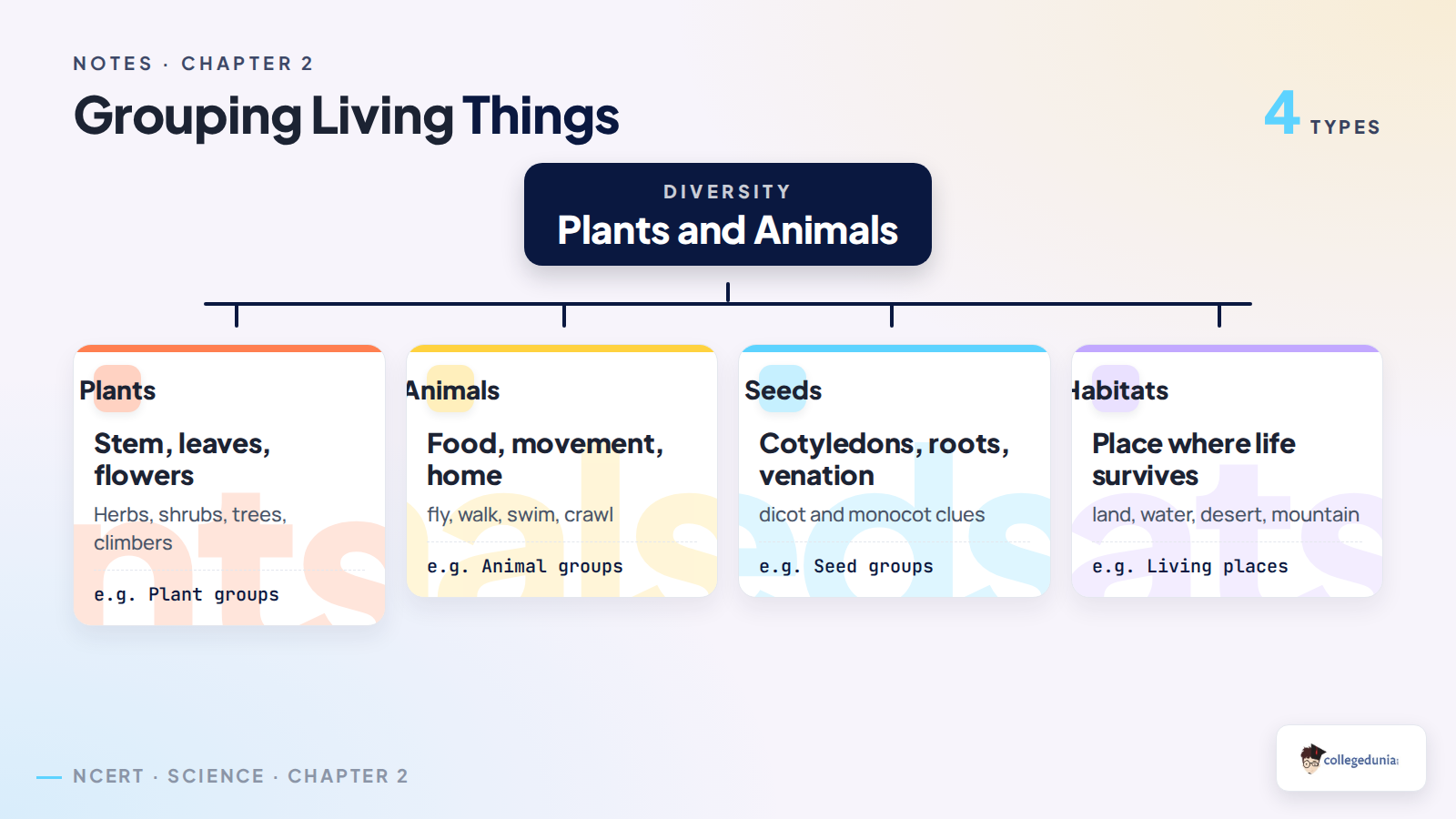
Plants can be grouped by height, stem, branch position, leaves and flowers. Animals can be grouped by place, food, movement, colour and body features. The basis of grouping must always be clear.
| Group | Main clue | Example |
|---|---|---|
| Herb | short plant with soft green stem | tomato |
| Shrub | medium plant with many woody stems near ground | rose |
| Tree | tall plant with hard thick trunk | mango |
| Climber | weak stem needs support | pea or money plant |
| Creeper | weak stem spreads on ground | pumpkin |
Diversity in the Living World Video Revision
Source: Ignited Minds on YouTube
Use the video after reading the PDF to revise biodiversity, plant grouping, leaf venation, habitats and adaptation with a spoken explanation.
Leaf Venation, Roots and Seeds Revision
Venation is the pattern of veins on a leaf. Reticulate venation has a net-like pattern, while parallel venation has veins running side by side. These patterns often link with root type and seed type.
| Feature | Type 1 | Type 2 |
|---|---|---|
| Leaf venation | Reticulate: net-like veins | Parallel: side-by-side veins |
| Roots | Taproot: one main root | Fibrous: many thin roots |
| Seeds | Dicot: two cotyledons | Monocot: one cotyledon |
Habitat and Adaptation in Diversity in the Living World
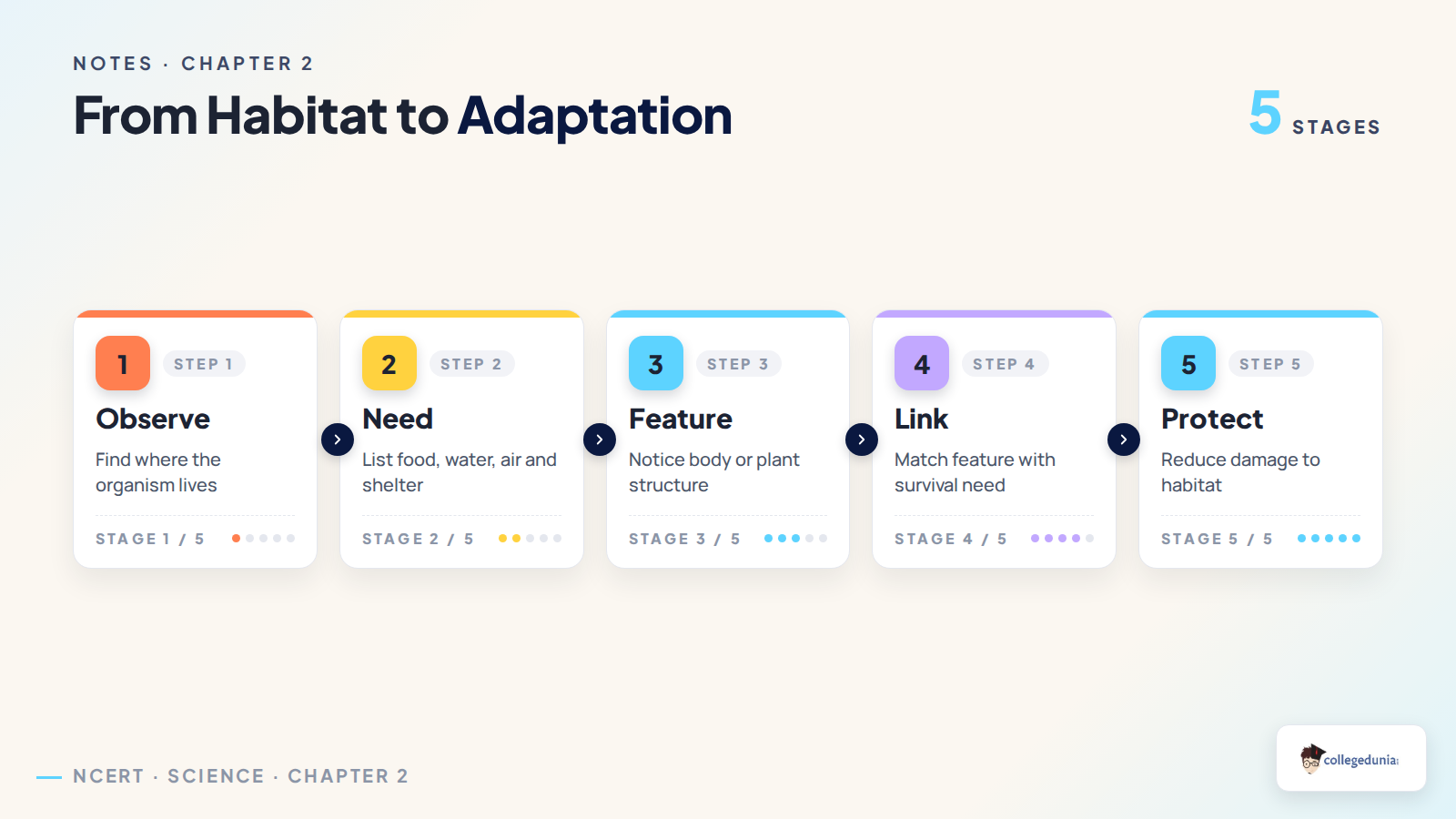
A habitat is the place where an organism lives and gets food, water, air, shelter and other needs. Adaptations are special features that help plants and animals survive in that habitat.
| Organism | Habitat | Adaptation |
|---|---|---|
| Cactus | Desert | Thick fleshy stem stores water |
| Deodar | Mountain | Conical shape helps snow slide off |
| Hot desert camel | Hot desert | Long legs, wide hooves and one hump |
| Cold desert camel | Cold desert | Shorter legs, two humps and long hair in winter |
Conservation and Sacred Groves in Chapter 2
The chapter explains that habitat damage can reduce biodiversity. Conservation protects animals, plants and the places where they live. Project Tiger, the Cheetah Reintroduction Project and sacred groves are important examples.
- Project Tiger began in 1973 to protect Bengal Tigers and their habitats.
- Cheetah Reintroduction Project began in 2022 to restore cheetah populations.
- Sacred groves are community-protected forest patches where trees and animals are not harmed.
How to Write Answers from Diversity in the Living World
Most questions from this chapter ask for definitions, comparisons and examples. A complete answer should state the term, explain the feature, and add an NCERT example.
| Question type | What to include | Common mistake |
|---|---|---|
| Define biodiversity | variety of plants and animals in a region | writing animals only |
| Compare herbs and trees | height, stem and branch position | using height only |
| Explain adaptation | habitat, feature and survival use | forgetting habitat |
| Conservation answer | threat, action and example | naming project without purpose |
Related Resources for Class 6 Science Chapter 2
| Resource | Use it for | Link |
|---|---|---|
| NCERT Solutions | Practise textbook answers | Open Solutions |
| NCERT Book PDF | Read the official chapter | Open Book PDF |
| Handwritten Notes | Revise with compact visual notes | Open Handwritten Notes |
All Class 6 Science Curiosity Notes Chapters
| Chapter | Notes Link |
|---|---|
| Chapter 1 The Wonderful World of Science | Open Notes |
| Chapter 2 Diversity in the Living World | Current chapter notes |
| Chapter 3 Mindful Eating: A Path to a Healthy Body | Open Notes |
| Chapter 4 Exploring Magnets | Open Notes |
| Chapter 5 Measurement of Length and Motion | Open Notes |
| Chapter 6 Materials Around Us | Open Notes |
Diversity in the Living World Class 6 Notes FAQs
Ques. What is biodiversity according to Class 6 Science Chapter 2?
Ans. Biodiversity is the variety of plants and animals found in a particular region, such as a park, forest or pond.
Ques. How are herbs, shrubs and trees different?
Ans. Herbs are short with soft green stems, shrubs are medium with many woody stems, and trees are tall with thick woody trunks.
Ques. What is venation?
Ans. Venation is the pattern of veins on a leaf. It may be reticulate or parallel.
Ques. What is a habitat?
Ans. A habitat is the place where a plant or animal lives and gets food, water, air, shelter and other needs.



Comments