




NCERT Class 6 Science Curiosity Chapter 1 The Wonderful World of Science Notes explain science as curiosity, observation, questions, testing and evidence for the 2026-27 syllabus.
- Download the Chapter 1 Notes PDF for quick school revision.
- Revise the scientific method with the pen example from NCERT.
- Answer focus: write observation, guess, test and evidence in order.
Chapter1TheWonderfulWorldofScienceNotes.pdf?page=1&dpi=150)
Chapter1TheWonderfulWorldofScienceNotes.pdf?page=2&dpi=150)
Chapter1TheWonderfulWorldofScienceNotes.pdf?page=3&dpi=150)
Chapter1TheWonderfulWorldofScienceNotes.pdf?page=4&dpi=150)
Chapter1TheWonderfulWorldofScienceNotes.pdf?page=5&dpi=150)
Chapter1TheWonderfulWorldofScienceNotes.pdf?page=6&dpi=150)
Chapter1TheWonderfulWorldofScienceNotes.pdf?page=7&dpi=150)
Chapter1TheWonderfulWorldofScienceNotes.pdf?page=8&dpi=150)
Chapter1TheWonderfulWorldofScienceNotes.pdf?page=9&dpi=150)
Chapter1TheWonderfulWorldofScienceNotes.pdf?page=10&dpi=150)
Chapter1TheWonderfulWorldofScienceNotes.pdf?page=11&dpi=150)
Chapter1TheWonderfulWorldofScienceNotes.pdf?page=12&dpi=150)
Chapter1TheWonderfulWorldofScienceNotes.pdf?page=13&dpi=150)
Chapter1TheWonderfulWorldofScienceNotes.pdf?page=14&dpi=150)
Chapter1TheWonderfulWorldofScienceNotes.pdf?page=15&dpi=150)
Chapter1TheWonderfulWorldofScienceNotes.pdf?page=16&dpi=150)
Chapter1TheWonderfulWorldofScienceNotes.pdf?page=17&dpi=150)
Chapter1TheWonderfulWorldofScienceNotes.pdf?page=18&dpi=150)
Chapter1TheWonderfulWorldofScienceNotes.pdf?page=19&dpi=150)
Chapter1TheWonderfulWorldofScienceNotes.pdf?page=20&dpi=150)
Chapter1TheWonderfulWorldofScienceNotes_flat_MobileCard.pdf?page=1&dpi=150)
Chapter1TheWonderfulWorldofScienceNotes_flat_MobileCard.pdf?page=2&dpi=150)
Chapter1TheWonderfulWorldofScienceNotes_flat_MobileCard.pdf?page=3&dpi=150)
Chapter1TheWonderfulWorldofScienceNotes_flat_MobileCard.pdf?page=4&dpi=150)
Chapter1TheWonderfulWorldofScienceNotes_flat_MobileCard.pdf?page=5&dpi=150)
Chapter1TheWonderfulWorldofScienceNotes_flat_MobileCard.pdf?page=6&dpi=150)
Chapter1TheWonderfulWorldofScienceNotes_flat_MobileCard.pdf?page=7&dpi=150)
Chapter1TheWonderfulWorldofScienceNotes_flat_MobileCard.pdf?page=8&dpi=150)
Chapter1TheWonderfulWorldofScienceNotes_flat_MobileCard.pdf?page=9&dpi=150)
Chapter1TheWonderfulWorldofScienceNotes_flat_MobileCard.pdf?page=10&dpi=150)
Chapter1TheWonderfulWorldofScienceNotes_flat_MobileCard.pdf?page=11&dpi=150)
Chapter1TheWonderfulWorldofScienceNotes_flat_MobileCard.pdf?page=12&dpi=150)
Chapter1TheWonderfulWorldofScienceNotes_flat_MobileCard.pdf?page=13&dpi=150)
Chapter1TheWonderfulWorldofScienceNotes_flat_MobileCard.pdf?page=14&dpi=150)
Chapter1TheWonderfulWorldofScienceNotes_flat_MobileCard.pdf?page=15&dpi=150)
Chapter1TheWonderfulWorldofScienceNotes_flat_MobileCard.pdf?page=16&dpi=150)
Chapter1TheWonderfulWorldofScienceNotes_flat_MobileCard.pdf?page=17&dpi=150)
Chapter1TheWonderfulWorldofScienceNotes_flat_MobileCard.pdf?page=18&dpi=150)
Chapter1TheWonderfulWorldofScienceNotes_flat_MobileCard.pdf?page=19&dpi=150)
Chapter1TheWonderfulWorldofScienceNotes_flat_MobileCard.pdf?page=20&dpi=150)
Chapter1TheWonderfulWorldofScienceNotes_flat_MobileCard.pdf?page=21&dpi=150)
Chapter1TheWonderfulWorldofScienceNotes_flat_MobileCard.pdf?page=22&dpi=150)
Chapter1TheWonderfulWorldofScienceNotes_flat_MobileCard.pdf?page=23&dpi=150)
Chapter1TheWonderfulWorldofScienceNotes_flat_MobileCard.pdf?page=24&dpi=150)
Chapter1TheWonderfulWorldofScienceNotes_flat_MobileCard.pdf?page=25&dpi=150)
Chapter1TheWonderfulWorldofScienceNotes_flat_MobileCard.pdf?page=26&dpi=150)
Chapter1TheWonderfulWorldofScienceNotes_flat_MobileCard.pdf?page=27&dpi=150)
Chapter1TheWonderfulWorldofScienceNotes_flat_MobileCard.pdf?page=28&dpi=150)
Chapter1TheWonderfulWorldofScienceNotes_flat_MobileCard.pdf?page=29&dpi=150)
Chapter1TheWonderfulWorldofScienceNotes_flat_MobileCard.pdf?page=30&dpi=150)
Chapter1TheWonderfulWorldofScienceNotes_flat_MobileCard.pdf?page=31&dpi=150)
These notes follow the 2026-27 NCERT Curiosity textbook and keep the chapter's daily-life examples, scientific method steps and activity-style questions clear.
Student Feedback on The Wonderful World of Science
In a Collegedunia revision check with 1,180 Class 6 students, 74% said the chapter became easier after the pen example was written as a step-by-step method.
The Wonderful World of Science Notes PDF Overview
The chapter introduces science as a habit of asking questions about ordinary things. It tells students that science is not only facts or laboratory work. Science starts when a student notices something and asks why.
- Curiosity starts the learning process.
- Observation gives the first evidence.
- Testing checks whether a guess is correct.
The Wonderful World of Science Video Explanation
Source: NCERT TUTORIAL 6,7 and 8 on YouTube
Scientific Method in Class 6 Science Chapter 1
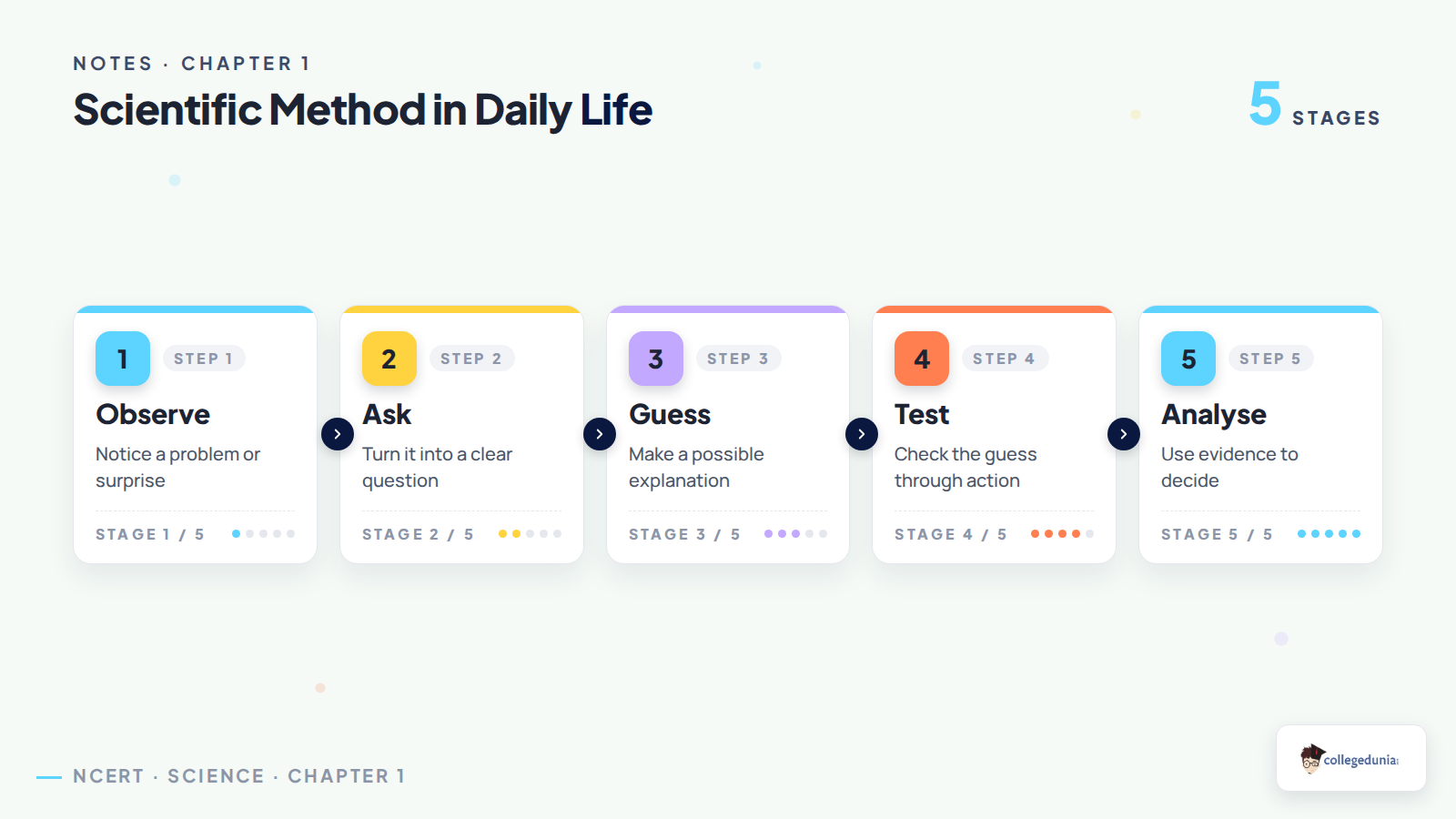
The pen example is the easiest way to revise the scientific method. A student observes that the pen stopped writing, guesses that ink may be finished, checks the refill, and then changes the guess if the refill still has ink.
| Step | Meaning | Pen example |
|---|---|---|
| Observe | Notice the problem | Pen stops writing |
| Ask | Make a clear question | Why did it stop? |
| Guess | Give a possible reason | Ink may be over |
| Test | Check the guess | Open the refill |
| Analyse | Use evidence | Accept or change the guess |
What Science Explores in the Curiosity Book
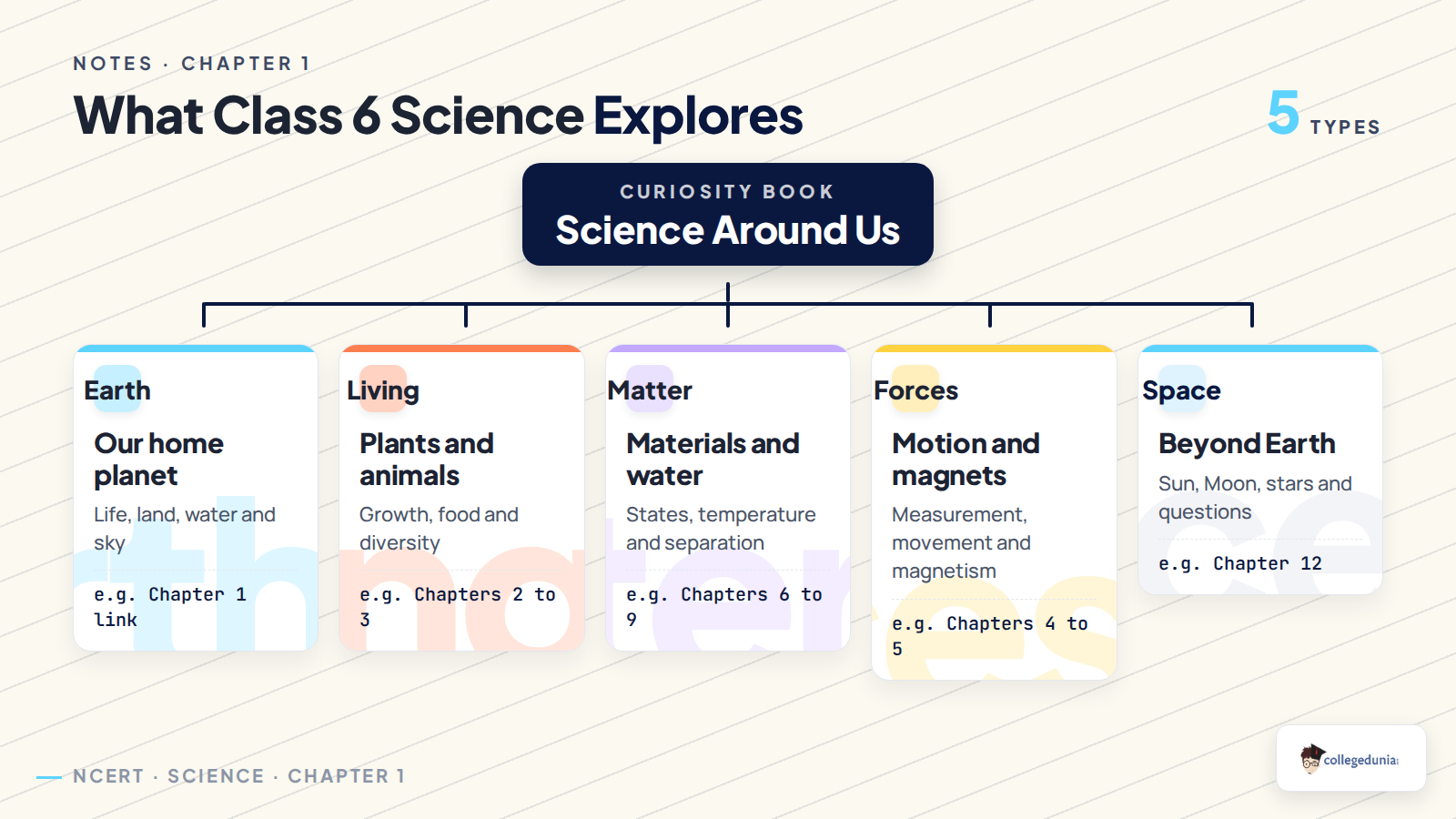
The chapter points ahead to the rest of the book. Students will read about Earth, living things, food, water, temperature, materials, magnets, motion, separation and the sky. Chapter 1 is therefore a method chapter. It teaches how to learn every later topic.
How to Write Answers from The Wonderful World of Science
Most questions from this chapter ask for examples, steps or short explanations. Good answers should stay simple. Name the idea, add the NCERT example, and end with the evidence used.
| Question type | What to include | Common mistake |
|---|---|---|
| What is science? | Thinking, observing and doing | Writing only facts |
| Scientific method | Observe, question, guess, test, analyse | Skipping the test step |
| Daily life example | Problem, guess and evidence | Giving a vague story |
| Curiosity question | A clear why or how question | Writing an opinion only |
Related Resources for Class 6 Science Chapter 1
| Resource | Use it for | Link |
|---|---|---|
| NCERT Solutions | Practise activity-style answers | Open Solutions |
| NCERT Book PDF | Read the official chapter | Open Book PDF |
| Handwritten Notes | Revise with compact visual notes | Open Handwritten Notes |
All Class 6 Science Curiosity Notes Chapters
| Chapter | Notes Link |
|---|---|
| Chapter 1 The Wonderful World of Science | Current chapter notes |
| Chapter 2 Diversity in the Living World | Open Notes |
| Chapter 3 Mindful Eating: A Path to a Healthy Body | Open Notes |
| Chapter 4 Exploring Magnets | Open Notes |
| Chapter 5 Measurement of Length and Motion | Open Notes |
| Chapter 6 Materials Around Us | Open Notes |
The Wonderful World of Science Class 6 Notes FAQs
Ques. What is science according to Class 6 Chapter 1?
Ans. Science is a way of thinking, observing and doing things to understand the world and find answers with evidence.
Ques. Why is curiosity important in science?
Ans. Curiosity makes students notice things, ask why they happen and begin the search for answers.
Ques. What are the steps of the scientific method in this chapter?
Ans. The steps are observe, ask a question, guess a possible answer, test the guess and analyse the result.
Ques. Which daily life example explains the scientific method?
Ans. The stopped pen example explains it. A student guesses the ink is finished, checks the refill and then uses evidence.



Comments