




NCERT Class 6 Science Curiosity Chapter 6 Materials Around Us Notes cover objects, materials, classification, lustre, hardness, transparency, solubility, mass, volume and matter for the 2026-27 syllabus.
- Download the Chapter 6 Notes PDF for quick school-test revision.
- Revise how materials are grouped by visible and testable properties.
- Answer focus: name the property first, then connect it to the use of the material.
Chapter6MaterialsAroundUsNotes.pdf?page=1&dpi=150)
Chapter6MaterialsAroundUsNotes.pdf?page=2&dpi=150)
Chapter6MaterialsAroundUsNotes.pdf?page=3&dpi=150)
Chapter6MaterialsAroundUsNotes.pdf?page=4&dpi=150)
Chapter6MaterialsAroundUsNotes.pdf?page=5&dpi=150)
Chapter6MaterialsAroundUsNotes.pdf?page=6&dpi=150)
Chapter6MaterialsAroundUsNotes.pdf?page=7&dpi=150)
Chapter6MaterialsAroundUsNotes.pdf?page=8&dpi=150)
Chapter6MaterialsAroundUsNotes.pdf?page=9&dpi=150)
Chapter6MaterialsAroundUsNotes.pdf?page=10&dpi=150)
Chapter6MaterialsAroundUsNotes.pdf?page=11&dpi=150)
Chapter6MaterialsAroundUsNotes.pdf?page=12&dpi=150)
Chapter6MaterialsAroundUsNotes.pdf?page=13&dpi=150)
Chapter6MaterialsAroundUsNotes.pdf?page=14&dpi=150)
Chapter6MaterialsAroundUsNotes.pdf?page=15&dpi=150)
Chapter6MaterialsAroundUsNotes.pdf?page=16&dpi=150)
Chapter6MaterialsAroundUsNotes.pdf?page=17&dpi=150)
Chapter6MaterialsAroundUsNotes.pdf?page=18&dpi=150)
Chapter6MaterialsAroundUsNotes.pdf?page=19&dpi=150)
Chapter6MaterialsAroundUsNotes.pdf?page=20&dpi=150)
Chapter6MaterialsAroundUsNotes.pdf?page=21&dpi=150)
Chapter6MaterialsAroundUsNotes.pdf?page=22&dpi=150)
Chapter6MaterialsAroundUsNotes.pdf?page=23&dpi=150)
Chapter6MaterialsAroundUsNotes.pdf?page=24&dpi=150)
Chapter6MaterialsAroundUsNotes_flat_MobileCard.pdf?page=1&dpi=150)
Chapter6MaterialsAroundUsNotes_flat_MobileCard.pdf?page=2&dpi=150)
Chapter6MaterialsAroundUsNotes_flat_MobileCard.pdf?page=3&dpi=150)
Chapter6MaterialsAroundUsNotes_flat_MobileCard.pdf?page=4&dpi=150)
Chapter6MaterialsAroundUsNotes_flat_MobileCard.pdf?page=5&dpi=150)
Chapter6MaterialsAroundUsNotes_flat_MobileCard.pdf?page=6&dpi=150)
Chapter6MaterialsAroundUsNotes_flat_MobileCard.pdf?page=7&dpi=150)
Chapter6MaterialsAroundUsNotes_flat_MobileCard.pdf?page=8&dpi=150)
Chapter6MaterialsAroundUsNotes_flat_MobileCard.pdf?page=9&dpi=150)
Chapter6MaterialsAroundUsNotes_flat_MobileCard.pdf?page=10&dpi=150)
Chapter6MaterialsAroundUsNotes_flat_MobileCard.pdf?page=11&dpi=150)
Chapter6MaterialsAroundUsNotes_flat_MobileCard.pdf?page=12&dpi=150)
Chapter6MaterialsAroundUsNotes_flat_MobileCard.pdf?page=13&dpi=150)
Chapter6MaterialsAroundUsNotes_flat_MobileCard.pdf?page=14&dpi=150)
Chapter6MaterialsAroundUsNotes_flat_MobileCard.pdf?page=15&dpi=150)
Chapter6MaterialsAroundUsNotes_flat_MobileCard.pdf?page=16&dpi=150)
Chapter6MaterialsAroundUsNotes_flat_MobileCard.pdf?page=17&dpi=150)
Chapter6MaterialsAroundUsNotes_flat_MobileCard.pdf?page=18&dpi=150)
Chapter6MaterialsAroundUsNotes_flat_MobileCard.pdf?page=19&dpi=150)
Chapter6MaterialsAroundUsNotes_flat_MobileCard.pdf?page=20&dpi=150)
Chapter6MaterialsAroundUsNotes_flat_MobileCard.pdf?page=21&dpi=150)
Chapter6MaterialsAroundUsNotes_flat_MobileCard.pdf?page=22&dpi=150)
Chapter6MaterialsAroundUsNotes_flat_MobileCard.pdf?page=23&dpi=150)
Chapter6MaterialsAroundUsNotes_flat_MobileCard.pdf?page=24&dpi=150)
Chapter6MaterialsAroundUsNotes_flat_MobileCard.pdf?page=25&dpi=150)
Chapter6MaterialsAroundUsNotes_flat_MobileCard.pdf?page=26&dpi=150)
Chapter6MaterialsAroundUsNotes_flat_MobileCard.pdf?page=27&dpi=150)
Chapter6MaterialsAroundUsNotes_flat_MobileCard.pdf?page=28&dpi=150)
Chapter6MaterialsAroundUsNotes_flat_MobileCard.pdf?page=29&dpi=150)
Chapter6MaterialsAroundUsNotes_flat_MobileCard.pdf?page=30&dpi=150)
Chapter6MaterialsAroundUsNotes_flat_MobileCard.pdf?page=31&dpi=150)
Chapter6MaterialsAroundUsNotes_flat_MobileCard.pdf?page=32&dpi=150)
Chapter6MaterialsAroundUsNotes_flat_MobileCard.pdf?page=33&dpi=150)
Chapter6MaterialsAroundUsNotes_flat_MobileCard.pdf?page=34&dpi=150)
Chapter6MaterialsAroundUsNotes_flat_MobileCard.pdf?page=35&dpi=150)
These notes follow the 2026-27 NCERT Curiosity textbook and keep classification, material properties and matter definitions in a simple revision order.
Student Feedback on Materials Around Us
In a Collegedunia revision check with 11,240 Class 6 students, most students said this chapter became easier after they made one table for each property test.
Materials Around Us Notes PDF Overview
The chapter starts with everyday objects such as pens, bags, bottles, chairs and desks. It asks students to find what each object is made from and why that material is useful.
- Object: a thing we use or observe, such as a bottle or desk.
- Material: the substance used to make the object, such as glass, wood or plastic.
- Classification: arranging materials into groups using one common property.
How Materials Are Grouped by Properties
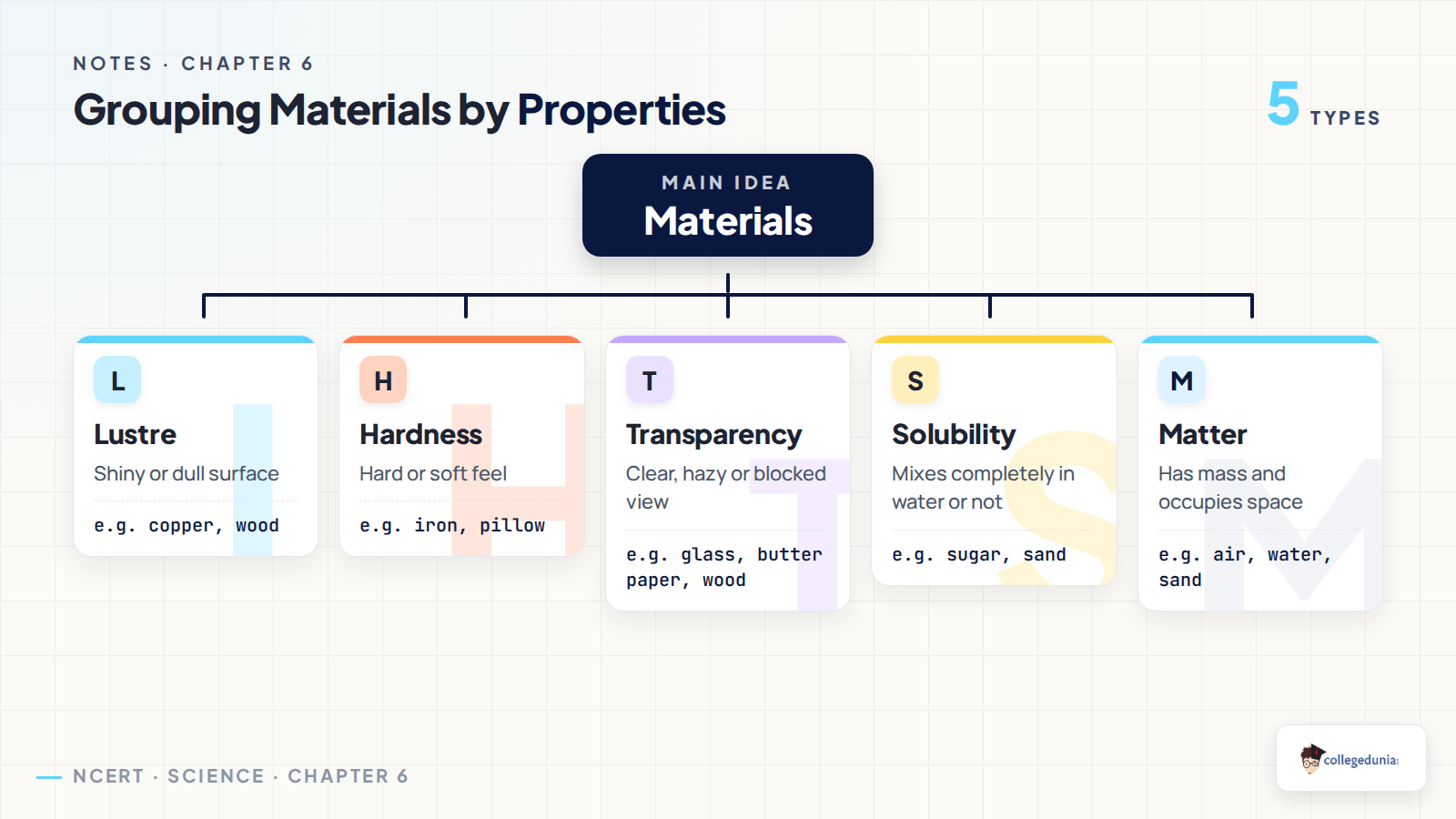
Materials can be grouped by appearance, feel, visibility, solubility, mass and volume. A good group uses a property that other students can check again.
| Property | Question to ask | Example groups |
|---|---|---|
| Lustre | Does it shine? | lustrous, non-lustrous |
| Hardness | Is it difficult to scratch or press? | hard, soft |
| Transparency | Can we see through it? | transparent, translucent, opaque |
| Solubility | Does it mix completely in water? | soluble, insoluble |
Transparency, Translucency and Opaque Materials
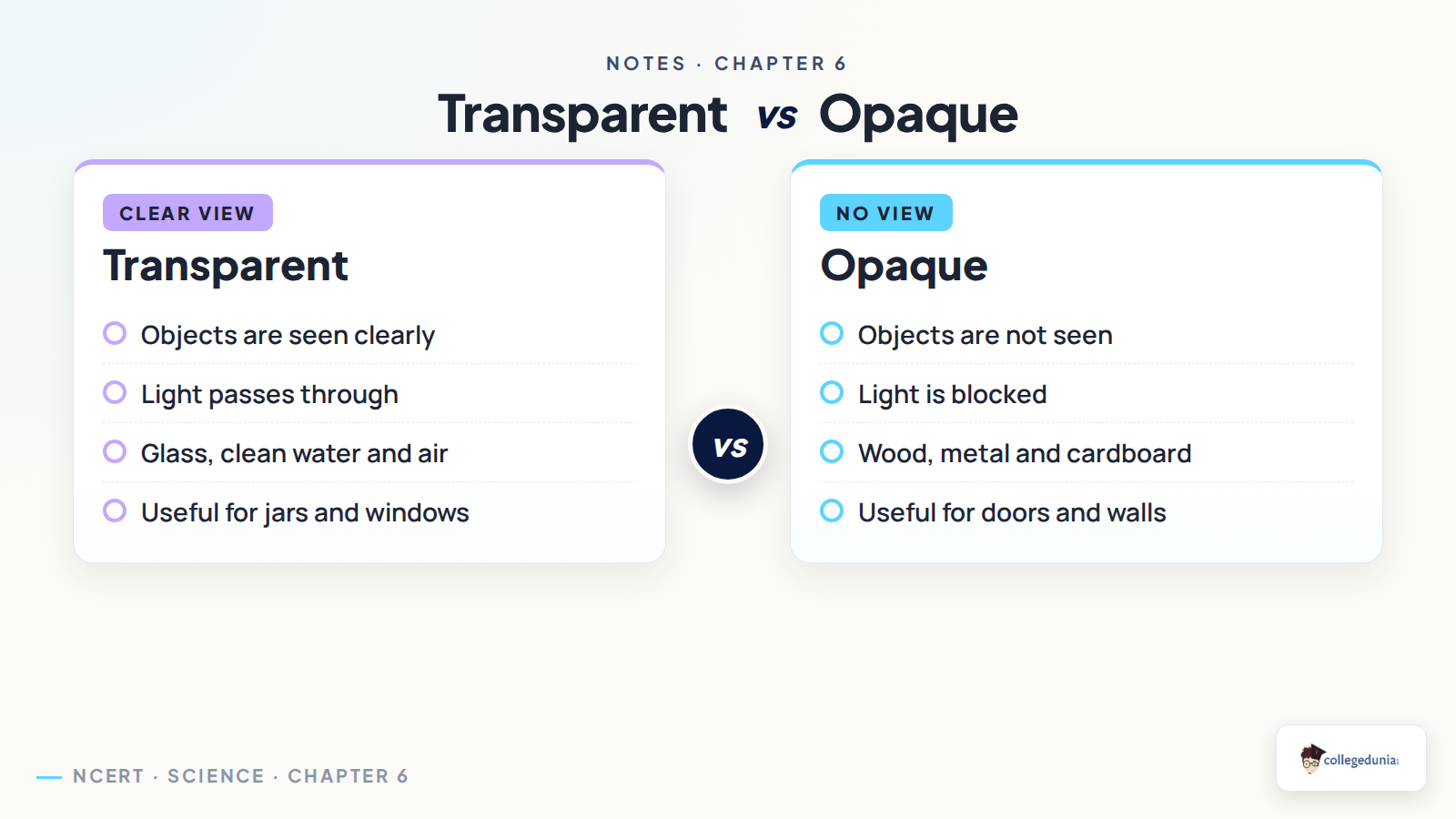
Transparent materials allow a clear view. Translucent materials give a hazy view. Opaque materials block the view completely.
- Transparent: glass, clean water, air and cellophane paper.
- Translucent: butter paper, frosted glass and oiled paper.
- Opaque: wood, metal, cardboard and thick walls.
Materials Around Us Class 6 Video Revision
Source: Magnet Brains on YouTube
Soluble and Insoluble Materials in Water
Some materials disappear after stirring because they dissolve in water. Other materials stay visible, settle down or float because they are insoluble.
| Material | In water | Group |
|---|---|---|
| Sugar | Mixes completely | Soluble |
| Salt | Mixes completely | Soluble |
| Sand | Remains visible | Insoluble |
| Sawdust | Does not dissolve | Insoluble |
Matter, Mass and Volume in Chapter 6
Matter means anything that has mass and occupies space. Air is also matter because it has mass and occupies space, even though we cannot see it clearly.
- Mass tells how much matter is present in an object.
- Volume tells how much space the matter occupies.
- Material is a type of matter used to make objects.
How to Write Answers from Materials Around Us
Most NCERT questions ask students to observe, group and explain. A complete answer should name the object, the material and the property used for grouping.
| Question type | What to include | Common mistake |
|---|---|---|
| Grouping objects | basis of grouping | using personal choice |
| Choosing material | property plus purpose | naming only the object |
| True or false | correct the false statement | writing only T or F |
| Who am I? | match every clue | using only one property |
Related Resources for Class 6 Science Chapter 6
| Resource | Use it for | Link |
|---|---|---|
| NCERT Solutions | Check textbook answers | Open Solutions |
| NCERT Book PDF | Read the official chapter | Open Book PDF |
| Handwritten Notes | Revise with compact notes | Open Handwritten Notes |
All Class 6 Science Curiosity Notes Chapters
| Chapter | Notes Link |
|---|---|
| Chapter 1 The Wonderful World of Science | Open Notes |
| Chapter 2 Diversity in the Living World | Open Notes |
| Chapter 3 Mindful Eating: A Path to a Healthy Body | Open Notes |
| Chapter 4 Exploring Magnets | Open Notes |
| Chapter 5 Measurement of Length and Motion | Open Notes |
Materials Around Us Class 6 Notes FAQs
Ques. What is a material in Class 6 Science Chapter 6?
Ans. A material is the substance used to make an object. Wood, glass, metal, plastic, clay and cloth are common materials.
Ques. What is classification of materials?
Ans. Classification means arranging materials into groups based on common properties such as lustre, hardness, transparency or solubility.
Ques. What is the difference between transparent and opaque materials?
Ans. Transparent materials allow a clear view through them. Opaque materials block the view completely.
Ques. Why is air called matter?
Ans. Air is called matter because it has mass and occupies space, even though we cannot see it clearly.



Comments