




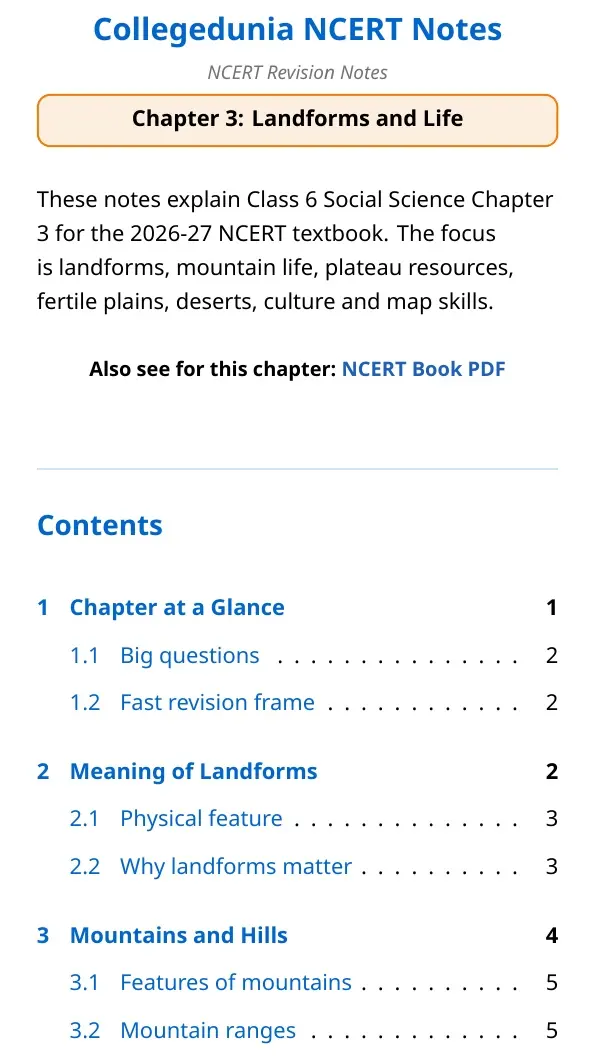
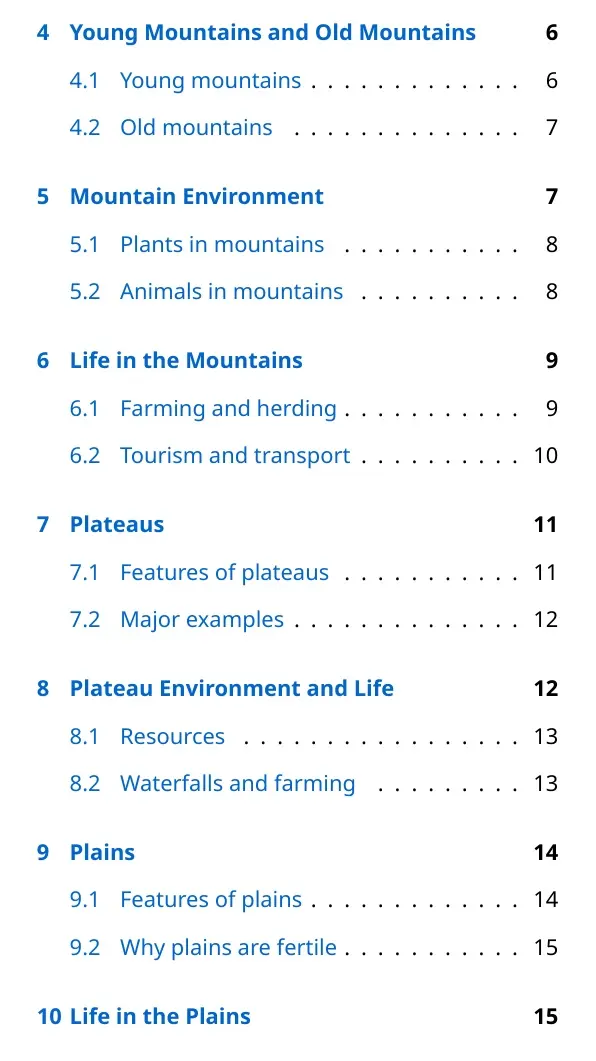
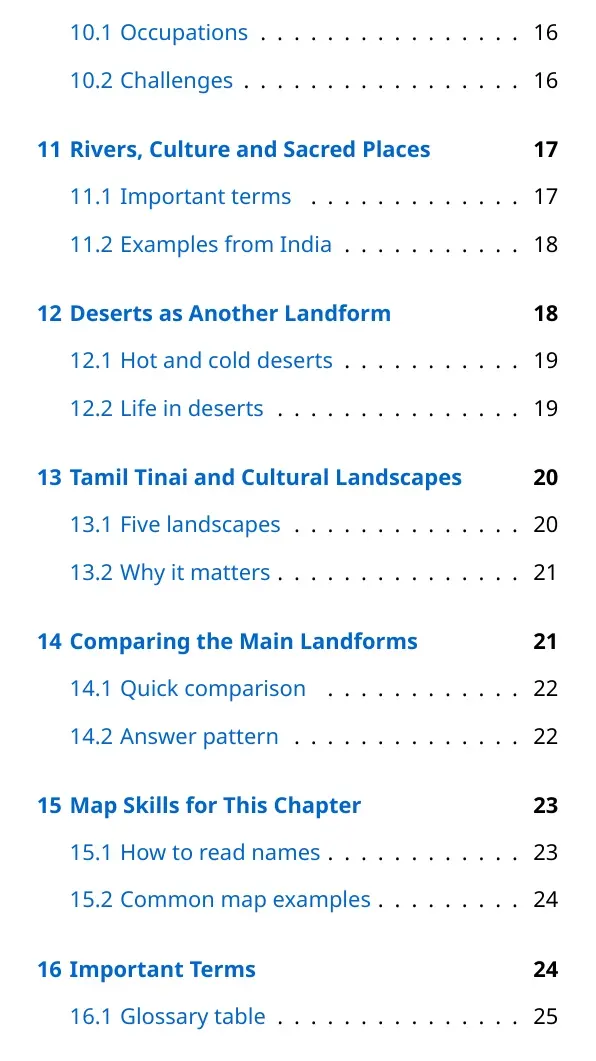
The NCERT Class 6 Social Science Chapter 3 notes for Landforms and Life explain mountains, plateaus, plains, deserts, rivers and culture. These notes follow the 2026-27 NCERT textbook and include a free PDF for quick revision.

- Best for revision: definitions, examples, comparison tables and map-based terms.
- Use with the PDF: read the tables first, then practise the NCERT activities.
- 2026-27 focus: follows Exploring Society: India and Beyond, Chapter 3.
Student Feedback: Students revise this chapter faster after grouping it into landform features, human life, examples and map cues.
Landforms and Life Notes Overview
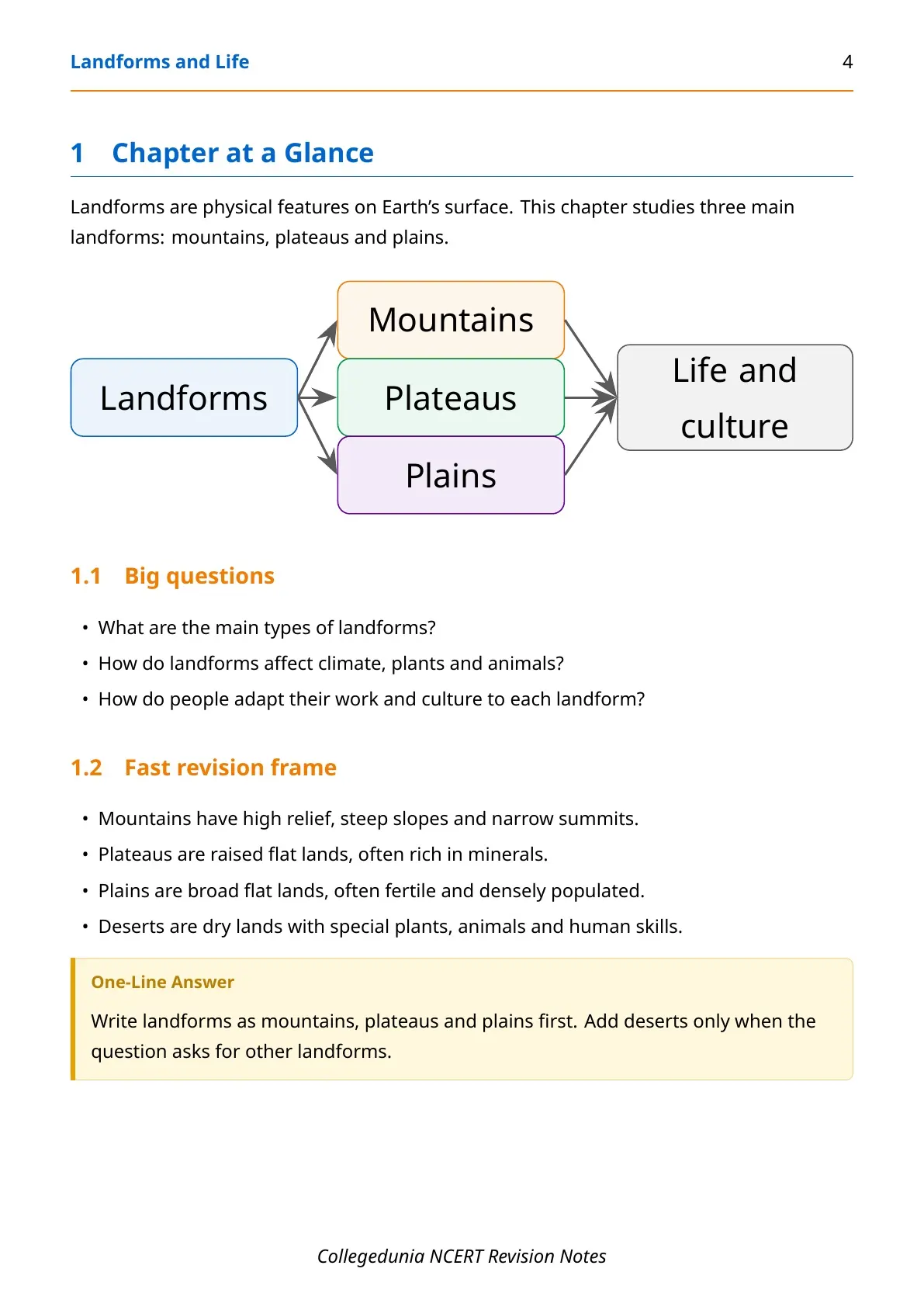
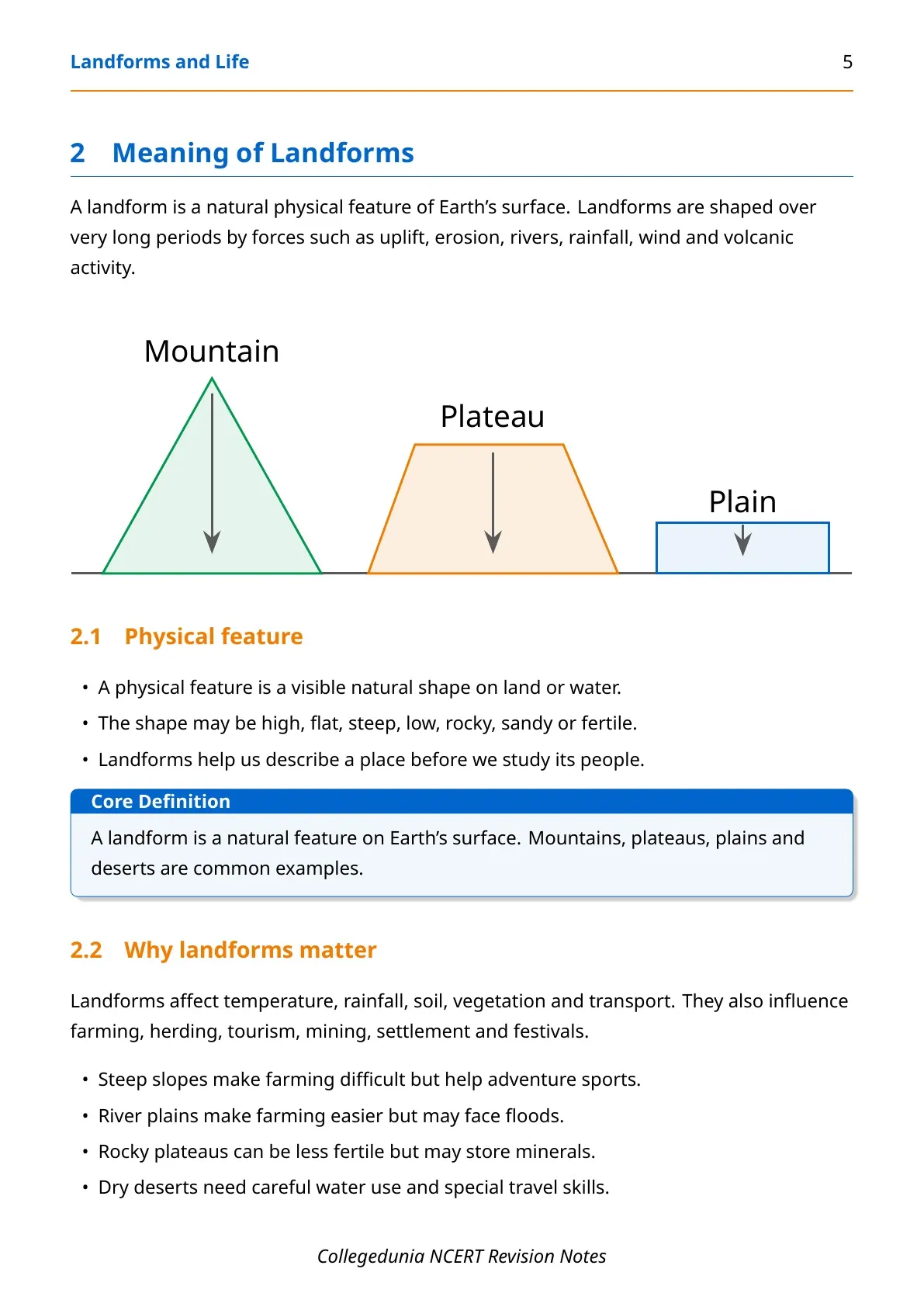
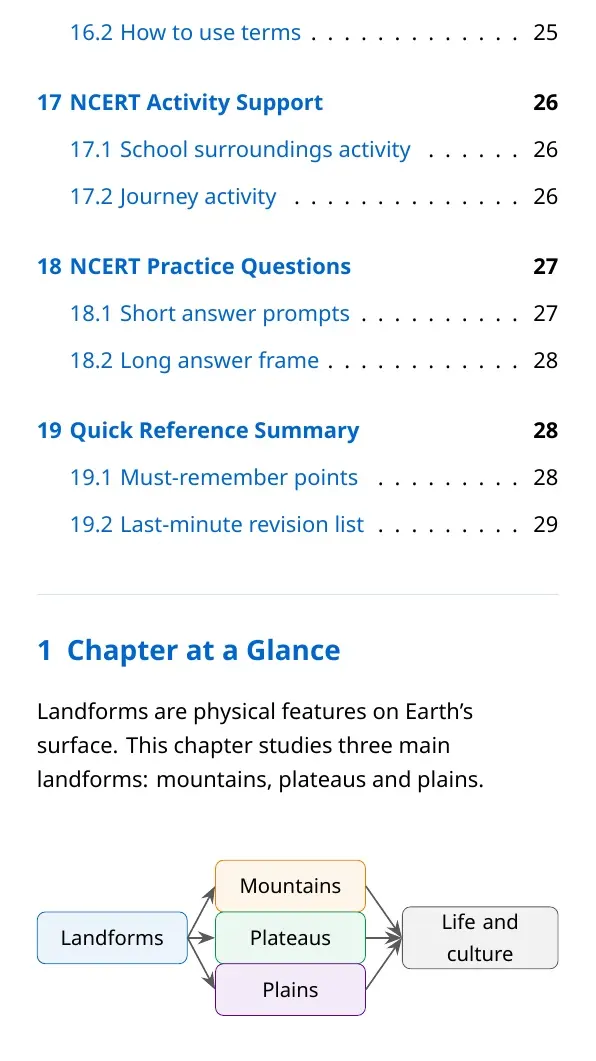
Chapter 3 explains how the shape of land affects plants, animals, work and culture. A landform is a natural feature on Earth's surface. The main landforms in the chapter are mountains, plateaus and plains.
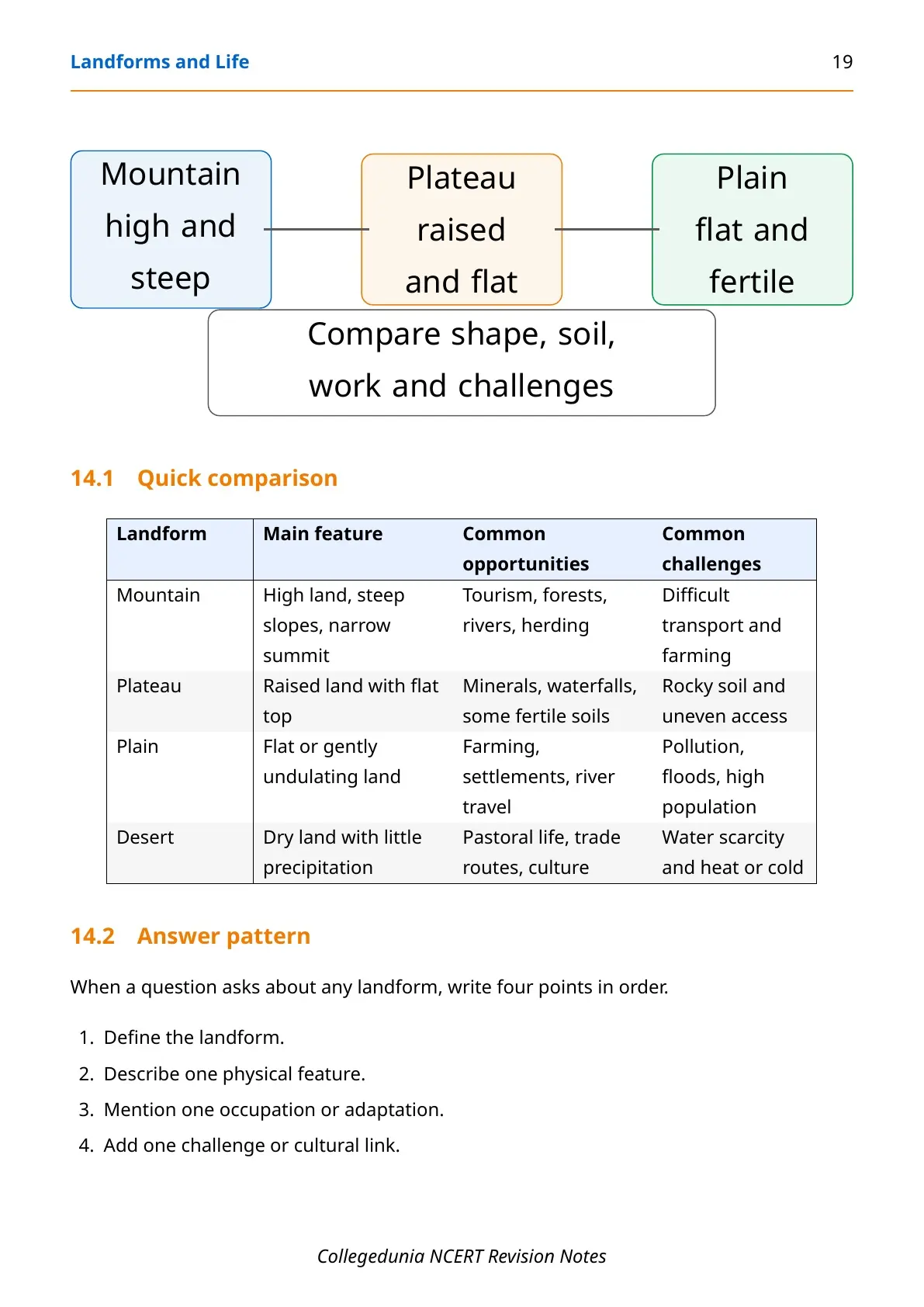
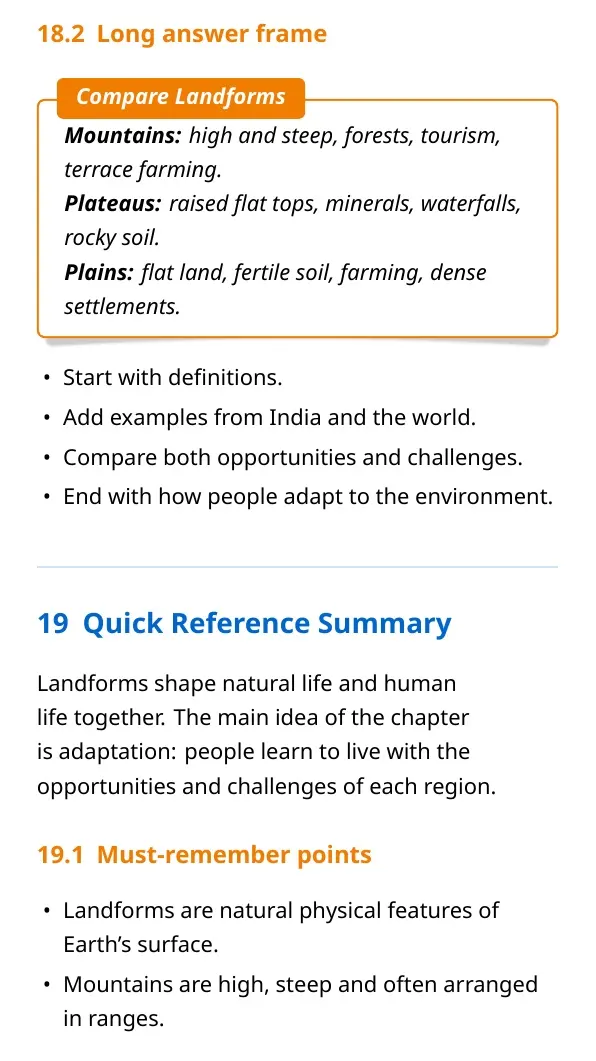
| Landform | Main feature | Life connection |
|---|---|---|
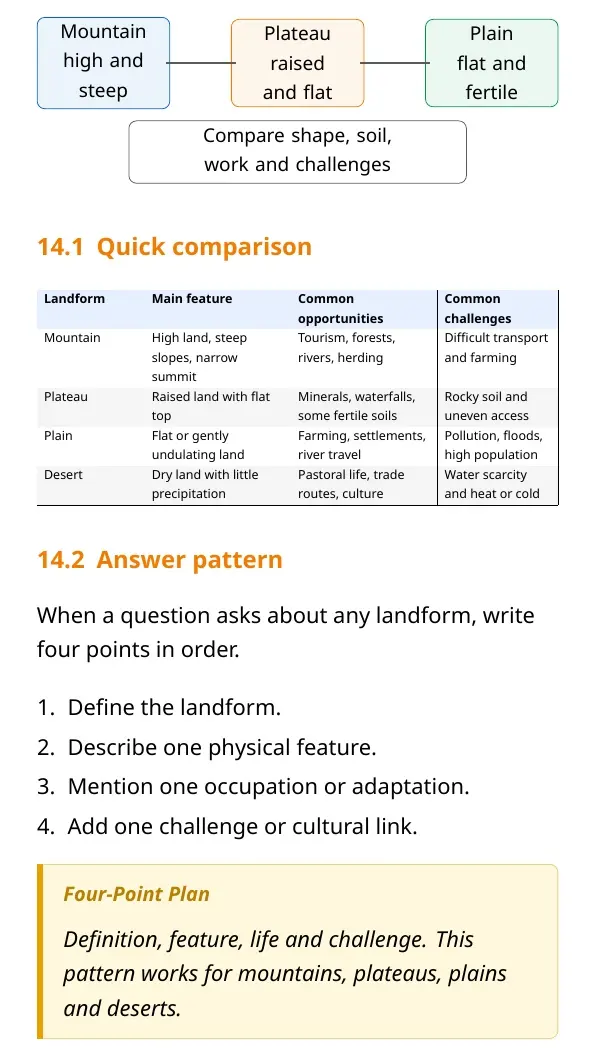
| Mountains | High land with steep slopes and narrow summits | Terrace farming, tourism, forests and rivers |
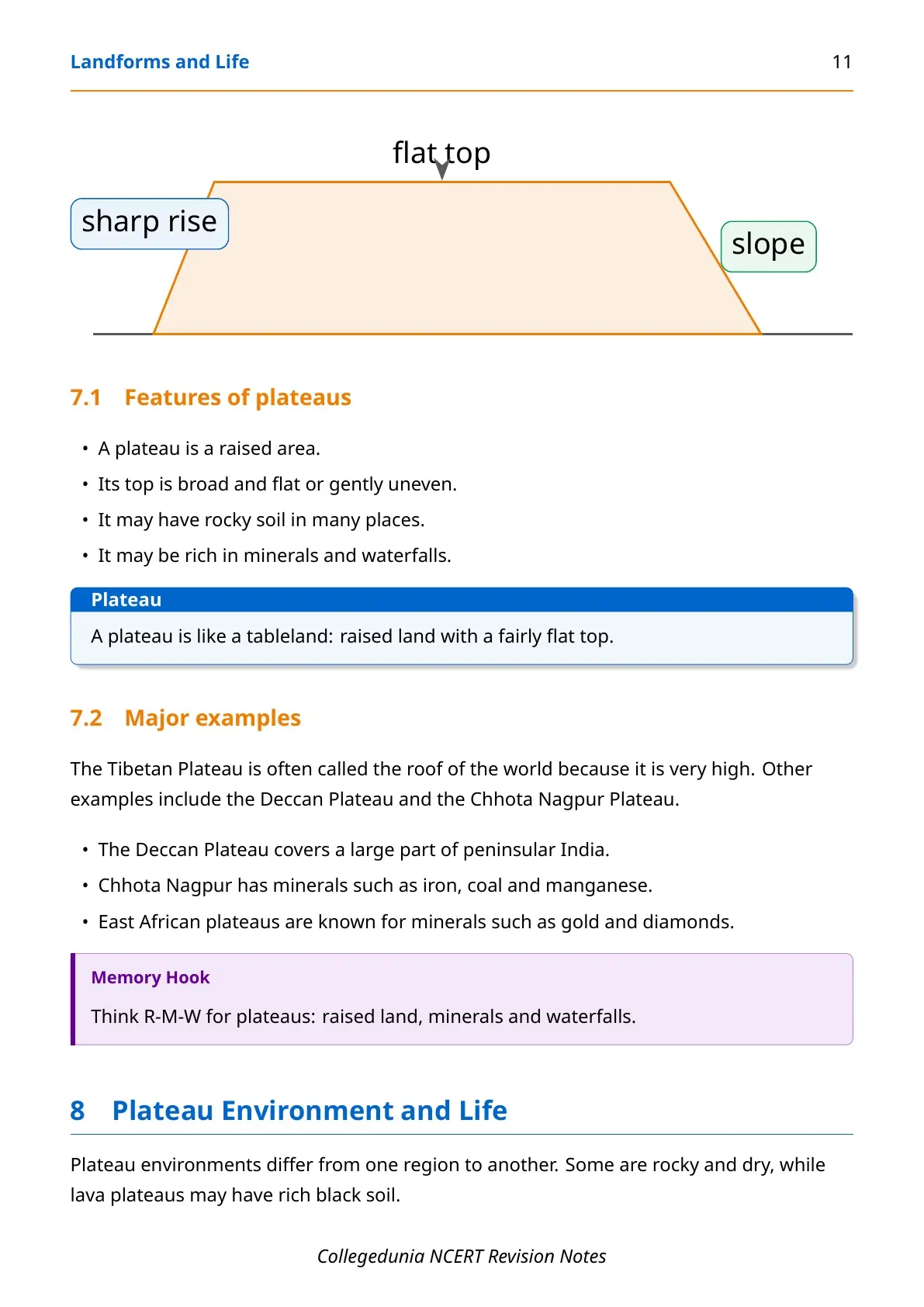
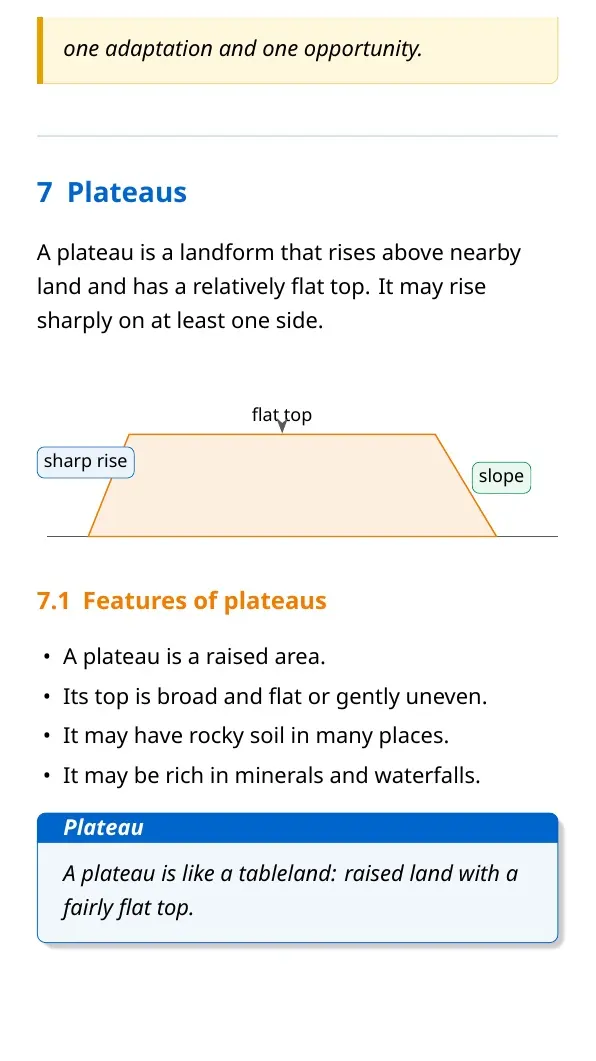
| Plateaus | Raised land with a fairly flat top | Minerals, waterfalls and some rich black soils |
| Plains | Flat or gently undulating land | Farming, fishing, transport and dense settlements |
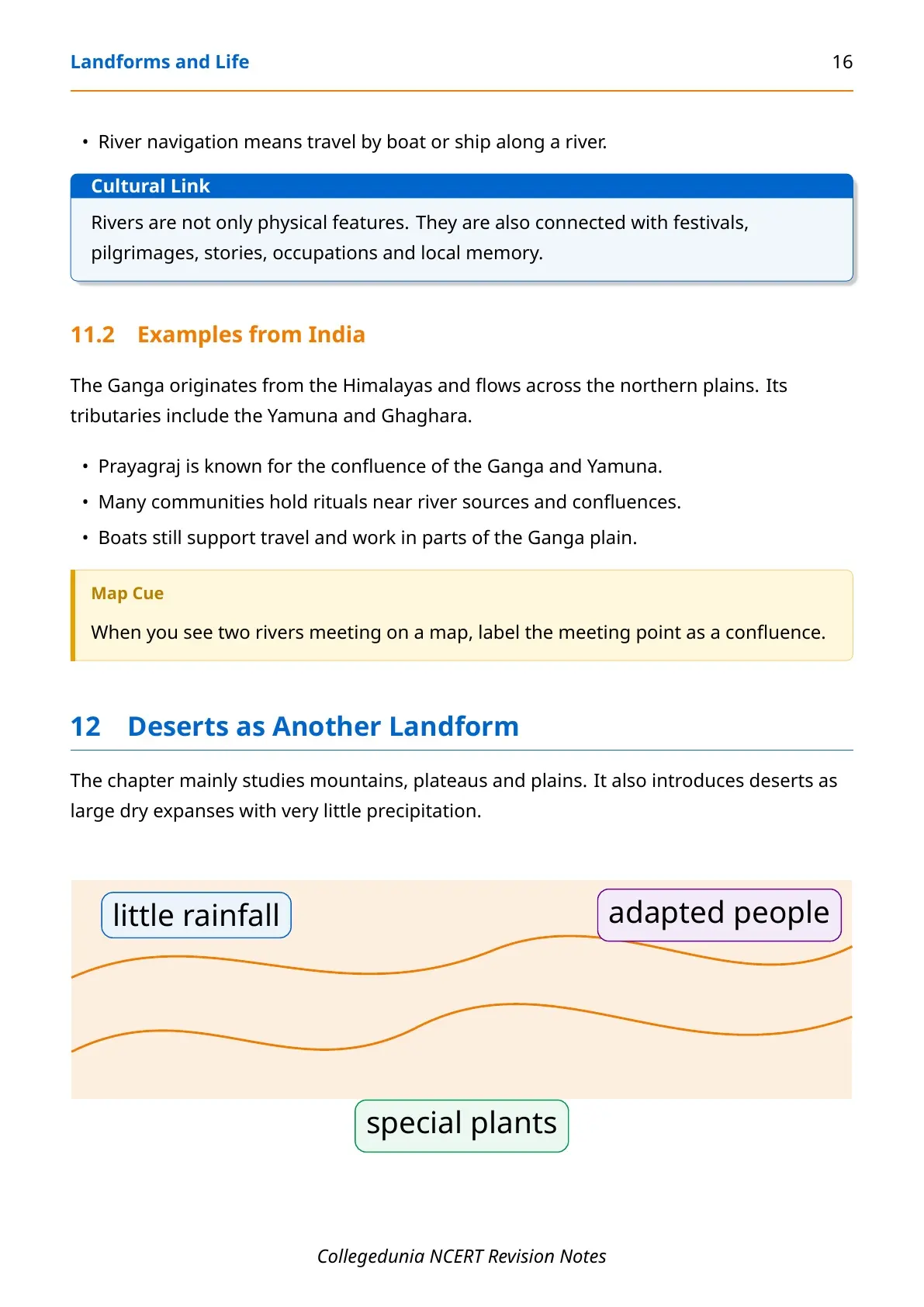
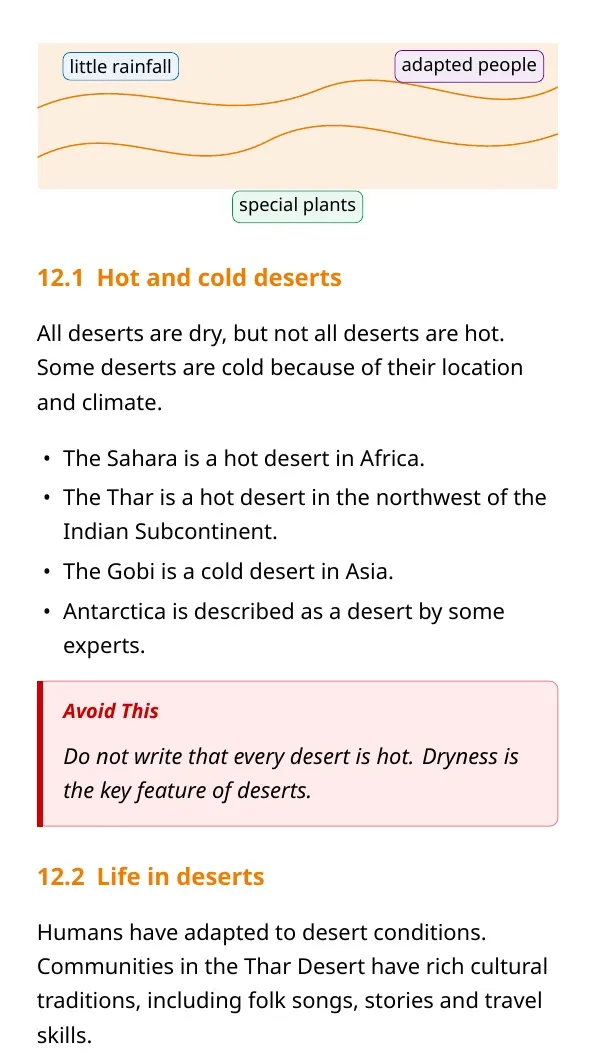
| Deserts | Dry regions with little precipitation | Water-saving skills, pastoral life and rich traditions |
Landforms and Life Revision Video
Source: Magnet Brains on YouTube
Mountains, Plateaus and Plains Compared
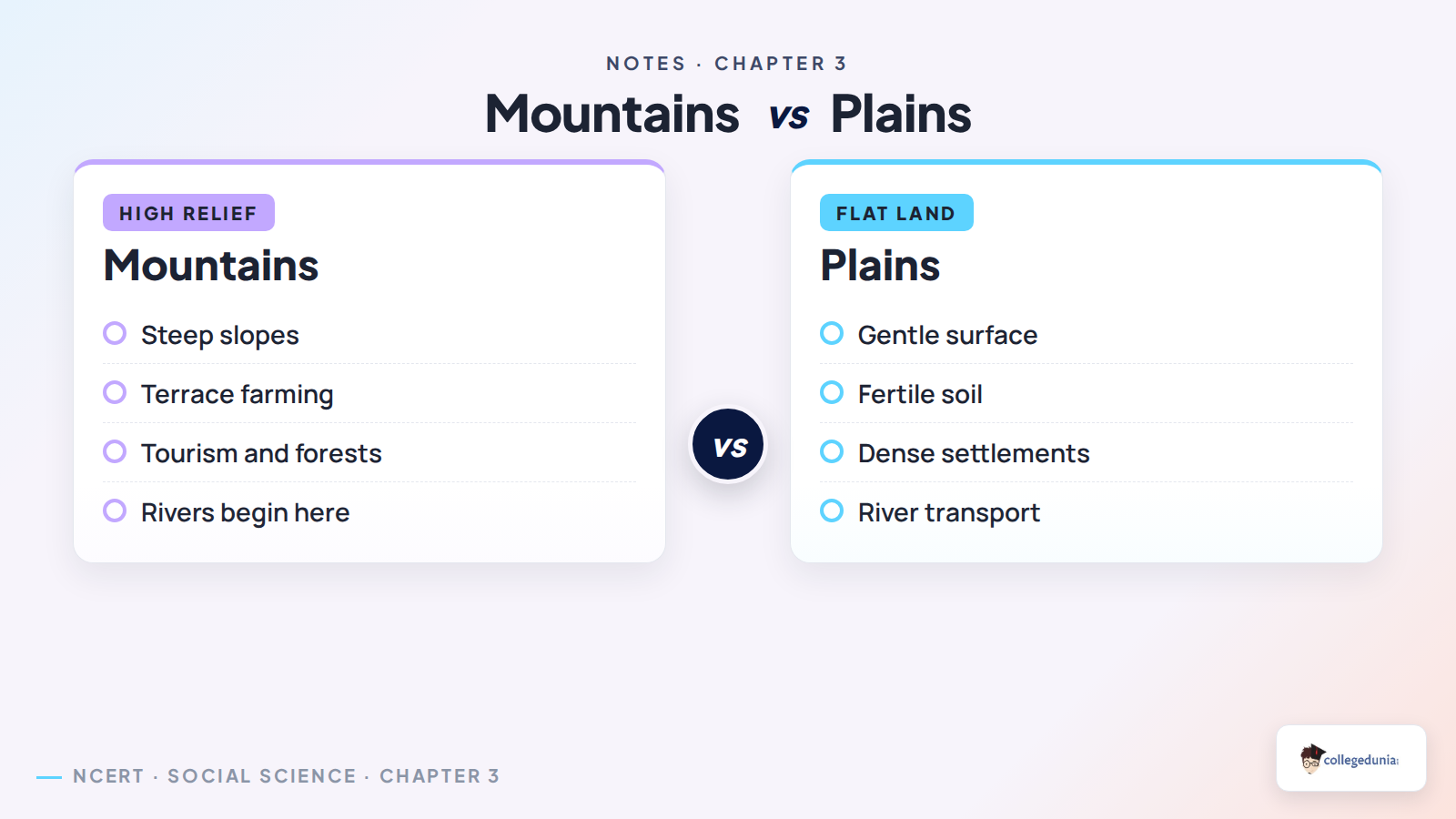
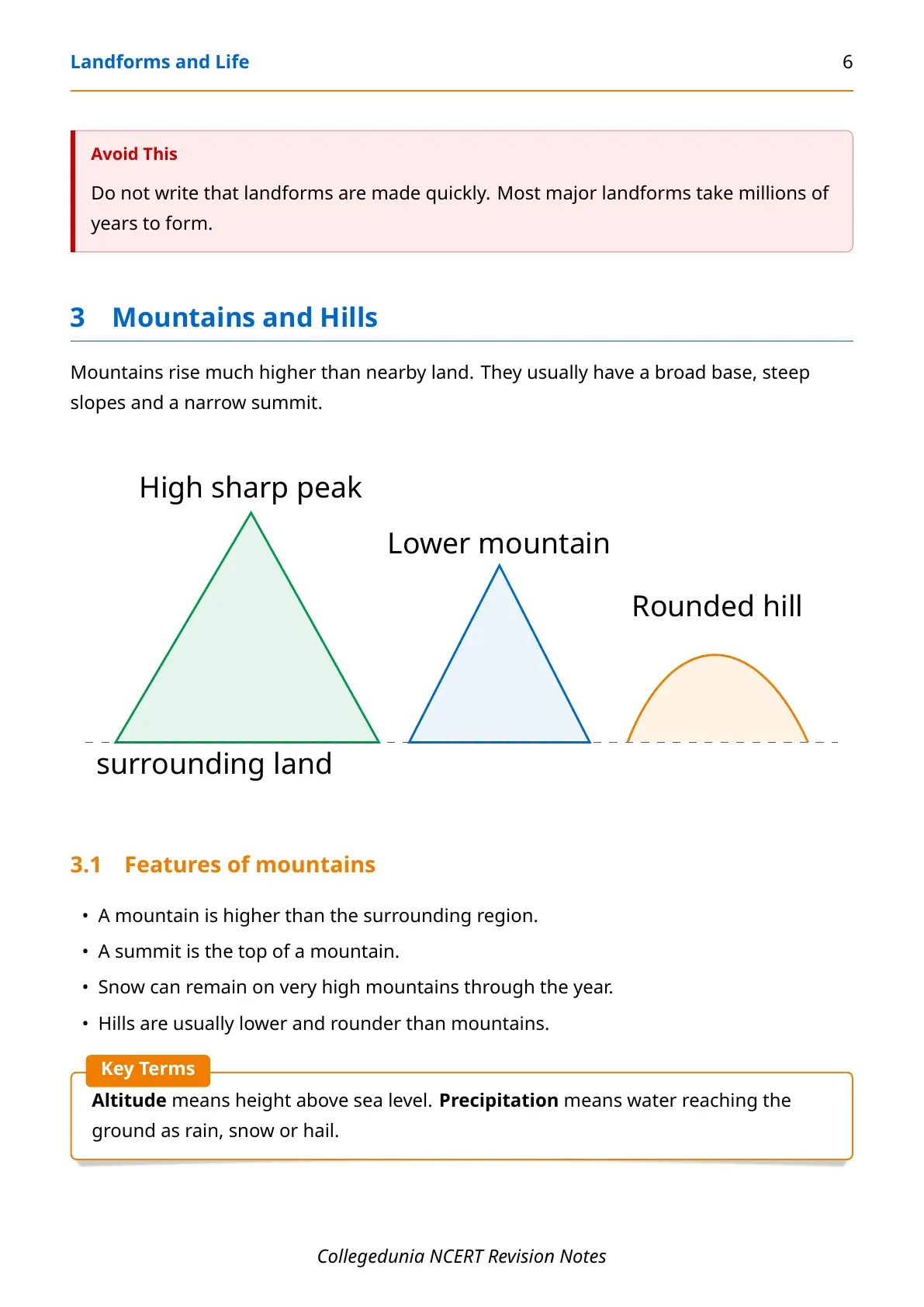
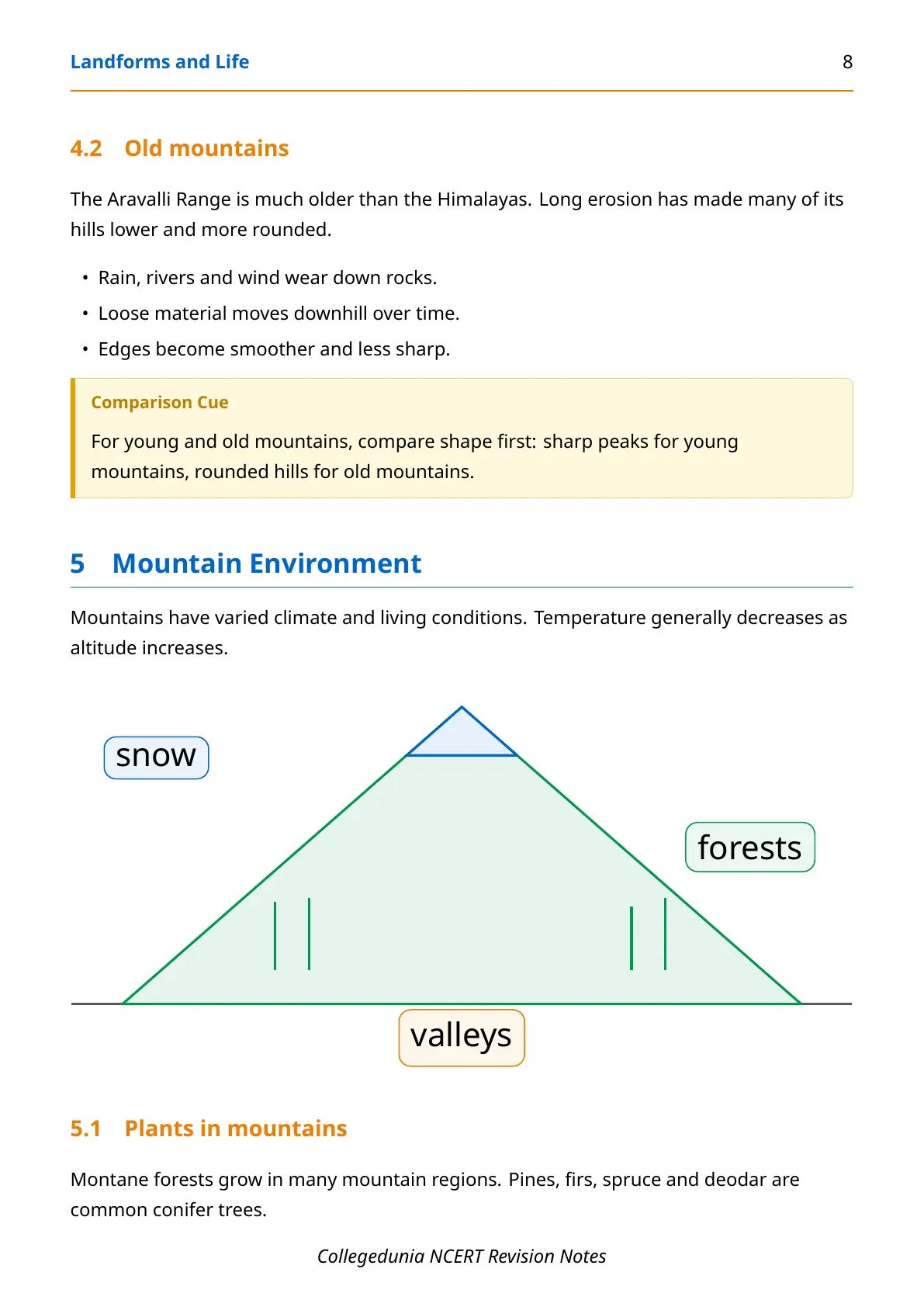
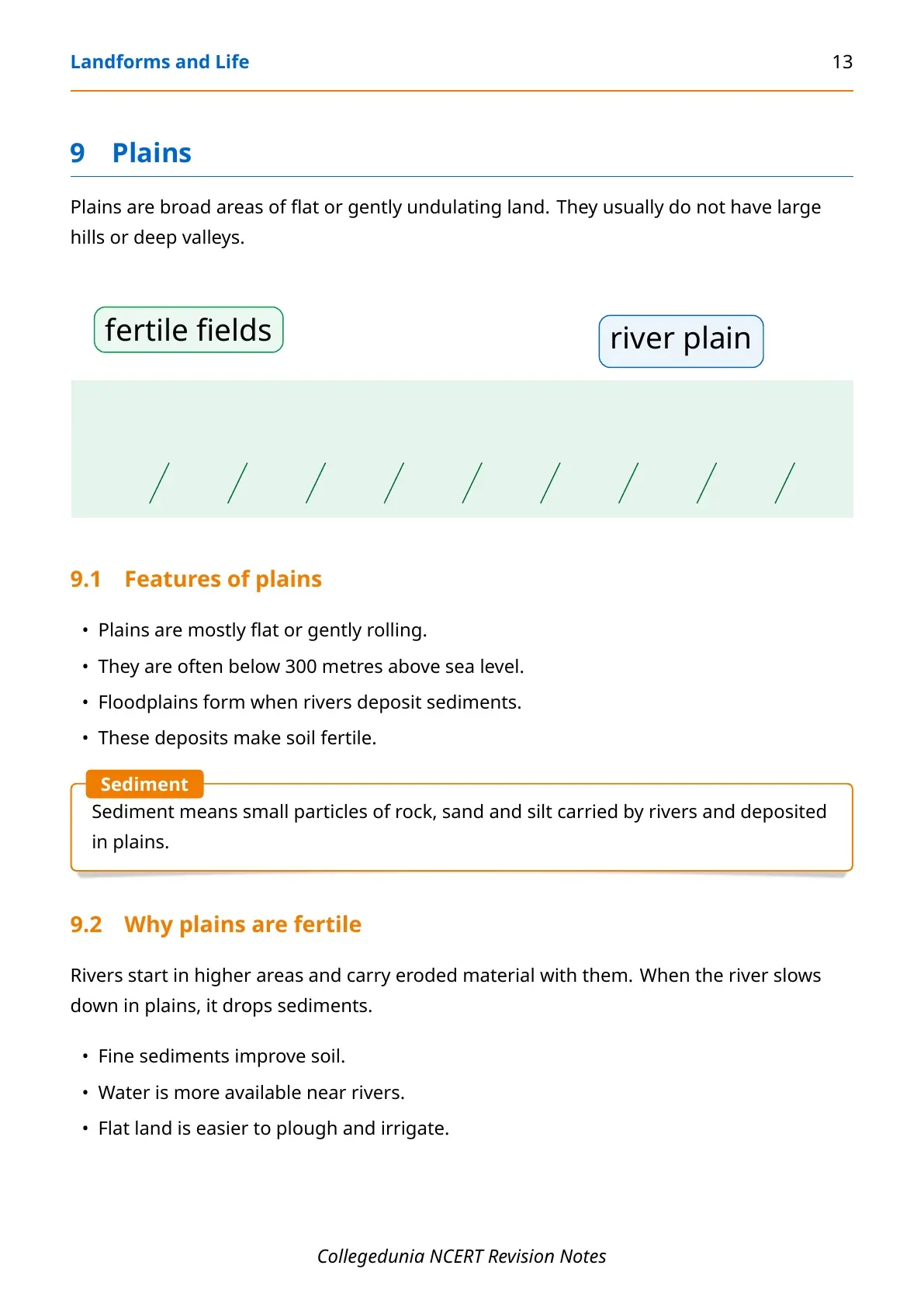
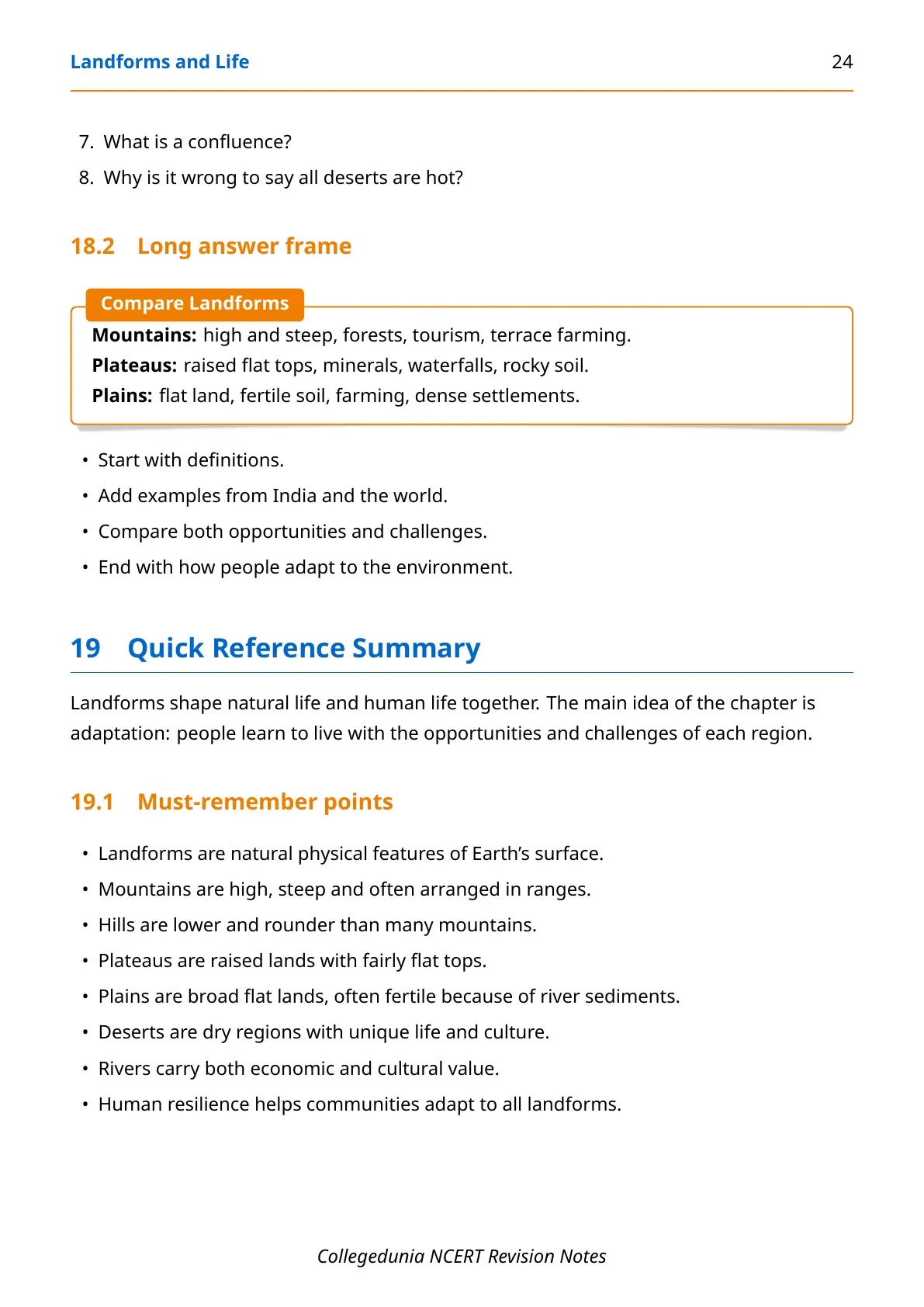
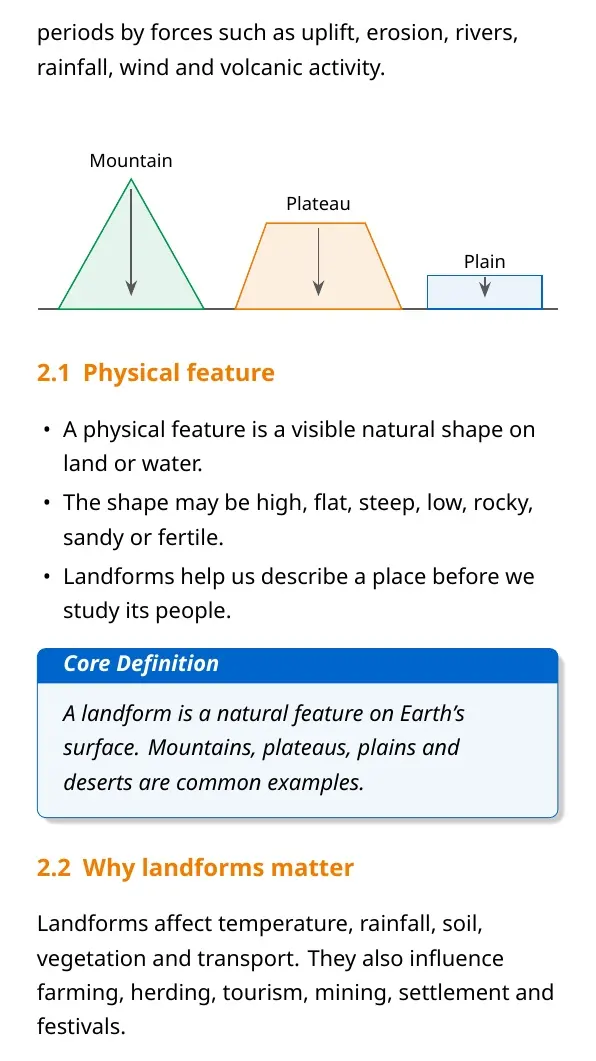
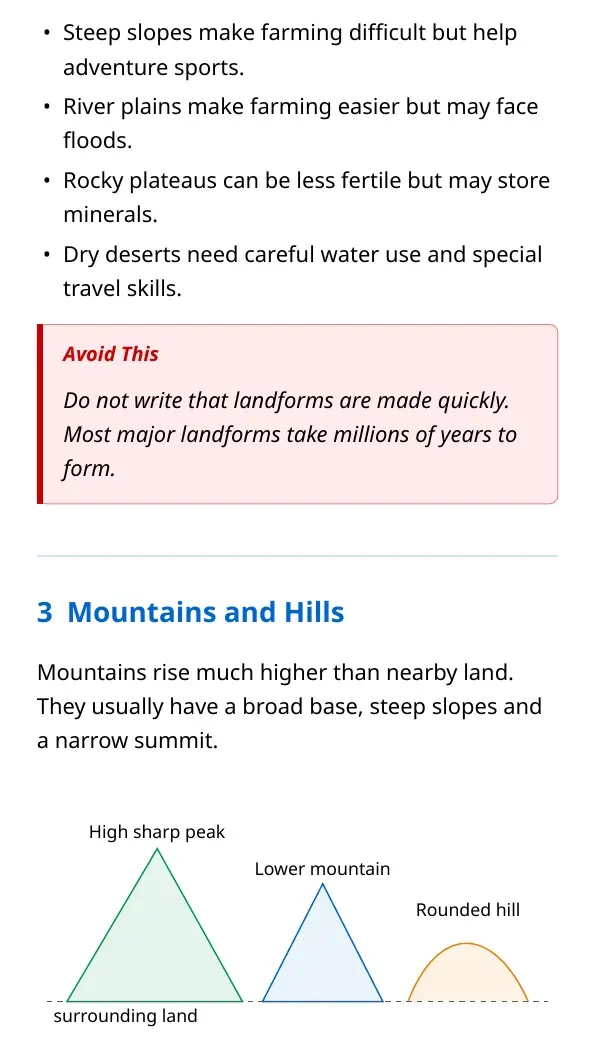
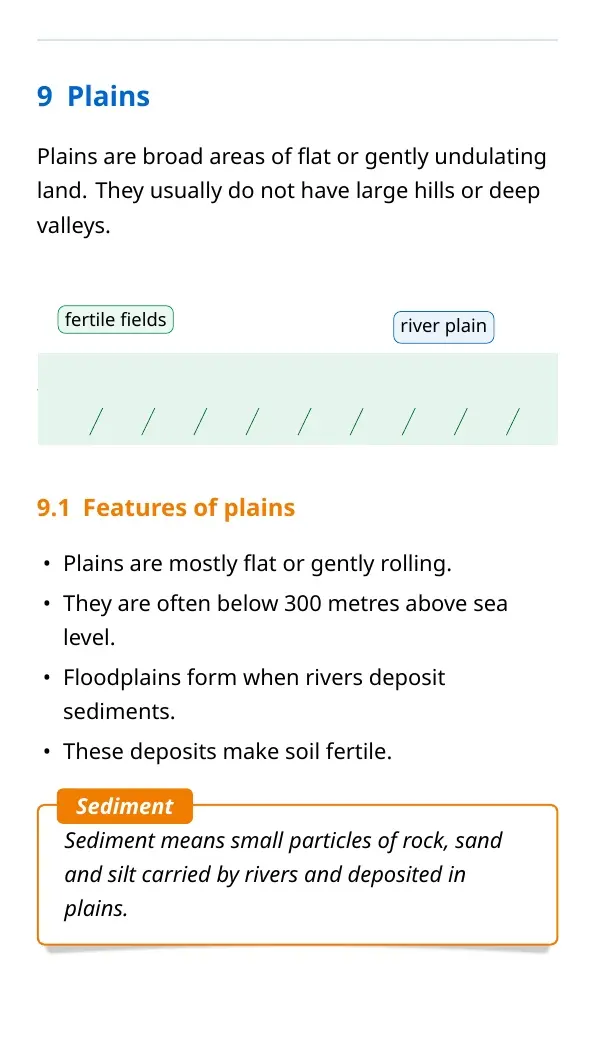
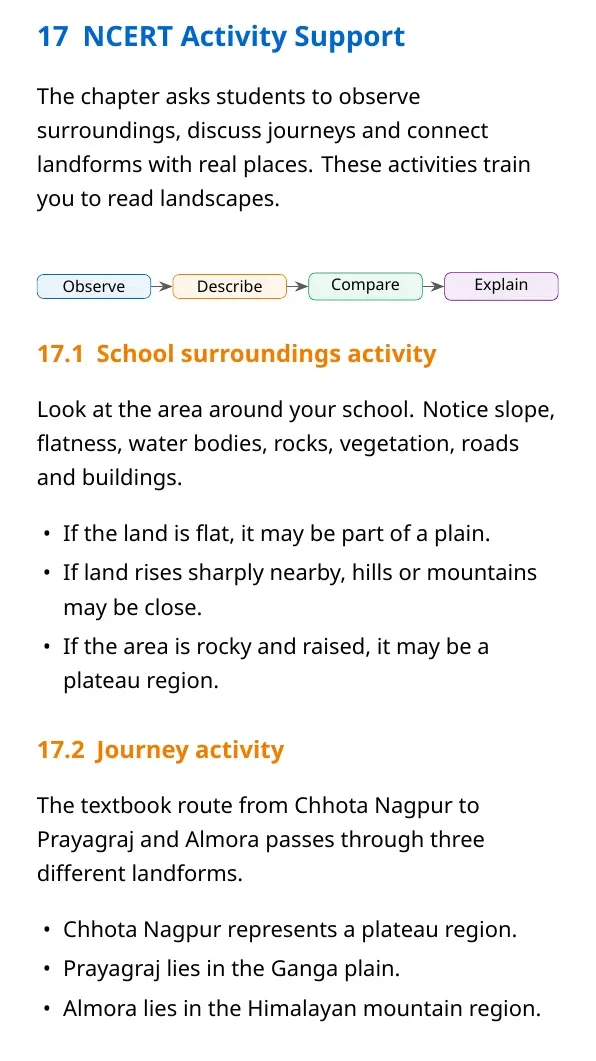
Mountains are higher than nearby land and may be covered with snow at high altitudes. Plateaus rise above nearby land and often have rocky soil. Plains are broad flat areas where rivers deposit sediments and make the soil fertile.
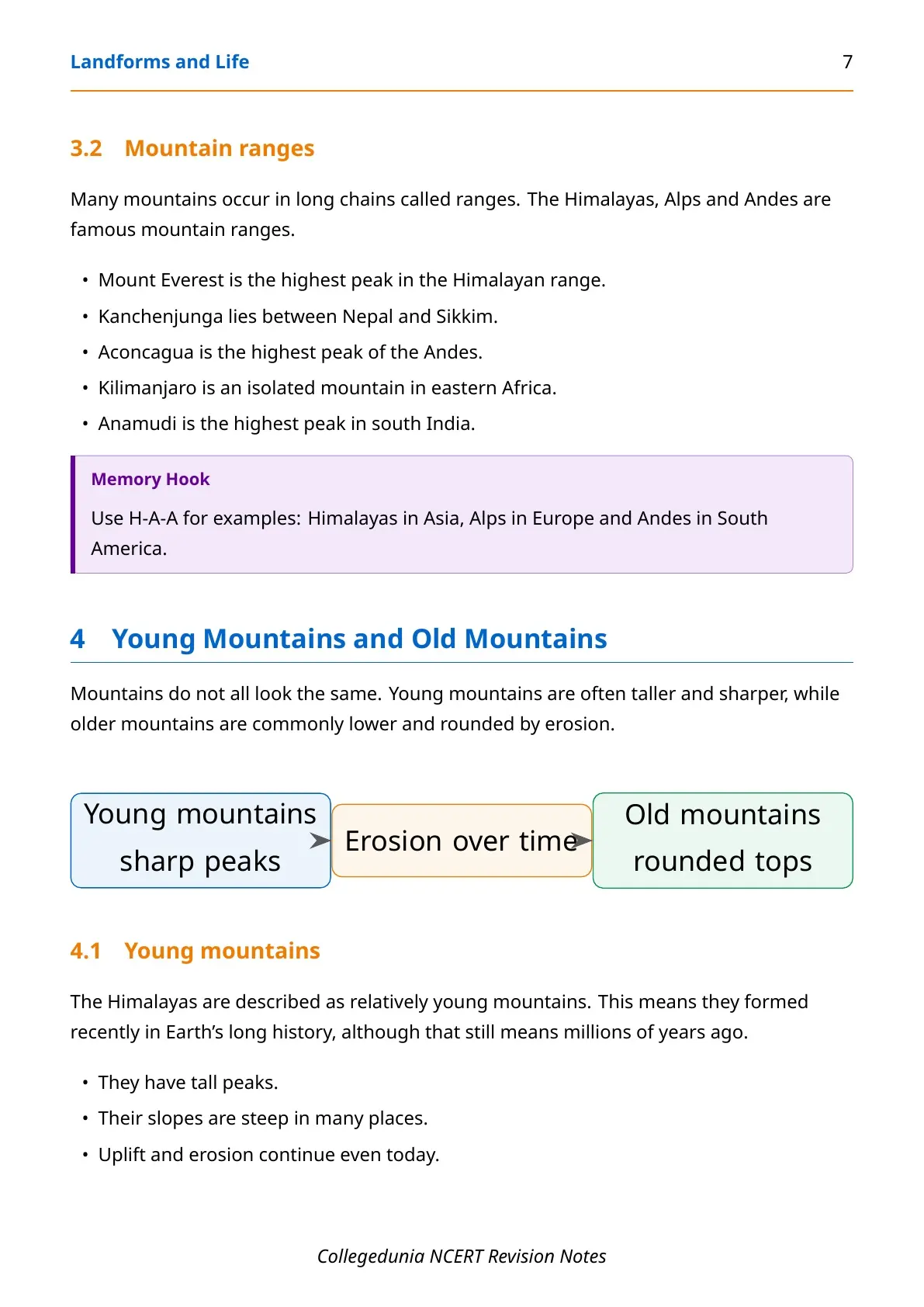
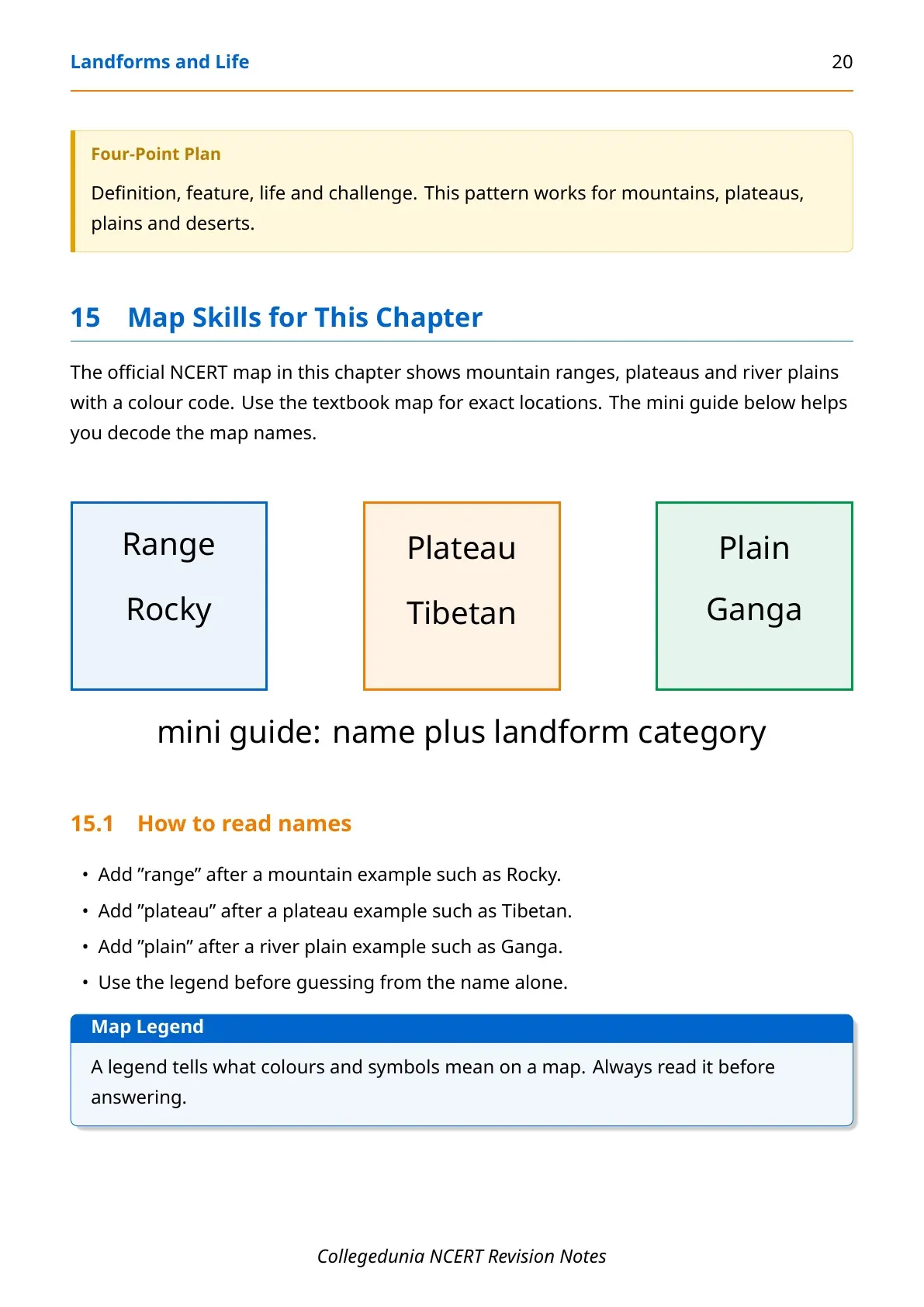
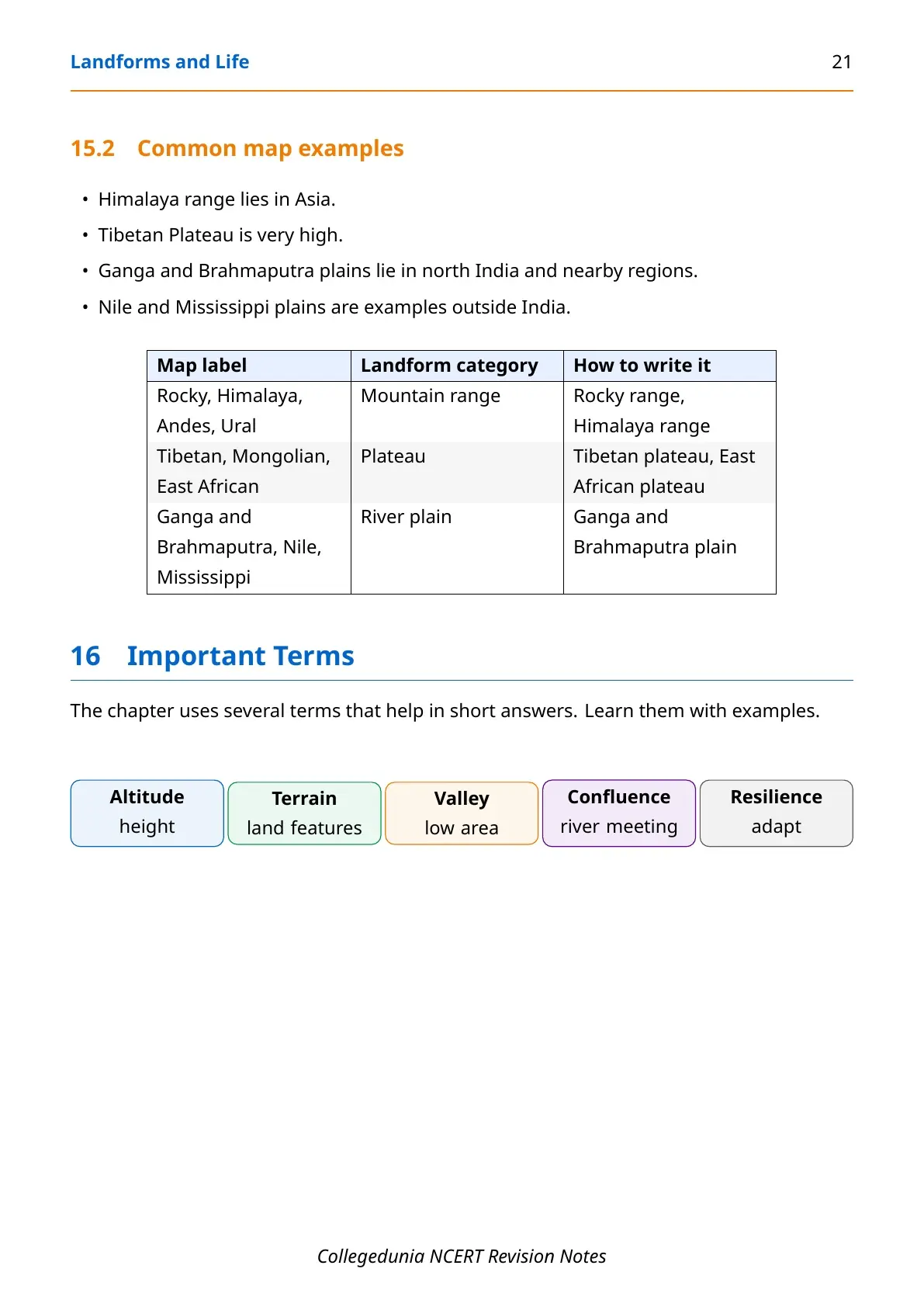
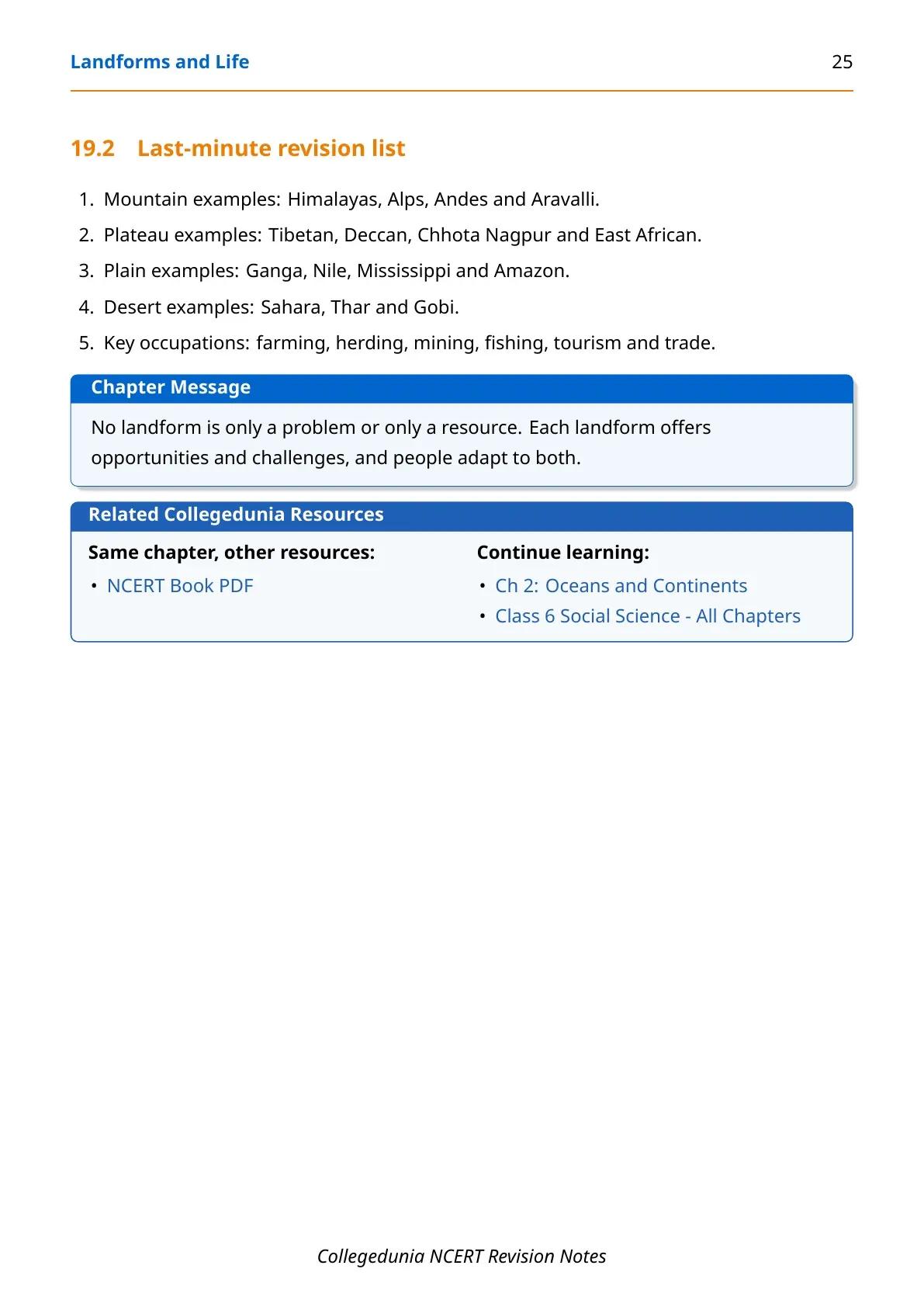
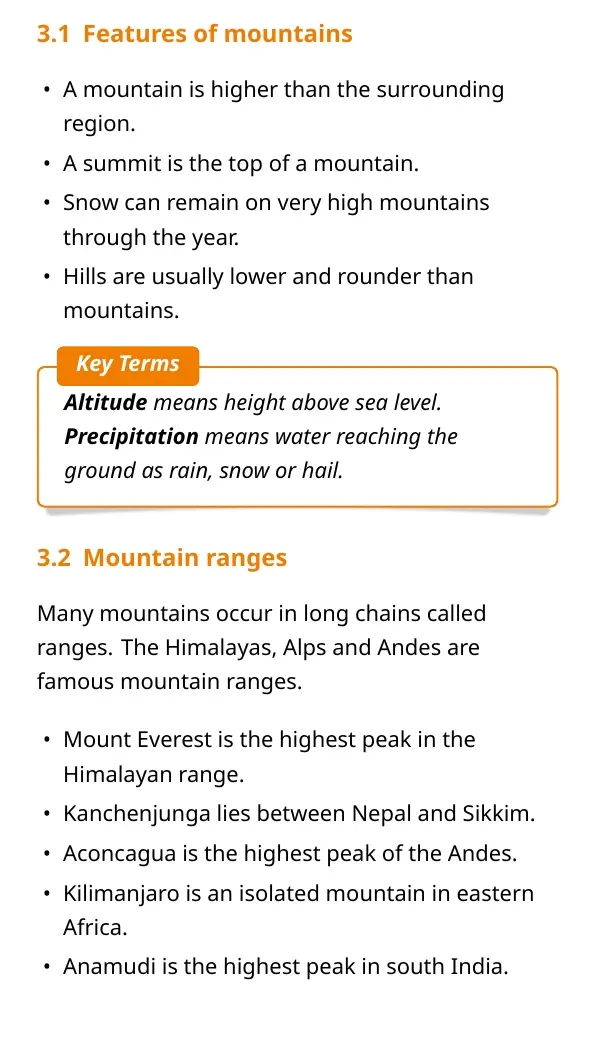
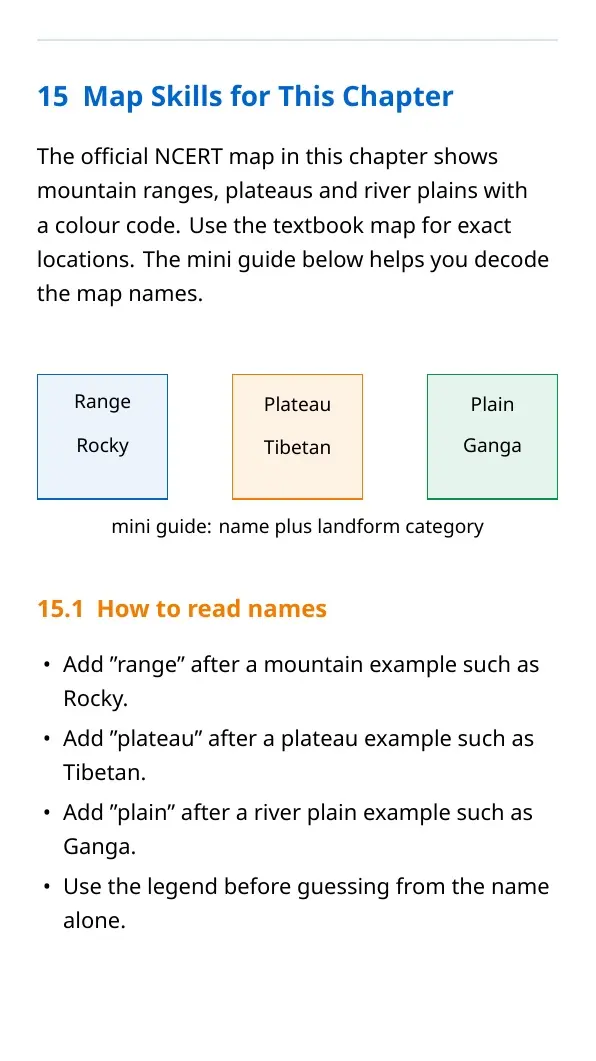
- Mountain examples: Himalayas, Alps, Andes and Aravalli.
- Plateau examples: Tibetan Plateau, Deccan Plateau and Chhota Nagpur Plateau.
- Plain examples: Ganga plain, Nile plain and Mississippi plain.
How Landforms Shape Human Life
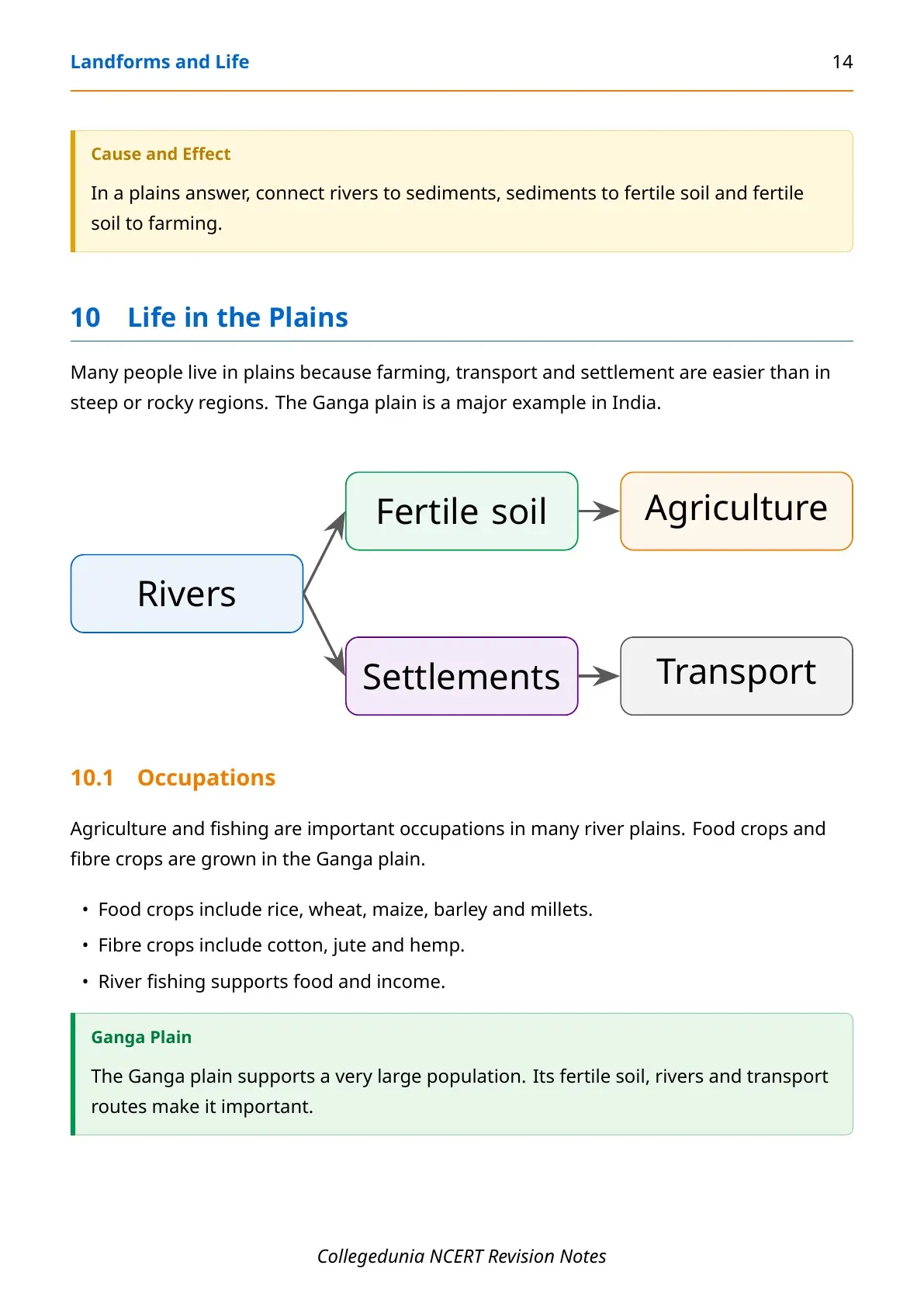
Each landform gives both opportunities and challenges. Mountain slopes make farming difficult, but terraces and valleys support crops. Plateaus may have minerals and waterfalls. Plains support farming and transport, but they can face pollution and groundwater depletion.
| Area | Opportunity | Challenge |
|---|---|---|
| Mountains | Tourism, forests, rivers and herding | Steep roads, landslides and limited flat land |
| Plateaus | Minerals, waterfalls and black soil in lava regions | Rocky soil and uneven transport links |
| Plains | Fertile soil, farming and river navigation | High population, floods and water stress |
| Deserts | Trade routes, folk culture and hardy animals | Very little rainfall and water scarcity |
How River Plains Become Fertile
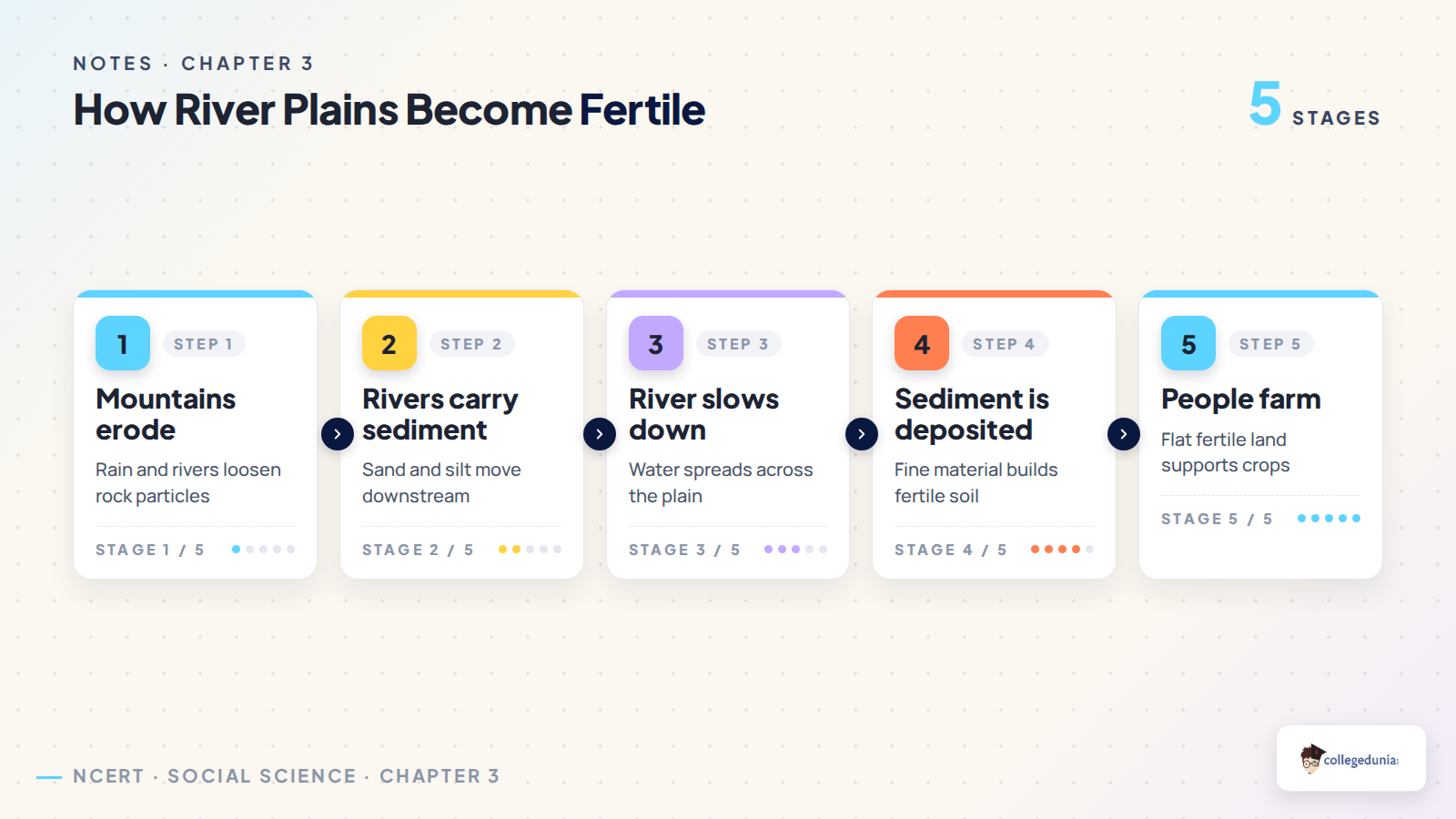
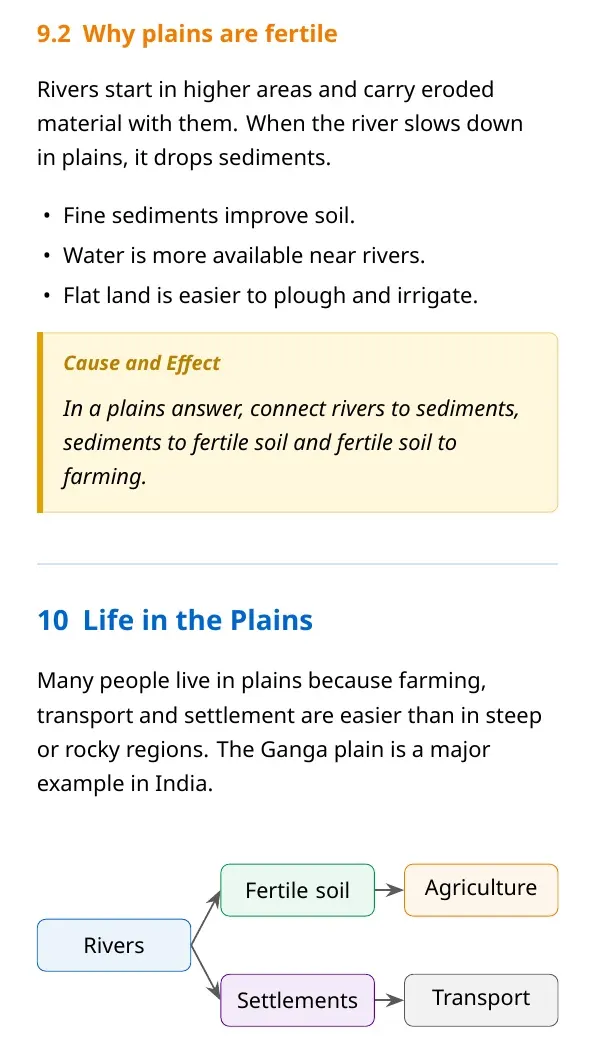
Rivers begin in higher areas and carry small particles of rock, sand and silt. These particles are called sediments. When the river reaches the plain, it slows down and deposits sediments. This makes the soil fertile for crops.
- Food crops in the Ganga plain include rice, wheat, maize, barley and millets.
- Fibre crops include cotton, jute and hemp.
- Irrigation helps farming, but too much groundwater use creates a future challenge.
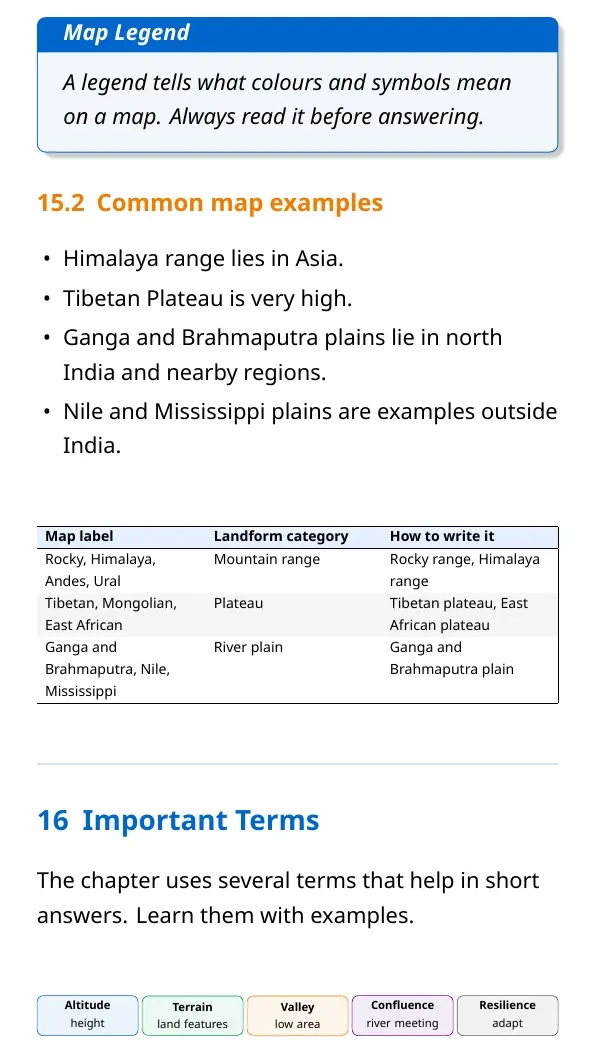
Important Terms in Landforms and Life
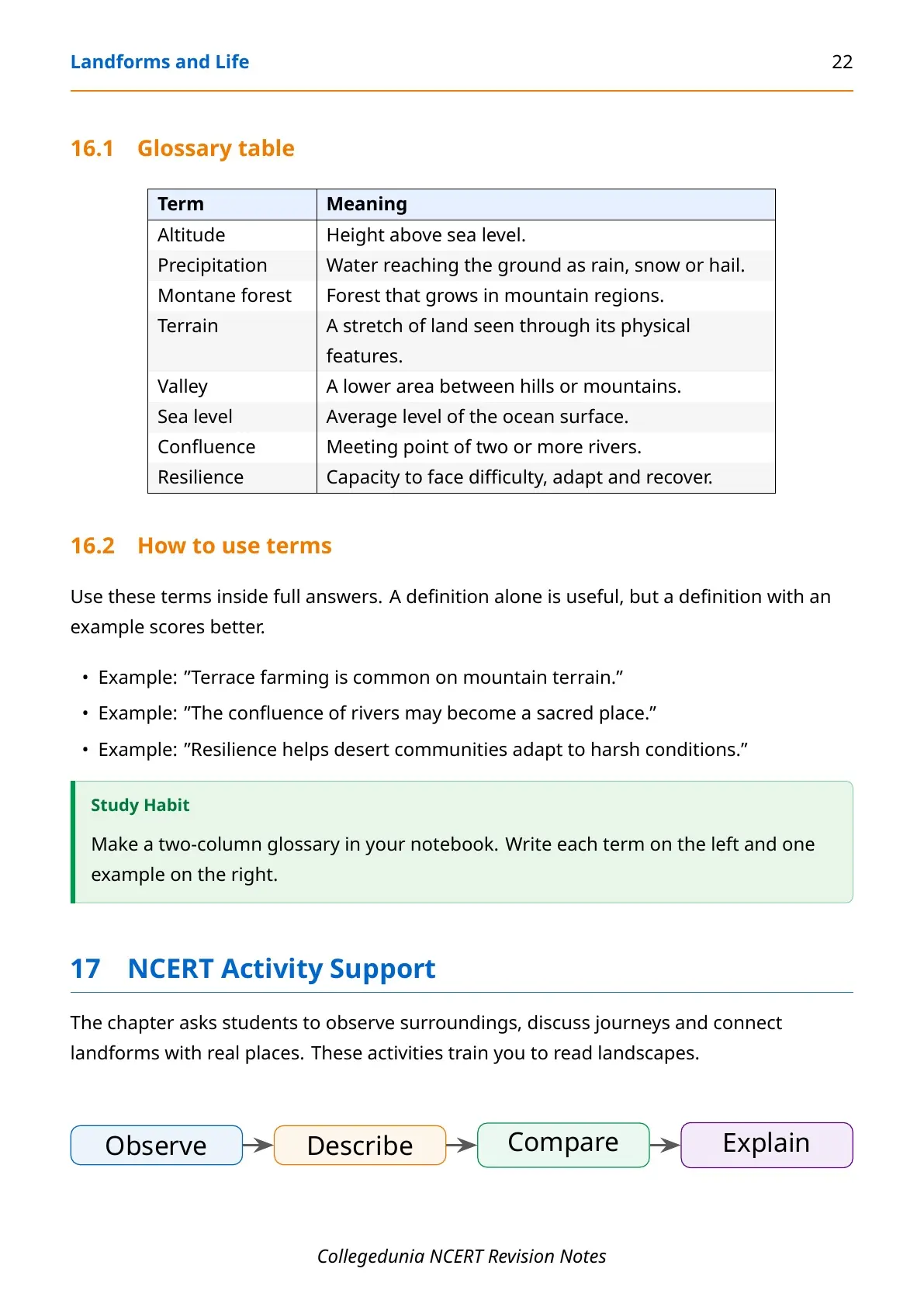
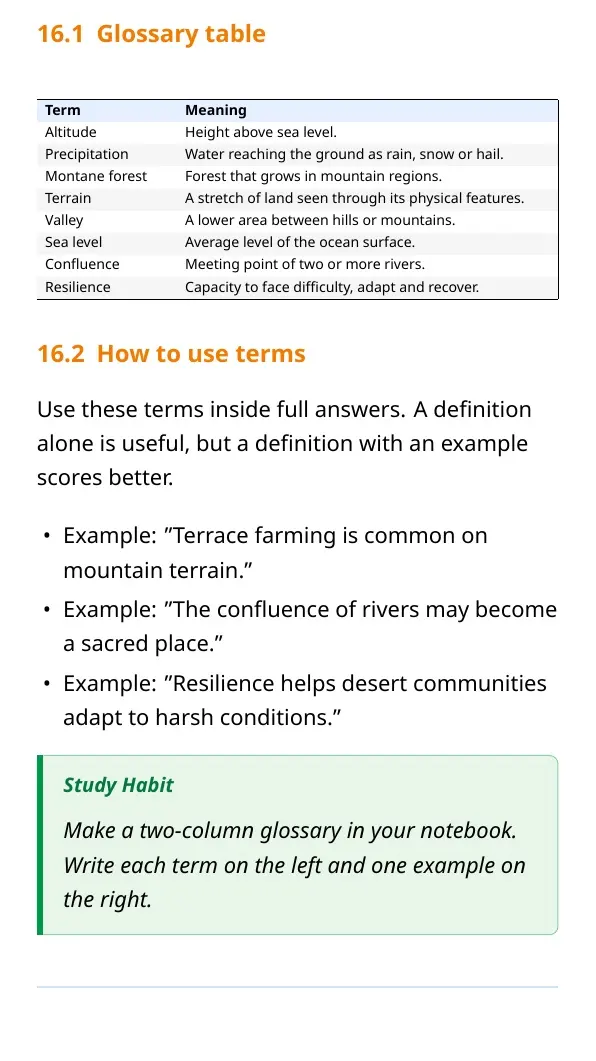
Use these terms in short answers and map-based questions. A definition with one example is stronger than a definition alone.
| Term | Meaning | Example cue |
|---|---|---|
| Altitude | Height above sea level | High mountains have greater altitude |
| Precipitation | Water reaching the ground as rain, snow or hail | Snow falls in cold high regions |
| Terrain | A stretch of land seen through its physical features | Mountain terrain is rugged |
| Valley | Lower area between hills or mountains | Valleys may support farms and settlements |
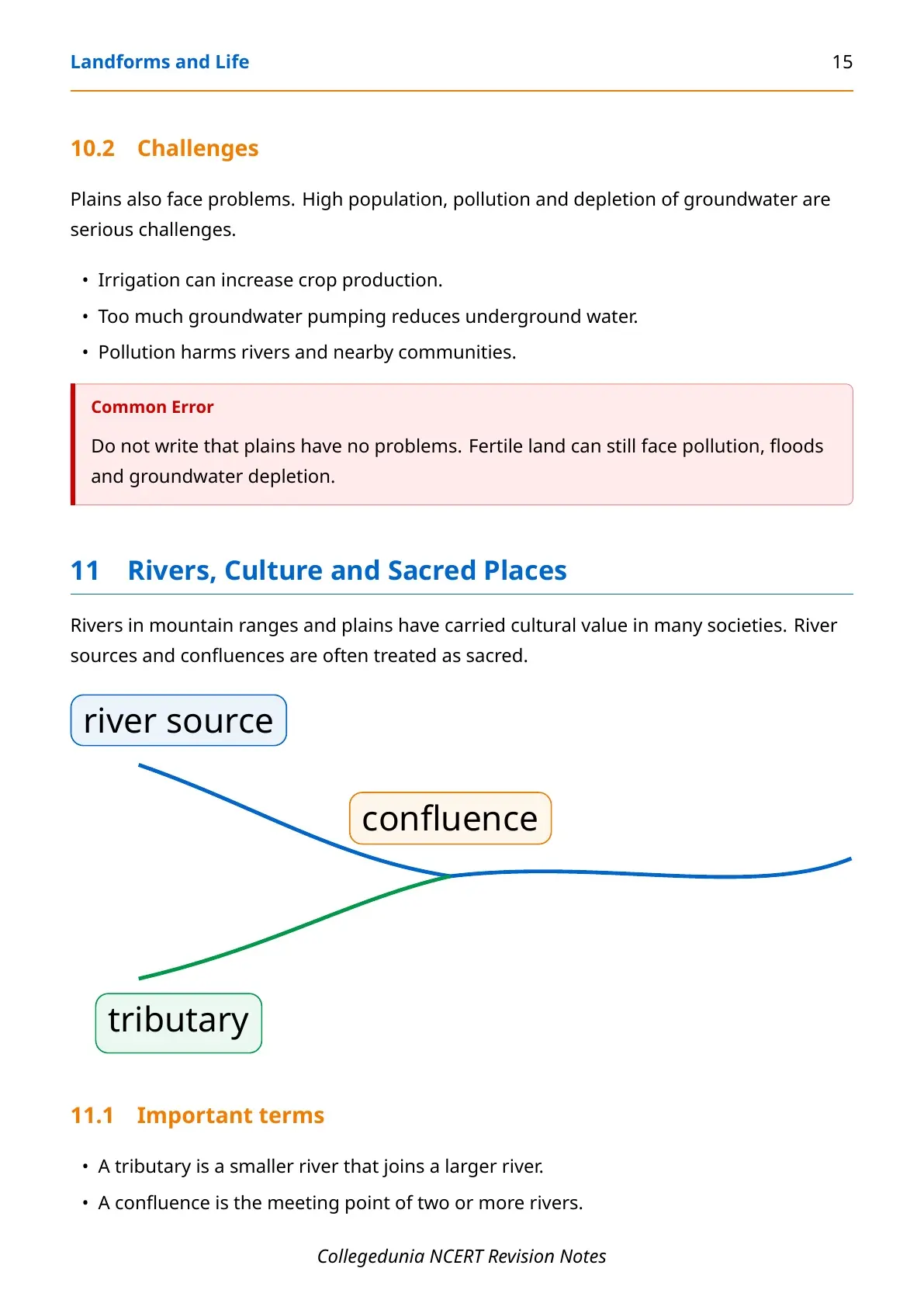
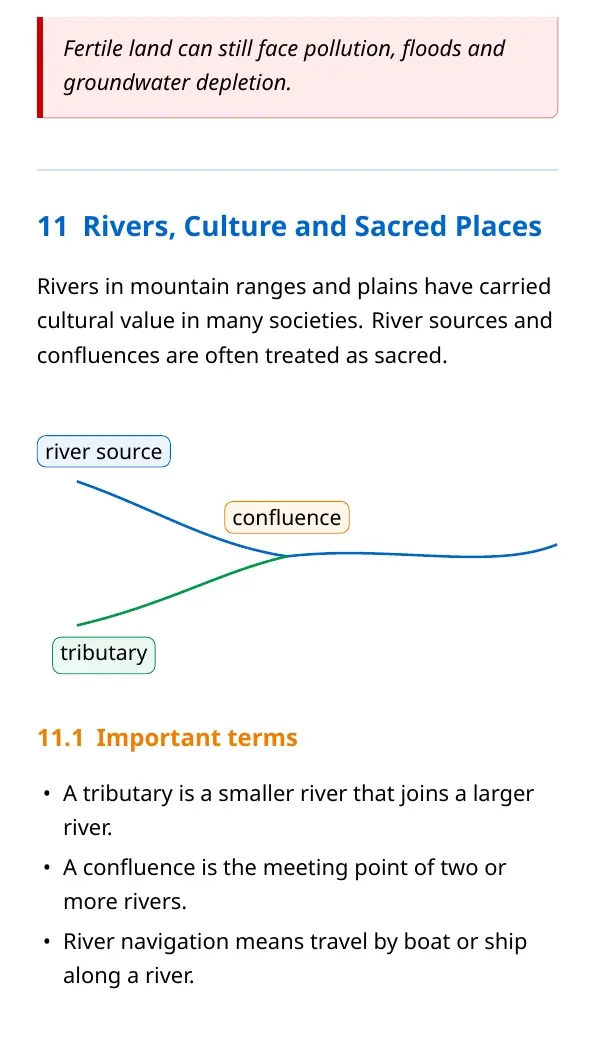
| Confluence | Meeting point of two or more rivers | Many confluences are sacred places |
| Resilience | Capacity to face difficulty and adapt | Desert communities show resilience |
Landforms and Culture
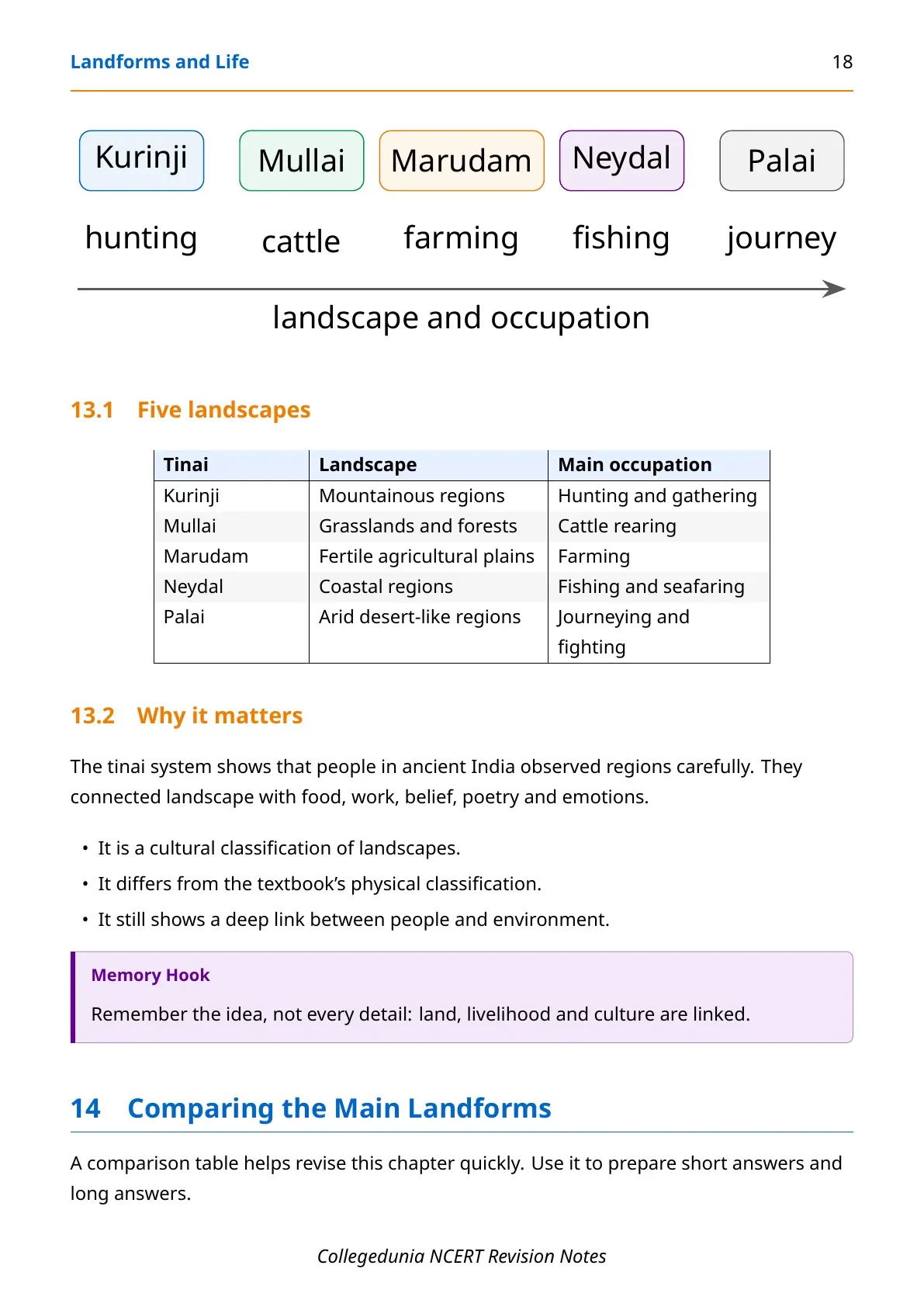
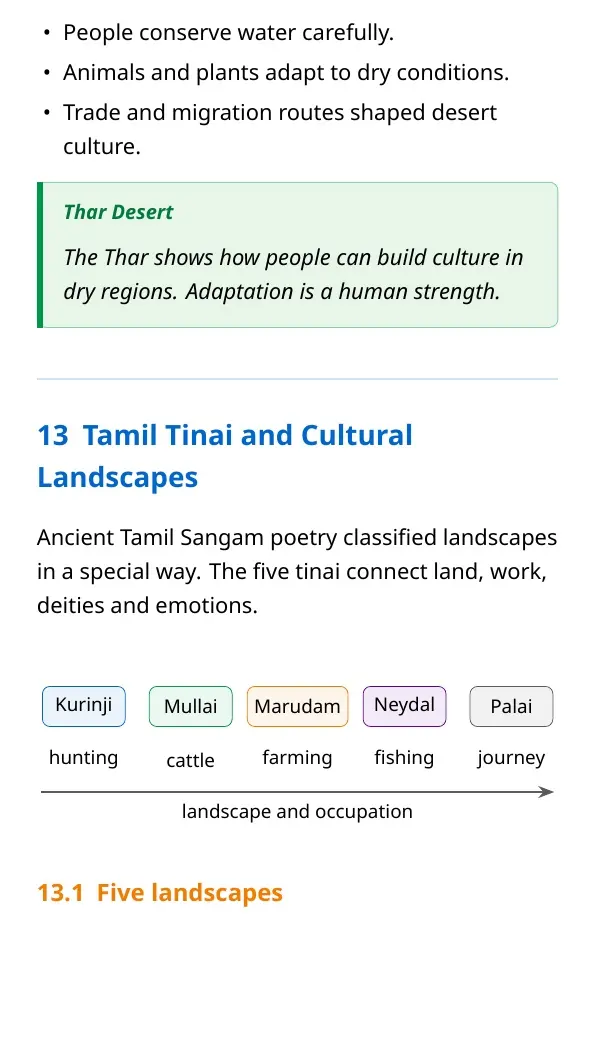
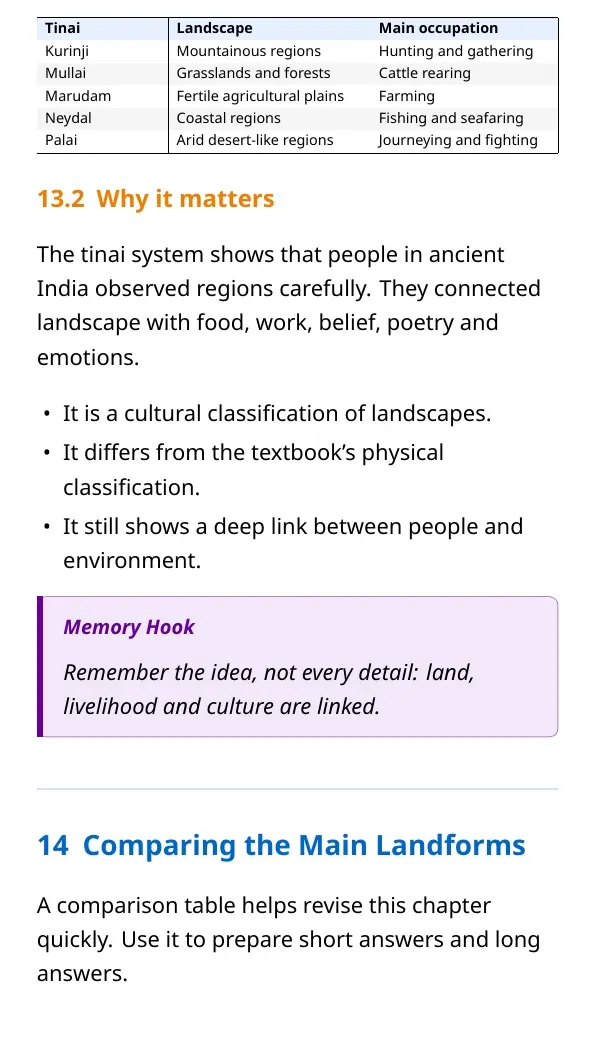
Rivers, mountains and deserts are part of culture. River sources and confluences are often sacred. The chapter also mentions the five Tamil tinai, which connect landscapes with work, beliefs and emotions.
- Kurinji: mountainous regions, hunting and gathering.
- Mullai: grasslands and forests, cattle rearing.
- Marudam: fertile agricultural plains, farming.
- Neydal: coastal regions, fishing and seafaring.
- Palai: arid desert-like regions, journeying and fighting.
Landforms and Life Related Resources
| Resource | Best use | Link |
|---|---|---|
| NCERT Notes | Topic-wise revision with tables | Current page |
| NCERT Solutions | Practice textbook questions | Open NCERT Solutions |
| NCERT Book PDF | Read the official chapter | Open Book PDF |
| Handwritten Notes | Quick one-sitting revision | Open Handwritten Notes |
Social Science Notes for All Chapters
| Chapter | NCERT chapter title | Notes link |
|---|---|---|
| Chapter 1 | Locating Places on the Earth | Open Notes |
| Chapter 2 | Oceans and Continents | Open Notes |
| Chapter 3 | Landforms and Life | Current notes |
| Chapter 4 | Timeline and Sources of History | Open Notes |
| Chapter 5 | India, That Is Bharat | Open Notes |
| Chapter 6 | The Beginnings of Indian Civilisation | Open Notes |
| Chapter 7 | India's Cultural Roots | Open Notes |
| Chapter 8 | Unity in Diversity, or Many in the One | Open Notes |
| Chapter 9 | Family and Community | Open Notes |
| Chapter 10 | Grassroots Democracy Part 1 Governance | Open Notes |
| Chapter 11 | Grassroots Democracy Part 2 Local Government in Rural Areas | Open Notes |
| Chapter 12 | Grassroots Democracy Part 3 Local Government in Urban Areas | Open Notes |
| Chapter 13 | The Value of Work | Open Notes |
| Chapter 14 | Economic Activities Around Us | Open Notes |
Landforms and Life Class 6 Notes FAQs
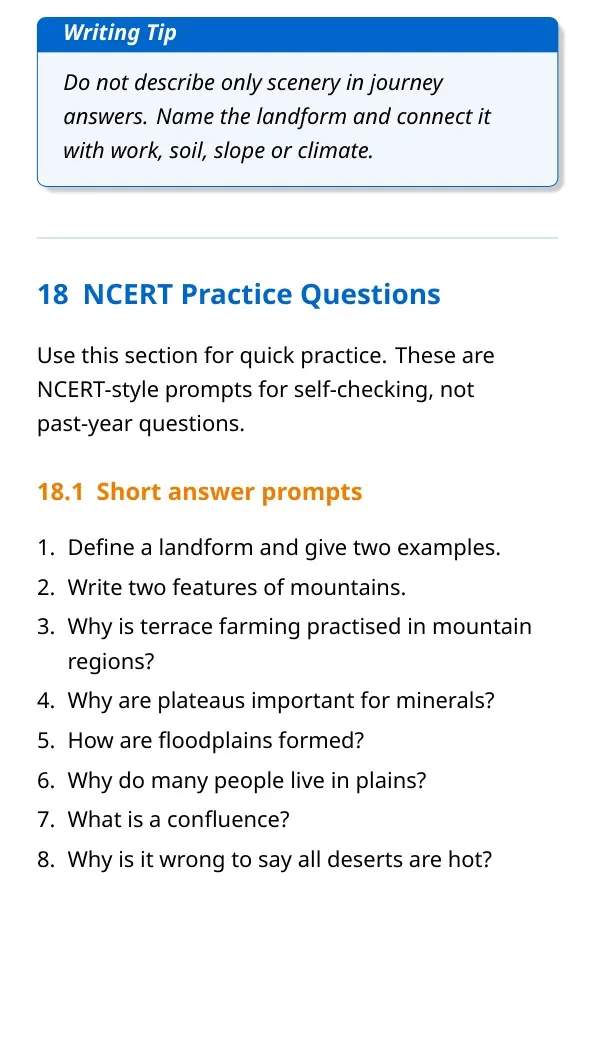
Ques. What is Class 6 Social Science Chapter 3 about?
Ans. It explains mountains, plateaus, plains, deserts, rivers and how landforms affect plants, animals, work and culture.
Ques. What are the three main landforms in the chapter?
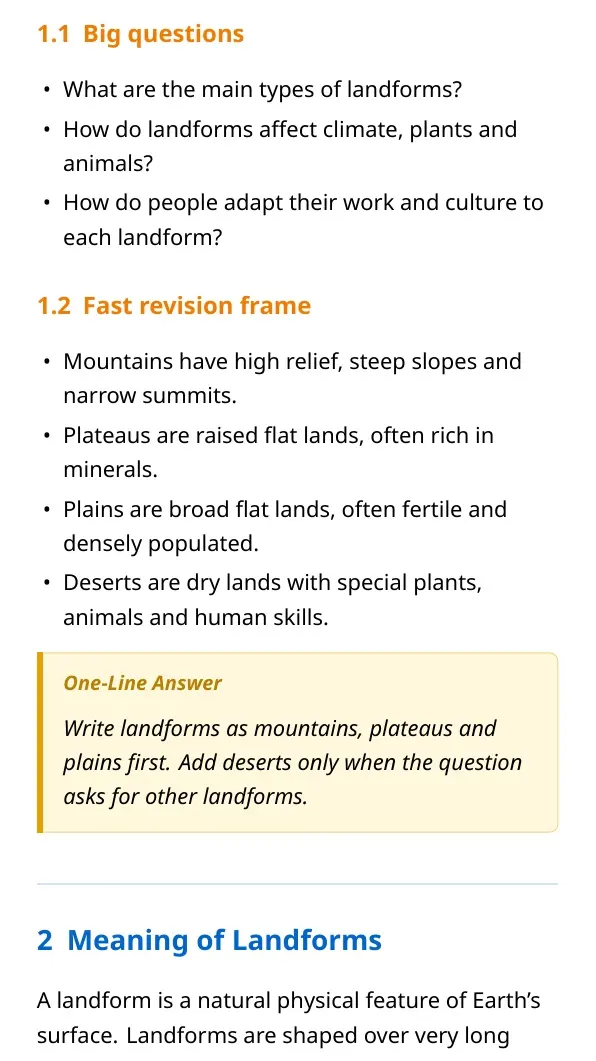
Ans. The three main landforms are mountains, plateaus and plains. The chapter also introduces deserts as another landform.
Ques. Why are plains good for farming?
Ans. Plains are flat and often fertile. Rivers deposit sediments in plains, which makes the soil useful for crops.
Ques. What is terrace farming?
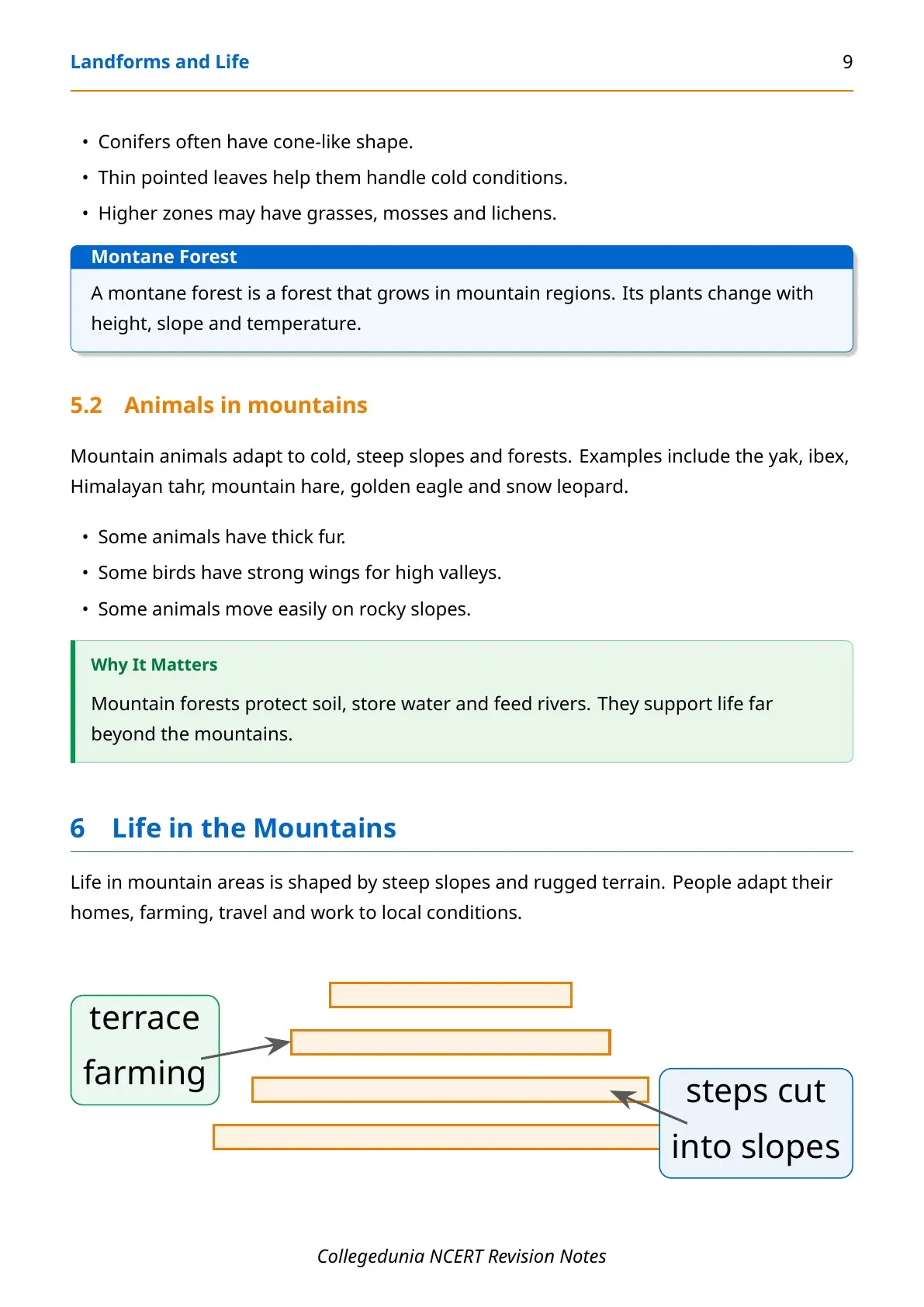
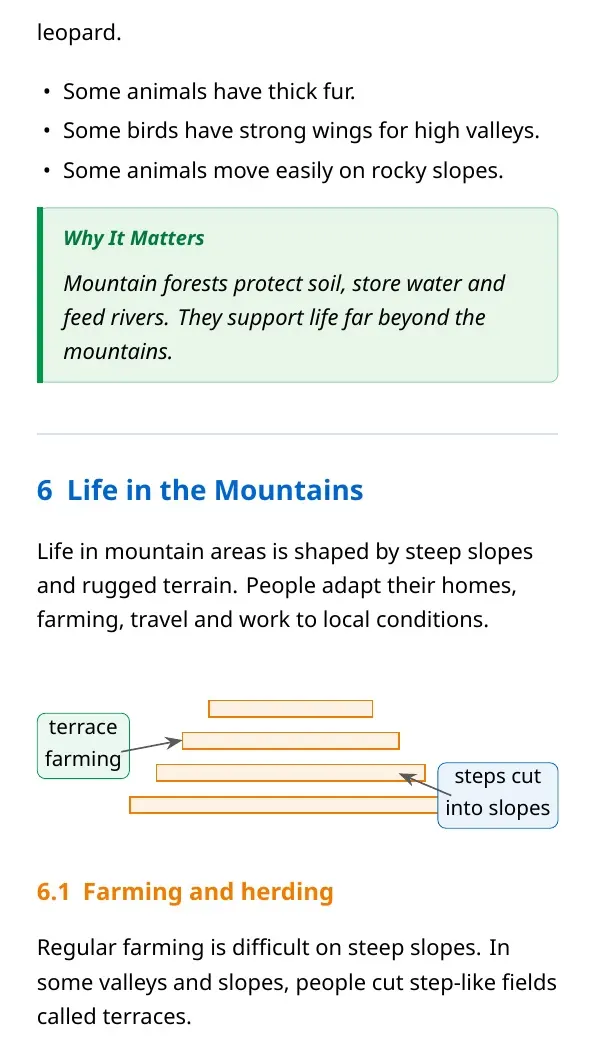
Ans. Terrace farming means cutting step-like fields on mountain slopes so crops can grow on steep land.
Ques. Why are plateaus important?
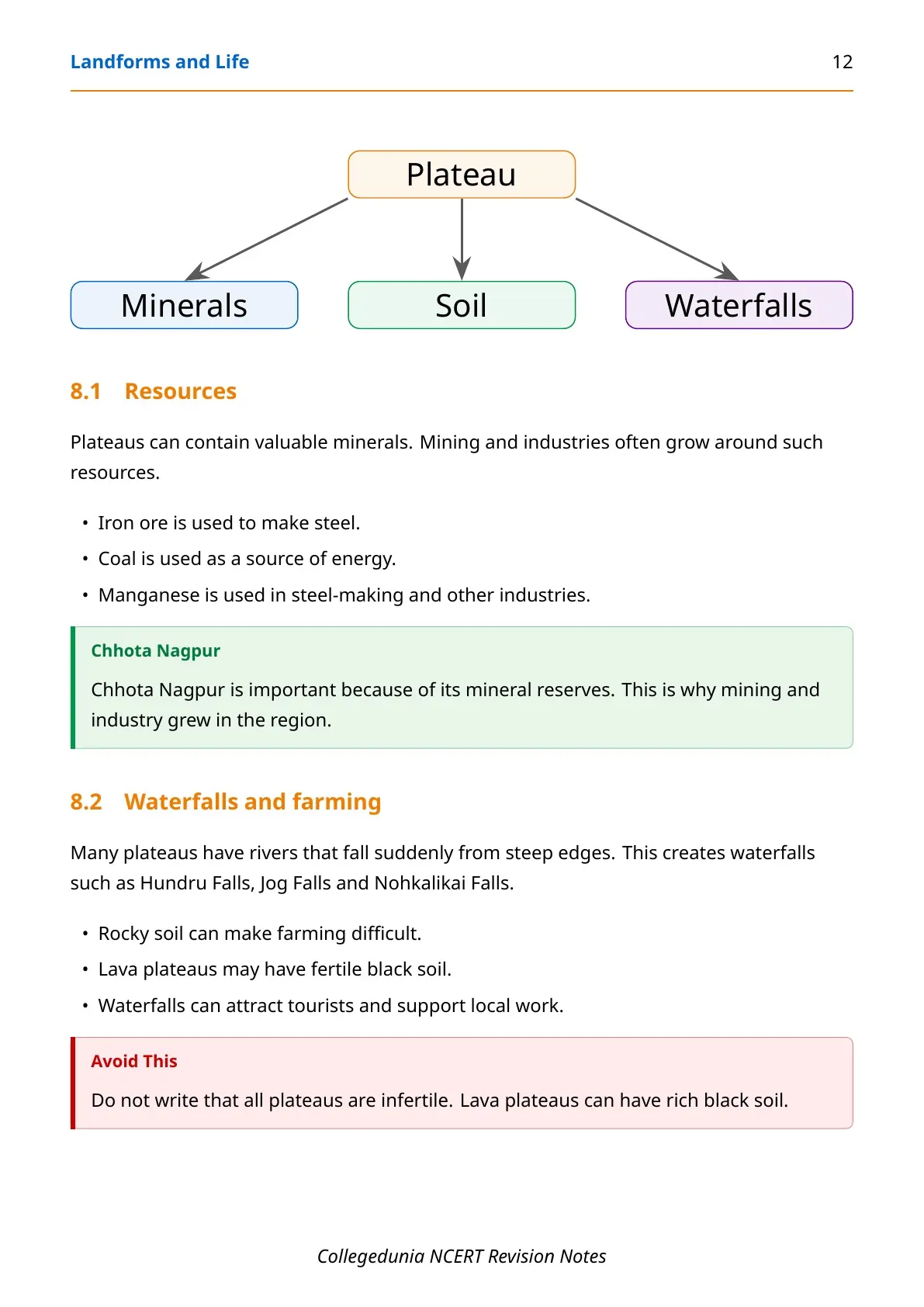
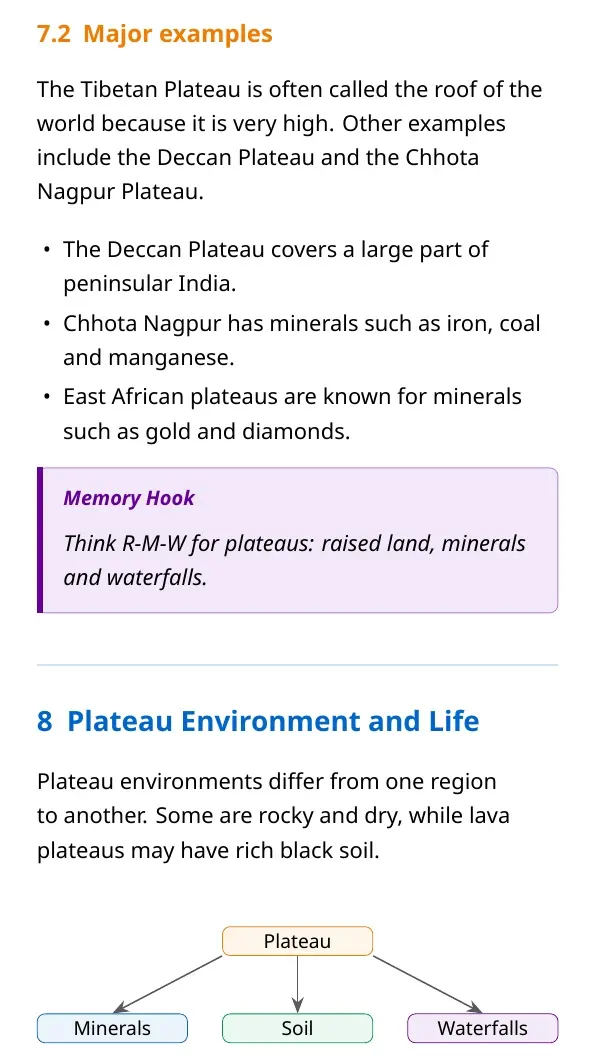
Ans. Plateaus are important because many have minerals, waterfalls and useful soils. Chhota Nagpur is known for minerals.



Comments