



Inside the NCERT Notes for Class 7 Science Chapter 1 The Ever-Evolving World of Science, you will find the four connected branches of science mapped out, a clear physical change versus chemical change comparison, and the sundial-to-clock story that opens the whole Curiosity book, all according to the latest 2026-27 NCERT syllabus.
- Chapter Length: 20-page notes PDF covering all seven big ideas the Curiosity book previews in Chapter 1.
- What's Inside: curiosity, the four branches of science, materials, circuits, changes, heat, water, life processes, time, light and Earth's motion.
- Cross-check: Pairs well with the Class 7 Science Curiosity Handwritten Notes and NCERT Book PDF for the same chapter.
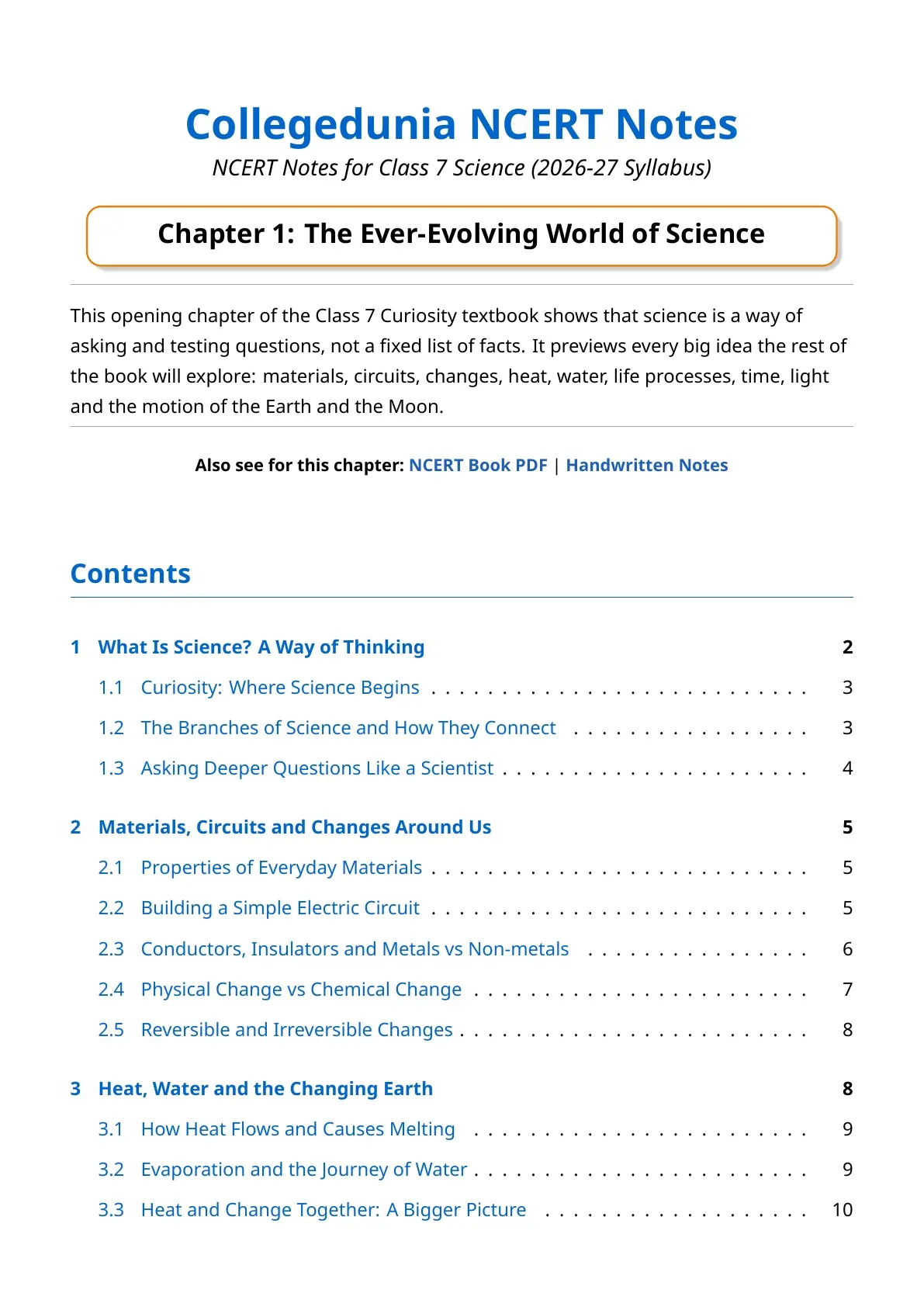
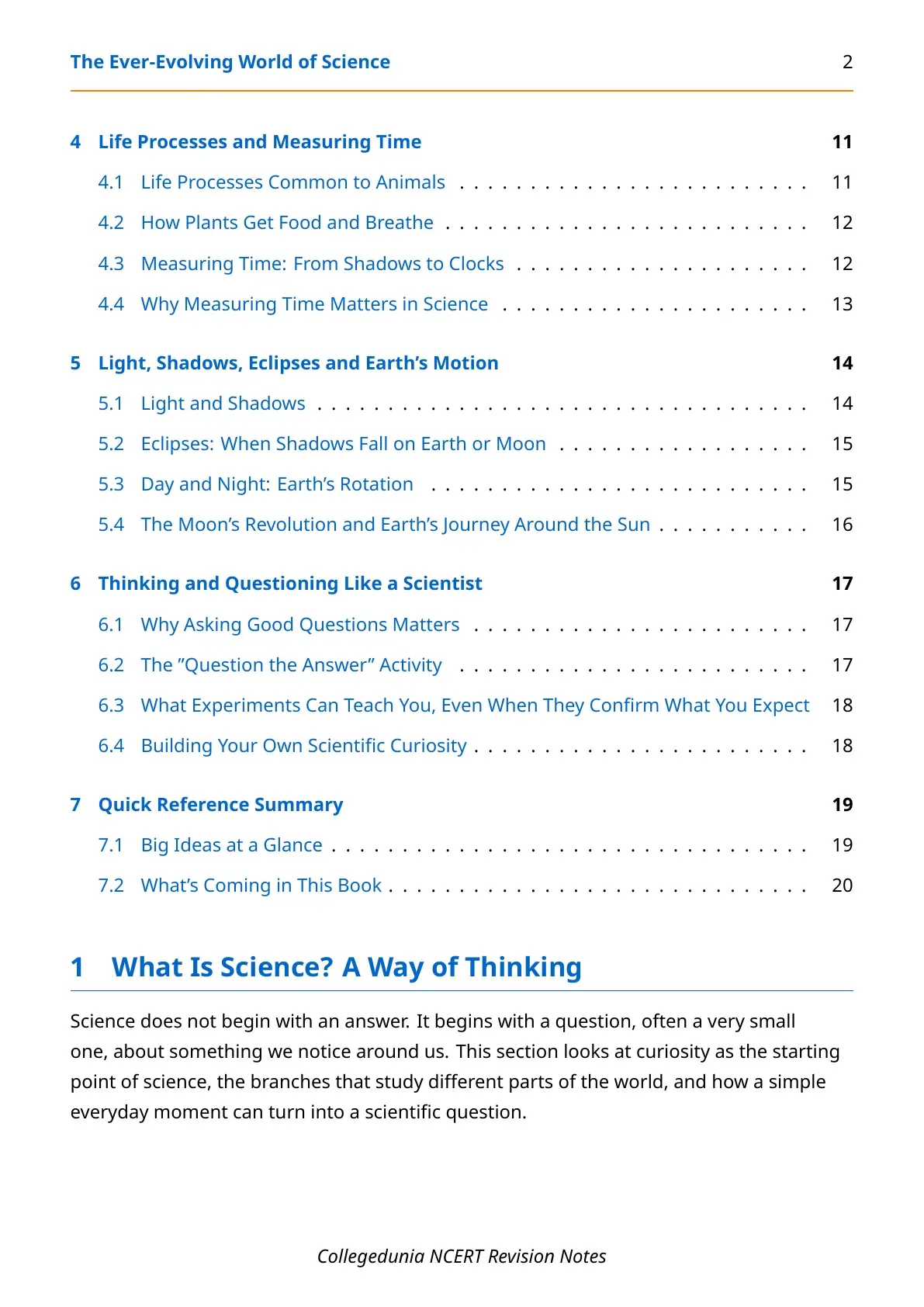
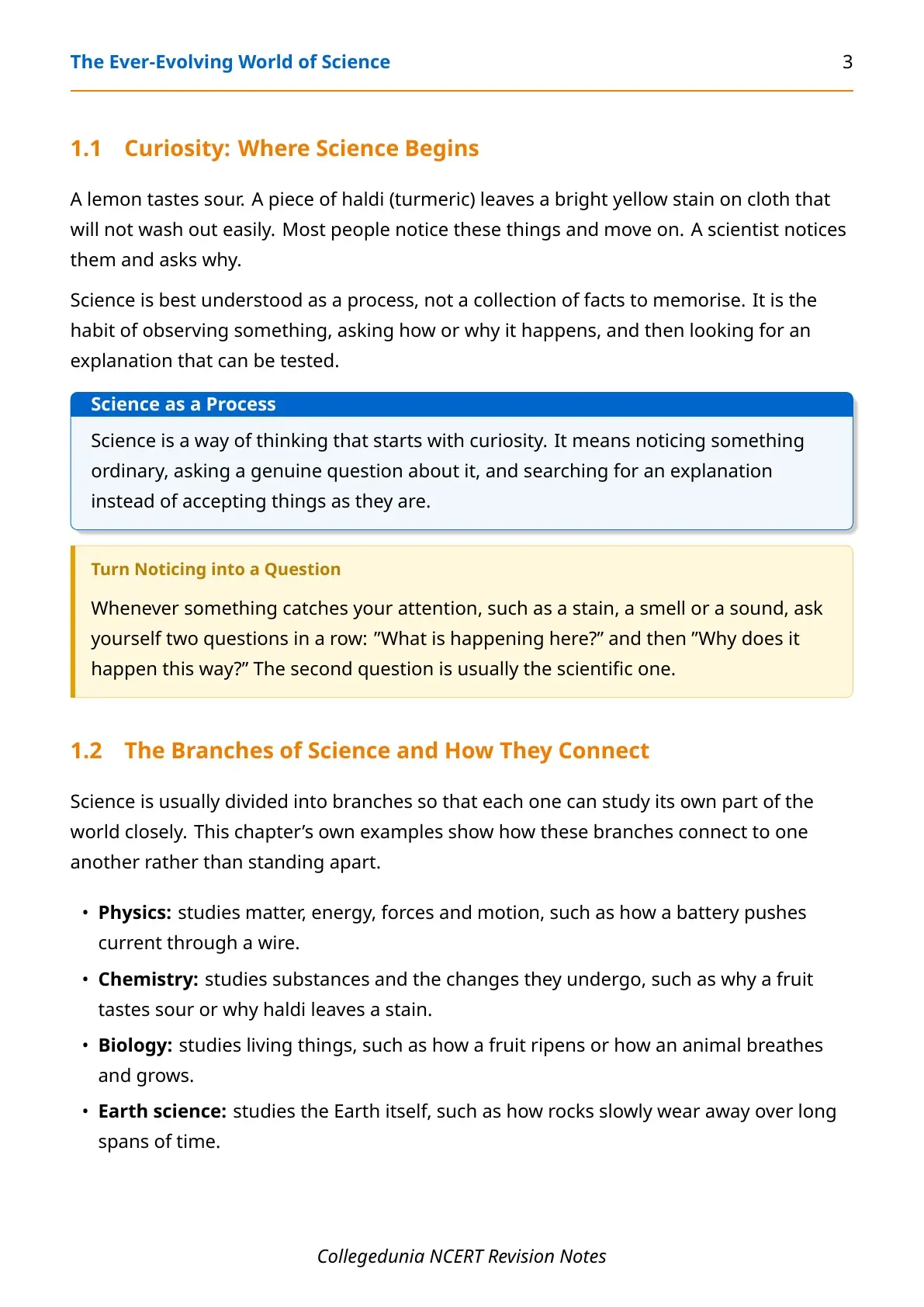
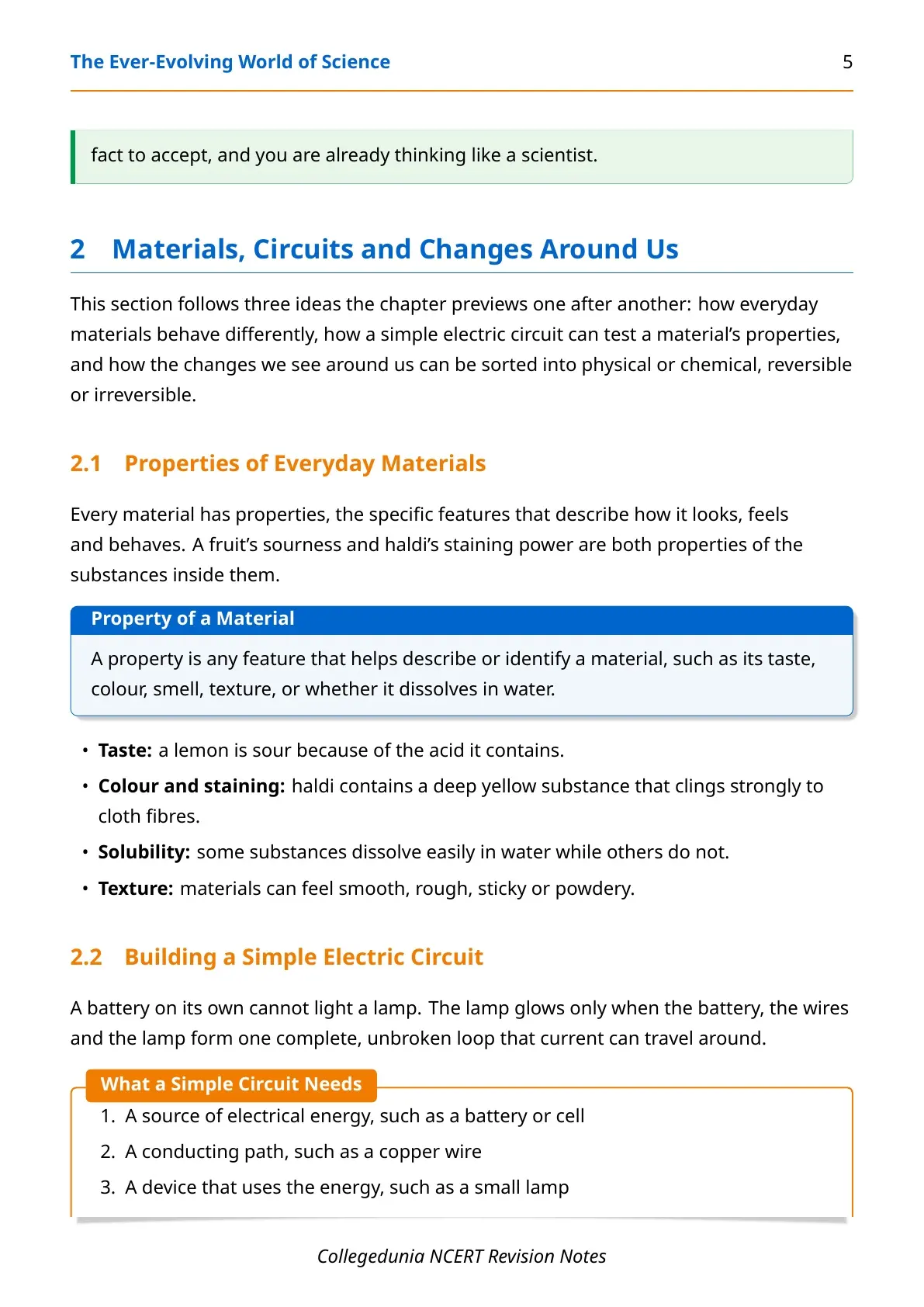
These Class 7 Science notes for The Ever-Evolving World of Science are curated by subject experts, according to the 2026-27 NCERT Curiosity textbook, and checked against every big idea the chapter previews for the rest of the book.
Student Feedback
What 12,410 students told us about their first Curiosity chapter: 61% of Class 7 students said telling a physical change apart from a chemical change was the trickiest part of Chapter 1, ahead of the eclipse diagrams and the sundial activity.
Source: 2026-27 Class 7 Science student poll. Sample of 12,410 students from CBSE schools across 15 states, conducted during the 2026-27 session.
|
Table of Contents |
What Is Science? Curiosity and the Four Branches
The Ever-Evolving World of Science opens with a simple idea: science begins with a question, not an answer. A sour lemon or a haldi stain on cloth are small, everyday puzzles. Noticing them and asking why is what turns ordinary noticing into science.
- Science is a process, observe, question, investigate, explain, not a list of facts to memorise.
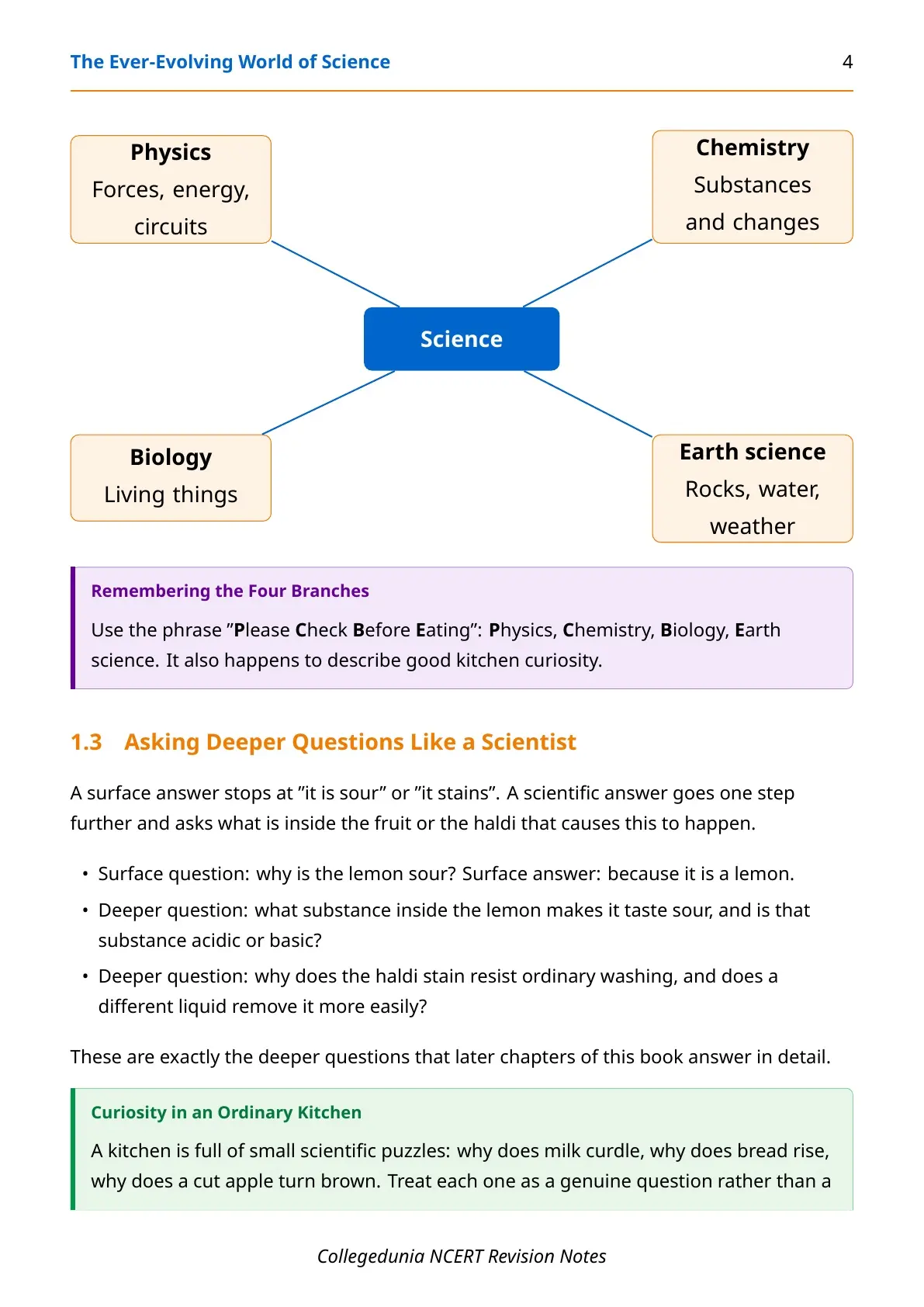
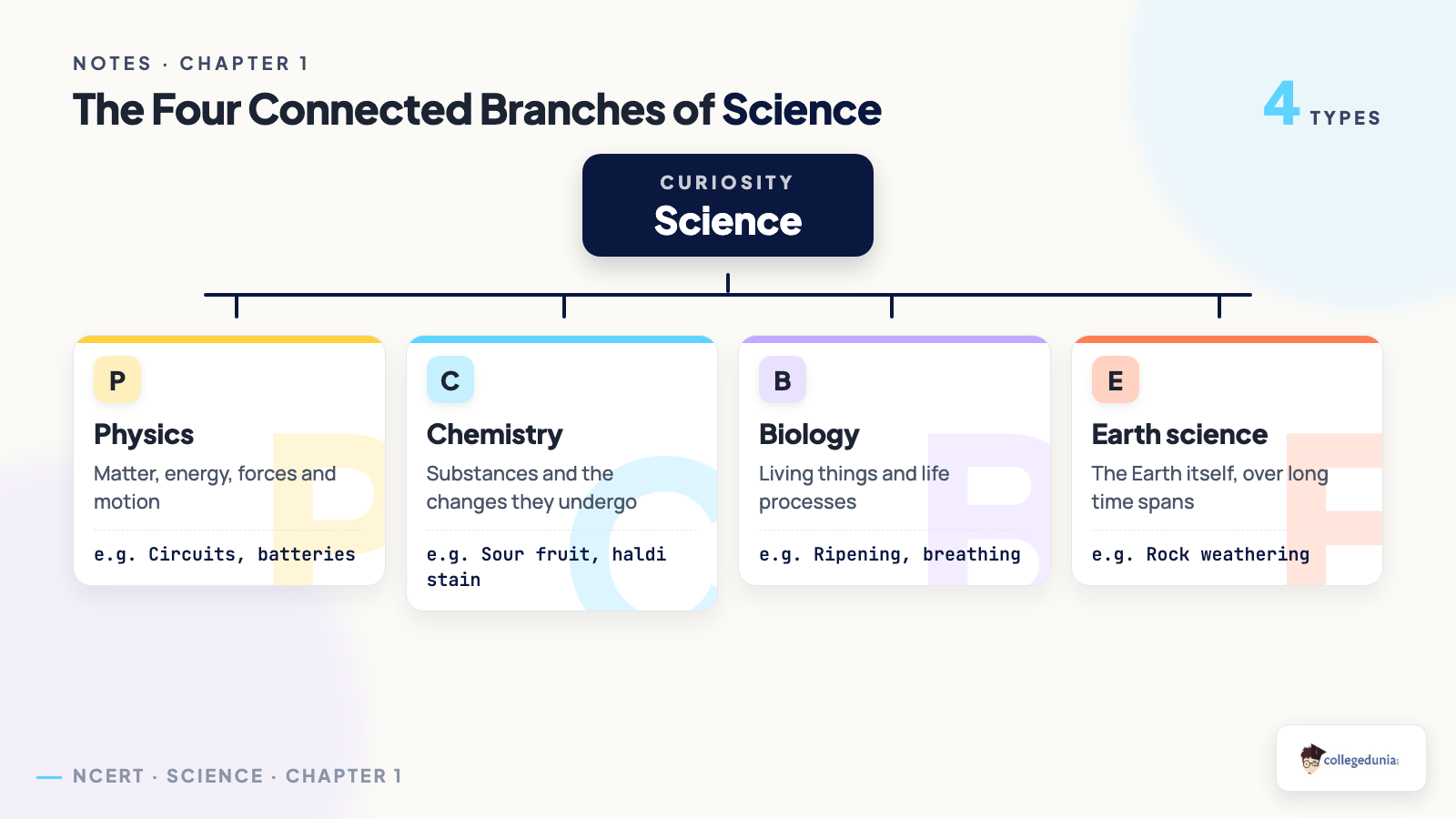
- Four connected branches divide the work: physics, chemistry, biology and earth science.
- A surface answer ("it is sour") is not enough; a scientific answer asks what substance causes it.
The Ever-Evolving World of Science Explained for Class 7
Source: Magnet Brains on YouTube
Materials, Circuits and the Changes Around Us
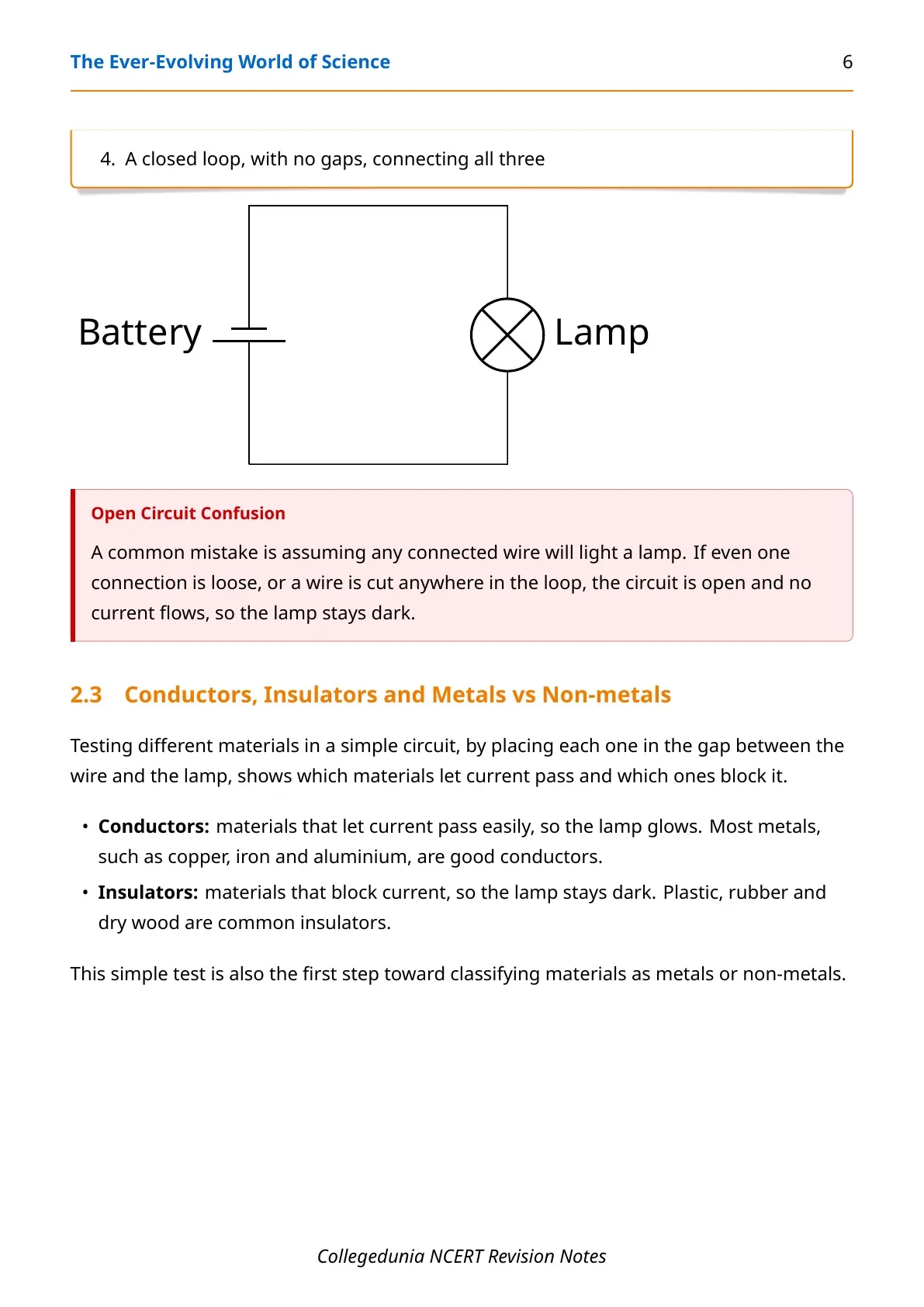
Every material has properties, the features that describe how it looks, feels and behaves, such as taste, colour or solubility. The chapter uses a simple lamp-and-battery circuit to test these properties directly.
| Test result | What it means | Example materials |
|---|---|---|
| Lamp glows | Material is a conductor; mostly metals | Copper, iron, aluminium |
| Lamp stays dark | Material is an insulator; mostly non-metals | Plastic, rubber, dry wood |
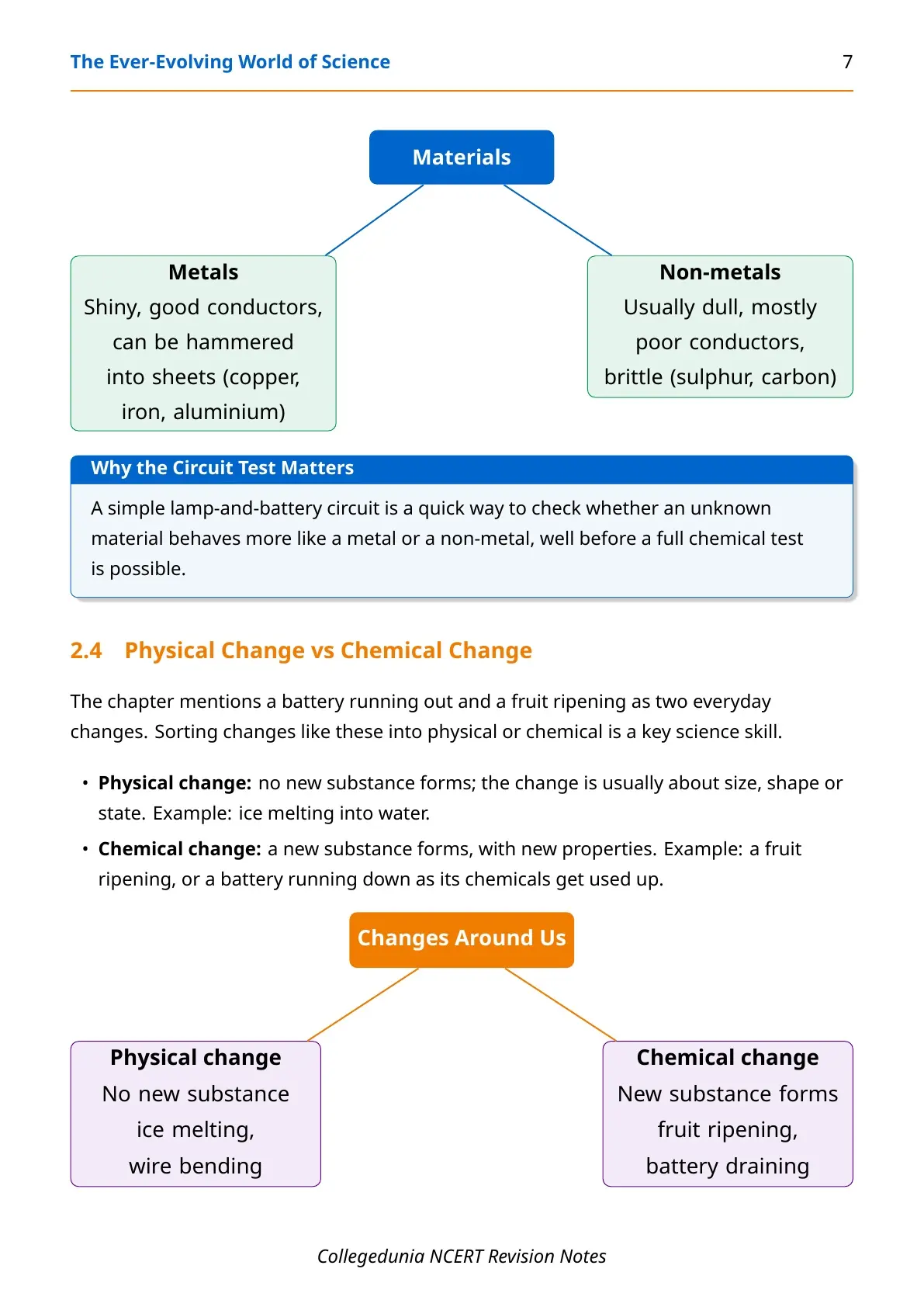
This same circuit test is also the first step toward telling metals apart from non-metals. Metals such as copper, iron and aluminium are shiny, good conductors, and can be hammered into thin sheets. Non-metals such as sulphur and carbon are usually dull, mostly poor conductors, and tend to be brittle.
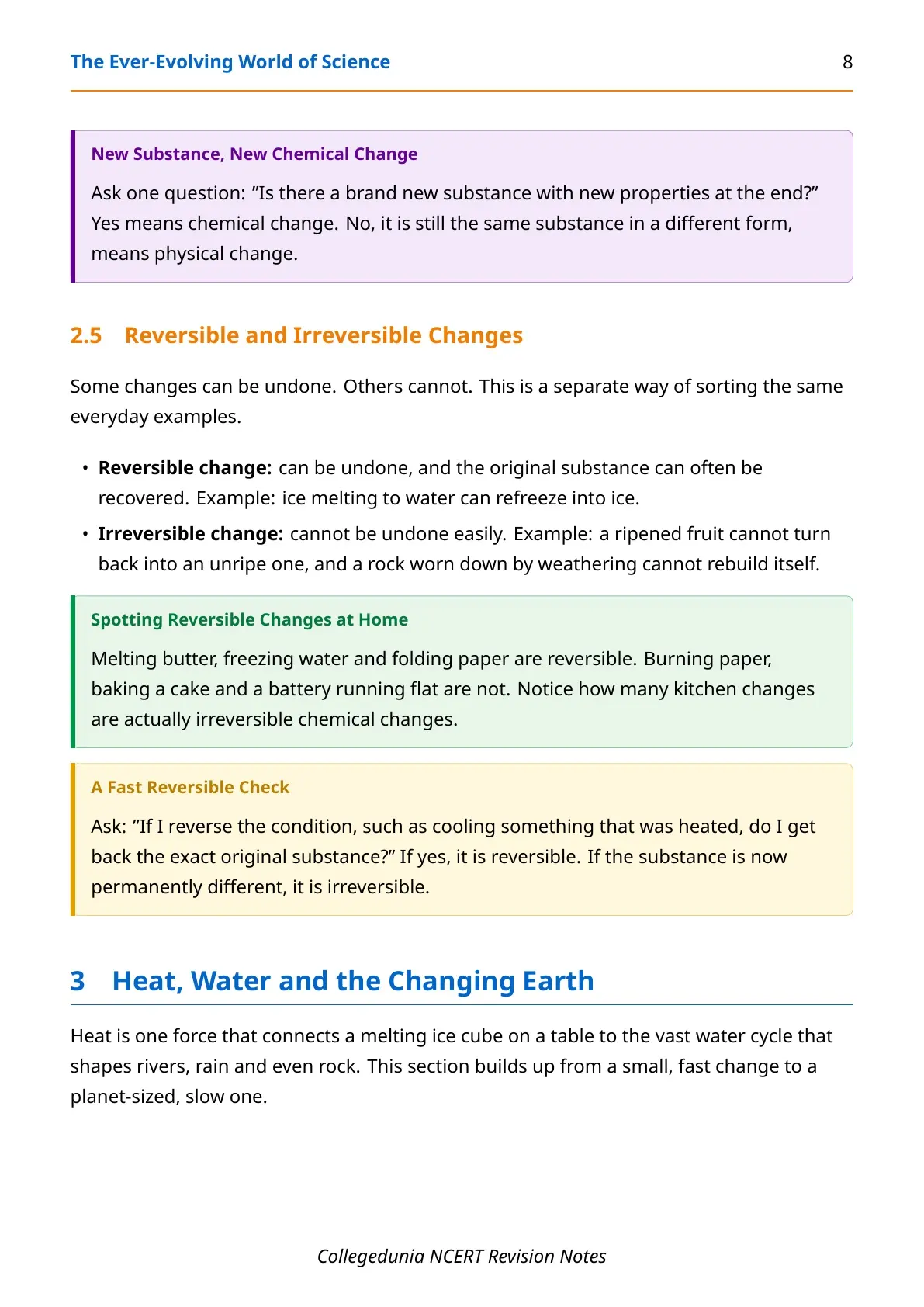
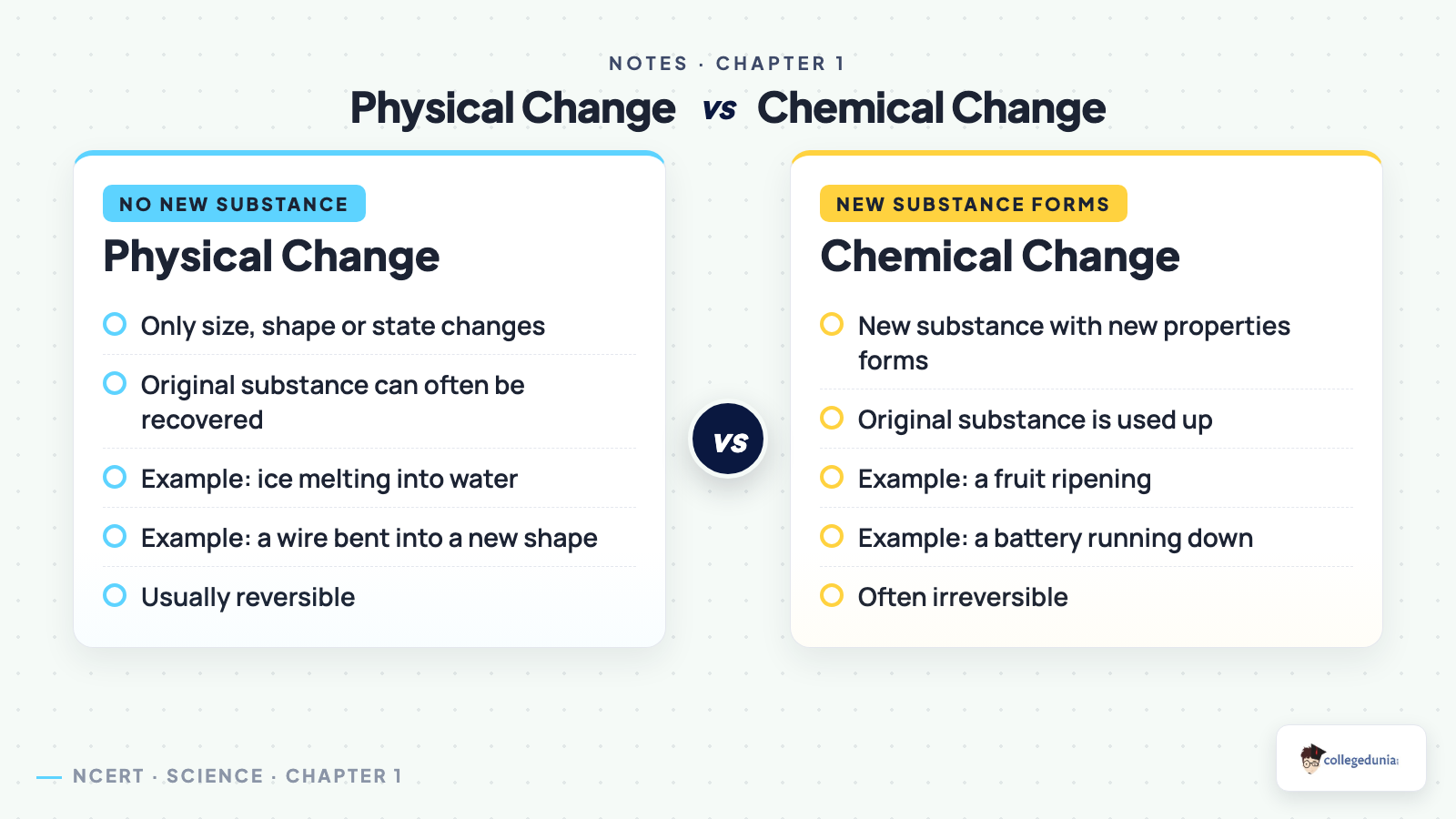
Sorting everyday changes is the other skill this section builds. A physical change like ice melting forms no new substance, while a chemical change like a fruit ripening or a battery running down creates one. A separate question, reversible or irreversible, sorts the same examples again: melted ice can refreeze, but a ripened fruit cannot turn back.
Heat, Water and the Slow-Changing Earth
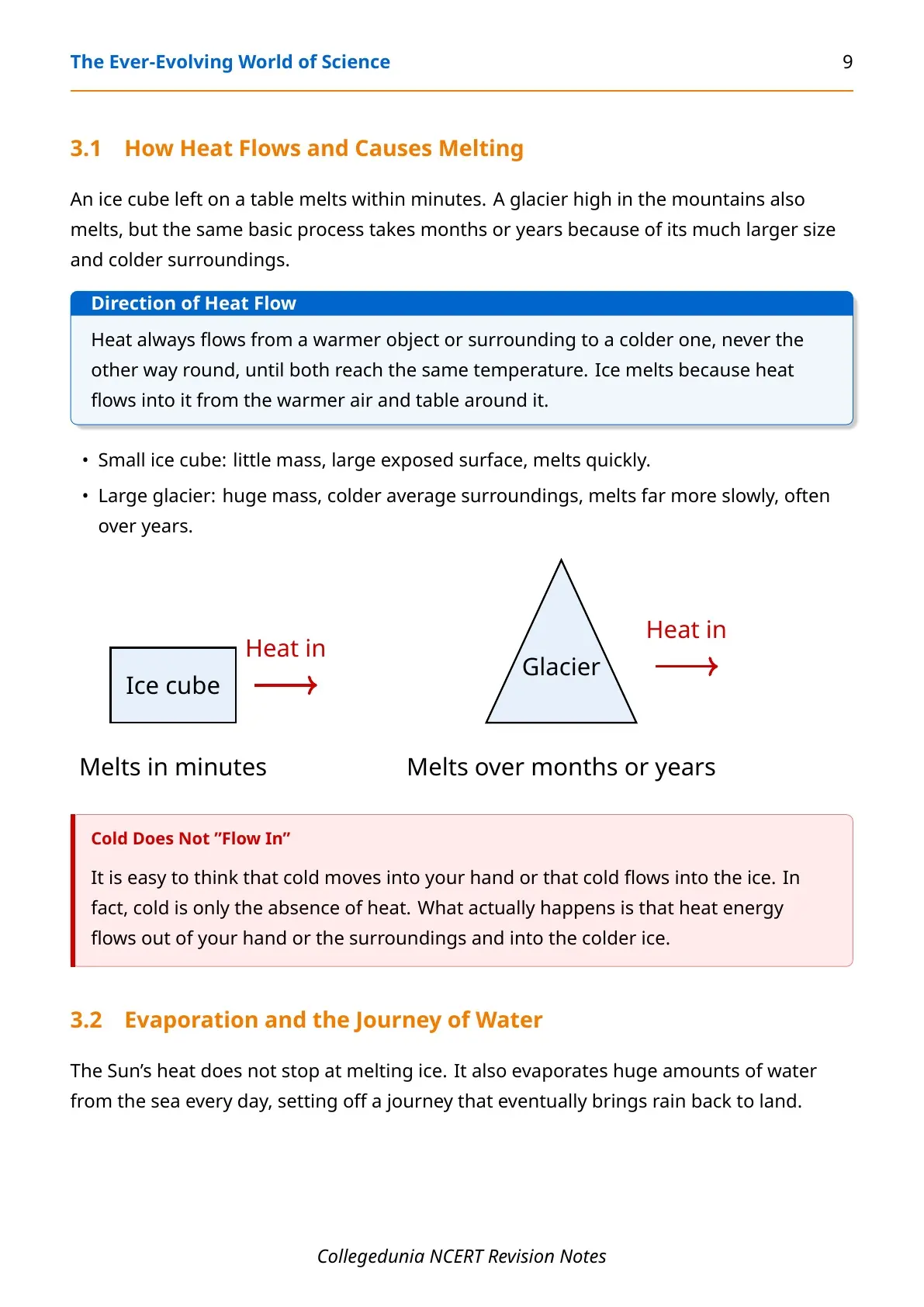
Heat always flows from a warmer object to a colder one, never the other way round. An ice cube on a table melts in minutes because of this flow, while a mountain glacier, being far larger and colder, can take months or years to melt the same way.
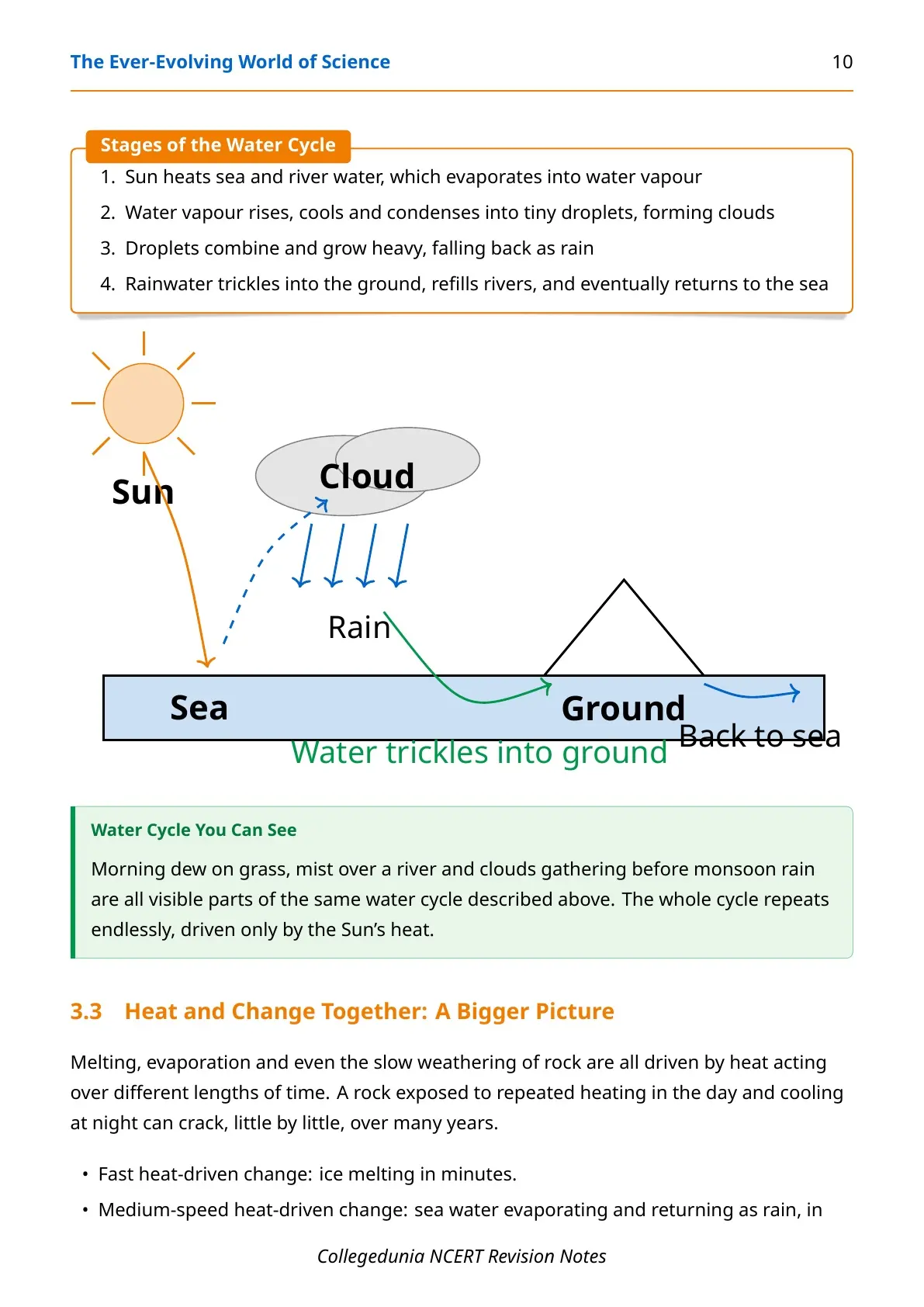
The Sun's heat also drives the water cycle: sea water evaporates, rises and cools into clouds, falls back as rain, and eventually returns to the sea through rivers and the ground. The same heat, acting over years instead of minutes, slowly weathers rock too.
- Fast: ice melting in minutes.
- Medium: sea water evaporating and returning as rain over a few days.
- Very slow: rock weathering over many years, which cannot be reversed.
Life Processes and Measuring Time
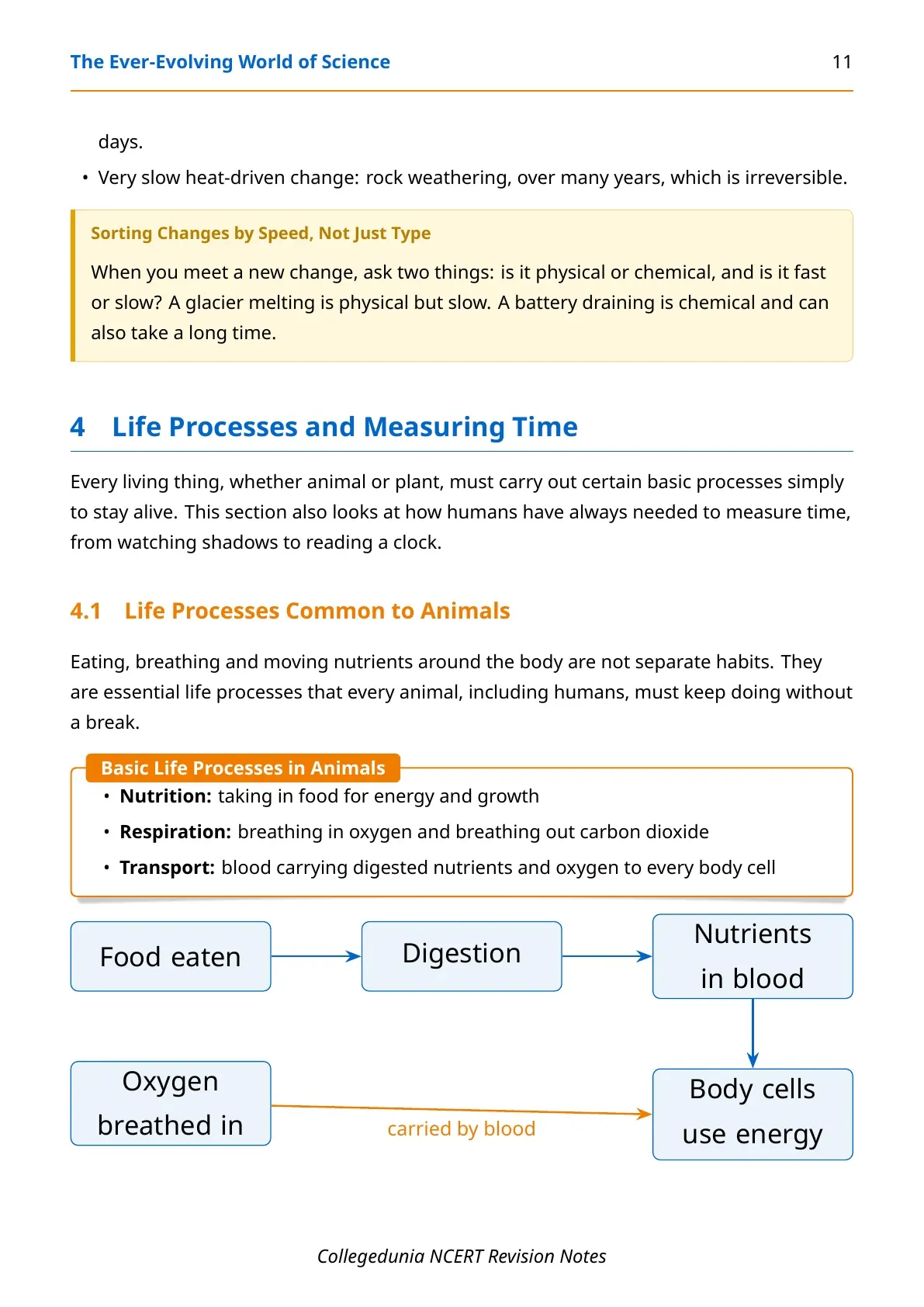
Every animal, including humans, keeps three life processes running without a break: nutrition (taking in food), respiration (breathing oxygen in, carbon dioxide out) and transport (blood carrying nutrients and oxygen to every cell). Plants carry out the same two processes in their own way, making food using sunlight and respiring at all times, day and night.
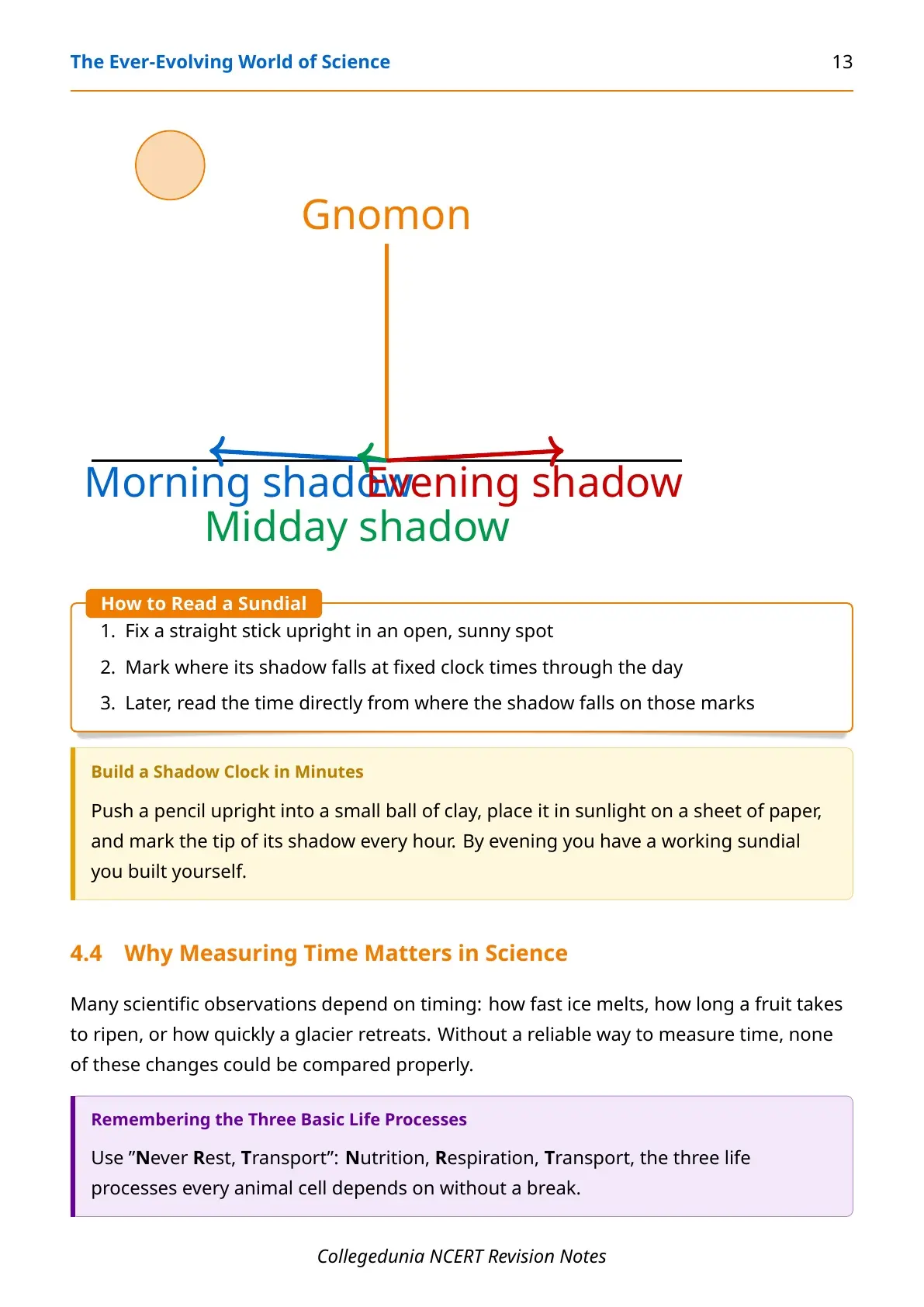
Long before clocks existed, people measured time using a sundial. A fixed upright stick, called a gnomon, casts a shadow that changes length and direction through the day. Marking those shadow positions gives a working clock built from nothing more than a stick and sunlight.
Light, Shadows, Eclipses and Earth's Motion
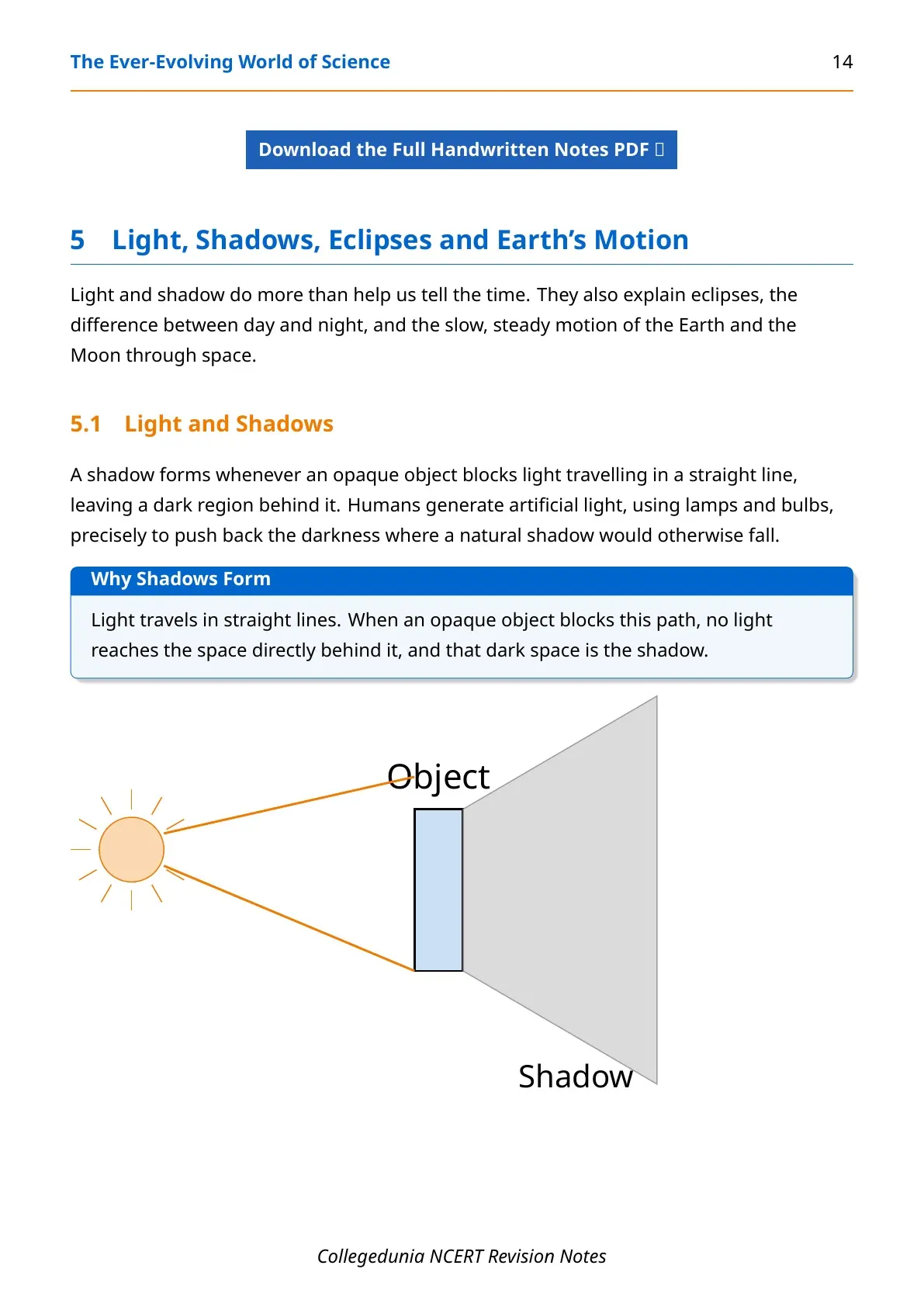
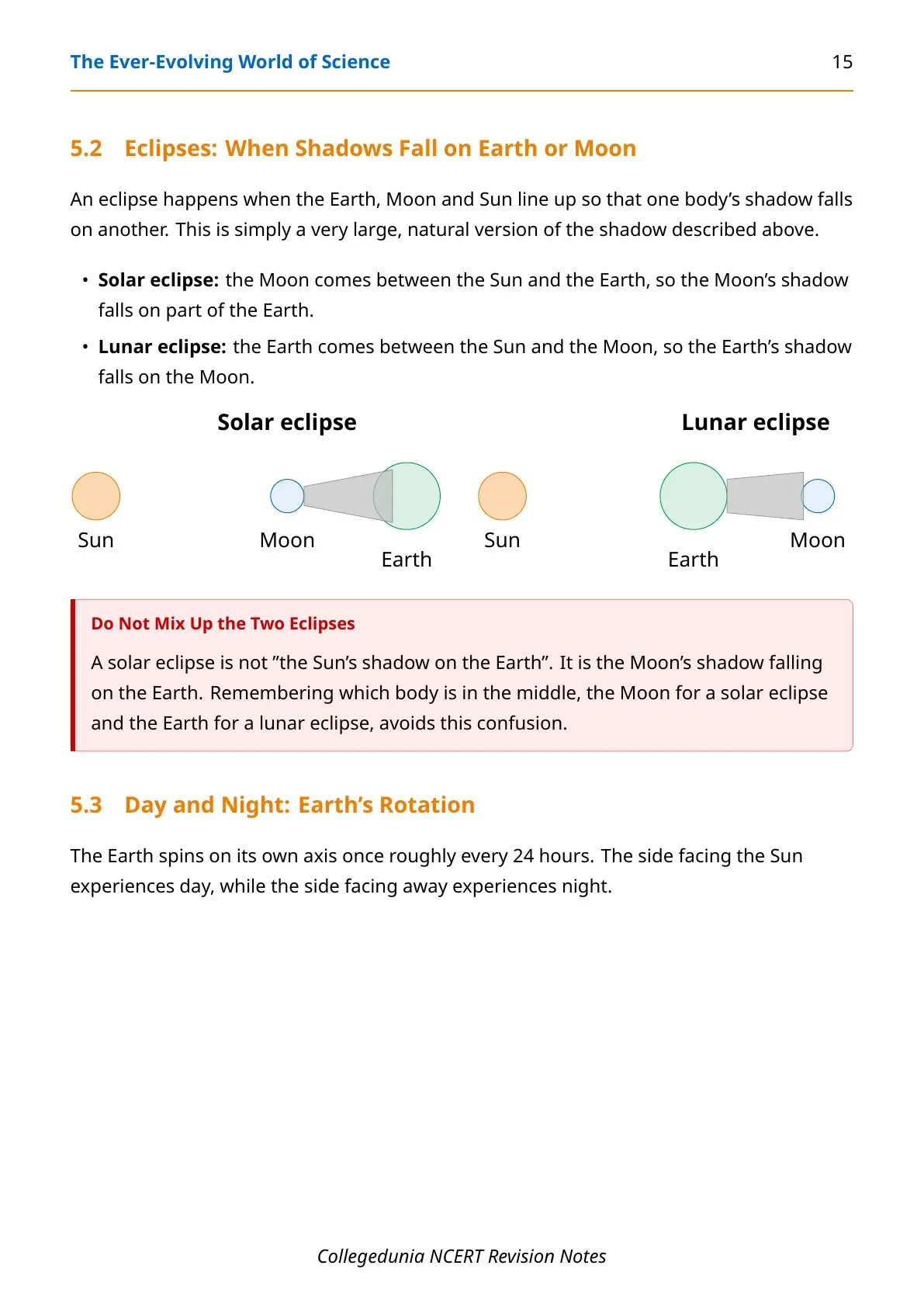
A shadow forms whenever an opaque object blocks light travelling in a straight line. The same idea, at a planetary scale, explains an eclipse. A solar eclipse happens when the Moon's shadow falls on the Earth, and a lunar eclipse happens when the Earth's shadow falls on the Moon.
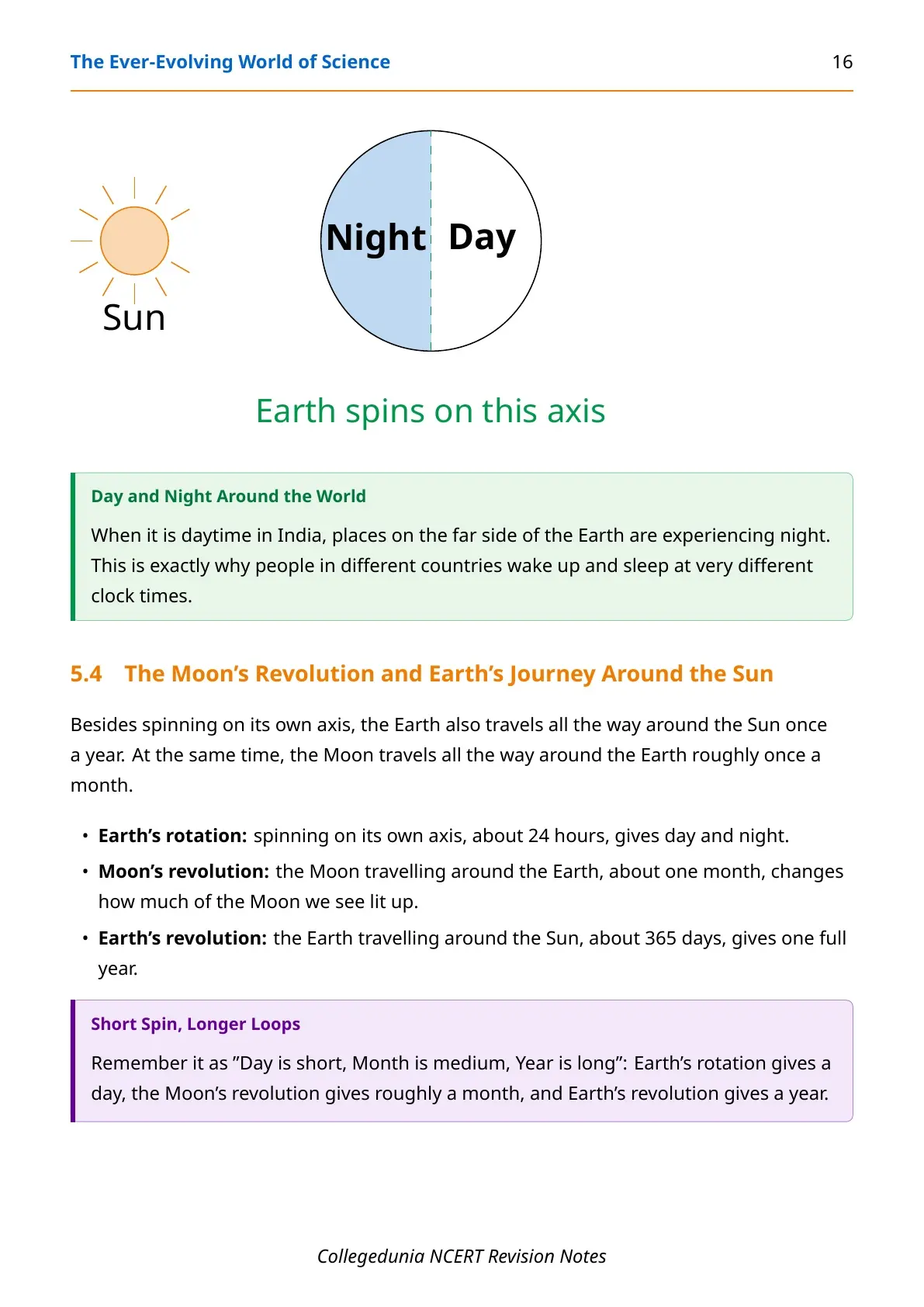
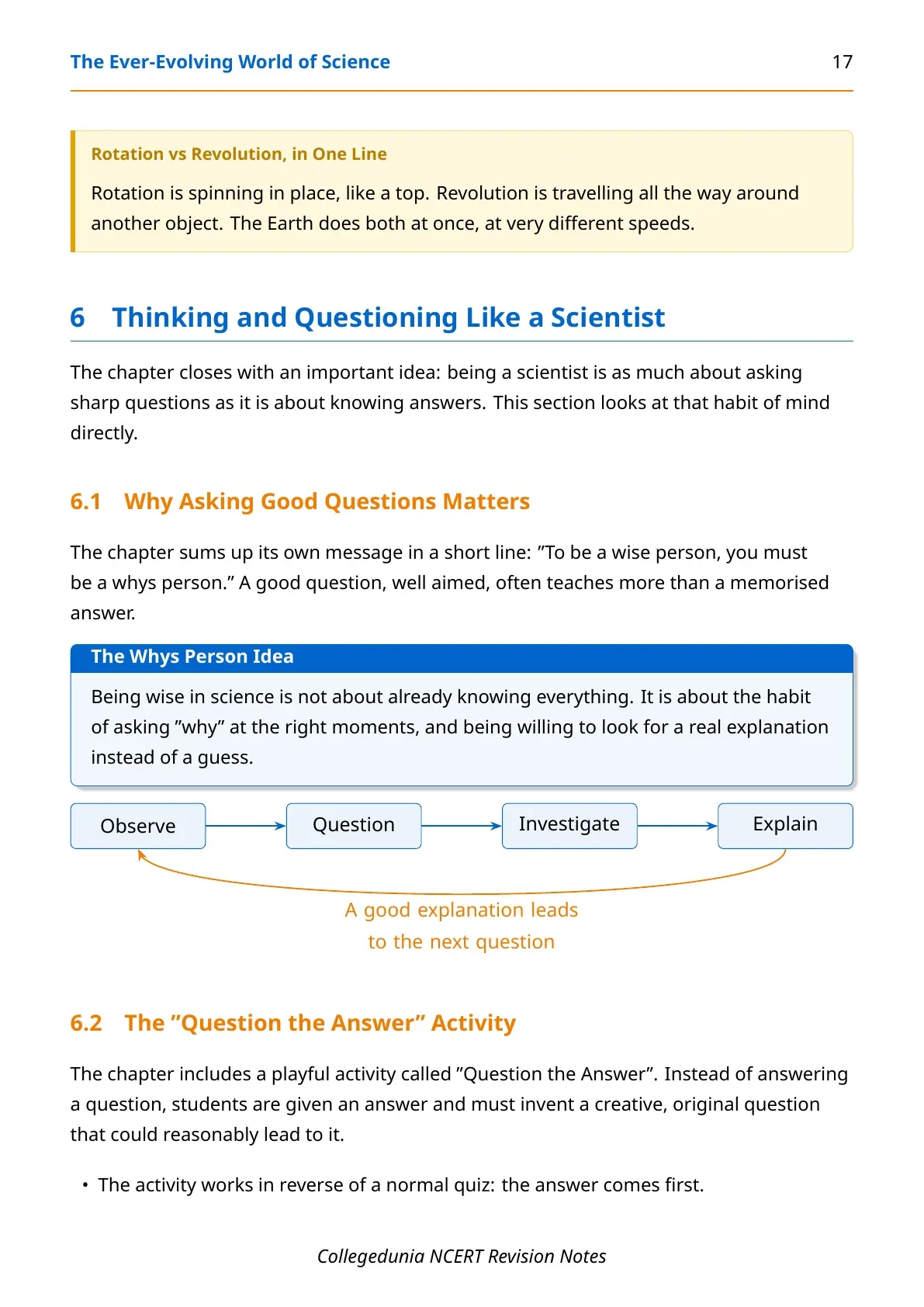
- Earth's rotation (about 24 hours), spinning on its axis, gives day and night.
- Moon's revolution (about one month) around the Earth changes how much of it we see lit up.
- Earth's revolution (about 365 days) around the Sun gives one full year.
Thinking and Questioning Like a Scientist
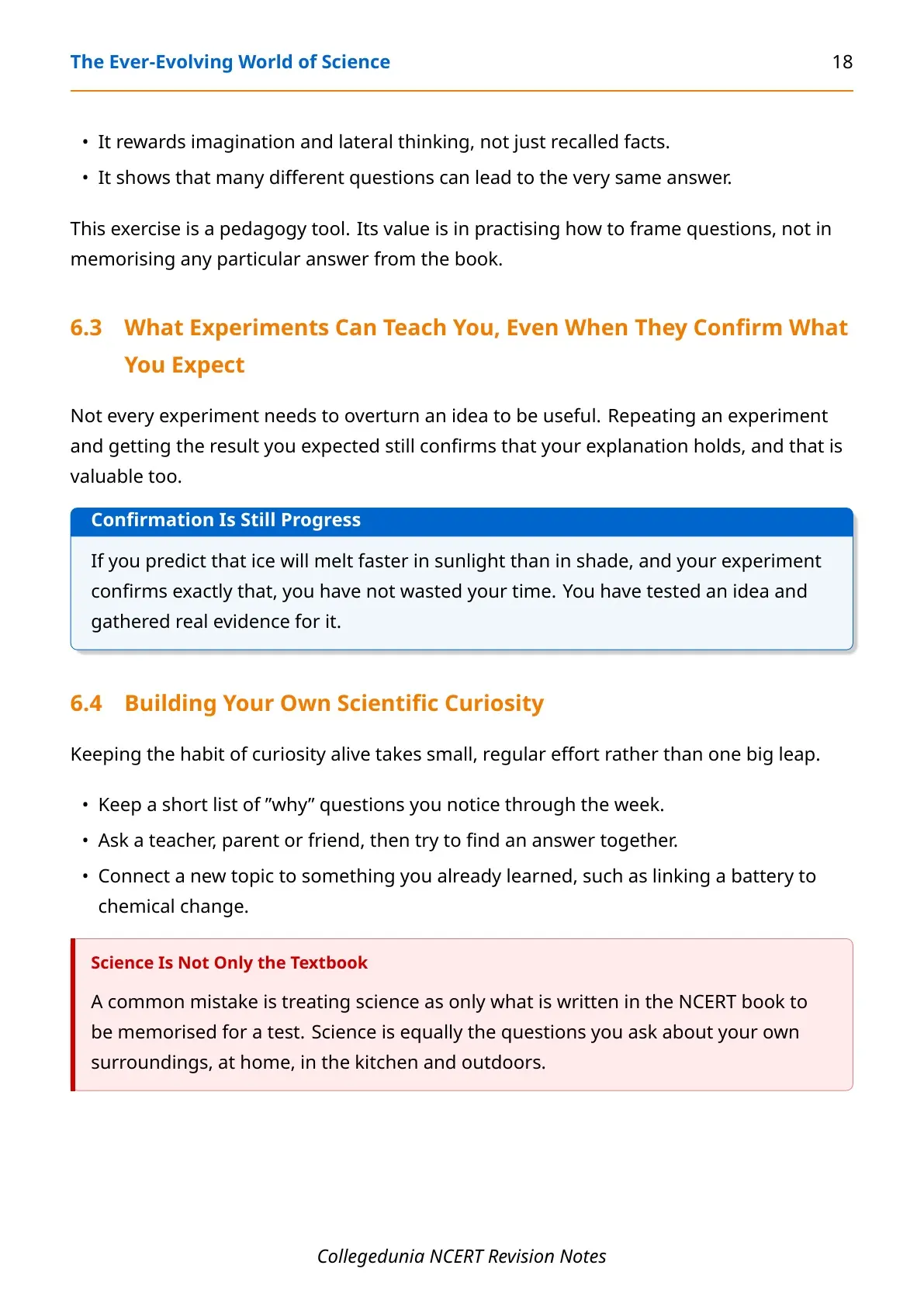
The chapter closes with its own message: "To be a wise person, you must be a whys person." Being good at science is less about knowing every answer and more about asking a sharp question at the right moment, then testing it instead of guessing.
- An experiment that confirms what you expected is still useful, not wasted effort.
- The "Question the Answer" activity flips a normal quiz: the answer comes first, and you invent the question.
- Science is equally the questions you ask in your own kitchen, not only what is written in the textbook.
How to Use This Notes Page Most Effectively
A short, three-step routine works better than reading the whole chapter in one sitting.
- Read the four branches first: fix physics, chemistry, biology and earth science in your head before moving to the examples.
- Sort each example twice: physical or chemical, then reversible or irreversible, using the same list of everyday changes.
- Build a shadow clock: the sundial activity takes minutes and makes the measuring-time section stick far better than reading alone.
Quick Recall: Big Ideas from The Ever-Evolving World of Science
These are the one-line ideas worth keeping on a single revision card before moving to Chapter 2.
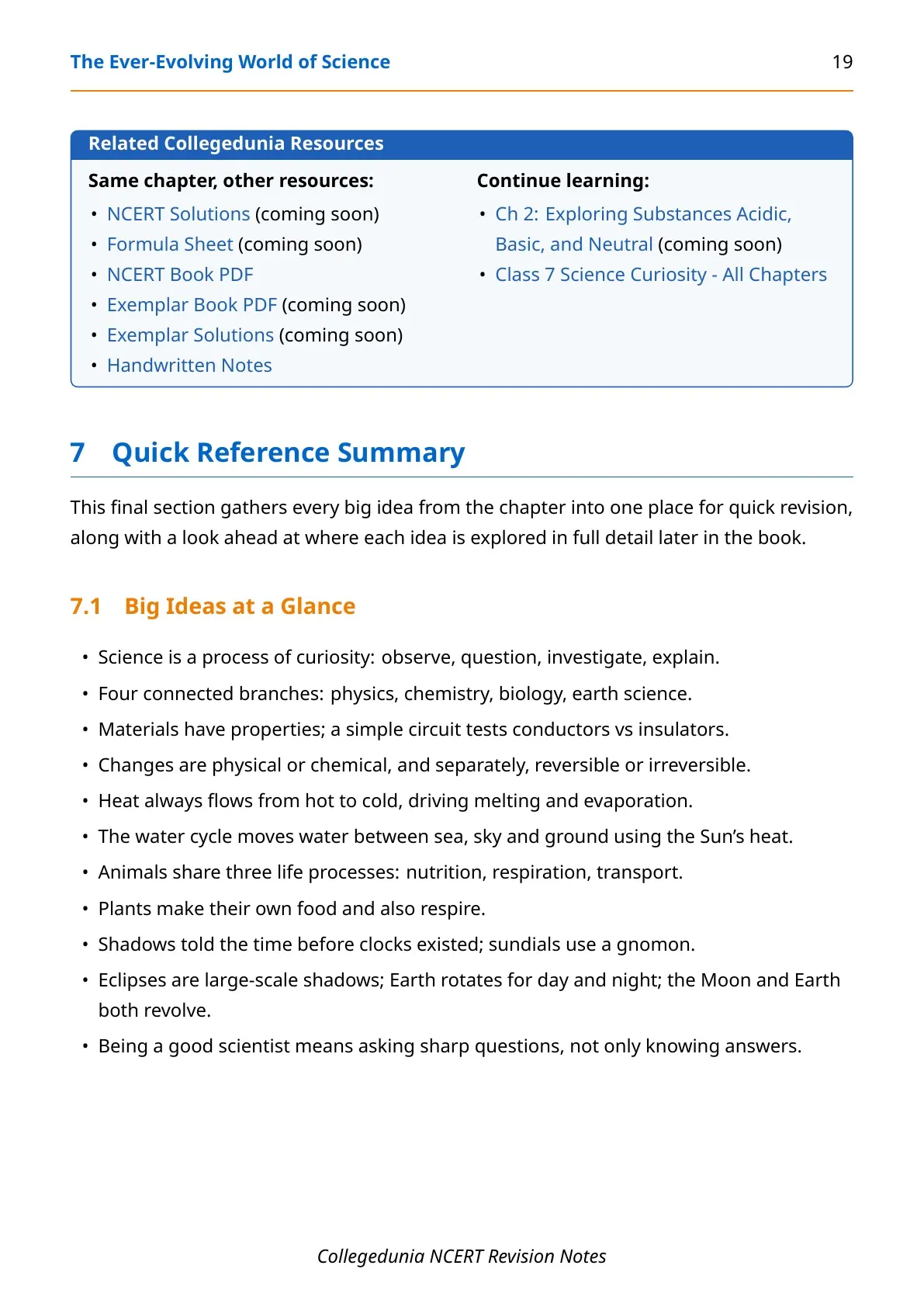
- Science is a process: observe, question, investigate, explain.
- Four branches: physics, chemistry, biology, earth science.
- Physical change forms no new substance; chemical change does.
- Heat always flows from hot to cold, driving melting, evaporation and the water cycle.
- Animals share nutrition, respiration and transport; plants add food-making from sunlight.
- Sundials used shadows to tell time before clocks existed.
- Solar eclipse: the Moon's shadow on the Earth. Lunar eclipse: the Earth's shadow on the Moon.
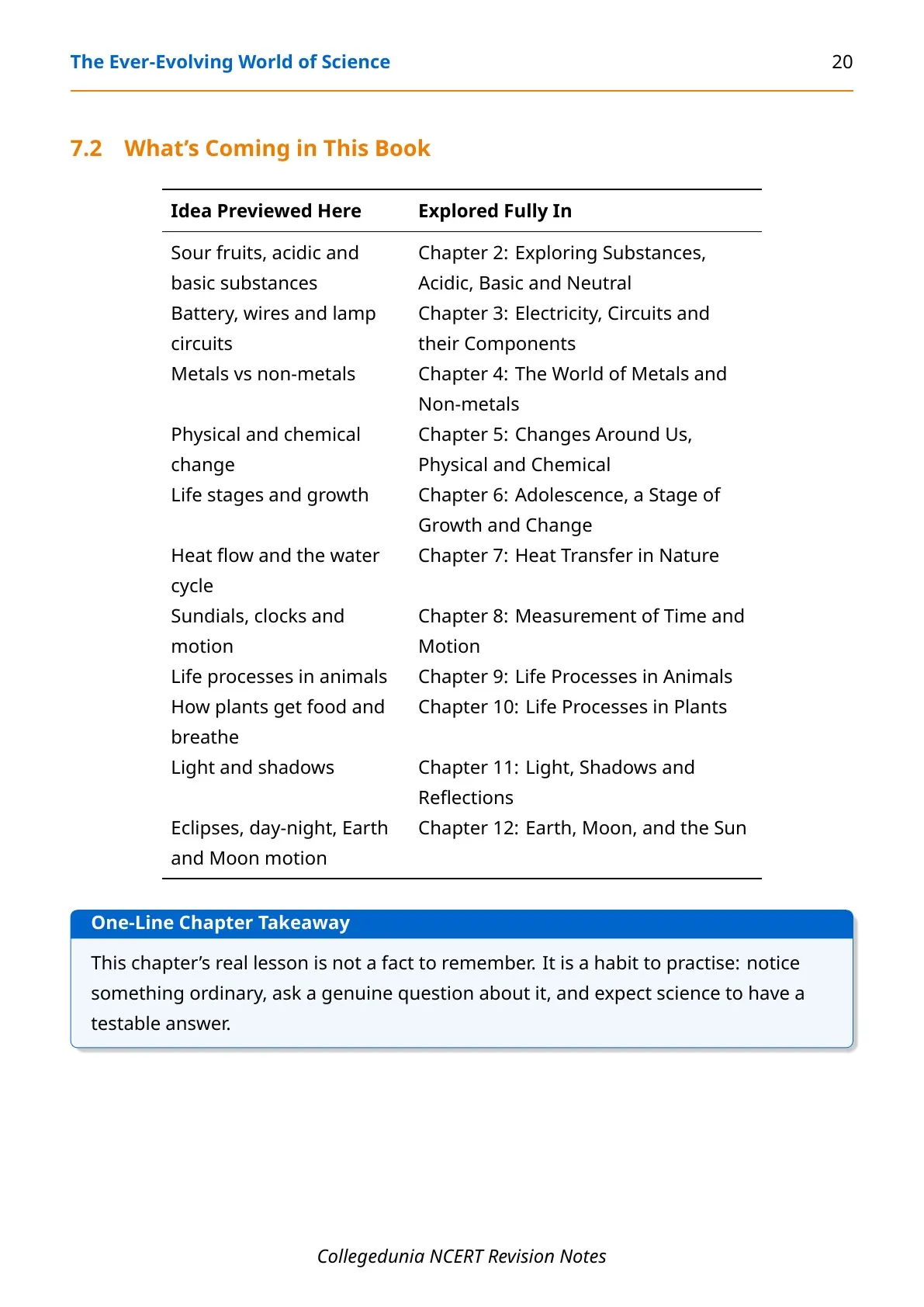
The rest of the Curiosity book explores each of these previewed ideas in full detail, chapter by chapter.
| Idea Previewed in Chapter 1 | Explored Fully In |
|---|---|
| Sour fruits, acidic and basic substances | Chapter 2: Exploring Substances, Acidic, Basic and Neutral |
| Battery, wires and lamp circuits | Chapter 3: Electricity, Circuits and their Components |
| Metals vs non-metals | Chapter 4: The World of Metals and Non-metals |
| Heat flow and the water cycle | Chapter 7: Heat Transfer in Nature |
| Eclipses, day-night, Earth and Moon motion | Chapter 12: Earth, Moon, and the Sun |
NCERT Resources for The Ever-Evolving World of Science Class 7
The Ever-Evolving World of Science is also available in other formats on Collegedunia.
| Resource | Status |
|---|---|
| The Ever-Evolving World of Science Class 7 Notes | Live (this page) |
| The Ever-Evolving World of Science Class 7 NCERT Book PDF | Live |
| The Ever-Evolving World of Science Class 7 Handwritten Notes | Live |
| The Ever-Evolving World of Science Class 7 NCERT Solutions (coming soon) | - |
Class 7 Science Curiosity Chapter-wise Notes
The Notes for every chapter of the 2026-27 Class 7 Science Curiosity textbook are listed below.
| Chapter | Notes Status |
|---|---|
| Chapter 1: The Ever-Evolving World of Science | Live (this page) |
| Chapter 2: Exploring Substances, Acidic, Basic and Neutral (coming soon) | - |
| Chapter 3: Electricity, Circuits and their Components (coming soon) | - |
| Chapter 4: The World of Metals and Non-metals (coming soon) | - |
| Chapter 5: Changes Around Us, Physical and Chemical (coming soon) | - |
| Chapter 6: Adolescence, a Stage of Growth and Change (coming soon) | - |
| Chapter 7: Heat Transfer in Nature (coming soon) | - |
| Chapter 8: Measurement of Time and Motion (coming soon) | - |
| Chapter 9: Life Processes in Animals (coming soon) | - |
| Chapter 10: Life Processes in Plants (coming soon) | - |
| Chapter 11: Light, Shadows and Reflections (coming soon) | - |
| Chapter 12: Earth, Moon, and the Sun (coming soon) | - |
The Ever-Evolving World of Science Class 7 Science Notes FAQs
Ques. Where can I download The Ever-Evolving World of Science Class 7 Science Notes PDF?
Ans. You can download The Ever-Evolving World of Science Class 7 Science Notes PDF directly from this page, free of cost and without any login.
Ques. Is this Class 7 Science Chapter 1 Notes PDF aligned with the 2026-27 NCERT?
Ans. Yes. This page reflects the current 2026-27 syllabus for Class 7 Science, and matches the Curiosity textbook chapter numbering.
Ques. How many pages is the Class 7 Science Chapter 1 Notes PDF?
Ans. The Notes PDF runs 20 pages and covers the four branches of science, material properties, circuits, physical and chemical change, heat and the water cycle, life processes, measuring time, light, shadows, eclipses and Earth's motion.
Ques. What is science according to this chapter?
Ans. Science is described as a process, not a list of facts. It starts with curiosity about something ordinary, moves to a genuine question, and looks for an explanation that can be tested.
Ques. What are the four branches of science mentioned in Chapter 1?
Ans. The four branches are physics (matter, energy, forces and motion), chemistry (substances and their changes), biology (living things) and earth science (the Earth itself, such as rocks and weathering).
Ques. How is a physical change different from a chemical change?
Ans. A physical change, such as ice melting, forms no new substance and is usually reversible. A chemical change, such as a fruit ripening, forms a new substance with new properties and is often irreversible.
Ques. What is an eclipse, and how are a solar and lunar eclipse different?
Ans. An eclipse happens when the Earth, Moon and Sun line up so that one body's shadow falls on another. In a solar eclipse, the Moon's shadow falls on the Earth. In a lunar eclipse, the Earth's shadow falls on the Moon.
Ques. What are the three life processes common to animals in this chapter?
Ans. The three life processes are nutrition (taking in food), respiration (breathing oxygen in and carbon dioxide out) and transport (blood carrying nutrients and oxygen to every cell).
Ques. How did people measure time before clocks were invented?
Ans. People used a sundial: a fixed upright stick called a gnomon casts a shadow that changes length and direction through the day, and marking these shadow positions gives a working clock.



Comments