



Class 7 Science Chapter 4, The World of Metals and Non-metals, is the chapter where students mix up malleability with ductility and blank on what actually causes rusting. The NCERT Notes below sort every property, reaction, and alloy fact from the 2026-27 Curiosity textbook into one quick-revision page.
- Covers lustre, malleability, ductility, sonority, conduction, rusting, and metal versus non-metal oxides.
- Includes the three-bottle rusting experiment, a reactivity order chart, and a common-mistakes list.
- Free PDF download, matched to the 2026-27 NCERT Curiosity textbook.
These Class 7 Science notes for The World of Metals and Non-metals are curated by subject experts and checked line by line against the 2026-27 NCERT Curiosity textbook.
What Makes a Material a Metal or a Non-metal
Iron gates, aluminium foil, copper wires, and gold ornaments sit in every home next to wood, chalk, plastic, and rubber. Some of these materials shine and feel strong. Others are dull, brittle, or soft. This chapter sorts them into two natural groups using simple tests, the same way an ironsmith or a jeweller judges material every day.
- Metals: iron, copper, aluminium, gold, silver, sodium, zinc, mercury.
- Non-metals: carbon (coal), sulfur, oxygen, hydrogen, nitrogen, phosphorus.
- Not classified as either: plastic, glass, wood, rubber, and paper. These are not elements, so they fall outside this grouping entirely.
An element is a substance that cannot be broken down into simpler substances by ordinary chemical methods. Metals and non-metals are both sub-categories of elements. About 118 elements are known today, some found in nature and some made in laboratories.
Tip: plastic, glass, wood, and rubber often get mistaken for non-metals in exams. They are not elements at all, so the metal/non-metal split never applies to them.
Metals and Non-metals Explained in One Shot for Class 7
Source: PW Little Champs on YouTube
Malleability, Ductility and Sonority: The Three Physical Tests
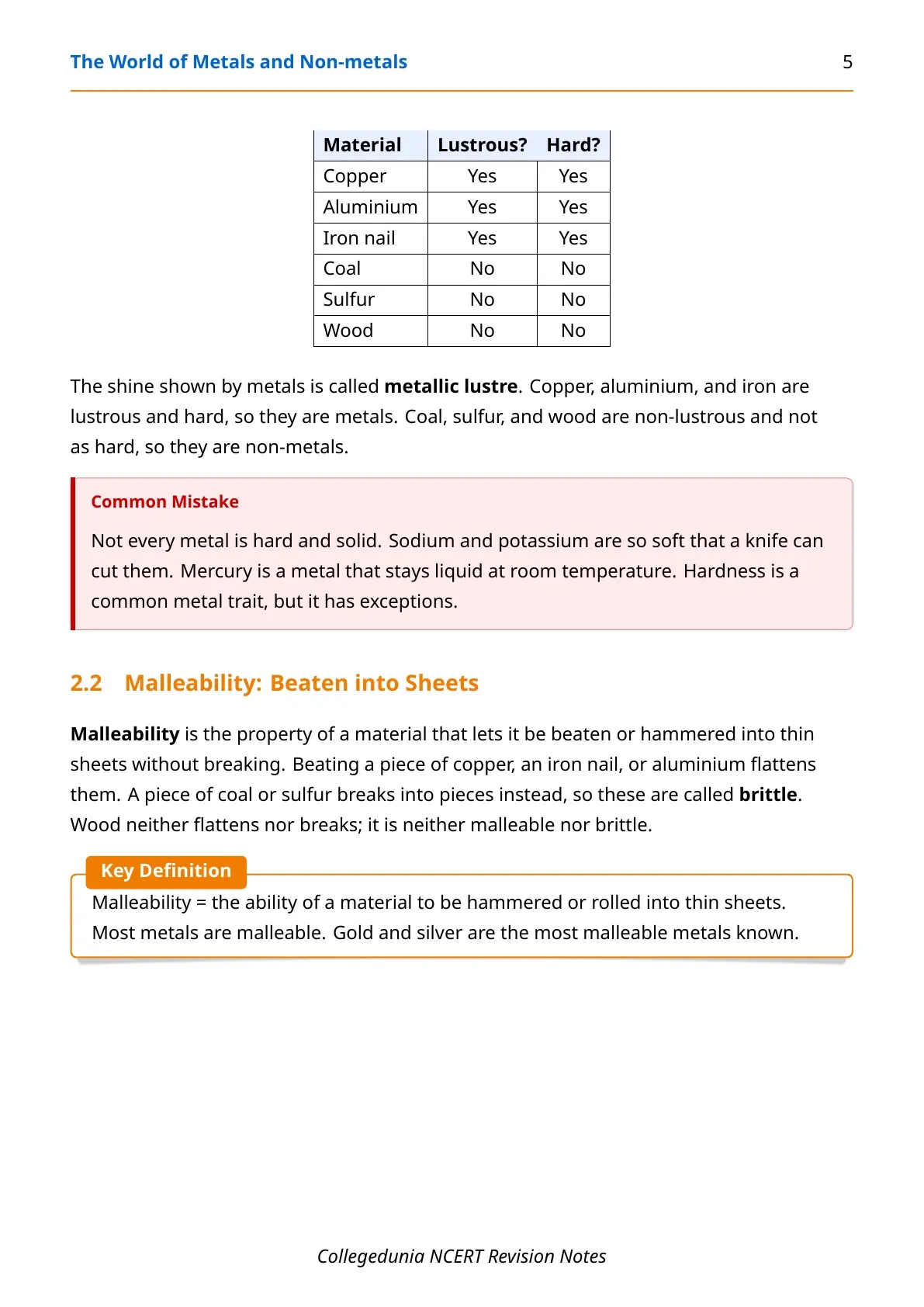
Beating a piece of copper, iron, or aluminium flattens it into a sheet. A piece of coal or sulfur just breaks. This one difference is the fastest way to sort a metal from a non-metal without any equipment.
| Property | What It Means | Shown By |
|---|---|---|
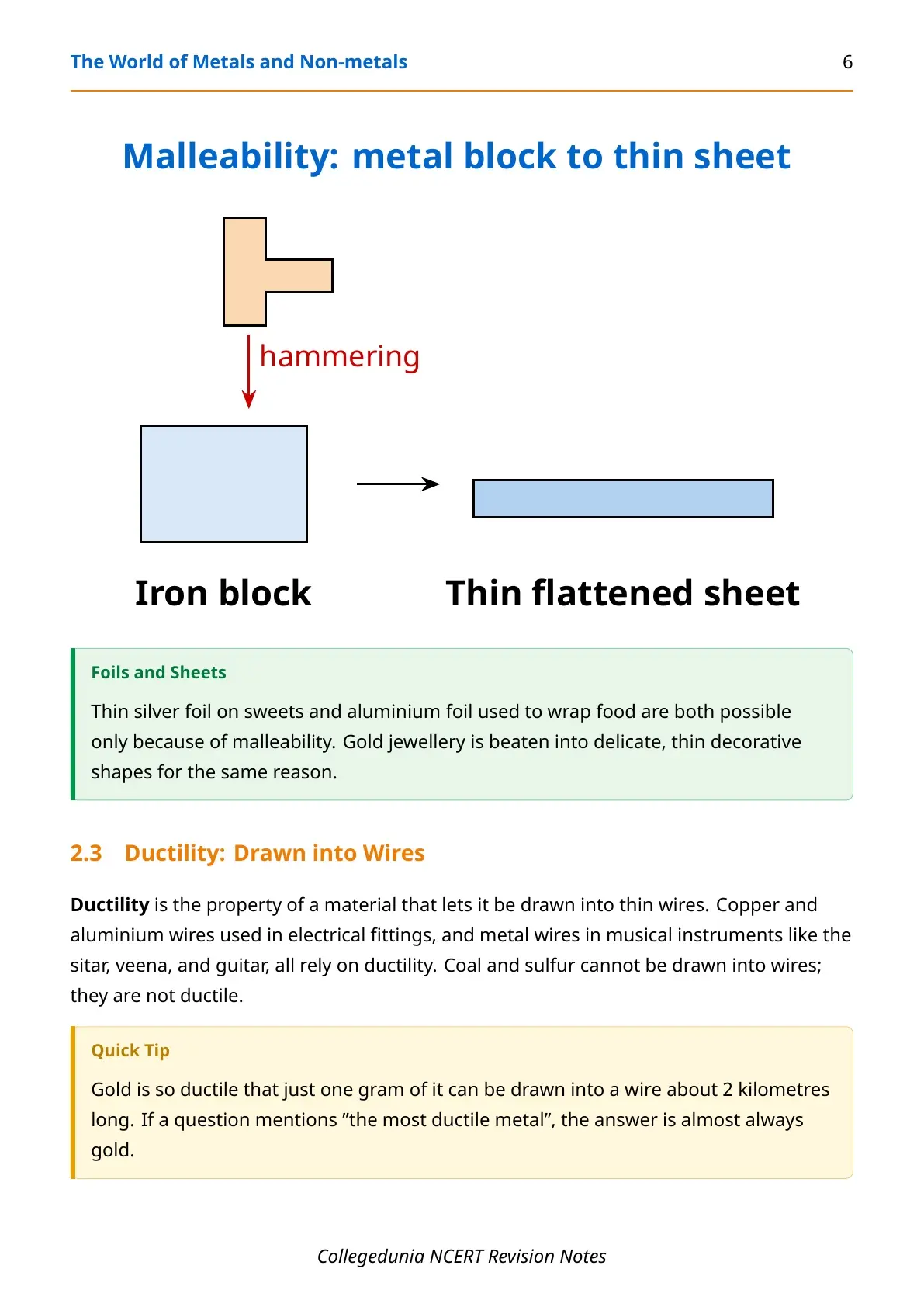
| Malleability | Can be hammered or rolled into thin sheets | Gold and silver are the most malleable metals known |
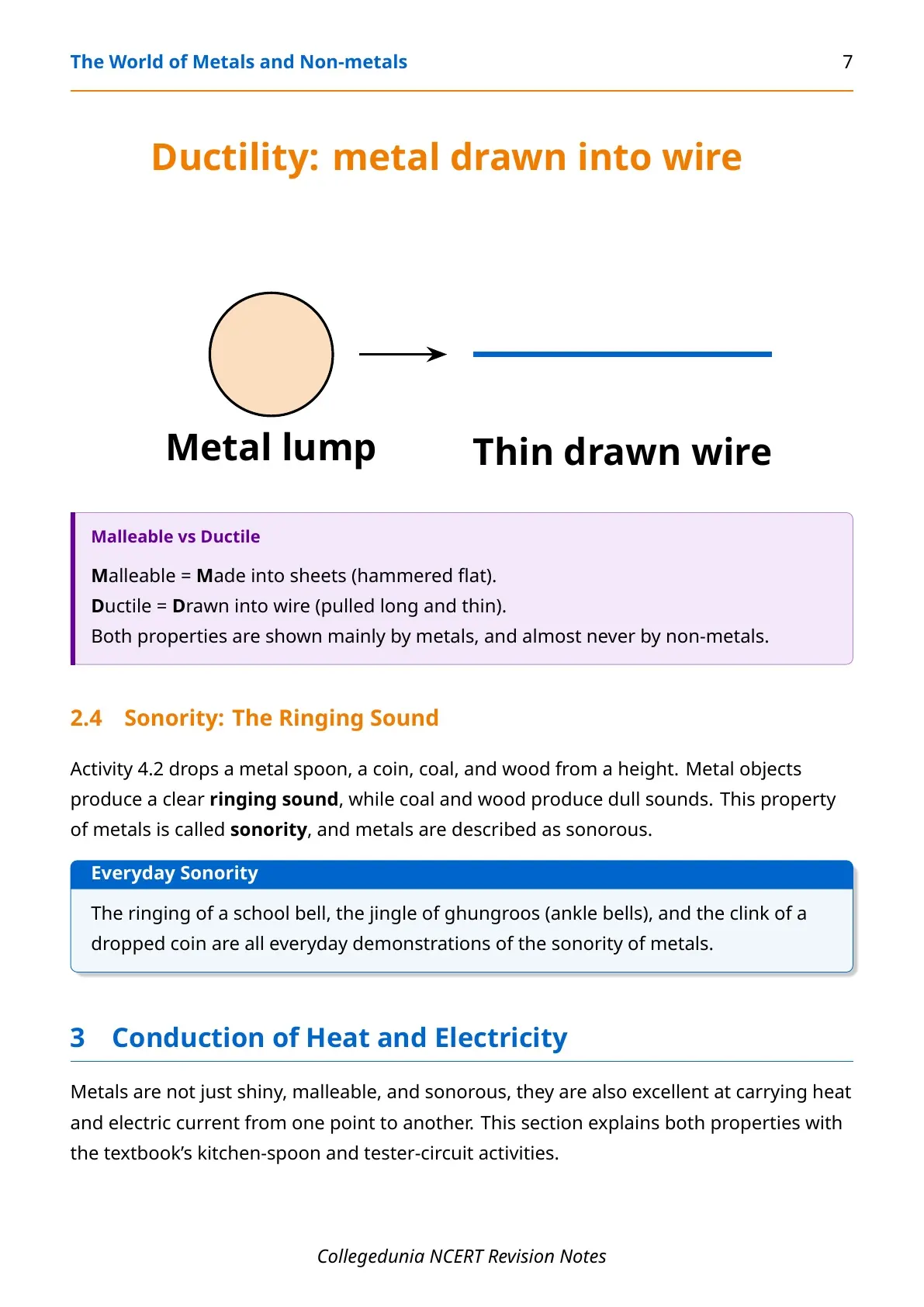
| Ductility | Can be drawn into thin wires | 1 gram of gold can be drawn into a wire about 2 km long |
| Sonority | Produces a ringing sound when struck or dropped | A school bell or a dropped coin |
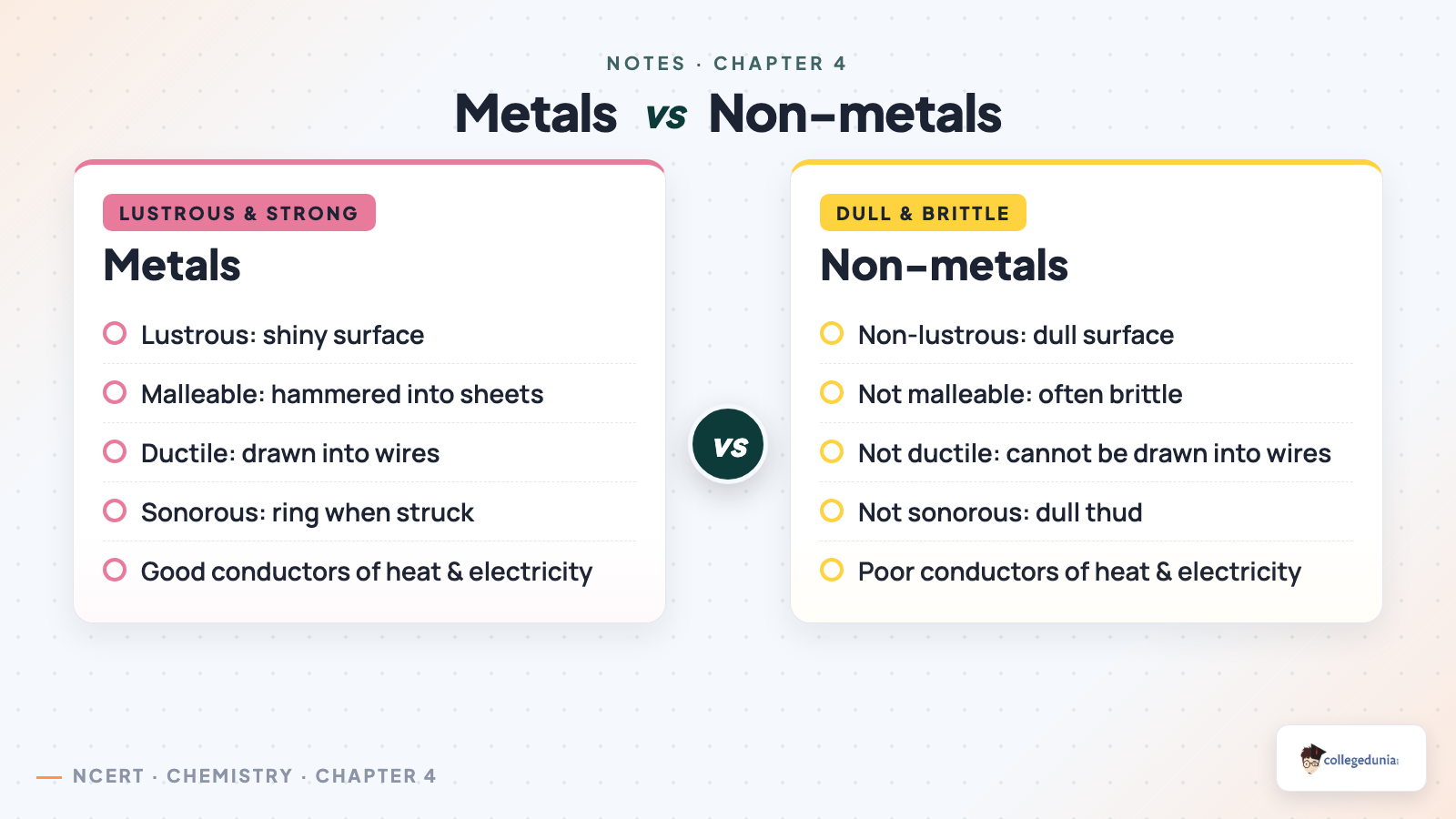
Not every metal fits the mould exactly. Sodium and potassium are soft enough to cut with a knife, and mercury stays liquid at room temperature. Wood, tested the same way, neither flattens nor breaks cleanly, so it counts as neither malleable nor brittle in the usual sense.
Why Metals Conduct Heat and Electricity Better Than Non-metals
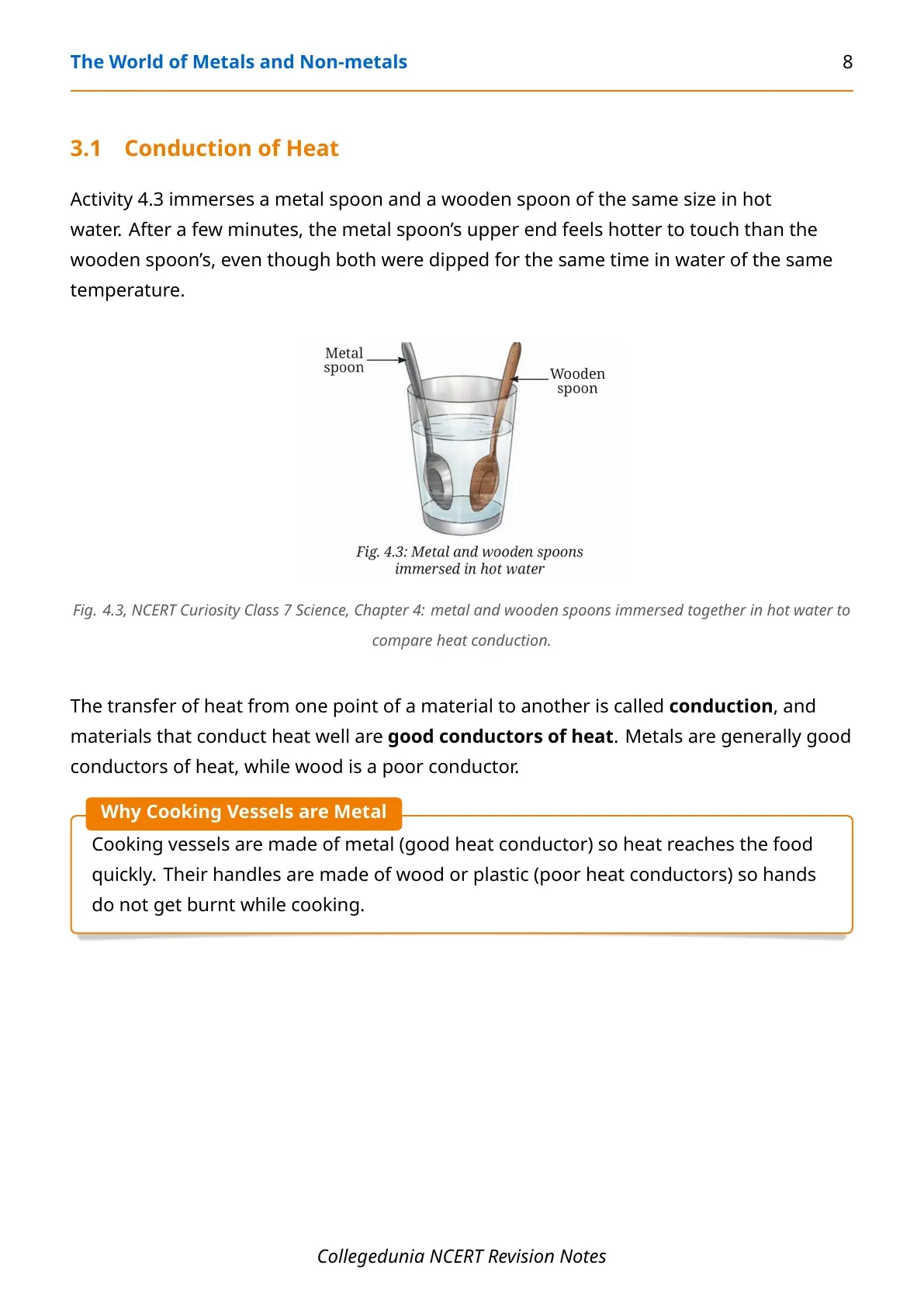
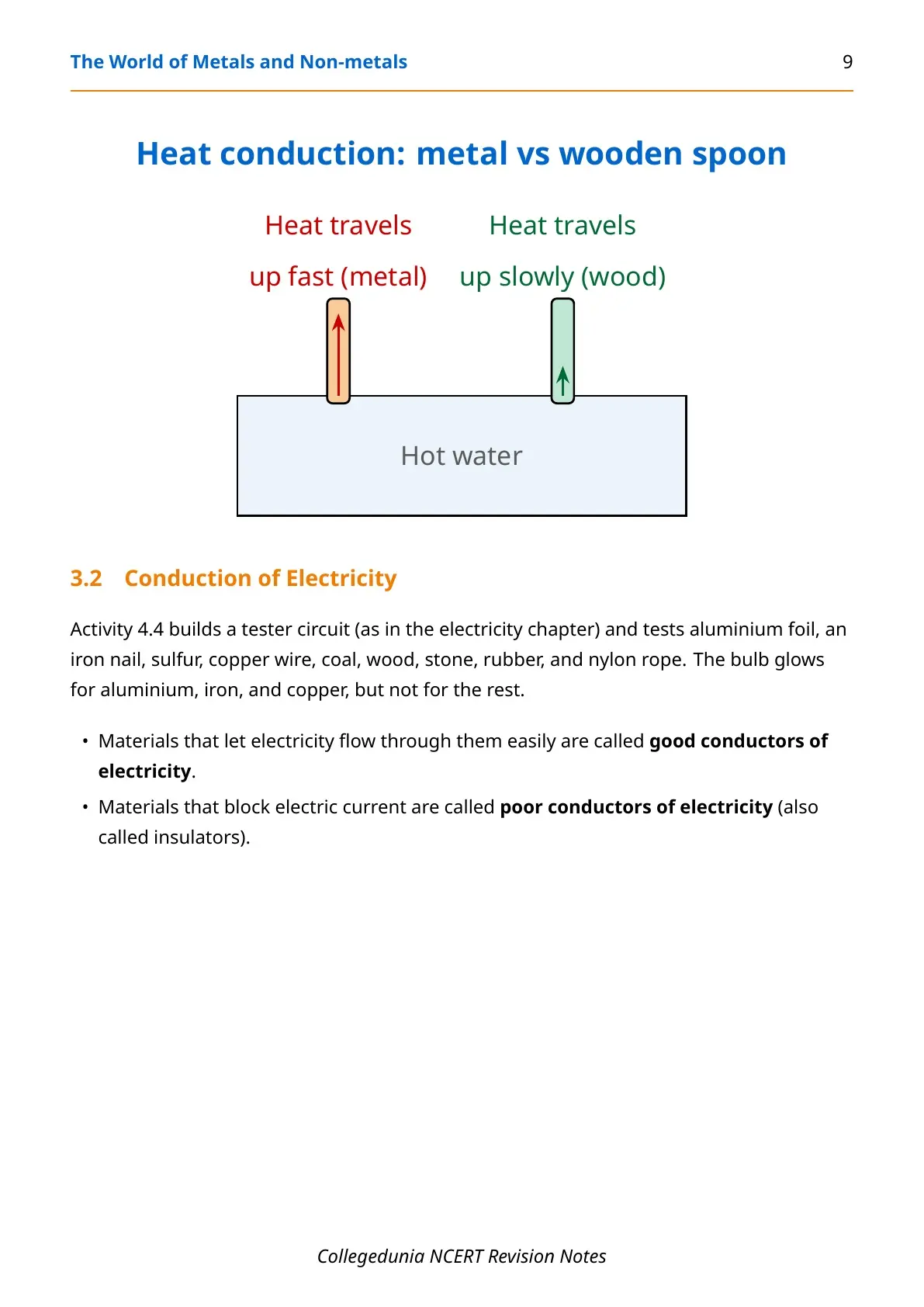
Dip a metal spoon and a wooden spoon together in hot water. After a few minutes, the metal spoon's top feels noticeably hotter. This transfer of heat through a material is called conduction, and metals are generally good conductors of both heat and electricity.
- Cooking vessels are metal (good heat conductor) so food heats quickly; handles are wood or plastic (poor conductors) so hands stay safe.
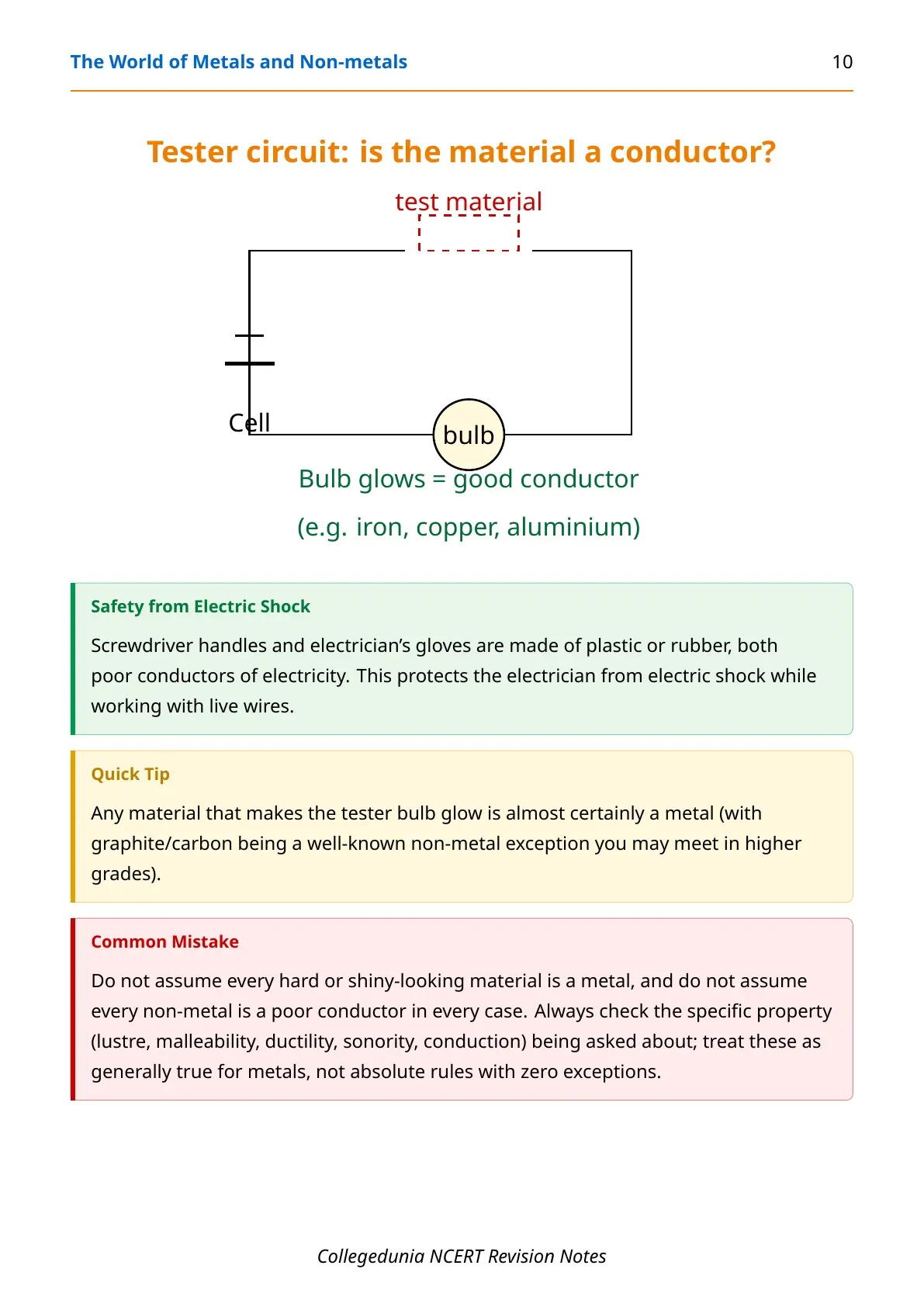
- A tester circuit with a bulb glows for aluminium, iron, and copper, but not for sulfur, wood, or rubber.
- Screwdriver handles and electrician's gloves use plastic or rubber, poor conductors that guard against electric shock.
Also Check: graphite (a form of carbon) is a well-known non-metal exception that does conduct electricity, a fact worth remembering for trickier exam questions.
The Three-Bottle Experiment: What Really Causes Rusting
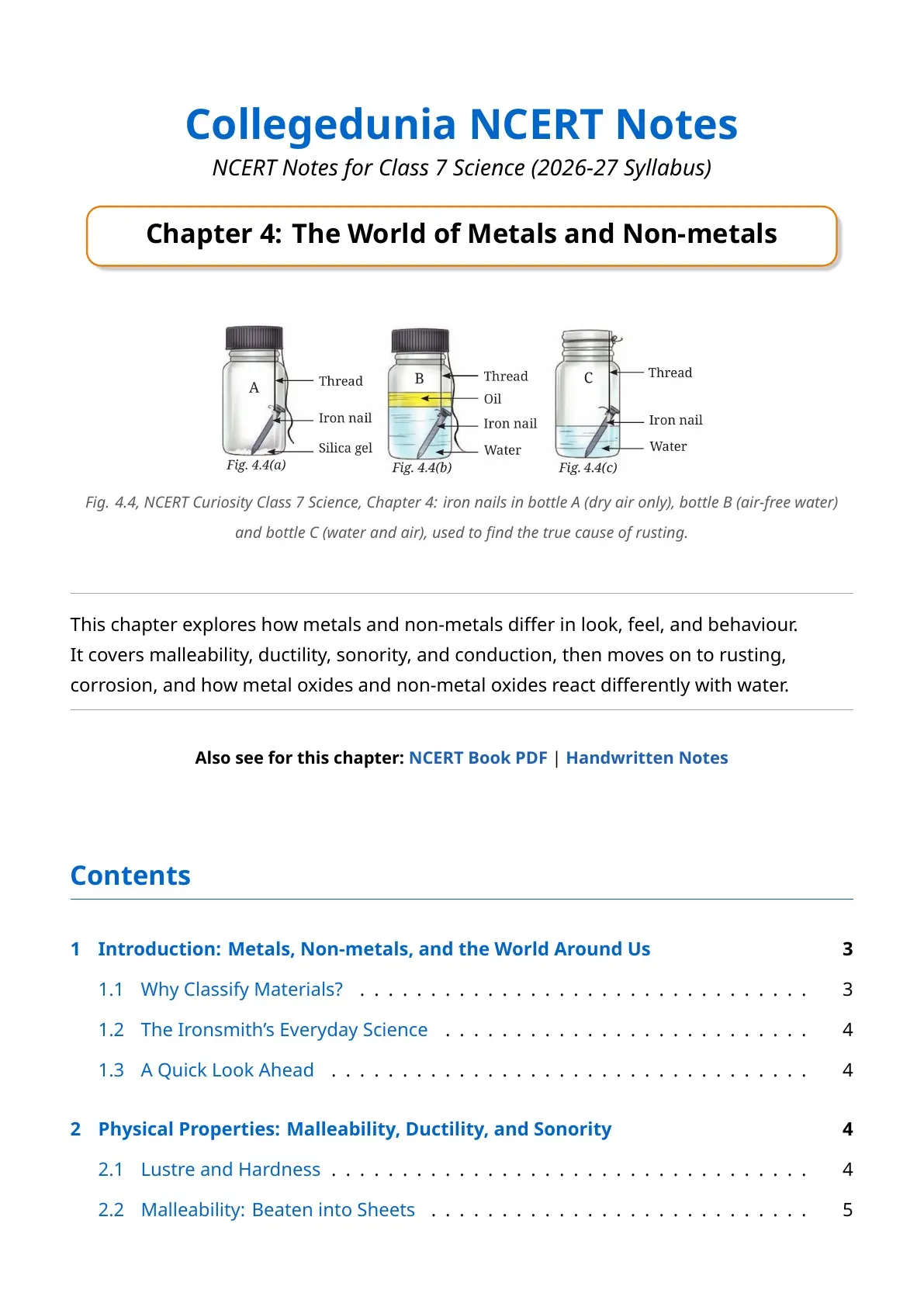
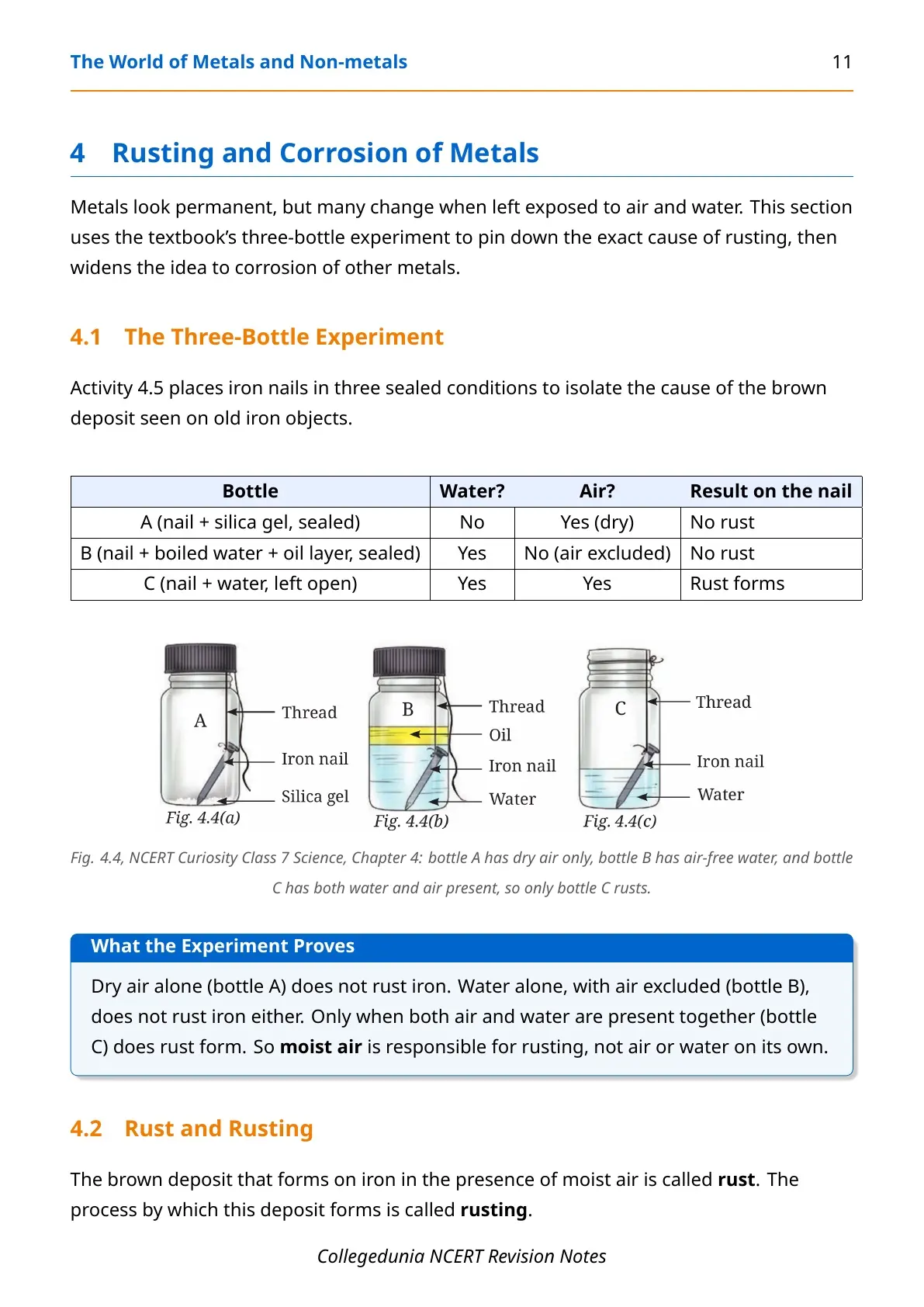
Old iron objects develop a brown deposit over time. The NCERT chapter isolates the exact cause with three sealed bottles, each removing one variable at a time.
| Bottle | Water? | Air? | Result on the Nail |
|---|---|---|---|
| A: nail with silica gel, sealed | No | Yes (dry) | No rust |
| B: nail with boiled water and an oil layer, sealed | Yes | No (air excluded) | No rust |
| C: nail with water, left open | Yes | Yes | Rust forms |
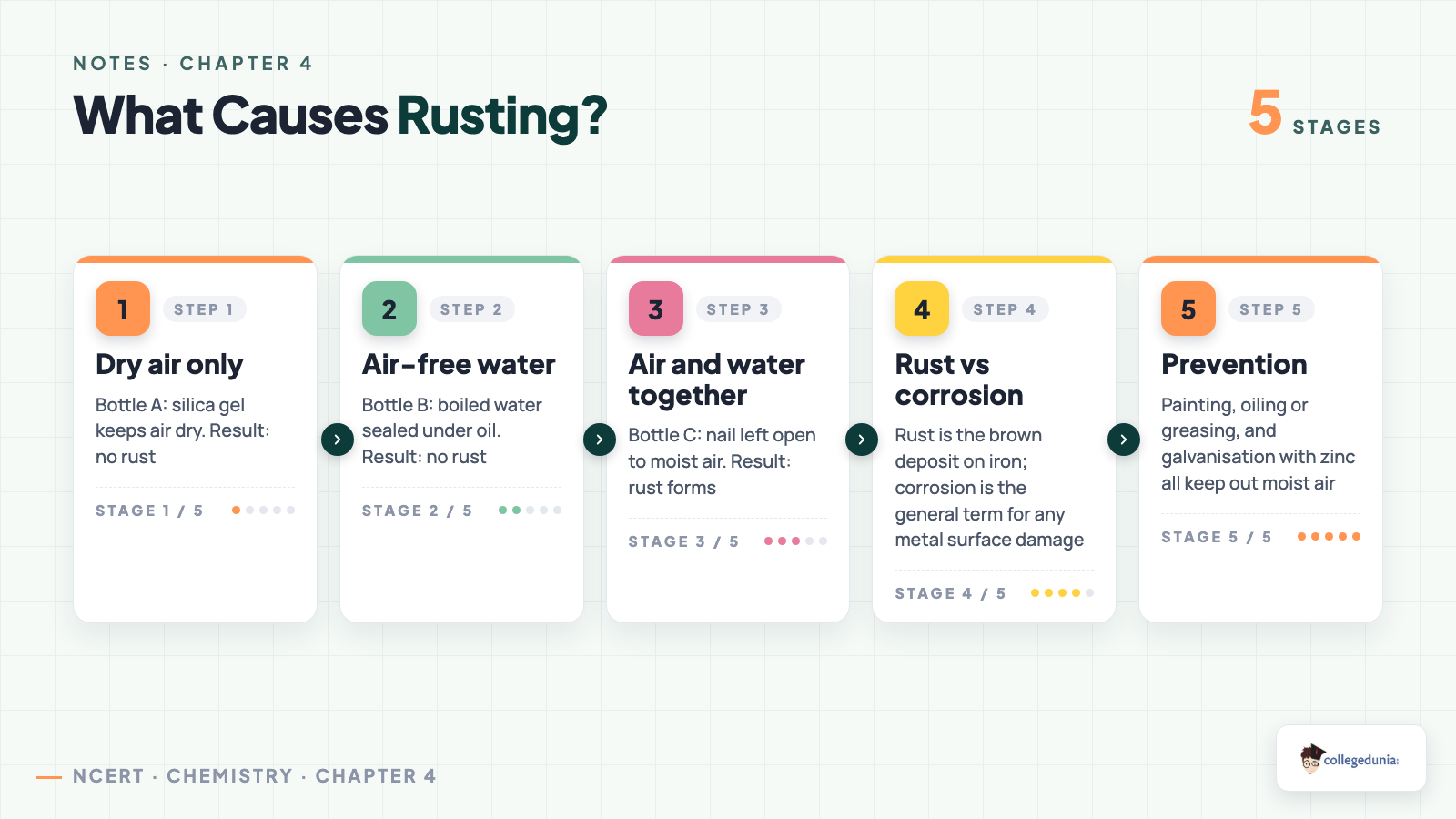
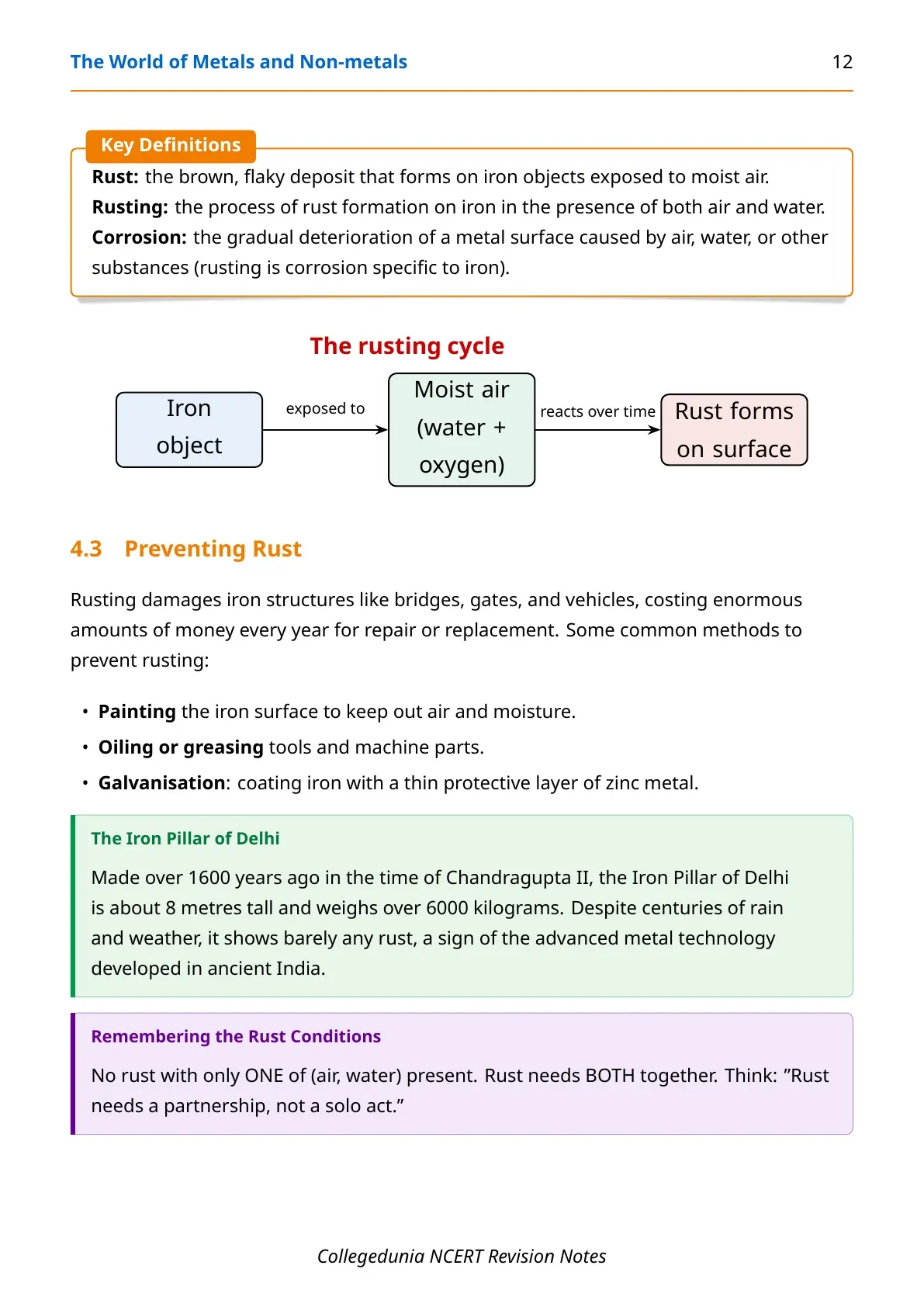
Dry air alone does not rust iron, and water alone, with air kept out, does not rust iron either. Only moist air, water and air present together, causes rust. The brown deposit itself is called rust, the process is rusting, and corrosion is the broader term for any metal surface damaged by air, water, or other substances.
Rusting damages bridges, gates, and vehicles every year. Painting, oiling or greasing, and galvanisation (coating iron with a thin layer of zinc) are the three common ways to prevent it. The Iron Pillar of Delhi, built more than 1,600 years ago and still barely rusted, is proof of how well these ideas were understood in ancient India.
Metal Oxides vs Non-metal Oxides: The Acid-Base Divide
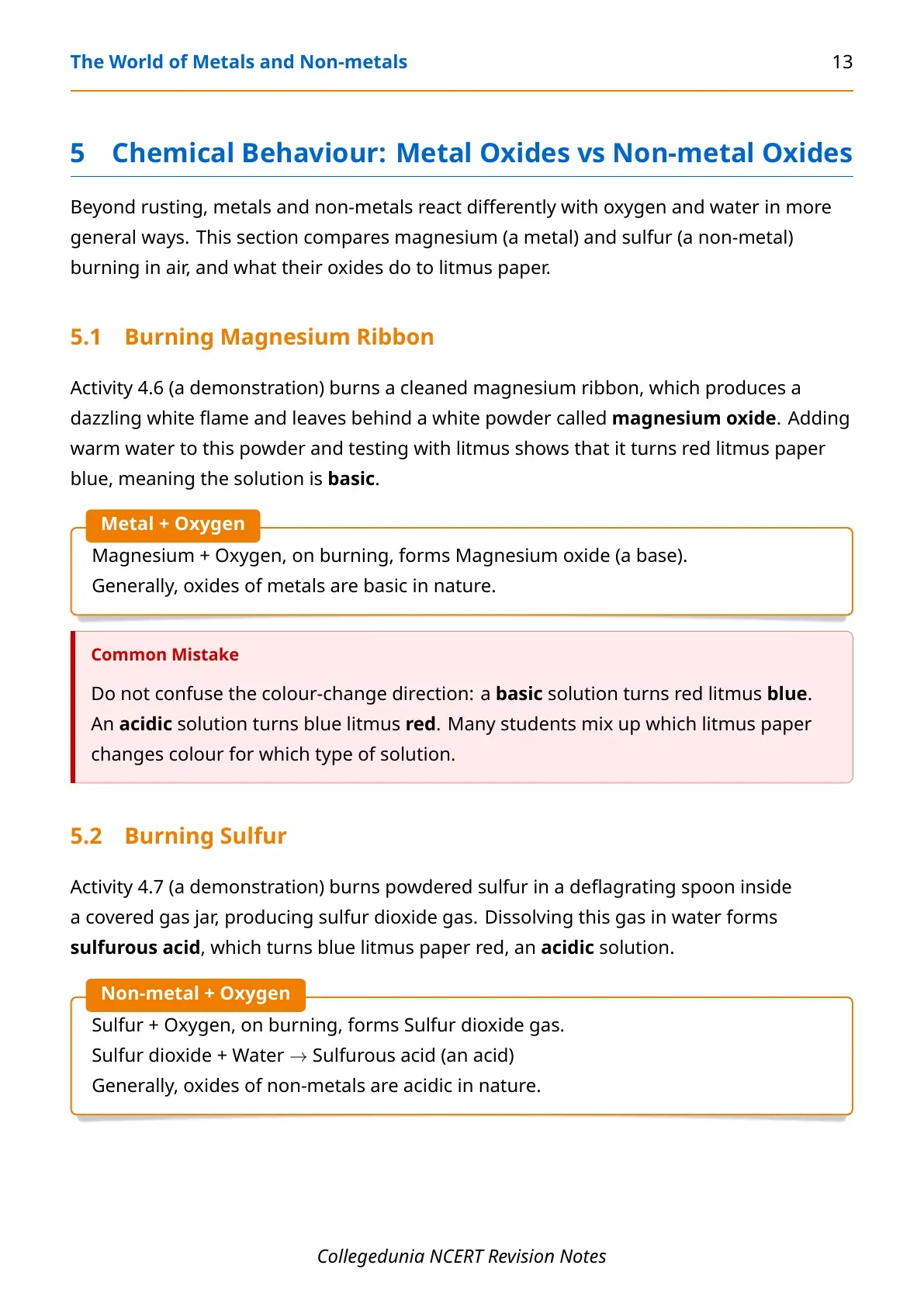
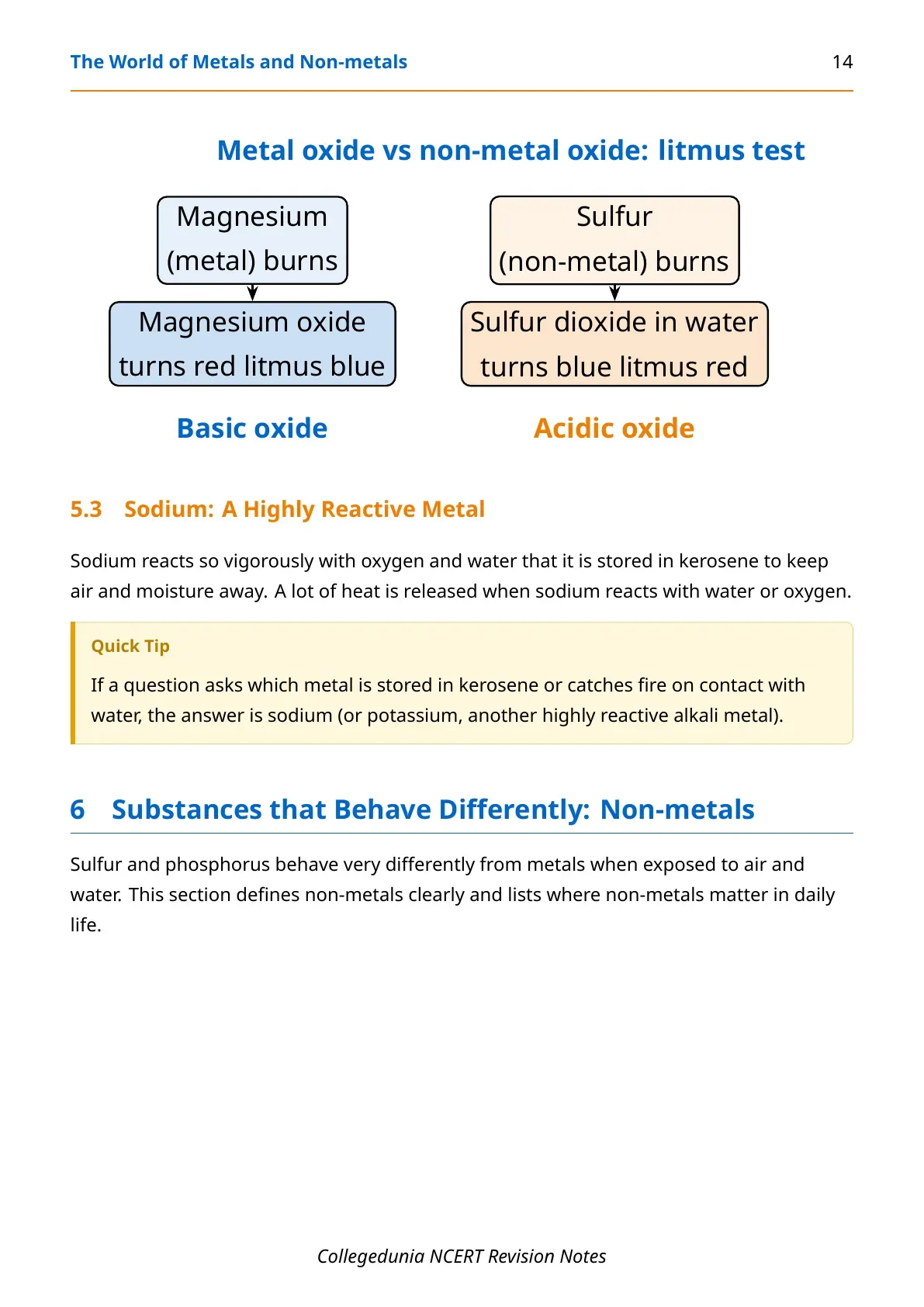
Burning a cleaned magnesium ribbon produces a dazzling white flame and leaves behind magnesium oxide. Dissolved in water and tested with litmus, this turns red litmus paper blue, a basic result. Burning powdered sulfur instead produces sulfur dioxide gas, which dissolves in water to form sulfurous acid and turns blue litmus paper red, an acidic result.
Generally, oxides of metals are basic and oxides of non-metals are acidic. Sodium is stored in kerosene because it reacts so vigorously with air and water that it can catch fire on contact, releasing a large amount of heat in the process.
Tip: a basic solution turns red litmus blue, and an acidic solution turns blue litmus red. Students frequently swap these two directions by mistake.
Alloys and the Reactivity Order of Common Metals
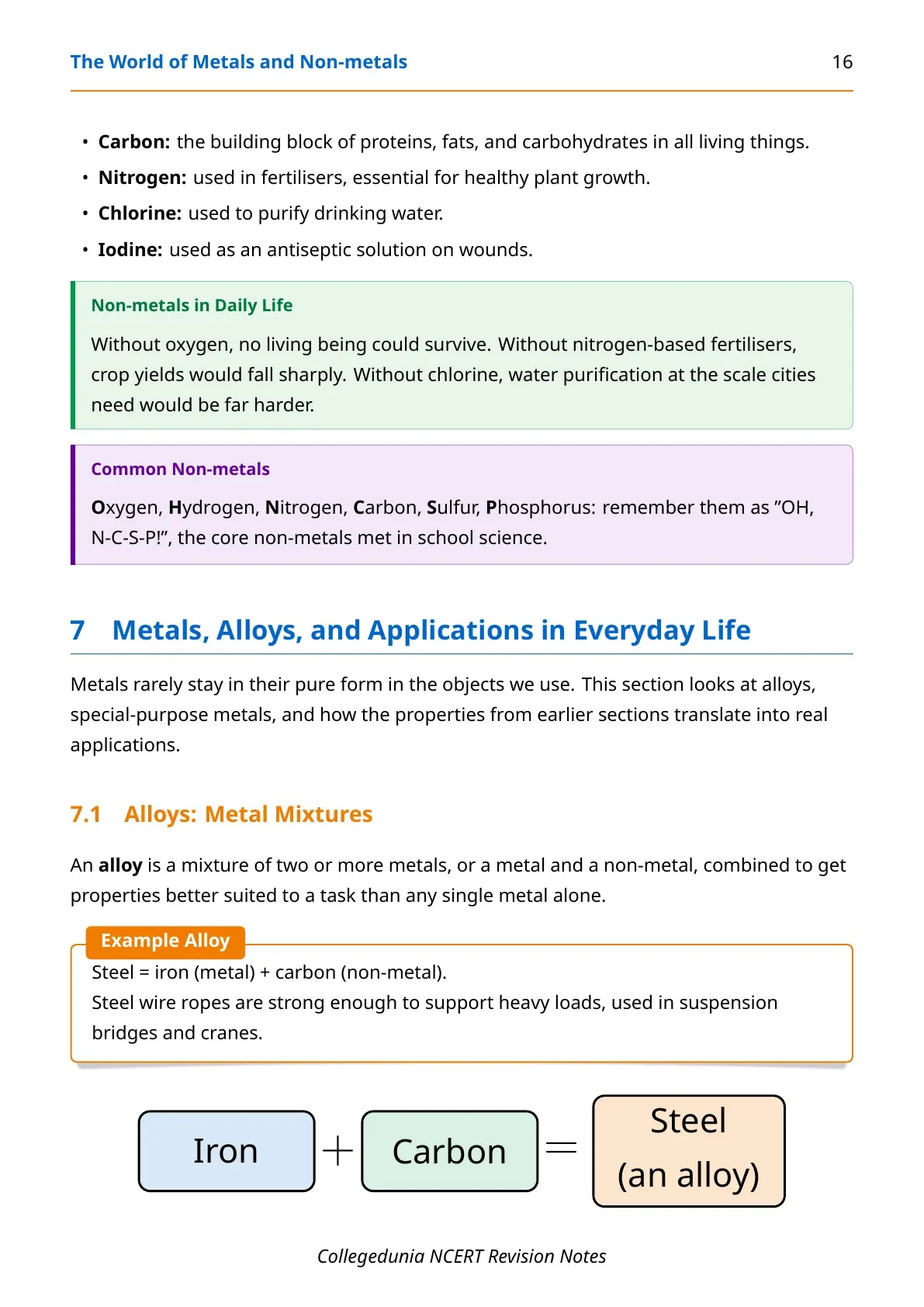
Metals rarely stay pure in the objects we actually use. An alloy is a mixture of two or more metals, or a metal and a non-metal, combined to get properties no single metal has alone. Steel, iron mixed with carbon, is strong enough for suspension-bridge cables and cranes.
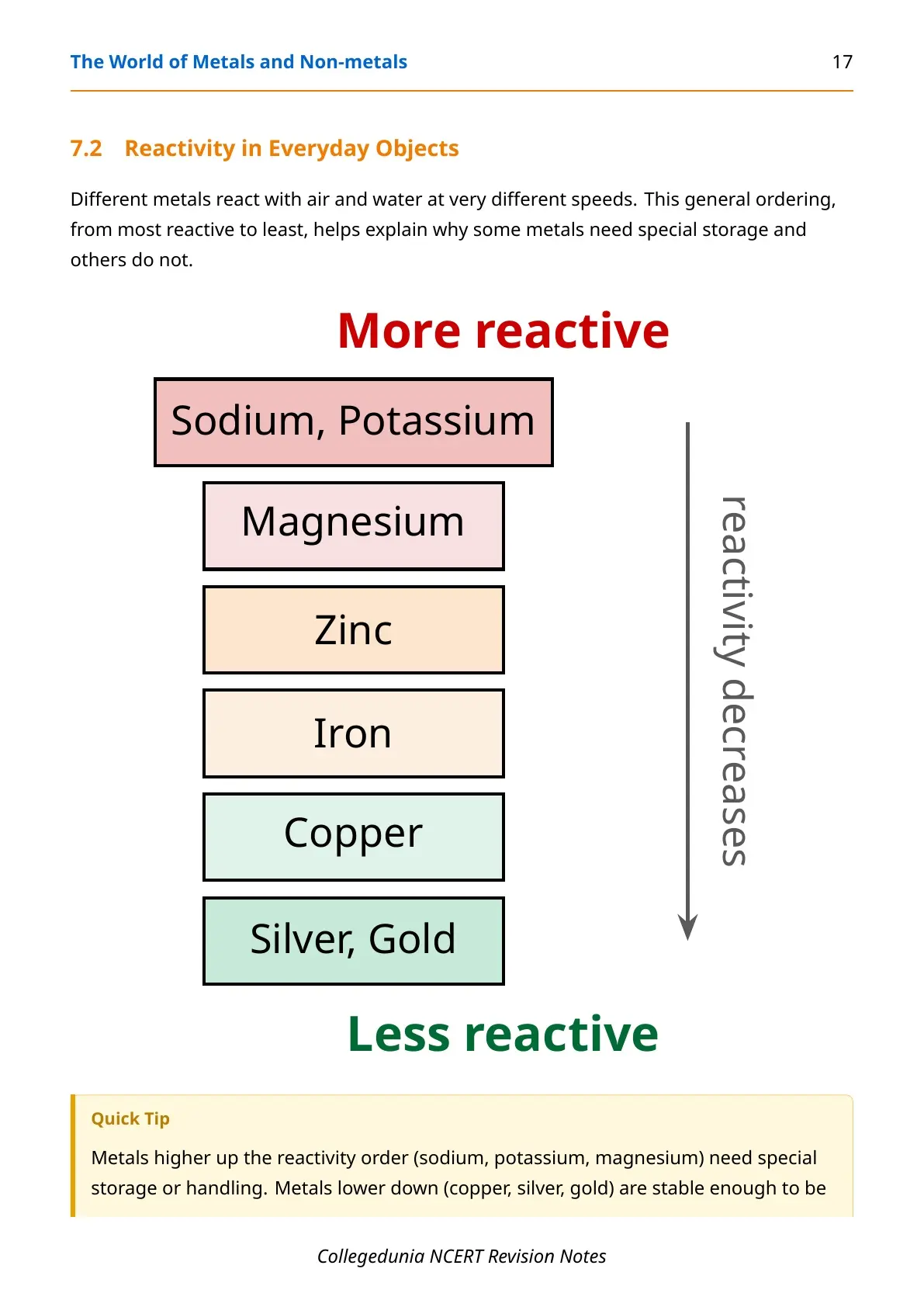
Different metals react with air and water at very different speeds, and this reactivity order explains why some need special storage:
- Most reactive: sodium and potassium, stored in kerosene.
- Middle range: magnesium, then zinc, then iron.
- Least reactive: copper, then silver and gold, stable enough for jewellery and coins.
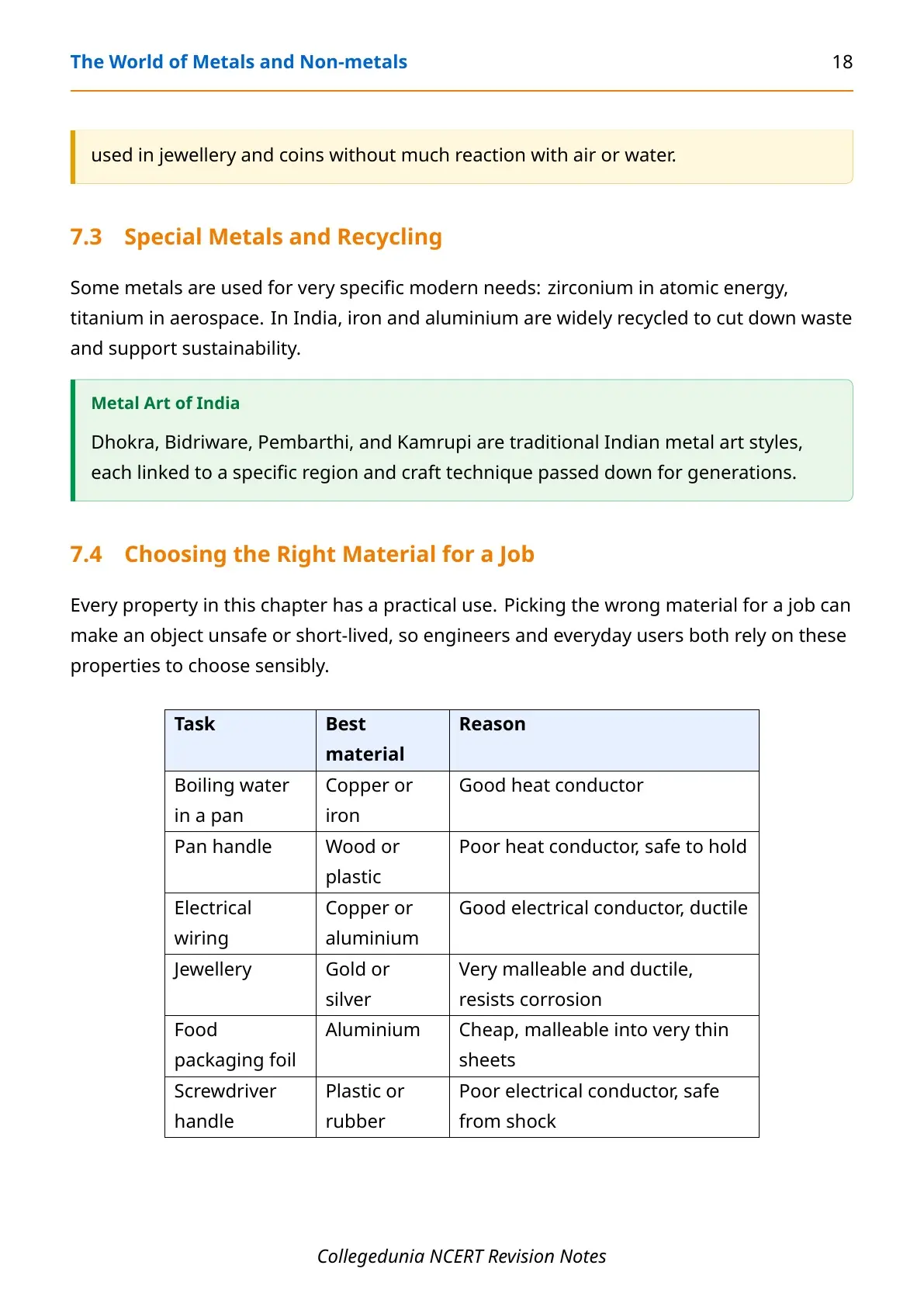
Zirconium is used in atomic energy and titanium in aerospace, two examples of metals picked for one specific property. In India, iron and aluminium are widely recycled, cutting down waste at scale.
Choosing the Right Material for a Job: A Worked Example
Every property in this chapter has a practical use, and picking the wrong material can make an object unsafe or short-lived. The table below matches six everyday tasks to the property that decides the right material.
| Task | Best Material | Reason |
|---|---|---|
| Boiling water in a pan | Copper or iron | Good heat conductor |
| Pan handle | Wood or plastic | Poor heat conductor, safe to hold |
| Electrical wiring | Copper or aluminium | Good electrical conductor, ductile |
| Jewellery | Gold or silver | Very malleable and ductile, resists corrosion |
| Food packaging foil | Aluminium | Cheap, malleable into very thin sheets |
| Screwdriver handle | Plastic or rubber | Poor electrical conductor, safe from shock |
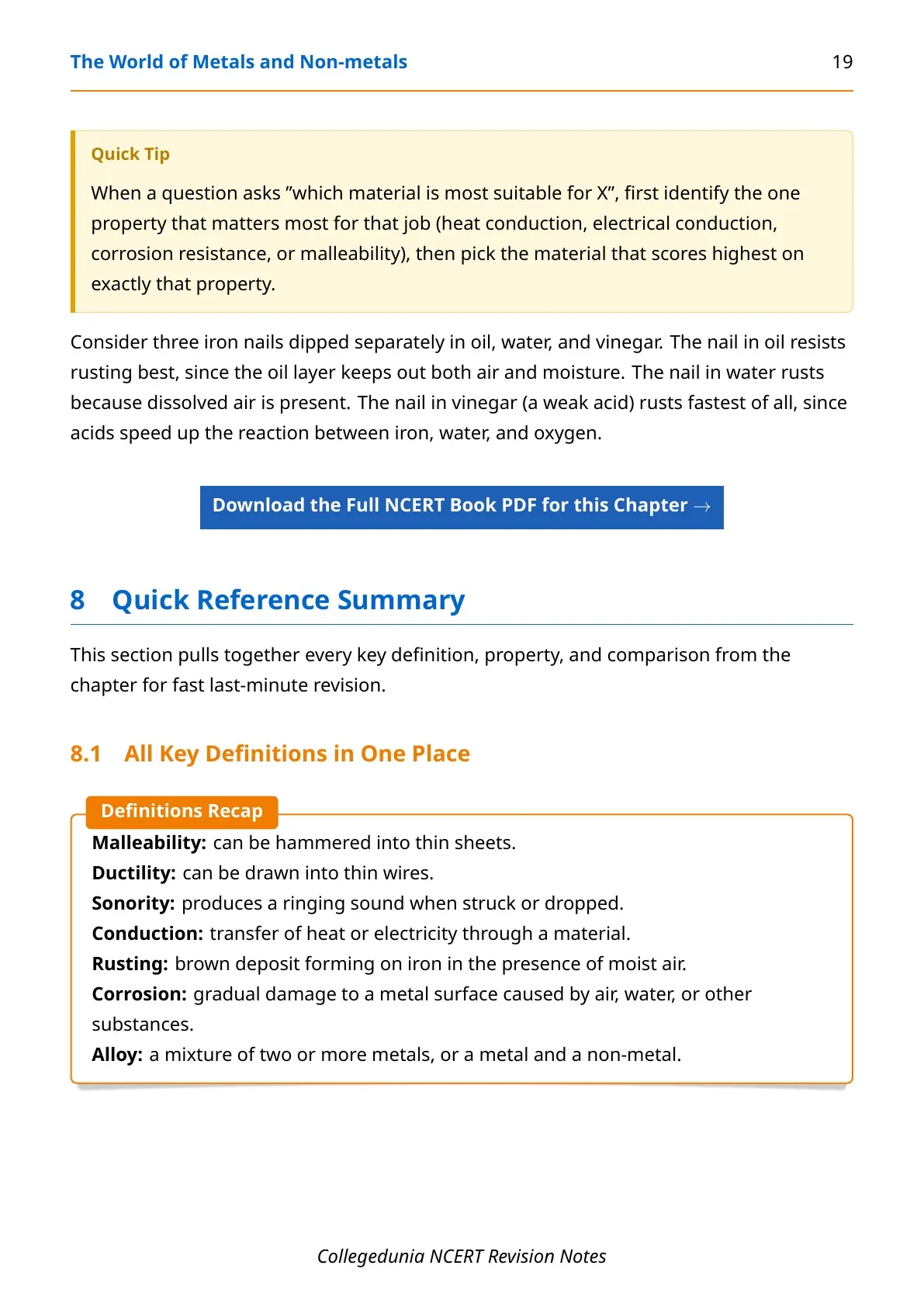
Try this yourself: three iron nails are dipped separately in oil, water, and vinegar. The nail in oil resists rusting best, since the oil layer keeps out both air and moisture. The nail in plain water rusts because dissolved air is present. The nail in vinegar, a weak acid, rusts fastest of all, since acids speed up the reaction between iron, water, and oxygen.
Common Mistakes Students Make in the Metals and Non-metals Chapter
- Confusing malleability (sheets) with ductility (wires); they describe different shapes of deformation.
- Forgetting the exceptions: sodium and potassium are soft metals, and mercury is liquid at room temperature.
- Mixing up which litmus paper changes colour for acids versus bases.
- Treating rusting and corrosion as identical; rusting is the specific case of corrosion seen in iron.
- Assuming every hard or shiny material must be a metal, or that every non-metal is a poor conductor with no exceptions.
Quick Recall: Metals and Non-metals at a Glance
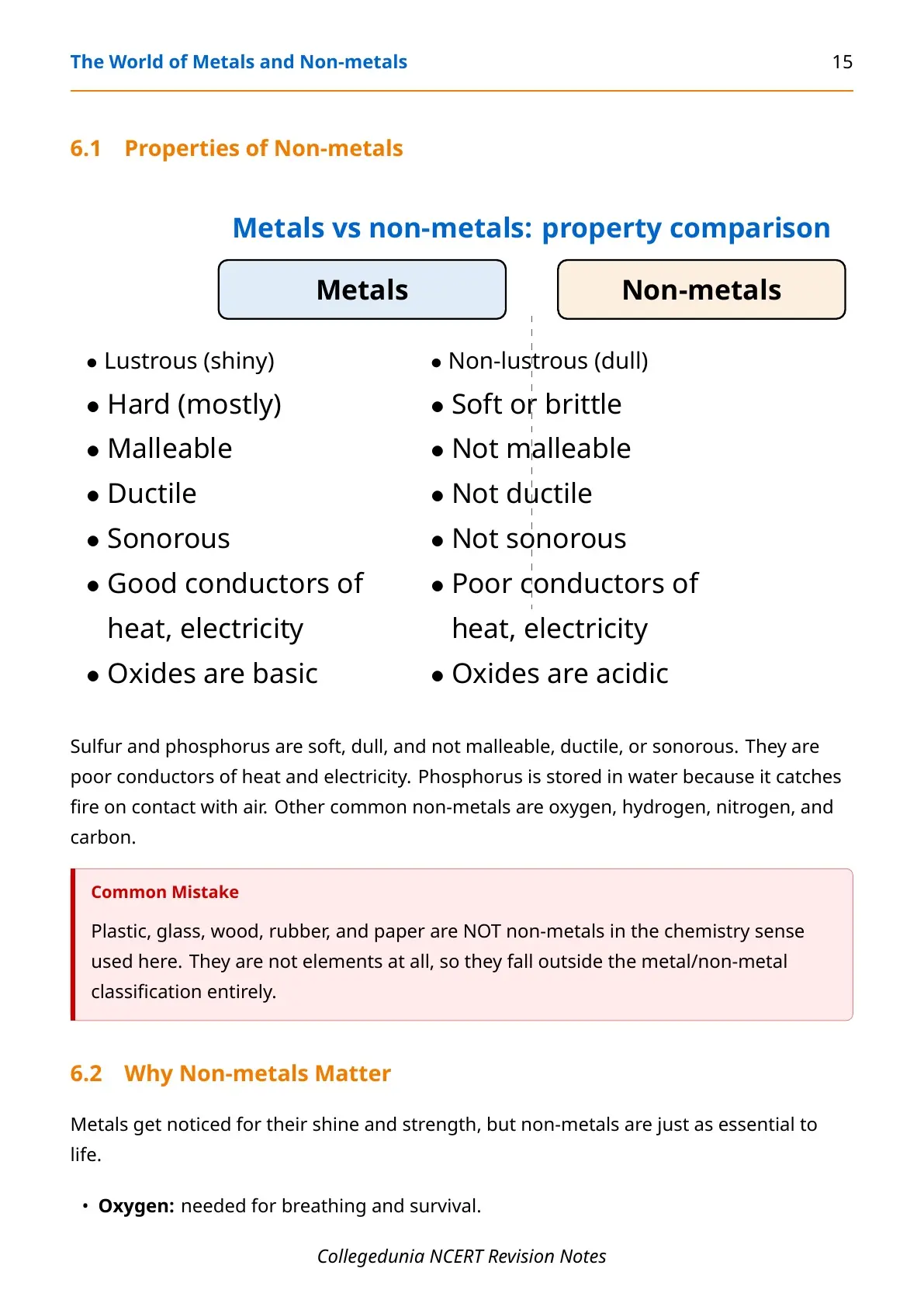
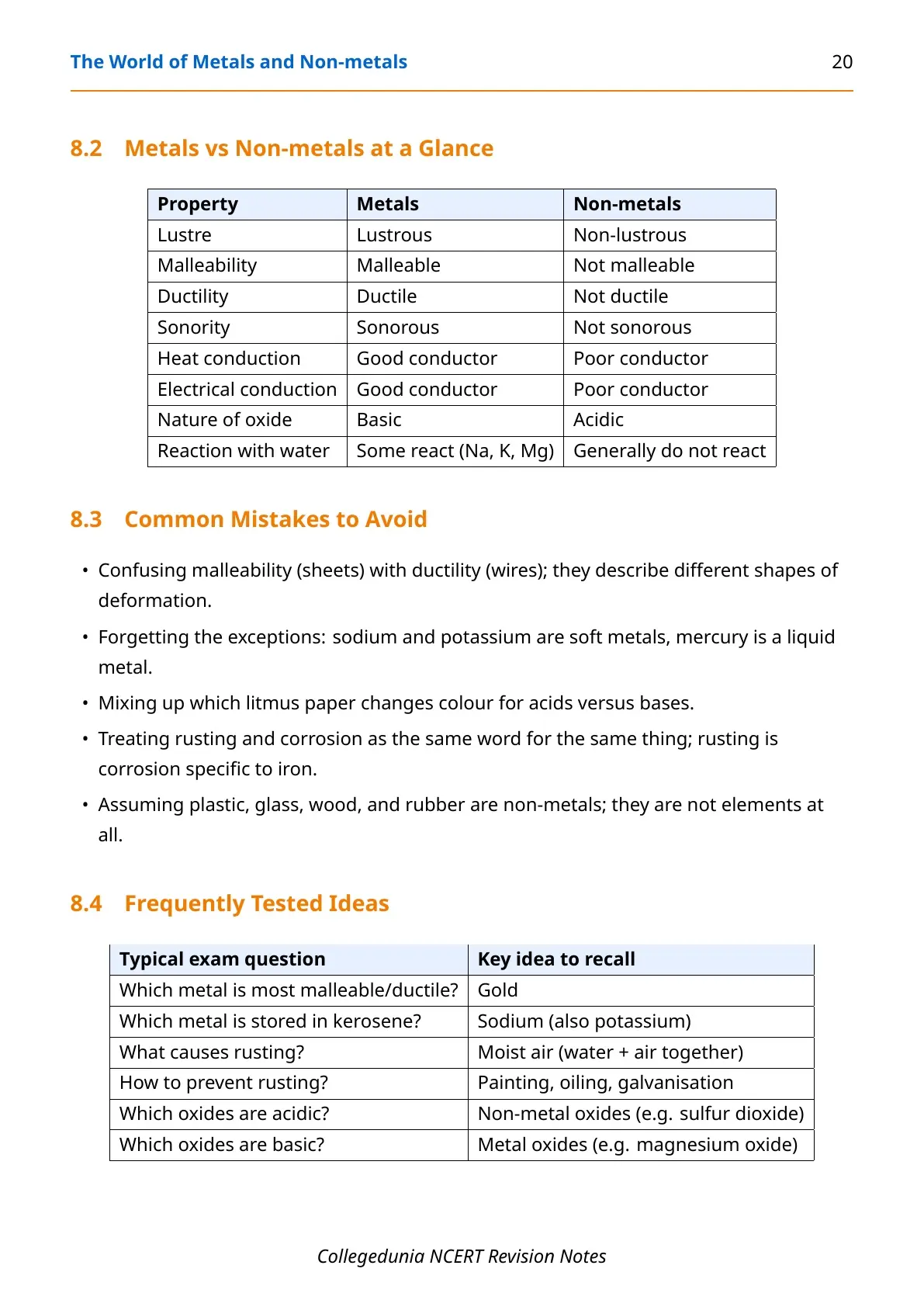
| Property | Metals | Non-metals |
|---|---|---|
| Lustre | Lustrous | Non-lustrous |
| Malleability | Malleable | Not malleable |
| Ductility | Ductile | Not ductile |
| Sonority | Sonorous | Not sonorous |
| Heat and electrical conduction | Good conductor | Poor conductor |
| Nature of oxide | Basic | Acidic |
One-line recap: metals shine, bend, and ring; non-metals stay dull, break, and stay quiet. Metals turn basic on burning, non-metals turn acidic. Rust always needs air and water together, never just one.
Student Feedback: What 10,640 Students Told Us
What 10,640 students told us about their Metals and Non-metals journey.
In a Collegedunia poll of 10,640 Class 7 students conducted before the 2026-27 school exams, 71% of students named the three-bottle rusting experiment as the trickiest part to recall correctly. Most students said the malleable-versus-ductile mnemonic was the easiest fact to keep once they had seen the hammer-and-wire picture.
Other Class 7 Science Chapter 4 Resources on Collegedunia
| Resource | Status |
|---|---|
| NCERT Notes (this page) | Available now |
| NCERT Book PDF | Available now |
| Handwritten Notes | Available now |
| NCERT Solutions | Coming soon |
| Formula Sheet | Coming soon |
| Exemplar Solutions | Coming soon |
| Exemplar Book PDF | Coming soon |
Class 7 Science Curiosity Notes for All Chapters
| Chapter | Notes |
|---|---|
| Chapter 1 | The Ever-Evolving World of Science (coming soon) |
| Chapter 2 | Exploring Substances: Acidic, Basic, and Neutral (coming soon) |
| Chapter 3 | Electricity: Circuits and their Components (coming soon) |
| Chapter 4 | The World of Metals and Non-metals (this page) |
| Chapter 5 | Changes Around Us: Physical and Chemical (coming soon) |
| Chapter 6 | Adolescence: A Stage of Growth and Change (coming soon) |
| Chapter 7 | Heat Transfer in Nature (coming soon) |
| Chapter 8 | Measurement of Time and Motion (coming soon) |
| Chapter 9 | Life Processes in Animals (coming soon) |
| Chapter 10 | Life Processes in Plants (coming soon) |
| Chapter 11 | Light: Shadows and Reflections (coming soon) |
| Chapter 12 | Earth, Moon, and the Sun (coming soon) |
| Class 7 Science Curiosity - All Chapters | |
Class 7 Science Chapter 4 The World of Metals and Non-metals Notes FAQs
Ques. What is the main difference between a metal and a non-metal?
Ans. Metals are generally lustrous, malleable, ductile, sonorous, and good conductors of heat and electricity. Non-metals are usually non-lustrous, brittle, non-ductile, non-sonorous, and poor conductors.
Ques. What causes rusting of iron?
Ans. Rusting needs moist air, meaning both air and water present together. Dry air alone or air-free water alone does not rust iron, as shown by the three-bottle experiment in this chapter.
Ques. What is the difference between rusting and corrosion?
Ans. Rusting is the specific brown deposit that forms on iron in moist air. Corrosion is the broader term for the gradual damage of any metal surface caused by air, water, or other substances.
Ques. Which metal is the most malleable and ductile?
Ans. Gold is the most malleable and ductile metal known. One gram of gold can be drawn into a wire about 2 kilometres long.
Ques. Why is sodium stored in kerosene?
Ans. Sodium reacts vigorously with air and water, releasing a large amount of heat and sometimes catching fire. Storing it in kerosene keeps it away from both.
Ques. Are oxides of metals acidic or basic?
Ans. Oxides of metals are generally basic. Magnesium oxide, for example, turns red litmus paper blue when dissolved in water.
Ques. Are oxides of non-metals acidic or basic?
Ans. Oxides of non-metals are generally acidic. Sulfur dioxide dissolved in water forms sulfurous acid, which turns blue litmus paper red.
Ques. What is an alloy?
Ans. An alloy is a mixture of two or more metals, or a metal and a non-metal, combined to get properties better suited to a task than any single metal alone. Steel (iron plus carbon) is a common example.
Ques. How can rusting be prevented?
Ans. Common methods include painting the surface, oiling or greasing tools and machine parts, and galvanisation, which coats iron with a thin protective layer of zinc.
Ques. Are plastic, glass, and wood classified as non-metals?
Ans. No. Plastic, glass, wood, rubber, and paper are not elements at all, so they fall outside the metal and non-metal classification used in this chapter.
Ques. Where can I download the Class 7 Science Chapter 4 Notes PDF?
Ans. You can download The World of Metals and Non-metals Notes PDF directly from this page, free of cost and matched to the 2026-27 NCERT Curiosity textbook.



Comments