




Class 7 Science Chapter 4 The World of Metals and Non-metals sorts everyday materials by how they behave. These class 7 science handwritten notes chapter 4 The World of Metals and Non-metals follow the 2026-27 NCERT and cover malleability, ductility, sonority, rusting and the uses of non-metals.
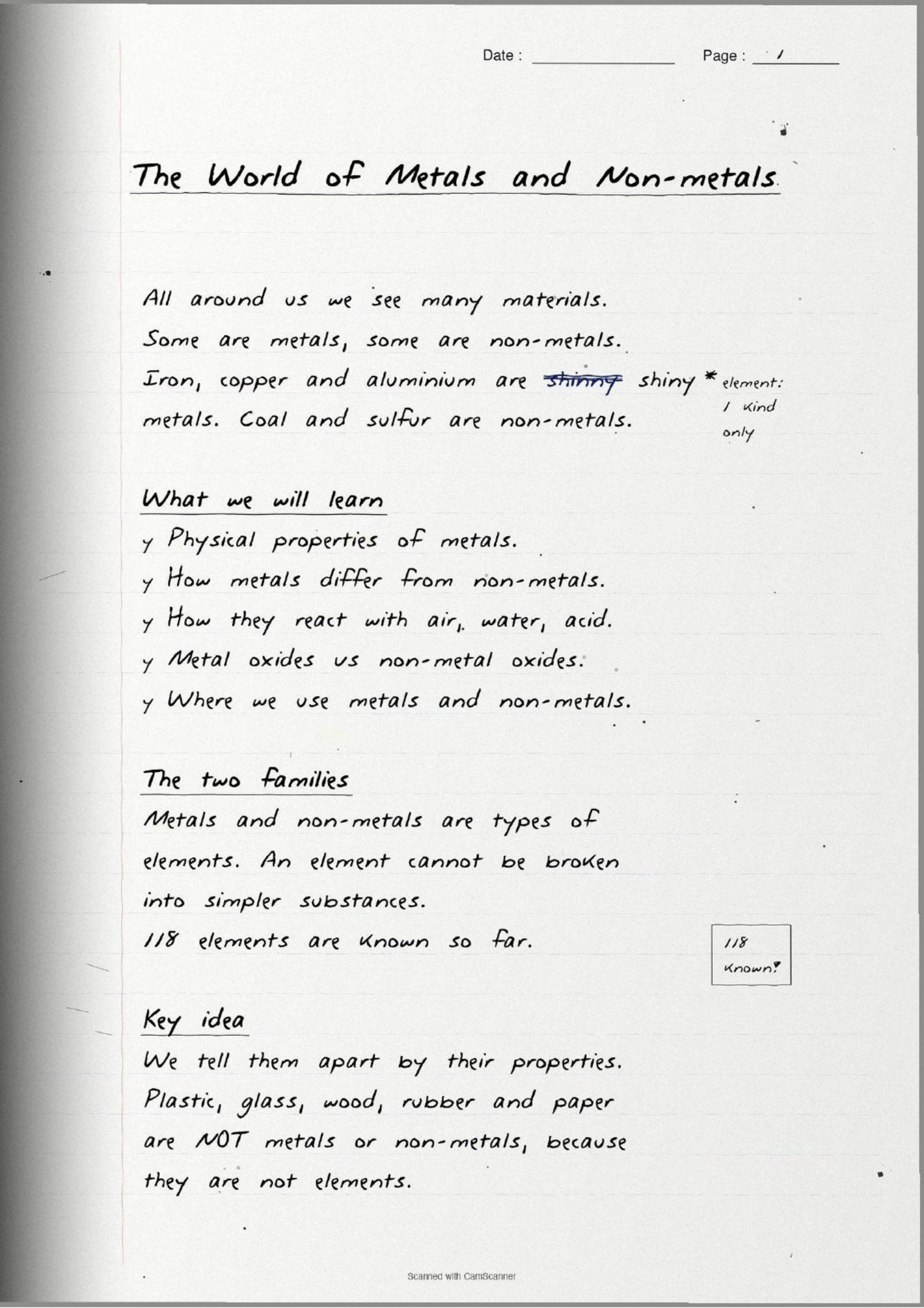
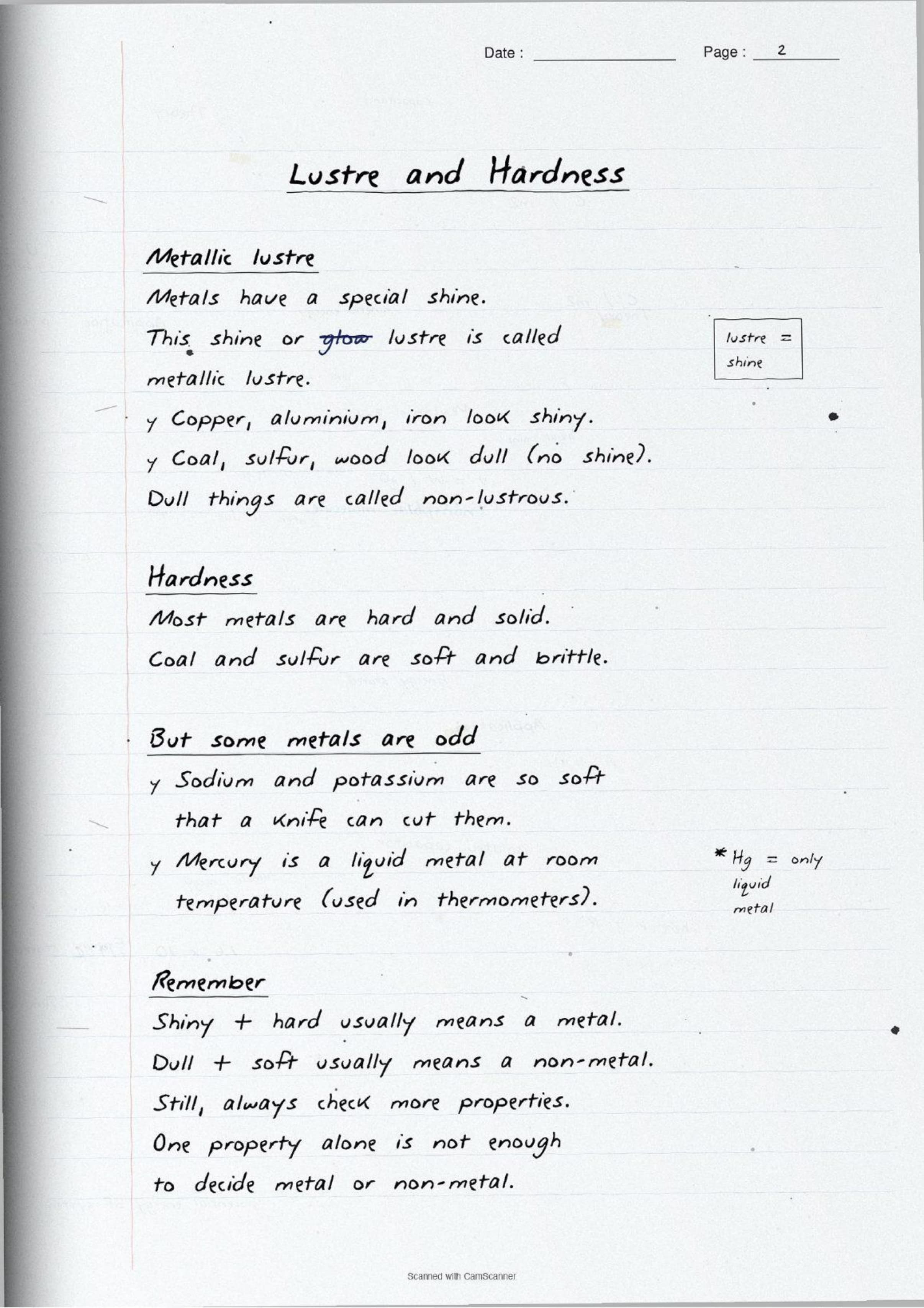
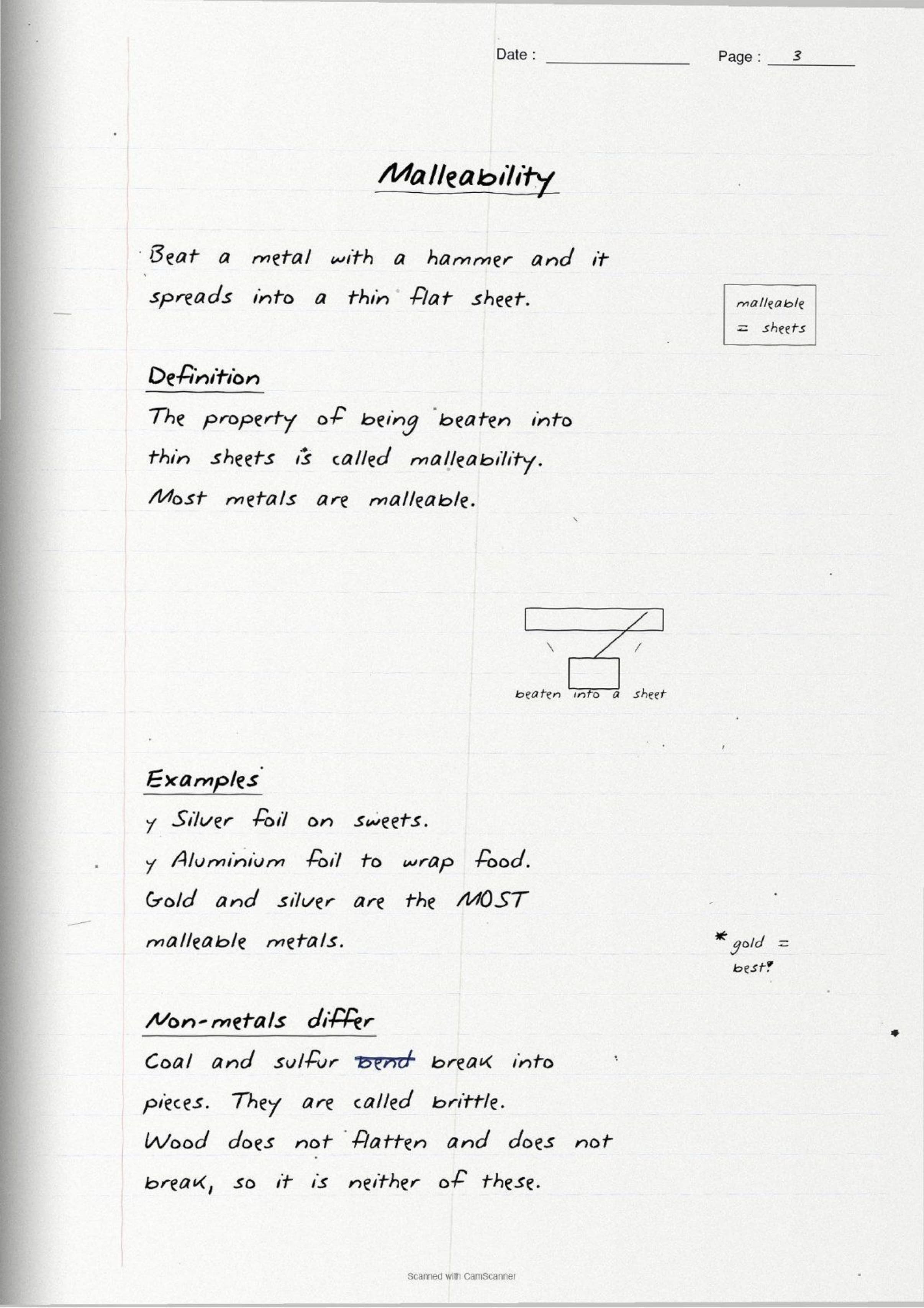
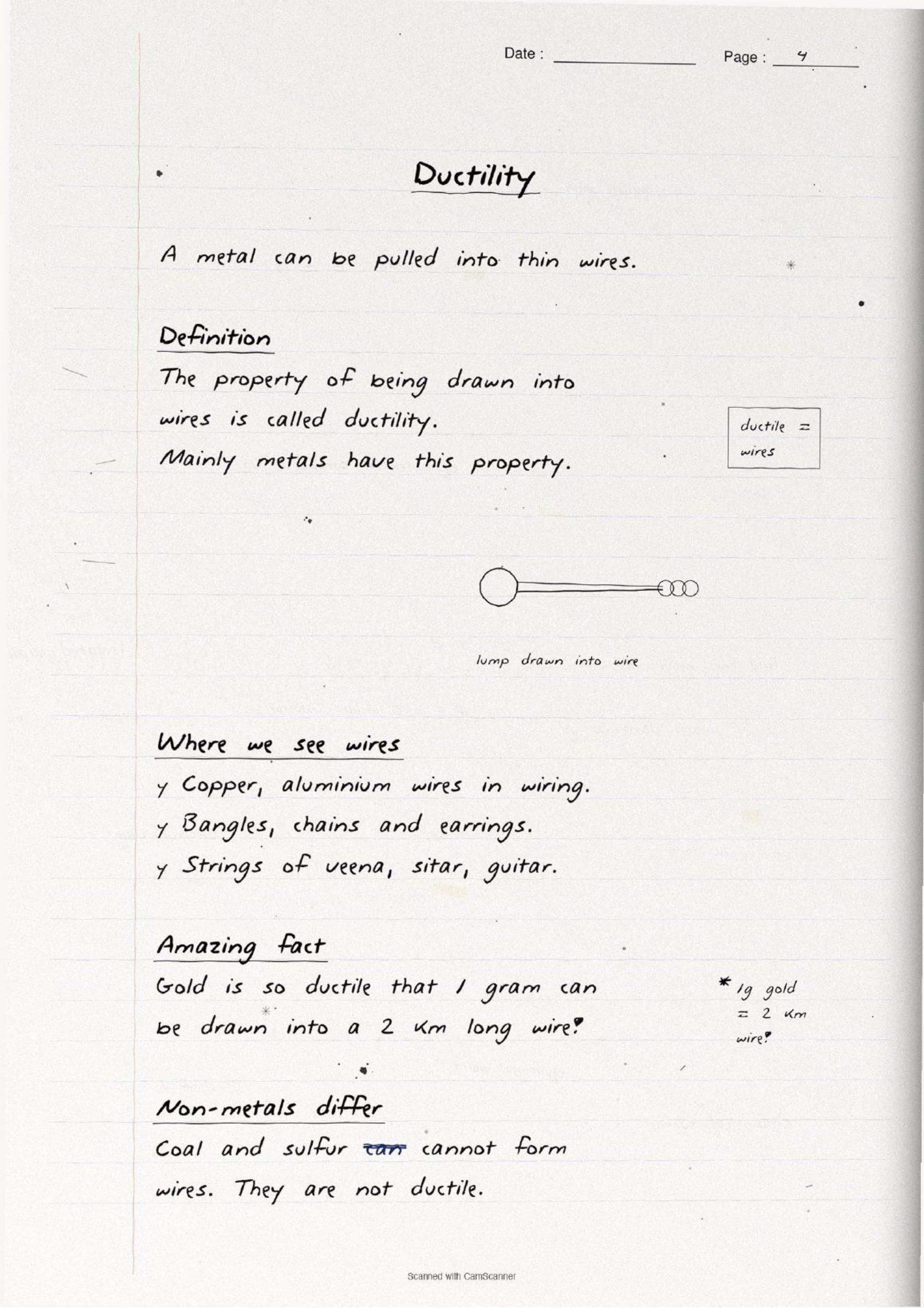
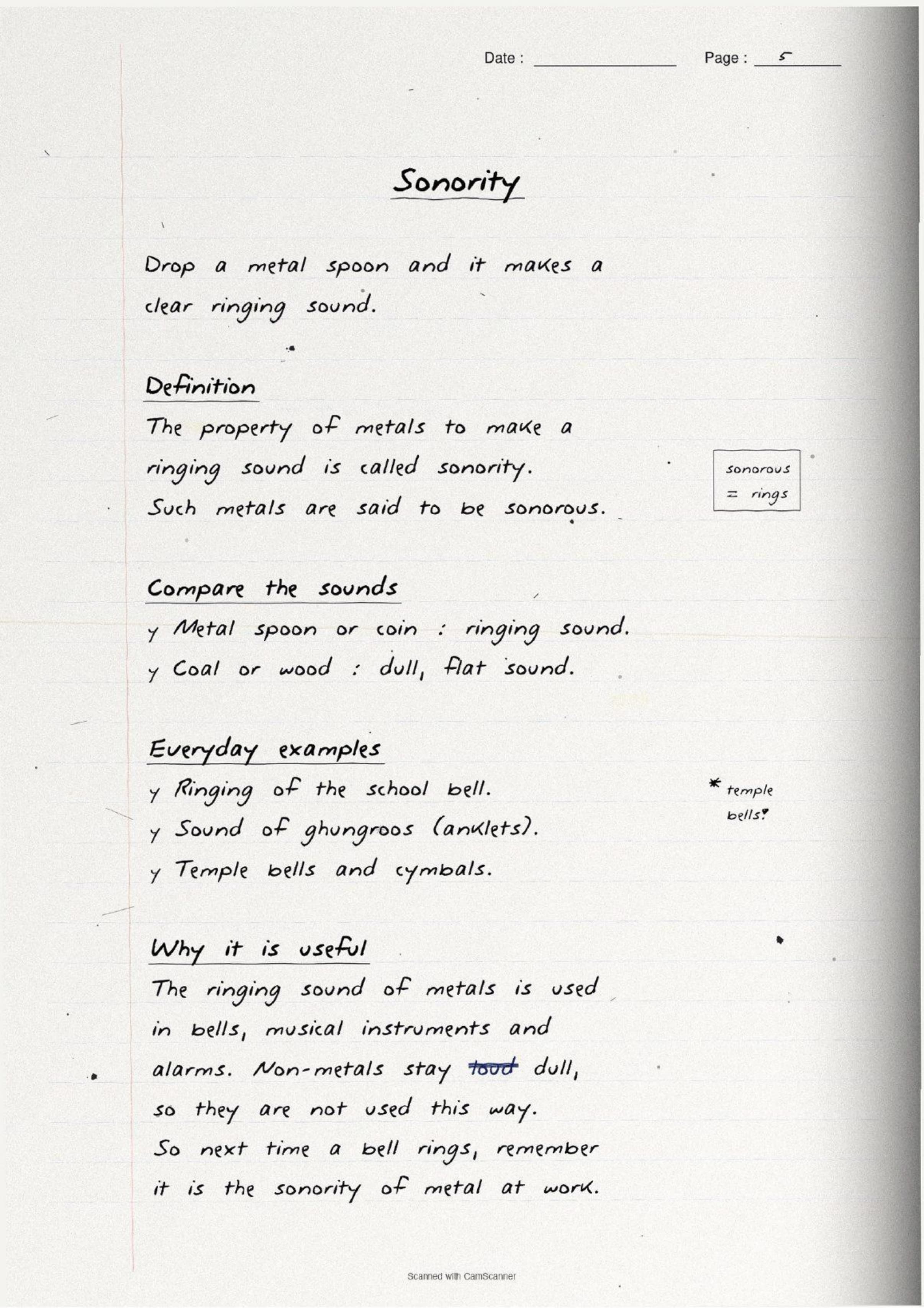
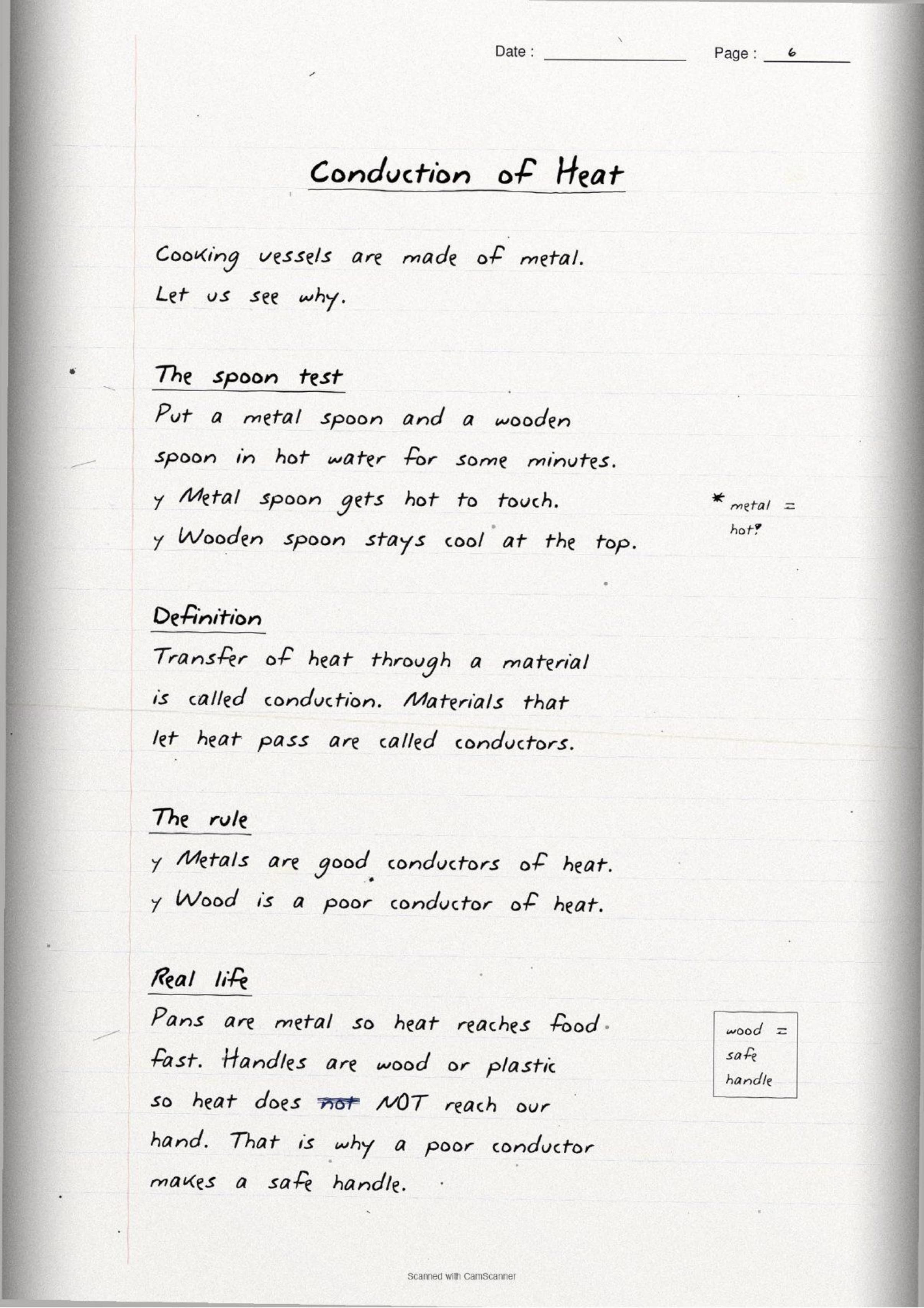
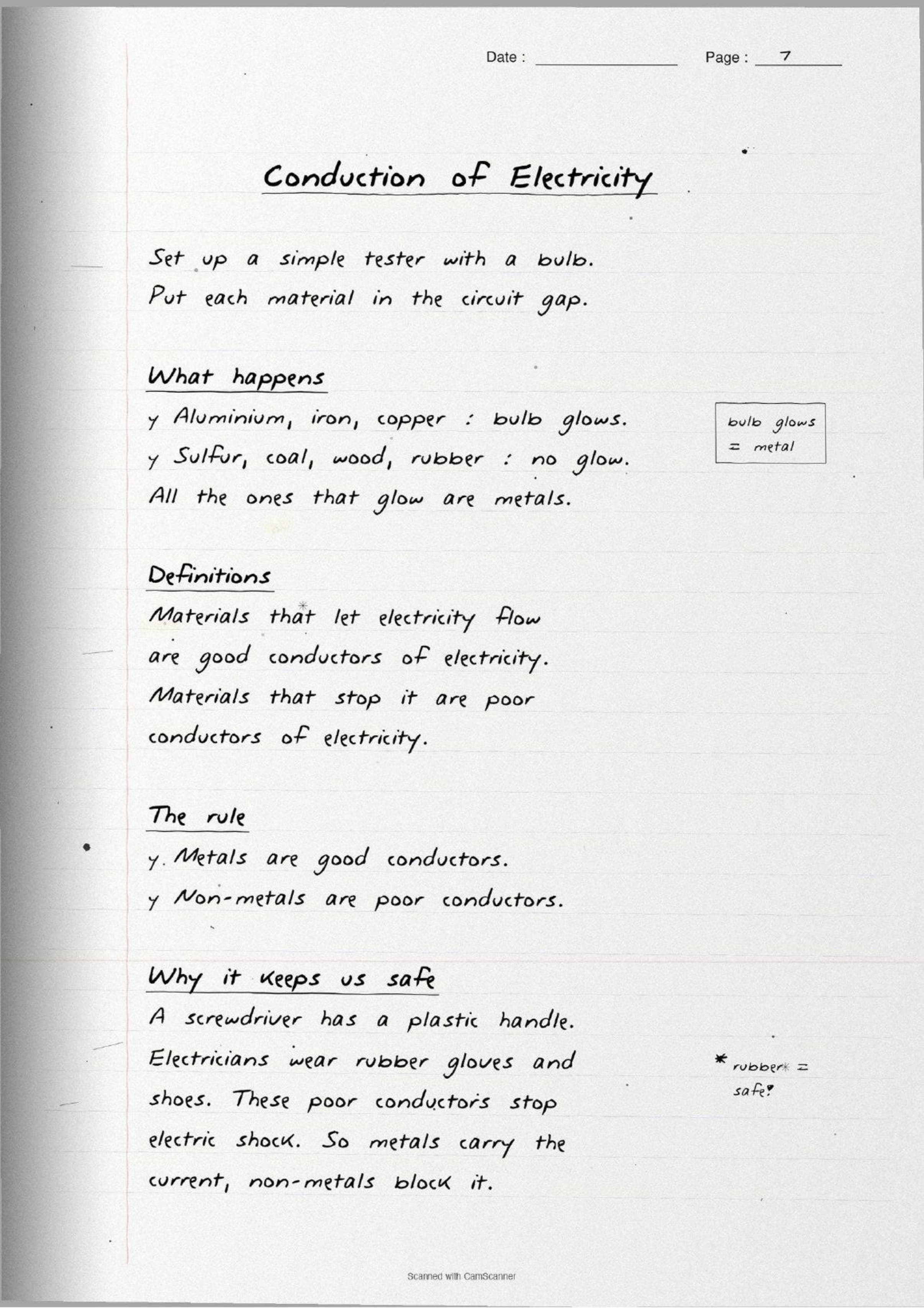
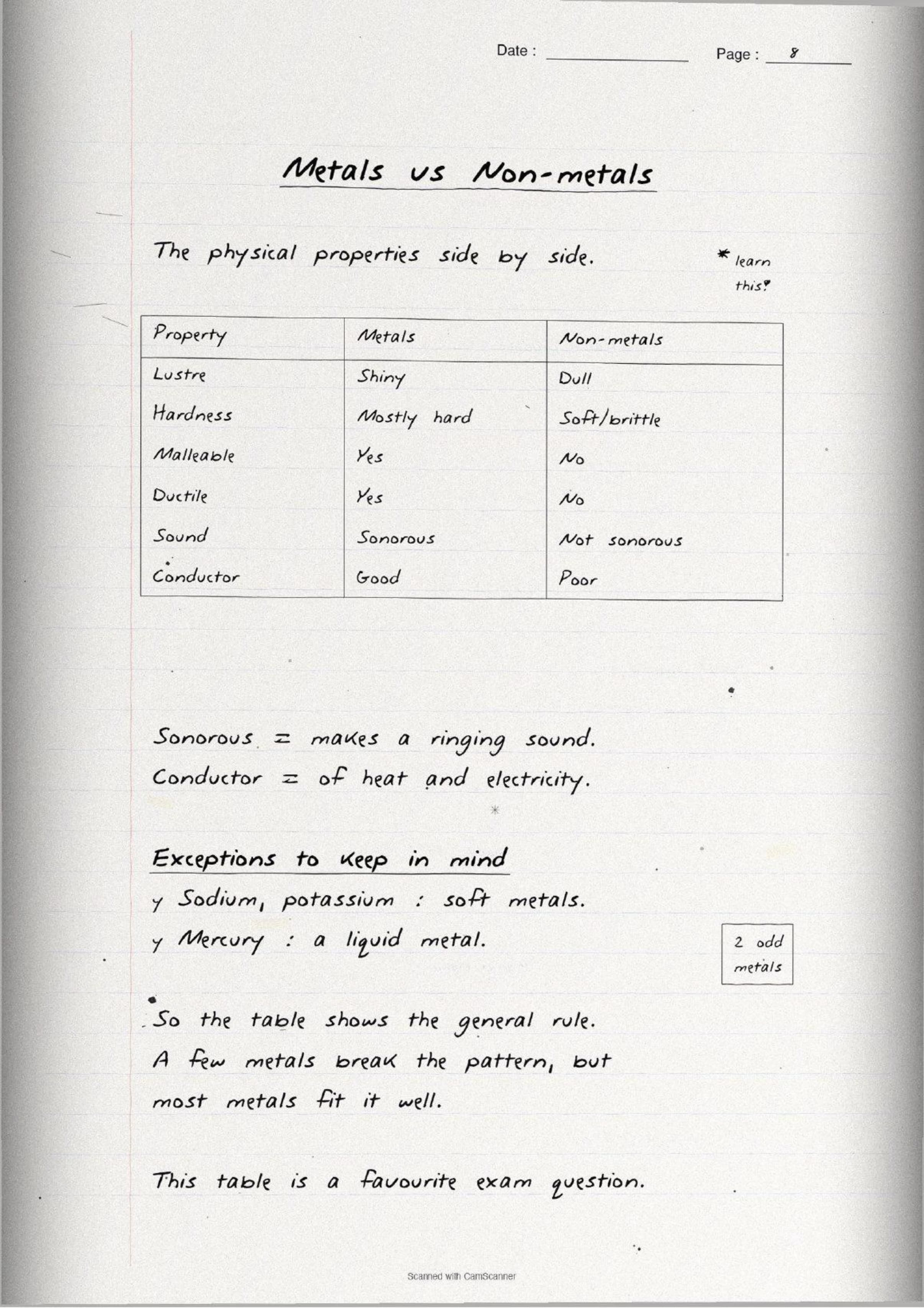
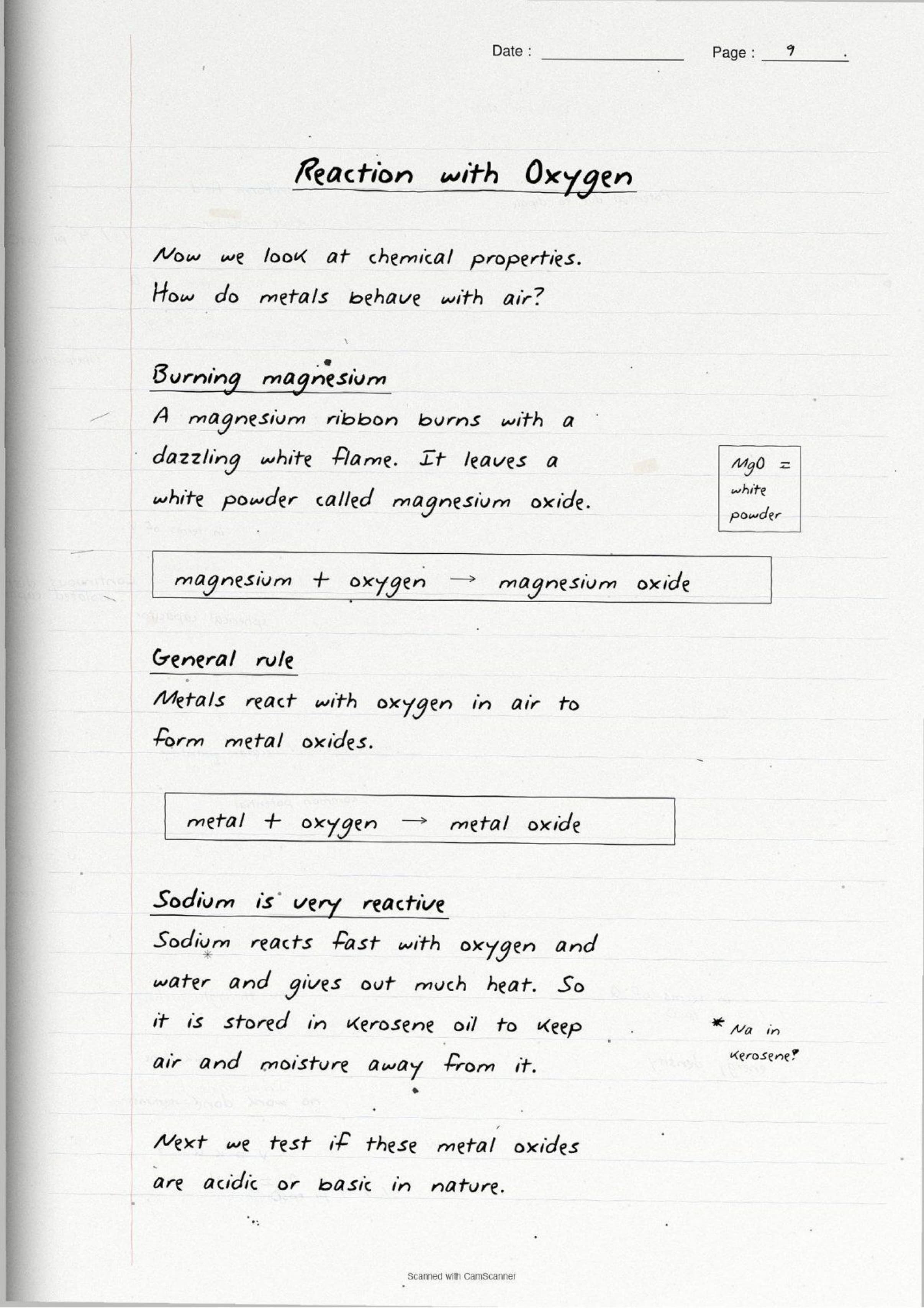
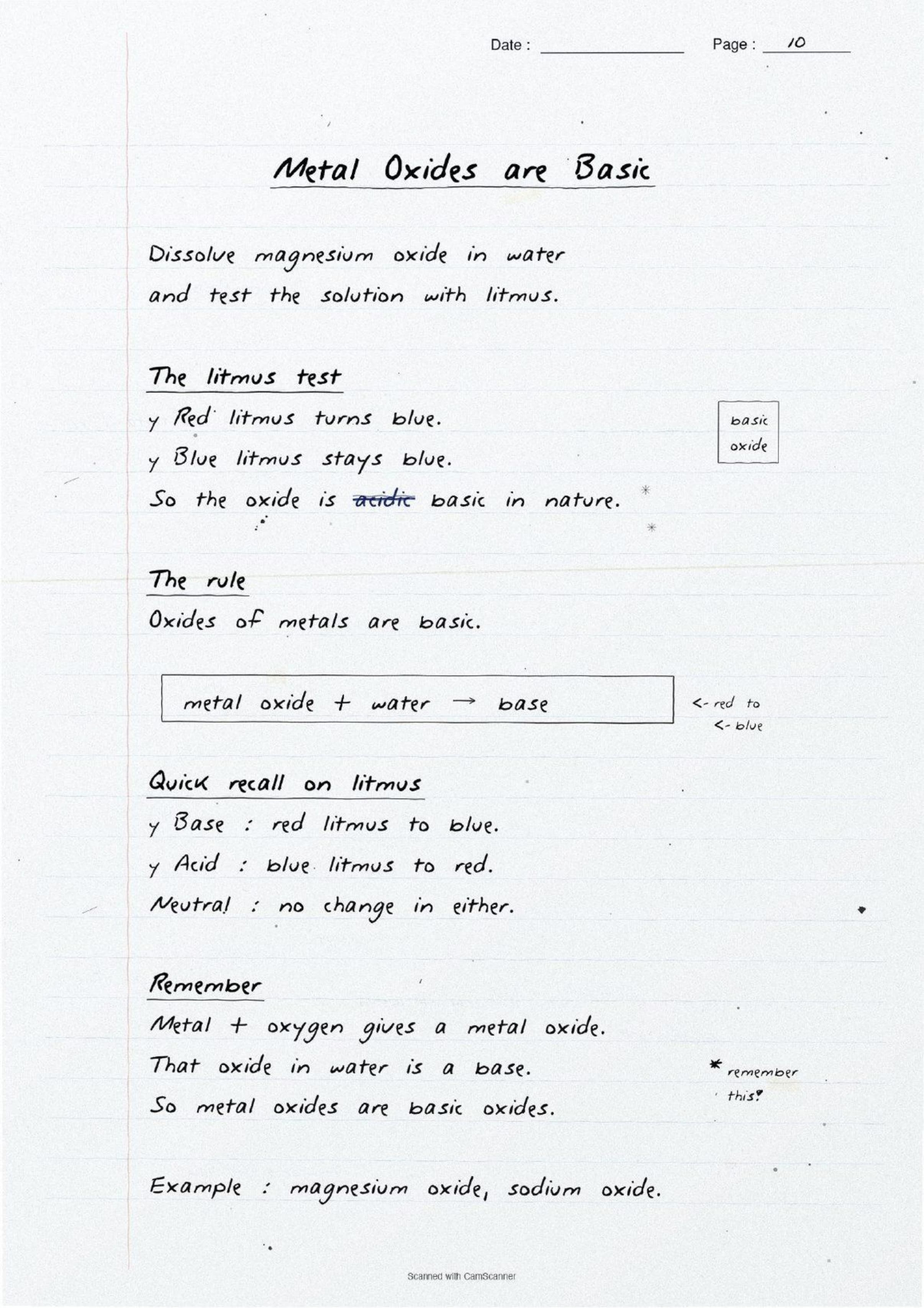
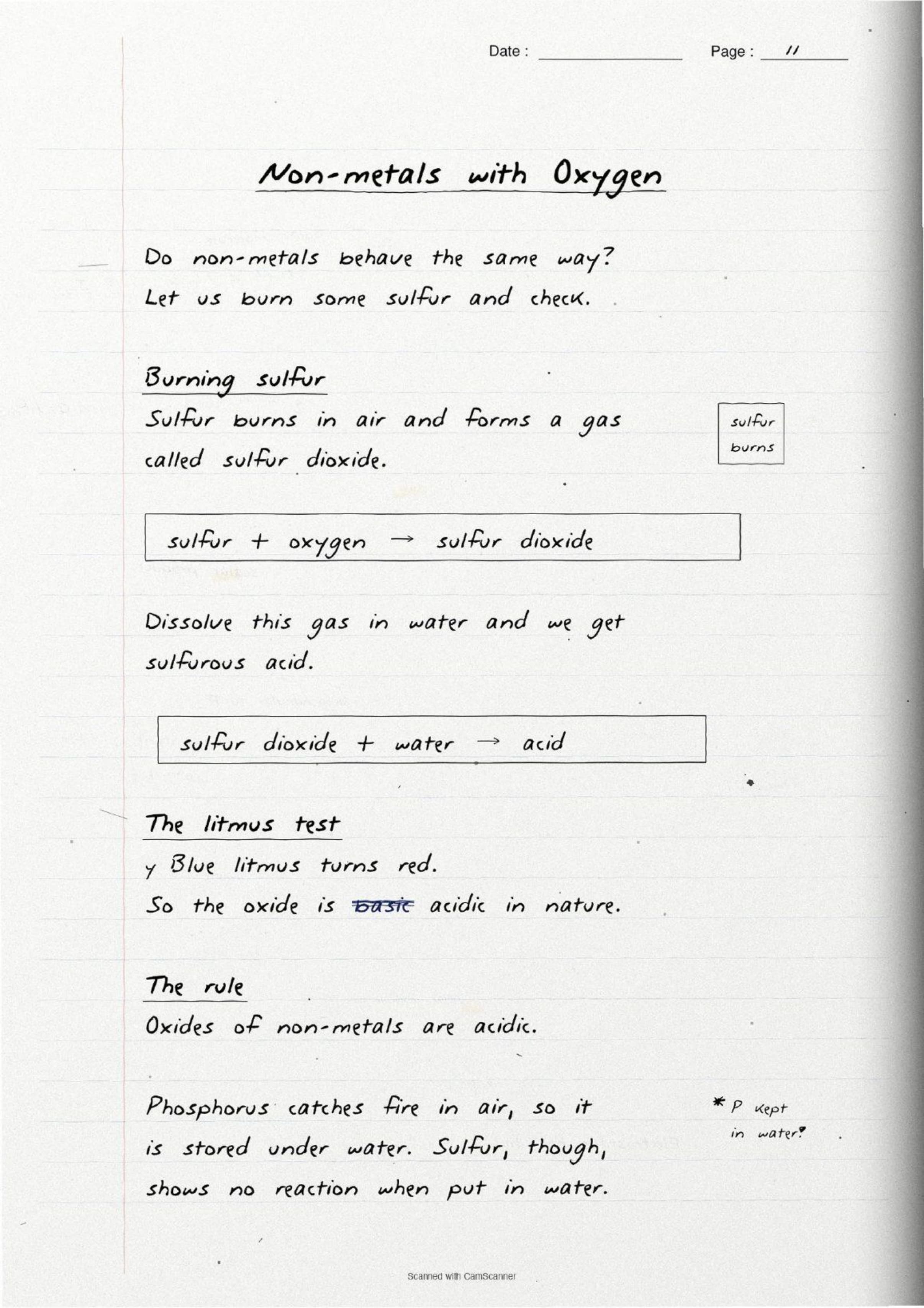
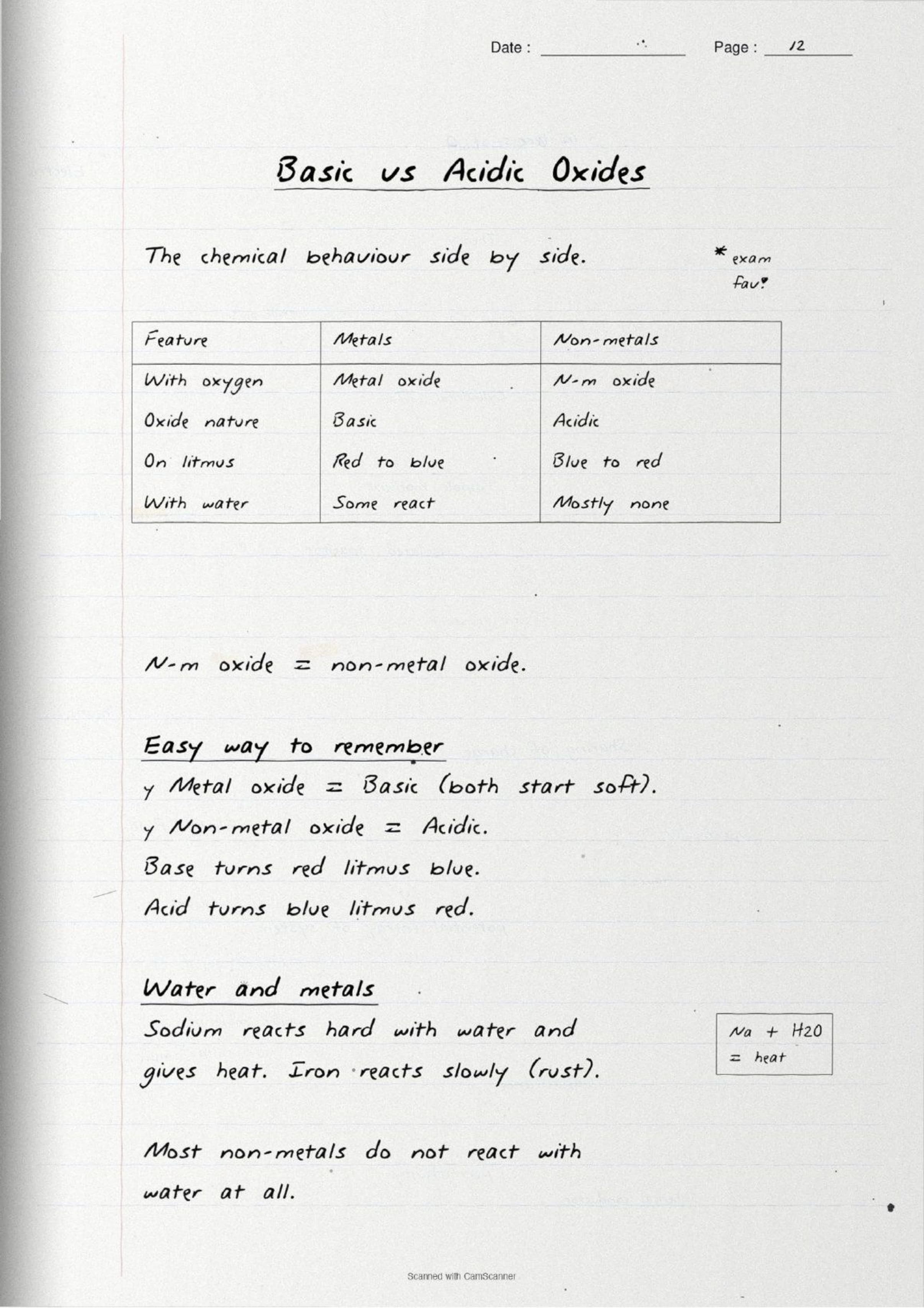
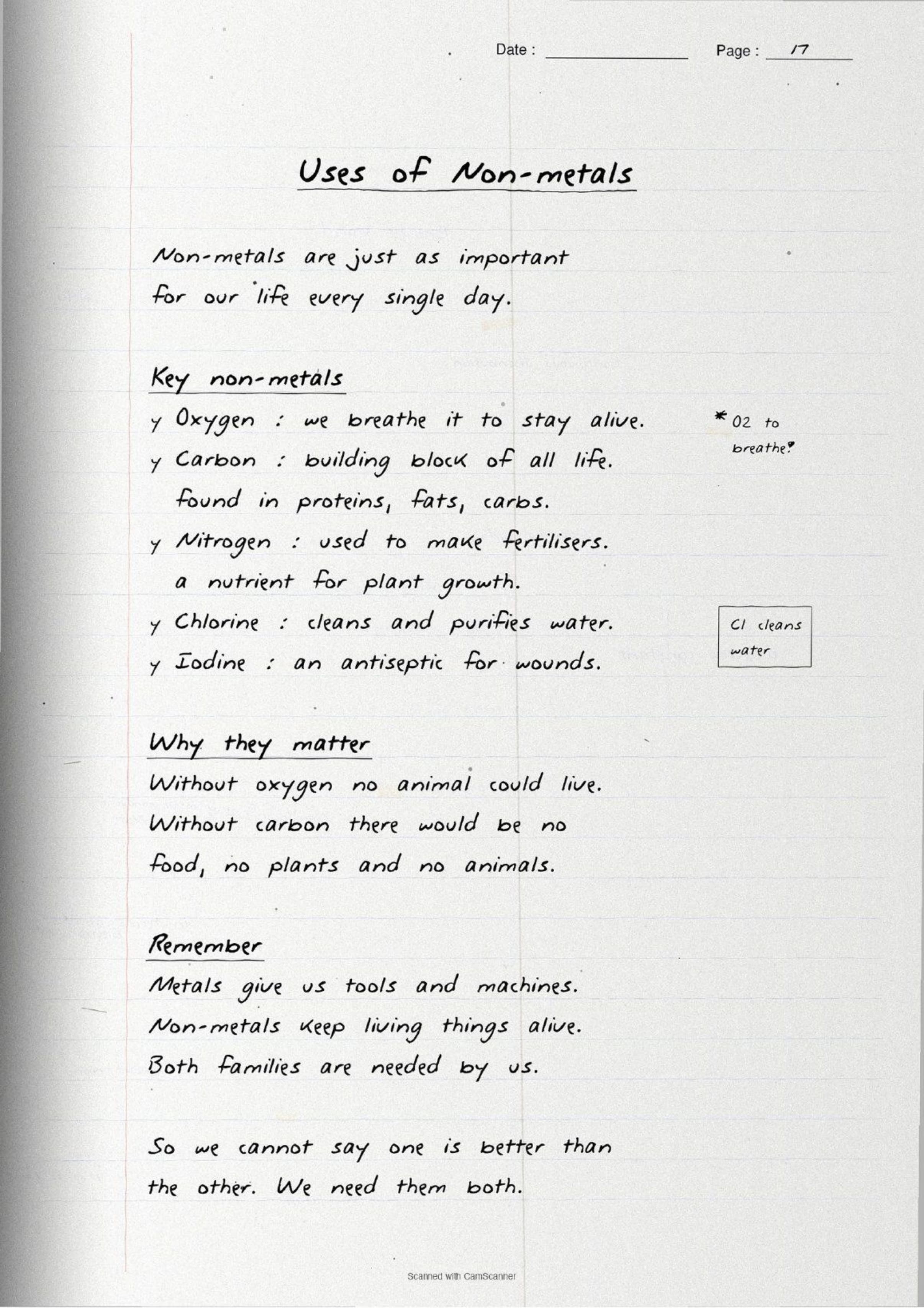
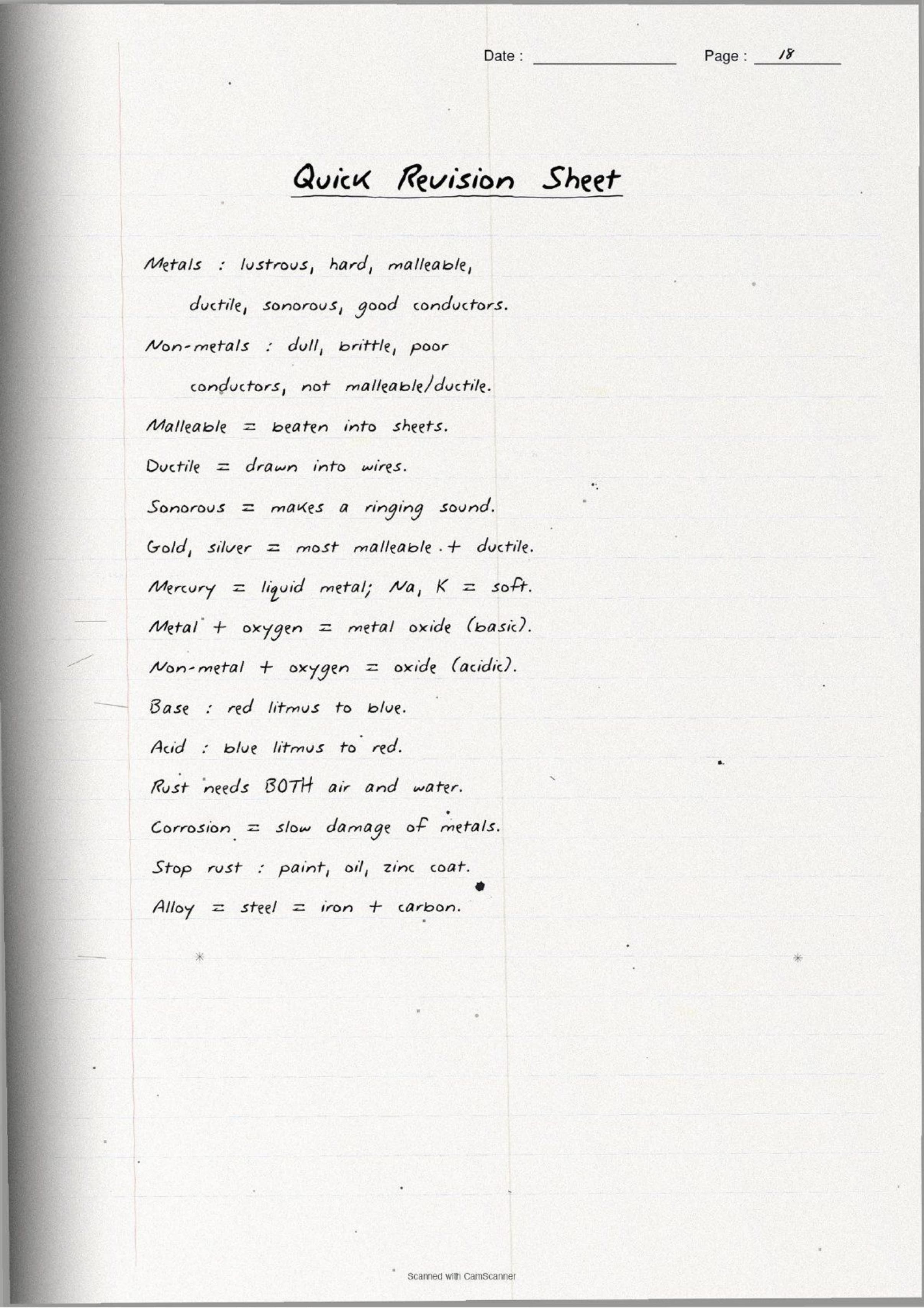
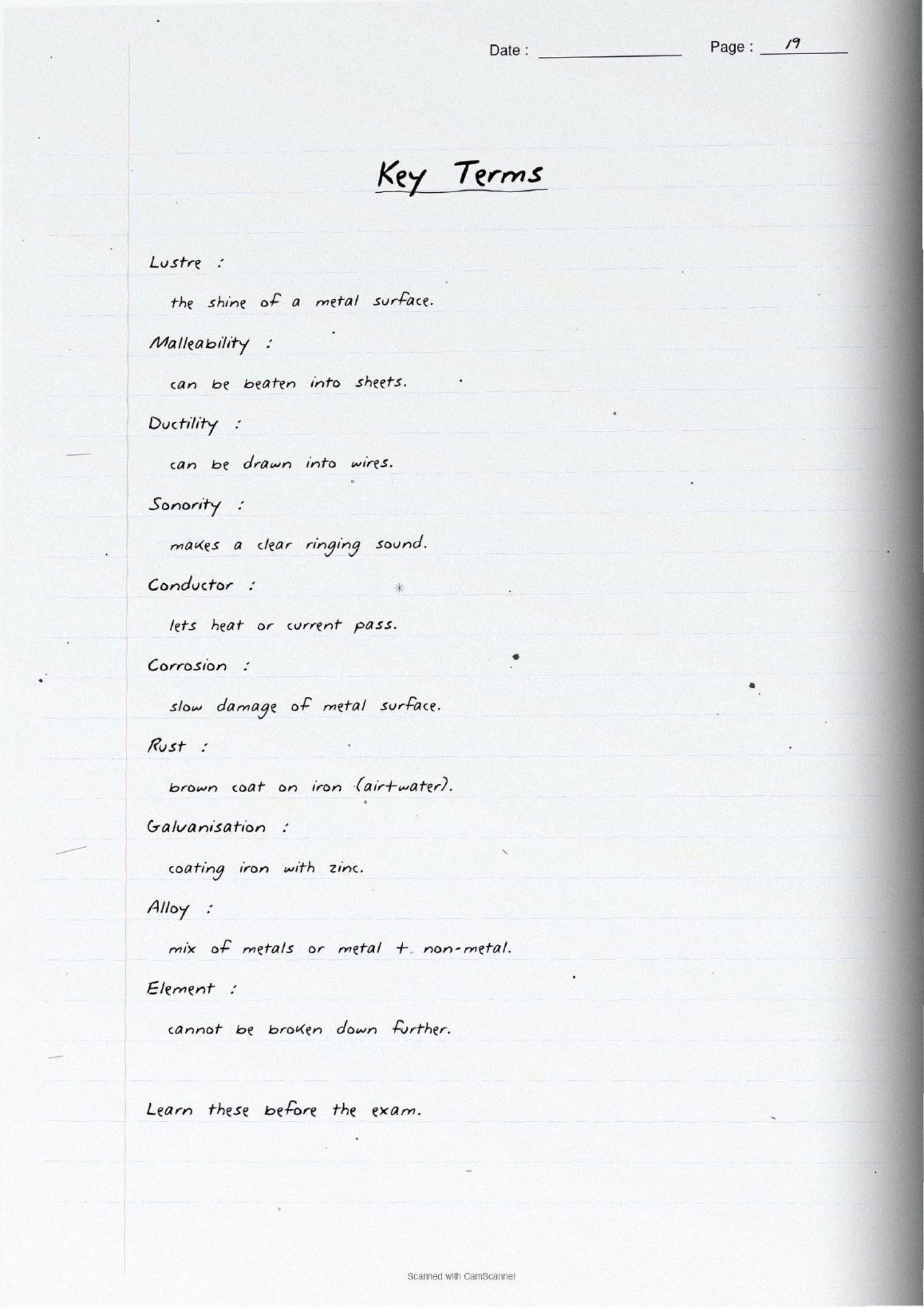
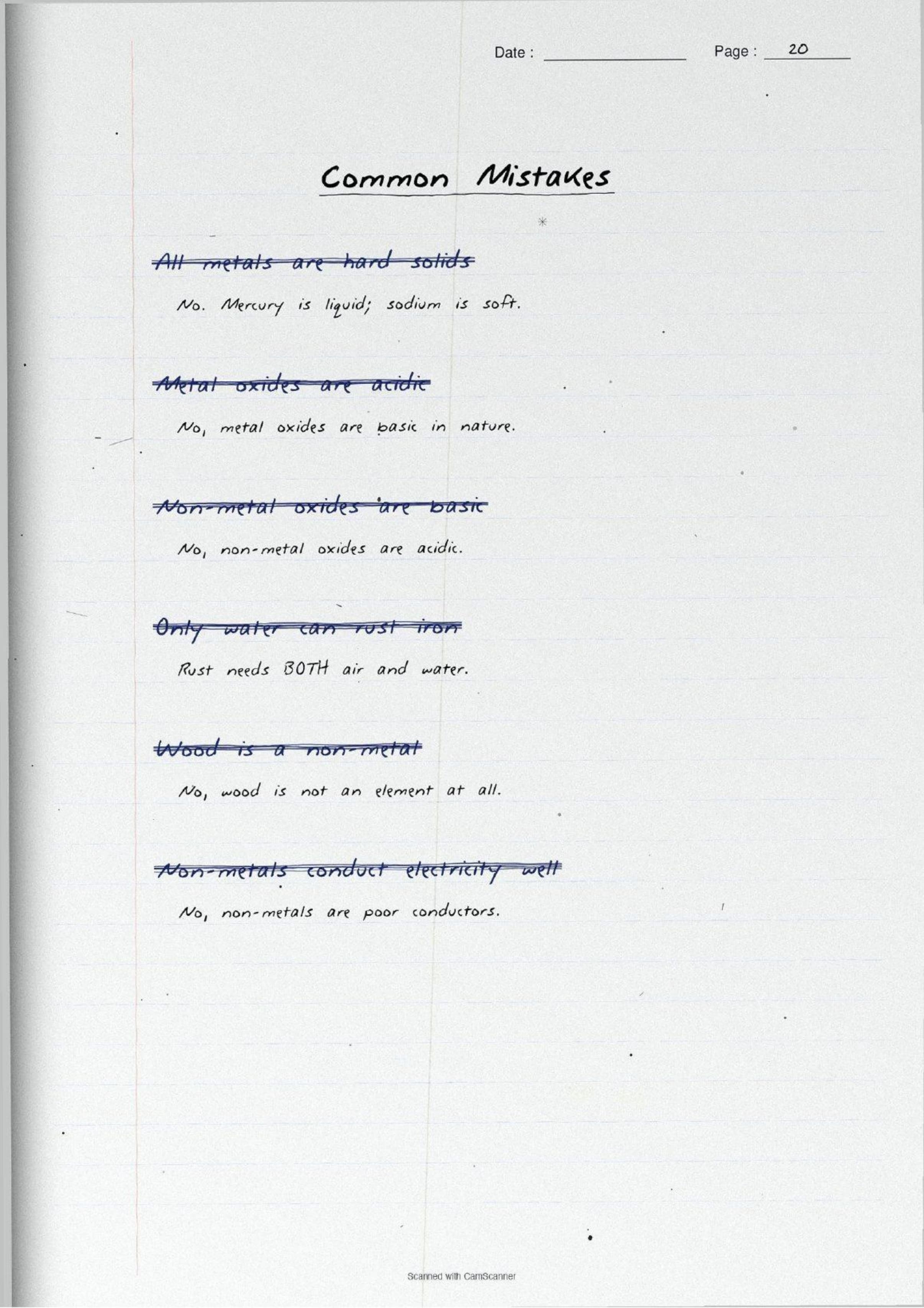
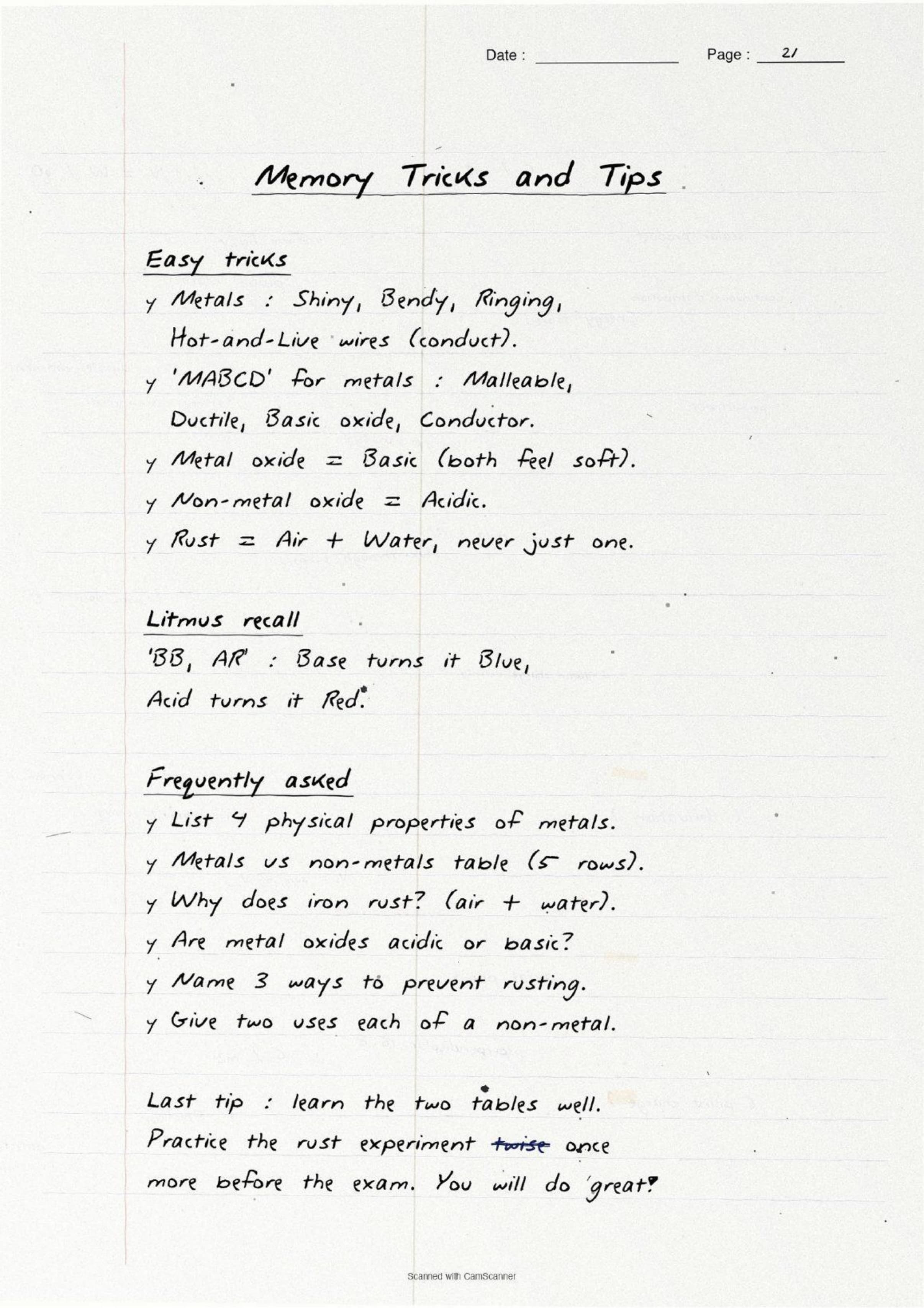
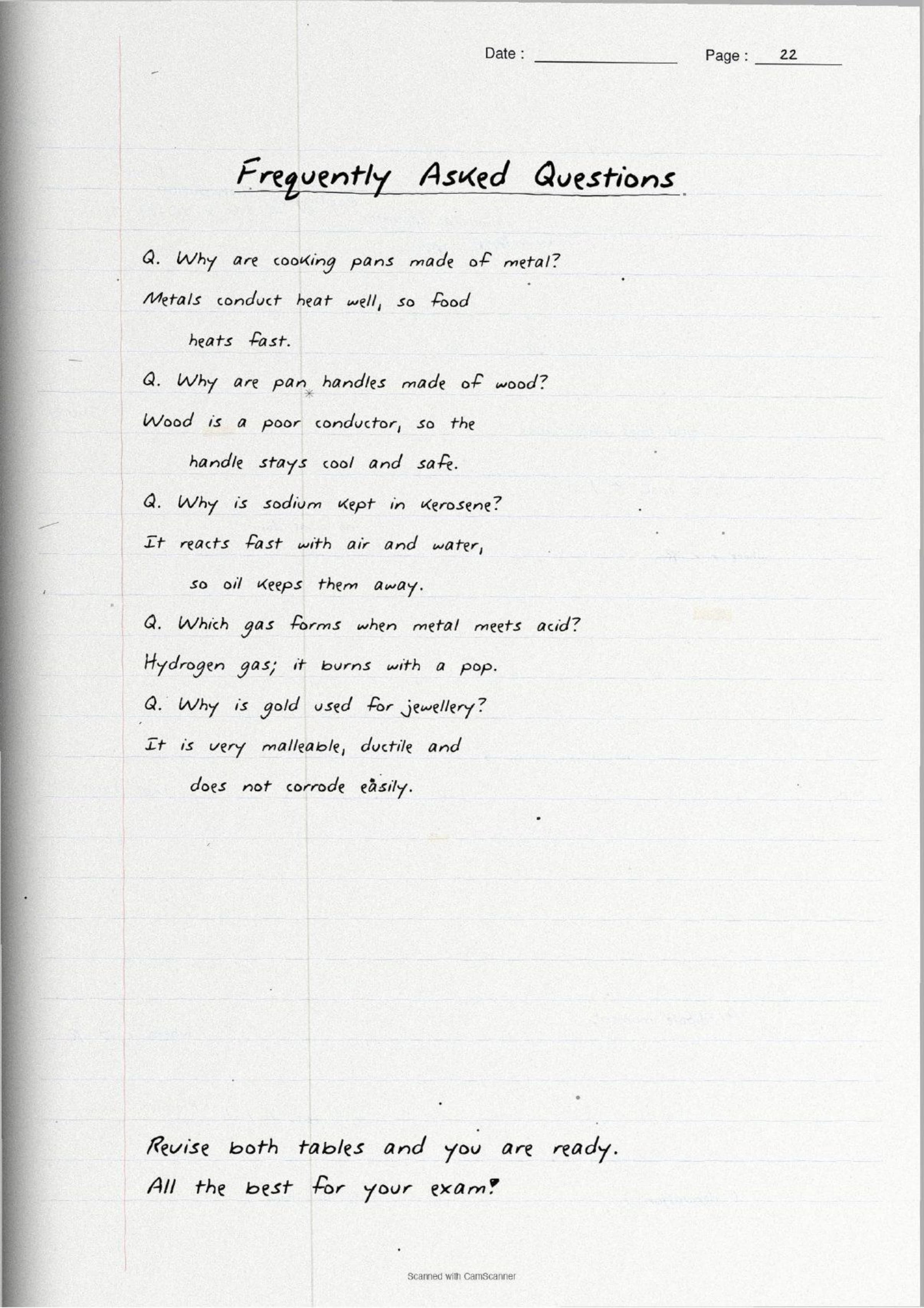
- Property table boxed: malleability, ductility, sonority and conduction compared for metals and non-metals
- What the notes cover: five properties, the action of air and water on iron, and why non-metals matter
- Best for: compare-and-contrast questions, the usual two-mark type in this chapter
Everything described here is in the class 7 science handwritten notes PDF for The World of Metals and Non-metals, linked below.
These handwritten notes are written by Science teachers, mapped to the 2026-27 NCERT, and checked against Class 7 school question papers.
Section-by-Section Map of the The World of Metals and Non-metals Notes
The chapter opens with two students visiting an ironsmith. Each property is introduced through something the smith does, so the notes keep those examples beside the definitions.
- Properties that separate metals from non-metals
- Malleability and beaten sheets
- Ductility and drawn wires
- Sonority and the ringing sound
- Conduction of heat
- Conduction of electricity
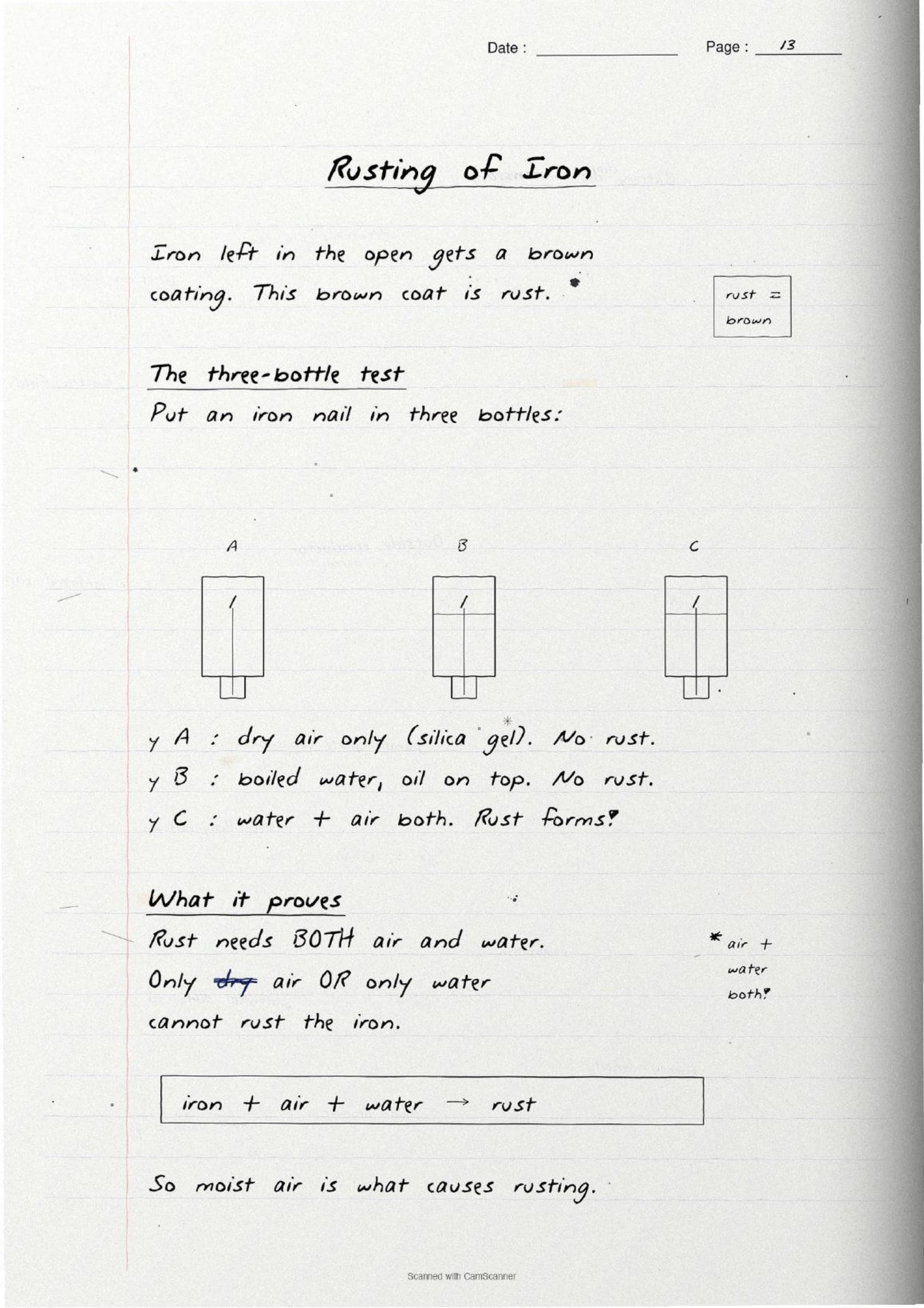
- Effect of air and water on iron: rusting
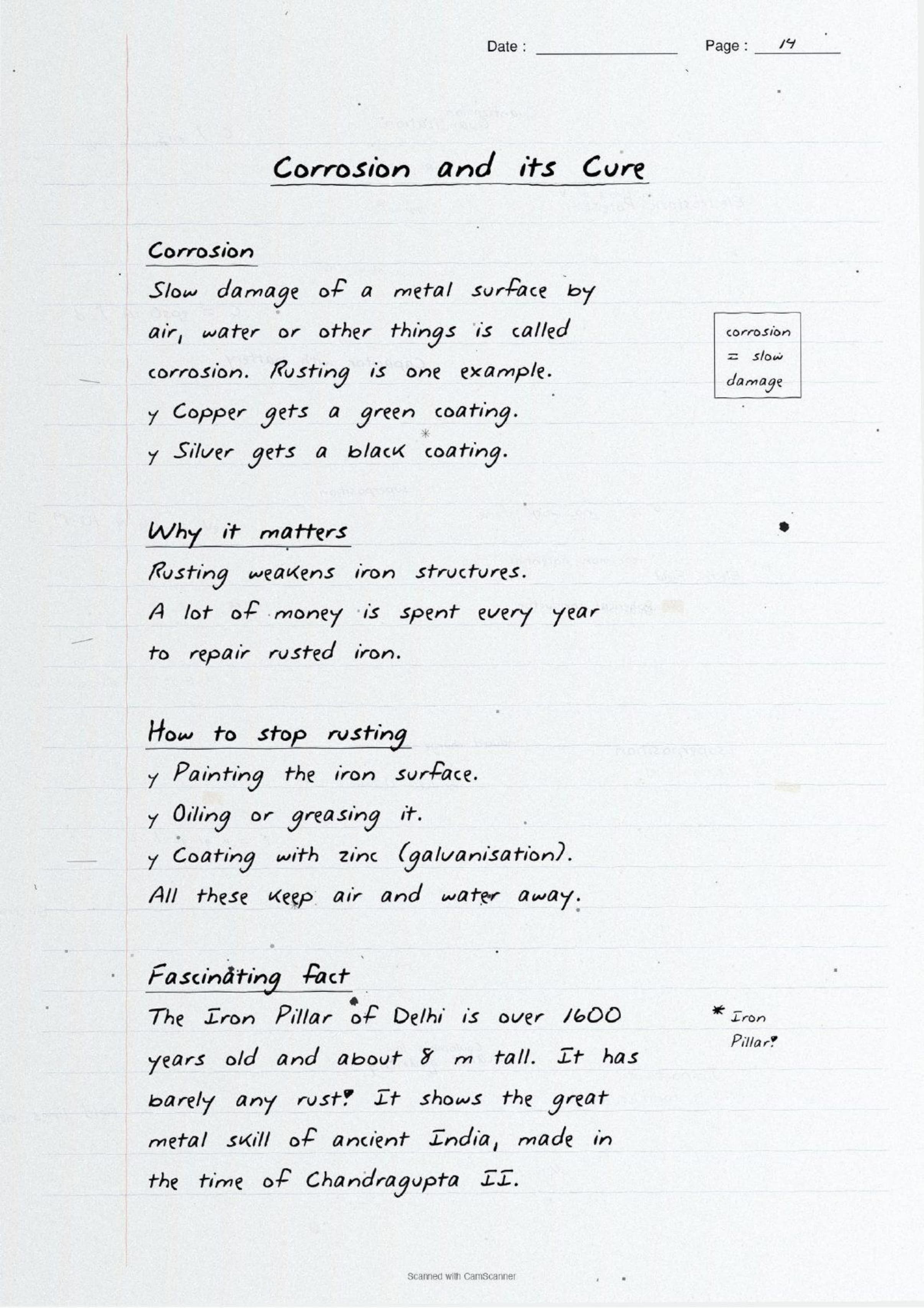
- Effect of air and water on other metals
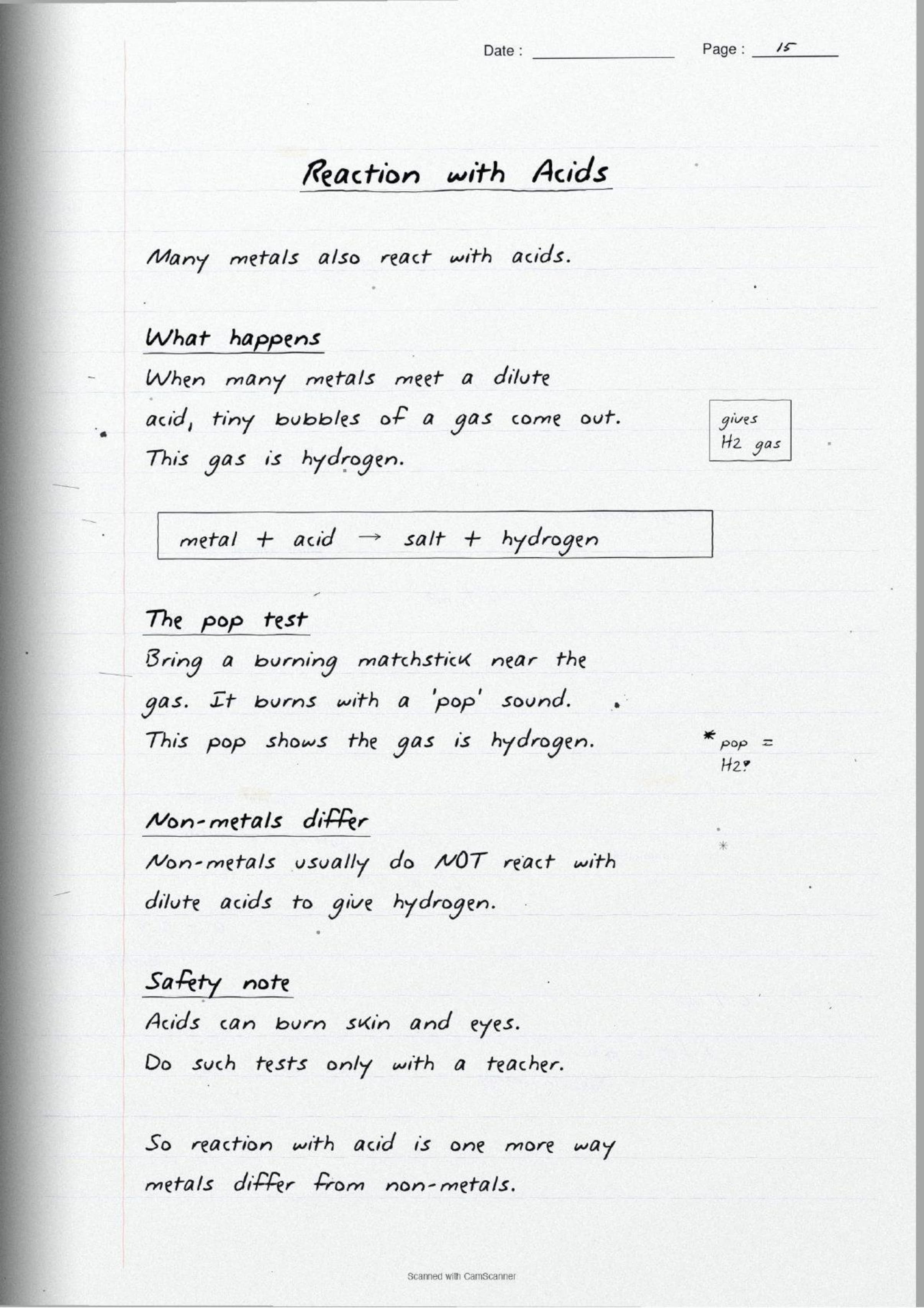
- Substances that behave differently
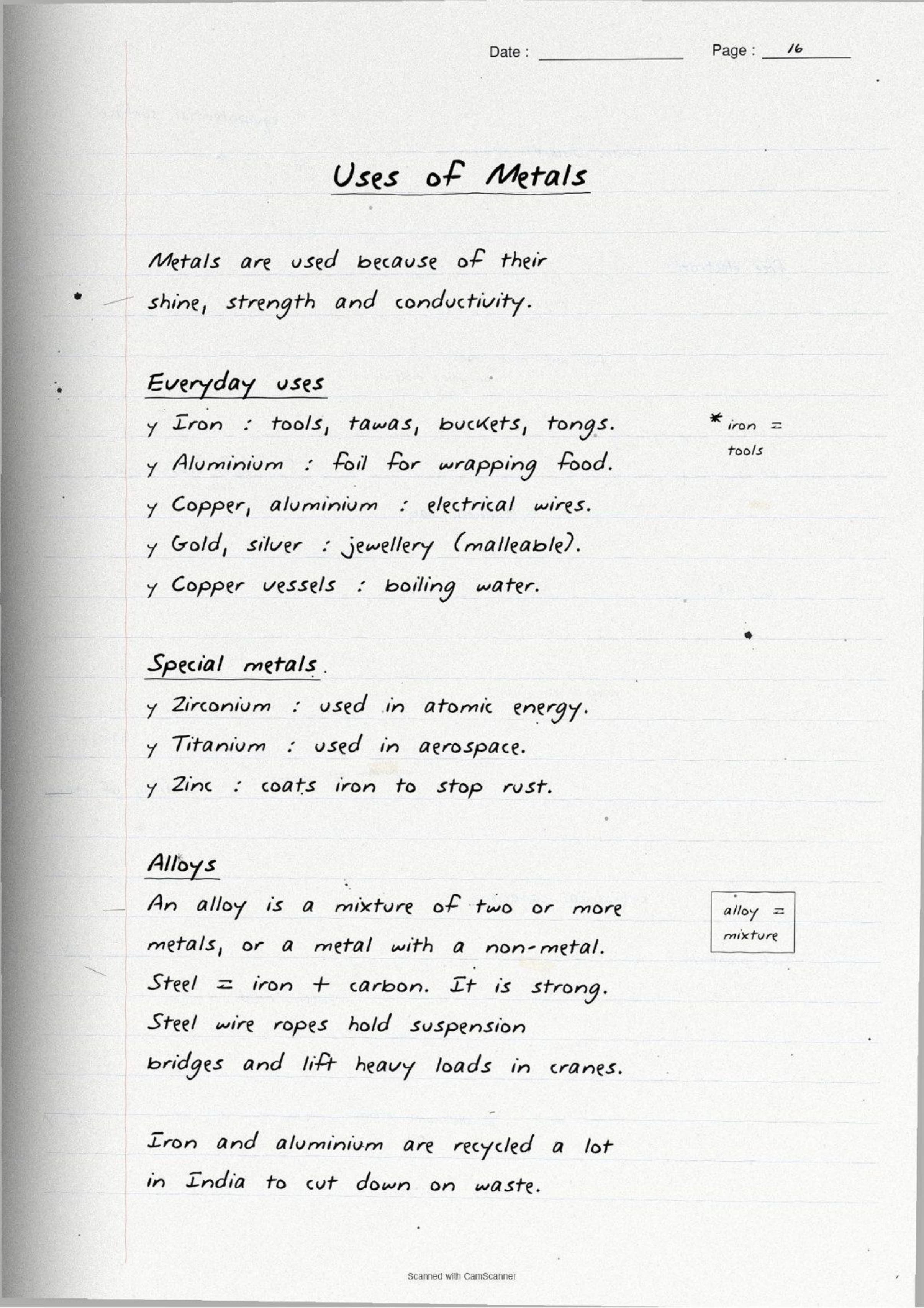
- Why non-metals are essential in daily life
How Collegedunia Wrote These The World of Metals and Non-metals Notes
Collegedunia put the five properties in one grid, so the comparison is visible at a glance. Collegedunia checks every page of these class 7 science handwritten notes against the textbook.
- One comparison grid: five properties across metals and non-metals in a single hand-drawn table
- Examples beside definitions: the ironsmith's work is drawn next to malleability and ductility
- Rusting panel: the three-test-tube experiment drawn with its conclusion
- Colour-coded sub-headings: sub-topics in red so you can find any property quickly
How CBSE Class 7 Science Splits Marks Across The World of Metals and Non-metals
The five-property comparison and rusting take most of the marks. Sort your revision that way.
| Sub-topic | Weightage | How often asked |
|---|---|---|
| Malleability and ductility | High | asked often |
| Rusting of iron and how to prevent it | High | asked often |
| Conduction of heat and electricity | High | asked often |
| Sonority | Medium | asked sometimes |
| Uses of non-metals | Medium | asked sometimes |
| Metals that behave differently | Low | asked rarely |
The The World of Metals and Non-metals Vocabulary CBSE Class 7 Science Expects
Definitions here are short, so examiners expect them to be exact.
| Term / Idea | What it means |
|---|---|
| Metal | a material that is usually hard, shiny, malleable, ductile and a good conductor |
| Non-metal | a material that is usually dull, brittle and a poor conductor |
| Malleability | the property of being beaten into thin sheets |
| Ductility | the property of being drawn into thin wires |
| Sonority | the property of making a ringing sound when struck |
| Rusting | the slow forming of a reddish brown layer on iron in moist air |
| Corrosion | the general damage to a metal surface caused by air and moisture |
| Lustre | the shine of a fresh metal surface |
The World of Metals and Non-metals Practice Questions with Answers
Five quick checks on the properties. Tap a question to see the answer.
Beating a metal into a thin sheet shows its
(a) ductility (b) malleability (c) sonority (d) lustre
Answer: (b) malleability
Drawing a metal into a thin wire shows its
(a) malleability (b) sonority (c) ductility (d) hardness
Answer: (c) ductility
Rusting of iron needs
(a) air only (b) water only (c) both air and water (d) neither
Answer: (c) both air and water
Which non-metal conducts electricity?
(a) sulphur (b) graphite (c) phosphorus (d) iodine
Answer: (b) graphite, the exception among non-metals
A metal plate rings when struck. This property is called
(a) ductility (b) malleability (c) sonority (d) conduction
Answer: (c) sonority
Why The World of Metals and Non-metals Matters Beyond Class 7
This chapter is mostly recall, which makes it a reliable source of marks. Students lose them only by mixing up malleability and ductility.
- A property comparison question appears in almost every test
- Rusting and its prevention is a standard two-mark answer
- Uses of non-metals is a common one-mark question
- The same properties are used again in Class 8 and Class 10 chemistry
One-Page Recall Card for The World of Metals and Non-metals
The last-hour version of the chapter fits on one card.
- Malleable means beaten into sheets; ductile means drawn into wires
- Sonorous means it rings when struck
- Metals conduct heat and electricity; most non-metals do not
- Rusting needs air plus water; oil, paint or galvanising stops it
- Graphite is the non-metal that conducts
What the The World of Metals and Non-metals Notes Draw Out for You
The properties are easier to remember as pictures than as sentences.
| Figure drawn by hand | What it shows |
|---|---|
| Ironsmith at work | a hot iron rod being beaten into a sheet |
| Wire drawing sketch | a metal rod pulled thin to show ductility |
| Property comparison grid | five rows across metals and non-metals |
| Rusting test tubes | three tubes with dry air, water and moist air |
| Uses of non-metals panel | oxygen, nitrogen, iodine and graphite in daily use |
Fitting the The World of Metals and Non-metals Notes Into Your Revision Week
Learn the grid, then attach one example to each row. That is how the questions are framed. Treat the class 7 science handwritten notes as a revision tool, not as a first-time textbook.
- Copy the five-property grid once from memory
- Write one everyday example for each property
- Explain rusting and two ways to prevent it in three sentences
- On the last day, revise the grid and the rusting panel only
Pair the The World of Metals and Non-metals Notes With These
The solved exercises add more compare-and-contrast practice.
Class 7 Science Handwritten Notes Chapter List
The class 7 science handwritten notes for all chapters are listed below. All twelve Class 7 Science chapters have handwritten notes. Use the table to move between them.
The World of Metals and Non-metals Class 7 Science Handwritten Notes FAQs
Ques. Where can I download The World of Metals and Non-metals Class 7 Handwritten Notes PDF?
Ans. The PDF is available on this page, free, in a normal and an HD version.
Ques. Do the notes compare metals and non-metals in a table?
Ans. Yes. All five properties sit in one hand-drawn grid with metals in one column and non-metals in the other.
Ques. How many pages is the Chapter 4 handwritten notes PDF?
Ans. It runs 22 pages and covers all five sections of the chapter plus a quiz.
Ques. What is the difference between malleability and ductility?
Ans. Malleability is the property of being beaten into thin sheets, like the aluminium foil in your kitchen. Ductility is the property of being drawn into thin wires, like the copper wire in a cable.
Ques. How can rusting be prevented?
Ans. By keeping air or water away from the iron surface. Painting, oiling, greasing and galvanising are the four methods the chapter covers.



Comments