



The Class 7 Science Curiosity notes for Adolescence: A Stage of Growth and Change explain growing up through clear definitions and everyday examples. Based on the 2026-27 NCERT chapter, they cover puberty, emotional changes, healthy habits and hormones. Use this page for a quick recap, then read the PDF for fuller explanations.
- Compare adolescence and puberty without mixing their meanings.
- Revise physical changes, menstrual hygiene and healthy daily choices.
- Practise giving reasons for respectful behaviour and refusing harmful substances.
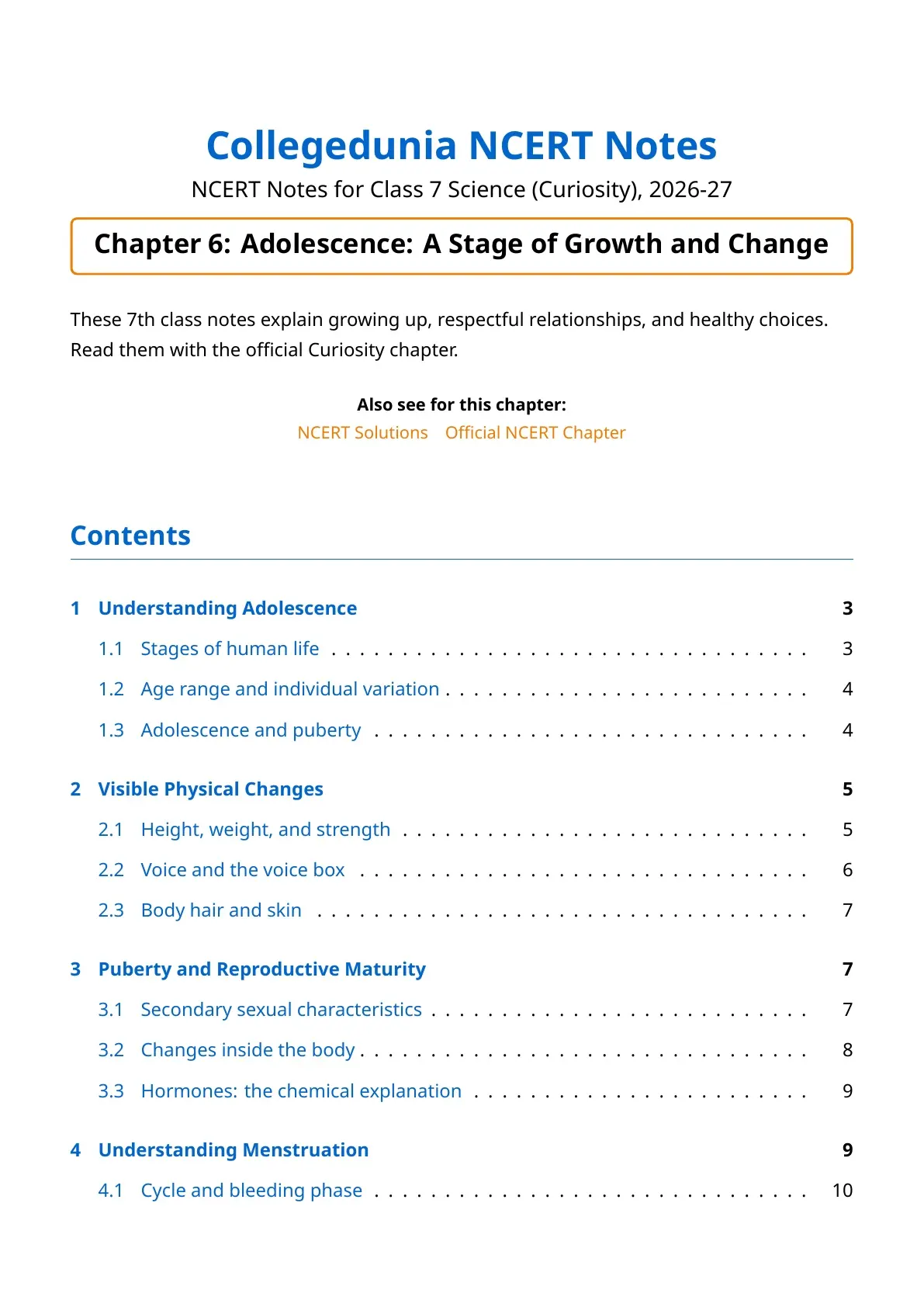
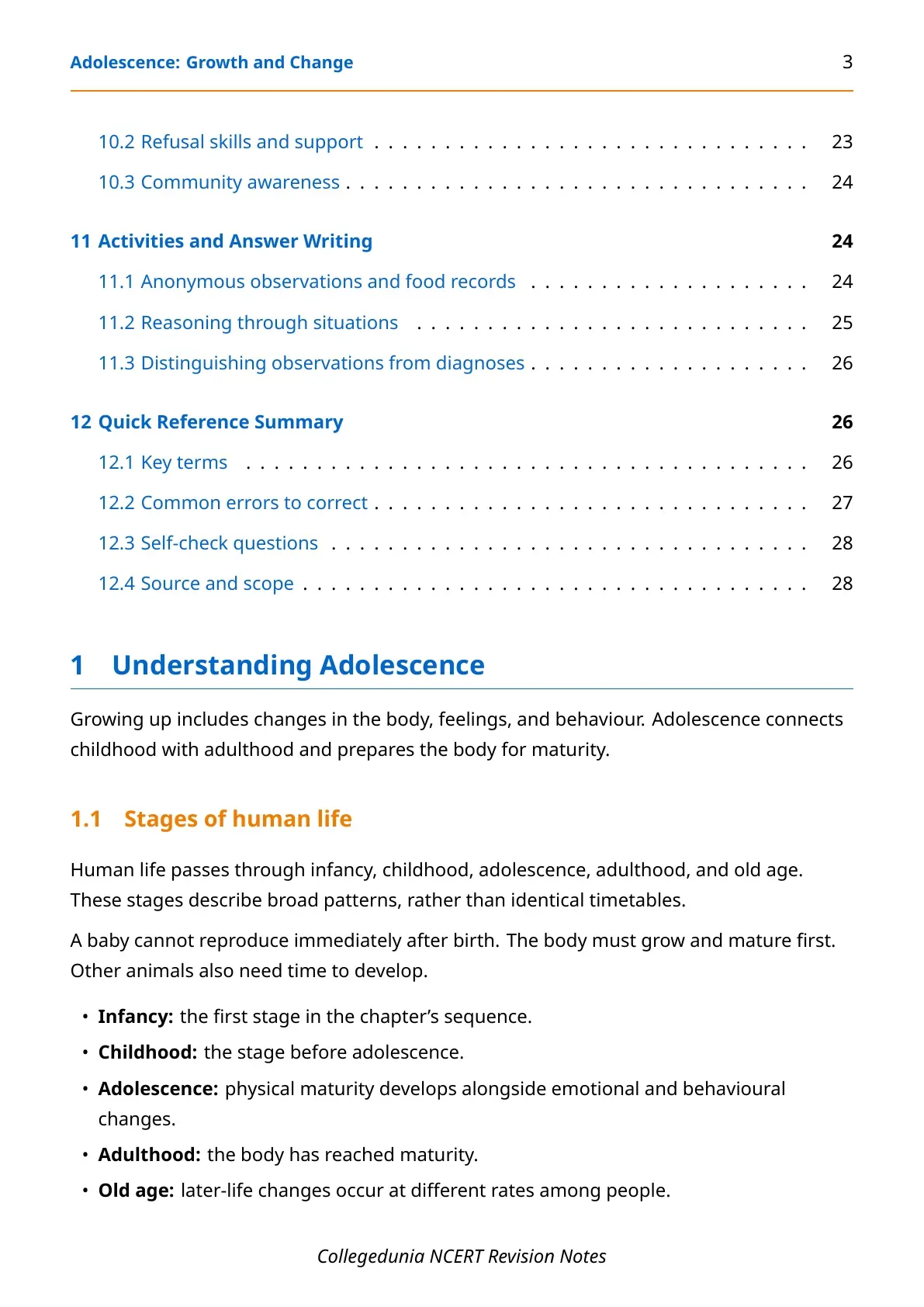
Student Feedback and Self-Check
After revision, note which idea still needs explanation: puberty, hormones or menstrual hygiene. Discuss your question with a trusted teacher.
These Collegedunia notes follow the topics in the 2026-27 NCERT Curiosity chapter.
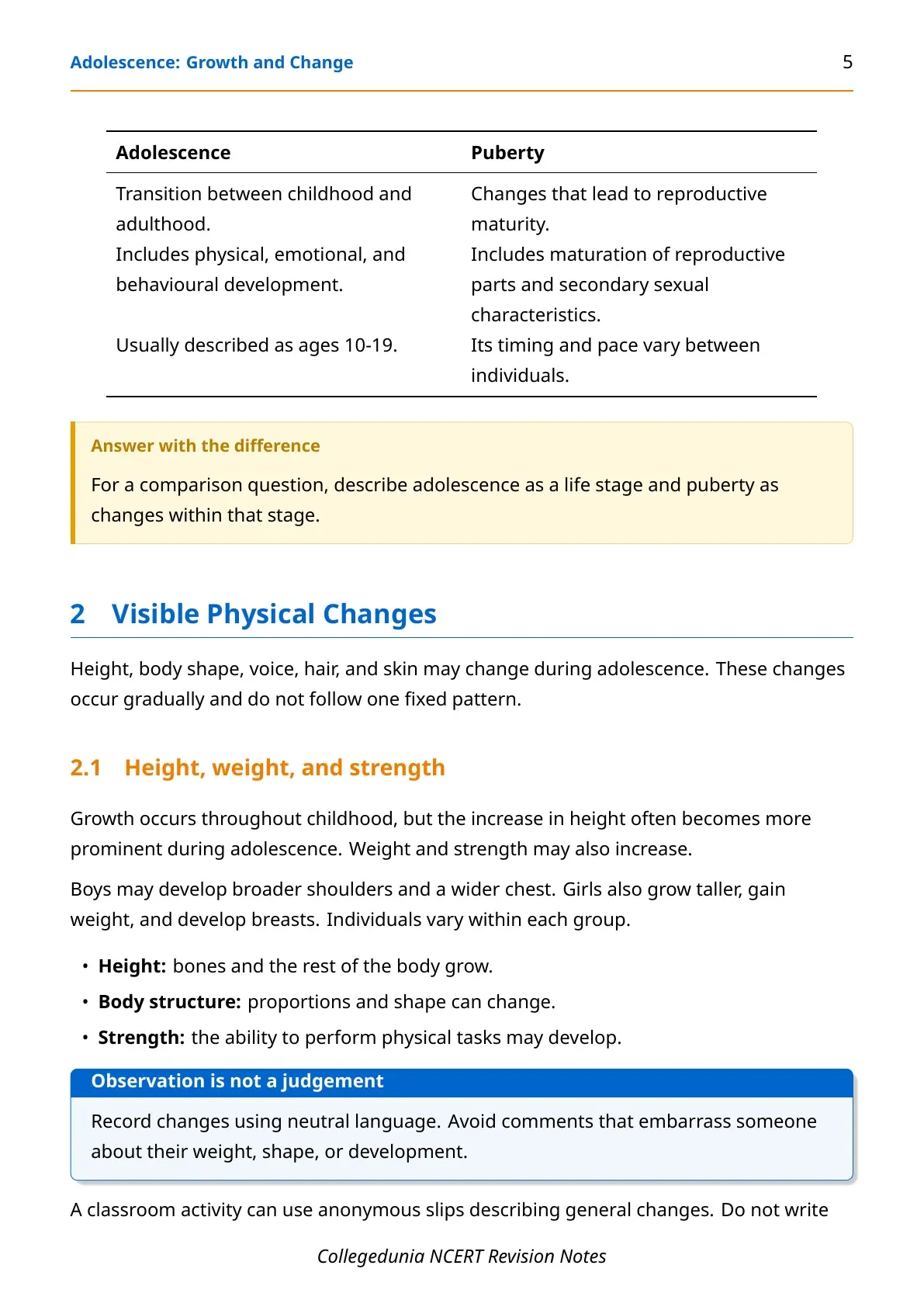
Adolescence and Puberty: Changes and Their Different Meanings
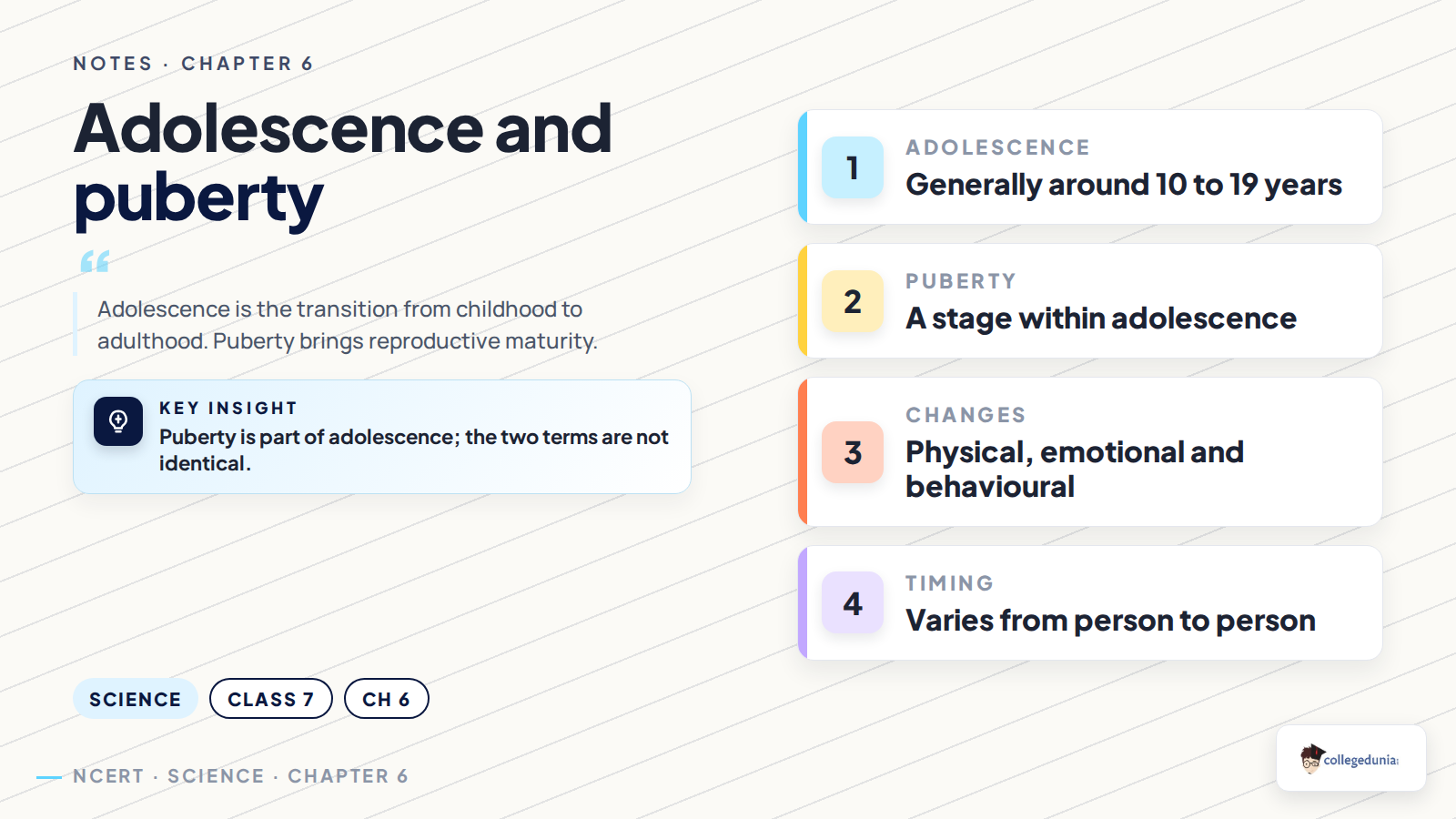
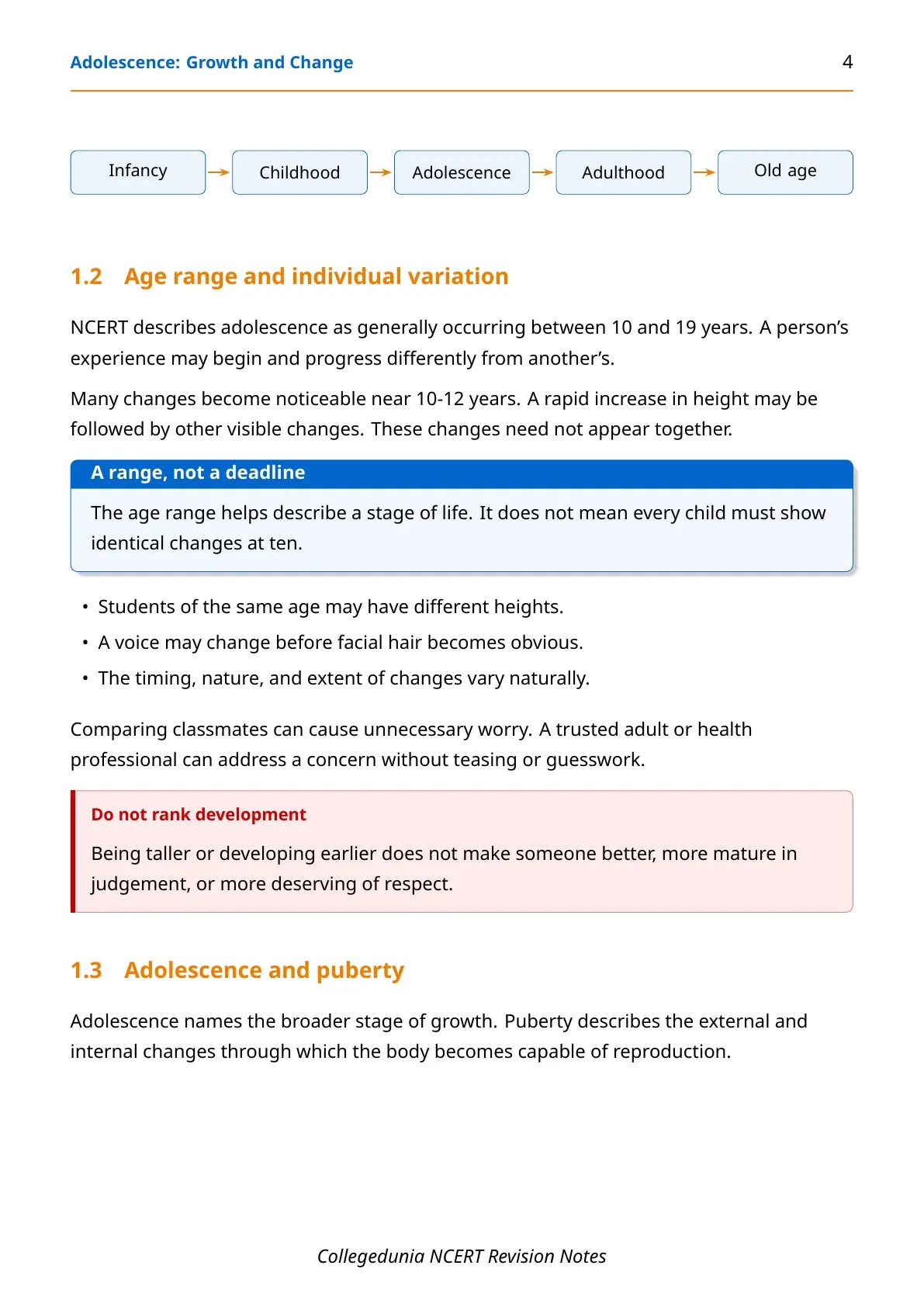
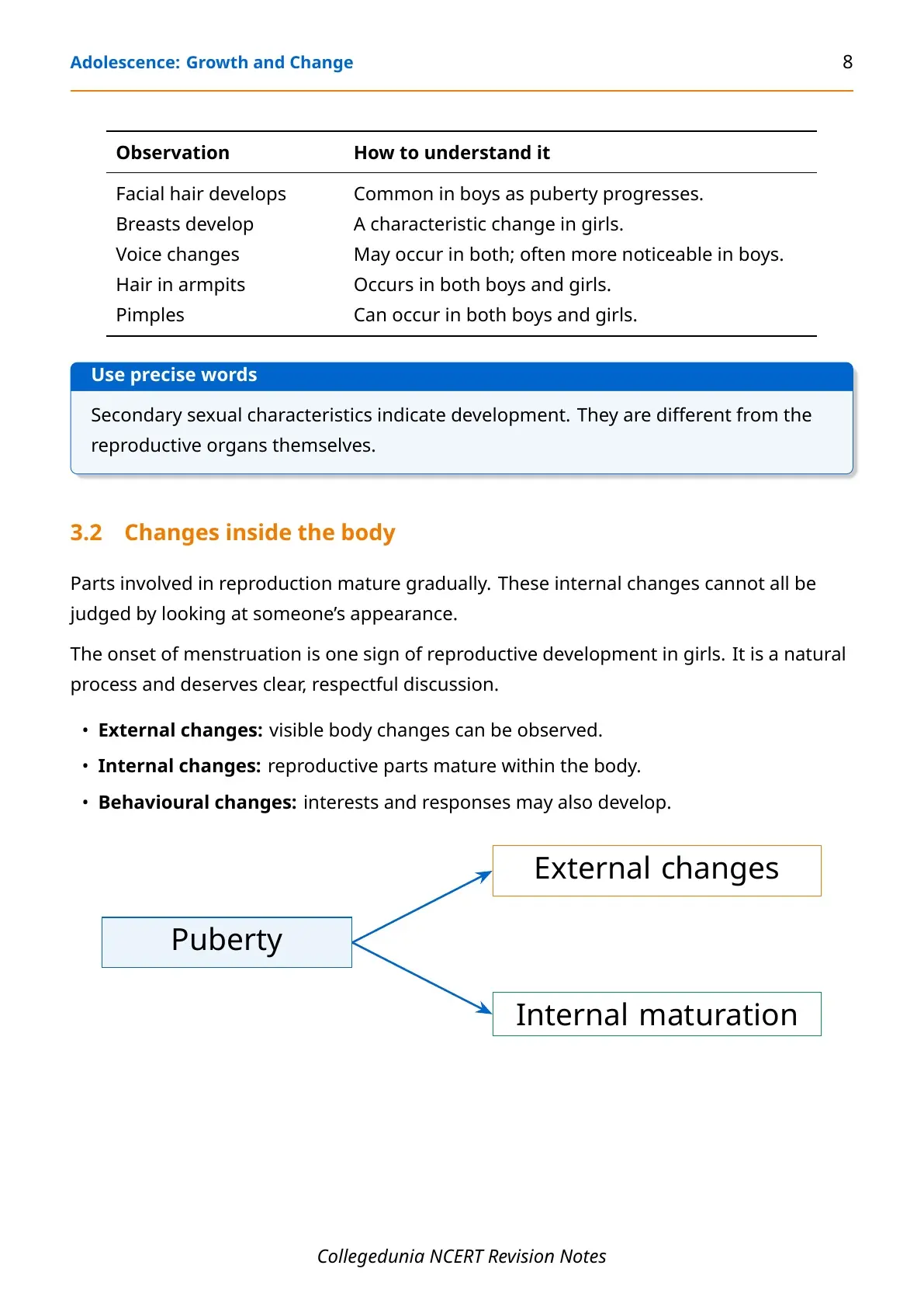
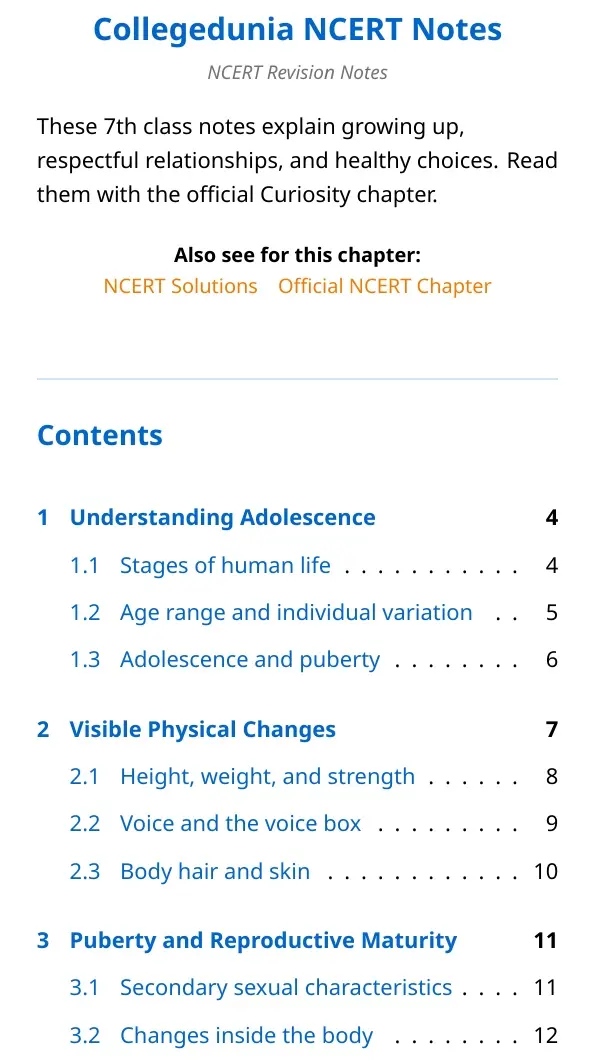
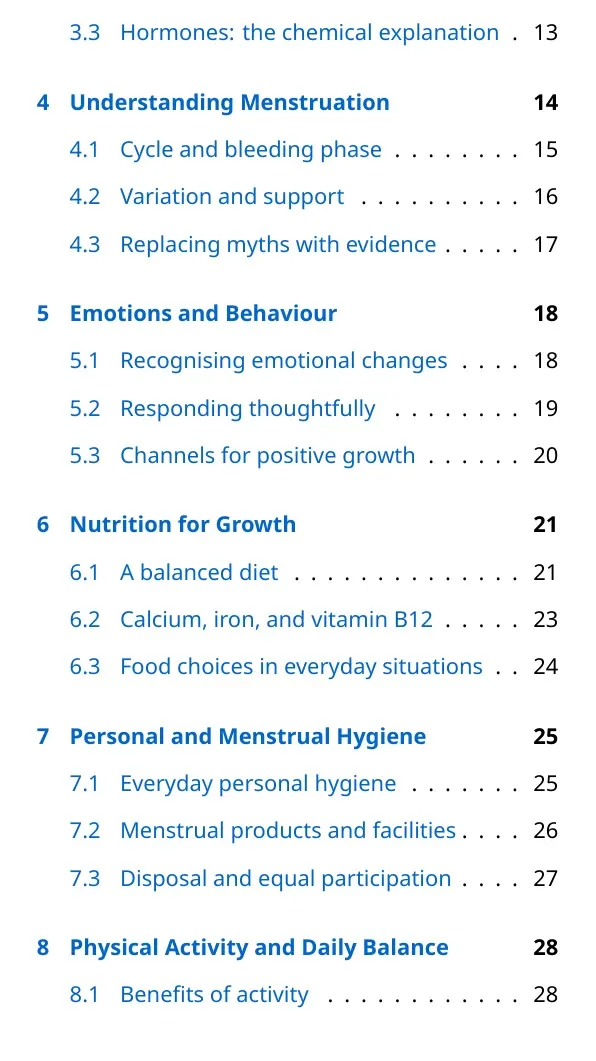
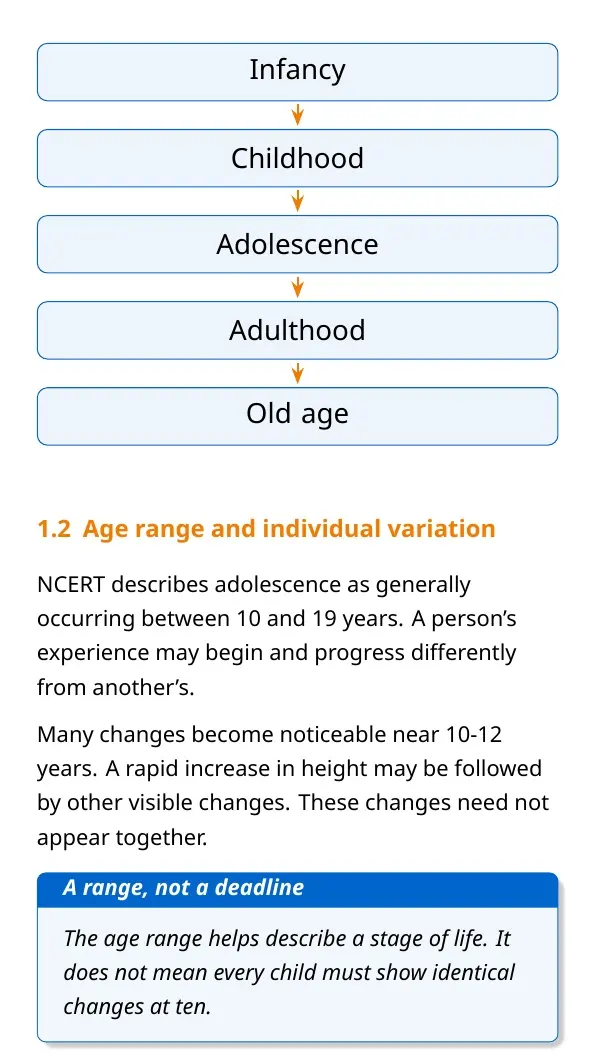
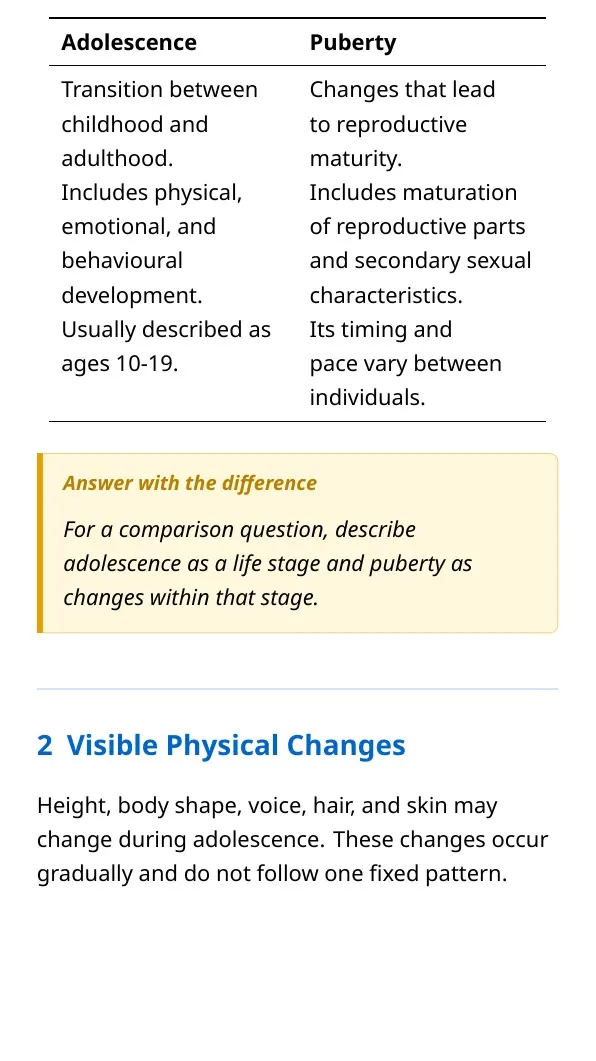
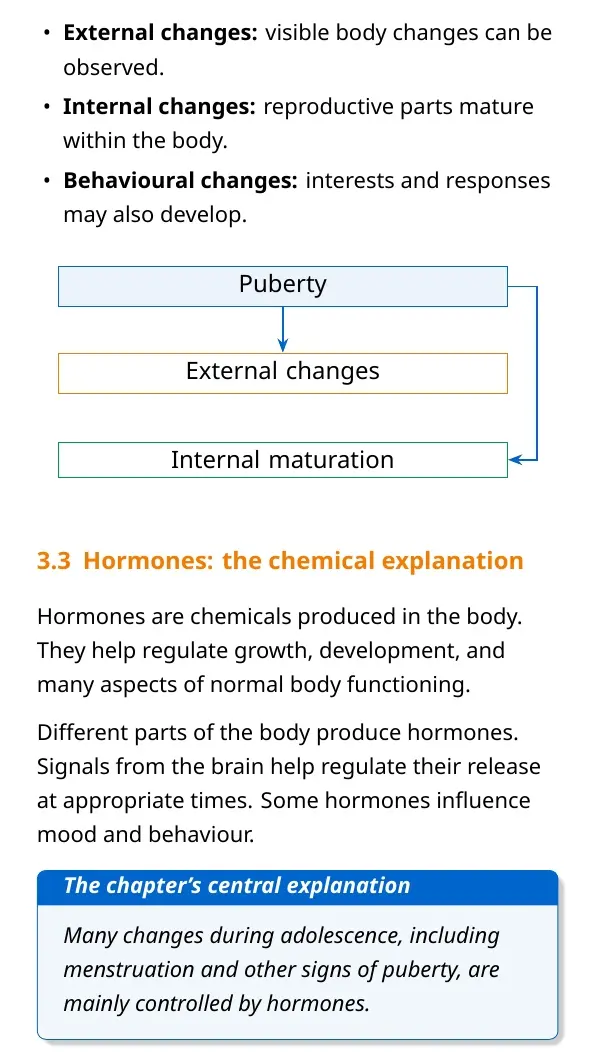
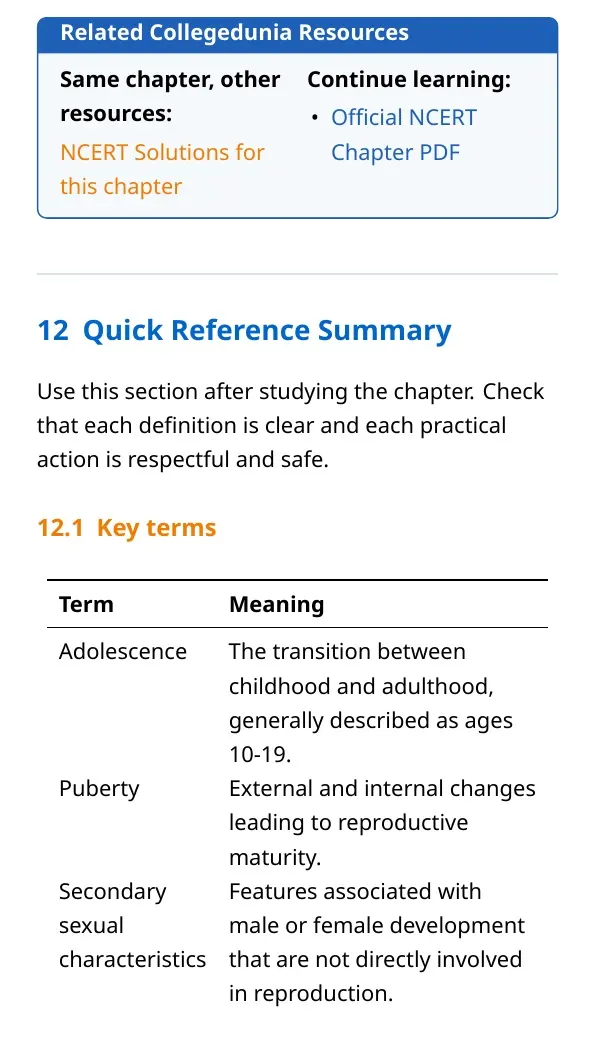
Adolescence is the transition between childhood and adulthood, generally around 10 to 19 years. It includes changes in the body, feelings and behaviour. Puberty is the stage when external and internal changes make the body capable of reproduction.
Puberty is part of adolescence; the words do not mean exactly the same thing. Reproductive maturity does not mean that every aspect of emotional or social development is complete.
| Change | What the chapter explains |
|---|---|
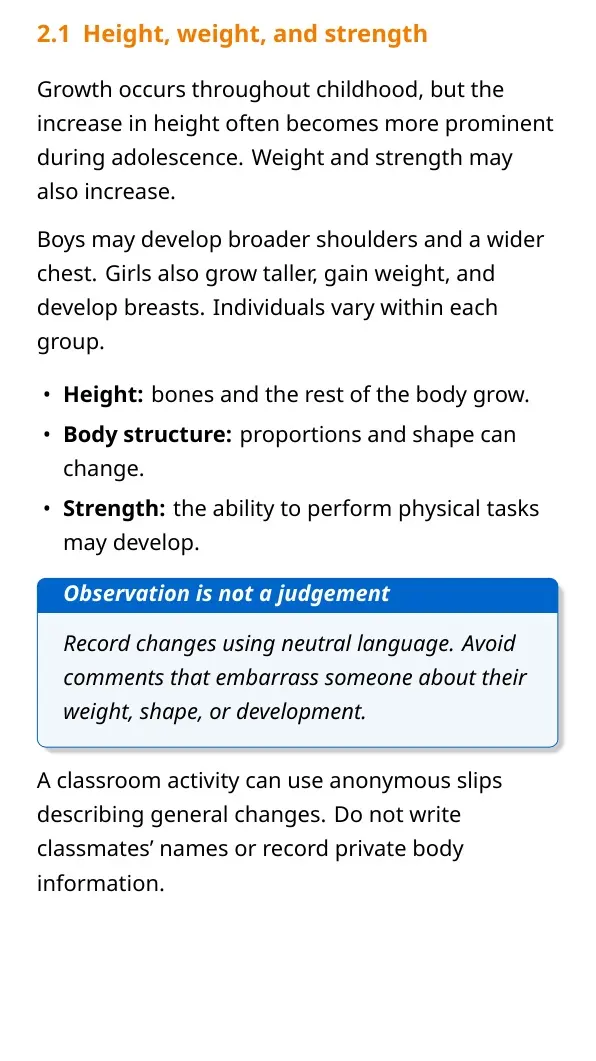
| Height and body shape | Rapid growth can change height, weight, strength and body proportions. |
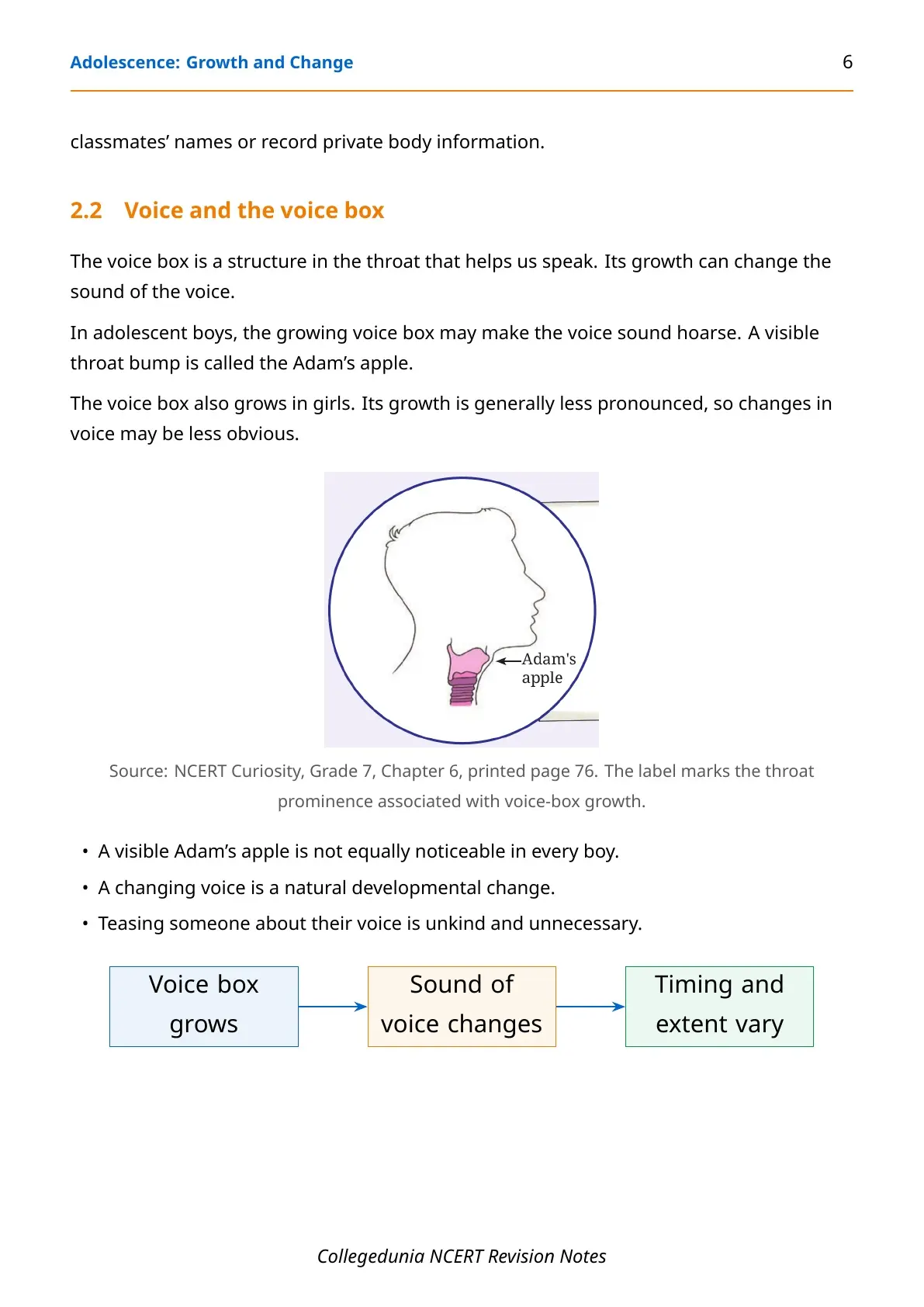
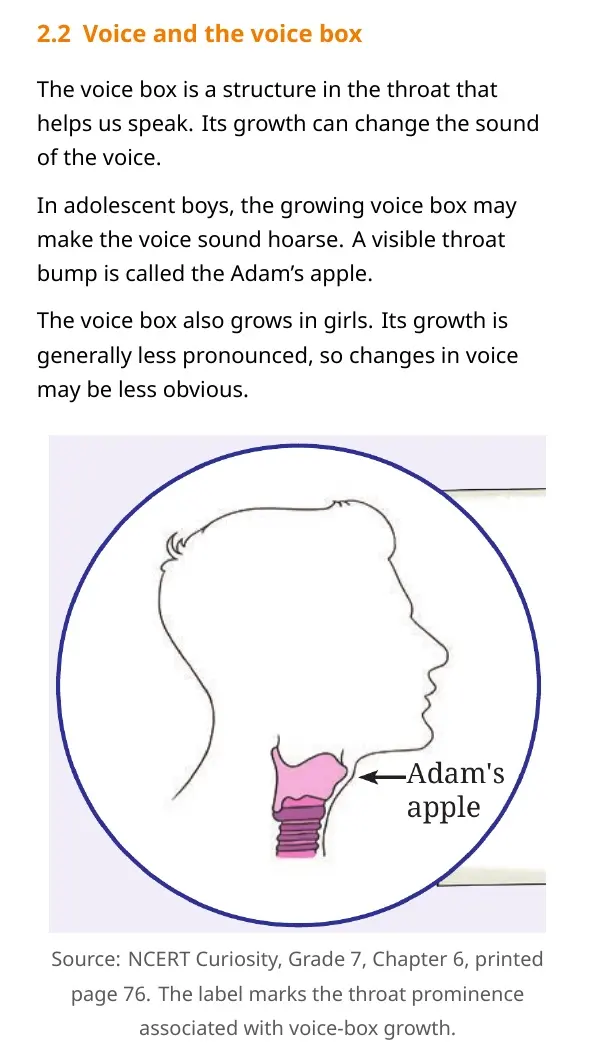
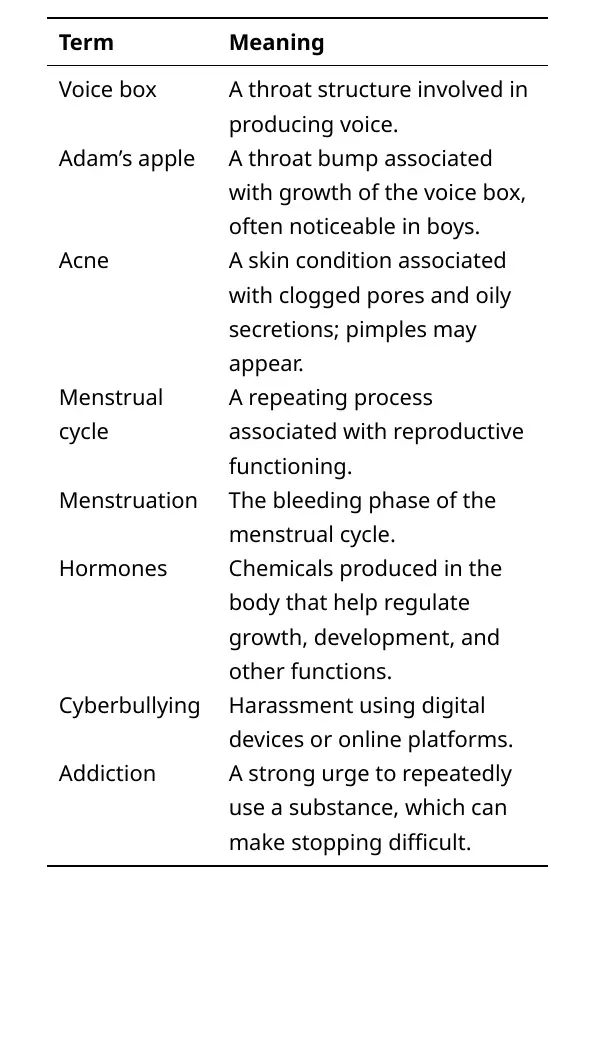
| Voice | The voice box grows. Changes are usually more noticeable in boys. |
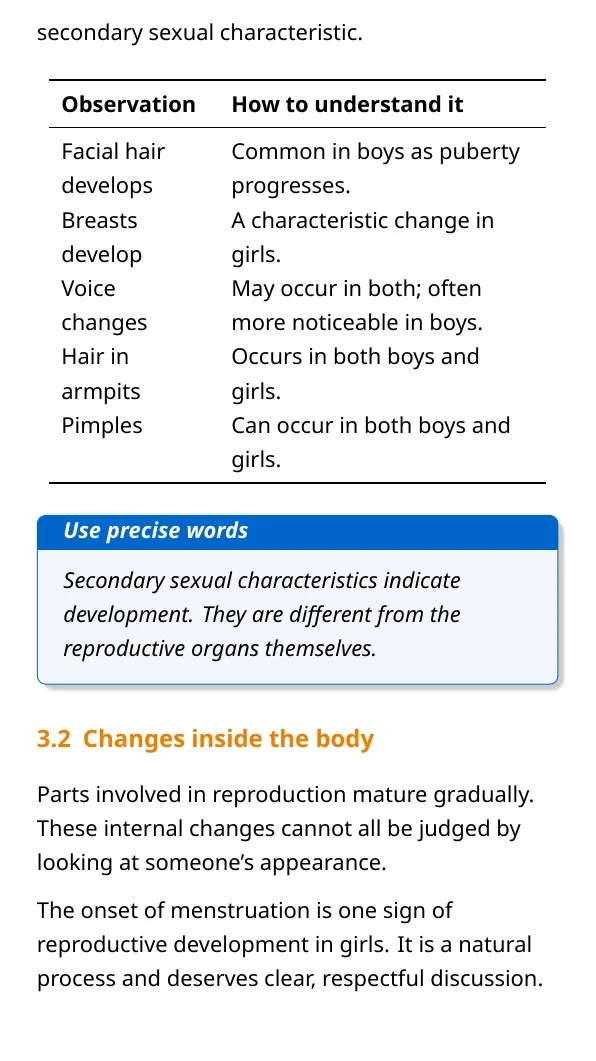
| Body hair | Hair grows in the armpits and pubic region. Facial hair commonly develops in boys. |
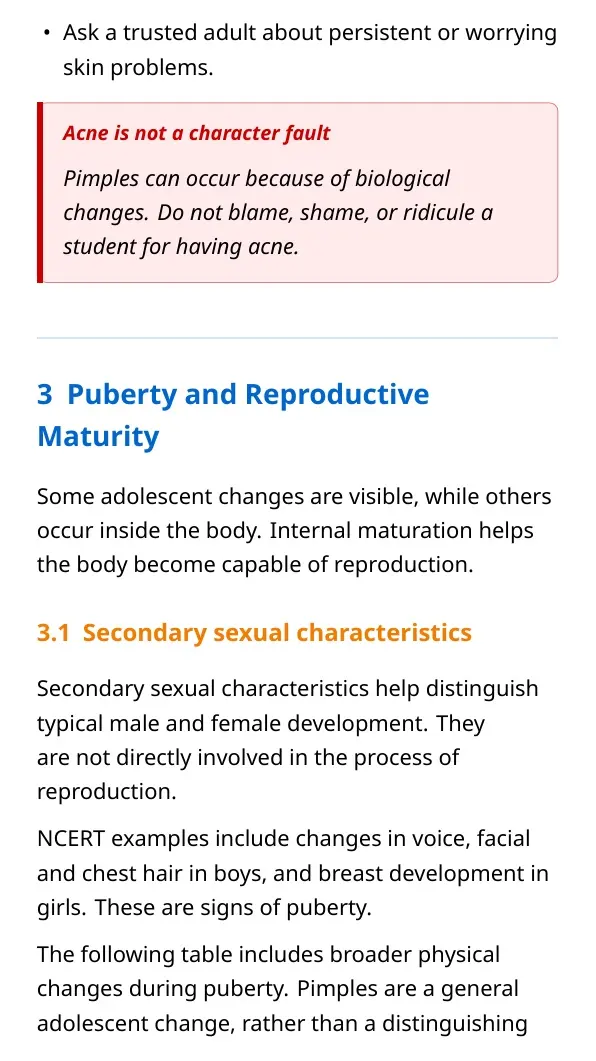
| Skin | More oily secretions can block pores and contribute to pimples. |
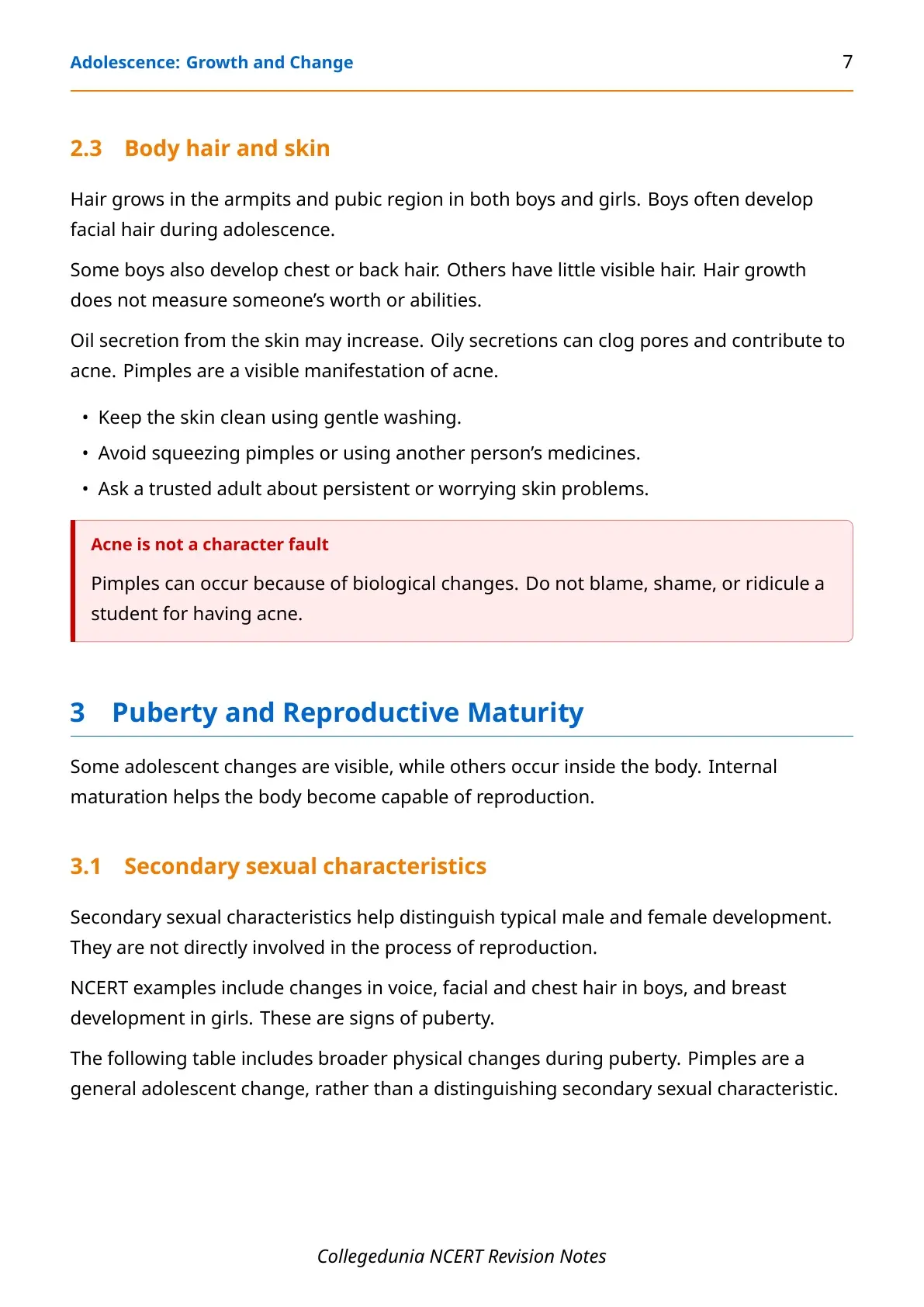
| Secondary sexual characteristics | Features such as facial hair and breast development are not directly involved in reproduction. |
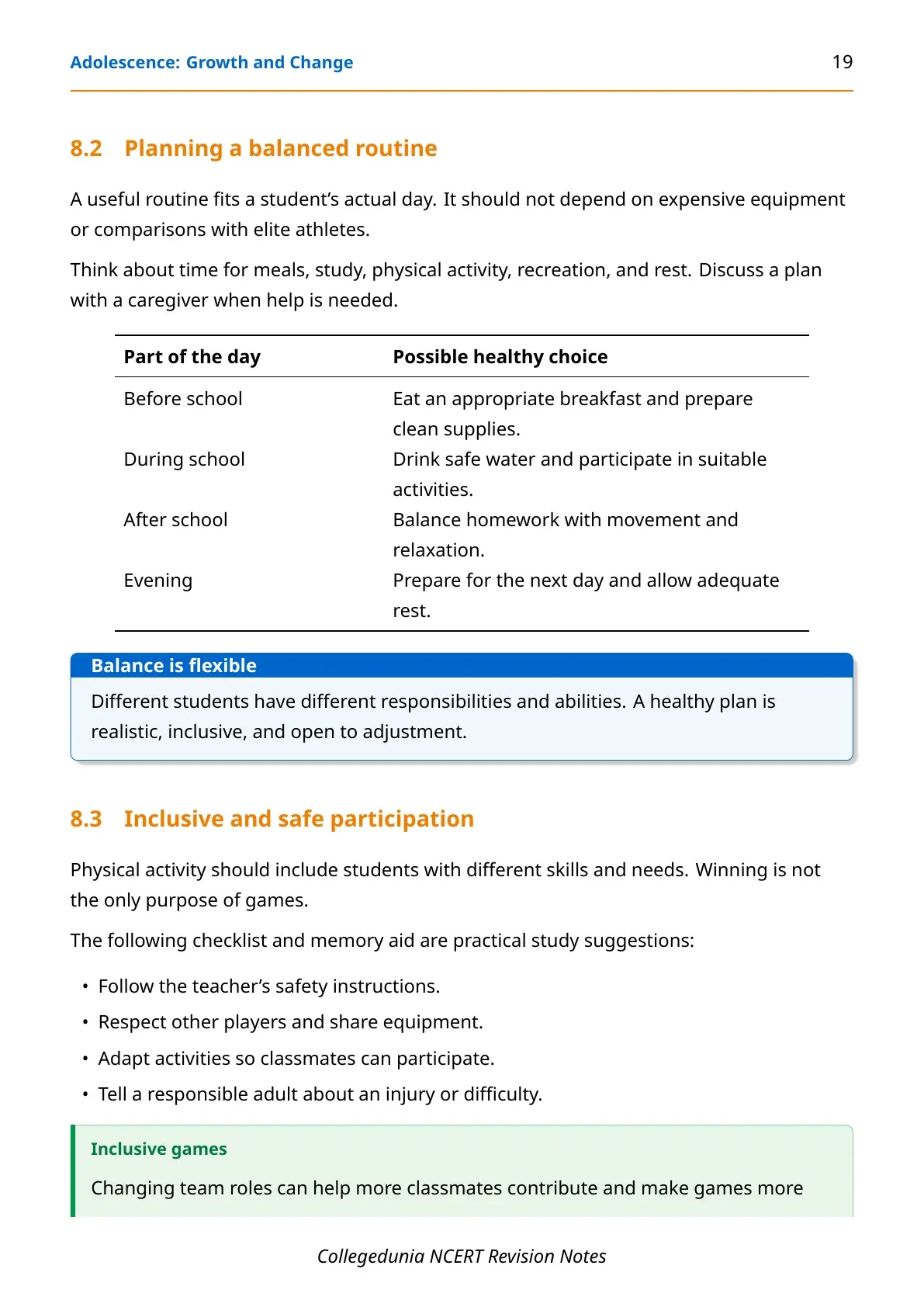
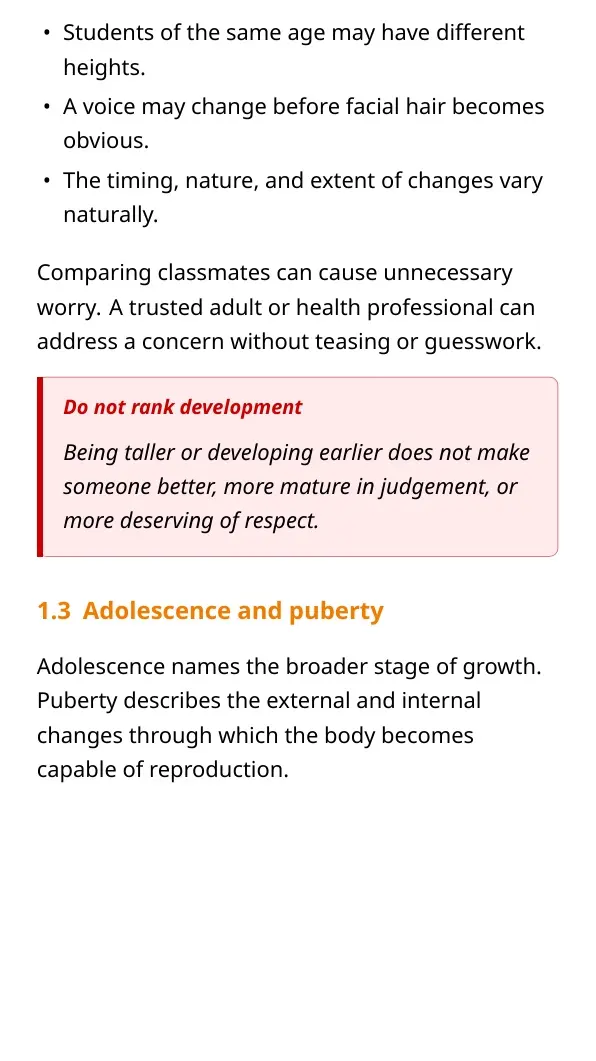
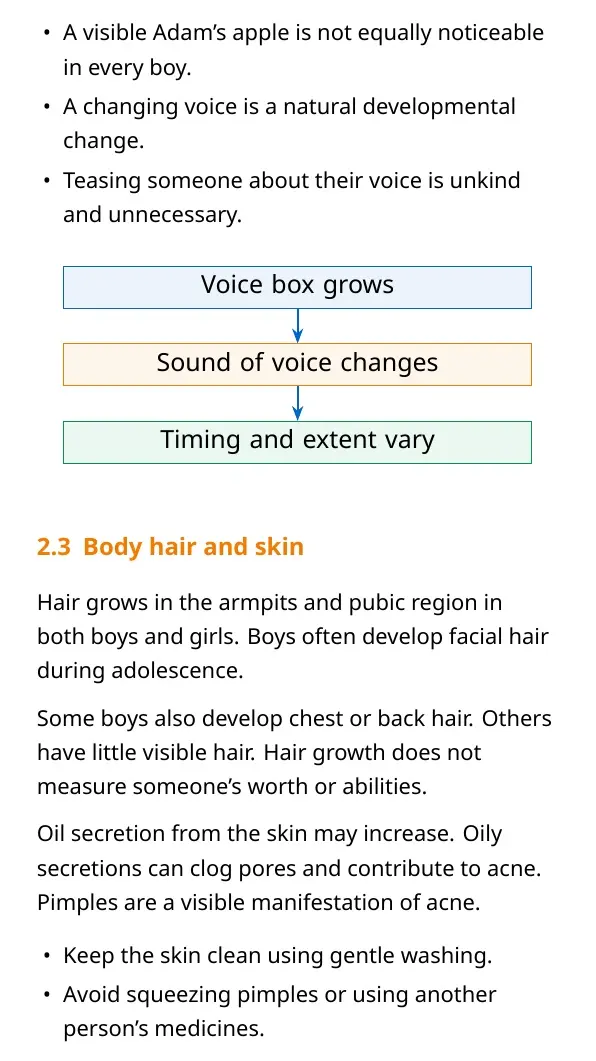
The timing and extent of these changes differ among individuals. Comparing classmates or teasing someone about their body is unfair. Different rates of growth are normal.
Adolescence and Growing Up Explained for Class 7
Source: Magnet Brains on YouTube
Menstruation, Emotions and Hormones During Adolescence
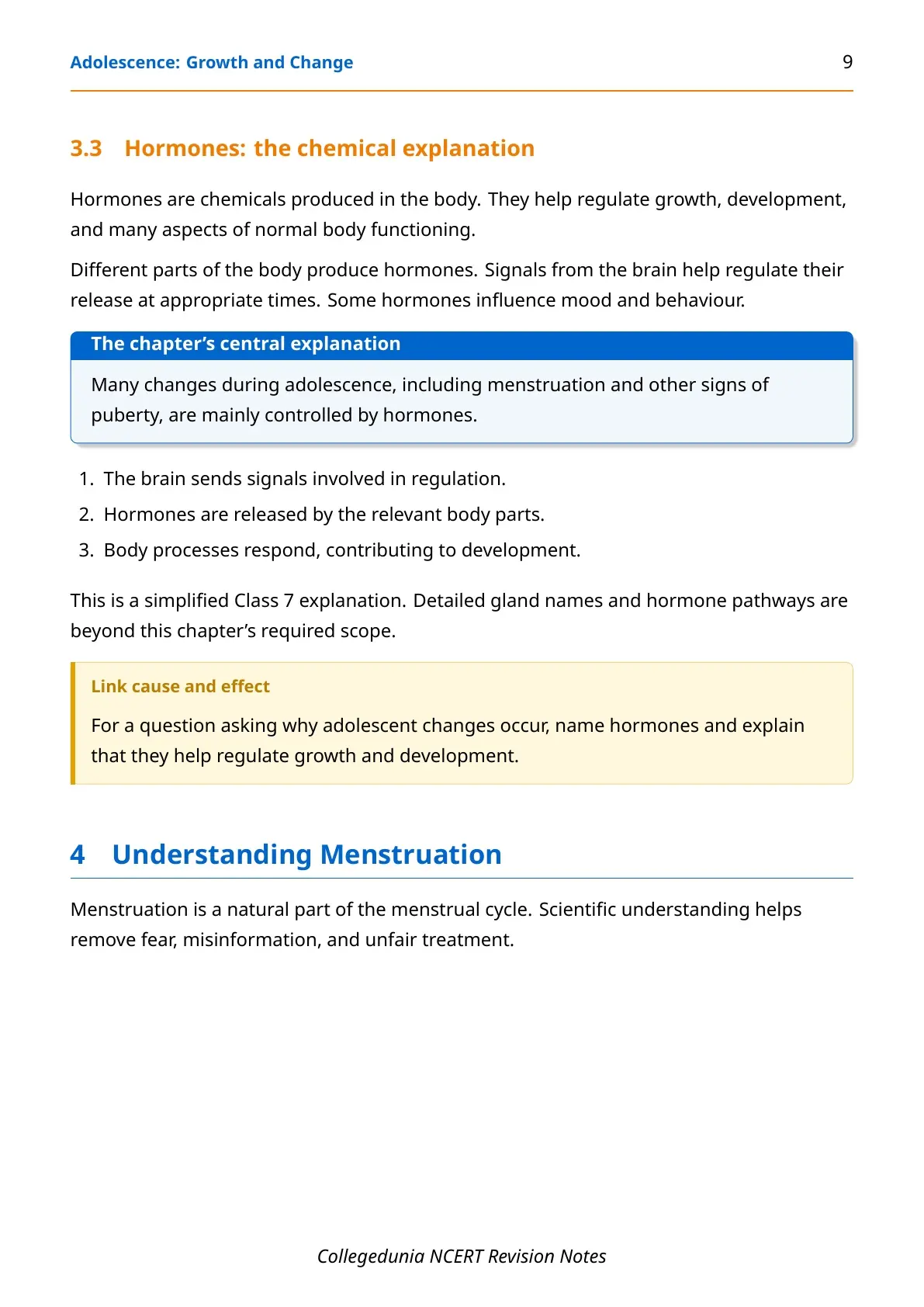
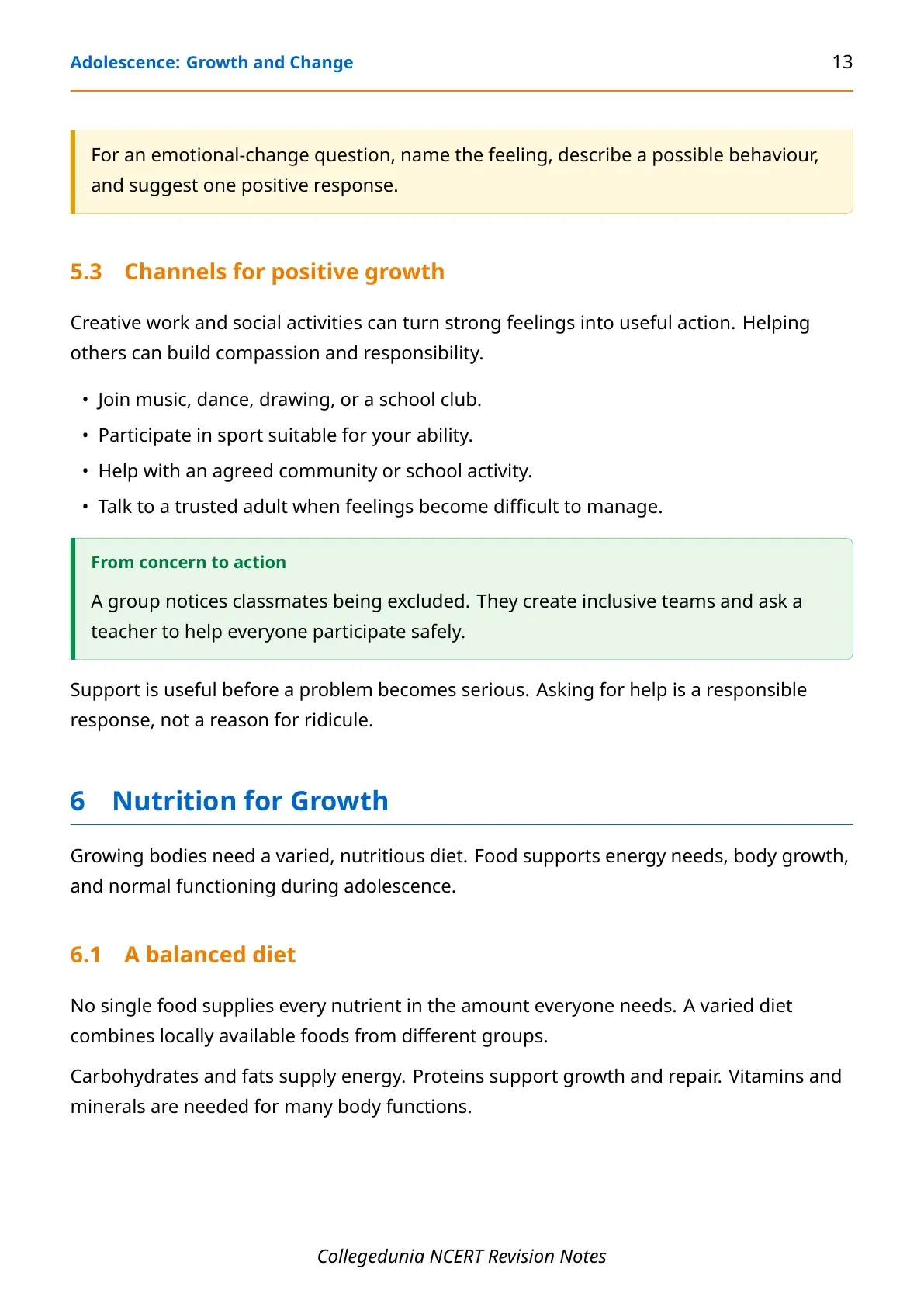
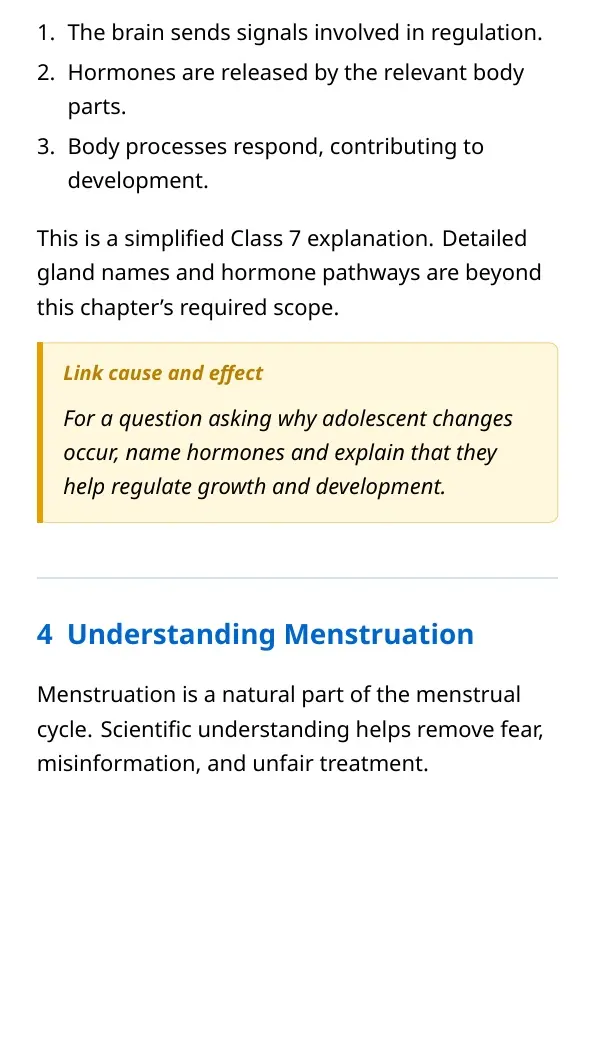
The chapter introduces menstruation as a natural part of growing up. It also explains why feelings and behaviour can change. Hormones are chemicals made within the body that help control growth and development.
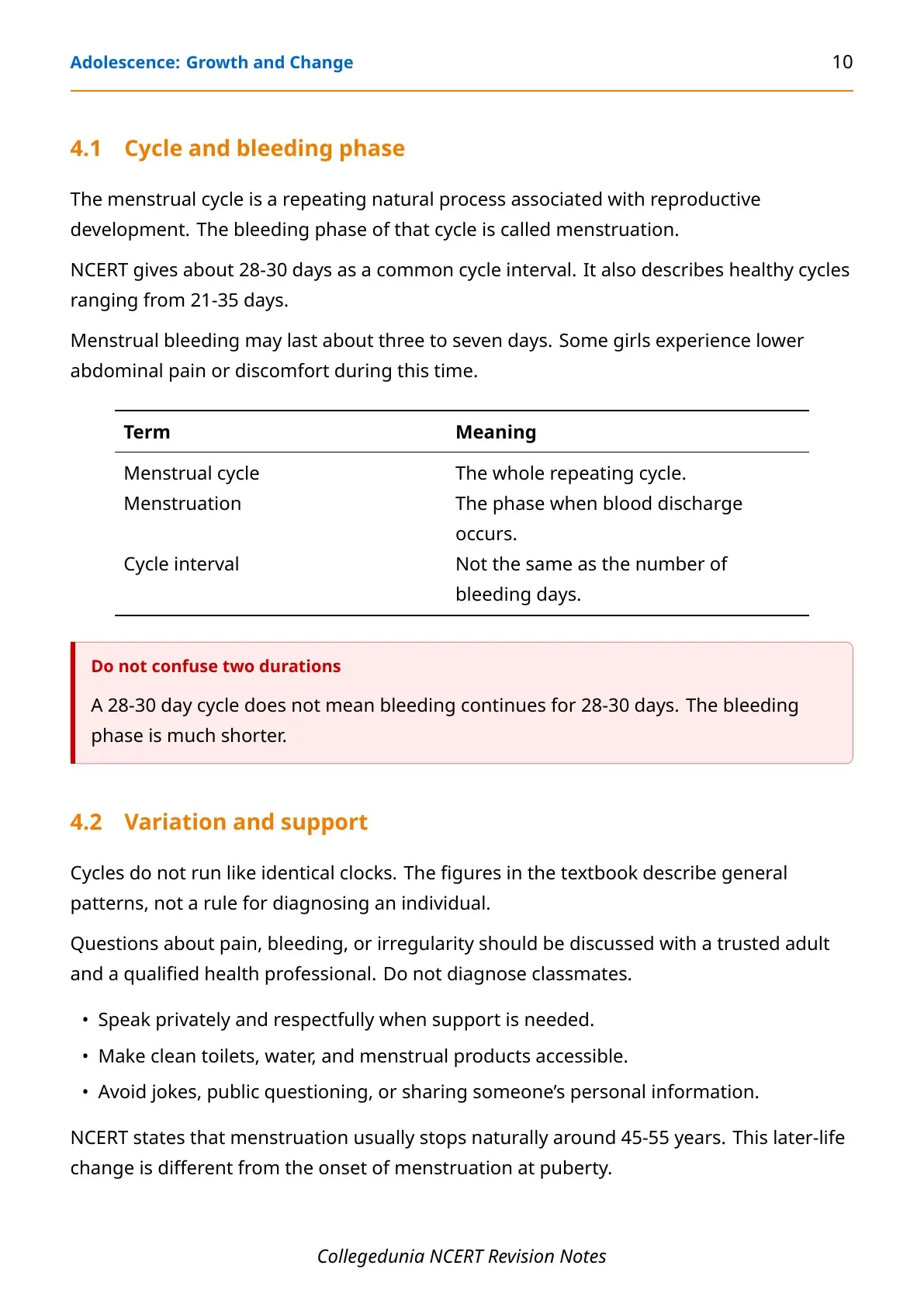
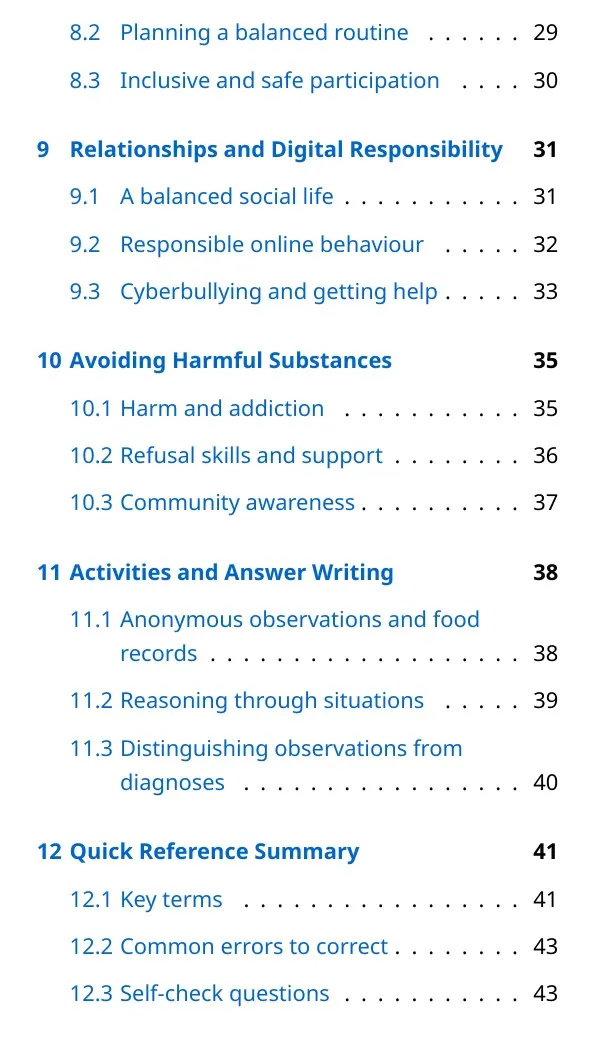
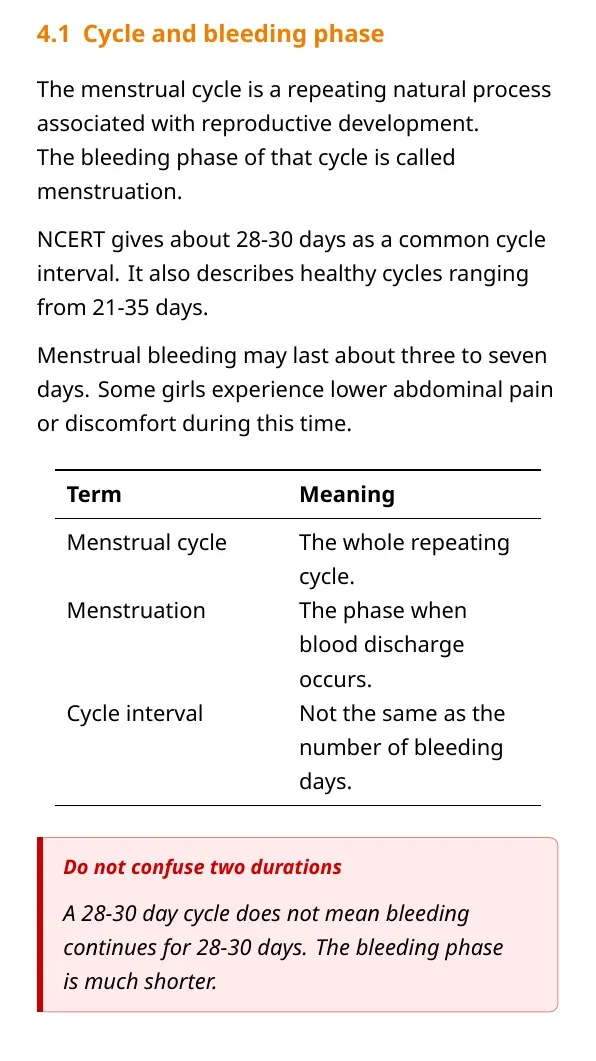
- Menstruation is the blood-discharge phase of the menstrual cycle.
- NCERT describes cycles as generally 28 to 30 days, while also noting normal variation.
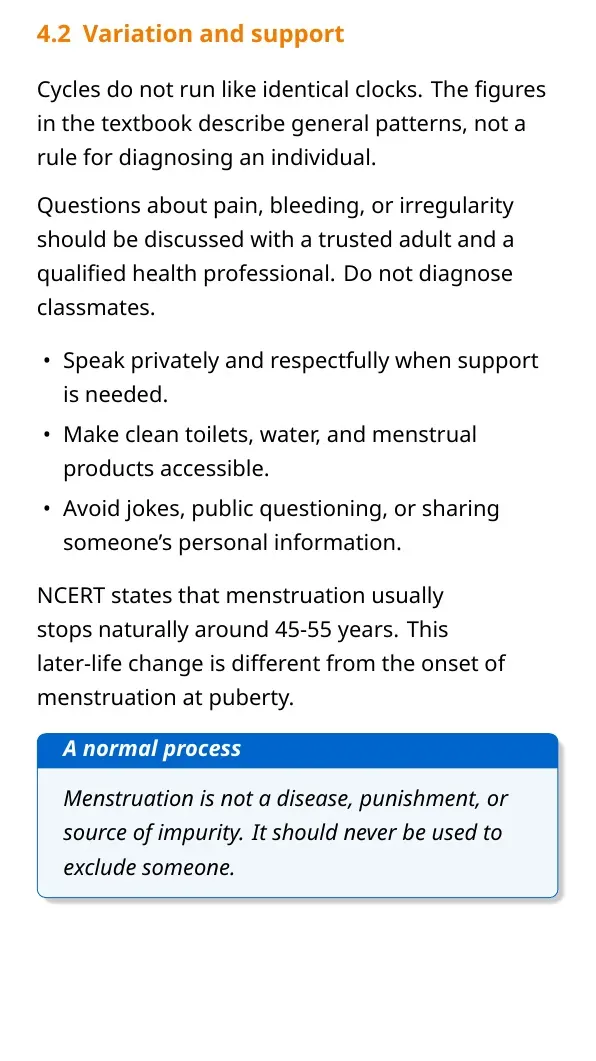
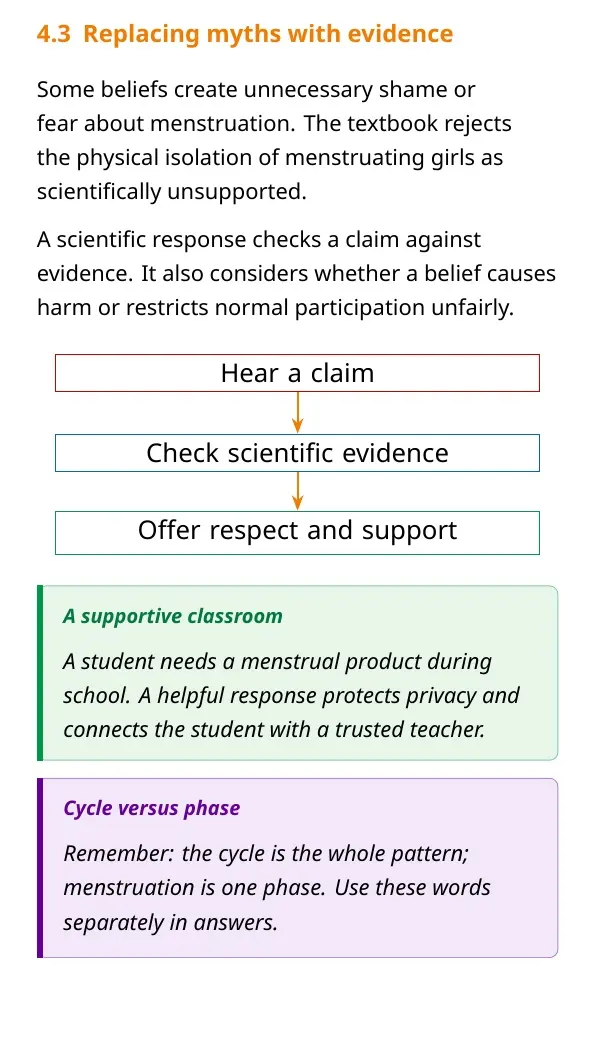
- Menstruation is a natural process, not a reason for shame or isolation.
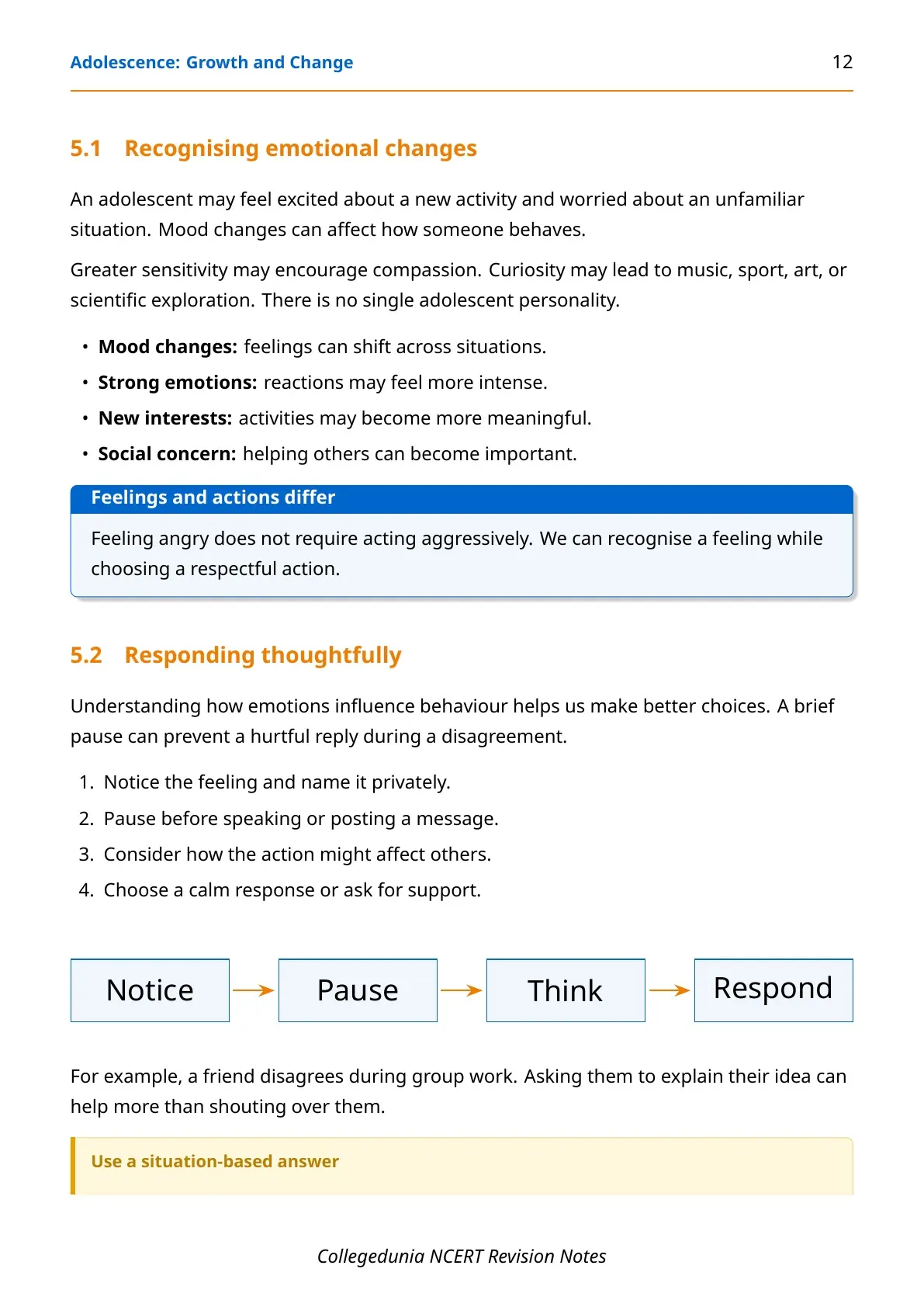
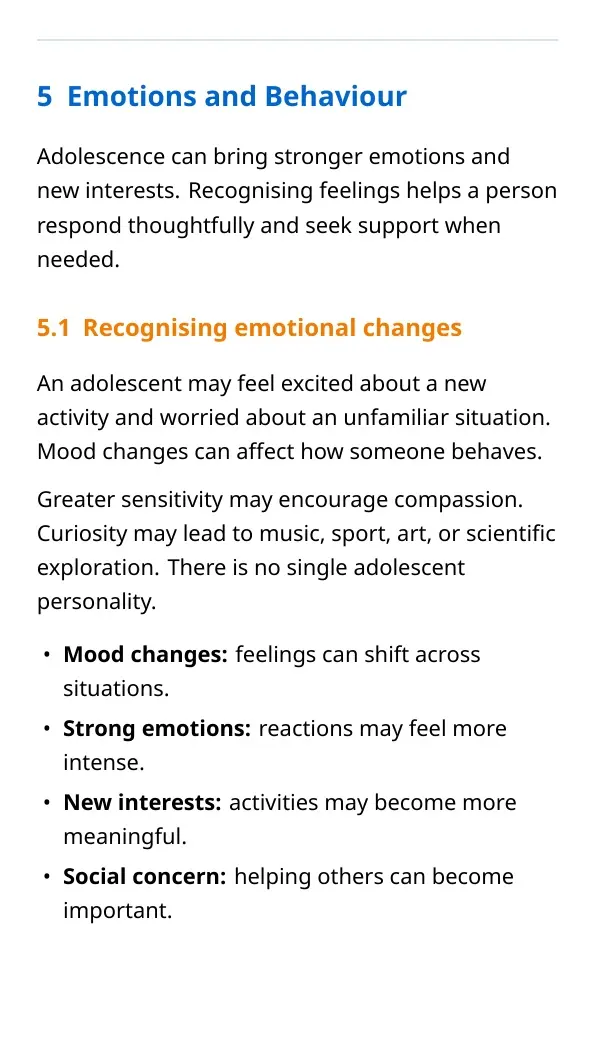
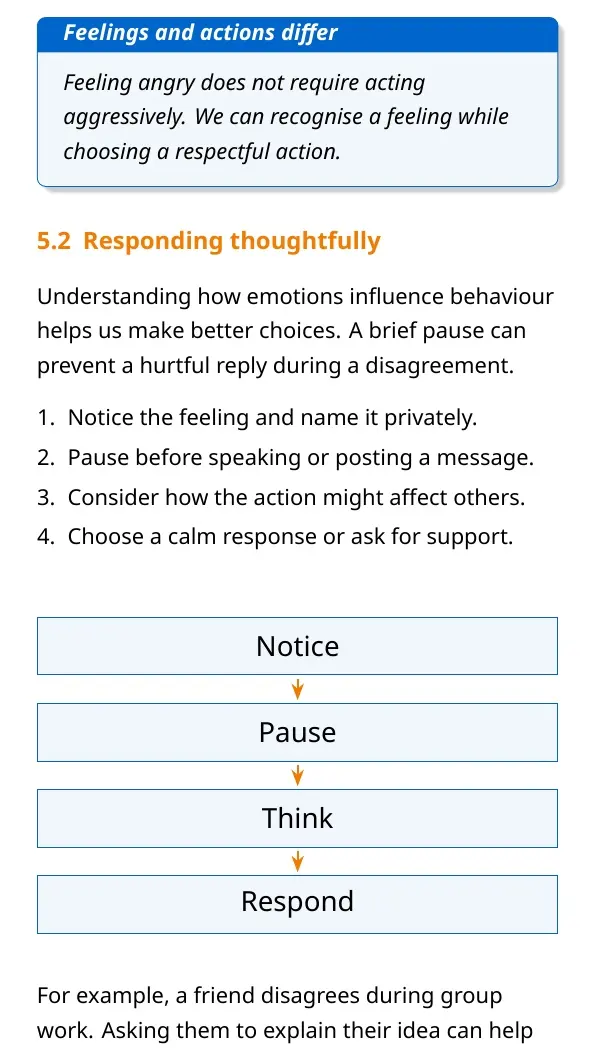
- Adolescents may experience mood swings, greater self-awareness and a stronger wish for independence.
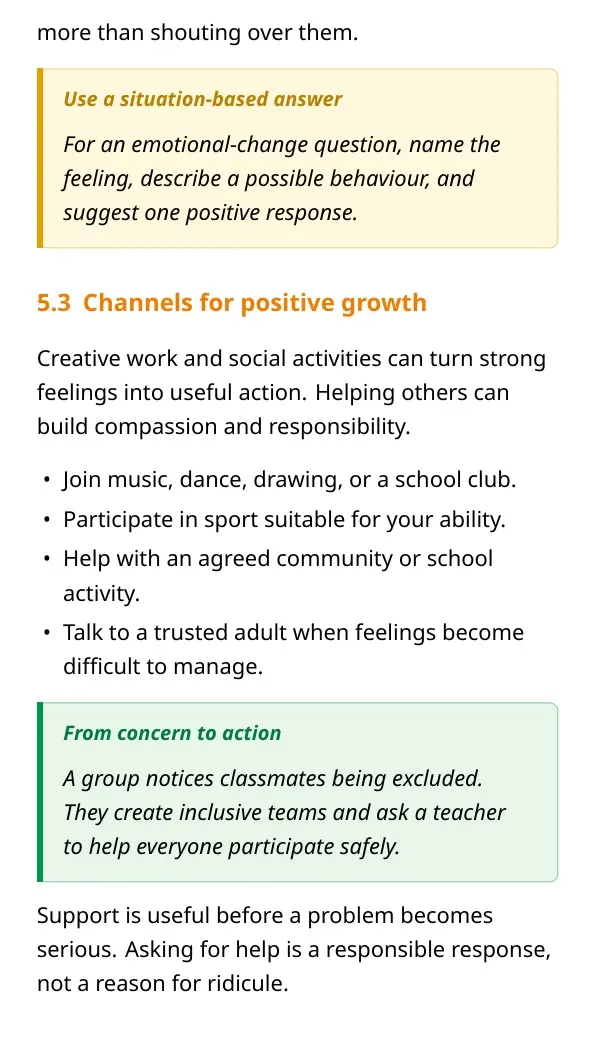
- Talking with trusted adults can help students understand worries and make sound choices.
Hormones are released in response to signals from the brain. Some influence mood and behaviour. Use this basic explanation for Class 7; detailed gland pathways belong to later study.
Healthy Habits for Adolescence: Food, Hygiene and Support
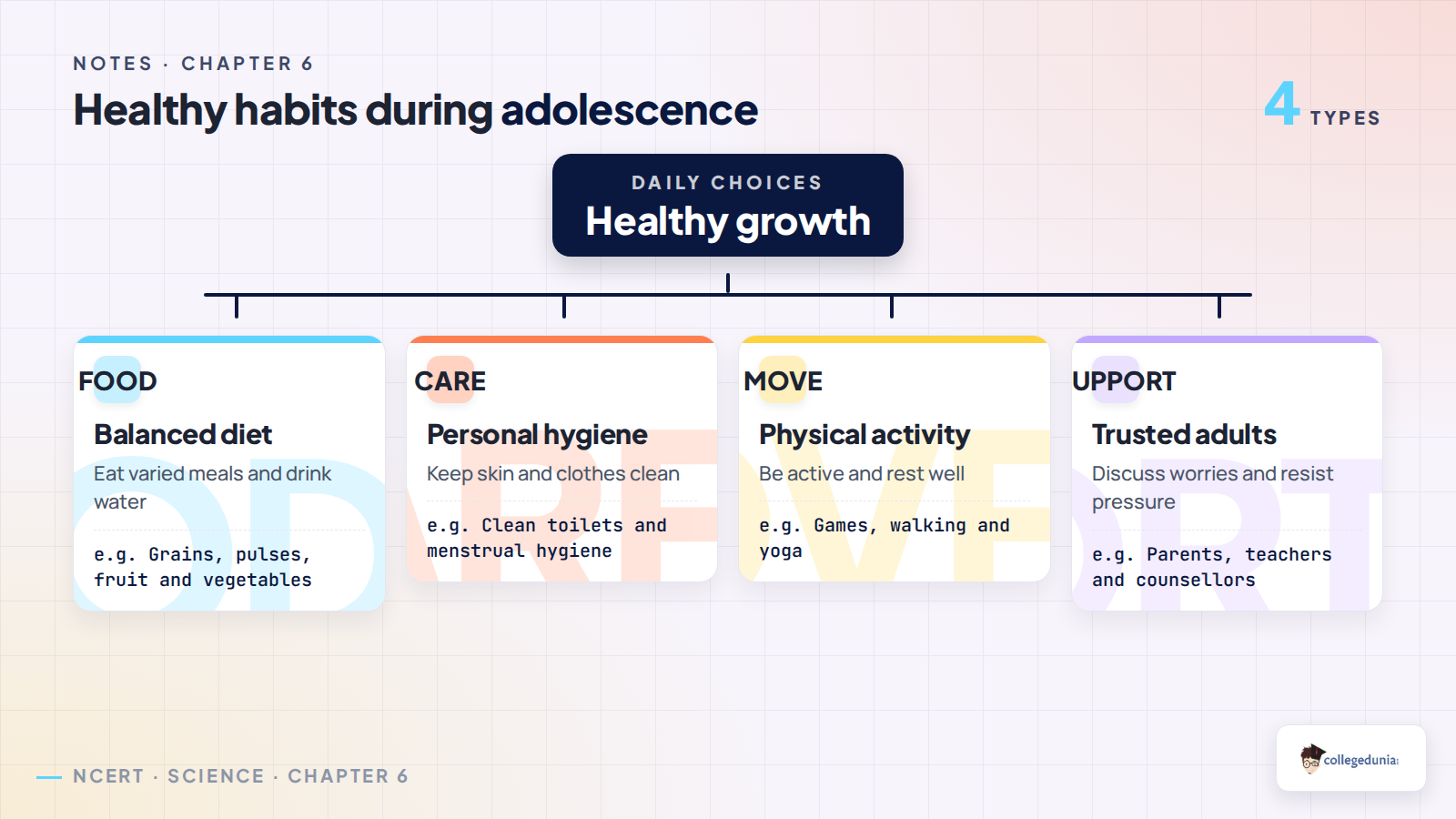
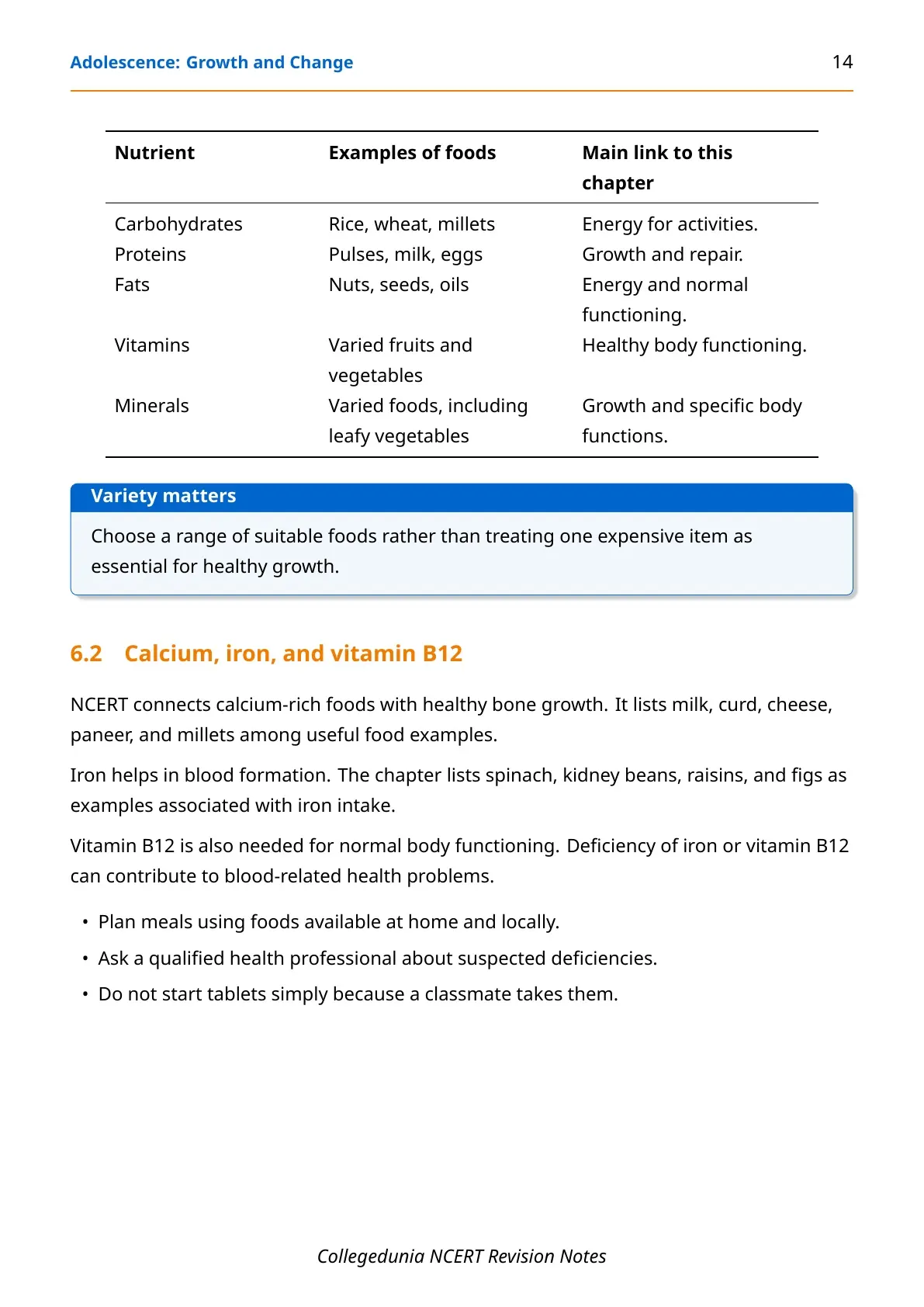
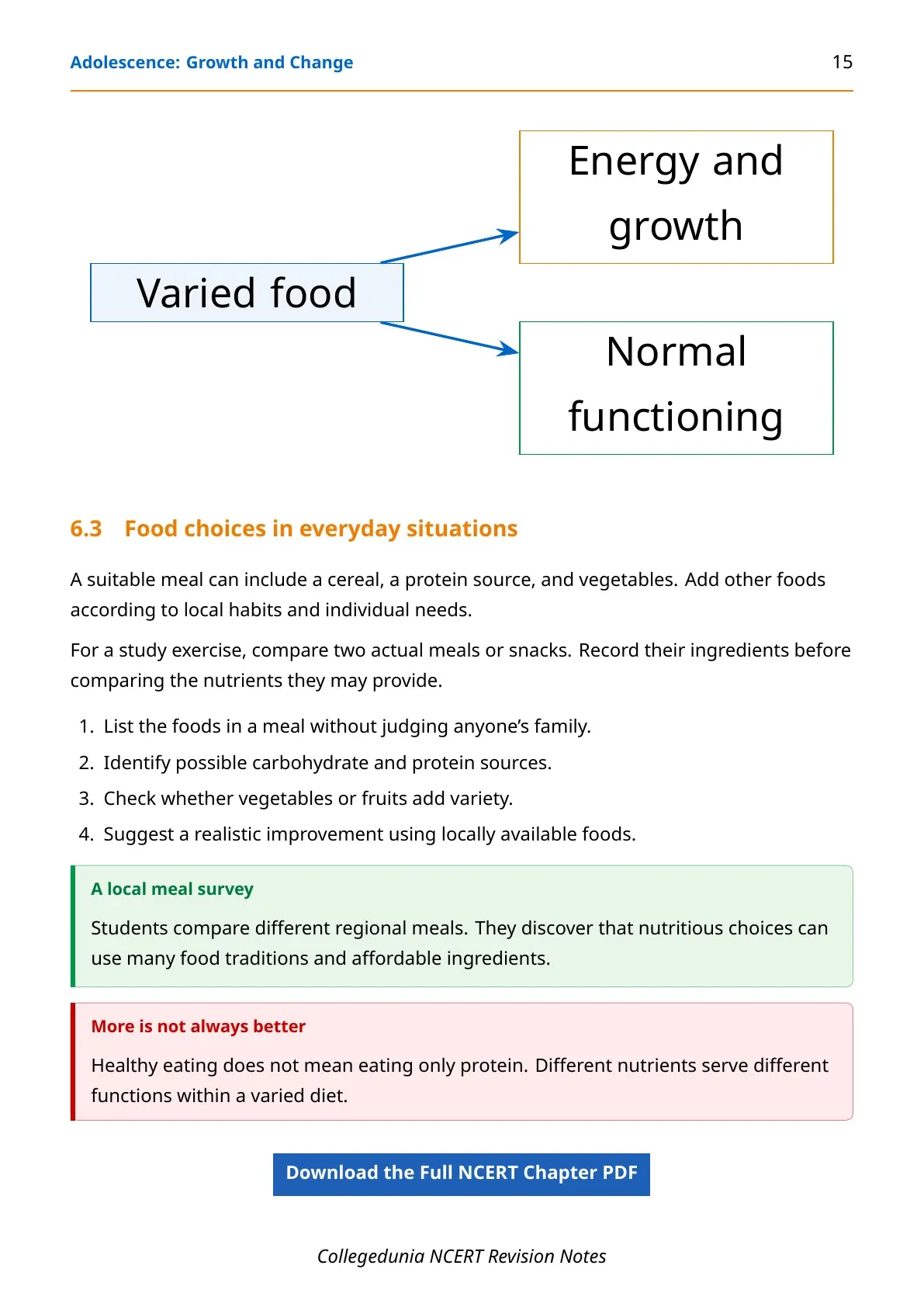
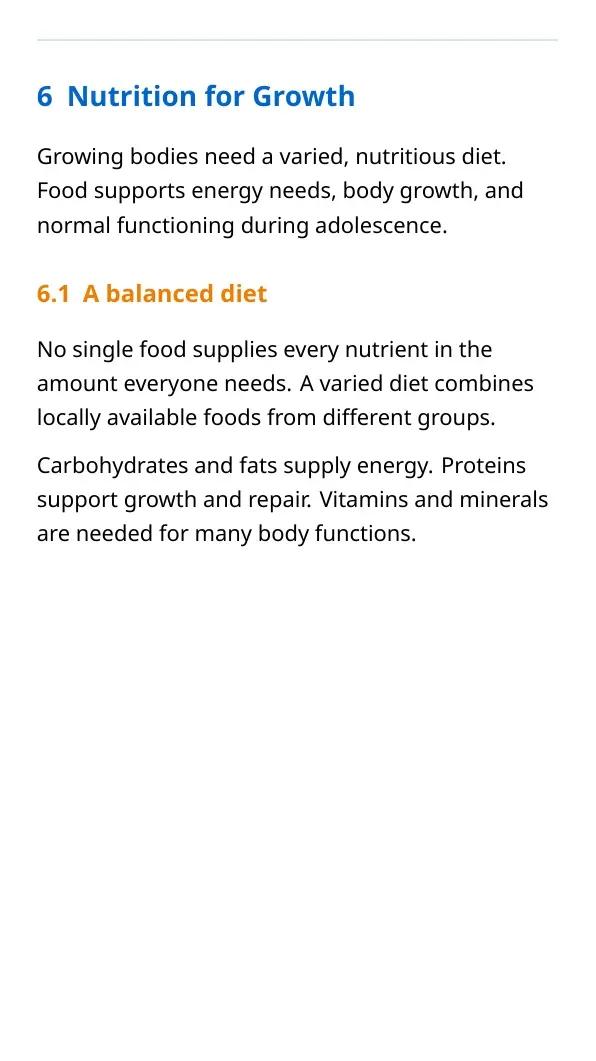
A growing body needs varied food, cleanliness and physical activity. The chapter also connects health with respectful friendships and safe online choices. Healthy growth includes physical and mental well-being.
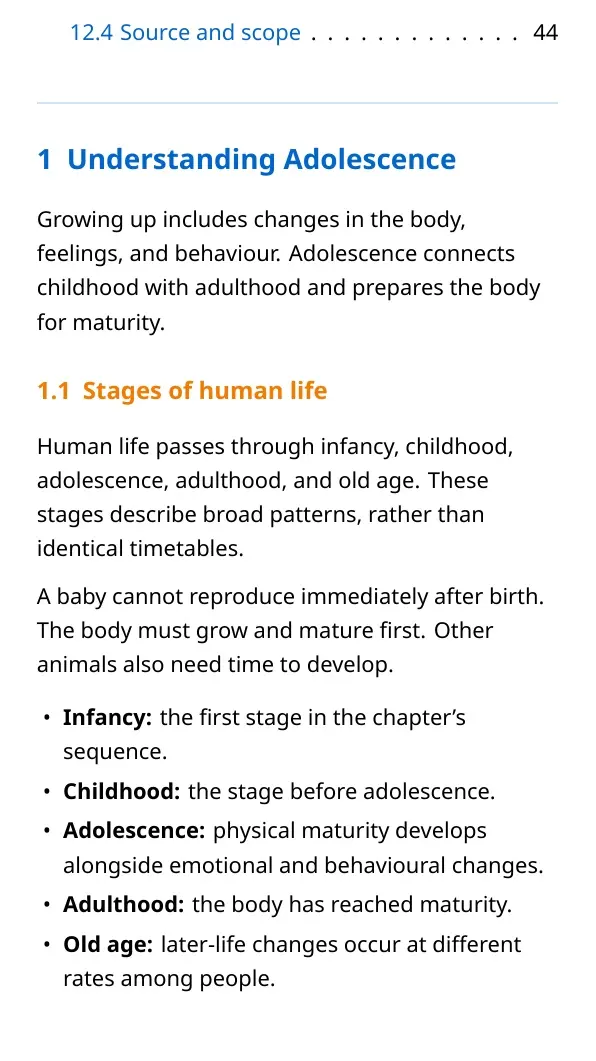
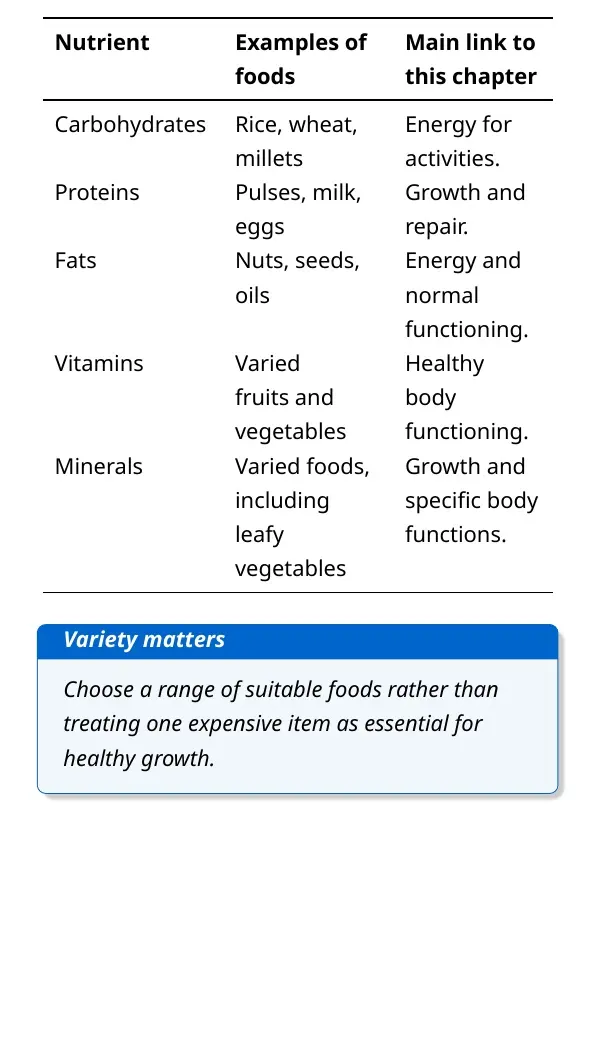
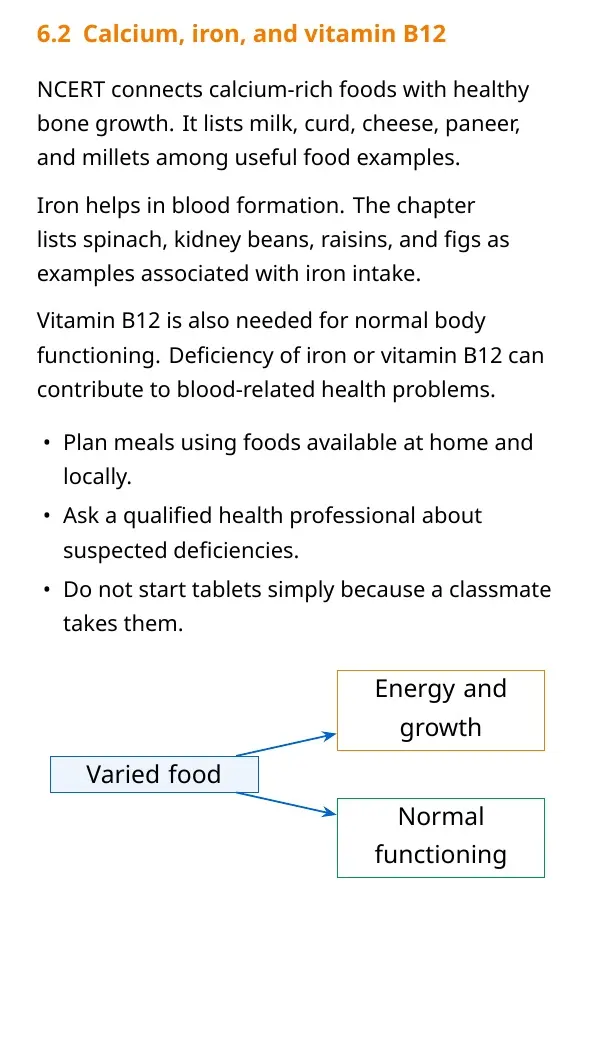
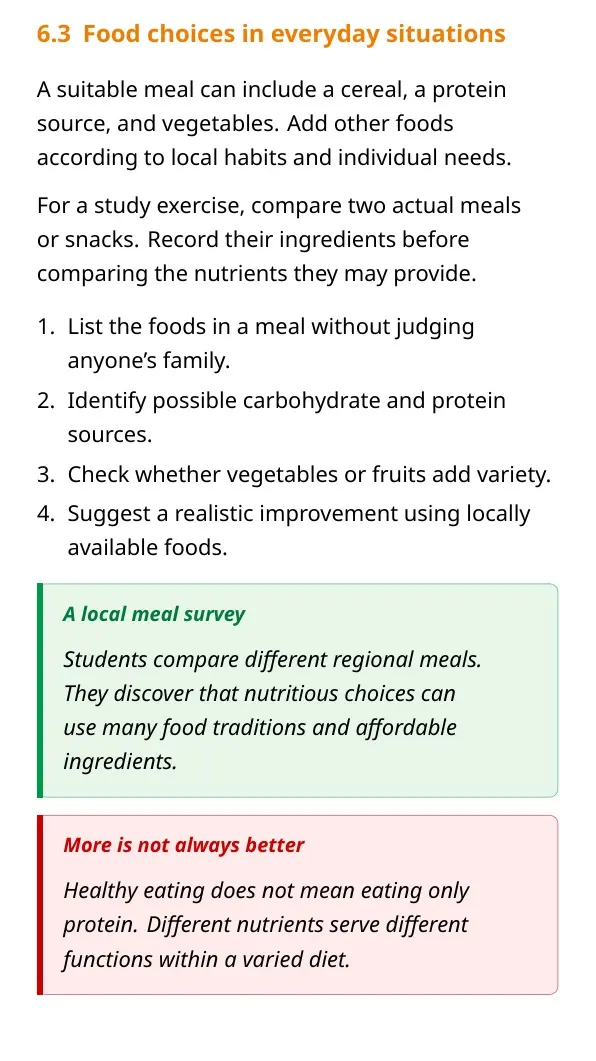
- Eat balanced meals with grains, pulses, vegetables, fruits and other suitable nutrient sources.
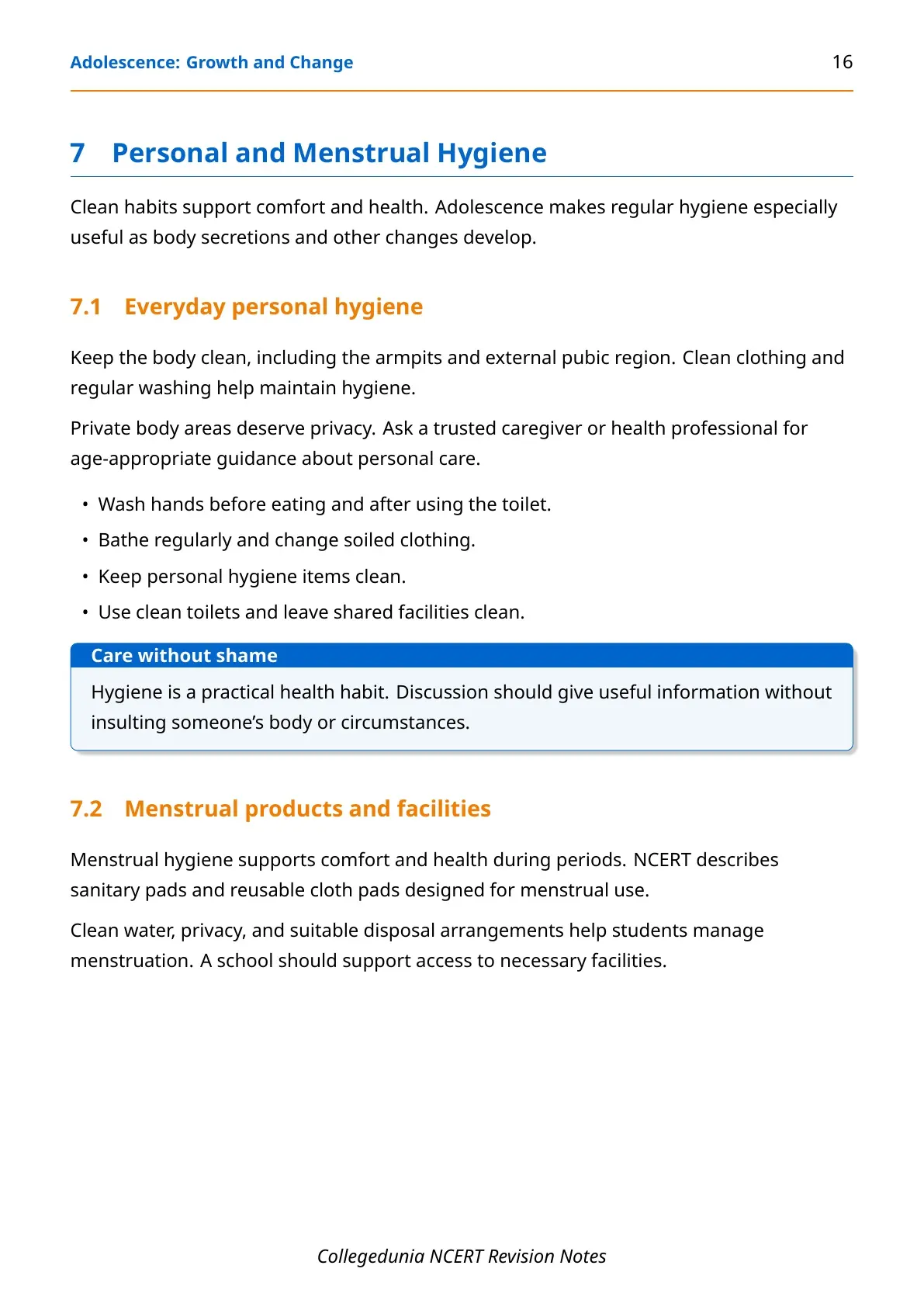
- Keep the body and clothes clean; wash hands and use clean toilets.
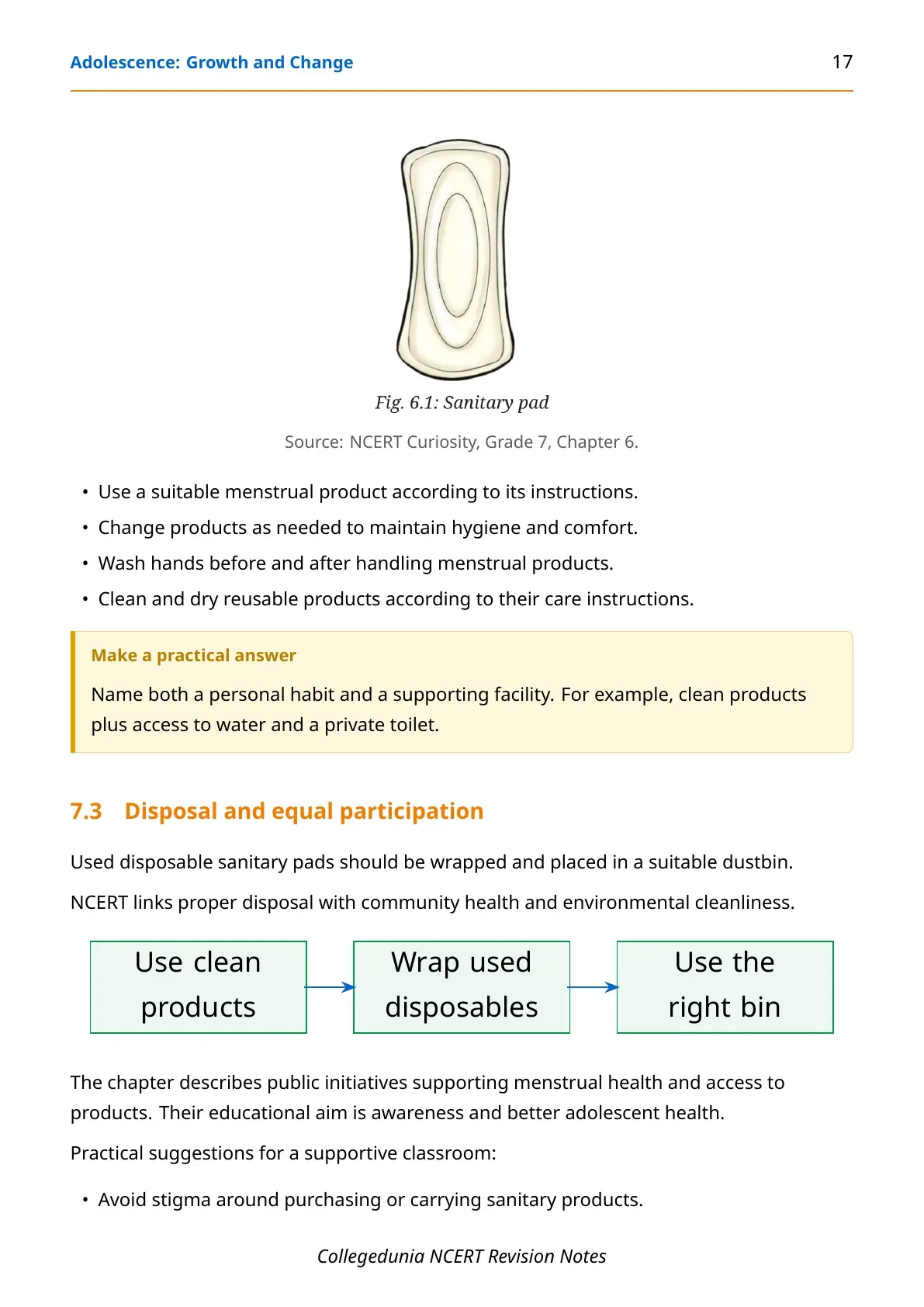
- Use clean menstrual products, change them regularly and dispose of used products safely.
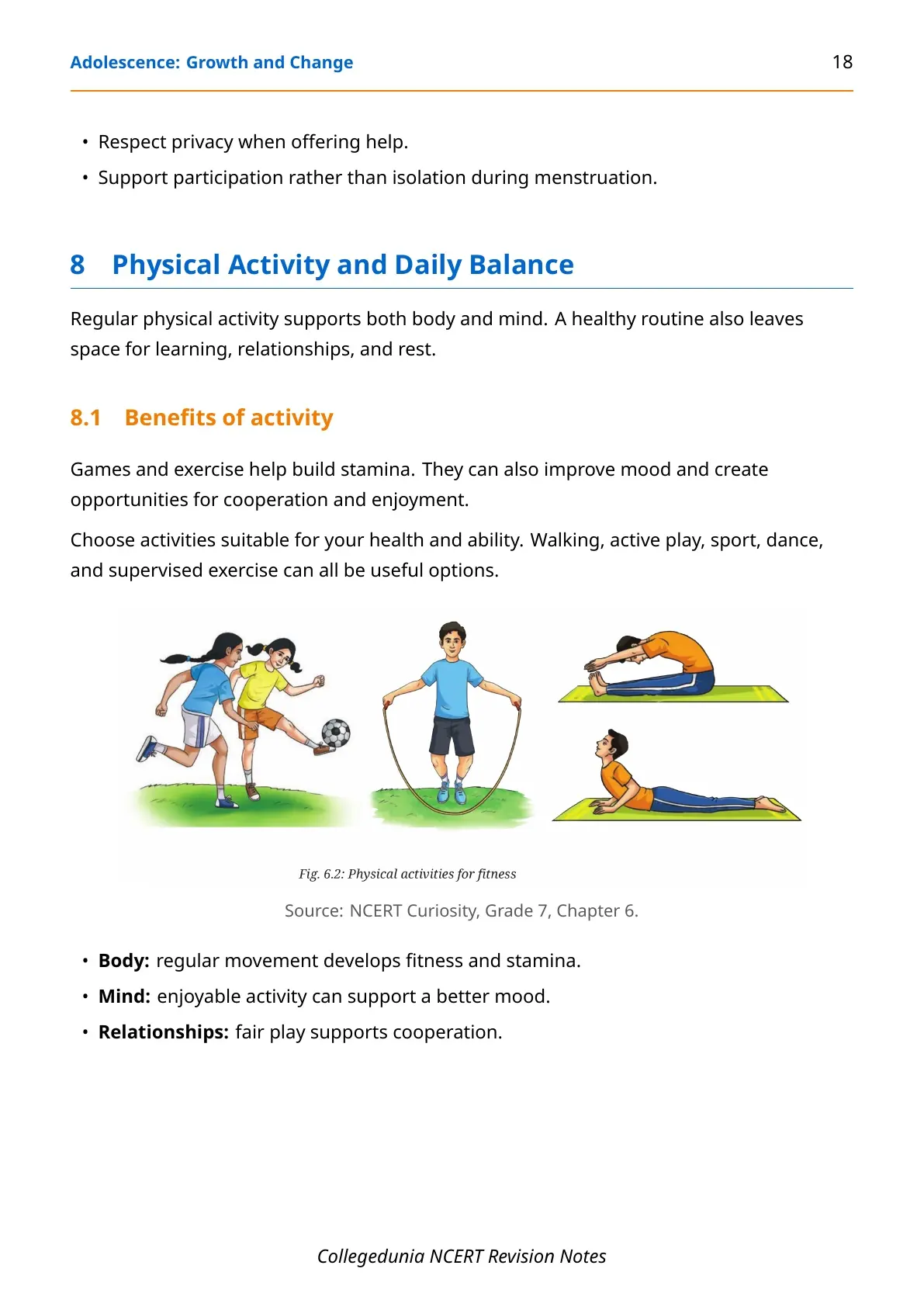
- Take part in outdoor games, walking, yoga or other enjoyable physical activities.
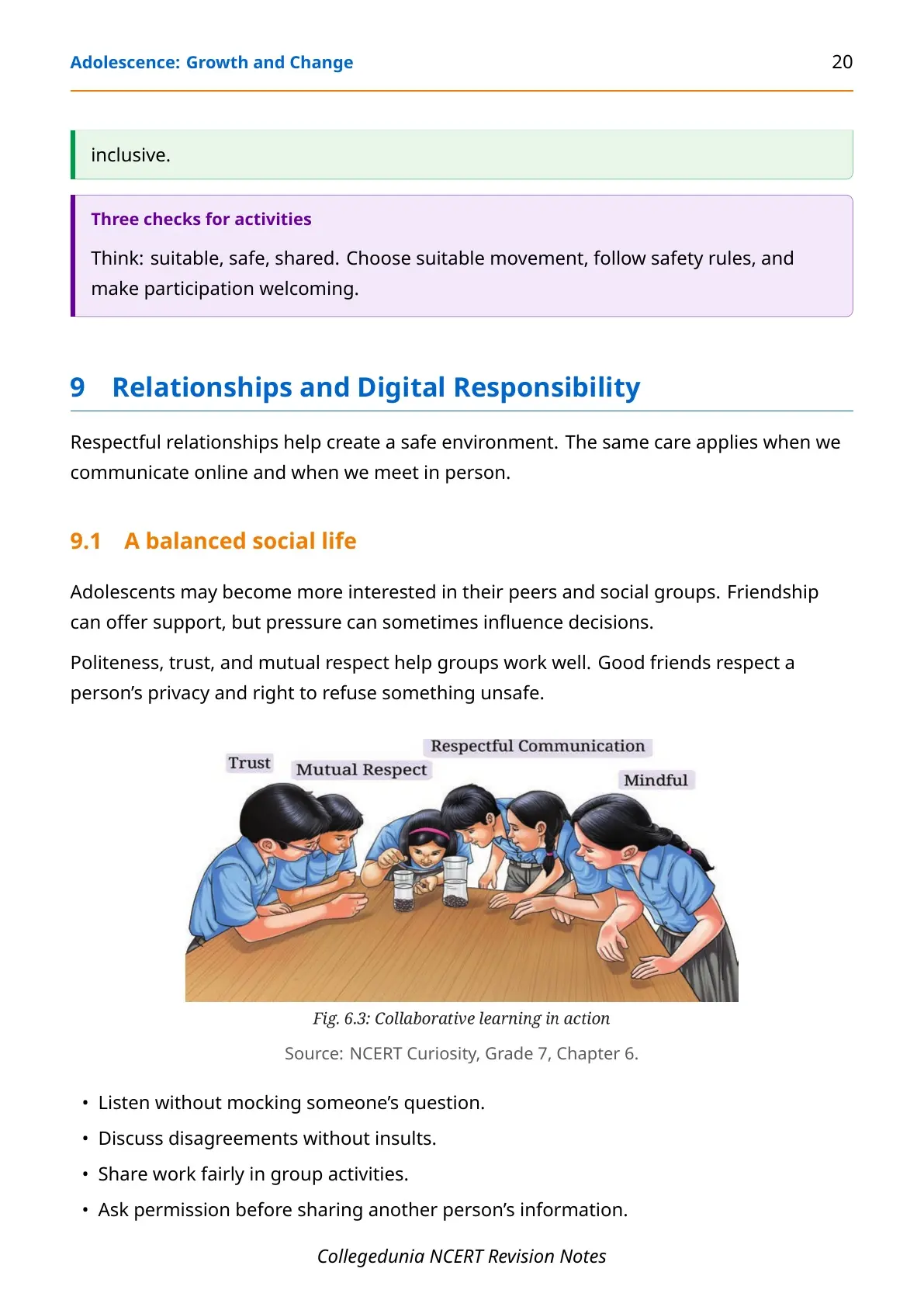
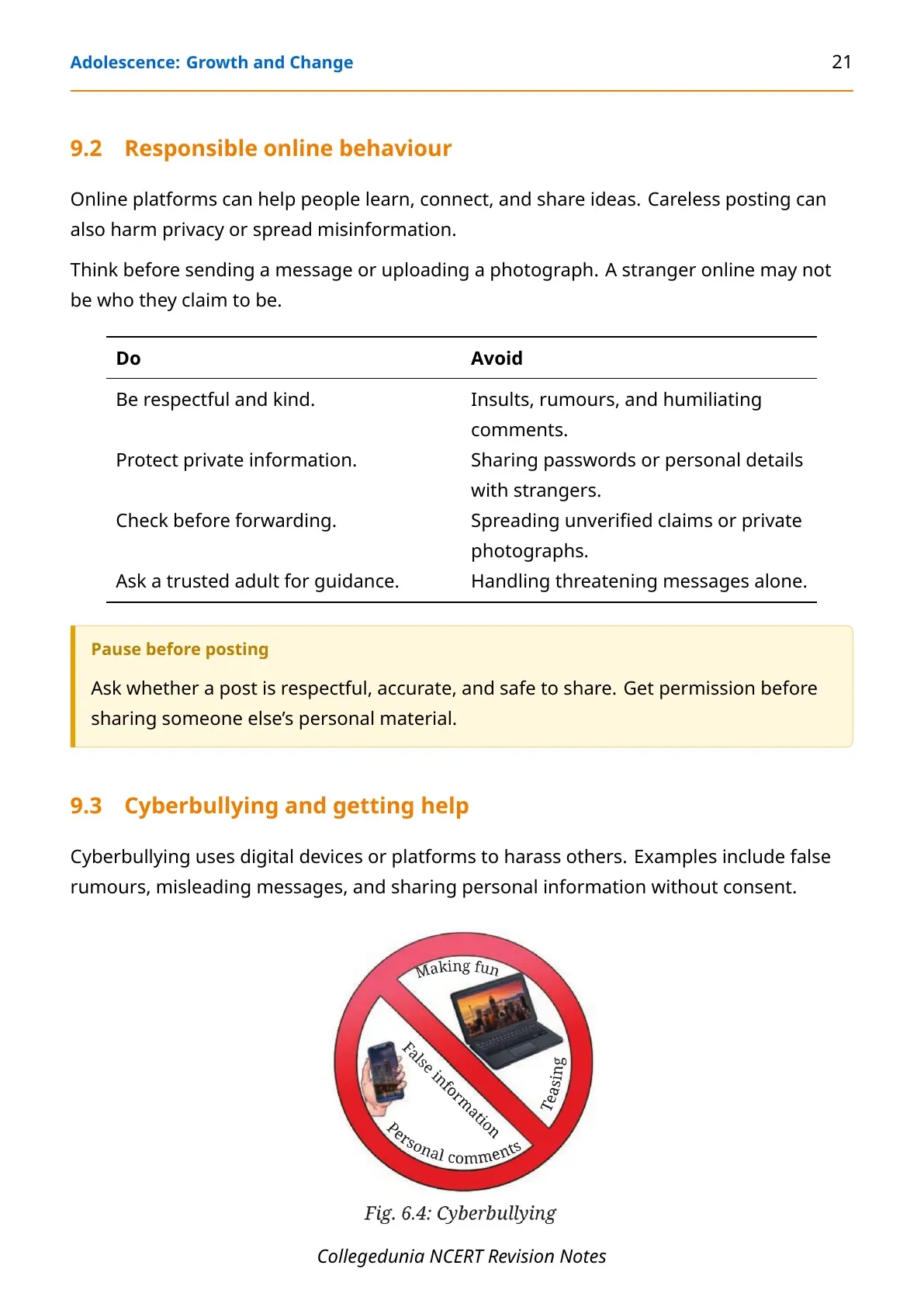
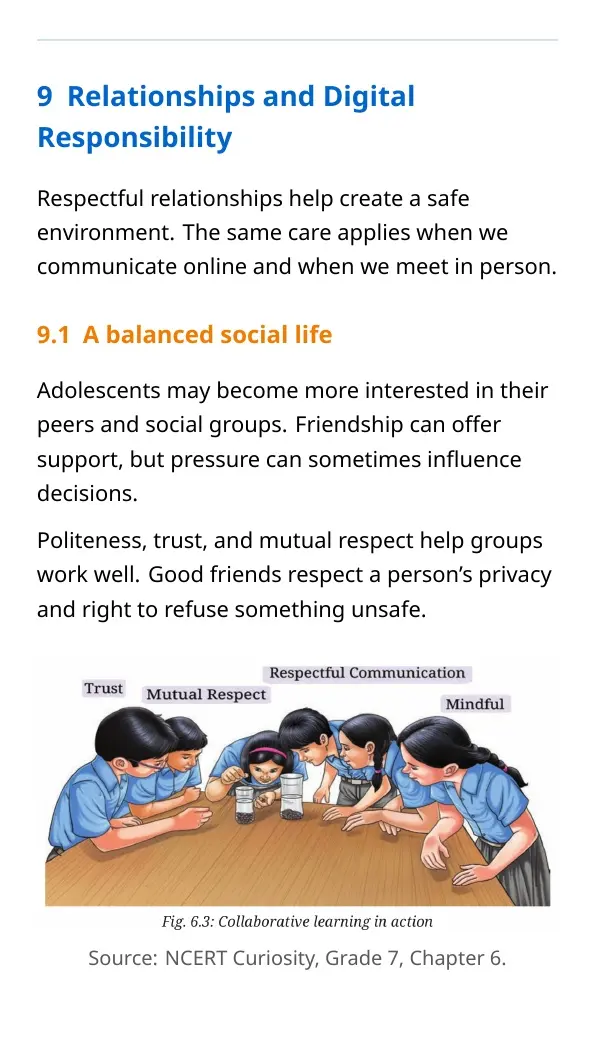
- Protect privacy online and avoid sharing personal photos with strangers.
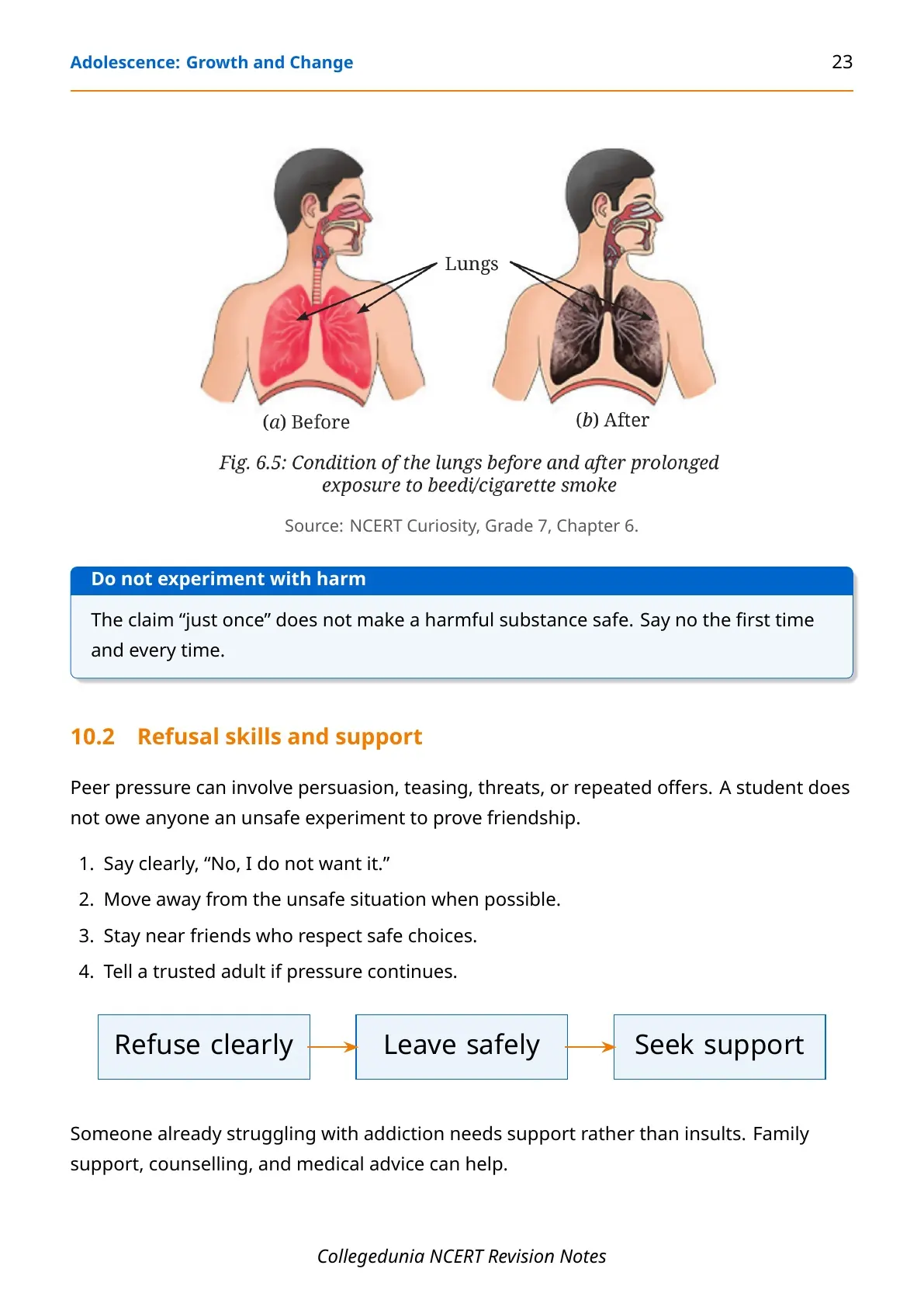
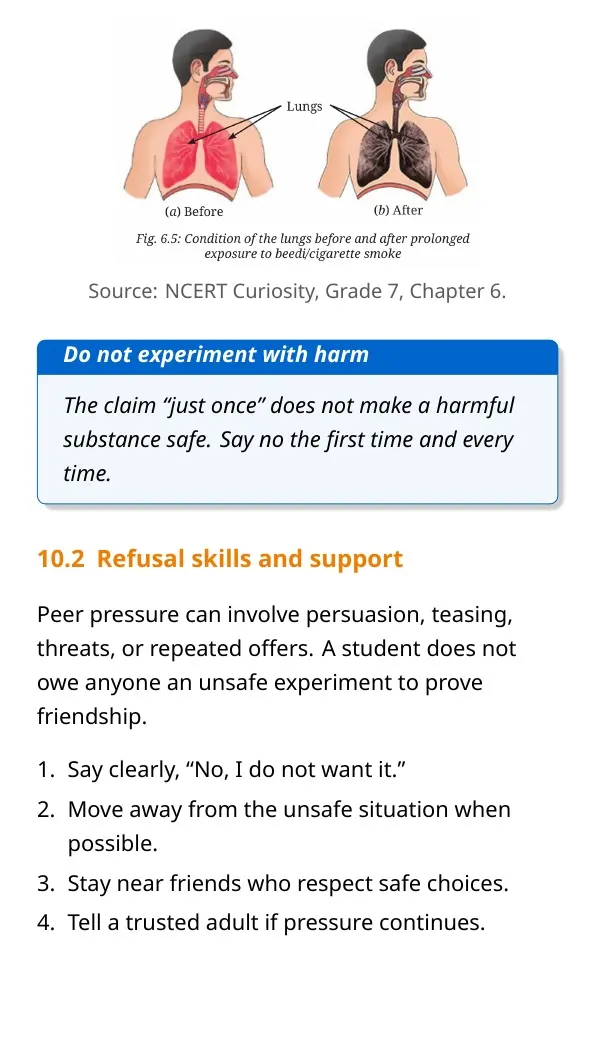
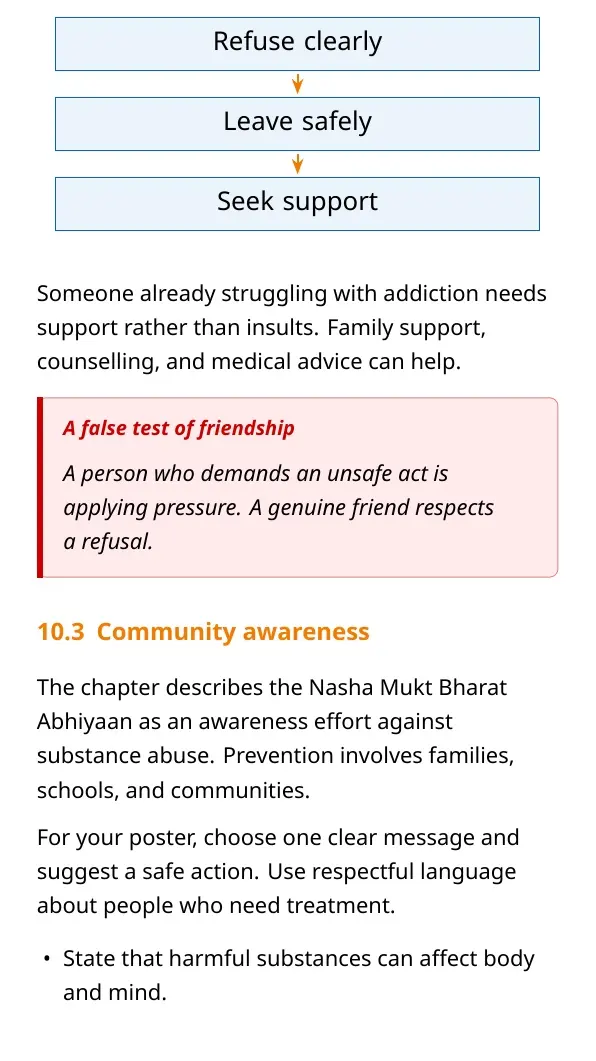
- Say no to tobacco, alcohol and other addictive substances. Seek support when facing pressure.
Addiction is a strong urge to use a substance repeatedly. Trying a harmful substance once can lead to further use. Practise a firm refusal and tell a trusted adult if someone keeps pressuring you.
Adolescence Misconceptions and Revision Checks for Class 7
Use these pairs to check your understanding before answering the textbook questions. Give the reason behind each statement rather than memorising a label alone.
| Incorrect idea | Scientific explanation |
|---|---|
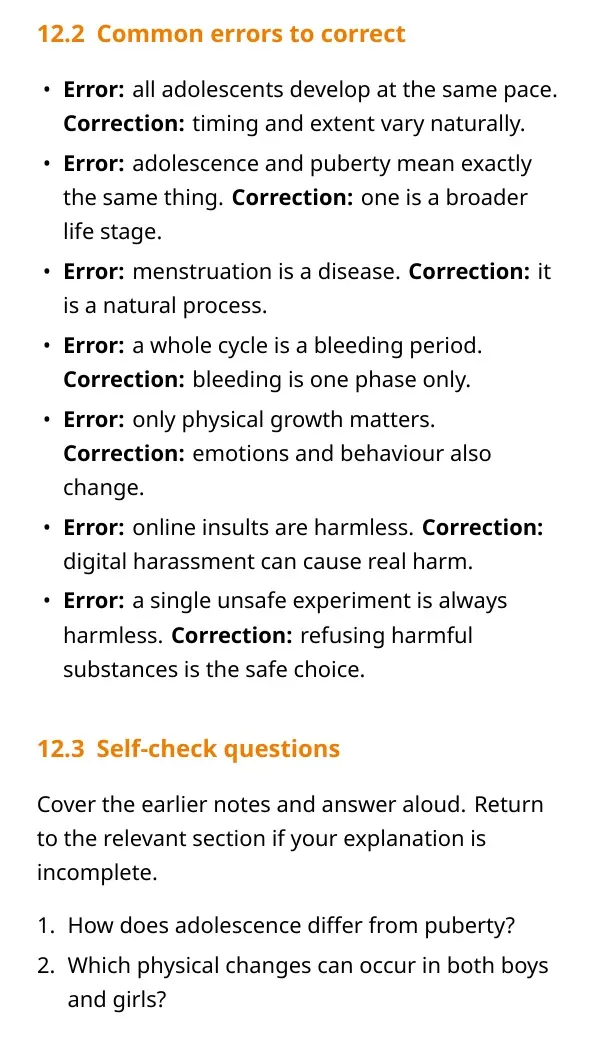
| Everyone changes at the same age. | The timing and pace vary among individuals. |
| Adolescence involves only physical changes. | Emotional and behavioural changes also occur. |
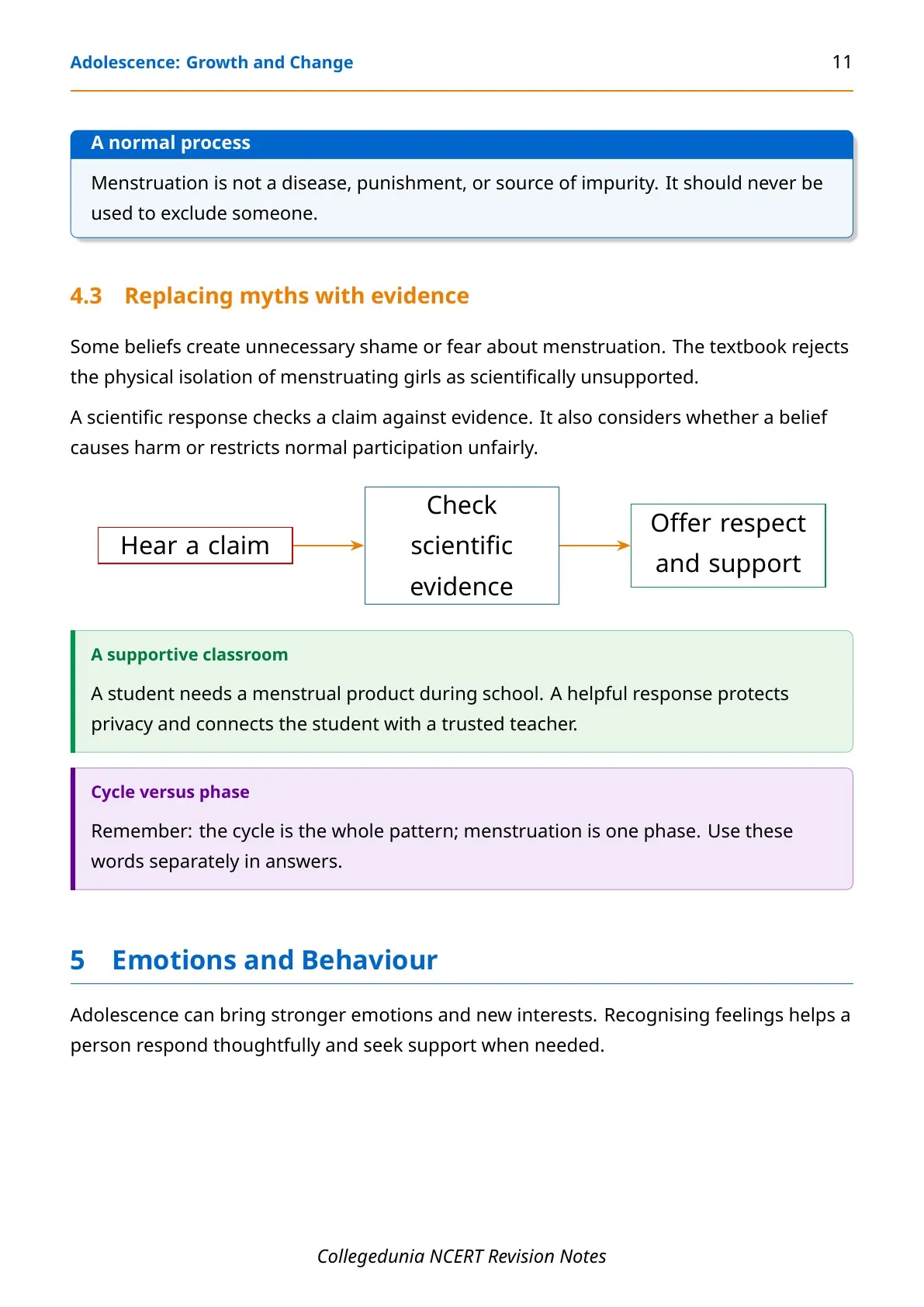
| Menstruation makes a person unclean. | It is a natural biological process; stigma has no scientific basis. |
| One trial of an addictive substance is always harmless. | Experimenting can lead to repeated use and serious harm. |
The PDF supports revision of definitions, comparisons and everyday situations from the chapter. There are no mathematical derivations to memorise here. For school tests, follow your teacher's assessment plan; no fixed national Class 7 chapter-wise marks are claimed.
Adolescence Related Resources for Class 7 Science Curiosity
Pair these Collegedunia notes with the textbook and question explanations for the same topic.
| Resource | Use |
|---|---|
| Adolescence Class 7 NCERT Solutions | Read alongside the notes |
| Adolescence Class 7 Handwritten Notes | Read alongside the notes |
| Adolescence Class 7 NCERT Book PDF | Read alongside the notes |
NCERT Notes for Class 7 Science Curiosity: All Chapters
Continue revising with these related chapter notes.
| Chapter | Notes |
|---|---|
| Chapter 3 | Electricity Circuits and their Components Class 7 Notes |
| Chapter 4 | The World of Metals and Non-metals Class 7 Notes |
| Chapter 5 | Changes Around Us Physical and Chemical Class 7 Notes |
Adolescence Class 7 Science Notes FAQs
Ques. Do these notes follow the 2026-27 NCERT Curiosity chapter?
Ans. Yes. They cover the main topics in Class 7 Science Curiosity Chapter 6, including physical changes, emotions, hygiene and hormones.
Ques. Are adolescence and puberty the same?
Ans. No. Adolescence is the wider transition from childhood to adulthood. Puberty is the stage of changes leading to reproductive maturity.
Ques. Why should students avoid comparing their growth with friends?
Ans. The timing and extent of growth differ among individuals. Such differences are normal and should be treated respectfully.
Ques. Does this chapter contain mathematical derivations?
Ans. No. Focus on scientific definitions, comparisons, reasons and healthy choices instead of formulas.
Ques. How can I revise these notes?
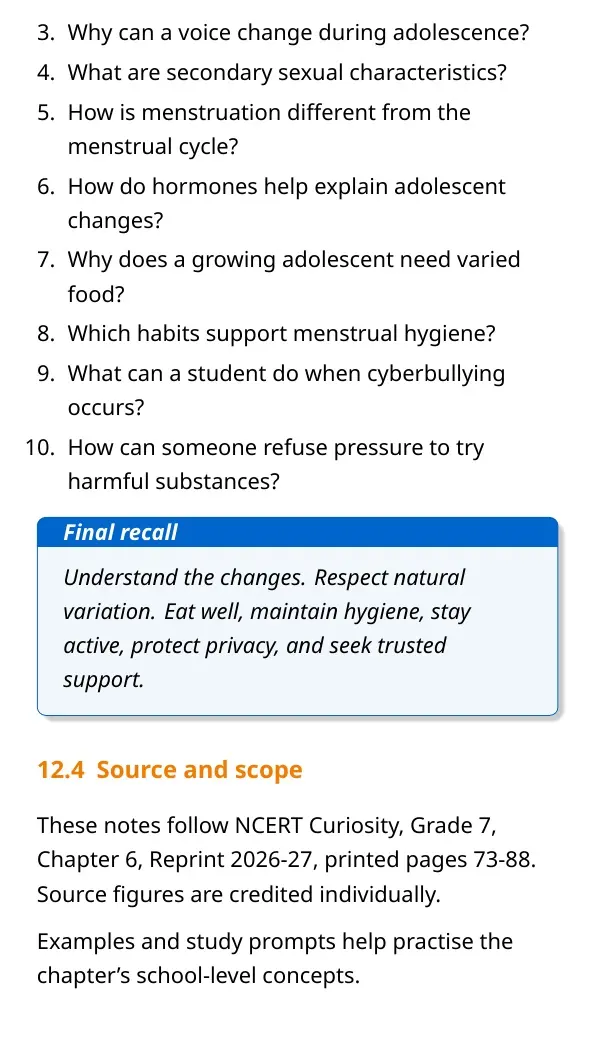
Ans. Read the definitions first. Compare puberty with adolescence, explain the misconception table and then attempt the NCERT questions.
Ques. Why does the voice change during adolescence?
Ans. The voice box grows during adolescence. This change is usually more noticeable in boys, whose voice may become hoarse.
Ques. What should students remember about menstruation?
Ans. Menstruation is natural. Clean menstrual products, regular changing and safe disposal support hygiene; shame and isolation have no scientific basis.
Ques. How can adolescents handle peer pressure?
Ans. Refuse harmful substances firmly and seek help from a trusted adult. Healthy friendships respect personal choices and boundaries.
Ques. What is adolescence?
Ans. Adolescence is the period of transition from childhood to adulthood. NCERT describes it as generally beginning around 10 and lasting until 19 years.
Ques. How is puberty defined?
Ans. Puberty is the stage when external and internal changes develop the body towards reproductive capability.
Ques. What are hormones?
Ans. Hormones are chemicals produced within the body. They help regulate growth, development and other body functions; some also affect mood and behaviour.



Comments