




The NCERT Class 7 Social Science Chapter 7 notes for Infrastructure: Engine of India's Development explain roads, railways, metro, air transport, ports, communication networks, public responsibility and sustainable design. These notes follow the 2026-27 NCERT textbook and include tables, examples and a free PDF.
- Best for revision: transport systems, communication infrastructure and collective responsibility.
- Use with the PDF: revise the facts table first, then practise the answer frames.
- 2026-27 focus: follows Exploring Society: India and Beyond, Part 2, Chapter 7.
Chapter7Infrastructure:EngineofIndia’sDevelopmentNotes.pdf?page=1&dpi=150)
Chapter7Infrastructure:EngineofIndia’sDevelopmentNotes.pdf?page=2&dpi=150)
Chapter7Infrastructure:EngineofIndia’sDevelopmentNotes.pdf?page=3&dpi=150)
Chapter7Infrastructure:EngineofIndia’sDevelopmentNotes.pdf?page=4&dpi=150)
Chapter7Infrastructure:EngineofIndia’sDevelopmentNotes.pdf?page=5&dpi=150)
Chapter7Infrastructure:EngineofIndia’sDevelopmentNotes.pdf?page=6&dpi=150)
Chapter7Infrastructure:EngineofIndia’sDevelopmentNotes.pdf?page=7&dpi=150)
Chapter7Infrastructure:EngineofIndia’sDevelopmentNotes.pdf?page=8&dpi=150)
Chapter7Infrastructure:EngineofIndia’sDevelopmentNotes.pdf?page=9&dpi=150)
Chapter7Infrastructure:EngineofIndia’sDevelopmentNotes.pdf?page=10&dpi=150)
Chapter7Infrastructure:EngineofIndia’sDevelopmentNotes.pdf?page=11&dpi=150)
Chapter7Infrastructure:EngineofIndia’sDevelopmentNotes.pdf?page=12&dpi=150)
Chapter7Infrastructure:EngineofIndia’sDevelopmentNotes.pdf?page=13&dpi=150)
Chapter7Infrastructure:EngineofIndia’sDevelopmentNotes.pdf?page=14&dpi=150)
Chapter7Infrastructure:EngineofIndia’sDevelopmentNotes.pdf?page=15&dpi=150)
Chapter7Infrastructure:EngineofIndia’sDevelopmentNotes.pdf?page=16&dpi=150)
Chapter7Infrastructure:EngineofIndia’sDevelopmentNotes.pdf?page=17&dpi=150)
Chapter7Infrastructure:EngineofIndia’sDevelopmentNotes.pdf?page=18&dpi=150)
Chapter7Infrastructure:EngineofIndia’sDevelopmentNotes.pdf?page=19&dpi=150)
Chapter7Infrastructure:EngineofIndia’sDevelopmentNotes.pdf?page=20&dpi=150)
Chapter7Infrastructure:EngineofIndia’sDevelopmentNotes.pdf?page=21&dpi=150)
Chapter7Infrastructure:EngineofIndia’sDevelopmentNotes.pdf?page=22&dpi=150)
Chapter7Infrastructure:EngineofIndia’sDevelopmentNotes.pdf?page=23&dpi=150)
Chapter7Infrastructure:EngineofIndia’sDevelopmentNotes.pdf?page=24&dpi=150)
Chapter7Infrastructure:EngineofIndia’sDevelopmentNotes.pdf?page=25&dpi=150)
Chapter7Infrastructure:EngineofIndia’sDevelopmentNotes.pdf?page=26&dpi=150)
Chapter7Infrastructure:EngineofIndia’sDevelopmentNotes_flat_MobileCard.pdf?page=1&dpi=150)
Chapter7Infrastructure:EngineofIndia’sDevelopmentNotes_flat_MobileCard.pdf?page=2&dpi=150)
Chapter7Infrastructure:EngineofIndia’sDevelopmentNotes_flat_MobileCard.pdf?page=3&dpi=150)
Chapter7Infrastructure:EngineofIndia’sDevelopmentNotes_flat_MobileCard.pdf?page=4&dpi=150)
Chapter7Infrastructure:EngineofIndia’sDevelopmentNotes_flat_MobileCard.pdf?page=5&dpi=150)
Chapter7Infrastructure:EngineofIndia’sDevelopmentNotes_flat_MobileCard.pdf?page=6&dpi=150)
Chapter7Infrastructure:EngineofIndia’sDevelopmentNotes_flat_MobileCard.pdf?page=7&dpi=150)
Chapter7Infrastructure:EngineofIndia’sDevelopmentNotes_flat_MobileCard.pdf?page=8&dpi=150)
Chapter7Infrastructure:EngineofIndia’sDevelopmentNotes_flat_MobileCard.pdf?page=9&dpi=150)
Chapter7Infrastructure:EngineofIndia’sDevelopmentNotes_flat_MobileCard.pdf?page=10&dpi=150)
Chapter7Infrastructure:EngineofIndia’sDevelopmentNotes_flat_MobileCard.pdf?page=11&dpi=150)
Chapter7Infrastructure:EngineofIndia’sDevelopmentNotes_flat_MobileCard.pdf?page=12&dpi=150)
Chapter7Infrastructure:EngineofIndia’sDevelopmentNotes_flat_MobileCard.pdf?page=13&dpi=150)
Chapter7Infrastructure:EngineofIndia’sDevelopmentNotes_flat_MobileCard.pdf?page=14&dpi=150)
Chapter7Infrastructure:EngineofIndia’sDevelopmentNotes_flat_MobileCard.pdf?page=15&dpi=150)
Chapter7Infrastructure:EngineofIndia’sDevelopmentNotes_flat_MobileCard.pdf?page=16&dpi=150)
Chapter7Infrastructure:EngineofIndia’sDevelopmentNotes_flat_MobileCard.pdf?page=17&dpi=150)
Chapter7Infrastructure:EngineofIndia’sDevelopmentNotes_flat_MobileCard.pdf?page=18&dpi=150)
Chapter7Infrastructure:EngineofIndia’sDevelopmentNotes_flat_MobileCard.pdf?page=19&dpi=150)
Chapter7Infrastructure:EngineofIndia’sDevelopmentNotes_flat_MobileCard.pdf?page=20&dpi=150)
Chapter7Infrastructure:EngineofIndia’sDevelopmentNotes_flat_MobileCard.pdf?page=21&dpi=150)
Chapter7Infrastructure:EngineofIndia’sDevelopmentNotes_flat_MobileCard.pdf?page=22&dpi=150)
Chapter7Infrastructure:EngineofIndia’sDevelopmentNotes_flat_MobileCard.pdf?page=23&dpi=150)
Chapter7Infrastructure:EngineofIndia’sDevelopmentNotes_flat_MobileCard.pdf?page=24&dpi=150)
Chapter7Infrastructure:EngineofIndia’sDevelopmentNotes_flat_MobileCard.pdf?page=25&dpi=150)
Chapter7Infrastructure:EngineofIndia’sDevelopmentNotes_flat_MobileCard.pdf?page=26&dpi=150)
Chapter7Infrastructure:EngineofIndia’sDevelopmentNotes_flat_MobileCard.pdf?page=27&dpi=150)
Chapter7Infrastructure:EngineofIndia’sDevelopmentNotes_flat_MobileCard.pdf?page=28&dpi=150)
Chapter7Infrastructure:EngineofIndia’sDevelopmentNotes_flat_MobileCard.pdf?page=29&dpi=150)
Chapter7Infrastructure:EngineofIndia’sDevelopmentNotes_flat_MobileCard.pdf?page=30&dpi=150)
Chapter7Infrastructure:EngineofIndia’sDevelopmentNotes_flat_MobileCard.pdf?page=31&dpi=150)
Chapter7Infrastructure:EngineofIndia’sDevelopmentNotes_flat_MobileCard.pdf?page=32&dpi=150)
Chapter7Infrastructure:EngineofIndia’sDevelopmentNotes_flat_MobileCard.pdf?page=33&dpi=150)
Chapter7Infrastructure:EngineofIndia’sDevelopmentNotes_flat_MobileCard.pdf?page=34&dpi=150)
Chapter7Infrastructure:EngineofIndia’sDevelopmentNotes_flat_MobileCard.pdf?page=35&dpi=150)
Chapter7Infrastructure:EngineofIndia’sDevelopmentNotes_flat_MobileCard.pdf?page=36&dpi=150)
Chapter7Infrastructure:EngineofIndia’sDevelopmentNotes_flat_MobileCard.pdf?page=37&dpi=150)
Chapter7Infrastructure:EngineofIndia’sDevelopmentNotes_flat_MobileCard.pdf?page=38&dpi=150)
Chapter7Infrastructure:EngineofIndia’sDevelopmentNotes_flat_MobileCard.pdf?page=39&dpi=150)
Chapter7Infrastructure:EngineofIndia’sDevelopmentNotes_flat_MobileCard.pdf?page=40&dpi=150)
Chapter7Infrastructure:EngineofIndia’sDevelopmentNotes_flat_MobileCard.pdf?page=41&dpi=150)
Chapter7Infrastructure:EngineofIndia’sDevelopmentNotes_flat_MobileCard.pdf?page=42&dpi=150)
Chapter7Infrastructure:EngineofIndia’sDevelopmentNotes_flat_MobileCard.pdf?page=43&dpi=150)
Chapter7Infrastructure:EngineofIndia’sDevelopmentNotes_flat_MobileCard.pdf?page=44&dpi=150)
Chapter7Infrastructure:EngineofIndia’sDevelopmentNotes_flat_MobileCard.pdf?page=45&dpi=150)
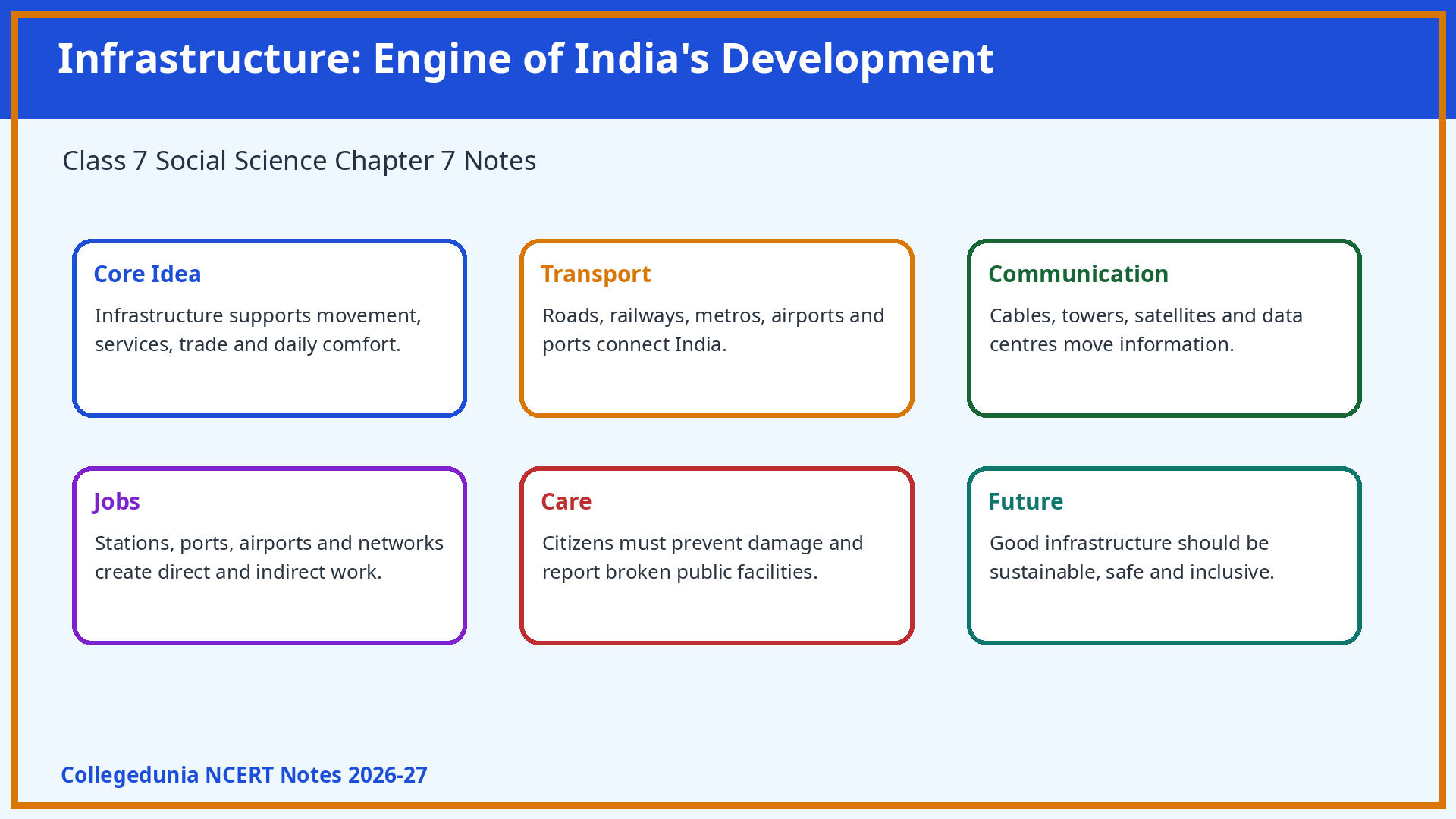
Student Feedback: Students usually understand this chapter faster after linking every example to movement, communication or public care.
Infrastructure: Engine of India's Development Notes Overview
Chapter 7 explains how infrastructure supports economic life. Roads, railways, airports, ports, electricity, water supply and communication networks help people travel, goods move, markets function and government services reach citizens.
| Revision area | Key idea | Example cue |
|---|---|---|
| Physical infrastructure | Visible systems that keep places working | Roads, bridges, power, water and internet |
| Transport | Moves people and goods safely | Roads, railways, metro, airports and ports |
| Communication | Moves messages, data and services | Towers, fibre cables, satellites and servers |
| Development | Creates jobs, trade and ease of living | Markets, tourism, emergency help and security |
| Care | Citizens must protect public assets | Report potholes, reduce litter and prevent damage |
Transport Infrastructure in Class 7 Social Science Chapter 7
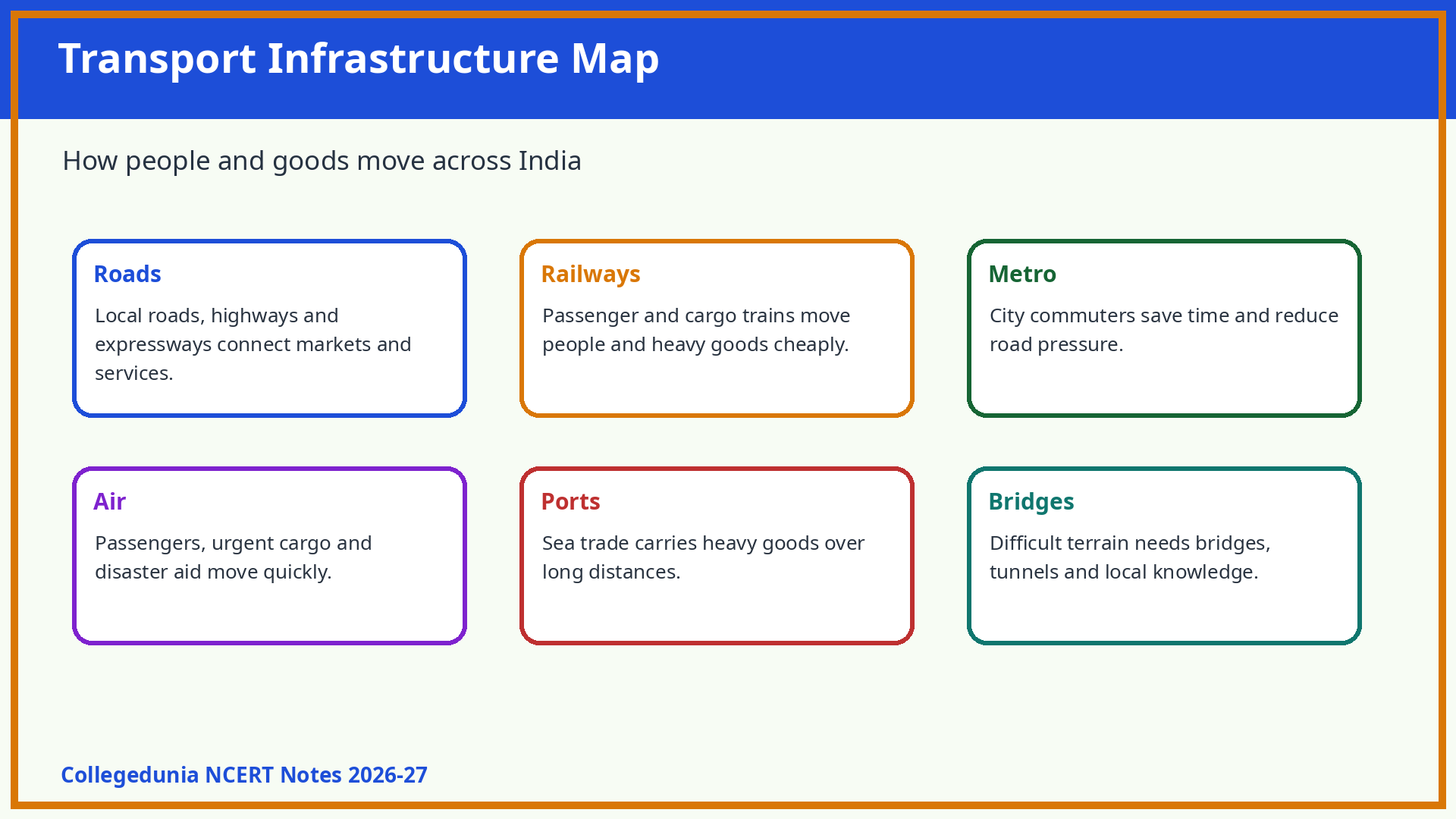
Transport infrastructure includes roads, highways, bridges, tunnels, railways, metro systems, airports, ships and ports. It links farms, factories, homes, schools, hospitals, markets and disaster-response teams.
- Roads: local roads, state highways, national highways and expressways connect different scales of travel.
- Railways: India has the fourth-largest railway system and carries over 20 million passengers every day.
- Air transport: flights move people, urgent cargo and relief material across difficult terrain.
- Ports: India's coastline and ports support sea trade and heavy cargo movement.
Infrastructure: Engine of India's Development Chapter 7 Revision Video
Source: Magnet Brains on YouTube
Communication Infrastructure and Digital Services
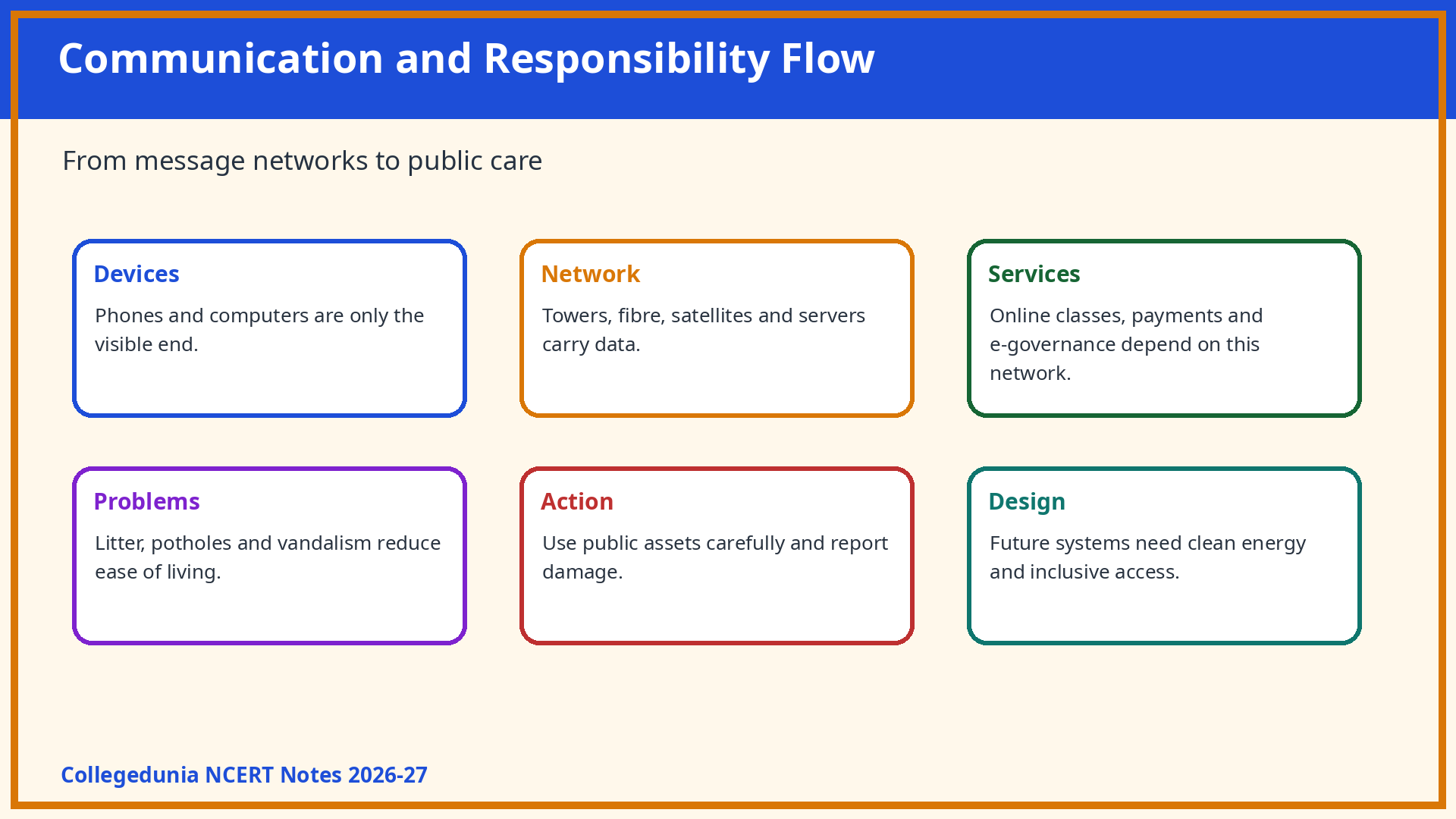
Communication infrastructure includes devices, cables, towers, satellites and data centres. A simple voice note may travel through electricity, a mobile tower, fibre cables, servers and another phone before it reaches the receiver.
| Digital use | Infrastructure behind it | Benefit |
|---|---|---|
| Online classes | Electricity, devices and internet | Students can learn from remote areas |
| Emergency alerts | Mobile networks and apps | People receive warnings quickly |
| E-commerce | Internet, payments and delivery links | Small businesses reach wider markets |
| E-governance | Apps, databases and secure networks | Citizens access services such as DigiLocker |
Collective Responsibility and Sustainable Infrastructure
Public infrastructure is useful only when people maintain it. Litter, damaged benches, broken streetlights, potholes and writing on monuments reduce ease of living and waste public money.
- Citizen role: use public facilities carefully and report damage to authorities.
- Local services: better waste management, sewers, safe water and footpaths improve daily life.
- Sustainable design: solar panels, wildlife safety systems and cleaner materials reduce harm.
- Inclusive design: transport and public spaces should consider children, elderly people and persons with disabilities.
Infrastructure: Engine of India's Development Related Resources
| Resource | Best use | Link |
|---|---|---|
| NCERT Notes | Topic-wise revision with tables | Current page |
| NCERT Solutions | Practice textbook questions | Open NCERT Solutions |
| NCERT Book PDF | Read the official chapter | Open Book PDF |
| Handwritten Notes | Quick one-sitting revision | Open Handwritten Notes |
Social Science Notes for All Chapters
| Chapter | NCERT chapter title | Notes link |
|---|---|---|
| Chapter 1 | The Story of Indian Farming | Open Notes |
| Chapter 2 | India and Her Neighbours | Open Notes |
| Chapter 3 | Empires and Kingdoms: 6th to 10th Centuries | Open Notes |
| Chapter 4 | Turning Tides: 11th and 12th Centuries | Open Notes |
| Chapter 5 | India, a Home to Many | Open Notes |
| Chapter 6 | The State, the Government, and You | Open Notes |
| Chapter 7 | Infrastructure: Engine of India's Development | Current notes |
| Chapter 8 | Banks and the Magic of Finance | Open Notes |
Infrastructure: Engine of India's Development Class 7 Notes FAQs
Ques. What is Class 7 Social Science Chapter 7 about?
Ans. It explains physical infrastructure, transport networks, communication systems, economic development, public responsibility and sustainable design.
Ques. Why is infrastructure called the backbone of development?
Ans. Infrastructure supports transport, trade, jobs, emergency help, tourism, communication and daily services. Without it, economic life slows down.
Ques. Which transport systems are covered in Chapter 7?
Ans. The chapter covers roads, highways, bridges, tunnels, railways, metro trains, air transport, shipping and ports.
Ques. How can citizens protect public infrastructure?
Ans. Citizens can avoid littering and damage, report potholes or broken lights, use public property carefully and support clean, inclusive design.



Comments