




Class 7 Social Science Part 2 Chapter 7 Infrastructure: Engine of India's Development explains the role of infrastructure in supporting economic development. These class 7 social science handwritten notes chapter 7 Infrastructure: Engine of India's Development follow the 2026-27 NCERT and cover physical infrastructure and its growth.
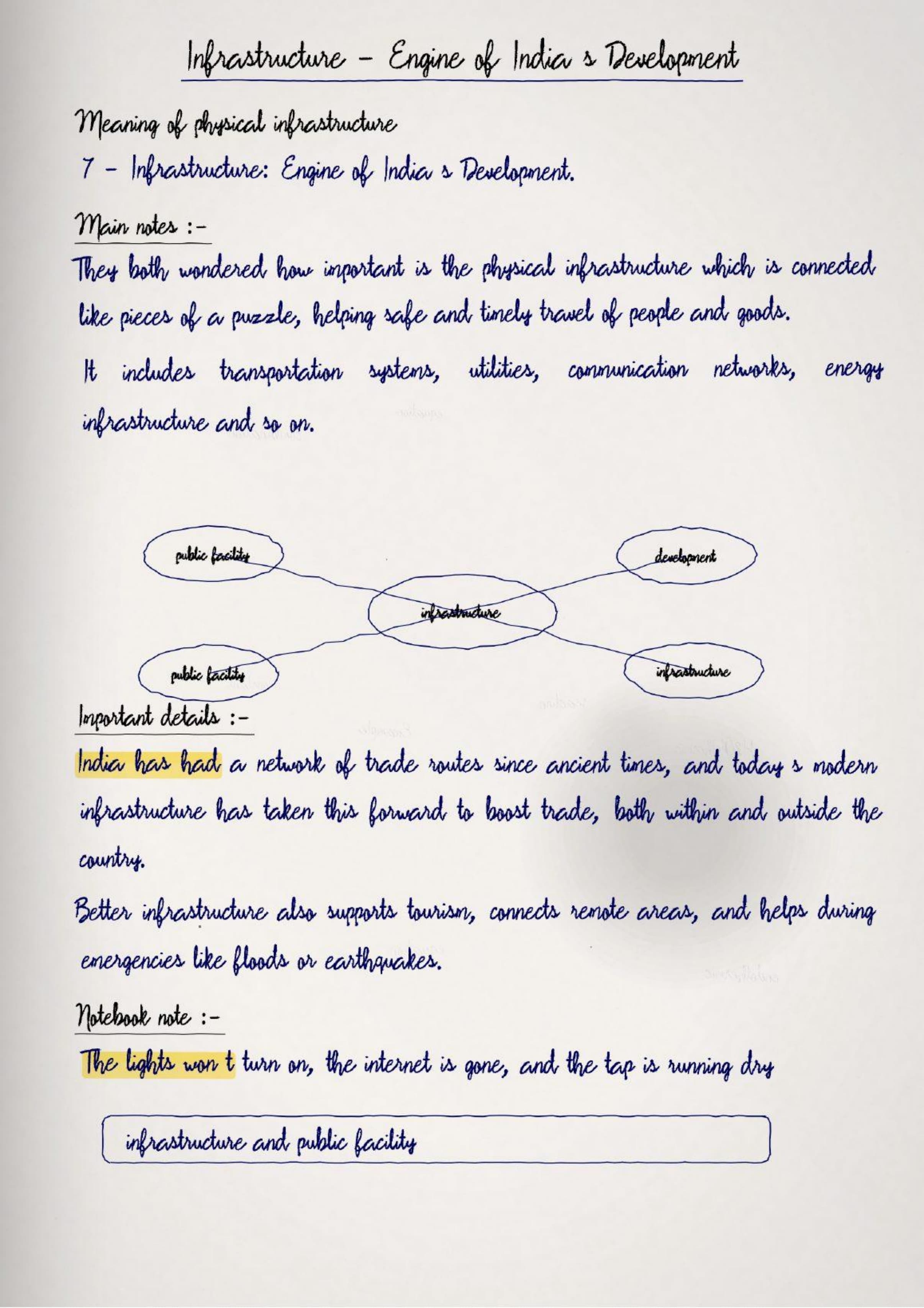











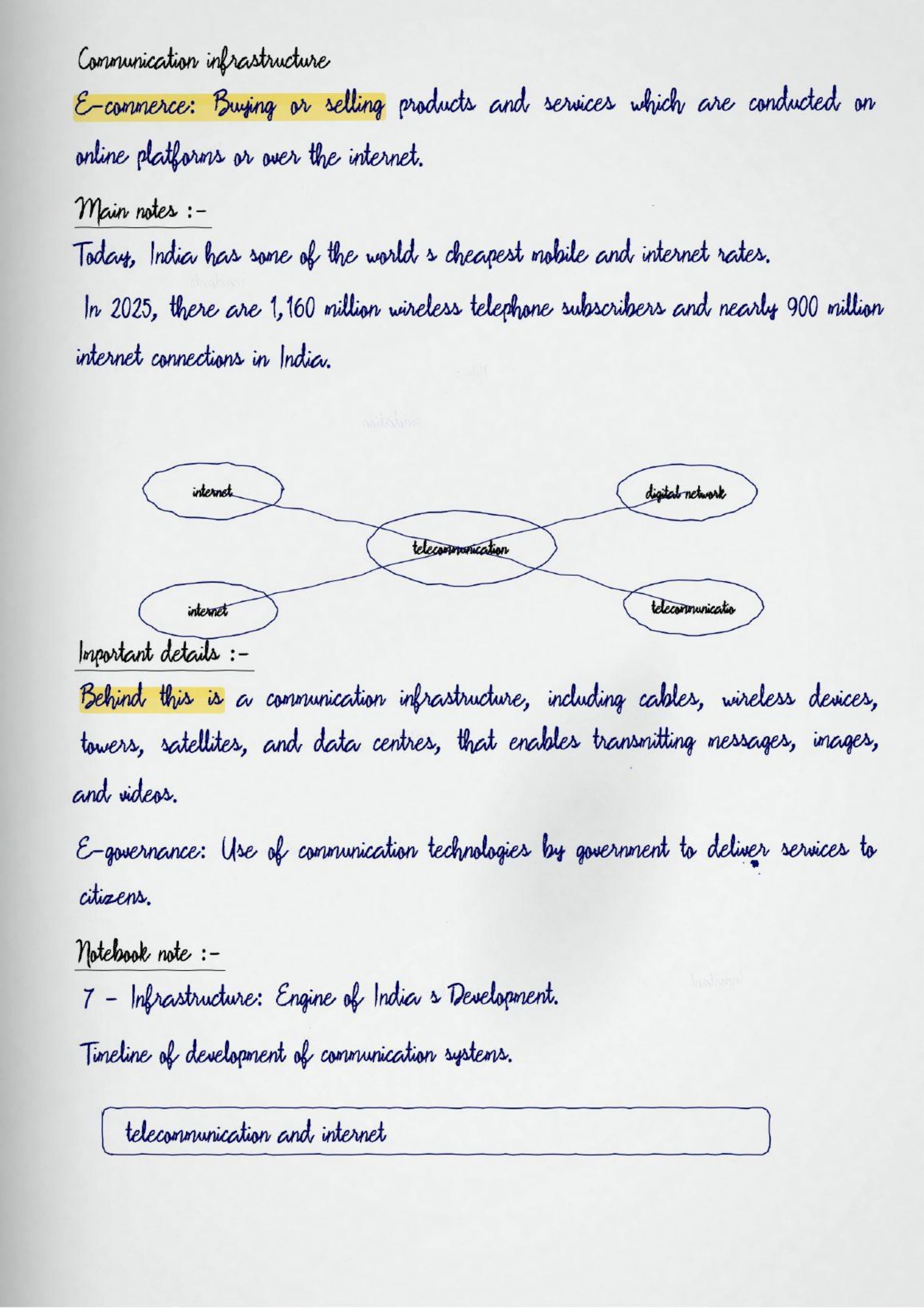

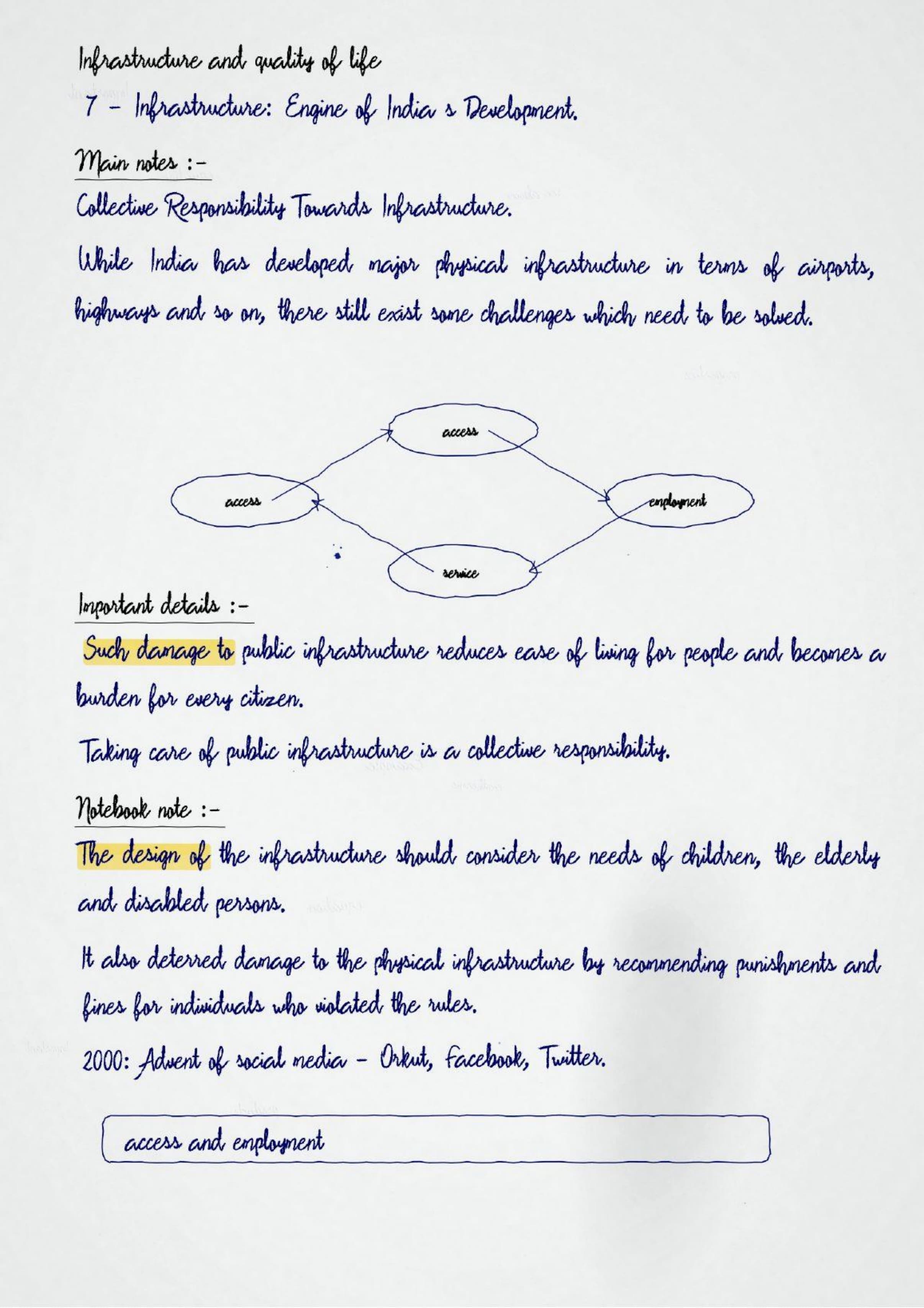

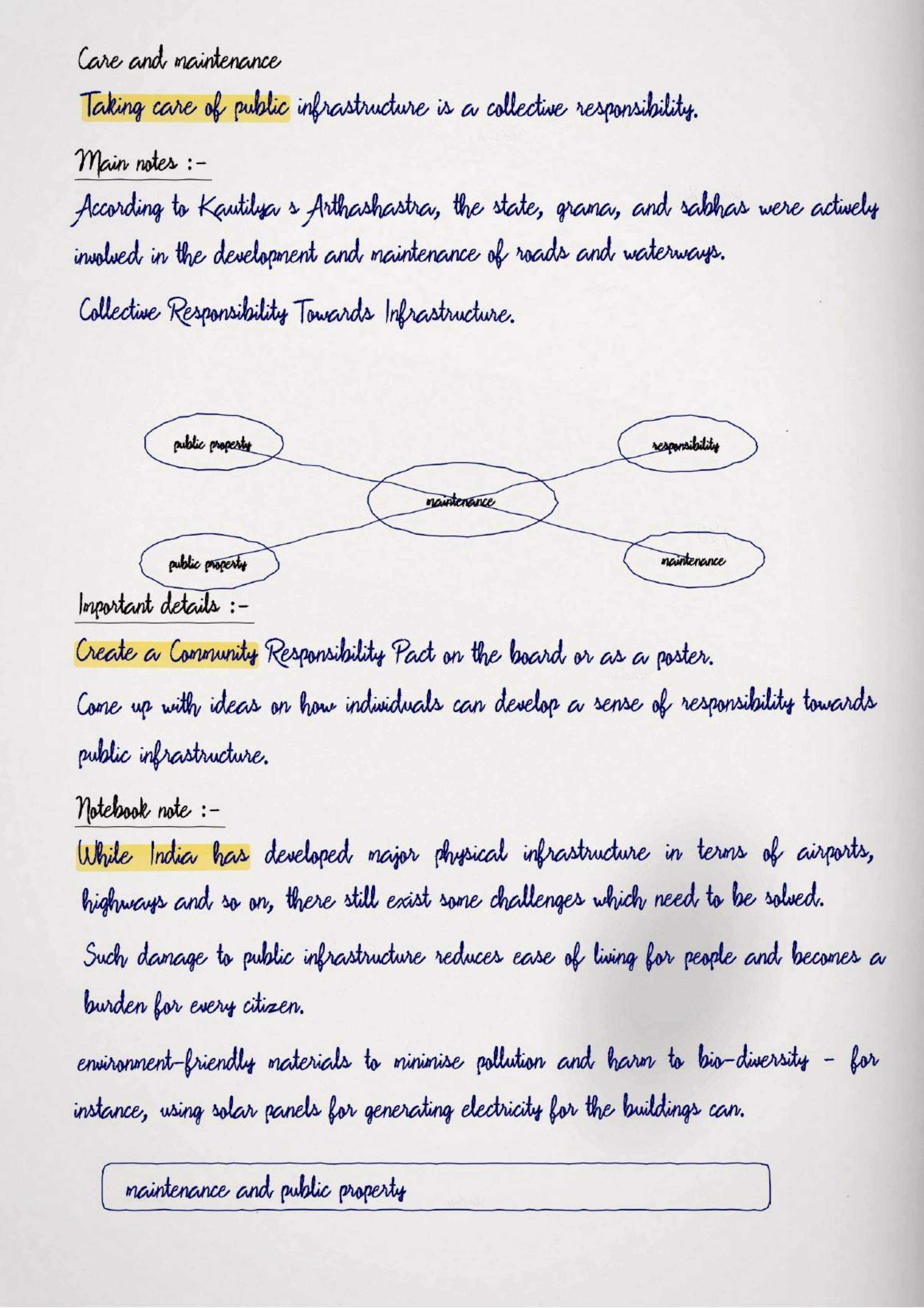
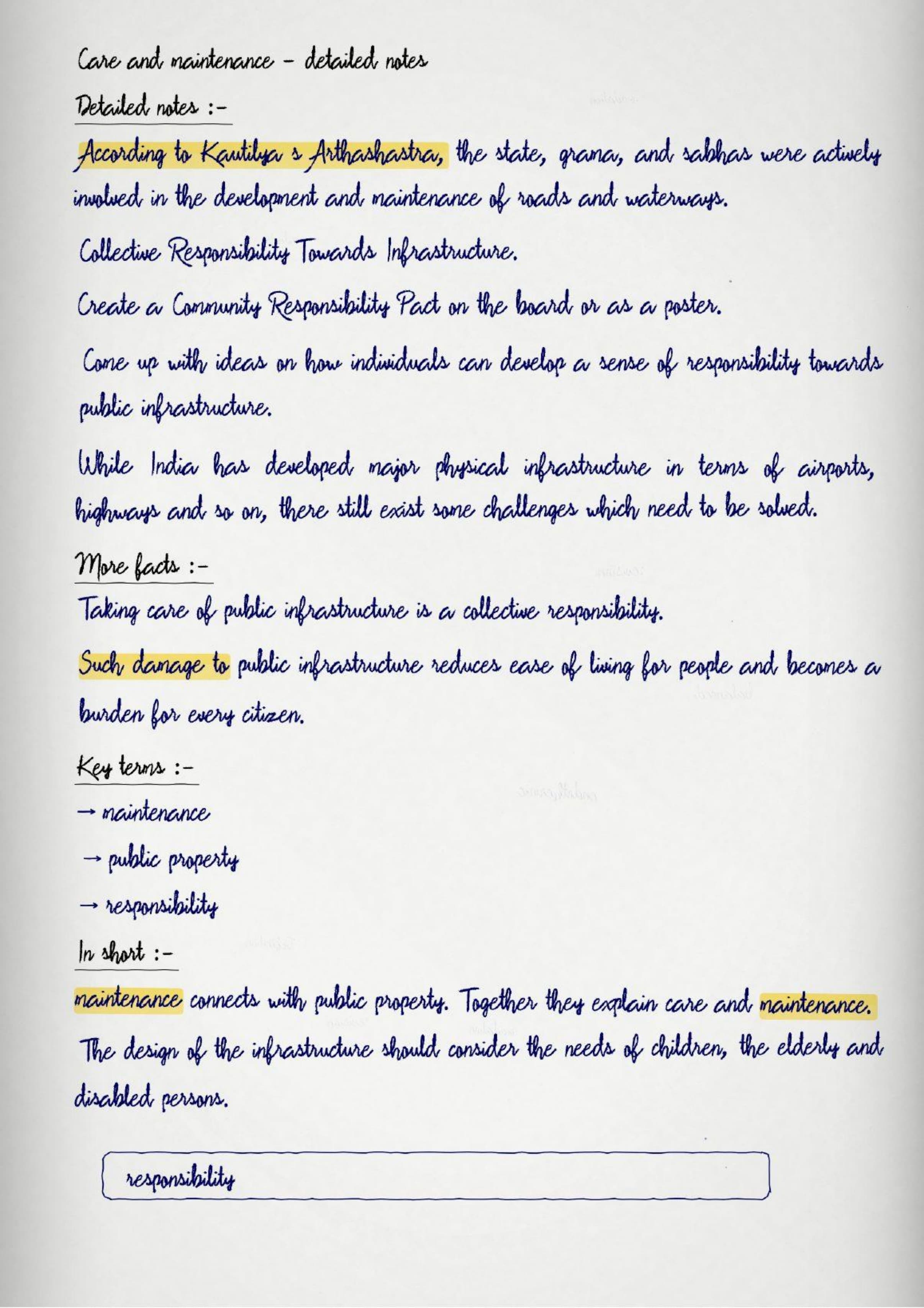
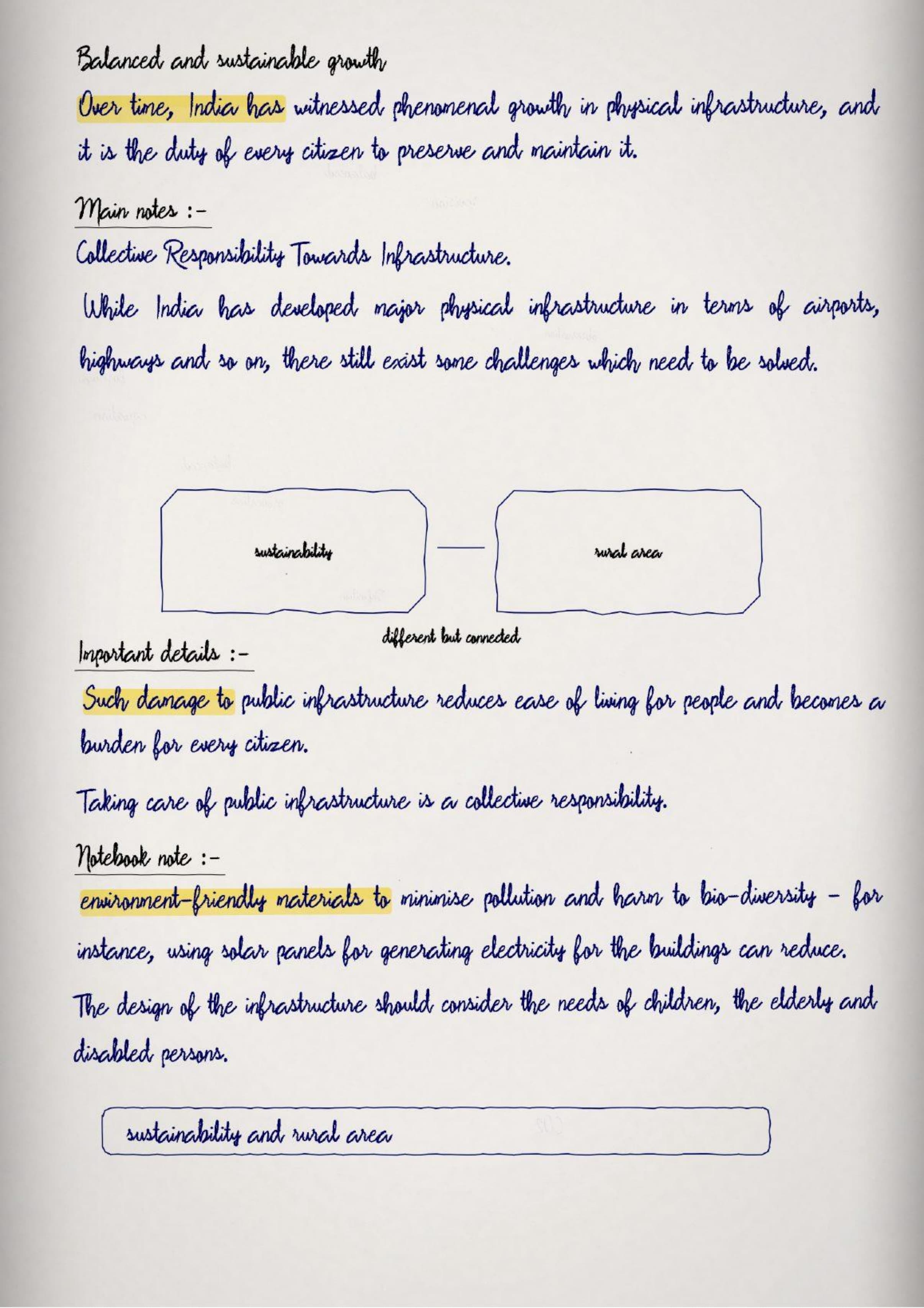

- Infrastructure types boxed: transport, power, water, communication and social infrastructure
- What the notes cover: what infrastructure is, why it matters, India's growth in it, and the duty to maintain it
- Best for: the why-infrastructure-matters question and the types answer
Open the PDF below for the complete class 7 social science handwritten notes covering Infrastructure: Engine of India's Development from the first page to the last.
These handwritten notes are written by Social Science teachers, mapped to the 2026-27 NCERT Exploring Society book, and checked against Class 7 school question papers.
Where Students Lose Marks in Infrastructure: Engine of India's Development
This chapter connects the economics strand to daily life, and it usually carries a duty-based question at the end.
- Why infrastructure matters is a standard three-mark answer
- Listing types of infrastructure is a direct question
- The citizen's duty to maintain public property is value-based
- The chapter connects to the banking chapter that follows
Why Students Pick Collegedunia's Infrastructure: Engine of India's Development Handwritten Notes
Collegedunia has these class 7 social science handwritten notes written by teachers who set Class 7 papers. The types are drawn as one panel, with an Indian example next to each.
- Types panel: each kind of infrastructure with an Indian example
- Benefits box: connectivity, employment and ease of living
- Growth strip: how India's physical infrastructure has expanded
- Colour-coded sub-headings: sub-topics in red so each type is easy to find
Test Yourself on Infrastructure: Engine of India's Development
Five questions on infrastructure. Tap to check each one.
Infrastructure is best described as
(a) a type of crop (b) the backbone of economic activity (c) a form of government (d) a trade route
Answer: (b) the backbone of economic activity
Which of these is social infrastructure?
(a) a highway (b) a power plant (c) a hospital (d) a port
Answer: (c) a hospital
Good infrastructure leads to
(a) fewer jobs (b) better connectivity and employment (c) no development (d) higher isolation
Answer: (b) better connectivity and employment
Roads, railways and ports are examples of
(a) social infrastructure (b) physical infrastructure (c) natural resources (d) currency
Answer: (b) physical infrastructure
Preserving public infrastructure is the duty of
(a) the government only (b) every citizen (c) engineers only (d) no one
Answer: (b) every citizen
Topics Written Out in the Infrastructure: Engine of India's Development Notes
Quality infrastructure is described in the chapter as the backbone of all other economic activity. Nothing else works well without it.
- What infrastructure means
- Infrastructure as the backbone of the economy
- Transport: roads, railways, ports and airports
- Power and energy supply
- Water supply and sanitation
- Communication networks
- Social infrastructure: schools and hospitals
- Better connectivity and employment
- How infrastructure improves ease of living
- The citizen's duty to preserve and maintain it
Infrastructure: Engine of India's Development Sub-topic Priority List for CBSE Class 7 Social Science
The types of infrastructure and its benefits carry the marks here.
| Sub-topic | Weightage | How often asked |
|---|---|---|
| Why infrastructure matters to the economy | High | asked often |
| Types of infrastructure | High | asked often |
| Connectivity and employment | Medium | asked sometimes |
| India's growth in physical infrastructure | Medium | asked sometimes |
| Ease of living | Medium | asked sometimes |
| Duty to preserve public property | Medium | asked sometimes |
Infrastructure: Engine of India's Development in the Last Hour Before the Exam
The card for this chapter.
- Infrastructure is the backbone of all other economic activity
- Physical: roads, railways, power, water, communication
- Social: schools and hospitals
- It brings connectivity, employment and ease of living
- India has seen phenomenal growth in physical infrastructure
- Preserving it is the duty of every citizen
Hand-drawn Sketches Inside the Infrastructure: Engine of India's Development Notes
The notes use panels and simple sketches for this chapter.
| Figure drawn by hand | What it shows |
|---|---|
| Types panel | transport, power, water, communication and social infrastructure |
| Benefits box | connectivity, employment and ease of living |
| Transport map | highways, railways and ports on an outline of India |
| Growth strip | India's infrastructure expansion over time |
| Duty panel | citizens caring for public property |
Words and Ideas the Infrastructure: Engine of India's Development Notes Box Off
Short definitions here, but they are asked directly.
| Term / Idea | What it means |
|---|---|
| Infrastructure | the basic physical systems a country needs to function |
| Physical infrastructure | roads, railways, power, water and communication networks |
| Social infrastructure | schools, hospitals and other services supporting people |
| Connectivity | the ease of moving people, goods and information between places |
| Ease of living | how convenient and comfortable daily life is |
| Public property | assets owned by the state for everyone's use |
| Development | improvement in living standards and economic capacity |
Best Way to Read the Infrastructure: Engine of India's Development Handwritten Notes
A short plan works better than one long sitting with the class 7 social science handwritten notes. Attach an example to each type. That is how the list question is marked.
- List the types of infrastructure with an example of each
- Write three benefits good infrastructure brings
- Note two ways citizens can help maintain public property
- Before the test, revise the types panel and the benefits box
Chapter-wise Class 7 Social Science Handwritten Notes
Exploring Society Part 1 has twelve chapters and Part 2 has eight. Use the table to open the class 7 social science handwritten notes for any other chapter.
Infrastructure: Engine of India's Development Class 7 Social Science Handwritten Notes FAQs
Ques. Where can I download the Infrastructure Class 7 Social Science Handwritten Notes PDF?
Ans. The PDF is on this page, free, in both the normal and the HD version.
Ques. Why is infrastructure important for development?
Ans. Quality infrastructure is the backbone of all other economic activity. It enables better connectivity, creates employment opportunities and improves the ease of living for people.
Ques. How many pages is the Part 2 Chapter 7 handwritten notes PDF?
Ans. It runs 20 pages, with the types panel, the benefits box and a quiz.
Ques. What are the types of infrastructure?
Ans. Physical infrastructure such as roads, railways, ports, power, water supply and communication networks, and social infrastructure such as schools and hospitals.
Ques. Whose duty is it to maintain public infrastructure?
Ans. Every citizen's. The chapter is clear that once infrastructure is built, preserving and maintaining it is a shared responsibility.



Comments