




NCERT Notes for Class 7 Vocational Education Kaushal Bodh Chapter 2 School Habitat Garden help students revise the 2026-27 project in a practical way. The chapter explains animal needs, habitat loss, expert interaction, garden layout, shelters, observation records, maintenance, and Kaushal Mela presentation.
- Best for quick revision: use these notes before filling activity tables or project-file records.
- Project focus: revise space, shelter, food, water, windbreaks, feeders, puddling areas and insect shelters.
- Exam focus: learn the activity order, safety rules, observation format and maintenance chart.
Chapter2SchoolHabitatGardenNotes.pdf?page=1&dpi=150)
Chapter2SchoolHabitatGardenNotes.pdf?page=2&dpi=150)
Chapter2SchoolHabitatGardenNotes.pdf?page=3&dpi=150)
Chapter2SchoolHabitatGardenNotes.pdf?page=4&dpi=150)
Chapter2SchoolHabitatGardenNotes.pdf?page=5&dpi=150)
Chapter2SchoolHabitatGardenNotes.pdf?page=6&dpi=150)
Chapter2SchoolHabitatGardenNotes.pdf?page=7&dpi=150)
Chapter2SchoolHabitatGardenNotes.pdf?page=8&dpi=150)
Chapter2SchoolHabitatGardenNotes.pdf?page=9&dpi=150)
Chapter2SchoolHabitatGardenNotes.pdf?page=10&dpi=150)
Chapter2SchoolHabitatGardenNotes.pdf?page=11&dpi=150)
Chapter2SchoolHabitatGardenNotes.pdf?page=12&dpi=150)
Chapter2SchoolHabitatGardenNotes.pdf?page=13&dpi=150)
Chapter2SchoolHabitatGardenNotes.pdf?page=14&dpi=150)
Chapter2SchoolHabitatGardenNotes.pdf?page=15&dpi=150)
Chapter2SchoolHabitatGardenNotes.pdf?page=16&dpi=150)
Chapter2SchoolHabitatGardenNotes.pdf?page=17&dpi=150)
Chapter2SchoolHabitatGardenNotes.pdf?page=18&dpi=150)
Chapter2SchoolHabitatGardenNotes_flat_MobileCard.pdf?page=1&dpi=150)
Chapter2SchoolHabitatGardenNotes_flat_MobileCard.pdf?page=2&dpi=150)
Chapter2SchoolHabitatGardenNotes_flat_MobileCard.pdf?page=3&dpi=150)
Chapter2SchoolHabitatGardenNotes_flat_MobileCard.pdf?page=4&dpi=150)
Chapter2SchoolHabitatGardenNotes_flat_MobileCard.pdf?page=5&dpi=150)
Chapter2SchoolHabitatGardenNotes_flat_MobileCard.pdf?page=6&dpi=150)
Chapter2SchoolHabitatGardenNotes_flat_MobileCard.pdf?page=7&dpi=150)
Chapter2SchoolHabitatGardenNotes_flat_MobileCard.pdf?page=8&dpi=150)
Chapter2SchoolHabitatGardenNotes_flat_MobileCard.pdf?page=9&dpi=150)
Chapter2SchoolHabitatGardenNotes_flat_MobileCard.pdf?page=10&dpi=150)
Chapter2SchoolHabitatGardenNotes_flat_MobileCard.pdf?page=11&dpi=150)
Chapter2SchoolHabitatGardenNotes_flat_MobileCard.pdf?page=12&dpi=150)
Chapter2SchoolHabitatGardenNotes_flat_MobileCard.pdf?page=13&dpi=150)
Chapter2SchoolHabitatGardenNotes_flat_MobileCard.pdf?page=14&dpi=150)
Chapter2SchoolHabitatGardenNotes_flat_MobileCard.pdf?page=15&dpi=150)
Chapter2SchoolHabitatGardenNotes_flat_MobileCard.pdf?page=16&dpi=150)
Chapter2SchoolHabitatGardenNotes_flat_MobileCard.pdf?page=17&dpi=150)
Chapter2SchoolHabitatGardenNotes_flat_MobileCard.pdf?page=18&dpi=150)
Chapter2SchoolHabitatGardenNotes_flat_MobileCard.pdf?page=19&dpi=150)
Chapter2SchoolHabitatGardenNotes_flat_MobileCard.pdf?page=20&dpi=150)
Chapter2SchoolHabitatGardenNotes_flat_MobileCard.pdf?page=21&dpi=150)
Chapter2SchoolHabitatGardenNotes_flat_MobileCard.pdf?page=22&dpi=150)
Chapter2SchoolHabitatGardenNotes_flat_MobileCard.pdf?page=23&dpi=150)
Chapter2SchoolHabitatGardenNotes_flat_MobileCard.pdf?page=24&dpi=150)
Chapter2SchoolHabitatGardenNotes_flat_MobileCard.pdf?page=25&dpi=150)
Chapter2SchoolHabitatGardenNotes_flat_MobileCard.pdf?page=26&dpi=150)
Chapter2SchoolHabitatGardenNotes_flat_MobileCard.pdf?page=27&dpi=150)
Chapter2SchoolHabitatGardenNotes_flat_MobileCard.pdf?page=28&dpi=150)
Chapter2SchoolHabitatGardenNotes_flat_MobileCard.pdf?page=29&dpi=150)
Chapter2SchoolHabitatGardenNotes_flat_MobileCard.pdf?page=30&dpi=150)
Chapter2SchoolHabitatGardenNotes_flat_MobileCard.pdf?page=31&dpi=150)
Chapter2SchoolHabitatGardenNotes_flat_MobileCard.pdf?page=32&dpi=150)
Chapter2SchoolHabitatGardenNotes_flat_MobileCard.pdf?page=33&dpi=150)
Student Feedback: In a Collegedunia review of common Class 7 project doubts from over 12,400 students, School Habitat Garden became easier when students learnt the four animal needs first and then matched each need with one garden feature.
- 74% needed one sequence for the nine project activities.
- 62% confused bird baths, butterfly puddles and insect shelters.
- 58% wanted a simple maintenance chart format for project files.
|
Table of Contents |
School Habitat Garden Chapter 2 Quick Map
A school habitat garden is a planned green space that gives selected animals the conditions they need. NCERT explains four basic needs: space, shelter, food and water. The chapter asks students to identify nearby animals, speak to experts, observe natural habitats, design a layout, create the garden, observe visitors and maintain it regularly.
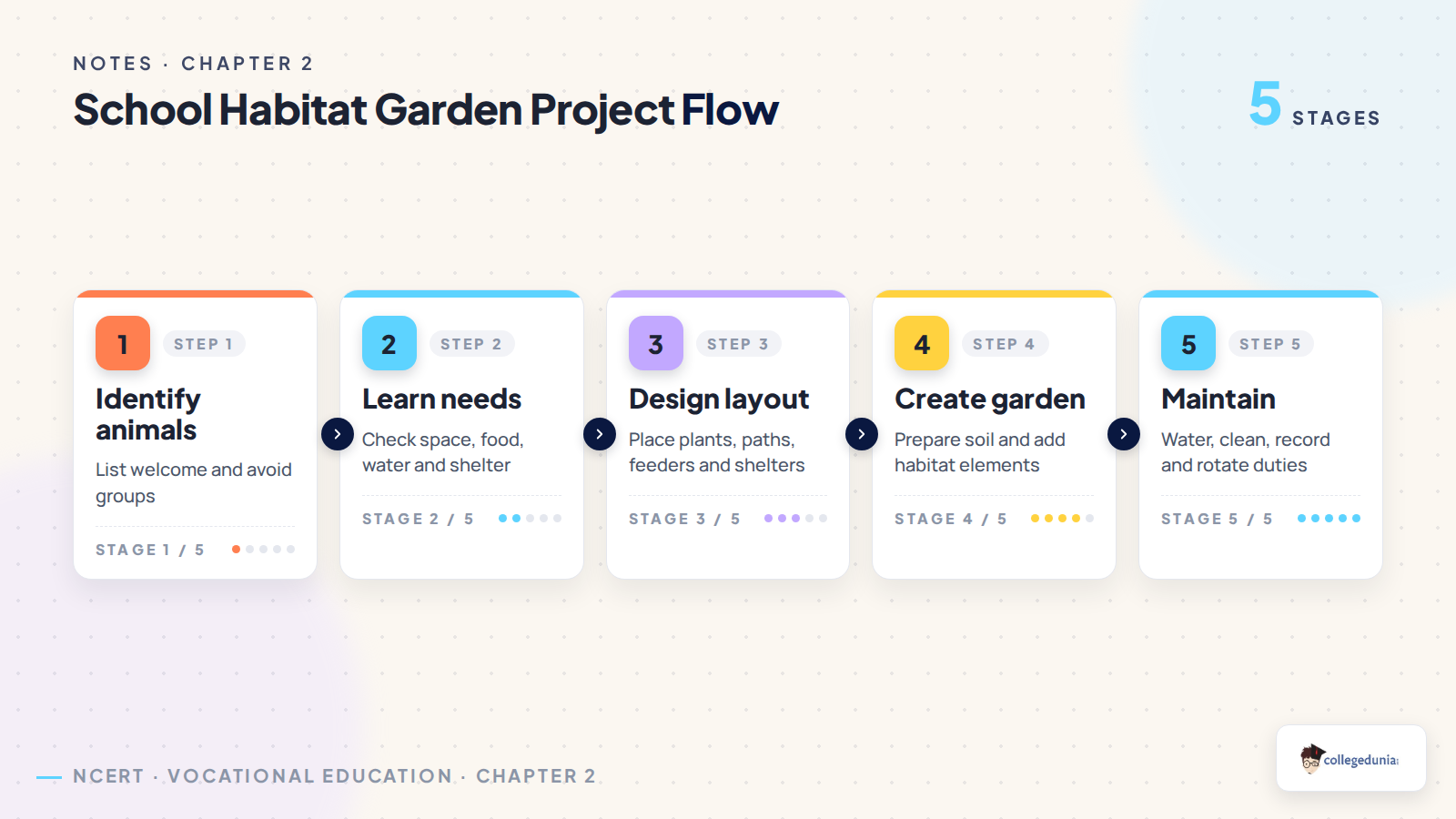
| Project Stage | What Students Do | Output |
|---|---|---|
| Identify animals | List birds, insects, small mammals and animals to avoid. | Welcome and avoid table |
| Learn needs | Check food, water, space, shelter and comfort needs. | Animal-needs table |
| Design garden | Place plants, pathways, water, feeders, shelters and quiet corners. | Layout sketch |
| Maintain garden | Water, refill containers, clean, weed, compost and rotate duties. | Maintenance schedule |
School Habitat Garden Project Explained for Class 7
Source: Prof.Analysis on YouTube
Animal Needs in School Habitat Garden
Every animal needs food and water, but the exact need changes by species. A sparrow needs dense bushes or nest boxes. A butterfly needs flowers, damp soil and wind protection. A spider needs a web space where insects pass. A squirrel needs trees and a safe branch fork.
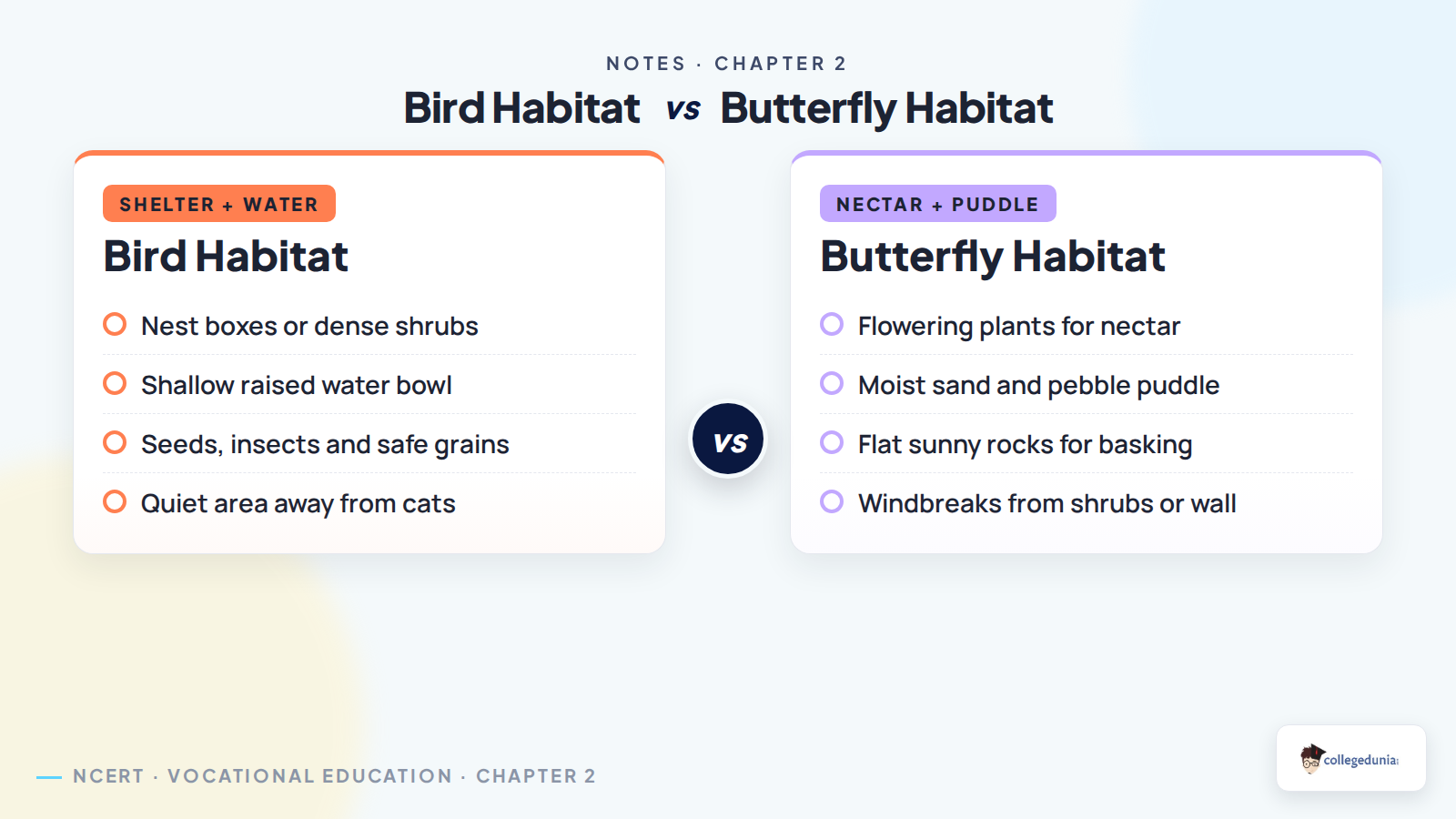
- Space: enough room to move, perch, fly, crawl or make a web.
- Shelter: dense shrubs, tree hollows, nest boxes, logs, rocks or insect shelters.
- Food: nectar, seeds, grains, insects, fruits or safe feeder material.
- Water: shallow containers, puddle edges, dew, damp soil or clean bird baths.
Revision cue: write the four needs first, then give one animal-specific example for each need.
Expert Interaction and Natural Habitat Observation
The chapter asks students to talk to experts before designing the habitat garden. The expert may be a gardener, farmer, naturalist, conservationist, zoologist, entomologist, lepidopterist or botanist. Their advice helps students choose local plants, safe shelters and practical prevention methods.
- Ask what to attract: which birds, insects or small animals are useful near the school?
- Ask what to avoid: how can mosquitoes, snakes or unsafe hiding places be prevented?
- Observe quietly: note space, water, food, shelter and behaviour in nearby gardens or parks.
- Record clearly: write animal name, place, activity, date and remarks.
Designing a Habitat Garden Layout
A good layout is drawn from the top view. It should show plants, pathways, water points, feeding areas, shelter corners, windbreaks, mudpuddling spots and dustbathing areas. The garden should be in a quiet place and away from too much human movement.
| Layout Element | Use | Care Point |
|---|---|---|
| Flowering plants | Attract butterflies, sunbirds and insects. | Use local seasonal flowers when possible. |
| Windbreak | Protects delicate insects and butterflies. | Trees, shrubs, wall or boundary screen can help. |
| Water point | Supports drinking and bathing. | Keep it shallow, clean and safe from cats or dogs. |
| Pathway | Lets students water and weed without disturbing animals. | Use sand, brick or clear marked walking space. |
Mimicking Habitats with Shelters, Feeders and Puddles
Mimicking habitats means copying useful natural features. NCERT gives examples such as bird nesting boxes, shallow water bowls, butterfly puddles, butterfly feeders, butterfly shelters and insect shelters made with natural materials.
- Nesting boxes: use waste plywood or bamboo with teacher help.
- Butterfly puddles: use pebbles, sand, a little salt, compost and moist soil, not deep water.
- Insect shelters: stack logs, straw, bricks and pinecones with small gaps, then place the shelter 1-3 ft above ground near flowering plants or compost.
- Butterfly feeders: use rotting fruit or a sponge soaked in sugar syrup.
Common mistake: do not add a feature only because it looks good. Add it only when it meets a real animal need.
Observation Records and Maintenance Schedule
After the garden grows, students observe visitors such as butterflies, ants, birds, lizards and squirrels. Early morning or sunset may give better observations. If visitors are few at first, students should wait, discuss with experts and adjust the habitat elements.
| Maintenance Task | Frequency | Why It Matters |
|---|---|---|
| Water plants | Every day or as needed | Keeps plants healthy without waterlogging. |
| Refill water containers | Every day | Supports drinking and bathing. |
| Clean garden | Every day | Prevents stagnant water and unsafe hiding places. |
| Weed and compost | As per chart | Maintains plant health and reuses garden waste. |
How to Present School Habitat Garden in Kaushal Mela
The showcase should explain why the garden was created, how the layout was planned, which animals were targeted and what was observed after setup. Students can use labels, charts, photos, sketches, sound recordings and a short slide presentation.
- Label flowering plants, feeders, shelters and water containers.
- Mark mudpuddling and dustbathing areas.
- Show animal observation records with dates and remarks.
- Explain what the group would improve next time.
Related Class 7 Kaushal Bodh Resources for School Habitat Garden
| Resource | Use It For | Link |
|---|---|---|
| NCERT Book PDF | Read the official chapter text and activities. | School Habitat Garden NCERT Book PDF |
| Handwritten Notes | Revise the project in notebook-style format. | Class 7 School Habitat Garden Handwritten Notes |
| Solutions | Check activity questions and short answers. | Class 7 School Habitat Garden Solutions |
Class 7 Vocational Education Kaushal Bodh Notes Chapter List
| Chapter | Notes Link |
|---|---|
| Chapter 1 Plant Nursery | Plant Nursery Notes |
| Chapter 2 School Habitat Garden | School Habitat Garden Notes |
| Chapter 3 Tie and Dye | Tie and Dye Notes |
| Chapter 4 AI Assistant | AI Assistant Notes |
| Chapter 5 Storytime with Puppets | Storytime with Puppets Notes |
| Chapter 6 Family Health Handbook | Family Health Handbook Notes |
Class 7 School Habitat Garden Notes FAQs
Ques. What is a school habitat garden in Class 7 Kaushal Bodh?
Ans. A school habitat garden is a planned garden that gives selected animals space, shelter, food and water, while students observe and maintain it safely.
Ques. What are the four basic needs of animals in this chapter?
Ans. The four basic needs are space, shelter, food and water. Different animals need different forms of each need.
Ques. What should students include in the habitat garden layout?
Ans. The layout should include plants, paths, water points, feeders, shelters, windbreaks, mudpuddling areas and quiet observation space.
Ques. How should students maintain a school habitat garden?
Ans. Students should water plants, refill shallow containers, clean paths, remove stagnant water, weed, compost garden waste and rotate team duties.



Comments