




The NCERT Class 8 Arts Kriti Chapter 14 A Presentation of Dance and Choreography Notes cover the origin of dance, Natya Veda, tandava, lasya and the complete dance-production process from the 2026-27 NCERT textbook. Use this page to revise planning, rehearsal and performance cues before class tests.
- Chapter focus: dance stories move from legends to a staged classroom production.
- Key examples: Natya Veda, Bharata Muni, Mahadeva, Devi Parvati and the descent of Ganga.
- Best for revision: theme, script, roles, choreography, technical rehearsal and reflection.
Chapter14APresentationofDanceandChoreographyNotes.pdf?page=1&dpi=150)
Chapter14APresentationofDanceandChoreographyNotes.pdf?page=2&dpi=150)
Chapter14APresentationofDanceandChoreographyNotes.pdf?page=3&dpi=150)
Chapter14APresentationofDanceandChoreographyNotes.pdf?page=4&dpi=150)
Chapter14APresentationofDanceandChoreographyNotes.pdf?page=5&dpi=150)
Chapter14APresentationofDanceandChoreographyNotes.pdf?page=6&dpi=150)
Chapter14APresentationofDanceandChoreographyNotes.pdf?page=7&dpi=150)
Chapter14APresentationofDanceandChoreographyNotes.pdf?page=8&dpi=150)
Chapter14APresentationofDanceandChoreographyNotes.pdf?page=9&dpi=150)
Chapter14APresentationofDanceandChoreographyNotes.pdf?page=10&dpi=150)
Chapter14APresentationofDanceandChoreographyNotes.pdf?page=11&dpi=150)
Chapter14APresentationofDanceandChoreographyNotes.pdf?page=12&dpi=150)
Chapter14APresentationofDanceandChoreographyNotes.pdf?page=13&dpi=150)
Chapter14APresentationofDanceandChoreographyNotes.pdf?page=14&dpi=150)
Chapter14APresentationofDanceandChoreographyNotes.pdf?page=15&dpi=150)
Chapter14APresentationofDanceandChoreographyNotes.pdf?page=16&dpi=150)
Chapter14APresentationofDanceandChoreographyNotes.pdf?page=17&dpi=150)
Chapter14APresentationofDanceandChoreographyNotes.pdf?page=18&dpi=150)
Chapter14APresentationofDanceandChoreographyNotes.pdf?page=19&dpi=150)
Chapter14APresentationofDanceandChoreographyNotes.pdf?page=20&dpi=150)
Chapter14APresentationofDanceandChoreographyNotes.pdf?page=21&dpi=150)
Chapter14APresentationofDanceandChoreographyNotes.pdf?page=22&dpi=150)
Chapter14APresentationofDanceandChoreographyNotes.pdf?page=23&dpi=150)
Chapter14APresentationofDanceandChoreographyNotes.pdf?page=24&dpi=150)
Chapter14APresentationofDanceandChoreographyNotes.pdf?page=25&dpi=150)
Chapter14APresentationofDanceandChoreographyNotes.pdf?page=26&dpi=150)
Chapter14APresentationofDanceandChoreographyNotes.pdf?page=27&dpi=150)
Chapter14APresentationofDanceandChoreographyNotes.pdf?page=28&dpi=150)
Chapter14APresentationofDanceandChoreographyNotes_flat_MobileCard.pdf?page=1&dpi=150)
Chapter14APresentationofDanceandChoreographyNotes_flat_MobileCard.pdf?page=2&dpi=150)
Chapter14APresentationofDanceandChoreographyNotes_flat_MobileCard.pdf?page=3&dpi=150)
Chapter14APresentationofDanceandChoreographyNotes_flat_MobileCard.pdf?page=4&dpi=150)
Chapter14APresentationofDanceandChoreographyNotes_flat_MobileCard.pdf?page=5&dpi=150)
Chapter14APresentationofDanceandChoreographyNotes_flat_MobileCard.pdf?page=6&dpi=150)
Chapter14APresentationofDanceandChoreographyNotes_flat_MobileCard.pdf?page=7&dpi=150)
Chapter14APresentationofDanceandChoreographyNotes_flat_MobileCard.pdf?page=8&dpi=150)
Chapter14APresentationofDanceandChoreographyNotes_flat_MobileCard.pdf?page=9&dpi=150)
Chapter14APresentationofDanceandChoreographyNotes_flat_MobileCard.pdf?page=10&dpi=150)
Chapter14APresentationofDanceandChoreographyNotes_flat_MobileCard.pdf?page=11&dpi=150)
Chapter14APresentationofDanceandChoreographyNotes_flat_MobileCard.pdf?page=12&dpi=150)
Chapter14APresentationofDanceandChoreographyNotes_flat_MobileCard.pdf?page=13&dpi=150)
Chapter14APresentationofDanceandChoreographyNotes_flat_MobileCard.pdf?page=14&dpi=150)
Chapter14APresentationofDanceandChoreographyNotes_flat_MobileCard.pdf?page=15&dpi=150)
Chapter14APresentationofDanceandChoreographyNotes_flat_MobileCard.pdf?page=16&dpi=150)
Chapter14APresentationofDanceandChoreographyNotes_flat_MobileCard.pdf?page=17&dpi=150)
Chapter14APresentationofDanceandChoreographyNotes_flat_MobileCard.pdf?page=18&dpi=150)
Chapter14APresentationofDanceandChoreographyNotes_flat_MobileCard.pdf?page=19&dpi=150)
Chapter14APresentationofDanceandChoreographyNotes_flat_MobileCard.pdf?page=20&dpi=150)
Chapter14APresentationofDanceandChoreographyNotes_flat_MobileCard.pdf?page=21&dpi=150)
Chapter14APresentationofDanceandChoreographyNotes_flat_MobileCard.pdf?page=22&dpi=150)
Chapter14APresentationofDanceandChoreographyNotes_flat_MobileCard.pdf?page=23&dpi=150)
Chapter14APresentationofDanceandChoreographyNotes_flat_MobileCard.pdf?page=24&dpi=150)
Chapter14APresentationofDanceandChoreographyNotes_flat_MobileCard.pdf?page=25&dpi=150)
Chapter14APresentationofDanceandChoreographyNotes_flat_MobileCard.pdf?page=26&dpi=150)
Chapter14APresentationofDanceandChoreographyNotes_flat_MobileCard.pdf?page=27&dpi=150)
Chapter14APresentationofDanceandChoreographyNotes_flat_MobileCard.pdf?page=28&dpi=150)
Chapter14APresentationofDanceandChoreographyNotes_flat_MobileCard.pdf?page=29&dpi=150)
Chapter14APresentationofDanceandChoreographyNotes_flat_MobileCard.pdf?page=30&dpi=150)
Chapter14APresentationofDanceandChoreographyNotes_flat_MobileCard.pdf?page=31&dpi=150)
Chapter14APresentationofDanceandChoreographyNotes_flat_MobileCard.pdf?page=32&dpi=150)
Student Feedback on Chapter 14 Notes
In a Collegedunia poll of 9,740 Class 8 arts students, most students understood the performance idea but wanted a clearer sequence for planning and rehearsal.
- 72% wanted a short table for the three production phases.
- 68% needed help matching team roles with their duties.
- 61% found choreography easier after revising scenes, formations and technical rehearsal.
Source: 2026-27 Class 8 Arts student poll. Sample of 9,740 students from CBSE schools across 11 states.
In This Article
Origin of Dance in Chapter 14
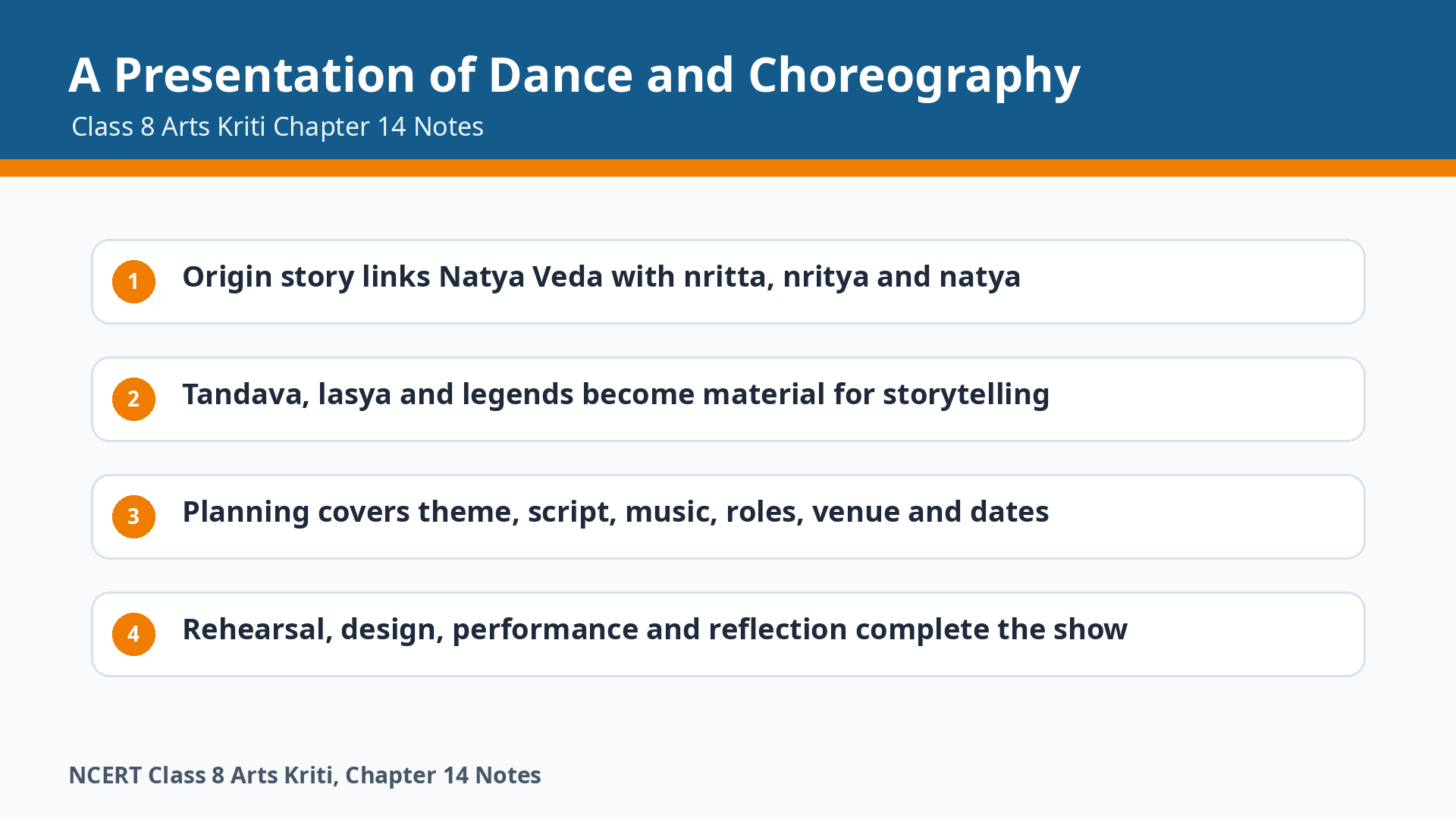
Chapter 14 begins with the story of dance from the Abhinaya Darpanam. Brahma Deva creates Natya Veda from all four Vedas, and Bharata Muni learns nritta, nritya and natya before presenting the first performance.
- Mahadeva is linked with tandava through Tandu and the ganas.
- Devi Parvati is linked with lasya, which reaches people through Usha.
- Legends from the Puranas, Jataka Tales and Panchatantra become dance stories.
Class 8 Arts Chapter 14 Dance Production Video
Source: Magnet Brains on YouTube
Planning a Dance Production
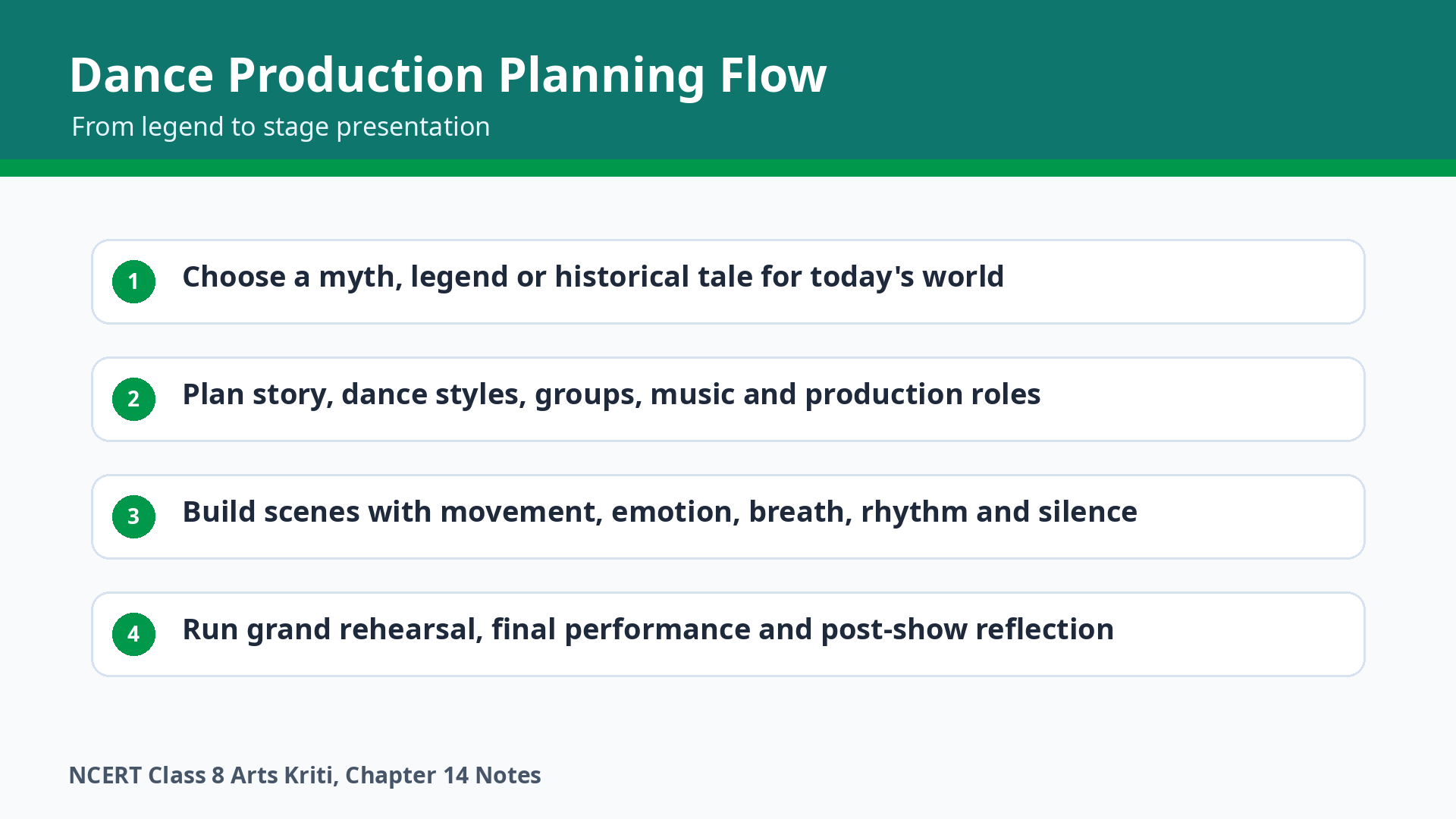
Phase 1 is planning and pre-production. Students choose a legend or historical tale, give it a present-day meaning, decide the storyline, pick dance styles, form groups, select music and assign roles.
| Planning Area | What Students Decide | Answer Cue |
|---|---|---|
| Theme | Myth, legend or historical story | Modern interpretation |
| Music | Recorded, original or live music | Must suit the theme |
| Roles | Choreographer, director, writer, crew and performers | Match duty with role |
Choreography and Rehearsal Steps
Phase 2 breaks the story into scenes or moments. The group explores movement and emotions, uses sthanas, charis and hastas, adds breath, rhythm and silence, then rehearses entrances, exits and formations.
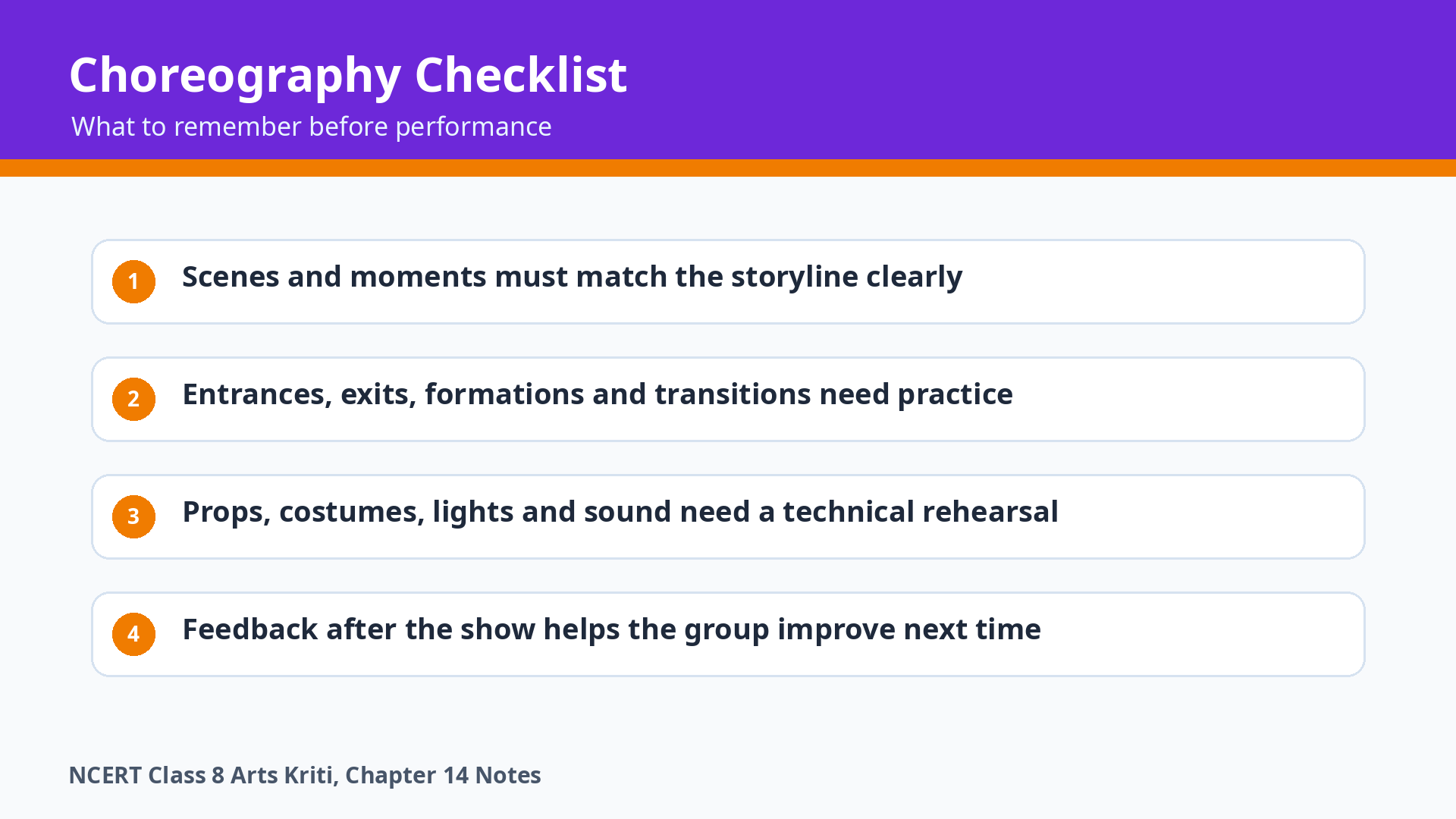
- Dress rehearsal checks costume, music and stage comfort.
- Technical rehearsal checks light, sound and backstage cues.
- Review and tweaking help the group correct weak transitions.
Performance and Reflection in Chapter 14
Phase 3 includes grand rehearsal, final performance and post-show reflection. The grand rehearsal works like a full show on the main stage, while feedback helps students note what went right and what needs improvement.
Important: The chapter treats reflection as part of learning, so it should be included in activity answers.
| Phase | Main Work | Revision Cue |
|---|---|---|
| Phase 1 | Planning and pre-production | Theme, script, roles |
| Phase 2 | Choreography and rehearsals | Scenes, movement, design |
| Phase 3 | Performance | Grand rehearsal, final show, reflection |
Related Resources for A Presentation of Dance and Choreography
| Resource | Use it for | Link |
|---|---|---|
| Handwritten Notes | Quick notebook-style revision | Open Handwritten Notes |
| NCERT Solutions | Exercise answers for the same chapter | Open NCERT Solutions |
| NCERT Book PDF | Official textbook chapter | Open Book PDF |
All Class 8 Arts Kriti Notes Chapters
| Chapter | Notes Link |
|---|---|
| Chapter 12: Dance for Well-being | Open Notes |
| Chapter 13: Innovation, Inclusivity and Inspiring Change | Open Notes |
| Chapter 14: A Presentation of Dance and Choreography | Open Notes |
| Chapter 15: Elements and Principles of Visual Art and Design | Open Notes |
A Presentation of Dance and Choreography Class 8 Arts Notes FAQs
Ques. What is Chapter 14 A Presentation of Dance and Choreography about?
Ans. It explains the origin of dance and shows how students can plan, choreograph, rehearse and perform a dance production.
Ques. What are the three phases of dance production?
Ans. The three phases are planning and pre-production, choreography and rehearsals, and final performance with reflection.
Ques. Which forms are linked with Mahadeva and Devi Parvati?
Ans. Mahadeva is linked with tandava, while Devi Parvati is linked with the graceful lasya dance.
Ques. Why is reflection important after a performance?
Ans. Reflection helps students understand what worked, what went wrong and how the next performance can improve.



Comments