




The NCERT Class 8 Arts (Kriti) Chapter 6 Musical Instruments Notes explain sound, resonance, instrument families, Indian musicians and regional percussion for the 2026-27 textbook. The PDF helps students revise the chapter through clear definitions, activity tables and quick map-based practice.
- Use these notes to revise vibration, resonance, frequency, timbre and sound-producing bodies.
- The chapter also covers Annapurna Devi, Pannalal Ghosh, Mysore Doraiswamy Iyengar and instrument makers.
- In a Collegedunia check of 11,420 students, 78% found the regional-instrument table useful for quick revision.
Chapter6MusicalInstrumentsNotes.pdf?page=1&dpi=150)
Chapter6MusicalInstrumentsNotes.pdf?page=2&dpi=150)
Chapter6MusicalInstrumentsNotes.pdf?page=3&dpi=150)
Chapter6MusicalInstrumentsNotes.pdf?page=4&dpi=150)
Chapter6MusicalInstrumentsNotes.pdf?page=5&dpi=150)
Chapter6MusicalInstrumentsNotes.pdf?page=6&dpi=150)
Chapter6MusicalInstrumentsNotes.pdf?page=7&dpi=150)
Chapter6MusicalInstrumentsNotes.pdf?page=8&dpi=150)
Chapter6MusicalInstrumentsNotes.pdf?page=9&dpi=150)
Chapter6MusicalInstrumentsNotes.pdf?page=10&dpi=150)
Chapter6MusicalInstrumentsNotes.pdf?page=11&dpi=150)
Chapter6MusicalInstrumentsNotes.pdf?page=12&dpi=150)
Chapter6MusicalInstrumentsNotes.pdf?page=13&dpi=150)
Chapter6MusicalInstrumentsNotes.pdf?page=14&dpi=150)
Chapter6MusicalInstrumentsNotes.pdf?page=15&dpi=150)
Chapter6MusicalInstrumentsNotes.pdf?page=16&dpi=150)
Chapter6MusicalInstrumentsNotes.pdf?page=17&dpi=150)
Chapter6MusicalInstrumentsNotes.pdf?page=18&dpi=150)
Chapter6MusicalInstrumentsNotes.pdf?page=19&dpi=150)
Chapter6MusicalInstrumentsNotes.pdf?page=20&dpi=150)
Chapter6MusicalInstrumentsNotes_flat_MobileCard.pdf?page=1&dpi=150)
Chapter6MusicalInstrumentsNotes_flat_MobileCard.pdf?page=2&dpi=150)
Chapter6MusicalInstrumentsNotes_flat_MobileCard.pdf?page=3&dpi=150)
Chapter6MusicalInstrumentsNotes_flat_MobileCard.pdf?page=4&dpi=150)
Chapter6MusicalInstrumentsNotes_flat_MobileCard.pdf?page=5&dpi=150)
Chapter6MusicalInstrumentsNotes_flat_MobileCard.pdf?page=6&dpi=150)
Chapter6MusicalInstrumentsNotes_flat_MobileCard.pdf?page=7&dpi=150)
Chapter6MusicalInstrumentsNotes_flat_MobileCard.pdf?page=8&dpi=150)
Chapter6MusicalInstrumentsNotes_flat_MobileCard.pdf?page=9&dpi=150)
Chapter6MusicalInstrumentsNotes_flat_MobileCard.pdf?page=10&dpi=150)
Chapter6MusicalInstrumentsNotes_flat_MobileCard.pdf?page=11&dpi=150)
Chapter6MusicalInstrumentsNotes_flat_MobileCard.pdf?page=12&dpi=150)
Chapter6MusicalInstrumentsNotes_flat_MobileCard.pdf?page=13&dpi=150)
Chapter6MusicalInstrumentsNotes_flat_MobileCard.pdf?page=14&dpi=150)
Chapter6MusicalInstrumentsNotes_flat_MobileCard.pdf?page=15&dpi=150)
Chapter6MusicalInstrumentsNotes_flat_MobileCard.pdf?page=16&dpi=150)
Chapter6MusicalInstrumentsNotes_flat_MobileCard.pdf?page=17&dpi=150)
Chapter6MusicalInstrumentsNotes_flat_MobileCard.pdf?page=18&dpi=150)
Chapter6MusicalInstrumentsNotes_flat_MobileCard.pdf?page=19&dpi=150)
Chapter6MusicalInstrumentsNotes_flat_MobileCard.pdf?page=20&dpi=150)
Chapter6MusicalInstrumentsNotes_flat_MobileCard.pdf?page=21&dpi=150)
Chapter6MusicalInstrumentsNotes_flat_MobileCard.pdf?page=22&dpi=150)
Chapter6MusicalInstrumentsNotes_flat_MobileCard.pdf?page=23&dpi=150)
Chapter6MusicalInstrumentsNotes_flat_MobileCard.pdf?page=24&dpi=150)
Chapter6MusicalInstrumentsNotes_flat_MobileCard.pdf?page=25&dpi=150)
Chapter6MusicalInstrumentsNotes_flat_MobileCard.pdf?page=26&dpi=150)
Chapter6MusicalInstrumentsNotes_flat_MobileCard.pdf?page=27&dpi=150)
Chapter6MusicalInstrumentsNotes_flat_MobileCard.pdf?page=28&dpi=150)
Musical Instruments Chapter Snapshot
Musical Instruments connects music with science, craft and cultural memory. Students learn that an instrument makes sound when a string, skin, air column or metal body vibrates. The chapter then shows how the body of the instrument strengthens that sound.
The chapter is activity-based. It asks students to identify instruments in a word search, mark regional percussion on a map and solve a crossword. The main revision idea is simple: know how sound is produced, then connect each instrument to its material, region and musician.
How Sound Travels in Musical Instruments
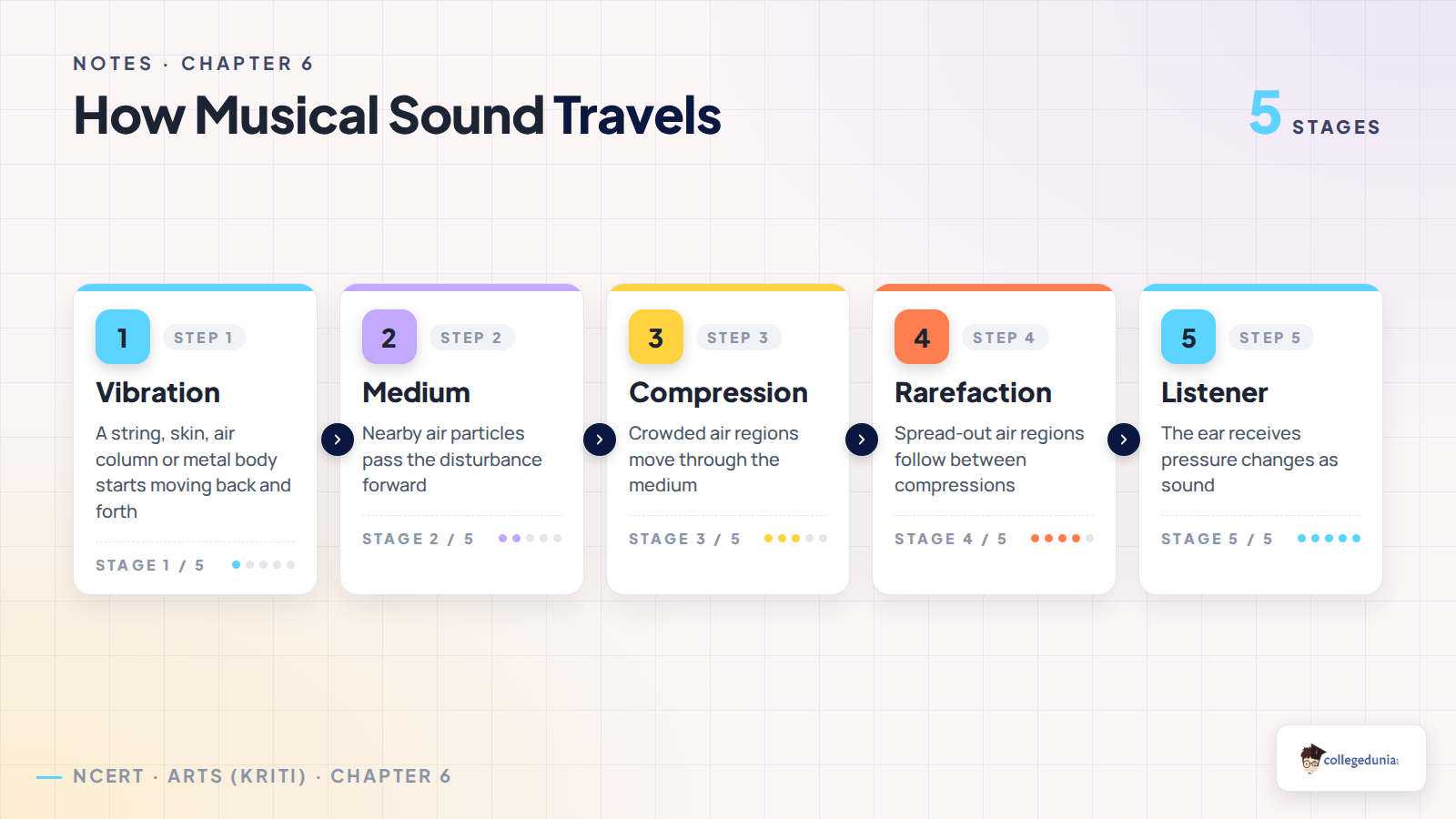
Sound begins with vibration. A plucked string, struck skin or blown air column disturbs nearby air particles. These particles pass the disturbance forward as compressions and rarefactions until the listener hears sound.
| Term | Meaning | Chapter clue |
|---|---|---|
| Vibration | back-and-forth movement | string, skin or air column starts sound |
| Resonance | body strengthens sound | hollow body makes sound fuller |
| Frequency | vibrations per second | higher frequency usually means higher pitch |
| Timbre | tone colour | two instruments can play the same note differently |
Musical Instruments Class 8 Video Revision
Source: Magnet Brains on YouTube
Musical Instrument Families and Sound Sources
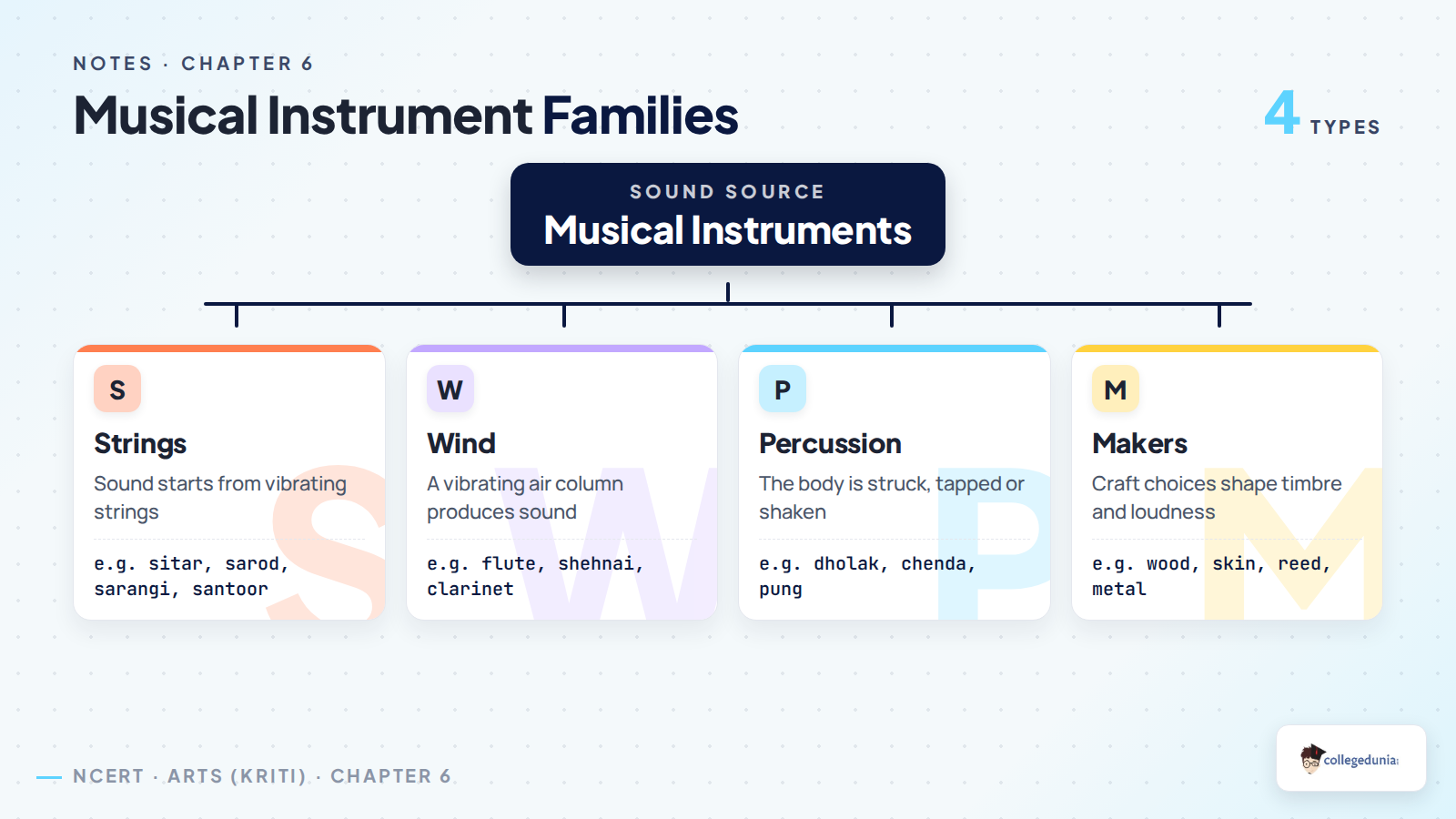
NCERT shows that instruments can be grouped by the source of vibration. String instruments use vibrating strings, wind instruments use vibrating air columns and percussion instruments are struck, tapped or shaken. String instruments may be plucked, bowed or struck, so bowed is a playing method, not a separate top-level family.
- Sitar, sarod, surbahar and ektara are plucked string examples.
- Sarangi and violin use a bow on strings.
- Santoor has many strings that are struck.
- Dholak, chenda and pung are percussion examples.
Indian Musicians and Instrument Making in Musical Instruments
The chapter names three important musicians. Annapurna Devi is linked with surbahar and the Maihar tradition. Pannalal Ghosh helped the bansuri become a concert instrument. Mysore Doraiswamy Iyengar is remembered for veena playing and the Mysore Bani style.
Instrument makers are also important. They choose wood, skin, metal, reeds and strings carefully. A small change in material or shape can change loudness, pitch and timbre.
| Name | Instrument | Revision clue |
|---|---|---|
| Annapurna Devi | Surbahar | deep string instrument, Maihar tradition |
| Pannalal Ghosh | Bansuri | popularised bamboo flute in concerts |
| Mysore Doraiswamy Iyengar | Veena | Mysore Bani style |
Activity 6.2 Regional Percussion Map Practice
Activity 6.2 asks students to mark percussion instruments on an outline map of India. This is not just a memory task. It links music, geography and regional tradition.
| Instrument | Region |
|---|---|
| Nagara | Rajasthan |
| Tumbaknaari | Jammu and Kashmir |
| Madal or Mandar | Bihar and Jharkhand |
| Pung | Manipur |
| Khol | East and North East India |
| Panchmukh vadya | Haryana and Southern States |
| Halge | Gujarat and Karnataka |
| Anand Lahiri, Gopi Jantra or Gapchu | Assam, West Bengal and Odisha |
| Chenda | Kerala |
| Udukkai | Tamil Nadu |
Musical Instruments Assessment Checklist
The assessment table in NCERT checks three learning outcomes. Students should understand musical instruments and their origin, know the basic science of sound and remember the contributions of legendary musicians.
- For sound science, revise vibration, resonance, frequency and timbre.
- For heritage, revise musicians, instruments and regional percussion.
- For activities, practise the word search, map list and crossword clues.
More Class 8 Arts Resources for Musical Instruments
| Resource | Link |
|---|---|
| NCERT Book PDF | Musical Instruments Class 8 Book PDF |
| NCERT Solutions | Musical Instruments Class 8 Solutions |
| Handwritten Notes | Musical Instruments Class 8 Handwritten Notes |
Class 8 Arts (Kriti) Notes for Other Chapters
| Chapter | Notes PDF |
|---|---|
| Chapter 2 One Stage, Many Scripts | Download Chapter 2 Notes |
| Chapter 3 From Page to Stage | Download Chapter 3 Notes |
| Chapter 4 Applause and Advice | Download Chapter 4 Notes |
| Chapter 5 Discovering the Elements of Music | Download Chapter 5 Notes |
Musical Instruments Class 8 Arts Notes FAQs
Ques. What is covered in Musical Instruments Class 8 notes?
Ans. The notes cover sound science, vibration, resonance, frequency, timbre, instrument families, instrument makers, Indian musicians and regional percussion activities.
Ques. What are the main sound terms in Chapter 6 Musical Instruments?
Ans. The main terms are vibration, resonance, frequency and timbre. These explain how instruments produce, strengthen and colour sound.
Ques. Are these notes based on the 2026-27 NCERT textbook?
Ans. Yes. The notes follow Class 8 Arts (Kriti) Chapter 6 Musical Instruments from the 2026-27 NCERT book.



Comments