




NCERT Class 8 Science Chapter 13 Our Home Earth a Unique Life Sustaining Planet Notes explain why Earth supports life, how Earth systems stay connected and why reproduction keeps life going for the 2026-27 NCERT Curiosity textbook.
- Best for habitability: covers habitable zone, liquid water, atmosphere, ozone layer and magnetic field.
- Useful for life processes: explains biosphere, hydrosphere, geosphere, photosynthesis and reproduction.
- Free PDF: download full chapter notes with diagrams, tables, environmental examples and answer frames.
Chapter13OurHome:Earth,aUniqueLifeSustainingPlanetNotes.pdf?page=1&dpi=150)
Chapter13OurHome:Earth,aUniqueLifeSustainingPlanetNotes.pdf?page=2&dpi=150)
Chapter13OurHome:Earth,aUniqueLifeSustainingPlanetNotes.pdf?page=3&dpi=150)
Chapter13OurHome:Earth,aUniqueLifeSustainingPlanetNotes.pdf?page=4&dpi=150)
Chapter13OurHome:Earth,aUniqueLifeSustainingPlanetNotes.pdf?page=5&dpi=150)
Chapter13OurHome:Earth,aUniqueLifeSustainingPlanetNotes.pdf?page=6&dpi=150)
Chapter13OurHome:Earth,aUniqueLifeSustainingPlanetNotes.pdf?page=7&dpi=150)
Chapter13OurHome:Earth,aUniqueLifeSustainingPlanetNotes.pdf?page=8&dpi=150)
Chapter13OurHome:Earth,aUniqueLifeSustainingPlanetNotes.pdf?page=9&dpi=150)
Chapter13OurHome:Earth,aUniqueLifeSustainingPlanetNotes.pdf?page=10&dpi=150)
Chapter13OurHome:Earth,aUniqueLifeSustainingPlanetNotes.pdf?page=11&dpi=150)
Chapter13OurHome:Earth,aUniqueLifeSustainingPlanetNotes.pdf?page=12&dpi=150)
Chapter13OurHome:Earth,aUniqueLifeSustainingPlanetNotes.pdf?page=13&dpi=150)
Chapter13OurHome:Earth,aUniqueLifeSustainingPlanetNotes.pdf?page=14&dpi=150)
Chapter13OurHome:Earth,aUniqueLifeSustainingPlanetNotes.pdf?page=15&dpi=150)
Chapter13OurHome:Earth,aUniqueLifeSustainingPlanetNotes.pdf?page=16&dpi=150)
Chapter13OurHome:Earth,aUniqueLifeSustainingPlanetNotes.pdf?page=17&dpi=150)
Chapter13OurHome:Earth,aUniqueLifeSustainingPlanetNotes.pdf?page=18&dpi=150)
Chapter13OurHome:Earth,aUniqueLifeSustainingPlanetNotes.pdf?page=19&dpi=150)
Chapter13OurHome:Earth,aUniqueLifeSustainingPlanetNotes.pdf?page=20&dpi=150)
Chapter13OurHome:Earth,aUniqueLifeSustainingPlanetNotes.pdf?page=21&dpi=150)
Chapter13OurHome:Earth,aUniqueLifeSustainingPlanetNotes.pdf?page=22&dpi=150)
Chapter13OurHome:Earth,aUniqueLifeSustainingPlanetNotes_flat_MobileCard.pdf?page=1&dpi=150)
Chapter13OurHome:Earth,aUniqueLifeSustainingPlanetNotes_flat_MobileCard.pdf?page=2&dpi=150)
Chapter13OurHome:Earth,aUniqueLifeSustainingPlanetNotes_flat_MobileCard.pdf?page=3&dpi=150)
Chapter13OurHome:Earth,aUniqueLifeSustainingPlanetNotes_flat_MobileCard.pdf?page=4&dpi=150)
Chapter13OurHome:Earth,aUniqueLifeSustainingPlanetNotes_flat_MobileCard.pdf?page=5&dpi=150)
Chapter13OurHome:Earth,aUniqueLifeSustainingPlanetNotes_flat_MobileCard.pdf?page=6&dpi=150)
Chapter13OurHome:Earth,aUniqueLifeSustainingPlanetNotes_flat_MobileCard.pdf?page=7&dpi=150)
Chapter13OurHome:Earth,aUniqueLifeSustainingPlanetNotes_flat_MobileCard.pdf?page=8&dpi=150)
Chapter13OurHome:Earth,aUniqueLifeSustainingPlanetNotes_flat_MobileCard.pdf?page=9&dpi=150)
Chapter13OurHome:Earth,aUniqueLifeSustainingPlanetNotes_flat_MobileCard.pdf?page=10&dpi=150)
Chapter13OurHome:Earth,aUniqueLifeSustainingPlanetNotes_flat_MobileCard.pdf?page=11&dpi=150)
Chapter13OurHome:Earth,aUniqueLifeSustainingPlanetNotes_flat_MobileCard.pdf?page=12&dpi=150)
Chapter13OurHome:Earth,aUniqueLifeSustainingPlanetNotes_flat_MobileCard.pdf?page=13&dpi=150)
Chapter13OurHome:Earth,aUniqueLifeSustainingPlanetNotes_flat_MobileCard.pdf?page=14&dpi=150)
Chapter13OurHome:Earth,aUniqueLifeSustainingPlanetNotes_flat_MobileCard.pdf?page=15&dpi=150)
Chapter13OurHome:Earth,aUniqueLifeSustainingPlanetNotes_flat_MobileCard.pdf?page=16&dpi=150)
Chapter13OurHome:Earth,aUniqueLifeSustainingPlanetNotes_flat_MobileCard.pdf?page=17&dpi=150)
Chapter13OurHome:Earth,aUniqueLifeSustainingPlanetNotes_flat_MobileCard.pdf?page=18&dpi=150)
Chapter13OurHome:Earth,aUniqueLifeSustainingPlanetNotes_flat_MobileCard.pdf?page=19&dpi=150)
Chapter13OurHome:Earth,aUniqueLifeSustainingPlanetNotes_flat_MobileCard.pdf?page=20&dpi=150)
Chapter13OurHome:Earth,aUniqueLifeSustainingPlanetNotes_flat_MobileCard.pdf?page=21&dpi=150)
Chapter13OurHome:Earth,aUniqueLifeSustainingPlanetNotes_flat_MobileCard.pdf?page=22&dpi=150)
Chapter13OurHome:Earth,aUniqueLifeSustainingPlanetNotes_flat_MobileCard.pdf?page=23&dpi=150)
Chapter13OurHome:Earth,aUniqueLifeSustainingPlanetNotes_flat_MobileCard.pdf?page=24&dpi=150)
Chapter13OurHome:Earth,aUniqueLifeSustainingPlanetNotes_flat_MobileCard.pdf?page=25&dpi=150)
Chapter13OurHome:Earth,aUniqueLifeSustainingPlanetNotes_flat_MobileCard.pdf?page=26&dpi=150)
Chapter13OurHome:Earth,aUniqueLifeSustainingPlanetNotes_flat_MobileCard.pdf?page=27&dpi=150)
Chapter13OurHome:Earth,aUniqueLifeSustainingPlanetNotes_flat_MobileCard.pdf?page=28&dpi=150)
Chapter13OurHome:Earth,aUniqueLifeSustainingPlanetNotes_flat_MobileCard.pdf?page=29&dpi=150)
Chapter13OurHome:Earth,aUniqueLifeSustainingPlanetNotes_flat_MobileCard.pdf?page=30&dpi=150)
Chapter13OurHome:Earth,aUniqueLifeSustainingPlanetNotes_flat_MobileCard.pdf?page=31&dpi=150)
Student Feedback: In a Collegedunia revision poll of Class 8 Science students, 81% said Chapter 13 became easier after they grouped the chapter into habitability, Earth systems, reproduction and environmental threats.
Our Home Earth Notes Overview
Class 8 Science Chapter 13 brings the whole Curiosity textbook together. It asks why Earth is a unique life sustaining planet and why the balance of its systems matters.
The chapter covers the habitable zone, the greenhouse effect, atmosphere, ozone, magnetic field, water, soil, geodiversity, reproduction, inheritance, pollution, biodiversity loss and climate change.
Earth Habitability and Life Systems Video Lesson
Source: Khan Academy on YouTube
Why Earth Supports Life in Class 8 Science Chapter 13
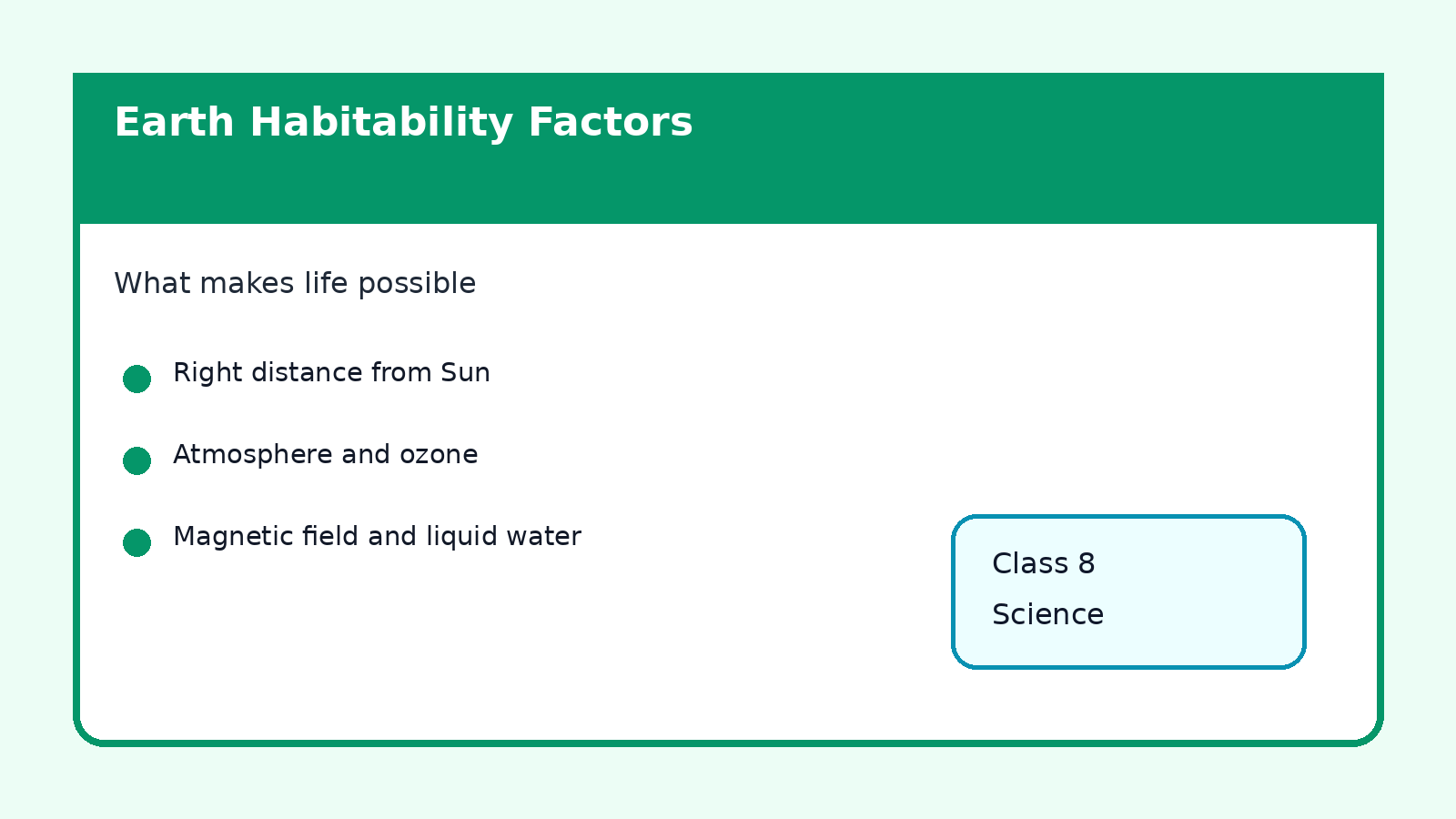
Earth is in the habitable zone, where temperature allows water to remain mostly liquid. It also has the right size, enough gravity, a protective atmosphere, ozone layer and magnetic field.
| Factor | How it helps life | Revision clue |
|---|---|---|
| Habitable zone | Keeps liquid water possible | Goldilocks zone |
| Atmosphere | Provides gases and mild heat trapping | Oxygen, carbon dioxide, warmth |
| Magnetic field | Deflects many charged particles | Protective shield |
Earth Systems and Reproduction in Our Home Earth
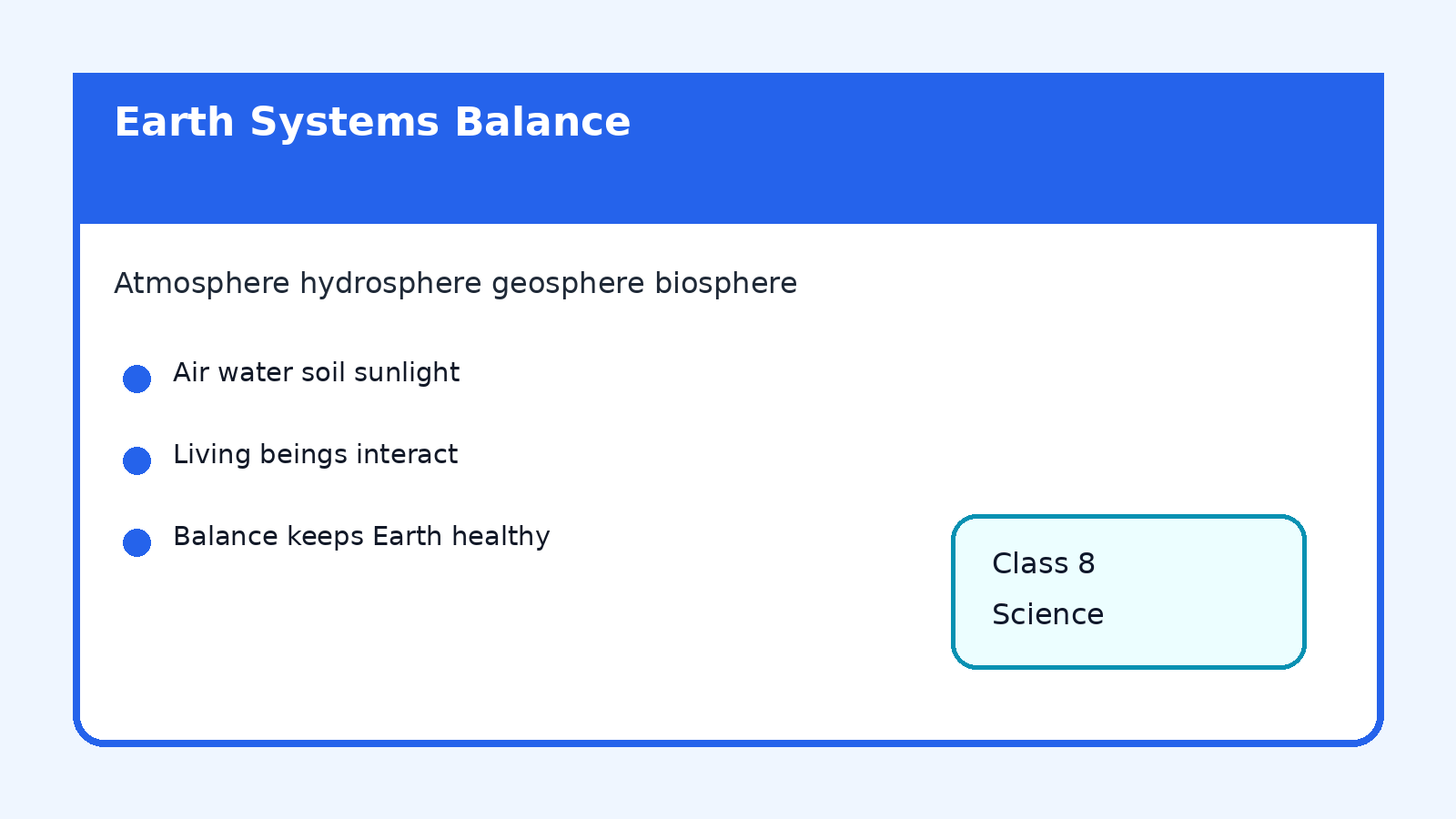
Life is sustained by linked systems. The atmosphere contains air, the hydrosphere contains water, the geosphere contains rocks and soil, and the biosphere contains living beings.
- Plants: use sunlight, water and carbon dioxide to make food and release oxygen.
- Soil and minerals: support plant growth and provide resources such as salt, iron and copper.
- Reproduction: passes genetic material to offspring and keeps life continuing across generations.
Threats to Life on Earth and the Triple Planetary Crisis
The chapter names climate change, biodiversity loss and pollution as the triple planetary crisis. These threats disturb the balance of air, water, soil and living systems.
Extra greenhouse gases from burning fossil fuels trap more heat and cause global warming. Habitat loss weakens food chains and ecosystems. Air, water and soil pollution harm people, crops, aquatic life and food chains.
Students should connect solutions with daily actions: save water, reduce waste, reuse, repair, recycle, protect habitats, support cleaner energy and share responsible environmental choices.
Our Home Earth Related Resources
| Resource | Link |
|---|---|
| NCERT Solutions | Class 8 Science Chapter 13 NCERT Solutions |
| NCERT Book PDF | Class 8 Science Chapter 13 NCERT Book PDF |
| Handwritten Notes | Class 8 Science Chapter 13 Handwritten Notes |
Class 8 Science Curiosity Notes for All Chapters
| Chapter | Notes |
|---|---|
| Chapter 10 | Light Mirrors and Lenses Notes |
| Chapter 11 | Keeping Time with the Skies Notes |
| Chapter 12 | How Nature Works in Harmony Notes |
| Chapter 13 | Our Home Earth Notes |
Student Doubts on Class 8 Science Chapter 13
Our Home Earth Class 8 Notes FAQs
Ques. Why is Earth called a unique life sustaining planet?
Ans. Earth has liquid water, suitable temperature, atmosphere, ozone protection, magnetic field and linked natural systems that support life.
Ques. What is the habitable zone?
Ans. The habitable zone is the distance range from a star where water can remain liquid on a planet.
Ques. What are the four Earth systems in Chapter 13?
Ans. They are atmosphere, hydrosphere, geosphere and biosphere. Together they support and sustain life.
Ques. What is the triple planetary crisis?
Ans. The triple planetary crisis means climate change, biodiversity loss and pollution, which together threaten life on Earth.



Comments