




The NCERT Class 8 Social Science Chapter 4 Notes explain The Colonial Era in India for the 2026-27 syllabus. The notes cover colonialism, European powers in India, East India Company expansion, British impact, resistance movements and quick answer frames.
- Resource focus: Class 8 Social Science Chapter 4 revision with key dates, policies and examples.
- Best use: revise the PDF first, then practise short answers on Plassey, colonial impact and resistance.
- Exam link: follows the NCERT 2026-27 chapter The Colonial Era in India.

Student Feedback: In a Collegedunia revision check with 8,400 Class 8 students, 74% said colonial-era timelines helped them remember the difference between Company rule and Crown rule.
Class 8 Social Science Chapter 4 Notes Overview
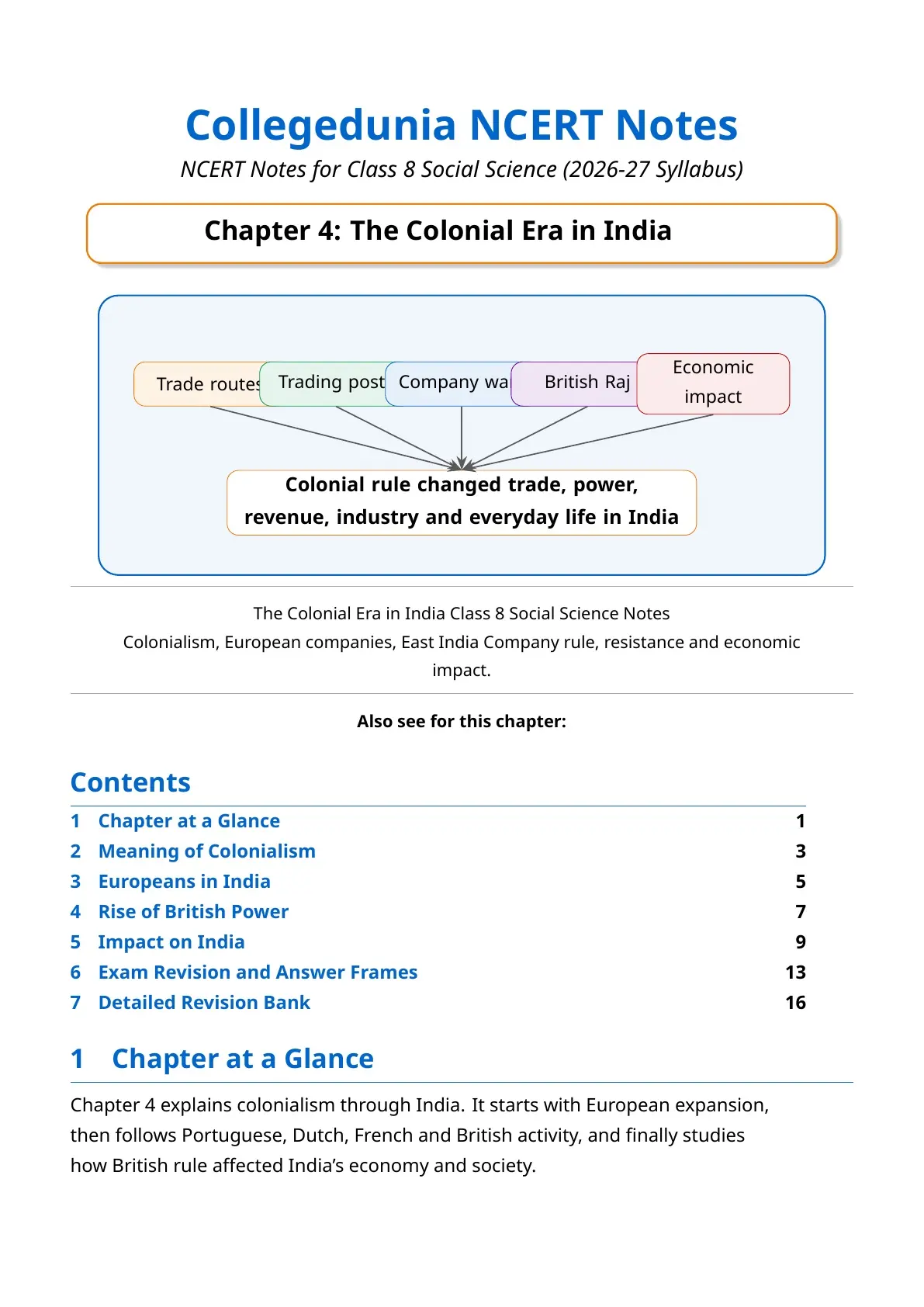
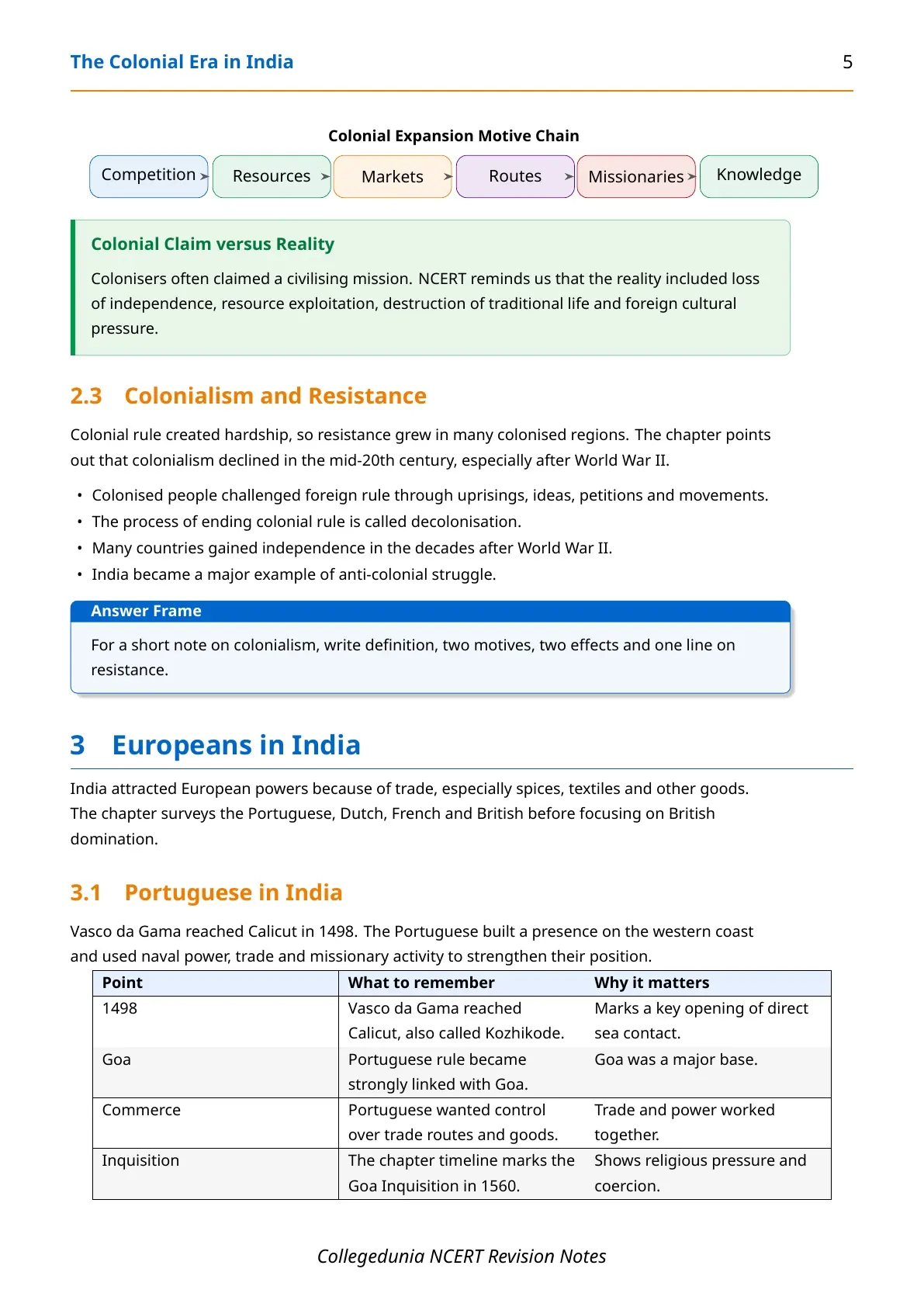
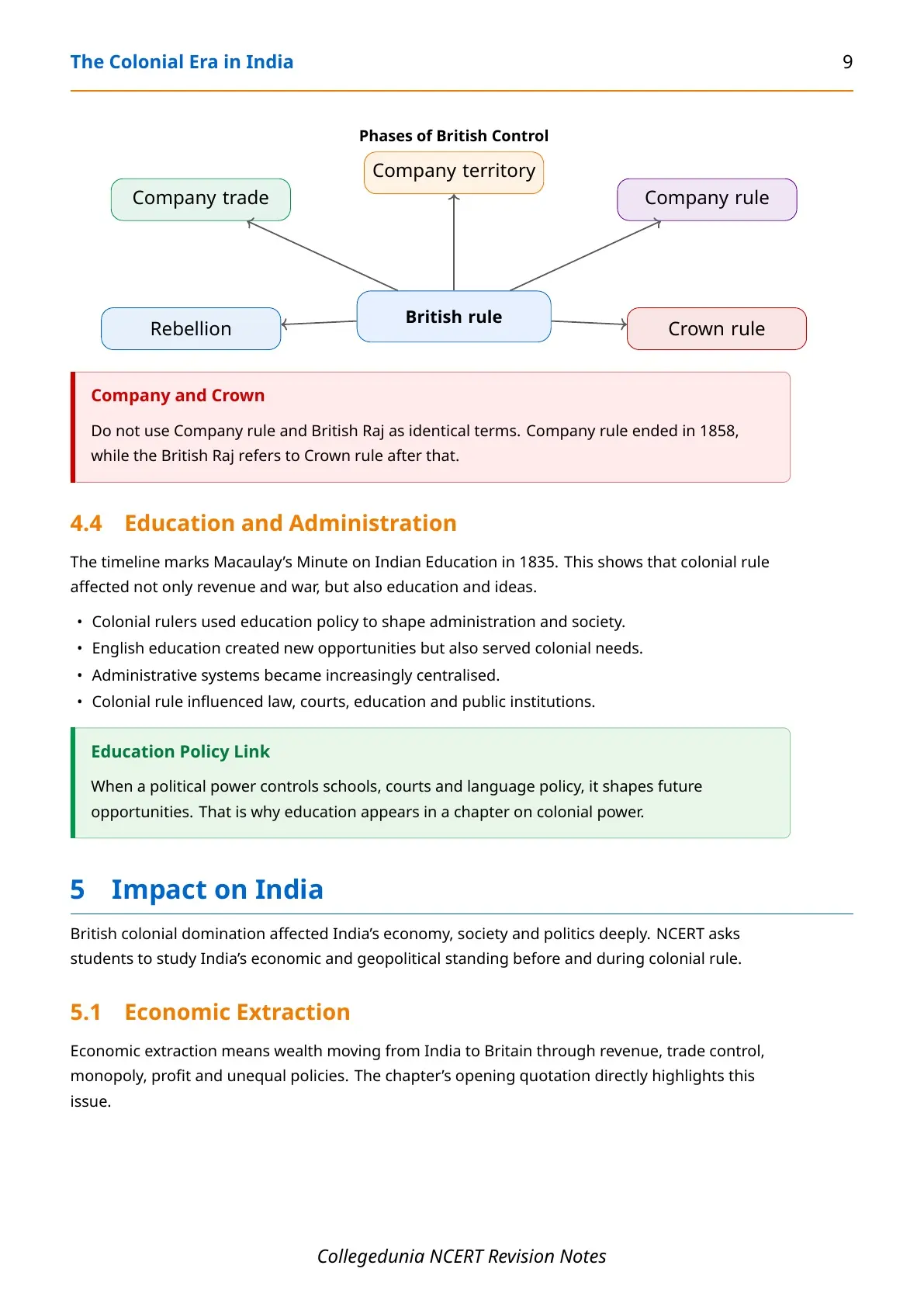
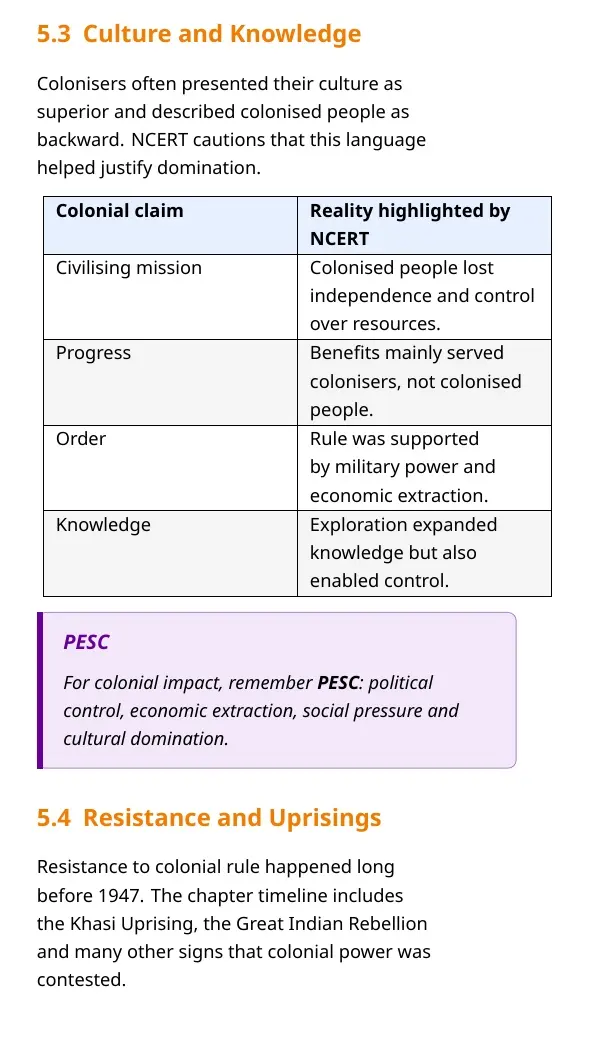
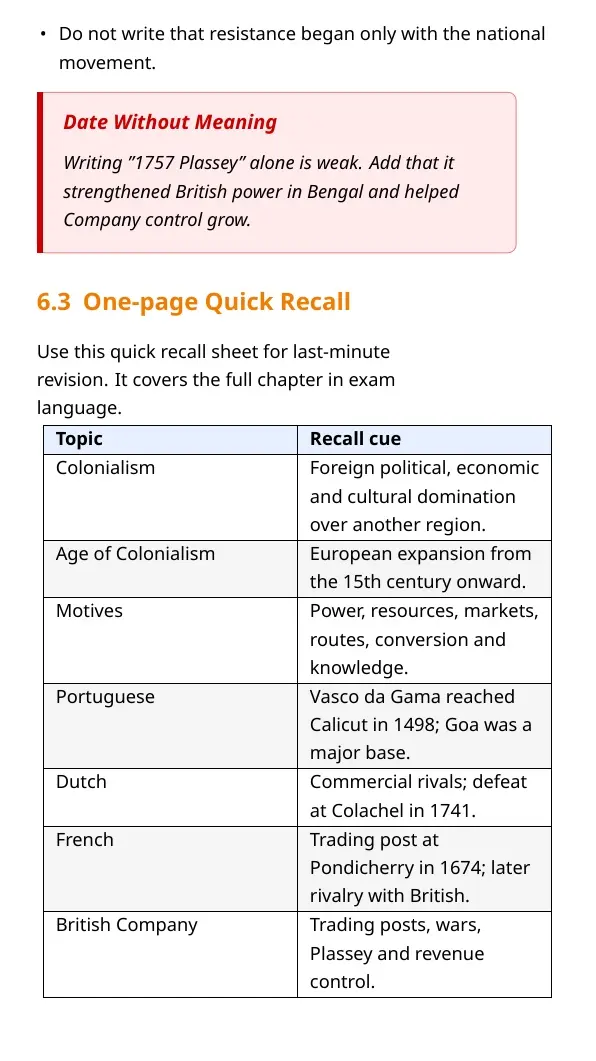
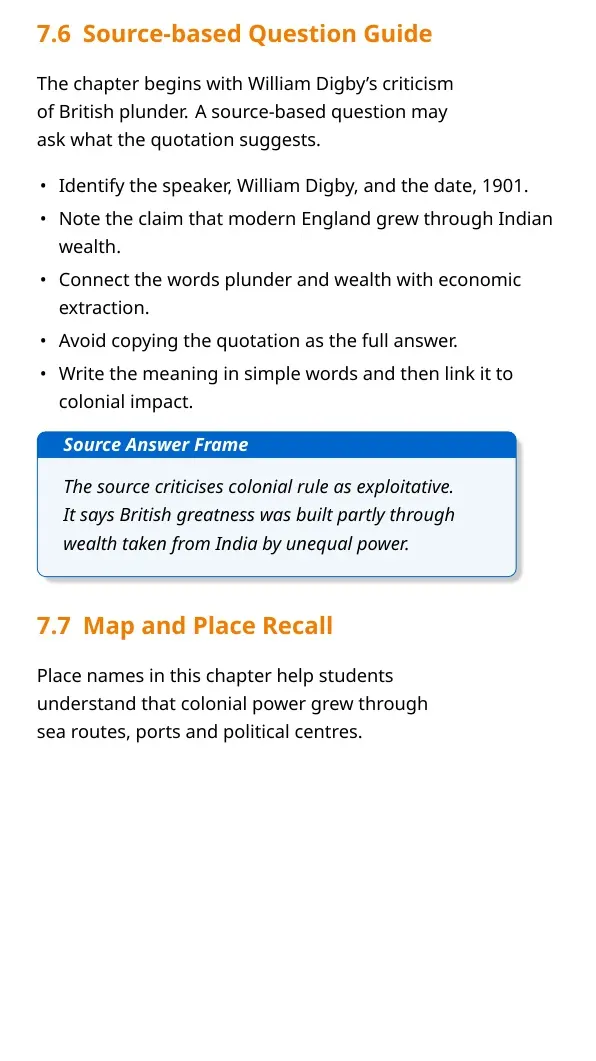
The Colonial Era in India begins with the meaning of colonialism and then follows how European trading powers entered India. The chapter shows that colonial rule was not just trade. It meant political control, economic extraction, cultural pressure and resistance from Indians.
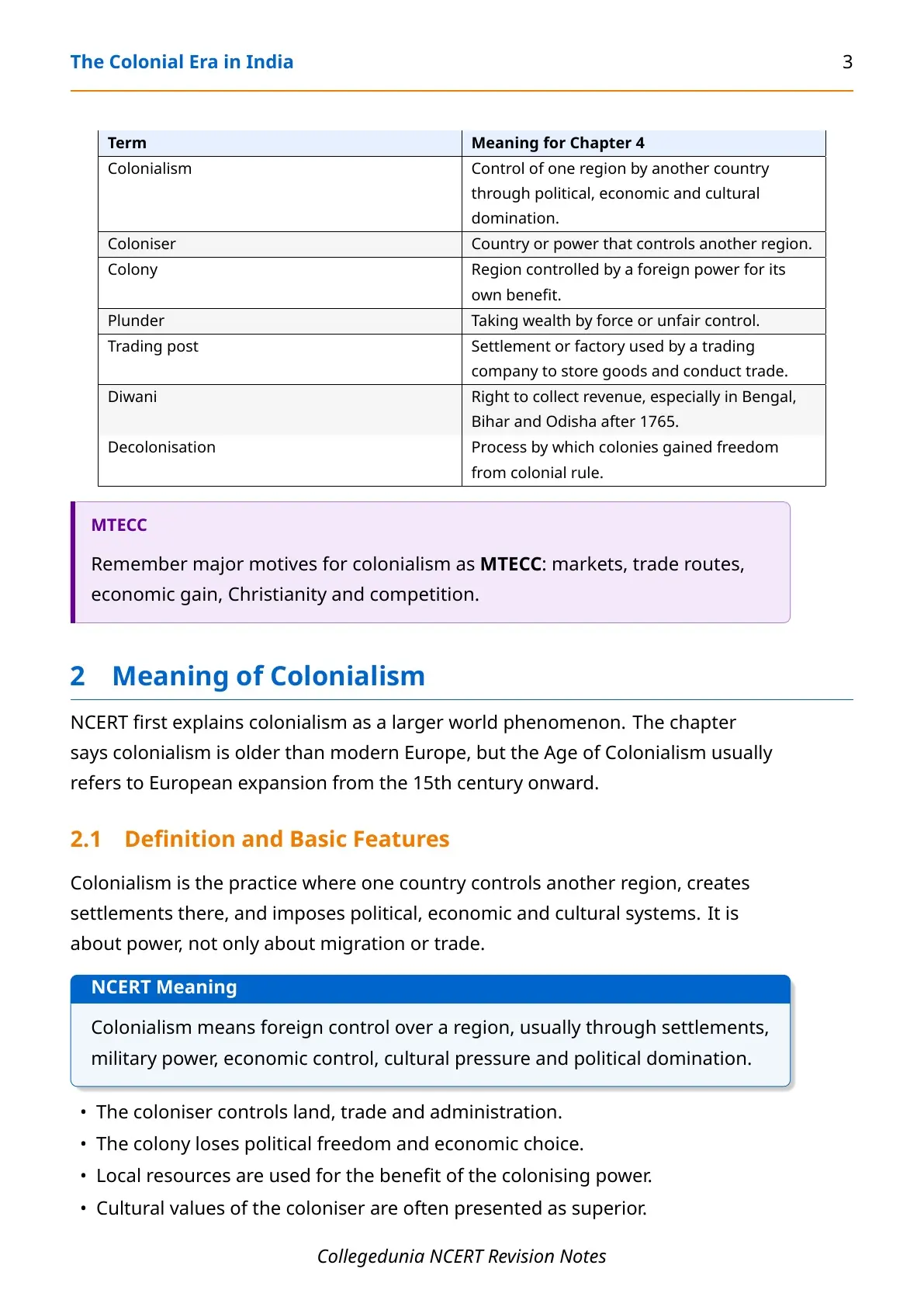
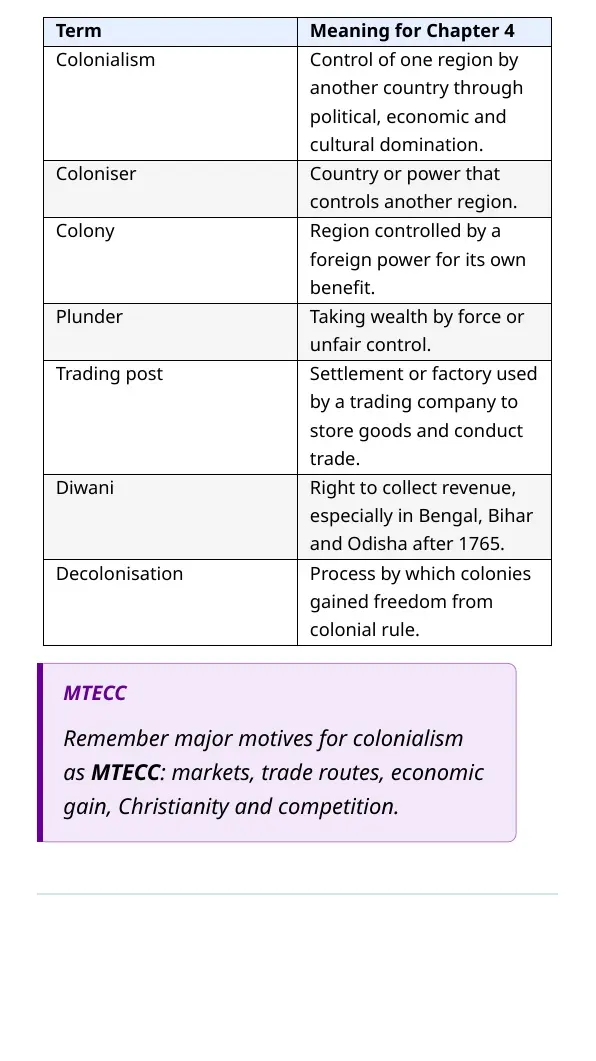
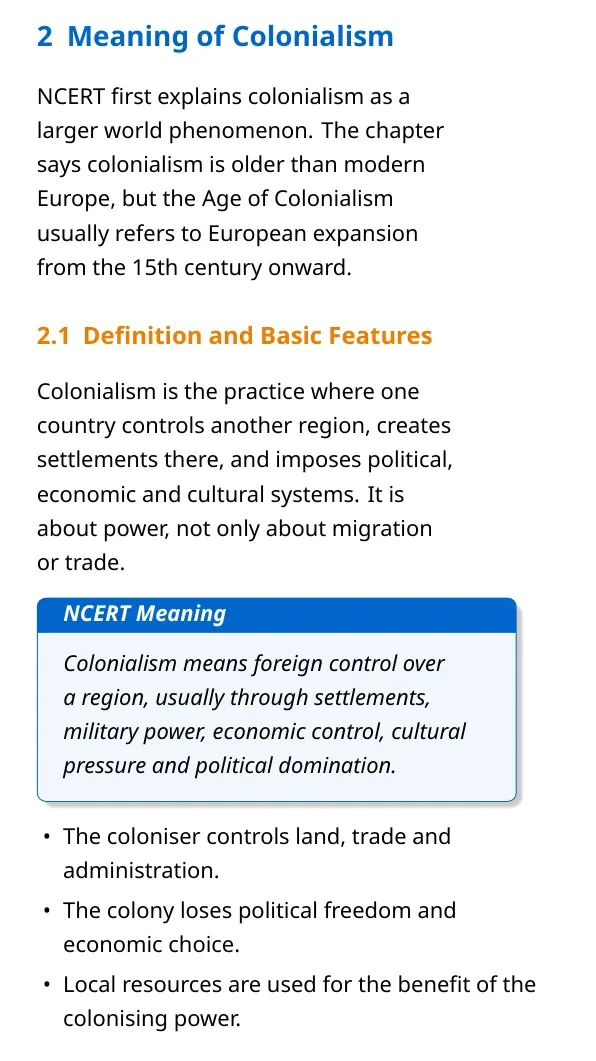
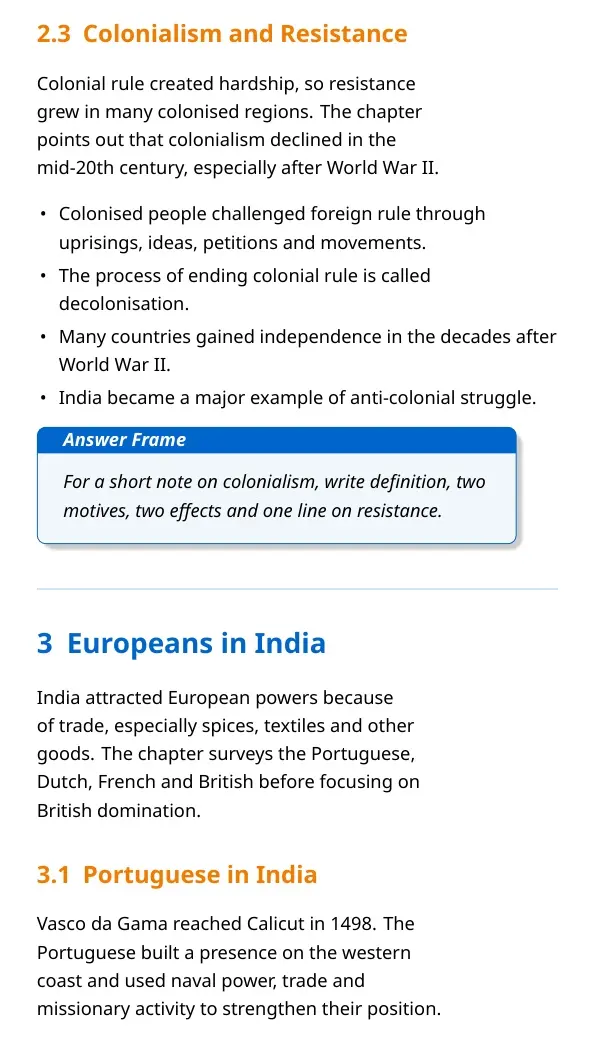
- Colonialism means foreign control over another region's politics, economy and culture.
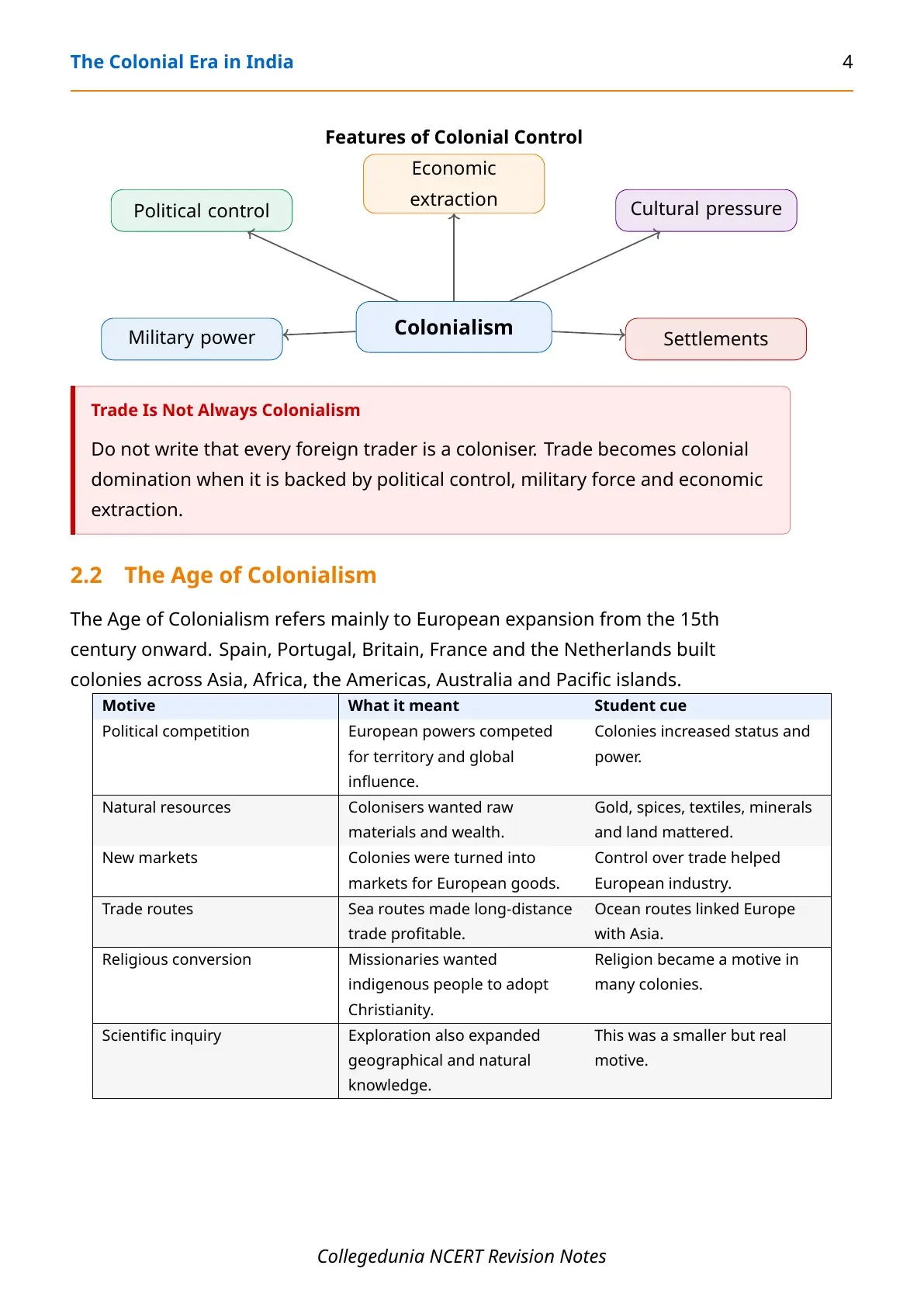
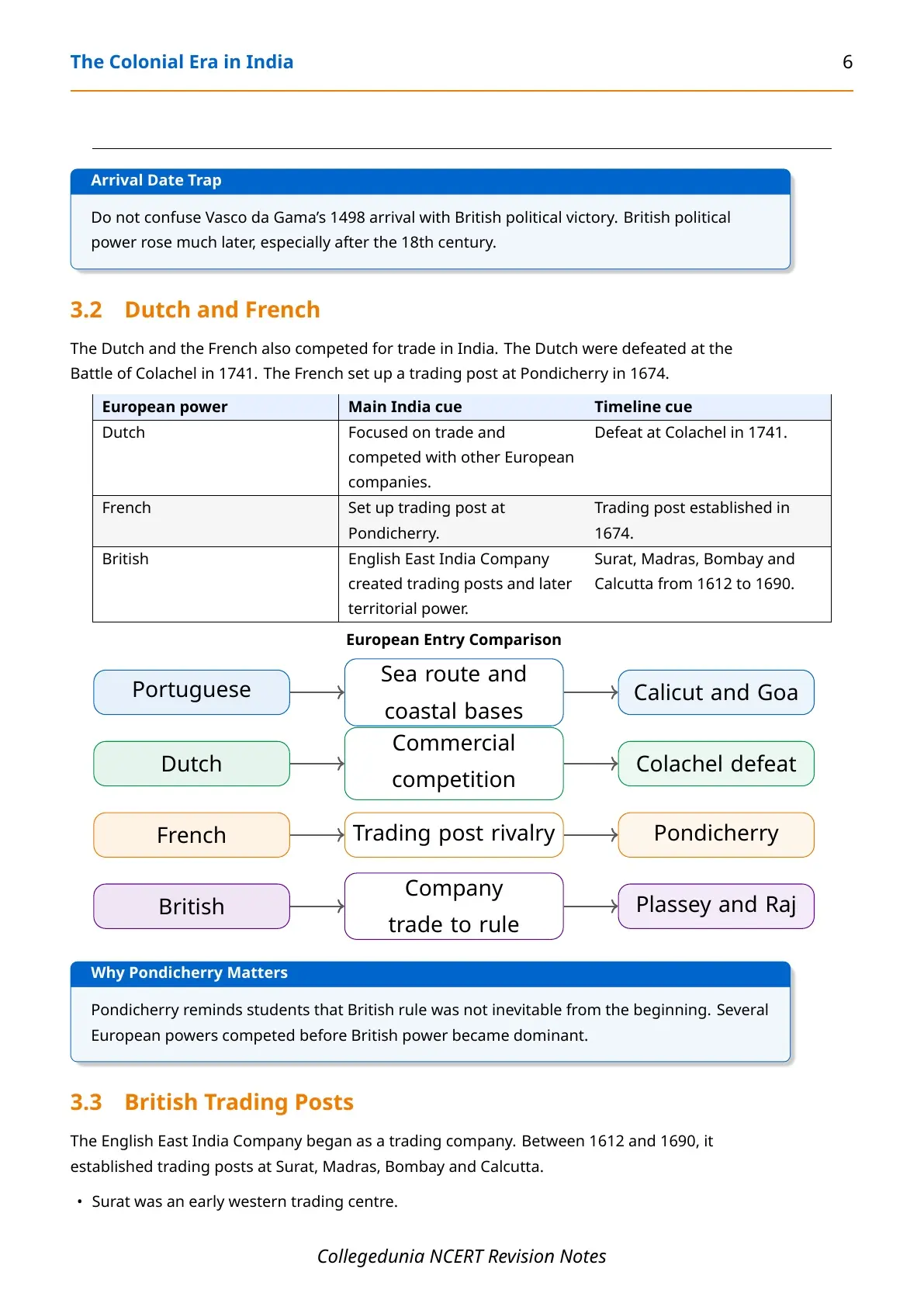
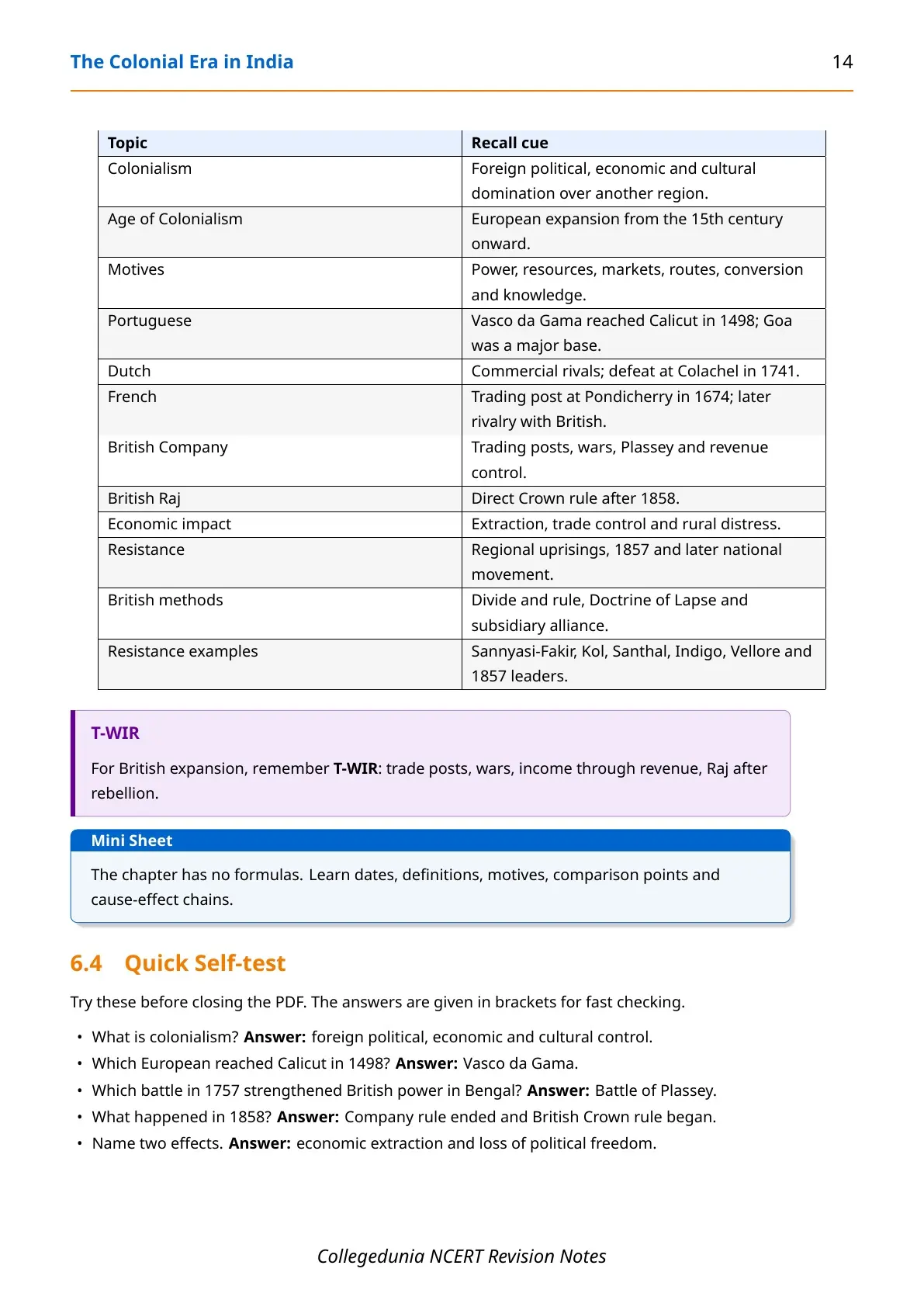
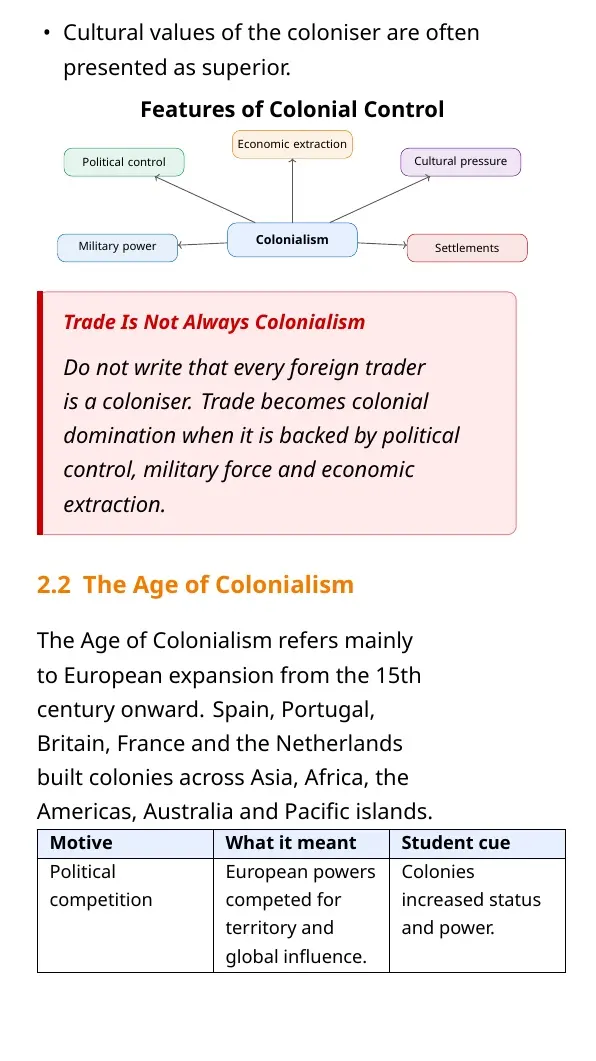
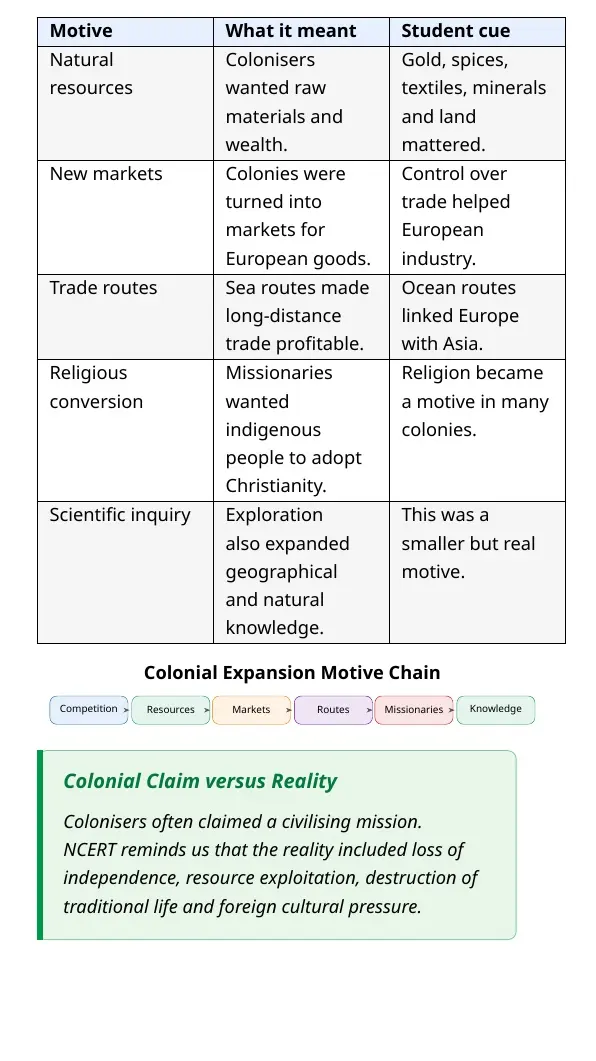
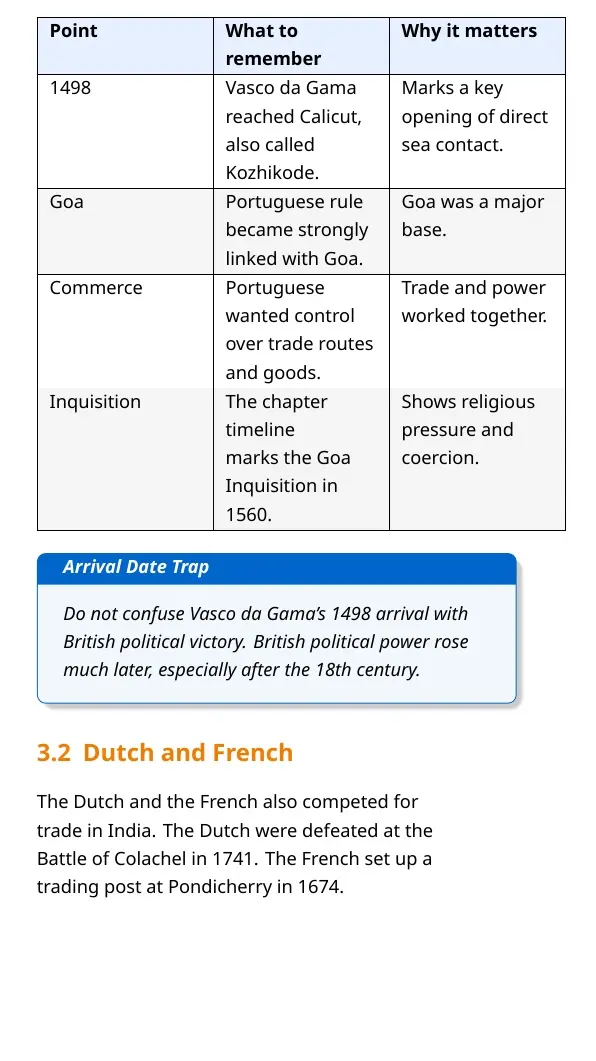
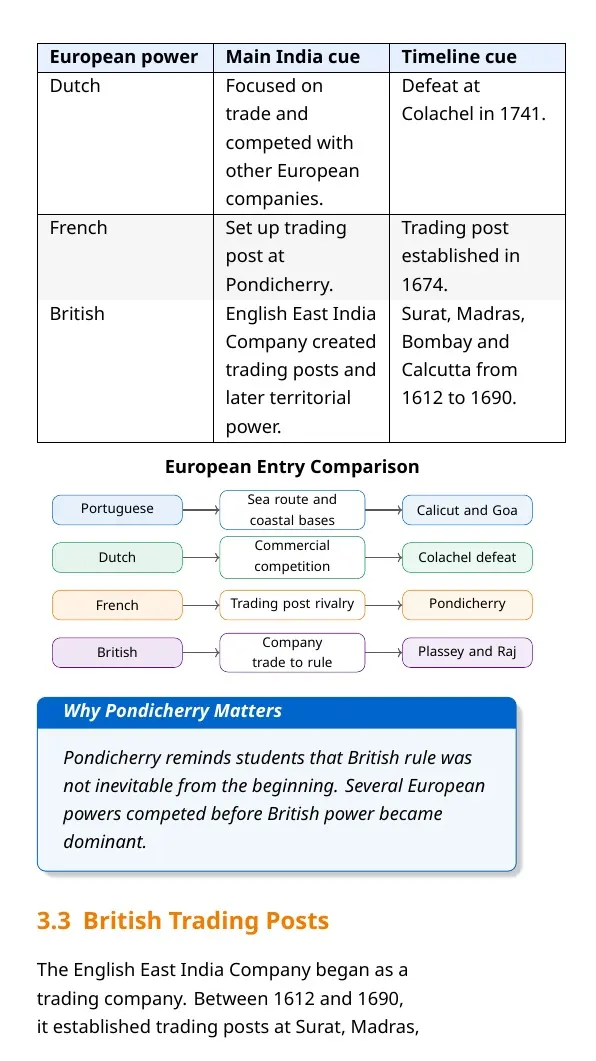
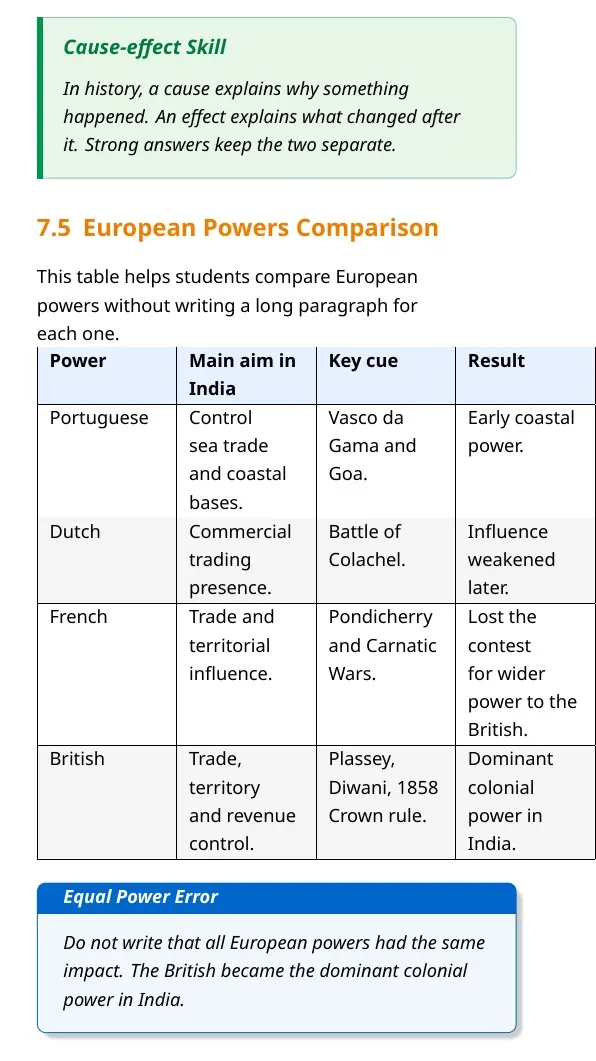
- Portuguese, Dutch, French and British powers came for trade, wealth, routes and influence.
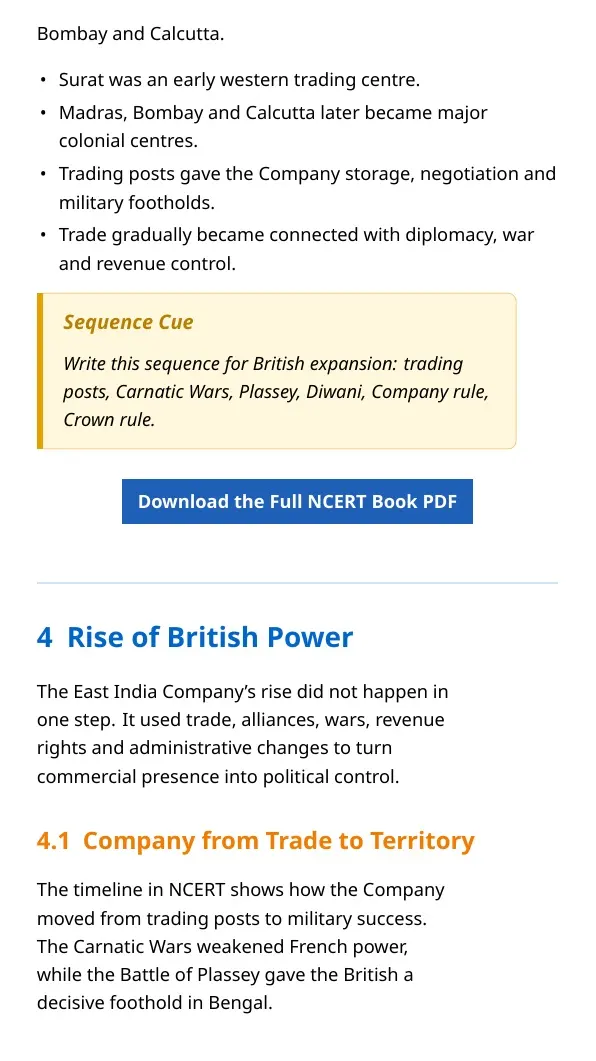
- The British East India Company moved from trading posts to territorial power.
- Indian resistance included tribal, peasant, sepoy and regional movements.
The Colonial Era in India Timeline
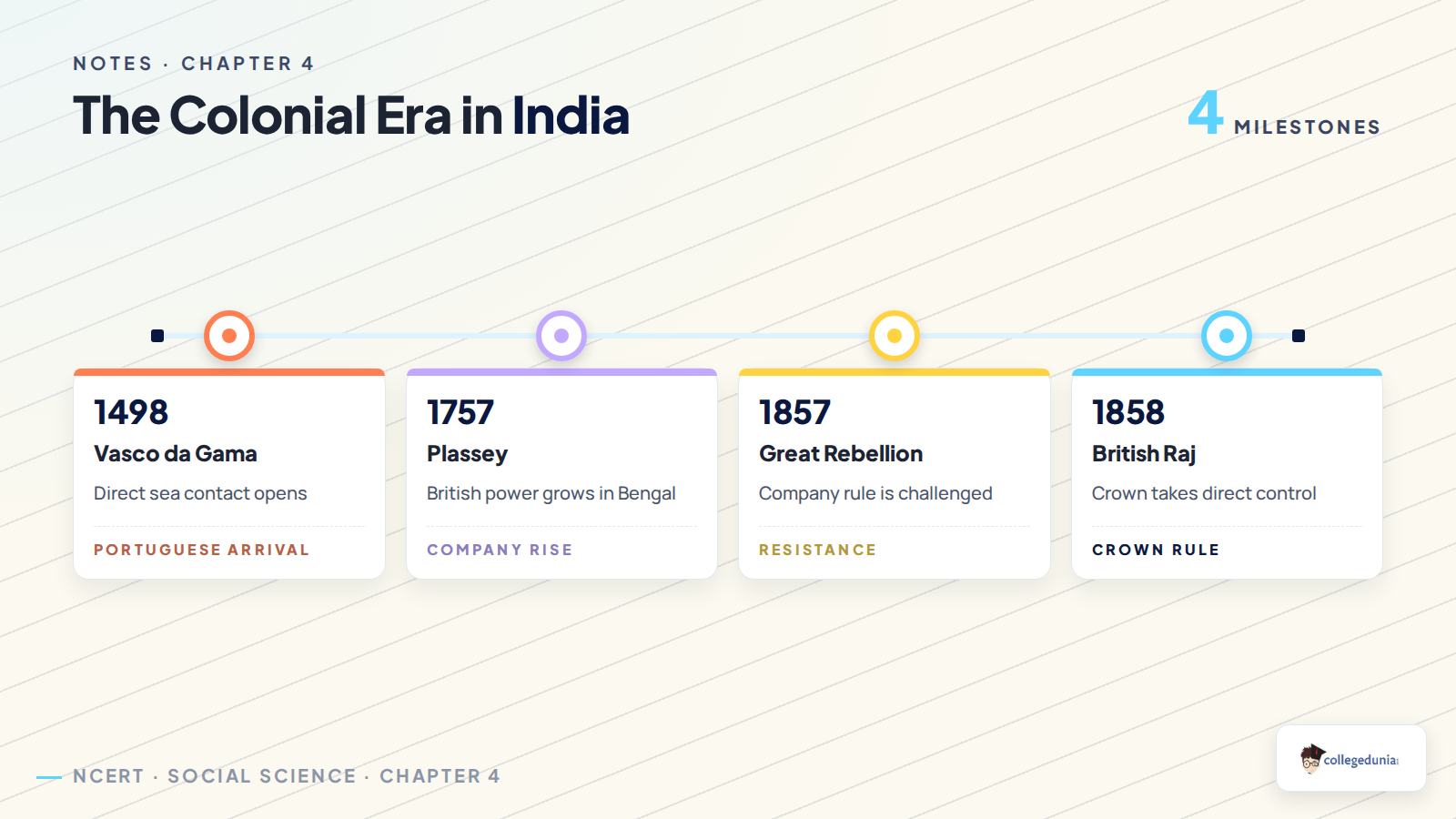
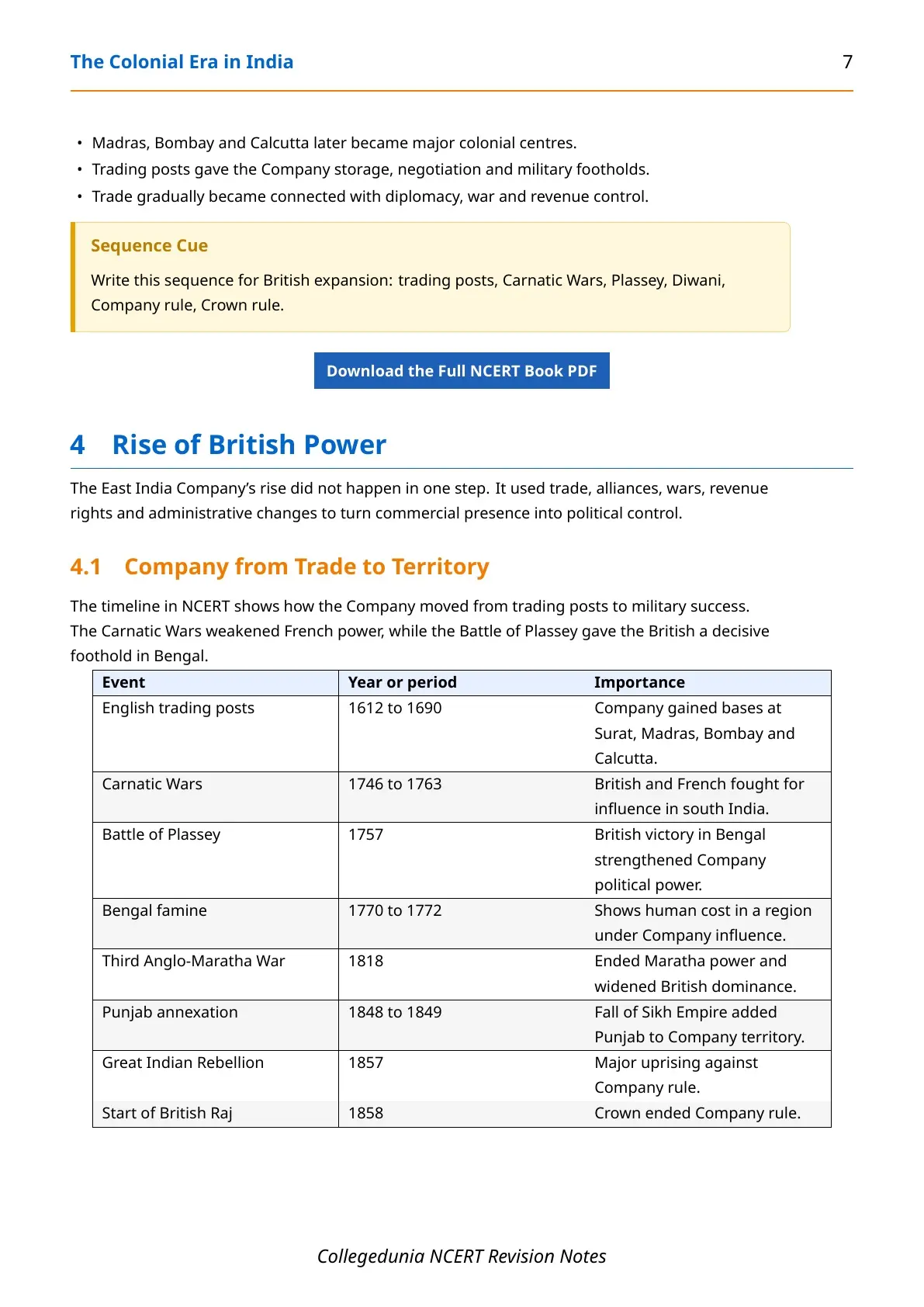
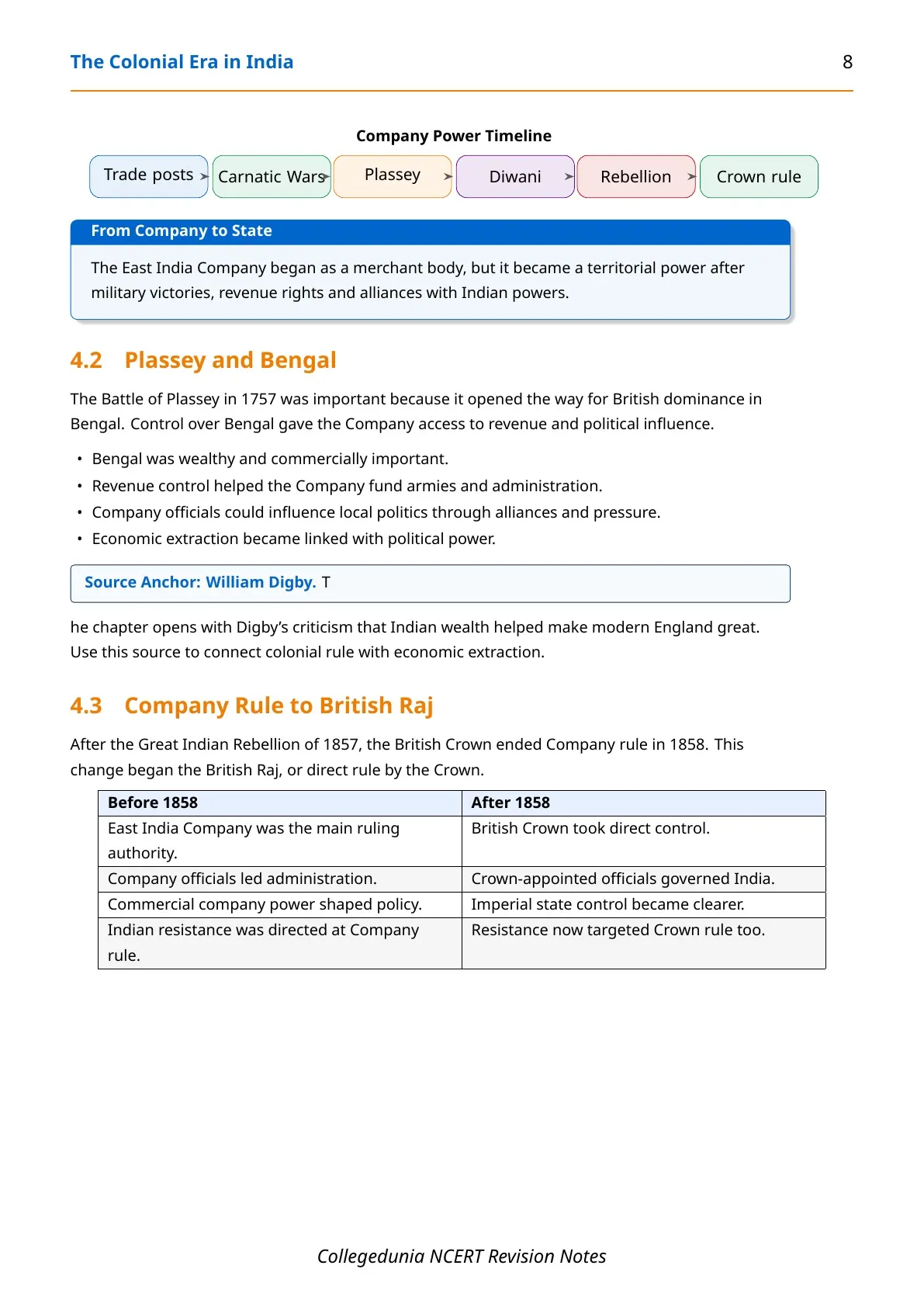
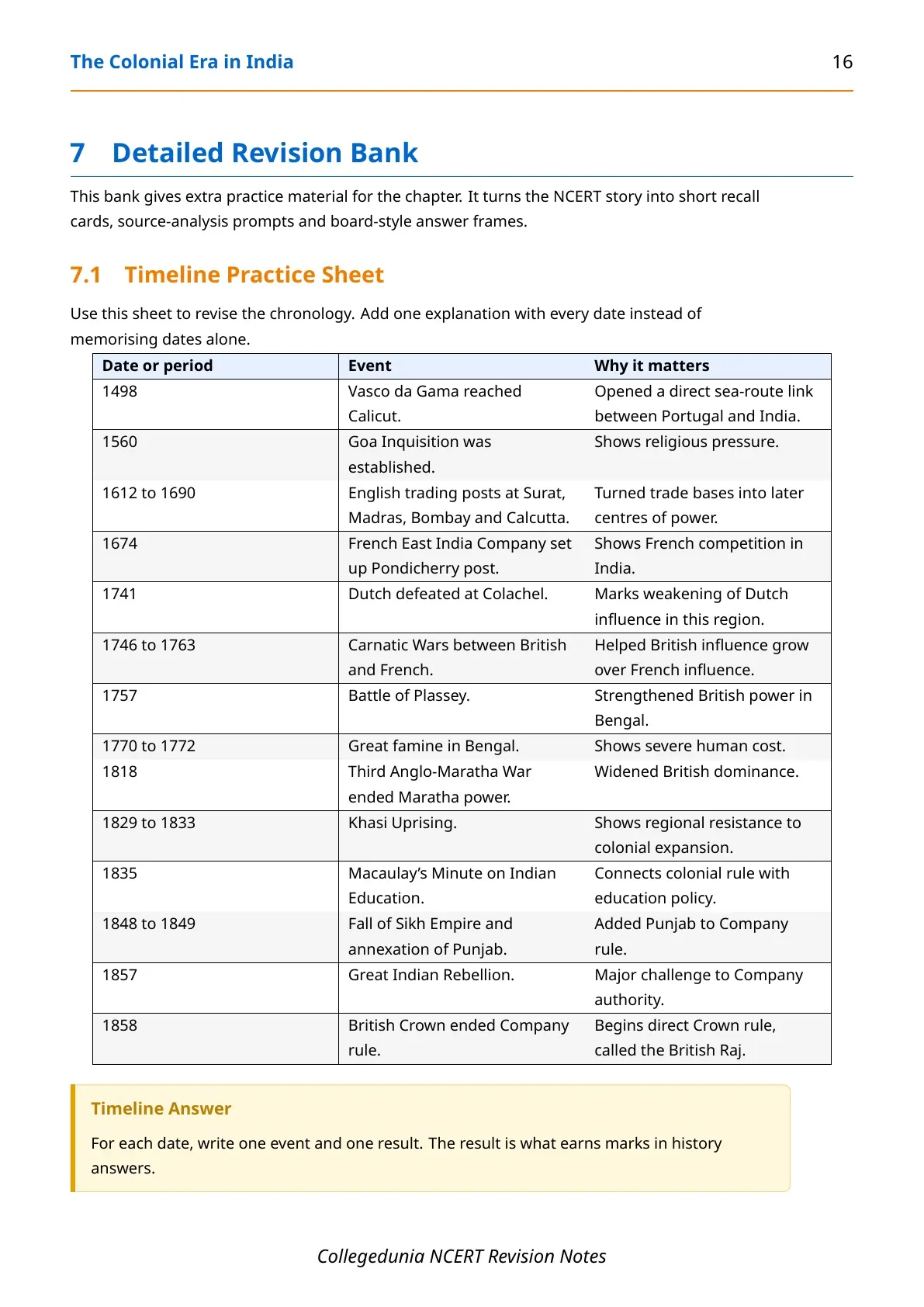
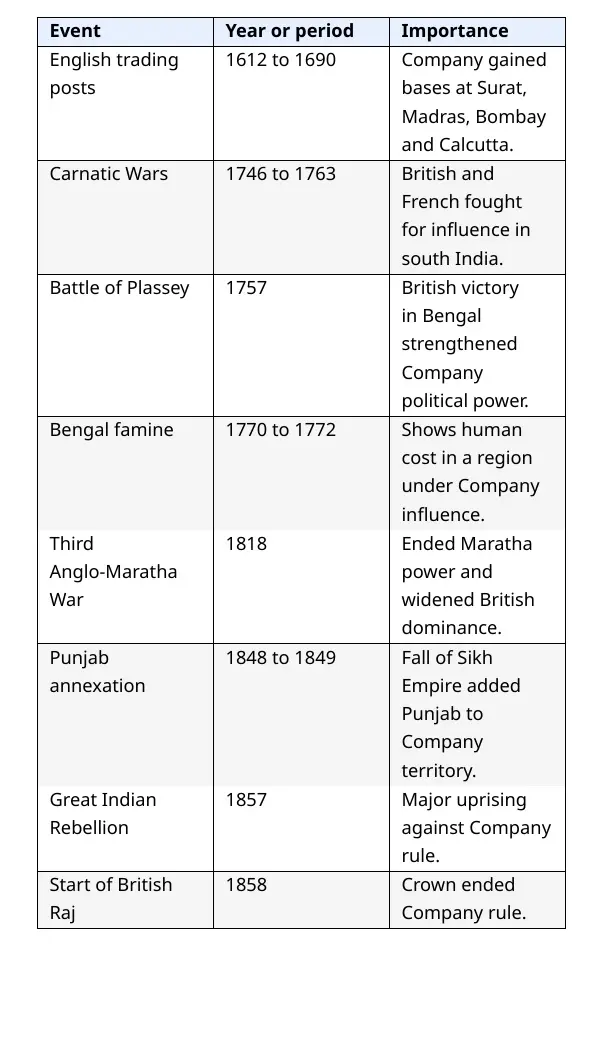
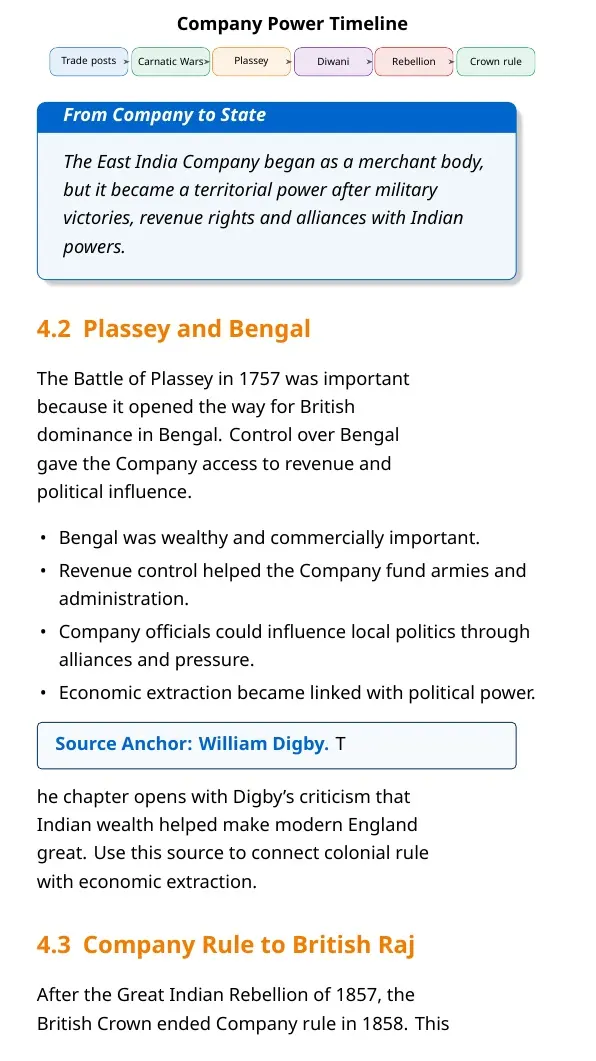
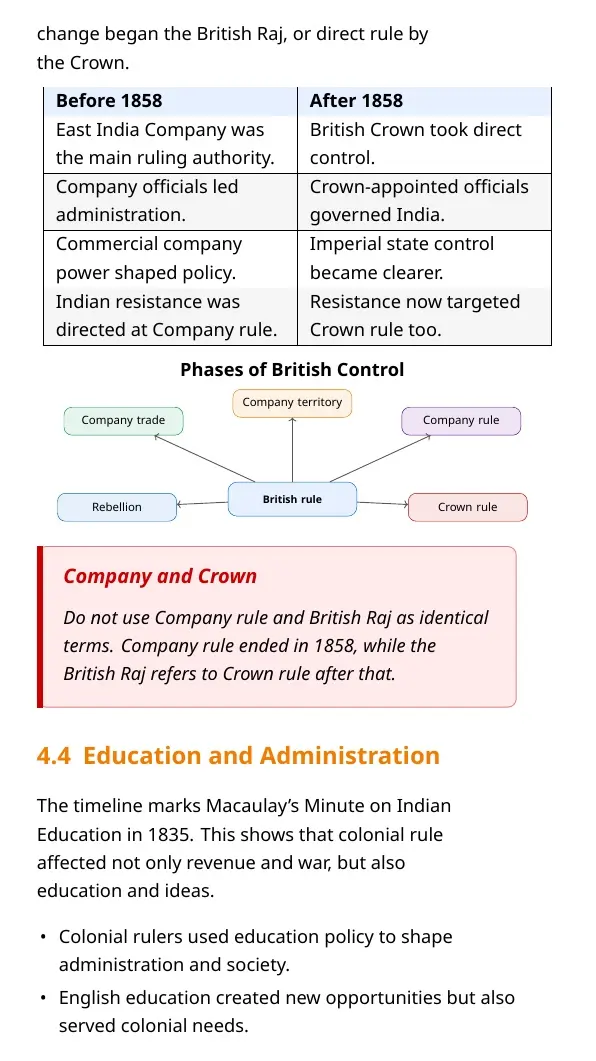
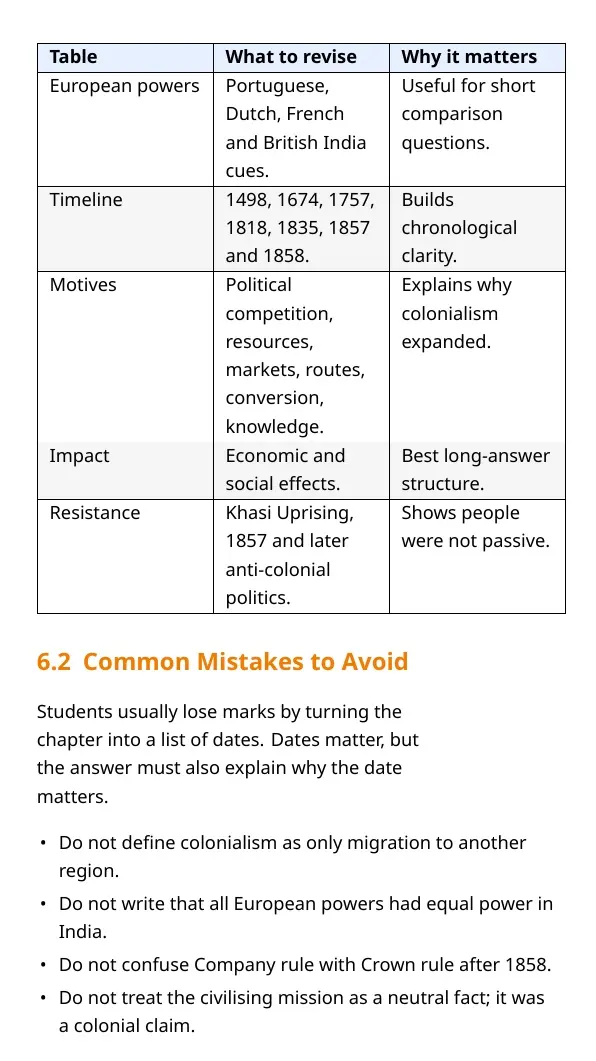
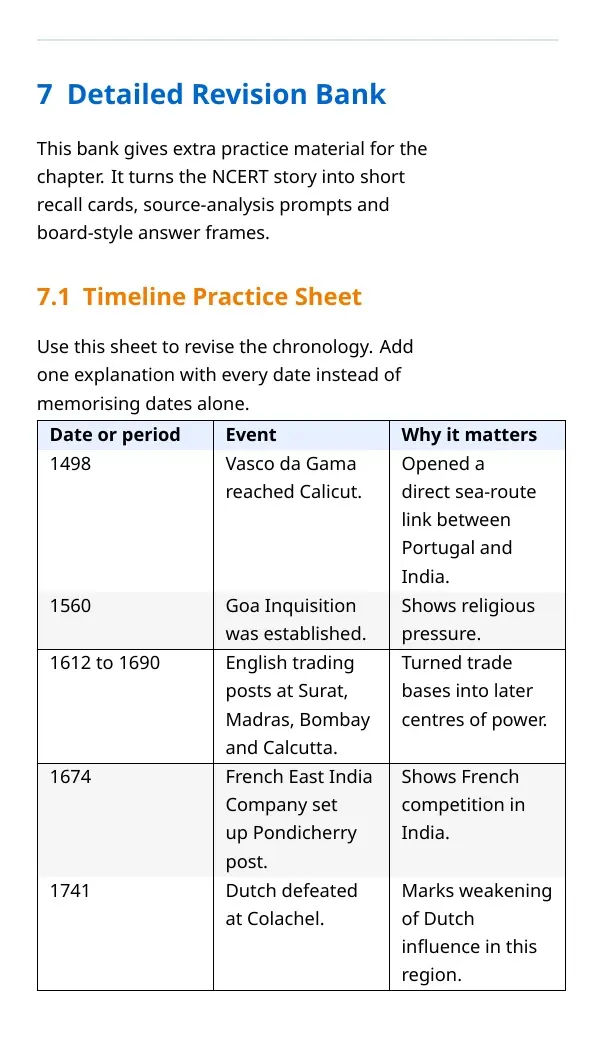
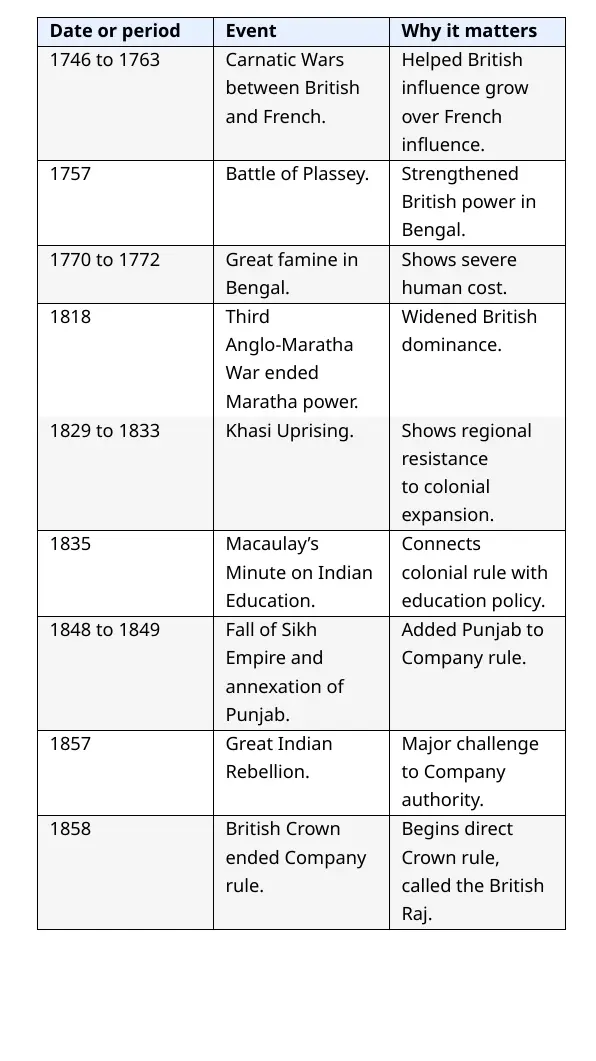
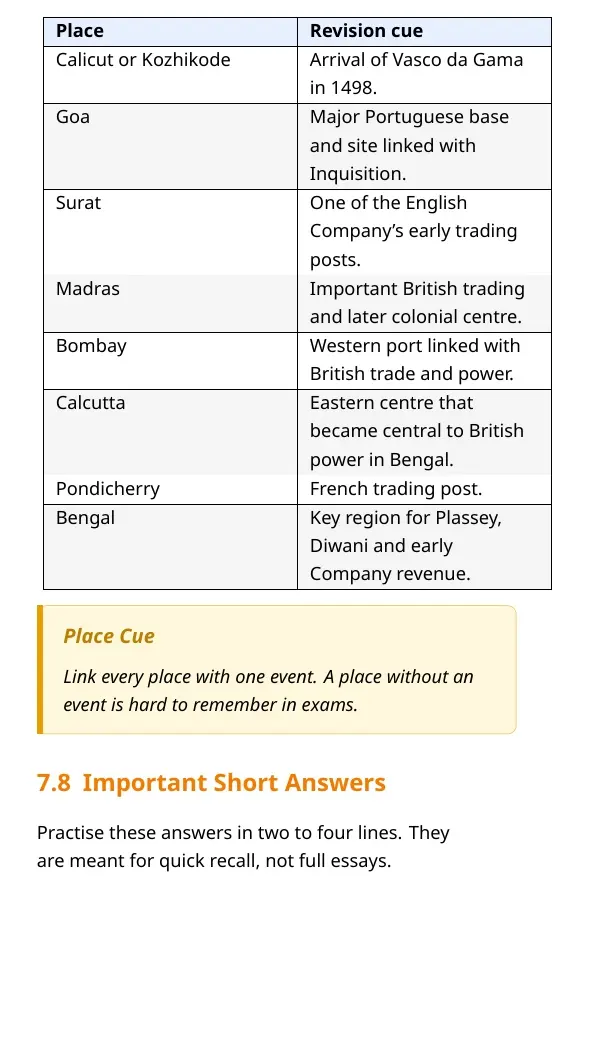
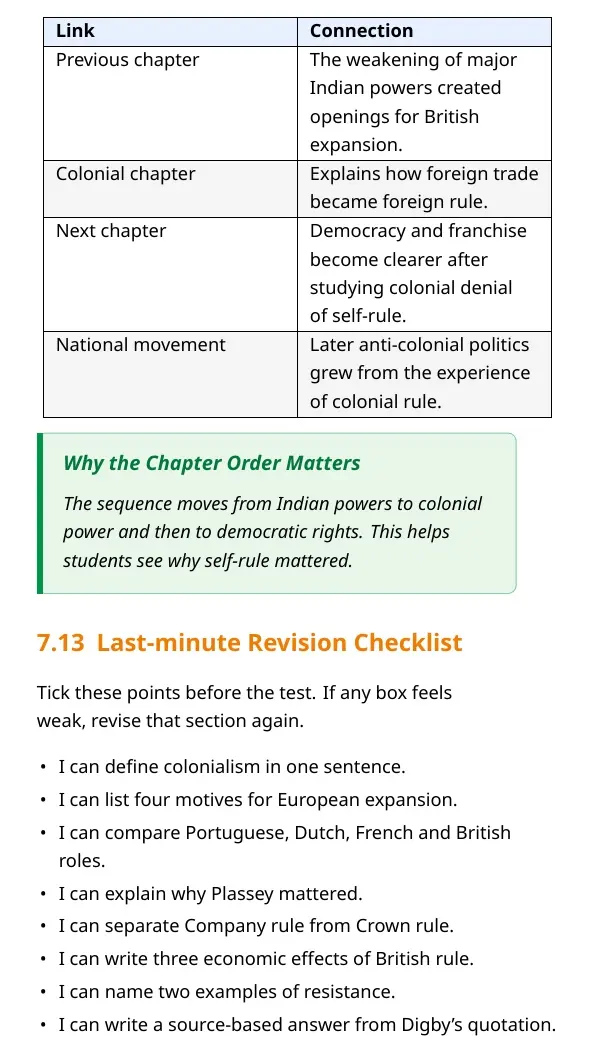
The chapter timeline is useful because it turns a long story into a sequence. Start with Vasco da Gama in 1498, then revise Pondicherry in 1674, Plassey in 1757, Macaulay's Minute in 1835, the Great Rebellion in 1857 and Crown rule from 1858.
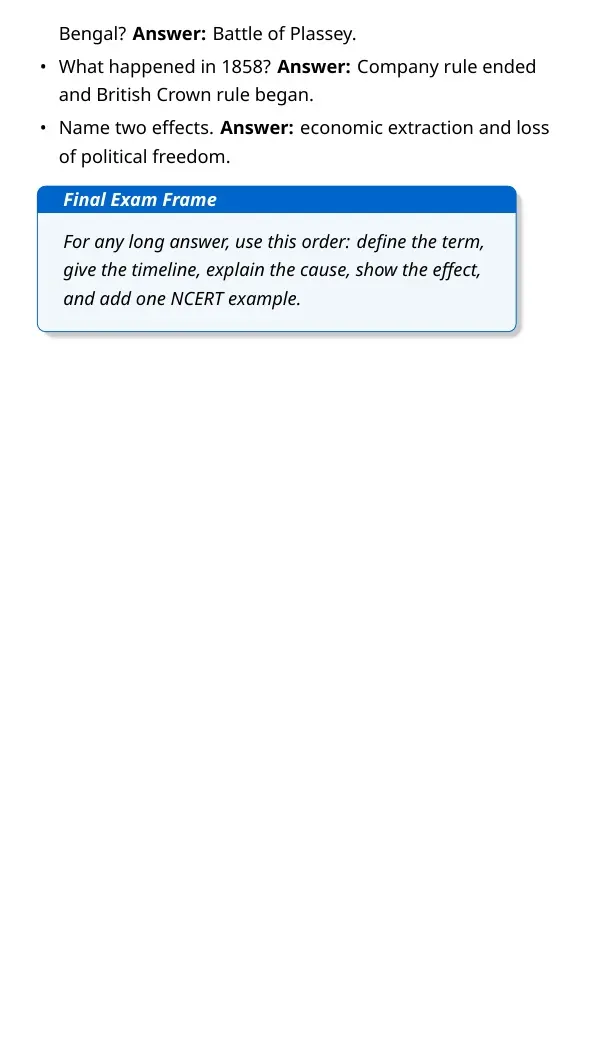
For answers, write one event and one result for every date. A date alone is weak, but a date with its consequence shows understanding.
The Colonial Era in India Class 8 Video Explanation
Source: Magnet Brains on YouTube
British Expansion and Resistance Cues
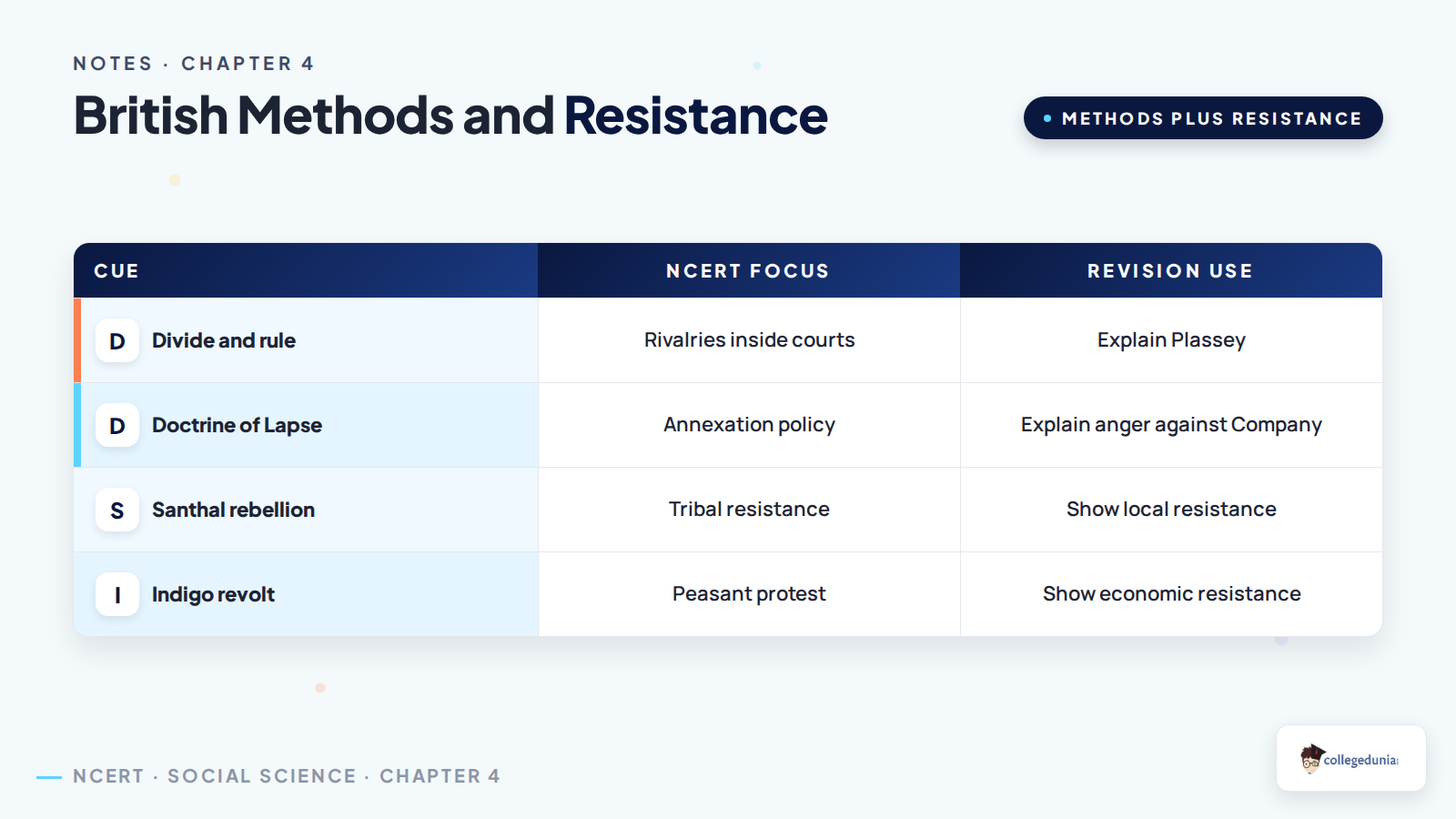
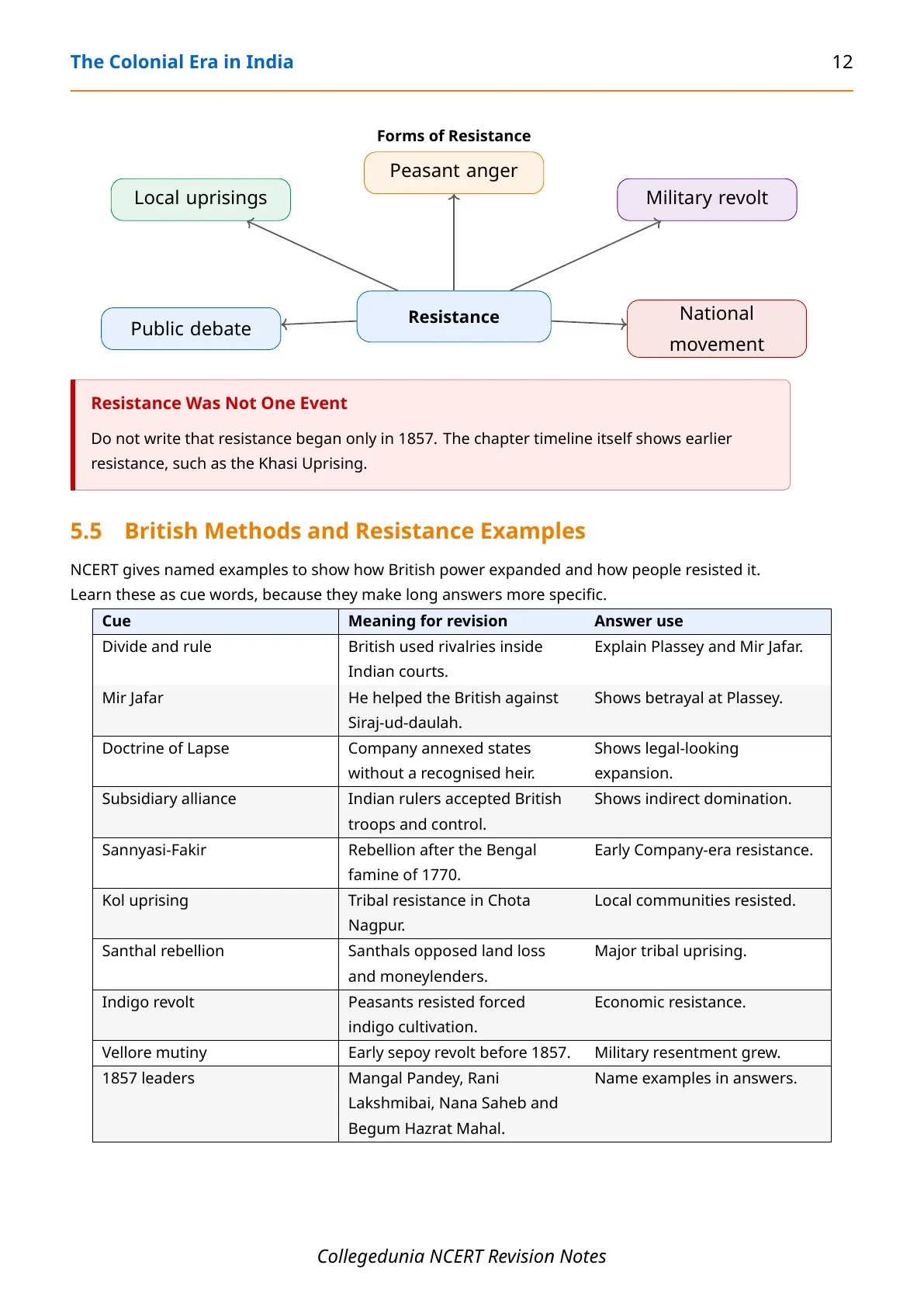
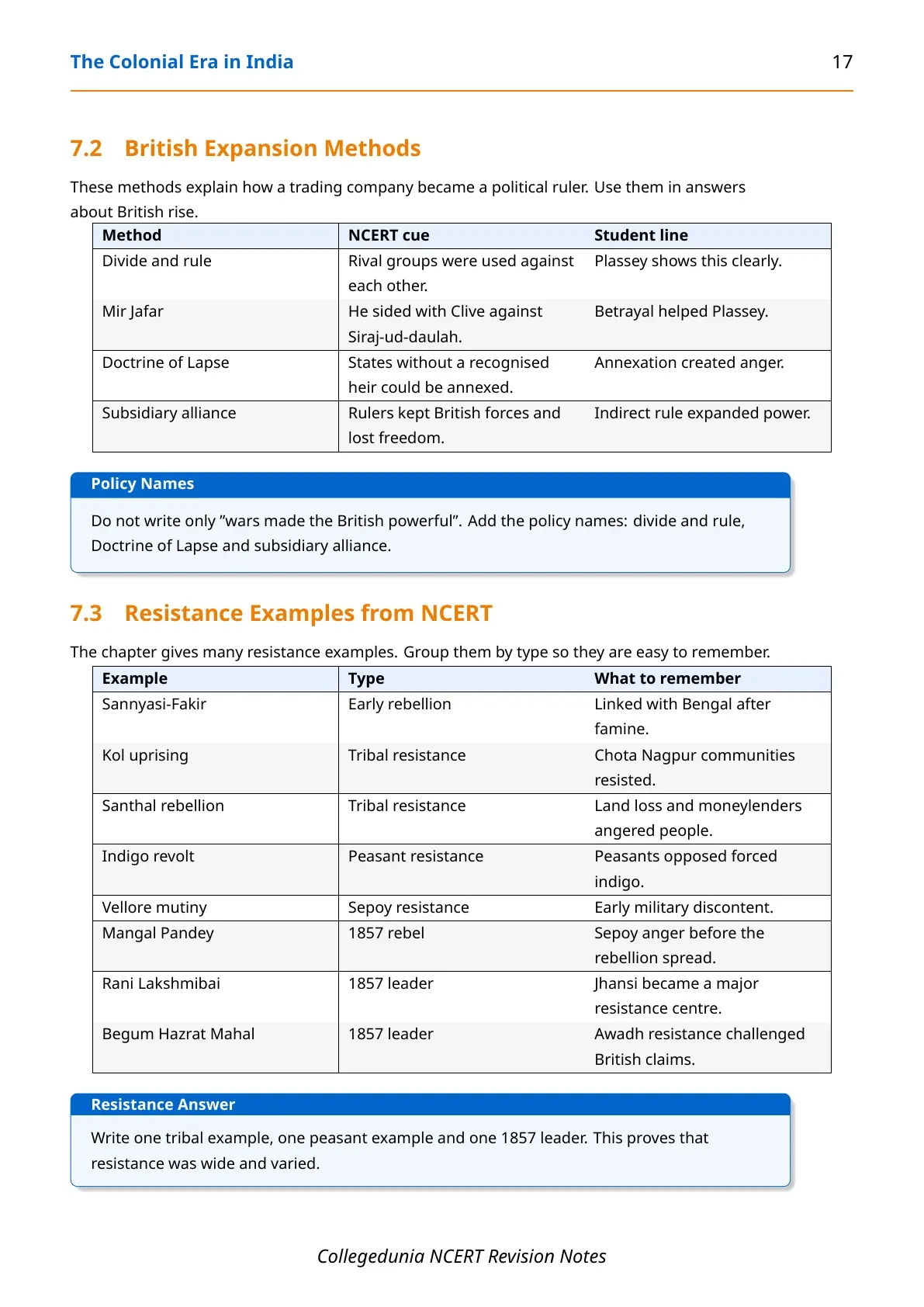
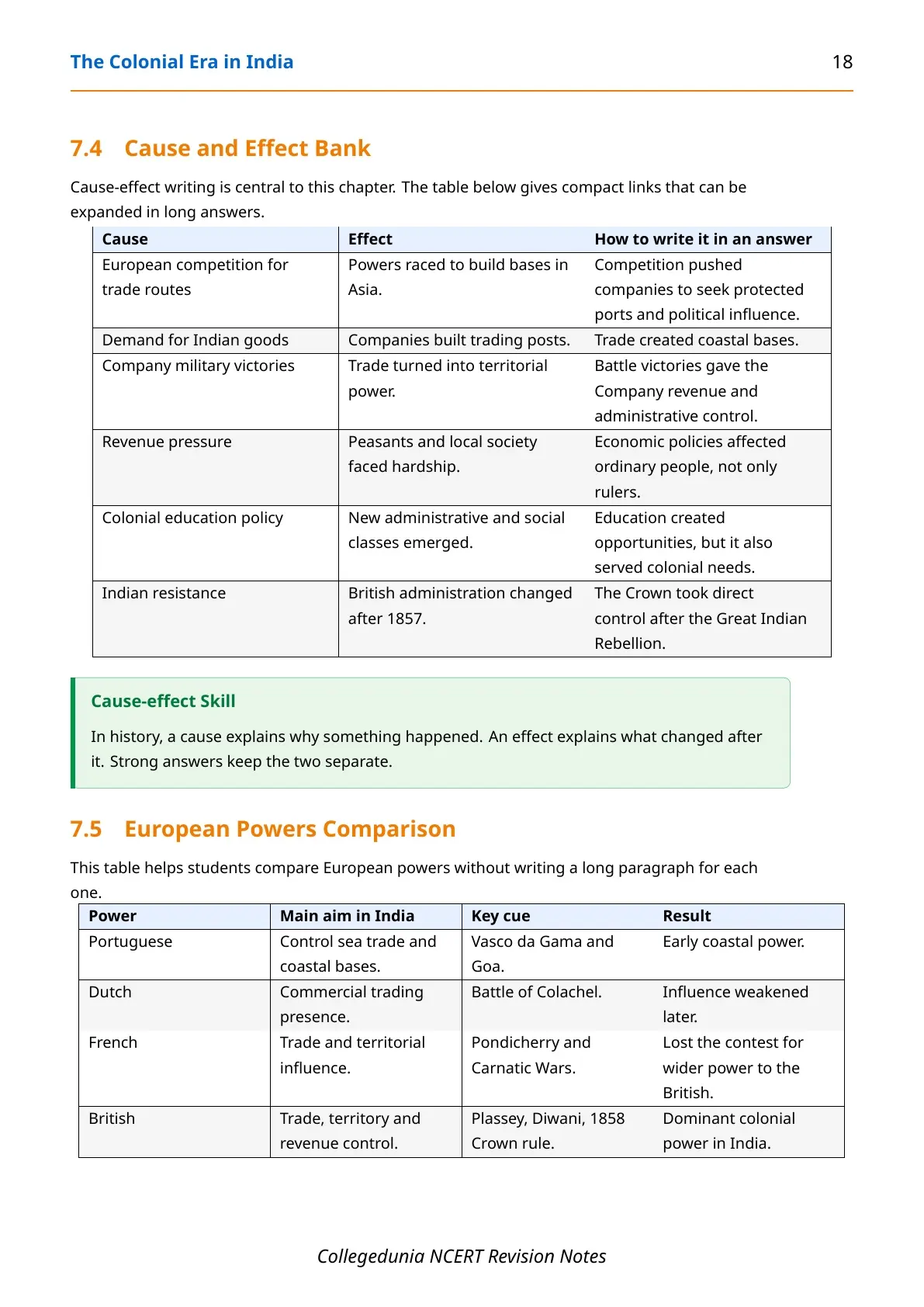
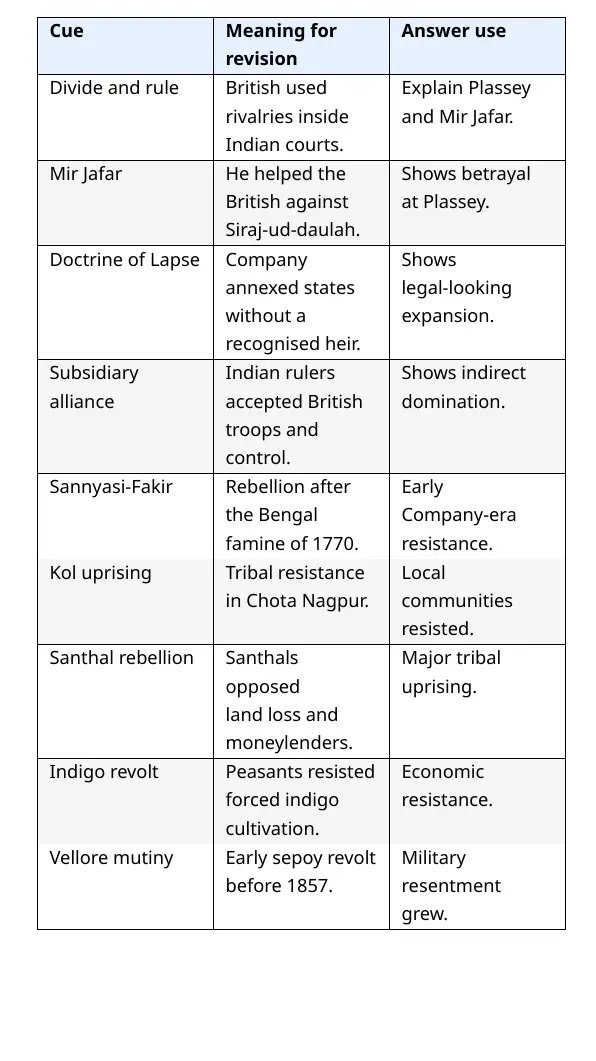
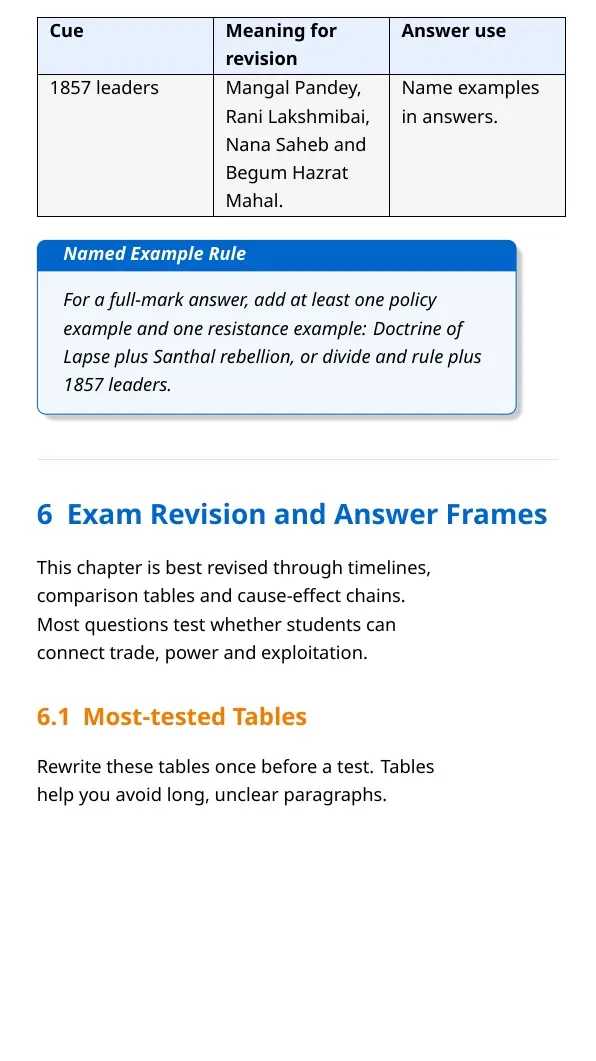
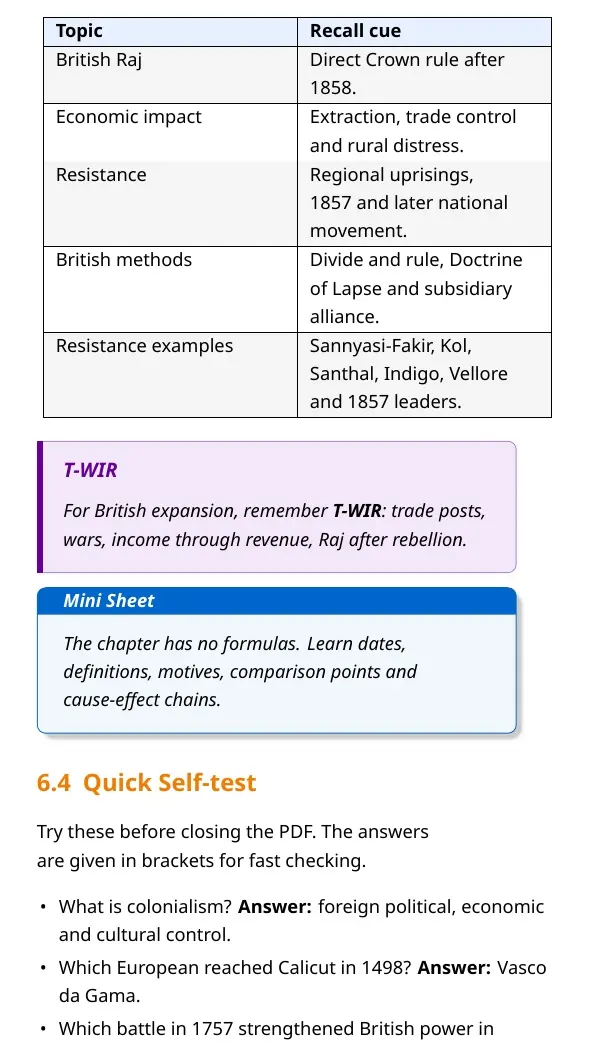
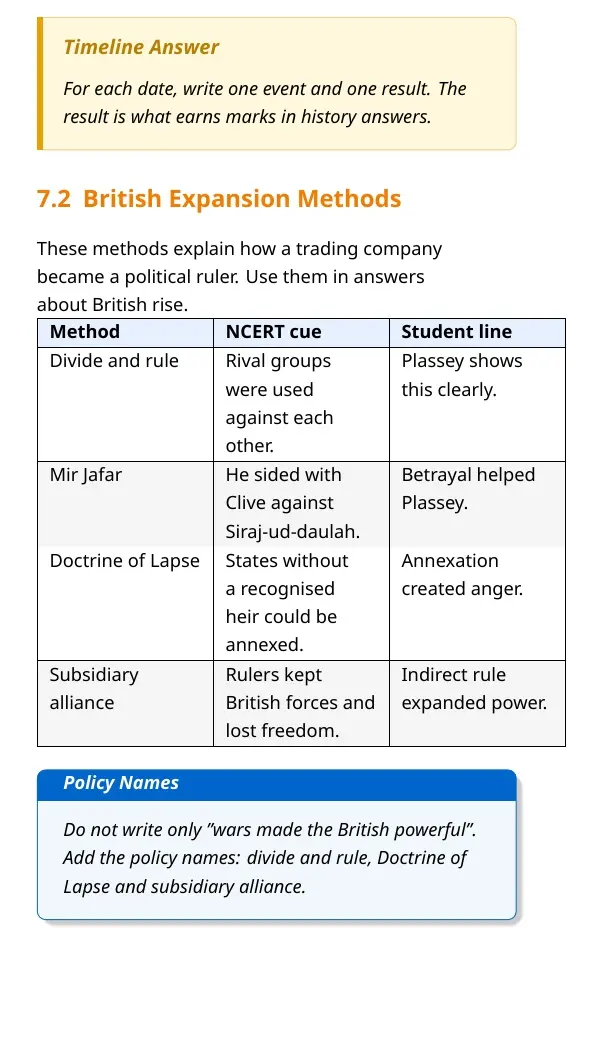
The East India Company used military victories, political alliances, divide and rule, Doctrine of Lapse and subsidiary alliance to expand power. Students should connect these methods with named examples rather than writing only that the British won wars.
| Cue | Meaning | Use in answer |
|---|---|---|
| Divide and rule | Using rivalries inside Indian courts | Explain Plassey and Mir Jafar |
| Doctrine of Lapse | Annexing states without a recognised heir | Show legal-looking expansion |
| Subsidiary alliance | Keeping British troops under Indian rulers | Show indirect control |
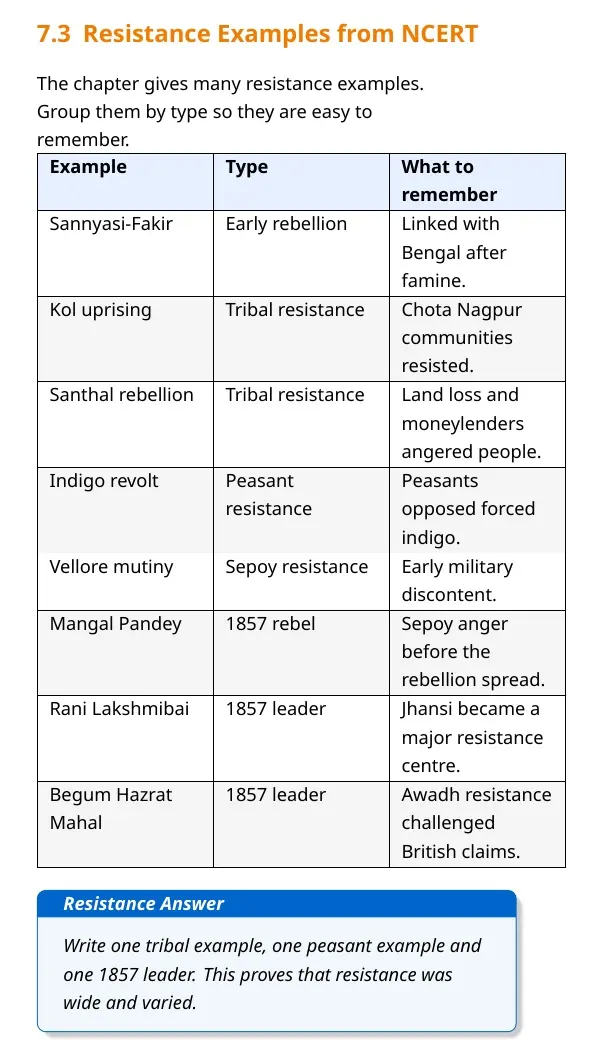
| Santhal rebellion | Tribal resistance against land loss | Show local resistance |
| Indigo revolt | Peasant protest against forced cultivation | Show economic resistance |
Important Topics in Class 8 Social Science Chapter 4
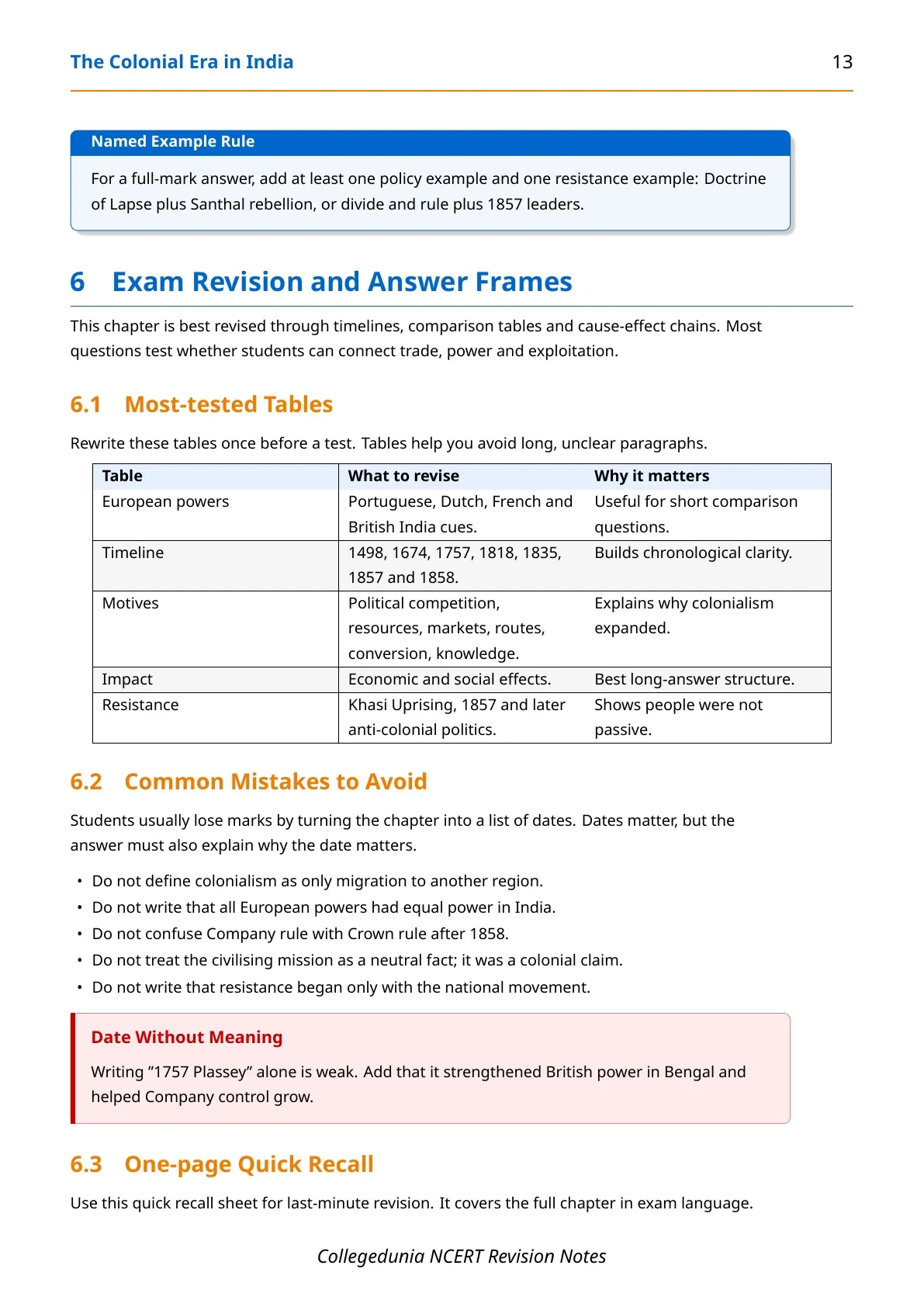
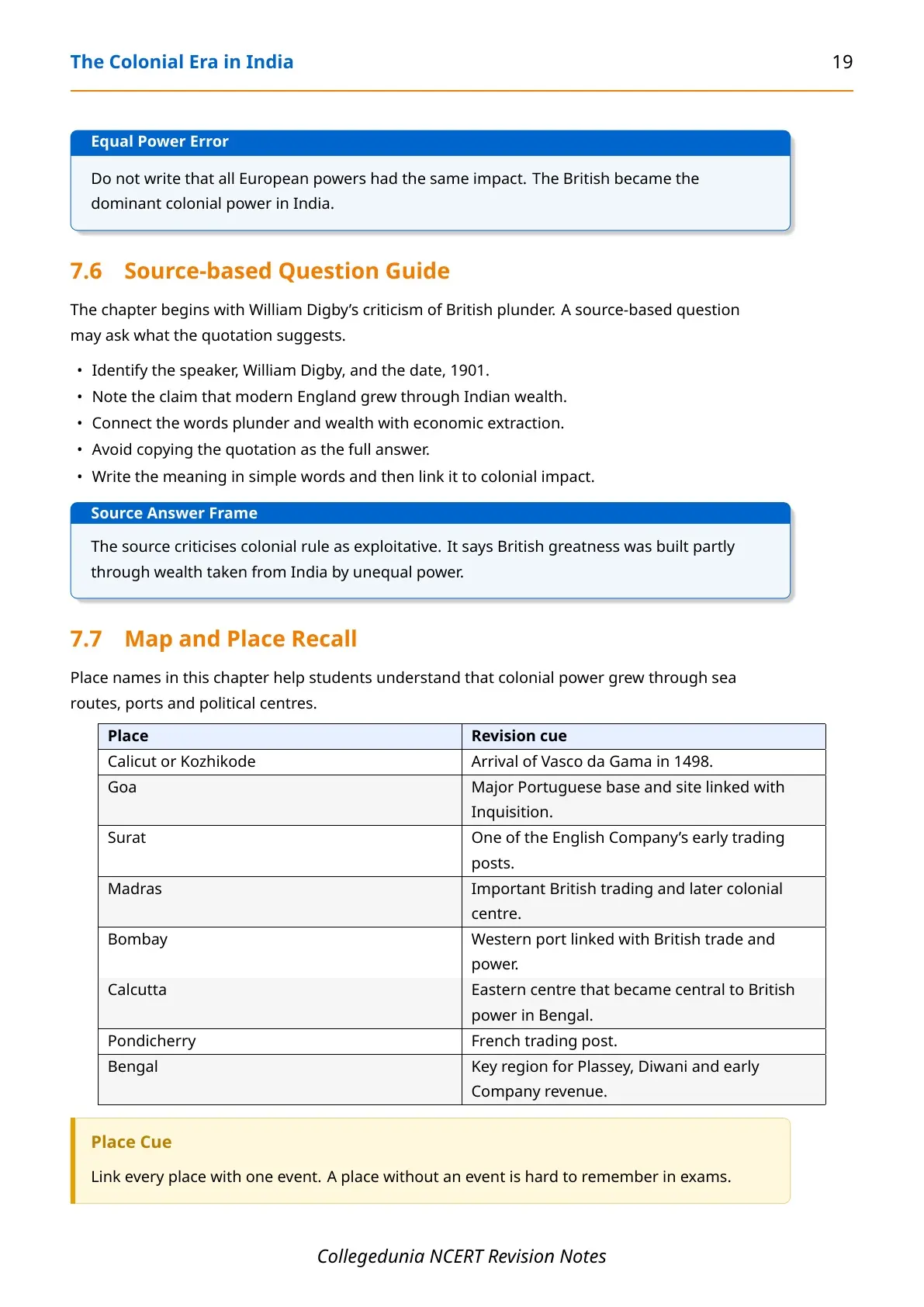
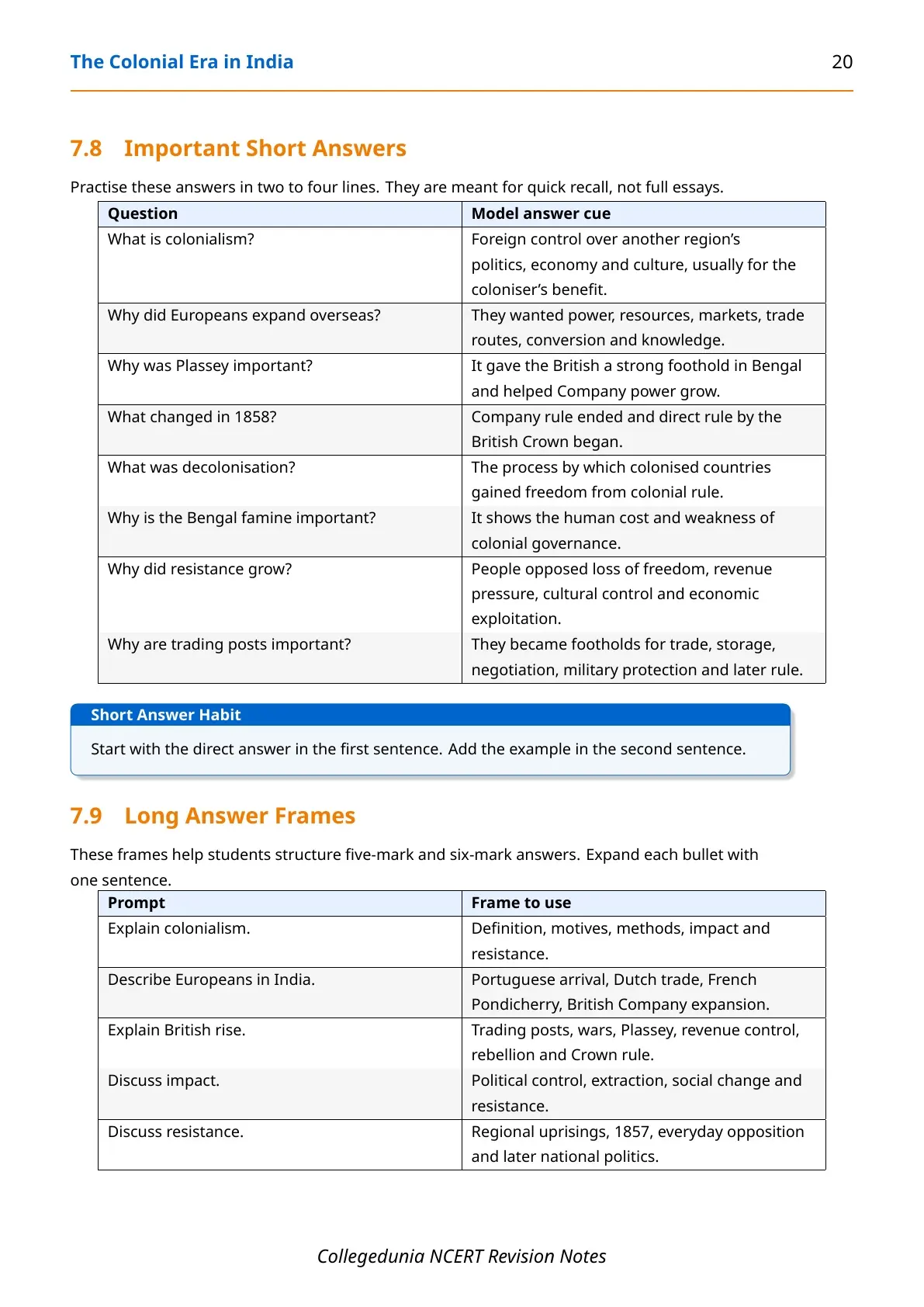
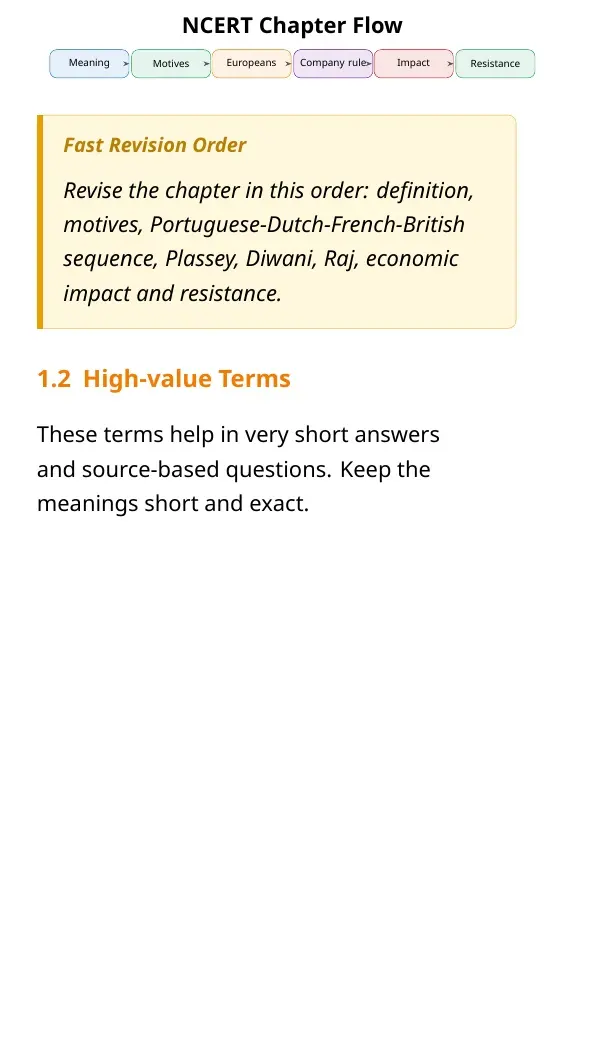
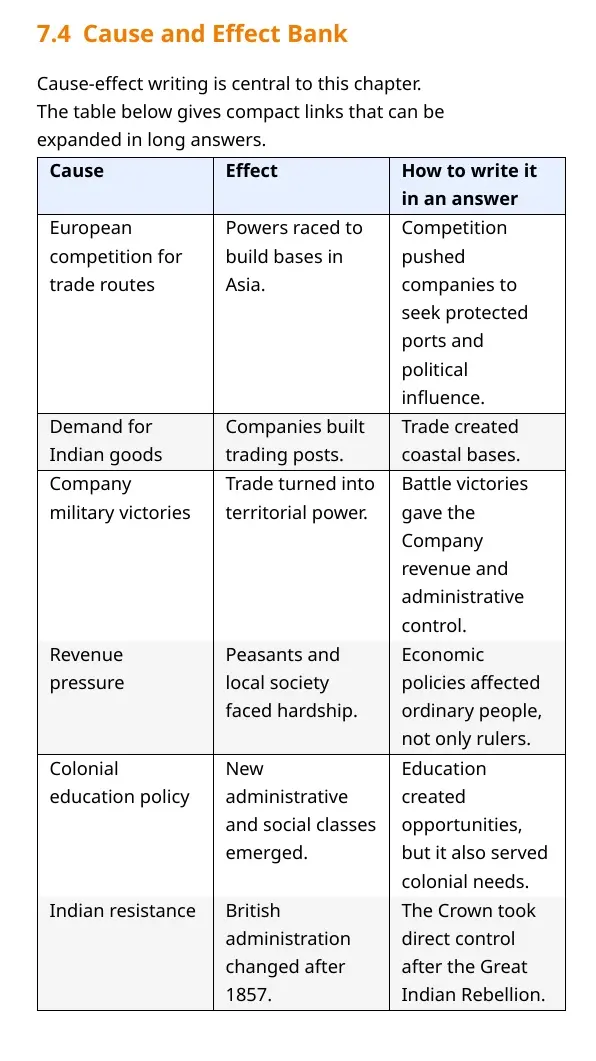
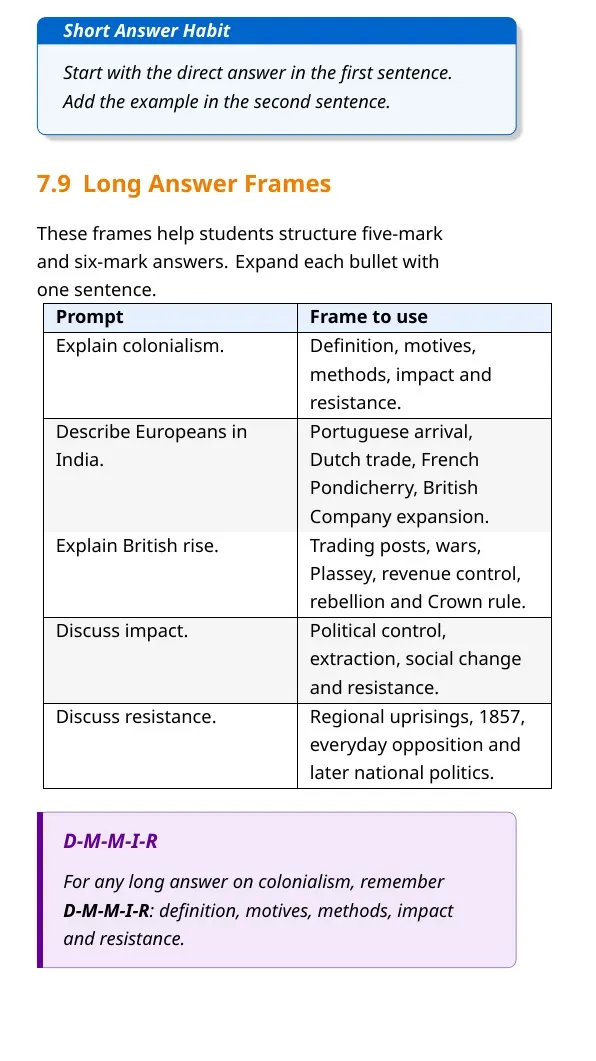
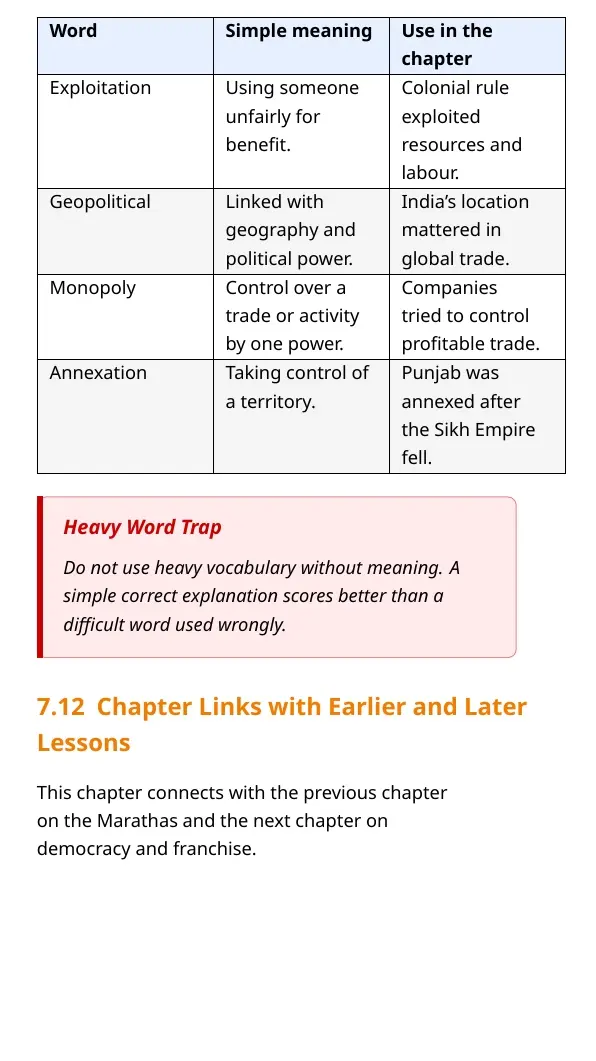
Students should revise this chapter through definitions, comparison tables and cause-effect chains. A good long answer can define colonialism, name the European powers, explain Company expansion and end with the impact on India.
- Meaning of colonialism: control through settlement, politics, economy and culture.
- European powers: Portuguese, Dutch, French and British roles in India.
- British rise: trading posts, Carnatic Wars, Plassey, revenue control and Crown rule.
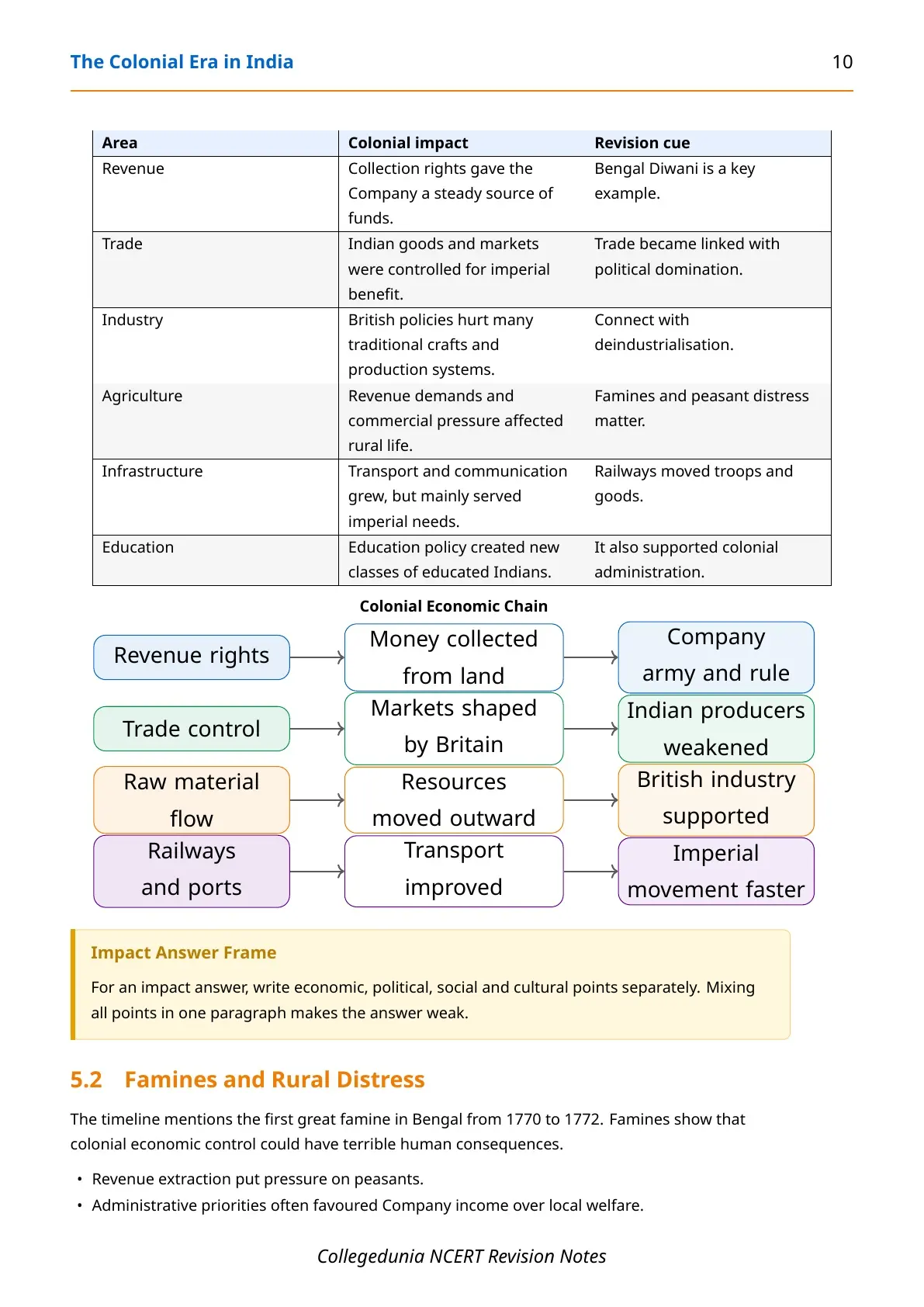
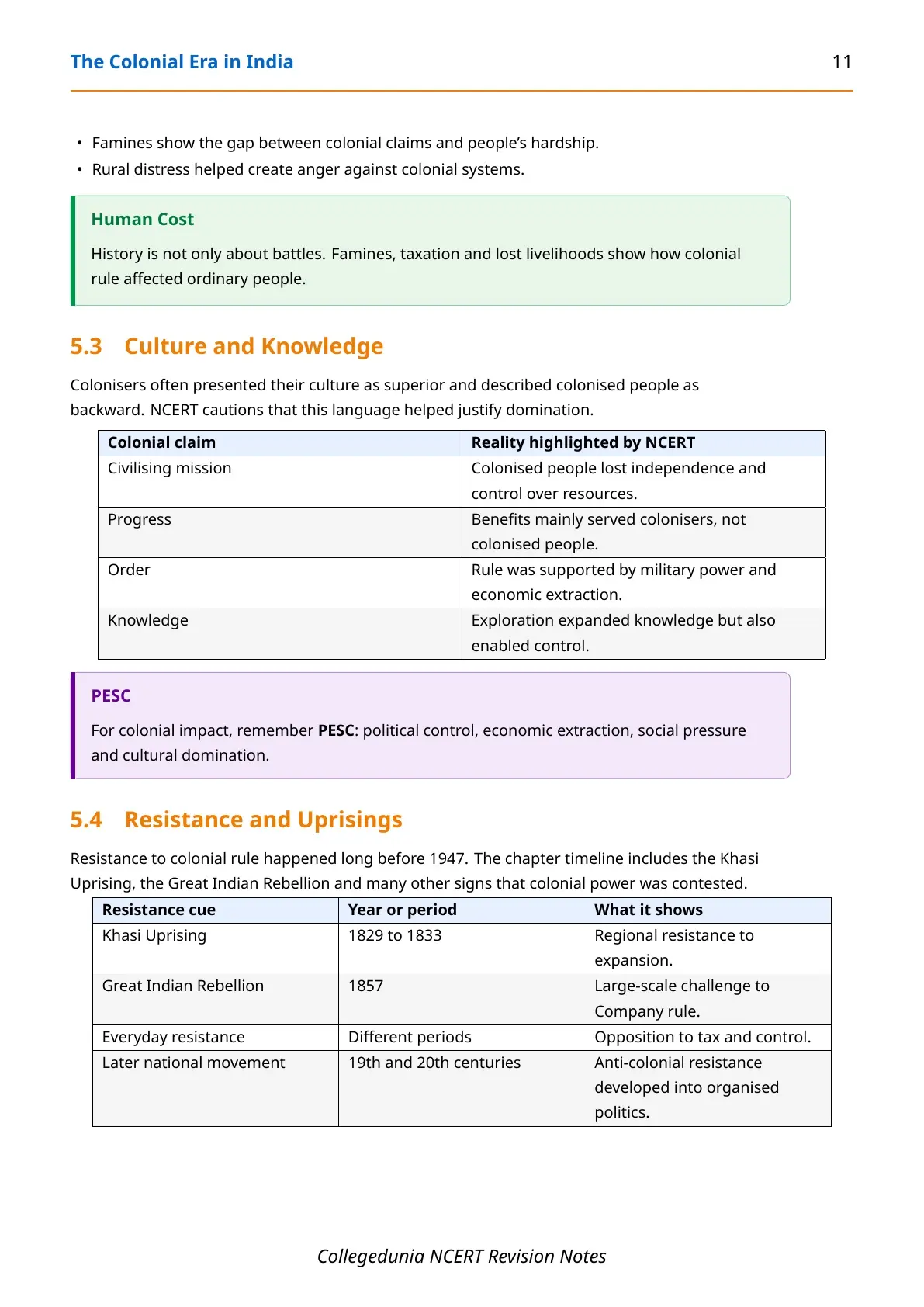
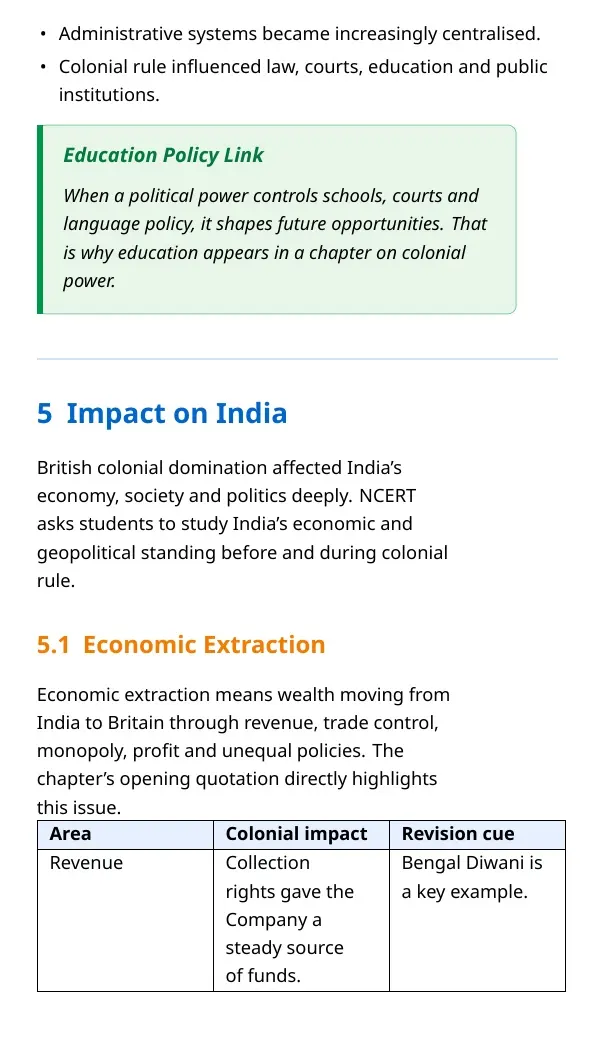
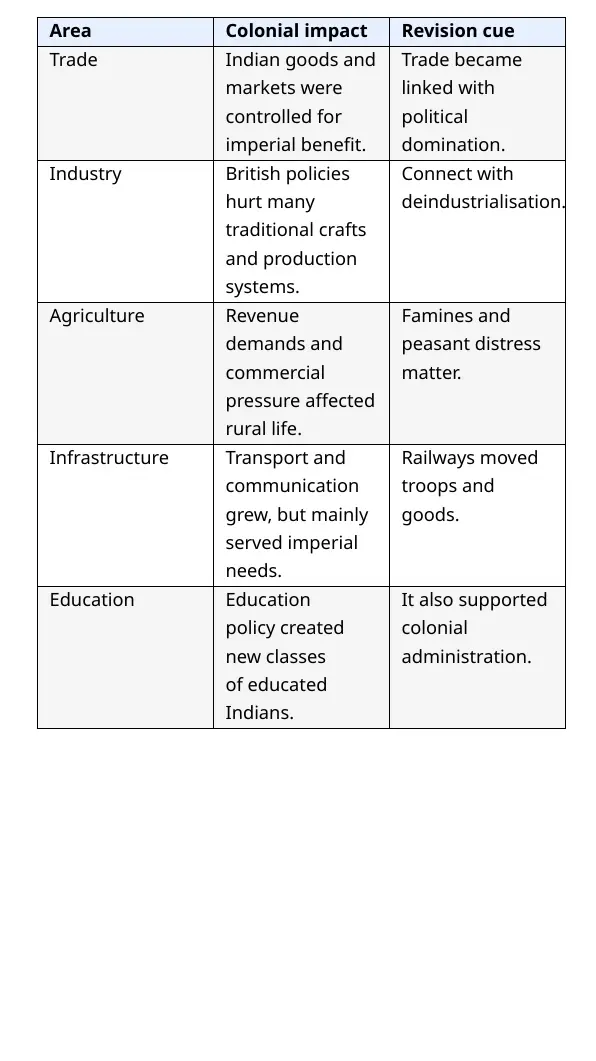
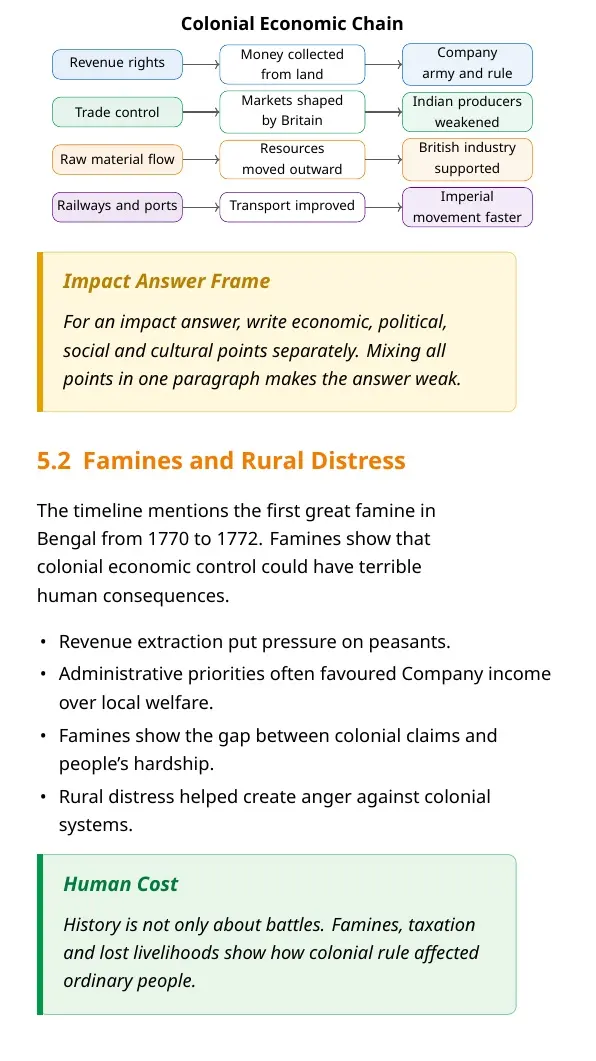
- Impact on India: revenue extraction, famine, deindustrialisation, education policy and cultural pressure.
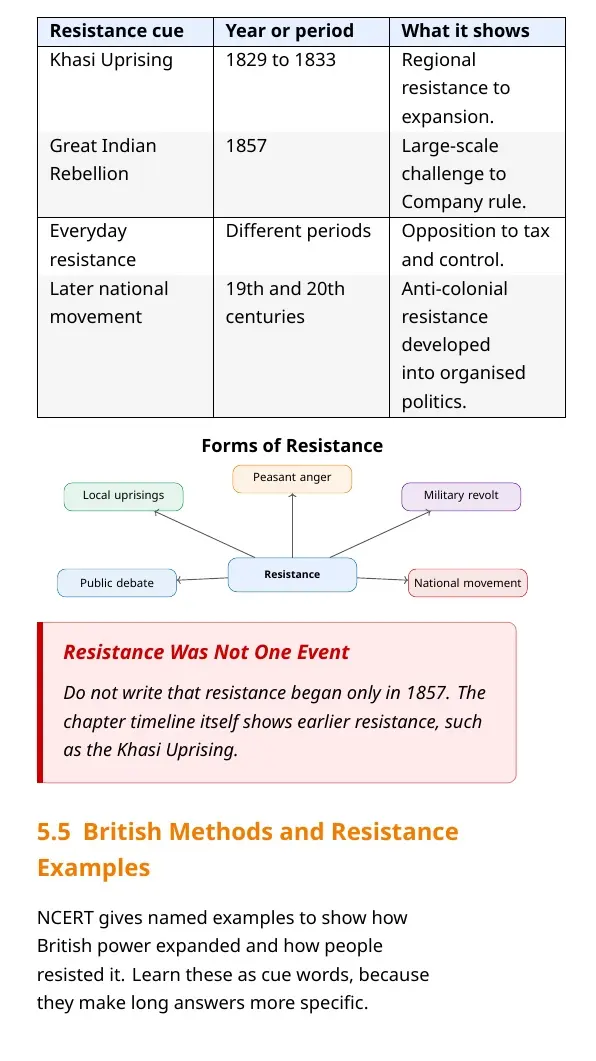
- Resistance: Khasi, Sannyasi-Fakir, Kol, Santhal, Indigo, Vellore and the Great Rebellion of 1857.
How to Use These Class 8 Social Science Notes
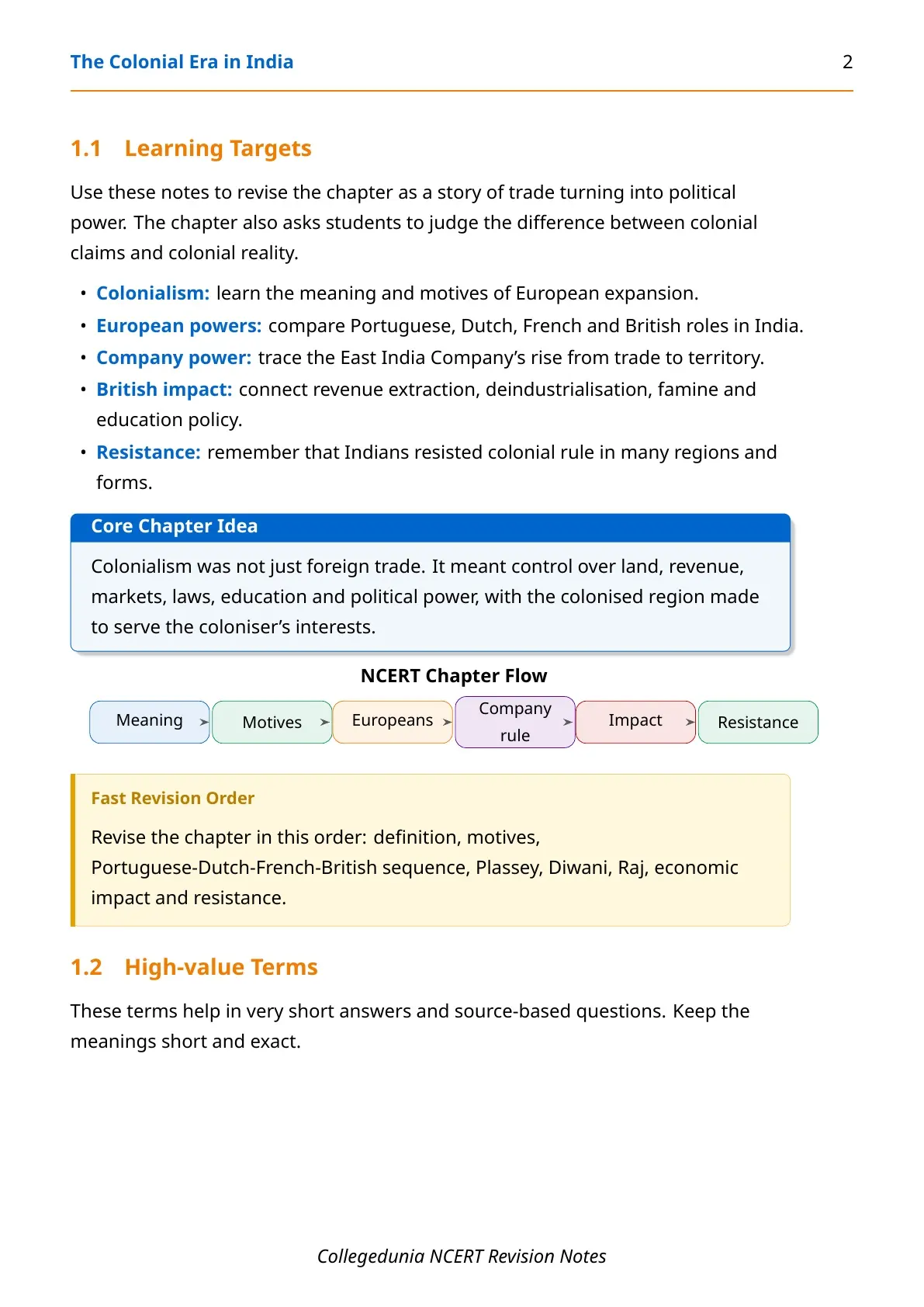
Use the notes PDF in three rounds. First, read the chapter overview and timeline. Second, memorise policy names and resistance examples. Third, practise two short answers and one long answer from the revision bank.
- Make a date chart for 1498, 1674, 1757, 1835, 1857 and 1858.
- Write one line each on divide and rule, Doctrine of Lapse and subsidiary alliance.
- Prepare one answer on how colonial rule affected India's economy and society.
A strong answer uses one policy example and one resistance example, such as Doctrine of Lapse plus Santhal rebellion.
More Class 8 Social Science Chapter 4 Resources
Use these related resources when you want Chapter 4 in another format. The table stays above the FAQ so students can move from the notes PDF to the official book chapter and chapter hub quickly.
| Resource | Best use | Link |
|---|---|---|
| NCERT Notes | Revise Chapter 4 in compact form | Open notes |
| NCERT Book PDF | Read the official 2026-27 source chapter | Open book PDF |
| Official book chapter | Open the Chapter 4 source PDF | Open official PDF |
Class 8 Social Science Notes for Other Chapters
The table below keeps Class 8 Social Science notes together so students can revise the same resource type chapter by chapter.
| Chapter | NCERT chapter title | Notes |
|---|---|---|
| Chapter 1 | Natural Resources and Their Use | Open current Chapter 4 notes |
| Chapter 2 | Reshaping India's Political Map | Open current Chapter 4 notes |
| Chapter 3 | The Rise of the Marathas | Open current Chapter 4 notes |
| Chapter 4 | The Colonial Era in India | Current notes |
| Chapter 5 | Universal Franchise and India's Electoral System | Open current Chapter 4 notes |
| Chapter 6 | The Parliamentary System: Legislature and Executive | Open current Chapter 4 notes |
The Colonial Era in India Class 8 Notes FAQs
Ques. What is covered in NCERT Class 8 Social Science Chapter 4 Notes?
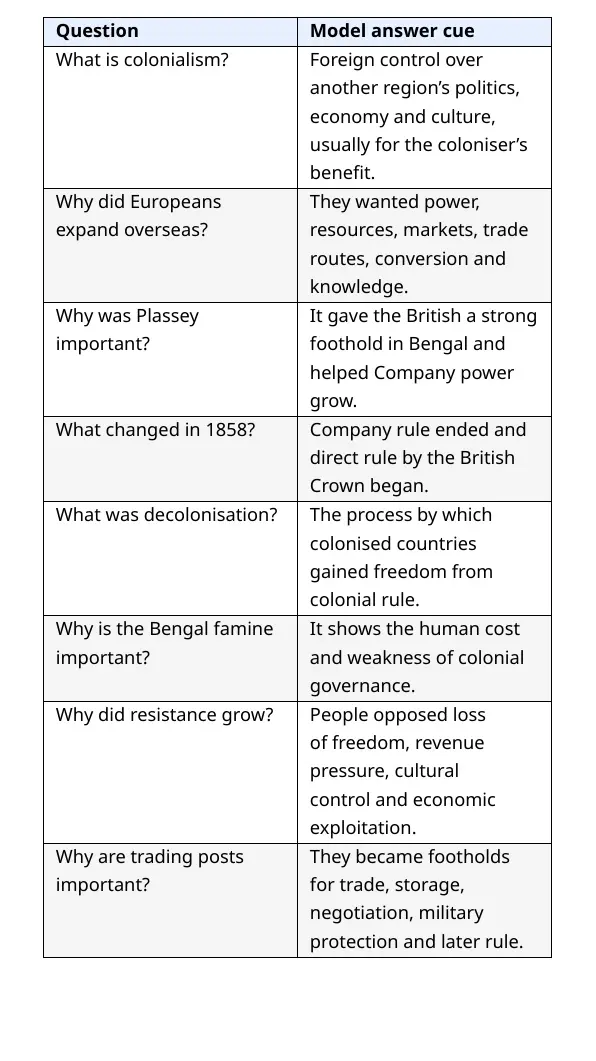
Ans. The notes cover colonialism, European powers in India, British expansion, economic impact, education policy, resistance movements and answer frames.
Ques. Which dates are important in The Colonial Era in India?
Ans. Important dates include 1498, 1674, 1757, 1835, 1857 and 1858 because they mark European entry, Plassey, education policy, rebellion and Crown rule.
Ques. What examples should students remember for resistance?
Ans. Students should remember Khasi Uprising, Sannyasi-Fakir rebellion, Kol Uprising, Santhal rebellion, Indigo revolt, Vellore mutiny and leaders of 1857.
Ques. How should students write a long answer on colonialism?
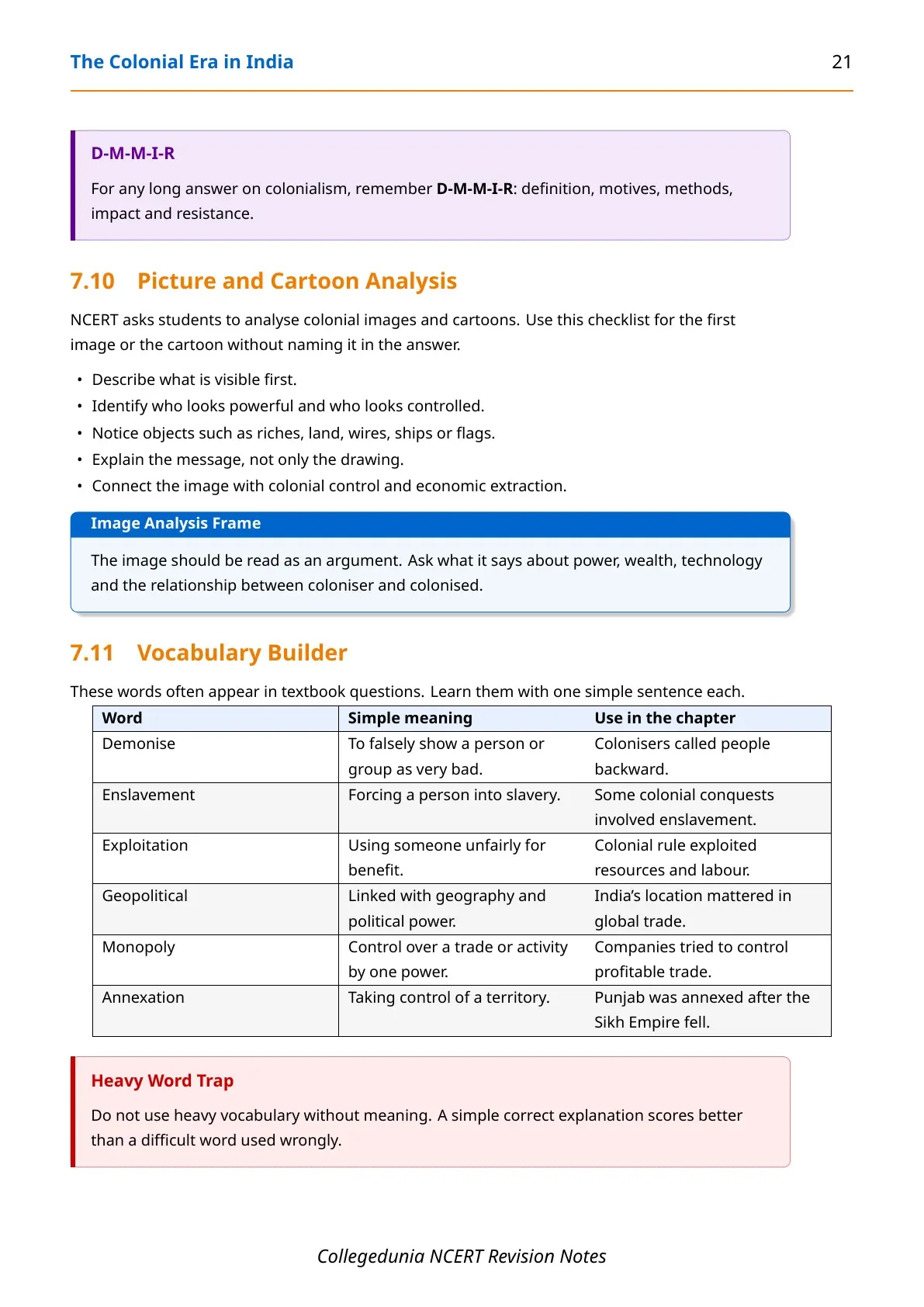
Ans. Start with the definition, add motives, explain British methods, mention impact on India and close with one resistance example.



Comments