



The NCERT PDF for Class 11 Accountancy Chapter 8 Financial Statements - I brings together the official 2026-27 chapter on trading account, profit and loss account, balance sheet and capital-revenue items.
- Core focus: final accounts for a sole proprietor without adjustments.
- Practice value: students learn gross profit, net profit and financial position.
- PDF use: keep the chapter open while preparing final accounts.
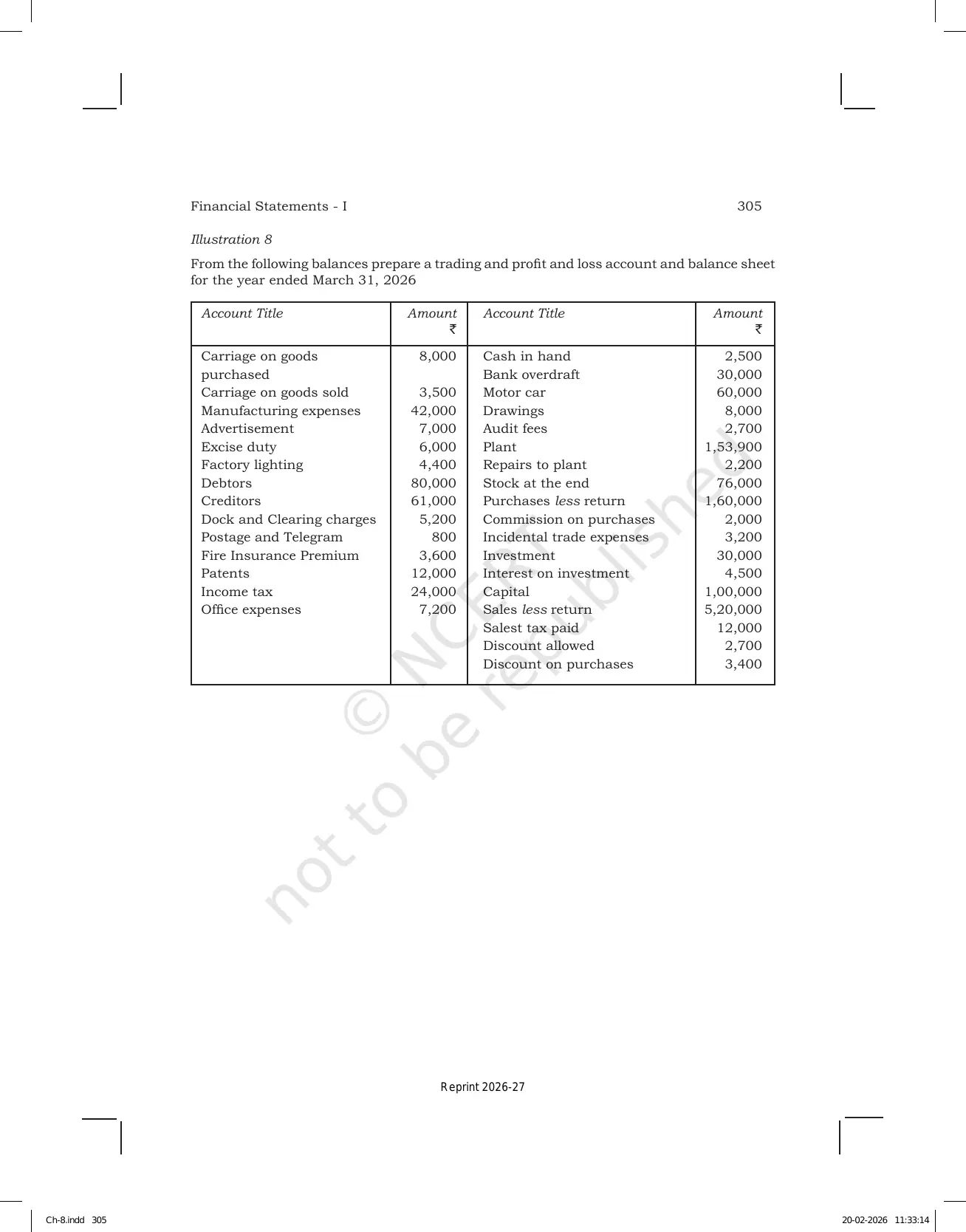
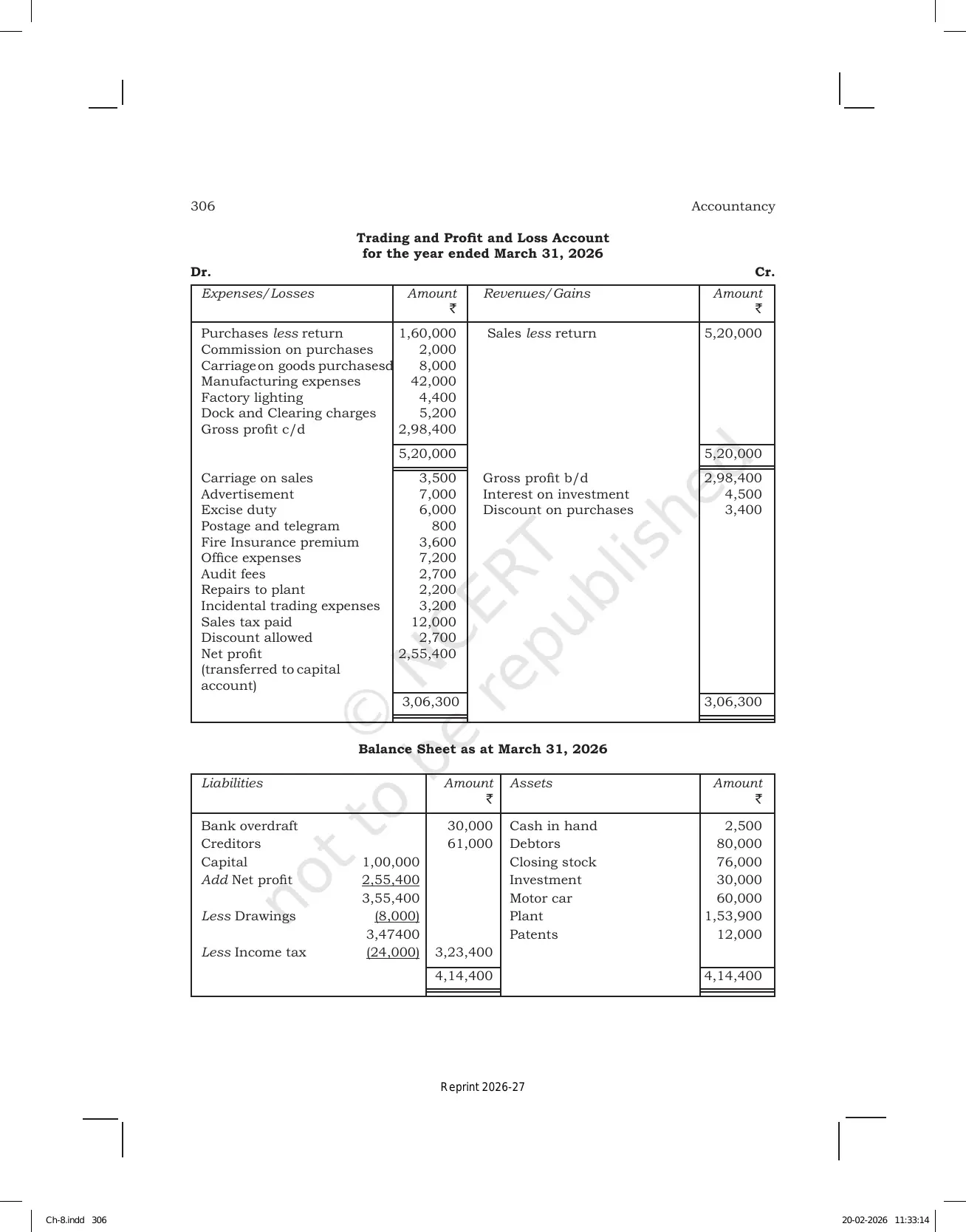
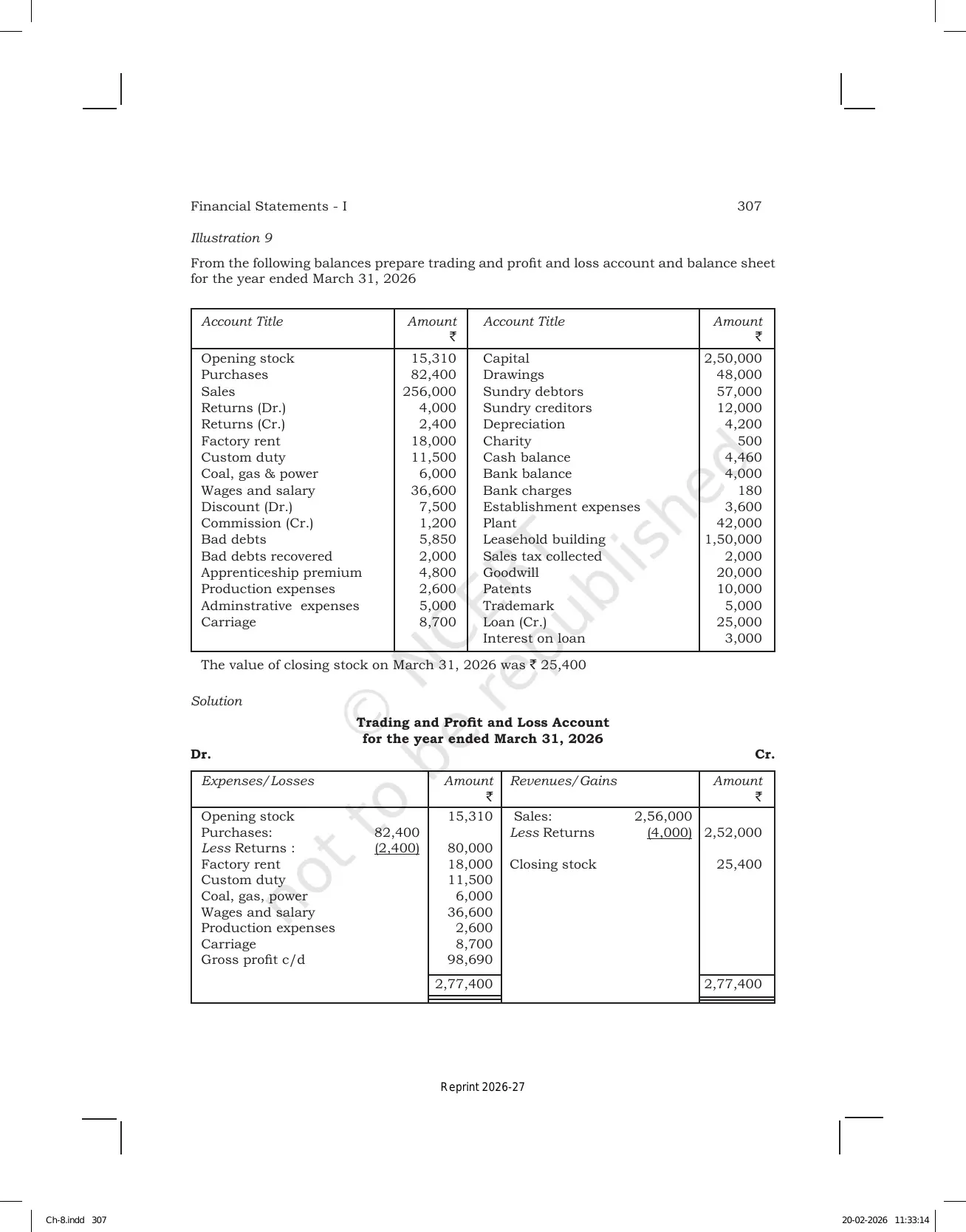
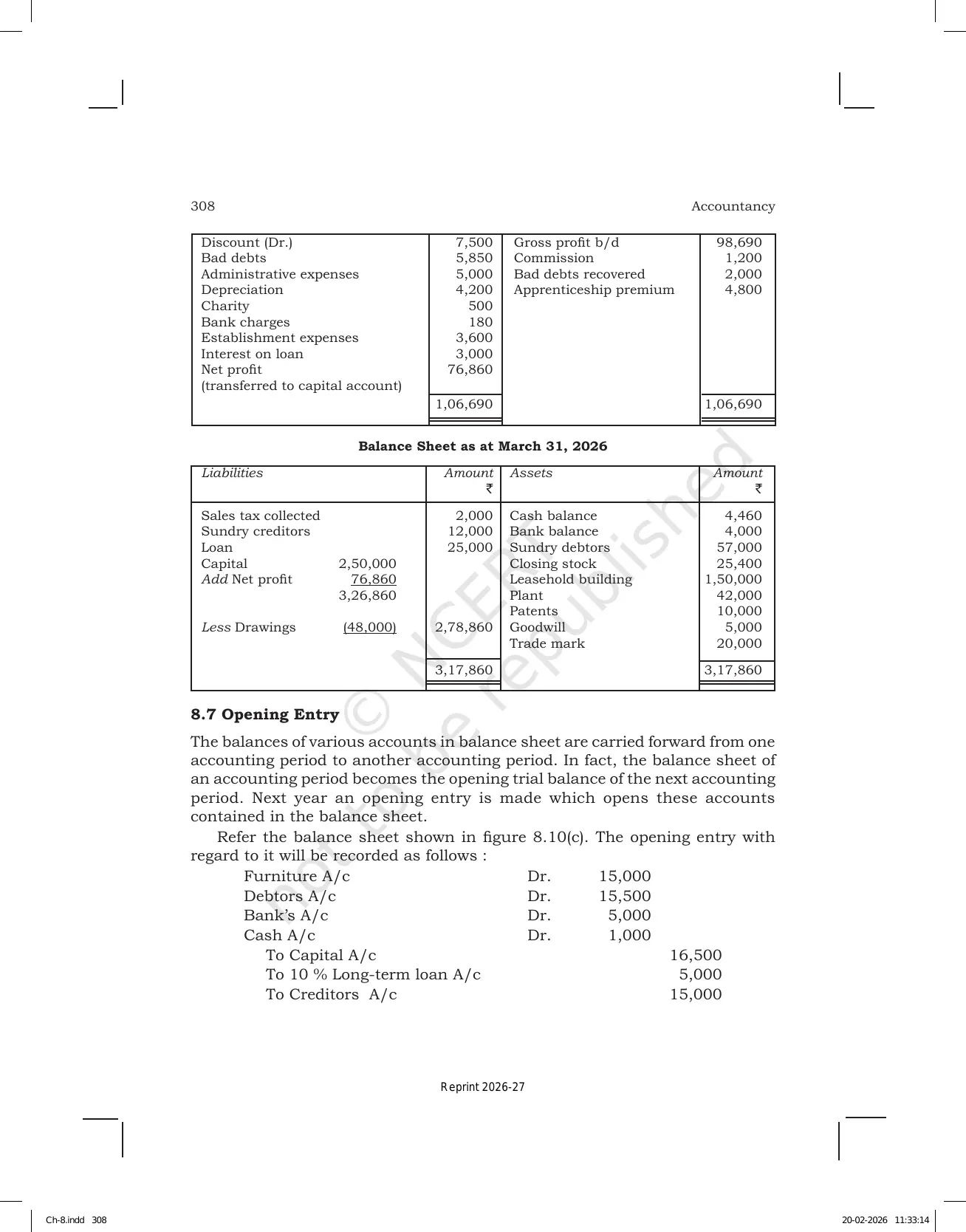
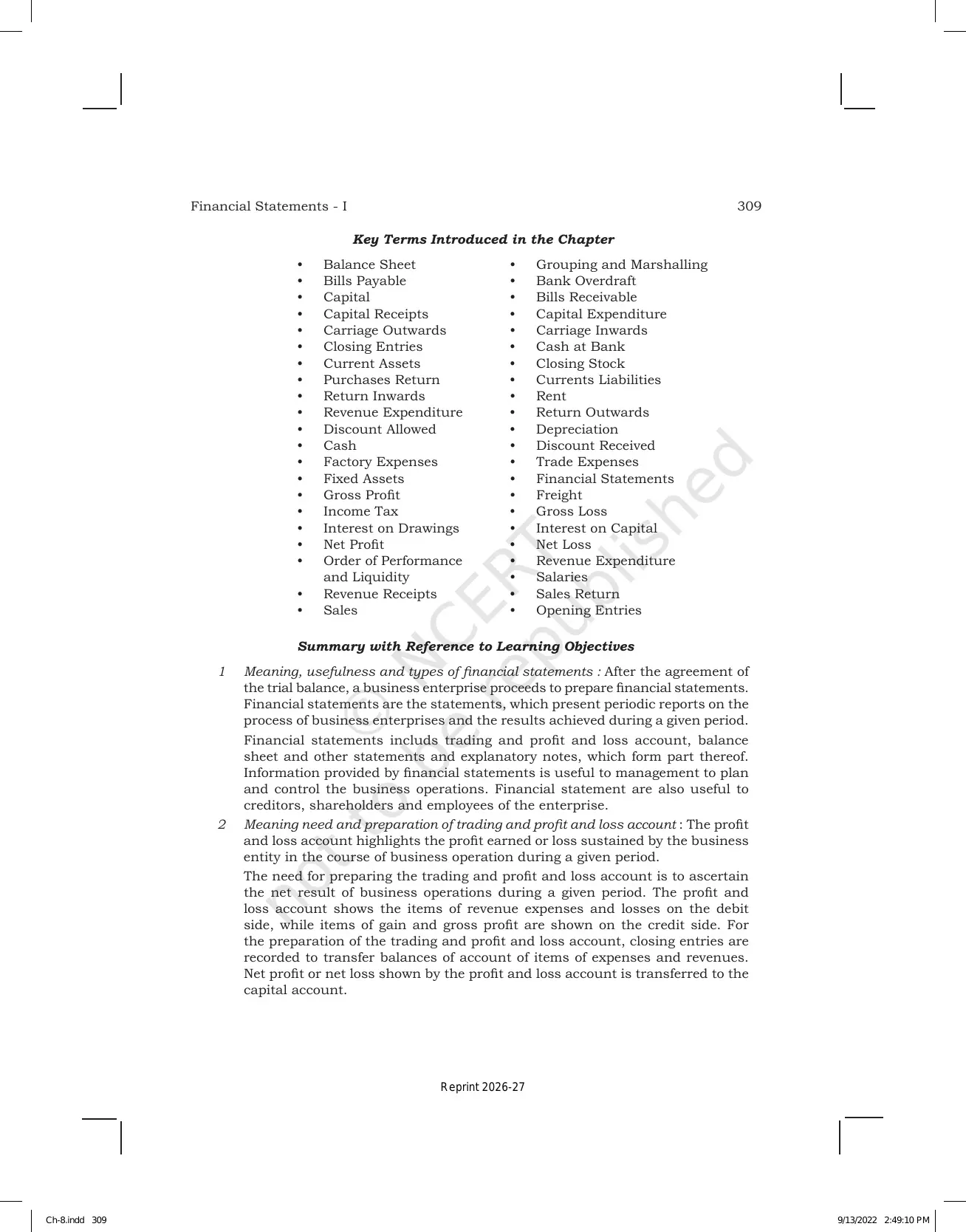
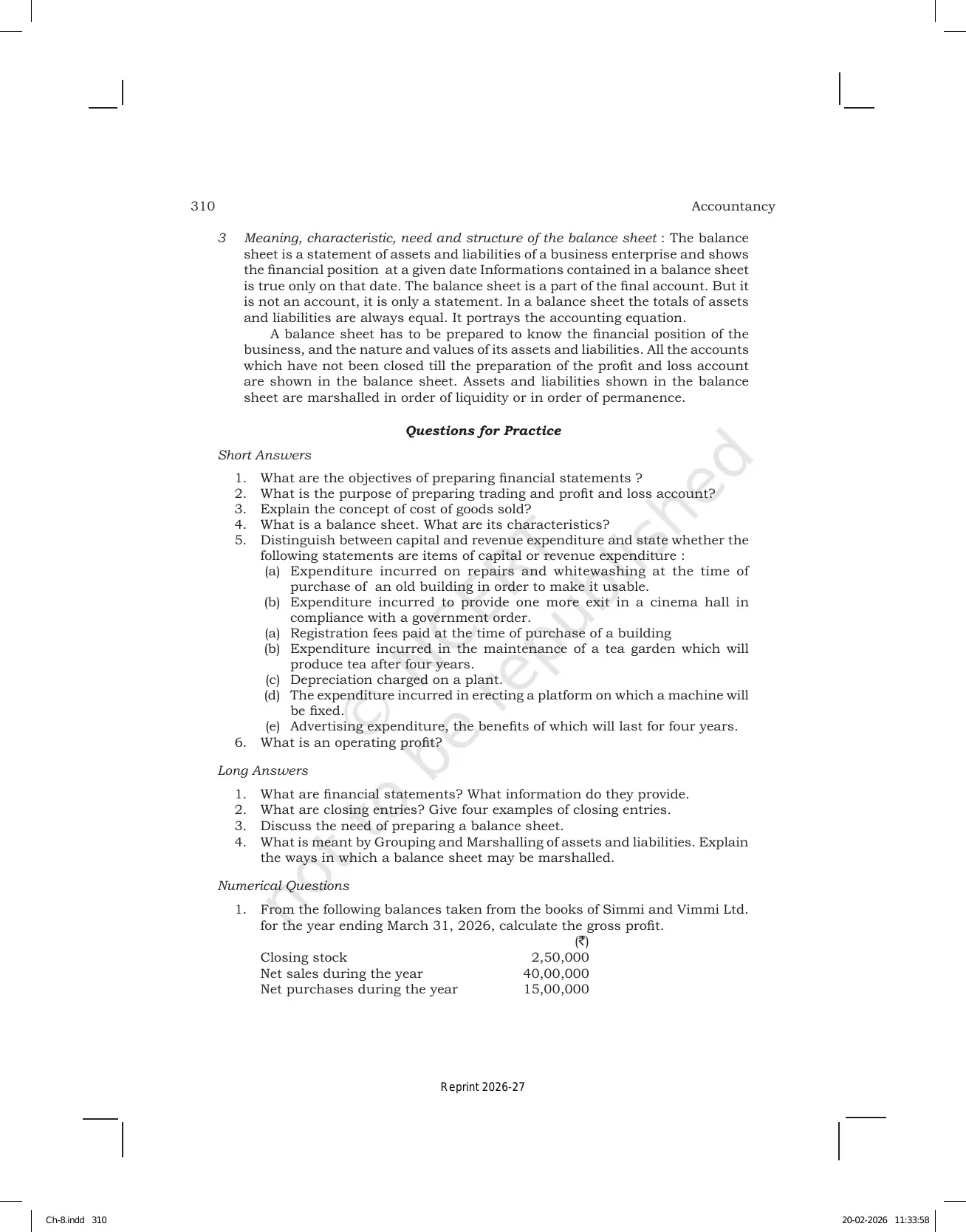
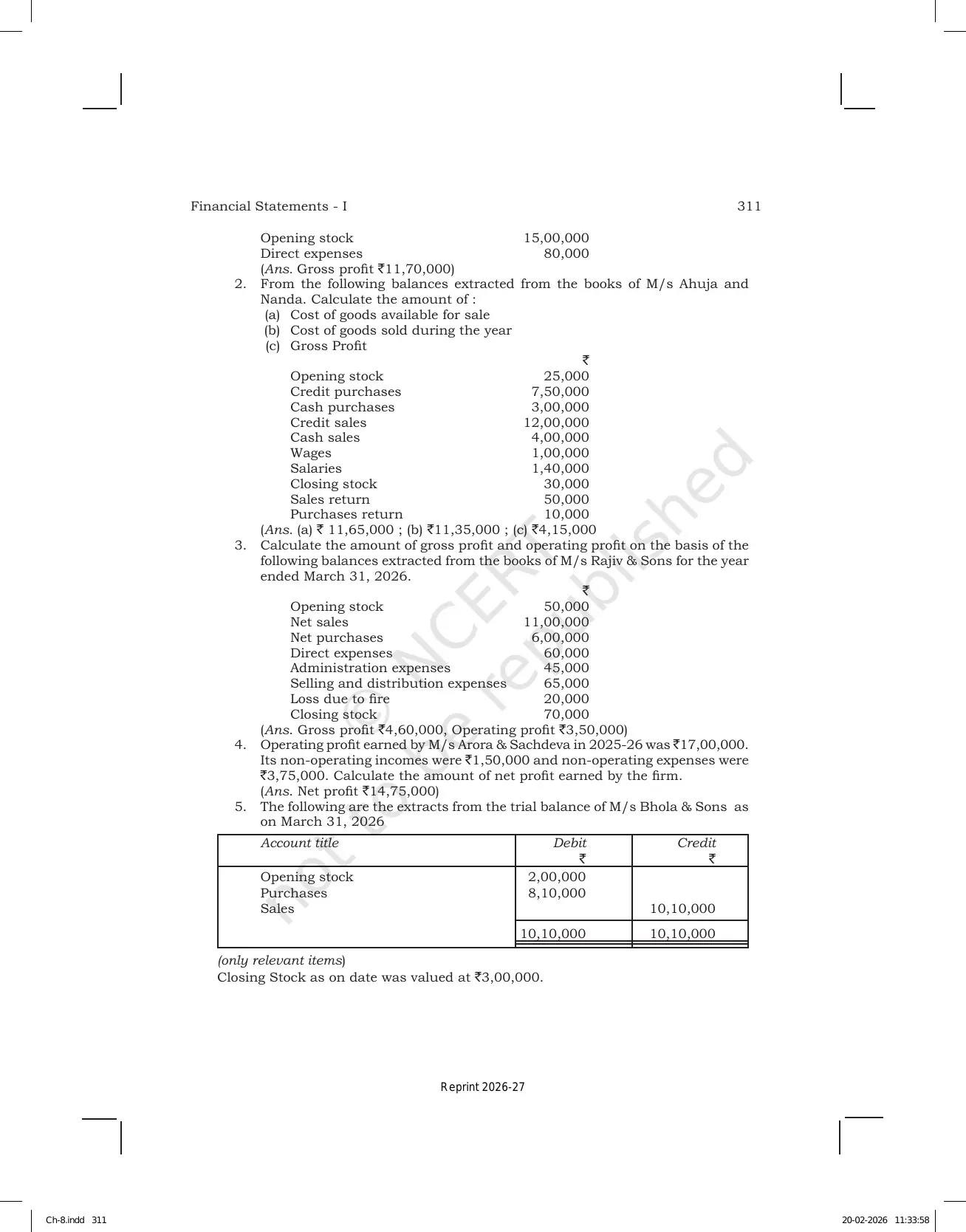
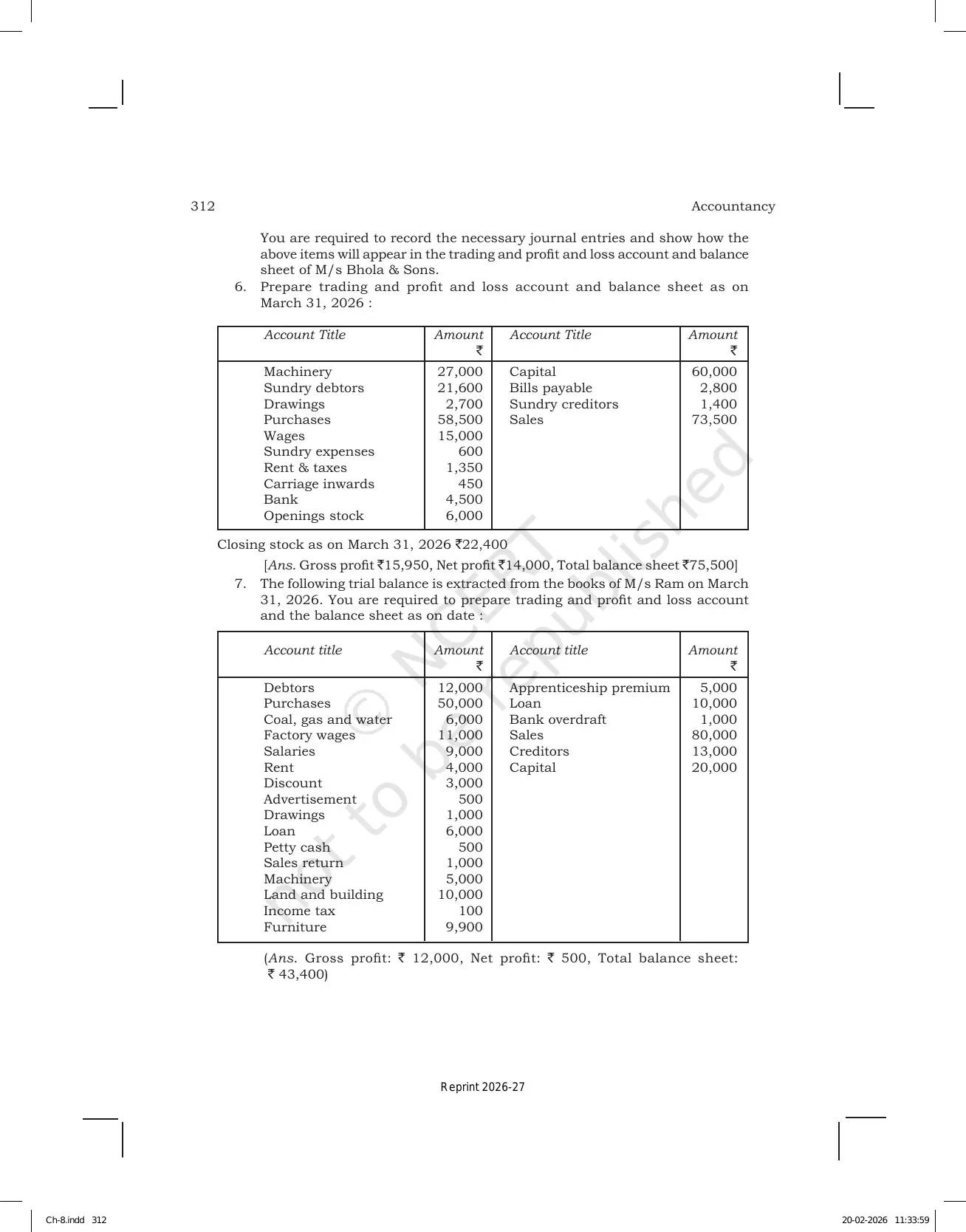
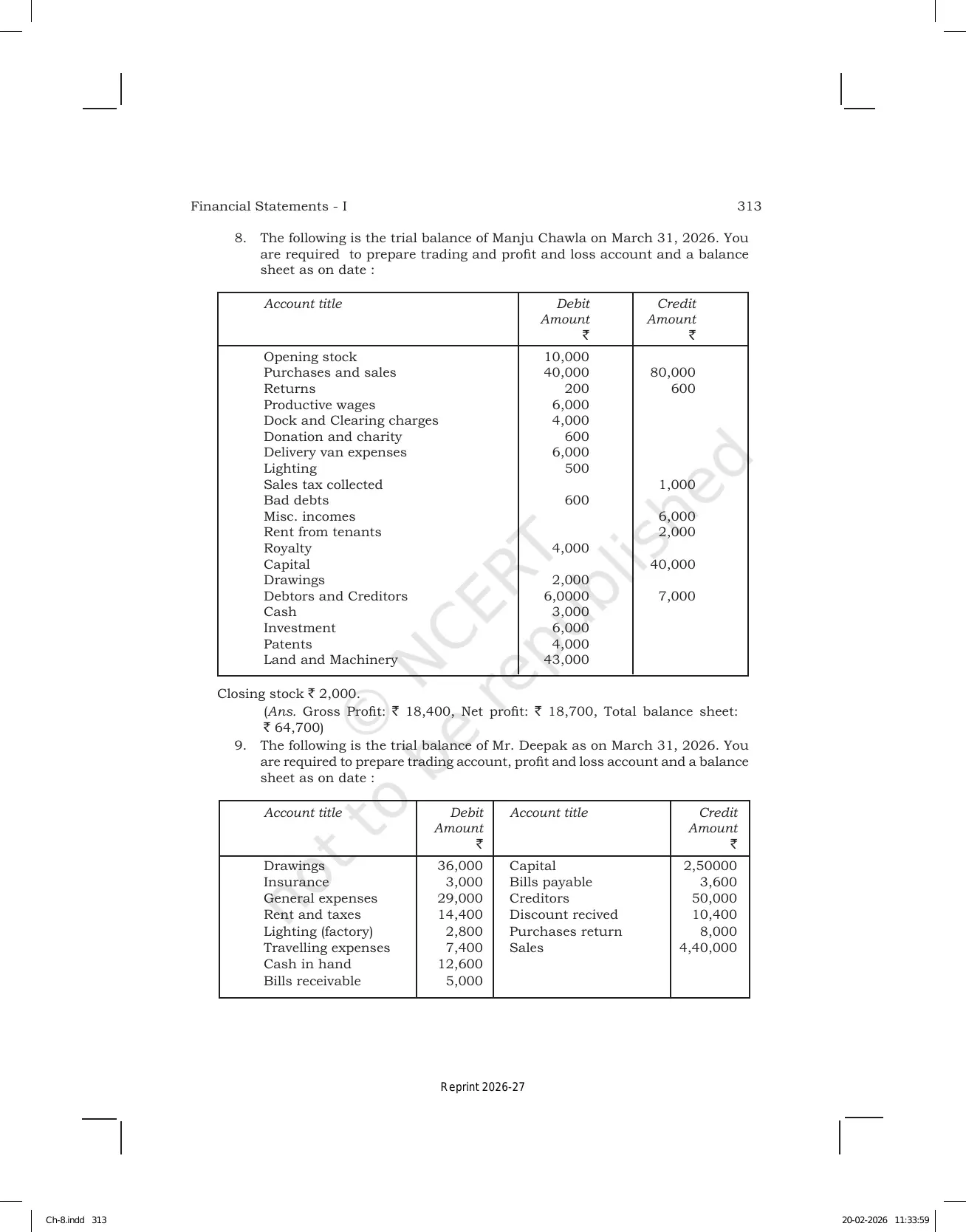
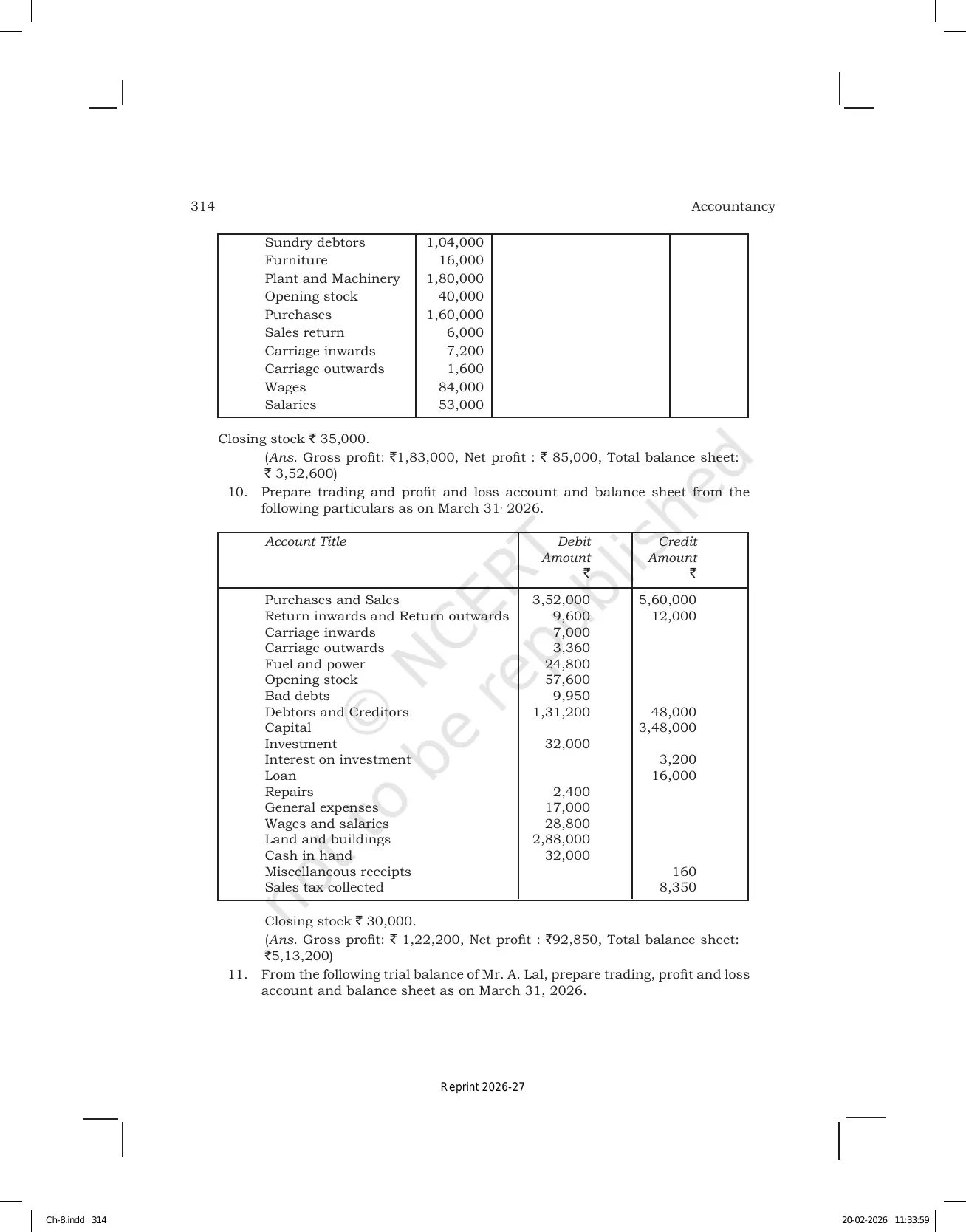
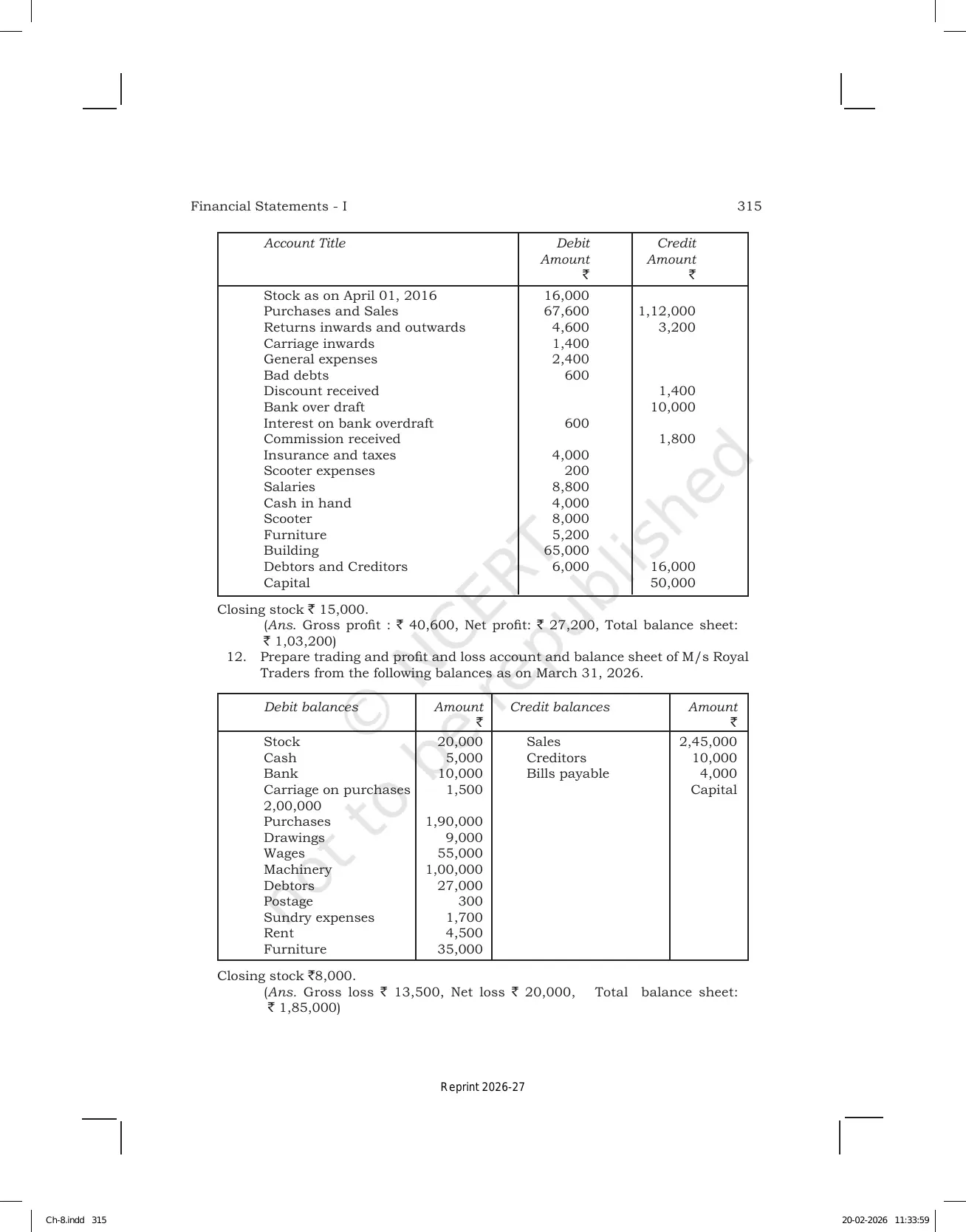
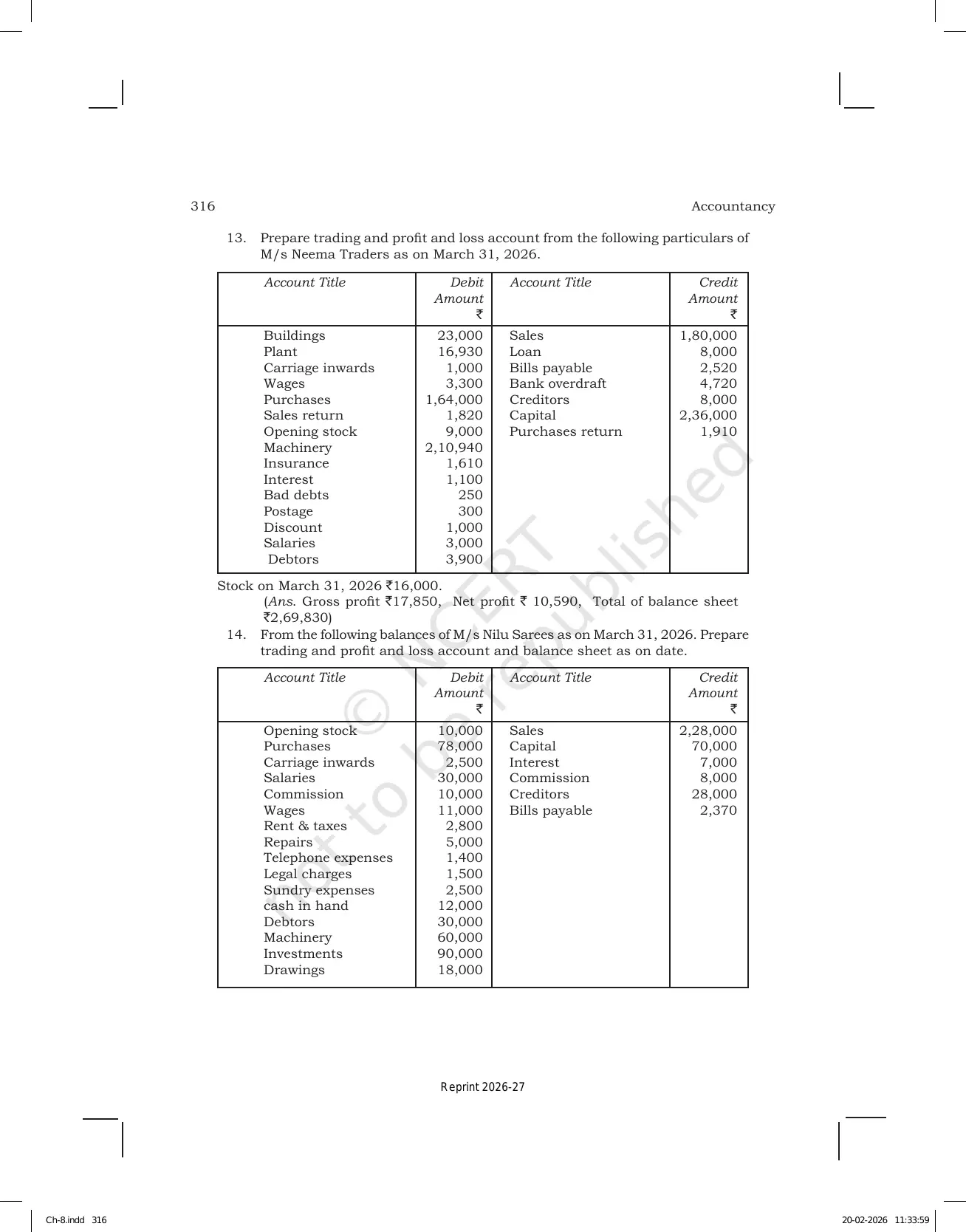
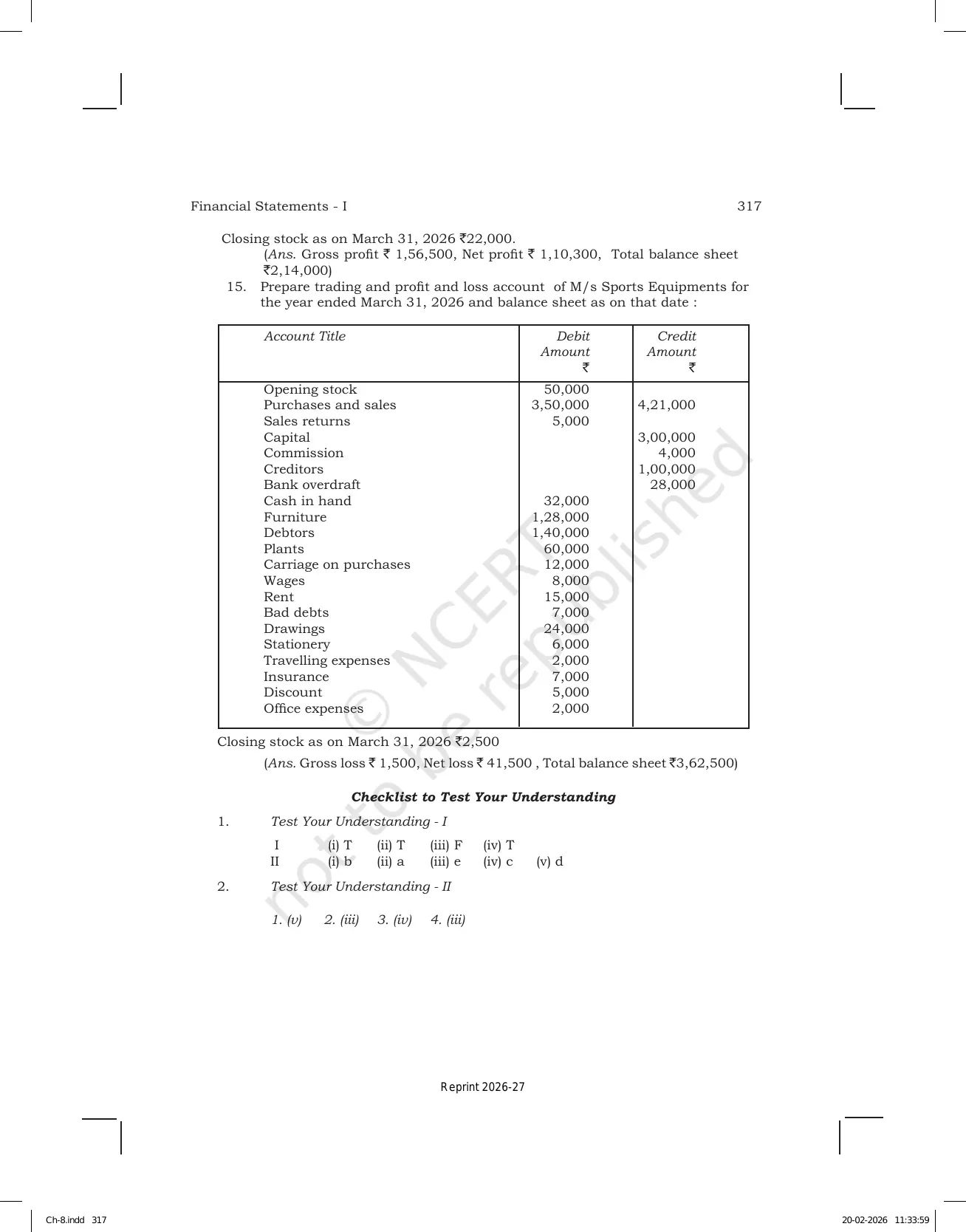
This Class 11 Accountancy NCERT Book PDF follows the 2026-27 NCERT reprint and helps students revise Financial Statements - I in one place.
Financial Statements - I Concepts Covered in the NCERT PDF
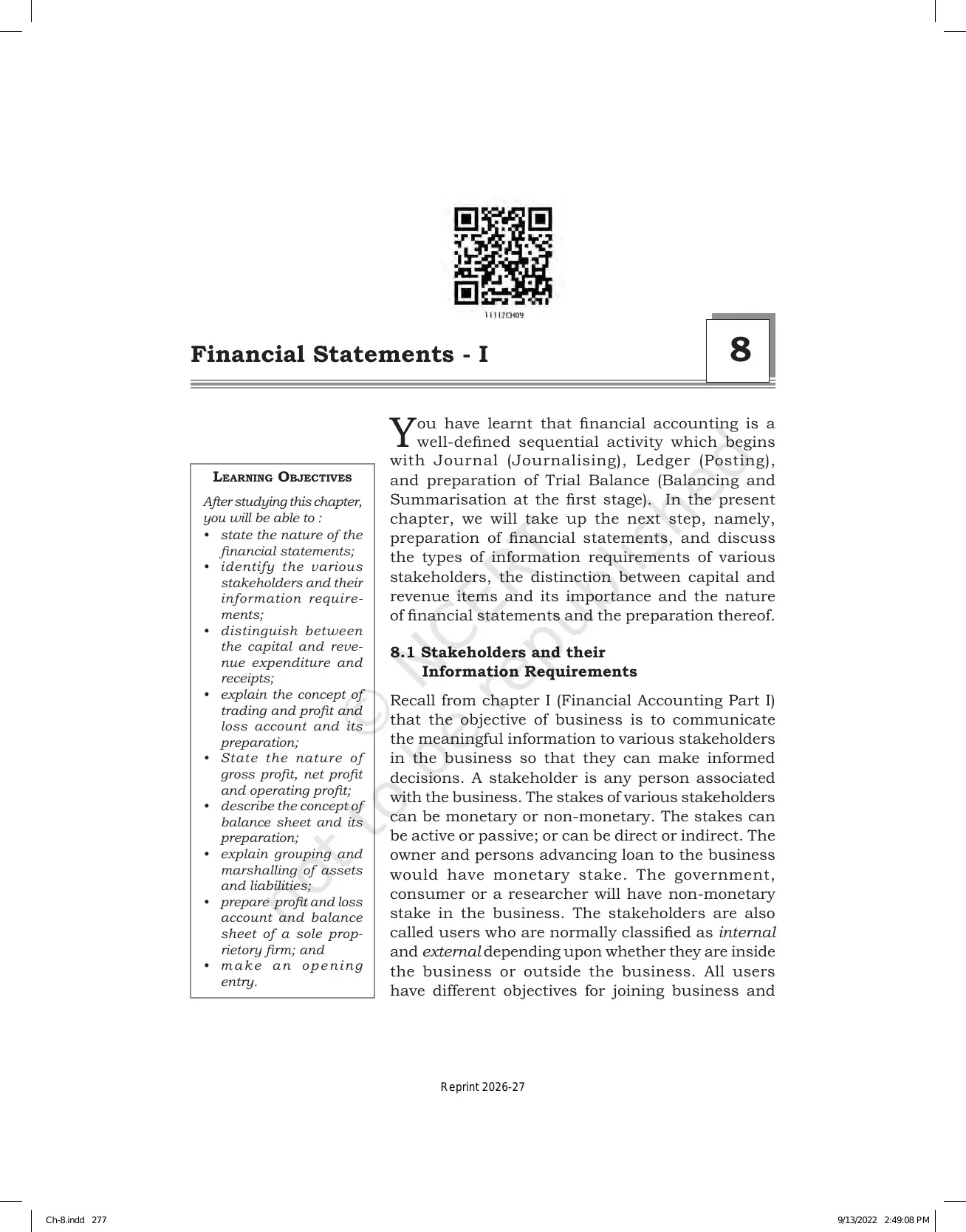
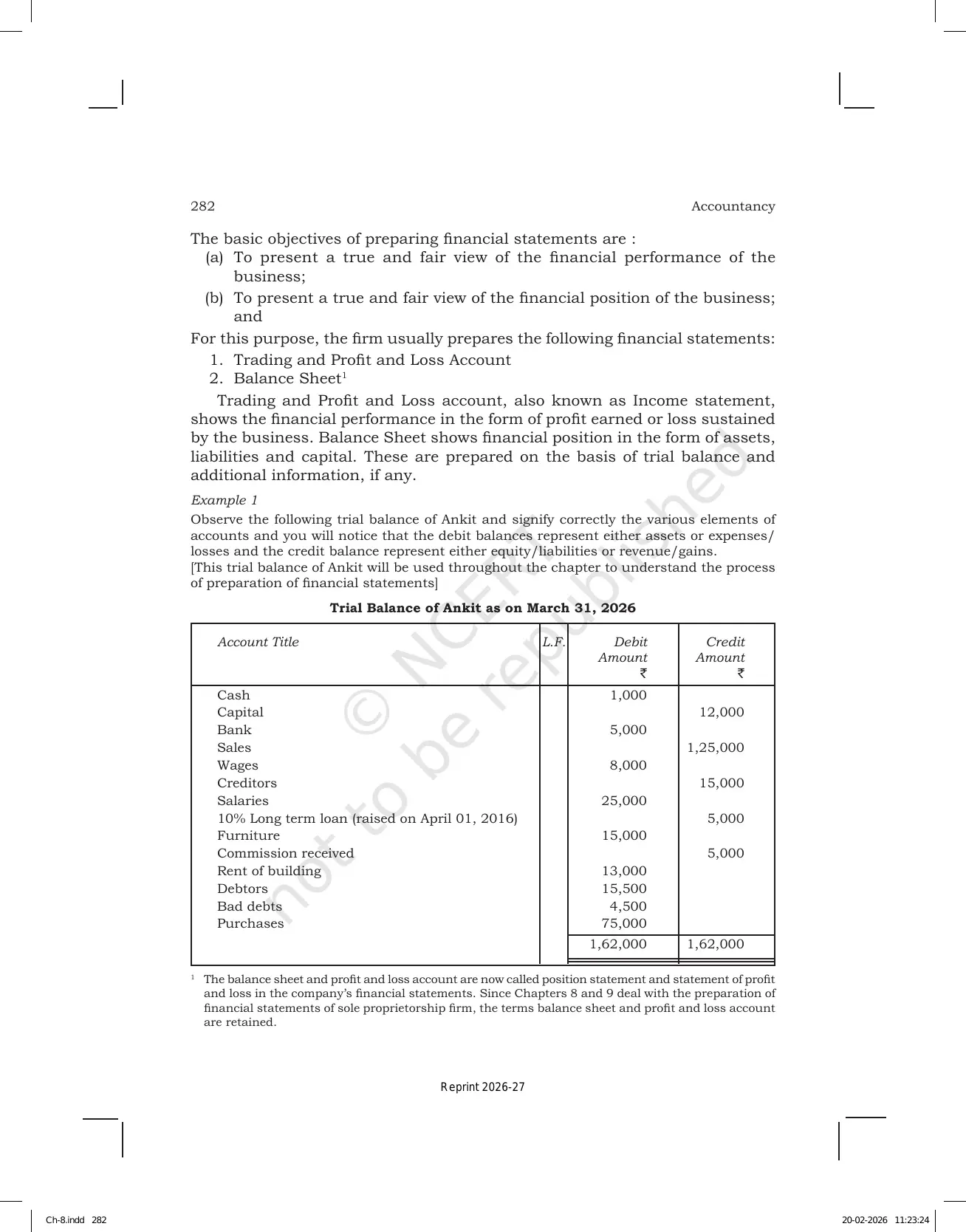
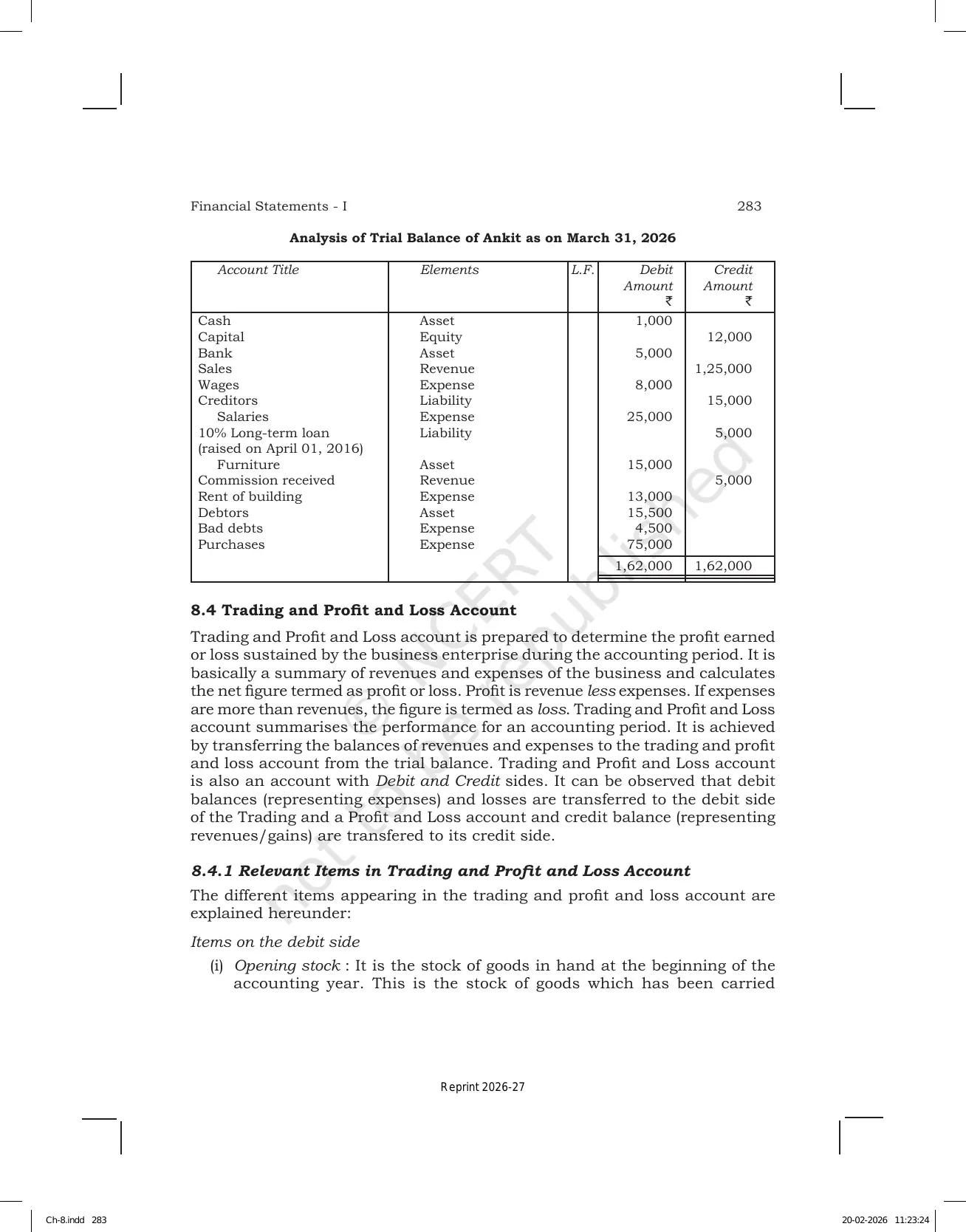
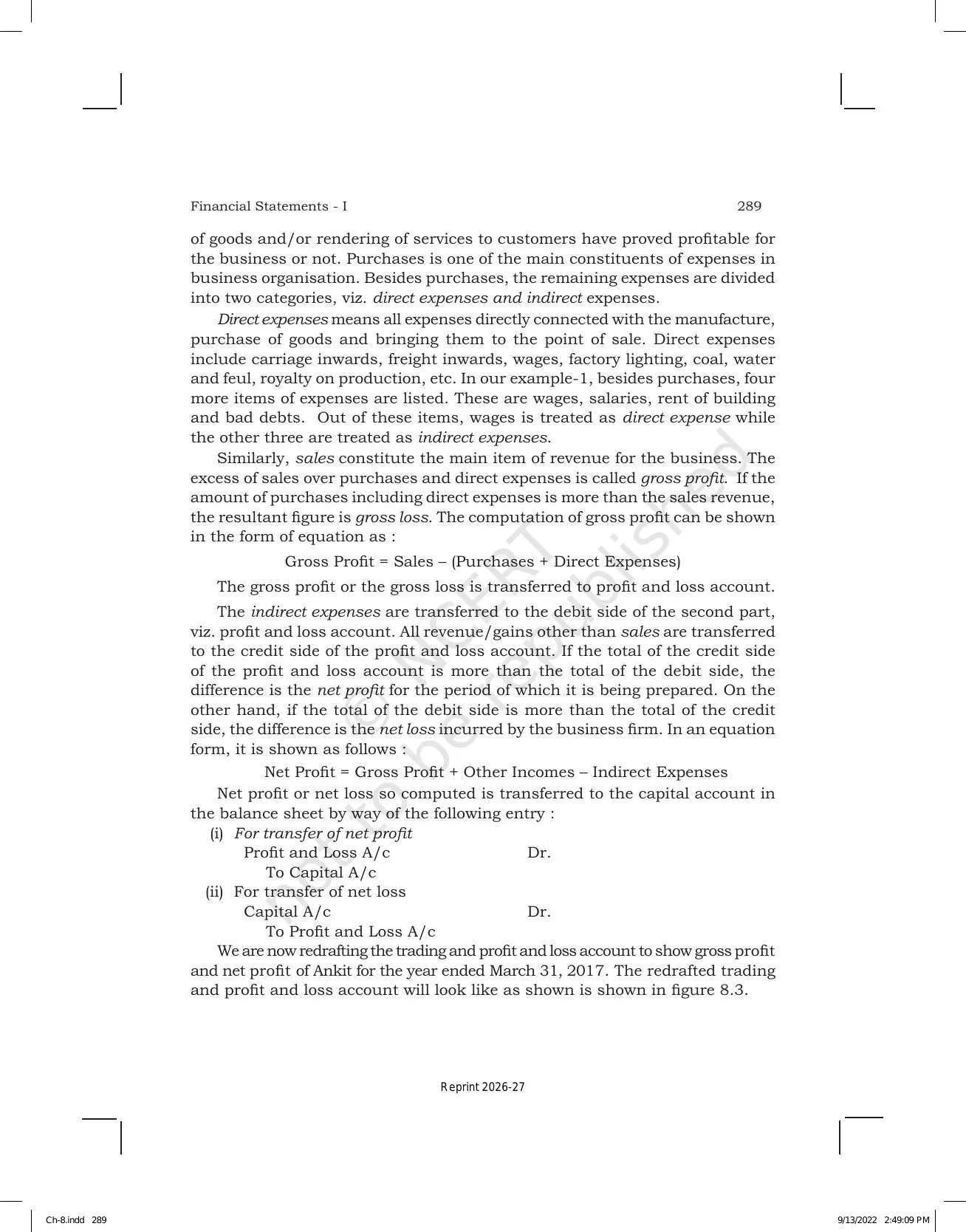
This chapter explains how a business turns ledger balances into final accounts. Students first learn who uses financial statements, then move to capital and revenue classification, trading account, profit and loss account and balance sheet.
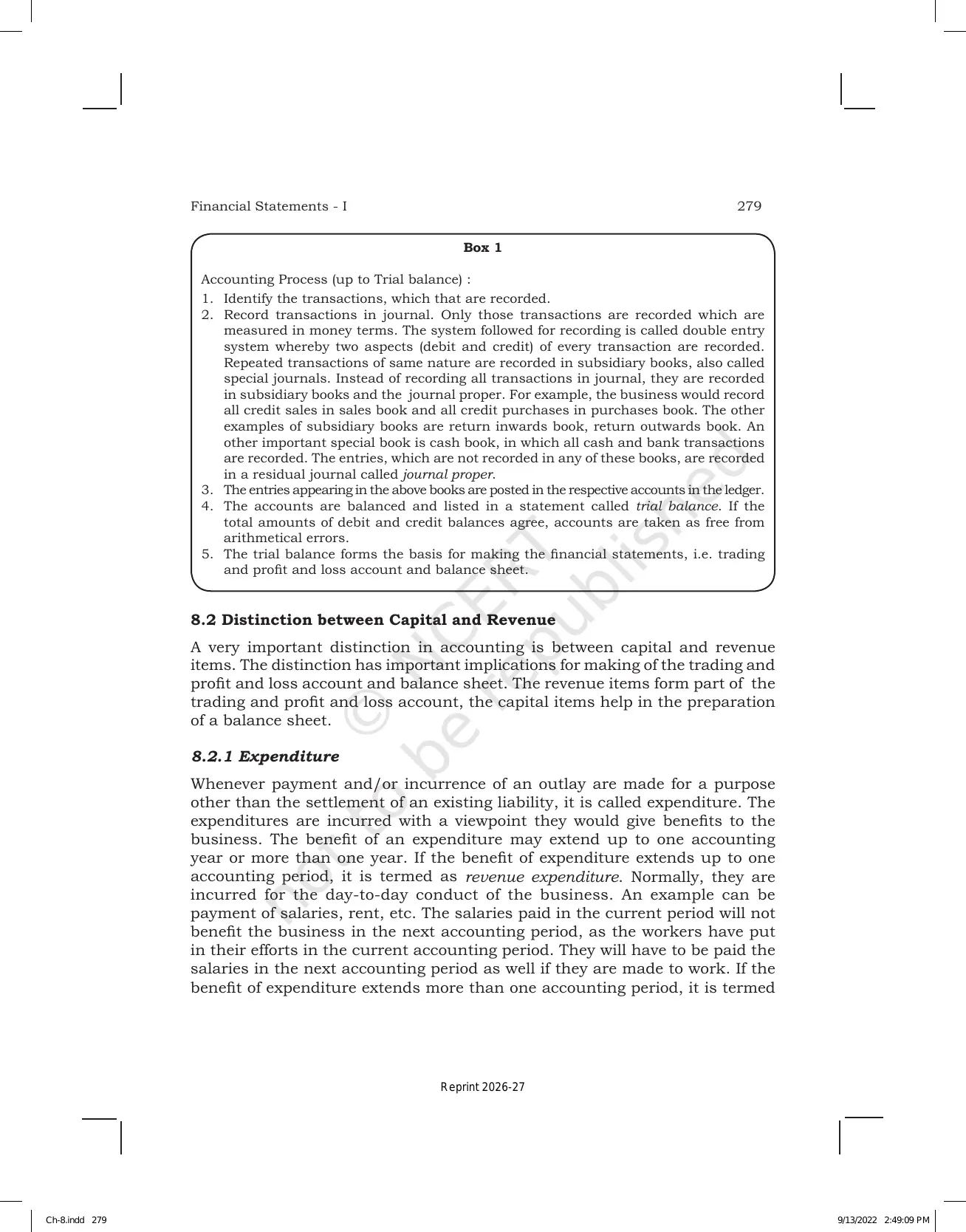
The chapter is the bridge between trial balance and final accounts.
| Concept | What it means | Why it matters |
|---|---|---|
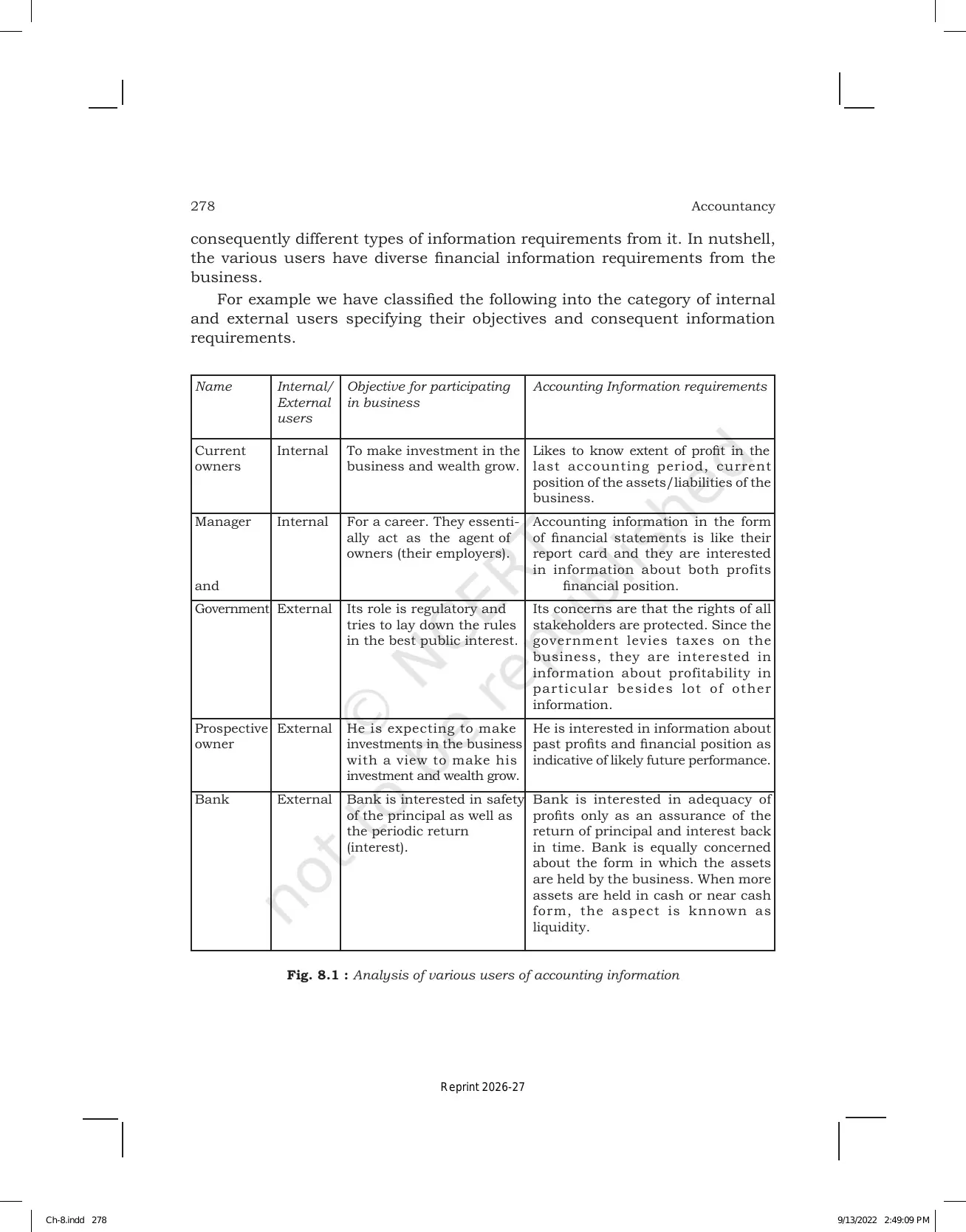
| Stakeholders | Users who need accounting information | Shows why financial statements are prepared |
| Capital items | Items with long-term benefit | Placed in the balance sheet |
| Revenue items | Items linked to the current period | Placed in trading or profit and loss account |
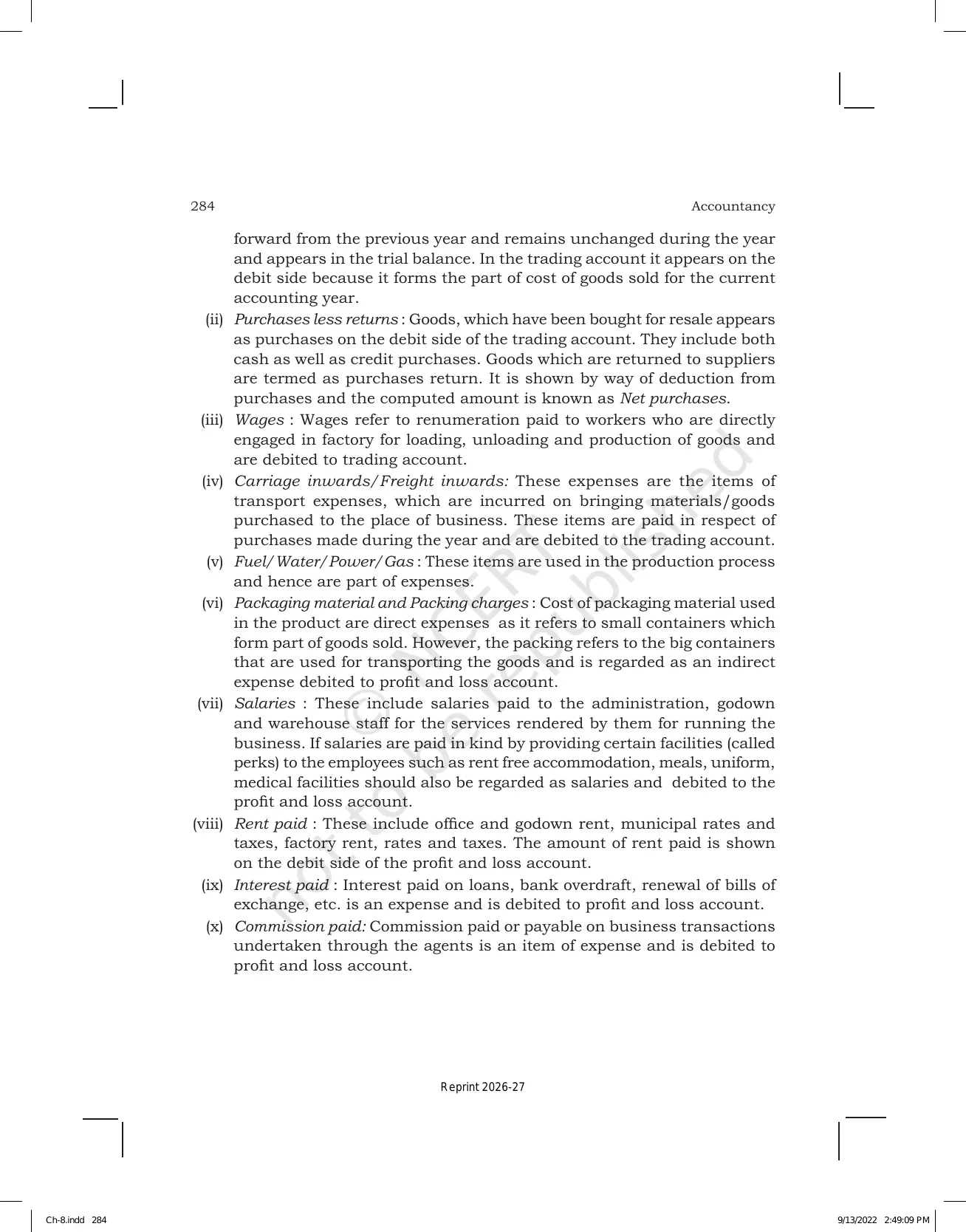
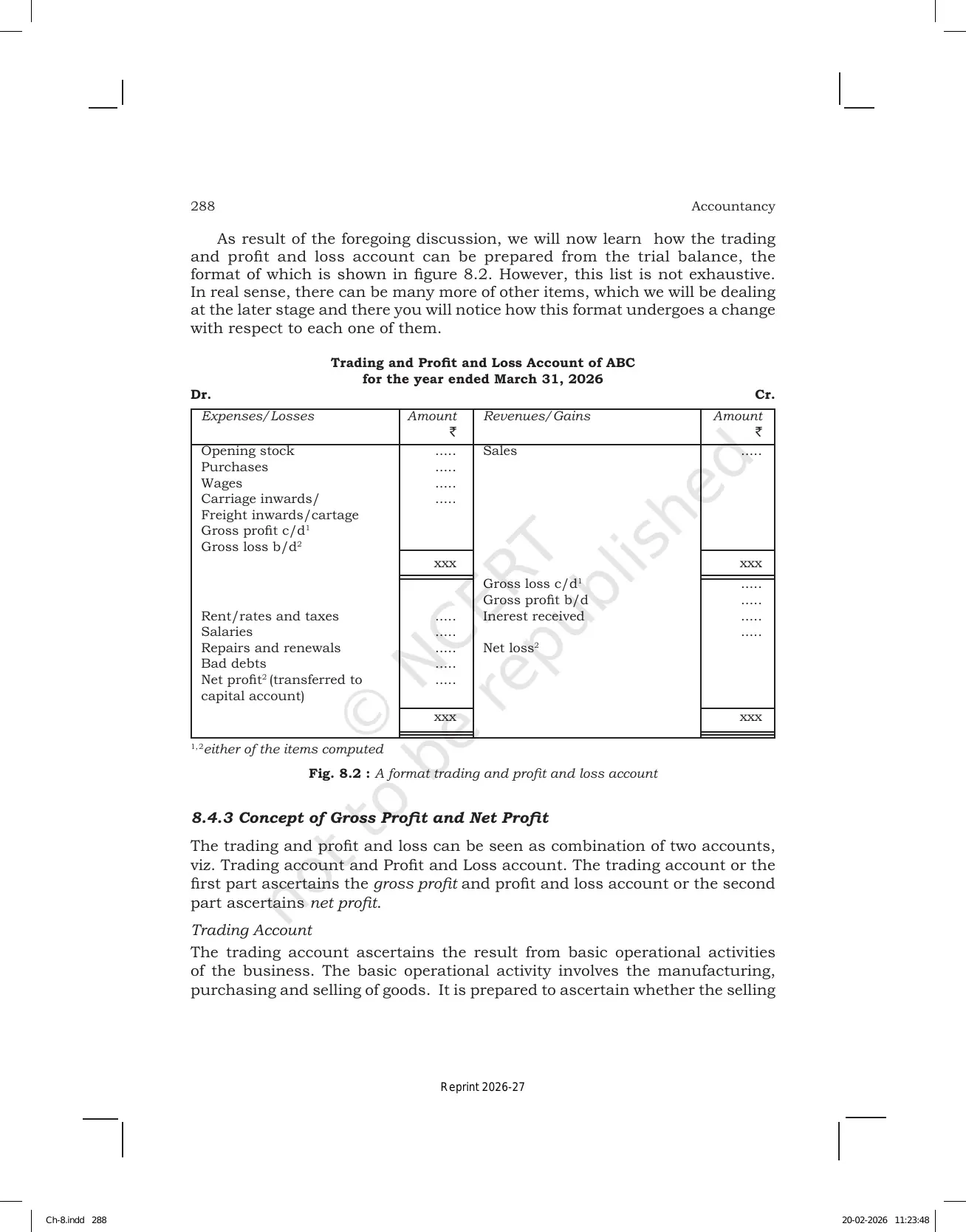
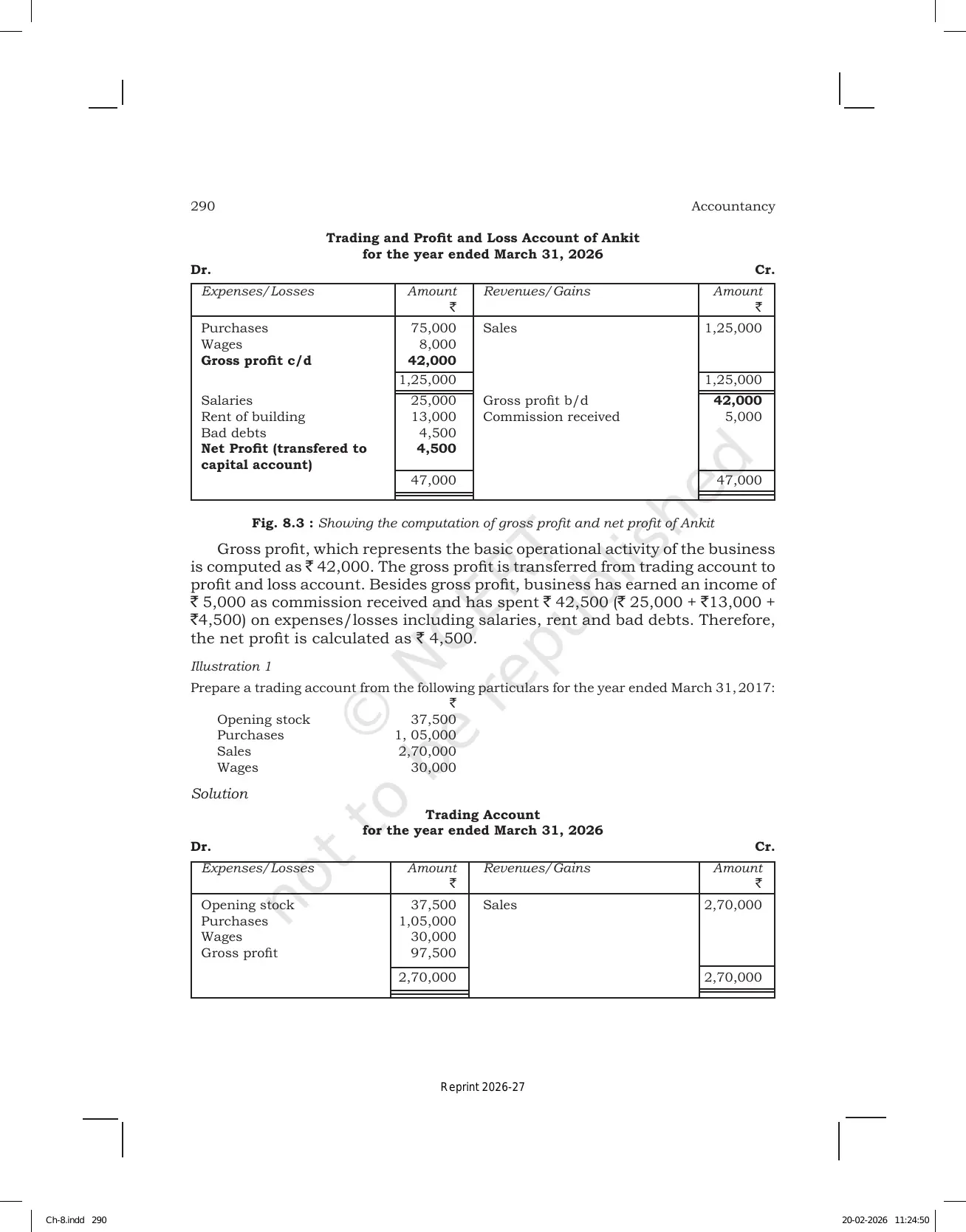
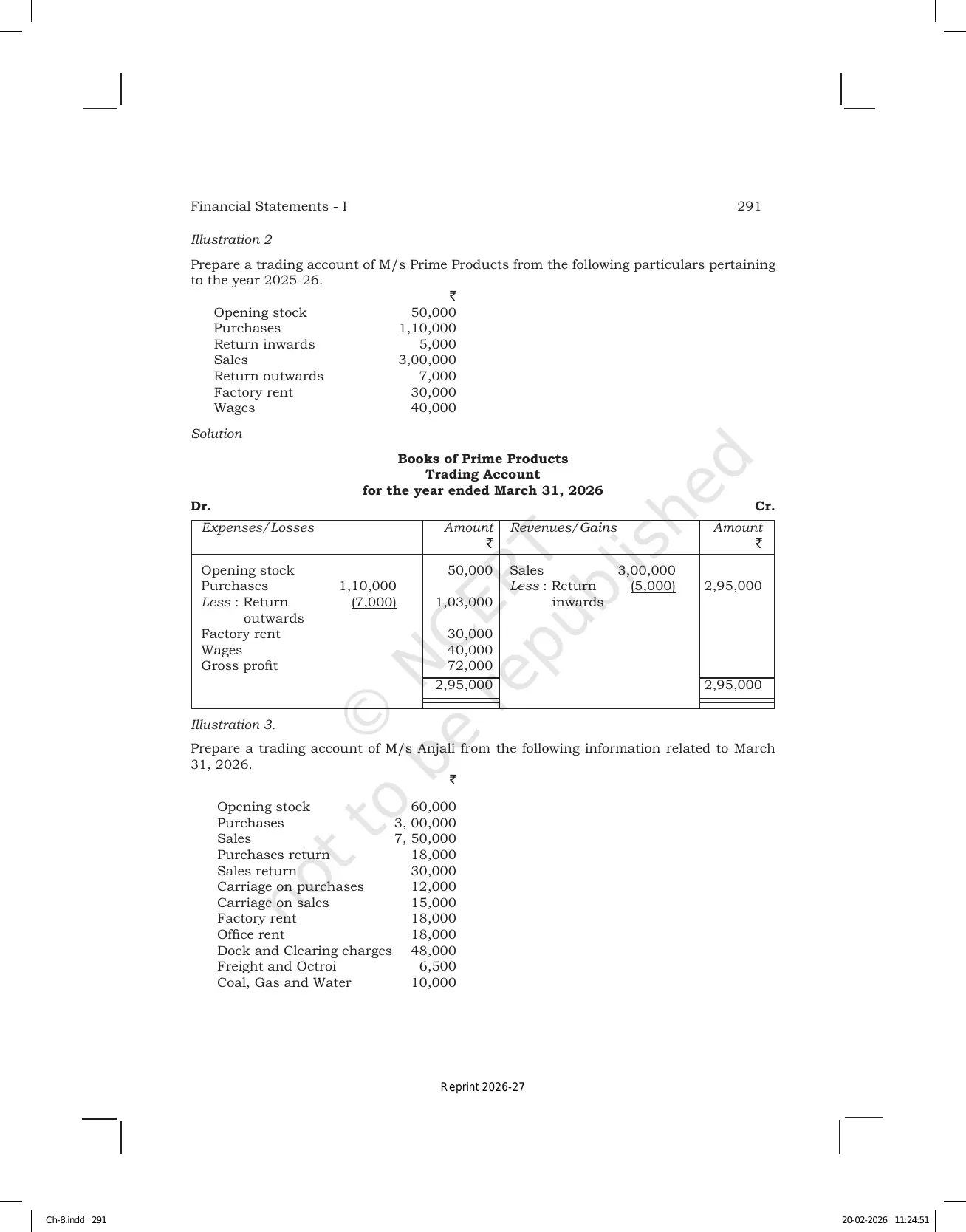
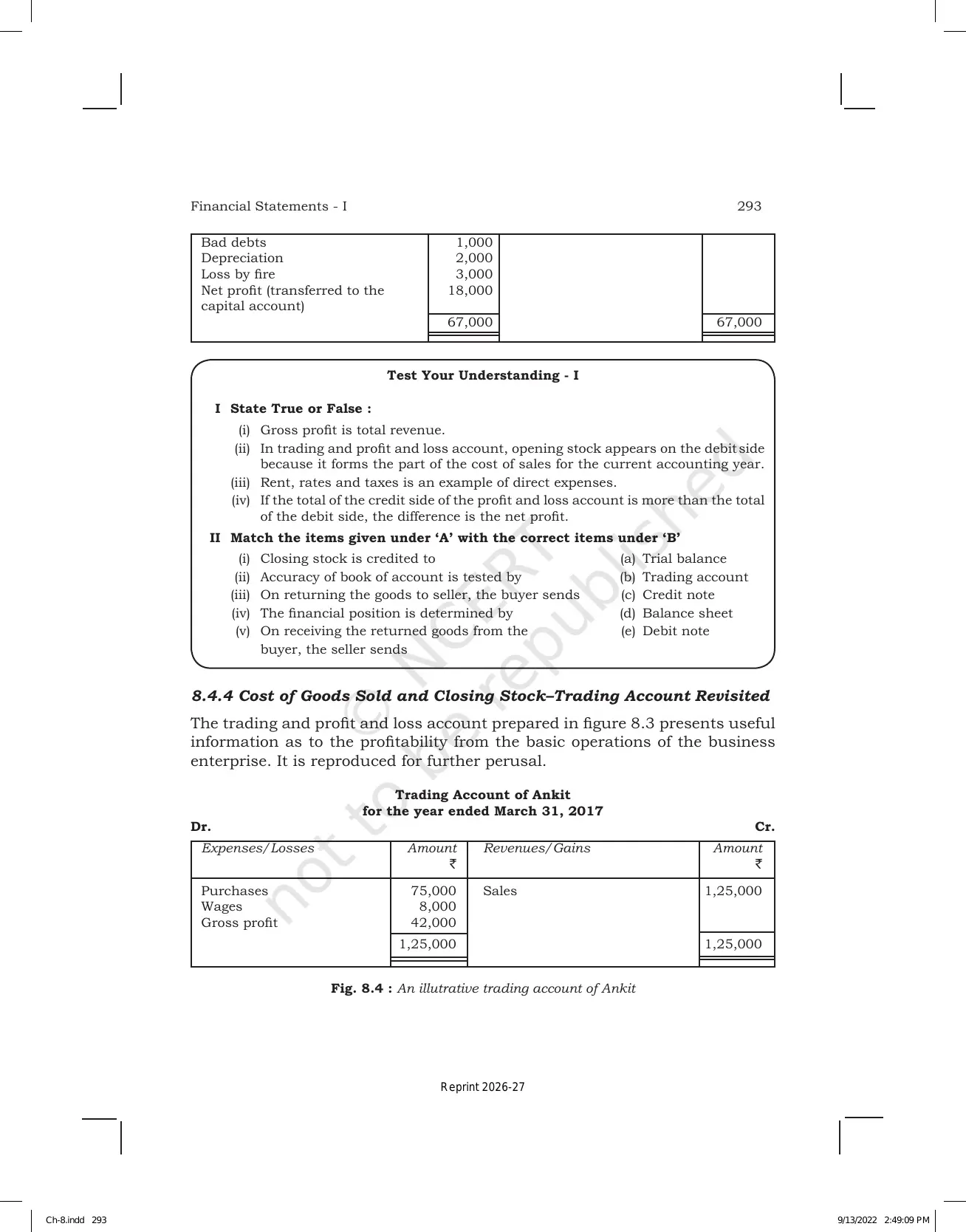
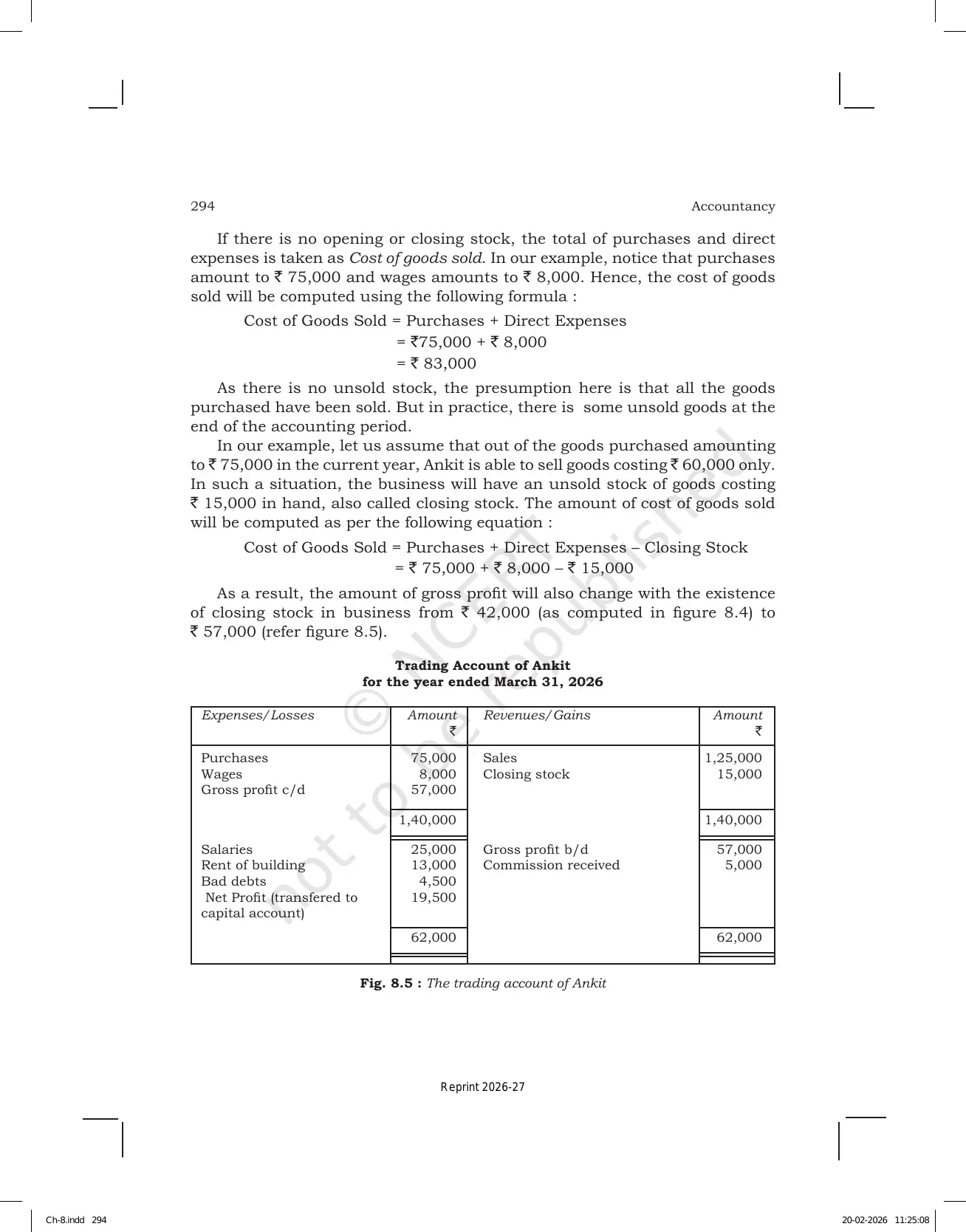
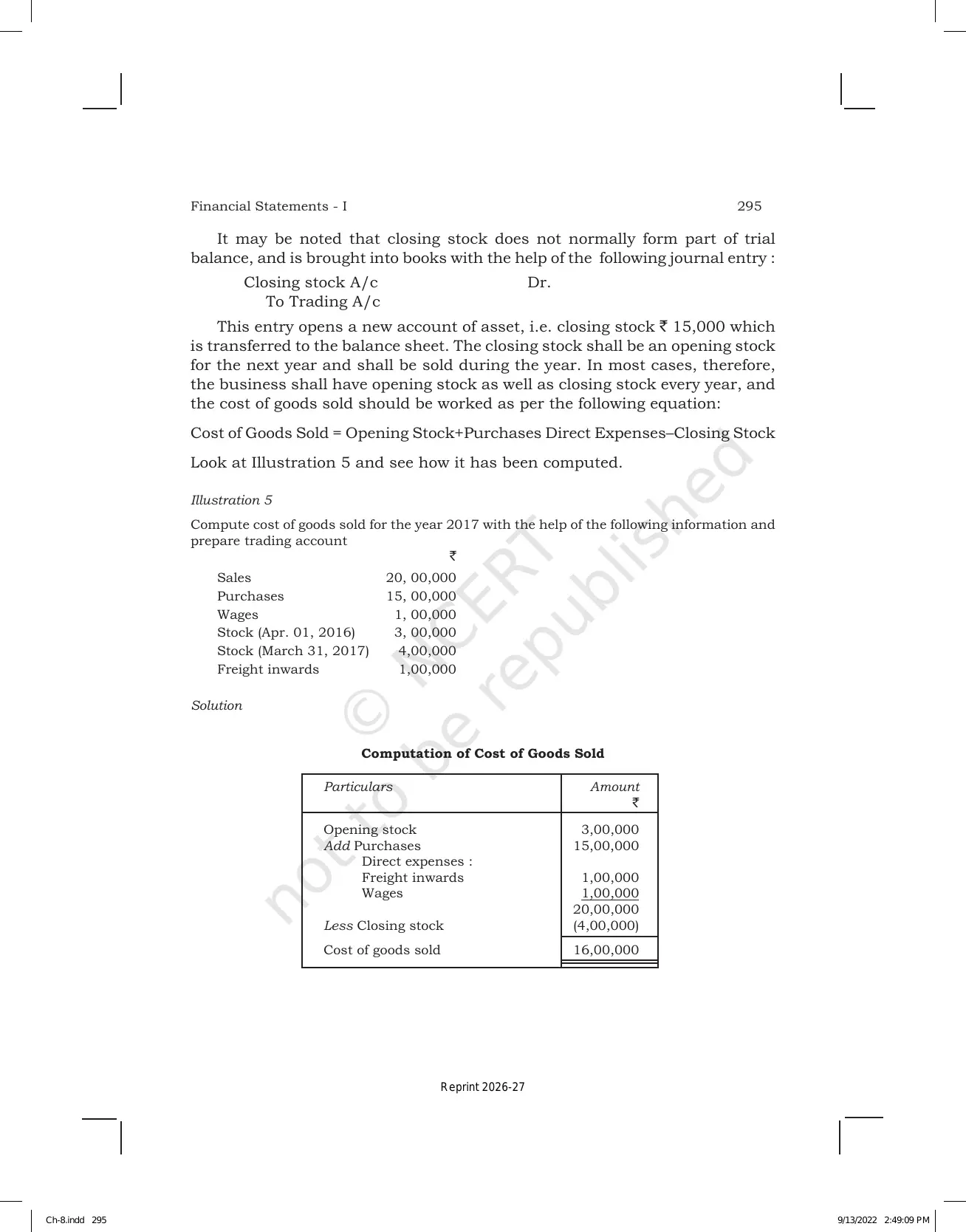
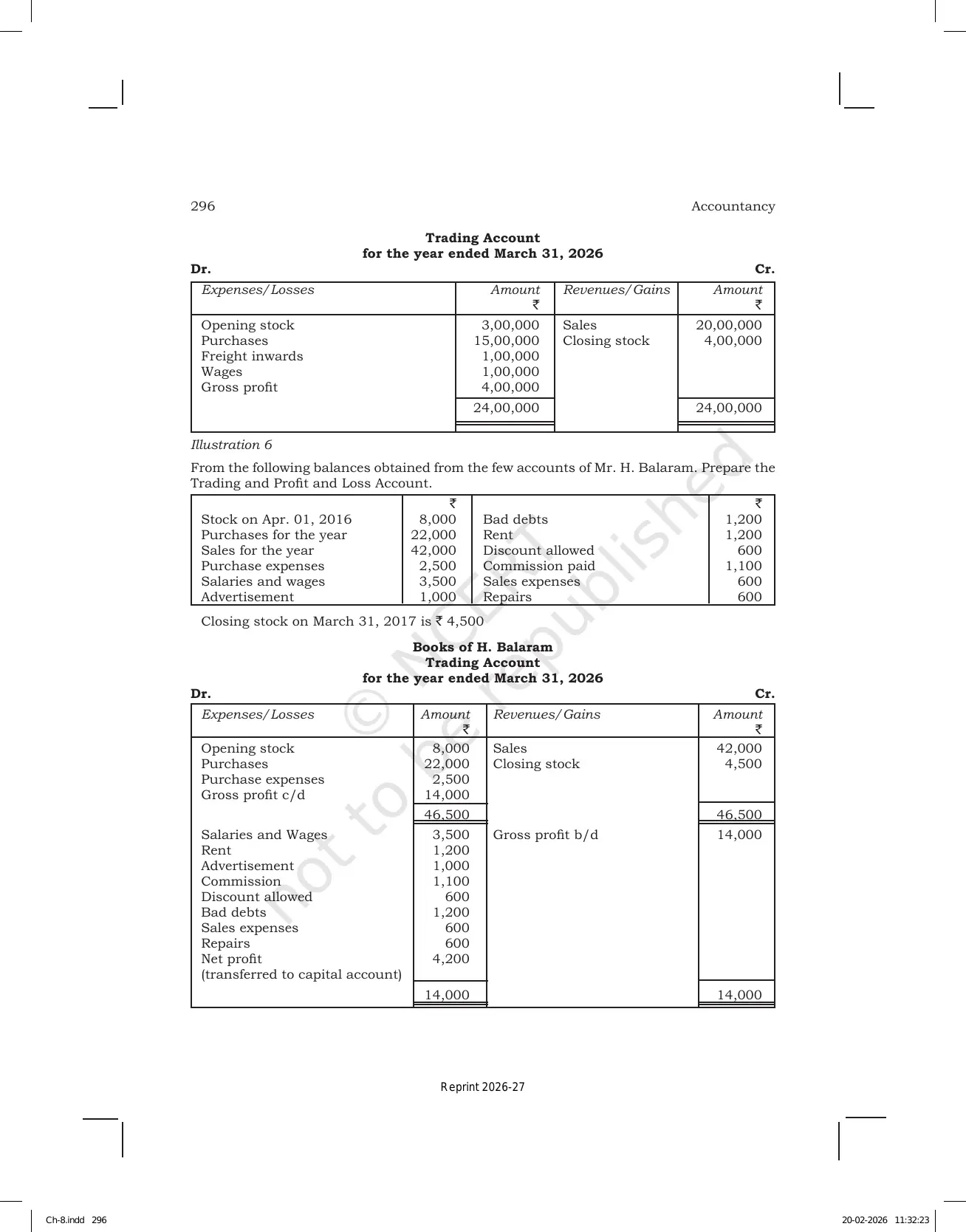
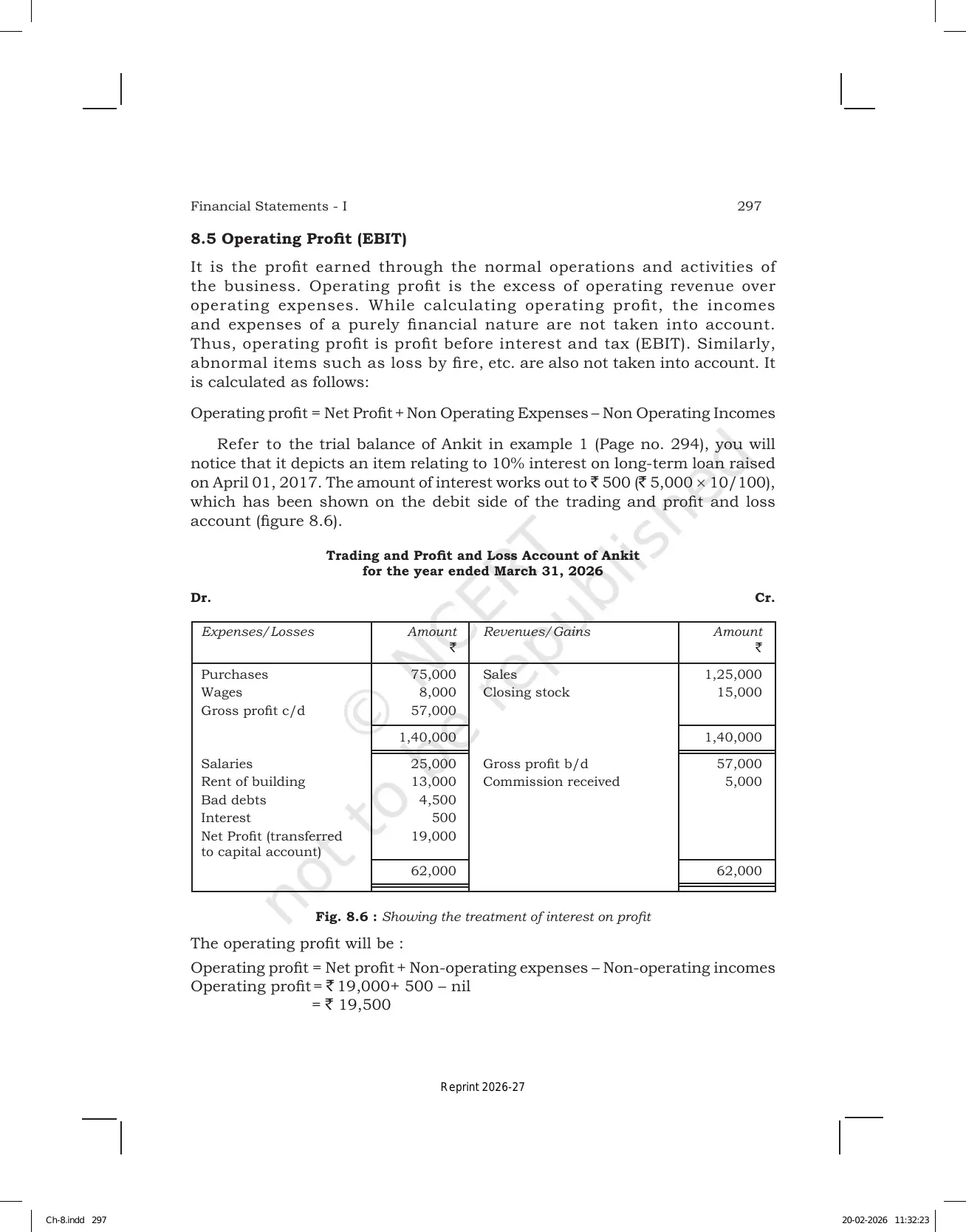
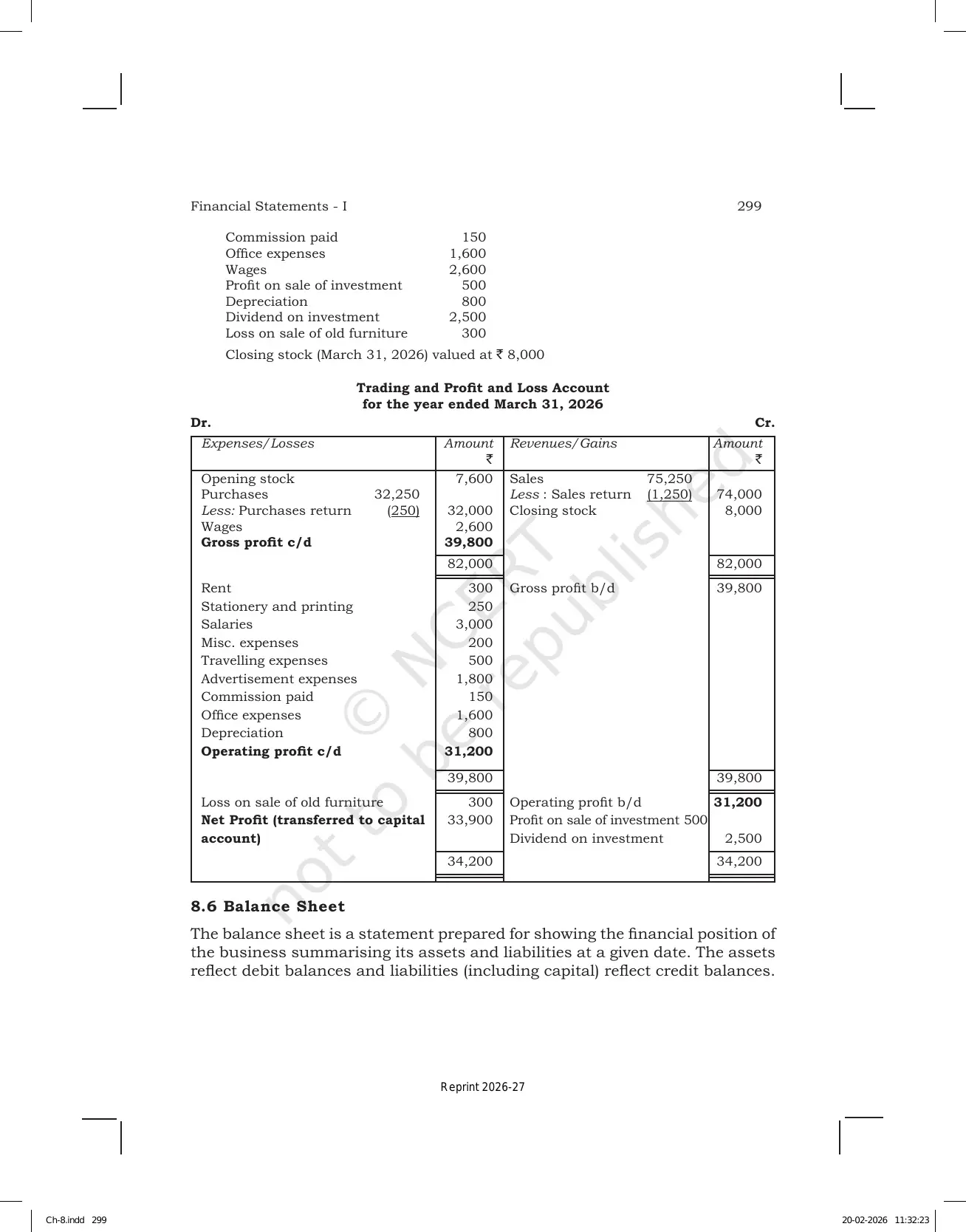
| Trading account | Statement used to find gross profit | Shows the result of trading activity |
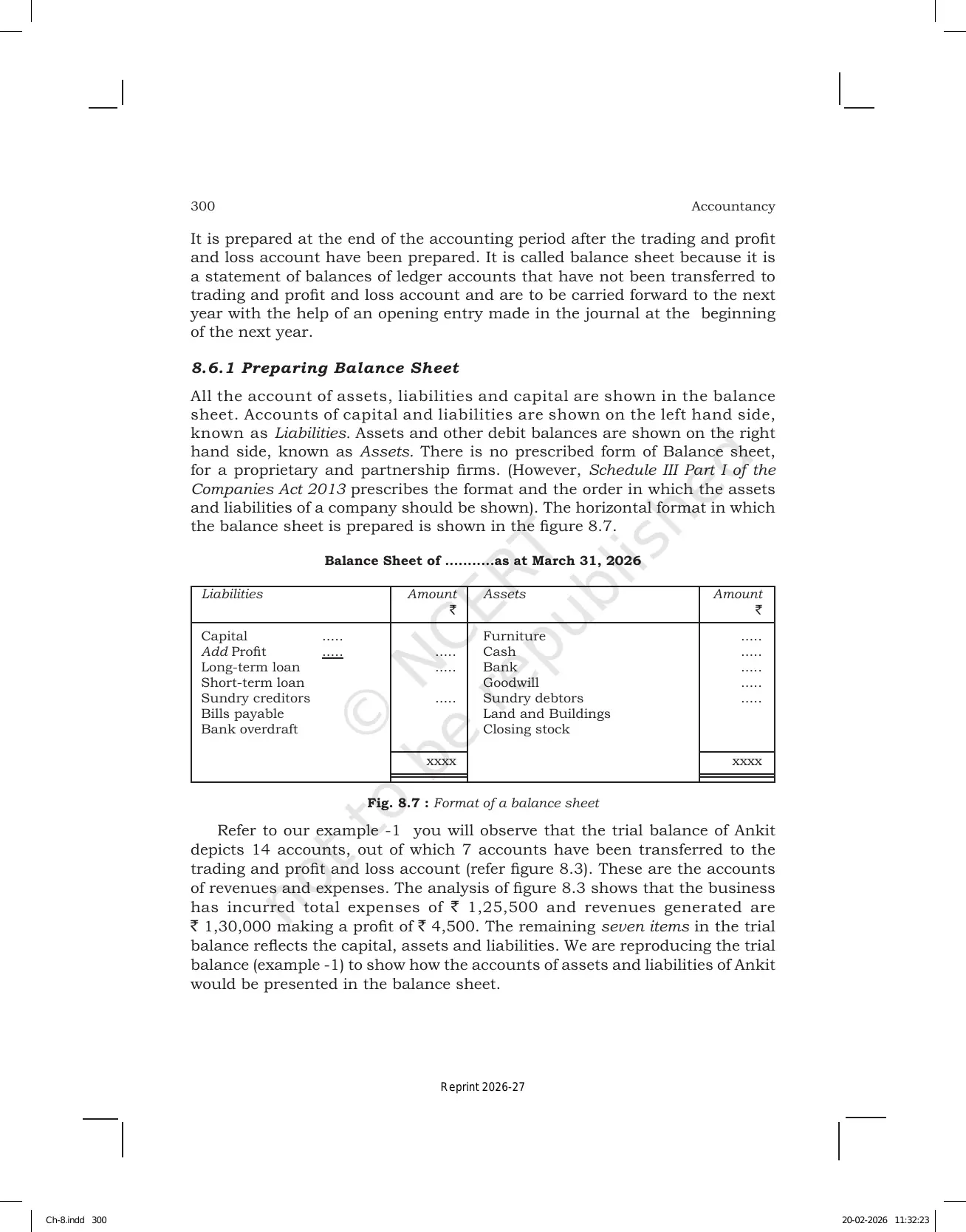
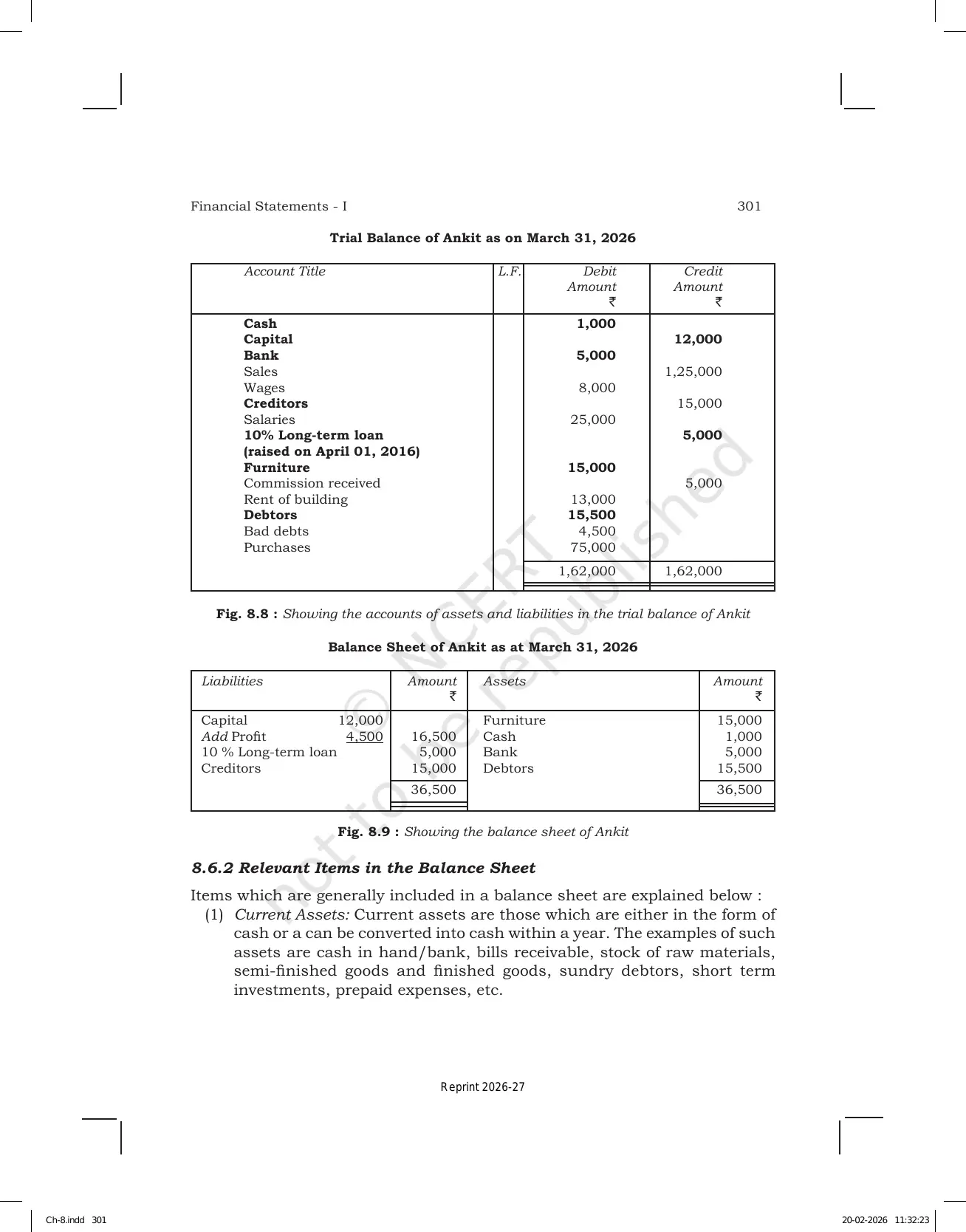
| Balance sheet | Statement of assets and liabilities | Shows the financial position of the firm |
Financial Statements Preparation Flow for Class 11 Accountancy
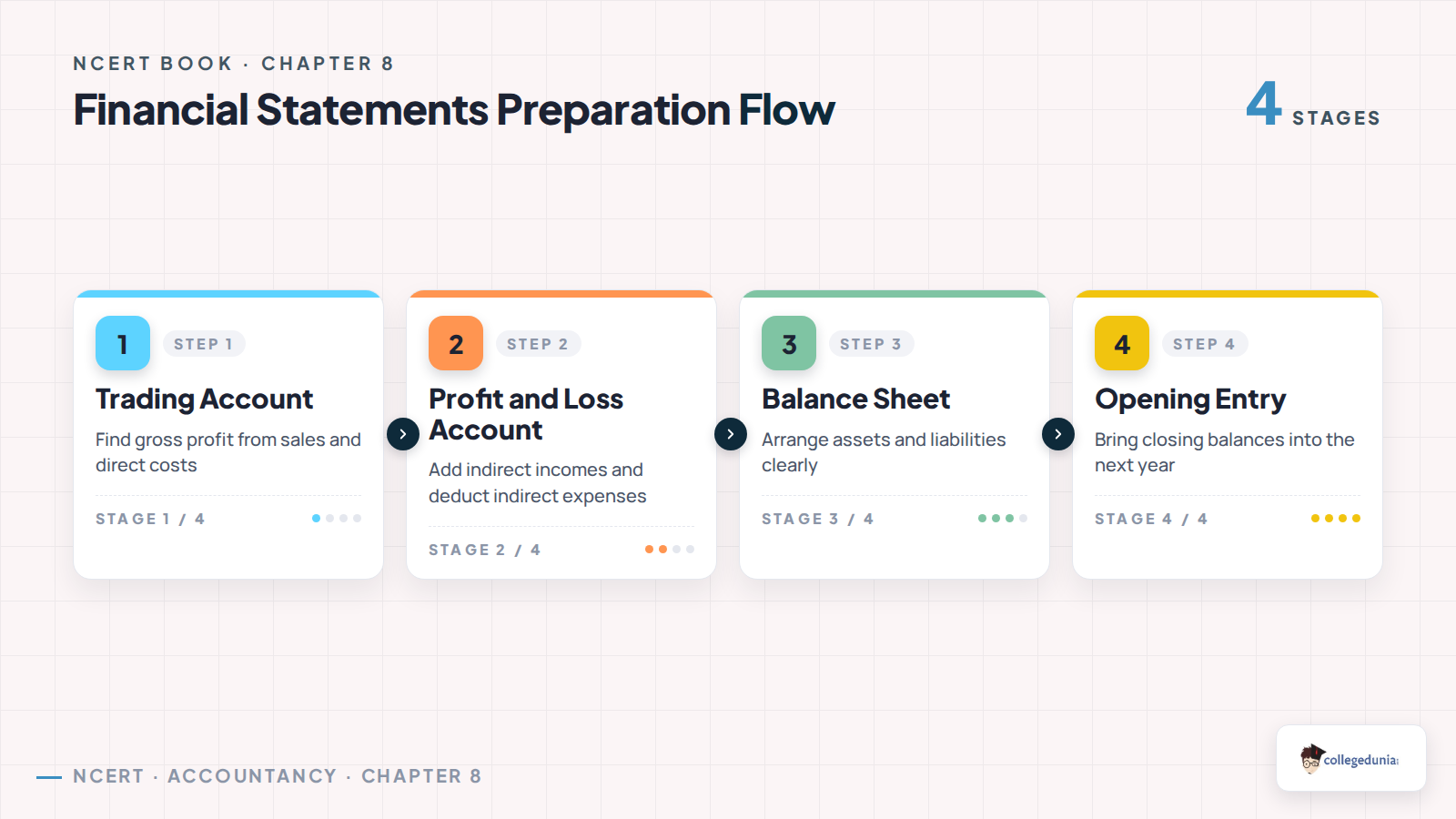
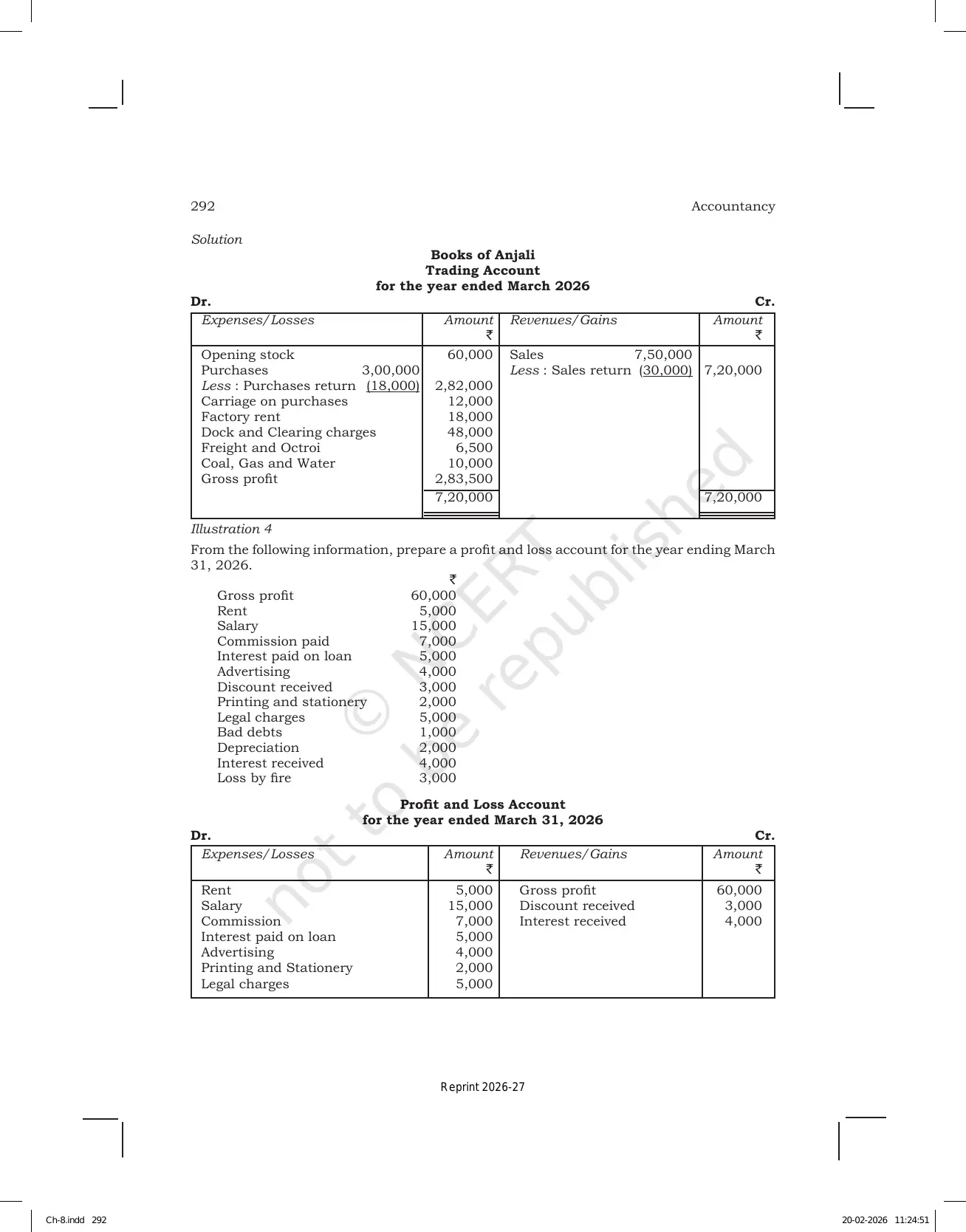
NCERT keeps the final accounts sequence clear. Start with the trading account, carry gross profit to the profit and loss account, and then prepare the balance sheet.
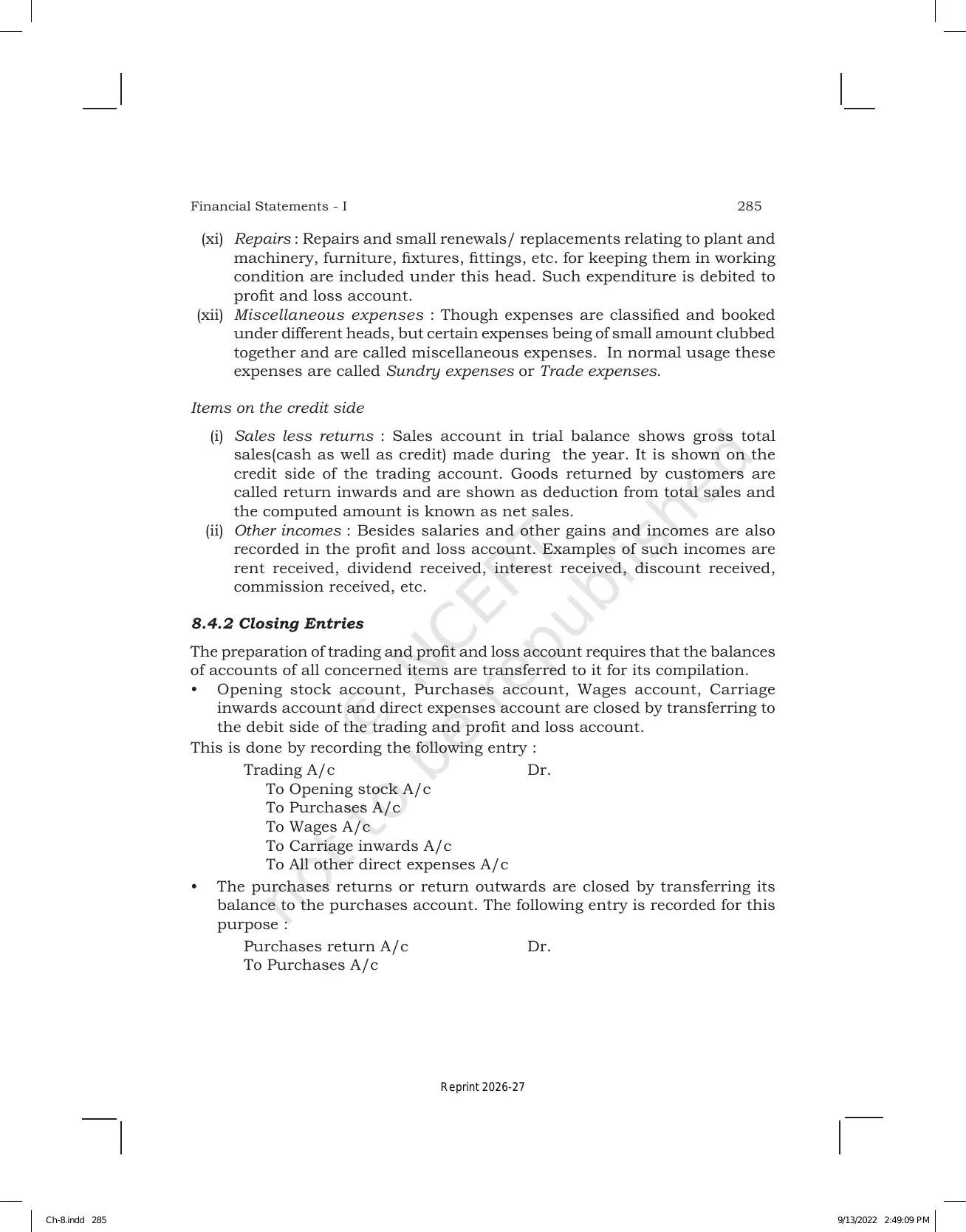
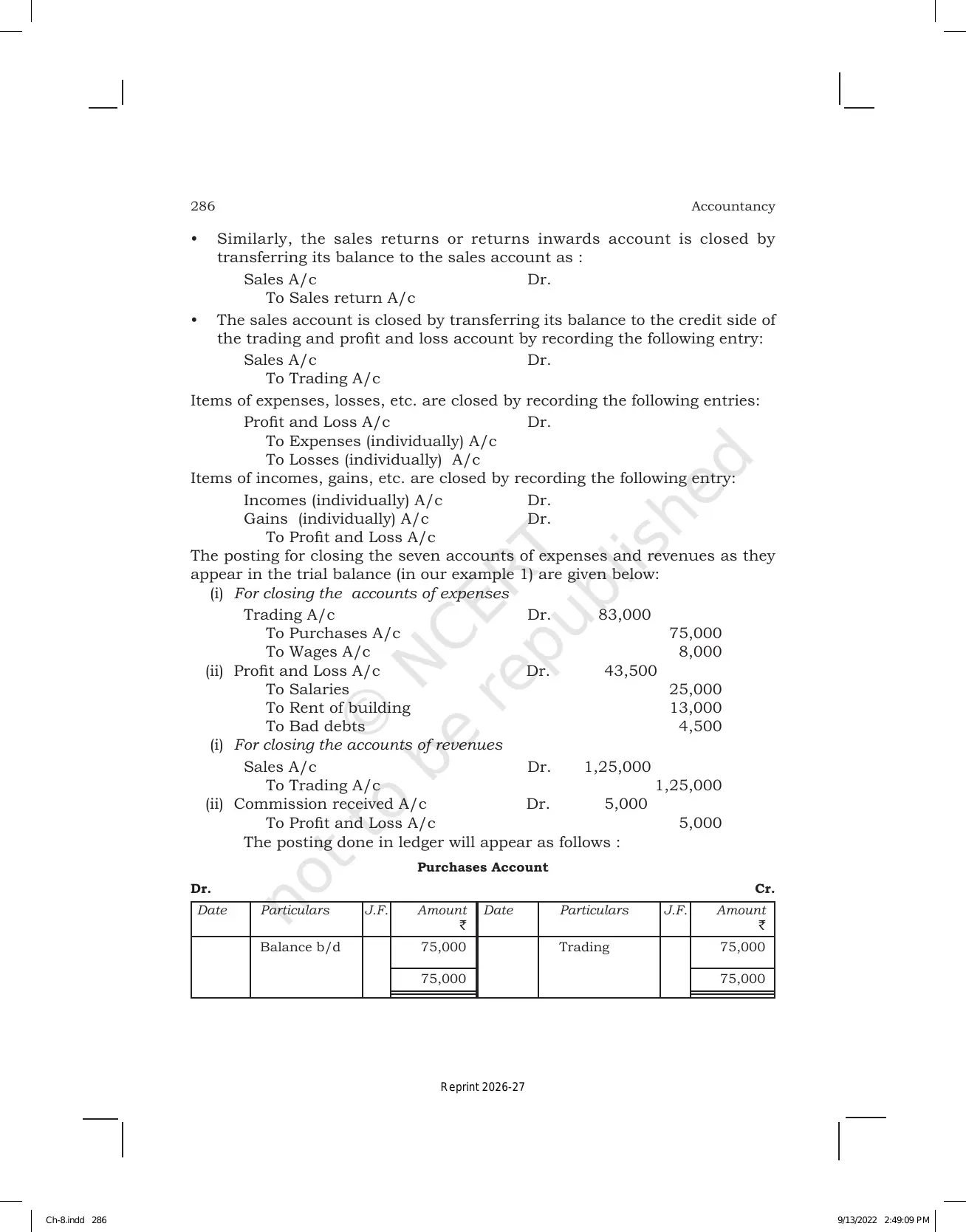
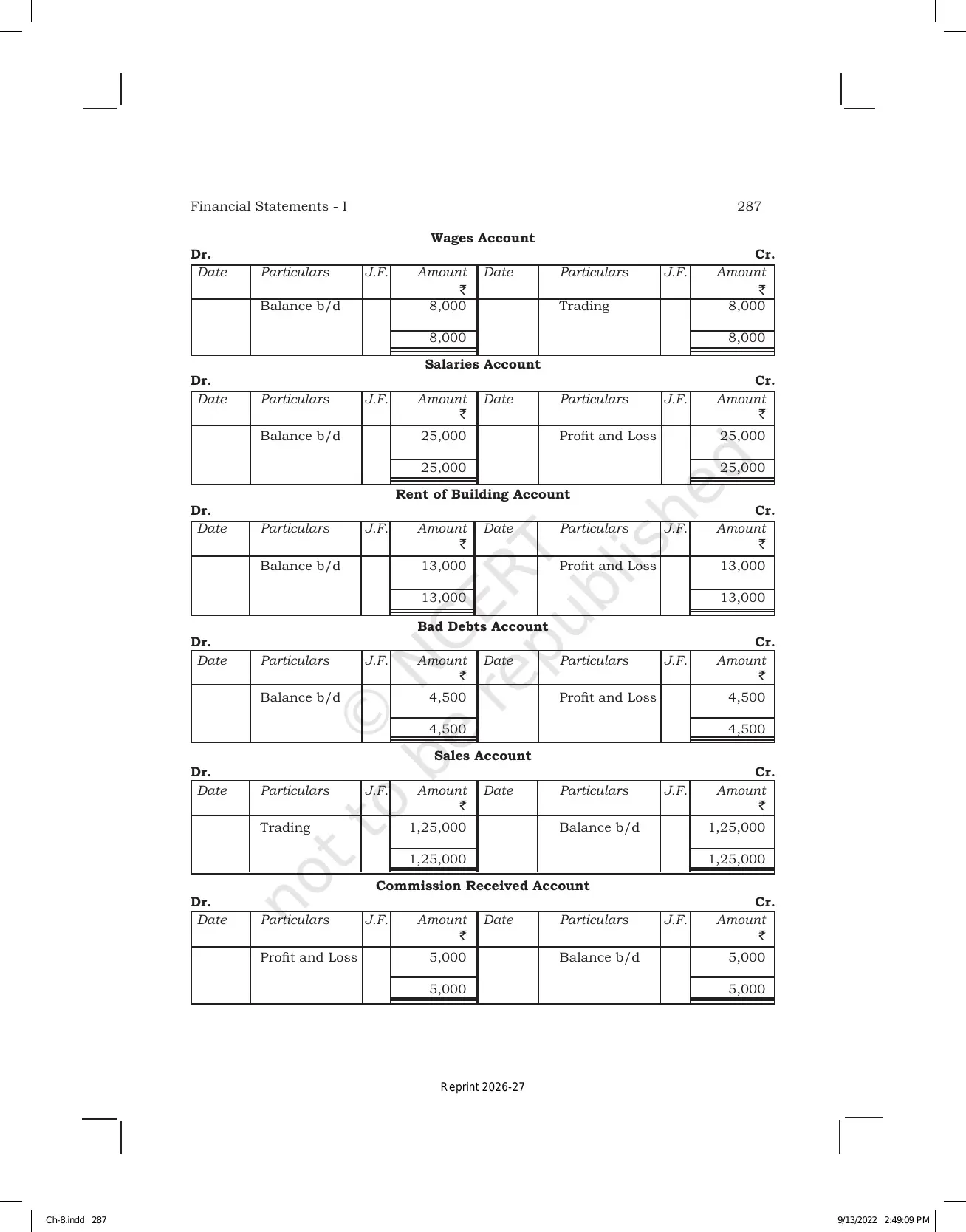
- Use direct expenses and direct incomes in the trading account.
- Move gross profit or gross loss to the profit and loss account.
- Record indirect expenses and indirect incomes to find net profit.
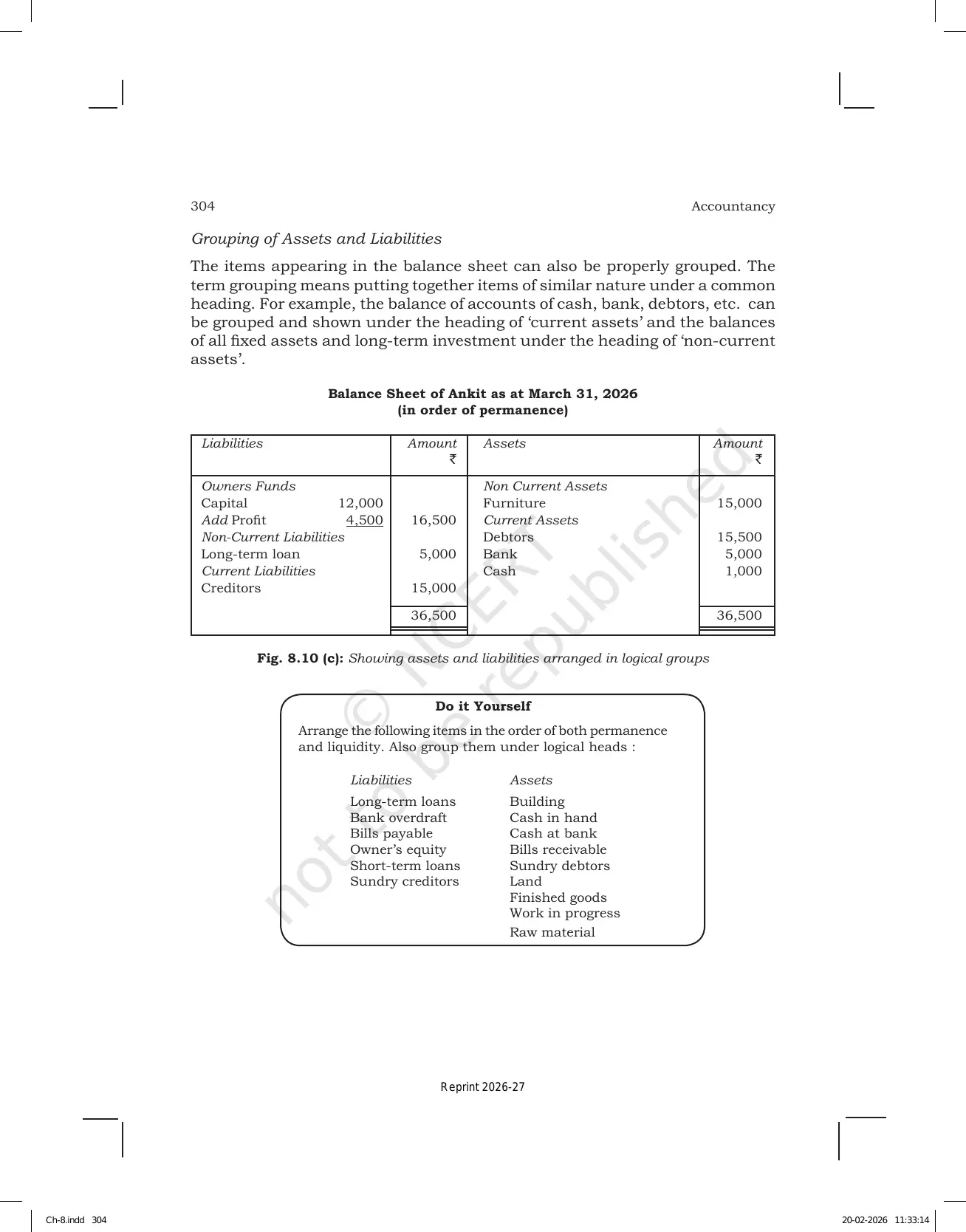
- Arrange assets and liabilities in the balance sheet.
- Use the opening entry to begin the next accounting year.
Financial Statements Final Accounts Video Lesson
Source: Vedantu Commerce on YouTube
Capital and Revenue Items Difference in Financial Statements - I
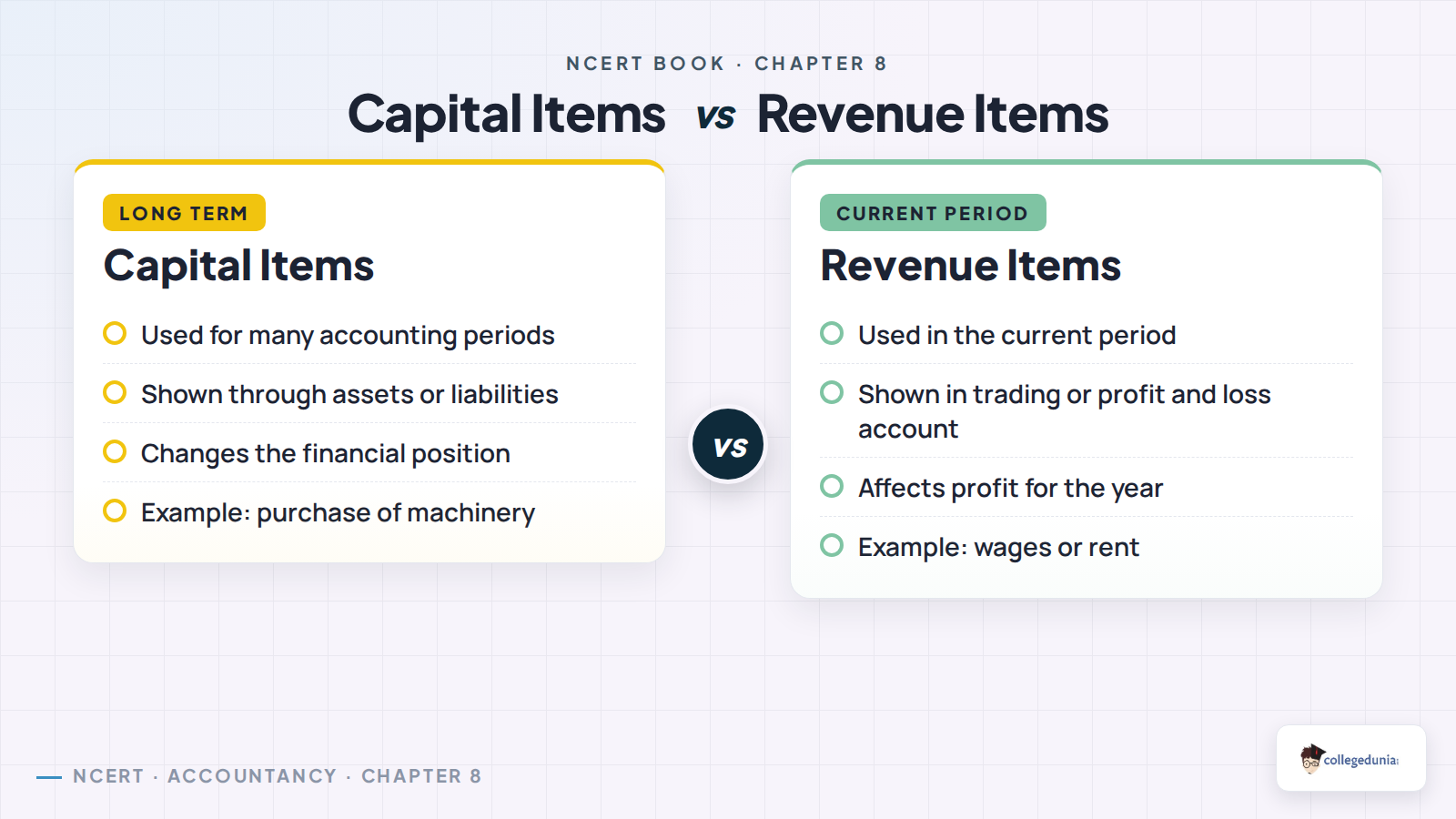
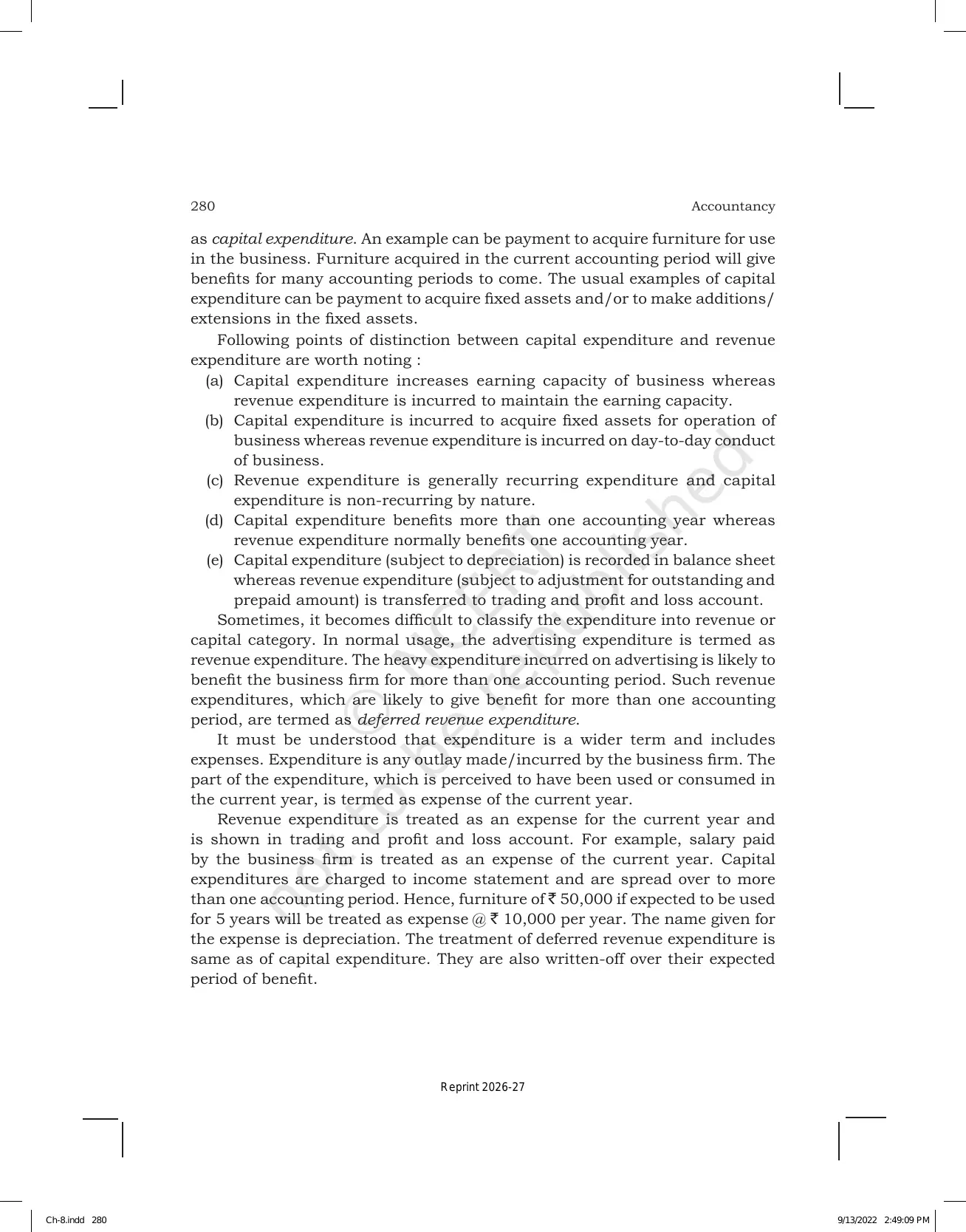
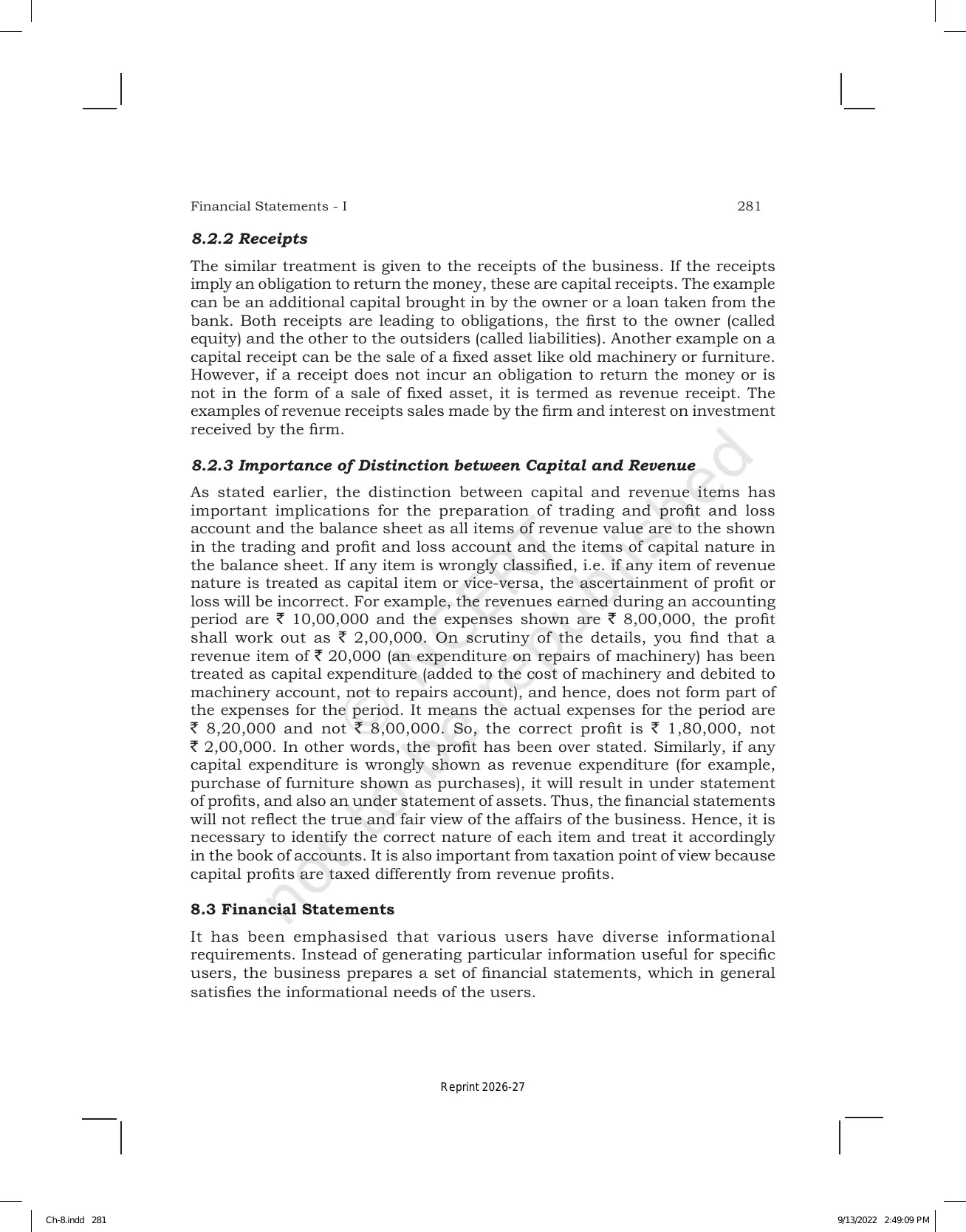
Capital and revenue classification decides where an item appears. A capital item usually affects more than one accounting period. A revenue item belongs to the current accounting period.
- Capital expenditure: shown through assets or long-term position.
- Revenue expenditure: charged while finding current profit.
- Capital receipt: increases capital or creates a long-term liability.
- Revenue receipt: earned from normal business operations.
Misclassifying capital and revenue items changes both profit and financial position. This is why NCERT explains the difference before final accounts.
How to Study the Financial Statements - I NCERT PDF
Read the chapter in the same order as the accounts are prepared. Do not start with the balance sheet. The balance sheet uses numbers that come from earlier statements.
- Revise stakeholders and information needs first.
- Make a small capital versus revenue table in your notebook.
- Practise trading account format before profit and loss account format.
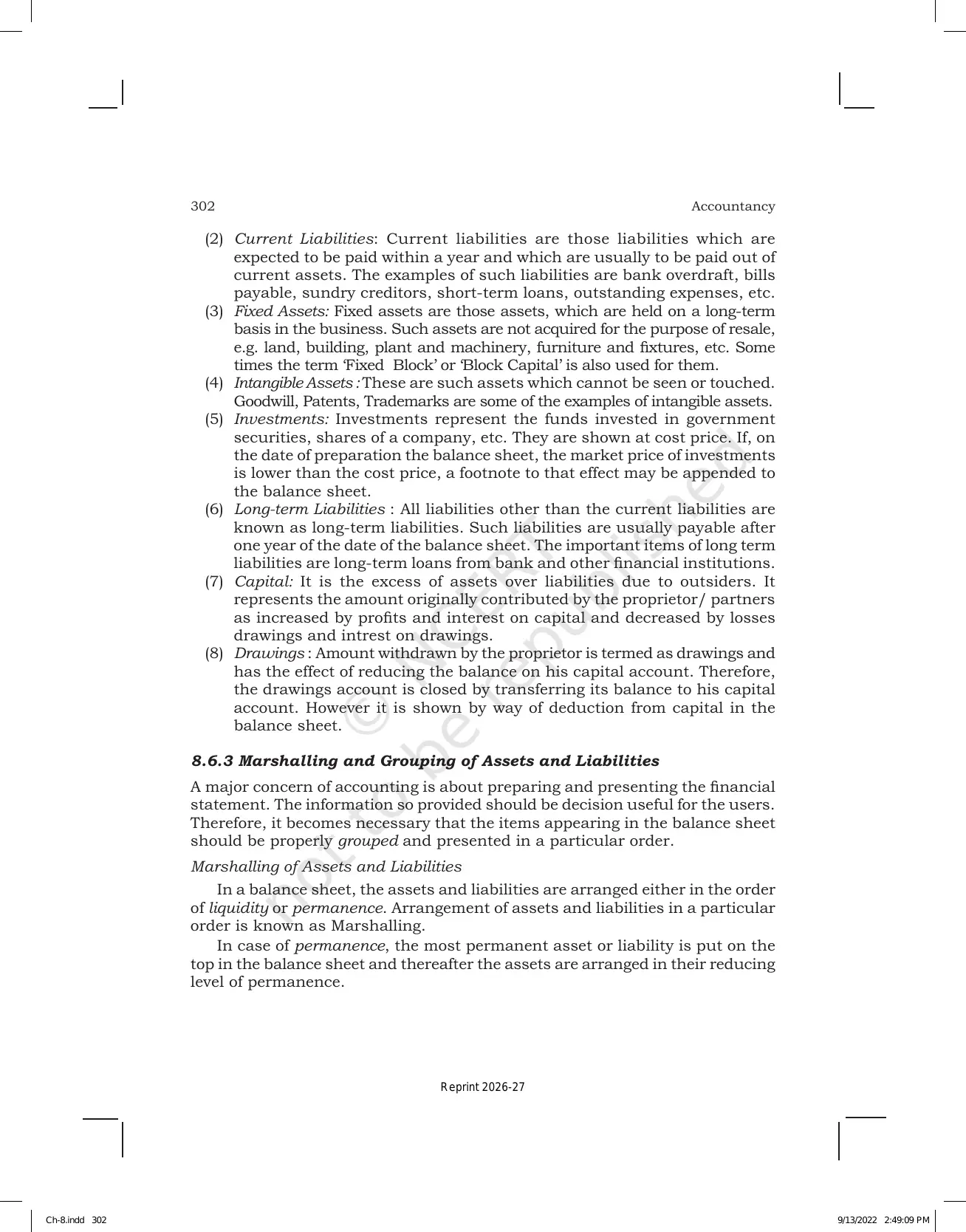
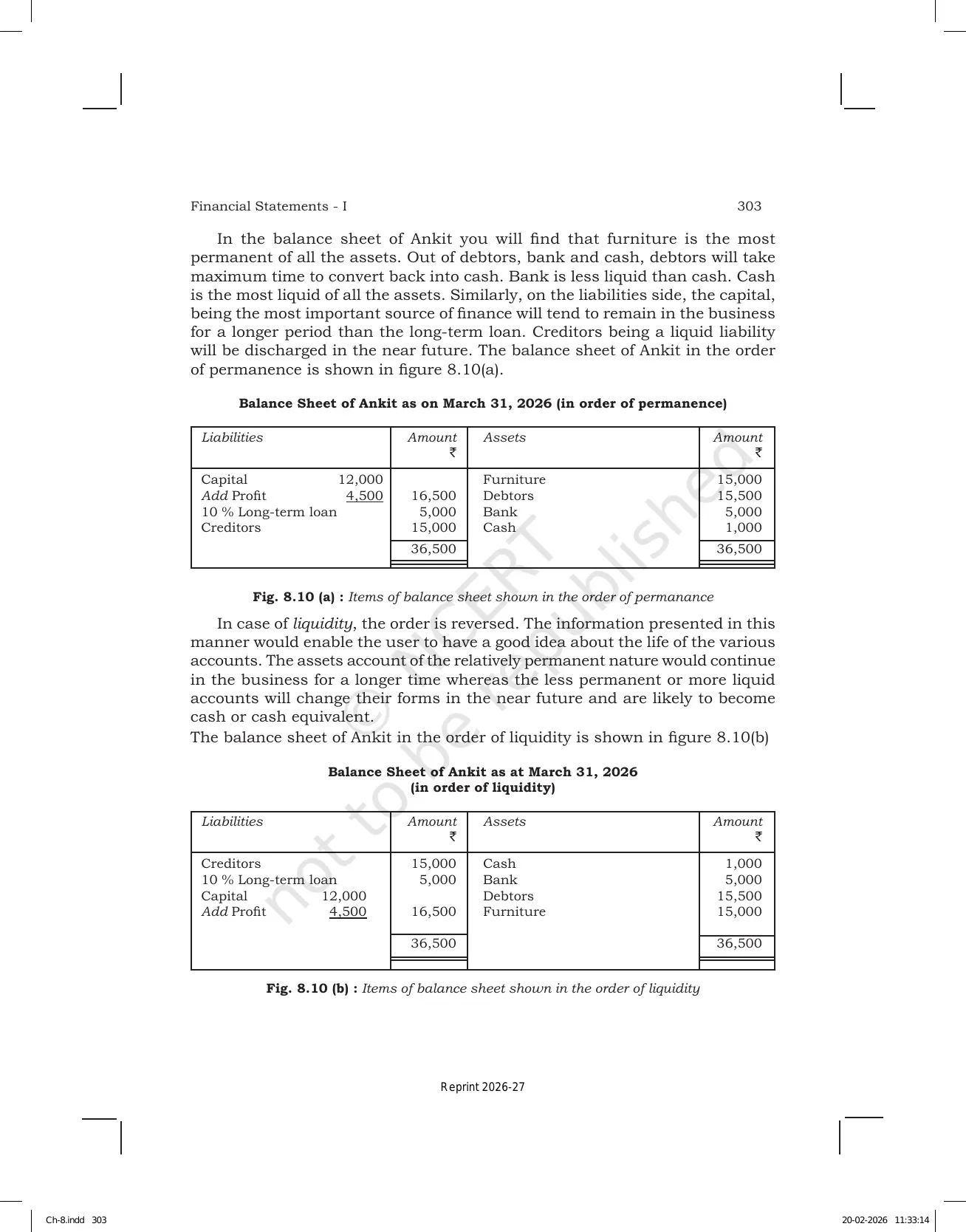
- Memorise the order of assets and liabilities in the balance sheet.
- Check the opening entry after you understand closing balances.
Financial Statements - I Class 11 Related Resources
| Resource | Best use |
|---|---|
| Financial Statements - I Class 11 NCERT Solutions | Check solved final accounts questions |
| Financial Statements - I Class 11 Notes | Revise formats, entries and difference tables |
| Financial Statements - I Class 11 Handwritten Notes | Use handwritten notes for quick revision before tests |
All Class 11 Accountancy NCERT Book Chapters
| Chapter | NCERT Book PDF |
|---|---|
| 1 | Introduction to Accounting |
| 2 | Theory Base of Accounting |
| 3 | Recording of Transactions - I |
| 4 | Recording of Transactions - II |
| 5 | Bank Reconciliation Statement |
| 6 | Trial Balance and Rectification of Errors |
| 7 | Depreciation, Provisions and Reserves |
| 8 | Financial Statements - I |
| 9 | Financial Statements - II |
Financial Statements - I Class 11 NCERT Book FAQs
Ques. What does Financial Statements - I cover in Class 11 Accountancy?
Ans. It covers stakeholder information needs, capital and revenue items, trading account, profit and loss account, balance sheet and opening entry.
Ques. Which final accounts are prepared in this NCERT chapter?
Ans. The chapter explains trading account, profit and loss account and balance sheet for a sole proprietor without adjustments.
Ques. Why is the capital and revenue difference important?
Ans. The difference decides whether an item affects current profit or long-term financial position. A wrong classification changes the final accounts.
Ques. What is the purpose of a trading account?
Ans. A trading account is prepared to find gross profit or gross loss from direct trading activities.
Ques. Is this PDF based on the 2026-27 NCERT book?
Ans. Yes. The PDF is from the Class 11 Accountancy NCERT reprint for the 2026-27 academic session.



Comments