




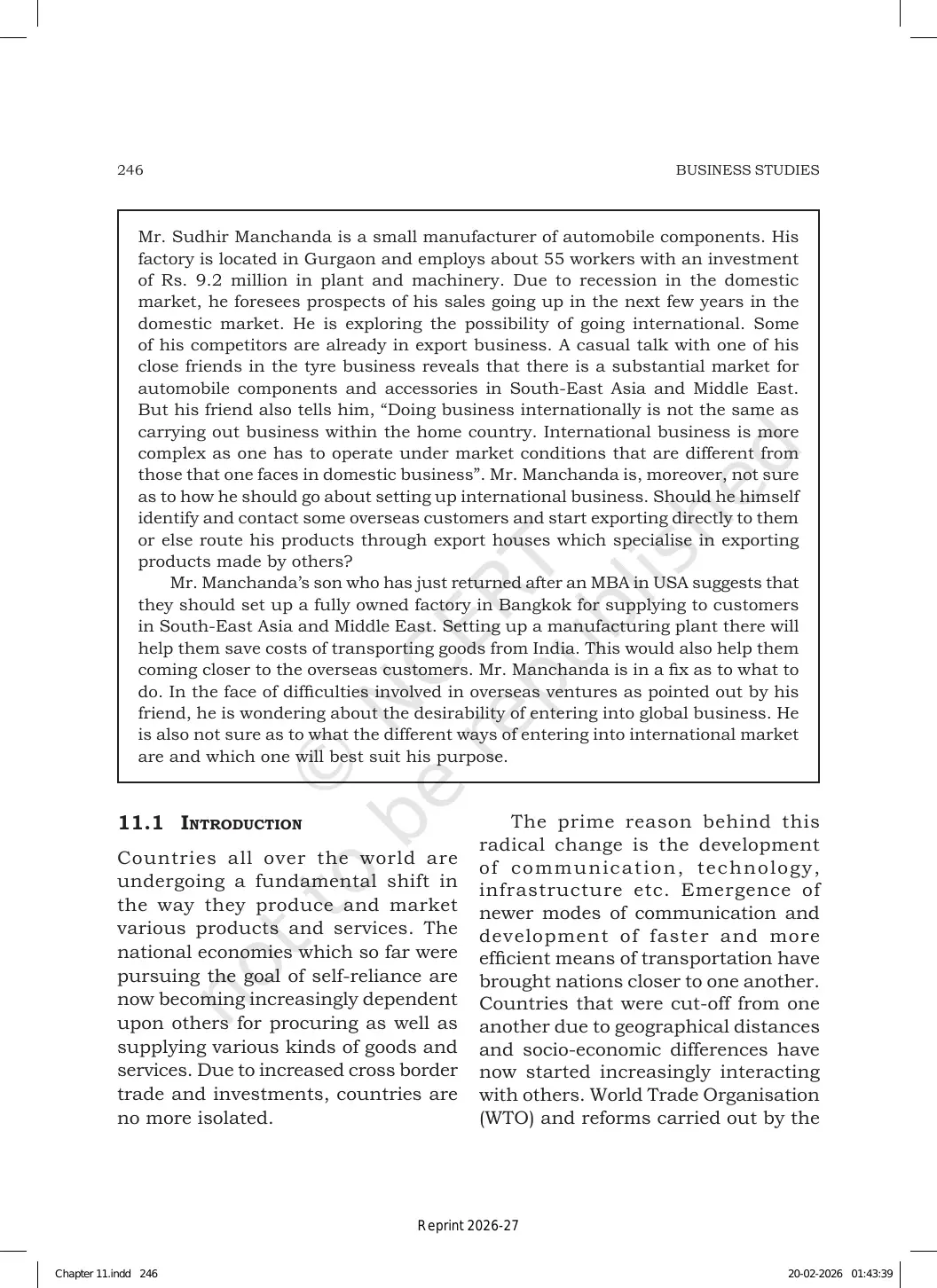
The NCERT Class 11 Business Studies Chapter 11 International Business PDF brings together the ideas, procedures and institutions that the 2026-27 textbook tests. It explains cross-border trade, export and import steps, key documents, support schemes and global organisations.
- Core idea: international business includes goods, services, investment, technology and intellectual property.
- Process focus: follow export and import transactions from enquiry to payment.
- Exam focus: compare entry modes, documents, incentives and international institutions.
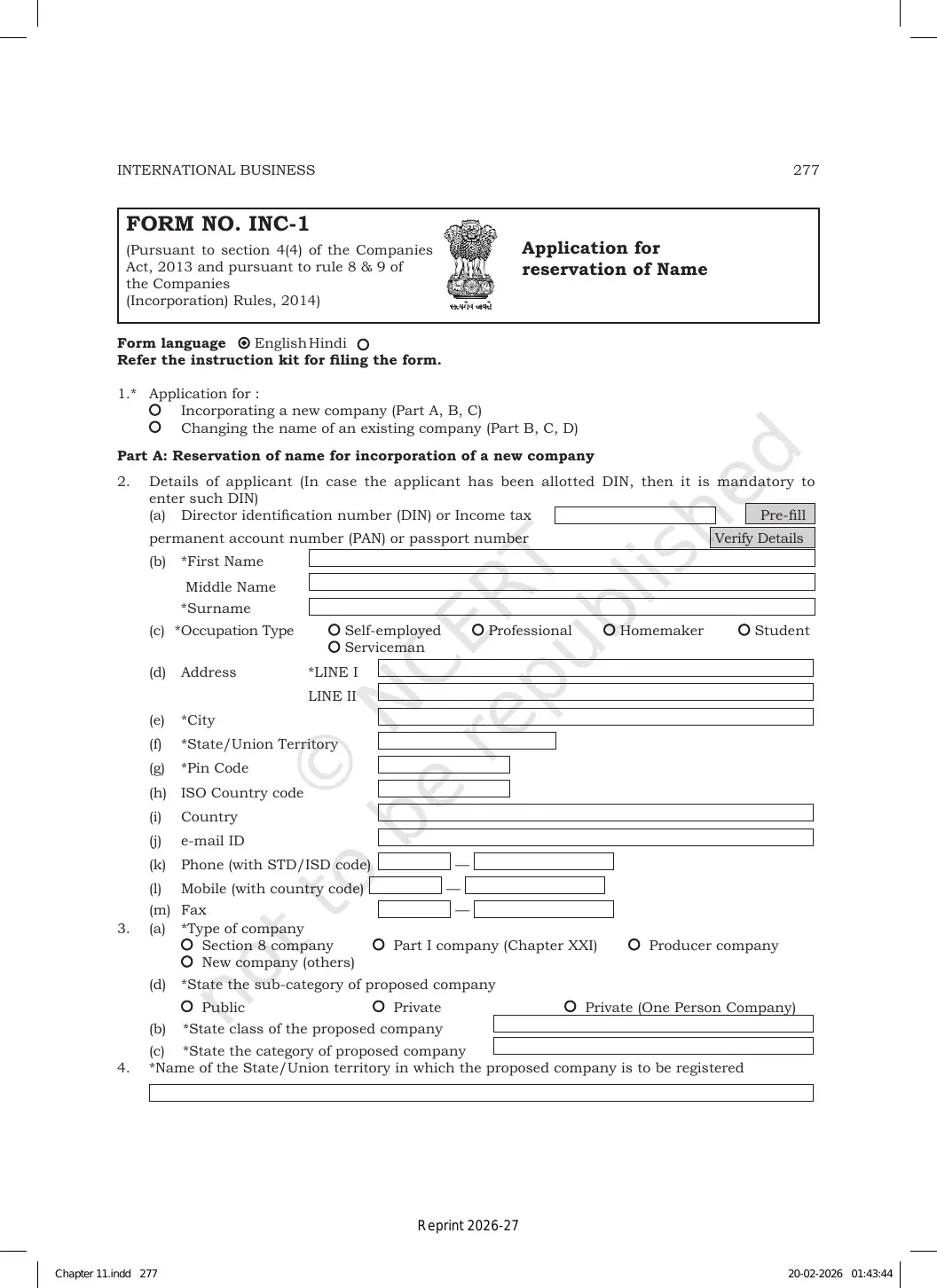
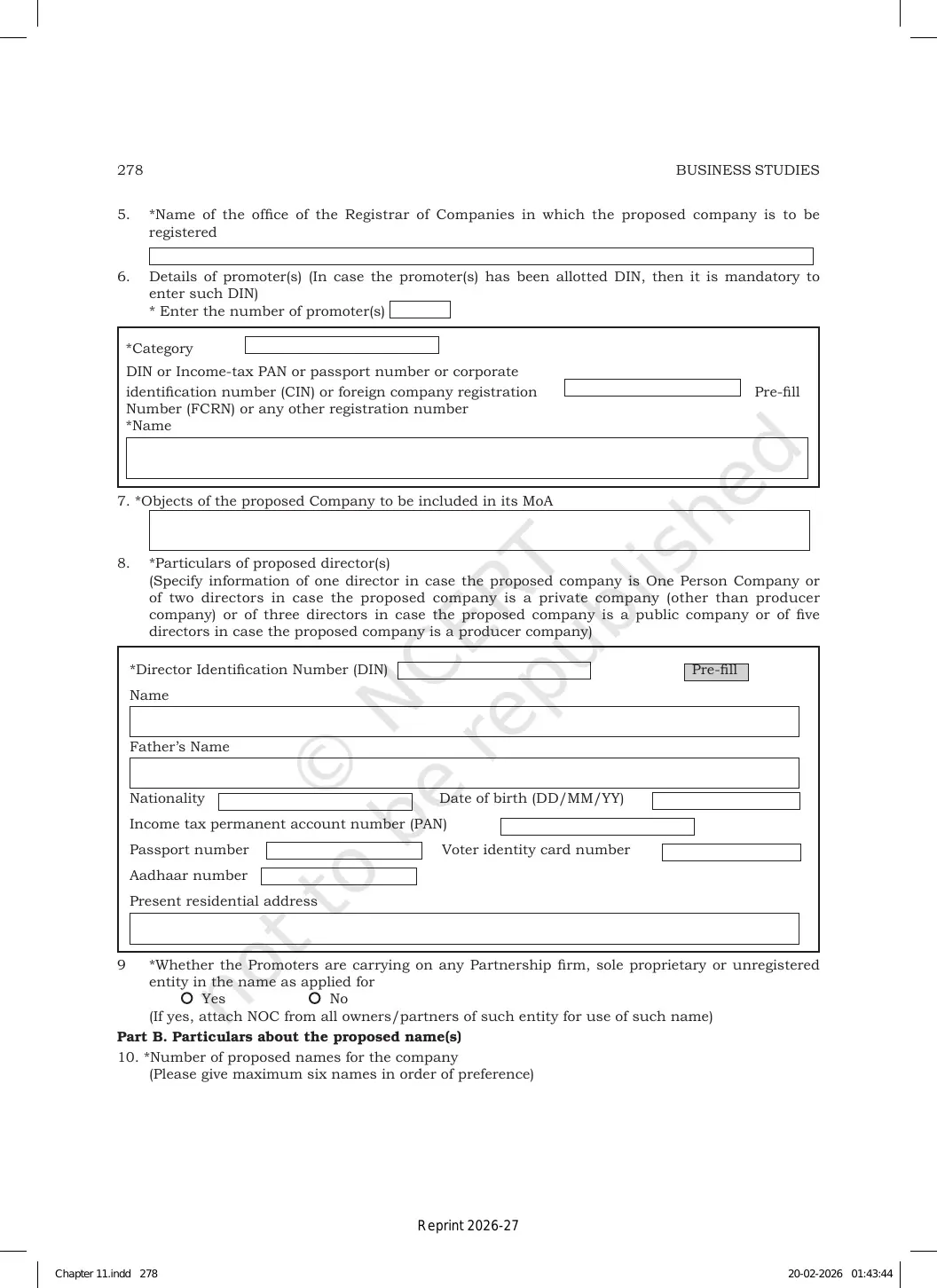
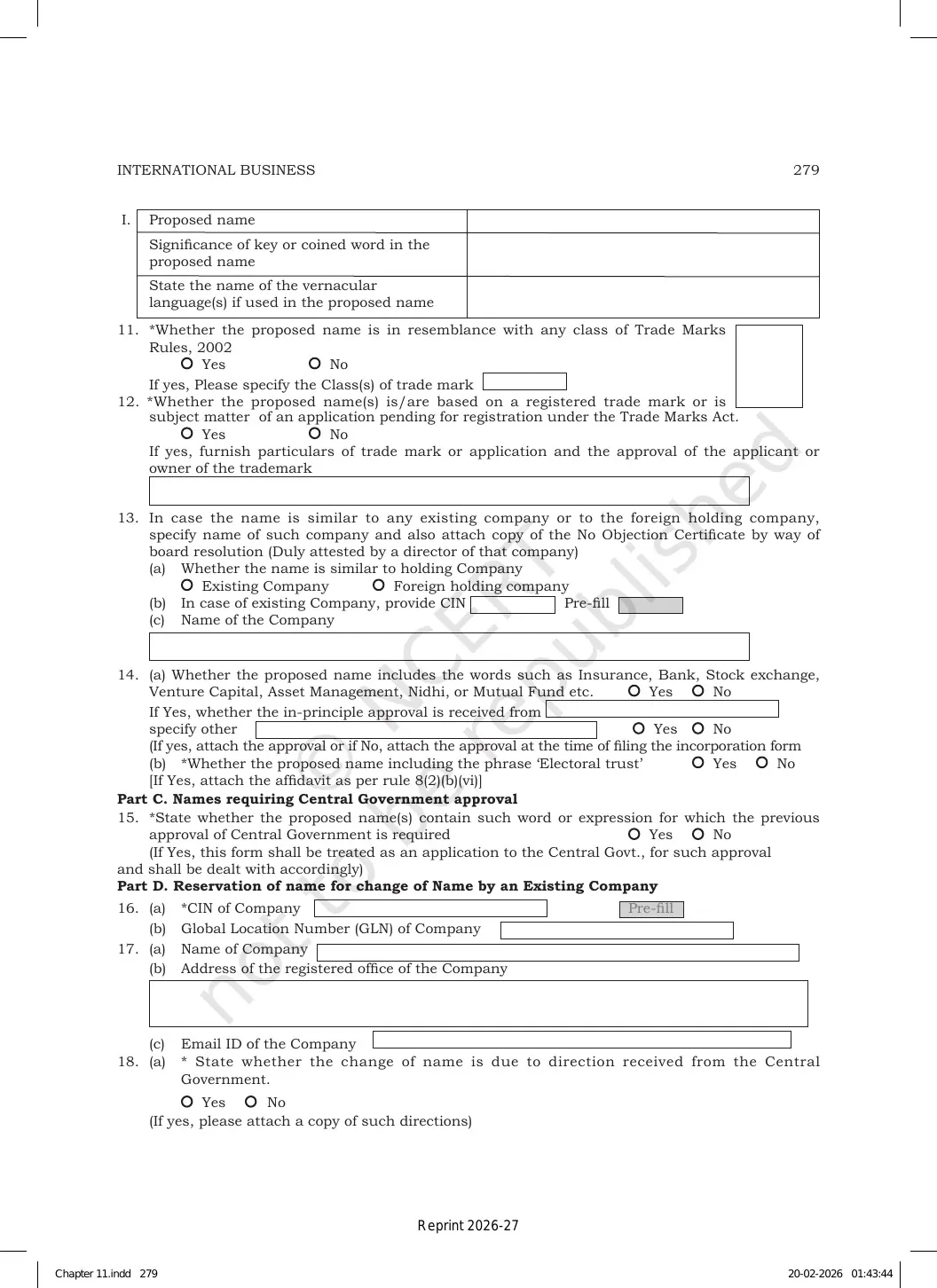
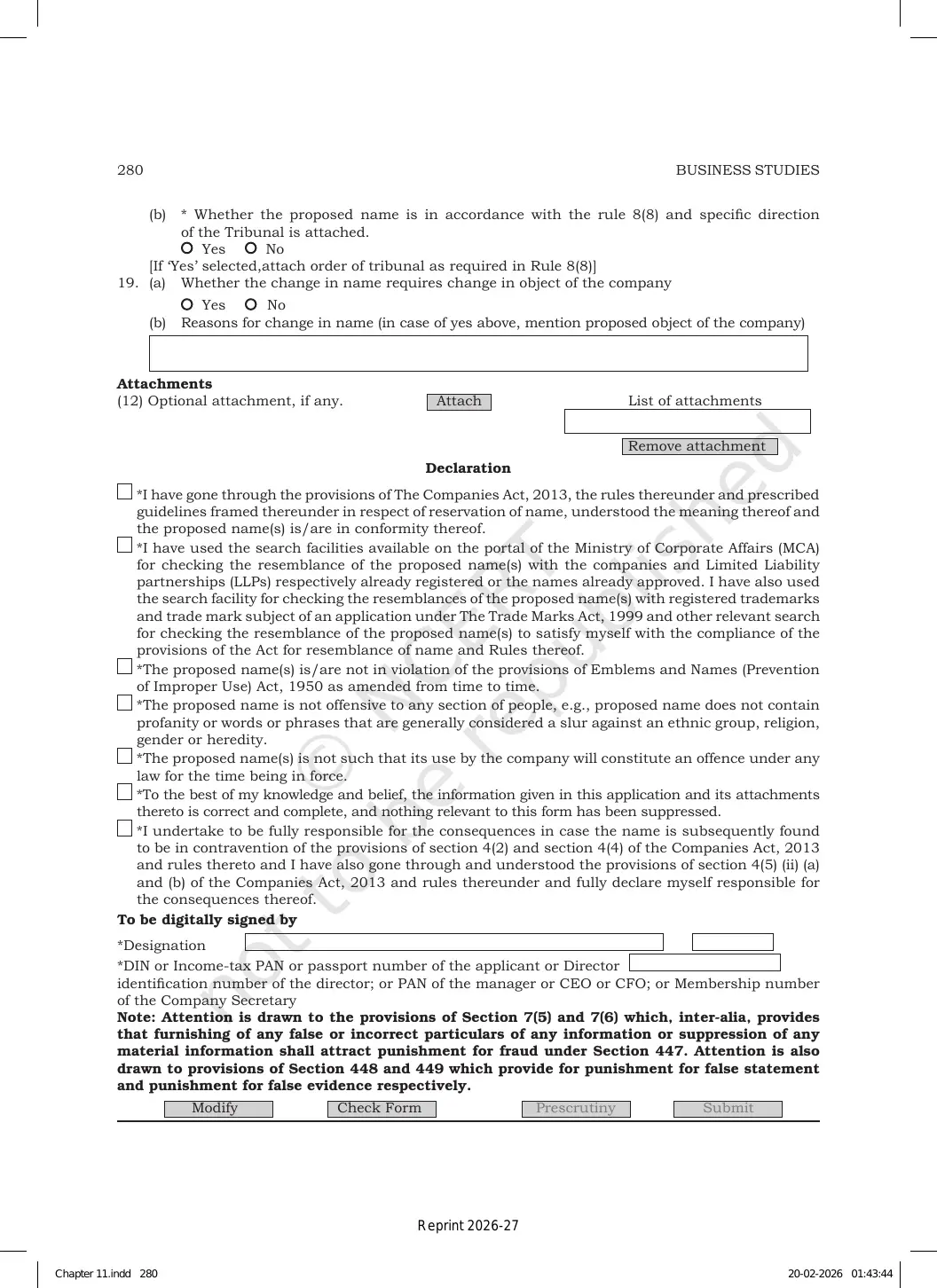
This page follows the official 2026-27 NCERT Business Studies book and keeps every point tied to the International Business chapter.
|
Table of Contents |
International Business Topics in the 2026-27 NCERT Book
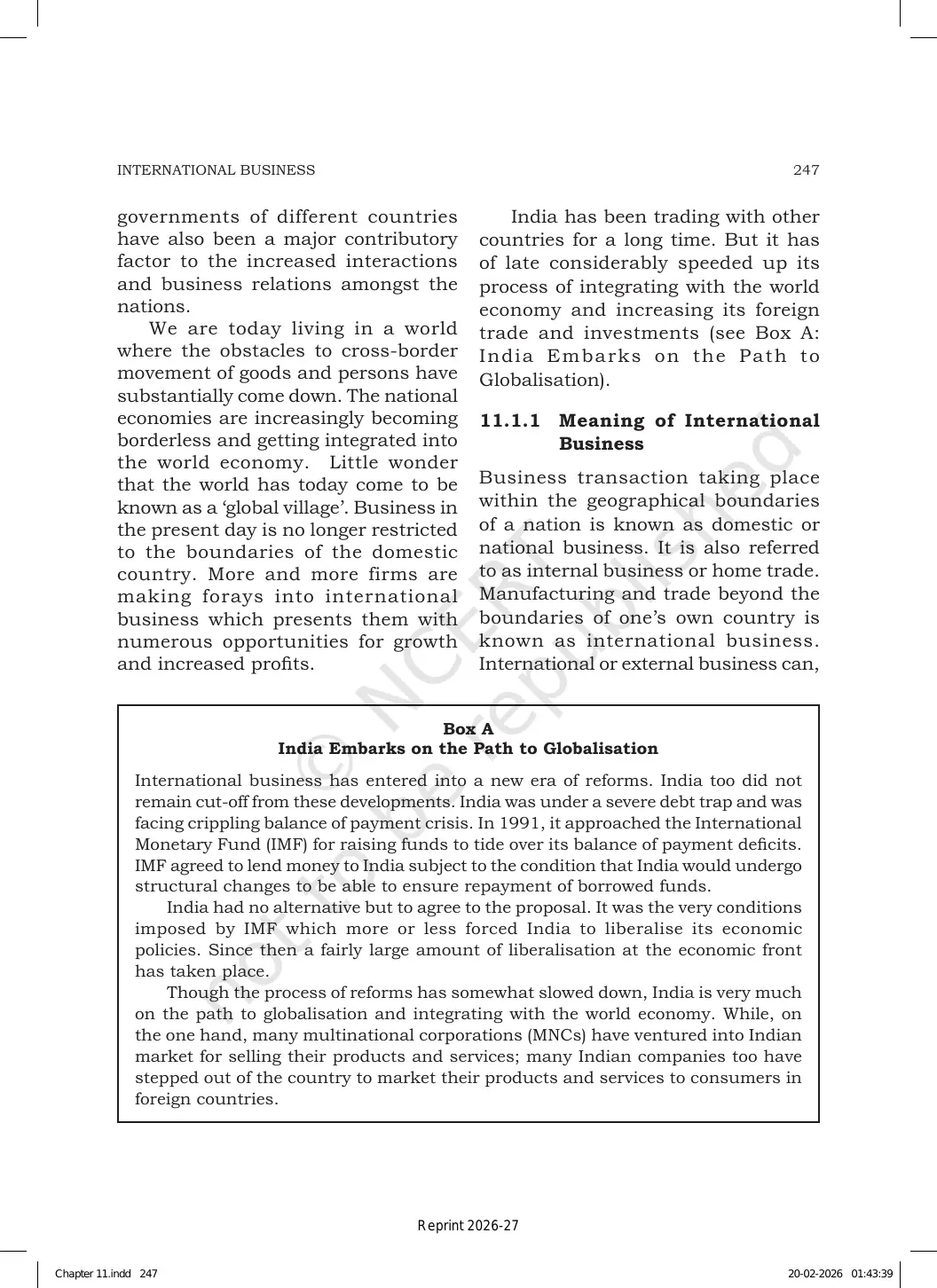
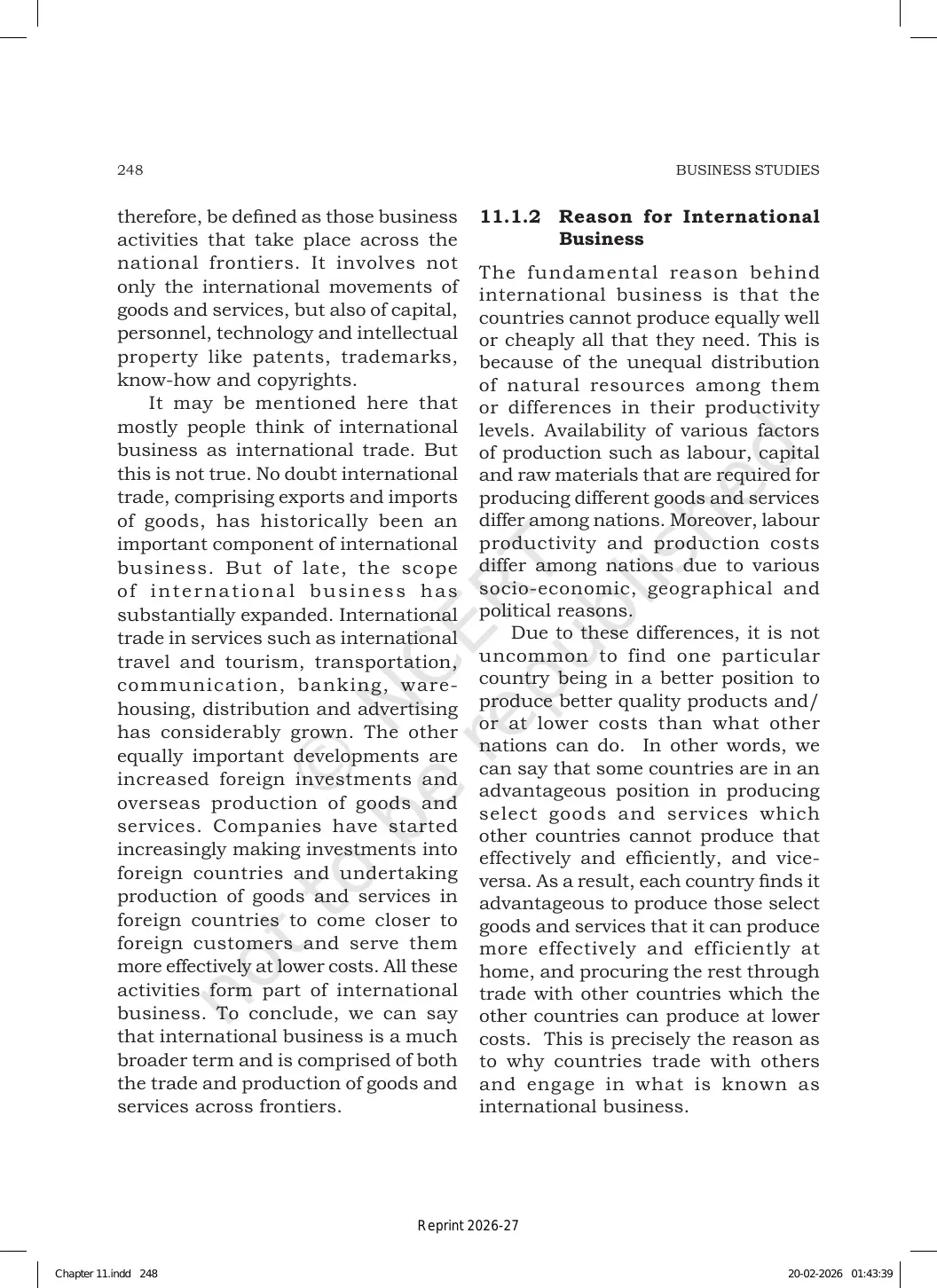
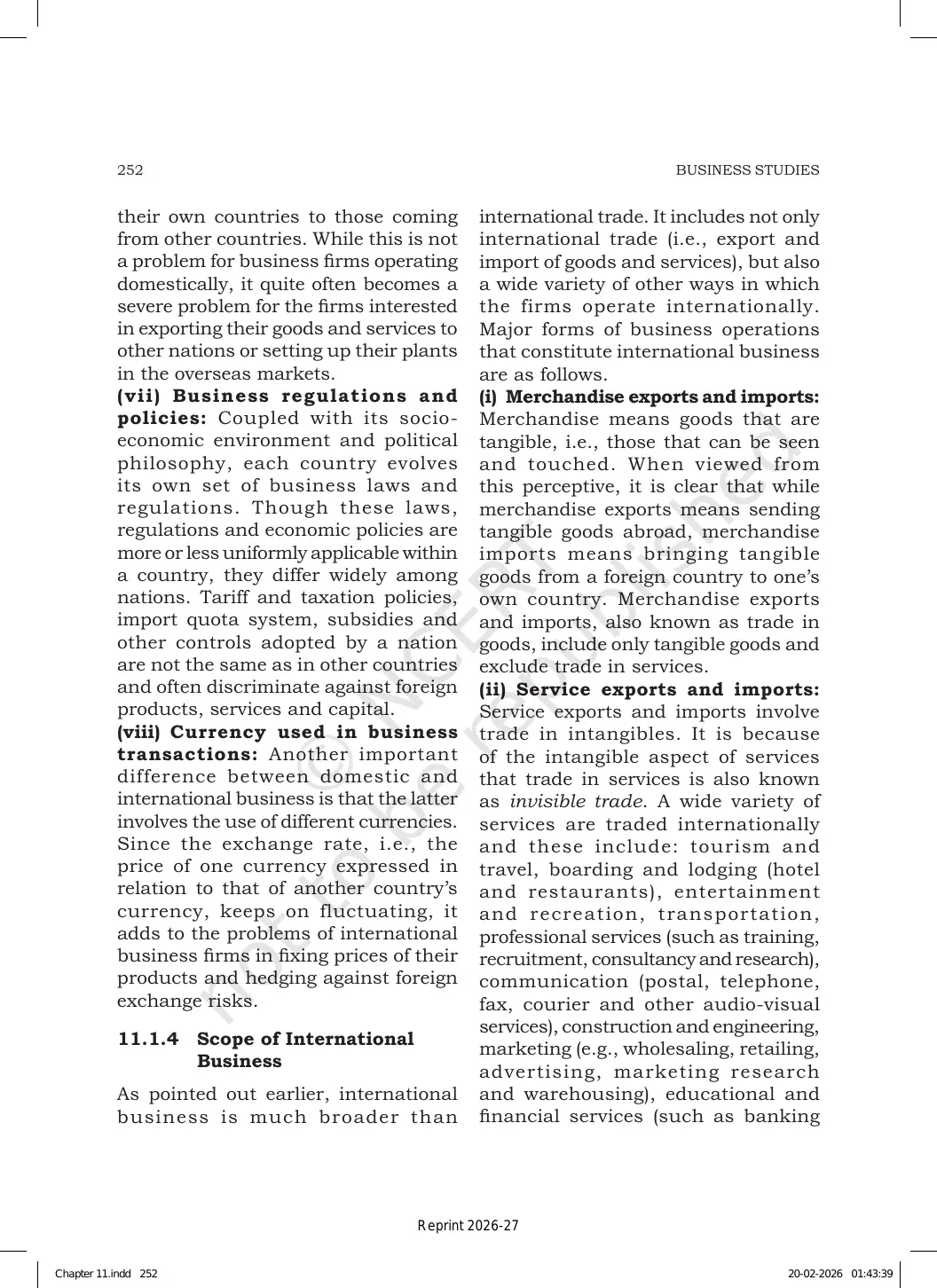
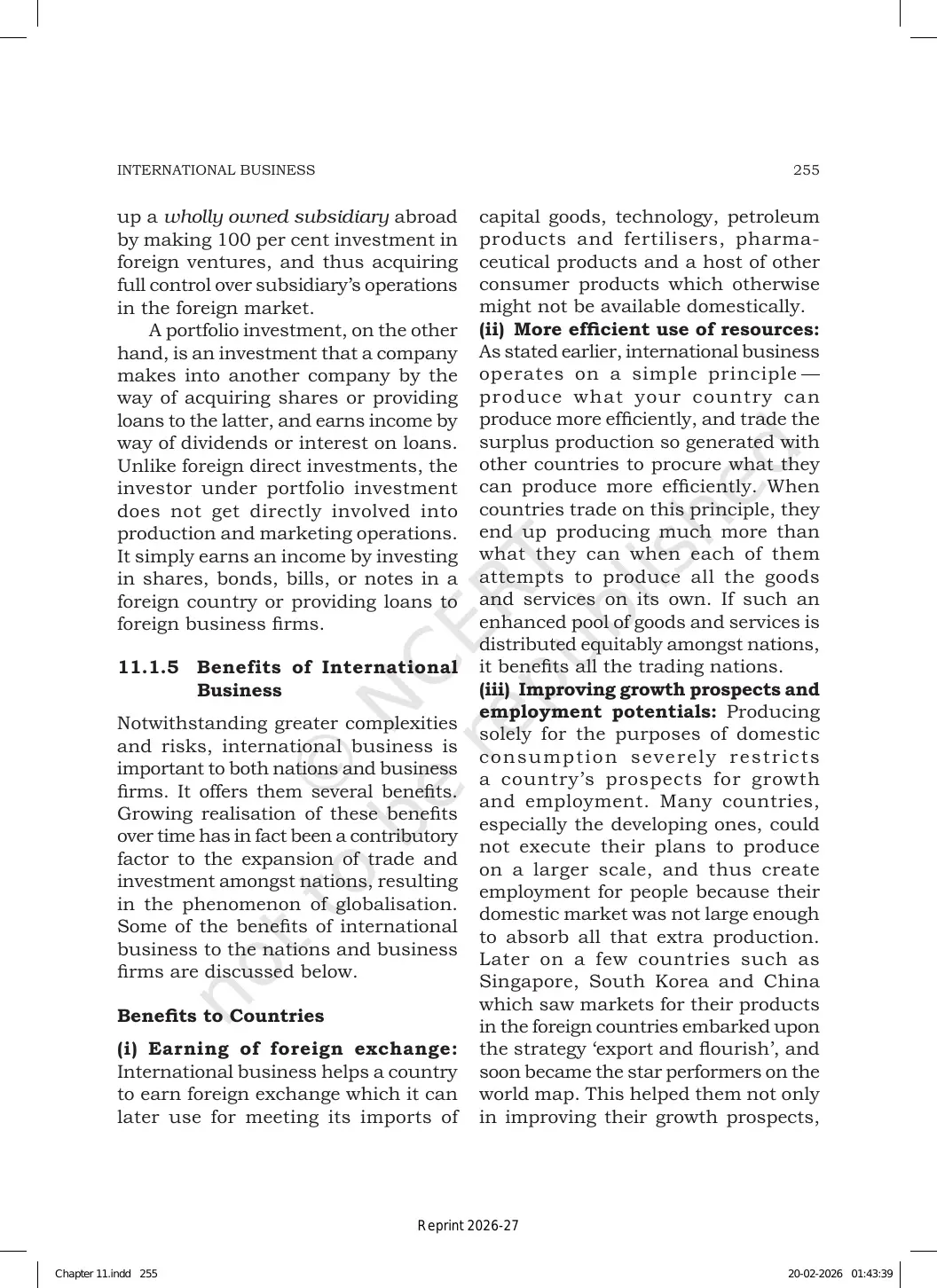
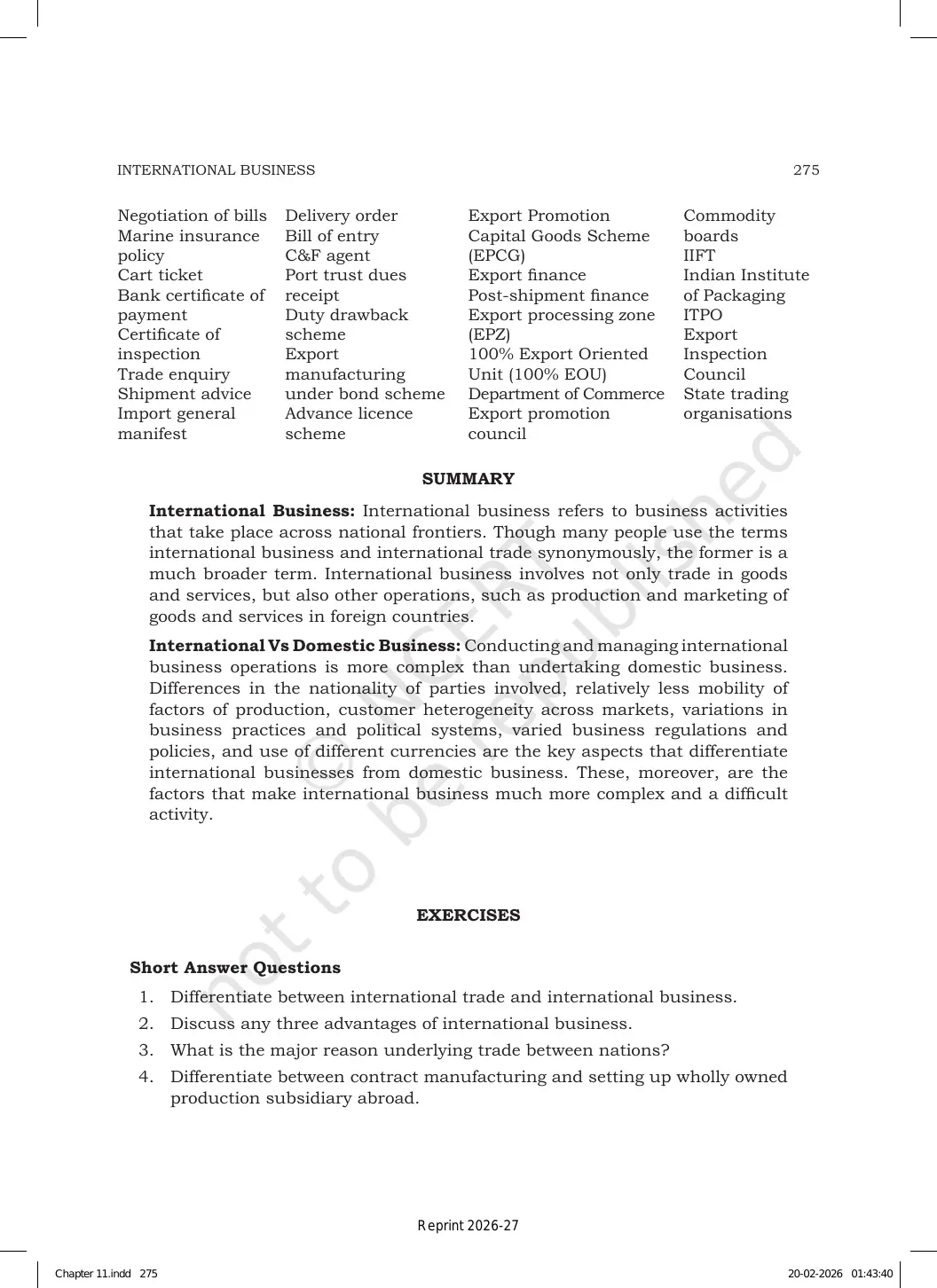
International business means business activities that cross national borders. It covers more than the export and import of goods. Firms may trade services, license technology, invest abroad or produce in another country.
| Chapter area | What the NCERT explains |
|---|---|
| Meaning and scope | Trade, services, investment, technology and intellectual property |
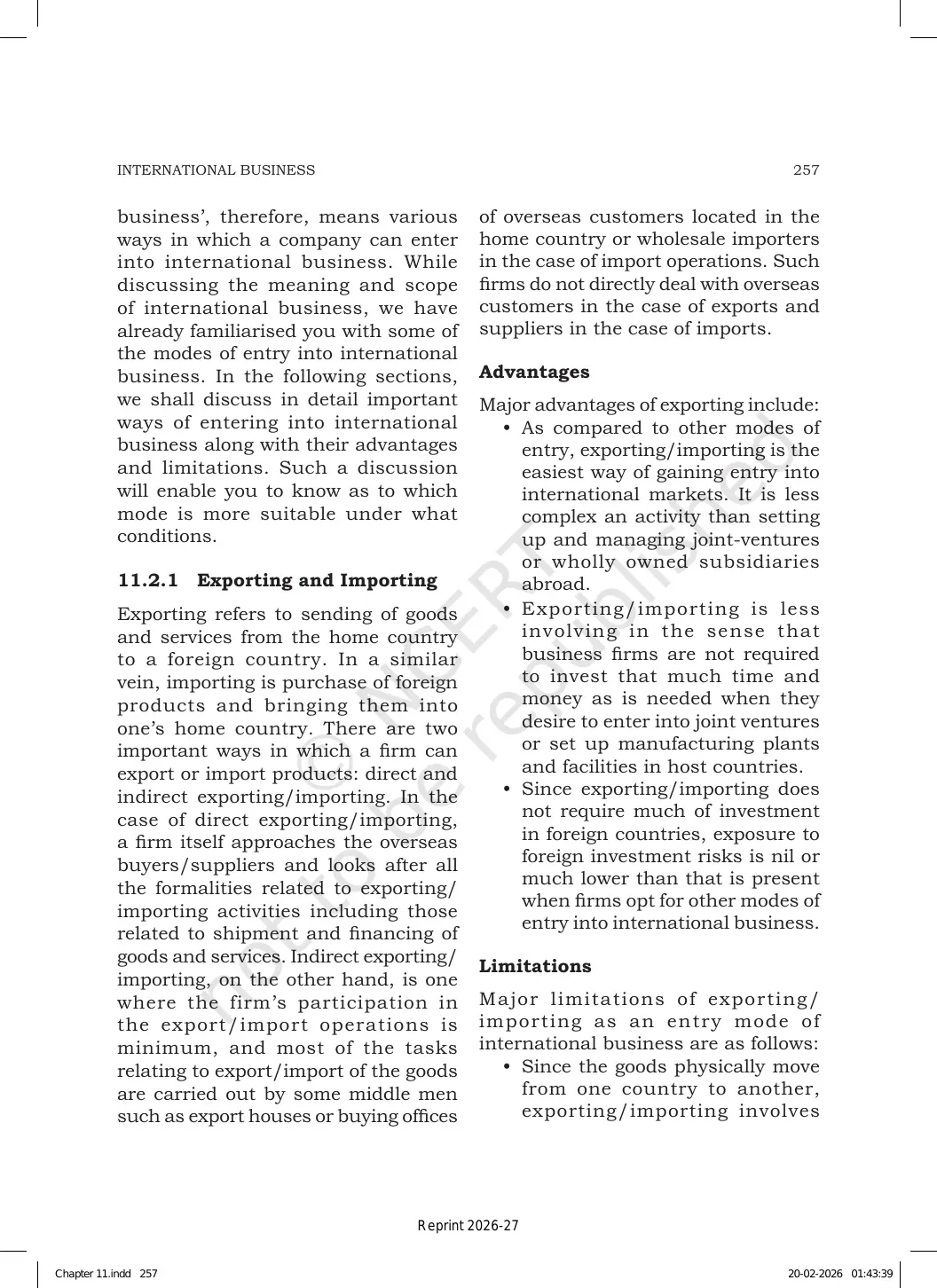
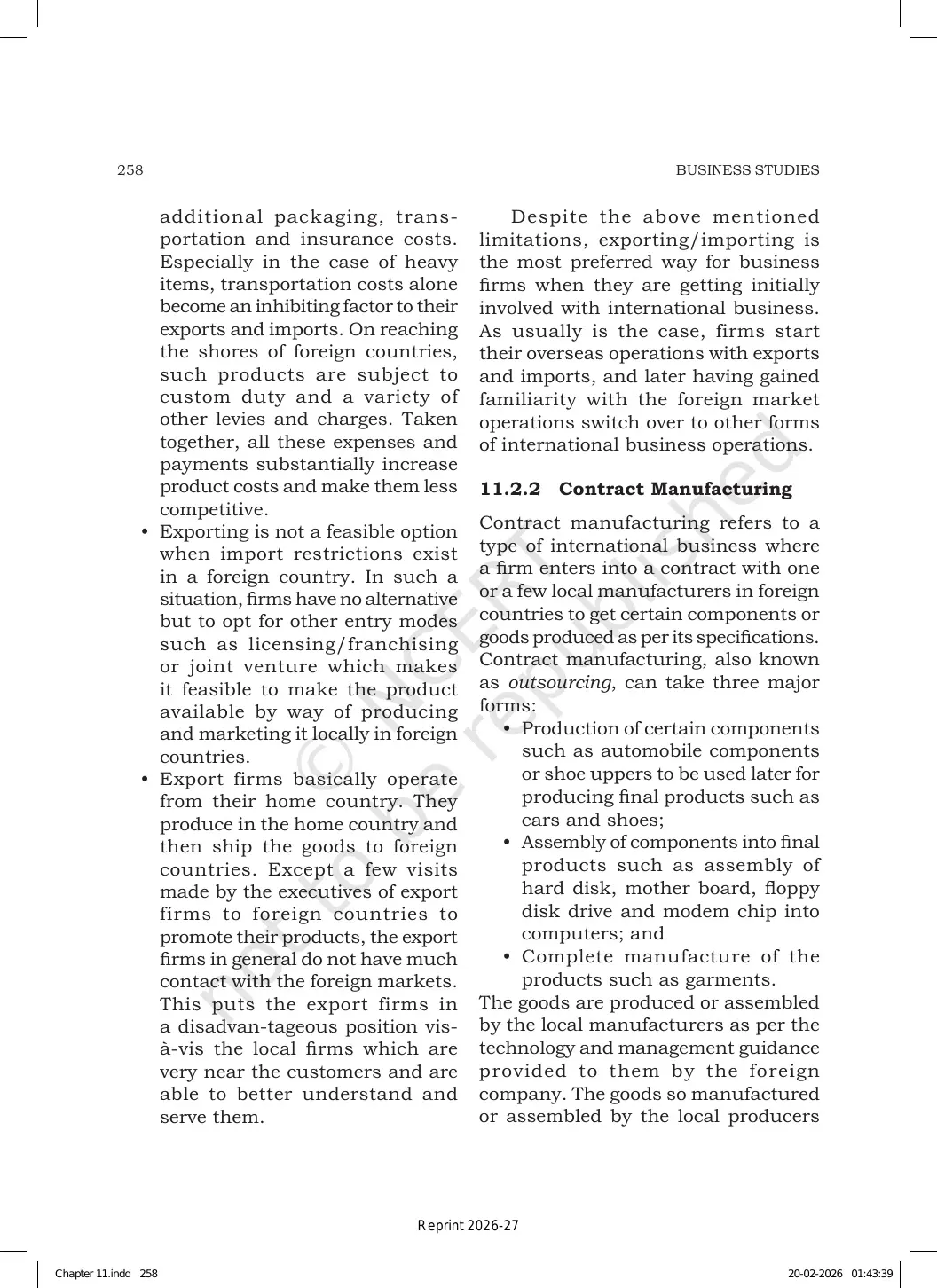
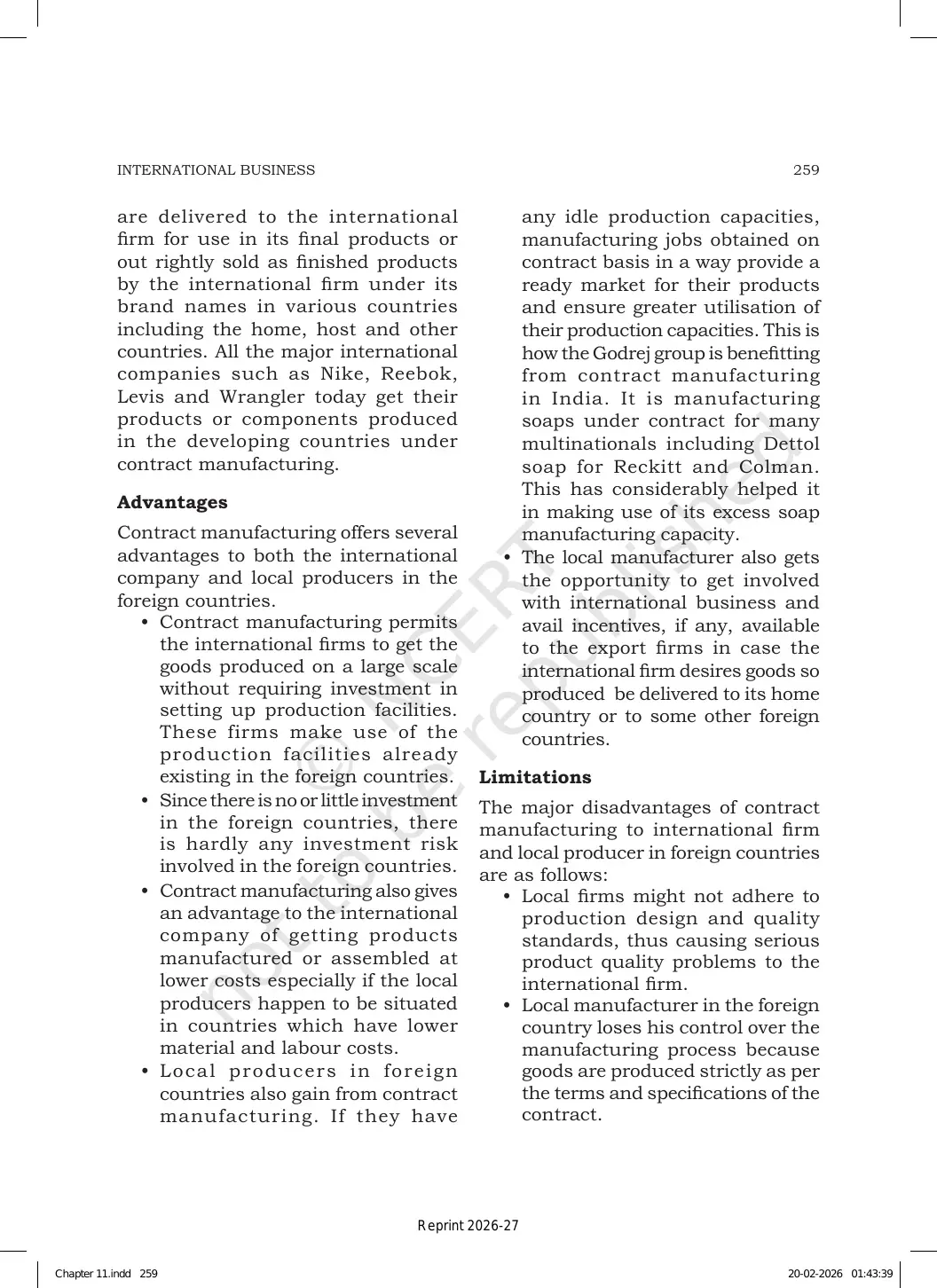
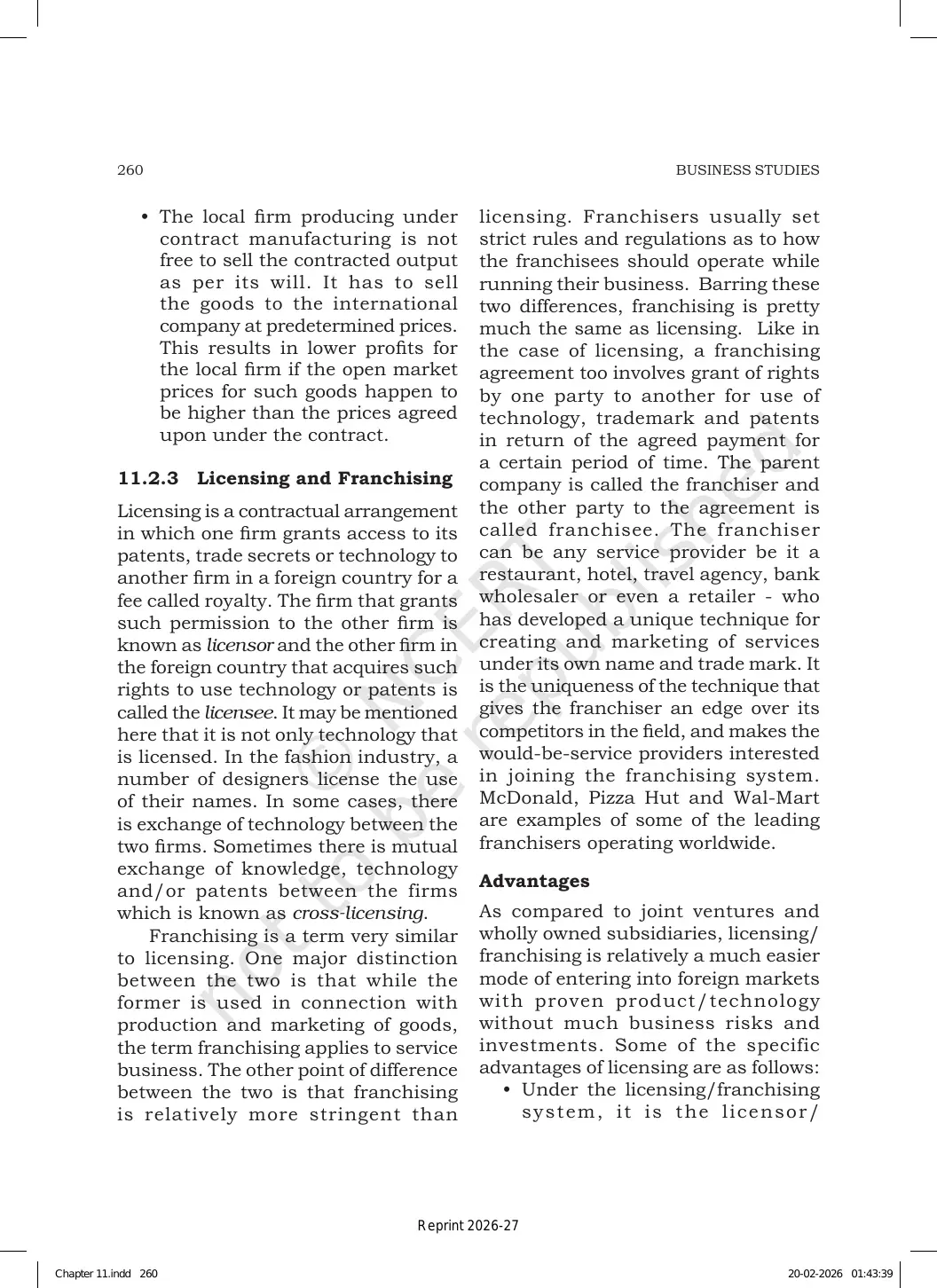
| Entry modes | Exporting, licensing, franchising, joint ventures and wholly owned units |
| Trade procedures | Export and import stages with their supporting documents |
| Export support | Incentives, schemes and institutions that help exporters |
| Global institutions | WTO, IMF and World Bank Group roles |
International Business Chapter Overview
Source: Magnet Brains on YouTube
Domestic Business and International Business Compared
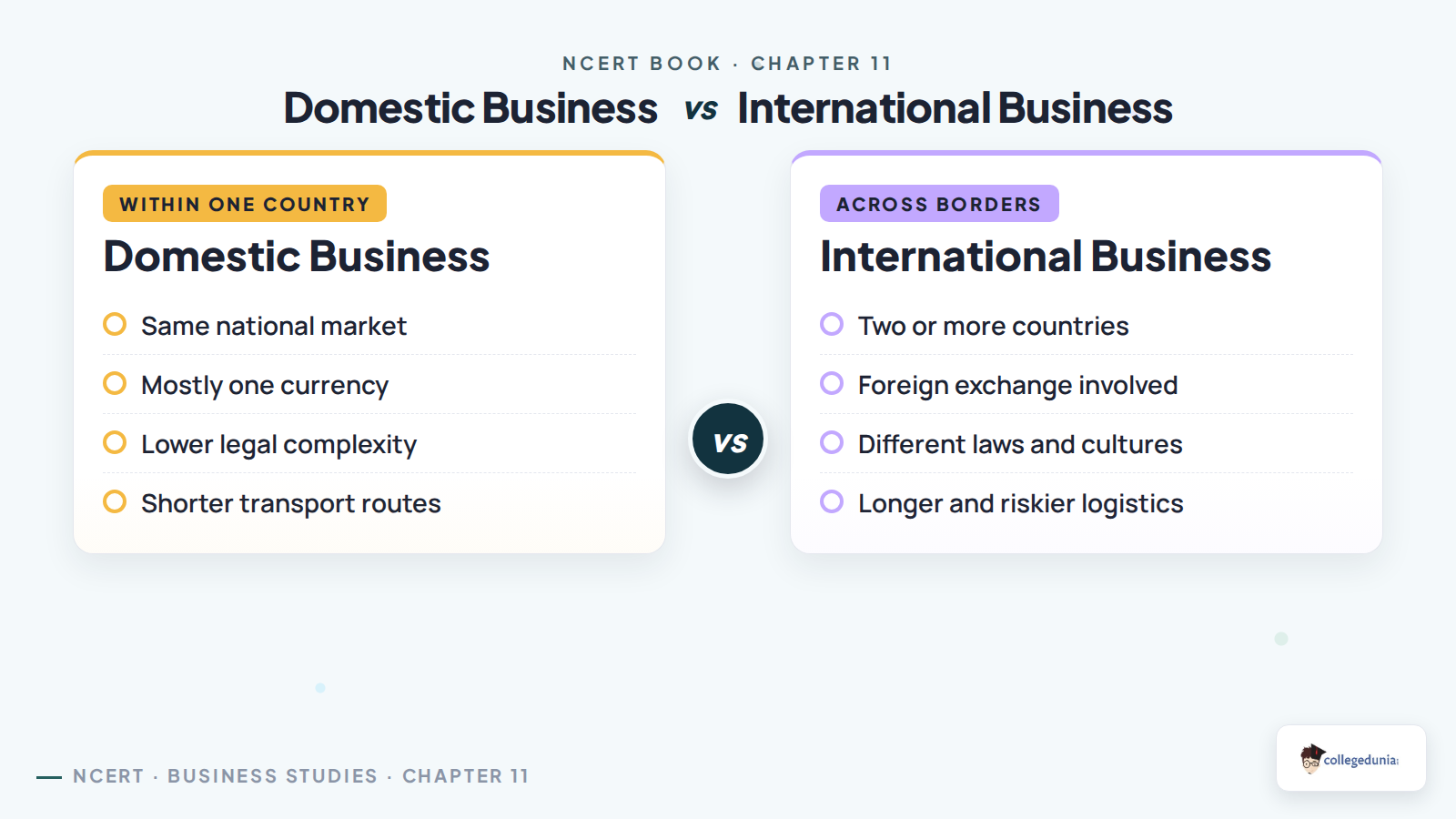
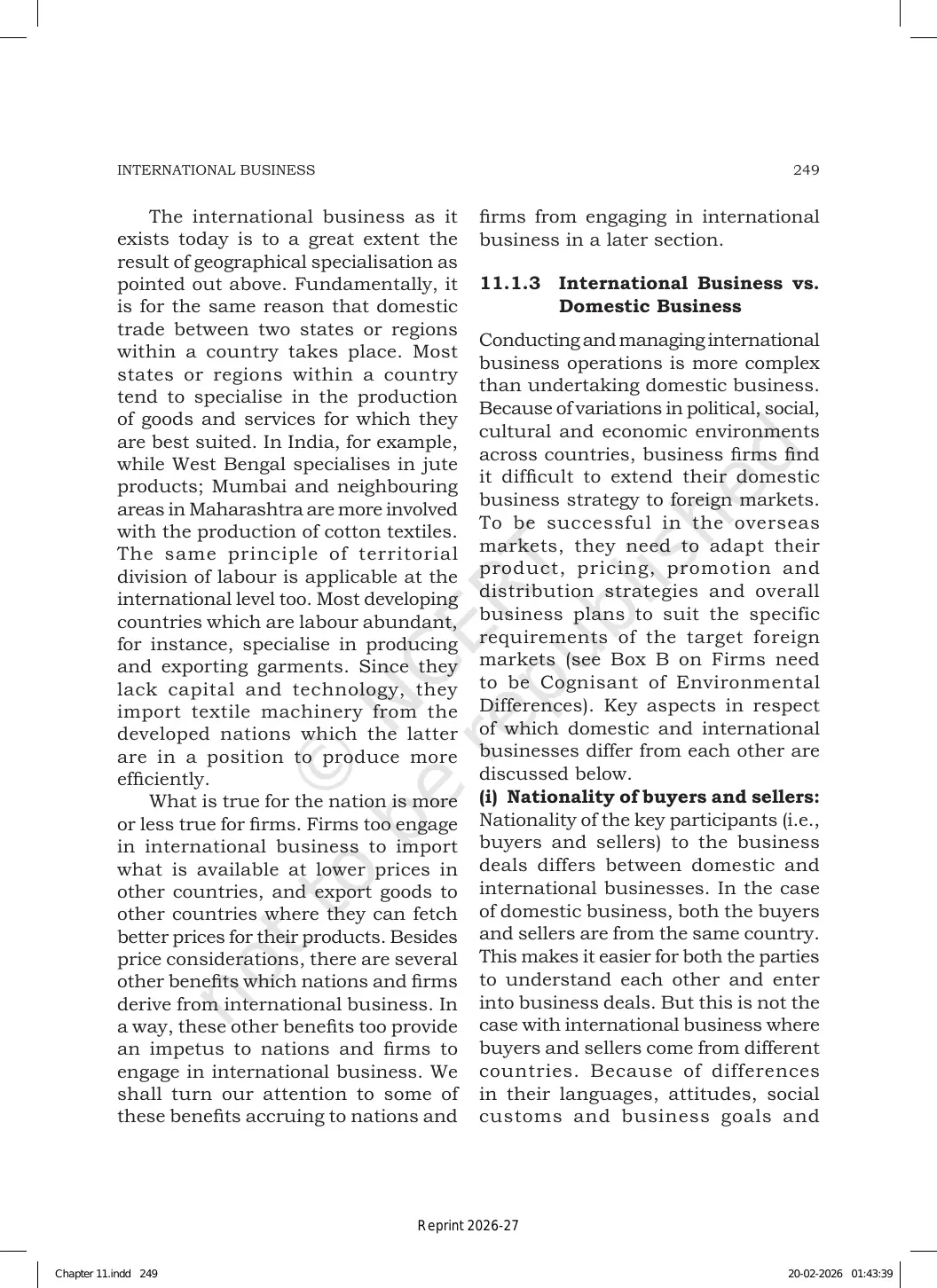
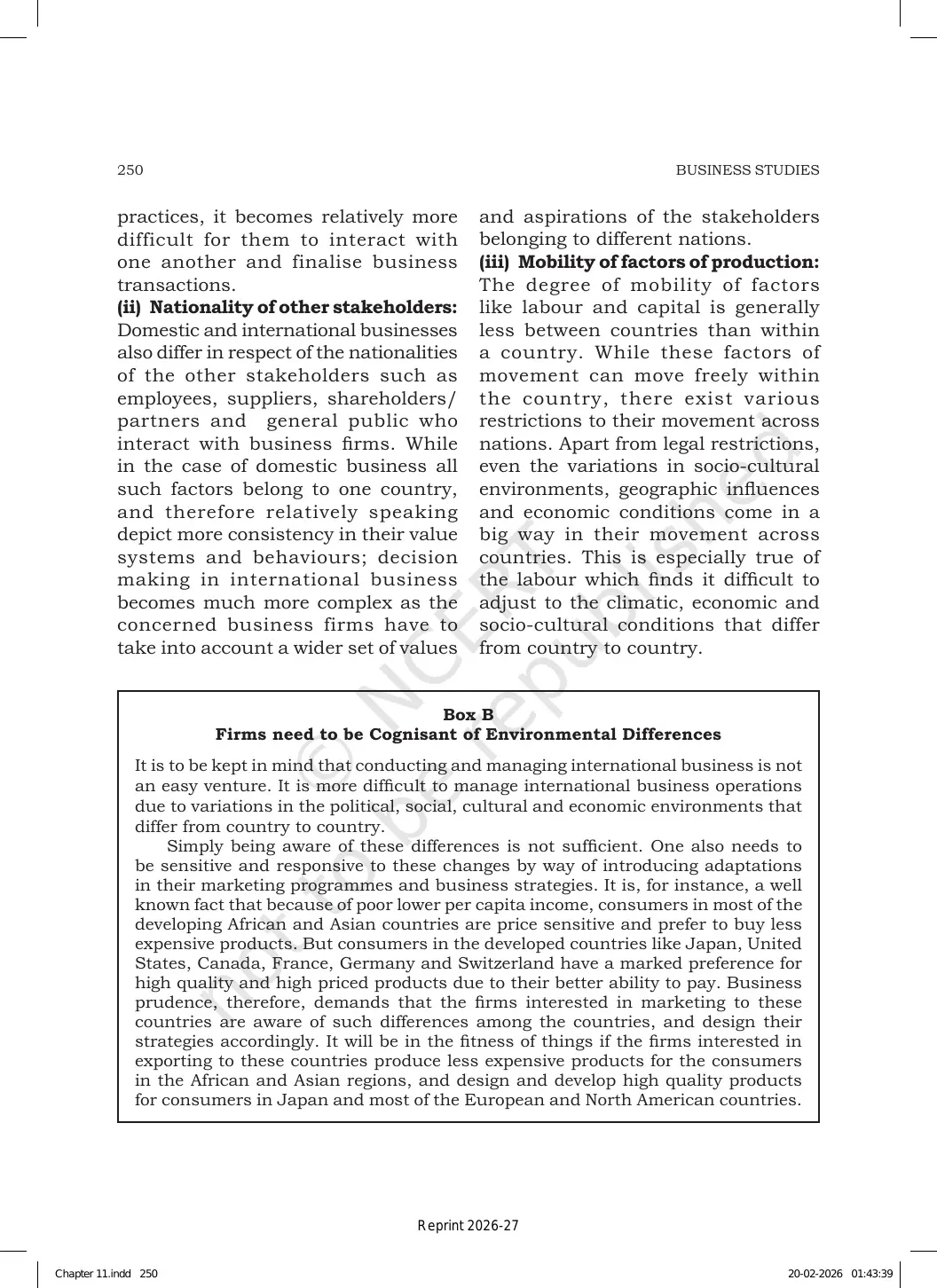
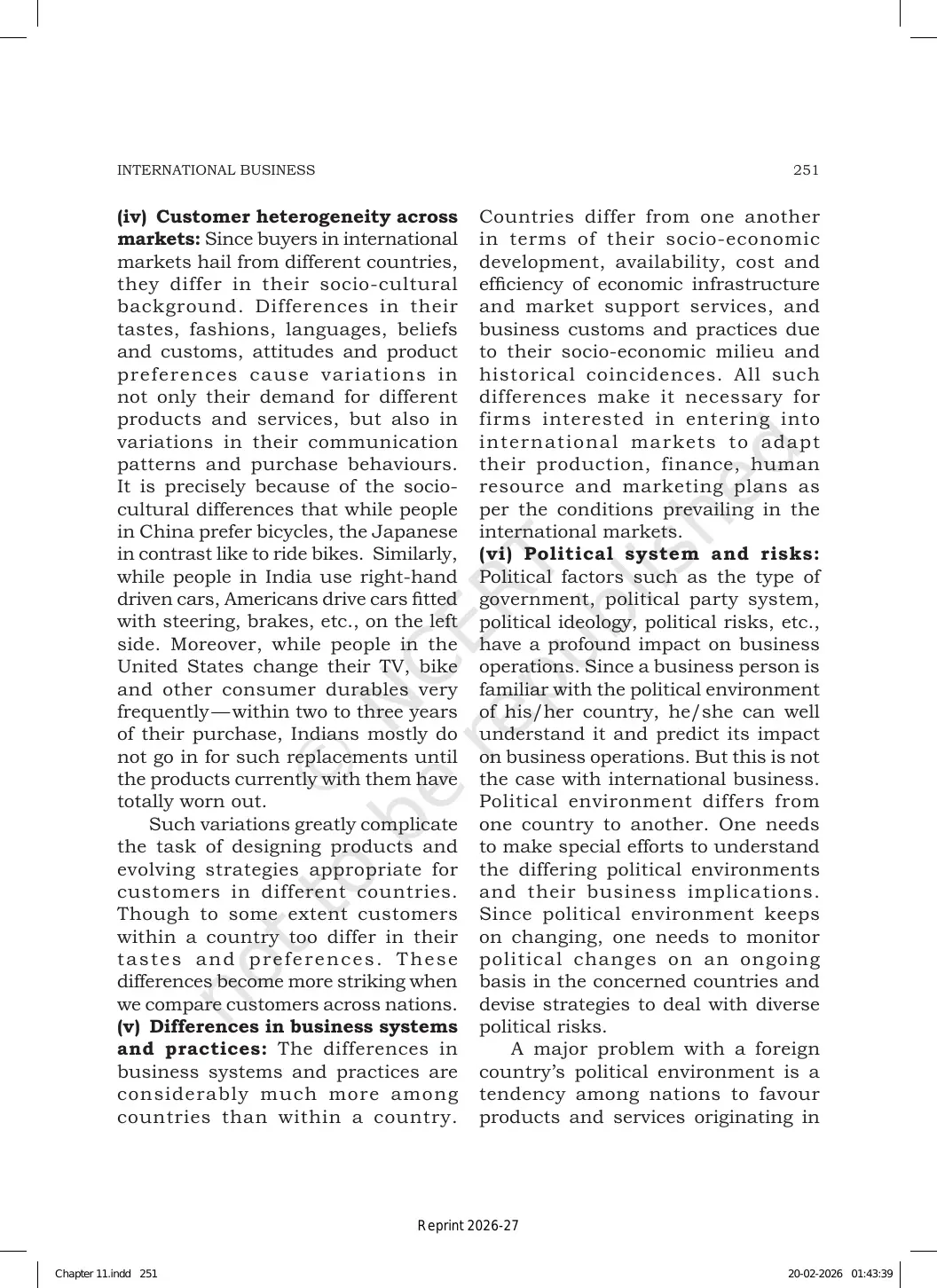
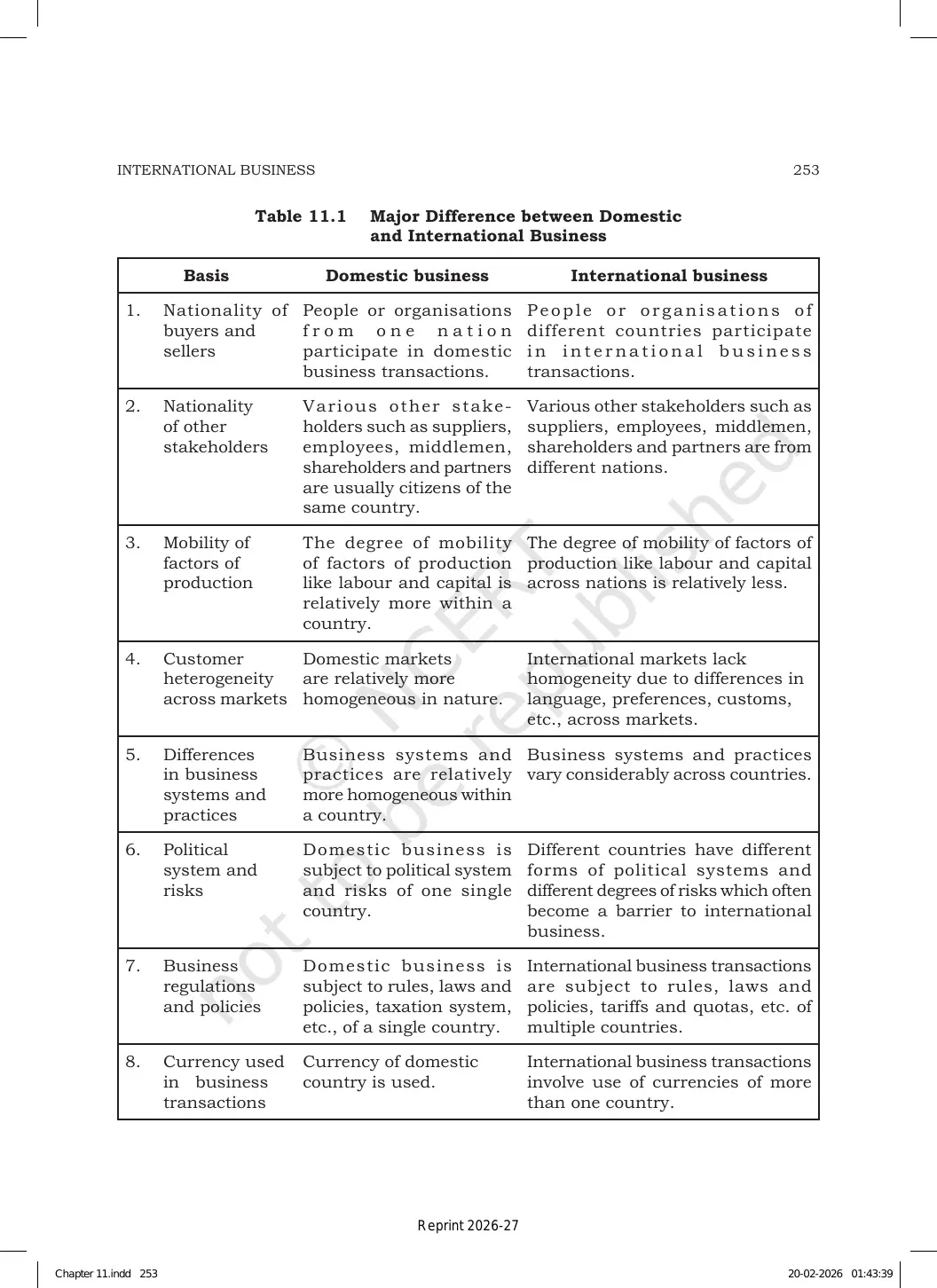
Domestic business takes place within one country. International business involves parties from different countries. This change adds foreign exchange, longer transport routes and different legal systems.
- Nationality: buyers and sellers may follow different laws and business customs.
- Currency: payments may need conversion and face exchange-rate risk.
- Mobility: goods and capital move more easily than people across borders.
- Risk: political changes, distance and paperwork add uncertainty.
International business is wider than international trade because it also includes overseas production and investment.
Ways a Firm Can Enter an International Market
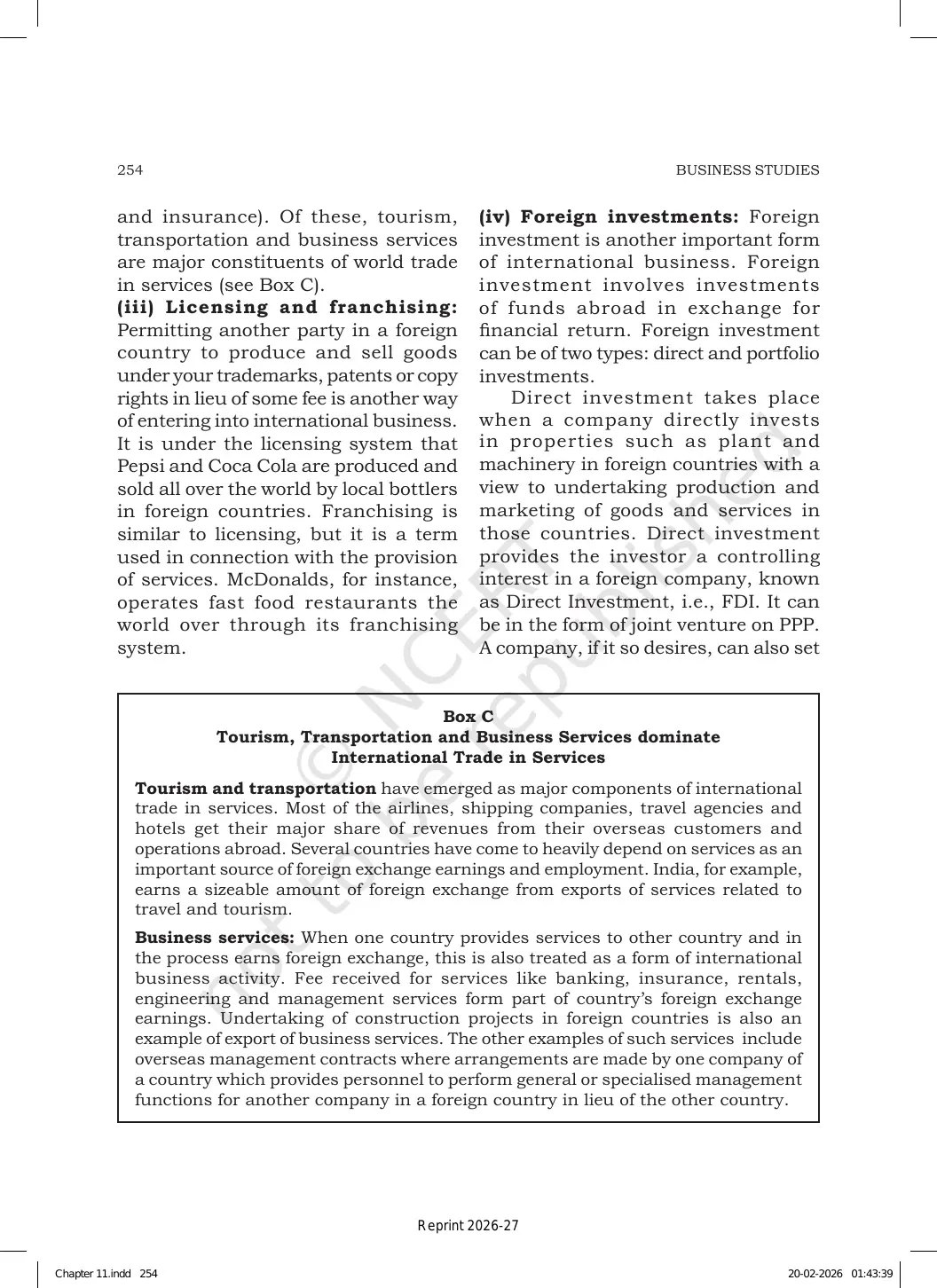
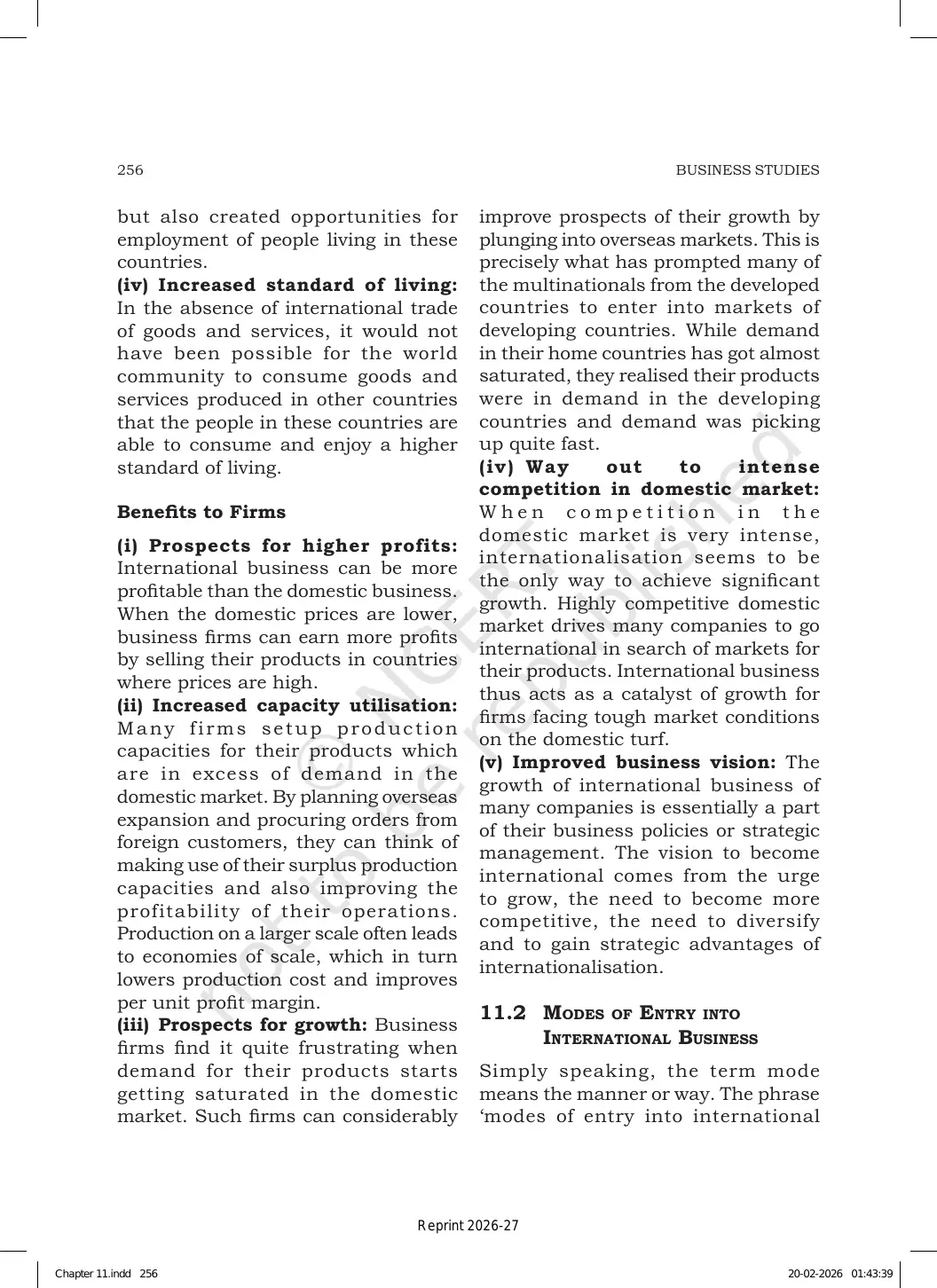
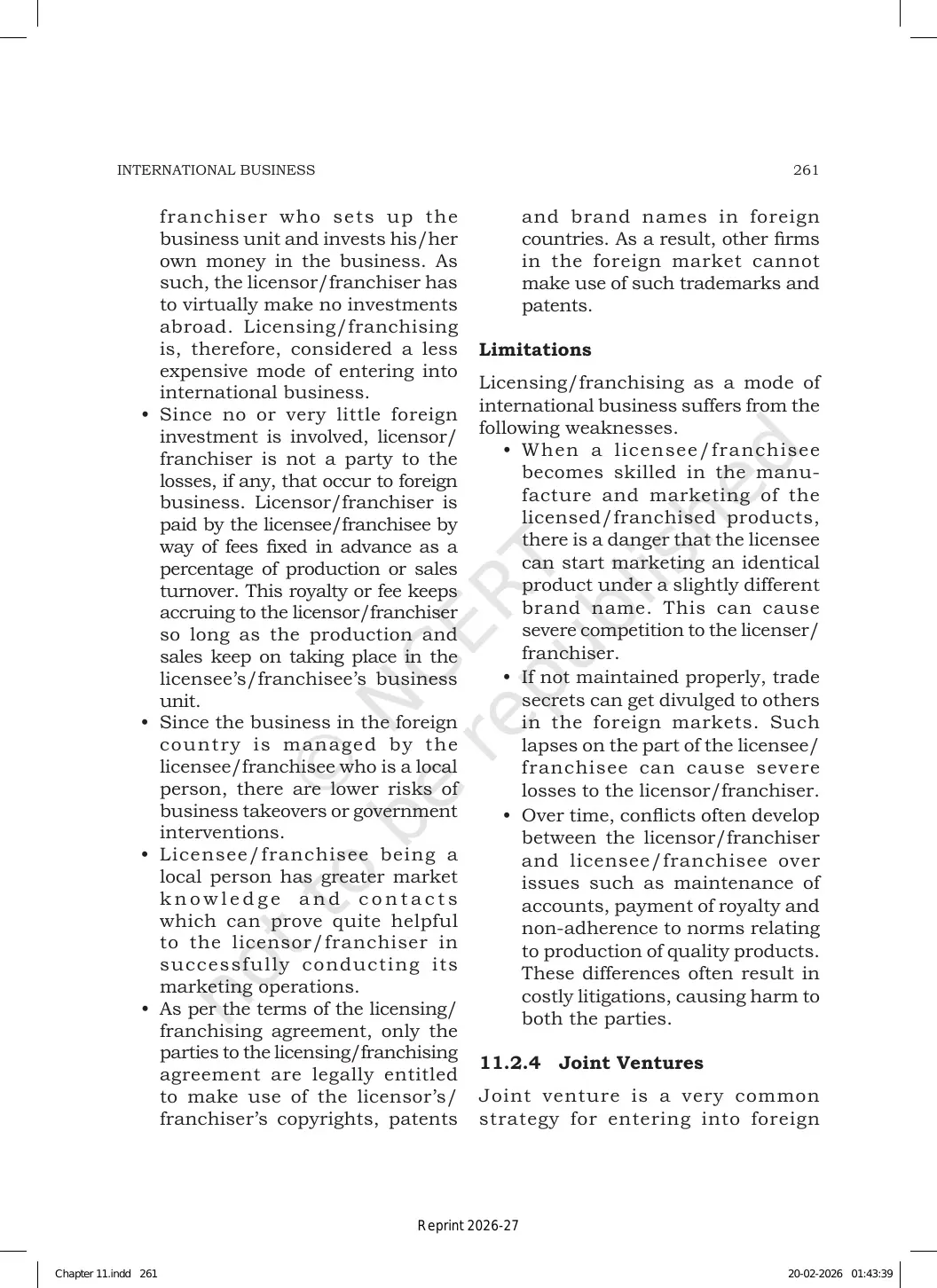
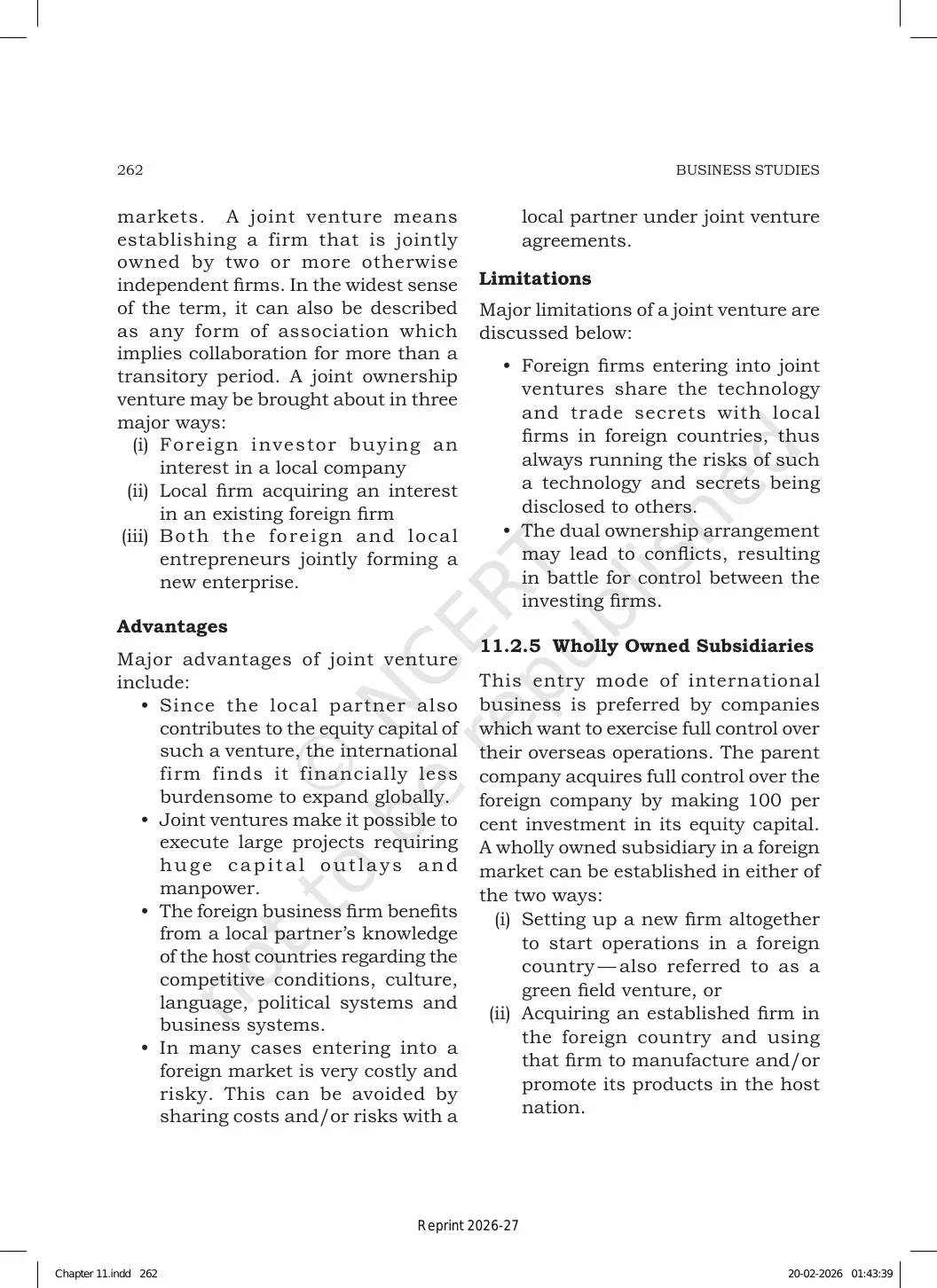
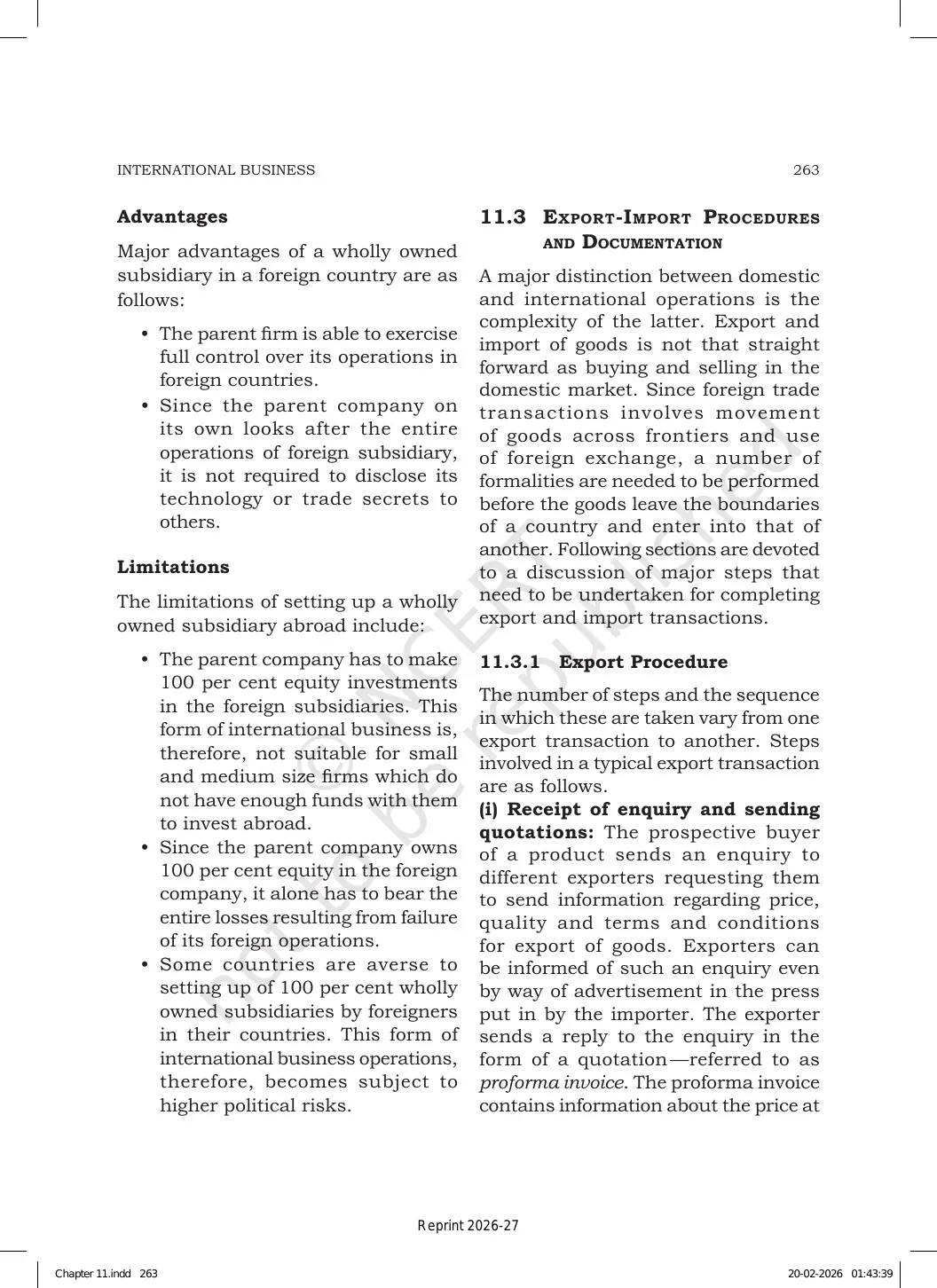
A firm chooses an entry mode based on cost, control and risk. Exporting needs less investment but gives limited control abroad. Contract-based modes allow another firm to use business rights. Investment modes give more control but need more capital.
| Entry mode | Main idea | Control |
|---|---|---|
| Exporting and importing | Goods move between the home and foreign markets | Low to medium |
| Contract manufacturing | A foreign producer makes goods for the firm | Medium |
| Licensing or franchising | A foreign business uses rights, technology or a format | Medium |
| Joint venture | Two or more firms share ownership and resources | Shared |
| Wholly owned subsidiary | The parent owns the foreign unit | High |
Export Procedure and Documents
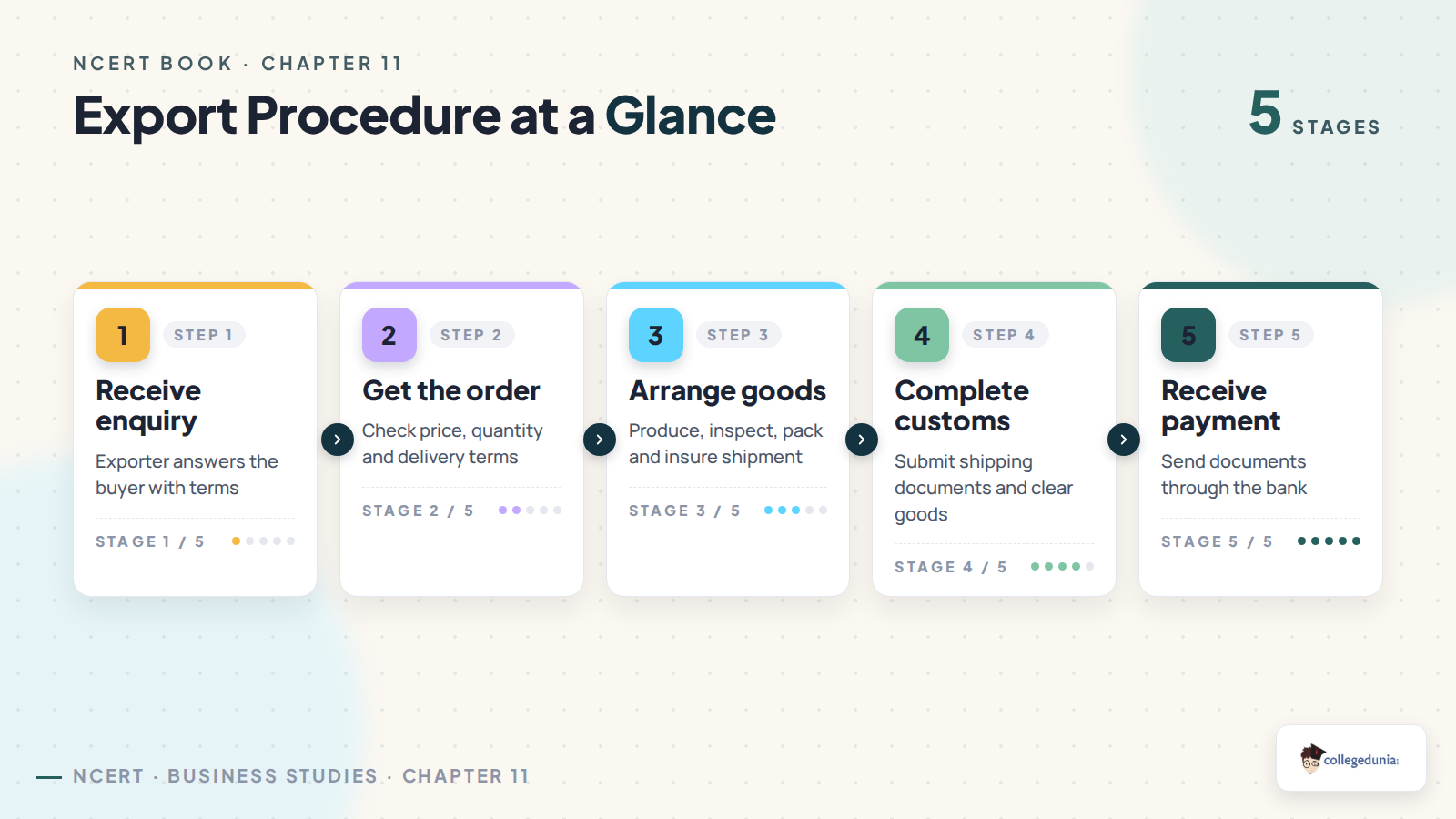
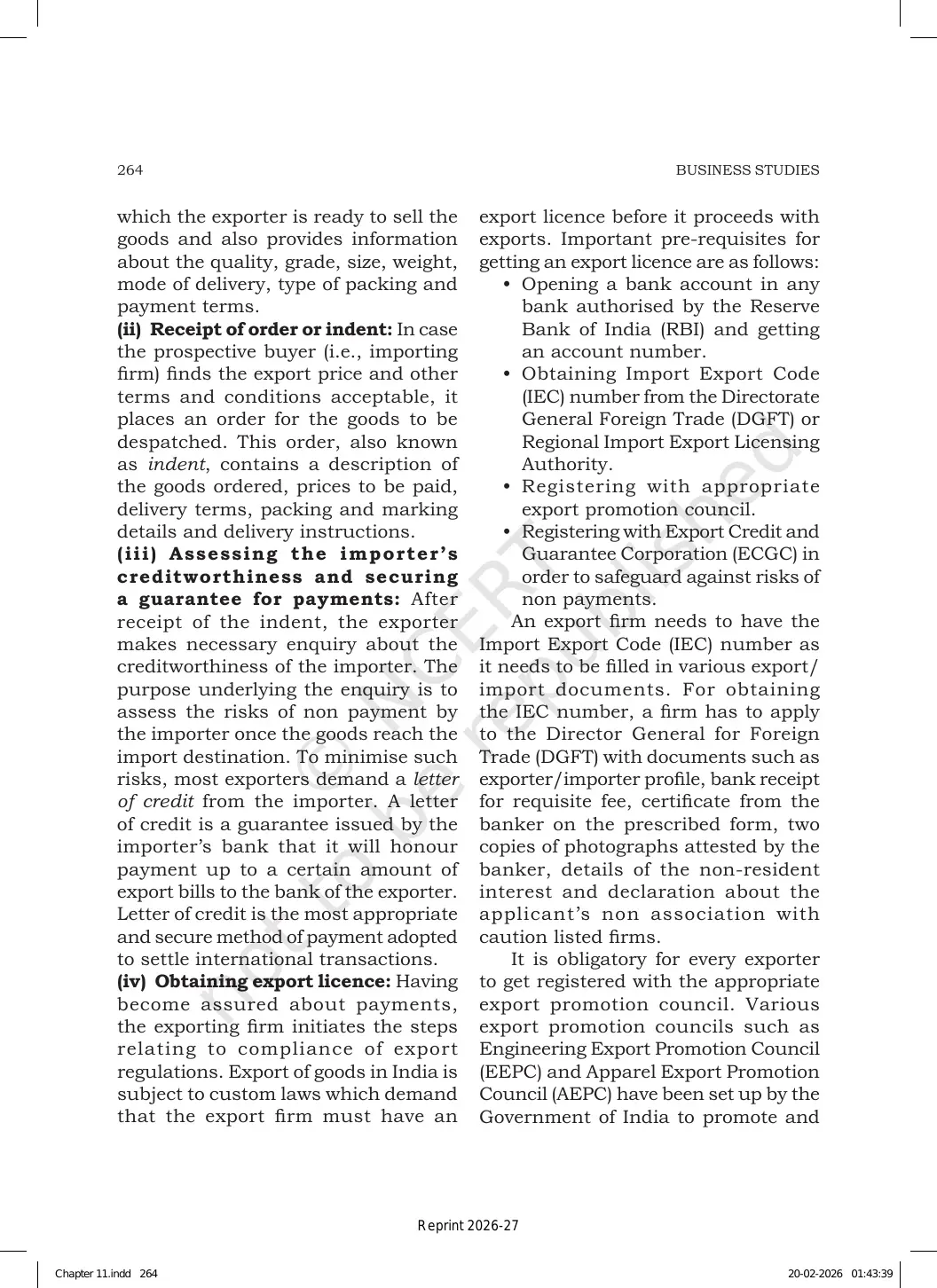
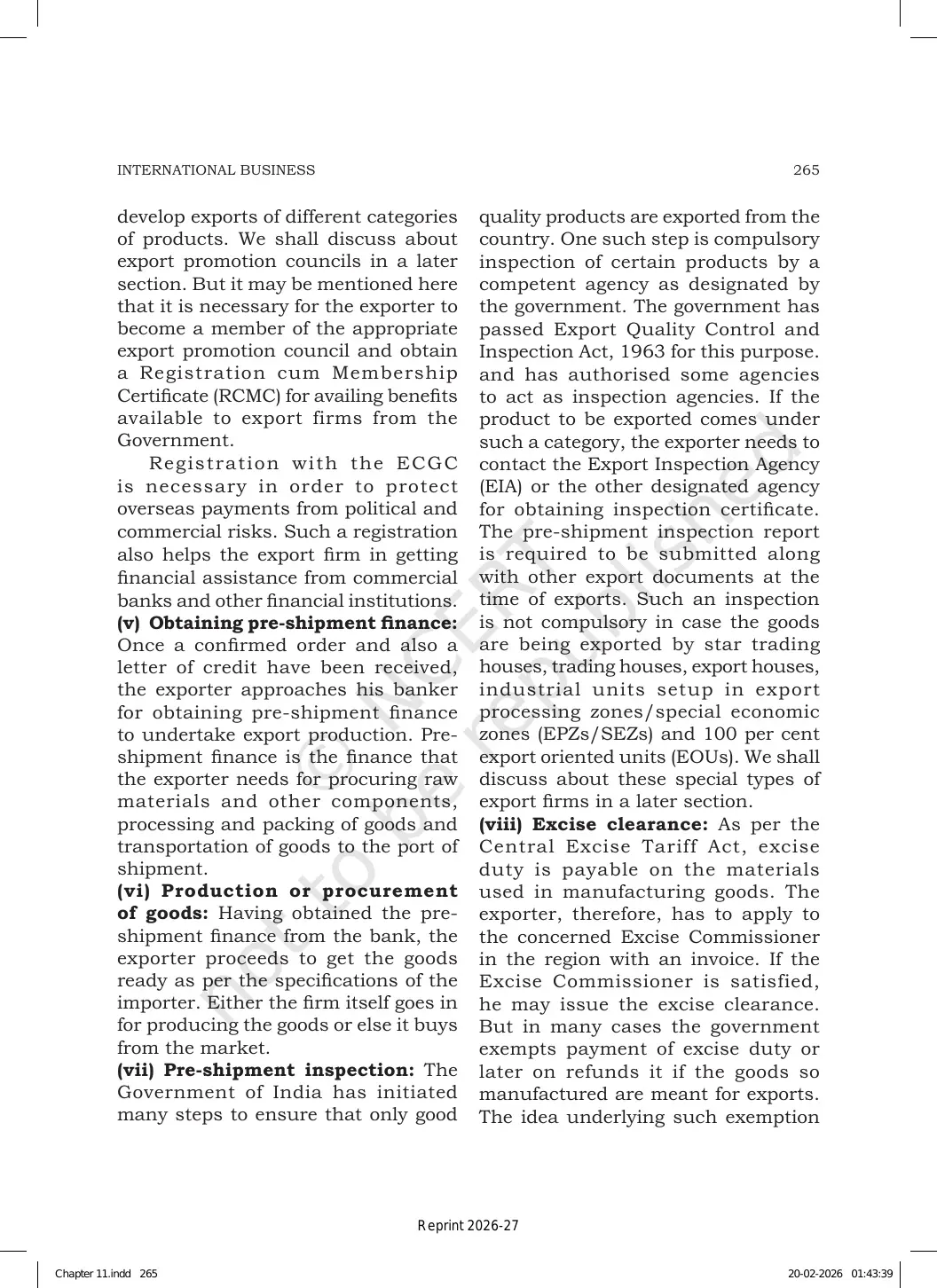
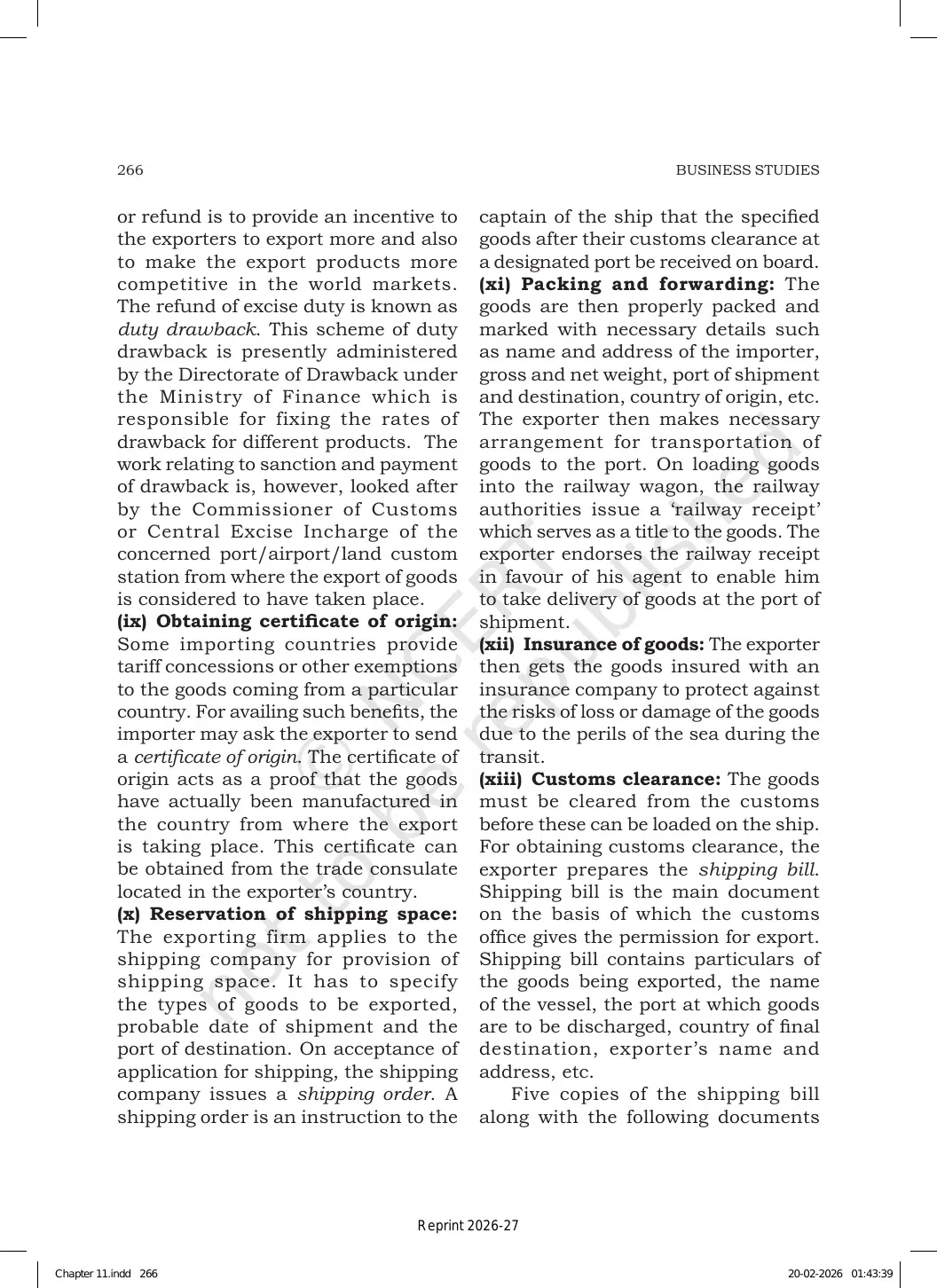
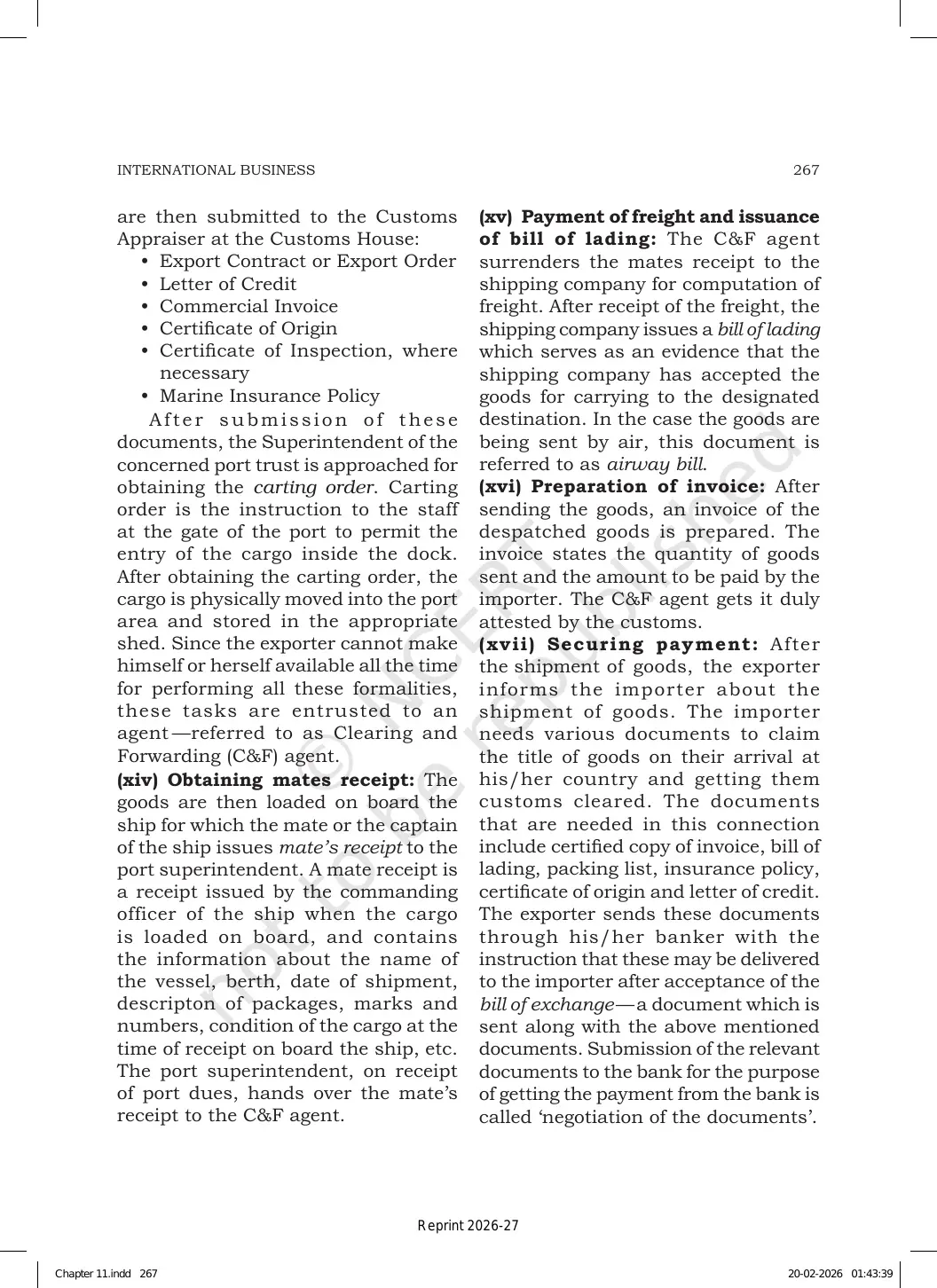
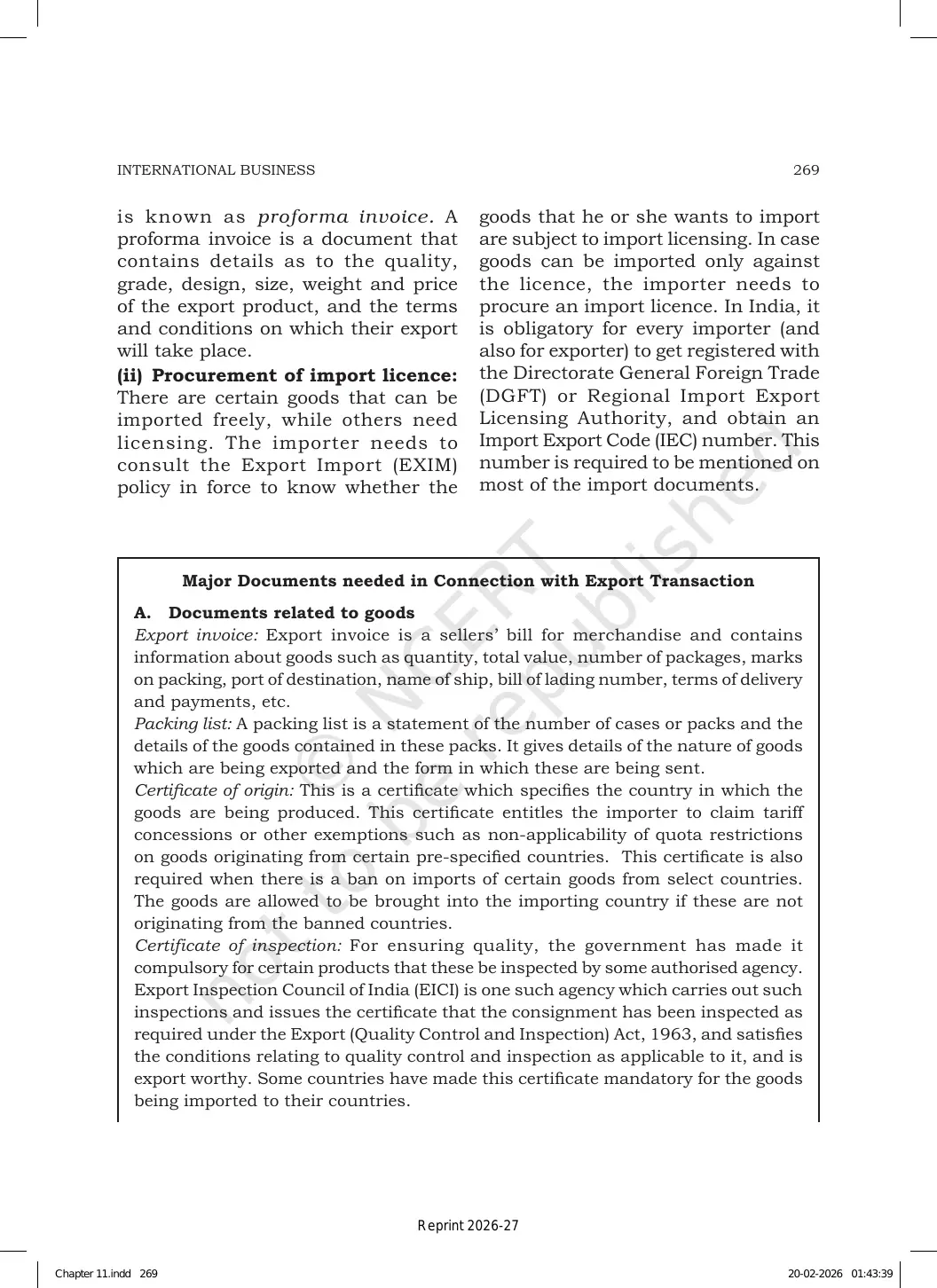
An export transaction starts with an overseas enquiry and ends when payment reaches the exporter. The firm checks the buyer, receives the order, arranges finance and goods, clears customs and sends documents through the bank.
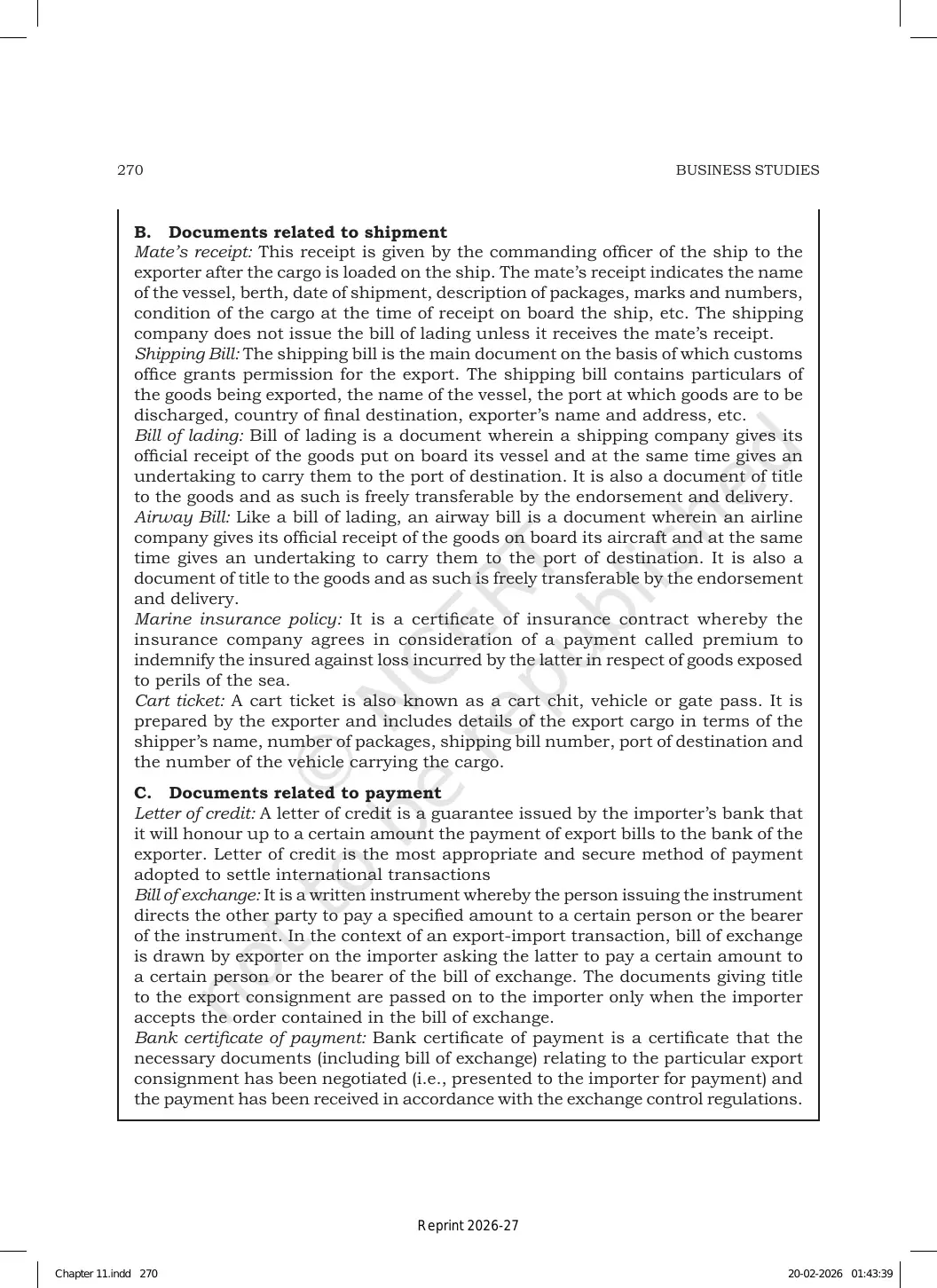
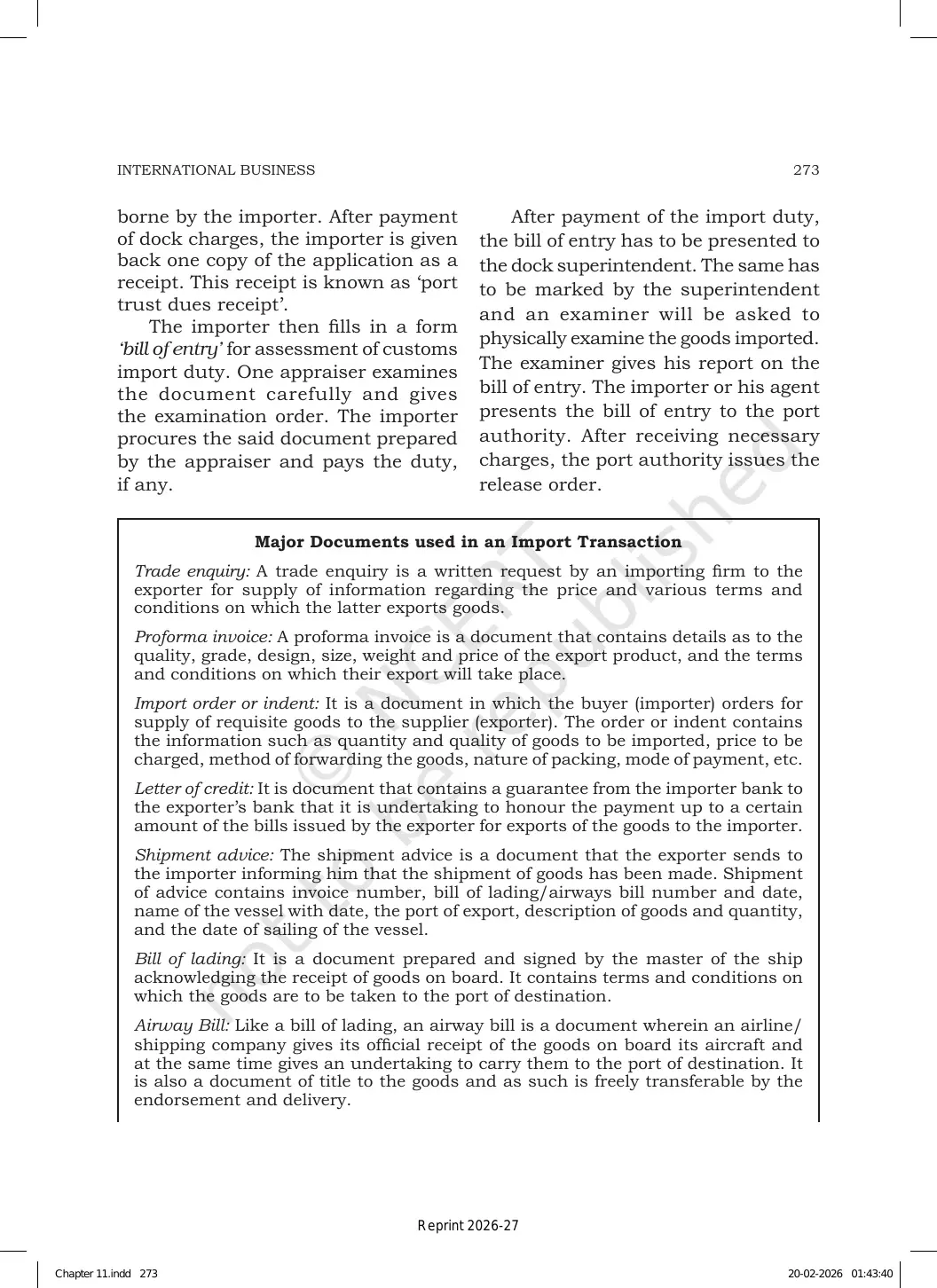
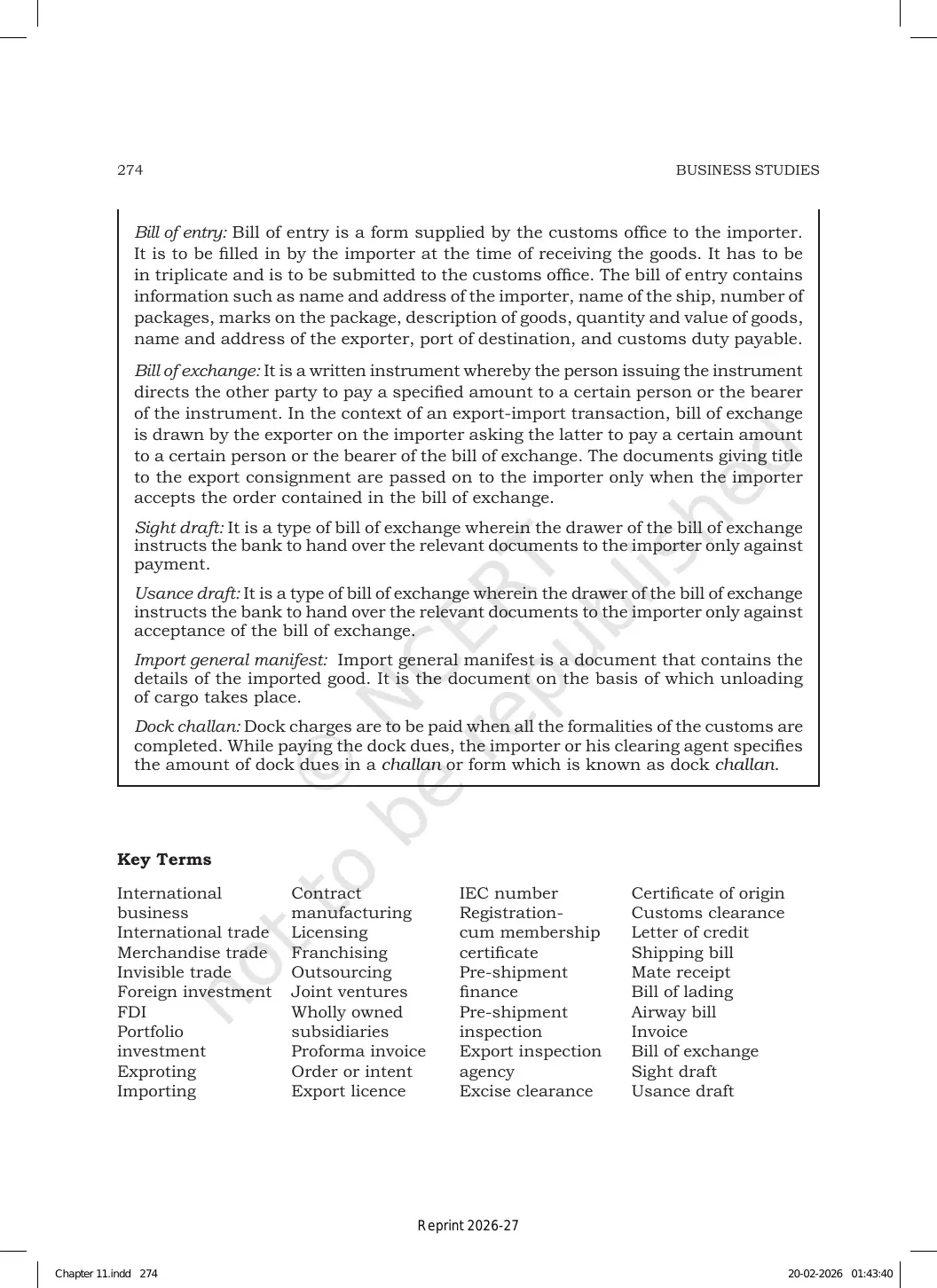
- Commercial documents: quotation, order, invoice and packing list record the sale.
- Transport documents: bill of lading or airway bill confirms shipment.
- Regulatory documents: shipping bill and certificate of origin support customs clearance.
- Payment documents: bill of exchange and bank papers support collection.
Read each document with its purpose. This is easier than memorising a long list without the transaction stage.
Import Procedure and Trade Support
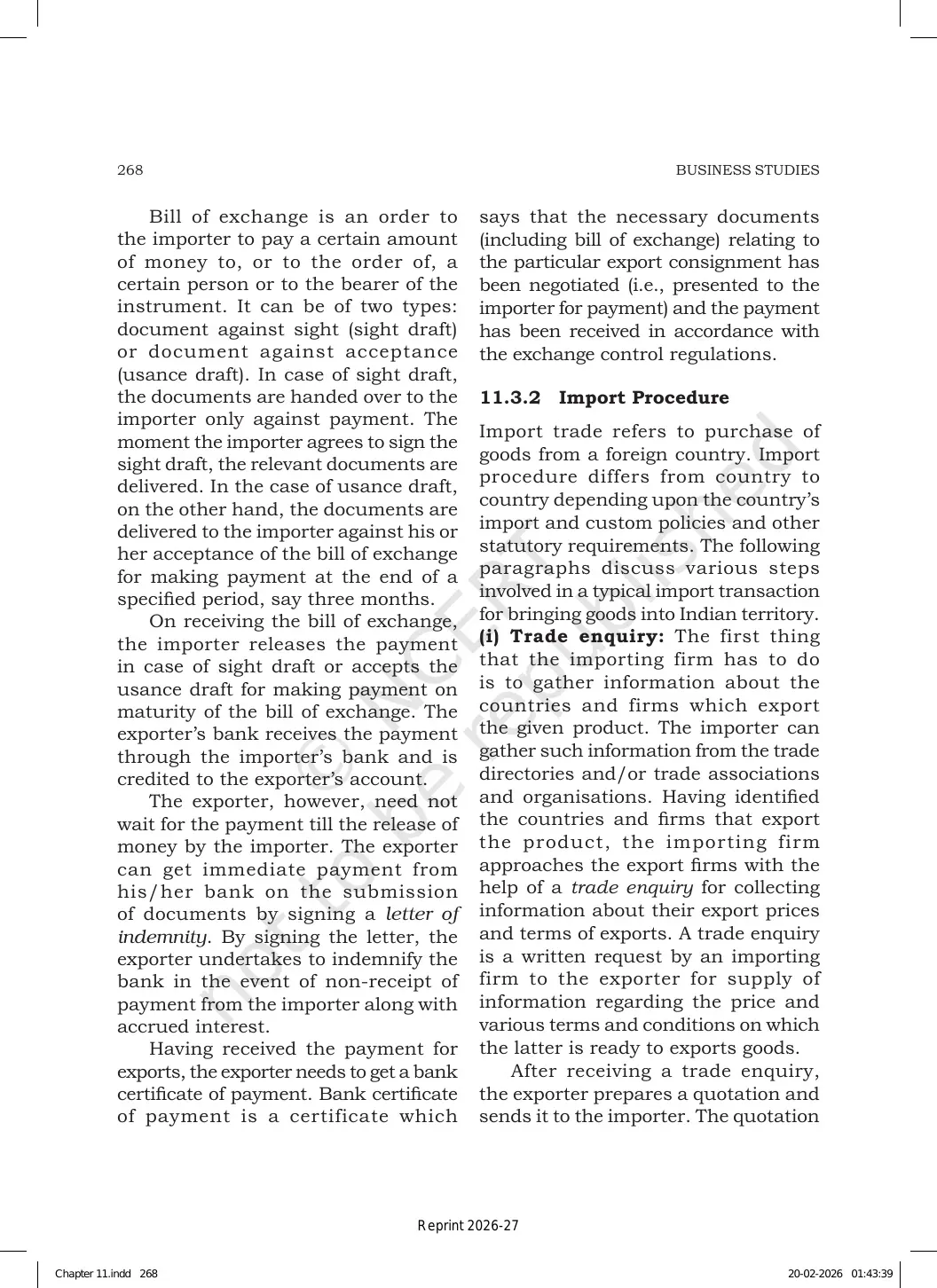
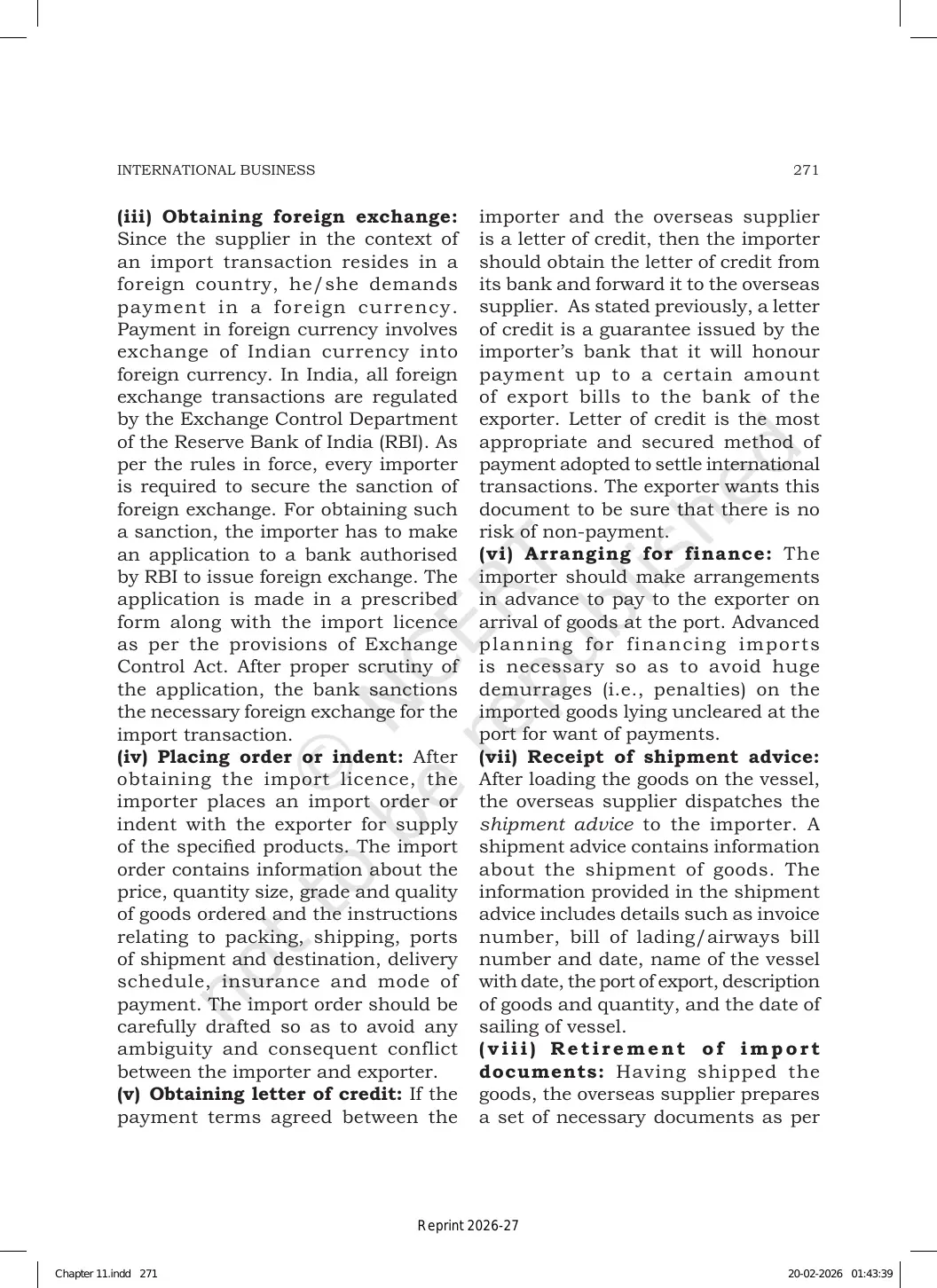
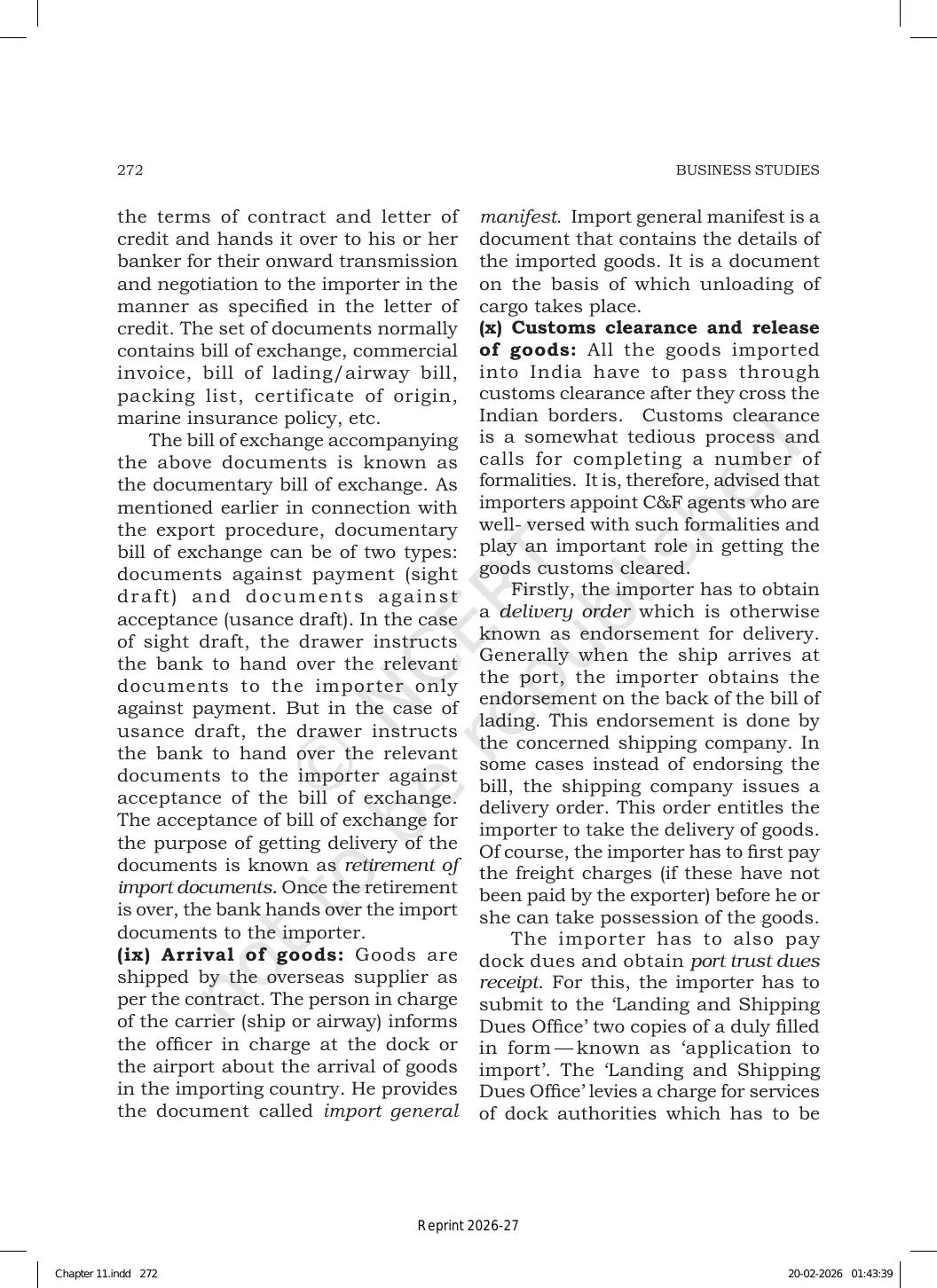
An importer first studies the need, finds a supplier and checks import rules. The importer then arranges foreign exchange, places the order, receives shipment advice and clears the goods.
The chapter also explains export promotion measures. These include duty relief, export finance, trade fairs and help from specialised bodies. Institutions such as export promotion councils, commodity boards and ECGC support different parts of the process.
WTO, IMF and World Bank Group
The World Trade Organization supports a rules-based system for international trade. It provides a forum for negotiations and helps settle trade disputes. The IMF supports monetary cooperation and balance of payments needs. World Bank institutions support development and investment.
Do not treat these bodies as identical. Link each name with its main role before learning details.
How to Study the International Business NCERT PDF
- Start with the meaning, scope and benefits of international business.
- Make a comparison table for every market entry mode.
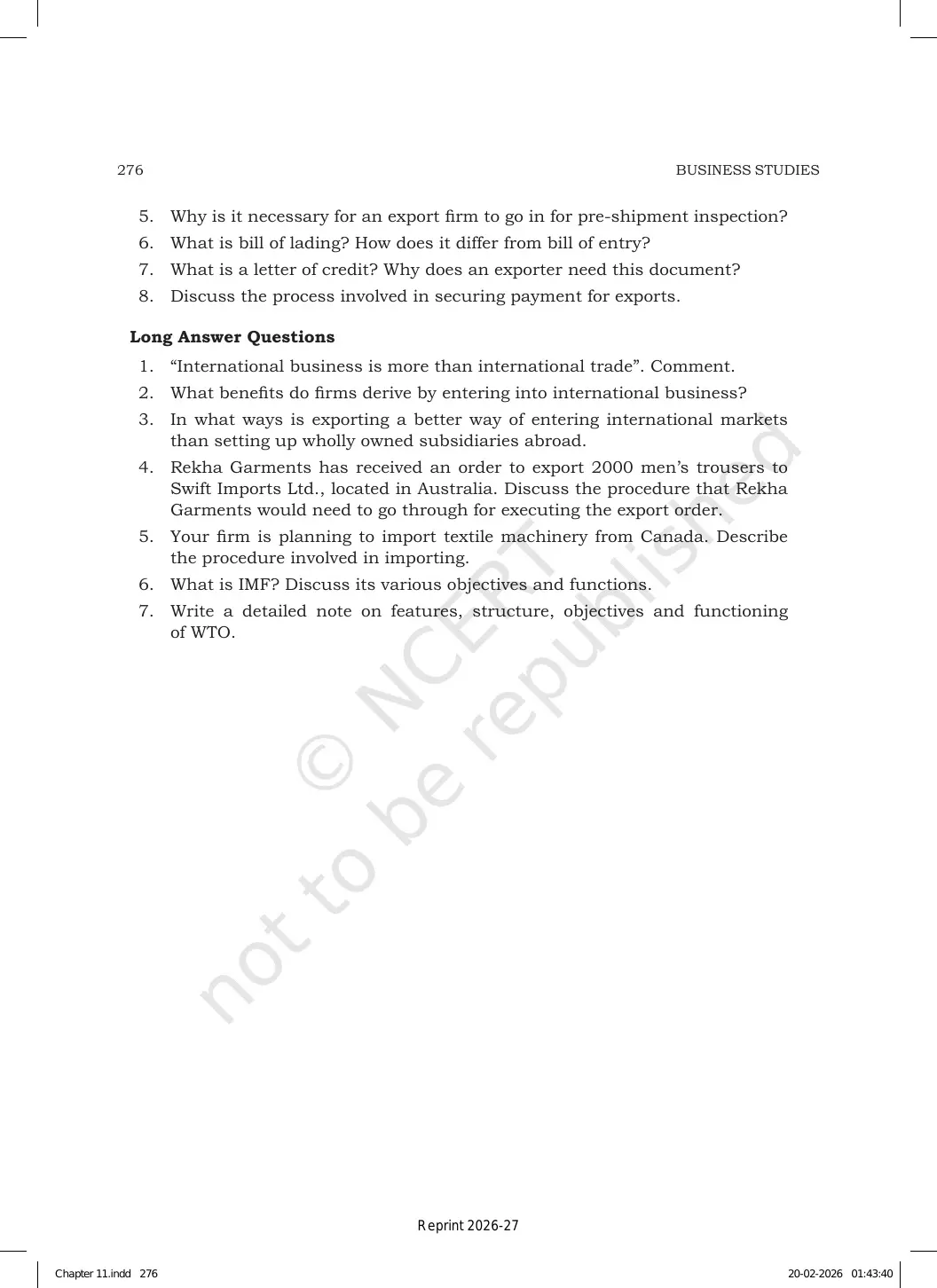
- Draw separate flowcharts for export and import procedures.
- Group documents by commercial, transport, customs and payment use.
- Finish with incentives and the roles of international institutions.
International Business Student Feedback
What 12,640 students told us: In a Collegedunia poll, most students preferred flowcharts for export and import procedures.
Source: 2026-27 Class 11 Business Studies student poll. Sample of 12,640 students from CBSE schools.
More International Business Class 11 Resources
| Resource | Best use |
|---|---|
| International Business NCERT Solutions | Textbook answers and case questions |
| International Business Notes | Concept revision and process charts |
| International Business Handwritten Notes | Quick recall before an exam |
NCERT Book for Class 11 Business Studies: All Chapters
Use these same-resource links to continue reading the Class 11 Business Studies NCERT book.
| Chapter | NCERT Book PDF |
|---|---|
| Chapter 8 | Sources of Business Finance |
| Chapter 9 | MSME and Business Entrepreneurship |
| Chapter 10 | Internal Trade |
| Chapter 11 | International Business |
International Business NCERT Book FAQs
Ques. What is international business?
Ans. International business includes business activities that take place across national borders.
Ques. Is international business the same as international trade?
Ans. No. International trade covers exports and imports, while international business also includes services, investment and overseas production.
Ques. What are the main international market entry modes?
Ans. They include exporting, contract manufacturing, licensing, franchising, joint ventures and wholly owned subsidiaries.
Ques. What is a bill of lading?
Ans. It is a transport document issued by the shipping company as evidence that goods were received for shipment.
Ques. What is the role of the WTO?
Ans. The WTO supports global trade rules, negotiations and the settlement of trade disputes.
Ques. Is this PDF based on the 2026-27 NCERT book?
Ans. Yes. It follows the official 2026-27 Class 11 Business Studies chapter.



Comments