



Emerging Trends is chapter 3 of the Class 11 Computer Science NCERT textbook, and the one chapter in the book with no Python in it. The ncert book class 11 computer science chapter 3 emerging trends file on this page is the official NCERT chapter for 2026-27. It runs from artificial intelligence and machine learning through big data, the Internet of Things, cloud computing, grid computing and blockchain, written as definitions plus real examples rather than as problems to solve.
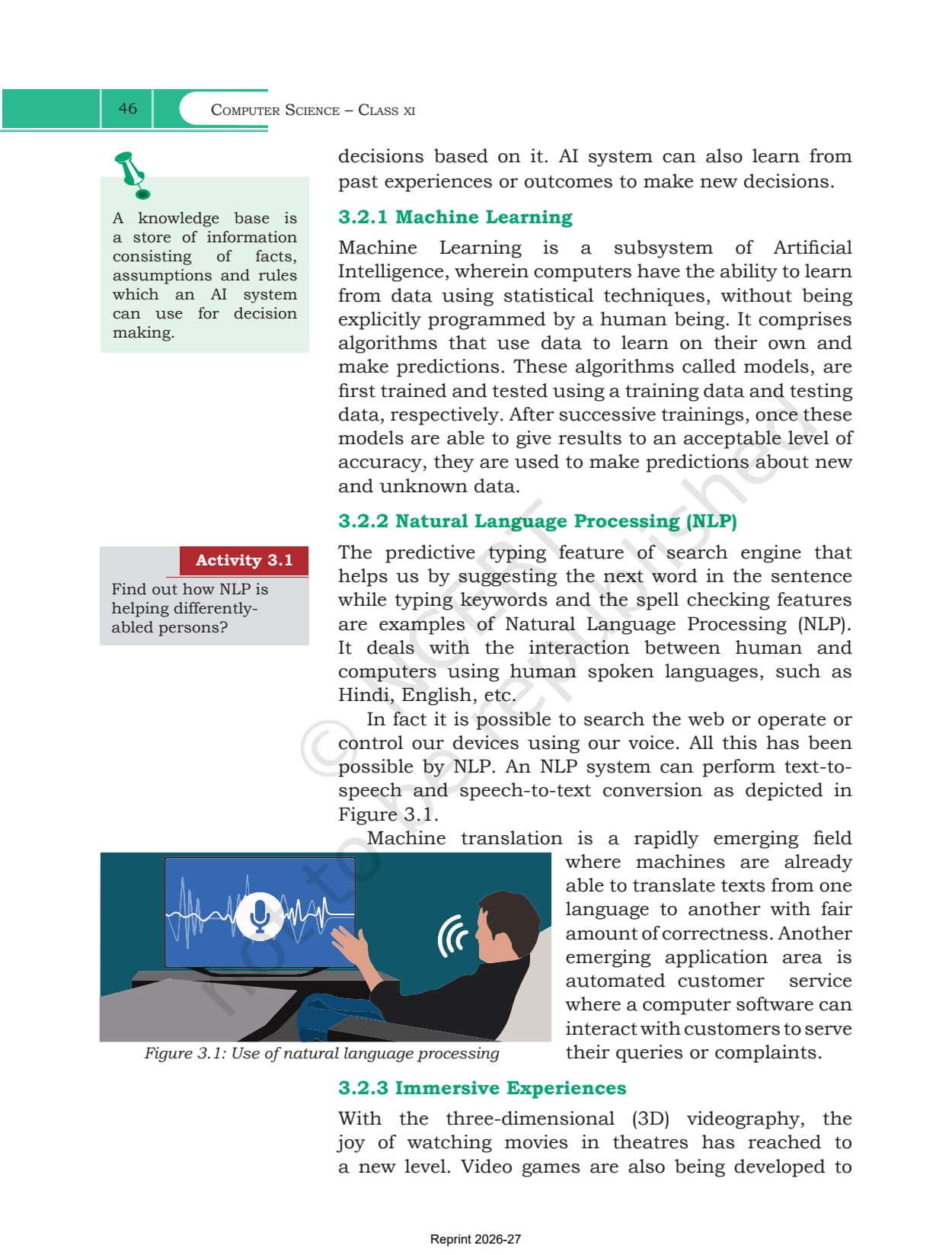
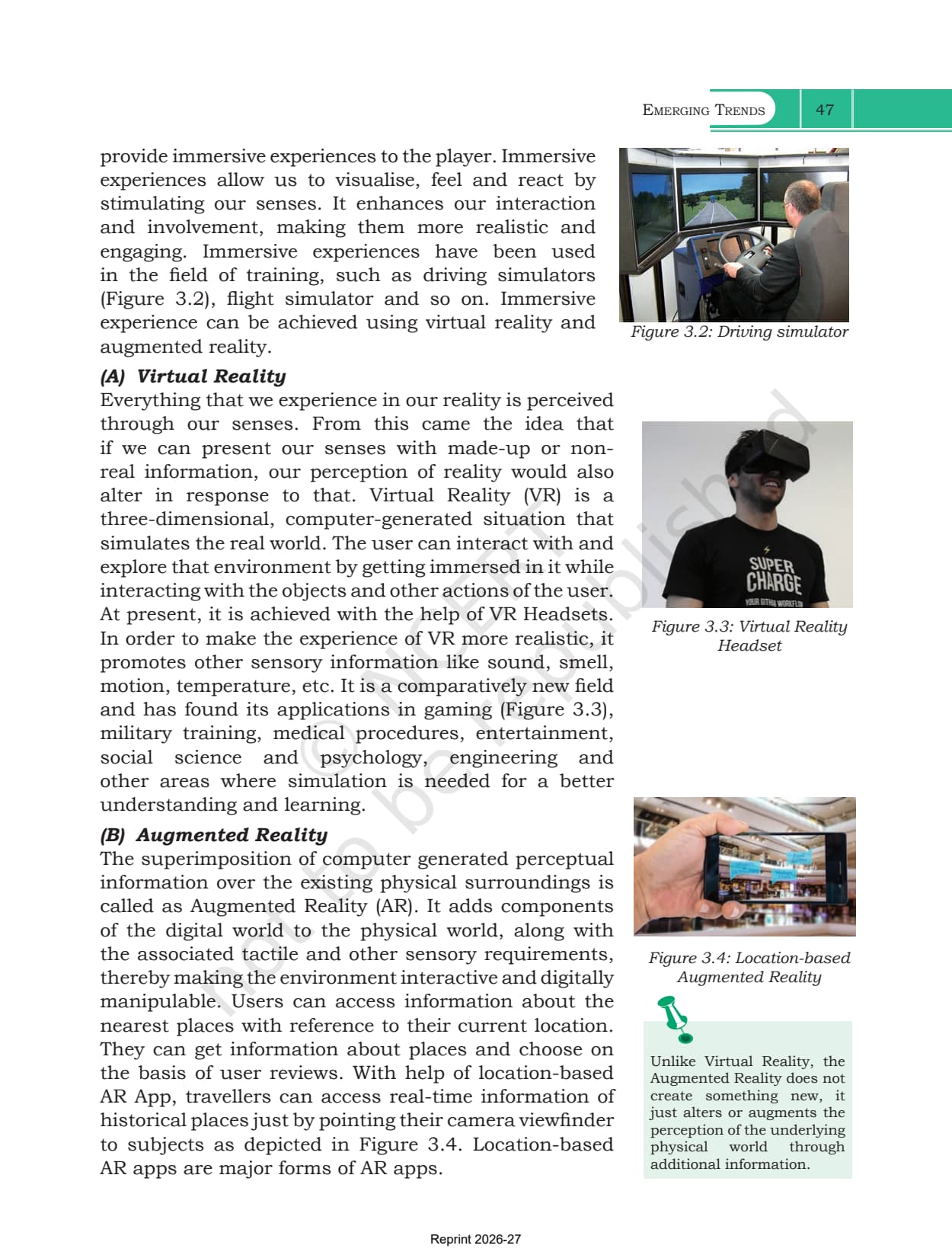
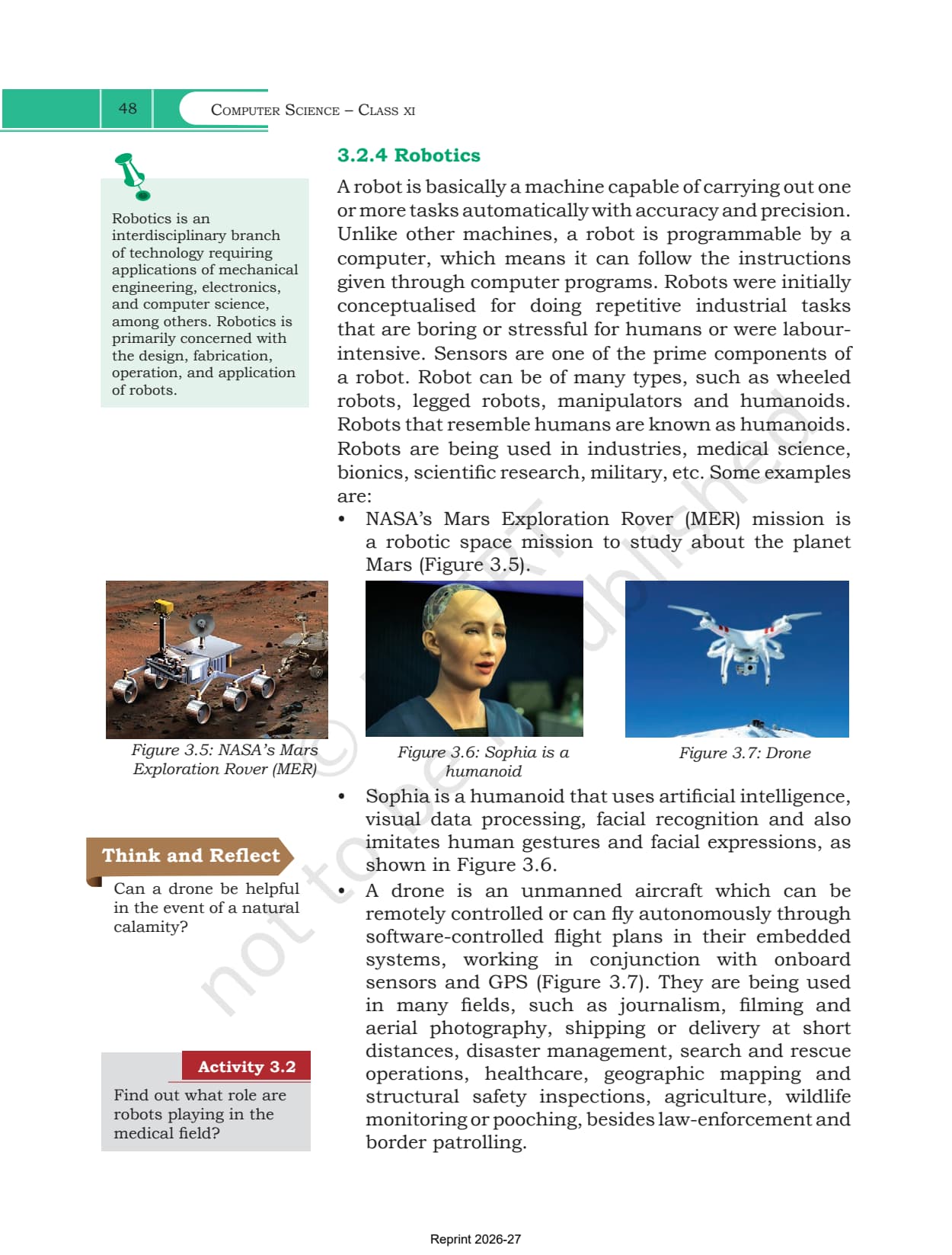
- Chapter: Chapter 3, Emerging Trends, the last theory chapter before Python programming begins
- Book: Computer Science is the Class 11 NCERT textbook for 2026-27, with 11 chapters
- File: 16 pages, the complete official chapter with its Summary and Exercise
You can page through every section, all fourteen figures and the exercise in the reader above before downloading.
This is the official NCERT chapter file for the 2026-27 session, hosted by Collegedunia with no pages removed.
|
Table of Contents |
How the Emerging Trends Chapter Is Laid Out
The chapter has seven numbered sections, each opening with a question about something you already use. The table lists them in file order.
| Section | What it covers |
|---|---|
| 3.1 Introduction | what an emerging trend is, opening with the Edsger Dijkstra line about telescopes |
| 3.2 Artificial Intelligence | AI plus four sub-topics: machine learning, natural language processing, immersive experiences and robotics |
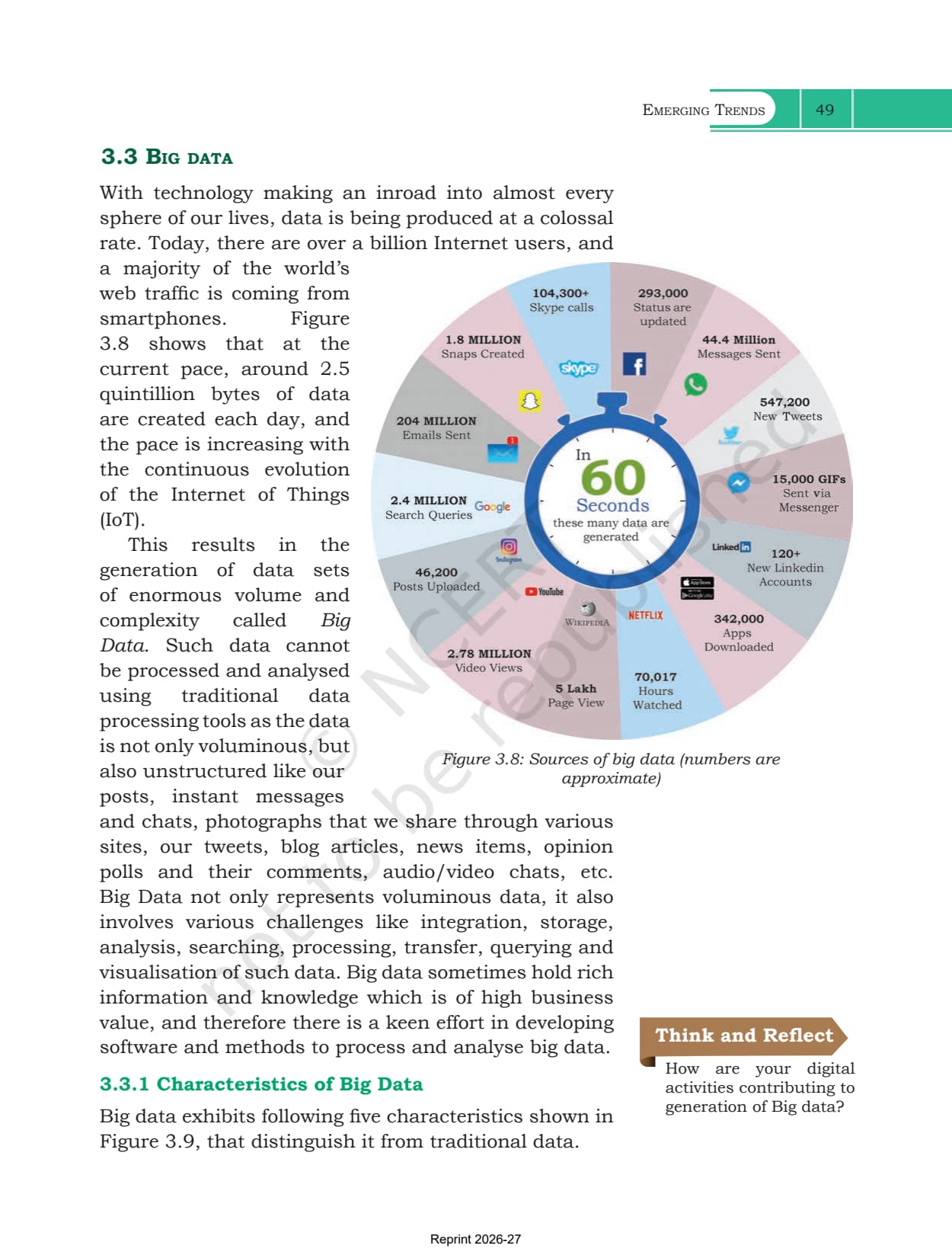
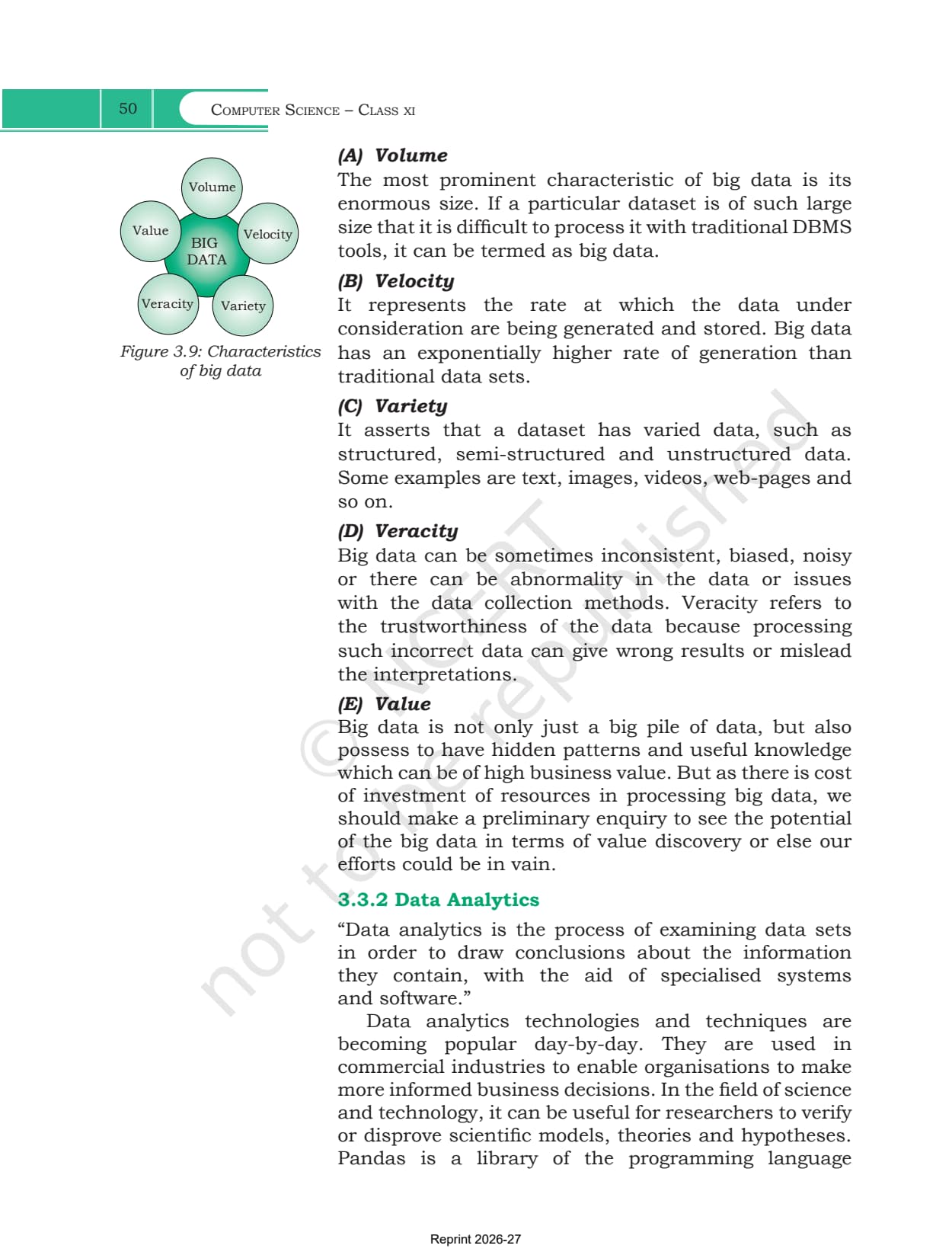
| 3.3 Big Data | why traditional tools fail on modern data, the five characteristics, and data analytics |
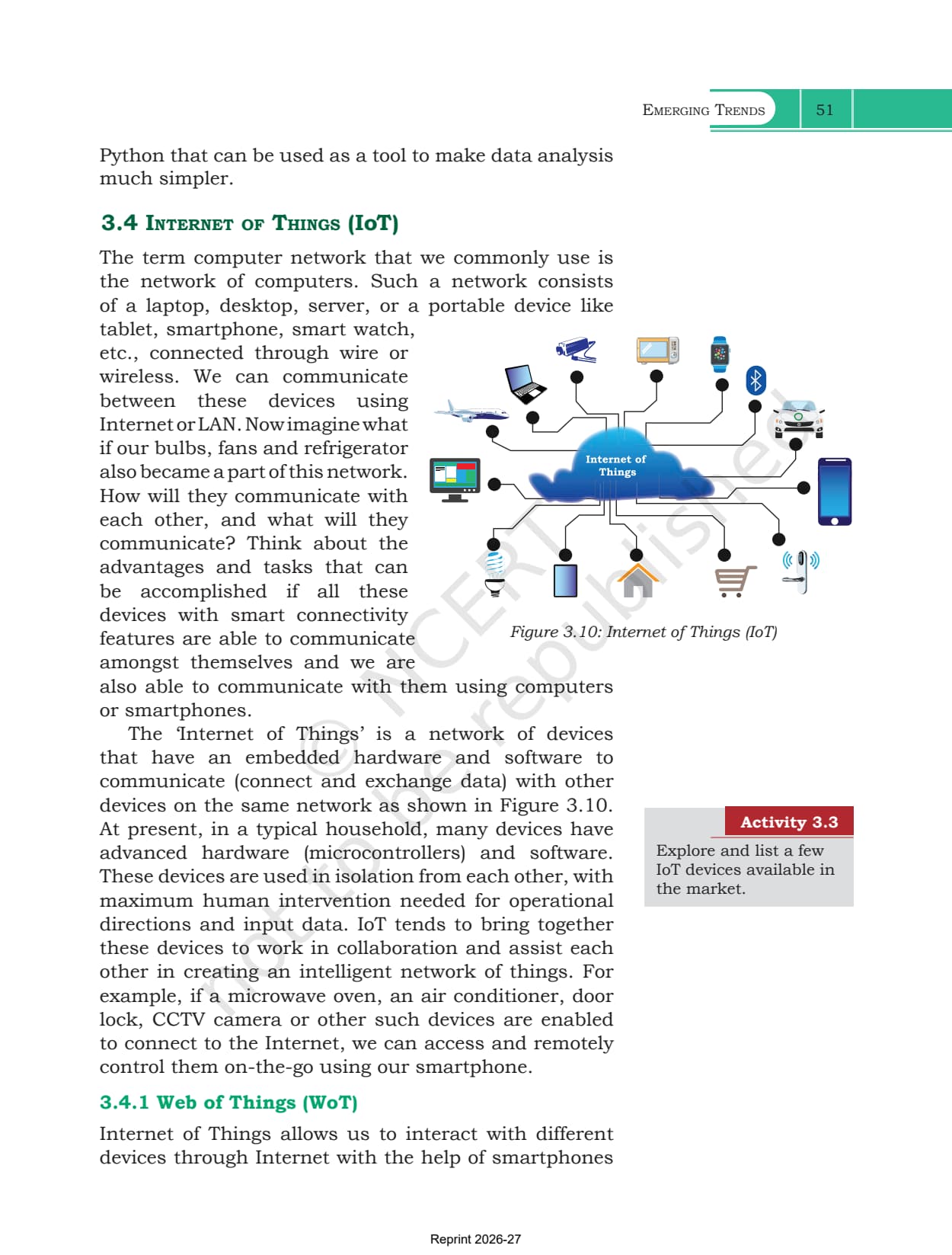
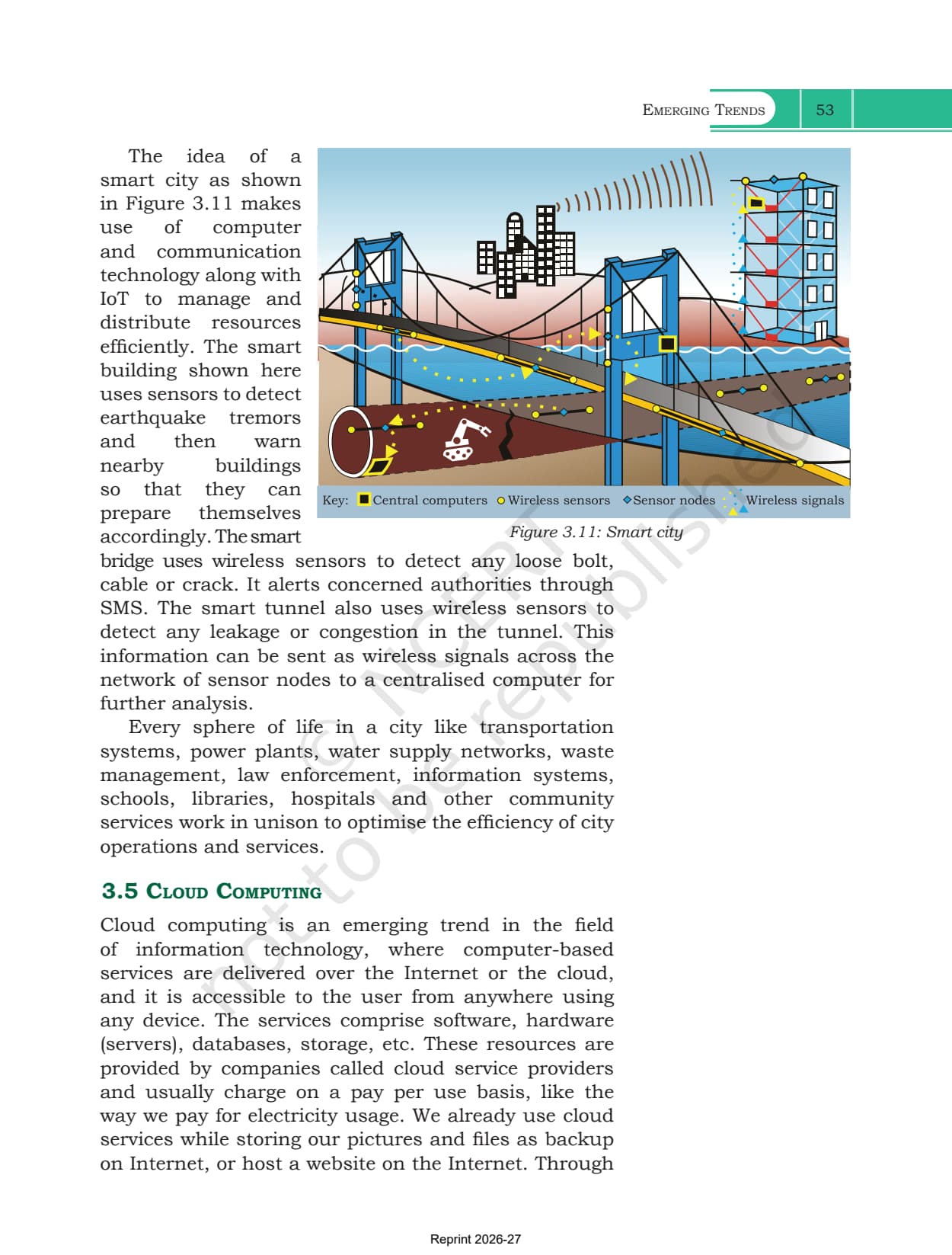
| 3.4 Internet of Things | IoT, then the Web of Things, sensors and smart cities |
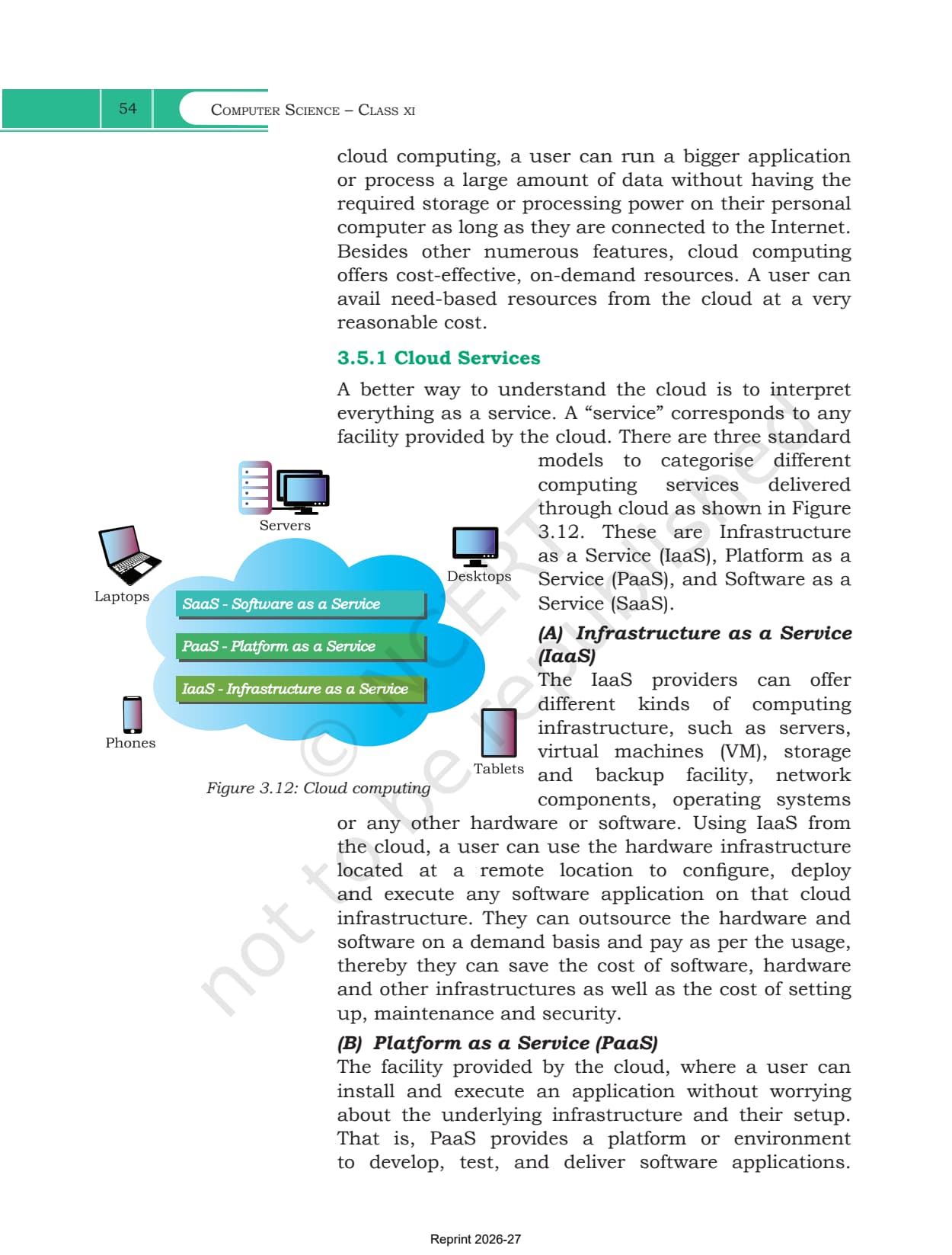
| 3.5 Cloud Computing | cloud services and the three standard models, IaaS, PaaS and SaaS |
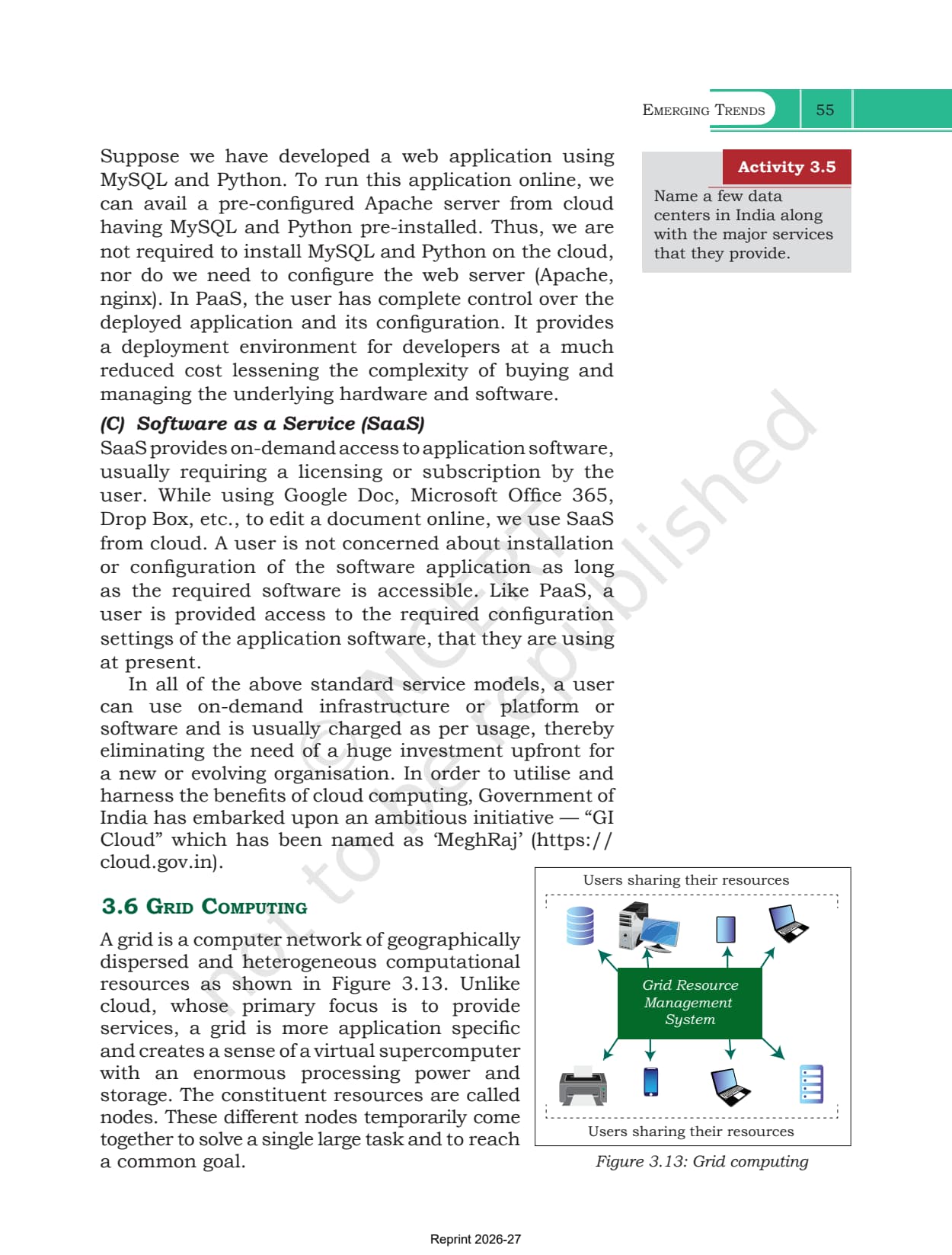
| 3.6 Grid Computing | grids, nodes, data grids, processor grids and how a grid differs from IaaS |
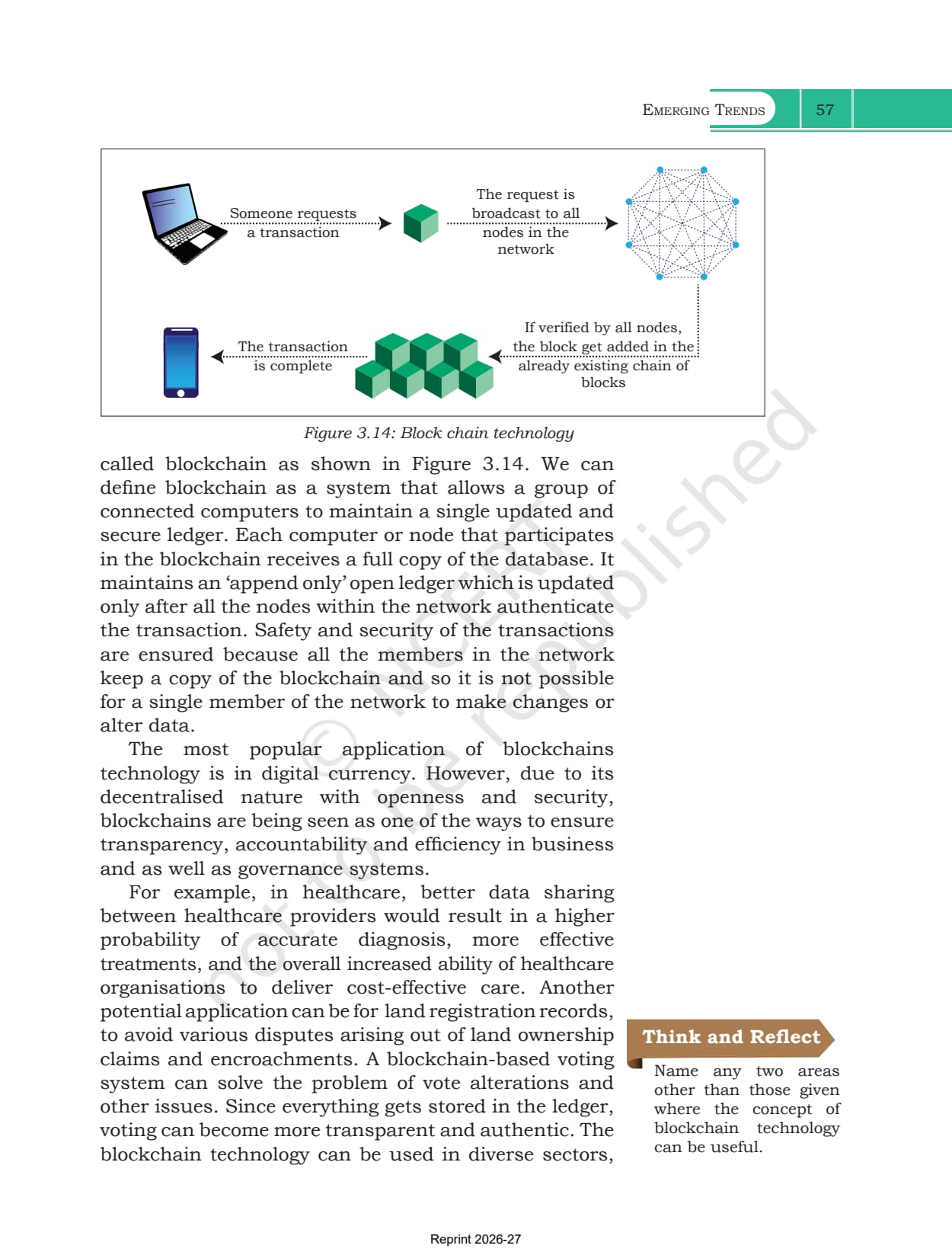
| 3.7 Blockchains | the decentralised shared ledger and its uses beyond digital currency |
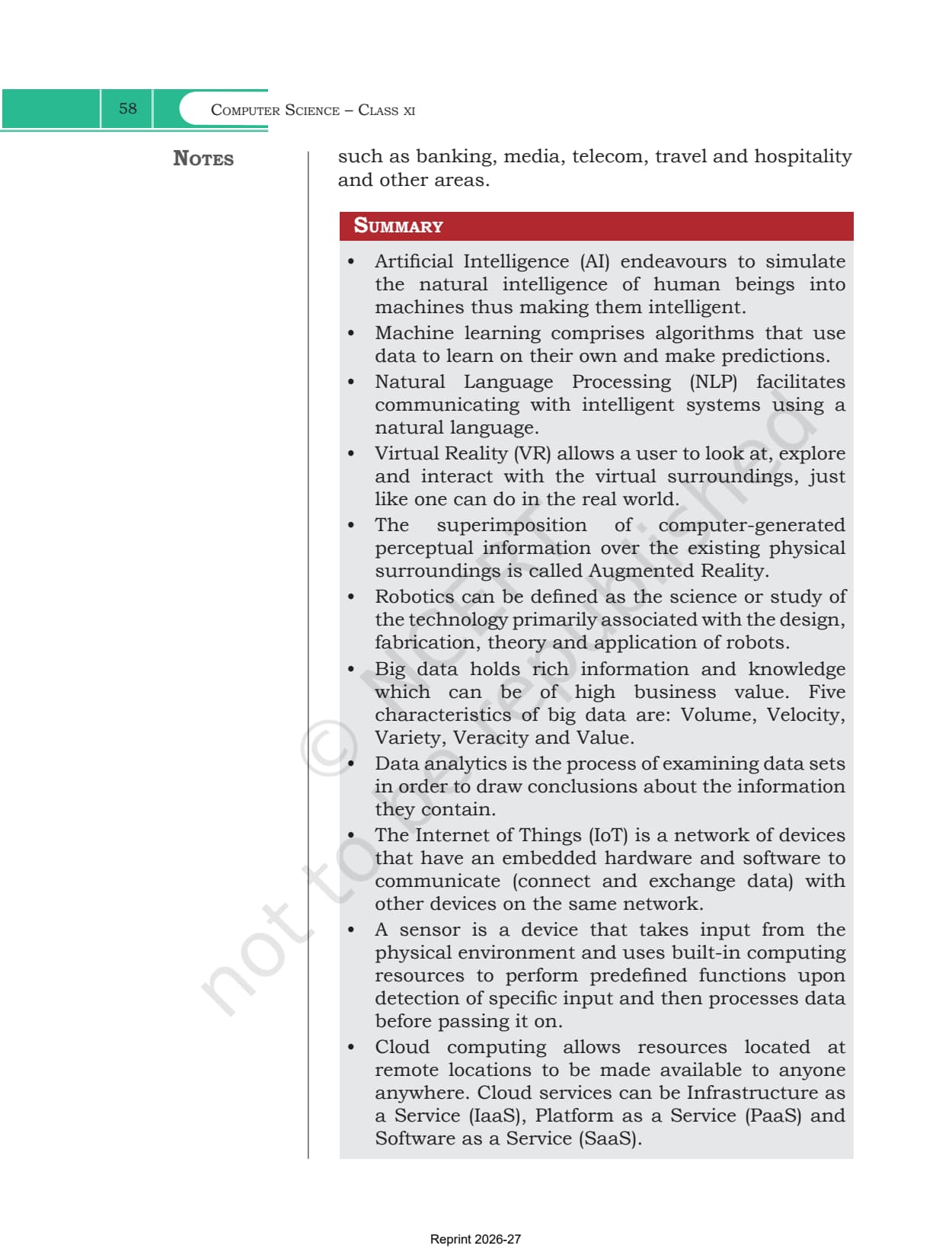
| Summary and Exercise | twelve summary bullets followed by 14 exercise questions |
What the Emerging Trends Chapter PDF Contains
The PDF holds the whole chapter exactly as NCERT printed it, margin boxes and all.
- All seven numbered sections, 3.1 to 3.7, in the printed order
- Fourteen figures, from the text-to-speech diagram in Figure 3.1 to the four-step blockchain flow in Figure 3.14
- Five Activity boxes and four Think and Reflect prompts set in the outer margins
- Margin definitions for knowledge base and robotics, plus the augmented against virtual reality note
- The full Summary list and all 14 Exercise questions, including the IoT column-matching table
Emerging Trends Class 11 Explained in One Shot
Source: Magnet Brains on YouTube
Emerging Trends Terms You Have to Define Exactly
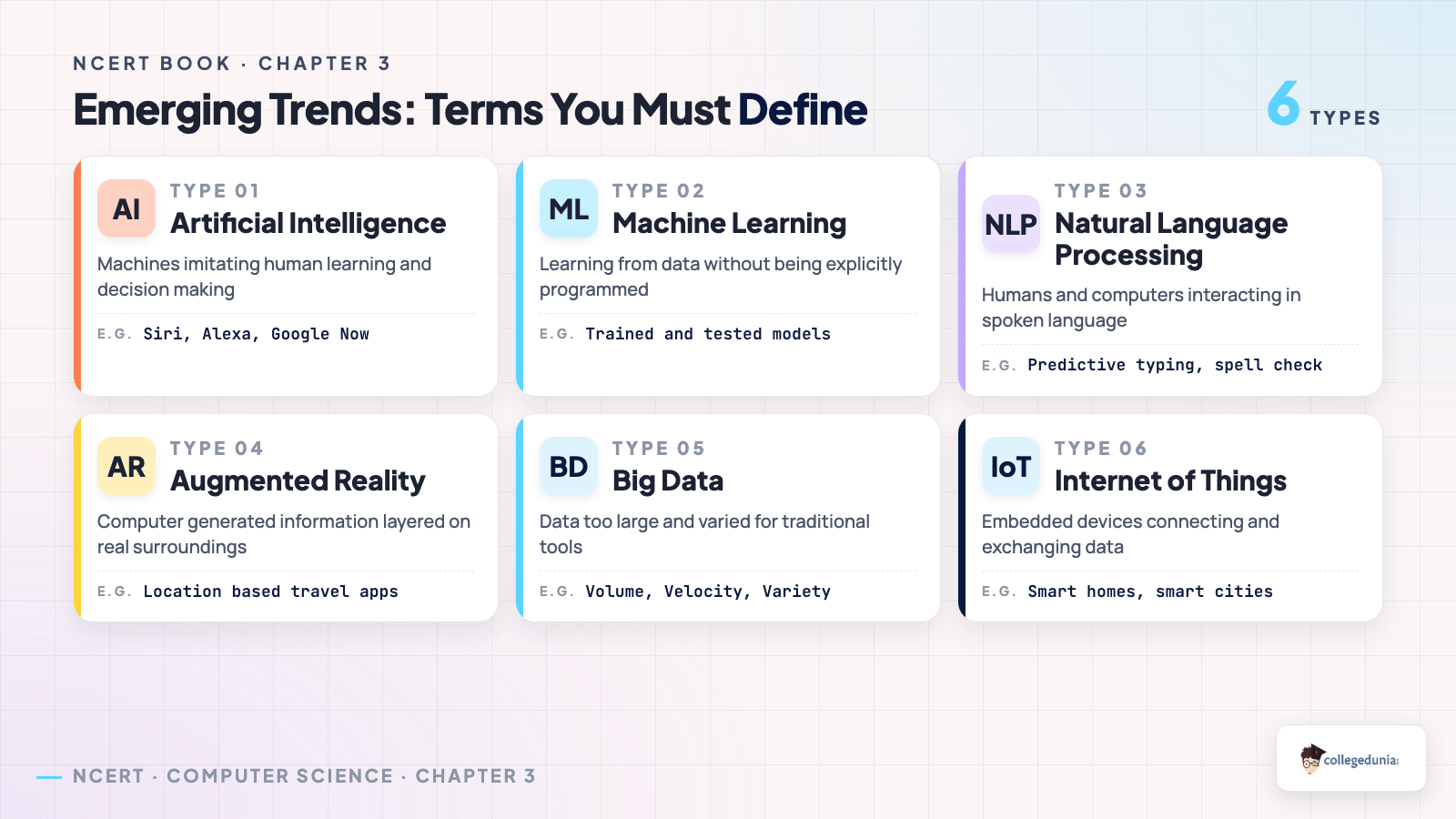
Almost every question here is a definition question, so wording matters more than length. Write the NCERT sentence first, then add one example. The table collects the terms in the chapter's own words.
| Term | How the chapter defines it |
|---|---|
| Artificial Intelligence | simulating human intelligence in machines so they imitate learning, decision making and problem solving |
| Machine Learning | a subsystem of AI where computers learn from data using statistical techniques, without being explicitly programmed |
| Natural Language Processing | interaction between humans and computers using spoken languages such as Hindi or English |
| Immersive experience | visualising, feeling and reacting through stimulated senses, achieved with virtual or augmented reality |
| Virtual Reality | a three-dimensional, computer-generated situation that simulates the real world, explored through VR headsets |
| Augmented Reality | superimposing computer-generated perceptual information over the existing physical surroundings |
| Robot | a machine doing tasks automatically with accuracy and precision, and programmable by a computer; a humanoid resembles a human |
| Big Data | data sets of enormous volume and complexity that traditional processing tools cannot handle |
| Data analytics | examining data sets to draw conclusions about the information they contain, using specialised software |
| Internet of Things | a network of devices with embedded hardware and software that exchange data on the same network |
| Web of Things | using web services to connect anything physical, so one interface replaces one app per device |
| Smart sensor | a device that takes input from the environment, runs predefined functions on it and processes data before passing it on |
| Blockchain | connected computers maintaining one updated, secure, append-only ledger that changes only after every node authenticates |
Cloud Computing, Grid Computing and the Three Service Models
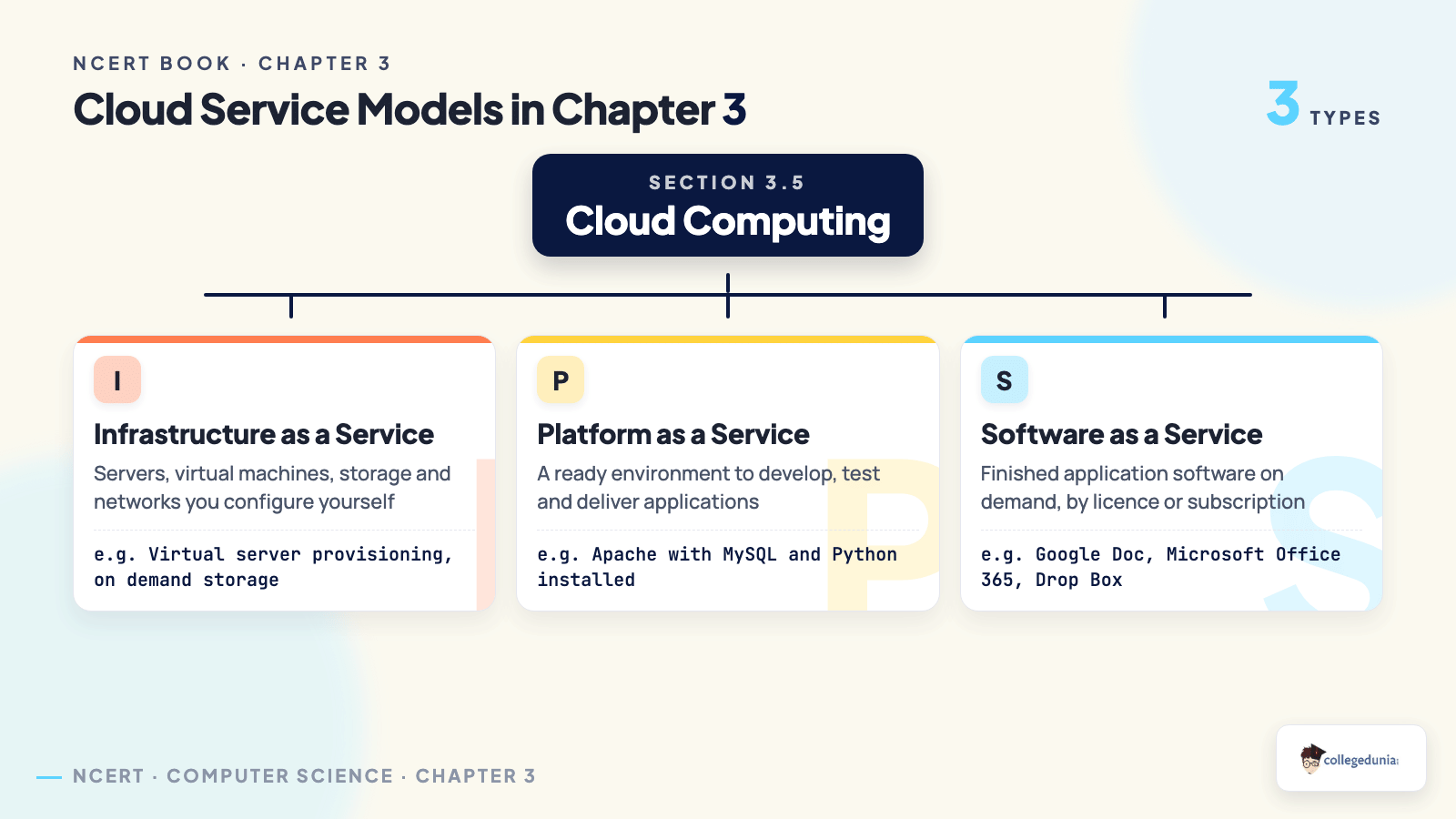
Section 3.5 is the most heavily examined part of the chapter, and Exercise question 9 tests the three service models directly. Ask what the provider hands you: raw hardware, a ready environment, or a finished application.
| Model | What you get | Example from the chapter |
|---|---|---|
| Infrastructure as a Service (IaaS) | servers, virtual machines, storage, backup and network components you configure yourself | renting server provisioning and on-demand storage instead of buying hardware |
| Platform as a Service (PaaS) | a ready environment to develop, test and deliver applications, setup already done | a pre-configured Apache server with MySQL and Python installed |
| Software as a Service (SaaS) | on-demand access to finished software, usually by licence or subscription | editing a document online in Google Doc, Microsoft Office 365 or Drop Box |
Grid computing follows in section 3.6. A grid is a network of geographically dispersed and heterogeneous computational resources called nodes, which come together temporarily to solve one large task, creating a virtual supercomputer. Grids are of two types, data grids and processor grids.
What the Emerging Trends Exercise Asks
The 14 exercise questions are almost all written answers, and several ask you to apply a definition to a situation rather than repeat it.
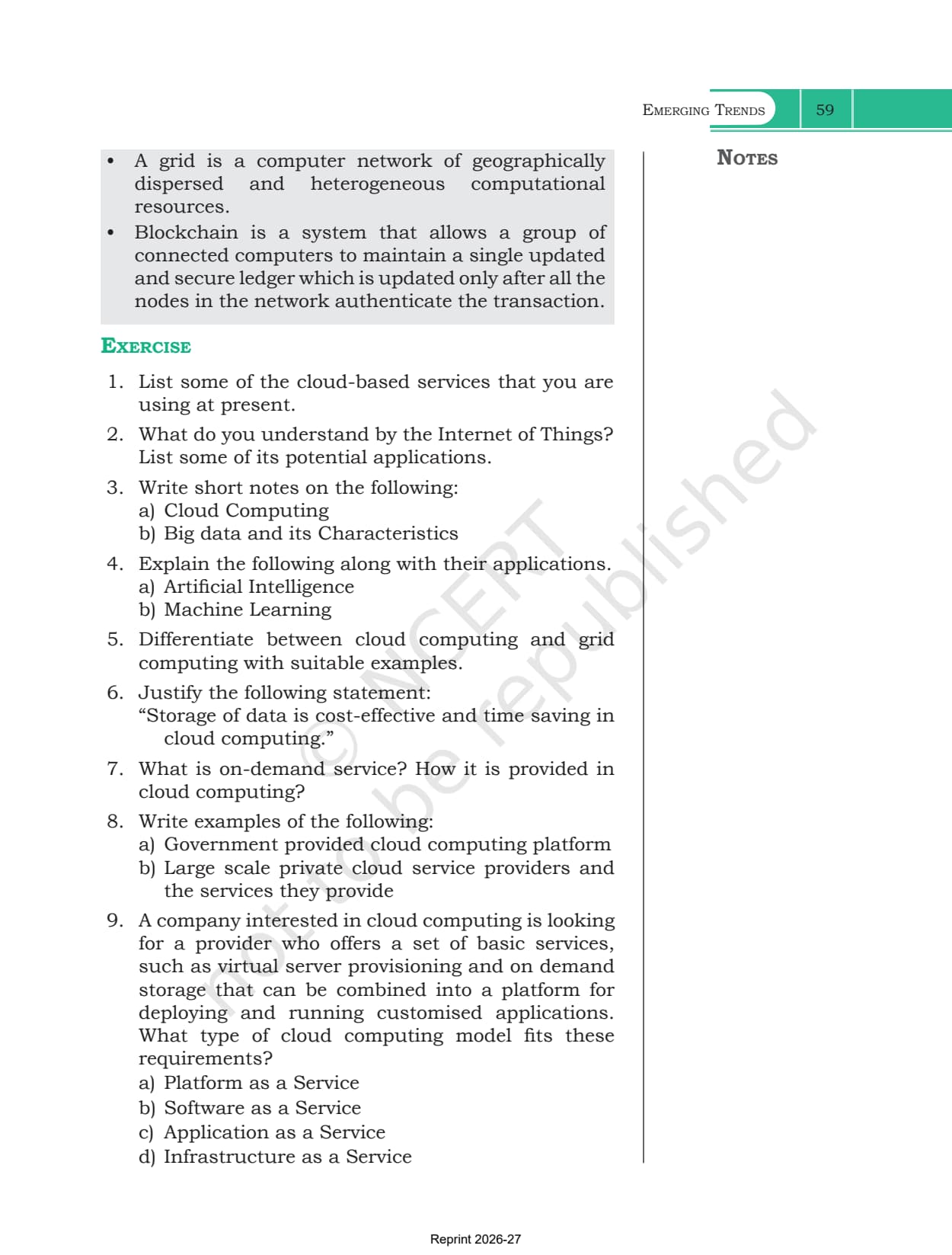
- Definition questions: short notes on cloud computing and on big data with its characteristics, plus AI and machine learning with applications
- Comparison questions: cloud computing against grid computing with examples, and how IoT and the Web of Things are related
- Application questions: turning a school into an IoT-enabled smart school using e-textbooks, smart boards, wifi door sensors, bus sensors and wearables
- Case-style questions: five friends on a limited budget choosing cloud services for a startup, and a report on blockchain for scholarships
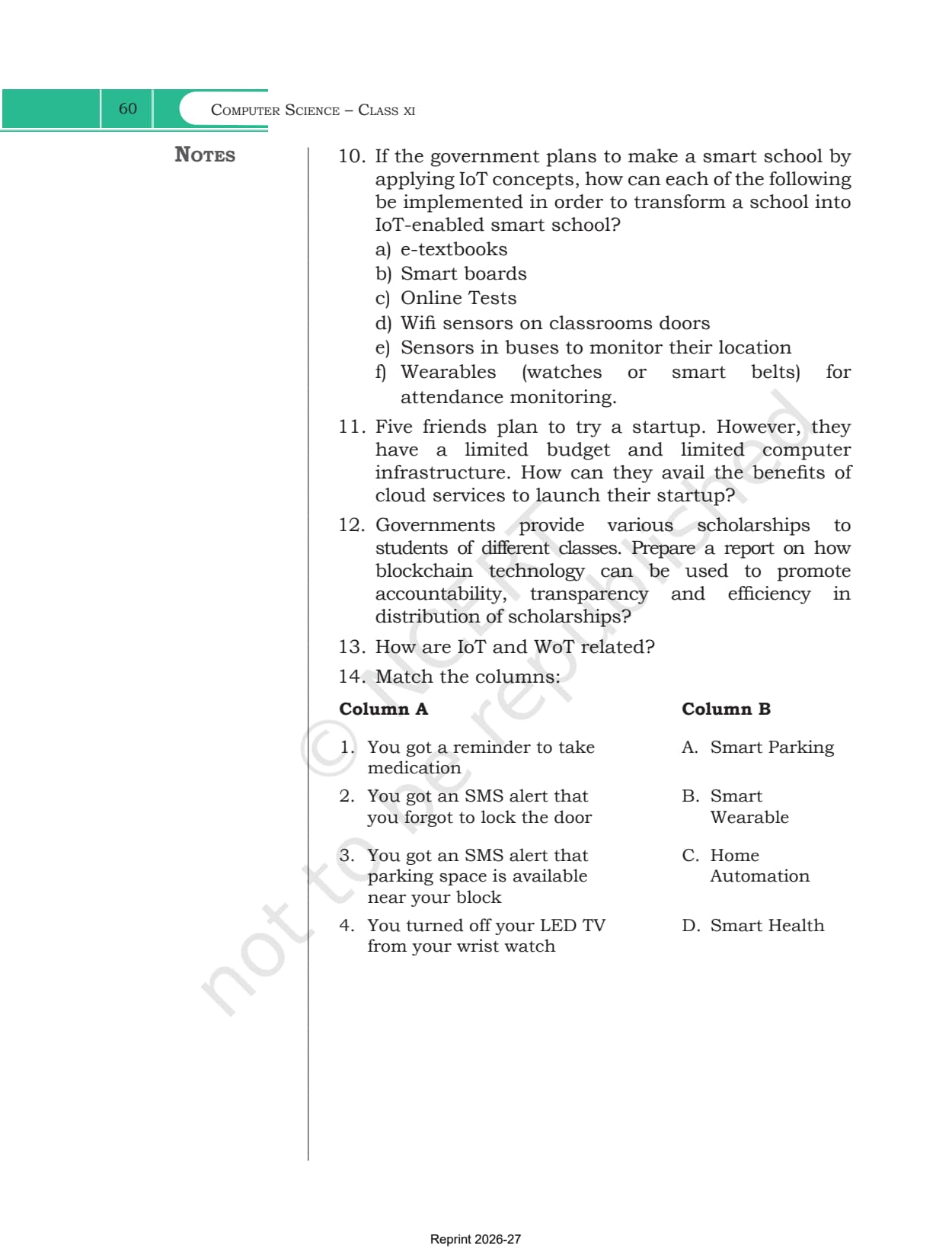
- Objective questions: one multiple-choice question on service models, and one column match pairing smart wearables, home automation, smart parking and smart health
What Collegedunia Adds to the Emerging Trends Chapter PDF
Collegedunia gives you the file plus a way into it. The chapter PDF is the official NCERT file, untouched.
- Official file: the exact NCERT chapter PDF, with no pages removed
- Read in the browser: page through all 16 pages before you download
- Chapter list: jump to any other chapter of Class 11 Computer Science from one table
- Study material: handwritten notes, revision notes and solutions for the same chapter where available
Also Check: the other Class 11 Computer Science resources for Emerging Trends and the chapters beside it.
| Resource | Link |
|---|---|
| Handwritten notes | Emerging Trends Class 11 Handwritten Notes |
| Chapter notes | Emerging Trends Class 11 Notes (coming soon) |
| Chapter solutions | Emerging Trends Class 11 NCERT Solutions (coming soon) |
| Previous chapter book PDF | Encoding Schemes and Number System Class 11 NCERT Book PDF (coming soon) |
| Next chapter book PDF | Introduction to Problem Solving Class 11 NCERT Book PDF (coming soon) |
Class 11 Computer Science NCERT Book PDF: All Chapters
Every chapter of the book is on its own page. The textbook has 11 chapters, three on computer fundamentals and eight on problem solving and Python.
| Chapter | Download |
|---|---|
| Chapter 1 | Computer System NCERT Book PDF (coming soon) |
| Chapter 2 | Encoding Schemes and Number System NCERT Book PDF (coming soon) |
| Chapter 3 | Emerging Trends NCERT Book PDF |
| Chapter 4 | Introduction to Problem Solving NCERT Book PDF (coming soon) |
| Chapter 5 | Getting Started with Python NCERT Book PDF (coming soon) |
| Chapter 6 | Flow of Control NCERT Book PDF (coming soon) |
| Chapter 7 | Functions NCERT Book PDF (coming soon) |
| Chapter 8 | Strings NCERT Book PDF (coming soon) |
| Chapter 9 | Lists NCERT Book PDF (coming soon) |
| Chapter 10 | Tuples and Dictionaries NCERT Book PDF (coming soon) |
| Chapter 11 | Societal Impact NCERT Book PDF (coming soon) |
Emerging Trends Class 11 Computer Science NCERT Book PDF FAQs
Common Student Questions on the Emerging Trends Chapter File
Ques. Where can I download the Class 11 Computer Science Emerging Trends NCERT Book PDF?
Ans. The official 16-page chapter file from the Class 11 Computer Science textbook is on this page, free to download.
Ques. How many pages is the Emerging Trends chapter?
Ans. 16 pages in the 2026-27 edition, and this PDF is the complete chapter including the Summary and the Exercise.
Ques. What topics are covered in Class 11 Computer Science chapter 3?
Ans. Artificial intelligence, machine learning, natural language processing, virtual and augmented reality, robotics, big data, the Internet of Things, cloud computing, grid computing and blockchain.
Ques. What is the difference between artificial intelligence and machine learning?
Ans. AI is the broader goal of making machines imitate human cognitive functions. Machine learning is a subsystem of AI in which computers learn from data using statistical techniques, without being explicitly programmed by a human being.
Ques. What are the five characteristics of big data?
Ans. Volume, Velocity, Variety, Veracity and Value. Volume is the size, velocity the rate of generation, variety the mix of structured and unstructured data, veracity the trustworthiness, and value the hidden knowledge worth extracting.
Ques. What are the three cloud service models in this chapter?
Ans. IaaS supplies hardware and virtual machines, PaaS supplies a ready development environment, and SaaS supplies finished application software on demand.
Ques. How is grid computing different from cloud computing?
Ans. A cloud has a service provider renting resources on a pay per use basis. A grid has no provider: dispersed nodes join temporarily to solve one large problem, acting like a virtual supercomputer.
Ques. Is there any Python programming in Emerging Trends?
Ans. No. Python is named only once, where the Pandas library is mentioned as a tool that makes data analysis simpler. Programming starts from chapter 4 onwards.
Ques. Is this the official NCERT file?
Ans. Yes. It is the NCERT chapter PDF hosted as published, with no pages removed or added.



Comments