




The NCERT Book PDF for Class 11 Engineering Graphics Chapter 3 Circles, Inscribing and Circumscribing of Circles gives students the textbook pages on circle parts, tangent construction, common tangents, and inscribed circles for the 2026-27 CBSE course.
- Page count: 9 pages from the official Engineering Graphics textbook section on circles and tangents.
- Core focus: centre, radius, chord, tangent, normal, semicircle, common tangents and inscribed circles.
- Best use: read one construction, then redraw it with compass, scale and set-square.
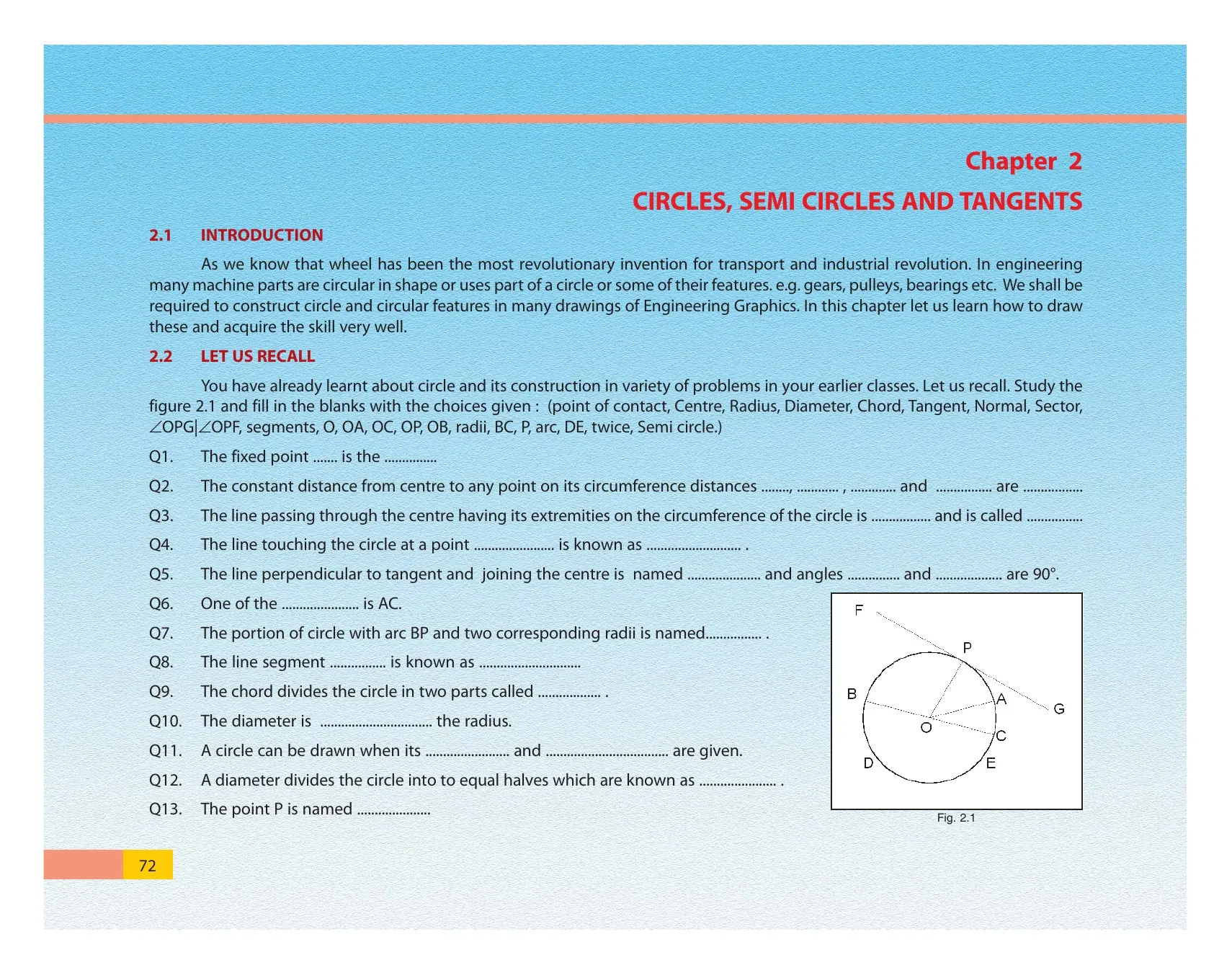
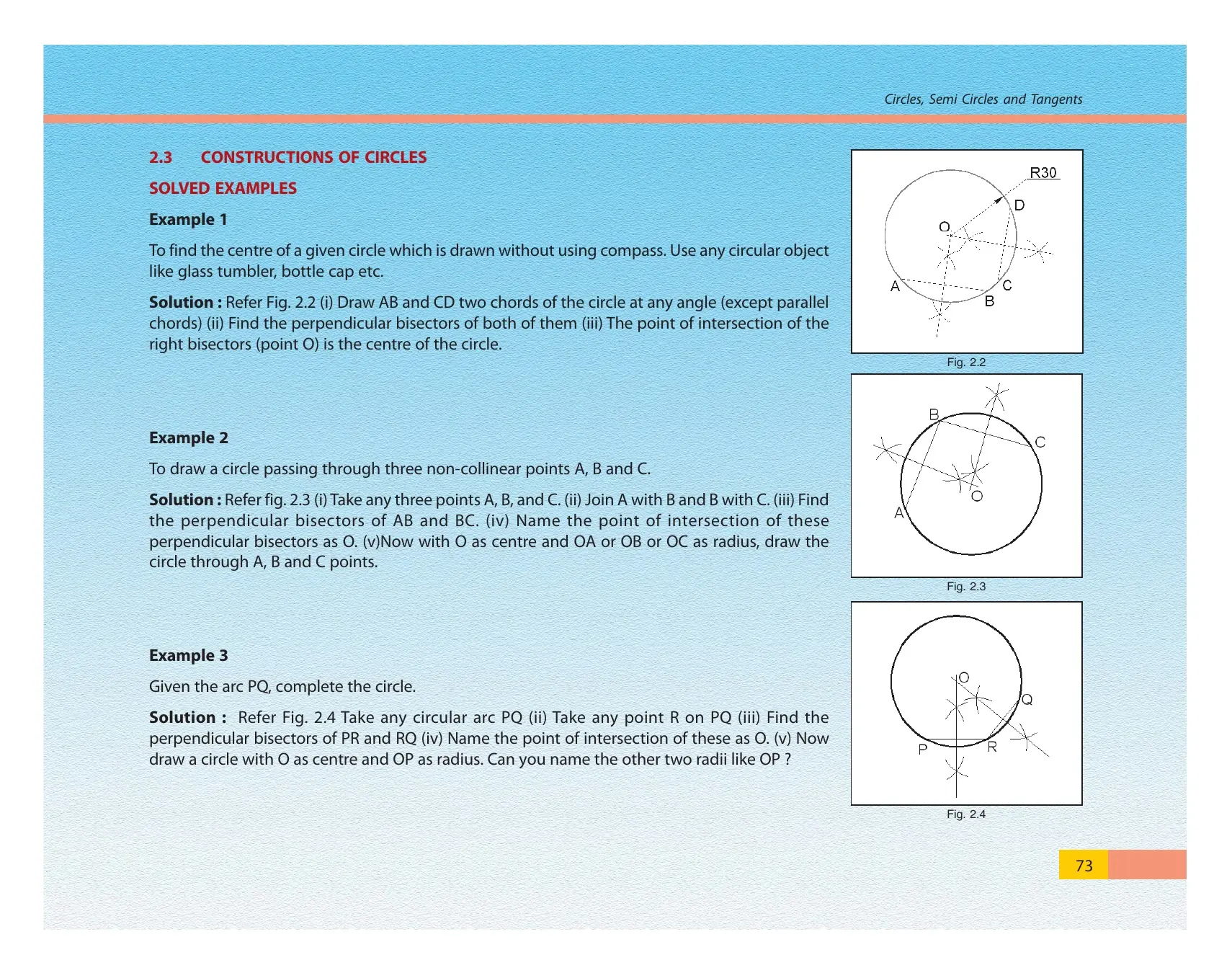
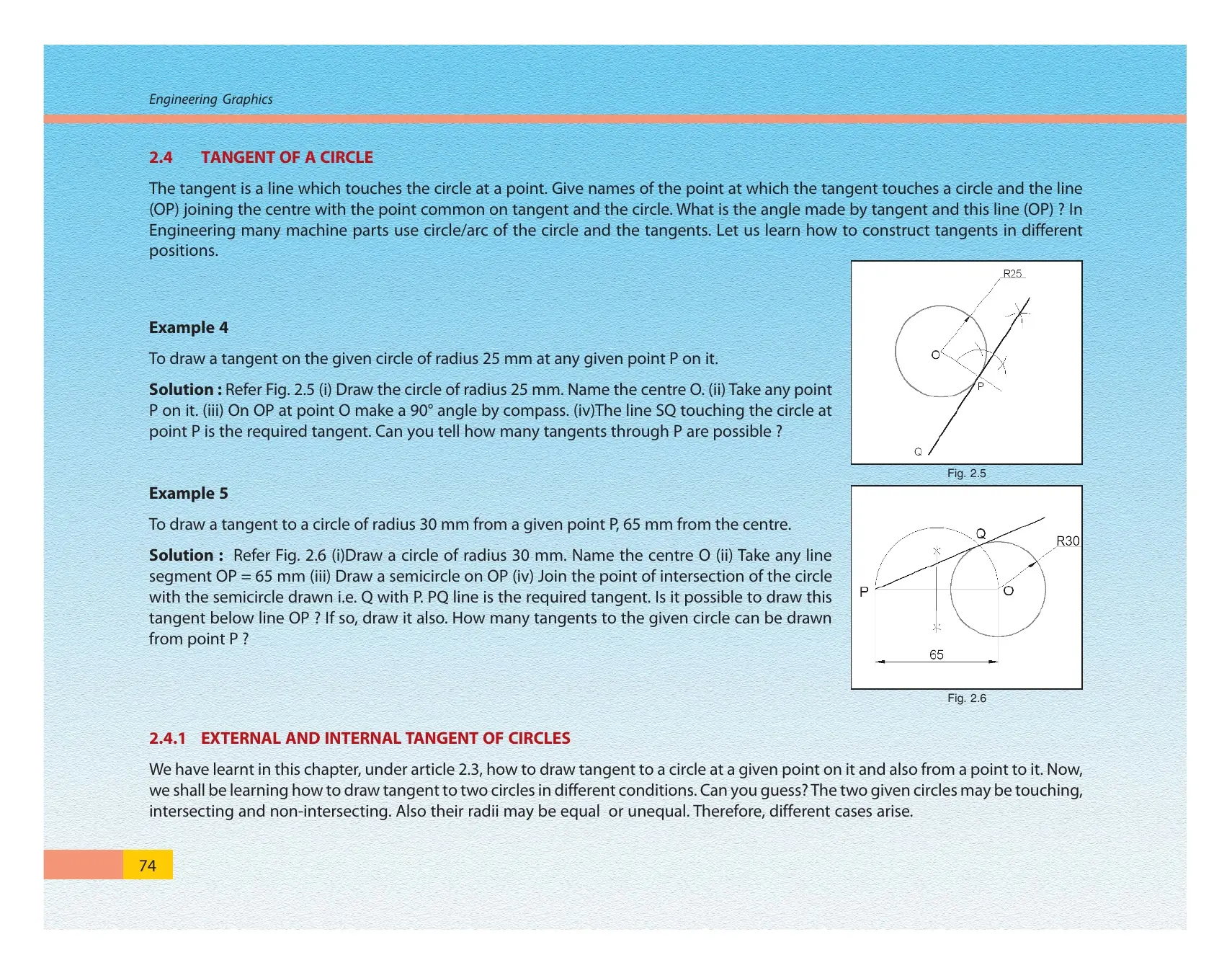
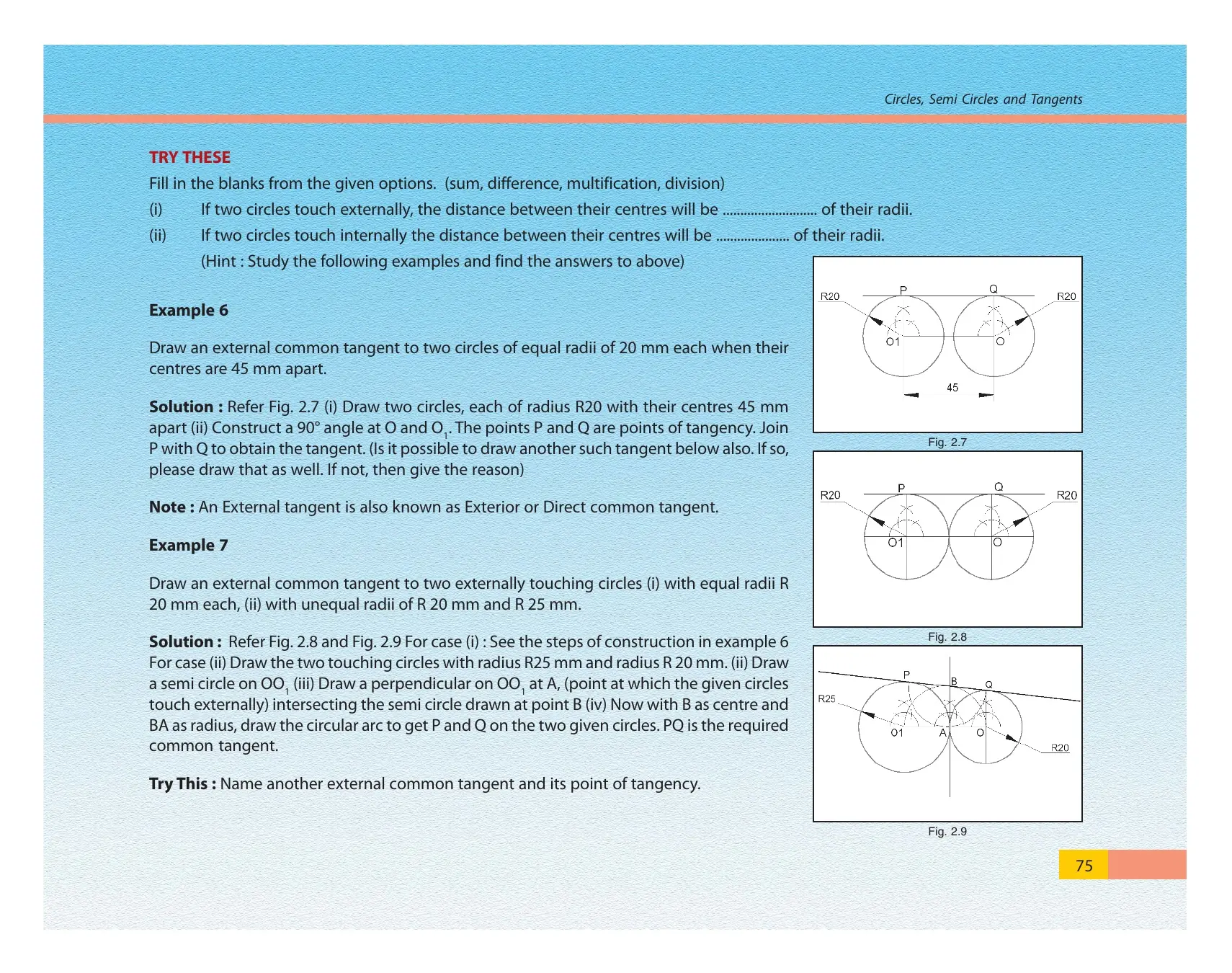
This Engineering Graphics chapter PDF is kept for students who need the exact 2026-27 textbook section on circles, semicircles, tangents, and inscribed circle construction.
What the Circles and Tangents PDF Contains
The chapter begins with a quick recall of circle vocabulary. It then moves into solved constructions where students find the centre of a circle, complete an arc, draw tangents, and inscribe circles inside regular plane figures. Students should practise each figure on paper because this is a construction chapter, not a reading-only chapter.
| Part of the PDF | What students learn | Why it matters |
|---|---|---|
| Circle recall | Centre, radius, diameter, chord, arc, sector, tangent and normal | Builds the vocabulary used in every construction |
| Basic circle construction | Find the centre, complete an arc, and draw a circle through three points | Trains compass accuracy and perpendicular bisectors |
| Tangent construction | Draw a tangent at a point and tangents from an external point | Directly supports board drawing-sheet questions |
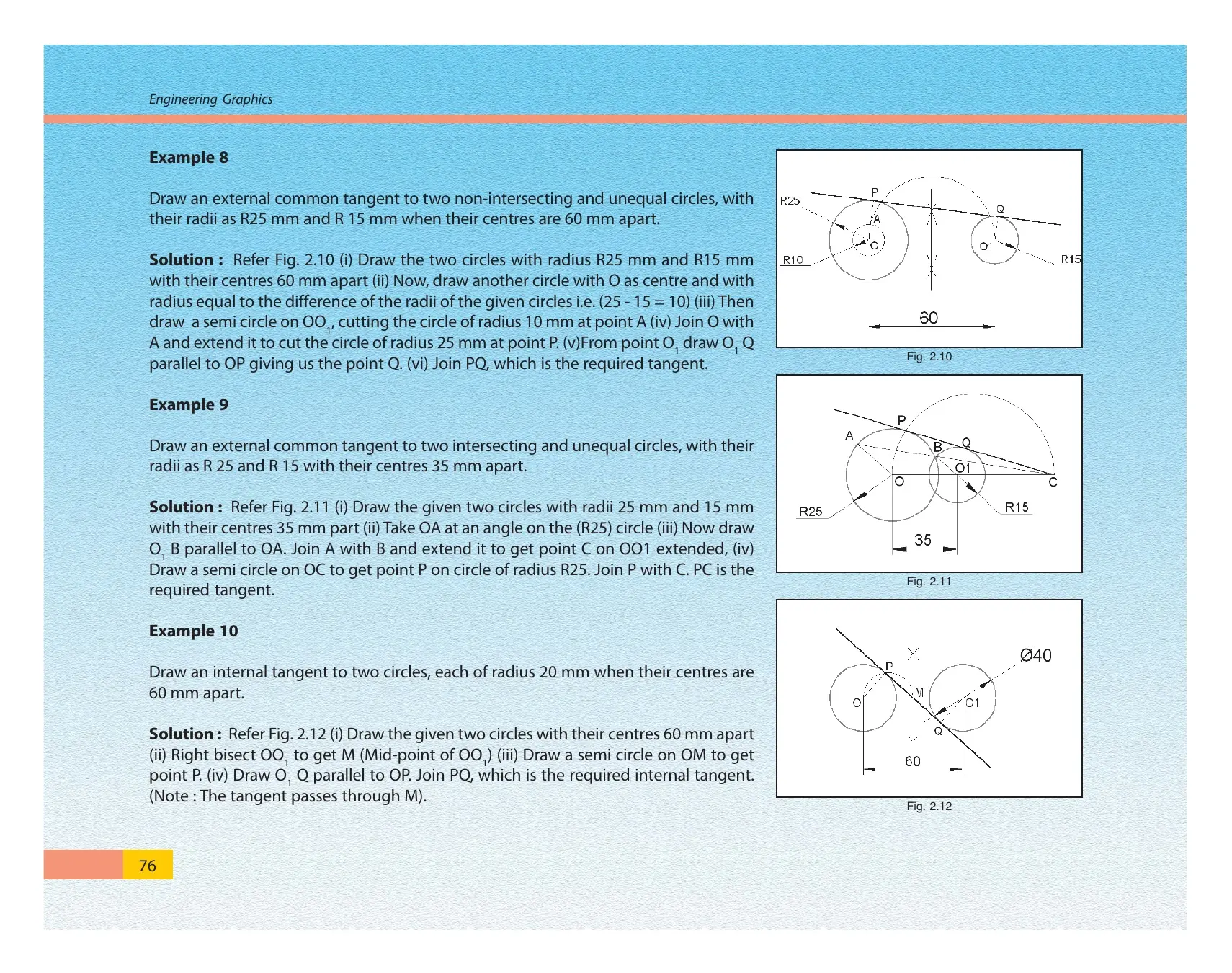
| Common tangents | External and internal tangents for equal and unequal circles | Helps with pulley and belt arrangement diagrams |
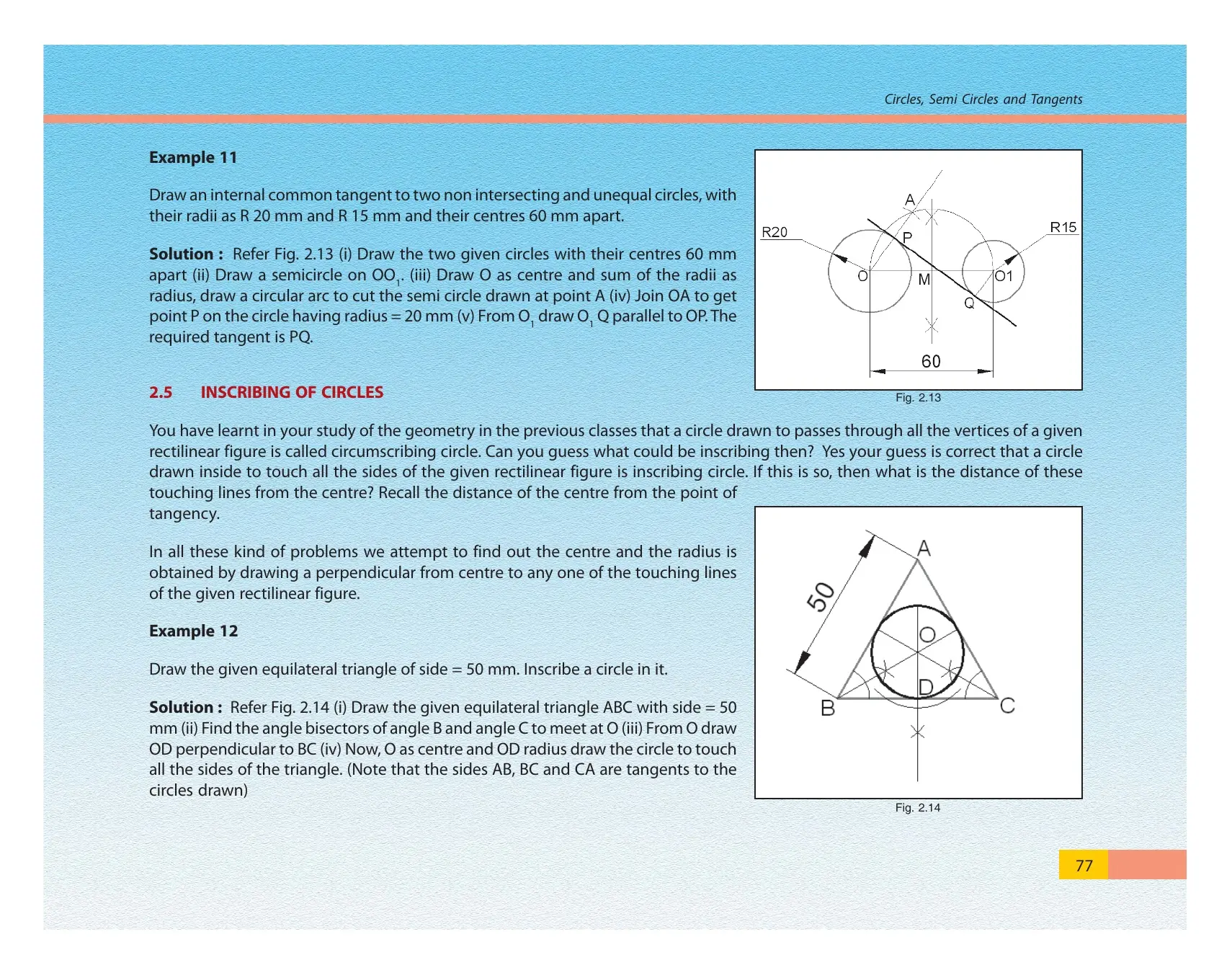
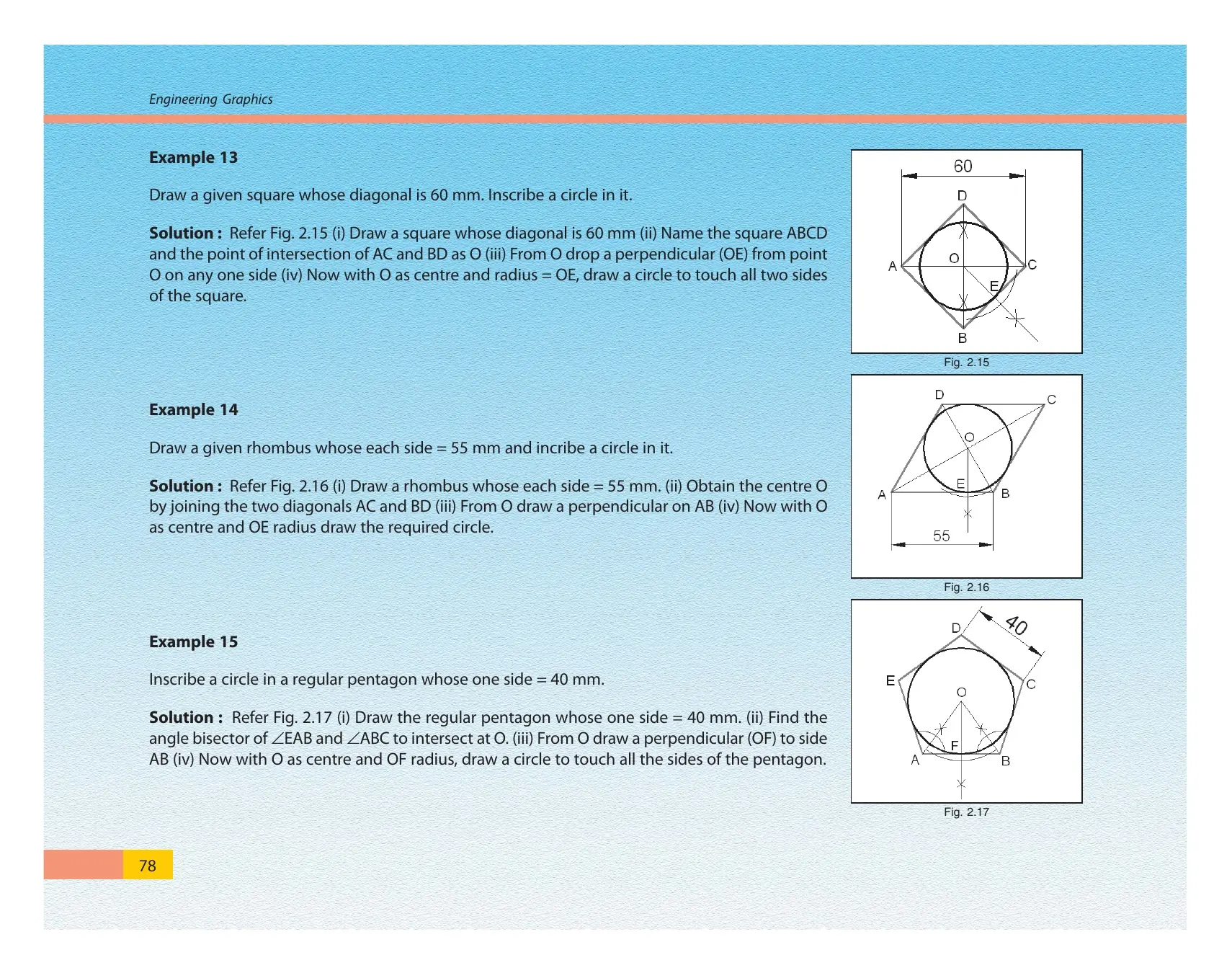
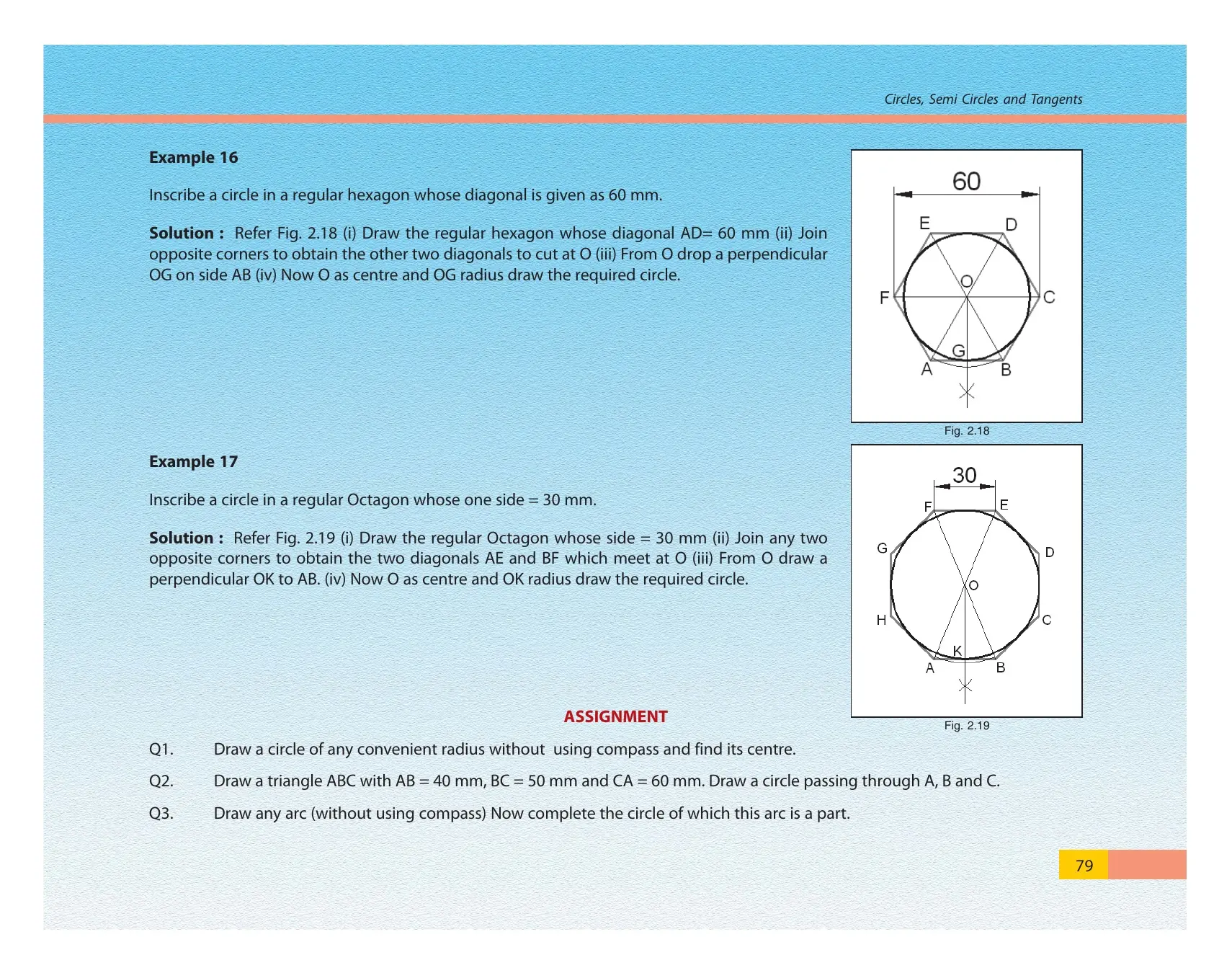
| Inscribed circles | Circle inside triangle, square, rhombus, pentagon, hexagon and octagon | Links circle construction with regular polygons |
Circle and Tangent Terms Every Student Should Know
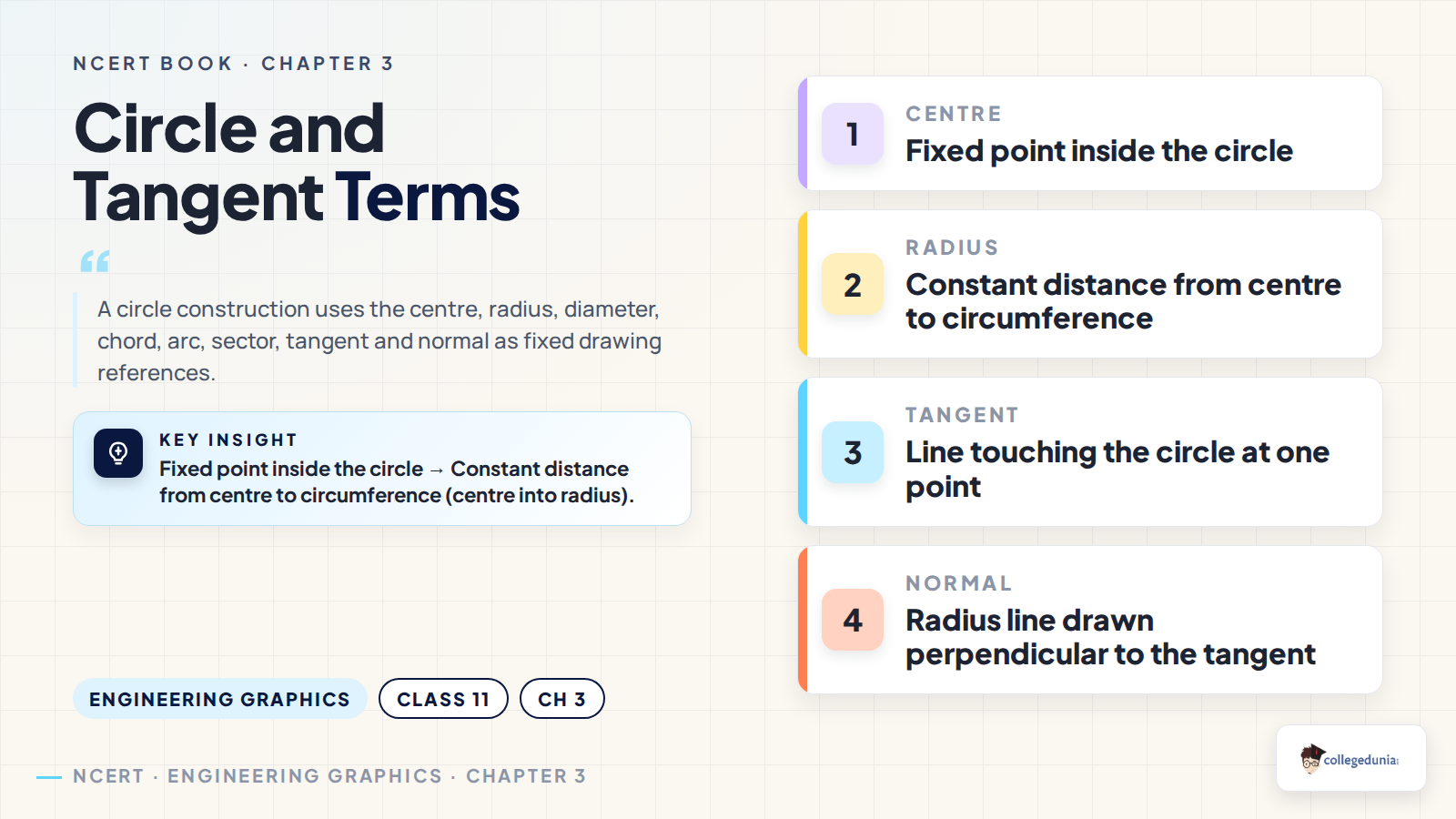
Most errors in this chapter start with weak terminology. A tangent is not just any line near a circle. It touches the circle at one point, and the radius drawn to that contact point is perpendicular to the tangent.
- Centre: fixed point from which every point on the circle is at the same distance.
- Radius: distance from the centre to the circumference.
- Chord: straight line joining any two points on the circle.
- Tangent: line that touches the circle at exactly one point.
- Normal: radius line drawn at right angle to the tangent point.
Video Guide for Tangents and Circle Properties
Source: Khan Academy on YouTube
Drawing Tangents to Circles: Step-by-Step Flow
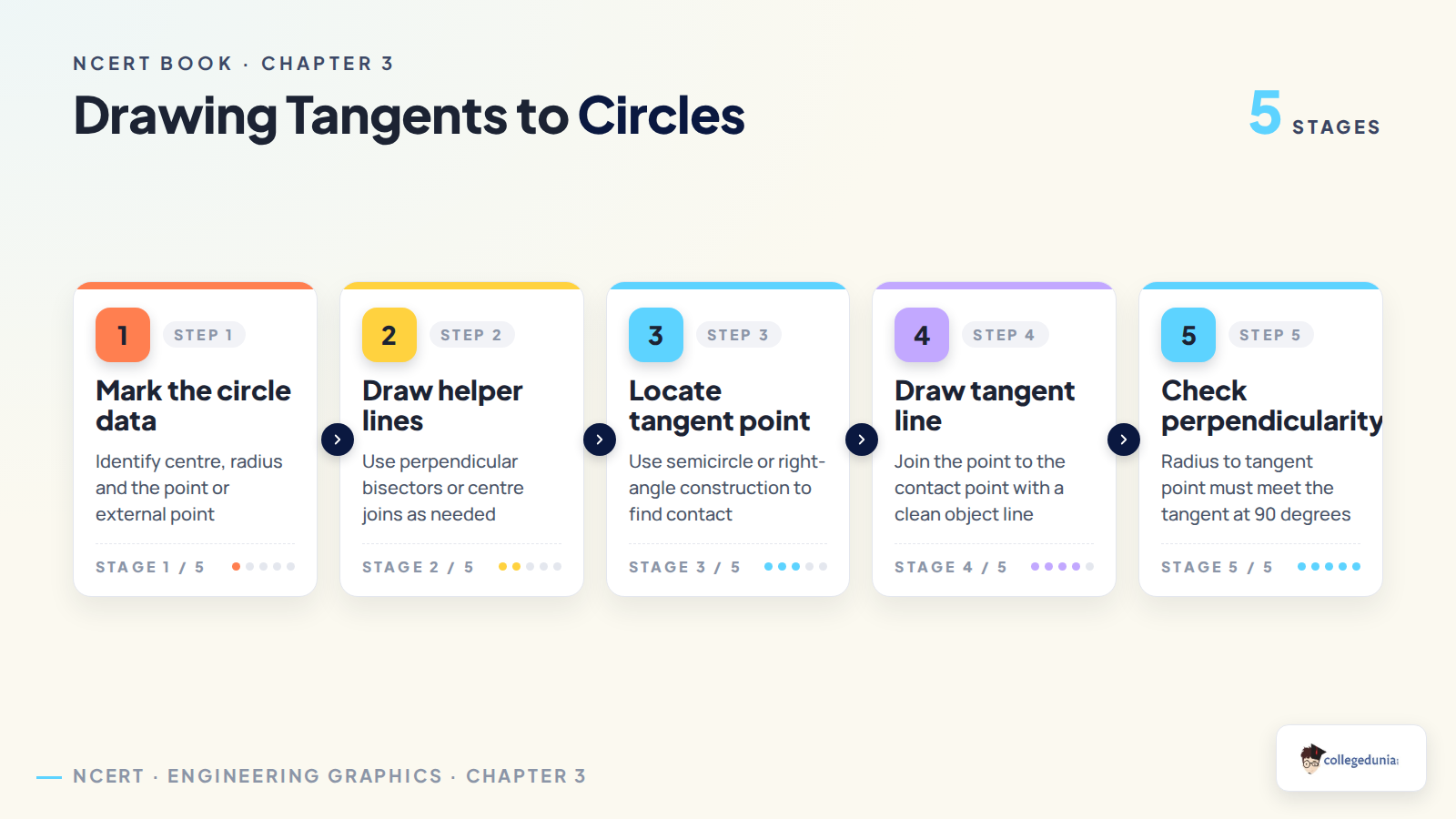
The PDF gives several tangent cases. The method changes slightly, but the checking rule stays the same: the radius to the tangent point must meet the tangent at 90 degrees. Use this as the final check before darkening the object line.
- Mark the given centre, radius, external point or point on the circle.
- Draw the helper line or perpendicular bisector required by the construction.
- Locate the tangent point with the correct semicircle or right-angle method.
- Join the external point to the contact point using a clean object line.
- Check that the radius to the tangent point is perpendicular to the tangent.
Common Mistakes in Circles, Semicircles and Tangents
This chapter looks short, but drawing marks depend on exact contact points and neat helper geometry. Small errors change the final tangent or inscribed circle position.
- Using a rough contact point: locate the tangent point geometrically, not by eye.
- Forgetting the 90 degree check: radius and tangent must be perpendicular at the contact point.
- Mixing external and internal tangents: check whether the belt arrangement crosses before drawing.
- Darkening helper lines too early: keep construction lines light until the final curve and tangent are correct.
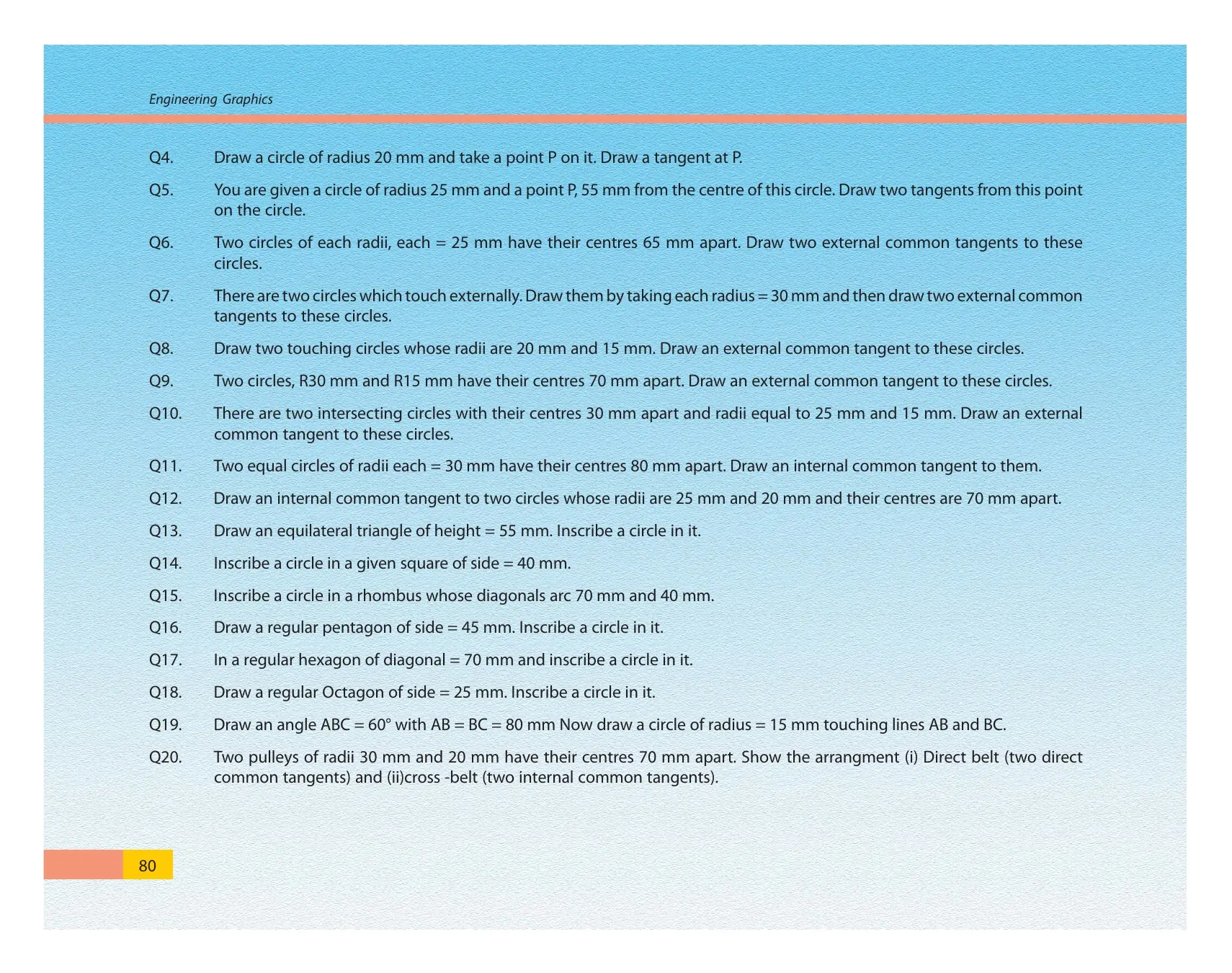
- Missing the assignment questions: the end exercise gives the best practice set for this unit.
Student Feedback on the Engineering Graphics Circles Unit
Student Feedback: In a Collegedunia survey of 9,860 Class 11 students preparing Engineering Graphics for 2026-27, most students said the hardest part was choosing the correct construction for internal and external tangents.
Source: 2026-27 Class 11 Engineering Graphics student poll across CBSE schools.
How to Use the Circles and Tangents PDF
Read the textbook page with drawing tools beside you. Do not finish the chapter by only scrolling through the PDF. Each example is meant to be copied as a neat construction.
- First pass: revise circle terms and label every part on Figure 2.1.
- Second pass: practise the solved examples for tangents at a point and from an external point.
- Third pass: draw external and internal common tangents between two circles.
- Final check: solve the assignment questions without looking at the steps.
Engineering Graphics Chapter 3 Related Resources
| Resource | Use it for |
|---|---|
| NCERT Solutions for Class 11 Engineering Graphics Circles and Tangents | Step-by-step construction answers |
| Circles and Tangents Class 11 Notes | Quick revision before drawing practice |
| Circles and Tangents Class 11 Handwritten Notes | Last-minute construction checks |
All Chapters of Engineering Graphics with NCERT Book PDFs
| Chapter | NCERT Book PDF |
|---|---|
| Chapter 1 | Introduction Book PDF |
| Chapter 2 | Lines, Angles, and Rectilinear Figures Book PDF |
| Chapter 3 | Circles and Tangents Book PDF |
| Chapter 4 | Orthographic Projection of Points and Lines Book PDF |
| Chapter 5 | Orthographic Projection of Regular Plane Figures Book PDF |
Engineering Graphics Circles NCERT Book PDF FAQs
Ques. What does Class 11 Engineering Graphics Chapter 3 cover?
Ans. It covers circle vocabulary, tangent construction, common tangents, and inscribed circles inside triangles, squares, rhombuses and regular polygons.
Ques. How many pages are in this Circles and Tangents PDF?
Ans. The chapter PDF hosted here has 9 pages, covering printed textbook pages 72 to 80 from the Engineering Graphics book.
Ques. Why is the tangent perpendicular rule important?
Ans. It is the main accuracy check. The radius drawn to the tangent point must meet the tangent at 90 degrees, otherwise the line is not a correct tangent.
Ques. Which assignment questions should students practise first?
Ans. Start with the centre-finding and single-tangent questions, then move to external and internal common tangents between two circles.



Comments