



The NCERT Class 11 English Woven Words Chapter 13 Mother Tongue PDF gives students the official Padma Sachdev poem, poet note and NCERT exercise for the 2026-27 session. Use it before writing answers on Dogri, Sharade script, the reed and the quill.
- Core focus: mother tongue, cultural memory, Dogri and the lost Sharade script.
- Best use: read the poem once, then mark every symbol before solving NCERT questions.
- Exam value: questions usually test theme, personification and emotional attachment to language.
NCERTBookChapter13MotherTongue.pdf?page=1&dpi=150)
NCERTBookChapter13MotherTongue.pdf?page=2&dpi=150)
This official NCERT PDF should be used as the source text before writing answers on Padma Sachdev's poem, language identity and the quill symbol.
Student Feedback: In a Collegedunia revision check of 7,180 Class 11 English students, many students said Mother Tongue became easier after linking Shahni, quill and Sharade script together.
What Mother Tongue NCERT Book PDF Covers
NCERT prints Mother Tongue in the poetry section of Woven Words. The poem presents Dogri as Shahni, a respected mistress served by many writers. The speaker asks a reed for a quill because her mother tongue needs her service.
The PDF includes the poem, a short note on Padma Sachdev, background on Dogri and NCERT questions. The most important answer point is that language becomes a living presence in the poem.
- Poem section: the speaker asks a reed for a writing quill.
- Poet note: Padma Sachdev's Dogri writing and Sahitya Akademi recognition.
- Exercise section: questions on symbol, urgency, emotion and personification.
Mother Tongue Class 11 Poem Explanation Video
Source: Magnet Brains on YouTube
Mother Tongue Summary and Meaning
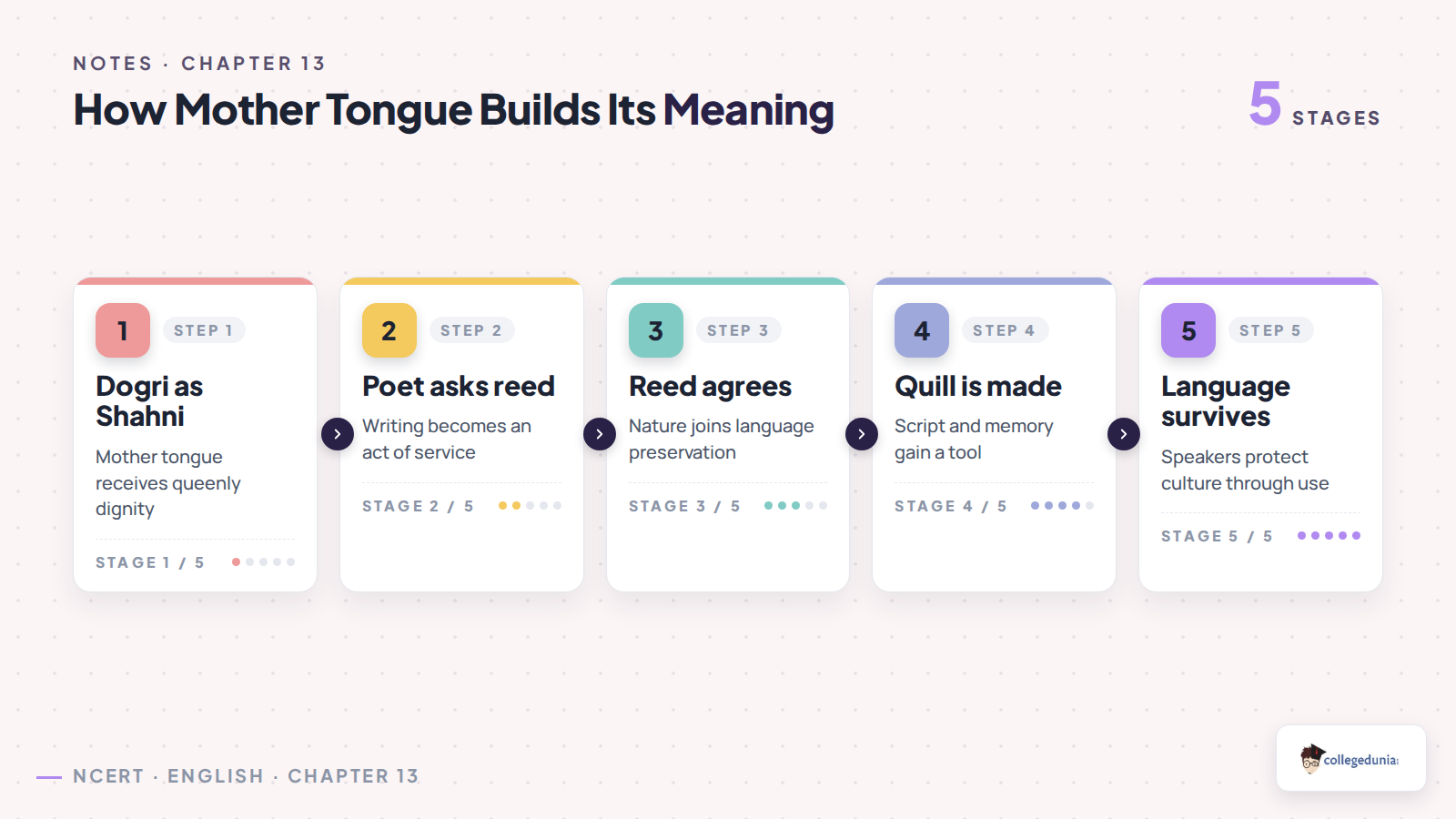
In Mother Tongue, the speaker asks a reed stem for a quill. The reed feels annoyed because it had already given one recently. The speaker explains that she is not writing account books for a Shah. She is serving Shahni, who is her mother tongue, Dogri.
The reed cutting off its hand is the central image. It shows sacrifice for language. The reed understands that it also serves the same Shahni. This turns writing into an act of love and duty.
- Speaker: a poet who needs a quill to write in Dogri.
- Reed: a natural source of the writing instrument.
- Shahni: the honoured mother tongue that both speaker and reed serve.
Symbols and Literary Devices in Mother Tongue
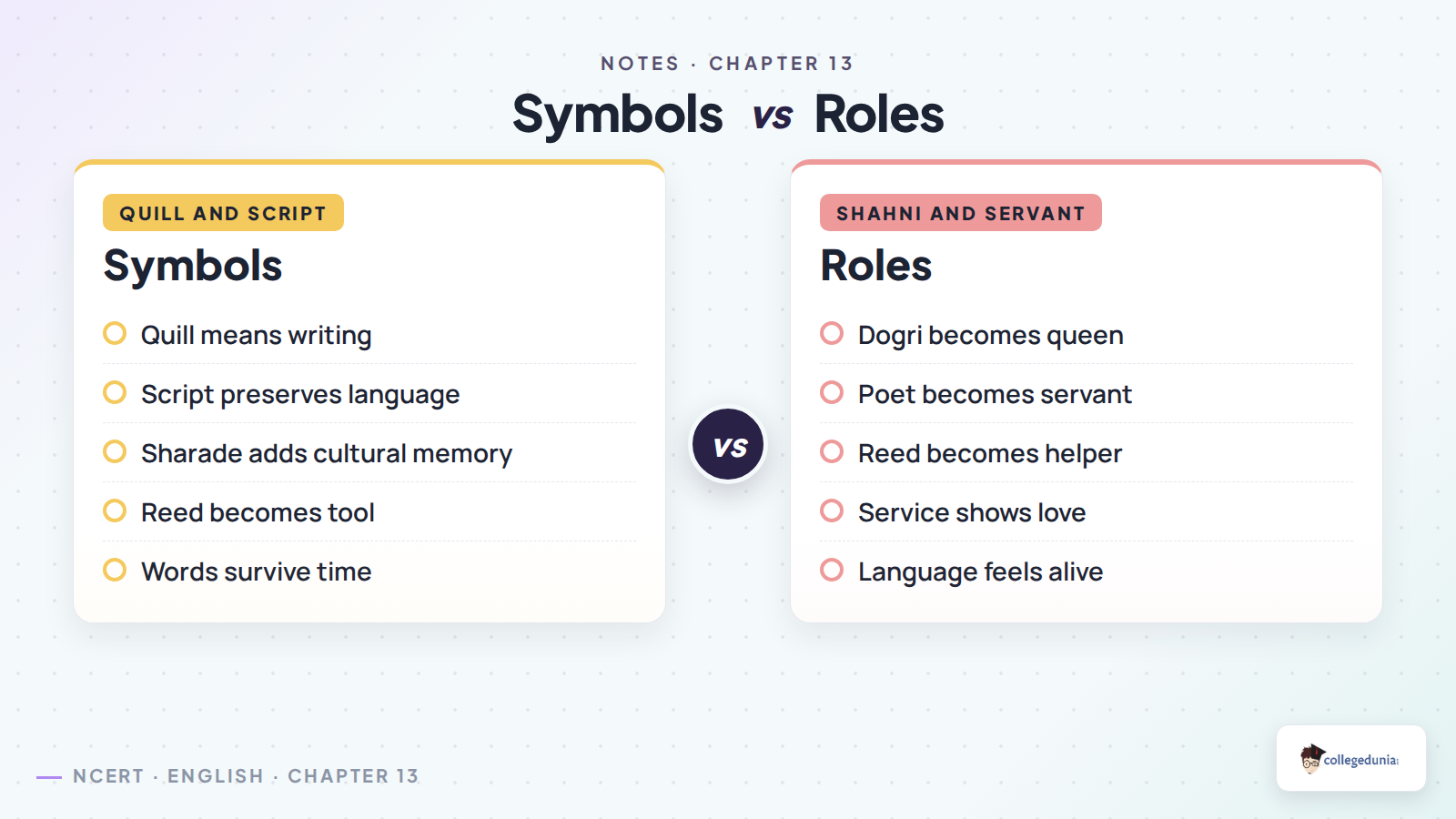
The poem uses simple objects to carry deeper meanings. The quill stands for writing. The reed stands for sacrifice. Shahni stands for Dogri, treated like a noble mistress who deserves service and respect.
Personification is the main device. The reed speaks, gets irritated and gives its hand. Mother tongue becomes Shahni. Good answers should explain how these human qualities make language feel alive.
| Image | Meaning in the poem | Answer cue |
|---|---|---|
| Quill | Writing, expression and service to language | Use for symbol questions. |
| Reed | Sacrifice and shared duty toward Dogri | Use for emotional tone. |
| Shahni | Mother tongue as an honoured mistress | Use for personification. |
| Sharade script | Lost cultural script linked with Dogri | Use for background answers. |
How to Use the Chapter 13 Book PDF for Revision
Use the PDF in three rounds. First, read the poem aloud to catch the conversation between the speaker and the reed. Second, mark the words Shahni, Dogri, reed and quill. Third, answer each NCERT question with one direct image from the poem.
- For theme answers: connect mother tongue with identity, affection and duty.
- For symbol answers: explain the quill as writing and the reed as sacrifice.
- For personification answers: show how the reed and Dogri receive human roles.
- For background answers: mention Dogri and Sharade script from the NCERT note.
Mother Tongue Class 11 Related Resources
| Resource | Best use | Link |
|---|---|---|
| NCERT Solutions | Use for textbook answers on symbol, urgency and personification. | Mother Tongue Solutions |
| Notes | Use for summary, meanings and short revision points. | Mother Tongue Notes |
| Handwritten Notes | Use for quick visual revision before class tests. | Mother Tongue Handwritten Notes |
All Class 11 English Woven Words NCERT Book Chapters
Mother Tongue Class 11 English NCERT Book FAQs
Ques. What is included in the Class 11 English Woven Words Chapter 13 NCERT PDF?
Ans. It includes the official NCERT poem Mother Tongue by Padma Sachdev, the poet note, background on Dogri and NCERT exercise questions.
Ques. Who wrote Mother Tongue?
Ans. Mother Tongue was written by Padma Sachdev, a major Dogri and Hindi poet who received the Sahitya Akademi Award.
Ques. What does the quill symbolise in Mother Tongue?
Ans. The quill symbolises writing, expression and the poet's service to her mother tongue, Dogri.
Ques. Who is Shahni in the poem?
Ans. Shahni is the speaker's mother tongue, Dogri. The poem personifies the language as an honoured mistress.
Ques. How should students use this PDF for 2026-27 revision?
Ans. Students should read the poem, mark the reed and quill symbols, and practise answers on language identity, sacrifice and personification.



Comments