




Class 11 English Chapter 13 Mother Tongue is a high-frequency chapter in the CBSE Class 11 English exam. These class 11 english handwritten notes chapter 13 Mother Tongue follow the 2026-27 NCERT and cover about the poet padma sachdev and dogri, the lost sharade script of dogri, line-by-line paraphrase of the poem. This page hosts the notes PDF,.
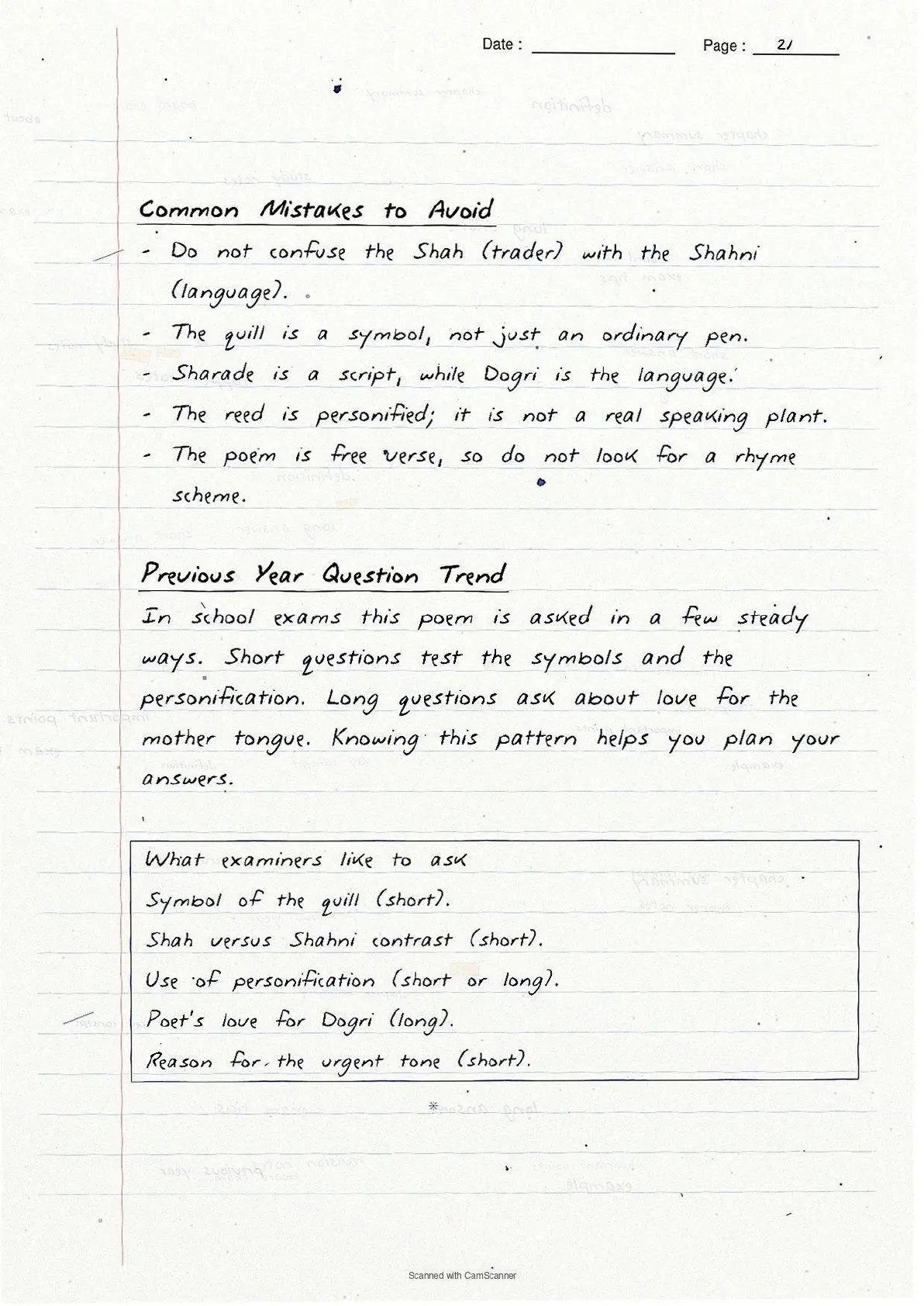
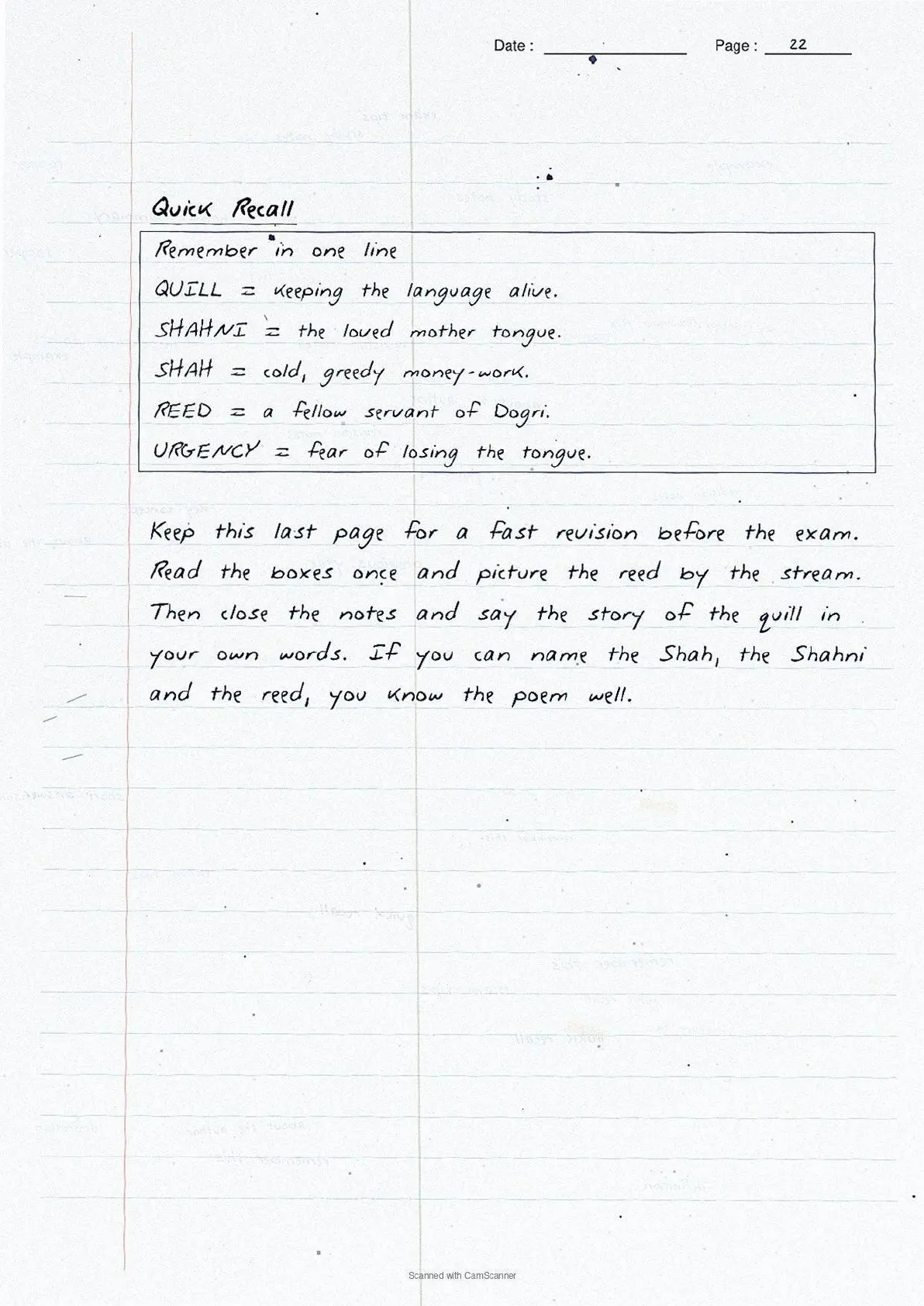
- CBSE Class 11 Weightage: a scoring chapter in the English paper, asked in short and long answers.
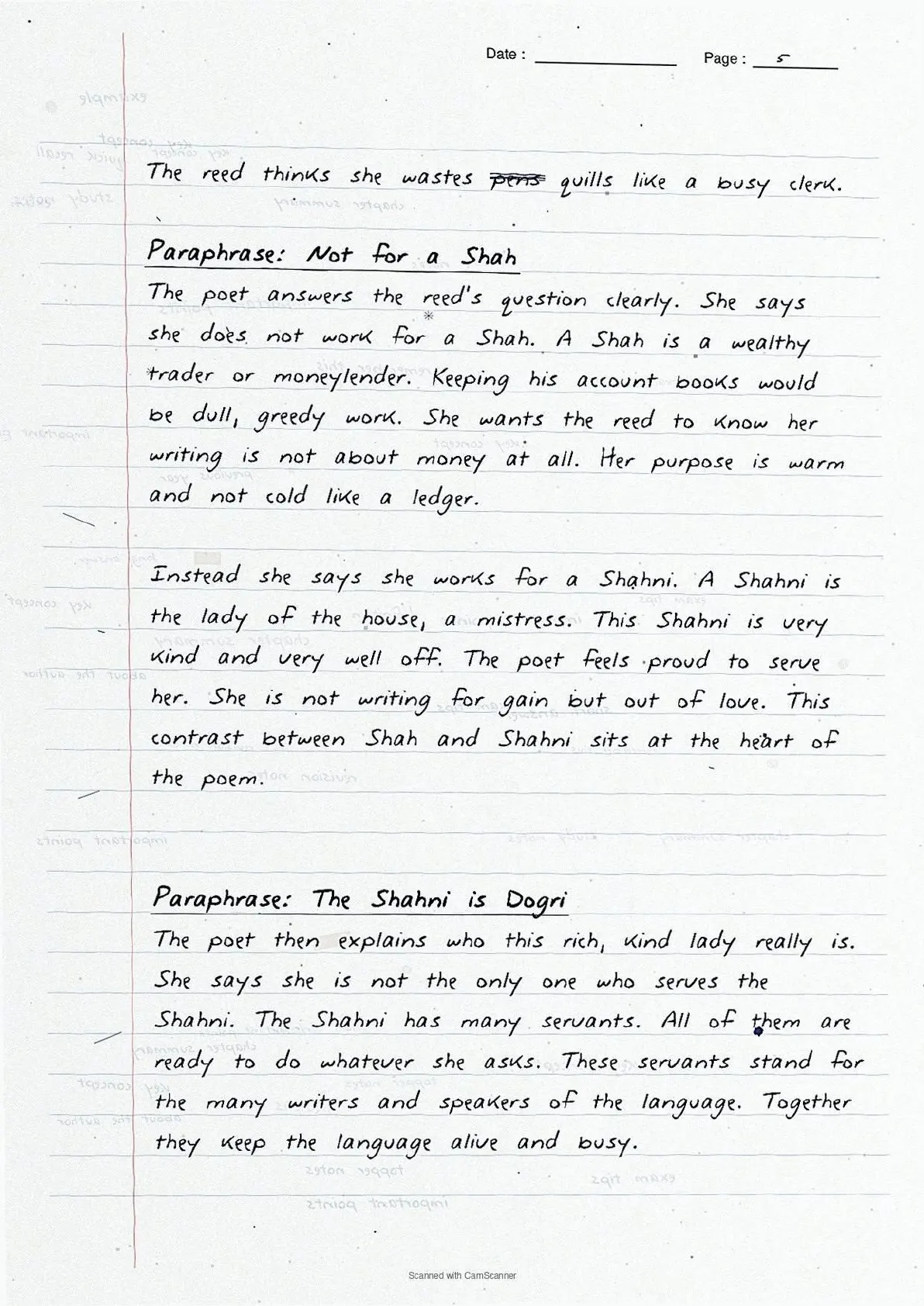
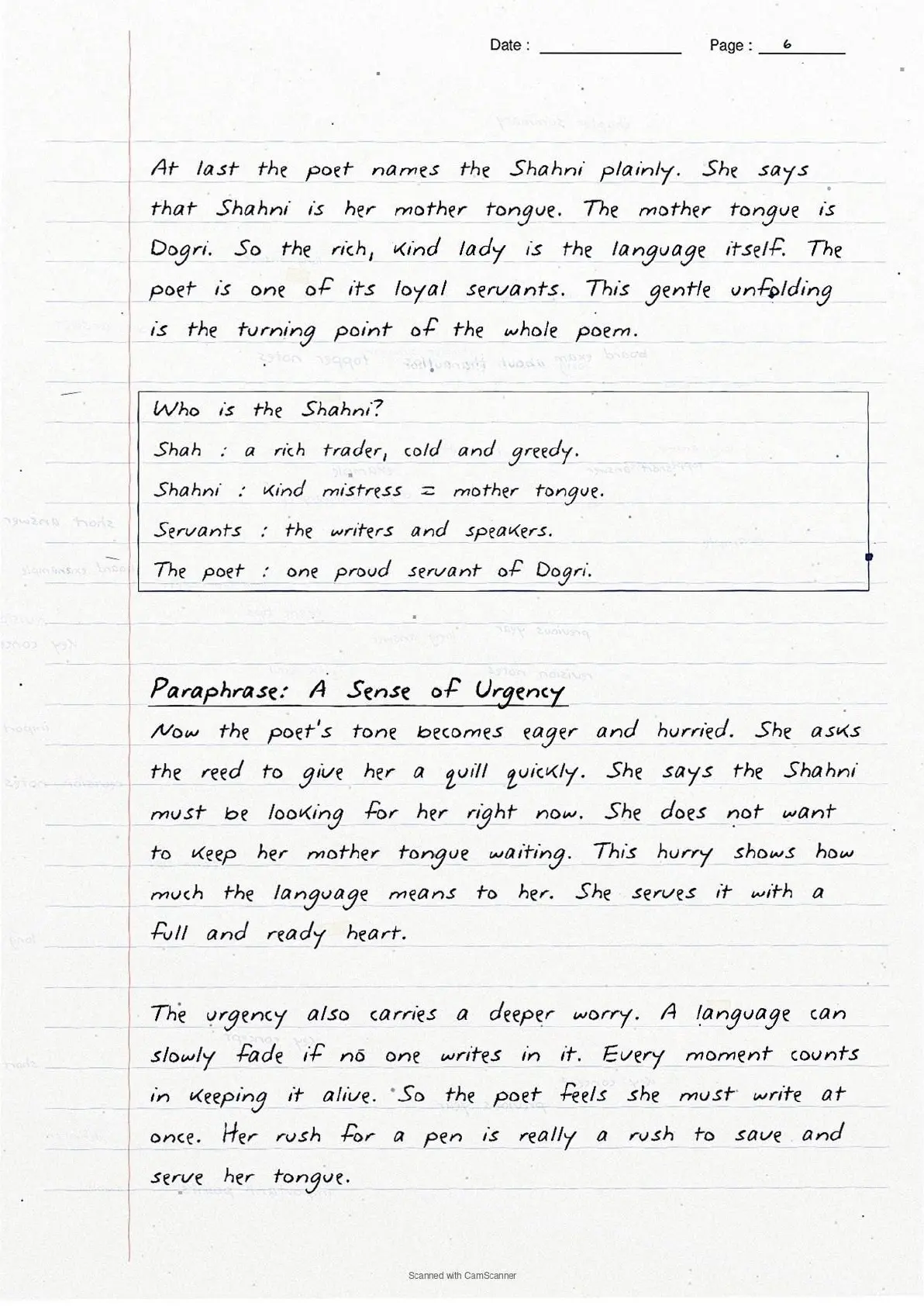
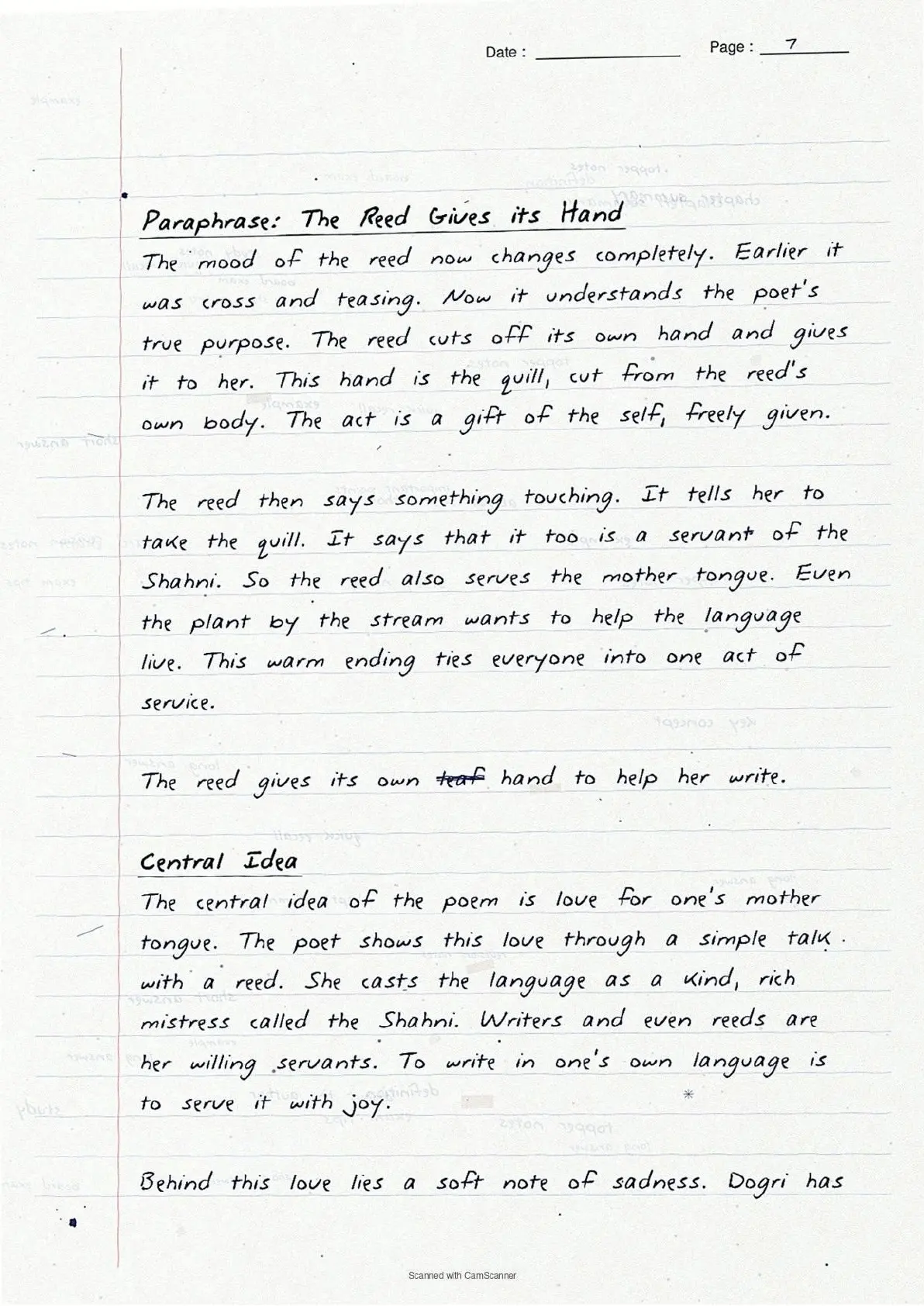
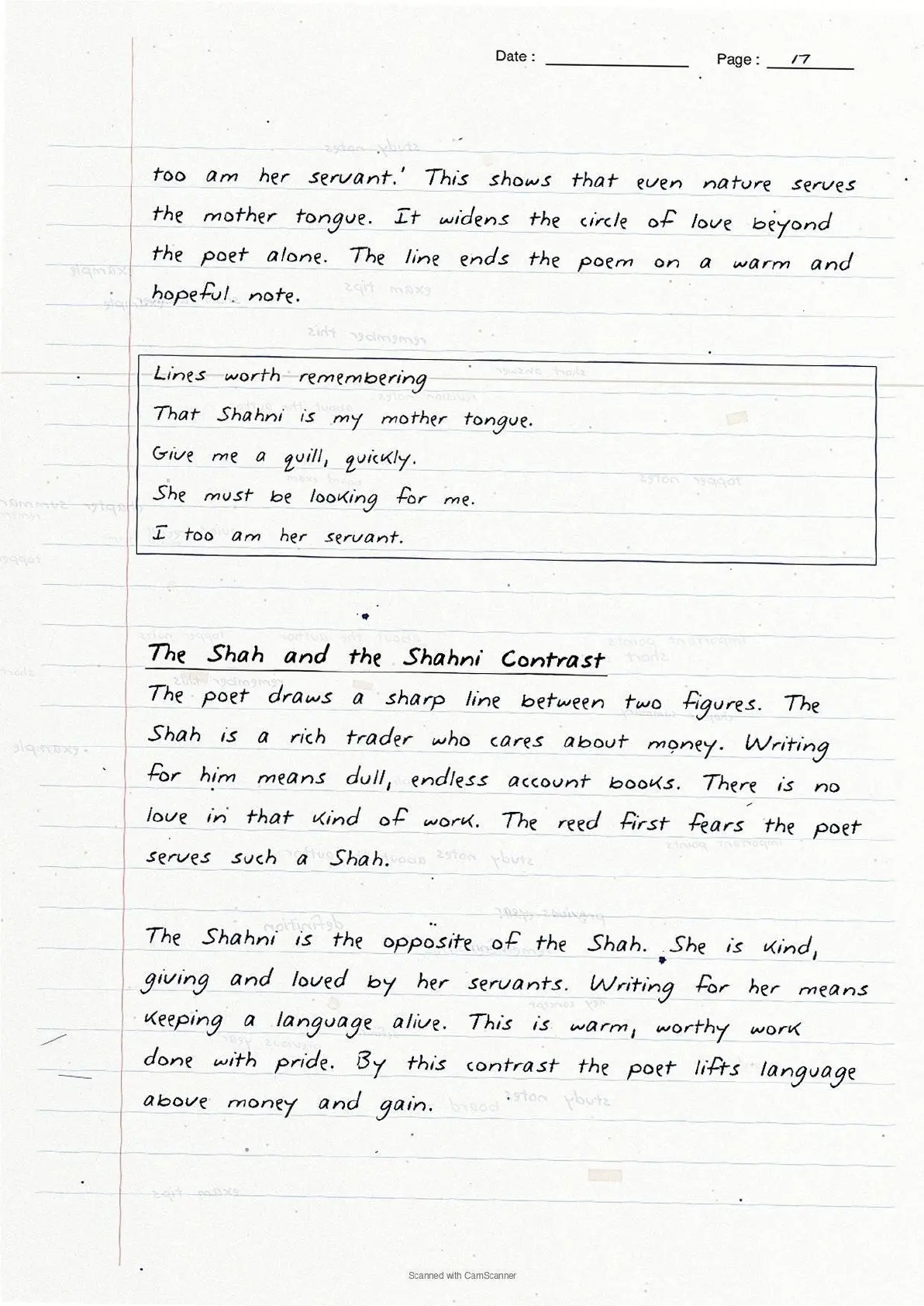
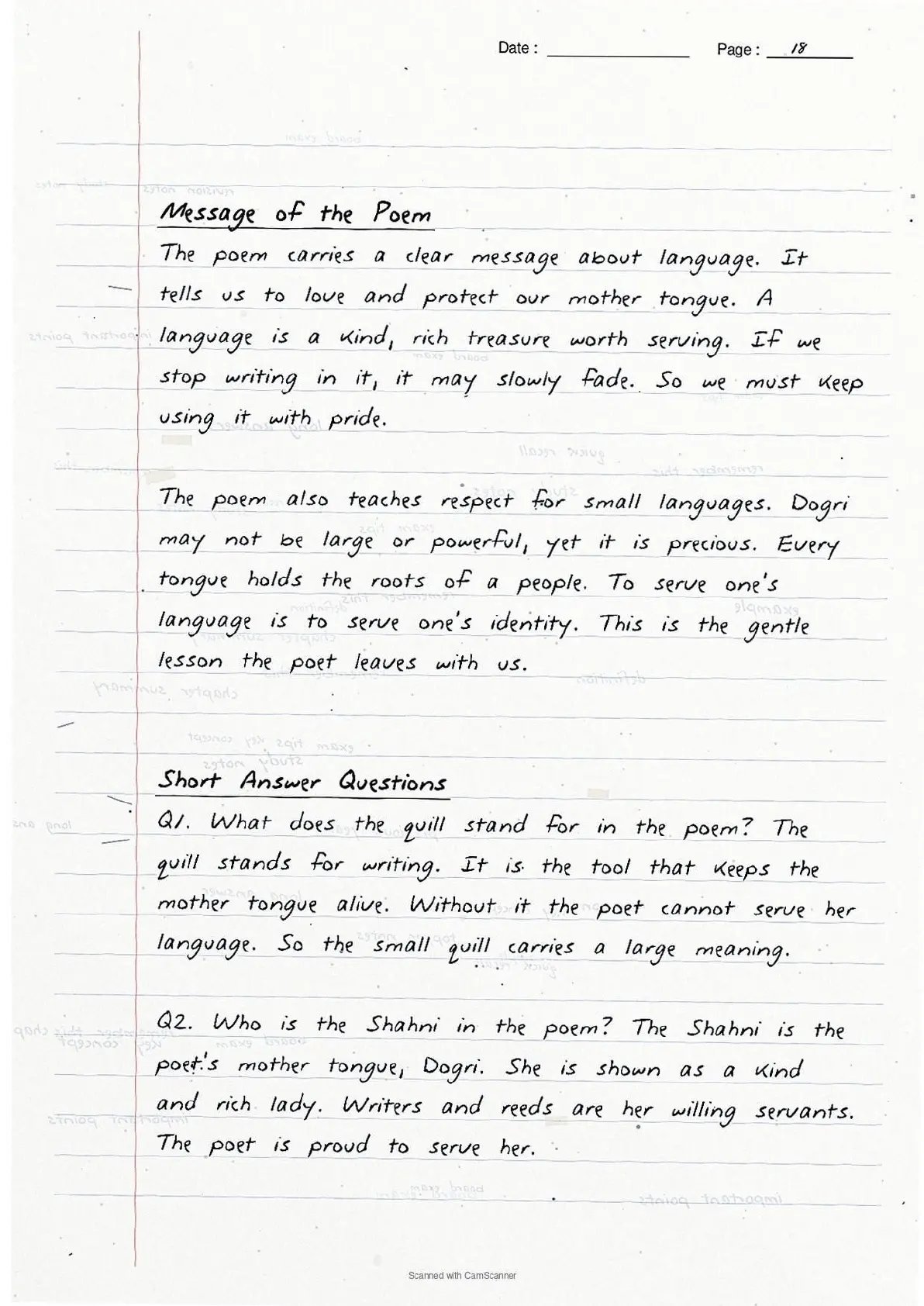
- What the notes cover: about the poet padma sachdev and dogri, the lost sharade script of dogri, line-by-line paraphrase of the poem, the shah versus shahni contrast.
- Best for: quick revision before Class 11 exams and a base for CUET later.
You can read the complete class 11 english handwritten notes for Mother Tongue, with key terms, boxed definitions, and quick revision points, in the PDF below.
These handwritten notes are written by subject teachers, mapped to the 2026-27 NCERT, and checked against the last five years of CBSE Class 11 English papers.
What the Mother Tongue Handwritten Notes Cover
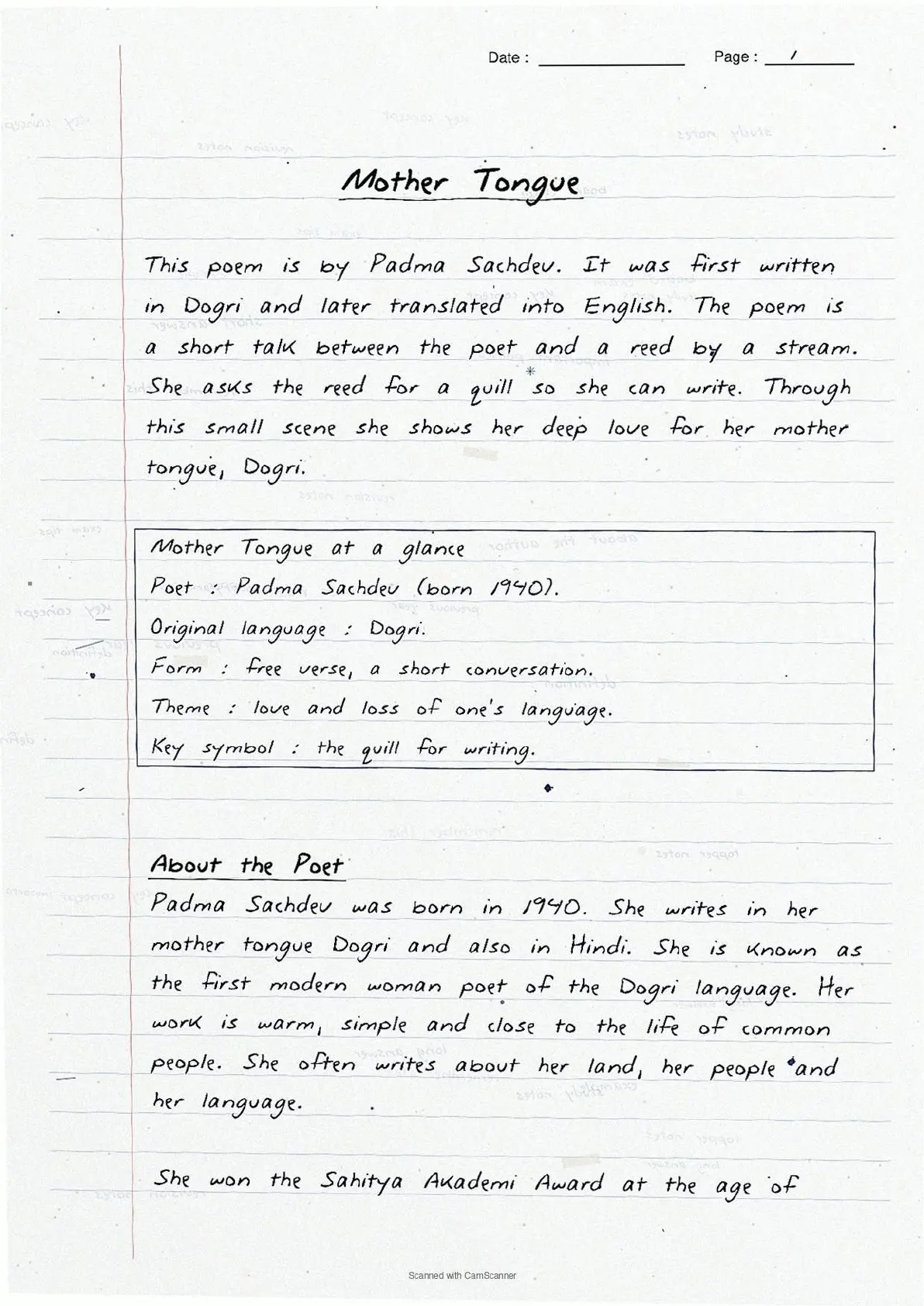
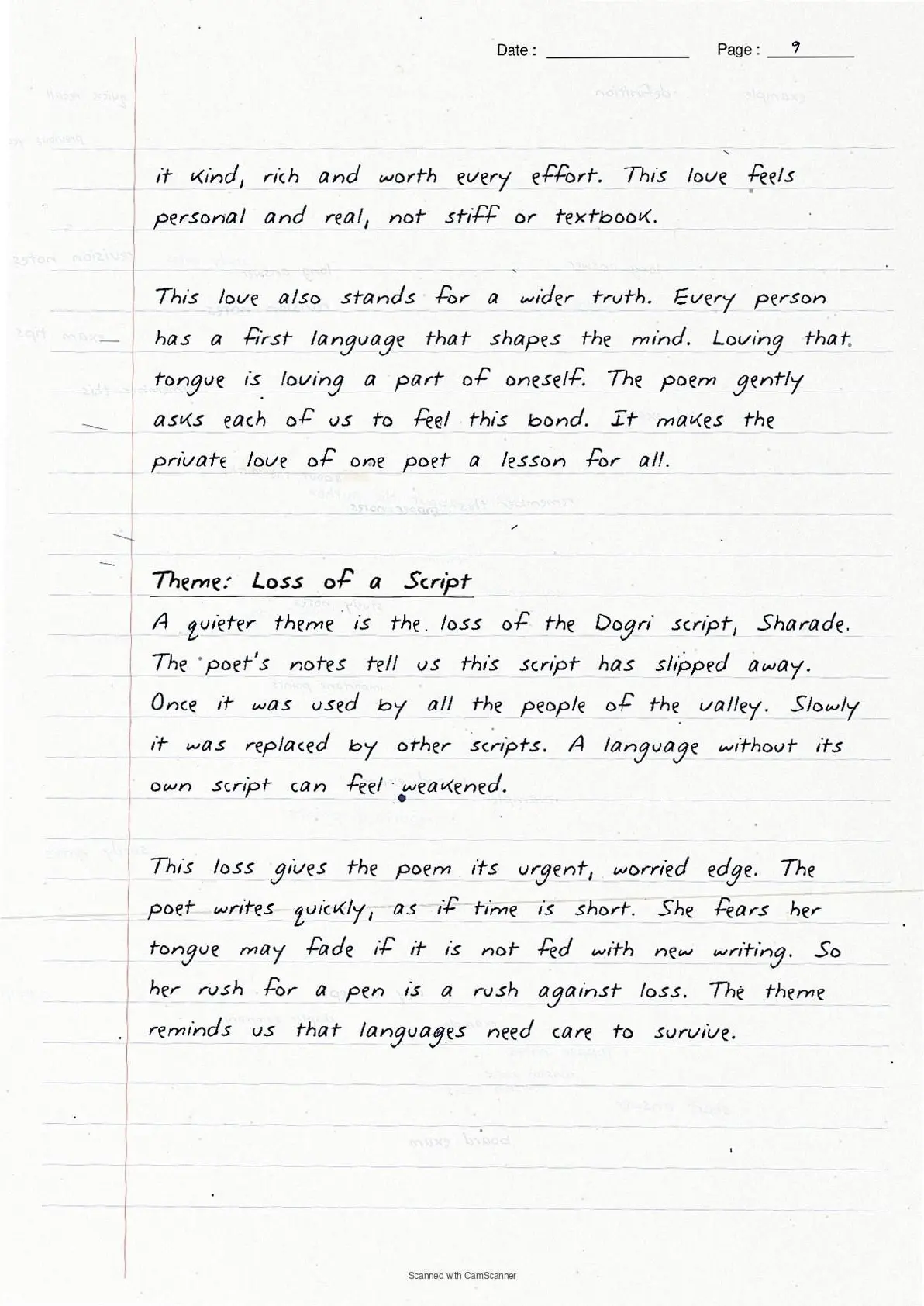
Mother Tongue by Padma Sachdev is a short Dogri poem about loving one's language. The poet talks to a reed and asks for a quill to keep writing. Through this scene she shows deep devotion to her mother tongue.
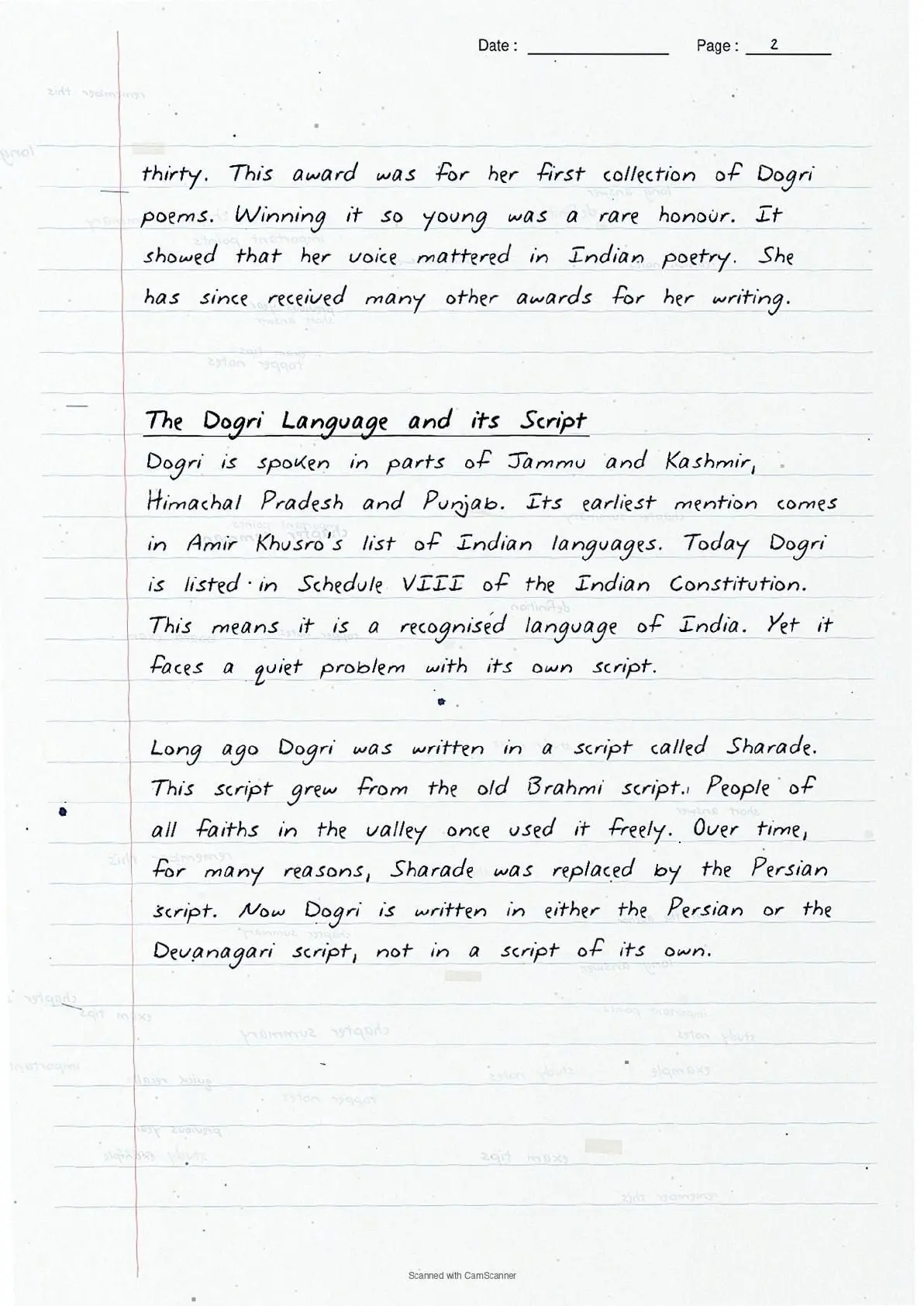
- About the poet Padma Sachdev and Dogri
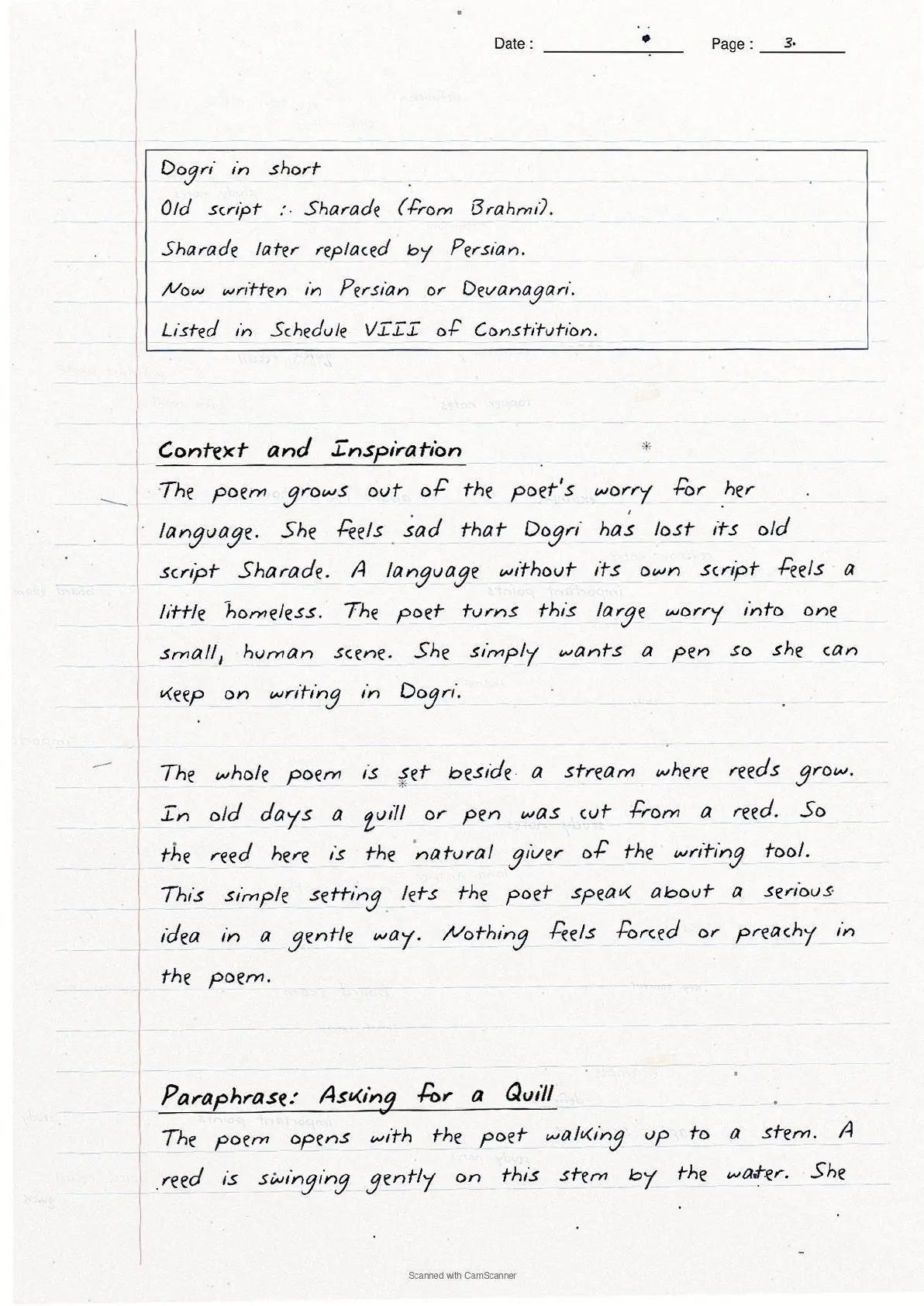
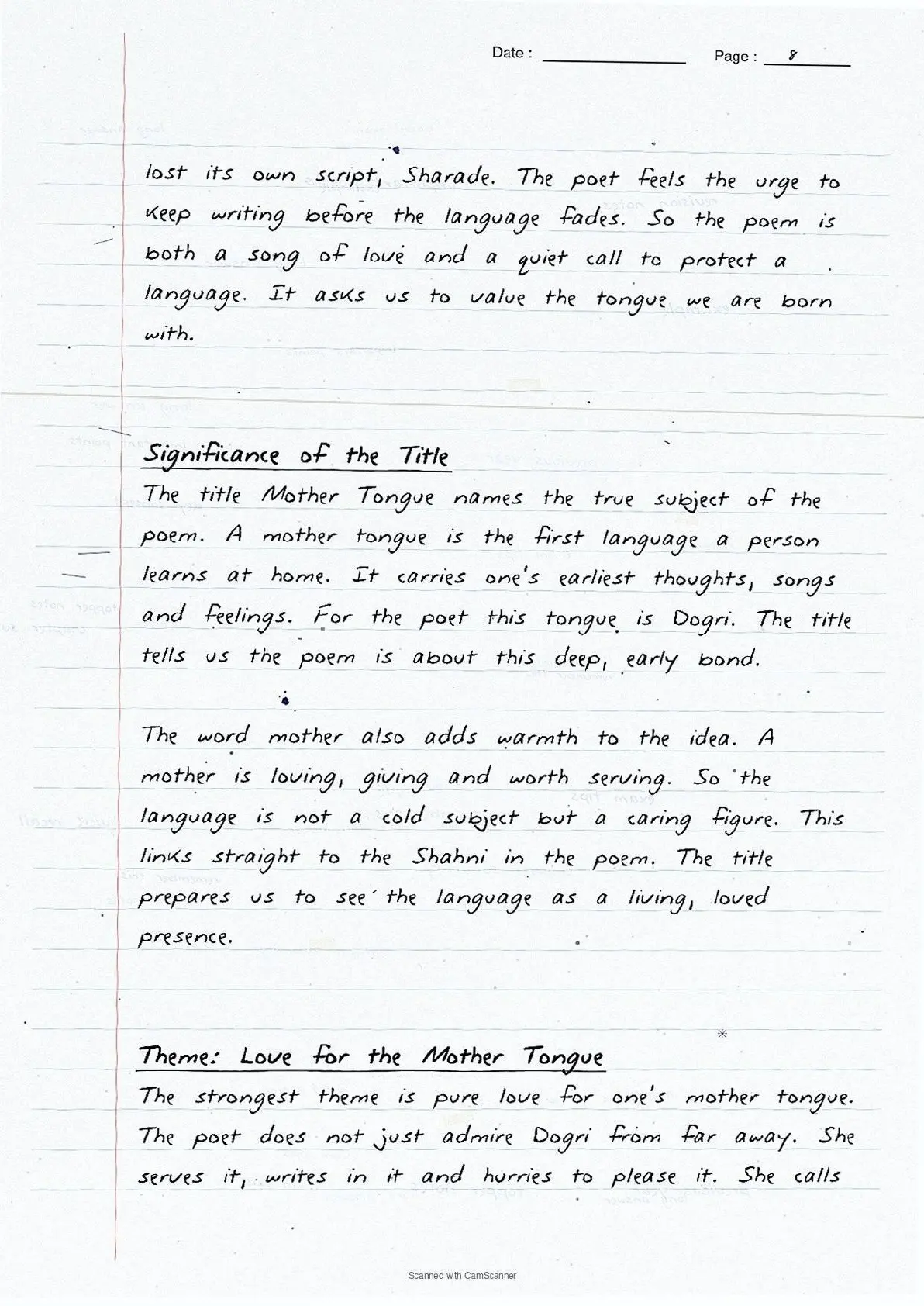
- The lost Sharade script of Dogri
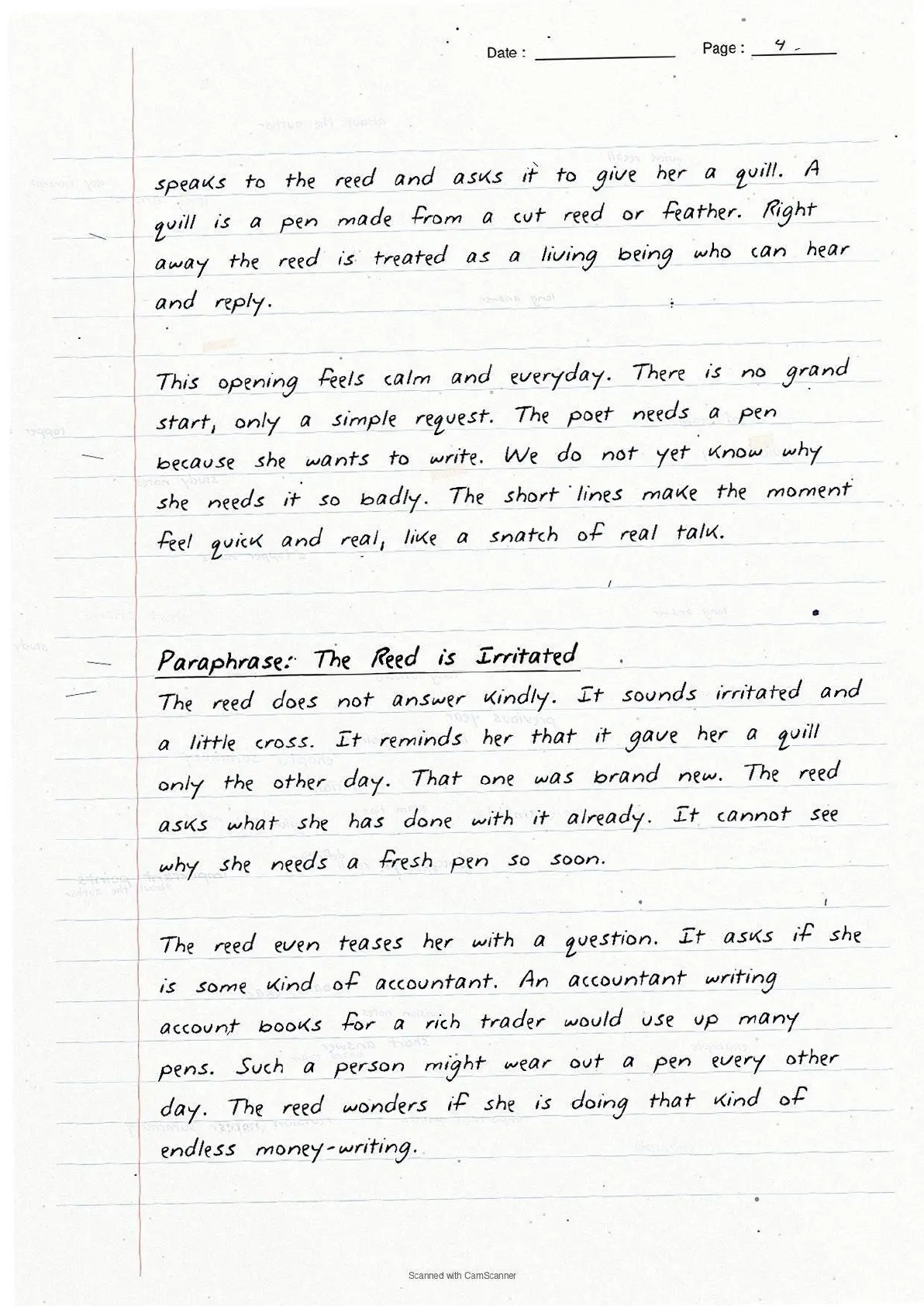
- Line-by-line paraphrase of the poem
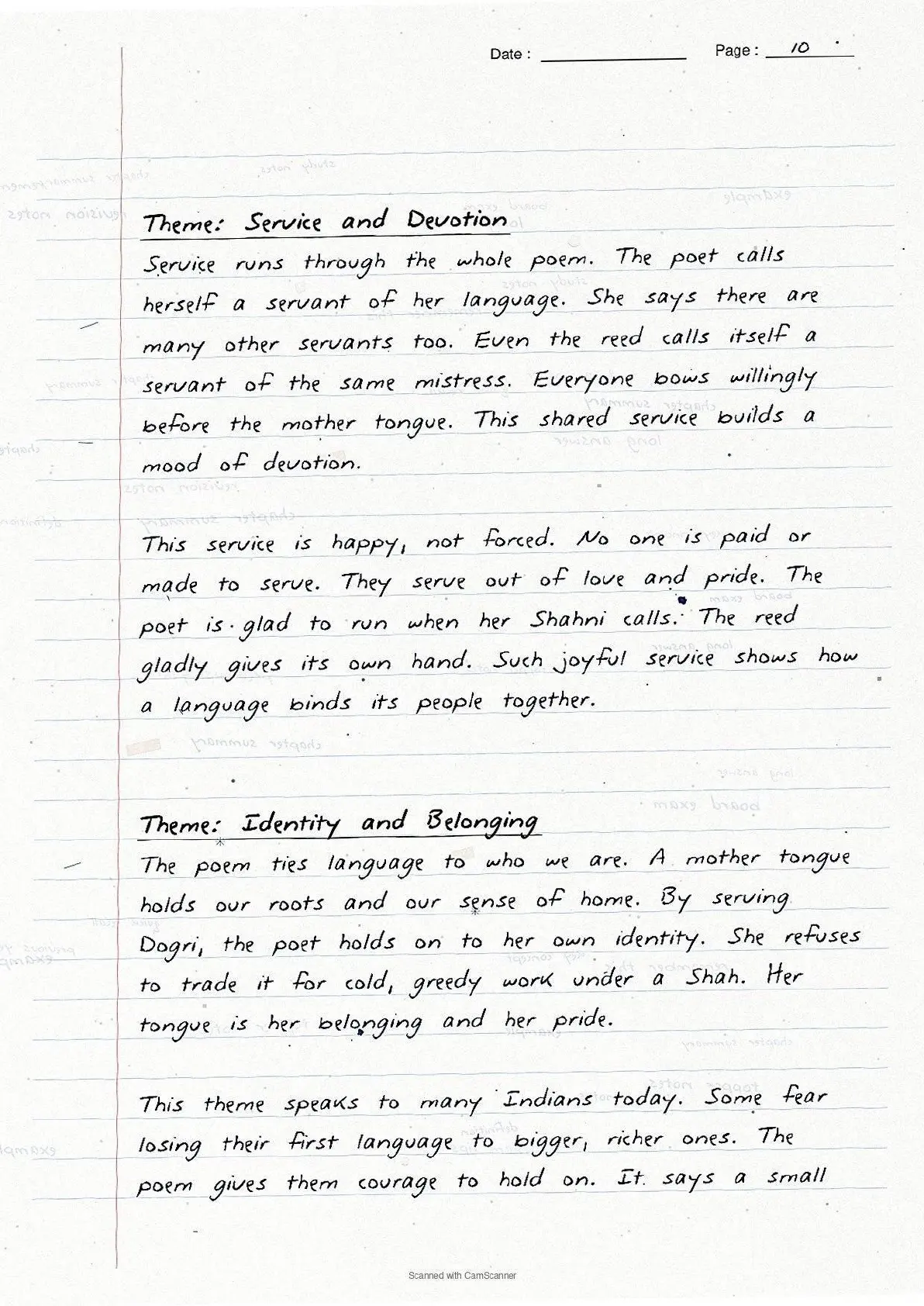
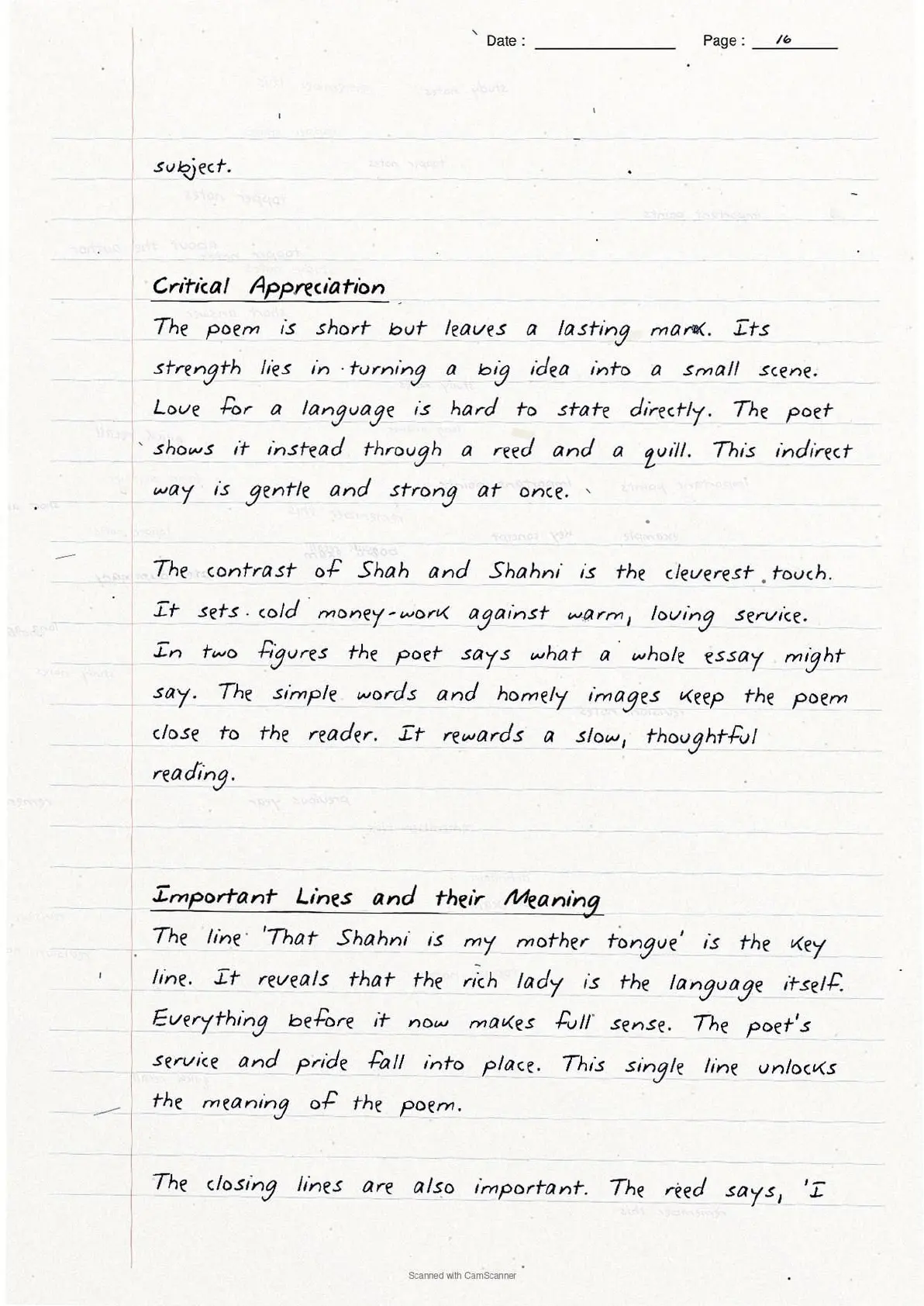
- The Shah versus Shahni contrast
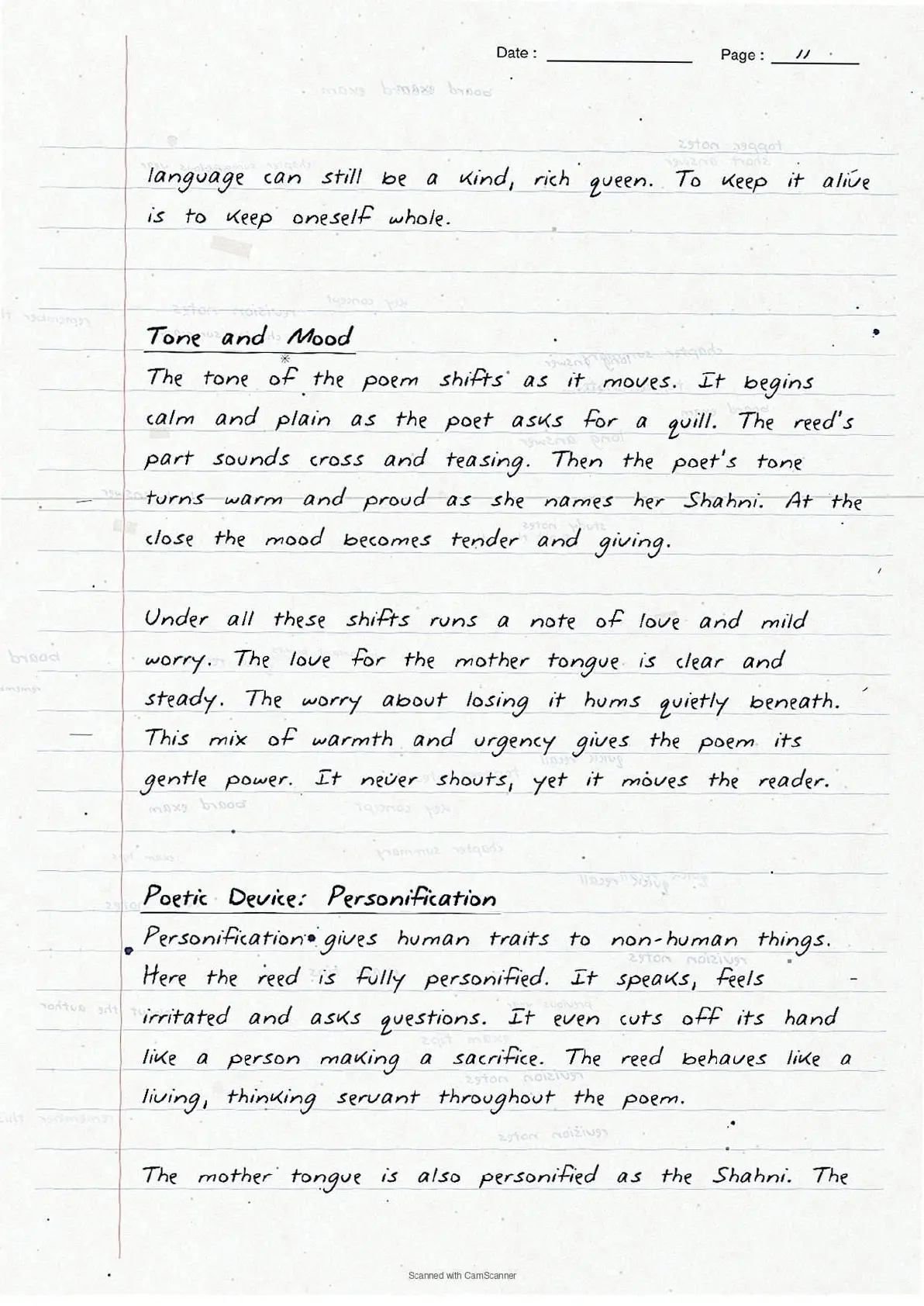
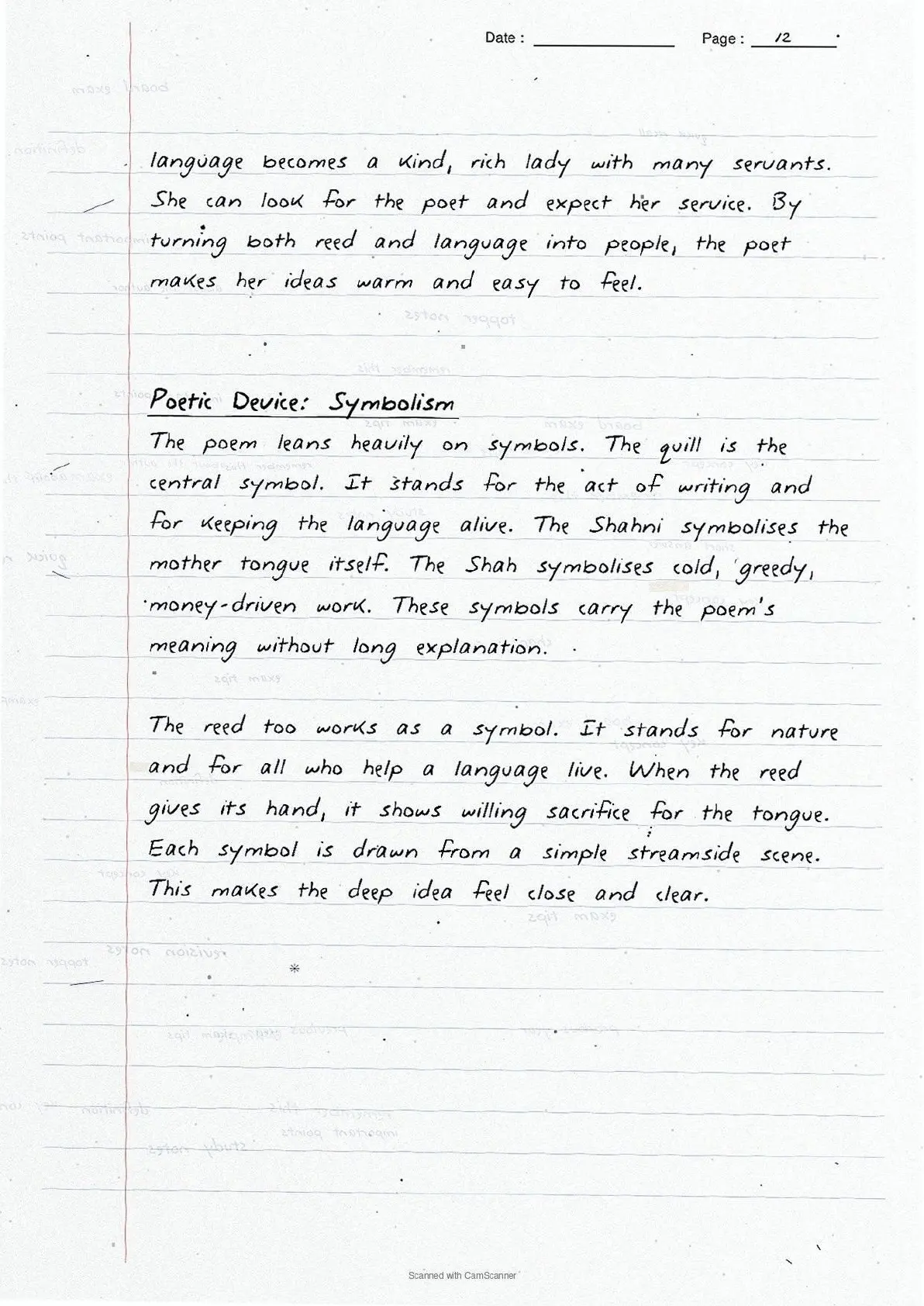
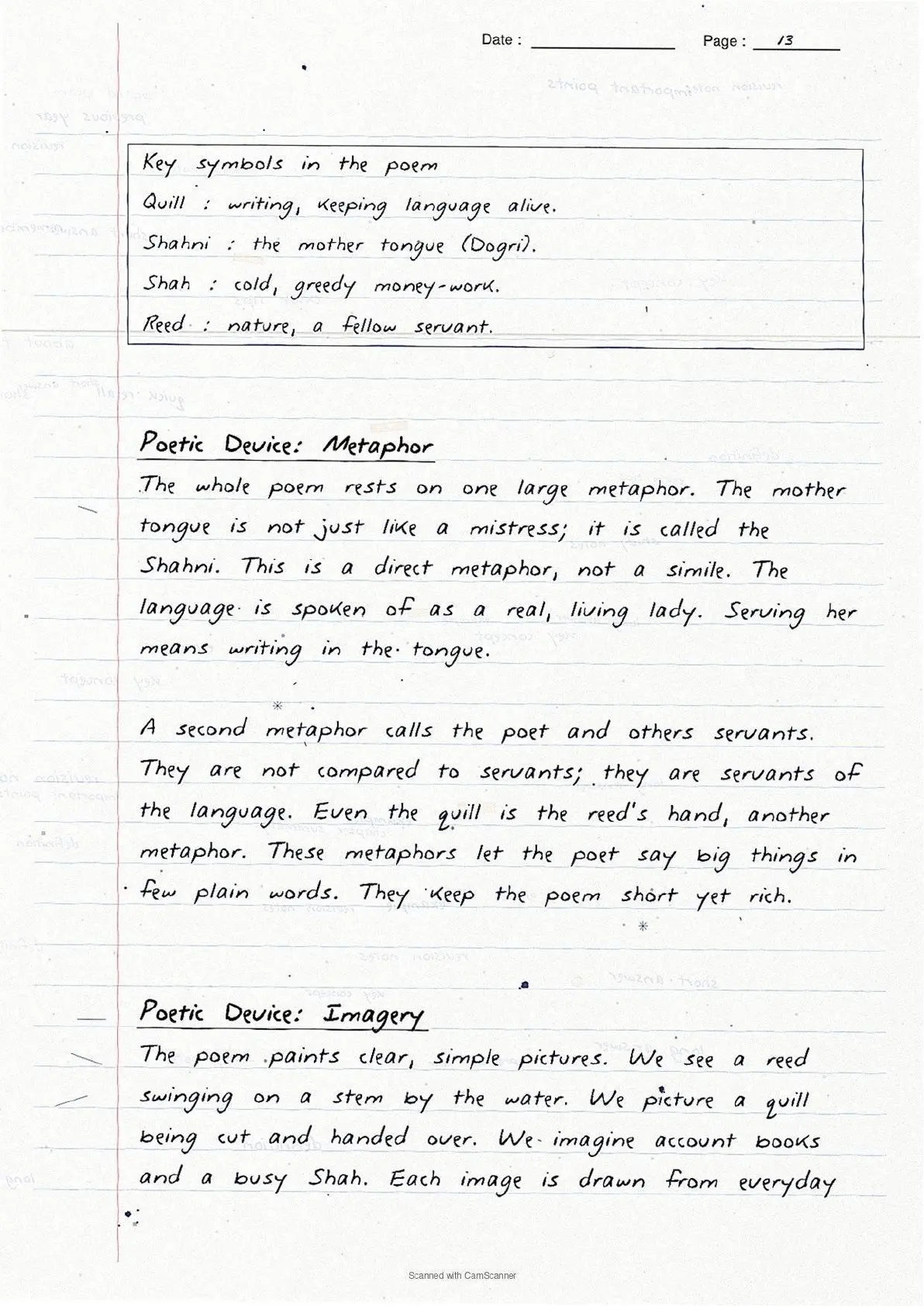
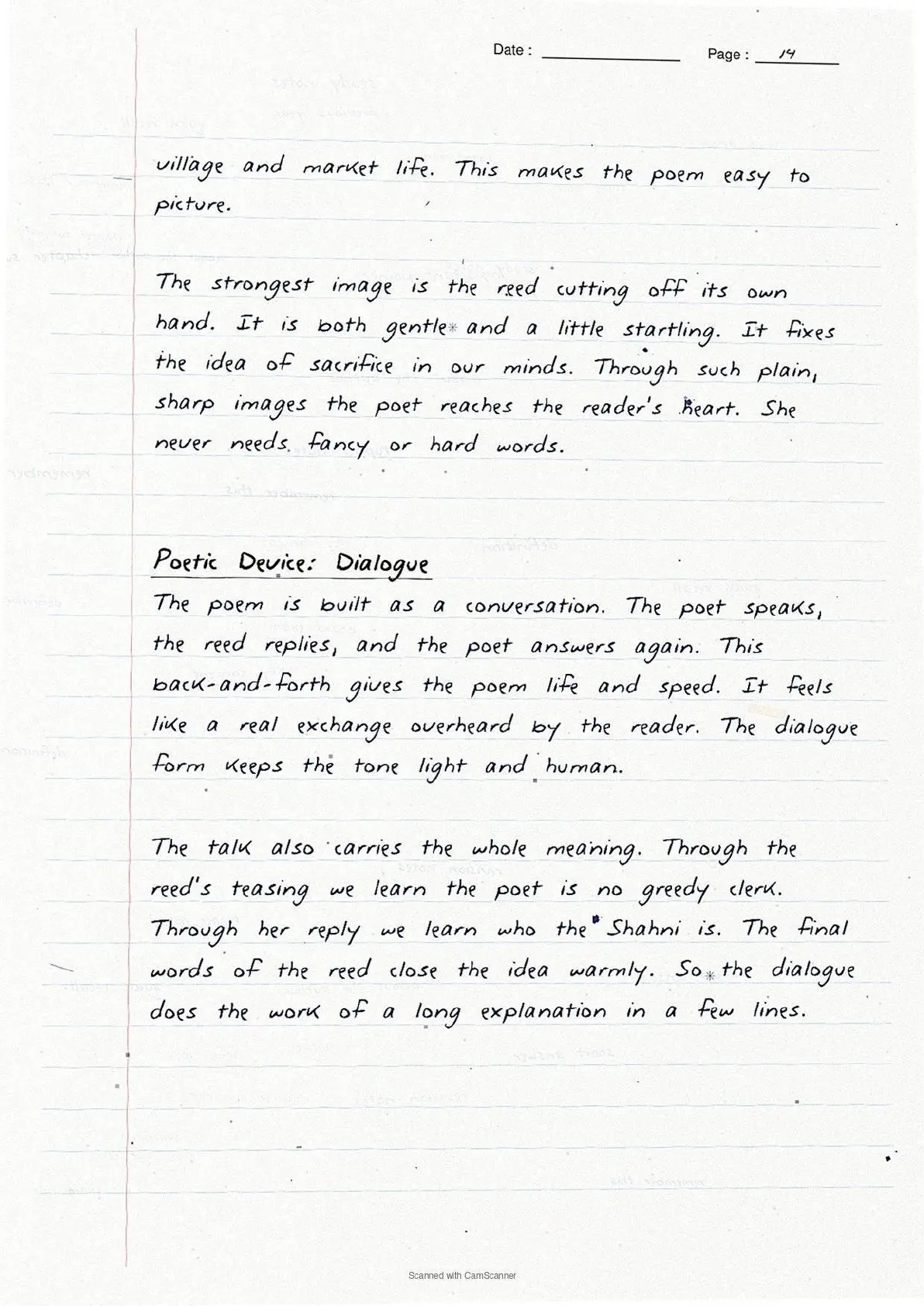
- Personification and symbolism explained
- Themes of love, loss and service
- Exam focus, PYQ trend and quick recall
Mother Tongue Self-Assessment Quiz
Try these quick questions after you read the notes. Tap each question to check your answer. They cover the points CBSE asks most often.
In which language was Mother Tongue first written?
(a) Hindi (b) Dogri (c) Urdu (d) Punjabi
Answer: (b) Dogri - Padma Sachdev wrote it in Dogri, then it was translated.
Who is the Shahni in the poem?
(a) A rich trader (b) The poet's mother (c) The mother tongue (d) A servant girl
Answer: (c) The mother tongue - the Shahni stands for Dogri itself.
What does the quill symbolise?
(a) Money (b) Writing and keeping language alive (c) A reed (d) A servant
Answer: (b) Writing and keeping language alive - it is the poem's central symbol.
What does the reed finally give the poet?
(a) A leaf (b) Its own hand as a quill (c) Water (d) Nothing
Answer: (b) Its own hand as a quill - a gift of willing service.
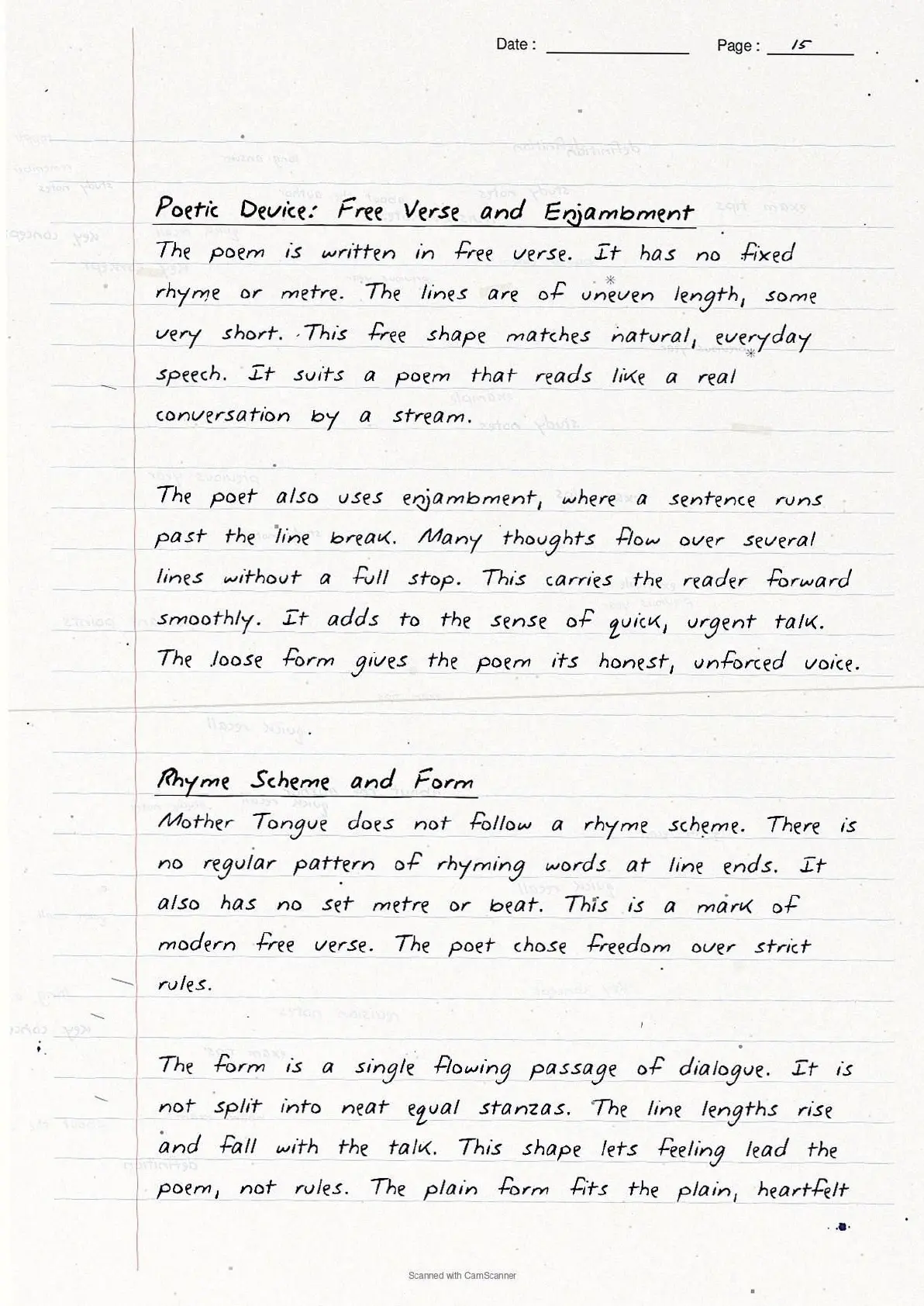
What form is the poem written in?
(a) Sonnet (b) Free verse (c) Ballad (d) Ode
Answer: (b) Free verse - it has no fixed rhyme or metre.
Mother Tongue Topic-wise Weightage for CBSE Class 11 English
Some parts of this chapter are asked more often than others. The table below shows which sub-topics to revise first, based on recent CBSE Class 11 question trends.
| Sub-topic | Weightage | CBSE Frequency |
|---|---|---|
| Symbol of the quill | High | often |
| Shah versus Shahni contrast | High | often |
| Use of personification | High | often |
| Poet's love for mother tongue | Medium | common |
| Reason for the urgent tone | Medium | sometimes |
Key Terms and Ideas in Mother Tongue
These are the terms and ideas the exam asks about most. Learn each one so you can define it and use it in your answers.
| Term / Idea | What it means |
|---|---|
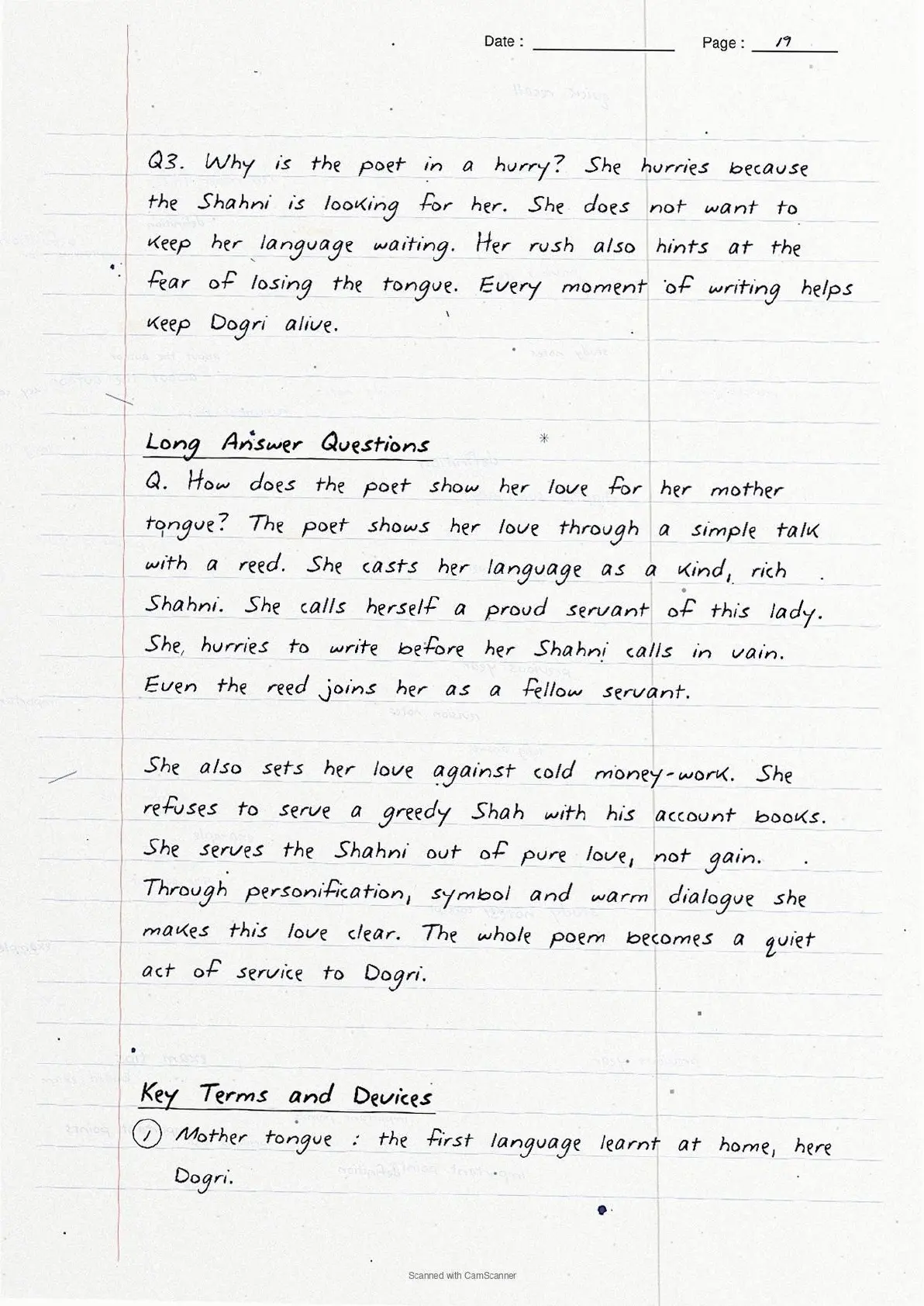
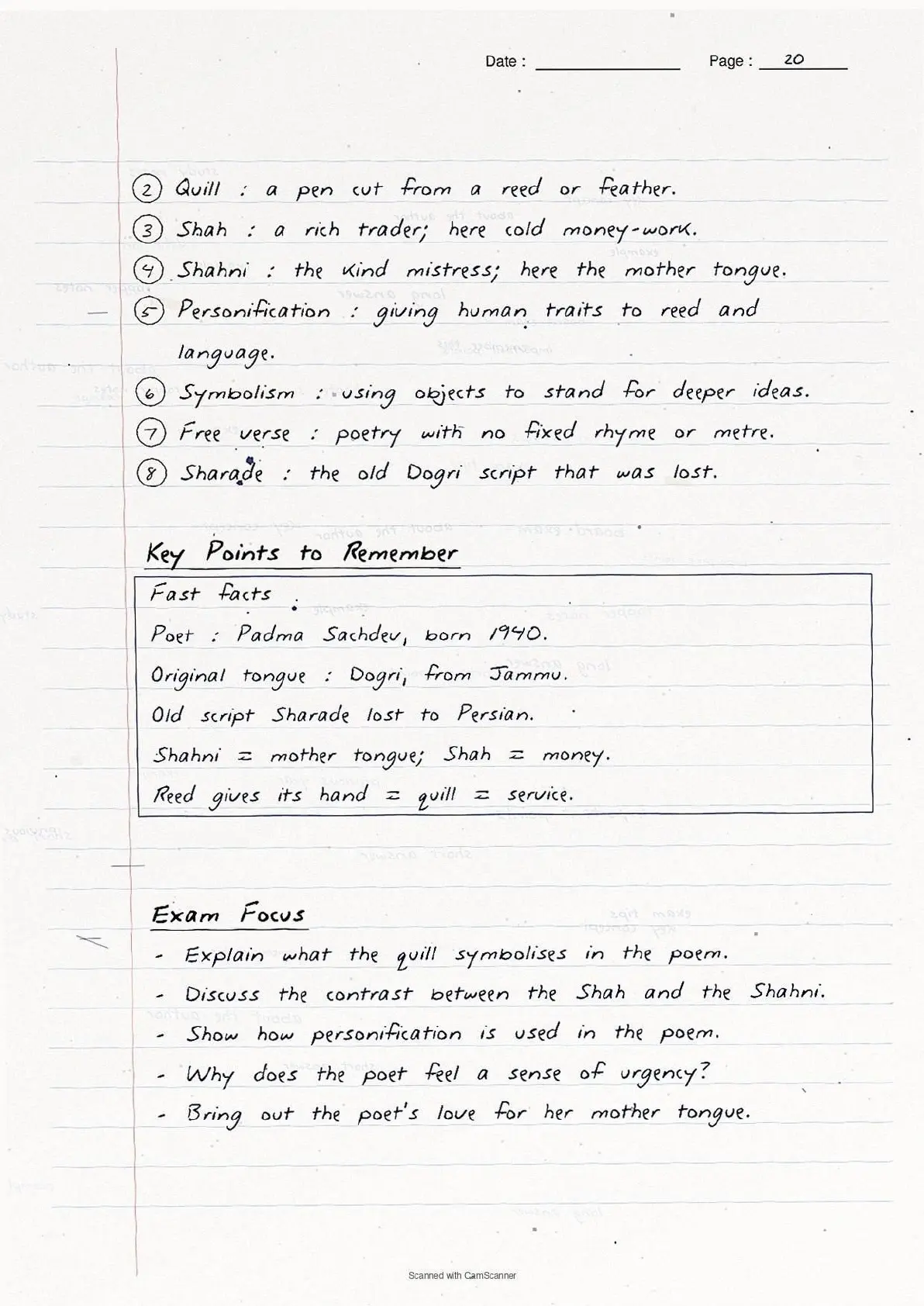
| Quill | Symbol of writing and keeping the language alive. |
| Shahni | The mother tongue, shown as a kind rich lady. |
| Shah | A greedy trader; stands for cold money-work. |
| Personification | Reed and language act like living people. |
| Free verse | No fixed rhyme or metre in the poem. |
| Sharade | The old Dogri script that was lost to Persian. |
| Reed | Nature as a fellow servant of the mother tongue. |
How Collegedunia's Handwritten Notes Help You Revise Mother Tongue
These notes are made for the night before the exam. They keep the facts short and easy to scan. Collegedunia maps every point to the 2026-27 NCERT.
- Clear handwriting: each topic is written in neat, easy-to-read handwriting.
- Boxed key terms: the main terms and definitions are boxed by hand for fast recall.
- Diagrams and tables: simple hand-drawn tables and charts make ideas clear.
- Colour-coded headings: new sub-topics stand out, so you find any section in seconds.
How to Use These Handwritten Notes for Class 11 English Revision
Use these class 11 english handwritten notes in two passes. Read them slowly once for the full chapter. Then, near the exam, read only the boxes and key terms for a fast recall.
- Read the notes once with the NCERT chapter open beside you.
- Say each key term and idea in your own words.
- Practise one long-answer question from a past paper.
- On the last day, revise only the key terms and the boxes.
Class 11 English Handwritten Notes for All Chapters
The table below links the class 11 english handwritten notes for every chapter. Use it to jump to any other chapter's notes.
Mother Tongue Class 11 English Handwritten Notes FAQs
Ques. Where can I download Mother Tongue Class 11 English Handwritten Notes PDF?
Ans. You can download the Mother Tongue Class 11 English Handwritten Notes PDF directly from this page. Both the Normal and HD versions are free.
Ques. Are these handwritten notes aligned with the 2026-27 NCERT?
Ans. Yes. These notes follow the current 2026-27 syllabus for Class 11 English. Why does the poet feel a sense of urgency in the poem?
Ques. How many pages is the Class 11 English Mother Tongue Handwritten Notes PDF?
Ans. The notes run about 22 pages. They cover the full chapter with key terms, hand-drawn boxes, and a short self-assessment quiz.
Ques. What is the main idea of the 11th standard English chapter Mother Tongue?
Ans. The poet hurries because her mother tongue, the Shahni, is looking for her and she does not want to keep it waiting. The rush also hints at her fear that Dogri may fade if she stops writing in it.
Ques. Are these Mother Tongue notes enough for the CBSE Class 11 exam?
Ans. Yes, for revision. The Collegedunia handwritten notes cover every key point and exam term. Read them with the NCERT chapter and practise past questions.



Comments