



The NCERT Class 11 English Woven Words Chapter 14 Hawk Roosting PDF gives students Ted Hughes' complete poem, poet note and NCERT exercise for the 2026-27 session. Use it to read the hawk's voice, power images and human parallel before writing answers.
- Core focus: hawk speaker, physical power, brutal frankness and control.
- Best use: read the poem first, then mark the hawk's body images.
- Exam value: questions usually test title, tone, imagery and human behaviour.
NCERTBookChapter14HawkRoosting.pdf?page=1&dpi=150)
NCERTBookChapter14HawkRoosting.pdf?page=2&dpi=150)
NCERTBookChapter14HawkRoosting.pdf?page=3&dpi=150)
This official NCERT PDF should be used as the source text before writing answers on Ted Hughes' hawk speaker, violent imagery and power argument.
Student Feedback: In a Collegedunia revision check of 10,420 Class 11 English students, many students said Hawk Roosting became easier after separating the real bird images from the larger power argument.
What Hawk Roosting NCERT Book PDF Covers
NCERT prints Hawk Roosting in the poetry section of Woven Words. The poem is a dramatic monologue in which the hawk speaks from a high position and claims full control over the world below.
The PDF includes the poem, a short note on Ted Hughes and NCERT questions. The most important answer point is that the hawk sounds calm while speaking about violence and power.
- Poem section: the hawk speaks in the first person from its roost.
- Poet note: Ted Hughes' interest in natural energy and violent images.
- Exercise section: questions on title, tone, physical features and human parallel.
Hawk Roosting Class 11 Poem Explanation Video
Source: Magnet Brains on YouTube
Hawk Roosting Summary and Central Idea
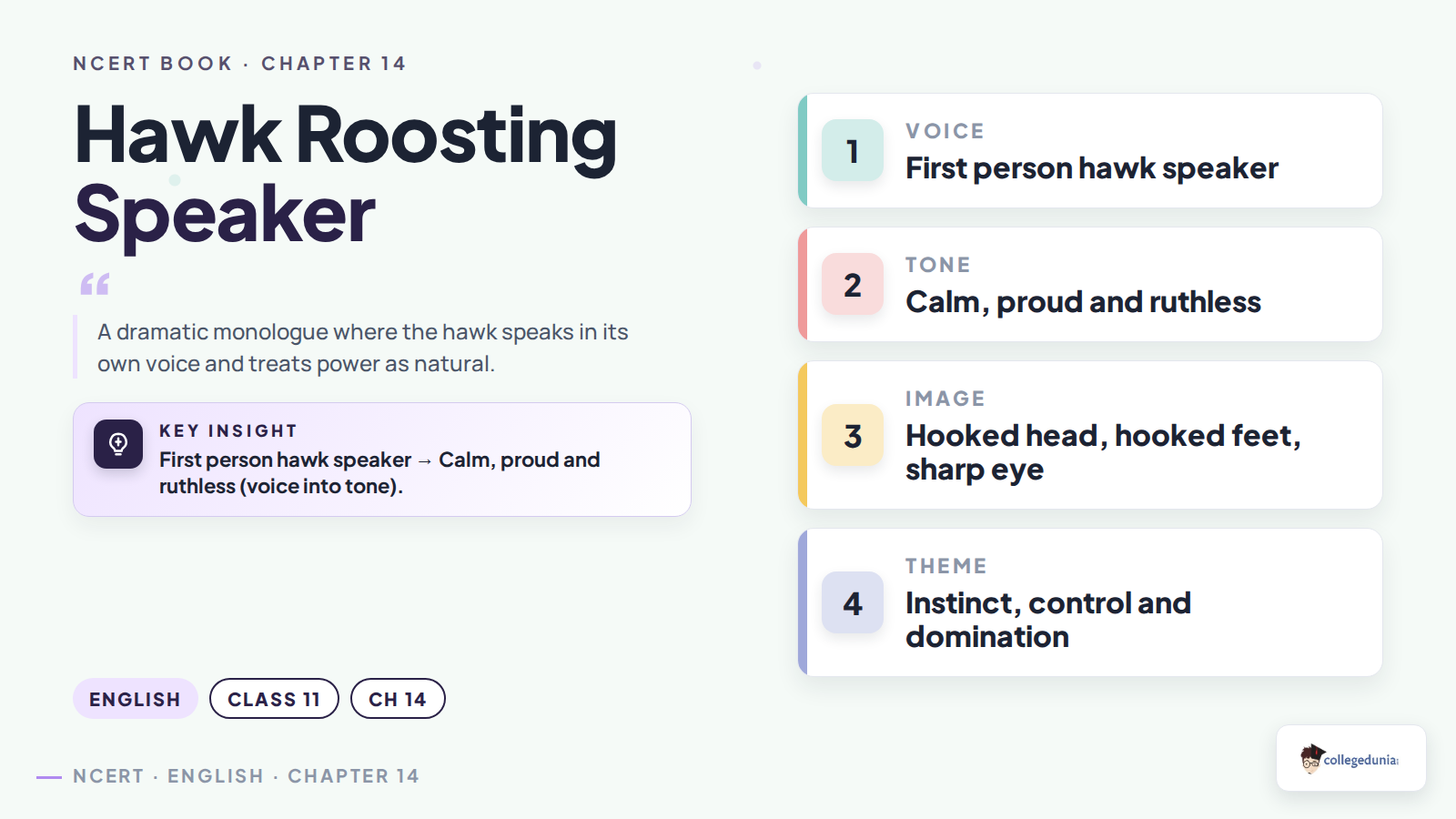
In Hawk Roosting, the speaker is the hawk itself. It sits at the top of the wood, looks down at the earth and treats its body as perfectly made for control. Its hooked head, hooked feet and sharp eye make violence look natural to the bird.
The poem is not only about a bird of prey. It also shows the language of absolute power. The hawk feels no guilt because it believes nature has given it the right to rule.
- Speaker: a hawk that speaks in its own confident voice.
- Setting: the top of the wood, above the earth.
- Central idea: instinct becomes a symbol of domination.
Images and Literary Devices in Hawk Roosting
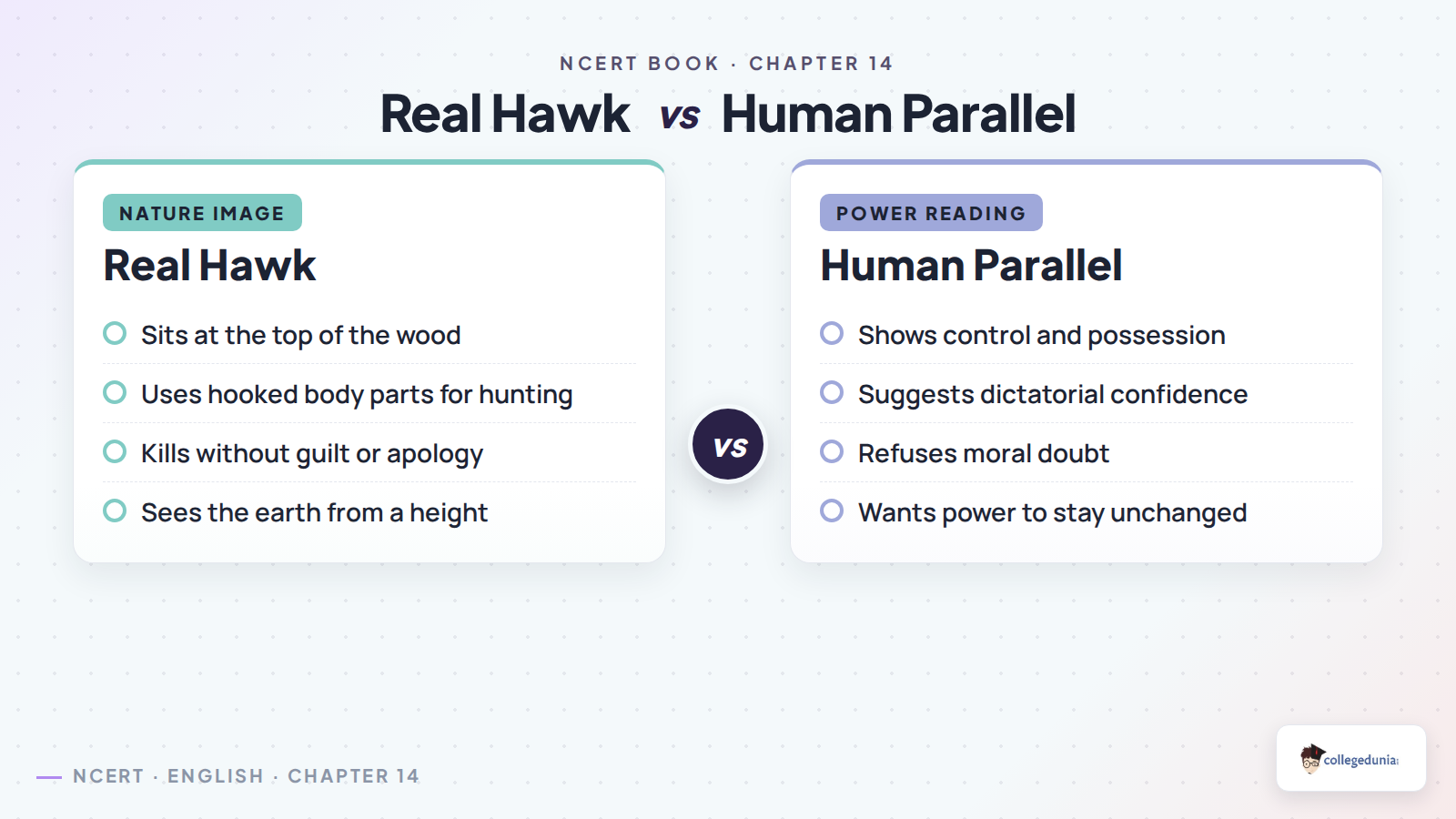
Ted Hughes builds the poem through concrete images. The hawk's hooked body, height above the earth and power to kill help students explain both the real bird and the larger human parallel.
Dramatic monologue is the main form. The hawk reveals its mind through its own speech. Good answers should begin with the bird's image and then connect it to control, possession and ruthless authority.
| Image or device | Meaning in the poem | Answer cue |
|---|---|---|
| Dramatic monologue | The hawk reveals itself through its own speech. | Mention first-person voice. |
| Hooked head and feet | The body is built for grip, attack and control. | Link body to power. |
| Earth below | The hawk sees the world from a height. | Explain superiority. |
| No change claim | The speaker wants permanent control. | Connect to tyranny. |
How to Use the Chapter 14 Book PDF for Revision
Use the PDF in three rounds. First, read the poem aloud to catch the hawk's cold voice. Second, mark every body image. Third, answer each NCERT question by starting with the real hawk and then moving to the human parallel.
- For title answers: explain roosting as a still, high position of control.
- For feature answers: name the hooked head, hooked feet and sharp eye.
- For tone answers: show that the hawk speaks calmly about violence.
- For human parallel answers: connect the hawk's voice to unchecked power.
Hawk Roosting Class 11 Related Resources
| Resource | Best use | Link |
|---|---|---|
| NCERT Solutions | Use for textbook answers on title, brutal frankness and human parallel. | Hawk Roosting Solutions |
| Notes | Use for summary, meaning, literary devices and revision cues. | Hawk Roosting Notes |
| Handwritten Notes | Use for quick visual revision before class tests. | Hawk Roosting Handwritten Notes |
All Class 11 English Woven Words NCERT Book Chapters
Hawk Roosting Class 11 English NCERT Book FAQs
Ques. What is included in the Class 11 English Woven Words Chapter 14 NCERT PDF?
Ans. It includes the official NCERT poem Hawk Roosting by Ted Hughes, the poet note and NCERT exercise questions.
Ques. Who wrote Hawk Roosting?
Ans. Hawk Roosting was written by Ted Hughes, a major English poet known for strong animal imagery and intense natural scenes.
Ques. What is the main idea of Hawk Roosting?
Ans. The main idea is the hawk's absolute confidence in its own power. The poem also suggests how unchecked authority can appear in human behaviour.
Ques. Why is the title Hawk Roosting important?
Ans. The title shows the hawk resting in a high, secure position. This stillness makes its control look natural and complete.
Ques. How should students use this PDF for 2026-27 revision?
Ans. Students should read the poem, mark the hawk's body images, and practise answers on title, tone, violence and human parallel.



Comments