



The NCERT Class 11 English Woven Words Chapter 5 Pappachi's Moth PDF gives students the official textbook extract for the 2026-27 session. Use it to read Arundhati Roy's story, follow Mammachi and Pappachi's tense home life, and revise the NCERT exercise printed after the chapter.
- Core focus: pride, domestic power, public respect and the moth as a symbol.
- Best use: read the PDF before writing NCERT answers.
- Exam value: theme answers often ask how private cruelty hides behind public status.
NCERTBookChapter5Pappachi'sMoth.pdf?page=1&dpi=150)
NCERTBookChapter5Pappachi'sMoth.pdf?page=2&dpi=150)
NCERTBookChapter5Pappachi'sMoth.pdf?page=3&dpi=150)
NCERTBookChapter5Pappachi'sMoth.pdf?page=4&dpi=150)
NCERTBookChapter5Pappachi'sMoth.pdf?page=5&dpi=150)
NCERTBookChapter5Pappachi'sMoth.pdf?page=6&dpi=150)
The official NCERT Class 11 English Woven Words Chapter 5 PDF helps students read Pappachi's Moth directly from the textbook before revising answers.
Student Feedback: In a Collegedunia check of 12,870 Class 11 English students, many students said Pappachi's Moth became easier after they separated the family events from the symbol of the moth.
What the Pappachi's Moth NCERT Book PDF Covers
NCERT prints Pappachi's Moth as the fifth short story in Woven Words. The extract comes from Arundhati Roy's The God of Small Things and shows a family shaped by pride, silence and fear.
The chapter is not only about a moth. It uses the insect to show how missed recognition can turn into lifelong bitterness.
- Story section: Mammachi, Pappachi, Chacko and Ammu drive the extract.
- Theme section: patriarchy, status anxiety and habit stand out.
- Exercise section: NCERT asks understanding, discussion and language-work questions.
Pappachi's Moth Chapter Explanation
Source: Magnet Brains on YouTube
Pappachi and Mammachi Relationship in the Chapter
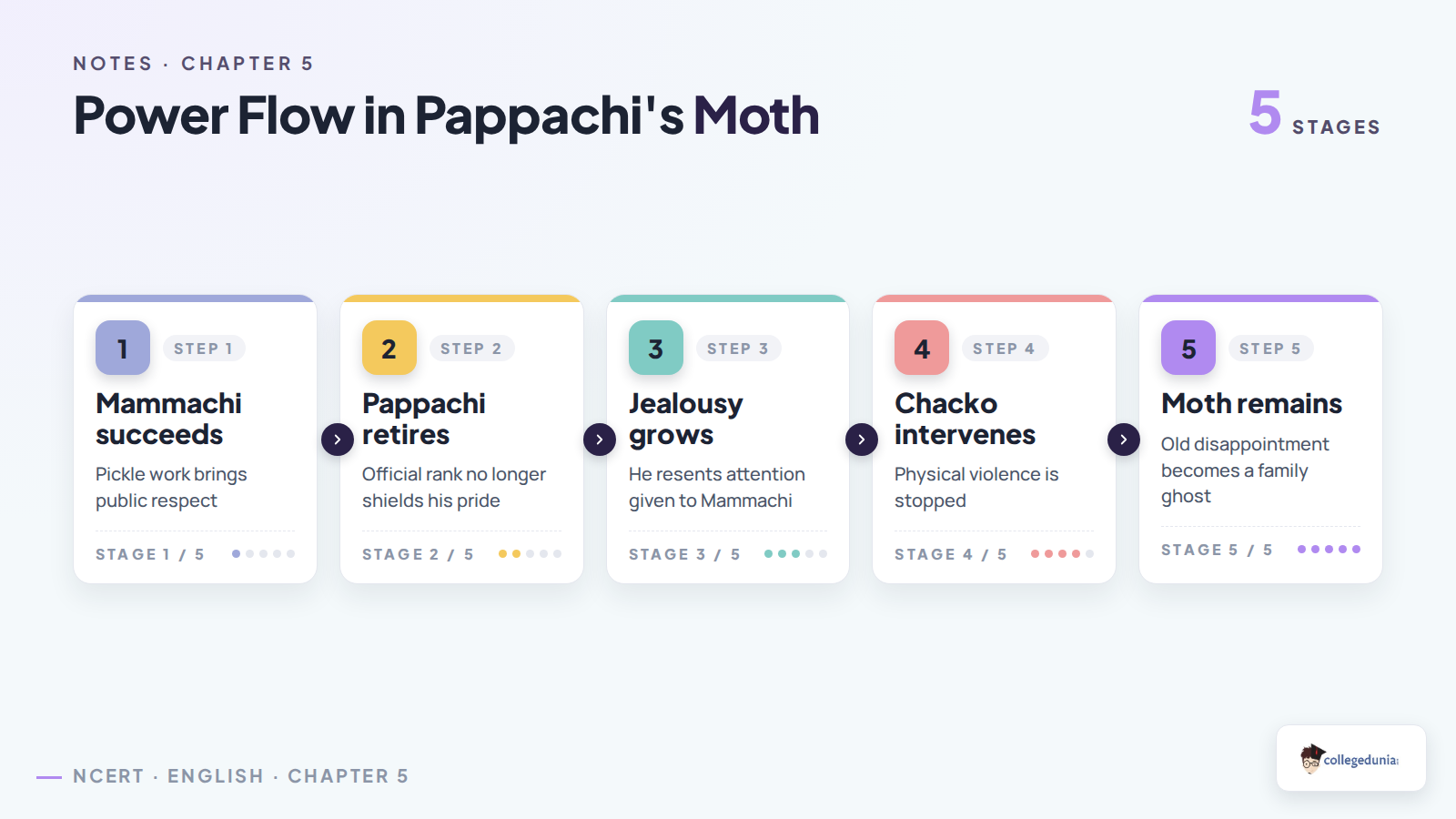
Mammachi builds a pickle business after Pappachi retires. Pappachi resents her success because it makes her visible when his own official identity has ended. The home becomes the place where wounded pride turns into control.
- Pappachi refuses to help because pickle-making feels below his rank.
- Mammachi keeps working despite weak eyesight and harsh treatment.
- Chacko stops physical violence, but the emotional damage remains.
- Ammu's final comment links grief with habit, not simple love.
Why the Moth Matters in Pappachi's Moth
The moth is the emotional centre of Pappachi's bitterness. He discovers it, but the honour never comes to him. Later, the insect is named after another officer, and the missed credit follows Pappachi like a private wound.
| Moment | What happens | Meaning in the chapter |
|---|---|---|
| Discovery | The moth falls into Pappachi's drink. | He expects scientific recognition. |
| Dismissal | The insect is first treated as ordinary. | His pride is wounded. |
| Lost credit | The moth is later named after another officer. | Recognition becomes a lifelong absence. |
| Family effect | Pappachi's bitterness enters daily life. | The symbol becomes personal and social. |
Public Honour and Private Cruelty in Pappachi's Moth
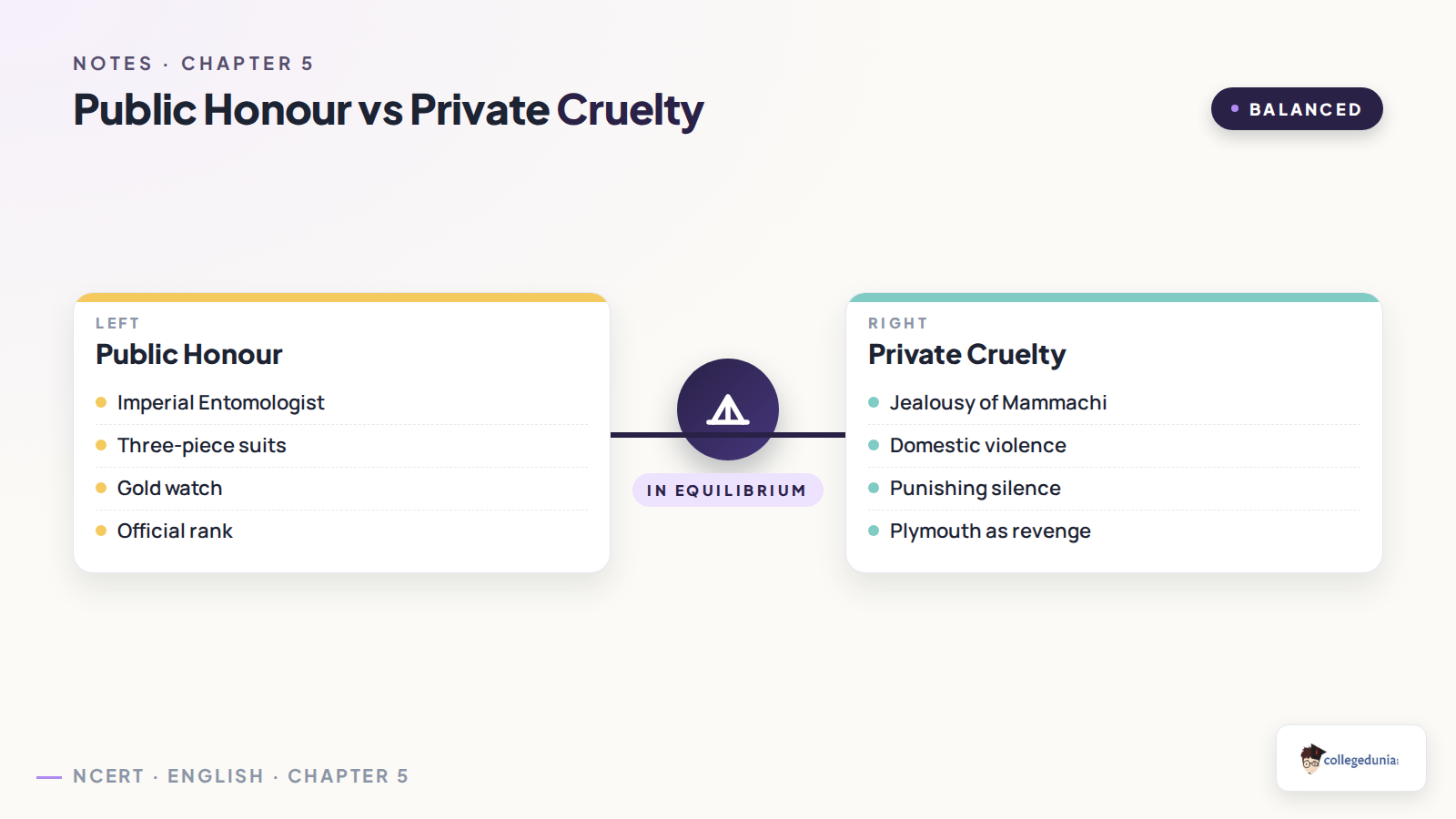
Roy shows Pappachi as polished in public and cruel at home. His suits, car and rank create an image of respectability, but the family scenes reveal fear and silence.
- Public image: Pappachi appears respectable outside the home.
- Private power: he uses anger and violence to control Mammachi.
- Irony: social status does not make him morally strong.
- Symbol: the moth shows how one professional wound spreads into family life.
Language Work and NCERT Exercise in the PDF
The official PDF keeps the story and the NCERT exercise together. After reading the extract, students can move straight to questions on Mammachi, Pappachi, Chacko, the moth symbol and Roy's style.
Do not skip the Language Work section. It asks students to connect specialist words with fields of study and to identify common reference-text terms.
| Term | Meaning for revision |
|---|---|
| Ornithologist | A scientist who studies birds |
| Dermatologist | A doctor or scientist who studies skin |
| Cytologist | A scientist who studies cells |
| Epitaph | Writing on a tombstone or memorial |
| Abstract | A short summary before a research paper or report |
How to Use the Chapter 5 Book PDF for Revision
Use the official PDF in three rounds. First, read the story for events. Second, mark every detail linked to pride, power and recognition. Third, write short answers that connect the moth with Pappachi's emotional life.
- For plot answers: separate Mammachi's work from Pappachi's resentment.
- For character answers: compare public behaviour and private behaviour.
- For theme answers: explain patriarchy, habit and social respectability.
- For language work: revise the specialist words printed after the story.
Pappachi's Moth Class 11 Related Resources
| Resource | Best use |
|---|---|
| Pappachi's Moth NCERT Solutions | Use for textbook answers and language-work questions. |
| Pappachi's Moth Notes | Use for summary, themes and character revision. |
| Pappachi's Moth Handwritten Notes | Use for quick one-shot revision. |
Class 11 English Woven Words NCERT Book Chapters
| Chapter | NCERT Book PDF link | Status |
|---|---|---|
| 1 | The Lament NCERT Book PDF | Live |
| 2 | A Pair of Mustachios NCERT Book PDF | Live |
| 3 | The Rocking-horse Winner NCERT Book PDF | Live |
| 4 | The Adventure of the Three Garridebs NCERT Book PDF | Live |
| 5 | Pappachi's Moth NCERT Book PDF | Current chapter |
| 6 | The Third and Final Continent NCERT Book PDF | Live |
Pappachi's Moth Class 11 English NCERT Book FAQs
Ques. What is included in the Class 11 English Woven Words Chapter 5 NCERT PDF?
Ans. It includes the official NCERT extract Pappachi's Moth by Arundhati Roy and the exercise sections printed after the story.
Ques. What is the main theme of Pappachi's Moth?
Ans. The main theme is how pride, public status and patriarchy damage family relationships inside the home.
Ques. Why is the moth important in the chapter?
Ans. The moth stands for Pappachi's missed recognition. It becomes a symbol of the bitterness that shapes his behaviour.
Ques. Who are the main characters in Pappachi's Moth?
Ans. The main characters are Mammachi, Pappachi, Chacko and Ammu, with the twins present in the frame of the story.
Ques. How should students use this PDF for 2026-27 revision?
Ans. Students should read the extract, mark details linked to the moth symbol and practise NCERT questions with direct story evidence.



Comments